



Fine hair can look flat in a hurry. Not because it is weak. Because the wrong cut steals weight from the wrong place.
That is why soft layered haircuts for fine hair work so much better than the blunt, choppy, over-thinned shapes people sometimes push on it. The best versions leave enough density at the perimeter to look full, then tuck movement into the middle or around the face where it matters most. A good stylist knows this instinctively: if the ends start to look see-through under bright bathroom light, the cut has gone too far.
The sweet spot is usually softer than people expect. Not carved-up. Not shredded. Think clean shape, light movement, and a bit of bend through the mid-lengths so the hair catches air instead of clinging to your head.
Some of these cuts are short. Some keep the length. A few lean polished, a few lean lived-in, and a few are the kind of thing that looks expensive only because it’s balanced so well. Start with the shape that matches how much time you want to spend styling, because that matters more than any trend word ever will.
1. Collarbone Layers That Keep the Ends Full
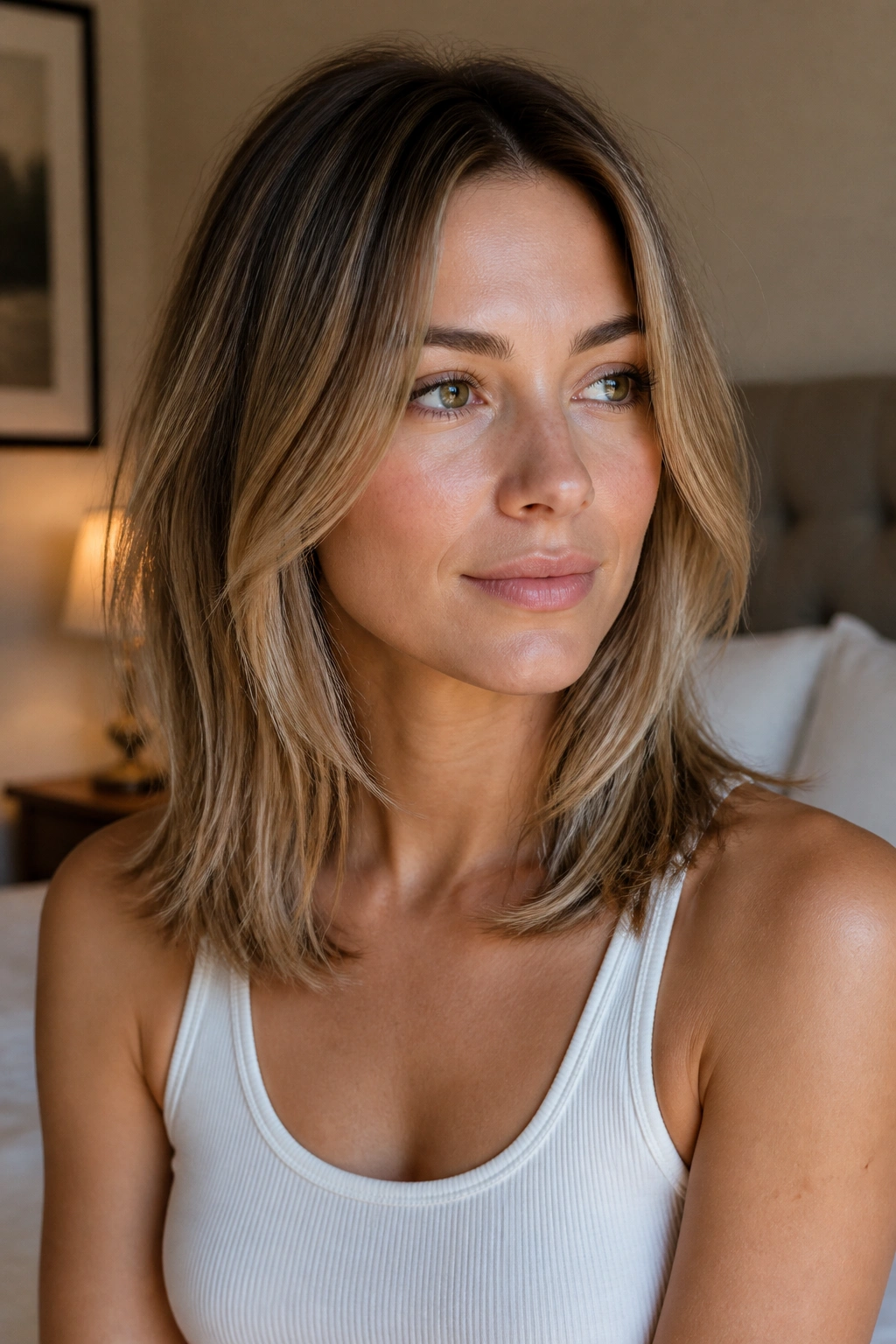
Collarbone length is one of the safest places to start when fine hair needs more body. The line sits low enough to feel feminine and flexible, but short enough that the weight doesn’t drag everything down by lunchtime.
The trick is to keep the perimeter clean and add only a few long layers through the middle. If you can see the ends through the length after a rough dry, there’s too much taken out. Ask for a blunt base with soft, invisible movement above it. That gives you swing without the wispy, over-textured look that makes fine hair look tired.
A small bend with a round brush or a 1.25-inch curling iron is usually enough. Keep the curl away from the roots and work only the first two-thirds of the strand. That way the hair still feels airy, not curled into a helmet.
2. Rounded Lob With Hidden Interior Layers
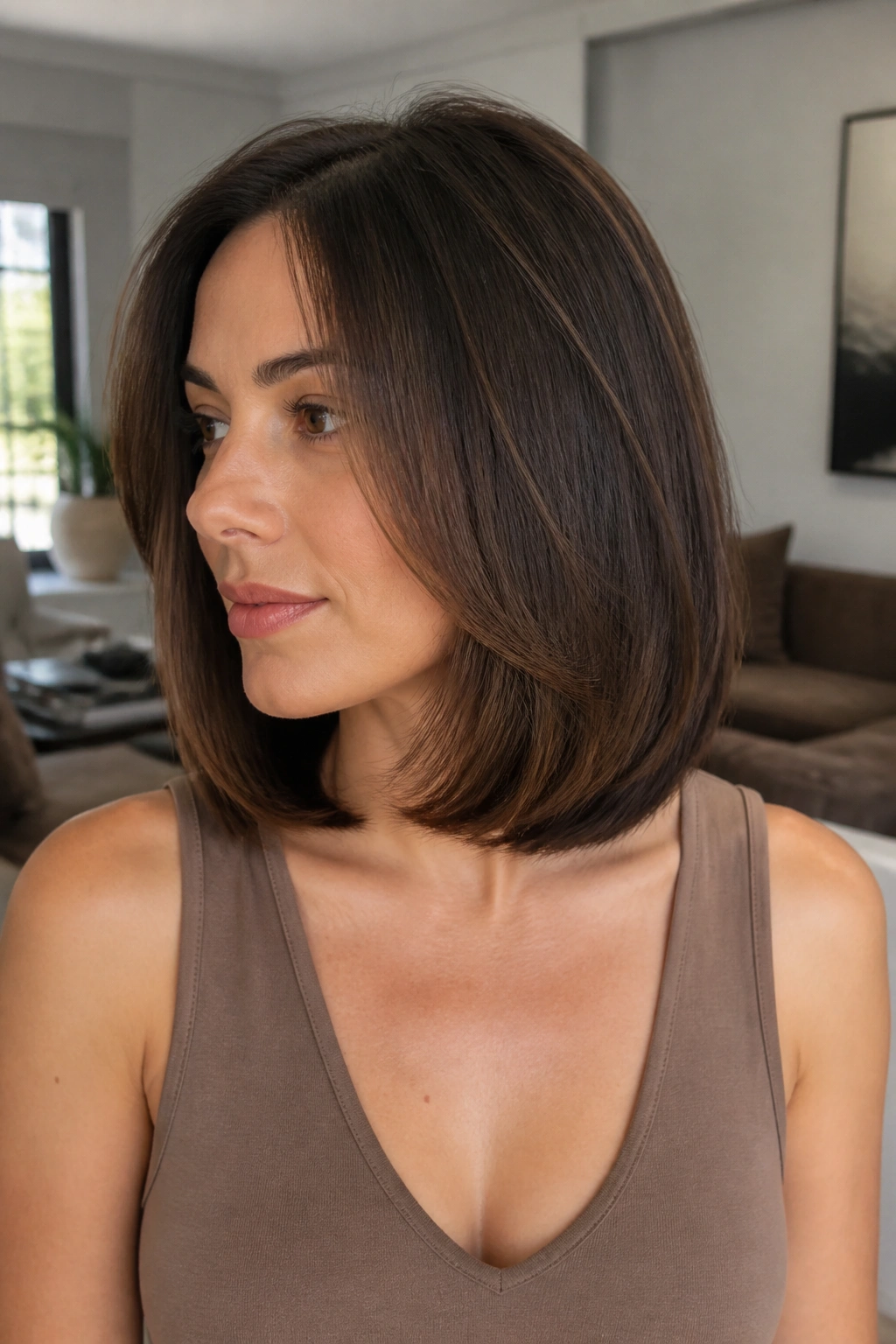
Want volume without obvious layers? A rounded lob is the answer I keep coming back to.
The silhouette stays fuller at the edges, but a stylist can remove a little weight from the inside so the shape doesn’t collapse. It’s subtle work. You won’t notice the layers at a glance, which is the point. The eye reads fullness first.
What to Ask For
- Keep the line around the shoulders or just above them.
- Add hidden interior layers, not short outer layers.
- Round the corners slightly so the cut doesn’t look boxy.
- Blow-dry with the brush turned inward at the ends.
This cut is especially good if your hair is fine but you dislike looking “done.” It moves, but it doesn’t announce itself. That restraint is what makes it work.
3. Butterfly Cut With Airy Face Framing
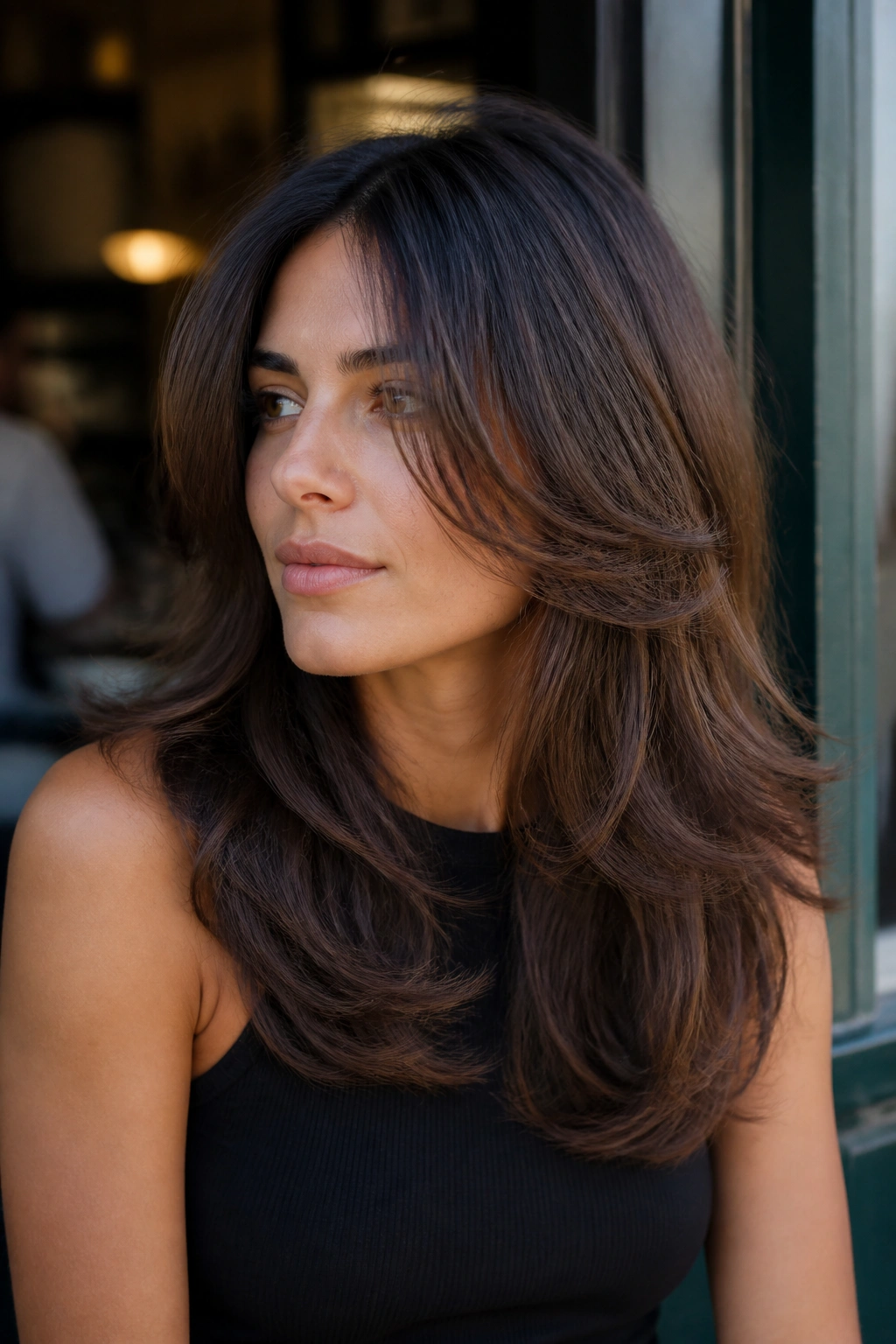
The butterfly cut can look heavy on the wrong head of hair. On fine hair, though, a softer version gives a lot of lift near the face without sacrificing length through the back.
Why It Works
The shorter face-framing pieces sit around the cheekbones and collarbone, which creates the feeling of layers even when the back stays long. That front movement makes the whole haircut look lighter and more dimensional. It also gives you something to style when the rest of the hair wants to go limp.
A good butterfly cut for fine hair keeps the shortest pieces long enough to blend. If the top layers end too high, the cut can start to show gaps. If you wear your hair up often, this shape is a smart pick because the front pieces still soften the face when the rest is clipped back.
Use a big round brush or a hot brush and lift only the front sections away from the face. A few minutes is usually enough. The cut does the heavy lifting.
4. Curtain Bangs With Feathered Length
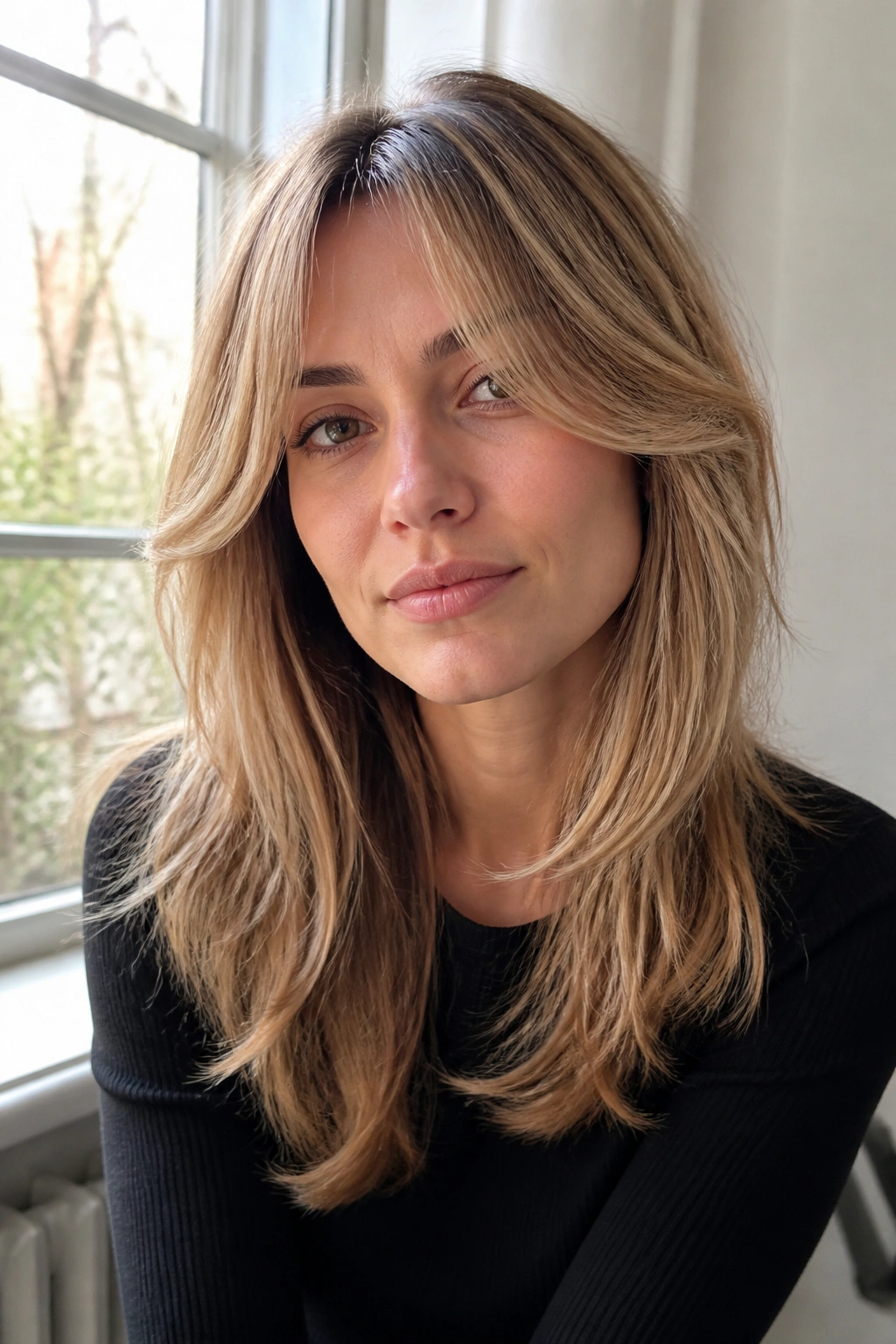
Curtain bangs can save a flat haircut. They draw the eye upward, split the front cleanly, and make the rest of the hair seem fuller because there’s more shape around the face.
The best version for fine hair is light and airy, not thick and blocky. Keep the center short enough to open the eyes, then let the sides sweep into the cheekbones. A heavy fringe will just sit there; a feathered fringe moves. That difference matters a lot when the hair itself doesn’t have much natural bulk.
This style works best with shoulder-length or longer cuts. The bangs give you front interest, and the length keeps the ends from looking sparse. If you hate daily styling, ask for curtain bangs that can dry softly with a center part. They should fall into place with a quick blow-dry, not a twenty-minute wrestling match.
5. Soft Shag With Loose Ends
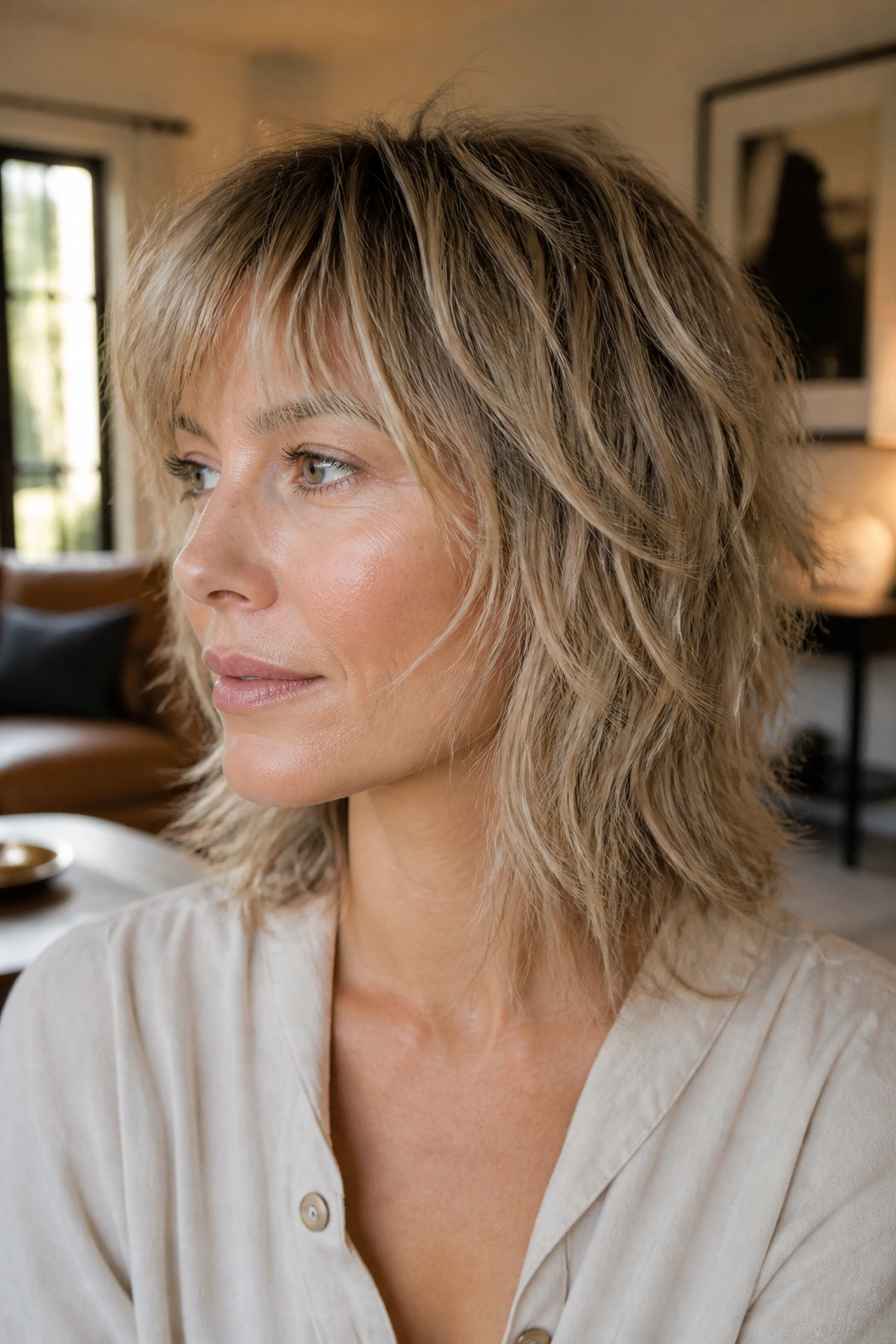
A shag for fine hair needs a gentle hand. Too much chopping and you get frizz, holes, and ends that look like they’ve been chewed by a small animal.
A soft shag is different. The crown has some lift, the layers are loose, and the outline still feels wearable. Think borrowed texture, not aggressive texture. That phrase sounds made up, but it’s the right way to describe the effect. You want enough breakup to keep the hair from lying flat, not so much that the style loses shape.
Style Note
A light mousse at the roots and a touch of cream through the mids is enough for most people. Scrunching with your hands works better than brushing this kind of cut into submission. If your hair bends naturally, even a little, this shape can look lively with almost no heat.
6. Invisible Long Layers for Fine Hair
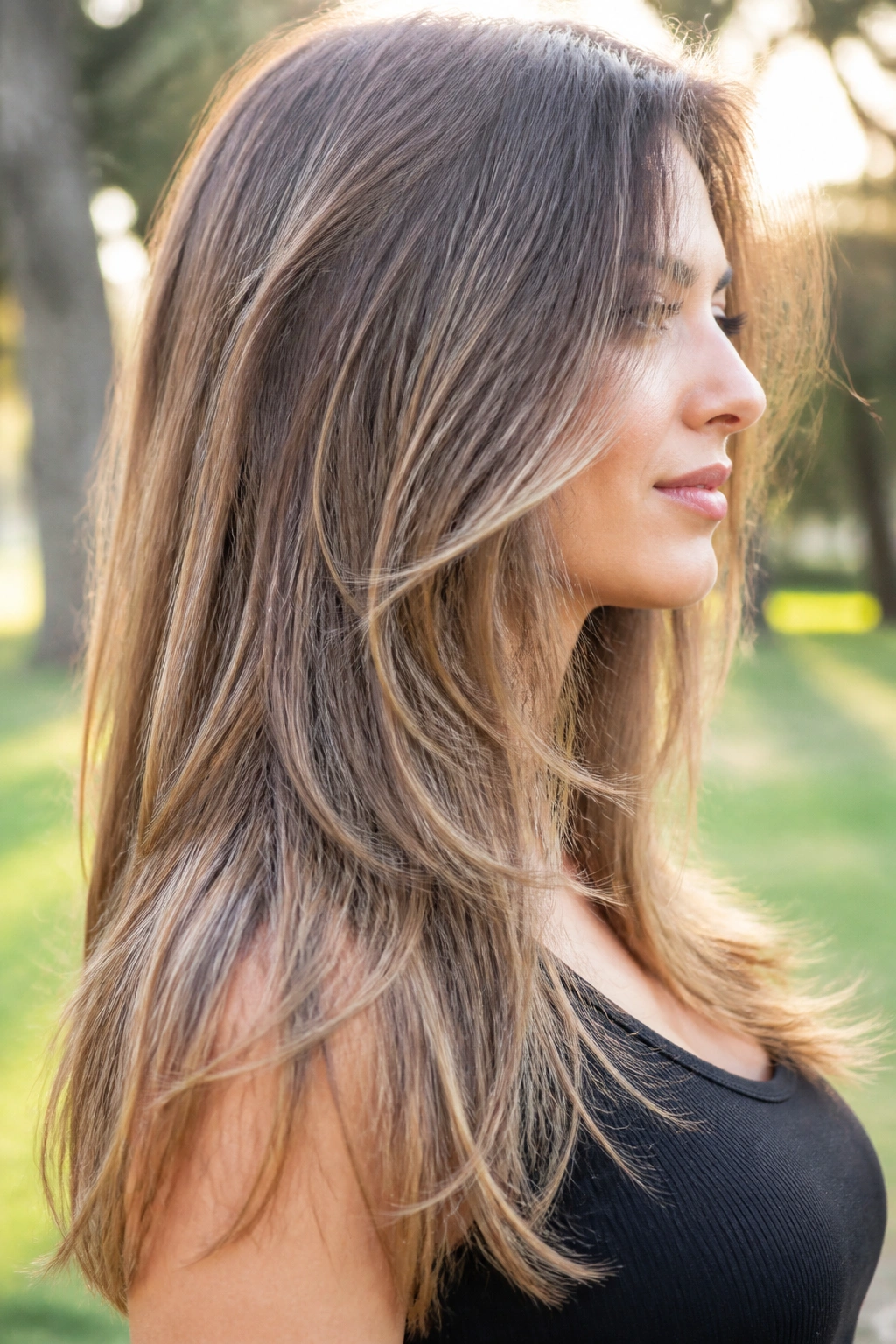
Do you love long hair but hate the see-through ends that come with it? Invisible layers are the quiet fix.
The idea is simple: keep the outer length intact, then add long interior layers that only show when the hair moves. The top still looks smooth. The ends still look thick. Nothing is sliced away in a way that creates thin, fluttery tails. That is why this cut is so useful on long fine hair.
Salon Ask
- Keep the perimeter one solid length.
- Add only a few long internal layers.
- Avoid heavy thinning shears.
- Leave enough weight around the shoulder blade area.
This is a good choice if you wear your hair straight most of the time. Long layers can disappear into the shape and give you body without a lot of styling. They are also merciful on grow-out, which is always a bonus.
7. Chin-Length Bob With Face-Framing Pieces
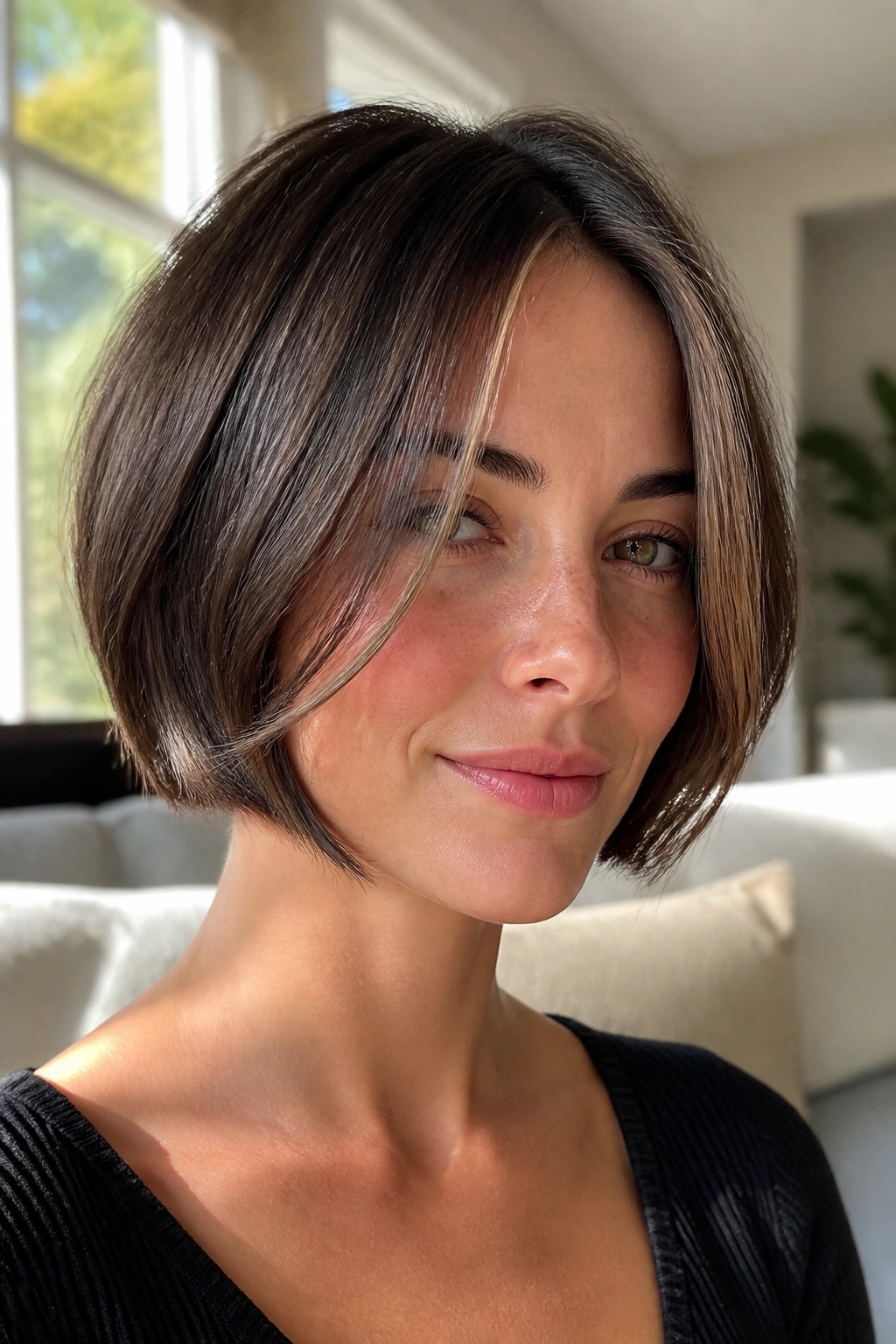
Short hair often looks thicker, and chin length proves it.
A chin-length bob gives fine hair a stronger outline because the ends sit close to the jaw and hold their shape. Add a couple of soft face-framing pieces, and the cut stops feeling severe. The jawline does the work here, not the density of the hair.
This cut shines when the back is kept full and blunt. If too much texture is cut into the sides, the bob starts to go fuzzy. I like this shape on people who want a clean, neat haircut that still moves when they turn their head.
A small underbend at the ends can help a lot. It makes the line look rounder and keeps the haircut from sticking flat against the neck. Easy, quick, sharp-looking. That combination is hard to beat.
8. Shoulder-Length Cut With a Side Part
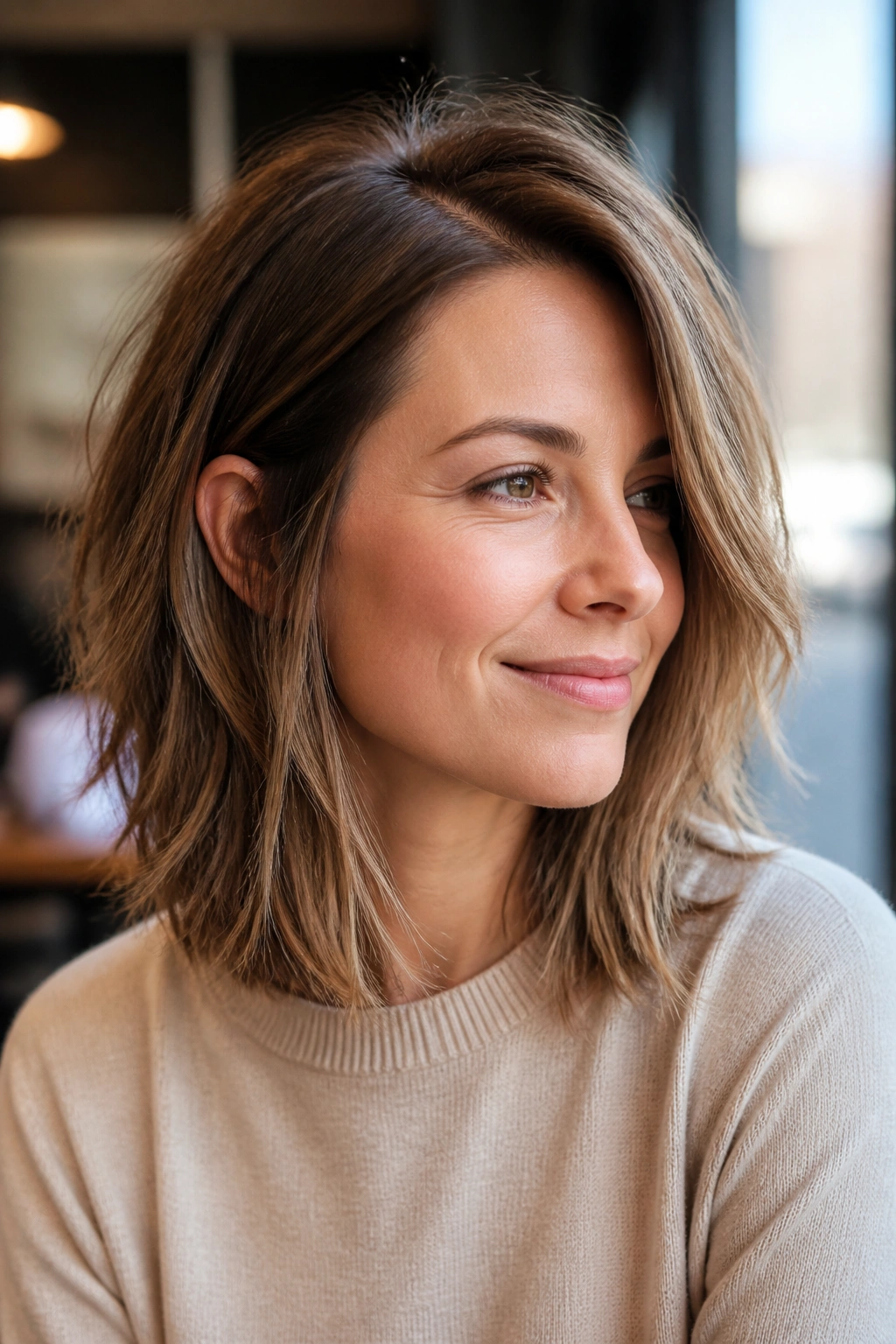
A side part can do more than half the work of a haircut.
When fine hair is split deeply to one side, the roots lift in a way that a center part doesn’t always give you. The result is instant height at the crown and a little sweep across the forehead. The haircut doesn’t have to be dramatic if the part creates the drama.
This length works best with soft layers that begin below the cheekbones. Keep the top fairly smooth and let the movement happen lower down. If the layers start too high, the top can go flat again and the ends can look stringy. That is a bad trade.
I also like this cut for people who tuck hair behind one ear a lot. The shape holds up well when it’s a little undone. And if you flip the part from one side to the other once in a while, the roots wake up fast.
9. U-Shaped Cut With Soft Ends
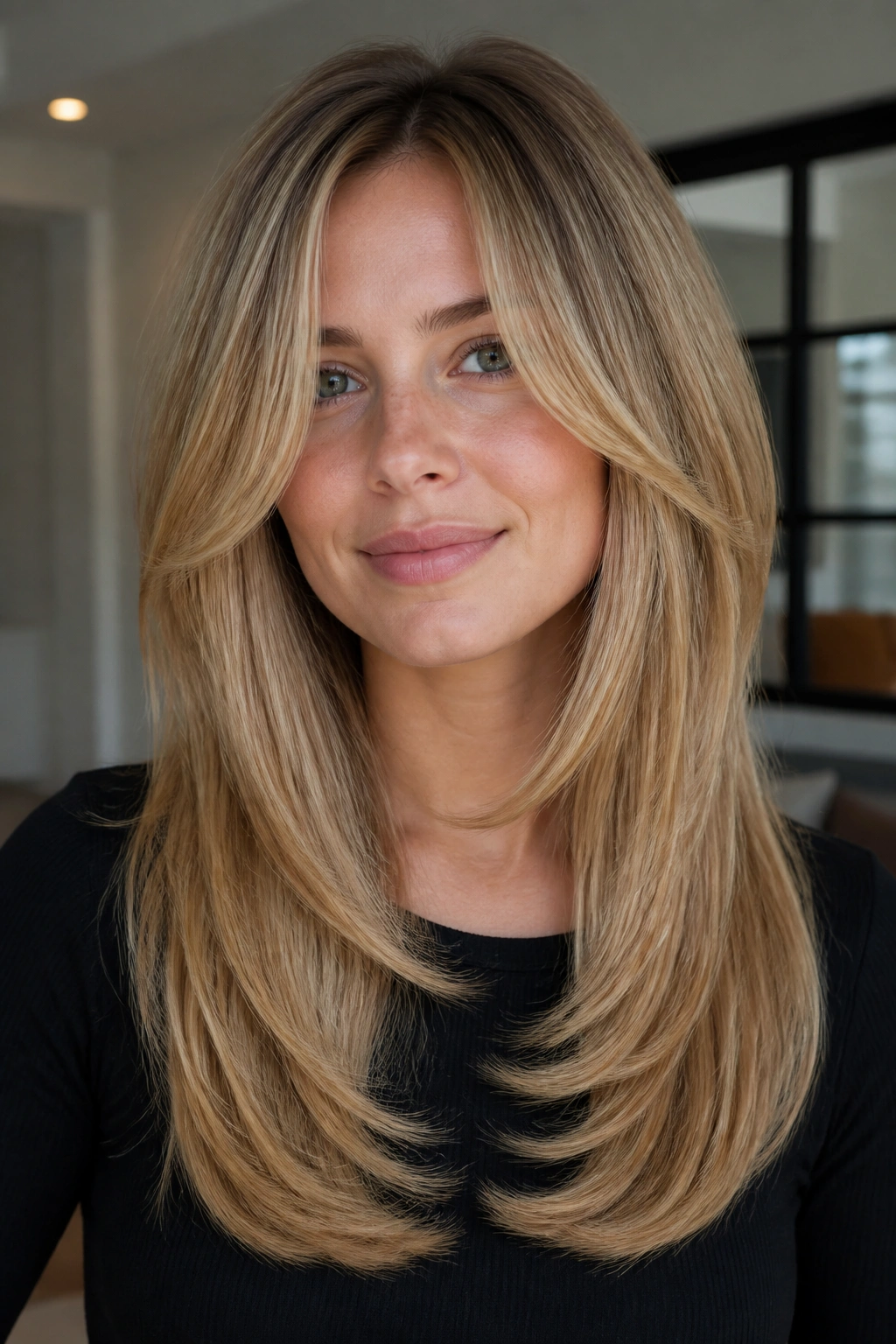
A U-shape keeps more length in the center and a little less around the sides, which can make fine hair look richer.
Straight-across cuts are useful, but a U-shape softens the outline without stripping away bulk. The ends still read as full. The front doesn’t hang heavy. That slight curve gives long hair a better frame.
This cut is worth considering if your hair grows long but loses life at the edges. The front pieces can be just a touch shorter so they sweep cleanly off the face, while the back keeps that longer line people often want. It’s a smart middle ground for anyone who wants movement without obvious layers.
One warning: don’t let the curve become too steep. A deep U can leave the sides looking thin. Keep the drop gentle and the finish clean.
10. Blunt Bob With a Gentle Bend

A blunt bob is old reliable for a reason. Fine hair likes a firm edge.
What gives this version softness is the styling, not the cut itself. The line stays blunt, but the ends are tucked under or given a light bend so the style doesn’t feel rigid. A blunt edge creates the illusion of density; the bend keeps it from looking hard.
How to Style the Bend
Use a medium round brush or a flat brush and dry the hair in small sections. Turn the ends under just enough to curve, not curl. If you use a flat iron, keep the motion slow and smooth, then rotate the wrist only at the last inch.
This is one of those cuts that looks expensive when it is clean. The trick is restraint. Don’t overload it with layers. Don’t rough it up with too much texture spray. Let the line stay the star.
11. Bixie Cut With Crown Lift
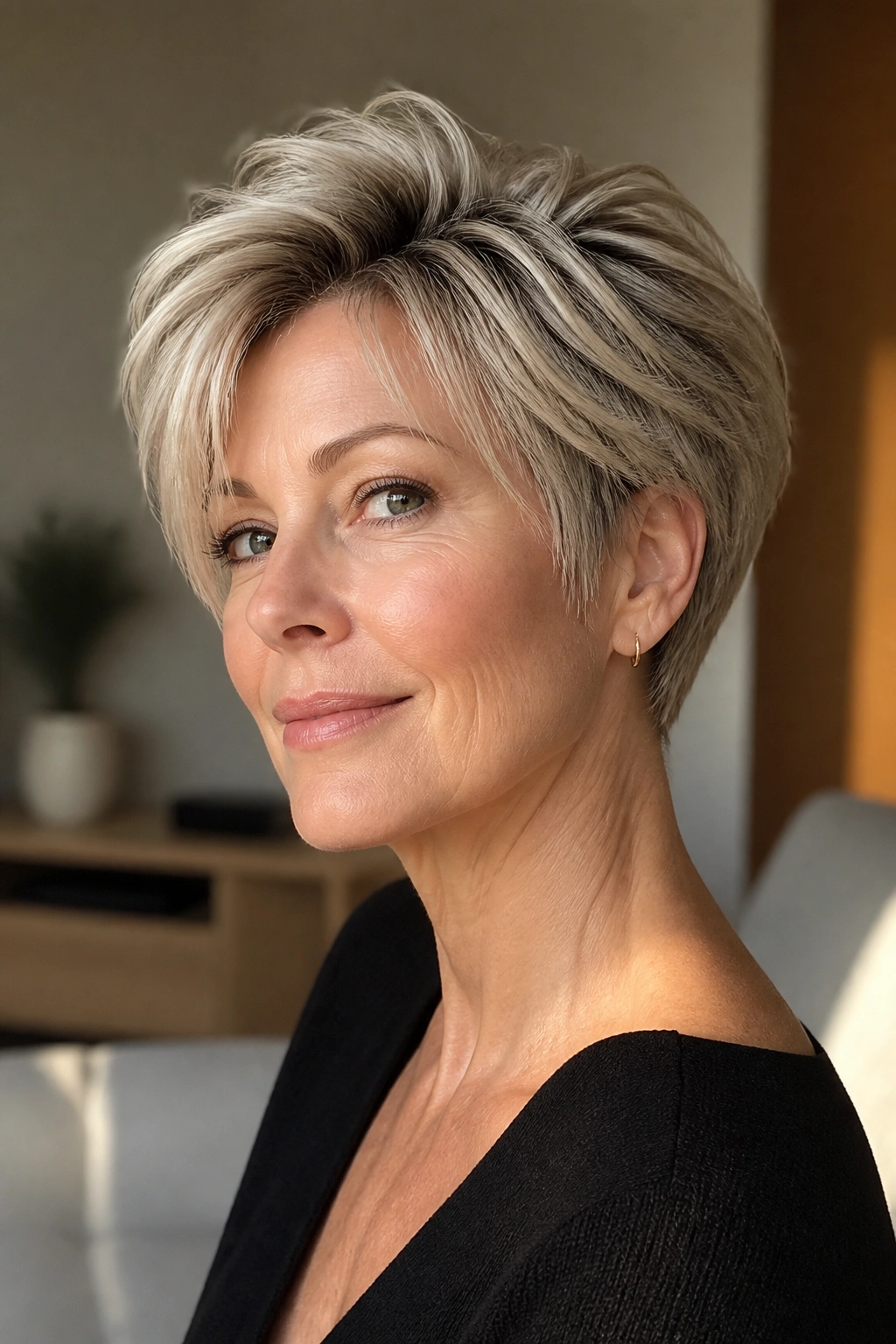
The bixie sits between a bob and a pixie, and that in-between space is exactly why it suits fine hair.
You get shortness, which helps with fullness, but you keep enough length on top to create lift and movement. The crown can be feathered a little, the sides can hug the head, and the overall shape feels easy rather than fussy. It’s one of the best cuts for hair that refuses to hold volume.
What Makes It Different
- The top stays longer than the sides.
- The nape is tight enough to keep the shape neat.
- The fringe can be soft, side-swept, or barely there.
- Styling takes less time than a bob with round brushing.
This cut can look a little flat if it’s left to air-dry with no help. A dab of mousse at the roots and a quick blast with your fingers usually fixes that. If you like short hair but hate a severe pixie, the bixie is the sweet spot.
12. Feathered Crop With Side-Swept Fringe
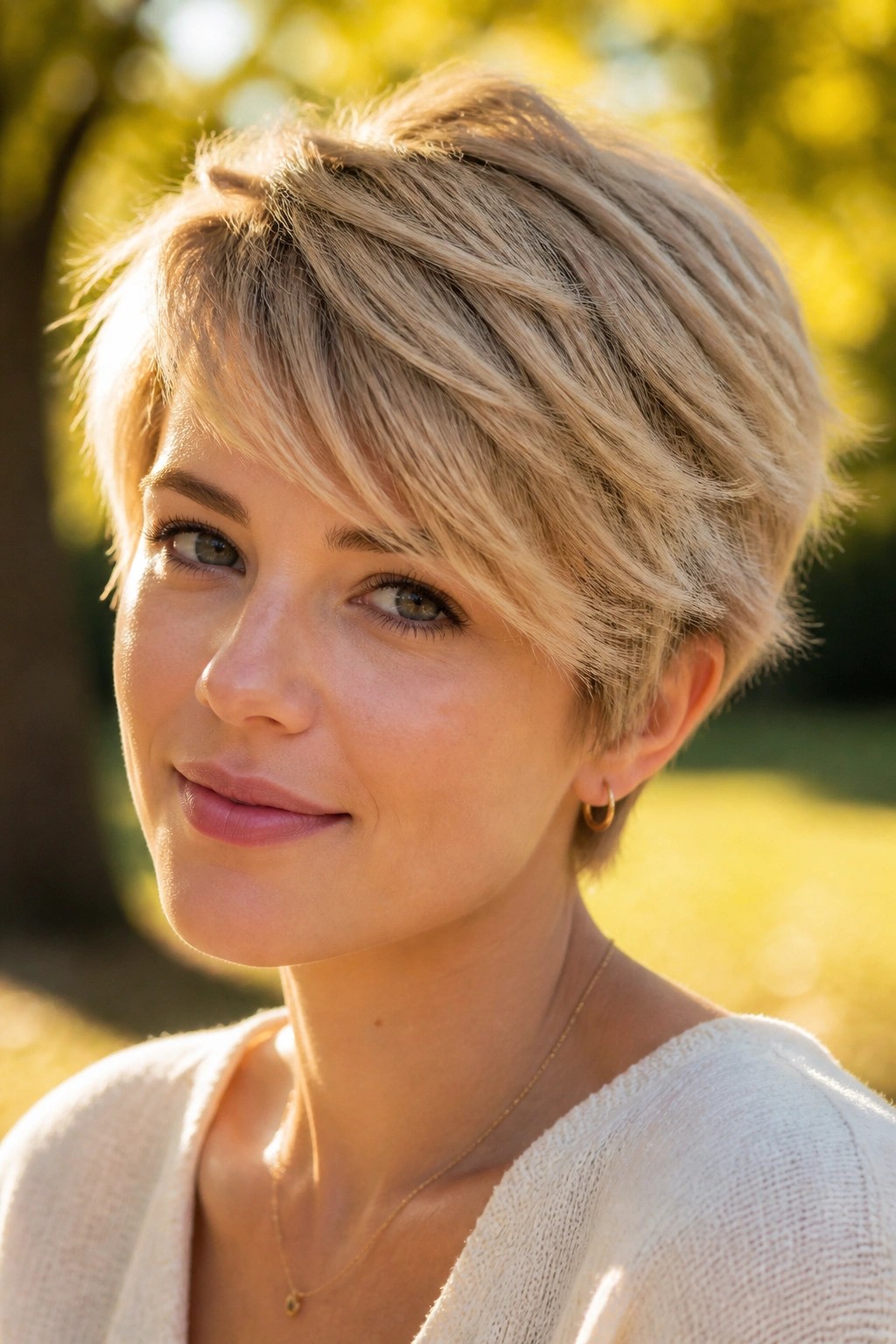
A feathered crop has a little retro charm, but the modern version is softer and much kinder to fine hair.
The fringe sweeps to one side, the top layers are light, and the edges are controlled. It feels airy without turning wispy. That controlled softness is what makes the haircut look deliberate instead of over-styled.
I like this cut on people whose hair breaks up easily when it gets too long. The shorter length gives the strands more support, and the side fringe adds a point of focus. It’s also practical if you want a style that dries fast and still looks finished.
Ask the stylist to keep the feathering concentrated near the top and front. If the whole head is feathered the same way, the shape can start to look thin. A little structure goes a long way here.
13. Midi Cut With Cheekbone Layers
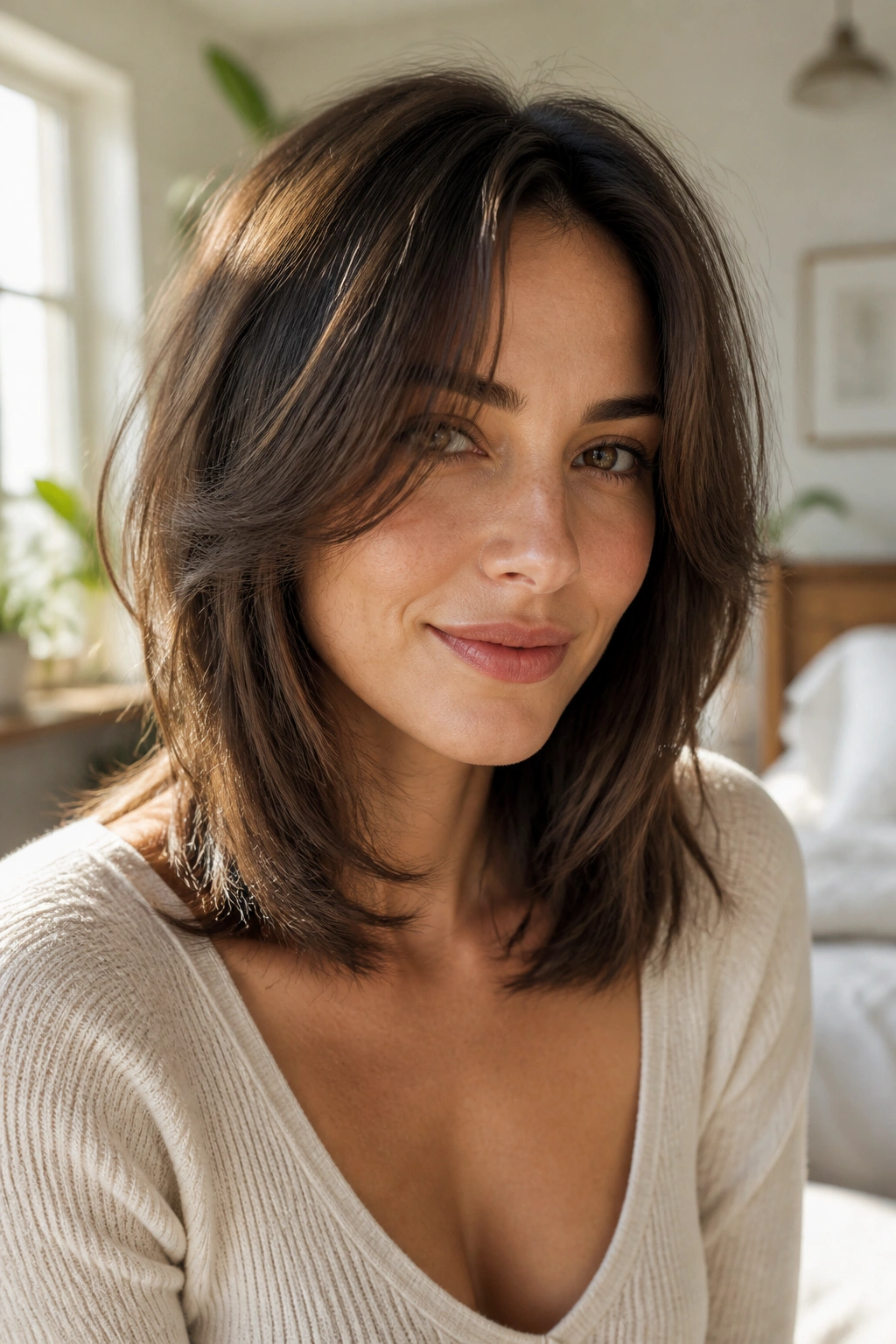
This is the haircut for anyone who wants movement near the face without losing a good bit of length.
Cheekbone layers are flattering because they start where the face naturally wants softness. The layers lift the eyes upward and stop the hair from hanging like one flat sheet. Fine hair often needs shape before it needs more length.
The midi length gives you room to style it in different ways. Straight one day, waved the next, pinned up the third. That flexibility matters because fine hair can look best when it’s not forced into one pose. A soft bend through the mid-lengths makes this cut feel fuller, especially if the ends are kept clean.
If your hair is sparse at the front, don’t let the shortest layers hit too high. Cheekbone level is the safer starting point. It frames the face without exposing too much scalp or thinning out the crown.
14. Soft Wolf Cut With a Mild Crown
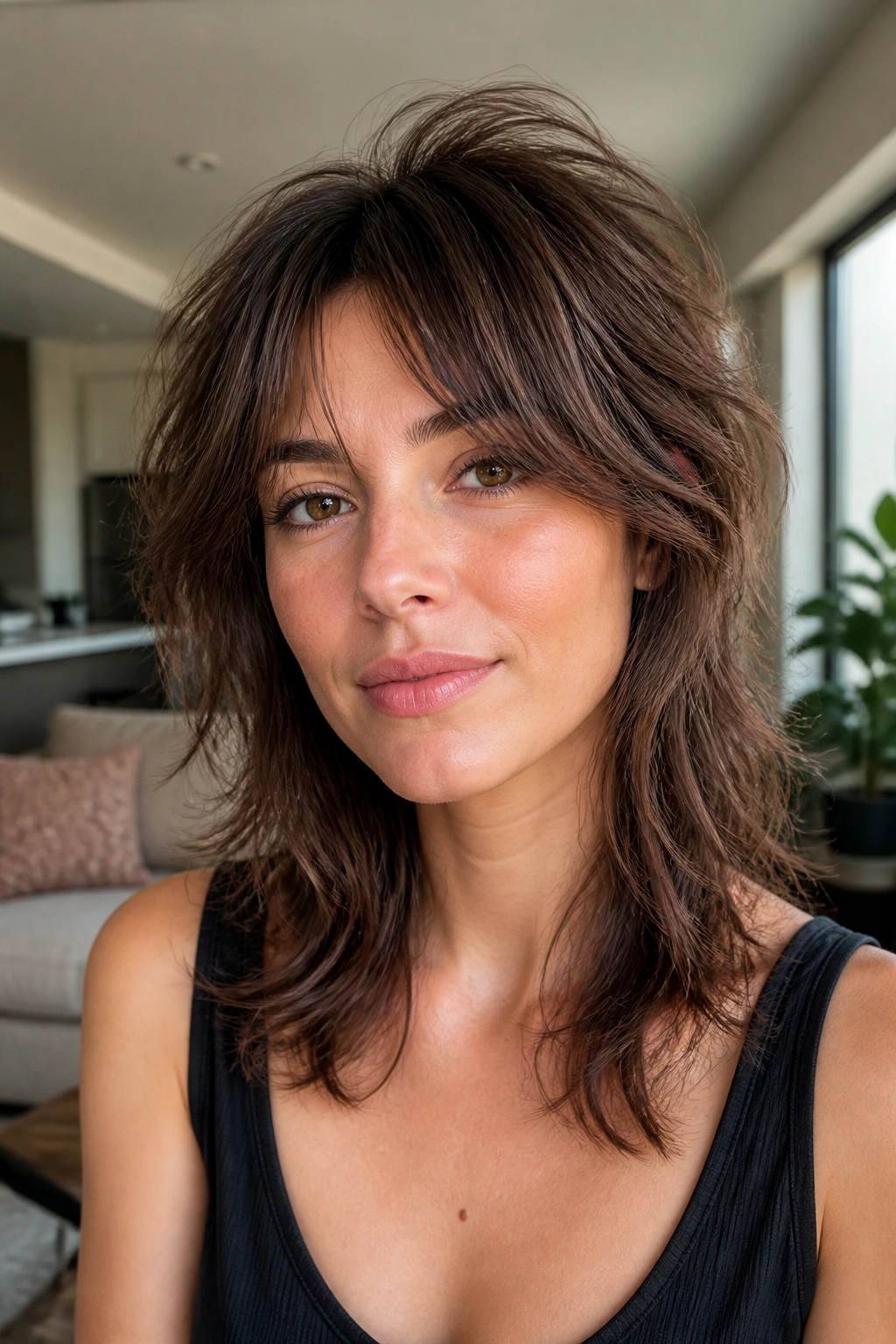
A wolf cut on fine hair sounds risky. A soft one is another story.
The hard-edged, heavily disconnected version can leave fine strands looking sparse. A milder version keeps the shaggy idea but tones down the extremes. The crown gets some lift, the layers stay longer, and the whole cut still feels wearable. Think of it as a shag with better manners.
What to Watch For
- Keep the shortest layers long enough to blend.
- Avoid razor-heavy ends.
- Leave weight through the perimeter.
- Ask for texture, not gaps.
This style suits people who like a little edge but do not want the haircut to swallow their hair. It can look a bit undone on purpose, which is the point. If you like air-dried texture, this one has personality without being precious.
15. Long Layers With a Gentle V
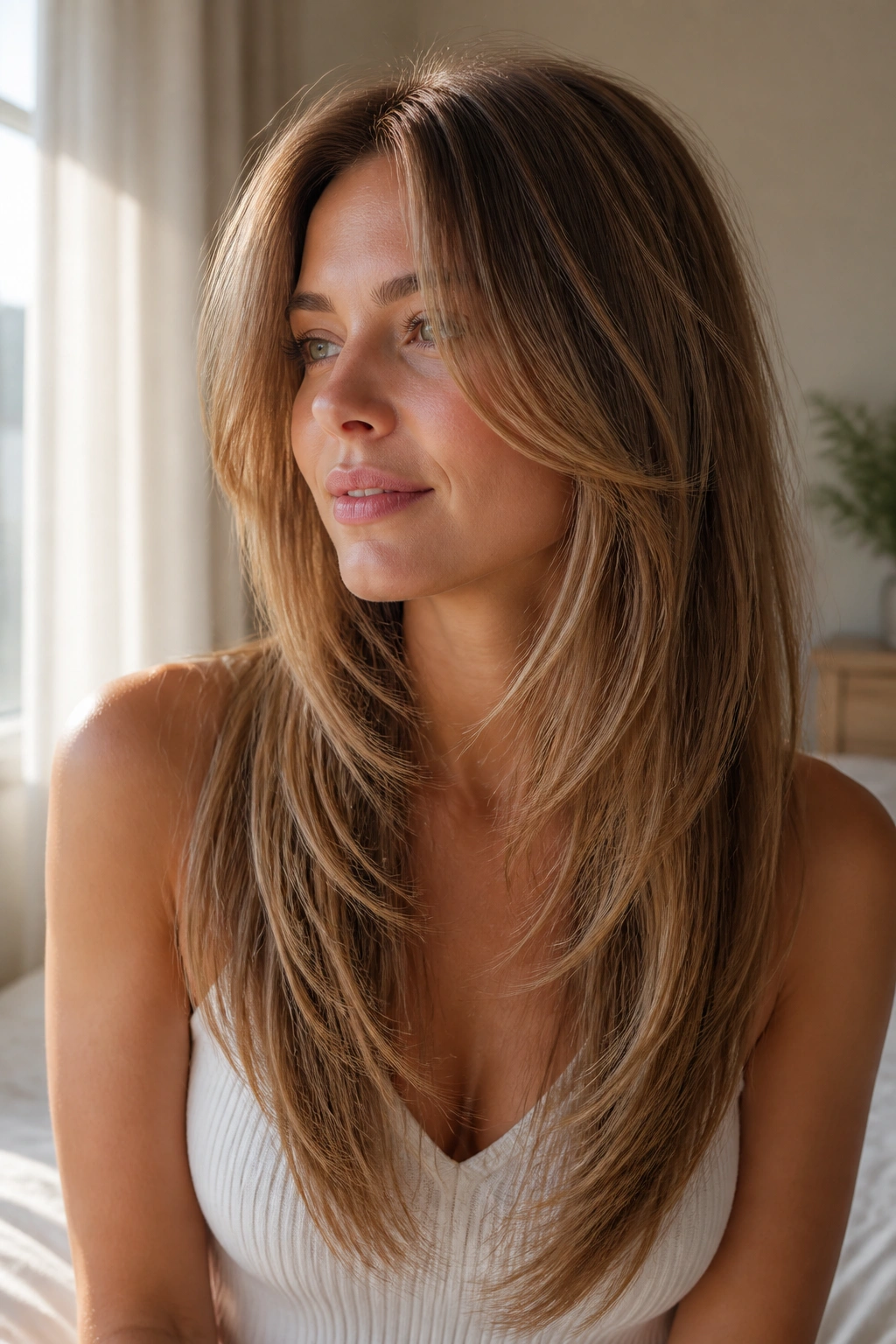
Long hair can absolutely work for fine strands. It just needs shape.
A gentle V cut leaves the back longest at the center and angles the sides slightly forward. That gives the hair movement without removing too much density from the perimeter. The V shape keeps the silhouette from going blocky while preserving a fuller look at the ends.
This is a good choice if you wear your hair down a lot and want a little drama without obvious layering. The front can be face-framing, but keep the drop subtle. A steep V can start to look stringy at the sides, especially when the hair is air-dried.
Blow-drying with the ends curved in or out gives the shape some life. Either direction works. The point is movement, not precision.
16. Textured Lob With Bottleneck Bangs
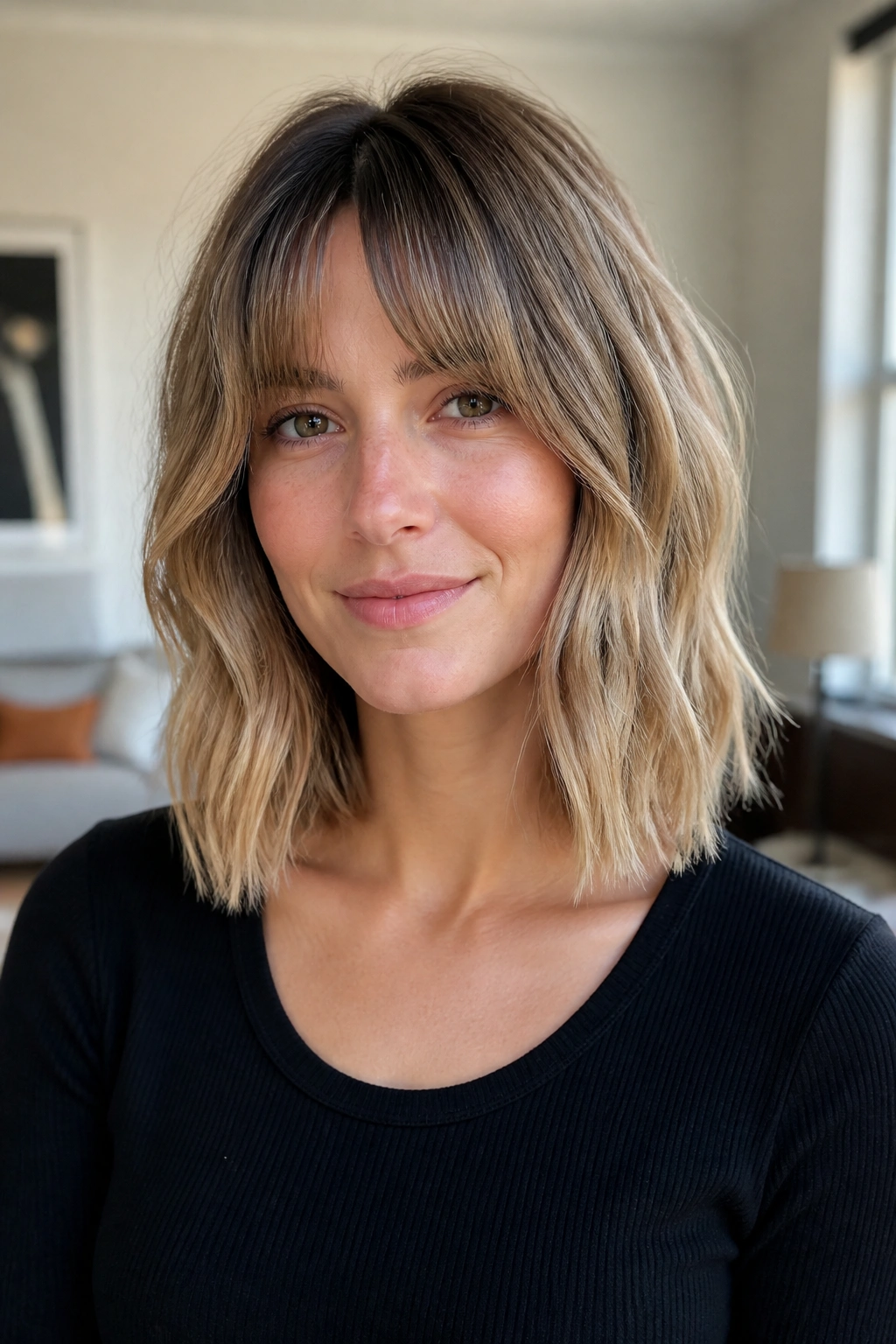
Bottleneck bangs are a smart match for fine hair because they start narrow at the center and open wider as they move outward.
That shape keeps the fringe from looking like a heavy block across the forehead. The lob below it stays polished, while the bangs add a soft frame that makes the whole cut feel current without trying too hard. If curtain bangs are too wide for your face, bottleneck bangs are often the better call.
Styling It Well
Use a small round brush or fingers to direct the center piece down and the sides away from the face. The fringe should skim the brow, not sit in it. A touch of dry shampoo at the roots helps keep the front from collapsing, which is a common problem on fine hair.
This cut works best when the texture is light and the outline is clean. It’s a little more styled than the invisible-layer lob, but it pays you back with shape.
17. Rounded Shoulder Cut With Airy Texture
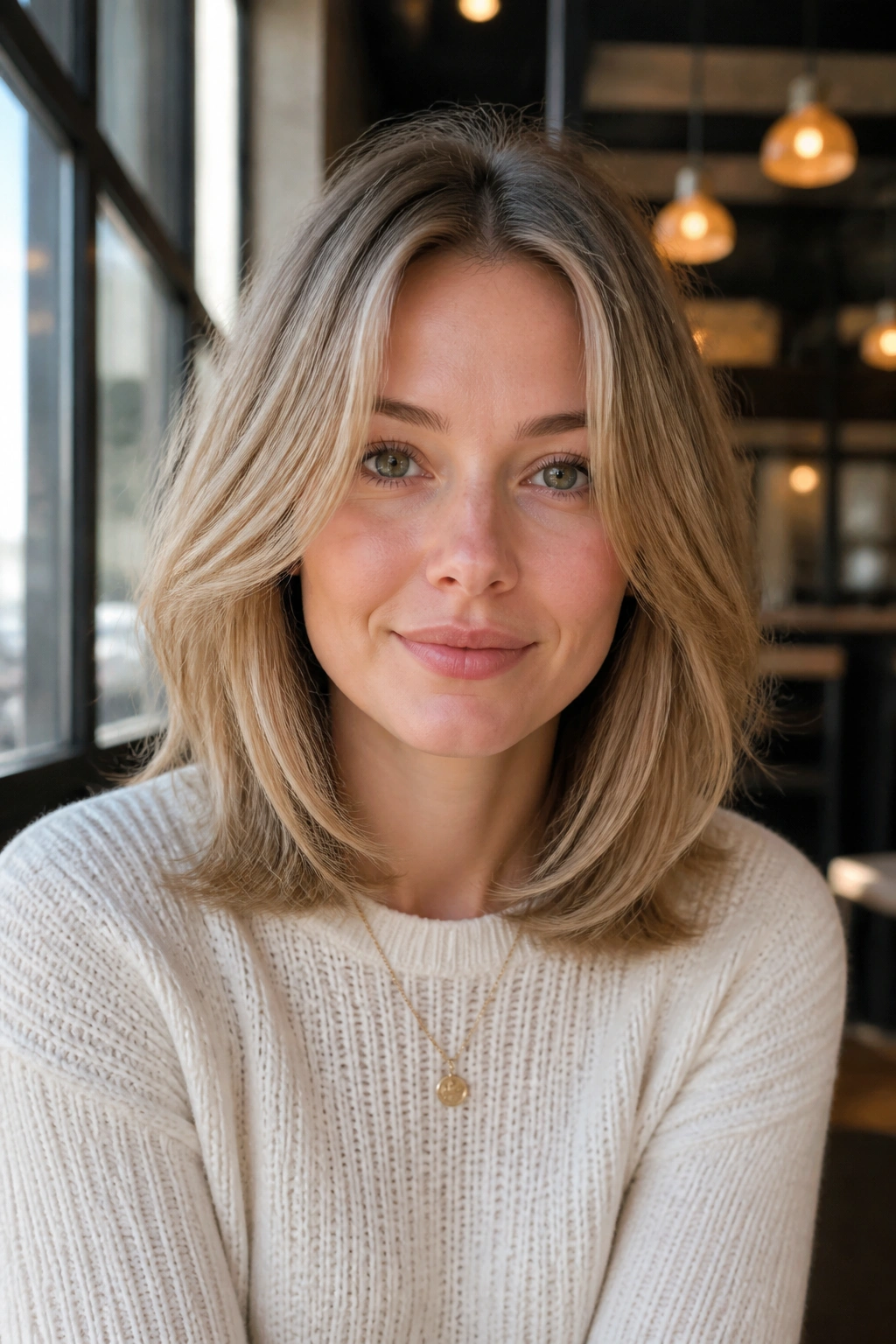
A shoulder-length cut can look plain fast. A rounded shape fixes that.
By curving the outline slightly inward and keeping a little lift through the mid-lengths, the haircut feels softer around the shoulders and neck. It’s a subtle change, but fine hair shows subtle changes well. The whole style looks fuller because the line has purpose.
This is a good choice if your hair tends to flip out at the ends or stick in awkward angles. A rounded shoulder cut gives the strands a path to follow. It also pairs well with natural movement, so you do not need a huge styling routine to make it work.
A few long layers around the face help keep the shape from feeling boxy. I’d keep the interior texture light. Too much and the cut starts to lose that rounded backbone.
18. Chin-Length Layered Bob With Piecey Front
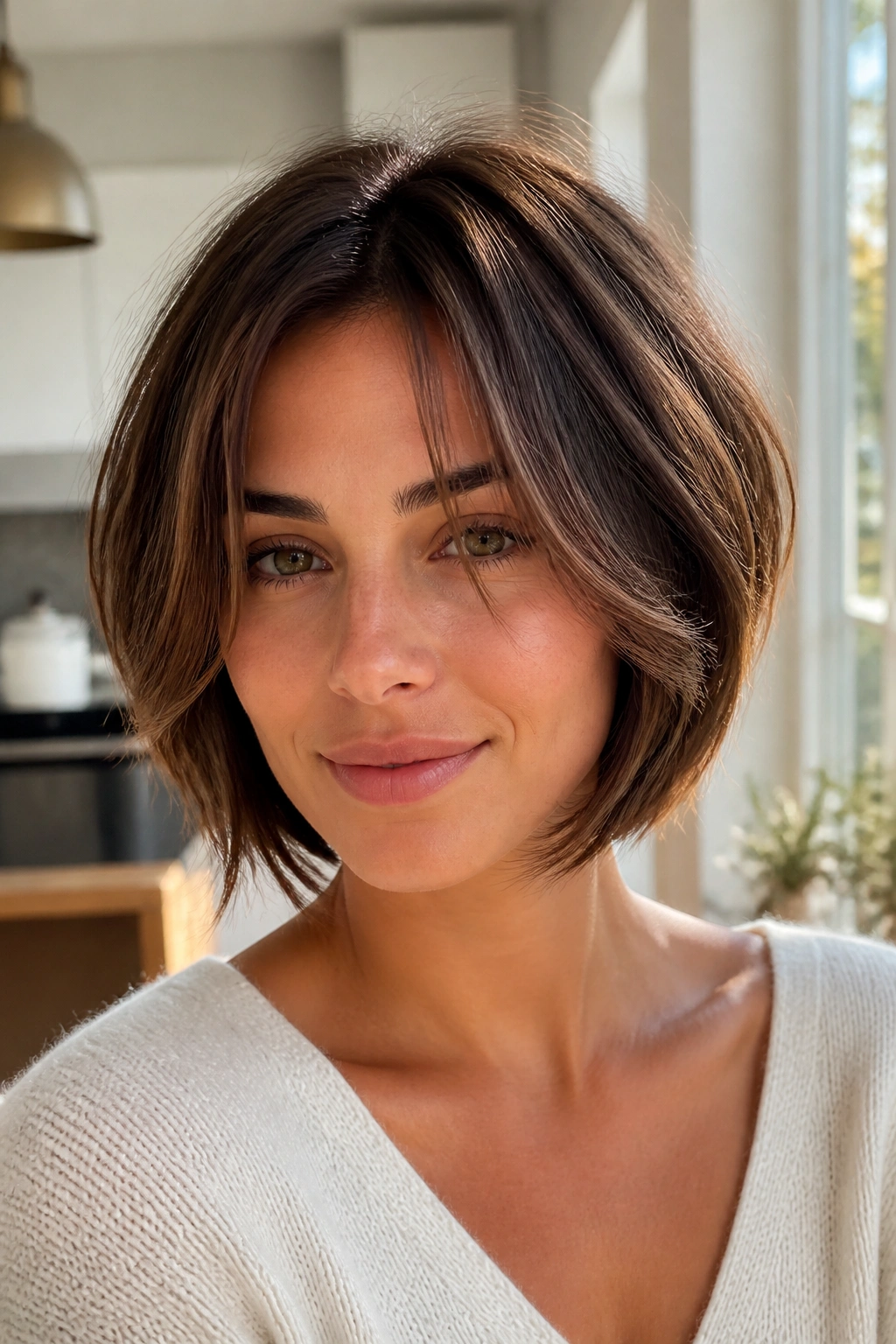
Chin-length is bold, but on fine hair it can be a gift.
The length gives the hair a compact, stronger shape, while small layers at the front stop it from feeling blunt in a stiff way. The front pieces can be broken up just enough to add movement and soften the jaw. This is a haircut with structure, not fluff.
Best Parts of This Cut
- It makes hair look denser because the length is shorter.
- It frames the face without burying it.
- It dries fast and holds shape well.
- It works with a straight finish or a light wave.
The piecey front keeps it modern. If the front is cut too neatly, the bob can look formal in a way that doesn’t flatter fine hair. A little irregularity at the front—tiny, not messy—gives the shape some life.
19. Sleek Lob With Barely-There Layers
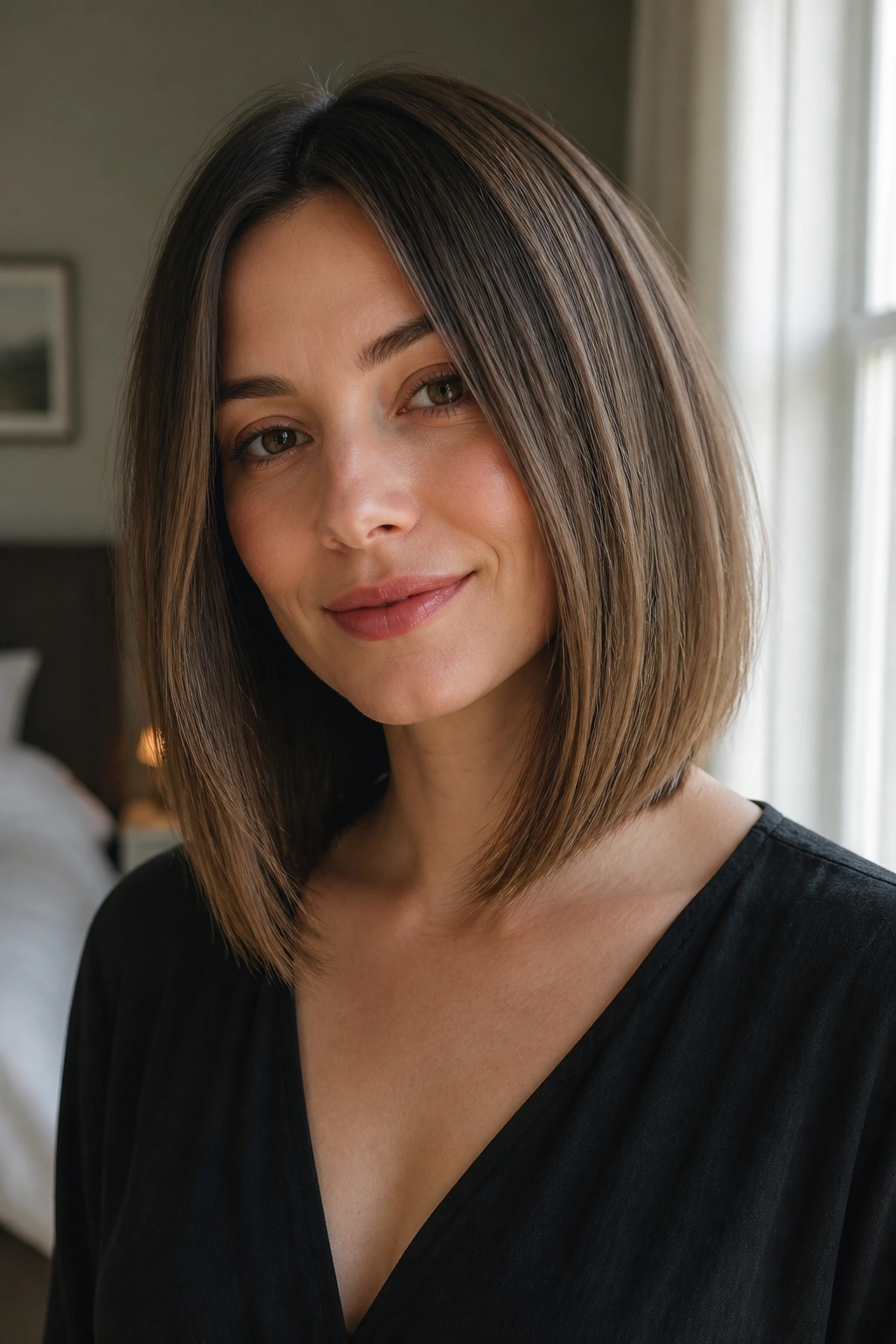
Not every fine head of hair needs more texture.
Sometimes the smartest move is to keep the line sleek and add only the smallest bit of layering near the front. That way the ends still feel full, but the haircut isn’t heavy. A controlled shape can make fine hair look thicker than a cut with too much movement.
This is especially good for straight hair that already lies close to the head. Heavy layers would only create gaps. A sleek lob gives you polish and leaves the density where the eye wants it most. It’s also a strong choice if you like a clean look with minimal styling.
A flat iron pass or a quick blowout will polish the cut. If you want a bit of softness, bend the front pieces away from the face by half an inch. That’s enough.
20. Airy Pixie With Tapered Sides
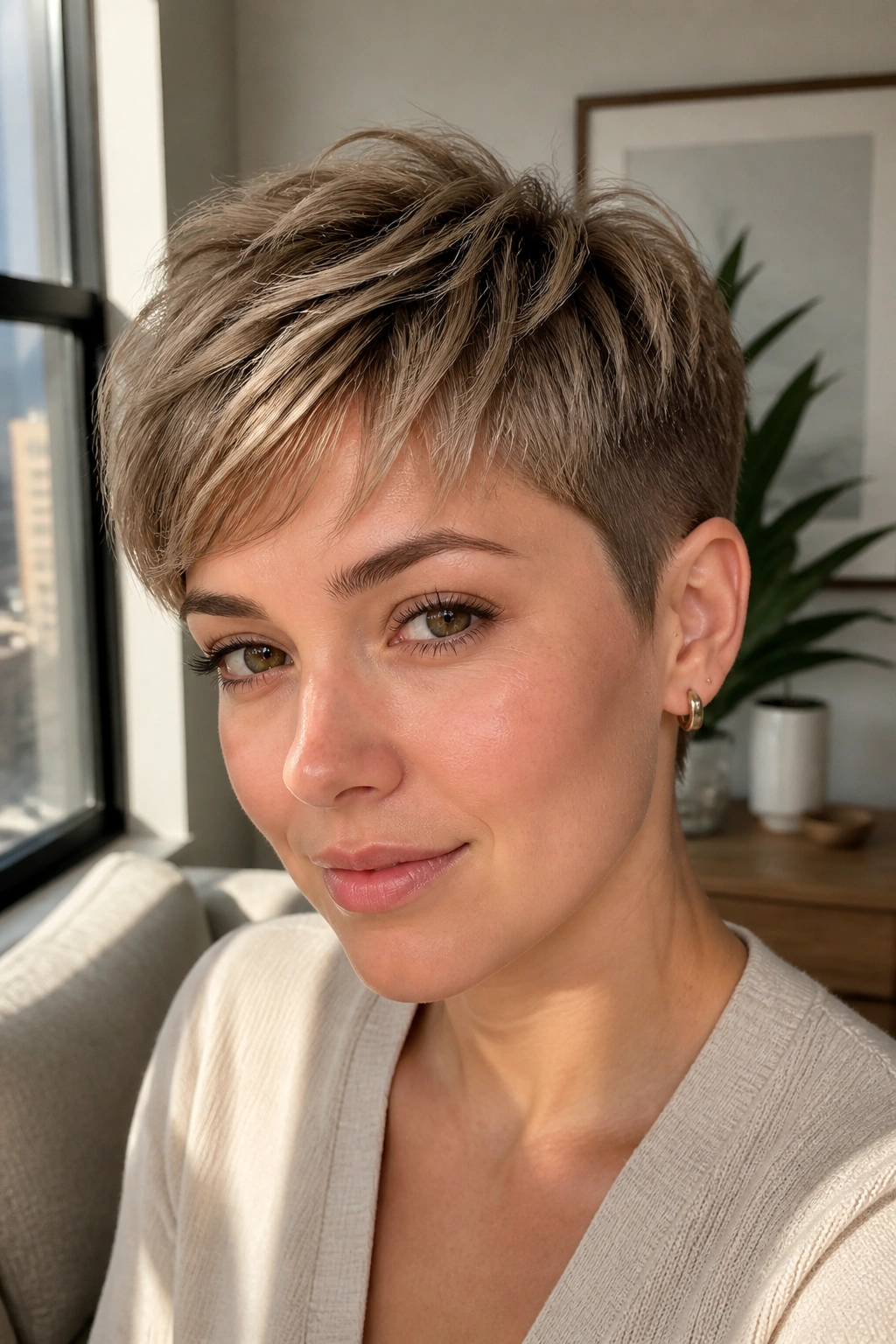
A pixie can look soft, not severe.
The key is keeping the top a little longer and the sides neatly tapered so the head doesn’t look square. Fine hair often does well at this length because there is less weight pulling it down. The silhouette becomes the volume. That is the whole trick.
What to Ask For
- Leave the top long enough to pinch and lift.
- Taper the sides close, but not skin-tight.
- Keep the fringe wispy or side-swept.
- Use a little mousse or paste, not a thick cream.
This cut has a lot of personality, but it’s also practical. It dries fast, holds shape, and doesn’t need much daily fuss. If your hair looks better shorter than longer, this is one of the strongest options on the list.
21. Graduated Bob With Nape Lift
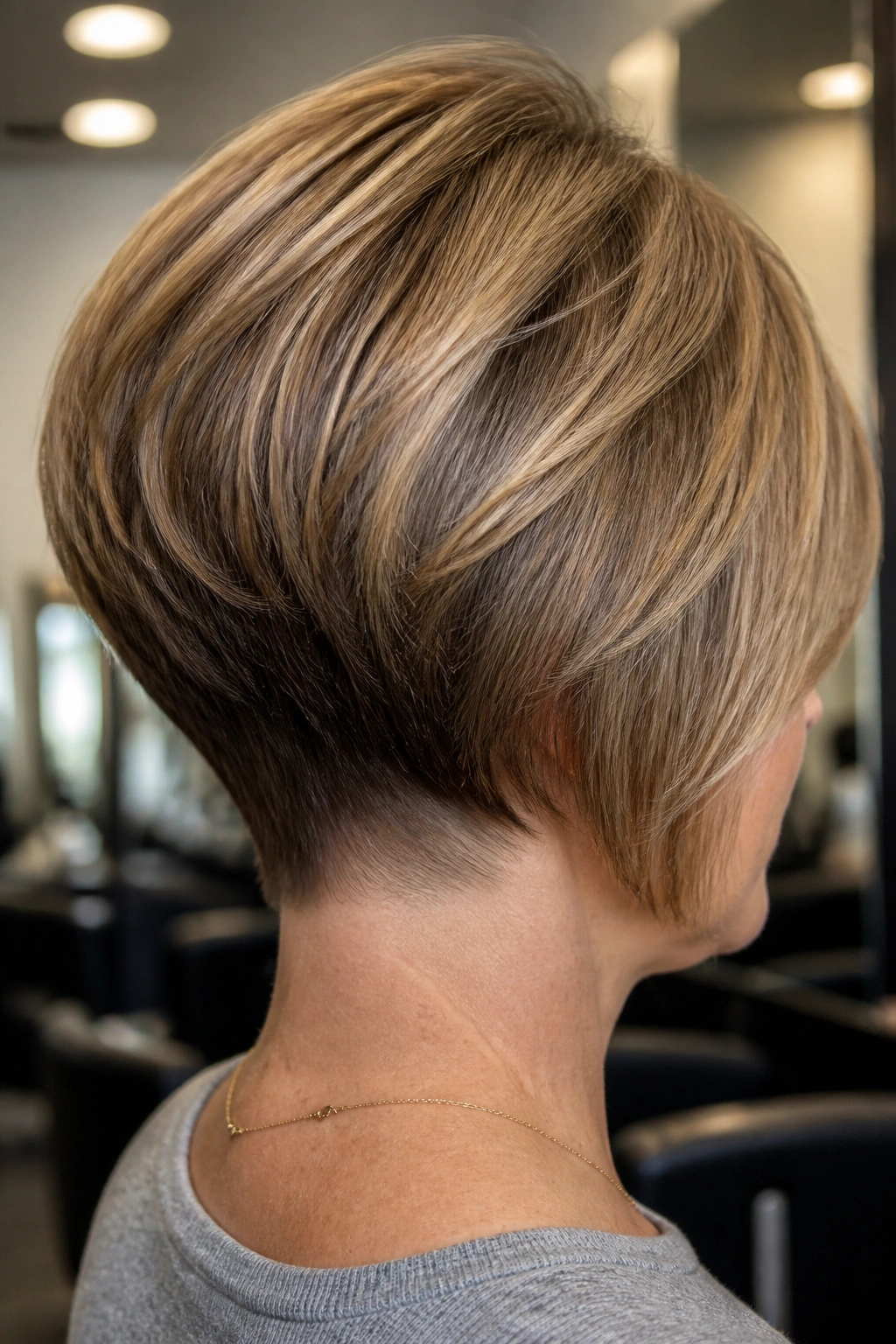
A graduated bob gives fine hair a built-in boost at the back.
The stacked shape at the nape creates lift where the head naturally curves, which means the haircut gains body without relying on heavy styling. The back looks fuller because the hair is cut to support itself. That matters a lot when the strands are fine and the roots tend to fall flat.
The version I like most keeps the graduation soft. If the angle is too steep, the bob can get helmet-like. If it’s too flat, the volume disappears. The sweet spot sits in the middle: neat at the neck, rounded through the crown, and smooth at the sides.
This works well if you want a structured haircut that still feels feminine. It’s polished, yes, but not stiff. A quick round-brush blowout brings the whole shape to life.
22. Soft Flip Cut With Outward Ends
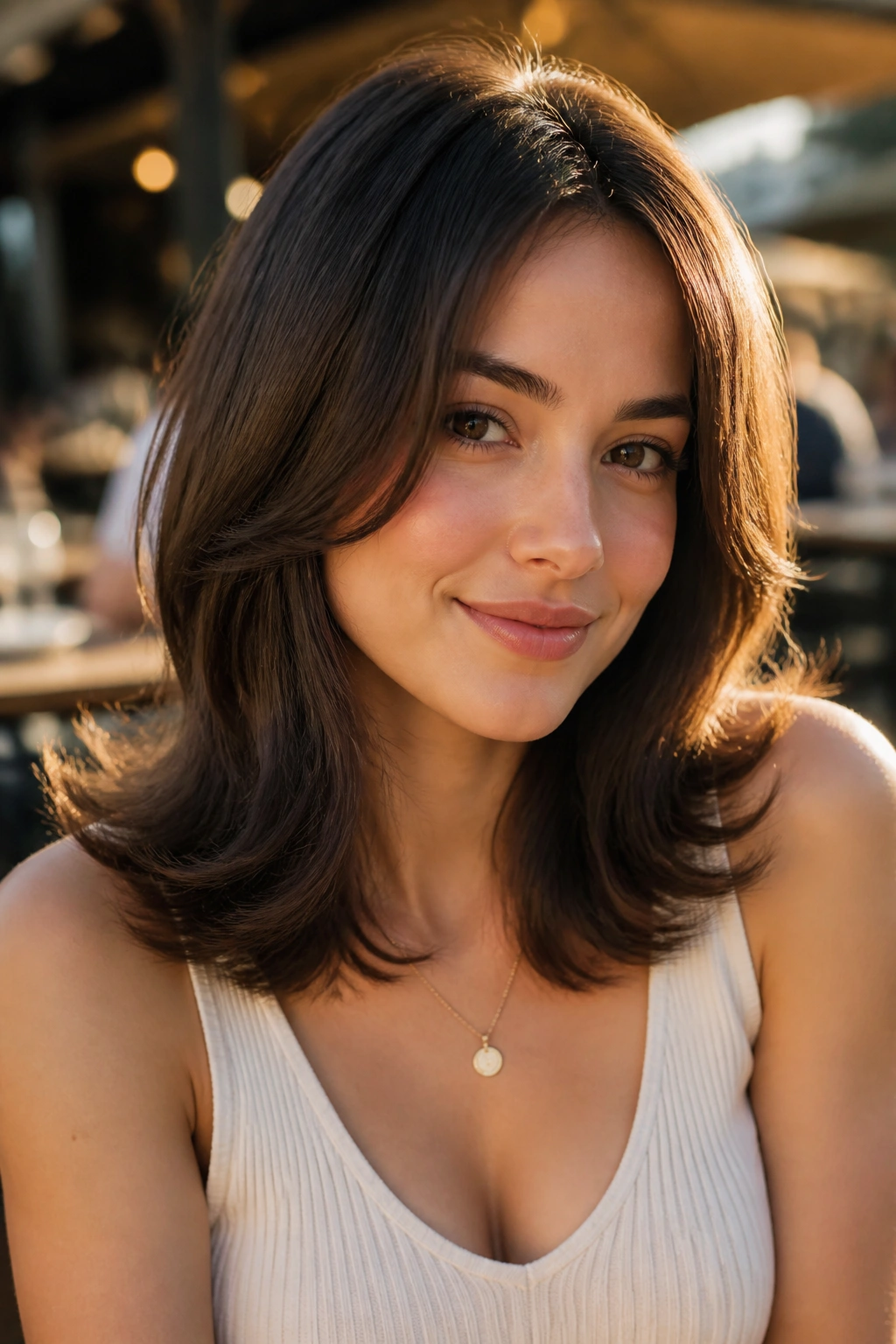
A little outward flip at the ends can make hair seem bouncier than it really is.
That is especially useful for fine hair, where every ounce of movement counts. The flip gives the cut a playful edge, and the layers underneath stay soft so the style does not turn into a retro costume piece. The energy comes from the ends, not from heavy layering.
How to Style It
Use a brush or iron to turn the last inch of the hair outward at a slight angle. Not a big curl. Just enough to see the ends lift away from the neck or shoulders. Pair it with a side part or a loose center part depending on the face shape.
This cut works best on shoulder-length hair or a little shorter. Longer lengths can flatten the flip too much. Shorter lengths hold it easier and look fuller faster.
23. Fine Curly Cut With Diffused Layers
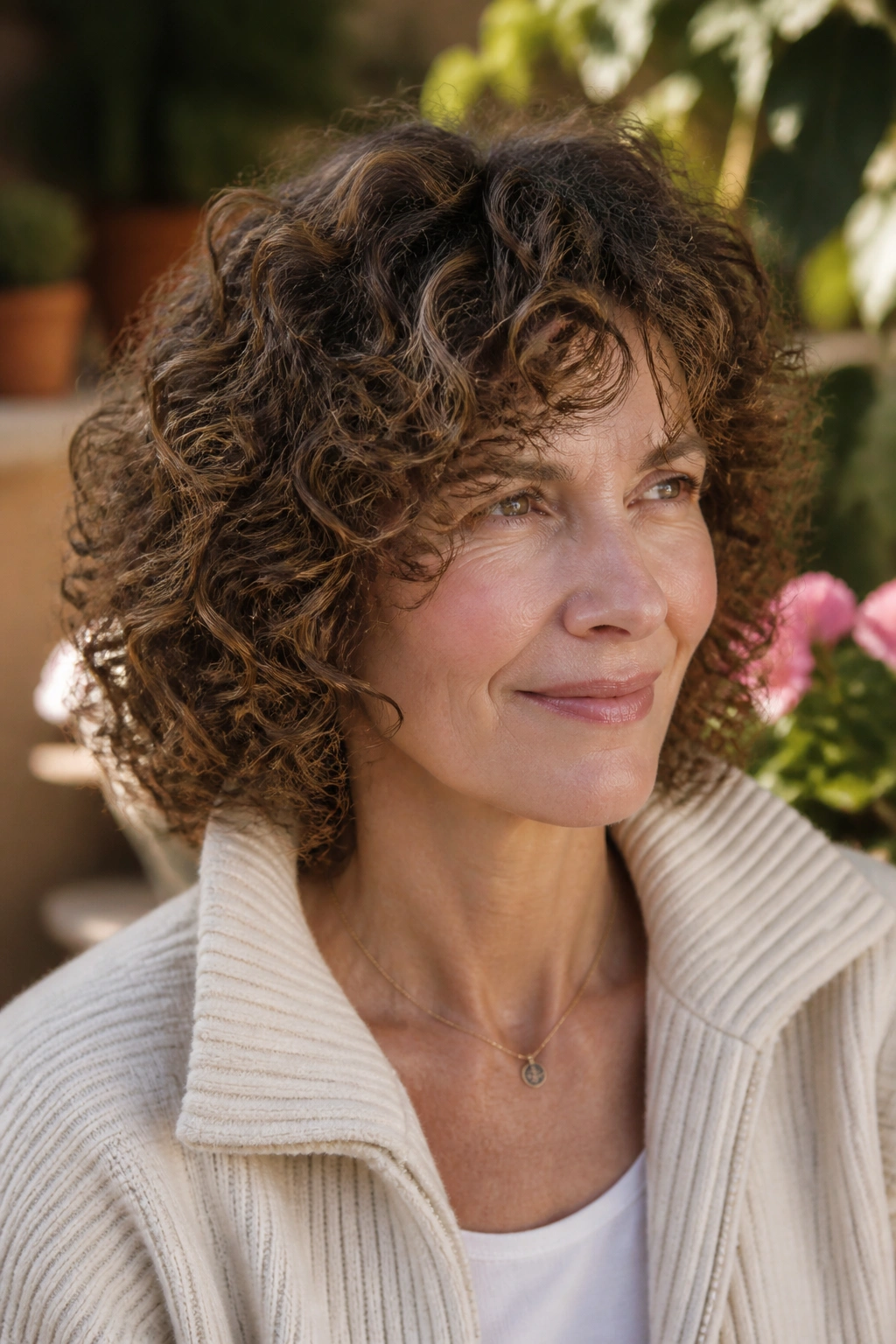
Curly fine hair needs a different approach. The layers have to follow the curl pattern, not fight it.
If the cut is too short or too broken up, curls can balloon and the ends can look thin. A softer layered shape keeps the curl clumps intact and gives the hair room to spring without turning triangle-shaped. The goal is definition with enough weight to keep the curls anchored.
Cutting dry is often safer for this kind of hair because the stylist can see where each curl lands. That matters more than people think. A wet curl can lie and then bounce up several inches later. Dry cutting helps avoid surprises.
Use a diffuser on low heat and low speed. Then stop touching it. Fine curls can frizz fast when they’re overhandled.
24. Fine Wavy Cut With Loose Interior Layers
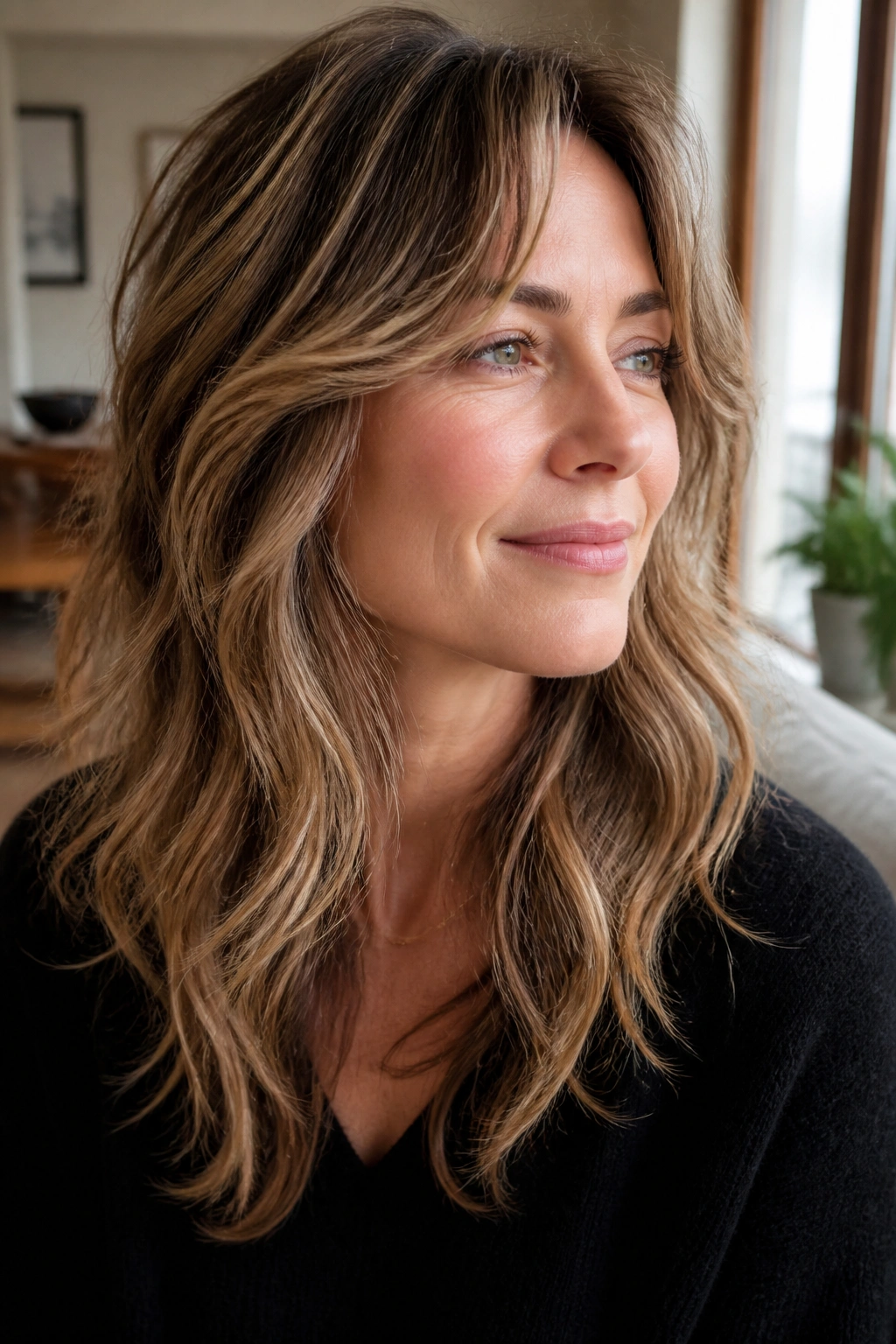
Wavy fine hair can look effortless when the cut works with the bend instead of flattening it.
Loose interior layers help the waves stack on each other, which makes the hair look fuller through the mids. The outer line stays soft, so the style doesn’t break apart. This is one of those cuts that gets better when it is a little undone.
If your waves collapse by noon, the problem may be too much length and not enough internal shape. A few gentle layers can wake up the pattern without making the ends look shredded. I’d keep the front pieces long enough to tuck behind the ear, because that gives you styling options.
A sea-salt spray isn’t required. A light wave cream and a diffuser are usually enough. Or you can let it air-dry and call it done. That works too.
25. Deep Side-Part Cut With Lift
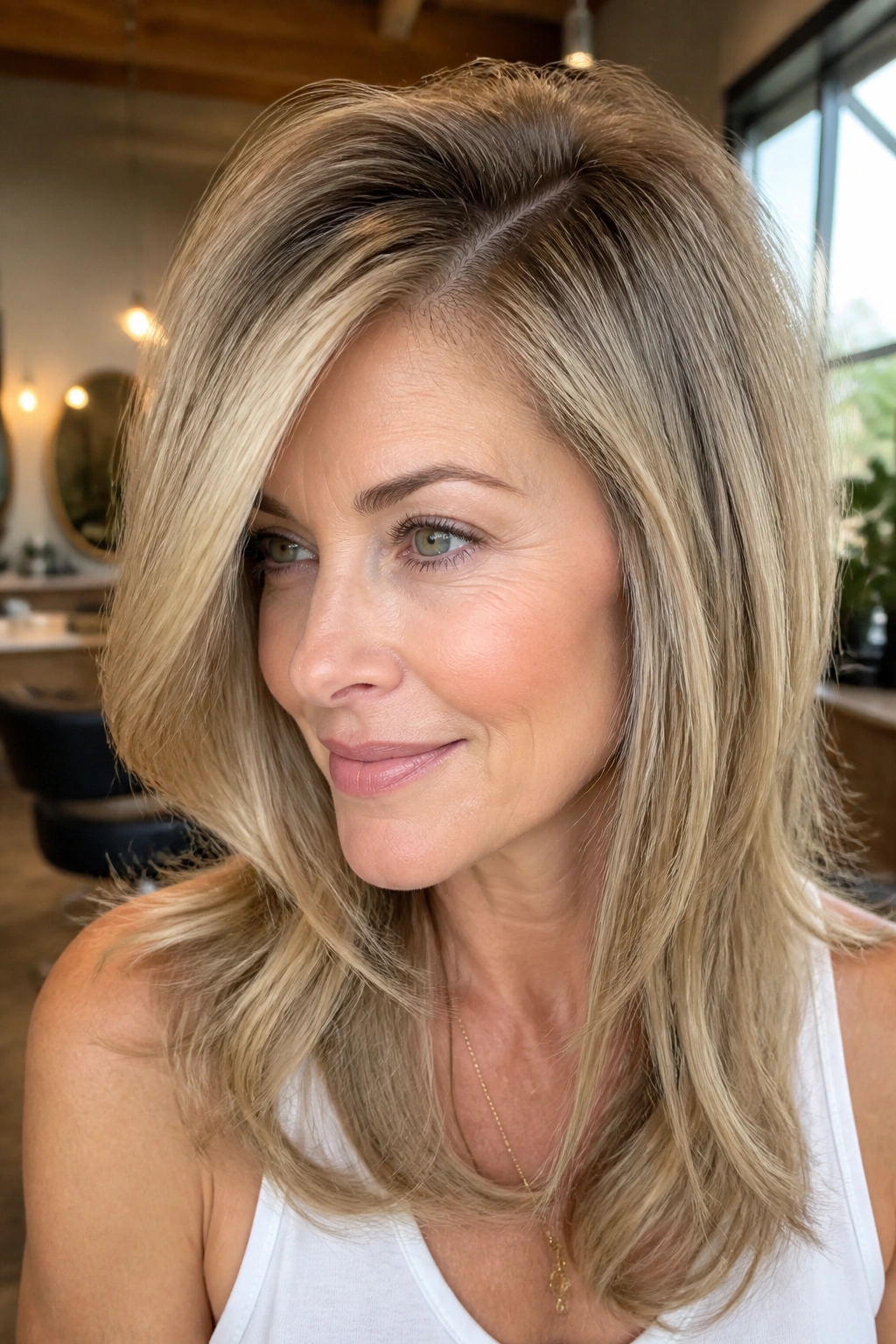
A deep side part can change the whole profile of fine hair.
One side gets instant height, the other gets a soft sweep across the face, and the crown stops looking as flat. The haircut underneath can stay fairly simple because the part itself creates shape. This is volume without relying on bulk.
The cut works best when the longest layers are kept below the cheekbones. That way the face-framing pieces move, but the top doesn’t look thin. A side part also helps if one side of your hair grows flatter than the other, which happens more often than people admit.
For a little extra lift, dry the roots in the opposite direction first, then flip the part back. It takes a minute or two and can give you more body than an extra product ever will.
26. Minimal-Layer Cut for Straight Fine Hair
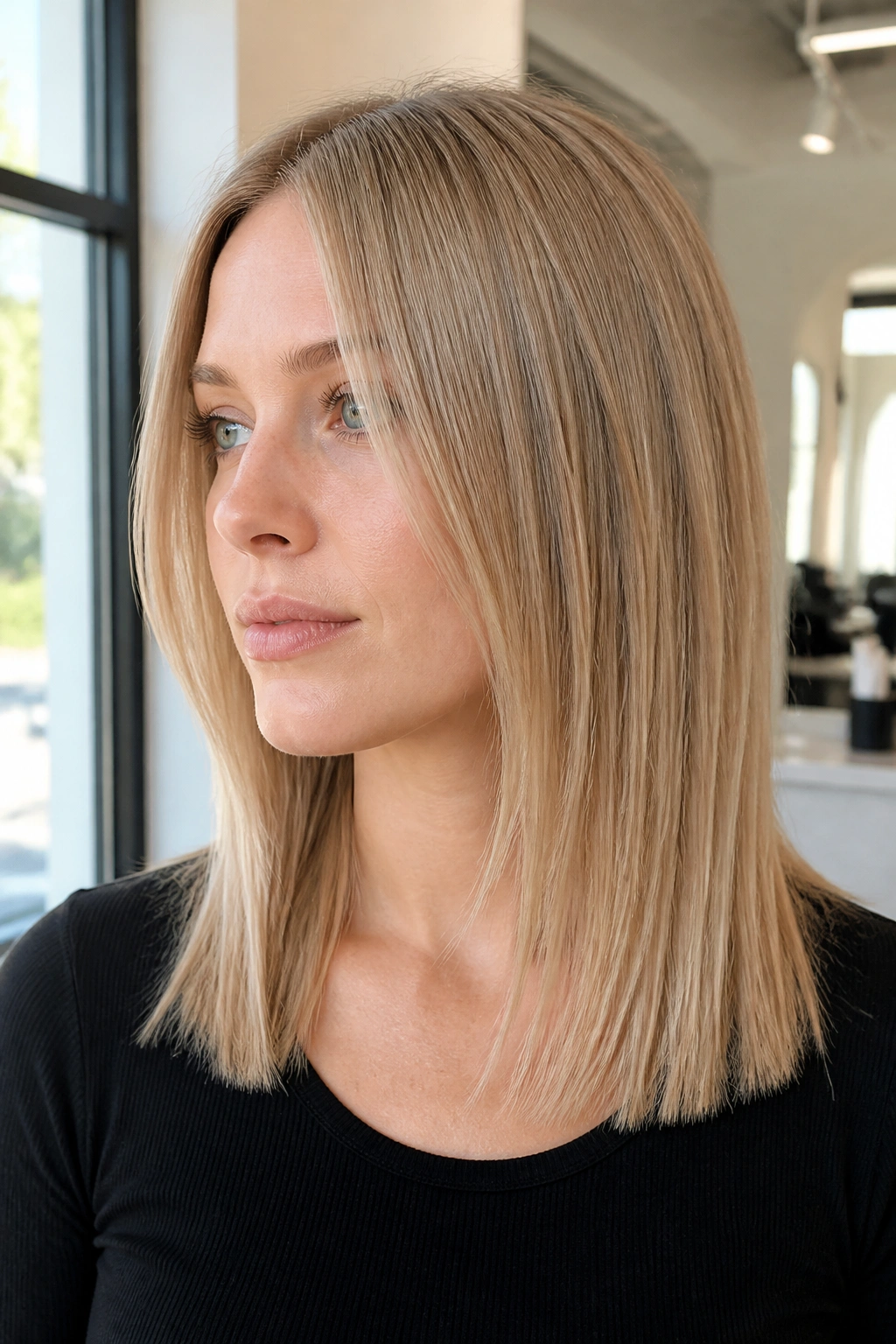
Straight fine hair often looks best with less interference.
Too many layers can leave it looking patchy, especially when the hair is very smooth and the strands separate easily. A minimal-layer cut keeps the perimeter strong and adds only a whisper of movement near the front or underneath. The strength of the style comes from its clean line.
A Good Salon Request
- Keep the ends blunt.
- Add one or two long internal layers at most.
- Avoid texturizing the bottom third of the hair.
- Bring the front pieces forward only enough to soften the face.
This is the haircut for someone who wants hair that behaves. It can be tucked, pinned, worn straight, or given a tiny bend. Nothing about it feels fussy, and that’s the appeal.
27. Long Curtain Layers With No Fringe
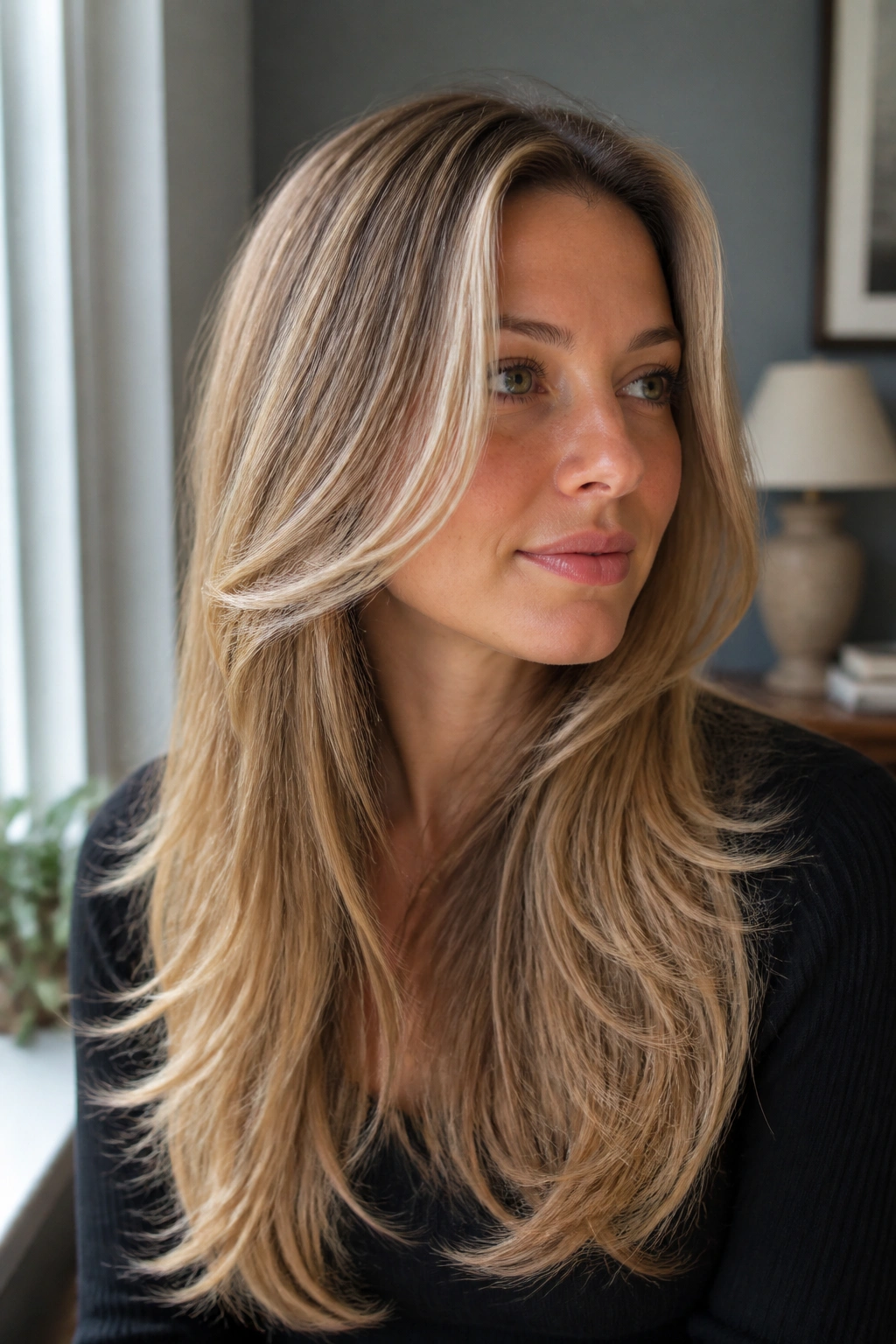
No bangs. Still soft. That’s the whole appeal here.
Long curtain layers start below the chin and sweep away from the face, so you get movement without the commitment of a full fringe. Fine hair keeps its length, but the front no longer hangs like a single sheet. It’s a low-maintenance way to get shape around the face.
This is a good choice if you like a center part but want it to feel a bit more styled. The layers can start around the lips or jaw, then fall into the rest of the length. That keeps the hair from looking crowded at the front.
A soft bend at the ends helps a lot. Not curls. Bend. The difference is small on paper and obvious in the mirror.
28. Razor-Free Textured Midi
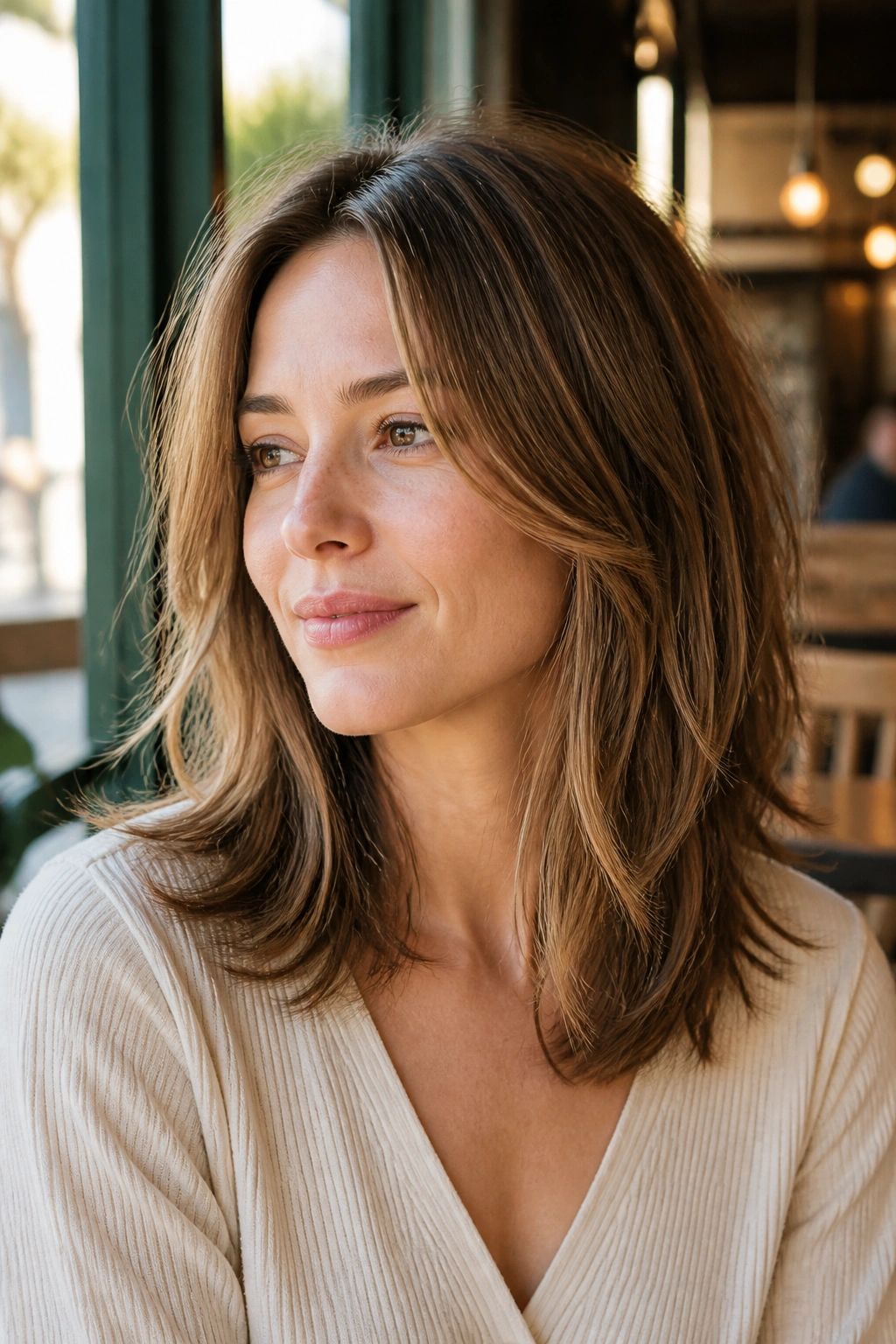
Razor cuts sound tempting, but fine hair can pay for that softness with frayed ends.
A scissor-cut textured midi gives you movement without that shredded finish. The stylist can point cut the ends, carve a little inside the shape, and still leave the hair looking full. That’s safer, cleaner, and easier to grow out.
Why I Prefer Scissors Here
- The ends stay denser.
- The line holds better on straight or slightly wavy hair.
- Grow-out looks smoother.
- You can still get movement around the face.
This length is a nice middle ground if you want something modern but not too short. It sits between the jaw and the chest, which gives enough room for shape while keeping the ends from drifting into stringy territory.
29. Softly Angled Lob With a Slight Front Drop
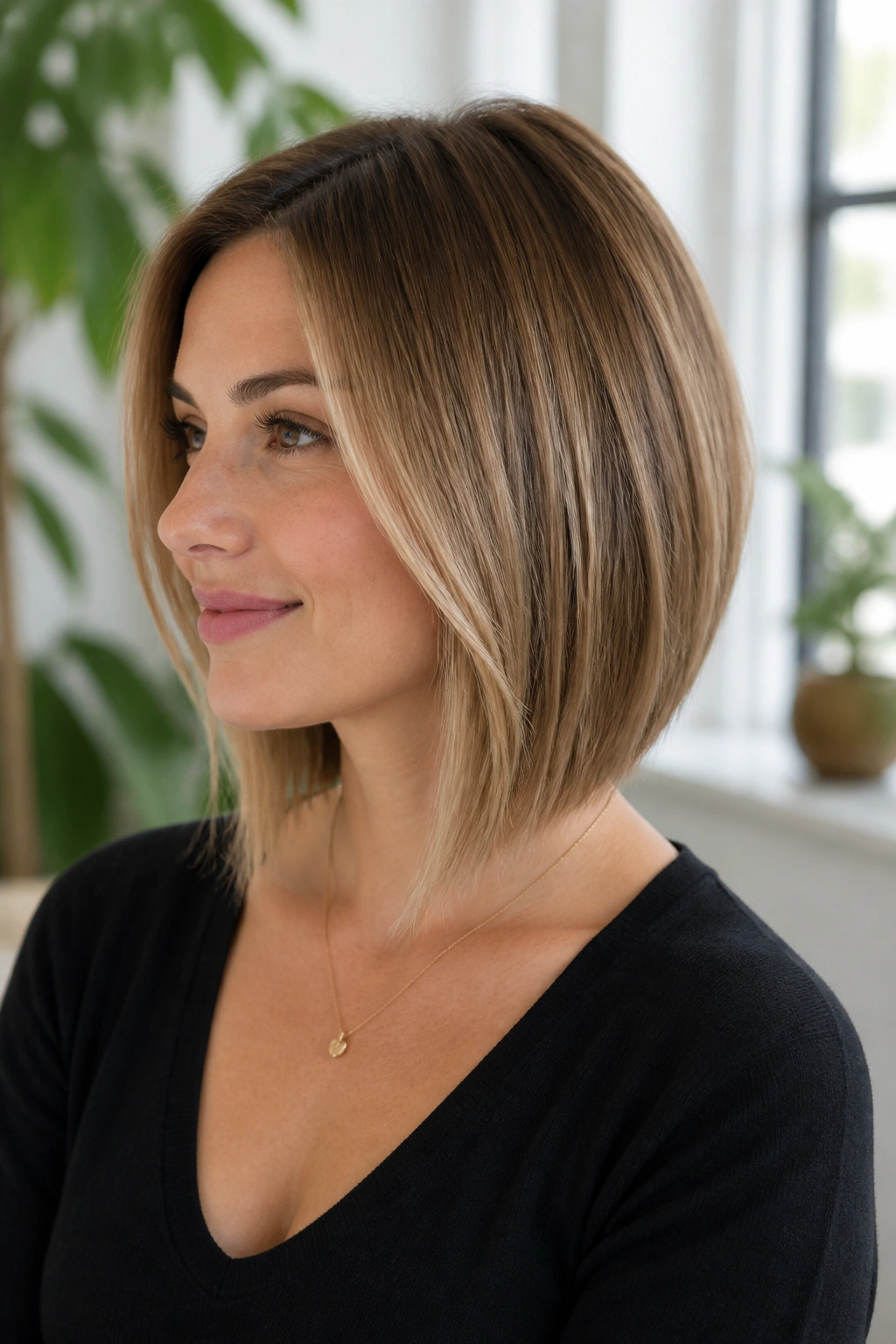
A slight angle can do more than a lot of layering.
With this cut, the front sits a little longer than the back—often only an inch or so difference. That tiny drop opens the face, gives the neck a bit of space, and makes the lob feel more deliberate. It’s a small shift with a big payoff.
Fine hair likes this shape because the shorter back supports volume and the longer front keeps the cut from feeling boxy. It also works across hair textures, which is handy if your hair changes between straight, bent, and wavy depending on the day.
Keep the angle subtle. If it becomes too dramatic, the front can look thin and the style loses the softness that makes it useful in the first place.
30. Custom Dry-Cut Layers Built Around Natural Fall
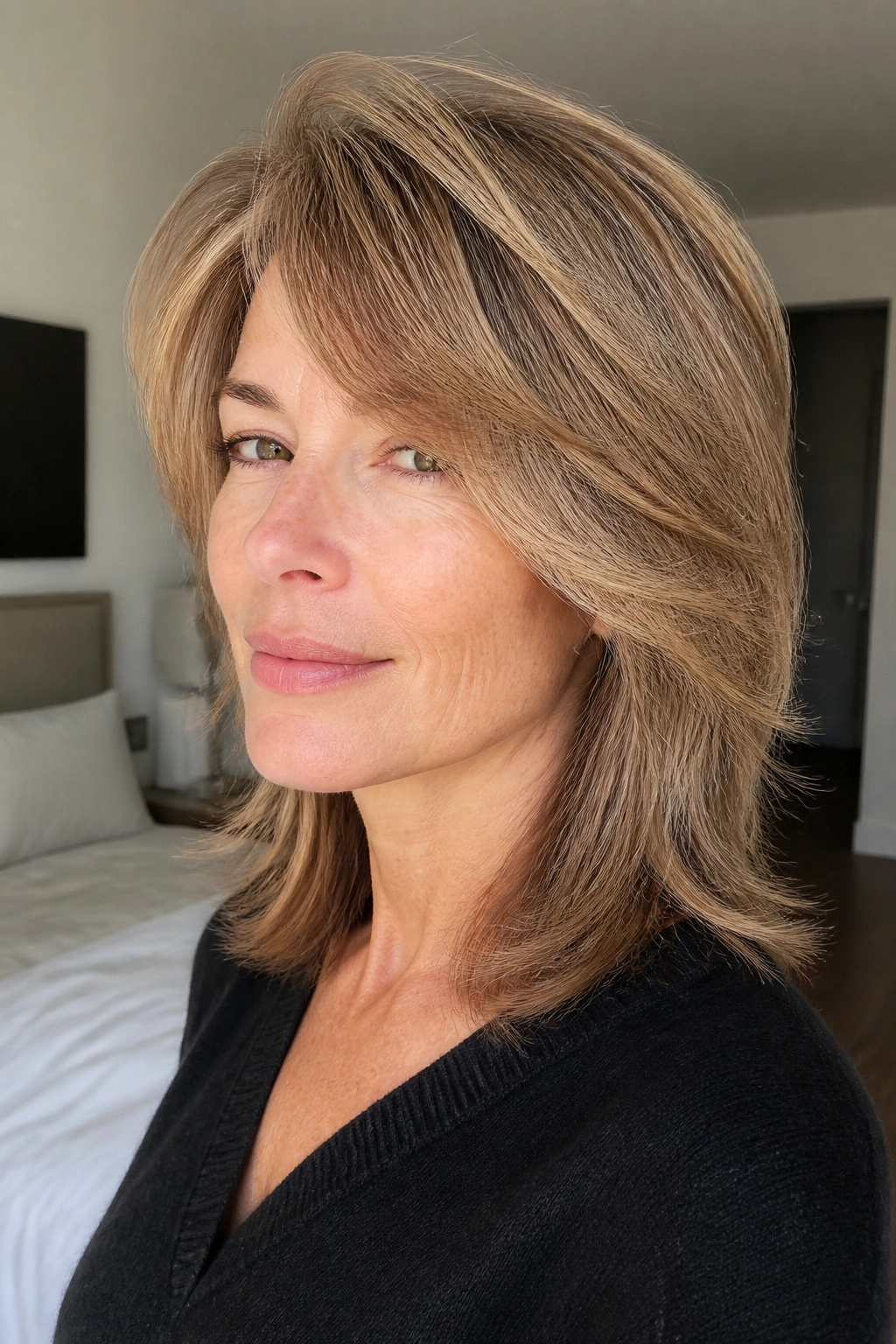
The best haircut for fine hair is often the one cut around your own growth pattern.
A dry cut lets the stylist see where your hair splits, where it lies flat, and where it insists on flipping out. That matters. A lot. Hair that looks good in the salon chair can behave very differently once it dries, so the cut has to respect the real pattern.
What to Tell Your Stylist
- Show how you usually part your hair.
- Point out any cowlicks or flat spots.
- Say how much time you spend styling in the morning.
- Ask for soft layers that follow the natural fall, not a generic template.
This approach is especially useful if your hair sits differently on each side or changes with humidity. It isn’t the flashiest haircut on the list, but it may be the smartest. When the cut fits the way your hair actually lives, everything gets easier.
Final Thoughts
Fine hair does not need a dozen tricks at once. It needs shape where the eye looks first, weight where the ends need support, and softness where the face needs movement.
The best soft layered haircuts for fine hair usually do less than people expect. That is the point. A good bob, lob, shag, pixie, or long layer cut should make your hair look fuller without turning it into a frizzy halo or a see-through veil.
Bring a photo that shows the silhouette you want, then tell your stylist what you hate most: flat roots, thin ends, heavy fringe, or too much styling time. That one conversation can save a lot of regret later.
