



A good cut can do a lot for a round face. The right medium layered haircut for round faces adds length, breaks up width at the cheeks, and keeps the shape moving instead of sitting in one heavy block.
Flat layers at cheek level? Usually a bad trade.
What tends to work better is a shape that drops below the jaw, lifts near the crown, or sneaks in a soft diagonal around the face. That doesn’t mean you need hair that looks severe. It means smart layering, a little spacing, and a part that isn’t fighting your face shape.
You’ll see all of that below. Some cuts are polished, some are messy, and a few lean glam in a way that still feels wearable. The thread running through all of them is simple: medium length gives you room to build shape without letting the sides flare out.
1. Collarbone Layers with a Soft Cheek Sweep
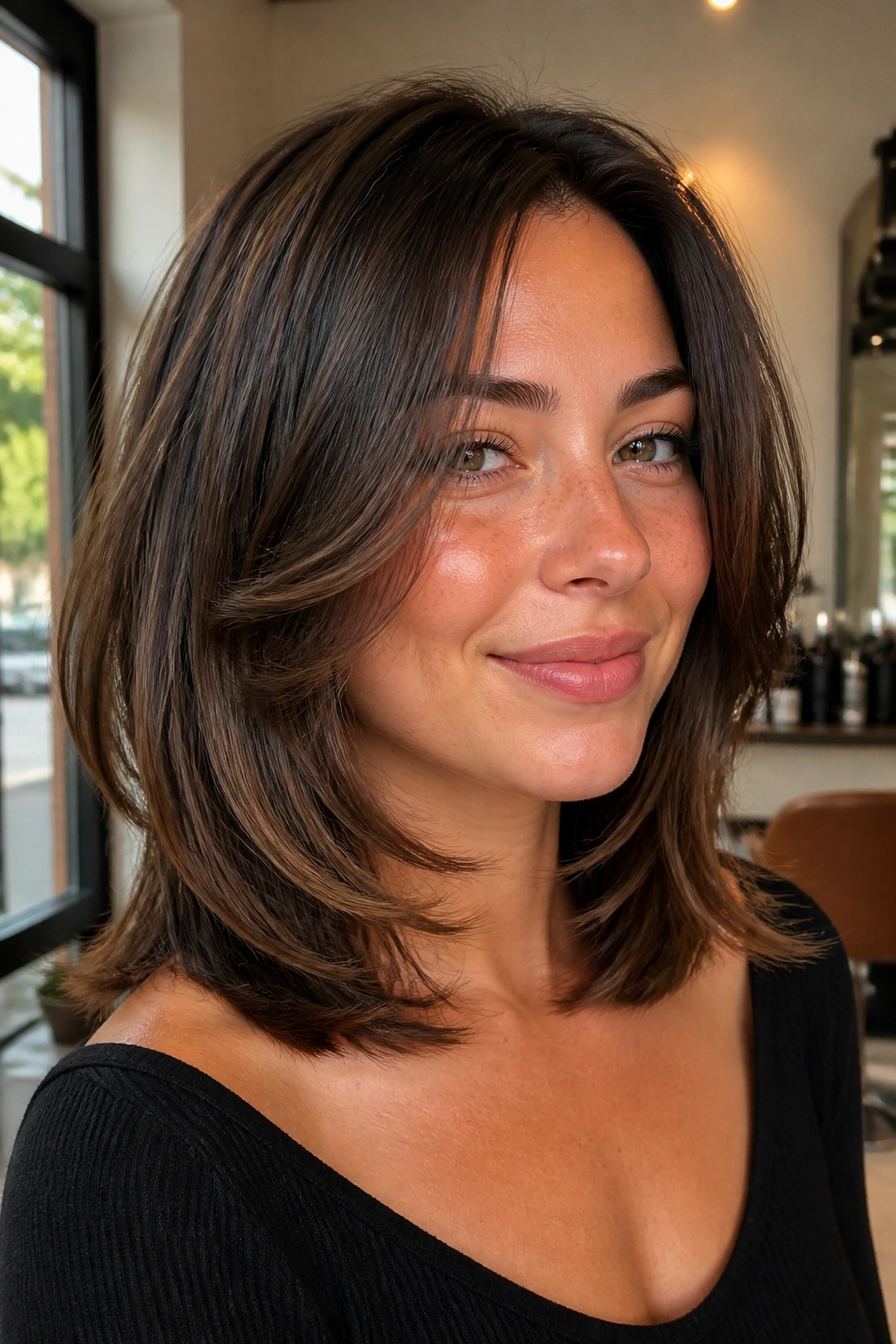
Collarbone length is a sweet spot for round faces because it lands below the widest part of the cheek. That one detail changes the whole read of the haircut.
Why It Helps Round Faces
The shortest front pieces should graze just under the cheekbone, not sit right on top of it. That keeps the face from looking wider in the middle and gives the eye a clean line to follow.
- Ask for layers that begin around the chin or lower.
- Keep the front a little longer than the back.
- Style the top with a round brush for a soft lift at the crown.
- Let the ends curve inward only slightly; too much curl at the cheeks adds width.
Pro tip: blow-dry the front sections away from the face, not toward it. That tiny direction change makes the cut look longer instantly.
2. Angled Lob That Tucks Longer in Front
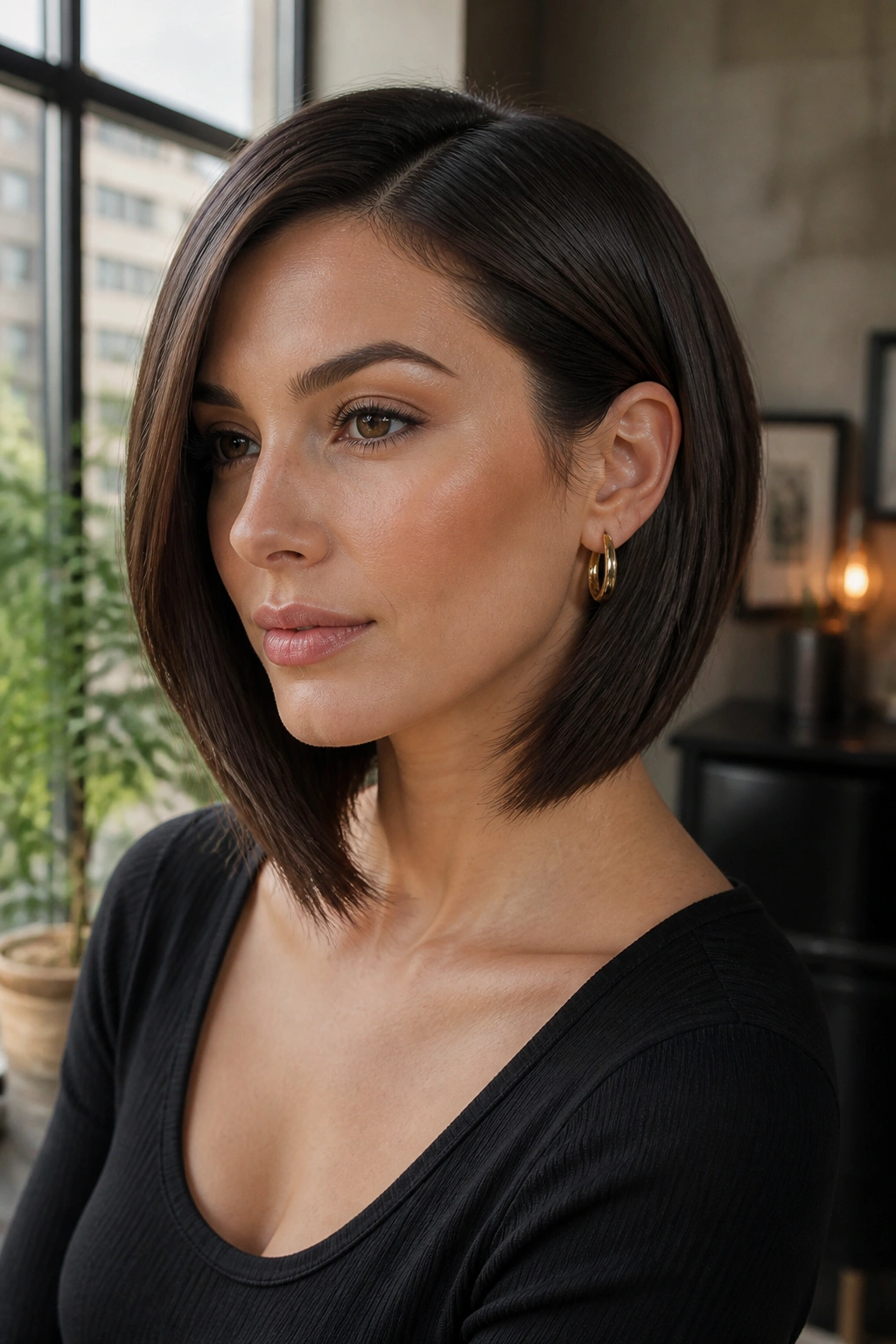
An angled lob is one of those cuts that looks calm from the outside and works hard underneath. The front pieces stay longer, the back sits a bit shorter, and the whole shape pulls the eye diagonally instead of horizontally.
That diagonal is the trick. Round faces usually look best with lines that lengthen, not lines that stop and widen the cheeks. A strong angle does that without needing a lot of drama.
I like this cut for straight or slightly wavy hair because the shape stays visible even on low-effort days. Tuck one side behind the ear and let the other fall forward. It sounds small, but it changes the whole balance of the face.
3. Curtain Bangs with Floating Medium Layers

Why do curtain bangs keep showing up on round faces? Because they open the forehead, split the center line, and soften the upper half of the face without cutting a hard line across it.
The bangs should start a little lower than blunt fringe would, then fall away from the middle and blend into medium layers. If they hit right at the fullest part of the cheeks, they can backfire. If they sweep past that area, they do the opposite.
How to Wear It
Ask your stylist for fringe that can part in the center and merge into the front layers by the cheekbone or just below it. Then style with a round brush or a large Velcro roller while the hair is still warm.
Keep the ends airy. Heavy curtain bangs lose the point fast.
4. Butterfly Layers for Medium Length
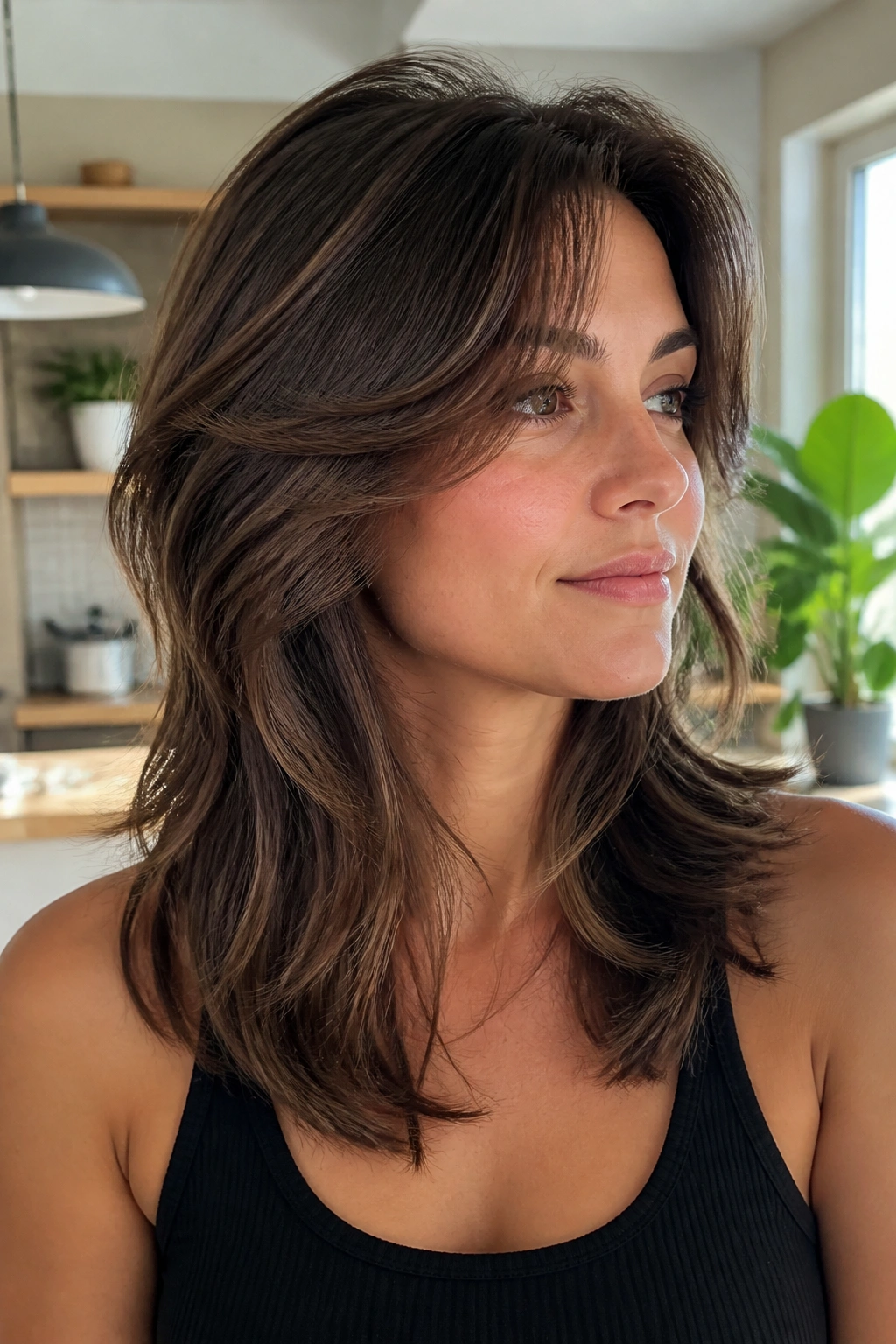
A butterfly cut gives you two jobs in one haircut: movement around the face and length through the bottom. That’s a nice setup for round faces, especially if you like a fuller shape without going short.
The crown layers are shorter, so they create lift. The lower layers stay longer, so the face keeps its vertical line. Together, they make the hair feel big in the right places, not bulky at the cheeks.
Picture this on hair that falls somewhere between the collarbone and the shoulders. The top half can be bouncy and face-framing, while the bottom half hangs smooth and lengthening. It’s a clever cut, honestly. Not subtle, but not fussy either.
5. Feathered Midi with a Soft Blowout
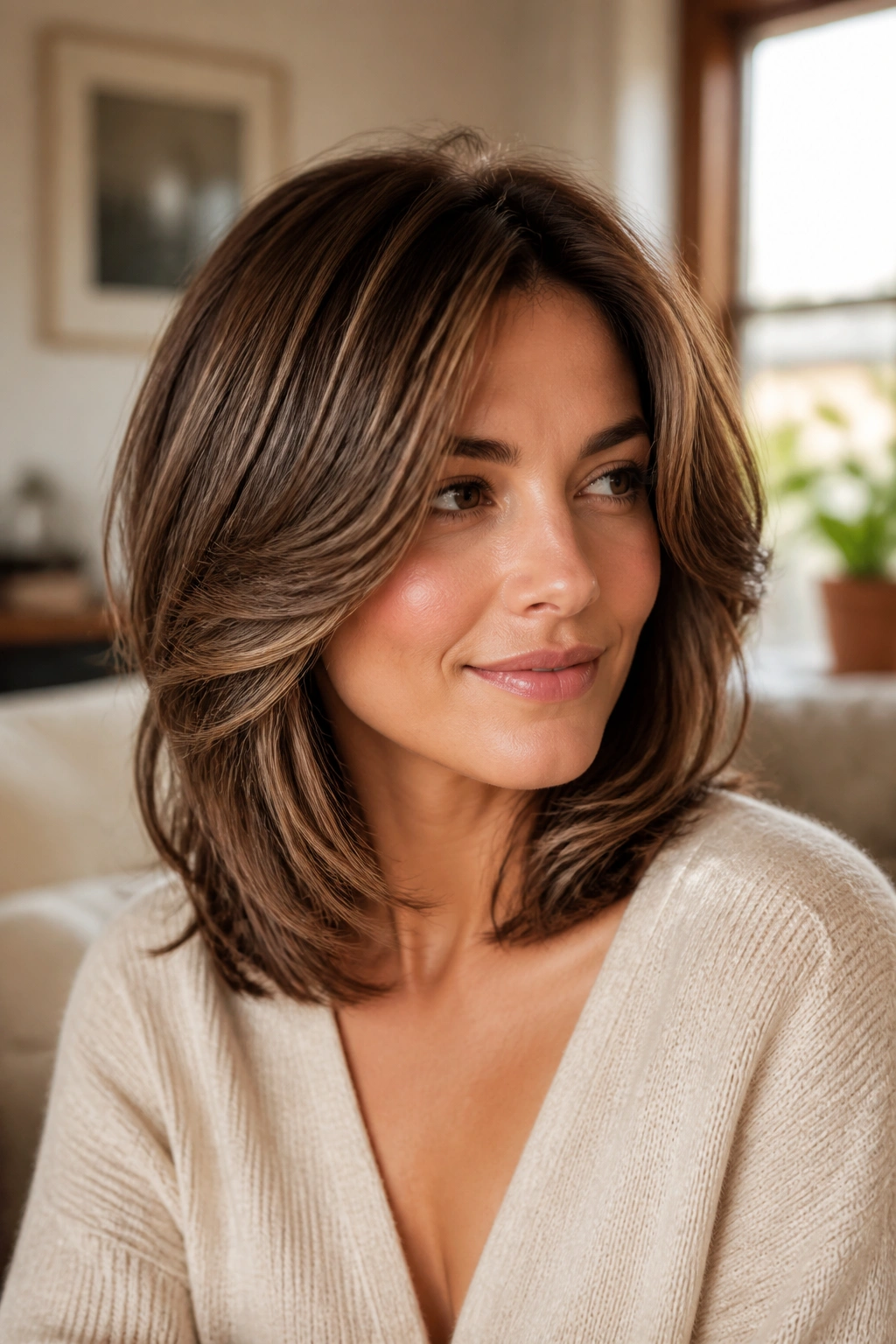
Feathering is one of those old-school hair tricks that still earns its keep. It removes weight from the ends and makes the whole cut move in lighter, finer sections instead of one solid mass.
For a round face, that matters because heavy ends can make the sides look boxy. Feathered layers break that up. They soften the edge around the jaw and keep the profile from feeling too wide.
This cut is especially good if your hair is thick or has a bit of bend to it. A medium round brush, a blow dryer with a nozzle, and a few clips at the roots are enough to give it shape. The finish should feel breezy, not overly styled. A tiny bit imperfect is part of the charm.
6. Razor-Cut Lob with a Slight Off-Center Part
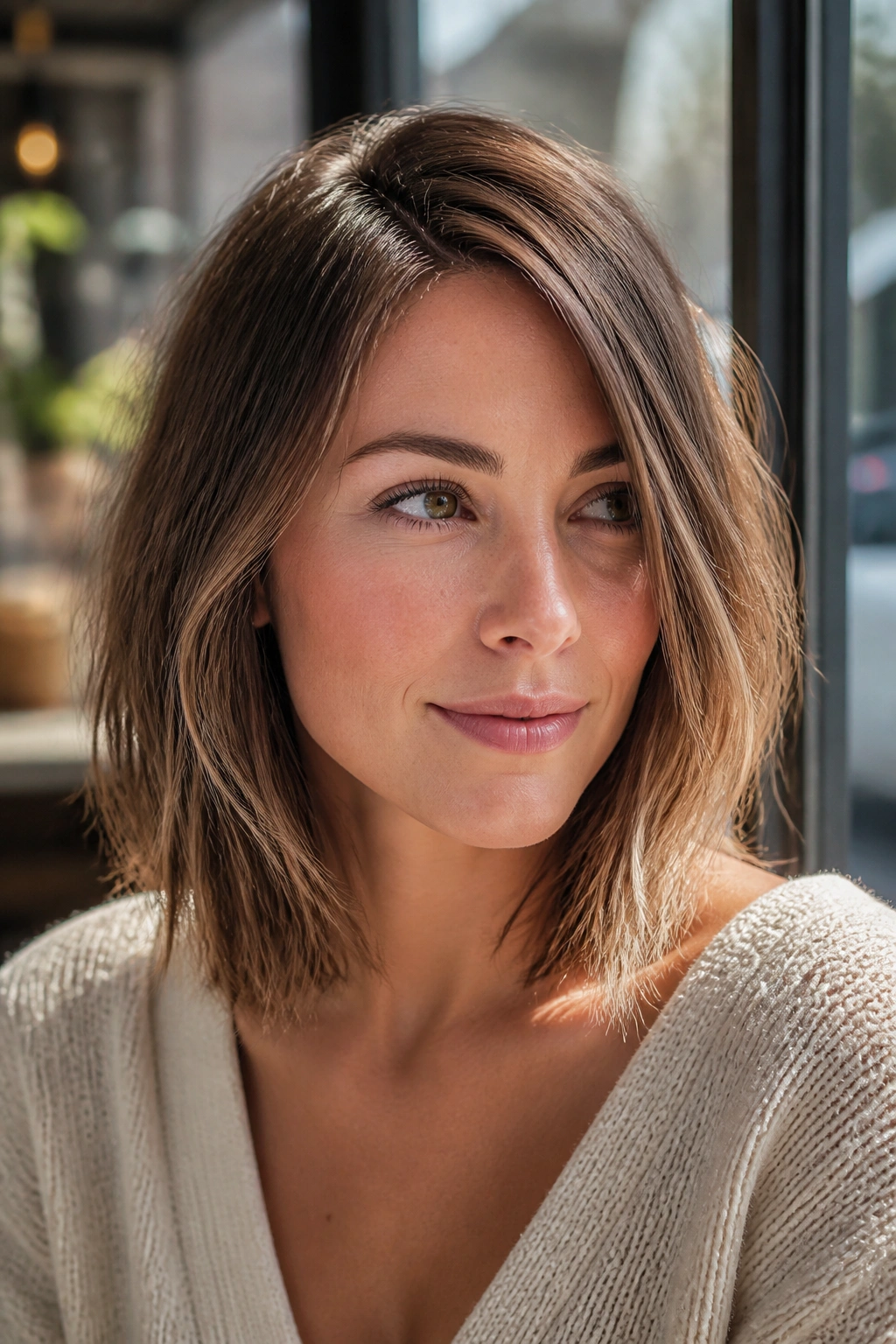
A razor-cut lob is a different animal from a clean scissor cut. The edges come out softer, the ends feel lighter, and the overall line has a little movement even when you don’t heat-style it.
That softness helps round faces because hard, thick ends can make the haircut sit like a shelf. A razor finish removes that shelf effect. The slight off-center part matters too. It interrupts the symmetry and gives the face a longer, less circular read.
Compared with a blunt lob, this one feels less static. It suits hair that already has a little texture, because the piecey ends show up more clearly on wavy or loosely straight hair. If your hair is pin-straight, you may want a bit of root spray or a quick bend with a flat iron so the layers don’t disappear.
7. U-Shaped Layers That Keep the Ends Full
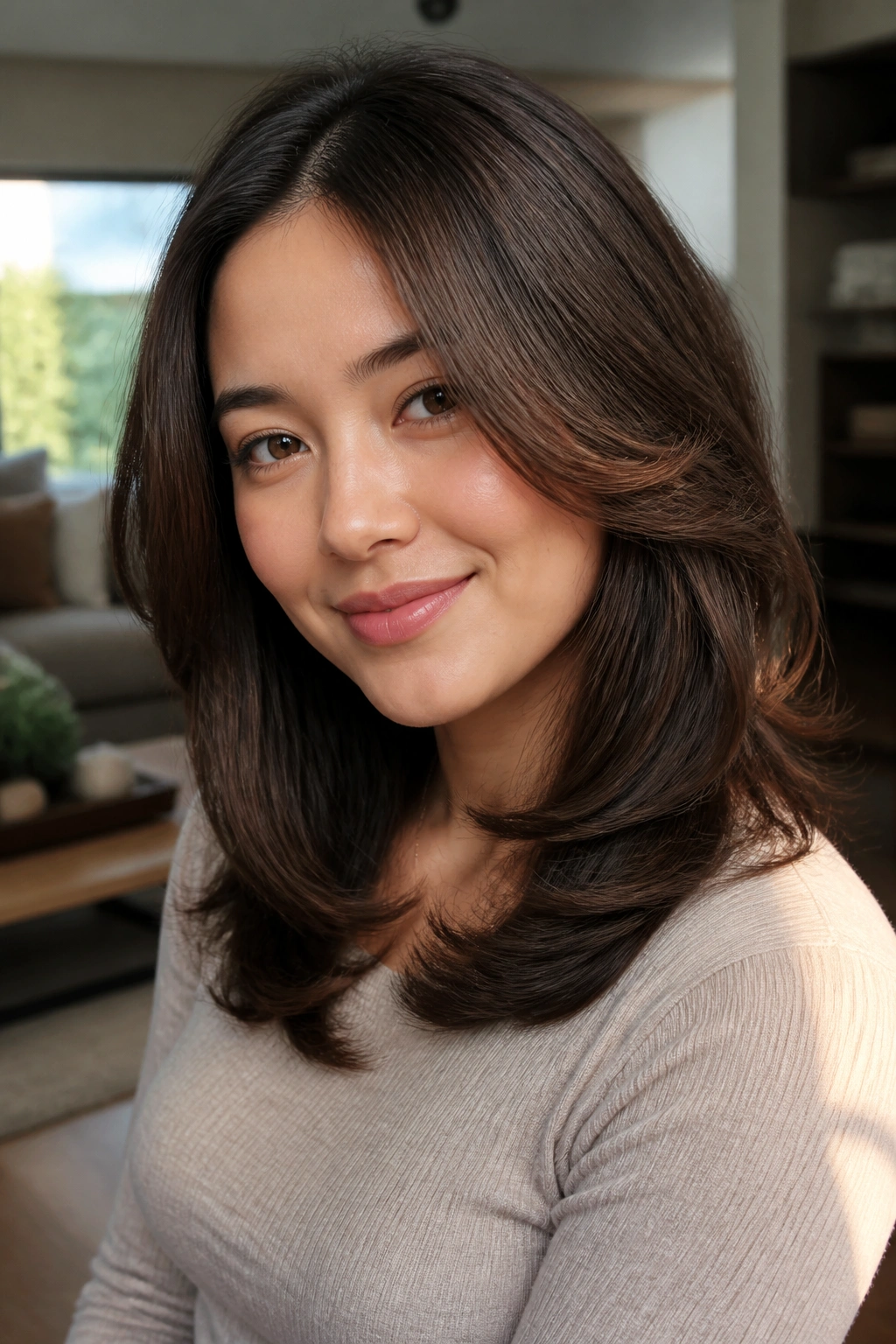
A U-shape is one of the most flattering outlines for medium length because it keeps the center fuller while gently tapering the sides. On a round face, that downward curve helps the hair read longer from front to back.
What Makes It Different
Unlike a straight line cut, the U-shape doesn’t stop the eye at one level. It keeps the shape soft and lets the front pieces drop gradually toward the chest.
- Best when the shortest layers start below the chin.
- Looks especially good on dense hair that needs shape.
- Works with a center part or a light side part.
- Keeps the ends from looking thin or ragged.
The key is balance. Too much graduation and the cut starts to feel stacked. Too little and it loses the soft curve that makes it work.
8. Waterfall Face Layers Around the Cheekbones
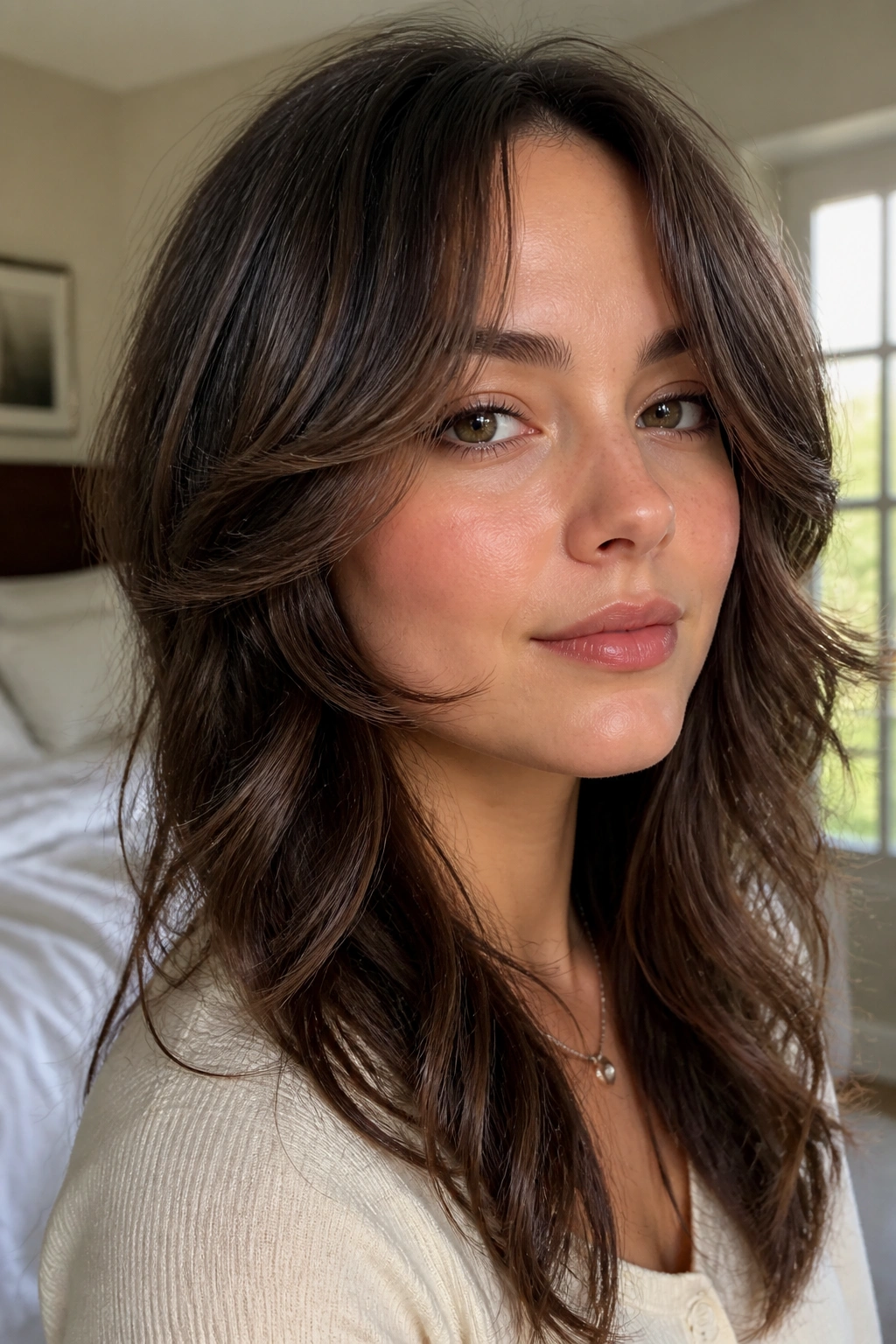
A waterfall layer is basically a soft cascade of shorter pieces that melt into longer hair. On a round face, that cascade should begin above or below the cheek fullness, not right across it.
That placement is what makes the cut feel flattering instead of busy. The layers fall like a soft frame, but they do not box the face in. They guide the eye downward and outward, which is exactly what you want from medium layered haircuts for round faces.
If your hair is wavy, this cut gets even better. The bend in the hair helps the layers separate on their own, so you don’t need much styling. A little serum on the ends, a quick shake at the roots, and you’re done. Honestly, that’s the appeal. It looks thoughtful without asking for much.
9. Textured Shag Lob with Piecey Ends

Why does a shag work so well here? Because it turns width into movement. A round face rarely benefits from a haircut that sits in one solid shape, and a shag lob refuses to do that.
The layers are shorter near the crown and more broken up through the mid-lengths and ends. That gives the haircut a lived-in feel, but it also keeps it from spreading outward at the sides. If the pieces are too even, the shape can drift into mushroom territory. Nobody wants that.
How to Use It
This cut likes a little product. Try a light mousse at the roots and a small amount of texture spray through the ends.
- Use your fingers more than a brush.
- Scrunch while drying if your hair bends naturally.
- Keep the fringe wispy, not thick.
- Let the pieces fall a bit unevenly.
That messiness is the point.
10. Center-Parted Clavicut with Long Internal Layers
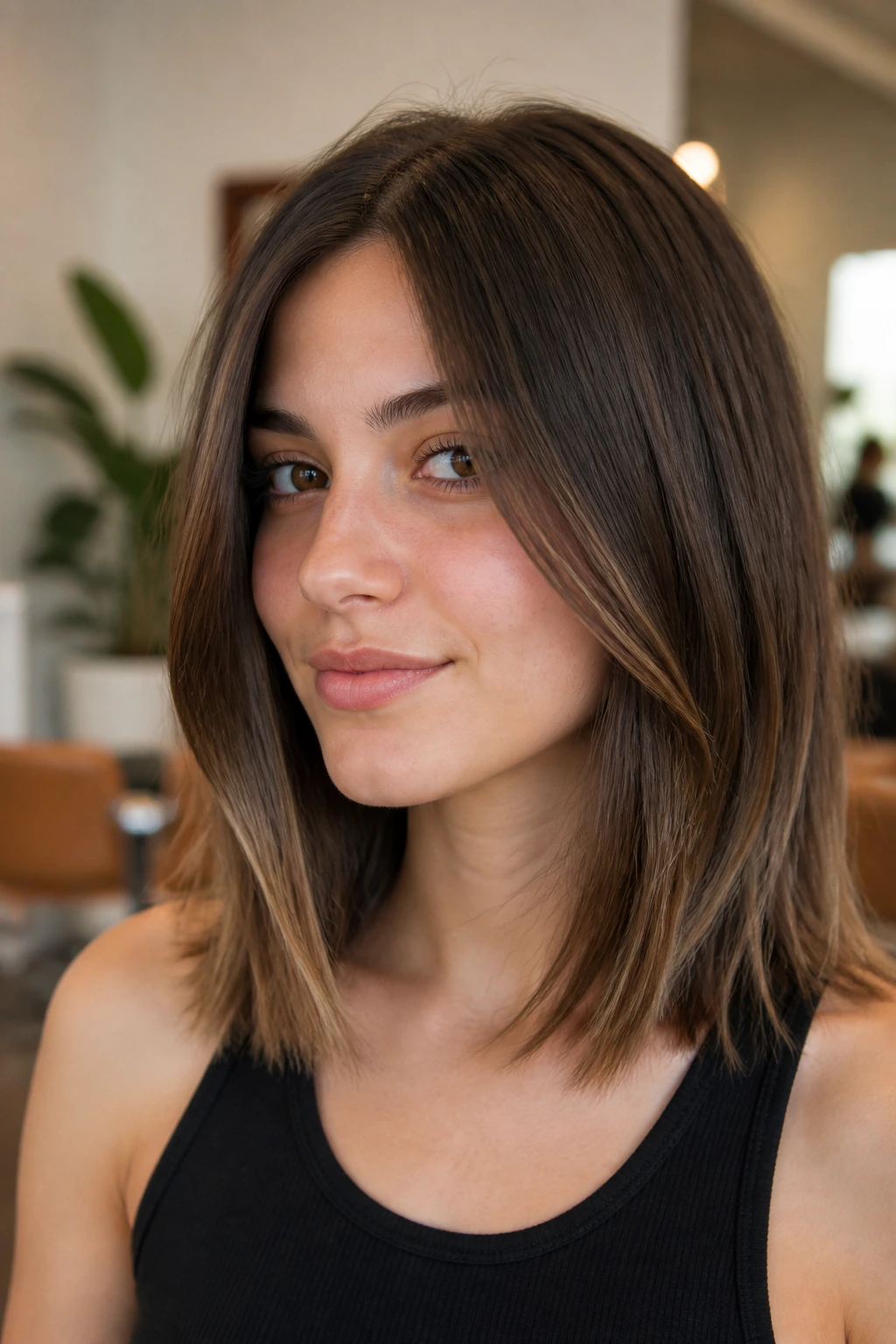
A clavicut lands right at the collarbone, and that length is one of the safest bets for a round face. It stretches the neck visually and keeps the hair from ballooning at the cheeks.
The real detail here is the internal layering. You don’t want choppy surface layers shouting for attention. You want hidden movement inside the shape so the cut falls better, especially when the hair is tucked behind one ear or pulled into a loose bend with a flat iron.
This one is for people who like clean lines. The center part adds symmetry, but the long internal layers stop the look from becoming flat and severe. It’s polished without feeling stiff. That combination is hard to beat.
11. Choppy Shoulder-Length Cut with Airy Ends
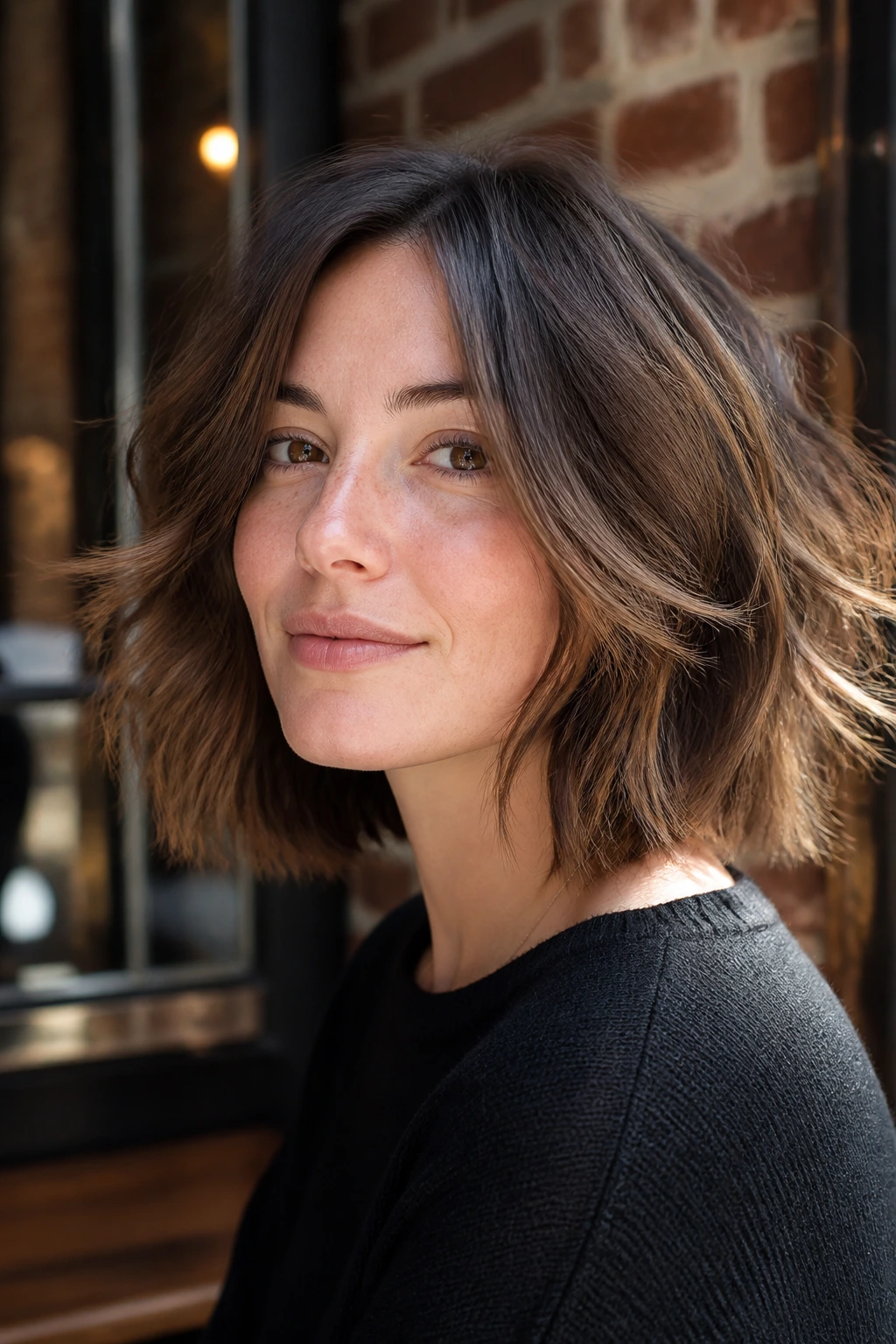
A choppy shoulder cut can go wrong if it turns too wide, so the trick is to keep the texture light and the ends airy. The pieces should move independently, not sit in one dense line around the face.
That’s why this style works best when the layers are cut with a little irregularity. The broken ends make the hair feel lighter, and lighter hair tends to sit closer to the head instead of puffing out at the cheeks.
I’d choose this cut for medium-thick hair that needs shape but not too much thinning. If the hair is fine, too many chops can make it look sparse. If the hair is thick, though, the cut gives you useful lift and a cleaner outline around the jaw.
12. Soft Inverted Lob with Hidden Graduation
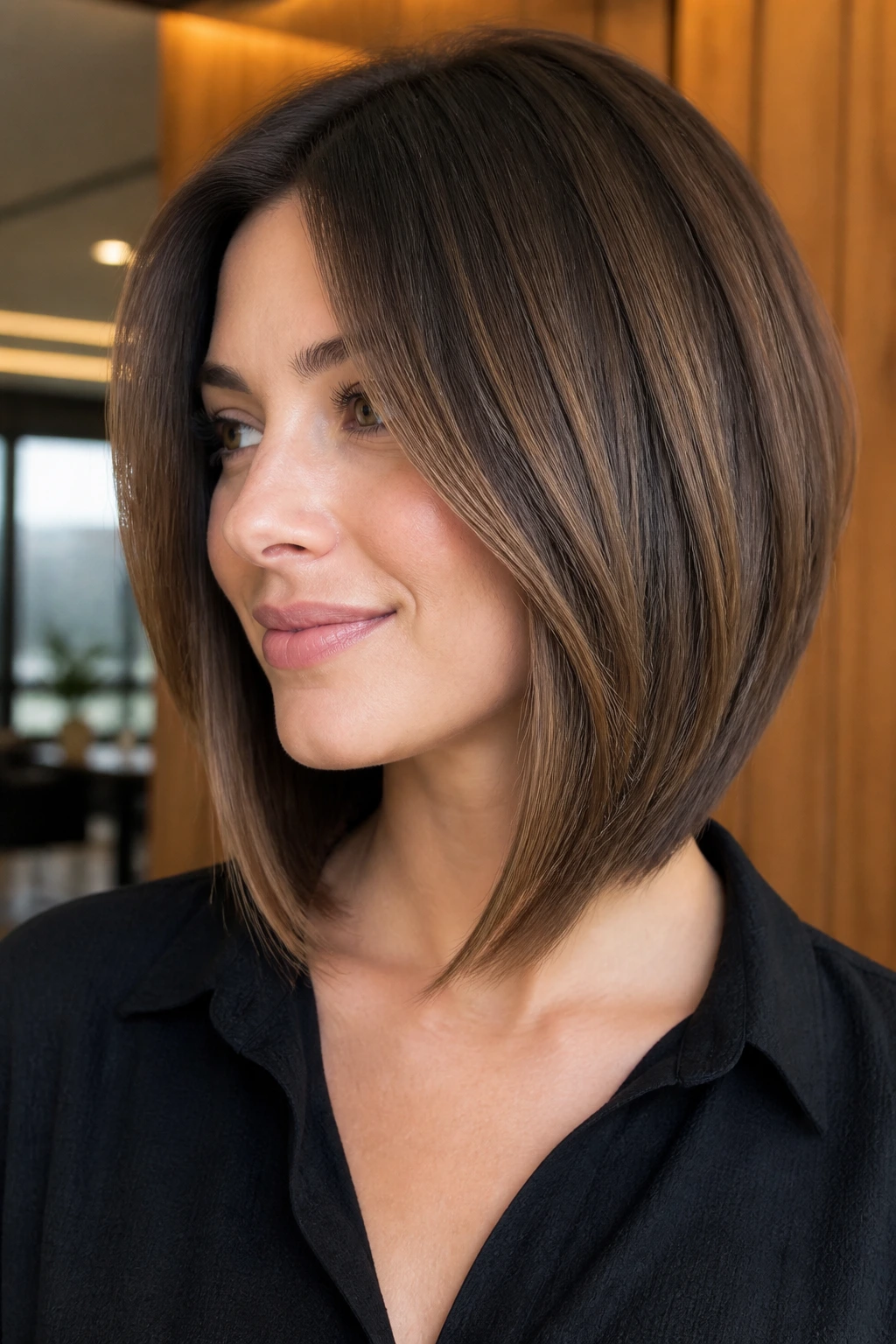
An inverted lob gives you length in front and a slight lift in back, which naturally pulls attention downward. That can be a smart move on round faces, as long as the angle stays soft.
The hidden graduation matters more than the obvious shape. A stacked back can make the crown bulky and the head look wider. A soft inversion keeps the line neat while still giving the nape some shape and bounce.
Compared with a classic stacked bob, this version feels less rigid. It’s better if you want a haircut that behaves well at work, in a ponytail, or with a simple wave. The cut should look planned, not engineered. There’s a difference.
13. Bottleneck Bangs with Blended Lengths
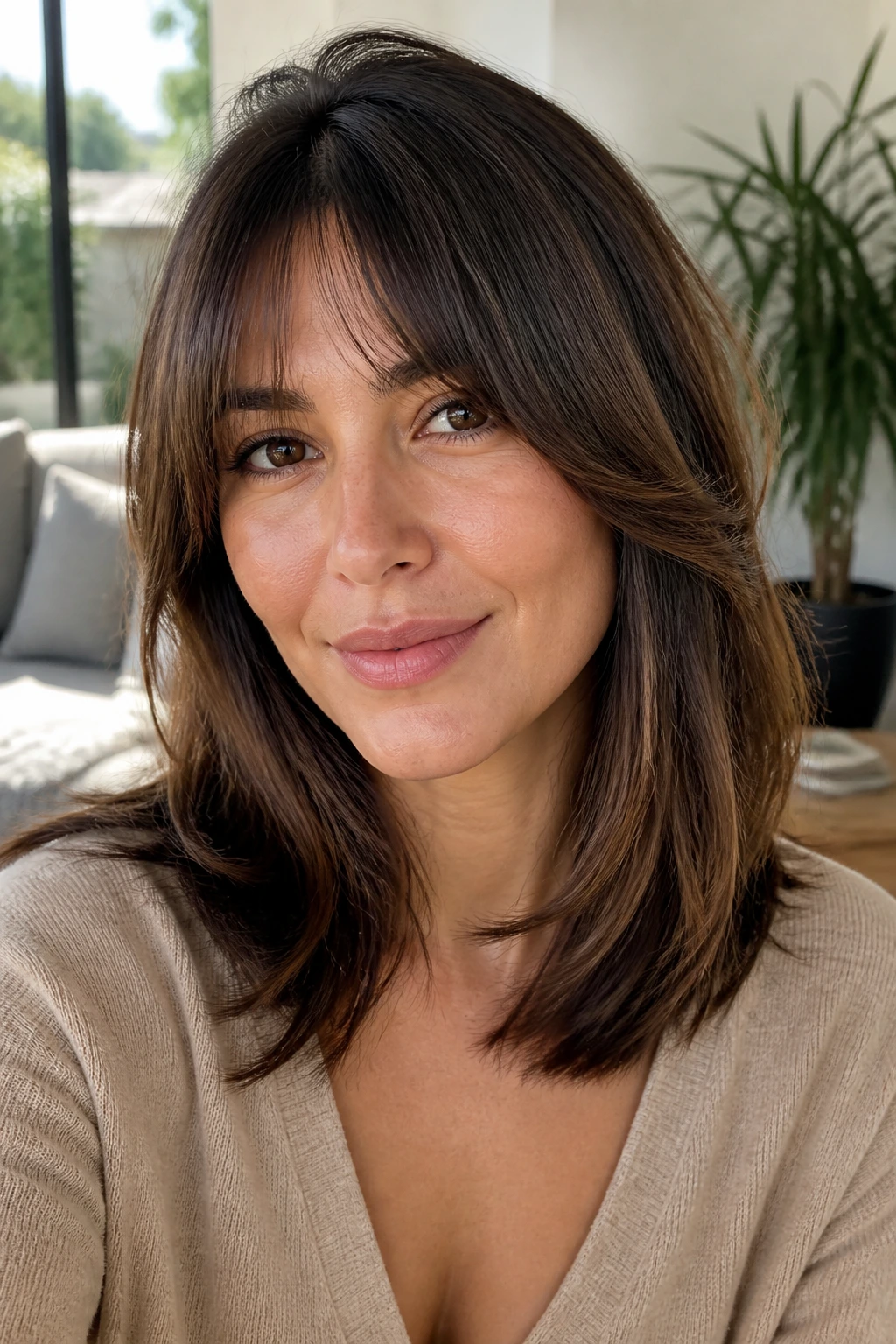
Bottleneck bangs start narrow at the center and widen as they move toward the temples, which is why they suit round faces better than blunt fringe in many cases. They open the forehead and still leave some softness near the cheeks.
Why It Flatters
The wider side sections should blend into the layers around the eyes and cheekbones. That means the fringe frames the face without cutting a hard horizontal line across it.
- Keep the center shorter, but not tiny.
- Let the sides graze the cheek area.
- Pair with layered lengths that sit below the chin.
- Style with a small round brush, not a tight curl.
This cut feels fresh without being loud. It gives you some face framing, a little edge, and enough length to keep the face looking open.
14. Bouncy Medium Layers with a Round-Brush Finish
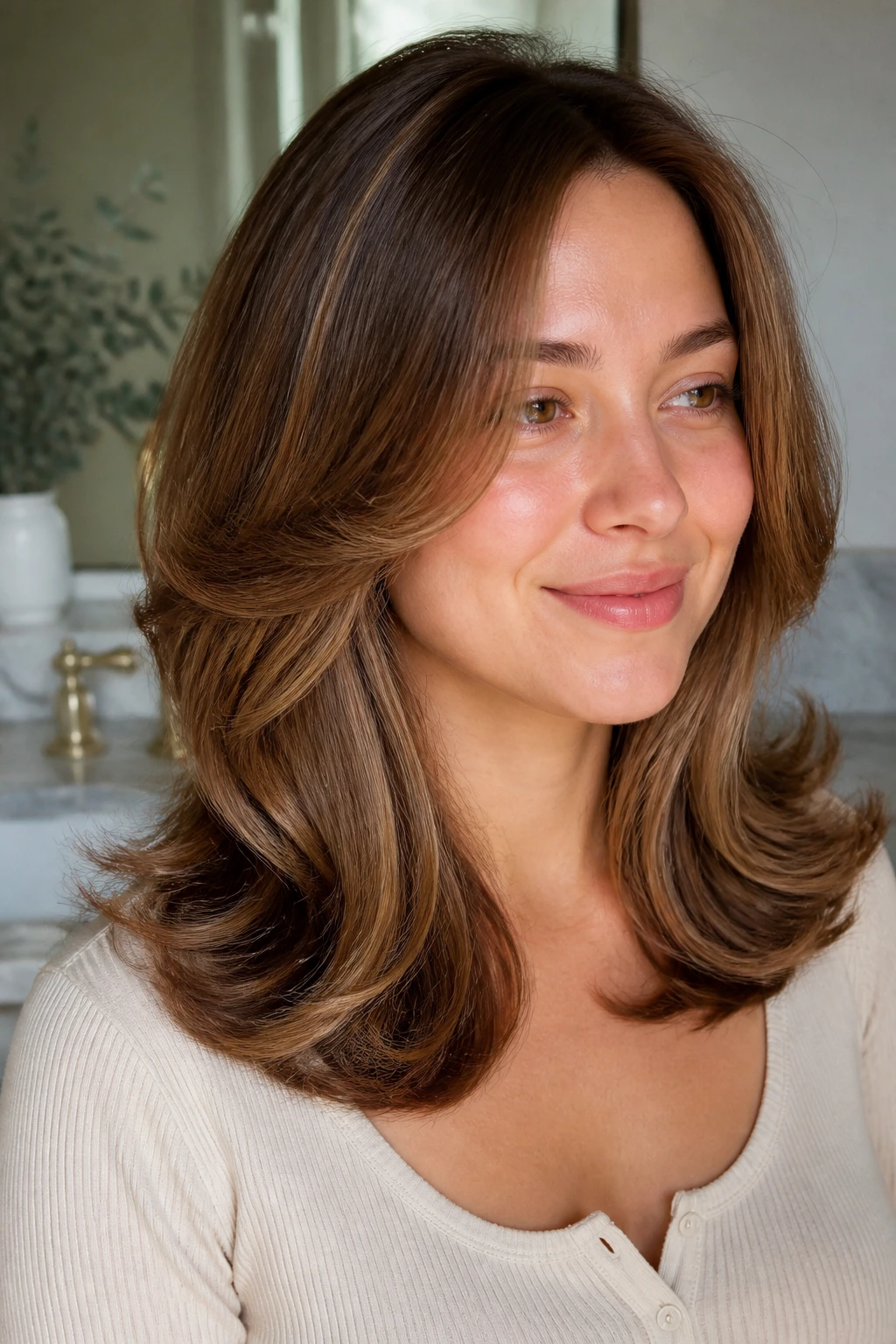
A bouncy layered cut can be a little glamorous, which is probably why people keep coming back to it. The whole effect depends on how the ends are styled.
Round-brush finishing creates a soft curve that lifts the hair away from the cheeks and adds movement through the mid-lengths. The crown gets a bit of volume, the ends flip just enough, and the face ends up looking longer than it did with flat, straight hair. That’s the whole game.
This style is happiest when the layers are cut to move together instead of each one doing its own thing. If the stylist over-texturizes the ends, the bounce disappears and the hair can feel frayed. Keep the shape controlled. Then let the finish be soft and a little glossy.
15. Tapered Front Layers That Start Below the Lips
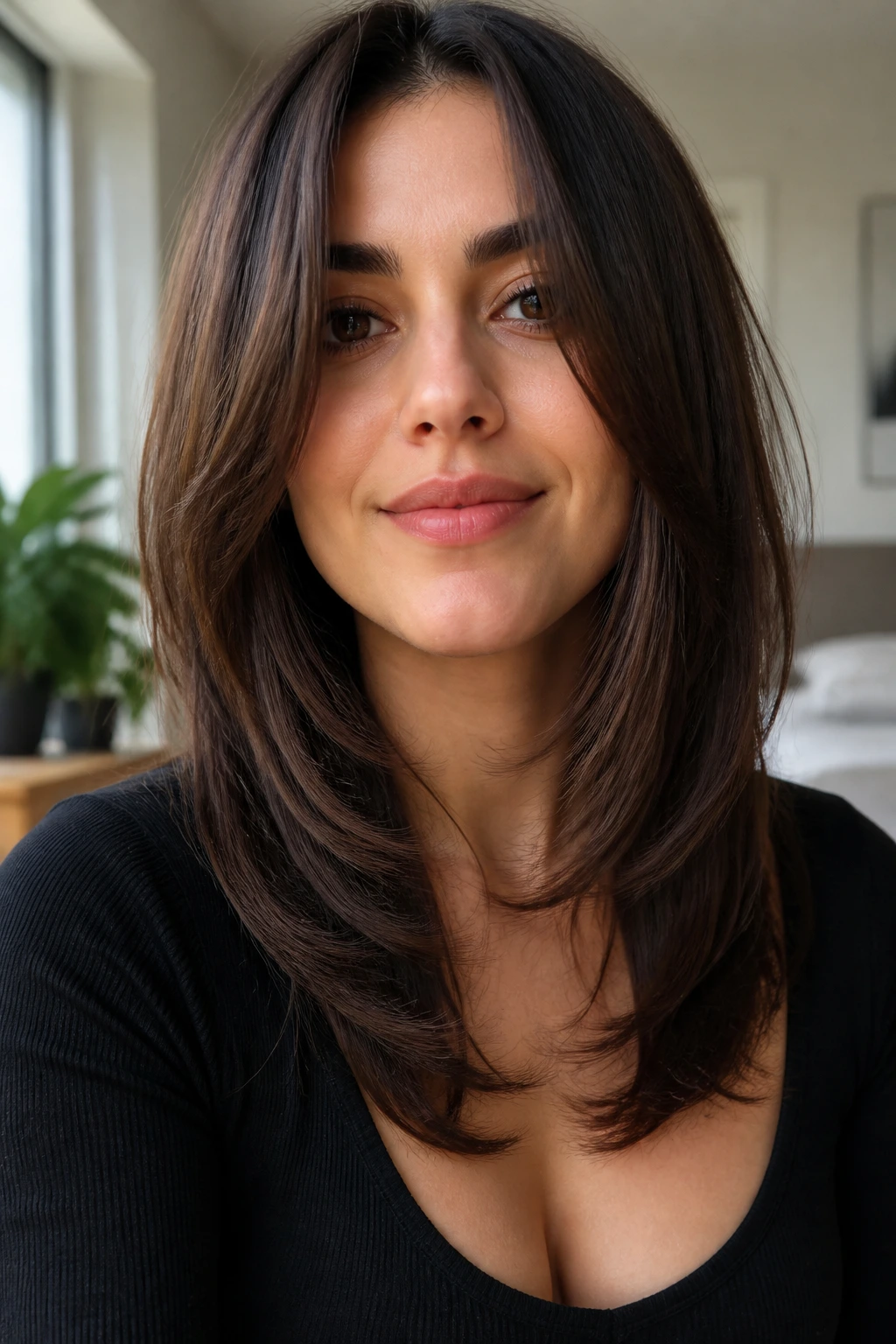
Why start the shortest layer below the lips? Because that keeps the front from widening the face where it’s already full.
The best tapered front layers for round faces feel almost sneaky. You notice the length after the fact, not the cut itself. That’s useful if you want face framing without obvious chunks hanging near the cheeks.
How to Wear It
Ask for long tapering pieces that begin around the mouth or lower and blend all the way into the perimeter. Then wear the hair with a middle or slight side part.
A few notes matter here:
- The front should not stop at the cheekbone.
- The layers should soften the jaw, not sit on it.
- Wavy hair makes this cut look fuller.
- Straight hair may need a bend at the ends to keep the taper visible.
Simple, but not boring.
16. Long Fringe and Mid-Length Layers for Thick Hair
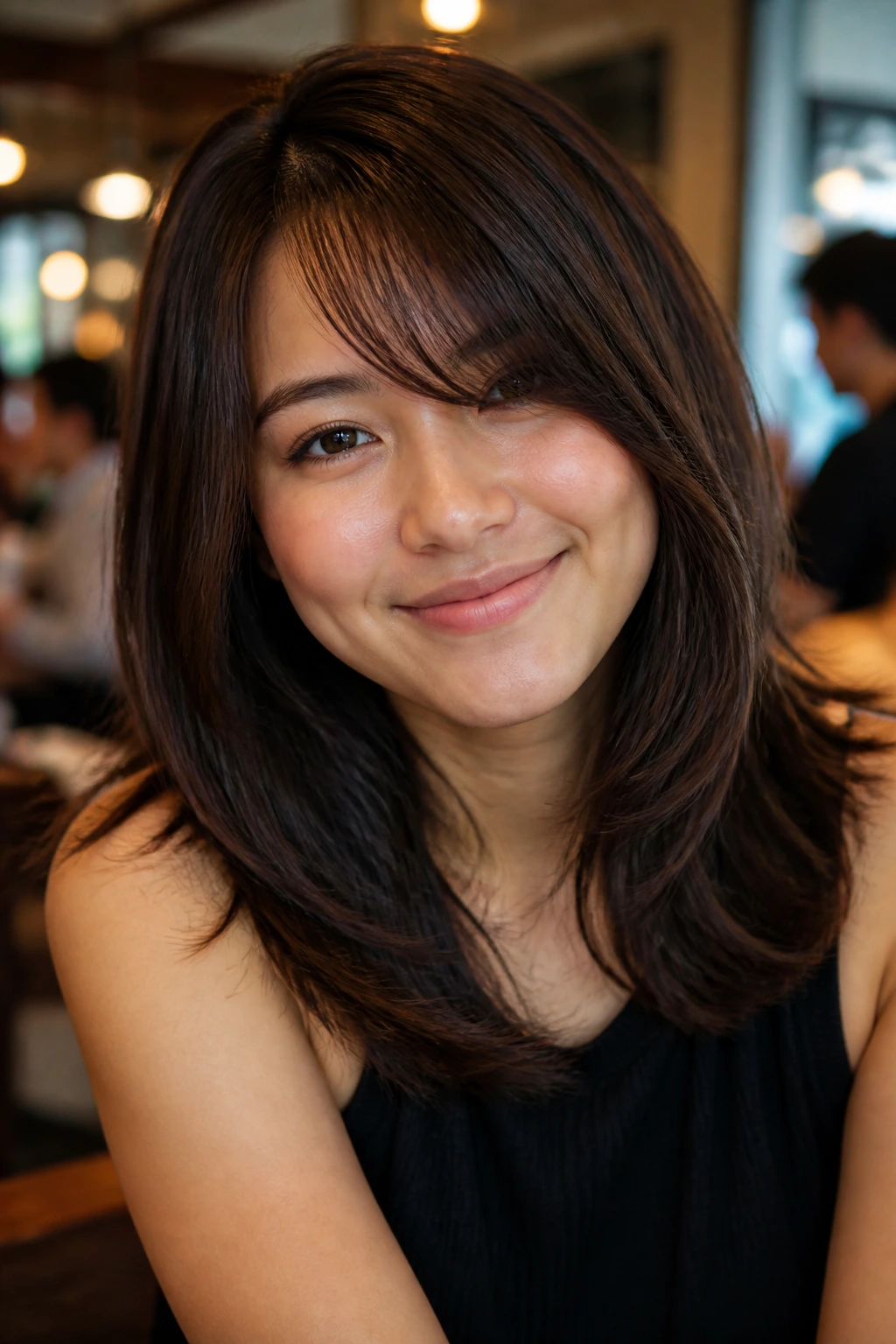
Thick hair can overwhelm a round face if the ends stay too blunt or too wide. A long fringe helps cut through that bulk at the front without making the style feel chopped up.
The fringe should be soft enough to part, but heavy enough to hold shape. That balance is useful. It keeps the forehead area interesting while the medium layers take care of movement through the rest of the cut.
This is a smart choice for people who have to fight volume anyway. A thick head of hair with no layers can puff out at the sides in a way that adds width. Mid-length layers remove some of that weight and let the cut fall better. The result is cleaner and cooler, not fluffier.
17. Invisible Layers for Fine Hair
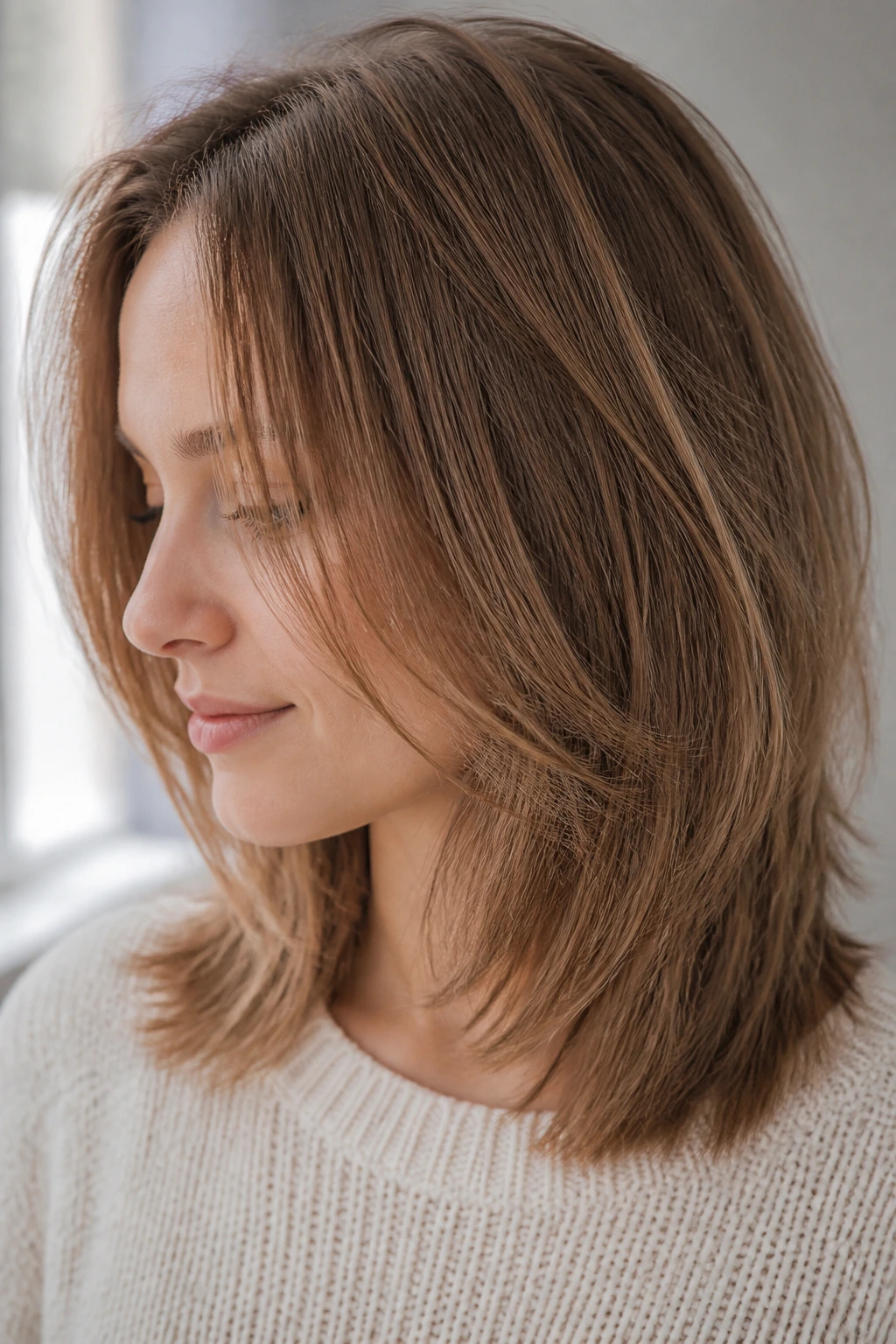
Invisible layers are what you ask for when you want movement without losing density. They sit inside the haircut instead of showing up as obvious steps, which is a big deal for fine hair.
Round faces and fine hair can be a tricky pair because thin ends can make the face look wider if the cut falls flat. Invisible layers solve that by giving the hair a little internal spring. The shape stays soft, but the perimeter doesn’t collapse.
The best part is how low-key it is. No choppy ends. No obvious disconnection. Just enough lift to keep the hair from sticking to the face in one flat curtain. If you air-dry, this cut usually behaves well, especially with a bit of root spray at the crown.
18. Modern Rachel Cut on Medium Hair
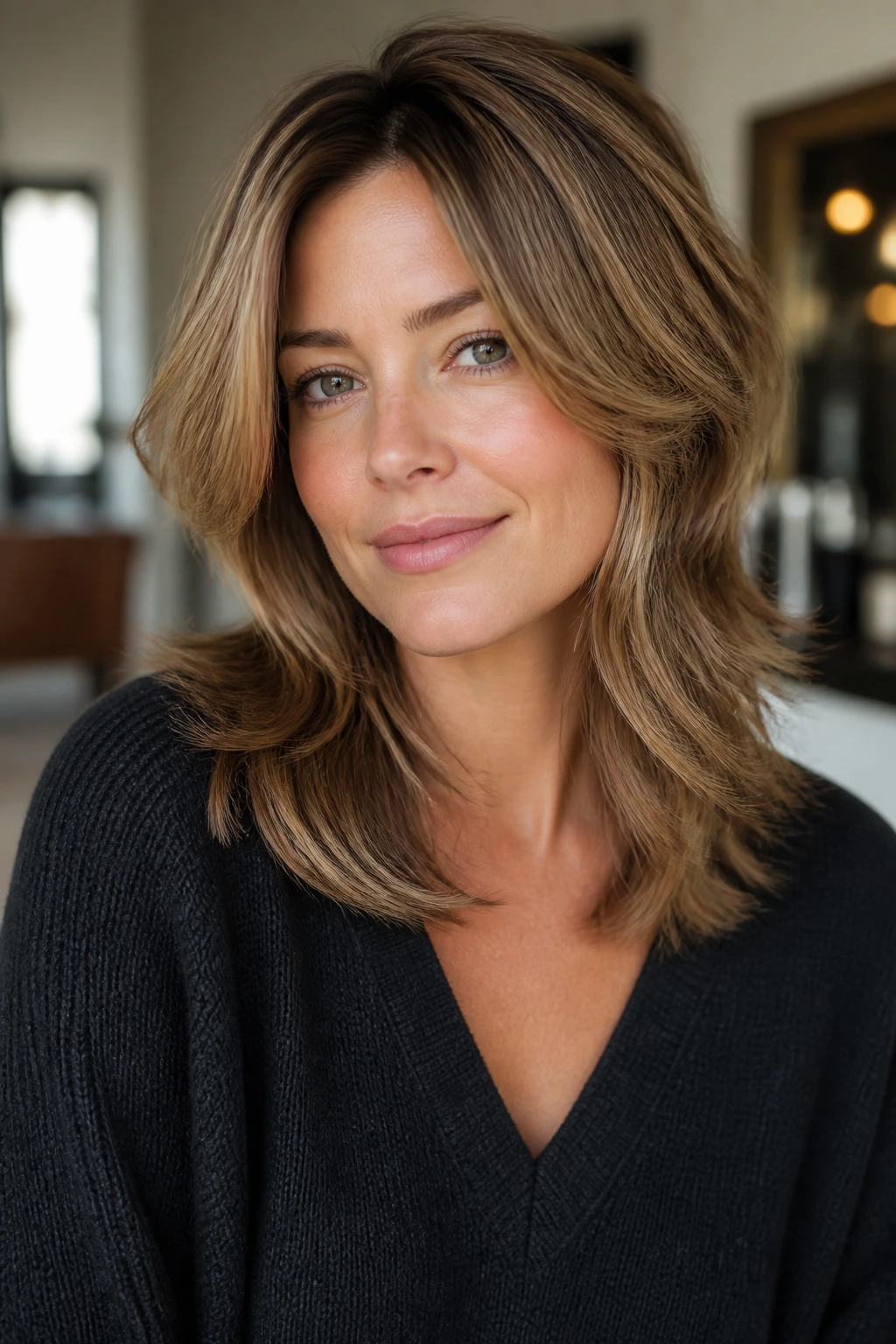
The old Rachel cut had a lot of face-framing movement, but the modern version is softer and less chopped. That matters, because the original can widen a round face if the front layers land too high.
A better modern take keeps the shortest pieces lower and lets them blend more naturally into the rest of the cut. The result has the same breezy movement people love, but it reads more current and less blocky.
Compared with a one-length mid-length style, this version has more life around the face and less weight at the ends. It’s a solid pick if you want recognizable layers without going full shag. Put a bit of bend through the front with a medium iron, and the whole shape comes alive fast.
19. Air-Dried Textured Midi with Soft Ends

Some haircuts are built for heat tools. This one is not. It’s built for the days when you wash, scrunch, and leave the house.
Why It Works So Well
The layers should be light enough to separate on their own, but not so short that they spring outward at the cheeks. Soft ends keep the shape from puffing up, which is the real win here.
- Use a curl cream or light leave-in on damp hair.
- Scrunch from the ends up toward the roots.
- Keep the front pieces long enough to skim the jawline.
- Skip heavy oils near the top; they flatten the crown.
A textured midi like this has a relaxed feel that suits round faces because it never looks boxed in. It moves.
20. Deep Side-Parted Layers with Crown Lift
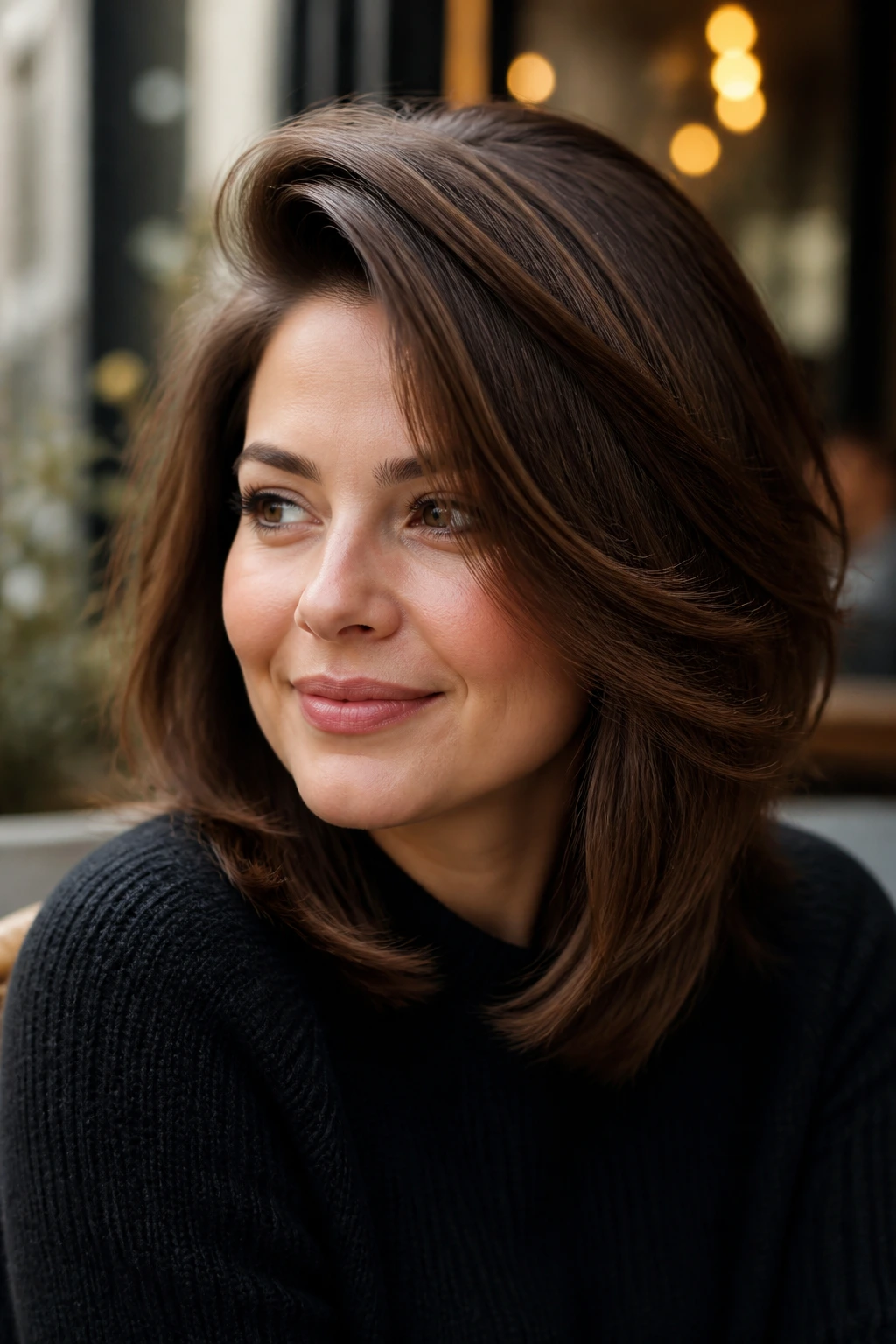
A deep side part is one of the oldest tricks in the book, and it still works because it changes the whole geometry of the face. A round face usually benefits from a line that breaks symmetry and adds height.
The layers matter just as much. They should start with enough length to avoid widening the cheeks, then build volume higher up near the crown. That combination gives the haircut a longer profile and a little attitude.
I like this style when the hair has medium density and some natural body. The side part creates lift on one side, the layers stop the bulk from landing in the wrong spot, and the whole look feels a bit more dramatic than a center-parted style. If you want a haircut with presence, this is one.
21. Jaw-Skimming Front Pieces with Longer Back
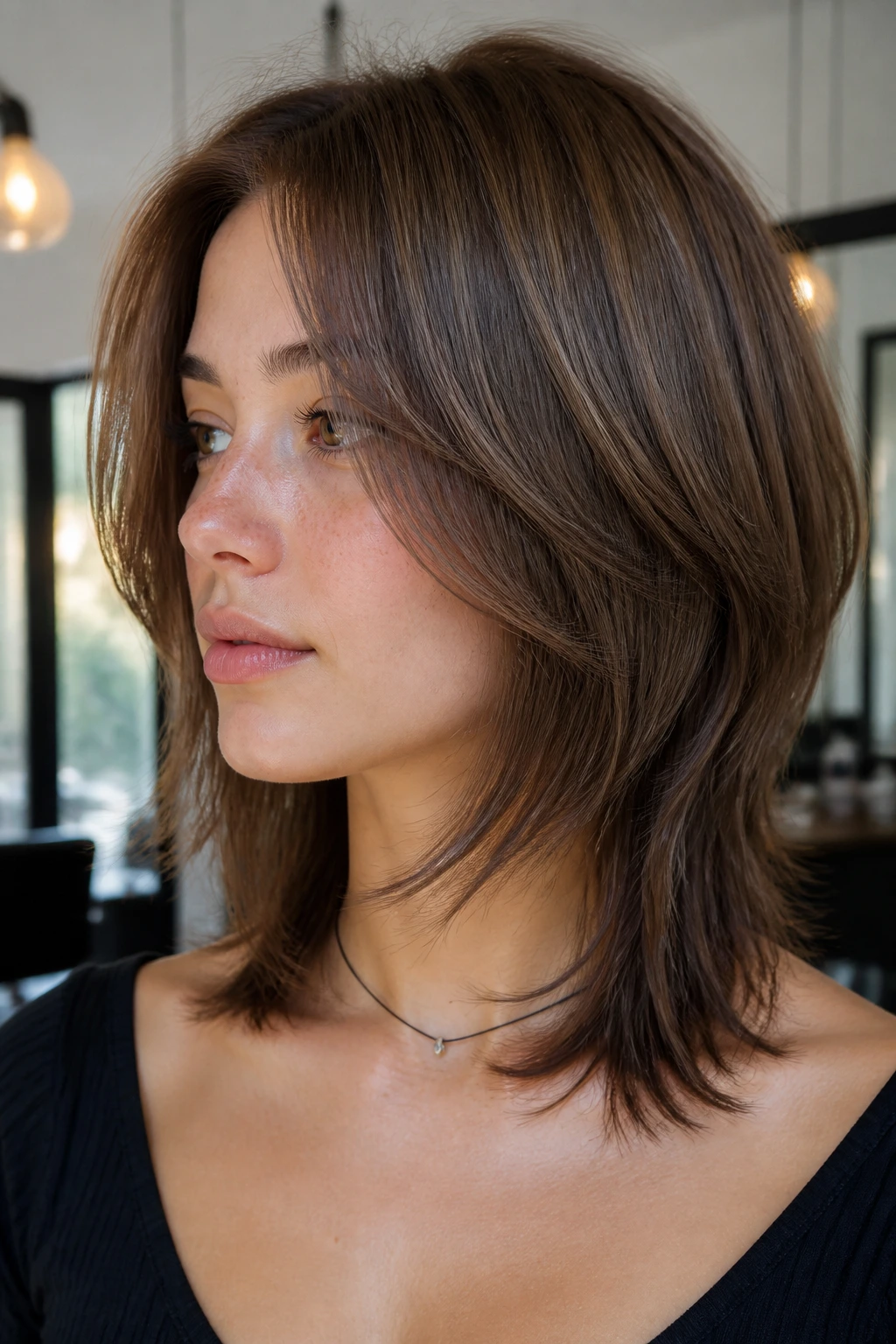
Does hair that lands at the jaw ever help a round face? Yes, but only when it skims instead of sits hard against the line of the jaw.
The point is motion. Jaw-skimming pieces should slide along the face and then fall into longer lengths at the back, which keeps the look soft and vertical. If the front stops dead at the jaw, the face can feel boxier. If the pieces move, the effect is much better.
How to Get the Most From It
Ask for front pieces with a slight angle and keep the back a little longer.
That gives you a nice visual path:
- front piece at the jaw
- longer section behind it
- soft bend near the ends
- enough length to tuck one side
It’s a neat cut. Clean, but not severe.
22. Polished Blunt Base with Hidden Layers
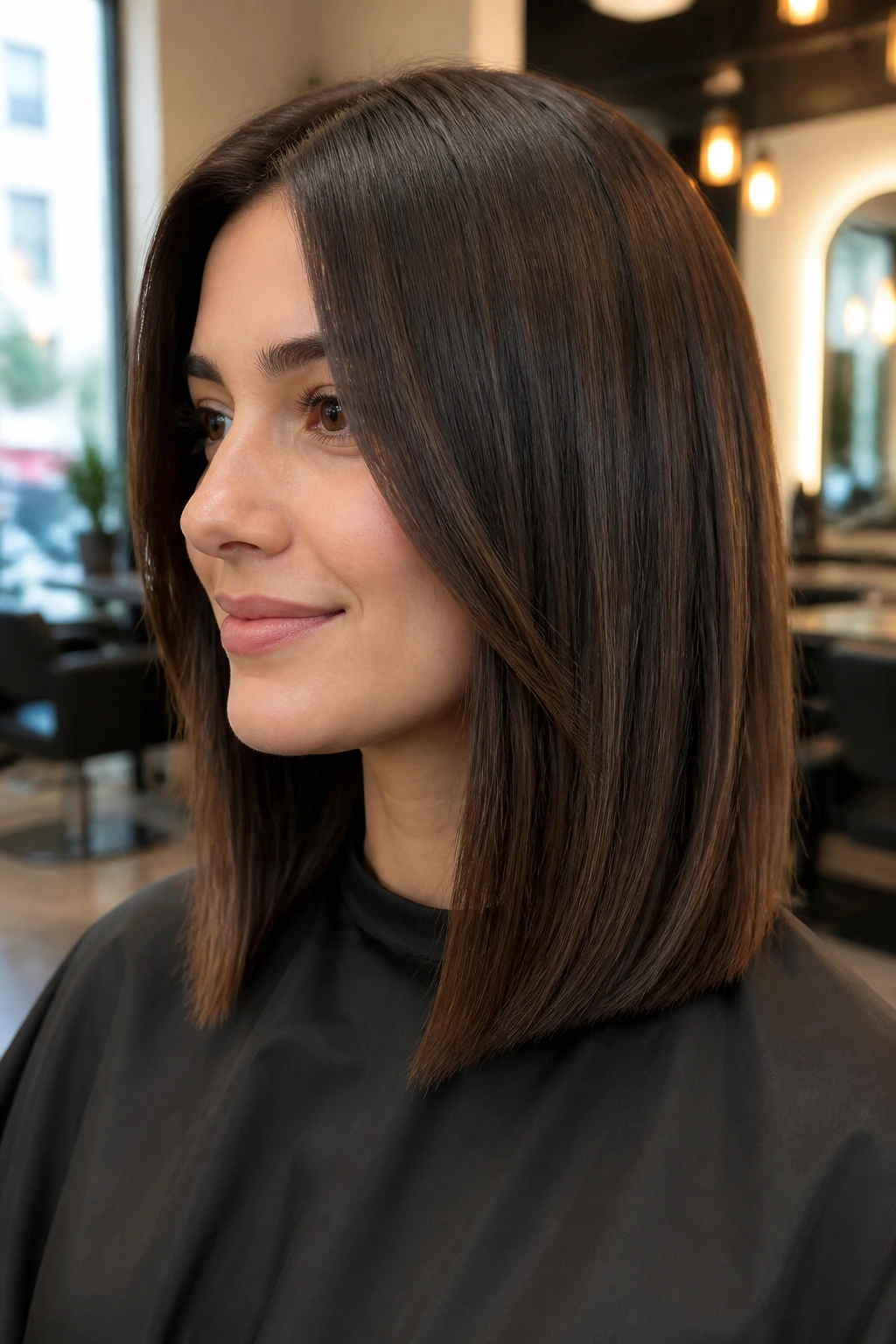
A blunt base can work on a round face if the hidden layers keep the sides from ballooning out. That’s the part a lot of people miss. The line itself is not the problem. The shape underneath is.
This style suits someone who likes a neat finish and doesn’t want the haircut to look too pieced out. The outer edge stays even, while the interior gets a little movement so the hair doesn’t hang like one heavy sheet.
Compared with a truly one-length lob, this version has more give when you move. It’s a good compromise if you want structure without rigidity. Blow it out smooth, tuck the ends under just a touch, and it reads polished rather than stiff.
23. Tousled Shag for Shoulder-Grazing Length
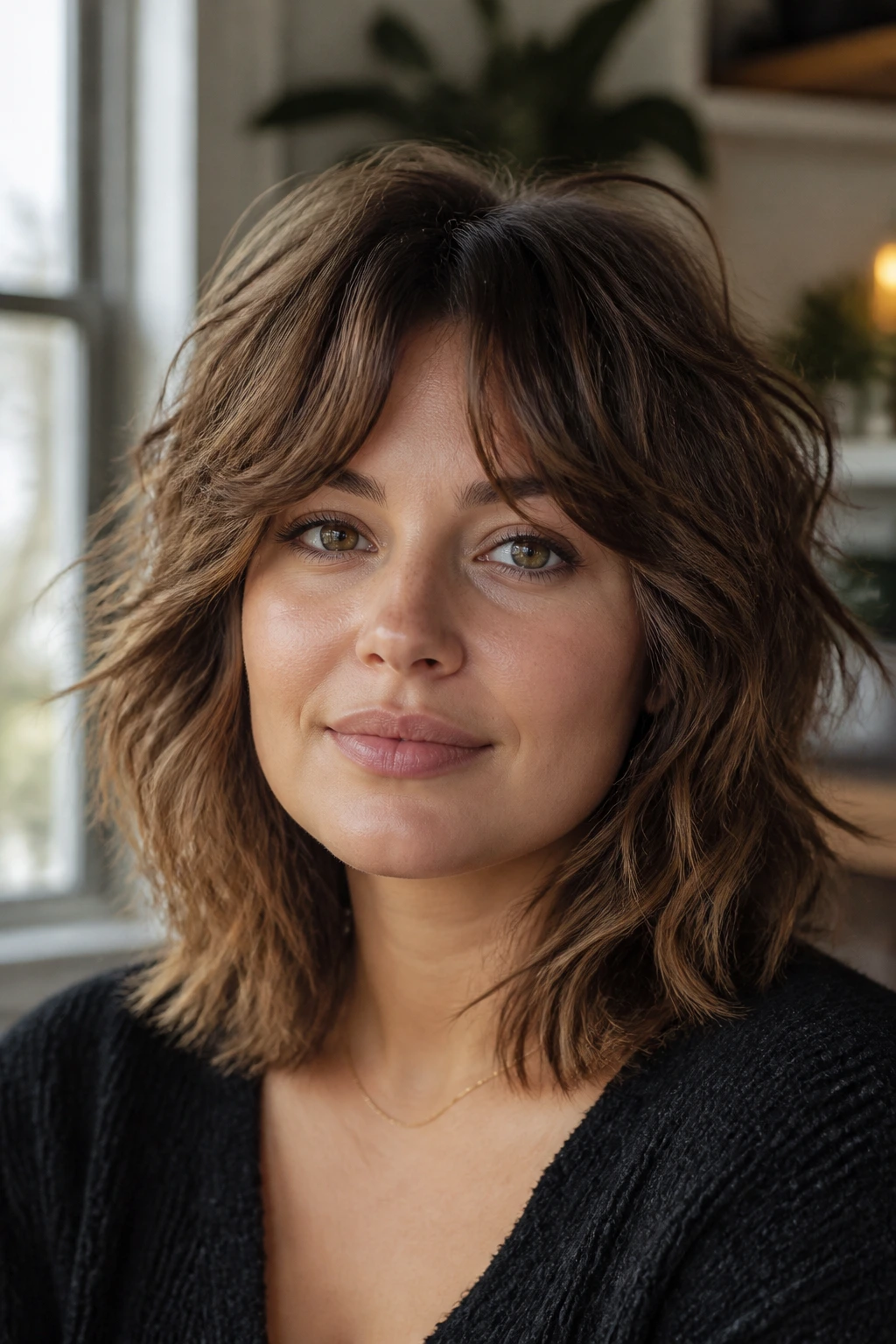
A tousled shag lives or dies by the texture, and that’s why it can be so useful for round faces. The movement keeps the cut from expanding in a blunt circle around the cheeks.
The shoulder-grazing length matters too. It keeps enough weight at the bottom to stretch the face visually, while the internal layers break up the bulk. If the layers start too high, the look can get too wide. If they start lower, the cut stays loose and flattering.
This is a good choice when you want hair that feels a little undone. Not messy, exactly. Just not overcontrolled. A salt spray or a light mousse helps the pieces separate, and a quick finger-dry is often enough. Some cuts need a polished finish. This one likes a bit of grit.
24. Graduated Layers That Ease the Cheek Line
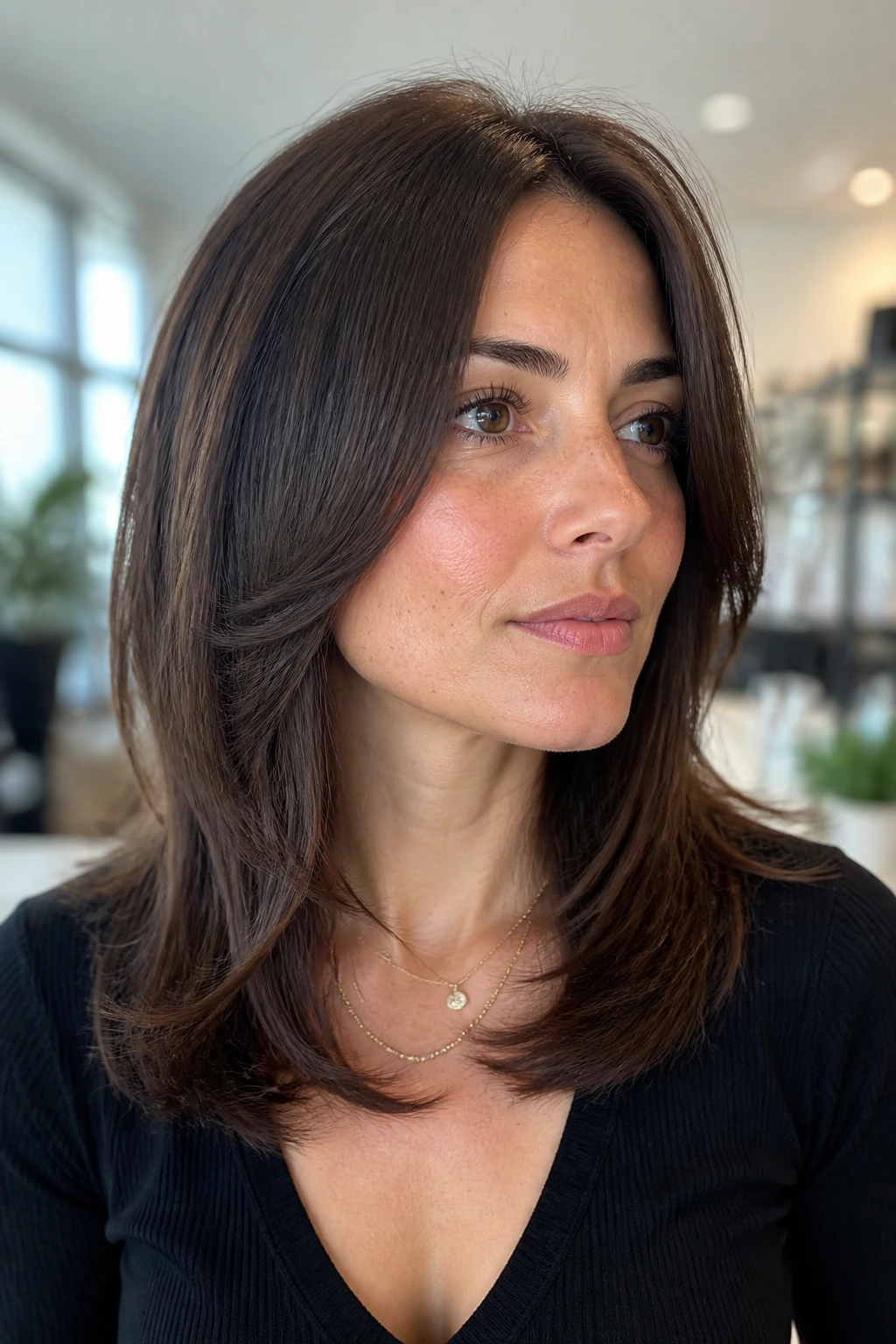
A graduated shape can be useful when the cheeks are the widest part of the face, but the graduation has to be soft. Too much stacking and you’ve built a pyramid. Too little and the layers vanish.
The sweet spot sits somewhere in the middle. The hair should fall with a gentle angle that eases away from the cheek line instead of sitting right on it. That soft taper creates movement without stealing fullness from the ends.
Compared with a straight, one-length cut, graduated layers give the hair more shape around the head and less weight at the sides. That makes a round face look a little longer and a little slimmer. It’s subtle. Subtle usually wins here.
25. Low-Maintenance Lob with Soft Internal Movement
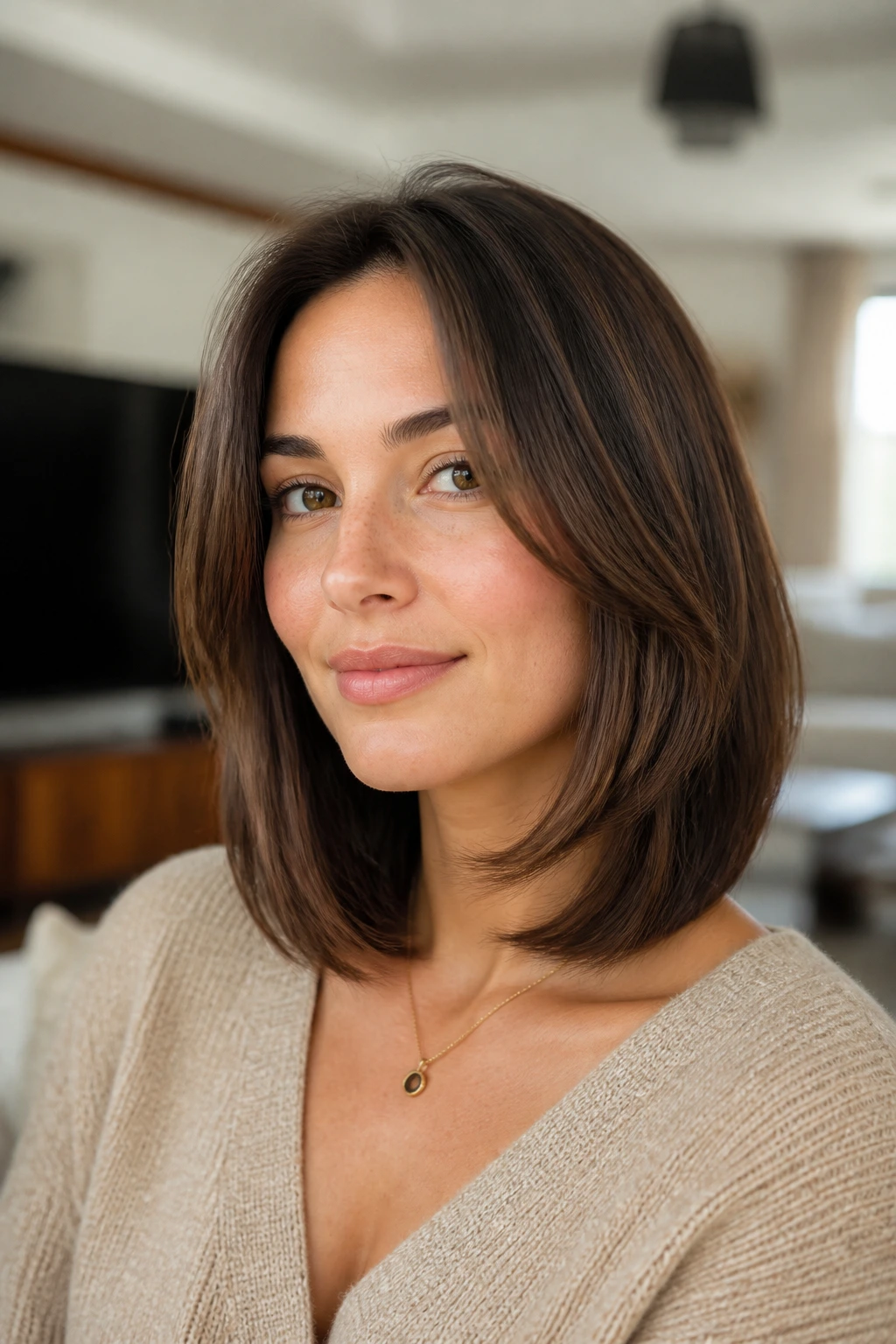
Some people want a haircut that looks done even when they haven’t touched it in two days. This is that haircut.
The base stays simple, which means the shape holds up easily. The internal movement keeps it from going flat at the sides or too blunt at the bottom. For round faces, that’s a useful combination because it gives softness without adding bulk.
What to Ask For
Keep the perimeter at the collarbone or slightly above it, then ask for soft interior layers that don’t break the surface too much.
- No heavy fringe.
- No wide, cheek-level layers.
- A center part if you like clean symmetry.
- A loose wave if you want more face length.
It’s plain in the best way. Easy to wear, easy to refresh.
26. Curly Medium Layers Shaped for Width Control
Curly hair can make a round face look wider if the shape grows outward at the sides, so the layer placement matters a lot more here than people realize.
The goal is to let the curls stack in a vertical pattern, not fan out in a triangle. That usually means keeping the shortest layers high enough to create lift, while letting the sides drop past the widest part of the cheeks. If the hair is cut too bluntly, curls bunch at the bottom and make the face look shorter.
A good curly medium cut has room for spring. It should feel shaped, not chopped. And yes, shrinkage matters, so your stylist needs to see your curl pattern dry or at least partially dry. Otherwise the finished length can surprise you in the worst way.
27. Wavy Midi with a Piecey Center Part
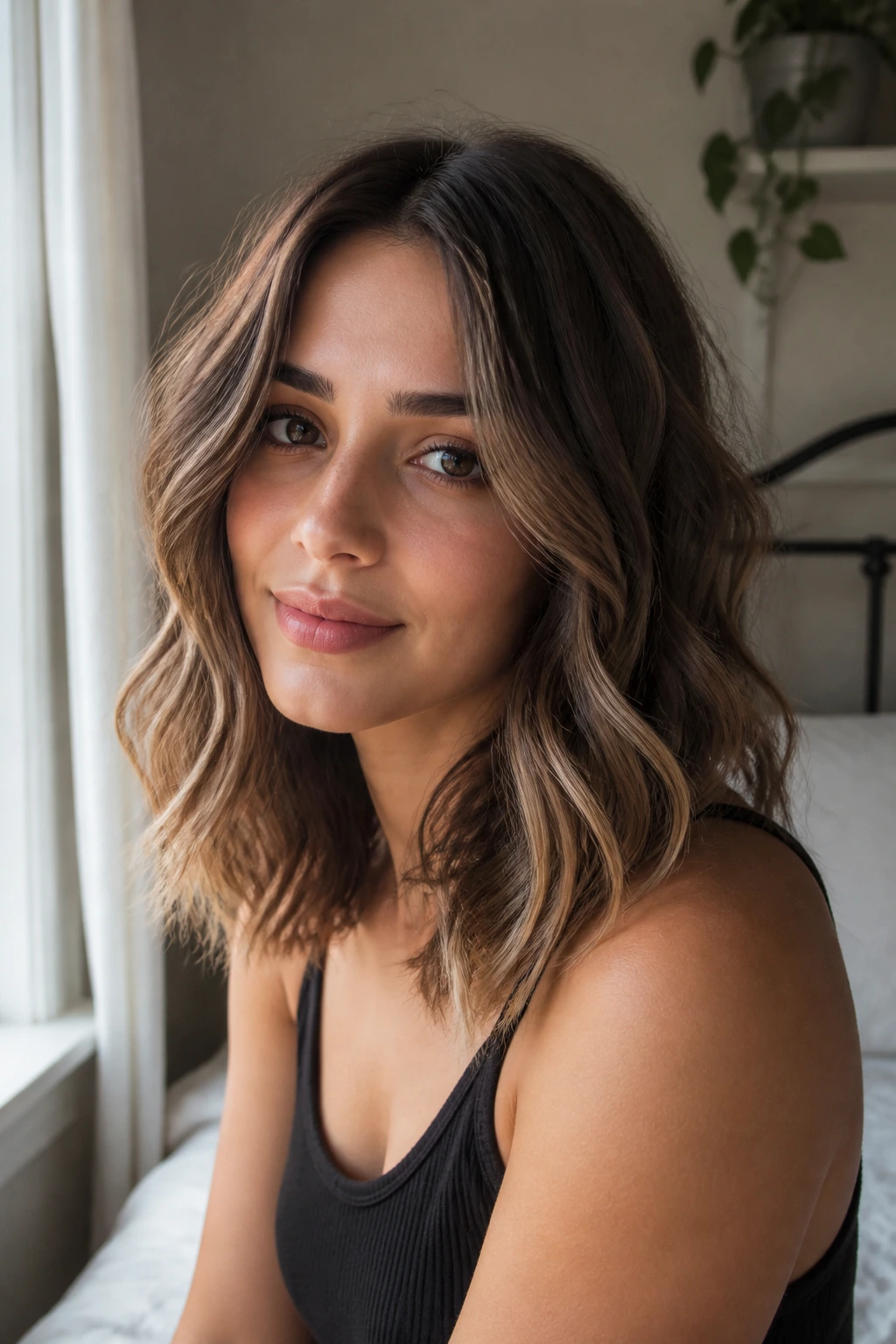
A wavy midi can be one of the easiest flattering cuts for a round face because the wave itself creates soft vertical movement. The center part keeps the shape open, and the piecey layers stop the style from looking too solid.
Why does it work? Because nothing sits too still. The hair moves around the face instead of framing it in a hard block, which helps the cheeks feel less dominant.
How to Wear It
Use a light styling cream on damp hair, then twist two or three sections as they dry.
That gives you enough separation without building frizz.
- Keep the front pieces long.
- Let the wave start below the cheekbone.
- Use a wide-tooth comb only once.
- Finish with a tiny bit of serum on the ends.
This one loves hair that has some natural bend already.
28. Glam Layers with a Side Sweep and Volume
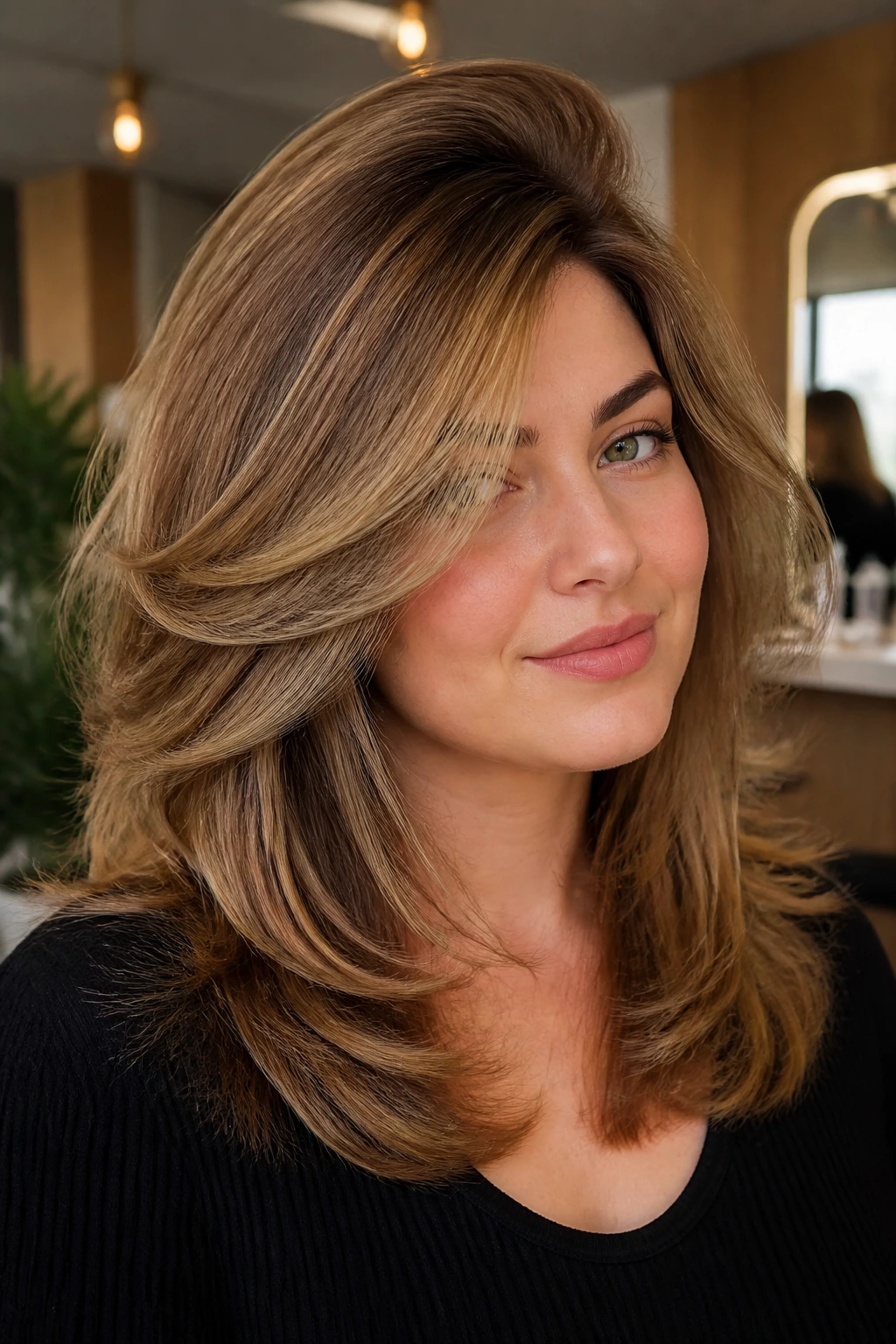
If you want a round face to look longer fast, side-swept volume gets the job done. The lift at the crown creates height, and the long sweep across the forehead draws the eye diagonally.
The layers should support that movement, not fight it. That means fewer harsh steps and more blending through the front. When the hair falls in a soft arc, the face reads leaner and more open.
This is the kind of cut that looks especially good with a round brush and a little bit of root spray. It doesn’t have to be fancy. A 10-minute blow-dry can do most of the work. The end result feels a bit dressed up, which is useful if you like your hair to carry some of the outfit.
29. Subtle Midi Layers for People Who Hate Big Changes
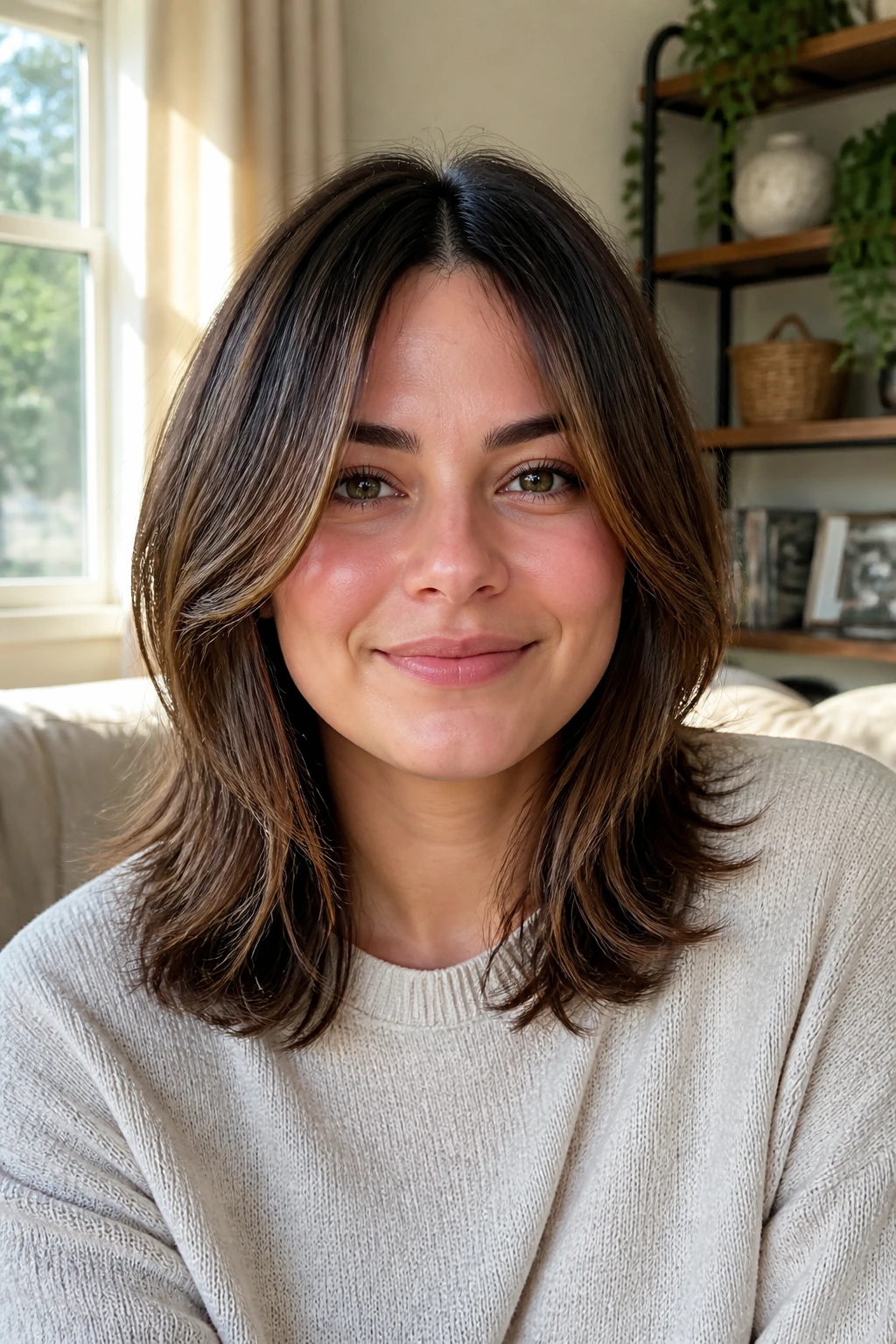
Not everyone wants a haircut that announces itself. Some people just want their medium hair to sit better, move a little more, and not widen the face.
Subtle midi layers are for that person. The layers barely show unless the hair moves, which makes the cut feel natural and easy. The shape still gets enough softness around the cheeks to flatter a round face, but nothing looks sliced up.
This is probably the safest option on the list if you’re nervous about going too layered. Ask for long, quiet layers that keep the perimeter full. If you wear your hair straight, it will look tidy. If you wave it, the movement shows up without getting fussy. Handy, honestly. Sometimes that’s exactly what you need.
30. Side-Swept Layered Cut with a Light, Swingy Finish
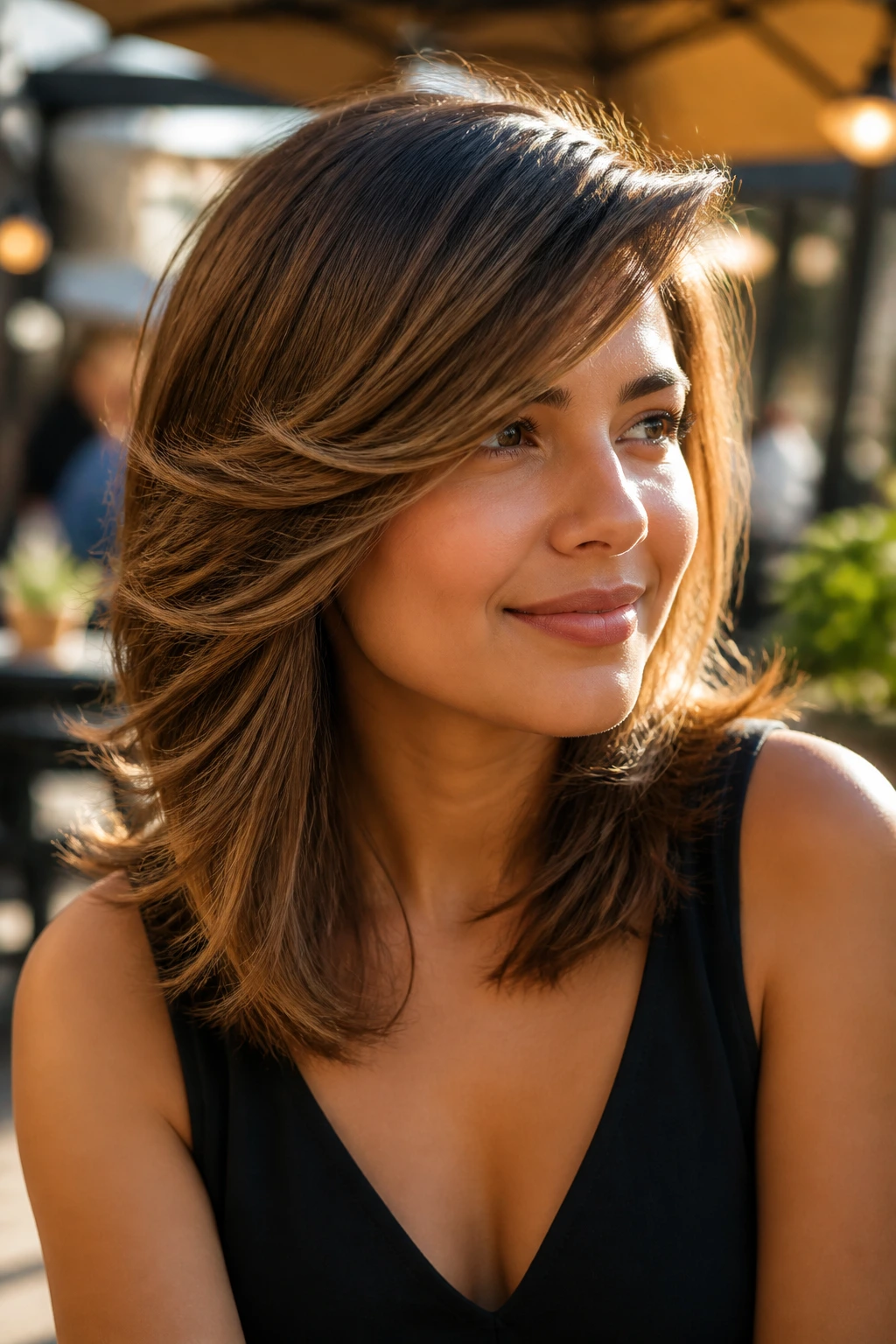
A side sweep is a strong finishing move for a round face because it breaks the symmetry that can make the face look wider. Add medium layers, and the whole cut gets a swingy quality that feels light instead of heavy.
The front should travel across the forehead and then fall into longer pieces near the cheek and jaw. That keeps the line diagonal, which is the whole point. If the sweep is too short, it can puff outward. If it’s too long and too thick, it can swallow the face. The sweet spot sits in between.
This is a smart choice if you want something feminine, soft, and easy to style without losing shape. It works with curls, waves, and straight hair. A good side-swept layered cut doesn’t need much explaining. You can see it move.
Final Thoughts

Round faces do not need to be hidden. They need shape. That’s a different thing.
The best medium layered haircuts for round faces work because they stretch the line of the hair, soften the cheeks, and keep the ends from flaring outward. That can happen through a collarbone cut, a shag, a butterfly layer, or something more polished. The name matters less than the placement.
If you’re deciding between two cuts, choose the one that puts the shortest layers lower, not higher. That small choice usually decides whether the haircut opens the face or crowds it.
