



Fine hair has a way of collapsing the minute you stop fussing with it.
That’s exactly why tousled layered haircuts for fine hair stay useful year after year: they give the hair movement without stripping away the body that fine strands already fight to keep. The best versions don’t look chopped to pieces. They look lived-in, soft, and a little undone, like the hair fell into place after a good blow-dry and ten minutes of messing with your hands.
The trick is balance. Too many short layers can make fine hair look sparse at the ends, while one heavy block of length can drag everything down and leave the crown flat. The sweet spot lives in cleaner outlines, smart face-framing, and layers placed where the hair can bend instead of break into wisps. A blunt edge can be your friend here. So can a side part, a bit of root lift, and a stylist who knows when to stop cutting.
Some of these cuts are short and breezy. Others keep the length but build in movement where it counts. All of them work better when the finish is a little imperfect, which is lucky, because perfectly polished hair is not the goal here. Lift is.
1. Tousled Layered Haircuts for Fine Hair: The Collarbone Lob

A collarbone lob is one of the safest bets for fine hair because it gives you enough length to feel versatile while staying light enough to move. The ends sit right where the hair naturally bends, so the shape doesn’t droop the way longer cuts often do.
Why It Flatters Fine Hair
The collarbone acts like a built-in shelf. Hair brushes against it, flips a little, and keeps some shape even on days when you don’t style much. That’s a small thing, but it matters.
- Ask for soft, invisible layers that start around the cheekbone or lip line.
- Keep the perimeter blunt enough to hold the look together.
- Style with a 1-inch curling iron only through the mid-lengths, not the ends.
- Finish with a light mist of texturizing spray, then shake the roots with your fingers.
Best move: blow-dry the top section forward first, then sweep it back. That tiny change gives the roots a better lift than overcurling ever will.
2. French Bob with Soft Ruffled Ends

A French bob works because it stops fine hair from hanging around too long. Shorter hair has less weight pulling it down, and that alone can make the shape look fuller before you even touch a brush.
The soft ruffled ends matter. A hard, chin-length line can look sharp in a nice way, but it can also feel severe on fine hair if the density is low. Ruffled ends—usually created with point cutting or a bit of razor work—break up the edge just enough to keep the bob from looking boxy.
What I like about this cut is that it doesn’t need much. A quick rough-dry, a pea-sized amount of lightweight cream, and a squeeze at the ends is often enough. If your hair is stick-straight, a side tuck behind one ear can do more for the shape than another round of heat styling.
This cut is especially good if you want something tidy that still has a bit of movement when you walk.
3. Curtain Bang Shag on Fine Hair
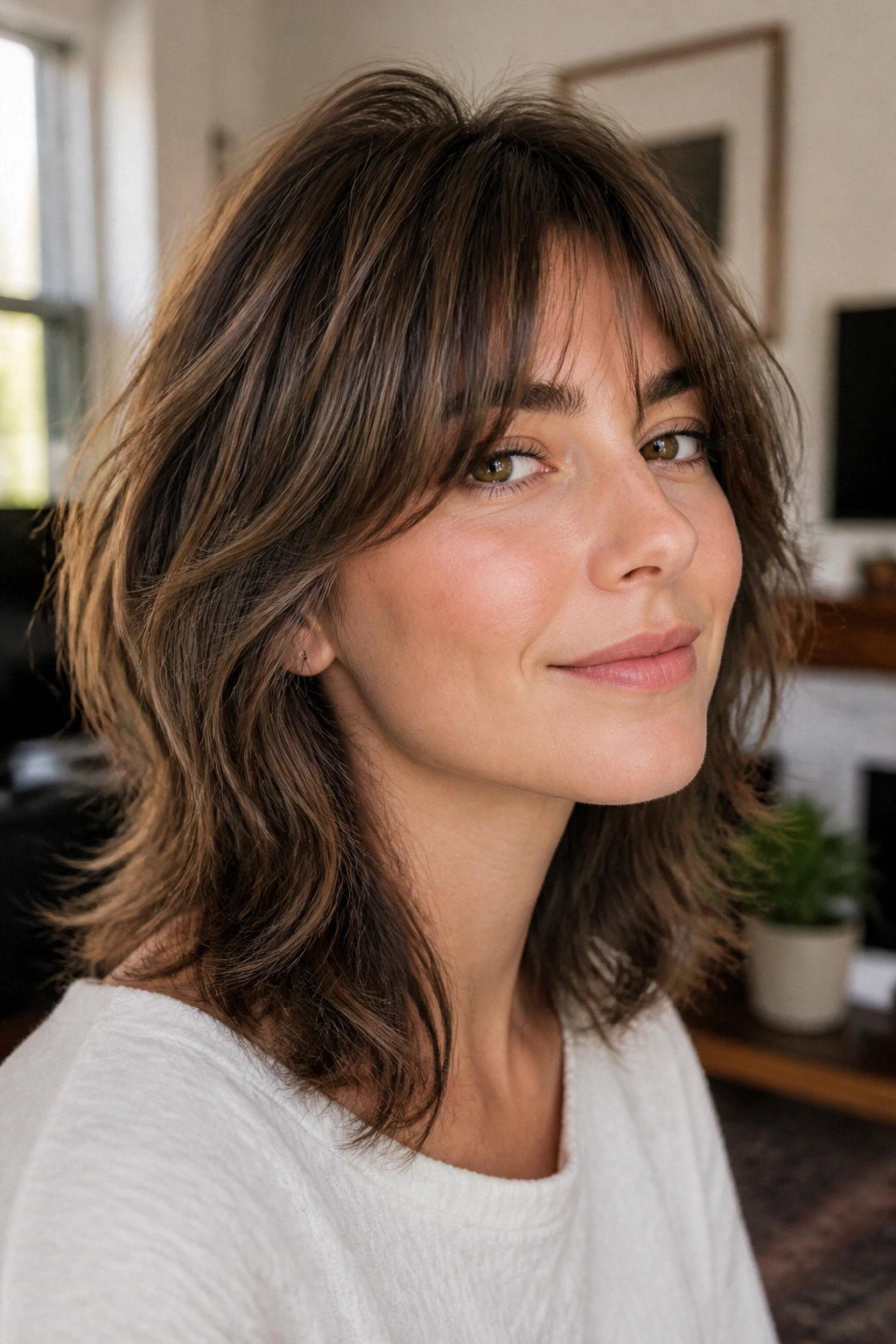
Can a shag work on fine hair? Yes, but only when it’s cut with restraint.
A curtain bang shag gives you movement around the face and a little lift at the crown without turning the whole head into a frayed cloud. The key is keeping the top layers soft and the bottom section clean enough to hold some weight. If the stylist goes too far with the razor, the hair can start looking thin fast.
How to Style It
Curtain bangs are your friend here because they split the face in half and make the top of the haircut feel fuller. They also let you skip heavy fringe maintenance, which is a gift if your hair lies flat by midday.
- Blow-dry the bangs with a small round brush, pulling them away from the face.
- Use a light mousse at the roots before drying.
- Add a 1-to-2-inch wave only to the outer layers.
- Leave the ends a little straight so the cut still looks airy, not curled into a ringlet set.
Small warning: this cut wants regular trims. If the fringe grows into your eyes and the layers lose shape, the whole thing can tip from tousled into messy in a bad way.
4. Butterfly Cut with Airy Face Layers
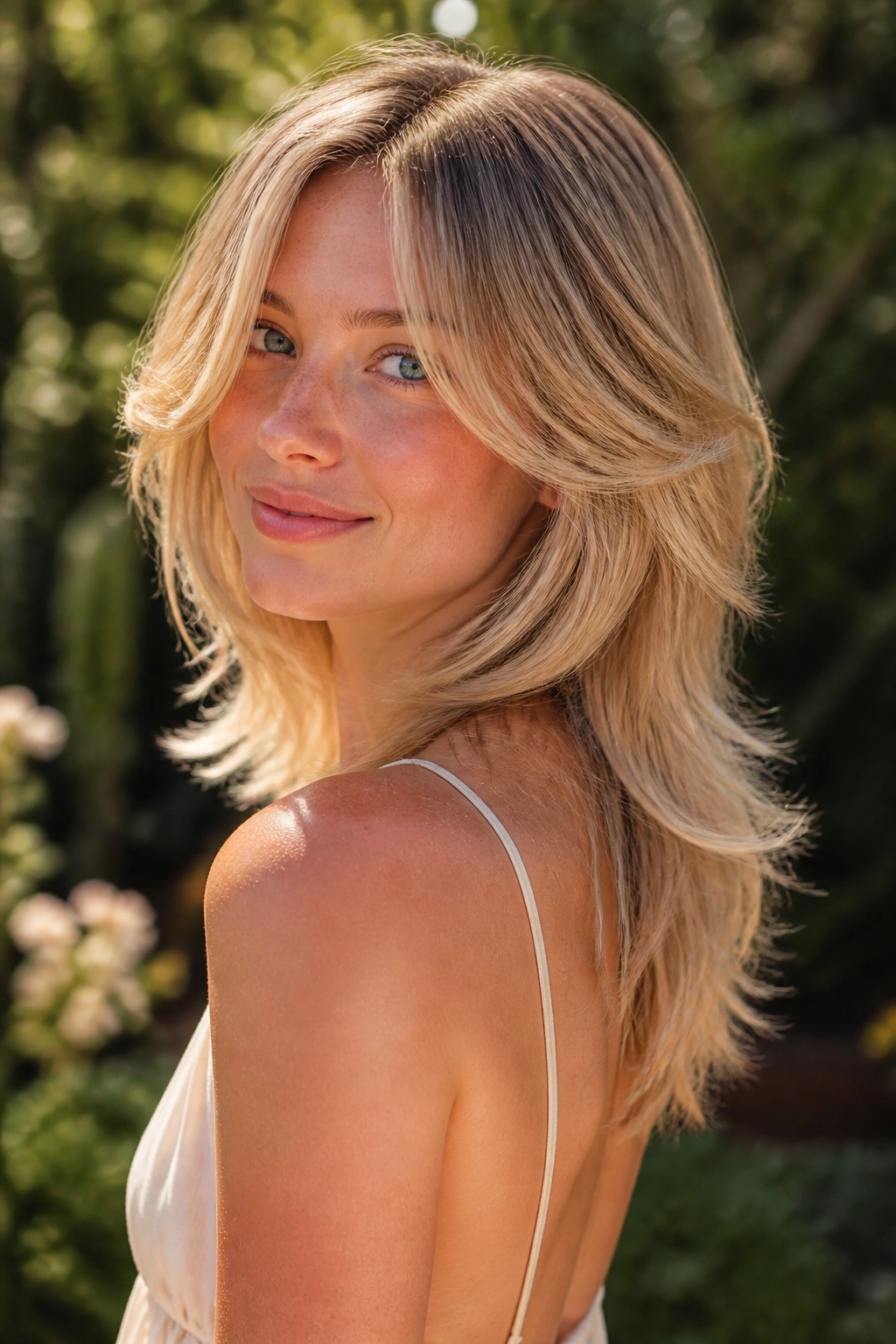
Long fine hair often looks prettier in theory than it does in real life. It sounds romantic until the whole thing sits flat against your head and the ends feel stringy.
The butterfly cut fixes part of that by keeping the length while lifting the top layers away from the rest of the hair. The shorter face-framing pieces create the illusion of volume near the cheeks and temples, where fine hair usually needs help most. Meanwhile, the long back layer keeps the look from getting too wispy.
I’d call this a smart choice for people who don’t want to give up ponytail length. You can still pull the hair back, but when it’s down, the shorter front sections create movement that catches the eye first.
A few things make this cut work better:
- Keep the shortest layers below the chin if the hair is very sparse.
- Ask for soft graduation, not dramatic chopping.
- Use a large round brush on the top pieces only.
- Let the ends fall mostly straight.
That last part matters. The strength of this cut is in the shape, not in overstyling every strand.
5. Shattered Chin-Length Bob
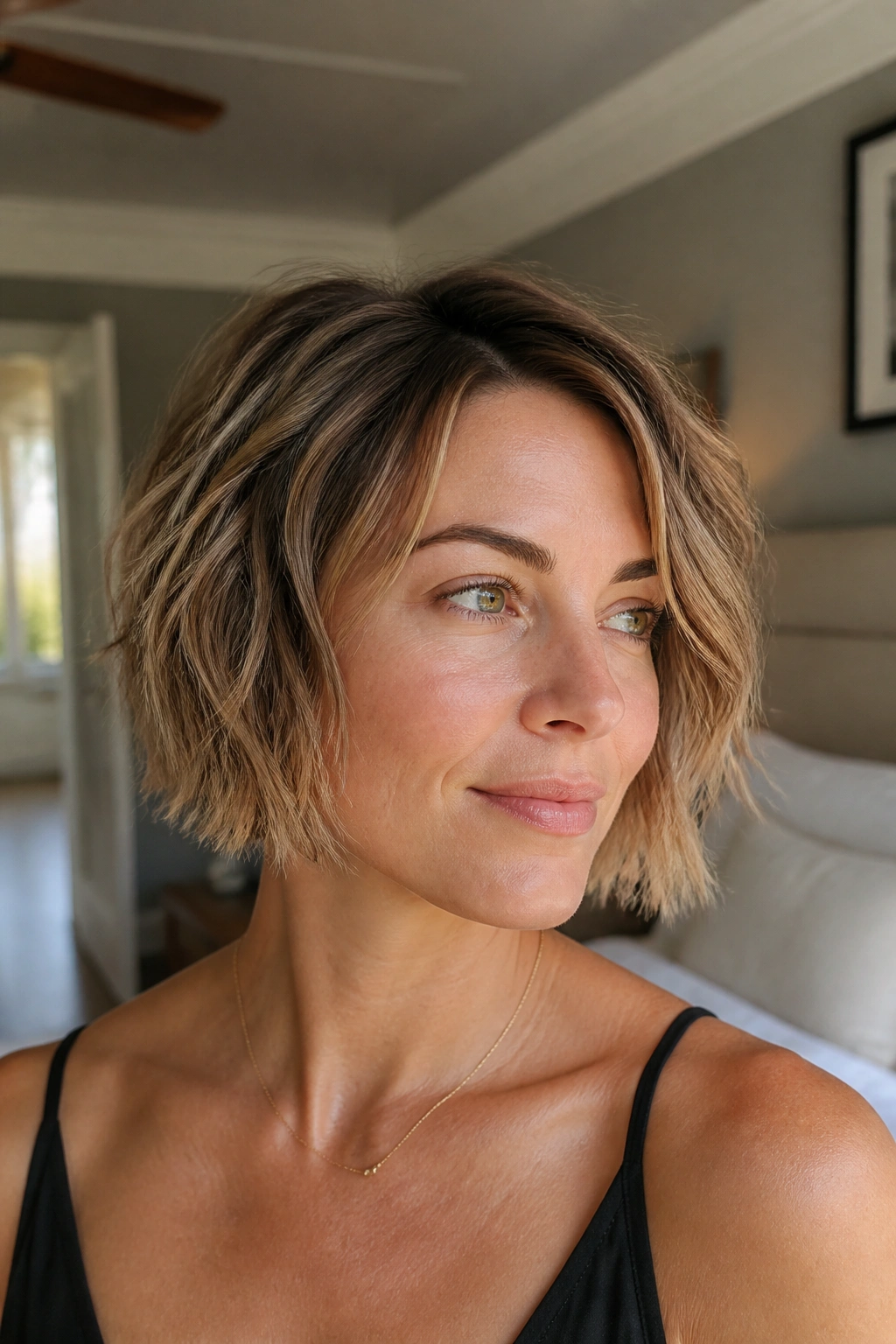
A shattered bob is a little rough around the edges in the best sense. The shape is still clean, but the ends are broken up enough that the hair doesn’t look like one solid helmet.
This is a good option if your fine hair tends to stick to your neck and look limp by the afternoon. A chin-length cut removes that extra weight, and the shattered finish creates tiny gaps of movement that make the outline look fuller. The hair reads as lighter and more active, not thinner.
The thing people get wrong with this style is thinking it needs aggressive texturing. It doesn’t. A heavy hand with thinning shears can create see-through ends, which is the last thing you want when density is already limited. A softer point cut at the perimeter gives you the same airy feeling without leaving the bottom edge ragged.
It also looks nice when it’s a little imperfect. A loose wave, a side part, and a tuck behind one ear are often enough. Easy hair. No drama.
6. Feathered Shoulder Cut
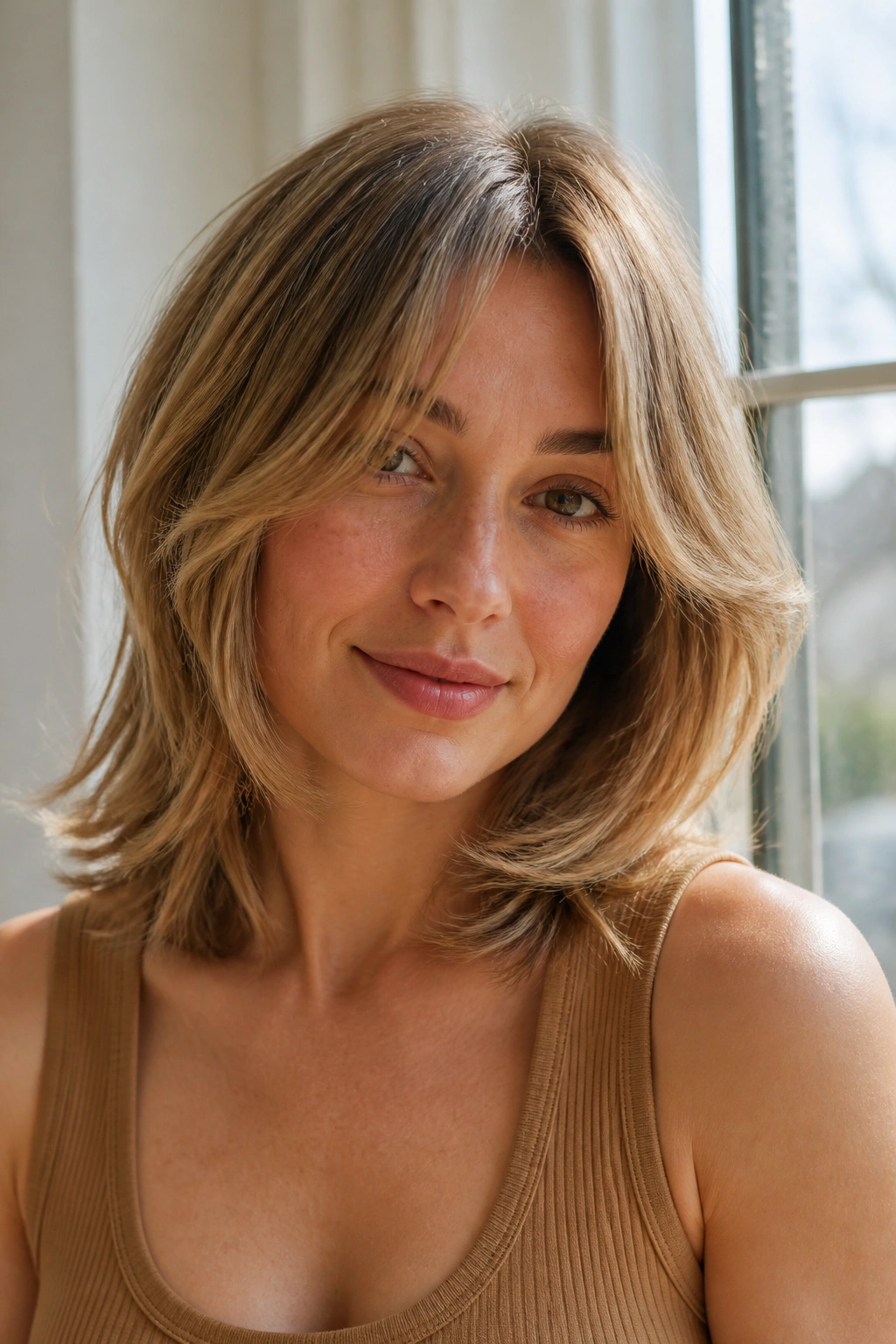
If you want movement without sacrificing too much bulk, feathering is the move. A feathered shoulder cut keeps enough length to feel feminine and versatile, but it lightens the shape around the face so the hair doesn’t sit as one heavy block.
This style is especially useful if your hair gets flat at the top and puffy at the bottom. Feathered layers redistribute that balance. The hair lifts near the cheekbones and falls softer around the shoulders, which can make the whole head look more open and less dragged down.
What sets it apart from a standard shoulder-length cut is the finishing. Feathering softens the transition between layers, so the hair swings instead of flopping. It’s a subtle difference, but a real one. The cut looks like it has air inside it.
Best for:
- Straight to lightly wavy fine hair
- Blow-dryers who like a round brush
- People who want shape but not a shaggy look
I’d skip heavy oils on this cut. A drop too much and the feathered movement disappears fast.
7. Soft Wolf Cut
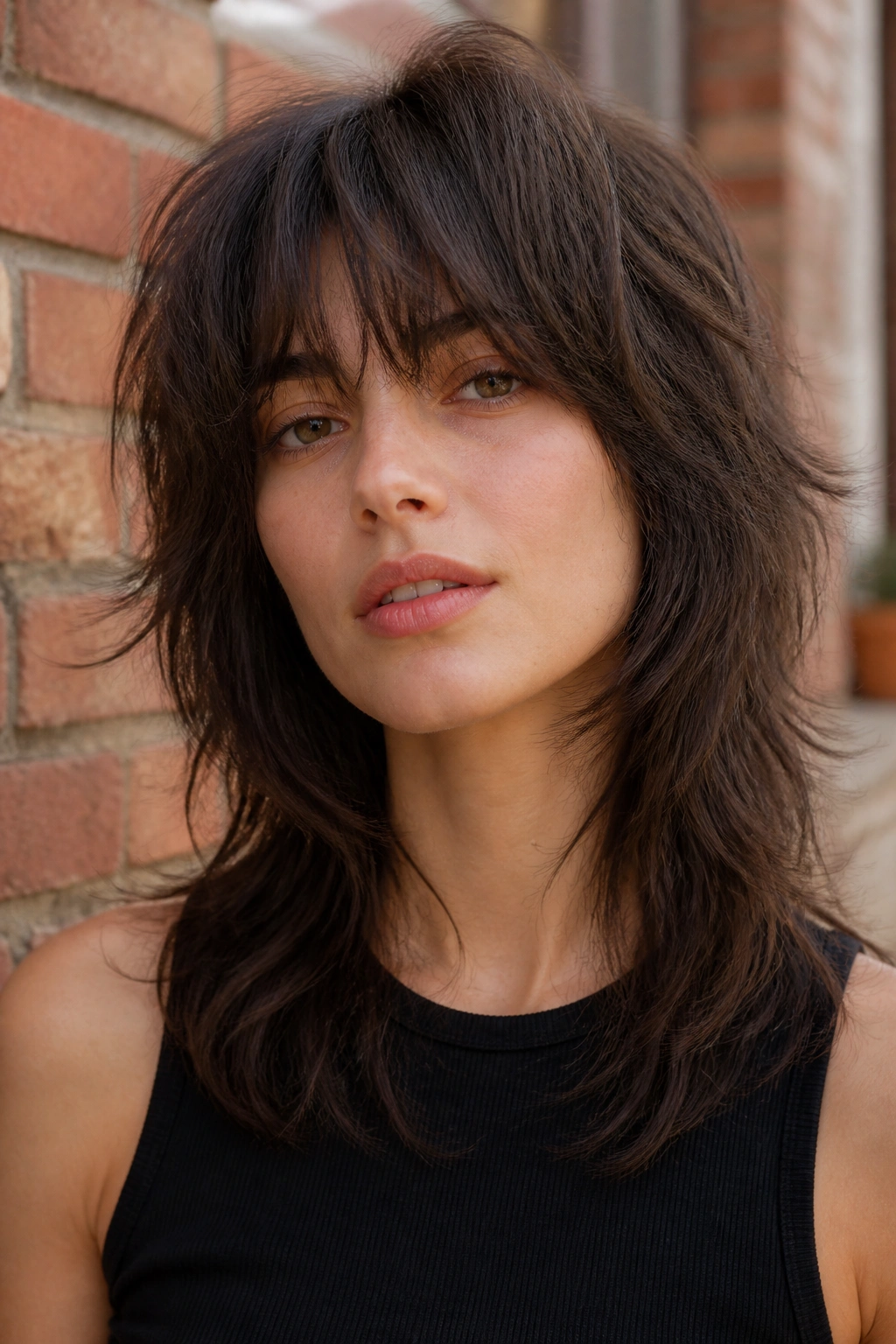
A wolf cut can scare people with fine hair, and honestly, some of that fear is earned. The extreme versions are all shaggy crown, broken ends, and a lot of visual noise.
The soft wolf cut is the calmer cousin. It keeps the punky attitude but trims the edges so fine hair doesn’t end up looking stringy. The crown layers stay short enough to create lift, while the lower sections keep enough length to avoid looking thin through the mid-back.
What to Ask Your Stylist
Ask for a wolf-inspired shape, not a full chop. That wording helps.
- Keep the crown layers soft and blended.
- Leave some density around the jawline.
- Avoid over-razoring the ends.
- Make the face frame sweep into the rest of the cut instead of stopping abruptly.
This version works best when you want texture without neatness. It loves a bit of grit from dry shampoo or texture spray. It also looks better on day two than day one, which is saying something.
If you like tidy hair, this is not your cut. If you like hair that looks cool after being slept on a little, it might be the one.
8. Long Wispy Layers for Tousled Layered Haircuts for Fine Hair
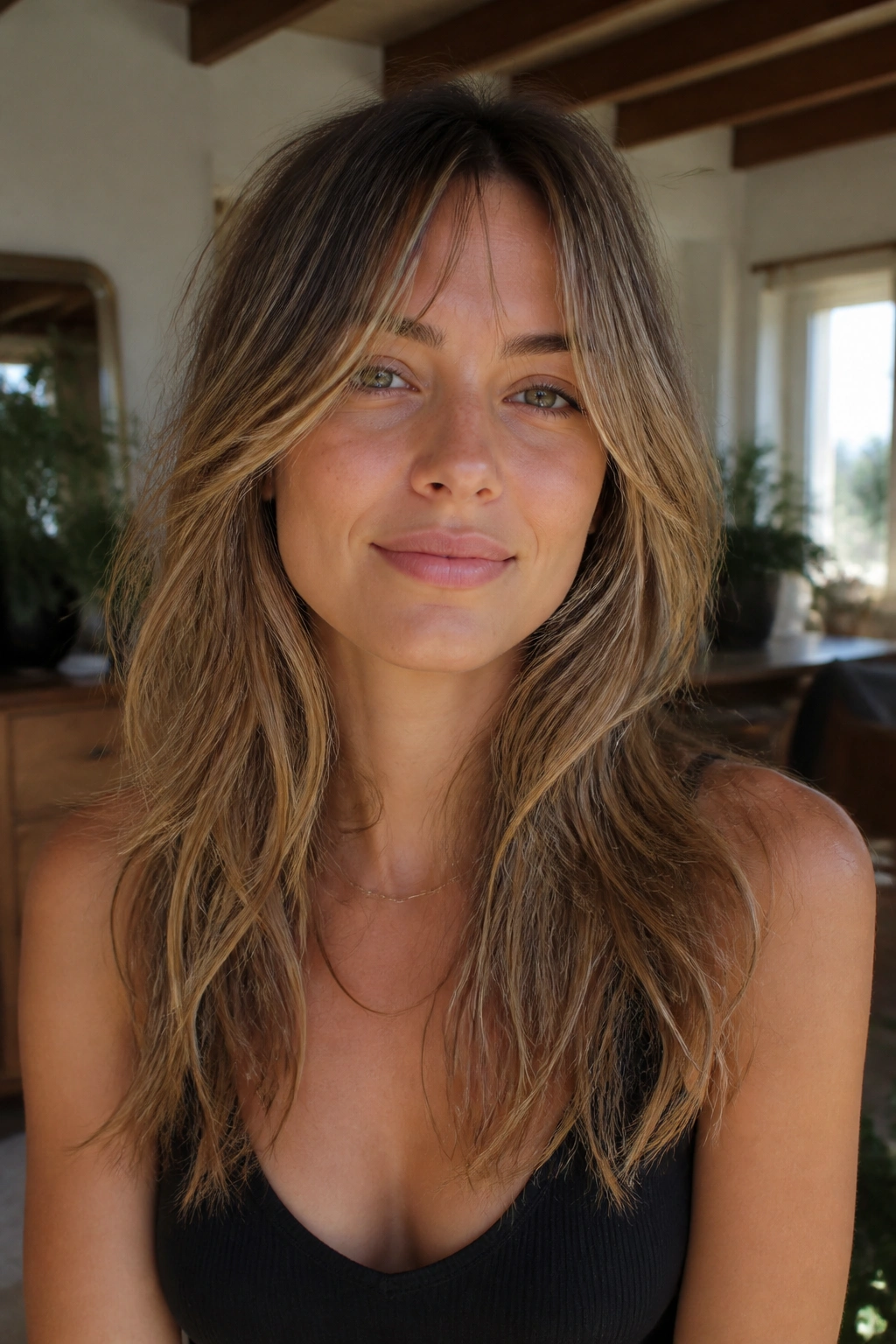
Long layers can work on fine hair, but only if they’re placed with discipline. The worst mistake is starting the layers too high and creating a see-through shape from the ears down.
Wispy layers solve that by keeping the top length intact and adding movement mostly through the lower mid-lengths. The result feels soft rather than chopped. It’s a good match for people who want to keep length, wear hair down often, and still have some movement around the face.
Where the Shape Should Start
The first layer should usually begin around the collarbone or just below it. That keeps the perimeter strong enough to support the hair’s weight.
- Ask for long, blended layers rather than short stacked ones.
- Keep the front pieces around the cheekbone for lift.
- Use a wide-barrel iron, not a tight curl.
- Finish with a mist of flexible-hold spray so the layers move but don’t collapse.
This cut can be underwhelming if the hair is very straight and very fine, so a little bend helps. A soft wave through the lower half usually gives the style enough life to do its job.
9. Rounded Midi Cut with Internal Layers
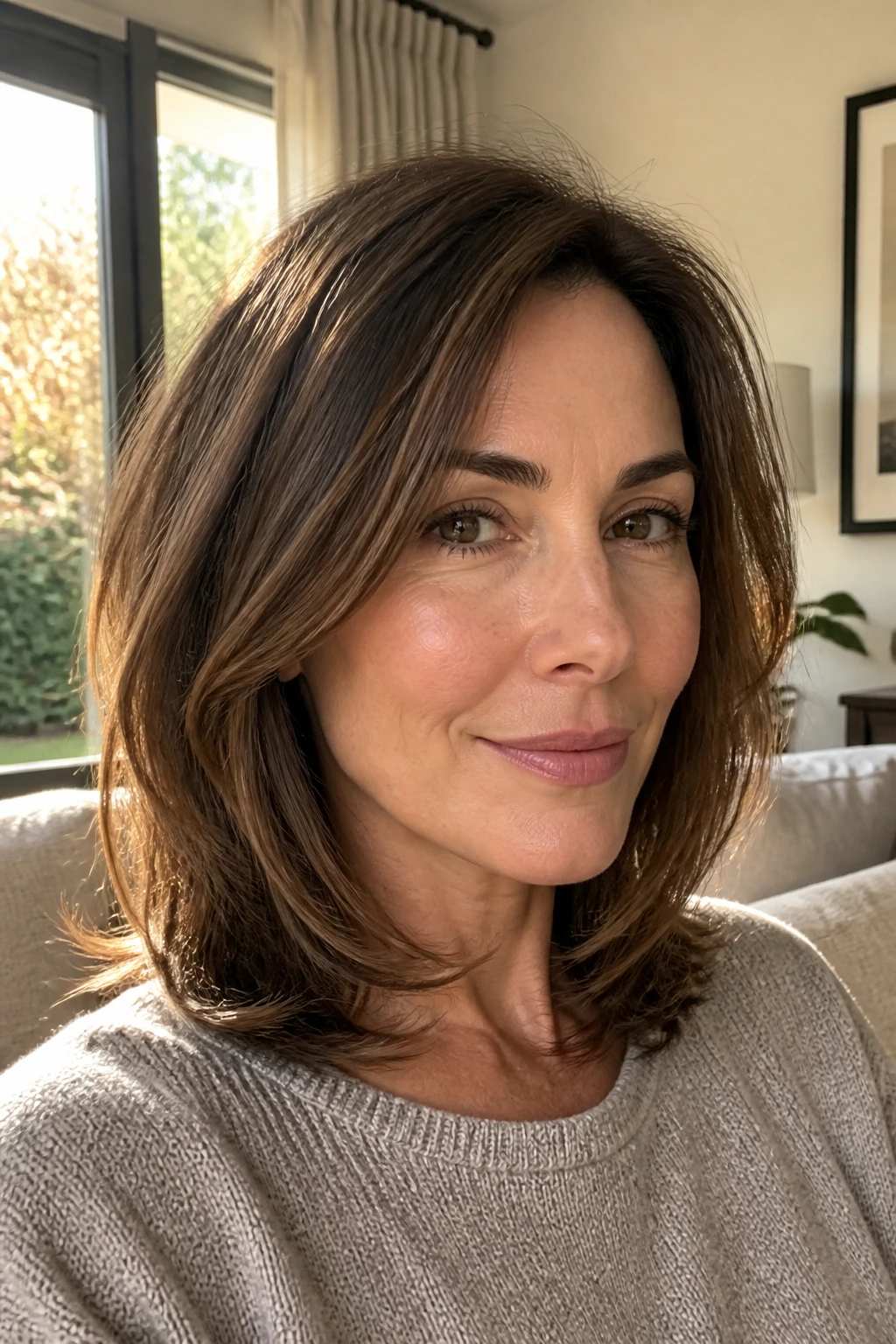
A rounded midi cut is a quiet fix for hair that sits flat around the shoulders. Instead of dropping in a straight line, the shape curves gently inward, which gives the head a softer outline and helps fine hair look denser.
The internal layers are hidden inside the haircut. That matters. Visible layers can be pretty, but hidden layers often work better when the goal is fullness. They remove weight from the center of the cut without carving up the surface. The outside still looks smooth.
I like this cut for people who want movement but don’t want the “I clearly got layers” look. It’s a little more polished than a shag and less blunt than a classic one-length midi. You can wear it air-dried or blown smooth, and it won’t look out of place either way.
A small round brush at the ends helps shape the curve. So does tucking the front pieces behind the ears while they cool. Those tiny tricks give the cut a nicer bend than heavy styling ever will.
10. Angled Lob with Side-Swept Fringe
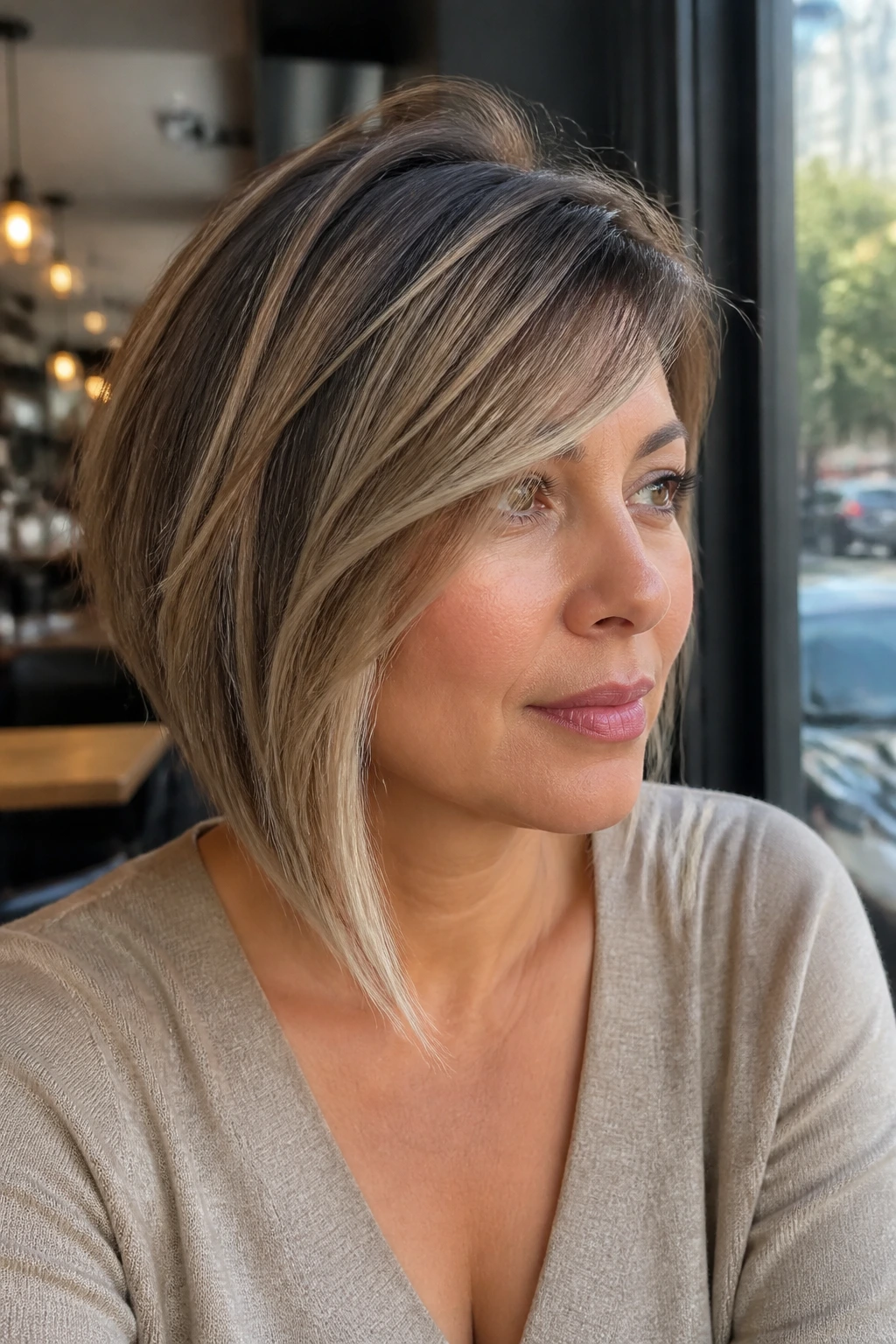
An angled lob is one of those cuts that quietly does a lot of work. The back sits a little shorter, the front stays longer, and that tilt gives fine hair a built-in sense of movement even when it’s not curled.
The side-swept fringe is the part I’d defend most. It breaks up the forehead, adds a soft diagonal line, and helps the front of the haircut look fuller. On fine hair, diagonals often read richer than straight-across lines because they create more shape with less hair.
There’s also a nice practical side to it. The longer front pieces can be tucked, pinned, or waved differently from the back. That flexibility gives you more ways to fake volume without changing the cut itself. Handy. Especially on second-day hair.
This style looks best when the angle is subtle, not severe. A dramatic front length can pull too much attention to the thinness at the ends. Keep the difference modest, and the whole cut stays light on its feet.
11. Bixie Cut with Piecey Top
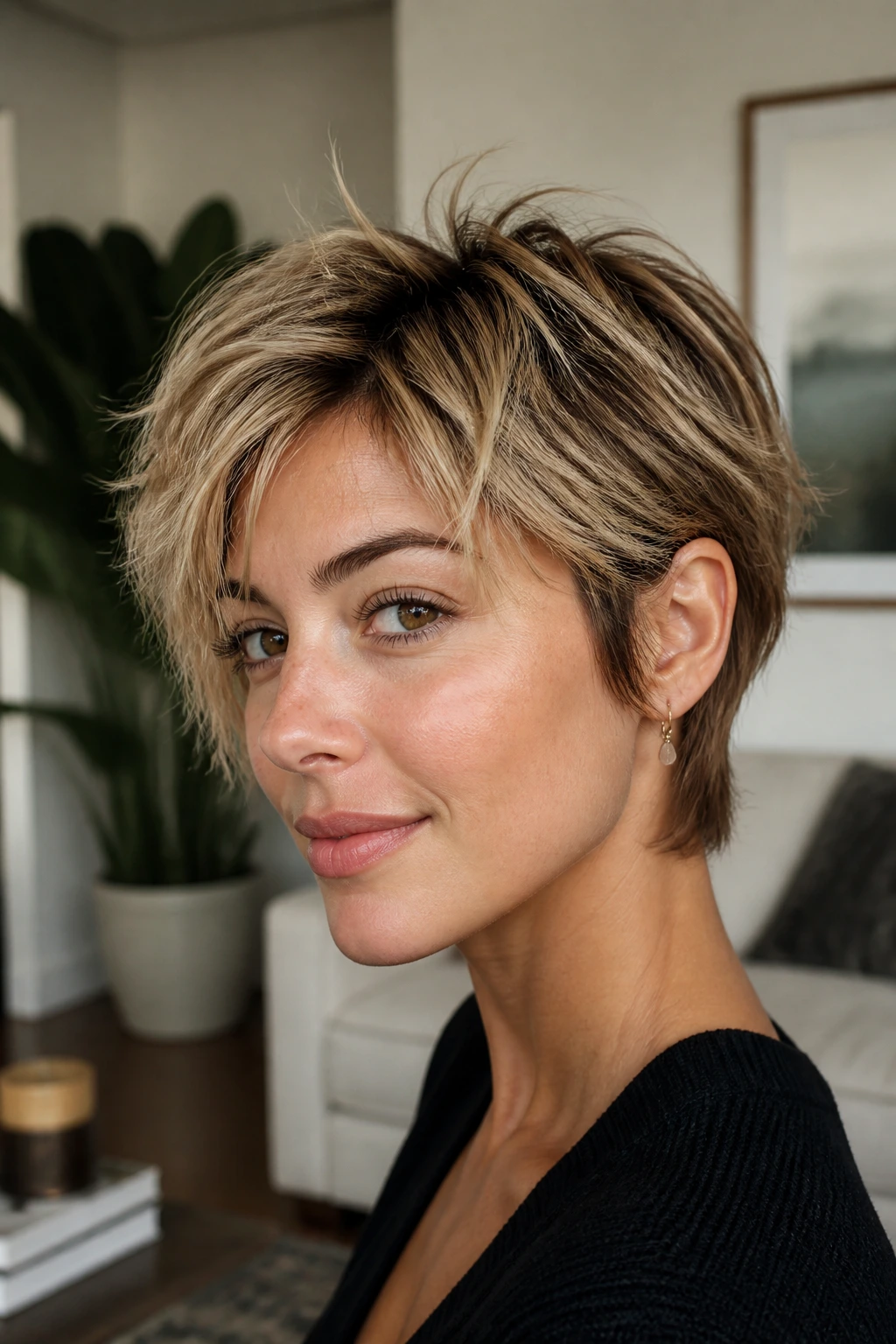
A bixie is what happens when a bob and a pixie meet in the middle and decide to be less fussy about it. For fine hair, that middle ground can be a sweet spot because it gives you lift at the crown without sacrificing all the softness around the face.
The piecey top is the whole point. Short, separated layers at the crown create the look of fullness, and because the cut is still a little longer than a pixie, it avoids the hard edges that can expose thin spots too much. The result feels modern without being severe.
This haircut suits people who want short hair but not a super cropped look. It’s also a solid choice if your hair grows in with a flat crown and you’re tired of fighting it. A little root spray and finger-drying can go a long way here.
Be honest with your stylist about texture. If your hair lies flat and straight, ask for softer graduation at the sides. If it has a little wave, you can leave the top more shattered and let the texture do the work.
12. Razor-Textured Mid-Length Cut
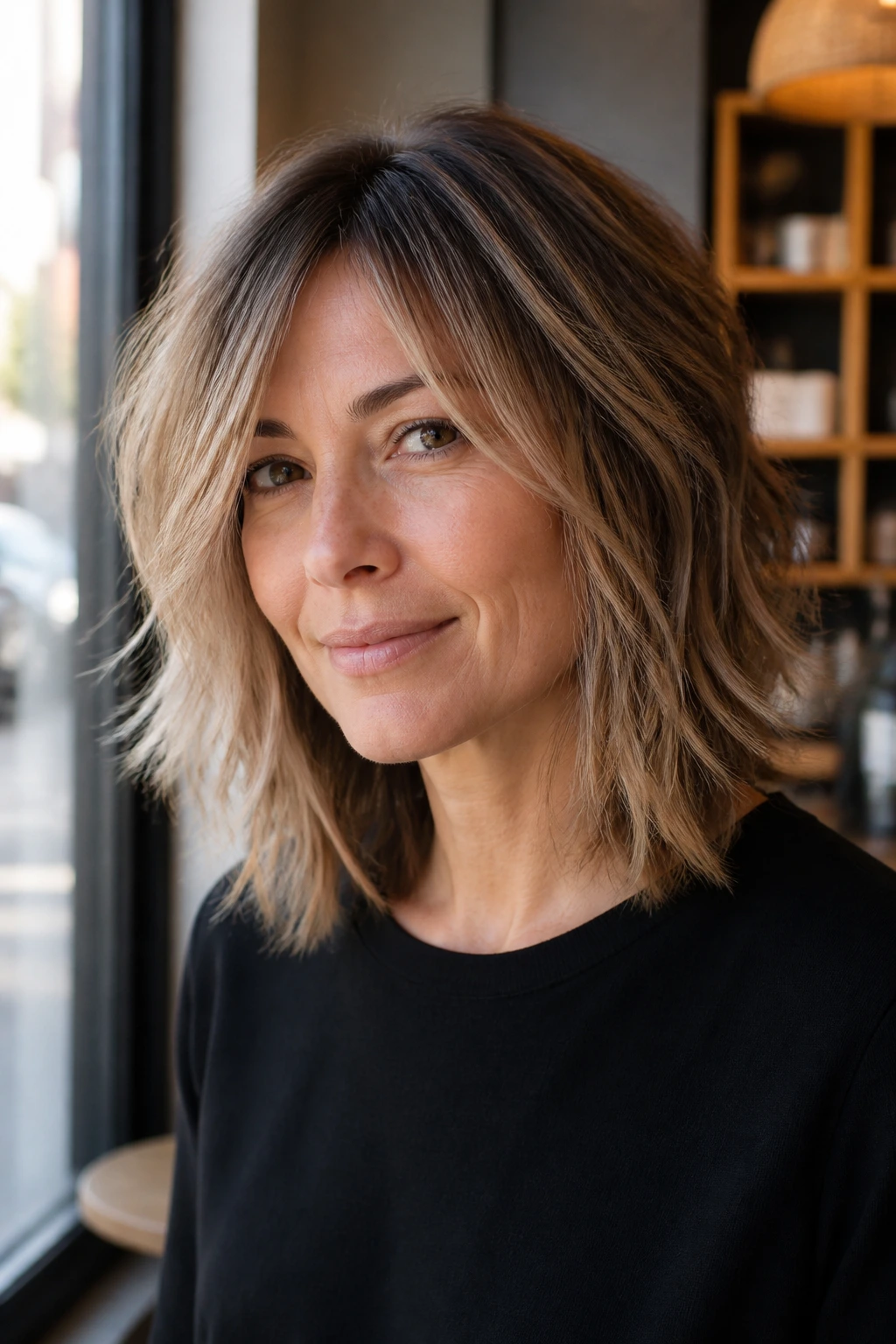
Razor texture is a tool, not a personality. Used well, it gives fine hair soft edges and a bit of movement. Used too much, it can leave the ends fuzzy and weak.
This cut sits in the mid-length range, which is useful because fine hair often needs some length to feel substantial. The razor work should live mostly at the surface and around the perimeter, where it can lighten the line without stripping away density from the bottom. That’s the part people miss.
Compared with scissor-cut layers, razor texture usually looks a little softer and more broken up. That can be lovely if you like hair that feels relaxed and slightly undone. It can also be a problem if your hair already frays at the ends or gets dry fast.
Best For
- Straight or loose-wave fine hair
- People who style with air-drying cream
- Cuts that need movement more than structure
Ask your stylist one blunt question: how much can be removed without making the ends see-through? If they don’t answer that clearly, keep looking.
13. Bottleneck Bangs and Long Layers
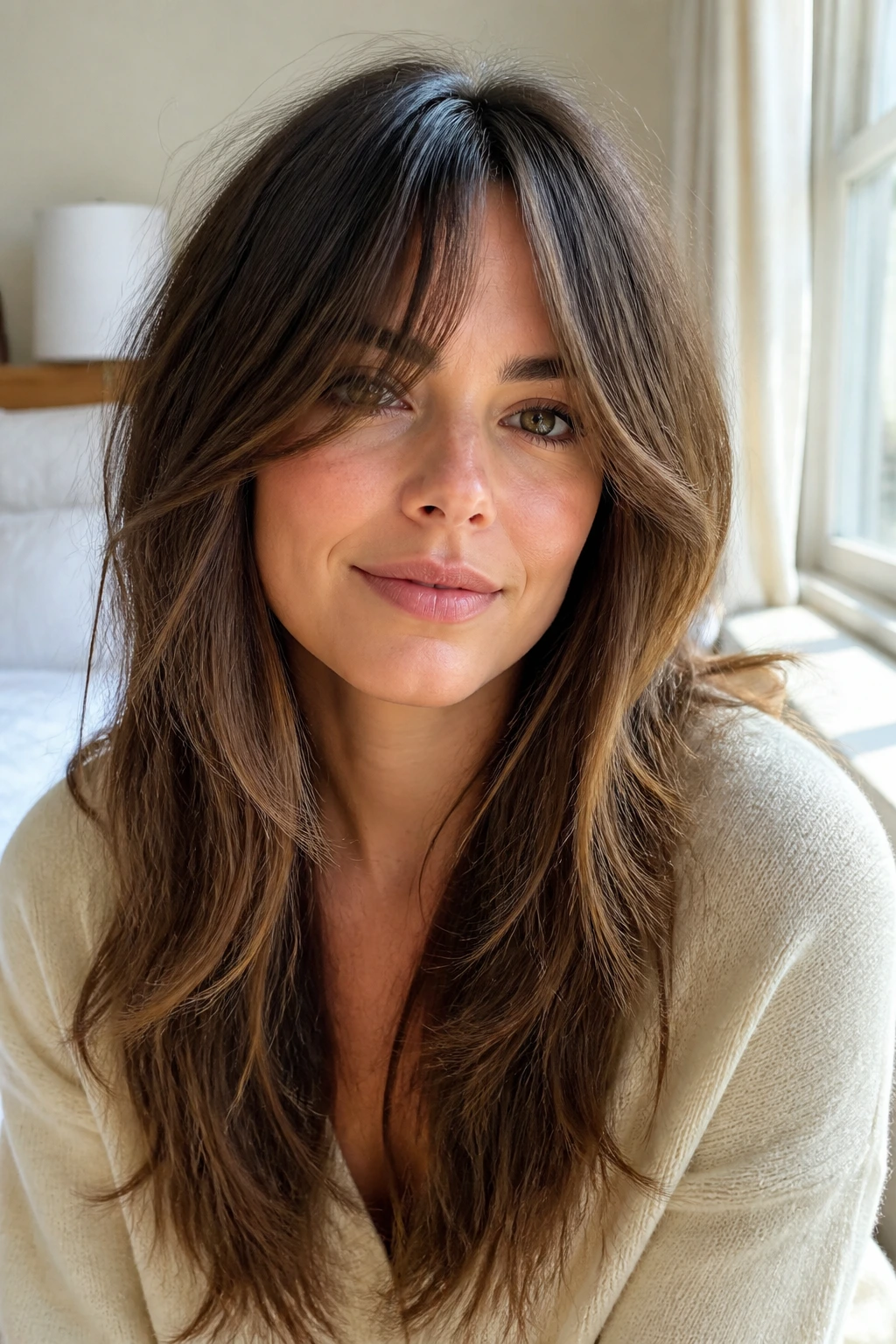
Do bottleneck bangs work on fine hair? They can, and they do a nice job when the rest of the cut stays light and layered.
The middle of the fringe sits a bit fuller, then it opens out around the temples. That shape gives the front of the haircut more body without taking over the whole forehead. On fine hair, that’s a useful trick because the bangs create the illusion of density where everyone can see it.
How to Wear Them
This fringe works best with long layers that begin around the chin or collarbone. If the layers start too high, the bangs can feel disconnected from the rest of the haircut. You want the front to flow into the lengths, not sit on top of them.
Blow-dry the bangs with a round brush or even just your fingers and a low nozzle attachment. Keep them soft. If they get too blown out, the shape loses its charm fast.
The style suits people who want a little face framing but not a heavy curtain bang. It also grows out fairly gracefully, which is a good thing because fringe upkeep is never as romantic as the photo makes it look.
14. Inverted Bob with Airy Crown
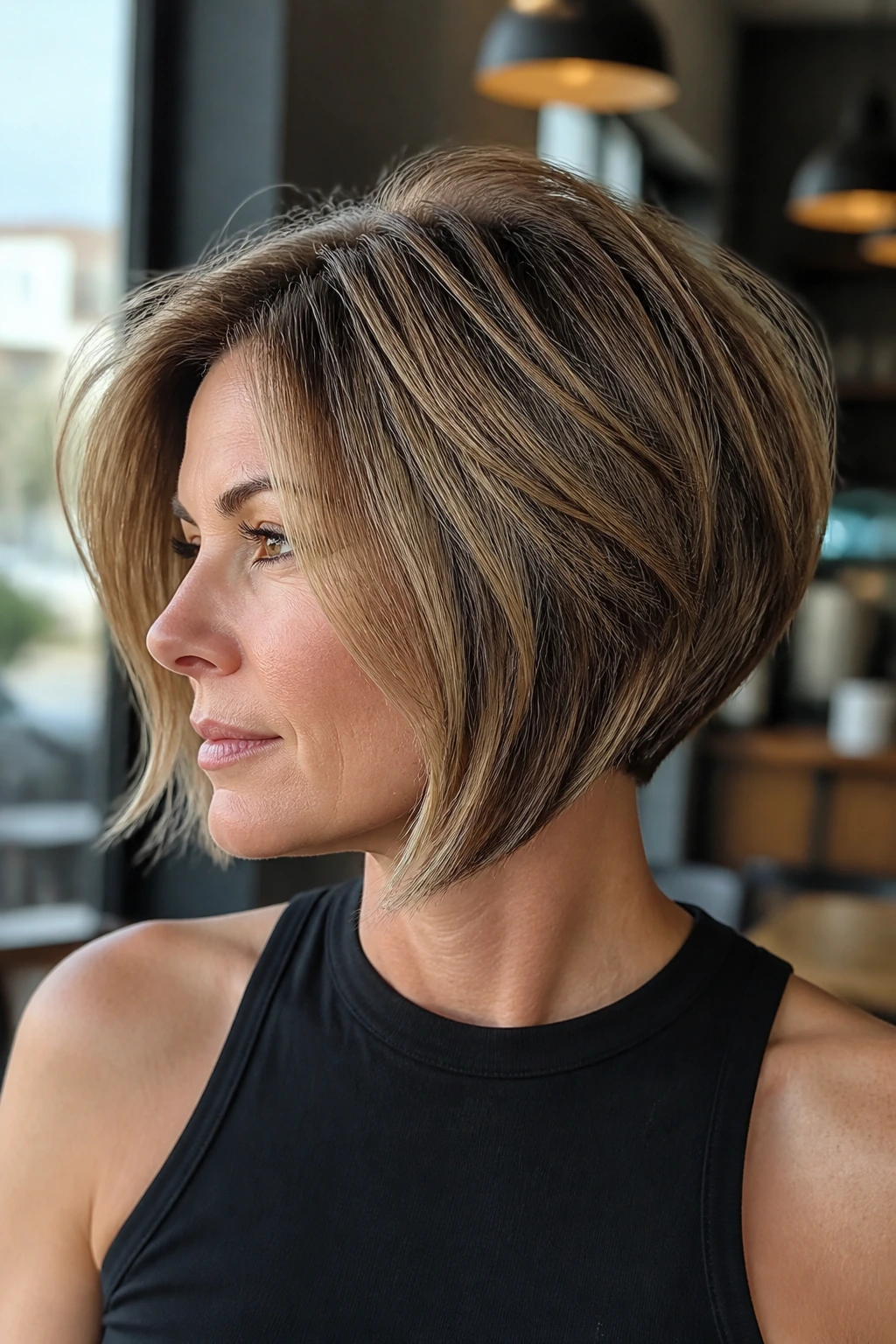
I’ve always liked an inverted bob on fine hair because it uses geometry instead of brute force. Shorter at the back, longer at the front, and just enough stacking to help the crown stand up on its own.
The airy crown matters more than the angle sometimes. A little internal graduation at the back can make the hair lift away from the nape, which keeps the shape from clinging to the neck. That tiny bit of space changes how full the haircut feels from the side.
A good inverted bob should still look touchable. Not stiff. Not helmety. If the back is too stacked, the style starts to feel dated fast, and fine hair can expose that shape more quickly than thicker hair does.
A few things help:
- Keep the angle subtle.
- Ask for soft stacking, not a hard shelf.
- Use root spray only at the crown.
- Tuck one side behind the ear for a cleaner line.
The cut works best on hair that naturally falls straight or with a slight bend. If your hair is extremely wavy, you may need more smoothing than the shape is worth.
15. Layered Pixie with Tapered Nape
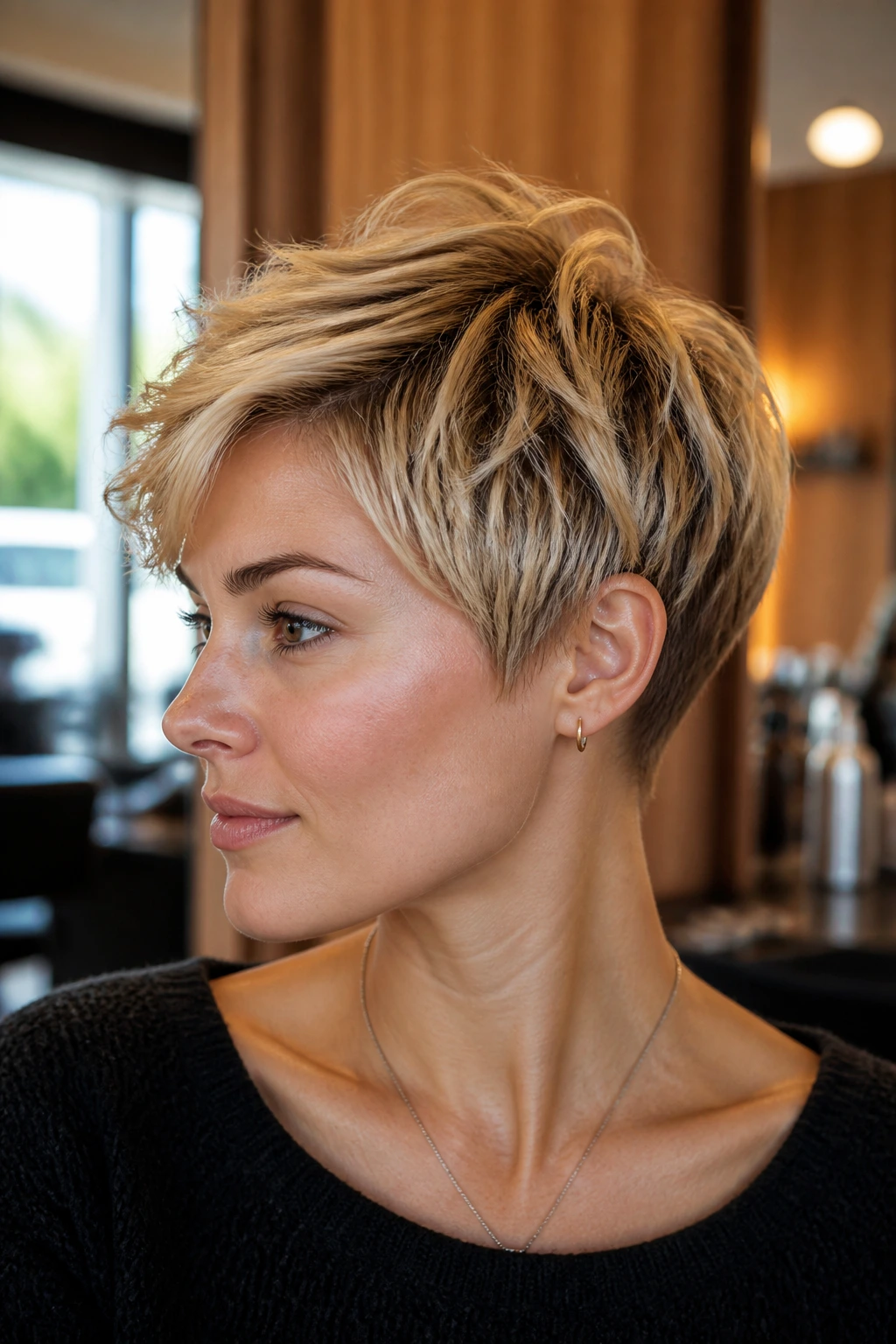
A layered pixie can look expensive on fine hair because it lets the hair do what it already wants to do: sit close, move softly, and show texture instead of bulk. The trick is keeping the top long enough to piece out and the nape tapered cleanly so the haircut doesn’t puff in the wrong places.
This is not a lazy cut, though. It needs trims. Fine hair grows out in a way that can wreck the silhouette fast, and once the nape loses its taper, the whole thing starts looking fuzzy.
Still, when it’s good, it’s very good. The crown can be lifted with a touch of mousse or a bit of root powder, and the front can be swept, spiked, or tucked behind the ear. That flexibility makes the style feel less precious than a more polished pixie.
It’s also a smart choice if your hair is so fine that length only makes it flatter. Short hair removes the problem rather than trying to disguise it, which is sometimes the sanest move in the room.
16. Shoulder-Grazing Shag with Micro Layers

A shoulder-grazing shag is the softer, more wearable version of a classic shag. Fine hair usually needs that softer treatment, because too much shredding at the ends can leave the bottom looking see-through.
Micro layers are tiny, subtle layers placed close together to build movement without creating huge gaps. They’re useful when you want the hair to swing a little but still read as full. That’s the difference between textured and threadbare.
Compared with a pixie or bixie, this cut gives you more styling range. You can wear it wavy, blow it smooth, or let it dry with a bit of grit. Compared with a long layered cut, it gives you more lift near the top and less weight hanging at the bottom.
This is a nice option if you like a casual look that doesn’t feel too done. It’s not the best pick for someone who wants sleek, but it’s excellent for anyone who wants the hair to have a bit of attitude without looking overworked.
17. Side-Parted Cascade Layers
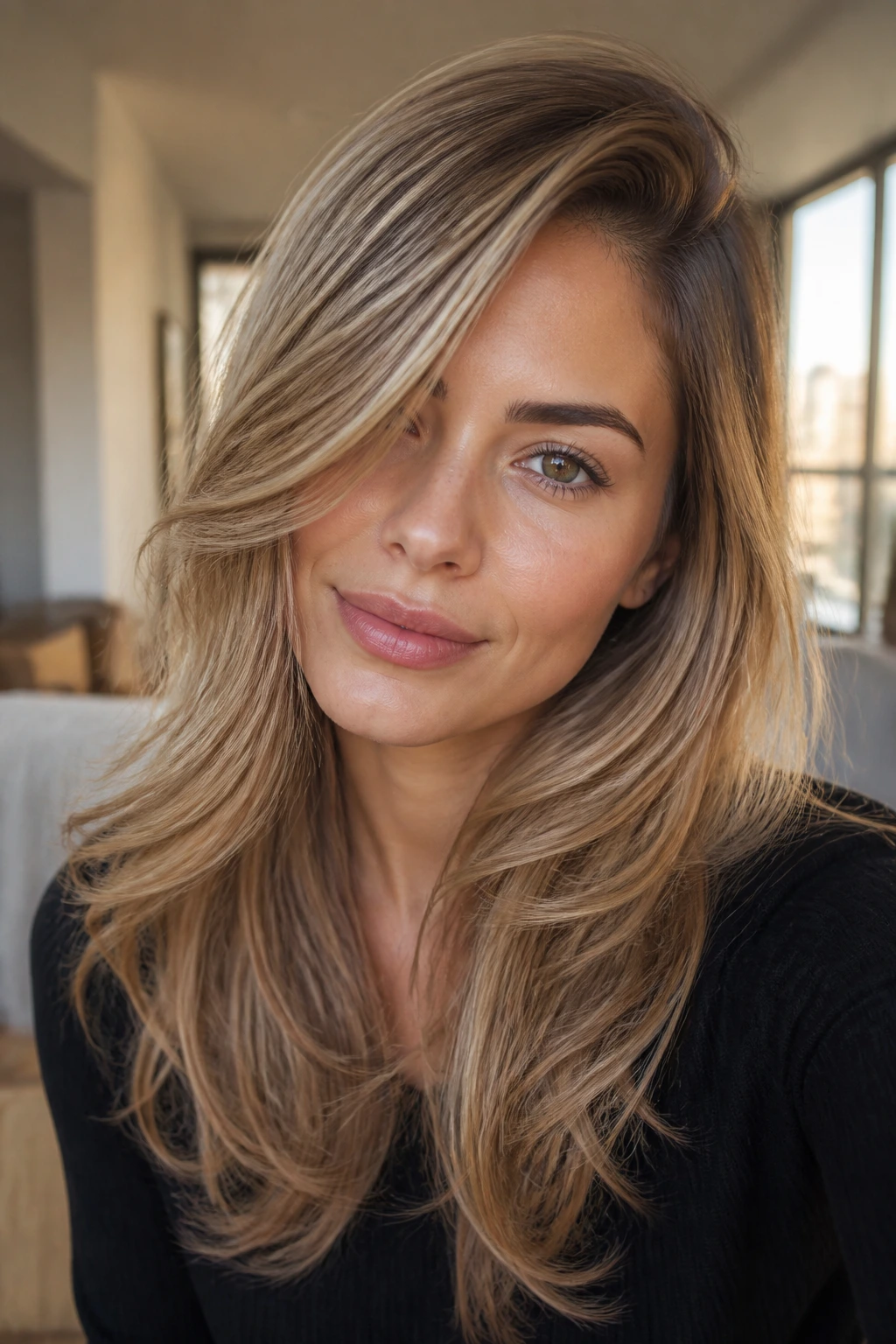
A deep side part can do a shocking amount for fine hair. It shifts volume from one side to the other and gives the roots a little natural lift before any styling product gets involved.
Cascade layers help the shape follow that side part. The layers fall one into another rather than stopping at blunt steps, so the hair looks fluid and soft instead of chopped. That matters because fine hair can get choppy fast if the cuts are too obvious.
Why the Side Part Matters
A center part can be lovely, but it often exposes the scalp more clearly on fine hair. A side part breaks that line up. It also gives you a chance to direct more hair over the flatter side of the head.
- Try parting just off the arch of the eyebrow.
- Blow-dry the roots in the opposite direction first.
- Flip the part back while the hair cools.
- Add a tiny bit of powder or dry shampoo at the root if needed.
This style is especially useful for people who like soft glam hair without spending forever on it. It leans feminine, touchable, and a little old-school in a good way.
18. Choppy Cropped Bob
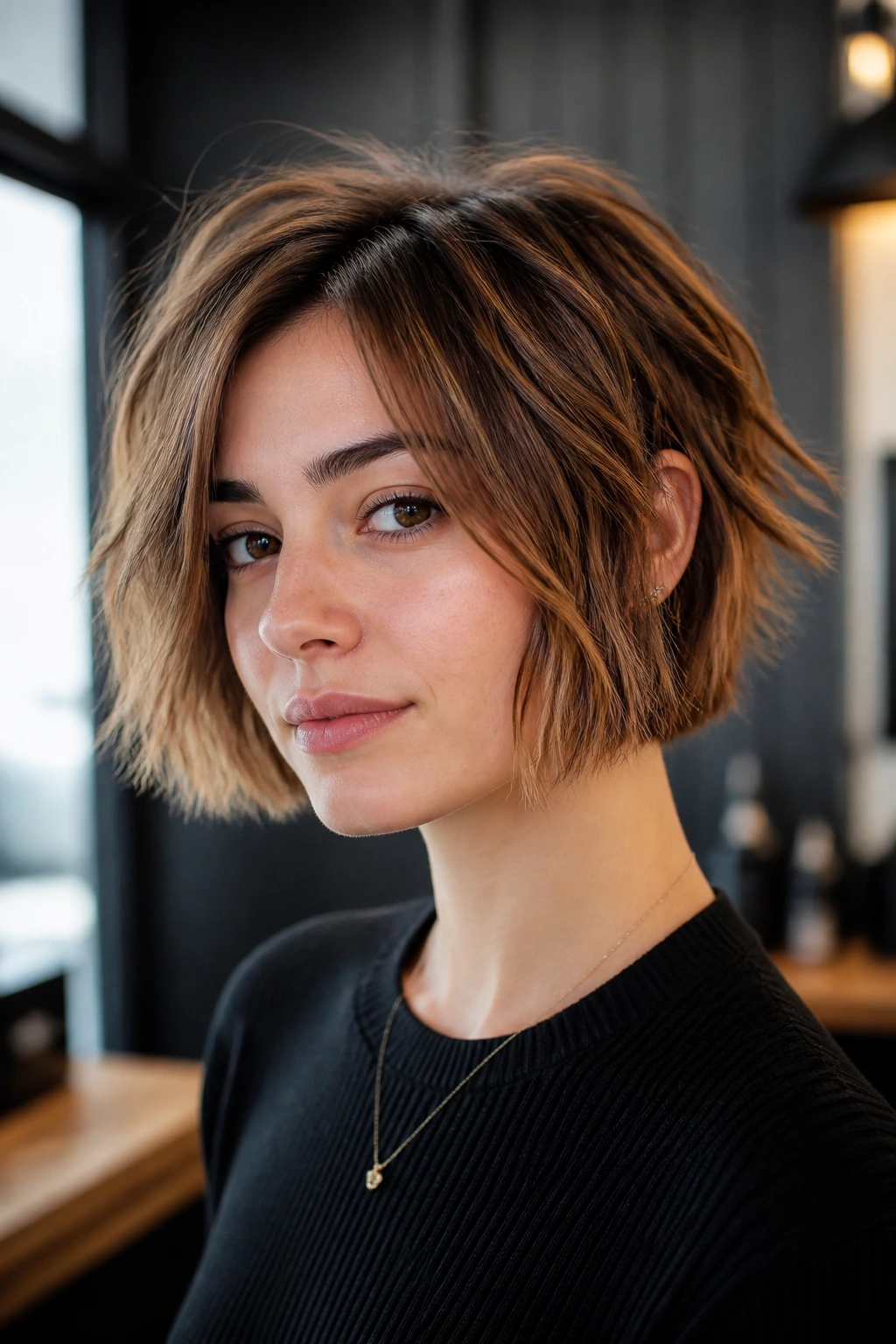
A choppy cropped bob is the cut I’d hand to someone who wants short hair with some bite. It’s shorter than a lob, but it keeps more shape than a pixie, which makes it useful for fine hair that needs to look lively without being over-layered.
The choppiness comes from broken-up ends and a little separation through the body of the haircut. That creates movement, but the overall line stays compact enough to hold volume. If the crop is too soft, fine hair can slump. If it’s too rough, it can go fluffy. The sweet spot is between those two.
What to Watch For
This cut depends on density around the perimeter.
- Keep the ends chunky enough to read full.
- Avoid too much thinning at the bottom.
- Add texture to the top, not all the way through the sides.
- Use a matte paste sparingly so the pieces separate instead of sticking together.
It works best with a blow-dry that lifts at the crown and curves the ends a touch. No need for perfection. A little irregularity is part of the point.
19. Airy Mullet-Lite Cut

A full mullet on fine hair can be a lot. A mullet-lite version is friendlier. It keeps the short, airy top and the longer back, but softens the transition so the cut feels more wearable and less costume-y.
The reason it can work on fine hair is simple: short layers create lift, and the longer back preserves the feeling of length. That combination can be useful if your hair wants volume on top but you still like the idea of some length around the shoulders.
I’ve seen this look work best when the difference between front and back is subtle. The point is movement, not shock value. Too much contrast can make the lower half look thin, especially if the hair itself is delicate.
This is a style for someone who likes texture with a bit of edge. It pairs well with a rough blow-dry, a bit of separation at the crown, and a fringe that isn’t too heavy. If you’re nervous, keep the back only slightly longer and let the top do the talking.
20. Layered Lob with Flipped-Out Ends
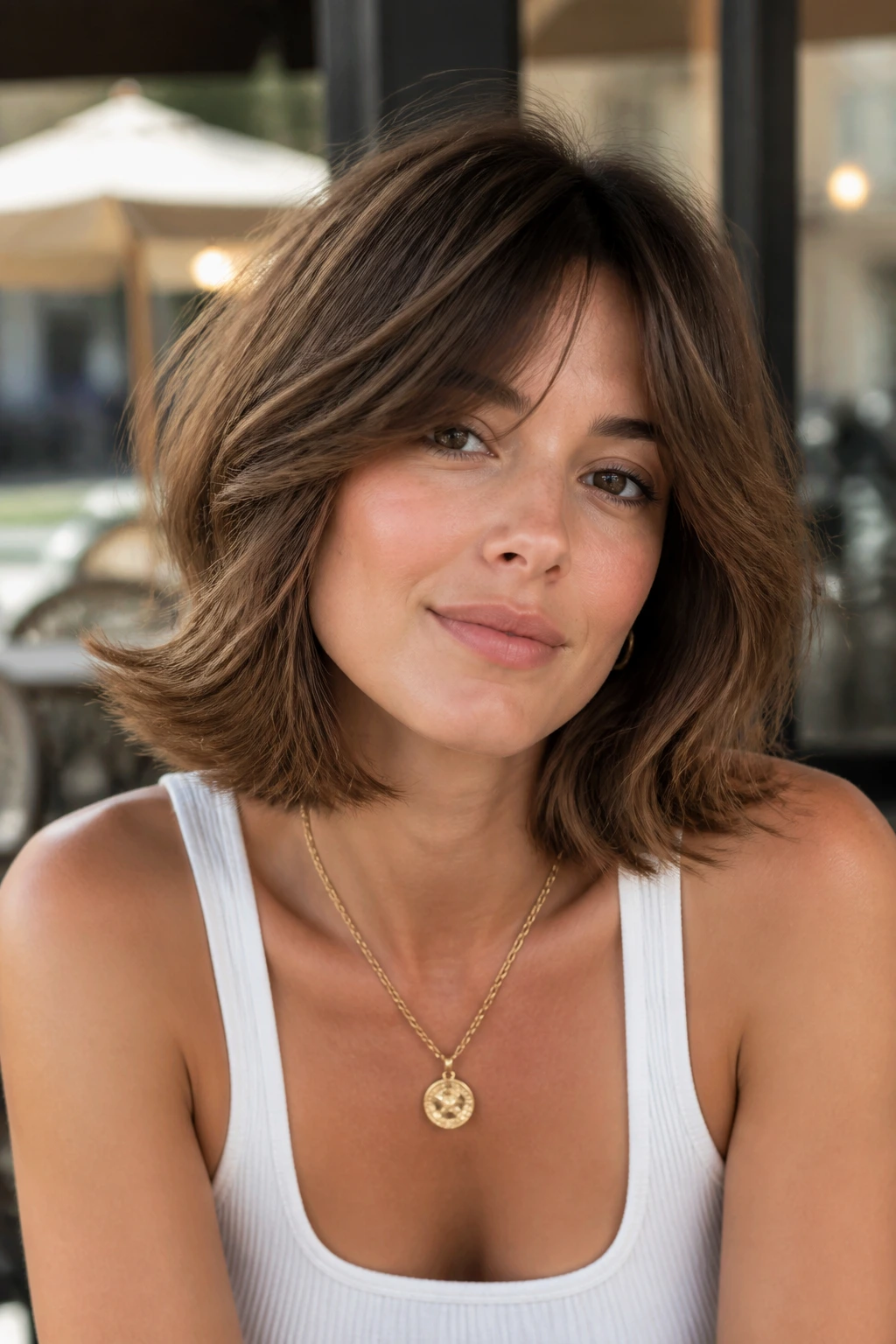
A layered lob with flipped-out ends has a playful feel that fine hair often needs. The flip gives the silhouette a little lift at the bottom, so the ends don’t hang in a flat line against the neck.
The layers should stay soft and mostly internal. Too many visible steps and the cut loses the clean outline that makes a lob look fresh. What you want is movement you can see when the hair swings, not obvious chopping.
This style is especially good if you use a round brush or a flat iron with a slight wrist turn at the ends. That little outward flick is enough. You do not need tight curls. Tight curls can make fine hair look smaller than it is.
It’s also flattering with side bangs or a light face frame because the flipped ends echo the softness up top. The whole haircut feels coordinated without looking too planned, which is a rare and useful thing.
21. Soft C-Shaped Layers
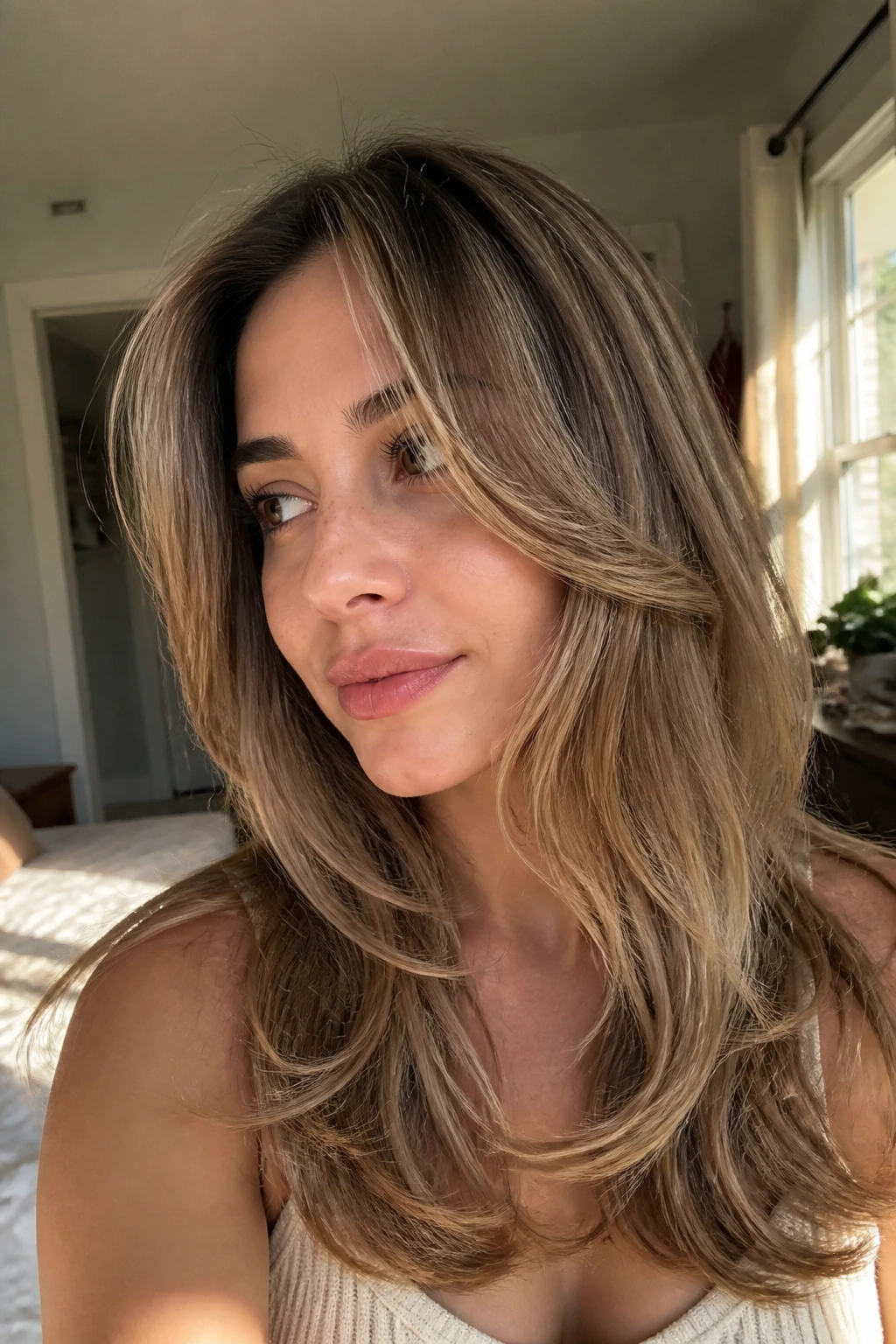
C-shaped layers are one of my favorite answers for fine hair that needs body but not chaos. The shape curves around the face in a gentle arc, then continues through the lengths without breaking the haircut into obvious chunks.
That curve helps the hair look denser because the eye follows the motion instead of the gaps between layers. It’s a cleaner, calmer way to add movement. Good for people who want a polished result with a little looseness at the edges.
What to Ask For
Ask your stylist for layers that follow the face in a C rather than a hard stair-step. That usually means the shortest pieces begin near the cheekbone and blend gradually downward.
The cut works well with a medium round brush and a little root lift at the crown. You can also air-dry it with a light cream and tuck the front pieces behind the ears while they’re damp to encourage the curve.
If your hair is very fine, keep the layers soft. The shape should feel like it’s wrapping the face, not carving it up.
22. Tucked-Under Bob with Light Ends
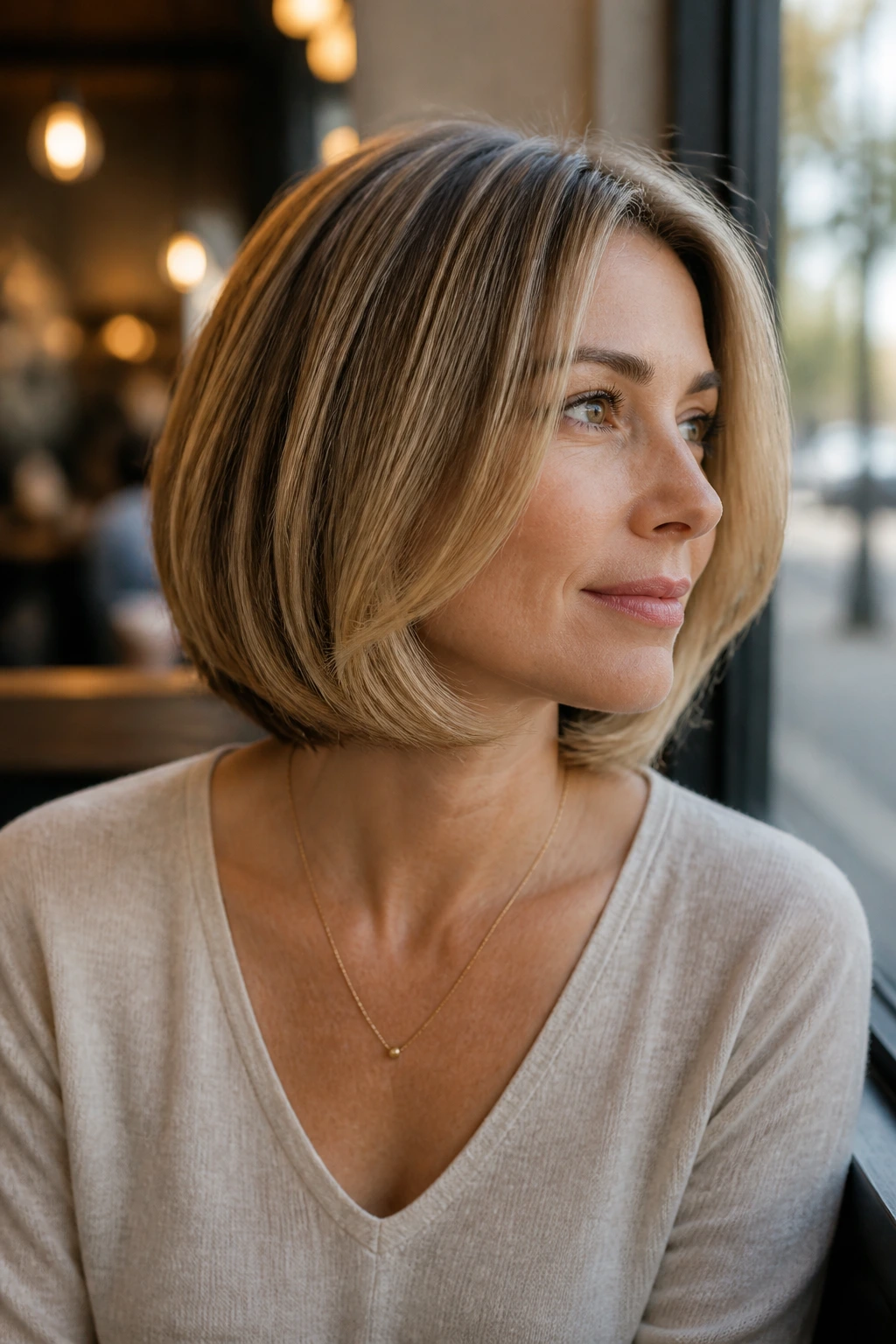
A tucked-under bob is the opposite of the flipped-out lob, and that contrast is exactly why it works. Instead of directing the ends outward, the cut curves inward, which gives fine hair a smoother outline and a little more apparent thickness at the bottom.
The light ends stop the shape from feeling heavy or stiff. That’s important. If the perimeter is too blunt and the curve is too strong, the bob can look like a haircut from a single decade and nowhere else. Softening the ends keeps it current and easy to wear.
Compared with a sharply angled bob, this version is kinder on thin density. It doesn’t scream for attention. It just sits well. Sometimes that’s the better choice.
This cut suits people who like a neater finish and don’t want a lot of obvious texture. It can be worn with a side part, a center part, or tucked behind the ears. The styling stays simple, which is part of the appeal.
23. Wispy Midi Cut with Curtain Fringe
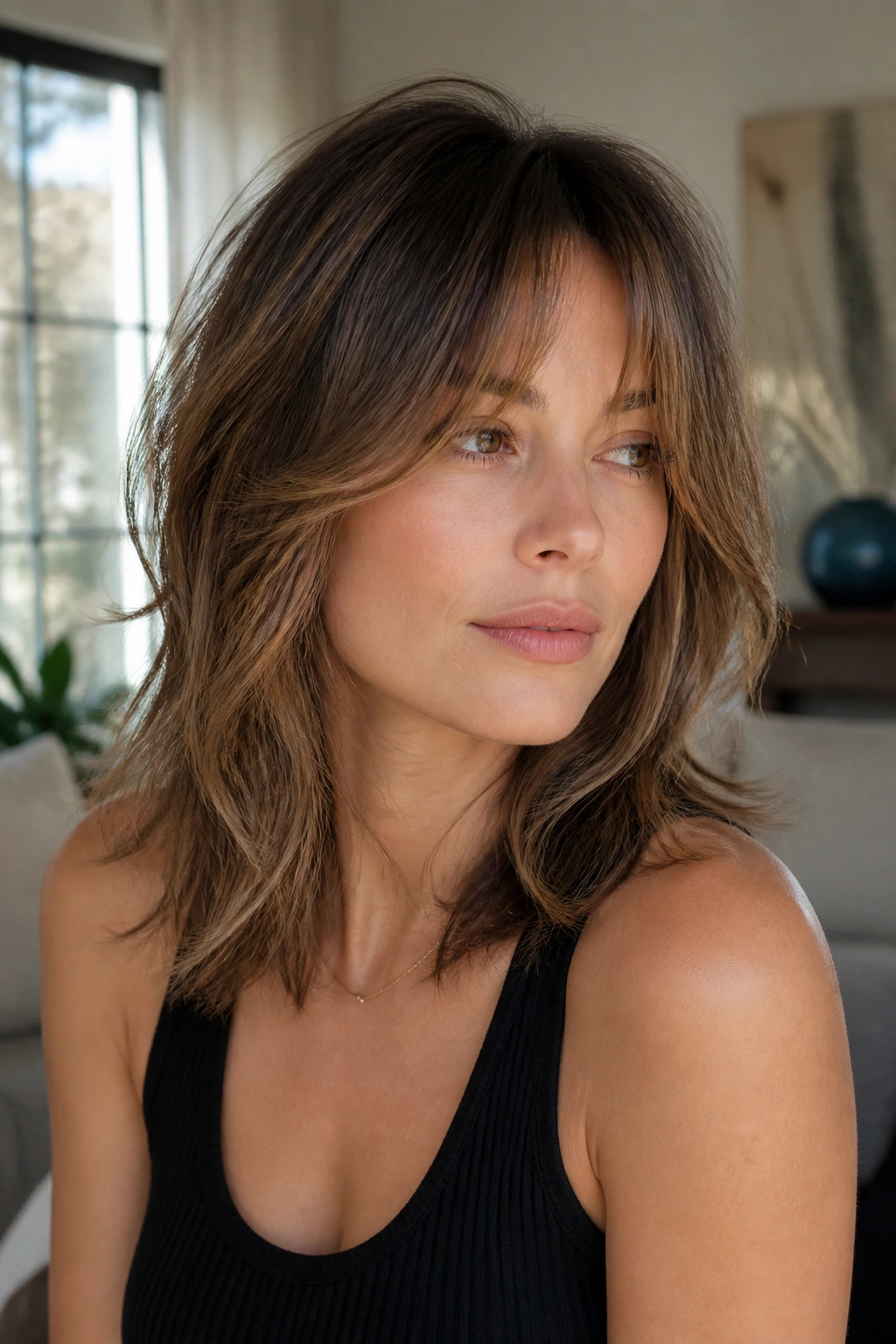
A wispy midi cut is a nice compromise for anyone who wants to keep some length without dragging fine hair into limp territory. The curtain fringe gives the front life, and the midi length keeps enough weight in the rest of the cut to avoid that thin, stringy finish.
Why does this combination work so well? Because the bangs create shape where the eye lands first, while the rest of the hair stays long enough to hold movement. That makes the style look fuller without needing a lot of layering through the back.
You can wear it with loose waves, but it doesn’t require them. A straight midi cut with soft fringe can look just as full when the ends are lightly beveled and the bangs are blown away from the face.
This is one of those styles that changes a lot depending on parting. Move the part an inch off center, and the whole haircut gains a different mood. That flexibility makes it useful if you get bored easily.
24. Short Stack with Soft Crown Lift
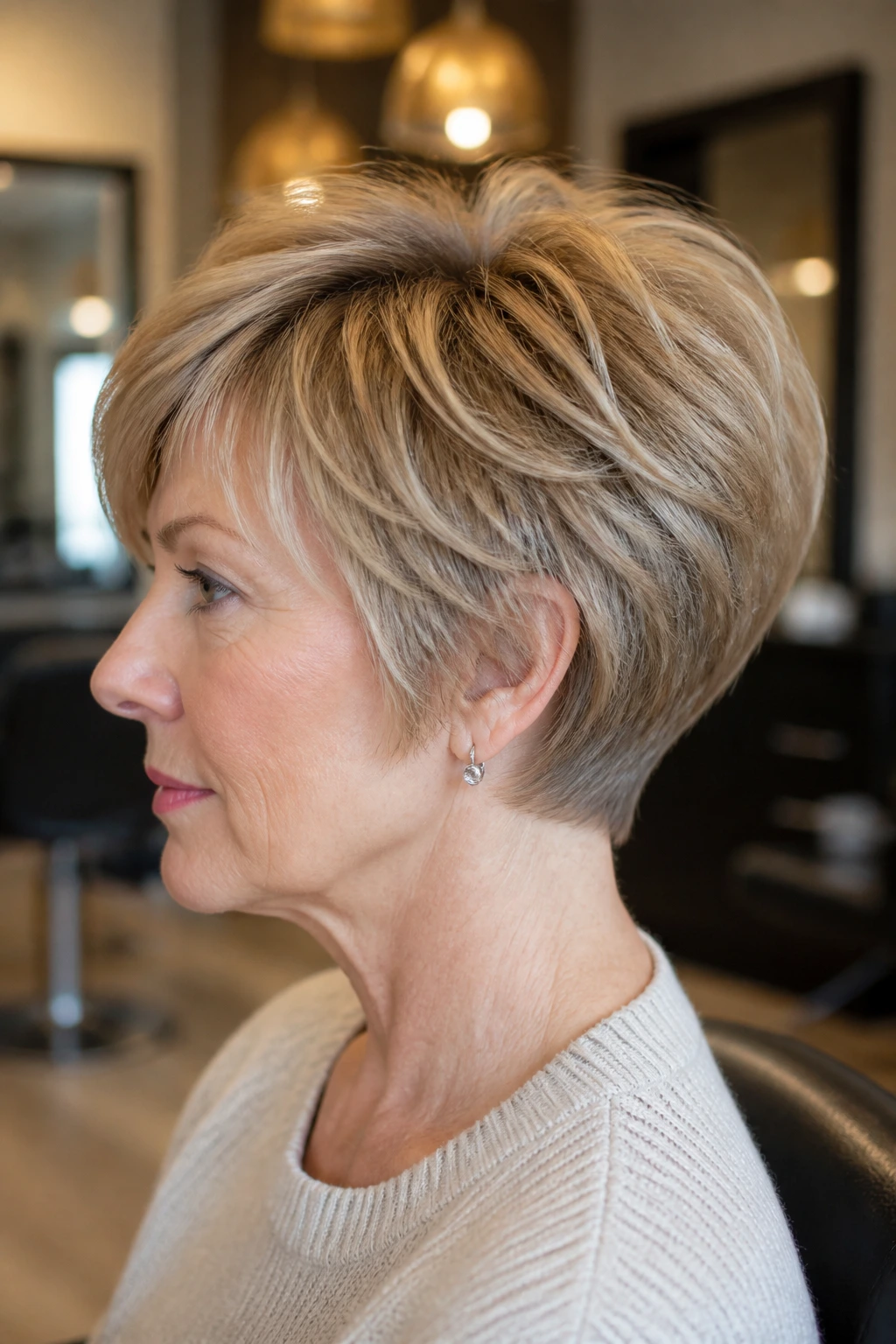
A short stacked cut can be a lifesaver for fine hair that collapses at the crown. The back is built with a little internal height, so the head looks lifted instead of flat from behind.
The soft part matters. Hard stacking can look dated or bulky, and fine hair will show every line if the shape is too rigid. A gentle stack gives you lift without making the cut feel stiff. It’s a fine line, and the best stylists know that.
Why It Helps
The extra height at the crown creates the impression of more hair where people notice volume first.
- Keep the nape clean but not shaved close.
- Ask for soft graduation through the back.
- Leave enough length on top to brush forward or to the side.
- Use root spray only at the crown, not all over.
This cut is great if you hate spending time styling the back of your hair. It holds its shape with less effort than a longer cut, and it tends to look neat even when it’s been worn under a coat or tucked into a scarf.
25. Tousled Layered Haircuts for Fine Hair: The Ends-Only Texture Cut
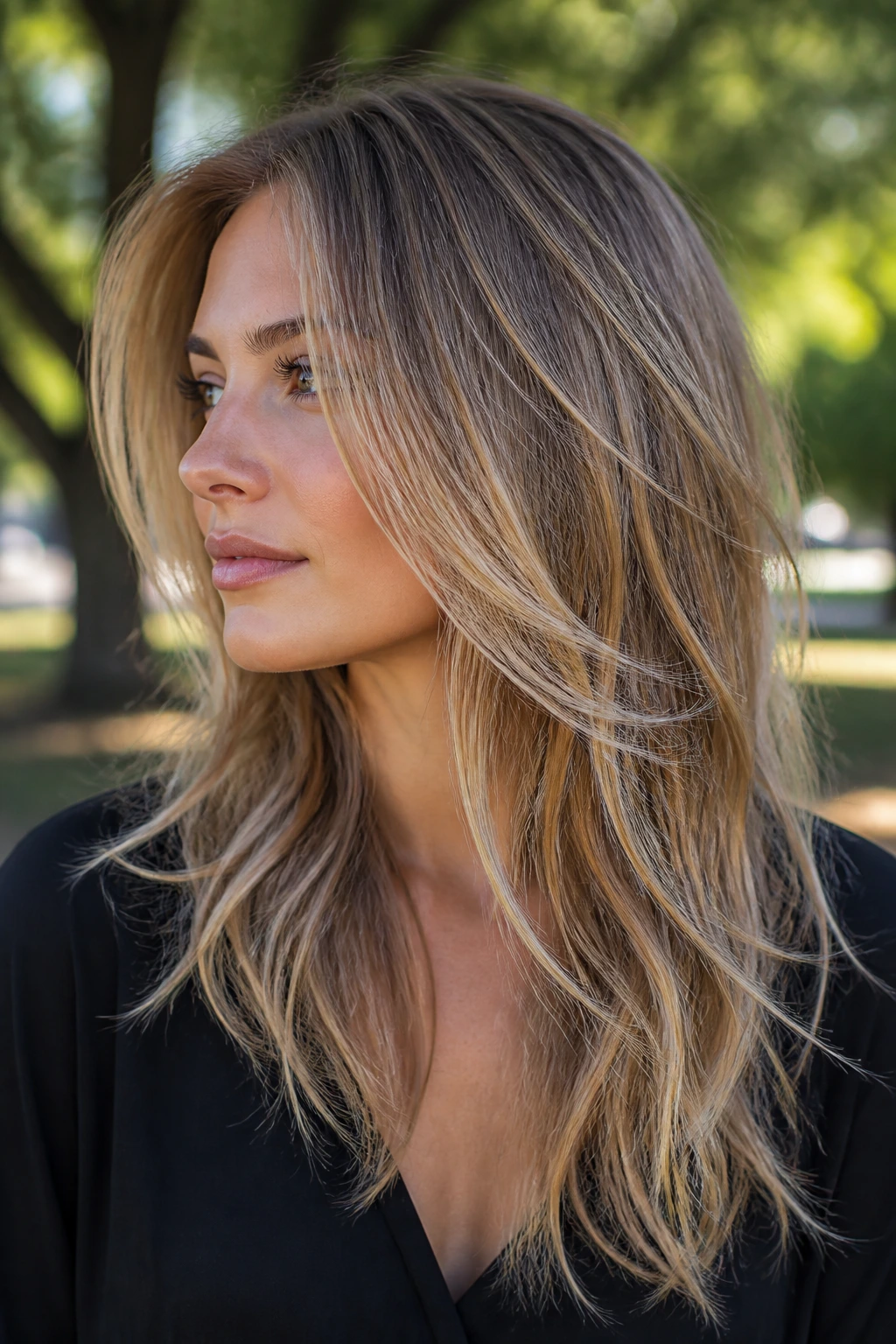
Sometimes the smartest move is to leave most of the hair alone and texture only the last few inches. That sounds almost too simple, but for fine hair it can be the difference between full and scraggly.
The ends-only texture cut keeps the body of the haircut intact, which is useful when density is the main concern. Instead of carving layers through the whole head, the stylist softens the perimeter and maybe adds a bit of movement around the face. The rest stays solid.
This is a good choice if you like long hair but hate the way heavily layered cuts can hollow out the bottom. It’s also forgiving. As it grows out, the shape doesn’t fall apart as fast as some more aggressive layered styles do.
The styling is easy, too. A large brush, a light mist of texture spray, and a tiny bend through the bottom section often do enough. If your hair is fine and you want the least dramatic haircut on this list, this is probably the one I’d point to first.
Final Thoughts
Fine hair usually looks best when the cut respects its limits instead of fighting them. That means keeping enough weight to hold the line, then adding movement where the hair can actually support it. A good tousled shape never feels busy for the sake of being busy.
If you’re torn between two cuts, choose the one that protects the perimeter most. Short layers on fine hair can be useful, but only when they’re placed with a steady hand and a clear reason. The haircut should look fuller in real life, not just in one flattering photo.
And if your hairdresser reaches for thinning shears too quickly, pause. That’s the wrong instinct for most fine hair. You want softness, yes, but you also want the feeling that the hair still has something to it.
