



Medium layered haircuts for round faces work best when they stretch the eye up and down, not straight across the cheeks. That sounds simple, but it’s the whole game. A round face already has softness in the middle, so the haircut has to create a cleaner line somewhere else — usually lower at the collarbone, higher at the crown, or diagonally across the front.
The cuts that usually miss are the ones that stop right at the jaw and puff out at the sides. Those shapes can make the face look wider than it is, even when the hair itself is pretty. A better approach keeps the heaviest part of the haircut below the cheekbone, then lets the front pieces skim past the mouth or chin so the face reads a little longer.
And no, this doesn’t mean you need to hide behind long hair. Medium length is actually a sweet spot for round faces because it gives you room for movement without drowning the face in weight. A shoulder-length lob, a soft shag, or a layered cut with a little bend at the ends can change the whole silhouette without looking fussy.
The 25 styles below cover sleek, shaggy, airy, and low-maintenance options, because round faces do not need one formula. They need the right line, the right length, and layers placed with some restraint.
1. Medium Layered Haircuts for Round Faces with Collarbone-Length Face Frames
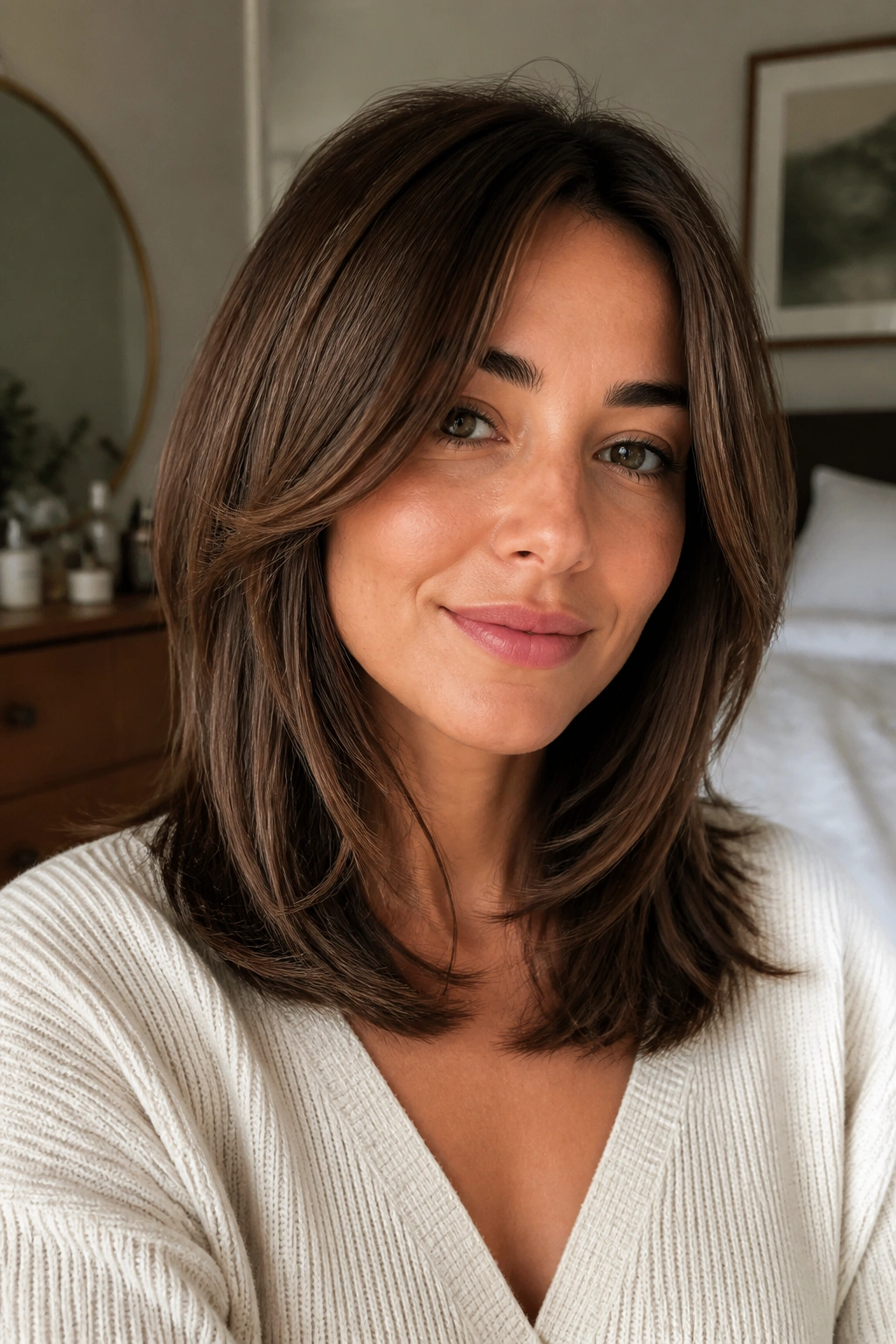
Collarbone length is a smart starting point, and I say that with no hesitation. The cut sits low enough to pull the eye downward, but it still gives you movement around the face instead of a heavy wall of hair at the cheeks.
Why It Flatters a Round Face
Ask for your shortest face-framing pieces to start around the mouth or just below the chin. That one detail keeps the widest part of the cut away from the widest part of the face.
- Keep the perimeter landing right at the collarbone.
- Let the front layers fall in a soft diagonal, not a blunt shelf.
- Use a center part if you want length; use a slight off-center part if your cheekbones are fuller.
- Finish with a loose bend from mid-length down so the ends do not sit flat.
Pro tip: If your hair flips outward naturally, direct the blow-dryer downward for the first 80 percent of drying, then add the bend at the very end. That keeps the shape controlled instead of puffy.
2. Angled Lob with Soft Graduation
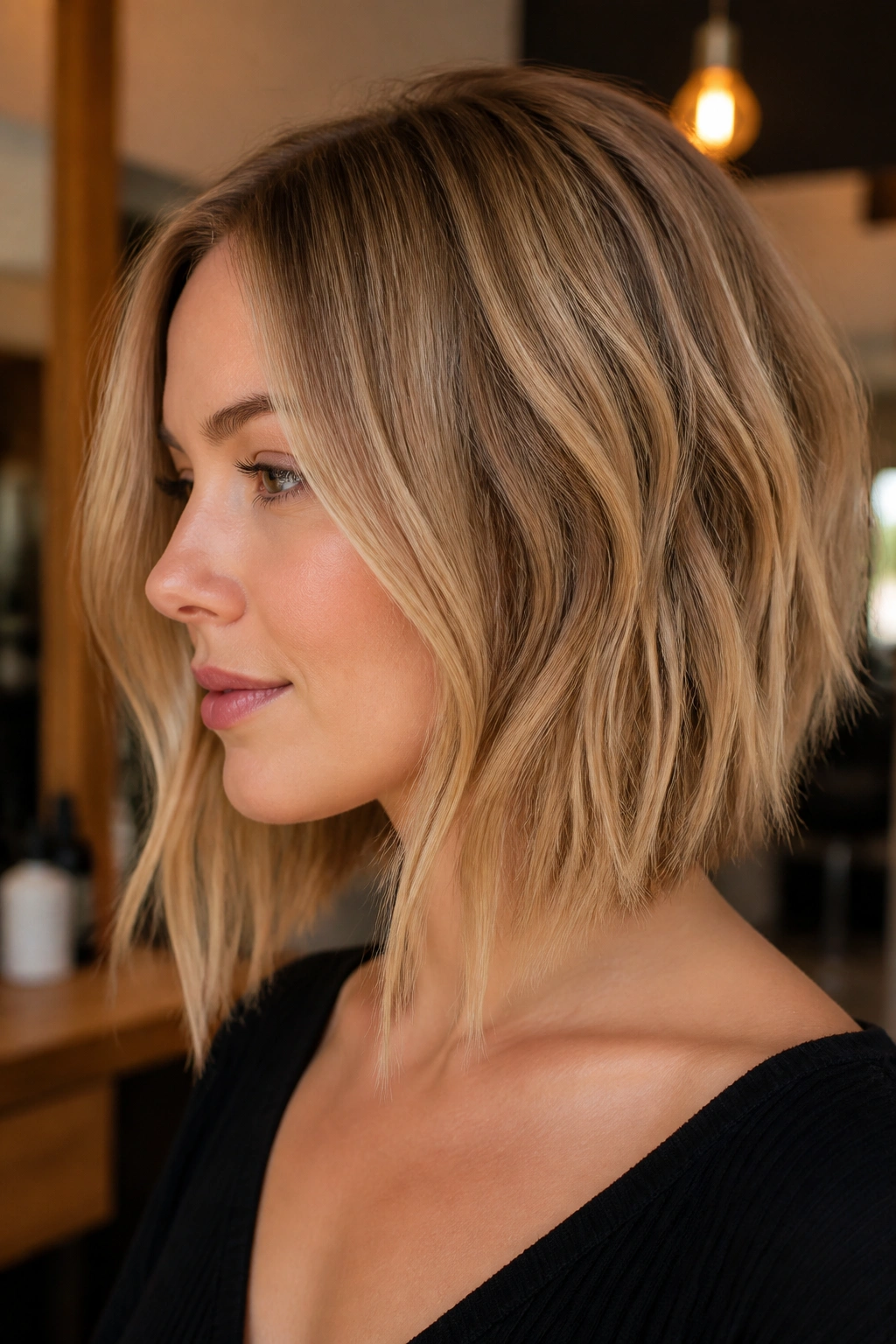
Short in back. Longer in front. That small tilt does more work than people expect. An angled lob creates a visual line that moves the eye from the nape to the collarbone, which is exactly the kind of path a round face likes.
The trick is keeping the angle gentle. A dramatic A-line can look sharp in a good way, but it can also read too geometric if the front pieces stop at the cheek. A softer graduation — maybe an inch or two between the back and front — feels cleaner and easier to wear.
This cut looks especially good if you like a quick blowout with a paddle brush or a round brush through the front. It gives you shape without asking for a lot of styling. If you want a haircut that feels polished on workdays and a little undone on weekends, this one earns its keep.
3. Butterfly Cut at Shoulder-to-Collarbone Length
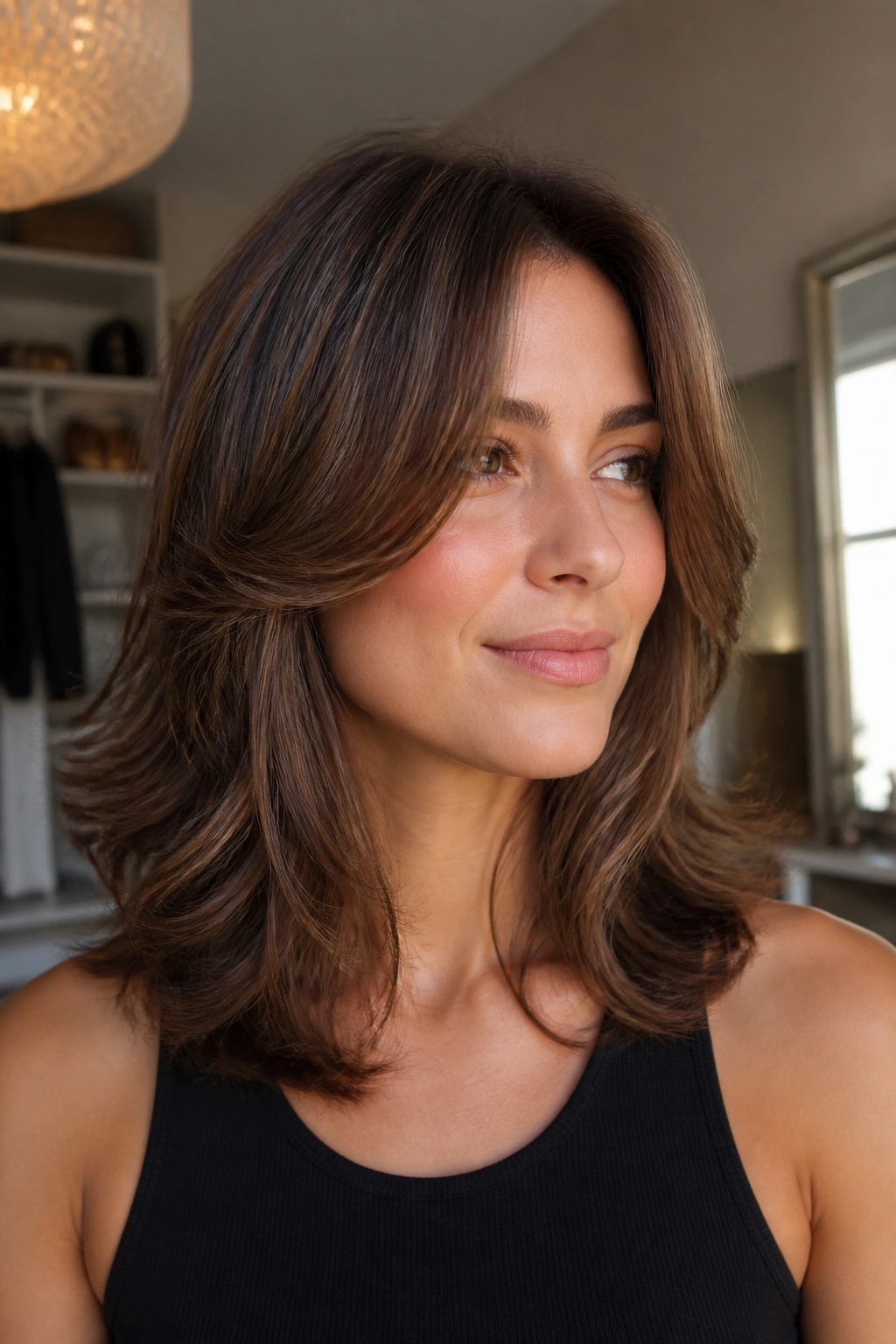
Why does the butterfly cut keep showing up on round faces? Because it gives you lift up top without loading the sides with too much bulk. The shorter top layers create movement around the crown, while the longer bottom layer keeps the haircut from becoming too puffy.
That balance matters. Round faces often need a little height and a little drop, and the butterfly cut gives both. The longer layers skim below the shoulders, while the upper layers fall back from the face in a way that feels airy rather than chopped.
How to Wear It
A large round brush helps, but so does a simple hot-tool bend through the front pieces. Keep the top layers loose and the bottom layer clean. If the cut gets too rounded at the cheeks, it loses the whole point.
This is one of those styles that looks expensive when it’s done well, and plain when it isn’t. The difference usually comes down to where the shortest layer lands. Too high, and it balloons. Too low, and you lose the lift.
4. Curtain Bangs with Chin-to-Collarbone Layers
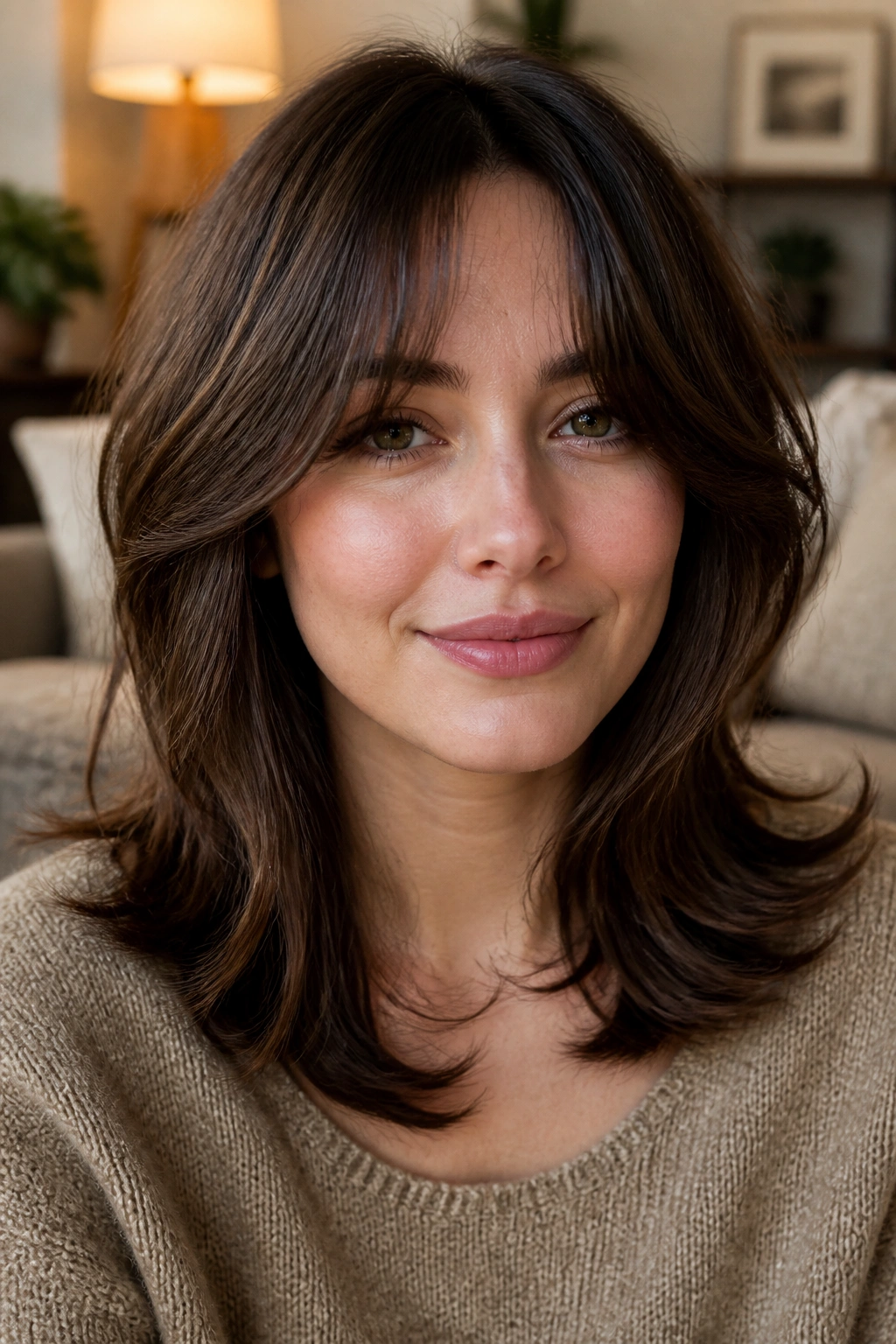
A lot of people with round faces want bangs but worry they’ll make the face look shorter. Curtain bangs solve that better than blunt bangs ever do. They open in the middle and sweep out toward the cheeks, which gives the face a little vertical line instead of a hard horizontal one.
The layers behind them matter just as much. If the longest face-framing pieces drop to the chin or collarbone, the bangs feel connected to the rest of the cut. If they stop too high, the whole shape gets choppy.
- Ask for the curtain bangs to start near the bridge of the nose and open wider at the cheekbone.
- Keep the side layers soft, not chunky.
- Style the fringe away from the face with a small round brush or a medium Velcro roller.
- Trim the bangs every 4 to 6 weeks so they do not collapse into the eyes.
This is a good cut if you like softness around the forehead but still want the face to look open.
5. Soft Shag with Wispy Ends

The soft shag is for the person who wants movement first and polish second. It works on round faces because the layers are broken up and airy, not dense and boxy. The ends stay wispy, which keeps the cut from widening out at the bottom.
I like this style most on hair with a little wave, because the natural bend helps the layers separate. On straight hair, the cut still works, but you need some styling at the crown and around the face so it does not lie too flat.
One thing to watch: too many short layers can make the sides bulge. That’s the bad version. The good version keeps the shortest layers around the upper cheek and lets the rest of the shape fall with a little swing. It should feel loose, not wild.
6. Deep Side-Part Lob with Long Sweeps
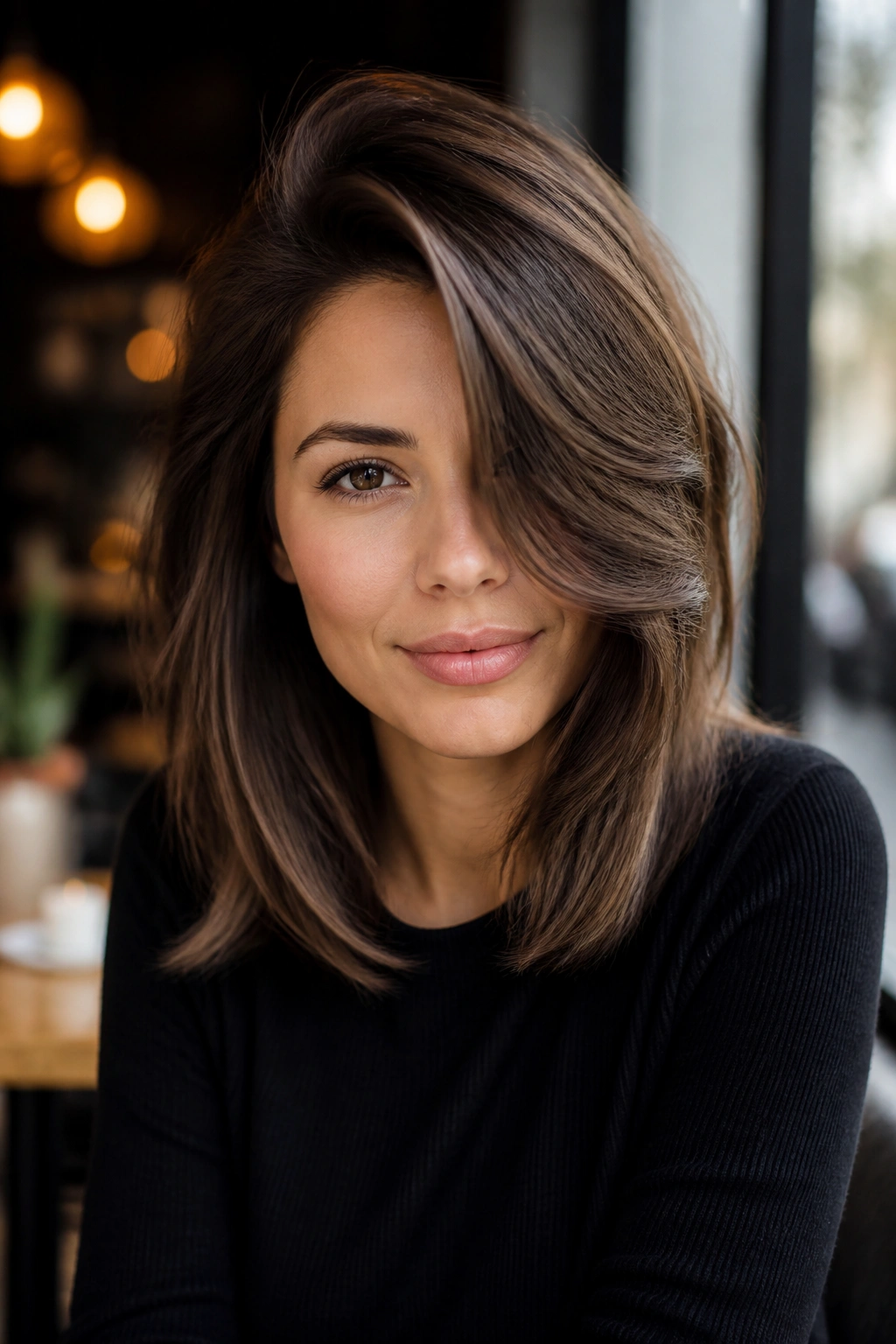
Compared with a center part, a deep side part gives a round face a stronger diagonal line. That diagonal is doing a lot of hidden work. It breaks up symmetry, lifts the root on one side, and creates a little height where the face needs it most.
A lob with long sweeping layers around the front feels especially good if your cheeks are full or your forehead is broad. The side part shifts the eye away from the widest part of the face, and the long layers keep the look from getting severe.
This cut is one of my favorites for people who like easy styling. Blow-dry the root in the opposite direction first, then flip it back. That tiny move gives you lift without a lot of teasing or product. If you want a haircut that reads soft but still has shape, this is a very solid choice.
7. U-Shaped Medium Cut with Crown Lift
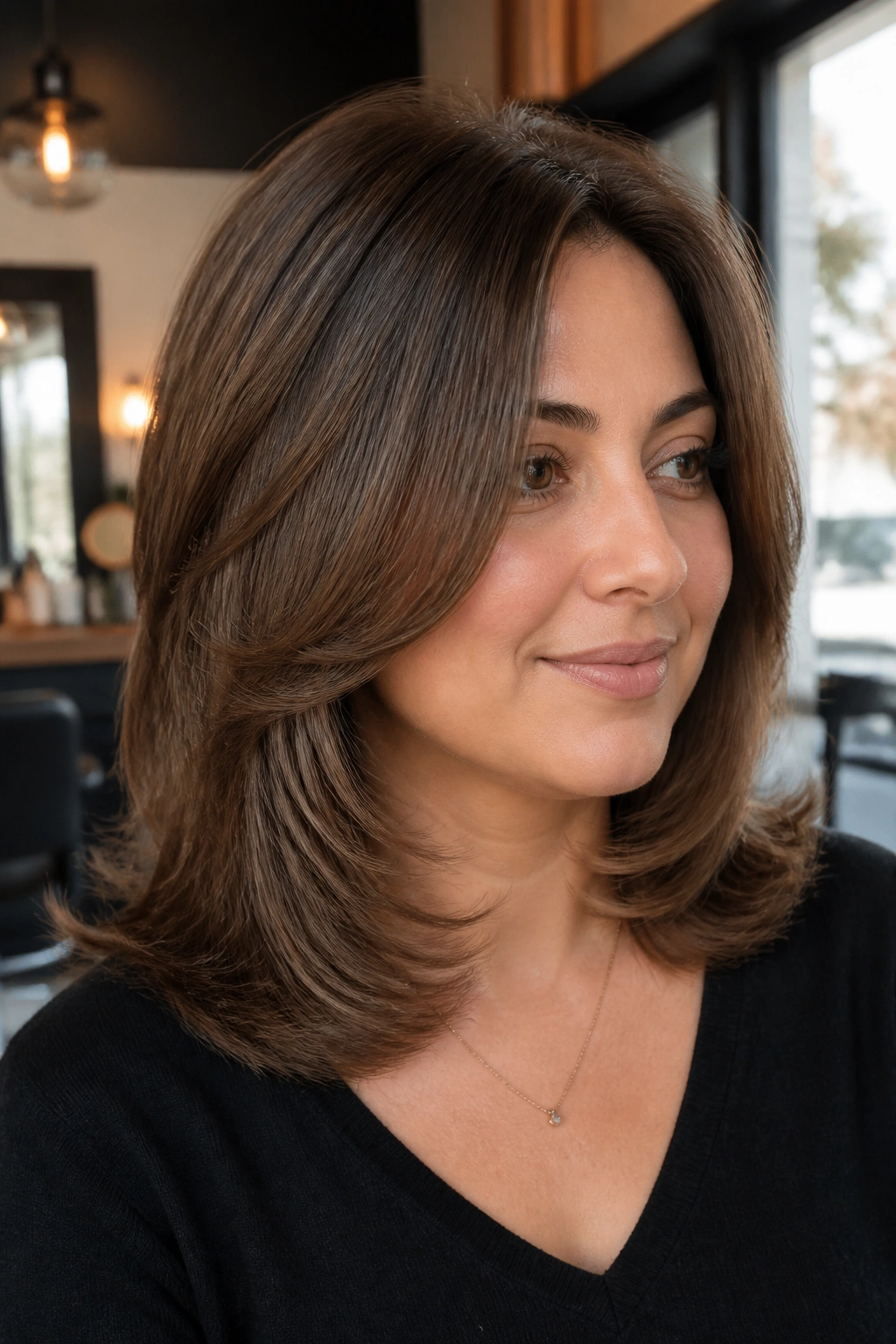
A U-shaped cut sounds subtle, and that’s the point. The edges curve gently downward in the back, while the top layers build a little lift at the crown. For a round face, that combination helps the haircut feel longer without looking skinny or flat.
What Makes the U Shape Work
The curve keeps the perimeter from looking blunt, which matters more than people think. Straight-across ends can make medium hair feel boxy on a round face, even when the layers are nice.
- Keep the back slightly longer than the sides.
- Ask for crown layers that remove weight without exposing too much scalp.
- Leave the front pieces soft and connected, not disconnected.
- Use a light mousse if your hair tends to fall flat by midday.
The best part is that the cut looks good air-dried or blown out. It doesn’t need a perfect finish. It just needs enough lift to keep the shape open.
8. Razor-Cut Midi with Airy Ends

A razor cut can look expensive in the right hands, and messy in the wrong ones. On a round face, the airy ends help because they keep the bottom of the haircut from turning into one thick, wide line. The texture feels lighter, almost feathered, and that softness works well around fuller cheeks.
But here’s the catch: the hair has to be healthy enough for the razor to leave a clean edge. If the ends are dry or broken, the cut can look frayed instead of soft. It also isn’t my first pick for very fine hair that already lacks density.
If you do go this route, style it with a light cream or a softening spray, then rough-dry it halfway before adding shape. The goal is movement, not sleekness. This cut likes a little air in it.
9. Invisible Layers for a Clean Outline
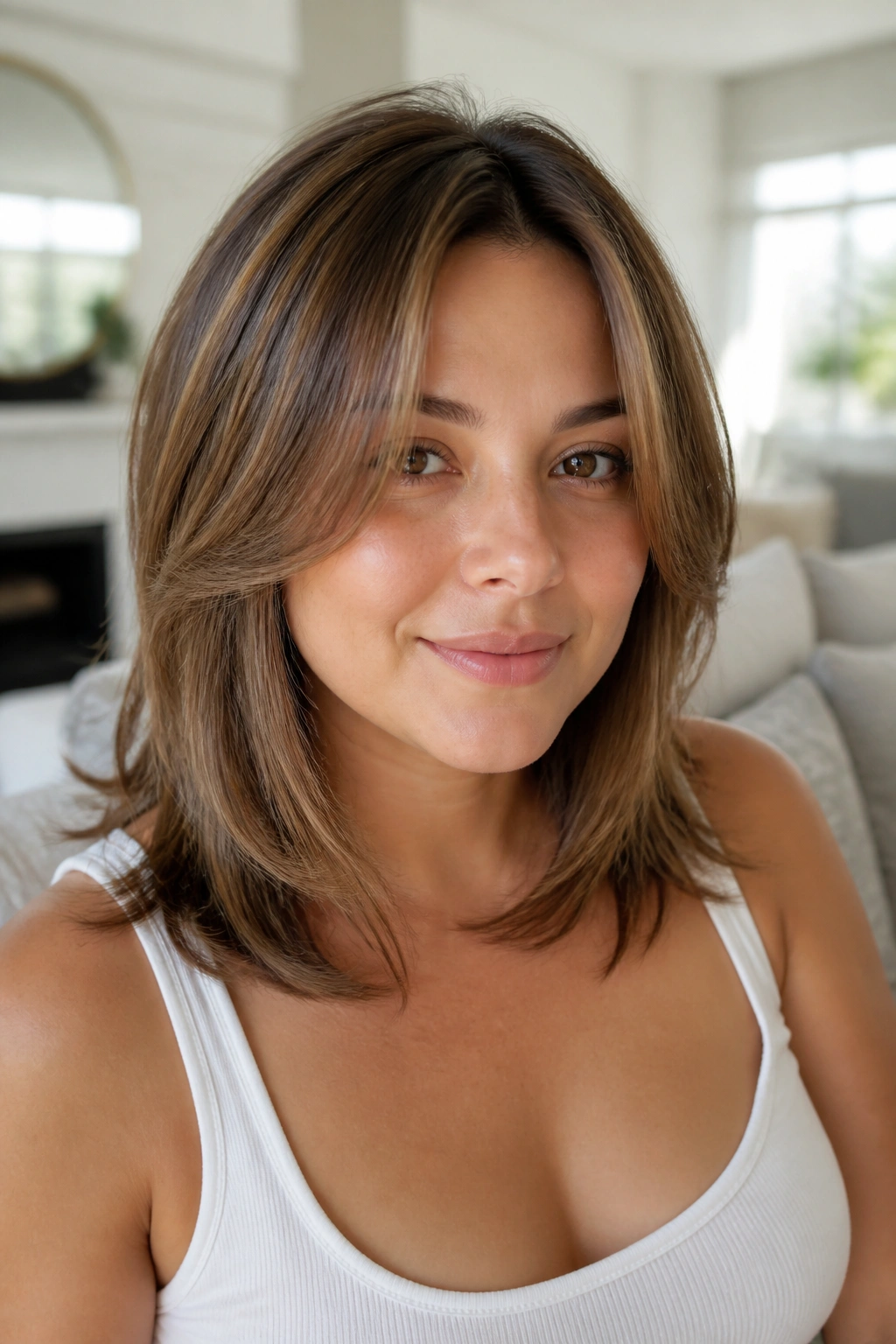
Can layers stay subtle and still change the whole haircut? Yes. Invisible layers do exactly that. They remove weight from inside the shape, so the outside line stays clean while the hair moves better.
That matters on round faces because the outline does the visual work. If the edge stays neat, the haircut doesn’t swell out at the sides. You get lift and movement without a choppy look.
How to Style It
Use a flat brush or a blow-dryer brush to smooth the top section, then add just a soft bend at the bottom 2 inches. That keeps the cut from collapsing into a straight sheet.
Invisible layers are a smart move if you want a medium cut that looks polished at work but still bends well in the evening. They’re quiet. That’s the whole appeal.
10. Feathered Cut with Crown Lift
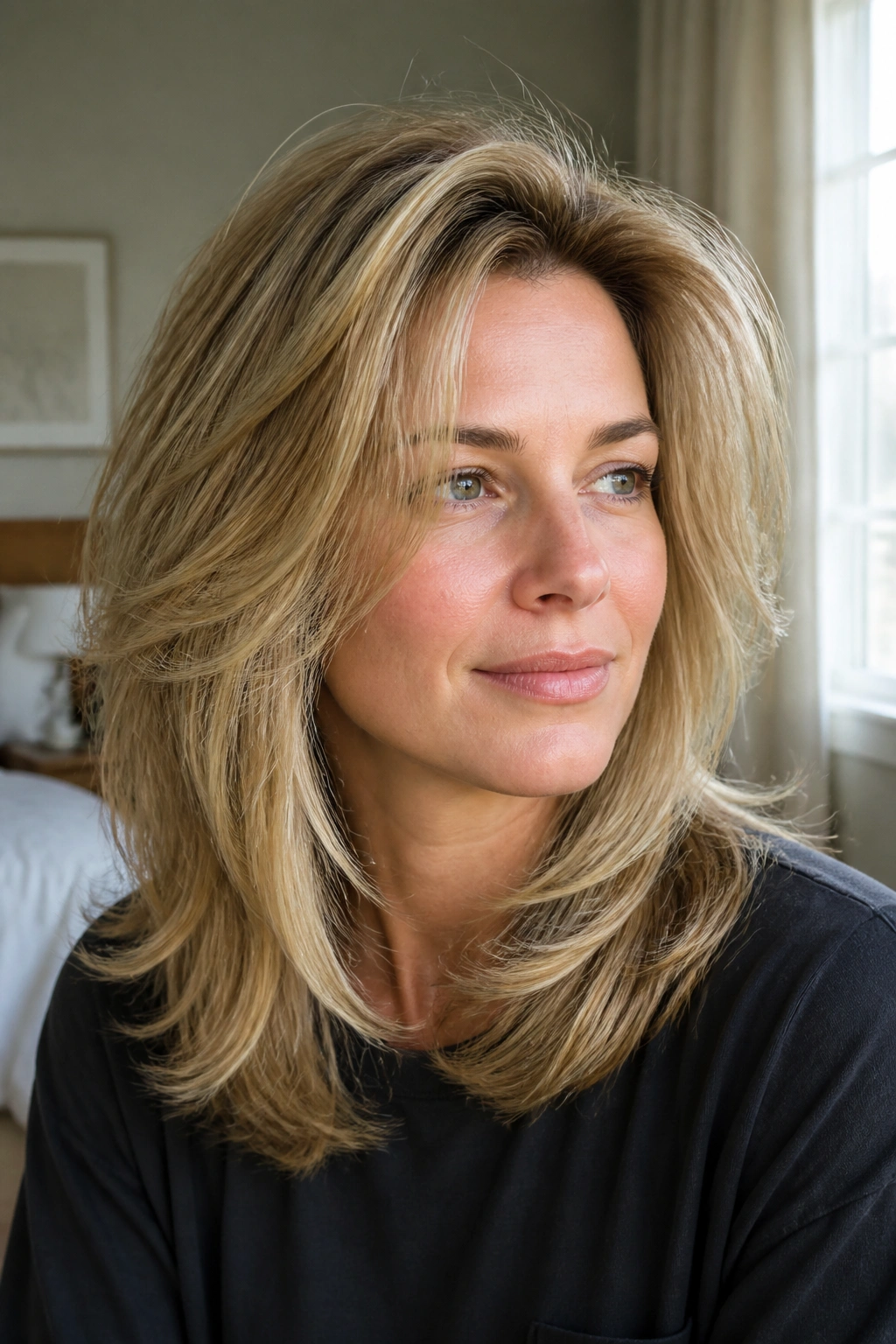
A client with flat roots and a round face usually needs one thing first: height. Feathered layers do that without making the haircut stiff. The top pieces stay light and sweep back from the face, which creates lift where you want it and softness where you don’t.
The feathering also keeps the ends from feeling bulky. That helps if your hair is medium-thick and tends to sit heavy around the jaw. A blunt bottom would weigh the whole thing down. Feathering keeps it moving.
- Best for hair that dries with a bit of natural bend.
- Works well with mousse at the roots.
- Needs a quick trim every 8 weeks or so to keep the crown from getting shaggy.
- Looks strongest when the front pieces are guided away from the cheeks.
This is one of those haircuts that quietly changes the face shape without screaming for attention. I like that.
11. Inverted Lob with Longer Fronts
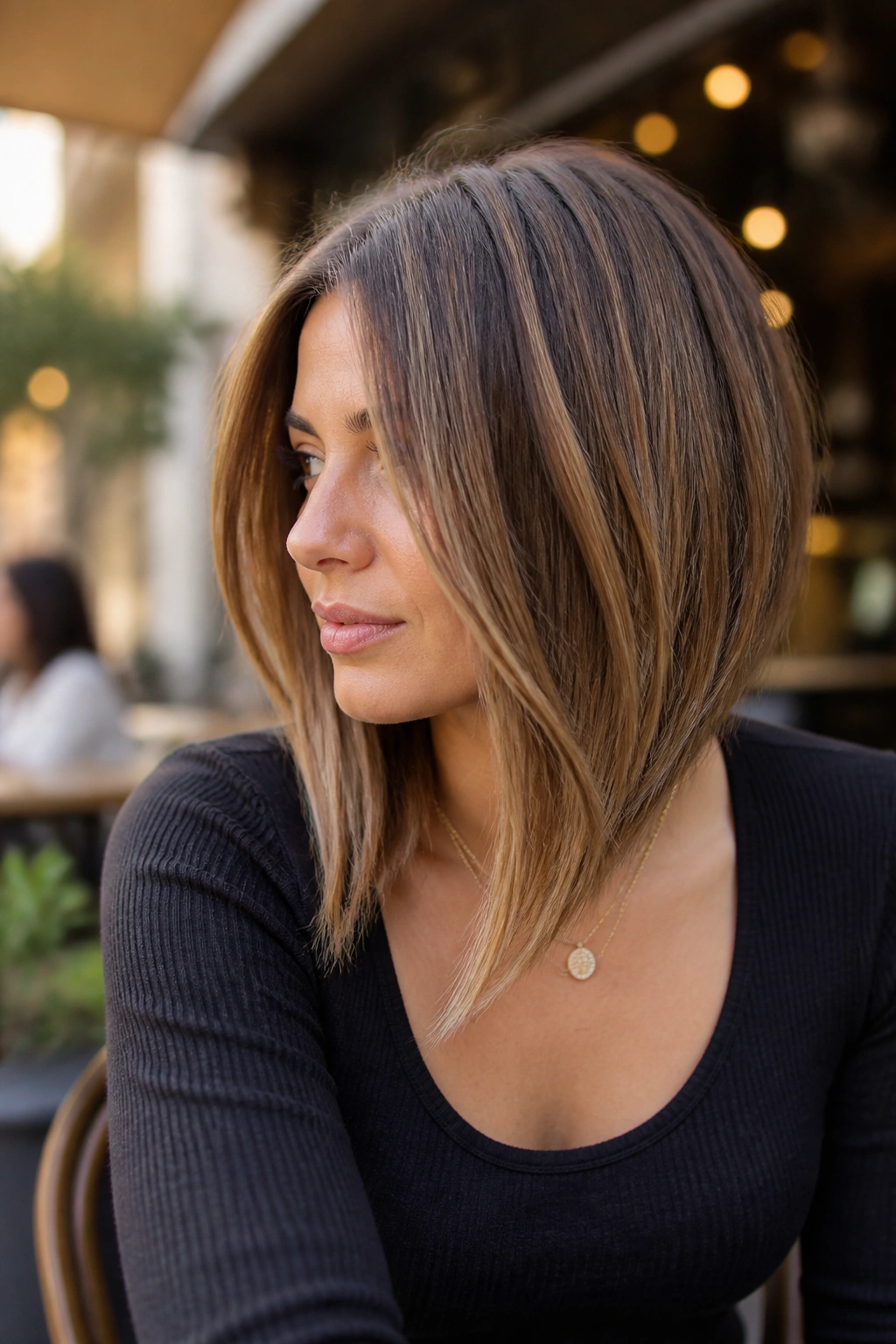
The inverted lob is a little more structured than a standard lob, and that structure helps round faces a lot. The back sits shorter and cleaner, while the front drops lower near the collarbone or even a touch past it. That creates a forward-moving line that naturally lengthens the face.
What keeps it from getting harsh is softness in the layers. You do not want a hard, sharp edge. You want a smooth glide from back to front, with the ends just slightly textured so they don’t look heavy.
This cut is good if you like a hairstyle that still looks neat after a few days. It holds its shape well, but you’ll want regular trims because the angle can disappear once the back grows out. If you let it go too long, it starts looking like a basic lob instead of a deliberate shape.
12. Medium Layered Haircuts for Round Faces with Bottleneck Bangs

Bottleneck bangs are a cleaner choice than full blunt bangs for a round face. They start narrow near the forehead, then open out near the temples and cheekbones, which gives the face lift without cutting it in half.
Unlike straight-across bangs, bottleneck bangs do not press the face down. They create a small frame that feels airy, and that’s a huge difference when the face already has soft curves. Paired with medium layers, they keep the haircut from looking too heavy at the top.
This style works especially well if you want forehead coverage but don’t want your hair to read as dense. I’d put it in the sweet spot between curtain bangs and a softer fringe. Ask for the shortest part to sit just above the brows and the longest pieces to connect with the cheekbone layers. That keeps everything moving in the same direction.
13. C-Cut Layers That Hug the Cheeks
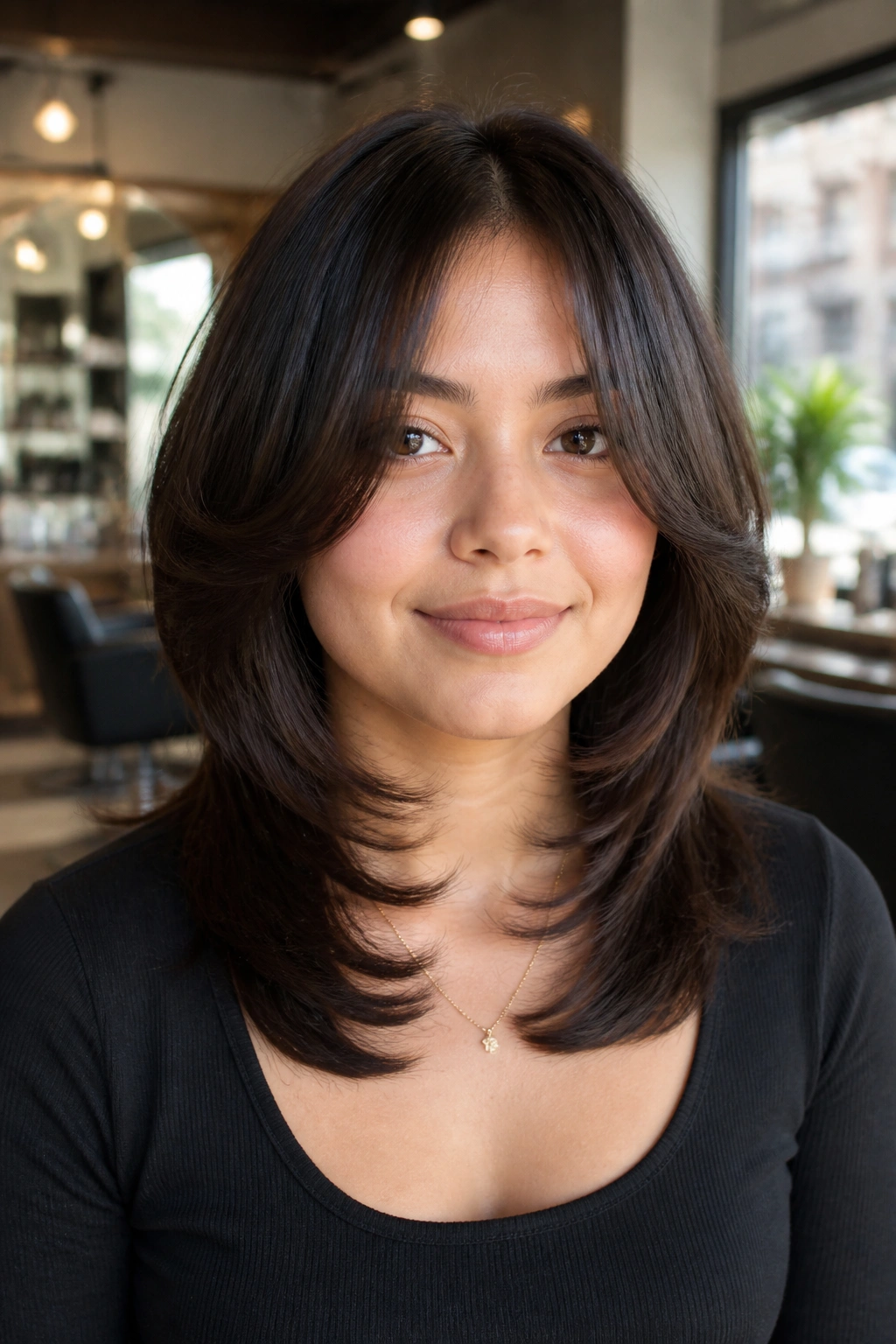
A C-cut is one of those haircuts that looks simple until you see it on the right face. The front layers curve inward like the letter C, starting below the cheekbone and sweeping down toward the collarbone. On a round face, that curve matters because it avoids building width at the fullest part of the cheeks.
How the C-Cut Sits on a Round Face
The shape should feel soft, not rounder. That sounds picky, but it isn’t. If the layers curve too high, the face looks fuller. If they curve lower, the haircut lengthens the whole outline.
- Ask for the shortest curve to begin below the cheekbone.
- Keep the ends tucked under lightly, not curled into a bubble.
- Use a medium round brush or a large Velcro roller at the front.
- Leave the back a little longer so the cut has a quiet taper.
This haircut has a gentle, face-slimming effect without looking sharp. It’s one of the more understated options here, and that’s a good thing.
14. Wavy Shag Lob with Tousled Movement
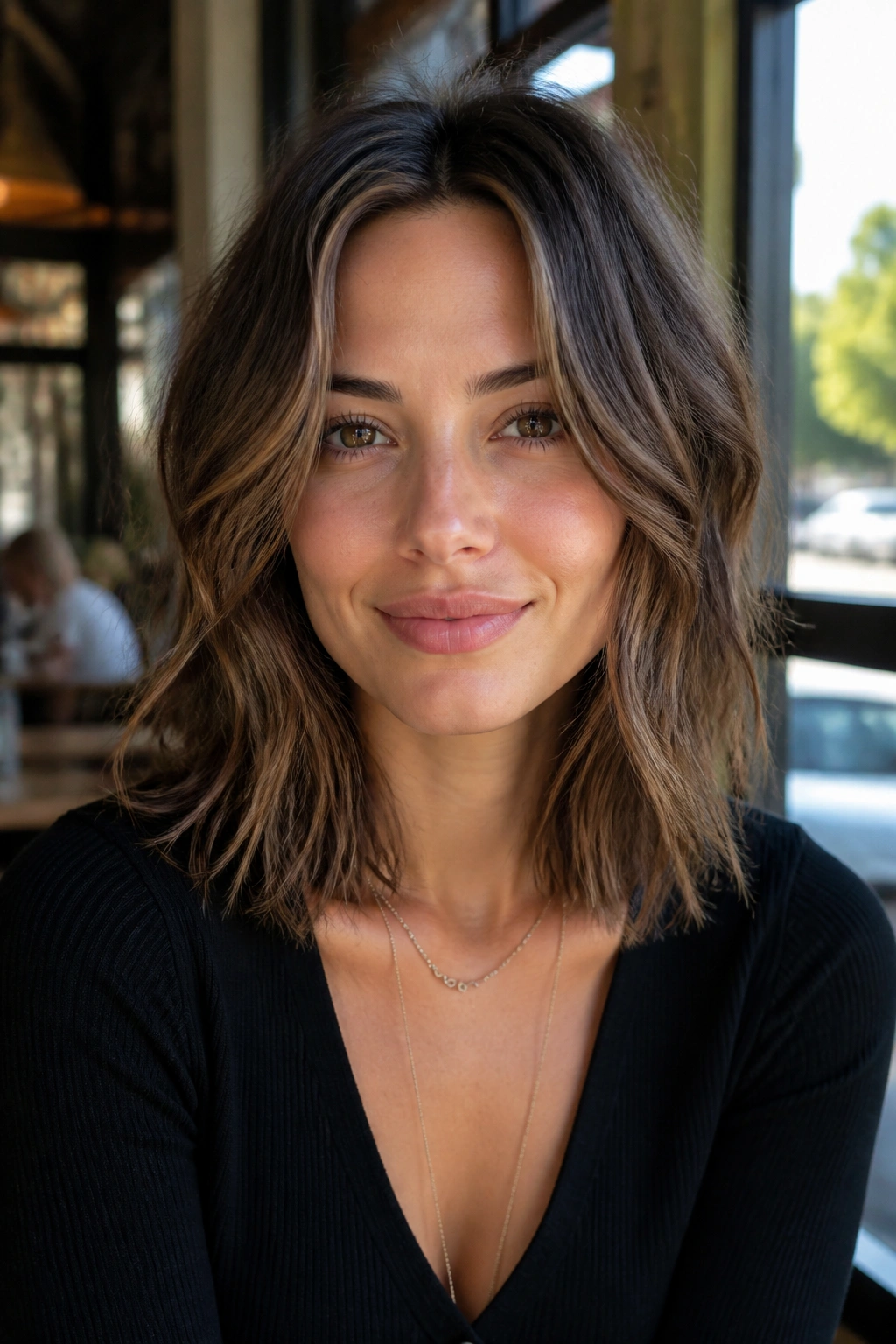
If your hair bends on its own, this cut makes sense. The wavy shag lob uses broken-up layers to let the texture move, but it stops before the haircut gets too fluffy around the cheeks. That restraint is what makes it work for round faces.
The style looks casual, but the shape still matters. Keep the heaviness lower and the crown a little lifted. That way the waves don’t expand sideways too much. A soft mousse and a quick scrunch are usually enough.
This is the cut I’d pick for someone who hates spending 30 minutes with a curling wand. It works with imperfect texture. In fact, that’s part of the charm. A little bit of frizz is fine here, as long as the silhouette stays open and the front pieces don’t stop right at the widest part of the face.
15. Thick-Hair Layered Cut with Weight Removed
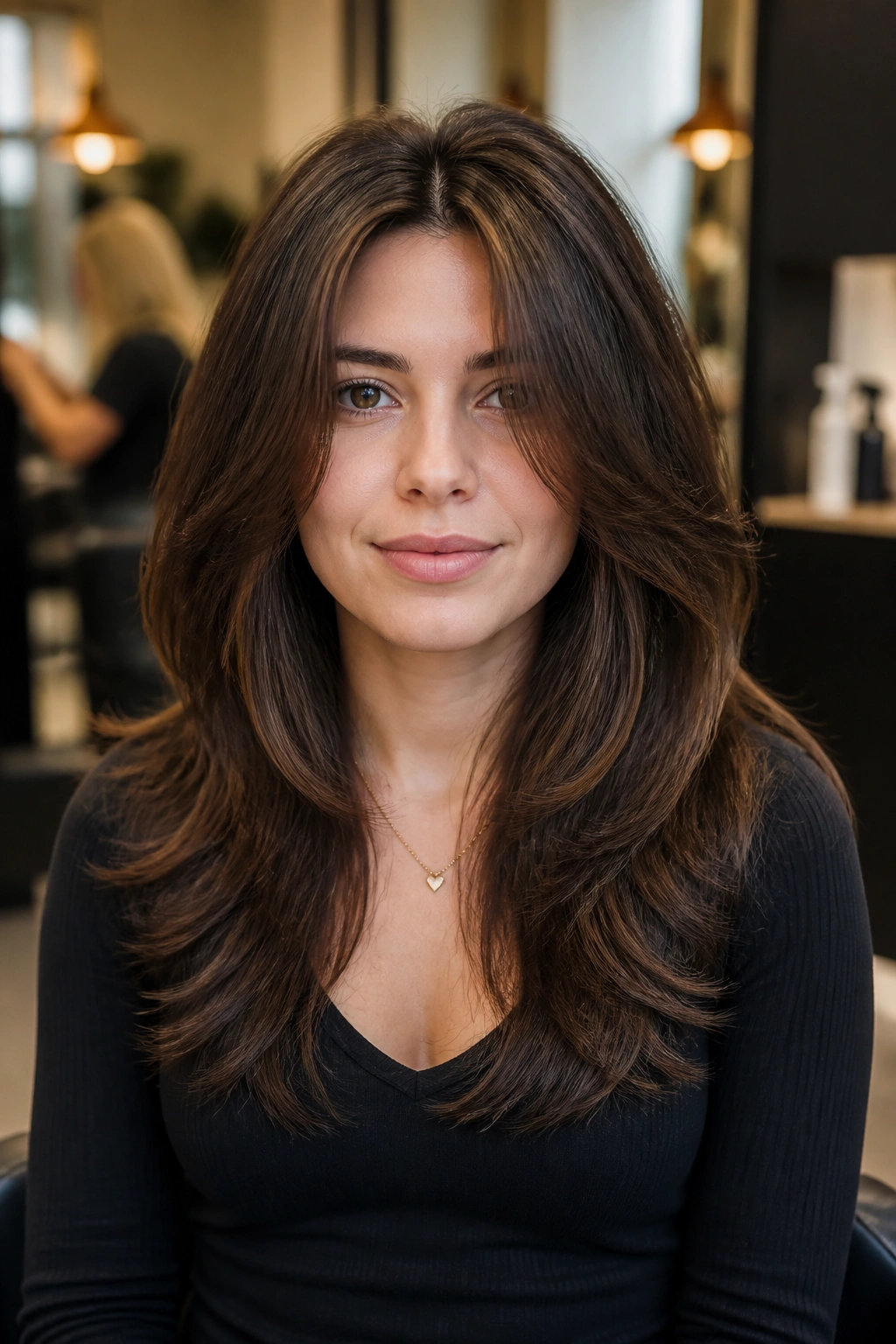
What if your hair feels heavy by noon? Then the haircut needs to lose weight from the inside, not from the bottom edge. Thick hair on a round face can look gorgeous, but if it’s all one block, the width gets too much.
What to Ask for at the Salon
Ask for long internal layers and a clean perimeter that still keeps enough density at the ends. That sounds like a contradiction, but it’s not. You want to remove bulk where the hair builds up, then leave the outline strong enough to hold shape.
A good stylist will cut some of the weight from the midsection and crown, then soften the face frame so it falls below the cheeks. That keeps the cut from puffing outward.
This style needs regular maintenance because thick hair grows into its own shape fast. If you skip trims for too long, the bulk returns and the haircut starts to sit wide again. No mystery there.
16. Fine-Hair Layered Cut with Light Internal Shape
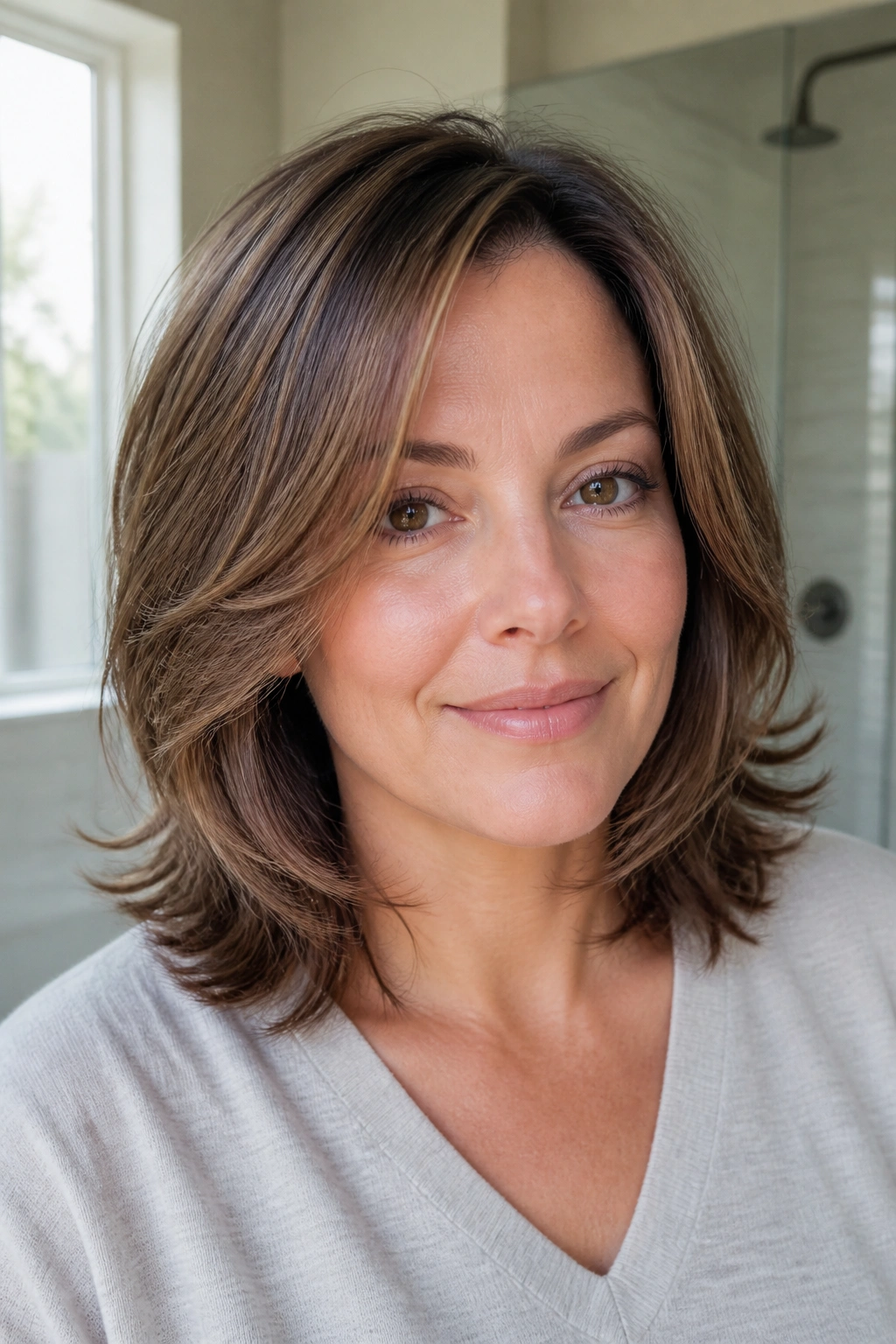
Fine hair can still wear layers on a round face, but the layers have to be quiet. Too many short pieces make the hair look thinner and the face look wider. That’s the trap.
The better move is a soft internal shape with a strong perimeter. The ends keep enough weight to look full, while the inside gets a little movement so the haircut does not fall flat against the cheeks. It’s subtle. You may not notice the layers right away, and that’s fine.
- Keep the shortest layers around the jaw or lower.
- Avoid choppy pieces at the temple.
- Use a root spray or lightweight mousse, not a heavy cream.
- Blow-dry with the head turned slightly to one side for extra lift.
This is a clean, low-drama cut. It will not give you huge volume. But it will give you enough shape to make fine hair look deliberate instead of limp.
17. Curly Medium Layers That Keep the Ends Balanced
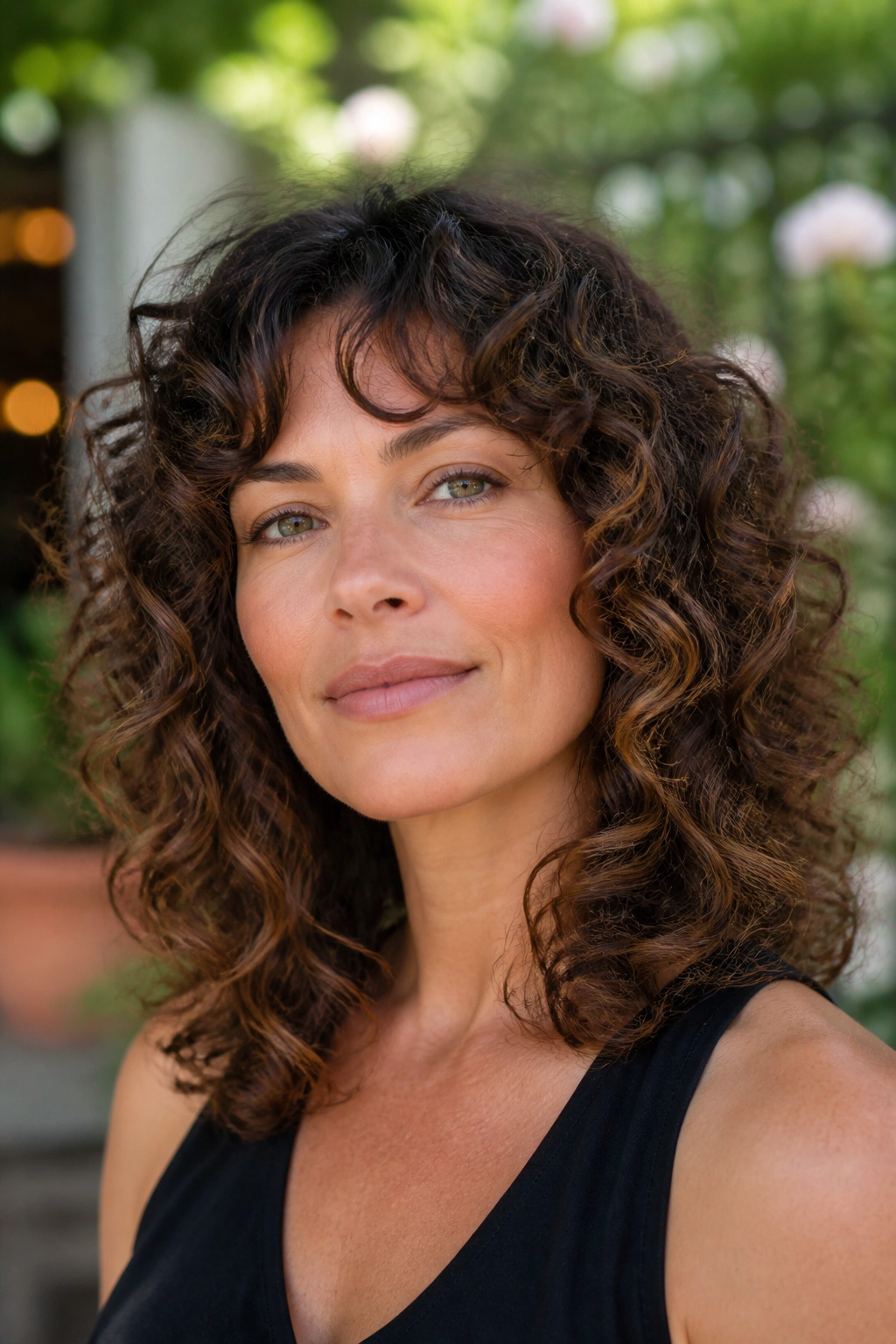
Curly hair and round faces can get along beautifully when the shape is balanced. The mistake is cutting curls too short in the front, which can make the cheeks look fuller and the sides expand. Better to let the layers follow the curl pattern and keep the longest pieces around the collarbone.
A medium length gives curls room to spring without turning into a triangle. That’s what you want to avoid. The goal is roundness in the curl, not roundness in the whole silhouette.
Dry cutting is often the smarter choice here, because curls shrink differently once they’re dry. If you stretch them straight while cutting, the face frame can land too high. Ask for curl-by-curl shaping and make sure the shortest pieces don’t sit right on the cheeks. That one detail changes the whole haircut.
18. Sleek Layered Lob with a Center Part
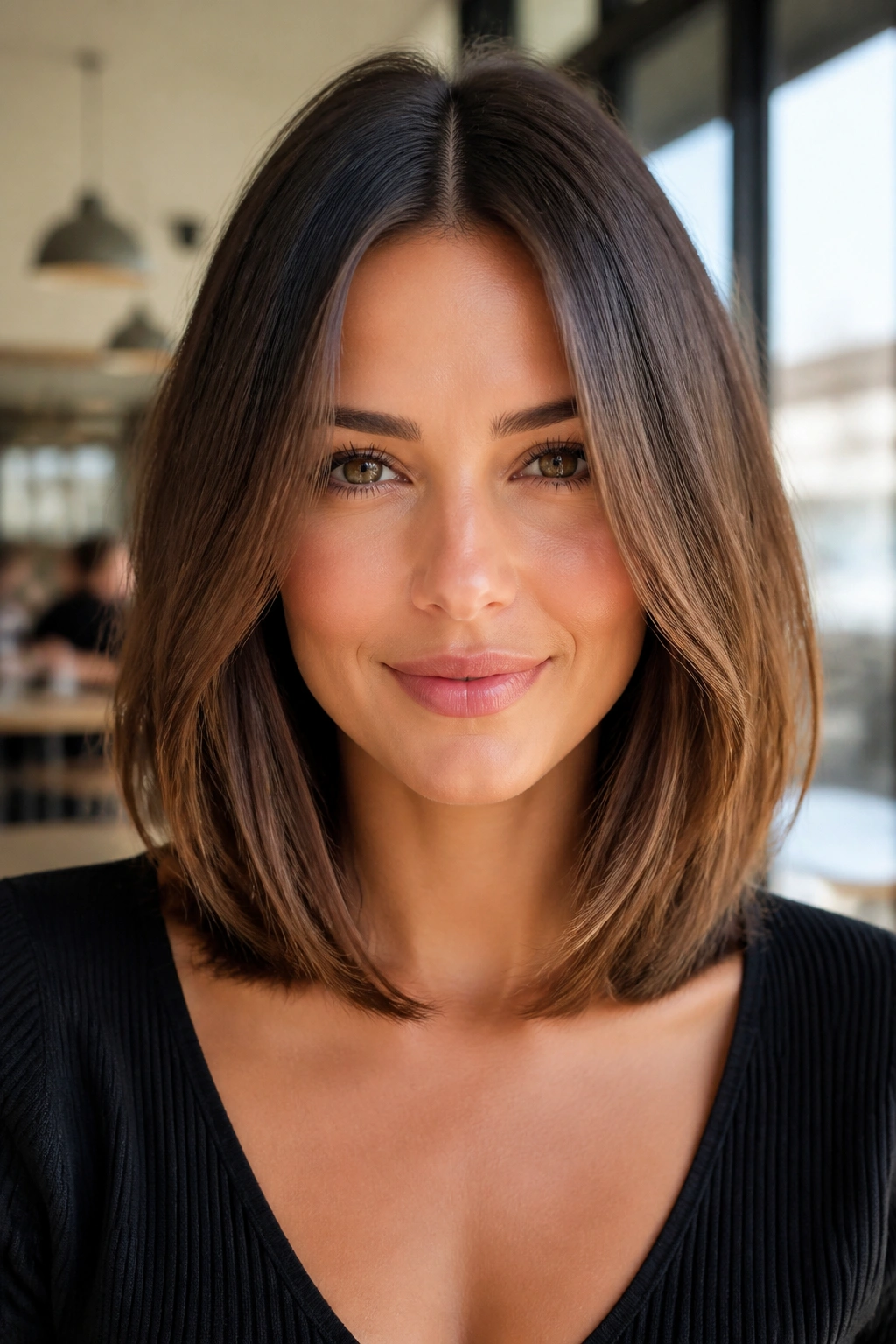
A center part can work on a round face when the cut below it has enough length and discipline. The sleek layered lob keeps the outline clean, while the layers are tucked inside the shape so the hair moves without puffing out.
Compared with a side part, the center part feels more symmetrical and a little sharper. That can be useful if you want the face to look longer and a bit more defined. The key is keeping the front pieces below the chin, or the symmetry can turn the face even rounder.
This cut is a good fit if you like hair that looks smooth, flat-ironed, or softly blown out. It does not need much texture. In fact, too much texture can fight the whole look. I’d keep the layers longer and the ends blunt-ish, then add only a small bend under the chin.
19. Side-Swept Fringe with Elongating Layers
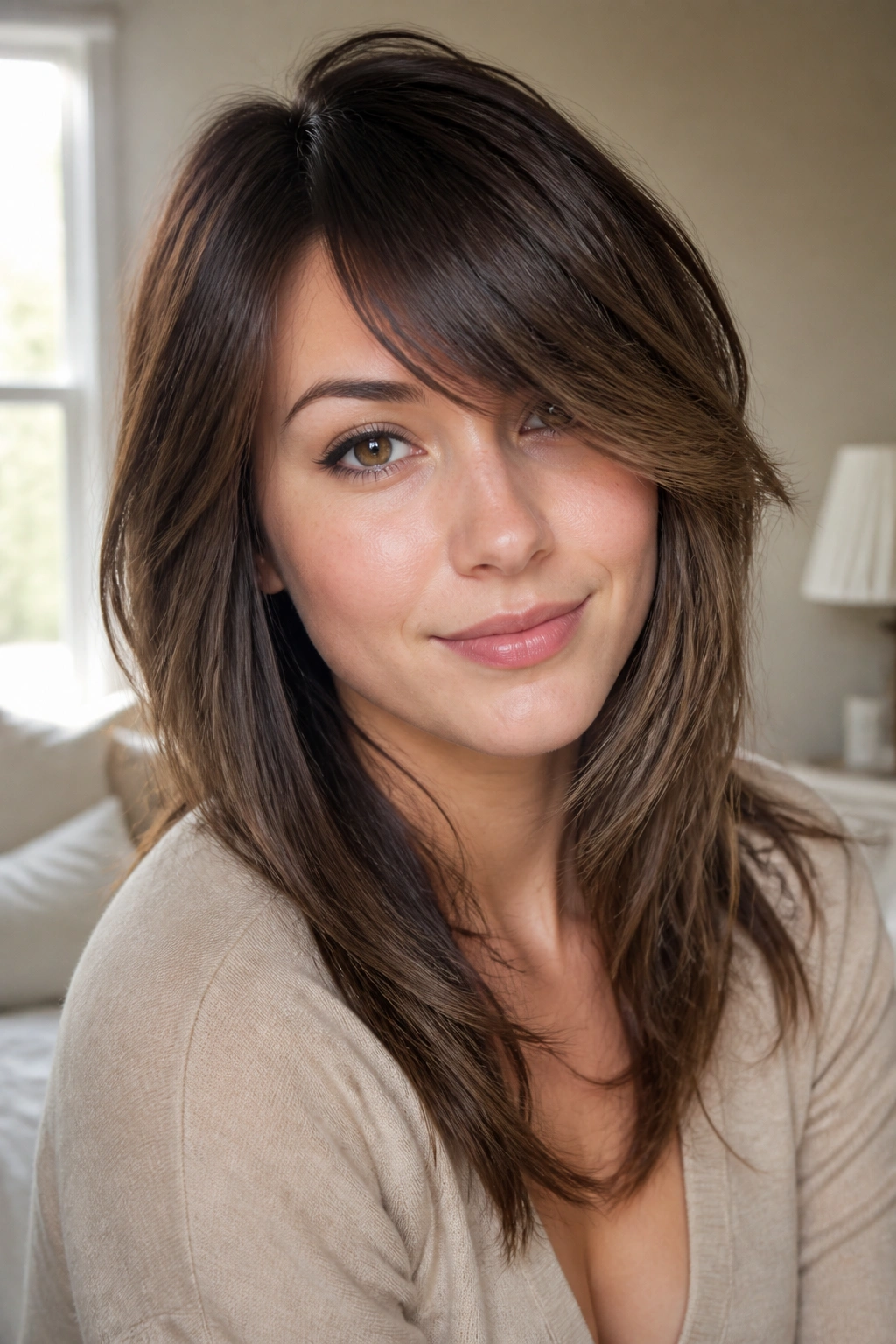
Side-swept fringe is one of the oldest tricks in the book because it works. It creates a diagonal line across the forehead and cheek, which interrupts the circular shape of a round face in a natural way. The effect is softer than blunt bangs and less fussy than a full fringe.
What to Ask For
Keep the fringe long enough to tuck behind the ear if you want. That flexibility matters. It lets you wear the front open on some days and more covered on others.
- Ask for a fringe that starts higher on one side and blends into the layers.
- Keep the longest pieces at the cheekbone or just below it.
- Use a light bend, not a tight curl.
- Trim often enough that the fringe does not fall into your eyes and flatten the face.
This cut works especially well if you like a little movement near the forehead but do not want the full commitment of bangs. It’s easy to live with.
20. Tapered Medium Cut with Flip-Out Ends
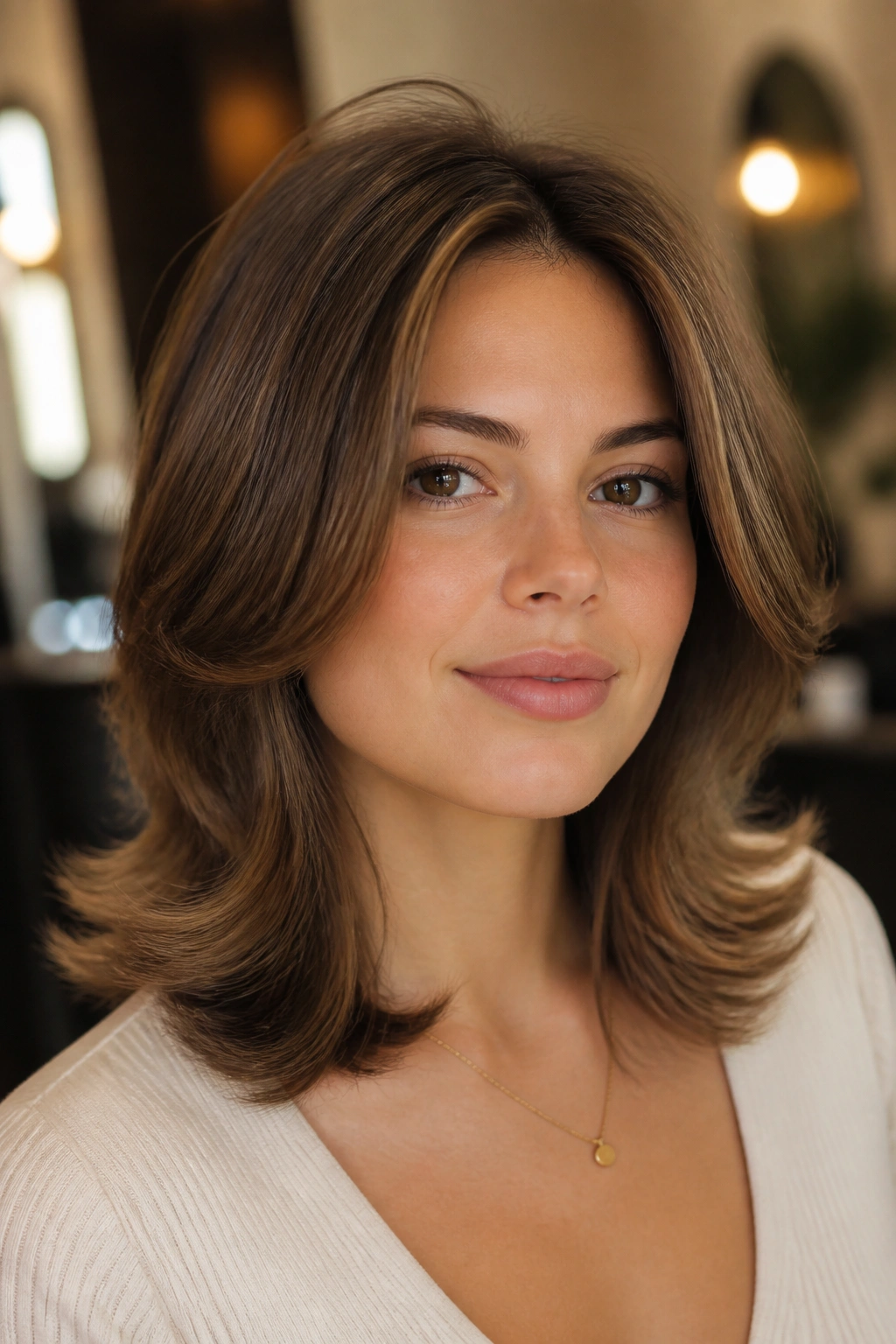
The flip-out end is not childish when the cut is clean. In fact, a tapered medium cut with a soft flip can be one of the most face-friendly shapes for a round face, because the movement happens at the very bottom instead of the cheeks.
The taper narrows the haircut as it moves down, and that keeps the width from spreading through the middle. Then the ends flick outward just enough to feel lively, not bulky. If you like a blowout with a little bounce, this one has a real charm to it.
It’s especially good when you want movement but not a shag. Use a round brush to direct the ends out by half an inch to 1 inch. That small bit of direction makes the cut feel intentional instead of accidental.
21. Medium Wolf Cut with Soft Edges

Can a wolf cut work on a round face? Yes, if it’s softened. The full version can be too choppy and too wide through the sides. The wearable version keeps the edge light, the crown lifted, and the face frame longer.
The best version has enough texture to feel current, but not so much that it turns into a triangle. That means the shortest layers should stay higher on the head, while the front pieces stretch down past the chin. If the layers flare at cheek level, the shape gets loud fast.
How to Keep It Wearable
Use a matte styling cream or light mousse and let some of the natural texture stay in the hair. Don’t over-smooth it, or you lose the point. Don’t over-tease it, or the sides get too big.
This is a cut for someone who likes edge but still wants balance. It’s not the easiest style in the group, but when it works, it looks alive.
22. Blunt-Perimeter Cut with Hidden Layers
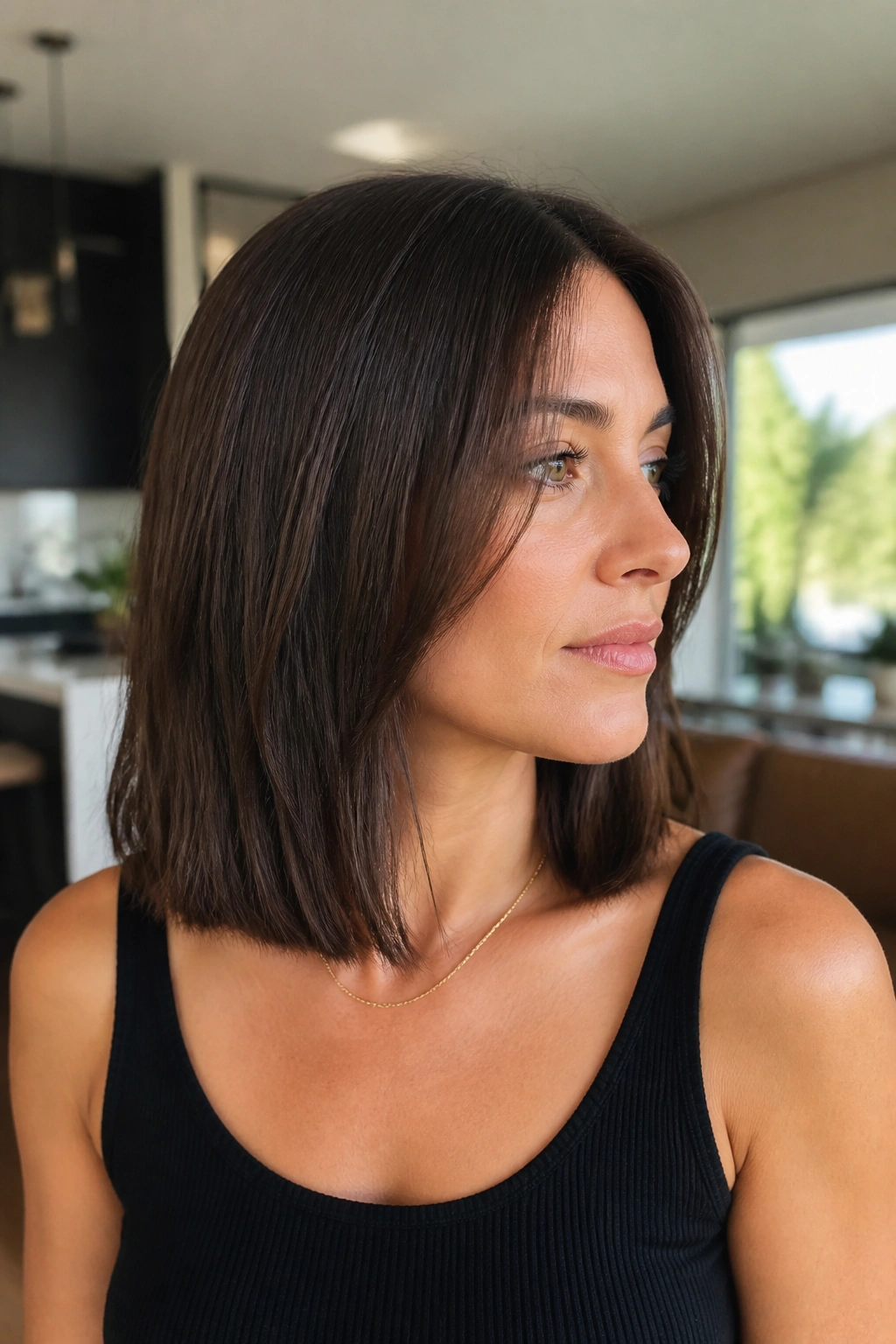
If you like a clean finish, this is the haircut to pay attention to. A blunt perimeter gives the medium length some structure, while hidden layers inside the shape keep the hair from sitting like a solid block. For a round face, that means the outline stays neat and the sides do not puff out.
A lot of people assume blunt means heavy. Not here. The trick is keeping the internal weight under control so the ends still move a little. That way you get the polish of a straight edge without the flatness that can make a round face look wider.
Think of this as the quiet option. It does not scream for attention, but it makes the face look orderly and a little longer. If you love sleek hair and don’t want a lot of obvious layering, this is a strong pick.
23. Asymmetrical Layered Lob with One-Side Sweep
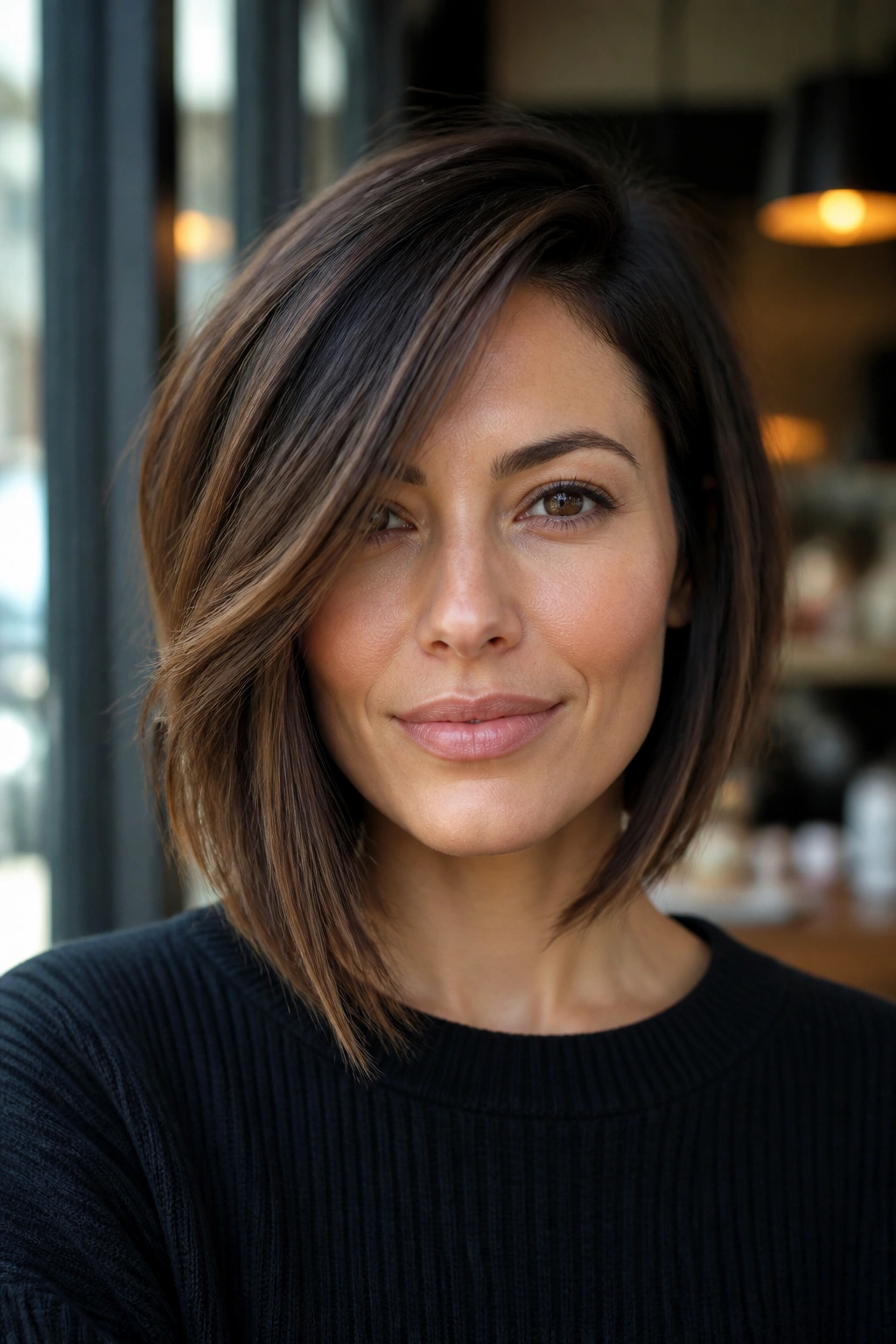
An asymmetrical lob works because the eye never settles in one place. One side sits a touch longer, the other side lifts slightly higher, and the whole cut feels moving and open. That slight imbalance helps a round face look less circular without making the haircut feel sharp.
I like this cut when someone wants a little edge but still needs softness around the face. It’s not punky. It’s just slightly off-center in a way that keeps the silhouette alive. If the difference between sides is too dramatic, though, the haircut can start to feel costume-like. Keep it subtle.
The best version usually has layers that blend through the longer side and a clean sweep across the forehead or cheek. It looks best when the part follows the longer side, not when the hair fights the cut.
24. Shoulder-Length Cut with Airy Curtain Layers
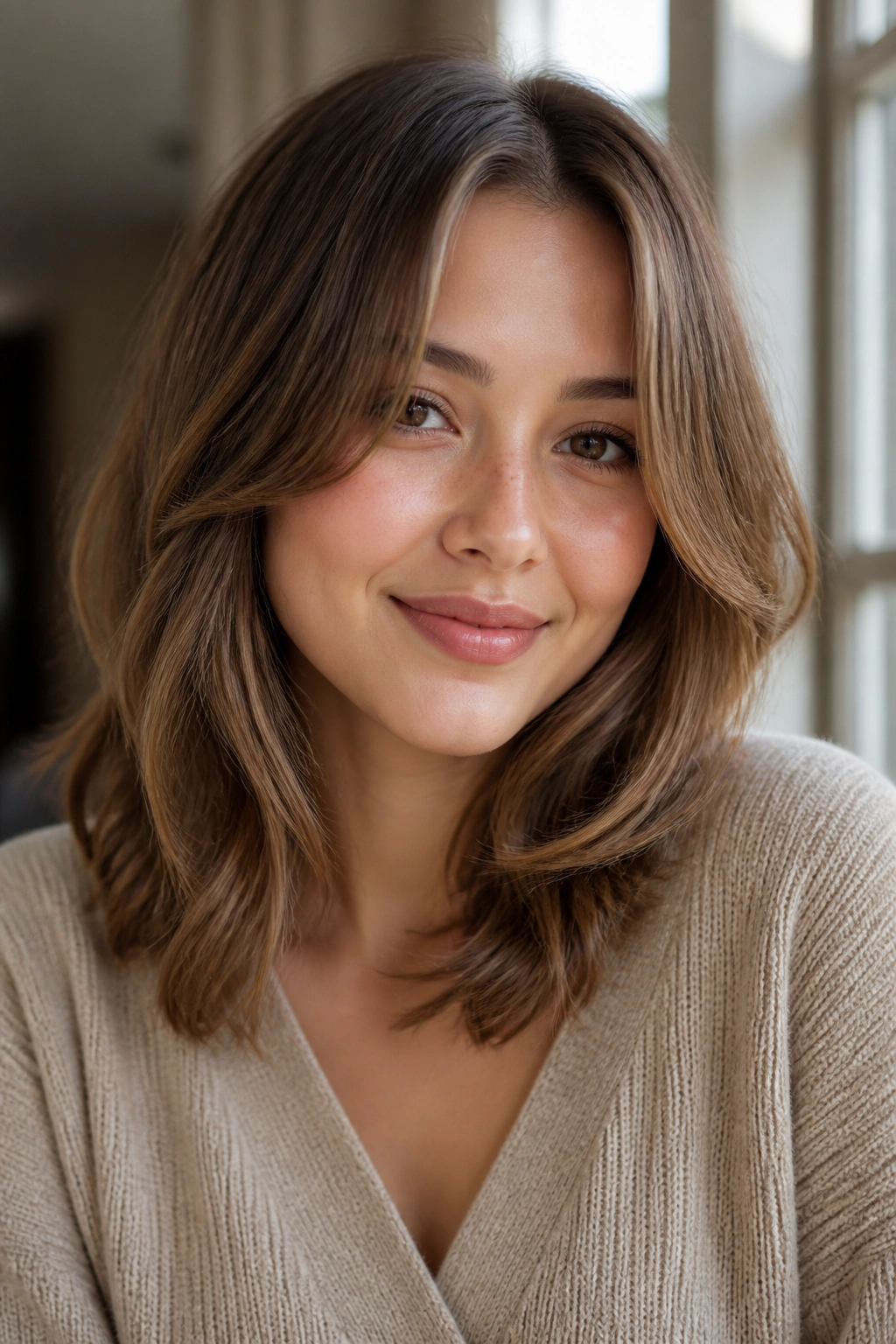
Unlike a shag, this cut stays cleaner around the perimeter. The shoulder-length base gives the hair enough weight to hang well, while the curtain layers open from the middle and fall away from the face. On a round face, that creates a soft frame without making the cheeks look wider.
This is a good choice if you want something pretty low-maintenance. It grows out well, and the layers do not need perfect styling to make sense. You can wear it straight, wave it, or tuck one side behind the ear and still keep the shape.
It’s also a nice middle ground for someone who likes curtain bangs but doesn’t want a full fringe commitment. The front opens in a controlled way, which keeps the face feeling open. If you’re tired of haircuts that look good only on wash day, this one is worth a close look.
25. Medium Layered Haircuts for Round Faces That Stay Long and Lean
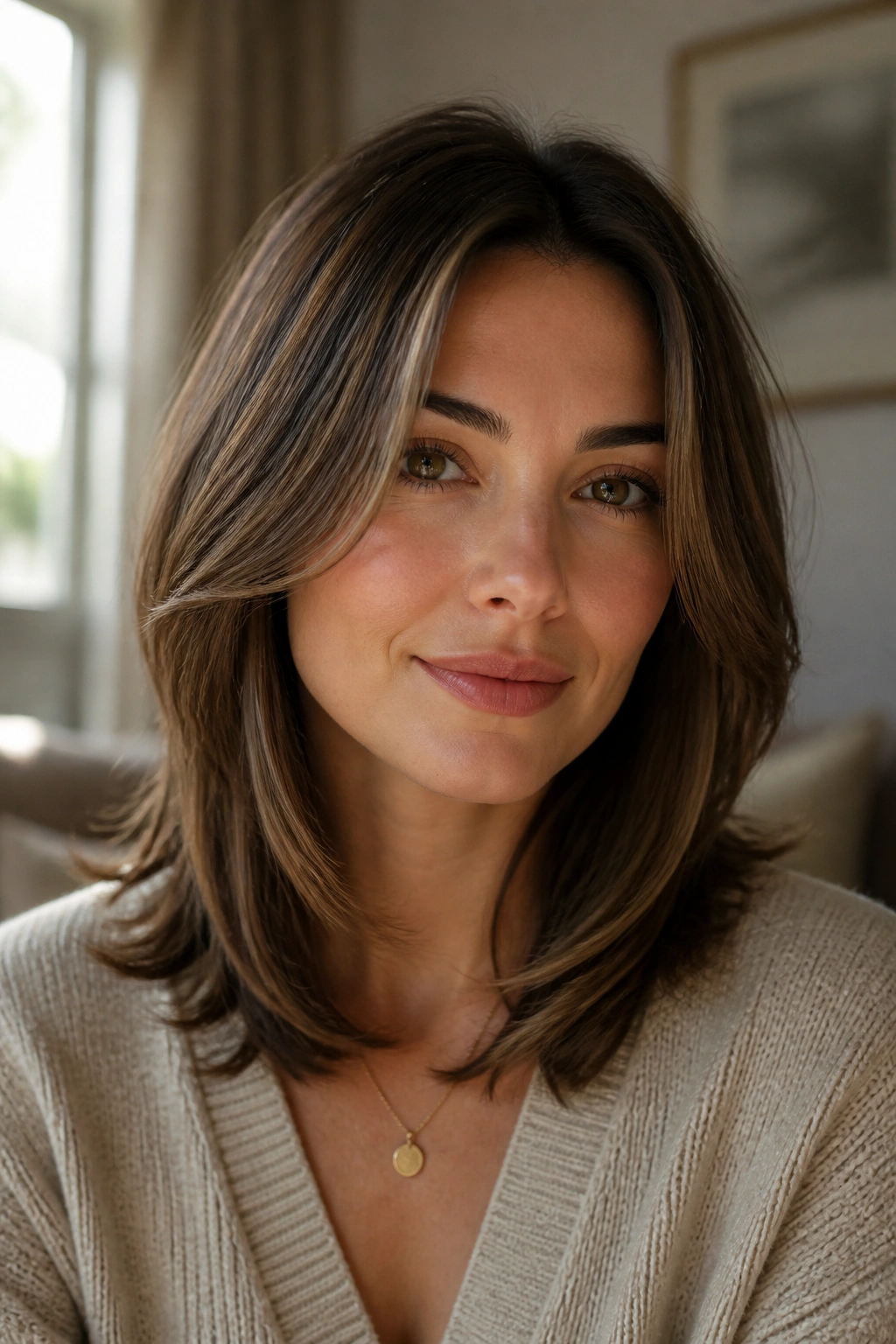
If you want one haircut that keeps the face looking longer without getting fussy, this is the one I’d hand you first. The shape stays below the cheekbone, the front pieces move down and out, and the layers keep the hair from building width at the sides.
What to Tell Your Stylist
Be specific. That matters more than people think.
- Keep the shortest face-framing layer below the cheekbone.
- Leave enough length to hit the collarbone or just above it.
- Add softness through the inside, not heavy layering at the temples.
- Use a center part for a longer look, or a soft side part if you want more lift.
- Avoid any shape that balloons right at the jaw.
This kind of medium layered cut is the one that survives real life: air-drying, errands, a rushed blow-dry, second-day hair, all of it. It does not need to be dramatic to do its job. And that’s usually the sweet spot for round faces — a haircut that quietly changes the line without making a big speech about it.
