



Fine hair can look flat in a way that feels unfair. You step out of the bathroom with movement, a little lift, maybe even a decent blowout, and by lunchtime the whole shape has slipped back toward your head. That is why graduated layered haircuts for fine hair have such a loyal following: they keep a strong outline while building volume where the eye wants it.
The trick is not “more layers” in the random, over-thinned sense. It’s controlled graduation — shorter pieces stacked through the back, longer lengths left in front, and enough structure at the perimeter to stop the ends from looking see-through. I’m far more interested in a cut that makes fine hair look denser than one that creates airy little wisps everywhere. Wisps are lovely on paper. On fragile ends, they can look tired fast.
A good graduated cut also gives you options. Some versions are polished and sharp. Some are soft enough to air-dry with a dab of mousse. Some are built for women who want lift at the crown without giving up shoulder length. The right one depends on how much time you want to spend styling, how much density you have left at the ends, and whether you prefer sleek shape or a little mess.
1. Chin-Length Graduated Bob
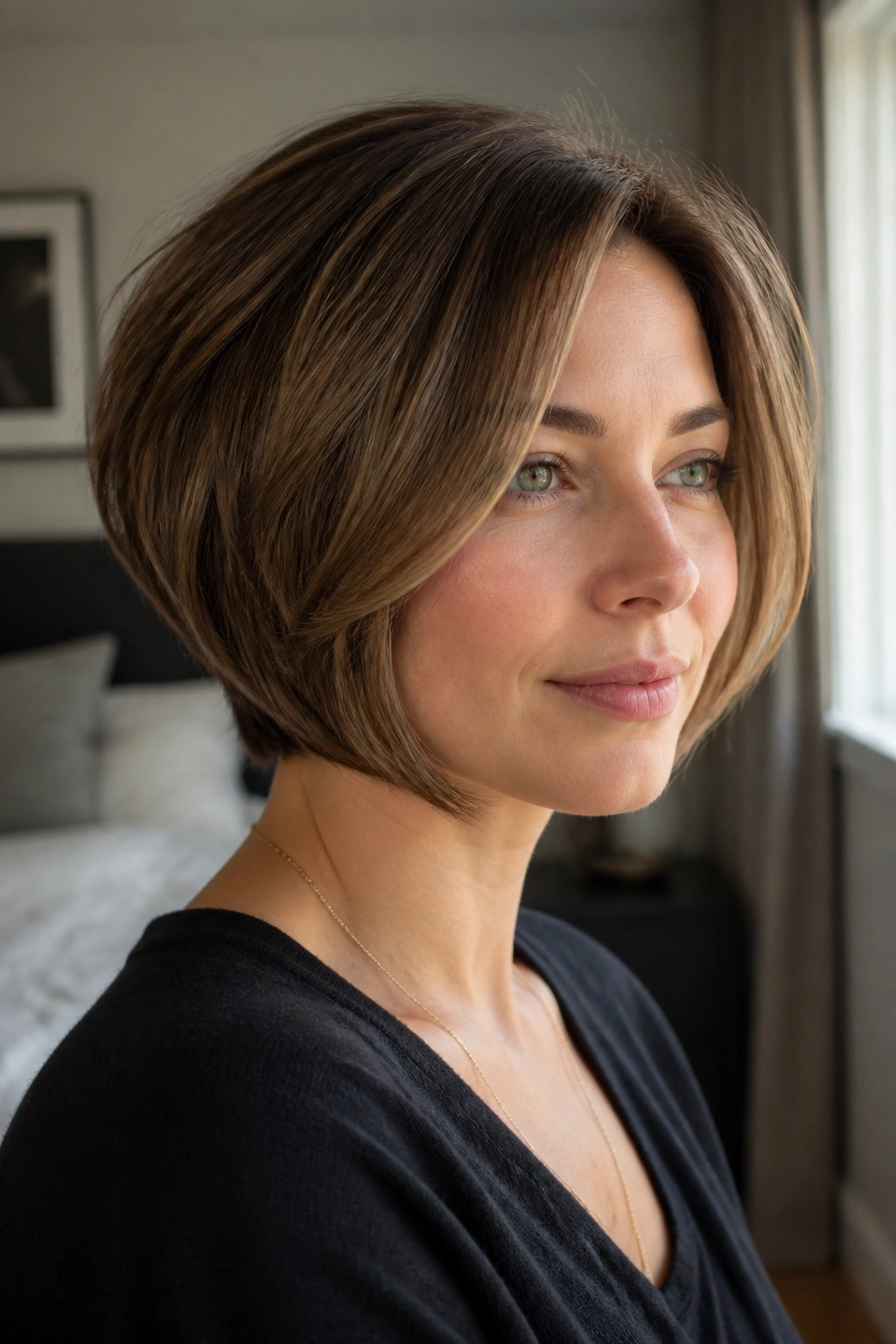
This is the cleanest answer when fine hair needs more body without losing shape. A chin-length graduated bob keeps the back compact and slightly shorter, then lets the front skim the jaw, which makes the whole cut look fuller than a blunt one at the same length.
Why It Works on Fine Hair
The short back gives the crown some lift, and the chin-length front keeps the outline strong. That matters. If the whole cut is too soft or too long, fine hair starts to collapse at the bottom and you get that narrow, stringy look nobody asks for.
Ask your stylist for a softly stacked nape, a blunt-ish perimeter, and light interior graduation only where the head shape needs it. If the hair is very fine, the back should usually be 1 to 1.5 inches shorter than the front, not dramatically shorter. Too much gap can make it look dated fast.
- Best for straight or slightly wavy fine hair
- Easy to blow-dry with a 1.5-inch round brush
- Looks fuller when tucked behind one ear
- Works well with a side part or center part
Pro tip: dry the roots forward first, then direct them back. That tiny change helps the crown stand up instead of lying flat.
2. Collarbone Inverted Lob
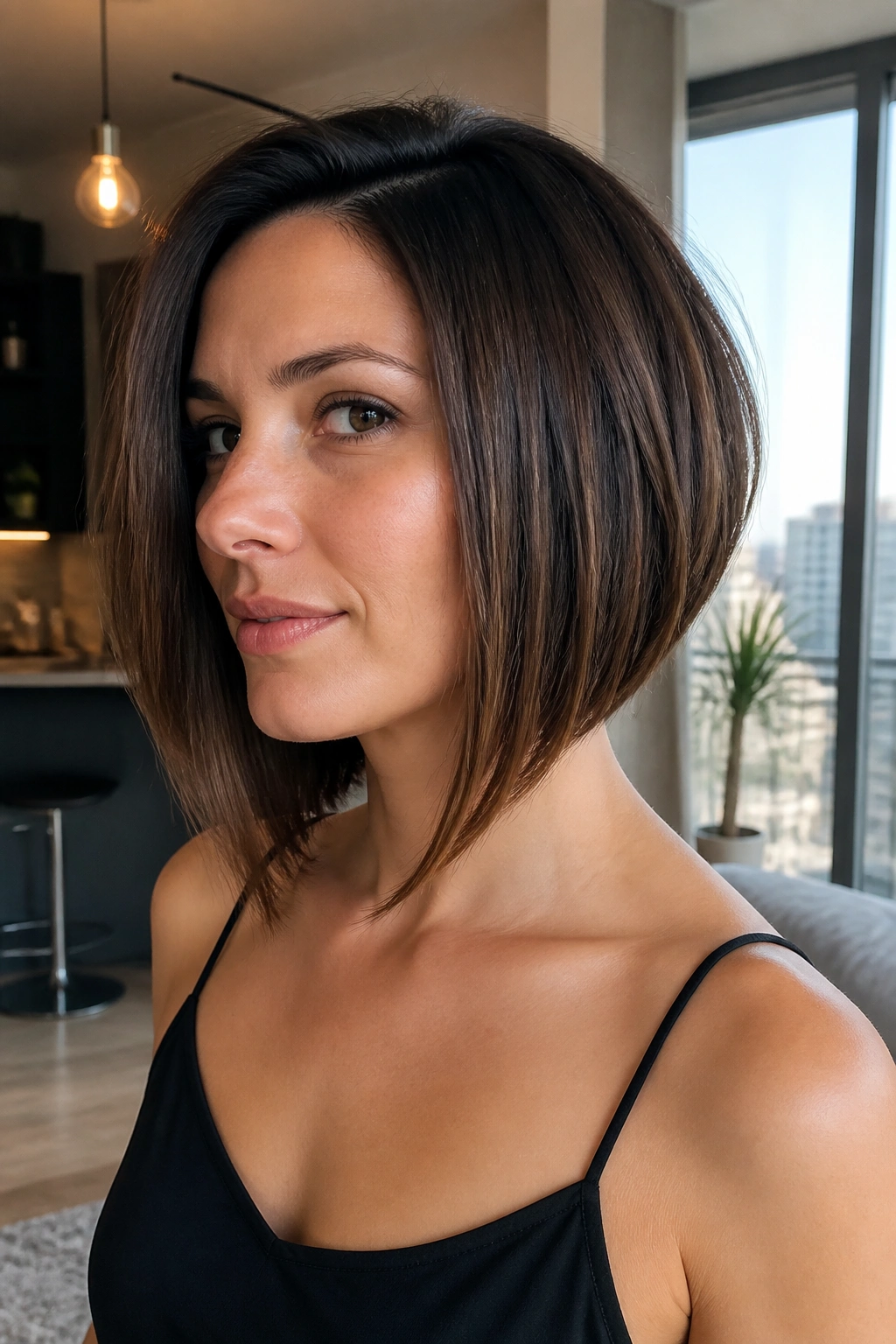
A collarbone inverted lob is one of my favorite shapes for fine hair because it gives length without letting the ends drag. The back sits a little higher, the front falls longer, and the whole line feels polished without being fussy.
It’s especially useful if you want hair you can still clip up, twist into a low bun, or tuck into a coat collar without it losing all personality. The angle does the work for you. Fine hair often looks better with a shape that says something, and this one says it clearly.
Keep the front pieces grazing the collarbone, not dropping far below it. Once fine hair gets too long, the weight starts winning. That’s the part many people miss. They ask for long hair and layers, then wonder why the ends look thin. This cut avoids that trap by keeping enough strength in the line.
Best move: pair it with a root-lift mousse and a quick bend through the mid-lengths using a 1.25-inch iron. Loose, not curly.
3. Soft Pixie Bob With Tapered Nape
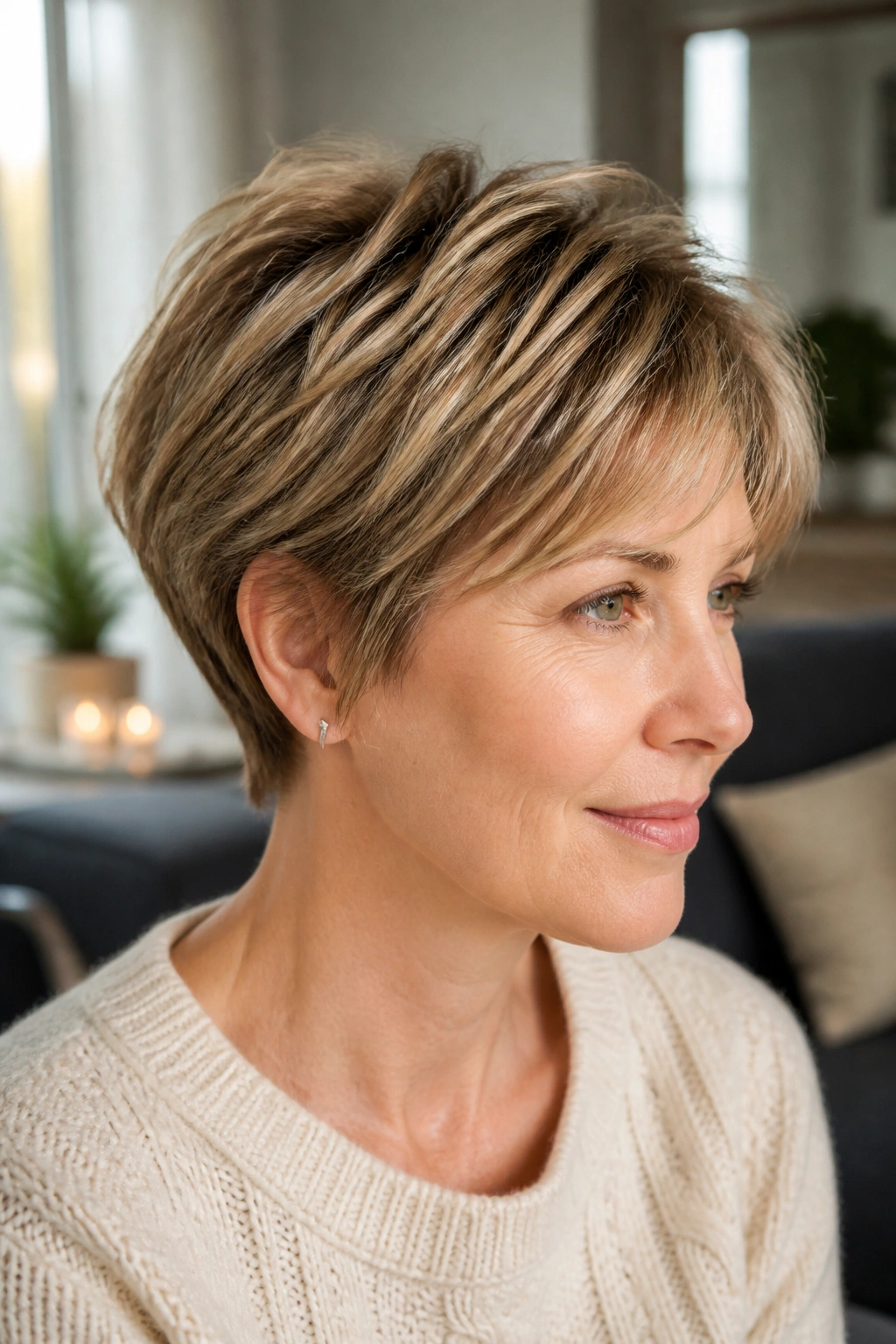
Can a short cut still feel feminine and soft? Absolutely. The soft pixie bob with a tapered nape gives fine hair a real boost because it removes weight where hair tends to lie flat, then leaves enough length on top to create shape.
How to Style It
The top should stay long enough to sweep with your fingers, usually around 2.5 to 4 inches, while the sides hug the head. That length range matters because fine hair can go from chic to too-short in a blink if the top gets cut too aggressively.
Use a pea-sized amount of styling cream or lightweight paste, not a heavy wax. Heavy product kills movement. Fine hair needs hold, yes, but it also needs air.
This cut looks best when the nape is clean and close, almost neat enough to make the top feel fuller by contrast. That contrast is the whole point. A pixie bob that’s too fuzzy in the back just looks unfinished.
- Great for small to medium face shapes
- Strong choice for straight fine hair
- Needs a trim every 4 to 6 weeks
- Works with side-swept fringe or a soft fringe
4. Rounded Graduated Bob
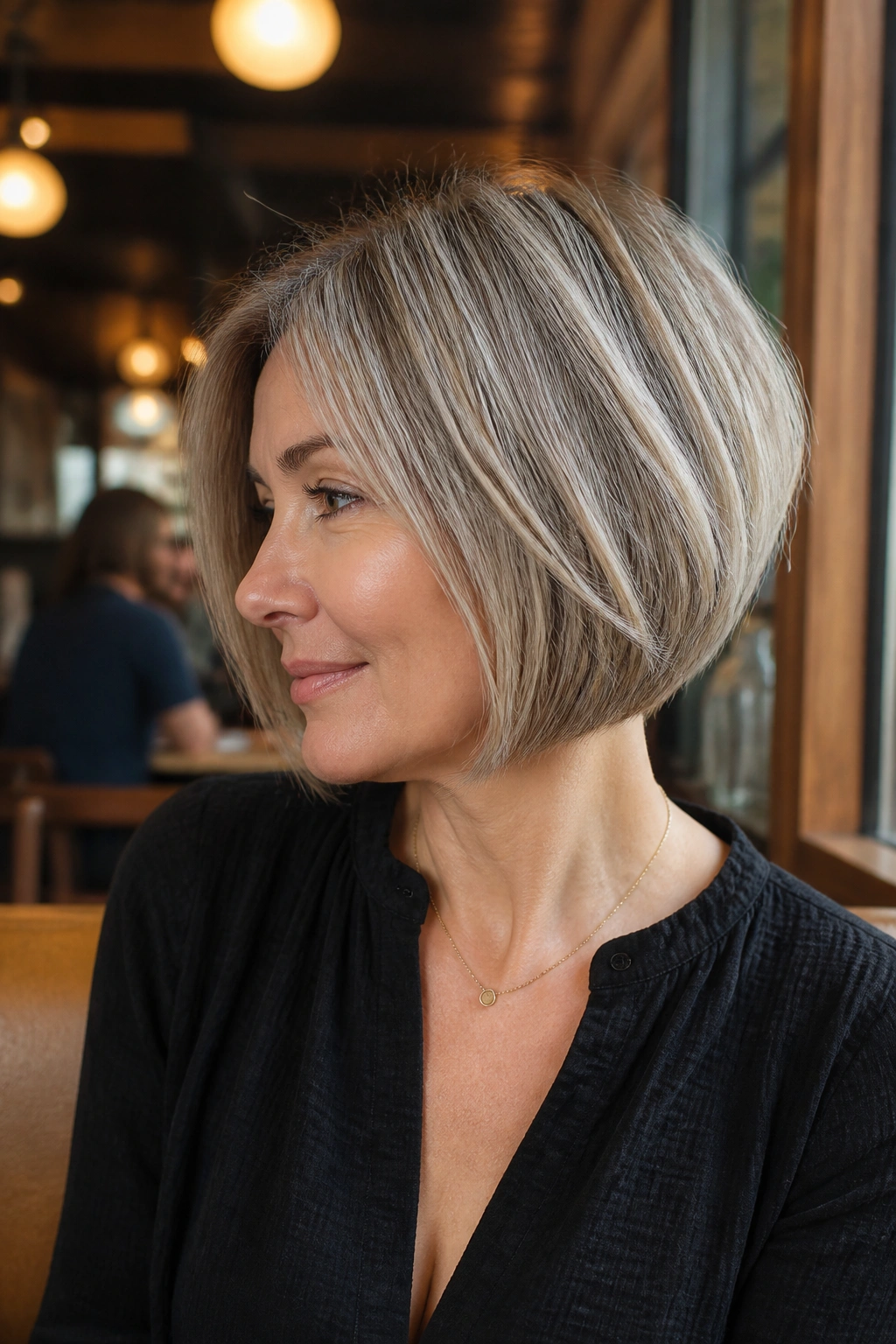
A rounded graduated bob gives fine hair a little dome of lift that can be gorgeous when the goal is fullness, not edge. The shape curves inward at the jaw and follows the head more closely through the back, which makes the cut look compact and healthy.
I’ve always liked this cut on hair that tends to puff at the ends but falls flat at the roots. The curve solves both problems. It removes enough bulk in the back to create shape, then keeps the perimeter dense enough that the ends don’t fray out.
What to Ask For
- A rounded silhouette, not a boxy one
- Graduation through the back, with the strongest stack near the occipital bone
- Length that finishes around the jaw or just below it
- Light point-cutting only at the very edges
The downside? It needs regular styling. Air-drying can work, but the shape shines with a round brush and a little tension at the root. If you want a cut that rolls out of bed looking finished, this is not that cut. But if you are willing to spend 10 minutes, it pays you back.
5. Feathered Shoulder-Length Cut
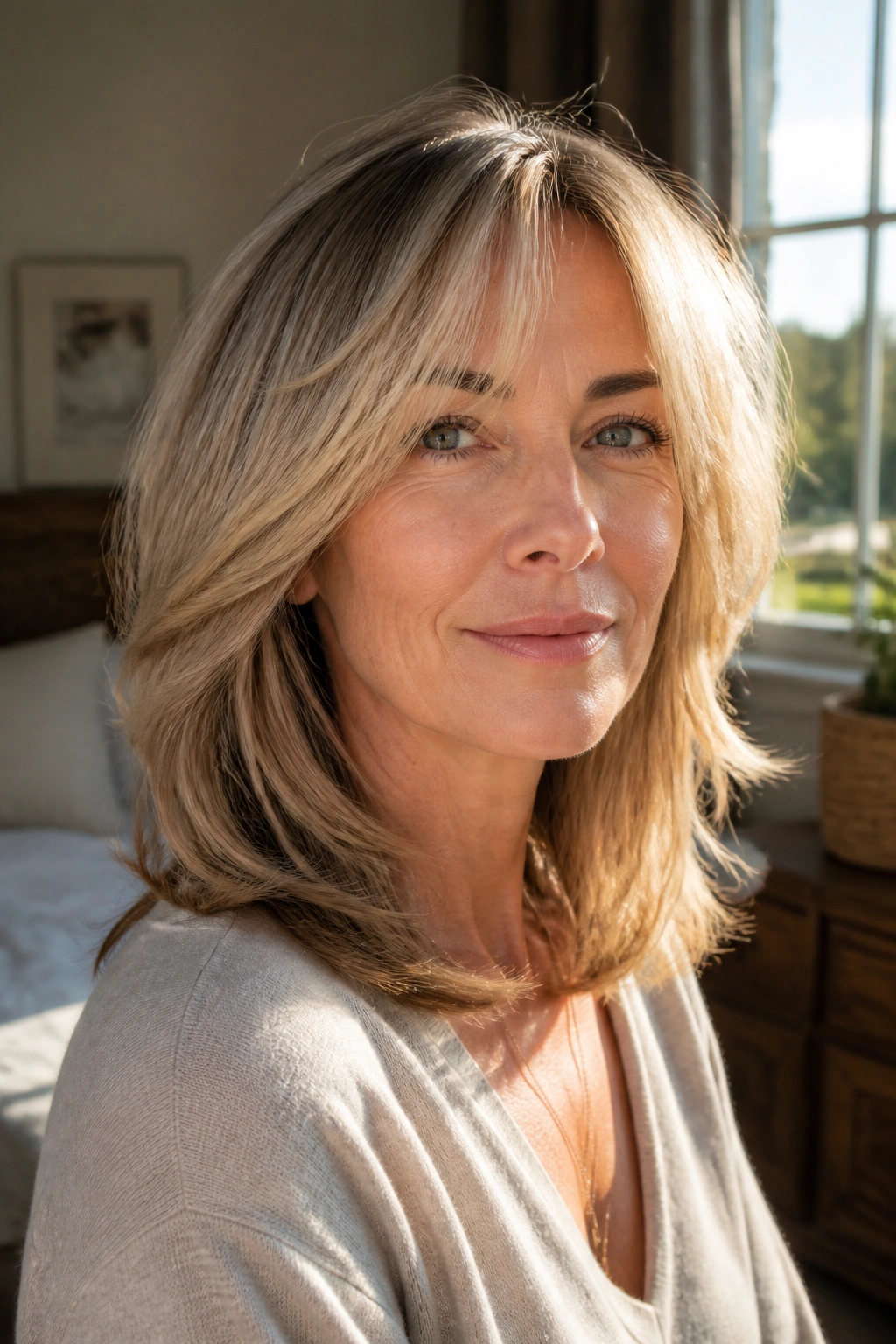
This is the one I recommend to people who want movement but hate the look of chopped-up ends. A feathered shoulder-length cut keeps the outline soft and breathable, with light layers that sit inside the shape instead of tearing through it.
Fine hair often looks best when the layers are hidden rather than shouted. That is the appeal here. The hair still has motion, but the ends stay thick enough to look intentional. You get a shoulder-skimming line, a bit of swing, and less of that scraggly effect that shows up when too much weight is removed.
The best version uses soft feathering around the face and crown, not all over. A stylist who goes wild with the razor can make fine hair look transparent. One who places the feathering carefully can make it look twice as full.
A light volumizing spray at the roots and a quick bend through the ends is enough. No need to chase curls. A little shape goes a long way here.
6. A-Line Bob With Hidden Layers
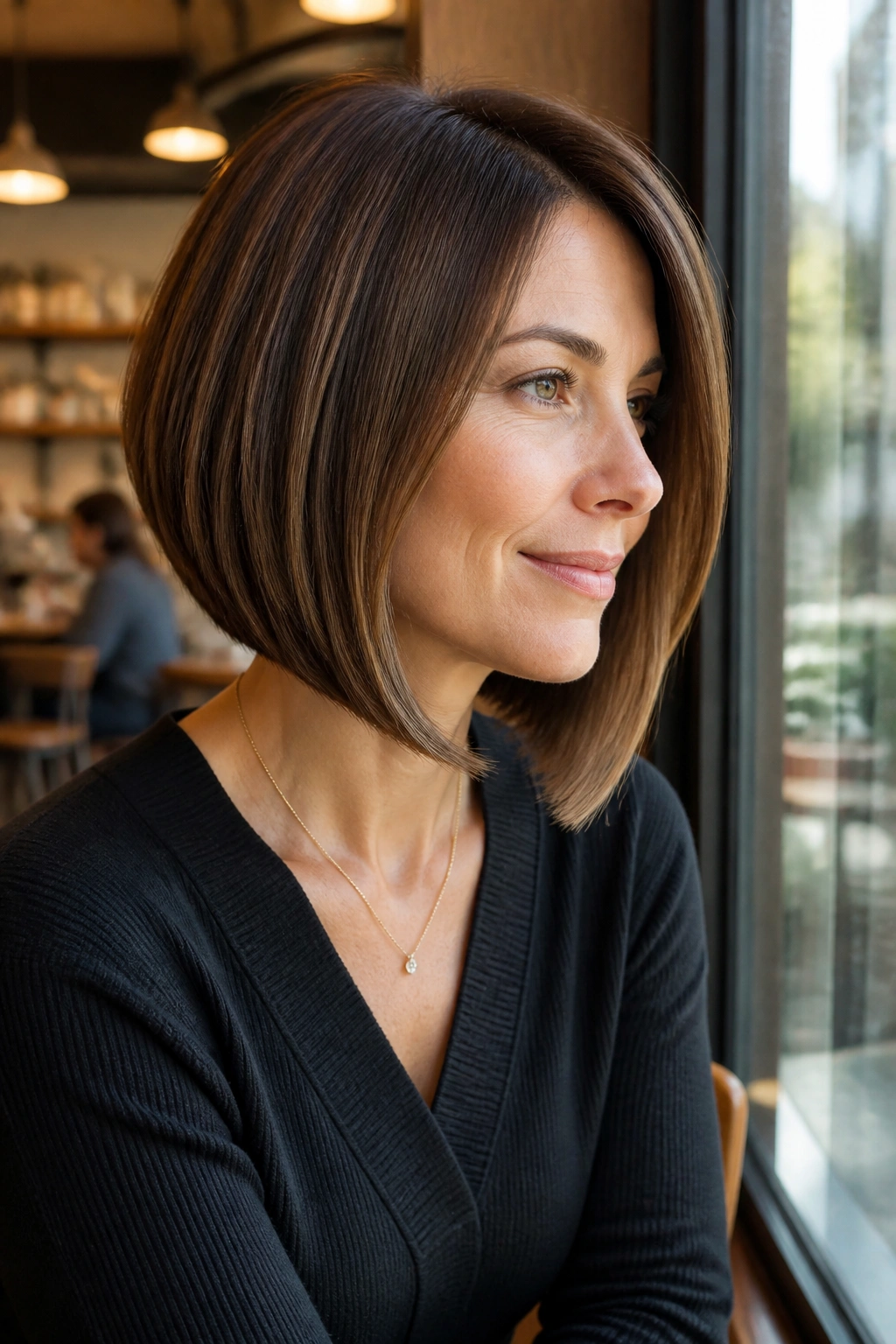
Unlike a shag, an A-line bob with hidden layers keeps the outside line clean. That is why it works so well on fine hair. The front sits longer than the back, but the layers live inside the cut, where they can help with lift without poking holes in the outline.
This is the style for someone who wants polish first and texture second. The shape reads sleek in daylight and fuller in motion, which is a nice combination. Fine hair tends to look better when the perimeter is strong, because a strong edge tricks the eye into seeing more density.
Ask for the back to be short enough to support the crown, then keep the front at the collarbone or just above. Internal layers should be subtle. If you can spot every layer from across the room, they’re too heavy-handed.
It’s a smart choice for straight hair, but wavy fine hair can wear it too. A flat iron bend at the ends helps the angle show up. So does a clean center part, oddly enough. That parting line makes the asymmetry look deliberate.
7. Micro-Layered Lob With Crown Lift
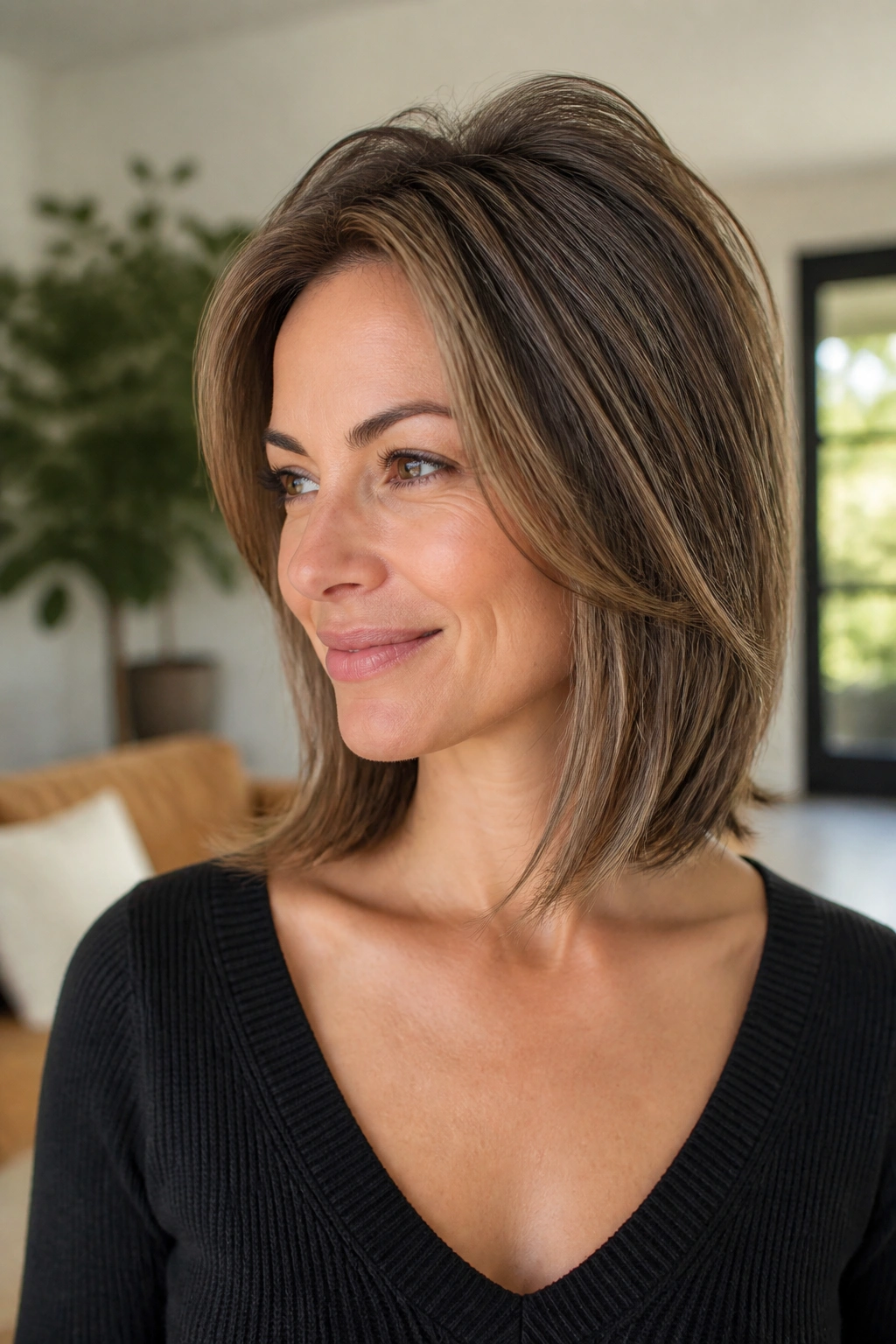
This cut is for people who want lift but do not want the ends chewed up. The micro-layered lob with crown lift uses tiny internal layers near the top of the head, then keeps the lower lengths comparatively strong. It sounds subtle, because it is.
Why the Small Layers Matter
Micro-layers create space at the crown without stripping density from the bottom. That matters more on fine hair than most people realize. A full-length layer can look airy on thick hair and look sparse on fine hair. Small layers are safer. They give shape without eating the perimeter.
- Ask for layers no shorter than 2 to 3 inches from the top sections
- Keep the length around the collarbone for movement
- Add root volume with a blow-dry cream, not a heavy oil
- Use velcro rollers at the crown for 10 to 15 minutes if you want extra lift
The best part is how wearable it feels. You can still pull it back. You can still tuck it behind your ear. But the hair won’t hang like a wet ribbon by midday. That’s a win.
8. Side-Swept Fringe Bob
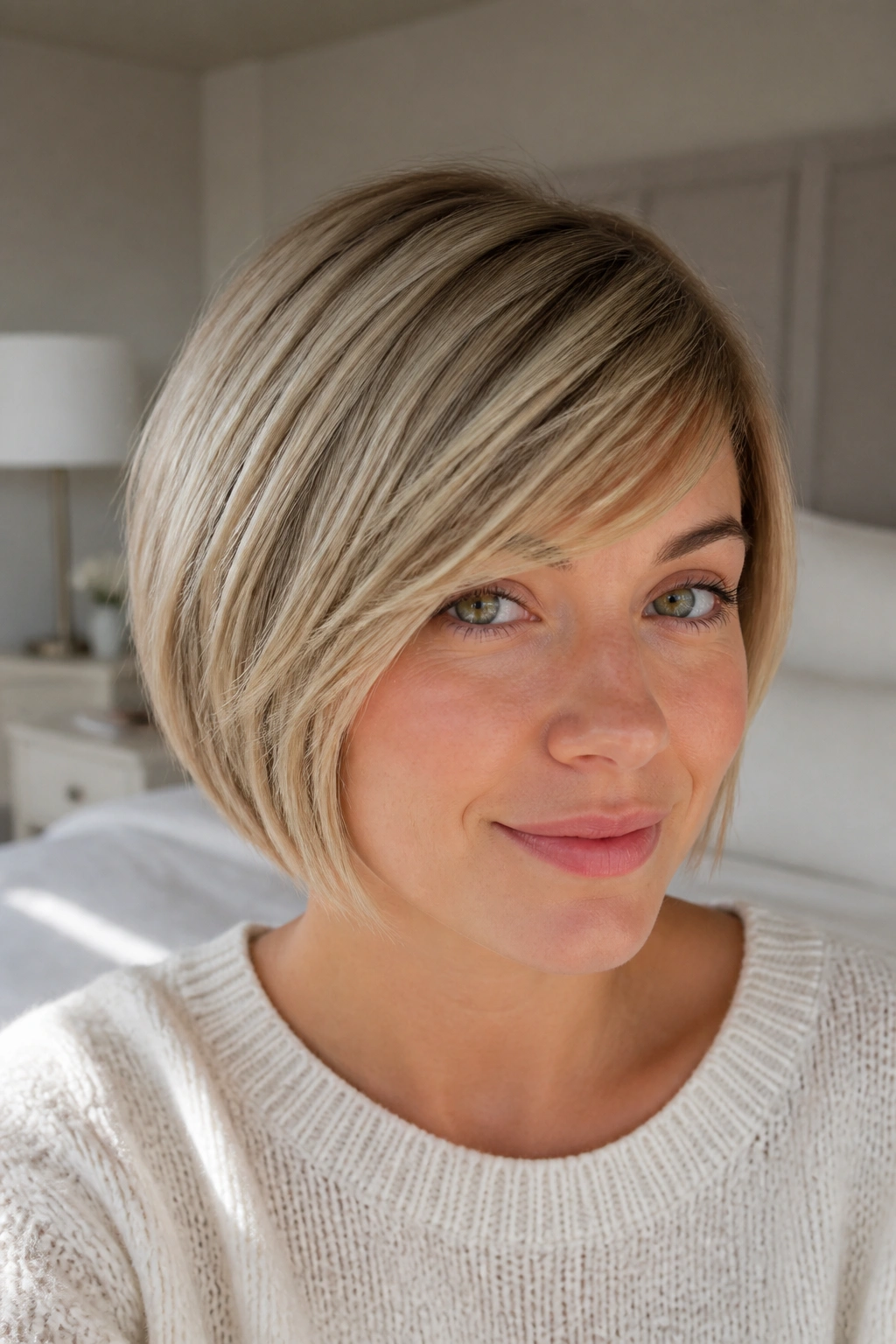
A side-swept fringe bob gives fine hair a little attitude without asking for much maintenance. The fringe shifts attention upward, which helps the hairline and forehead area look fuller, and the bob keeps the ends compact.
This cut is a good fit if your face looks a touch too long with a center part. The side-swept fringe breaks that vertical line and makes the whole style feel softer. I also like it because it’s forgiving on days when you do not want a full blowout. A fringe that falls diagonally can still look styled even when the rest of the hair is behaving lazily.
The bob itself should stay blunt enough to keep its shape. If the fringe is soft and the perimeter is wispy, the cut loses its point. Ask for the fringe to start around the arch of the eyebrow and taper into the front layers. That gives movement without turning into a curtain.
Use a round brush just on the fringe, then rough-dry the rest. Easy enough. And honestly, that’s the appeal.
9. Razor-Soft Shag
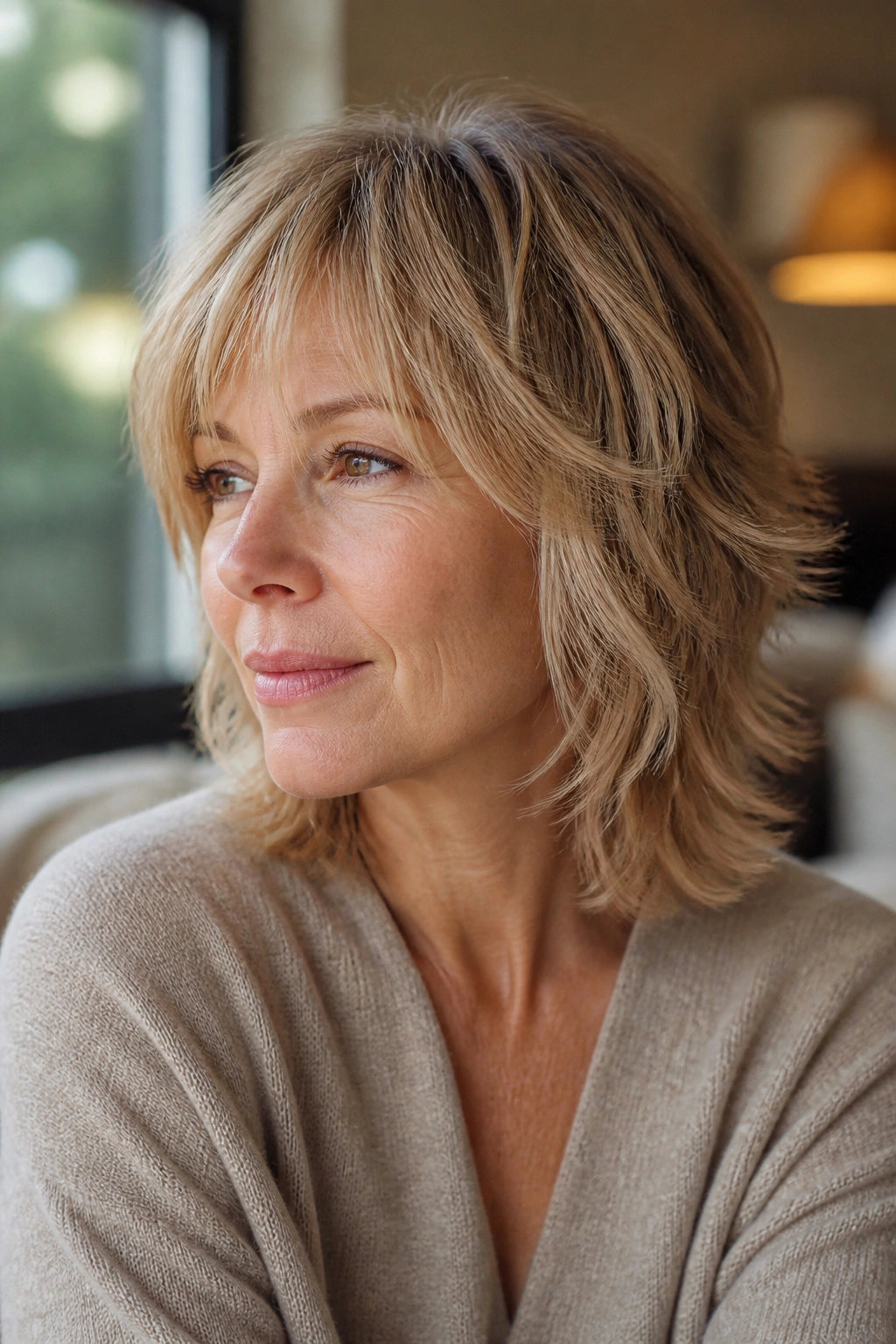
Can a shag work on fine hair? Yes, but only if it stays soft. A razor-soft shag is all about light texture, not aggressive shredding. The danger with fine hair is obvious: too much razor work and the ends start to look like they’ve been sanded down.
The trick is to keep the layers around the face and crown airy while leaving enough weight through the bottom third of the cut. Think of it as a shag with manners. It should move when you shake your head, but it should not collapse into strips.
What Makes It Different
The layers are usually shorter around the cheekbones and crown, then longer through the back. That gives a lifted, lived-in shape without sacrificing the feel of thickness at the perimeter.
- Best styled with mousse and a diffuser
- Strong on fine wavy hair
- Needs less precision on grow-out than a bob
- Fails fast if over-thinned at the ends
Watch for this: if the stylist keeps texturizing after the cut already looks airy, stop them. Fine hair does not need extra help becoming see-through.
10. Face-Framing Graduated Lob
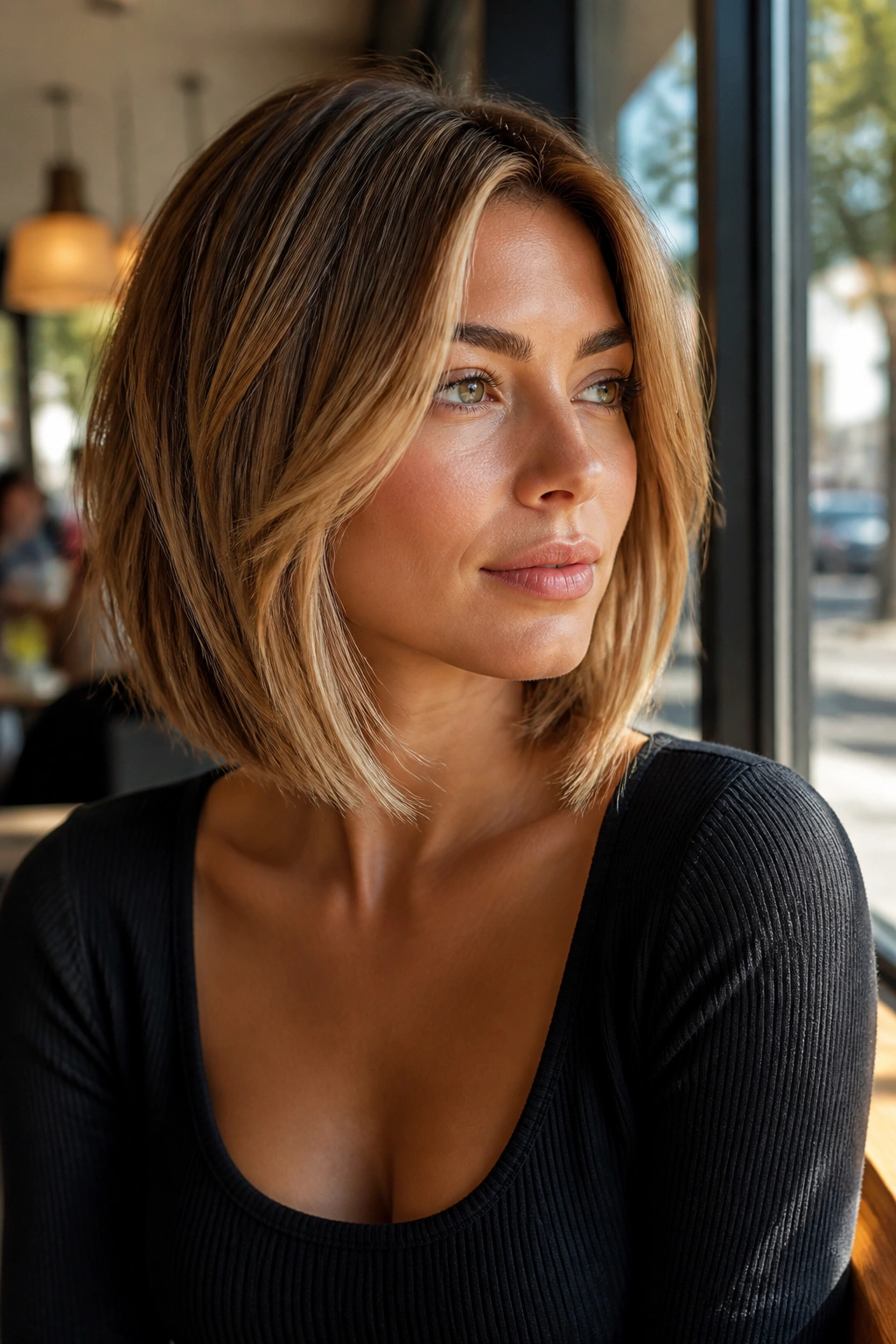
Picture hair that hits just below the shoulders, lifts at the crown, and falls in soft angles around the cheekbones. That is the appeal of a face-framing graduated lob. It gives the face shape first, then lets the rest of the hair support it.
This is one of those cuts that changes the whole balance of fine hair. Instead of everything hanging at the same level, the front pieces start a little higher and guide the eye downward in a cleaner line. That can make hair look fuller instantly, especially when the front is the area that usually feels limp.
Good Details to Ask For
- Front pieces that start around the cheekbone or lip
- Graduation through the back, not heavy layering everywhere
- A blunt or softly blunt finish at the ends
- Enough length to wear in a low ponytail
I like this cut for people who want softness around the face but still need the body that a bob gives. It’s practical, too. The cut can grow out for a while before it loses its shape, which means fewer awkward weeks in the mirror.
11. U-Shaped Cut With Internal Graduation
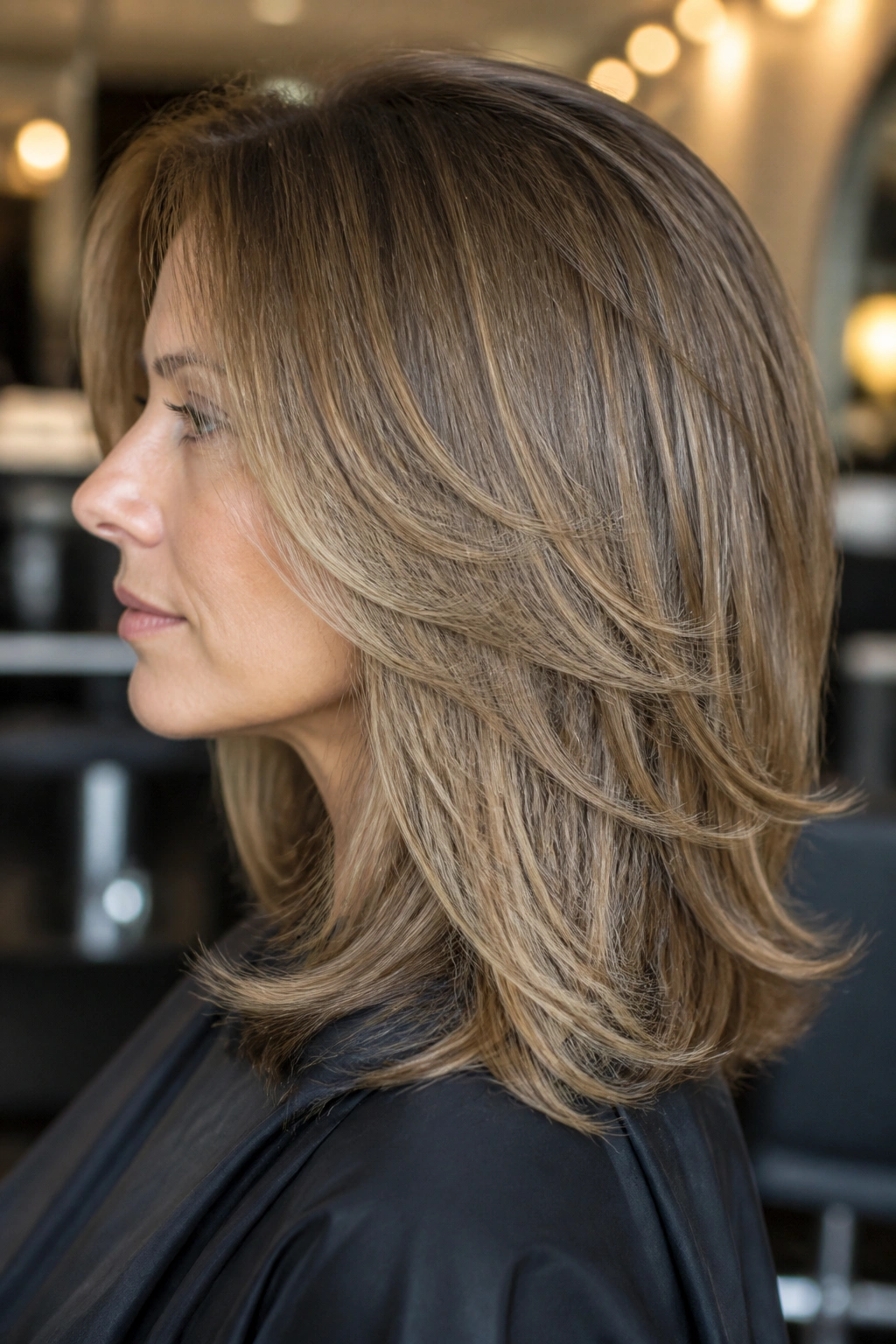
A U-shaped cut with internal graduation is one of the sneaky good options for fine hair because it keeps length while preventing the bottom from becoming a flat curtain. The U shape gives the outline a gentle curve, and the internal layers create lift where the head needs it most.
That combination is kinder than a hard straight line on long fine hair. A blunt bottom can look thick at first, then drag down after a few weeks. A U shape softens that effect and lets the hair fall in a more natural way. It also sits nicely over the shoulders, which matters more than people think when hair is fine and tends to split.
Ask for the layers to begin high enough to support the crown but not so high that the ends get thin. A good stylist will cut with the hair’s fall in mind, not just the picture. That usually means checking the side profile, then rebalancing the curve from the back.
The result is quiet, but not boring. Hair like this doesn’t need to shout.
12. Tousled French Bob
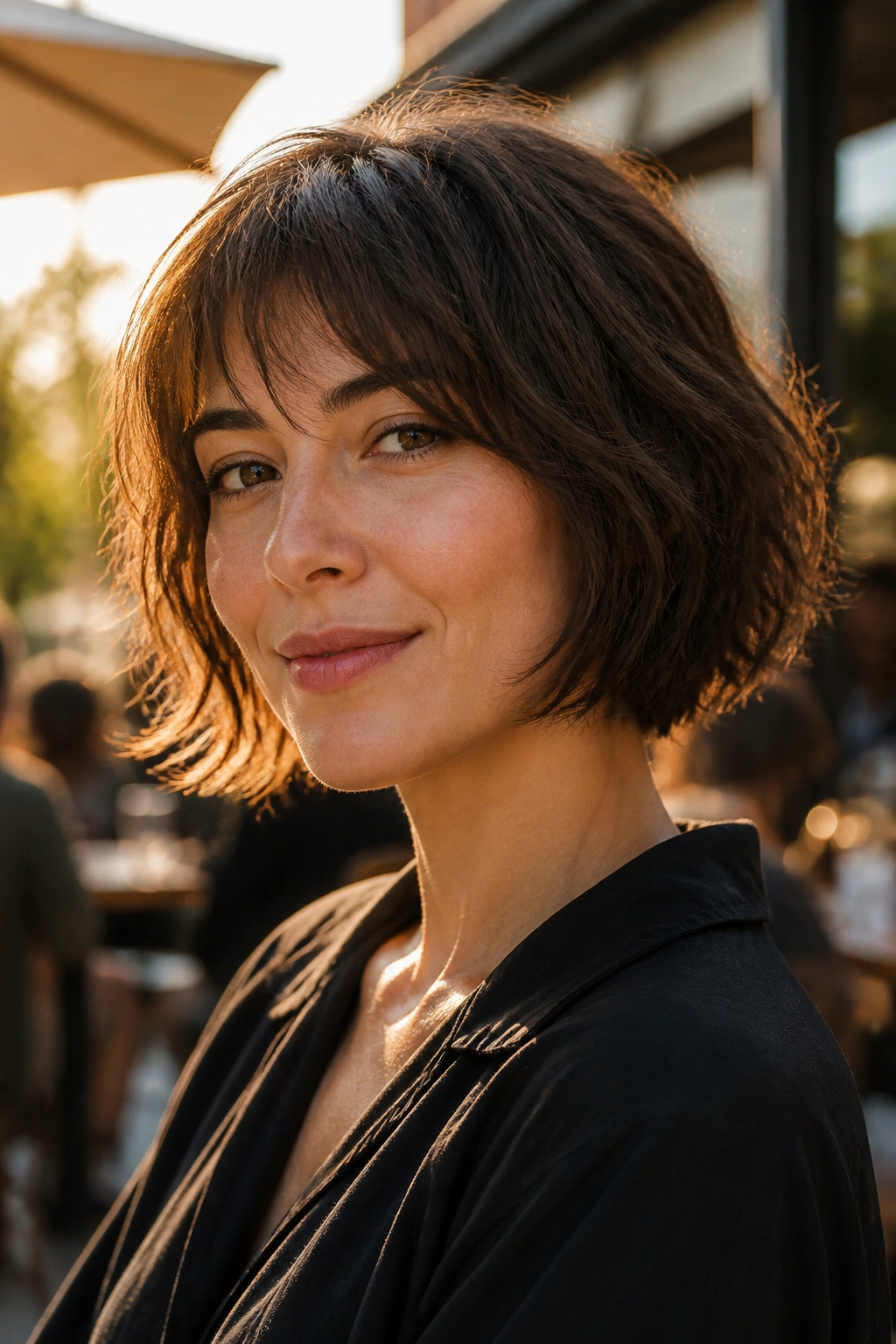
A tousled French bob is for the person who wants chic without spending half an hour on hot tools. It sits near the jaw, has a little bend, and looks best when the ends are soft rather than pin-straight.
Compared with a strict geometric bob, this version is looser and more relaxed. Fine hair often benefits from that looseness because it avoids the hard, flat finish that can make the head look smaller. A slight bend at the ends and a bit of root lift are enough to make it feel full.
The cut itself should stay compact. If it gets too layered, the French vibe disappears and you’re left with a fluffy bob that has no shape. Keep the perimeter full and let the texture come from styling, not from overcutting.
This is one of those styles that looks better on day two. A little dry shampoo at the roots and a few finger-tousled bends can make it look even better than a fresh blowout.
13. Curtain Bangs With Blunt Bob
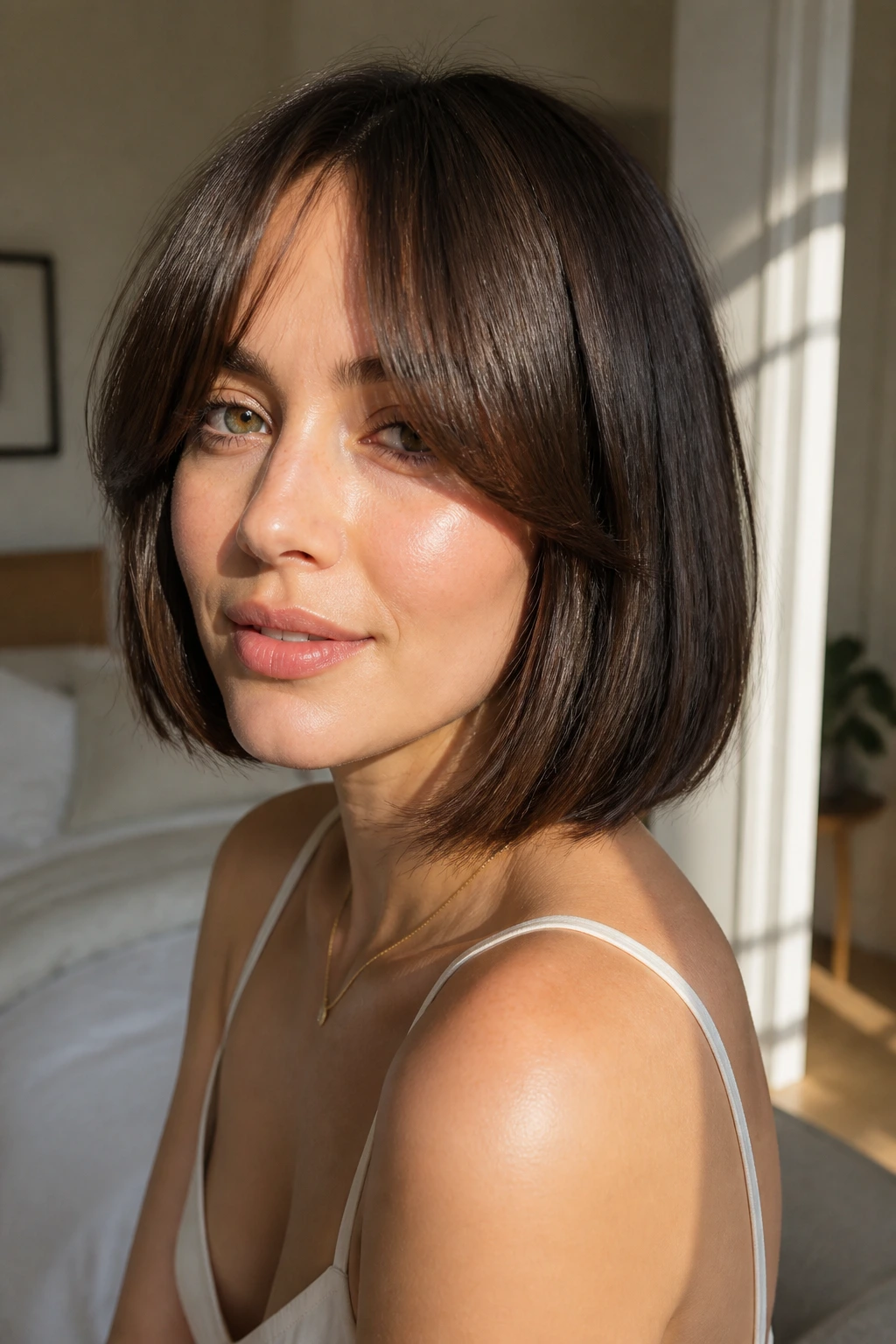
Curtain bangs can do a lot for fine hair when they’re paired with a blunt bob. The bangs pull attention toward the eyes, while the bob keeps the bottom line dense. That pairing matters because fine hair often needs one strong anchor, not three competing textures.
Why This Combo Holds Up
The bangs should be soft through the center and longer at the cheekbones, not chopped high and short. That length lets them blend into the sides without exposing too much forehead. A blunt bob underneath keeps the shape full, which stops the cut from feeling wispy.
- Best for people who want movement around the face
- Works on straight, wavy, or lightly bent hair
- Needs a round brush just for the bangs
- Looks best when the ends stay one clean line
My take: this cut flatters more faces than people expect. It can shorten a long face, soften a strong forehead, and make fine hair look denser where it counts. The catch is upkeep. Curtain bangs need a quick restyle after sleep, or they start to separate in odd ways.
14. Sliced Layered Collarbone Cut
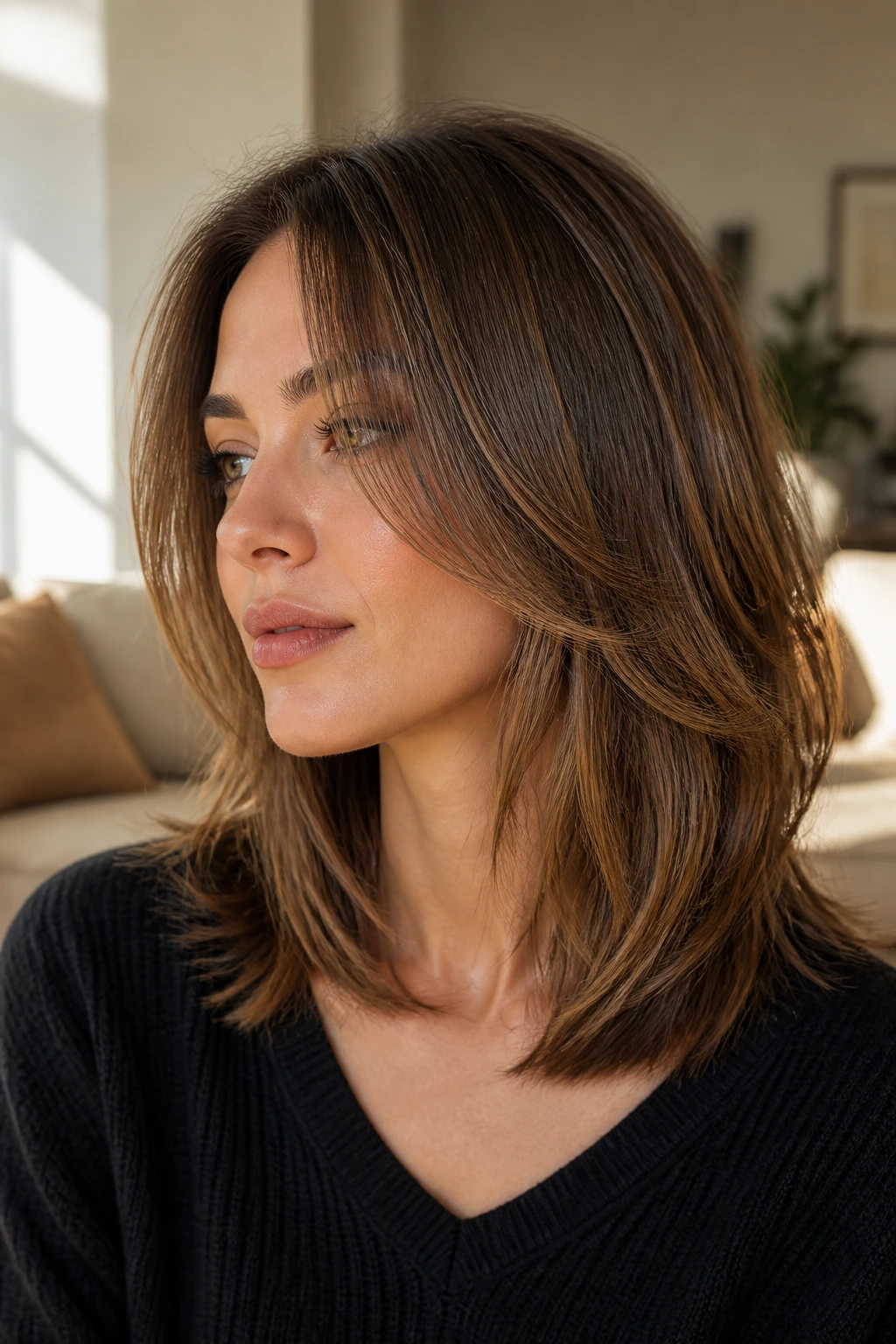
A sliced layered collarbone cut gives fine hair movement without the frizzed-out edges you can get from rough texturizing. The slicing technique removes weight in a smoother way, so the hair still falls in ribbons instead of looking hacked at.
That matters on fine hair because the ends are usually the weakest part. You want motion, yes, but you also want the ends to keep a solid shape. This cut does a nice job of balancing both. It suits hair that wants to bend naturally but doesn’t have enough density for heavy layering.
Ask for layers that start below the chin and move gently through the collarbone area. The longest pieces should still feel substantial. If the ends start looking translucent when the hair is dry, there’s too much weight removed.
It styles well with a wave iron or a simple bend from a flat iron. The result is slightly undone, but still neat enough for work or dinner. That middle ground is harder to get than it sounds.
15. Tapered Crop With Longer Top
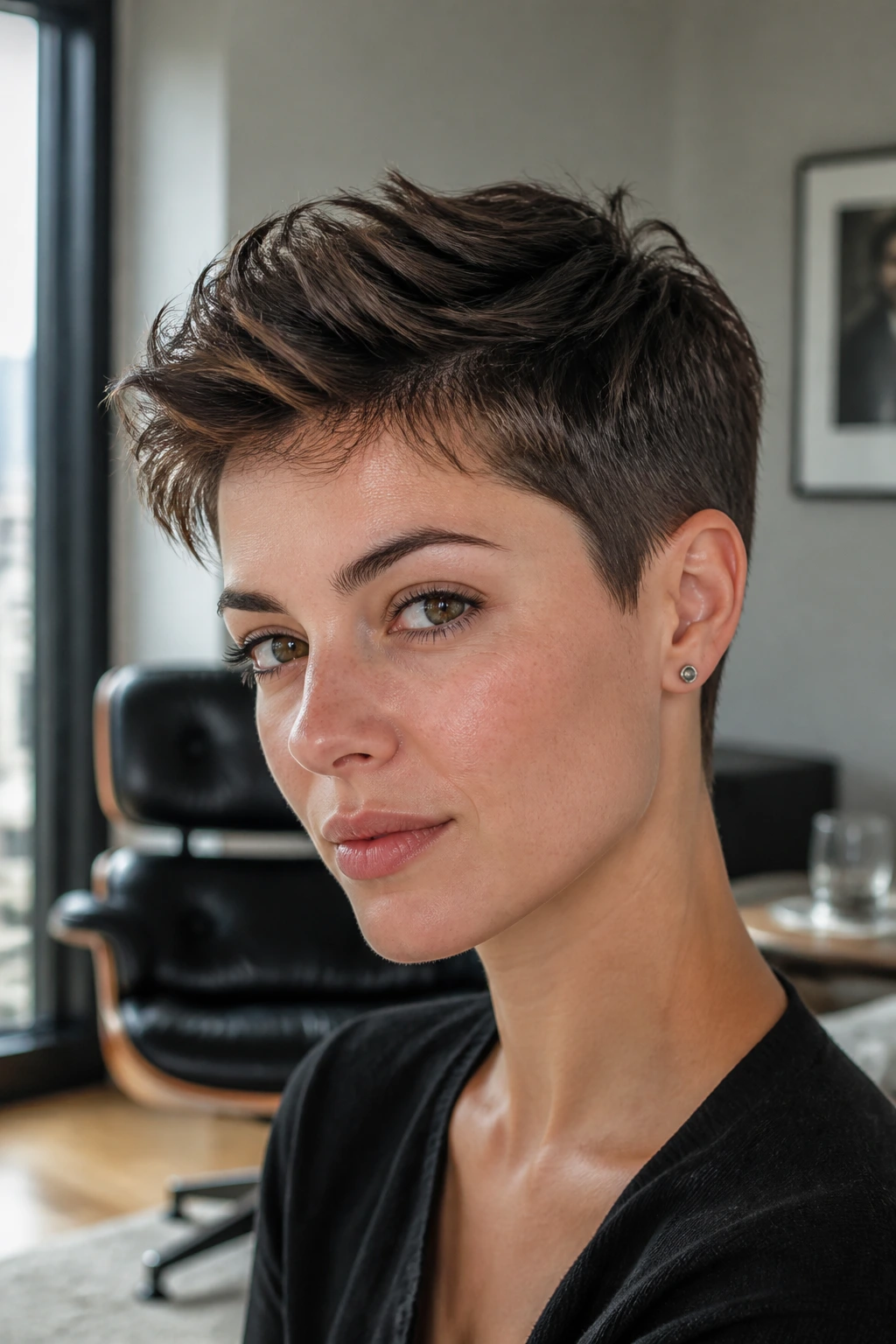
Is short hair off limits for fine hair? Not at all. A tapered crop with a longer top can make the hair look thicker because the short sides and nape reduce the drag that usually flattens fine strands.
How to Get the Shape Right
The top should be long enough to move — usually 3 to 5 inches, depending on your texture — while the sides stay close enough to the head to show the shape. If the top is too short, the style loses flexibility. If the sides are too long, the whole cut can blur.
This is a very good option for people who like a neat neckline and do not want to fuss with a brush every morning. A light paste or cream is enough. Work it through the top with your fingertips and leave the ends a little separated, not slicked down.
The best tapered crops have a clean, almost tailored look. They are not fussy. They don’t need to be. A good one makes fine hair look intentional, which is more valuable than looking overly styled.
16. Airy Shoulder Bob

A shoulder bob can go wrong fast on fine hair. Too blunt and it drapes. Too layered and it turns fluffy. The airy shoulder bob sits in the sweet spot by keeping enough length to brush the shoulders, then taking out only the excess weight that stops movement.
I like this cut on medium-fine hair that still has a bit of natural bend. The shoulders give the hair a place to sit, and the subtle graduation keeps it from collapsing into one flat panel. It feels relaxed, but not shapeless.
The stylist should pay attention to where the hair hits the collarbone and shoulders. That contact point changes everything. If the cut lands exactly on a sticky point, it can flip out in a way you don’t want. A tiny adjustment — even half an inch — can fix that.
Wear it with soft bends, a loose wave, or a smooth blowout. It handles all three without much drama. That’s probably why people keep coming back to it.
17. Long Layers With Crown Lift
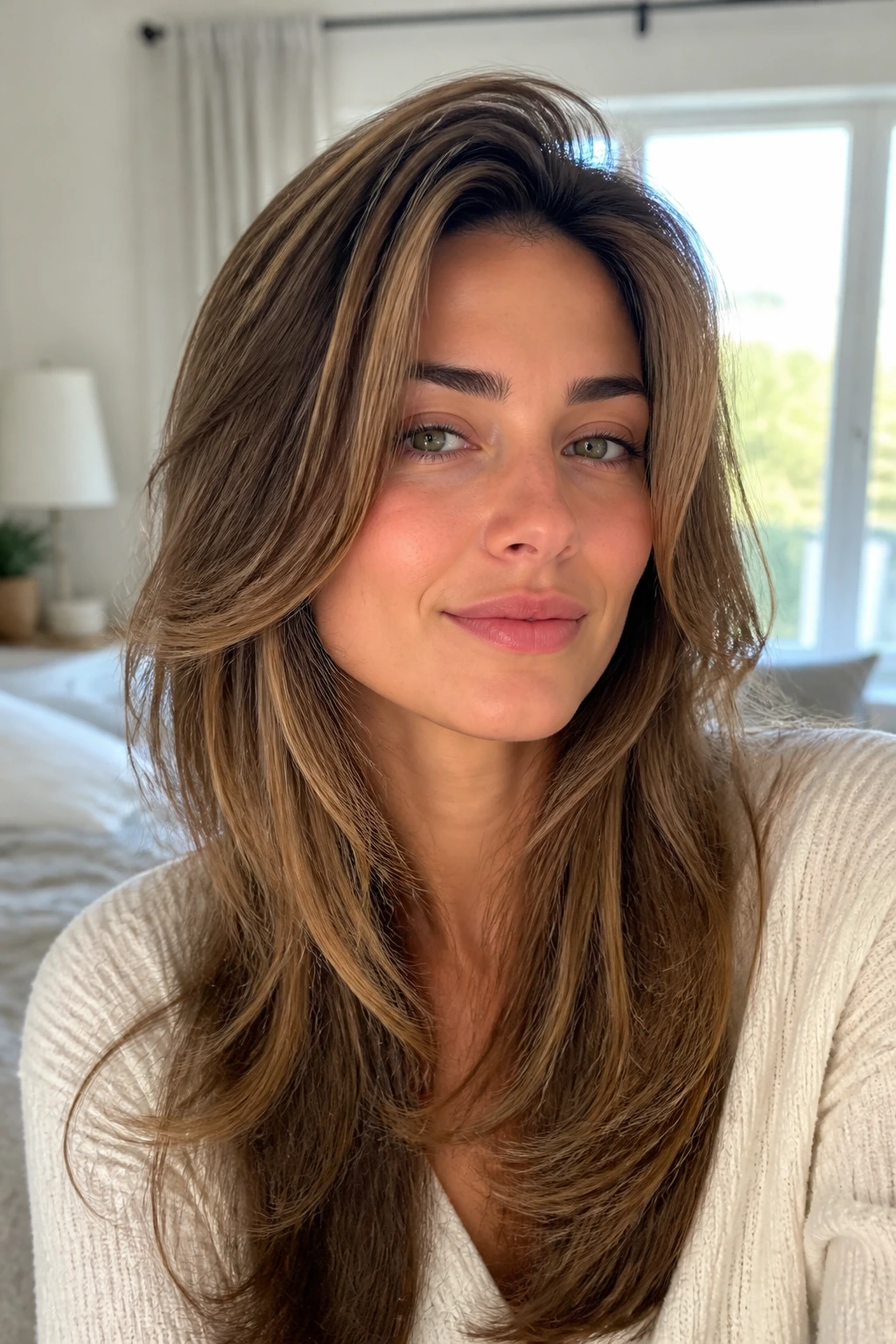
Long layers on fine hair are tricky. Too many and the ends disappear. Too few and the roots sink. Long layers with crown lift are the safer version because they keep the overall length while putting the energy up top, where fine hair needs it most.
The crown lift matters. A lot. Without it, long hair just lies there. With it, the head shape looks more lifted and the hair has some body around the roots, which makes the lengths feel healthier. The trick is to keep the layers long enough that they blend, not break apart.
This cut is best for someone who wants to keep length past the shoulders but still wants movement around the face. It usually needs a round brush at the roots and a little wave through the mid-lengths. Nothing too fancy.
Do not overdo the face layers. On long fine hair, a heavy face frame can make the ends look tired faster than anything else. A few soft pieces are enough.
18. Choppy Mid-Length Cut
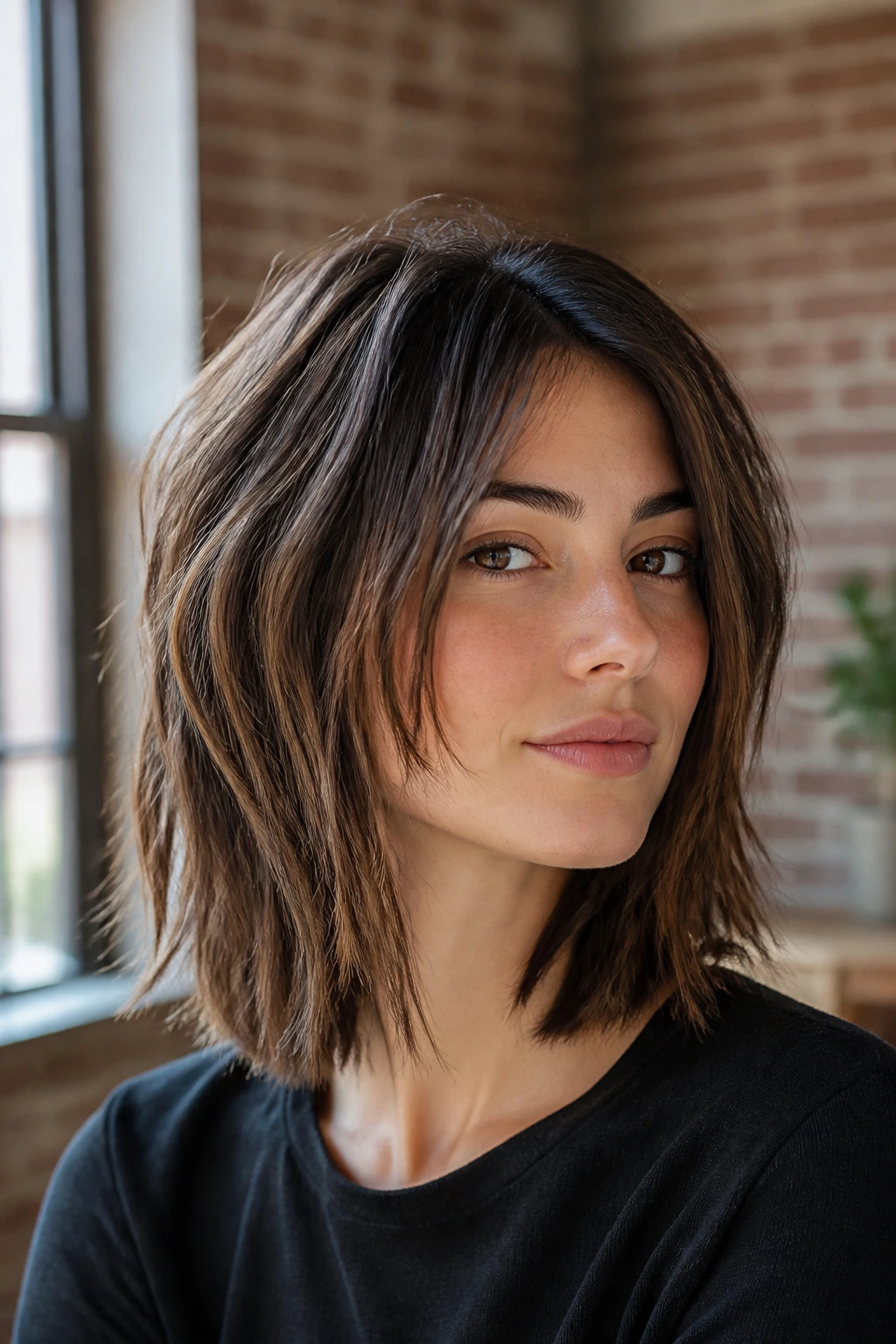
A choppy mid-length cut is for people who want texture first and polish second. Compared with a rounded bob, this style looks less neat and more lived-in, which can be a good thing on fine hair if the texture is controlled.
The choppiness should live mostly in the mid-lengths and around the face. The ends still need some weight. Otherwise, the whole style starts to look thin at the bottom, and that’s the opposite of what fine hair needs. I’m picky about this cut for that reason. It has to be edited well.
It works best on hair with a little natural wave. Straight fine hair can wear it too, but it usually needs a bend from a flat iron or a curling wand. A touch of texturizing spray gives the layers separation without making them sticky.
This is a good cut for someone who likes a bit of edge and does not mind a slightly messier finish. Not sloppy. Just relaxed enough to feel modern without trying too hard.
19. Stack-Back Bob With Soft Ends
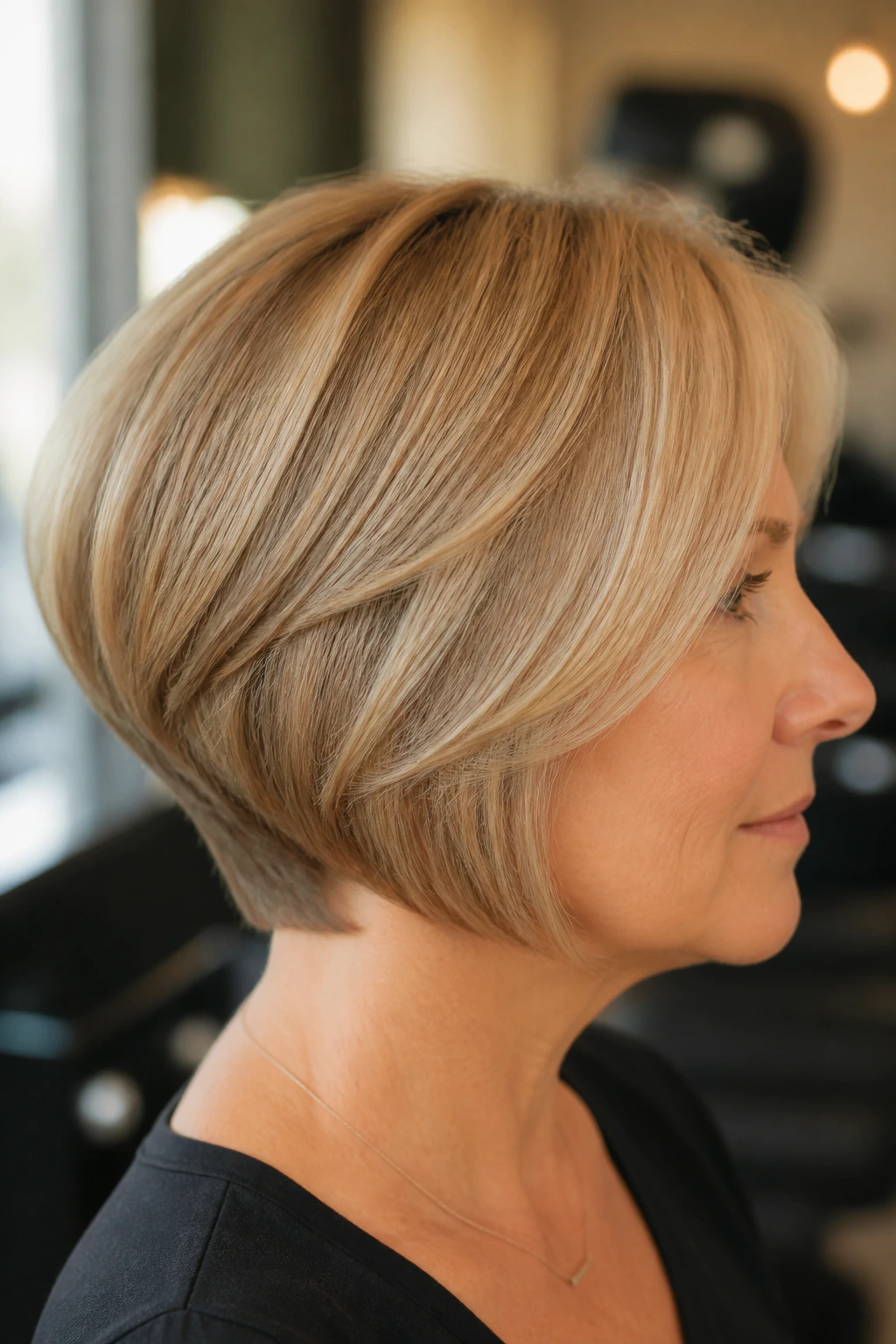
A stack-back bob is all about the shape at the nape. On fine hair, that built-up back can create a much fuller look than a flat bob ever will. The version I like best keeps the back stacked but the ends soft, so the cut feels shaped rather than stiff.
The Shape to Ask For
- A visible stack through the back, but not a sharp ridge
- Length that hits the jaw or just below it
- Soft, point-cut ends to prevent a hard line
- Minimal thinning through the bottom
The beauty of this cut is simple: it makes the crown look lifted and the neck look longer. That’s a nice side effect, and it helps fine hair look deliberate instead of delicate. If the stack is too steep, though, the style can feel dated. A gentle stack reads cleaner.
I especially like this on straight fine hair because the smooth texture shows the graduation clearly. Add a little root spray and round-brush the back under. That’s enough.
20. Graduated Cut With Bottleneck Bangs
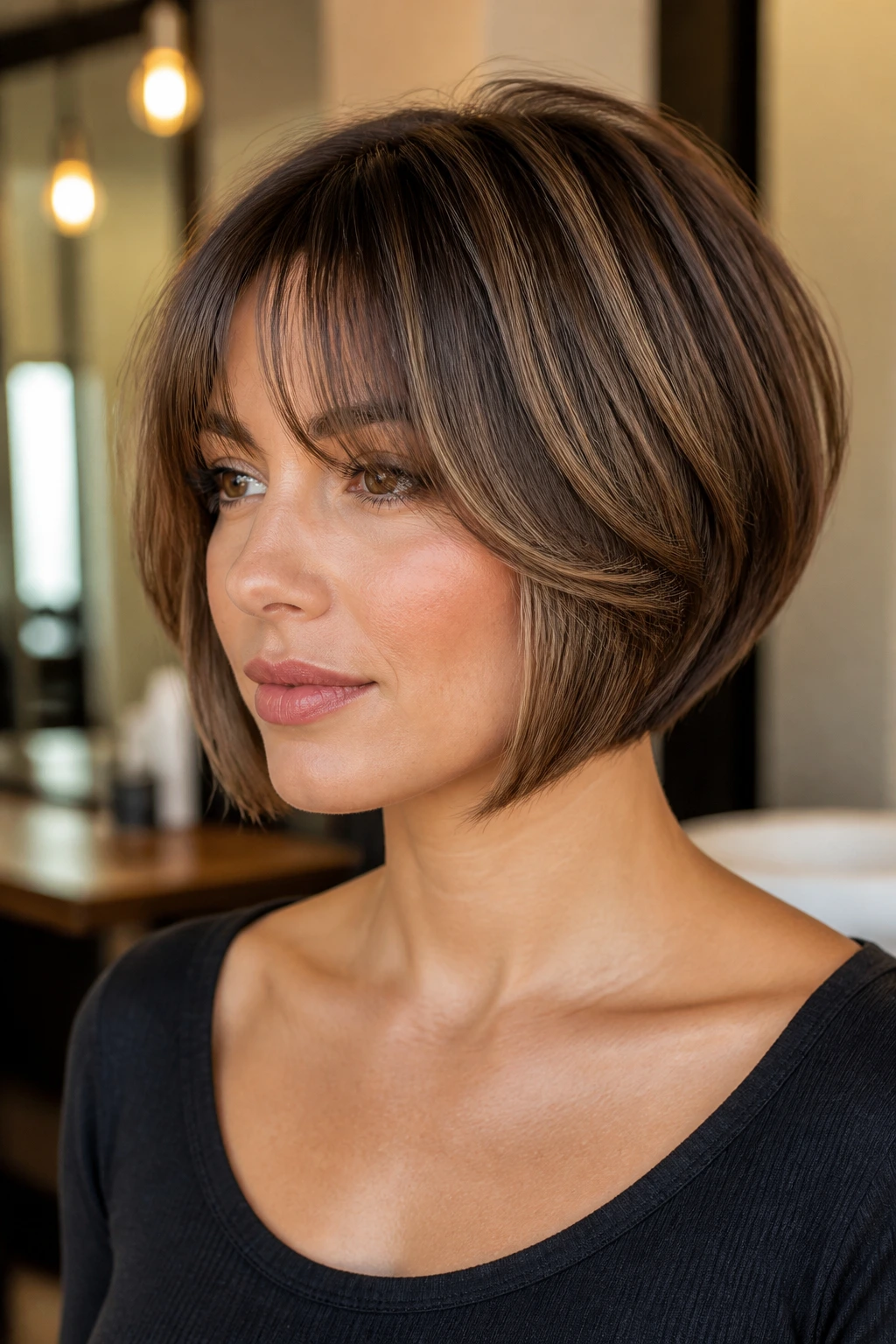
A graduated cut with bottleneck bangs brings a little softness around the face while keeping the back structured. The bangs are narrower at the forehead, then open slightly toward the cheekbones, which gives fine hair a pretty frame without eating into the density.
This is a smart choice if you want something a little fashion-forward without going full statement cut. The graduation in the back keeps the shape lifted, and the bangs add interest right where people look first. On fine hair, that matters because the face frame can do more work than the layers ever will.
The bangs should be cut so they blend into the front pieces. If they stop too abruptly, the whole look feels chopped up. Keep the bob itself clean and compact. The contrast between the tidy perimeter and the soft fringe is what makes the cut sing.
Styling is straightforward: blow-dry the bangs with a small round brush, then rough-dry the rest. A little smoothing cream at the ends keeps the bob from puffing out.
21. Wavy Lob With Weight Removed at the Ends
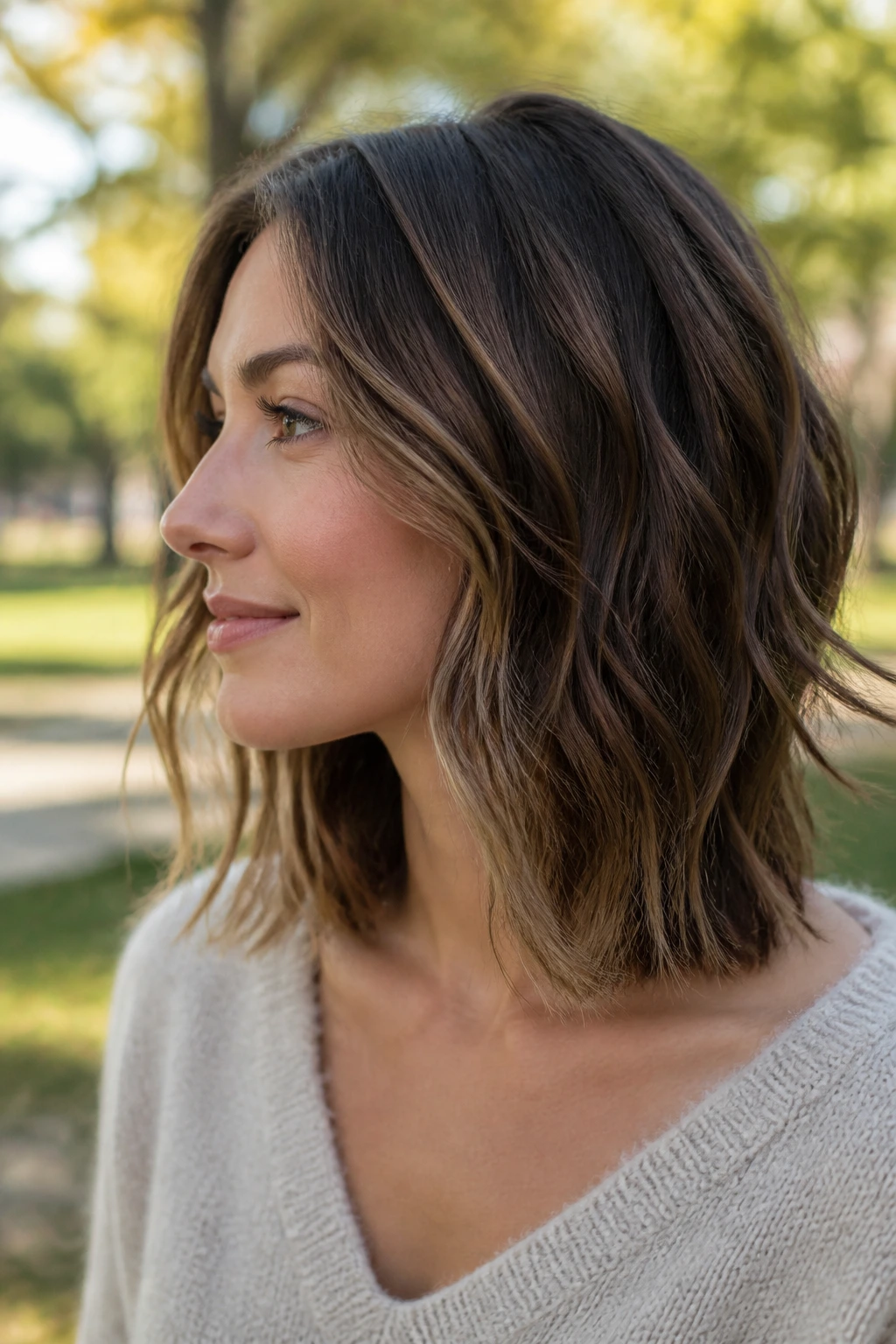
Can fine hair wear waves without looking puffy? Yes — if the cut is right. A wavy lob with weight removed at the ends creates room for movement while keeping the lower half from ballooning out.
That detail about the ends matters more than people think. Fine hair often looks nicest when the ends are not overloaded with bulk, but they still need enough weight to stay together. Removing a bit of weight at the tips helps the wave show instead of collapsing under its own shape.
How to Wear It
- Use a 1-inch wand for loose waves
- Leave the last 1 inch of the hair out for a softer finish
- Break up the waves with your fingers, not a brush
- Finish with a light mist of flexible-hold spray
This cut suits hair that is naturally a little bendy. If your hair is stick-straight, it still works, but the styling takes more effort. The payoff is a lob that moves without feeling thin. That’s a good trade.
22. Texture-Forward Pixie Bob
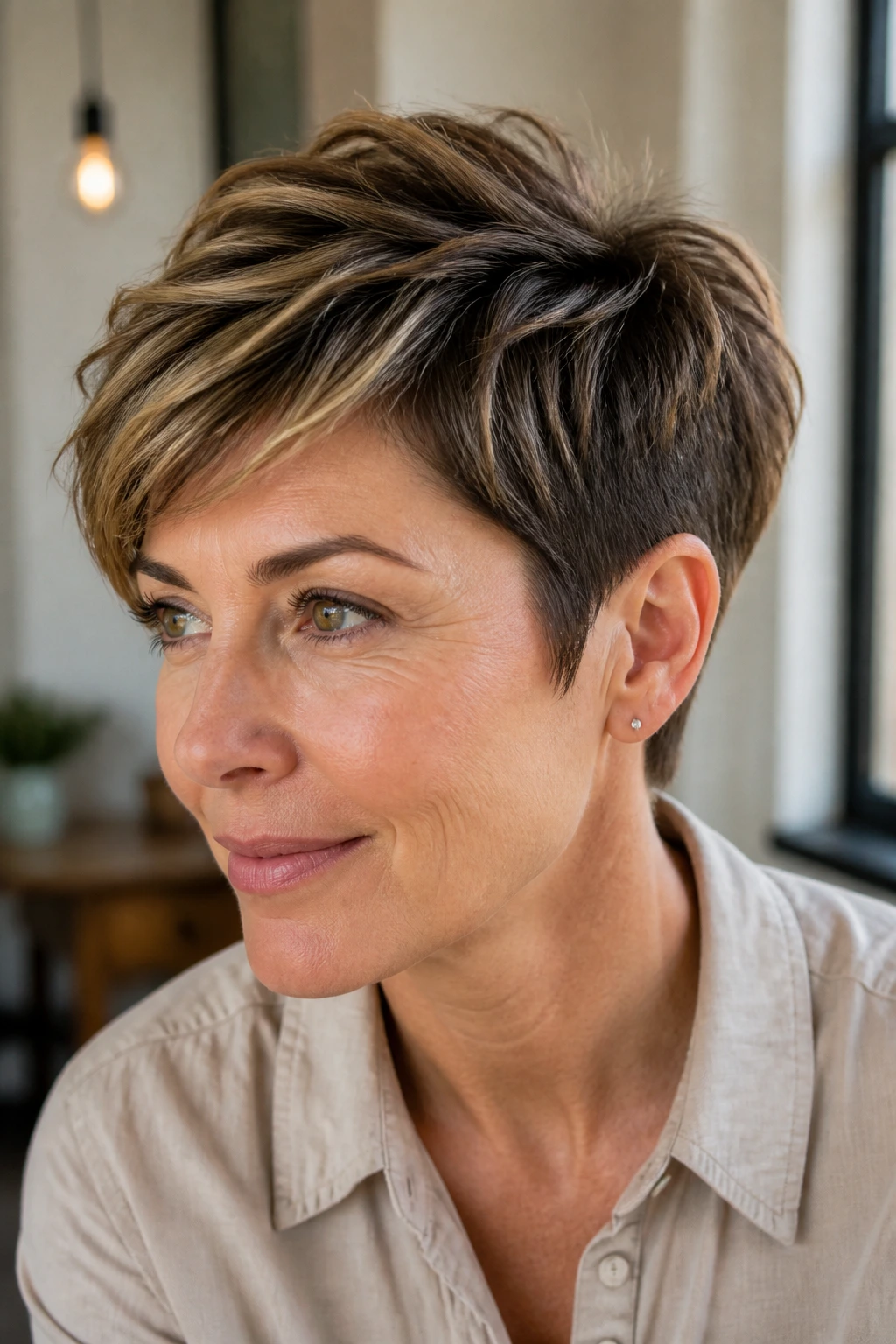
A texture-forward pixie bob is short, lively, and far less severe than a classic pixie. The extra length on top gives fine hair somewhere to lift, while the cropped sides keep the overall shape neat.
I like this cut for people who want a bit of edge and are tired of fighting length that never really looks full. Fine hair often looks denser when it is cut shorter, provided the top stays long enough to show texture. That is the whole point here. Short doesn’t have to mean flat.
What Makes It Work
The top should be cut in pieces, not all one length, with enough length to flip, part, or sweep to one side. The sides and nape should stay tighter so the top can feel fuller by comparison. That contrast is what gives the cut its shape.
Use a tiny amount of paste or dry texture cream. Too much product makes fine hair sit in clumps. A little friction is better than gloss here. This cut is especially good if you want something low on daily styling and high on shape.
23. Feathered Shag Lob
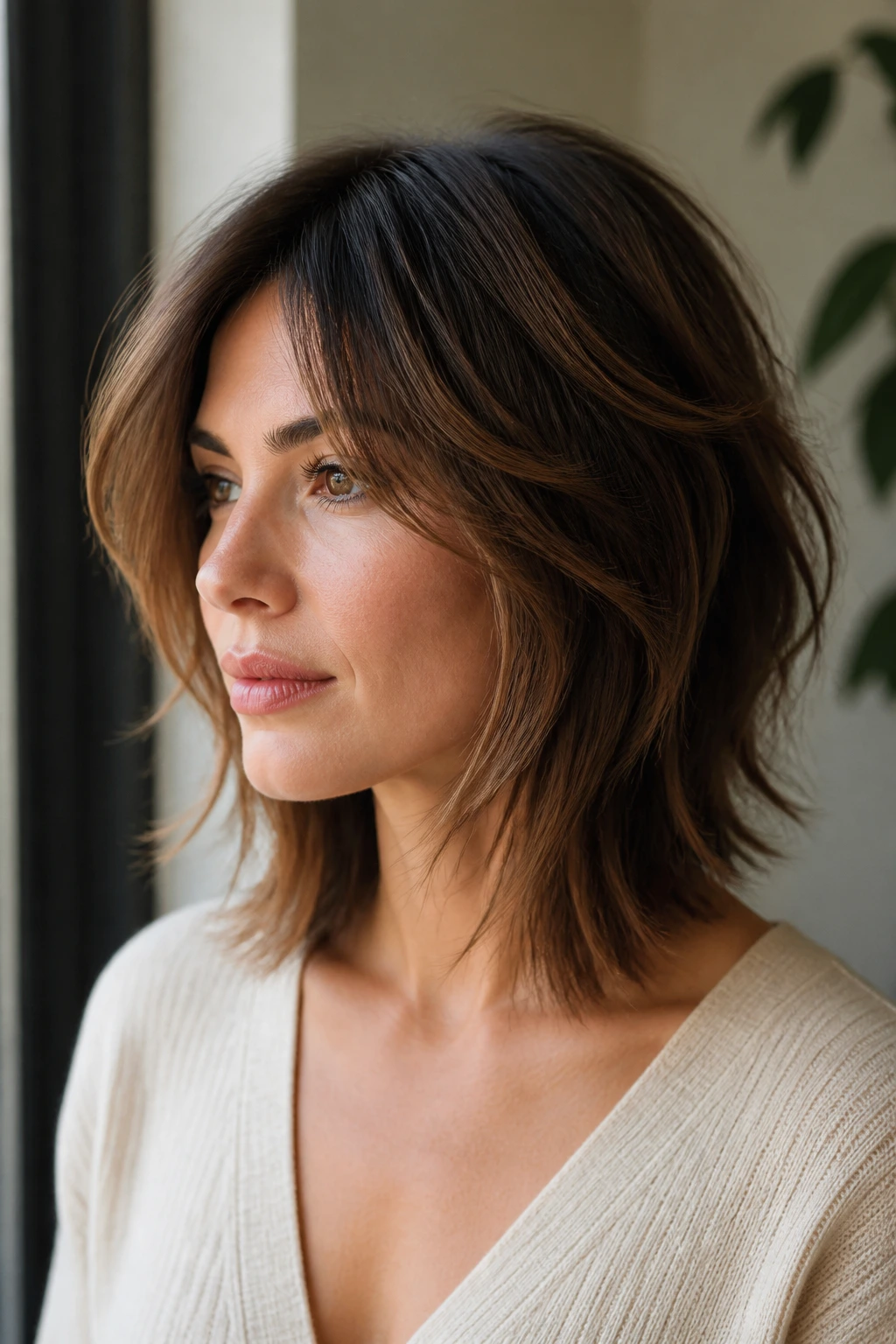
A feathered shag lob can be lovely on fine hair when it stays light and controlled. The layers should move through the mid-lengths and around the cheekbones, while the bottom keeps enough density to hold the whole style together.
This cut has more personality than a plain lob, but it still needs discipline. If the layers go too high or too short, the shape turns spiky and thin at the edges. That is a hard pass for me. Fine hair needs lift, not holes.
The feathering softens the face and gives the cut a little motion when you walk. It looks especially good with a soft bend and a side part. Air-drying is possible too, though a diffuser helps keep the layers from sticking together in odd little clumps.
The best version feels light around the top and stable at the bottom. That balance is the whole game with fine hair. Miss it, and the cut starts acting like a different haircut altogether.
24. Inverted Bob With Soft Face Pieces
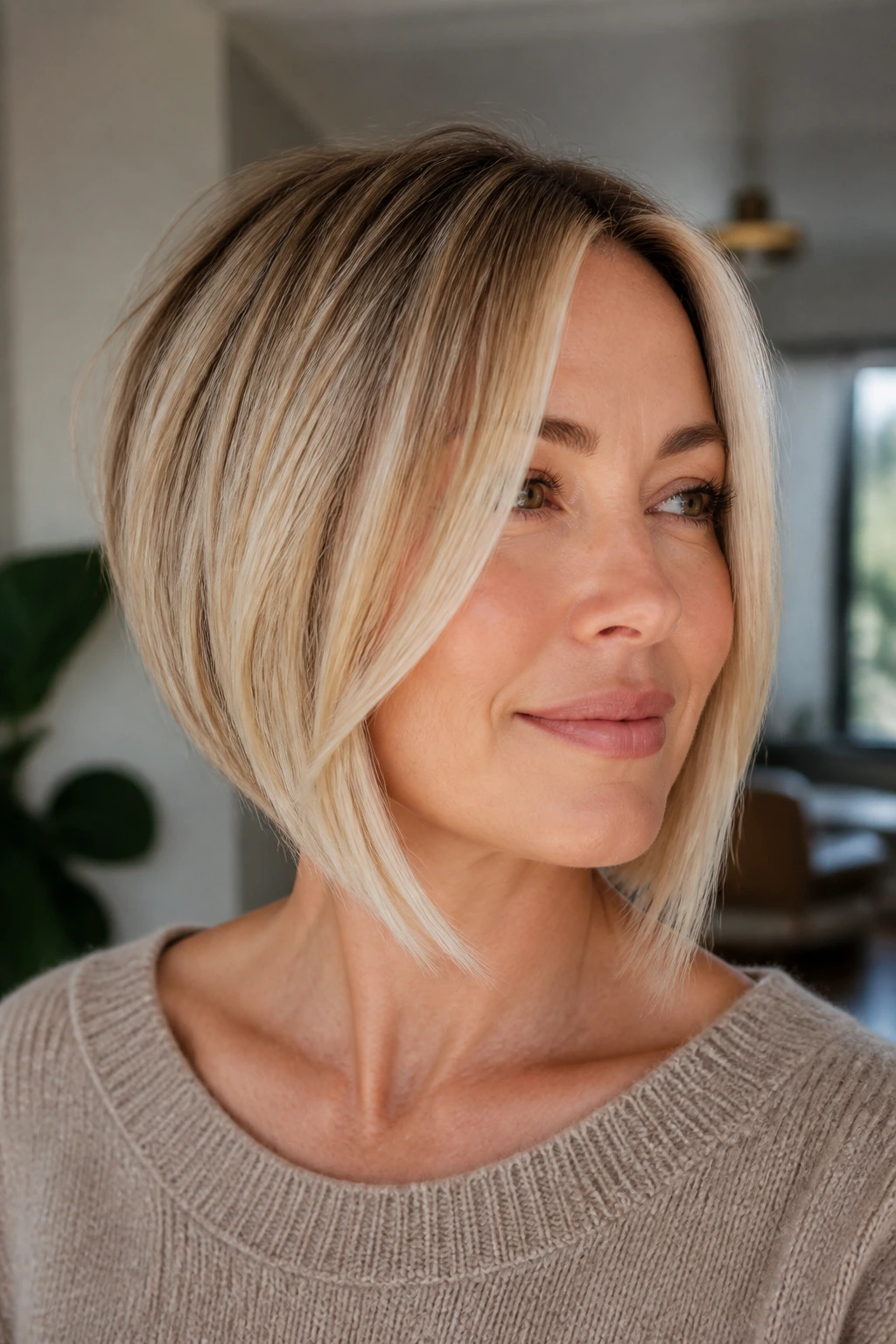
A inverted bob with soft face pieces keeps the back short and the front longer, but without the hard angle that can sometimes feel too severe. Fine hair benefits from that softer approach because the shape still looks full without turning rigid.
Unlike a sharp inverted bob, this version leaves enough softness around the face to keep the cut wearable. The front pieces should fall somewhere between the chin and collarbone, depending on how much length you want to keep. The back can sit higher for lift, but it should not stack so steeply that the transition looks abrupt.
This is one of those styles that does a lot of visual work. It lifts the crown, defines the jaw, and makes the perimeter look denser. If your fine hair tends to droop near the nape, this cut is a very practical fix.
A round brush gives it the best finish. So does a small amount of volumizing foam at the roots. Keep the ends smooth, not blown apart.
25. Classic Graduated Bob With Soft Movement
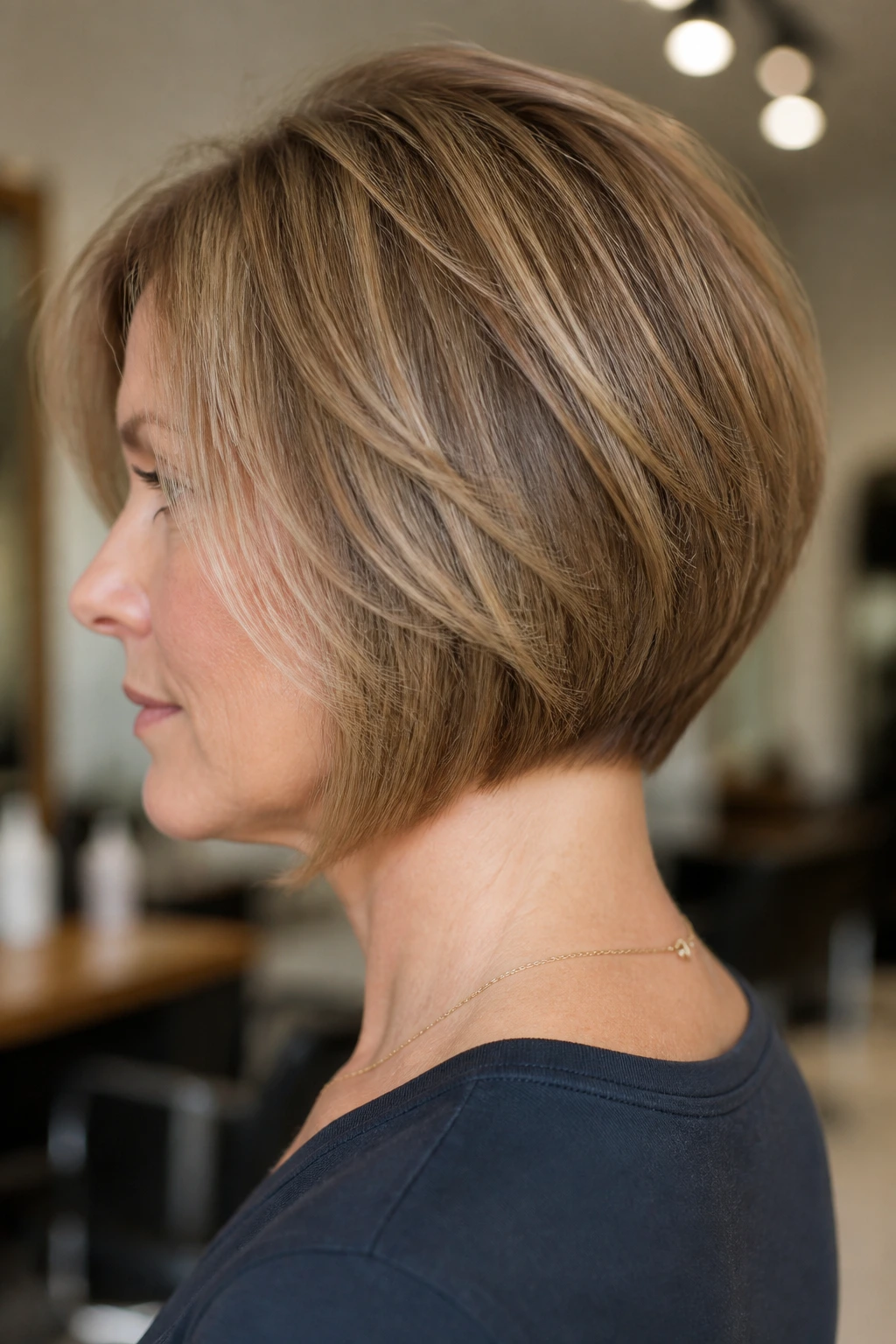
A classic graduated bob with soft movement is the style I keep coming back to when someone wants fine hair to look fuller without chasing trends. It is tidy, but not stiff. Structured, but not heavy. And it works because the shape is doing the job, not some overcomplicated styling trick.
What to Ask Your Stylist For
- A compact back with visible graduation through the nape
- A perimeter that stays blunt enough to look thick
- Soft internal movement, not aggressive thinning
- Front pieces that skim the jaw or collarbone
This cut flatters a lot of face shapes because the lines are clean and the movement is controlled. Fine hair usually looks best when it has a reason to sit where it sits, and this bob gives it one. You can wear it sleek, tucked, slightly waved, or blown out with lift at the roots.
It also grows out nicely. The line softens a bit, but the shape holds. That matters more than people admit. A haircut that still looks decent six weeks later is worth more than one that looks good for a day and then falls apart.
If you want one safe place to start, start here. Then adjust the length, the front angle, or the amount of stacking once you see how your hair behaves in real life. Hair always tells on itself eventually.
