



The right hair color does more than simply match your skin tone; it acts as a tool to shift the perceived geometry of your face. For those with a round face shape, the goal is often to create vertical focus, add depth to the jawline, and break up the horizontal width that characterizes the shape. Auburn is a master at this. It isn’t just one singular red; it is a sprawling spectrum of warmth, spice, and grounding brown tones.
When you pair the right shade of auburn with thoughtful placement—think balayage that starts below the cheekbones or face-framing pieces that create a V-shape—you effectively contour the face using nothing but color theory. Auburn naturally reflects light, creating a glow that draws attention to the eyes and away from the fullness of the cheeks. It provides the warmth that paler shades sometimes lack, and the depth that lighter reds can sometimes miss. Let’s break down how to use these specific color techniques to your advantage.
1. Deep Burgundy Auburn Balayage
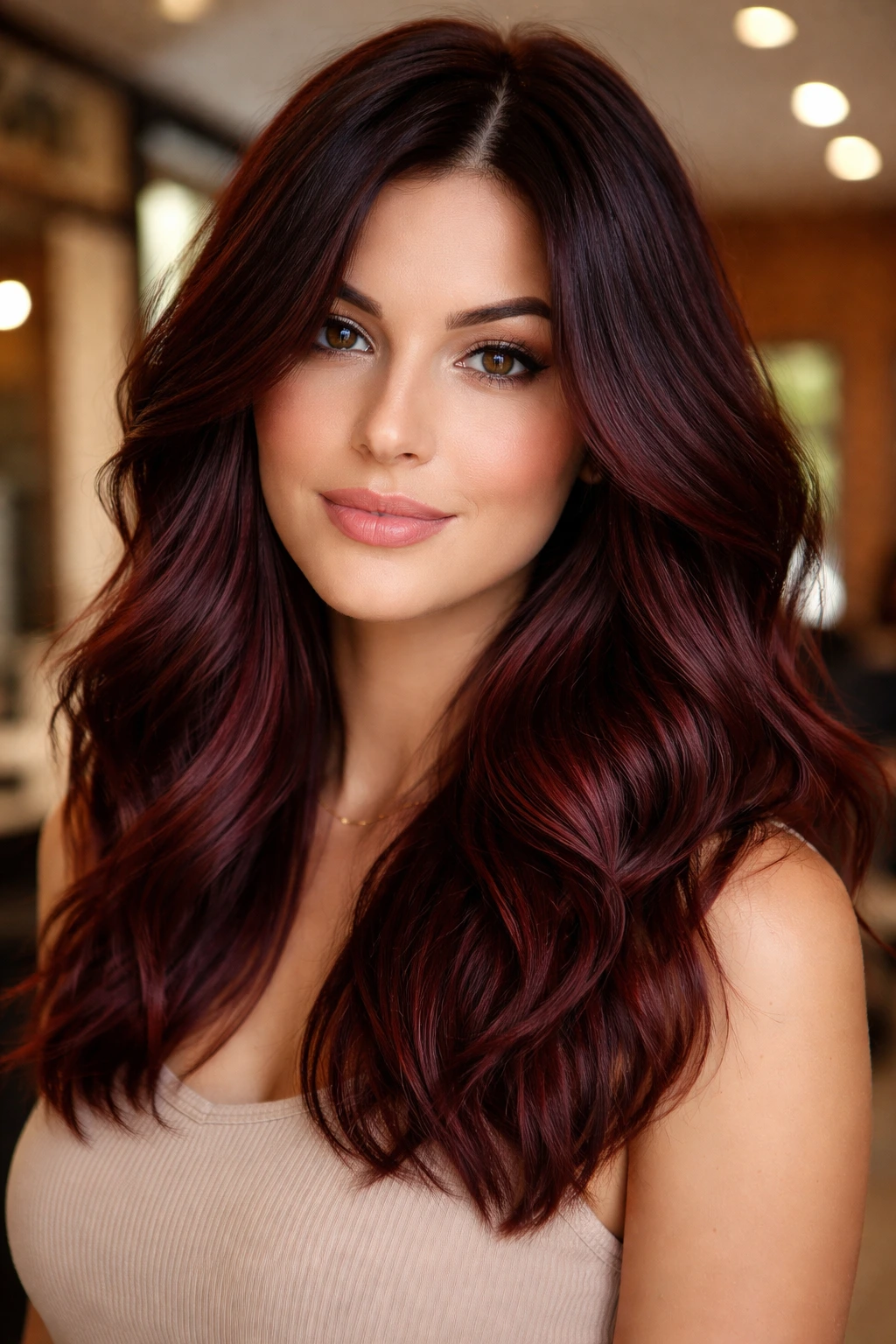
Burgundy-leaning auburn is incredibly effective for round faces because the richness of the tone adds a sense of “weight” to the lower half of the hair, which helps to elongate the overall silhouette. A traditional balayage technique here, where the color is painted on in sweeping vertical strokes, creates a natural gradient that pulls the eye downward.
Why It Works
The contrast between your natural base and the deep burgundy tones creates a shadow-and-light effect. By keeping the brighter burgundy shades concentrated from the mid-lengths to the ends, you keep the visual focus away from your cheeks and direct it toward your shoulders and chest. This creates the illusion of a longer, leaner face.
The Technique
Ask your colorist to start the balayage placement at the jawline rather than the cheekbones. If the lighter pieces start too high, it might inadvertently widen the face. Instead, aim for a gradual transition that builds intensity as it reaches the tips. This vertical elongation is the secret to successful balayage for rounder face shapes.
2. Copper-Infused Face Framing
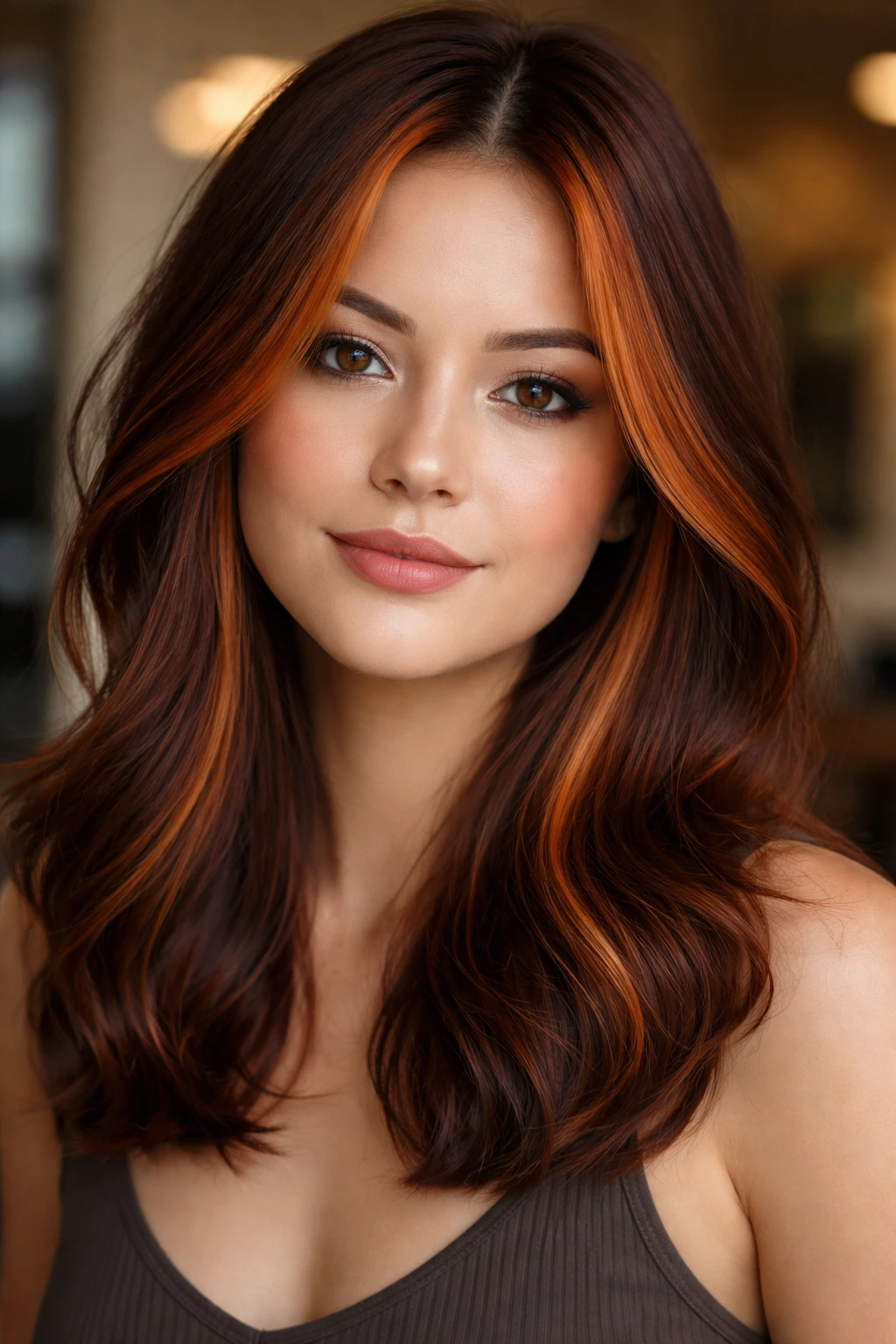
If you want to keep the warmth concentrated near your face, copper-infused framing is your best bet. This style involves taking the strands directly adjacent to your face—the ones that act as a frame—and lightening them with a bright, metallic copper.
Why It Works
The brightness of copper captures the light, creating a distinct line that acts like a highlighter on the cheekbones. By intentionally placing these lighter pieces, you carve out a path for the eye to follow. It breaks up the uniform roundness of the face by introducing an angular, vertical line of sight.
Practical Application
You do not need to bleach your entire head to achieve this. It is a targeted application. Ask for “money piece” highlights that are slightly lighter than the rest of your auburn base. Ensure the colorist does not start the framing too far back. It should live strictly on the front edges of your hair to maximize the contouring effect.
3. Dark Auburn with Caramel Highlights
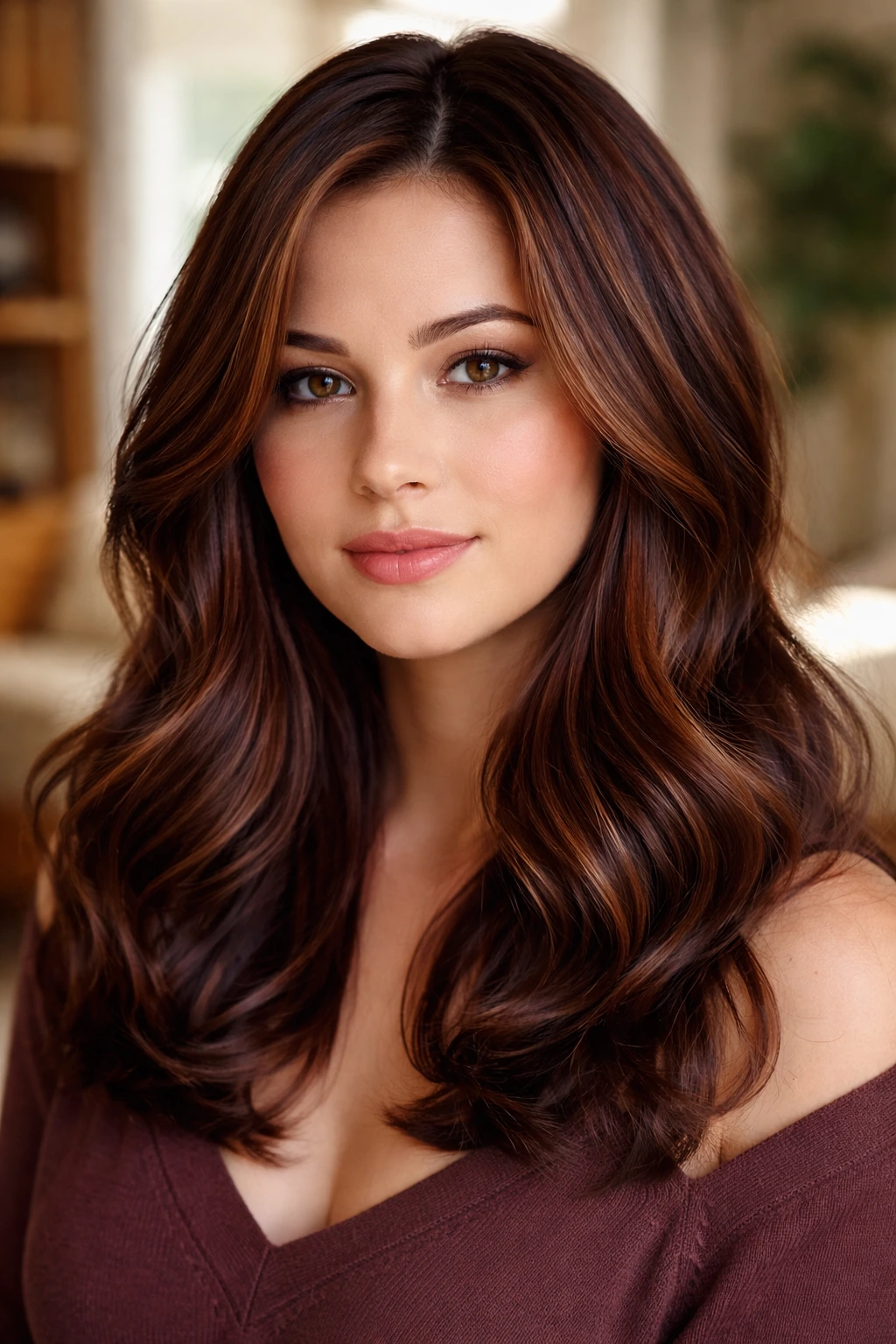
Dark auburn provides a solid, grounding base that looks polished and rich. Adding caramel highlights introduces a subtle, toasted warmth that isn’t quite as loud as a fiery red but adds necessary dimension.
What Makes It Different
Unlike high-contrast blonde and brown, caramel and dark auburn sit in the same tonal family. They offer a “soft focus” look. This is ideal if you want to keep your hair looking healthy and low-maintenance. The caramel pieces should be woven in using a fine-weave highlight pattern, which creates a blend that reflects light evenly across the surface.
Pro-Tip for Texture
Ask for these highlights to be placed more heavily on the top layers of your hair. As you wear your hair down, the light hitting the top layers creates a vertical highlight that draws the eye upward, giving your face a lift. Keep the caramel tones away from your jawline to avoid adding width.
4. Spiced Cider Auburn Ombre
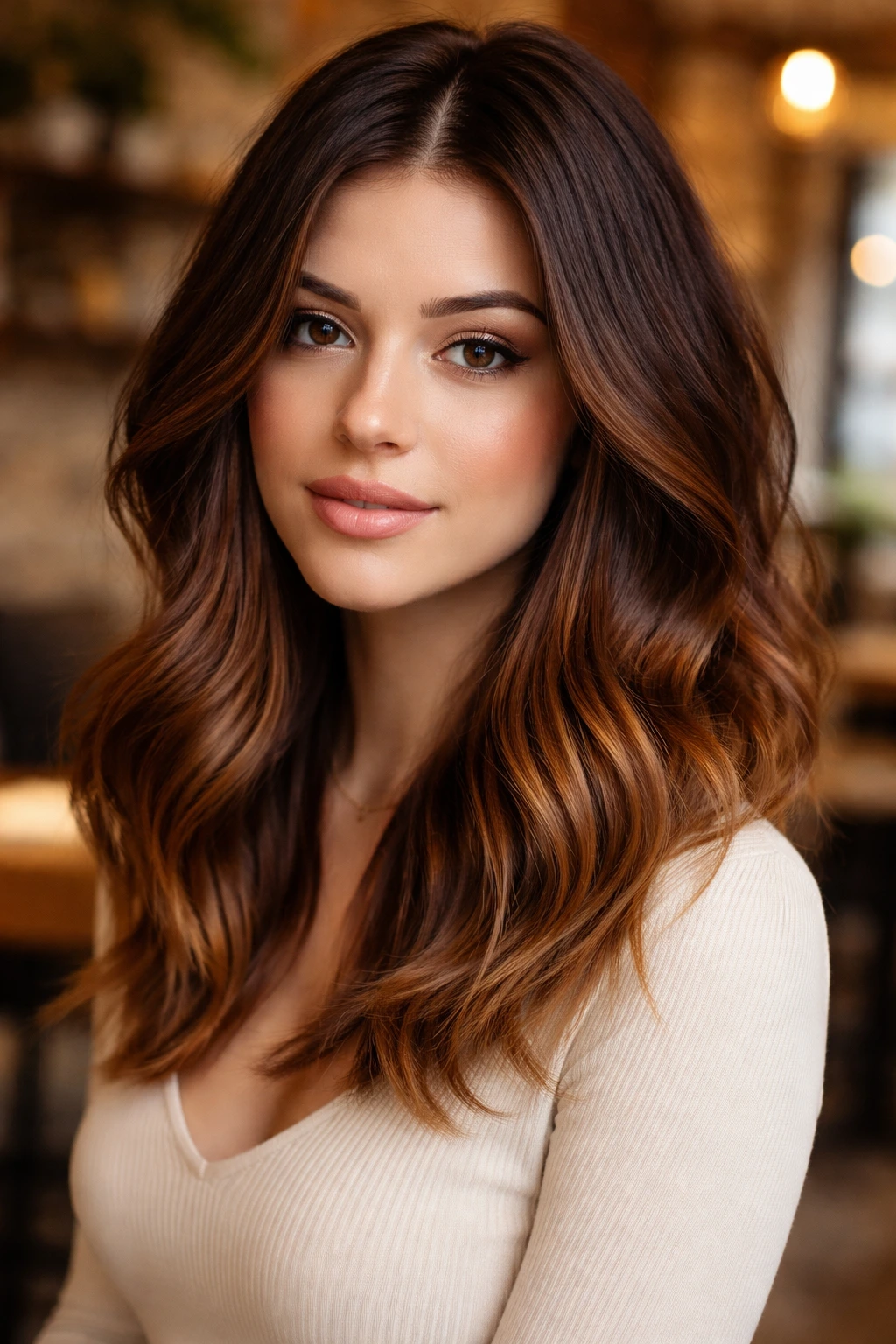
Spiced cider is a nuanced shade, sitting right between a true orange and a deep, muted brown. An ombre application is essentially a color melt that transitions from dark to light. When done correctly, the “melt” point is the most important factor for face shape.
Avoiding Common Mistakes
Many people make the mistake of having their ombre start right at the ear level. For a round face, this is counterproductive as it places the transition point exactly where the face is widest. Request that your colorist starts the transition point at the collarbone or slightly below. This forces the eye to scan downward, creating the appearance of neck and face length.
Maintenance Note
Auburn ombre requires high-quality color-depositing products. Because red and copper pigments are the first to fade, use a gentle, sulfate-free shampoo. This keeps the transition between the dark roots and the lighter ends looking seamless rather than harsh.
5. Chestnut Auburn Root Melt
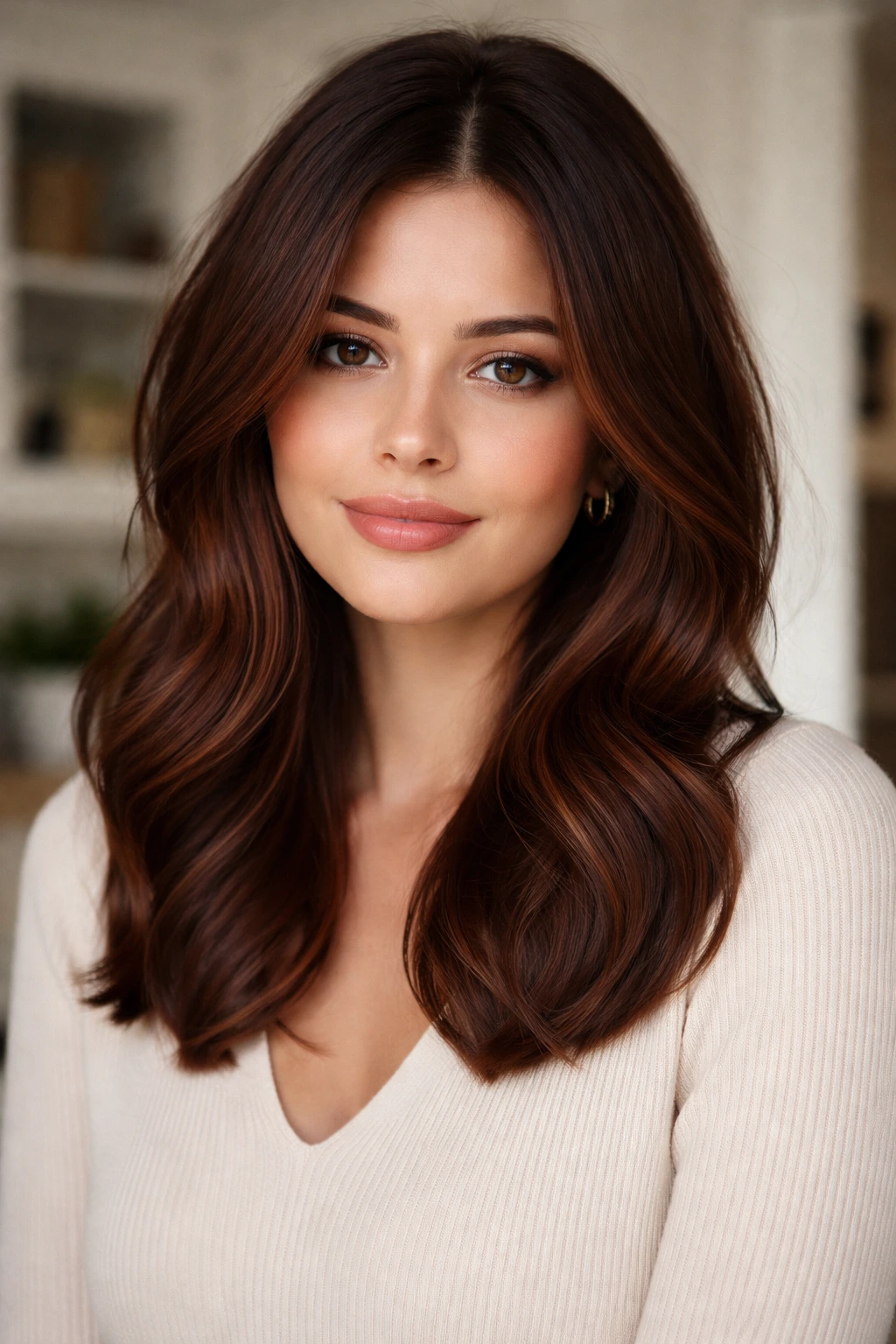
A root melt creates a softer, more blended transition from your natural root color to the mid-lengths. Using a chestnut-auburn base at the roots gives you that deep, rich color while allowing you to play with lighter shades further down.
Why It’s Sophisticated
Chestnut is a very forgiving, natural-looking shade. It doesn’t have the harshness of a primary red, making it an excellent choice for those who want a change but are nervous about going too vibrant. It is the perfect bridge between brown and red.
Creating Verticality
Ask for the root melt to extend down a few inches. By keeping the darkest, deepest color closer to the face, you create a natural shadow effect. This subtle darkening around the hairline and temples can effectively “trim” the appearance of a round face, making it look slightly more oval.
6. Auburn Red with Shadow Roots
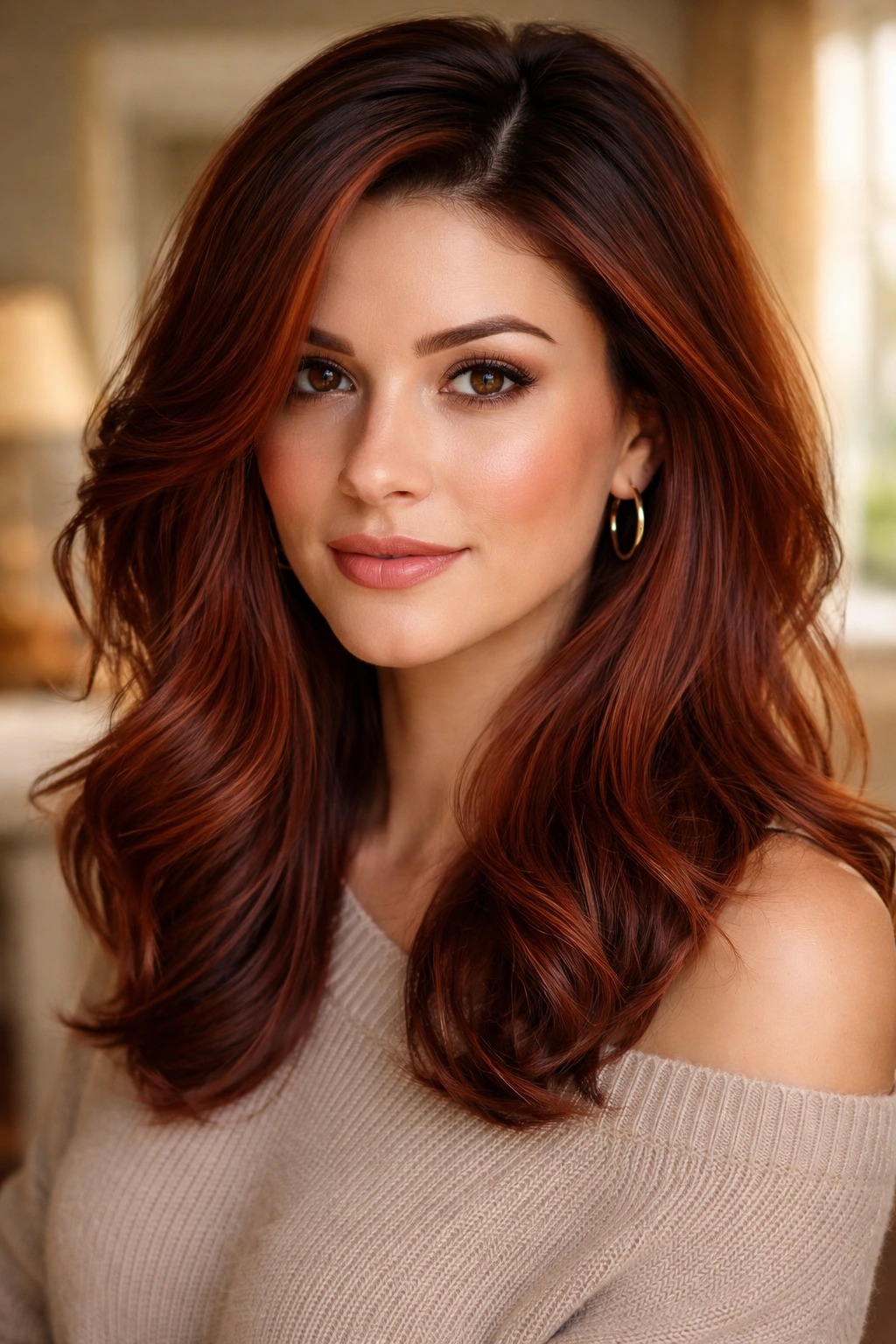
Shadow roots—where the roots are intentionally kept a shade or two darker than the rest of the hair—are a lifesaver for people who want the impact of a vibrant color without the high maintenance of constant touch-ups.
The Mechanism
The shadow root adds depth to the top of the head. When you have a round face, having flat, one-dimensional color can make the face look broader. By introducing a darker shadow root, you create an optical illusion of depth at the crown, which provides a bit of height to the hairstyle.
Styling Advice
Pair this color with a deep side part or a high-volume blowout. The volume at the crown, combined with the darker roots, creates an elongated shape that counteracts the circular nature of the face. It is a classic stylist trick that works every single time.
7. Soft Auburn Money Piece
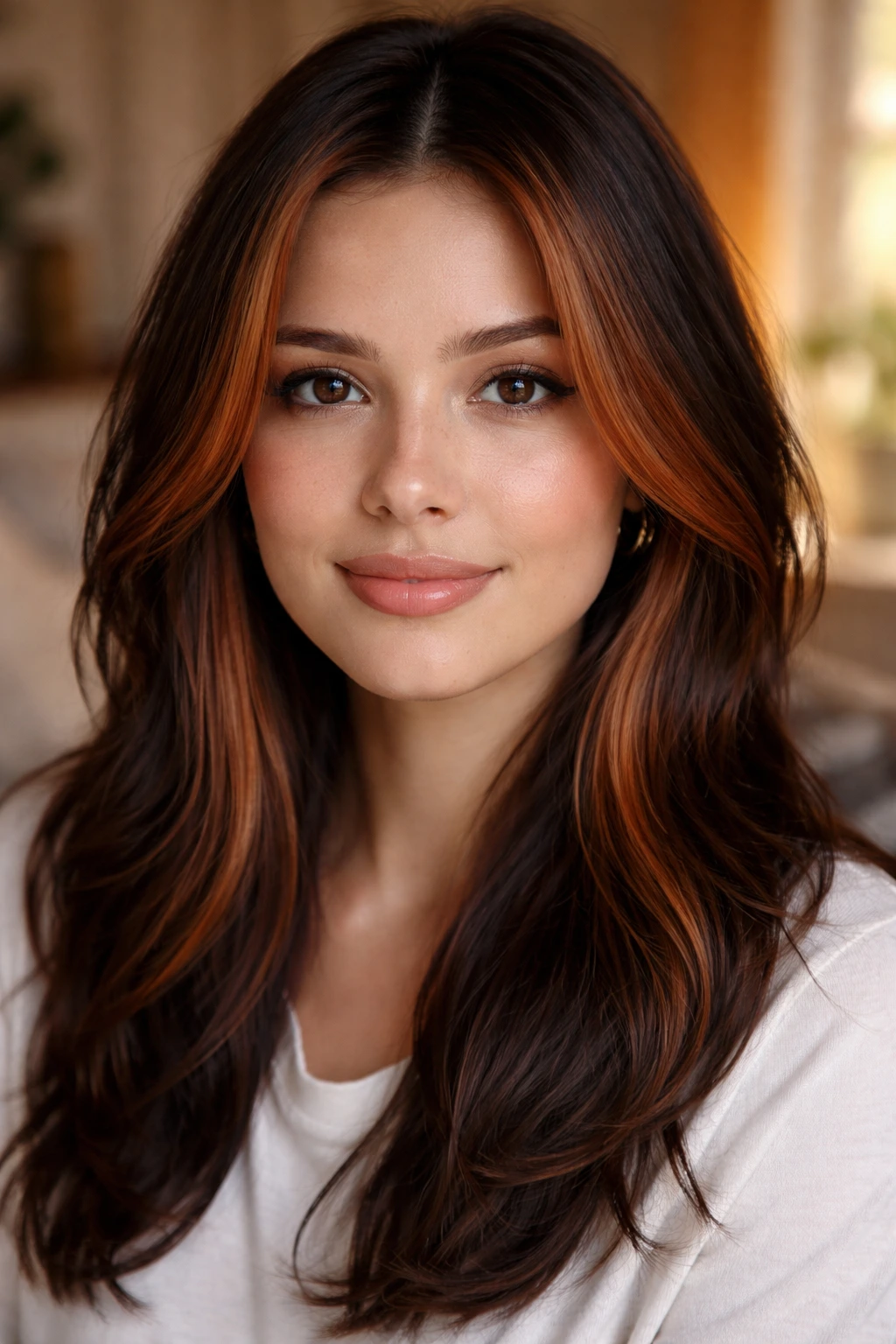
The “money piece” technique is essentially a bold face-framing highlight. By using a soft, strawberry-toned auburn for these pieces against a darker base, you create a gentle contrast that is both youthful and flattering.
Why Choose Soft Auburn?
If you feel that bright copper or intense burgundy is too aggressive for your skin tone, a soft, muted auburn is the answer. It bridges the gap between natural brown and bold red. It’s subtle enough to look natural but distinct enough to make a difference.
Placement Matters
For a round face, the angle of the money piece is critical. Do not let the colorist cut the color at the cheekbone. Ensure the face-framing pieces fall slightly longer, perhaps hitting the jawline. This draws the eye down, rather than accentuating the roundness of the cheeks.
8. Copper Penny Auburn Shag
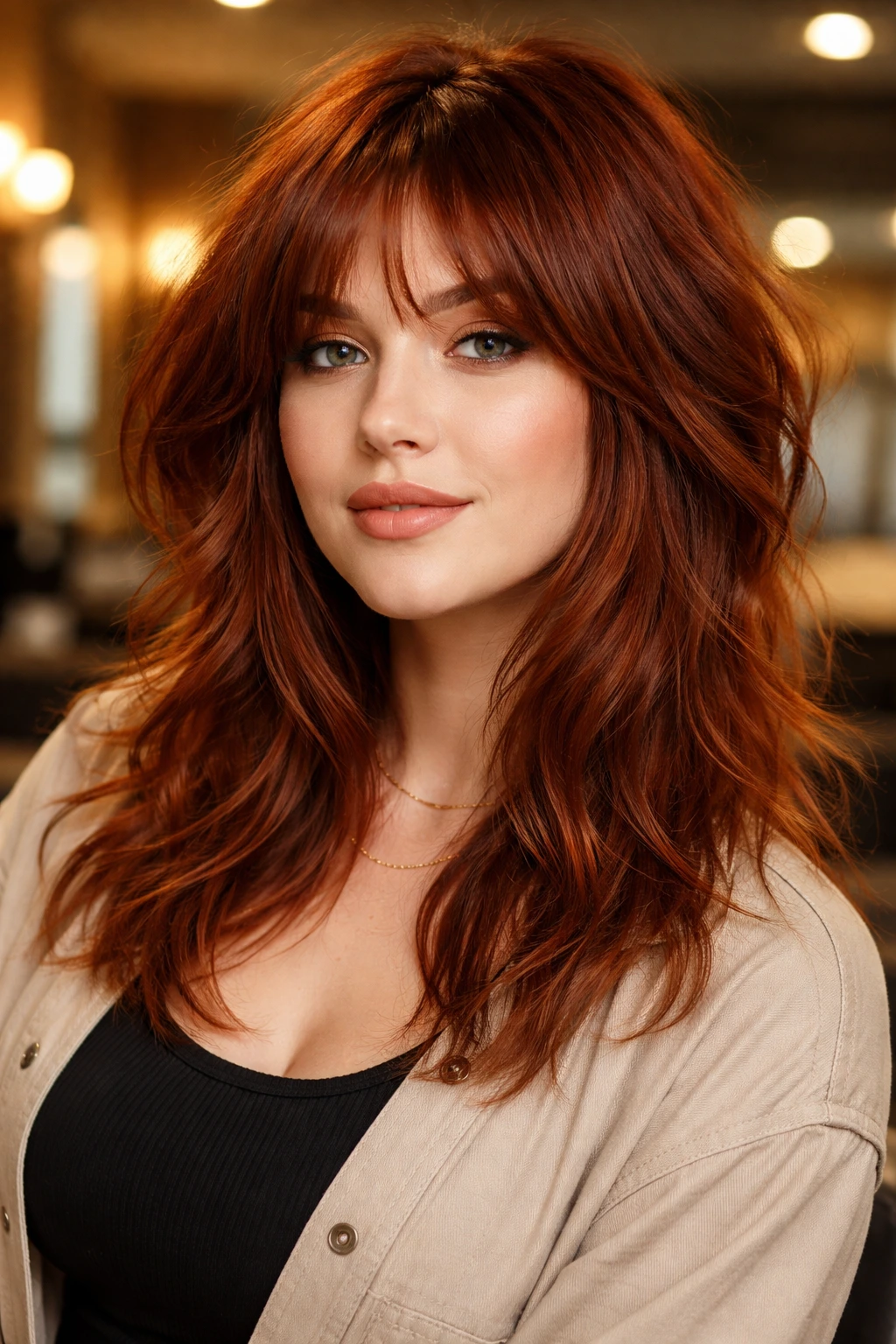
The “shag” haircut has seen a massive return in popularity, and it is a gift to those with round faces. The choppy layers and curtain bangs create movement and texture. Pairing this cut with a metallic, copper-penny auburn color turns the haircut into a centerpiece.
Texture and Tone
The copper penny shade is highly reflective. In a shag cut, where layers are constantly moving and catching the light, this high-shine color maximizes every texture. The light-catching properties of the copper shade prevent the face from looking “buried” in hair.
The Bang Factor
Curtain bangs are essential for this style. When you color these bangs in the same copper penny shade, they frame the forehead and create a V-shape. This narrows the face, breaking up the horizontal line across the brow. It’s one of the most flattering combinations you can choose.
9. Muted Rose-Gold Auburn
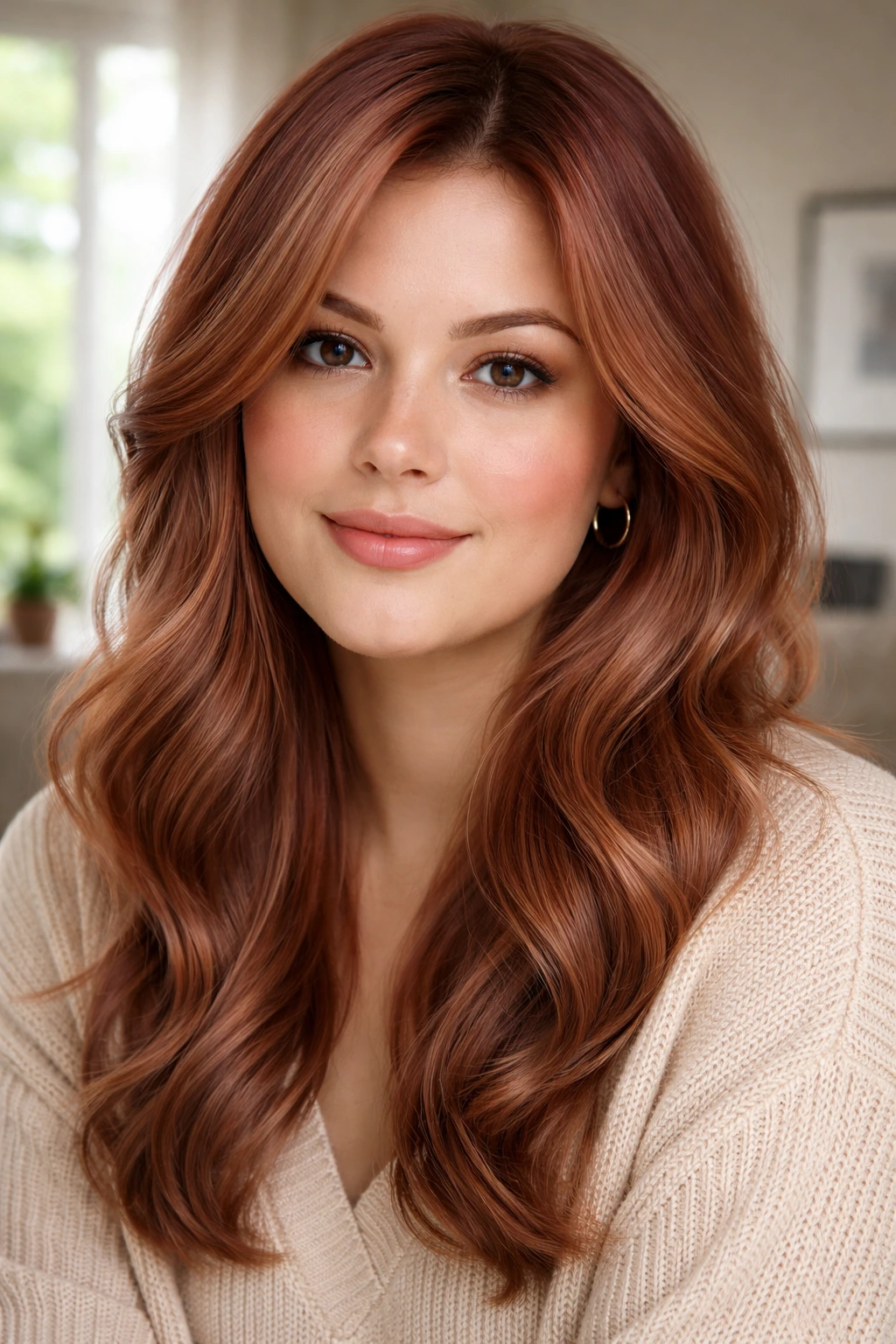
Think of this as the “cool cousin” of standard auburn. It leans more towards a dusty, muted rose-gold than a fiery red. It is softer and less intense, which can be very flattering for those who prefer an understated look.
Why Softness Works
Sometimes, extremely vibrant, saturated colors can overwhelm a round face, making the features seem smaller by comparison. A muted tone respects your features while still giving you that trendy, warm-toned hair color. It is sophisticated and incredibly wearable.
Styling Suggestion
This color looks best when styled with soft, loose waves rather than tight curls. Loose waves elongate the face, while tight, bouncy curls can sometimes add width to the sides of the head. Keep the styling relaxed to match the muted tone of the hair.
10. Cherry Cola Auburn Lob
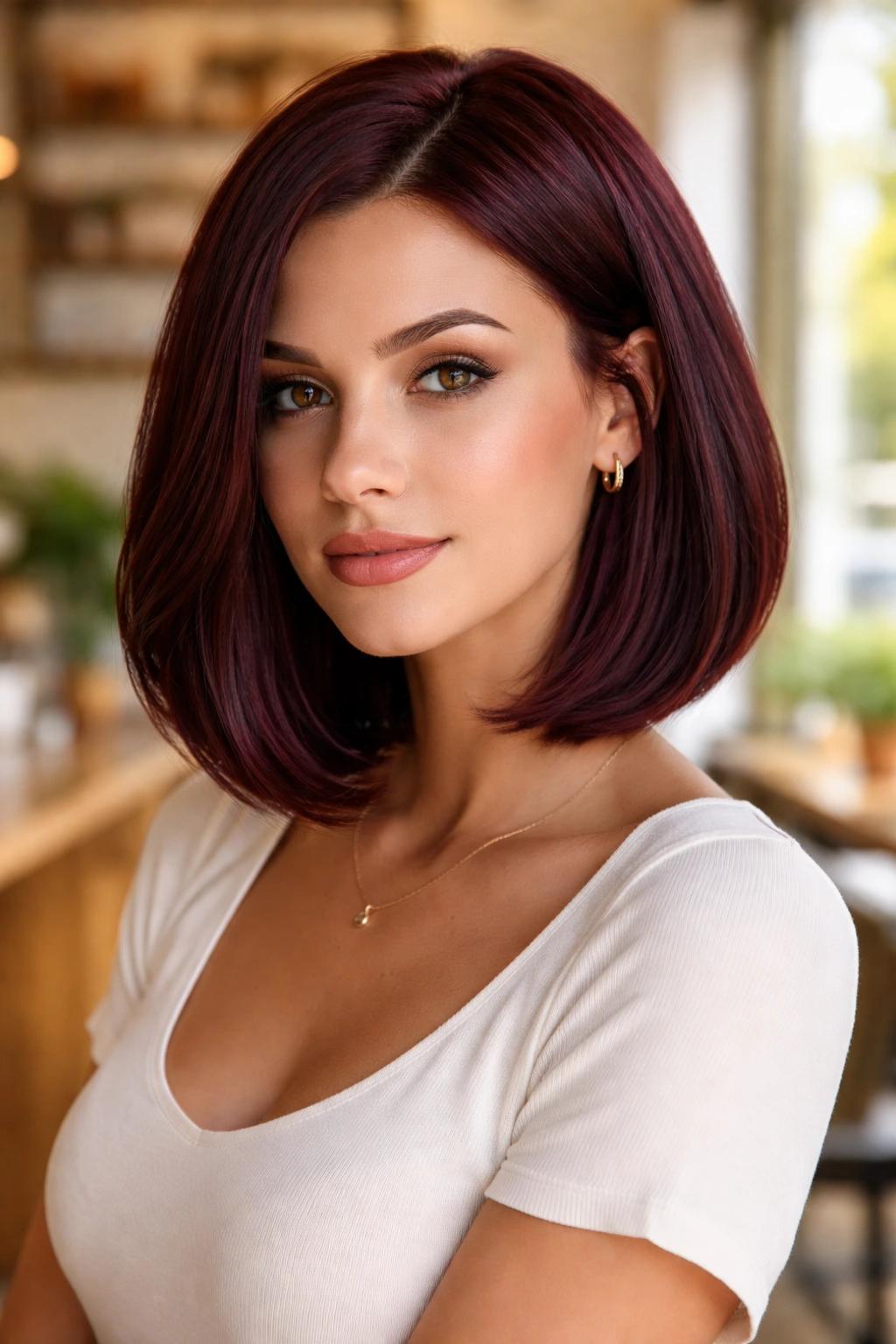
The “lob” (long bob) is a quintessential haircut for round faces. The length, which usually hits around the collarbone, avoids the “neck-shortening” effect of a standard bob, while the length itself helps to elongate the face.
The Color Choice
Cherry cola auburn is a deep, purplish-red that looks dark and mysterious indoors but glows bright red in the sunlight. This depth is vital. By keeping the color dark, you keep the focus on your bone structure rather than the hair volume itself.
The Silhouette
The beauty of the lob is its clean line. When you have a solid, saturated color like cherry cola, the clean line of the lob emphasizes the sharp angles of the cut, which inherently makes the face appear more angular. It’s a perfect marriage of cut and color.
11. Cinnamon Swirl Auburn Waves
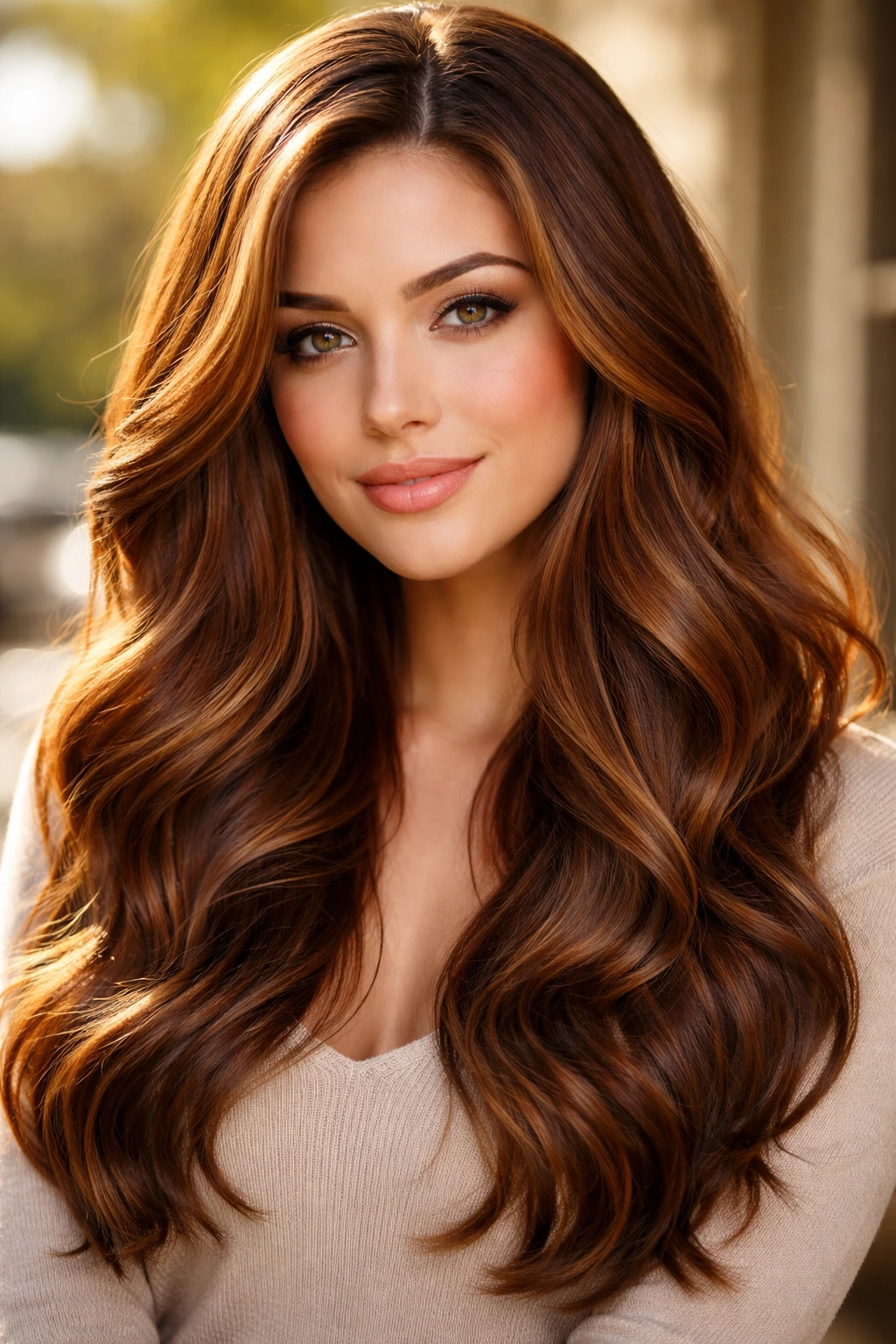
Imagine a cinnamon roll with dark brown swirls and lighter, golden-copper ribbons. This color technique uses multiple shades of auburn to create a “swirl” effect throughout the hair.
Dimensional Depth
Because the hair is composed of light, medium, and dark tones, it creates a sense of infinite movement. For a round face, movement is good. It prevents the hair from looking like a stagnant “helmet” around your head, which can happen with solid, dark colors.
Technique
The key here is a balayage-highlights hybrid. You need fine, delicate ribbons of color woven throughout. Ask for the darker auburn tones to be placed underneath (at the nape of the neck) and the lighter, cinnamon-toned ribbons to be placed on top. This creates a vertical lighting effect that is incredibly slimming.
12. Mahogany Auburn Lowlights
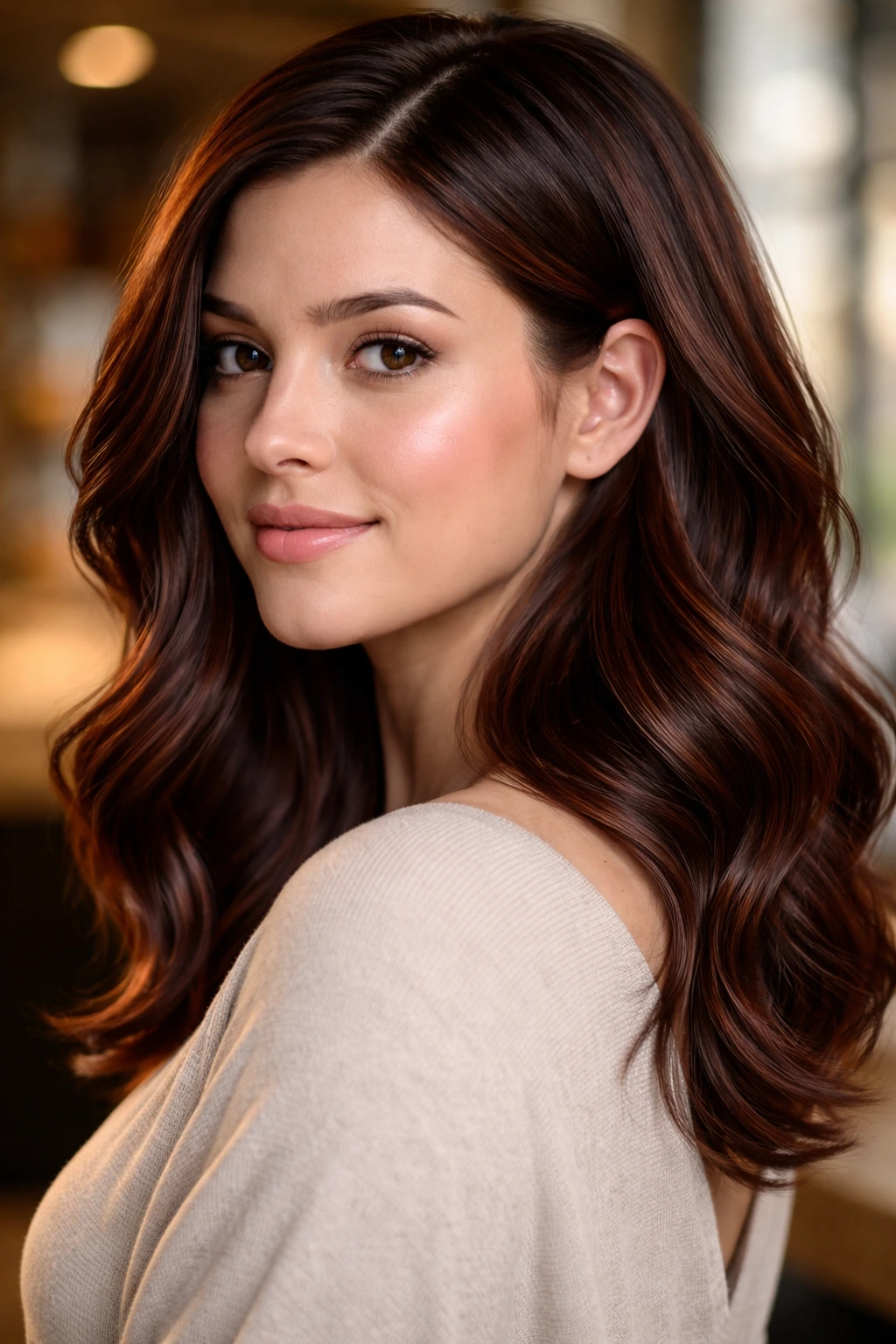
If you have a base of lighter auburn or even a dark blonde, introducing mahogany lowlights can add the depth you need to define your face shape. Lowlights are essentially the opposite of highlights—they are pieces of hair colored darker than your base.
The Science of Shadow
Lowlights add shadow. By placing these darker mahogany pieces strategically—typically around the ears and towards the back—you create a slight contouring effect, similar to how makeup artists use bronzer. It pushes those areas “back,” making the face appear less wide.
Who This Is For
This is ideal for anyone who finds that their hair color looks too “flat” or one-dimensional. Mahogany is a deep, cool-toned reddish-brown, so it offers a nice contrast against warmer skin tones, too. It’s a subtle but powerful way to change your look without fully committing to a brand-new shade.
13. Ginger Auburn Pixie Tones
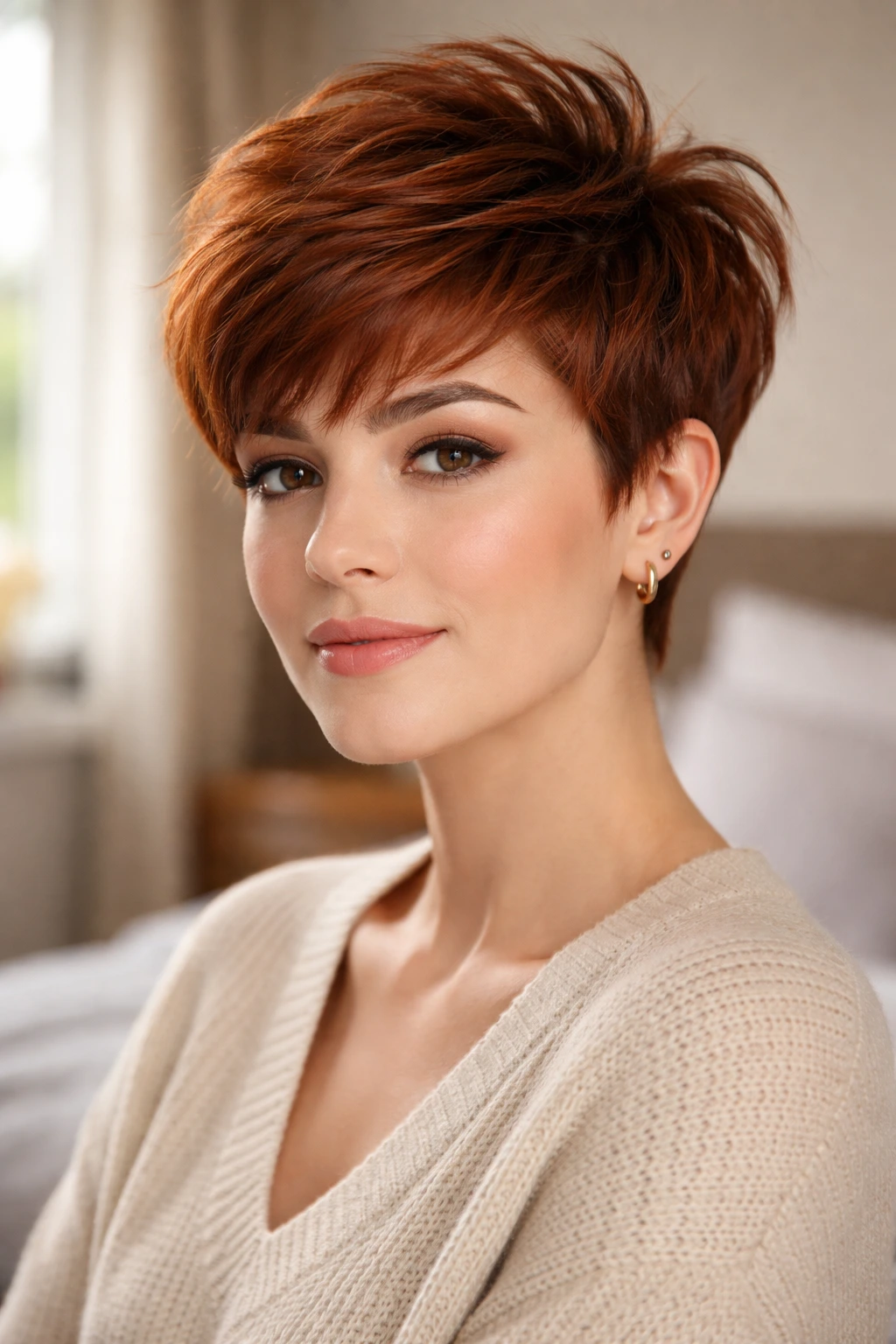
Who said short hair can’t work for round faces? A pixie cut with ginger-auburn tones can actually look fantastic, provided you keep the volume at the top.
The Verticality Factor
The secret to pulling off a pixie with a round face is to keep the sides tight and the top long and textured. When you color this top section in a vibrant, ginger-auburn, you create a focal point of height. This vertical volume is the ultimate tool for elongation.
Color Consistency
Keep the ginger tones bright. Because there is less hair surface area than with long styles, you can afford to go a bit brighter without the color looking overwhelming. Use a texturizing paste to define the pieces—this separation helps break up the face shape.
14. Russet Brown with Blonde Tips
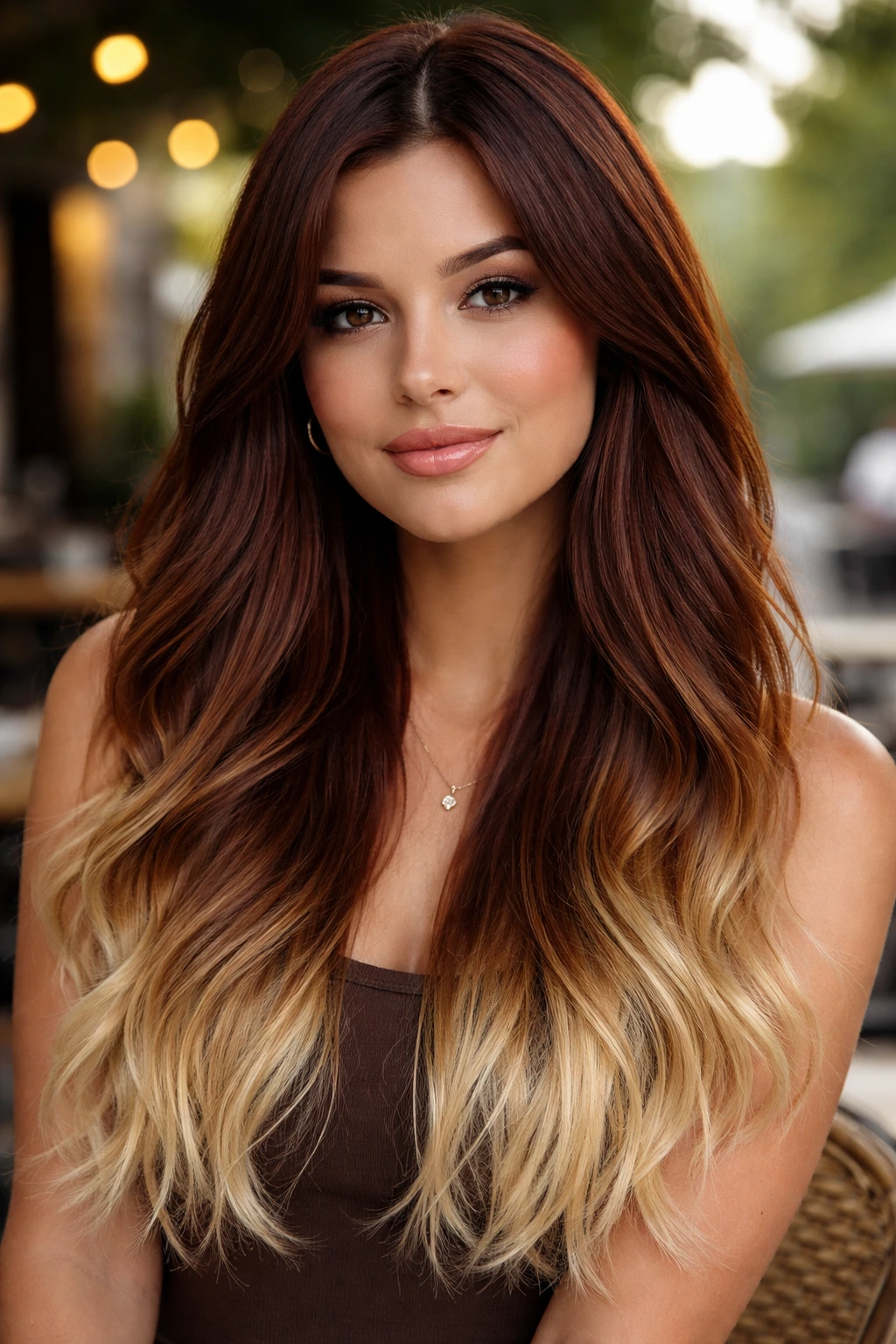
This is a bolder, more modern look often referred to as “dip dye” or a very deliberate, high-contrast ombre. The base is a deep russet brown (a warm, earthy auburn), and the ends are a bright, honey-blonde.
The Contrast Strategy
The high contrast between the dark auburn root and the light blonde tip creates a very strong vertical line. When you have this much contrast, the eye naturally travels from the top to the bottom. It stops the eye from focusing on the cheek area.
Maintenance Reality
Be aware that this style requires regular toning. Blonde tips on a warm, auburn-based hair color can quickly turn brassy. Invest in a purple or blue-tinted conditioner to keep those tips looking clean and intentional rather than faded and dry.
15. Terracotta Auburn Peek-a-Boo
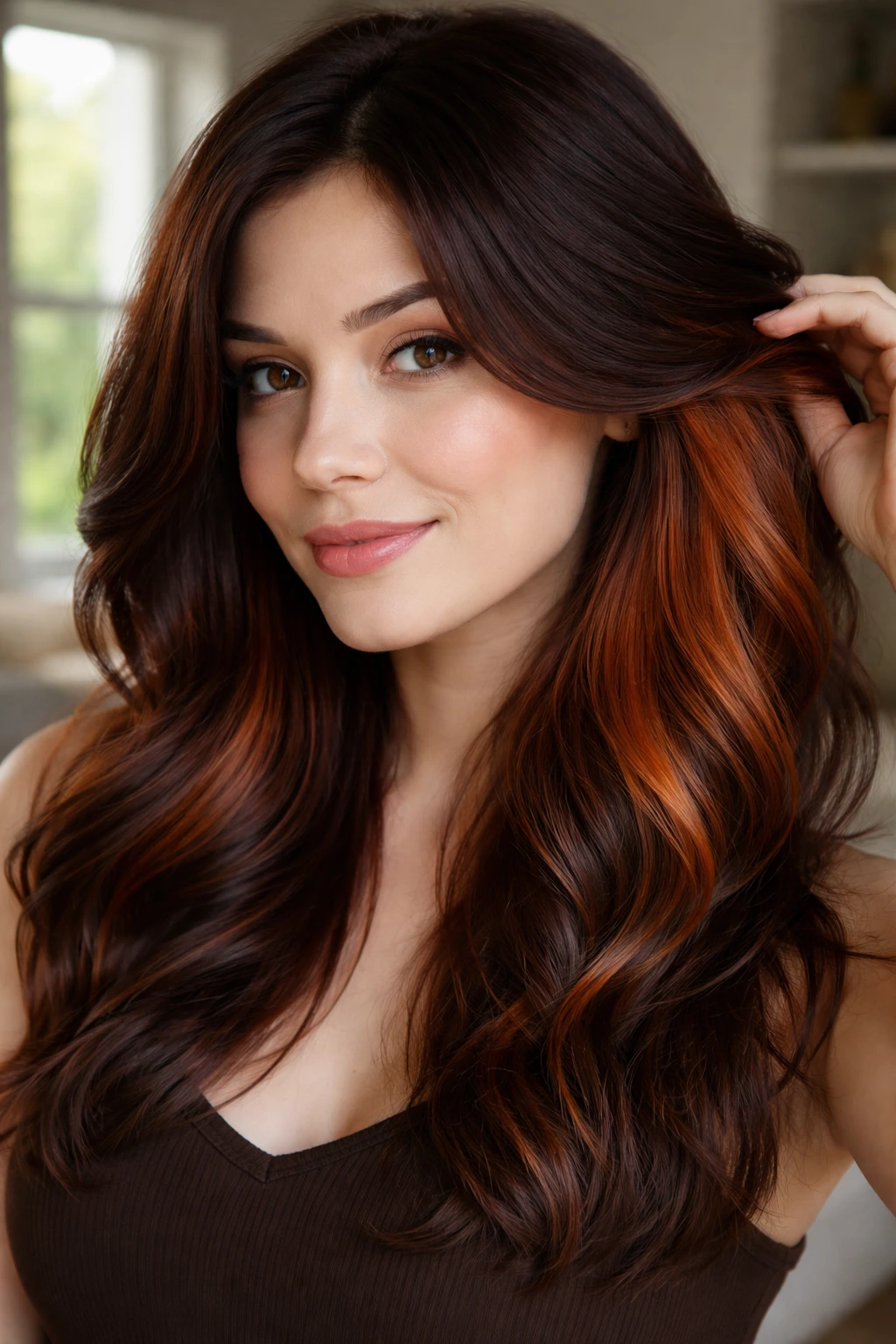
Peek-a-boo highlights are exactly what they sound like—hidden pops of color that only appear when you move your hair. This is perfect if you want to experiment with a brighter auburn but aren’t ready to dye your whole head.
The Fun Factor
You can have a very conservative, dark auburn base and hide a bright, terracotta orange underneath the top layers. When you wear your hair down, you get glimpses of the color. When you pull it back or put it in a ponytail, the color becomes the main event.
Why It Works for Rounds
By keeping the “pop” of color underneath, you add visual interest without adding width at the cheekbones. It’s an easy, low-pressure way to update your style. It keeps the hair looking healthy and full, which is a great attribute for any face shape.
16. Burnt Orange Auburn Gradient
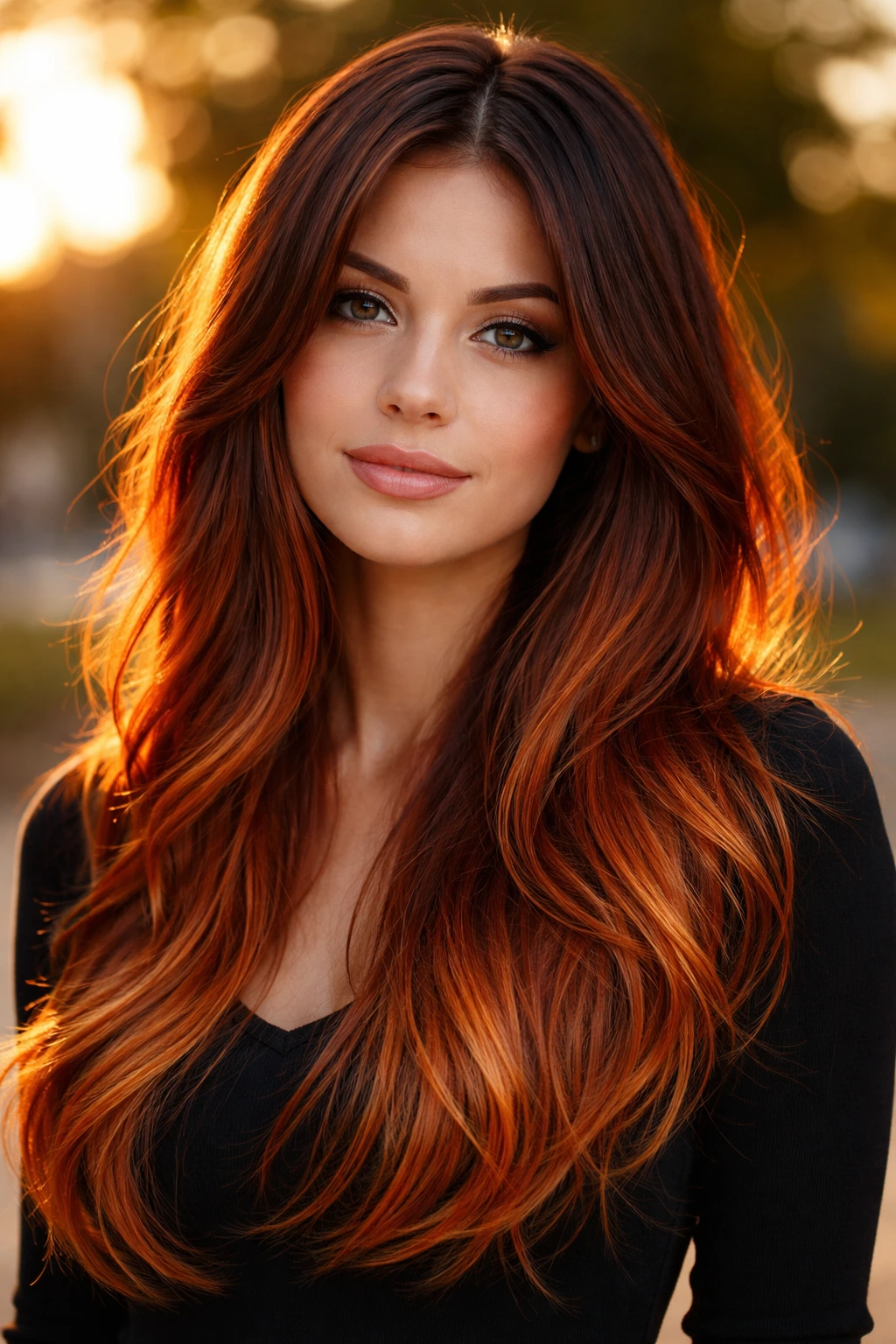
A gradient or “sunset” hair color is a bold choice. It starts with a dark root, transitions into a mid-tone auburn, and finishes with a bright, burnt orange at the ends. It mimics the color of a setting sun.
Avoiding “The Bulk”
The biggest risk with bold colors is that they can look “bulky” if not placed correctly. For this style, ensure the lighter burnt orange is concentrated solely on the ends. If you bring that brightness too far up, it will highlight the width of your cheeks.
Styling Tip
Because this color is so vibrant, keep the haircut simple. A long, layered cut with minimal fringe is perfect. You want the color transition to be the star, and a complex haircut might just get lost in the gradient.
17. Dark Auburn with Mocha Ribbons
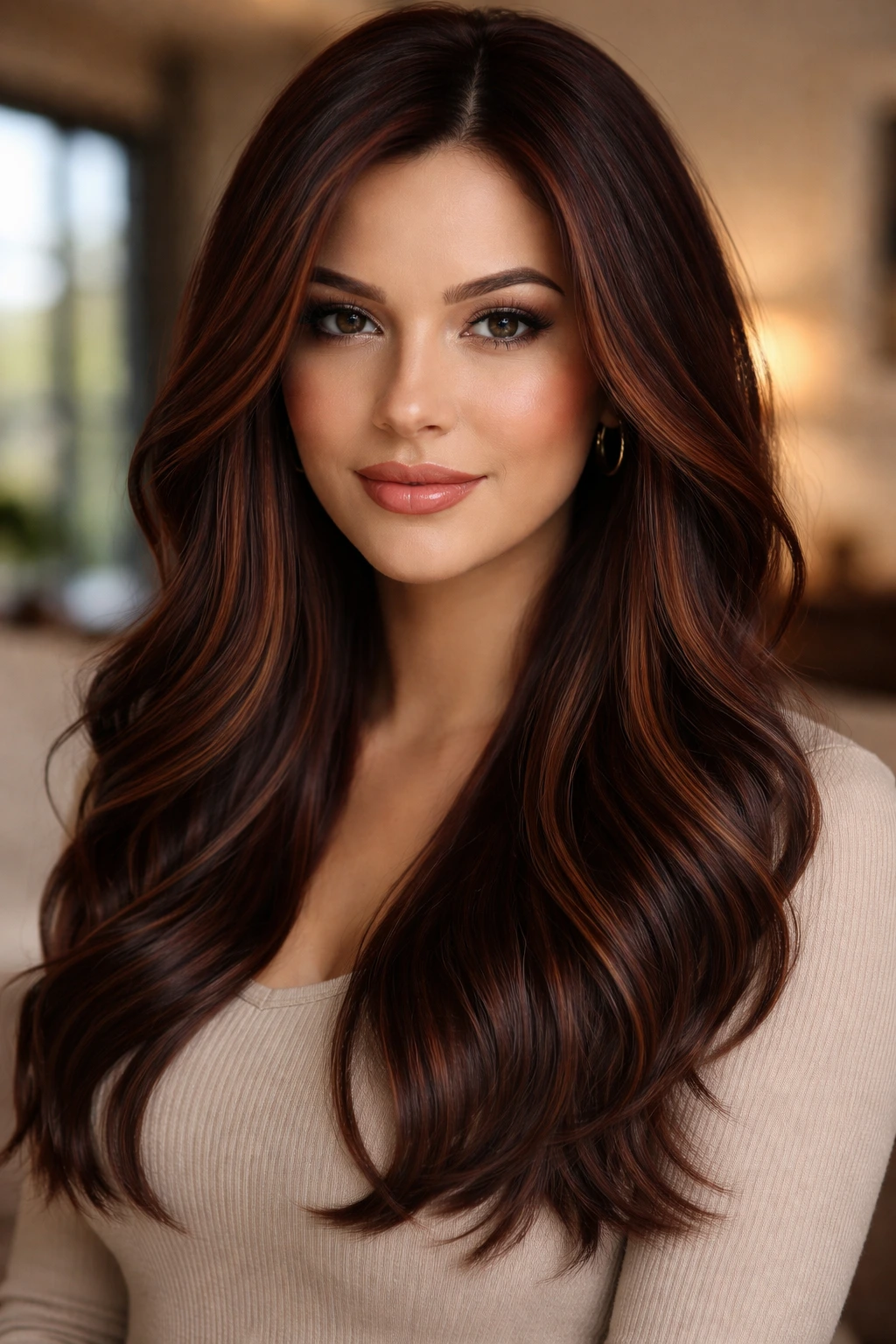
Mocha is a deep, cool-toned brown that looks incredible against dark auburn. The mocha acts as a grounding force, neutralizing the intensity of the red while adding a sense of luxury and depth.
The Sophistication Factor
This is a very mature, polished look. It’s perfect for a professional setting where you want to look put-together but still want to show a bit of personality. The mocha ribbons don’t stand out as much as blonde highlights would; they blend in, creating a rich, multi-tonal effect.
Placing the Ribbons
Think of these ribbons as vertical stripes. When you have long hair, you can weave these mocha pieces from the root all the way to the ends. This creates a vertical line of color that pulls the eye from the top of your head all the way down, reinforcing that elongated look.
18. Vibrant Strawberry Auburn
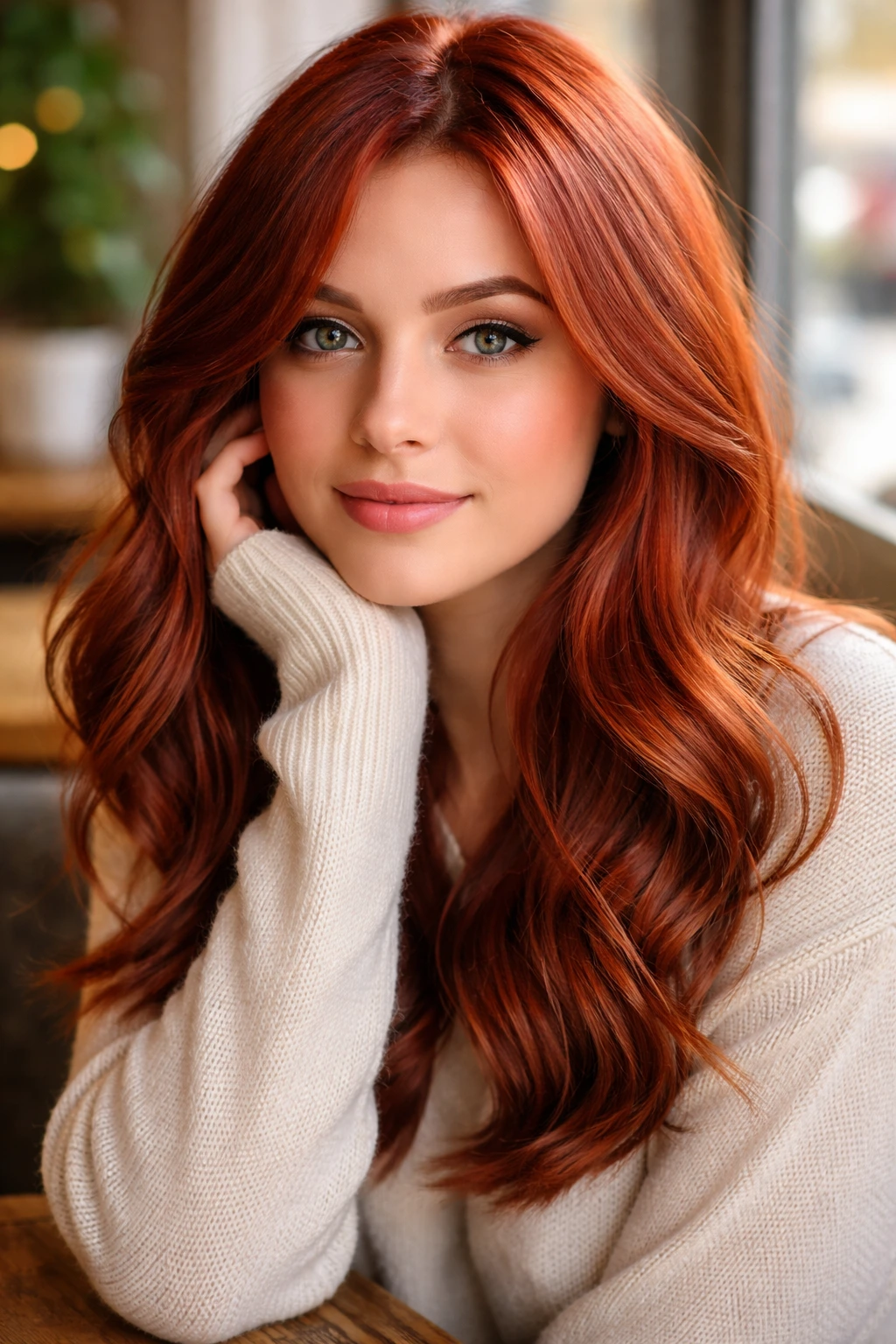
Strawberry blonde is notoriously difficult to pull off, but vibrant strawberry auburn is much more forgiving. It’s brighter, punchier, and has more “guts” to it than a pale strawberry.
Reflection and Light
Vibrant colors reflect a massive amount of light. This is a massive benefit for round faces. When your hair is shiny and reflective, it catches the eye. If that shine is concentrated in the right places (the crown and the ends), it draws focus away from the center of the face.
The “Saturated” Effect
Don’t be afraid of saturation. Sometimes people with round faces are told to avoid bright colors, but that’s bad advice. A highly saturated, well-placed vibrant color can be a great distraction from the face shape. It commands attention for the hair itself.
19. Ash-Toned Auburn for Contrast
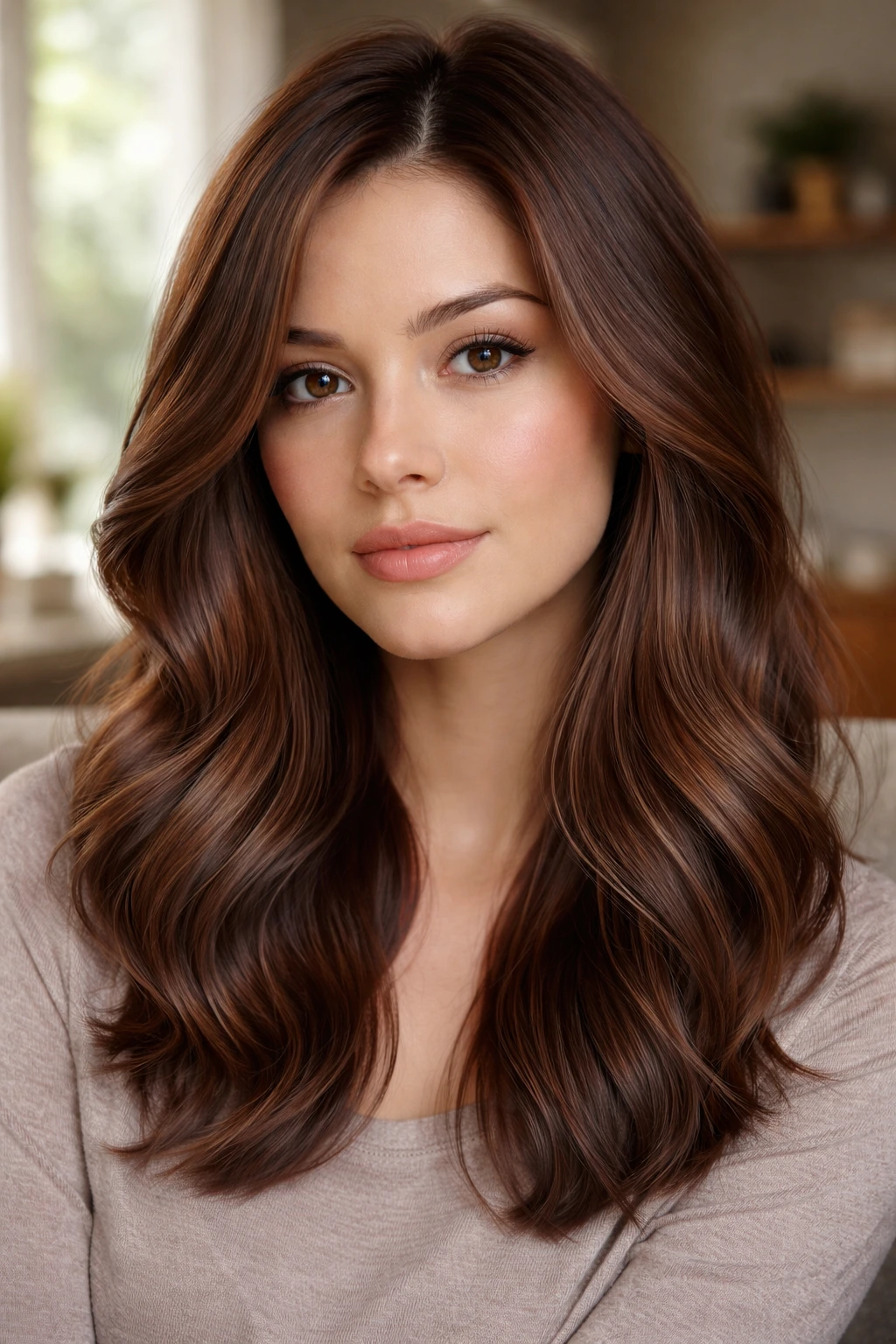
Most auburns are inherently warm. If you find that the warmth makes your face look “red” or flushed, you might want to look for an ash-toned auburn. It has cooler, blue or green undertones that neutralize the redness.
Balancing the Face
This is all about color theory. If you have a round face and a complexion that leans toward redness, warm auburn might make your face look even “rounder” and flushed. An ashier tone acts as a cooling agent, which can actually make the skin look clearer and the face shape look more defined.
Expert Advice
This is a harder color to achieve. You need a colorist who understands how to mix cool tones into a red base without it turning muddy. It is worth finding a specialist for this—it’s not a “box dye at home” kind of shade.
20. Golden Auburn Babylights
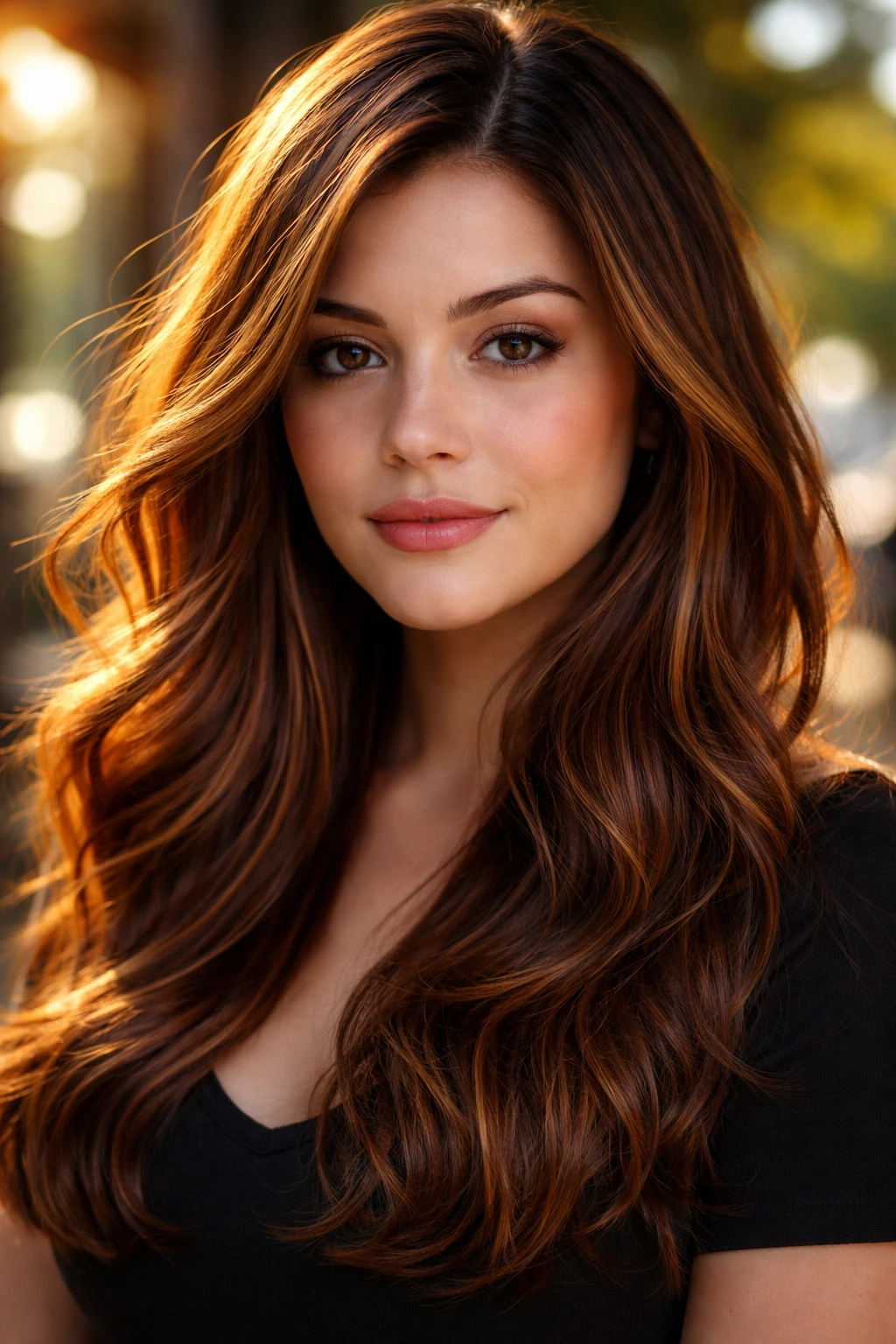
Babylights are the finest, most delicate version of highlights. They are designed to mimic the natural way the sun lightens hair in the summer. When you apply golden auburn babylights to a dark auburn base, the result is subtle, shimmery, and beautiful.
The “Glow” Factor
Because these highlights are so fine, they don’t create “blocks” of color. Instead, they create a fine, shimmering veil. This is excellent for round faces because it softens the features. It doesn’t create harsh lines that might emphasize width; it just adds a gentle, halo-like glow.
Versatility
This style grows out beautifully. Because the placement is so fine and natural, you don’t get that harsh “line of demarcation” as your roots grow in. It’s the ultimate low-maintenance auburn style, perfect for someone who wants to look their best without living in the salon chair.
Final Thoughts
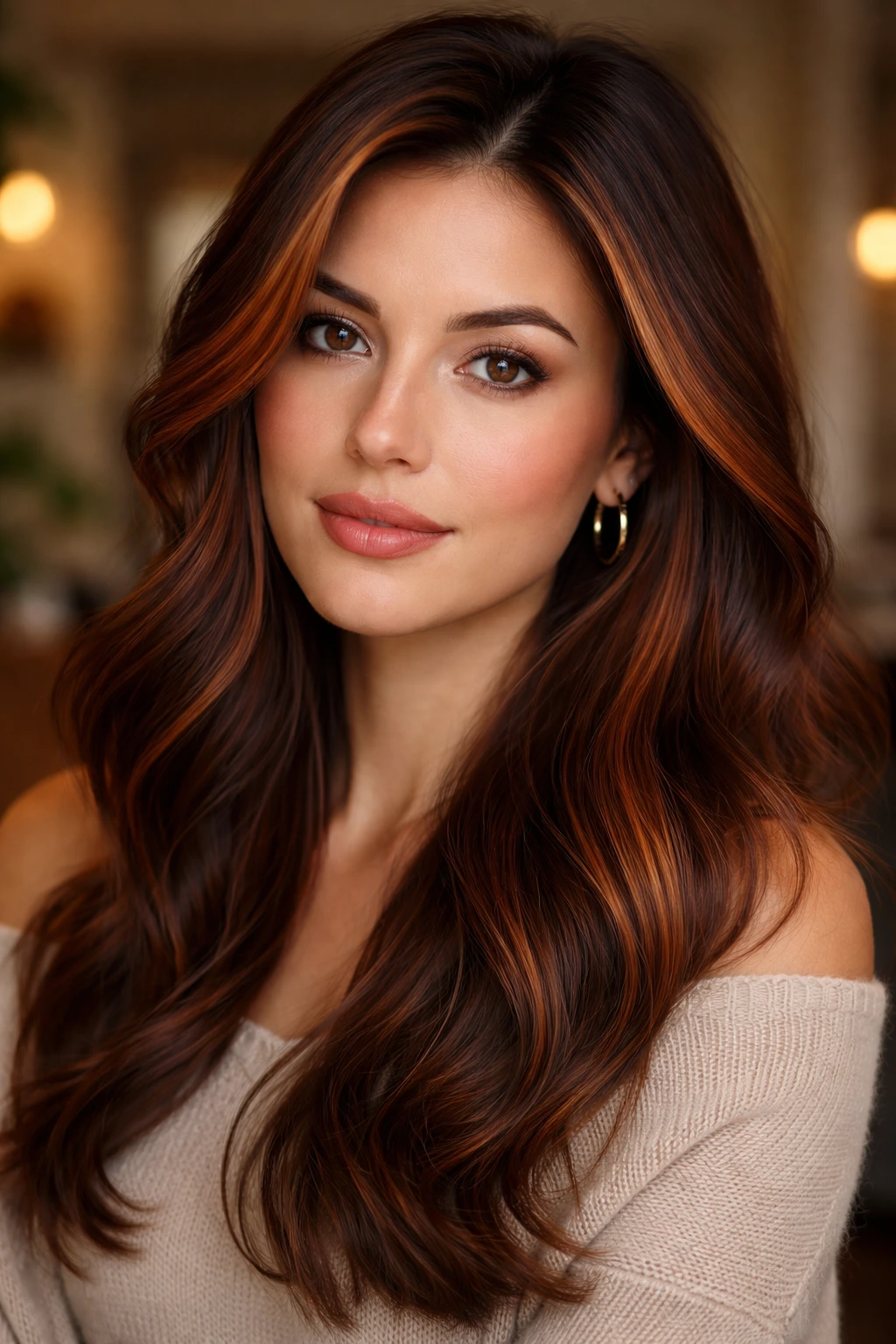
Choosing the right auburn shade and placement isn’t just about following the latest trend; it’s about understanding how light, shadow, and color interact with the unique topography of your face. For round faces, the goal is almost always to create a subtle verticality—a sense of length that balances the softness of your features. Whether you choose the deep, slimming effects of a burgundy balayage, the face-framing brightness of copper, or the sophisticated depth of mocha ribbons, the secret always lies in where you place the light.
Start by considering your natural hair texture. If you have fine, straight hair, balayage and babylights will look more natural and easier to manage. If you have thick, curly hair, you might find that deeper, solid colors with strategically placed lowlights offer more structure. Do not be afraid to mix and match these ideas. You can have a chestnut root melt and copper face-framing pieces. The best hair color is the one that makes you feel confident the moment you walk out of the salon. Remember, color is an accessory—wear it with intent.
