



Pink brown hair color ideas for cool skin tones work best when the pink leans smoky, mauve, or berry, not peachy or bright candy. That’s the part a lot of people miss. Cool skin usually looks cleaner against blue-red pigment and softer brunette bases, while warmer pinks can pull orange or make the hair look louder than the face.
If silver jewelry sits easier on you than gold, or if your complexion tends to look freshest with rose blush, dusty mauve, and cool beige makeup, you’re already halfway there. The shade family matters more than people think. A pink-brown that looks dreamy on one person can look brassy on another, and the difference is usually hiding in the undertone, not the darkness level.
Salon language helps here. Ask for a cool brunette base with a rose, mauve, plum, or berry gloss, then decide whether you want the color spread as balayage, babylights, a root melt, or a face frame. A translucent gloss can give you that pink-brown finish without turning the whole head into a loud fashion color. A stronger formula can still look refined, but only when the brown underneath stays grounded.
The best versions have range. In daylight they should look soft and dimensional; indoors, they should read deeper and a little moodier. Start at the smoky end of the spectrum if you want the safest result, then move toward plum, raspberry, or orchid if you like a stronger hit of color.
1. Smoky Pink Brown
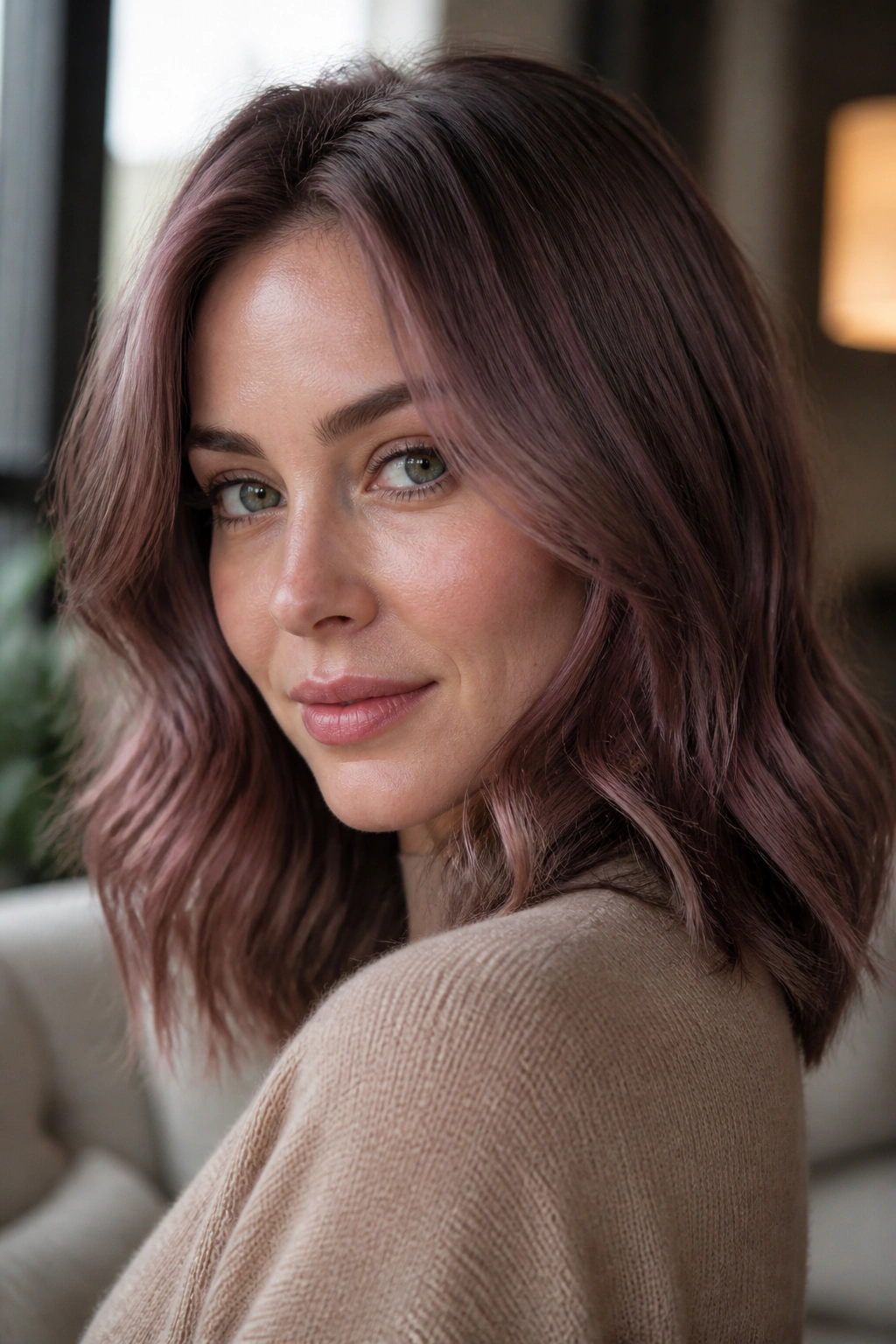
Smoky pink brown is the shade I’d hand to someone who wants pink in the hair but doesn’t want the hair to announce it first. The pink sits under a veil of ash and beige, so it reads muted, soft, and a little expensive-looking without leaning fussy.
On cool skin, that smoky cast matters. It keeps the brunette from going orange and gives the pink a dusty finish instead of a bubblegum finish. Ask for a level 6 cool brown base with a rose-violet gloss over the mids and ends. That combination keeps the color grounded.
Muted is the magic word here. If your wardrobe lives in black, gray, navy, or soft white, this shade slots in fast and won’t fight your clothes or makeup.
2. Mauve Mocha Melt
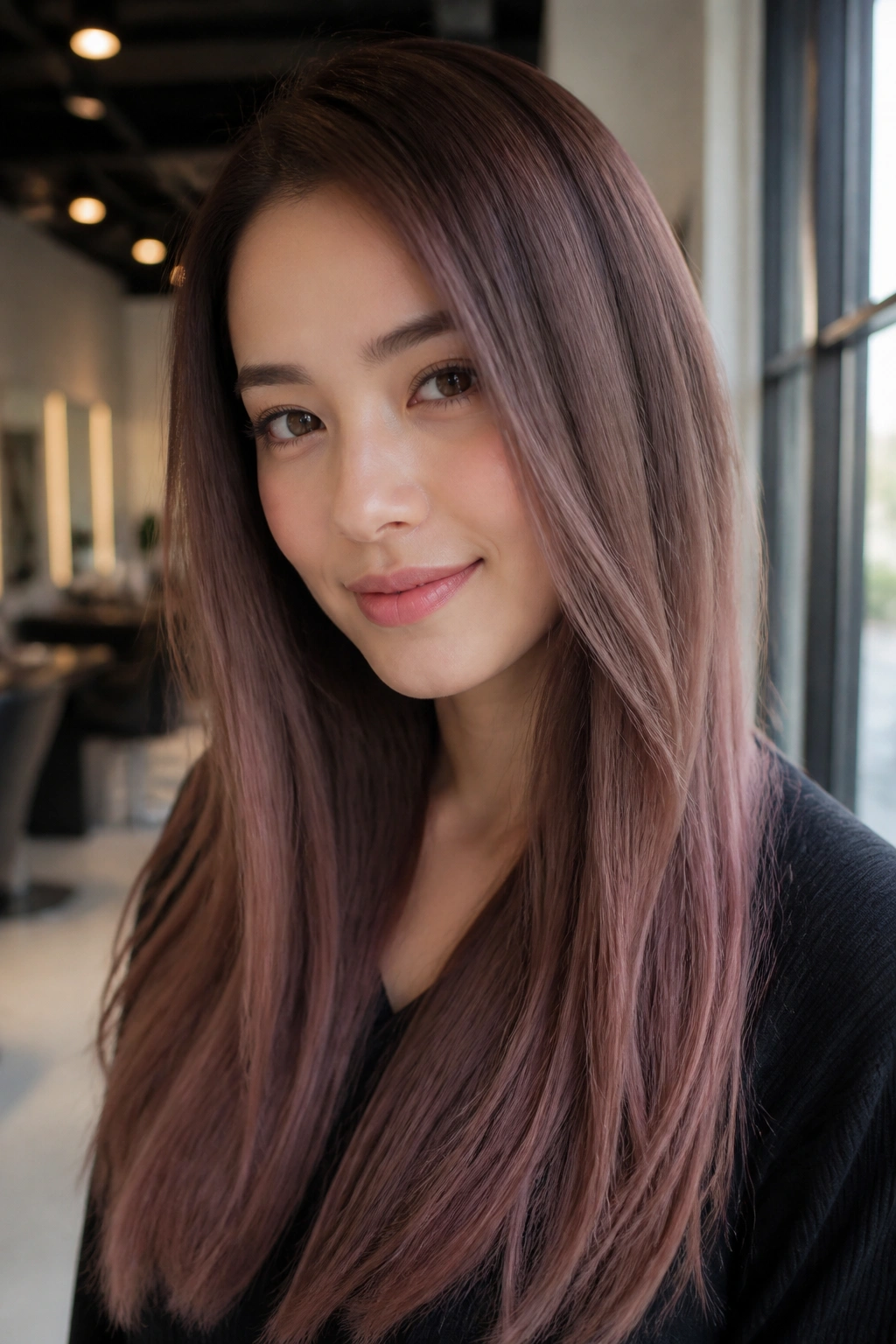
Why does mauve mocha work so well on cool skin? Because mauve already carries that blue-red softness, and mocha gives it a brunette spine. The result looks like brown hair with a faint blush cloud running through it, not pink hair trying to behave like brown.
What makes it flatter cool undertones
The mocha part stops the shade from going too violet. The mauve part stops the brown from feeling flat. That little push and pull is what gives the color depth from root to tip, especially on straight hair where every tone shows.
Ask a colorist for a root shadow one shade deeper than your natural color, then a mauve-brown melt through the lengths. If your hair is porous, keep the pink side sheer. Heavy pigment can grab too fast and look muddy after a few washes.
This is one of those shades that looks calm in the mirror and richer in motion. It’s not loud. It just has polish.
3. Dusty Pink Balayage on Dark Brunette
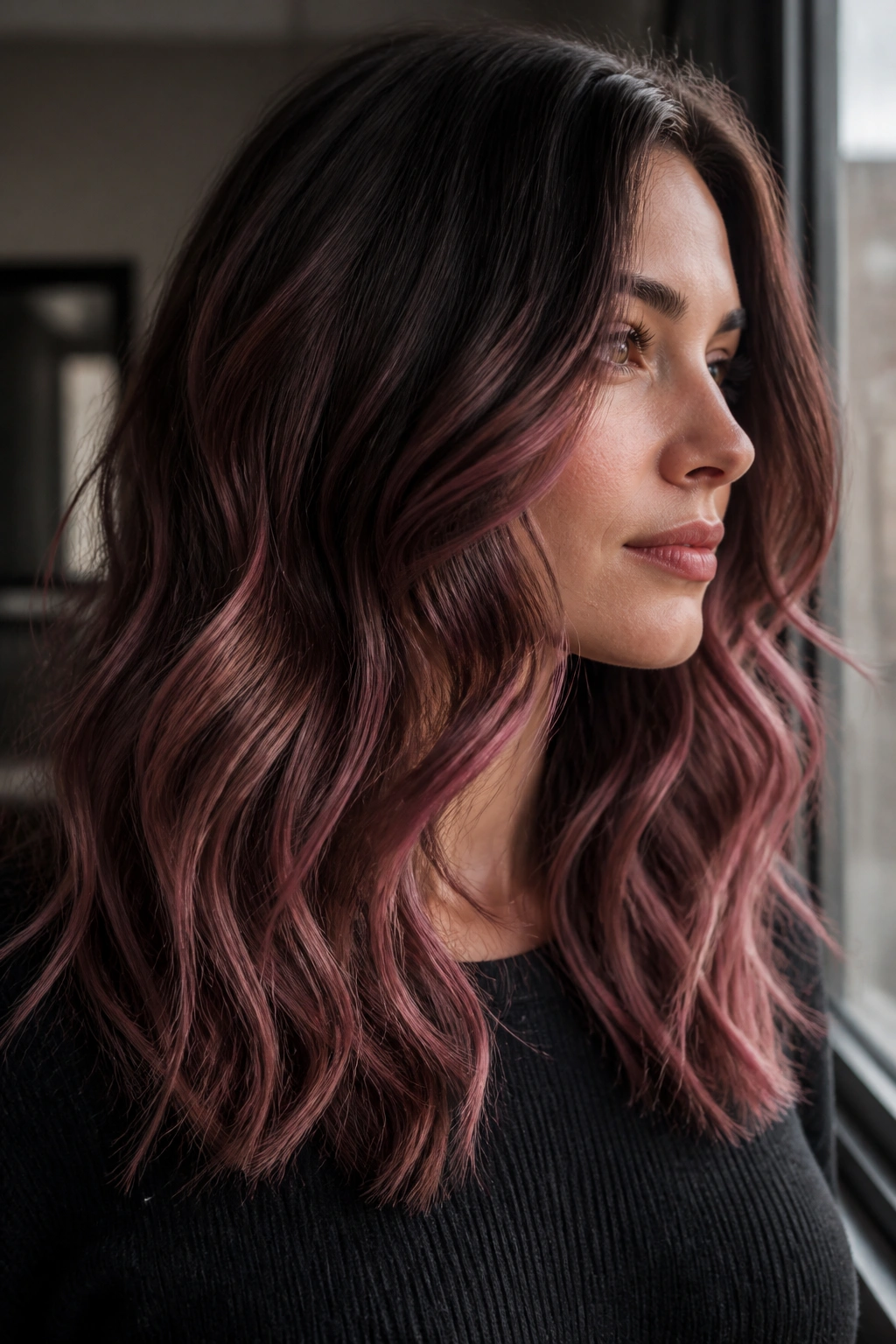
A dark brunette base with dusty pink balayage has a nice trick up its sleeve: the pink doesn’t need to cover the whole head to make an impact. It shows up in swipes, bends, and waves, which makes it a smart choice if you want dimension more than uniform color.
I like this one for people who wear their hair in curls or soft bends. The lighter ribbons catch the eye when the hair moves, then slip back into the brunette base when it settles. Ask for hand-painted pink pieces through the mid-lengths and ends, not chunky stripes at the top.
Keep the pink dusty, not hot. On cool skin, that muted finish looks intentional. Bright pink against dark brown can be fun, but it can also look disconnected unless the skin has the right amount of contrast.
4. Ash Chestnut with Blush Ends
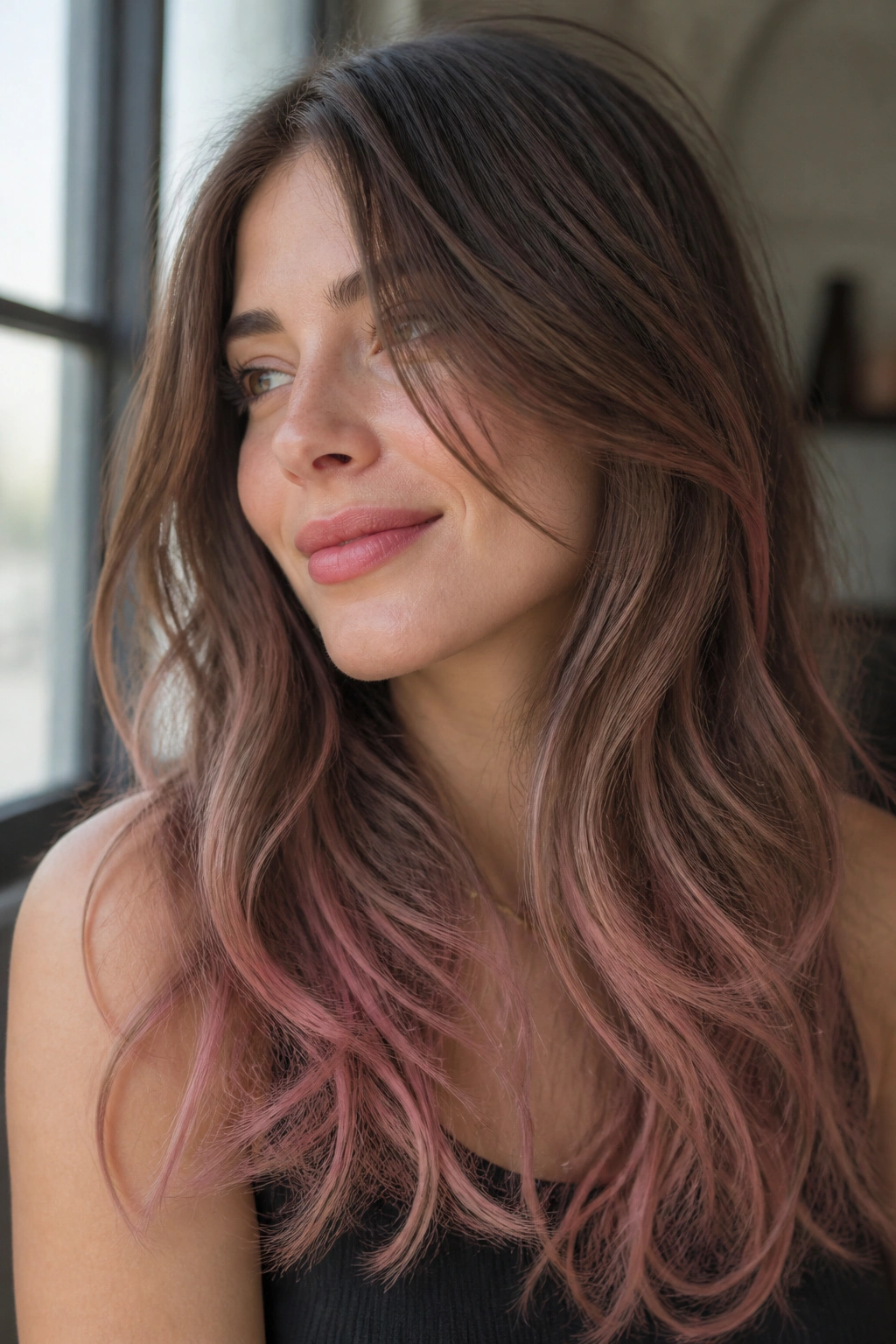
Ash chestnut with blush ends has a very clean feel. The chestnut gives you that soft brown backbone, and the blush only appears at the last few inches, almost like the hair has been dipped in watercolor.
That placement matters. When pink sits only on the ends, it feels lighter and less demanding. Cool skin tends to like the ash in the chestnut, because ash cancels out warmth that would otherwise push the pink toward copper. The whole look stays calm.
This is a good cut-and-color pairing for long layers or collarbone-length hair. The ends need movement to show the blush. On blunt, one-length hair, it can look a little heavier, so a soft layer or internal texture helps.
5. Rosewood Brunette
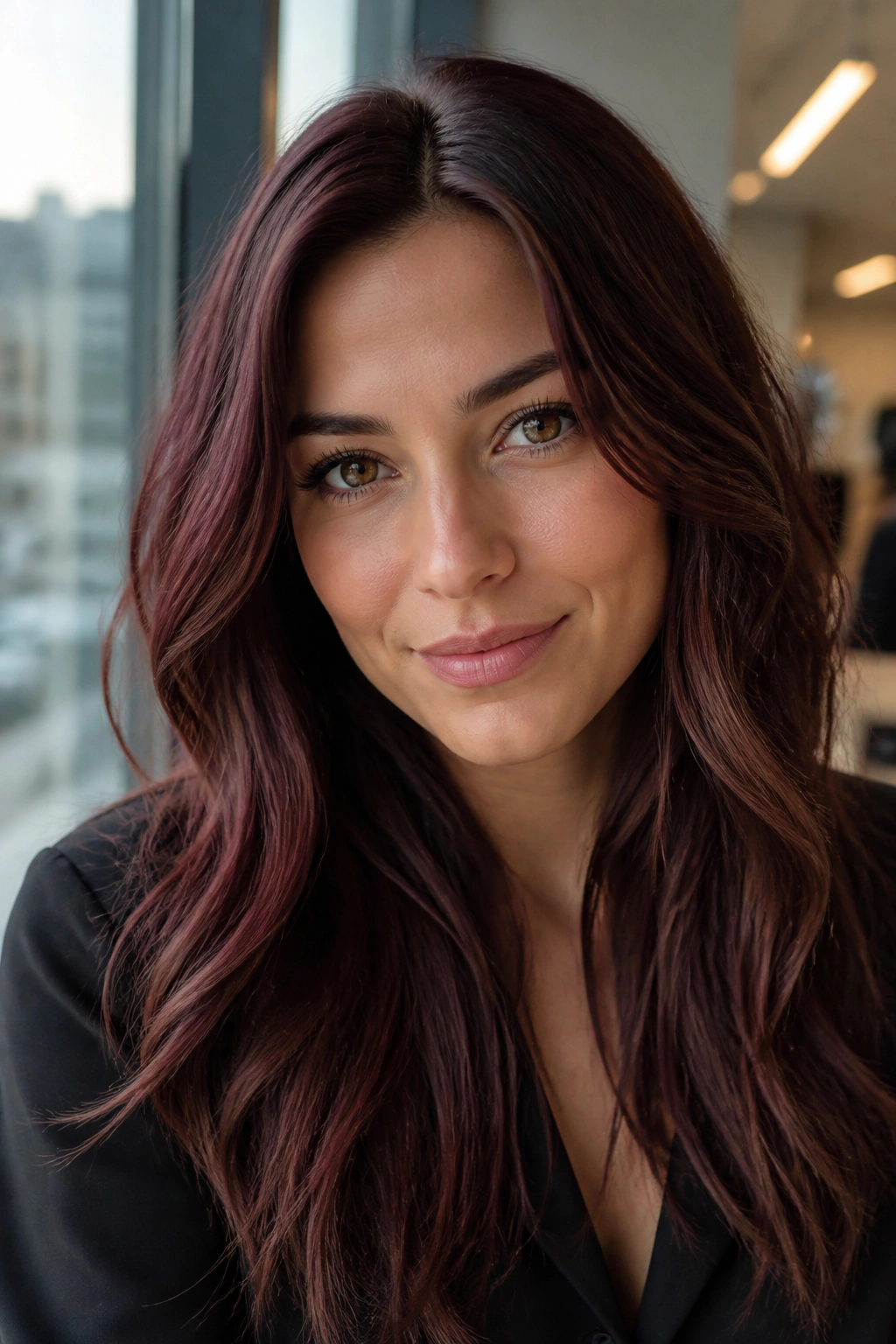
Rosewood brunette is one of my favorite understated pink-brown shades because it looks rich without shouting. The brown is deeper than mocha, but the rose tone keeps it from reading flat or dead. It’s the kind of color that looks different under daylight, office light, and candlelight.
For cool skin, rosewood works because the pink is woven into a brown base that already has a slightly cool red cast. It doesn’t need extra warmth. In fact, warmth would spoil it. A glossy finish helps here; matte color can flatten the rose note.
If you want something wearable for everyday life, this is a strong choice. It feels grown-up, a little romantic, and not at all juvenile.
6. Mushroom Brown with Pink Veil
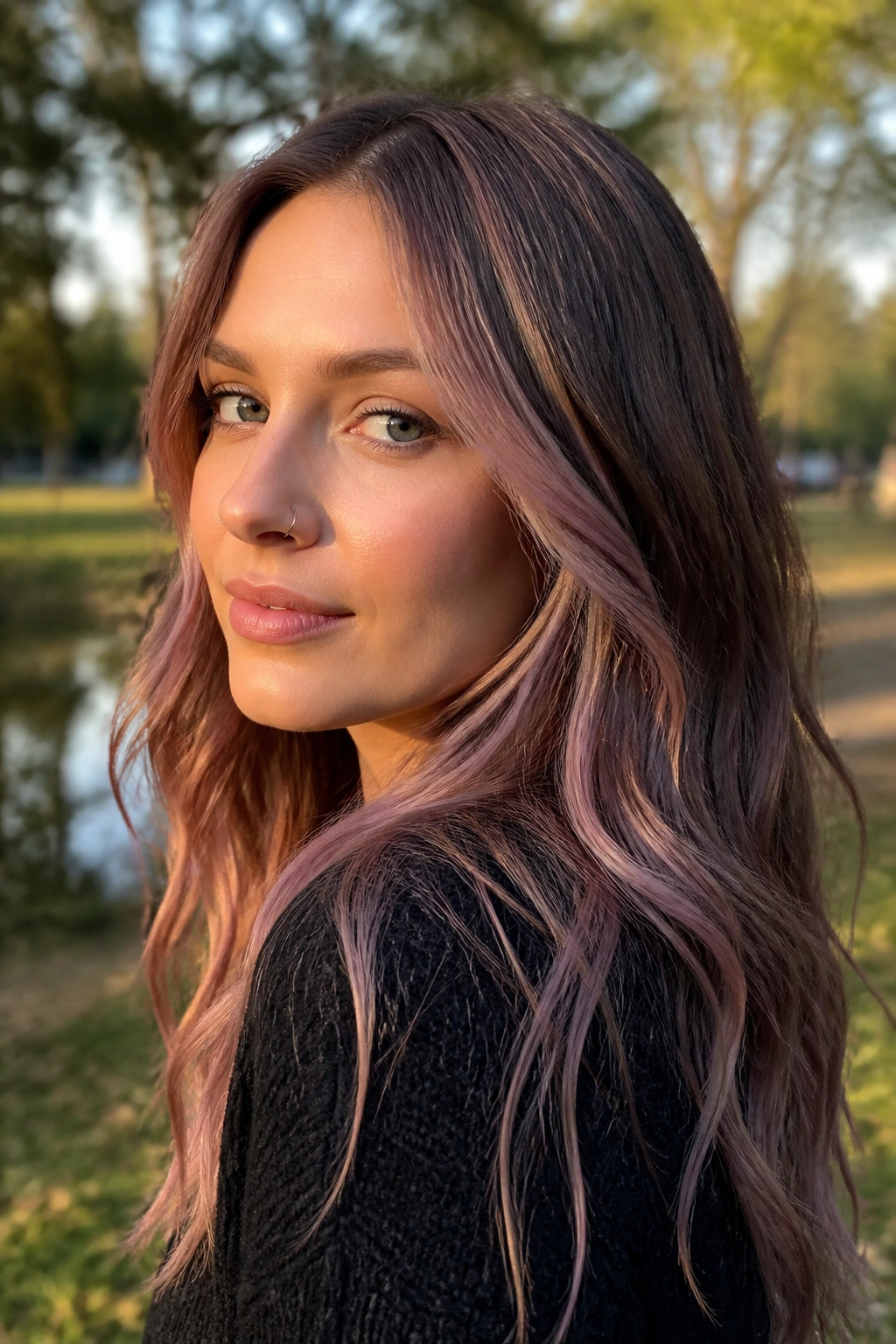
Mushroom brown is already cool, so adding a pink veil gives you a shade that feels soft rather than sweet. The brown base has that taupe-gray quality people love in mushroom tones, and the pink simply wakes it up.
Why it flatters cool skin
Cool skin likes the gray side of mushroom brown because it echoes the same low-warmth feel. The pink veil adds life without dragging the color warmer. Think of it as a tint, not a layer. You want the brown to stay dominant.
Ask for a taupe or mushroom base with a sheer rose gloss through the mids and ends. If you go too opaque, the result can turn mauve-heavy and lose the airy look that makes this shade special.
It’s subtle, but not boring. Those are my favorite color jobs, honestly.
7. Berry Brown Gloss
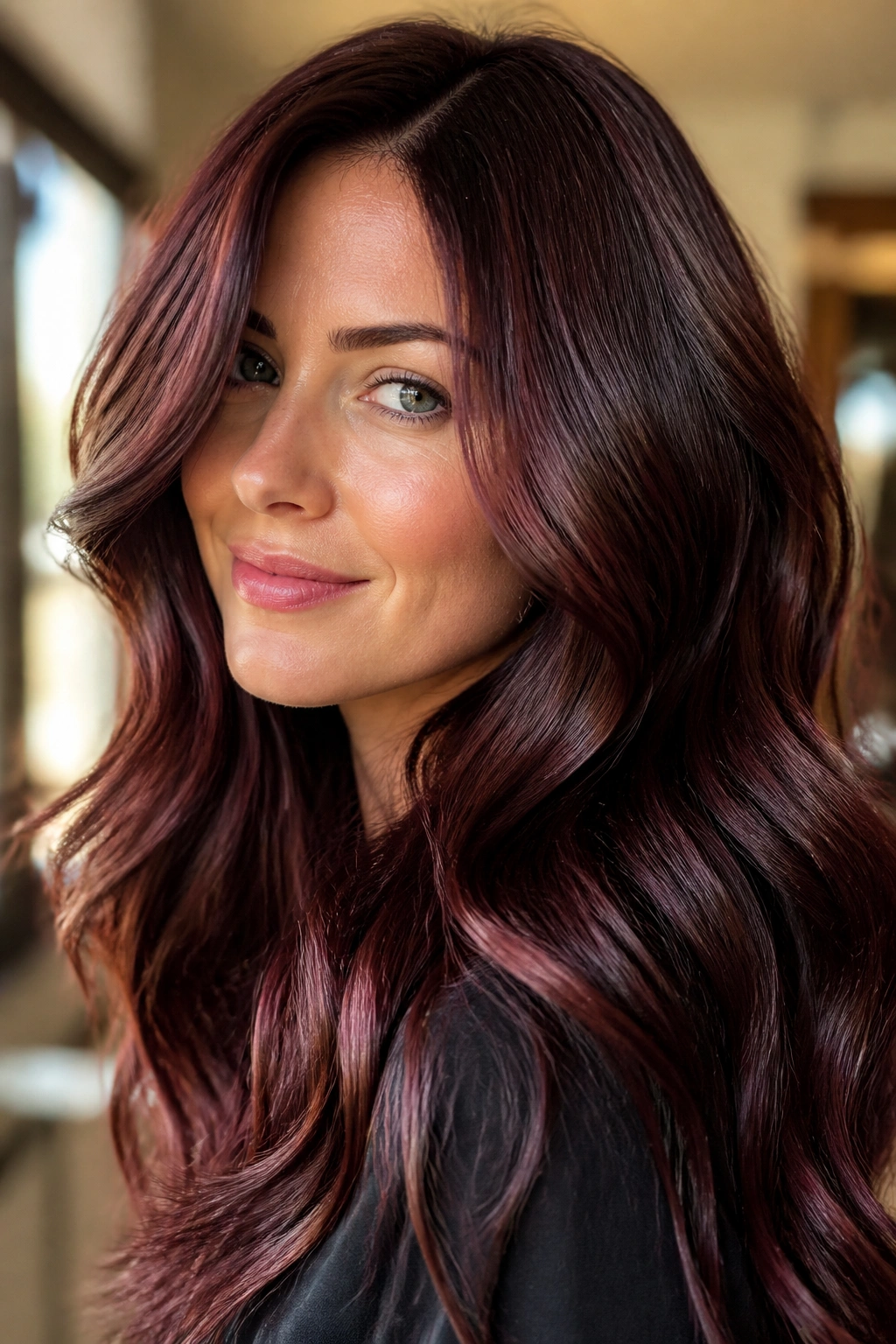
Berry brown gloss is for someone who wants the hair to look richer rather than lighter. The berry tone gives brunette hair a red-violet sheen, almost like the color deepened after a rainstorm. It’s especially nice on hair that needs shine more than bleach.
Gloss-only color is kinder to the hair shaft, too. If your lengths are dry, porous, or already highlighted, a berry gloss can change the whole mood without asking the hair to take a beating. It also fades gracefully, which matters if you hate awkward grow-out.
This shade looks especially good on cool skin because the berry sits in the red-violet lane instead of the orange lane. That tiny difference changes everything. If your natural brown is level 4 to 6, this is an easy place to start.
8. Cool Espresso with Mauve Ribbons
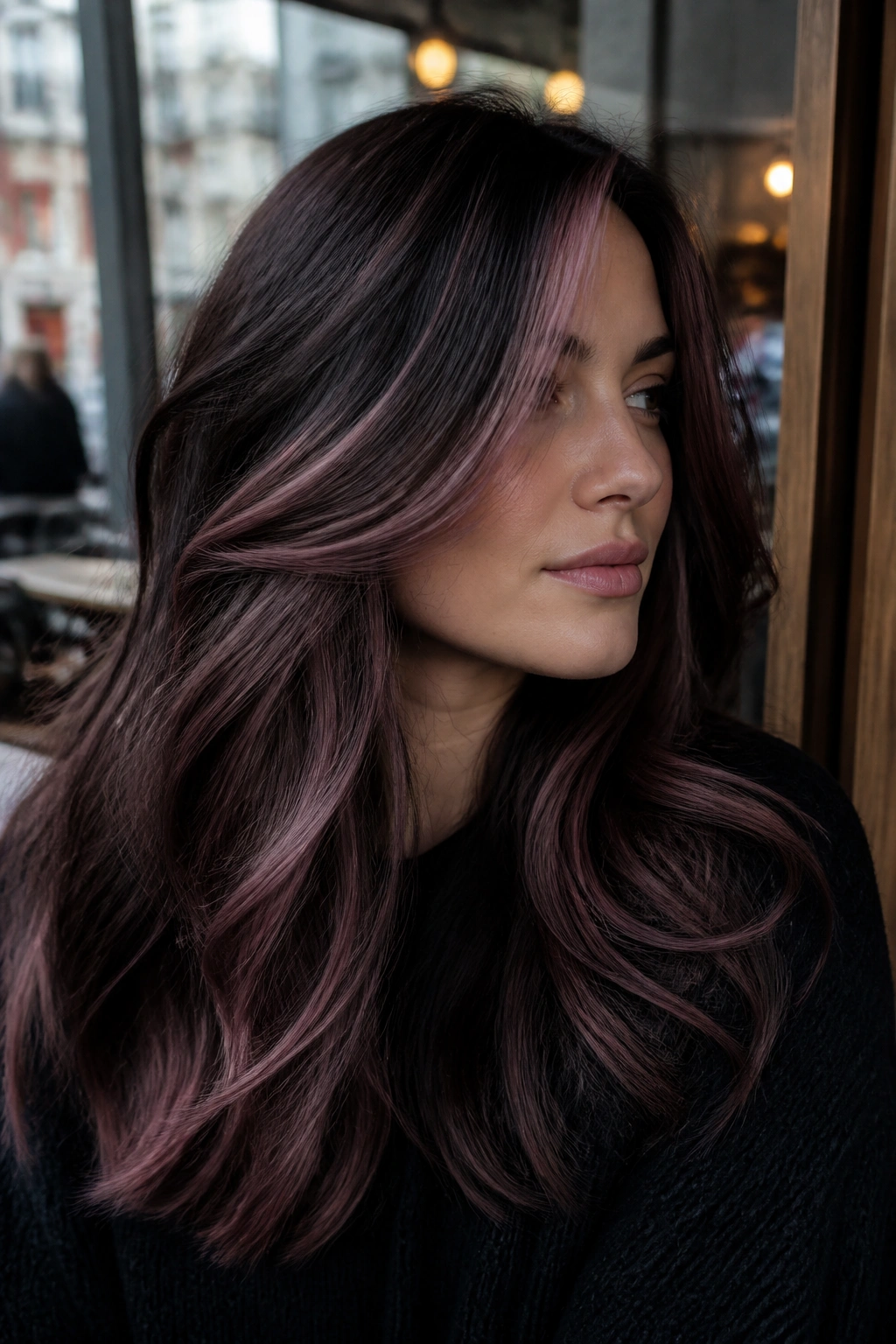
Cool espresso with mauve ribbons has more tension than the softer shades, and that’s what makes it interesting. The espresso base keeps the whole thing dark and sleek, while the mauve ribbons break up the depth just enough to show pink without turning the hair pale.
What’s nice here is the placement. Ribboning around the face and along the top layers gives the color movement when you wear your hair down. On cool skin, the mauve reads clean and violet-leaning, not warm or coppery.
How to ask for it
- A deep espresso base close to your natural level
- Fine mauve ribbons through the top layers
- Softer, cooler pieces around the face
- A gloss finish to keep the ribbons from looking dry
This is one of the better choices if you like darker hair but want a little life in it.
9. Pink Brown Money Piece
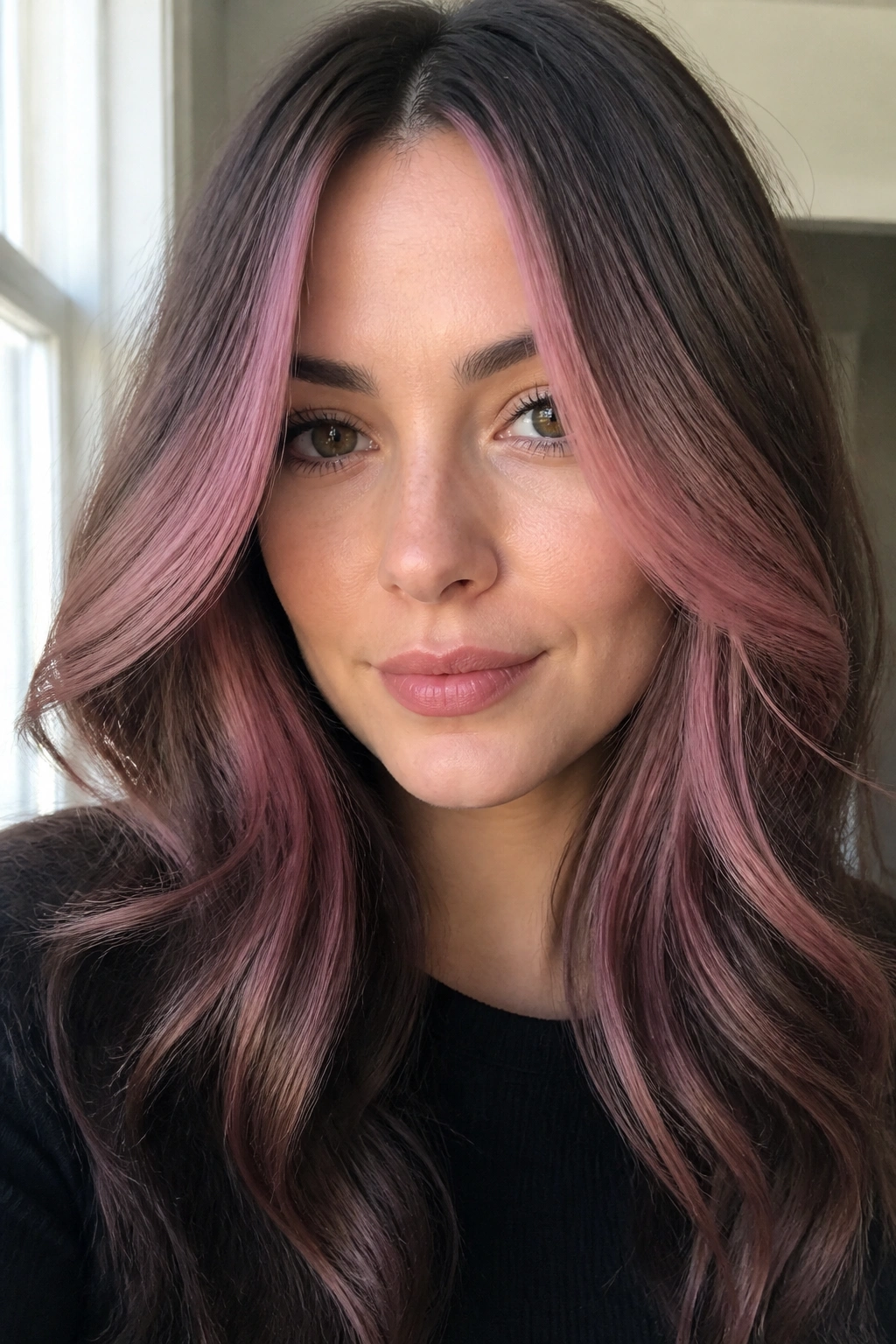
A pink brown money piece gives you brightness where people look first: around the face. Instead of changing the entire head, you bring the pink-brown forward in a narrow section that frames the cheekbones and eyes. That keeps the look playful but controlled.
For cool skin, the face frame should lean blush, rose, or mauve rather than coral. A two-inch section on each side is usually enough if you want subtle contrast; go wider if you want the streaks to read immediately. The rest of the hair can stay chocolate, ash brown, or espresso.
This is a smart option if you like experimenting without a huge commitment. If the pink feels like too much, the grow-out is easy to live with because the color sits at the front instead of everywhere.
10. Plum Cocoa Melt
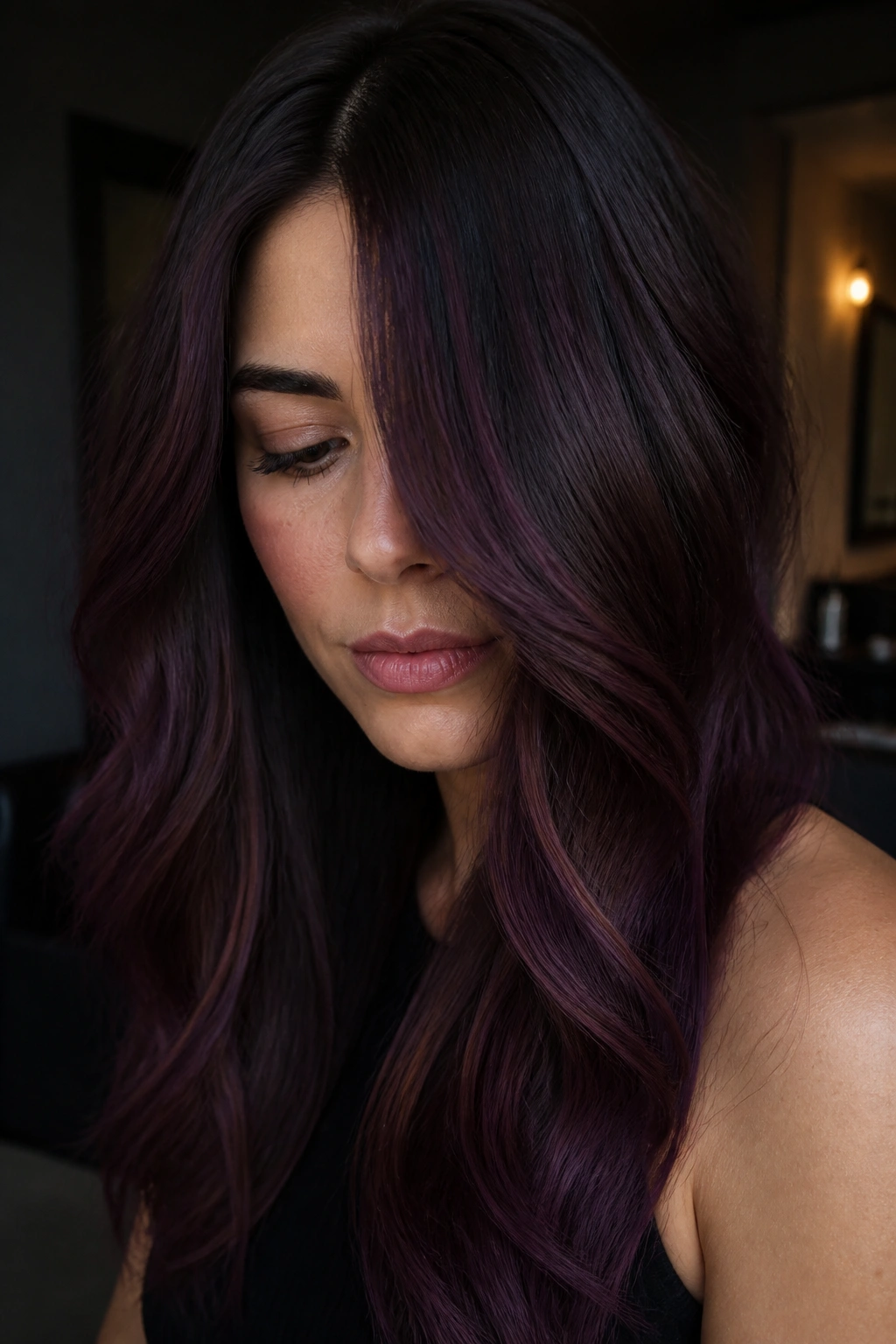
Plum cocoa melt is darker and moodier than the softer pink-brown shades, and that is the point. The plum adds a cool wine tone, while the cocoa base keeps the hair from sliding into full fantasy-color territory. It looks expensive in a blunt, no-nonsense kind of way.
This shade is especially good if your cool skin has a bit more depth or if you wear stronger makeup. Deep berry lips, charcoal liner, and plum hair do a lot of heavy lifting together. On very fair skin, keep the plum sheerer so it doesn’t overwhelm.
A melt works best when the roots stay close to natural and the plum gathers toward the mid-lengths and ends. That keeps the grow-out soft and gives the color a smooth, almost liquid look.
11. Orchid Brunette
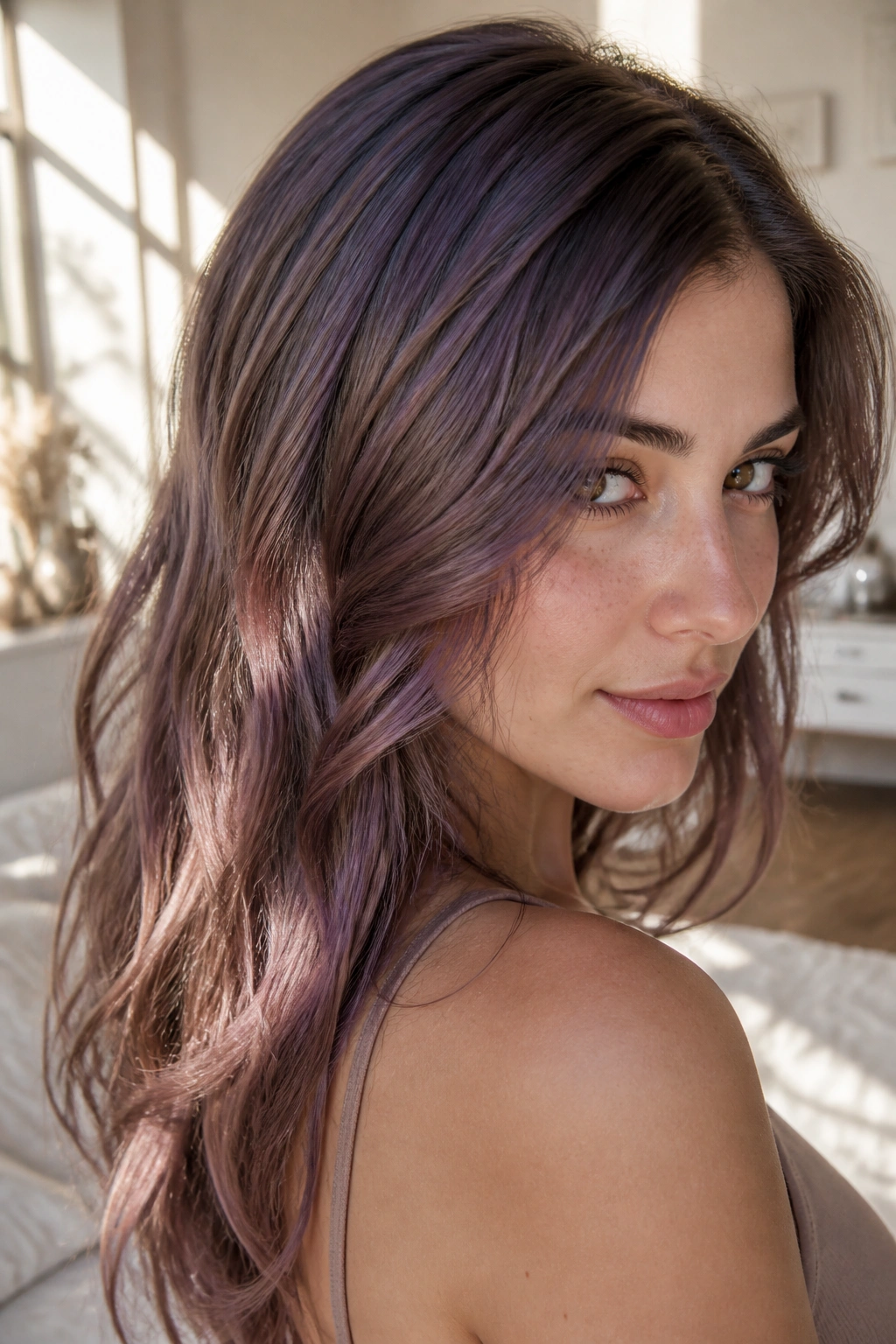
Orchid brunette is one of the prettiest choices for people who want pink that leans a little more violet. Orchid has that pale purple-pink feel that cool skin usually handles well, especially if the brunette base stays neutral or ash-brown.
What keeps this shade from becoming too loud is dilution. You do not want solid orchid pigment from root to tip. You want a brunette base with an orchid gloss or lowlight effect, so the color appears when the light hits it. That makes it feel airy.
If your skin is fair and cool, orchid brunette can look almost luminous. If your hair is long and layered, the movement gives the shade room to breathe. On a one-length cut, it can feel heavier, so a bit of texture helps.
12. Soft Mulberry Brown
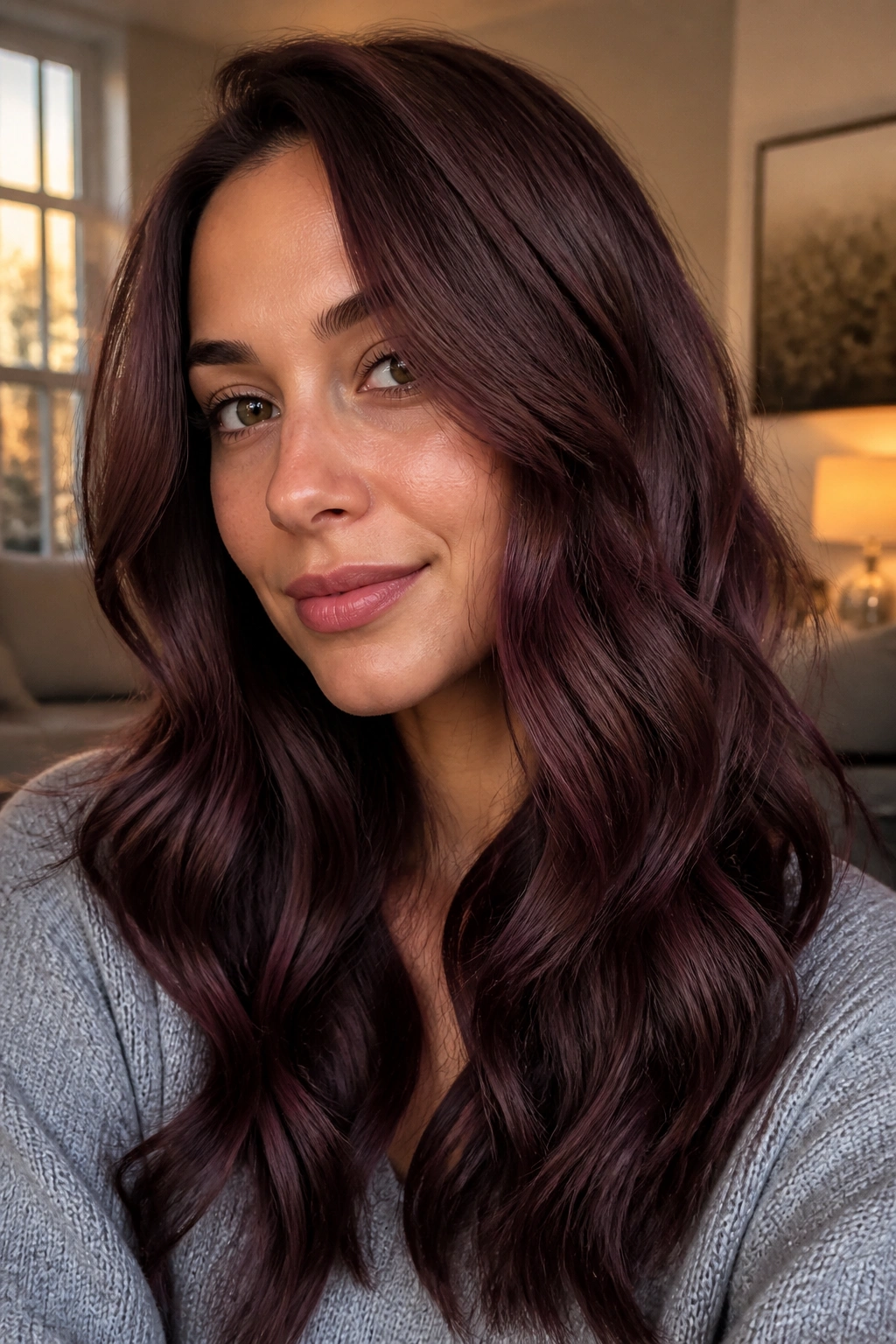
Soft mulberry brown gives you the best parts of pink and plum without letting either one dominate. The brown stays in charge, but the mulberry tint adds a cool red-violet shadow that makes the hair look richer from every angle.
The detail that matters
The base should not be too warm. A golden brunette base will fight this shade and make the mulberry look off. Ask for a neutral-cool brown with a mulberry glaze rather than a full color shift. That difference keeps it wearable.
This is a nice choice if you want a little drama but still need the color to work with everyday clothes and makeup. It also photographs differently under soft indoor light than it does outside, which gives it some depth without needing bright highlights.
13. Iced Mocha with Rose Lowlights
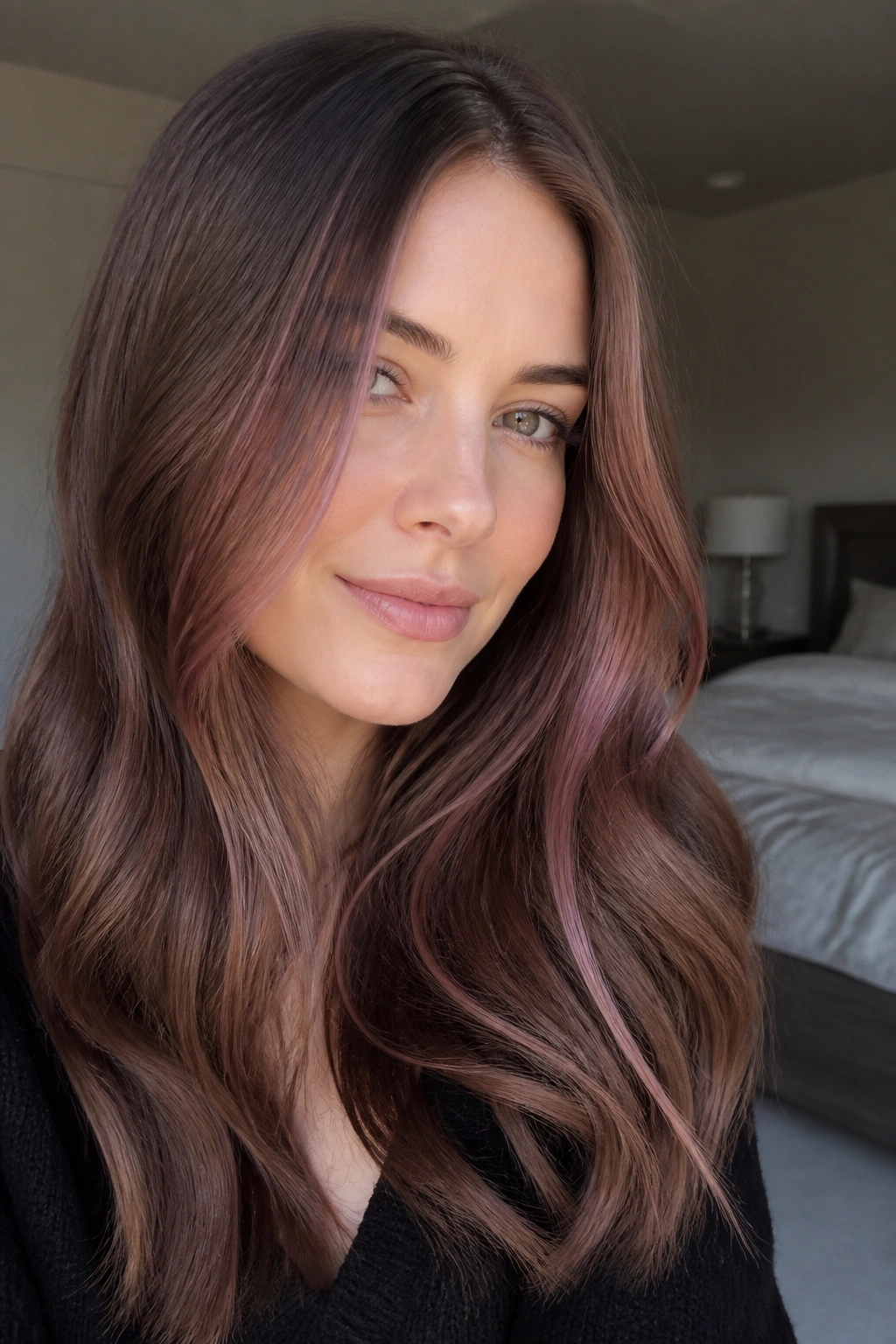
Iced mocha with rose lowlights is for someone who likes the idea of pink but wants the brunette to stay dominant. The mocha base is cool and creamy, and the rose lowlights sit underneath like a hidden tint. You don’t see them all at once. You catch them.
That hidden quality is useful on straight or softly waved hair. Underlayers show up when the hair moves, flips, or gets tucked behind the ear. If you wear your hair up a lot, the rose pieces underneath can still peek through without making the whole look high-maintenance.
The shade feels polished, not flashy. Cool skin gets the benefit of the rose tone without having to deal with a warm red cast.
14. Mauve Babylights on Chestnut
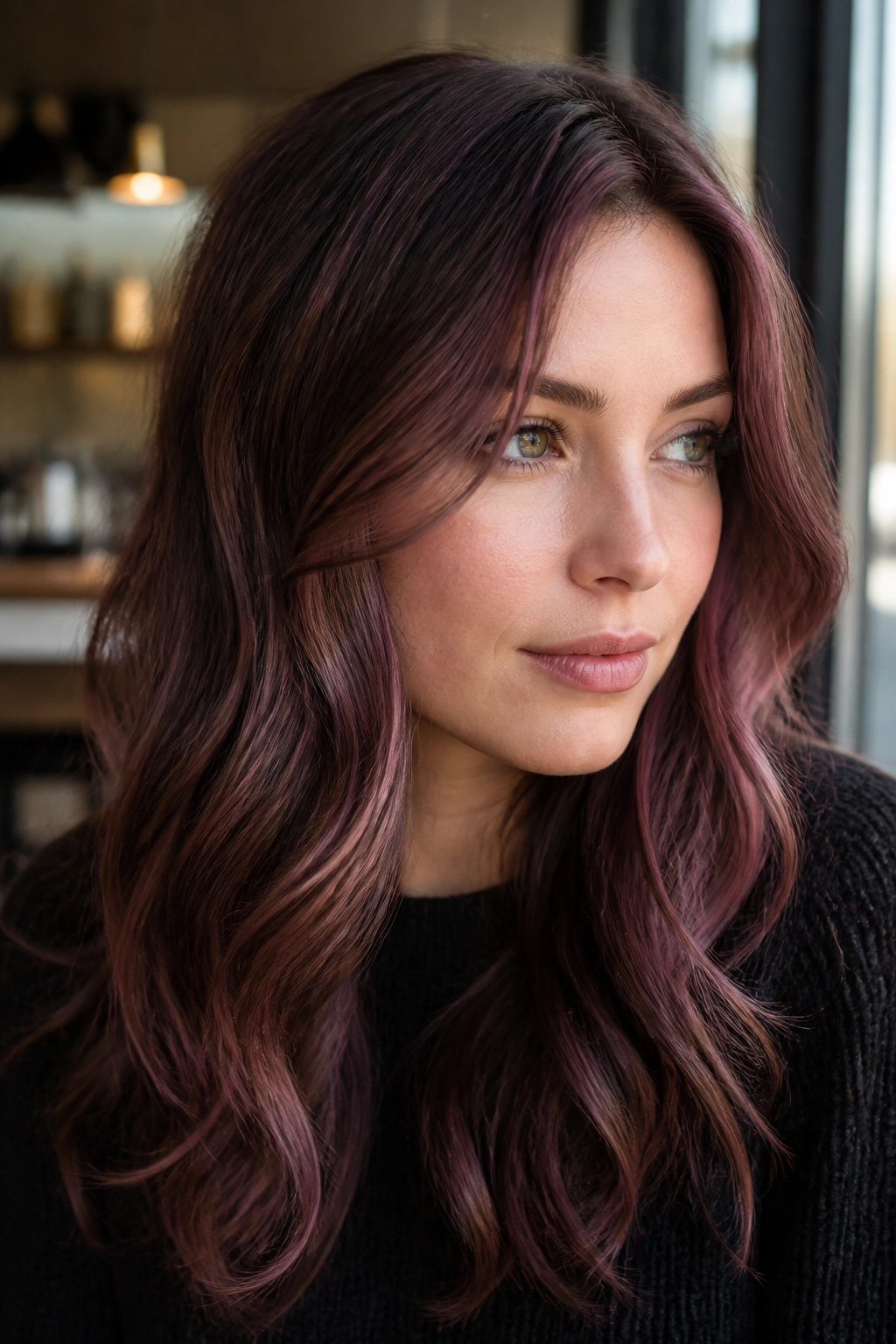
Babylights are tiny, and that’s why this shade works. Mauve babylights on chestnut brown give you a filtered effect rather than a striped one. The pieces are fine enough to blur into the base, which is exactly what many cool-toned brunettes want.
Ask for very thin sections, placed mostly around the part line, temples, and outer layers. If the highlights are too chunky, the pink can look patchy. When they’re fine, the chestnut shows through and the mauve just softens the edges.
Best places for the color
- Around the part for subtle brightness
- At the temples for a face-softening effect
- Through the outer layers for movement
- Lightly at the ends so the pink isn’t trapped at the root
This is one of the least risky pink-brown ideas on the list.
15. Black Cherry Brown
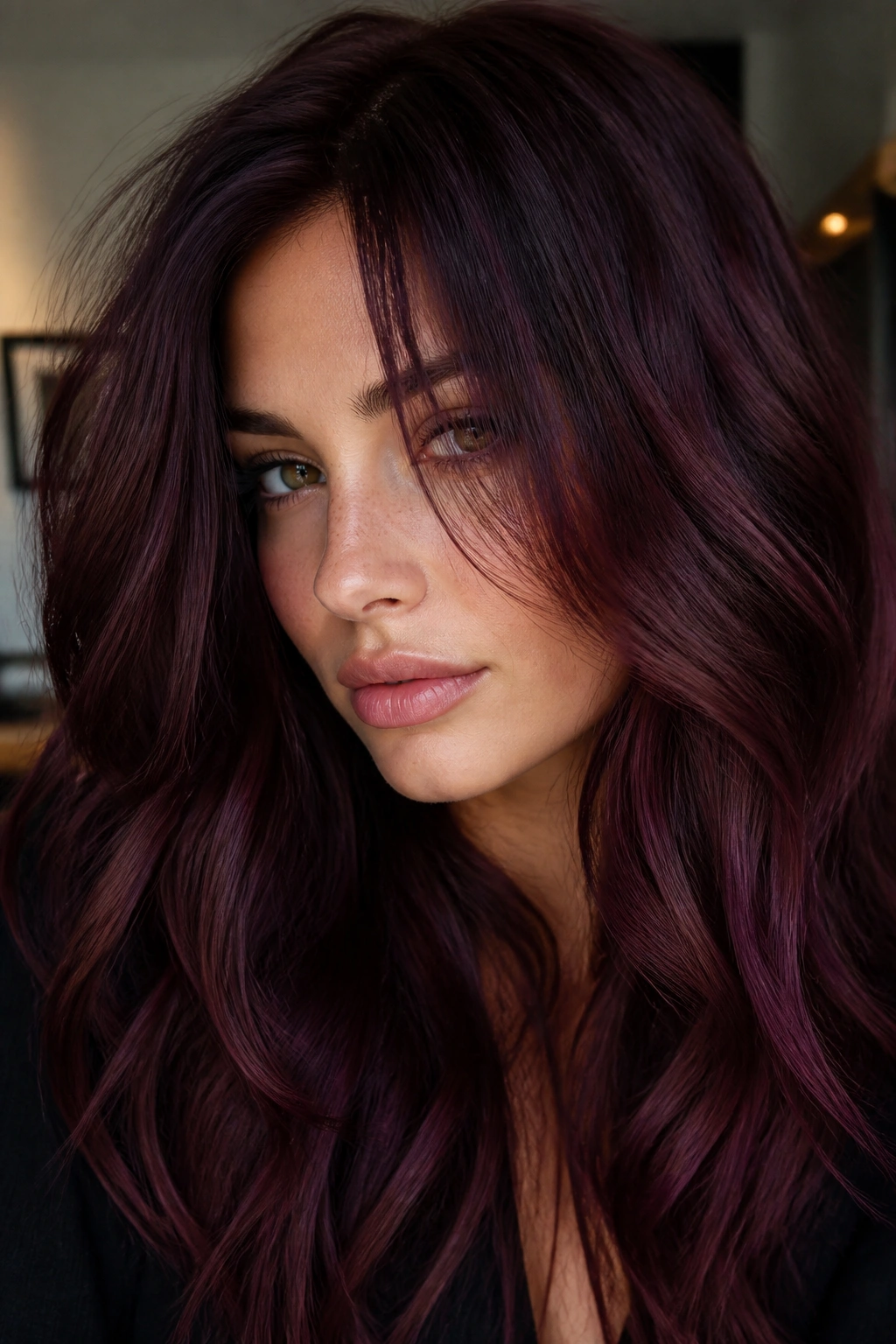
Black cherry brown has more depth and less sweetness than rose or blush shades. It sits close to brunette, but the cherry note gives the hair that dark fruit look that reads cool and polished. It’s dramatic, yes. Loud, no.
For cool skin, the blue-red side of black cherry is what makes it work. If the formula drifts too warm, it stops looking like cherry and starts looking red-brown. That shift matters more than people realize. You want the color to feel like it came from a plum glass, not a copper pot.
This shade suits long hair, short hair, and everything in between. It’s one of the rare bold colors that still feels grounded.
16. Blush Brunette Bob
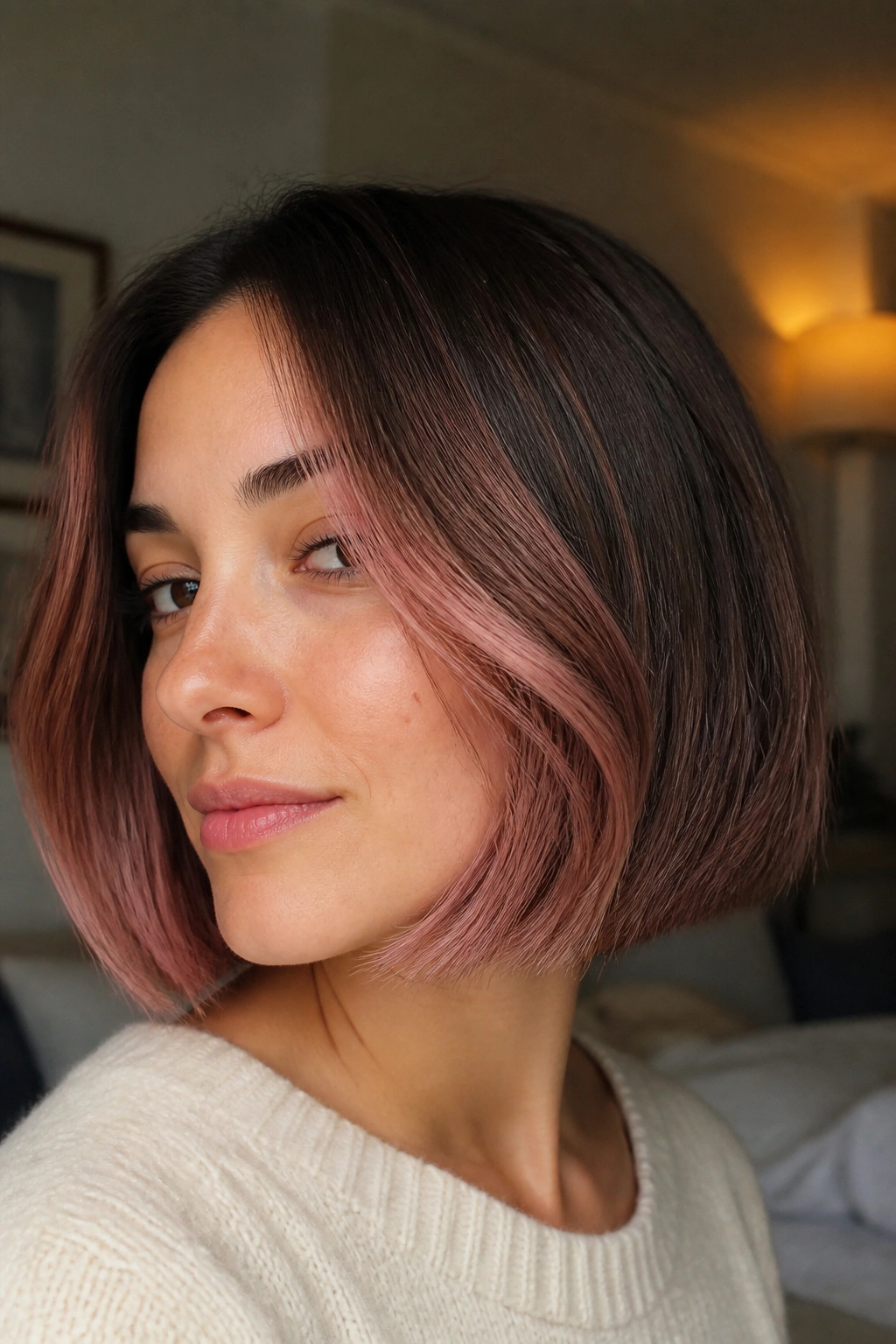
A blush brunette bob feels modern because the cut and the color do different jobs. The bob gives the shape, and the blush tint gives the softness. Put them together and you get something that looks fresh without needing a lot of styling time.
Shorter hair shows pink differently. Because the hair sits closer to the face, even a small amount of blush can affect the whole look. On cool skin, that can be a good thing, especially if the blush is muted and the brown underneath is neutral rather than golden.
This shade is especially nice on blunt bobs and lobs. The straight edges catch light and make the blush look deliberate. A messy wave can soften it further if you want a more casual finish.
17. Taupe Brown with Dusty Rose Ends
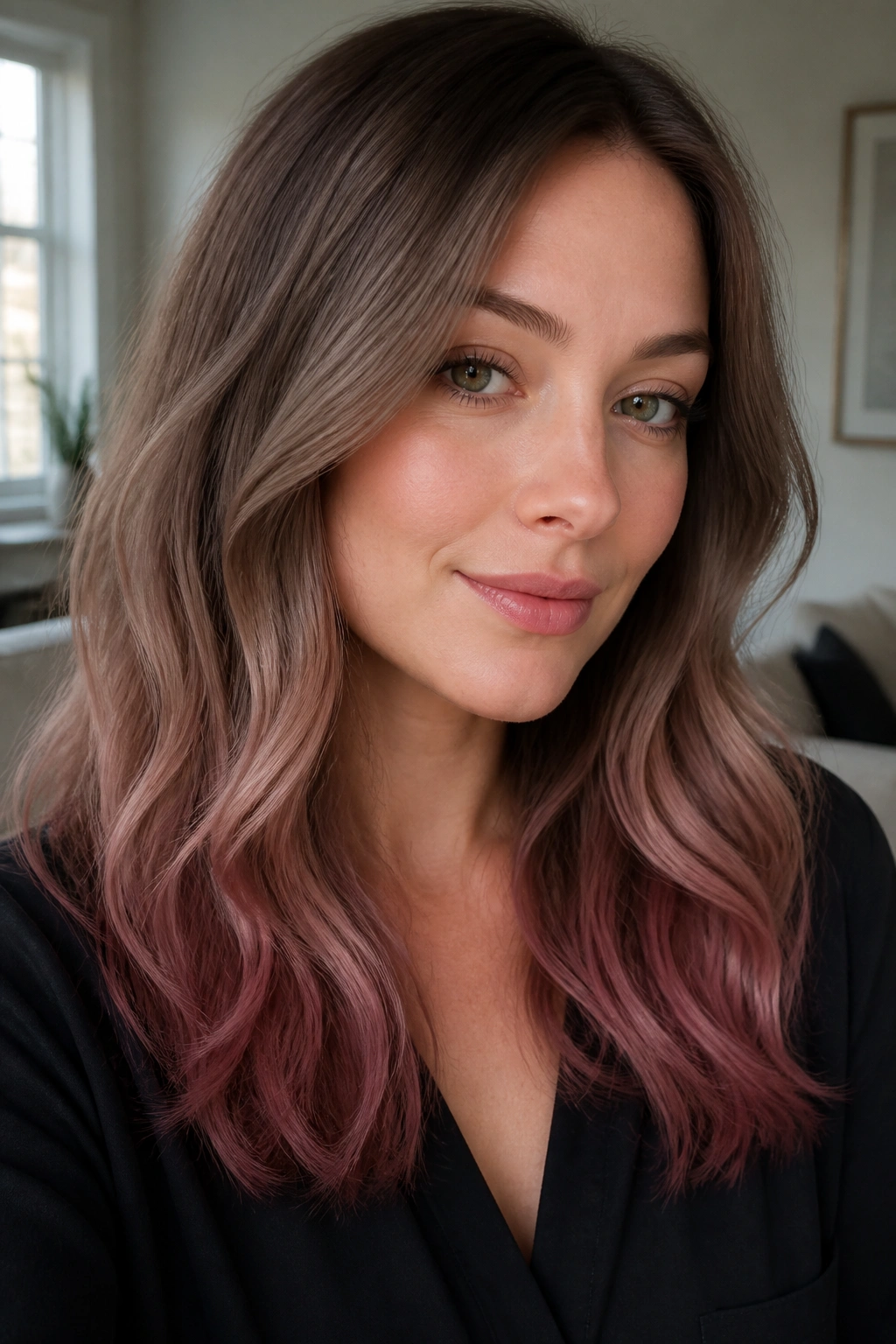
Taupe brown with dusty rose ends is a quiet shade, and I mean that as praise. Taupe keeps the brunette cool and gray-beige, while the dusty rose at the bottom gives the hair a little surprise. The contrast stays soft because both tones are muted.
This is a strong choice for cool skin that looks better in soft colors than saturated ones. The ends should be faded rose, not pink-pink. Think old petal, not neon sign. That restraint keeps the shade elegant and easy to wear.
What to watch for
- Too much warmth in the taupe base
- Ends that are too bright or too opaque
- Harsh line-of-demarcation where the rose begins
If you like low drama with a little personality, this one is sneaky good.
18. Raspberry Brown Balayage
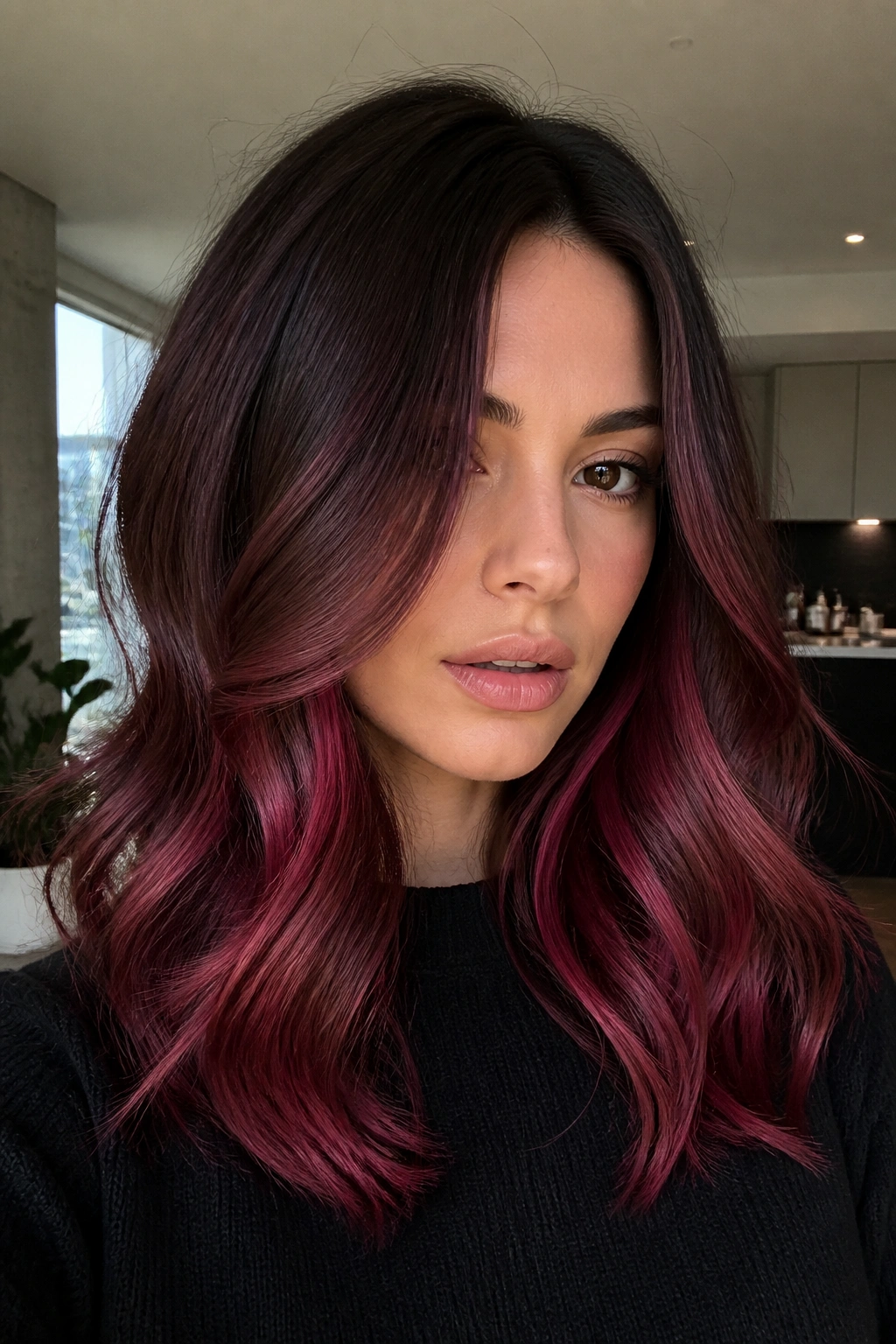
Raspberry brown balayage leans bolder than dusty rose or mauve, but it still stays in the brunette family. The raspberry note gives the hair a deeper pink-red sparkle, especially over a brown base that sits around level 5 or 6. It’s lively without turning fully red.
Cool skin handles raspberry better when the pigment has a blue-red cast. That’s what keeps it looking crisp. If the raspberry gets too orange, the whole effect turns noisy. Ask for balayage placement through the lower half of the hair so the brighter tone doesn’t crowd the face.
This is a good choice for people who want their hair color to be noticed from across the room. Not every pink-brown idea needs to whisper.
19. Velvet Cocoa with Pink Peekaboo Panels
Velvet cocoa with pink peekaboo panels is the shade for someone who wants privacy and surprise at the same time. The top layer stays cocoa brown, which keeps the look grounded. The pink sits underneath in hidden panels, so it appears when your hair moves, parts, or goes up.
That hidden placement works well if you need a more conservative look day to day. It also gives you more control over how bold the pink feels. Cool skin benefits from the cocoa base because it stops the pink from floating too high in the color family.
If you have thick hair, the panels show nicely when the hair is twisted or pinned. On fine hair, a few well-placed panels are enough. Don’t overdo it.
20. Slate Brown with Rose Tint
Slate brown is a fantastic base for cool skin because it sits in that smoky gray-brown zone that doesn’t fight the complexion. Add a rose tint and the whole thing wakes up. The result is low-key, modern, and a little moody.
The rose should be sheer. You want a tint, not a color block. On sunlight, the hair may look brown with a blush cast; in shade, it can read nearly graphite. That shifting quality is part of the appeal.
Ask for a sheer glaze if you want this effect
A glaze keeps the color translucent and helps the slate base stay visible. If your hair is porous, this is especially useful because opaque pink can grab too hard and lose the smoky finish. The goal is movement, not saturation.
21. Merlot Brown
Merlot brown is deeper and wineier than most pink-brown shades, which makes it a strong choice for cooler complexions that can carry darker tones. The brunette base stays rich, while the merlot adds that glassy red-violet edge.
I like this on shoulder-length cuts and longer hair because the color has room to shift. It can look nearly brown in one light and plum-wine in another. That makes it useful if you want dimension without obvious highlights.
The key is staying on the blue-red side of merlot. If the formula gets too brick-like, it won’t flatter cool skin as well. Keep it cool, glossy, and a touch shadowy.
22. Lilac Brown Hybrid
Lilac brown hybrid sounds airy, and it is, but the brown beneath it matters just as much as the lilac on top. This shade is for people who want something softer than purple and less sweet than blush. It feels cool, muted, and slightly editorial without trying hard.
The trick is dilution
Lilac pigments can go bright fast, so the brown base should stay visible. Ask for a brown glaze with a lilac mist, not an opaque pastel layer. That keeps the tone wearable and helps it flatter cool skin instead of fighting with it.
This shade tends to work best on fine to medium hair because the lighter pigment shows the texture. On very coarse hair, you may need a stronger deposit to keep the lilac from disappearing.
23. Rosy Espresso
Rosy espresso is one of those shades that sounds simple and ends up looking more nuanced on the hair. The espresso gives the hair a deep, cool base, while the rosy finish adds warmth only in the red-violet direction, which is exactly what cool skin tends to like.
It’s a good one if you want the hair to look dark and polished first, pink second. In low light, it can read like a rich brunette. In bright light, the rose note becomes clearer. That makes it easy to wear in many settings without feeling flat.
If your hair is naturally very dark, this can be a less dramatic route than full highlights. A gloss or semi-permanent overlay may be enough.
24. Cocoa Plum Sombre
Cocoa plum sombre uses a soft ombré effect, which is why it feels relaxed instead of stiff. The cocoa sits at the top, then the plum gradually deepens toward the ends. There’s no harsh line, no sharp contrast, no need for the hair to be perfect every day.
This is especially good on long, layered hair because the color transition has space to show. Wavy styling helps the plum catch the light in pieces. If you wear your hair straight, the fade looks smoother and more polished.
Cool skin likes the plum because it stays in the blue-red family. Cocoa keeps the roots believable, and the sombre technique keeps the grow-out from looking obvious.
25. Strawberry Ash Brown
Strawberry ash brown sounds warmer than it is. The ash part is what keeps it in cool territory, and the strawberry note should be soft, faded, and just pink enough to notice. Done right, it looks like brunette hair that spent a little time in a cooler light.
Why it works better than bright strawberry tones
Bright strawberry can get too golden for cool complexions. Ash strips out that warmth and leaves a muted pink-red that behaves better against the skin. You still get the sweetness of strawberry, just without the orange edge.
This is a good shade for lighter brunettes or people who don’t want the jump to feel huge. A gloss layered over highlights or a level 6 base can keep the result soft and believable.
26. Wine Brown with Soft Face Framing
Wine brown with soft face framing is an easy yes if you want pink-brown color but don’t want to commit everywhere. The wine tone deepens the brunette, and the face framing pulls the color forward in a way that flatters cool skin fast.
The face frame should be gentle, not stripey. Two softly colored sections around the hairline are enough for most people. If you go too wide or too bright, the effect can start to dominate the face instead of shaping it.
This shade works well when you wear makeup that echoes the hair: rose lips, mauve blush, cool taupe eyeshadow. The color feels pulled together without needing to match too hard.
27. Petal Brown Bob
Petal brown bob is a softer, lighter pink-brown that looks especially nice on shorter cuts. The bob gives the hair structure, and the petal tint softens the edges so the cut doesn’t feel severe. It’s a neat little balance, and it photographs well without looking staged.
On cool skin, petal should read as a faded blush, not peach. If the base brown is medium and neutral, the color can look very fresh. On a blunt bob, the tint may appear more even; on a wavy bob, it can look airy and lived-in.
This is a good choice if you want the hair to feel romantic without going full pastel. Short hair can carry a little more color than people expect.
28. Smoky Mauve Ombré
Smoky mauve ombré gives you a stronger color story from root to end, but the smoke keeps it from feeling loud. The mauve is there the whole time, yet the smoky brunette base prevents the shade from slipping into pastel or purple territory.
I like this for longer hair where the ombré can develop gradually. The roots stay deeper, the mids soften into mauve-brown, and the ends carry the lightest pink-violet trace. Wavy styling makes the transition more visible, while straight styling makes it feel sleeker.
Cool skin usually likes this more than warm skin does because the shade never loses that cooler cast. It’s a bit more fashion-forward, sure, but still grounded enough to wear often.
29. Cool Beige Brown with Pink Sheen
Cool beige brown with a pink sheen is the shade for anyone who wants the hair to stay brown first. The beige keeps the color soft and wearable, while the pink sheen gives it a subtle glow that only shows when the light hits it right.
That sheen is the whole point. It should not look like a separate color sitting on top. It should feel like the hair picked up a rosy reflection and held onto it. On cool skin, that reflection looks cleaner than a warm copper shine would.
This is one of the best low-commitment choices on the list. If you like your color understated but not plain, it hits the mark.
30. Soft Pink Brown Root Melt
Soft pink brown root melt may be the easiest place to land if you want pink-brown hair and don’t want the grow-out to become a problem. The roots stay near your natural brunette, then the pink-brown grows softer as it moves through the lengths. No hard line. No awkward strip.
That root melt also gives the color a more natural depth, which cool skin usually appreciates. The pink sits inside the brown instead of sitting on top of it. Ask for a neutral-cool root shadow with a sheer rosy melt through the mids and ends.
If you want one shade that feels wearable, soft, and easy to live with, this is the one I’d point to first. It’s gentle enough for everyday, but the pink still shows up when the hair moves.
