



Mocha brown hair color sits in a sweet spot that a lot of brunette shades miss: rich enough to look intentional, muted enough to play nicely with cool skin tones. The trick is keeping the brown on the smoky side, not the orange-gold side.
If silver jewelry looks cleaner on you than yellow metal, or if your skin leans pink, rosy, or blue in daylight, the wrong brown can make your face look tired. Ash, taupe, mushroom, espresso, and soft beige notes pull the color back into balance; coppery warmth tends to shove it out of place.
I like mocha because it doesn’t shout. It can look sleek on straight hair, soft on waves, and expensive in the kind of way that doesn’t need a lot of styling help. The shade range is wider than most people think, which is why one brunette can wear a velvety espresso bob and another can wear a smoky balayage that barely looks dyed at all.
The 28 ideas below stay on the cool side of brunette color, from deep espresso and mink brown to silver-brown ribbons and plum-tinted mocha. A few are low-maintenance, a few need a careful toner, and a few only work if your colorist keeps the warmth on a short leash.
1. Smoky Mocha Melt
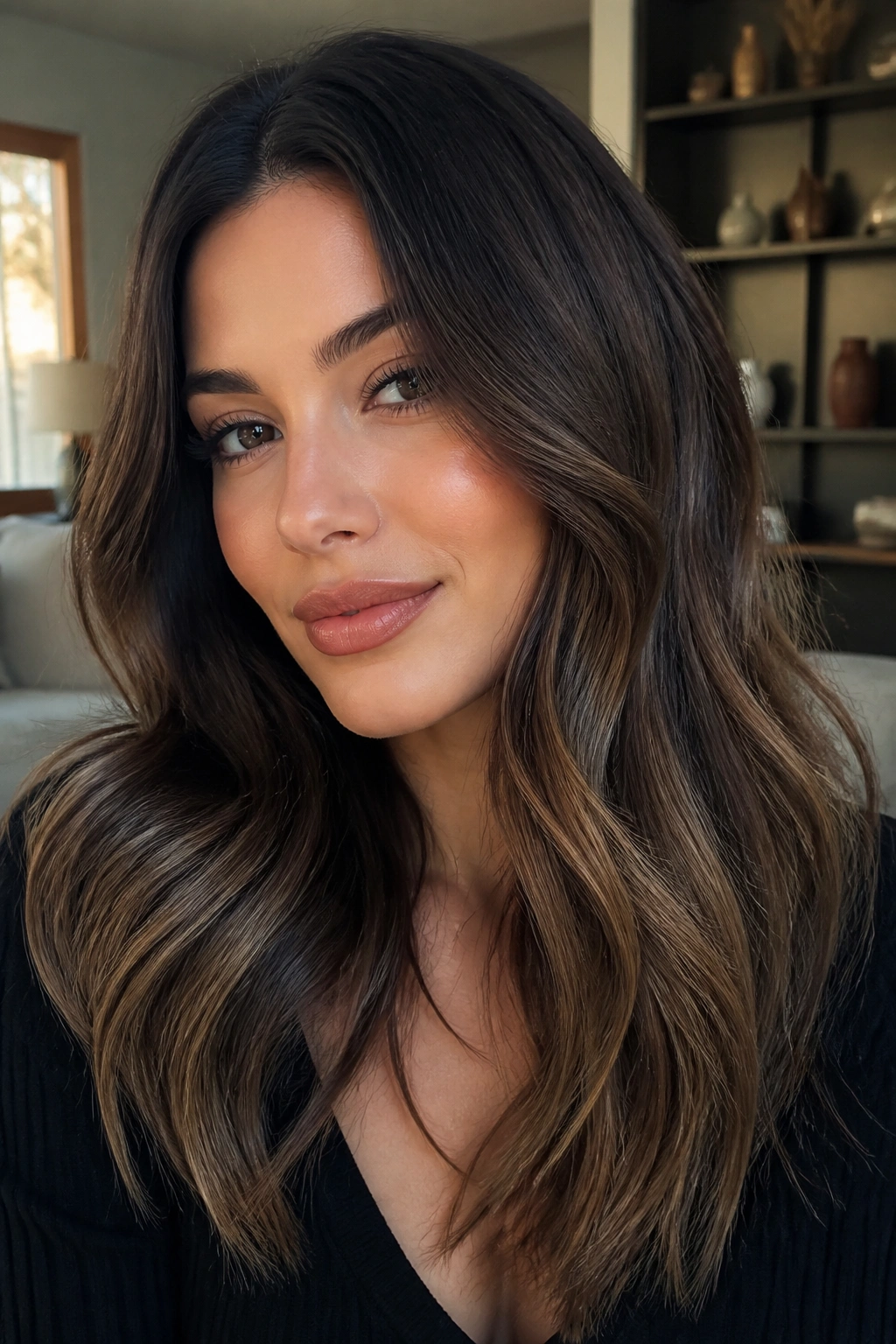
A smoky mocha melt is one of the easiest ways to wear mocha brown hair color on cool skin without it turning muddy. The roots stay deeper, the mids soften into a muted brown, and the ends look as if the color has been smudged together instead of painted in stripes.
Why It Flatters Cool Skin
The coolness comes from the finish, not just the depth. Ask for a level 4 or 5 root with a muted level 6 through the lengths, then keep the toner ash or blue-violet based. That stops the brown from drifting into red, which is the thing that usually fights cool undertones.
- Keep the root shadow soft, not harsh.
- Let the mids carry the lightest part of the tone.
- Ask for a gloss that reads ash-brown, not golden brown.
- Style it with loose waves if you want the blend to show.
Best tip: a smoky melt looks better when the grow-out is blurred. Sharp lines make the whole thing feel louder than it needs to be.
2. Espresso Mocha with Micro Highlights
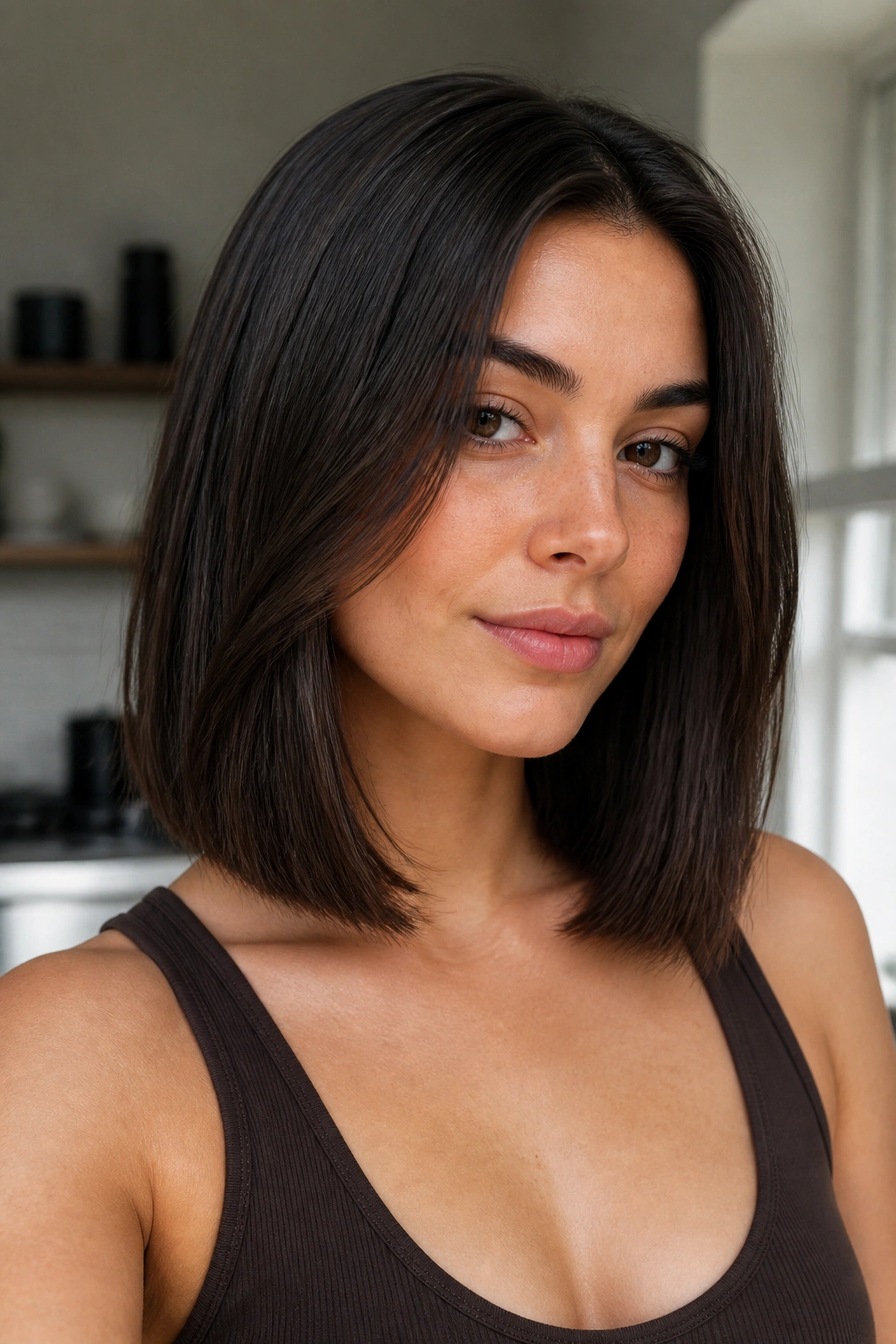
A deep espresso base can be kinder to pink or fair cool skin than a softer brown that has too much warmth. Strange, but true. The darkness gives the face a clean frame, and the micro highlights keep it from feeling heavy.
The trick is restraint. Instead of chunky ribbons, ask for tiny, nearly invisible highlights threaded through the top and around the hairline. They should read as soft shifts in tone, not obvious streaks. A neutral-cool glaze over the top keeps the espresso side rich while the lighter strands stay subdued.
This works especially well on blunt cuts, short lobs, and shoulder-length layers that can take a little depth. It also helps if your hair is naturally dark brown and you want dimension without losing that sleek, grown-up look.
If you like a polished finish and hate anything too warm, this is a strong lane.
3. Mushroom Mocha Bob
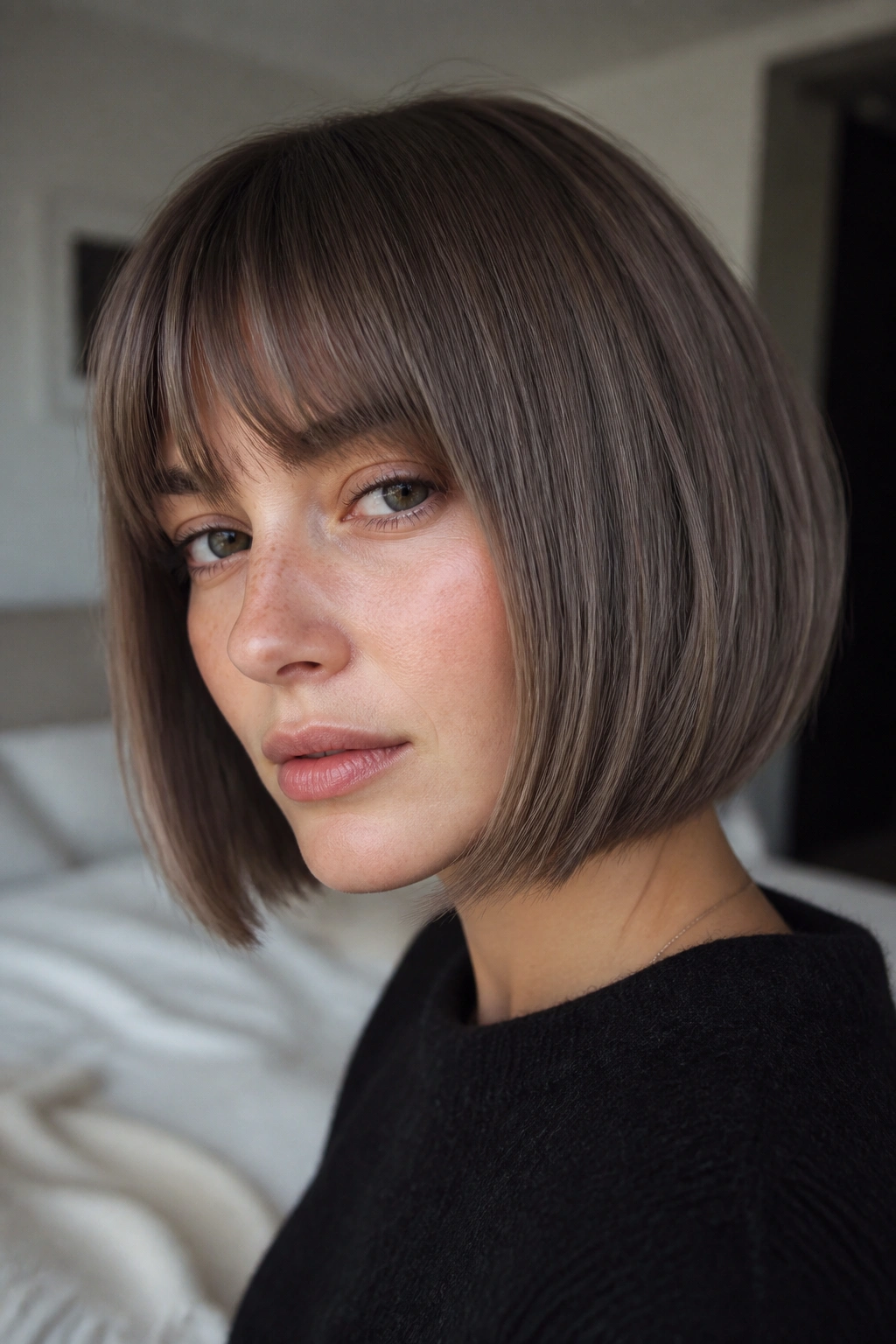
A mushroom mocha bob has that slightly gray-brown cast that makes cool skin look calmer and cleaner. It’s the kind of color that looks deliberate even when the cut is simple, which is why I keep coming back to it for short hair.
The bob matters here. A one-length cut shows off the smoky tones better than a lot of layers do, because the shape gives the color a clear outline. If your hair bends under at the jawline, the shade looks plush instead of flat. If it’s pin-straight, even better; the reflective surface makes the muted brown look expensive in a quiet way.
What to Ask For
- A base around level 5 mushroom brown
- No red or copper in the formula
- A beige-ash gloss through the ends
- Soft texture at the tips so the cut doesn’t feel boxy
Small warning: if your skin is already very gray or cool, too much ash can make you look washed out. The fix is a touch more beige, not more warmth.
4. Cool Beige Mocha Balayage
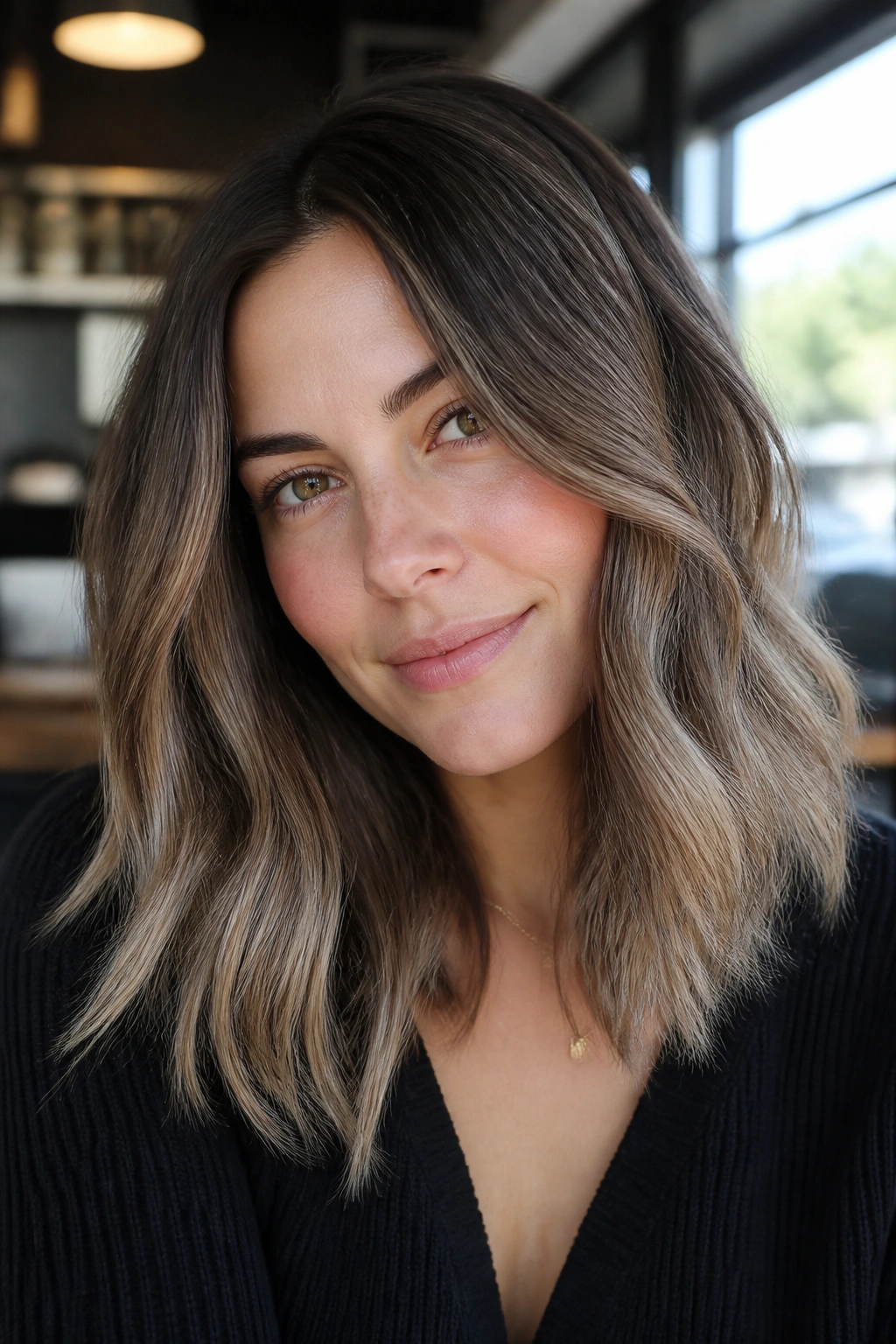
Cool beige mocha balayage is what I recommend when someone wants dimension but cannot stand orange. Beige gets a bad name sometimes because people lump it in with warm caramel, but the cooler beige end of the spectrum is a different animal. It’s softer, less gold, and far better for cool undertones.
The balayage placement should stay mid-length and lower. That keeps the root area rich and dark, which is useful on cool skin because the contrast gives the face shape. Then the lighter pieces drift through the surface in a way that looks sunless, if that makes sense. Not washed out. Just softly lit.
This color works on curls, waves, and even straighter hair if the light pieces are fine enough. Thick stripes can push the whole thing warm fast. Fine ribbons keep it believable.
If you wear a lot of black, navy, charcoal, or crisp white, this shade tends to sit nicely with your wardrobe.
5. Iced Mocha with Face-Framing Pieces
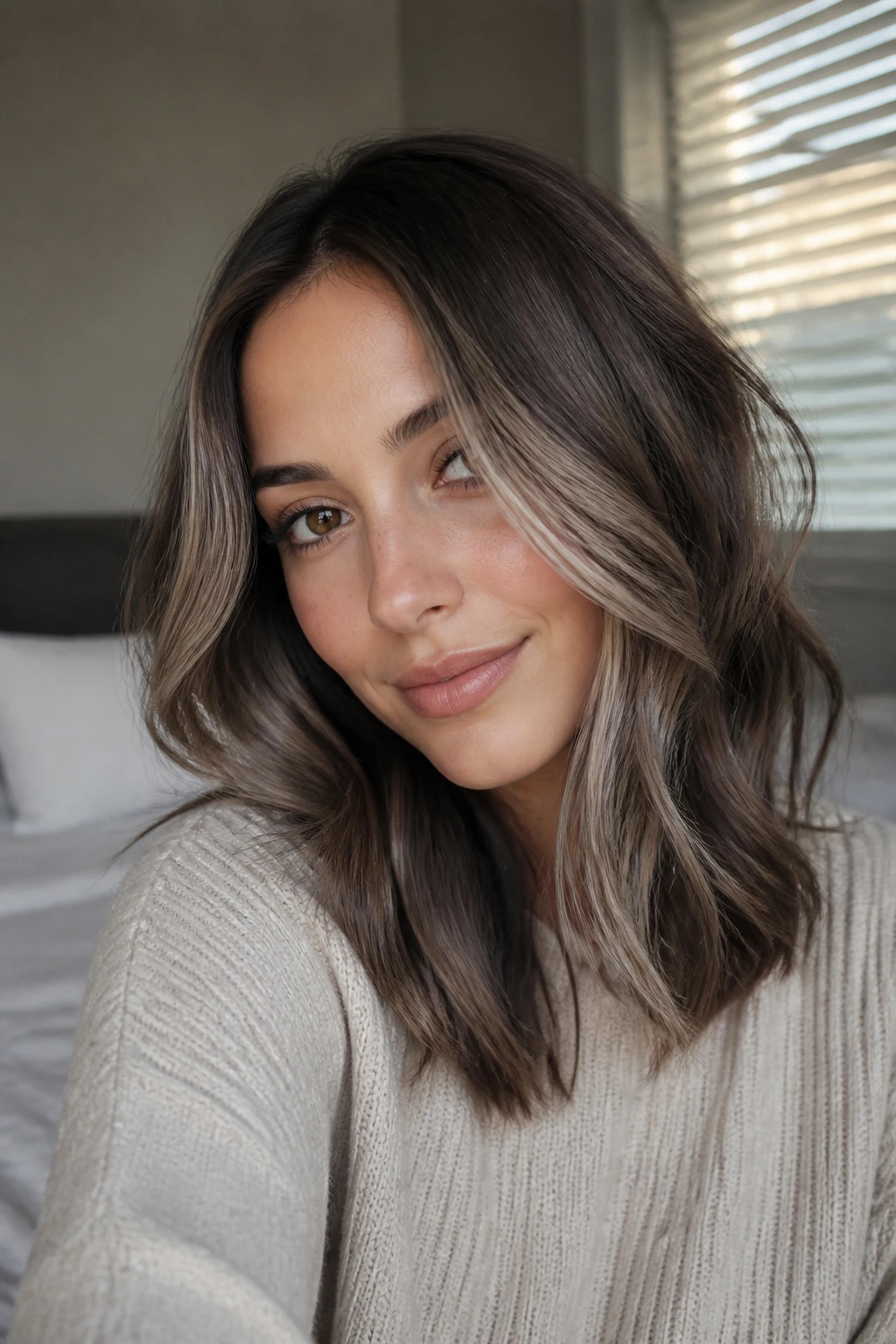
Why does this version work so well? Because it gives you brightness right where you need it, without flooding the whole head with light brown warmth. The face-framing pieces do the heavy lifting, and the rest of the hair stays cool, grounded, and easy to wear.
How to Ask for It
Ask for a mocha base with iced beige ribbons around the face, then keep the rest of the highlights sparse. The pieces should start near the cheekbone or just below it, depending on the cut. If they begin too high on the hairline, the color can feel stripey. If they sit too low, you lose the effect.
This is a nice pick if you wear curtain bangs, a soft middle part, or shoulder-length layers. The lighter front sections pull attention upward and make the hair look a little fuller around the face. That matters when the rest of the shade stays deep and smoky.
Good move: keep the front pieces cool and fine. Big warm pieces near the face can make the whole look feel off in a hurry.
6. Soft Taupe Mocha Lob
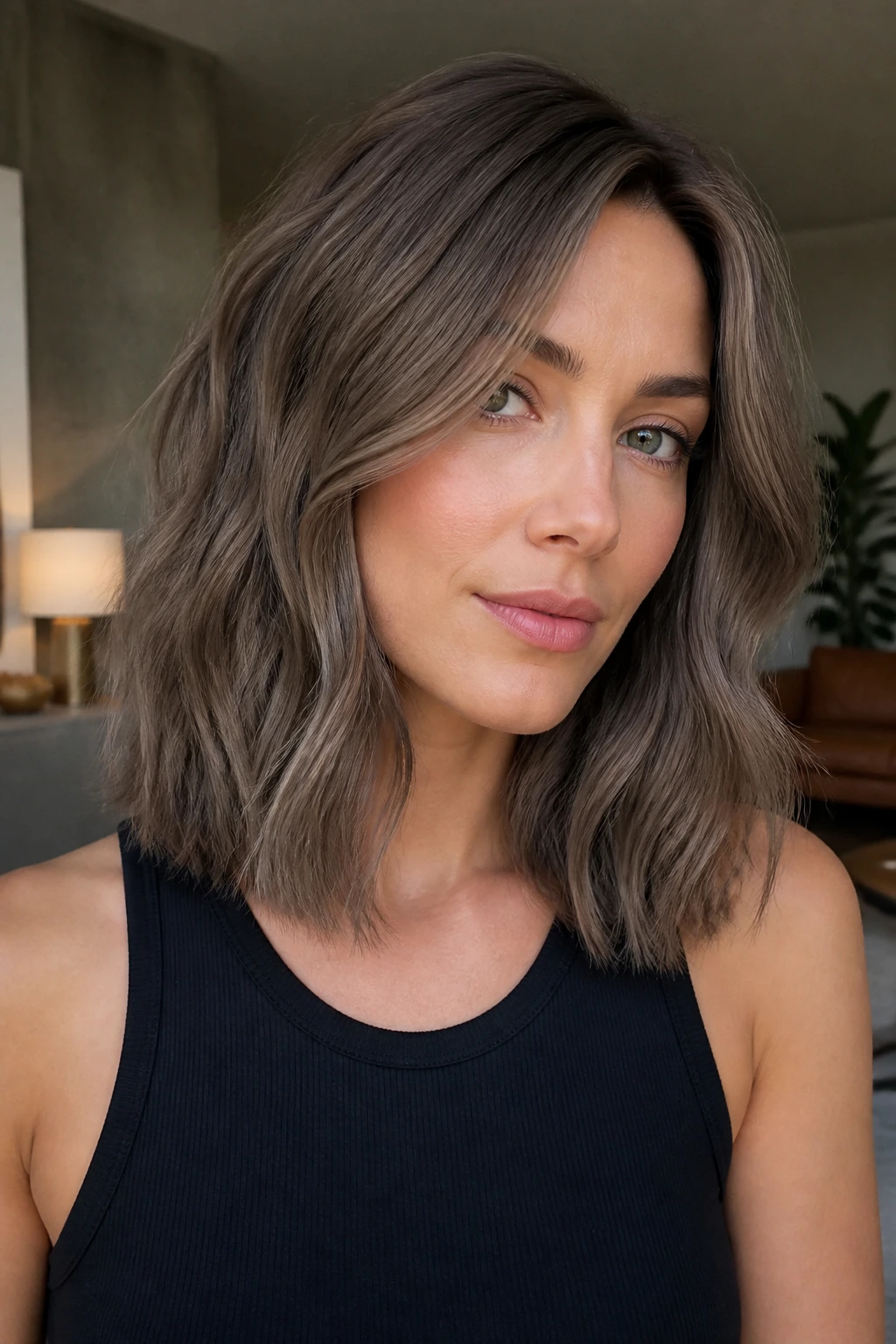
Soft taupe mocha is the shade I reach for when someone says they want brown, but not brown-brown. It sits between mushroom and cocoa, with a grayish cast that cool skin usually handles well. A lob gives it room to breathe.
Unlike warm latte browns, taupe mocha has less yellow in it, which is exactly why it works. The color does not scream for attention. It sits there, calm and clean, and lets the cut do some of the talking. On a lob, that means the ends can swing a little and still look polished.
This is a smart choice if your hair is fine or medium in density, because the muted tone can make the strands look denser without turning them dark and flat. A slight bevel at the ends helps too. Straight, blunt edges can feel severe. Soft movement keeps the whole thing from looking too static.
If you want low drama and a cool finish, this one is hard to beat.
7. Deep Mocha with Blue-Black Lowlights
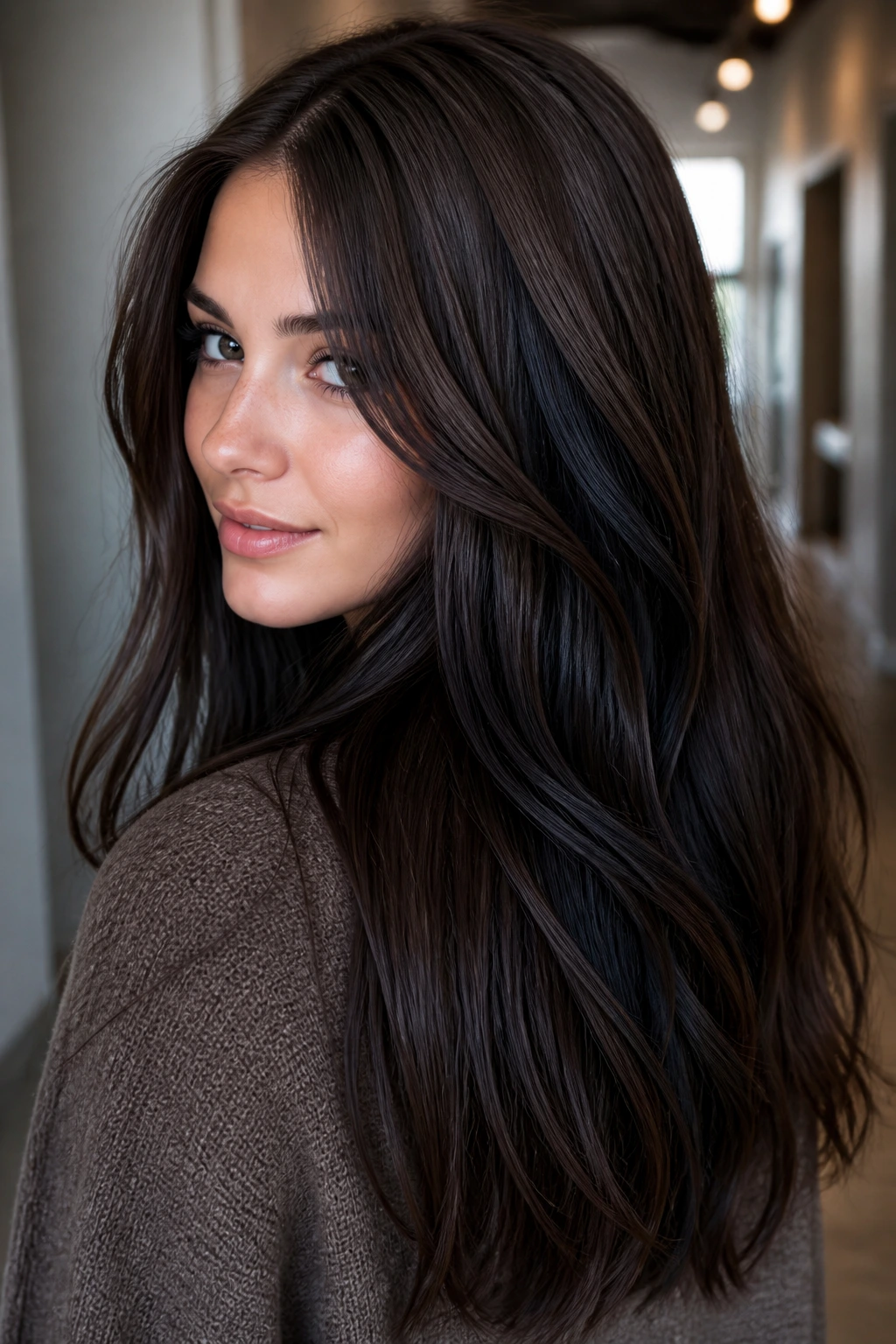
Blue-black lowlights are one of the most underrated tricks for cool-toned brunettes. They deepen the hair without tipping it into red, and they make a standard mocha base look sharper under indoor light.
The thing people miss is placement. You do not need lowlights everywhere. A few panels underneath the crown, through the back, and near the nape are enough to build depth. The effect is strongest when the top layer stays mocha and the hidden pieces go slightly inkier. That little contrast gives the hair movement when it swings.
This look is especially good on long hair that needs visual weight. It also works on thick hair that tends to puff out, because the darker underlayers make the shape look neater. If your skin is very fair, go easy on the blue-black. A little goes a long way.
The main idea: cool brunettes do not always need more light. Sometimes they need a deeper shadow.
8. Mocha Brown Gloss on Long Layers
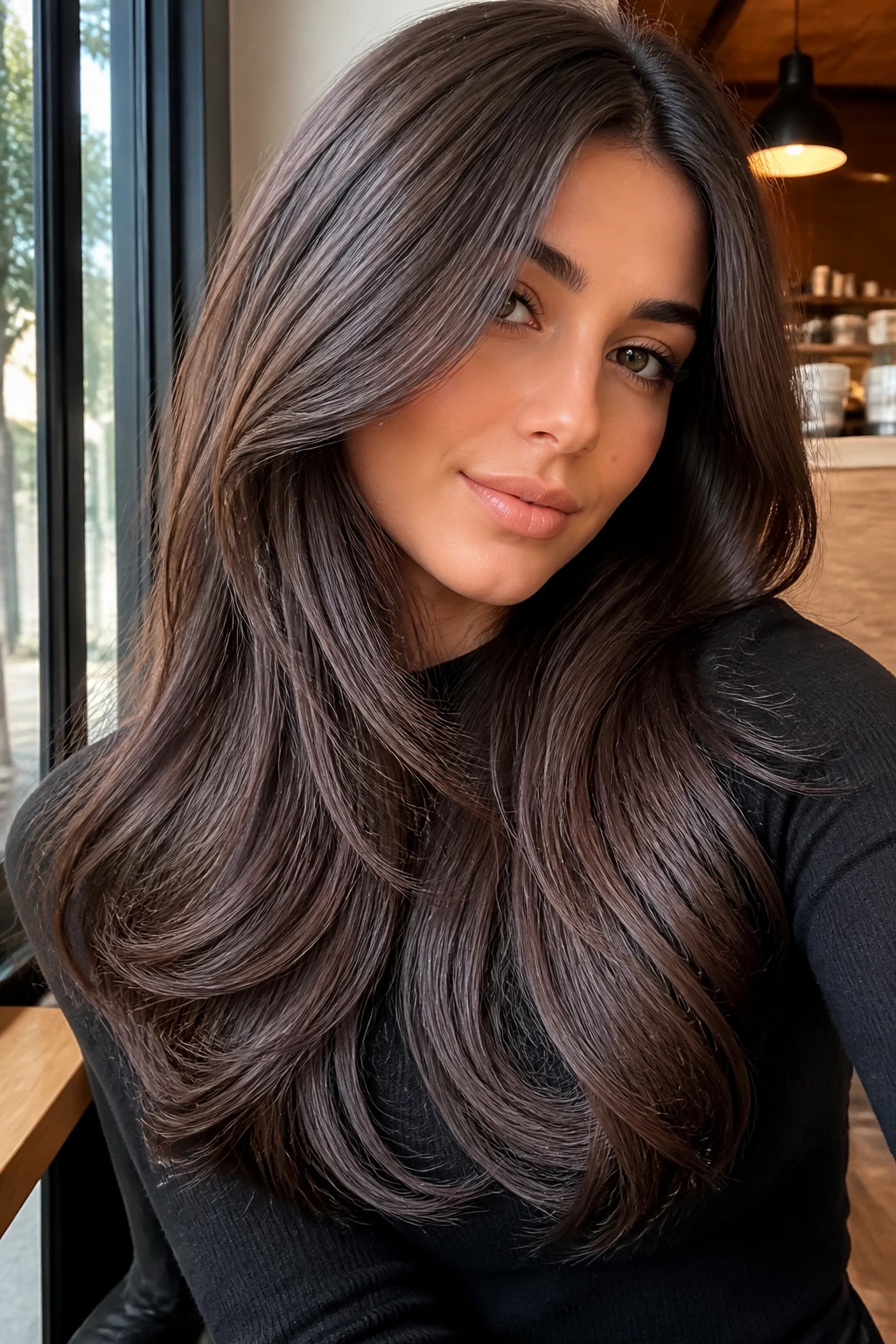
Long layers can swallow a plain brown and make it look dull. A mocha gloss fixes that by tightening the tone, cooling down any orange in the hair, and giving the lengths a smoother finish.
Think of this as a color polish rather than a full rework. The base can stay close to your natural brunette, but the gloss should lean ash, cocoa, or soft mink. On long layers, the movement comes from the cut, so the color needs to stay even and shiny instead of overly highlighted. Too much contrast on long hair can look choppy fast.
A good gloss is especially useful if your hair has been lightened before and picked up warmth from washing, sun, or heat styling. You can see it in the mids first. They start looking rusty. A cool mocha gloss pulls them back into line.
Quick details that matter
- Best on hair past the shoulders
- Works well with subtle curtain layers
- Needs shine, not stripes
- Looks strongest after a fresh blowout
My take: this is the choice for someone who wants to look put together with almost no visual fuss.
9. Ash Mocha Shag
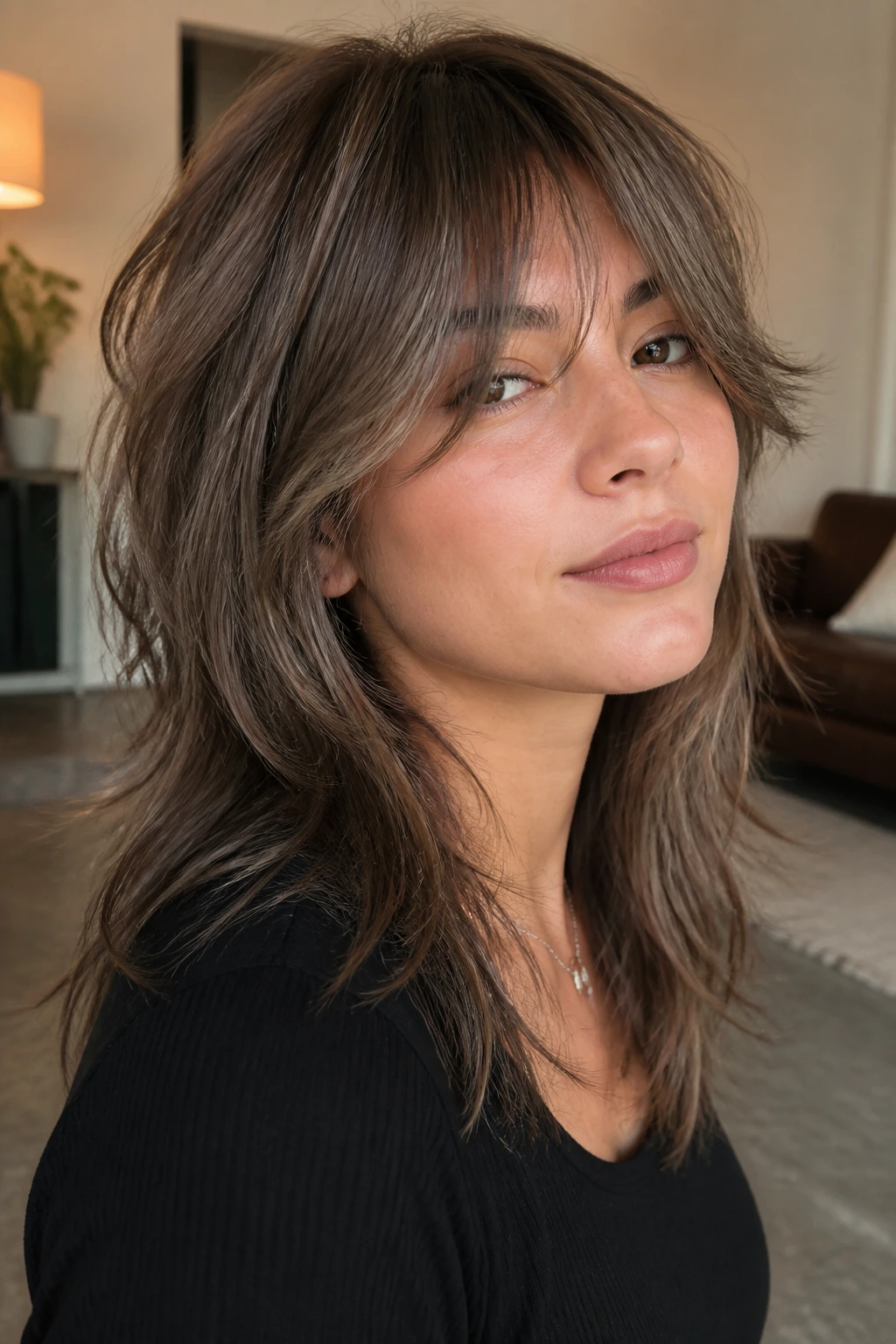
A shag and ash mocha are a nice pair because the cut brings the movement the color needs. Without texture, ash brown can go flat. With choppy layers and a bit of bend, it looks edgy in a way that still feels wearable.
The shag works best when the pieces around the face are slightly lighter than the nape. That tiny shift helps the haircut move. Ask for a medium ash-brown base with soft, broken layers, then keep the tone matte enough that it does not read reddish in daylight. A little grit in the styling cream helps, too.
This is a good option if your hair has a natural wave or a bit of frizz. The messiness becomes part of the style, which is handy. Straight, sleek ash mocha can be lovely, but a shag gives it some attitude. It keeps the shade from feeling too polite.
If you like hair that looks lived-in instead of shellacked, this one has real charm.
10. Velvet Mocha Curls
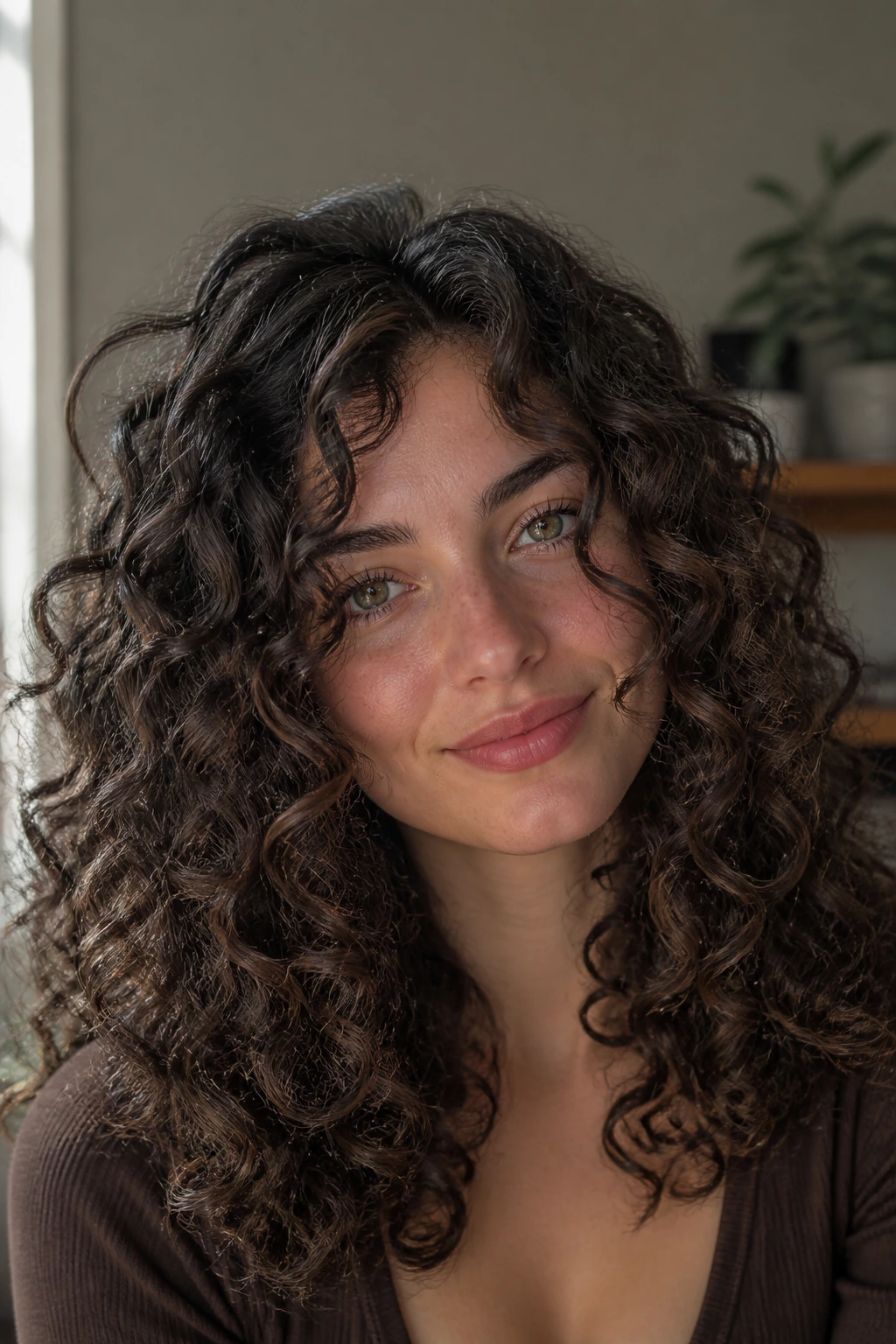
Velvet mocha curls need a color that supports the texture instead of competing with it. That means soft contrast, low warmth, and enough depth that the curls keep their shape even on cloudy days when everything looks a little flatter.
What Keeps It Soft
A mocha base with fine cool ribbons through the outer curl pattern usually works better than heavy highlights. The goal is to make each curl clump read clearly without breaking the pattern into obvious stripes. Ask for a gloss that keeps the brown rich but not red.
- Use a curl-by-curl painting approach.
- Keep the lightest pieces near the top and outer layers.
- Leave the underside deeper for shadow.
- Finish with a lightweight cream, not a sticky gel.
On curly hair, color can look much lighter once it dries, so it helps to stay a shade cooler than you think you need. That keeps the finished result in the mocha family instead of drifting toward chestnut.
Best advice: if your curls are tight, ask for thinner placement. Big light sections can look loud once the hair springs back.
11. Cool Chestnut Mocha
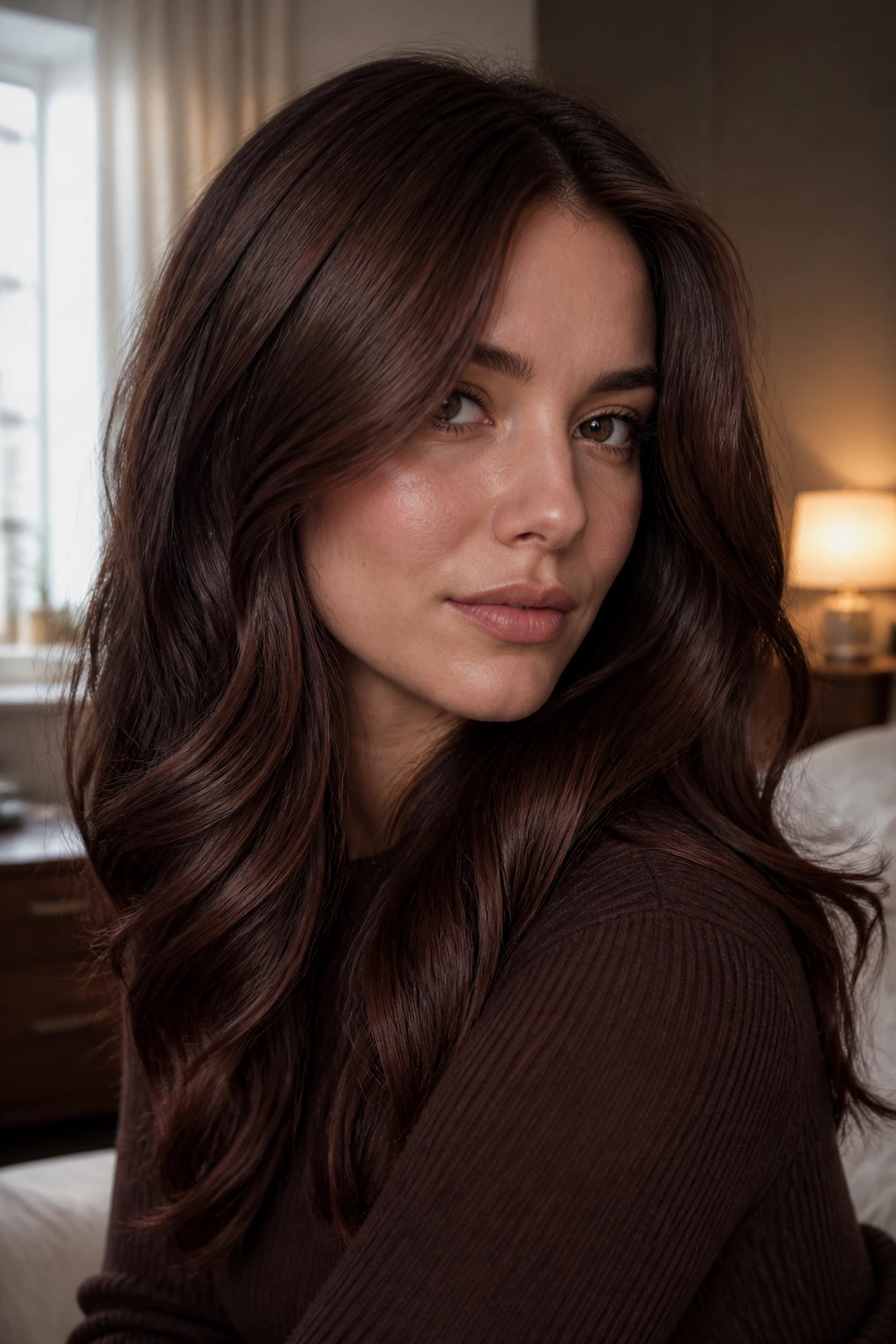
Chestnut usually makes people think of warmth, which is exactly why this version needs a little explaining. A cool chestnut mocha keeps the brown rich and soft, but the red in it stays dialed down until it feels closer to cocoa than autumn leaf.
Where the Coolness Comes From
The coolness sits in the gloss. Ask for a brown with muted red-violet rather than orange-red, then keep the finish satin rather than shiny-bright. That gives the color depth without making it coppery. On cool skin, that difference matters more than people expect.
This shade is a nice bridge if you want something softer than espresso but darker than mushroom brown. It works on medium-density hair especially well, because the color has enough warmth to keep the face from looking stark, while the cool base still respects your undertone.
It’s also a useful option if you’re growing out a more warm brunette and want to steer the hair back toward cooler territory without going very dark.
How to wear it: pair it with soft waves or a loose blowout. The movement keeps the chestnut side from reading heavy.
12. Mushroom Root Shadow with Mocha Ends
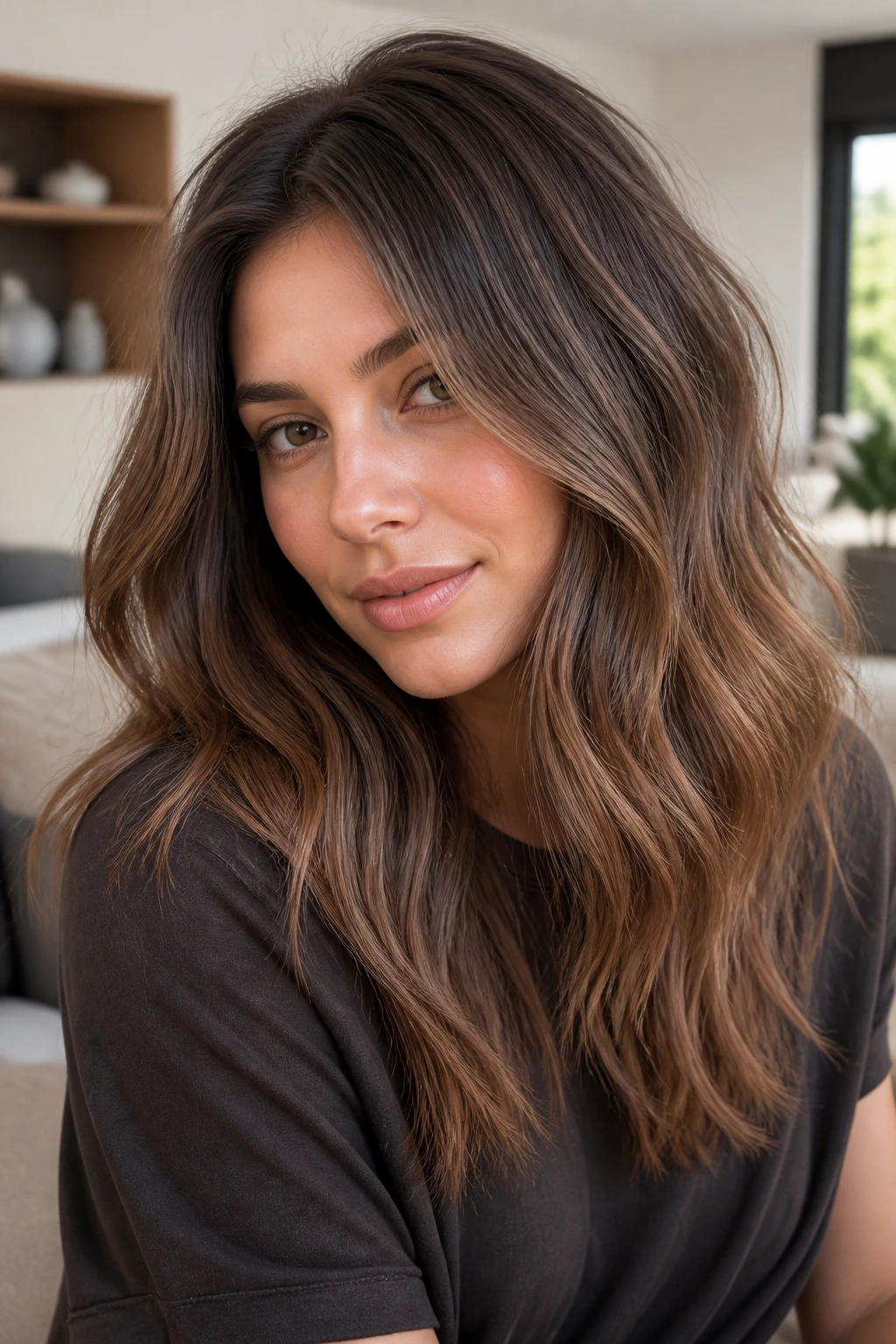
This is not the same thing as a standard ombré. A mushroom root shadow keeps the crown muted and smoky, then lets the mocha ends carry a little more warmth-neutral depth without turning golden. The shift is subtle, and that’s the point.
For cool skin, the root shadow does a lot of the work. It stops the base from looking flat and makes the grow-out easier. The lighter ends give the hair enough life that the whole style does not feel one-note. On a long cut, the contrast can be lovely. On medium hair, it makes the hair look fuller.
This is a good setup if you do not want to be in the salon all the time. The root shadow disguises regrowth better than a hard line, and the mocha ends stay believable as they fade. Just keep the ends cool, or the whole thing tips warm fast.
If you like low-maintenance brunette color with shape, this is one of the smartest picks on the list.
13. Dark Mocha Pixie
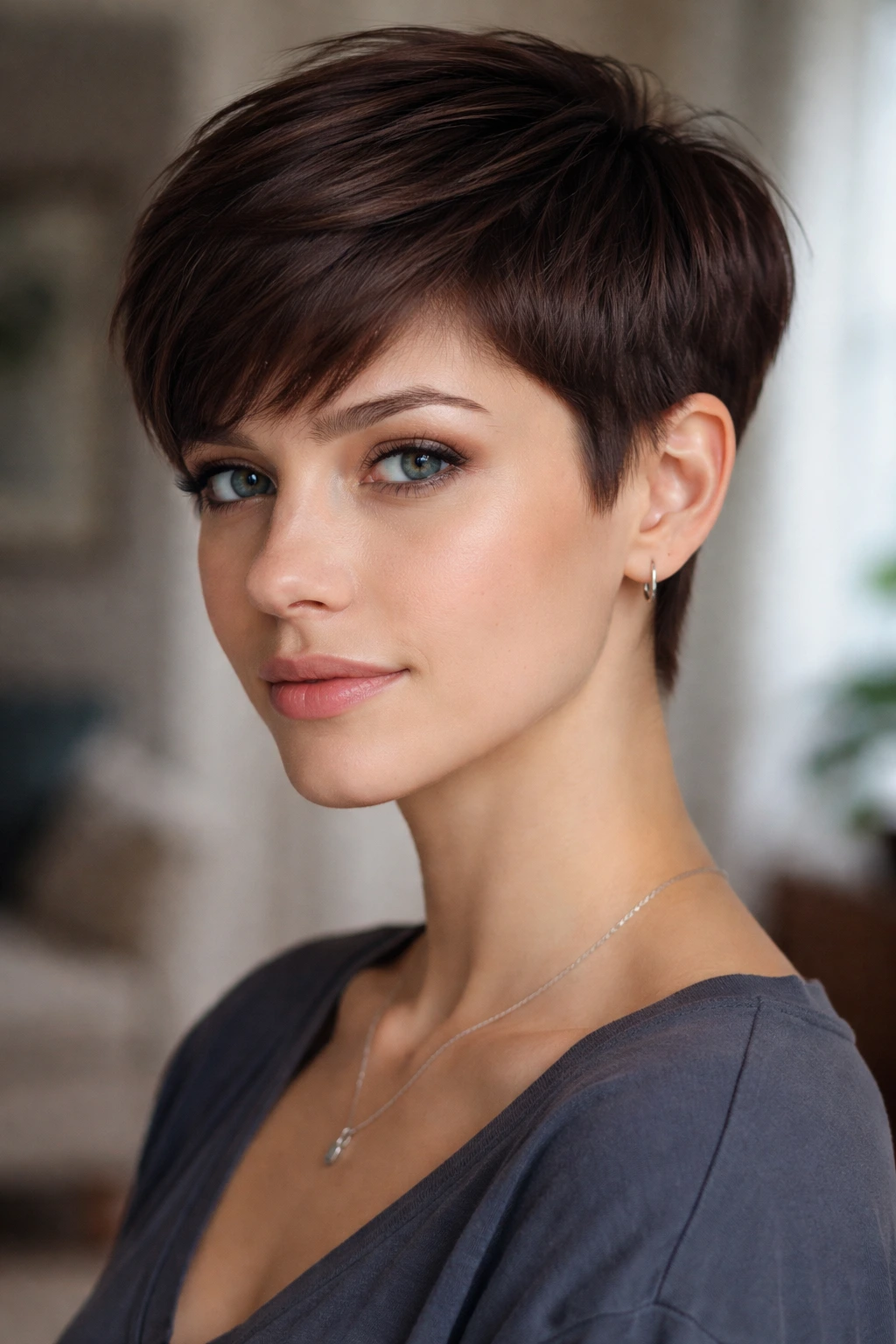
A pixie cut needs a brown that reads clean from every angle. Dark mocha does that job better than a flat brunette, because the shade has enough softness to avoid looking severe while still giving the short cut some edge.
Short hair shows tone changes fast. That means the color formula matters more than people think. A dark mocha pixie should sit somewhere between espresso and cocoa, with no obvious red shine. The top can be slightly lighter than the sides to build texture, especially if the hair is styled piecey with a little wax or cream.
What to Watch For
- Keep the formula cool, not reddish.
- Ask for a soft satin finish.
- Leave the top one shade lighter if you want separation.
- Avoid chunky highlights; they fight the clean shape.
The best part is how easy it is to style. A quick tousle, a side sweep, or a neat brushed-forward look all work. The color holds the shape together either way.
14. Satin Mocha on Straight Hair
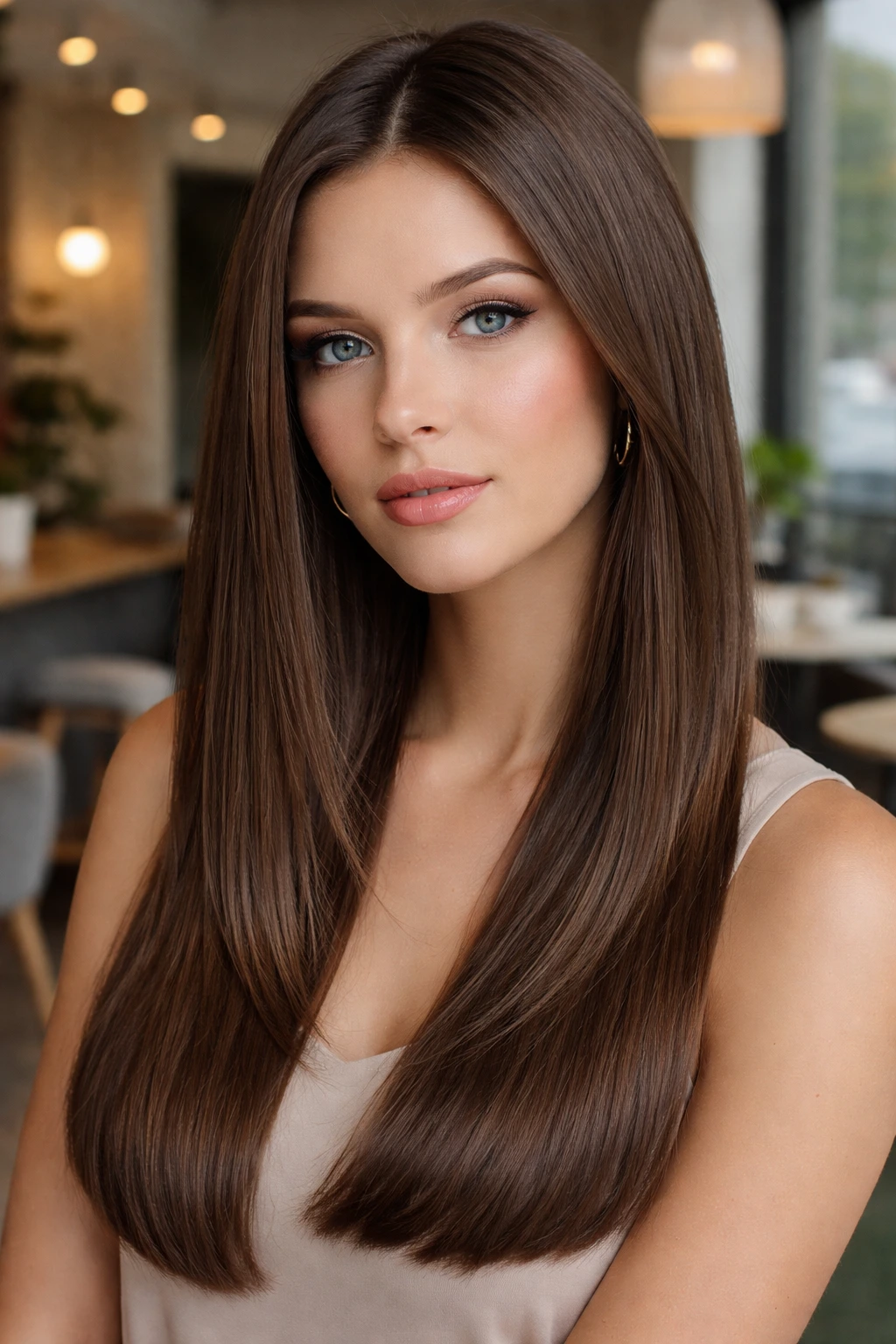
Straight hair tells the truth. Every warm note shows up. Every flat patch shows up. That is why a satin mocha shade can look so good here—it gives the hair a smoother, cleaner surface without turning it harsh.
The goal is a brown with a cool sheen, not a glossy red-brown finish. Ask for a mocha base that leans toward neutral ash, then keep the shine more satin than glassy. On straight hair, that finish looks elegant and modern without trying too hard. The color should move between cocoa and soft espresso as the light shifts across it.
This works especially well if your haircut has clean edges, like a blunt bob, a long one-length cut, or straight layers. The brown adds weight to the line, which can be useful if your hair is fine and tends to look wispy.
Tiny detail, big difference: a cool brown glaze every so often keeps the straight finish from drifting warm after heat styling.
15. Mocha Brown with Silver-Brown Streaks
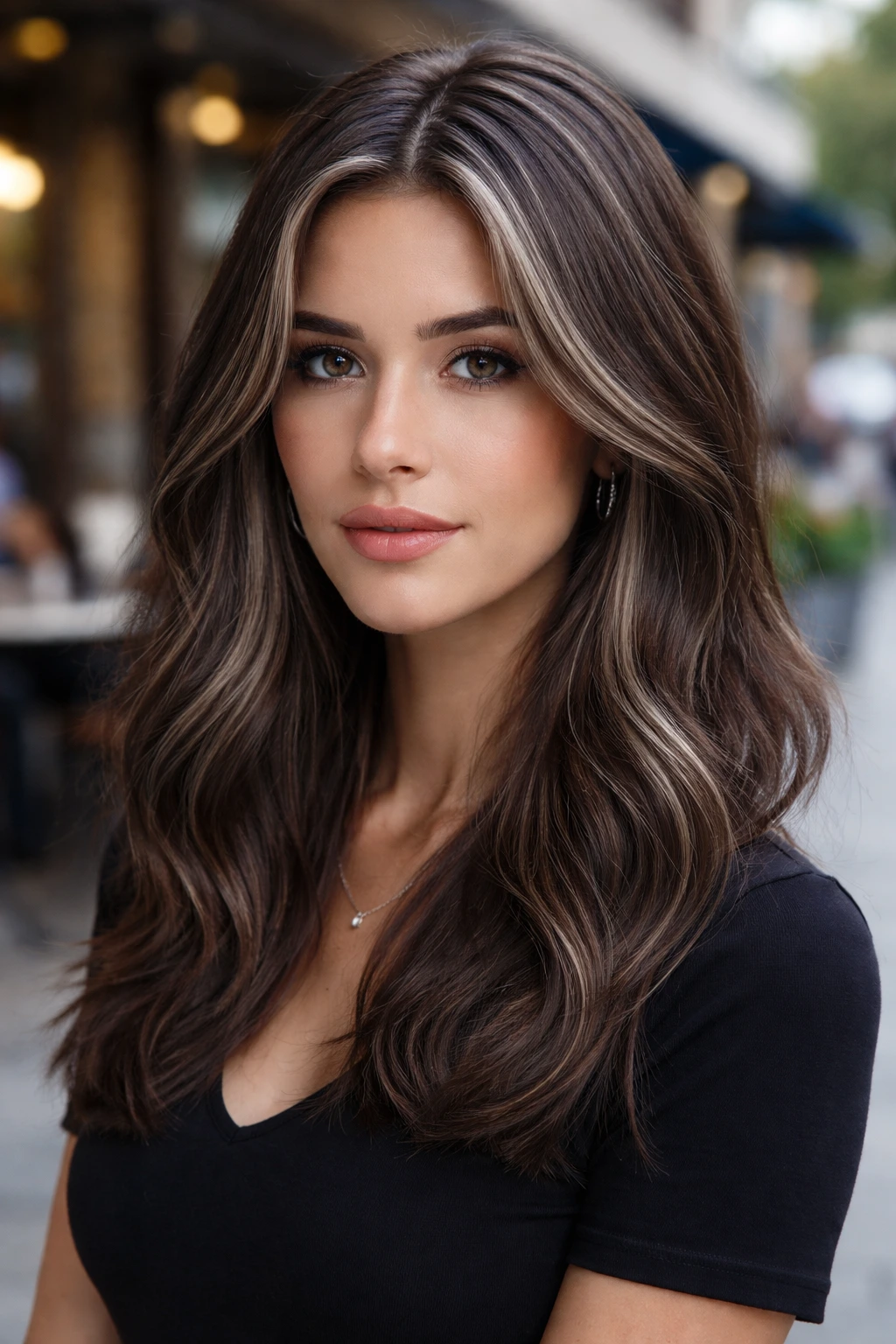
Silver-brown streaks sound dramatic on paper, but they can be subtle in real life. Think of them as smoke-toned ribbons threaded through mocha, not gray stripes. On cool skin, that faint metallic edge can make the whole color feel sharper.
I like this on medium to long hair where the streaks have room to blend. The color reads best when the lighter sections are thin and irregular. If they’re too even, the effect starts to look striped. A few placements near the part line, temple area, and outer layers are usually enough.
This is a good option if you want dimension that feels a little more fashion-forward. It suits minimal makeup, sharp eyeliner, dark brows, and simple cuts. The hair ends up doing a lot of the visual work.
If you’ve been bored by standard highlights, this is a cleaner move. Not louder. Just more interesting.
16. Cold Brew Brunette
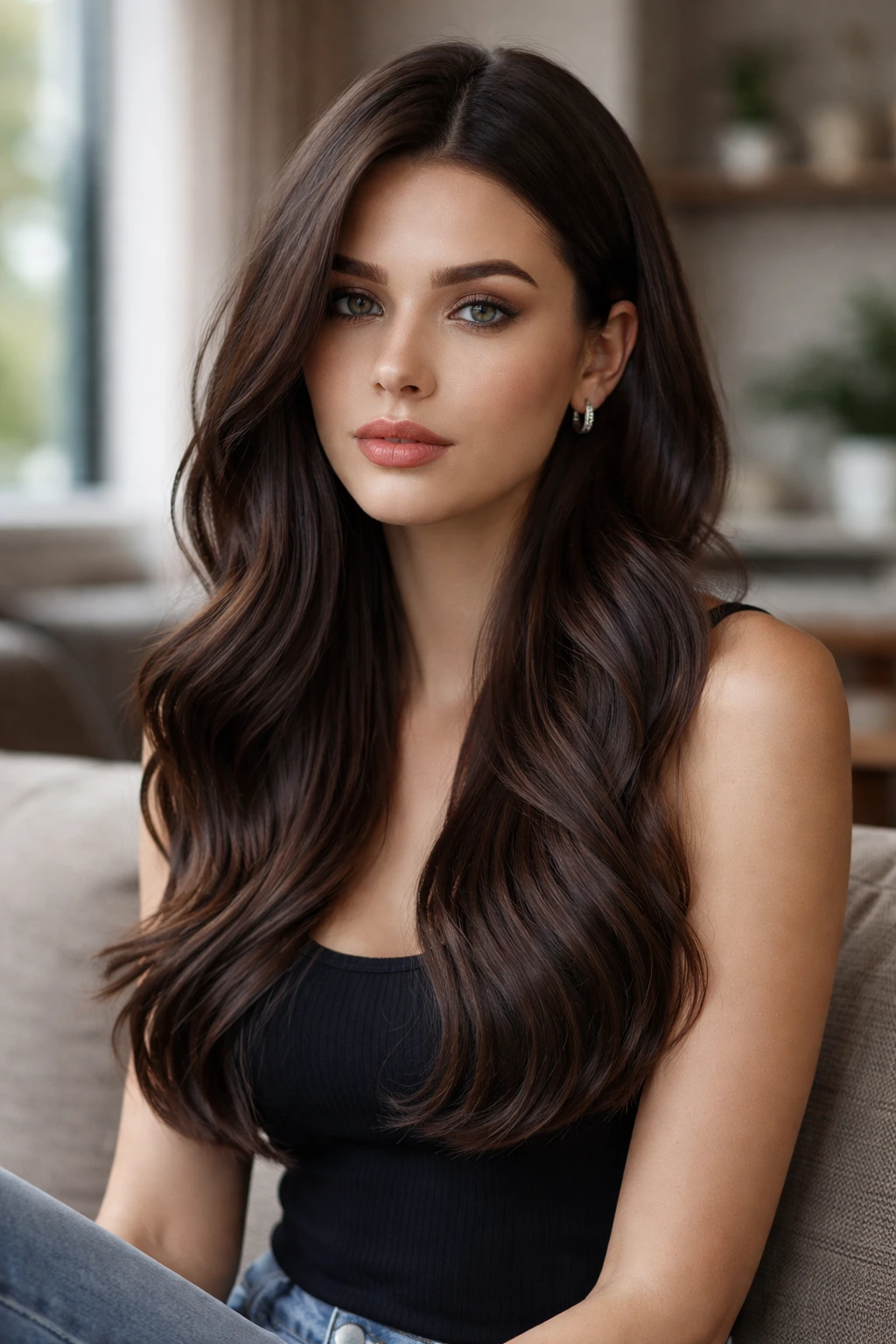
Cold brew brunette is a better name than it sounds. It captures the mood pretty well: dark, muted, and smooth, with no obvious caramel edge. On cool skin, that slight bitterness in the tone is a gift.
Why It Feels So Clean
The base should sit around level 4 or 5, but the real trick is the gloss. A cold brew brunette needs a neutral-cool finish that keeps the brown from looking muddy. If the hair is naturally warm, a salon toner or demi-permanent gloss helps pull the orange out and leave the shade more muted.
- Best on medium to deep brunette bases
- Works on straight, wavy, or coily hair
- Needs shine through the mids and ends
- Looks strongest when the root and lengths stay close in depth
This shade is especially flattering if your wardrobe leans black, denim blue, gray, or white. It feels modern without being sharp. And if you wear soft makeup, the hair does not overpower your face.
My opinion: this is one of the easiest cool brunette shades to wear every day.
17. Mocha Balayage on Curtain Bangs
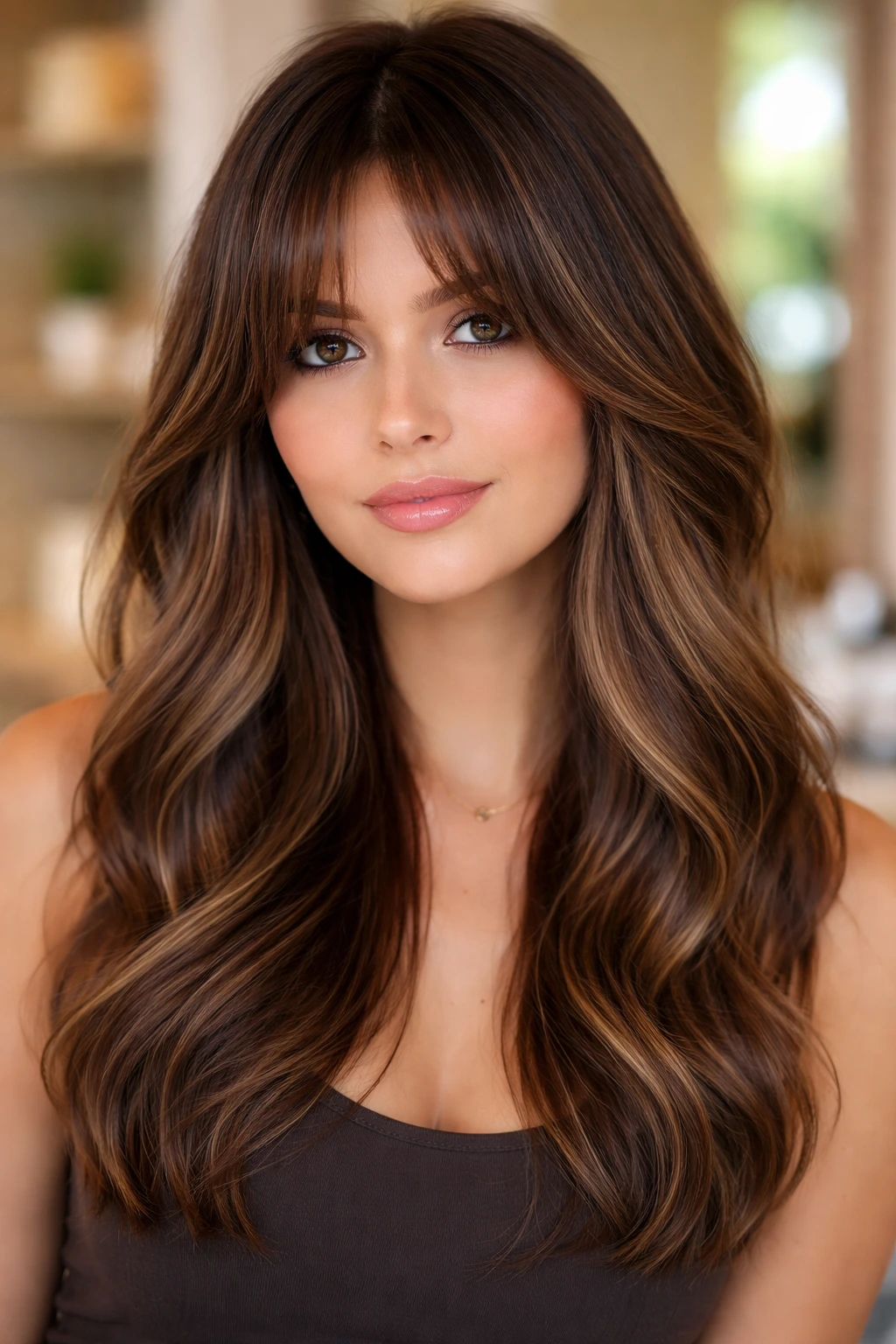
Why does this combo work so well? Because curtain bangs give the color a front-row seat. A cool mocha balayage around the fringe area can brighten the face without making the rest of the hair look too light or too warm.
How to Frame the Face
Ask for the lightest pieces to start just below the brow or near the cheekbone, depending on where your bangs separate. The rest of the balayage should stay soft and muted through the mids. If the bangs are too blonde, the cool brunette balance gets lost fast. If they’re too dark, you miss the point entirely.
Curtain bangs are handy because they let the color shift as you move. The lighter pieces show when the hair parts, then disappear back into the mocha body. That movement keeps the style from looking static.
This is a smart choice if you want a noticeable change without a full-color commitment. It also grows out in a forgiving way, which is useful if you hate frequent touch-ups.
18. Dimensional Mocha with Beige Money Pieces
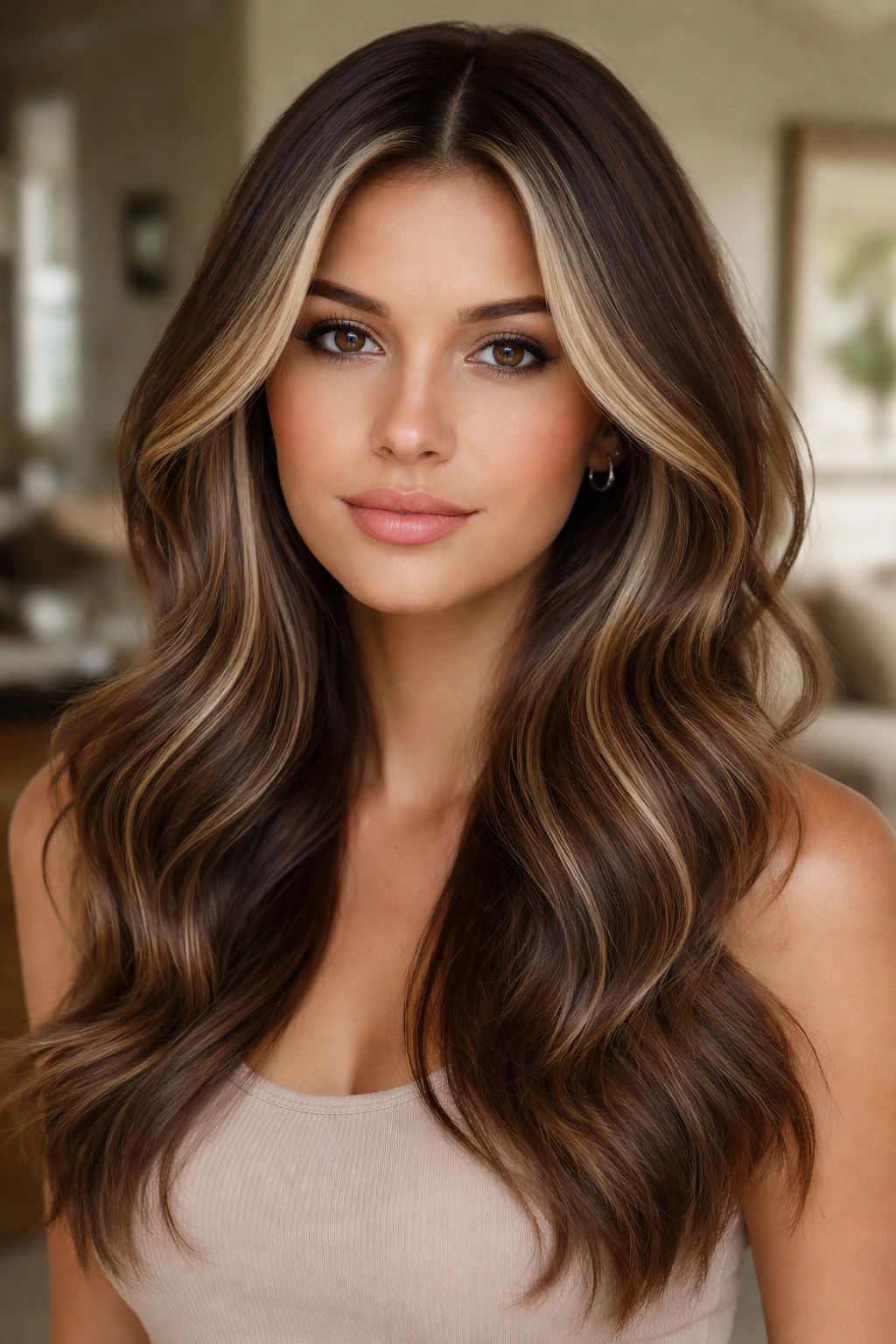
Dimensional mocha with beige money pieces is a little more obvious than the curtain-bang version, but still cool enough for the right skin tone. The money pieces are brighter, yes, but they should stay beige rather than gold. That difference is the whole story.
Unlike chunky face highlights, these pieces should be thin enough to blend into the hairline. They’re there to frame the face and break up the dark brown around the front, not to dominate the whole look. That makes them easier to wear with cool undertones, especially if your features are high contrast.
This idea suits long layers, soft waves, and side parts. It also pairs nicely with brows that are already dark, because the hair and face stay in the same visual family. If your skin is very pale, keep the beige pale and cool. If your skin has a little more depth, you can go slightly richer.
A lot of people ask for money pieces and then regret the brightness. Beige is the safer call.
19. Muted Mocha Ombré
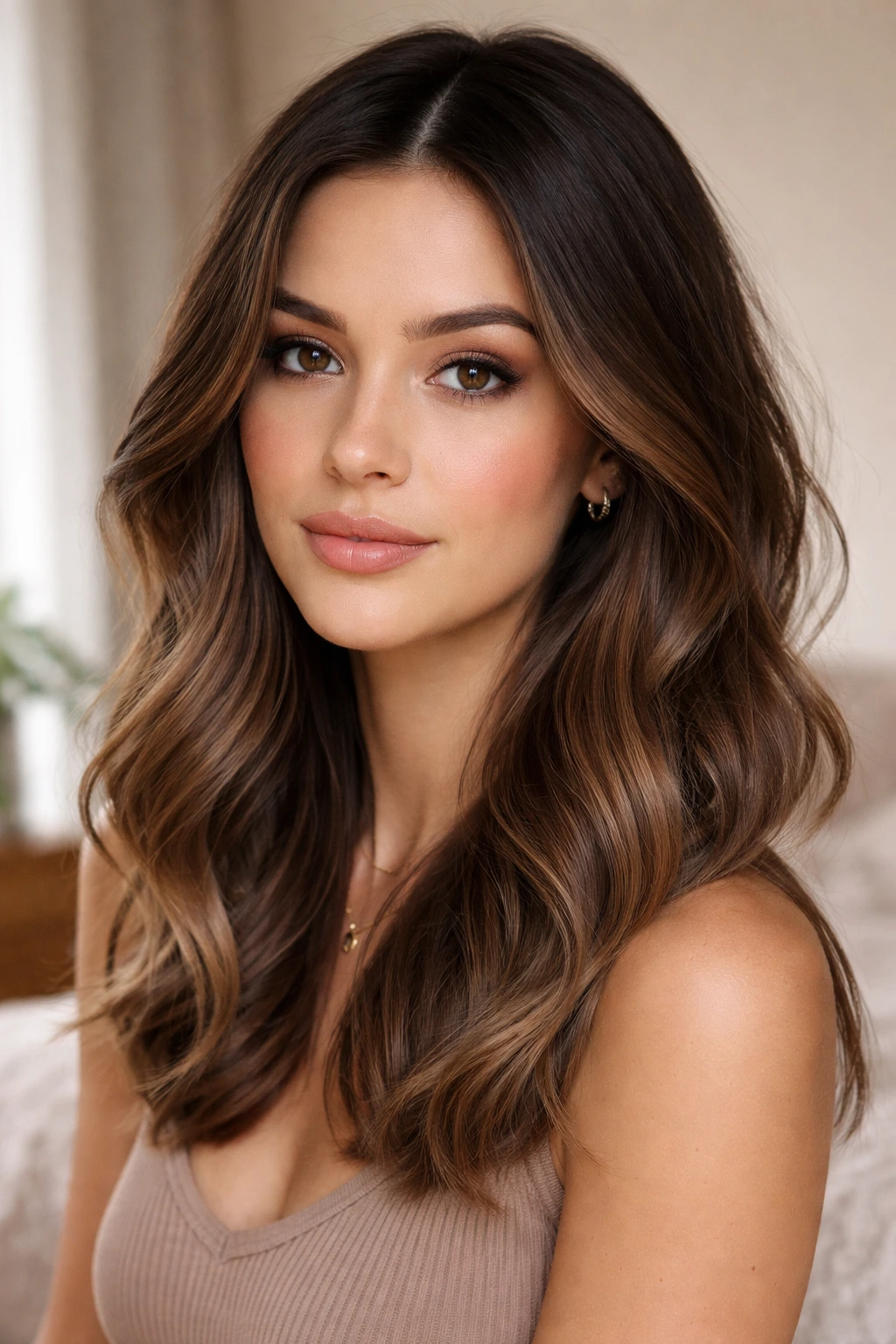
A muted mocha ombré gives you the softest kind of contrast. The roots stay deeper, the ends lighten slowly, and the entire look stays inside the brunette family instead of wandering into caramel territory.
That slow fade is useful on cool skin because it keeps the face framed by darker tones while the ends bring in some movement. The gradient should be gentle enough that you can’t point to a hard line and say, “There it is.” If you can see the break too clearly, the ombré is too strong for this mood.
This shade works well on hair that sits between shoulder length and long. The length gives the gradient room to happen. On shorter hair, the shift can feel cramped. Curling the ends or adding a soft wave helps the lighter bottom section show up in a more natural way.
Good rule: the lighter ends should still look brown from a distance. If they start reading blonde, the tone has gone too far.
20. Midnight Mocha Brown
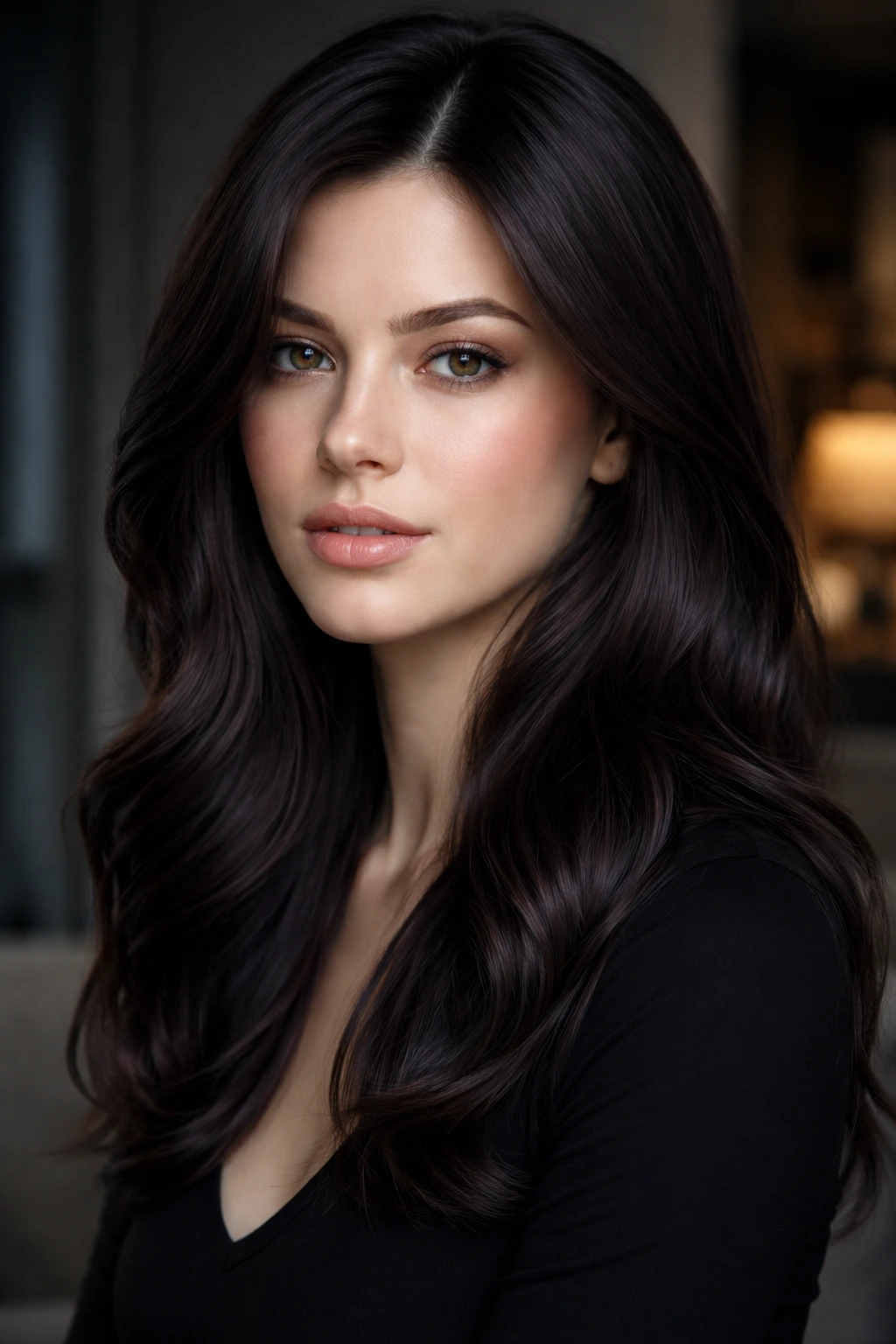
Midnight mocha brown is the darkest version on this list, and it can look stunning on cool skin when the tone stays blue-based. The depth gives the hair a glossy, almost ink-like finish, but it should still feel like brown—not black pretending to be brown.
This shade works best if your natural color is already dark or if you’re comfortable maintaining a very rich brunette. The finish matters more than highlights here. A soft blue-violet gloss can keep the color from looking reddish under warm indoor bulbs. That matters a lot more than people think. A dark brown with a red cast can turn heavy fast.
If you have pale cool skin, make sure the colorist leaves a little softness around the face. Too much darkness all the way up to the hairline can look harsh. A slightly softer root or a faintly lighter front panel helps.
My take: if you want drama without blonde, this is the drama.
21. Smoky Mocha on Wavy Medium Hair
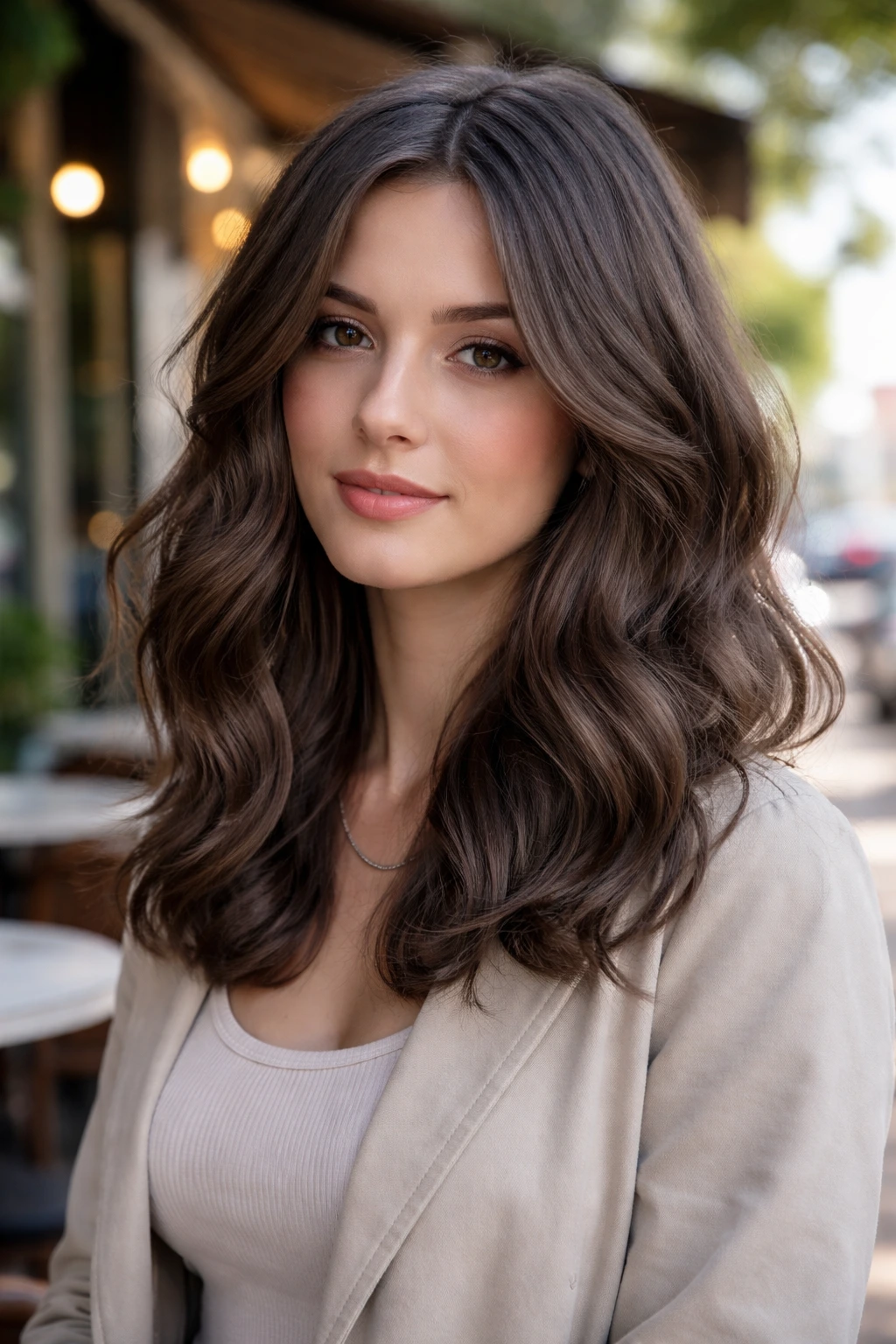
Wavy medium-length hair is basically made for smoky mocha. The waves break up the color just enough that the muted brown does not sit there flat and silent. It moves.
The best version keeps the base cool and the highlights sparse. You want the bend in the hair to reveal lighter and darker areas naturally, not through obvious striping. A soft ash-brown toner helps, especially if your hair tends to pull red once it’s colored. That happens a lot on medium brunette hair.
This length is also easy to style. A rough-dry, a medium barrel iron, or a few bends with a flat iron all work. The shade does not need perfect curling. It needs texture and a bit of separation at the ends.
If your hair is thick, this is a strong option because the smoky depth helps it look controlled. If your hair is finer, keep the layers light so the ends don’t get wispy.
22. Cool Mocha with Dim Root and Soft Ends
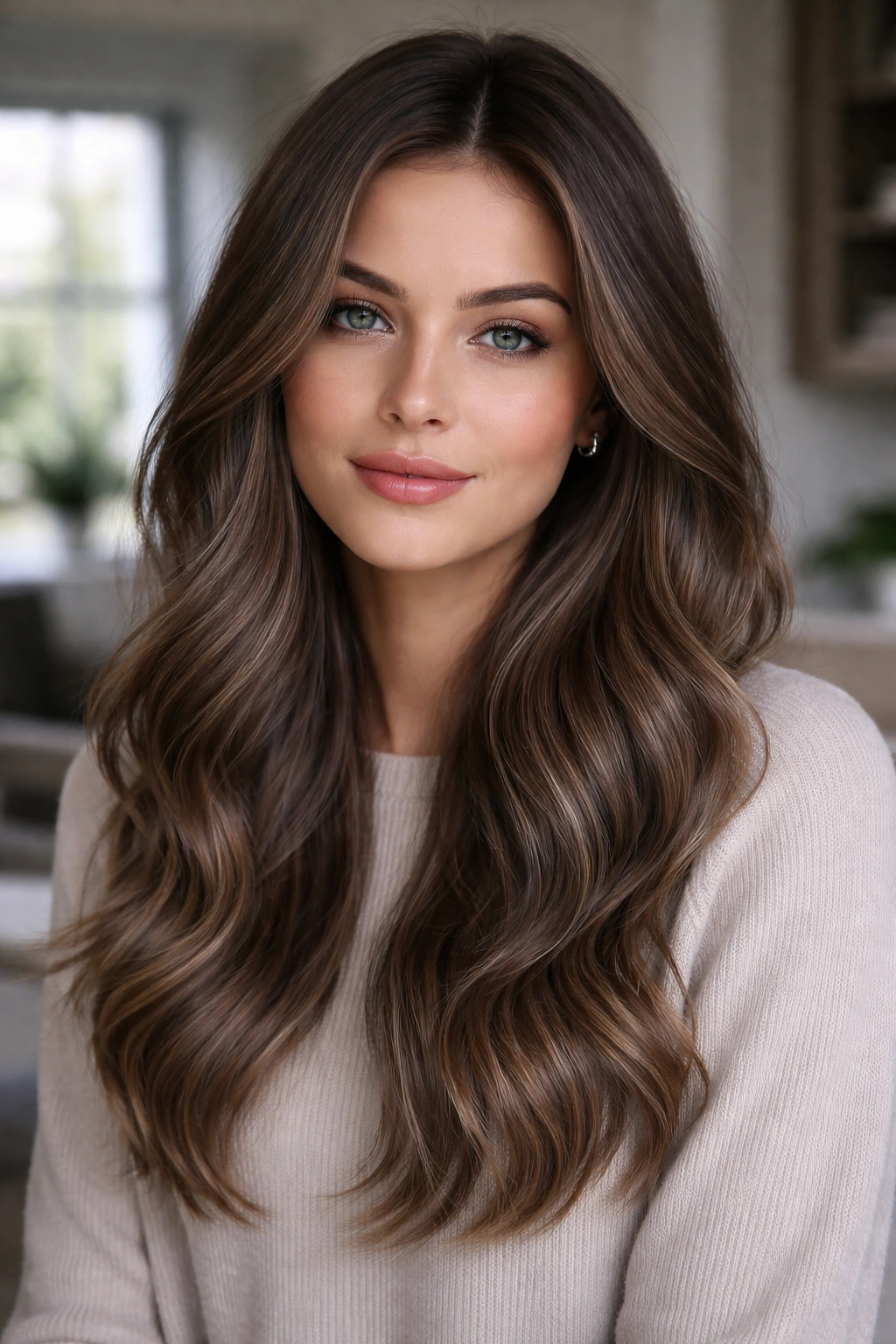
A dim root with soft ends is a nice way to keep the color calm while still giving it movement. The root stays a touch deeper, the ends soften into a cooler mocha, and the whole head looks blended rather than painted.
What Makes It Work
The root should not be a harsh shadow. It needs to fade. Think of it as a quiet base that supports the lighter brown below. The ends can sit one shade lighter, but only one. If you go too far, the color starts feeling sandy or warm, which is not the goal on cool skin.
- Good for growing out old highlights
- Easy to keep looking neat
- Works on straight or wavy cuts
- Needs a cool gloss every so often
This is the kind of color that makes your haircut look more expensive without changing the cut itself. It’s practical, too. The softer root buys you extra time between salon visits, which is a relief if you don’t want a high-maintenance brunette routine.
Tiny note: keep the ends glossy. Dull ends make the cool tone read flat.
23. Plum-Infused Mocha Brown
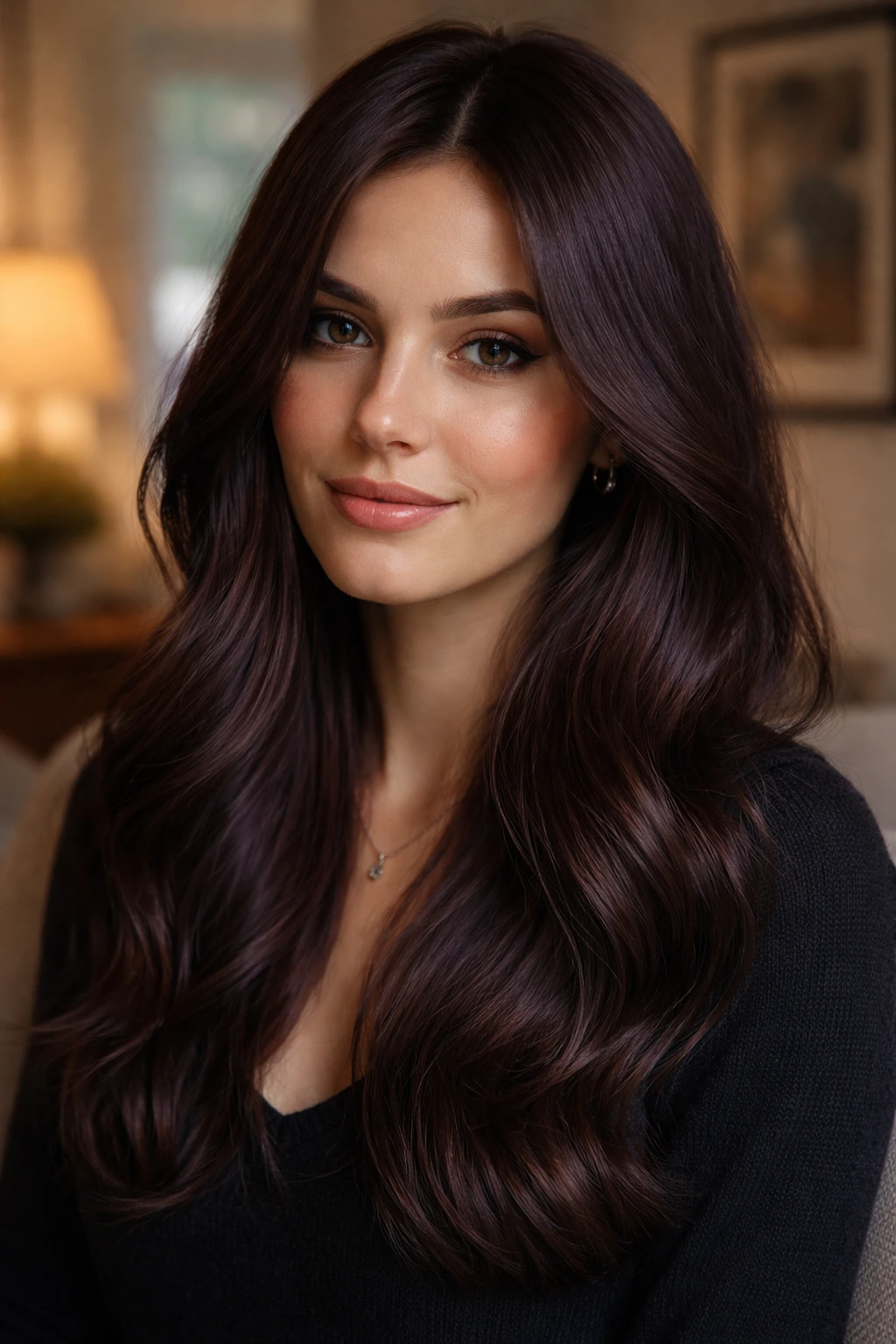
Does plum sound too bold for mocha? Not if you keep it subtle. A plum-infused mocha brown adds a faint violet undertone that can make cool skin look less pink and more even. It’s a small shift, not a purple statement.
How to Keep It Subtle
Ask for a mocha base with a soft violet-brown gloss, then keep the plum note under the surface. You should notice it most in indoor light or in shadow, not as an obvious purple cast. That’s the sweet spot. Too much plum can look theatrical. Too little and the effect disappears.
This color works especially well on hair that already has a cool base or on brunettes who want something slightly different without going lighter. It’s also a quiet win for green or hazel eyes, because the violet undertone can make the eyes read sharper.
I’d use this one when a regular ash brown feels too plain. It has more personality, but not in a loud way.
24. Polished Mocha Ribbon Highlights
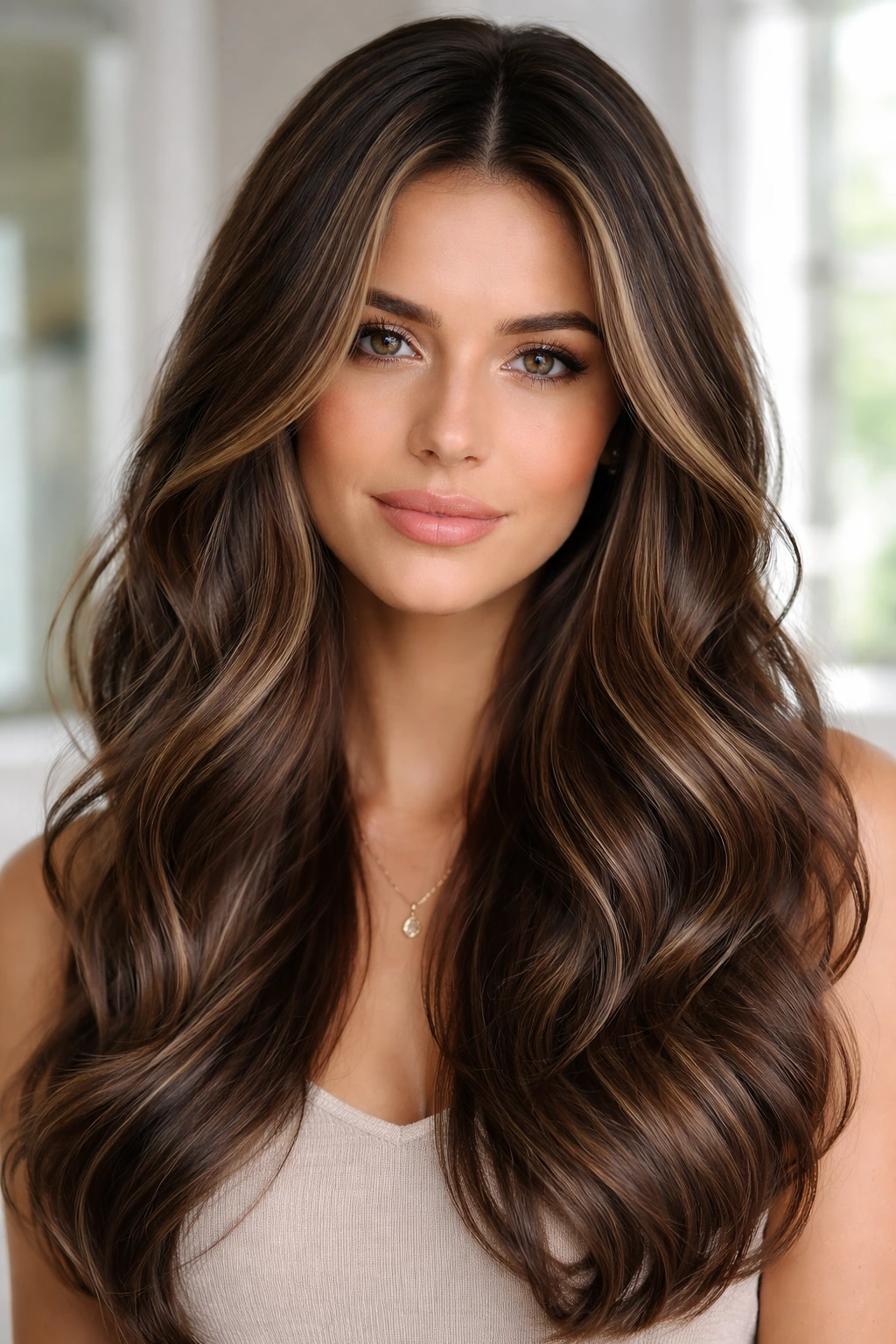
Ribbon highlights are thinner and longer than chunky streaks, and that is exactly why they work on cool brunettes. They move through the hair like narrow lines of light instead of obvious blocks. On mocha brown, they make the whole color feel more expensive and less processed.
Unlike heavy highlights, ribbons keep most of the brunette depth intact. That matters on cool skin because the surrounding darkness helps the face stay framed. Ask for cool beige or ash-brown ribbons, especially through the top layers and around the sides. They should be visible when the hair moves, not when it sits still.
This look is a strong choice for long layers, mid-back length hair, or anyone who likes their hair to look dimensional in photos but still natural in real life. It also grows out more gracefully than thicker highlight work.
If you want brunette dimension without a strong stripy pattern, this is the cleanest route.
25. Cocoa Smoke Lob
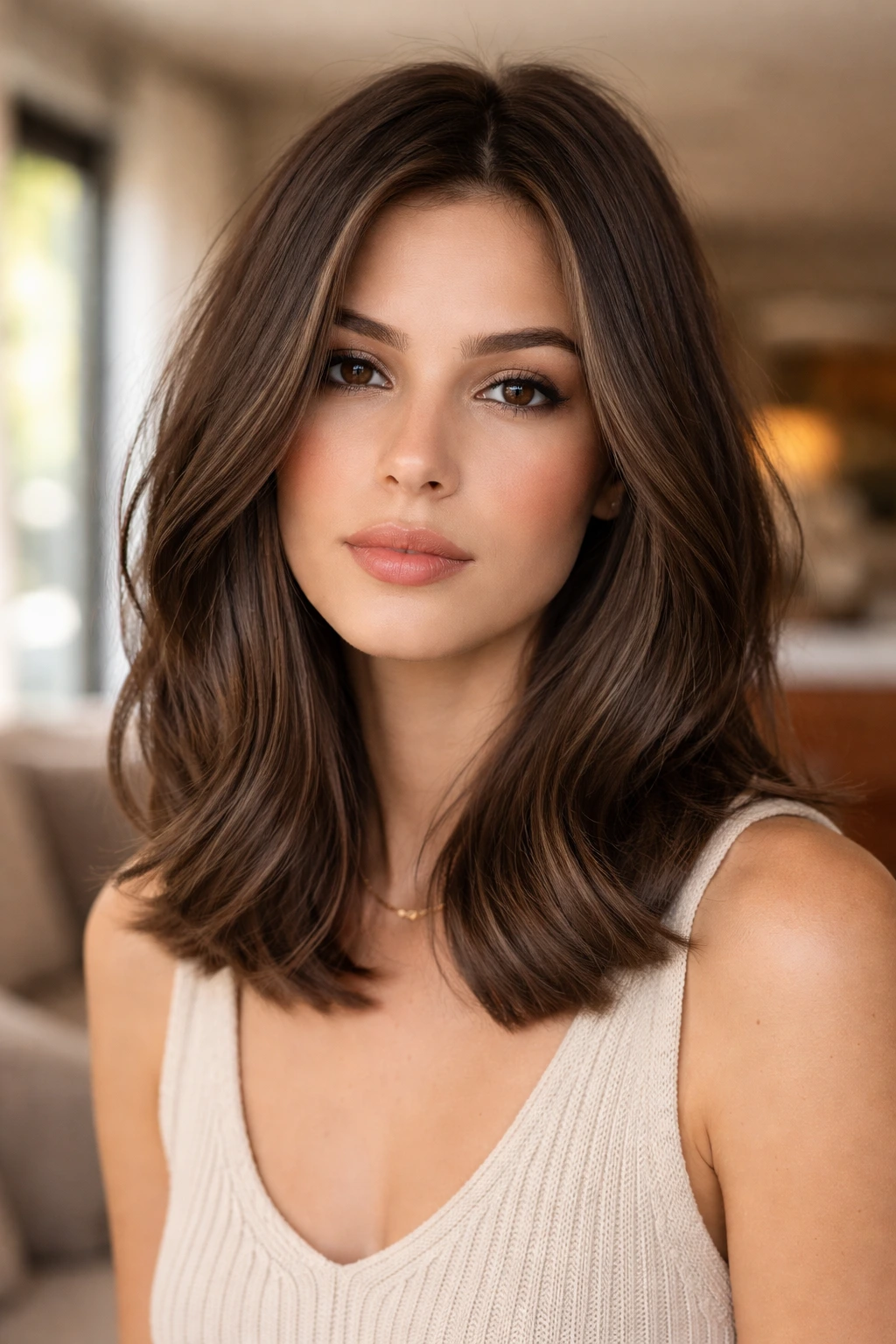
A cocoa smoke lob is the kind of haircut-color pairing that looks low effort even when it isn’t. The lob gives the hair a clean shape, and the cocoa-smoke tone keeps it from reading too warm or too dark.
The best version stays somewhere between medium brown and deep taupe. That means no orange undertone, no obvious gold, and no red shine. A soft bevel at the ends helps the color feel plush. If the lob is too blunt, the smoky shade can look severe. A little movement makes it softer.
This is a solid pick if your hair is naturally straight or only slightly wavy. It also works with glasses, which sounds like a small thing until you see how much the face-framing shape changes the whole look. The cool brown keeps the focus on the cut, not on the color fighting the features.
For anyone who wants a neat brunette with some personality, this one pulls its weight.
26. Neutral-Ash Mocha with Face-Framing Layers
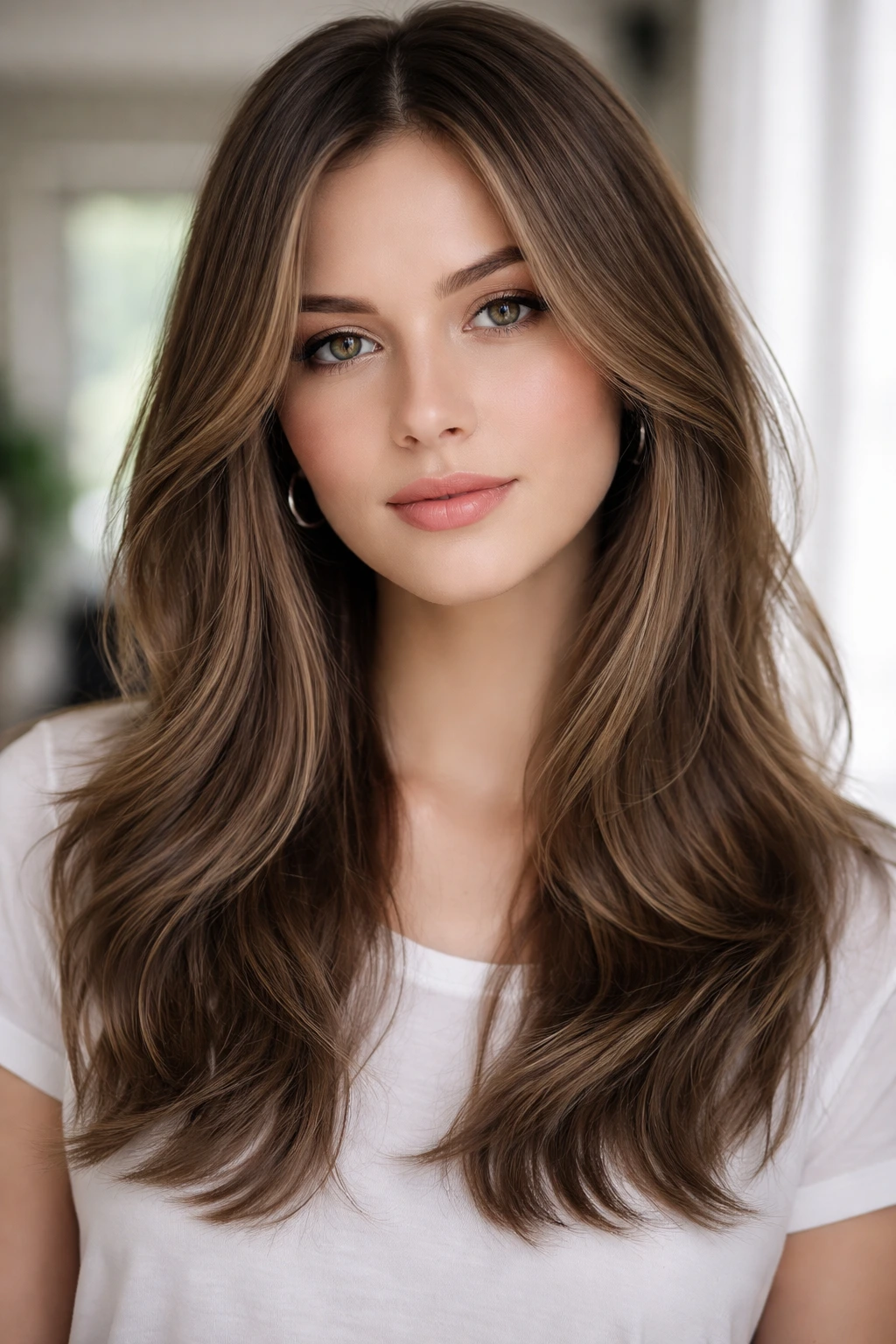
Neutral-ash mocha is one of my favorite choices for cool skin because it doesn’t lean hard in any direction. It avoids copper, avoids yellow, and avoids the flat gray look that can sometimes happen with very ashy brunettes. That balance is what makes it so wearable.
Face-framing layers help the color do more work around the features. The lighter pieces can sit just in front of the cheekbones, while the rest of the hair stays a level or two deeper. That keeps the face open without turning the whole style bright. It also gives the haircut some shape, which is useful if you wear your hair down most of the time.
This shade is a smart middle ground if you want a brunette that reads clean in daylight and soft indoors. It doesn’t demand a lot of styling. A blow-dry, a loose bend, or even air-dried texture can all work.
If you want one cool brown that feels easy to live with, start here.
27. Mink Mocha with Feathered Ends
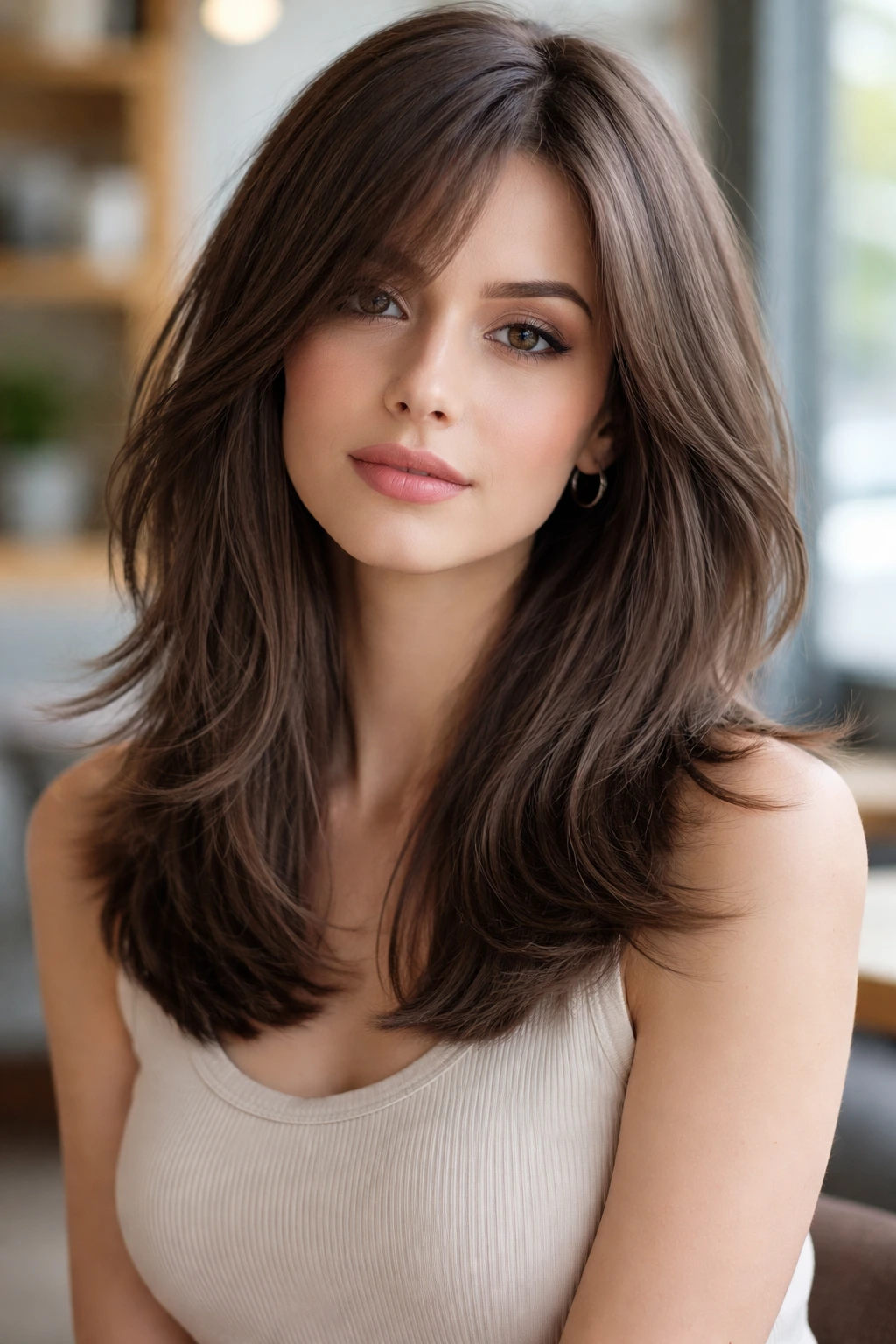
Mink mocha sits in that gray-brown zone that looks expensive when the cut supports it. The color is softer than espresso, cooler than chestnut, and less murky than a straight ash brown. It’s a useful shade for cool skin because it behaves like neutral clothing: it goes with almost everything.
Feathered ends matter here. A blunt line can make mink brown feel heavy, but soft ends keep it airy and modern. This is especially nice on medium-length cuts or long layers where the ends need movement to avoid looking blocky. A little surface texture goes a long way.
I’d choose this if you want a brunette shade that still looks like hair, not a dye job. There’s enough depth to be flattering, but not so much contrast that it starts to feel dramatic. It’s the kind of brown that plays well with minimal makeup and a good sweater.
If your personal style is clean, simple, and a little pared back, this one fits.
28. Glossy Mocha Brown with Shadow Root
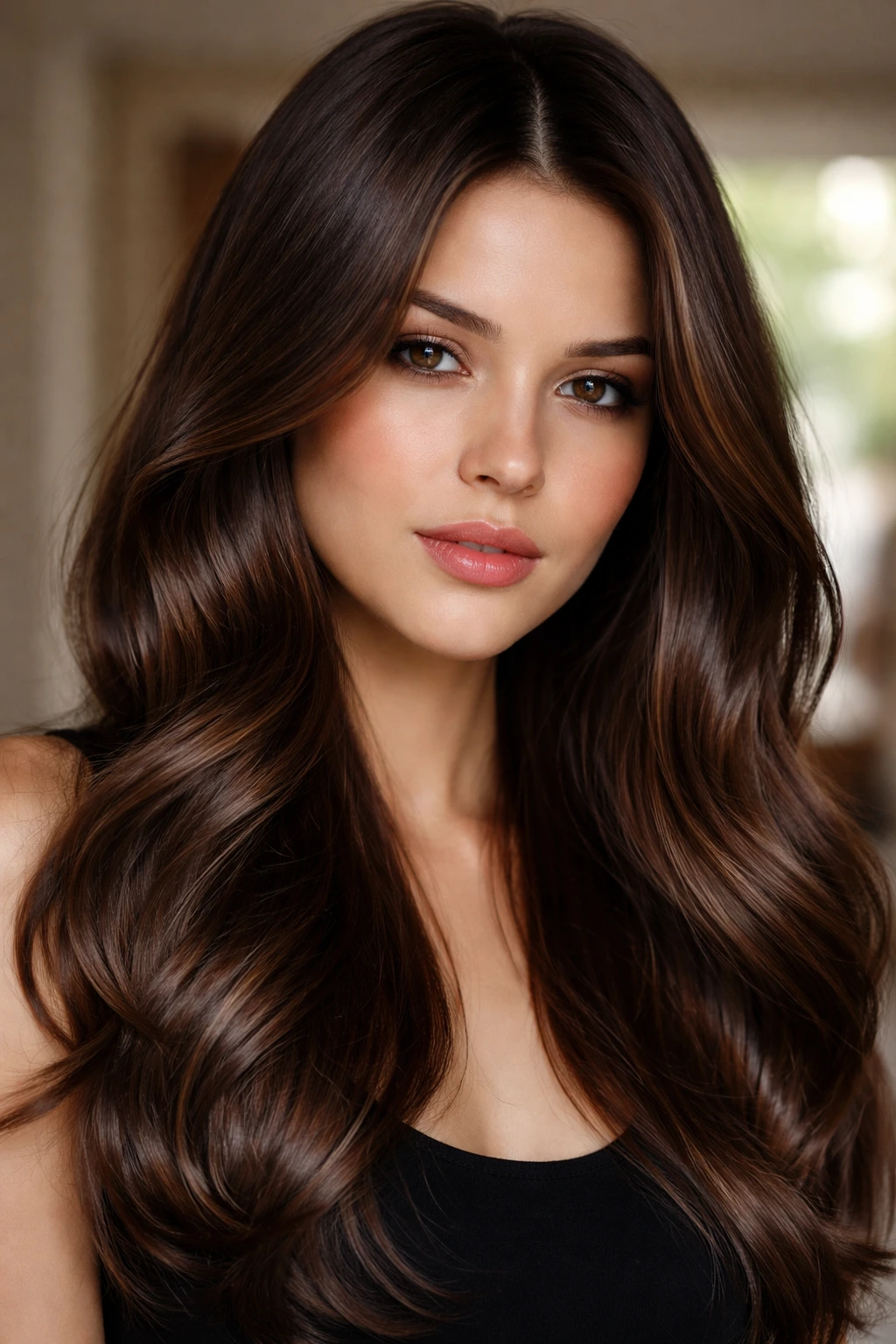
A glossy mocha brown with a shadow root is the safest place to end this list, and I mean that as a compliment. It gives you the richness of mocha, the ease of a grown-out root, and the shine that keeps cool-toned brunette color from looking dusty.
The shadow root should be soft enough that it melts into the mids. Then the lengths can stay a cool mocha brown with a smooth gloss over the top. That gloss is doing more than people realize. It keeps the hair looking fresh, helps the tone stay balanced between appointments, and prevents the ends from wandering warm as the color fades.
This is the one I’d hand to someone who wants a brunette shade that works for work, weekends, and half-up hair without needing a lot of adjustment. It’s calm. It’s polished. It doesn’t get boring if the tone stays cool.
And honestly, if you’re torn between two or three of these ideas, this one is the easiest to live with.
