



Cool skin tones can wear auburn beautifully, but not every red-brown shade deserves a place near your face. A bright copper that looks lively on warm skin can go loud, even a little chalky, against pink, blue, or rosy undertones.
The auburn hair colors that tend to flatter cool skin sit a touch deeper and lean more toward berry, plum, wine, cherry, mahogany, or smoky chestnut. They keep the richness people want from auburn, but they skip the orange-heavy finish that can make cool complexions look washed out.
If silver jewelry feels easier on you than gold, if your skin has that pink cast in daylight, or if beige foundation needs a rose undertone to look right, you’re probably in the right lane. A good color formula will talk about depth, reflect, and tone — not just “red” and leave it at that.
The best auburn shades for cool skin can be dramatic, soft, glossy, or barely-there. Some live as full all-over color, some show up in ribbons and balayage, and a few only show their color shift when the light hits at an angle. That range is the fun part. The trick is choosing the auburn that sits beside your skin instead of fighting it.
1. Smoky Violet Auburn
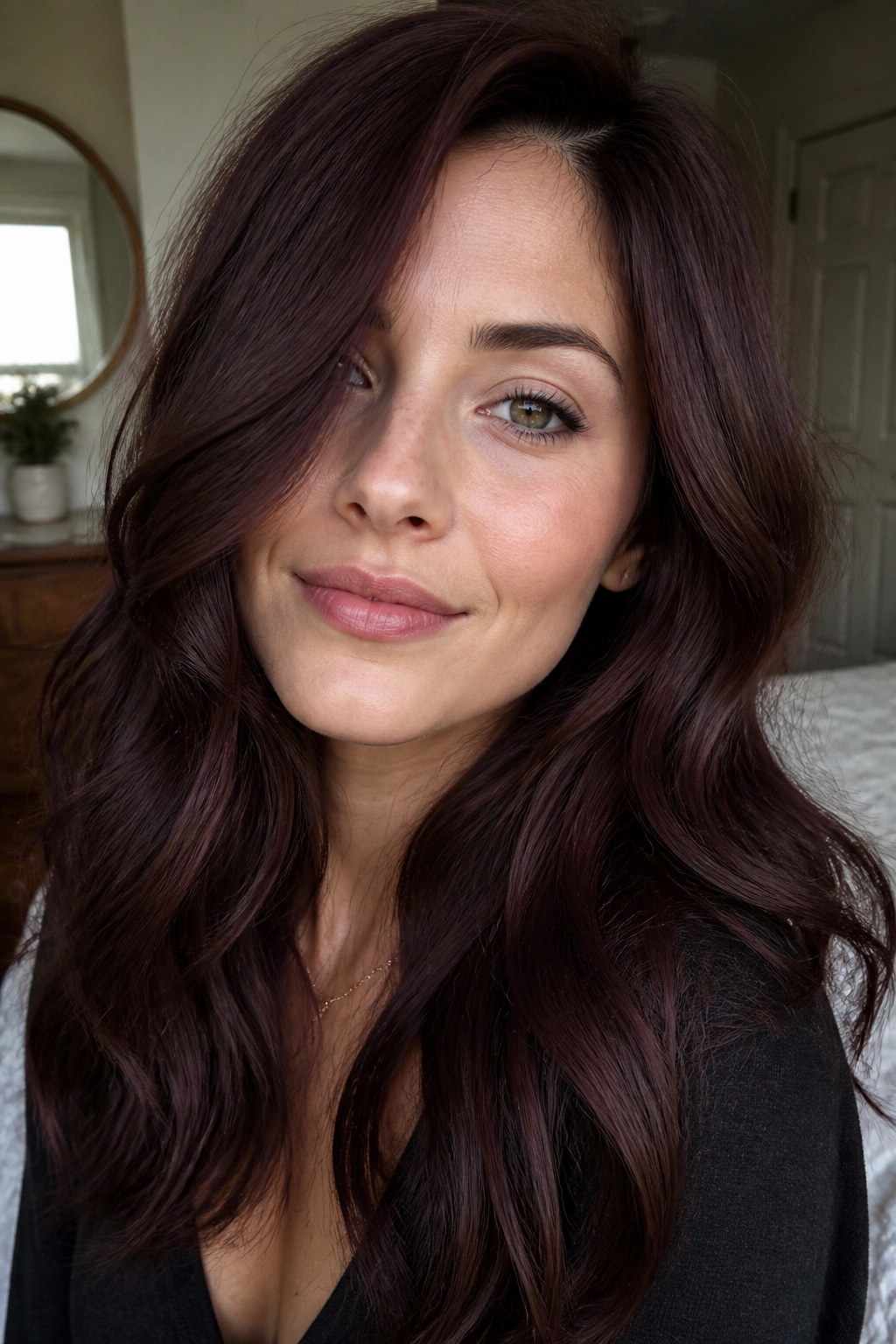
Smoky violet auburn is the shade I reach for when someone wants red-brown hair that still feels cool at the edges. The violet note pulls the color away from pumpkin territory and gives it that slightly shadowy finish that looks expensive in daylight.
Why It Flatters Cool Skin
Cool undertones need a little depth to keep auburn from turning brassy. Violet does that job neatly, because it mutes excess orange and leaves the red looking richer, not louder.
Ask for: a level 5 or 6 auburn base with a violet-brown gloss over it.
- Best on fair to medium cool skin
- Looks polished on straight or wavy hair
- Needs gloss refreshes every 4 to 6 weeks
- Rereads as red in sunlight and brown indoors
Pro tip: keep the violet soft, not purple. You want a brown-red finish, not a fantasy shade that takes over the whole head.
2. Deep Cherry Auburn
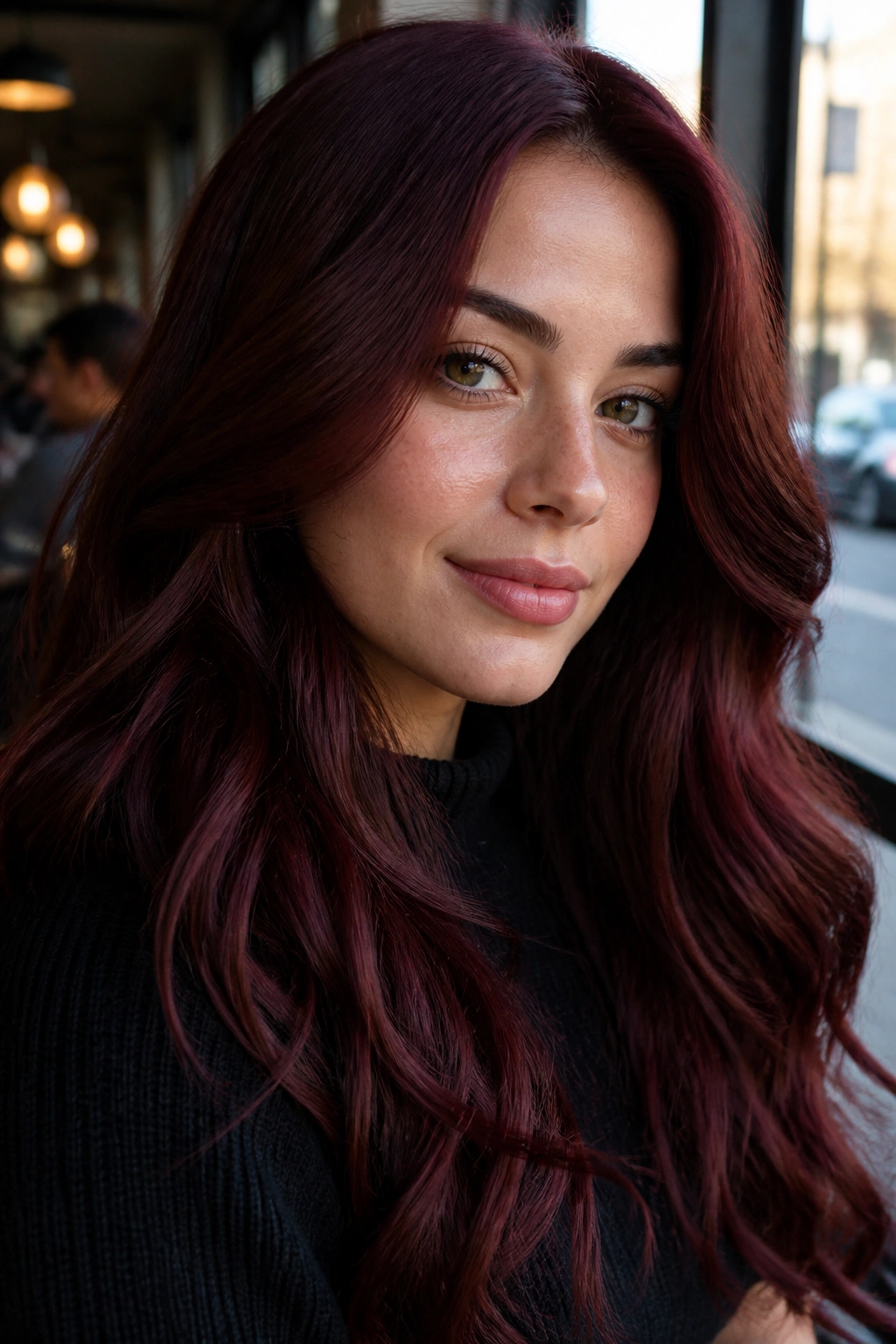
Deep cherry auburn has bite. It’s darker than cherry red and less coppery than classic auburn, which makes it a strong choice if you like color with a little edge and a little restraint.
The shade usually sits somewhere between red wine and dark brown, so it gives cool skin a flush of color without forcing orange against the face. On long hair, it can look almost velvety. On shorter cuts, it reads sharper and more modern.
For anyone with blue eyes or gray eyes, this one can be especially good because the red pigment makes the eye color look brighter without making the skin look ruddy. Keep the finish glossy and you get a clean, glassy effect. Let it fade too long and it loses the cherry part first, which is always a shame.
3. Chestnut Auburn with Ash Brown Base
Want auburn without the “look at me” factor? Chestnut auburn over an ash brown base is probably your safest bet.
The ash brown keeps the warmth under control, while the auburn overlay adds a soft red shimmer that shows up when the hair moves. It’s the kind of color that reads expensive because it doesn’t announce itself all at once. Under office lights, it can look like polished brunette hair. In sun, you catch the red.
How to Wear It
This shade suits people who want a low-risk color change or need something that grows out without a hard line. It also works well if your natural hair is medium brown and you’re not trying to fight it.
A root shadow of ash brown plus a chestnut glaze through the mids is usually enough.
No need to go brighter than that. The understatement is the point.
4. Mahogany Auburn Melt
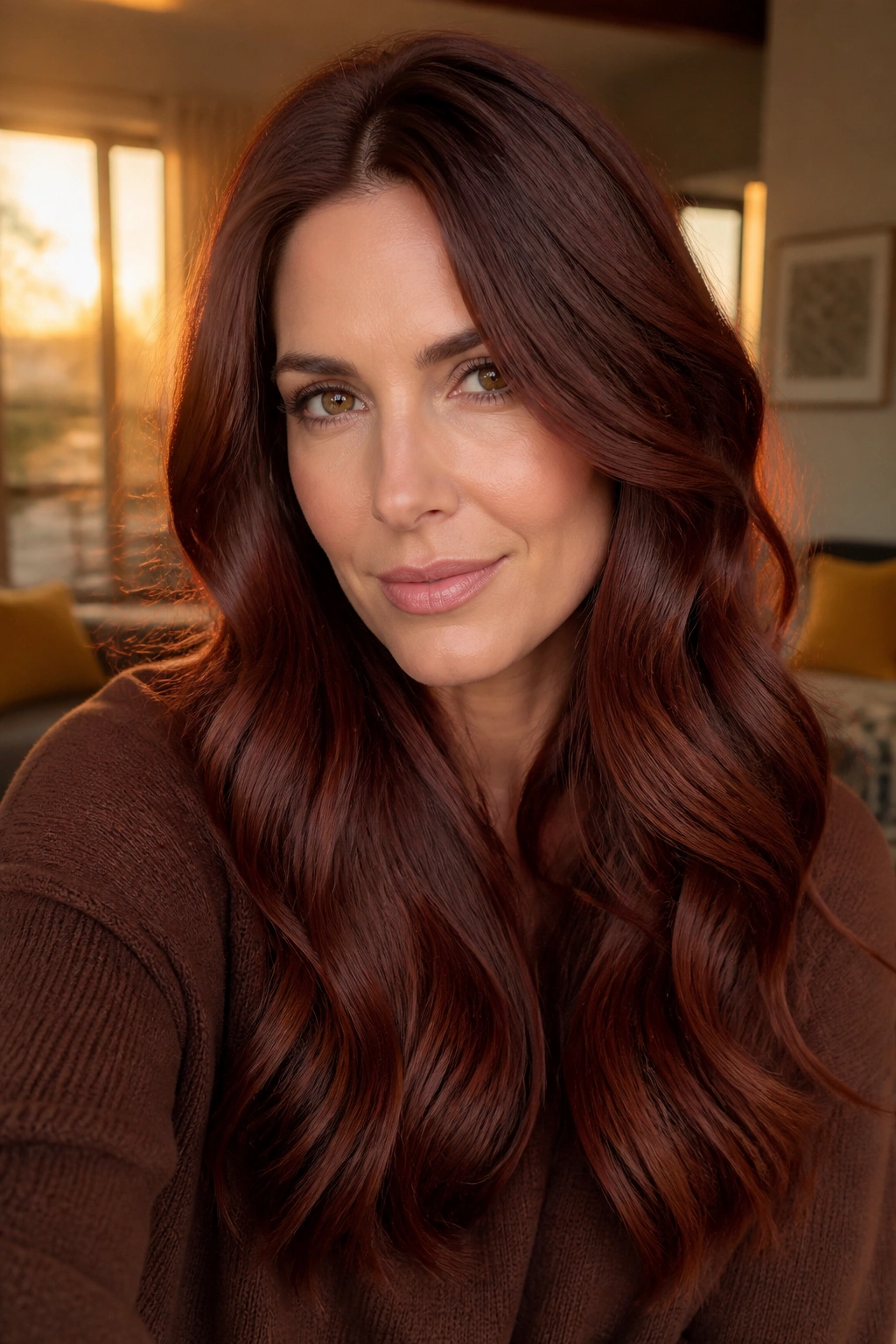
Mahogany auburn melts are for the person who likes depth first and red second. The shade starts deep at the roots, then moves into a dark red-brown through the mid-lengths, so the whole thing feels smooth instead of striped.
I like this look on cool skin because mahogany has that almost plum-like darkness that keeps the red from turning orange. It also gives the hair a dense, full look, which is useful if your strands are fine and you want more visual weight. The melt is better than hard highlights here; hard lines can make the color feel busy.
- Root depth: level 4 or 5
- Mid-length tone: mahogany auburn
- Ends: a softer red-brown gloss
- Maintenance: every 6 to 8 weeks, depending on fade
The best version of this shade should look like the color grew there. No stripes. No harsh contrast.
5. Raspberry Auburn Balayage
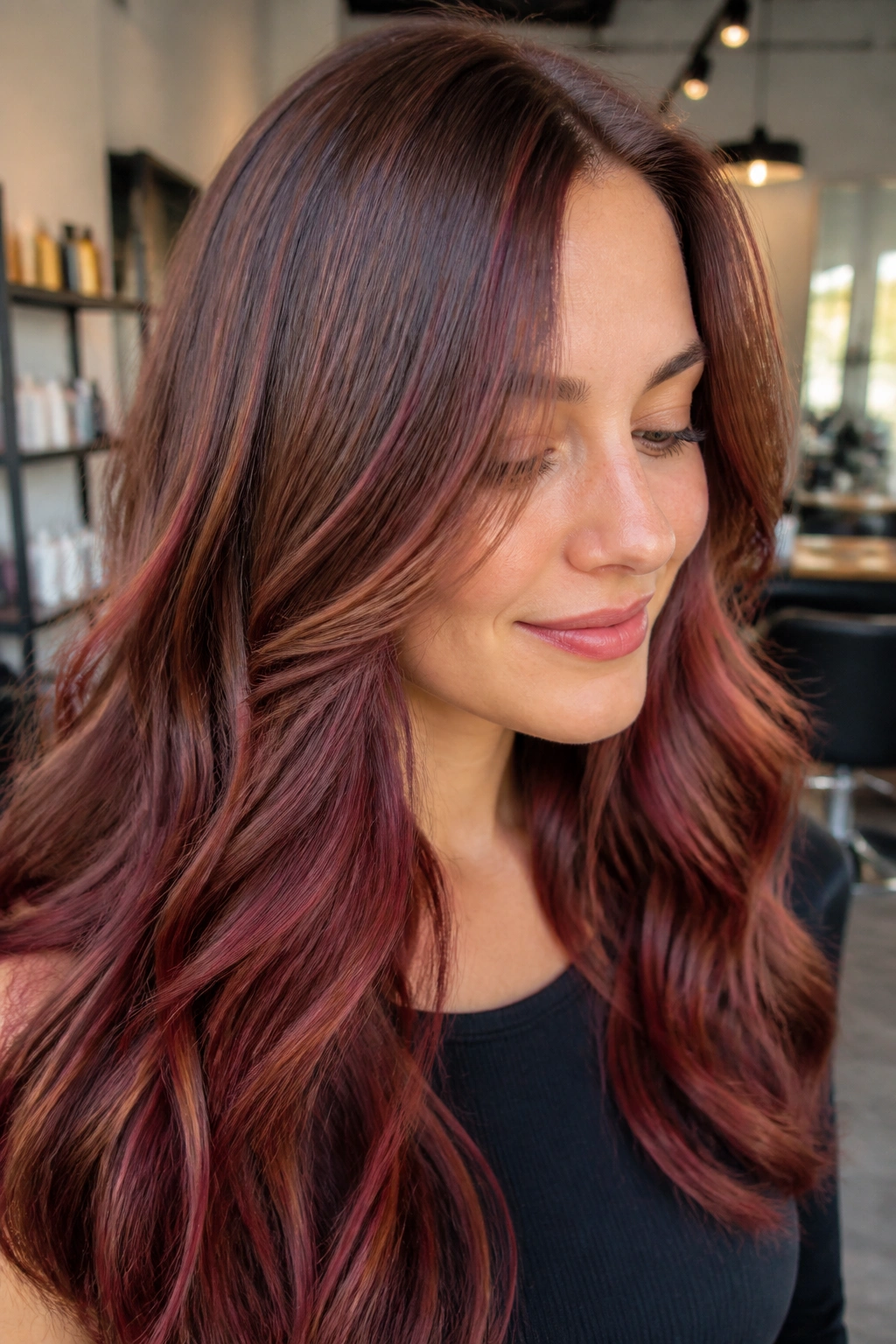
Raspberry auburn balayage has a little more sparkle than the deeper shades, but it still stays on the cool side if the red leans berry rather than orange. That’s the detail that matters.
With balayage, the lighter pieces are painted where the hair would naturally catch light — around the face, over the crown, and through the outer layers. The raspberry tone sits on top of a brown base, so the result feels dimensional instead of flat. On cool skin, this can be a sweet spot: enough red to wake up the complexion, enough brown to keep things grounded.
A good stylist will keep the highlights fine and feathered. Chunky pieces can make the berry tone look louder than it is. Thin, airy ribbons tend to age better too, which matters if you don’t want to babysit your color every couple of weeks.
6. Merlot Auburn Lob
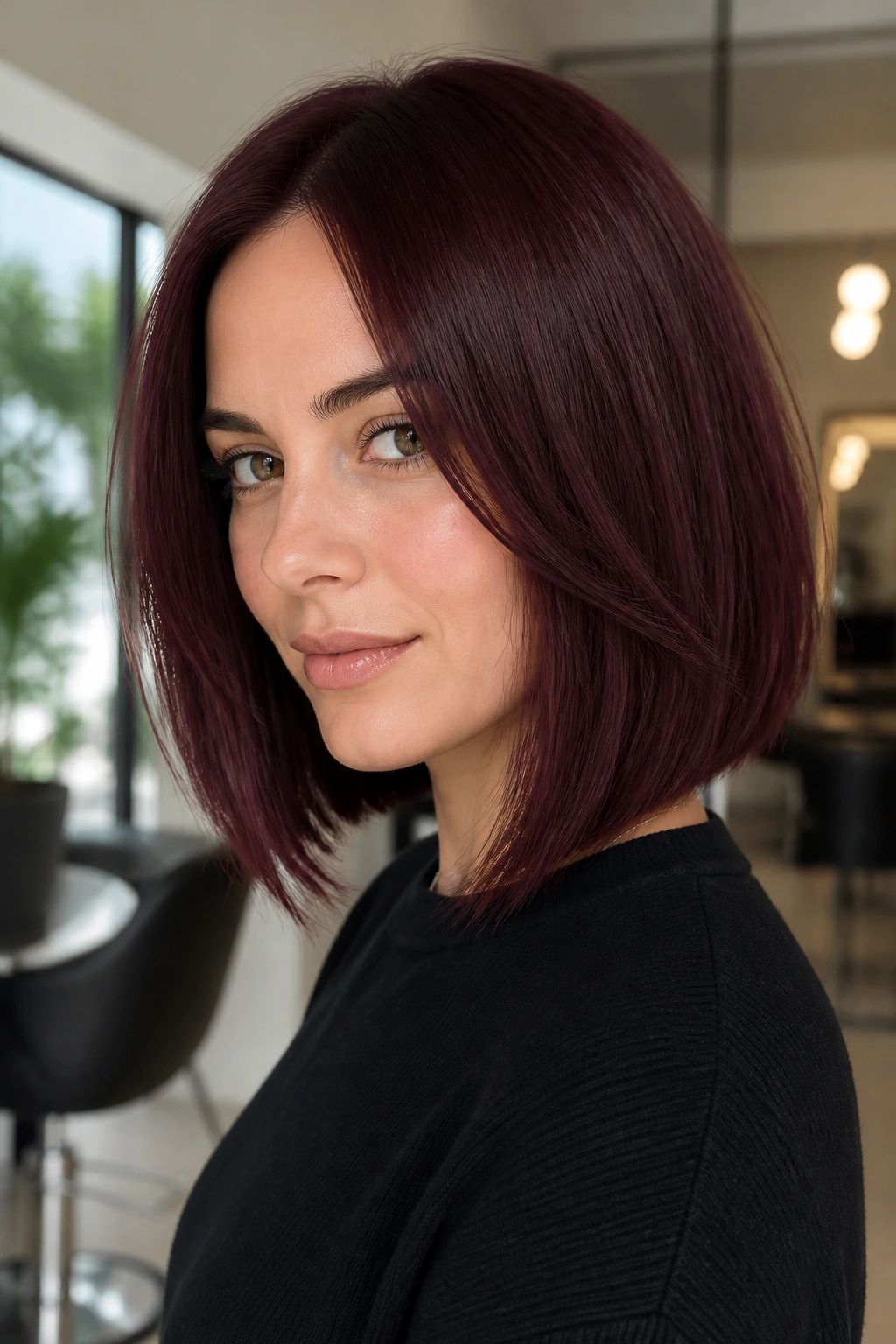
Merlot auburn on a lob is one of those combinations that just makes sense. The cut gives the color a clean shape, and the color gives the cut some weight and mood.
What Makes It Different
Unlike brighter auburns, merlot sits in that wine-red zone that flatters cool skin by staying deep and saturated. It can look dramatic without looking loud.
That matters because cool complexions often lose warmth fast when the shade is too orange or too light. Merlot solves that by keeping the red base dark enough to feel rich. On a blunt lob, the finish looks sleek and tidy. On a textured lob, it softens and gets a little more relaxed.
If you wear a lot of black, charcoal, navy, or crisp white, this one slots in easily. It also makes a strong case for a side part. The asymmetry gives the merlot tone a little movement, which keeps it from feeling heavy.
7. Espresso Auburn with Auburn Ribbons
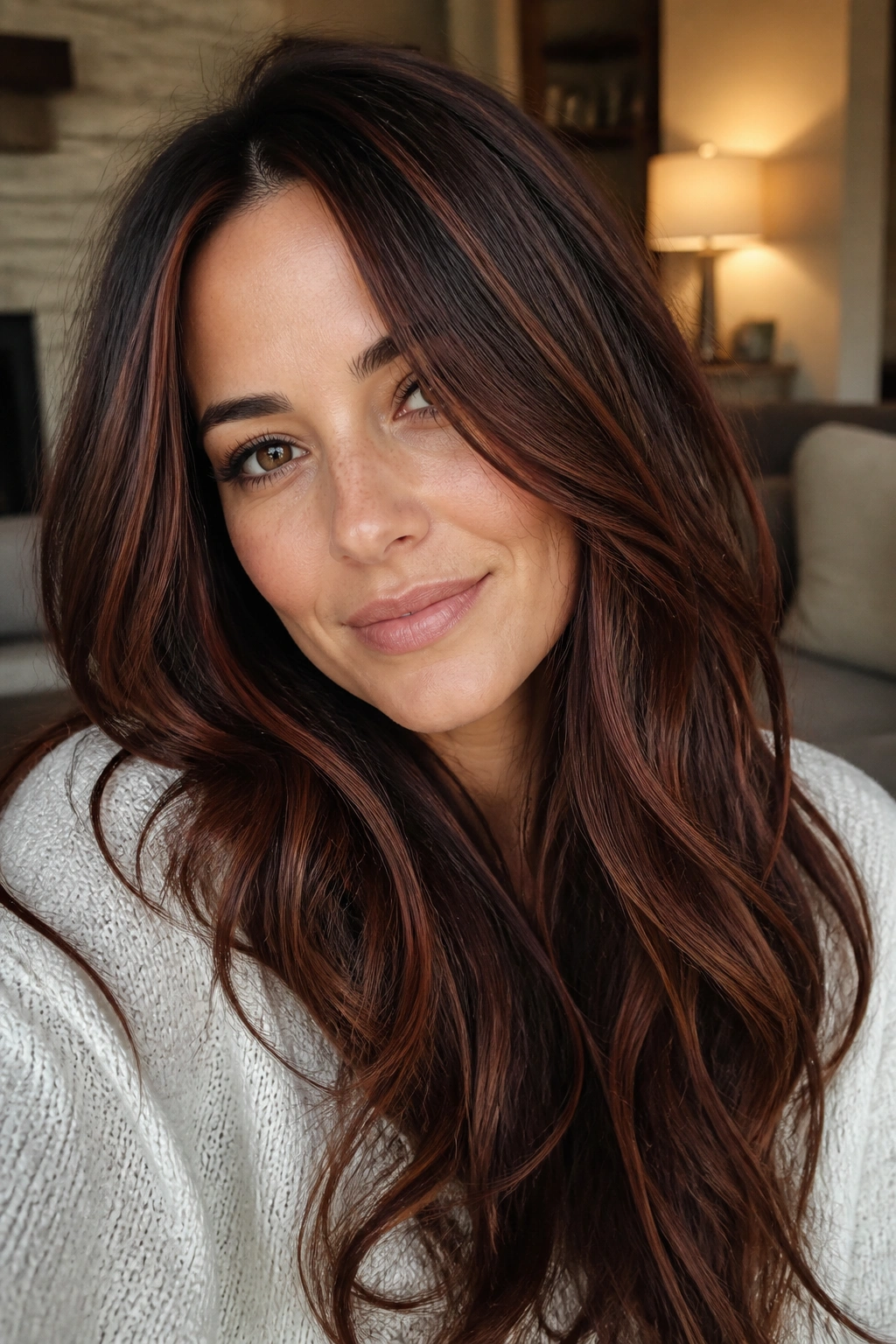
This is the color for someone who wants people to notice the shine before they notice the red. Espresso auburn starts as a deep brown base, then gets thin auburn ribbons through the top layer and around the face.
The ribbons matter. If you spread the red too evenly, the whole look can lose its contrast and end up flat. A few well-placed strands keep the color lively and let the brunette base do its job. On cool skin, that darker base is a blessing because it keeps the warmth where it belongs — in the hair, not in the complexion.
Quick Notes
- Best for brunettes who want a small shift, not a full change
- Works well with curly, wavy, or layered hair
- Needs shine spray or gloss serum to keep the brown from looking dull
- Face-framing ribbons should stay fine, not chunky
Good rule: if you can spot every ribbon from across the room, they’re probably too thick.
8. Cranberry Auburn Highlights
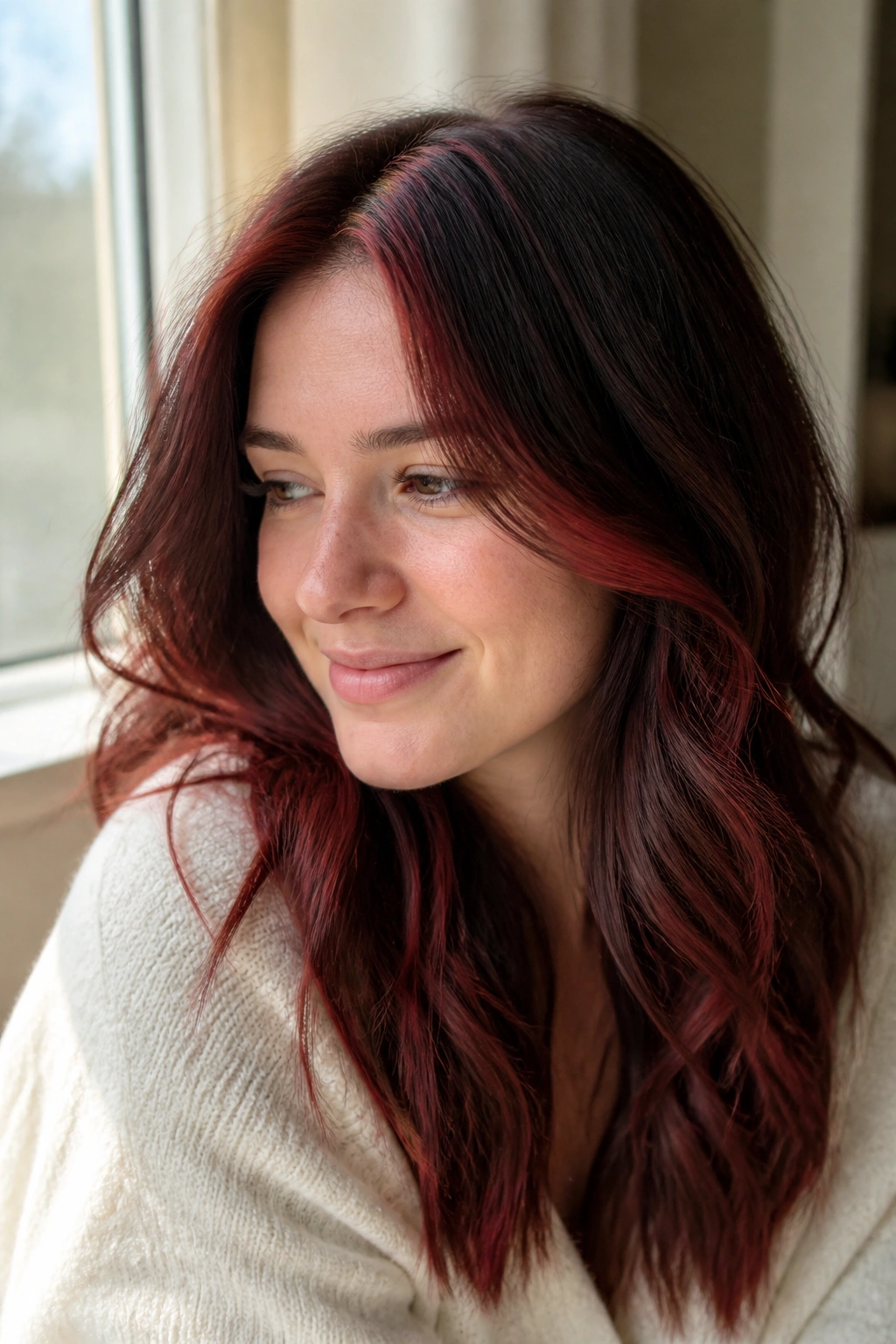
Cranberry highlights are sharper than cherry and softer than red velvet. They’re a good choice when you want auburn to feel bright but still wearable.
The trick with cranberry is placement. Streaks around the part line and a few pieces through the ends can make brown hair look fresh without turning it into a full red job. Cool skin tends to like this because the red is clear and crisp, not muddy. The color also photographs well under natural light, though I’d argue it looks best in motion when the layers shift and the red catches for a second.
If you’re nervous about all-over red, start here. Highlights are easier to live with, easier to grow out, and easier to tone down later if you decide you want the look quieter.
9. Plum Auburn Gloss
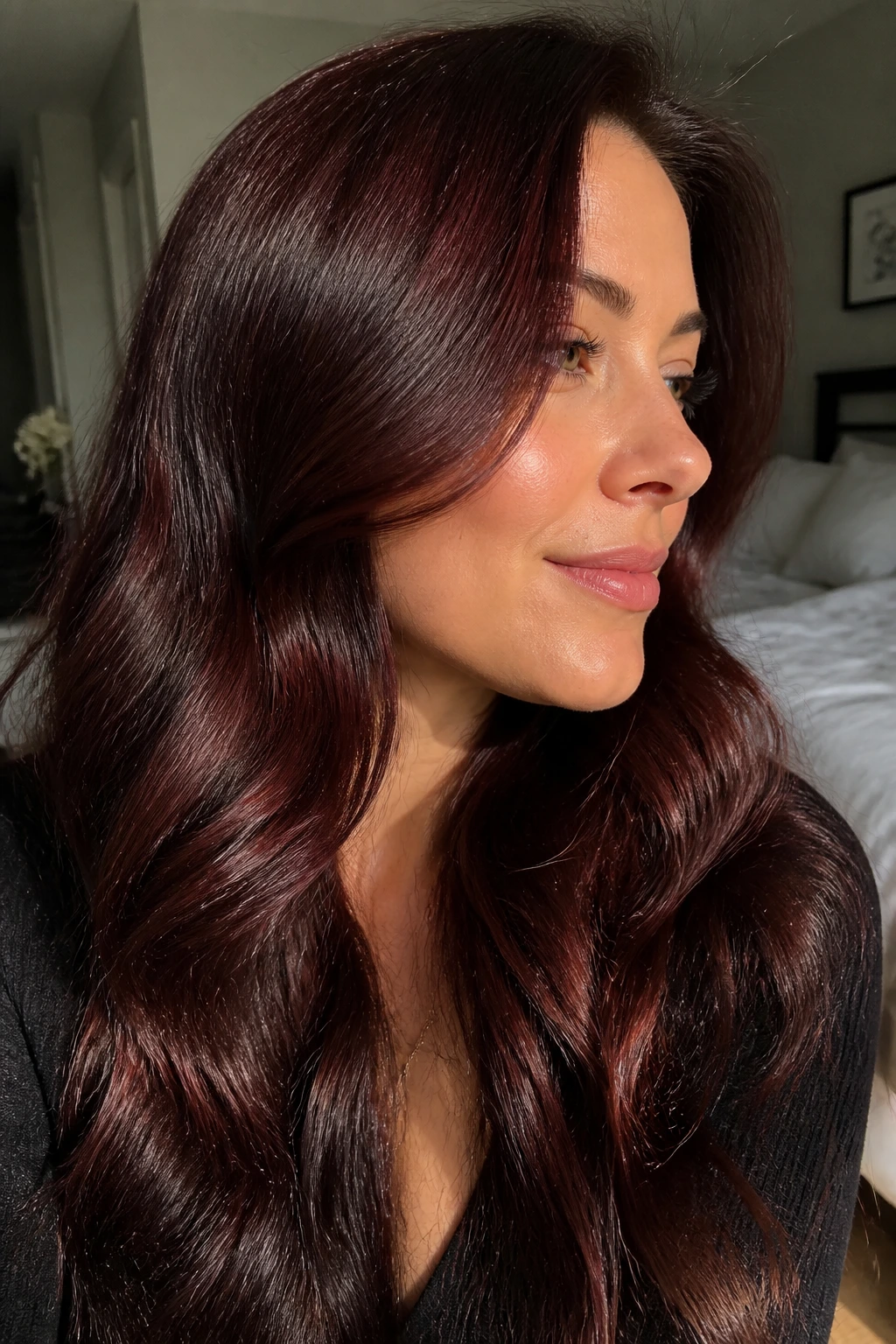
Plum auburn gloss is the kind of shade that rewards close looking. At a glance, it reads like a deep brunette. Then the light moves, and the plum tone appears under the red-brown surface.
That hidden quality is exactly why it flatters cool skin so well. Plum cools the auburn down just enough to keep the face from looking flushed. It also gives the hair a reflective, almost lacquered finish when the gloss is fresh.
How to Use It
Think of this shade as a maintenance-friendly color refresh rather than a dramatic dye job. A clear or tinted gloss over a brunette base can shift the whole tone in under an hour at the salon, and it fades more softly than permanent red.
If your hair already pulls warm, ask for a violet-based gloss rather than a straight red glaze. That small correction makes a big difference. Honestly, it’s the difference between “auburn” and “why is my hair orange?”
10. Blue-Red Auburn
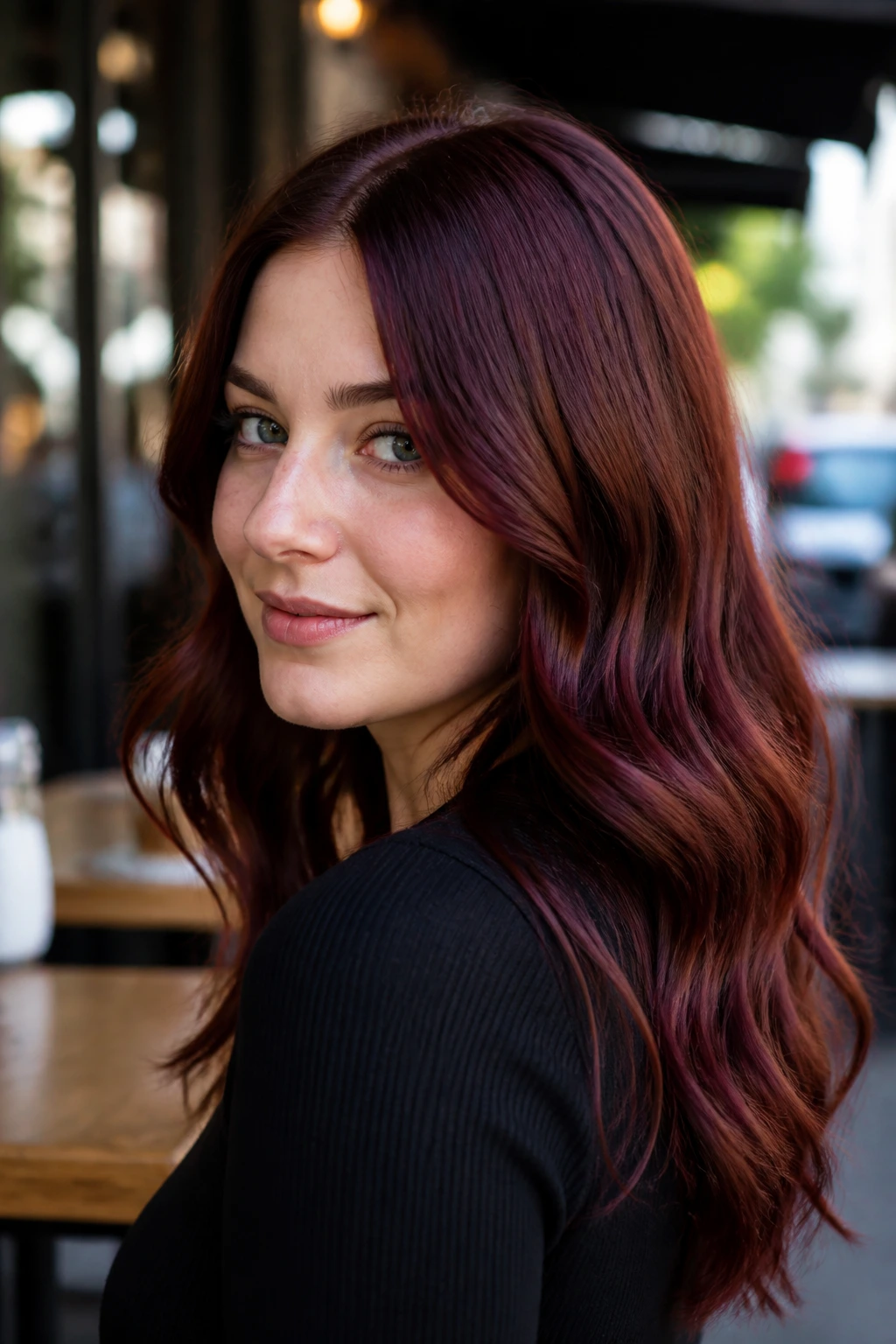
Blue-red auburn is bolder than the softer berry shades, and that blue base is what keeps it friendly to cool skin. It leans closer to a classic red than most auburns, but the cool undertone stops it from going neon.
On thick hair, the shade can look glossy and expensive. On fine hair, it can read even more vivid because each strand catches light more easily. Either way, the color has presence.
A lot of people worry that strong red is too much for cool skin. Sometimes it is. But blue-red auburn is one of the few red-forward shades that can stay balanced if the formula includes enough brown to anchor it. If you want a color that feels sharp, polished, and a little dramatic, this is the one I’d put on the short list.
11. Dusty Rose Auburn
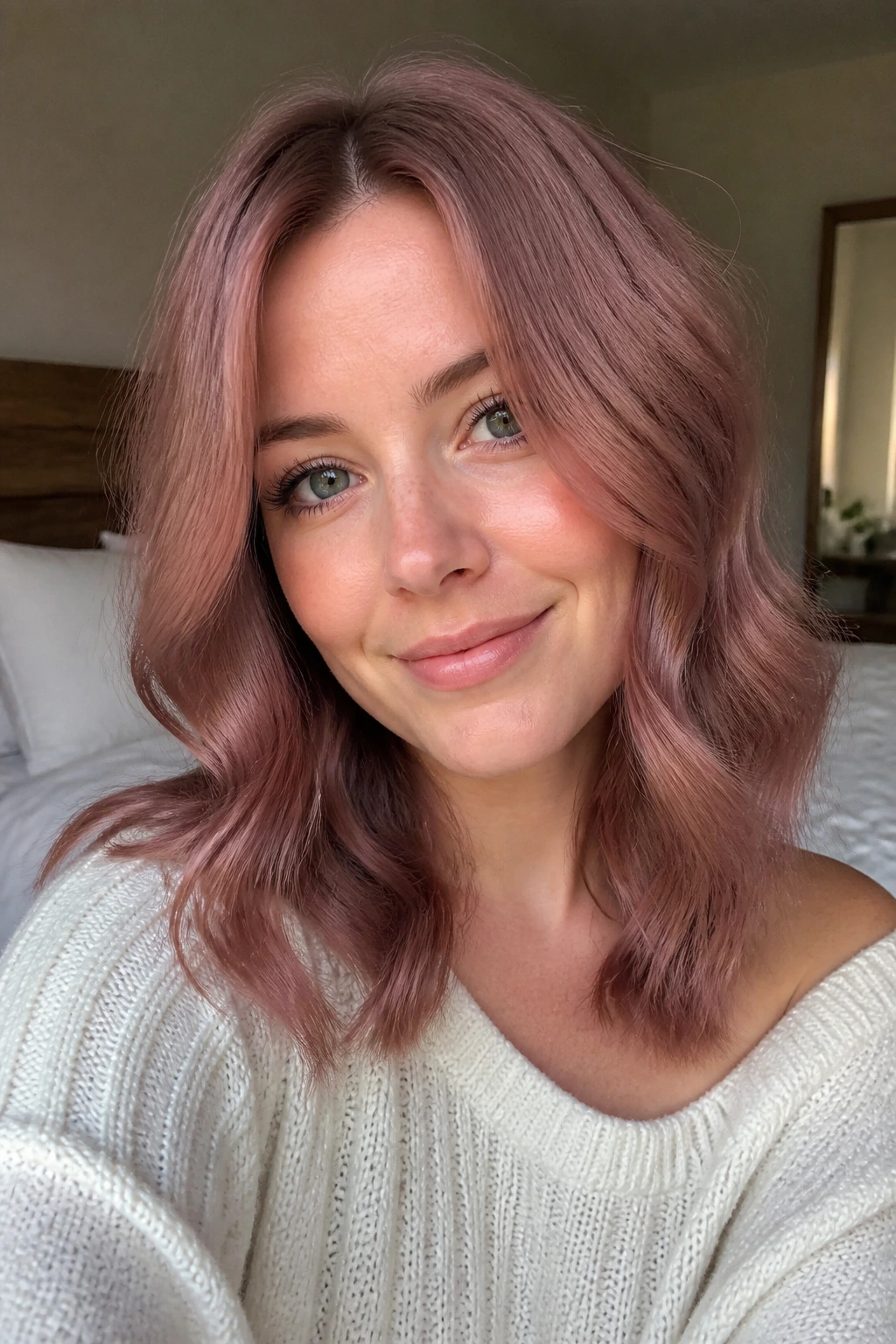
Dusty rose auburn softens the whole idea of red hair. The pink note makes it gentler than cherry or wine, and the brown base keeps it from drifting into candy color.
This shade looks especially nice on cool skin because it echoes the natural pink in the complexion without matching it too closely. That small gap matters. If the hair and skin are too similar, the face can fade. Dusty rose auburn avoids that by keeping the red-brown depth underneath.
It’s also one of the easier shades to wear if you’re not used to red hair. The color feels feminine without being precious, which is a nice line to walk. Wear it with a middle part and loose waves, and it turns soft. Wear it with a sleek bob, and it gets cleaner and more graphic.
12. Wine-Stained Auburn

Wine-stained auburn is darker than merlot and less playful than raspberry. It has that slightly moody, cellar-red look that suits cool skin because it keeps the warmth buried inside the shade rather than sitting on top of it.
Why It Works
Unlike brighter auburns, wine-stained color doesn’t depend on light to look good. It already has depth. That means it holds up under indoor lighting, winter daylight, and all the boring overhead bulbs that flatten color in real life.
I like this one on medium to deep cool skin, especially if the wearer already leans toward dark brows or stronger eye color. The hair and face feel more balanced when the color has weight.
A wine gloss over dark brown can get you close without a full commitment. If you want more drama, ask for a level 4 red-brown base with wine-toned mid-lengths. It’s a little brooding, sure. That’s part of the appeal.
13. Chocolate Cherry Auburn
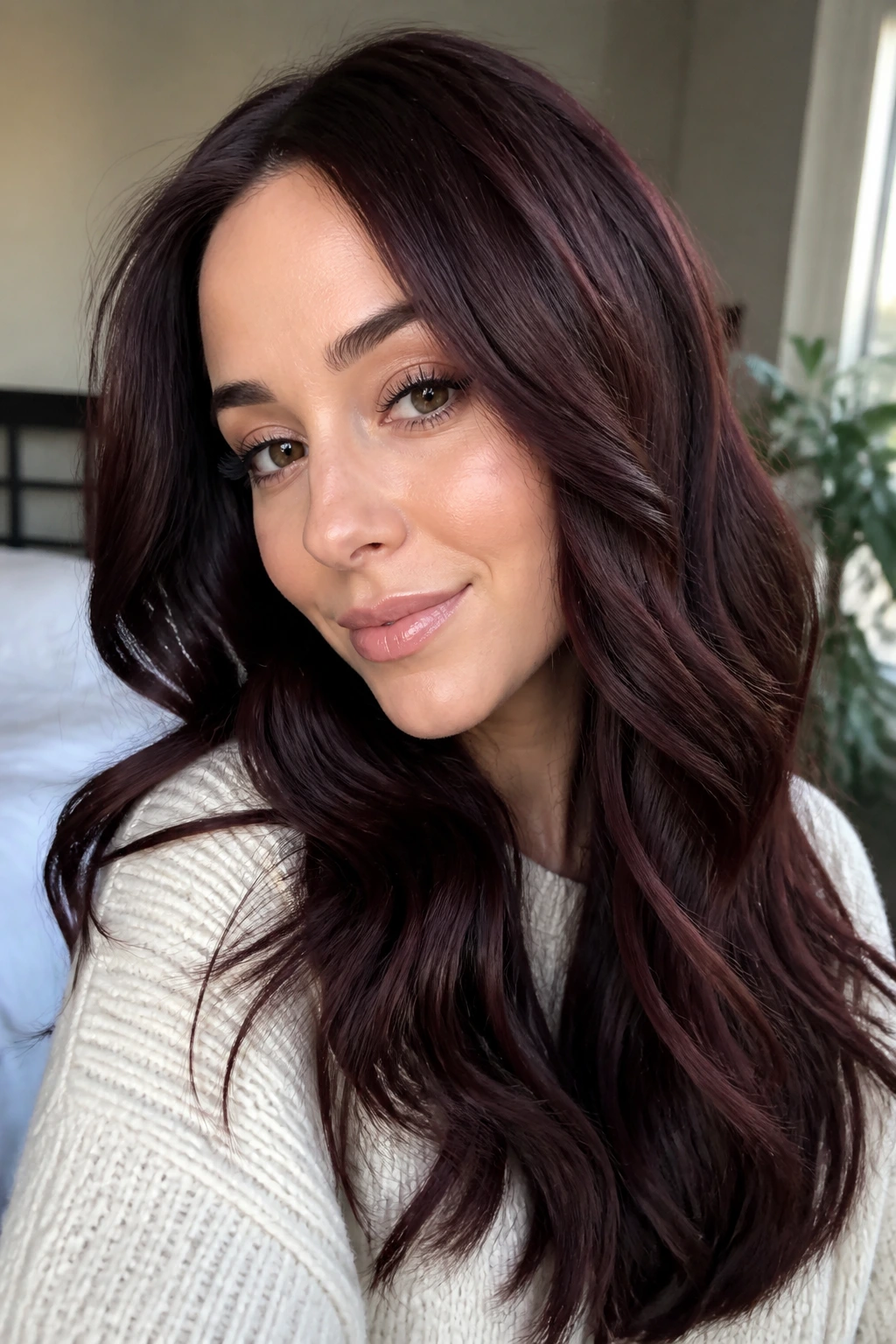
Chocolate cherry auburn is probably the easiest “starter red” on this list. It keeps the comforting depth of brown hair but sneaks in enough cherry pigment to make the whole thing feel richer.
The best part is how forgiving it is. If your natural color is medium brown or dark brown, this shade doesn’t demand a huge lift. That means less damage, less upkeep, and less of the orange phase that people complain about when they go red too fast.
What to Watch For
- Ask for a cherry toner, not a copper toner
- Keep the base chocolate, not golden brown
- Use color-safe shampoo and cool water for rinsing
- Refresh the shine with a gloss between salon visits
The result should feel like brown hair that found a better mood. Not loud. Just better.
14. Aubergine Auburn
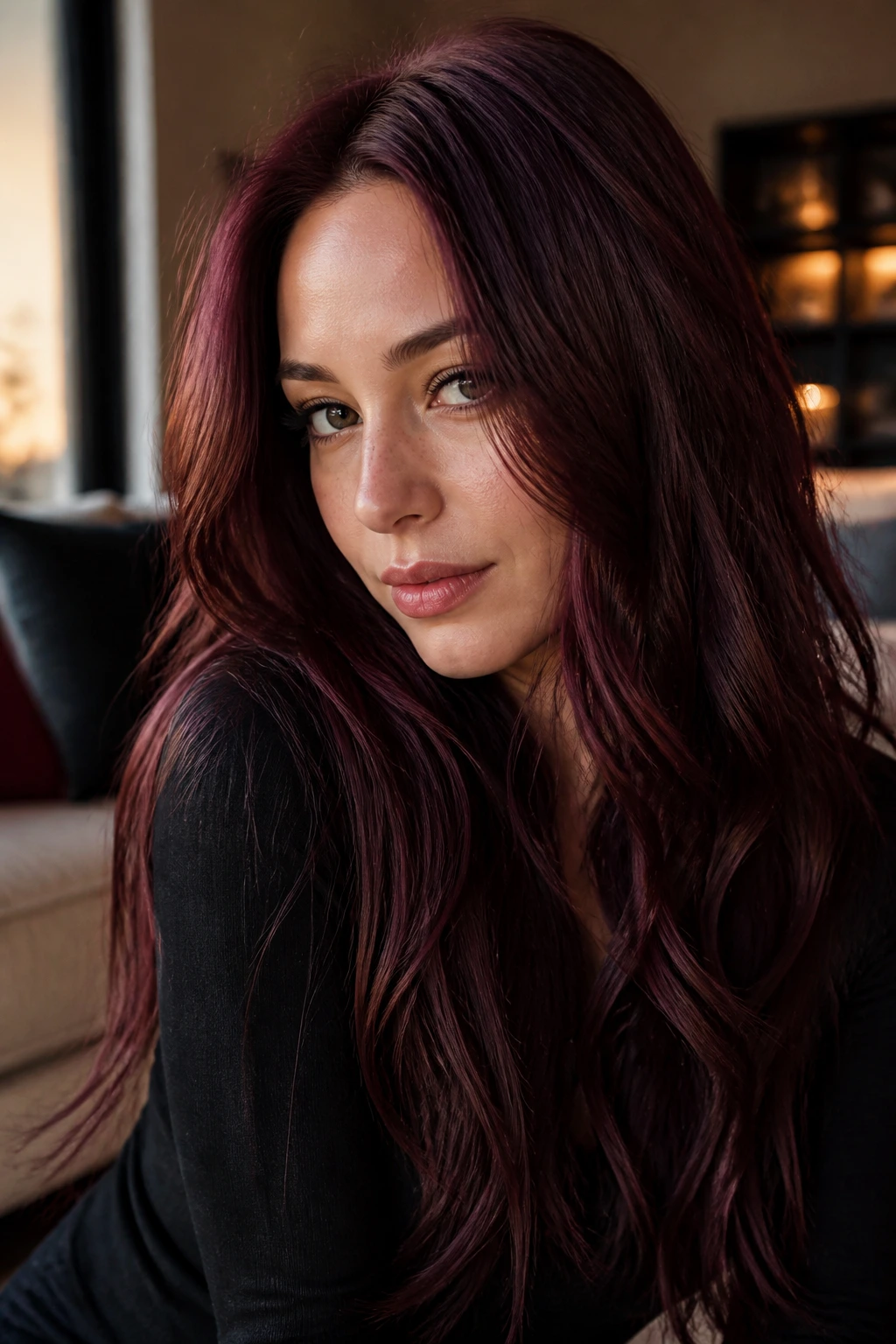
Aubergine auburn is one of my favorite cool-skin choices because it gets away from the “red equals warm” assumption. Aubergine brings eggplant depth into the mix, and that gives auburn a cool shadow that feels almost tailored.
It’s particularly nice on longer hair, where the dark red-violet tone can move from one shade to another as the hair shifts. On layered cuts, the dimension shows even more because the lighter pieces catch the aubergine and break it up.
This is a good fit if you like dark lipstick, black clothing, or sharp, clean makeup. The hair can handle contrast. If your style is softer, this shade can still work, but I’d keep the finish glossy rather than matte. Matte aubergine can look flat fast. Gloss keeps it alive.
15. Cool Copper Auburn Balayage
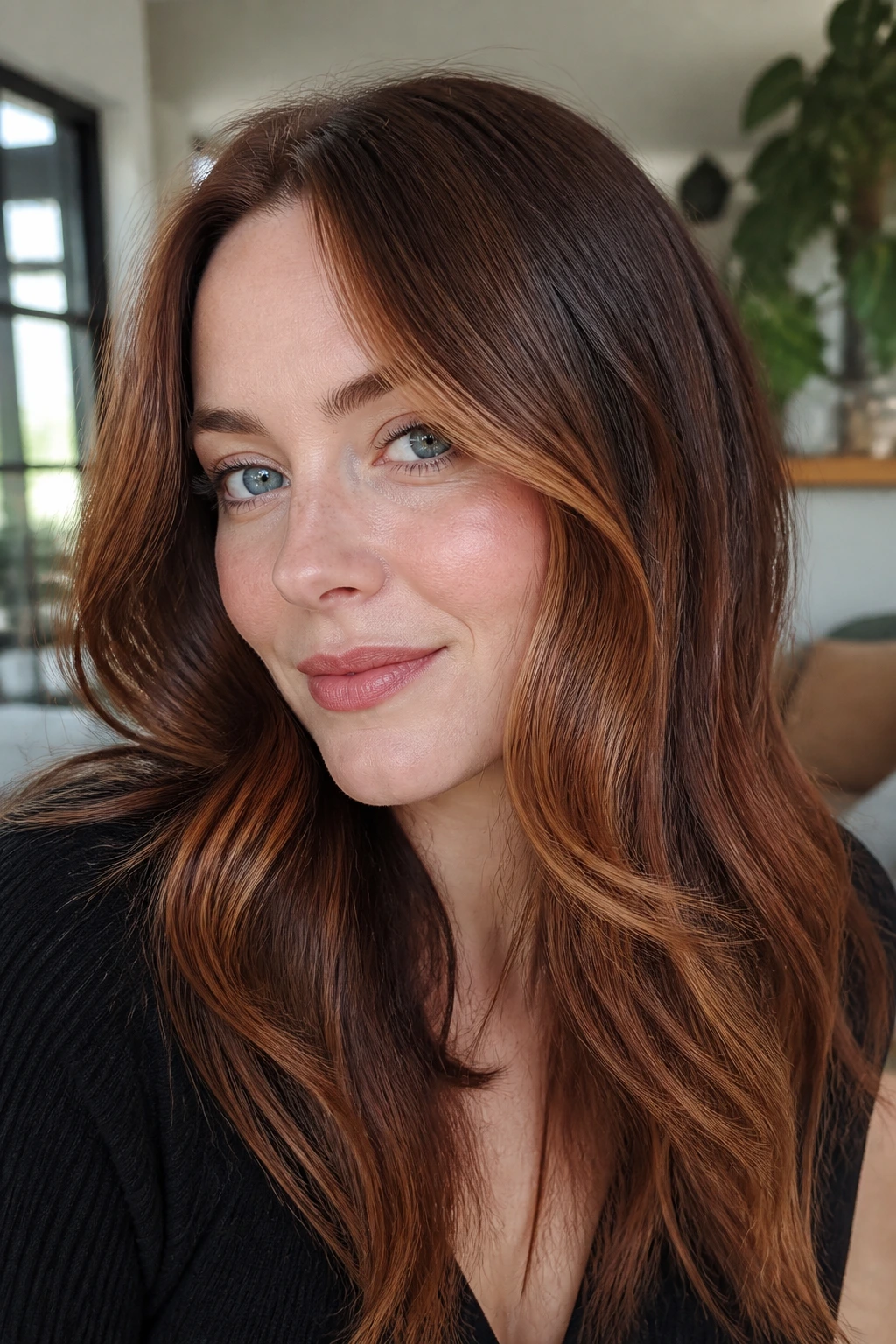
Cool copper sounds like a contradiction, and in a way, it is. That’s why it works. The copper is kept in check with brown, beige-brown, or even a tiny violet gloss, so the overall effect stays warmer-looking than a strict cool red but not so orange that it fights cool skin.
How to Get the Most From It
Ask for fine balayage pieces instead of broad copper panels. The smaller the painted sections, the easier it is to control the warmth.
This shade is best if you want a little brightness around the face and you don’t mind some maintenance. Copper fades fast if the hair is porous, so a gloss schedule matters. A low-shampoo routine helps too.
The whole thing should feel light, not sandy. If the copper tips too orange, the color stops flattering fast. Keep it muted, keep it brown-backed, and it stays wearable.
16. Walnut Auburn with Face-Framing Pieces
Walnut auburn is a quiet shade, and that’s its charm. Walnut brown gives the base a deep, nutty tone, while the face-framing pieces add just enough auburn to warm the front without turning the whole head red.
This is smart color placement for cool skin because it focuses the auburn where it helps most — near the face — and leaves the rest of the hair darker and more neutral. If your natural hair is dark brown, this can be a subtle upgrade rather than a full transformation.
A Small Scenario
You walk into a room, and the color doesn’t shout. Then you turn your head, and the front pieces pick up a soft red-brown glow. That’s the effect.
- Great for first-time red clients
- Easy to grow out
- Works with updos and ponytails
- Looks best when the face frame starts a shade lighter than the rest
That little shift around the face does more than people expect.
17. Black Cherry Auburn
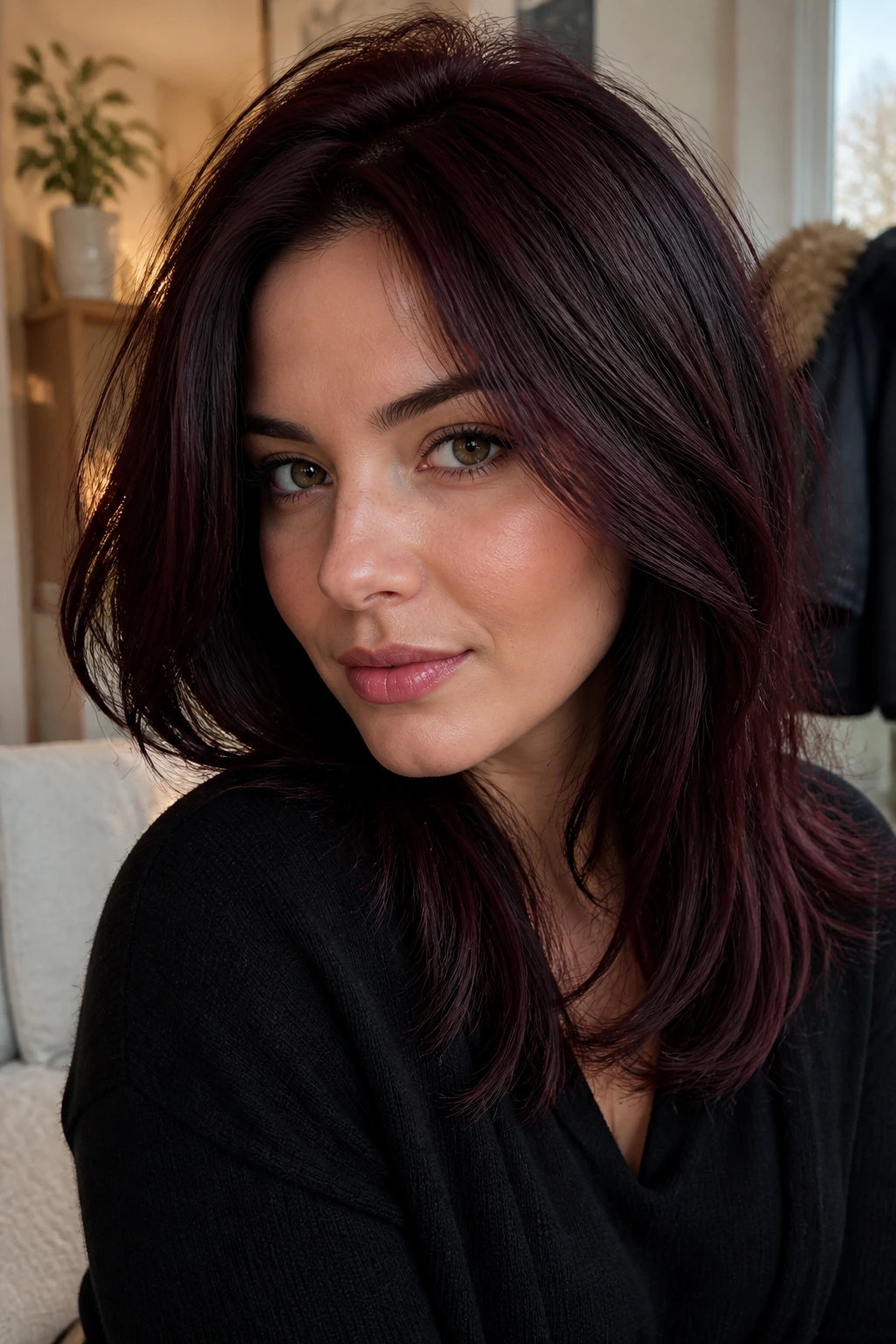
Black cherry auburn is for anyone who wants their hair to look dark at first glance and red on second glance. That hidden red is what makes it interesting.
The black-cherry base flatters cool skin because it keeps the color anchored in darkness. The red never has a chance to flare into orange. In low light, the hair can look nearly black; in daylight, the cherry tone wakes up and the whole look changes.
I’d call this a strong option for winter coats, dark denim, sharp eyeliner, and anyone who likes their hair to have a little mystery. It also hides regrowth better than lighter auburn shades, which is a nice practical bonus. The downside is that it can swallow dimension if the hair is cut blunt and flat. A few layers help a lot.
18. Rosewood Auburn
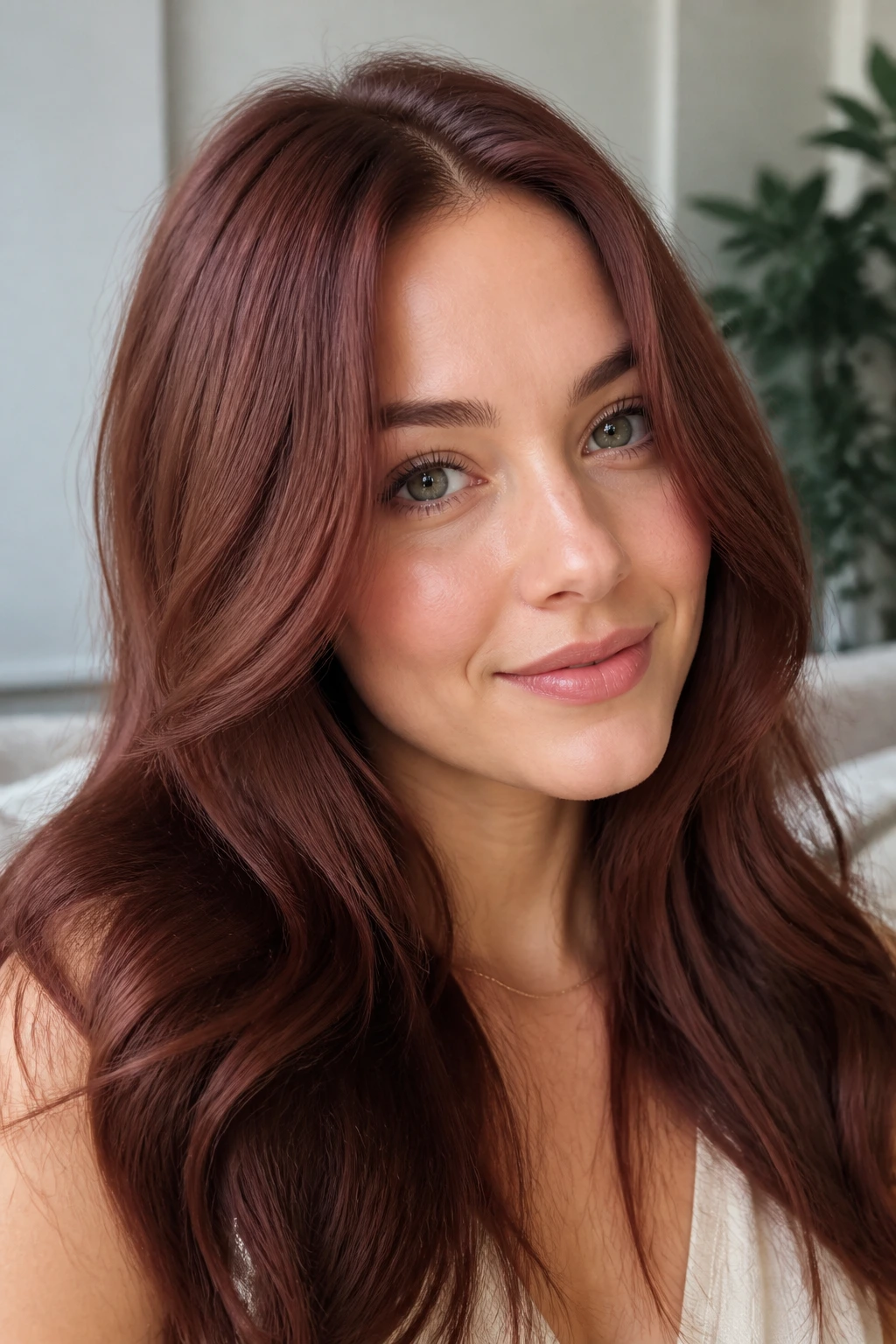
Rosewood auburn sits somewhere between muted rose and deep brown-red. It has a soft, polished quality that flatters cool skin by echoing the pink in the complexion without becoming pink hair.
The shade feels less dramatic than wine or merlot, but it’s not boring. Rosewood has a smooth finish that makes hair look healthy, especially if it’s already in decent shape and can reflect light. On wavy hair, the tone spreads across the bends in a really nice way.
What Makes It Different
Unlike stronger red shades, rosewood doesn’t rely on saturation alone. It uses softness. That makes it easier to wear every day, especially if you like understated makeup and clean clothing lines.
If you want to ask a colorist for something concrete, say: “brown-red with a rosy undertone, no orange, no copper.” That wording helps more than people think.
19. Rooted Auburn Ombre
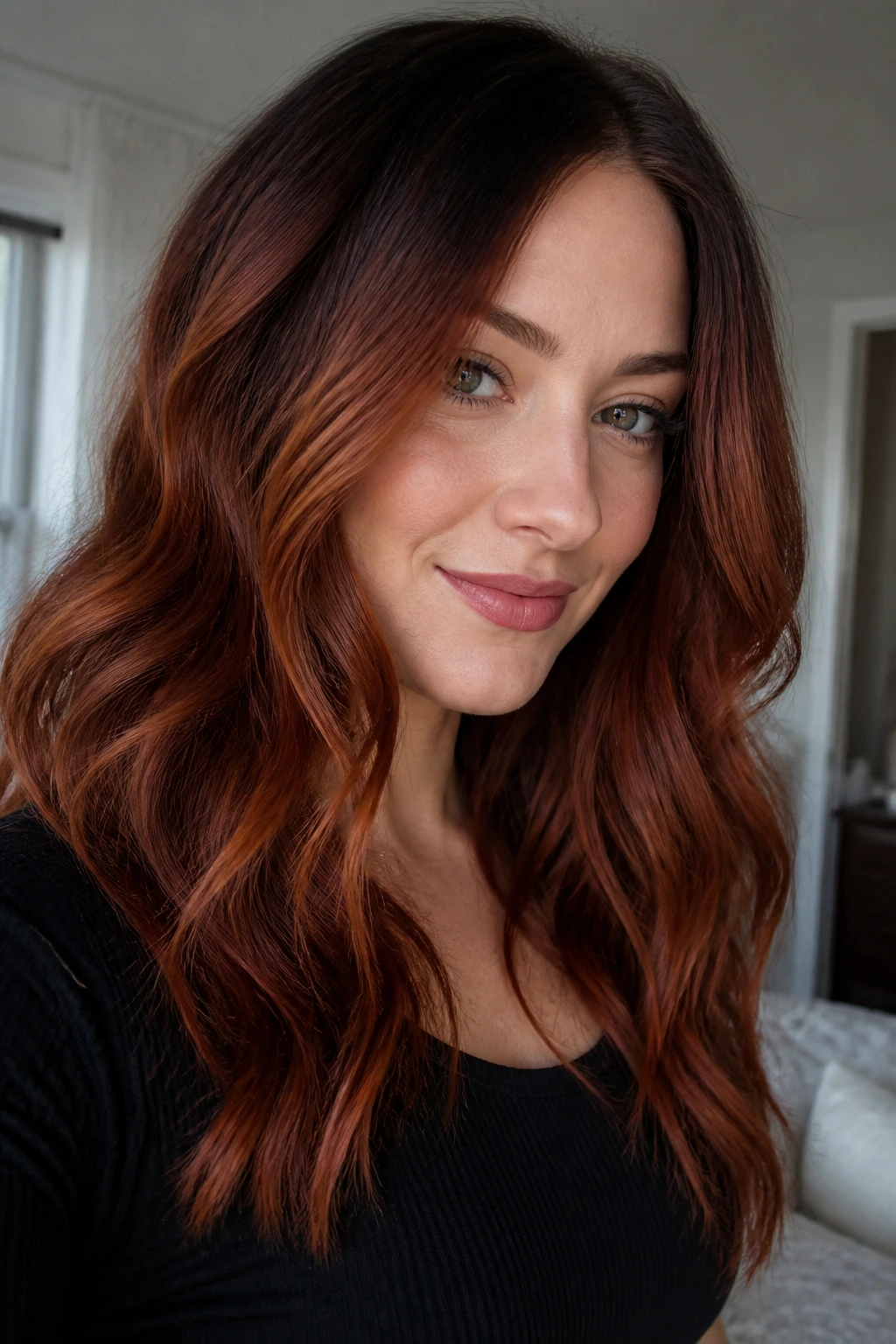
Rooted auburn ombre is one of the easiest ways to wear red-brown color without committing to a solid, full-head shade. The darker root keeps the look grounded, and the auburn gradually deepens or brightens through the mids and ends.
That root depth is excellent for cool skin because it frames the face in a brown base first, then lets the auburn show where it can flatter without overwhelming. The transition is also forgiving. If your hair grows fast, ombre hides it better than a single-process color.
Why I Like It
A rooted ombre gives you room to breathe between appointments. It also feels less rigid than traditional highlights, which matters if you prefer hair color with movement.
The ends can be glazed into cherry, mahogany, or berry auburn depending on how bold you want to go. Keep the root soft and the melt smooth. Harsh lines kill the effect fast.
20. Mulled Berry Auburn
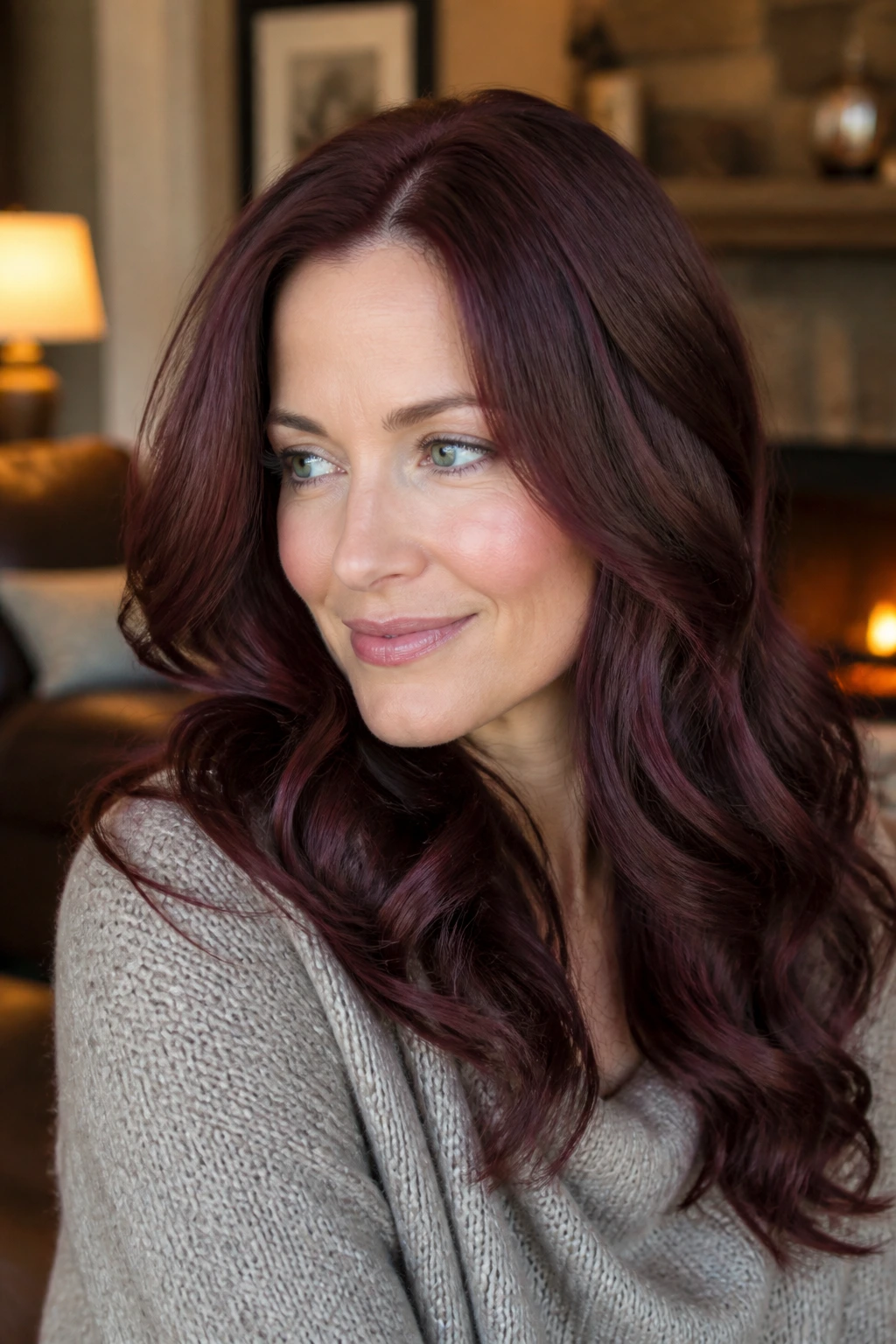
Mulled berry auburn is deeper than raspberry and warmer than plum, but it still stays in the cool family when the red leans toward berry instead of orange. It’s a smart choice if you like rich color without a hard-edged look.
There’s something cozy about it, though I’d rather call it plush than cozy. The shade has body. It can make hair look denser and more reflective at the same time, which is not easy to do.
Use this one if you want to wear your hair down a lot. The color likes motion, so soft curls, bends with a flat iron, or even air-dried waves help it show its dimension. On very straight hair, it can look a little flatter, so shine matters more.
21. Mocha Auburn with Auburn Ends
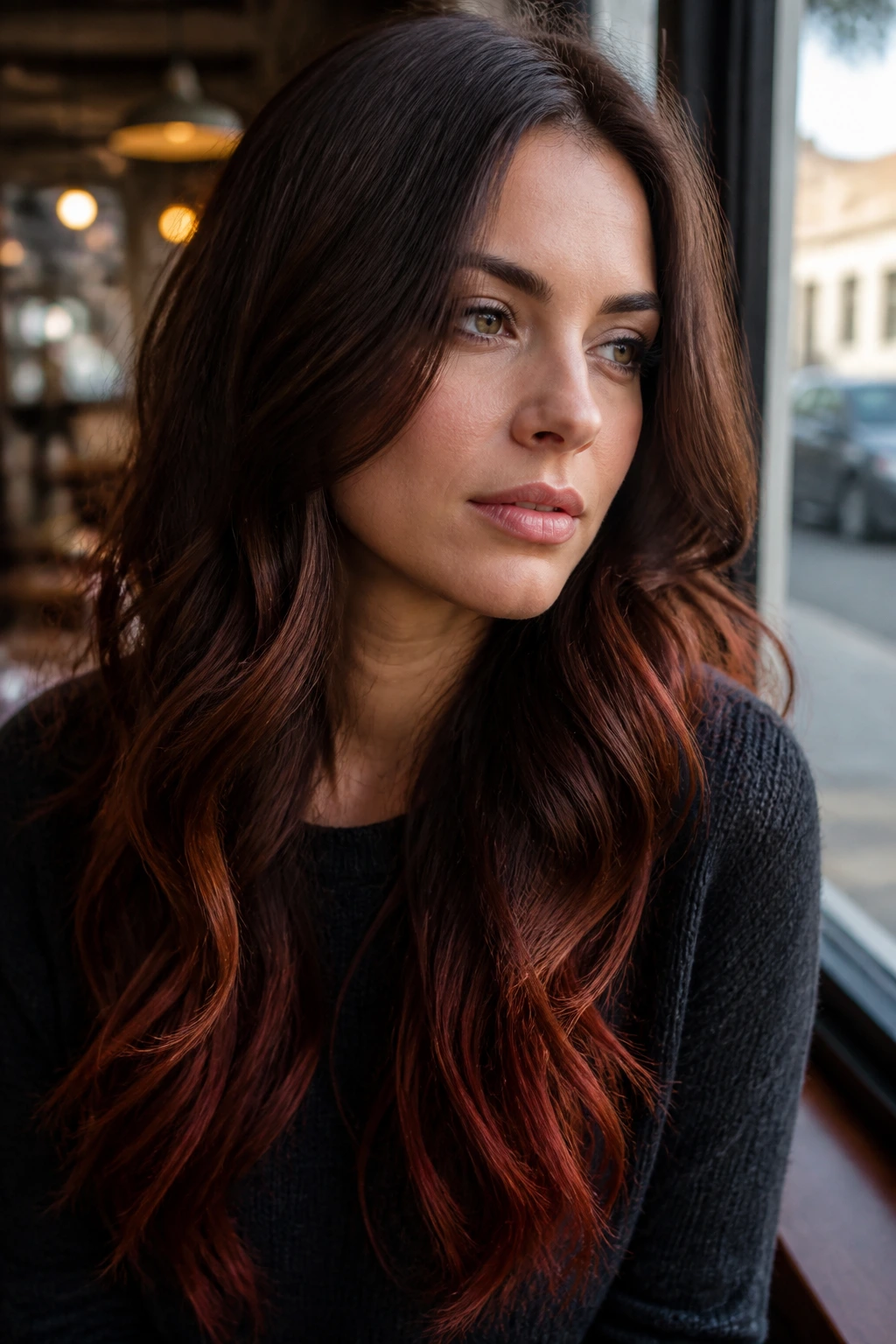
Mocha auburn is a clever option for people who live in brown hair but want a little red without a full restart. The mocha base keeps the overall look neutral, and the auburn ends bring the color story to life.
I like this for cool skin because the brown stays dominant. The auburn shows up in the lower half, where it doesn’t sit right next to the face all day. That makes the shade easier to wear if you’re cautious about red.
How to Ask for It
Request a mocha brunette base with auburn-toned ends or a soft red-brown ombre.
Avoid caramel. It pulls warm in a way that can fight the whole look.
This shade works well on layered cuts because the ends move more and show off the color shift. It’s subtle, yes, but not flat. There’s a difference.
22. Smoky Cinnamon Auburn
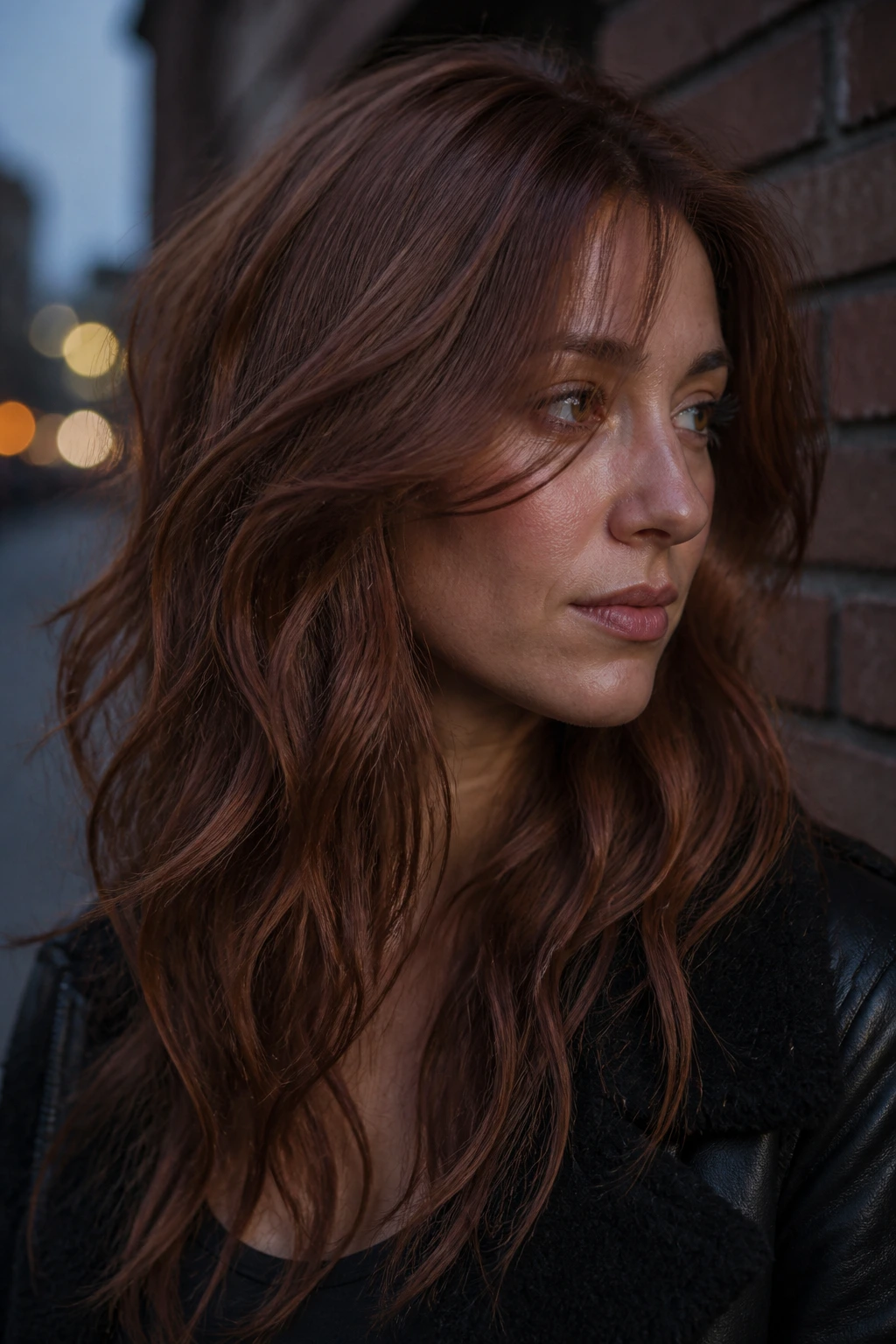
Smoky cinnamon auburn is what happens when cinnamon is cooled down enough to stop looking like a spice jar. The smoky part matters. It keeps the color from sliding into orange territory and gives the finish a muted, wearable feel.
That muted edge is why cool skin can wear it more easily than straight cinnamon. The red-brown sits under the surface instead of sitting on top like a bright stain. On textured hair, the shade looks especially good because the bends and curls scatter light in a way that softens the warmth.
What to Watch For
- Keep the formula brown-based
- Ask for ash or violet support if your hair lifts too warm
- Avoid golden glosses
- Refresh with a cool-toned glaze, not a copper toner
The result should feel like cinnamon with the heat turned down. Still interesting. Just less spicy.
23. Dark Auburn Money Piece
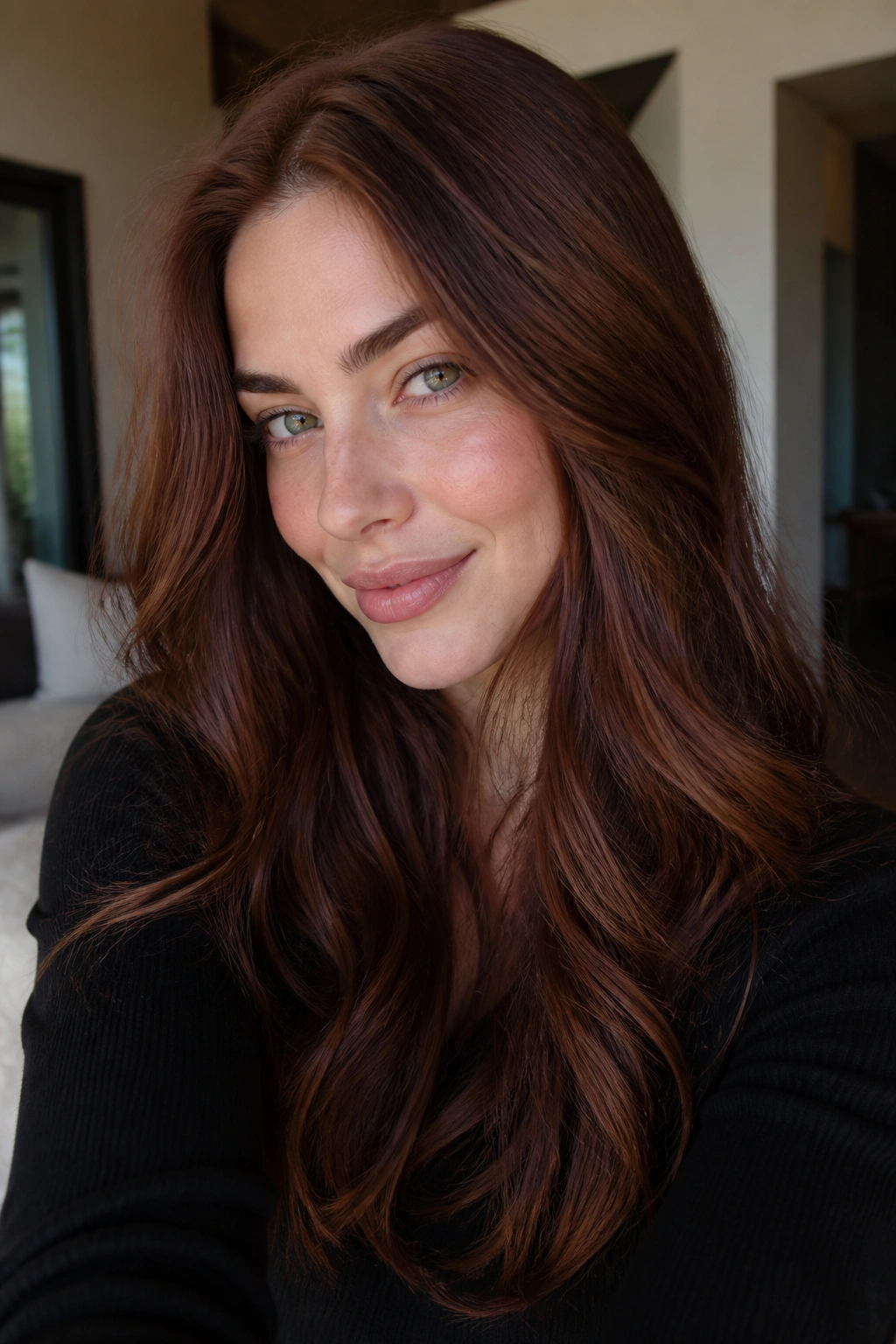
A dark auburn money piece is a nice way to test red without touching every strand. You keep the rest of the hair dark, then place a brighter auburn strip or two around the face where the light hits first.
This kind of placement works because cool skin usually benefits from contrast. The dark base keeps the complexion clear, and the auburn front piece adds color right where it can lift the face. If the money piece is too thick, it can look costume-y fast. Fine placement reads cleaner.
A Practical Note
This is one of the easiest auburn ideas to live with if you’re busy. It grows out softly, and you can refresh just the front pieces.
If you’ve got bangs, the color can sit there and look intentional without trying too hard. If you don’t, a face frame with two blended front sections usually does the job.
24. Violet-Brown Auburn
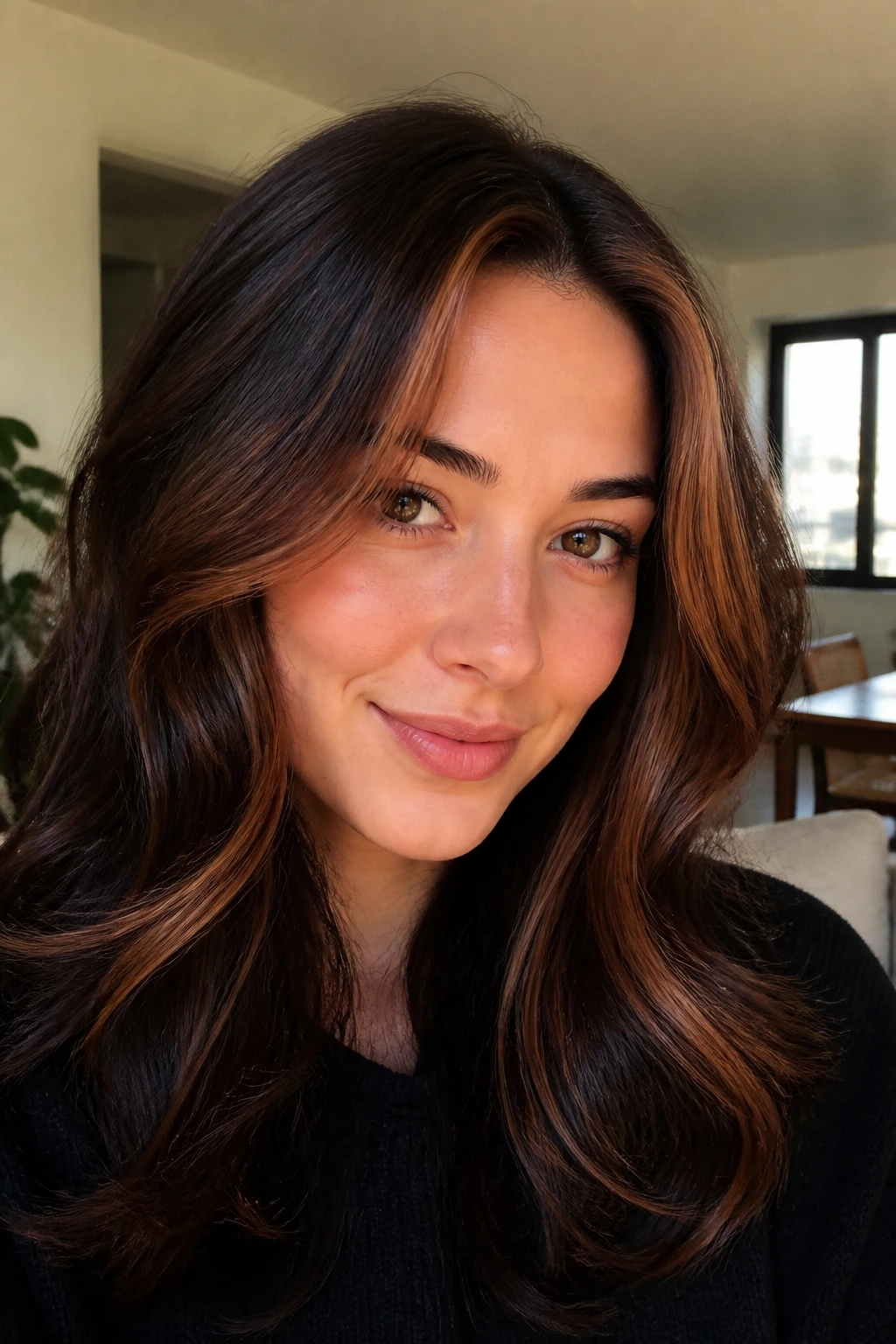
Violet-brown auburn might be the most underrated cool-skin shade on the list. It doesn’t scream red at all. Instead, it gives brown hair a cooler red cast that makes the whole head look deeper and more expensive-looking.
The violet note helps especially if your hair tends to pull brassy whenever you color it. That tiny bit of purple in the formula can steady the whole result. On cool skin, the effect is flattering because it echoes the undertone instead of trying to warm it up artificially.
If you like makeup with mauve lipstick, taupe shadow, or berry blush, this hair color tends to sit in the same family. That doesn’t mean you need a matching wardrobe. It just means the shade has a quiet coherence that’s hard to fake.
25. Garnet Auburn
Garnet auburn is richer and more jewel-like than many auburn shades. It’s the sort of color that can look almost black in shadow and then throw a red flash when the sun hits it.
That makes it a smart fit for cool skin, because the depth keeps the warmth contained. The red reads as a color note, not a heat source. If you have darker eyes or thick hair, garnet can look especially strong. It gives the hair a dense, polished surface.
Why It Stands Out
Unlike brighter auburns, garnet doesn’t need a lot of brightness to make an impression. The color comes from saturation and depth.
For maintenance, a gloss matters more than bleach-heavy lifting. If the hair is over-lightened, garnet can lose its jewel quality and start looking flat. Keep the base dark. That’s the whole trick.
26. Auburn Babylights on Brown Base
Auburn babylights are tiny, fine strands of red-brown woven through a brunette base. They’re smaller than standard highlights and much softer across the head.
That softness makes them ideal for cool skin if you want the auburn effect without changing your whole vibe. The color appears in flashes instead of slabs, so the face gets a lift but the brown base stays in control. On straight hair, babylights can look delicate and glossy. On curls, they add a lot of depth.
This is one of those styles that rewards a patient colorist. Too much spacing and you miss the point. Too much saturation and you lose the babylight effect. The goal is fine, thin, almost whisper-like ribbons of auburn.
27. Cabernet Auburn
Cabernet auburn is a deep red-wine shade with enough brown to keep it grounded. It’s darker than cherry and usually a little smoother than merlot, which gives it a polished, almost formal feel.
Cool skin usually likes this shade because it doesn’t lean orange or coral. It stays in the wine lane. If you wear dark coats, clean tailoring, or simple makeup, the color can carry the whole look without asking for much else.
Cabernet also fades in a flattering way. The red softens first, then the brown remains, so the transition isn’t harsh. That matters more than people admit. A color that fades gracefully gets worn more often because you’re not racing the calendar between appointments.
28. Soft Auburn with Beige Lowlights
Beige lowlights in auburn hair are a little less common, and that’s exactly why they’re interesting. Instead of making the color hotter, the beige breaks it up and keeps the overall tone soft.
For cool skin, this can be a useful move if your hair tends to go too red too fast. The beige lowlights act like a buffer, scattering the warmth so it doesn’t sit in one solid block. The result feels airy and a touch muted, which can be lovely on lighter cool complexions.
How to Get the Most From It
Ask for beige-brown lowlights, not gold. Gold changes the temperature. Beige steadies it.
This shade is especially good if you want dimension in summer-light hair without committing to a bright red. It also makes curls look fuller because the tonal changes show in every twist and bend.
29. Merlot-to-Chestnut Melt
Merlot-to-chestnut melt is a smoother, more wearable version of a high-contrast red-brown. The top or root area stays deep and wine-toned, then the color eases into chestnut through the lengths.
That gradual change is flattering on cool skin because the face gets the richer, cooler red first, while the lighter chestnut lives farther down where it doesn’t compete with complexion. It also makes the hair feel longer and more fluid, since the color transition moves with the shape of the cut.
I’d recommend this if you want auburn that doesn’t look “done” in an obvious way. It feels grown-up without feeling stiff. That’s a nice line to hit. Too many red tones can look pasted on; a melt avoids that by making the whole thing feel like one continuous shade.
30. Midnight Auburn Gloss
Midnight auburn gloss is the darkest shade on the list, and maybe the most understated one too. It starts near-black, then gives off a red-brown reflection when the light hits it at the right angle.
That makes it a smart closing idea for cool skin because it keeps the red close to the base color. No orange flash. No copper flare. Just depth, shine, and a dark auburn reflection that appears and disappears depending on where you stand.
If you’re unsure about going red, this is the shade I’d call the quiet test drive. It lets you live with auburn without broadcasting it. And that’s often the smartest move. Not every red has to shout to be good.
A strong auburn on cool skin should do one thing well: make the complexion look clearer, not busier. Midnight auburn gloss gets there by keeping the color dark, cool, and reflective. When it’s fresh, it can look almost liquid. When it fades, it still stays useful, which is more than I can say for a lot of brighter reds.
The best part is the restraint. If you want a hair color that feels polished but not precious, this one earns its keep.
