



Auburn copper hair color ideas for cool skin tones work best when the red stays moody and the orange stays in check. That sounds picky, and it is. On cool skin, the prettiest copper usually has a berry note, a brown base, or a smoky glaze that keeps the shade from turning brassy in daylight.
Pumpkin-orange is the trap.
The old rule that copper is only for warm skin is too blunt. Blue and pink undertones can hold a copper shade beautifully when the colorist builds in enough depth—think mahogany, rosewood, plum, or a soft root shadow rather than a flat, high-orange panel from scalp to ends. That’s the part most people miss.
Smoke fixes a lot.
I like this family of shades because it can look rich instead of loud. Cool complexions tend to wake up when the red has some structure, and structure is the word here: a little brown, a little violet, a little shadow at the root. The strongest versions are not the brightest ones.
1. Smoky Auburn Copper Melt
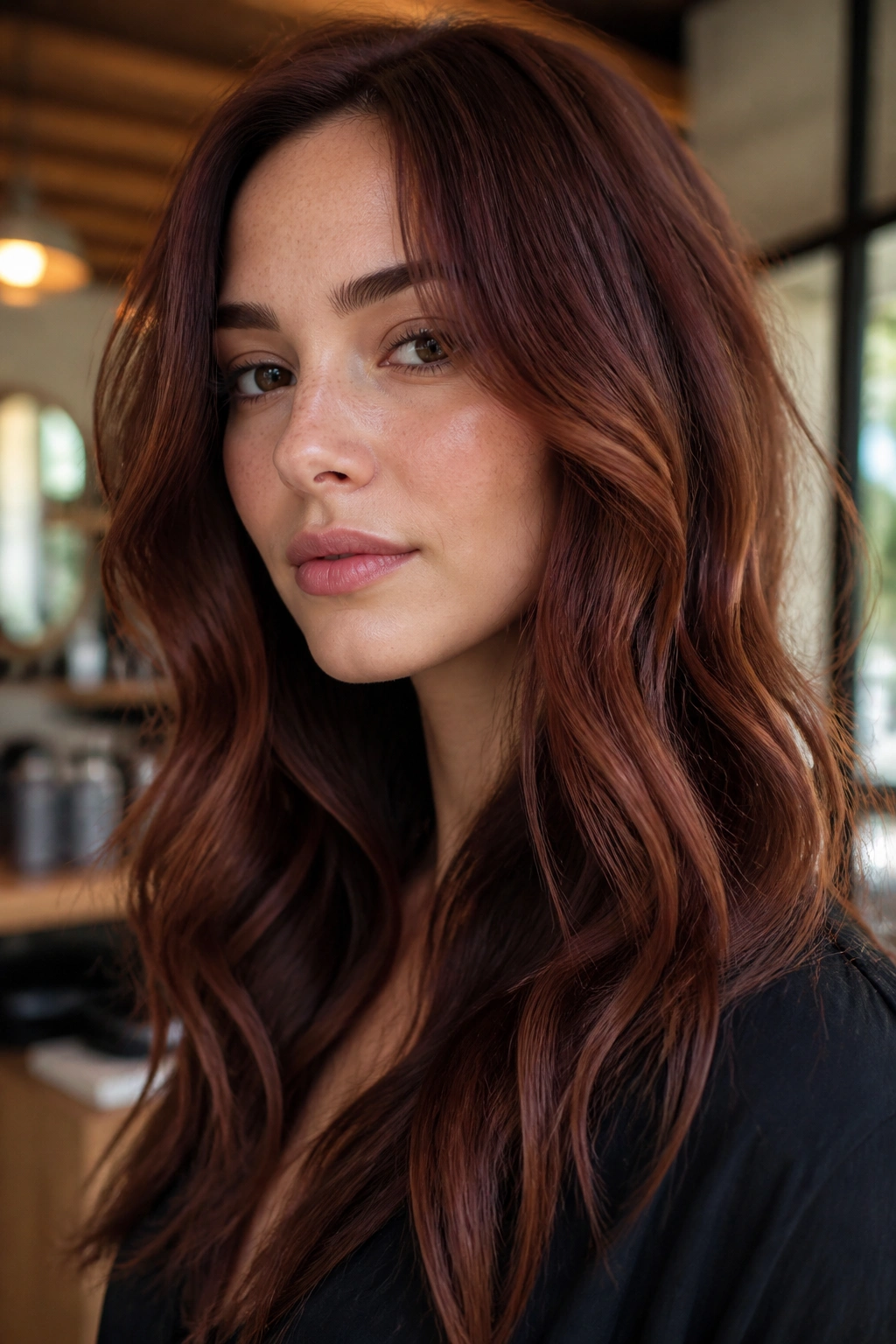
Smoky auburn copper is the safest way to wear copper on cool skin, and I mean that in the best way. It starts with a brown base, then folds in copper and red so the whole look reads soft, not shouty.
Why It Works for Cool Undertones
The smoke keeps the copper from sitting flat on the face. If your skin has pink or blue undertones, a shade like this mirrors that cooler cast instead of fighting it, so the hair looks intentional rather than neon.
How to Ask for It
- Ask for a demi-permanent copper-brown gloss over a level 5 or 6 brunette base.
- Keep the brightest pieces around the face at no more than one level lighter than the mid-lengths.
- Ask your colorist to avoid pure orange toner; you want copper with a brown edge.
- If your hair is fine, keep the melt soft at the ends so it doesn’t look stripey.
Best on: fair to medium cool skin, especially if your brows are naturally dark.
2. Cherry Cola Auburn Copper
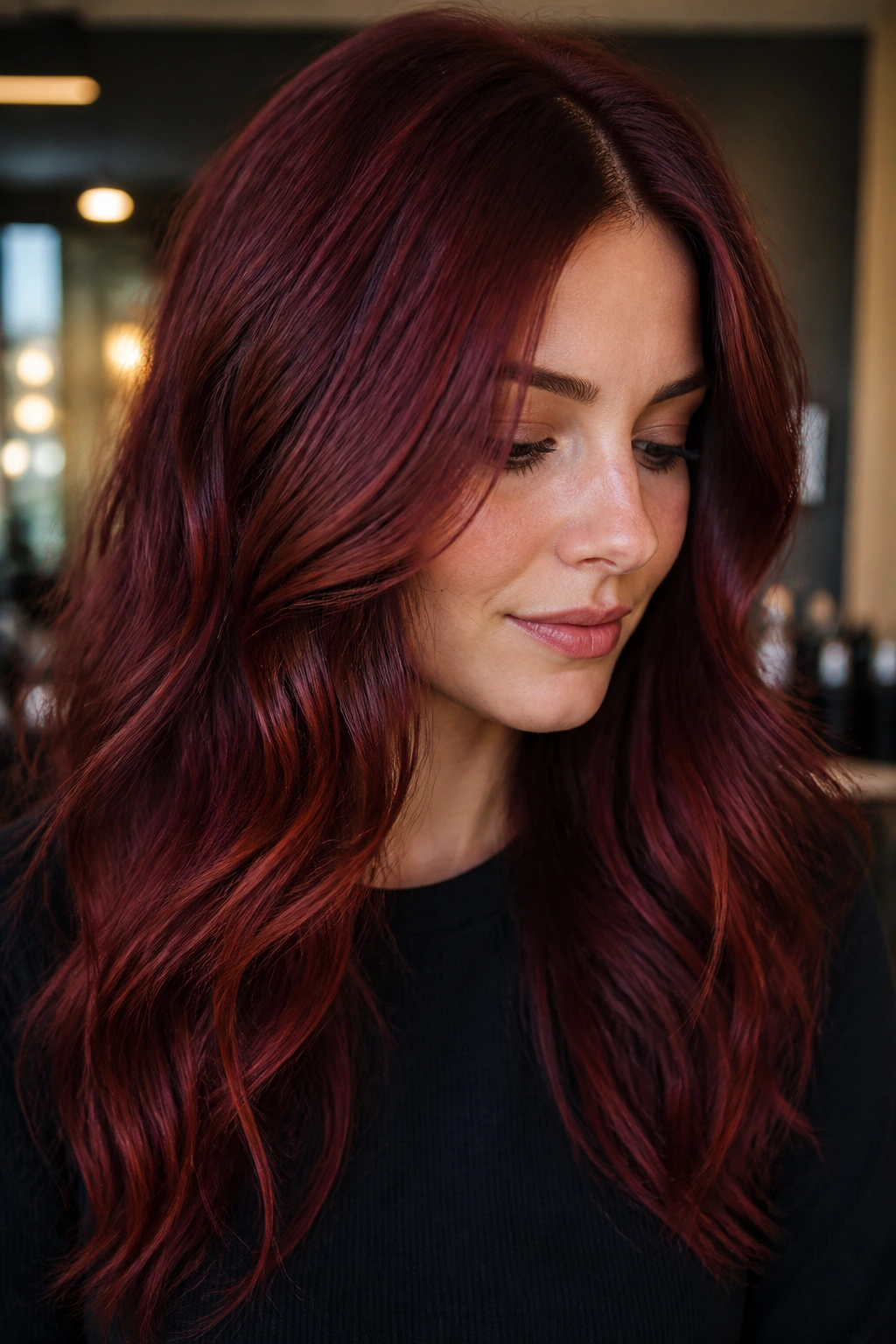
Why does cherry cola color work so well on cool skin? Because the red is already leaning berry, and berry behaves better than plain copper when your complexion has pink in it. The result is deep, glossy, and a little mysterious in a way orange never is.
I like this shade on medium and deep cool skin tones, where the darker base lets the red-copper shimmer instead of dominate. You can wear it all over, or keep the roots deeper and let the red show up more strongly in the mid-lengths and ends. That gives you movement even when your hair is straight.
This is one of those colors that looks richer under indoor light than people expect. In sunlight, you’ll see the copper. In shade, the cherry side comes forward. No flat spots. No carrot look. Just a darker red-brown with a sly warm edge.
3. Mushroom Brunette with Auburn Copper Ribbons
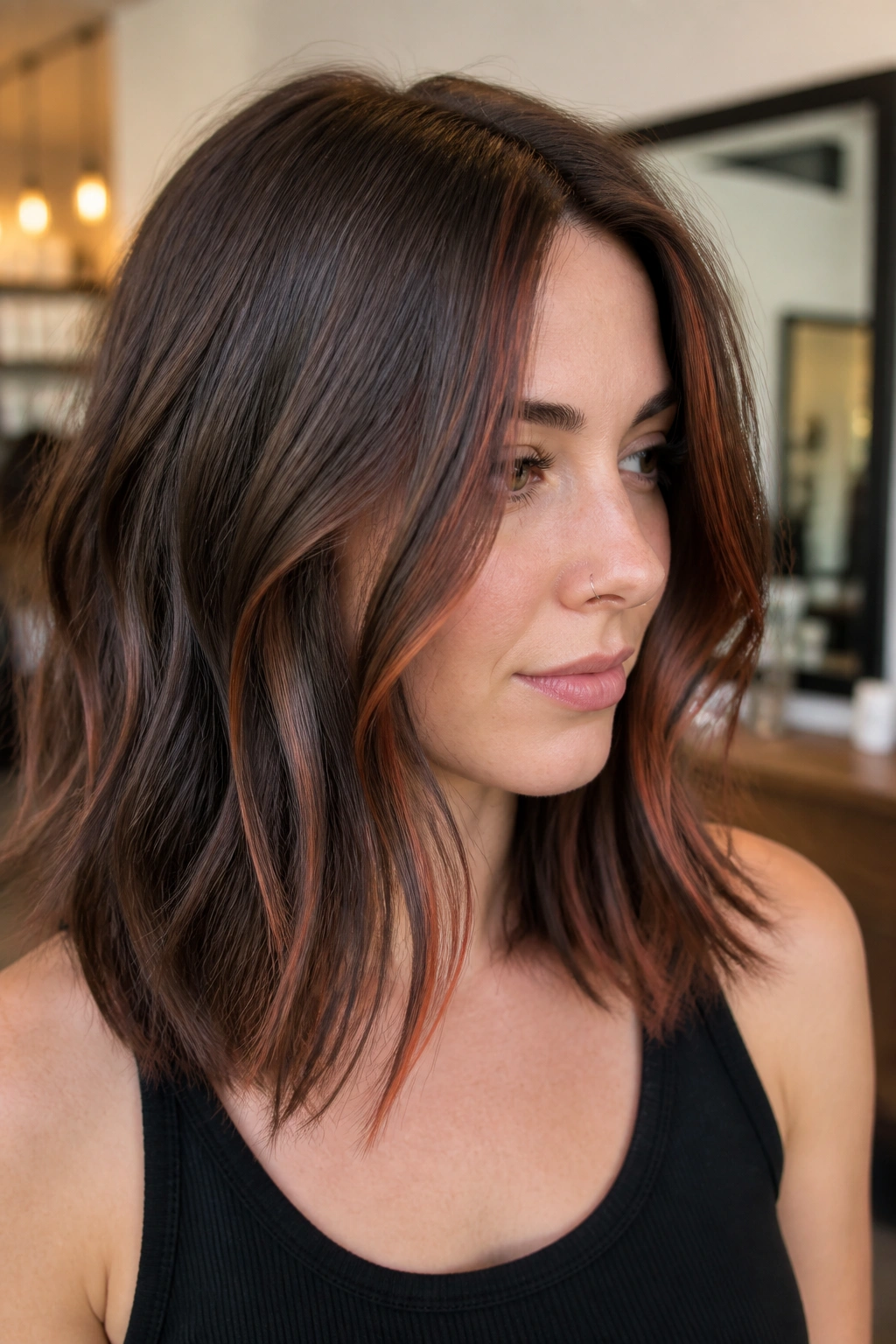
A mushroom brunette base with auburn copper ribbons is for the person who wants a change but does not want anyone to spot the appointment from across the room. The cool brown backdrop does most of the work, and the copper arrives in thin ribbons, usually through the top layer and around the face.
Where the Ribbons Should Sit
- Place the brightest pieces from cheekbone to collarbone, not all the way to the root.
- Keep the ribbon width narrow—about a quarter inch to half an inch—so the copper reads as light, not blocks.
- Ask for a beige-brown toner under the copper if your skin is very cool.
- Let the ends carry more warmth than the roots; that gives the whole look a softer slide.
This is a strong choice if you wear a lot of black, gray, navy, or ivory. The brunette base keeps the hair anchored, and the copper ribbons stop it from feeling dull. A little movement goes a long way here.
4. Rose Copper Balayage
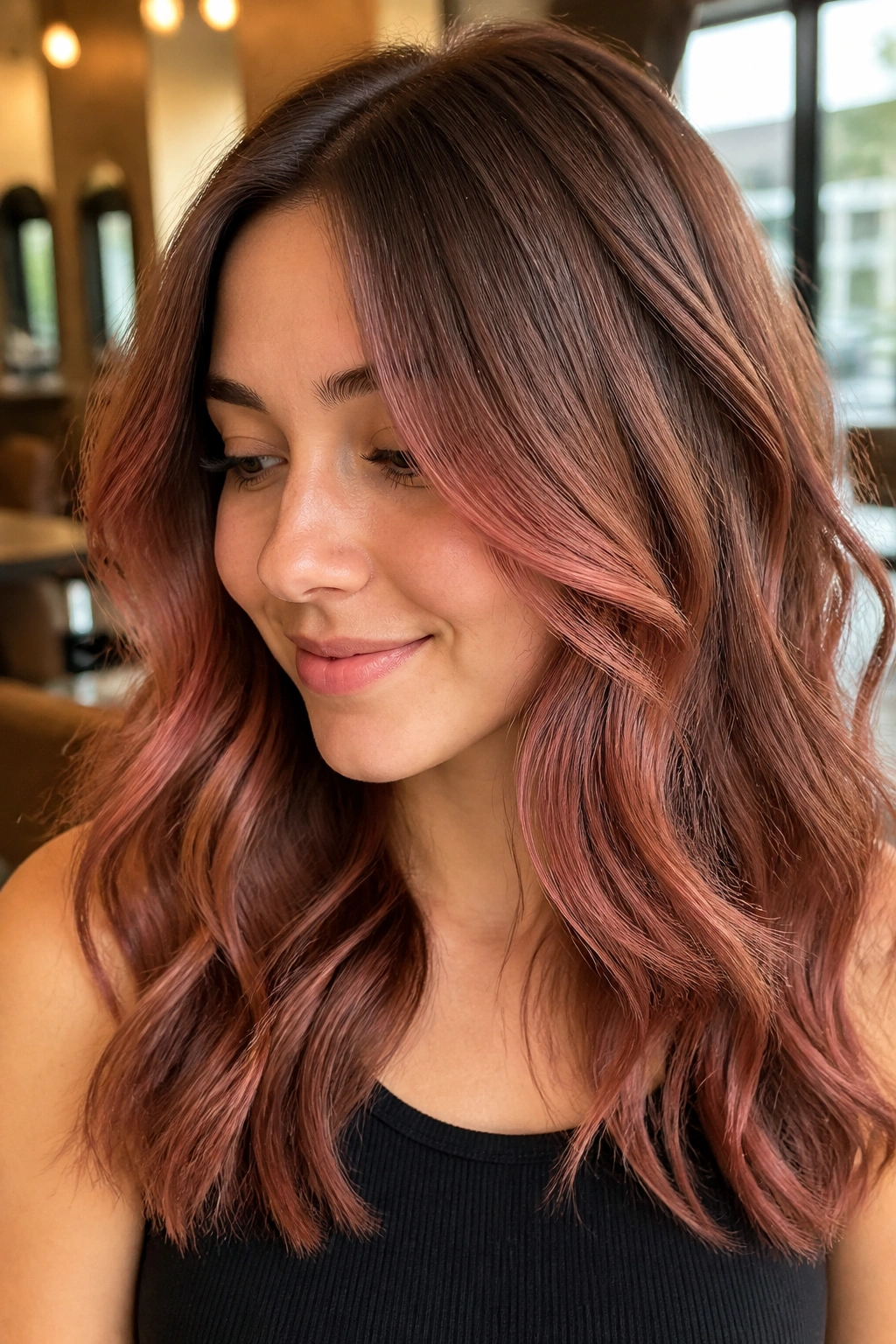
Rose copper is the prettiest version of copper for cool skin, and I’ll defend that. The pink note changes everything. Instead of orange heat, you get a soft red-copper glow that sits well next to rosy cheeks, fair skin, and cool blue eyes.
Balayage works especially well because the painted placement leaves some of the natural brunette showing through. That contrast keeps the shade from becoming too sweet or too bright. You want the rose tone to look like it belongs in the hair, not like a filter.
If your skin tends to flush easily, this one is a smart pick. The hair picks up the same flushed quality without making the face look washed out. And if your hair is wavy, even better—the movement helps the rose tones break up across the surface instead of sitting in one block.
5. Mahogany Auburn Copper
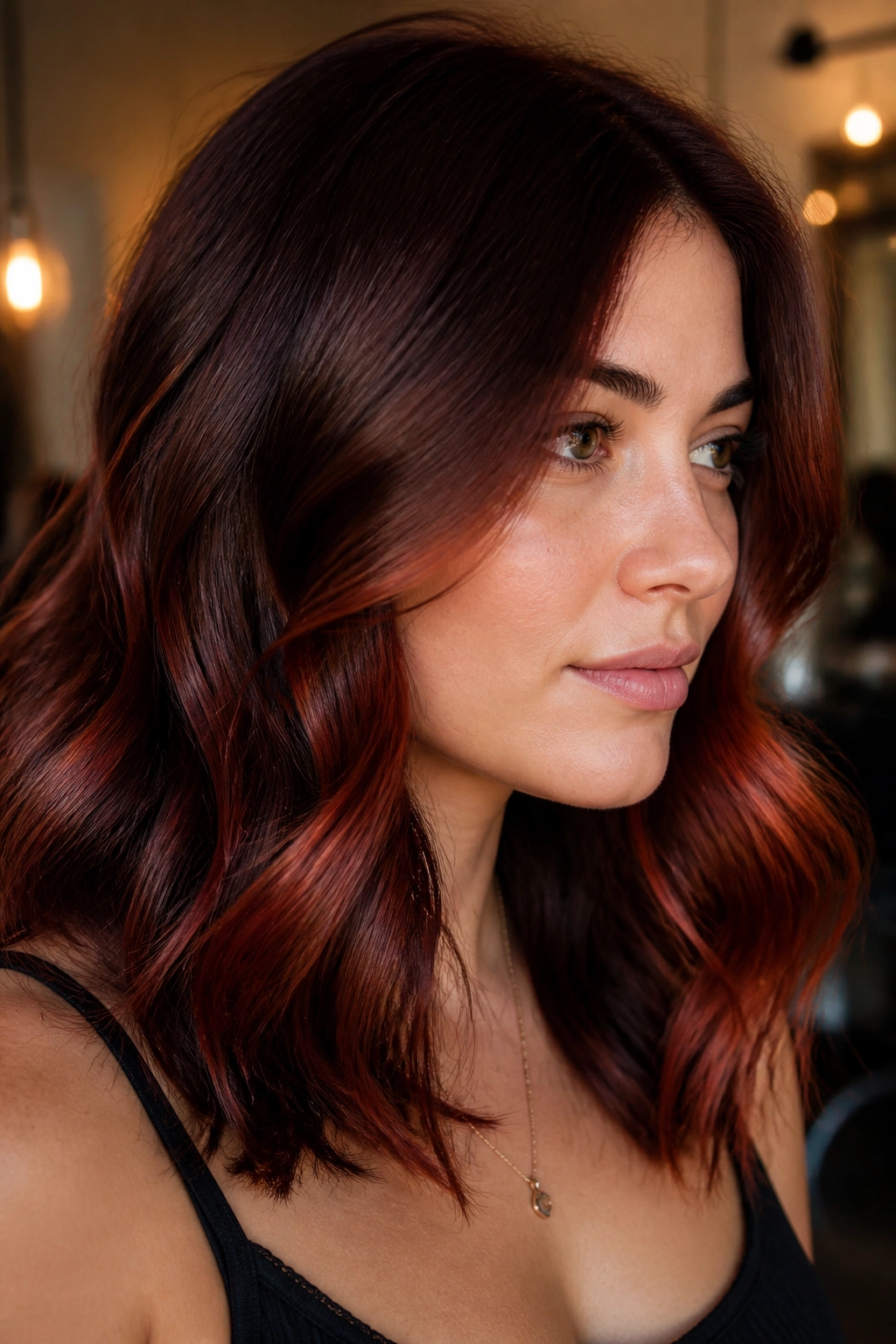
Mahogany auburn copper is deeper and more serious than the brighter copper shades people usually picture. That’s a good thing. Cool skin often looks better with depth first, brightness second, and mahogany gives you that dark red-brown base with just enough copper to keep it alive.
Orange is not the point.
This shade works especially well if your eyes are dark or if your natural hair sits at a level 4 or 5. The mahogany side keeps the look polished, while the copper threads catch light at the ends and around the face. You can wear it glossy and smooth for a more classic finish, or add loose waves so the red-brown pieces move around.
If you’ve ever felt copper was too bright for you, this is the version I’d hand you first.
6. Cinnamon Auburn Bob
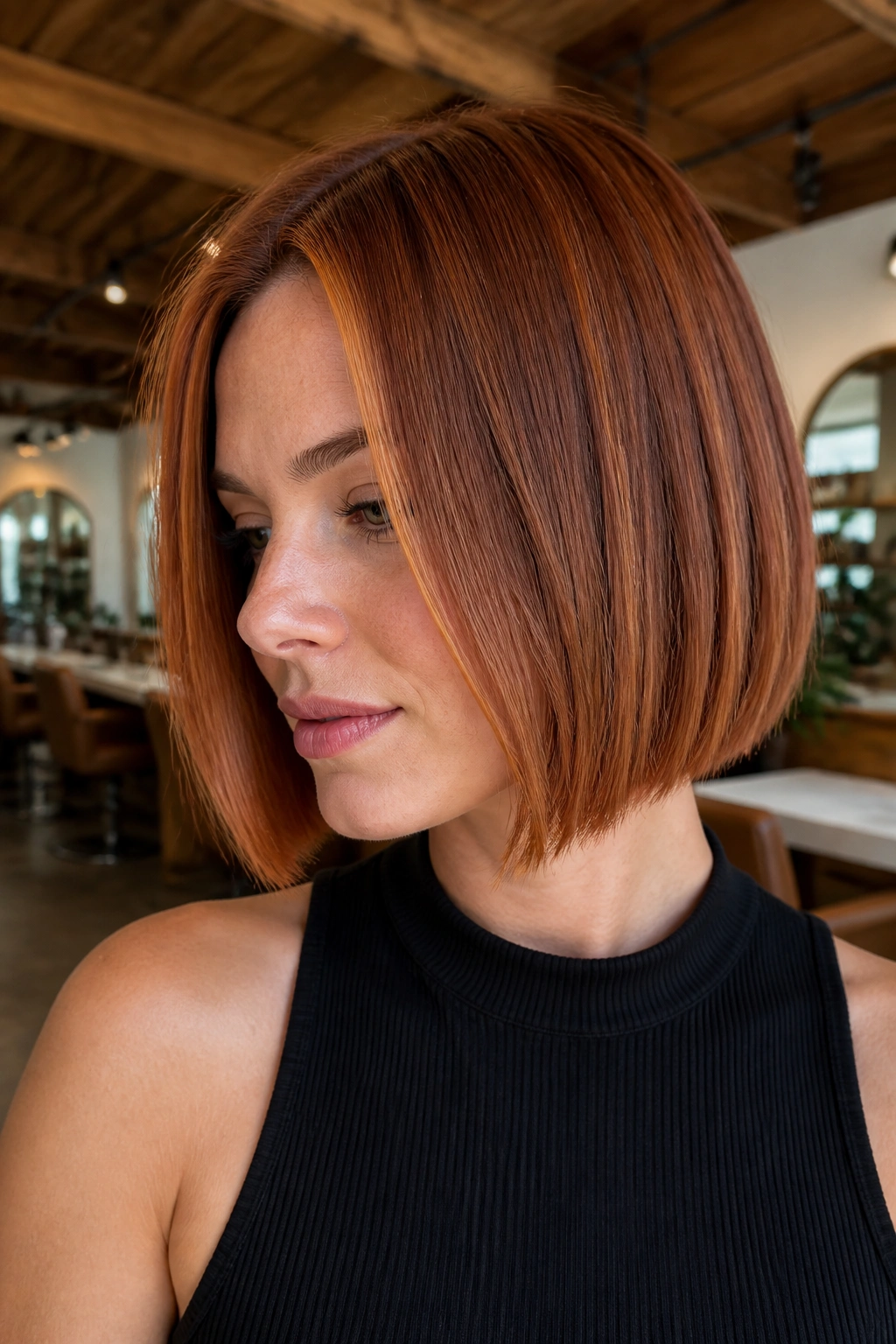
A blunt bob changes copper. Hard stop. On long, layered hair, cinnamon auburn can feel soft and romantic; on a neat bob, it turns sharper and more modern, which is exactly why it works so well on cool skin tones. The haircut gives the color a shape to live inside.
The Shape Matters
The line of the bob makes the cinnamon tones look cleaner, not fuzzier. That means you can get away with a little more warmth in the pigment, because the cut itself keeps the whole style from wandering into mushy territory.
Good Salon Notes
- Keep the base at light brown or dark blonde, not pale yellow.
- Ask for a cinnamon copper glaze rather than a bright full-head copper.
- Let the front panels sit a touch lighter than the back for movement.
- Trim the bob every 6 to 8 weeks so the shape stays crisp.
This is a great choice if you want something tidy, wearable, and just a little daring.
7. Plum Auburn with Copper Sheen
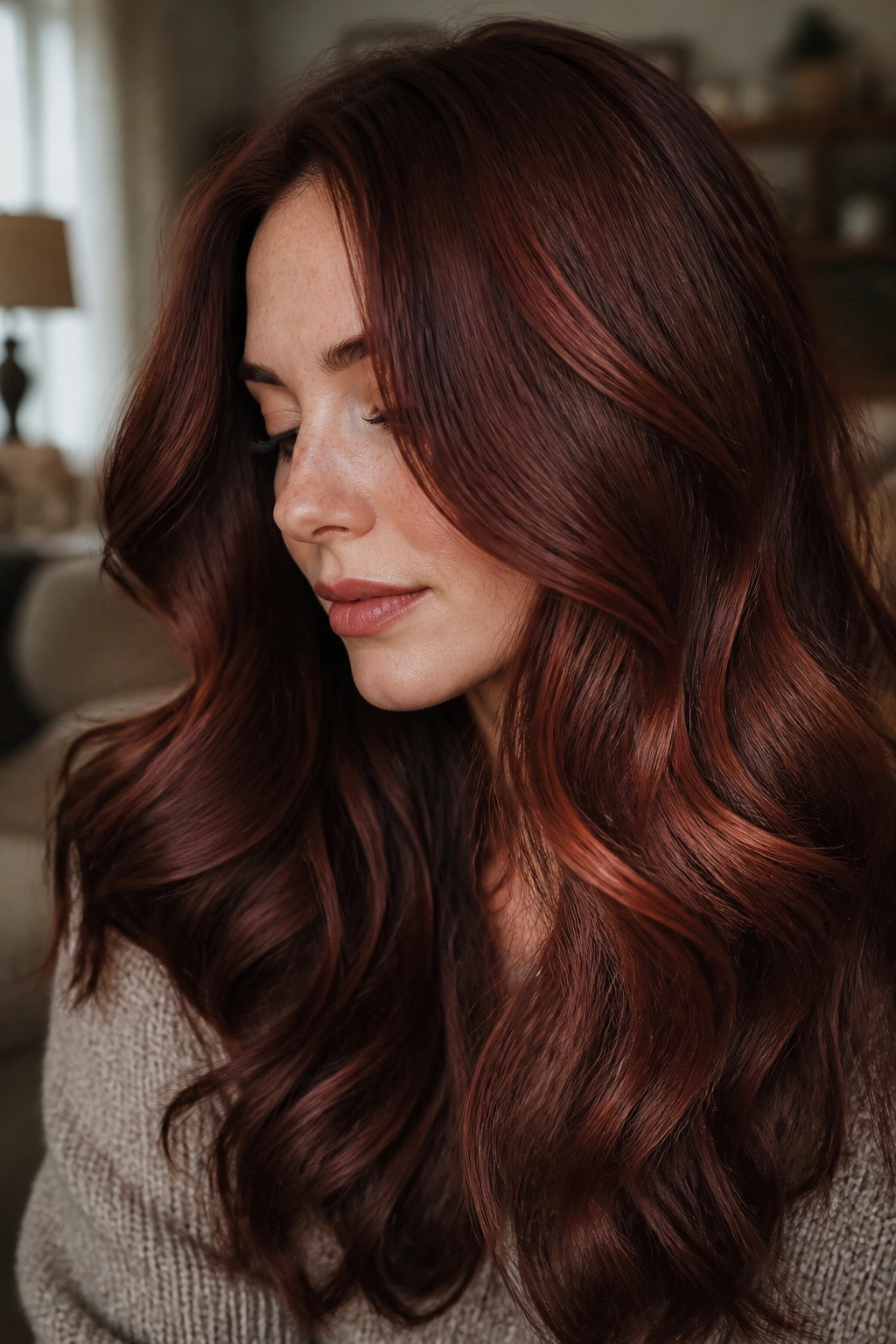
Plum auburn with copper sheen is one of those shades that looks even better in person than in a neat swatch book. The plum gives the hair a cool backbone, then the copper comes through as a sheen rather than a hard color block. That matters on cool skin, because it keeps the warmth under control.
The nice thing about plum-based auburn is how it behaves in changing light. In low light, it leans rich and wine-like. In brighter light, the copper wakes up around the edges and on the waves. You get two moods from one color, which is half the appeal.
If your complexion has a pink cast, this shade can make your skin look calmer. Not paler—calmer. There’s a difference, and it’s the reason a lot of cooler brunettes fall in love with this family of reds after they try one flat copper that was too bright.
8. Copper Penny with Blue-Red Gloss
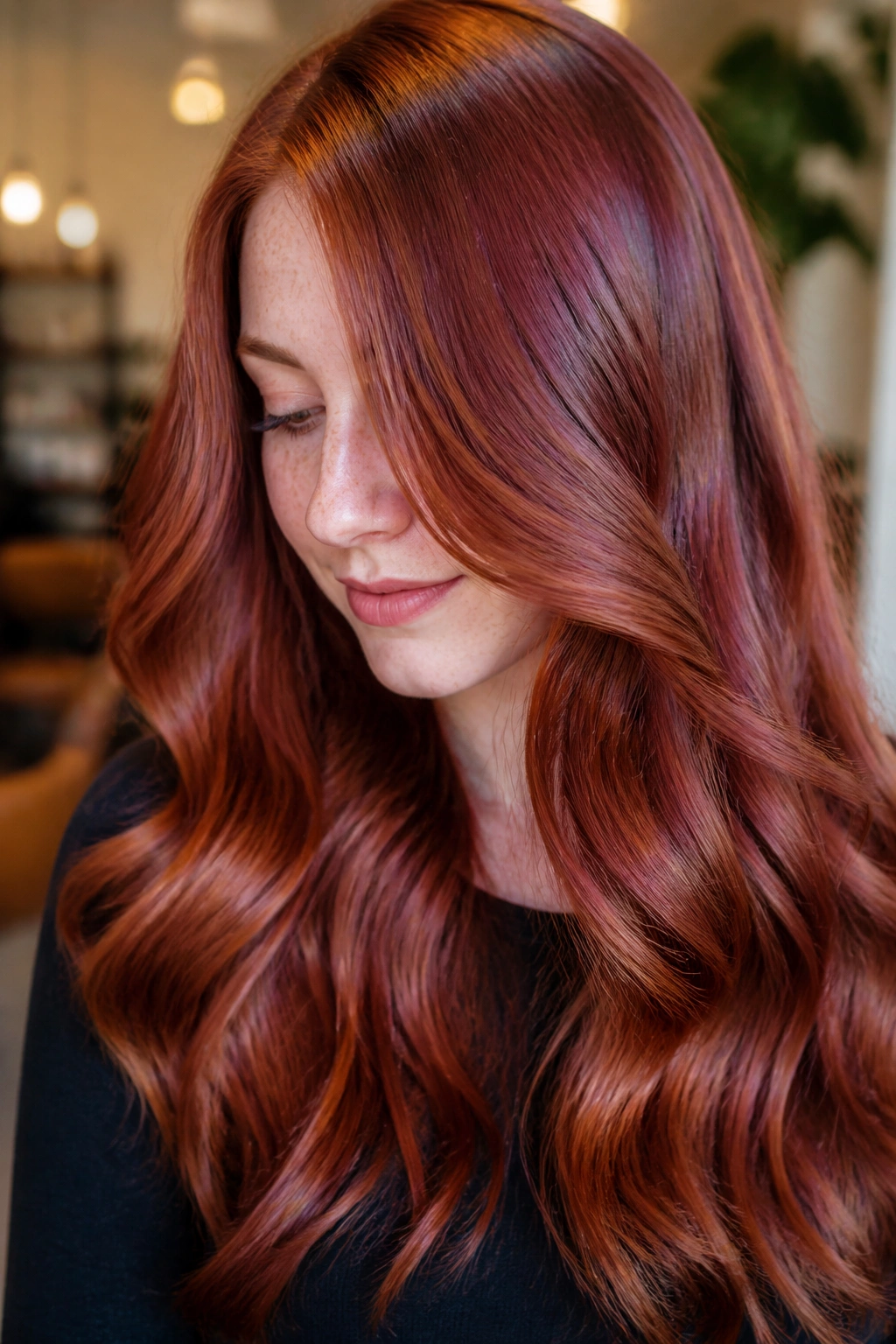
Can copper penny work on cool skin? Yes, when it leans blue-red instead of yellow-orange. That small shift changes the whole read of the hair. The shade still feels bright, but it stops fighting the complexion and starts sitting beside it.
A gloss is the move here. A permanent dye can push penny tones too far into orange territory, especially if the base is already warm. A blue-red gloss pulls the copper back toward the red family and gives it that polished, reflective finish people love in salon color. It’s a cleaner look.
The Salon Request
- Ask for a penny copper gloss with blue-red undertone.
- Keep the roots slightly deeper if your skin is very fair.
- Add face-framing brightness in thin sections, not chunky panels.
- Refresh the gloss every 4 to 6 weeks if you want the shade to stay crisp.
This one suits cool green eyes in a way I always notice. The color wakes them up without turning the whole face orange.
9. Chestnut Auburn with Cool Bronze Lights
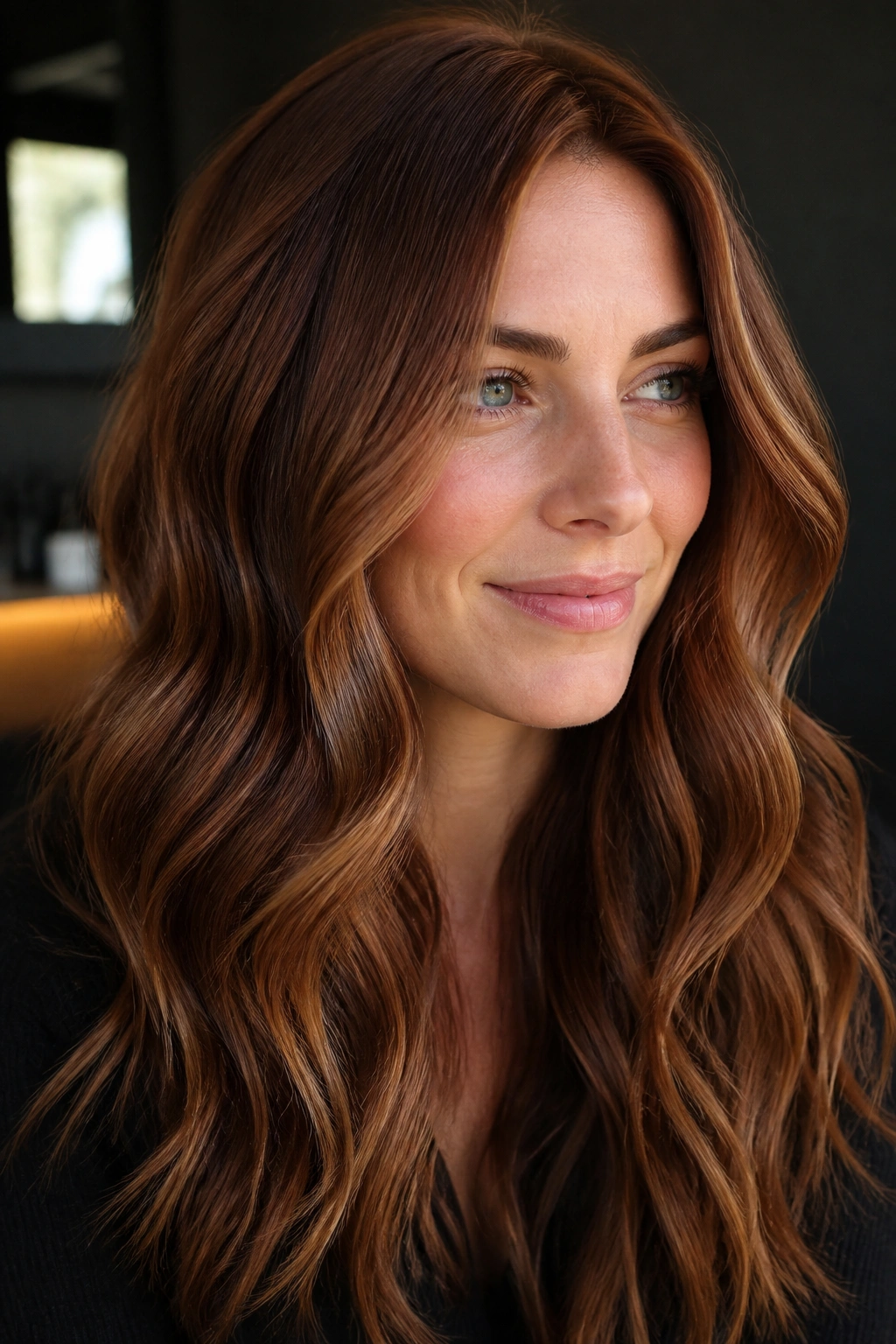
If bright copper scares you, this is the smart version. Chestnut auburn with cool bronze lights gives you warmth, but it’s the kind of warmth that sits closer to cocoa and smoked caramel than to yellow gold. On cool skin, that makes a huge difference.
The bronze lights should be muted. Not shiny yellow. Not beachy. More like a metal that’s been softened a little, so it carries copper undertones without screaming for attention. That’s why this shade feels wearable even on conservative cuts like a long layered lob or shoulder-length blowout.
I like this for people who wear a lot of winter neutrals—charcoal, black, deep green, ink blue. Those colors can make bright orange hair feel disconnected. Chestnut auburn bridges the gap. It looks grounded first, copper second.
10. Burnt Sienna Layers
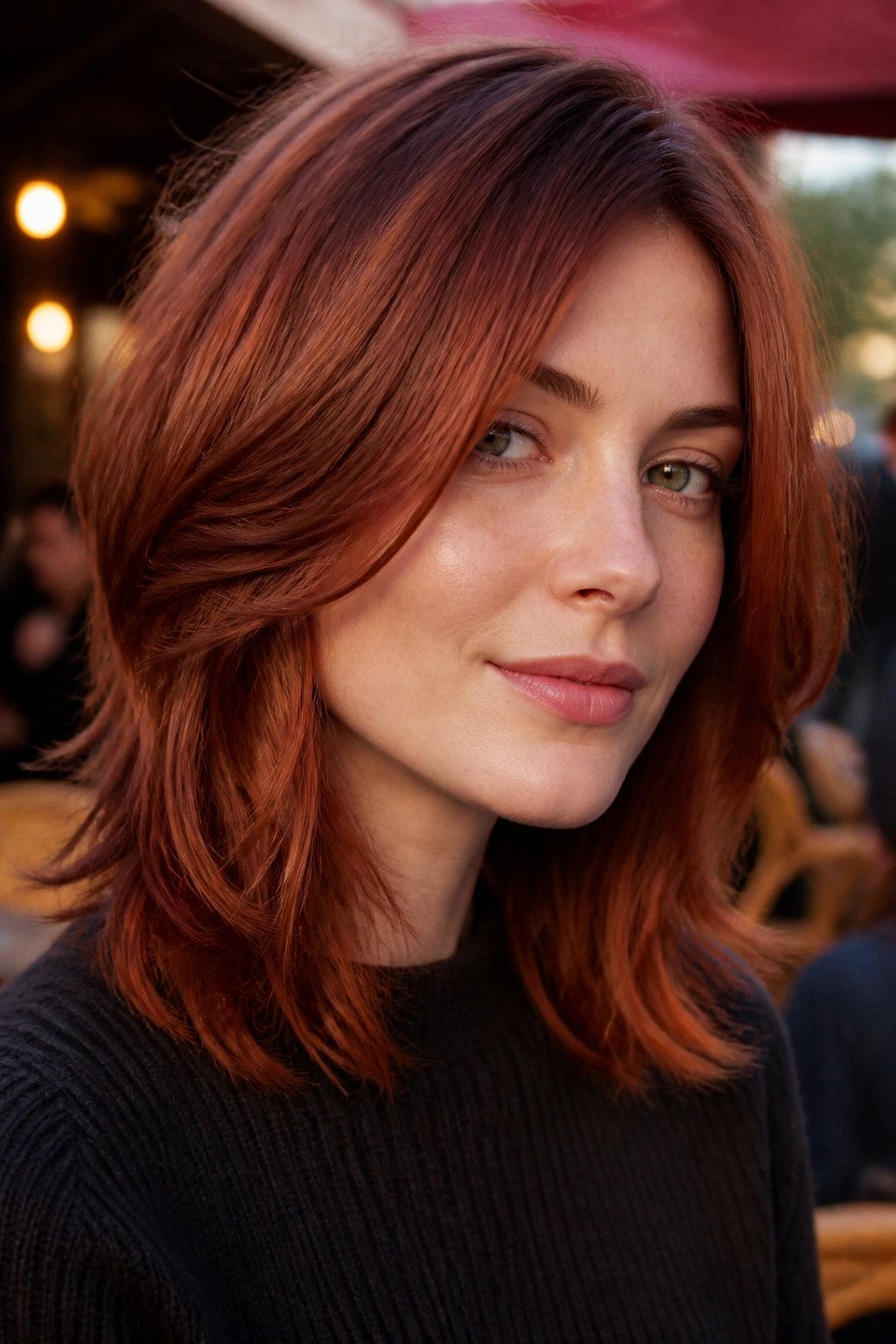
Burnt sienna is a strong color, so it needs hair with movement. Long layers are the easiest way to keep it from looking heavy. The red-brown base gives the shade depth, and the sienna copper catches on the bent ends and layered pieces, which keeps the whole head from reading as one solid block.
The cut matters more than people think here. If the hair is one-length and thick, burnt sienna can look too dense. Layers break up the pigment and let the copper flicker through. That’s especially useful on cool skin, where you want interest rather than heat.
My favorite version is shoulder-length with loose bends from a flat iron. You’ll see the copper when the hair turns, not just when it’s blown out perfectly straight. It’s a nice way to wear warmth without giving up structure.
11. Deep Burgundy Copper
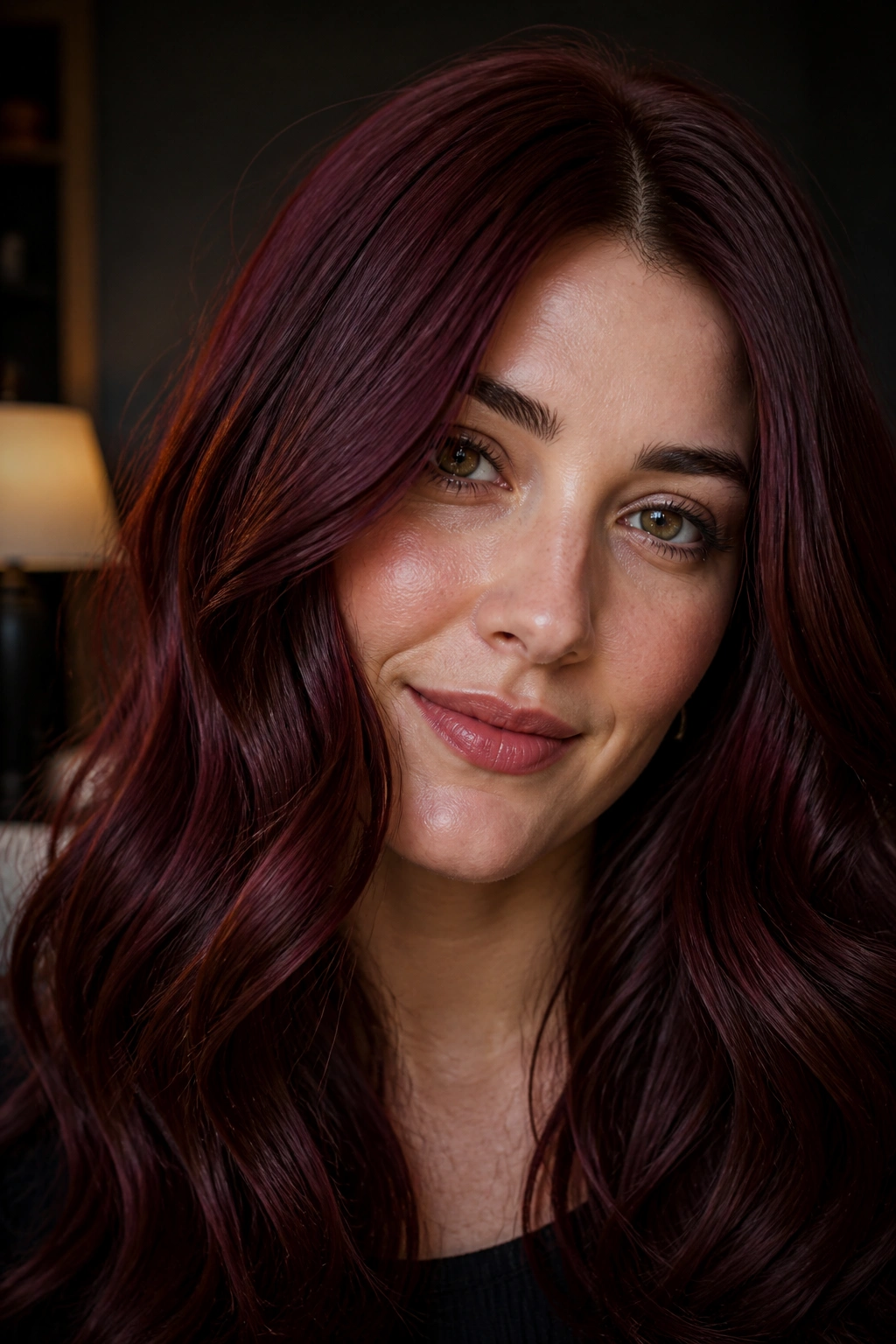
Deep burgundy copper is for someone who wants red, but not the usual bright-red cliché. Burgundy has enough violet in it to suit cool skin, and the copper adds a little fire without changing the whole family of the shade. The result looks richer than plain auburn and less predictable than wine red.
This color is especially good on curly hair and darker complexions. The curls create little pockets of light, and those pockets pick up the copper sheen as the hair moves. Straight hair can wear it too, but you’ll want a glossy finish so the depth stays visible.
I’d keep the brows natural or only lightly filled here. A heavy brow with this color can look too severe. A softer brow lets the burgundy-copper do its thing without taking over the face.
12. Velvet Copper Shadow Root
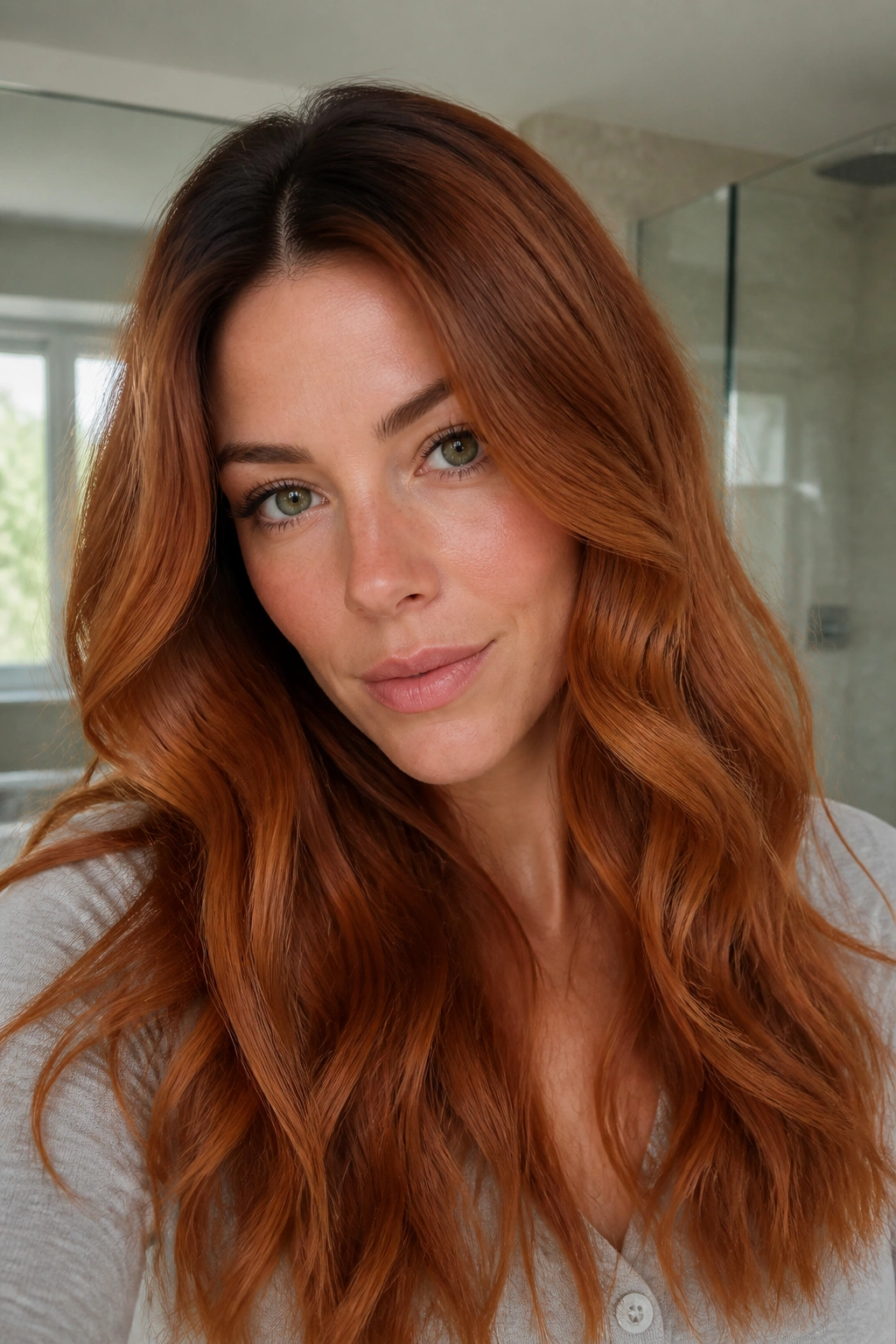
A shadow root makes copper easier to wear, period. You keep depth at the scalp, then let the copper bloom through the mids and ends. On cool skin, that darker root keeps the shade from floating away from the face.
Why the Root Matters
The root shadow is not just about grow-out. It changes the whole temperature of the color. A level 4 or 5 root can calm down a brighter copper formula, which means the shade stays richer as it fades. That’s a lifesaver if your hair tends to get brassy after a few washes.
Who It Suits
- Anyone who wants lower-maintenance copper.
- People with naturally dark brows.
- Cool skin tones that look better with contrast.
- Medium to thick hair, where a root shadow helps define the shape.
This is one of the easiest colors to live with. It grows out softly, and that matters when you do not want constant root touch-ups.
13. Strawberry Auburn with Ash Brown Base
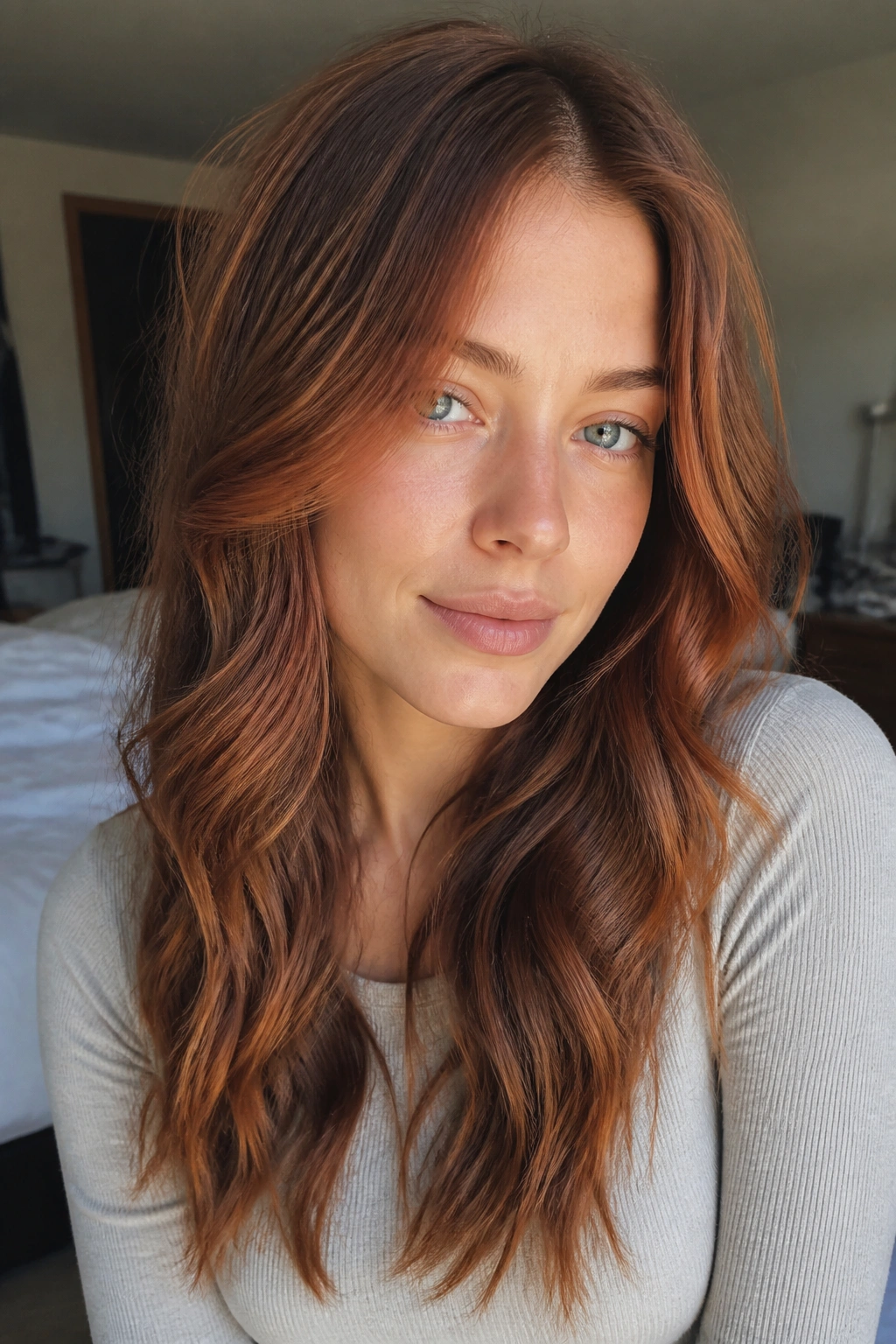
Can strawberry tones work on cool skin? Yes, but only when they sit on top of an ash brown base. On its own, strawberry can veer too sweet or too warm. Anchored to ash brown, it turns lighter and cleaner, with enough red to stay interesting.
The base is the secret. Ash brown adds that cool, muted quality the face needs, while the strawberry shows up in the layers, ends, and face-framing pieces. If your skin is fair and pink-toned, this is a much better choice than a pure golden strawberry blonde.
Where to Place the Lightness
- Keep the lightest pieces around the face and upper layers.
- Let the back stay deeper so the color doesn’t wash out.
- Use fine highlights if your hair is thin; chunky ones can look stripey.
- Ask for a gloss that stays beige or neutral, not gold.
This shade has a soft, fresh feel without drifting into baby-pink territory.
14. Rusted Auburn Lob

Rusted auburn can sound harsh, but on a lob it becomes polished fast. The shoulder-length cut keeps the color from feeling too dense, and the rust tone brings in that earthy red-copper blend that cool skin can actually handle when the base is deep enough.
Length matters.
A lob gives the color some air. The ends sit cleanly on the shoulders, and the shape keeps the rust from spreading into one heavy curtain. That makes it a good pick if you like color with a little edge but do not want the maintenance that comes with a full bright copper.
I’d pair this with a soft wave or a tucked-behind-the-ear finish. It keeps the cut modern and lets the rust tones show in layers rather than all at once.
15. Merlot Auburn Waves
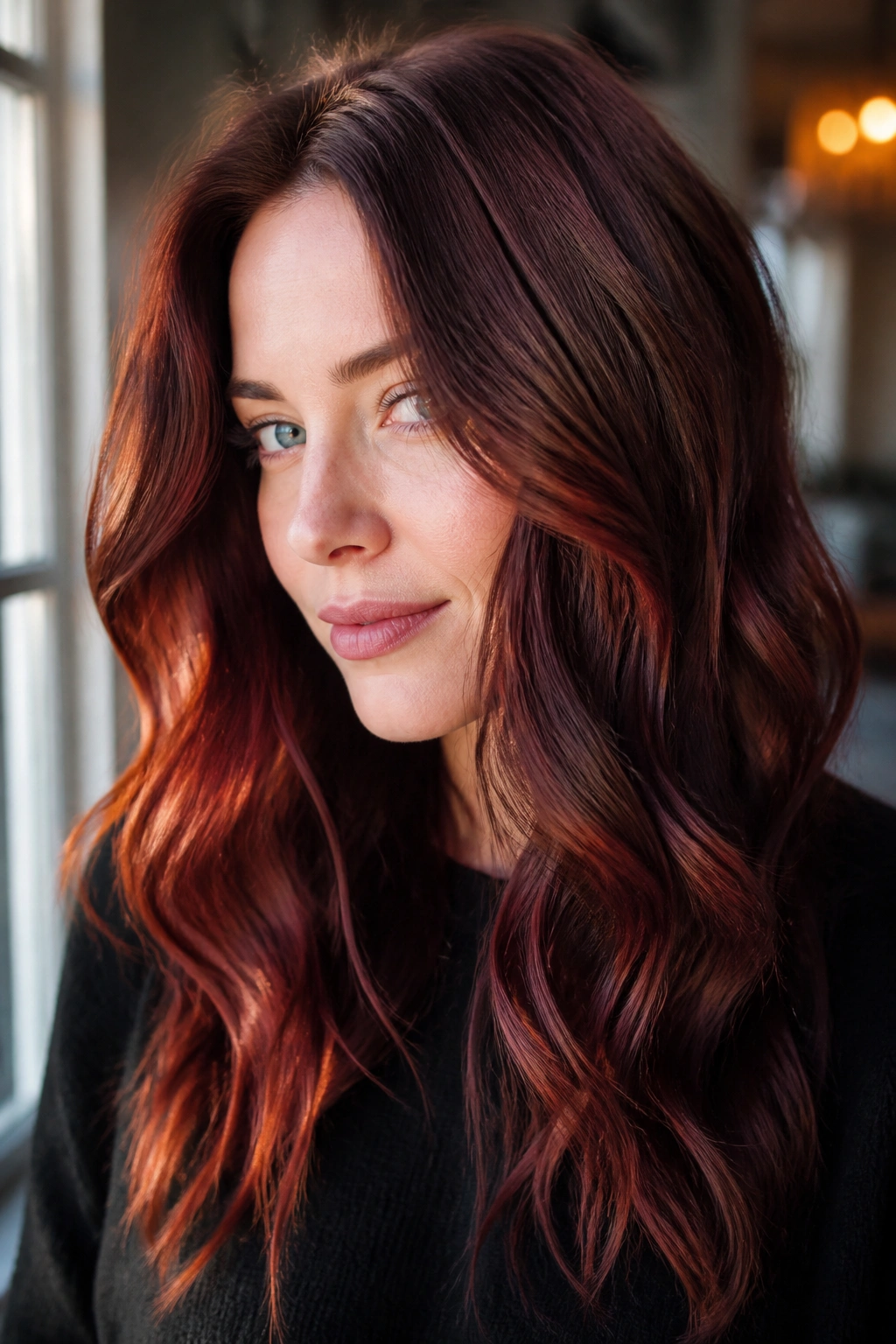
Merlot auburn is the color I think of when someone wants red with a darker, cooler drink to it. The waves matter here because they let the merlot and copper pieces move in and out of the light. On cool skin, that movement helps the color feel expensive without trying too hard.
Loose waves are the sweet spot. Tight curls can make the shade look busier than it needs to be, while pin-straight hair can flatten the merlot tone. A 1.25-inch curling iron, brushed out once it cools, gives that soft ripple that shows off the red-brown depth.
This shade is strong on medium cool skin with dark lashes. It gives the face contrast and keeps the complexion from looking washed out, which is the whole point of choosing a deeper auburn in the first place.
16. Antique Copper on Espresso Brunette
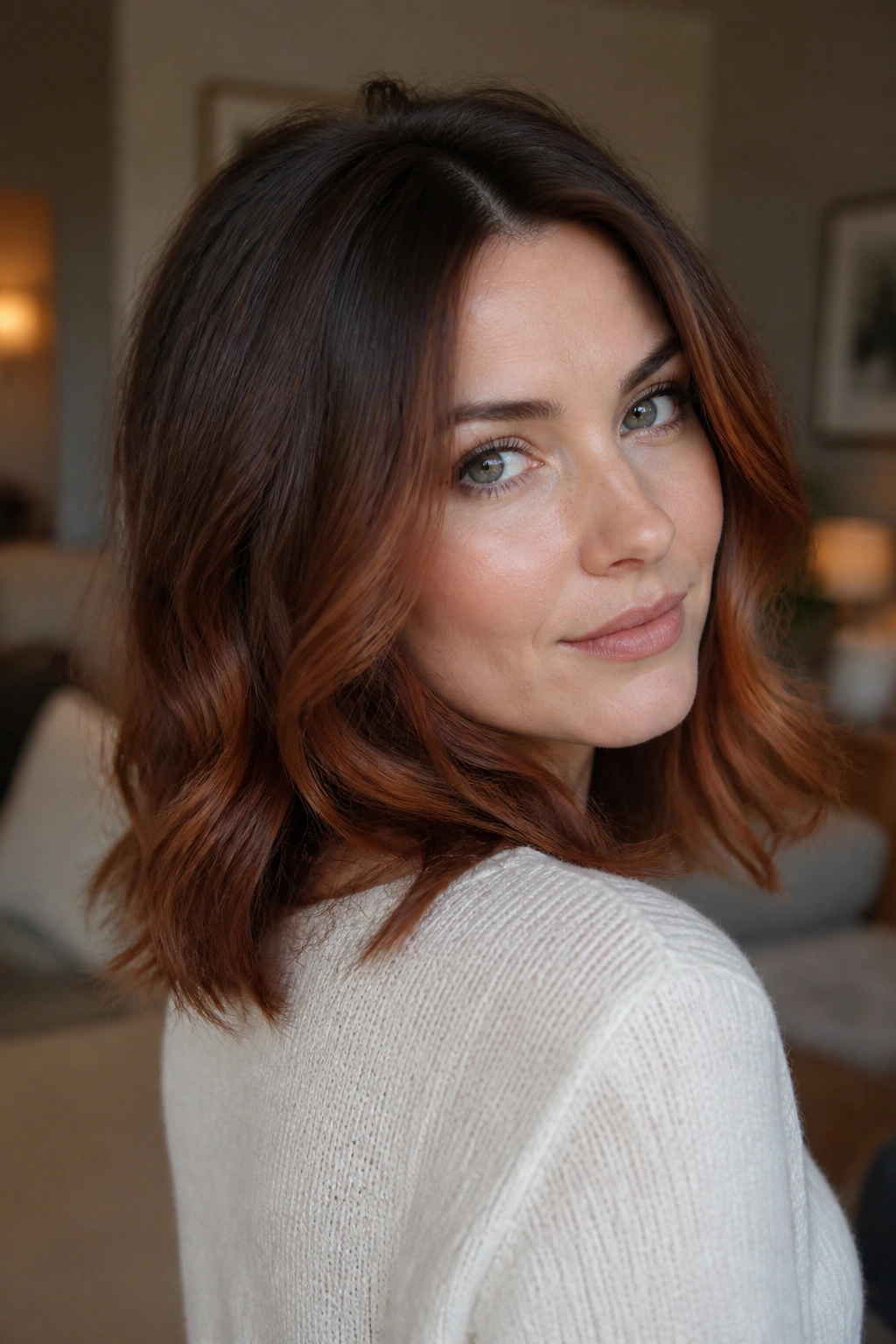
Antique copper is not fresh, shiny copper. It’s quieter, more muted, and a little worn in the best way. On an espresso brunette base, it looks especially good because the dark foundation keeps the antique tone from tipping too orange.
I prefer this on people who want a dark-haired feel with just enough change to notice. The copper usually lives in the mid-lengths and ends, where it can flicker without competing with the scalp area. That placement is kinder to cool skin because it lets the face stay framed by depth instead of warmth.
If you’ve ever liked old brass more than polished gold, you already understand this shade. It has that mellowed-down quality. Less shine, more character.
17. Cranberry Auburn Ombré
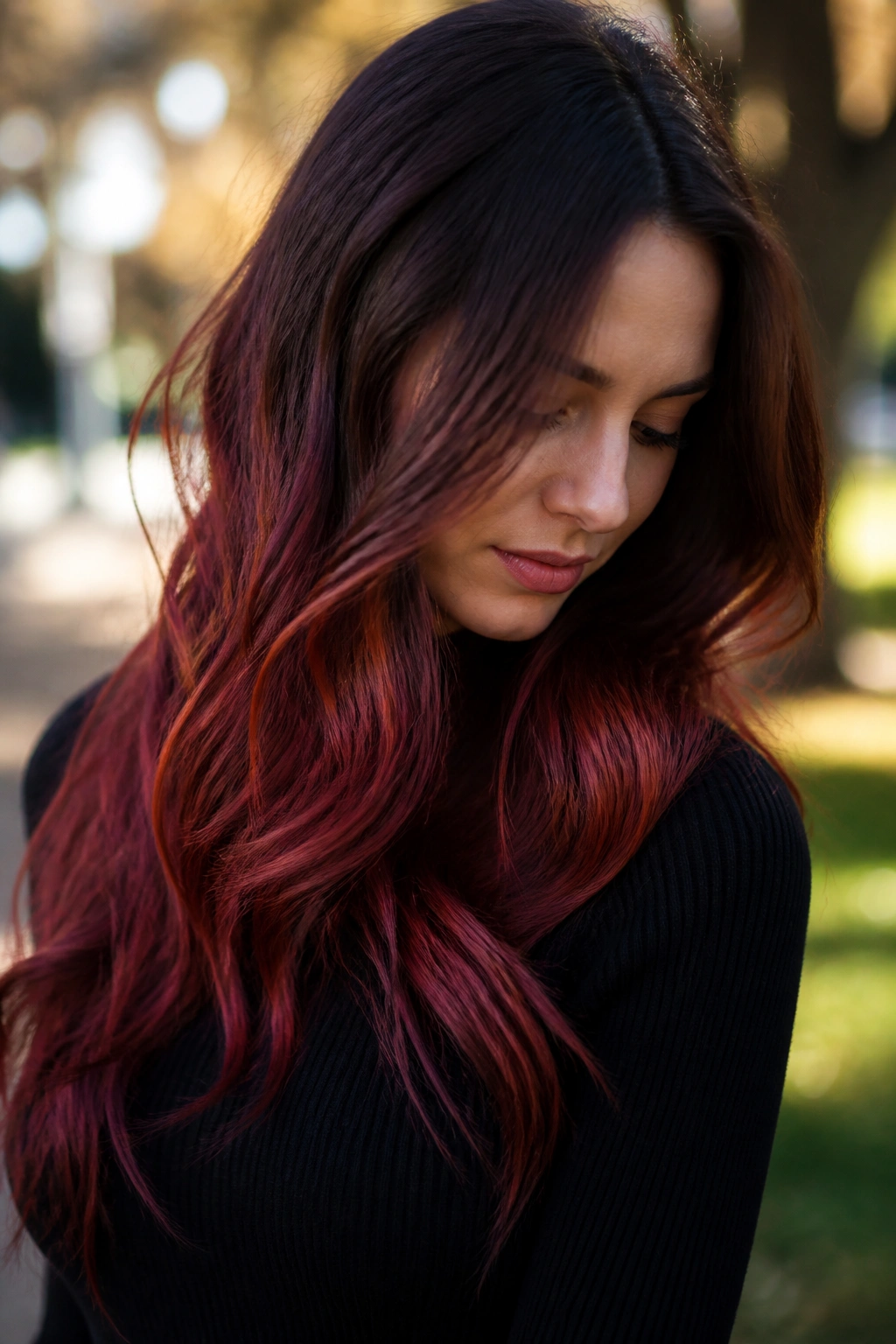
Cranberry auburn ombré is a smart option when you want drama at the ends and a calmer base up top. Start with brunette near the roots, then let the cranberry copper deepen as it moves toward the lower half of the hair. Cool skin handles that berry direction better than a flat orange fade.
What Makes It Work
- The darker root keeps the color from looking too bright at the scalp.
- The cranberry tone adds a violet-red note that cool undertones usually like.
- Long hair shows the fade best, especially with layers.
- The ombré grows out more softly than an all-over copper.
I like this on thick hair because the color placement keeps the ends interesting. Thin hair can wear it too, but you’ll want the transition to be gradual so the lower half doesn’t look stringy. The whole point is a smooth change, not a hard line.
18. Copper Money Piece for Cool Brunettes

A copper money piece is the easiest way to test auburn copper without committing to a full head change. That’s the honest reason it works. Two slim face-framing pieces can brighten a cool brunette base fast, and they give you a clear read on whether you like copper near your skin.
Keep the money piece controlled. I’d usually stay around 1 to 2 inches wide on each side, starting near the temple and softening through the cheekbone area. If the stripe is too thick, it can overwhelm cool skin and make the whole style feel loud.
This is a great move for people who wear their hair in ponytails, buns, or half-up styles. The copper shows up instantly when the hair is pulled back, which gives you more mileage from a small color change.
19. Slate Brown with Copper Ends
Why does copper only at the ends look so good on cool skin? Because it keeps the warmth away from the face. Slate brown at the root and mid-lengths gives you that cool, smoky base, then the copper shows up where the eye lands last.
That placement matters if you’re cautious about red tones. A full head of auburn can be too much if your complexion is porcelain or very pink. Copper ends let you test the water without flooding the whole head. It also works well on layered cuts, where the ends already have movement.
What to Watch For
- Keep the copper at the ends muted, not bright orange.
- Blend the transition point with a soft hand so it doesn’t look choppy.
- Use layers or a textured cut; blunt ends can make the contrast harsher.
- Ask for a gloss on the brown sections so they stay cool and rich.
This one has edge, but not noise.
20. Violet Auburn Gloss
A violet auburn gloss is the shade for people who want copper to stay civilized. The violet in the formula pulls the hair away from yellow-orange and toward a red-brown lane that cool skin can wear more easily. It is one of the quietest ways to refresh auburn without repainting the whole head.
The gloss is also useful if your color has started to fade warm. That happens fast with red tones—faster than most people expect. A violet-leaning gloss can push the shade back into a deeper, cooler register and make the hair look shinier at the same time.
I like this on brunettes who want seasonal change without a hard commitment. It is subtle on purpose. If you squint, you might miss the copper shift. At a glance, though, the whole head looks more alive.
21. Smoked Copper Shag
A shag can make copper look less busy. That’s the part people don’t always expect. The layers break the color into pieces, so instead of one shiny copper sheet, you get movement, texture, and a little grit. On cool skin, that smoky finish makes the warmth feel more wearable.
The cut does a lot of work here. With a shag, the copper sits on different lengths, so the color catches in the fringe, the crown, and the ends without becoming uniform. That unevenness is a gift. It keeps the eye moving and stops the tone from reading too orange.
This is a strong choice if you like hair that looks a bit undone. Air-drying with a little wave cream, then roughing up the roots with your fingers, is often enough. A shag does not want to be too polished. That would miss the point.
22. Soft Copper Fringe and Face Frame
A fringe and face frame can change the whole mood of copper. You do not need a full head makeover to make auburn work on cool skin; sometimes the smartest choice is to place the warmth right where the eye goes first. That gives you impact without overcommitting.
Where to Put the Color
- Keep the fringe a soft copper, not bright tangerine.
- Start the face frame around the brow and cheekbone area.
- Blend it into a darker brunette or auburn base so it doesn’t look disconnected.
- Trim the fringe every 4 to 6 weeks if you want the shape to stay crisp.
This works especially well with curtain bangs or a longer side fringe. The softness of the cut matters because a harsh fringe plus a bright copper stripe can feel too sharp on cool skin. Soften both, and the whole look gets easier to wear.
23. Toffee Auburn with Berry Lowlights
Toffee auburn sounds warm, but the berry lowlights are what make it work for cool skin. They keep the shade from drifting too far into caramel territory. Without those darker berry threads, toffee can look yellow; with them, it turns richer and more balanced.
I like this as a mid-range color for medium skin tones that are cool-neutral. The base stays brown enough to anchor the look, while the auburn and berry pieces show up most in the bends of the hair. It’s the kind of color that looks better as it moves.
Compared with a standard caramel brunette, this one has more depth and less sugar. That matters if your coloring is cool and you want warmth without the yellow cast that can make skin look sallow. Berry is doing the heavy lifting here.
24. Rosewood Auburn Curls
Rosewood auburn curls have a softness that flat-ironed hair can’t quite match. The curls bend the color around, so the rosewood and copper tones keep changing as the hair moves. On cool skin, that rose-leaning warmth can look especially flattering because it stays in the red family instead of wandering into orange.
I first think of this shade on medium-length curls with a side part. The shape gives the color an easy, old-school richness that feels less trendy and more lived-in. If your hair is naturally curly, even better—the texture already helps the shade shift between light and dark.
Use a diffuser or set loose curls with a large iron if your hair is straighter. The goal is not perfect ringlets. The goal is movement. Rosewood likes a little air.
25. Midnight Brunette with Auburn Copper Veil
Midnight brunette with an auburn copper veil is the quietest idea here, and maybe the smartest if you’re cautious. The base stays almost black-brown, while the copper shows up as a faint veil through the mids and ends. On cool skin, that kind of restraint can look sharper than a louder red.
The veil approach works because it lets the hair stay dark enough to frame the face. Then, when light hits, the copper flashes through without taking over. It’s a good choice if you like the idea of auburn copper hair color but don’t want to feel like you’ve signed a contract with red hair.
If I had to pick one shade for someone who keeps coming back to copper but never quite makes the jump, this would be it. It’s a nod, not a shout—and sometimes that’s the better move.
