



Cool skin tones can make auburn look sharper, richer, and far more interesting than the bright copper shades that dominate salon mood boards. The trick is not choosing the reddest shade in the room. It’s choosing auburn with the right base: blue-red, berry, mahogany, plum, smoky brown, or a little violet softness so the color plays nicely with pink, porcelain, or cool olive undertones.
That’s why the best auburn hair color ideas for cool skin tones almost never read as flat orange. They have depth. They have shadow at the root, or a berry gloss, or a brunette base that keeps the red from getting brassy. When auburn is done well on cool undertones, the hair looks dimensional even when it’s pulled into a simple ponytail. That matters more than people admit.
The bad version is easy to spot. It sits too warm against the face, pulls the skin yellow, and makes the whole look feel a little off. The good version makes blue eyes look sharper, brings out the flush in the cheeks, and gives brown eyes a wine-dark edge that feels expensive without trying too hard.
1. Cherry Auburn Hair Color for Cool Skin Tones
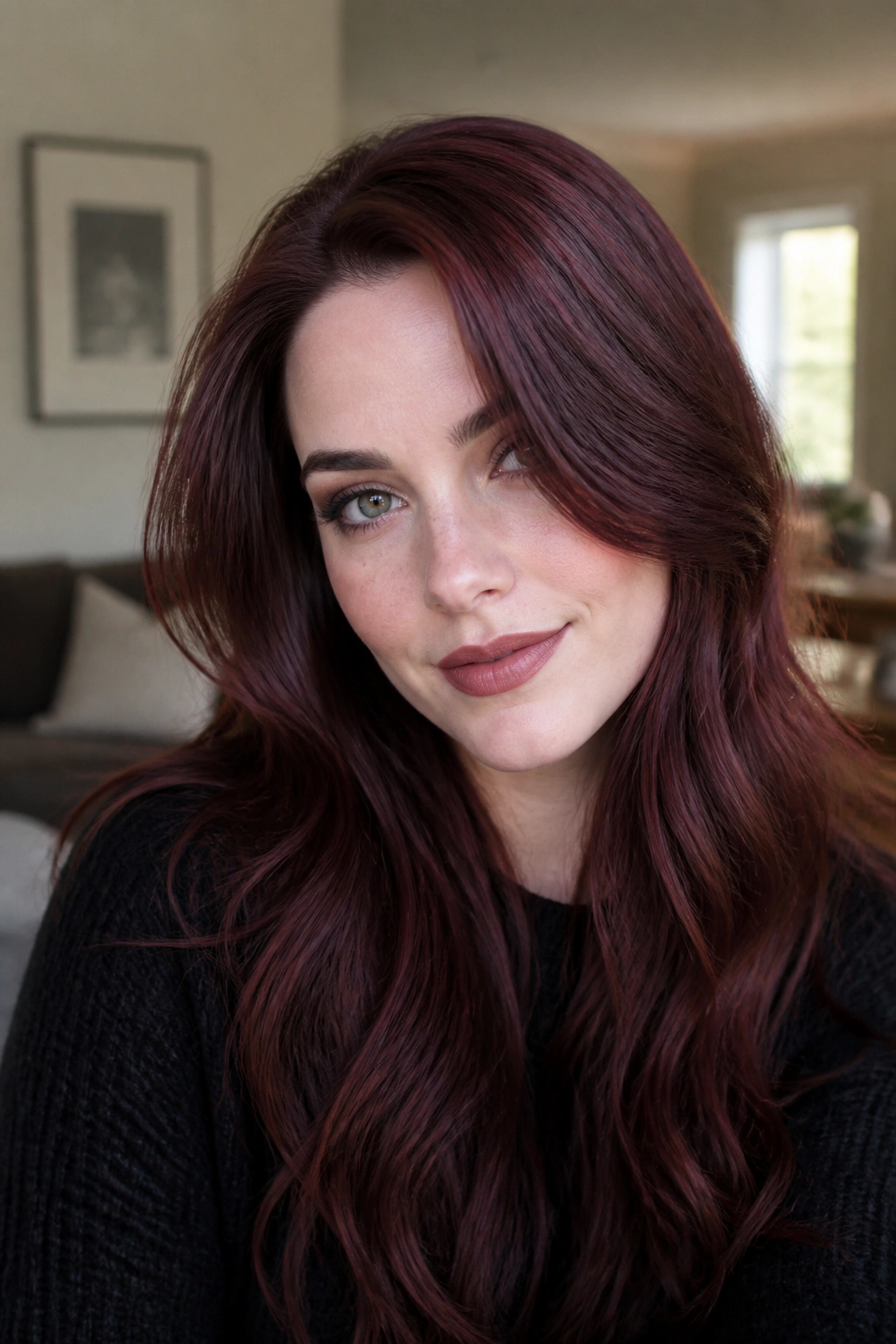
Cherry auburn is the shade I reach for when someone wants red, but not that loud pumpkin-orange red that can fight cool skin. It sits in the sweet spot between brunette depth and berry brightness, which gives the face a fresher look without blowing the undertone problem wide open. On cool skin, it tends to read polished instead of fiery.
Why It Works
The red in cherry auburn leans blue, which is the whole reason it behaves so well on pink or neutral-cool skin. You still get warmth, but it comes wrapped in a darker, wine-like base. That keeps the color from looking flat or cartoonish.
Ask for a level 4 or 5 brown base with cherry-red and violet-red tones. If you want the shade to feel softer, a demi-permanent gloss is enough. If you want it to hold longer on resistant hair, a permanent formula with a cool red deposit makes more sense.
- Best on cool skin with pink or rose undertones
- Looks sharp with pale blue, gray, or hazel eyes
- Needs a color-safe shampoo and cooler rinse water
- Usually needs a gloss refresh every 4 to 6 weeks
My favorite part: cherry auburn still looks good when it fades, because it fades into a softer berry brown instead of a brassy orange.
2. Mahogany Auburn Melt
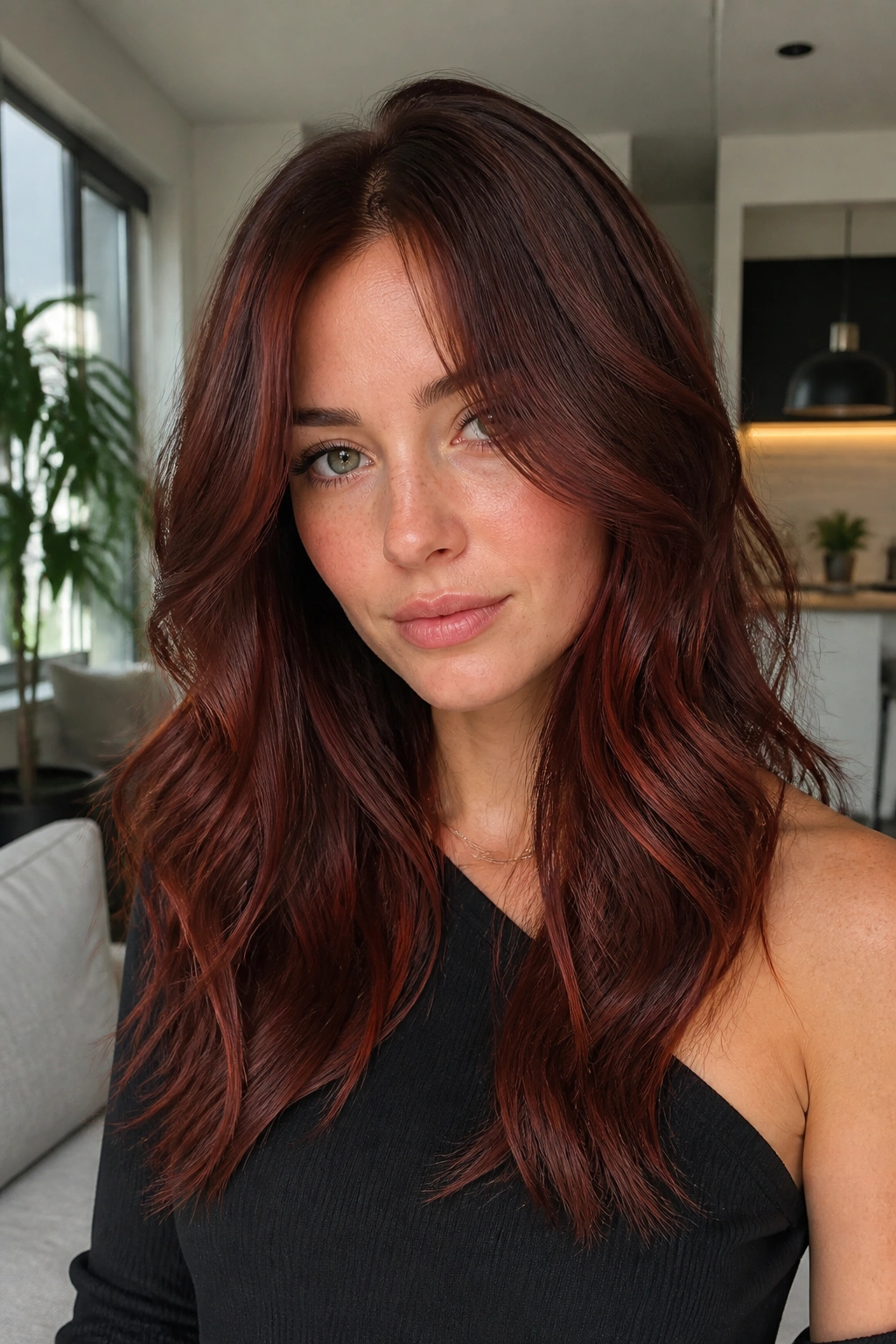
Why does mahogany auburn work so well on cool skin? Because it doesn’t try to shout. It leans into red-brown depth, and that gives cool undertones the kind of contrast that makes the face look clearer and more awake.
Mahogany auburn is one of those shades that looks expensive even when the haircut is simple. The red is there, but it’s tucked into a brown base that stops the color from going too warm. On straight hair, it looks sleek. On waves, it gets that dark velvet look that catches the eye without flashing orange every time the light hits it.
What to Ask For
Tell your colorist you want mahogany with auburn reflect, not copper reflect. That wording matters. Copper reflect is the part that can drift too golden. Mahogany keeps the whole look cooler and richer.
This shade is especially good if you wear black, charcoal, icy pink, or navy. Those clothes make the red-brown hair look even deeper. If your brows are dark, even better. The whole face stays in the same family, which is why the color feels so settled.
Maintenance is friendly here. A mahogany auburn melt grows out with less drama than brighter reds, and that is no small thing. Less salon panic. Less orange surprise. More time between appointments.
3. Smoky Cinnamon Auburn

Smoky cinnamon auburn is for the person who likes a little spice but does not want the hair color to take over the whole room. It’s warmer than mahogany, yes, but the smoke in the formula pulls it back toward brown and keeps it from getting candy-bright. On cool skin, that balance is what saves it.
This shade looks especially good if your skin turns pink in cold weather or if your cheeks flush easily. The muted red-brown tones echo that natural color without copying it too hard. That makes the face look healthy rather than overdone. And yes, there’s a difference.
How to Wear It
A shoulder-length cut is where smoky cinnamon really comes alive. The movement lets the red and brown parts catch the light in turns, so the shade never looks one-note. On very long hair, a few finer ribbons near the front help prevent the color from reading too heavy.
If you like makeup, this is the auburn family member that plays well with cool taupe shadow, berry blush, and a neutral rose lip. It does not need orange lipstick. That combo can start a fight fast.
Avoid: bright golden highlights layered into this shade. They break the smoky effect and turn the color muddy instead of soft.
4. Espresso Auburn with a Red Gloss
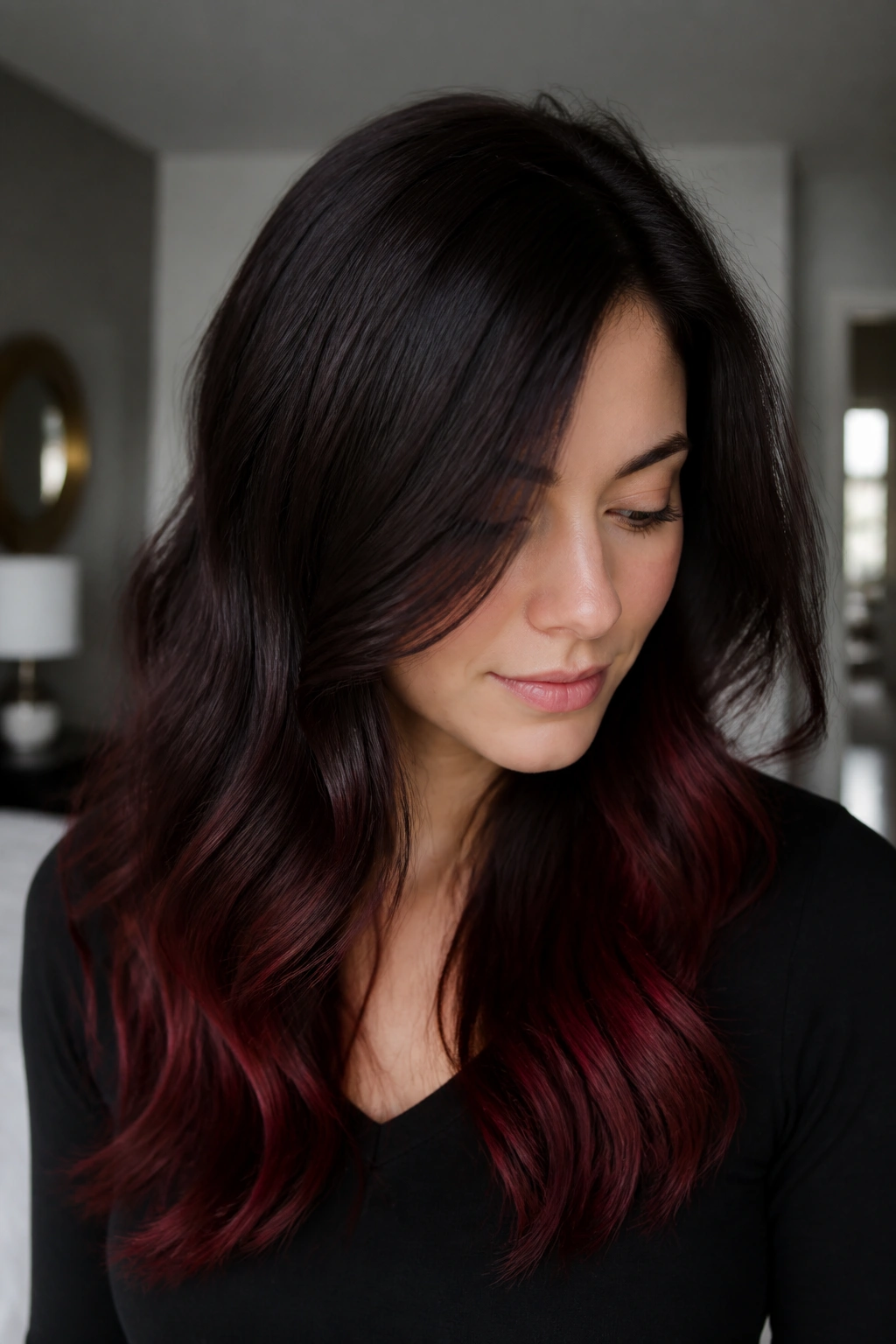
Picture deep brunette hair that has been kissed by red wine at the ends. That’s espresso auburn, and it’s one of the easiest ways to wear auburn hair color ideas for cool skin tones without crossing into obvious copper.
The base stays dark—think espresso, not chocolate milk—so the red never overwhelms the face. A cool red gloss on top gives the hair a reflective finish that changes in the light. Indoors, it can look almost brown. Outside, it gives off a quiet red sheen. I like that range. It feels lived-in, not costume-y.
Colorist Notes
Ask for a dark brown base with a cool red gloss or glaze. If your hair is already dark, you may not need much lift at all. That’s one reason this shade is practical. Less bleaching means less dryness, and the color still gives you enough red to feel intentional.
- Best for cool complexions that look washed out by bright copper
- Works on straight, wavy, or curly textures
- Needs shine products more than heavy styling creams
- Fades gracefully if the gloss is cool rather than orange
This is also one of the smartest starter reds. If you’ve never worn auburn and you’re nervous about commitment, espresso auburn lets you test the waters without jumping into something loud.
5. Cool Copper Auburn Balayage
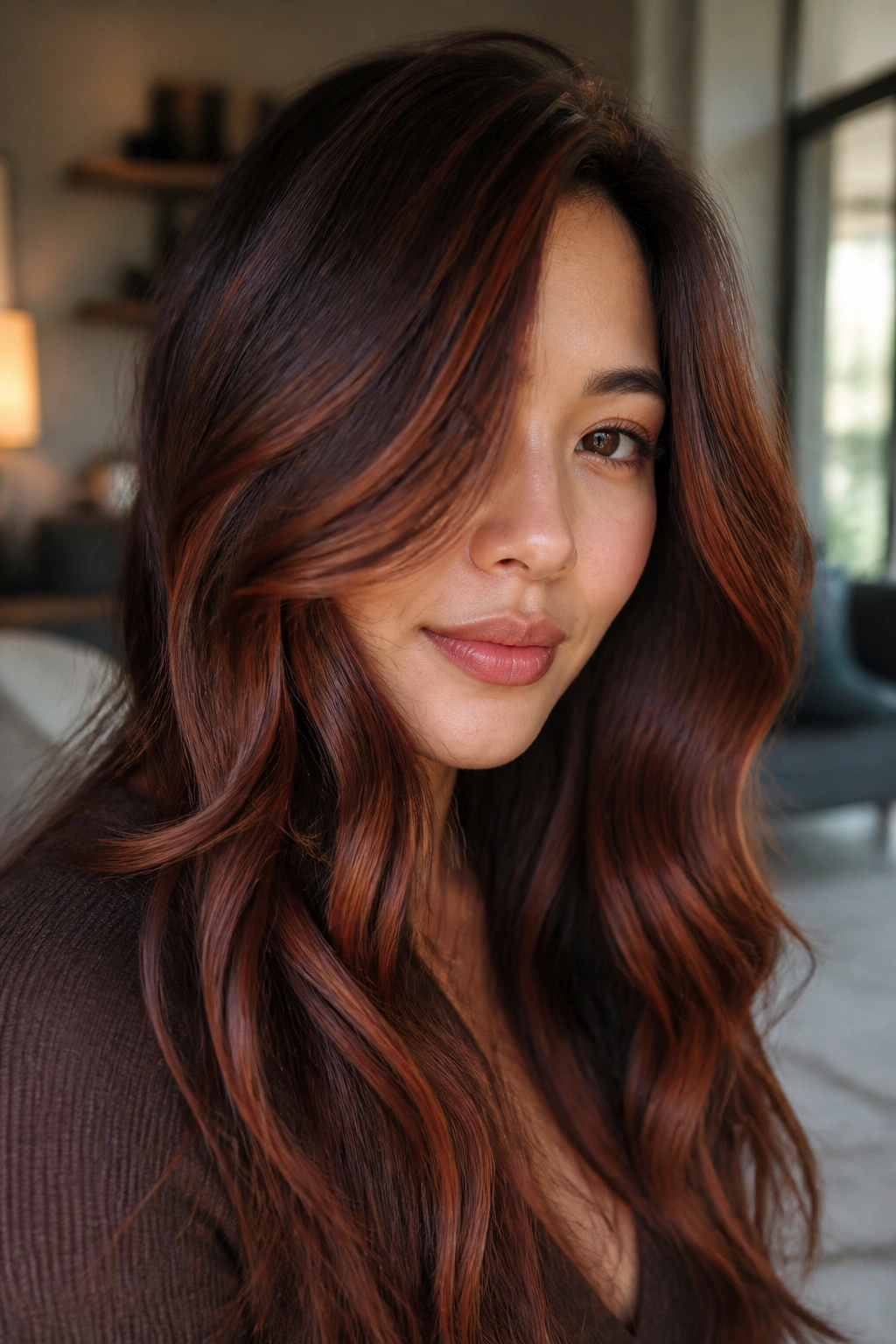
Copper usually gets labeled too warm for cool skin, and that’s fair—when it leans orange, it can be a disaster. But cool copper auburn balayage is a different animal. The copper is softened, the red is deepened, and the brunette base keeps the whole thing from turning brassy.
The Balayage Advantage
Balayage is useful here because it lets the color sit in painted ribbons instead of all over the head. That means the auburn can stay cooler at the roots and brighter only where you want movement. Around the face, the right amount is enough. You do not need to flood the whole head with copper to get the effect.
A good balayage formula for cool skin usually uses soft apricot-red mixed with brown and a tiny bit of violet. That last part matters more than people think. Violet pulls the copper back into cooler territory.
Best Placement
- Mid-lengths and ends for a soft fade
- A few face-framing pieces to brighten the eyes
- Less saturation near the root for easier grow-out
The result is more wearable than full copper and less stiff than a solid auburn block. It also gives you room to adjust later. If you want it deeper, add a red-brown gloss. If you want it lighter, lift a few more pieces around the face. Easy enough.
6. Blackberry Auburn
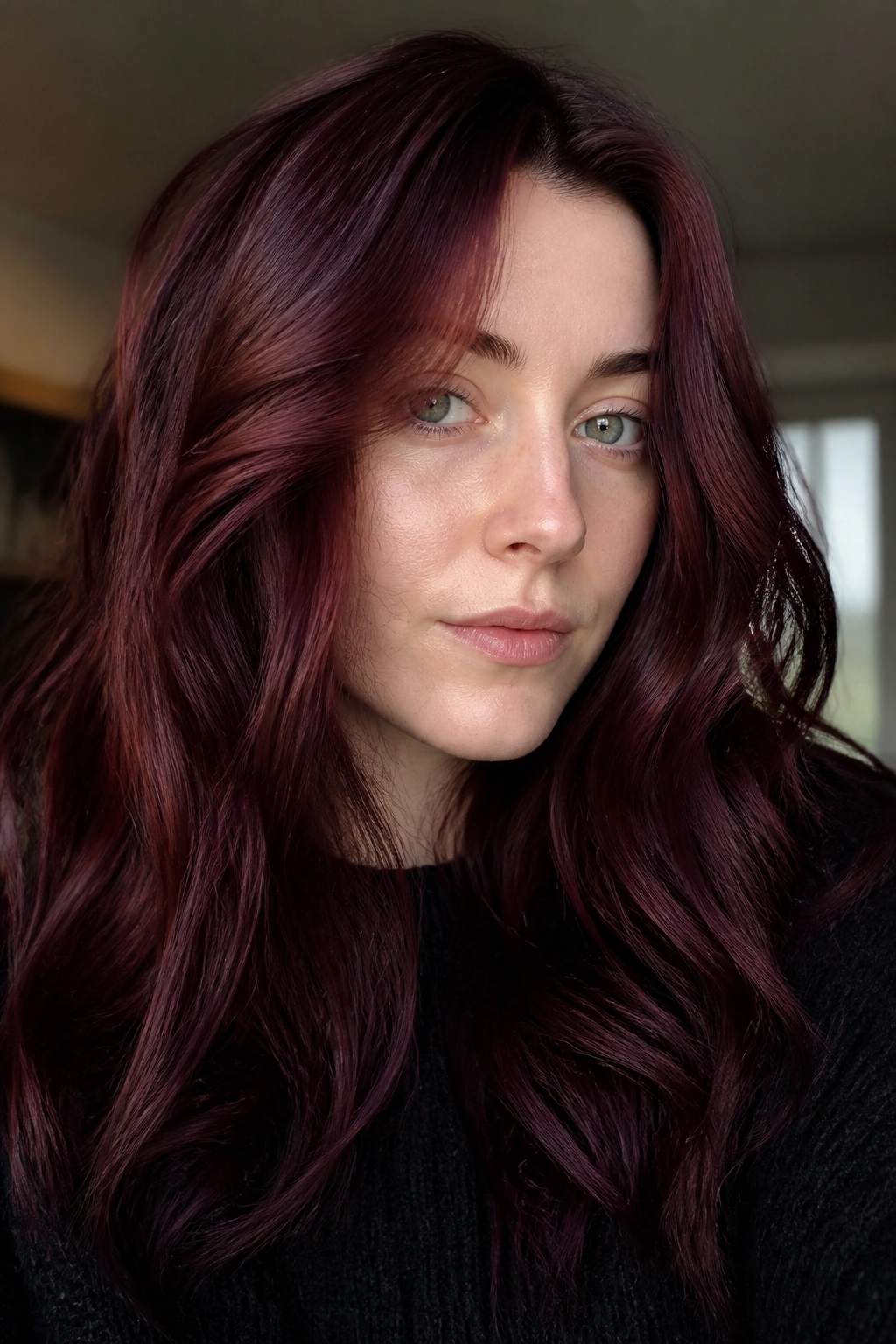
Blackberry auburn is moody in the best way. It blends dark berry tones with auburn depth, so the color feels cooler, richer, and a little more dramatic without tipping into purple hair territory. On cool skin, that dark fruit tone is a gift.
This shade tends to flatter people who wear a lot of black, wine, slate, or deep green. The hair doesn’t fight those clothes. It sits beside them. That’s a nice change if you’ve ever felt like bright red made your wardrobe look too loud.
What Makes It Different
Unlike classic copper auburn, blackberry auburn has a shadowy base that absorbs light instead of bouncing it everywhere. That creates a softer outline around the face. If your skin is fair, that contrast can make your features look more defined. If your skin is medium or deep and cool-toned, the effect is even better because the berry notes don’t disappear.
I’d call this a good choice for people who want red hair but dislike looking washed out by orange. It gives you the red payoff with less risk. There’s also a practical bonus: darker berry reds usually last a bit longer between salon visits than pale copper shades, which tend to slip out faster.
7. Burgundy Auburn
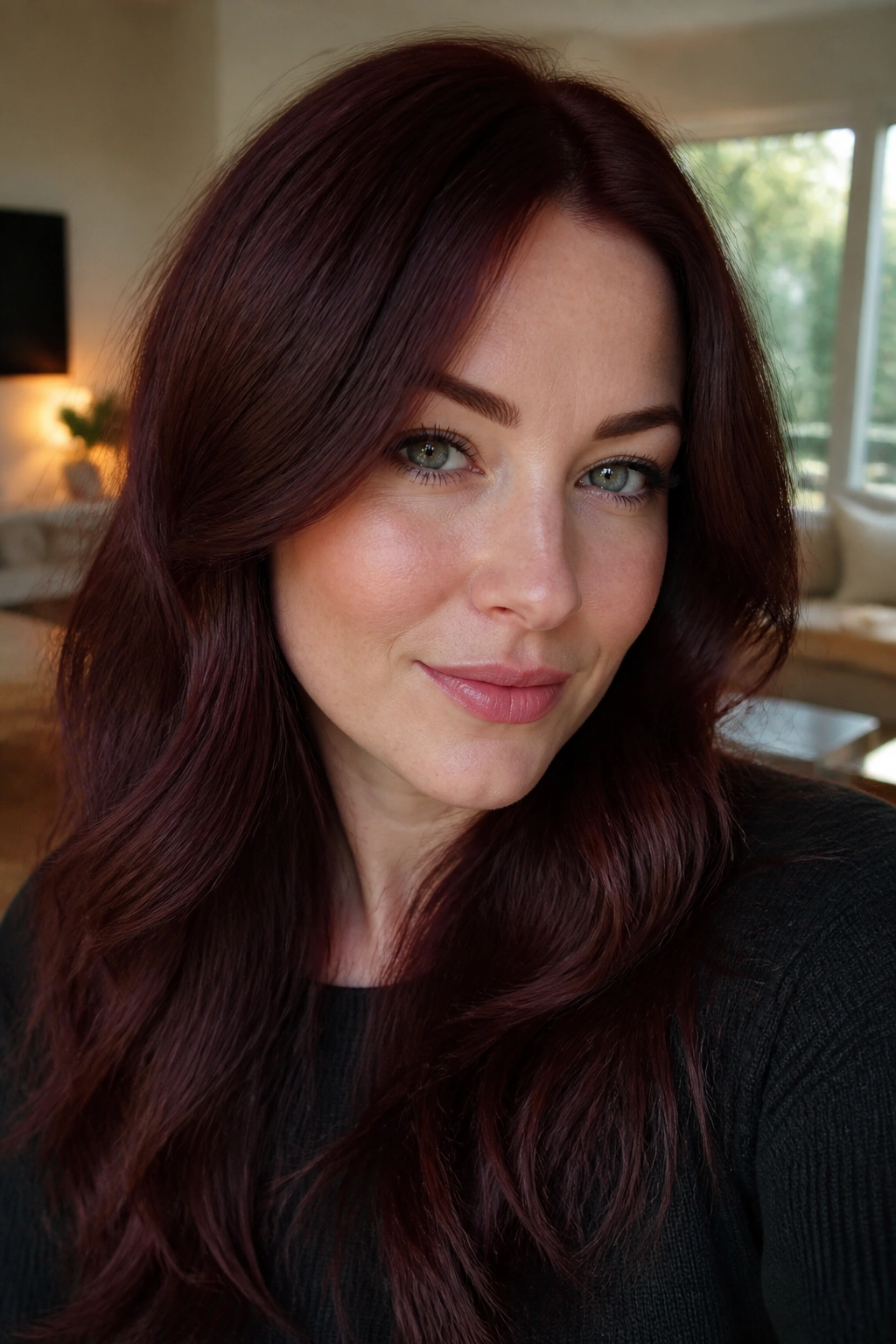
Burgundy auburn is the shade for anyone who wants their hair color to feel grown-up. It has red, yes, but the red is wrapped in wine and brown, which makes it a strong match for cool skin. It also looks good in low light, which is more useful than people realize.
The biggest strength here is balance. Burgundy has enough blue-red in it to stay flattering on cool undertones, but the auburn part keeps it from drifting into purple-only territory. The end result sits somewhere between a rich brunet and a deep red. That makes it easy to wear even if your style is simple.
How to Wear It Well
This shade loves clean cuts. A blunt bob, a sleek lob, or long layered hair all make burgundy auburn read deliberate. Curls are fine too, but the color looks especially luxe when the finish is smooth and shiny.
If you’re asking for it at the salon, use plain language: deep burgundy-red with auburn brown depth. If the colorist reaches too far into violet, the shade can turn plum. That may sound close, but it changes the whole mood.
My take: burgundy auburn is one of the safest red options for cool skin because it rarely clashes. It may get a little softer over time, but it usually stays in the same family.
8. Rosewood Auburn
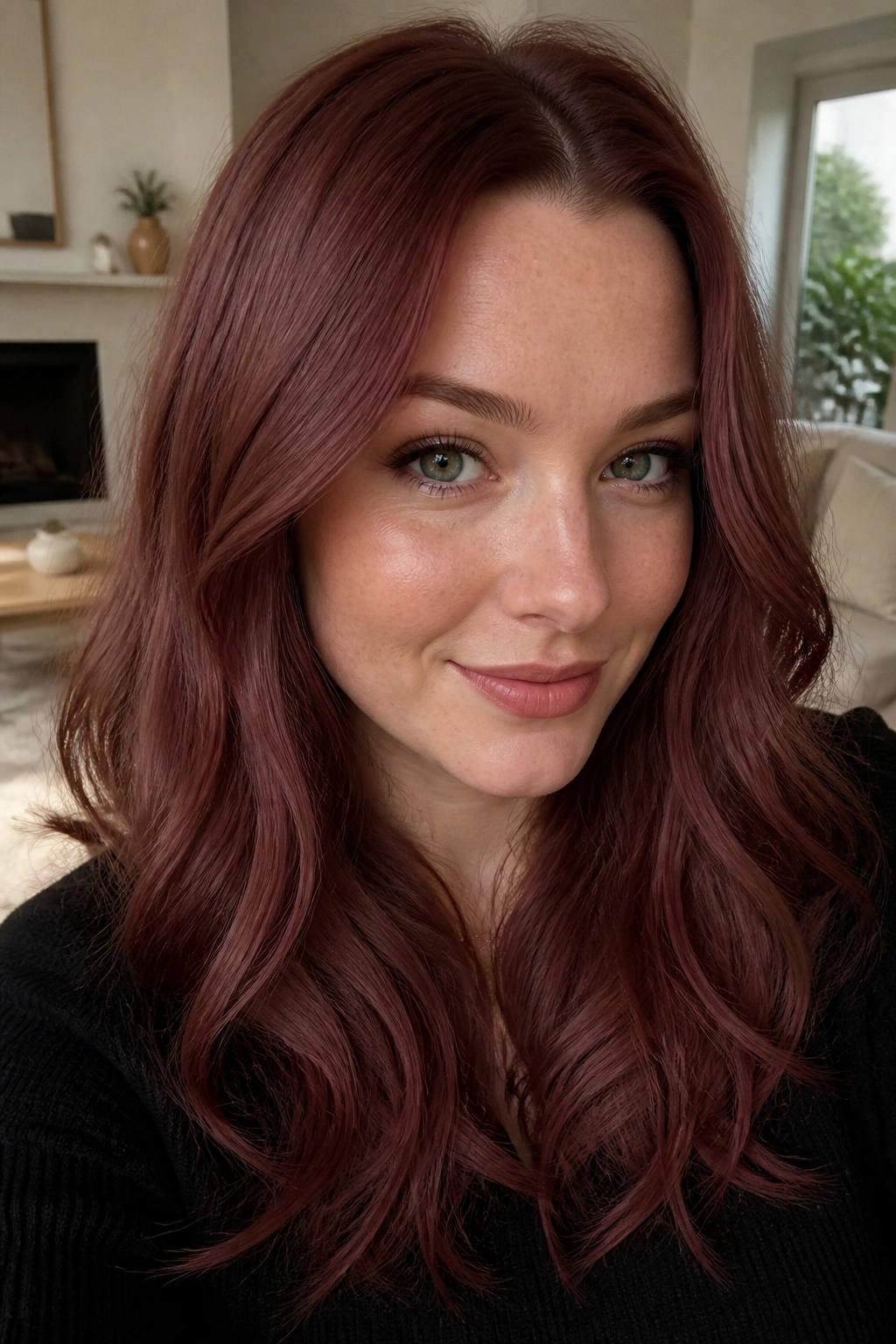
Rosewood auburn is softer than burgundy and less obvious than cherry. It has that dusty-rose quality that cool skin tends to like, especially if your undertones are rosy rather than icy. The hair looks red-brown, but with a gentle pink cast that keeps it from feeling harsh.
A Good Fit for Cooler Complexions
This shade works because rosewood isn’t a loud color. It leans muted. That matters. Cool skin often looks best next to colors that have a little gray in them, and rosewood auburn gives you exactly that. The red is there, but it’s softened at the edges.
If your natural hair is medium brown, this can be done as a gloss or soft permanent shift. On lighter hair, it may need a deeper base so it doesn’t wash out into a pastel red that disappears after a few shampoos.
I like rosewood auburn for people who wear soft neutrals—camel, dove gray, charcoal, blush, crisp white. The color feels expensive without being stiff. And unlike brighter red shades, it doesn’t demand heavy makeup to look finished. A bit of mascara and a clean brow usually do enough.
9. Chestnut Auburn

Chestnut auburn is the reliable one in the group. It’s not flashy, and that’s exactly why it works. The chestnut base gives cool skin a brown anchor, while the auburn reflection keeps the hair from looking flat or muddy.
Does it sound understated? Sure. That’s the point. If your face looks best in cooler, softer colors, chestnut auburn can be more flattering than brighter red-brown shades that put too much heat next to the skin. It adds warmth in a controlled way.
Why It Holds Up
Chestnut auburn grows out softly because the root area stays close to a natural brunette. That means less visible line of demarcation at the scalp. The color also survives a little better if your hair tends to go porous or thirsty, since the base isn’t heavily lightened.
Use a shine spray or light serum, not a heavy oil. Chestnut auburn can lose its shape if the hair gets too coated. A simple blowout or loose wave shows the color better than stiff curls. If you want to keep the result cool, stay away from golden glaze treatments. They pull the chestnut in the wrong direction fast.
10. Merlot Auburn

Merlot auburn is the kind of color people notice from across the room, then stare at a little longer when they get closer. It has that deep red-purple undertone that makes cool skin look cleaner and more awake. Straight orange can do the opposite. Merlot gets this right.
The shade works especially well on medium to deep cool skin because the depth of color doesn’t drain the face. It gives contrast without harshness. If you’ve ever liked wine-colored lipstick more than tomato red, this is the hair version of that preference.
A Quick Scenario
Say you wear lots of black and silver, and your hair naturally sits between medium brown and dark brown. Merlot auburn is a clean fit. It doesn’t force your style to change. It just gives it a richer edge.
- Ask for a deep red base with violet-brown undertones
- Keep the finish glossy, not matte
- Add soft layers so the color shows movement
- Refresh the tone with a red-violet gloss when it starts to fade
Merlot auburn can look severe if the cut is too heavy. A little movement helps. So does light at the crown. If the shade is applied all over with no variation, it can look darker than intended indoors.
11. Violet Auburn
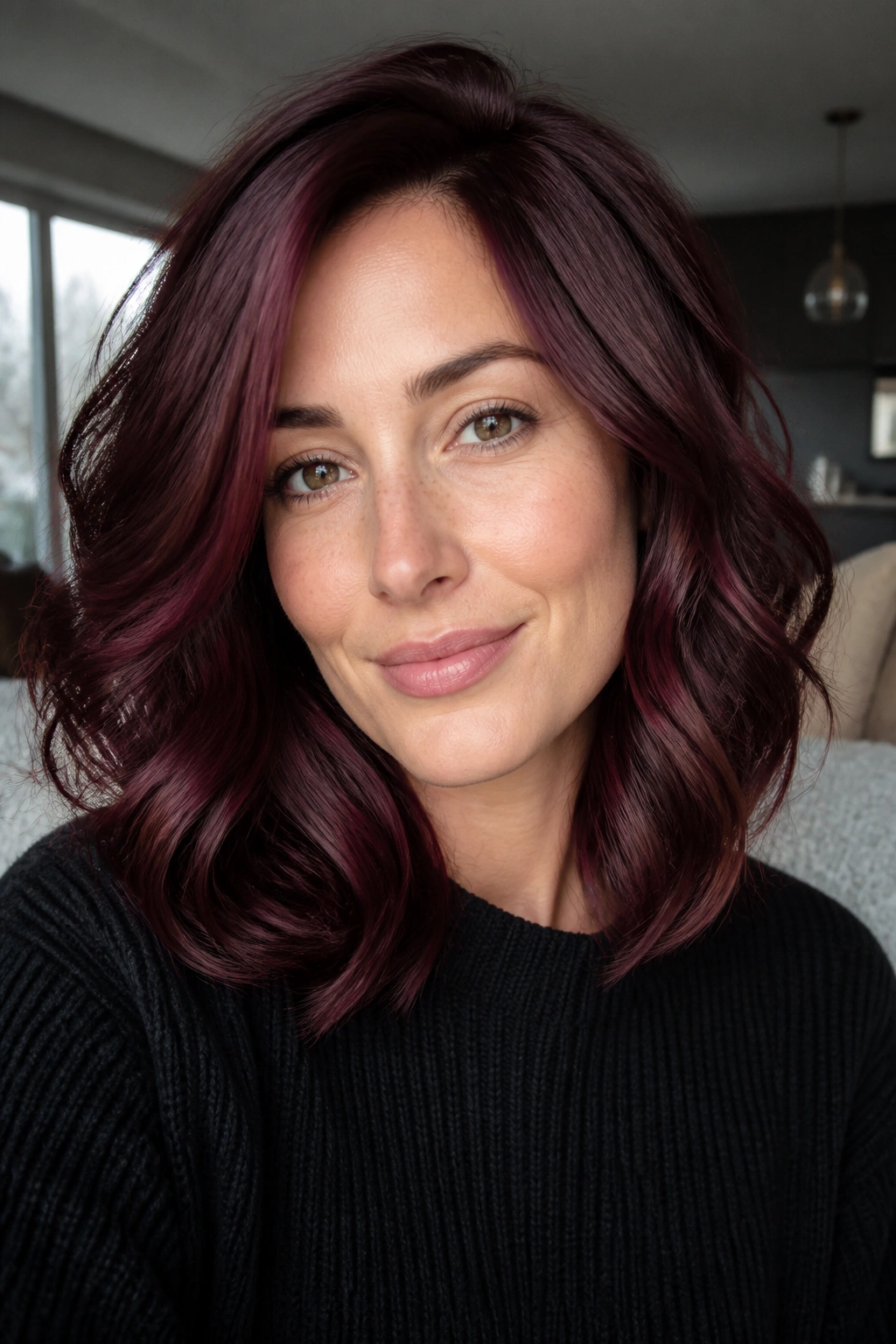
Violet auburn is one of my favorite answers to the cool-skin problem, because it behaves like red but feels calmer. The violet shift brings the auburn back toward the cooler side of the wheel, which keeps pink and blue undertones from looking flushed in a bad way.
This shade is not for someone who wants obvious copper. It’s for someone who likes the idea of red hair but wants a more controlled, slightly mysterious version. Under daylight, the violet note shows up first. Under warmer bulbs, the auburn comes forward. That change keeps the hair interesting without making it hard to wear.
What to Watch For
Too much violet can push the color plum. Too much auburn can drag it back toward orange. The sweet spot lives between those two. A good colorist will usually balance a red-violet formula with a brown base so the result stays grounded.
This shade pairs beautifully with cool-toned wardrobes—gray, navy, icy lavender, black, white. It also works well with silver jewelry, which is no accident. The cooler finish in the hair doesn’t fight the metal. It repeats it.
If you want a red that doesn’t look warm, this is the one to ask about first.
12. Auburn Money Piece on a Brunette Base
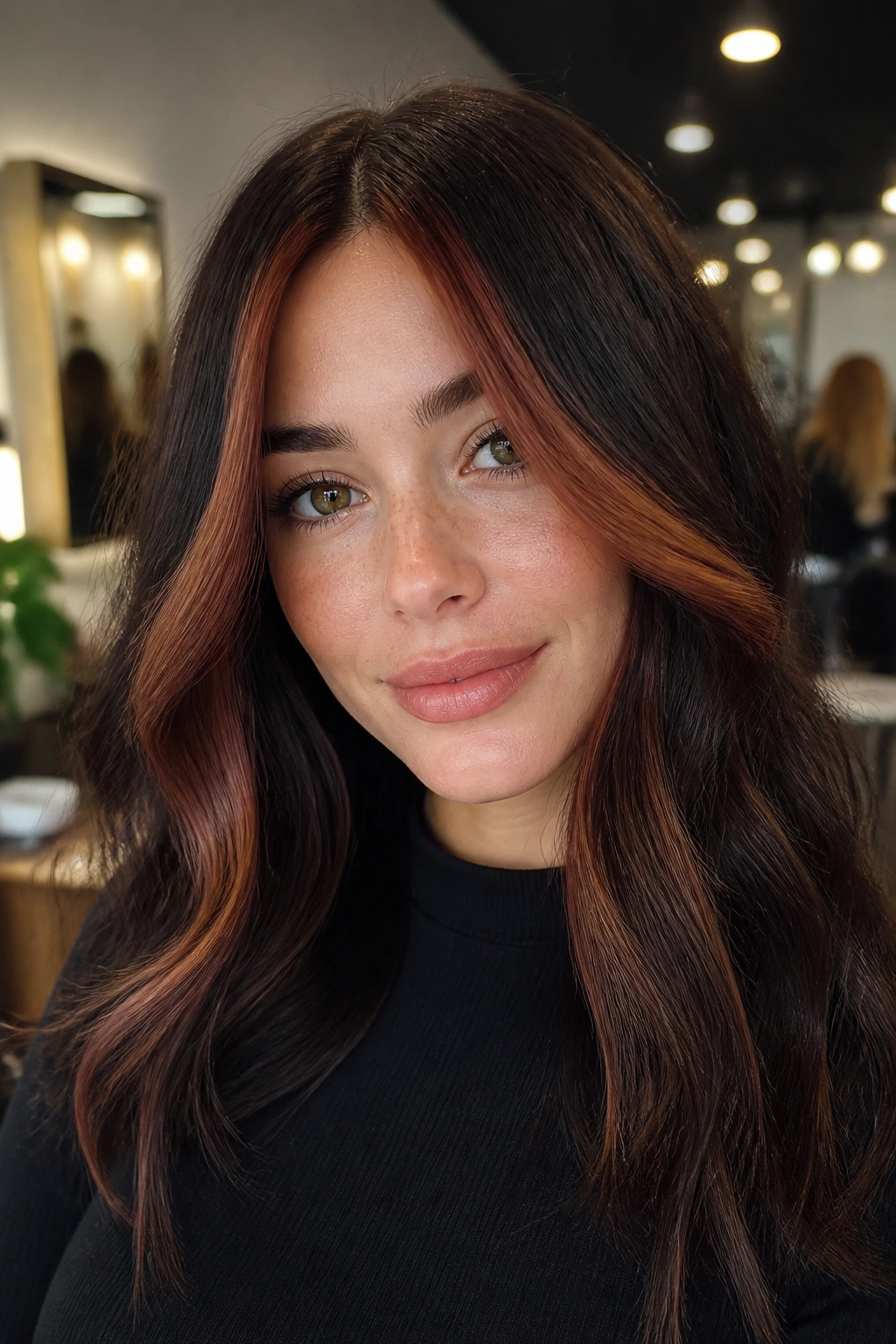
A money piece can fix a lot of things. In this case, it lets you wear auburn hair color ideas for cool skin tones without changing your whole head. The base stays brunette, and the auburn shows up around the face where it can do the most work.
That placement matters. The front pieces frame the cheekbones and eyes, so even a small amount of cool auburn can brighten the face in a way that full-head copper sometimes cannot. The rest of the hair stays dark and manageable.
How It Should Be Done
A good money piece is not chunky. It should be blended enough to look like it belongs, but bright enough to make the front of the hair feel lifted. Ask for cool auburn ribboning around the face with a soft brown root and mid-length blend.
- Best if you want a smaller color commitment
- Works especially well on layered cuts and curtain bangs
- Keeps damage lower because only a few front sections need lightening
- Easy to update later with a gloss or toner
I like this choice for anyone testing the red family for the first time. If you love it, you can expand the color later. If you don’t, the grow-out is easy to live with. And that saves a lot of regret.
13. Mushroom Brown Roots with Auburn Balayage
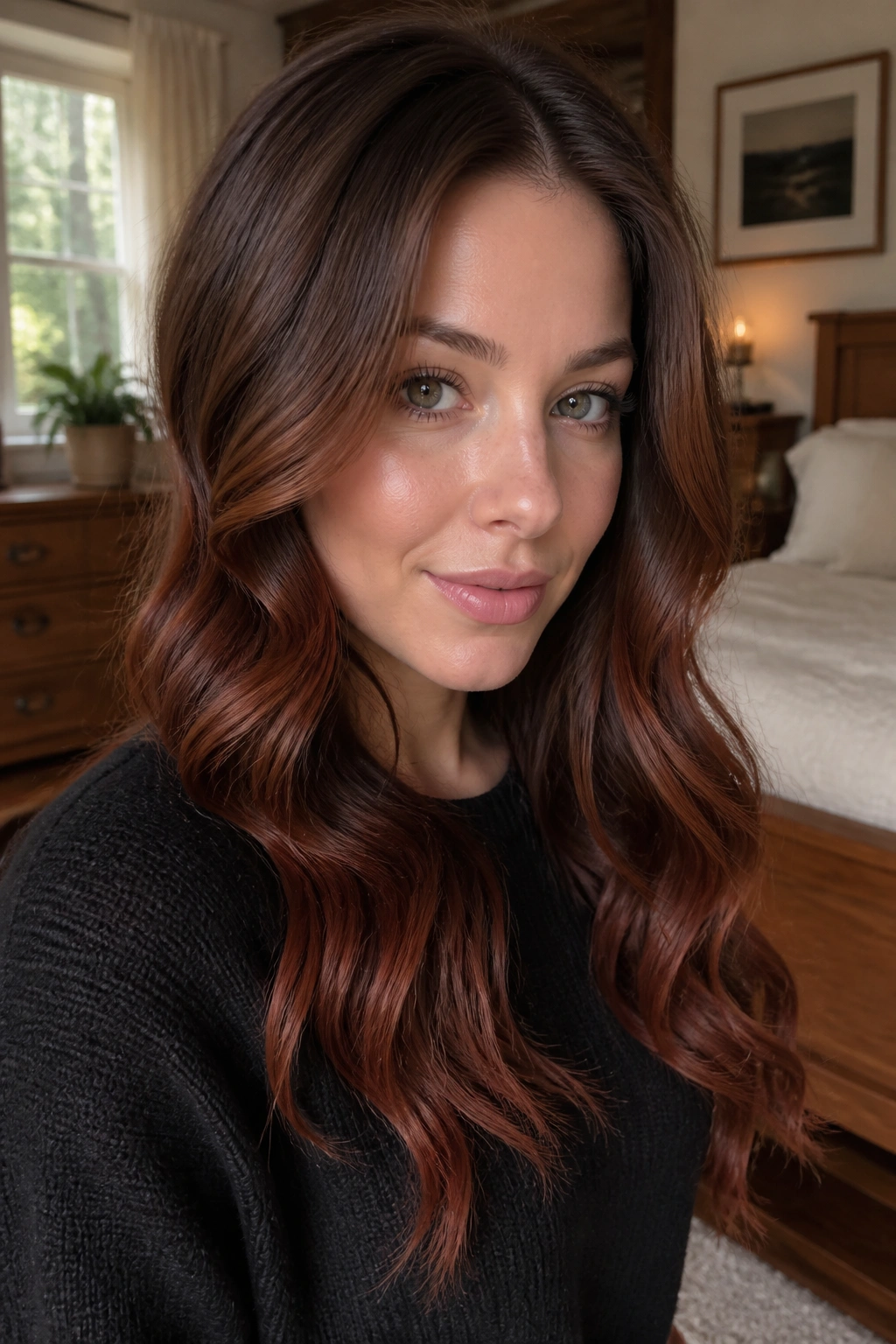
Mushroom brown and auburn sounds like an odd couple until you see it on cool skin. Then it makes sense. The mushroom brown root keeps everything muted and soft, while the auburn balayage adds enough red to keep the hair from looking dull.
This is a smart option if you like earthy colors but can’t wear warm golds near your face. Mushroom brown has that gray-brown cast that sits nicely beside cool undertones. Adding auburn through the mids and ends gives the hair a bit of life without turning it into a copper block.
The Real Benefit
The grow-out is gentle. That alone makes this shade worth a serious look. Roots stay natural and smoky, which means you can go longer between color services without the whole style falling apart. The auburn ribbons can be kept finer or chunkier depending on how much contrast you want.
A small warning: the auburn pieces should stay red-brown, not orange-red. If the warmth gets too bright, the mushroom root and the ends will start to look disconnected. That mismatch is easy to spot, and not in a good way.
This is one of those shades that looks even better with a soft bend in the hair. Flat iron waves work well. So do loose curls brushed out a little with your fingers.
14. Deep Russet Auburn
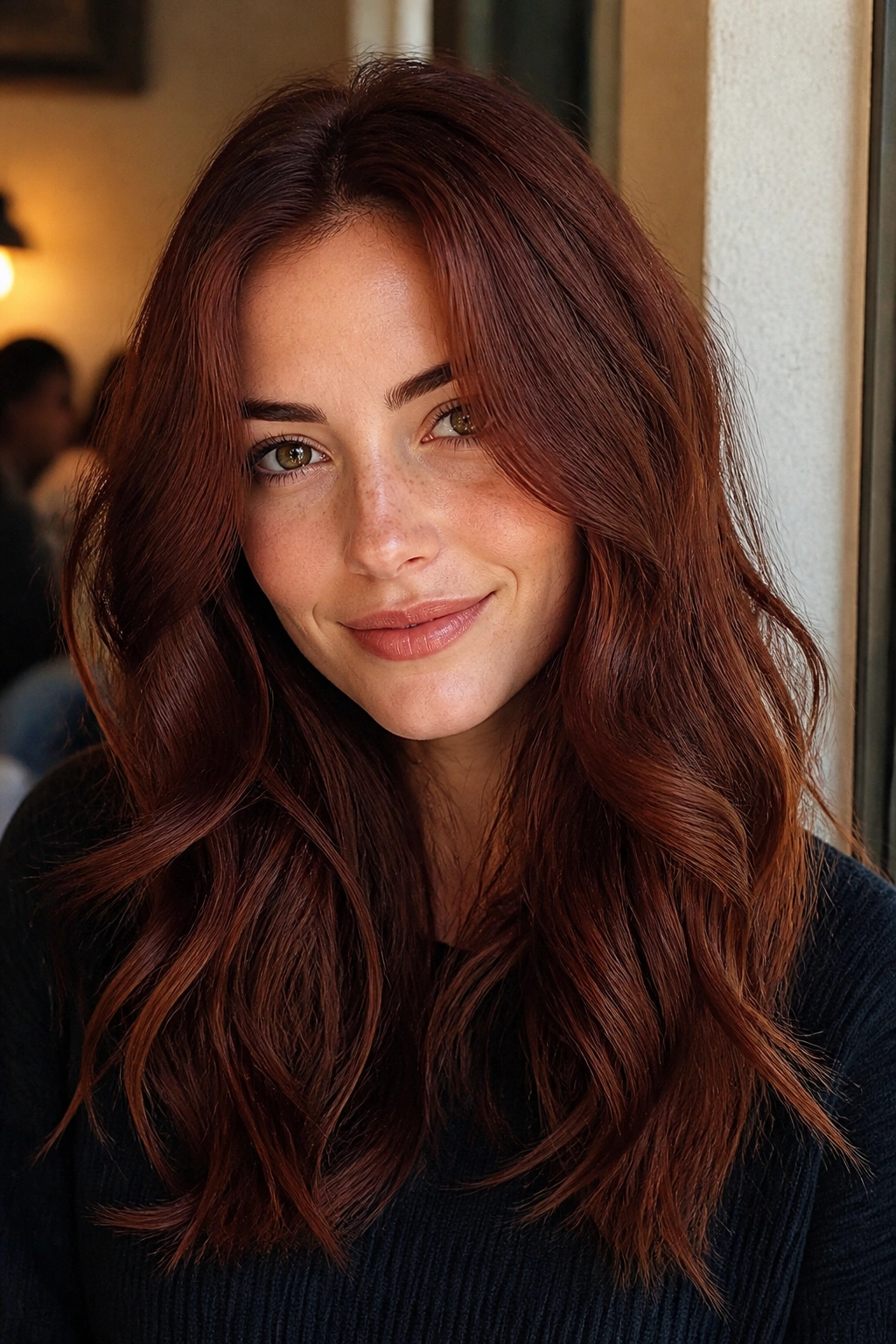
Deep russet auburn is warmer than some of the shades above, but the depth keeps it friendly to cool skin. Think of it as red earth rather than bright fire. The brown undertone grounds the color, while the russet gives it a little pulse.
Why does that matter? Because cool skin usually needs red with weight. A thin, bright orange-red can make the face look patchy. Deep russet has enough substance to sit beside the skin instead of competing with it.
Good Use Cases
This shade works well if you have naturally brown brows and darker eyes. It also makes medium-length layered cuts look fuller, since the color catches on the bends in the hair. On very fine hair, it can add the sense of thickness without requiring a heavy cut.
If you’re deciding between copper and auburn, choose russet when you want less brightness and more depth. If you want the opposite, keep moving. The difference is easy to see once the color is on the hair. Russet is the more mature, less flashy choice.
It does need a little upkeep. Red-brown pigments fade, and russet is no exception. A gloss every few weeks helps keep the color from drying out and turning flat.
15. Cranberry Auburn

Cranberry auburn is sharp, fresh, and a little bit tart—in a good way. The cranberry note gives cool skin the blue-red edge it likes, while the auburn base keeps the hair from looking like a semi-permanent fashion color. It’s vivid, but still wearable.
This is the shade I’d suggest if you want people to notice the color first. Not because it’s loud, but because it has clarity. Cranberry tones stay crisp against pale or porcelain skin, and they make blue eyes look almost icy. On deeper cool skin, the effect is richer and more jewel-like.
Color Pairing Notes
Cranberry auburn likes clear makeup rather than muddy tones. A cool berry blush, black mascara, and a neutral lip usually beat peach or coral here. Coral can turn the whole face warm in a way the hair does not need.
If the color is too red, it can drift candy-bright. If it’s too brown, the cranberry disappears. The best version keeps one foot in both camps. That balance is why this works at all.
Best ask at the salon: cranberry-red glaze over a medium brunette base with auburn depth at the ends. That gives you a vivid result without making your roots scream for attention.
16. Auburn Ombre with Cool Ends
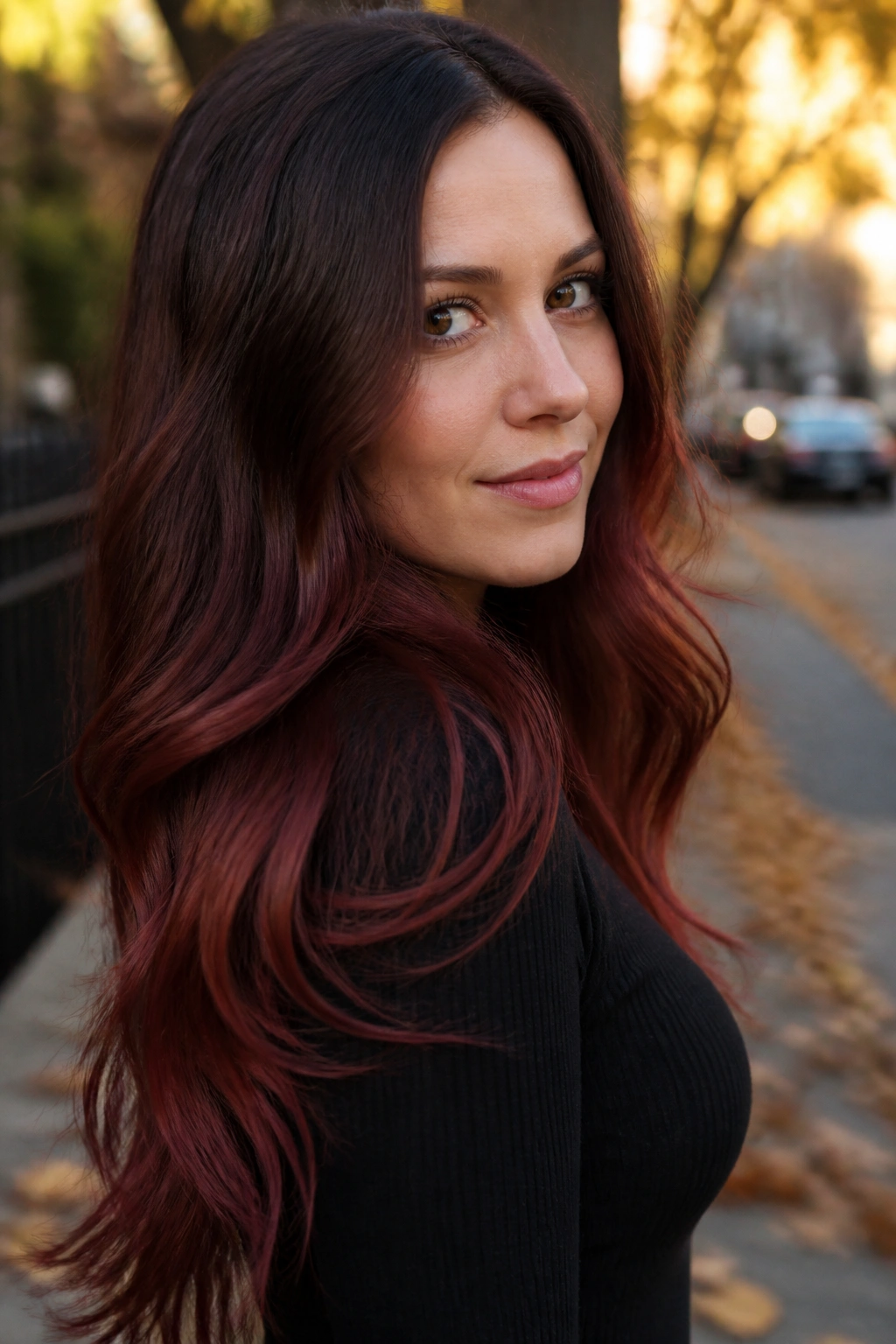
Auburn ombre is a good choice when you want to keep your roots dark and your ends interesting. The cool part of the equation is in the transition. Instead of moving into orange ends, the color should fade into cooler auburn or berry-brown tones.
This works because ombre gives you room to keep the strongest warmth away from the face. Cool skin often does better when the brightest color sits lower on the hair, where it reads as movement instead of heat.
How to Make It Wearable
The root color should stay close to your natural brown or a shade slightly deeper. Then the mids can carry the auburn, and the ends can get the richest red-brown tone. If the ends are lightened too much, they can pick up orange. That’s the part to control tightly.
Auburn ombre is also a good rescue plan for someone growing out old highlights. Rather than fighting the lighter ends, you can redirect them into a red-brown fade. Much nicer. Much less awkward.
The look is strongest on longer hair, because the color shift has room to show itself. On shorter cuts, it can get compressed and lose the gradient effect. A shoulder-length lob is about the minimum where the style really opens up.
17. Plum Auburn
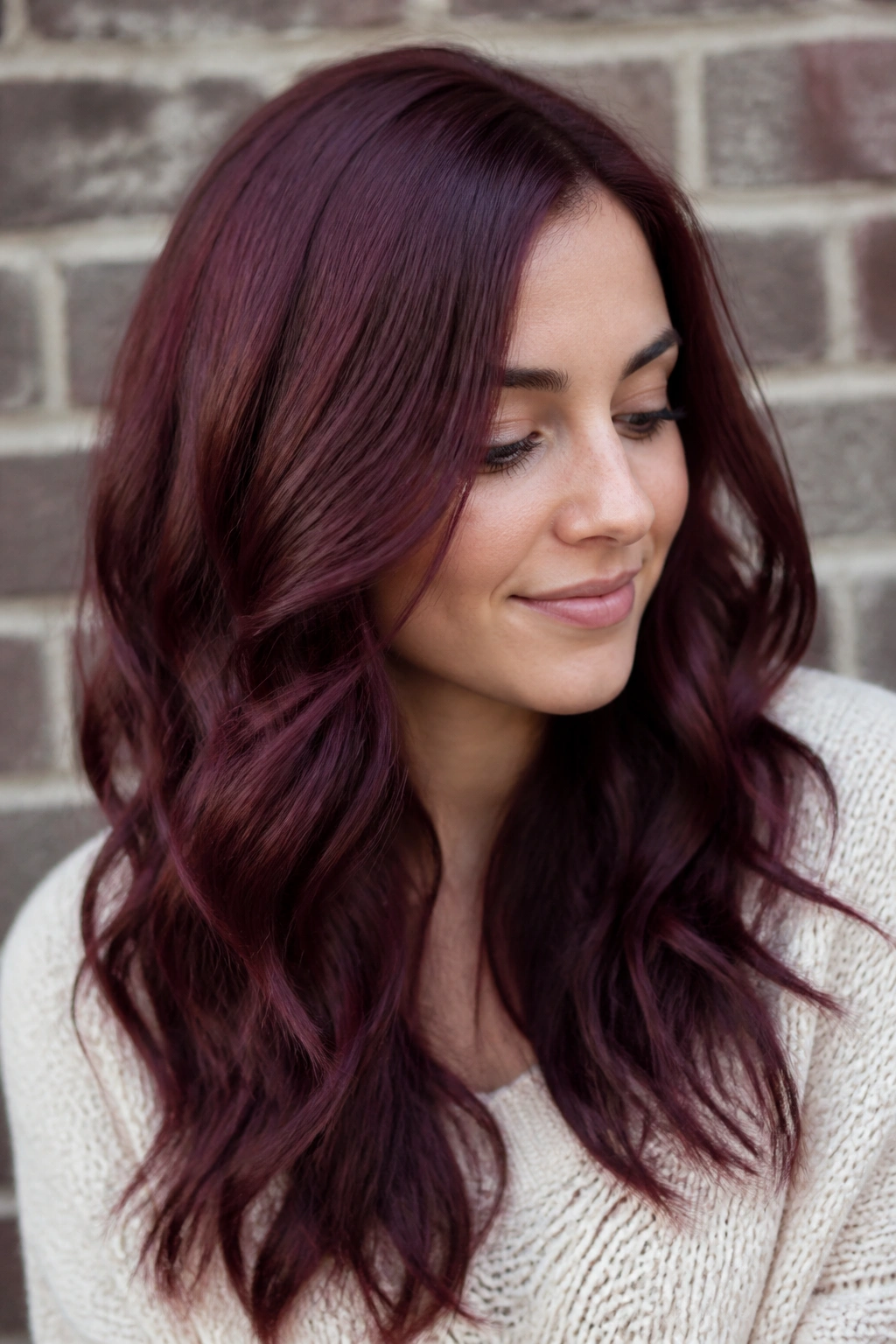
Plum auburn leans cooler than most red-browns, and that makes it a strong match for skin with pink or blue undertones. The plum softens the red, while the auburn stops the shade from feeling flat or too purple.
It has a fancy, almost velvet quality in motion. Not because it’s dramatic in the usual sense, but because the color changes a little as the light moves across it. You catch auburn in one section, plum in another, and the whole head looks more dimensional than a single-tone red.
A Good Fit If You…
- Wear silver or white gold jewelry
- Like lipstick shades such as berry, mauve, or cool rose
- Prefer dark hair with a little color shift instead of bright red
- Want something that fades into a softer berry-brown
Plum auburn can be too purple if the formula goes heavy on violet pigment. That can be a cool look, but it’s a different look. If you want more red, say so plainly. The balance matters here.
I’d pick this for someone who wants a red family color that feels a little quieter and a little smarter than obvious copper. It’s subtle in the right way.
18. Sable Auburn
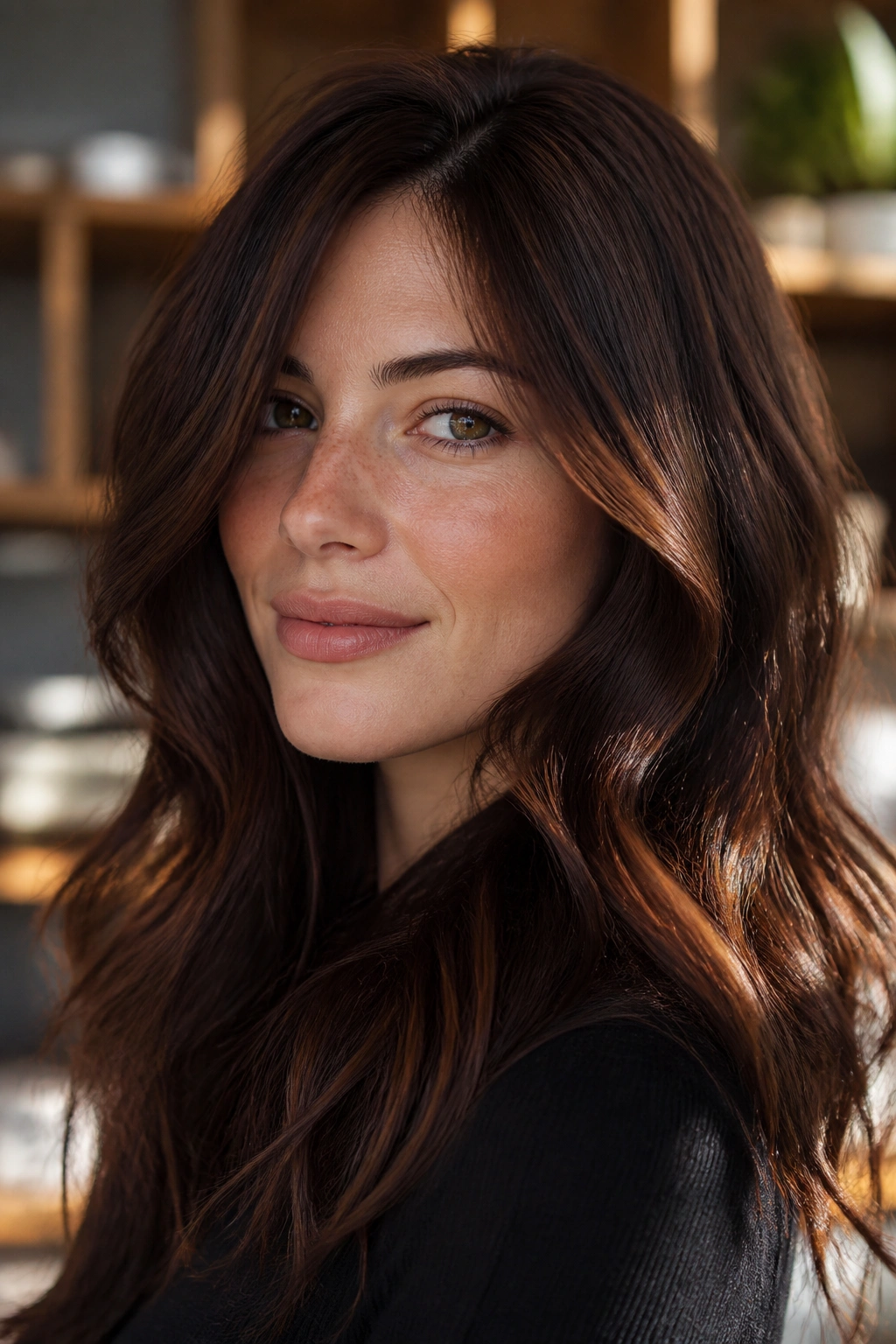
Sable auburn is what happens when deep brunette hair gets just enough red to wake it up. It’s dark, muted, and very easy to wear on cool skin because the red sits under the brown rather than on top of it.
This is a low-drama option. The hair looks rich in daylight and polished indoors, but never so warm that it steals attention from your face. If you want red hair without the maintenance of bright red hair, sable auburn deserves a close look.
The shade also has a nice effect on texture. On wavy hair, it creates soft contrast between bends. On curly hair, the red-brown depth makes the curl pattern look fuller. Straight hair gets shine. Every texture gets something different from it.
My opinion: sable auburn is underrated because it doesn’t announce itself fast enough on Instagram. In person, though, it can be one of the most flattering auburn shades for cool skin, especially if your natural color already lives in the medium-dark brown range.
19. Smoky Red Velvet Auburn
Smoky red velvet auburn sounds rich because it is. The velvet note brings softness, the smoky base keeps the red cool, and the whole thing lands in a place that works for pink, neutral, and rosy skin without much fight.
Why this shade stands out is the finish. It should look plush, not bright. If the color reflects too much orange, the velvet effect vanishes and the hair starts reading like a standard warm red-brown. That is not the same thing.
How to Style It
A round brush blowout can make smoky red velvet look glossy and expensive. So can big, brushed-out waves. The color needs movement; otherwise it can sink into one dark note and lose the red variation.
This shade is also kind to medium-depth skin because it adds color without making the complexion look pale. On very fair cool skin, it can feel a little rich, so a few lighter pieces around the face help. Not highlights in the old chunky sense. Just soft dimension.
If your wardrobe is full of black, cream, charcoal, and wine, this shade fits easily. It doesn’t demand a new closet. That’s part of why I like it.
20. Cinnamon Brown Auburn
Cinnamon brown auburn is warmer than some cool-skin readers will expect to see on a list like this, but the brown base keeps it grounded. The cinnamon is subtle, more spice than sugar. That makes all the difference.
The shade works best on cool skin when the red is diluted through brunette depth. If the cinnamon starts to look too golden, the whole thing gets off-track. You want a brown hair color with a red whisper, not a copper blast.
Comparison Time
Unlike bright auburn, cinnamon brown auburn doesn’t demand much makeup correction. You can wear a neutral complexion base, soft brown liner, and a rosy lip without fighting the hair. Bright auburn often asks for more balance. This one behaves.
It is also one of the easiest colors to maintain if your natural hair is already brown. You may only need a gloss or tone boost every so often, rather than a full color refresh. That makes it practical for someone who likes the red look but not the upkeep routine.
Best for: someone who wants a warm-looking brunette shade that still flatters cool skin instead of clashing with it.
21. Dark Auburn with Blue-Violet Gloss
Dark auburn with a blue-violet gloss is the fix when you like depth first and red second. The gloss is the key here. It keeps the auburn cooler, richer, and less likely to slip into orange territory as it fades.
This shade works because blue-violet pigments pull the warmth back just enough to flatter cool undertones. You still get the red reflection, but it comes through as a polished sheen instead of a hot flash. That subtle shift can change the whole feel of the face.
What to Tell Your Colorist
Ask for a dark auburn base with a cool blue-violet gloss finish. If your hair is porous, the gloss will grab fast, so the tone may need softer timing. If your hair is resistant, the gloss may need a little more processing to show up clearly.
- Good for brown eyes and darker brows
- Keeps the root area looking natural
- Fades into a softer auburn-brown rather than orange
- Needs sulfate-free care to hold the cool tone
This is one of the smartest choices for people who want red hair but hate brass. And there are plenty of us in that camp.
22. Mulled Wine Auburn
Mulled wine auburn has a rich, spiced feeling without leaning pumpkin. It blends red, brown, and a touch of berry into a shade that looks especially good on cool skin during colder months of the year, because the color echoes deep fabrics and darker makeup tones.
The name is dramatic, but the color should be controlled. Think wine-brown, not red-orange. That distinction matters. The best version looks like a deep drink in candlelight: dark, reflective, and a little mysterious.
H3: How to Wear the Tone
A mid-length cut with a soft bend is ideal. The movement lets the red and brown tones show up without the whole head looking solid and heavy.
If you want to keep it cooler, pair it with cool blush and a taupe brow product. Warm peach makeup can tug the whole look in the wrong direction. That may sound fussy, but it really does change the read of the color.
This shade is especially kind to skin with a slight rosy cast. It echoes that color rather than competing with it. A quiet win.
23. Light Auburn with Root Shadow
Light auburn can work on cool skin, but only if it’s anchored. Root shadow is what keeps it from turning childish or too bright. The darker root gives the lighter red-brown lengths a place to sit, and that creates a softer frame around the face.
Without the shadow, light auburn can drift orange fast. With it, the color becomes wearable. That’s the whole game. Cool skin usually needs a little depth near the scalp so the brighter parts do not overrun the complexion.
What the Grow-Out Looks Like
Root shadow makes the grow-out gentler, which is useful if you do not want obvious regrowth every few weeks. The shadow should be close to your natural brunette level, not a harsh black strip. A soft transition looks better and ages better.
This is a good option if you like lighter red hair but have cool features that get swallowed by bright copper. The shadow adds seriousness. The lighter auburn adds light. Together, they keep the color balanced.
A few fine highlights around the crown can help too, but only if they stay in the red-brown family. Yellow blonde pieces would fight the whole point.
24. Cherry Cola Auburn
Cherry cola auburn sits in the same family as cherry soda hair, but with more brunette depth. It feels like dark red-brown with a glossy, slightly fizzy finish. On cool skin, that cola base helps the red look rich instead of loud.
This is one of the easiest ways to wear a red shade if you already have dark hair. It does not require you to become a bright copper person overnight. Good. Because not everyone wants that life.
Why It Flatters Cool Skin
The dark base gives the skin room to breathe. The cherry note adds brightness near the face, but not so much that it takes over. If your skin is fair and cool, it can sharpen your features. If your skin is deeper, the color can read very luxe.
Cherry cola auburn is also flexible. It can look more brown in office light and more red in daylight, which means it does not feel repetitive. That little shift keeps the style interesting without making it hard to wear.
If I had to pick one auburn family shade for someone who wants low-fuss red-brown hair with real personality, this would be near the top.
25. Soft-Focus Auburn Glaze
Soft-focus auburn glaze is the easiest, least aggressive way to bring auburn into cool skin. It is not about a heavy color change. It’s about a sheer red-brown veil that makes brunette hair look warmer, shinier, and less flat.
This is the shade for someone who wants the effect of auburn without the commitment of a full transformation. A glaze can soften the whole head, deepen natural brown, and add just enough red to make the hair look more alive. On cool skin, that subtlety matters. Too much warmth and the face starts to argue with the hair. A glaze avoids that fight.
Why I’d Recommend It First
If you’re nervous about auburn, start here. A glaze wears off gradually, which means you can test the look without feeling trapped by it. It also lets you fine-tune the tone later. More berry next time. Less red if it gets too strong. Easy.
The best version stays in the red-brown lane, not the orange lane. Ask for a cool auburn gloss over brunette hair, with a little extra depth at the root if your complexion is very fair. The finish should look shiny and soft, almost like the color has been brushed over the hair rather than painted on.
For cool skin, that restraint is the point. It gives you the auburn mood without forcing the entire face to chase after it.
