



A bronde that leans golden can make cool skin look a little flushed. The safer, prettier move is a mix that stays in the brown family first and only brushes into blonde at the edges, through ribbons, or in the face frame.
That’s the whole trick with bronde hair color ideas for cool skin tones: keep the warmth under control. Pink, blue, or rosy undertones usually look best with ash, beige, mushroom, taupe, pearl, or smoky notes. Too much copper or honey can pull the face red. Too much ash, though, can go muddy if the hair is already dark. The sweet spot sits right between those two problems.
The best cool-toned bronde shades do two jobs at once. They keep depth at the roots so the color feels grounded, and they place light where the face needs a little lift. A good gloss matters here. So does a stylist who knows the difference between “beige” and “golden beige,” because that tiny gap changes everything.
Some of these looks are soft and low-key. Some carry more contrast. A few are better on wavy hair, a few love straight cuts, and one or two really wake up curly texture. The common thread is simple: they all keep cool skin looking calm, fresh, and balanced.
1. Ash Bronde With Beige Ribbons
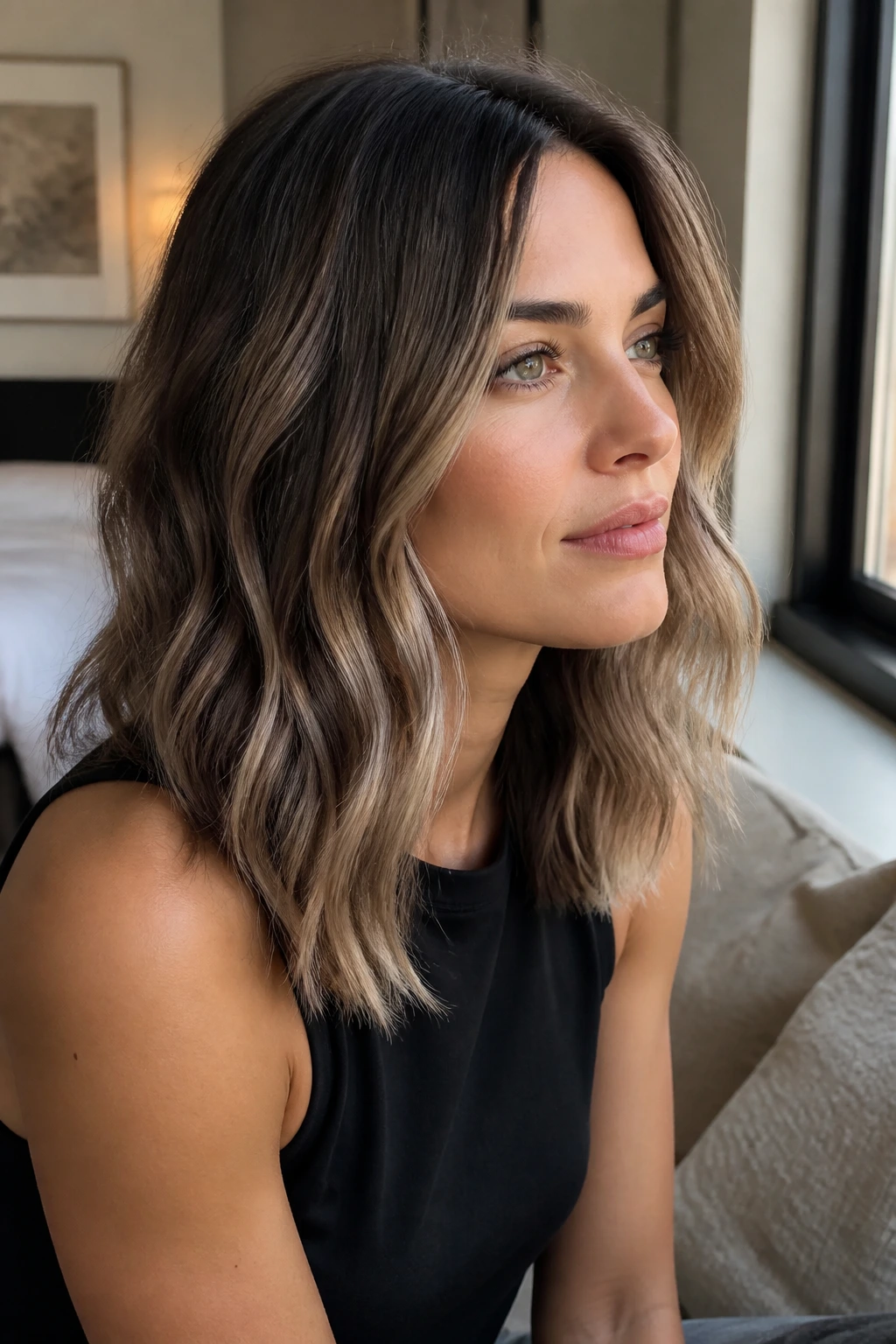
Ash bronde is the easy answer when you want dimension without warmth fighting your undertone. The base stays brown and cool, then thin beige ribbons slide through the mid-lengths so the color still catches light.
Why It Flatters Cool Undertones
Cool skin tends to look cleaner next to smoky brown and beige-blonde than next to gold. That’s why this shade works so well on fair, medium, and even deeper cool complexions. The ash keeps the overall effect soft, while the beige gives you movement instead of a flat brown helmet.
Ask for a level 5 or 6 ash-brown base with hand-painted ribbons that sit one to two shades lighter. Keep the ribbons fine around the hairline and a little chunkier through the back. That mix stops the front from looking too dark while keeping the finish believable.
- Best on: medium-length cuts, loose waves, and layered lobs
- Ask for: ash gloss, beige babylights, soft root shadow
- Avoid: yellow toner or honey highlights
- Maintenance: gloss every 6 to 8 weeks to keep the ash clean
Pro tip: If your hair pulls orange fast, tell your colorist you want the blonde pieces toned a touch cooler than the rest.
2. Mushroom Bronde Melt
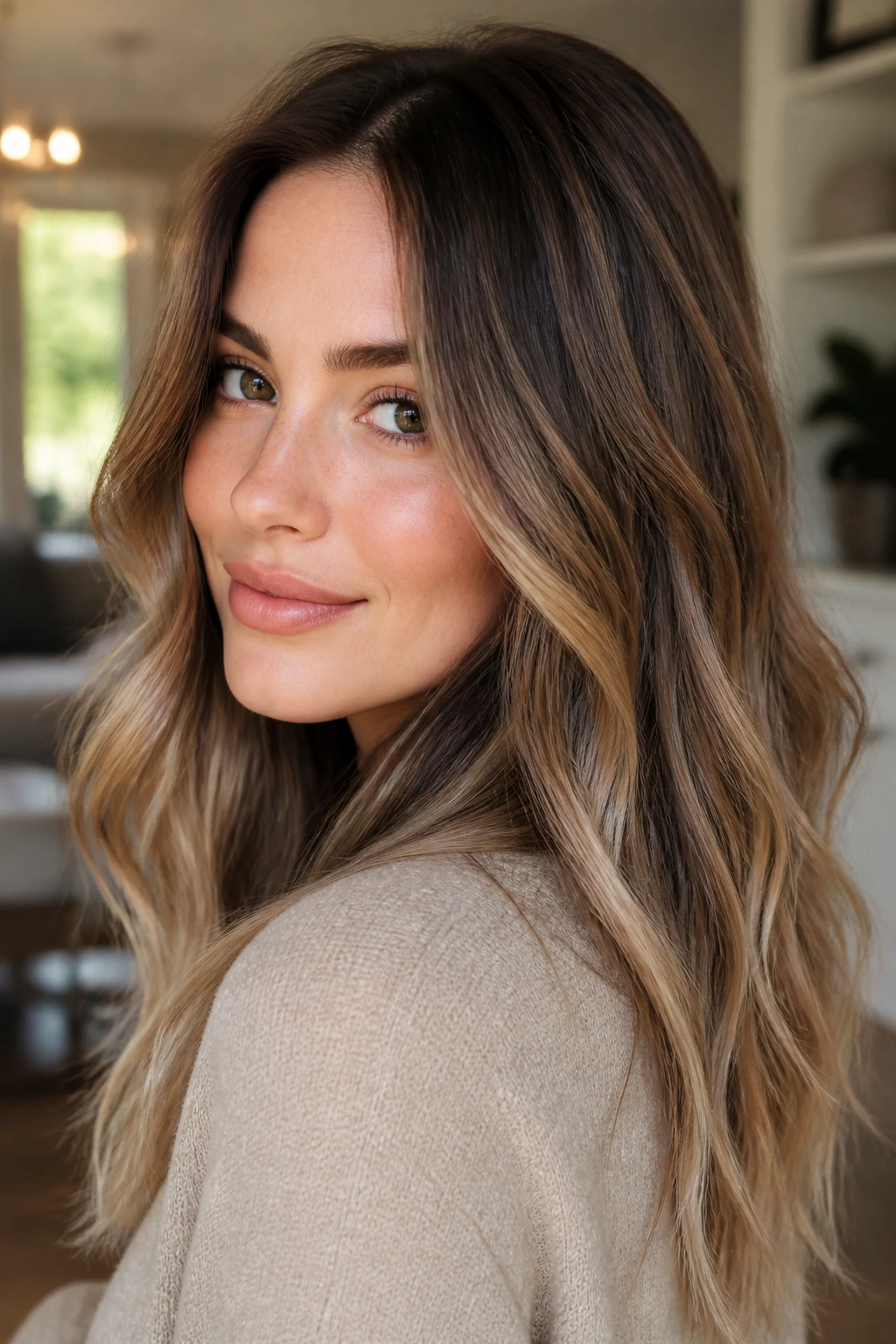
Mushroom bronde is the one I reach for when a client wants soft contrast without obvious blonde. It has that gray-brown, taupe-heavy look that feels expensive in a quiet way, and it’s especially kind to cool skin because it doesn’t fight the face.
The shade usually sits around a medium brown base with soft, earthy lightness painted through the ends. Think mushroom cap, not toast. That difference matters. If the light pieces go too sandy, the whole thing loses its cool edge.
For the most natural version, ask for a root smudge one shade deeper than the mids and a cool glaze over the blonde pieces. The result should look like your hair changed shade in low sunlight, not like you booked a dramatic blonding session. It’s a nice pick for thicker hair because the smoky tones keep the color from looking bulky.
And it’s forgiving. Really forgiving. If you live in a hard-water area or your hair likes to grab warmth, this is one of the better bronde shades because the mushroom tone gives you a little cushion before brass takes over.
3. Cool Beige Bronde for Fair Skin
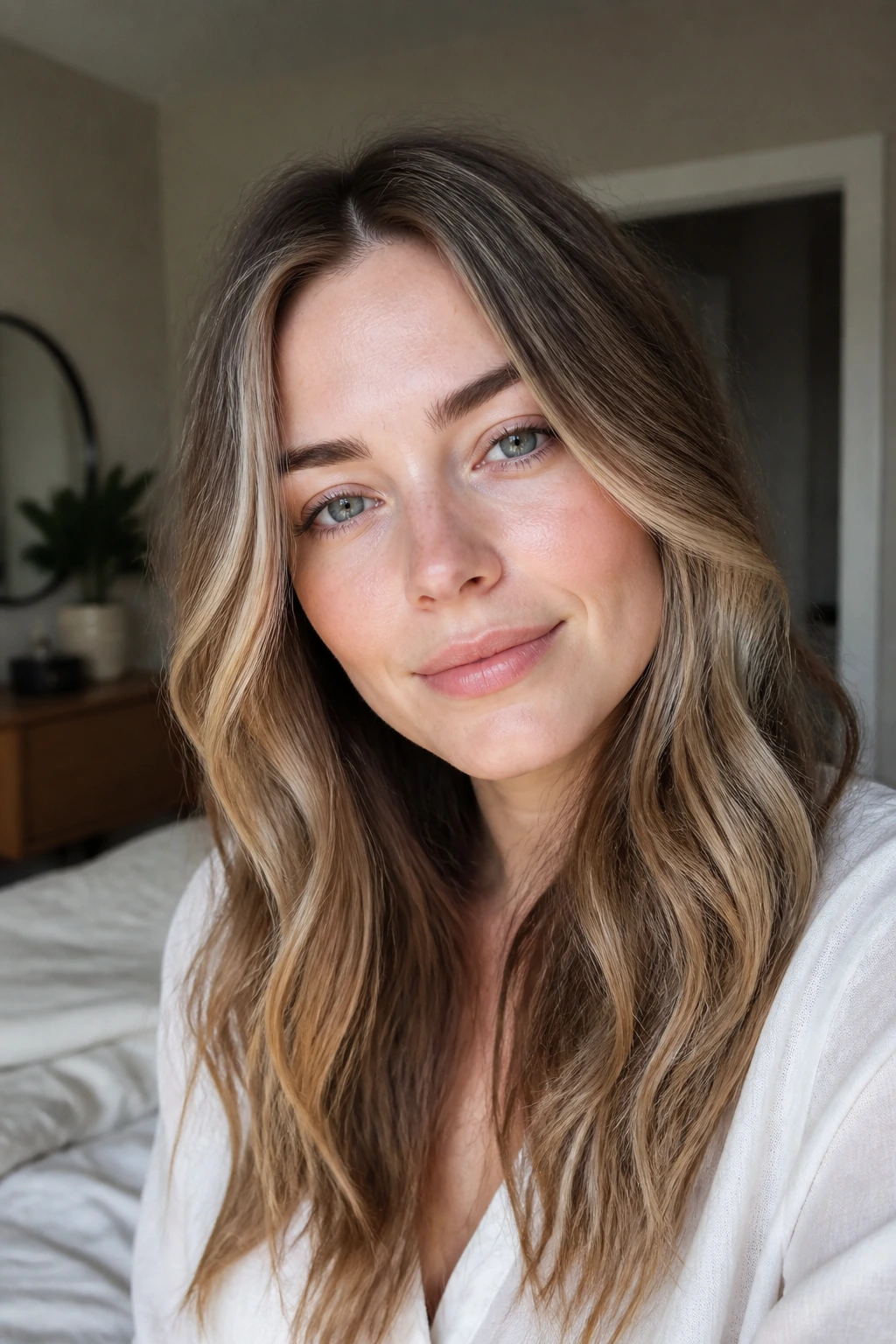
Can bronde look bright on very fair cool skin without going yellow? Yes, if the blonde piece stays beige and the brown base stays soft.
This version is lighter than mushroom bronde, but it still avoids the buttery look that can make pale skin feel a bit washed out. The ideal finish lands somewhere between beige blonde and light brown, with no obvious orange in sight. On fair skin, that balance keeps the hair from overpowering the face.
How to Ask for It
Tell your colorist you want cool beige highlights on a natural brunette base, not warm caramel. A few brighter pieces around the temples help the skin look fresh. The rest can stay muted so the color doesn’t turn stripey.
- Best for: cool fair skin, fine hair, and soft layered cuts
- Good placement: face frame, top layer, and ends
- Styling note: soft bends show the color better than pin-straight hair
- Tone to request: beige, not gold, and definitely not copper
A tiny bit of root shadow helps this shade last longer between appointments. Without it, the lighter pieces can look a little floaty.
4. Smoky Mocha Bronde
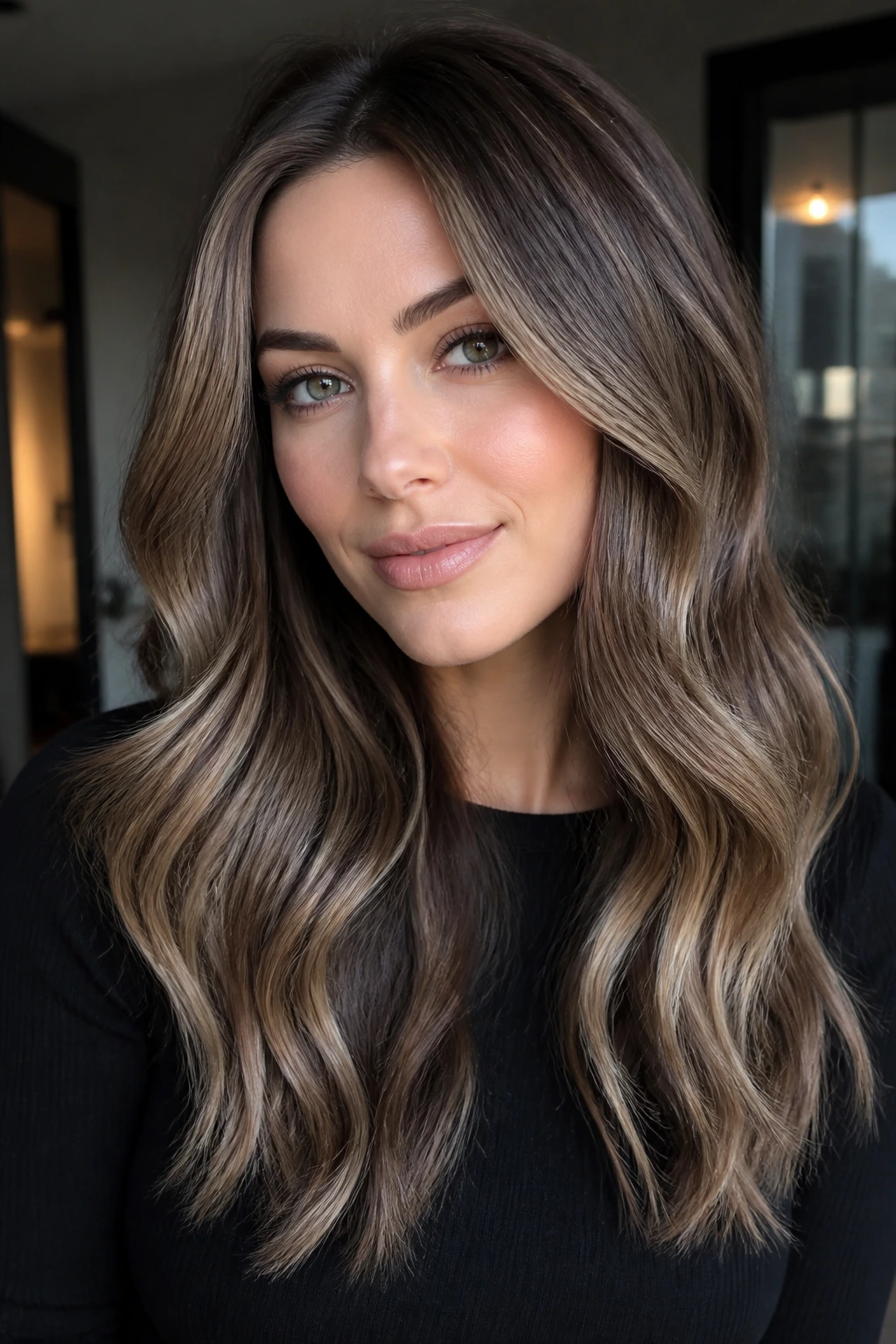
Picture brunette hair after a sheer smoky gloss and a few hand-painted ribbons. That’s smoky mocha bronde, and it’s one of the most wearable options for cool skin if you want depth first and blonde second.
The base sits in mocha territory, but the finish is muted enough that it never crosses into hot chocolate warmth. The lighter pieces are narrow and spaced out, usually through the front and the mid-lengths. That keeps the hair dimensional without making it loud. Good thing, too. Strong highlights on cool skin can sometimes look disconnected.
A demi-permanent glaze is the move here. It gives you that smoky, satin finish that reads polished instead of brassy. This shade is a strong pick for straight hair because the color shift shows clearly from root to end, but it also looks good on waves if you want the ribbons to soften a little.
- What to ask for: mocha base, cool beige ribbons, smoked gloss
- What to skip: golden balayage, copper toner, chunky money pieces
- Best cut pairing: long layers, blunt lob, shoulder-length waves
- Maintenance note: refresh the glaze before the brown starts to look flat
The nice part is that this shade grows out with less drama than a lighter bronde.
5. Taupe Bronde Bob
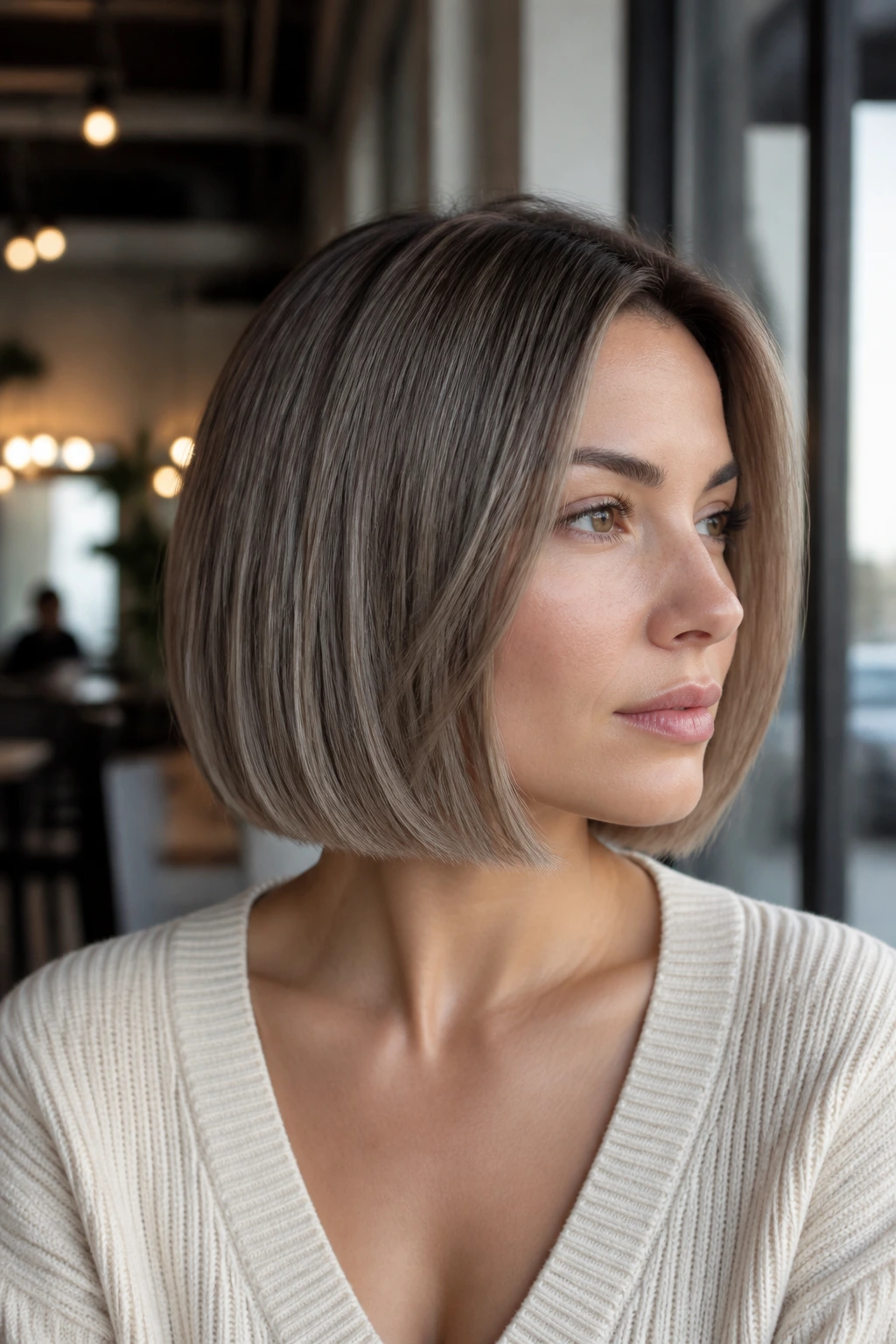
Taupe bronde on a bob looks clean in a way longer hair sometimes can’t manage. Shorter cuts show tone more clearly, and taupe keeps the whole look crisp instead of fuzzy.
The color usually sits between soft brown and muted blonde, with a cool gray-beige cast that works especially well on blunt bobs or Italian-style cuts. Because the hair is shorter, you do not need a lot of contrast. A few delicate highlights are enough. Too many and the shape starts to blur.
I like this shade on cool skin because it behaves almost like tailored clothing. The lines are neat. The color feels deliberate. If your face is pale or pink-toned, taupe bronde won’t drag warmth across the cheeks the way honey brown can.
A subtle root shadow makes the bob look thicker at the base, which is a nice bonus if your hair is fine. Keep the ends slightly brighter than the crown and the cut gets a little swing every time you move your head.
The result is understated, but not boring. And that’s a hard line to walk.
6. Iced Chestnut Bronde
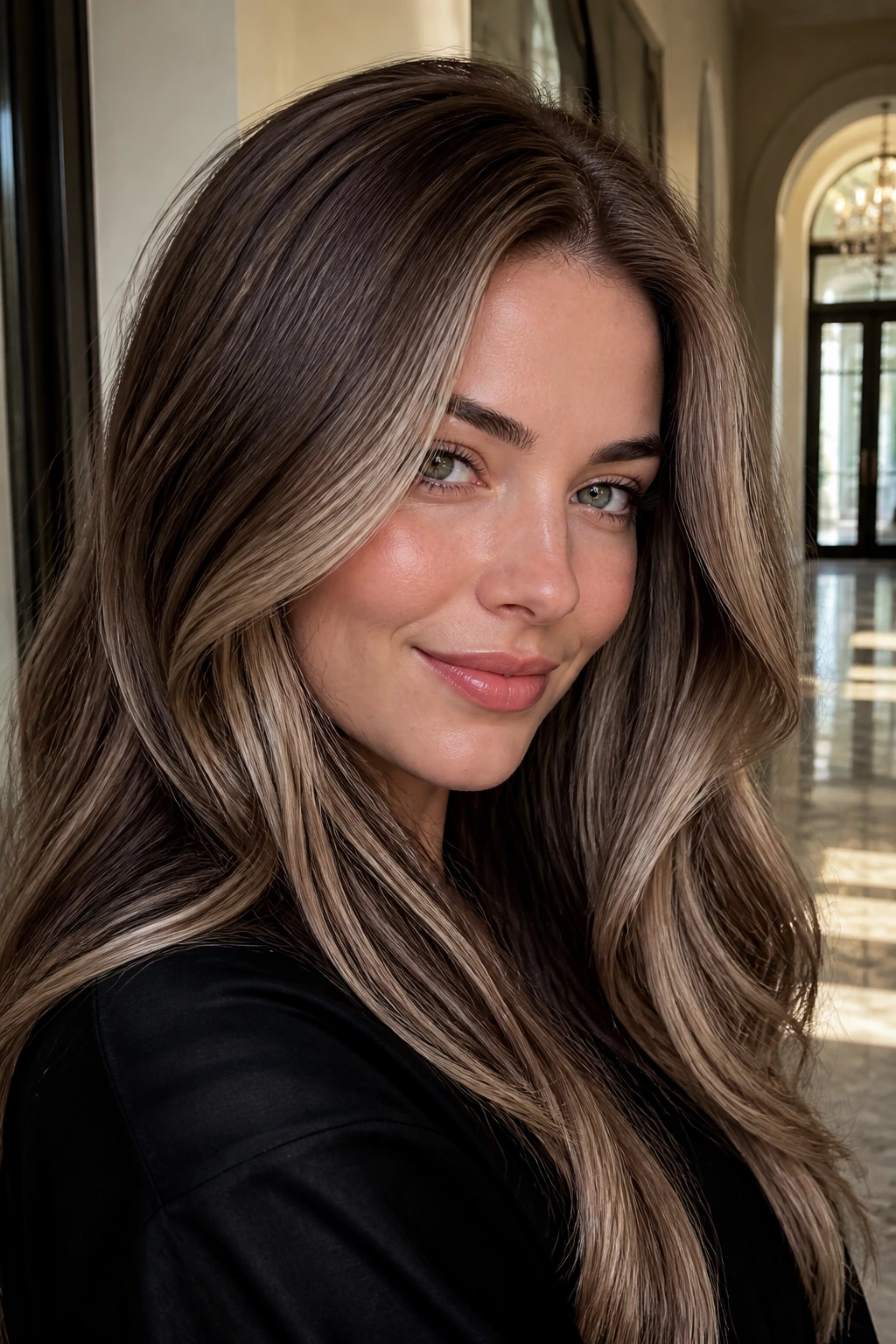
Unlike classic chestnut, which can drift red or copper, iced chestnut stays cool by pulling the warmth back with a pale ash glaze. That tiny correction changes the whole mood of the shade.
This is a good choice if you like brunette depth but want something a little lighter than deep espresso. The chestnut base keeps the color rich, while the “iced” part comes from a cool toner over the lighter strands. The blonde pieces should feel quiet, almost frosted, not sunny.
Who it suits best: cool skin that can handle some depth without looking heavy. If your eyes are dark and your brows are naturally strong, iced chestnut gives you enough contrast to keep the face awake. If your skin is very fair, just keep the light pieces close to the front so the color doesn’t sit too dark overall.
Ask for a chestnut brunette base with ash-beige dimension and a gloss that leans violet or blue-violet. That helps keep the red out of the hair. It’s also one of the easier bronde looks to wear when you don’t want to babysit your color every two weeks.
7. Pearl-Lit Brunette Bronde
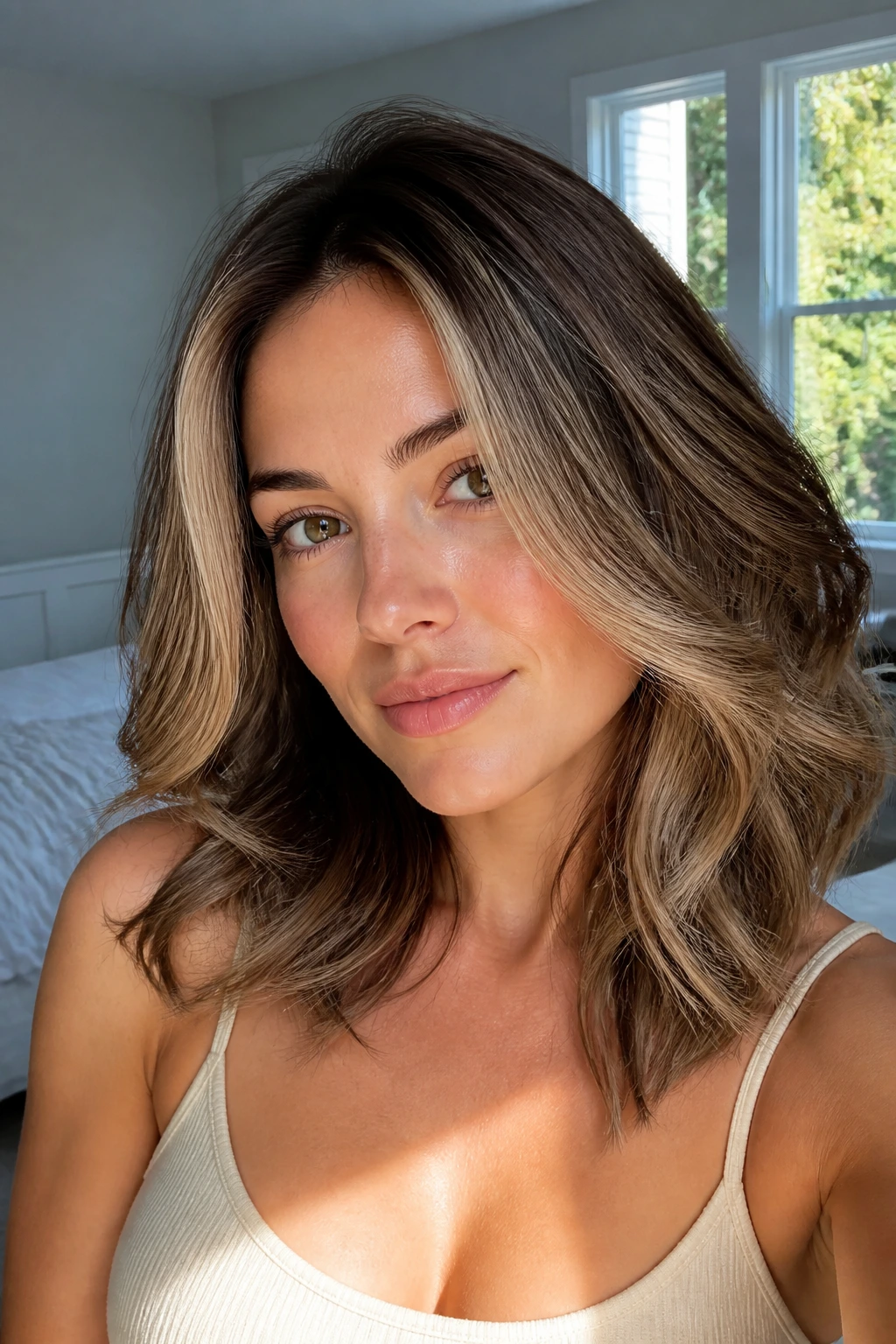
Pearl is not silver, and that matters here. Pearl-lit bronde has a soft, cool shimmer that sits between beige and pale ash, which makes it a smart option for cool undertones that need light without brass.
What Makes the Pearl Finish Different
The shine is the point. Pearl tones reflect light in a softer way than gold, so the hair looks polished even when it’s only lightly highlighted. On cool skin, that reflective quality keeps the face from looking flat next to darker brunette sections.
I’d use this on layered mid-length hair, especially if the cut has some movement around the face. The light pieces can start as babylights near the part and widen a touch toward the ends. That creates a veil effect instead of visible stripes.
- Best for: cool undertones, soft layers, and fine-to-medium hair
- Ask for: pearl beige toner, thin highlights, low-contrast blend
- Good styling move: loose blowout or soft bends
- Watch for: over-toning, which can make the blonde look dull and gray
My favorite part: pearl-bronde looks expensive even when the grow-out is a little messy.
8. Sandy Ash Balayage
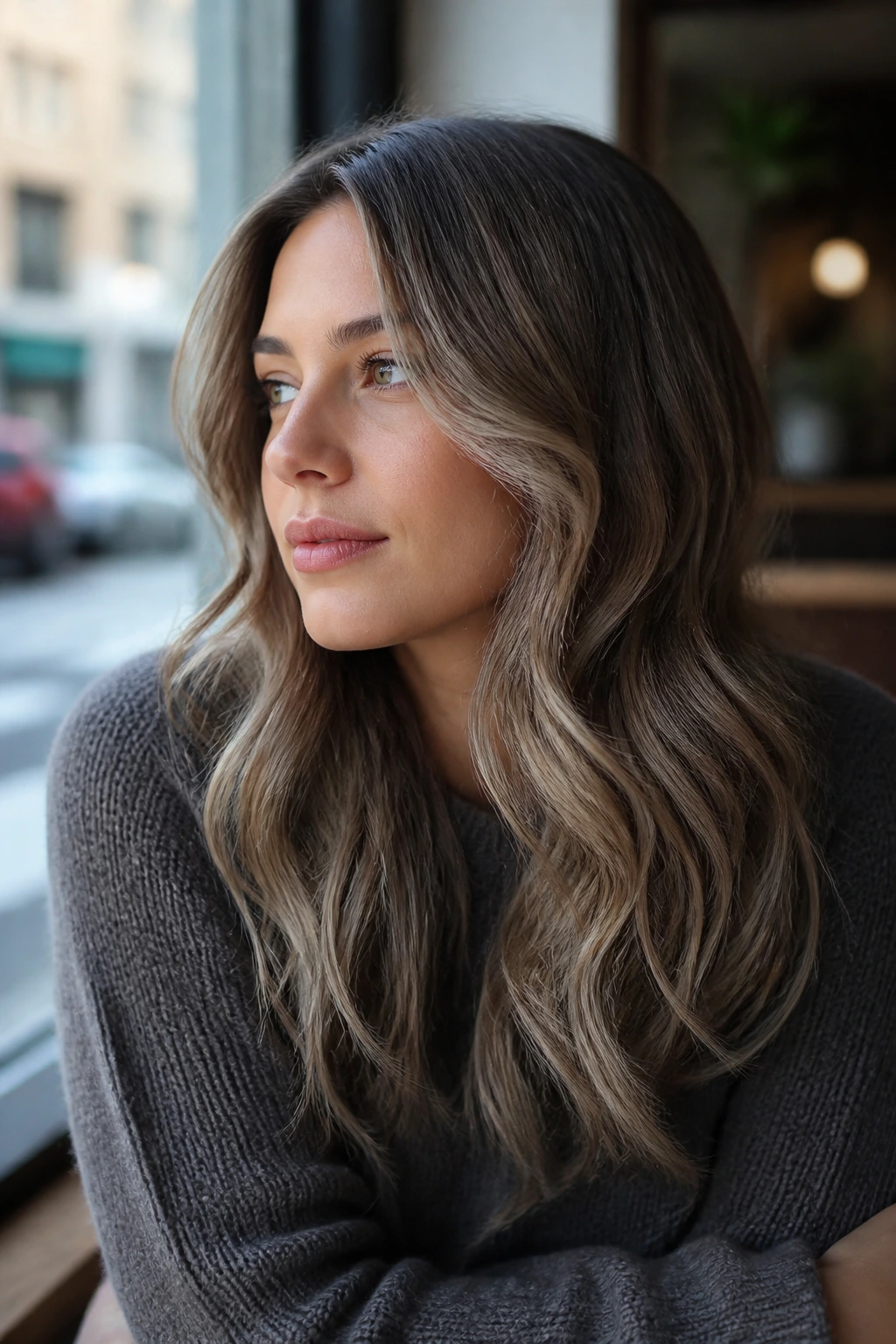
Sandy doesn’t have to mean warm. If the sand tone leans ash instead of gold, the result works beautifully for cool skin and never tips into beachy-orange territory.
This version usually starts with a medium brunette base and melts into soft sandy pieces that have a cool edge. The trick is in the toner. You want a sandy shade that still reads muted, almost dusty, with no yellow cast. That keeps the look relaxed and wearable.
This is a smart option if your hair has a natural wave. The balayage pieces show up in bends and curves, which keeps the color from looking flat. On straight hair, it reads smoother and a little sleeker. Either way, the cool tone helps the face stay calm.
One thing I’d avoid: bright face-framing streaks that are too light. They can pull attention away from the skin instead of helping it. The better move is a gradual lift from mid-length to end, with the lightest bits tucked under the top layer. That gives you brightness when the hair moves, which is where this shade shines.
9. Beige-to-Mink Bronde Melt
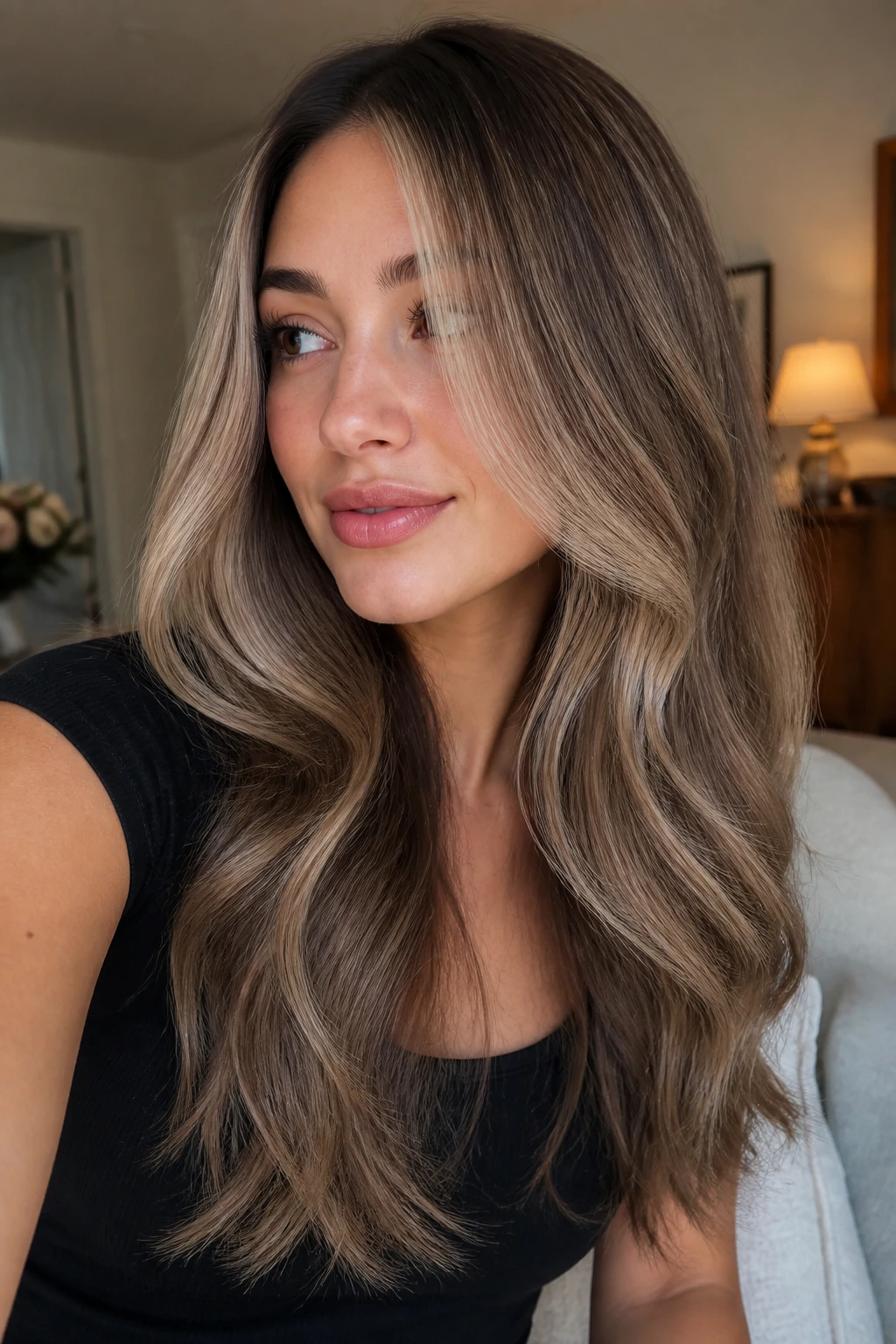
Why does this work so well on cool skin? Because the color doesn’t jump. It slides.
Beige-to-mink bronde starts with a soft beige mid-tone near the top and shifts into mink, which is that cool brown-gray shade that sits just above ash. The gradient keeps the hair from looking blocky, and the cooler end tone helps the whole style feel polished instead of sun-kissed in the usual warm way.
How to Ask for It
Ask for a beige melt through the mids with a deeper mink finish at the ends. The mid-lengths should stay soft enough to brighten the face, while the ends hold the shape of the cut. If you want a gentler version, keep the contrast narrow. If you like a little drama, let the ends go a shade darker.
- Best for: long layers, collarbone cuts, and medium-density hair
- Tone family: beige, taupe, mink, ash
- Maintenance: a gloss every 6 weeks keeps the transition clean
- Styling tip: curl the ends away from the face to show the color shift
This is one of those shades that looks effortless without actually being lazy. There’s work in the blend. You can see it.
10. Champagne Beige Bronde
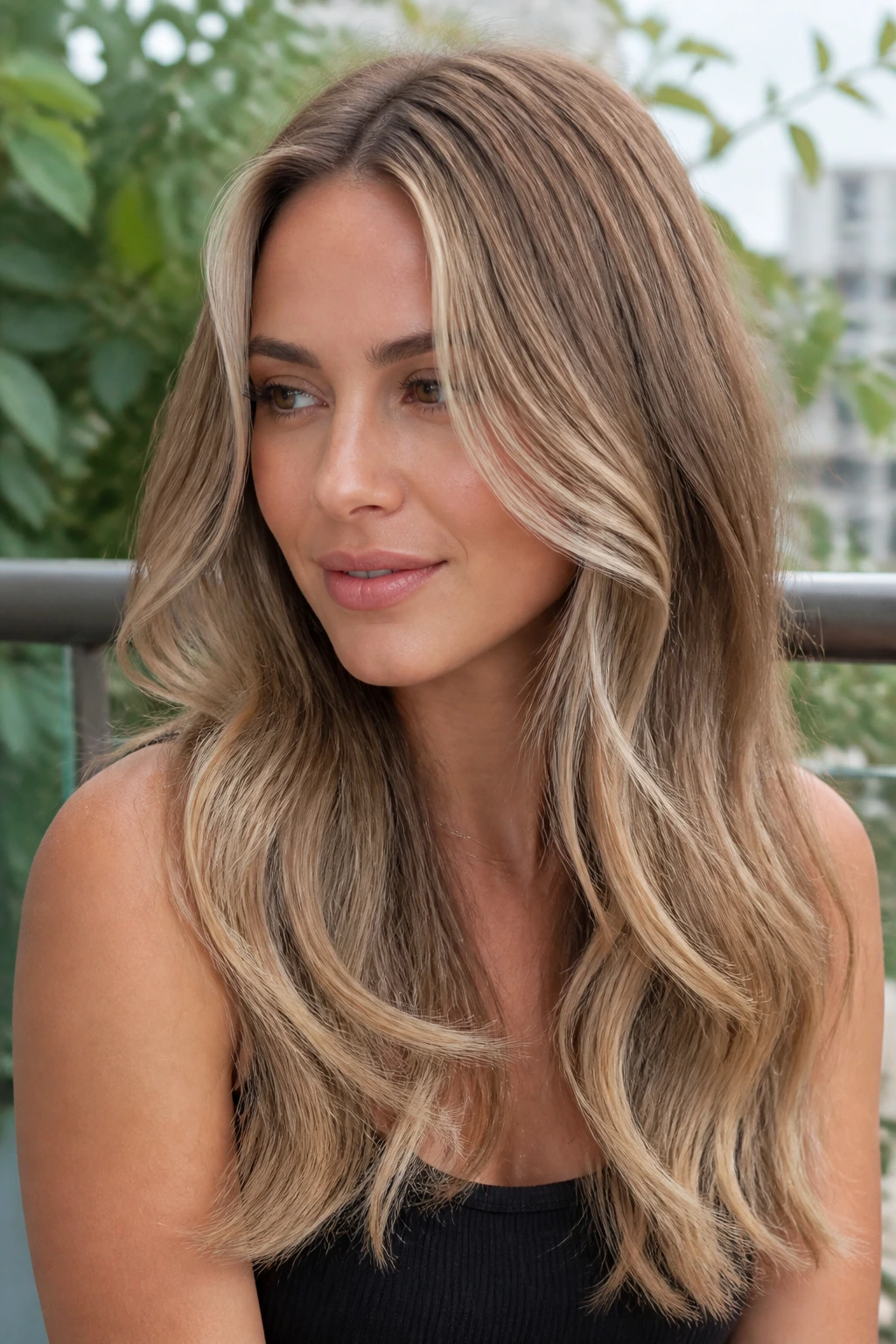
A lot of people hear “champagne” and think warm. Not here. The cooler version has a pale, crisp brightness that sits closer to beige than gold, and it can look lovely on cool skin when the base is kept brunette.
The shape of the color matters. Champagne beige bronde usually has brighter pieces around the front and a softer beige wash through the ends. That gives the hair a little sparkle without making it look blonded out. The effect is especially nice on long layers, where the lighter pieces move and catch the eye in a very natural way.
A few practical notes. Keep the highlights fine at the crown so the scalp doesn’t look patchy. Let the face frame be a touch lighter, but not icy white. And ask for a gloss that takes the edge off any yellow. That matters more than people think.
- Best on: layered cuts, smooth blowouts, and loose waves
- Best skin match: fair to medium cool undertones
- Ask for: champagne-beige toner, thin front pieces, brunette root depth
- Avoid: gold foil highlights and orange-leaning base color
This shade has enough light to feel fresh, but not so much that it fights your complexion.
11. Espresso Bronde with Silver Face Frame
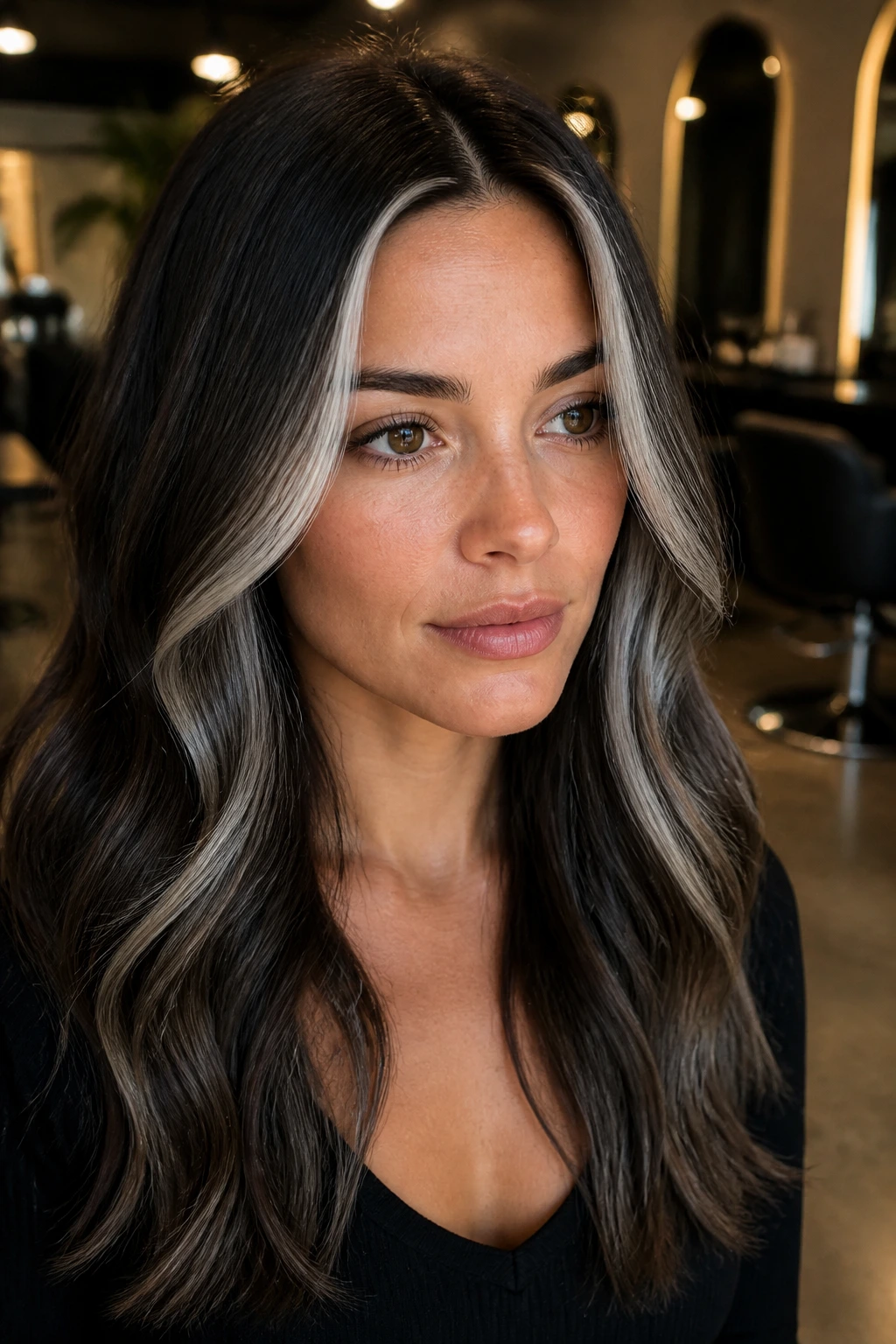
Espresso bronde is for the person who wants contrast and does not want to go full blonde. The base stays deep and glossy, then a silver-toned face frame gives the style a sharp little lift right where the eyes sit.
The silver piece should be narrow, not chunky. That’s the part people get wrong. A thick silver streak can look costume-like fast, especially if the rest of the hair is rich espresso. A slim, cool-toned frame around the face feels deliberate and gives cool skin a clean highlight.
This shade does a lot for dark brows. It connects the brows to the hair without making the skin look yellow or sallow. If your hair is naturally very dark, a little blue-black or espresso root color keeps the bronde side from turning muddy.
The upkeep is real. Silver and pale ash fade faster than deeper brown, so this is a better choice if you don’t mind gloss appointments. Still, the payoff is worth it if you like a little edge. It looks crisp in a ponytail, polished in a blowout, and especially good with a center part.
12. Smoke-Caramel Bronde
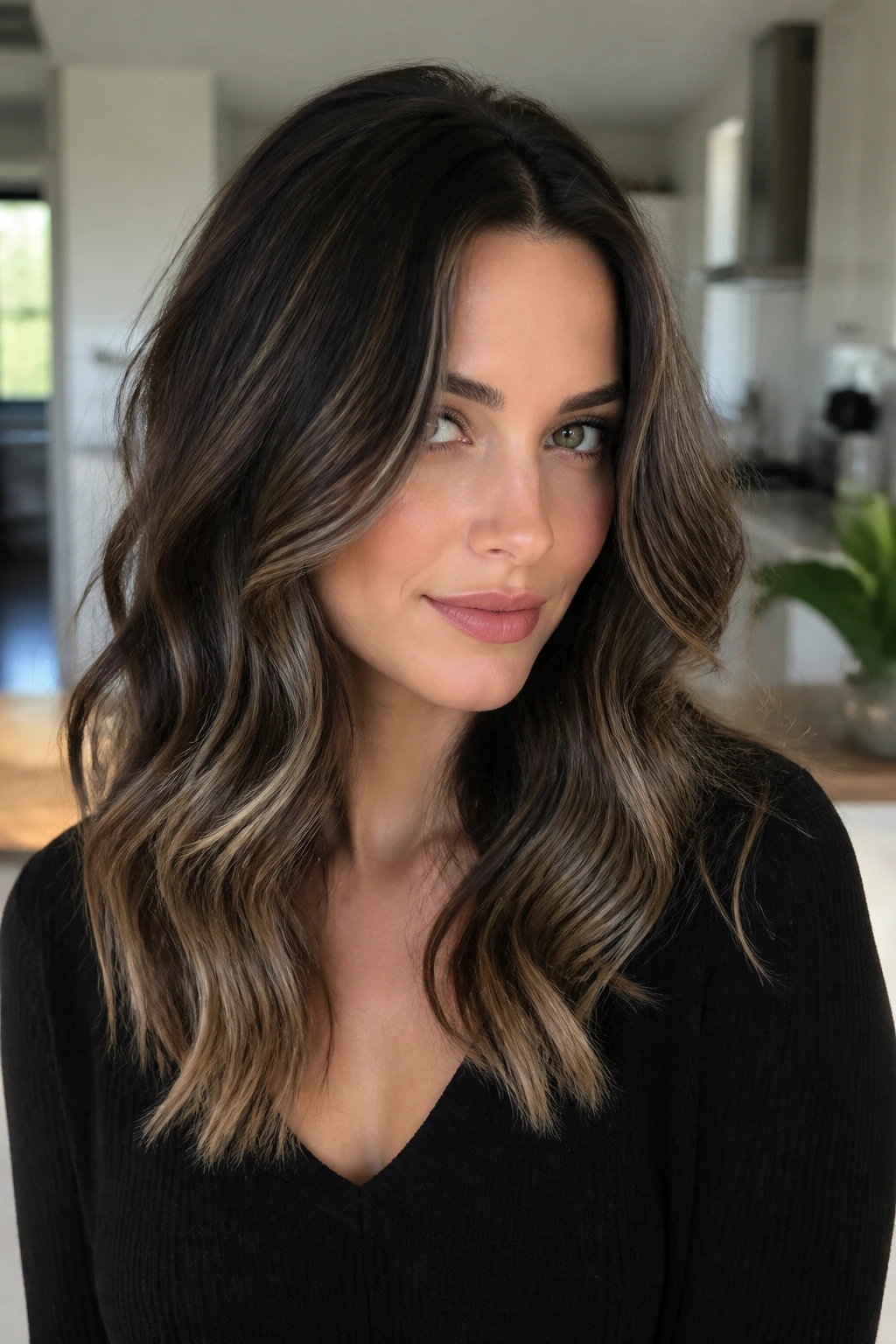
Smoke-caramel bronde is what happens when caramel gets toned down enough to stop arguing with cool skin. The warmth is still there, but it’s softened with ash so it reads more brown than gold.
Unlike classic caramel highlights, which can turn orange on some hair, this version keeps a muted finish. The lighter sections sit inside the brown, not on top of it. That means you get dimension without the obvious stripe effect that can look harsh near the face.
Who should wear it? Dark brunettes who want a little lift but don’t want to leave their comfort zone. It’s also a smart pick if your skin has pink undertones and you’ve been burned by warm balayage before. The smoke keeps the color quiet.
Ask your colorist for cool caramel ribbons over a deep brunette base and a beige-ash gloss at the end. If the hair is long, let the caramel concentrate through the middle third and fade softly toward the tips. That keeps it modern. Too much warmth at the ends and the whole thing tips back into copper.
This is one of the easier ways to make bronde feel wearable rather than flashy.
13. Pebbled Ash Brown Bronde
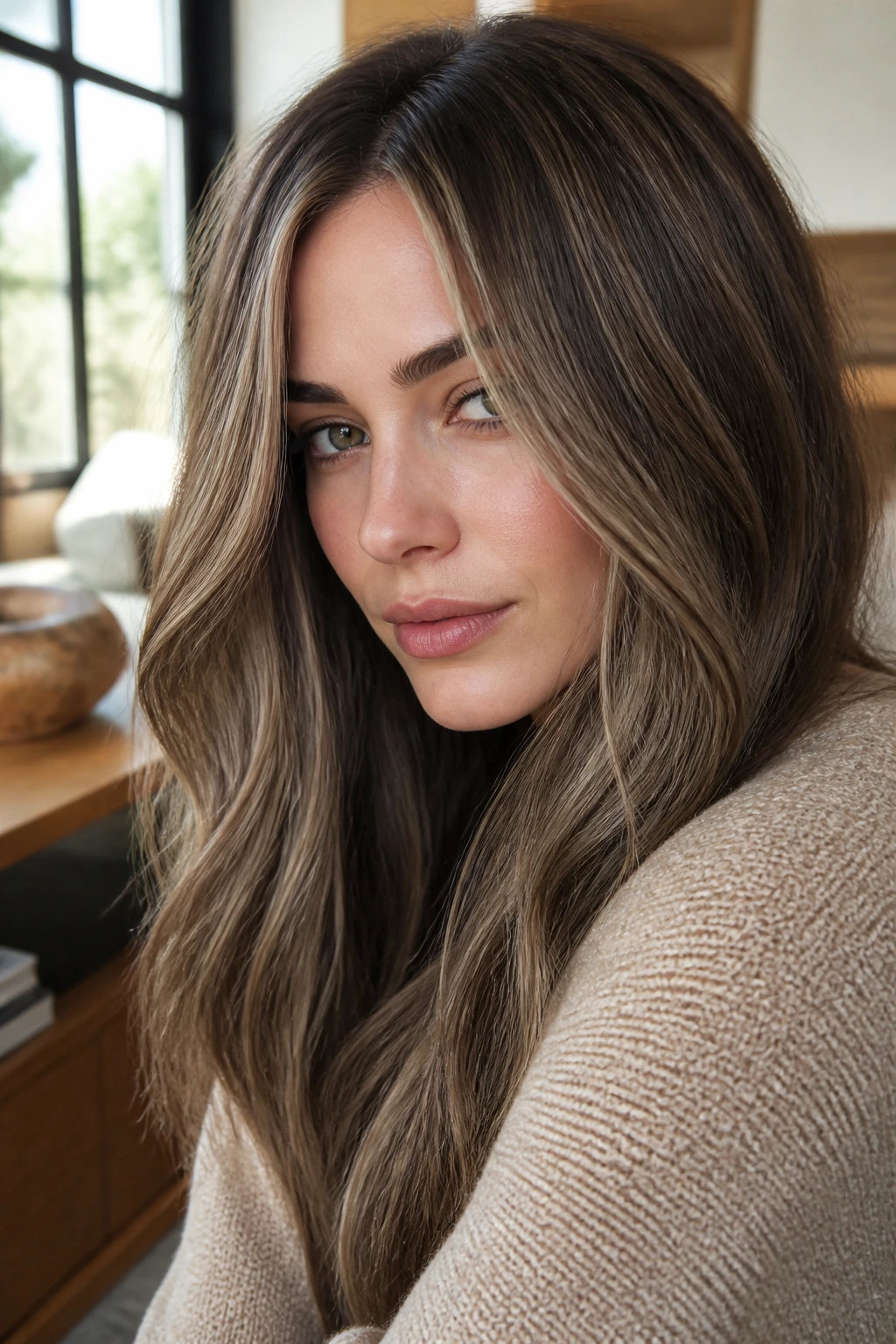
Pebbled ash brown bronde gets its name from the scattered, stone-like placement of the lighter pieces. The color isn’t one flat wash. It has tiny variations that keep the surface moving when the light hits it.
What the Texture Should Look Like
The ideal finish has a cool brown base with micro-highlighted pieces that sit close to the tone of natural stone. Think ash, beige, and a whisper of slate, all working together. That sounds fussy, but on the head it reads calm and natural.
This is a nice option if you hate obvious highlights. The pieces should be thin enough that they only show when the hair shifts. On cool skin, that understated approach keeps the face from getting overwhelmed by brightness.
- Best for: straight hair, long bobs, and fine texture
- Color family: ash brown, beige, slate, soft taupe
- Why it works: tiny tonal shifts create movement without strong contrast
- Styling note: a smooth bend at the ends shows the pebbling effect
Tiny tip: ask for the lightest pieces to stay away from the very top layer if your hair is fine, or the contrast will look harsher than you want.
14. Nordic Mocha Bronde
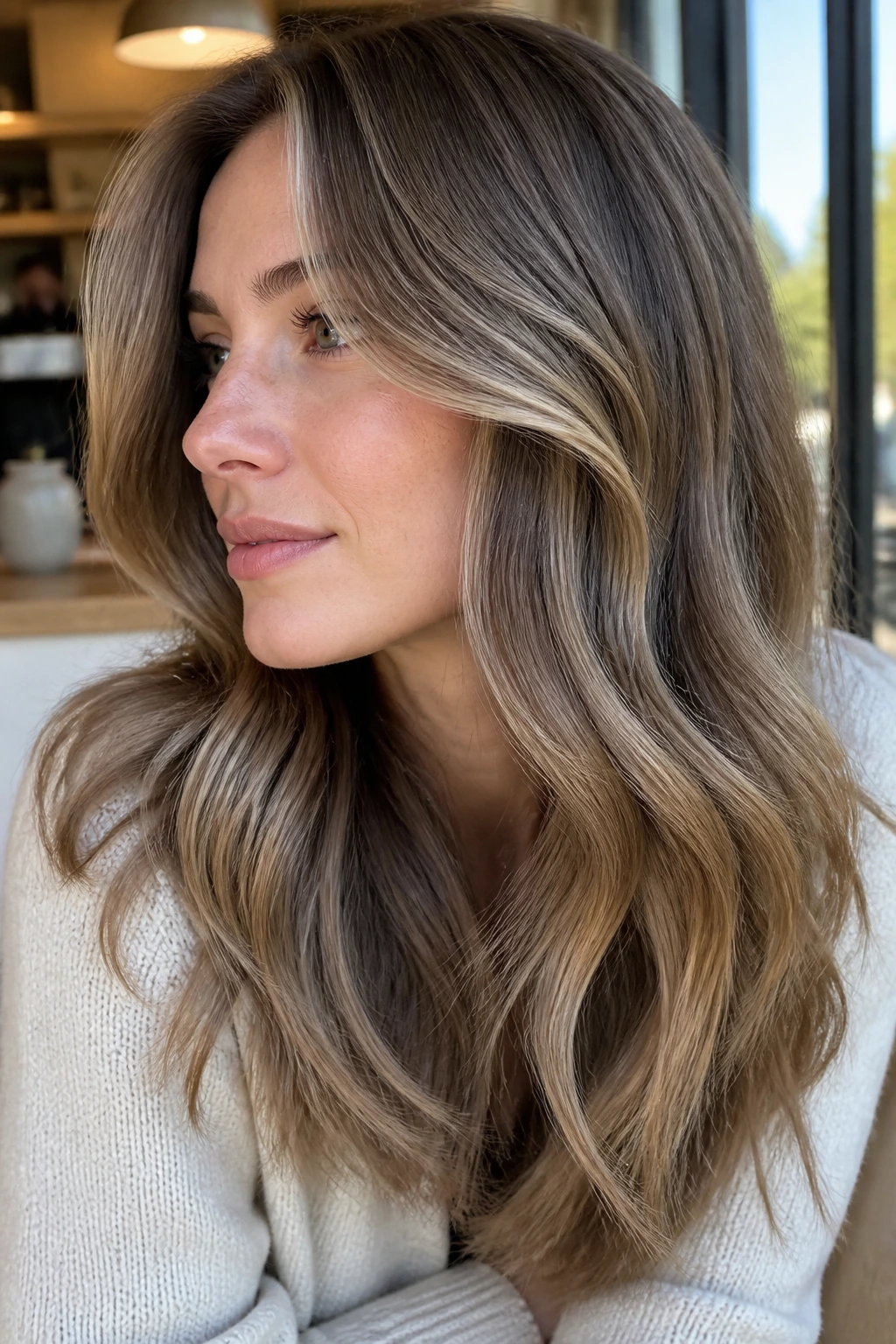
Nordic mocha is cooler than it sounds. The mocha base stays creamy and dark, but the blonde dimension gets pushed toward pale beige and ash so the whole look stays clean on cool skin.
This one works especially well if you want a soft Scandinavian kind of finish without going blonde-blonde. It has lightness, but the lightness is controlled. On a client with cool undertones, that makes the complexion look rested rather than washed out.
Use this shade when the goal is brightness through the mids and ends, not around the whole head. A subtle root shadow helps the mocha look richer. Then the beige pieces can sit on top like a veil. If your hair is thick, the contrast helps break up the mass of color. If it’s fine, keep the ribbons narrow so the hair still looks full.
The best part is how easy it is to style. You can wear it straight, curled, or air-dried and the color still reads. It has enough softness for daily life and enough structure to look considered.
15. Vanilla Beige Bronde on Loose Waves
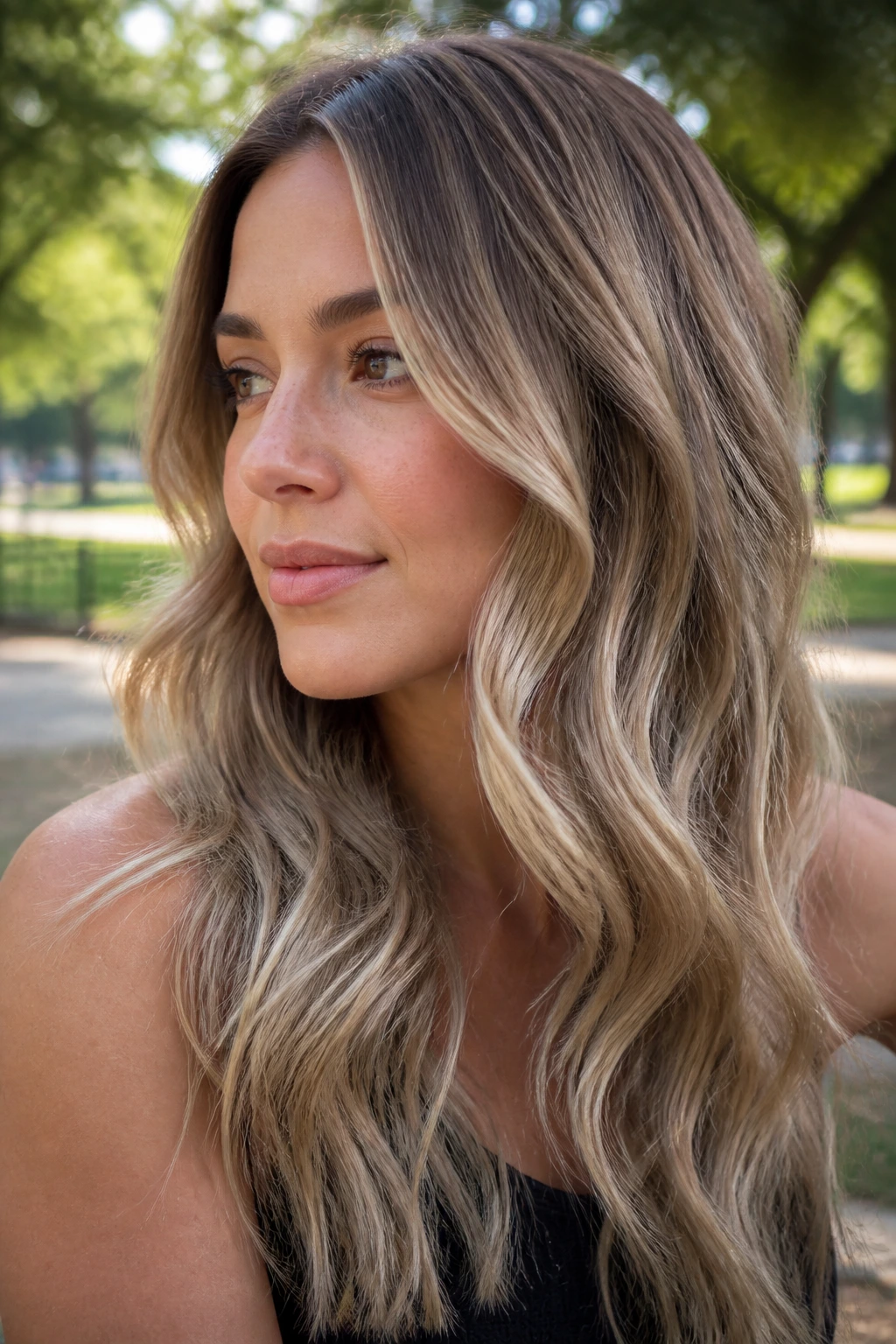
Can vanilla beige work on cool skin? Yes, if it stays pale, creamy, and restrained — not buttery.
This version is all about lightness without going yellow. The brunette base should still show through, especially at the roots, so the lighter pieces feel woven in rather than pasted on. Loose waves help because they break the color into soft pieces and keep the blonde from looking flat.
How to Wear It
Ask for vanilla-beige babylights through the top and a cooler gloss on the ends. If the stylist starts talking about honey, steer them back. You want pale beige with a cool finish. A little face frame helps, but keep it soft. Strong front streaks can make the shade look too warm.
- Best on: wavy hair, shoulder-length cuts, and soft layers
- Tone to request: vanilla beige, not warm cream
- Styling trick: a 1-inch curling iron gives enough bend to show the blend
- Maintenance: use a blue or purple toning shampoo sparingly
The color has a breezy feel, but it still needs a disciplined hand to stay cool.
16. Mulberry Chestnut Bronde
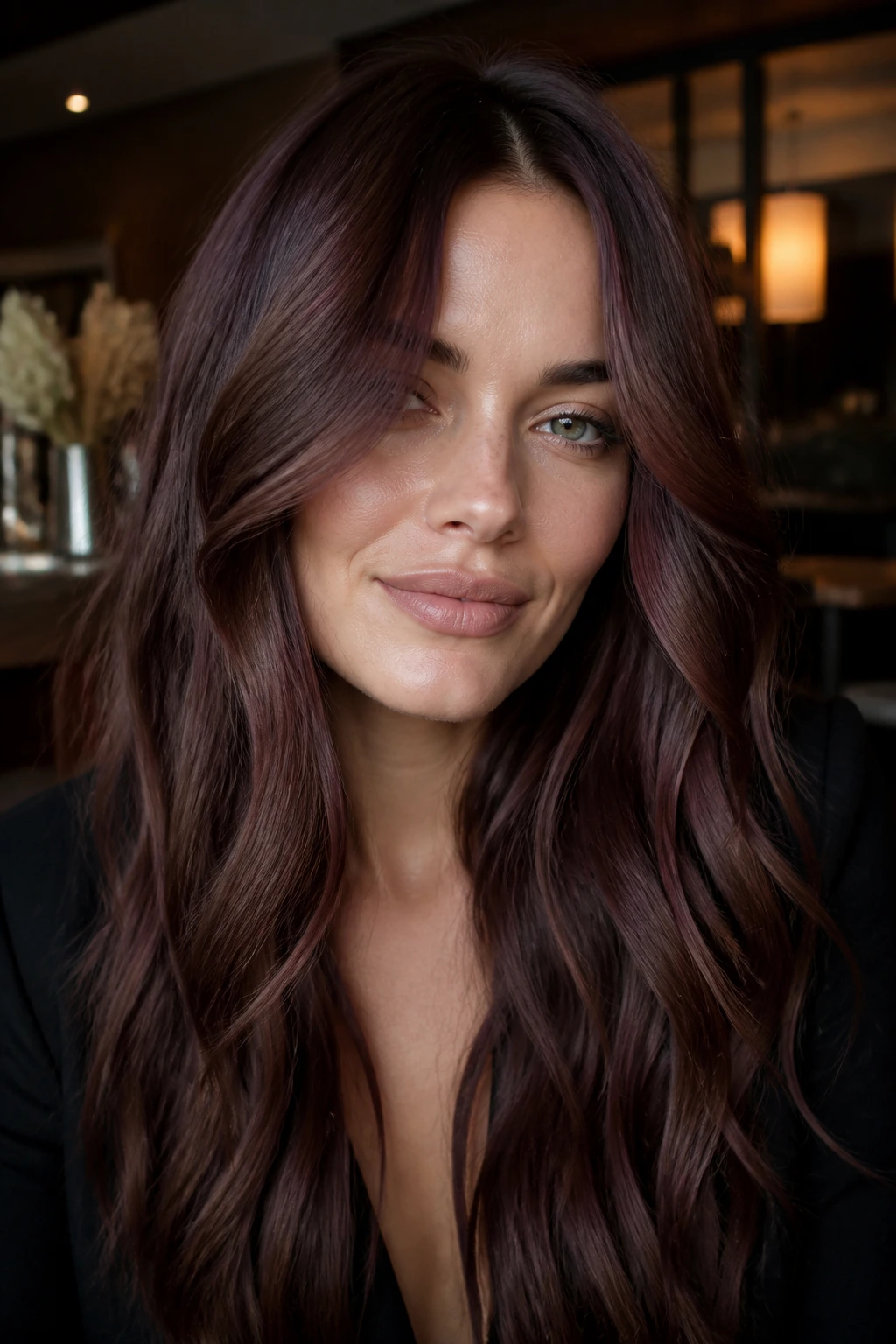
A chestnut base with a faint mulberry note sounds unusual, and that’s exactly why it works. Cool skin often looks better when brunette color has a little berry or plum shadow instead of orange warmth.
The hair should still read as brown first. The mulberry is subtle, tucked into the deeper pieces and the lowlights. It gives the bronde a richer mood and helps the skin look less pink, which is a nice side effect if your face flushes easily. If the berry tone is too obvious, the whole thing can drift into red. Keep it whisper-level.
This color looks especially good in low light, which is where a lot of hair color lives, honestly. In bright sun, you may see the chestnut side more clearly. Indoors, the cooler plum note takes over and softens the face. That shift is part of the charm.
- Best for: deep cool skin tones, dark brows, and medium-to-thick hair
- Ask for: chestnut base, muted plum lowlights, ash-beige ends
- Avoid: cherry red, copper, or burgundy that leans warm
- Finish: a soft gloss, not a shiny glass effect
It’s a little moodier than the other ideas here, and I like that.
17. Graphite Bronde With Micro Highlights
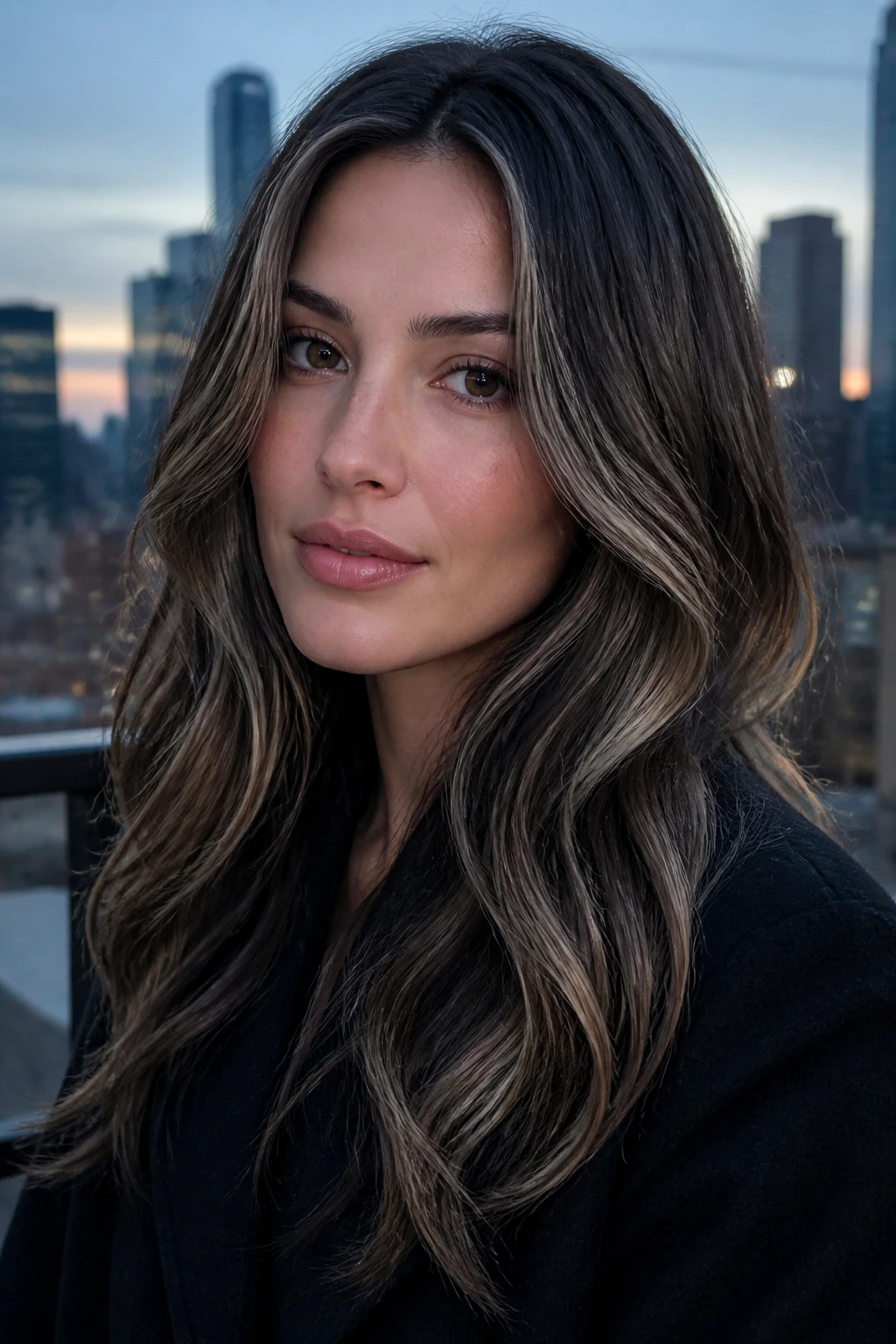
Graphite bronde is for someone who wants cool hair with a sharper line to it. The base is dark, close to charcoal brunette, and the blonde pieces are tiny enough to look like reflected light rather than obvious highlights.
That’s the difference between this and heavier bronde looks. You are not trying to create a sunny effect. You are trying to create shimmer. On cool skin, that can be a very strong move because graphite keeps the complexion looking clean and slightly sculpted.
Micro highlights matter here. Thick pieces would break the mood. Thin ones, placed around the crown and just under the surface, give the hair depth from multiple angles. This is one of the best choices for straight or slightly wavy hair because the texture doesn’t hide the detail.
If your hair is fine, graphite bronde can make it look denser. The darker base gives the illusion of fullness, while the tiny light pieces stop it from going flat. It’s understated in the best way. Not soft, not flashy. Just smart.
18. Walnut Bronde With Icy Ends
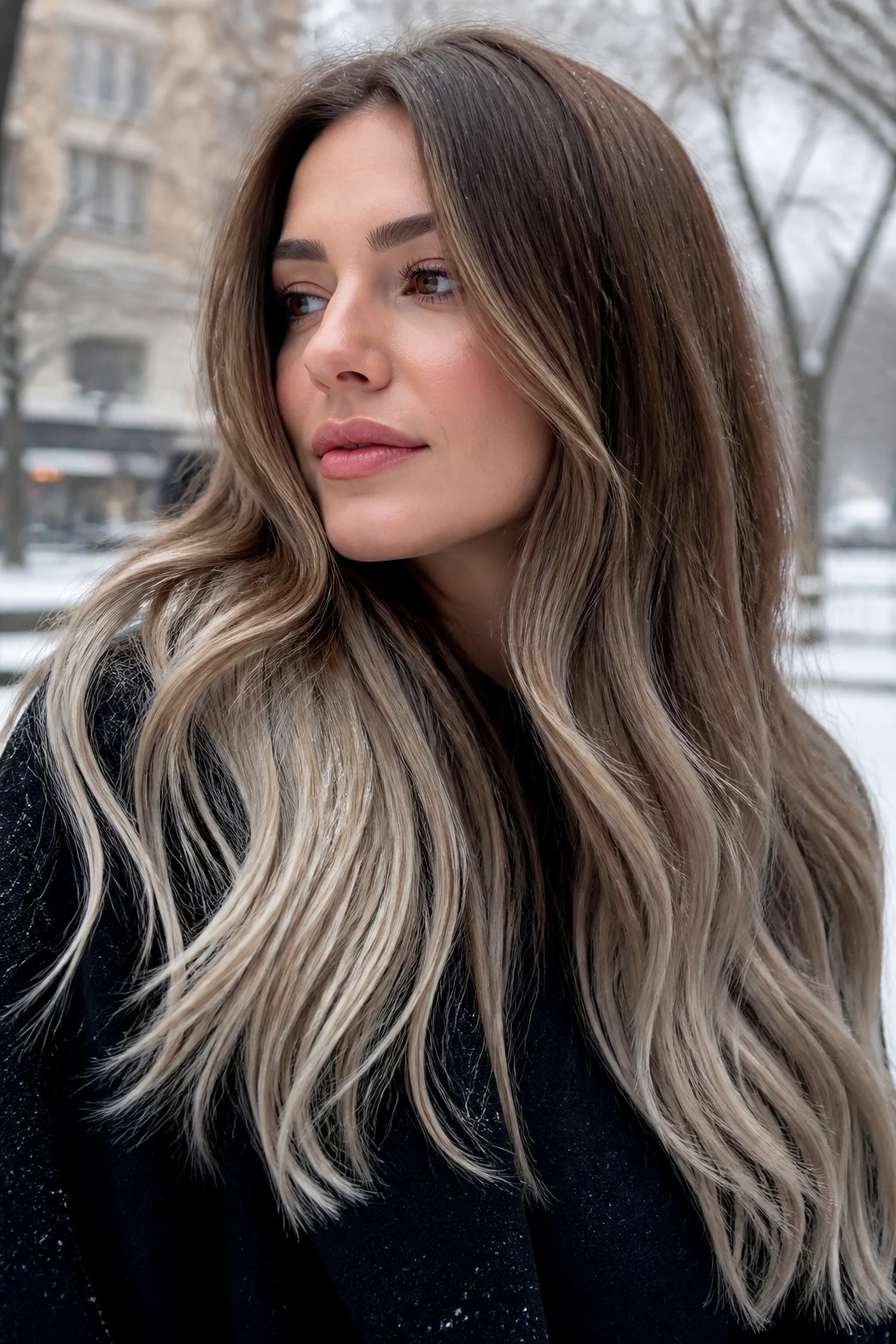
Unlike a standard ombré, walnut bronde with icy ends keeps the shift gentle and cool instead of dramatic. The root and mid-lengths stay walnut brown, then the ends pick up a pale icy beige that keeps the whole cut from looking heavy.
This is a strong pick if your hair is long and you want movement without lots of root touch-ups. The walnut base gives depth near the scalp, which means the grow-out is easy to live with. The icy ends bring in the blonde side of bronde without pushing into yellow.
Who it suits best: cool skin, layered lengths, and hair that needs a little visual lift at the bottom. If the ends are too white, the look gets harsh. If they’re too gold, the whole point falls apart. Aim for a soft frost, like the ends were lightened by air rather than dye.
A center part can show the transition nicely, but side-swept styling works too. I’d keep the face frame darker than the ends so the color has a grounded feel. That keeps the eye moving downward, which is flattering on long hair.
19. Smoke-and-Beige Bronde on Curly Hair
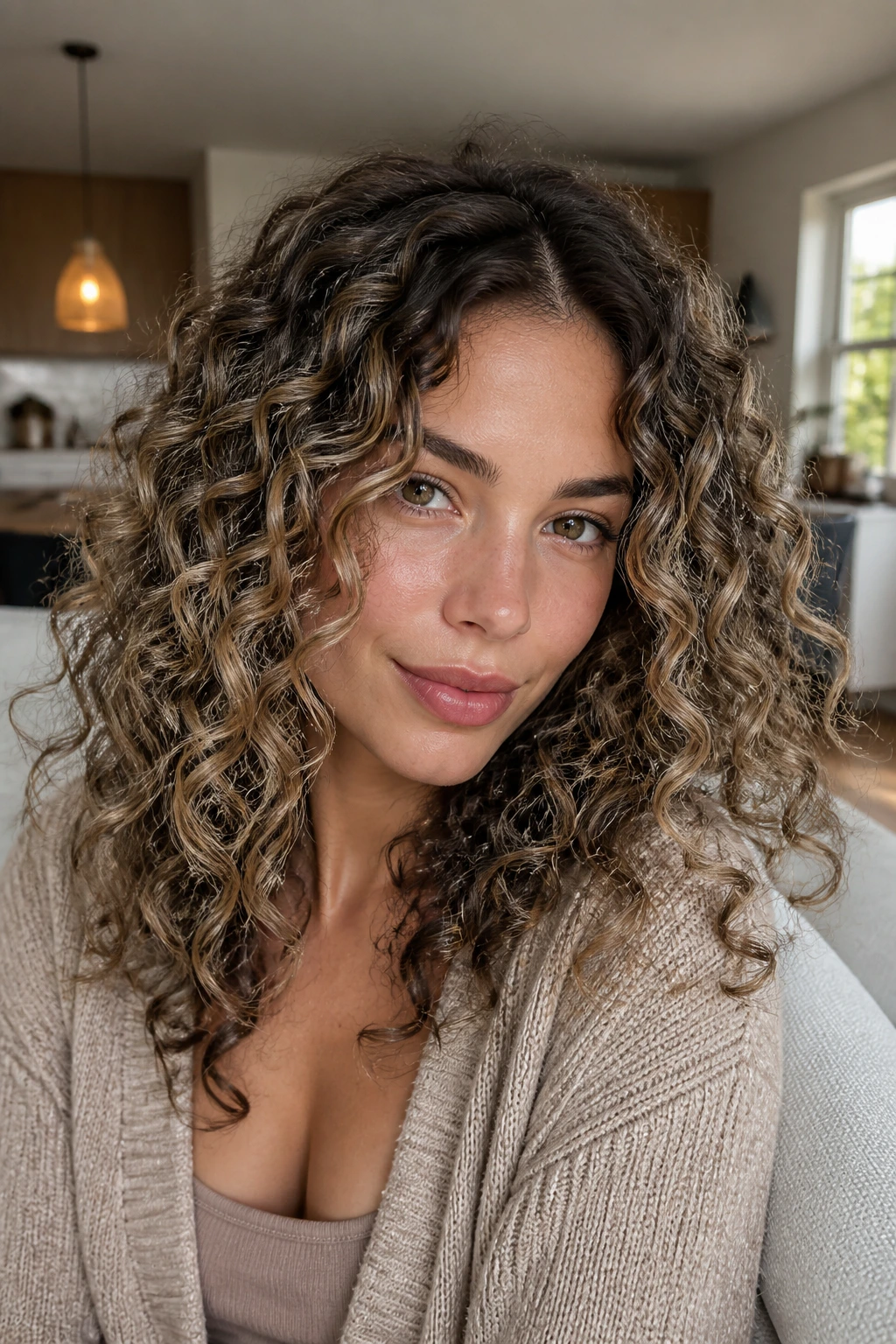
Curls change everything. They widen the color, blur the lines, and make warm tones show faster than straight hair does, so cool skin needs a bronde placement that stays soft and controlled.
Why Curl Pattern Matters
A smoke-and-beige bronde works because the cool pieces sit around the curl pattern instead of slicing through it. That keeps the shape intact. The color should be placed where the curl opens, usually around the face, the top layer, and the outer bends of the hair.
For curly hair, I’d keep the brunette base rich and use beige highlights that lean ash, not gold. The light pieces should look like they belong to the curl, not like they were painted on top after the fact. That gives you movement without frizzing out the whole effect.
- Best for: loose curls, ringlets, and coil patterns with visible definition
- Placement: outer curve, crown, and face frame
- Tone to request: smoked beige, ash gloss, soft root depth
- Styling note: curl cream and diffusing help the color read cleanly
My opinion: this is one of the most underrated cool-toned bronde ideas because curls can make soft color look richer than straight hair ever will.
20. Frosted Cocoa Bronde for Deep Cool Skin Tones
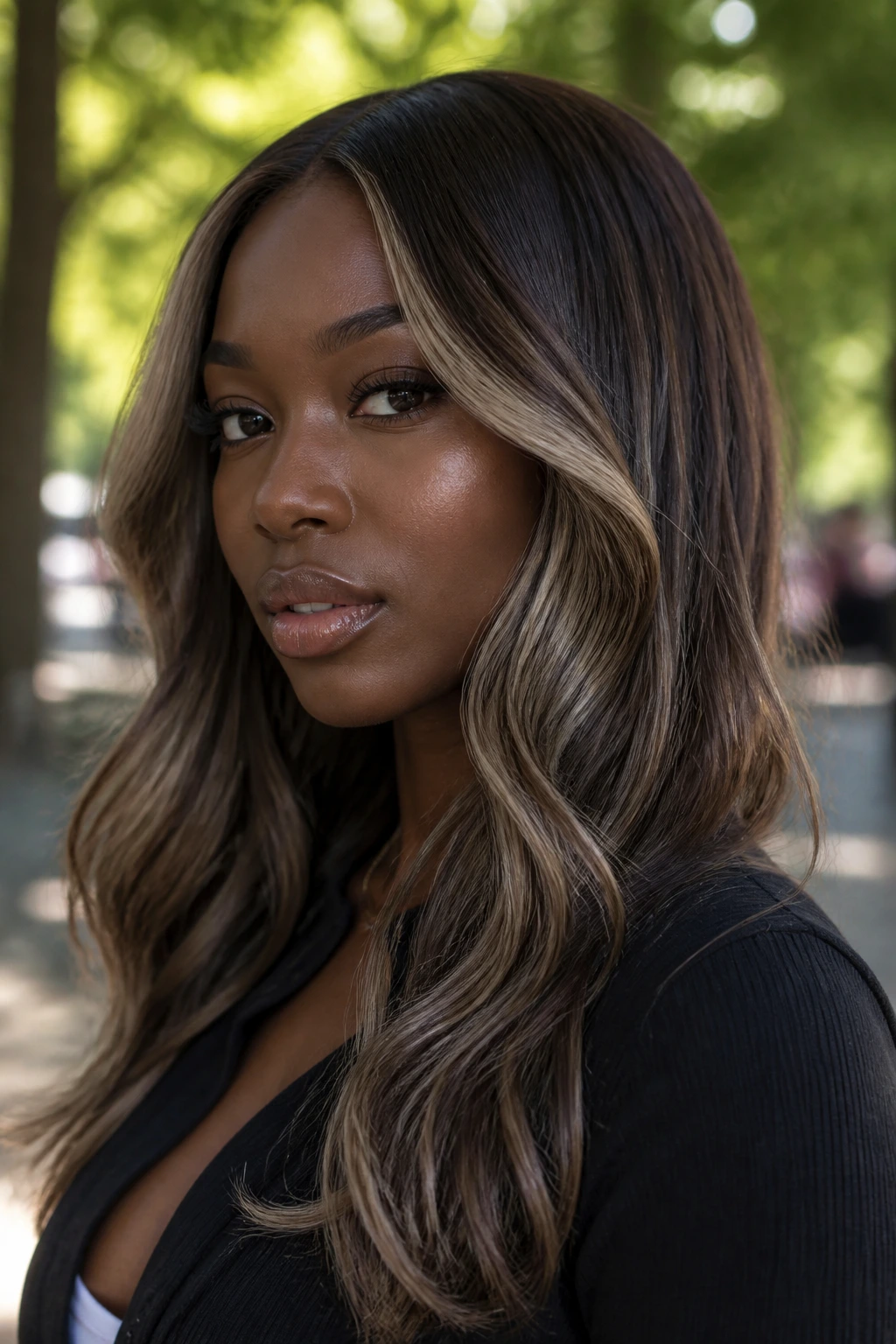
Deep cool skin needs contrast, not warmth. Frosted cocoa bronde gives you that contrast by keeping the base deep and the lighter pieces cool, pale, and narrow enough to feel refined.
The cocoa part should be rich and dark, almost like a softened espresso, while the frosted pieces sit one or two shades lighter with an ash-beige finish. That combo keeps the face bright without pushing the hair into orange territory. If the highlights get too broad, the look turns chunky fast. Thin is better here.
This is a good choice for deeper skin with cool undertones because it doesn’t disappear against the complexion. It frames the face. A little shine at the ends and around the part keeps the hair from reading as one dark block, which is the main problem with all-over brunette on deeper tones.
Ask for a deep cocoa base, cool beige ribbons, and a light ash gloss. If you want more movement, let the front pieces go a touch brighter. If you want more drama, keep the lightness tucked through the sides and ends only.
The nicest part is the balance. It feels rich, but not heavy. Bright, but not golden. And that balance is what makes cool-toned bronde work in the first place.
