



Choosing brown red hair color ideas for cool skin tones gets easier once you stop chasing copper and start looking at berry-brown, mahogany, and smoky cherry shades. Cool undertones usually sit better with red that leans blue, violet, or wine-based, not orange. That small shift changes everything.
A lot of people go wrong here by asking for “auburn” and leaving it at that. Auburn can be gorgeous, sure, but if the red pulls too pumpkin or the brown turns golden, cool skin often looks a little flushed in the wrong way. The better move is to ask for a brown base with red-violet reflect, then decide how subtle or dramatic you want the result to be.
Color level matters too. A level 4 or 5 brown with a burgundy veil looks rich and dark. A level 6 or 7 brown-red reads softer and brighter, which can be lovely if your features are lighter and your eyes carry a lot of contrast. Same family. Very different mood.
The 20 ideas below move from quiet and polished to deep and moody, so you can match the shade to your skin, your haircut, and how much upkeep you actually want to deal with.
1. Cool Mahogany Brown
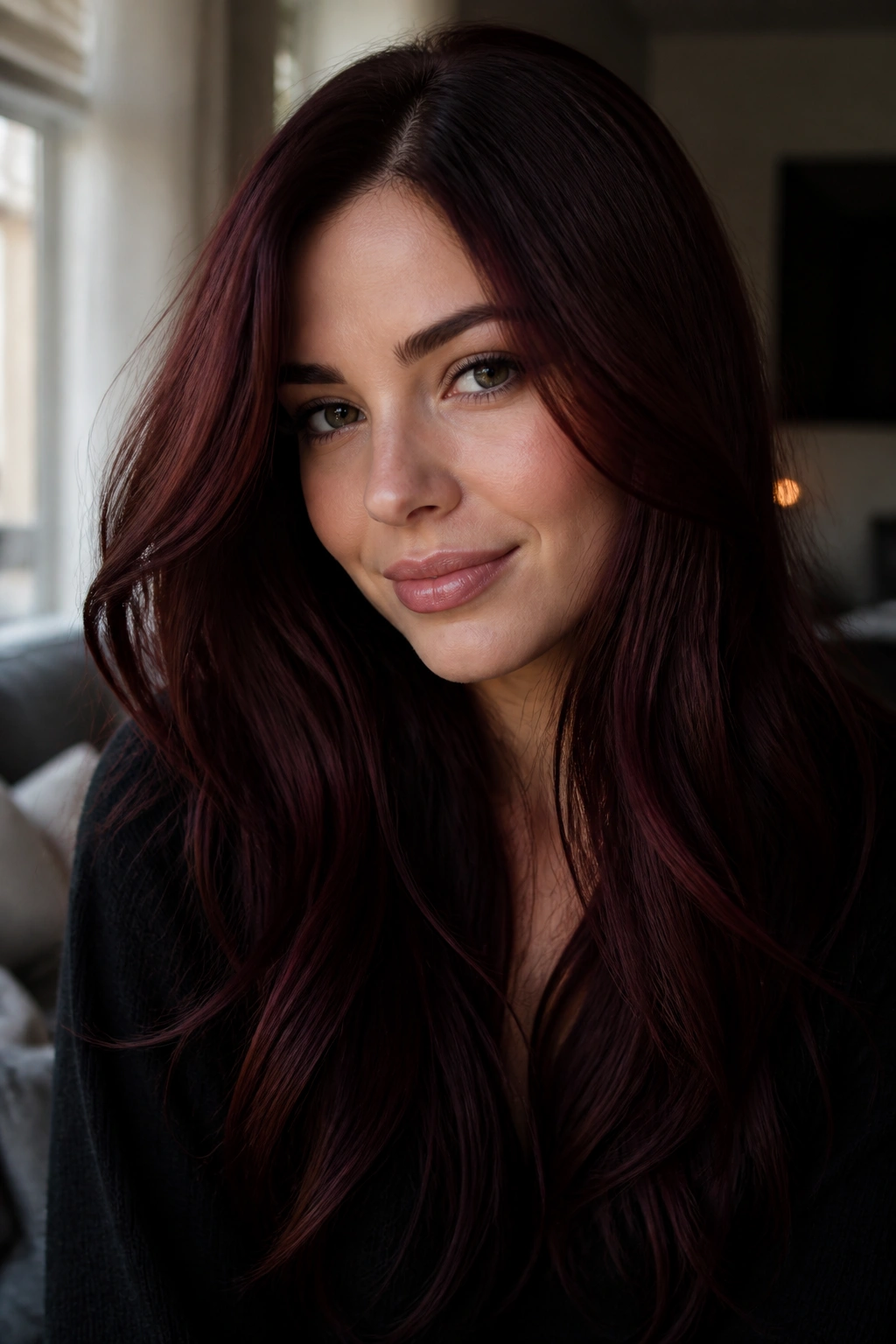
Cool mahogany brown is one of those shades that quietly does the most work. It gives you red, but not the kind that shouts across the room. The brown stays in charge, and the red sits underneath like a wine stain on dark wood.
Why It Flatters Cool Skin
Mahogany works because it usually lives in that blue-red zone instead of the orange-red zone. On cool undertones, that matters more than people think. A blue-based red keeps the skin looking fresh, while orange-red can make the face look a little pinker than you’d like.
Ask for a level 4 or 5 brown base with a mahogany gloss, not a copper glaze. If your hair is already dark, a demi-permanent color can deposit enough red-violet tone without forcing a major lift. That keeps the hair healthier too.
- Best on naturally dark brunettes who want depth
- Great if you like low shine with a polished finish
- Easy to maintain with a color-depositing mask once a week
- Pairs well with blunt bobs, long layers, and soft waves
Pro tip: ask your colorist for mahogany with violet reflect, not red-orange. That one phrase saves a lot of disappointment.
2. Cherry Cola Brunette
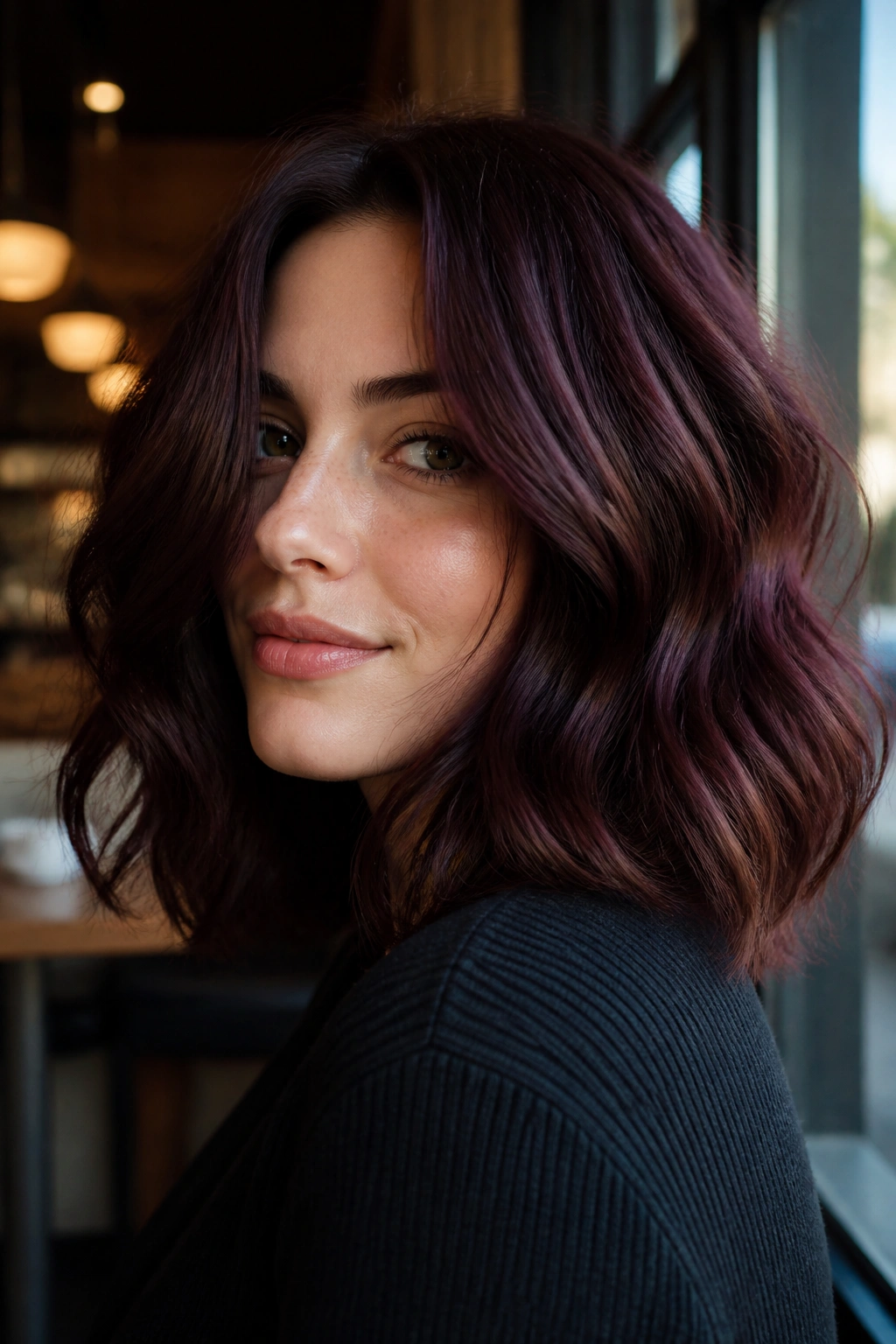
Cherry cola brunette is the shade I reach for when someone wants brunette hair to look expensive without going bright. It’s dark, glossy, and a little mysterious, with cherry tones hiding in the light rather than sitting on top of the brown.
The trick is restraint. Cherry cola should not look like pure red dye on brown hair. It should look like a deep brunette that turns to red-black at the edges of a wave or under a lamp. That’s why it flatters cool skin so well; the red is cool enough to echo pink or blue undertones instead of fighting them.
If your base is already dark brown, you may only need a gloss or a subtle glaze over mids and ends. On lighter brunettes, the same look can be built with a level 5 or 6 brown base and a cherry-burgundy overlay. The result reads rich, not loud.
This shade is especially good on shoulder-length cuts. Movement matters here. Flat, one-length hair can hide the depth; soft bends show it off. And if you wear black, charcoal, navy, or silver jewelry, the whole thing looks even sharper.
3. Smoky Auburn Brown
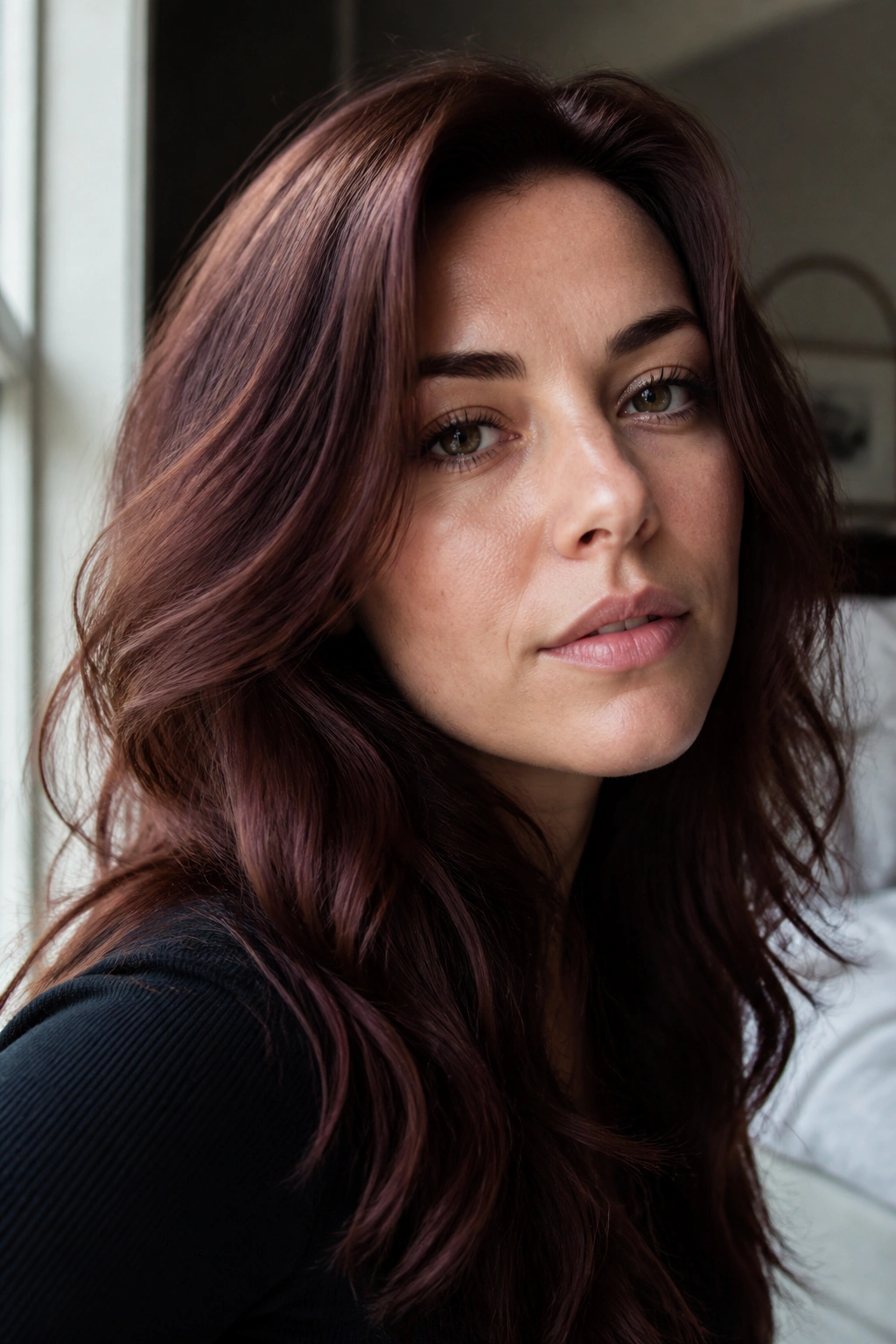
Can auburn work on cool skin? Absolutely. It just needs to stay smoky.
The problem with auburn is that people often picture copper. That version tends to glow warm, and sometimes too warm, against a cool complexion. Smoky auburn fixes that by adding brown, ash, or even a hint of violet to mute the orange. You still get the spice, but it sits farther back.
If you’re asking a colorist for this, use plain language: brown auburn with muted red-violet tones. That tells them you want red that behaves like a shadow, not a traffic cone. On medium brunettes, it can be done with a gloss. On darker hair, it may need low-volume lift through the mids so the red actually shows.
How to Wear It
- Best on layered cuts that move
- Nice with a side part or soft curtain bangs
- Looks more refined than copper when styled straight
- Needs purple shampoo only if the base starts drifting too gold
The shade is a good middle ground if you want something warmer than mahogany but still easy on cool undertones. It has personality. It also behaves.
4. Plum Brown Melt
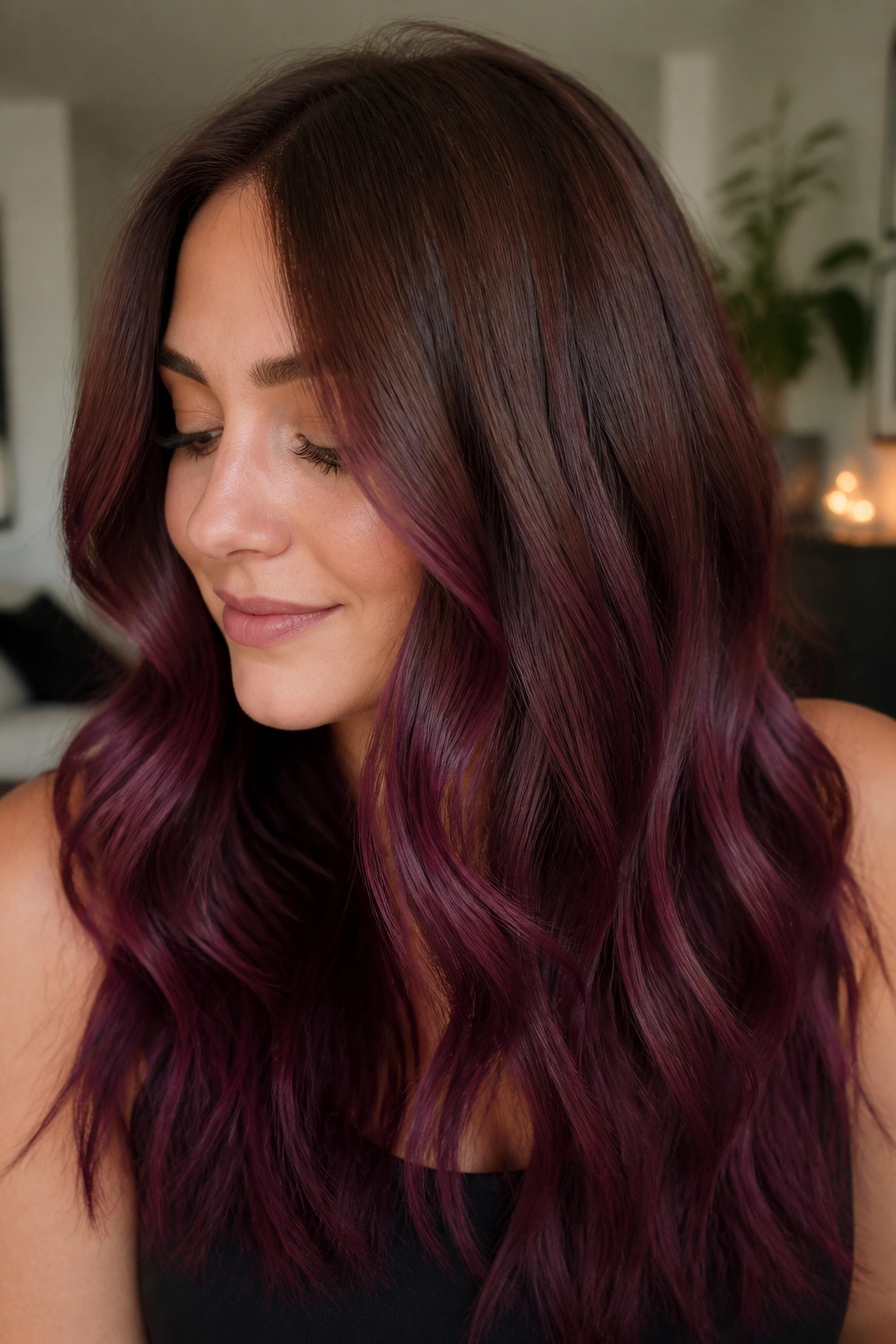
A plum brown melt looks like the hair equivalent of a velvet jacket. The roots stay brown, the mid-lengths deepen into plum, and the ends blur together instead of showing a hard line. That softness is what makes it so wearable on cool skin.
Picture a brunette who wants something richer than plain brown but doesn’t want full burgundy. This is the sweet spot. Plum adds blue-violet depth, which tends to flatter pink or rosy undertones. It also keeps the color from reading flat under indoor light. When the light shifts, the plum shows up. When it doesn’t, you still have brown hair that looks expensive and dense.
This shade works especially well if your hair has some natural wave. The bend catches the darker red, and the melt looks intentional without being too neat. Straight hair can wear it too, but then placement matters more. Face-framing pieces and a soft root shadow make the whole thing feel less blocky.
A good request at the salon would be brown roots, plum-brown mids, and a cool berry glaze through the ends. Too much violet can veer purple. Too little, and you lose the point. The best version sits in between.
5. Espresso Burgundy
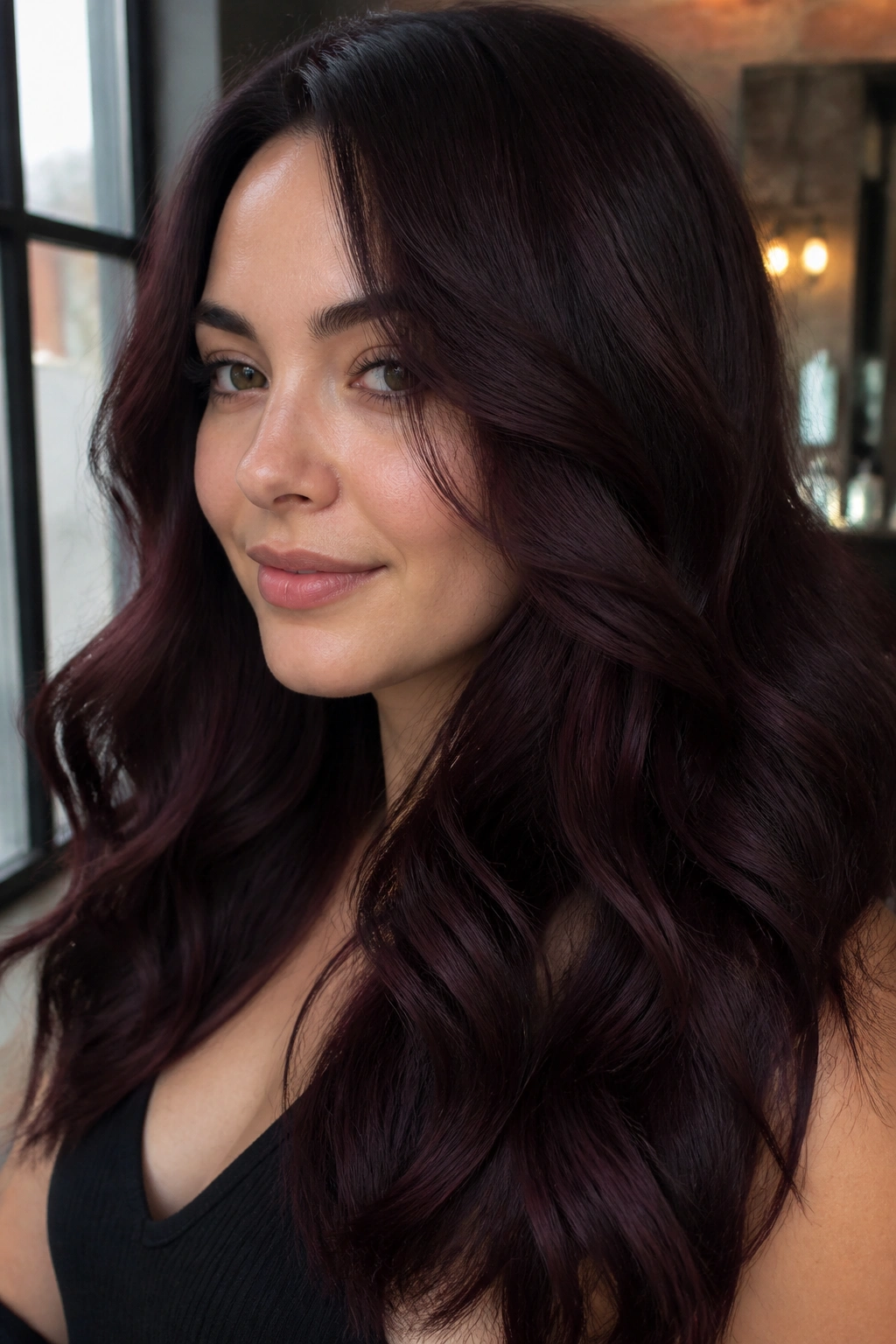
Espresso burgundy is for people who want the dark side of red-brown hair. It’s nearly black at first glance, but the burgundy shows when the hair moves or when natural light hits it at an angle. That’s the part I like most. It feels quiet until it doesn’t.
On cool skin tones, this color works because the red stays wine-toned. There’s no bright copper, no pumpkin cast, no gold drift. Just a deep brown base with burgundy depth packed underneath. If your skin leans fair or porcelain, this shade can give you contrast without making you look washed out. If your skin is medium with cool undertones, it can make the complexion look clearer and more even.
It’s also a forgiving shade if you hate constant touch-ups. Darker roots blend in, and a grown-out line usually looks intentional rather than messy. That said, burgundy fades fast on porous ends, so a clear or tinted gloss every few weeks helps keep the color from looking tired.
One small warning: on very damaged hair, burgundy can go muddy. Healthy hair shows the red better. That matters more than most people admit.
6. Walnut Wine Balayage
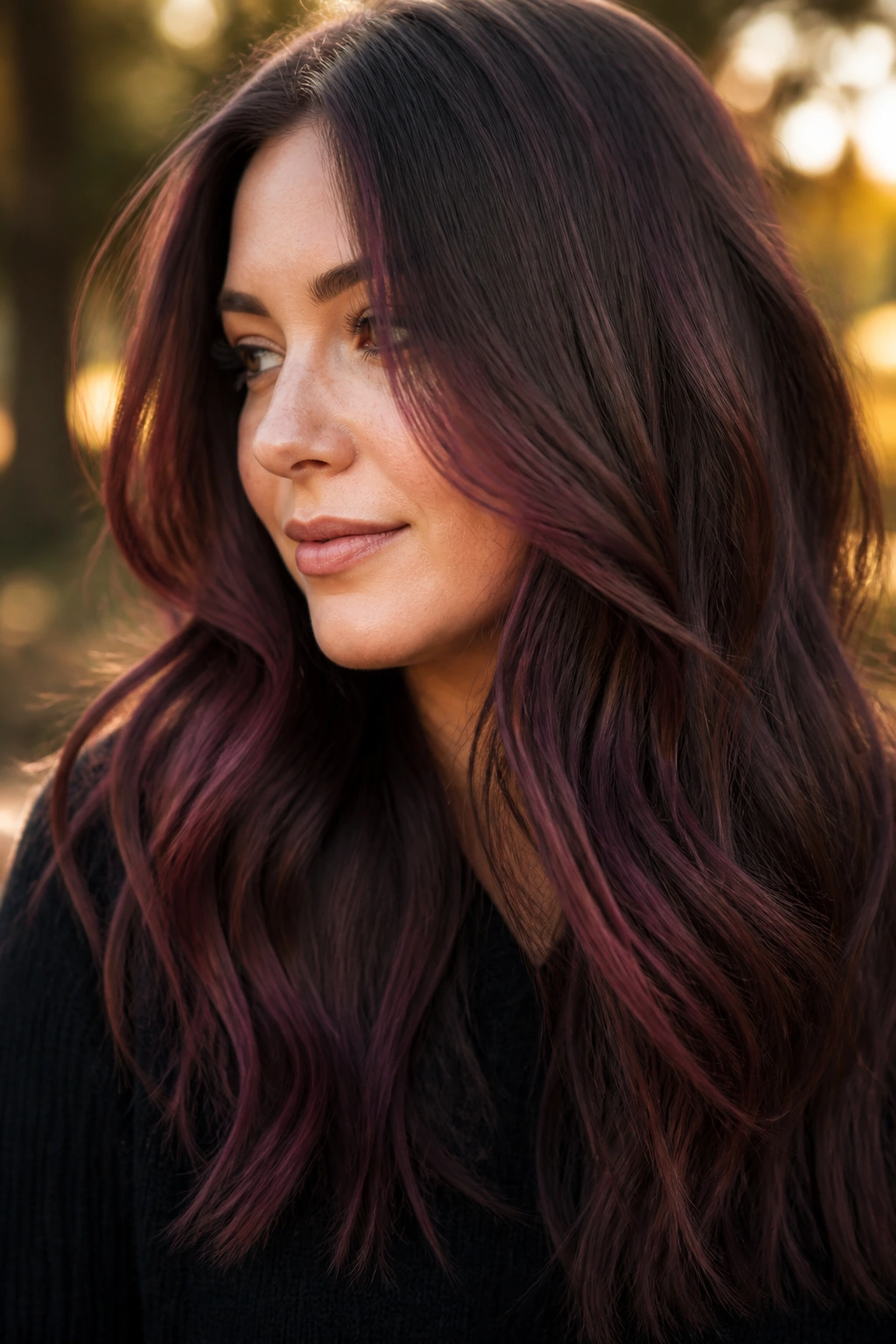
Walnut wine balayage is the more relaxed cousin of a full all-over red-brown. Instead of flooding every strand with one color, it keeps a walnut brunette base and paints in wine-toned ribbons through the mid-lengths and ends. The effect is softer, and on cool skin it usually looks more natural than a heavy block of color.
Unlike chunky highlights, balayage lets the brown stay visible. That’s the point. If you have cool undertones and you still want red in the mix, this keeps the shade from fighting your face. The wine pieces show up when your hair moves, but they don’t dominate your whole look.
This is a smart pick for longer hair, especially if you wear waves or curls. The darker brown root zone gives depth near the scalp, while the wine ribbons keep the ends from looking thin or dull. It also grows out gracefully, which is a blessing if salon visits need to stay spaced out.
Best For
- Medium to dark brunettes
- Soft layered cuts
- People who want color variation without a dramatic root line
- Cool skin that goes pink with orange-based red
Ask for deep walnut lowlights with wine-brown balayage pieces. That wording keeps the color out of copper territory.
7. Rosewood Brown
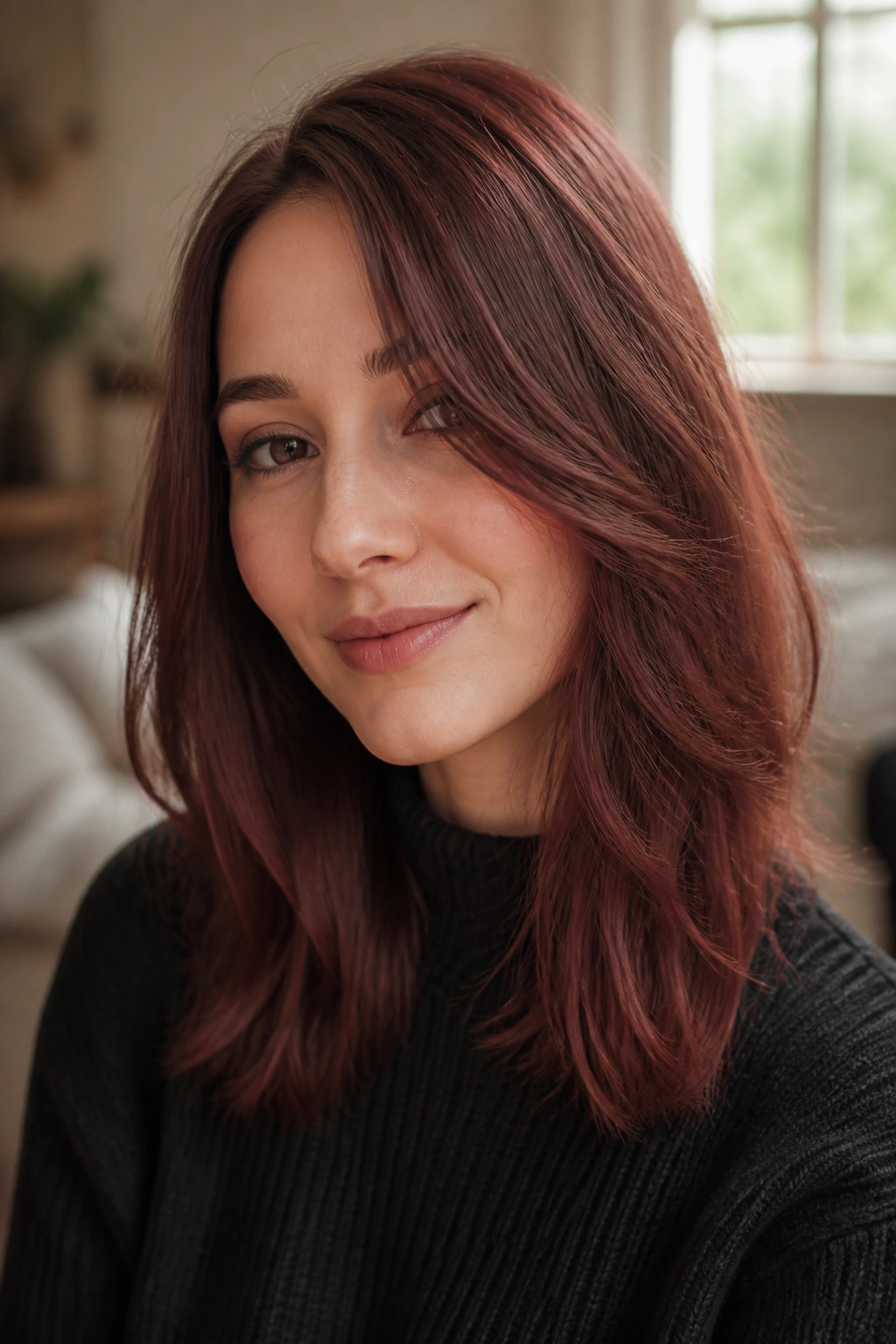
Rosewood brown has a gentler personality than a lot of red-brown shades. It sits between dusty rose and soft brunette, which makes it one of the easiest brown-red ideas for cooler complexions that don’t want anything too dark or too vivid.
The color works because rosewood is muted. It does not scream “red hair.” It reads like brown hair with a rosy cast, especially around the face and along the ends. That softer edge is kind to cool skin, which can sometimes look harsher next to strong orange or brick tones.
If your natural base is light brown or dark blonde, rosewood can be built with a demi-permanent gloss. On deeper brunettes, it may need subtle lift before the rose-brown tone will show. Face-framing pieces often help here. They let the pink-brown tint light up the complexion without making the whole head feel too pastel.
Salon Wording That Helps
- “Neutral brown base with rose-brown reflect”
- “Muted red-brown, not copper”
- “Soft gloss through the front pieces”
- “Keep the finish sheer, not opaque”
Rosewood is a nice choice if you want your hair color to feel feminine and slightly romantic without drifting into warm territory.
8. Mulberry Mocha
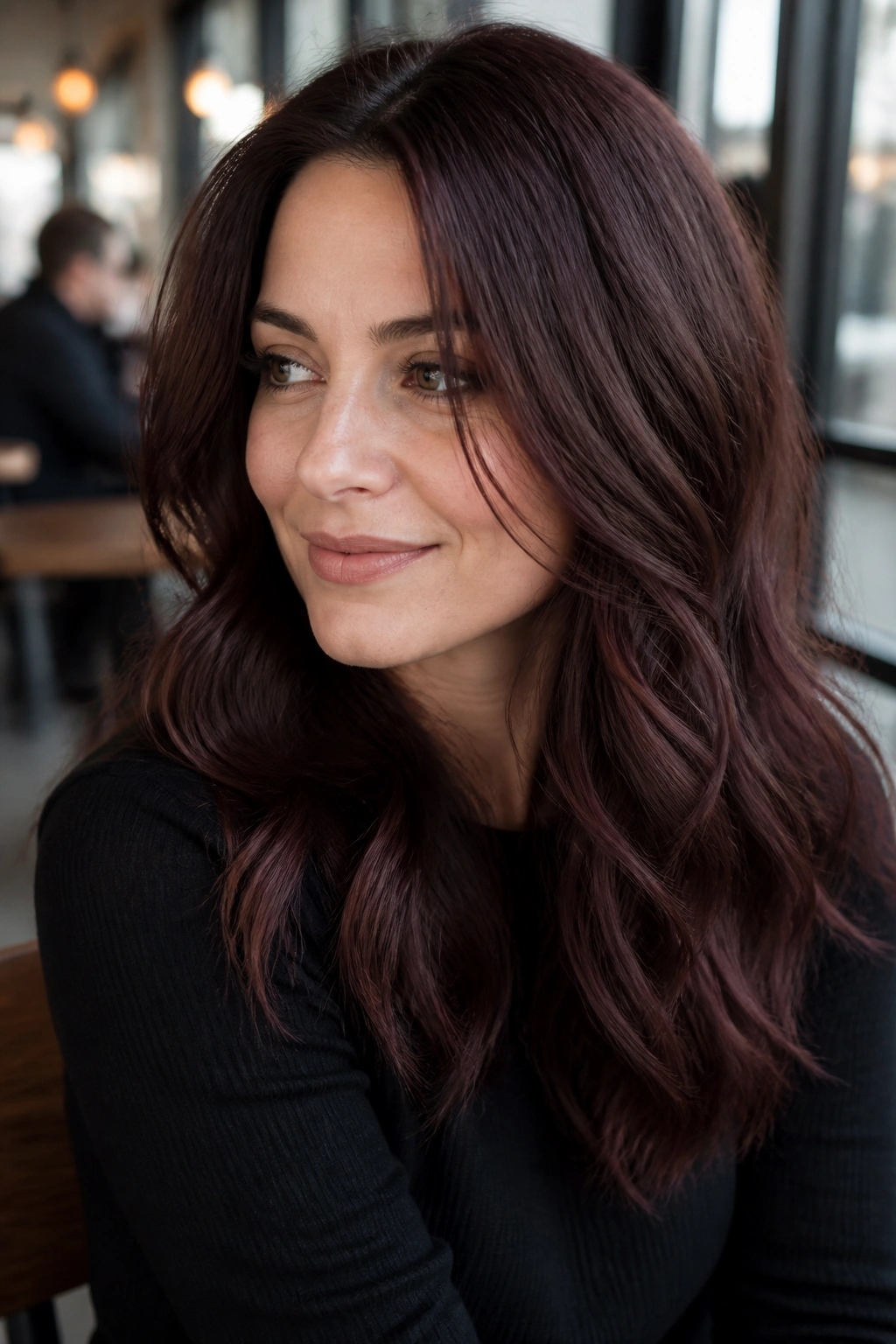
Mulberry mocha is darker and moodier than rosewood, and that’s exactly why it works. The mocha keeps the color grounded in brunette territory, while the mulberry layer brings in a cool berry tone that flatters pink or blue undertones.
This shade looks best when it’s not painted too evenly. A little variation helps. Darker roots, slightly lighter mids, and berry-toned ends create depth that feels lived-in rather than flat. On curly or coily hair, the shape of the curl pattern makes the color shift even more visible. On straight hair, the shine is the main event.
I like this one for people who wear a lot of black, charcoal, navy, or deep jewel tones. The hair doesn’t fight those colors. It sits beside them well. And if your makeup leans cool — mauves, blue-red lipstick, taupe blush — the whole palette pulls together without trying hard.
Strong opinion: mulberry mocha looks cheap when it turns red-orange. It looks rich when the berry stays cool. That difference is everything.
9. Cranberry Chestnut
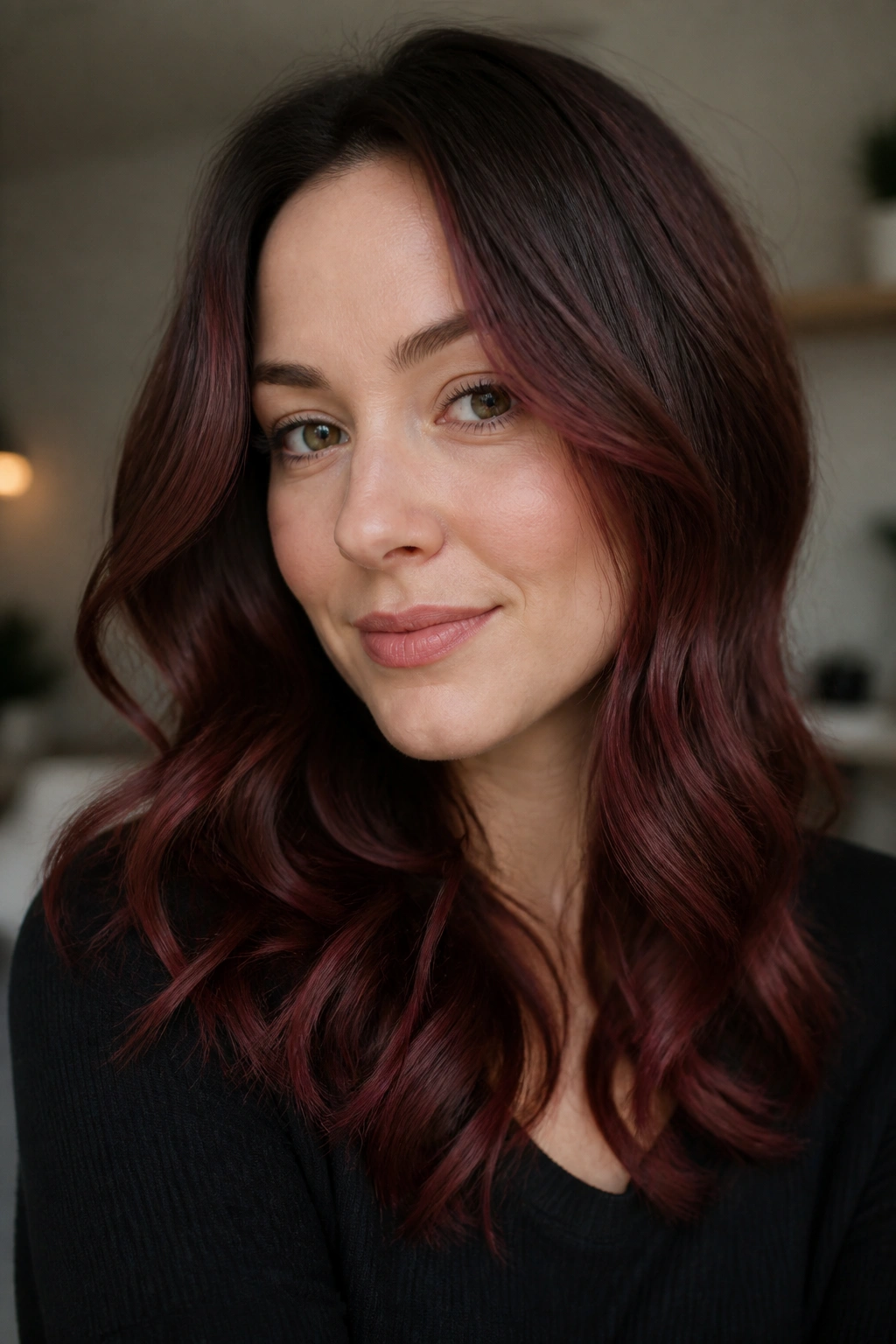
Cranberry chestnut is a lovely choice if you want red to show up more clearly but still want brown to stay visible at the root. The chestnut base gives the color warmth in structure, while the cranberry layer keeps it cool enough for a pink-leaning complexion.
A lot of people think chestnut automatically means warm, but it doesn’t have to. When the red part is cranberry rather than copper, the shade can feel surprisingly balanced. It’s especially nice on shoulder-length hair and bobs, where the ends can carry most of the color and the shape stays crisp.
This is a good “first red-brown” if you’re nervous about going too deep or too bright. It has enough color payoff to feel noticeable, yet it won’t yell for attention. On very fair cool skin, ask for a softer cranberry and keep the brown base fairly deep. On medium cool skin, you can push the red a little more.
What Helps It Look Good Longer
- Use a color-safe shampoo, not a harsh clarifying one
- Rinse with cooler water when you can
- Refresh with a crimson or chestnut gloss before the red gets dull
- Avoid over-lifting the base into gold
Cranberry chestnut is one of those shades that looks polished even when the haircut is simple.
10. Smoky Cinnamon Brunette
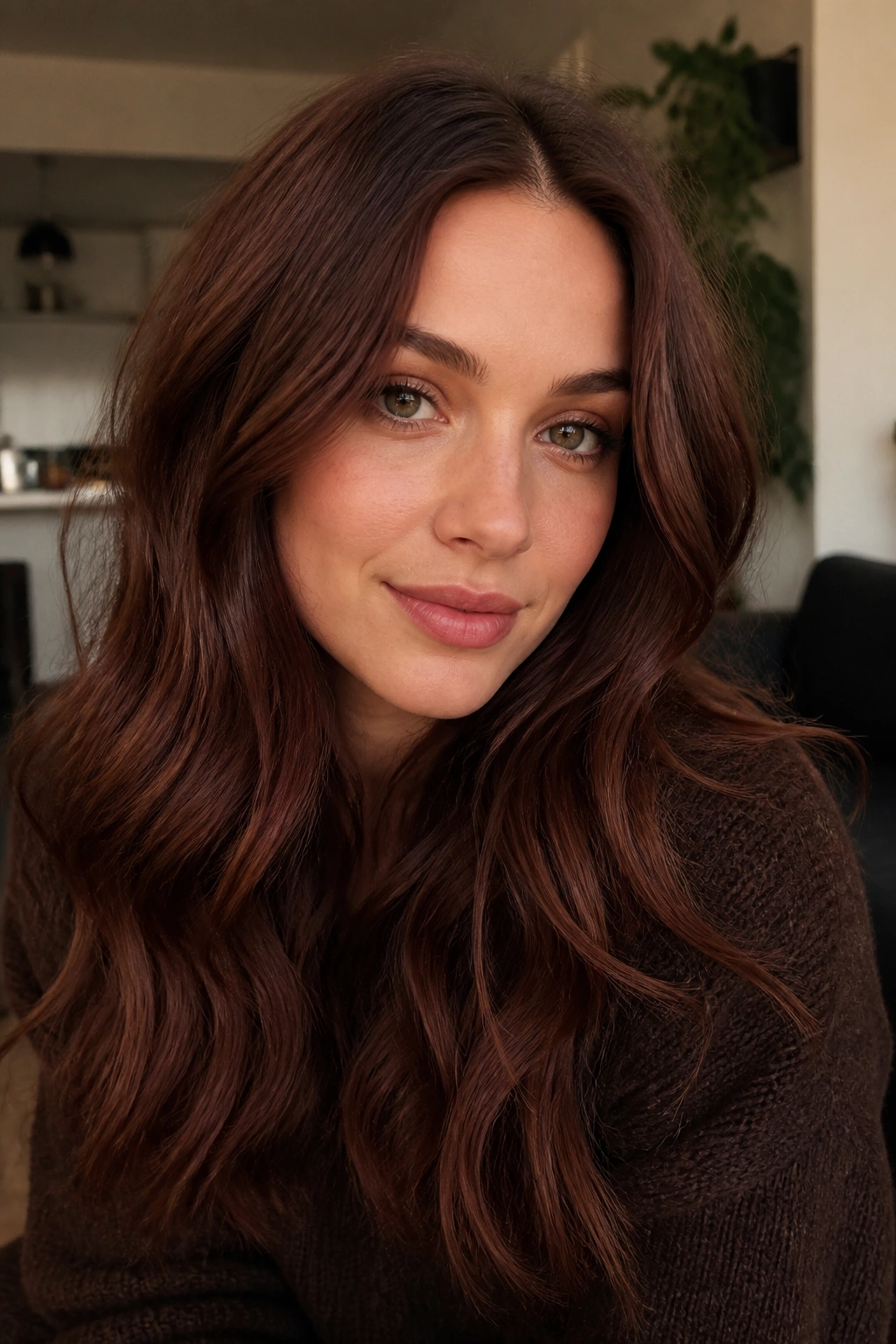
Smoky cinnamon brunette is the most restrained cinnamon shade on this list, and that restraint is what makes it friendly to cool skin. The brown comes first. The spice comes second. If the shade starts leaning orange, it stops working.
This color suits people who want movement, softness, and just a hint of red without diving into obvious burgundy. It’s especially good on medium brunettes who feel their hair looks flat in winter light or under office lighting. Smoky cinnamon gives that flatness a lift, but it does it through muted red-brown warmth, not bright copper.
A gloss finish helps a lot here. The shine makes the cinnamon read as a sheen instead of a solid orange stripe. If your hair is layered, the color will catch on the bends and look richer. If it’s all one length, the color should be placed with a little variation so it doesn’t turn into a single flat sheet.
This is also a nice option if you do not want a shade that screams “new hair.” It whispers. Then, in sunlight, it actually has something to say.
11. Black Cherry Brown
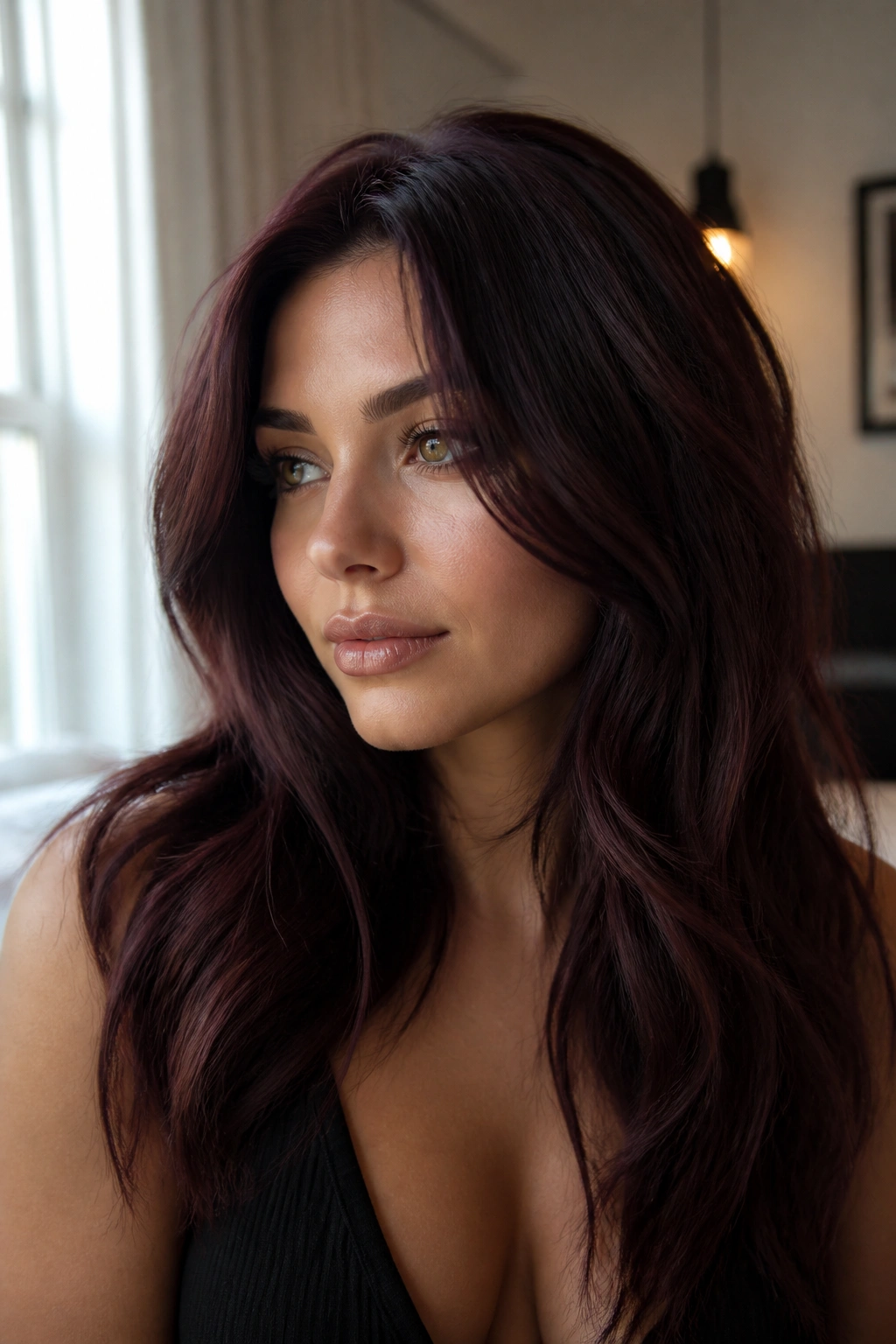
Black cherry brown sits in the middle between dark brunette and deep red, and that middle ground is why it flatters cool undertones so well. It keeps the overall look dark, but the cherry tint stops the hair from looking flat or one-note.
Unlike true black hair, black cherry brown has dimension. Unlike warm cherry red, it doesn’t pull bright or fiery. That makes it especially good for people who want drama without copper. If your skin is fair with a cool cast, the depth gives you contrast. If your skin is medium, the cherry reflect can make the face look cleaner and more defined.
This shade works well on sleek hair because the shine reveals the red underlayer. It also works on textured hair, where the color shifts across curls and bends. Either way, the base should stay dark brown or soft black-brown. That anchor is what keeps the red from becoming too loud.
Best use case? Someone who wants a hair color that can look almost black in one room and wine-toned in another. That split personality is the appeal.
12. Blue-Red Chestnut
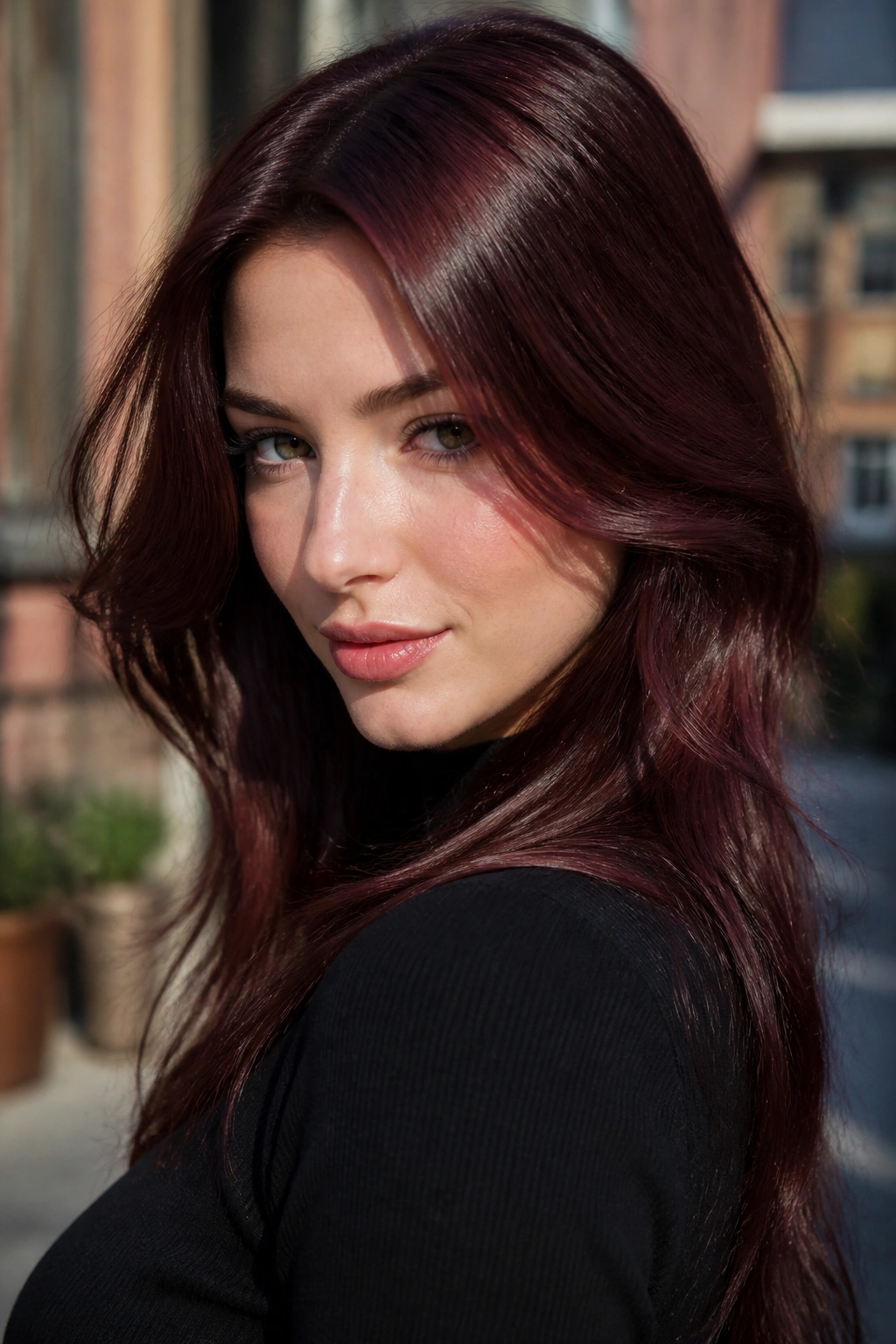
Can a red-brown shade actually look cooler than brown? Yes, if the red leans blue. Blue-red chestnut is the proof.
The name sounds technical, but the idea is simple: take a chestnut base and steer the red pigment toward berry or wine instead of copper or rust. That creates a color that reads richer on cool skin because it echoes the undertone instead of competing with it. It’s a good move when you want red to show, but you still want to look like yourself.
Why Blue-Red Reads Cooler
Blue-red shades often look deeper and slightly darker than orange-reds at the same level. That means they can add color without making the hair appear brighter than the rest of your features. If your eyes are gray, blue, hazel, or deep brown, the result can be especially strong.
This shade works well with a level 5 chestnut base and a blue-violet gloss through the mids. On darker brunettes, the effect may be subtle indoors and stronger outside. That’s fine. In fact, that shift is part of the charm.
- Good if you want a classic salon look
- Better than copper for pink or rosy skin
- Easy to wear with silver earrings and cool-toned makeup
- Best kept glossy, not matte
The only real mistake here is letting the chestnut turn gold. Once that happens, the whole shade drifts warm.
13. Merlot Mocha Lowlights
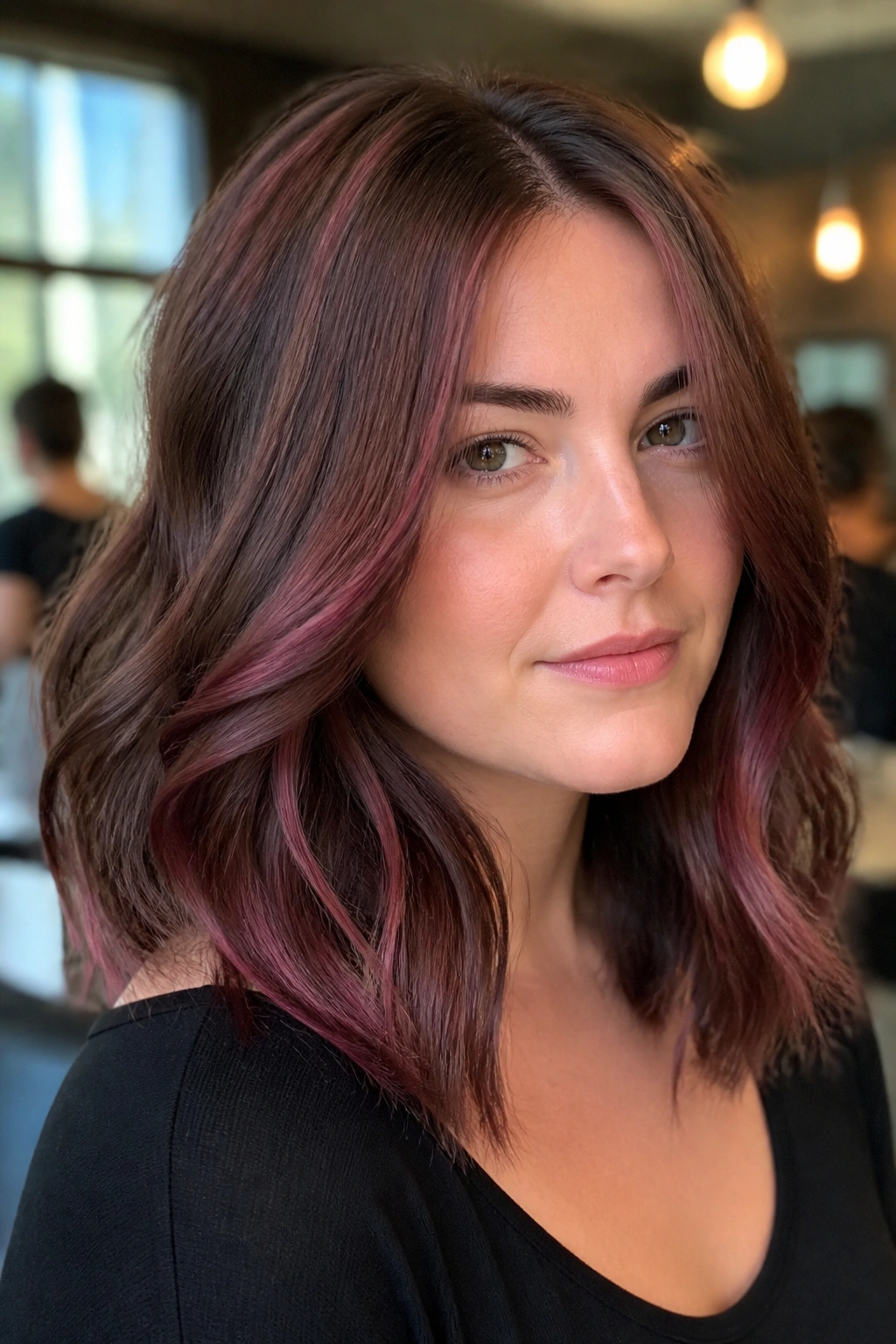
Merlot mocha lowlights are a smart way to add red-brown depth to hair that already has highlights or lighter brunette pieces. Instead of painting everything one color, lowlights sink darker merlot and mocha tones underneath, which makes the brighter pieces look richer and more expensive.
This is a strong option for cool skin because it creates contrast without overwhelming the face. If your base is medium brown, the merlot lowlights keep the color from going flat. If your hair is already highlighted, the darker red-brown helps the blonde bits look more intentional and less stripey.
Where to Place Them
- Underneath the crown for hidden depth
- Around the nape for movement when hair sways
- Through the mid-lengths if your hair is fine and needs thickness
- Around the face only if you want the red to show more clearly
Lowlights are underrated. They can make hair look denser, especially on fine textures. And merlot is a good choice because it stays in that cool wine family rather than turning brick-red. Ask for a mocha base with deep merlot lowlights, not bright red streaks. Those are two very different moods.
14. Violet Cocoa Balayage
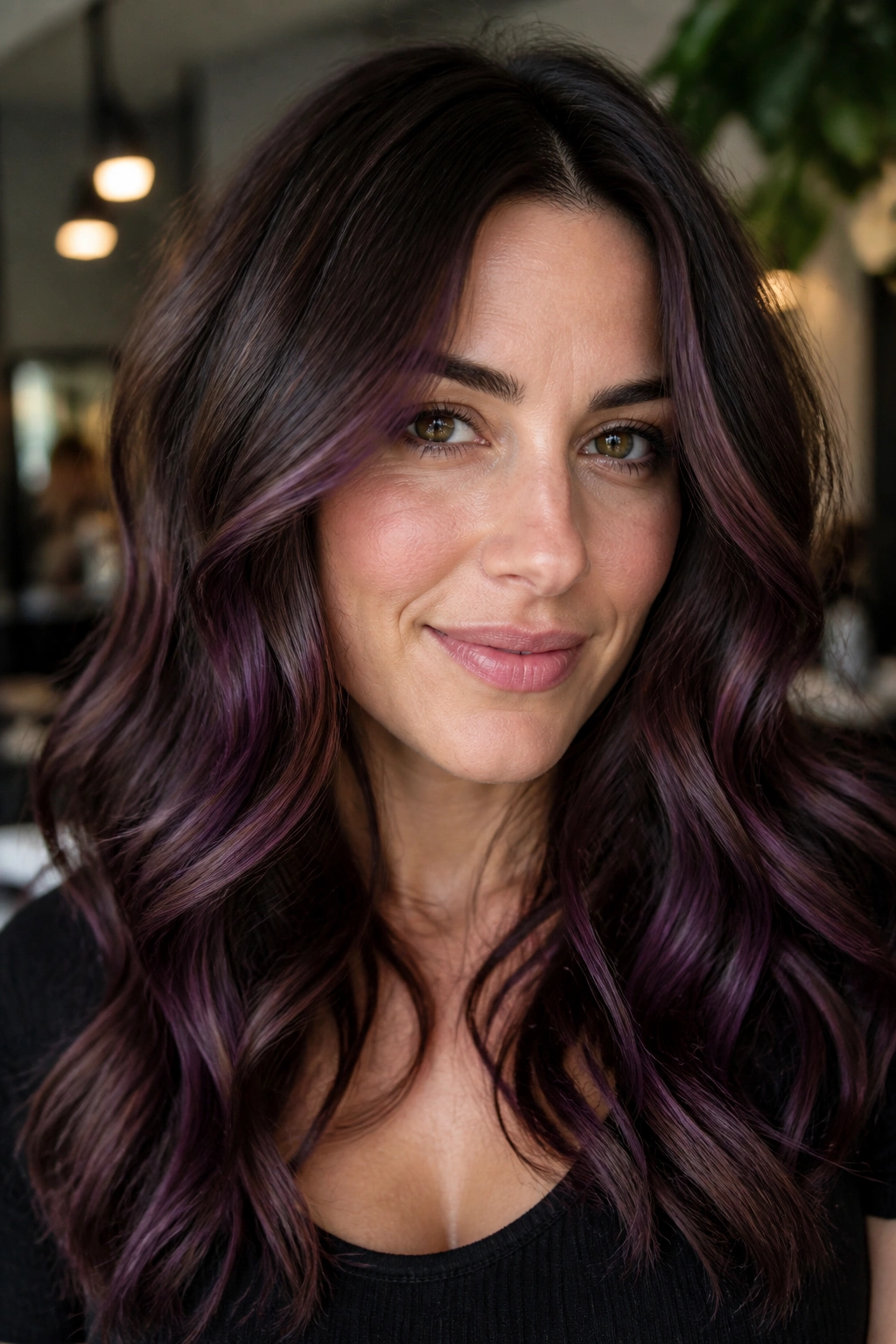
Violet cocoa balayage has a sleek, modern feel without trying too hard. The cocoa gives you a brown base that feels grounded, while the violet pieces bring in a cool berry cast that works with pink or blue undertones. The balayage part matters because it keeps the color soft at the grow-out line.
This is one of the better choices if you want your color to feel dimensional from every angle. The violet doesn’t need to be obvious. It can live mostly on the mids and ends, where it will show as a cool shimmer instead of a flat purple panel. That subtle shift is why it suits cool skin so well. The skin stays the focus, not the hair dye.
Wavy and curly hair wear this especially well. The bends catch the violet, then let the cocoa settle back in between. Straight hair can wear it too, but you’ll want softer placement around the front. A heavy band of violet near the face can get too strong fast.
My favorite version is cocoa at the root, a muted violet-brown through the mid-lengths, and a slightly brighter berry glaze on the ends. It sounds fussy. It isn’t. It just looks good.
15. Garnet Brunette Gloss
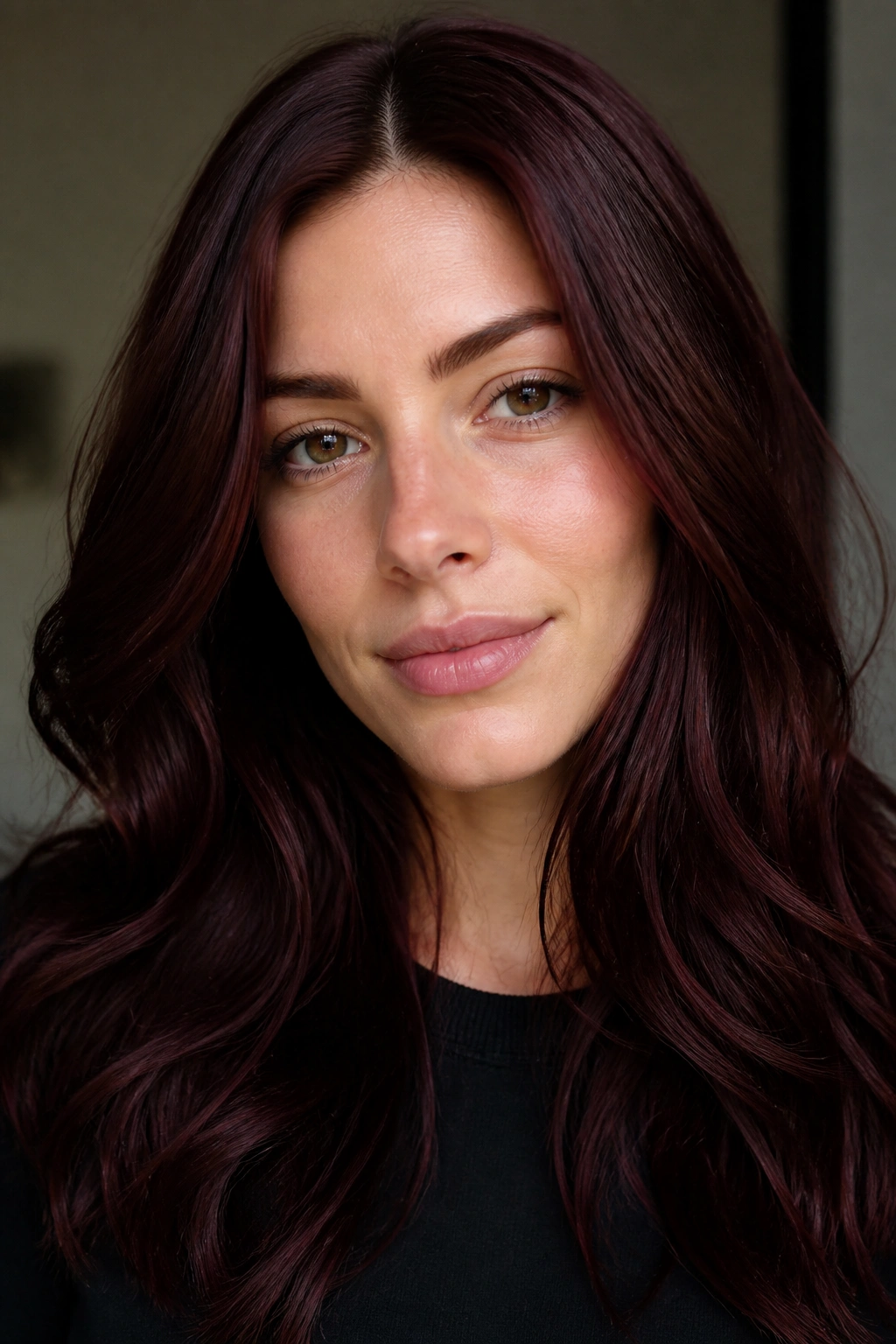
A garnet brunette gloss is one of the easiest ways to get into red-brown hair without making a huge commitment. Glosses sit on the hair surface or deposit lightly into it, which means they can add color, shine, and tone all at once without a dramatic chemical feel.
Garnet is a great fit for cool skin because it stays in the red-wine family. It is deeper than cherry, less plum than mulberry, and a little more jewel-toned than burgundy. That makes it useful if your natural brown already has nice depth and you just want it to feel richer. The gloss deepens the shade rather than reinventing it.
This works especially well if you like to change things often. A gloss fades more gracefully than permanent color, and that can be a relief if you’re testing the red-brown waters. It’s also handy after summer-lightened hair starts drifting brassy. A garnet gloss can pull the tone back into cooler territory fast.
One practical note: glosses love healthy hair. If your ends are fried, they can grab too much pigment and turn a little dark at the tips. Trim first if you need to.
16. Coffee Cherry Ombré
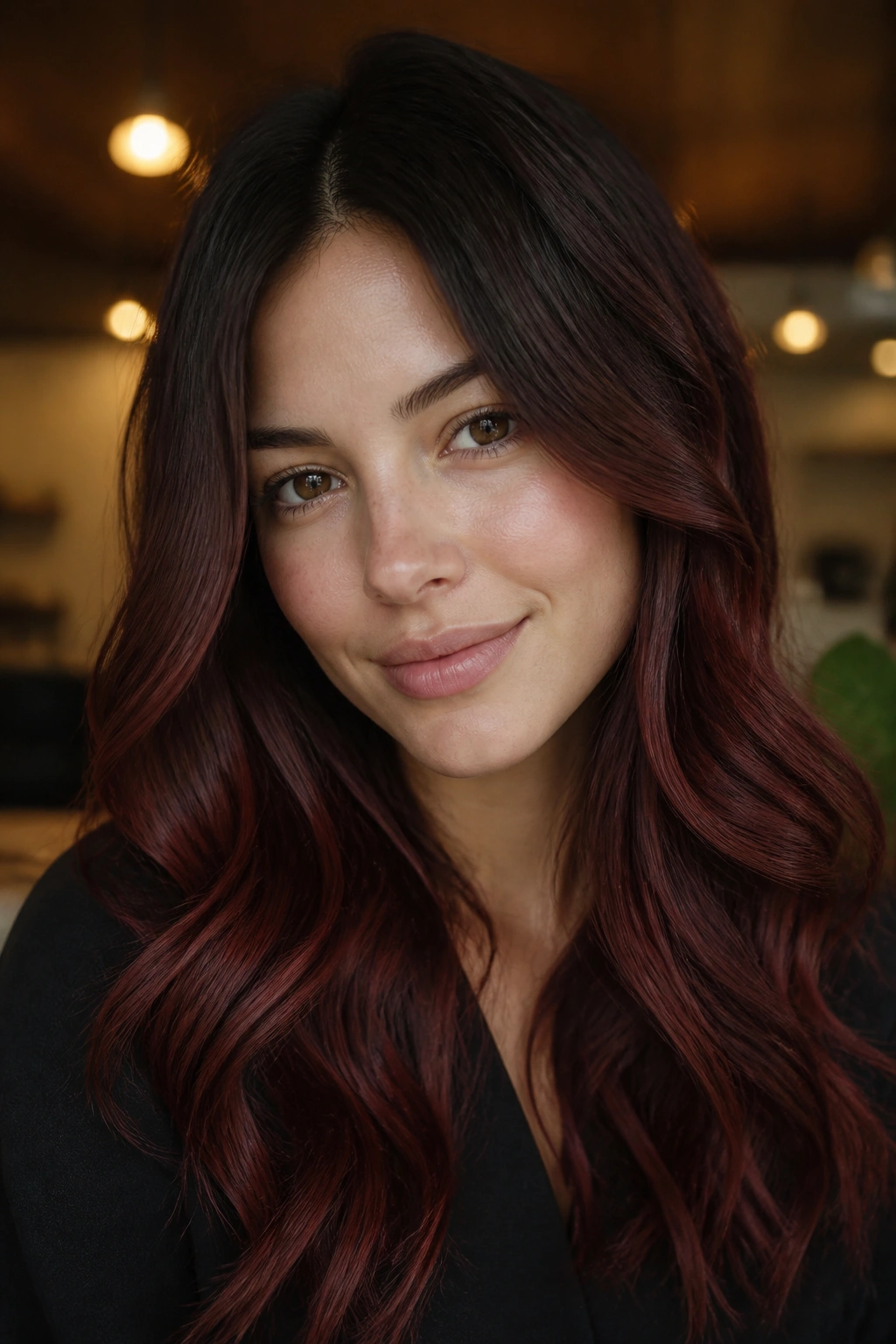
Coffee cherry ombré is for people who like contrast. The roots stay coffee-dark, and the lengths fade into cherry-brown, which gives the hair a clear top-to-bottom shift instead of a blended all-over melt.
Unlike balayage, ombré usually looks bolder at the end points. That can be a good thing if you want the red to show more clearly on longer hair. It also gives cool skin a strong frame, especially if the top half of the hair is a deep brunette and the lower half carries the red-brown tone. The face stays grounded, while the ends do the talking.
This shade works best when the transition is smooth. A harsh line can look chunky, and chunky is rarely flattering here. The coffee-to-cherry fade should feel gradual, as if the color just gets richer toward the bottom. Curls and waves make that gradient look even better because the movement breaks up the line.
Best For
- Long hair
- People who like a little drama
- Dark brunettes who want red on the ends
- Cool undertones that need contrast more than brightness
If you wear your hair in a ponytail often, this is fun. The color shows even then.
17. Deep Berry Brunette
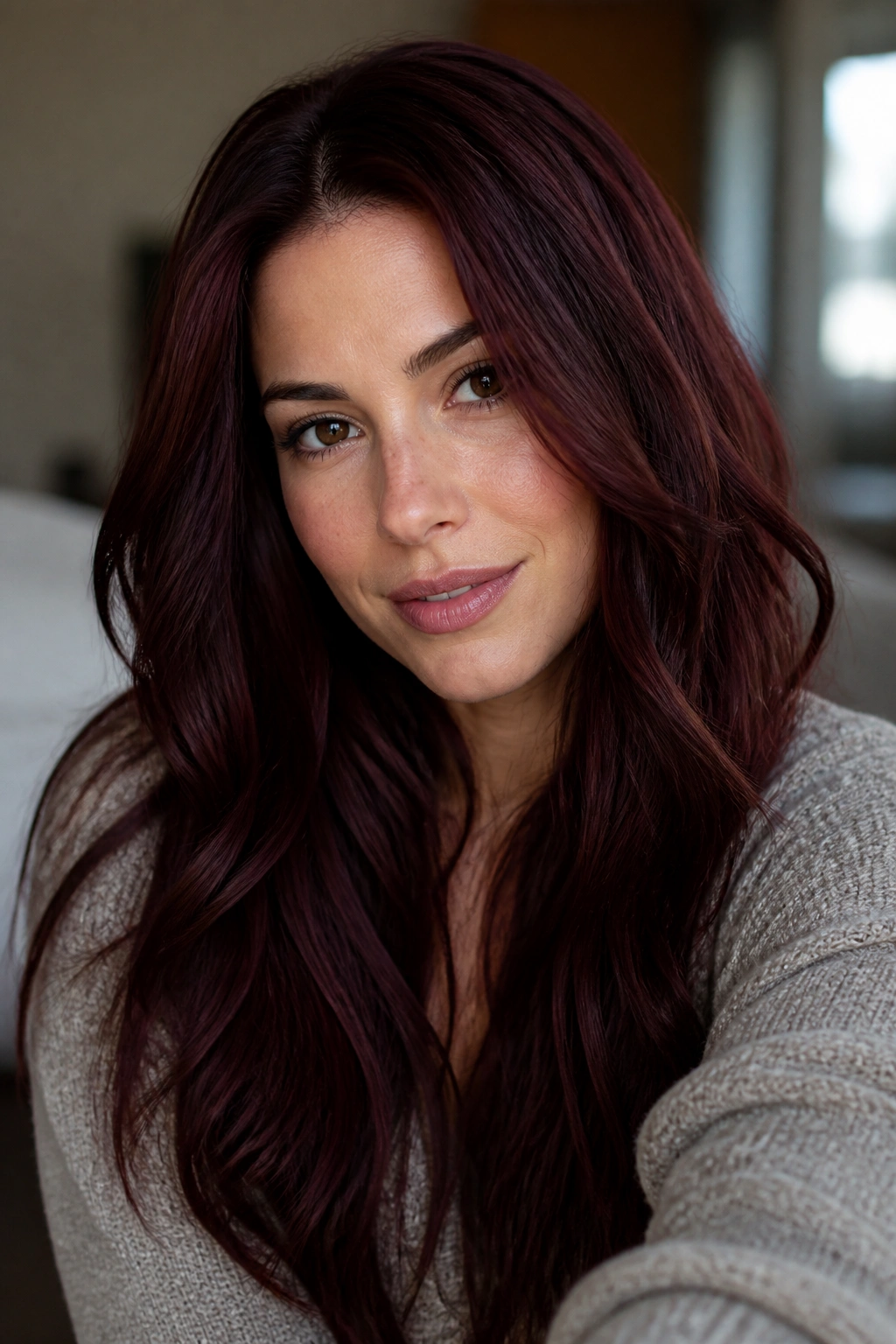
Deep berry brunette is a good answer when you want your hair to look expensive and a little moody. Is it red? Yes. Is it brown? Also yes. That ambiguity is part of the appeal.
The berry tone should stay deep enough to read as brunette in low light. If it gets too pink, it can start looking fashion-y in a way that not everyone wants. But when the shade is done well, it gives cool skin an easy lift. The berry reflect brings life to pale or muted complexions without making the hair look warm.
Best Placement for Cool Skin
Face-framing pieces can be a smart move here, but they should be soft. A heavy red panel around the face can take over. A muted berry veil through the front, then a richer brunette through the back, keeps the color flattering and wearable.
- Ask for berry tones, not strawberry tones
- Keep the base at level 4 to 6
- Use a shine spray, not a heavy oil that dulls the color
- Refresh the gloss when the berry starts to fade to brown
This one has a dressier feel than some of the softer shades on the list. It looks good with structured haircuts and simple clothes.
18. Mahogany Plum Melt
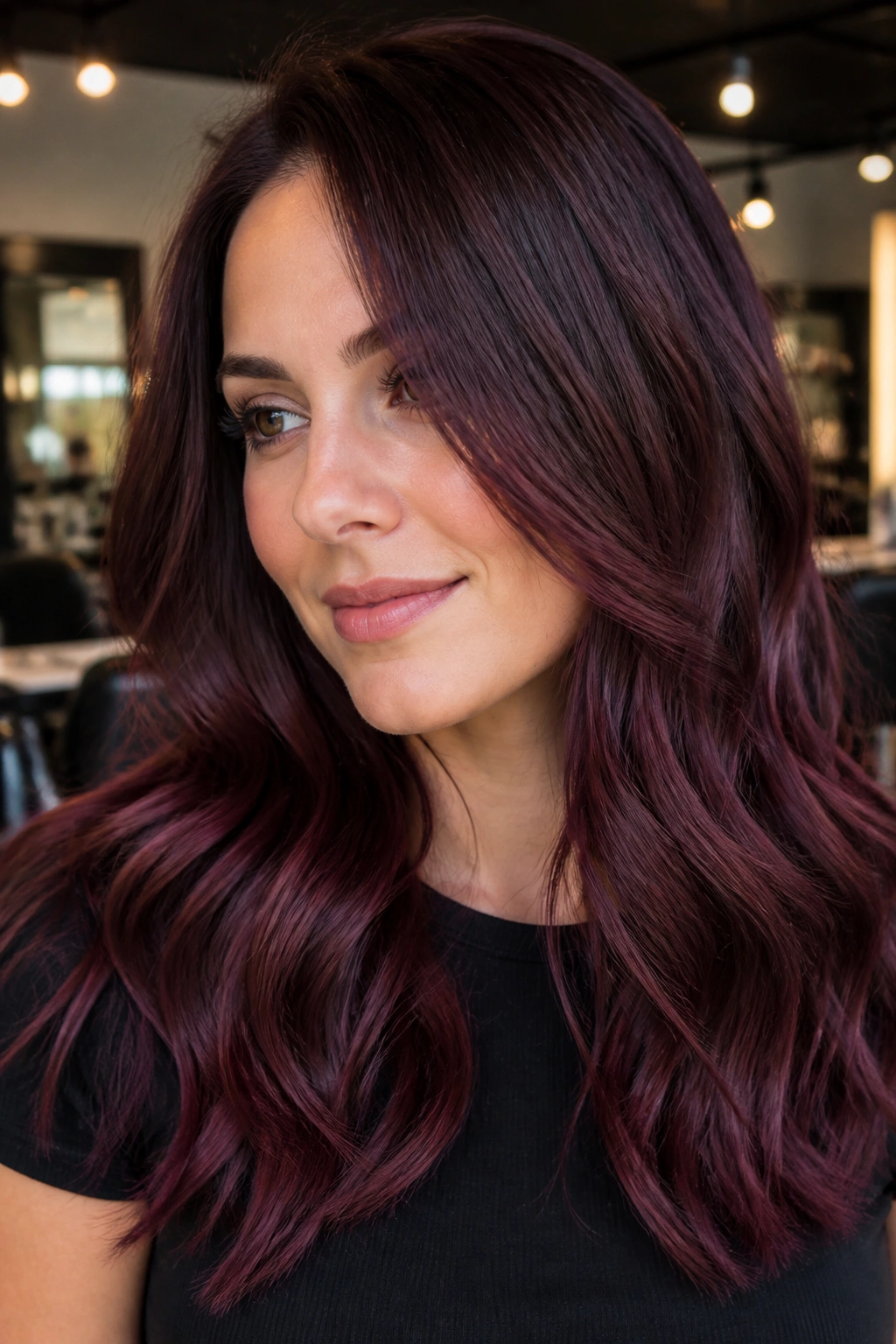
Mahogany plum melt is one of the richest shades here. It combines the depth of mahogany with the cooler edge of plum, which creates a red-brown that feels layered rather than flat. On cool skin, that layering matters. It keeps the hair from looking too warm or too harsh.
The melt technique helps, too. Instead of one block of color, the shade shifts from darker roots to slightly brighter mids and ends. That movement stops the plum from looking heavy. It also gives the mahogany something to hold onto so the whole thing feels grounded.
This is a great salon choice if you want something that looks carefully done. It has a little more polish than a single-process gloss, but it still grows out nicely because the root zone stays darker. If you have fine hair, the dark root plus plum melt can add the illusion of thickness. If your hair is thick, the variation keeps it from looking like a solid curtain.
Practical Details
- Level 4 mahogany root
- Plum-brown mids
- Softer berry ends
- Gloss every 4 to 6 weeks if you want the red to stay alive
It’s elegant, but not fragile. That’s what makes it useful.
19. Smoked Raspberry Brown
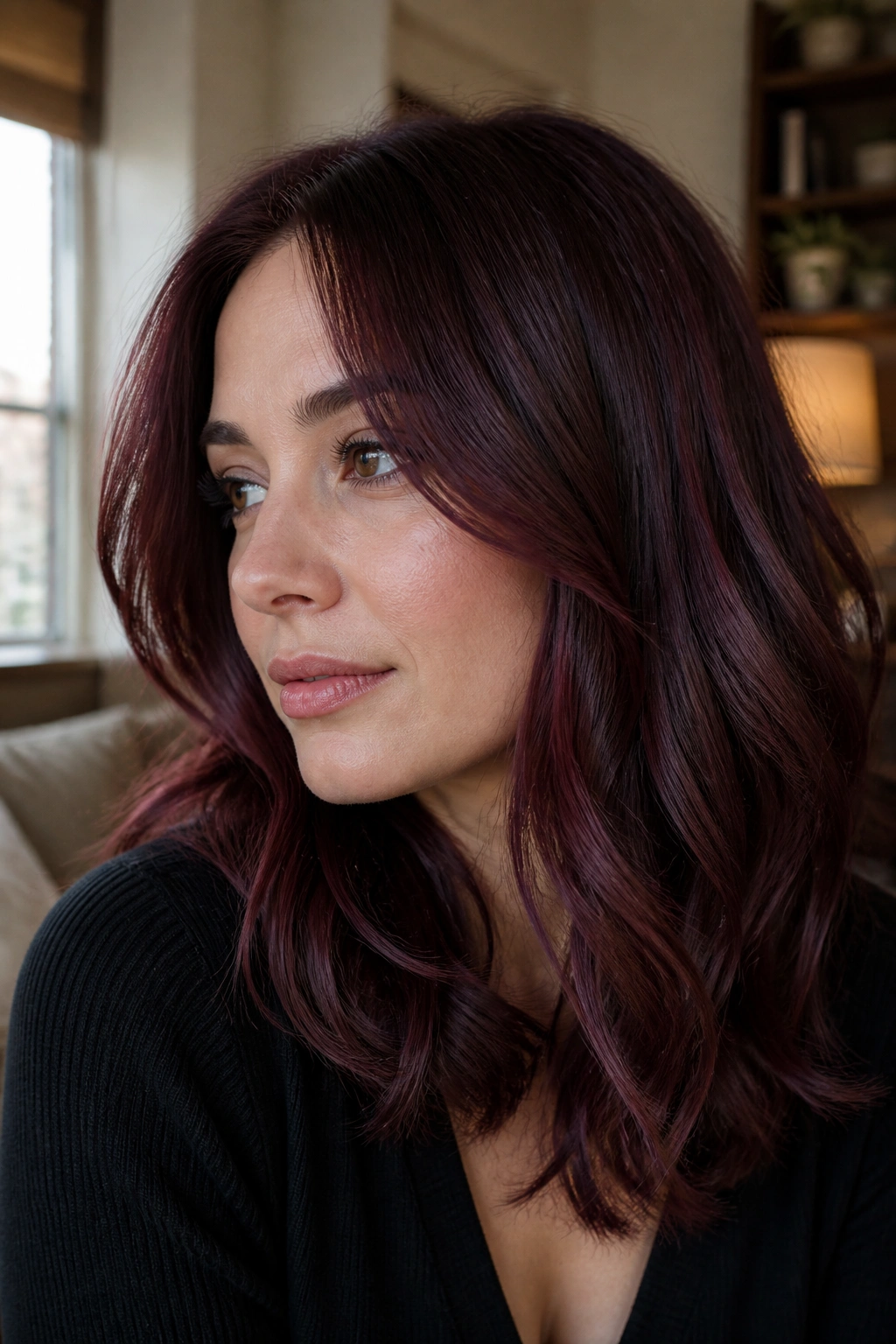
Smoked raspberry brown is a softer, airier take on red-brown hair. Raspberry gives you that cool red lift, while the smoky brown base keeps it from becoming pink. The result feels fresher than plum and less dark than burgundy.
This is a solid pick if you want something playful but still grown-up. On cool skin, the raspberry tone can brighten the face without adding heat. It works especially well on lighter brunettes or dark blonde hair that needs a richer story. If your skin has a lot of pink already, ask for a smoked version rather than a vivid one. That keeps the color flattering instead of echoing redness in the wrong way.
The shade can be done as an all-over tint, a gloss, or soft ribbons through the surface layers. I like it most when the raspberry sits on the outer hair and the brown stays deeper underneath. That lets the color show at movement points instead of turning flat.
Avoid one thing: too much pink. Once it crosses into pink-brown, it stops reading brunette and starts reading pastel. Not the same job.
20. Cool Burgundy Brunette
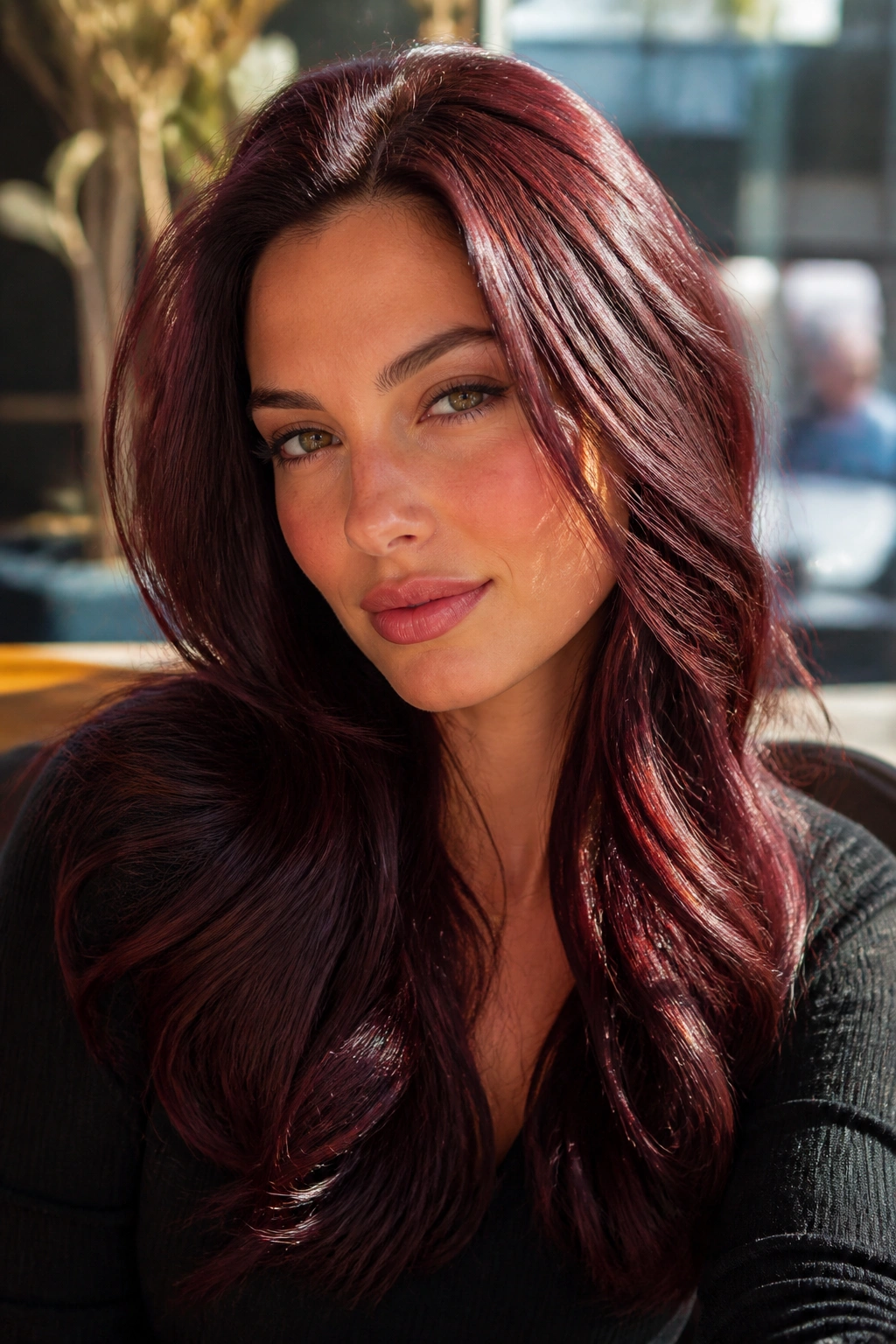
Cool burgundy brunette is the shade for someone who wants red-brown hair to look unmistakably rich. The burgundy keeps the tone cool; the brunette base keeps it wearable. It is dramatic, but not loud.
This color sits well on cool skin because it has enough depth to create contrast without the warmth that can make the face look flushed. If your natural hair is dark, you may only need a burgundy glaze over a brunette base. If your hair is lighter, you’ll likely need a deeper deposit so the color doesn’t fade too quickly.
The shade looks especially good on longer hair with movement. On a one-length cut, burgundy can look heavier, which is not always a bad thing, but it changes the feel. Layers, waves, or a bit of texture keep the red-brown from settling into one flat note. I also like this color with gloss finishes rather than matte ones. The shine helps the burgundy show as a polished color, not a dull dark brown.
One sentence version: This is the color when you want your hair to look dark, but not plain.
Final Thoughts
The best brown-red shades for cool skin tones usually do one thing well: they keep the red in the berry, wine, mahogany, or plum family instead of pushing it into copper. That is the whole game. The moment the red goes orange, the color starts working harder against your complexion.
If you want the safest starting point, choose a cool mahogany brown, cherry cola brunette, or deep burgundy gloss. Those three give you the red-brown look without forcing a huge leap. If you want something bolder, move toward plum melts, black cherry brown, or coffee cherry ombré.
Hair texture and porosity matter too. Highly porous ends grab red fast and fade fast, which means you may need a gloss between full color appointments. Low-porosity hair can resist the pigment a little more, so the shade may need extra processing time or a stronger deposit. Small detail. Big difference.
Pick the tone that makes your skin look calm, not busy. That’s the version worth keeping.
