



Wavy hair and brown color have a sneaky problem: the wrong shade makes the bends look fuzzy, while the right one makes every curve look deliberate. When people ask me for brown hair color ideas for wavy hair, I usually start with the wave pattern before I start talking about shade. Loose S-waves, tighter bends, high-porosity ends, and a strong side part all change how brown reads once it hits the head.
Brown is not one note. It can feel cool and smoky, warm and syrupy, deep and glossy, or soft and sunlit, and waves are what make those differences show up. A flat, single-process brown on straight hair can look fine. On waves, though, it can disappear. You want movement in the color, not just in the hair.
That’s why the best brunette shades for waves usually have some mix of depth at the root, lighter ribbons through the midlengths, or a gloss that shifts the tone just enough to keep it from looking dense. The good ones don’t scream for attention. They let the wave pattern do the talking.
And yes, placement matters almost as much as shade. A caramel ribbon sitting on the top of a bend looks very different from one buried underneath. That little bit of strategy is what separates a pretty brown from one that makes your hair look fuller, softer, and more expensive without trying too hard.
1. Mushroom Brown for Soft, Airy Waves
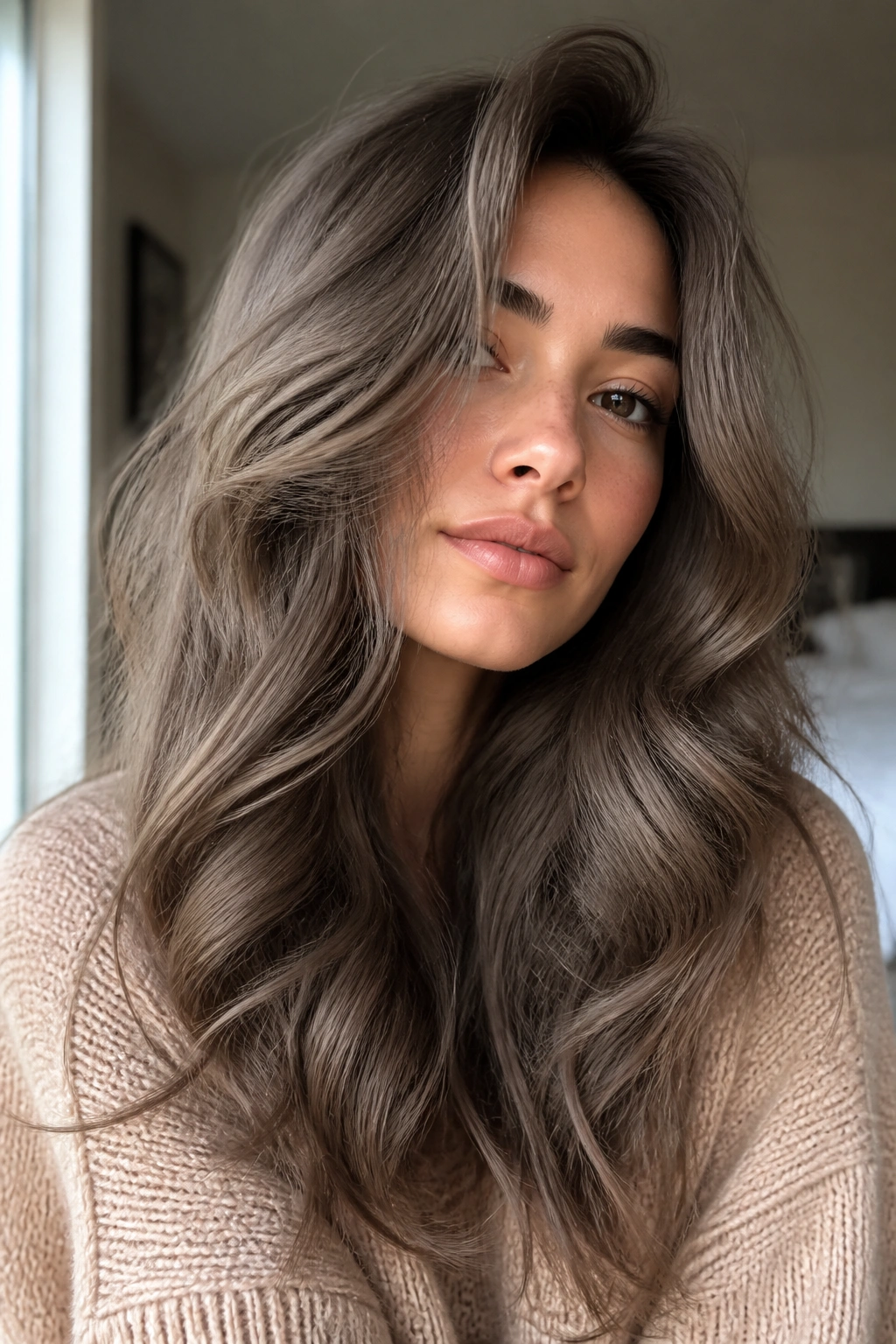
Mushroom brown has a cool, muted feel that sits somewhere between beige, taupe, and ash. On wavy hair, that softness matters. The bends pick up the lighter tones while the darker pieces underneath keep the color from drifting flat or muddy.
Why It Looks Good on Waves
Mushroom brown works because it does not fight the texture. Waves already create shadow and shine on their own, so a cool brown with a little smoke in it feels like a natural extension of the hair instead of a costume change.
Ask for a level 5 or 6 brown base with ash-beige ribbons and a soft root shadow. If the highlights are too pale, the whole thing can look striped. The best version stays muted and just a little cloudy.
- Best for: medium to fine waves that need softness, not contrast
- Ask for: ash lowlights, beige babylights, and a root melt
- Avoid: chunky light pieces that sit on top like stripes
My take: if your waves already have a lot of movement, mushroom brown keeps the whole look calm and expensive.
2. Chocolate Brown Balayage for Long Wavy Layers
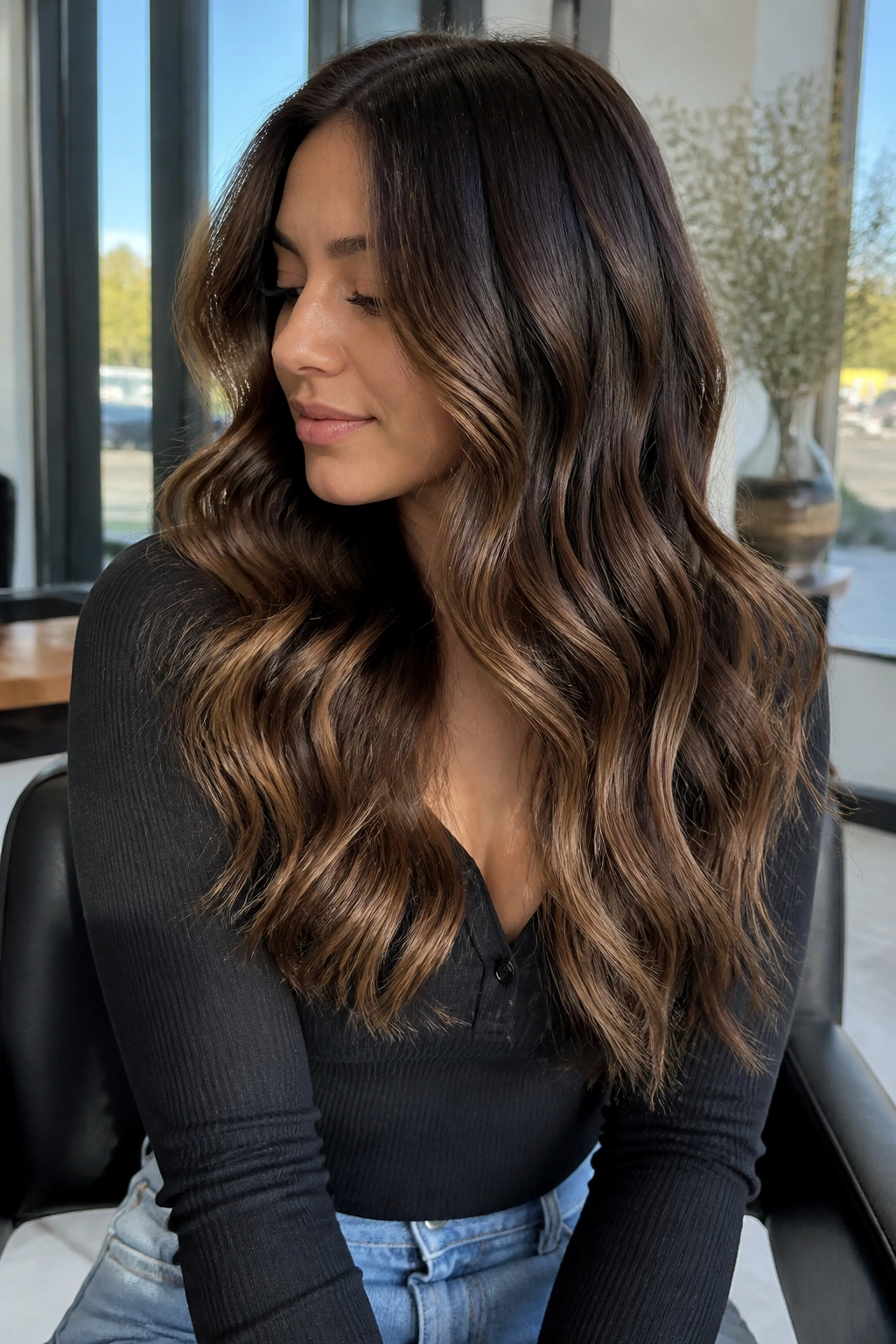
Chocolate brown balayage is the safe choice that rarely feels boring when it’s done well. The base stays rich and deep, while hand-painted ribbons lift just the outer bends of the wave. That makes the hair look fuller from the midlengths down, which is exactly where waves can start to feel heavy.
How the Balayage Should Sit
The painted pieces should not be scattered everywhere. They should follow the shape of the cut, landing where the hair naturally curves around the face and through the ends. That way, the color looks woven in instead of dropped on top.
I like this look on medium brown bases because it keeps enough depth to show shine. If the lift is only one or two levels lighter than the base, the result feels polished and wearable. If the contrast gets too high, the wave pattern can start looking busy.
A good colorist will also leave some darker pieces underneath. That hidden depth is what keeps chocolate balayage from turning into a washed-out brown blonde hybrid.
3. Chestnut Brown with Copper Melt Around the Ends
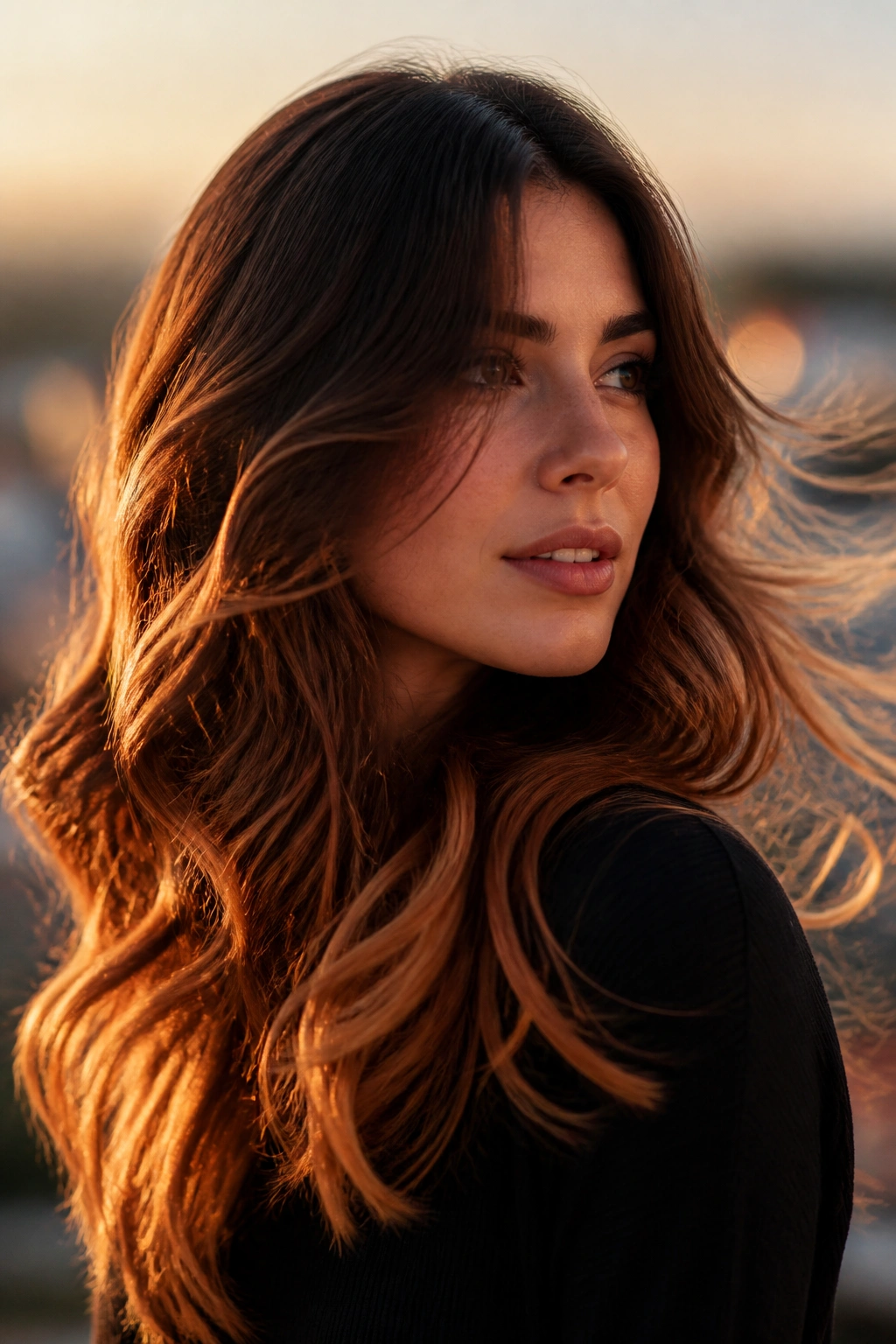
Chestnut brown with copper at the ends has a warm, almost burnished look that suits waves beautifully. The chestnut base gives you depth near the roots, then the copper melt makes the lower half of the wave look lit from within. It’s a shade that feels rich even when the hair is air-dried and a little messy.
Waves love this kind of warmth because the color changes from bend to bend. One curve reads as chestnut. The next turns cinnamon. The next catches a little copper and suddenly the whole thing looks more alive.
What Makes the Melt Work
The key is a soft transition, not a hard line. You want the copper to start as a whisper through the midlengths and get a little brighter toward the ends.
- Use demi-permanent gloss for the copper pieces if you want less commitment.
- Keep the root area closer to a neutral chestnut.
- Ask for the ends to stay sheer, not opaque, so the waves still show through.
This shade is especially good if your natural color already has warmth. It can look a little loud on very cool skin tones, but on the right base it’s hard to beat.
4. Espresso Brown with Caramel Face Frame
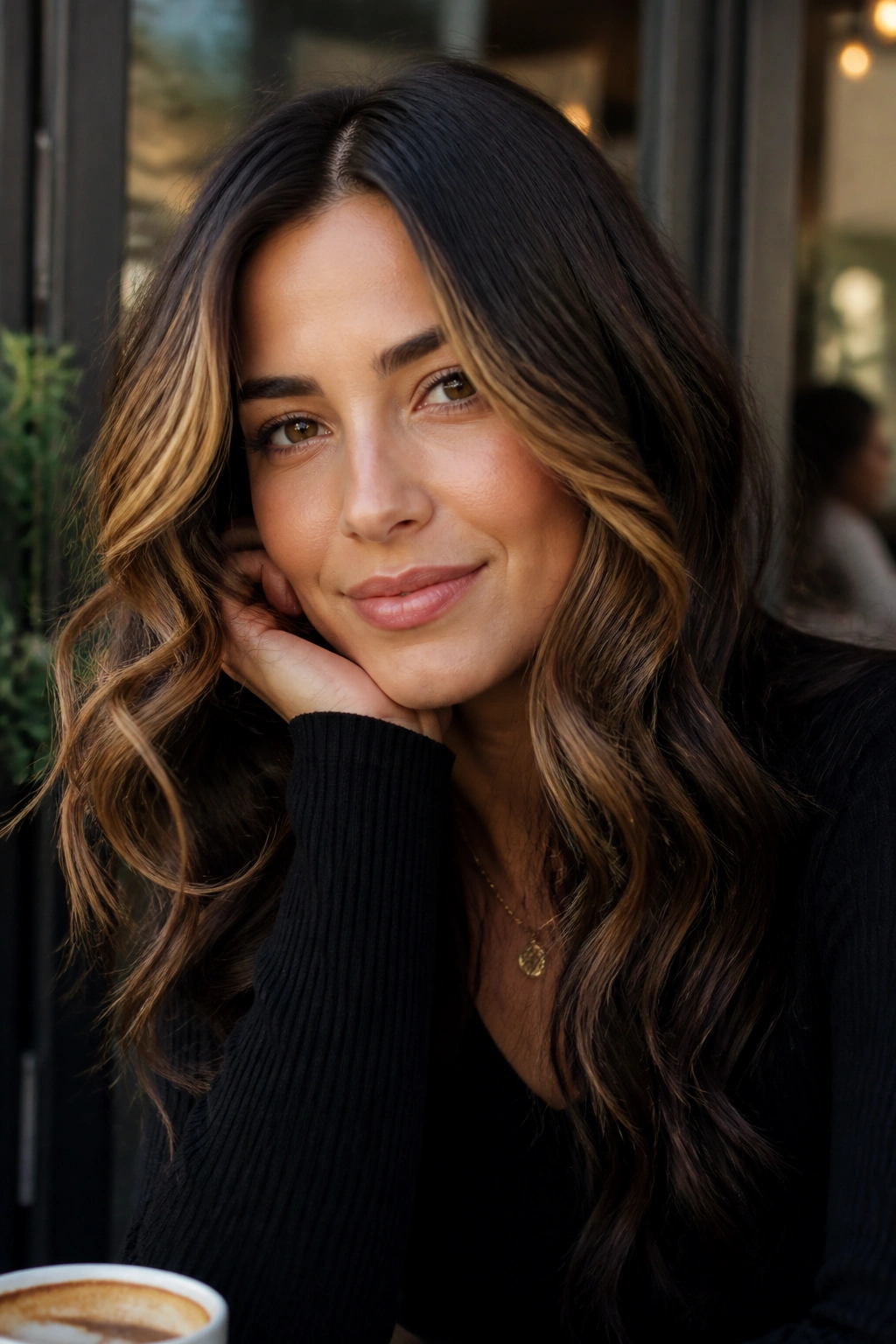
Espresso brown is deep, dark, and unapologetic. Caramel around the face keeps it from feeling heavy. That contrast is what makes waves pop, especially if you wear a middle part or have curtain bangs that land near the cheekbones.
This is one of my favorite brown hair color ideas for wavy hair when someone wants drama without going blonde. The espresso base gives you that inky richness; the caramel pieces do the job of catching light exactly where the eye goes first.
The face frame should stay thin. Really thin. Thick money pieces can look harsh against waves, while two or three slender ribbons on each side give movement without shouting.
If your hair is dense, this combo also helps break up the mass. If it’s finer, keep the caramel close to your natural level so the transition stays soft. The whole point is contrast with control.
5. Mocha Brown with Soft Babylights
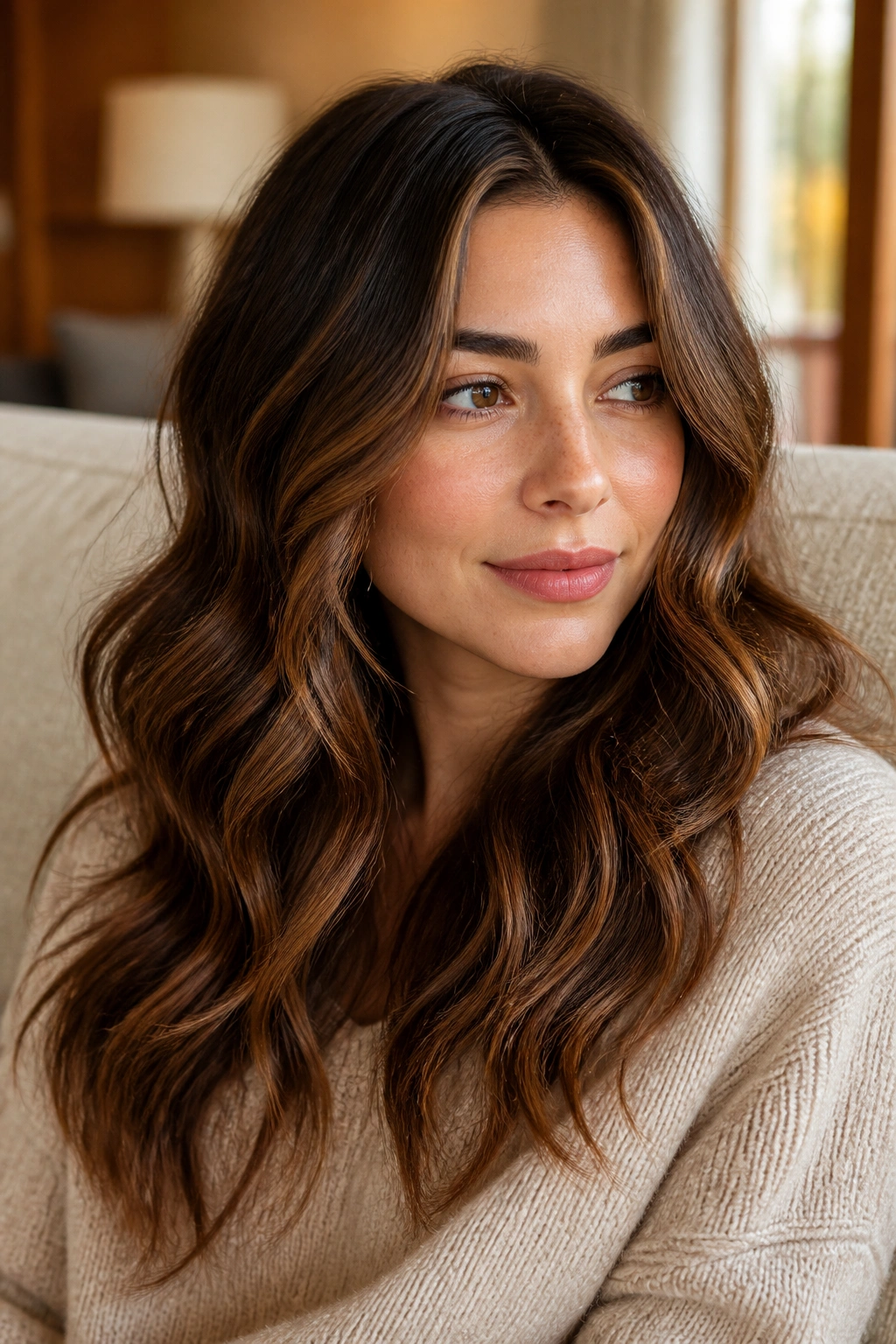
Mocha brown is one of those shades that looks easy, which is probably why people underestimate it. The base sits in that creamy middle zone between cool and warm, and soft babylights add just enough variation to keep waves from collapsing into one color block.
Babylight Detail That Matters
Babylights should be tiny. Think fine, delicate sections that melt into the wave rather than announce themselves. A good colorist will place them around the top layer, the part line, and the bends that frame the face.
That placement does two things. It keeps the color subtle, and it makes the hair look like it has more texture than it really does. Fine waves often need that little trick.
- Best if you want: low-contrast color that grows out cleanly
- Ask for: fine babylights, a soft mocha base, and a neutral gloss
- Works well on: shoulder-length cuts and longer lobs
Mocha brown is not the flashiest option here. That’s the point. It’s the shade for someone who wants depth and movement without a lot of salon drama.
6. Cinnamon Brown on Medium Wavy Hair
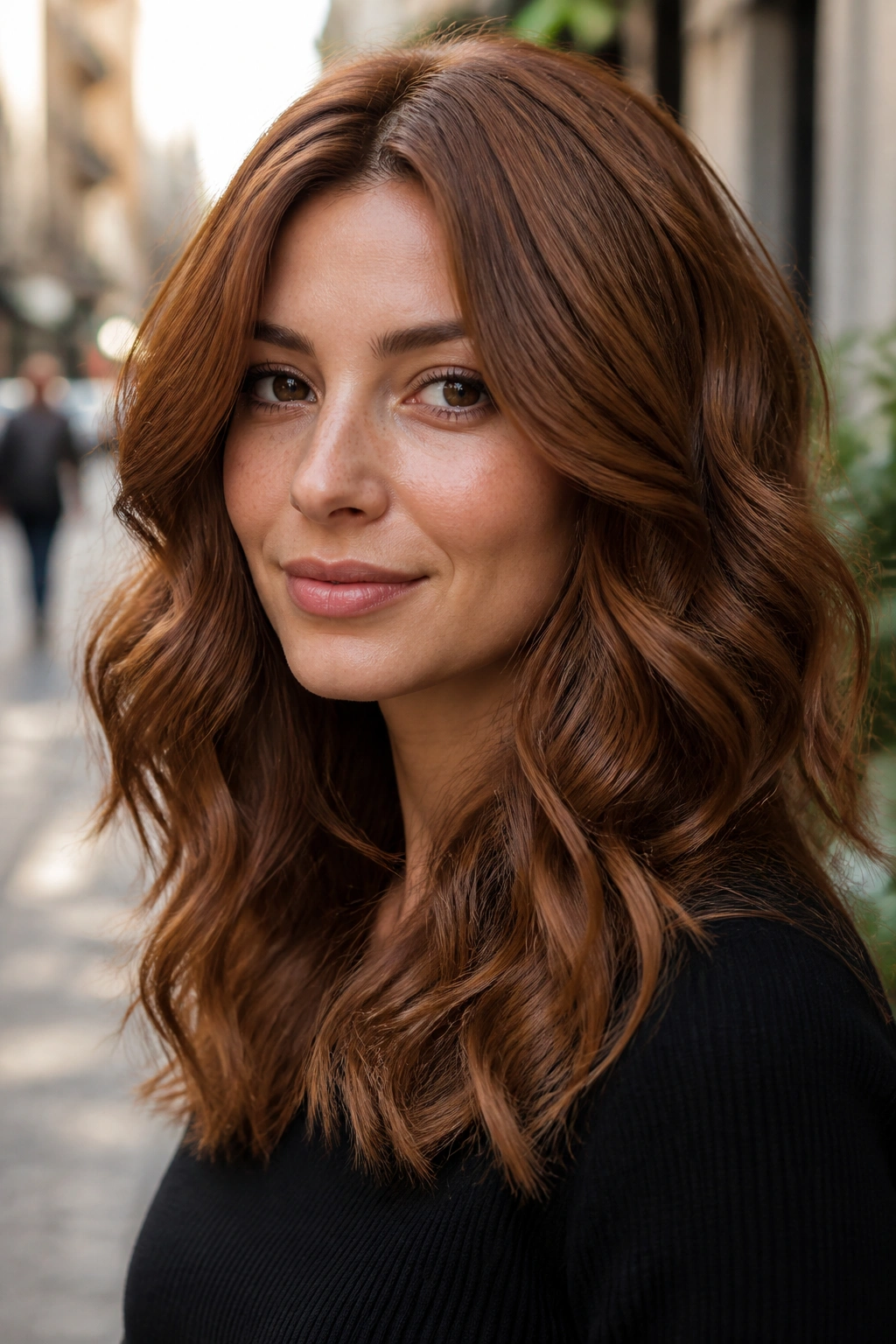
Cinnamon brown has a warm spice to it, but it should never tip into red-orange territory unless that is your goal. On medium waves, the color reads rich and dimensional because every bend reflects a slightly different part of the tone. One section looks toasted. Another looks soft and brown. Another catches a faint copper edge.
That shifting effect makes the hair feel thicker than a single flat brown ever could. It also works especially well on cuts with layered ends, since the warm pieces gather at the bottom of the wave and keep the style from looking heavy.
A gloss helps here. A lot. Cinnamon can go too bright after a few washes, so a warm brown toner or color mask keeps it in that sweet spot between spice and softness.
If your skin has golden or peach undertones, this shade can be a dead simple win.
7. Cool Ash Brown for Frizz-Friendly Waves
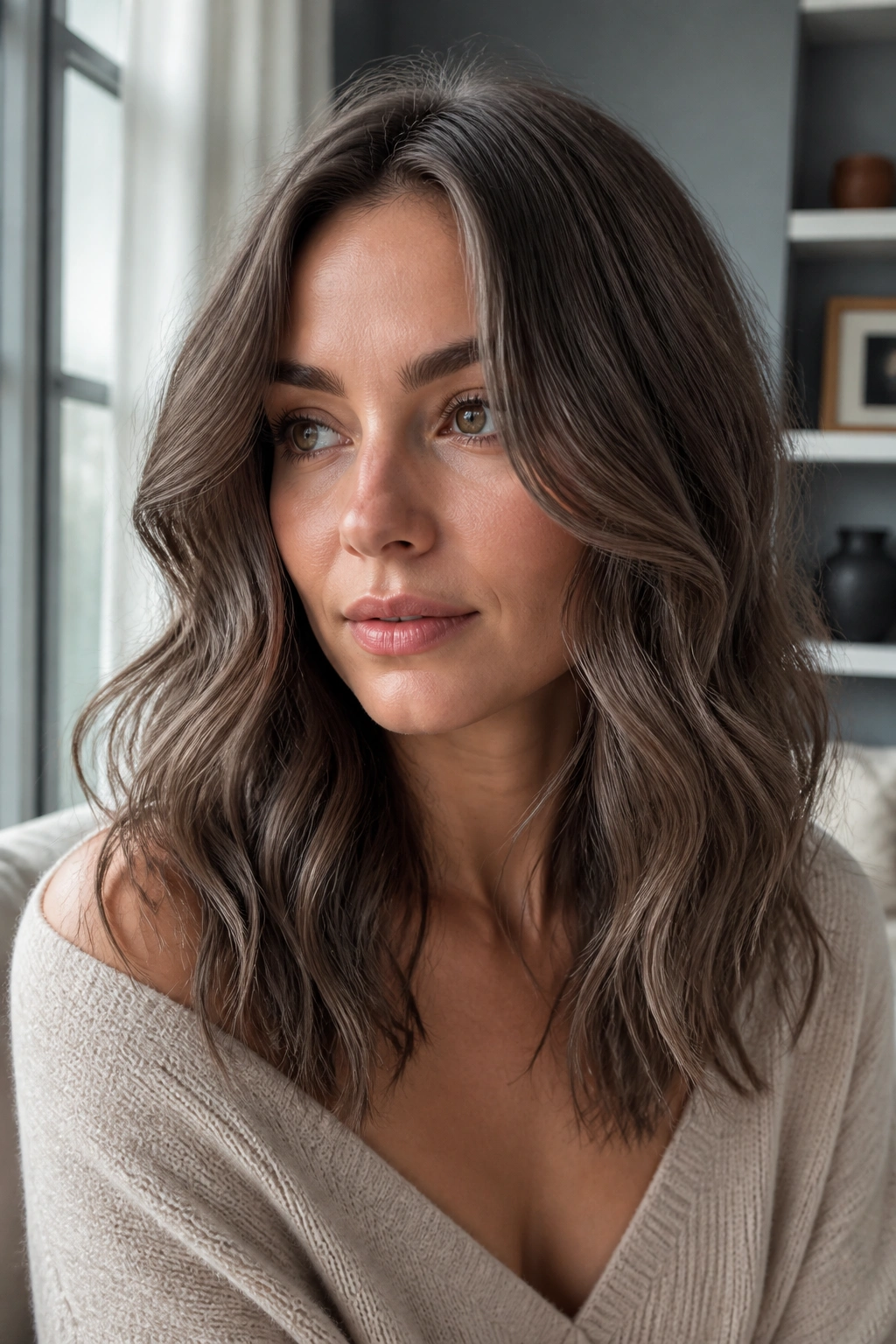
Cool ash brown is the shade I recommend when someone wants the waves to look tidier without losing texture. It has a smoky cast that cuts down on brass, and that cooler base makes frizz look less obvious at the ends.
Why does it work? Because ash tones have less golden reflection, so the eye reads the color as smoother. On wavy hair, that can be a huge advantage on days when your pattern is doing its own thing and not always in a cooperative mood.
What to Watch For
Ash brown can go flat if the whole head is one tone. Leave some depth near the roots and a few darker pieces underneath. Otherwise, the result can look a little chalky.
It’s a smart choice if your hair pulls orange after lightening or if your natural brown turns warm in sunlight faster than you like. It is not the warmest, friendliest shade in the lineup, but it does a very specific job well. And sometimes that’s exactly what you need.
8. Golden Walnut Brown with Sunlit Ends
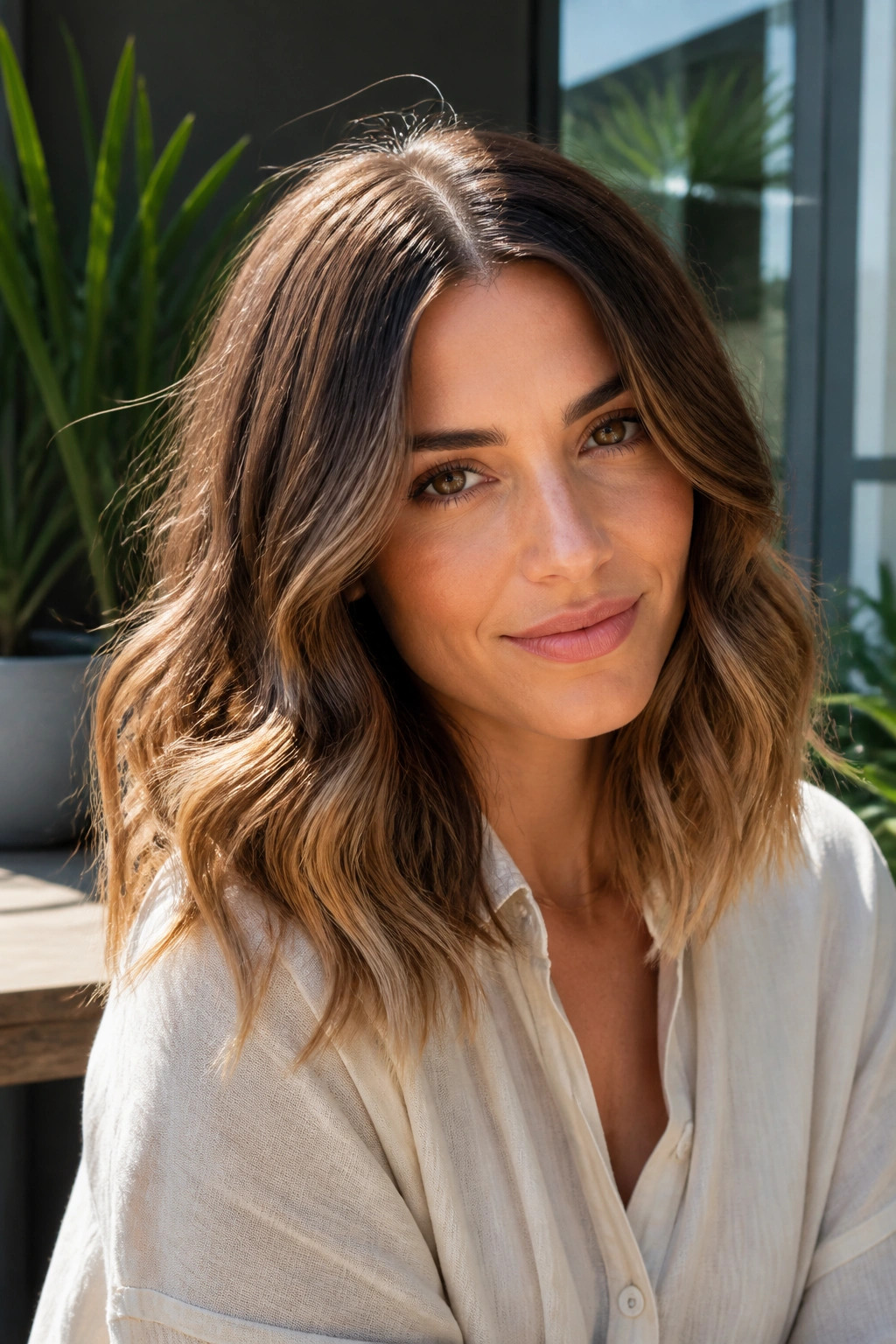
Golden walnut brown sits in that sweet middle ground between warm and neutral. The base has a nutty brown feel, then the ends pick up just enough gold to make the waves look softer and more open. It’s the kind of color that looks casual in daylight and still polished indoors.
Picture a shoulder-length wave with a center part, the lightest pieces sitting right where the hair curves outward. That’s the effect you want. Not streaks. Not stripes. Just a gentle lift that makes the wave shape easy to read.
- Good match for: olive, golden, and neutral skin tones
- Best placement: midlengths and ends, not the root line
- Maintenance level: medium; a gloss every few weeks keeps the gold from turning brassy
Golden walnut is friendly without looking basic. I like it on hair that already has a little body, because the warm reflection gives each bend a soft edge.
9. Rose Brown with Smoky Undertones
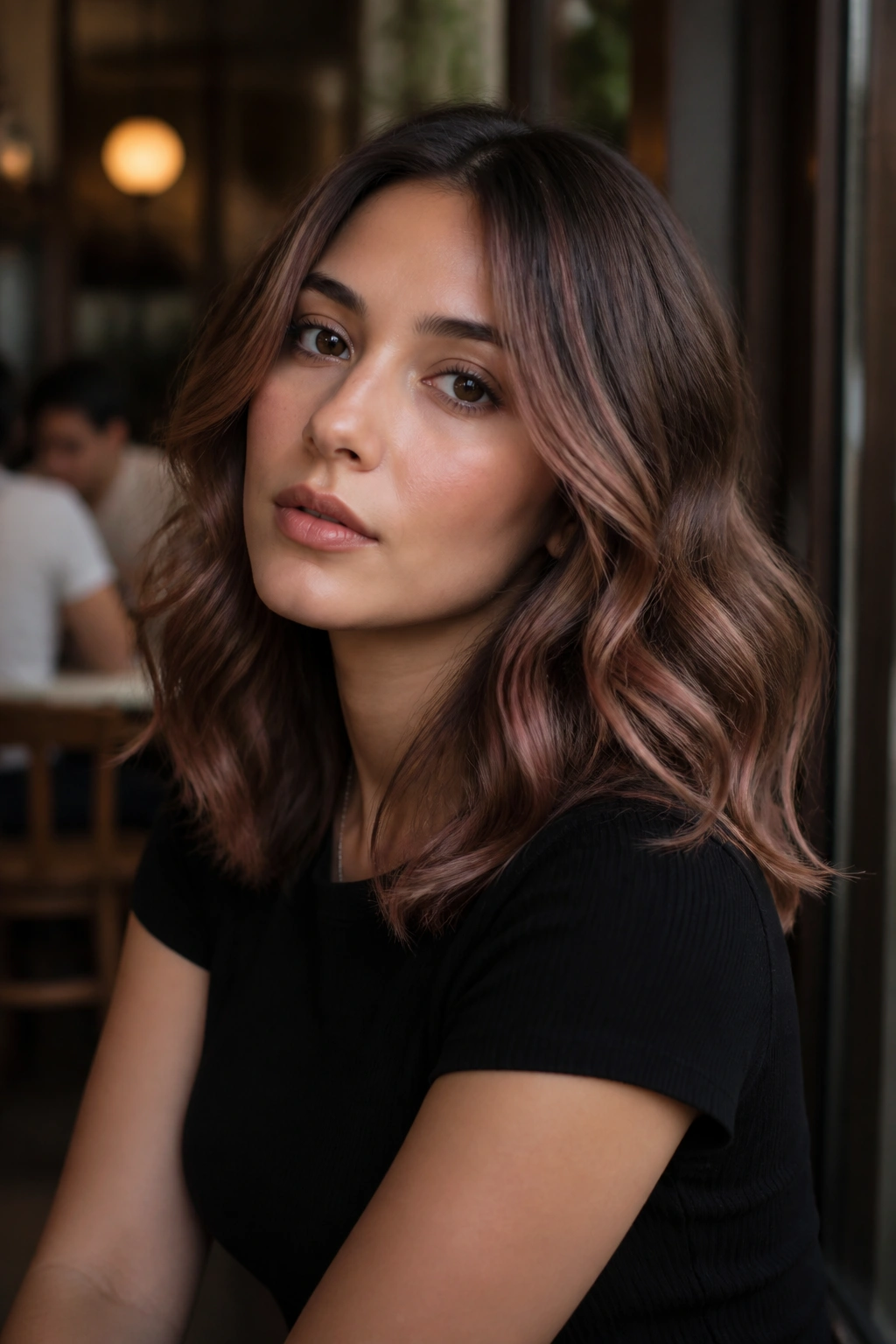
Rose brown is the brown shade for someone who likes a slight curveball. It has a dusty pink cast that sits under the brown rather than sitting on top of it, which keeps it from looking sugary. On wavy hair, the color moves in and out of view, so the rose note shows up as a whisper instead of a headline.
That is what makes it wearable. The smoky base keeps it grounded. The rose tint gives it personality.
I like rose brown best on medium-depth hair where the tone can show without heavy bleaching. It also grows out with a softer edge than brighter fashion shades, which is nice when you want color that fades into something still attractive.
A cool gloss helps the rose stay muted. If the tone gets too pink, it can start feeling frothy. Keep it dusty, keep it brown, and let the waves carry the rest.
10. Toffee Brunette with Ribbon Highlights
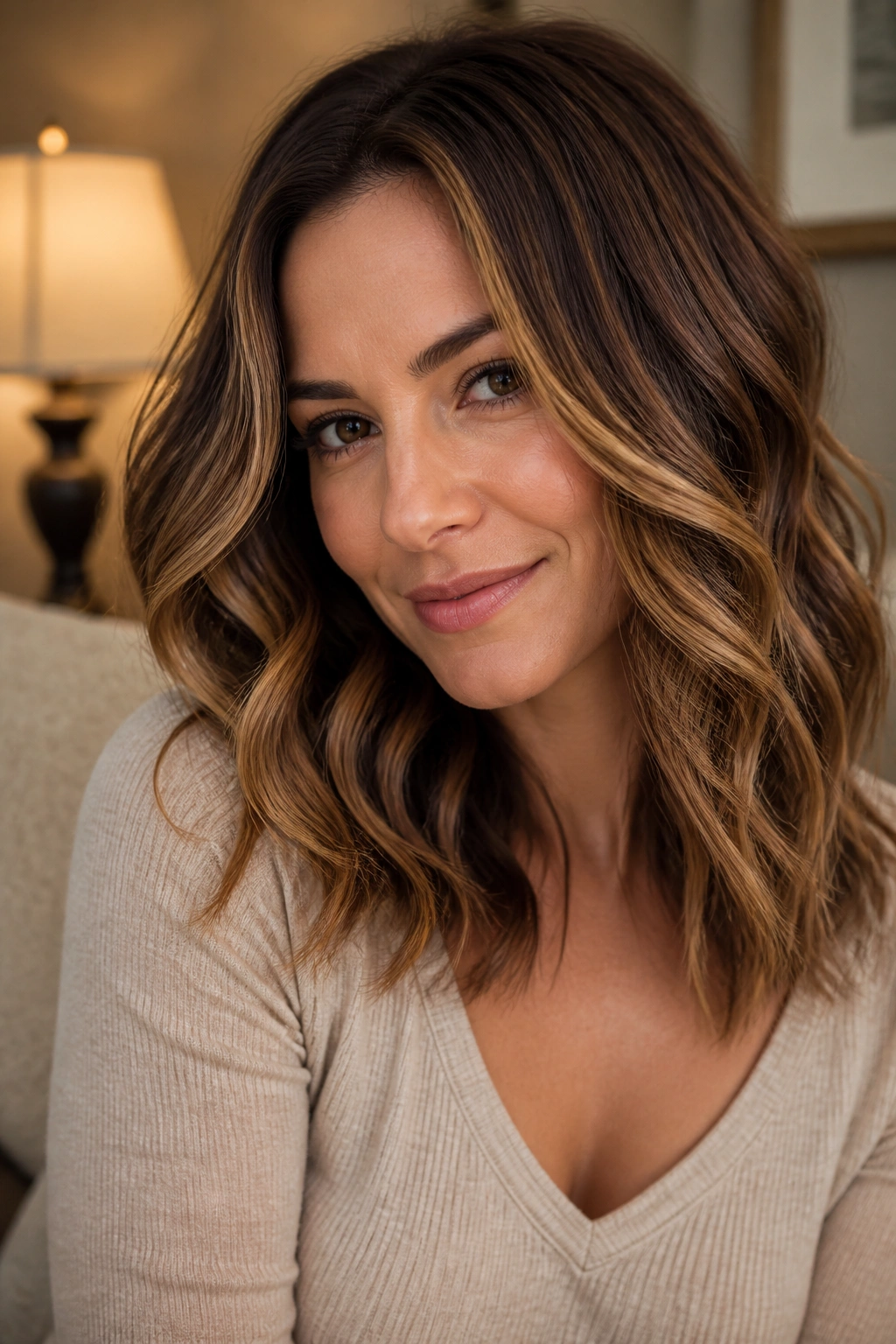
Toffee brunette has a sweeter, warmer feel than chocolate, but it’s still grounded enough to read as brown. The ribbon highlights are what make it work on waves. They run through the midlengths and ends like thin threads, so every bend picks up a little shine.
Why the Placement Matters
If the highlights are all clustered near the crown, the color can look overdone. When they follow the wave pattern, though, the effect feels far more natural. The eye reads light and shadow at the same time, which is why the texture looks so full.
A few things make this shade worth trying:
- Keep the ribbons one to two levels lighter than the base.
- Ask for a warm beige or soft caramel tone, not pale blonde.
- Leave some deeper brown near the underlayers so the hair still looks rich.
Toffee brunette is a good option if you want warmth without going full copper. It has enough sweetness to brighten the face, but it still respects the brown base. That balance is the whole point.
11. Dark Chocolate Brown with Honey Ribbons
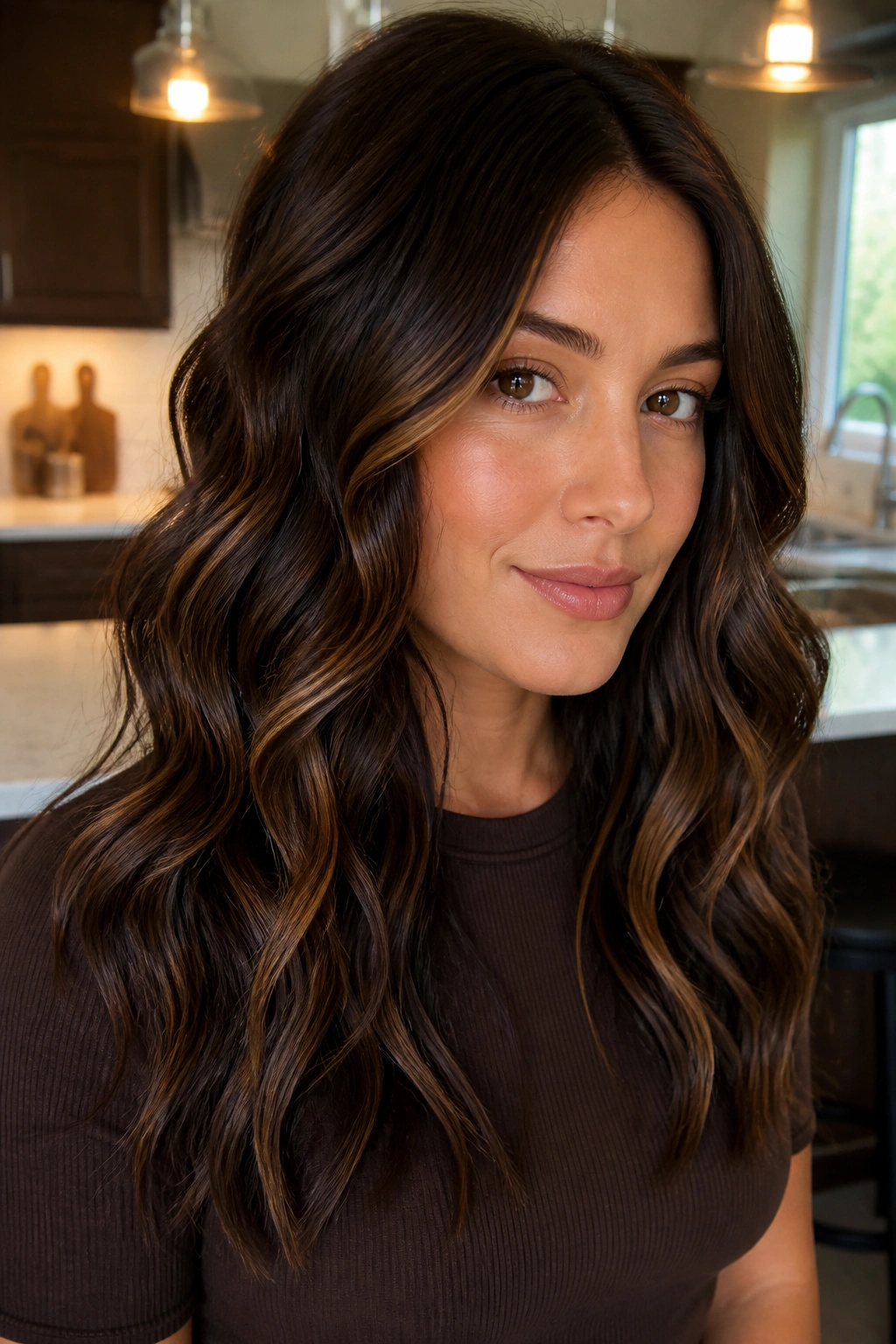
Dark chocolate brown looks especially good on wavy hair when you want the richness to stay front and center. Honey ribbons cut through that depth and stop the style from feeling too heavy. The contrast is stronger than mocha or toffee, but still softer than blonde highlights.
I like this shade on thick waves because the darker base calms the volume while the honey pieces keep the layers visible. On very fine hair, the contrast can be a little louder than you want unless the ribbons are ultra-thin.
The honey should sit in the bends, not on every strand. That’s the mistake people make. They ask for lightness everywhere, then wonder why the wave pattern looks scattered. A few well-placed warm pieces do more work than a head full of highlights.
This is also one of the easier shades to keep shiny. Dark chocolate shows gloss well, and the honey tones give the hair a warmer finish without turning it orange.
12. Smoky Brunette with Beige Lowlights
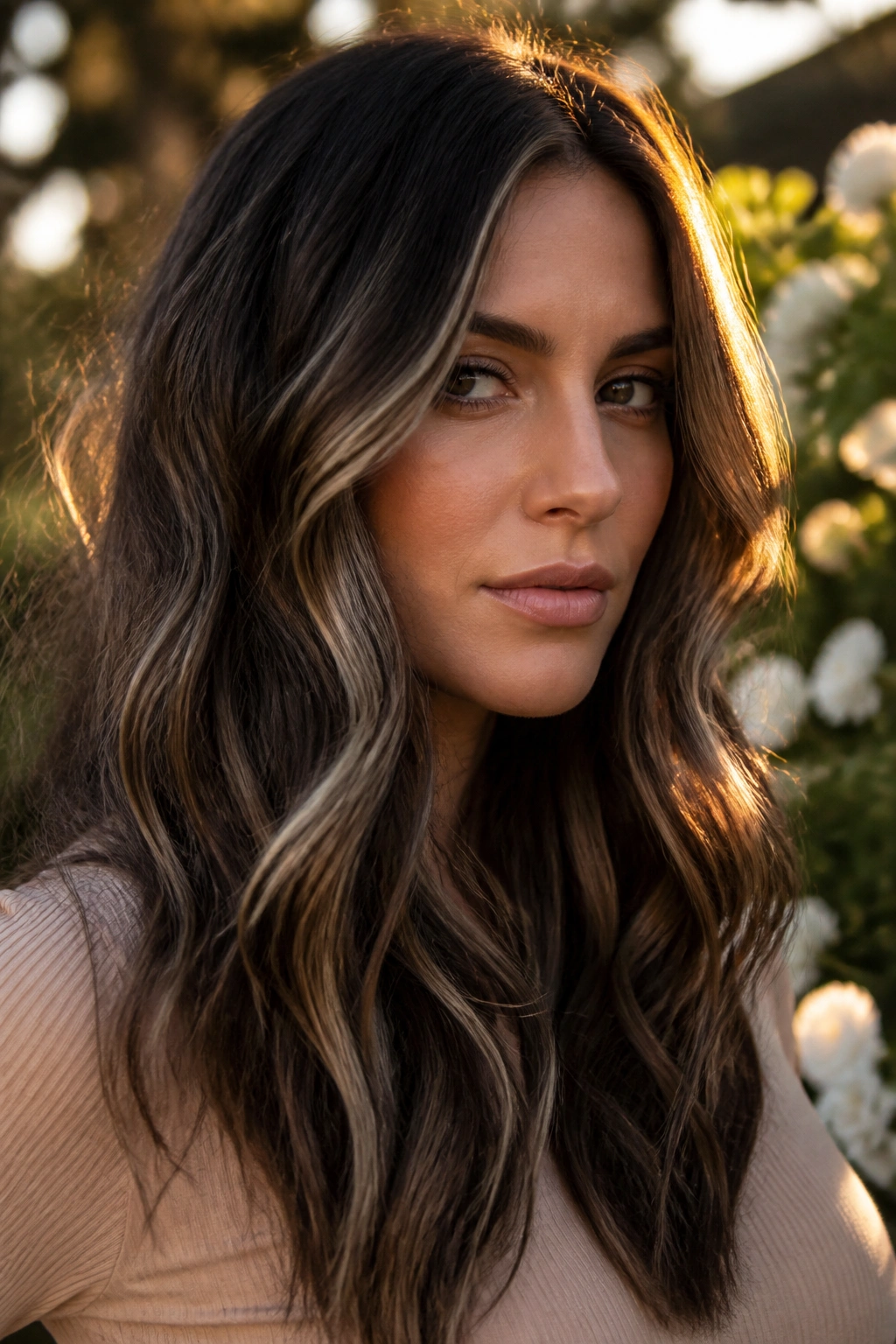
Smoky brunette is brown with the warmth turned down and the depth turned up. Beige lowlights keep it from going one-note, which is especially useful on wavy hair because waves can swallow dark color if you let them.
Are beige lowlights exciting? Not exactly. They are useful, though, and sometimes useful wins. A few beige pieces placed under the top layer make the waves look more defined without making the whole head lighter.
Where Beige Lowlights Help
Use them around the ears, through the lower midlengths, and in the back where waves can look bulky. The effect is subtle, but it changes how the silhouette reads.
This is a good shade if you want a cooler brunette that still feels soft. It’s also a solid fix for hair that pulls too warm under indoor light. A neutral gloss every so often keeps the beige from turning yellow. Small detail. Big payoff.
13. Mahogany Brown for Dense, Thick Waves
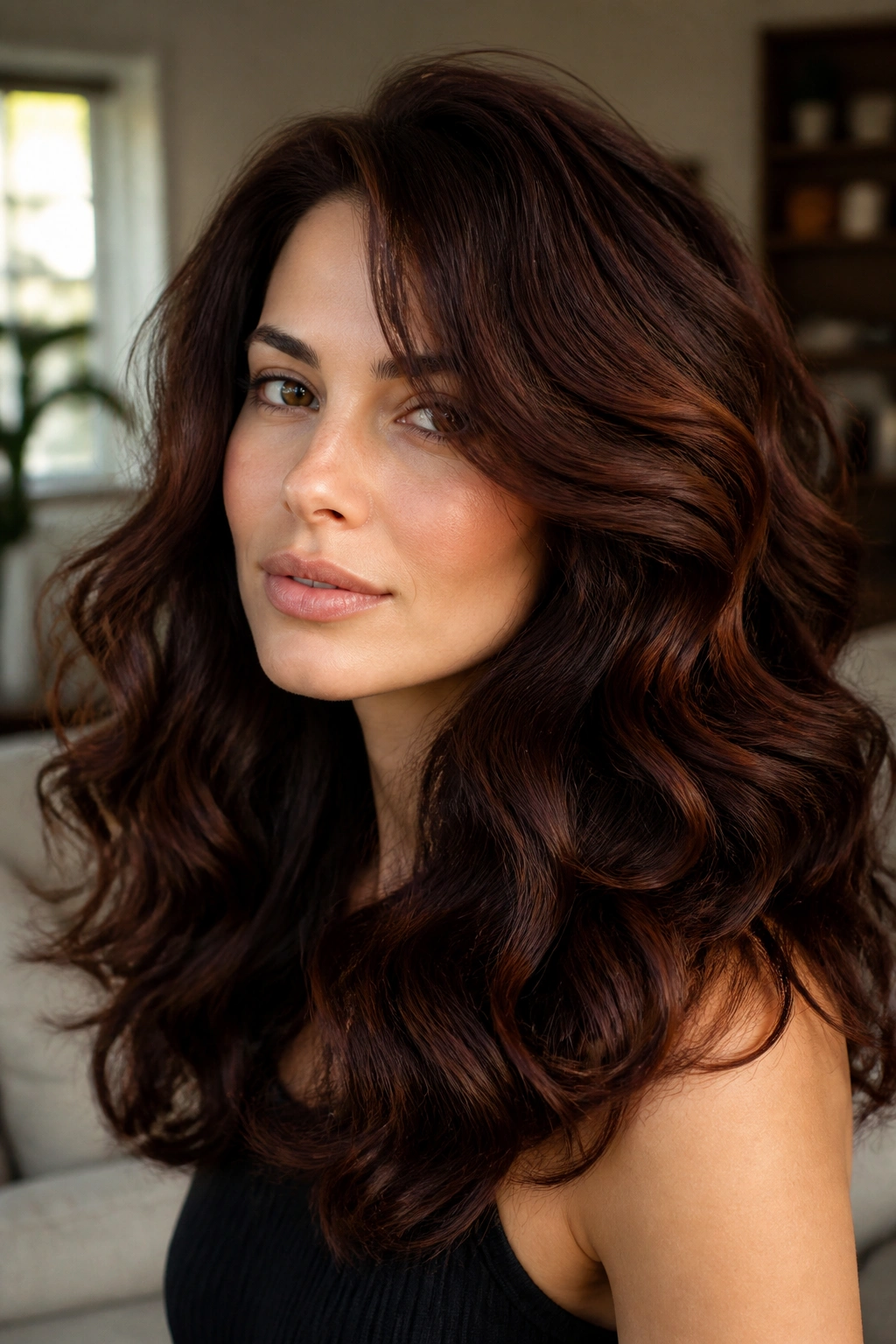
Mahogany brown has a red-brown depth that gives thick waves more shape. It’s richer than auburn and darker than copper, which means it can show off texture without looking fiery. On dense hair, that matters. You want color that can cut through the mass.
The best mahogany tones sit closer to a deep wine-brown than a bright red. That makes the color feel grown-up and a little moody, which suits waves that have a strong bend or a wide, loose S pattern.
Compared with chestnut, mahogany has more red in the mix. Compared with cherry cola, it feels less glossy and more earthy. That difference sounds small on paper, but on hair it changes everything.
If your waves are thick, mahogany also helps the ends look less bulky. The deeper warmth creates a cleaner outline. Not flashy. Just effective.
14. Bronzed Brown with Sunkissed Midlengths
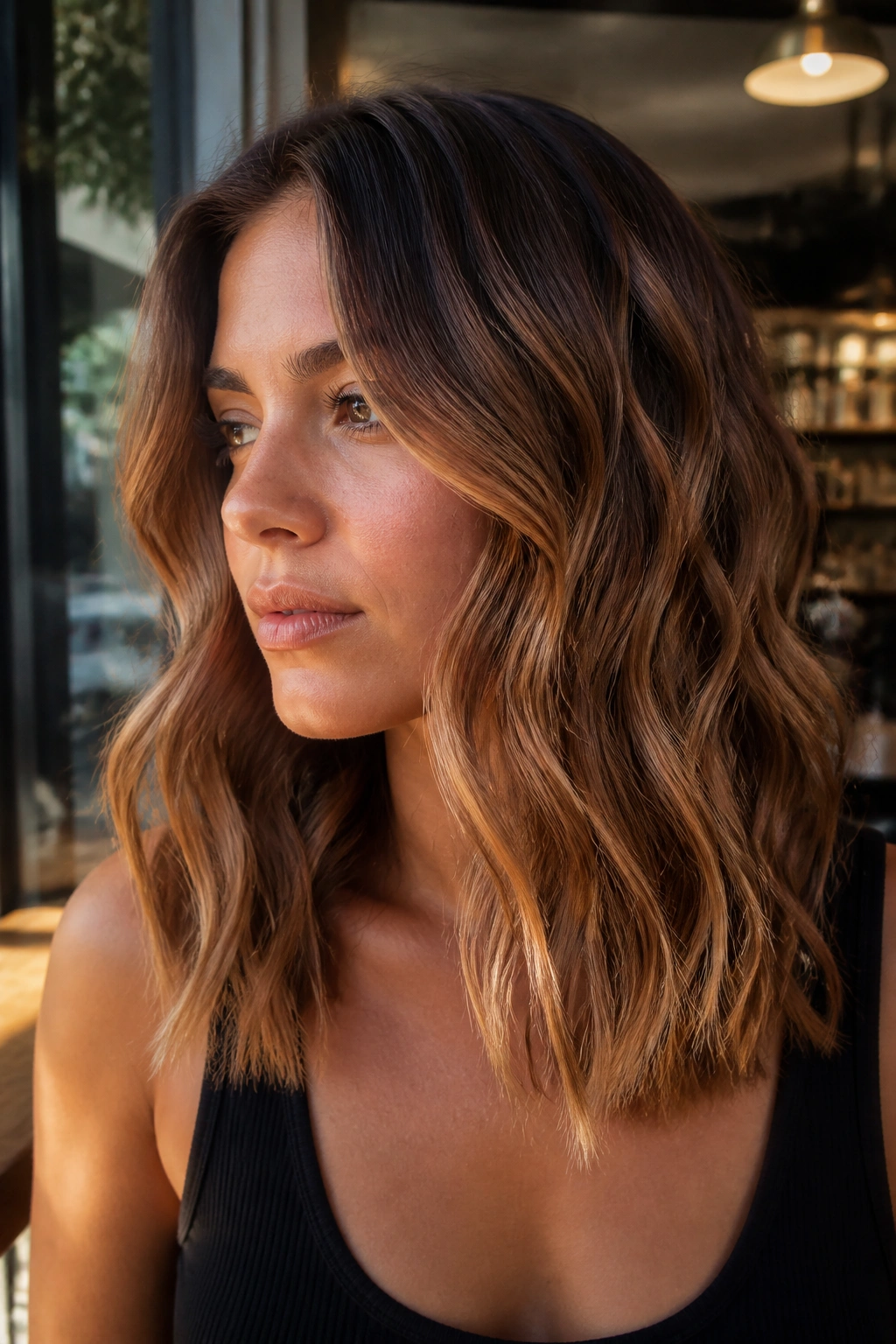
Bronzed brown works especially well when you want the hair to feel warm and dimensional without leaning gold-heavy. The bronze note gives the brown a metallic softness, and the sunkissed midlengths keep the waves from sinking into shadow.
Imagine a loose wavy lob with pieces that brighten right in the center of each bend. That’s the sweet spot. The root stays grounded. The middle section picks up the glow. The ends stay polished instead of pale.
- Best on medium brown or dark blonde bases
- Ask for bronze gloss, not orange warmth
- Keep the lightest pieces around the face and upper layers
Bronzed brown has a bit more shine than walnut or mocha, which makes it a smart pick if your hair tends to look dry. It also photographs well in natural light, though I’d avoid making that the only reason you choose it. Pick it because it flatters the texture.
15. Teddy Bear Brown with Soft Root Shadow
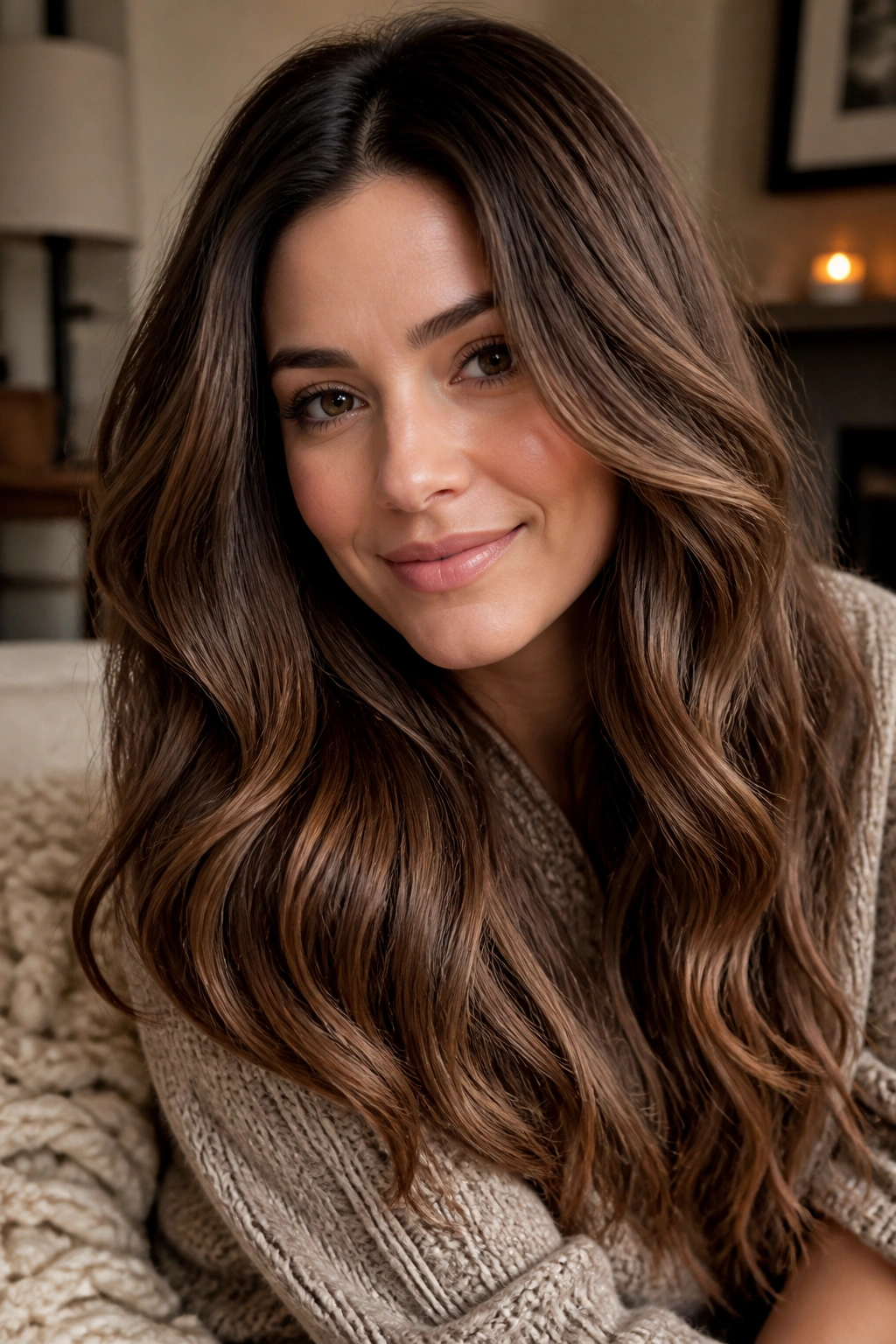
Teddy bear brown is the cozy brunette shade. It’s warm, neutral, and just soft enough that it feels lived-in from the start. The root shadow matters here because it keeps the color from looking freshly done in a stiff way. The result is relaxed, not flat.
I like this one on wavy hair that has a little bend but not a ton of frizz. The soft brown catches the texture without getting too reddish or too ashy. It feels plush, like a knit sweater translated into hair color.
What makes teddy bear brown stand out is how wearable it is. You can air-dry it, diffuse it, twist it into a loose clip, and it still reads like intentional color. No hard lines. No loud contrast. Just a brown that sits comfortably on the hair and lets the wave pattern stay visible.
It’s also forgiving as it grows out. That counts for more than people think.
16. Cherry Cola Brown for Dark Wavy Hair
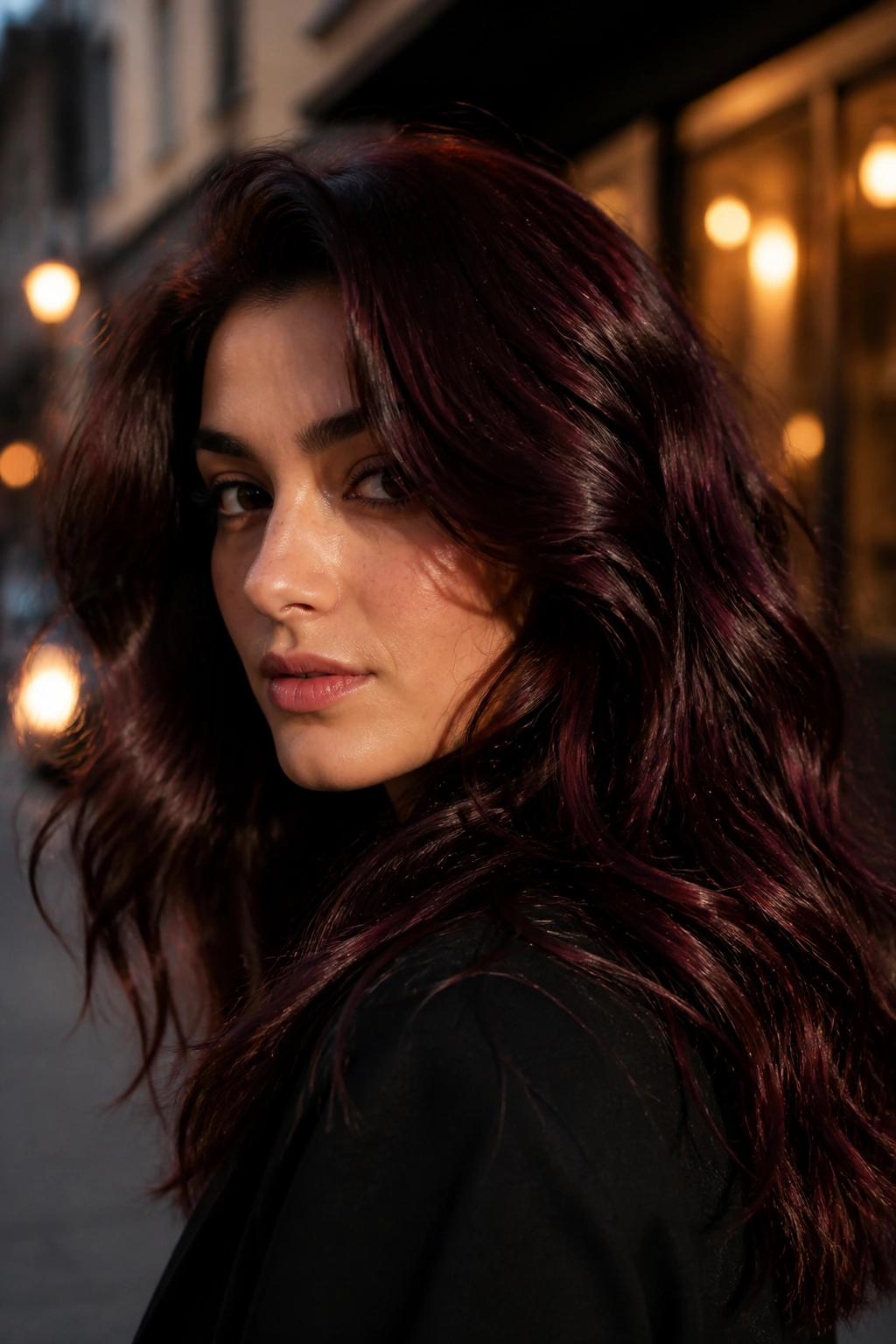
Cherry cola brown is deep brunette with a red sheen that shows itself in indirect light. On dark wavy hair, that little hit of color keeps the whole look from fading into the background. It’s darker than mahogany and cooler than copper, which gives it a smoother edge.
I love this shade when someone wants depth first and color second. The brown remains the main event. The cherry note appears when the hair moves, which is exactly what waves do best.
A glossy finish helps here. A lot of shine products promise drama and give you grease. Skip that. Ask for a color gloss or a light serum that leaves the hair reflective instead of slick.
Cherry cola also suits layered cuts because the red undertone catches at the ends of each wave. You do not need a lot of brightness for it to work. A little goes a long way.
17. Hazelnut Brown with Pale Veils
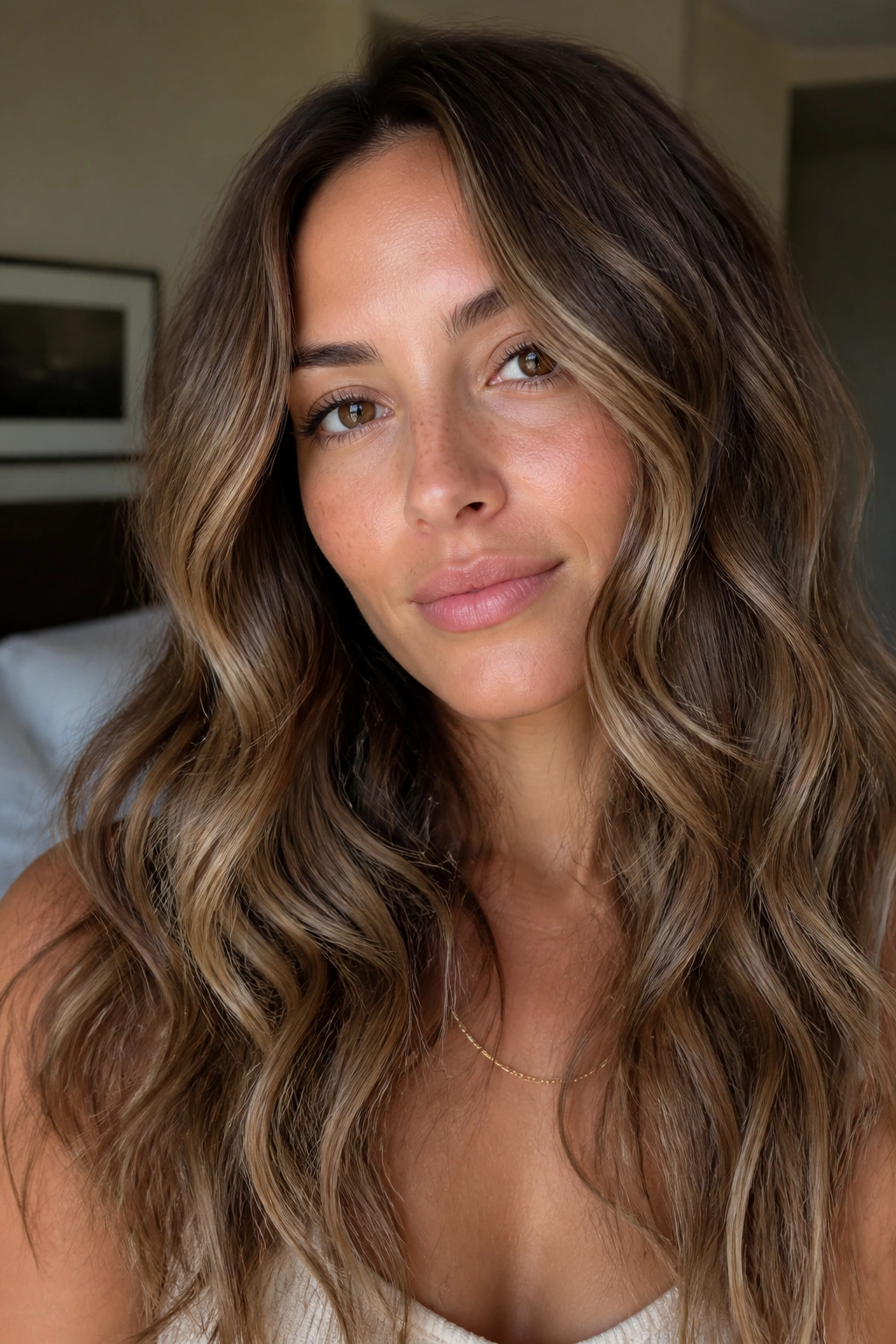
Hazelnut brown is the shade I’d point to for someone who wants a medium brunette with some lift but no heavy contrast. The pale veils sit lightly over the base, so the color still feels like brown, not blonde. On waves, that restraint pays off.
What Makes It Different
The lighter pieces should be soft and almost misty. Not thick. Not streaky. Think fine veils that drift through the outer layer and break up the brown just enough.
Hazelnut brown is a good fit for hair that falls between loose and medium waves, because the pale accents make each bend easier to see. It’s also a nice option if your hair tends to look one-dimensional in cloudy light.
- Best for: medium brunettes who want a softer finish
- Ask for: hazelnut base, beige veils, and a neutral gloss
- Keep in mind: too much lift can turn hazelnut into a generic light brown
It’s a gentle shade, but not a dull one. There’s enough variation to keep it interesting.
18. Cocoa Brown Gloss for Fine Waves
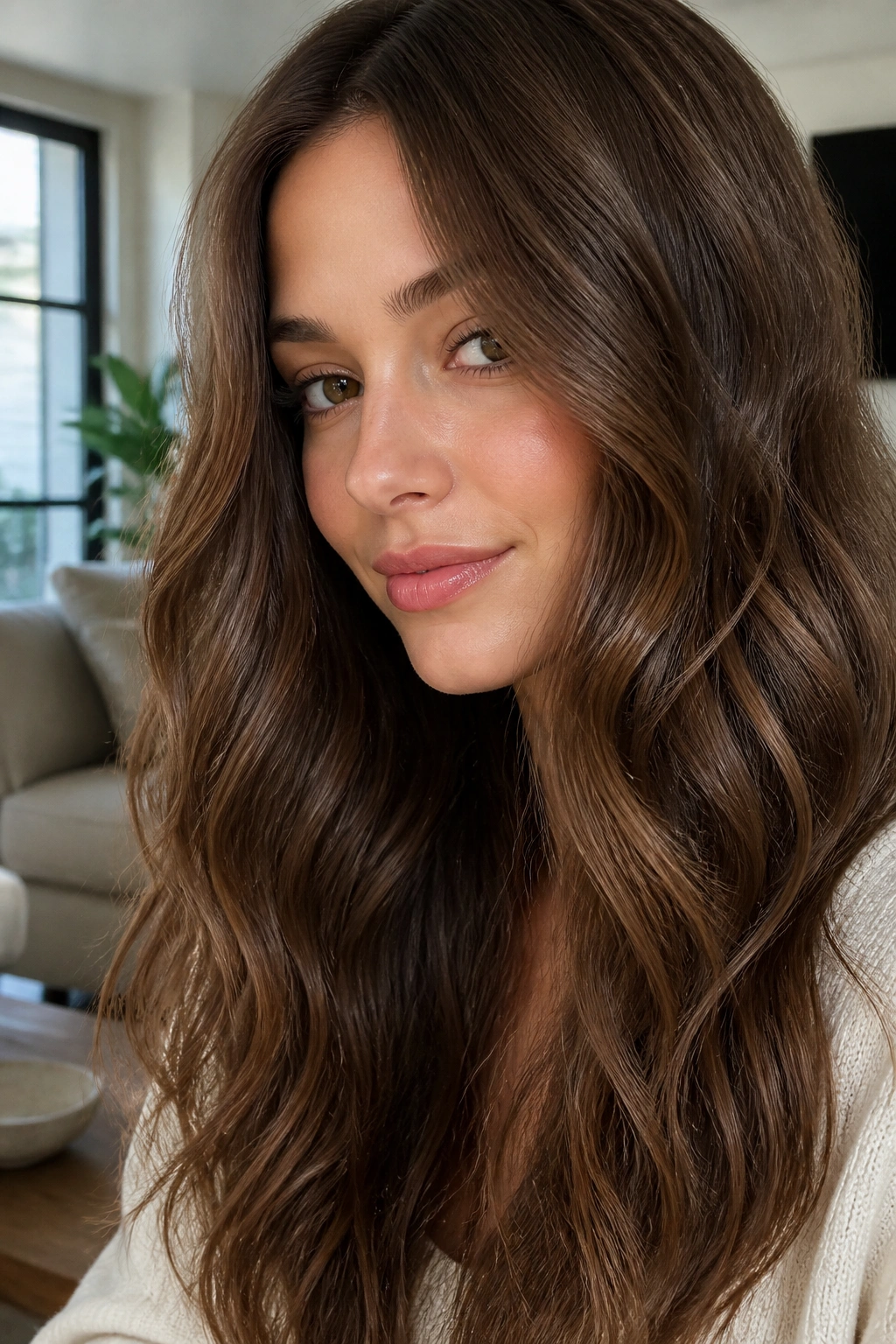
Cocoa brown gloss is one of my favorite ways to make fine waves look fuller. A gloss adds shine and deepens the brown without adding a harsh line of demarcation, which means the wave pattern stays readable while the hair still looks richer.
The trick is to keep the tone close to the natural base. Too much darkening can make fine hair disappear. A cocoa gloss should deepen the color by a shade or so, not bury it.
Simple Ways to Wear It
- Apply the gloss from roots to ends if you want uniform richness.
- Leave the roots slightly softer if you prefer a lived-in look.
- Pair the gloss with a blunt-ish lob or long layers if the ends need more weight.
This is the low-drama option in the best sense. It gives you shine, it smooths out brass, and it makes the hair look cared for. Not flashy. Just clean, shiny brown that behaves well with waves.
19. Soft Auburn Brown for Loose Bends
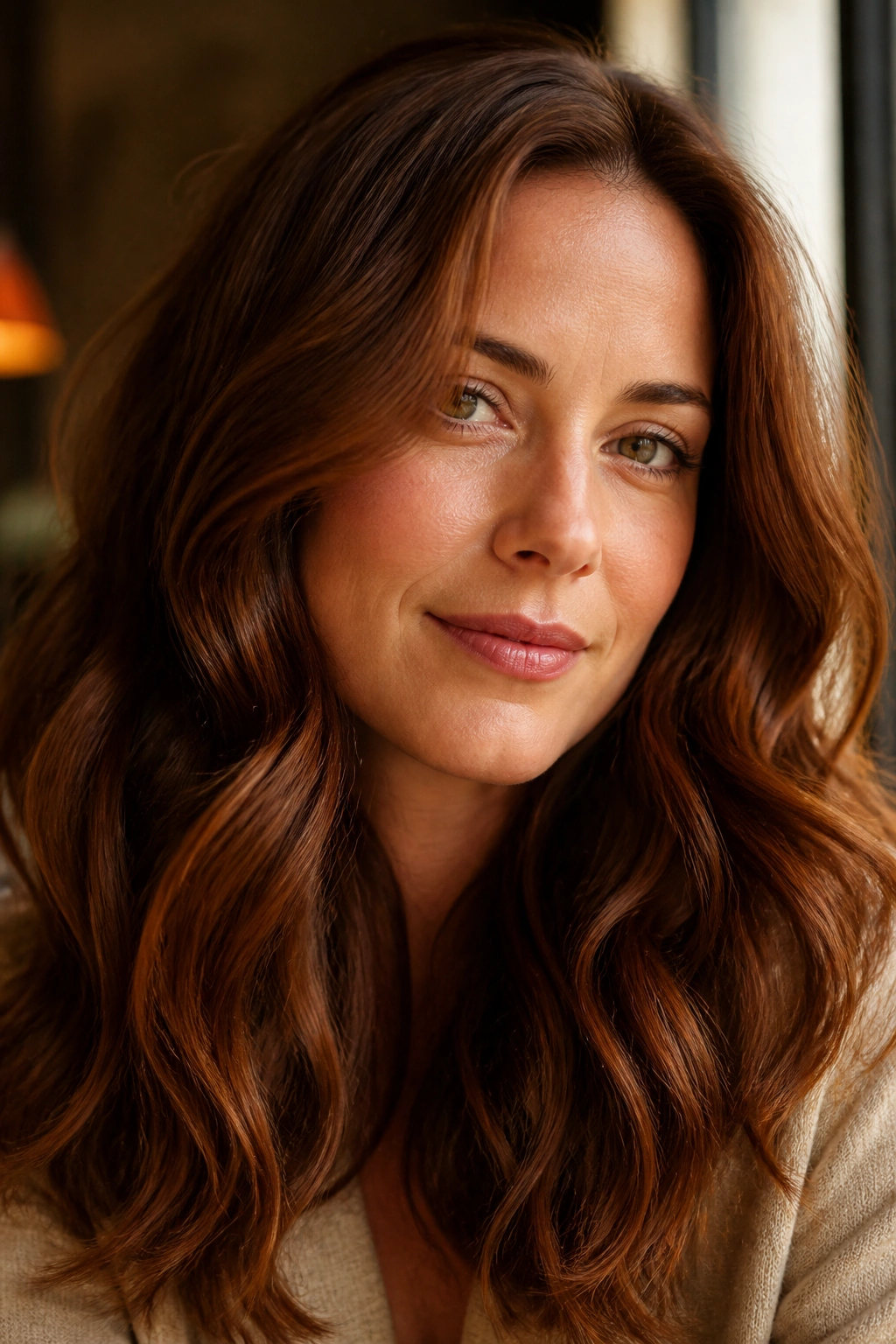
Soft auburn brown sits between brown and red, but the red part should feel tucked in, not loud. On loose waves, the color takes on a little glow each time the hair curves away from the face. That movement is what keeps auburn from going flat or costume-like.
This shade suits people who like warmth but do not want copper. It also works well when the cut has long layers, because the color can shift from deeper brown near the roots to a warmer finish at the ends without looking abrupt.
Auburn can go too bright if the toner leans orange. I’d keep it muted and slightly brown-heavy. That way, the waves do the visual work, not the pigment alone.
One nice thing about soft auburn is that it looks different depending on the light. Indoors, it reads like rich brunette. Outside, the red-brown warmth shows up more clearly. That two-sided quality is half the appeal.
20. Bronde Brown with Stretchy Babylights
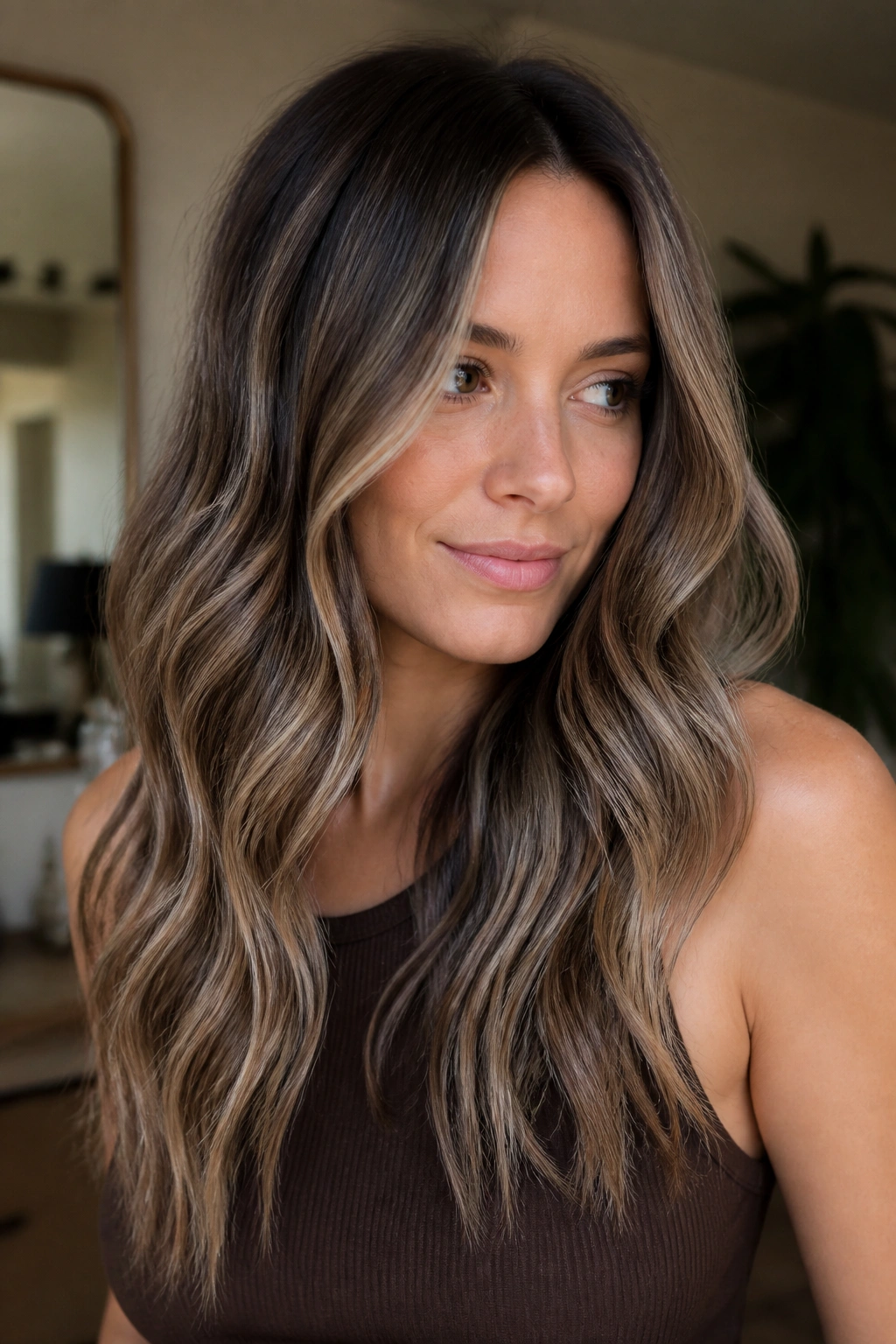
Bronde is not a blonde impersonating brown. It should stay rooted in brunette territory, with just enough lighter pieces to soften the surface and stretch the texture. On wavy hair, that extra brightness can make the pattern look wider and more relaxed.
How It Differs from Full Highlights
Full blonde highlights can scatter the eye. Bronde keeps the base intact and uses lighter strands more like accents than a full color overhaul. That means less maintenance and a softer grow-out line.
If your waves are medium to loose, this is a strong choice. The babylights should be fine enough that they blend at a glance, then separate only when the hair moves. That subtle separation is what keeps the color from feeling too salon-perfect.
Bronde also works well for people who are easing into lighter brunette territory. It gives you dimension without making the brown disappear. And that, to me, is the whole reason it works.
21. Maple Brown for Warm Skin Tones
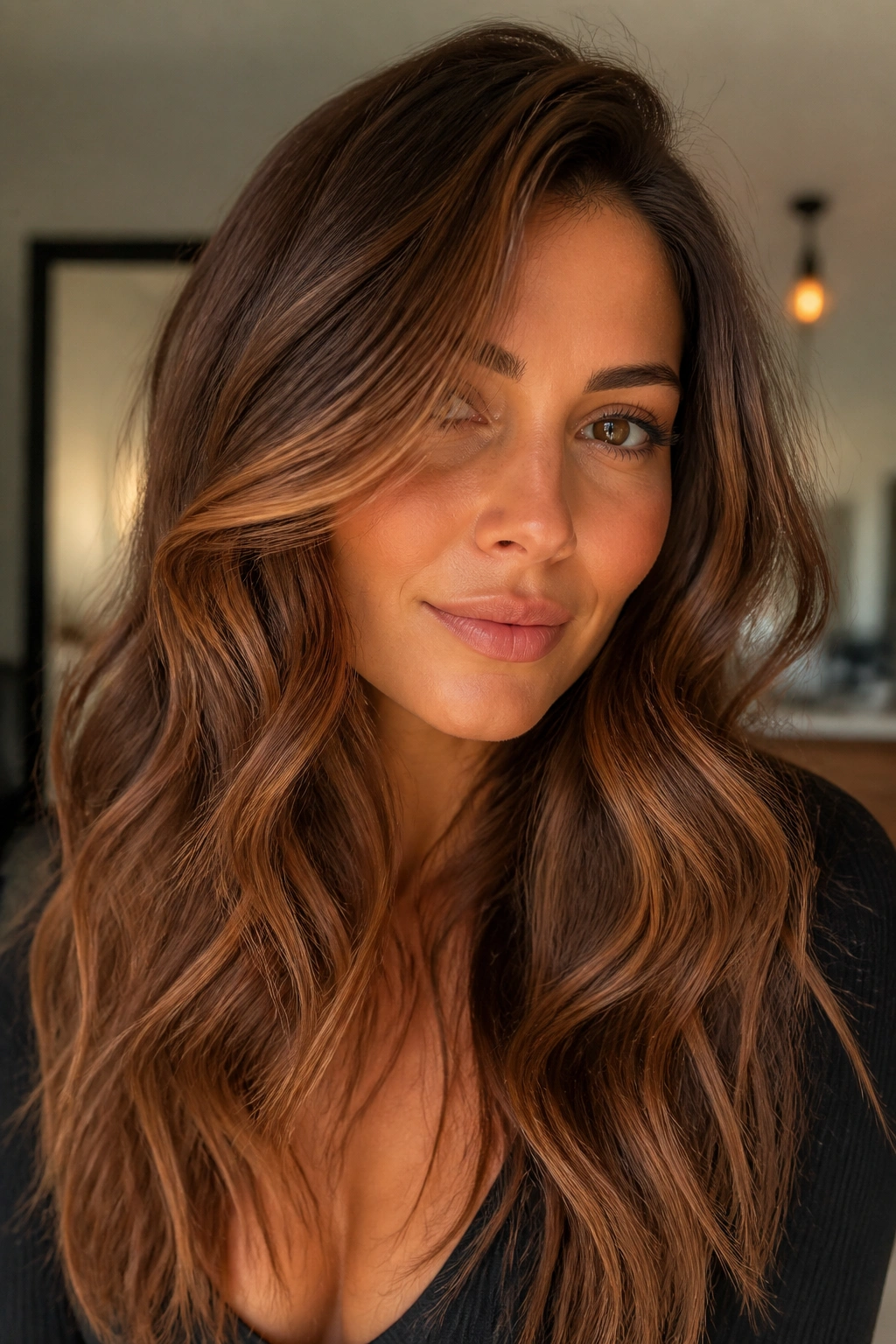
Maple brown has a syrupy warmth that lands between chestnut and caramel. It tends to flatter warm skin tones because the color has a gentle golden-brown base that doesn’t fight natural warmth in the face. On waves, the effect is soft and easy to wear.
Would this shade suit a cooler complexion? Sometimes, yes, if the toner stays muted. But it shines most when the goal is warmth that still reads as brown. Maple is less spicy than cinnamon and less red than mahogany.
How to Wear It Well
A deeper root with lighter ends keeps the color from feeling one-note. A side part also helps because it gives the lighter pieces a place to sit. If you wear your waves tucked behind one ear a lot, maple brown can look especially pretty there, since the curve of the hair shows off the tone shift.
It’s the sort of shade that feels familiar on the first glance and more interesting the longer you look.
22. Deep Coffee Brown with Micro Highlights
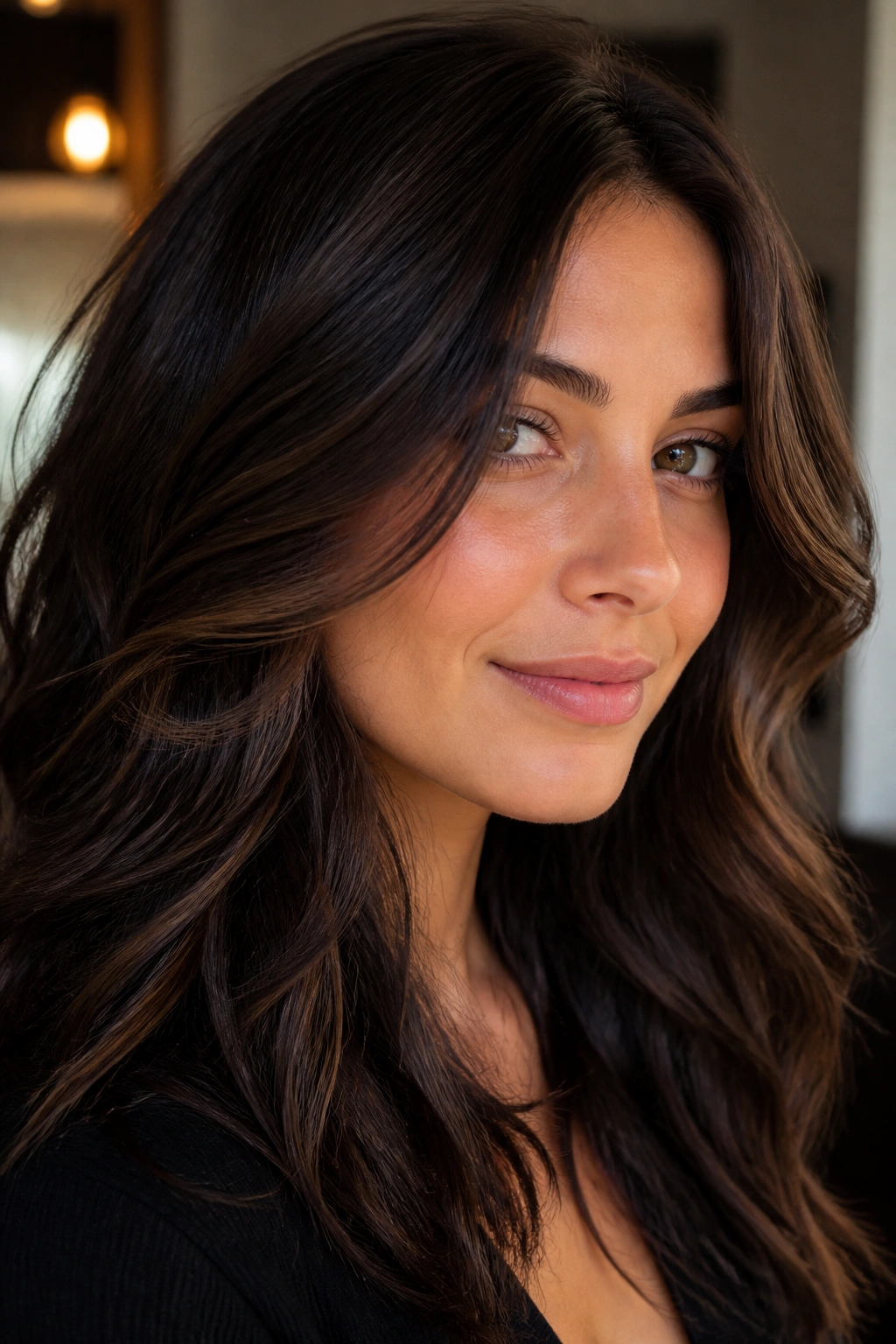
Deep coffee brown is the one I reach for when someone wants their waves to look thicker, shinier, and more expensive without a lot of visible contrast. Micro highlights keep the base from swallowing the shape of the hair. They are tiny, strategic, and much better than chunky light pieces for this kind of look.
The highlights should be almost invisible as lines. You notice the effect, not the striping. That’s the whole game. A few fine pieces through the top and around the face create a soft flicker when the waves move, which makes the texture read fuller.
This shade is also a strong choice if your natural brown is already dark and you don’t want to fight it. Keep the highlights one level lighter than you think you need, then let a glossy finish do the rest. The coffee base stays rich, the micro pieces add air, and the waves get to look like they belong on purpose.
Final Thoughts
Brown hair on waves works best when the color has some movement built in. A single flat tone can look heavy fast, while a brown with ribbons, shadow, or a soft gloss tends to follow the wave pattern instead of fighting it.
If you’re choosing between shades, start with the kind of brown your hair already wants to be. Cool, warm, deep, or softly golden — the good versions all respect the bend in the hair. That’s the real filter here.
Bring two things to your color appointment: a photo of the tone you want and a clear idea of how much upkeep you’ll tolerate. Those two details save a lot of regret later, especially with wavy hair that shows every choice a little more honestly than straight hair does.
