



Caramel can be a tricky color on cool skin tones. Too much orange, and it starts fighting your face. Too much gold, and the whole thing can look loud in a way that has nothing to do with shine and everything to do with the wrong undertone.
The sweet spot is softer than people expect. Think beige caramel, smoky caramel, mushroom brown with a warm thread running through it, or a muted toffee that stays closer to brown than copper. Those shades keep brunette hair lively without pushing your skin into the pink-red zone that harsher warmth can do.
Cool undertones are not a ban on warmth. They just need warmth that has been tamed a little. If silver jewelry looks better than yellow gold, or if your skin likes rose, blue, or neutral-pink tones, the safest caramel choices are the ones with ash, beige, taupe, or mocha mixed in.
That’s where the good hair color work happens: not in a flat “brown with highlights” look, but in a shade that looks expensive because it’s controlled. Some of these ideas are soft enough for first-timers. Others are richer and deeper, which is often where cool skin tones look best anyway.
1. Beige Caramel Balayage on a Deep Brunette Base
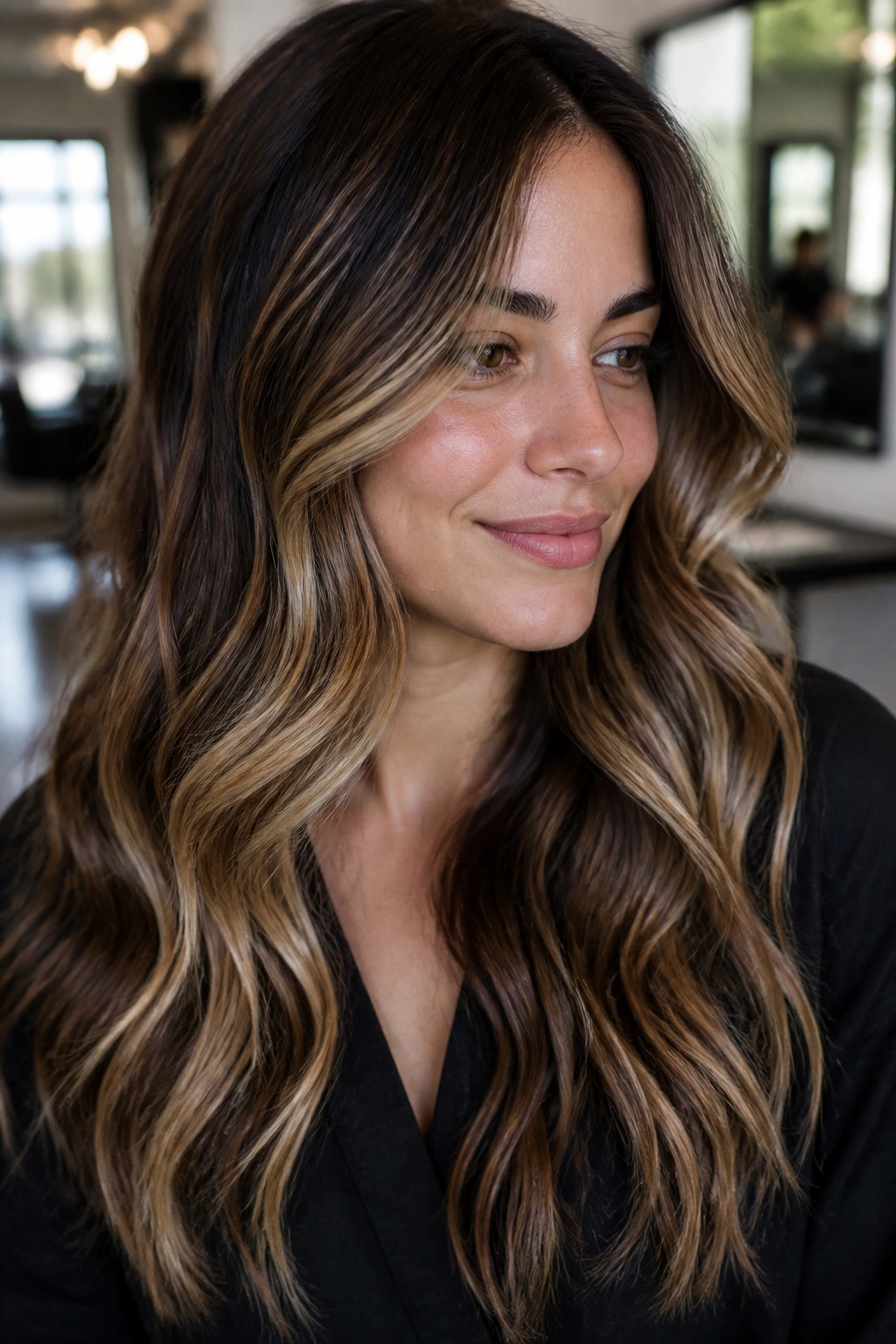
This is the easiest caramel direction to wear if your skin leans cool. Beige caramel sits between warm and cool, so it gives brunette hair light without turning it coppery. The result feels soft around the face, not brassy.
A deep brunette base keeps the whole look grounded. That matters. When the roots stay rich, the beige pieces read as dimension instead of streaks, and cool skin tends to like that cleaner contrast.
Why it works so well
Beige caramel is flattering because it has enough warmth to soften brown hair, but not so much gold that it glows orange in daylight. If your natural shade is level 4 to 6, this is a very safe move.
- Ask for hand-painted balayage ribbons one to two levels lighter than your base.
- Keep the toner in the beige or neutral zone, not golden.
- Leave the root area deeper so the grow-out stays soft.
- Style with loose bends so the ribbons show in movement, not in hard stripes.
A good beige caramel balayage should look like the sun touched it, not like bleach got busy. That difference matters more than people admit.
2. Mushroom Caramel Money Pieces
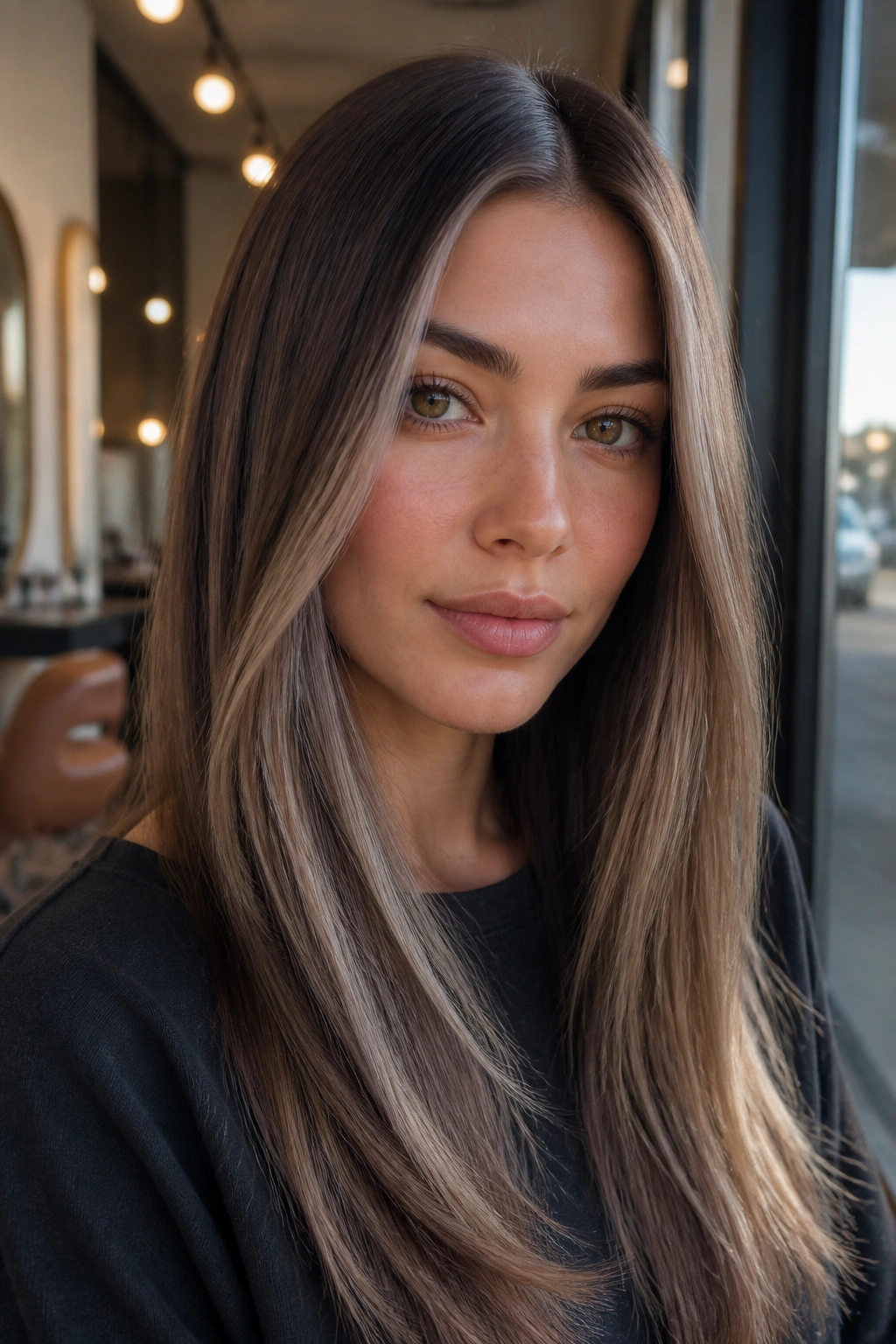
Can caramel look bright without turning warm? Yes. The answer is mushroom caramel at the front, where the color sits close to the face and needs to flatter your skin fast.
Money pieces can go wrong when they’re too yellow. Mushroom caramel fixes that by pulling the warmth into a smoky brown base, so the front panels feel lifted but still cool enough for pink or blue undertones.
How to keep it cool
The trick is to keep the money piece narrow and blended. A chunky stripe right at the hairline can look harsh on cool skin, while a softer slice that fades into the rest of the hair looks polished and easy.
What to ask for
- A thin face-framing highlight on each side, not a thick block.
- A tone that reads taupe, beige, or smoky caramel.
- Soft blending at the root so the highlight does not start with a hard line.
- A gloss after lightening, because mushroom tones can drift muddy without it.
This look is especially good if you wear your hair straight or tucked behind one ear. It puts the brightness where it matters most, then keeps the rest of the head quieter.
3. Smoky Caramel Ribbons Through Medium Brown Hair
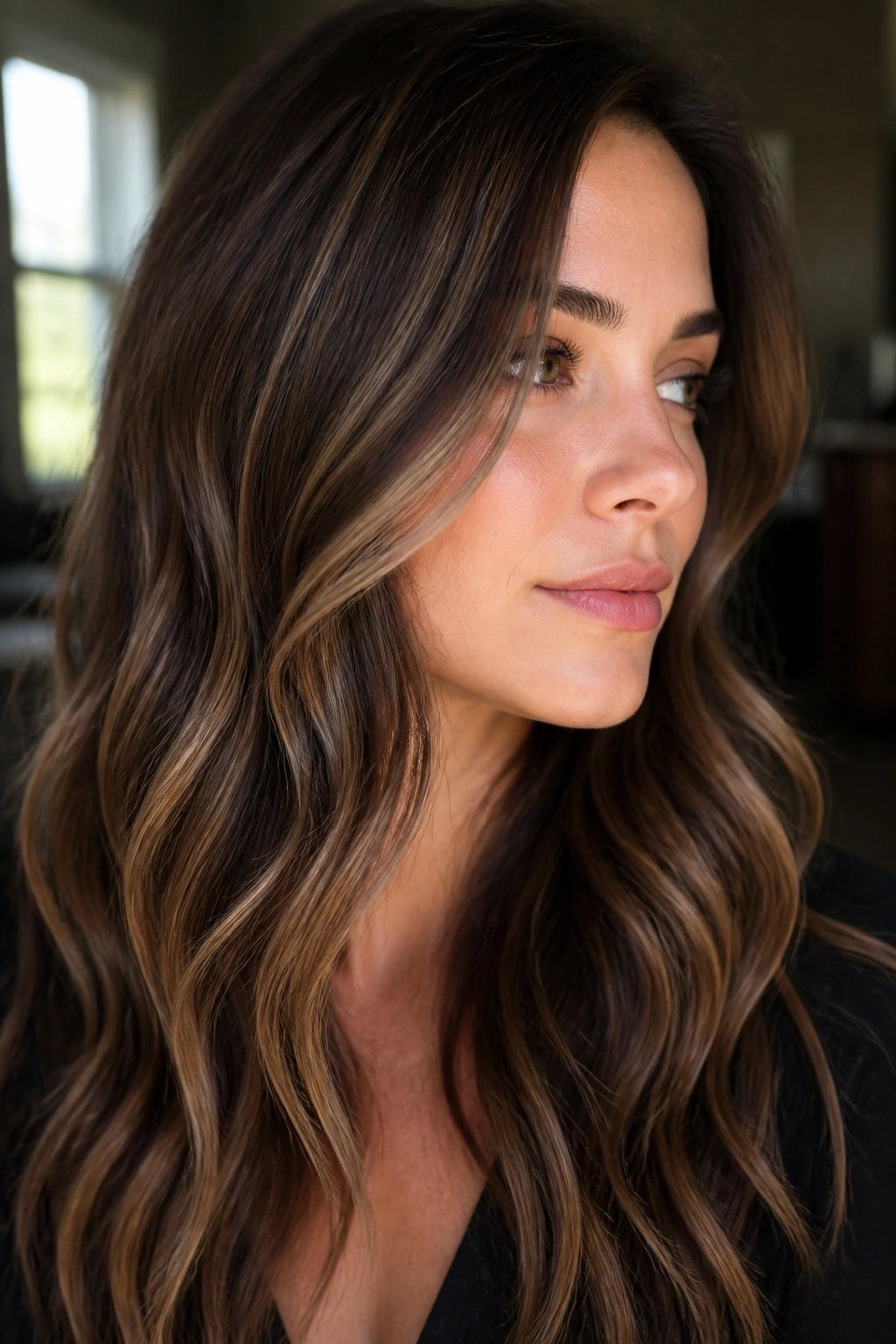
Smoky caramel ribbons are one of my favorite brunette color moves, full stop. They look especially good when the base is medium brown and the highlight placement is fine enough to feel woven rather than painted on.
The smoke in the formula is doing real work here. It cuts the sweetness that can make caramel too warm for cool skin tones, and it gives the hair a little grit in a good way.
If you hate obvious highlights, this is your lane. The ribbons sit inside the hair, not on top of it, so you get depth when you move and softness when the hair is still.
Quick details that matter
- Use fine weaving instead of wide foils.
- Keep the lightened pieces around one level above beige, not lighter.
- Ask for a smoky gloss if your hair tends to pull orange.
- Works especially well on waves and loose curls, where the ribbons break up naturally.
This one feels easy to live with. It grows out in a softer way than chunky highlight work, and that is worth a lot if you do not want to sit in the salon every few weeks.
4. Mocha-and-Caramel Gloss Melt
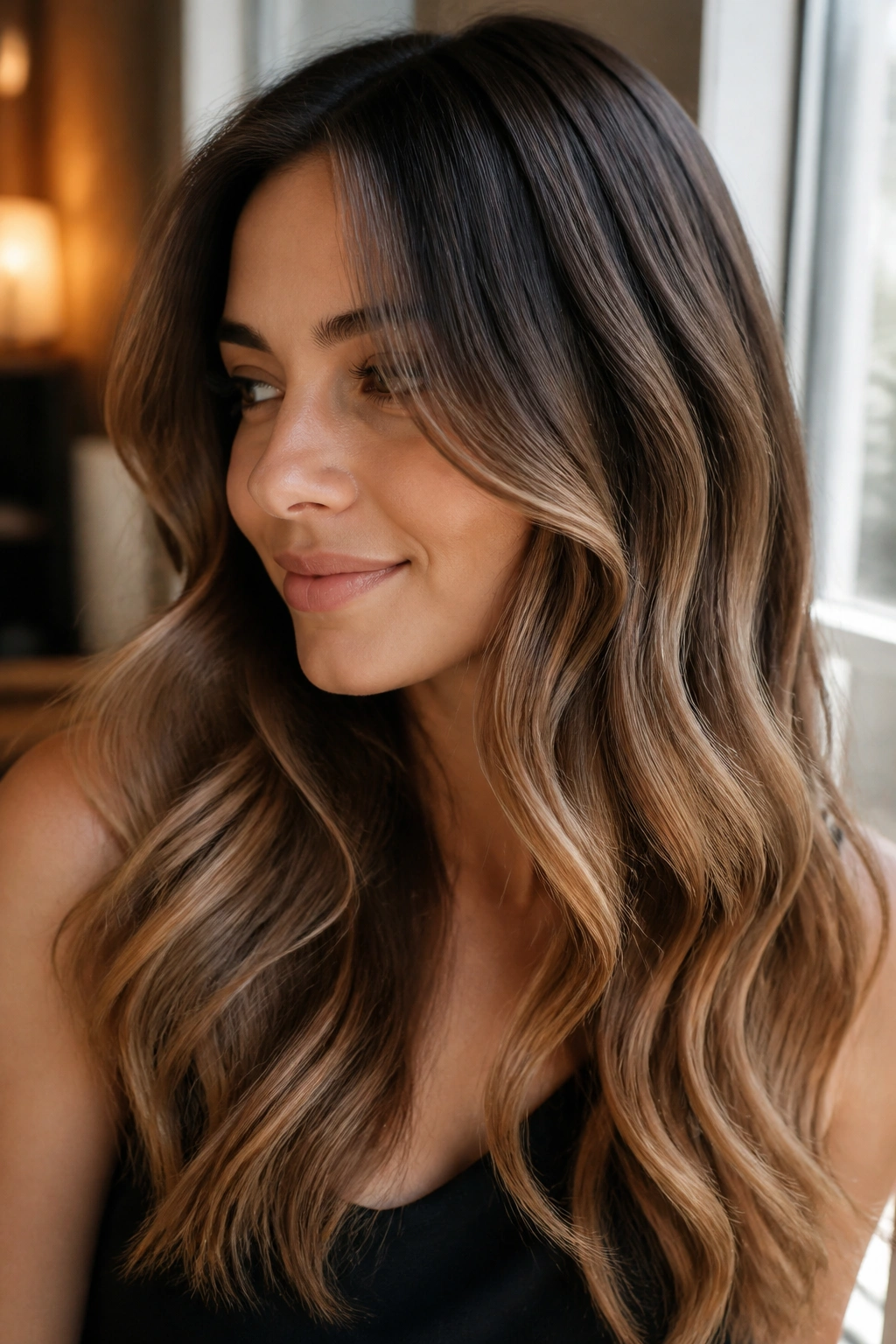
Warm caramel on cool skin can look flat if it sits too far from the base color. A mocha-and-caramel gloss melt fixes that by letting the darker brown do the heavy lifting while the caramel stays in the middle ground.
This is a quiet color. Not boring. Quiet. There’s a difference.
The roots stay mocha, almost espresso-brown, while the mids pick up a soft caramel sheen and the ends melt into a lighter beige-brown. Because the shift is gradual, the eye never lands on one harsh warm stripe, which is where a lot of brunettes go wrong.
What I like about this look is that it behaves well indoors and outdoors. Under soft light, it reads polished and rich. In sun, the caramel comes forward without shouting. Cool skin usually looks fresher beside this kind of controlled warmth than beside bright gold.
It also works if your hair is already colored and needs a reset. A gloss melt can soften old highlights, blend out rough edges, and make everything feel intentional again. The catch is that gloss fades faster than permanent color, so you will want refresh appointments in the normal cycle for toned brunettes.
5. Ash Caramel Face-Framing Highlights
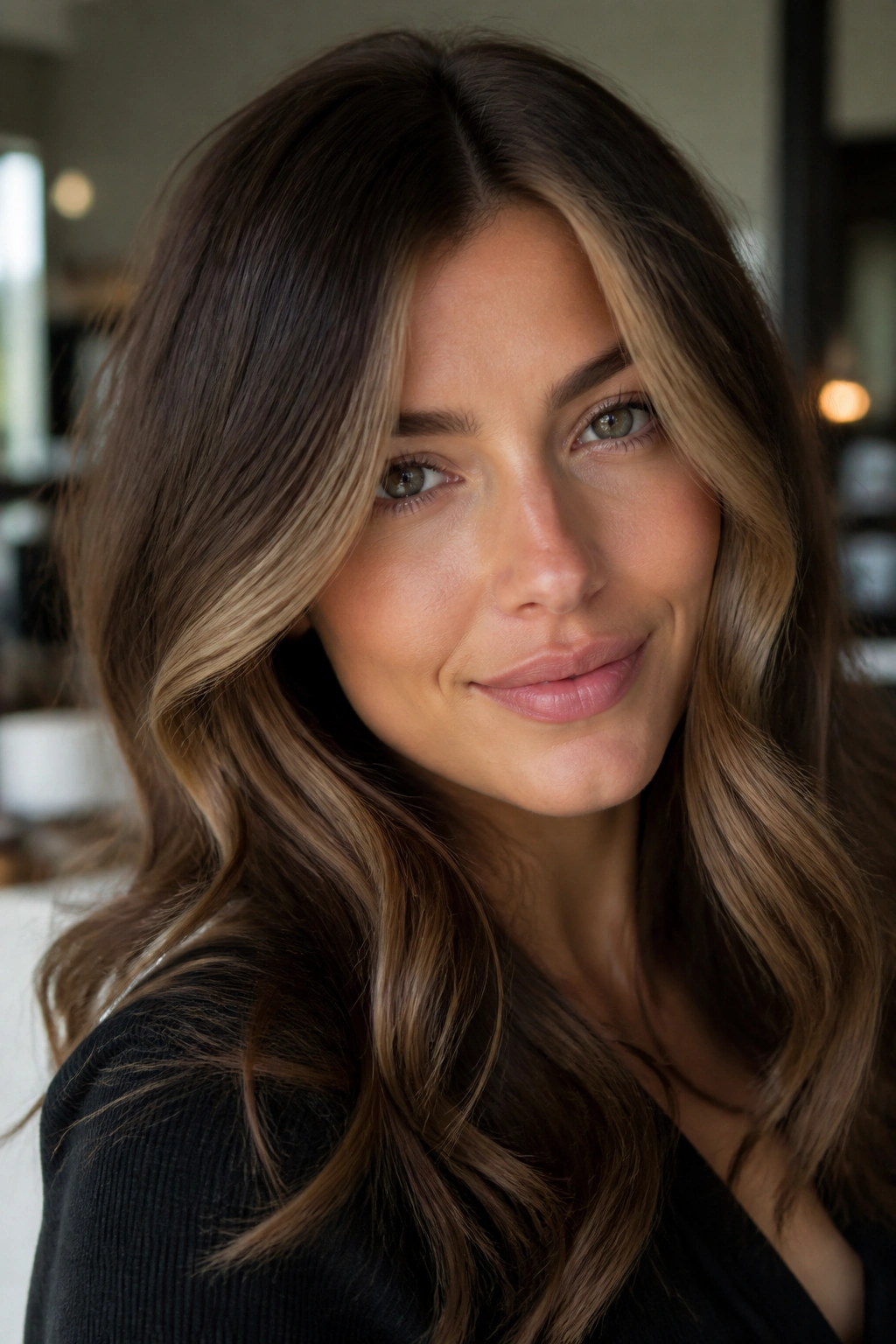
If your face needs a little lift, put the lightness near the cheekbones and keep the rest of the head darker. That is the whole idea behind ash caramel framing pieces, and it works because the tone does not drift too yellow.
What to tell your colorist
Ask for cool caramel face-framing highlights that start around the temple and soften through the front layers. The goal is brightness that opens the face without pulling attention away from the skin.
- Keep the highlight pieces one to two shades lighter than the surrounding brown.
- Tone with ash-beige, not gold.
- Blend the root area so the pieces look soft when hair is tucked back.
- Pair the front brightness with a slightly deeper crown for contrast.
This style is one of the best ways to test caramel if you are nervous about going too warm. You get the payoff at the front, where people notice first, and you do not commit to an all-over change.
It is also forgiving on straight hair. The pieces show clearly, but they still feel elegant rather than striped, which is often the line cool-toned brunettes want to walk.
6. Neutral Caramel Ombré
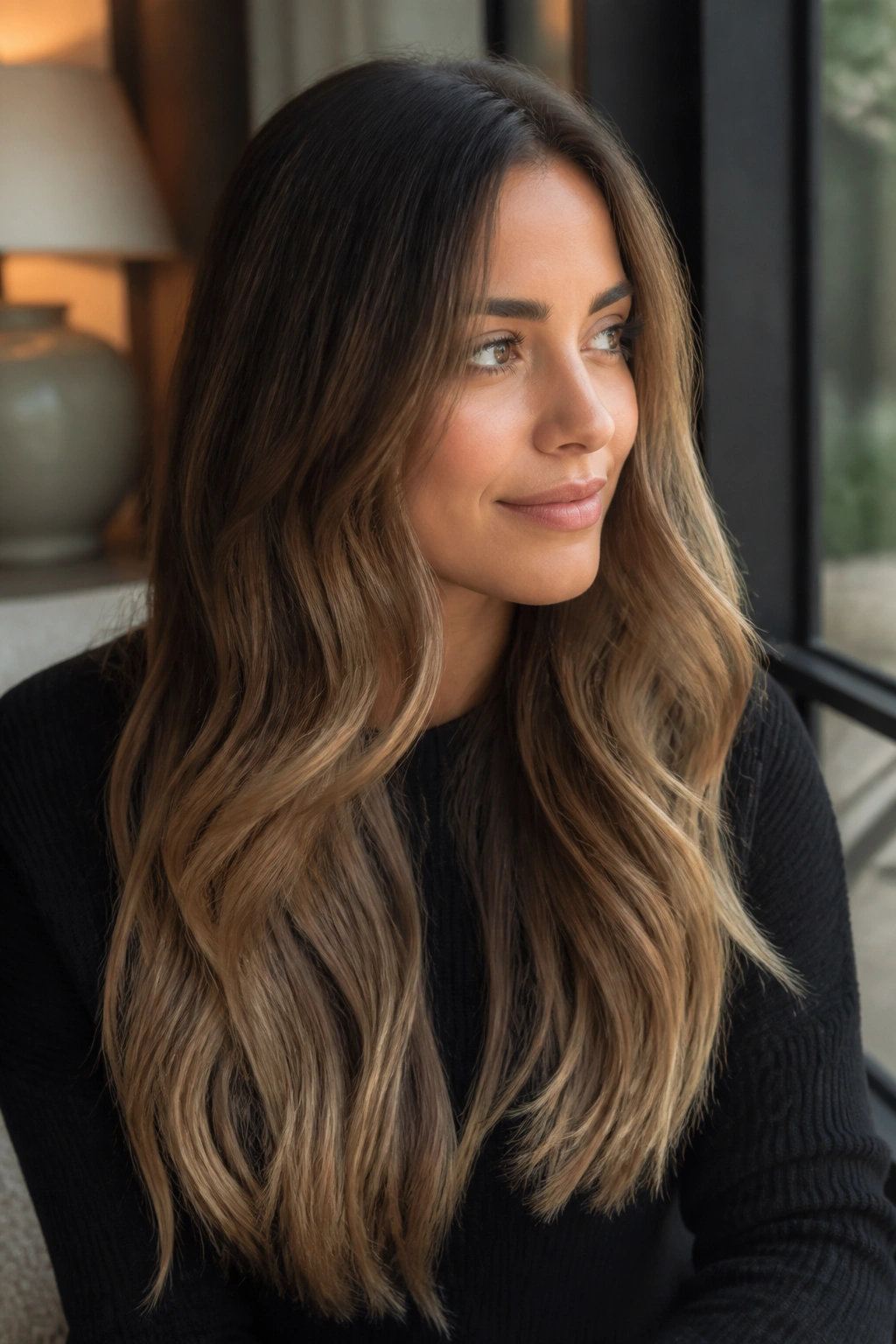
A strong ombré can look dramatic in a way that cool skin sometimes loves, but the tone has to stay neutral. If the ends go too orange, the whole look starts feeling heavy.
Neutral caramel ombré keeps the top darker and cooler, then lets the lower half drift into a soft brown-caramel blend. The transition should feel gradual enough that you can’t draw a line across the hair and say, “That’s where the color starts.” That hard edge is what gives ombré a bad name.
This style is a good fit if you like depth near the roots and a little brightness through the ends. It also works well if your hair is layered, because the lighter pieces catch movement and make the cut look fuller.
One thing people miss: ombré on cool skin tones does not need to be pale to be flattering. The best version often sits in a medium zone, around a beige caramel rather than a bright blonde. That keeps the look wearable and helps the skin look calm instead of flushed.
If you wear your hair long, this shade has a nice sweep to it. If your hair is medium length, it still works, but the blend has to be clean or the ends can look disconnected.
7. Cool Toffee Lowlights for Extra Depth
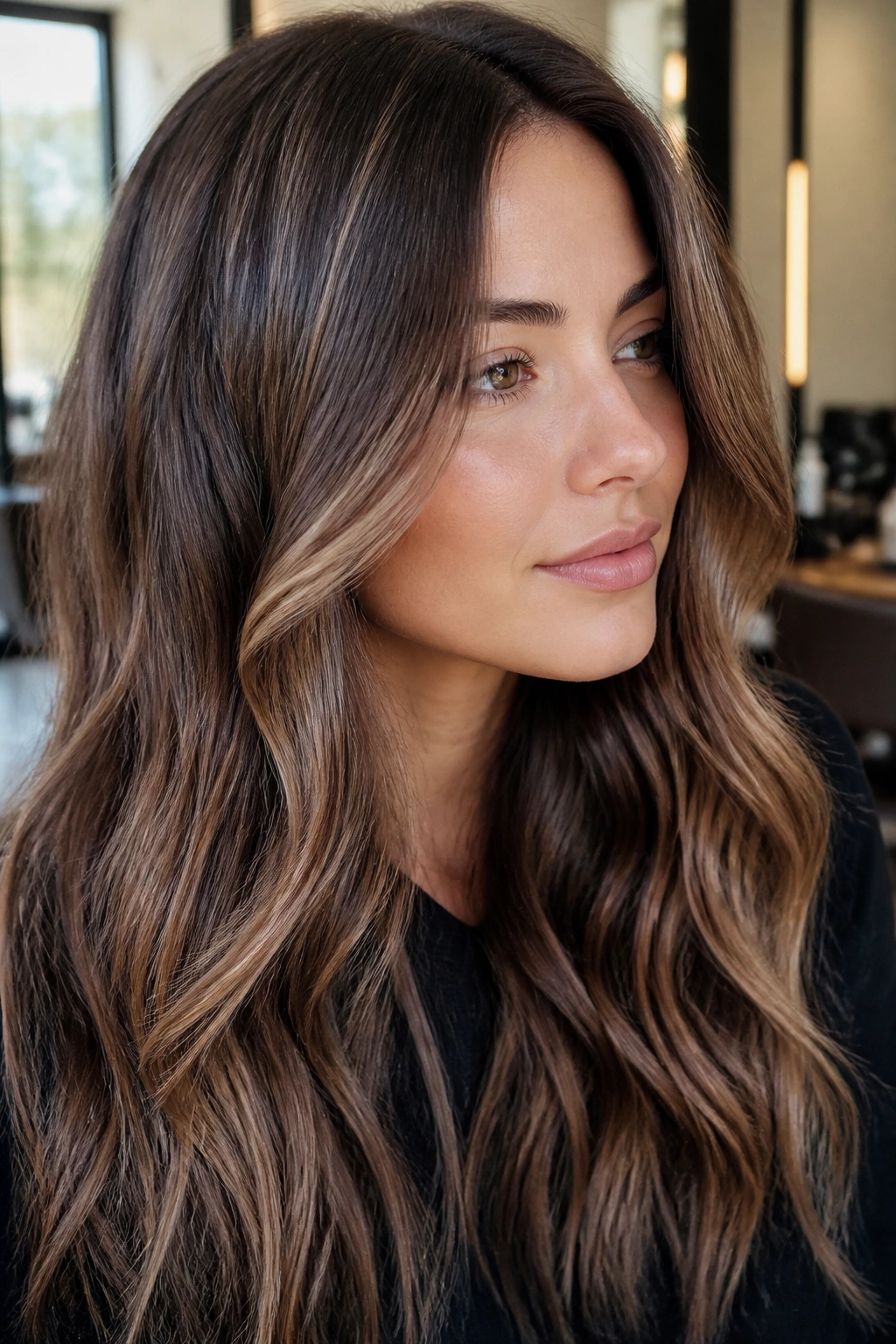
Lowlights are the secret weapon when caramel starts looking too shiny or too light. Instead of adding brightness, they add shadow, which is often exactly what brunette hair needs to look expensive again.
Cool toffee lowlights sit in that sweet brown zone between chocolate and beige brown. On cool skin, they stop the lighter pieces from floating away from the face and make the whole color feel richer.
Who this suits
- People whose hair has gone a little pale from old highlights.
- Brunettes who want dimension without going lighter all over.
- Anyone with cool undertones who feels washed out by bright gold.
This is also a smart fix for fine hair. Too much lightening can make thin strands look wispy and dry, while lowlights add the look of thickness. The contrast is subtle, but it changes how the hair reads.
A good colorist will place lowlights under the top layer, around the nape, and through the mids so the caramel pieces don’t sit alone. If you’ve ever looked at highlighted hair and thought, “Something feels missing,” lowlights are usually what’s missing.
8. Sanded Caramel on a Shoulder-Length Lob
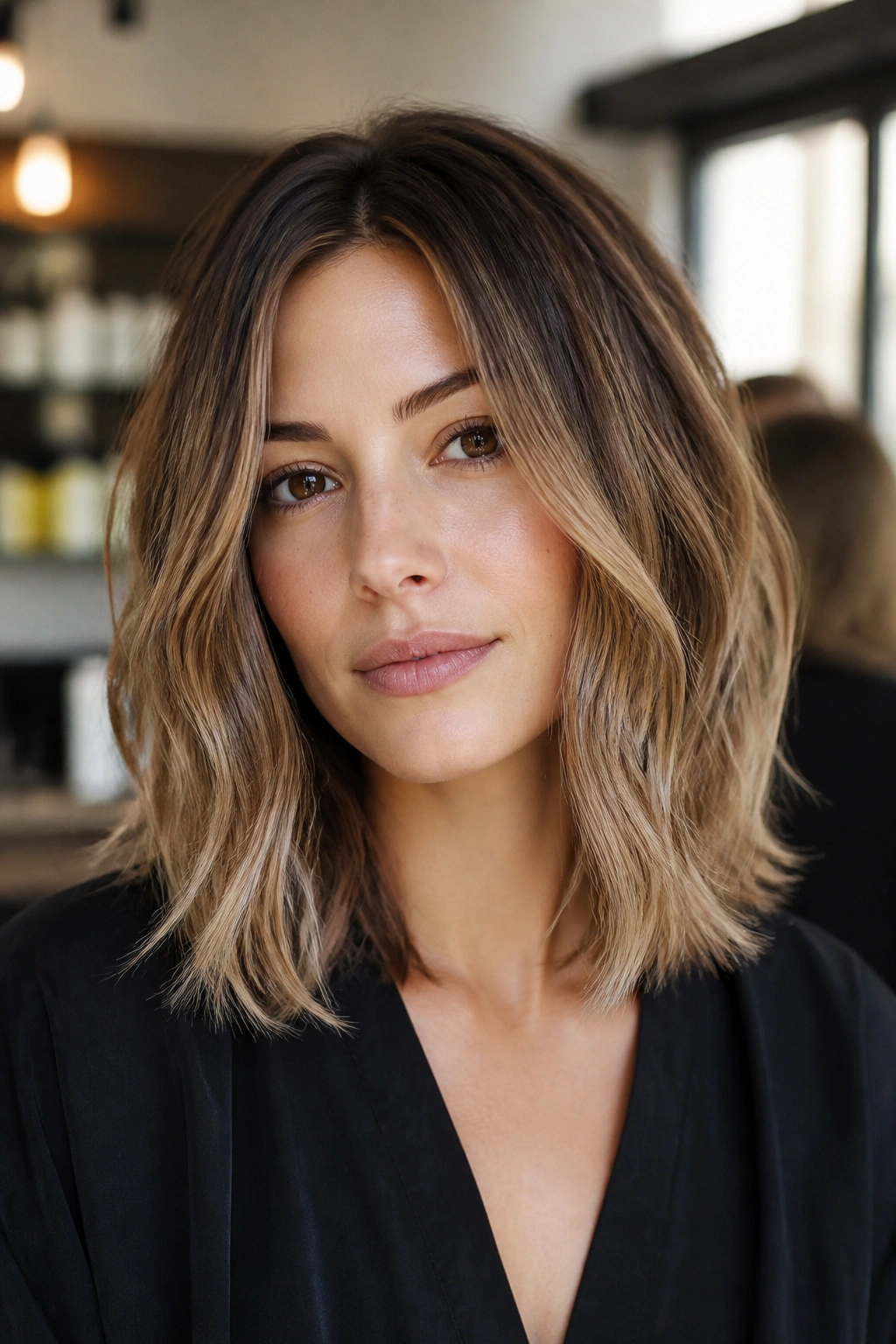
A shoulder-length lob changes the whole mood of caramel. There’s enough length for dimension, but not so much hair that the color gets lost in the ends.
Sanded caramel is a nice middle path for cool skin tones because it feels soft, matte, and slightly muted. The word “sanded” matters here. It should not look shiny in a yellow way. It should look brushed down, like the brightness has been smoothed over.
A lob gives this color a clean frame. Every bend in the cut shows off the lighter pieces, which makes the hair look thicker without needing heavy highlighting. That’s useful if your natural color is brown and you want more movement without a big transformation.
This look also photographs well in real life, not because it is flashy, but because the contrast between the base and the caramel pieces stays gentle. The best version has a bit of root depth, a bit of lighter mid-lengths, and ends that never go too pale.
If you often wear hair behind the ears, this is a good one. The color still does its job when the shape of the cut changes.
9. Iced Caramel Bob with a Soft Root Shadow
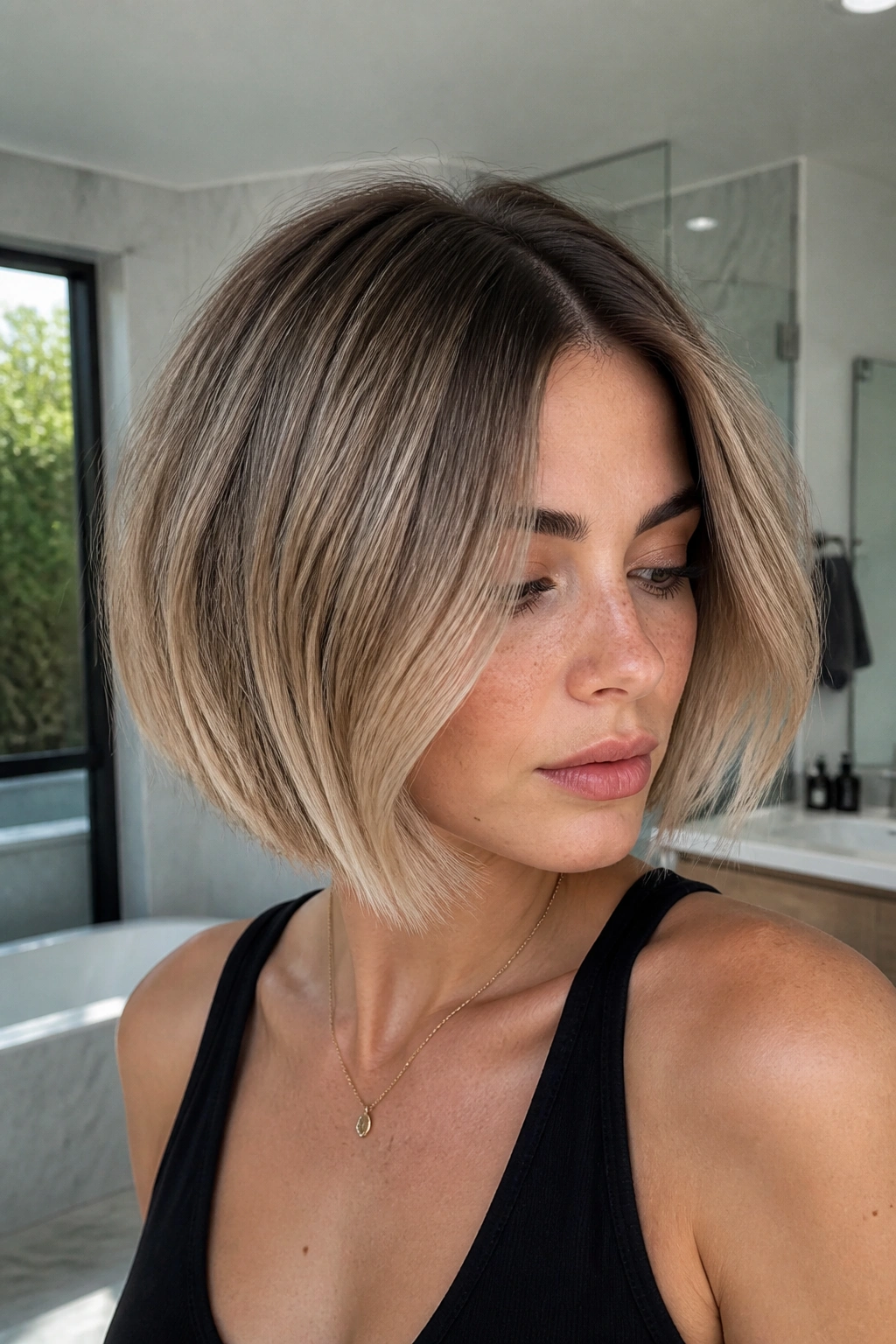
A bob can take caramel in a cleaner, sharper direction. It’s a shorter shape, so every tone change shows more clearly, which means the color has to be controlled.
The “iced” part here is what makes it friendly to cool skin. It should feel cooler than honey, with a faint beige frost over the caramel. Not silver. Not pale blonde. Just enough chill to keep the warmth from taking over.
Why root shadow matters
Root shadow keeps the bob from looking like a solid helmet of color. It gives the cut air. Without it, a lighter caramel bob can sit too high on the face and look chunky.
- Keep the root shadow around half an inch to one inch deep.
- Ask for soft beige caramel mids.
- Keep the ends slightly lighter, but not blonde.
- Blow-dry smooth or use a flat iron bend to show the color shift.
This style works best if you like a more polished finish. It is neat, compact, and a little sharper than a soft balayage, which can be a nice contrast against cooler skin.
10. Taupe Caramel Babylights
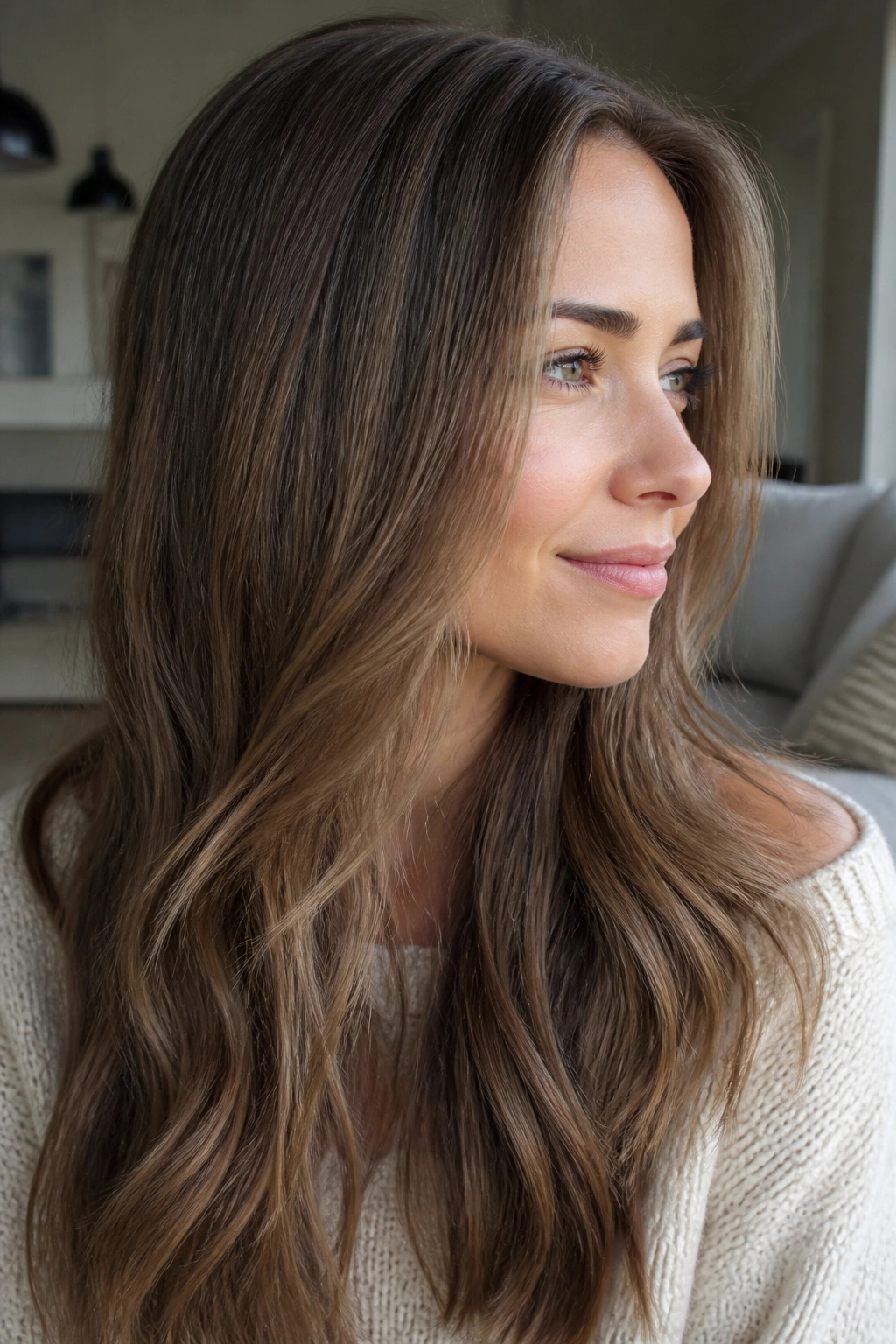
Babylights are tiny for a reason. They mimic the fine, mixed strands you see in natural hair that has been lightly kissed by color, and taupe caramel makes that effect feel believable.
If you are new to caramel, this is a smart place to start. The highlights are thin enough that they do not create a stripe pattern, and the taupe tone keeps the warmth under control.
What makes this one different
- The pieces are very fine, usually woven in slim sections.
- The color sits closer to neutral brown than golden caramel.
- The overall effect is soft, which makes it good for conservative workplaces or low-maintenance routines.
Babylights also play nicely with cool skin because they don’t demand attention. They sit in the hair and let the face stay the focus. That matters if your skin already has a lot of contrast or a rosy cast.
This is the kind of color that looks expensive when it grows out. It doesn’t scream for salon visits. It just keeps looking blended.
11. Smoked Caramel Melt with Loose Waves
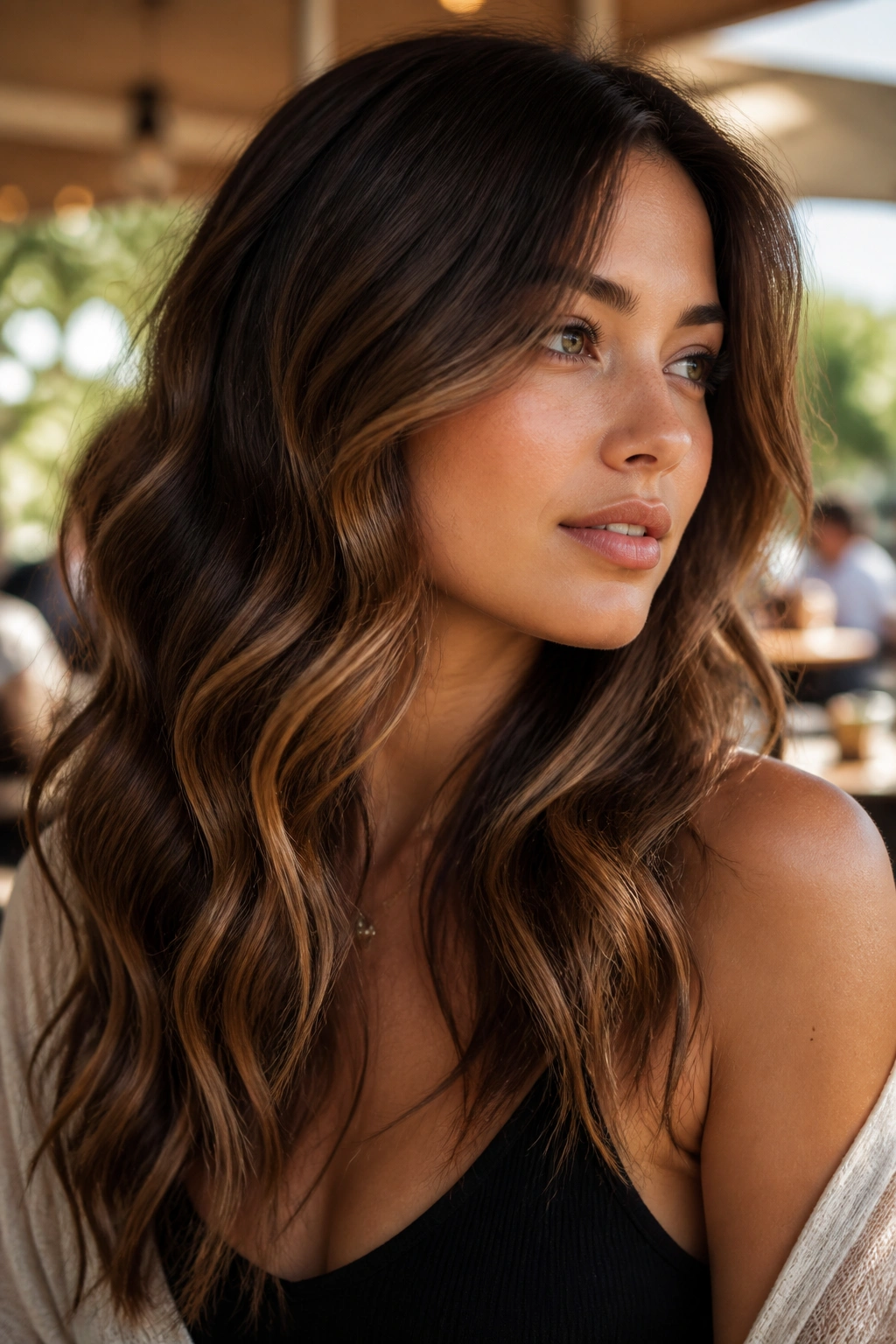
Loose waves and smoked caramel are a very good pair, but not because they are trendy. Because the bends in the hair let the darker and lighter pieces trade places as you move.
Smoked caramel should look like brown hair with a soft ember inside it. Not orange. Not amber. More like a warm shadow that shows itself when the light hits at an angle.
The nicest thing about this shade is the texture illusion. Waves make the hair look fuller, and smoked caramel helps the waves read as layered rather than flat. If your hair is medium density, that effect can be the difference between “nice color” and “wow, that’s a lot of hair.”
A 1.25-inch curling iron or a large wand works well here. Wrap the hair away from the face, leave the ends out on a few sections, then brush the waves out once they cool. You want movement, not pageant curls.
This is also one of the better choices if you wear a lot of black, charcoal, navy, or gray. Those colors sit comfortably beside cool skin and let the caramel act as the warm note instead of the main event.
12. Espresso Hair with a Caramel Veil
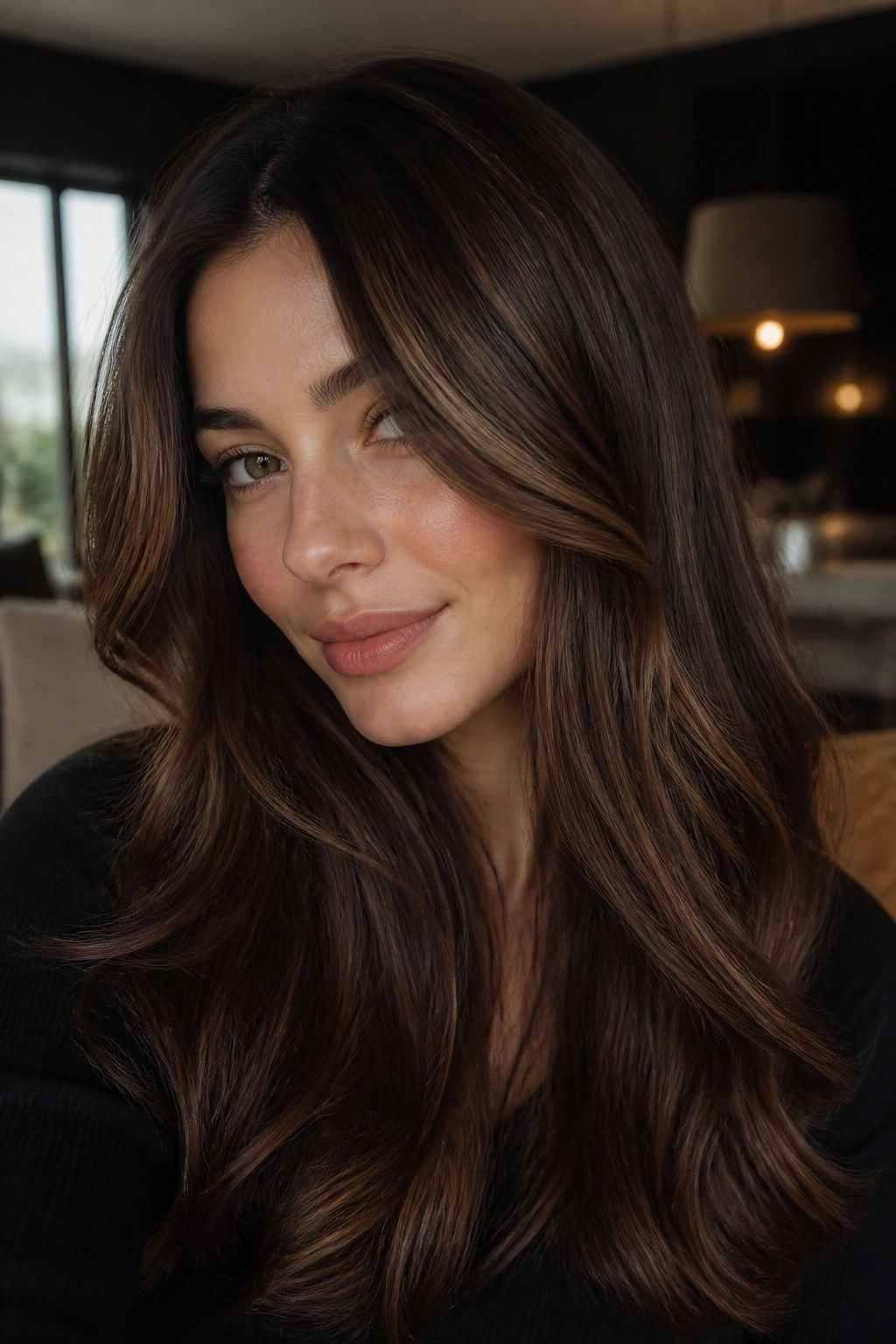
Some people want caramel, but they do not want the color to announce itself from across the room. A caramel veil over espresso hair is for them.
The espresso base keeps things cool and deep, while the caramel stays whisper-light across the surface. It’s less about contrast and more about shimmer. The strands do a little work in the light, then settle back down.
This is one of the safest brunette hair colors for cool undertones because the warmth is diluted. The caramel is there, but it doesn’t sit close enough to the skin to pull redness forward. That makes the whole look feel calm.
The veil approach also helps when you want hair that looks good up close and from a distance. Up close, the fine pieces show detail. From far away, the hair reads rich and glossy. That balance is hard to fake with heavier highlights.
If you’re the type who likes dark lipstick, silver hoops, and crisp clothes, this shade fits the mood. It has that same controlled contrast.
13. Caramel Ribbons for Curly Brunettes
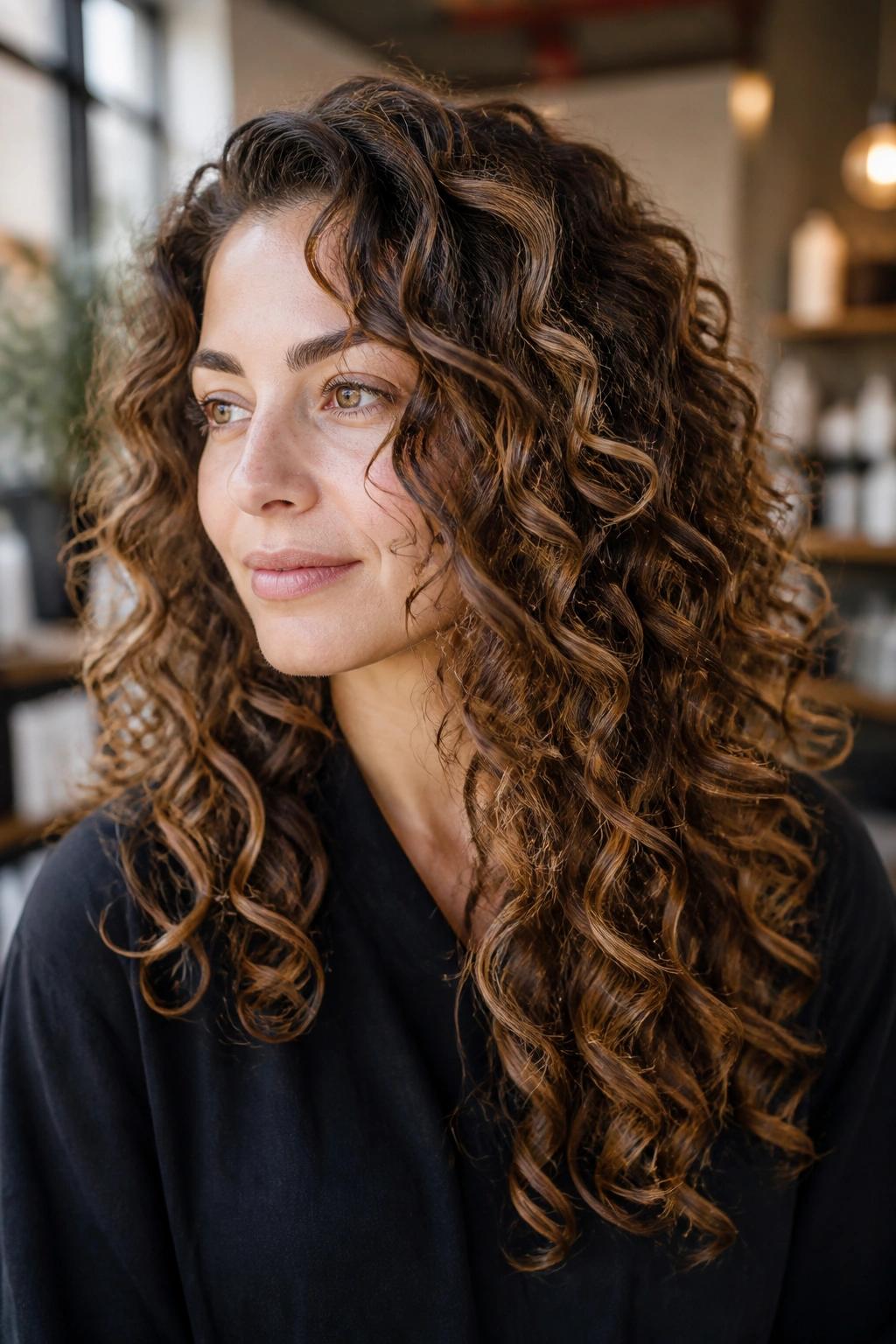
Curly hair changes the rules. A ribbon that looks subtle on straight hair can pop more once the curl pattern springs up, so placement matters a lot here.
Caramel ribbons on curls should follow the shape of the curl clumps, not sit in random spots. When the light pieces trace the bend of the curl, the hair looks fuller and more defined. When they don’t, the color can look patchy.
How curls change placement
The outer layer usually needs the most brightness, while the interior can stay deeper. That keeps the curl pattern from going flat. If every part of the head gets the same amount of caramel, the shape gets noisy fast.
- Paint along curl families, not individual strands.
- Keep the lightest pieces toward the surface.
- Use a beige or smoky caramel toner so the curl depth stays cool enough.
- Diffuse gently after styling so the ribbons stay separated.
This look can be gorgeous on cool skin because the movement is so natural. The curls keep the caramel from looking static, and the darker base gives the skin something clean to sit against.
14. Beige Caramel with Shadow Roots
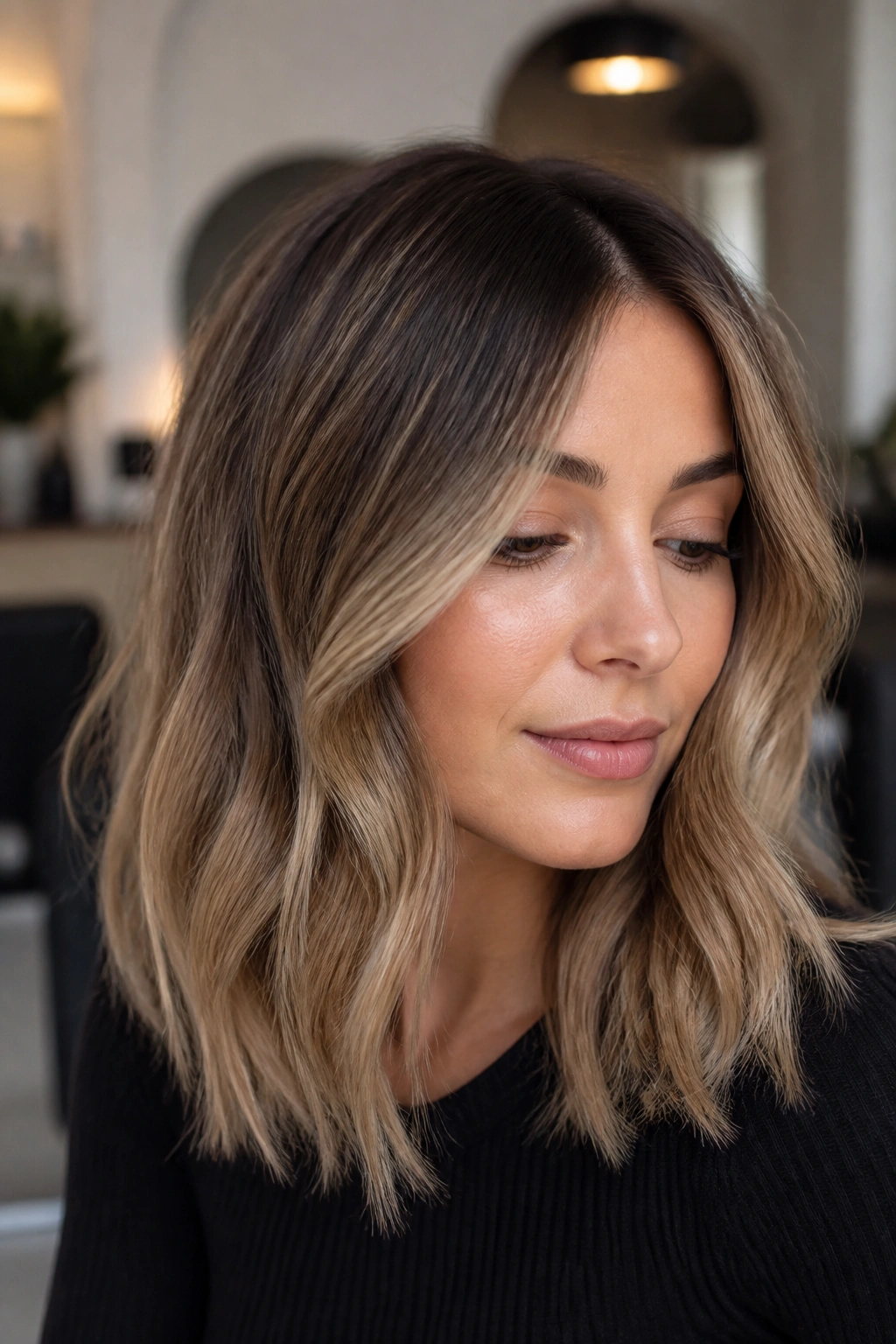
Shadow roots are not just a grow-out trick. They also change how caramel reads on the face, which is useful when your skin is cool and you don’t want the warmth sitting too close to the scalp.
Beige caramel with shadow roots gives you a softer start at the root and a brighter, more dimensional finish through the mids and ends. It is probably one of the most wearable options on this list if you want something that lasts between salon visits.
Why this works for cool undertones
Unlike high-contrast blonde work, a shadow root keeps the top of the hair in a cooler brown family. That means the caramel doesn’t start at the scalp, where it can be too bright against pink or blue skin.
The result feels blended from day one. Not after a few washes. Day one.
A good version uses a root shade close to your natural brown or one level deeper, then drifts into beige caramel through the mid-lengths. If the ends are too pale, the look loses its balance. If the root is too dark, the caramel looks disconnected. The middle zone is where it lives.
This is also a smart choice if you style your hair in ponytails or half-ups often. The root shadow keeps the color looking intentional when the hair is pulled back.
15. Caramel Contour Highlights Around the Face
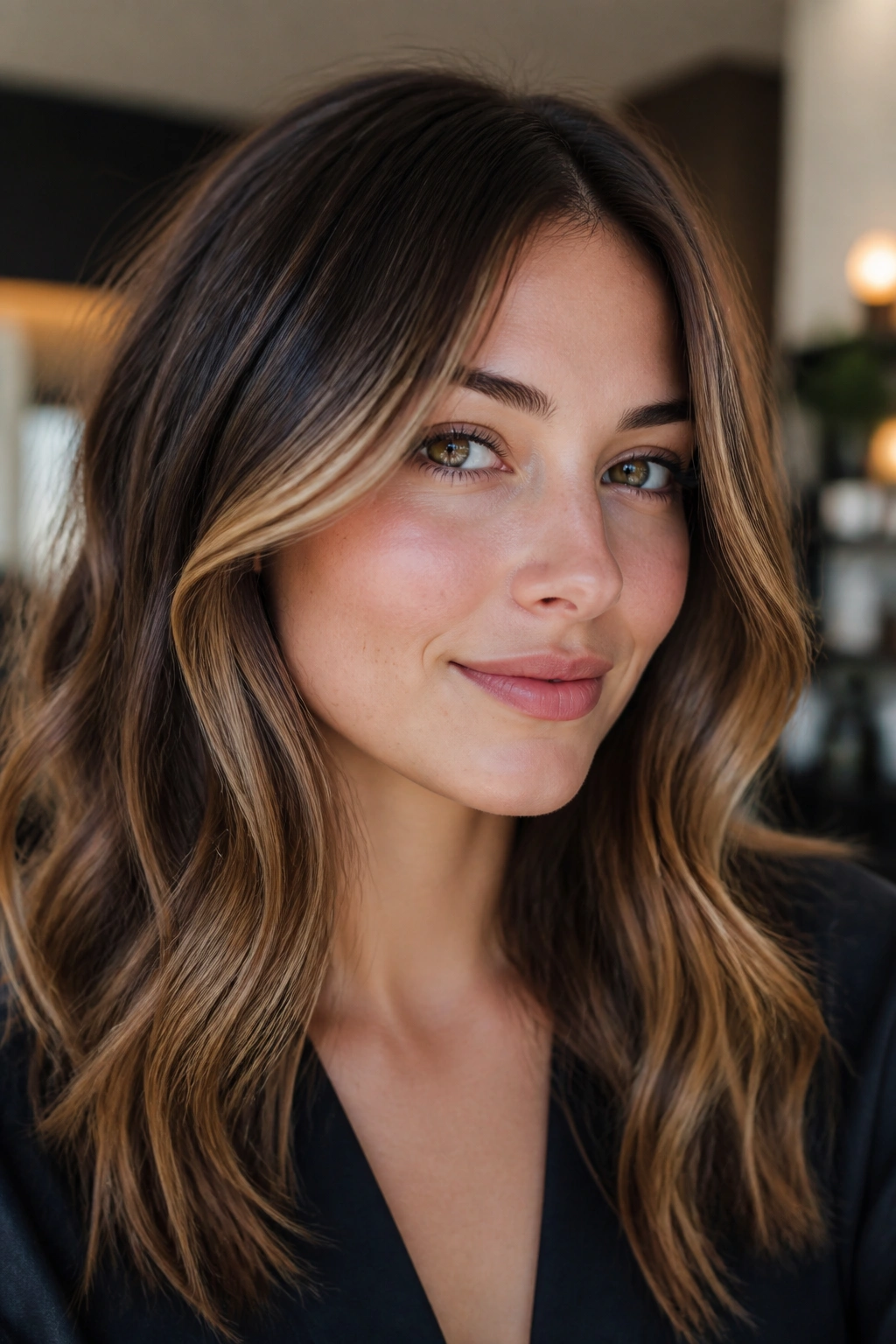
Caramel contouring is the kind of color work that looks small on paper and big in real life. You are not changing the whole head. You’re placing light where the eye already goes.
That usually means the hairline, the temples, the cheekbone area, and sometimes a few softer pieces just below the crown. The color should frame the face the way a good haircut does, only with light instead of length.
What to focus on
- Keep the highlights strategic, not everywhere.
- Use a cool caramel or beige caramel tone.
- Let the pieces get a little brighter near the front, then fade back quickly.
- Pair with a deeper base so the face-framing effect shows up.
This works especially well if your cool skin tone has some natural redness around the cheeks. The softened caramel can pull the eye outward and away from the center of the face in a flattering way.
It is a nice salon option when you want a visible change but do not want to commit to full highlights. Also, if you wear glasses, these pieces can be excellent because they sit around the frame instead of competing with it.
16. Walnut Caramel with Smoky Ends
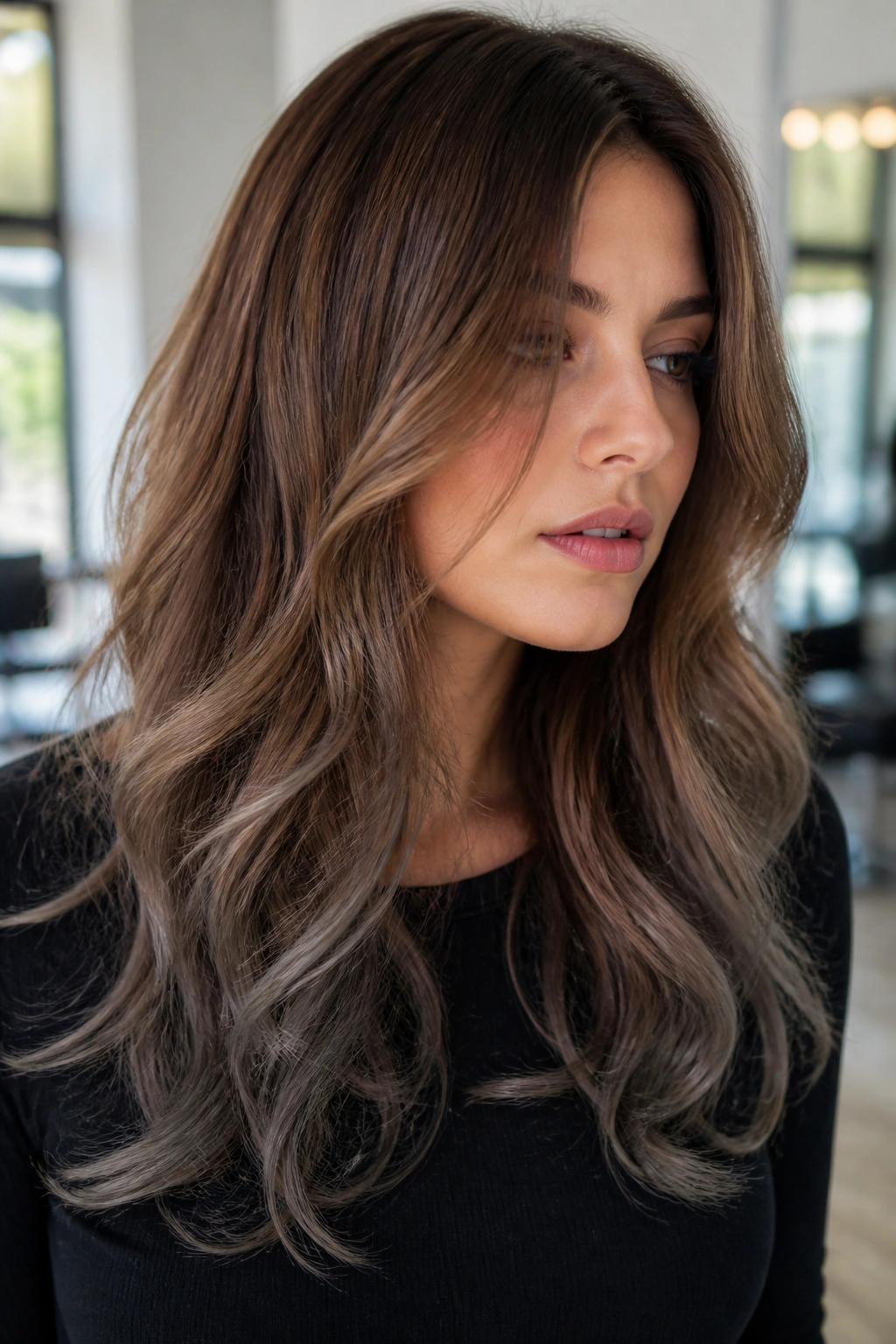
Walnut caramel is richer than beige caramel and a little deeper than toffee. That makes it useful if you want warmth that feels grown-up, not sugary.
The walnut base keeps the color from going orange, while the smoky ends stop the look from feeling too sweet. On cool skin, that combination can be excellent. The face gets some warmth, but the overall tone stays grounded.
I like this look on medium to long hair because the ends have room to show the shift. On short hair, the effect can disappear unless the cut has a lot of texture.
There’s a calmness to this shade that a lot of people overlook. It isn’t loud. It isn’t trying to be blonde. It just makes brunette hair look fuller and a bit more dimensional, which is often enough.
If your closet leans toward black, gray, cream, denim, or deep jewel tones, this color slides in easily. It doesn’t fight those colors. That’s one reason it tends to work so well with cool undertones.
17. Latte Caramel Balayage on Medium Brown Hair
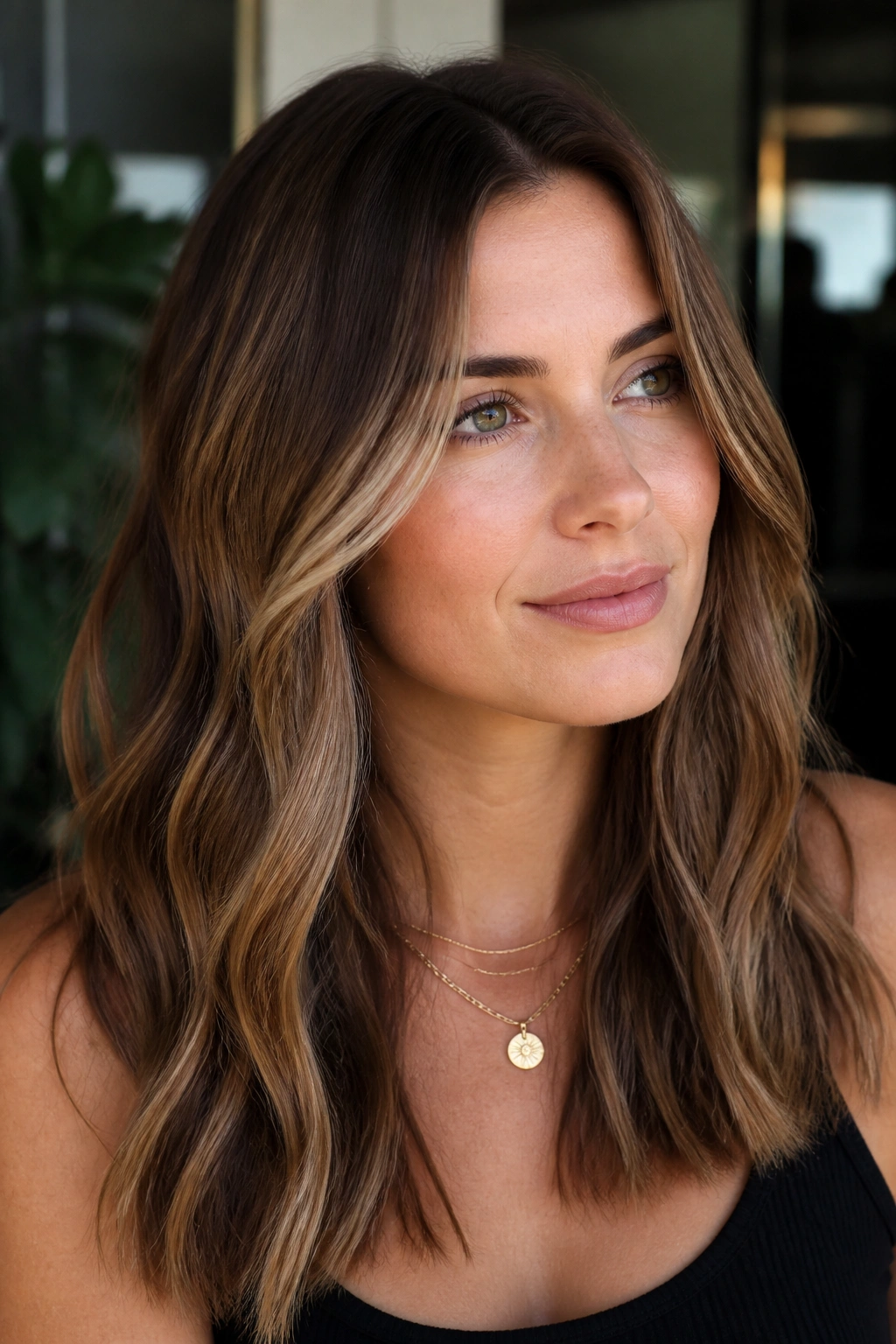
Latte caramel is one of those shades that sounds soft because it is soft. It sits between beige and brown, with enough creaminess to read warm but enough restraint to stay flattering on cool skin tones.
Medium brown hair is a sweet spot for it. The base already has enough depth, so the latte pieces do not need to be super light to make an impact.
How to keep it from going yellow
The biggest risk with latte caramel is drifting too golden. A good colorist will keep the highlight tone neutral and finish with a gloss that mutes the yellow edge.
- Ask for soft balayage sweep lines, not chunky blocks.
- Keep the lift subtle, around one to three levels lighter.
- Tone with a neutral-beige gloss.
- Refresh the glaze when the hair starts looking flat or brassy.
This is one of the easiest shades to wear day to day because it does not depend on a specific hairstyle. Air-dried waves, a blowout, a low bun, a claw clip — the color works in all of them.
And if you’re someone who wants a brown that still feels light around the face, this is a very good lane to stay in.
18. Rooted Smoky Caramel Melt
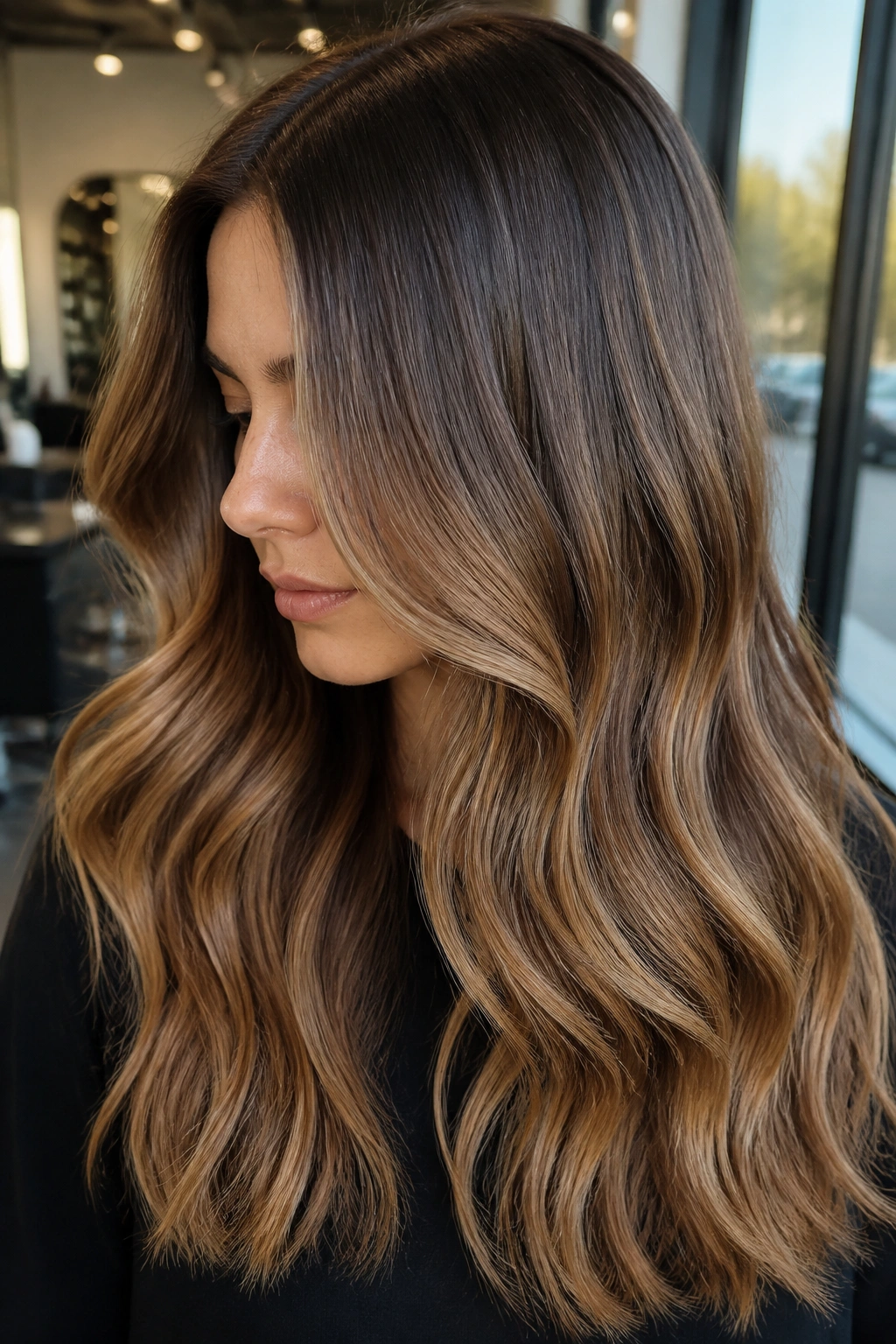
A rooted smoky caramel melt is the most forgiving version of caramel on cool skin. The roots stay deeper, the mids soften, and the ends glow just enough to keep the hair from looking heavy.
It works because it respects the natural brown in the hair instead of trying to erase it. That root depth is what lets the caramel read as a highlight, not a correction.
Best for people who want softness with low drama
- Brunettes who want color that grows out well.
- Cool skin tones that get washed out by bright gold.
- Hair that needs dimension more than a big lightening job.
This is the look I’d hand to someone who says, “I want caramel, but I don’t want to look warm.” That sentence comes up all the time, and this is usually the answer.
The smoky finish keeps the shade from wandering into orange territory, while the melt gives the color movement. It’s one of those shades that can look understated in a salon mirror and much prettier once the hair hits daylight. And that’s the point — it should feel soft, not staged.
Final Thoughts
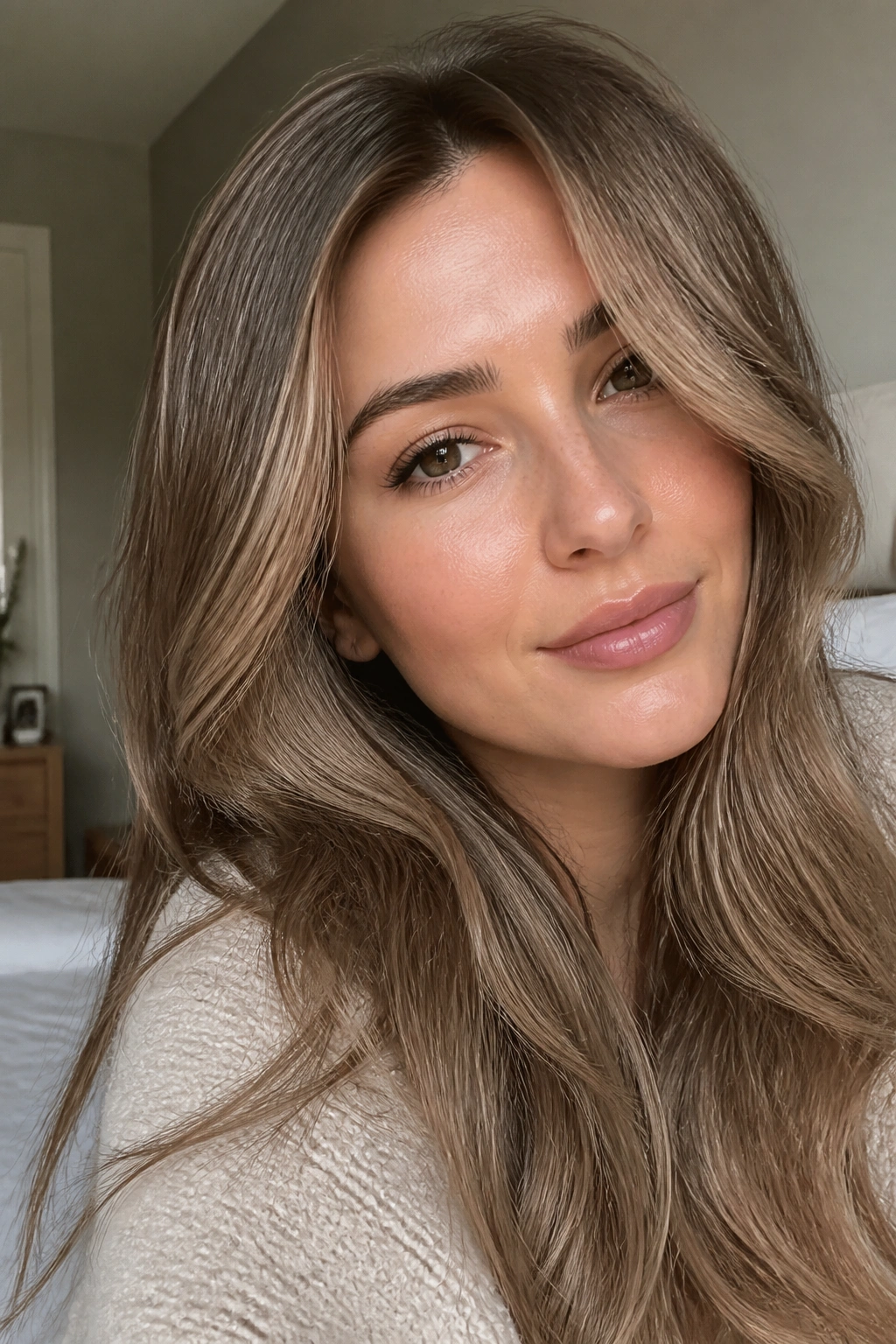
Cool skin tones and caramel hair color can work together beautifully when the tone stays beige, smoky, taupe, or softly neutral. The problem is rarely caramel itself. It’s the wrong kind of caramel — the orange one, the yellow one, the one that looks louder than the haircut around it.
If you want the safest move, start with a deeper brunette base and add caramel where the eye already wants to go: around the face, through the mids, or in fine ribbons that move with the hair. That keeps the warmth controlled and the skin looking calm.
Bring reference photos in natural light, and ask your colorist to stay away from brass. That one conversation saves a lot of trouble.
