



Cool skin tones and red brunette hair can be a gorgeous match, but only when the red leans the right way. Cherry, berry, wine, plum, and mahogany shades sit far more naturally against pink or blue undertones than orange-heavy copper ever will. That’s the whole trick.
A brunette base gives red somewhere to live. Without that brown depth, many reds turn loud fast and start fighting the face instead of flattering it. With a level 4 or 5 brunette base, the same red can look richer, softer, and far more wearable in daylight, in office light, and in all those annoying bathroom mirrors that tell the truth.
Red pigment fades quickly, and it usually fades unevenly. The hairline goes first, then the ends, then the whole color starts looking a little tired. Shadow roots, glosses, and carefully placed ribbons help a lot because they keep the red where it matters and make the grow-out look intentional instead of patchy.
The 22 ideas below stay in that cooler lane: cherry-brown, wine-brown, berry-brown, plum-brown, and a few smoky auburn shades that know how to behave. Some are subtle. Some are loud in the best possible way. Start with the one that matches how much maintenance you’re actually willing to live with.
1. Cherry Cola Red Brunette for Cool Skin Tones
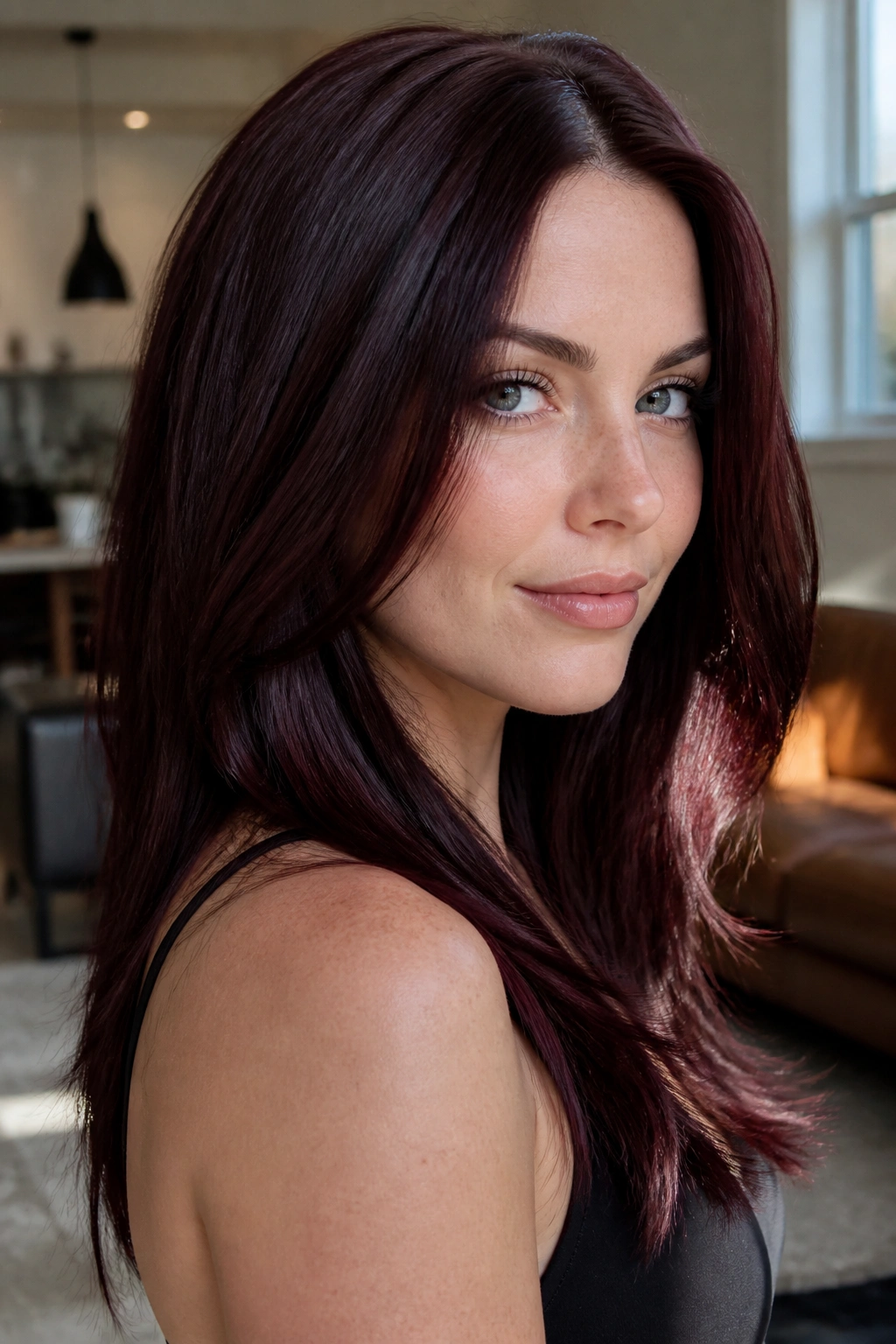
Cherry cola is the shade I point people toward when they want red hair and refuse anything that turns orange in sunlight. The brown base keeps it grounded, while the cherry-violet cast gives it a cool edge that sits nicely against pink or blue skin. If your natural hair sits around a level 4 or 5 brunette, a demi-permanent glaze can land this tone without a hard line at the roots.
Why It Flatters Cool Skin
The best versions of cherry cola do not look neon. They look like dark soda in a glass: brown first, red second, and a little glossy in the light. That matters because cool skin tends to look fresher when the hair has a blue-based or berry-based cast rather than a fiery orange one.
Ask for red-violet or cherry-brown, not copper. If you want it to feel expensive in the everyday sense, keep the brunette base two shades deeper than the red and let the red live mostly on the mid-lengths and ends.
- Best on level 4–5 brunette hair
- Looks sharp with cool pink, blue, or neutral-cool undertones
- Works well as a demi-permanent glaze
- Needs a gloss refresh every 4–6 weeks
Pro tip: if your hair pulls brass fast, ask for a tiny bit of violet in the toner. Tiny. A heavy hand can turn the whole thing plum in a hurry.
2. Mahogany Mocha Brunette
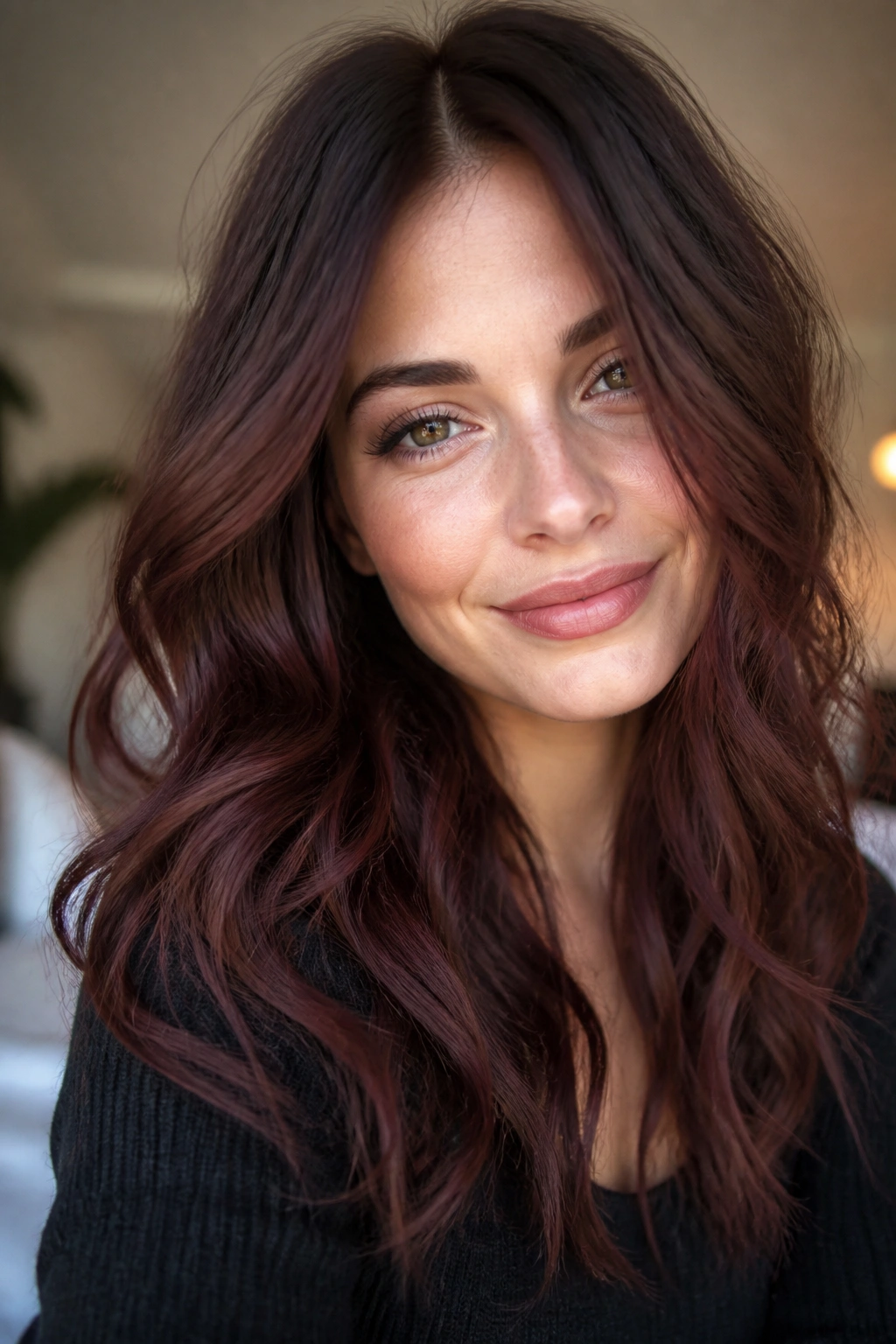
Why does mahogany mocha keep showing up in color books? Because it gives you red without the screaming part. The mocha base softens the shade, and the mahogany note adds just enough wine-dark richness for cool skin to look calm instead of flushed.
This one is especially good if you like hair that reads brown indoors and red outdoors. That shift is the appeal. In low light, it feels polished and restrained. In natural light, the red-brown lift appears near the face and through the ends, which keeps the whole look from going flat.
It’s also forgiving on layered cuts. The darker pieces under the top layer create movement without needing chunky highlights, which I always think looks better on brunette hair anyway. Ask your colorist for a cool mahogany brunette with a soft brown base, not a warm auburn brown. The difference is small on paper and huge in the mirror.
3. Burgundy Balayage on Deep Brunette
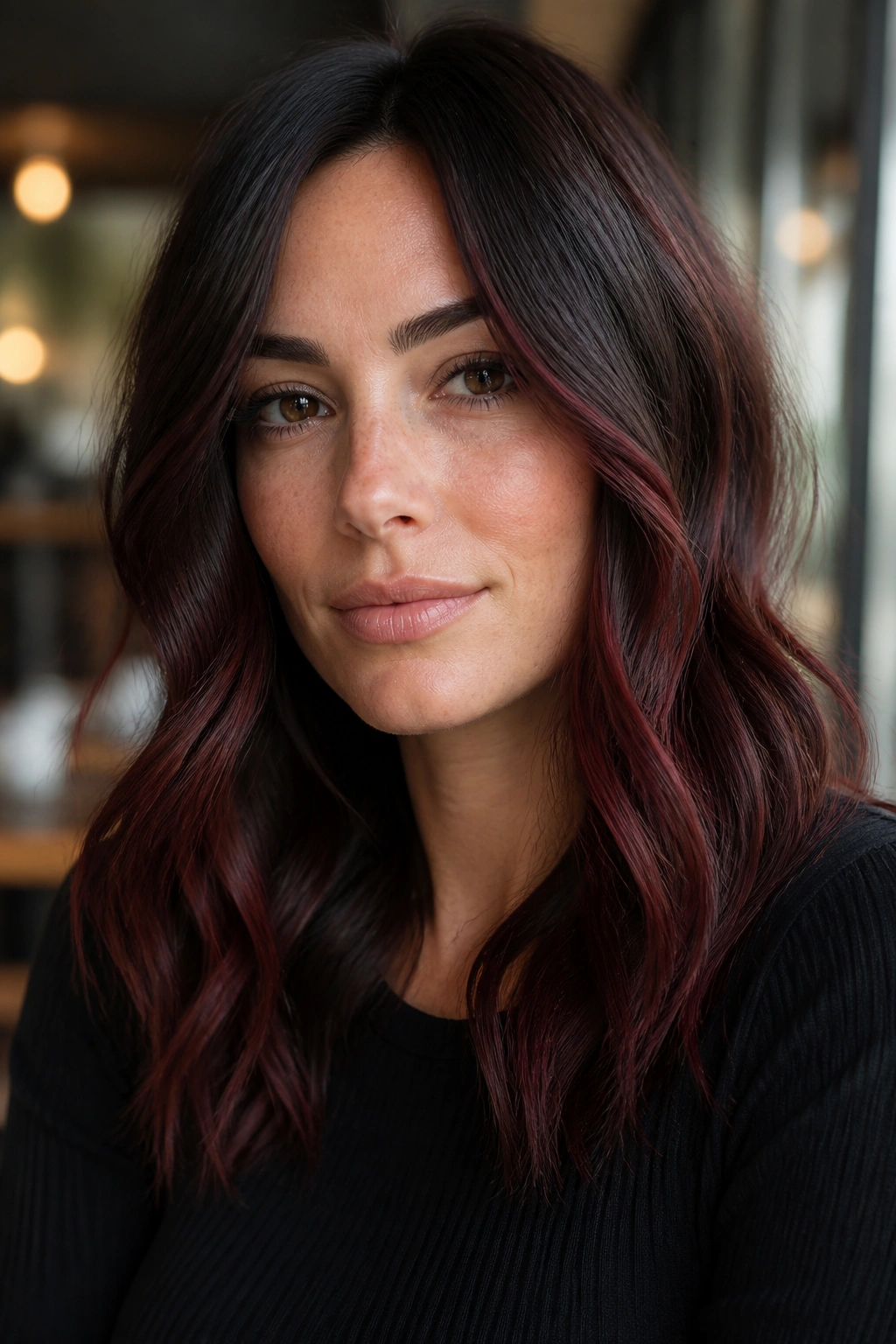
A burgundy balayage is for someone who wants movement first and red second. The base stays deep, almost espresso in places, while burgundy ribbons get painted through the mid-lengths and ends. On cool skin, that depth keeps the red from looking too sugary.
Picture loose waves with a few burgundy pieces catching the light near the cheekbone and collarbone. That’s where this color does its best work. The eye follows the darker brown root, then lands on the red because the placement is smart, not busy. It’s one of those shades that looks more expensive when the highlights are sparse.
Where to Place It
- Keep the root area natural or slightly deeper
- Paint burgundy mainly from ear level down
- Add a few thin pieces around the front hairline
- Leave some brunette between the ribbons so the red can breathe
If you wear your hair straight most days, ask for a few more face-framing pieces. If you live in waves and curls, the balayage will do more of the work for you.
4. Cranberry Melt with Shadow Root
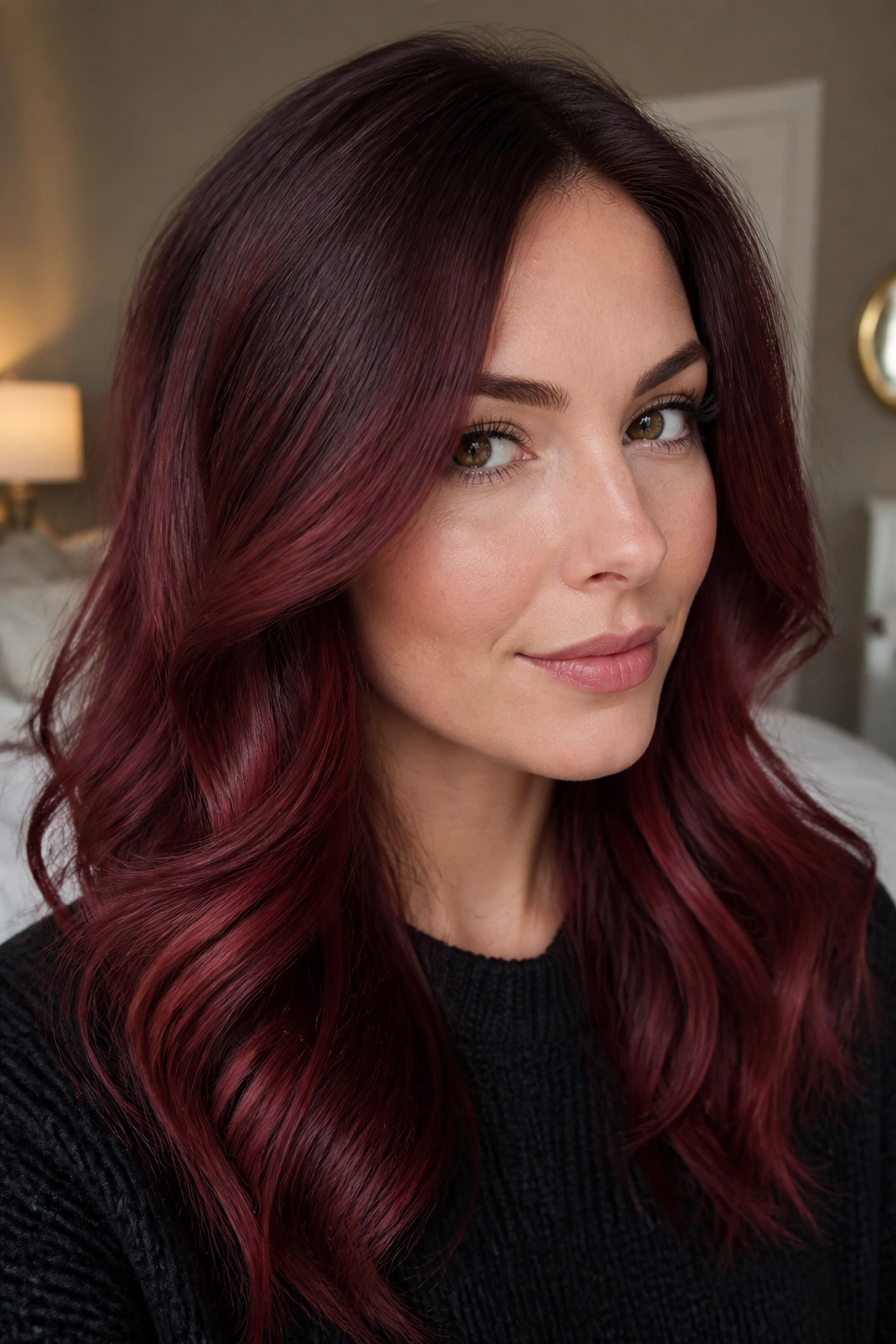
Cranberry can look loud on a swatch card. Put it over a dark shadow root and it settles down in a hurry. That’s why this color works so well on cool skin: the root keeps the whole thing grounded, and the cranberry melt brings a crisp berry red to the ends.
What to Ask For
Ask for a soft root shadow 1–2 shades deeper than your base, then a cranberry-red melt through the mids and ends. The root should not look chunky. It should look like the color is growing out of the scalp the way a good root shadow should.
Why It Works on Cool Skin
The cranberry tone has that tart, blue-red edge that plays nicely with cooler faces. It also photographs well under indoor light, which matters more than people admit. A flat red can get loud. Cranberry with depth stays interesting.
If your hair is naturally medium brown, this is a nice place to start if you want red that people notice without needing to name it from across the room.
5. Merlot Ribbon Highlights
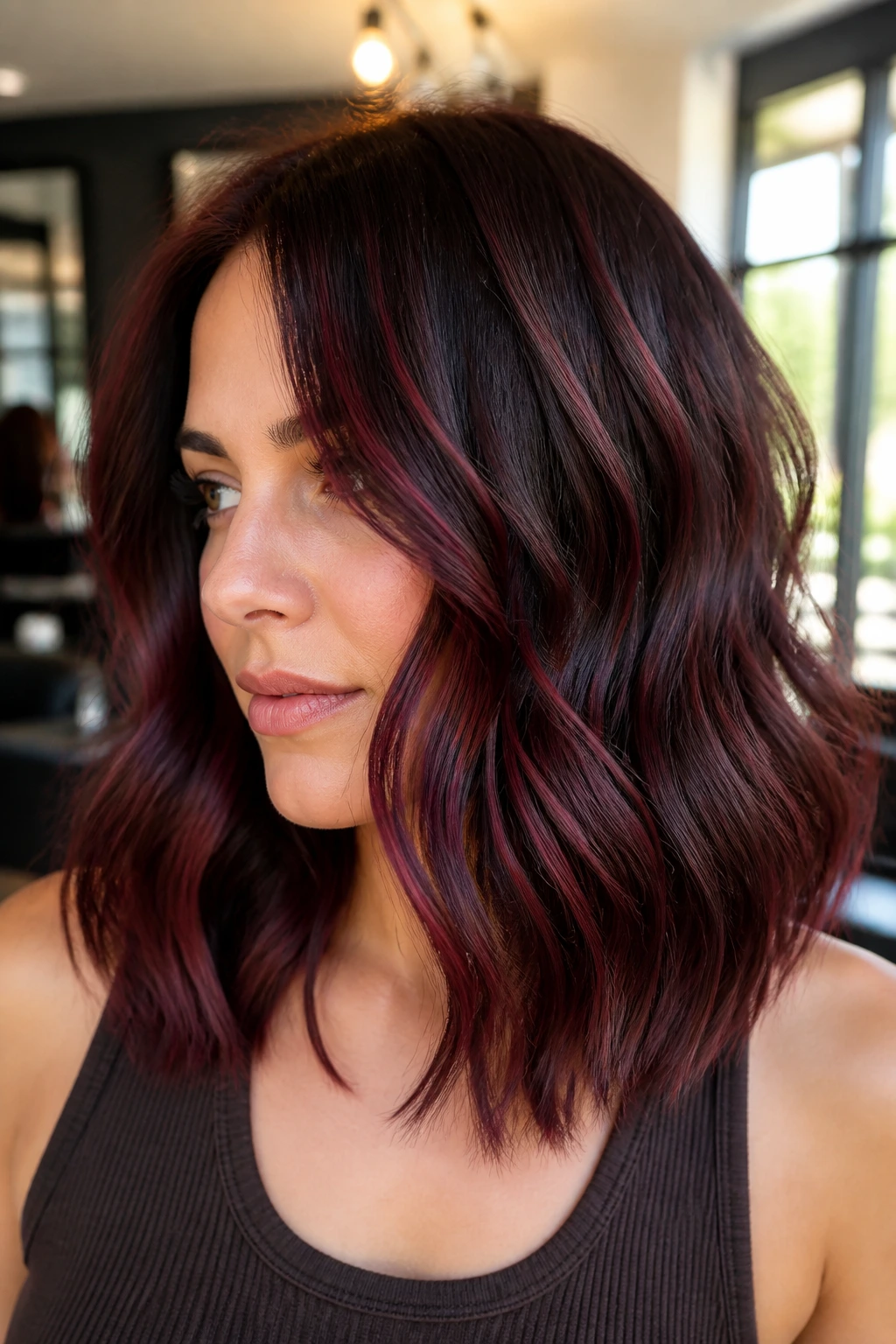
Merlot is the shade that makes layers look thicker. It sits between burgundy and plum, which means it has enough depth for brunette hair but still gives you that red wine shimmer cool skin tends to like. I like it best when it’s used as thin ribbons instead of broad panels.
On a wavy lob, those ribbons catch light in little flashes. On straight hair, they read more subtle and almost velvety. Either way, the color stays elegant without trying too hard. And yes, I know that phrase is overused. Here it actually fits.
This shade is a good choice if you’re nervous about full red because the brunette base keeps control. Ask for merlot-toned balayage or a merlot glaze on brunette hair if you want something softer. The stronger the contrast, the bolder the effect. The thinner the ribbons, the more it blends.
6. Plum Brown Gloss
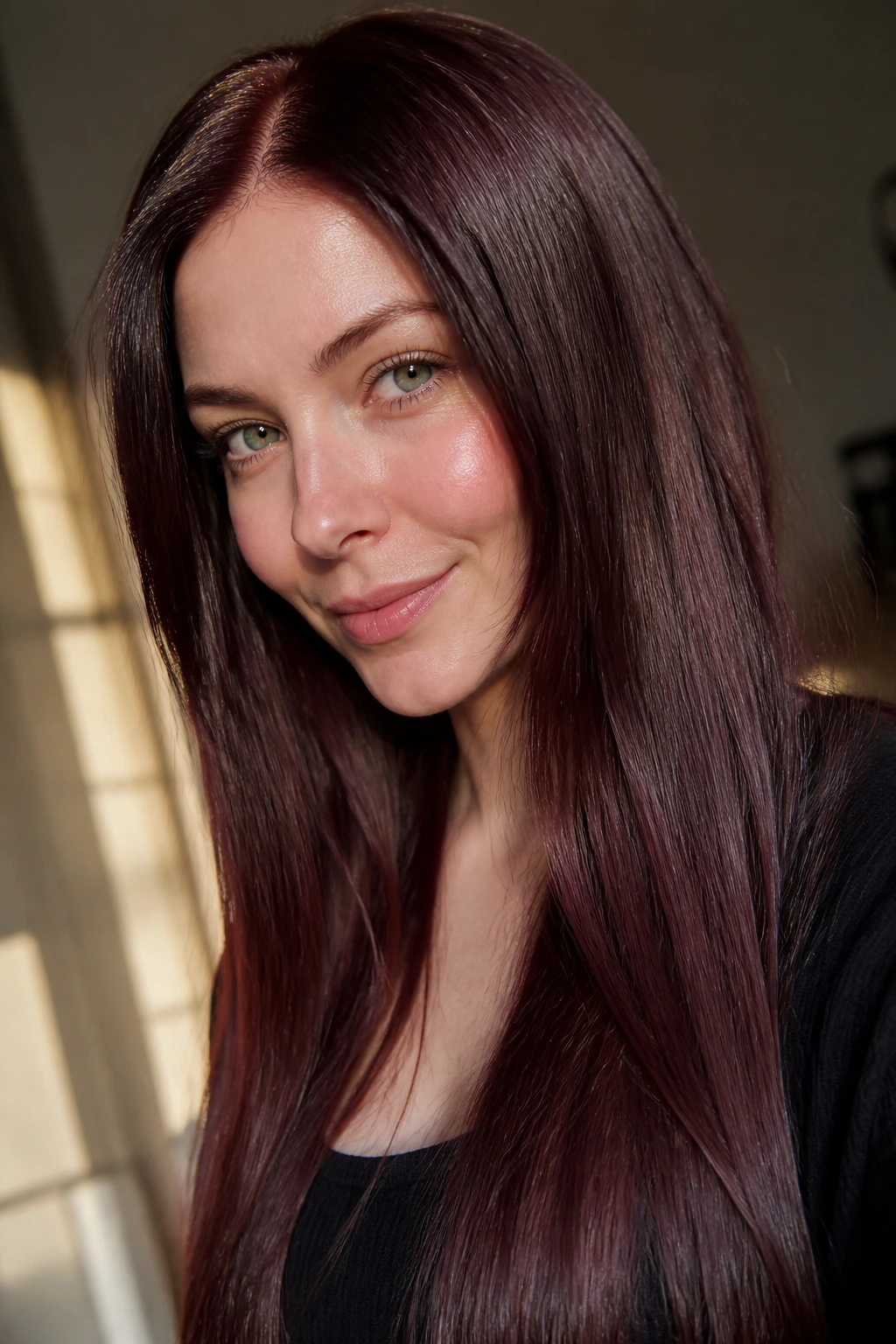
Plum brown gloss is the easy one. If you want red brunette hair color ideas for cool skin tones but you’re not ready for a full dye job, this is the move. A glossy plum tint over brunette hair adds shine first and color second, which is exactly why it looks good on fine or slightly tired hair.
The plum note gives the brown a cooler, richer edge. It doesn’t shout. It glows. Indoors, it can look almost chocolate-brown. Outside, the plum red catches just enough light to keep the shade alive.
A gloss service also grows out quietly, which is a nice bonus if you hate sitting in a chair every few weeks.
- Best for fine or medium hair
- Good choice if your ends look dry or faded
- Works well on straight blowouts and soft waves
- Usually needs a refresh in 4–8 weeks
If you like low-stress color, this one is hard to beat.
7. Rosewood Face-Framing Pieces for Cool Undertones
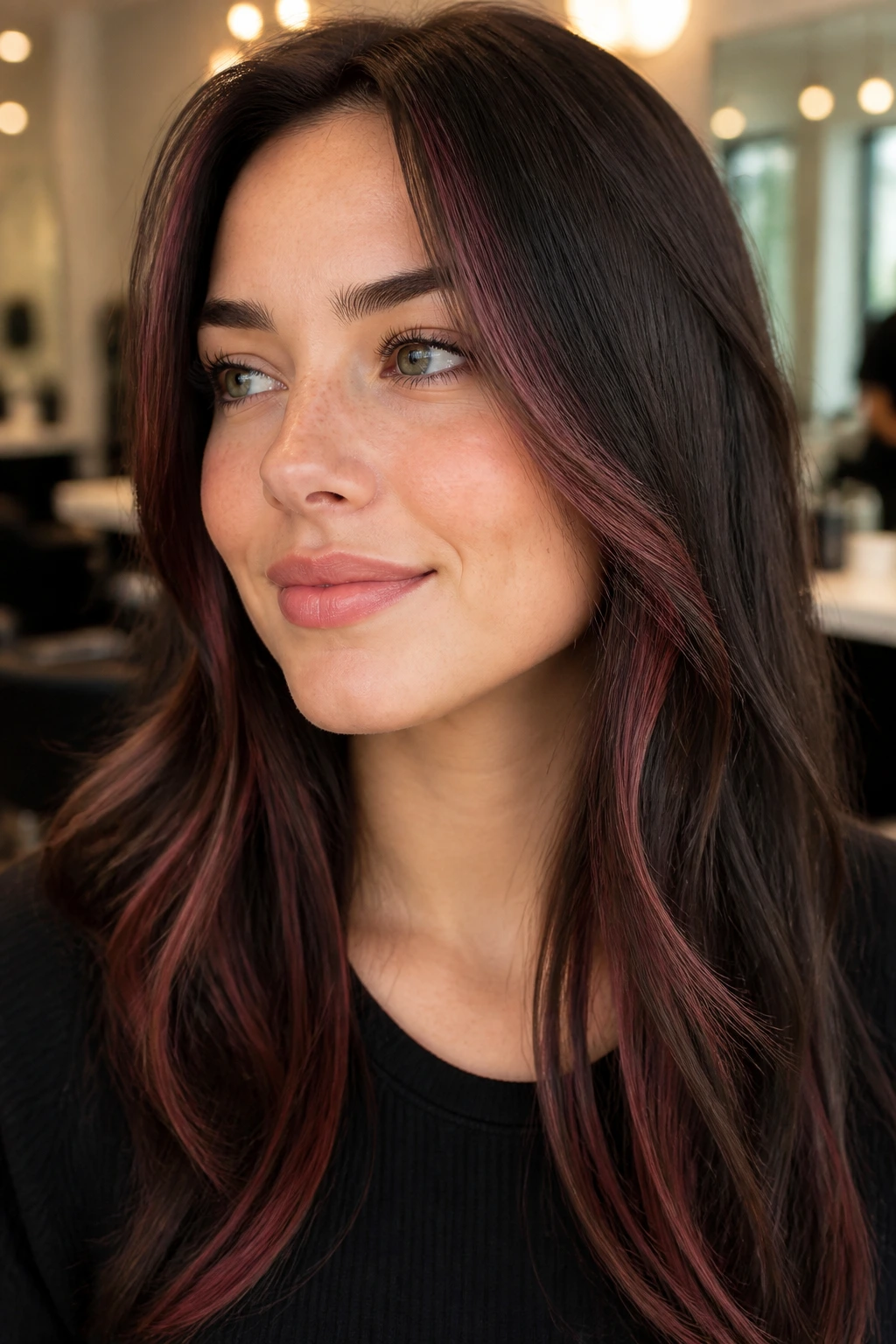
Why do face-framing rosewood pieces work when a full head of red would feel too much? Because they keep the color where the eye notices it first, and they leave the rest of the brunette base alone. Rosewood sits in that dusty red-brown zone that flatters cool undertones without turning the face pink.
The placement matters as much as the shade. Ask for two to four thin pieces on each side of the face, starting around the cheekbone or jawline. Keep them a shade or two brighter than the rest of the hair, not five. Too much contrast and the effect turns stripey.
Rosewood is a good first step if you’re testing whether red brunette hair suits you. It grows out gracefully. It also works with curtain bangs, which can be a little smug about how well they show off face-framing color. Fair enough.
8. Black Cherry Brunette
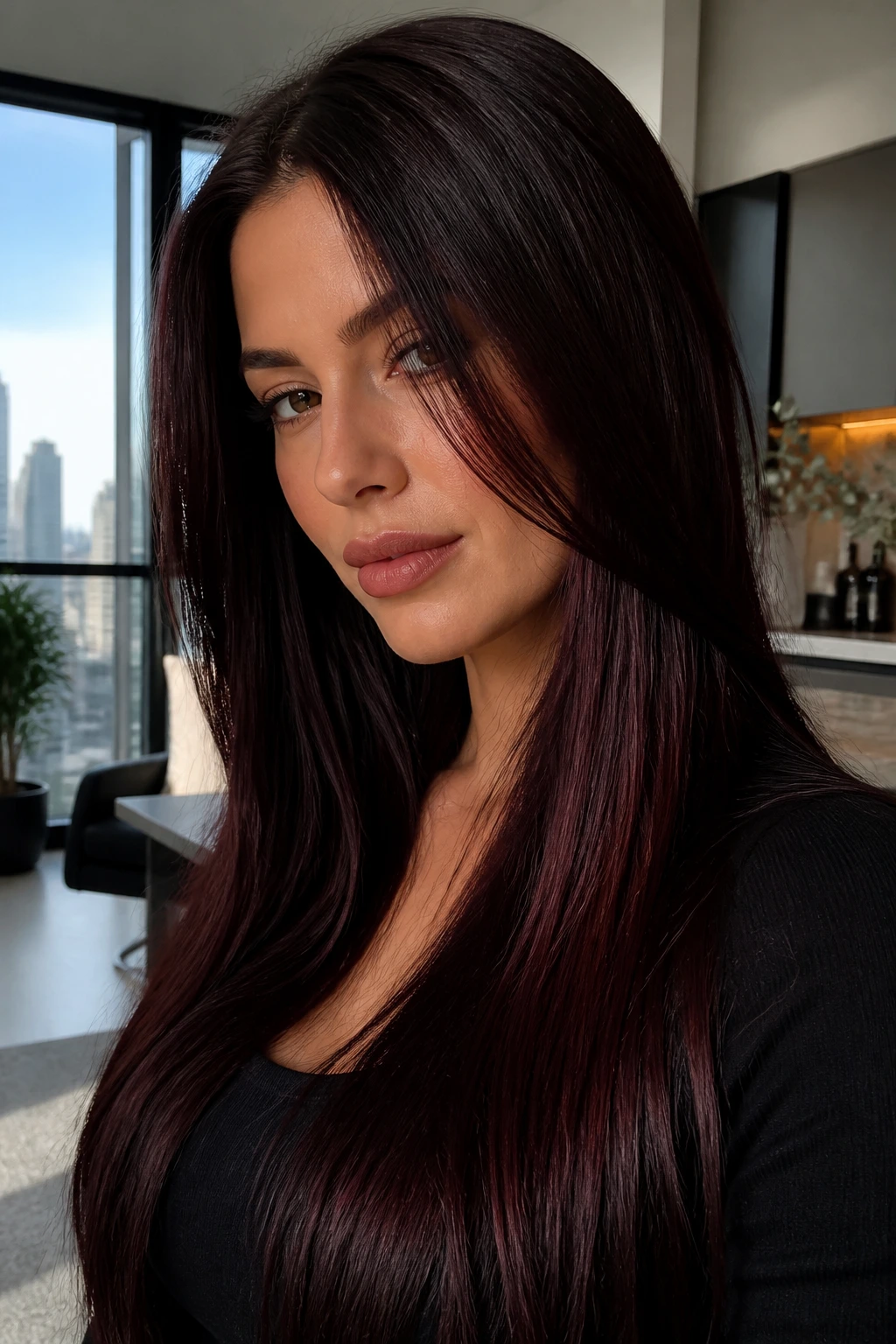
Dark. Glossy. A little dangerous. Black cherry brunette is the shade that looks almost black indoors and then flashes red-violet when the light moves across it. On cool skin, that hidden red is the whole point. It gives depth without throwing orange onto the face.
This is a good one if you like low-maintenance color but still want people to notice something different. It’s especially strong on long hair because the ends can catch more red in motion. Straight styles look sleek. Loose curls make the color show up in waves, which is a nice effect if you like contrast.
A black cherry formula usually needs a blue-red or violet-red base, not a bright copper. If your hair is porous, the red can grab hard at the ends, so a good stylist will often soften it with a brown glaze through the mid-lengths. That keeps the finish from looking bitty.
9. Mulberry Brown Ends
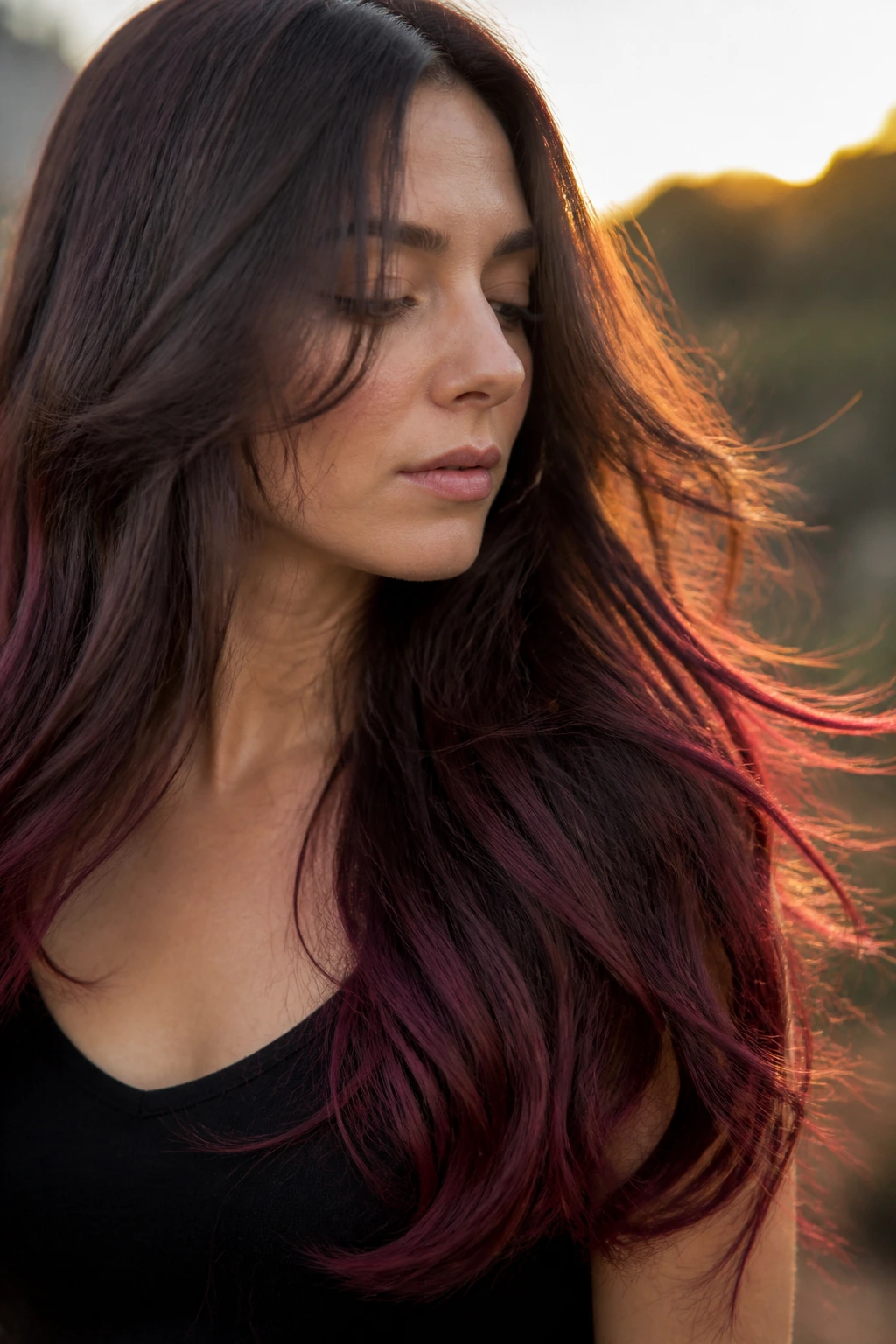
Mulberry ends are for the person who likes hair that changes when it moves. The roots stay brunette, the mids stay brown, and the ends carry that dark berry tone that sits somewhere between red and purple. On cool skin, that deeper fruit shade keeps everything in balance.
This color works best on long layers or hair that falls below the shoulders, because the ombré effect needs space. Shorter hair can still wear it, but the transition needs to be softer. Otherwise, the shade can feel abrupt.
It’s a nice choice if you like to wear black, charcoal, or navy. The cool clothes and the mulberry ends tend to get along. When hair swings or curls under, the red-brown depth shows up just enough to keep things interesting.
If you want the red to be visible only in motion, this is a smart way to do it.
10. Cabernet Money Piece
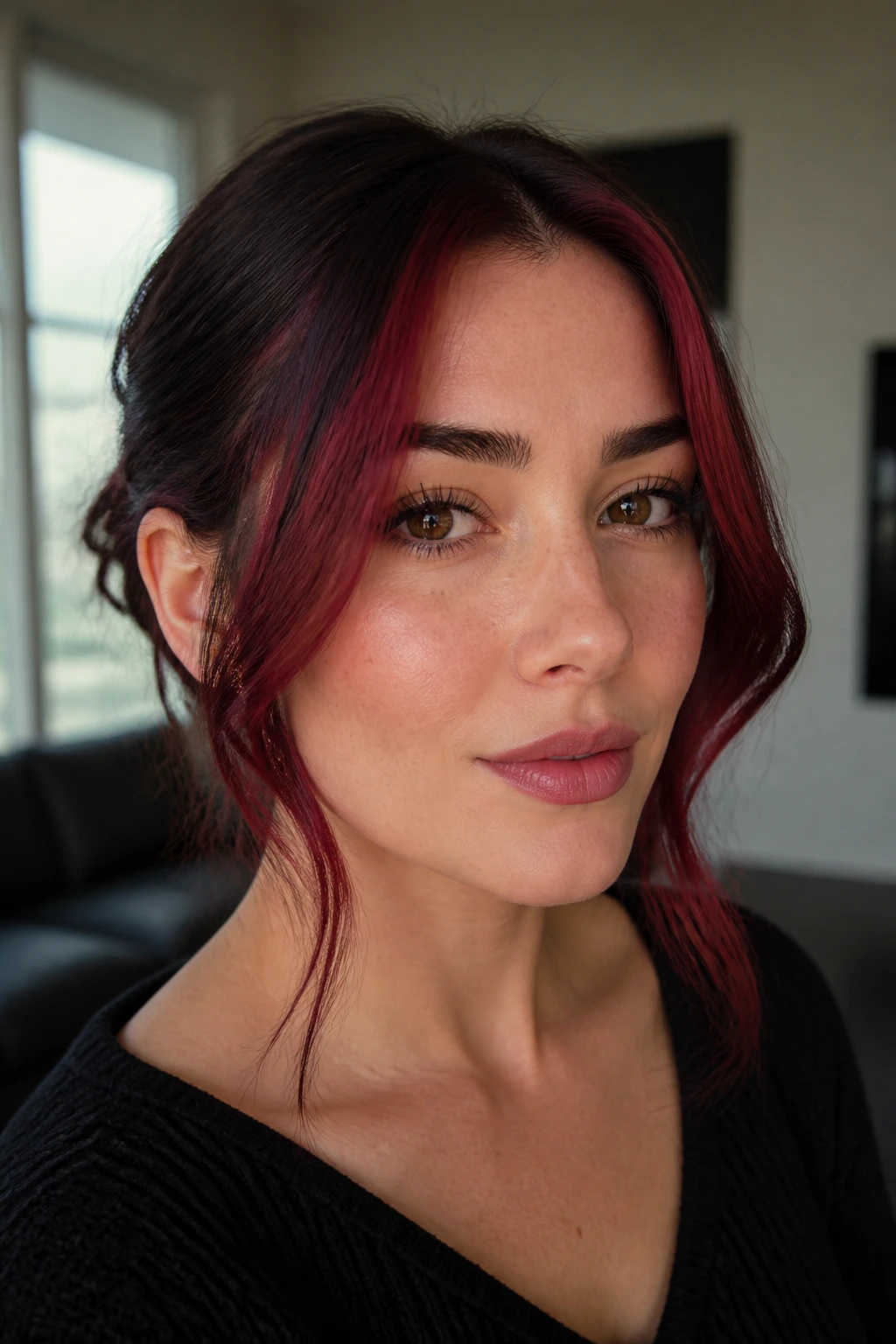
Cabernet money piece works because the contrast is all in one spot. Instead of painting the whole head red, you keep the brunette base rich and dark, then brighten just the front with cabernet-red ribbons. It’s a sharper look, but it does not have to be loud.
What Makes It Different
Unlike full-head color, a money piece gives you a quick hit of red right where the face needs it. The effect is immediate. Two foils on each side can change the whole mood of a cut, especially if you wear hair tucked behind the ears or pulled into a loose half-up style.
Best Way to Wear It
- Keep the money piece 1–2 shades lighter than the base
- Ask for cabernet, not copper
- Pair it with a deep brunette root
- Style with a bend or wave so the front pieces move
This is a smart option if you want people to notice the color without having to maintain a full red transformation.
11. Garnet Brunette Bob
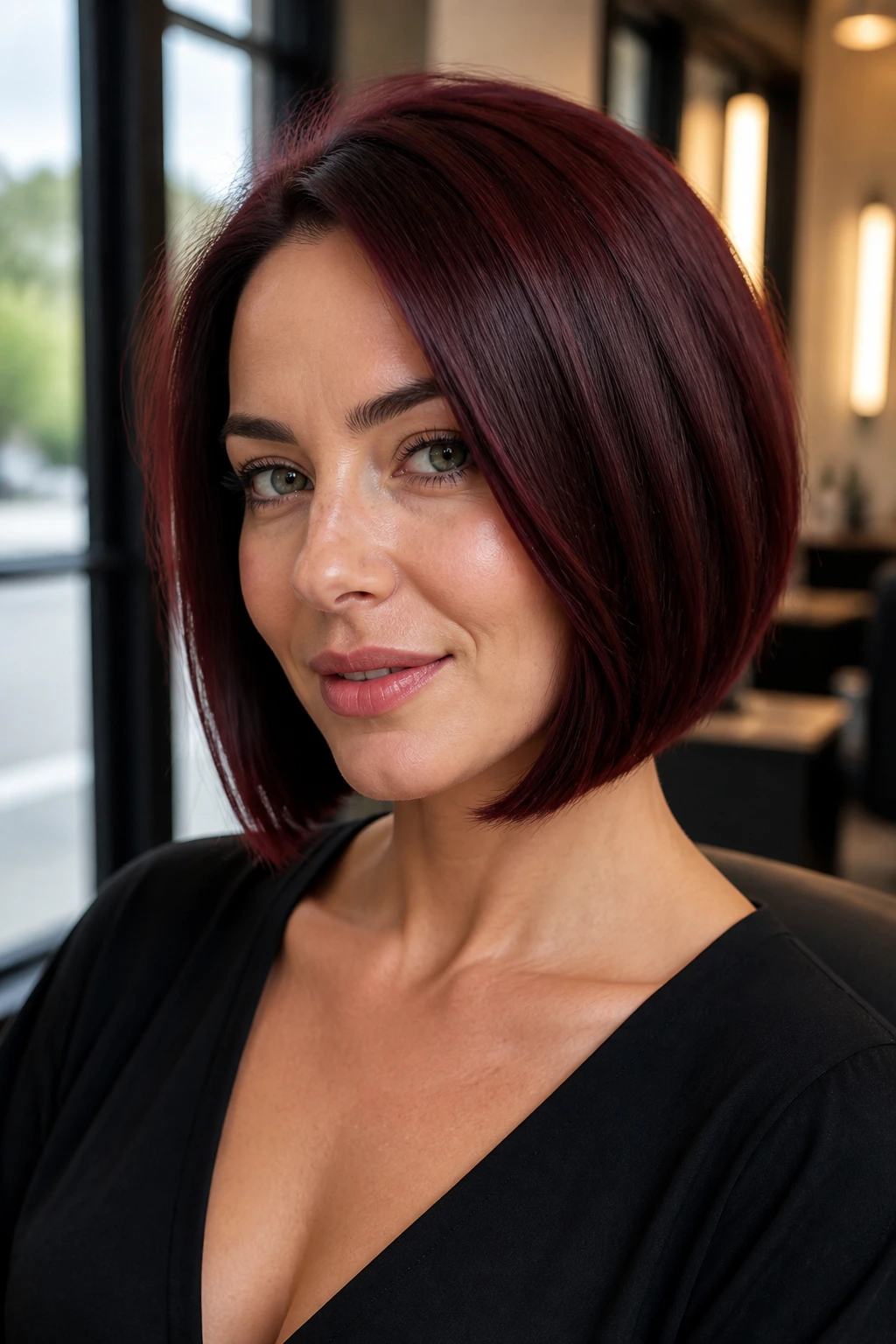
A garnet brunette bob has a stone-like shine that plain brown hair often misses. Garnet is a deep red that sits inside brunette territory instead of floating on top of it, so it feels dense and polished on cool skin. On a bob or lob, that density looks even better because the cut line gives the color a clean shape.
The shorter the cut, the more every inch of color matters. A garnet bob can look sleek and sharp when blown out straight, or soft and smoky when worn with a little bend. I like it on blunt cuts, where the ends catch the light and the red-brown tone sits like a thin coat of lacquer.
If your skin runs cool and your hair is naturally flat in color, garnet is a nice fix. It adds depth without asking for a dramatic bleaching session, which is always a relief.
12. Raspberry Brown Glaze
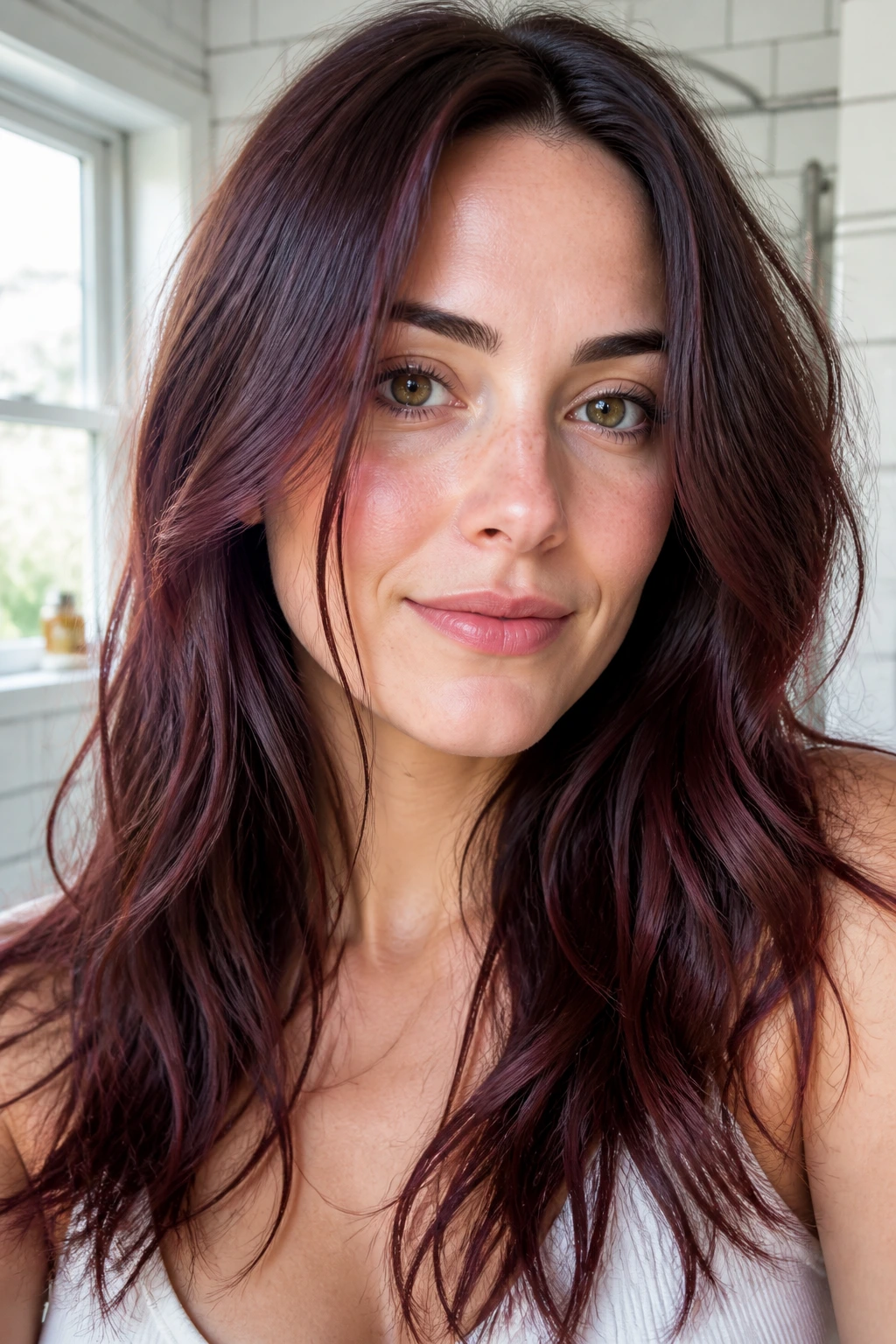
Raspberry brown glaze can be the smartest way to go red when you want color but not a full commitment. The raspberry note is brighter than plum and softer than cherry, and the brown base keeps it from sliding into neon territory. On cool skin, that slight berry lift wakes up the face in a good way.
Why a Glaze Beats Permanent Dye Here
A glaze coats the hair lightly instead of flooding it with pigment. That means you get shine, tone, and a soft color shift, not a hard block of red. It also fades more gradually, which matters because red shades can go weird fast if they’re overprocessed or left to fade on their own.
How to Wear It
- Ask for a demi-permanent raspberry glaze
- Keep the base at medium brunette or deeper
- Refresh every 4–6 weeks
- Style with a smooth blowout if you want the tone to look glassy
If your hair is dry, this shade is kind. The gloss finish can hide a lot of roughness.
13. Smoky Auburn Brunette
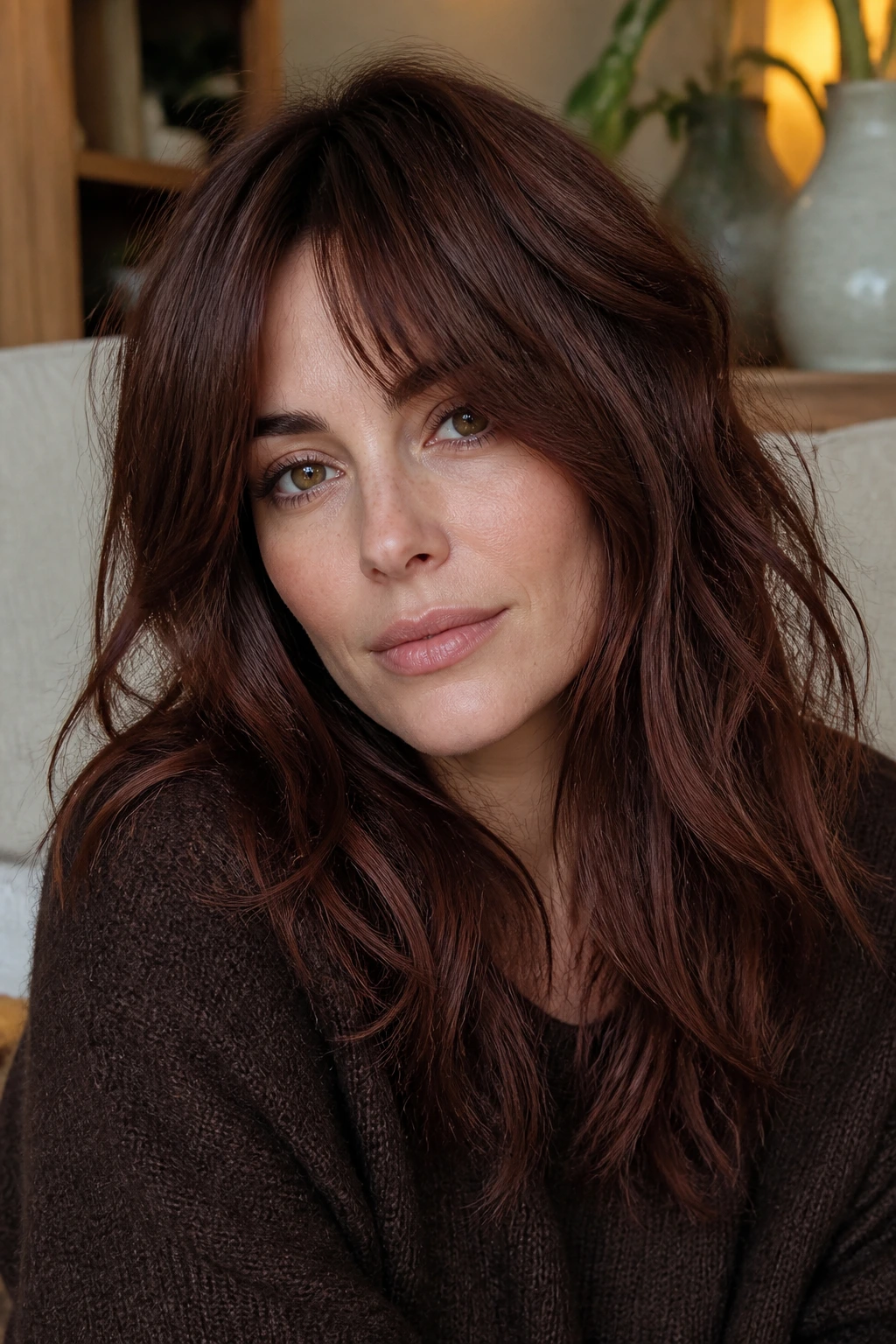
Can auburn be cool-toned? Yes, if it behaves more like brown than copper. Smoky auburn brunette uses enough brown to mute the warmth and enough red to keep the color from looking flat. That balance is why it can work on cool skin without clashing.
The smoky part matters. Without it, auburn tends to veer orange. With it, the color becomes a muted red-brown that feels softer and less obvious. It’s a good fit for shag cuts, curtain bangs, and layers that need a little lift around the face.
This is also one of the better choices if you want red hair that doesn’t scream for attention under fluorescent light. It still shows up. It just doesn’t shout. If you’re nervous about full red, ask for a deep auburn brown with a cool glaze on top rather than a bright copper formula.
14. Maroon Melt for Cool Skin Tones
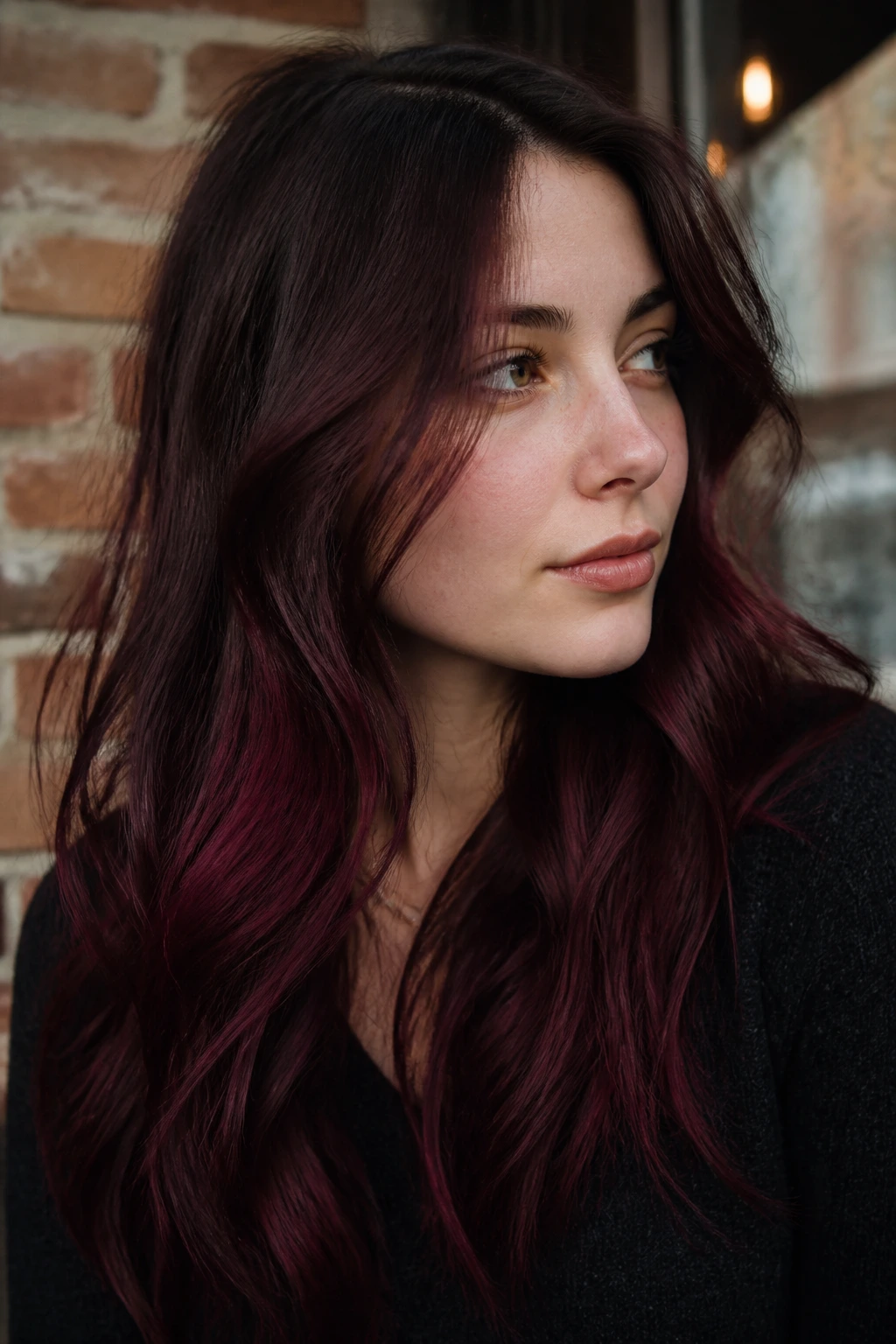
Maroon is the shade people skip because it sounds severe. That’s a mistake. When it melts through brunette hair with a dark root, it looks rich, not harsh, and cool skin tends to love that deeper wine-brown direction.
A maroon melt is especially strong if you want the red to feel darker than burgundy. Burgundy can have a little more sparkle. Maroon sits heavier, which makes the color feel grounded and a bit moody in the best way. If you wear dark clothes a lot, this shade can make your hair feel like part of the outfit instead of an afterthought.
The grow-out is decent too, especially if the root stays close to your natural brunette. There’s less of that obvious fade line at the scalp, and the color can soften into a dark berry brown rather than turning brassy. That’s a decent trade.
15. Pomegranate Red Brown
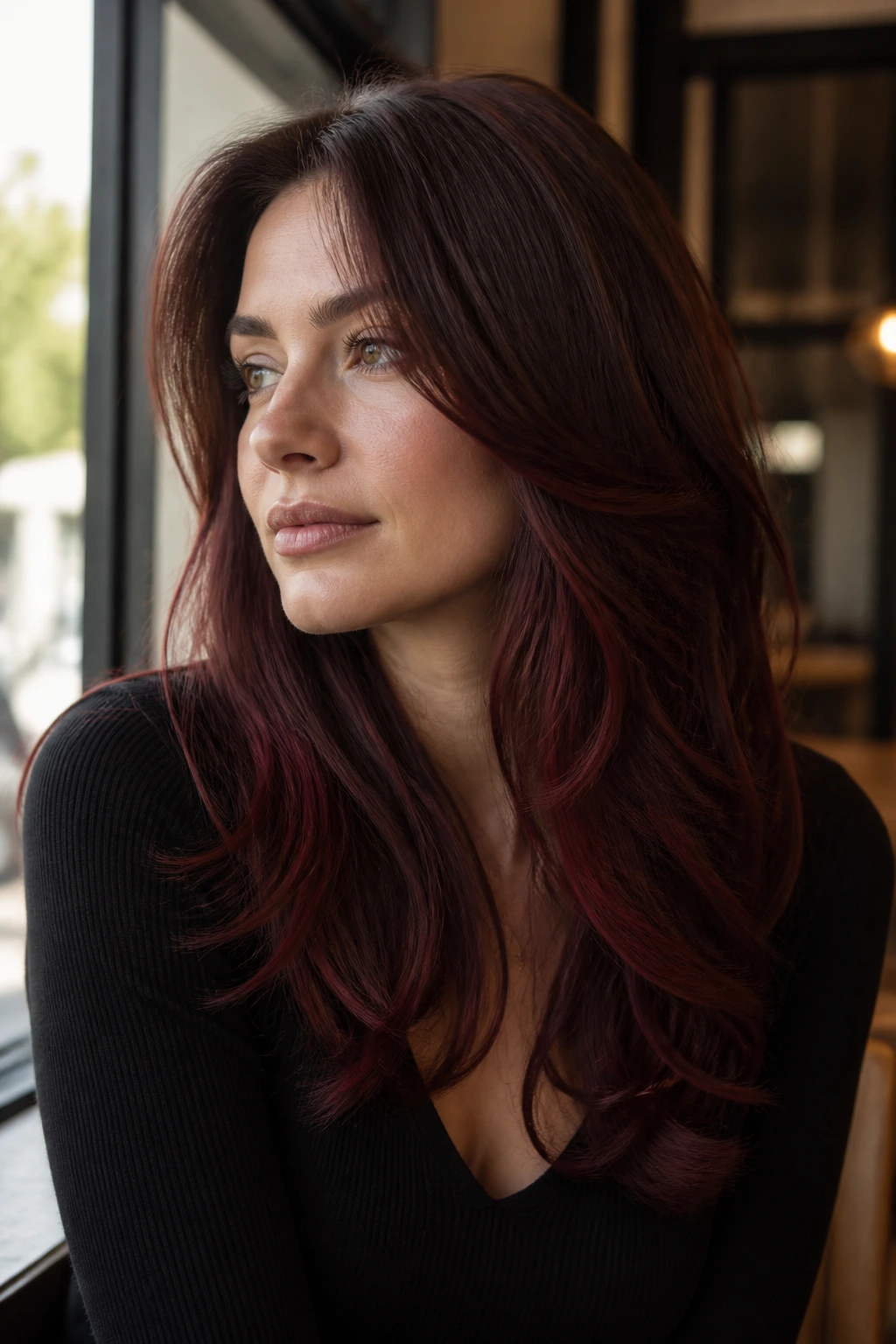
Pomegranate red brown looks juicy in motion and surprisingly calm at rest. The color has enough red to show up, but enough brown to keep cool skin from looking overpowered. If you like brunette hair with a little edge, this one sits in a sweet spot.
I like it on layered cuts because the red can live in the interior pieces and peek out as the hair moves. It also works on people who wear navy, black, or charcoal because the cooler clothes do not fight the tone. That sounds small. It isn’t.
Pomegranate shades often photograph with more depth than they appear in person, which is useful if you want richness without a loud finish. Ask for a brown base with pomegranate-red overlay rather than a full red deposit. That gives you control over how much of the berry tone shows.
16. Aubergine-Red Brunette
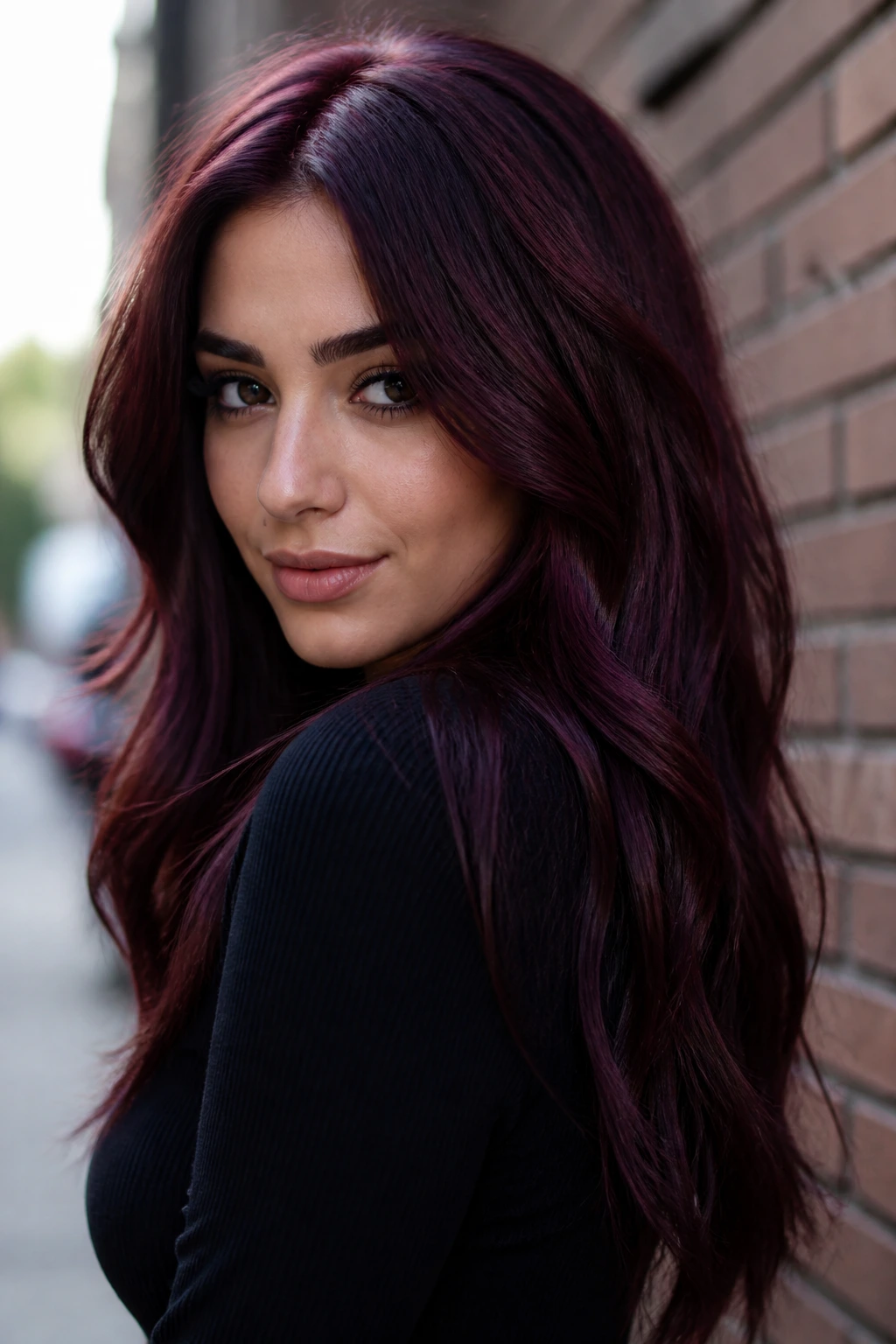
Aubergine-red is the darker, moodier cousin of plum. It leans cooler, deeper, and a touch more violet, which is why it suits very cool skin and dark eyes so well. If plum sometimes feels too playful, aubergine has more edge.
This shade shines on thick hair because there’s enough mass for the color to read in layers. On sleek styles, it can look almost ink-like until the light hits it. Then the red-violet shift shows up. That reveal is half the fun.
It’s also a good option if you want a brunette base that doesn’t read flat in winter light or low sun. A lot of dark browns can go dead-looking there. Aubergine-red keeps movement in the hair, especially near the ends and around the face. If you like a color that feels a little private, this one has that energy.
17. Wine Red Ribbon Highlights
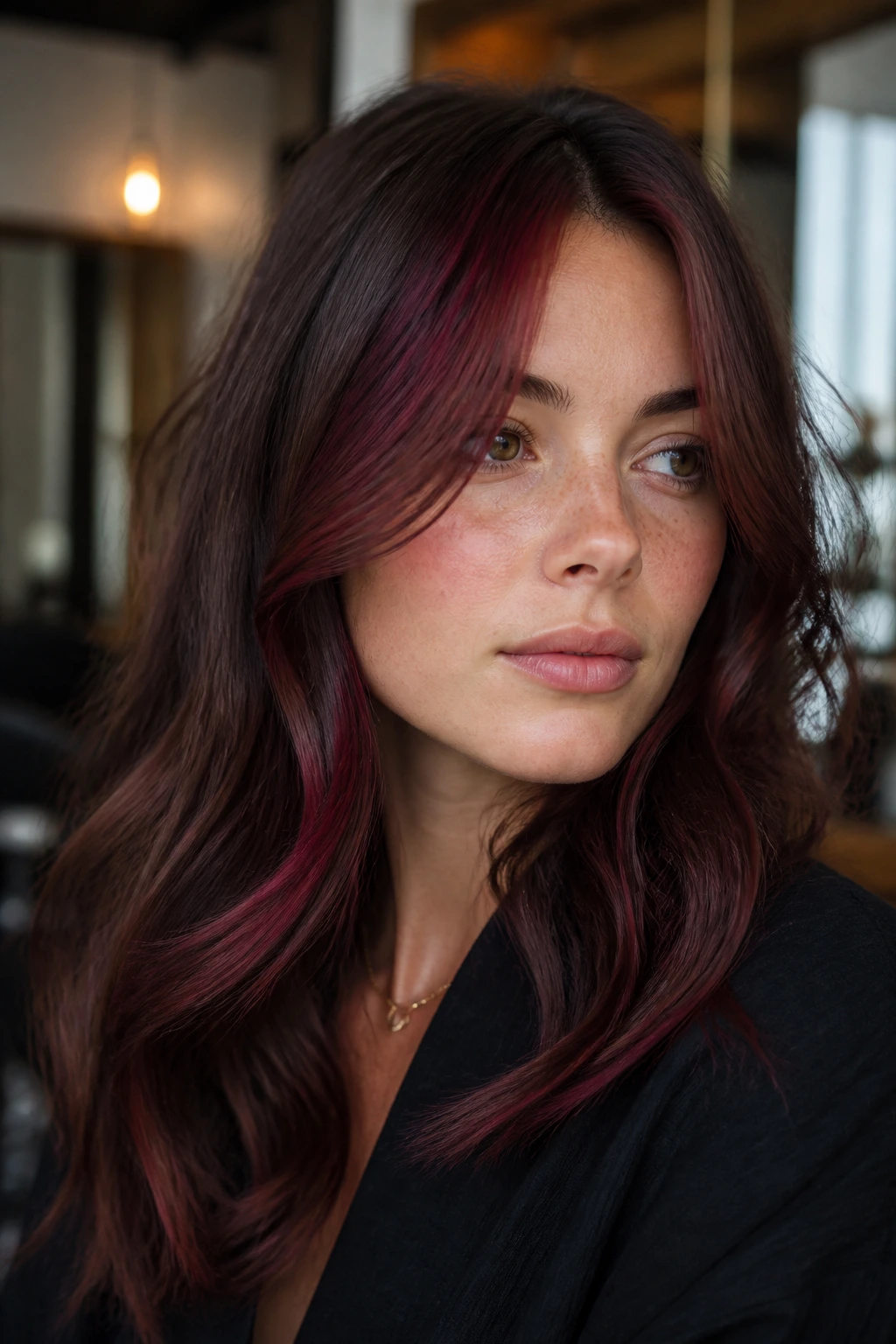
Wine red ribbon highlights are one of the easiest ways to add red without filling the whole head with it. Thin wine-colored pieces threaded through a brunette base can create a layered look that cool skin tends to wear well because the red stays blue-based and deep.
The placement should follow the cut, not fight it. On curls, the ribbons can sit inside the curl pattern and show up as the hair bends. On straight hair, they work better in softer, thinner panels so the finish stays elegant rather than streaky. A lot of people ask for too much width here. Don’t.
What to Ask For
- Use thin ribbons, about 1/8 to 1/4 inch wide
- Keep them around the crown and face-framing sections
- Stay in the wine, claret, or merlot family
- Leave plenty of brunette between highlights
If you want a red brunette color that still feels wearable at work or on a casual day, this is one of the better bets.
18. Beetroot Brown Tint
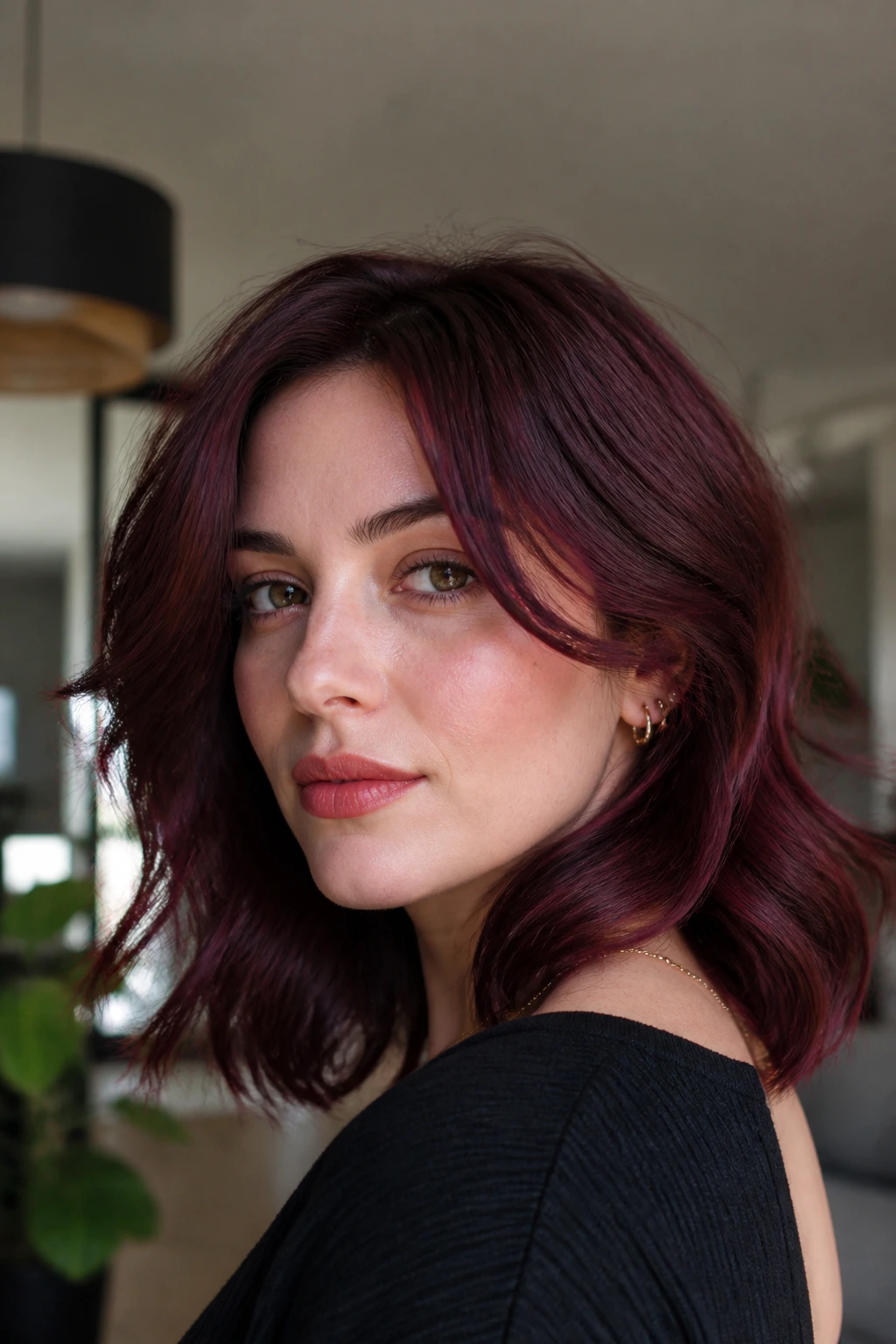
Beetroot is a little earthy, a little cool, and a lot less obvious than fire-red. That makes it a strong option for cool skin tones that want red brunette hair color ideas without the drama of high-contrast color. The shade has that deep vegetable-red quality—dark, grounded, slightly purple at the edges.
This works especially well on short cuts, pixies, and cropped bobs because the color can be seen all at once. There’s no waiting for long lengths to swing before the red appears. The tint also tends to look modern without trying too hard, which I appreciate.
If your base is medium brown, a beetroot tint can sit right on top and create a deeper red-brown cast. If your hair is darker, it will read more as a sheen than a full color change. That’s fine. Sometimes the best red is the one people notice only when you turn your head.
19. Claret Brunette Lowlights
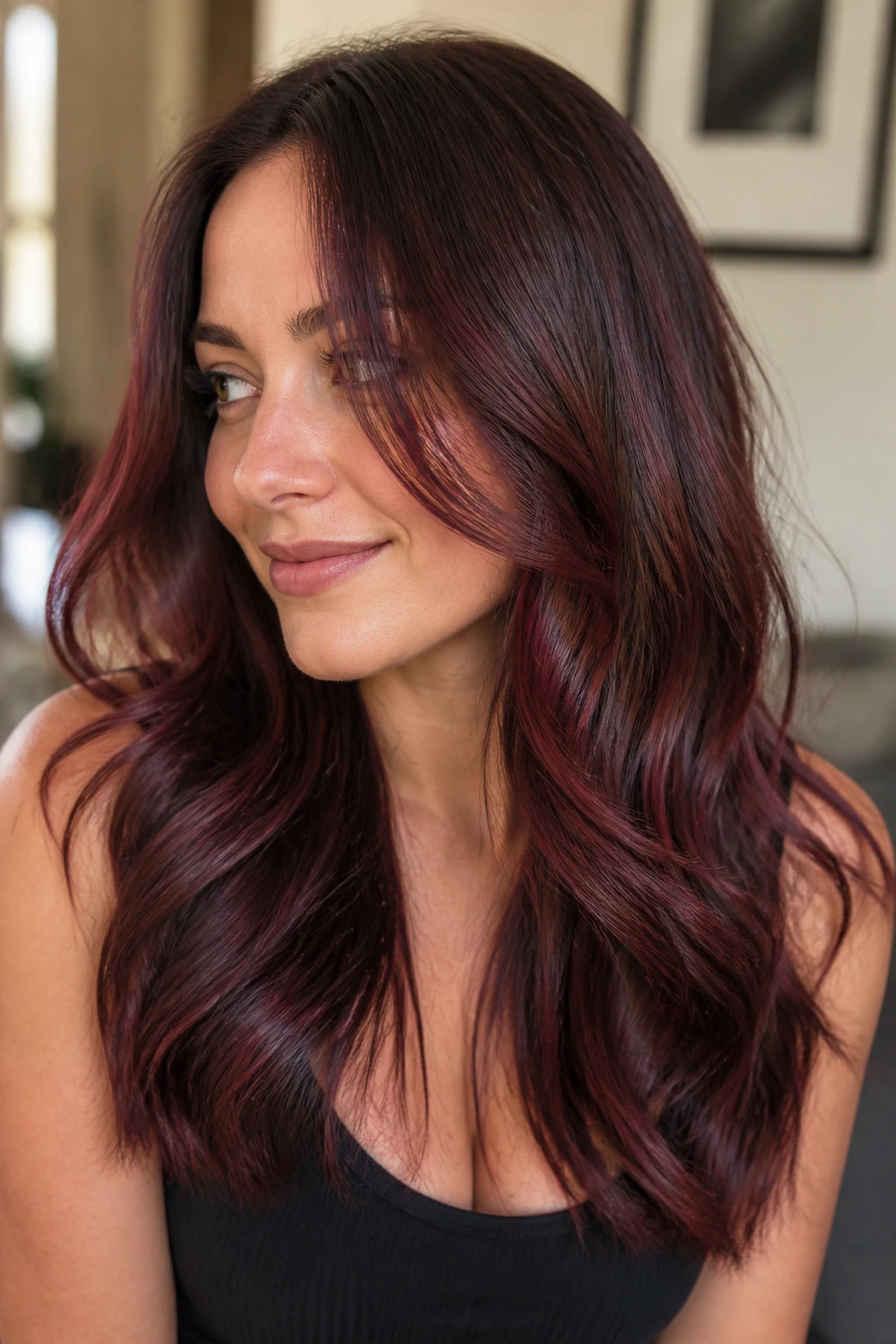
Can lowlights make hair look red? Absolutely, if the base is light enough. Claret lowlights add dark wine-red depth inside a brunette shade, which is especially useful when you want dimension without lifting the whole head. On cool skin, the wine tone keeps the finish rich instead of brassy.
Lowlights are underrated. They make hair look denser, give curls a little more shape, and stop a brown shade from reading too one-note. Claret is a smart pick if your hair already has some warmth and you want to steer it cooler without starting over.
This is one of the better choices for medium brown hair that has gone faded or flat. A few lowlights under the top layer can change the whole read of the color, even if nobody can point to exactly what shifted. That is often the sweet spot. People notice the hair, not the technique.
20. Cherry Mocha Ombré
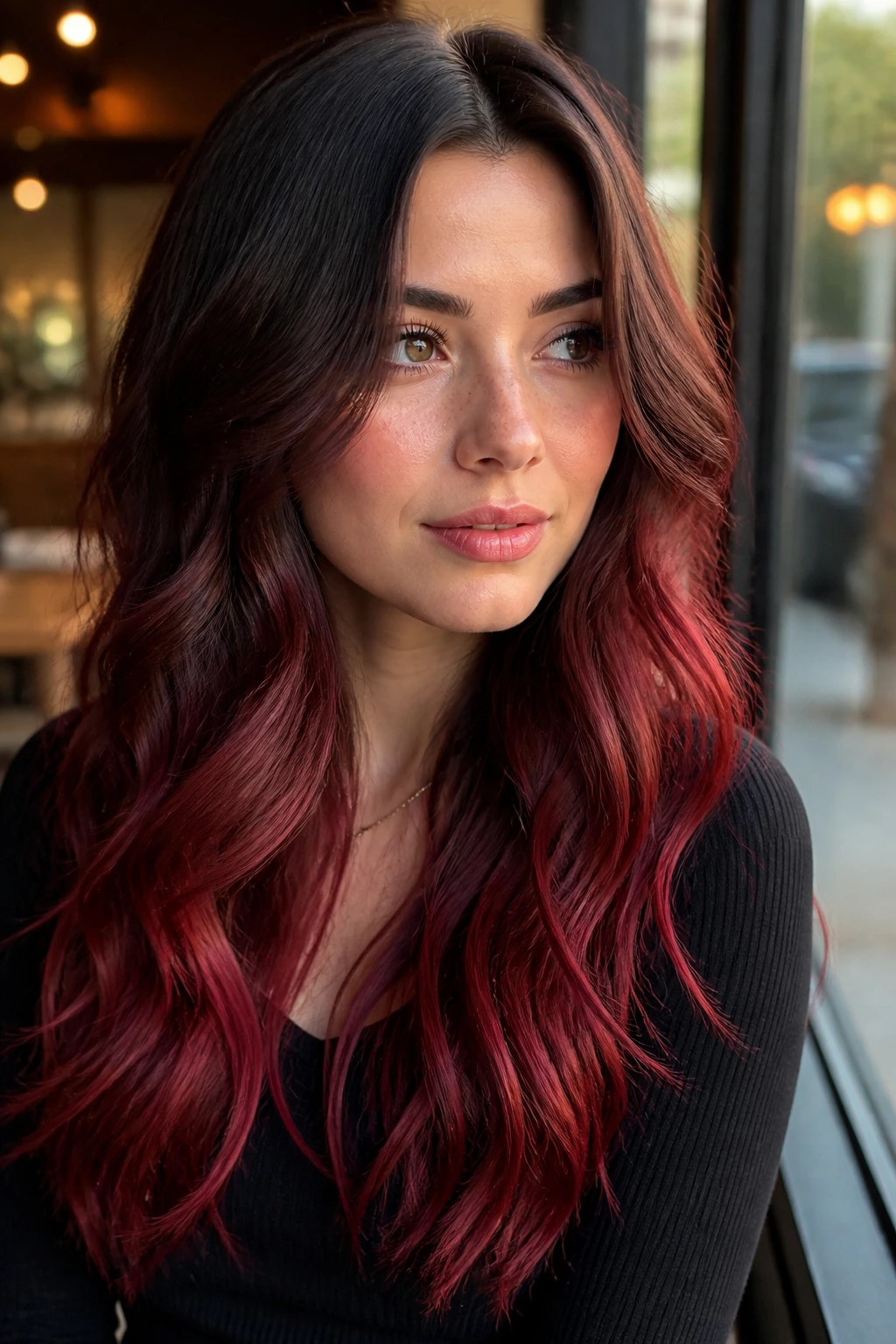
Cherry mocha ombré is for the person who wants the red to show up only when the hair swings. The roots stay mocha and deep, the mids darken into cherry-brown, and the ends carry the boldest red-brown payoff. On cool skin, that gradient keeps the face from looking overwhelmed.
This shade needs length to make sense. Shoulder-length hair can handle it, but longer cuts give the ombré room to breathe. A wavy style helps a lot because the color shifts appear in little sections as the wave bends. Straight hair can wear it too, though the transition needs to be soft.
If you like low-maintenance grow-out with a little drama at the ends, this is a good one. The darker root buys you time. The cherry mocha finish does the visual work. It is a simple idea, and sometimes simple is exactly what you need.
21. Ruby Brown Gloss
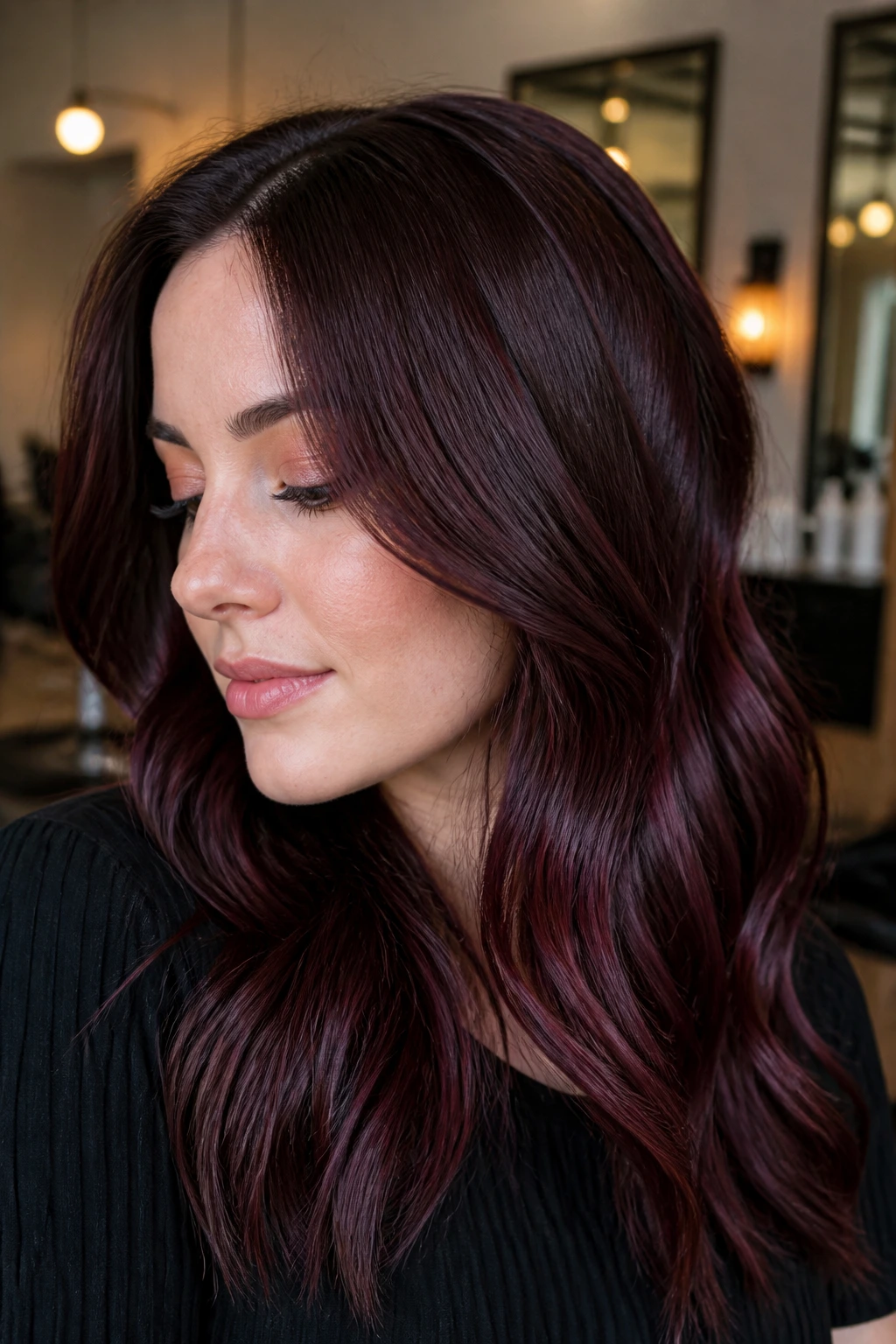
Ruby brown gloss is what happens when you want shine first and color second. The brunette base stays in charge, while a ruby-red glaze adds a jewel-like edge that cool skin can carry without effort. It is not loud. It is sharp.
Best Way to Wear It
Ruby works well on hair that already has a solid brown foundation. If the base is too light, the red can slide too bright. Keep it close to a medium brunette or deeper, then let the gloss do the rest. A few face-framing pieces can make the whole tone pop without extra bleach.
- Best for healthy, medium-to-dark brunette hair
- Nice choice for smooth blowouts
- Usually needs a color gloss every 4–6 weeks
- Looks richest when the hair has high shine
If your hair feels a bit dull and you want one service to fix that, ruby brown gloss is a practical place to start.
22. Cool Cinnamon-Red Brunette
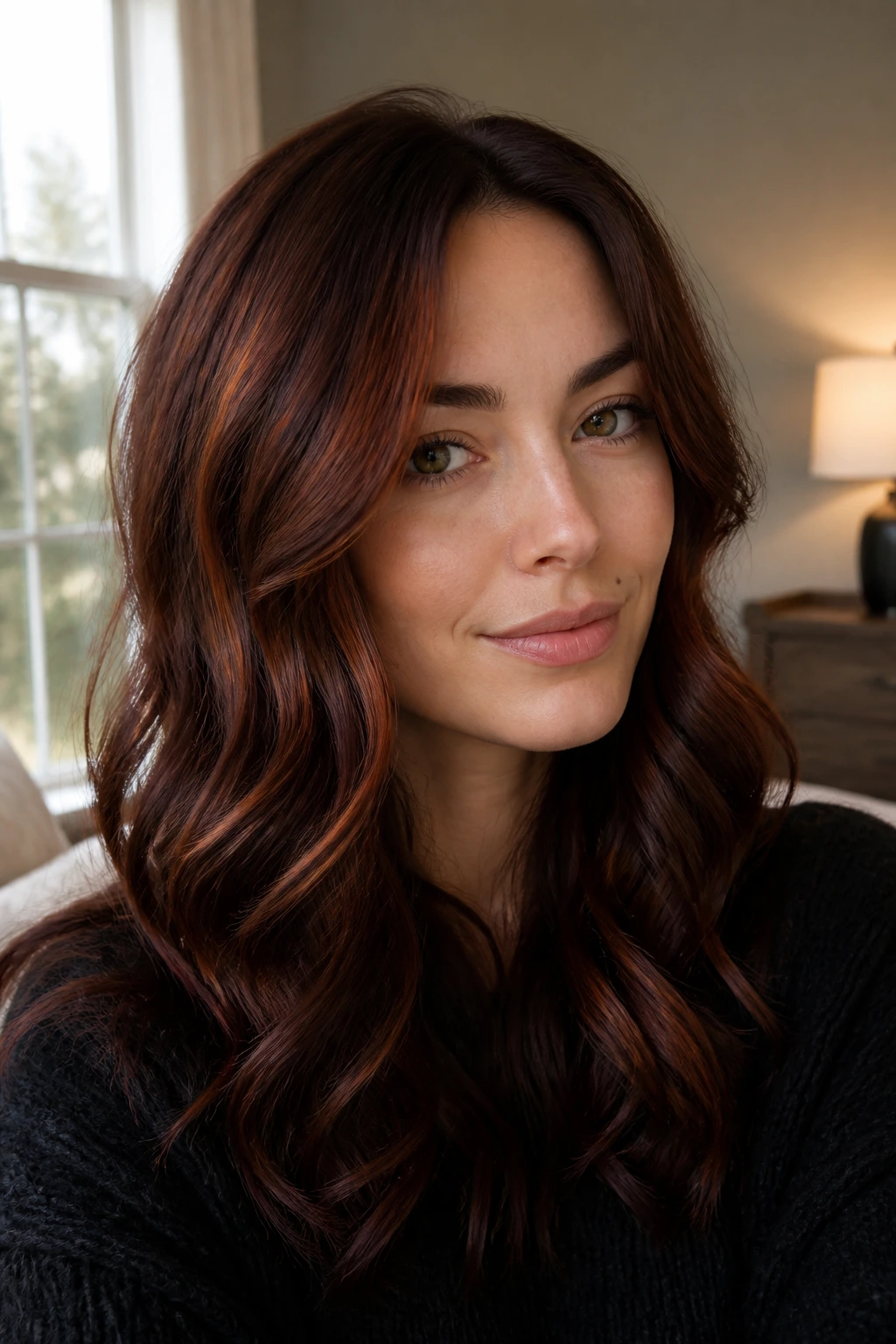
Cool cinnamon is one of those shades that sounds warmer than it wears. The key is keeping the cinnamon muted, almost dusted over a brunette base rather than poured on top like copper syrup. On cool skin, that restraint matters.
This shade sits near the end of the red brunette spectrum that still feels wearable. It has spice, but not the heat. It works especially well on soft curls and long layers because the movement lets the brown-red balance show. If the hair is straight and very sleek, the color can read a little more understated, which is fine too.
The difference between cinnamon and copper is small on a color chart and huge in real life. Copper can shout. Cool cinnamon can whisper, then warm up in the sun. If you want a red brunette that stays friendly to cool skin without losing all its personality, this is a smart final pick.
