



Mocha hair color can look gorgeous on cool skin tones—if the brown stays ash, smoky, or neutral instead of drifting coppery. That one detail changes the whole read of the color, because pink, blue, and rosy undertones usually sit better beside a brunette that has a gray, violet, or soft beige edge.
Flat brown is the trap.
A lot of salon photos blur the difference, but in real light it shows up fast. A mocha shade with too much gold can make the face look flushed; a cooler mocha reads softer, cleaner, and less brassy, especially around the cheekbones and jaw. The trick is choosing the right level, the right gloss, and the right amount of brightness around the face.
If you can, check swatches near a window before you commit. Indoor lighting lies.
The shades below stay in the cooler lane, from smoky single-process brunette to airy balayage and deeper espresso tones. Some are low-maintenance. Some ask for a little more upkeep. All of them are built to flatter cool skin without making the hair look dull or muddy.
1. Ash Mocha All-Over Color for Cool Skin Tones
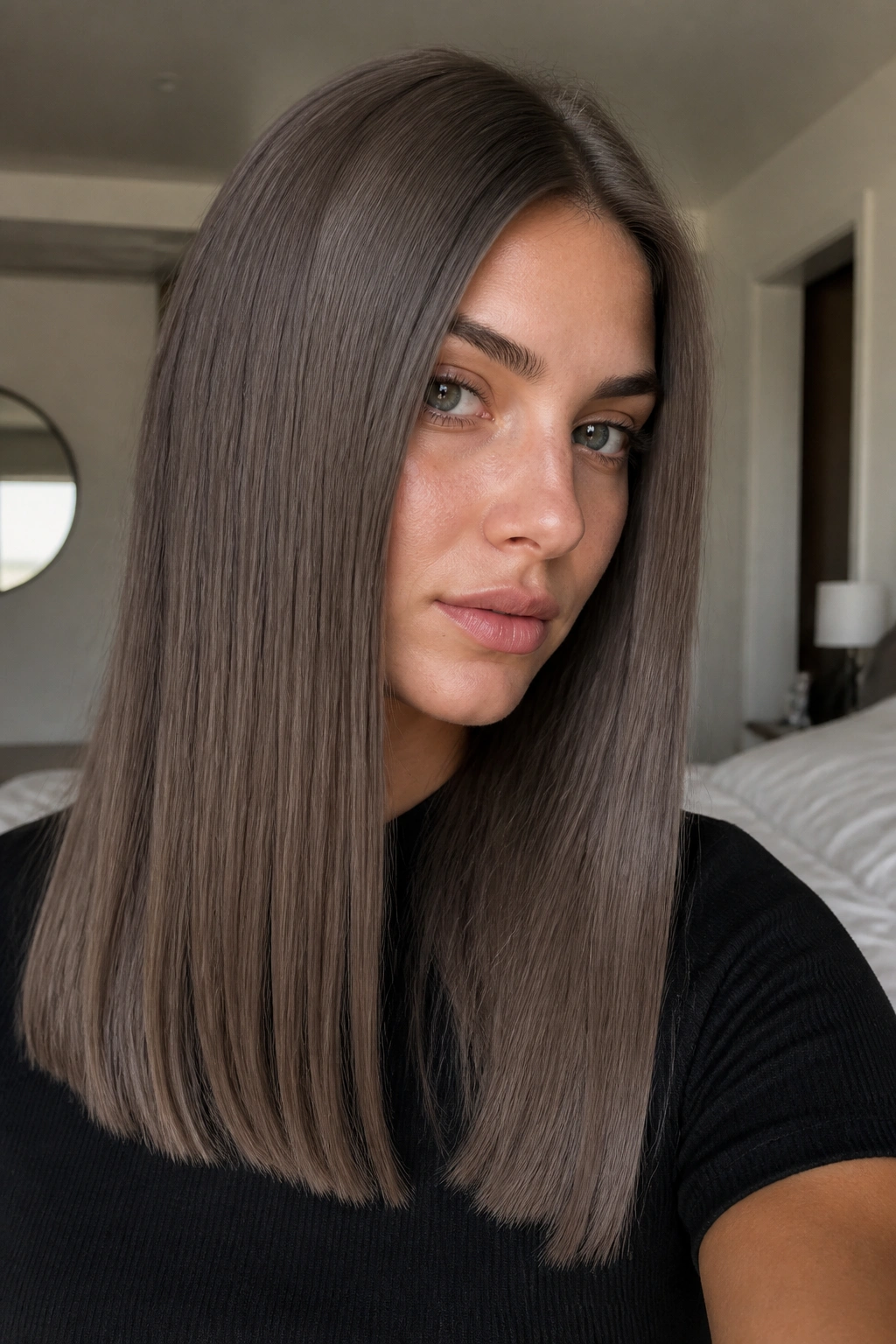
Ash mocha is the safest place to start when you want brunette depth without warmth sneaking in. The shade sits between milk-chocolate brown and soft charcoal, which is why it tends to suit fair skin with pink undertones and medium skin with a cooler cast.
How to Ask for It
Ask your colorist for a level 4 or 5 mocha base with an ash-blue or violet-brown gloss. That wording matters. “Mocha” by itself can land warm, and warm brown is exactly where cool skin tones start to look a little flushed.
- Best on straight hair, blunt cuts, and smooth blowouts.
- Works well when your brows are dark brown or soft black.
- Needs a gloss refresh every 4 to 6 weeks if your hair pulls red fast.
- Looks strongest when the shine is clean, not oily.
Best tip: bring one photo in daylight and one indoors. The same brown changes shape under each light, and that tiny comparison saves a lot of guessing at the chair.
2. Mushroom Mocha Balayage on Soft Waves
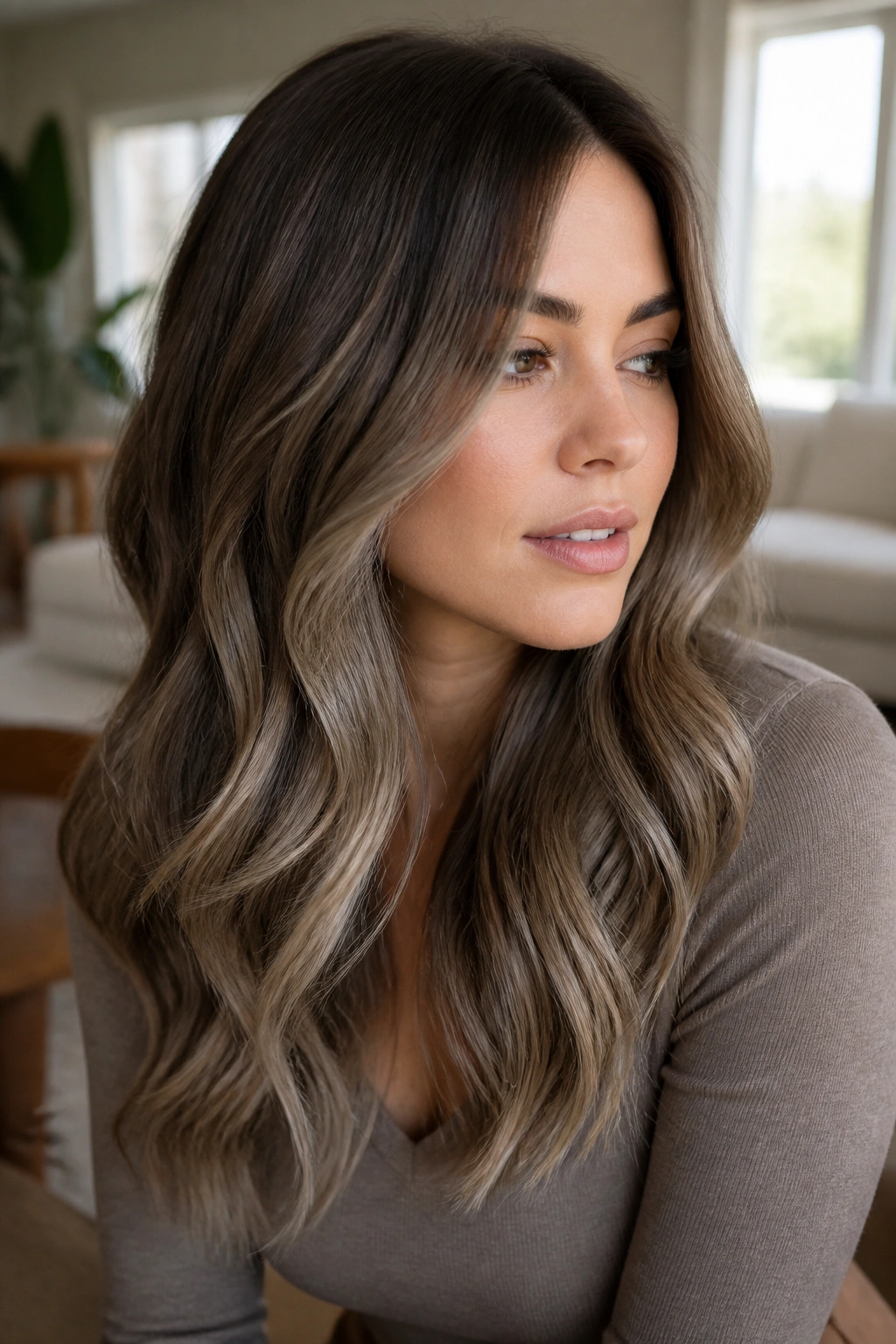
Mushroom mocha balayage looks like someone took a classic brunette base and dusted it with cool beige and gray-brown ribbons. The result is soft, not stripey. On cool skin, that muted finish keeps the hair from stealing all the attention.
The paint job matters more than the color name here. Keep the root dark and let the lighter pieces start below the cheekbone, then feather them toward the ends. That placement gives movement on waves and long layers, where harsh highlights usually feel loud.
This shade is a quiet fix for hair that feels too solid. If your brown looks heavy in daylight or flat in photos, mushroom-toned balayage breaks it up without tipping into blonde. The color still reads brunette first.
Ask for a low-contrast lift and a cool toner, not a golden beige. The less warmth the mid-lengths carry, the easier the whole look sits next to cool-toned skin.
3. Smoky Espresso Mocha for Deeper Contrast
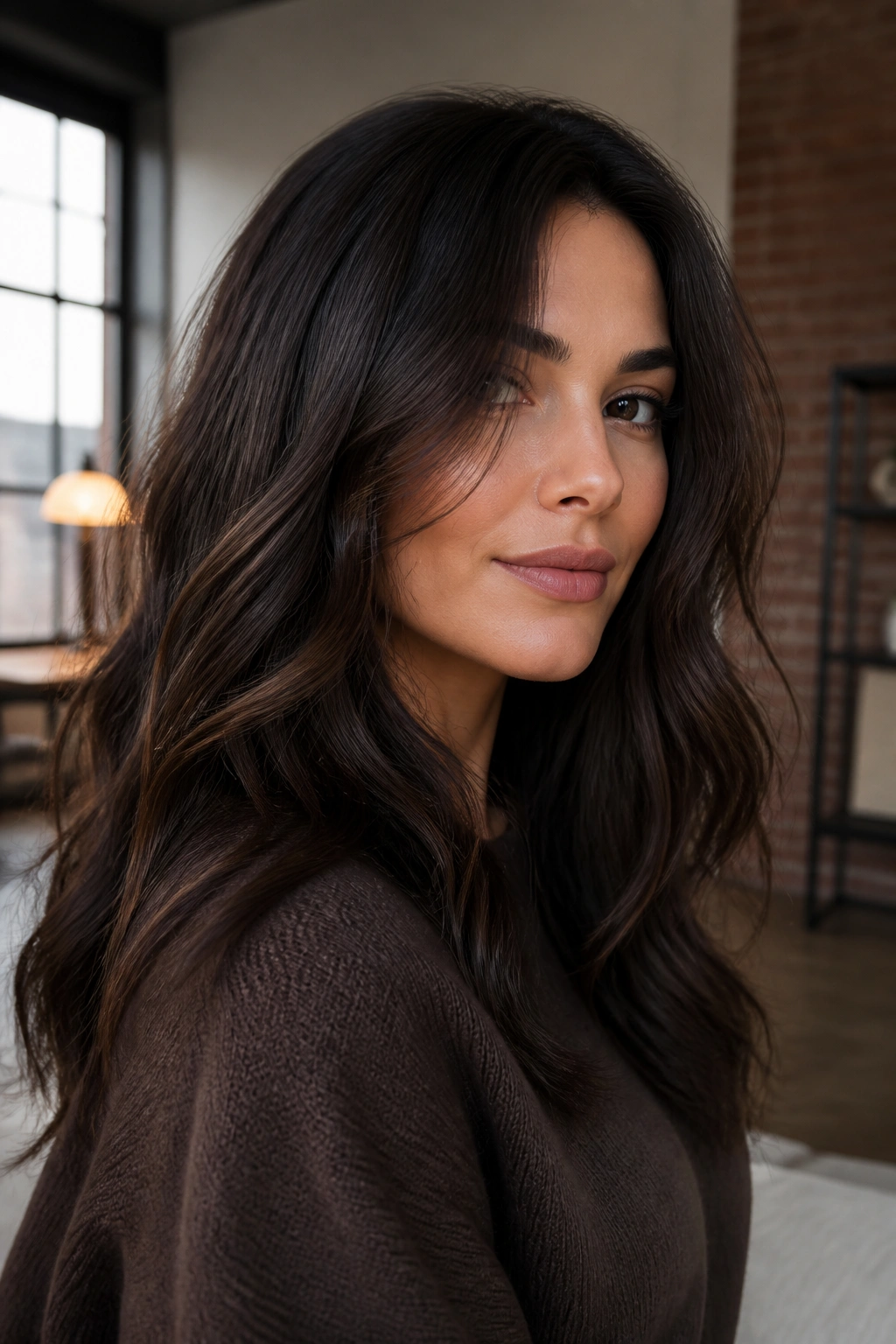
If you have dark lashes, a sharp jawline, and cool skin that turns pink in bright light, smoky espresso mocha can be the easiest dramatic choice. It gives you nearly black depth without the hard edge of true black, which can look a little flat against pale, cool complexions.
The trick is to keep the brown side visible. Ask for a level 3 or 4 espresso base with a smoky glaze, not a blue-black dye job. That little bit of brown keeps the color wearable when the sun hits it.
- Best on thick, straight, or softly wavy hair.
- Strong with long layers and curtain bangs.
- Needs less frequent toning than lighter mocha shades.
- Looks sharp with minimal makeup and defined brows.
The color is rich enough to stand alone. Still, if your skin is very fair, leave a whisper of softness around the front hairline so the shade doesn’t crowd the face. That tiny detail makes a bigger difference than most people expect.
4. Cool Beige Mocha Melt from Root to Tip
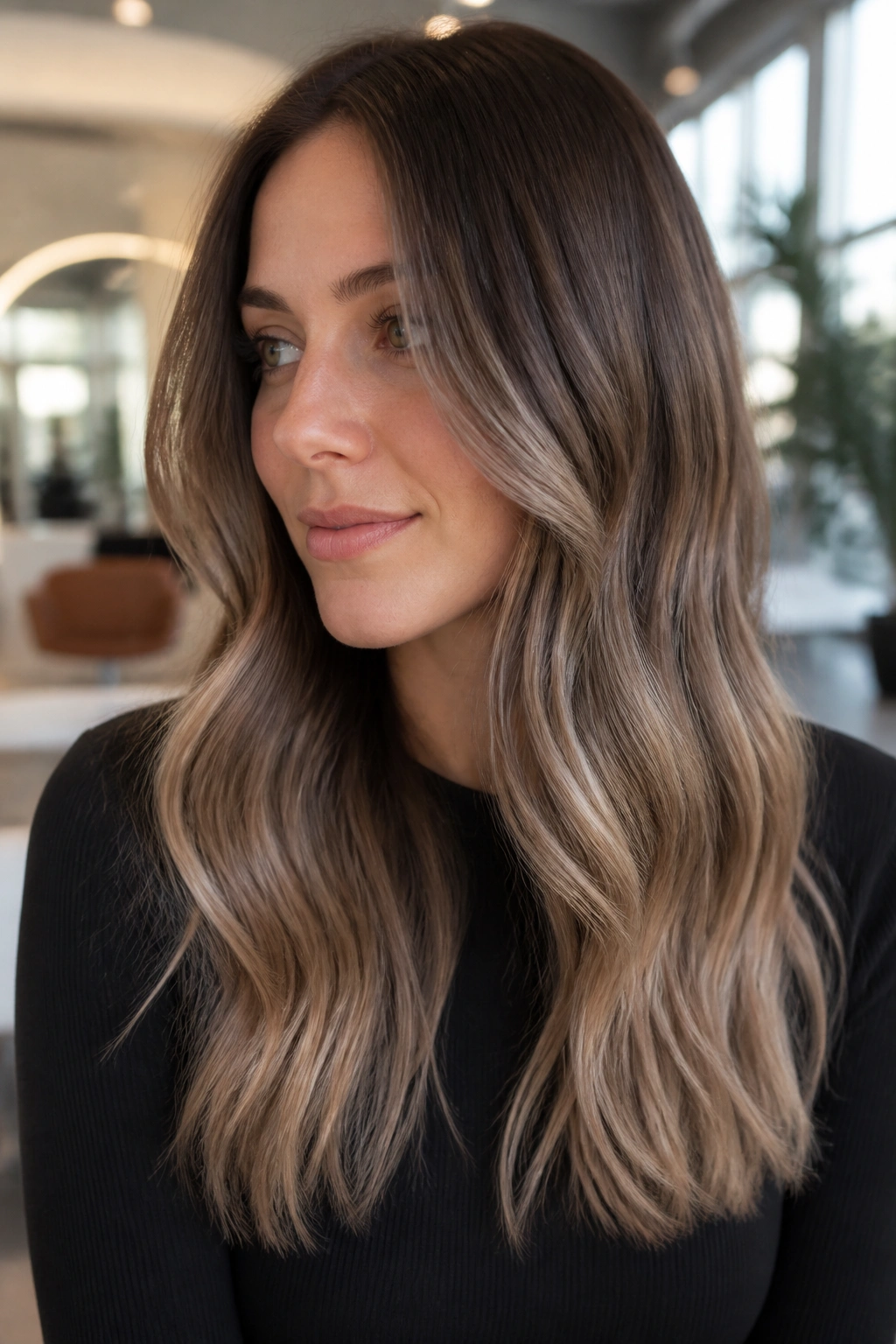
Cool beige mocha melt is the shade people reach for when they want softness without orange undertones. The root stays a little deeper, the mids carry a muted brown-beige, and the ends fade into a pale neutral mocha that still feels brunette.
That slow shift matters. A hard line between root and highlight can look chunky on cool skin, especially if your complexion already has pink in it. A melt keeps the color moving, which makes the hair look more natural and a lot less salon-stiff.
The best version starts with a root shadow one shade deeper than the mids, then uses a beige toner that leans ash rather than gold. It sounds picky because it is. Mocha shades live or die by that tiny balance.
If you wear your hair curled, this color shows off the curve of each wave. If you wear it straight, the blend creates that soft striping effect people always chase in photos and rarely get right on the first try.
5. Pearl Babylights Woven Through Mocha Brown
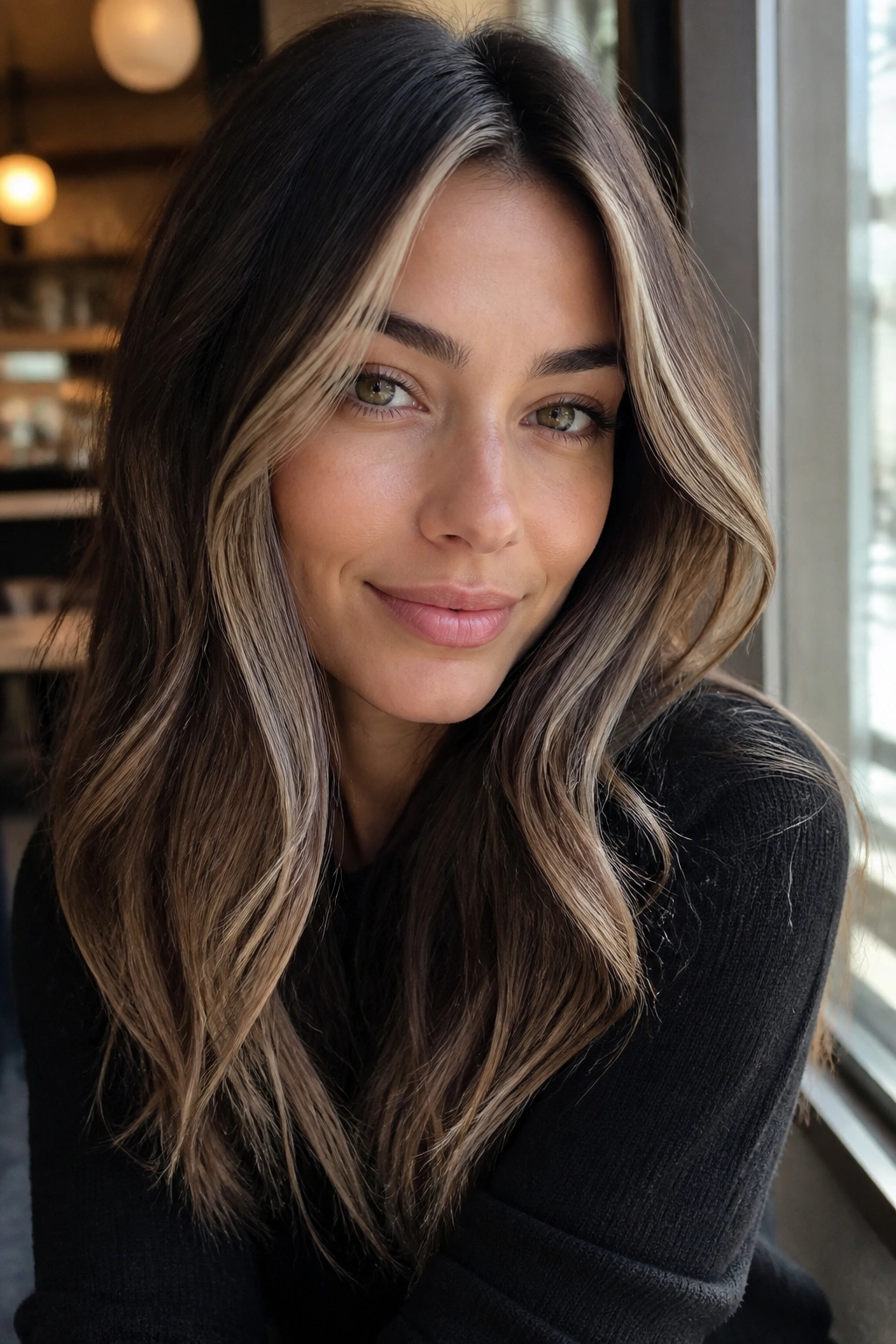
Can mocha stay light and still flatter cool skin? Yes, but only when the brightness comes from tiny babylights instead of chunky blonde pieces. Pearl babylights thread pale beige through a mocha base, and the effect is delicate enough to keep the brown feeling like brown.
This works best when you want brightness near the face but hate visible stripes. The trick is to keep the highlights ultra-fine, then tone them to a pearl or icy beige finish. If they turn gold, the whole look drifts warm fast.
How to Ask for It
Ask for micro-babylights placed mostly around the part line, temples, and top layers. Leave the underlayers deeper so the hair still has shape. On fine hair, this method gives the illusion of fullness. On thicker hair, it keeps the color from looking busy.
A cool mocha base with pearl lights is one of those styles that looks calm from a distance and detailed up close. That balance is the appeal. It gives you light without pushing you into blonde territory.
6. Velvet Mocha with Blue-Black Lowlights
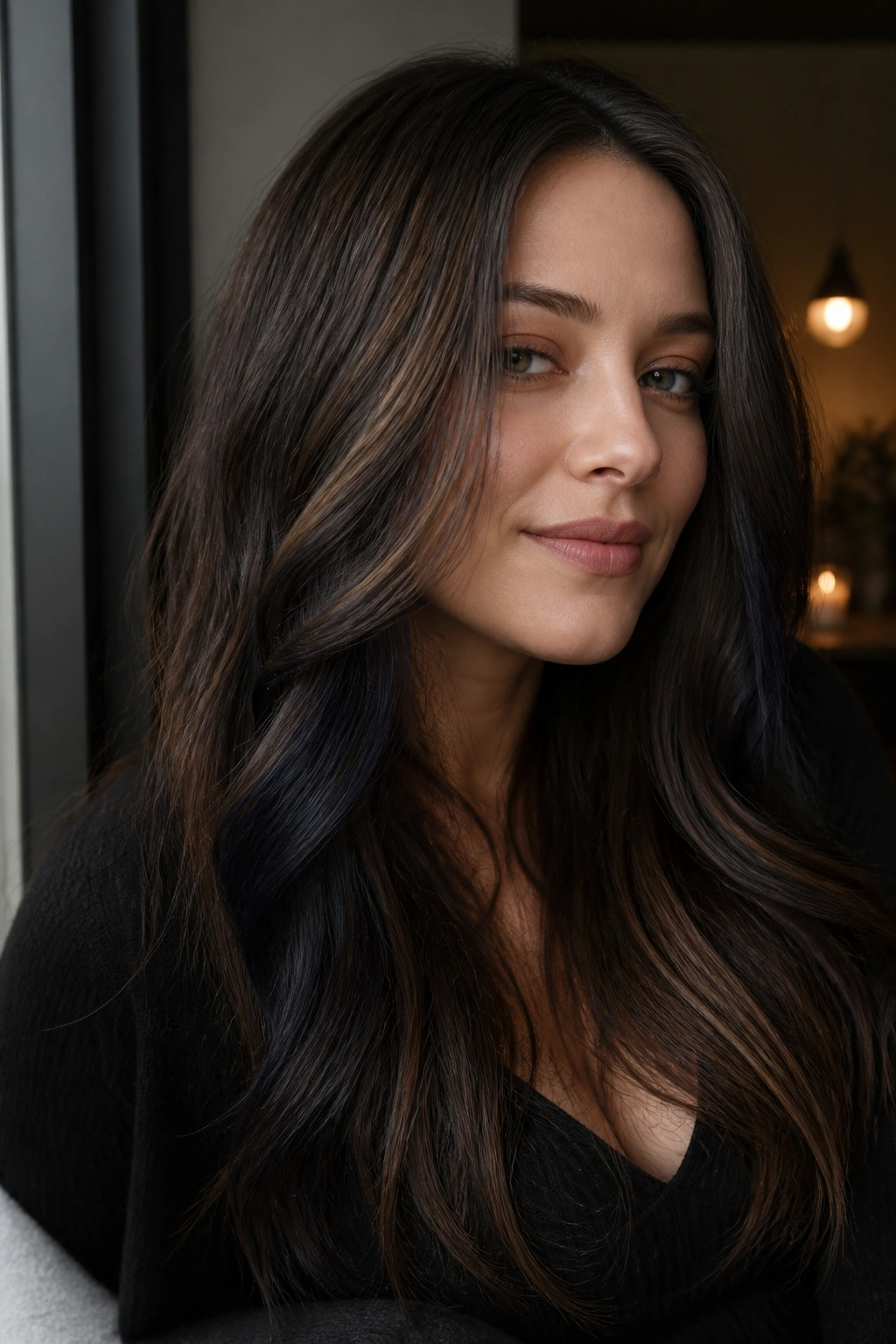
Blue-black lowlights are not for people who want a sunlit brunette. They are for people who want depth, shine, and a cooler edge that reads almost velvety in low light.
Compared with highlights, lowlights do the opposite job. They push pieces darker, which makes the mocha base look richer and less red. On cool skin, that extra depth can soften redness around the cheeks and make the eyes look sharper.
This shade works especially well on dense hair and curls, because the darker panels create shape where the hair naturally wants to puff out. Ask for lowlights that sit one half to one full shade deeper than your base, not black. Black can swallow the mocha effect and make the hair feel heavy.
If your goal is movement, keep the lowlights concentrated underneath and through the back. The front pieces can stay a touch lighter. That way the face still gets light, but the overall color keeps its cool, glossy mood.
7. Taupe Mocha Lob with a Clean Edge
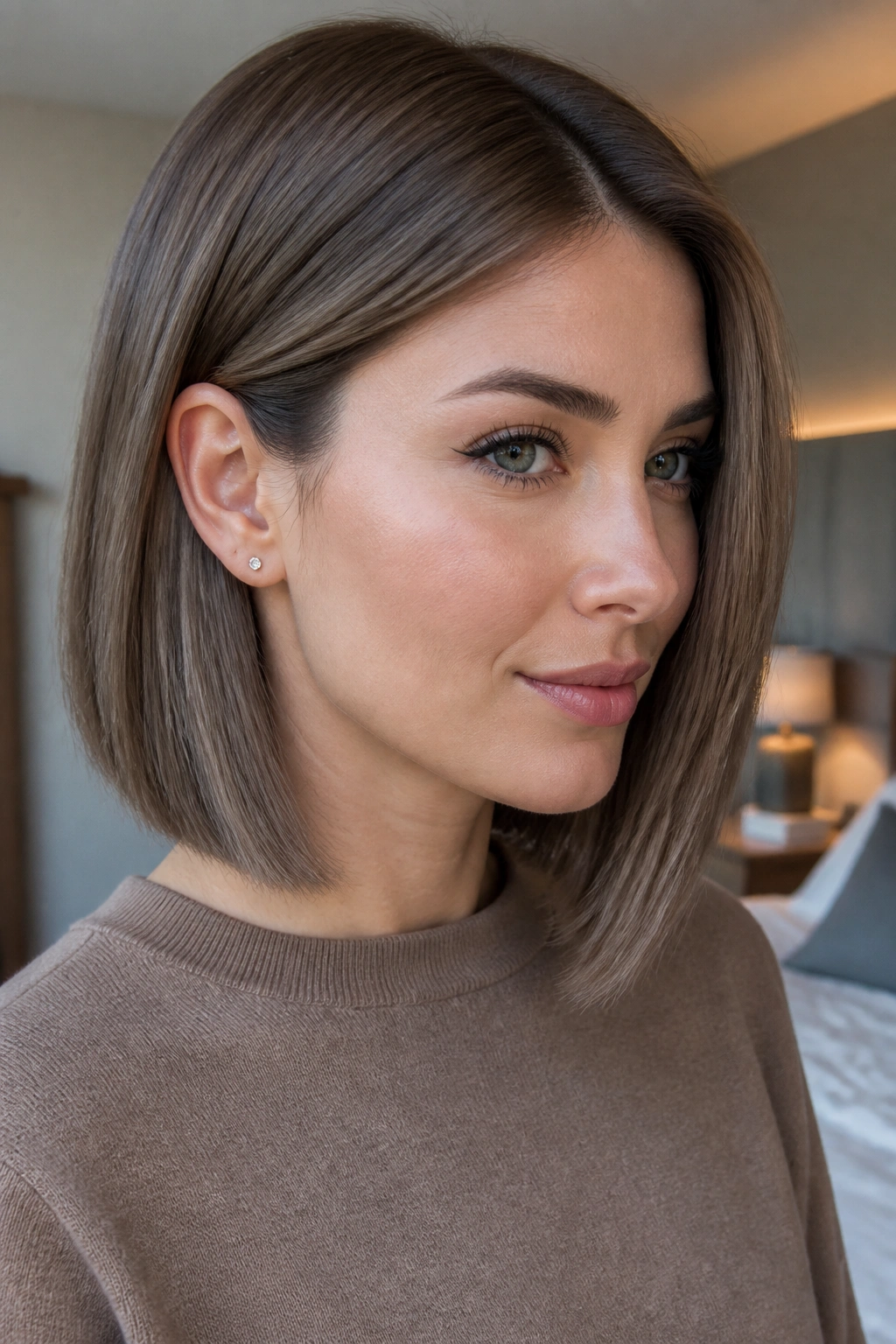
A blunt lob and taupe mocha color do the same job: they make brunette look precise. The cut gives the hair a neat line, and the color keeps that line from turning harsh.
Taupe mocha sits in that sweet zone between brown and gray-brown. It has enough warmth to look soft, but not so much that cool skin starts fighting it. On shorter hair, that quiet neutrality matters more than drama.
Messy ends ruin the point.
The lob looks best when the ends are tucked under or worn in a smooth bend, because that shape shows off the cool tone without extra frizz stealing the eye. If your hair is fine, the taupe finish can make it look fuller. If your hair is thick, the shade helps the cut feel lighter.
This is a smart choice for someone who wants brunette that looks polished at work and easy on a weekend. It does not shout. It just sits well.
8. Mocha Bronde with Smoky Ends
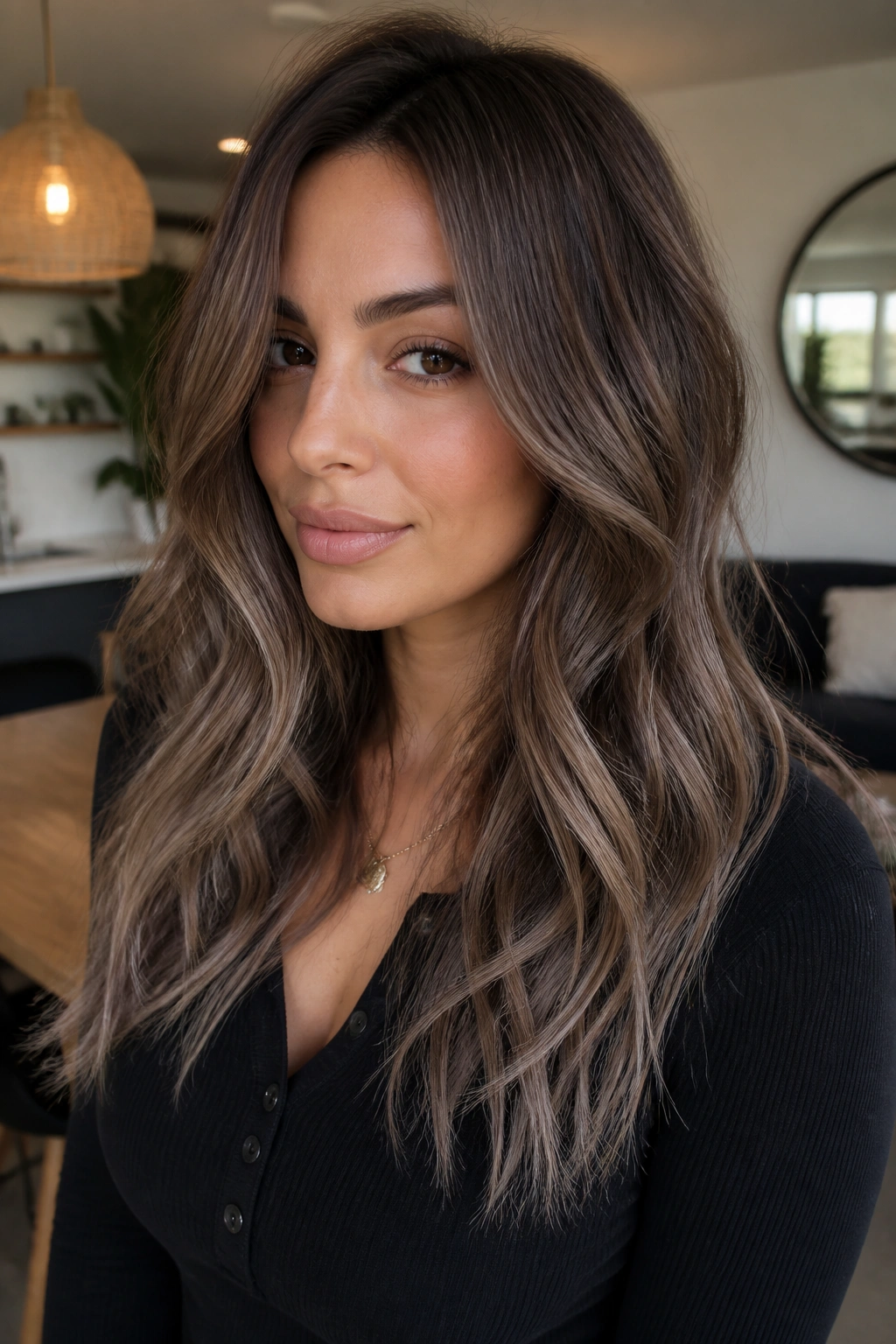
When does mocha stop feeling heavy? Usually the moment the ends shift into a smoky bronde instead of staying one solid brown all the way down. That little lift at the bottom keeps the style airy on cool skin.
The base still needs to read brunette first. Leave the root and mid-lengths in mocha territory, then soften the lower third with beige-brown ribbons toned cool. The result is less dramatic than blonde balayage and less flat than single-process brown.
Why the Ends Matter
The ends are where hair shows wear, so they also take on the most visual weight. Lightening them a touch keeps the whole look from sinking. On long hair, that extra brightness helps the length feel deliberate instead of heavy.
How to Wear It
- Best on shoulder-length or longer cuts.
- Looks nicest with loose waves or a round-brush bend.
- Ask for smoky beige, not honey or caramel.
- Keep the top half deeper so the color still reads mocha.
This is a good choice if you want softness without losing brunette depth. The shade moves. That’s the whole point.
9. Deep Cocoa Gloss for Faded Brunette Hair
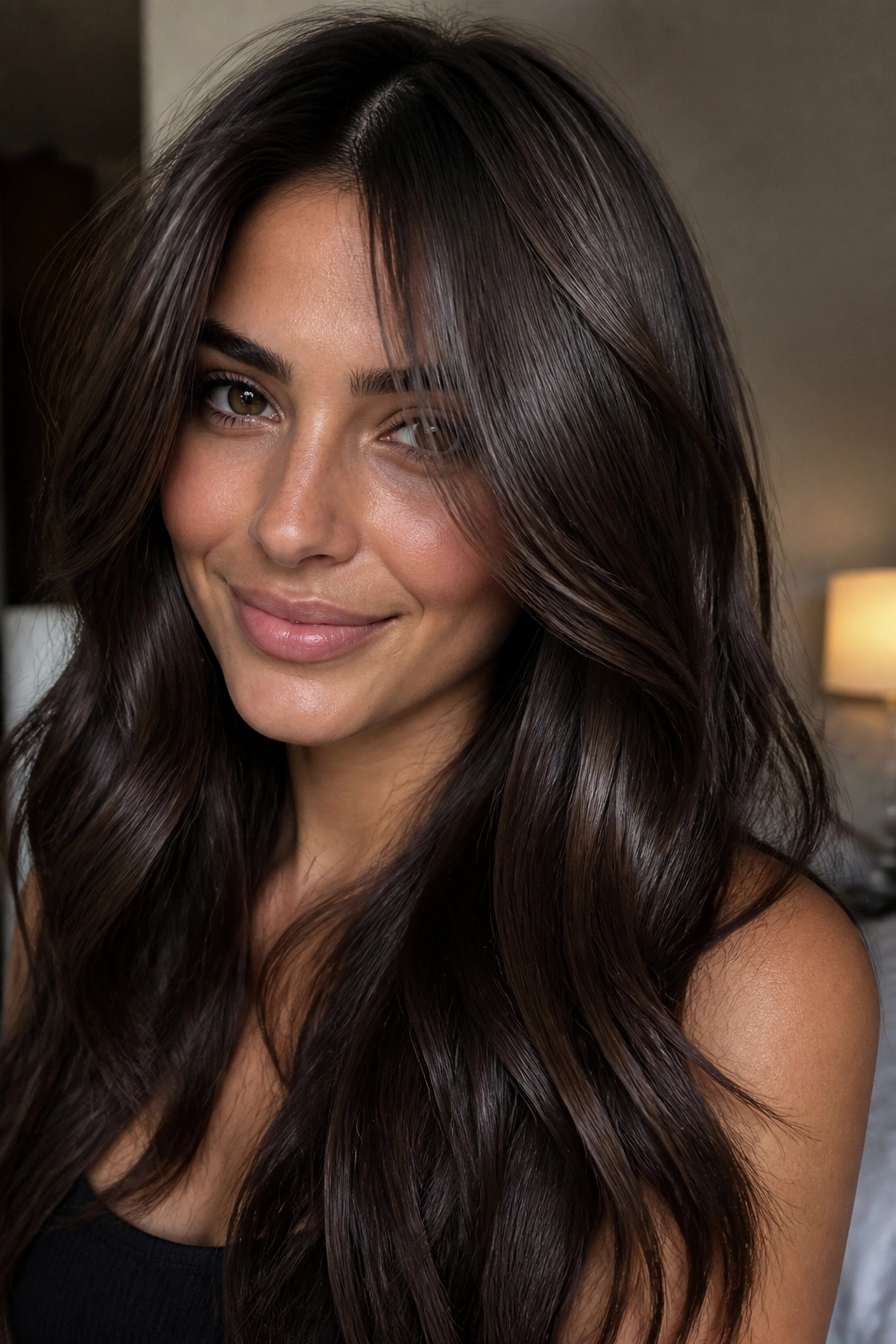
A gloss is the fastest way to make brunette hair look intentional again after it has gone dull or a little warm. Deep cocoa gloss adds cool brown pigment on top of your existing shade, which can pull the whole color back into mocha territory without a full color service.
The best part is the shine. Glosses sit on the hair’s outer layer, so they catch light in a smoother way than permanent dye. That smooth finish is especially useful on cool skin, because it keeps the brown looking rich instead of brassy.
Ask for a blue-violet or neutral cocoa gloss if your hair pulls orange. If the warmth is milder, a soft brown glaze may be enough. Most glosses stay on for about 10 to 15 minutes in the chair, though the exact timing depends on the product and how porous your hair is.
This is the shade I’d point to if you like your color dark, simple, and expensive-looking without needing obvious highlights. It is not flashy. It is just good brown.
10. Rooted Mocha with Face-Framing Ribbons
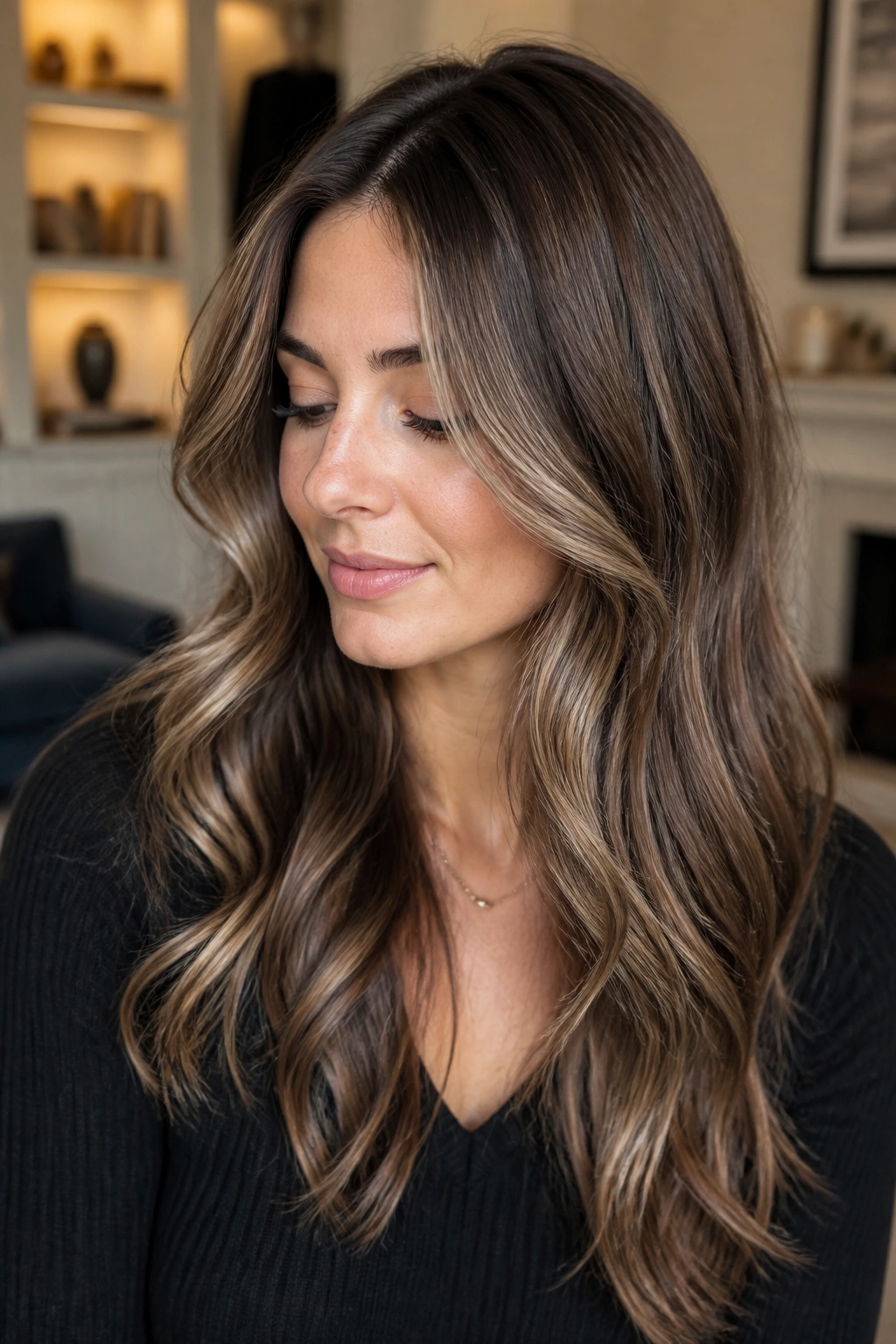
If you live in a ponytail and want color that still looks finished when you let your hair down, rooted mocha with face-framing ribbons makes a lot of sense. The deeper root gives you easy grow-out, and the lighter ribbons keep the front from disappearing.
The money piece should stay cool, though. Ask for beige or pearl ribbons near the cheekbones, not gold. Around cool skin, those front pieces act like a soft spotlight rather than a loud highlight.
- Keep the root shadow close to your natural level.
- Brighten only the first 1 to 2 inches around the face.
- Leave the nape and underlayers deeper.
- Style with a side part if you want the ribbons to show more.
This is a useful choice for people who want visible color but do not want to spend every few weeks chasing the same fresh-from-the-salon look. The grow-out is forgiving, and the face-framing pieces stay flattering even when the rest of the hair gets a little lived-in.
11. Soft Truffle Mocha for a Neutral-Cool Finish
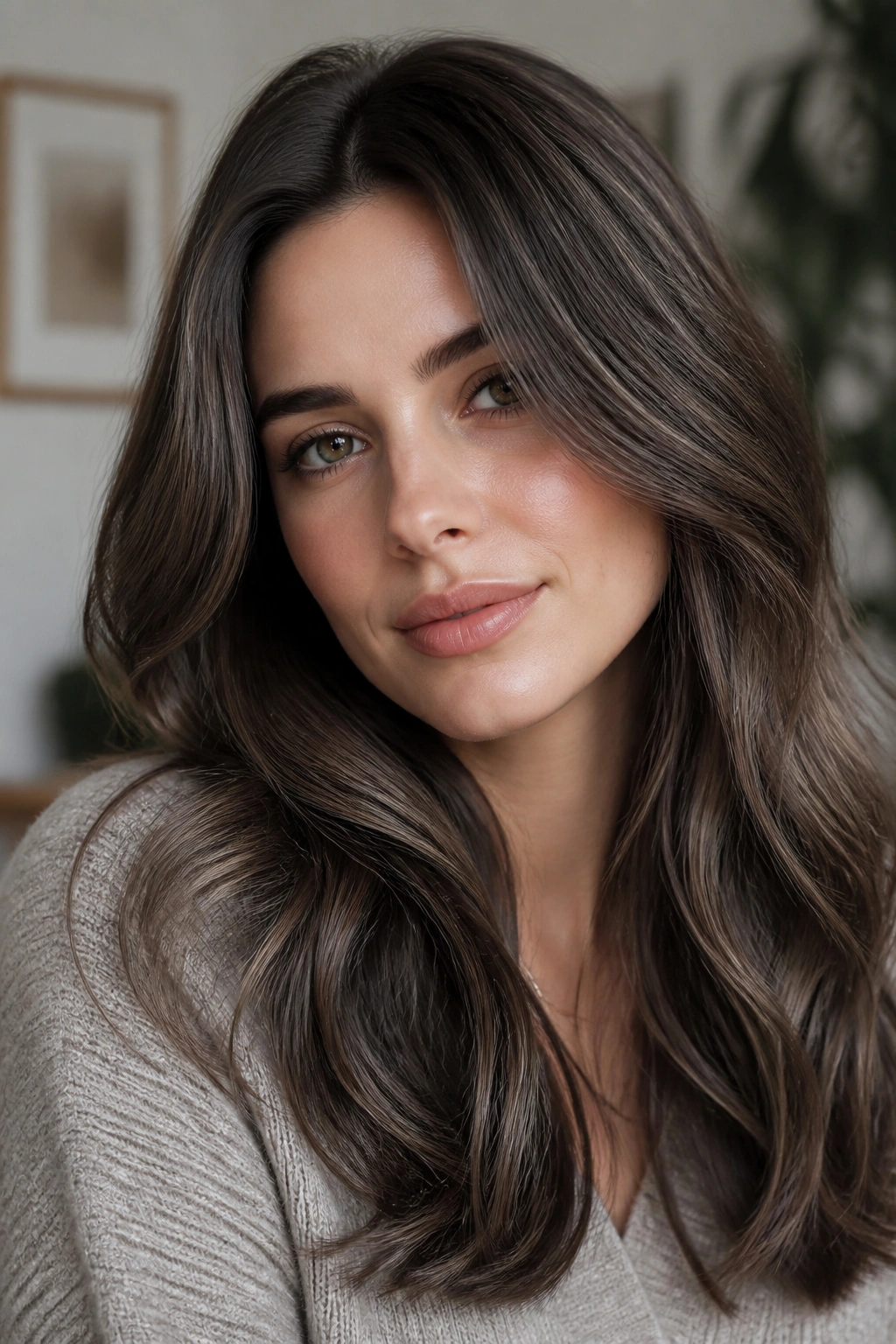
Soft truffle mocha sits in the middle of the brunette family, and that middle ground is exactly why it works so well on cool skin. It is not as dark as espresso, not as gray as mushroom, and not as warm as classic milk chocolate. The shade feels calm.
The color has a muted, creamy edge that keeps it from looking flat. That matters on medium cool skin, where a harsh brown can sometimes look too strong around the nose and mouth. Truffle mocha softens all of that.
This shade is also kind to hair that has been colored before. If your strands have gone a little porous from highlights or repeated glosses, a truffle tone fills in the gaps without making the hair look painted on. It tends to look especially good on medium-length cuts, where the color can move through the ends instead of sitting in one solid block.
I like this shade for people who want brunette with restraint. It feels polished, but not rigid. That’s a hard balance to pull off.
12. Iced Mocha Balayage on Long Layers
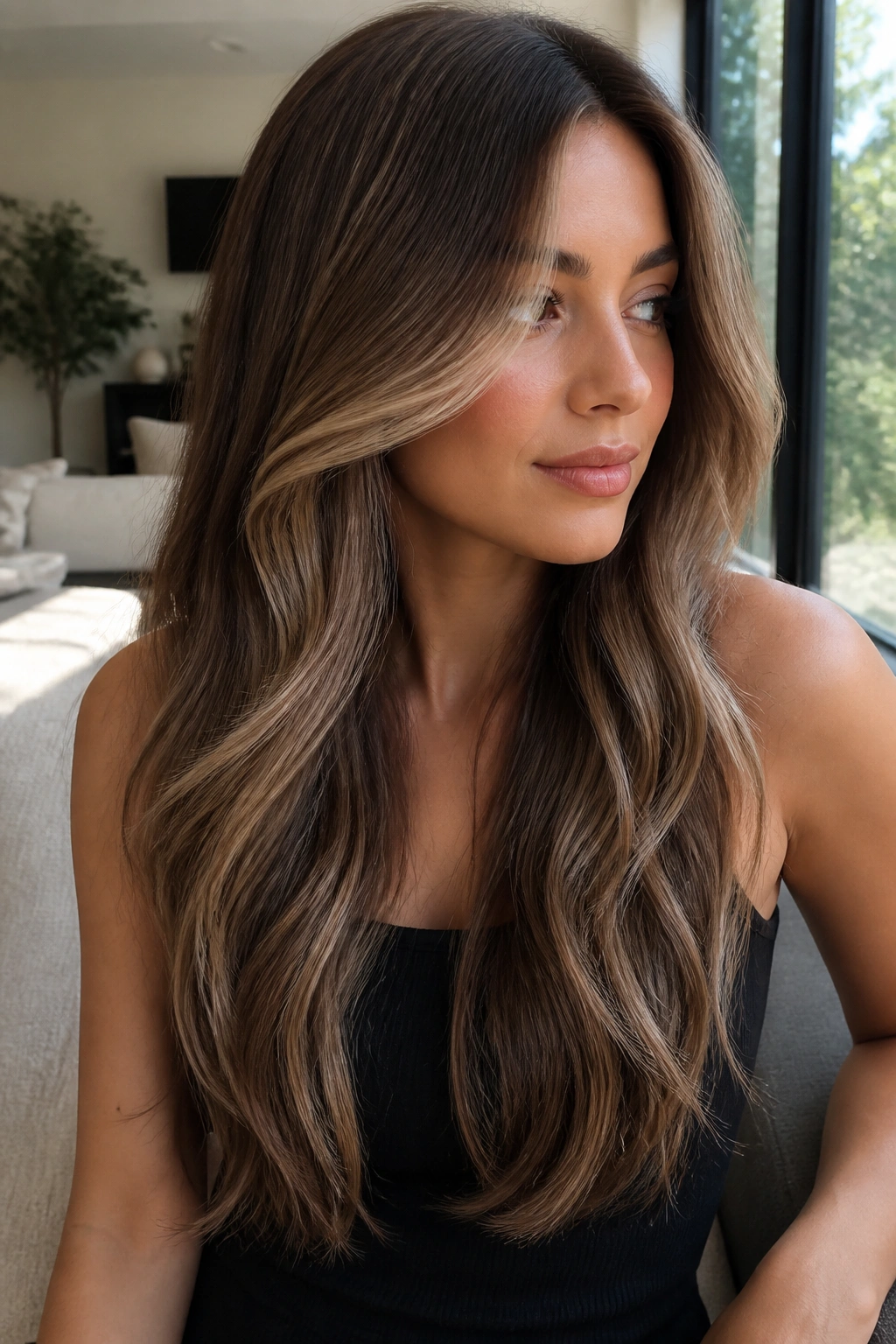
Unlike chunky highlights, iced mocha balayage depends on feathered placement that starts lower on the hair and gets lighter only where movement matters. On long layers, that makes the color look soft even when the contrast is fairly clear.
Cool skin tones usually look best when the light pieces stay beige, pearl, or smoky beige instead of yellow. Iced mocha hits that mark well. The base stays a rich brown, while the lifted pieces look like they belong there rather than floating on top.
Long layers help because they give the balayage somewhere to fall. One-length hair can make the light pieces feel blunt, but layers break them up and let the shade move. If your hair is thick, ask for painted sections that are narrower near the crown and wider toward the ends.
This is the look for someone who wants a bit of brightness without losing brunette identity. It wears best when the hair is curled or air-dried with a bend, since the dimension shows more clearly that way.
13. Dimensional Mocha Curls with Wider Ribbon Placement
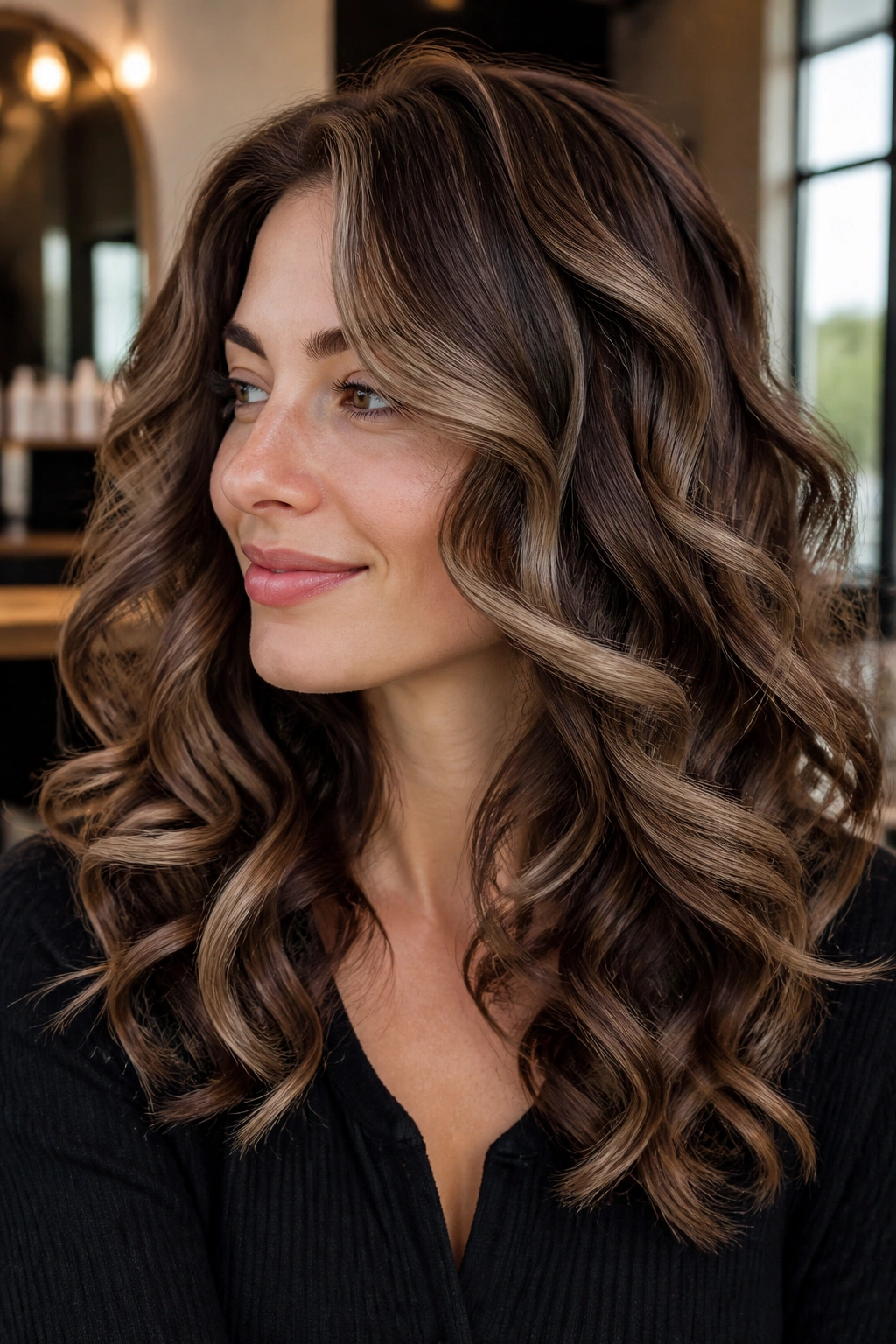
Tiny streaks disappear in curls. Wider ribbons work better.
That is the basic rule with dimensional mocha curls, especially on 3A to 3C patterns. The curl shape already creates texture, so the color has to be a little bolder to show up. Instead of thin highlight threads, ask for broader mocha-to-beige ribbons placed where the curl clumps naturally separate.
Best Placement for Curl Patterns
- Put brightness around the front and top layer.
- Keep the underlayers deeper for shadow.
- Lift only a few pieces at the crown so the curl pattern still looks full.
- Tone the ribbons cool so the result stays mocha, not golden.
Cool skin tones often look better when the light pieces sit in the natural bend of the curl, not scattered everywhere. That gives you dimension without turning the whole head into a patchwork. It also keeps frizz from stealing the look, which is a real issue with more delicate highlight work.
If your curls shrink a lot, ask for the light pieces to be painted a little lower than you think. The curl will spring up and move the highlight into view on its own.
14. Satin Mocha with a Shadow Root
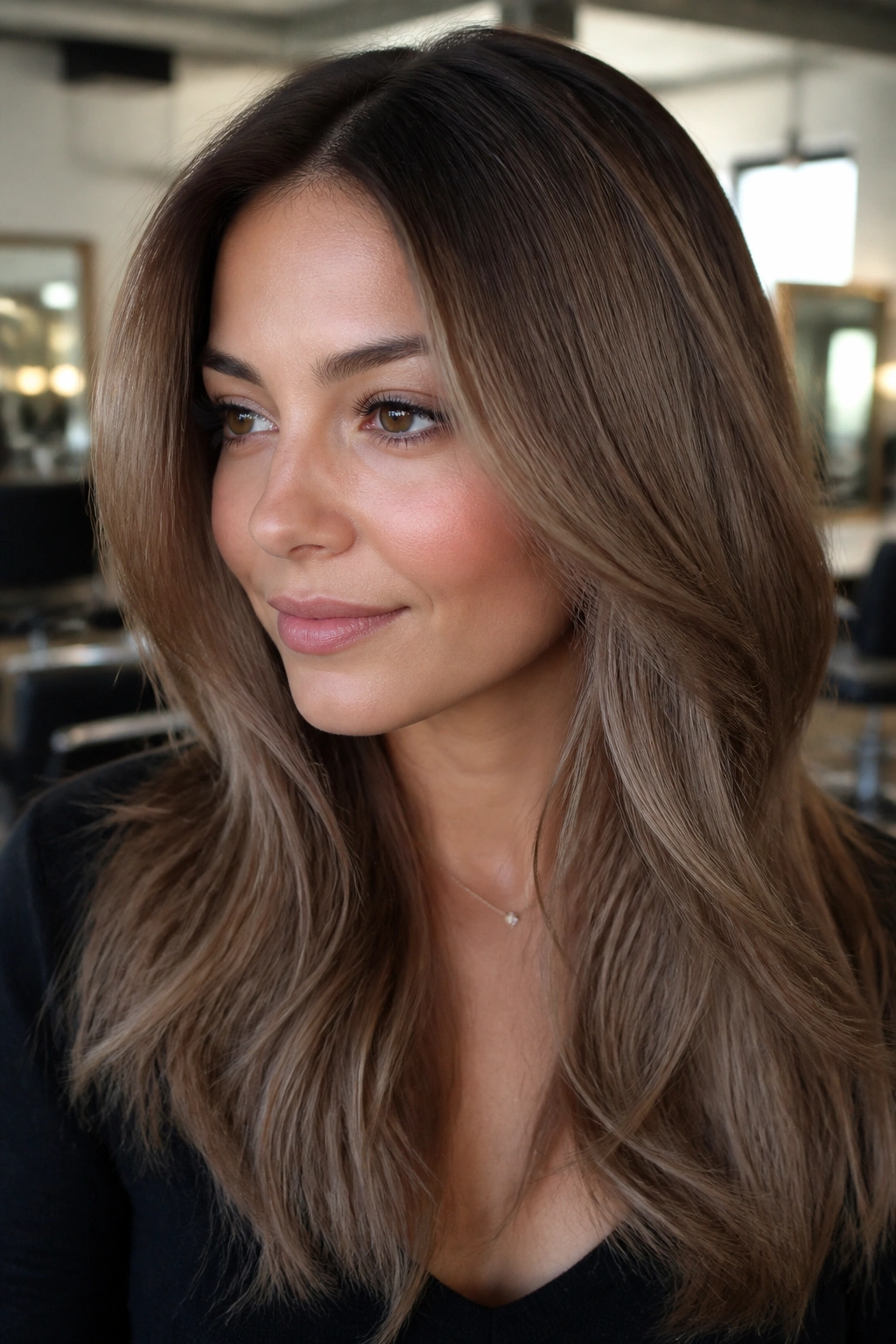
A shadow root makes mocha easier to wear, period. It softens grow-out, deepens the crown, and gives the whole color a satin finish that looks especially good on cool skin.
The root should be one to two shades deeper than the mid-lengths, not dramatically darker. That small gap creates movement without drawing a line across the scalp. On people who part their hair the same way every day, this matters even more, because regrowth tends to show first right there.
You get a cleaner look if the root melt starts near the top of the ear and blends into the body of the color. A harsh root can feel heavy. A softened one looks deliberate.
This is a smart pick if your hair is medium to long and you do not want to race back to the salon every few weeks. It also plays nicely with cool makeup—berry lips, taupe shadow, soft blush—because the hair stays in the same family instead of fighting the rest of the face.
15. Espresso Mocha Bob with a Sleek Finish
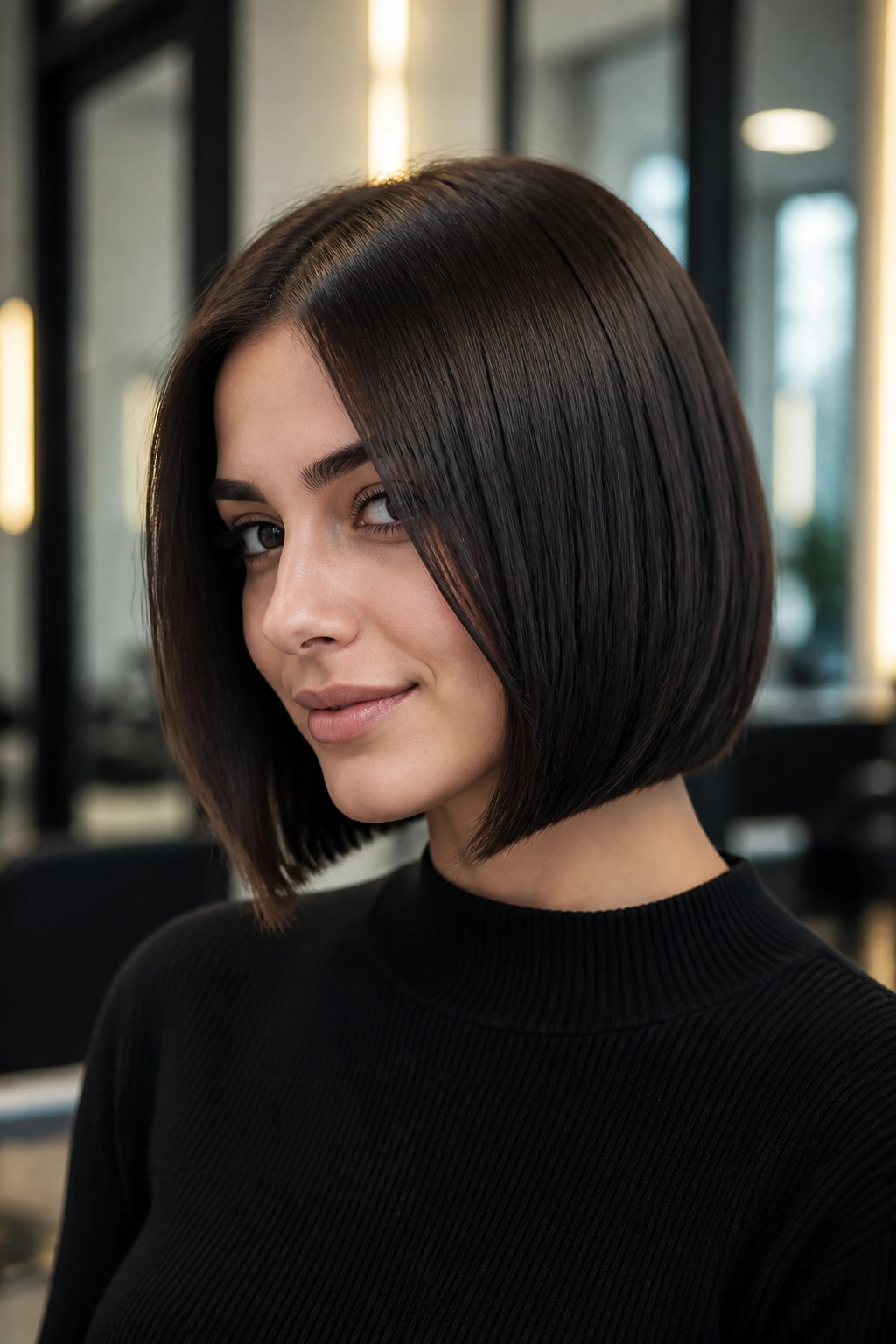
A bob changes how mocha reads. The shorter shape makes the color look sharper, and the deeper brown turns clean and modern instead of soft and blended.
Compared with long mocha waves, an espresso mocha bob needs more shine and less visible tone variation. Keep the base dark, then add only the tiniest amount of cool reflection through the top layer. Too much dimension on a bob can look busy. A sleeker finish keeps the cut crisp.
This works especially well if your features are defined and your skin leans cool-neutral. The bob’s line echoes the structure in the face, while the deep mocha stops the style from feeling hard. A round brush or a flat iron bend at the ends usually shows the color best.
If your hair is fine, this cut-color combo can make it look denser. If it is thick, it gets rid of some visual weight without losing depth. Either way, the result is neat. Almost severe, in a good way.
16. Smoke-Gray Mocha Glaze to Cool Down Warmth
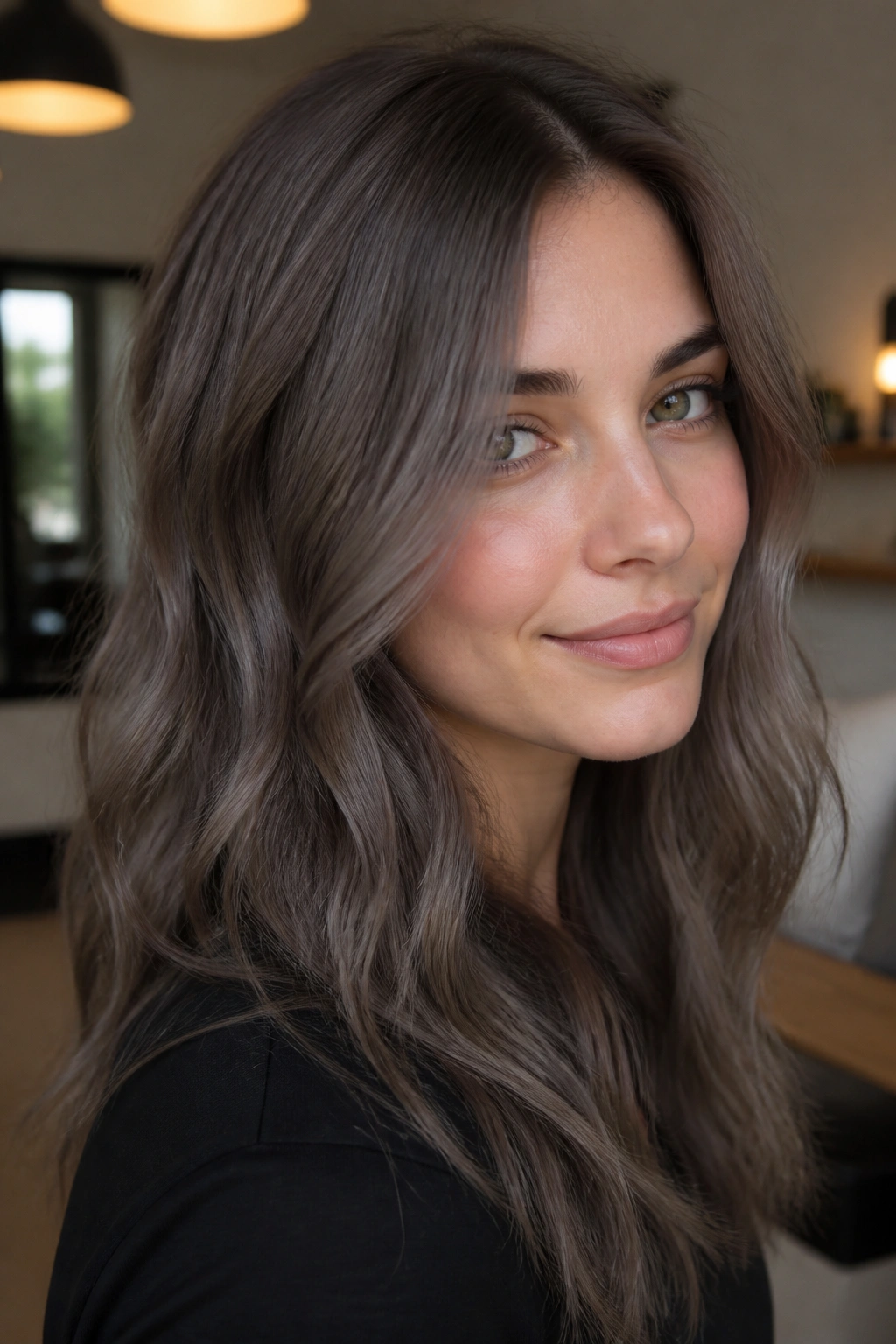
A smoke-gray mocha glaze is what I reach for when brunette hair has gone too red or too gold. It does not need to be dramatic. It just needs to cool the surface tone enough that the brown feels back in line.
This is especially useful after a few weeks of washing, heat styling, or any earlier highlights that have started to fade warm. A demi-permanent glaze with gray or smoky brown undertones can quiet that warmth without changing the base level much. The hair still looks like your hair, only calmer.
Red is stubborn.
If you’re trying this at home, keep the application even and don’t leave it on longer than the directions say. Smoky toners can go flat if they sit too long on porous ends. Salon formulas usually stay on for a short window—often 5 to 20 minutes, depending on the brand and the porosity of the hair.
The result should feel like a brunette filter, not a color rewrite. That is the sweet spot.
17. Cool Mocha Contour Highlights Around the Face
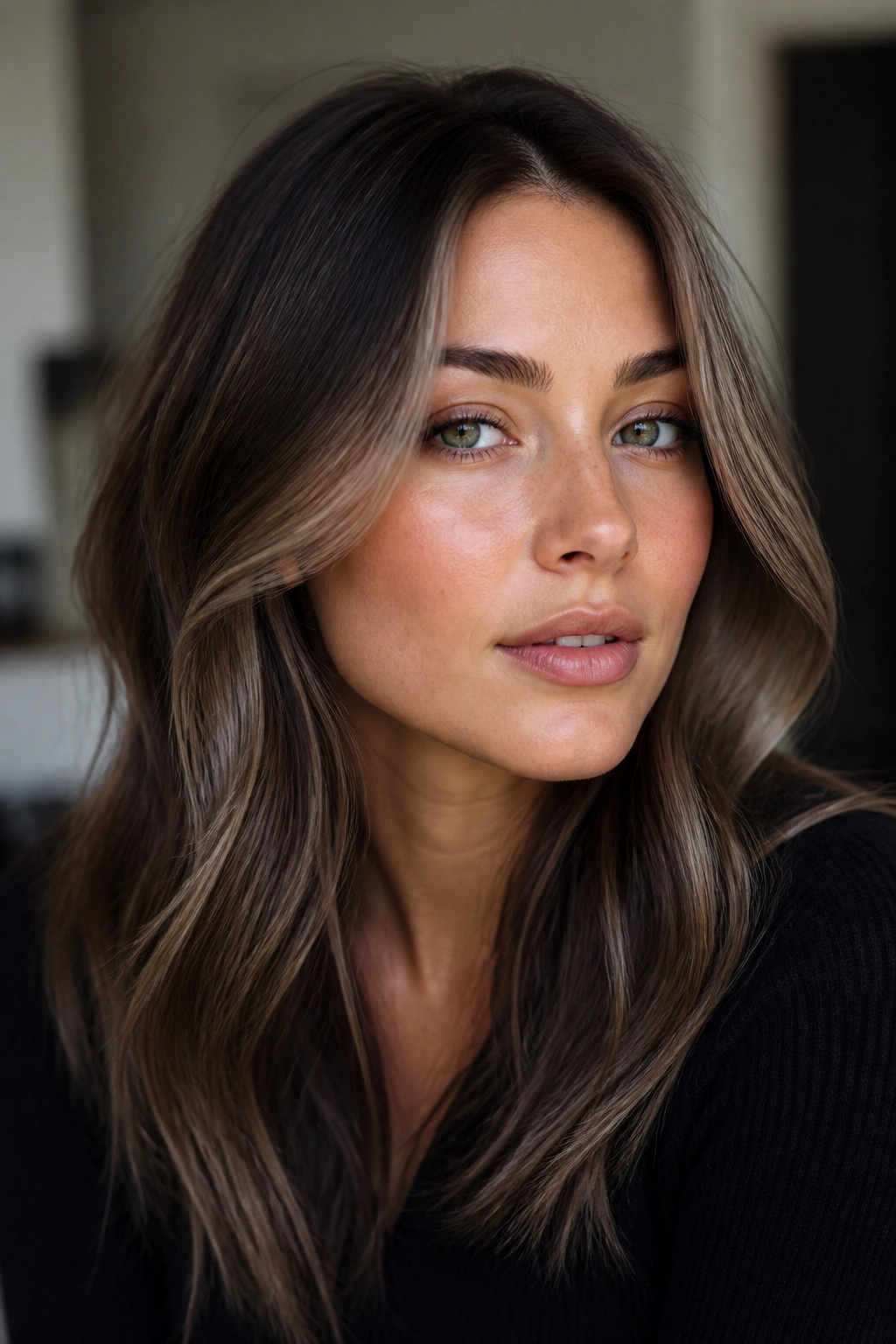
What if you want the face to light up without obvious streaks? Cool mocha contour highlights are the answer. They sit around the hairline, cheekbones, and part line, and they are meant to frame the face rather than cover the whole head.
The best version uses a shade that is only one to two levels lighter than the mocha base. Too much lift turns the look into regular highlights. Too little lift disappears. The sweet spot keeps cool skin from looking washed out while still giving the hair a little lift at the front.
How to Keep It Subtle
Ask for the lightest pieces to stay narrow at the temples and a touch wider around the ends. That creates a soft frame instead of a stripe. If your hair is layered, the color should follow the movement of the cut, not fight it.
This is a strong option for people who wear minimal makeup but still want the hair to do some of the work. The face gets brightness. The rest stays brunette. Clean, easy, and not overworked.
18. Ultra-Dark Mocha for Minimal Contrast and High Shine
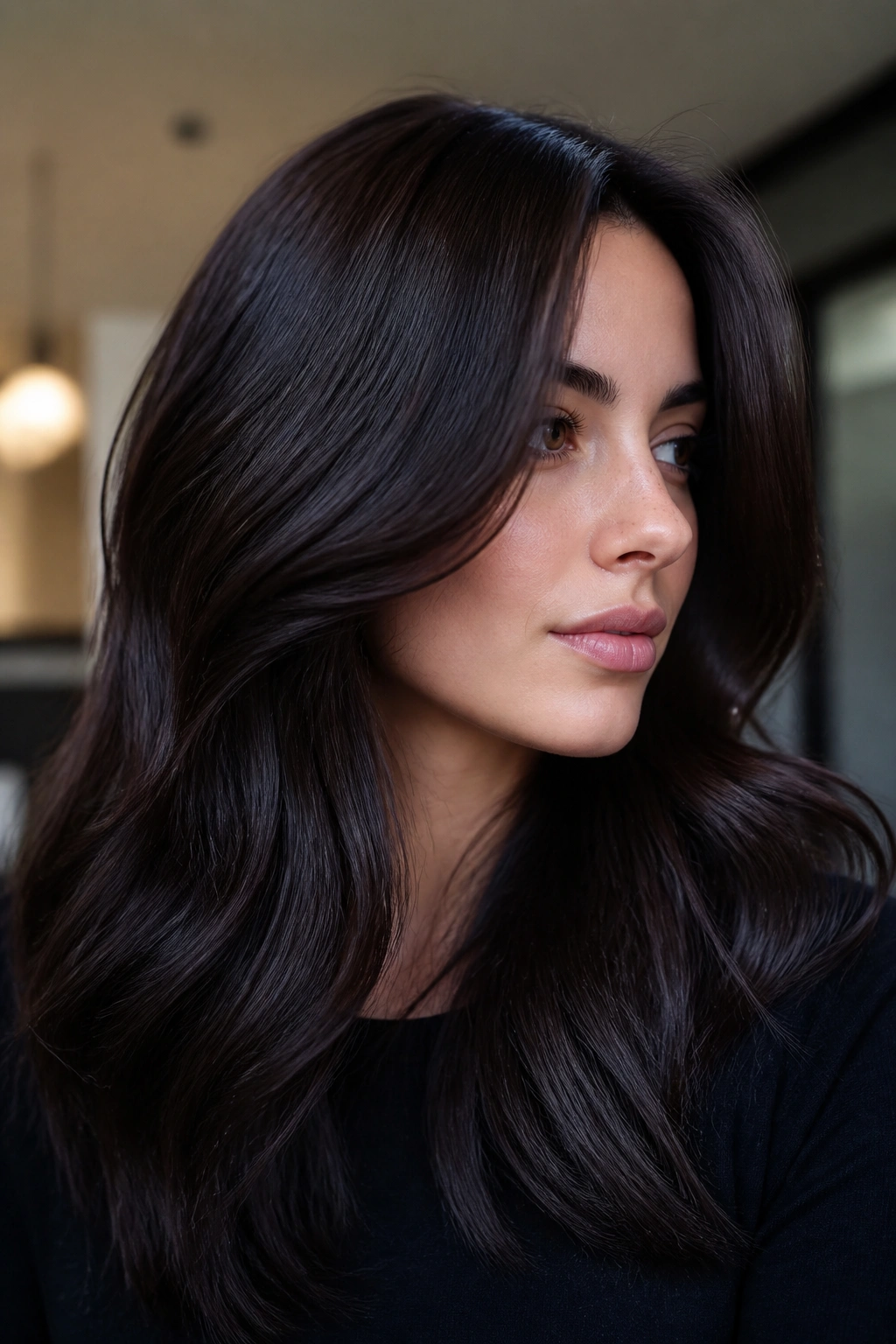
Ultra-dark mocha is for people who want almost-black brunette without the sharpness of actual black dye. On cool skin tones, that tiny bit of softness can matter a lot, because true black can sometimes look harsh around pale or pink undertones.
The shade works best when the brown is still visible under indoor light. Think dense espresso with a little cocoa in it, not ink. If your brows are dark and your eye color has depth, this look can be striking without seeming severe. If your skin is very fair, ask the colorist to keep a hint of softness around the face so the hair does not close in too much.
A blue-violet gloss helps here. So does shine. Flat dark hair can look heavy; glossy dark mocha looks expensive without needing a bright highlight anywhere in sight.
If you are torn between espresso and black, ask for a brown that is one shade softer than black and finished with a cool glaze. That keeps the face from hardening in strong light, and it is usually the better call for cool skin that needs a little breathing room.
