



Cherry brown hair color has a narrow sweet spot: rich enough to read brunette, red enough to feel alive, and cool enough to flatter pink- or blue-leaning skin.
If the red tilts orange, the whole thing goes off. The face can look a little flushed, the brown can go muddy, and that pretty shine you saw under salon lights starts acting strange in daylight.
The best versions for cool skin tones live in blue-red, violet-red, berry, or wine territory. That does not mean you need a loud color or a dramatic makeover. It does mean the brown should stay deep and the red should feel more like a polished gloss than a fire alarm.
I keep coming back to that detail because it matters more than most people think. Red pigment fades fast, brown pigment can swallow it, and a good cherry brown keeps its shape after the first few washes. Start with the softer ideas if you like subtlety, then work your way toward the bolder ones if you want more contrast.
1. Deep Cherry Mocha on a Dark Brunette Base
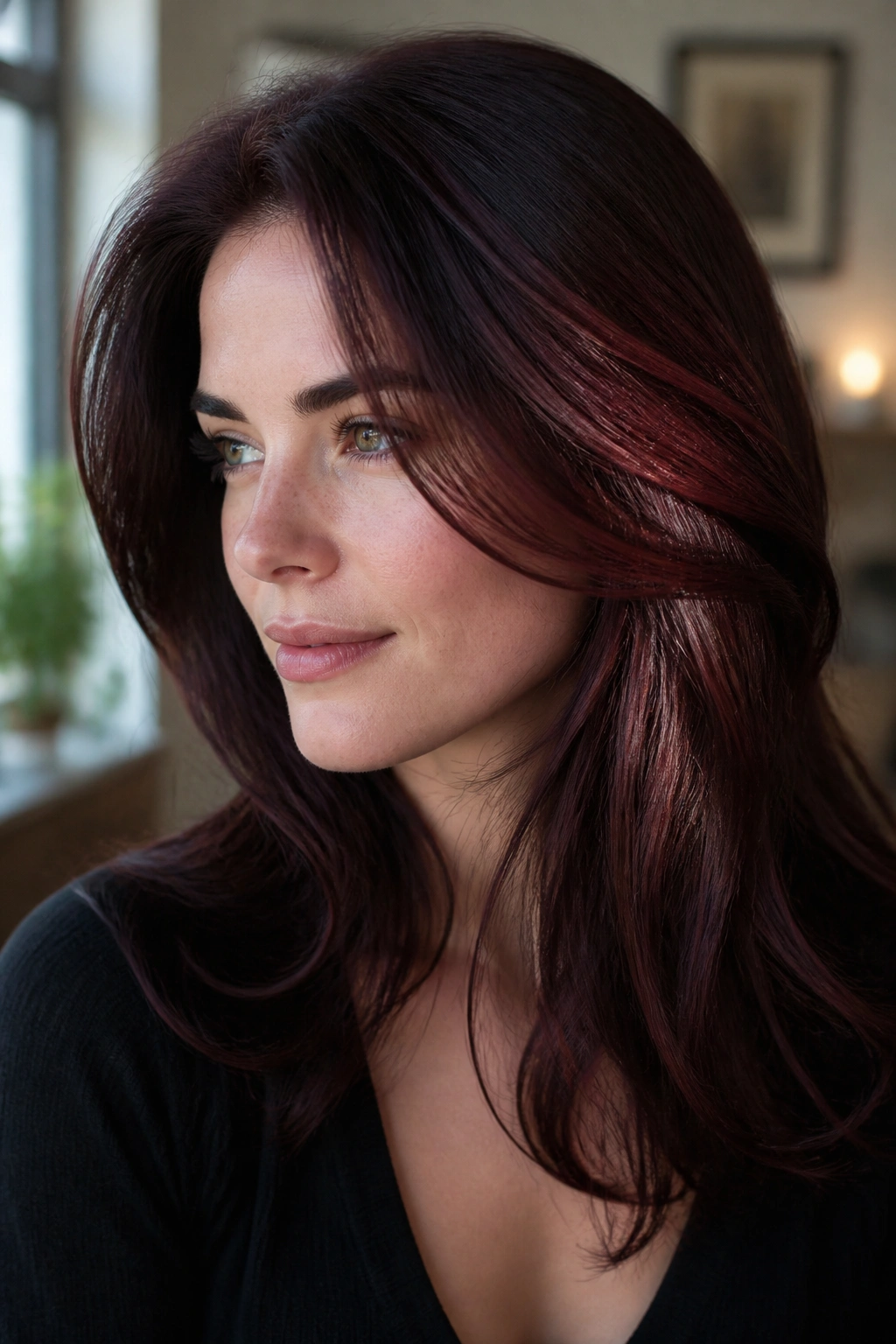
This is the easiest cherry brown hair color for cool skin tones to wear when you want the red to whisper instead of shout. The mocha base keeps things grounded, while the cherry note shows up as a soft wine sheen when the light hits from the side.
Why It Flatters Cool Skin
The trick is the balance. A level 3 to level 5 brunette base gives the red room to breathe without turning brassy, and a blue-red gloss keeps the whole thing clean against skin that leans pink or rosy.
- Ask for a dark mocha brown with a violet-red glaze, not copper.
- Keep the root area a half shade deeper than the mids for a smooth grow-out.
- Style with loose bends or a soft blowout so the shine shifts across the hair.
My favorite version of this shade is the one that looks almost brown at first glance, then turns cherry at the ends. That little reveal is what makes it feel polished instead of obvious.
2. Cherry Cola Brunette with a High-Gloss Finish
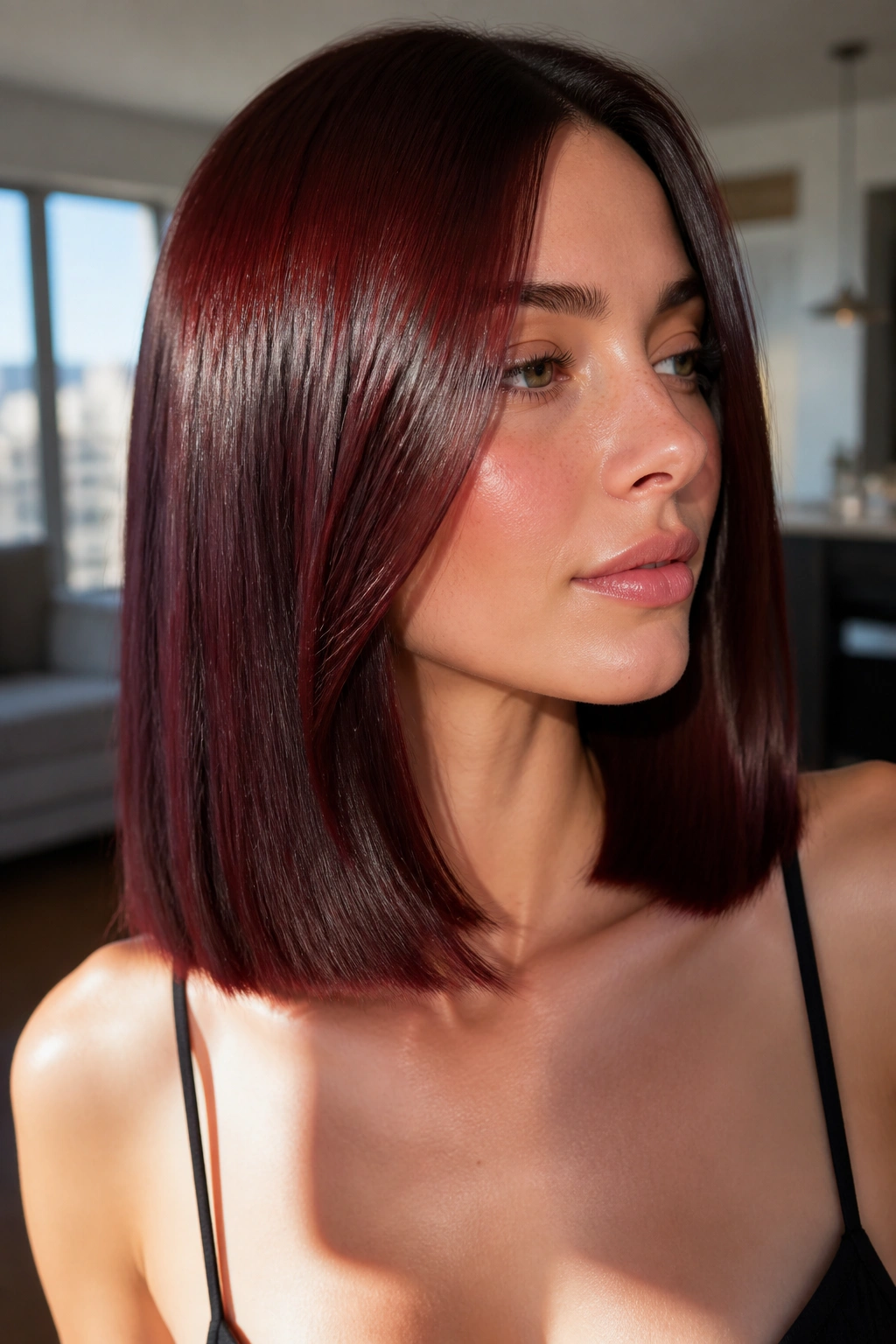
Cherry cola brunette looks rich because it never tries too hard. The color sits somewhere between dark soda brown and a red wine reflection, which is exactly why it plays so nicely with cool skin.
It works best on straight hair, blunt lobs, and silky layers where shine can run from root to tip. On hair that’s rough or overly textured, the red can break up a little too much and lose that cola-like depth. A gloss or demi-permanent color gives it the glassy surface it needs.
Flat, warm cherry is one thing. This is not that. Cherry cola brunette stays dark enough to keep your features sharp, and the red reads as a tint instead of a full color shift. If you wear black, silver, or deep navy a lot, this shade looks especially crisp.
One small thing I love here: the color gets better with movement. A still photo won’t always catch it, but a head turn will.
3. Black Cherry Balayage for Soft Dimension
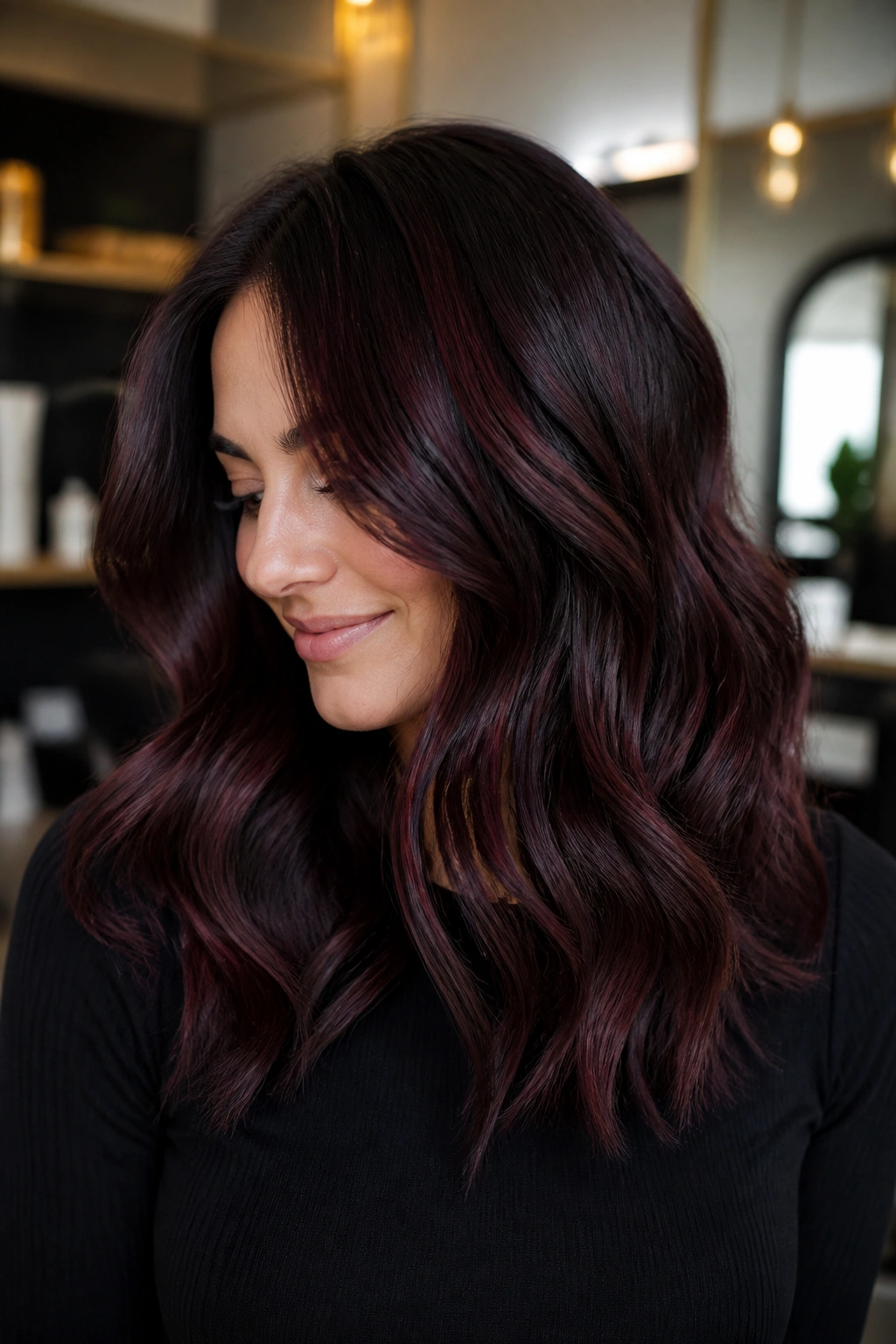
If you’ve ever wanted red without broadcasting red, black cherry balayage is the shade that usually gets people to stop asking for highlights and start asking for dimension. It’s especially pretty on a deep brunette base because the cherry sits in the painted pieces rather than coating the whole head.
What Makes It Work
The placement matters more than the formula. You want the color painter to keep the root dark, then sweep the cherry through the mid-lengths and ends in thin, curved ribbons. That keeps the hair from looking striped.
- Best on level 2 to level 4 bases
- Looks strongest in loose waves or brushed-out curls
- Ask for wine-red ribbons, not bright red panels
A balayage like this is one of the few red-brown looks that can still feel soft on cool skin. The darker base frames the face, and the cherry pieces only show themselves where the hair bends.
I like this shade because it has movement without mess. You get color payoff, but not the bluntness that can make red hair feel too hard around the face.
4. Smoky Plum-Cherry Money Pieces
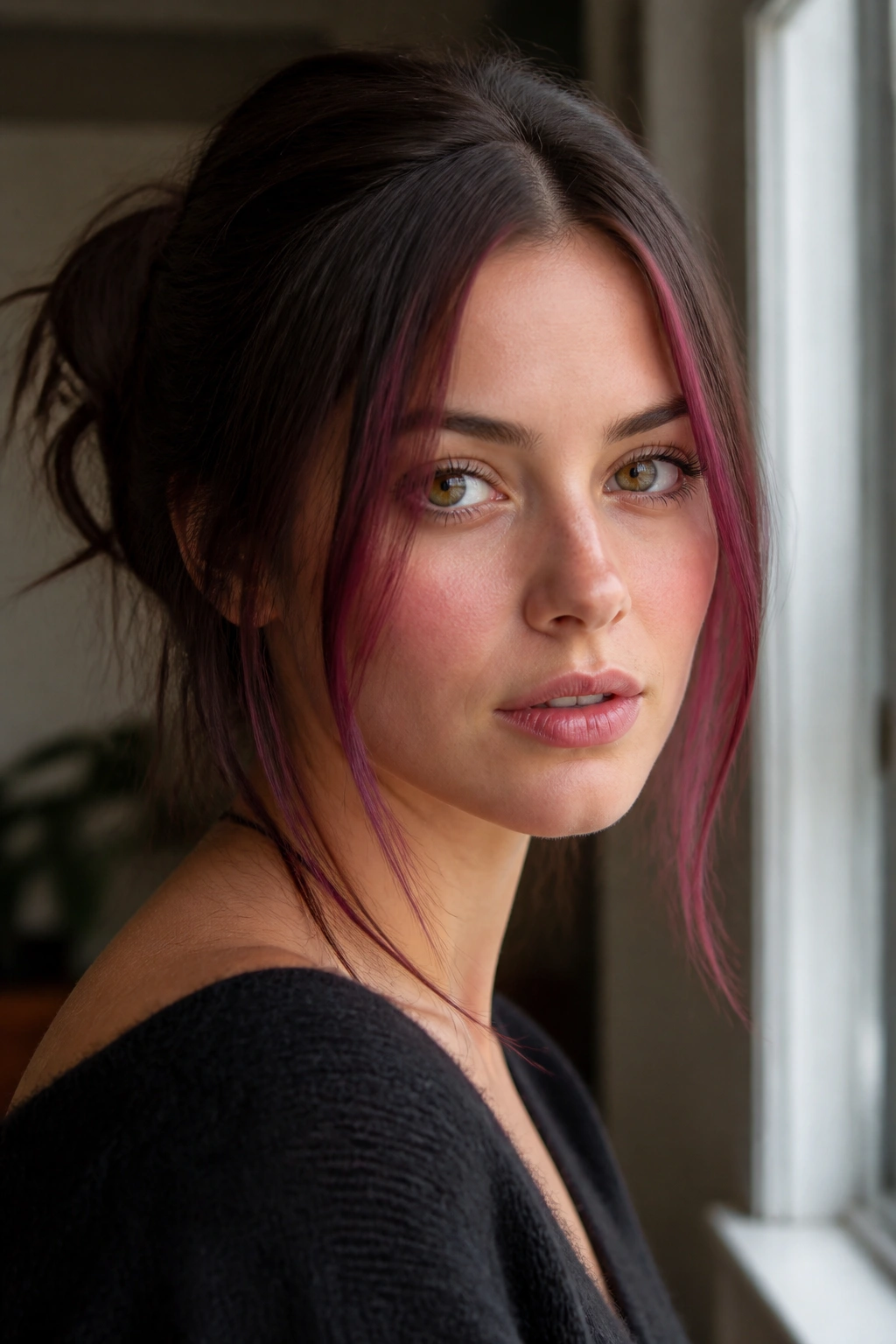
Can a face frame be red without looking warm? Yes, if the red leans plum instead of copper. Smoky plum-cherry money pieces are one of my favorite answers for cool skin because they brighten the front without turning the whole head red.
The best version starts just below the hairline and melts back into a brown base. That keeps the front pieces from looking pasted on. On cool skin, the plum note is doing a lot of work here; it keeps the red in a berry family that feels cleaner against the face.
How to Ask for It
Tell your colorist you want two face-framing pieces in a violet-red or plum-red tone with a darker brunette base behind them. If you already have a natural brown, even better. The contrast will do the heavy lifting.
A little warning: keep these pieces soft, not chunky. Thick money pieces can look dated fast, and that is not the vibe here. Thin, painterly ribbons are the better move.
5. Rosewood Brunette for a Soft, Cool Flush
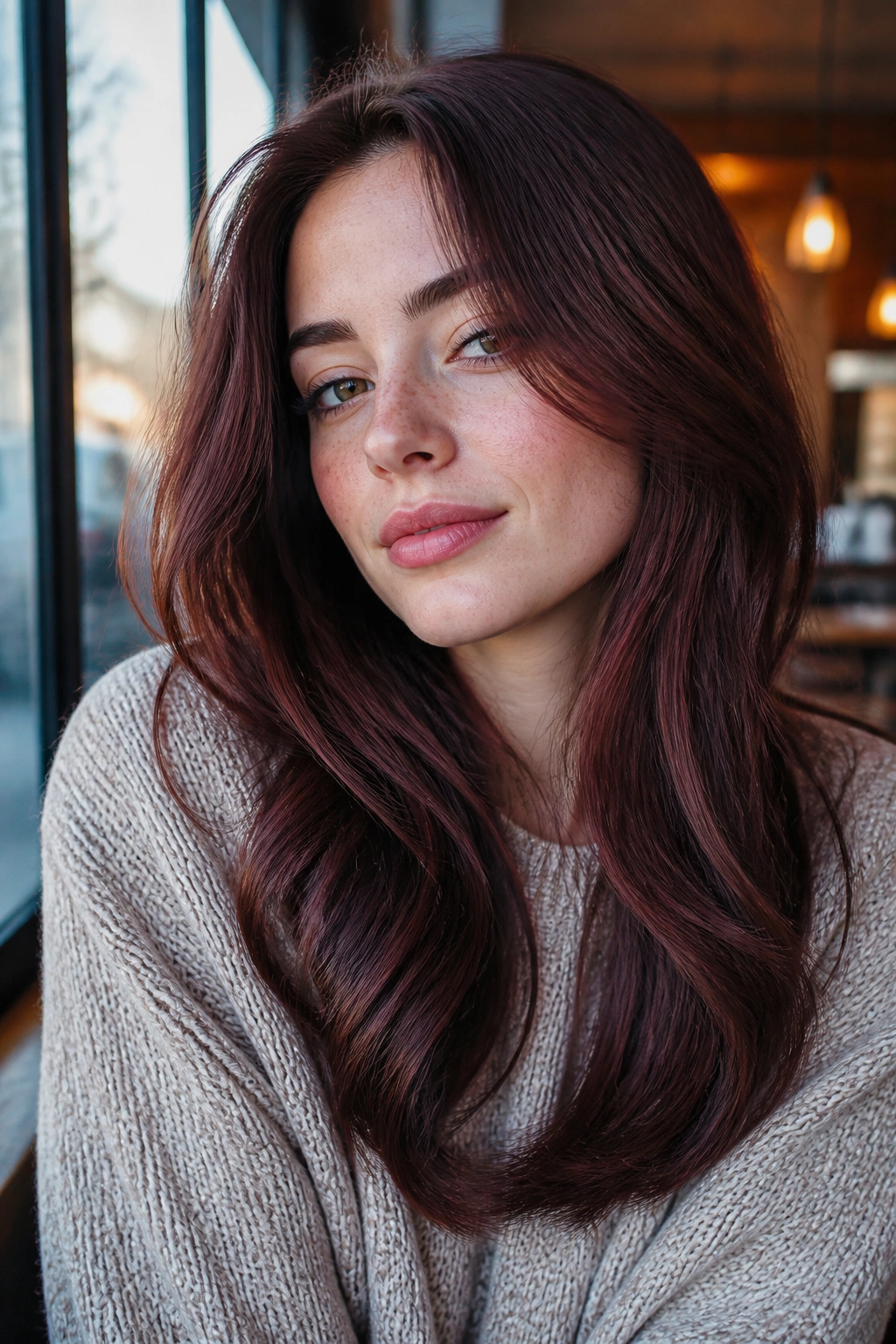
Rosewood brunette is the shade I reach for when someone wants cherry brown but flinches at the word cherry. It’s muted, a little dusty, and much more romantic than flashy. Think brown hair with a dried-rose sheen rather than a bright red cast.
On cool skin, that restraint is the entire point. The color adds life without warming the face too much, and it tends to look especially good on fair and medium complexions with pink undertones. The red is there, but it sits back instead of leading the conversation.
It also has a nice habit of making hair look thicker. Not because the hair magically changes, obviously, but because the soft rose-brown tones add depth across the surface. That matters on fine hair or on straight hair that tends to flatten out by noon.
This is the shade for people who want compliments, not questions. It feels expensive in a quiet way, and it wears well with a blunt bob, a shoulder-length cut, or long layers that need a little more shape.
6. Cranberry Brown Gloss on Mid-Length Hair
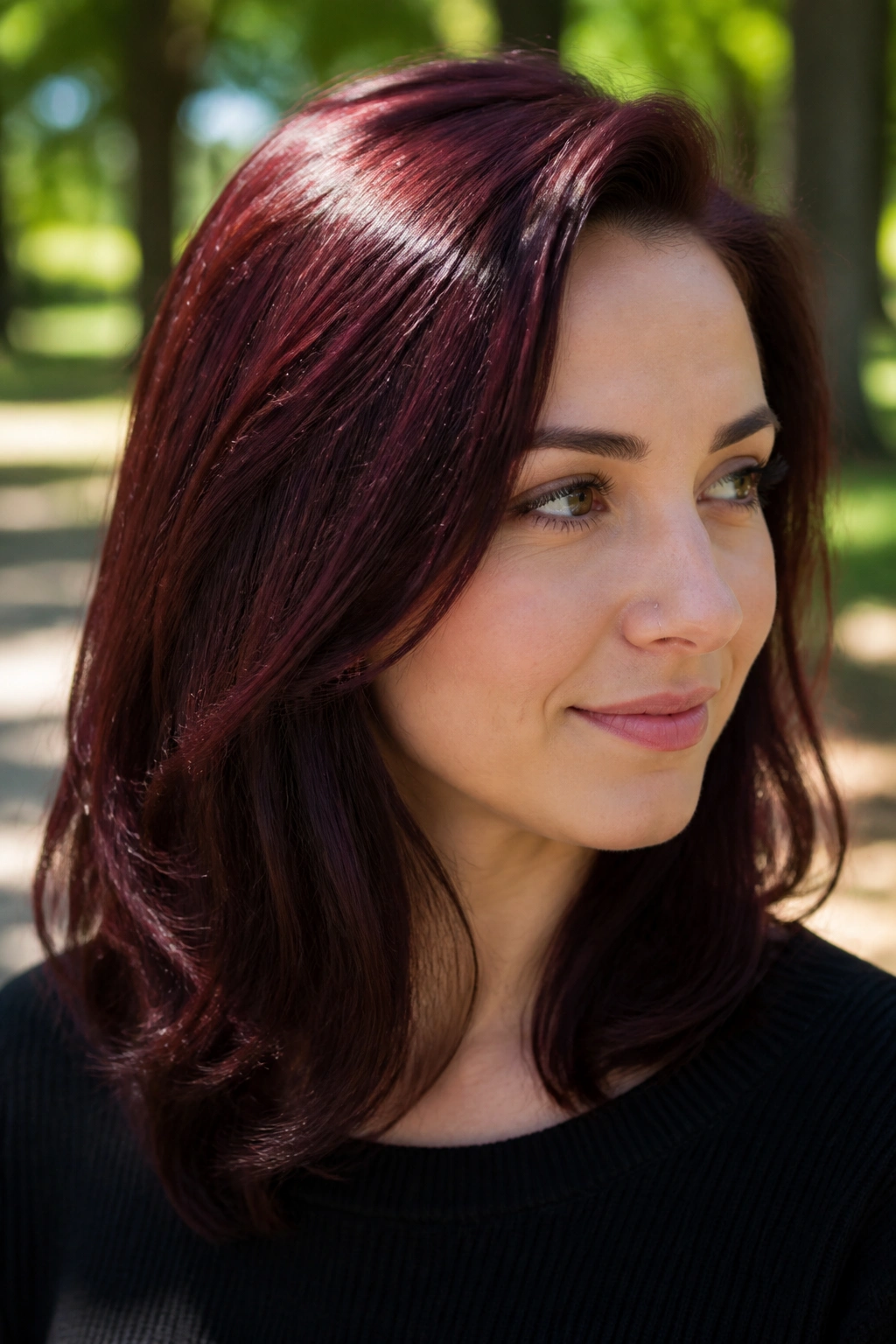
Cranberry brown lives closer to wine than copper, and that is why it works so neatly on cool skin tones. Unlike brighter red-browns, this shade keeps a dark base and lets the cranberry show up as a glossy red-violet veil.
Mid-length hair is where it looks best. You have enough length for the color to move, but not so much that the red gets lost in the ends. A lob, a collarbone cut, or a slightly layered shoulder length all give this shade room to show off without making it feel heavy.
If your complexion goes pink fast, this shade can be kinder than warmer red-browns. It brings warmth only in the sense of richness, not orange. That distinction matters a lot more than people think.
I’d ask for a level 5 chestnut base with a cranberry glaze if you want this look in a salon. If you want to wear it at home, lean on a color-depositing mask in wine or berry tones rather than anything that reads terracotta.
7. Violet Cherry Melt from Root to Tip
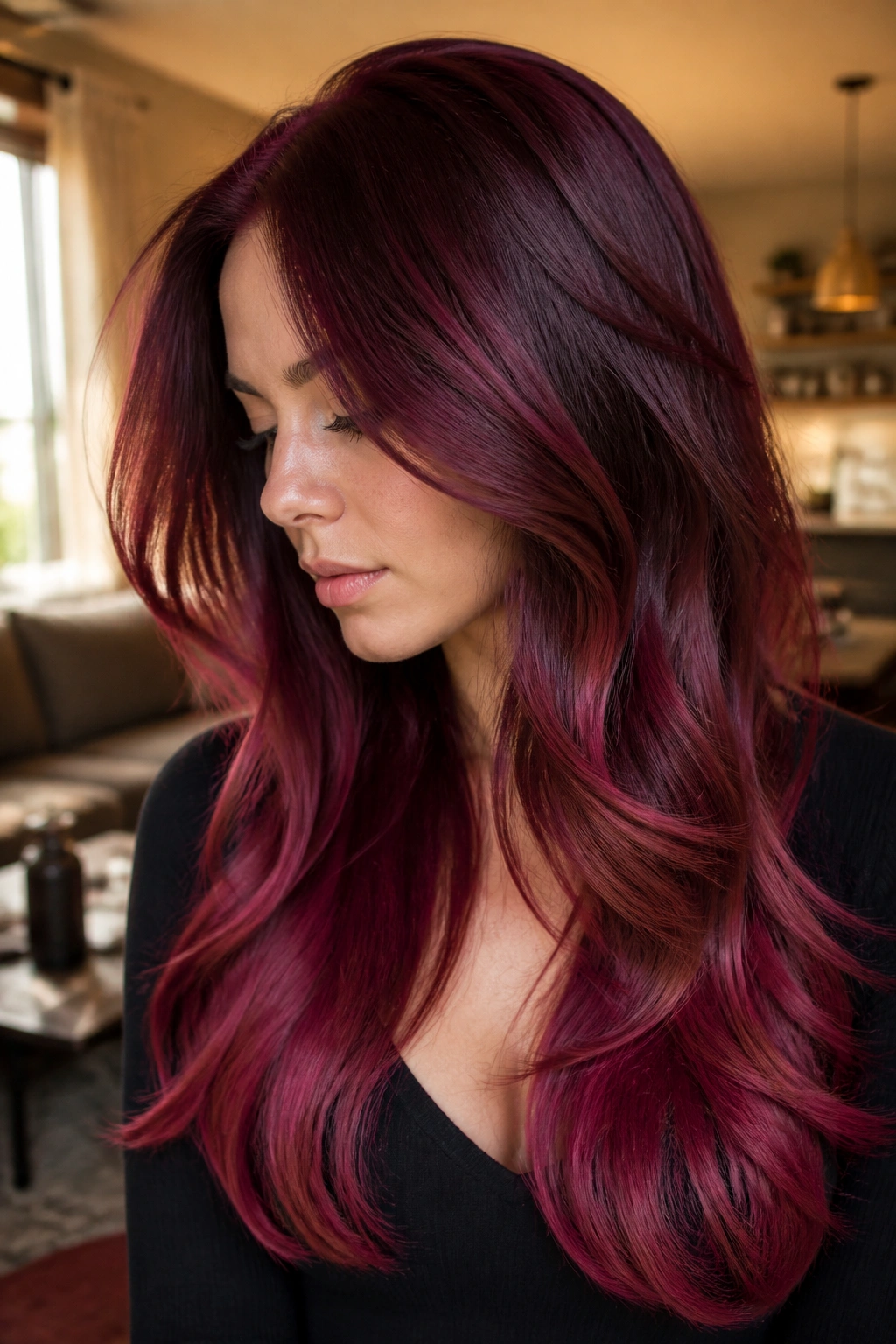
This one is for the person who wants a little drama but still wants the color to look refined. A violet cherry melt starts deep at the root, then softens through the mids and turns richer and brighter toward the ends.
The Color Formula
The key is that violet-red undertone. It keeps the cherry cool, almost smoky, which helps the shade sit well on skin with pink or blue undertones. If the red gets too magenta, the effect changes fast, and not in a good way.
- Keep the root shadow at level 4 or darker
- Ask for a violet-red melt through the mids
- Let the ends sit one to two shades lighter than the base
Best Cuts for It
Long layers and textured lobs both work. The melt looks less obvious on very blunt cuts, where the gradient can feel too neat. On layered hair, the color breaks up in a better way and looks like it belongs there.
I’m partial to this shade on cool skin because it has that slightly smoked finish. The violet keeps the cherry from going loud, and the brown base keeps it grounded.
8. Dark Chocolate Cherry Lowlights
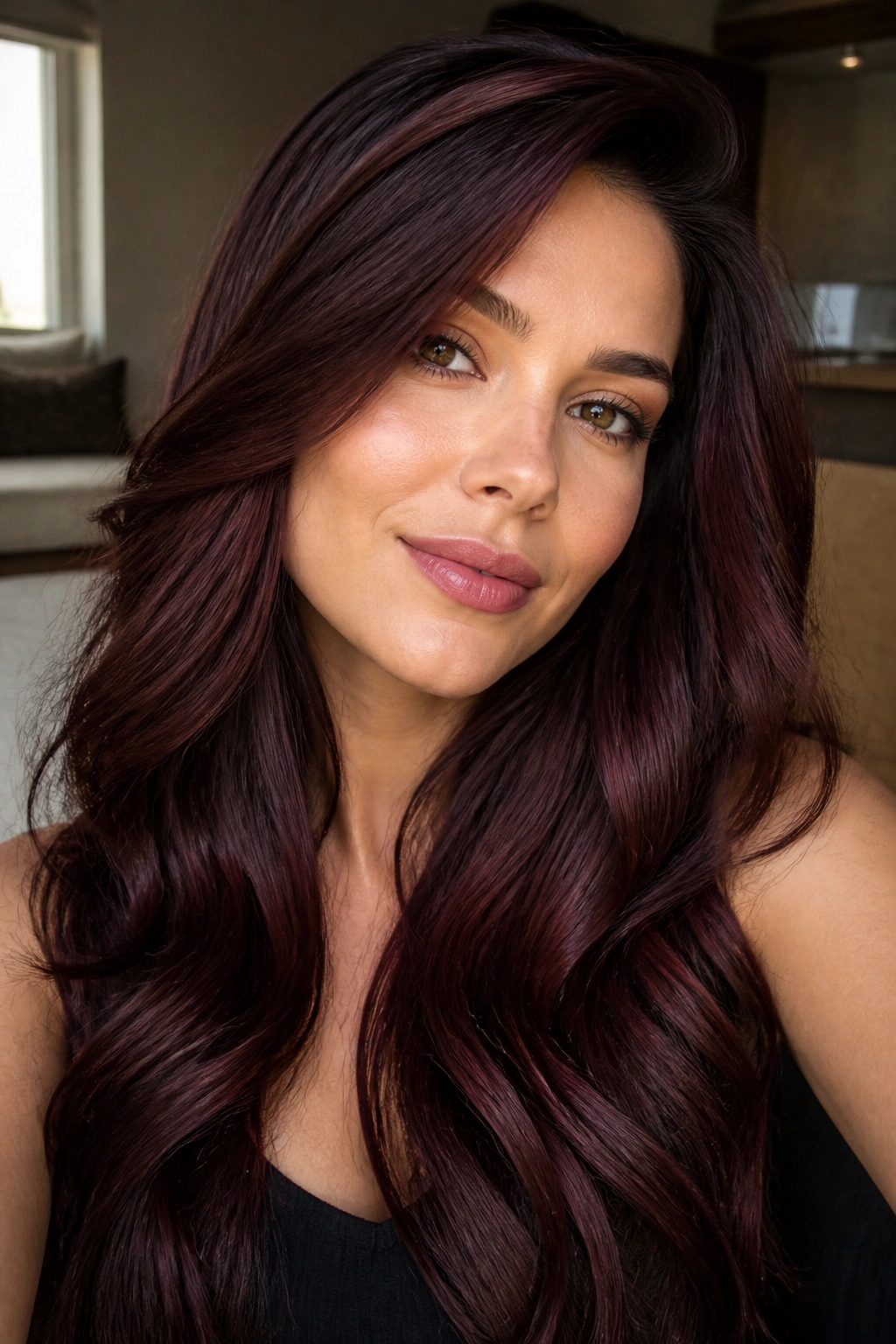
If your hair already has decent depth, lowlights are the smartest way to bring cherry brown in without changing the whole mood. Dark chocolate cherry lowlights slide into a brunette base and make the hair look thicker, darker, and more dimensional.
This is the kind of color that catches you by surprise. In one light it just looks like deep brown. In another, the red shows up in the darker strands and makes the whole thing feel richer. Cool skin likes that kind of movement because the color never sits flat against the face.
A lot of people think red hair has to be bright to count. It doesn’t. Lowlights can do the job with less maintenance and fewer surprises. They also grow out in a softer way, which is a real gift if you don’t want to be in the salon all the time.
This is a good one for straight hair, too. You do not need waves to see the color, though waves make it easier to notice the red.
9. Burgundy Brown Ribbon Waves
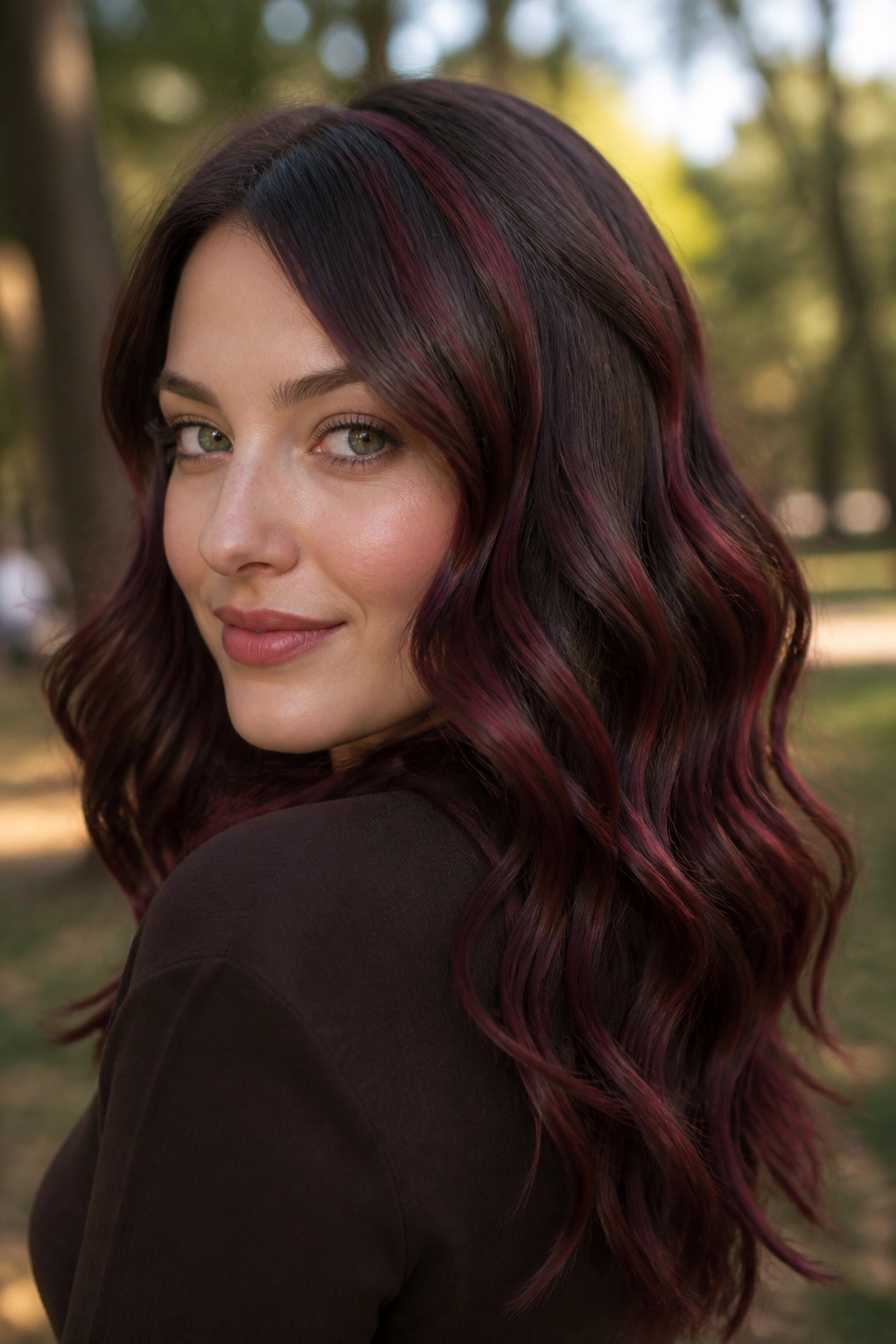
Waves make burgundy ribbons look intentional instead of streaky. That’s the whole magic trick here. The color sits on the surface of the hair, then bends and flashes when the hair moves.
The best version uses thin, curved ribbons rather than wide blocks of color. Think of them as narrow strokes, not chunks. On cool skin, burgundy is a reliable choice because it stays in the wine family and avoids the warm orange-red that can fight with pink undertones.
You can wear this shade on medium brown hair or a deeper brunette base. The deeper base makes the burgundy look luxe; the lighter base makes it read a little brighter and more visible. I prefer it on hair with some bend, because the waves keep the ribbons from looking too linear.
- Paint the ribbons pencil-thin near the face
- Keep them slightly wider through the back
- Style with a 1-inch curling iron and brush the waves out
The result should feel woven, not painted. That’s the difference between hair color that looks planned and hair color that looks accidental.
10. Cherry Walnut with a Shadow Root
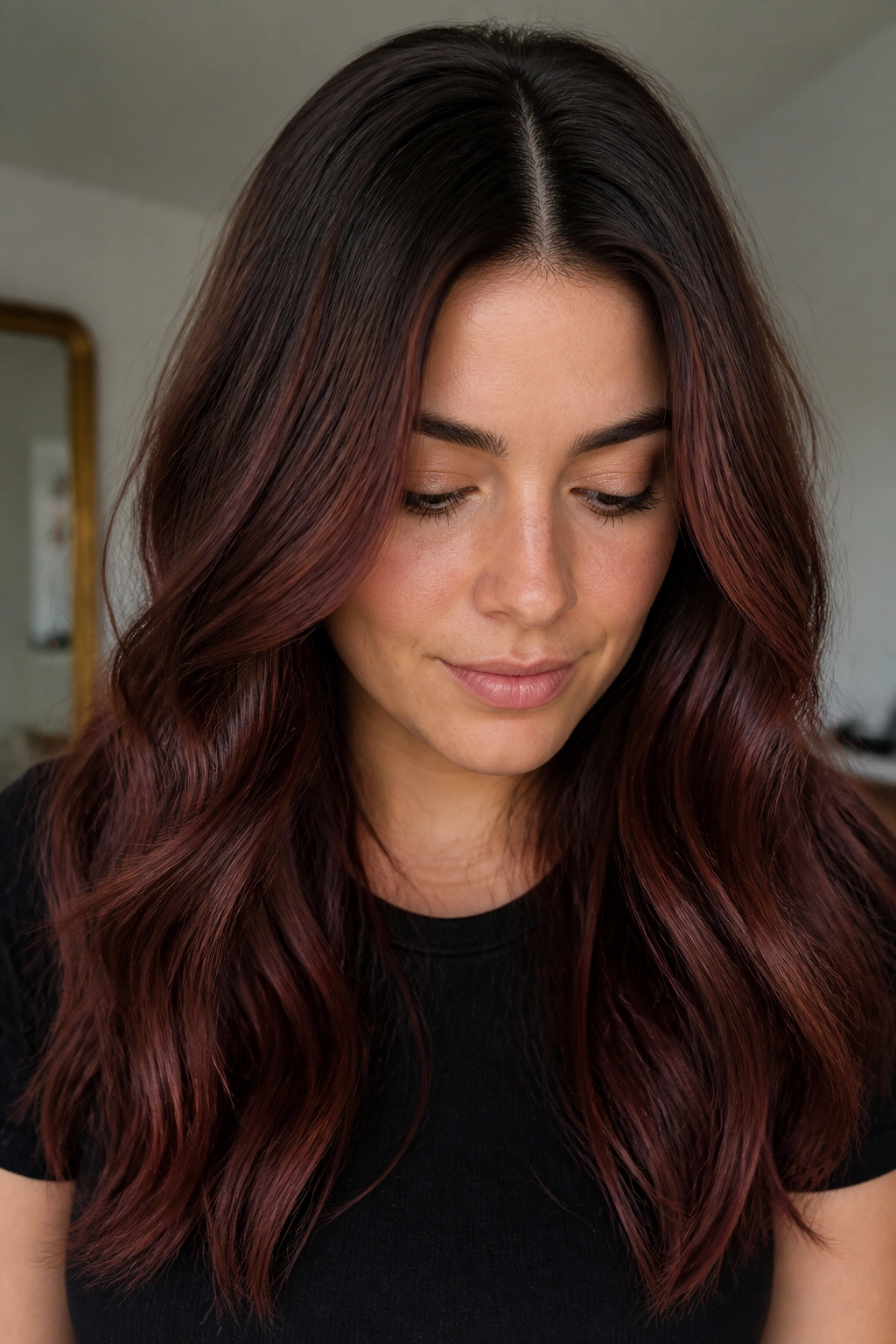
Cherry walnut is one of those shades that sounds like dessert and behaves like a very grown-up brunette. The walnut base keeps the brown earthy, while the cherry adds a red sheen that stays cool and controlled.
Why the Root Melt Matters
The shadow root is doing real work here. It lets the color grow out softly and stops the cherry from sitting too high on the head, where it can start looking a little harsh. On cool skin, that softer root also keeps the face from getting overwhelmed by too much red near the hairline.
- Ask for a level 5 walnut base
- Keep the root at level 4 or slightly deeper
- Add a cherry-brown glaze through the mids and ends
This is a nice choice if you like lived-in color. It has enough depth for office settings or low-key styling, but it still flashes red when you tuck the hair behind your ears.
I’d call this the practical red-brown. Not boring. Practical. There’s a difference.
11. Midnight Cherry Brunette for Deep Contrast
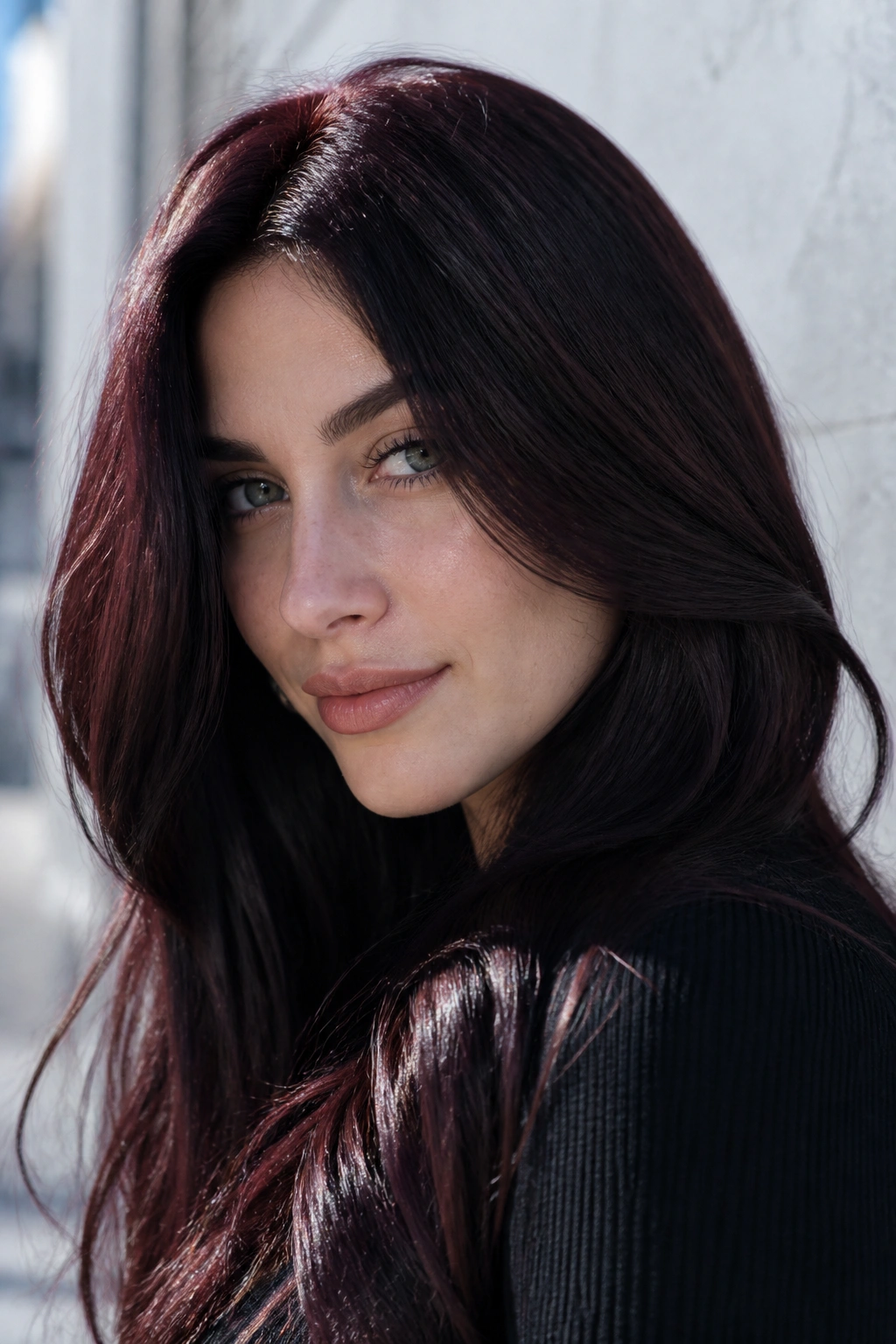
Almost-black hair can still carry red, and midnight cherry brunette proves it. The red is not obvious all the time, which is exactly why it feels so sharp on cool skin tones.
In shadow, the hair reads nearly black. In daylight, the cherry reflection shows up in a wine-like way that makes the color feel deeper than standard brown. If your natural hair is already very dark, this is a clean way to add interest without going lighter.
This shade is especially flattering on deep cool skin because the contrast feels crisp instead of washed out. On very fair cool skin, it can be striking too, but you may want softer pieces around the face so the whole look doesn’t feel severe.
One-sentence truth: this color is for shine lovers. The finish matters. A dry midnight cherry brunette looks flat; a glossy one looks deliberate and expensive without trying to be loud.
12. Mahogany Cherry Curls with Soft Framing
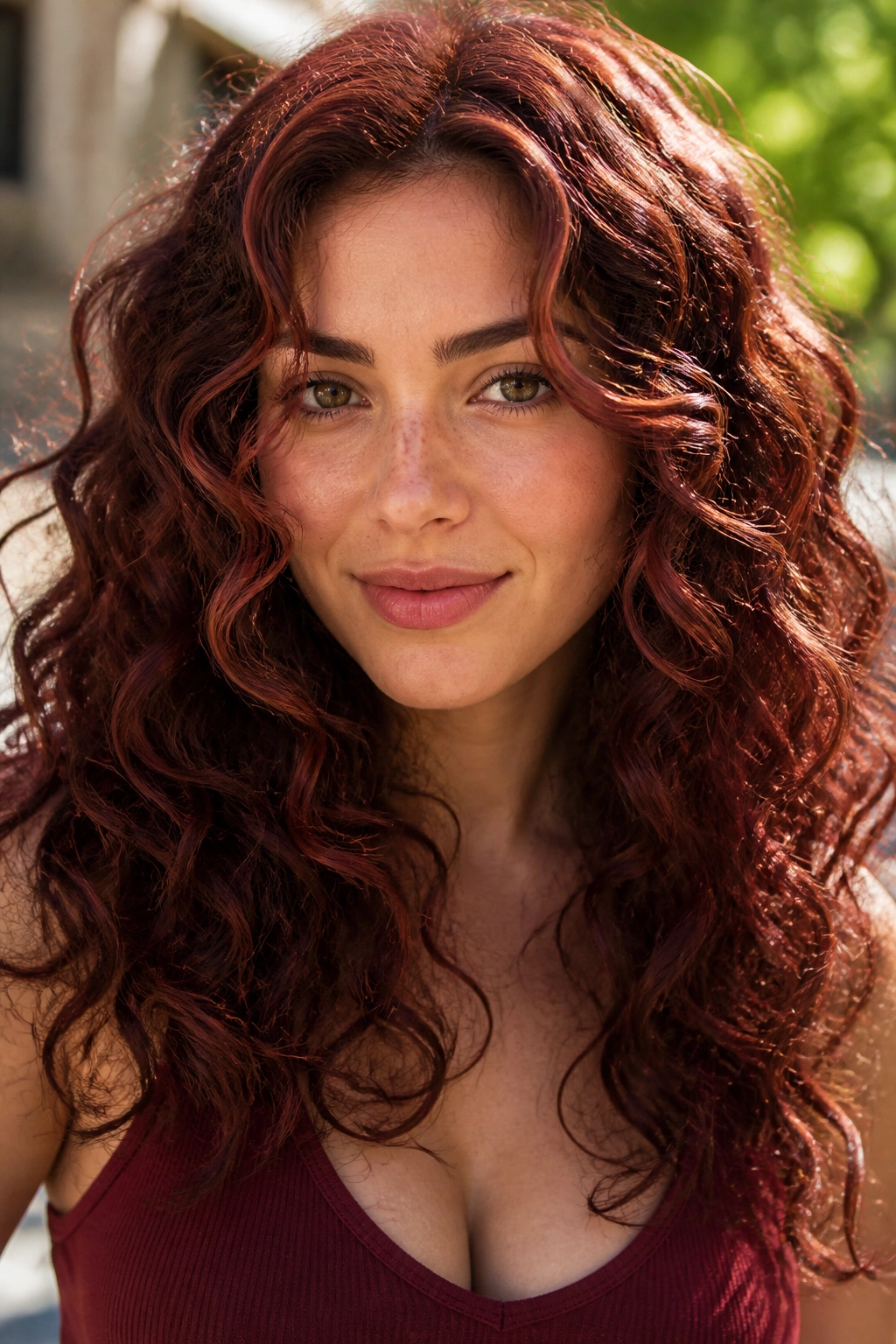
Curls change everything. A shade that looks subtle on straight hair can suddenly bloom into something much more visible once the ringlets start catching light, and mahogany cherry curls are a perfect example.
The smartest placement is around the outer curve of the curl, the top layer, and the face-framing pieces. That way the red shows where the eye naturally lands. If the color is packed too deeply underneath, you lose the effect. If it’s too heavy on top, it can look patchy.
What to Ask For
- A mahogany-brown base with cool cherry ribbons
- Lighter color on the top third of the curl pattern
- Deeper placement underneath to keep the shape grounded
Cool skin tones tend to look good with this because mahogany gives you richness while the cherry keeps the shade from going flat. On curl patterns from 3A to 3C, the color can look different every time the hair moves, which is half the fun.
This is one of the few red-brown looks that loves texture. If your hair has body, use it.
13. Cool Cherry Ombré for Long Hair
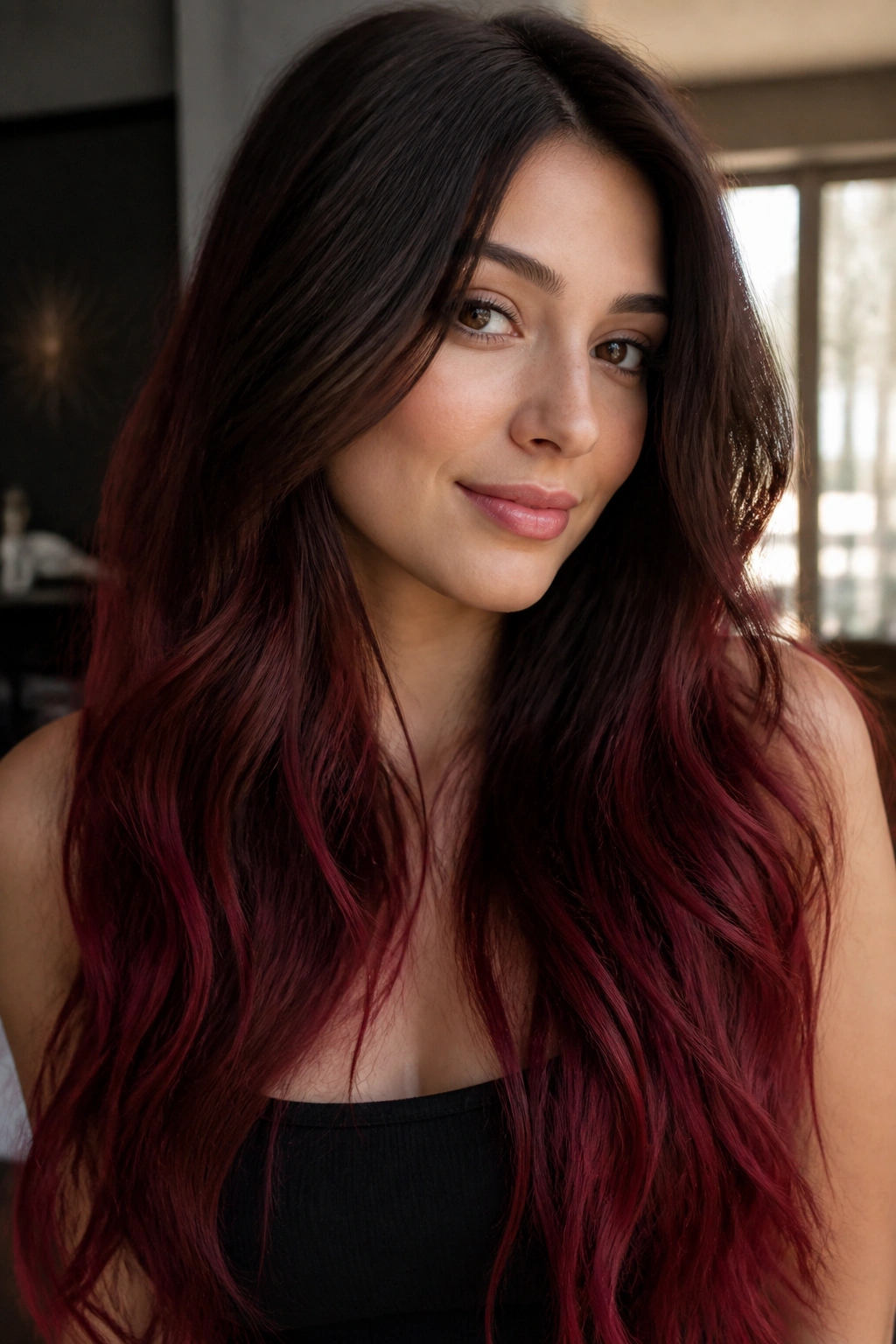
What if you want cherry brown hair color but also want room to grow it out? Ombré handles that nicely. The roots stay darker, the mids soften into brown, and the ends carry the cherry.
That gradual shift works especially well on long hair because there’s enough length for the color to read as a true transition, not a sudden dip. Cool skin benefits from the darker root, too, because it keeps the face framed and lets the red live farther away from the hairline.
Where the Color Should Start
For long hair, I like the cherry to begin below the cheekbones or around the jawline, then deepen as it moves down. That keeps the top part brunette and lets the lower half carry the visual interest.
A good ombré should never look like two separate colors fighting each other. The brown and cherry need to blur together a little, especially through the mid-lengths. If the line is too sharp, the look turns stiff fast.
This one is forgiving. That matters more than people admit.
14. Cherry Espresso with Peekaboo Panels
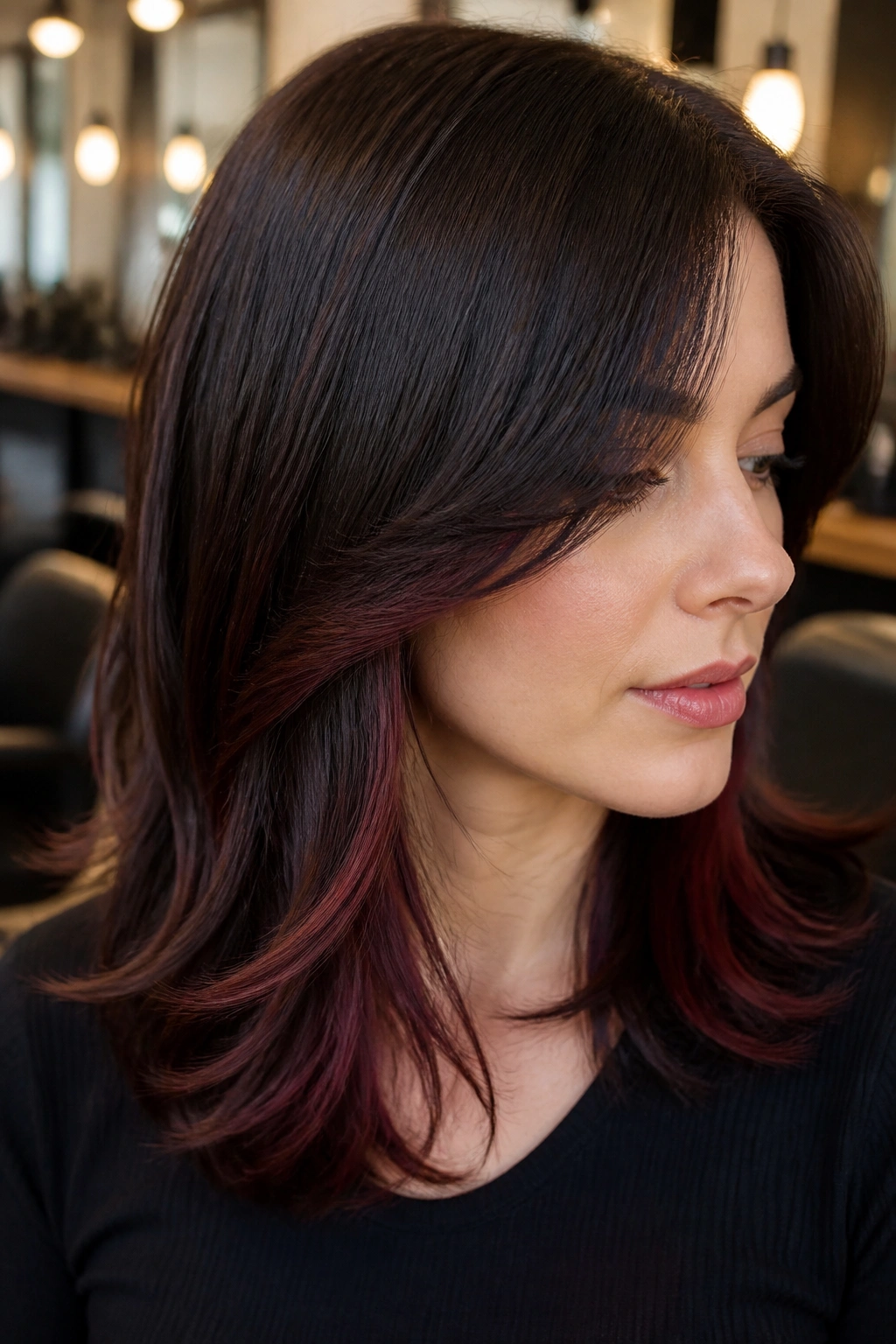
Not every red needs to sit on top. Cherry espresso with peekaboo panels keeps the darker brown visible while hiding the cherry in the underside of the hair, so the color shows when you tuck, flip, or curl the lengths.
That makes it a smart pick for people who want something playful but need to keep things subtle at work or in a more conservative setting. On cool skin, the dark espresso base keeps the overall look clean, while the hidden cherry panels add just enough surprise to avoid looking flat.
I like this shade on layered cuts because the panels peek through at different levels. On one-length hair, the effect is still nice, but you need a little movement to make it worth the trouble. A loose wave or a simple bend at the ends is usually enough.
This is also one of the easiest ways to test a cherry brown direction before you commit to a full head. If you like it, you can always make the red more visible later.
15. Plum Brown Balayage for Cooler Undertones
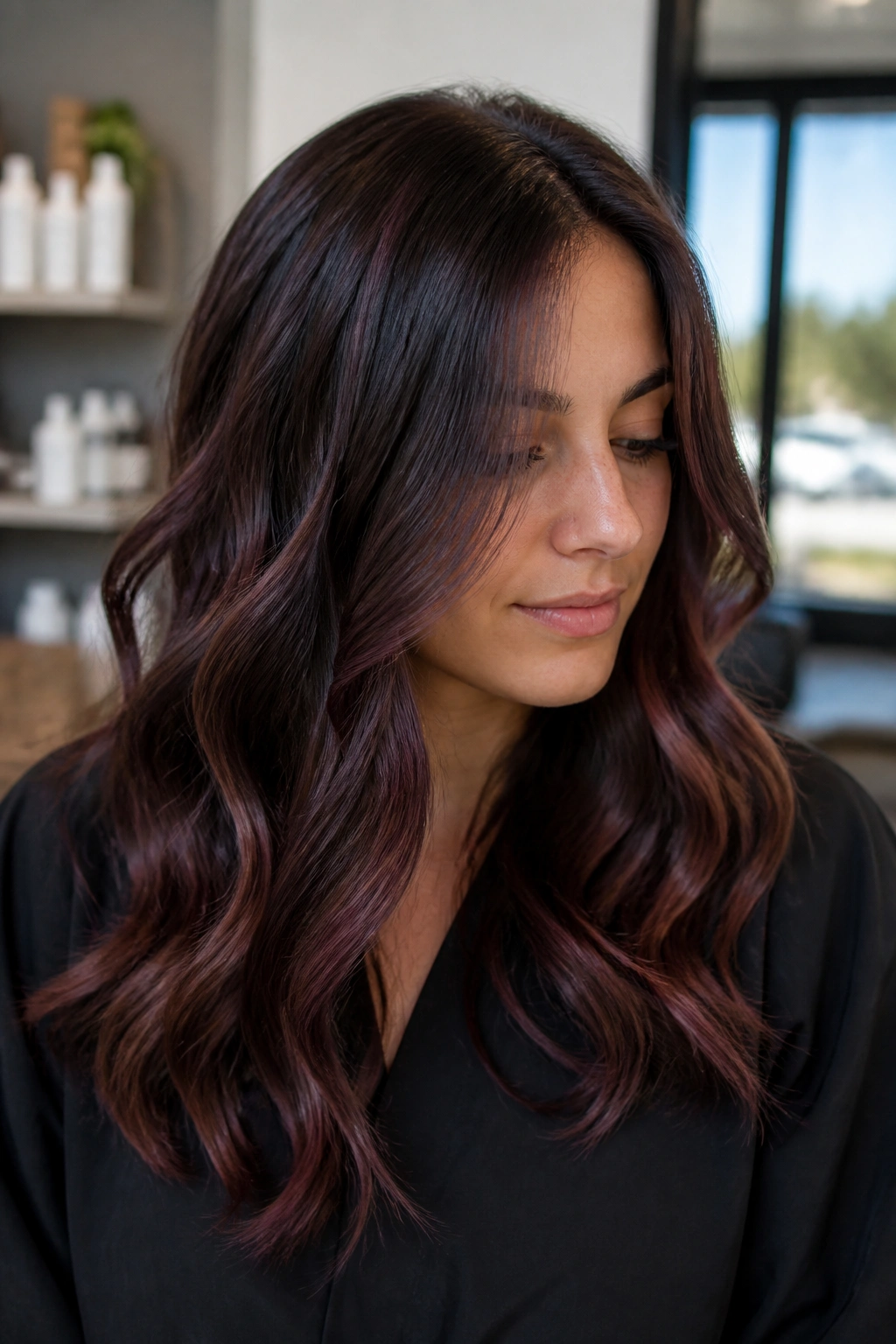
Plum brown balayage is a quieter cousin of cherry brown, and that’s exactly why it works so well on cooler undertones. Unlike traditional warm balayage, this version keeps the red in plum and berry territory, which gives the brown a darker, cleaner finish.
The payoff is dimension without warmth. You still get the painted movement through the lengths, but the color stays anchored in cool red rather than drifting into orange. If your skin has a pink cast or you wear a lot of silver jewelry, this is one of the safest choices on the list.
It also plays well with medium-depth brunettes. Too light a base can make plum look too bright; too dark a base can swallow it. A level 5 or 6 brown usually gives the best balance.
I’d choose this when you want color that looks intentional but not loud. It’s a smart salon choice, the kind that makes people say your hair looks better rather than asking what exactly is different.
16. Berry Brown Bob with Face-Framing Lightness
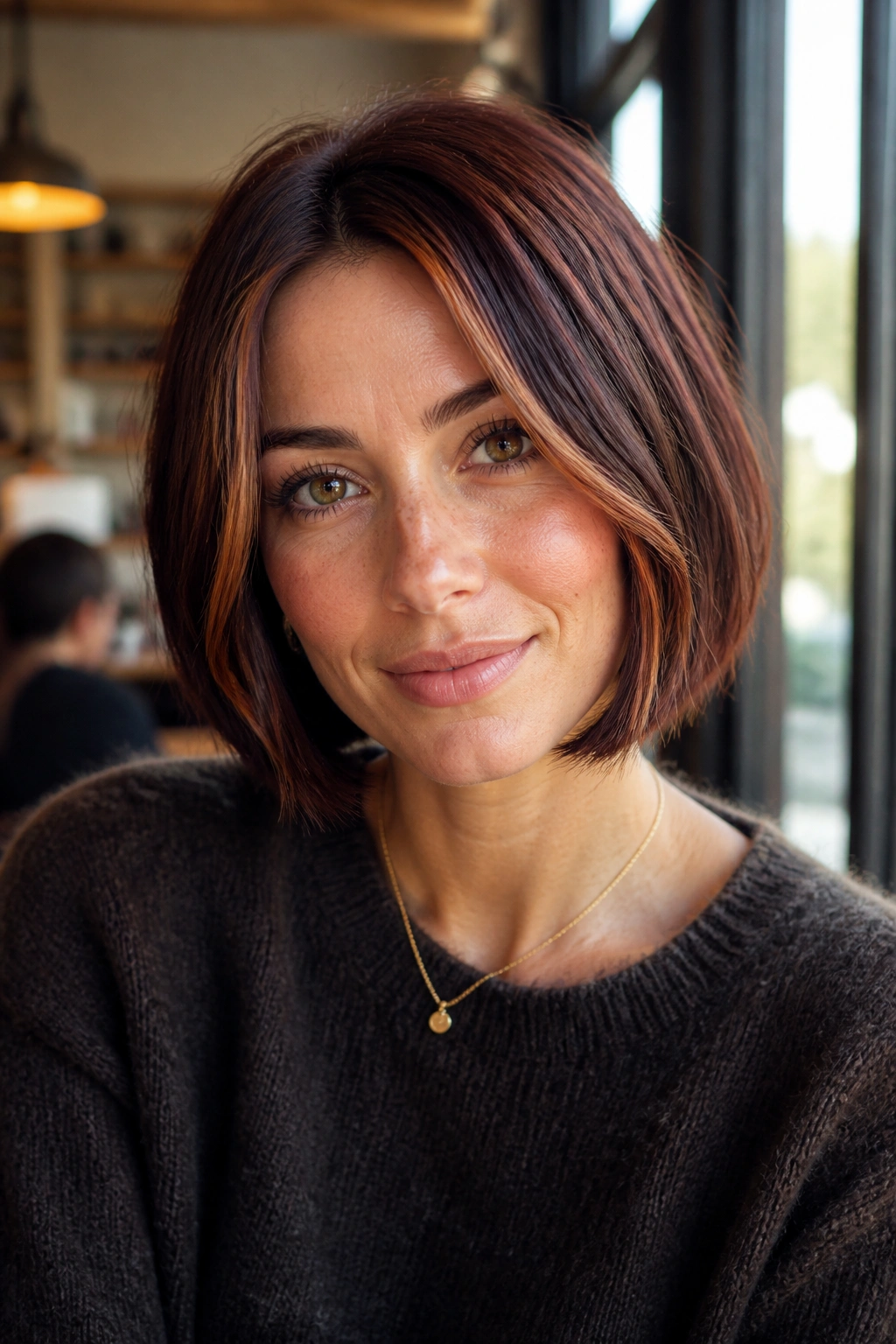
A bob can be ruthless. There’s nowhere for a weak color choice to hide, which is why berry brown works so well here. It gives the cut enough depth to feel polished, but the berry note keeps the edges from going dull.
Why It Works on a Bob
The shape itself helps. A blunt or softly layered bob shows color at the ends first, and berry brown makes those edges look fuller and darker in the right places. Add a little face-framing lightness and the whole cut starts to move.
- Best at chin length to just below the jaw
- Use slightly lighter berry pieces near the front
- Keep the nape and underlayers deeper for contrast
This is a clean choice for cool skin because the front pieces brighten the face without pulling warm. You get the lift of a lighter frame, but the overall effect stays firmly brunette.
I would not make this too shiny or too red. The charm is in the balance. Keep it berry, keep it brown, and let the cut do the rest.
17. Chestnut Cherry with Curtain Bangs
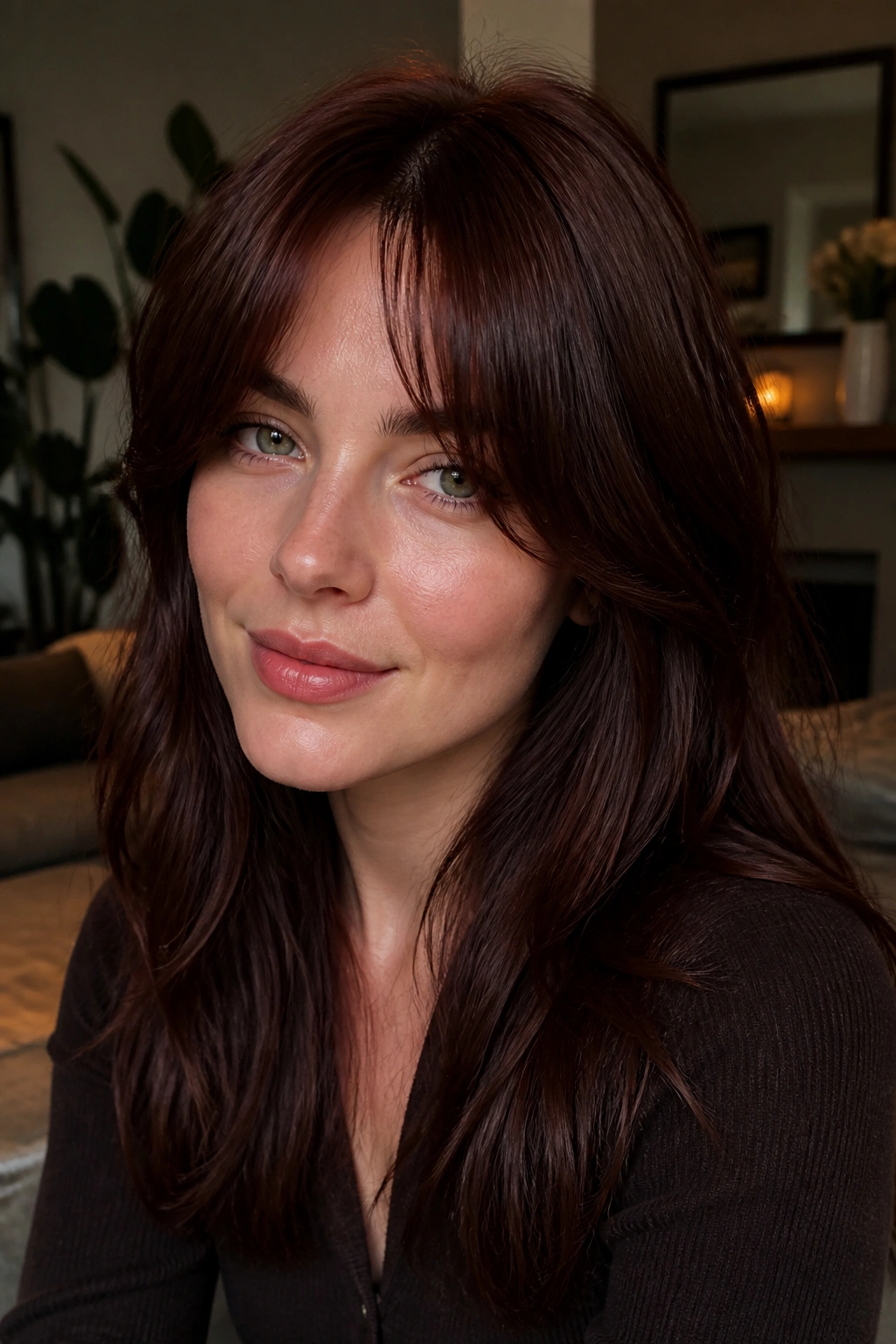
Chestnut cherry feels soft from the start, and curtain bangs make it even softer by breaking up the forehead area with a little movement. The color sits in that middle lane between warm chestnut and cool cherry, which means it can work if you want red-brown without a heavy red statement.
On cool skin, the chestnut base keeps the face from looking washed out, while the cherry note adds a clearer edge. That matters most around the bangs and the front layers, where the hair meets the skin. If the front pieces are too warm, the whole look can slide out of balance.
I like this shade on long hair, but it works on lobs too. Curtain bangs give you a place to play with color near the face without needing a big all-over change. They also soften the transition if you’re moving from plain brunette into cherry brown for the first time.
One little detail that helps: style the bangs with a round brush or large blow-dry brush so the color shows along the bend, not just at the ends.
18. Smoky Wine Brown for a Satin Finish
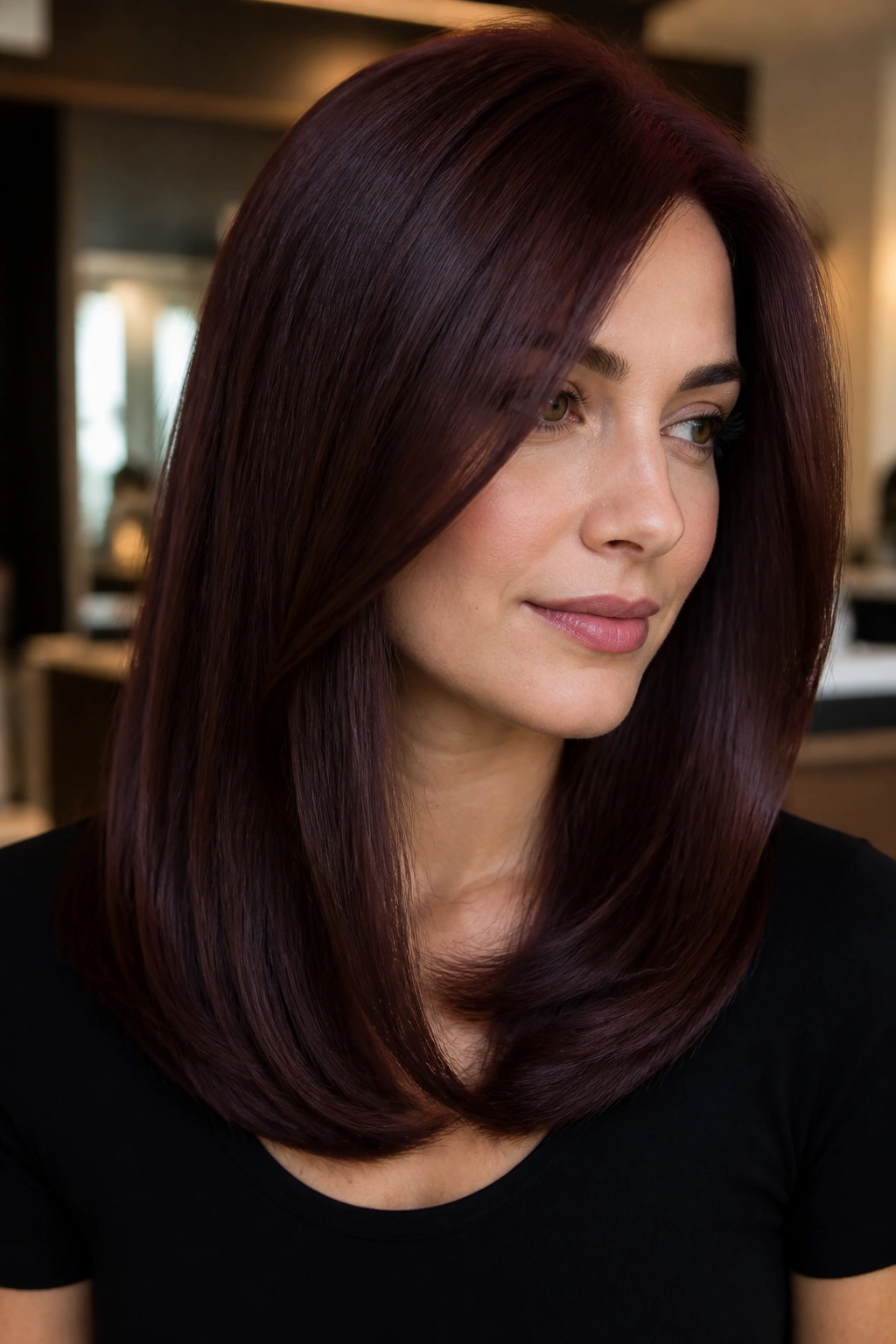
Smoky wine brown has a polished look that feels almost silky when the hair is freshly blown out. It lives in that darker red-brown range where the wine note shows first, then the brown comes through under it.
This shade is especially good if your hair is naturally straight or fine, because a satin finish can make the strands look denser. Cool skin tones like the cooler wine base, and the smoky edge keeps the red from getting too bright around the face.
A side part suits it well. So does a smooth blowout with ends that curve under slightly. You do not want a fluffy finish here; the color is cleaner when the hair sits with some polish.
This is the one I’d pick for someone who likes red but hates fuss. It looks deliberate, not flashy, and it has enough depth to hold its own against black coats, silver earrings, and strong makeup.
19. Raspberry Brown Money Piece Highlights
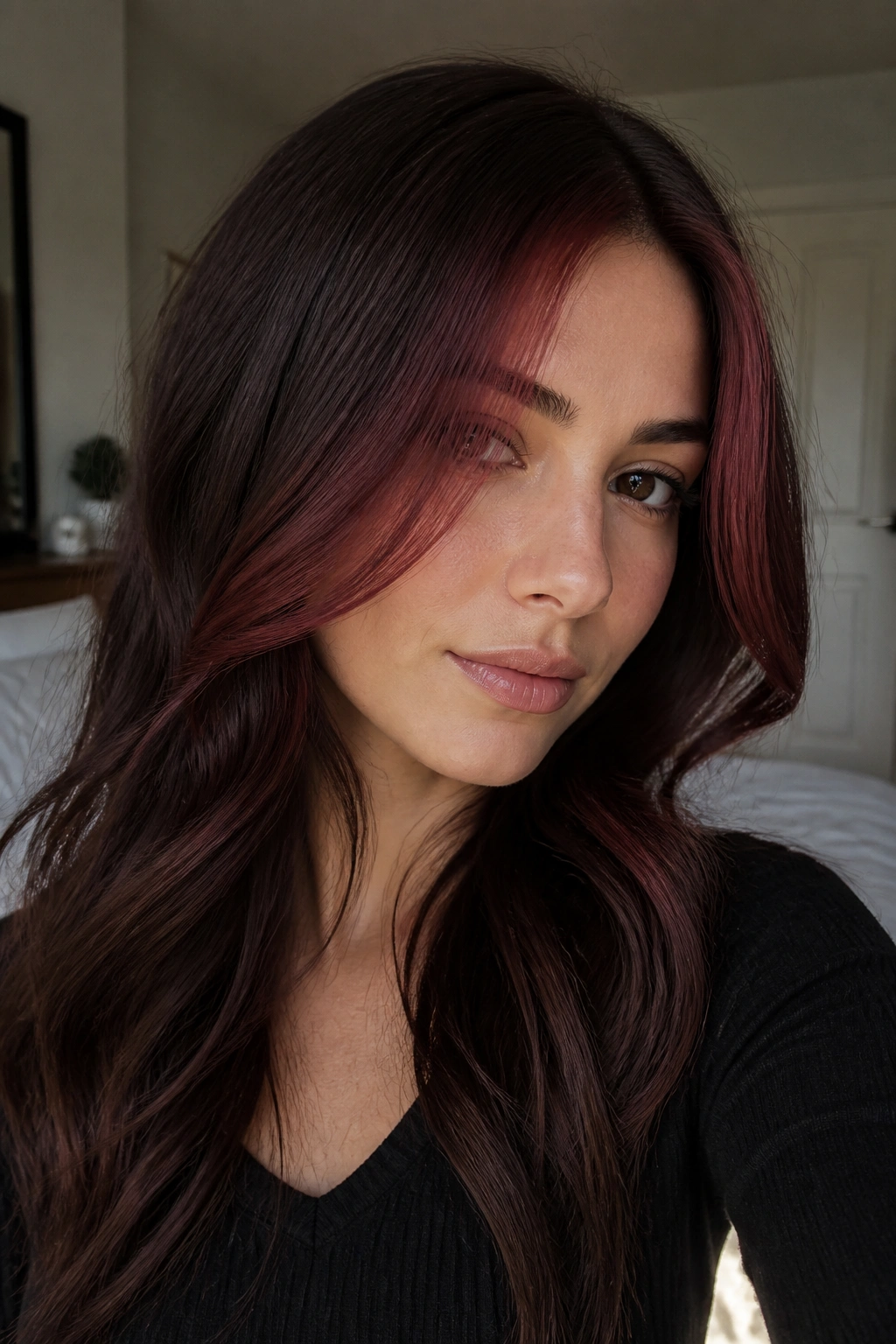
Need brightness near your face but don’t want blonde? Raspberry brown money pieces solve that cleanly. The front sections carry a berry-red note that lights up the face, while the rest of the hair stays in brunette territory.
How to Wear It
Keep the money pieces narrow, especially if your skin is very fair or very pink. Wide front streaks can dominate the face; thin ones just sharpen it.
- Aim for pieces about 1/2 inch to 3/4 inch wide
- Start the color at the hairline and stop around cheekbone level
- Leave the base a deep brown or espresso
Raspberry is a smart choice for cool skin because it gives you color without gold. The berry note works like a filter of sorts — not in a fake way, just enough to brighten the front of the hair and make the eyes stand out.
If you wear your hair up a lot, this shade gets even better. The front pieces still frame the face in a ponytail or bun, which means the color keeps earning its keep.
20. Icy Cherry Brown Shine for the Softest Finish
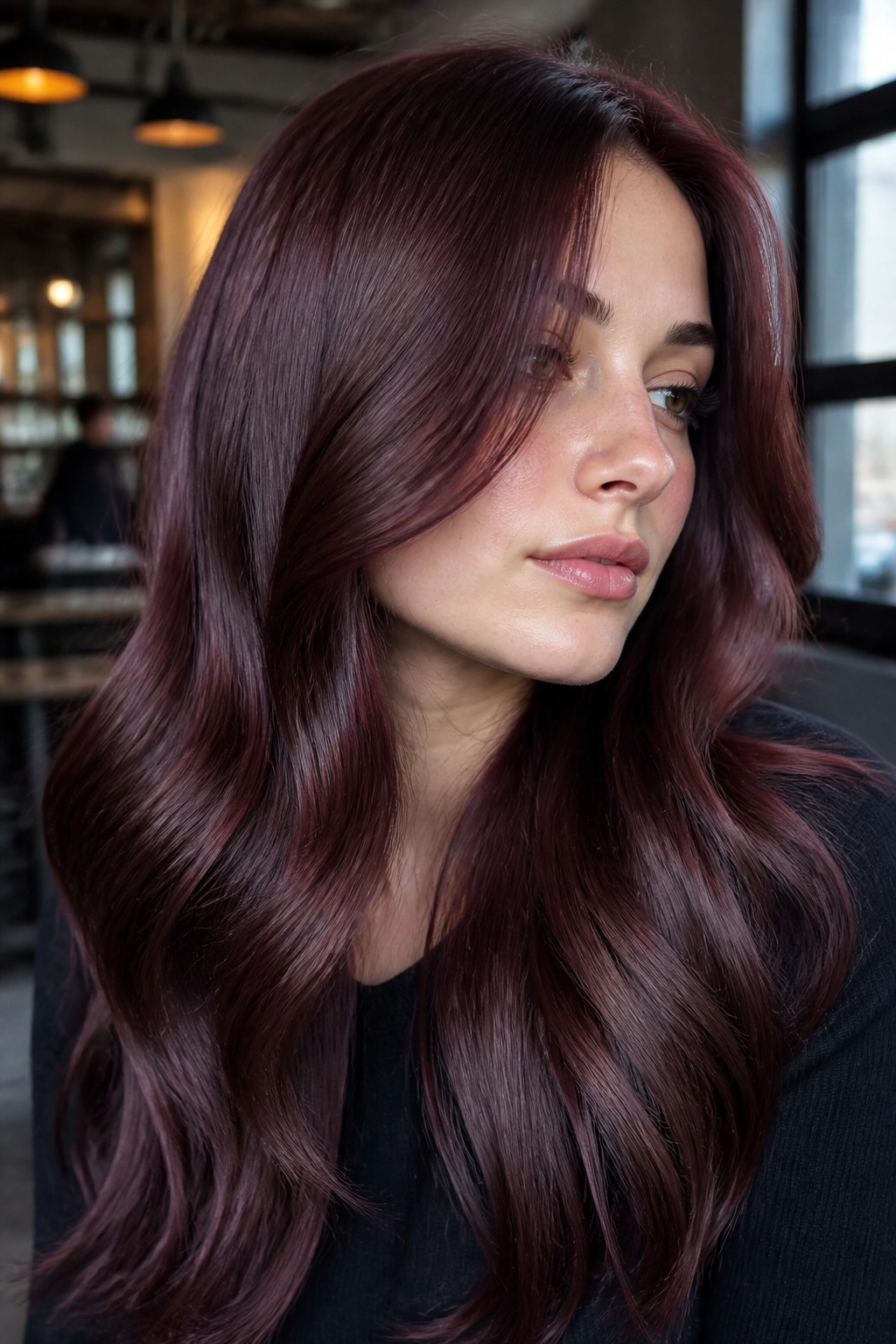
Icy cherry brown is for people who want the coolest possible version of this family. The red stays deep and blue-based, while the finish leans glossy and almost frosted rather than warm or fiery.
This shade can flatter a wide range of cool skin tones because it stays clear. On fair skin, it reads soft and pretty. On deeper cool skin, it looks rich and dimensional. The hair should feel dark first and cherry second; that’s the whole point.
I’d ask for a brown base with a blue-violet cherry gloss if you want to keep things controlled. A permanent red-brown can turn louder than expected, while a gloss lets the shine do most of the talking. If your hair is porous, that choice matters even more.
If you’re nervous, start here. A gloss is easier to live with than a full color change, and it gives you a good sense of how cherry brown sits next to your skin before you commit to anything deeper.
