



Curly hair and flat brown dye do not get along.
When curls bend, they throw tiny shadows. That is what makes one brown shade look rich on one head and dull on another. The strongest brown hair color ideas for curly hair work with those bends, not against them.
That usually means ribbons, lowlights, root melts, glosses, and warm or cool shifts placed where the curl actually moves. A tight coil needs different contrast than a loose wave. A shaggy ringlet cut can take a softer blend than a dense pattern that eats up detail.
Brown is not boring when the placement is right. It can look glossy, smoky, toasted, creamy, or sun-warmed without losing the shape of the curl itself. The trick is picking a shade that still shows up when the light hits from the side.
1. Espresso Brown With Ribbon Highlights
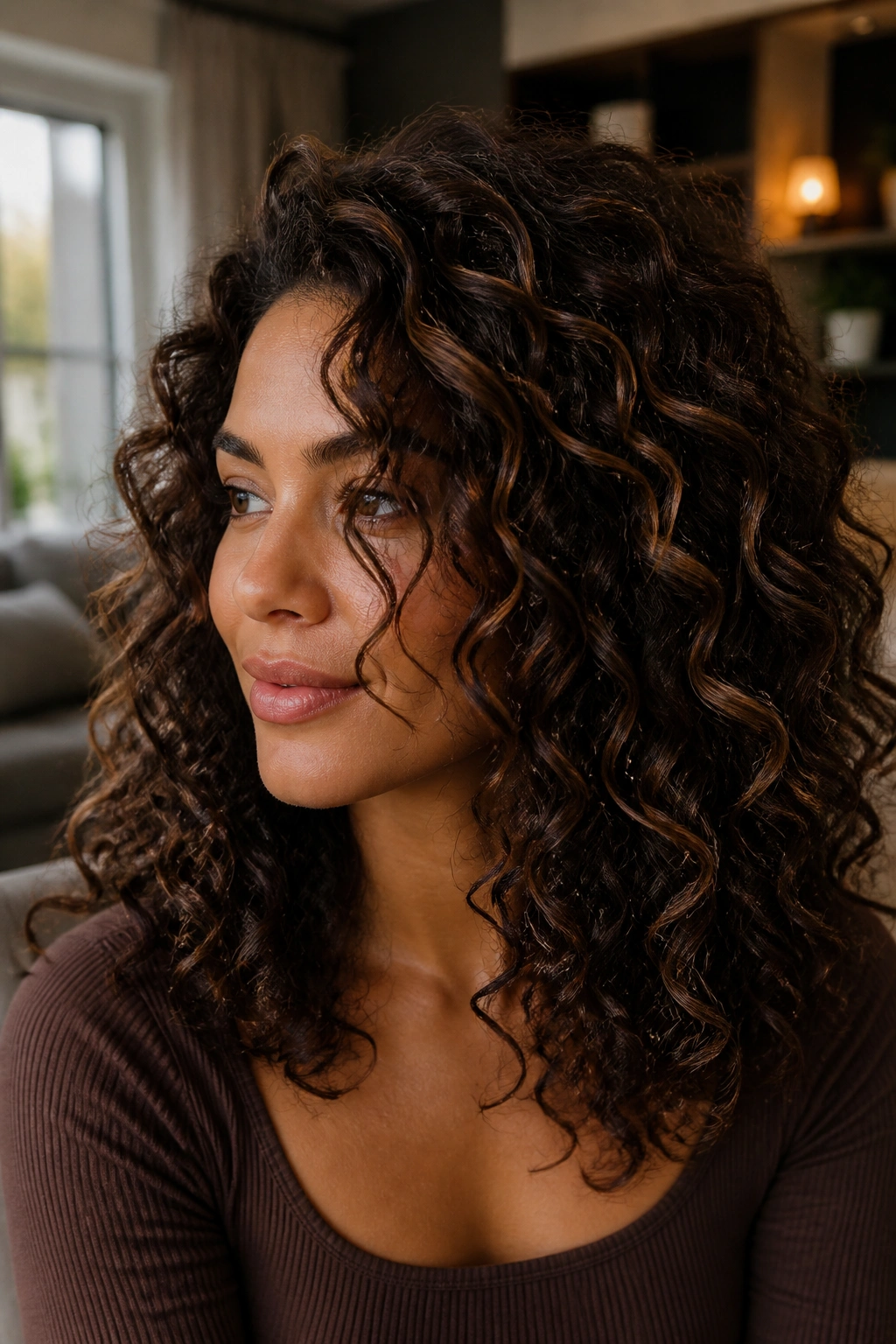
Espresso brown is the shade I reach for when someone wants depth first and brightness second. On curls, that dark base makes every bend look sharper, and a few ribbon highlights keep the whole thing from reading like one solid block.
Why It Works on Curls
The contrast lives on the outside of each curl, so the color shows movement even when the hair is pulled back. Keep the highlights narrow — think 1/4-inch painted ribbons — and place them mostly on the top layers and around the face.
- Best on loose curls, ringlets, and chunky waves
- Ask for 6 to 10 ribbons through the top half
- Leave the underlayer darker for depth
- Gloss the whole look every 6 to 8 weeks
My favorite part: it looks polished without needing a dramatic lightening job.
2. Chocolate Brown With Caramel Face Frames
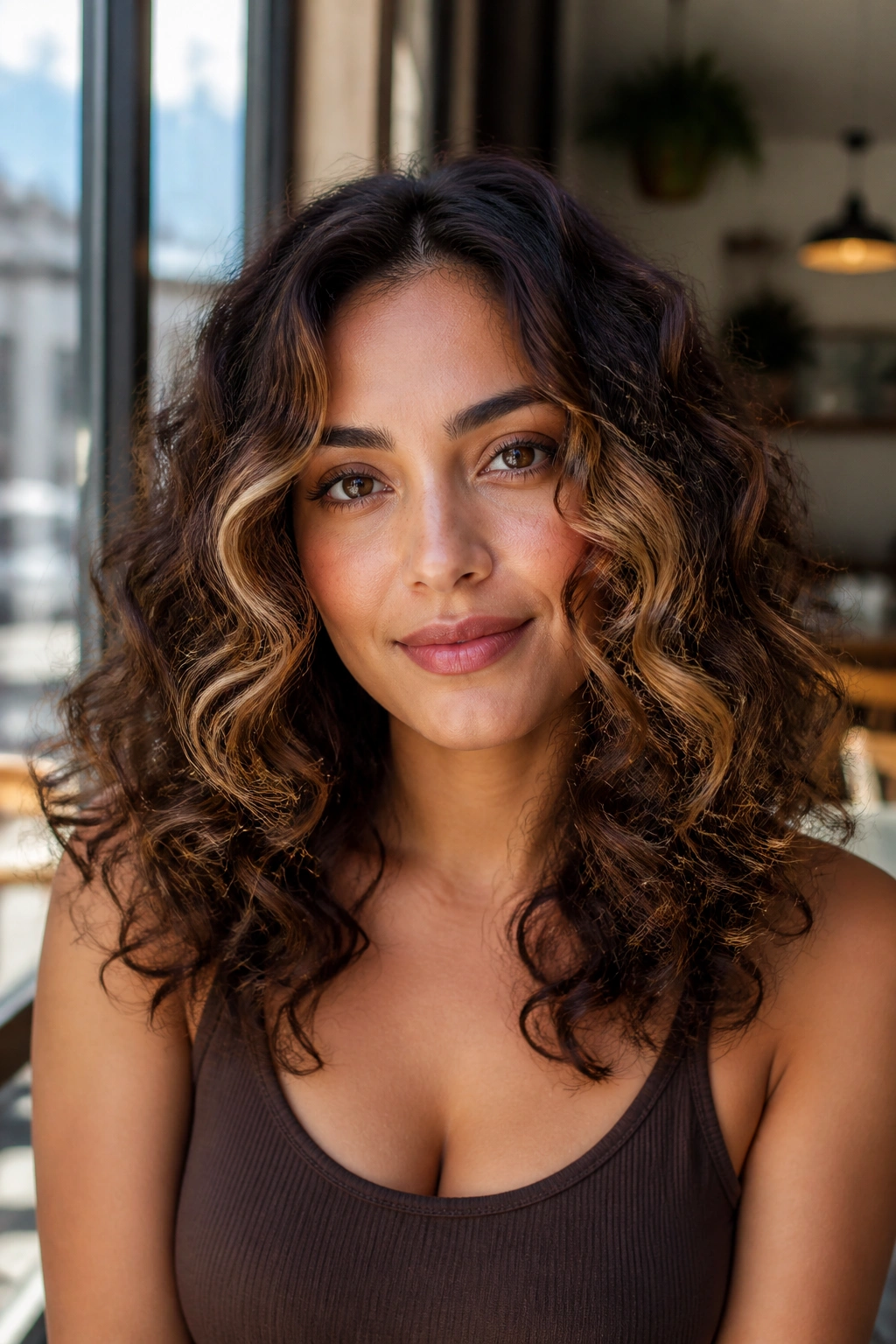
A couple of caramel pieces at the front can change the whole haircut. That is the part people miss. You do not need a full head of highlights to wake up curly brown hair; sometimes two face-framing panels do more work than a whole bunch of scattered streaks.
The caramel should sit about one to two levels lighter than the base, and the trick is placement. Start the lighter pieces at cheekbone level or just below, then let them soften into the front curls. That keeps the look bright near the face while the rest of the hair stays rich and dimensional.
I like this for layered cuts, especially if the curls fall forward. It also plays nicely with glasses, earrings, and strong brows. Clean, simple, effective.
3. Chestnut Brown All-Over Gloss
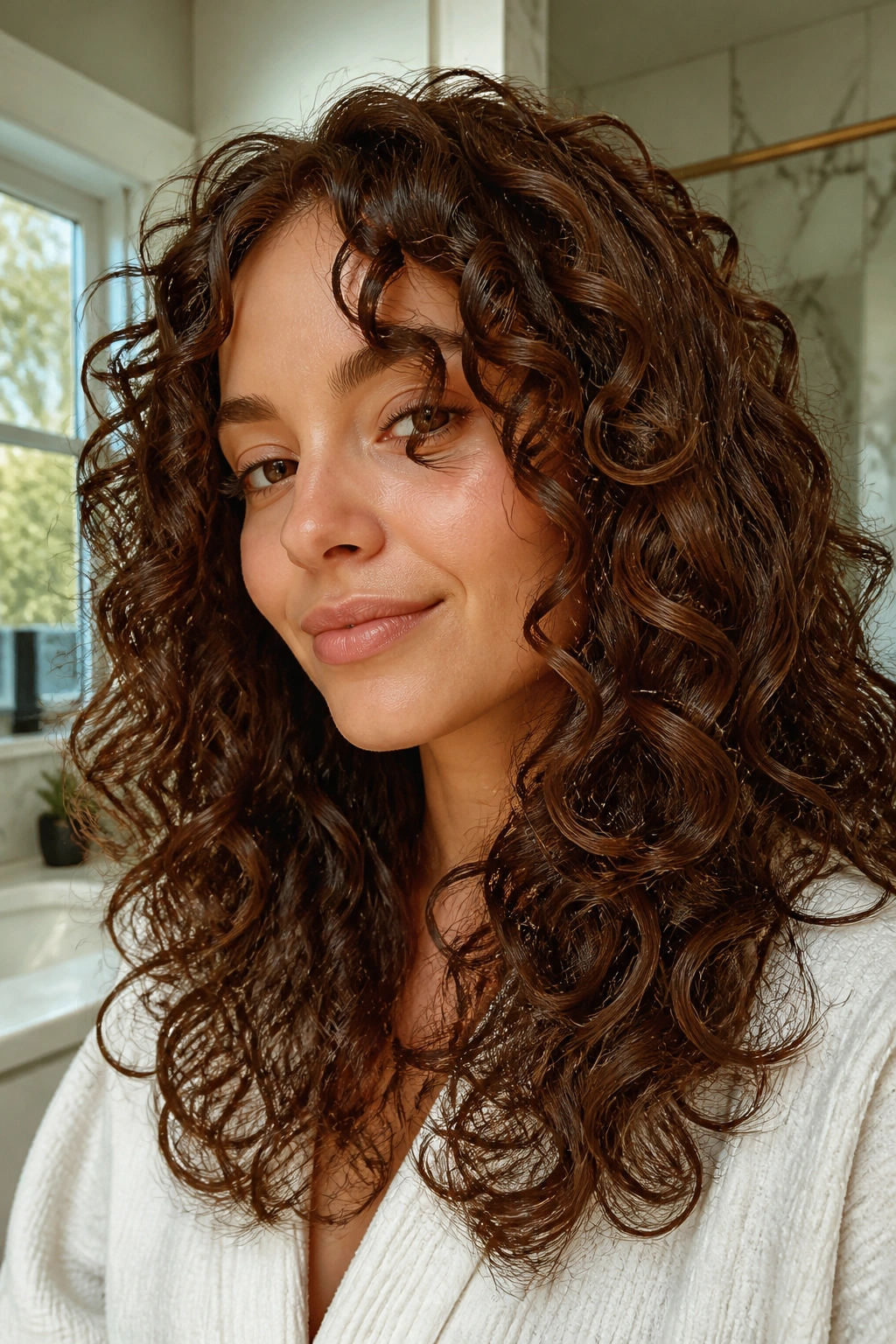
Why does chestnut look so good on curls? Because it sits in that sweet spot between warm and neutral, so it catches light without turning orange or muddy. On textured hair, that balance matters a lot more than people think.
A chestnut gloss works best when the colorist uses a demi-permanent formula over a medium brown base. That adds shine and a soft reddish warmth without lifting the hair too far. If your curls are dry, this is one of the gentlest ways to freshen the tone.
How to Wear It
If your hair is thick, ask for a richer chestnut. If it is finer, keep the tone slightly lighter so the curls do not disappear into a dark mass. Either way, this shade looks especially good on springy, defined ringlets.
4. Mocha Brown Balayage
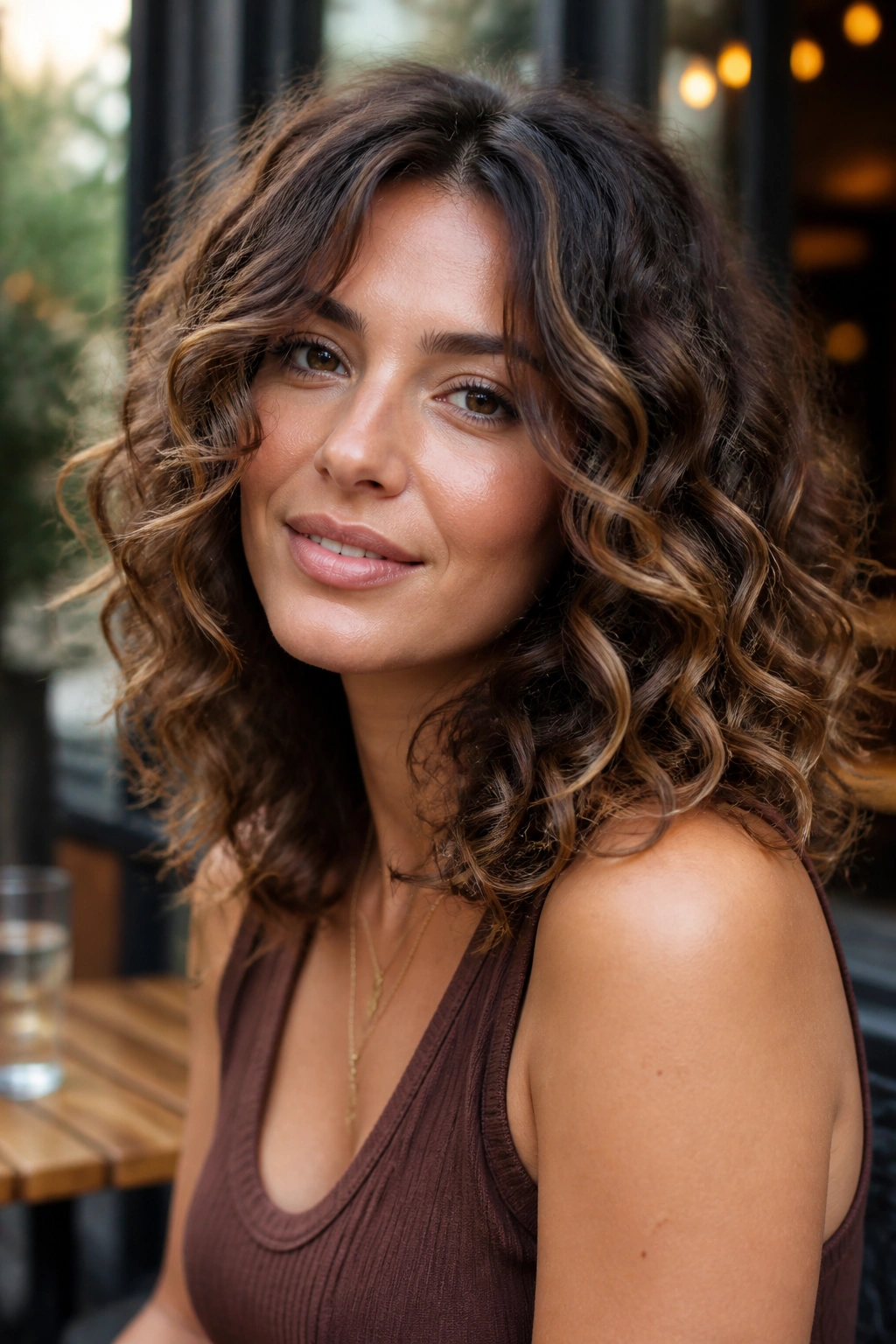
Picture shoulder-length curls that need movement more than they need brightness. Mocha balayage is made for that exact situation. The color stays grounded and cool enough to feel modern, but the hand-painted pieces stop it from flattening out.
The mechanism is simple: lighter mocha pieces sit in the mid-lengths and ends, where curl clumps separate naturally. That means the highlights show up when the hair moves, not only when it is perfectly styled. I prefer this on cuts with layers, because the light and dark sections can travel through the shape instead of sitting on top of it.
- Use 4 to 8 painted sections on the outer curls
- Keep the root area deeper for a soft grow-out
- Choose a mocha tone that is only 1 to 2 levels lighter than the base
- Best for people who like low-maintenance color
Subtle. Not sleepy.
5. Cinnamon Brown With Copper Ribbons
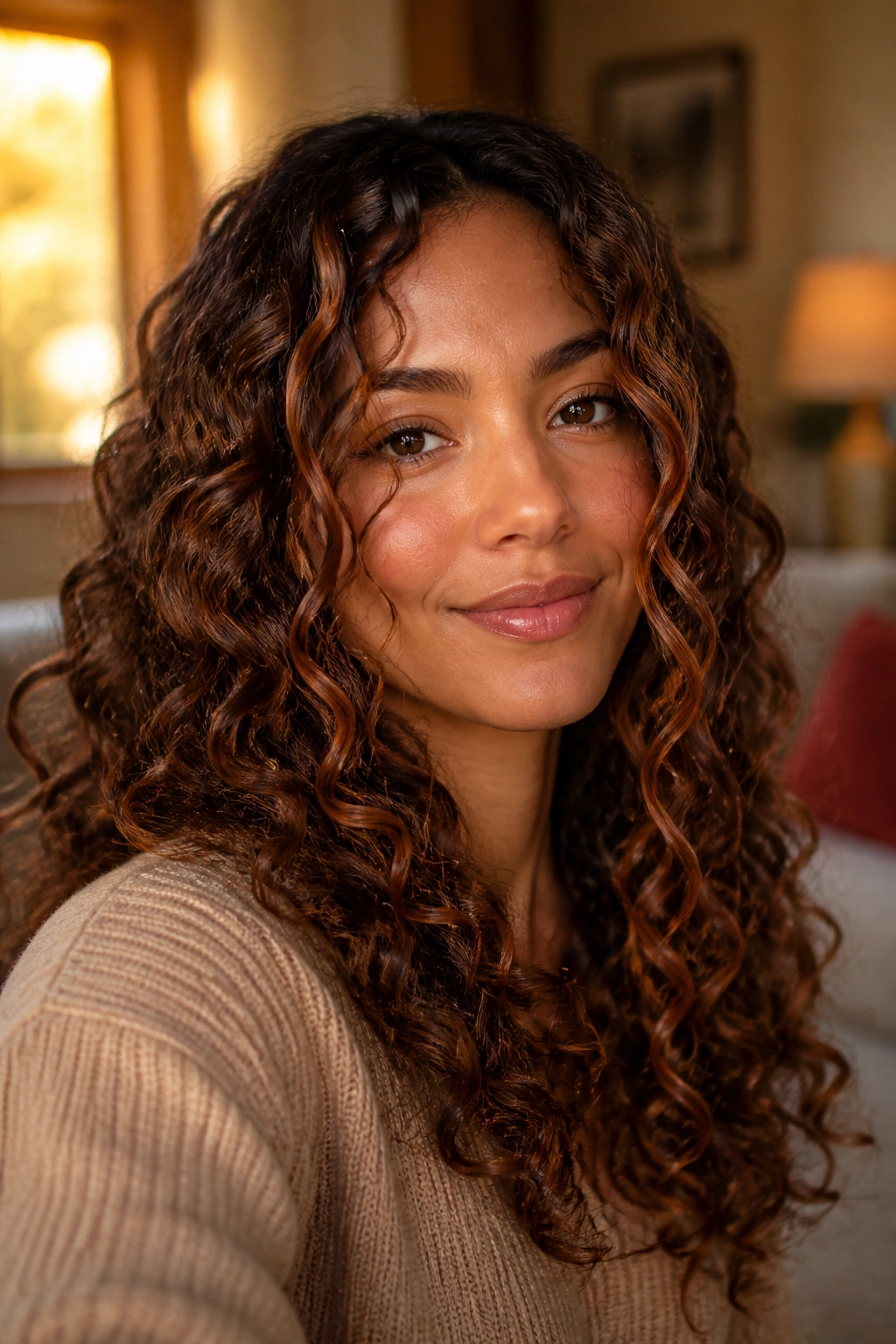
Cinnamon brown has a little heat in it, and curls can wear that warmth better than straight hair sometimes. The bend of the curl keeps the copper from looking loud, so you get movement instead of a flat red cast.
I like this shade when the skin tone already has golden or peach undertones, but it can work on cooler complexions too if the copper is kept thin. Think fine ribbons, not chunky streaks. A warm glaze over the base helps everything blend so the copper feels woven in rather than painted on.
Curls with a lot of spring look especially good here because the lighter ribbons catch the edges of each coil. It has a lively feel without trying too hard. That is the sweet spot.
6. Mushroom Brown With Smoky Lowlights
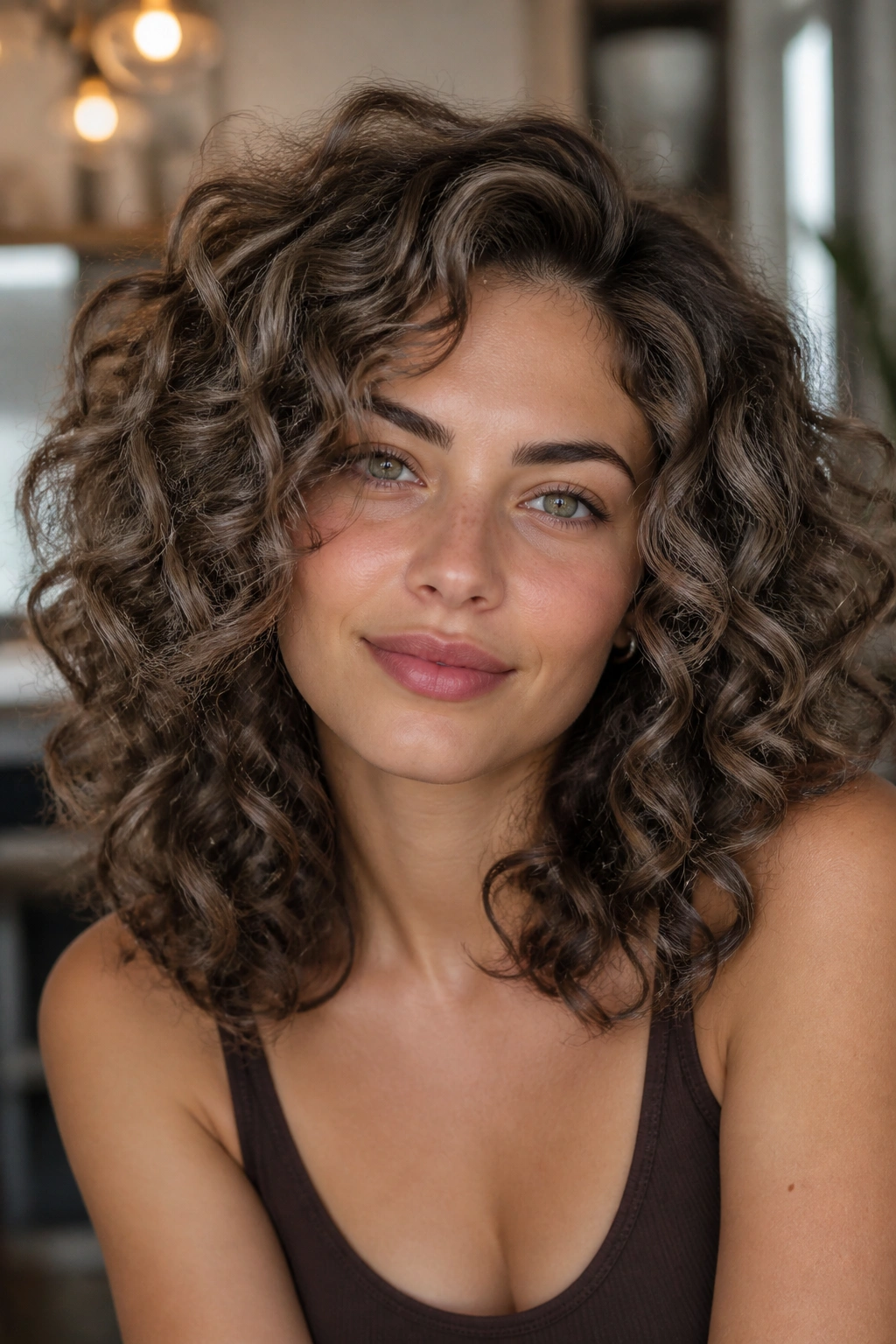
Unlike a warm chocolate brown, mushroom brown reads soft and cool. That coolness can be a lifesaver on curly hair that tends to flash orange after lightening, because the ash tone keeps everything grounded.
This color works best when the base is a neutral brown and the lowlights are placed underneath the curl canopy. That creates shadows, which makes the shape look fuller. If the curls are dense, mushroom brown can stop the style from looking one-note. If the curls are loose, ask for a few smoky strands around the perimeter so the whole color does not sink too far into gray.
Best Fit
- Cool or neutral undertones
- Thick curls that need depth
- People who want a softer, modern finish
A little ash goes a long way here. Too much, and the hair can look flat. Too little, and you lose the point.
7. Hazel Brown With Sunlit Ends
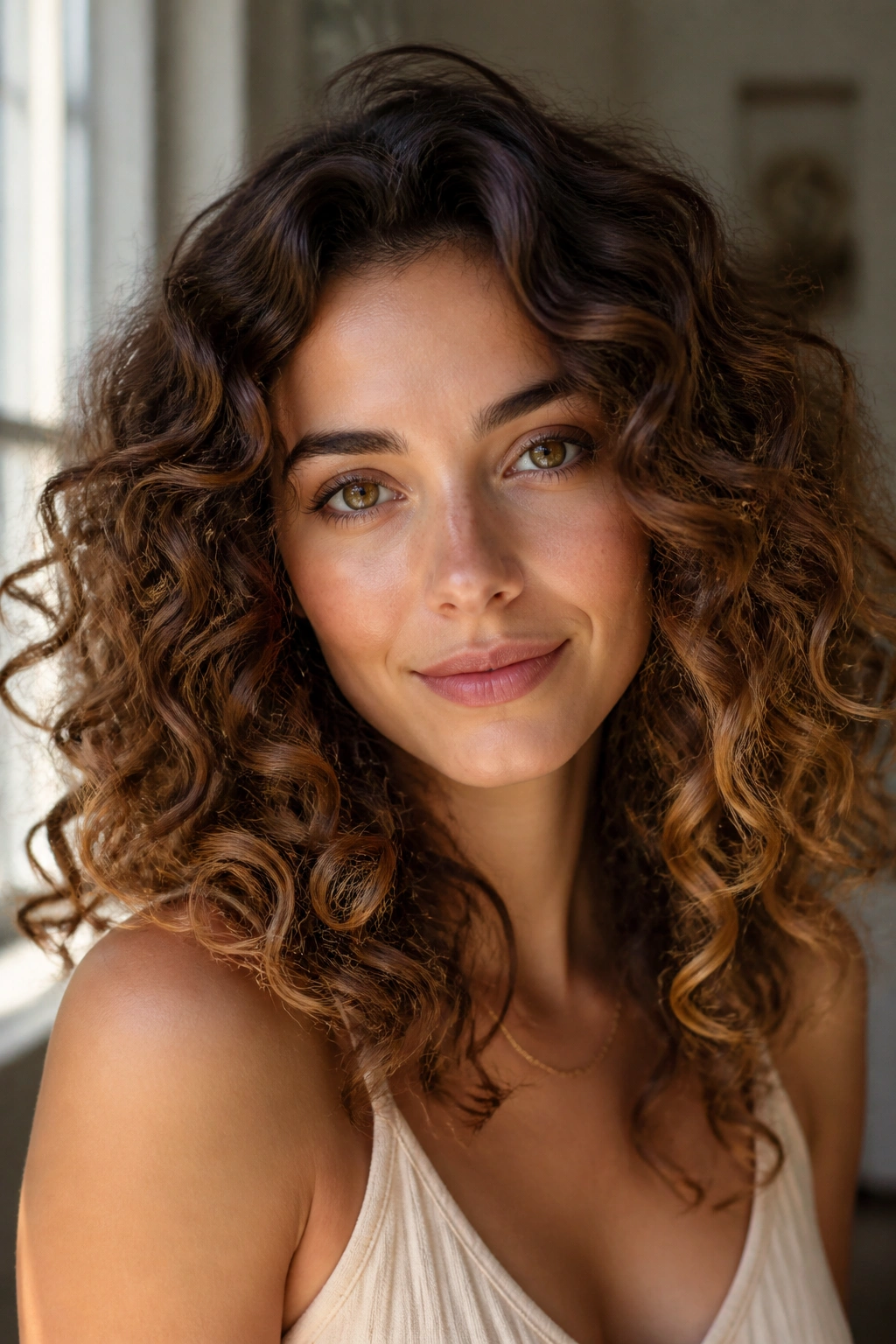
Hazel brown sits right between golden and brown, and that makes it easy on curls. The ends can be nudged a touch lighter so the color moves, but the base still feels grounded.
What Makes It Different
The lighter ends should not be blond. That is the mistake. Keep them only one shade brighter than the mid-lengths, and focus the lightest pieces on the outermost curls where the sun would hit naturally.
- Works well on medium-length spirals
- Looks good with side parts and curly fringe
- Adds brightness without a heavy highlight line
- Grows out softly if the ends are only slightly lighter
Pro tip: ask for a soft gloss on the final 10 minutes of processing so the hazel tone stays smooth, not brassy.
8. Dark Roast Brown Root Melt
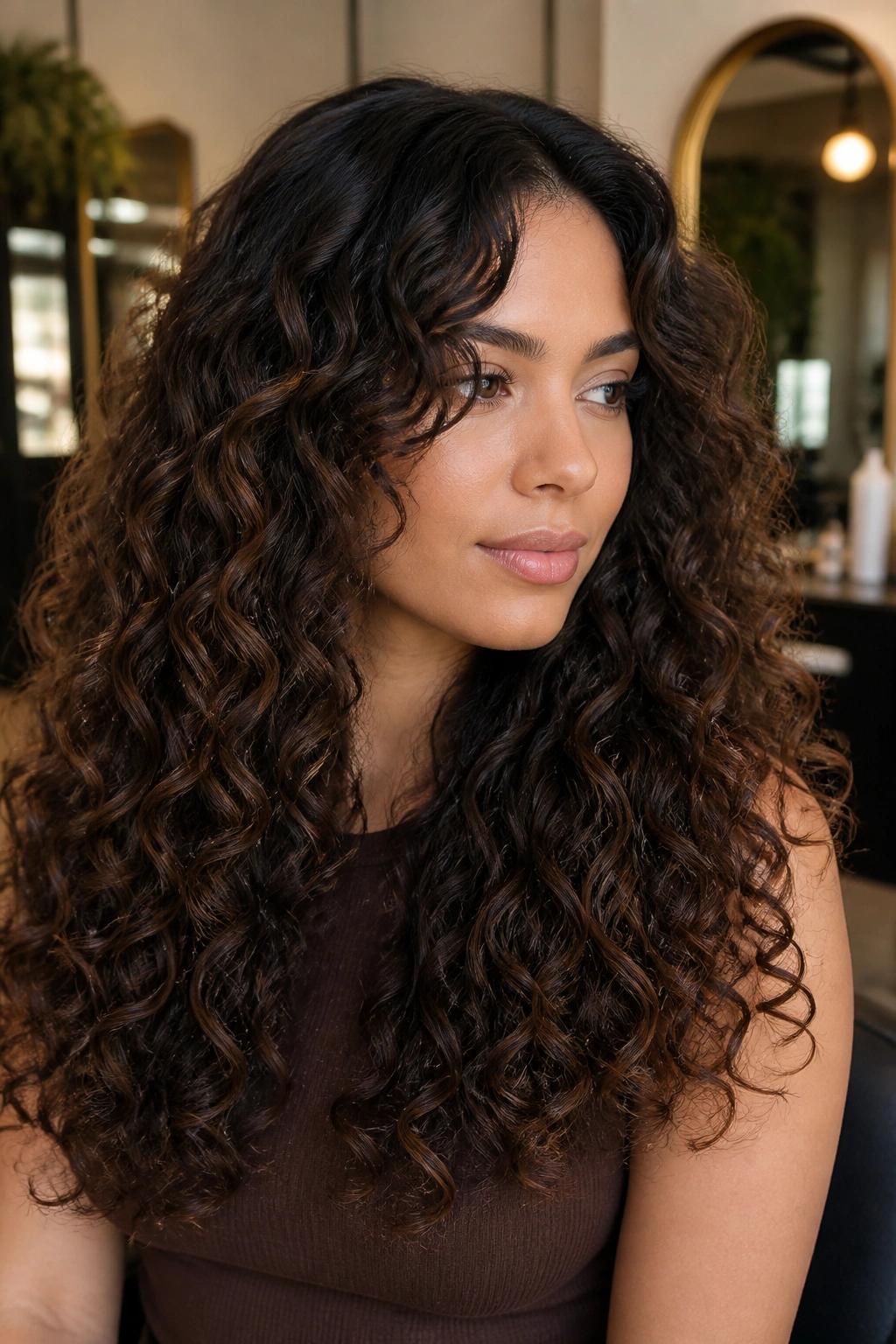
A root melt is one of the easiest ways to make curly color look expensive without spending a fortune on upkeep. The darker root melts into a slightly lighter brown through the mid-lengths, and the curl pattern does the rest.
This is especially good if your natural root is already a dark brown. Instead of fighting it, let it stay. Then melt into a warm espresso or cocoa through the body of the hair. The grow-out looks intentional, and the color does not scream for a salon visit every few weeks.
I’d use this on longer curls that need depth at the crown and movement near the ends. It keeps the top from looking too bright and the lengths from disappearing. Very practical. Very pretty.
9. Toffee Brown Curly Bob
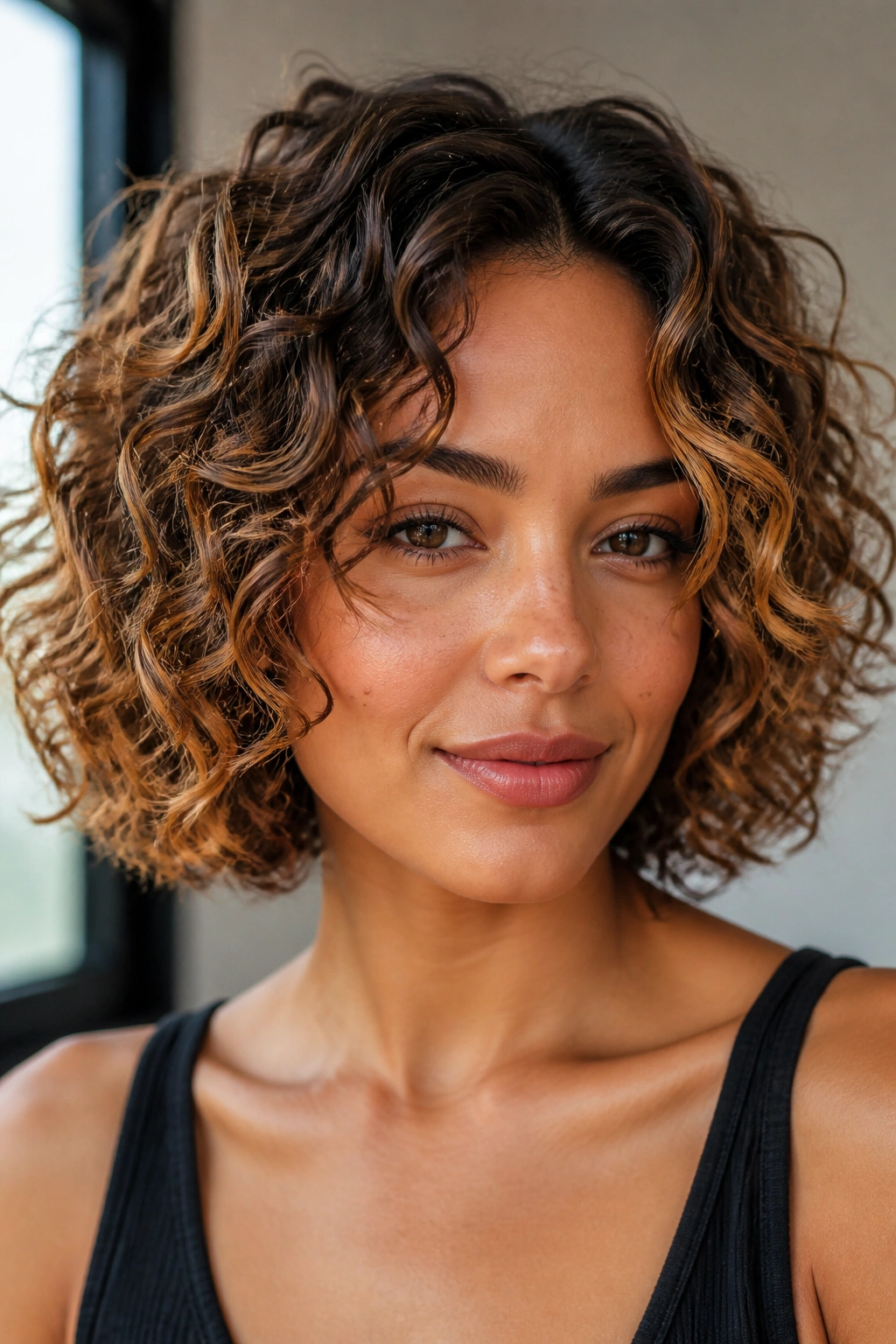
A curly bob can turn shapeless fast if the color is too flat. Toffee brown fixes that by giving the cut a little sweetness and brightness around the edges.
The trick is to keep the lighter pieces concentrated around the front and lower perimeter, where the bob swings. You want the curls to look plush, not streaky. Ask for a soft toffee glaze over a medium brown base, then a few lighter pieces placed where the curls separate naturally. That is enough.
How to Ask for It
Tell the colorist you want dimension, not contrast. That phrase matters.
A toffee bob works best when the curls have bounce and the cut lands around the jaw or collarbone. Shorter shapes show color fast, so keep the brightness controlled. Otherwise the style can start looking busy.
10. Walnut Brown With Fine Babylights
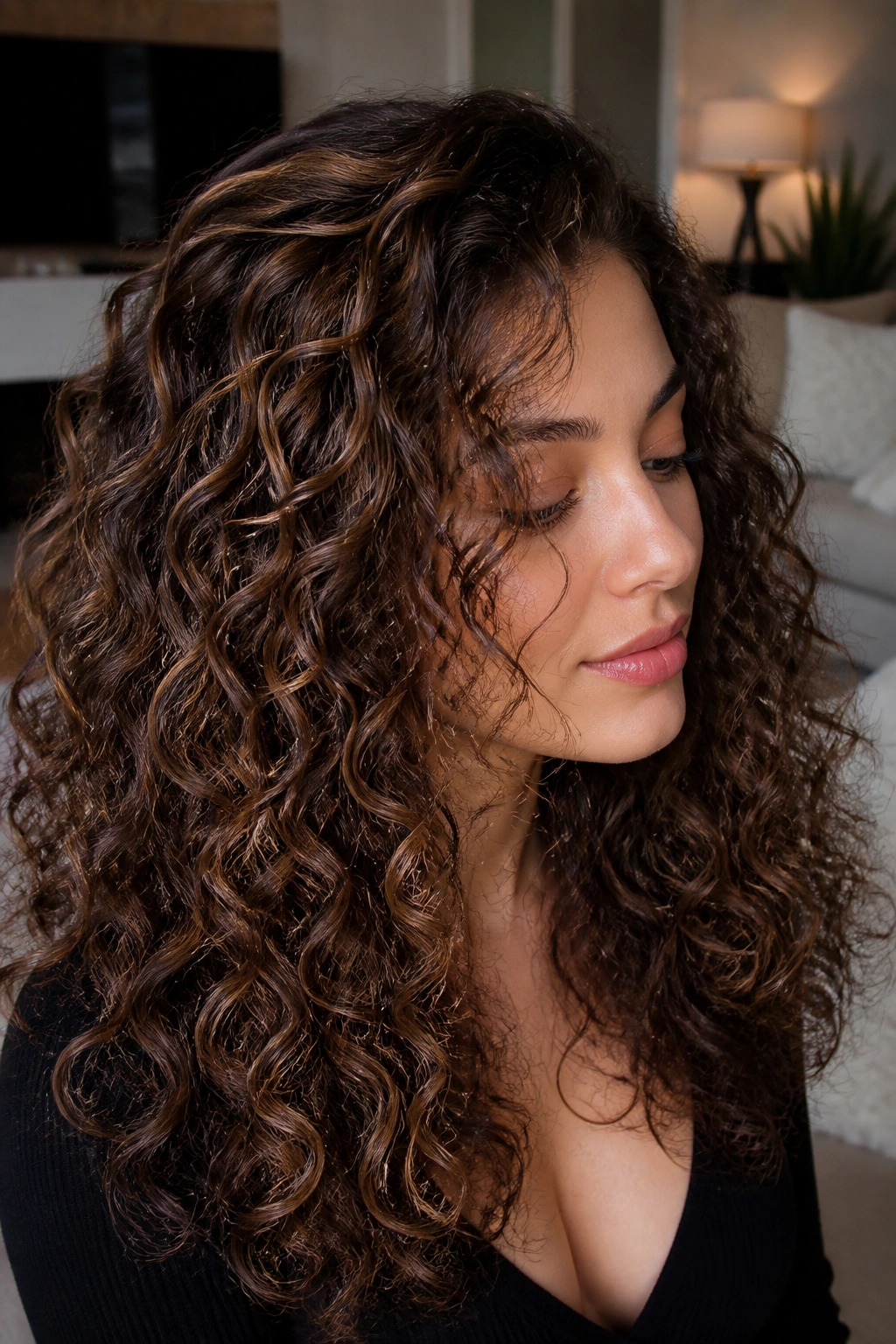
Walnut brown is one of those shades that looks richer the closer you stand. It has depth, but it is not as dark as espresso, which means delicate babylights can sit inside it without shouting.
Think tiny weaves around the hairline, part line, and upper layers. Nothing chunky. Babylights on curls work best when they are thin enough to follow the curl group instead of fighting it. That detail matters because thicker highlights can break apart too hard once the hair dries.
This is the pick for someone who wants a soft, expensive-looking finish and does not want obvious streaks. It is subtle in the best way. The curls still read as curls, not a color chart.
11. Milk Chocolate Brown Soft Ombre
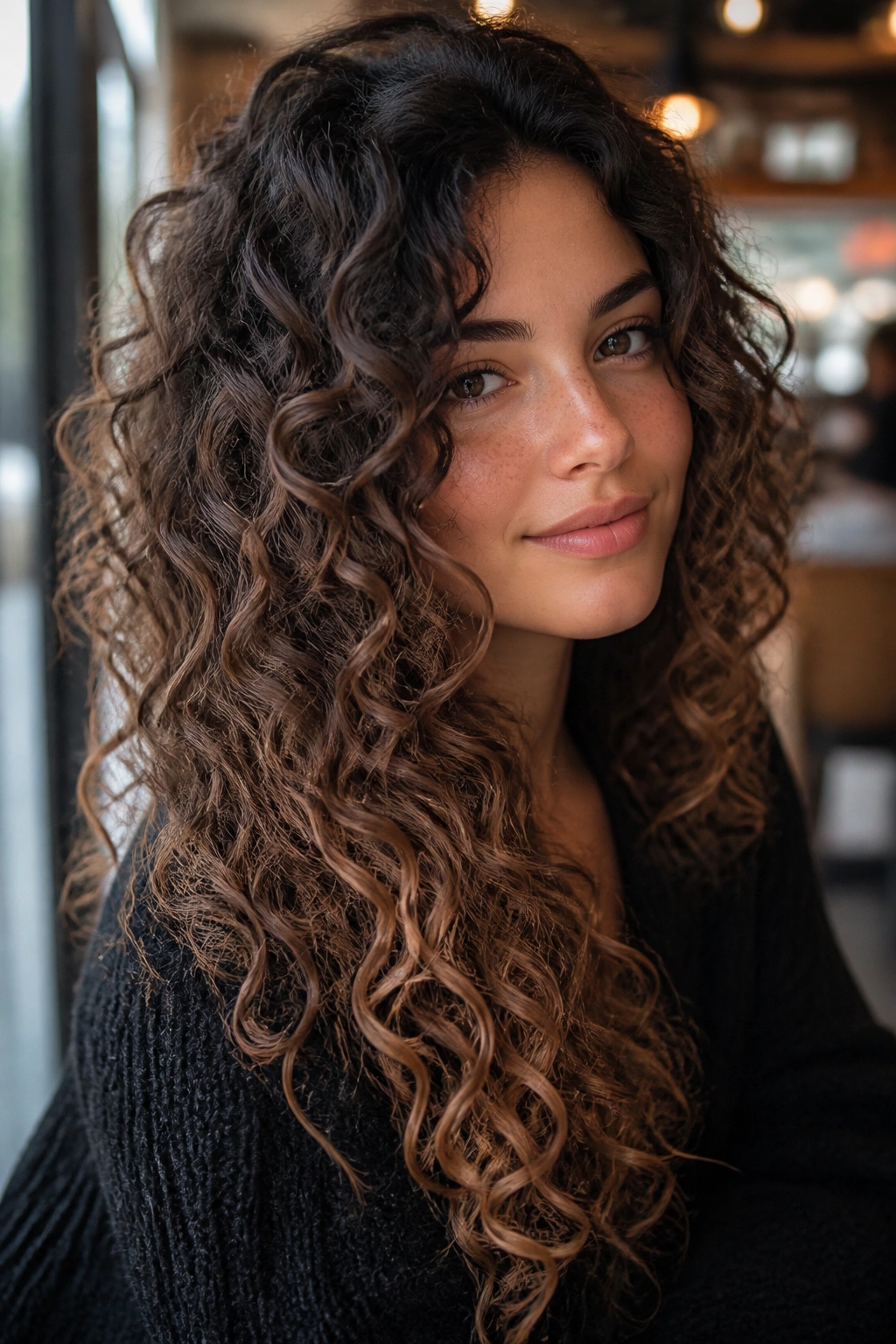
Milk chocolate brown is the gentlest version of ombre for curls, and that is why I like it. The shift from dark root to softer ends feels natural when the curl pattern is already doing a lot of visual work.
The color should blur gradually, not jump. A good ombre on curly hair changes tone over several inches, so the midpoint still looks lived-in. On tighter curl patterns, keep the fade a little higher because the shrinkage will hide some of the transition. On looser waves, the fade can start lower.
Milk chocolate works beautifully if you want depth with a little lightness around the ends. It is relaxed, easy to wear, and less fussy than a sharp highlight set. Quiet color, in the best sense.
12. Amber Brown With Golden Threads
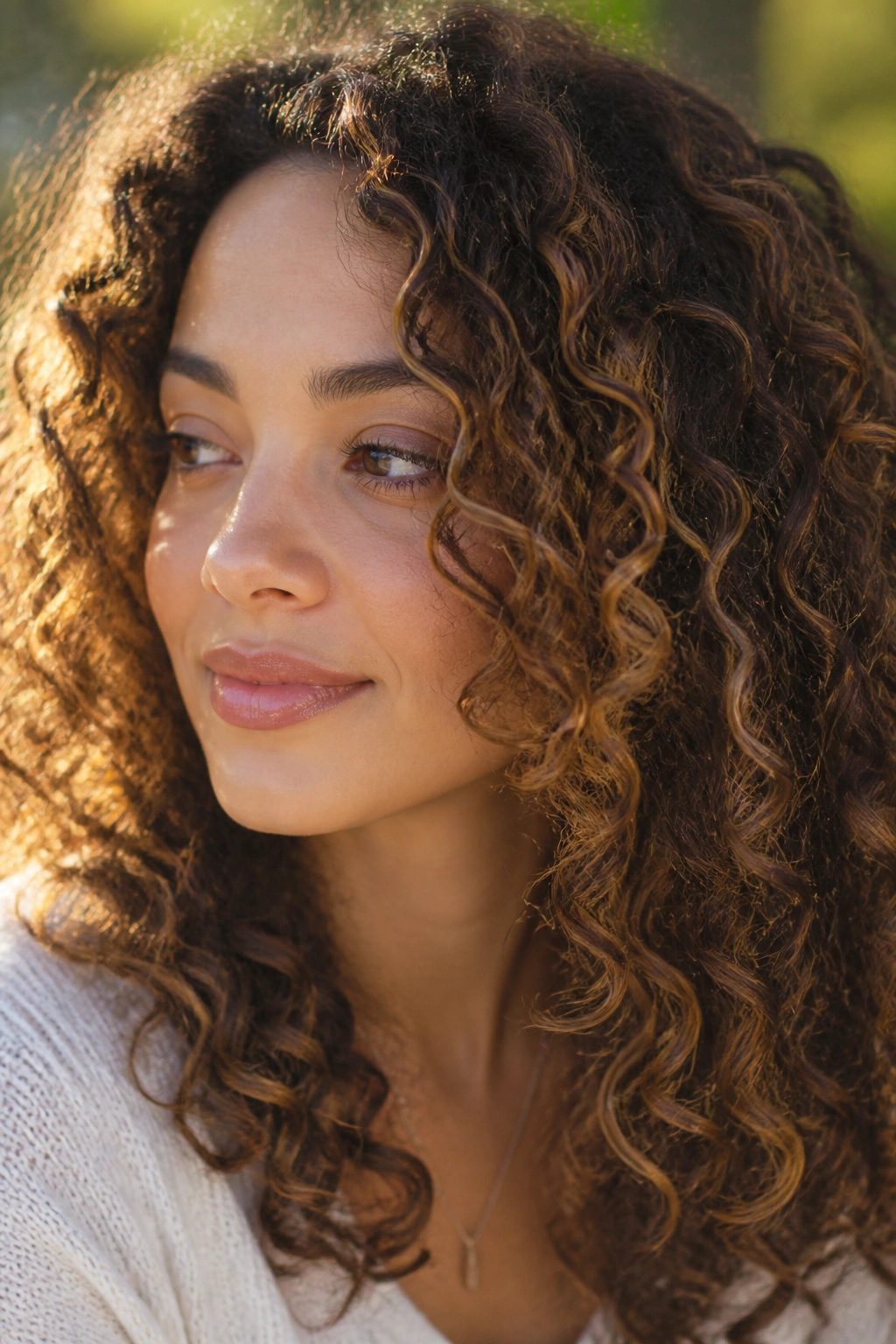
Amber brown brings warmth back into curls that have gone too dark or too ash-heavy. The golden threads should be thin and placed on the outside of the curl clumps so the shine catches the light without turning the whole head yellow.
This shade is especially kind to medium and deep skin tones, but the real win is texture. Curls can hide warm strands in a way that straight hair often cannot, so the color feels woven in. If you have a layered cut, place the brightest threads through the upper layers and around the part.
Best for people who want a warm, glowy look without crossing into copper. It feels sunny. Not sugary.
13. Cocoa Brown With Beige Panels
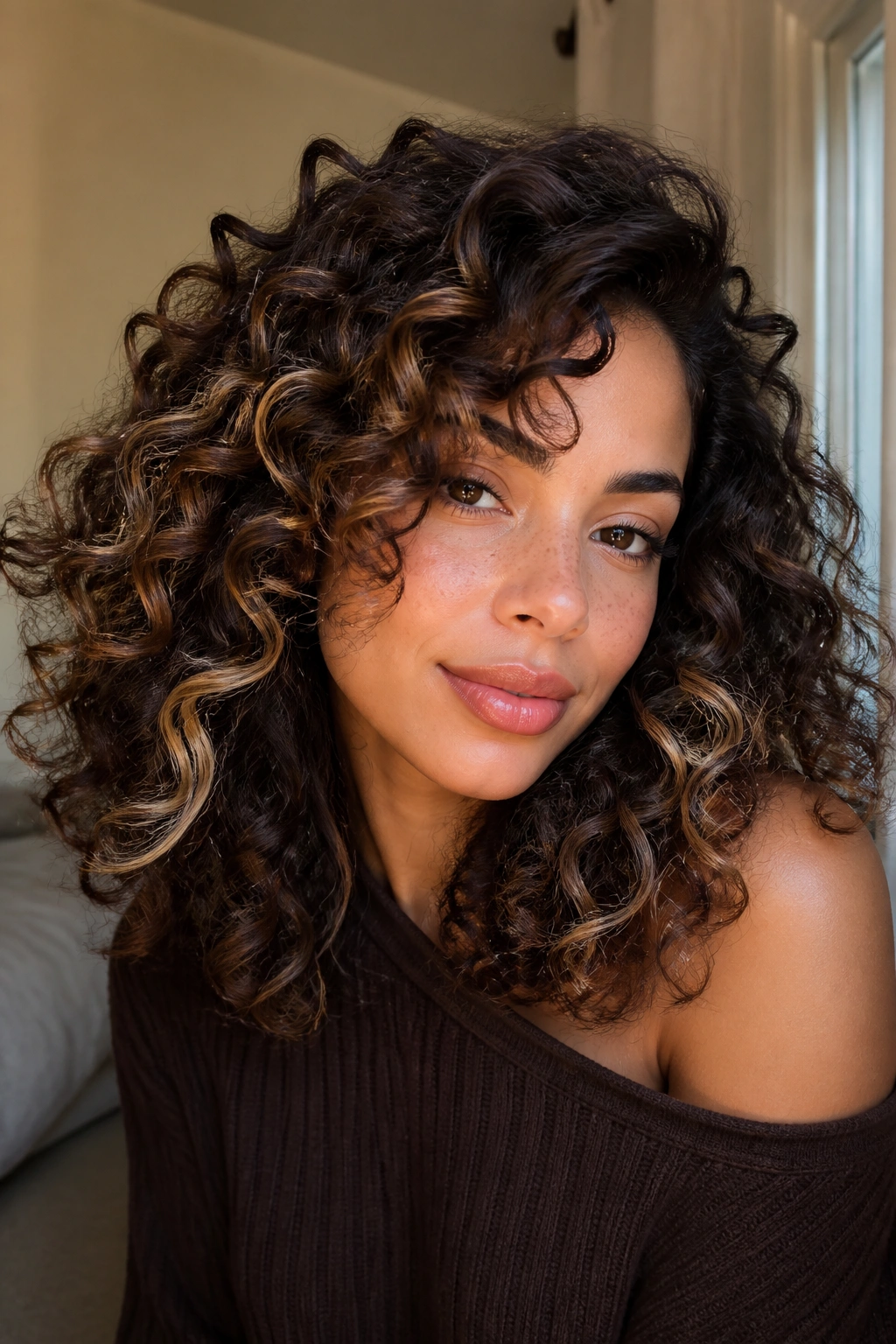
Cocoa brown can go flat if every curl is the same depth. Beige panels fix that by breaking the surface up just enough to show the shape of the hair cut.
Placement Matters Here
Keep the beige sections tucked into the middle and top layers, not all over the ends. That way the color appears and disappears as the curls move. You want the eye to travel through the hair, not land on one obvious stripe.
- Best on medium-density curls
- Ask for panel placement, not scattered streaks
- Choose a beige that stays warm-neutral, not icy
- Great for layered shags and rounded shapes
I like this look on people who want a softer, editorial feel without full-on blonding. It has personality, but it does not fight the haircut.
14. Bronzed Brown With Warm Money Pieces
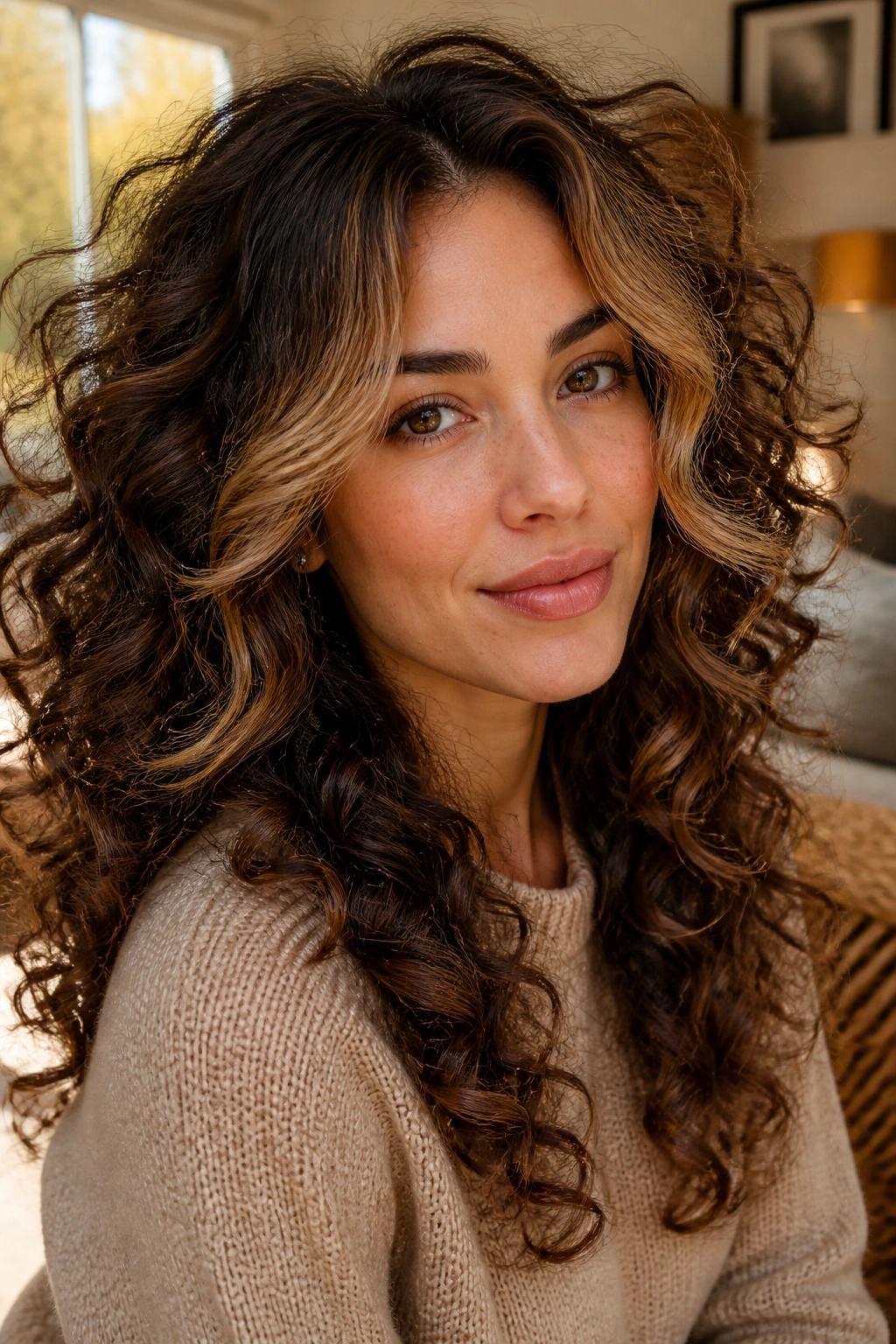
Bronzed brown with money pieces is the boldest shade on this list, and it works because the front brightness is controlled. You are not lifting the whole head. You are framing it.
The money pieces should be placed at the front curve of the face, then feathered into bronzy brown through the rest of the hair. Two bright sections are usually enough. Any more, and curly texture can start to look busy at the hairline. The rest of the brown should stay warm and deep so the front pieces have something to contrast with.
This is a strong pick for anyone who wears their hair down a lot. It pulls light to the face and makes the curl pattern pop in photos and in person. Loud? No. Noticeable? Absolutely.
15. Maple Brown With Soft Dimension
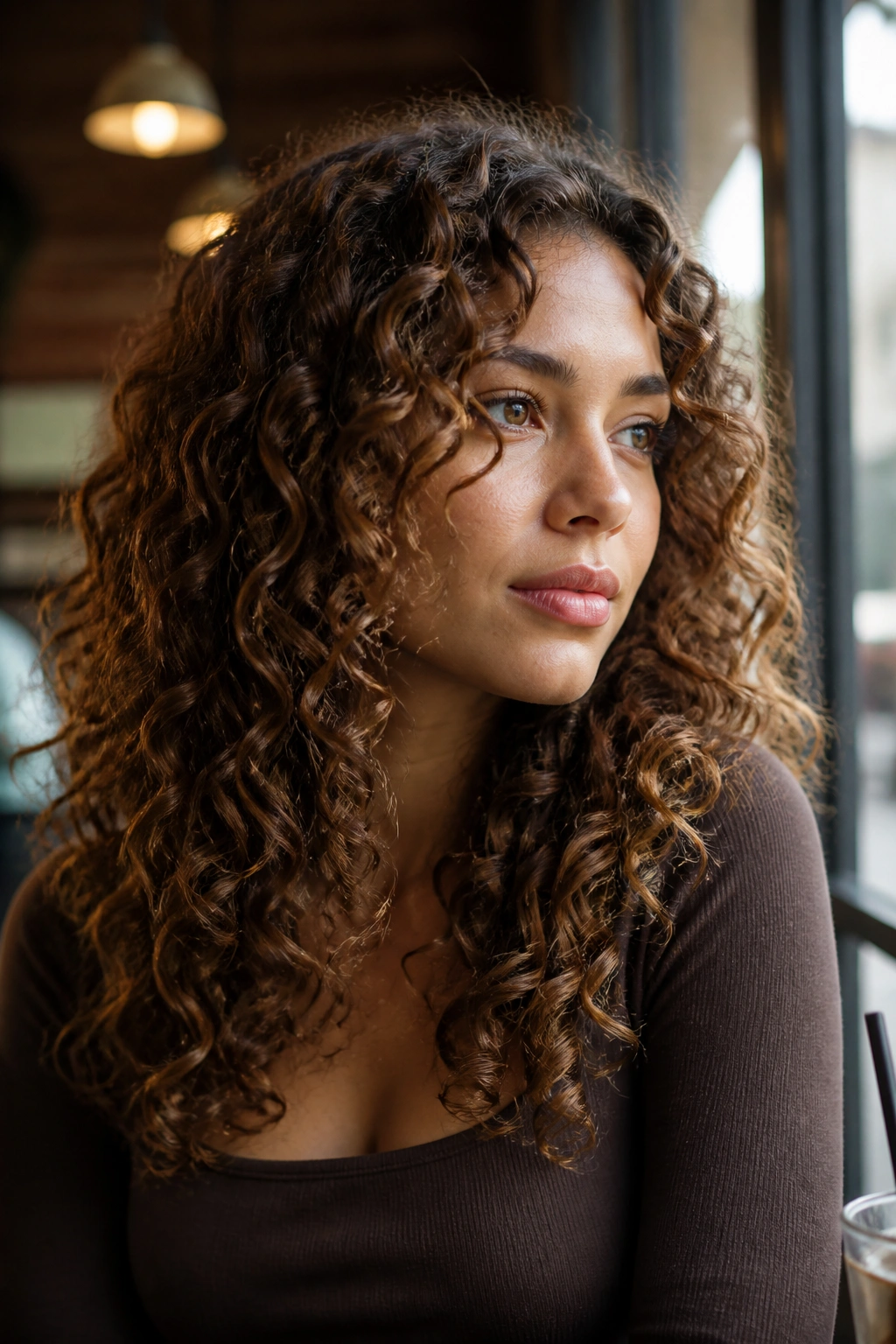
Why do some brown colors on curls feel soft and some feel dusty? Usually it comes down to undertone. Maple brown keeps enough warmth to feel alive, but not so much warmth that it turns orange in bright light.
The dimension here is gentle. Use a base that is close to medium brown, then layer in slightly lighter pieces through the mid-lengths. The tone shift should be small enough that you notice it when the hair moves, not when it sits still. That is the point.
How to Wear It
This shade suits curl patterns that already have a lot of definition. It gives them a little extra shine and a rounder look. If your hair tends to frizz, the warm dimension can make the surface look fuller without needing a heavy highlight pattern.
16. Truffle Brown With Shadow Roots
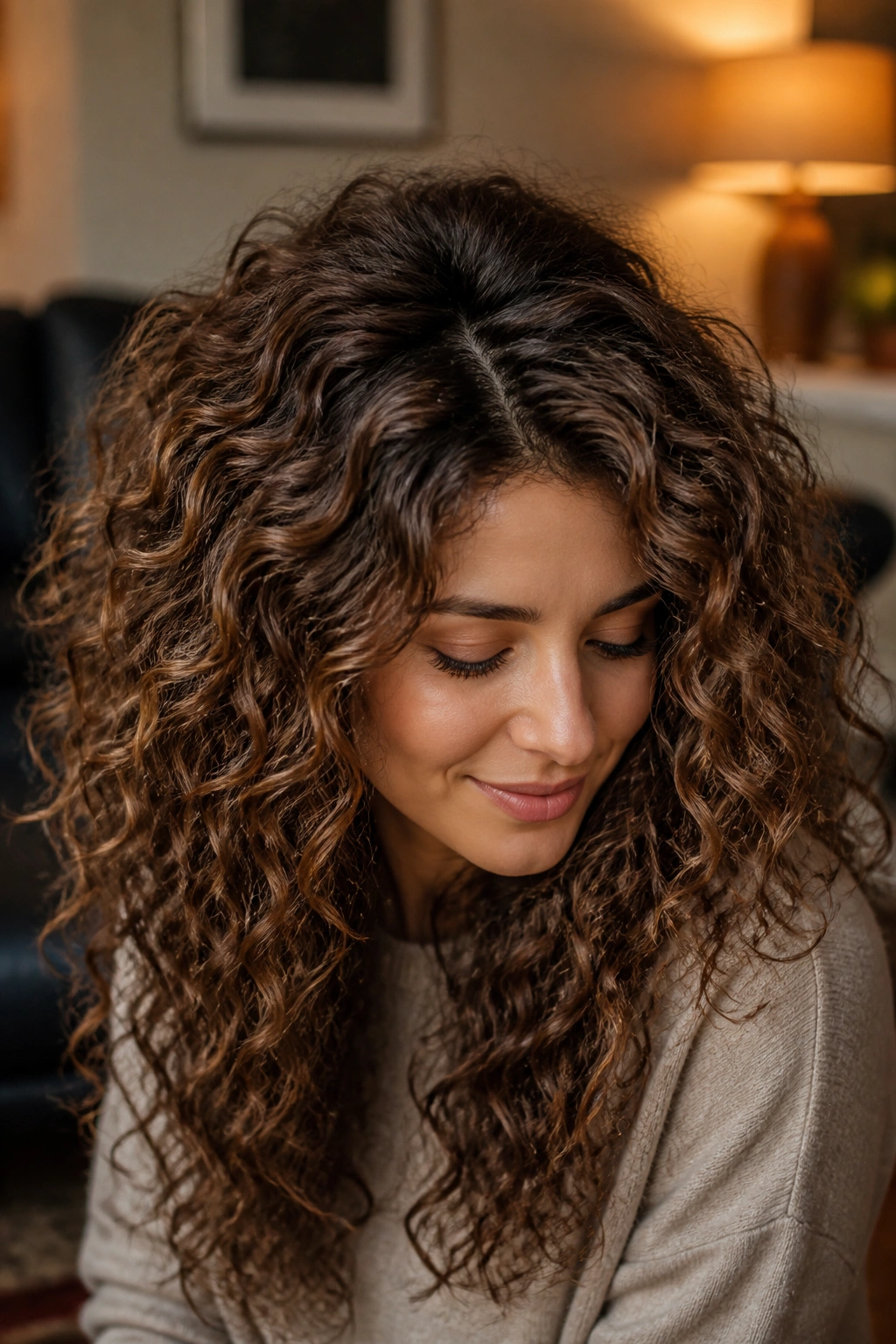
A shadow root gives truffle brown its best quality: depth at the top and softness through the rest. That darker crown makes curls look denser, especially on finer textures.
I’d use this on someone who wants polish but hates obvious regrowth lines. The shadow root is kept close to the natural base, then the truffle tone appears through the lengths. On curly hair, that low contrast keeps the whole shape from looking chopped up. It also means you can stretch salon visits farther without the color looking neglected.
The shade itself leans cool-leaning brown, almost like a soft cocoa truffle dusted with ash. Not bleak. Just restrained. And restraint can look expensive when the curl pattern is doing the decorating.
17. Honeyed Brown Curly Layers
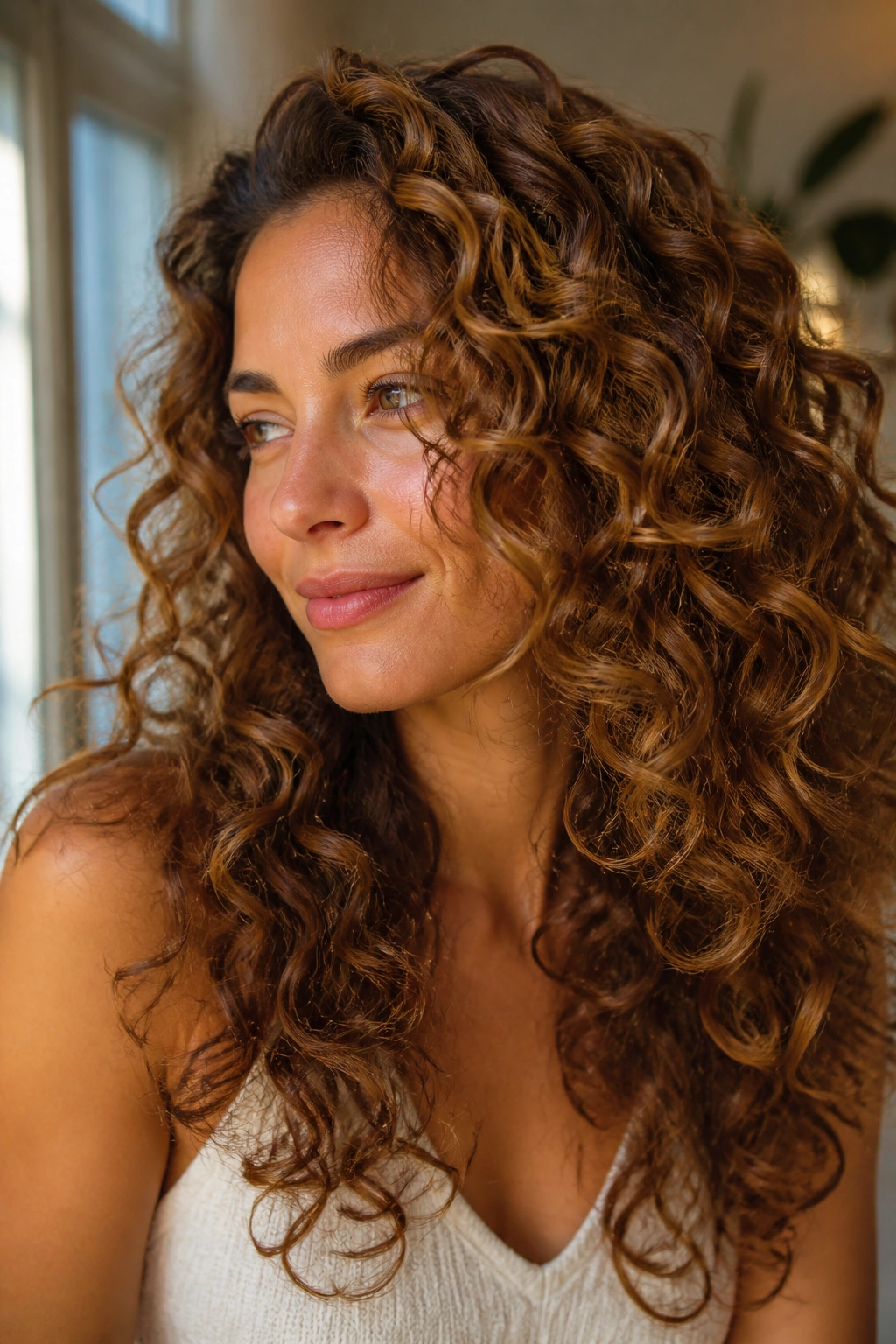
Honeyed brown is warmer than maple and lighter than chestnut, which makes it easy to place on layered curls without losing depth. The layers catch the warm pieces at different points, so the haircut does half the work for you.
I like this on long curls that need movement around the face and shoulders. A honey glaze over the top layer can brighten the whole head, while the deeper underlayer keeps it from looking washed out. If the hair is thick, add a few lighter ends around the outermost curls. That keeps the shape from feeling heavy.
It is an easy shade to live with. Warm, soft, and flattering in plain daylight, which is where bad color usually gets exposed.
18. Auburn-Brown Curly Blend
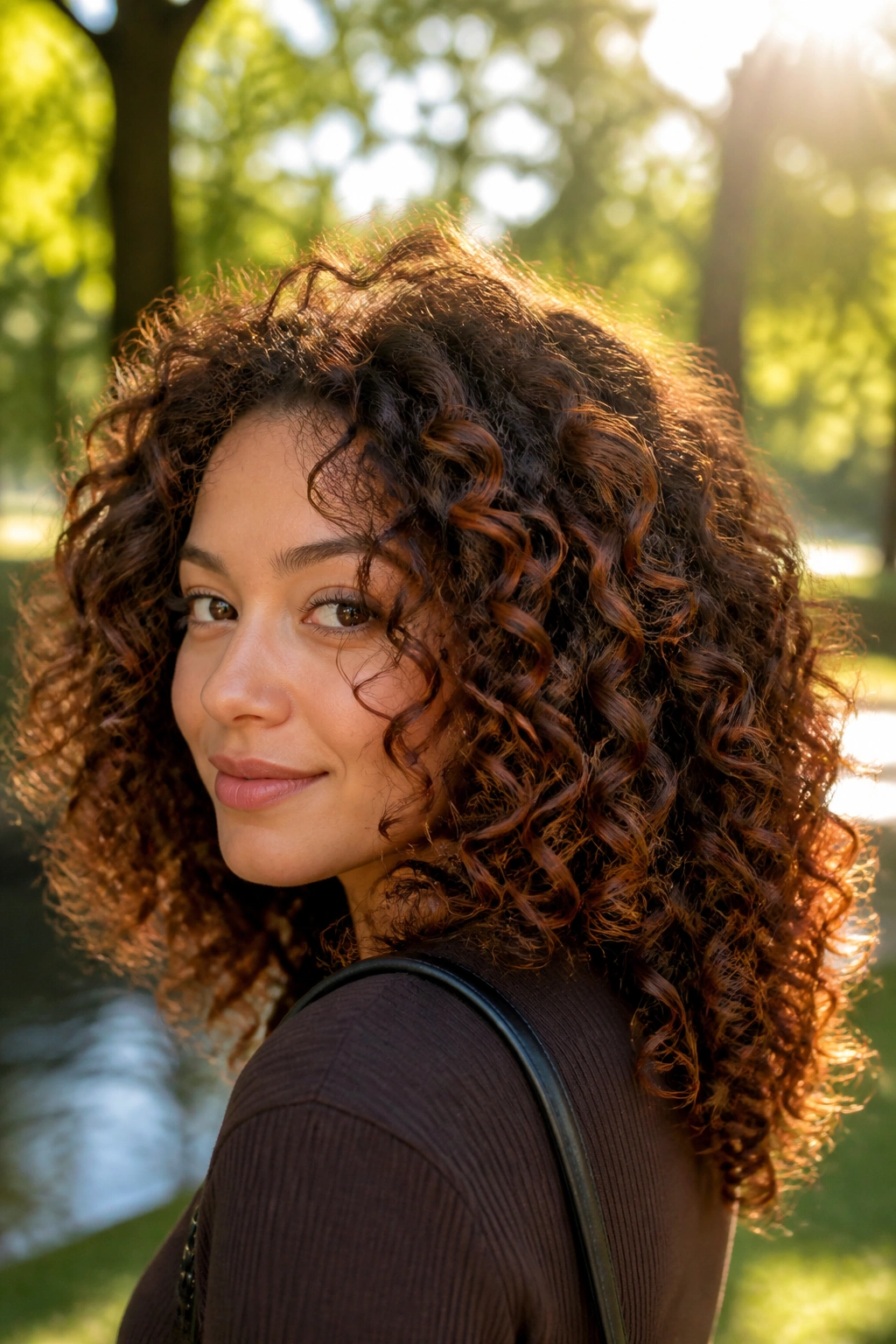
Auburn-brown is for people who want a little fire without going red all the way. On curls, the blend reads richer than red and more lively than plain brown.
The key is balance. Keep the base brown, then weave in auburn only where the curls naturally open up. That usually means the surface and the face-framing pieces. Too much auburn, and the color can take over. Too little, and you lose the point. A demi-permanent gloss can help the shade stay soft and reflective instead of harsh.
This is a good choice for layered ringlets, especially if you want a color that looks different in shade and sunlight. It has movement. It has heat. It also saves curls from looking too beige, which can happen fast.
19. Sandy Brown With Taupe Lows
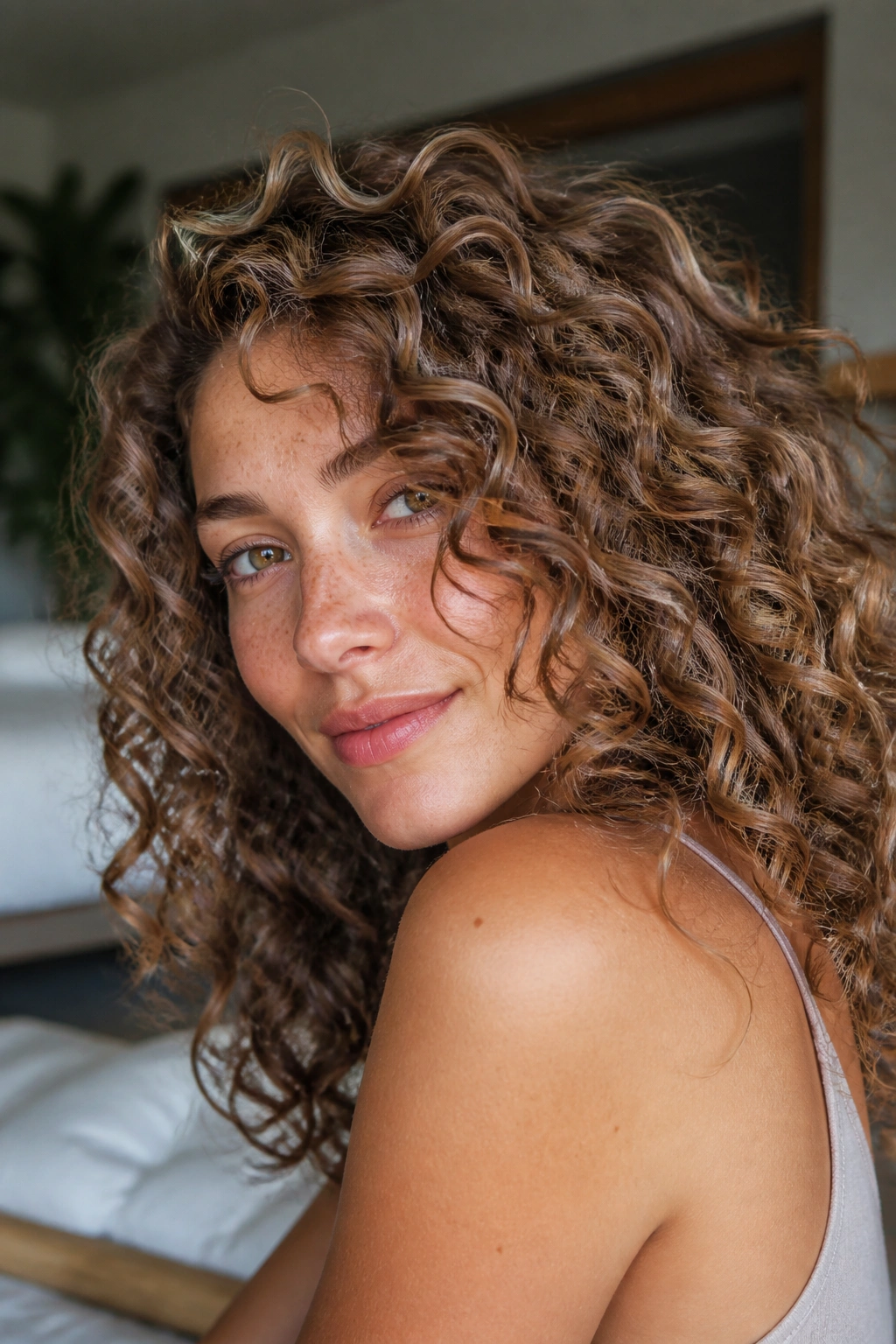
Sandy brown can look washed out if the curls are too light all over, so taupe lowlights are the fix. They drop the brightness back down and give the pattern some shape.
Best Placement for This Tone
Put the taupe pieces underneath the upper layers and around the interior bends of the curls. That creates depth where the eye usually misses it first, which is exactly what textured hair needs.
- Works best on loose curls and big waves
- Ask for cool-neutral lowlights
- Keep the overall base in the soft brown family
- Avoid too much gold if your skin runs cool
The result feels airy but grounded. That balance is hard to get, and when it works, it looks effortless — even though it is doing a lot of work under the surface.
20. Caramel Brown Spiral Highlights
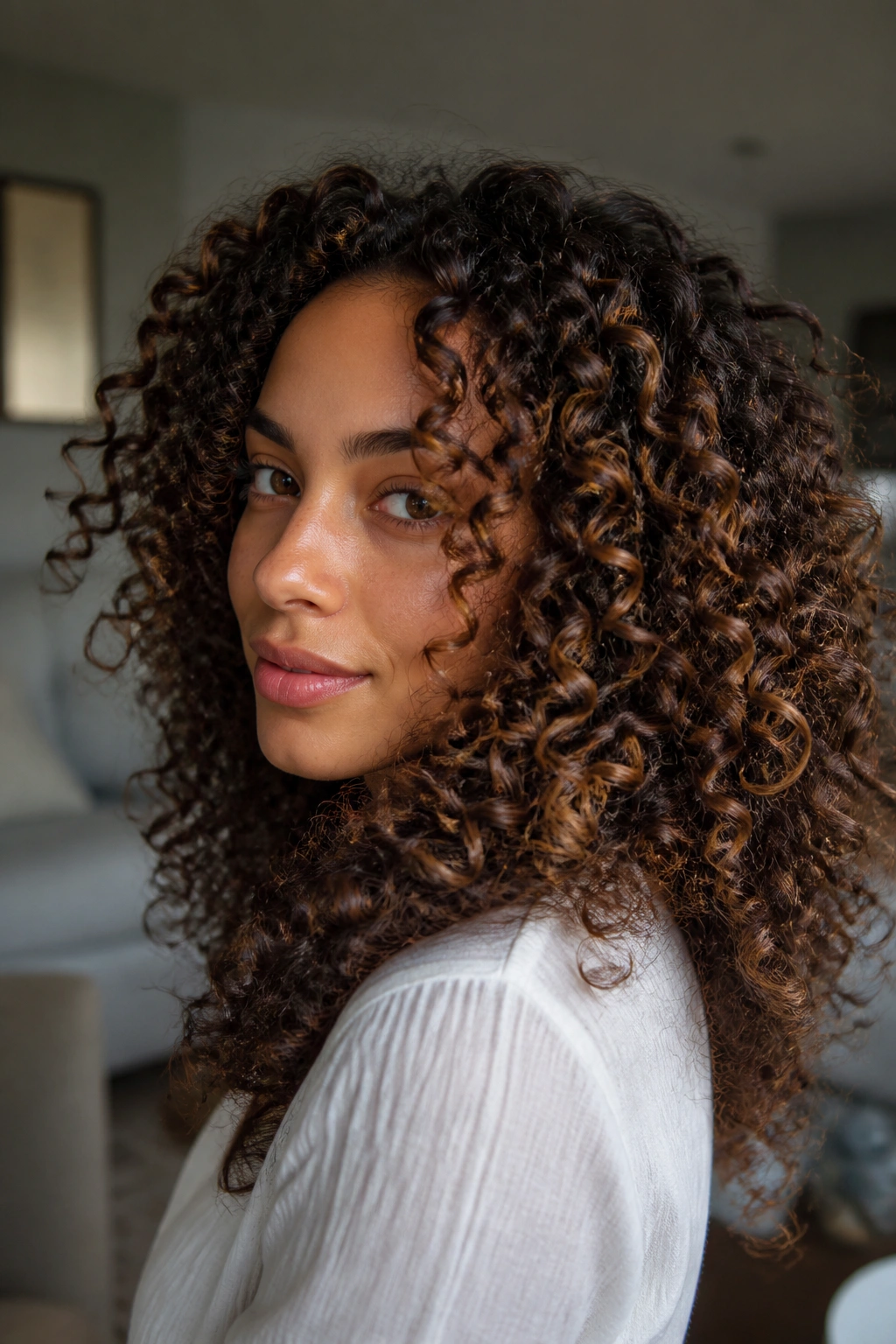
Caramel spiral highlights are made for curls that need the light to move all the way through the shape. Instead of sitting on top like stripes, the highlights follow the curl spiral, so each bend picks up a different flash of color.
This is where placement matters more than tone. Ask for highlights that begin mid-shaft and continue around the curl groups, not across them in a straight line. That way the light pieces bend with the hair instead of slicing through it. On tighter textures, keep the highlights smaller and more spaced out. On looser curls, you can go a little bolder.
It is playful without becoming loud. And when the curls separate naturally, the color almost looks hand-drawn.
21. Coffee Bean Brown With Gloss
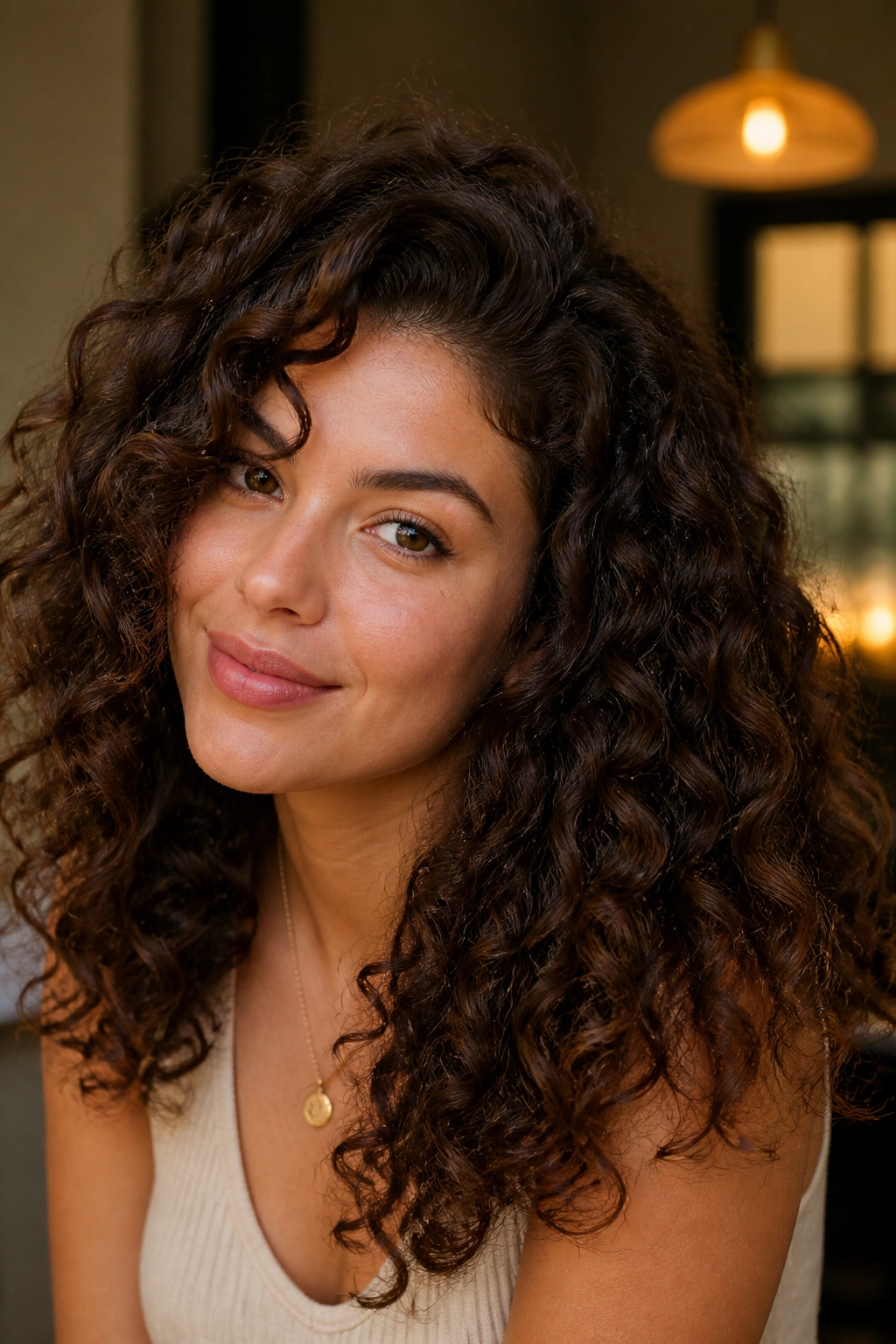
Coffee bean brown is the shade I recommend when someone wants deep, shiny, and no-nonsense. It is dark enough to anchor the face, but a gloss keeps it from looking dead under indoor light.
The shine matters here. A good brown gloss smooths the outer layer of the hair so the curls reflect light instead of swallowing it. That is especially useful on coarse textures, which can make dark color look matte fast. Ask for a clear or slightly warm gloss over a rich brown base, and let the curls air-dry if they can. Heat can dull the finish.
This one is for people who like low drama and high polish. Straightforward. Strong. Easy to wear with almost any haircut.
22. Chestnut Brown Curly Shag
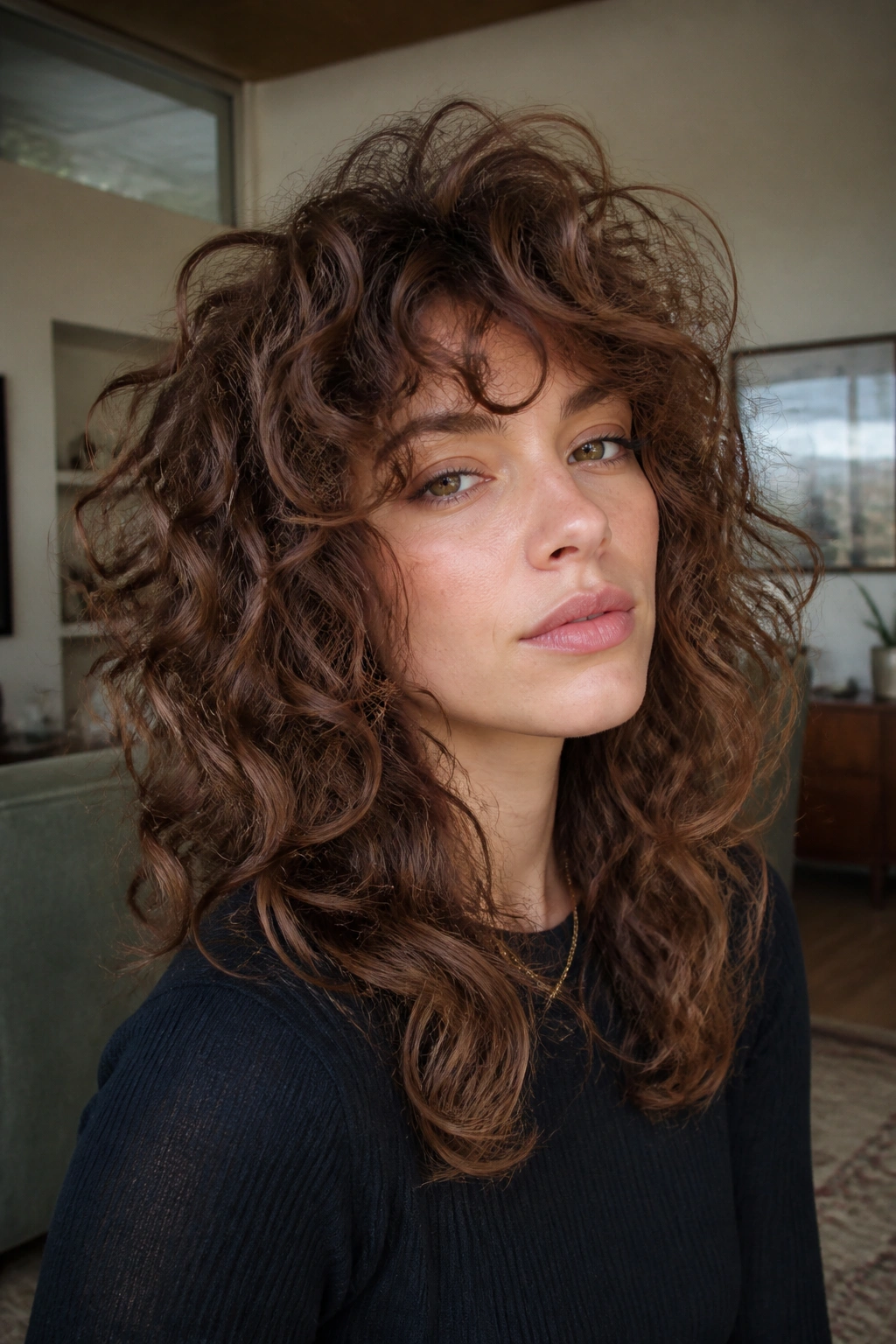
A shag cut changes everything about brown color, because the layers expose more surface. Chestnut is a smart pick here since the warmer tone keeps the shape from reading too chopped up.
The top layers can take a little more brightness, while the longer underlayers stay deeper. That split makes the shag feel airy, not thin. I especially like this on curls with a lot of spring, because the shorter pieces around the crown show the chestnut shine first and the length holds the depth.
One small warning: if the color is too dark, the shag loses its movement. So keep the brown medium-rich, not black-brown. The cut needs a little light to breathe.
23. Burnished Brown With Copper Edge
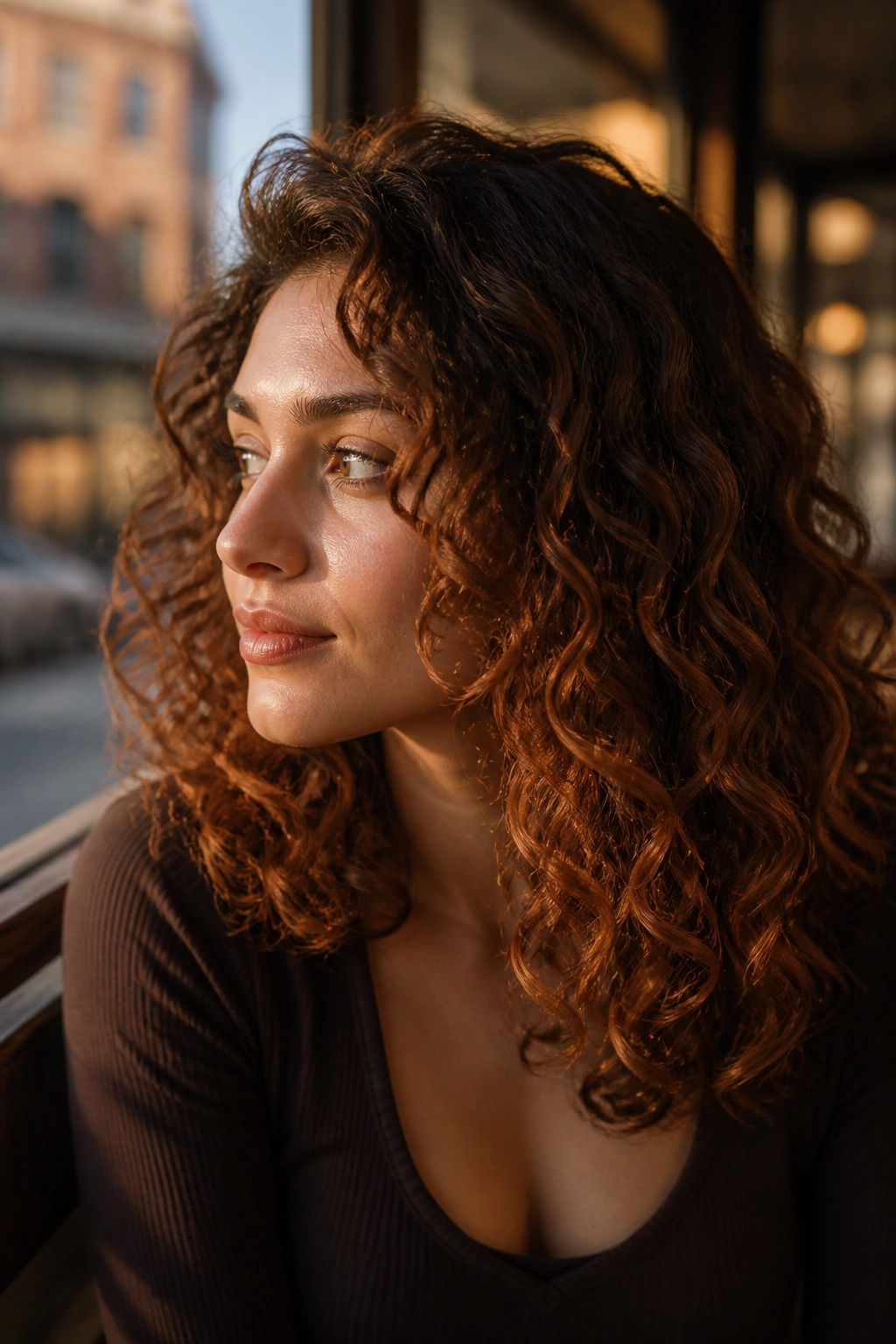
Burnished brown is what happens when you want warmth, but you do not want the whole head to go copper. The trick is to push the copper only along the edge pieces — the perimeter curls, the ends, maybe a few face-framing ribbons.
That placement keeps the color from getting out of hand. Curls on the edge catch more light anyway, so the warmth shows up without taking over. The brown underneath should stay deeper and richer, which gives the copper something to sit against. If the copper is too broad, the whole style starts to look uneven.
This shade works well on thick, sculptural curls that can hold a strong outline. The finish is warm, glowing, and a little dramatic. I like that it has an edge.
24. Hazelnut Brown With Soft Balayage
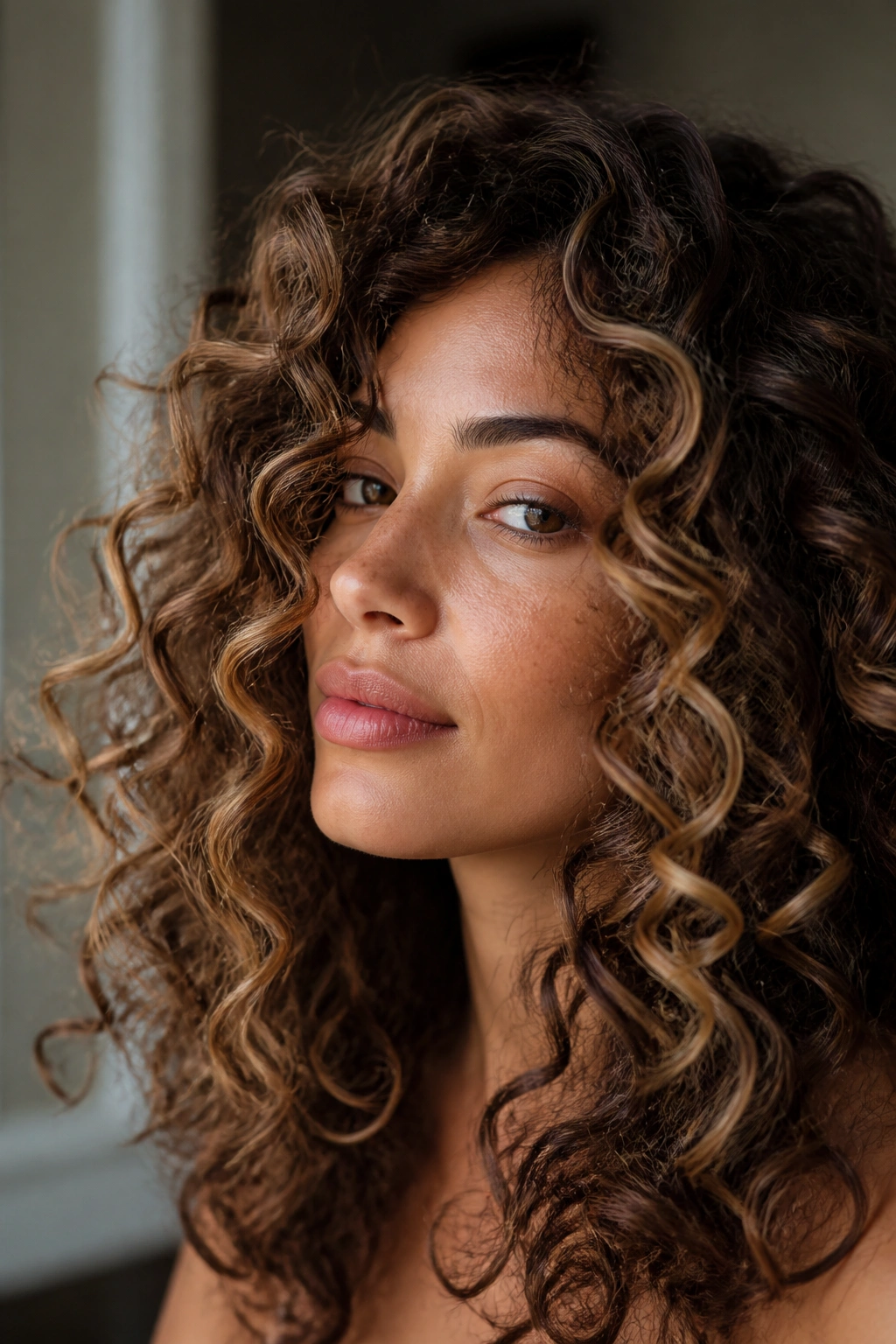
Hazelnut brown is one of the easiest shades to wear if you want softness. The balayage should be airy and fine, with the lightest pieces placed where the curl bends open.
Unlike chunkier highlight sets, this one is about quiet movement. A hazelnut base can take a few lighter hand-painted strands through the top half and the ends, then stay darker underneath. That contrast keeps the curls defined without making the color look busy. If your hair is medium density, this is a sweet spot.
What to Ask For
Tell your colorist you want soft balayage with low contrast. That usually gets you closer to the right result than asking for “something natural,” which can mean almost anything. Hazelnut does best when it looks like the hair has been warmed by light, not striped by dye.
25. Dark Chocolate Brown With Dimensional Ends
Dark chocolate brown is a safe choice only if you give it some movement. Dimensional ends do that job. A little lightness at the bottom keeps the curl pattern from disappearing into a single shade.
Keep the roots and mid-lengths deep, then soften the ends with a slightly lighter chocolate or mocha tone. The transition should be blurred, not obvious. On curls, the ends catch light when the hair swings, so even a small shift reads well. This is one of those looks that seems simple until you see it in motion.
A good fit for long curly hair, especially if the shape is layered. It feels classic, but not flat. That matters.
26. Warm Pecan Brown With Face Framing
Warm pecan is one of my favorite browns for curls that need a little lift near the face. It is softer than caramel and less red than chestnut, which makes it easy to live with.
The face-framing pieces should sit just inside the front line of the hair, not all the way around the head. That keeps the effect controlled. You want the cheek and jaw area to brighten, while the rest of the curls stay grounded in pecan brown. If the hair is shoulder-length or longer, a few matching pieces at the ends help the color travel.
This shade is a good compromise for someone who wants warmth but gets nervous about brass. It keeps the warmth in the family without going loud.
27. Smoked Brown With Ashy Ribbons
Smoked brown is for curls that need coolness, plain and simple. The ashy ribbons keep red and gold from taking over, which can happen fast on porous hair.
The trick is to make the ribbons thin and slightly diffused. They should look like they belong inside the curl, not on top of it. Put the cooler pieces through the middle and upper surfaces, and leave the deeper base mostly alone. That way the hair still looks full. Too much ash can make curls look drained, so keep the balance careful.
If you wear earth-tone makeup or cooler clothes, this shade is easy to pair. It is understated, but not sleepy. There is a difference.
28. Maple Syrup Brown With Light Tips
Maple syrup brown has a soft sweetness that shows up best when the tips are just a shade lighter. The lift should be tiny — enough to catch light, not enough to turn the ends blond.
This works best on curls with a looser pattern or longer length, where the tips can move on their own. The lighter ends help the shape feel open, especially if the haircut is dense at the bottom. Keep the base warm and medium-deep, then smear the lighter tone only through the last couple of inches. No hard line. No chunky dip-dye.
It is a friendly color. Easy, warm, and less severe than a dark one-length brown.
29. Cocoa Swirl Brown With Chunky Pieces
Cocoa swirl brown has more contrast than the softer shades in this list, and that is the point. On big curls or thick ringlets, chunky pieces can look lively instead of stripy when they are placed inside the curl pattern.
I like this for people who want visible color without going blond. The lighter pieces should be broad enough to show, but still painted with a curved hand so they follow the spiral. If the curls are very tight, shrink the size of the pieces or they can blur into each other. If the curls are loose, the chunkier placement gives you that swirled, dimensional look.
This is not shy color. It has energy. It also photographs well in a room with plain lighting, which is where a lot of brown shades fall apart.
30. Bitter Chocolate Brown With Soft Beige Accents
Bitter chocolate brown gives curls a deep, glossy base, and the soft beige accents keep it from going flat. That combination is especially nice if you like darker hair but still want a little brightness around the face and crown.
The beige should stay muted, not sandy or yellow. Think a gentle highlight that sits a shade or two above the base, placed in thin arcs over the top layer and a few front curls. That way the accents show when the hair moves, but they do not fight the dark brown underneath. It is a strong choice for thick curls, coily textures, and anyone who wants depth first.
If you remember only one thing, make it this: curly brown color looks best when the dark and light pieces are allowed to talk to each other. Too much of one tone, and the shape goes quiet. Keep the contrast alive, and the curls do the rest.
