



A flat auburn can make a round face look wider than it is, and that is usually the whole problem. The smartest auburn hair color ideas for round faces do the opposite: they pull the eye downward, keep depth at the roots, and let the brighter pieces sit lower around the jaw and collarbone.
Color placement matters more than people admit. A copper strip placed at cheek level can puff up a face shape fast; the same copper moved an inch lower and softened with layers suddenly looks leaner, longer, and far more deliberate. A good colorist thinks in vertical lines, not just pretty shades.
Texture matters too. Straight hair, waves, curls, and a shaggy cut all hold auburn differently, and the wrong shade can read orange in one client and wine-dark in another. Round faces usually look strongest with off-center parts, face-framing pieces that start below the cheekbone, and enough shadow near the temples to keep the shape from spreading outward.
Some of the ideas below are quiet. Some are bold. All of them are chosen because they help a round face look a little longer, a little sharper, and a lot more balanced.
1. Deep Auburn Layers for Round Faces
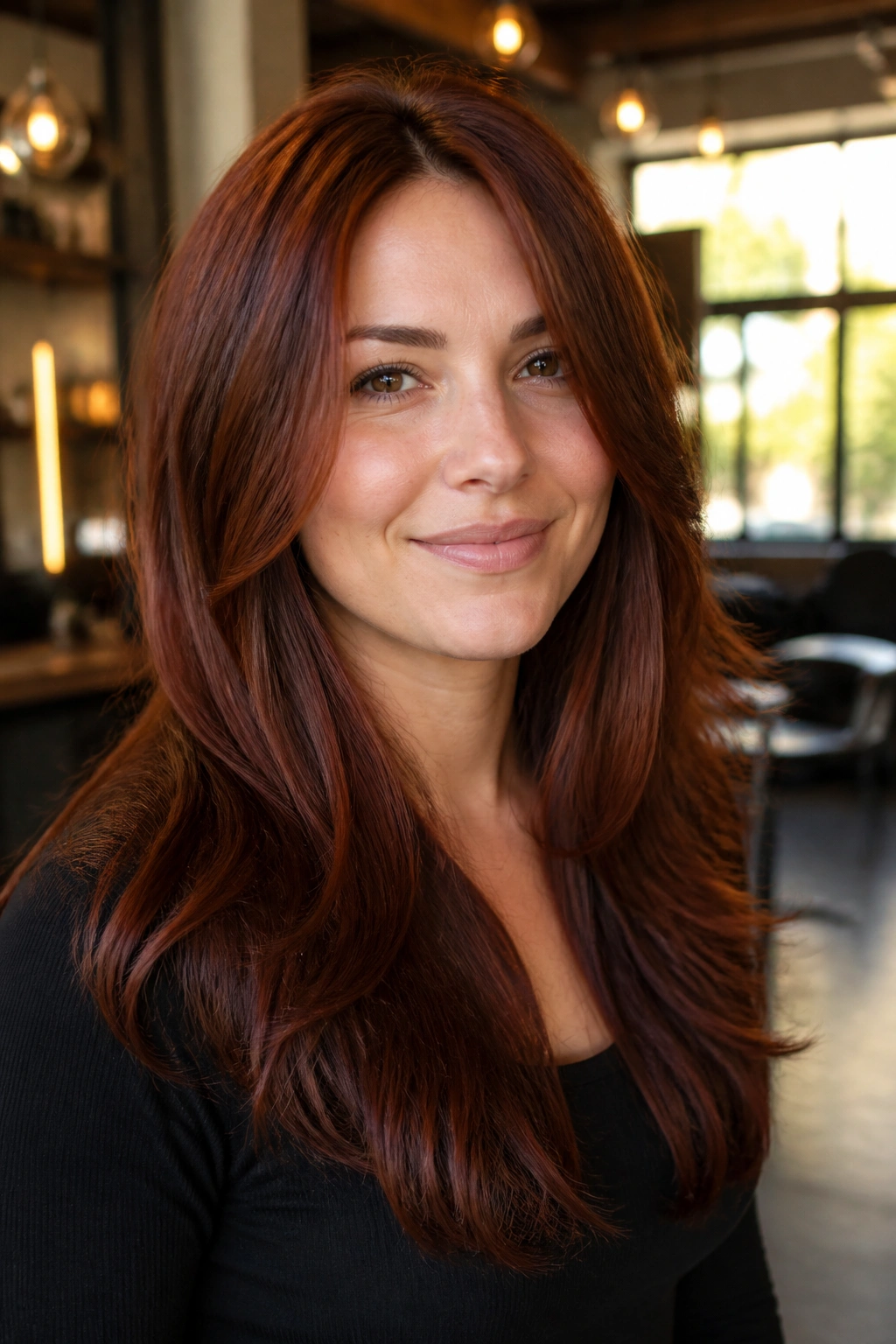
Deep auburn is the shade I reach for when someone wants warmth without the “look at me” brightness that can throw a round face off balance. On longer layers, it adds movement where you want it and keeps the sides from feeling too full.
Why the Layers Matter
The cut does half the work here. Ask for layers that start below the chin, not at the cheekbone, so the color can fall in a vertical line instead of spreading outward. That small change makes a bigger difference than people expect.
A deep auburn base also helps the hair read richer and slimmer, especially if your natural color sits in the medium brown range. The darker root keeps the top of the head from looking puffy, while the warm red-brown ends catch light in a softer way.
- Keep the shortest face-framing layer near the jaw, not the widest part of the cheek.
- Add soft bends through the mids instead of curling the ends into a bubble shape.
- Ask for a gloss finish if the red tone feels too dry or brassy.
Best detail: let the brightest auburn sit below the cheekbone. That’s where the eye naturally follows the hair downward.
2. Cinnamon Auburn Balayage on a Dark Brown Base
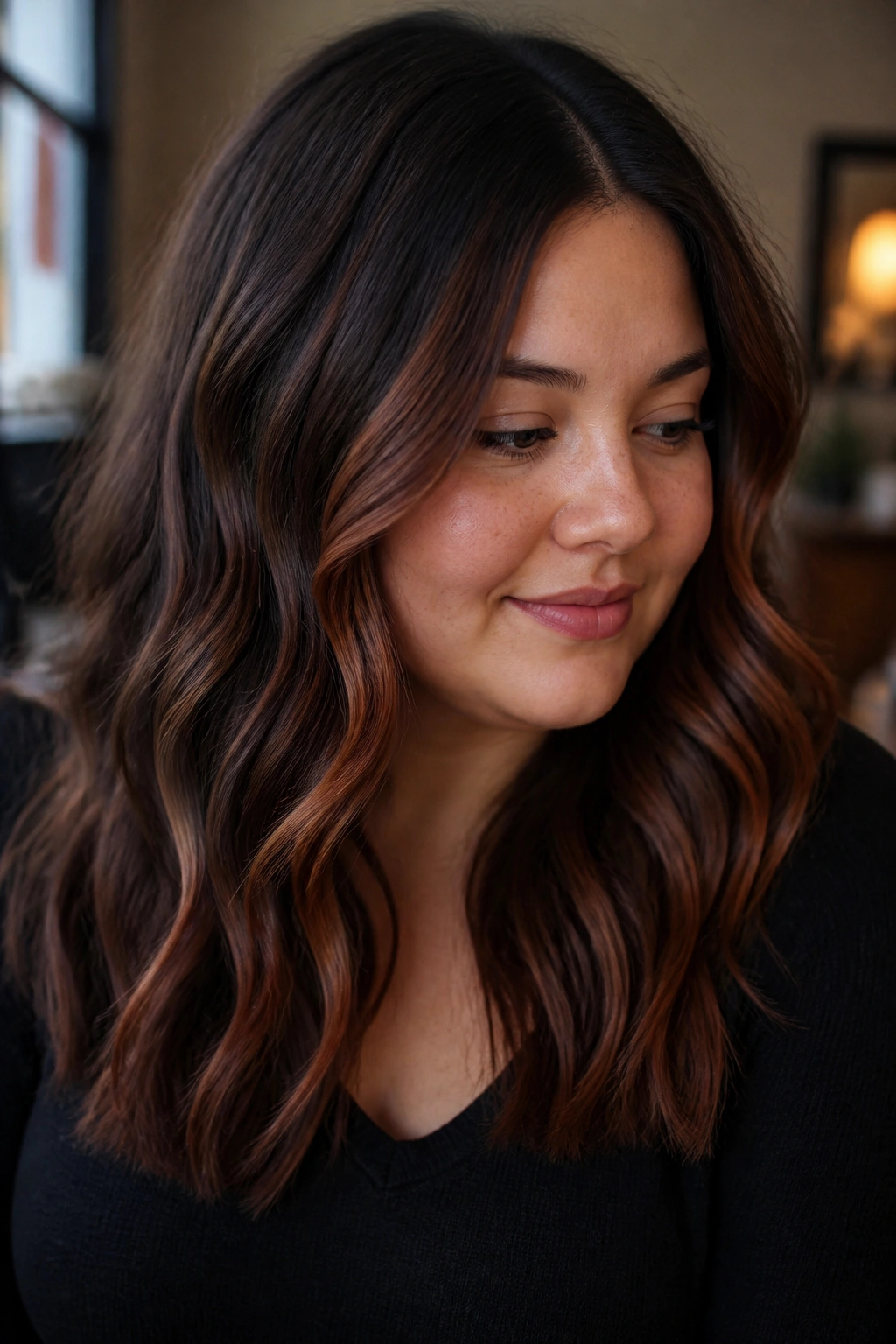
Cinnamon auburn balayage is one of the easiest auburn hair color ideas for round faces because it keeps the base deep and the warmth scattered. That means your face keeps its shape, and the hair gets movement without looking striped.
The trick is restraint. You want soft cinnamon ribbons, not a chunky highlight situation from the early salon era. A dark brown base with hand-painted auburn pieces gives you contrast at the ends and around the back, which helps the whole style feel longer.
This is a smart pick if you like low-maintenance color. As the balayage grows out, the transition stays soft, and the roundness of the face does not get exaggerated by a hard line of color.
3. Copper Auburn Money Piece With Curtain Bangs
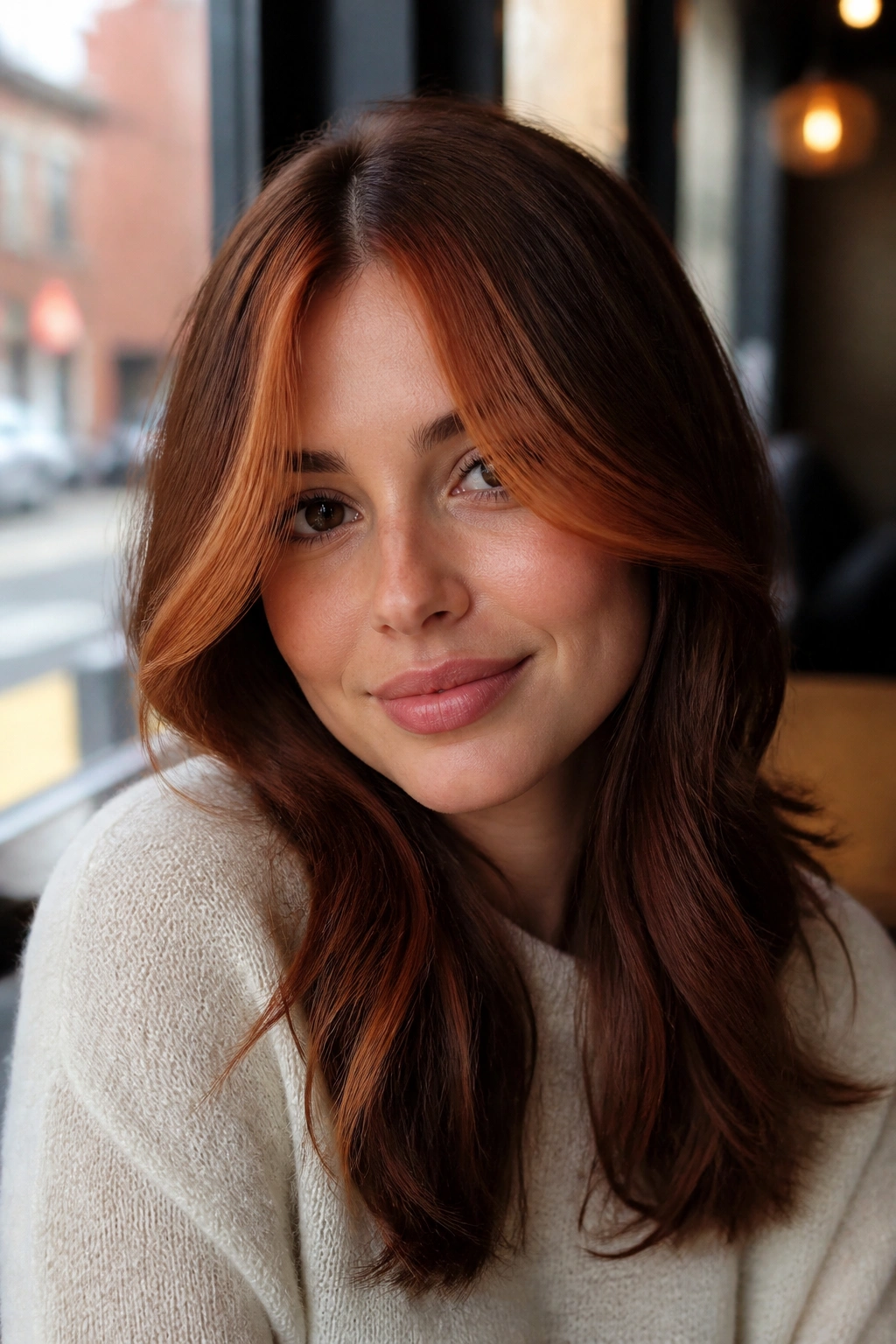
Can a bright front piece flatter a round face? Yes, if it’s narrow, blended, and kept a little longer than people usually think.
The money piece should start near brow level and taper down toward the cheek, not stop right where the face is widest. Pair that with curtain bangs that open at the center and sweep outward, and you get a diagonal line that breaks up the roundness without hiding your features.
How to Wear It
Keep the copper auburn bright enough to frame the face, but not so pale that it turns into a hard stripe. A soft copper on the front sections and a deeper auburn through the rest of the hair gives the cut some tension, which is exactly what a round face needs.
- Ask for a soft root melt so the front pieces do not look pasted on.
- Keep curtain bangs below the brow, then bend them away from the cheek.
- Style with a round brush only at the roots, not through the whole length.
One caution: if the front pieces are too thick, they widen the face instead of shaping it.
4. Mahogany Auburn Lob With an Off-Center Part
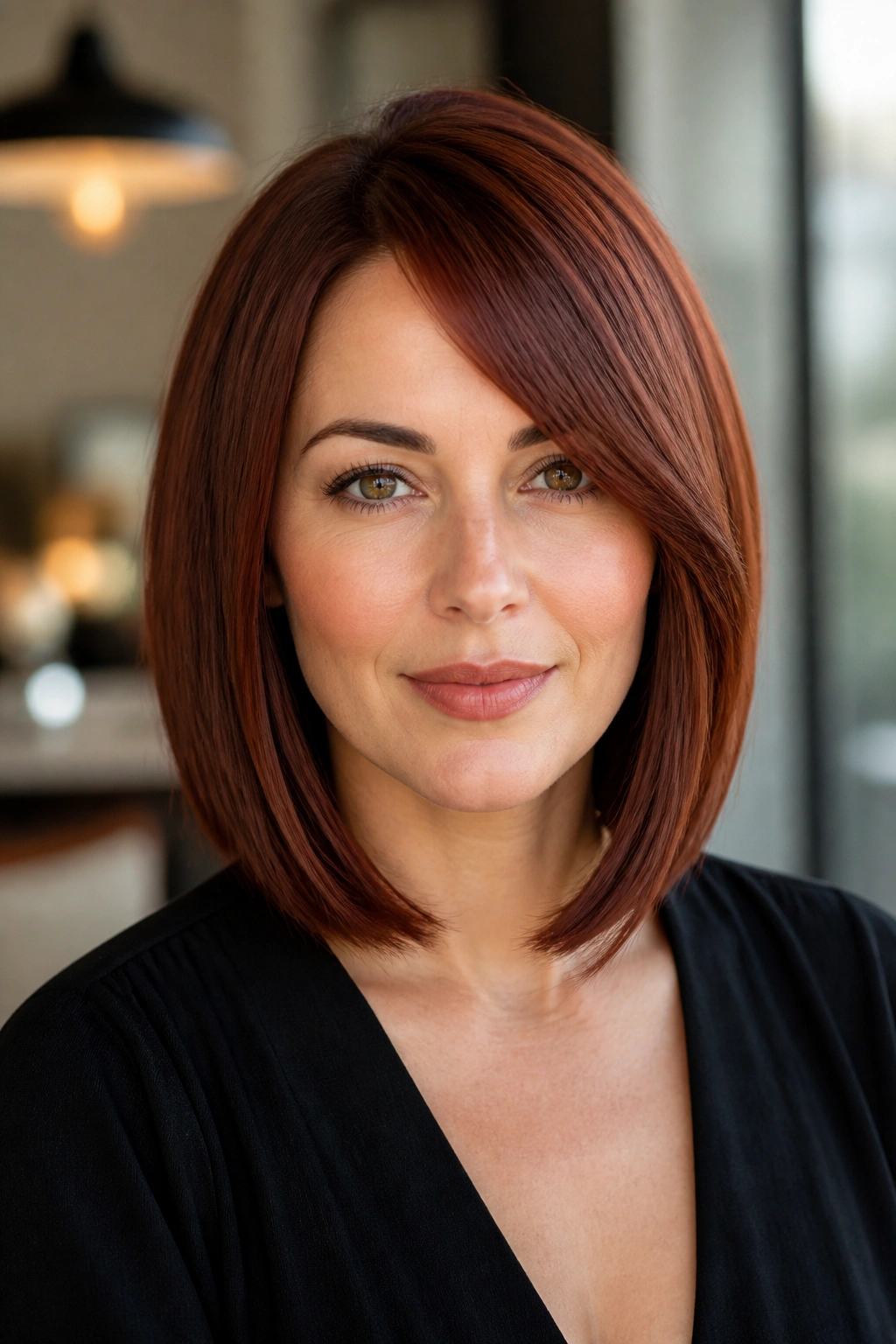
A lob at the collarbone is one of those cuts that looks almost boring on paper and excellent in real life. Add mahogany auburn, shift the part an inch off center, and the whole look gets a cleaner line through the face.
That off-center part matters. A dead-center part can feel too symmetrical on a round face, while a slight shift creates a subtle diagonal that makes the face look longer. Mahogany auburn, with its darker red-brown base, keeps the color deep enough to avoid adding width.
The best versions of this cut have blunt ends with just enough internal layering to keep the hair from sitting like a helmet. Sleek, soft bends at the ends look better than big curls here. Bigger curls can make the sides feel broad.
5. Cherry Auburn Waves for Extra Contrast
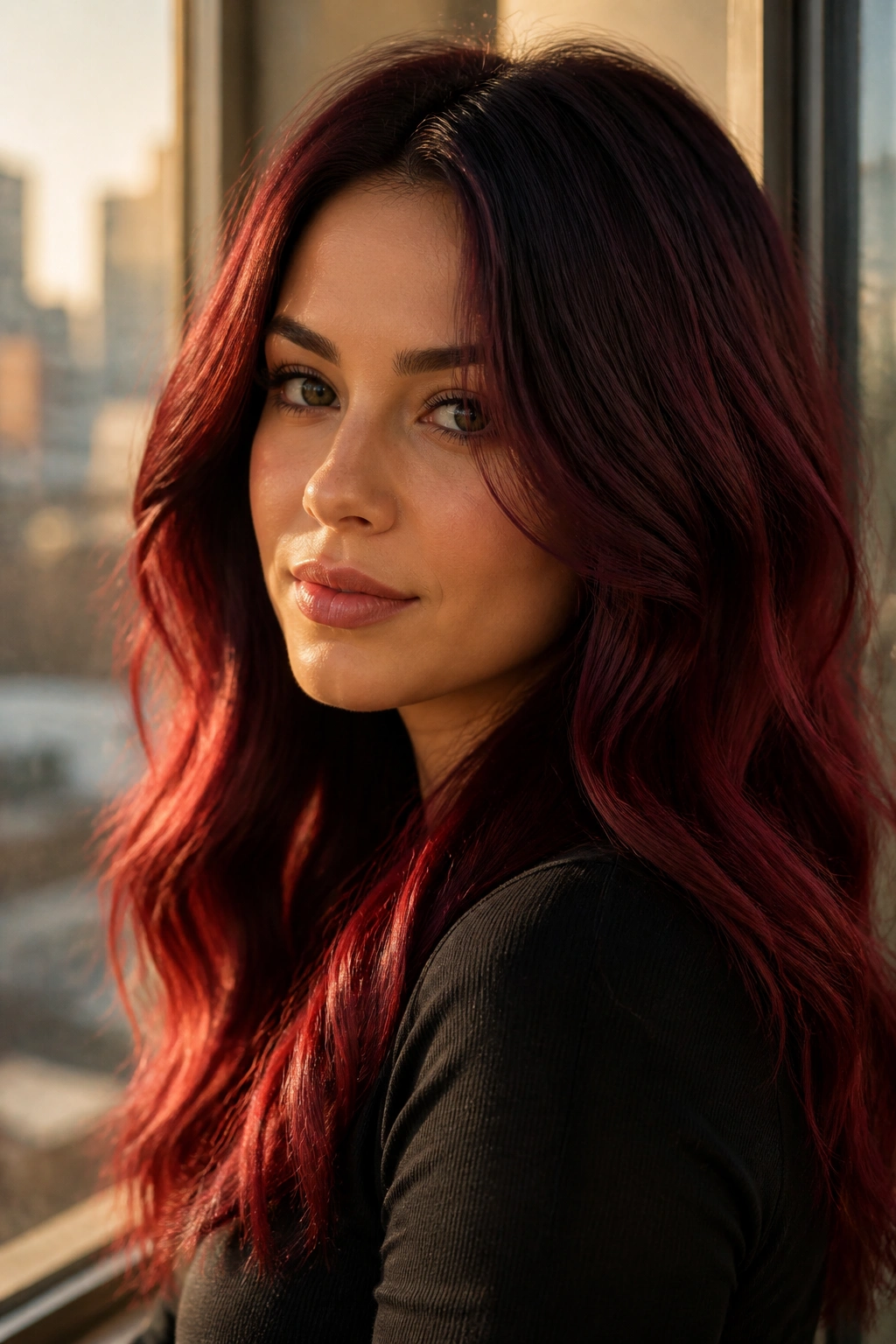
Cherry auburn is for the person who wants the red to show up from across the room, but still wants the face shape to stay balanced. The color has a vivid edge, yet it works on round faces when the waves are loose and the root stays a shade or two deeper.
The reason it holds up so well is contrast. Darker roots and slightly shadowed mids create a visual frame around the face, and the brighter cherry tones can live lower through the length instead of sitting right beside the cheeks. That lower placement pulls the eye down.
This shade looks especially good on medium to long hair with soft bends. Not beachy waves that puff out. Softer ones. The kind that fall in long curves and move when you walk.
A little shine serum goes a long way here. Cherry tones can look flat if the finish is dry, and dry red is never the friend of a round face.
6. Burnt Sienna Balayage on Long Hair
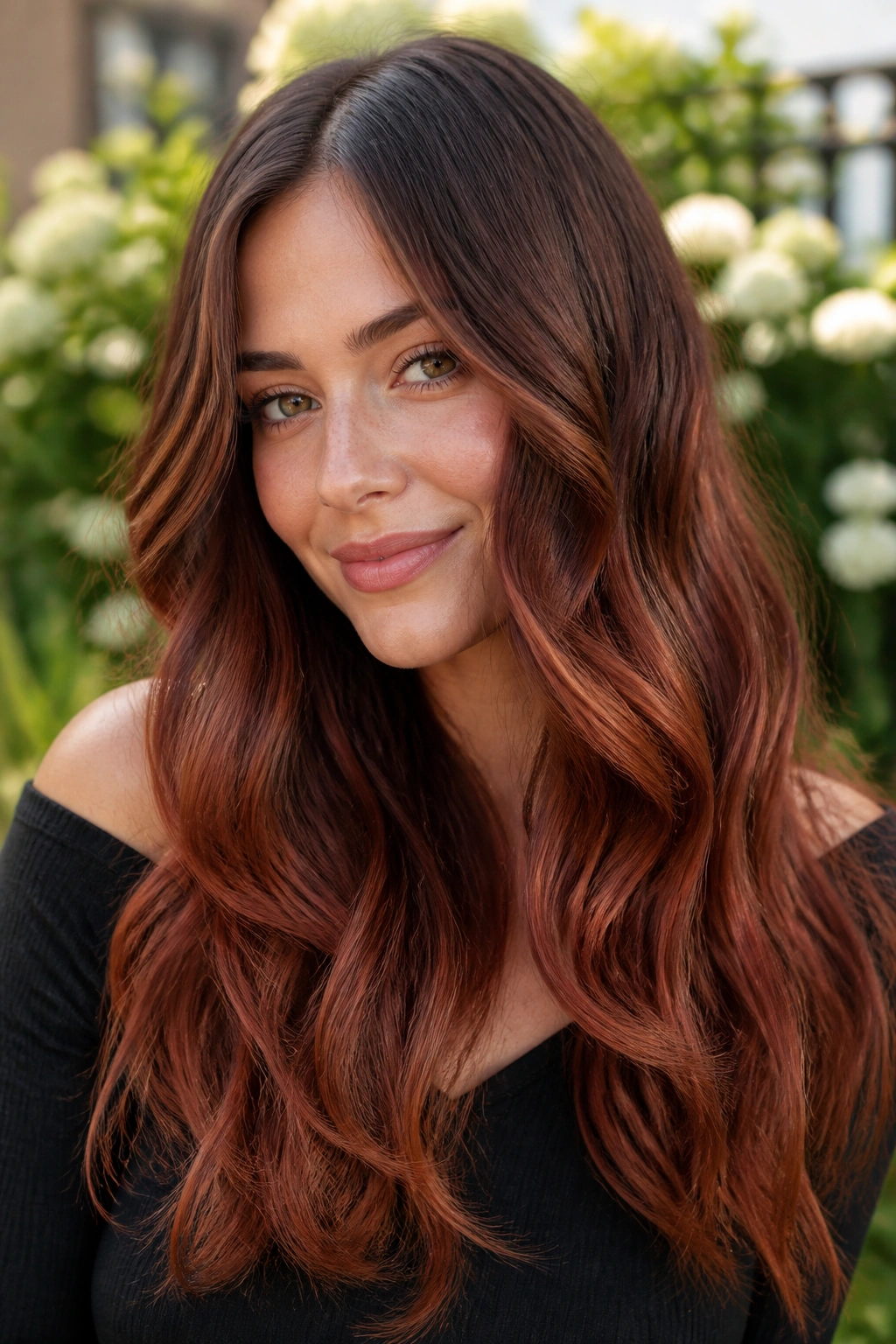
Burnt sienna is the quieter cousin of copper, and that is why it deserves a spot on a round-face list. It has warmth, but the warmth is earthy rather than loud, so it softens without inflating the face shape.
Unlike brighter auburns, burnt sienna usually reads as a brown with red smoke in it. That makes it a strong option if you want dimension and are not in the mood for obvious red. Long hair gives the color room to move, which is where this shade looks its best.
Ask for wider, softer balayage pieces through the lower half of the hair. Not near the temples. Keep the face-framing sections a little darker, then let the sienna show up around the shoulders and ends. It feels more refined that way, and the line down the front stays long.
7. Auburn Ombré With a Root Melt
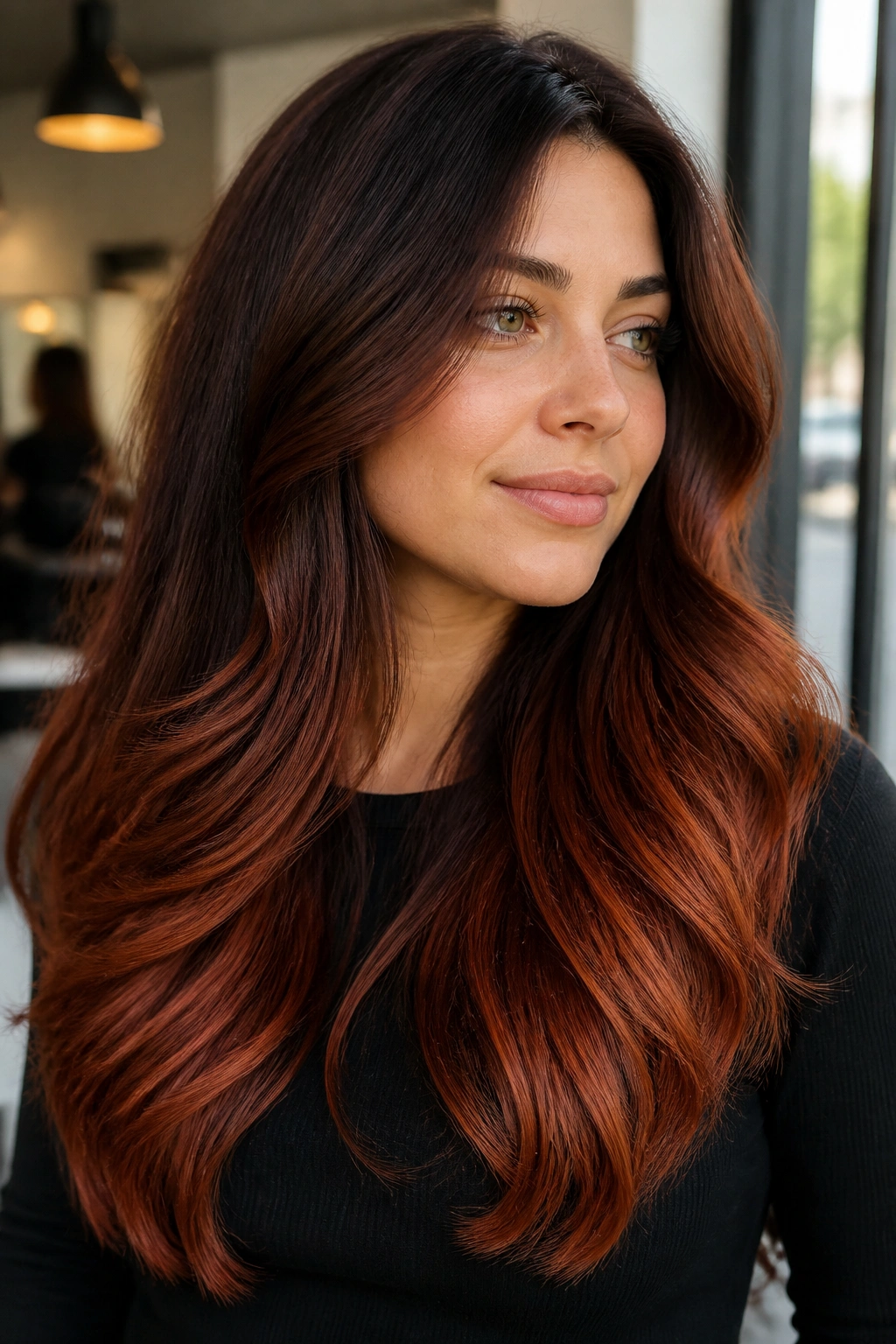
Ombré gets a bad reputation when it’s too harsh, but a good auburn ombré can be one of the nicest options for a round face. The root melt is what saves it. That dark-to-warm fade keeps the top grounded and lets the brightness live lower.
Why the Root Melt Does the Heavy Lifting
The root should stay close to your natural brown or just a shade deeper. Then the auburn can build gradually through the mids and get brighter toward the ends. That slow transition matters because hard color breaks can widen the upper half of the face.
Auburn ombré also gives you breathing room between salon visits. The grow-out is soft, and the color still looks intentional even when it has been on the hair for a while.
- Keep the lightest auburn below the cheekbone.
- Choose a fade that takes at least two levels from root to end.
- Add loose waves if the transition feels too linear on straight hair.
Best use: long, layered hair that needs movement without a lot of upkeep.
8. Chestnut Auburn Gloss for Round Faces
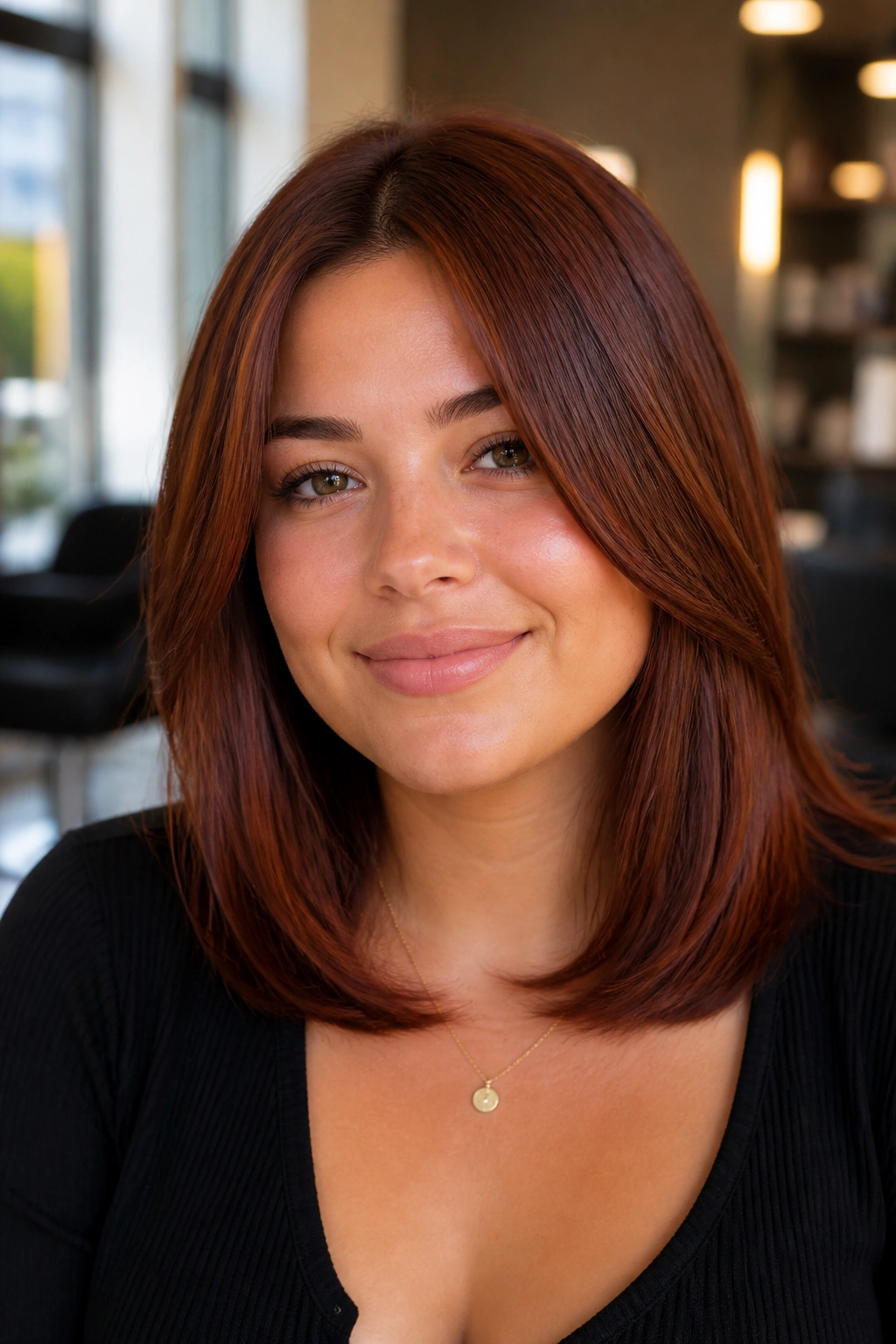
Chestnut auburn is one of the easiest shades to wear if you want warmth that does not grab attention before your face does. It is softer than copper, darker than classic auburn, and especially kind to round faces because it keeps the silhouette smooth.
A glossed finish makes a bigger difference here than people expect. Chestnut tones can look dull if they are matte, but when the surface has shine, the color reflects light in a narrow way instead of spreading it everywhere. That narrow reflection helps the hair look sleeker around the cheeks.
This is a nice choice for shoulder-length cuts, especially if your hair is fine or medium in density. The depth makes the hair look fuller, while the warm brown-red tone keeps it from reading flat.
If you want low drama and good shape, this is a strong pick.
9. Ginger Auburn Shag That Adds Height at the Crown
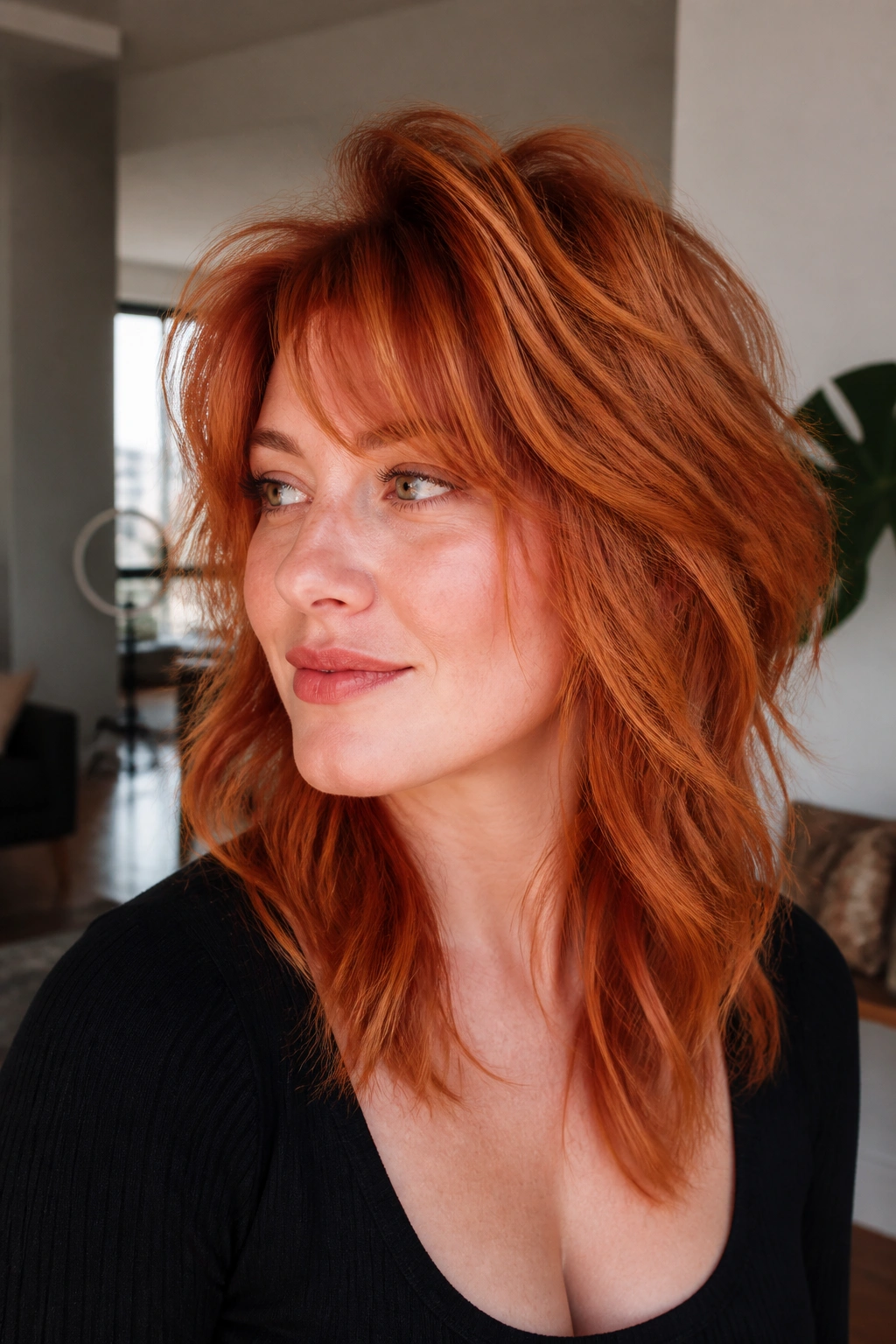
Why does a shag help a round face? Because it builds lift where a round face needs it most: up top, not out at the sides.
The shag’s feathered crown and broken-up ends create vertical movement, which pulls the eye upward. A ginger auburn version keeps that movement visible, since the lighter red-copper pieces catch the shape of the cut as it moves. On a round face, that’s a useful trick.
How to Style It
Use a small round brush or a diffuser only at the roots if your hair is wavy. The goal is height, not puffiness. You want the crown to stand up a little while the sides stay close enough to the head to keep the face from feeling broader.
A shag also plays nicely with curtain fringe or a soft side bang. That extra diagonal line across the forehead breaks up the roundness without hiding the face.
Not every shag is flattering. This one is, when the layers are light and the crown has shape.
10. Toffee Auburn Ribbons Through a Brunette Base
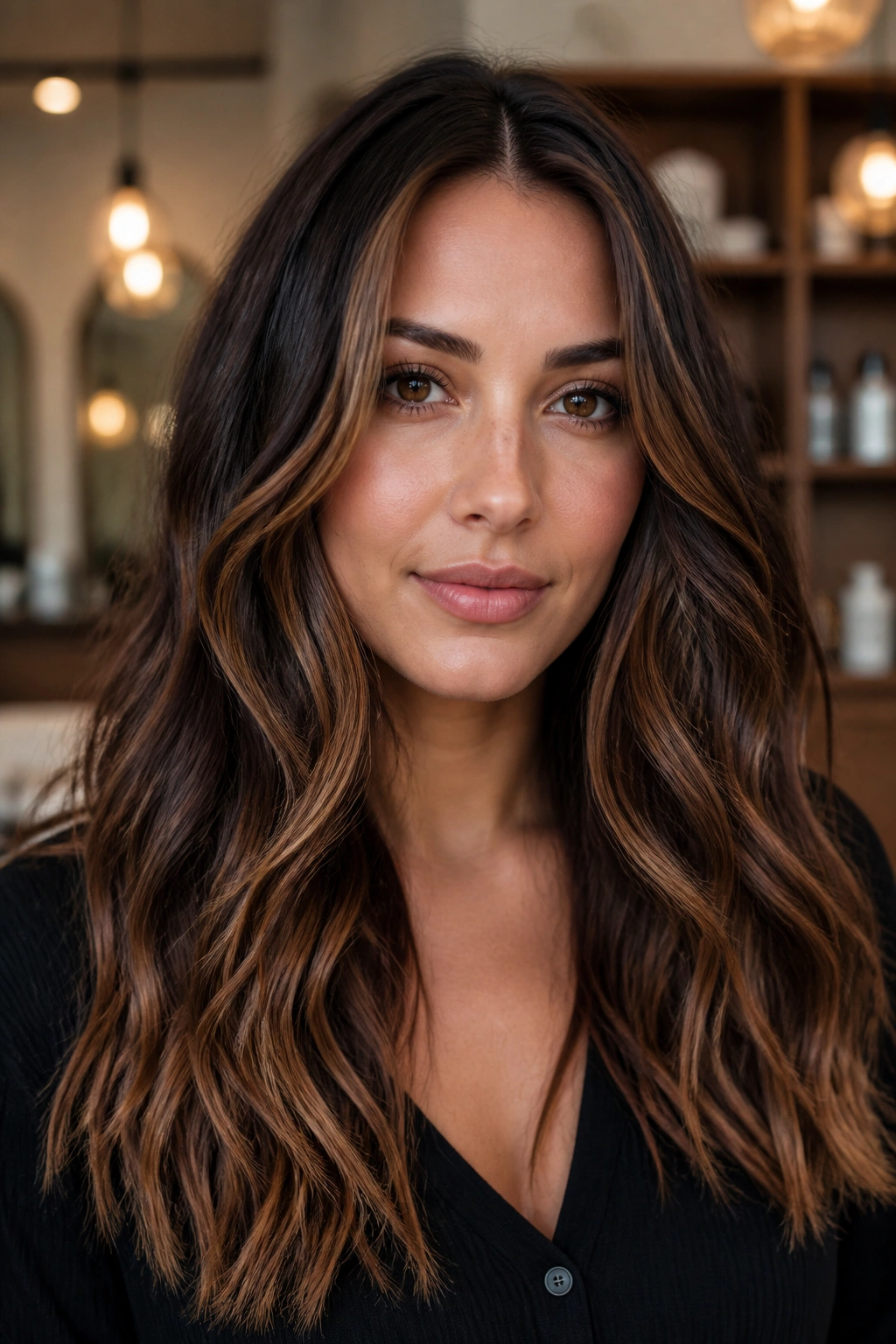
If your hair already sits in the brown family, toffee auburn ribbons can feel like a gentle upgrade instead of a full color shift. That’s why this idea works so well on round faces: the base stays brunette, and the auburn shows up in thin streams that move with the cut.
The ribbons should not all start at the same spot. That’s the mistake. When every light piece begins at cheek level, the face can look wider. When the ribbons begin lower and are spread unevenly, they create length and movement instead.
- Ask for thin, painted ribbons rather than chunky streaks.
- Keep the brightest pieces around the lower mids and ends.
- Style with a soft S-wave, not a full curl, so the color stays elongated.
This is also one of the better options if you want color that looks natural in dim light and richer in sunlight. It has range.
11. Smoky Auburn With Espresso Lowlights
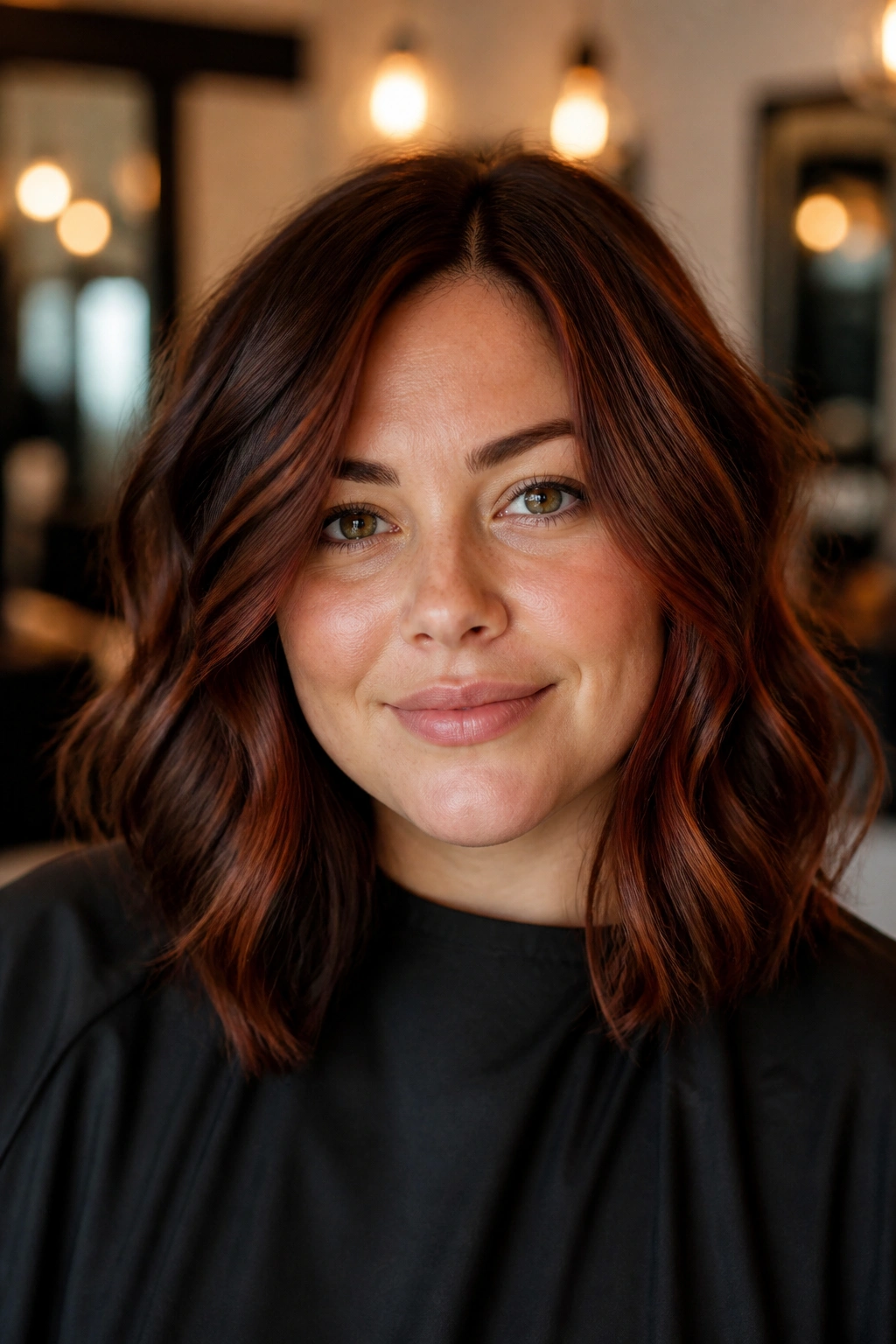
Smoky auburn is the shade I recommend when someone says, “I want red, but I do not want it to scream.” The espresso lowlights are the reason it works so well on a round face. They carve out shape.
Auburn by itself can sometimes drift too bright, and bright color on the sides of a round face can make the whole shape feel wider. Smoky auburn fixes that by keeping dark strands threaded through the red-brown base. Those darker strands act almost like contour makeup for hair.
The finish should feel soft and a little velvety, not shiny in a glossy-brown way. That texture helps the color read expensive without needing sharp contrast. It also gives the face some edge, which is useful if your features are soft and your face is naturally full.
This shade looks especially good on medium skin tones with warm or neutral undertones, but the real advantage is shape control. It narrows the outline without making the hair feel heavy.
12. Rosewood Auburn for Soft, Muted Warmth
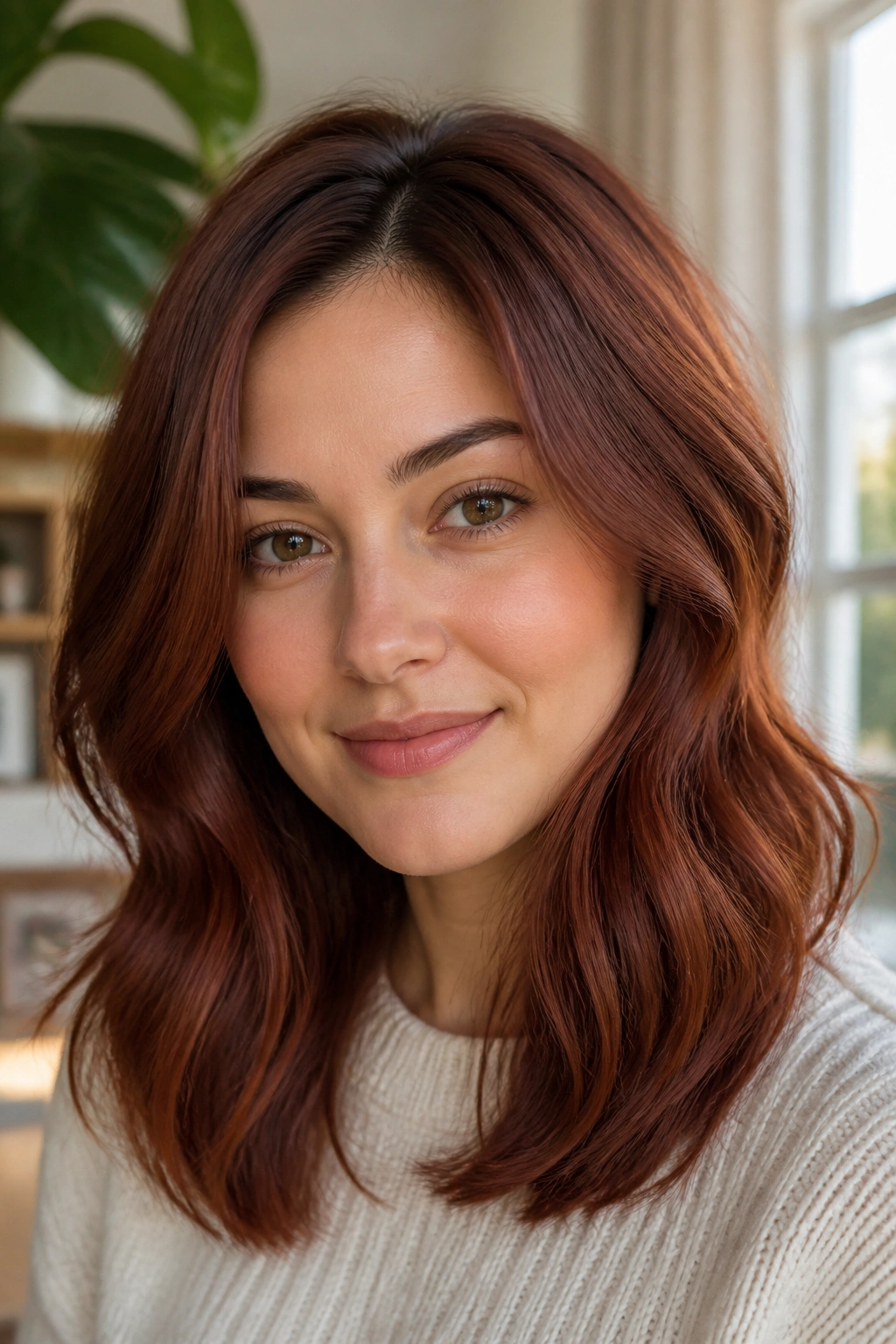
Rosewood auburn sits in that nice middle ground between red, brown, and a little bit of berry. It is muted enough to feel calm, yet warm enough to keep the hair from looking flat.
Unlike brighter copper or cherry tones, rosewood does not bounce light around the face as aggressively. That matters on round faces, because less flash near the cheeks usually means a cleaner outline. The color gives you warmth without dragging attention sideways.
What Makes It Different
The best rosewood auburn shades lean brown at the root and carry the rose tone through the mids and ends. On straight hair, that creates a soft ribbon effect. On waves, it looks more dimensional because every bend picks up a slightly different red-brown note.
If you want something polished but not loud, this is the one. It is also friendly to older color jobs that have faded too warm. A rosewood gloss can pull a lot of leftover orange back into line.
13. Auburn Highlights That Follow Curly Hair’s Shape
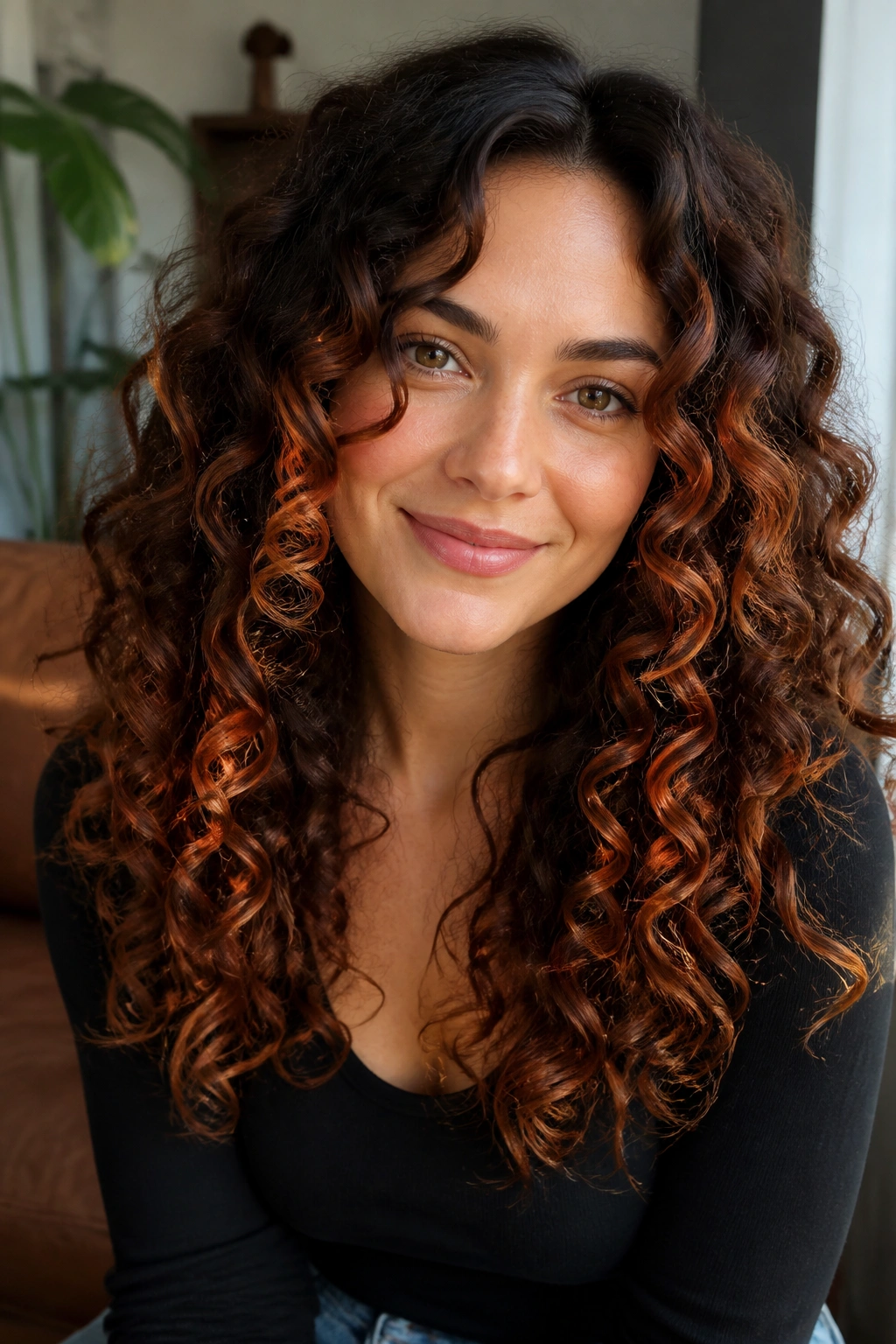
Curly hair needs auburn placed in a different way. Straight stripes fight the curl pattern and make the head look wider than it is. Painted highlights that follow the curl clumps do the opposite.
The color should trace the natural bends of the hair, with brighter auburn pieces sitting where the curls would catch the light anyway. That usually means the face-framing pieces start lower, and the brightest spots are scattered through the mids and ends rather than packed around the temples.
Why Curly Placement Works
Curly hair already has width built in, so the color job has to create movement, not more bulk. When the auburn is woven into the curl pattern, the eye follows the spirals downward. That helps a round face look longer, especially if the curls are cut with layers.
- Keep the top a little deeper for lift.
- Place brightness on the outer curves of the curl, not the inside.
- Ask for a dry-cut shape before coloring if your stylist works that way.
The right auburn on curls looks lively, not busy. There is a difference.
14. Auburn Pixie With a Longer Top Layer
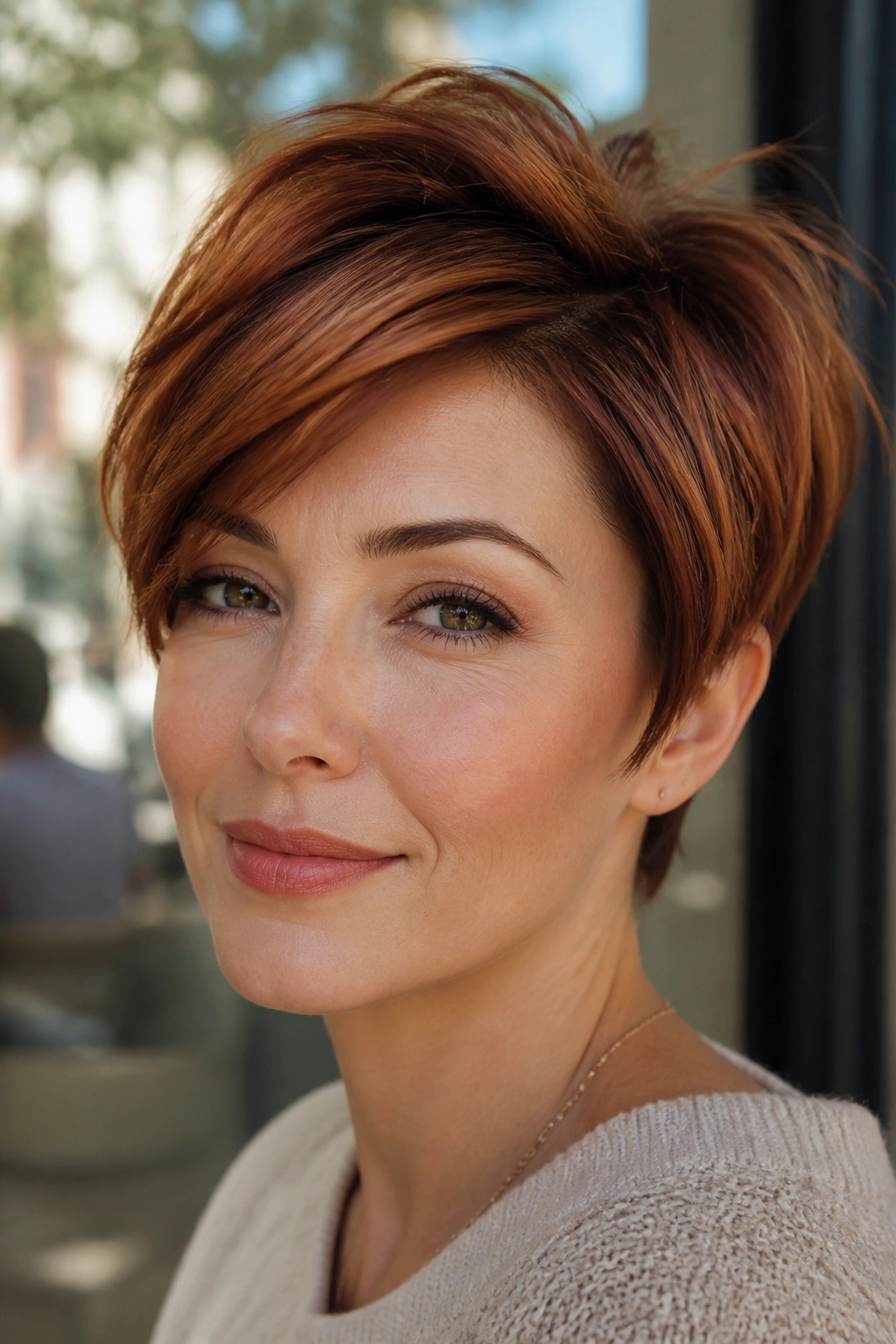
Short hair and round faces can be a tricky pair, but not when the pixie keeps some height on top. A longer crown with auburn color gives you lift where you need it, and the shorter sides keep the head from reading too wide.
The color should stay richer near the roots and a bit brighter through the top layer. That creates a vertical line from the forehead upward. If the sides are too light, the shape starts to balloon. If the top is too flat, the face can feel even rounder.
This is one of those cuts that looks better with a little texture. Piecey ends, a side sweep, and a small amount of matte paste are enough. You do not need a perfect sculpted finish.
Auburn on a pixie feels confident without looking severe. That’s a nice place to be.
15. Copper-Caramel Auburn With Face-Framing Waves
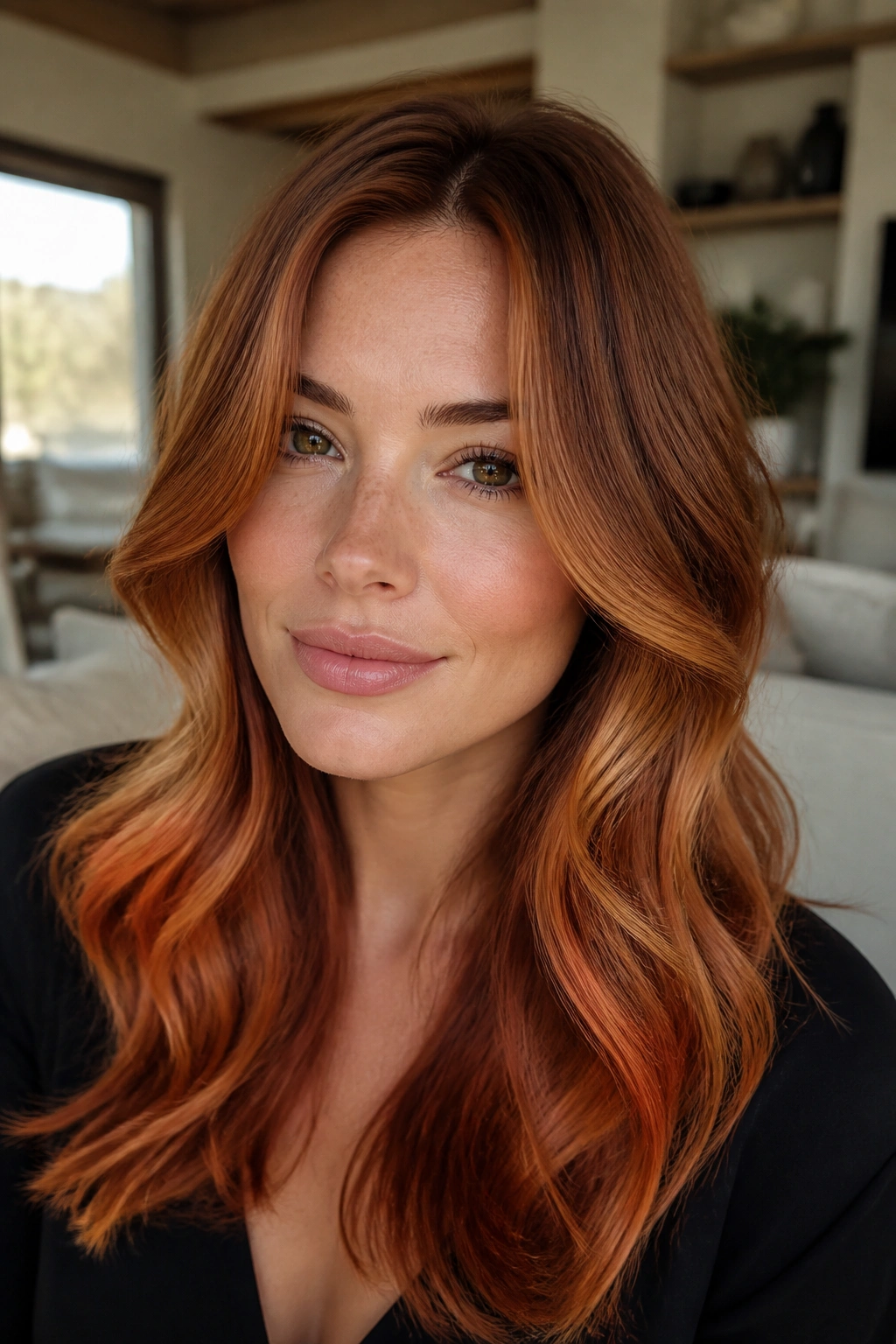
Want warmth without going full copper? Copper-caramel auburn is the sweet spot. It gives you the red glow of copper and the softer brown note of caramel, which helps the color stay flattering on a round face.
The key is the wave pattern around the face. The front pieces should curve away from the cheeks and land a little below the jaw. If they stop too high, the roundness comes forward. If they fall too straight, the color can feel heavy. Soft bends do the job best.
How to Keep It Flattering
Keep the copper slightly stronger on the lower half of the hair. Let caramel soften the mids. That mix keeps the color light enough to show movement but grounded enough not to widen the face.
- Ask for a shadow root to keep the top calm.
- Use a 1-inch iron for loose bends, not tight curls.
- Finish with a light spray, not a heavy oil, so the waves keep shape.
This is a good “middle of the road” choice for people who want auburn but fear it might be too red.
16. Burgundy Auburn for Deeper Skin-Tone Contrast
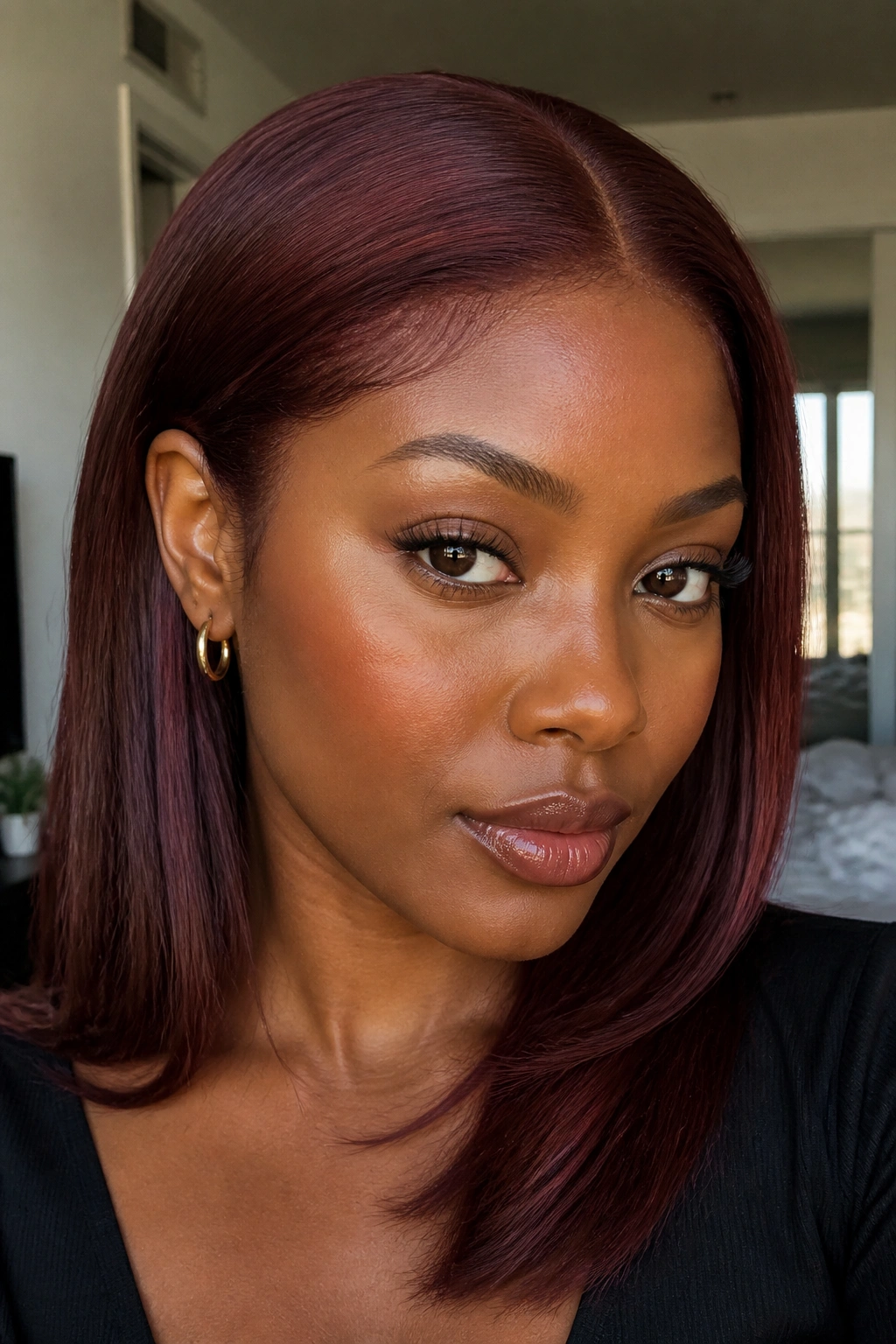
Burgundy auburn can be stunning on round faces because the richness gives the features a frame without adding a lot of visual width. It is deeper, cooler, and more dramatic than cinnamon or chestnut, which makes it a useful option if you want contrast.
On deeper skin tones, burgundy auburn can give the hair a plush, saturated look that sits close to the face instead of floating around it. That closeness is useful. It keeps the silhouette neat. On lighter skin tones, it can read moodier and more fashion-forward, especially with a blunt cut or a sleek lob.
This shade does best when the hair has clean lines. The color itself is rich enough; it does not need huge waves or oversized volume to make an impression. A simple center part with tucked-behind-ear styling can be enough.
If you want the face to look a bit slimmer, keep the ends polished and the crown smooth. Messy texture can blur the shape.
17. Butterfly Cut With Auburn Balayage Through the Ends
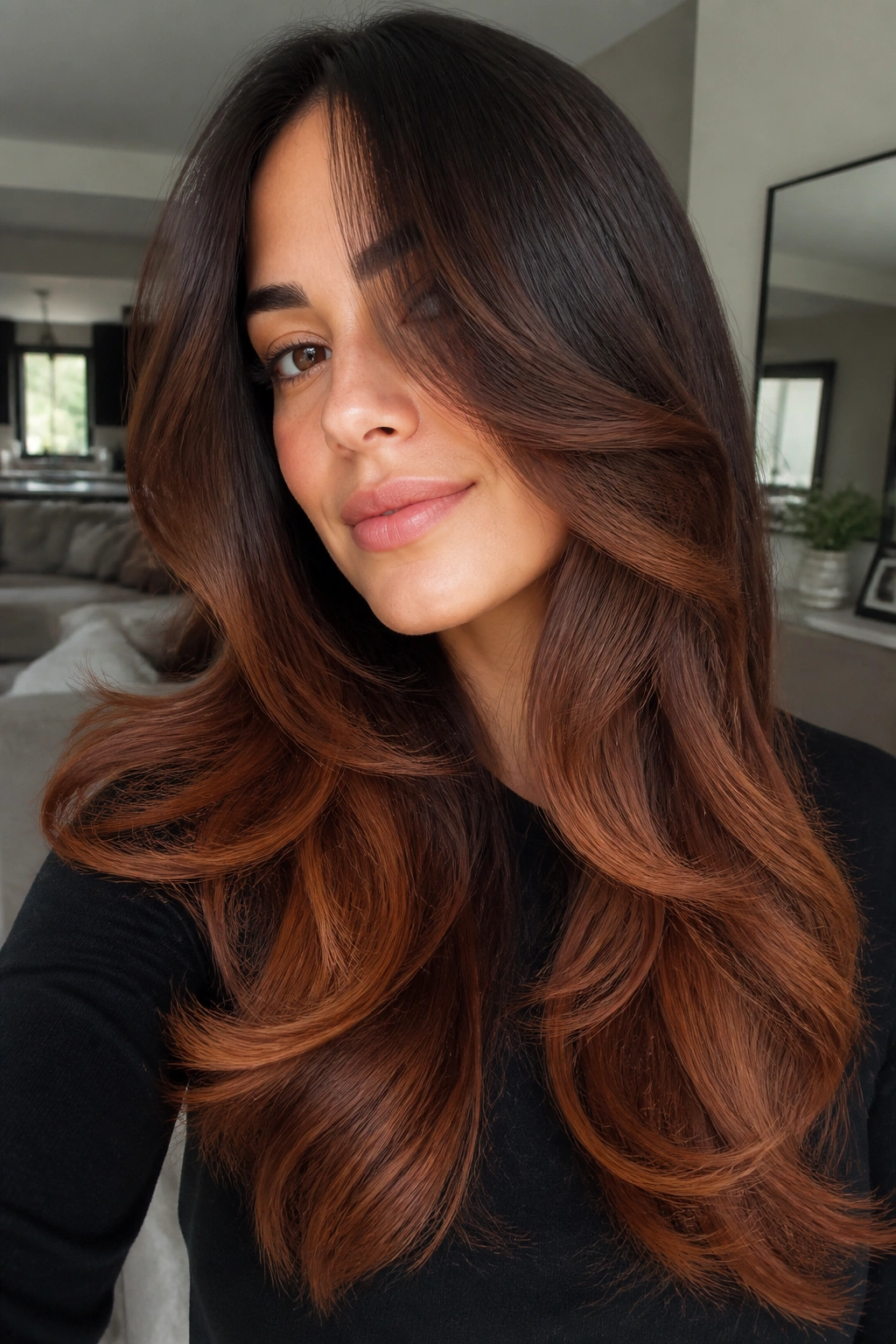
The butterfly cut is a clever option for round faces because it gives you short face-framing layers up top and long length underneath. That creates a built-in vertical stretch, which is exactly what the shape needs.
Add auburn balayage through the ends, and the cut starts to show its structure more clearly. The brighter pieces stay down low, where they can lengthen the eye line without puffing up the cheeks. A round face usually handles this better than a single-length style with the same color, because the layers do the slimming work before the color even starts.
You can wear this cut with waves or a blowout. Both work. The real trick is keeping the top layers smooth enough that they do not flare out at the sides. If the top flips outward, the face looks wider.
This is one of my favorites for thick hair. It removes weight without making the style feel thin.
18. Rust Auburn and a Side-Swept Fringe

Rust auburn has a dry, earthy warmth that sits somewhere between red clay and brown sugar. It is a smart pick for a round face because it has enough color to be interesting without the harsh brightness that can make the cheeks look fuller.
A side-swept fringe helps even more. Unlike a blunt bang, which can cut the face straight across, a side sweep creates a diagonal line. Diagonals are your friend here. They break the circle.
The fringe should be soft, not heavy. If it feels thick at the brow, thin it out a little. If it sits too short, it can make the forehead and cheeks feel boxed in. The best version skimps the brow, then bends away toward one temple.
This look is especially good on straight or softly waved hair. The line of the fringe and the warm rust tone work together to keep the face from feeling broad.
19. Curtain Bangs and Cinnamon Auburn Ribbon Lights
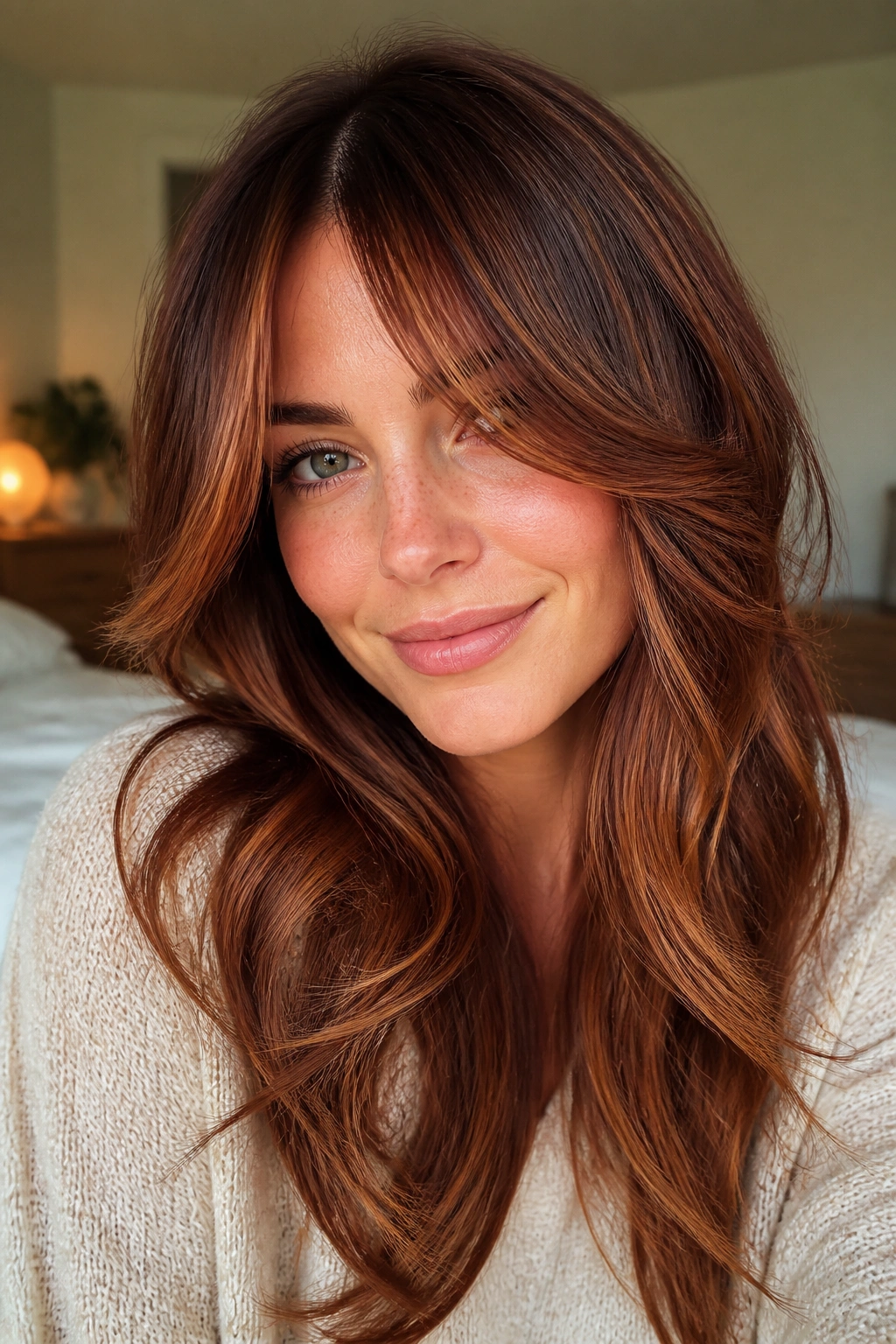
Curtain bangs are one of the easiest ways to flatter a round face because they open in the middle and travel downward along the sides of the face. Add cinnamon auburn ribbon lights, and you get a style that feels soft without losing shape.
Why the Bang Length Matters
The bangs should hit around the cheekbone or just below it. Too short, and they widen the forehead area. Too long, and they start swallowing the face. That in-between length is the sweet spot. It gives you movement across the forehead while still drawing the eye down.
The ribbon lights should echo the bang shape. Thin cinnamon pieces near the front, slightly deeper brown at the root, and warmer ends through the length—that combination keeps the whole look airy.
- Ask for a center-opening fringe with feathered ends.
- Keep the light pieces narrow at the front.
- Blow-dry the bangs away from the cheeks, not inward.
Small detail, big payoff: a soft bend at the ends keeps the bangs from sitting like a curtain wall.
20. Dark Auburn With Glossed Ends for Fine Hair
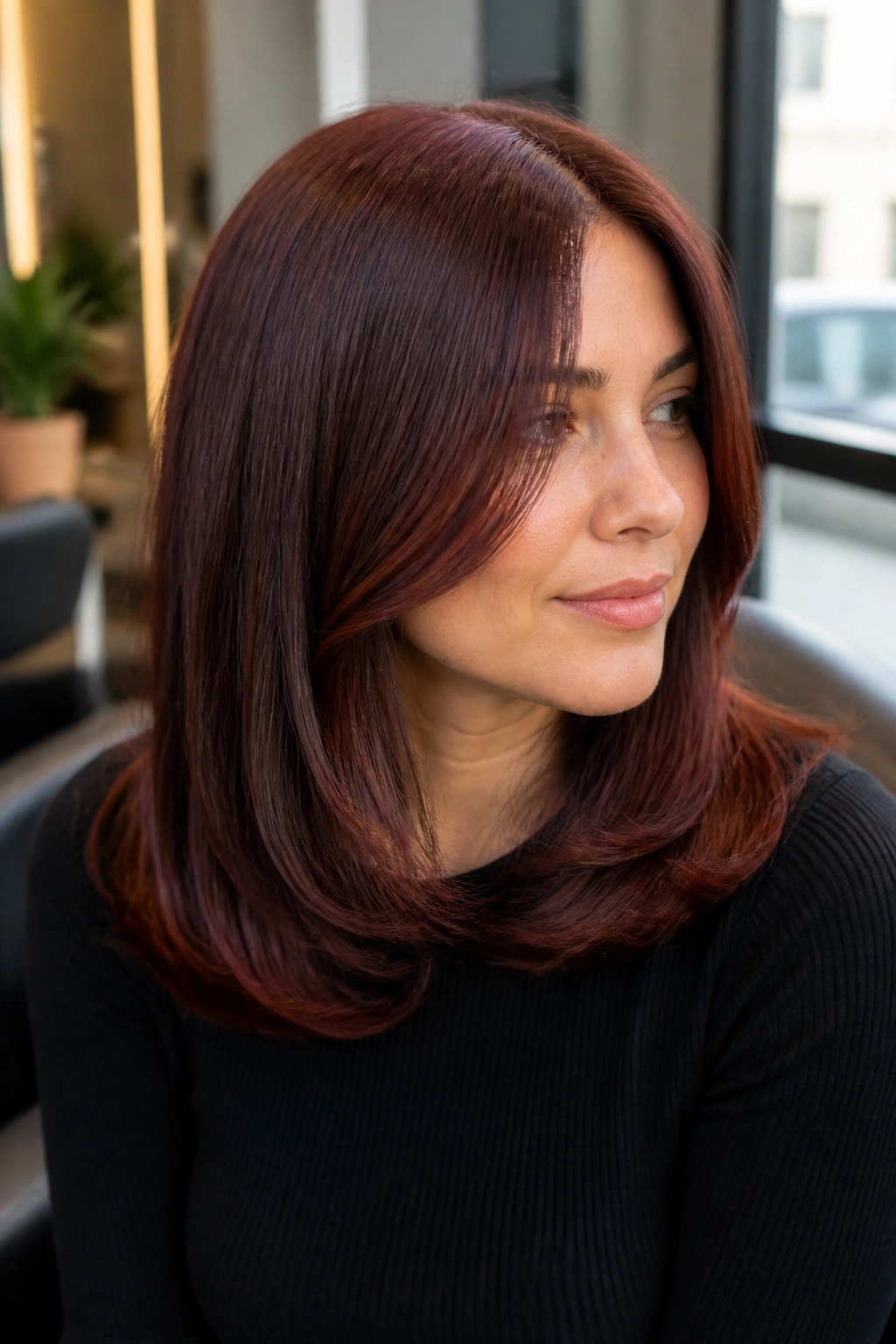
Fine hair often looks better in deeper auburn than in lighter copper, and that is not a mystery. Darker color gives the hair more visual density, while glossy ends make it look smooth instead of see-through.
The ends matter here. If they are rough or too light, the whole style can feel thin. Glossing them creates the illusion of thickness because the shine catches in a narrow band. It is one of those little salon tricks that earns its keep.
This is a strong option for round faces because it keeps the color concentrated and streamlined. The top stays rich, the sides do not blow out visually, and the hair reads as one clean shape instead of a puff of separate pieces.
Do not go too light around the face if your hair is fine. That can make the outline wider and the ends wispy. Dark auburn is the safer, smarter lane.
21. Peekaboo Auburn Panels Under a Brown Top Layer
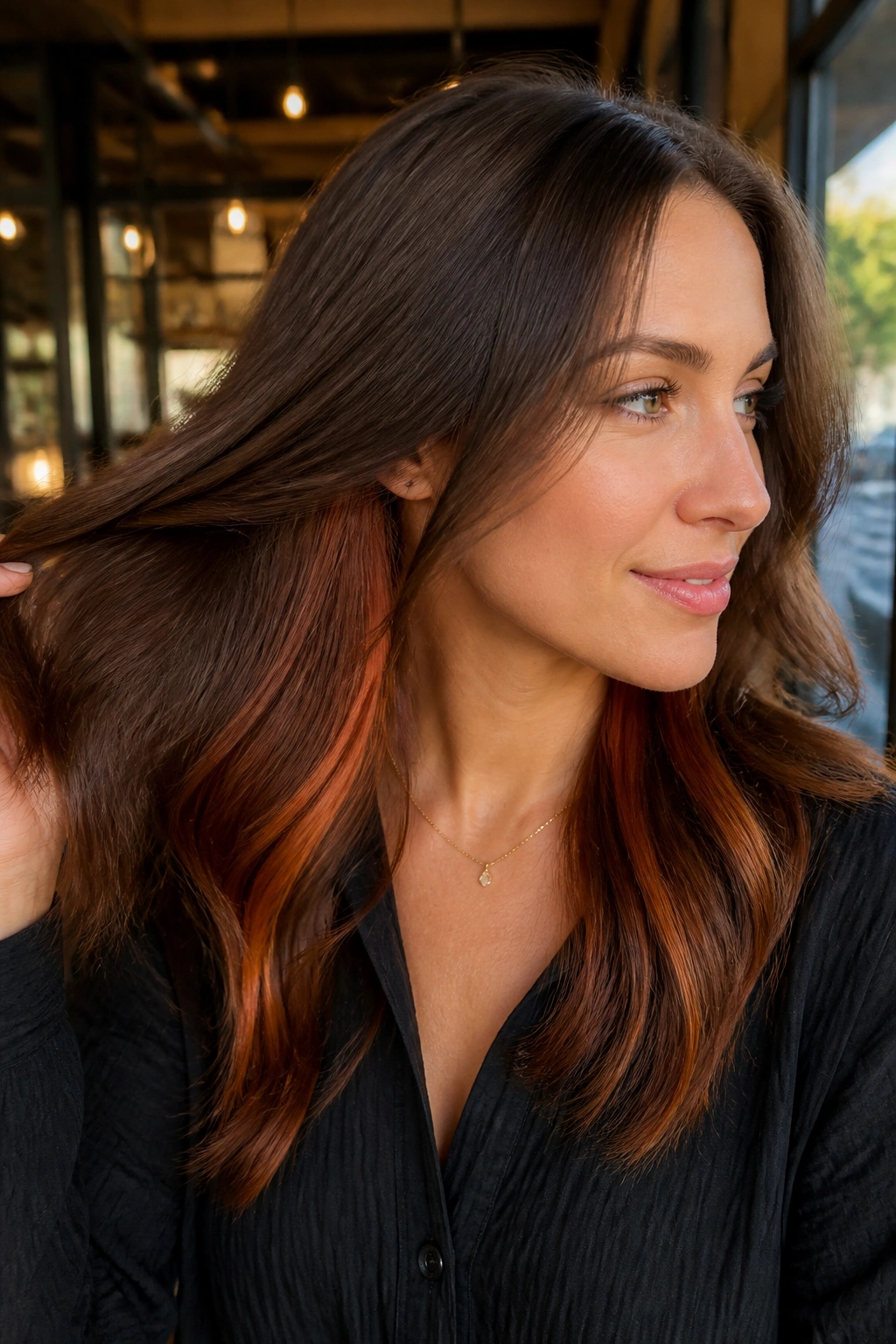
Peekaboo color is for people who want auburn without committing to a full head of red-brown. On a round face, it works because the brighter pieces live under the top layer, so the color shows mostly when the hair moves.
That hidden placement keeps the shape neat. The brown top layer stays calm around the cheeks, and the auburn flashes from underneath at the ends or near the nape. It feels playful without widening the face.
How to Place Them
The best panels are thin and slightly angled, not stacked in a horizontal band. Horizontal color placement can make a round face look broader. Angled panels move the eye downward.
This is a good choice if you work somewhere conservative but still want a little edge. It also grows out nicely because the contrast is hidden until the hair swings.
A small note: keep the top layer deeper by at least one shade, maybe two. That contrast is what makes the peekaboo effect feel deliberate.
22. Bright Auburn Glow for Round Faces
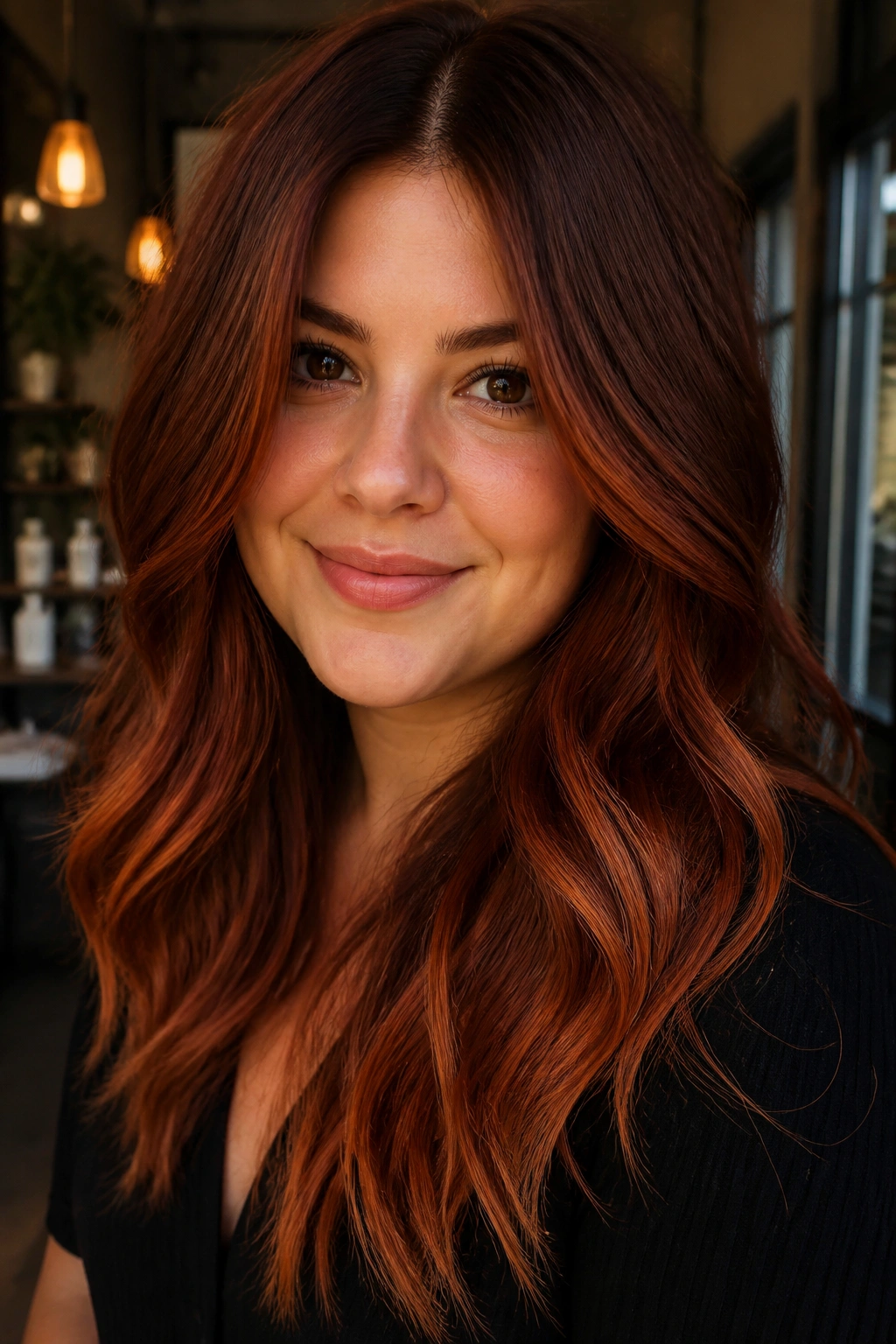
Bright auburn can work on a round face, but only when the brightness is handled with some discipline. That means deeper roots, lighter mids, and face-framing pieces that stop lower than you think they should. If the color starts too high, the face can feel wider fast.
The version I like best has a brown-red base with bright auburn woven through the lower half of the hair. The shine should be soft, not metallic. You want the hair to look full of warmth, not like a single flat red wash.
What to Ask For in the Chair
Ask for dimension, not a block of color. That is the whole brief. A colorist can usually give you a better result if you say you want the face to look longer and the ends to feel lighter than the roots.
- Keep the root one to two levels deeper than the mids.
- Put the brightest auburn below the cheekbone.
- Use an off-center part if your face feels especially full.
- Skip chunky front pieces unless your cut has strong layers to break them up.
If I had to choose one practical rule from the whole list, it would be this: color placement matters more than color intensity. A softer auburn in the right spot will flatter a round face more than the loudest red in the wrong one.
That is the move.
