



Orange is the troublemaker here. Not red, not brown — orange.
Brunette red hair color ideas can look stunning on cool skin tones, but only when the red leans deep, berry-like, wine-dark, or violet-based. If the shade turns too coppery, it can make redness in the cheeks look louder than you want. The trick is to keep the brunette base strong and let the red show up as reflection, depth, or a gloss rather than a screaming stripe of warmth.
That’s why the most flattering choices usually live in the mahogany, black cherry, merlot, plum, and rosewood family. They read rich in daylight, softer indoors, and far less brassy than bright orange-reds. If silver jewelry tends to look better than gold on your skin, these shades are usually the safer lane.
And yes, some of them are subtle. Some are moody. A few are dramatic enough to make straight hair look glassy and curls look deeper. The good ones don’t fight cool undertones — they sit alongside them, which is exactly why they look expensive without trying too hard.
1. Espresso Cherry Brown
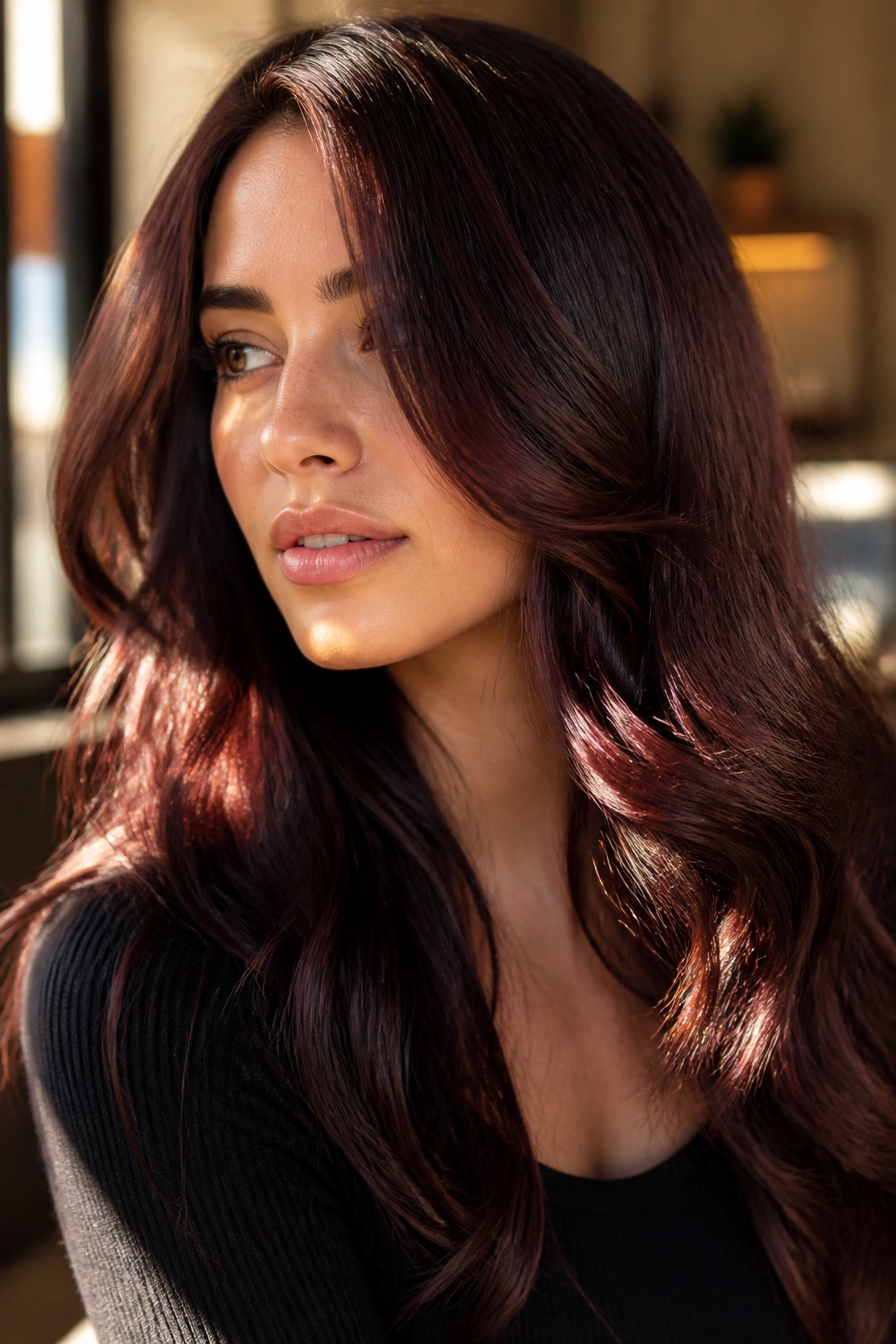
This is the shade for someone who wants dark hair first and red second. Espresso cherry brown keeps the brunette base deep, then slips in a cherry reflection that shows up most in sunlight or under warm indoor lights. On cool skin, that darker red note tends to look smoother than copper, because the brown does most of the visual work.
What I like about this shade is the restraint. It feels polished on day one and still looks intentional when it starts to soften, because the fade stays in the brunette family instead of drifting orange. Ask for a level 3 or 4 brown with a cherry or garnet gloss, not a bright red dye job.
A little shine serum helps here. The color wants gloss, not matte dryness.
2. Mahogany Brunette
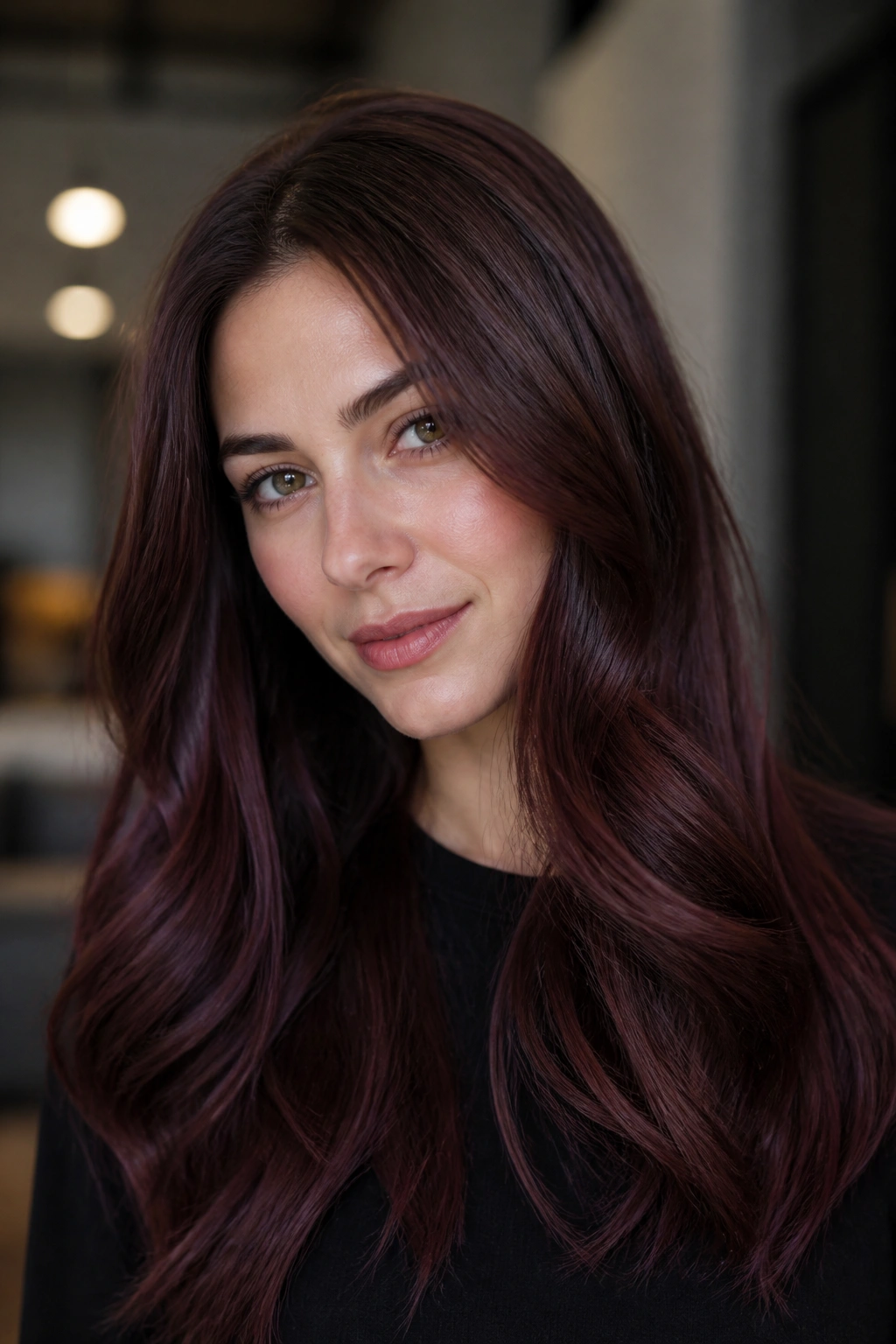
Mahogany is one of those shades that just behaves.
Why It Flatters Cool Undertones
It usually sits between brown and red-violet, which is exactly why it works so well on cool skin tones. The violet note cools the warmth down, and the brown base keeps the color wearable instead of flashy. If your skin gets pink in strong light, mahogany is often friendlier than cinnamon or copper.
- Ask for a level 4 or 5 brunette base with mahogany lowlights or a demi-permanent gloss.
- Keep the red note muted, not fire-engine bright.
- Best on medium to deep cool skin, though fair cool skin can wear it too if the red stays soft.
My favorite version is the one with a soft root shadow. It grows out better and keeps the color from looking flat at the scalp.
3. Blackberry Brunette
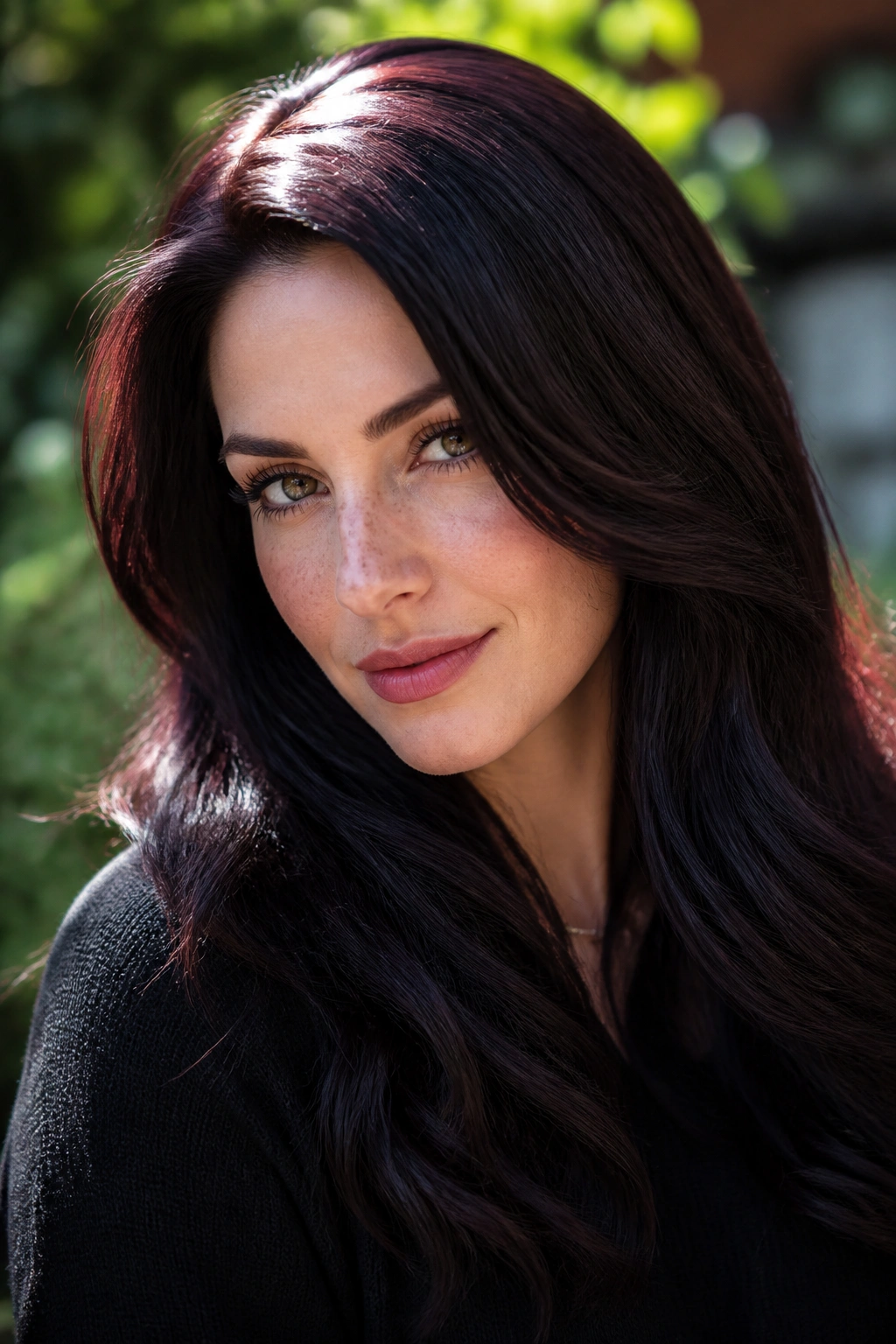
Blackberry brunette has that dark, almost inky look that shows berry color only when the light shifts. It’s subtle in the best way. Indoors, it can read like a deep chocolate brown. Step outside, and the berry sheen turns the whole style richer.
This is a smart choice if you want brunette red hair color ideas that don’t announce themselves from across the room. On cool skin, the berry undertone plays nicer than orange-red because it feels darker and cleaner. Straight hair makes the sheen more obvious, but waves can be lovely too because each bend catches a slightly different tone.
A gloss every few weeks keeps the berry from fading into a dull brown. Without that refresh, it can lose the fun part.
4. Merlot Melt
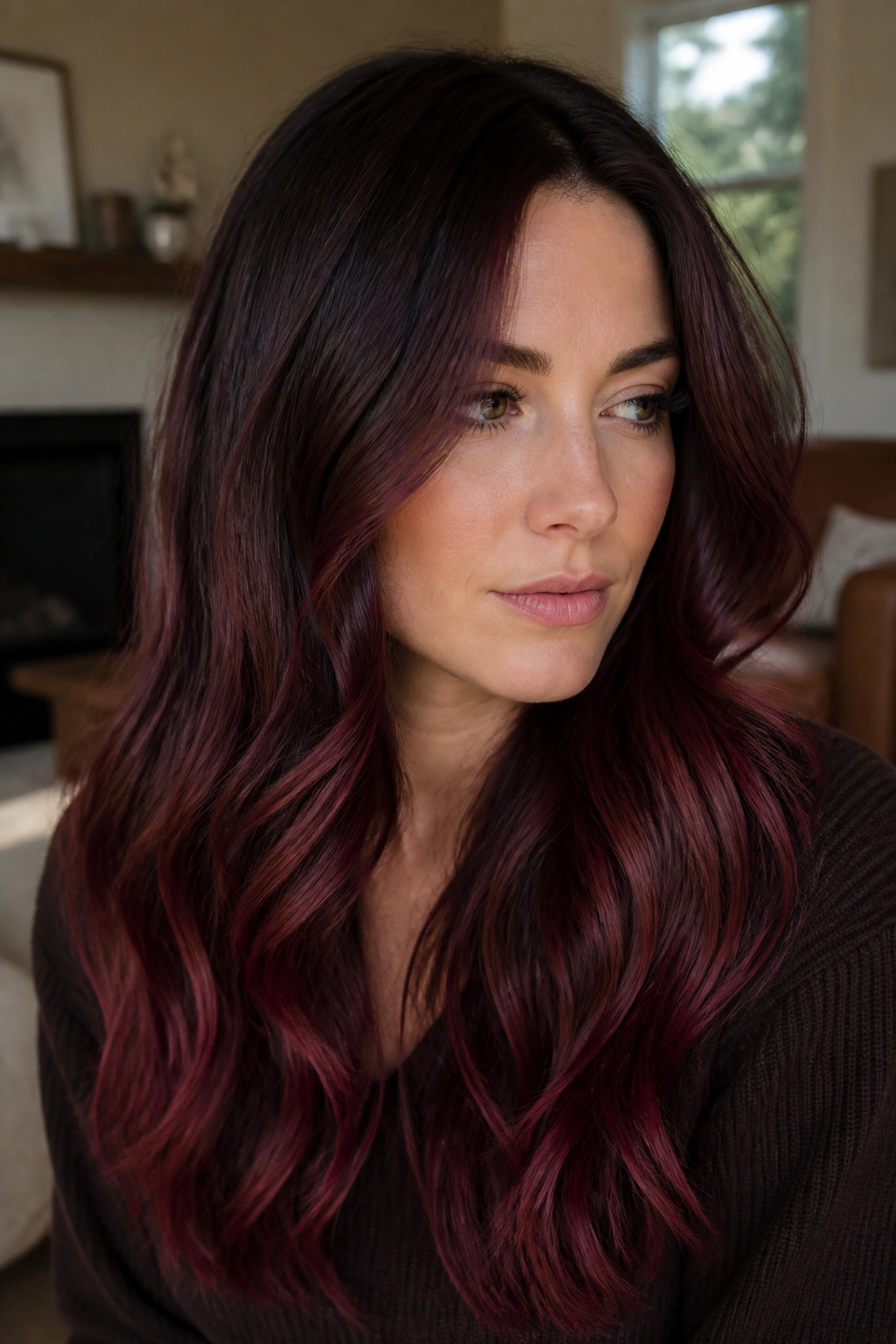
Merlot melt is what happens when brunette depth meets wine-red ends in a soft, blended way.
Rather than placing the red everywhere, the color starts darker near the roots and gets more saturated through the mid-lengths and ends. That makes it feel lived-in and expensive in the practical sense — fewer harsh lines, less obvious grow-out, and a better chance of flattering cool undertones because the red stays deep.
This shade works especially well if your hair already has movement. Long layers, a loose wave, or a blunt cut with shine all help the merlot tones show up. Ask for a shadow root and a merlot glaze, not a copper balayage. Those are not the same thing, and your skin will know the difference.
5. Rosewood Brown
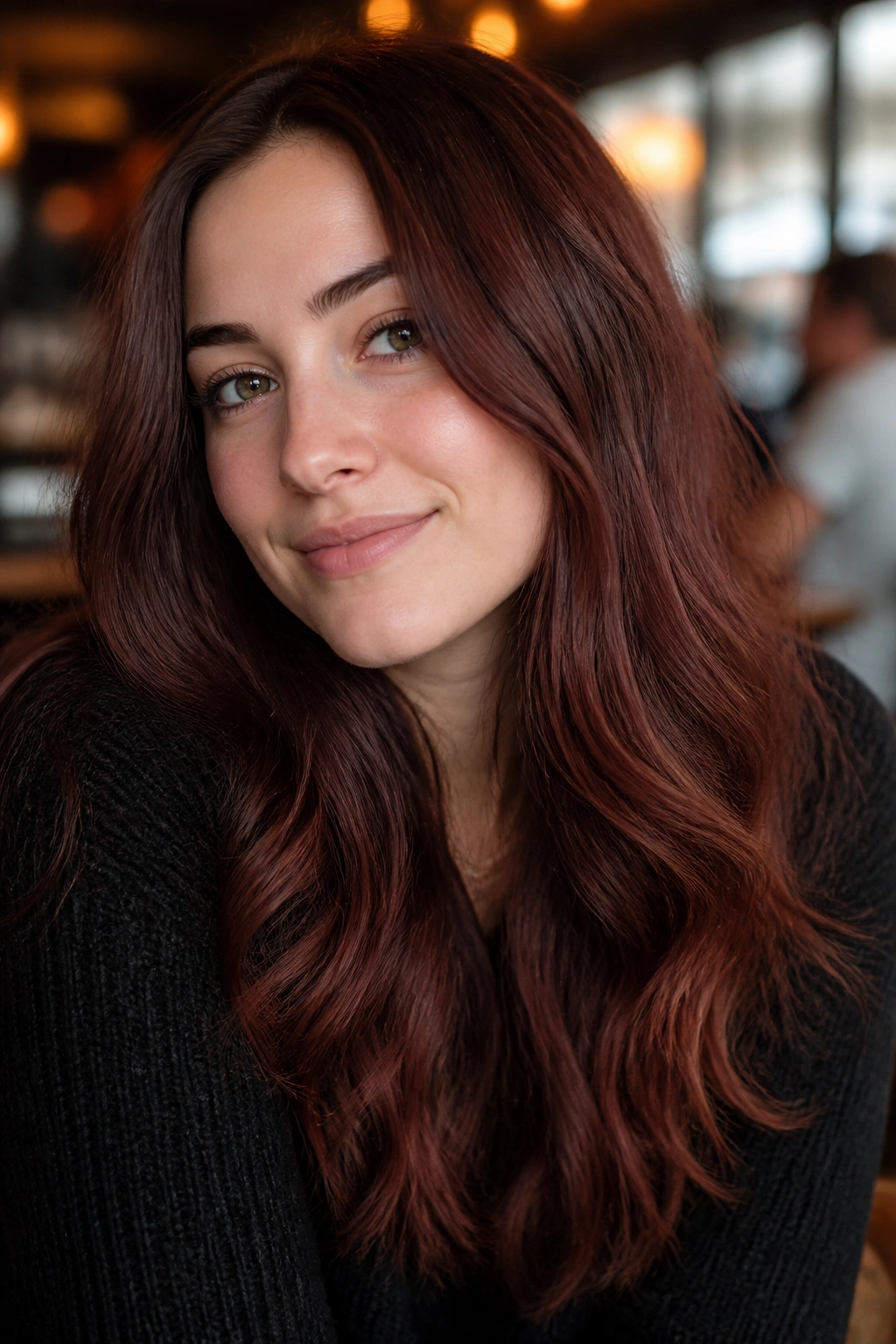
Rosewood brown is soft, muted, and a little romantic without tipping sugary.
It sits in that lovely middle zone between red-brown and dusty pink-brown. On cool skin tones, that matters. The rose note keeps the color from feeling muddy, while the brunette base stops it from looking pastel or overly fashion-forward. It’s a good pick if you want people to notice the hair, not the dye job.
This shade also behaves well on finer hair because it doesn’t need huge contrast to look dimensional. A simple gloss can do the job. If you’re nervous about red hair, rosewood is one of the gentlest ways to test the waters.
6. Garnet Gloss
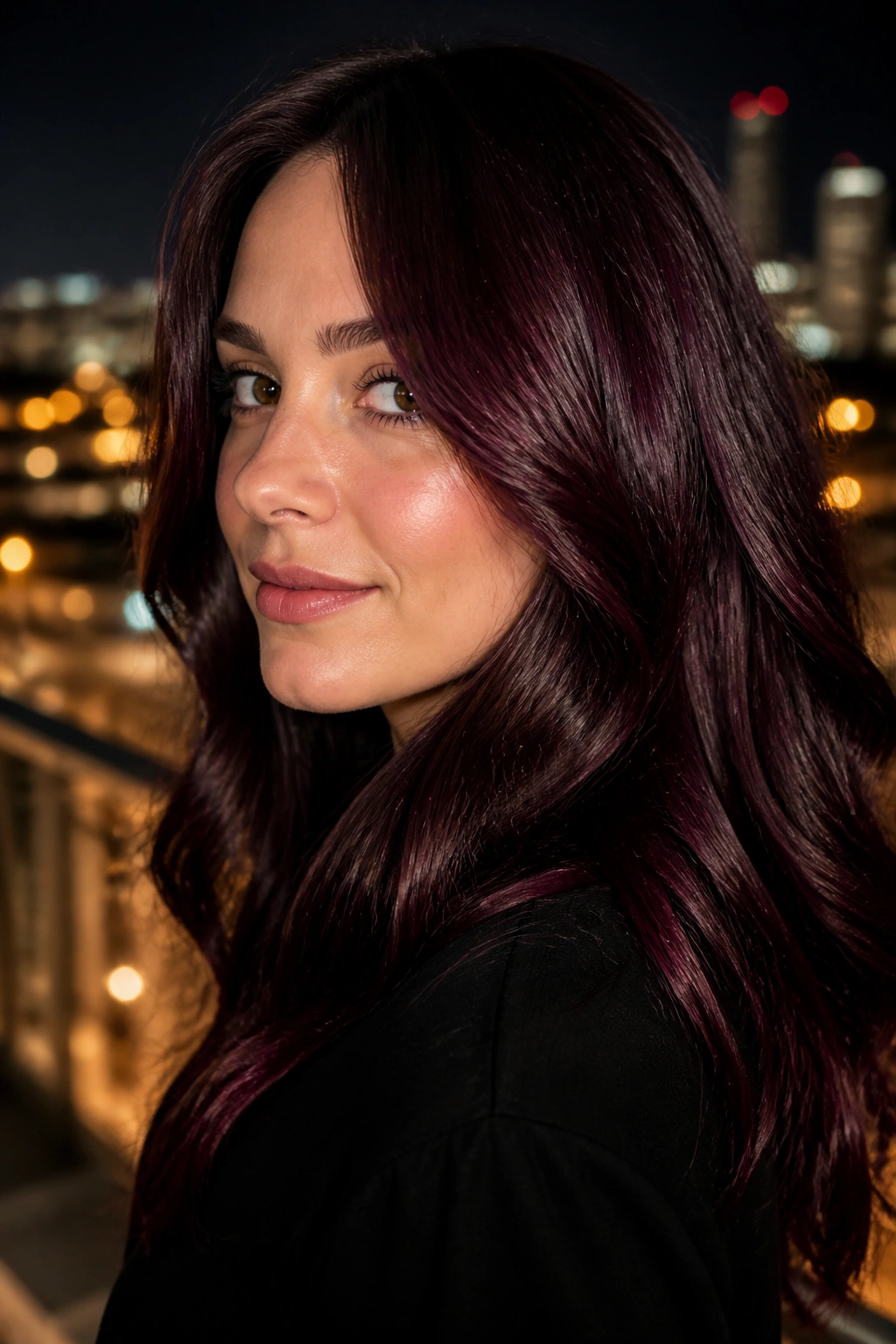
Garnet gloss is all about shine.
What to Ask For at the Salon
You want a brunette base with a clear red-violet glaze laid over the top. Garnet is deeper than cherry and richer than cranberry, so it gives the hair that jewel-toned look without sliding into orange. On cool skin, it reads expensive and a little moody, which is never a bad thing.
- Ask for a level 4 brunette with garnet or ruby-gloss reflection.
- Keep the finish glossy rather than matte.
- Works especially well if your ends are already lightened a little from sun or past color.
If your hair feels flat, this shade wakes it up fast. It’s one of the easiest brunette red hair color ideas for adding depth without making the whole head look lighter.
7. Black Cherry Brunette
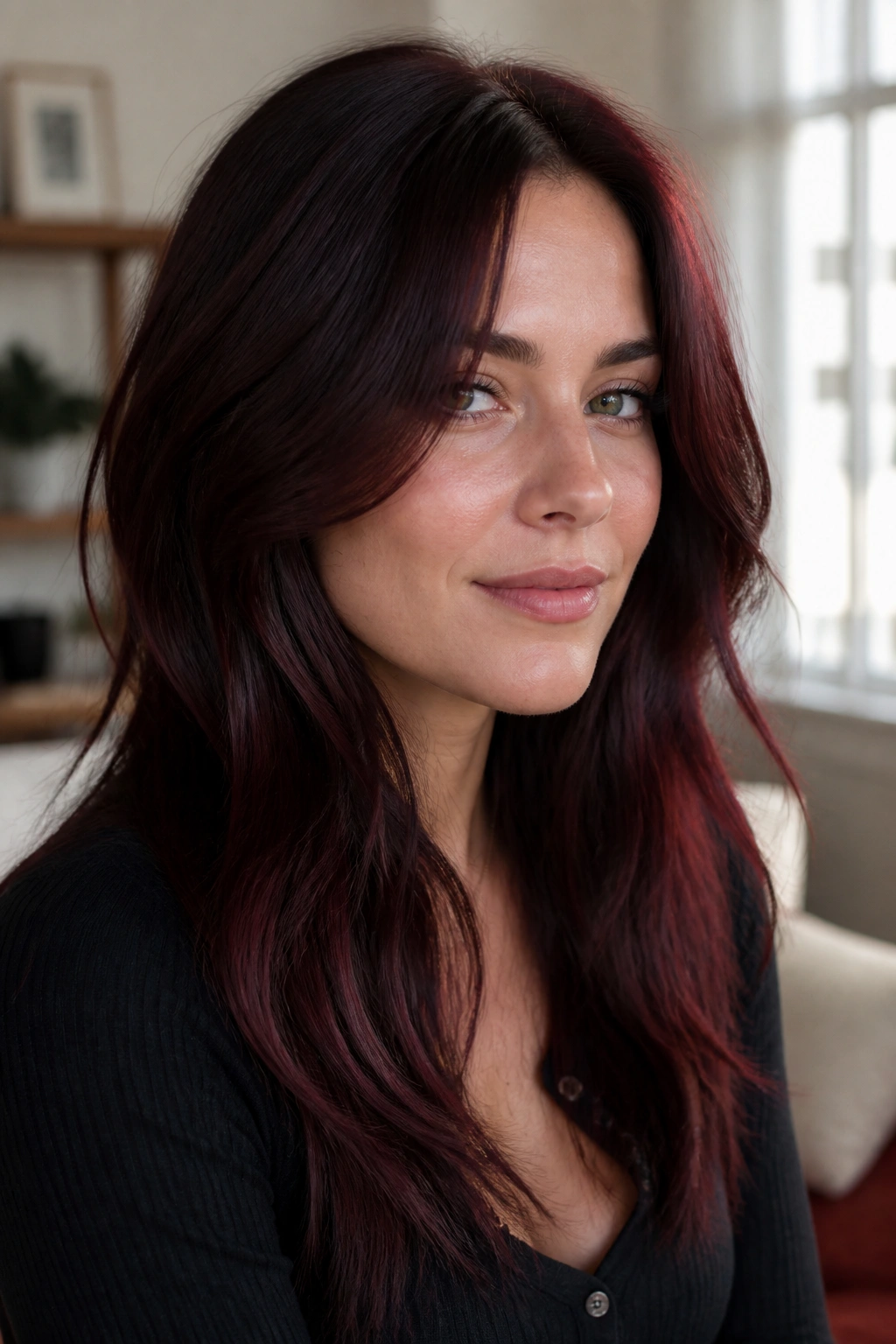
Black cherry brunette is for people who like drama, but not noise.
The hair looks nearly black at first glance, then the red comes forward in daylight like a dark cherry skin. That makes it a strong match for cool skin tones, especially if you prefer deeper colors around the face. The contrast can make pale skin look cleaner and deeper skin look richer. It’s a surprisingly flattering balance.
Compared with espresso cherry, black cherry runs darker and a touch cooler. That extra depth is what makes it feel more sophisticated and less playful. If you want the shade to hold its shape, ask for a brown-black base with cherry toner or a violet-red gloss. Pure red dye will push it too far.
8. Plum Brown
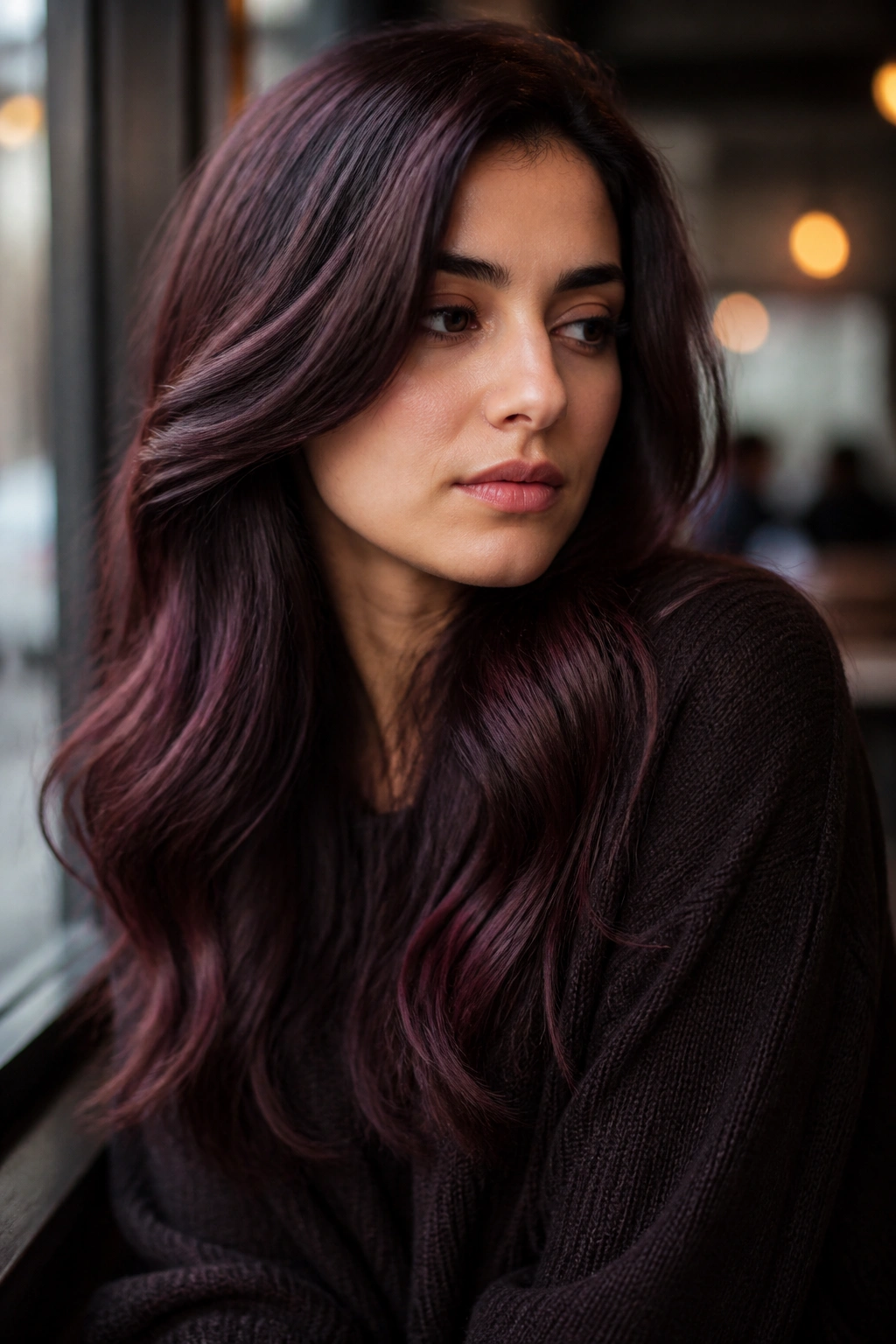
Plum brown is one of the easiest ways to get red into brunette hair without going warm.
The plum note brings in a blue-violet cast, which cool skin usually likes. Under indoor lighting, the hair can look like a dark brown with a soft plum glaze. Outside, the color opens up and shows more red-violet movement. It’s subtle, but not boring. There’s a difference.
This is a good pick if you’ve tried copper shades before and felt they pulled too orange. Plum brown solves that problem by staying on the cooler side of the red spectrum. The only catch is upkeep: if the violet fades too far, it can go flat. A color-depositing mask or gloss helps keep the tone alive between salon visits.
9. Burgundy Balayage
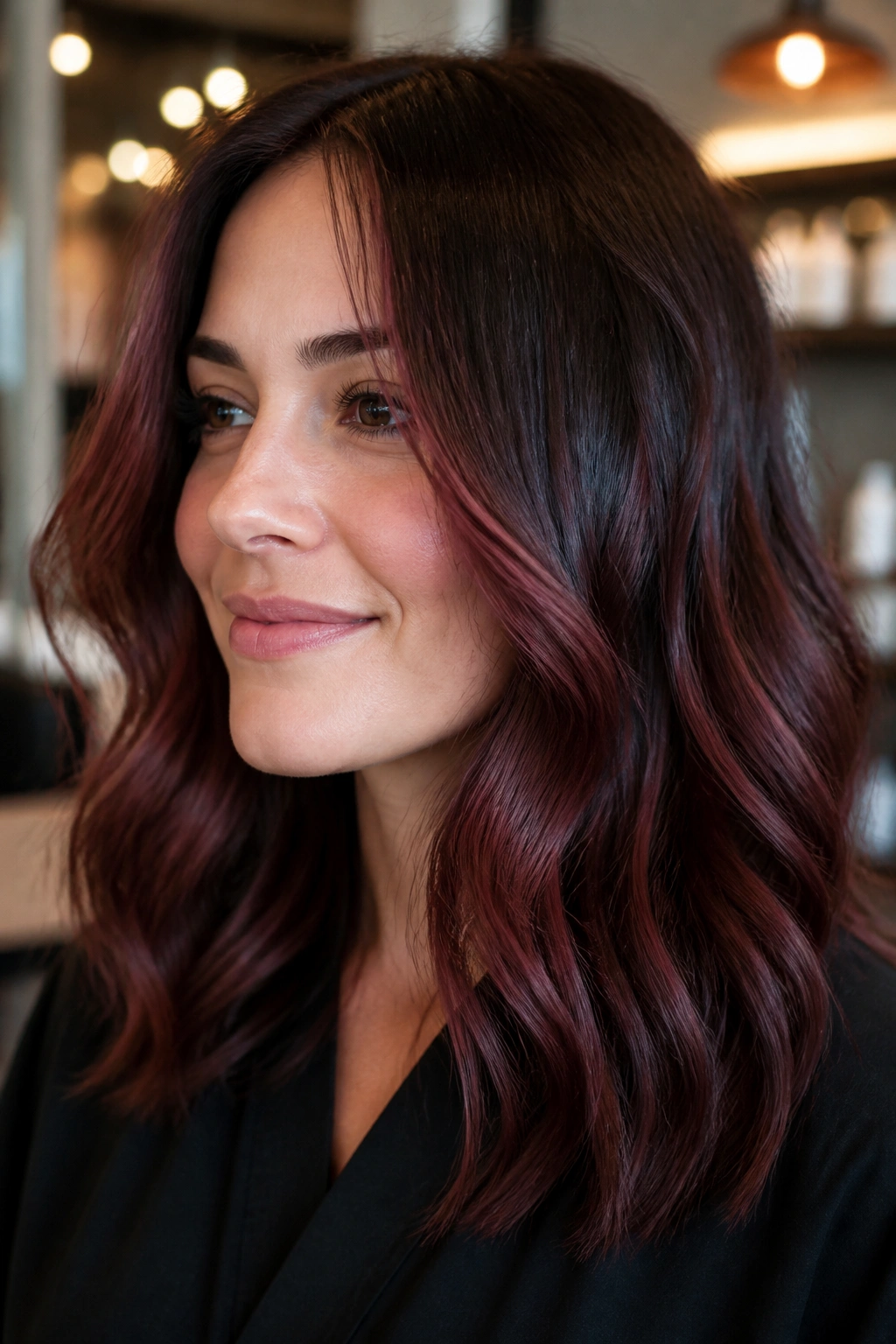
Burgundy balayage is for someone who wants dimension more than an all-over color change.
The trick is placement. A brunette base gets hand-painted burgundy ribbons through the mid-lengths and ends, with face-framing pieces getting just a touch more light-catching red. That keeps the style from looking blocky. It also works beautifully on curls, where each ribbon moves separately.
Placement Matters More Than People Think
If the burgundy is packed too close together, the result can look heavy. If it’s too sparse, the red disappears. The sweet spot is visible but soft, especially around the front.
- Keep the root darker for easier grow-out.
- Concentrate color on the surface and the lower half of the hair.
- Choose a burgundy that leans wine-red rather than brick-red.
This is one of the few red-brown looks that can feel bold and still wear well on a Tuesday.
10. Smoky Auburn Brown
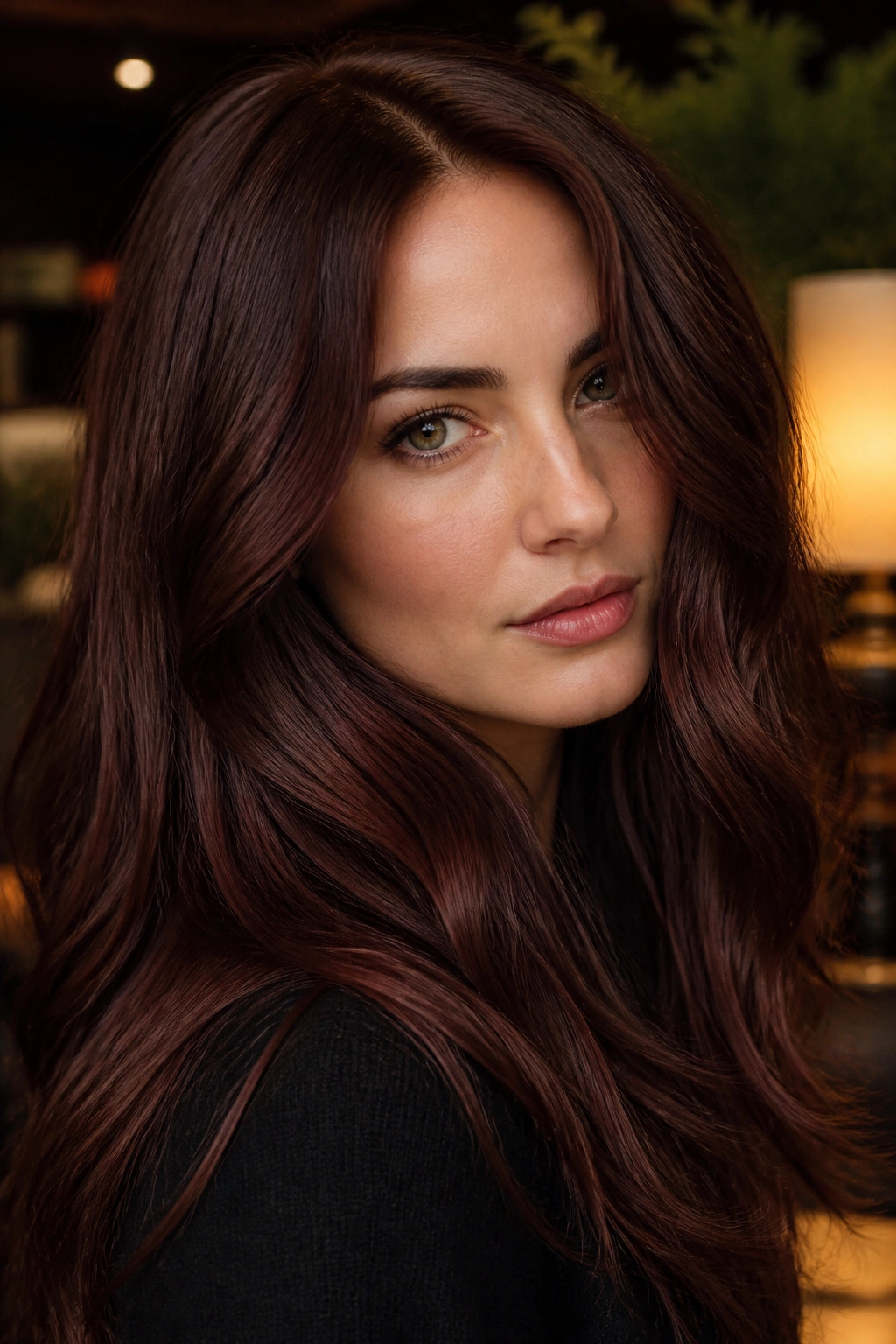
Smoky auburn brown is auburn with the temperature turned down.
That matters, because auburn can go very orange very fast. The smoky version keeps the brown base strong and mutes the copper edge with ash or blue-red depth, which is much friendlier to cool skin. You still get warmth, but it doesn’t look like the hair is fighting your undertone.
If you like red hair but have always been wary of bright copper, start here. It gives you the red-brown feeling without the pumpkin effect. Ask a colorist for a muted auburn with brunette depth and a cool gloss. That phrasing may sound a little fussy, but it saves a lot of disappointment.
11. Chocolate Raspberry Brown
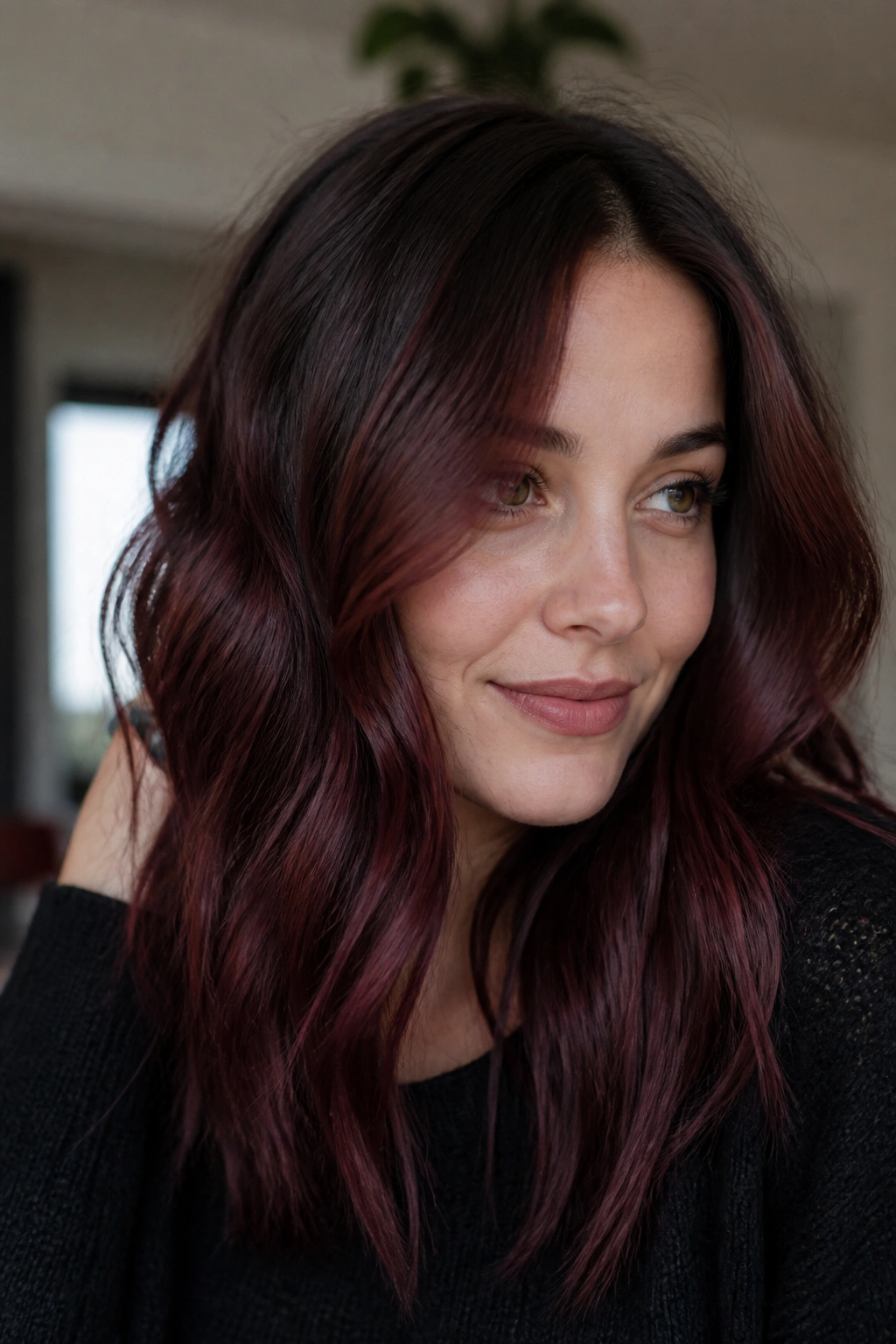
Chocolate raspberry brown has a dessert name, sure, but the color itself is more grown-up than playful.
The base is a soft chocolate brunette, and the raspberry tone sits on top like a sheer wash. On cool skin, raspberry does a lot of useful work because it reads fresh instead of orange. It also keeps dark brown hair from looking too severe, which can happen when the shade is all depth and no reflection.
I like this shade on mid-length cuts and layered waves. The movement lets the raspberry pieces peek through instead of sitting in one flat sheet. If your hair tends to swallow red pigments, ask for a raspberry glaze over pre-lightened ends or lighter brown lengths. That gives the color a better chance to show up.
12. Mulberry Melt
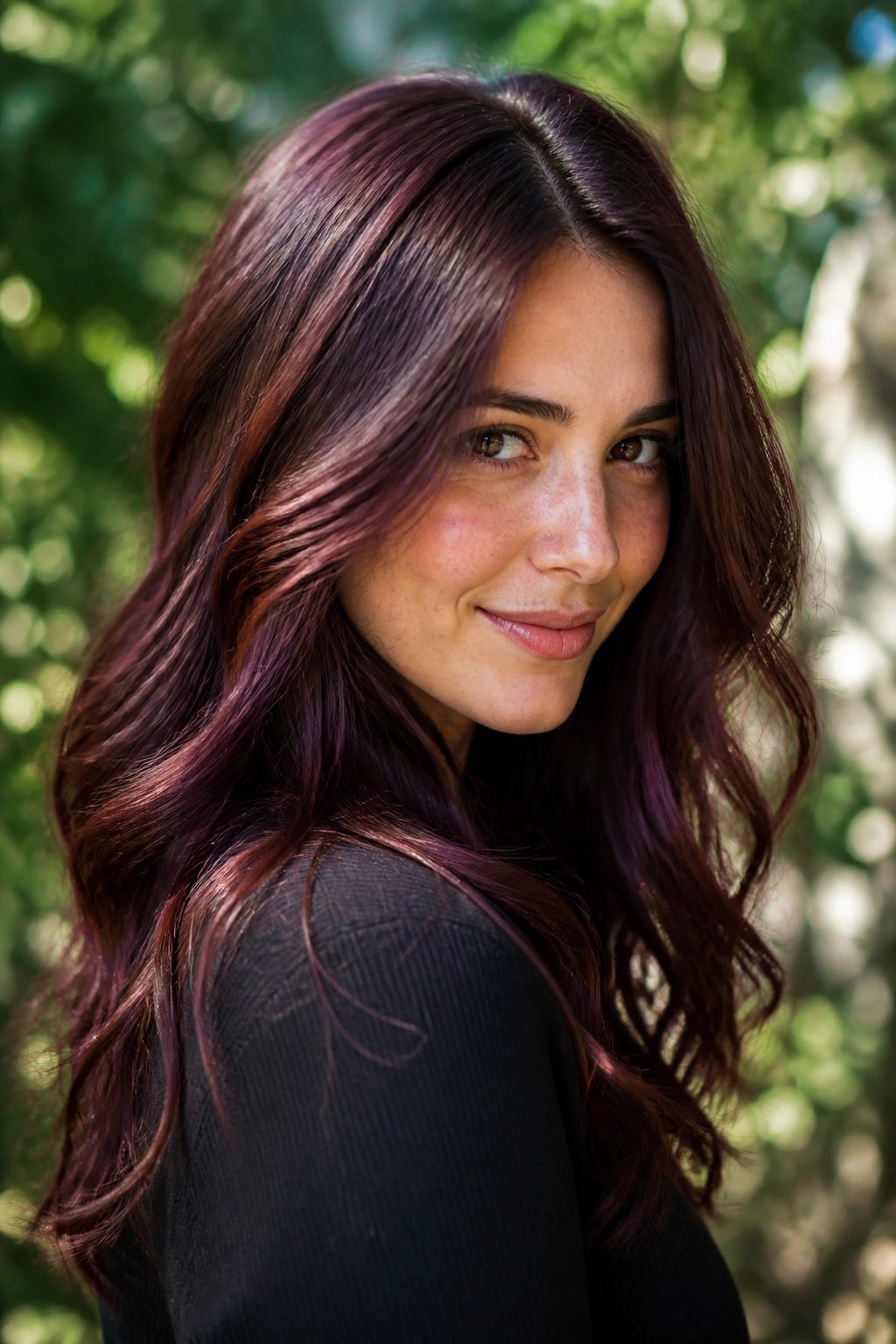
Mulberry melt feels lush without trying to be loud.
The color usually blends deep berry tones into brunette hair so the result looks layered, not painted. That softness matters on cool skin because mulberry sits comfortably between red and purple. It avoids the orange trap and gives the hair a richer, darker finish than strawberry or rust ever could.
This shade looks especially good on wavy or curly textures. Why? Because the color breaks up across the bends and coils, which makes the mulberry note feel woven into the hair instead of sitting on top of it. If your hair is pin-straight, you can still wear it — just lean on gloss and shine so the color doesn’t read muddy.
13. Cabernet Brunette
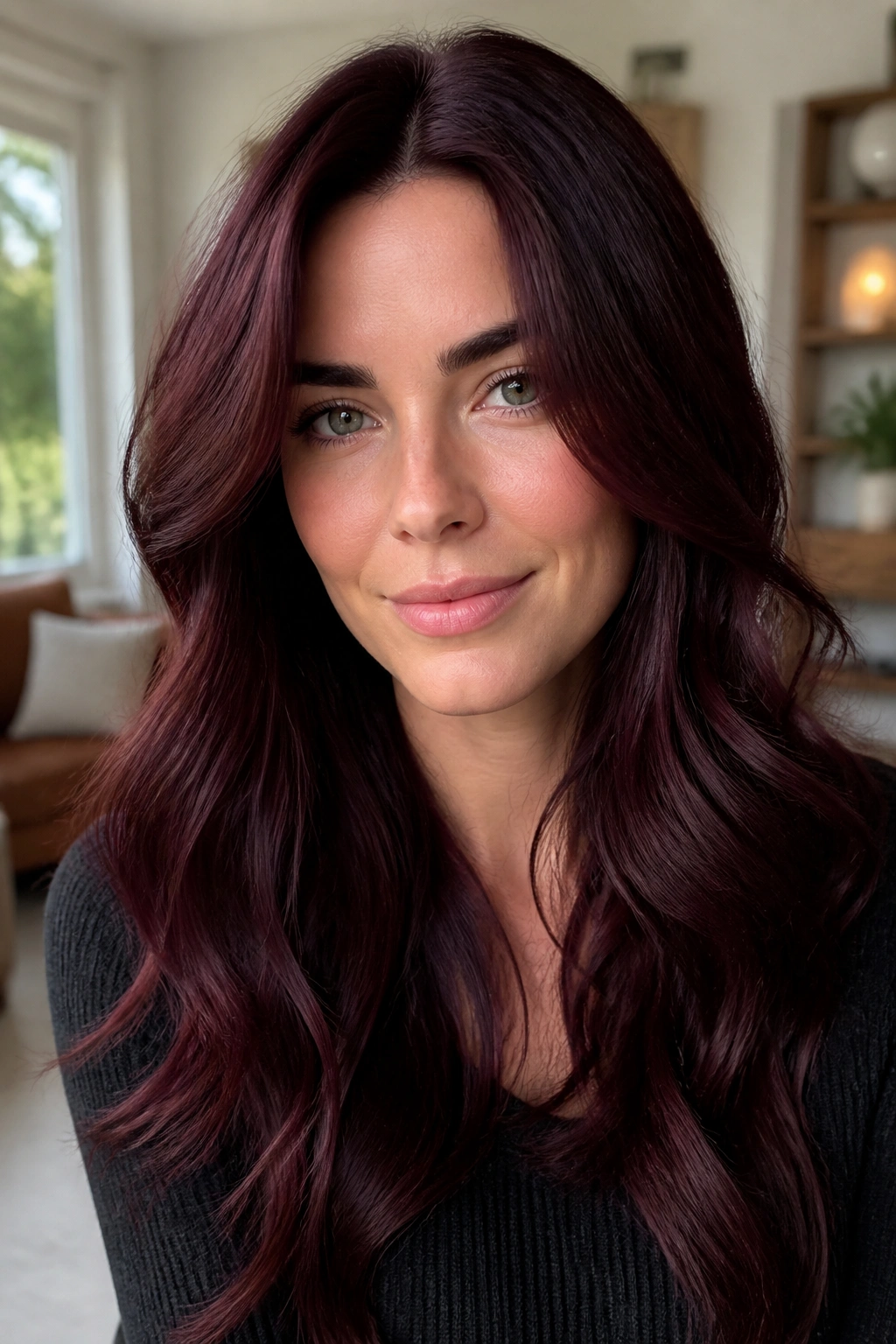
Cabernet brunette is deep, glossy, and a little serious in the best way.
Think dark wine in hair form. The red note is rich and cool, not sugary or orange, which is why it tends to flatter cool undertones so well. In low light, it can look like a deep brown. In bright light, the wine tone starts to bloom. That little shift is what gives it character.
This shade works well if you like your hair to feel expensive but not delicate. It holds its shape on thick hair and looks especially strong against fair cool skin, where the contrast can be dramatic in a clean, sharp way. If you want shine, this is the moment to ask for it — cabernet without gloss loses half its appeal.
14. Cherry Cola Brunette
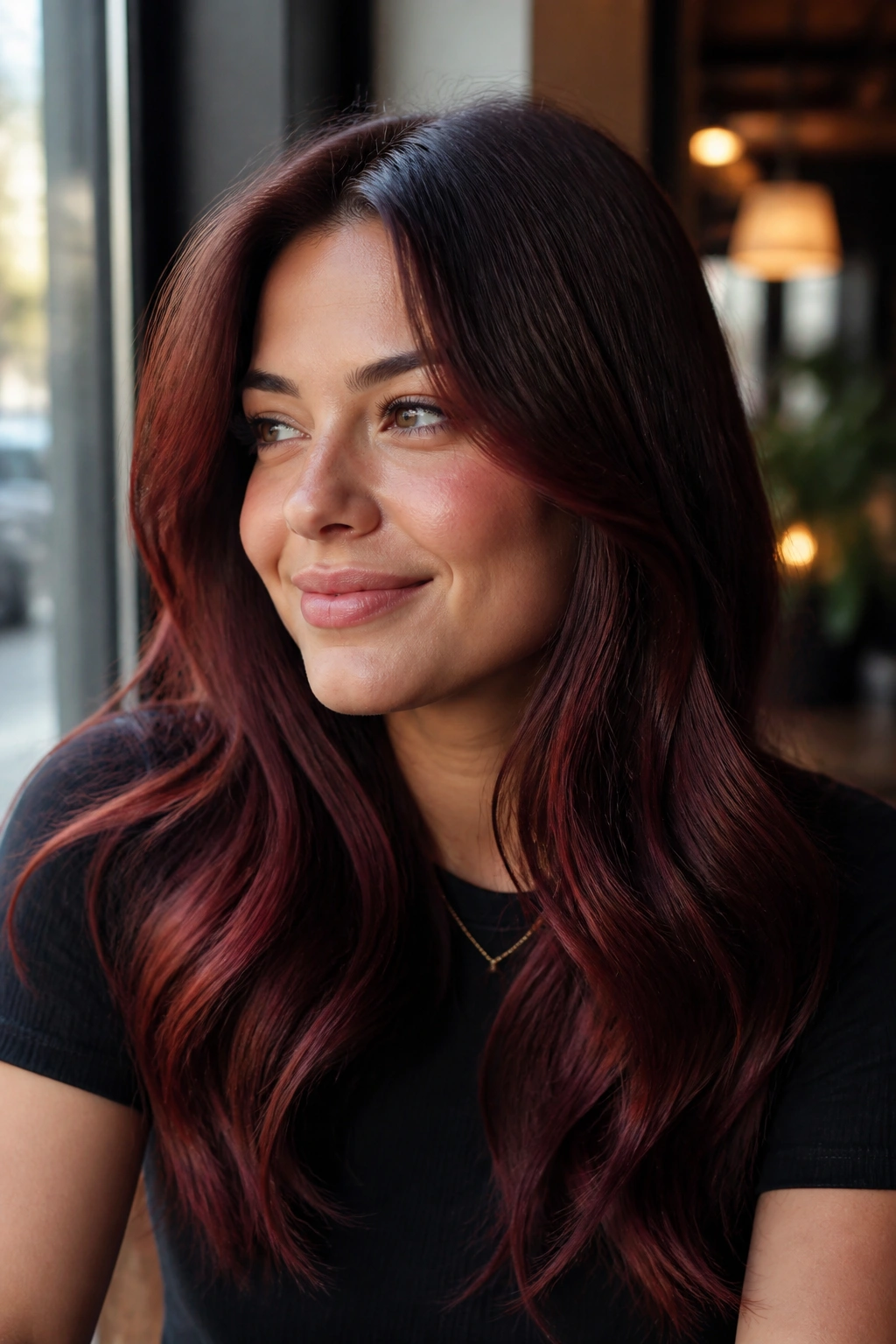
Cherry cola brunette has a nostalgic feel, but it’s not stuck in the past.
The color mixes brown depth with a red finish that looks slightly fizzy in the light — not literally, obviously, but you get the idea. It’s darker than cranberry and less purple than plum, which makes it one of the more wearable red-brown options for cool skin. The brunette base keeps it grounded.
This is a nice first red if you don’t want a big commitment. It reads soft and dimensional rather than high-contrast, and it fades in a fairly gentle way. I’d choose it for someone who wants a red-brown that can live in office lighting without shouting. That’s a useful category, by the way. Not every color needs to be dramatic.
15. Cranberry Brown
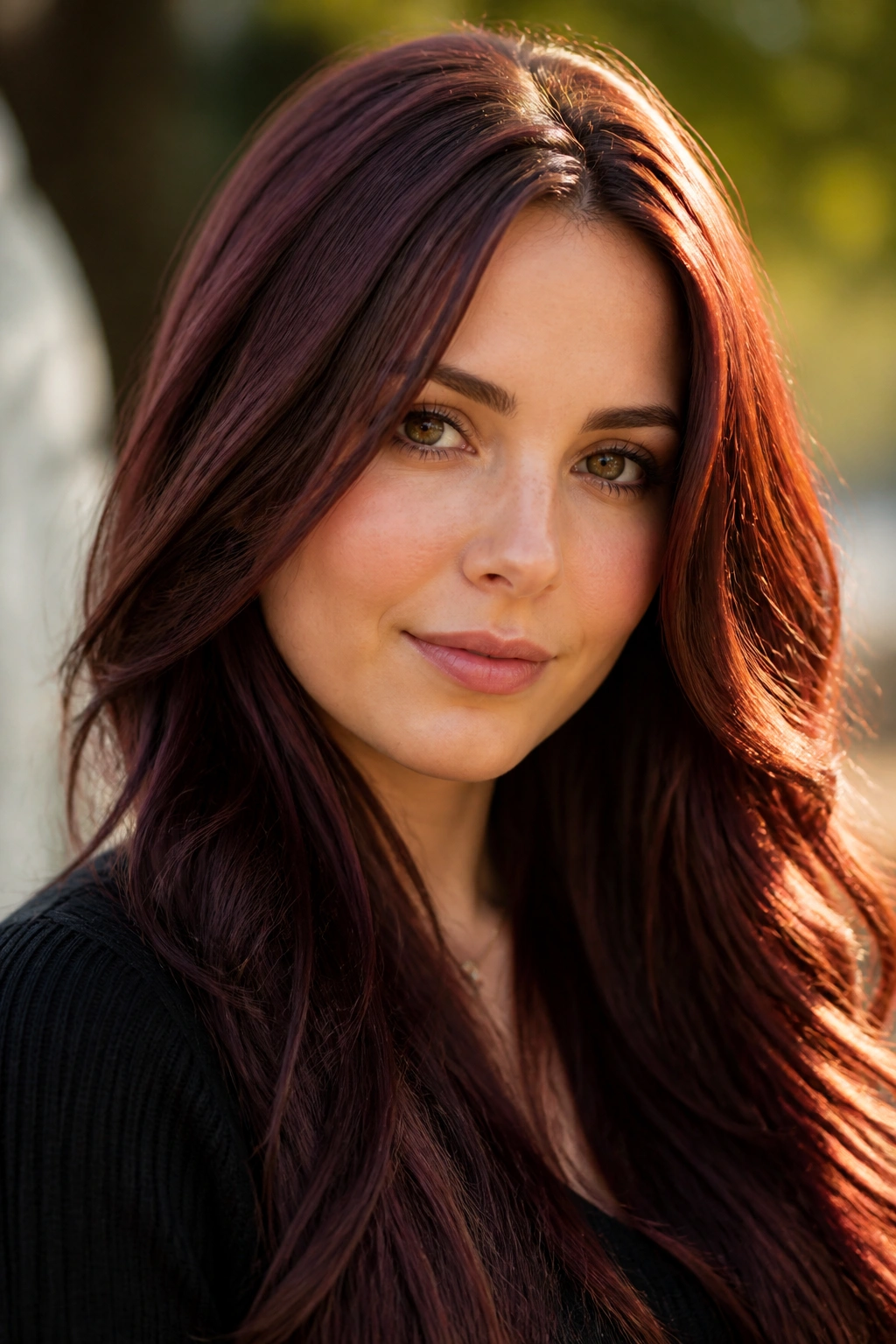
Cranberry brown brings a little more brightness to the table, but it still belongs to the brunette family.
The cranberry note is cooler and cleaner than copper, which is what makes it work so well on cool skin tones. It has enough red to feel fresh, yet enough brown to keep it grounded. On lighter cool complexions, that balance can be especially nice because it doesn’t overwhelm the face.
This shade likes shine. A dry cranberry brown can look flat, while a glossy one looks crisp and dimensional. If your hair is naturally medium brown, you may not need much lift at all. If it’s very dark, the cranberry will show better through a glossed balayage or a few lighter ribbons near the surface.
16. Violet Brown
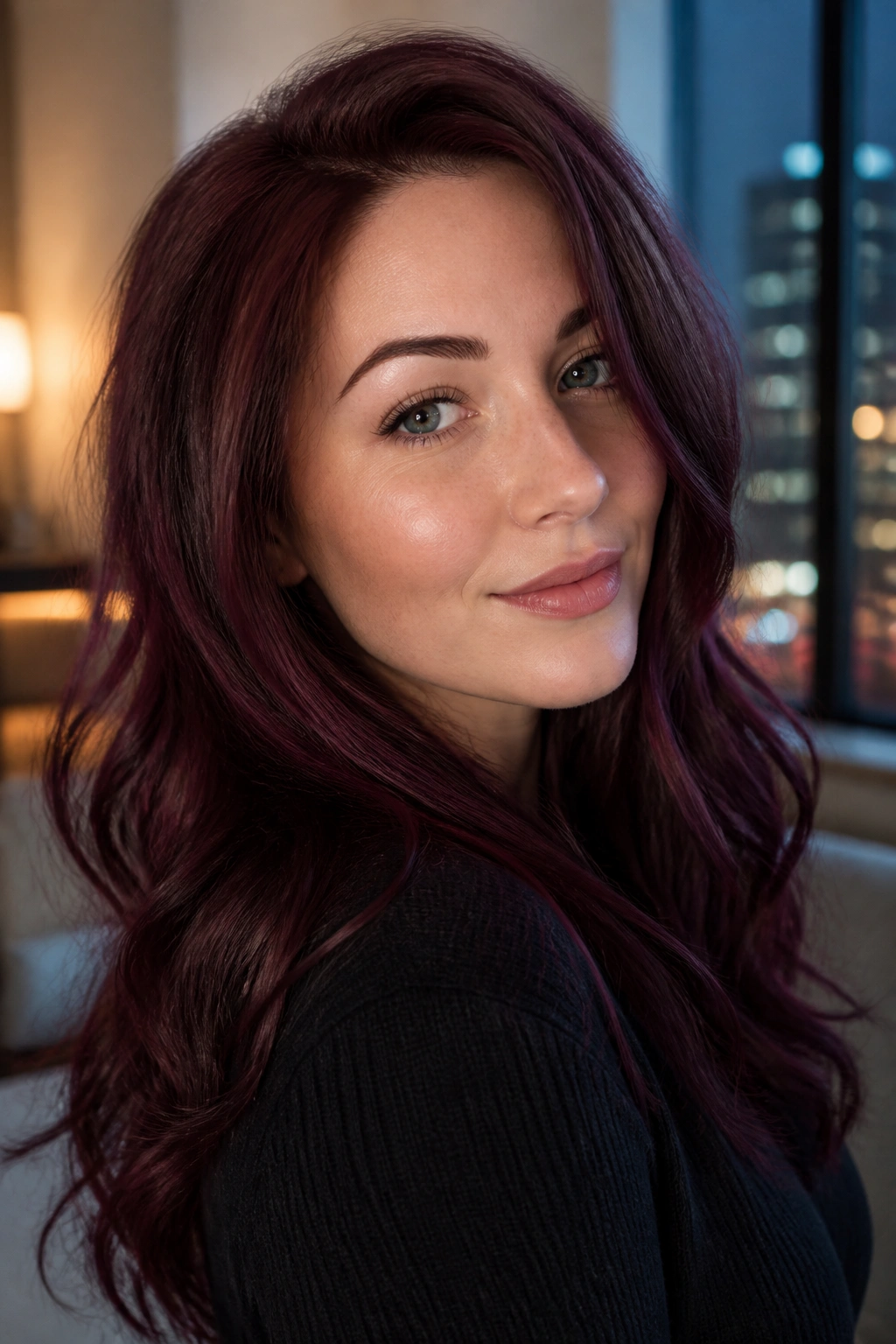
Violet brown is the sleeper hit of the whole group.
It isn’t red in the obvious sense, but it absolutely belongs here because violet-brown hair carries that cool red-violet energy that flatters cool skin so well. It can look like deep chocolate indoors and pick up a faint plum sheen in daylight. Very elegant. Very low drama. Very useful if you hate warmth.
What Makes It Different
The violet undertone keeps the brunette from feeling flat. It also plays nicely with pink or rosy skin because it doesn’t fight the undertone the way orange-based color can.
- Great for people who want a red-brown effect without obvious red.
- Works well on glossy blowouts and polished waves.
- Can be refreshed with a violet-brown gloss rather than full recoloring.
If copper has burned you before, this is the cleaner answer.
17. Rose Mahogany
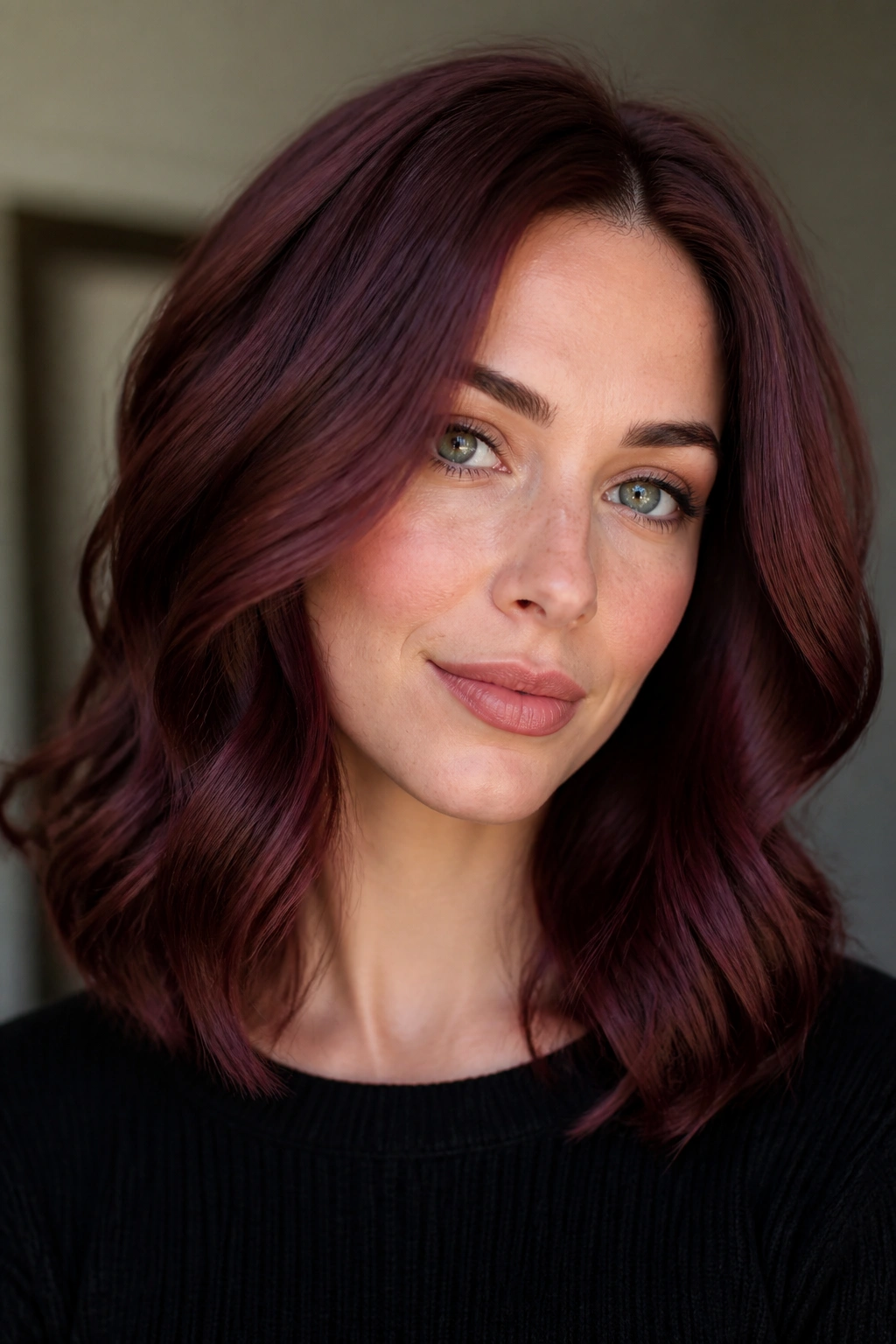
Rose mahogany sits between muted rosewood and deep mahogany, and that middle ground is the point.
It gives you the depth of a brunette base, the softness of rose, and enough red-violet to keep the color from disappearing in dim light. On cool skin tones, it usually looks balanced rather than warm. That makes it a good pick for anyone who wants color but not shock value.
Who Should Choose It
If you like classic clothes, low-key makeup, and hair that doesn’t fight your face, this shade makes sense. It feels refined without being stiff.
- Best for medium brown to dark brown bases.
- Good choice for cool skin that wants a little warmth without brass.
- Looks especially nice on shoulder-length cuts and soft layers.
A rose mahogany glaze can be one of the most forgiving color services around. It fades with grace.
18. Chestnut with Cool Red Lowlights
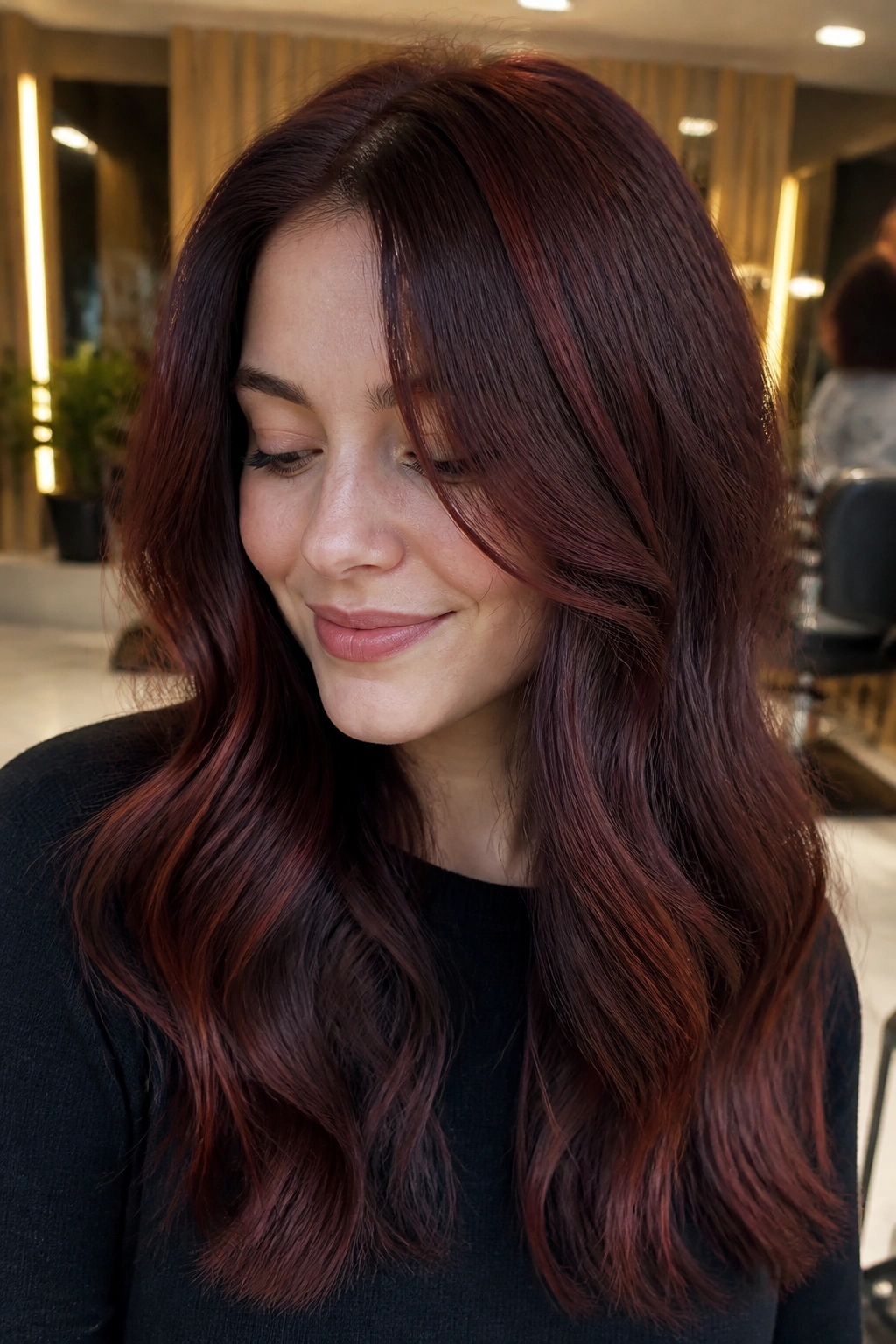
Chestnut can go too warm in a hurry, so the cooler red lowlights matter.
Instead of turning the whole head red, this look threads deeper red-brown pieces underneath a chestnut base. That gives the hair movement and keeps the face framing from getting too orange. On cool skin, the trick is subtlety. You want the red to feel like shadow, not a surface stain.
This is a smart option if you already have brunette hair and want to change the mood without making a big jump. It’s also easier to maintain than an all-over red-brown, because the lowlights grow out quietly. If you want dimension that shows in ponytails, braids, and loose waves, this one earns its place.
19. Wine-Tinted Balayage
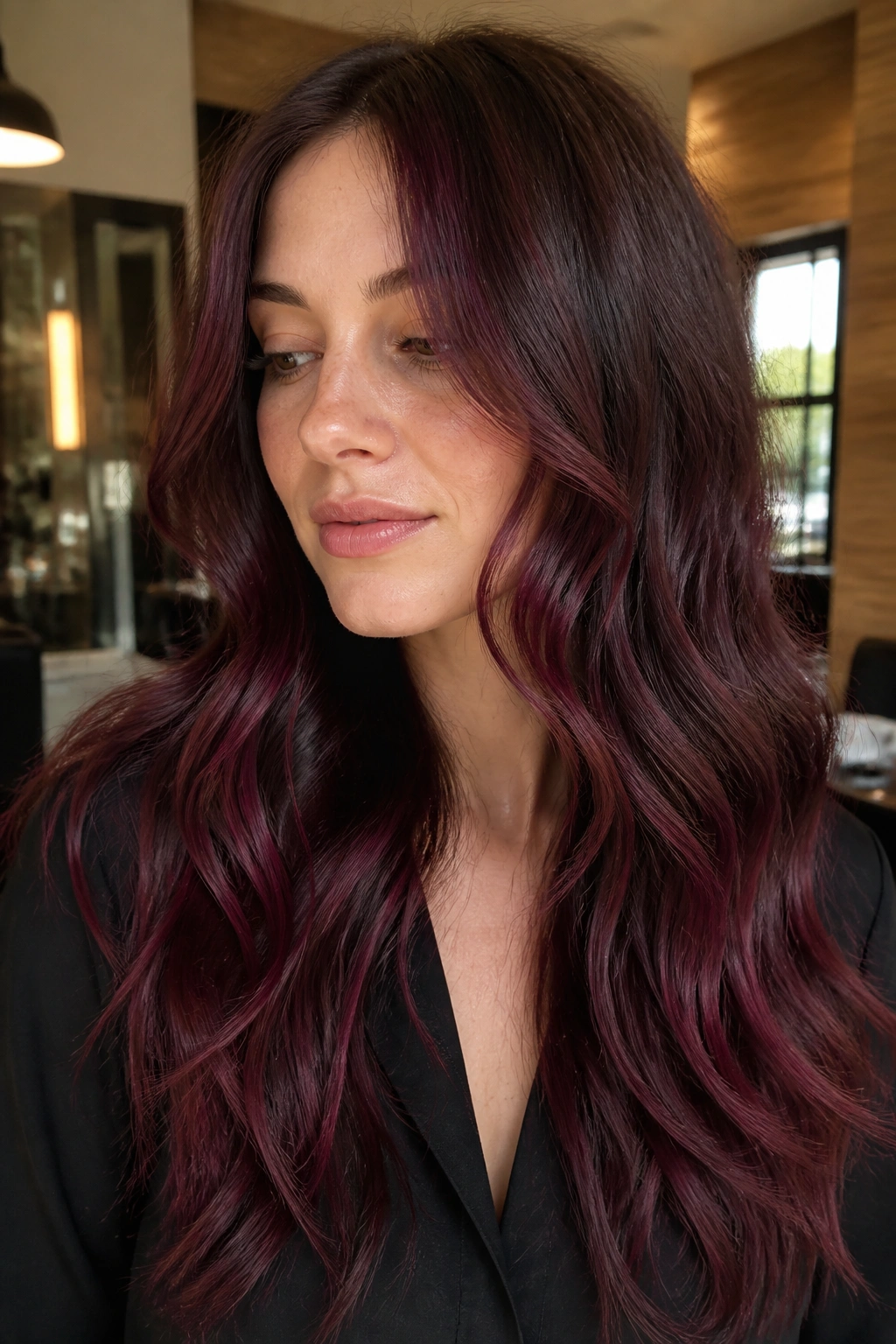
Wine-tinted balayage is for long hair that needs something more than plain brunette.
The hand-painted placement lets the wine tones sit where light will hit them — around the face, through the ends, across the outer layer. That keeps the color from feeling heavy. Cool skin tends to like this because the wine shade stays in the blue-red family and never strays into orange.
What I appreciate here is the movement. As the hair swings, the red shows up in pieces rather than all at once. That makes the color feel more dimensional, especially on wavy hair. If you wear your hair up often, ask for a little more color around the crown and temples so the shade doesn’t disappear into the back.
20. Espresso Plum
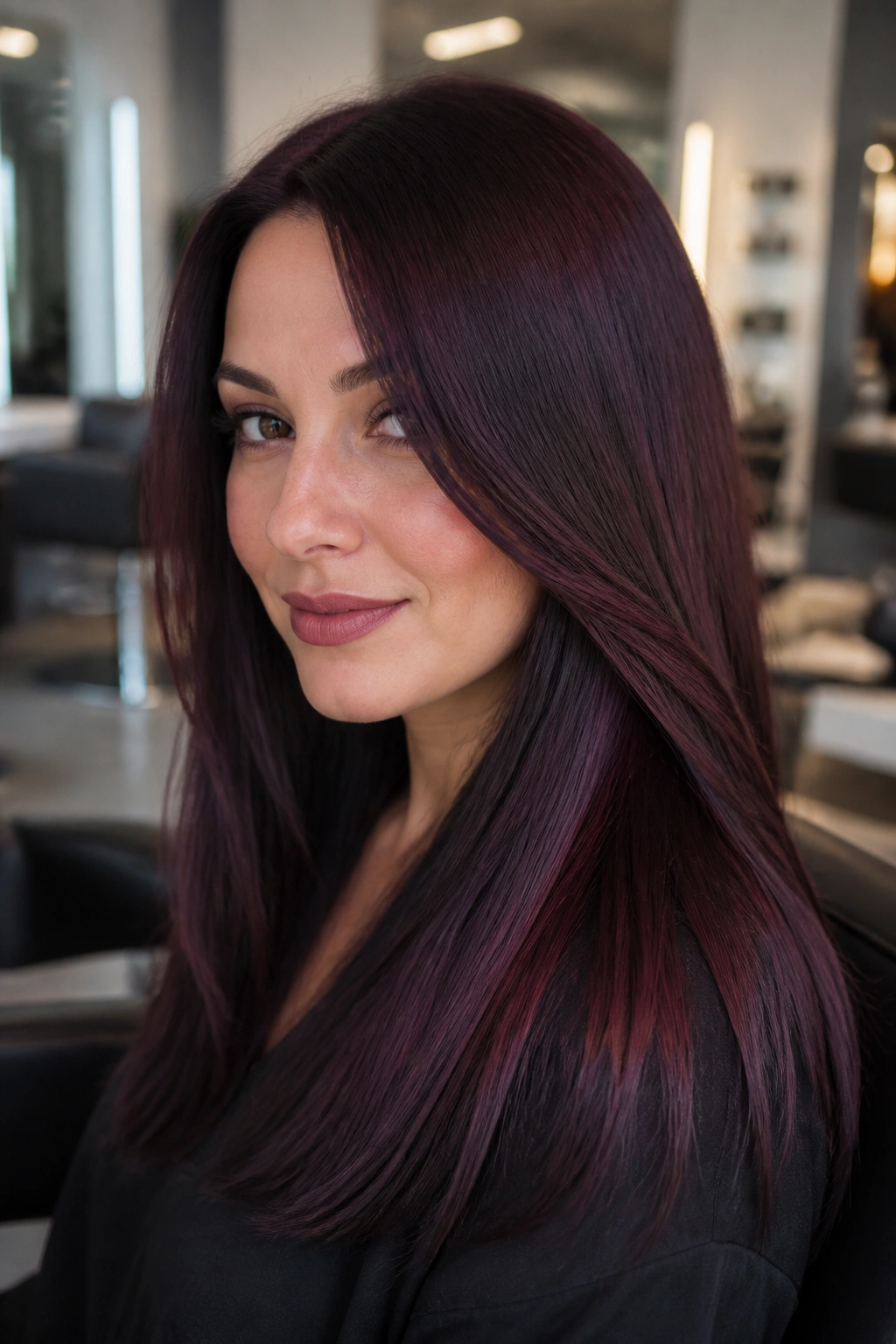
Espresso plum is dark, moody, and almost secretive.
The base stays close to espresso brown, while the plum undertone sits just underneath it. In some light, the hair reads nearly neutral. In stronger light, the plum comes forward and gives the brunette a cool red-purple edge. That makes it one of the most understated brunette red hair color ideas for cool skin tones.
It’s also forgiving. Because the plum lives inside a dark base, regrowth is less obvious than with a brighter red. If you work in a setting where you need color that doesn’t shout, this is an easy yes. Straight hair makes the sheen sharper, but curls bring out the layered tone in a softer, richer way.
21. Berry Bronde
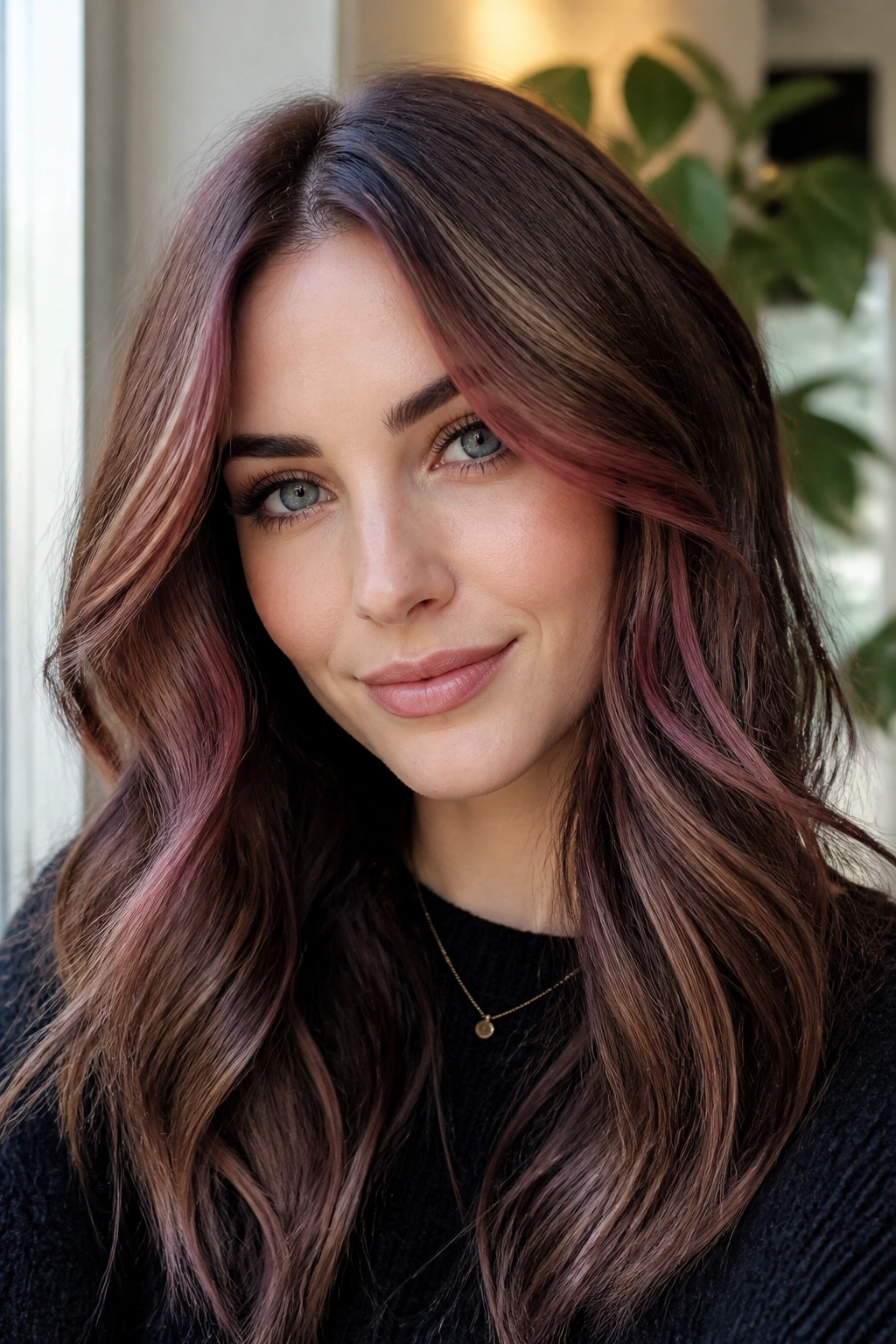
Berry bronde is what happens when you want brightness without losing the brunette identity.
There’s a brown foundation, a touch of beige lightness, and a berry tint threaded through the pieces that sit around the face. On cool skin, that berry note keeps the lighter pieces from looking yellow or sandy. It’s a nice way to add lift while staying within a cool color story.
This shade works best when the lighter sections are controlled. Too much blonde and it starts drifting warm; too little and the berry has nowhere to land. The result can be very pretty on shoulder-length cuts and layered blowouts, where the light and dark pieces move against each other instead of sitting still.
22. Garnet Shadow Root
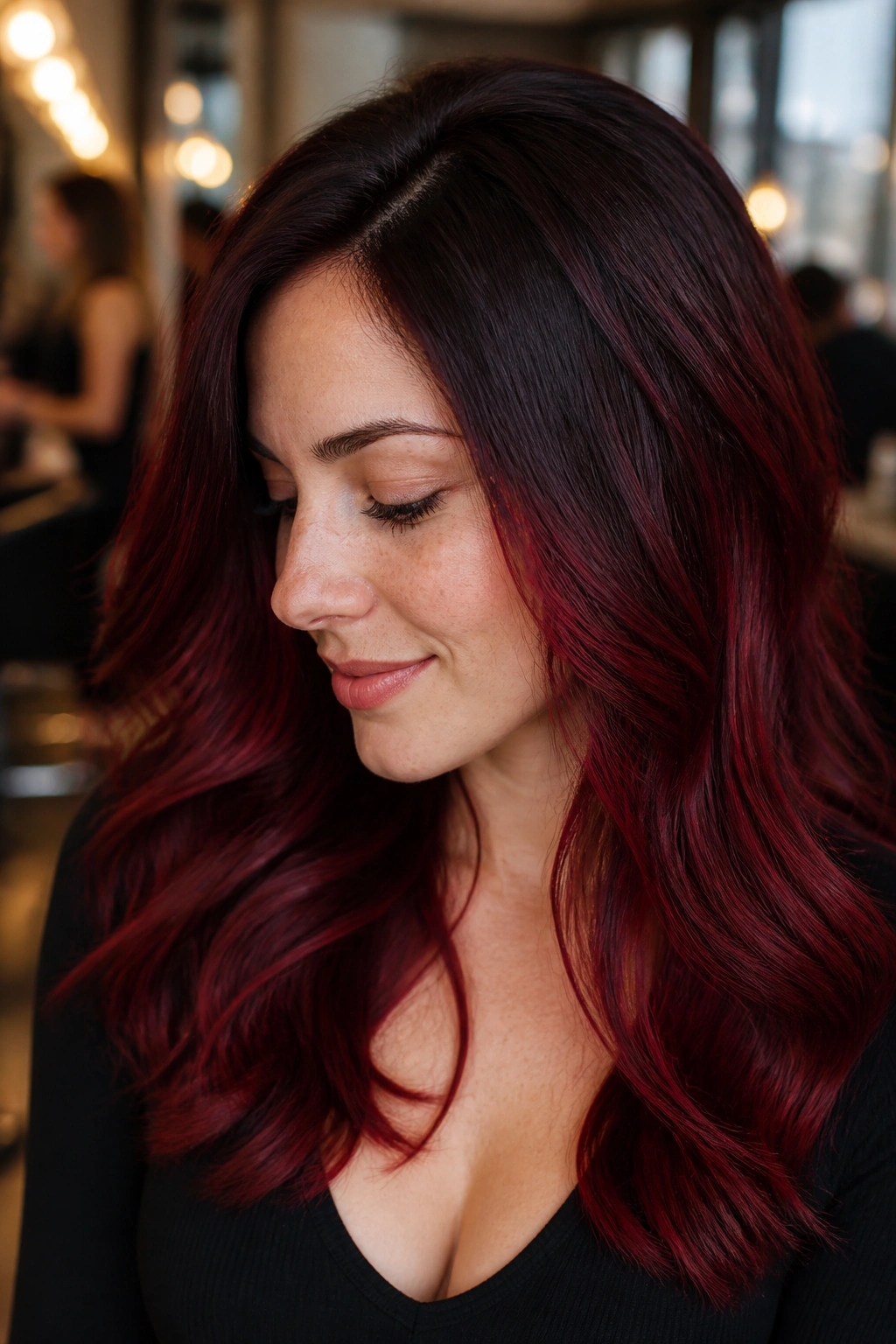
Garnet shadow root is a good answer if you hate obvious grow-out.
The root stays darker and softer, which lets the garnet color bloom through the mid-lengths and ends without a harsh line. On cool skin tones, that deep red jewel tone feels elegant rather than flashy. It’s also one of the smarter choices for people who want red-brown color but don’t want to touch up the roots every few weeks.
Ask your colorist to keep the transition blurred. Sharp contrast can make the color look stripey, and nobody wants that. A shadow root also helps the hair look fuller near the scalp, which is handy if your strands are fine or a little sparse at the crown.
23. Cocoa Merlot
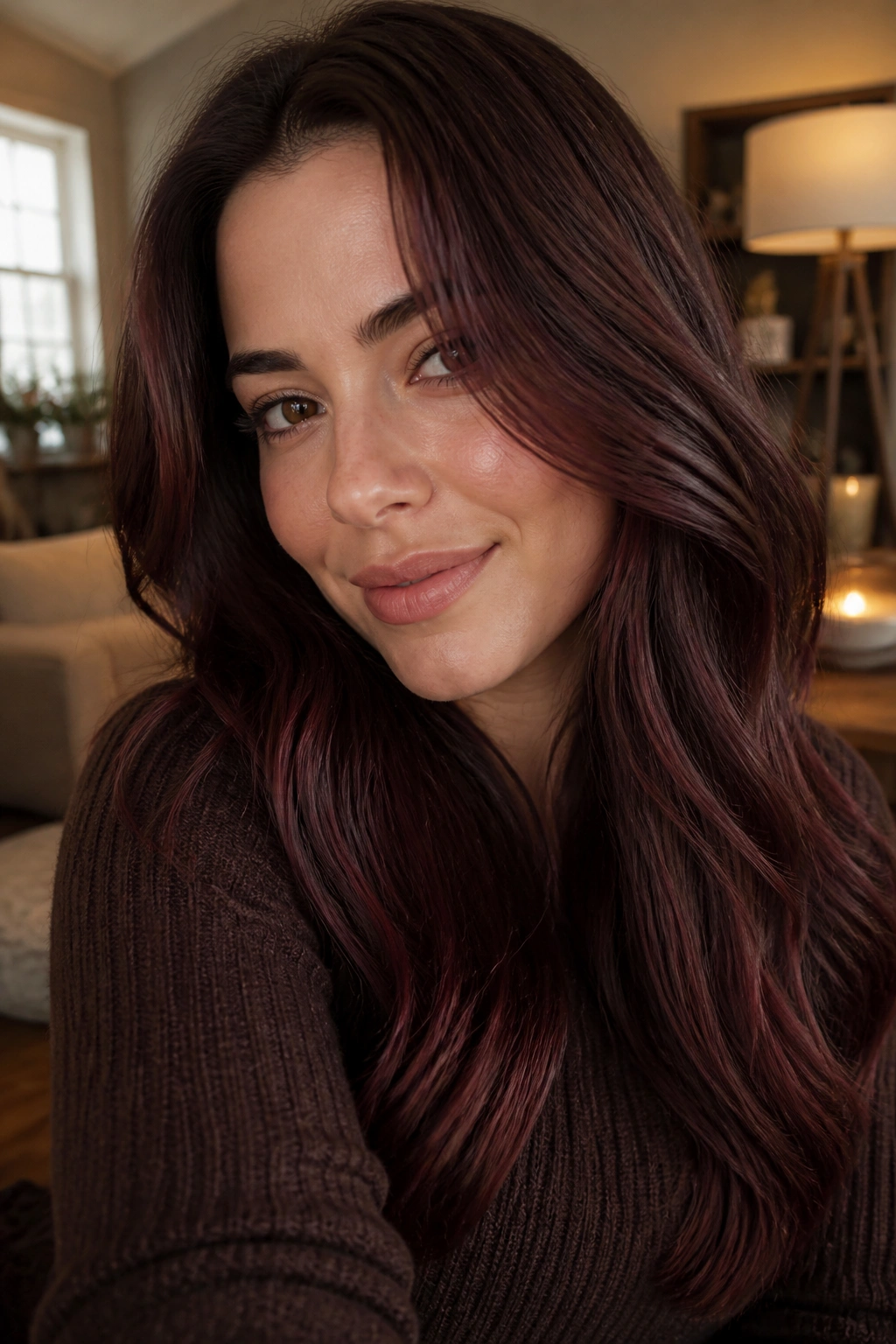
Cocoa merlot is one of my favorites because it solves a common problem: how to get red into brown hair without making it look red first.
Why It Stays Wearable
The cocoa base keeps the look grounded, while merlot reflection gives the hair a cool wine cast. That makes it flattering on cool skin and easy to wear in everyday light. It is not a loud shade. It’s more like a quiet upgrade.
- Good for hair that already sits in the dark brunette range.
- Works well with glosses or demi-permanent color.
- Looks especially rich when the cut has blunt ends or polished layers.
If you want your hair to look deeper, not brighter, this is the lane to stay in. The shade is subtle on purpose.
24. Smoky Cranberry Ombré
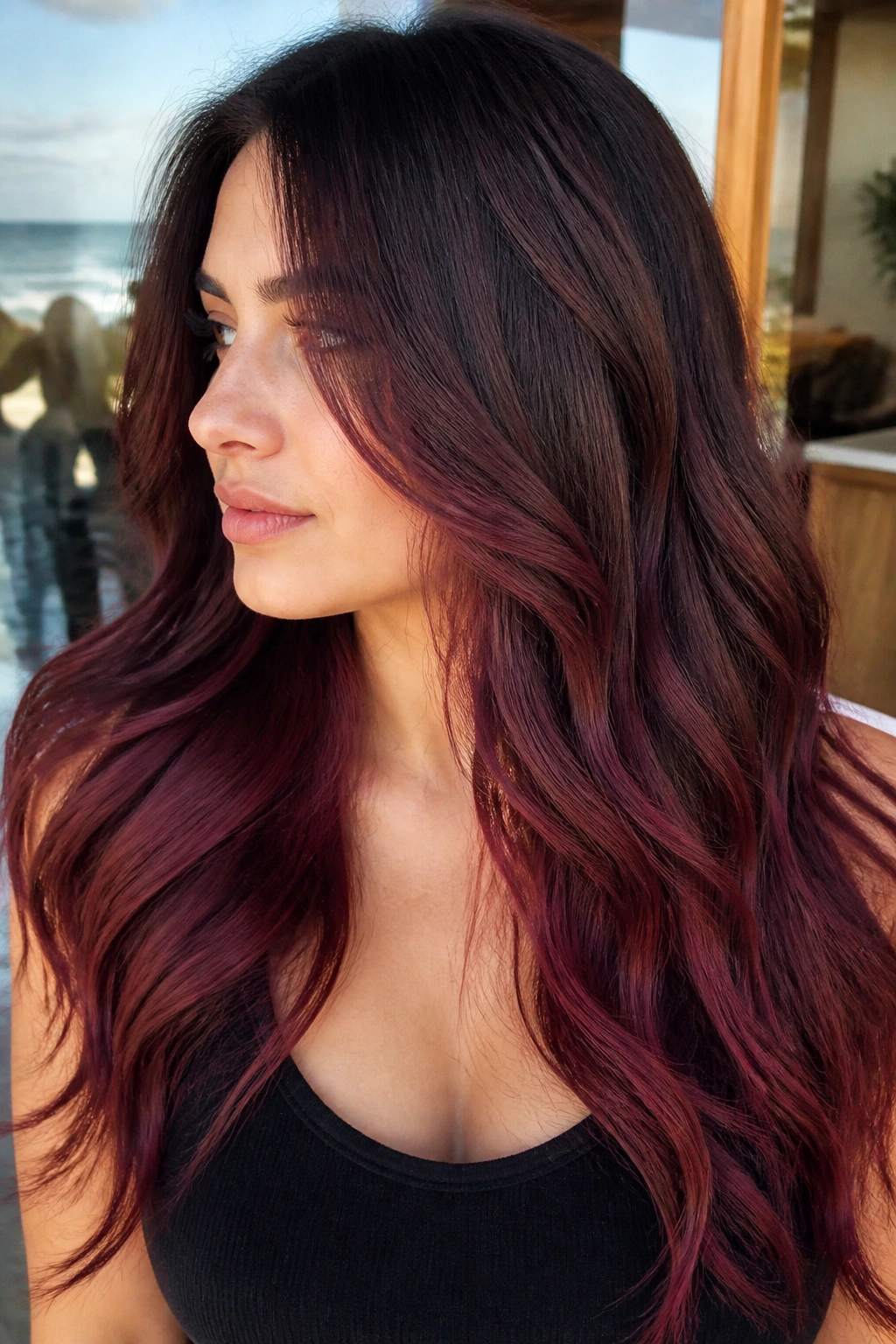
Smoky cranberry ombré gives you a brunette root and a cooler red finish, but the handoff between the two has to be soft.
That blend is the whole point. A hard line would make the style feel costume-like, while a smoky gradient keeps it chic and believable. On cool skin, cranberry works better than rust because it stays in that cleaner red zone. The smoky part tones down the shine just enough so the color doesn’t feel sugary.
This is a good choice for longer hair, especially if you like waves. The gradient has more room to show. If your hair is shorter, the ombré can still work, but the transition has to be carefully blended or it will look choppy. This one needs a steady hand.
25. Plum-Black Ends
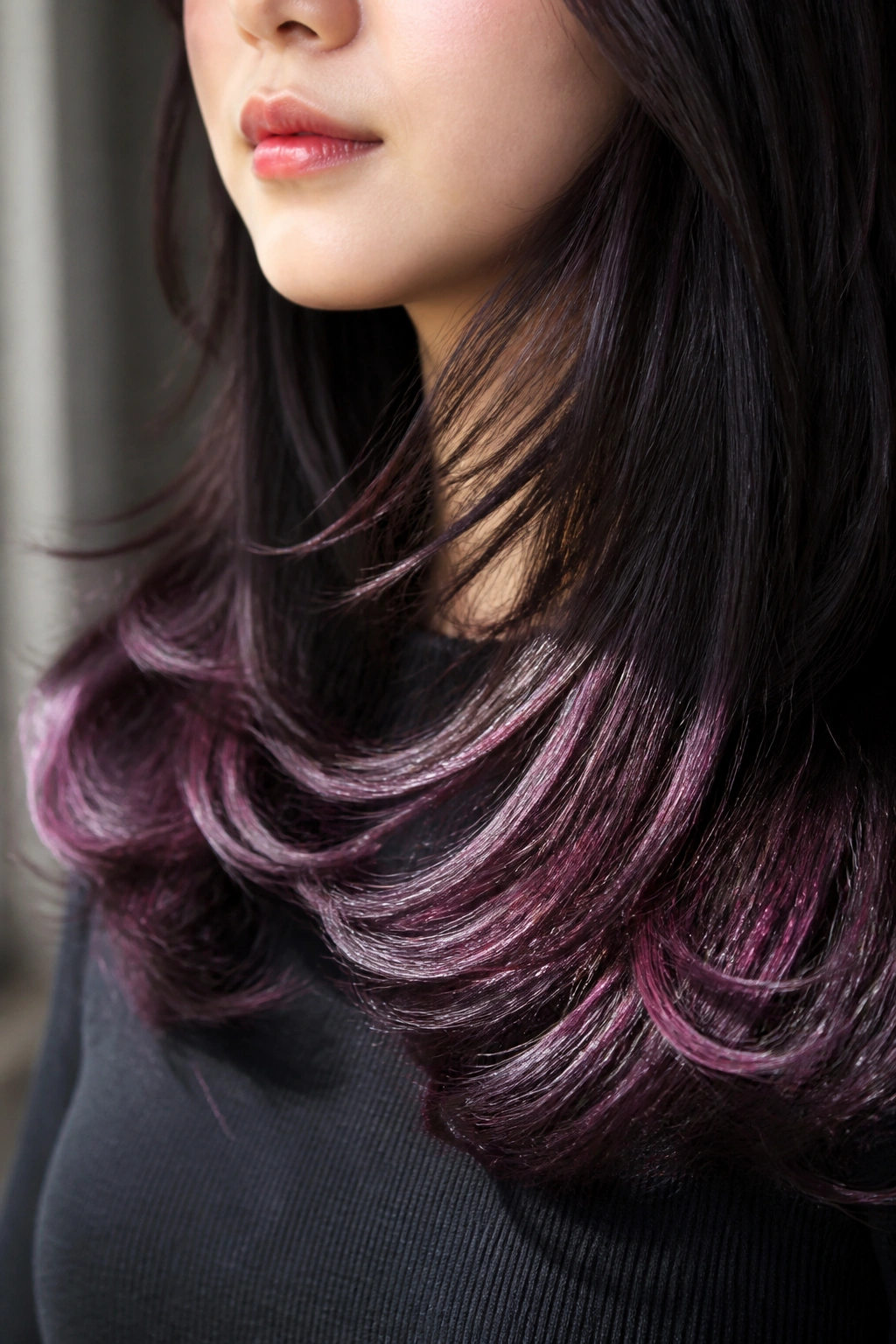
Plum-black ends are for the person who wants a dark look with a twist.
The roots and mid-lengths stay brunette or near-black, while the ends carry a plum-black finish that only really announces itself in movement. On cool skin, that tiny bit of violet-red can soften a severe dark cut without turning it warm. It’s a clever choice for straight lobs, sharp bobs, or long hair with blunt ends.
This style is low-key until it moves. Then it gets interesting. A lot of people think red tones need to sit near the root to be visible, but that’s not true here. Because the ends catch light differently, the plum reads like a hidden layer. It’s one of the more modern-feeling options on the list, even if I dislike that word.
26. Mulled Wine Gloss
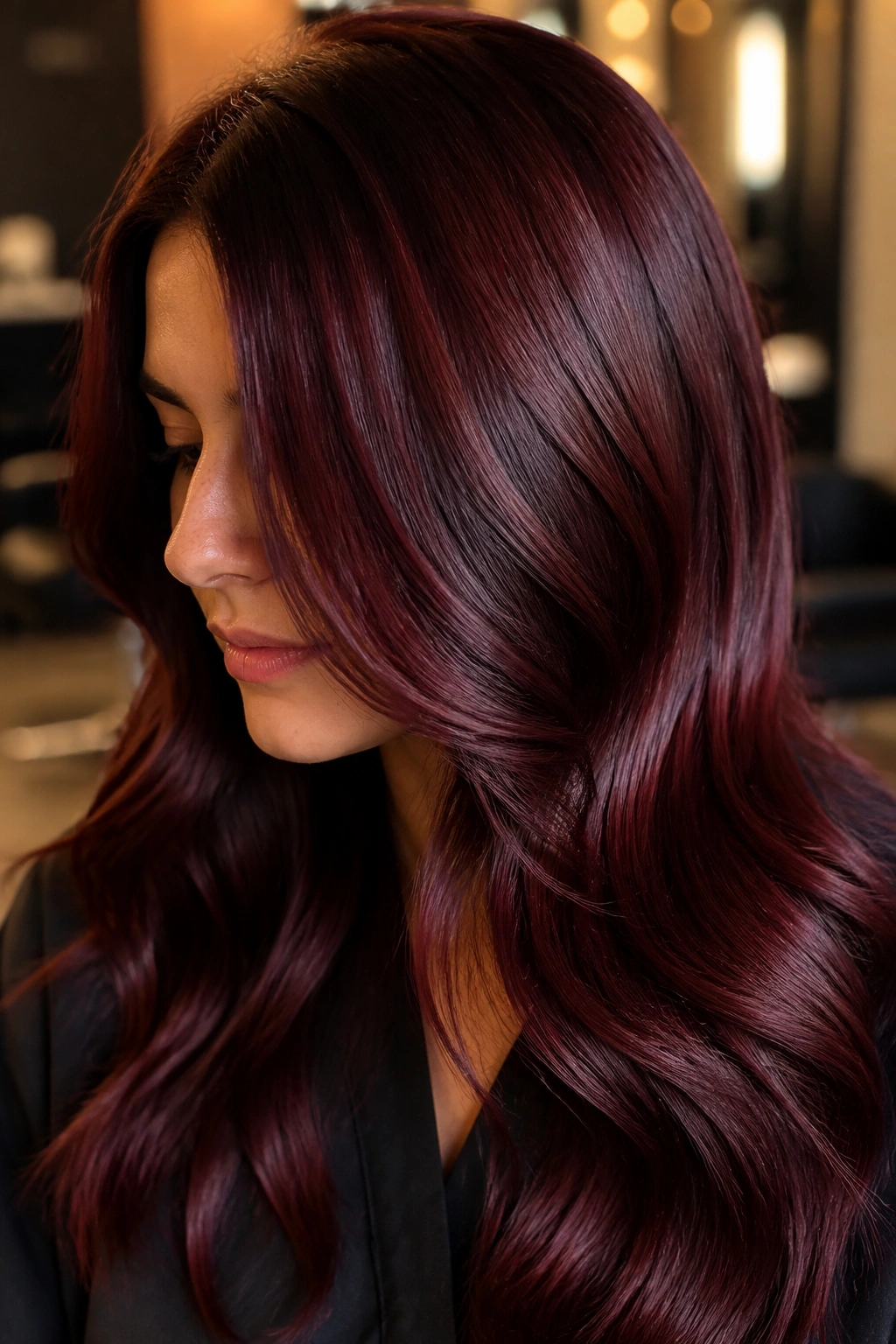
Mulled wine gloss is what you reach for when your brunette hair needs life, not a full color overhaul.
A good gloss can deepen the base, add wine-red reflection, and smooth the cuticle so the hair reflects light better. That last part matters more than people admit. Shiny hair makes red-brown shades look richer, while dry hair makes them look tired. Cool skin usually benefits when the color feels clean and polished rather than dusty.
This is a practical salon choice if you already have brown hair and just want a seasonal shift without big commitment. It can be refreshed easily, and because it’s gloss-based, the fade is softer than permanent red dye. If you’ve got a special event coming up, this is the color service I’d quietly recommend.
27. Muted Copper Brown
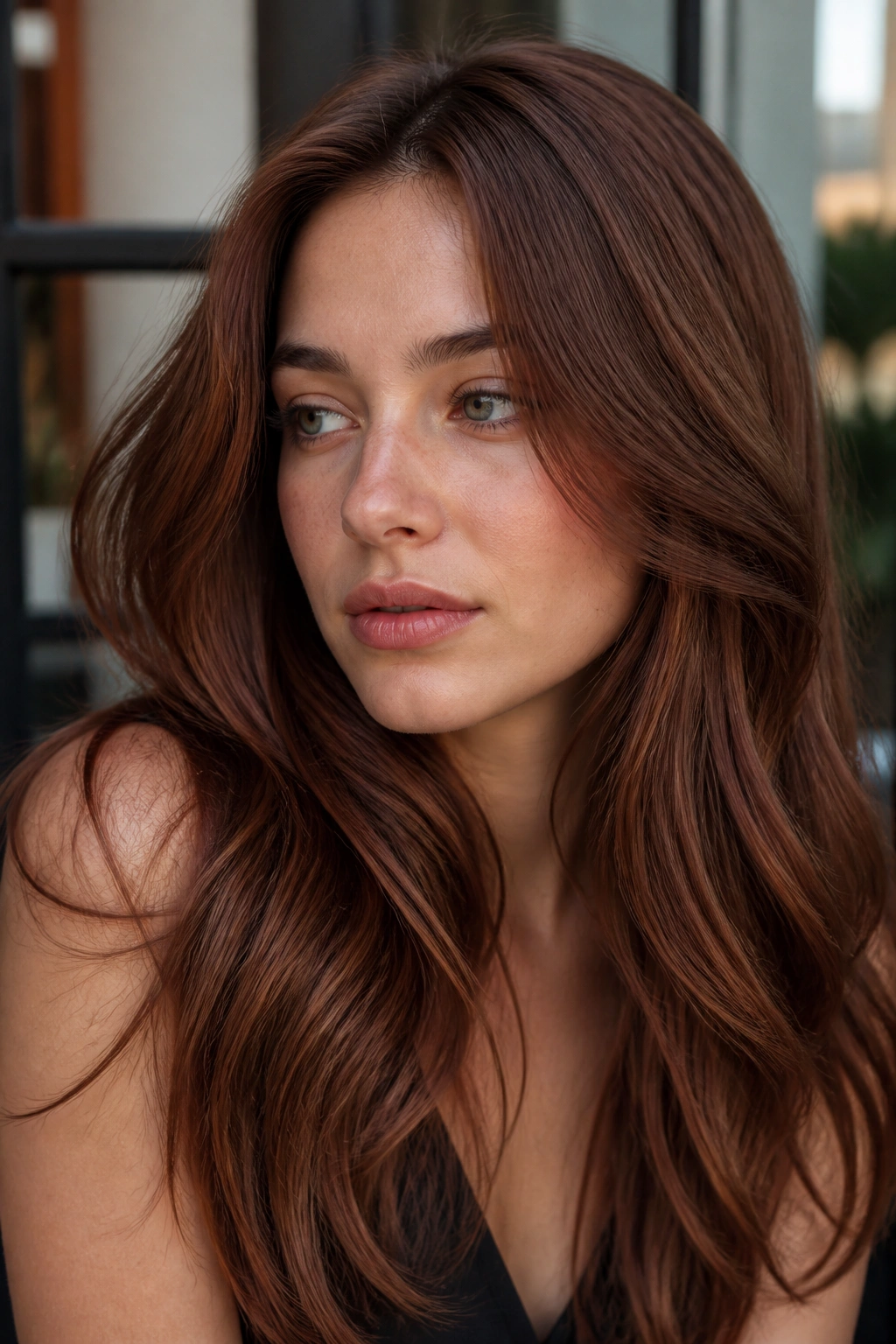
Muted copper brown is the exception that proves the rule.
True copper can be tricky on cool skin, but a brown-dominant copper with a restrained orange-red cast can work if the warmth stays under control. Think of it as brunette first, copper second. The color should feel earthy and soft, not bright or pumpkin-like. That distinction matters more than people realize.
How to Keep It Cool Enough
Ask for muted copper lowlights or a brown base with copper reflection, then keep the finish glossy and dimensional. If the orange starts leading the conversation, the shade is too warm.
- Choose a deeper base level so the copper has something to sit on.
- Avoid chunky highlights that turn the look brighter.
- Pair it with cooler makeup tones if your skin is very pink.
This one can be beautiful, but it needs restraint. Too much warmth, and it stops being friendly to cool undertones.
28. Deep Rose Brunette
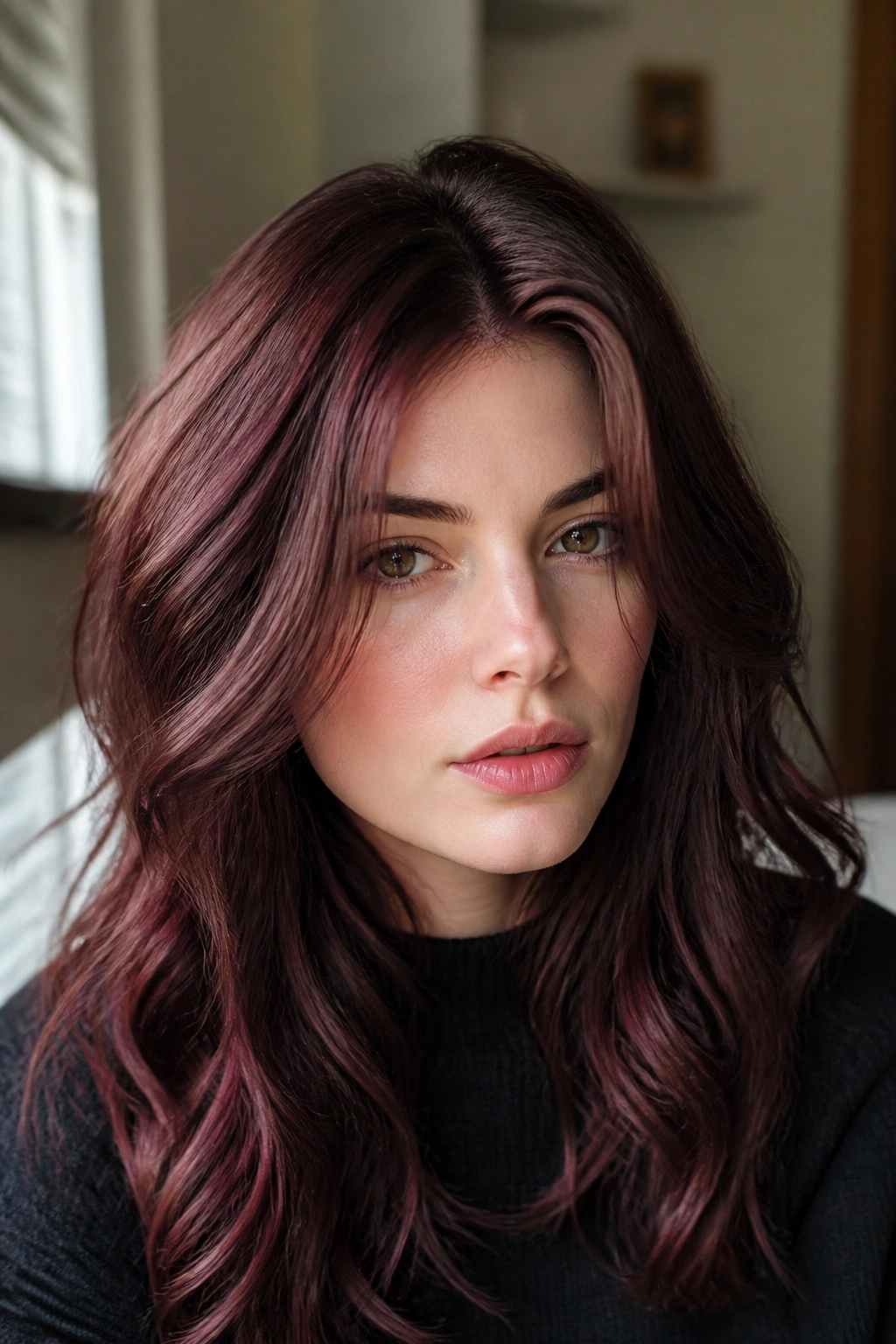
Deep rose brunette is a strong final choice because it gives you red, brown, and softness all at once.
The rose note is muted enough to stay wearable, while the brunette base keeps it grounded. On cool skin tones, that combination can be especially flattering because the red reads as rosy reflection instead of orange warmth. It’s one of those colors that can look polished in a braid, glossy in loose waves, and quietly rich in a blunt cut.
If you’re narrowing the whole list down to one direction, start here or with mahogany. Those two are the safest bridge between brunette and red for cool undertones. Bring photos to your colorist, yes, but also bring words: berry, wine, mahogany, rosewood, black cherry. Those cues matter more than the exact name on a mood board, and they help keep the result on the cool side where it belongs.
