



Chestnut brown hair color can look expensive on cool skin tones—or it can turn muddy fast if the red undertone runs wild. That’s the part people miss. Chestnut is not one color; it’s a whole family of browns, and the ones with ash, mocha, mushroom, or blue-violet reflect usually flatter cool complexions far more than coppery versions ever will.
If your skin reads pink, rosy, or blue in natural light, you probably know the feeling of a too-warm brunette shade making your face look a little flushed in the wrong way. The fix is not always going darker. Sometimes it’s about keeping the brown rich while trimming out the orange, red, and gold that fight with your undertones.
The good chestnut shades do a nice thing in daylight: they soften around the face, give hair a fuller look, and still keep that silky brunette depth people want from a salon color. The great ones also grow out without looking stripey, which matters more than most color charts admit. Some of the best ideas are glossy and simple. Others use balayage, shadow roots, or lowlights to keep the whole thing cool and dimensional.
1. Smoky Chestnut Brown All-Over Color
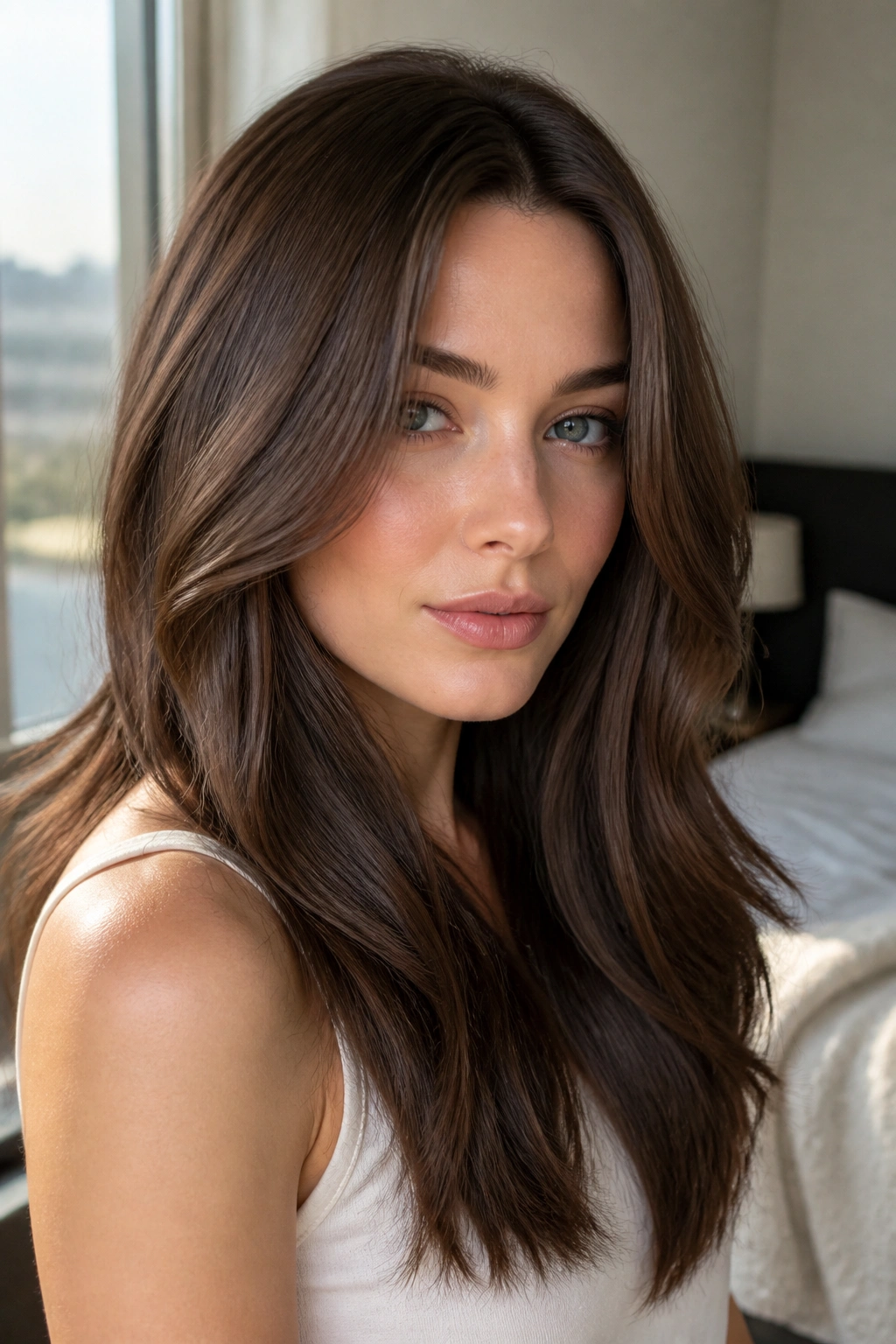
Smoky chestnut brown is the shade I reach for when someone wants depth first and shine second. On cool skin tones, the smoky edge keeps the brown from tipping copper, so the face stays calm instead of looking more flushed than it is.
Why It Flatters Cool Undertones
Ask for a chestnut with ash or mocha reflect, not a red-brown that flashes orange in daylight. A level 4 or 5 base usually gives the richest result without reading flat, and a demi-permanent gloss helps keep the finish soft.
- Keep the formula blue- or green-based if your hair pulls warm fast.
- Ask for a clear gloss over the color if you want shine without extra warmth.
- Style it with a 1.25-inch curling iron for loose bends and a smooth sheen.
Best tip: bring a daylight photo, not a bathroom selfie.
2. Mushroom Chestnut with a Soft Shadow Root
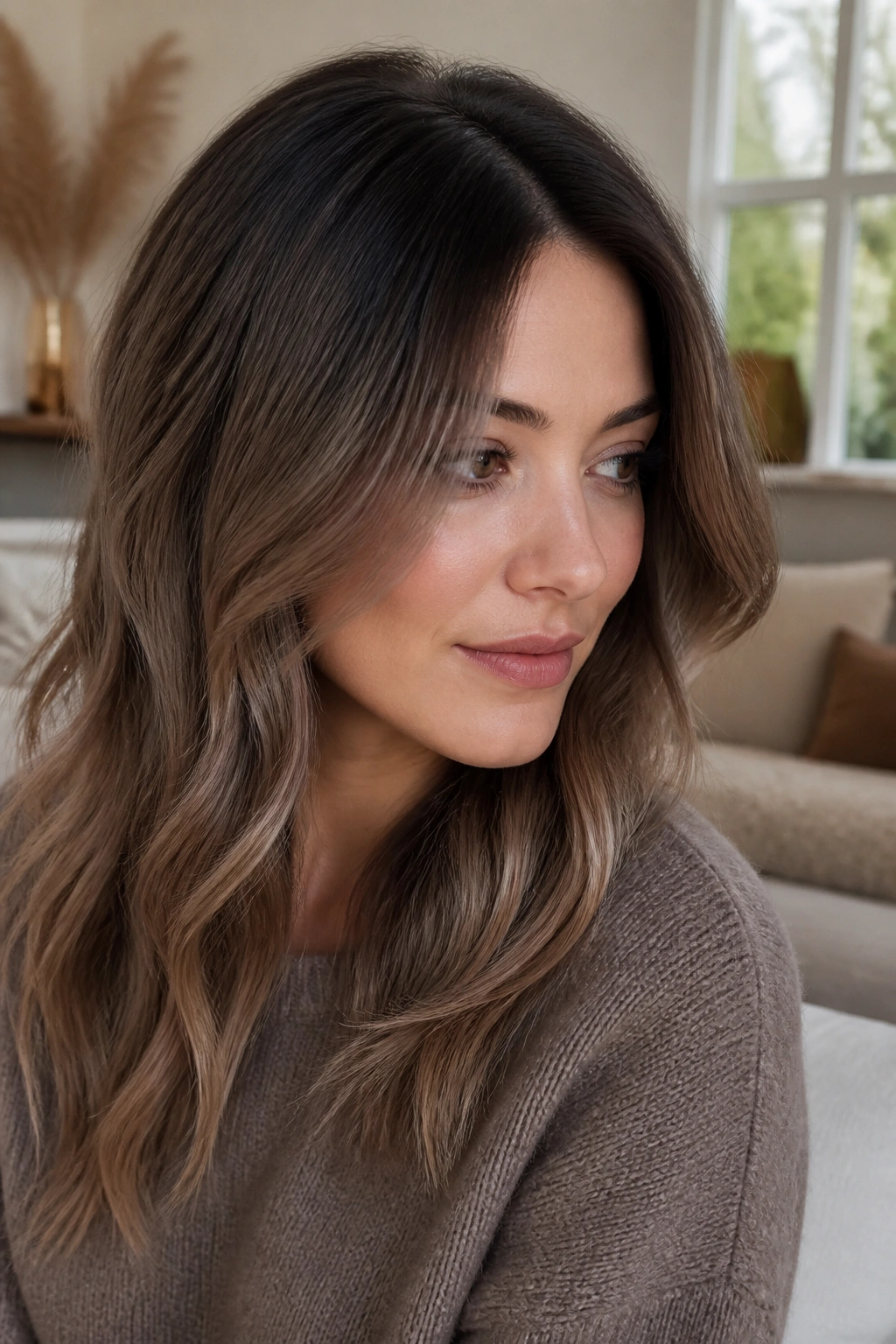
Mushroom chestnut is the easiest way to cool down a brown that keeps going red. It leans taupe and earthy, which sounds subtle until you see it next to a warm chestnut—then the difference is obvious.
The shadow root matters here. Keep the root a touch deeper, usually around a level 4 neutral ash, then let the chestnut come through the mids and ends. That little gradient makes the color look lived-in instead of painted on.
This shade is especially good if your hair is already medium brown and you want a change without a dramatic contrast. It also grows out neatly, which is a blessing if you hate salon maintenance every few weeks. The only catch: if your hair is porous, the mushroom tone can grab too dark. A gloss every 4 to 6 weeks keeps it from going dull.
3. Chestnut Brown Gloss on Long Layers
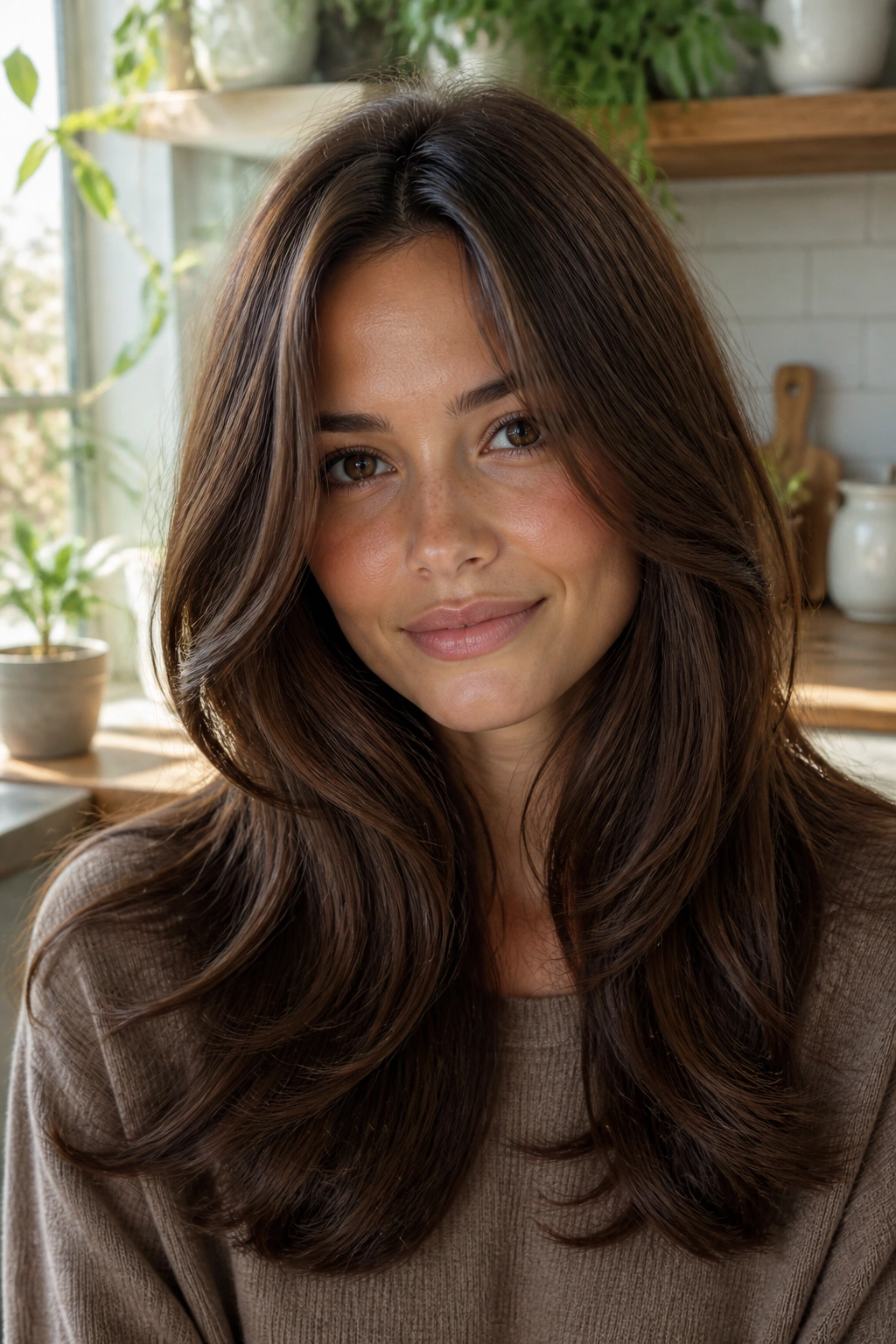
Why does a gloss matter so much? Because chestnut brown on long layers can look rich and expensive with almost no visible streaking at all. Long layers catch light in different places, and a cool chestnut gloss makes that movement read as shine instead of brass.
The best version of this idea is simple. Keep the base brown close to your natural level, then add a cool-toned gloss that deepens the color by half a shade or so. That tiny shift is enough to make the ends look polished without turning the whole head darker.
How to Wear It Well
A center part gives this color a sleek, modern feel. If you wear waves, keep them soft and wide rather than tight; tight curls can make the color look busier than it is. A pea-sized amount of serum on the ends helps the chestnut reflect stay clean, not fuzzy.
4. Cool Beige Chestnut Balayage
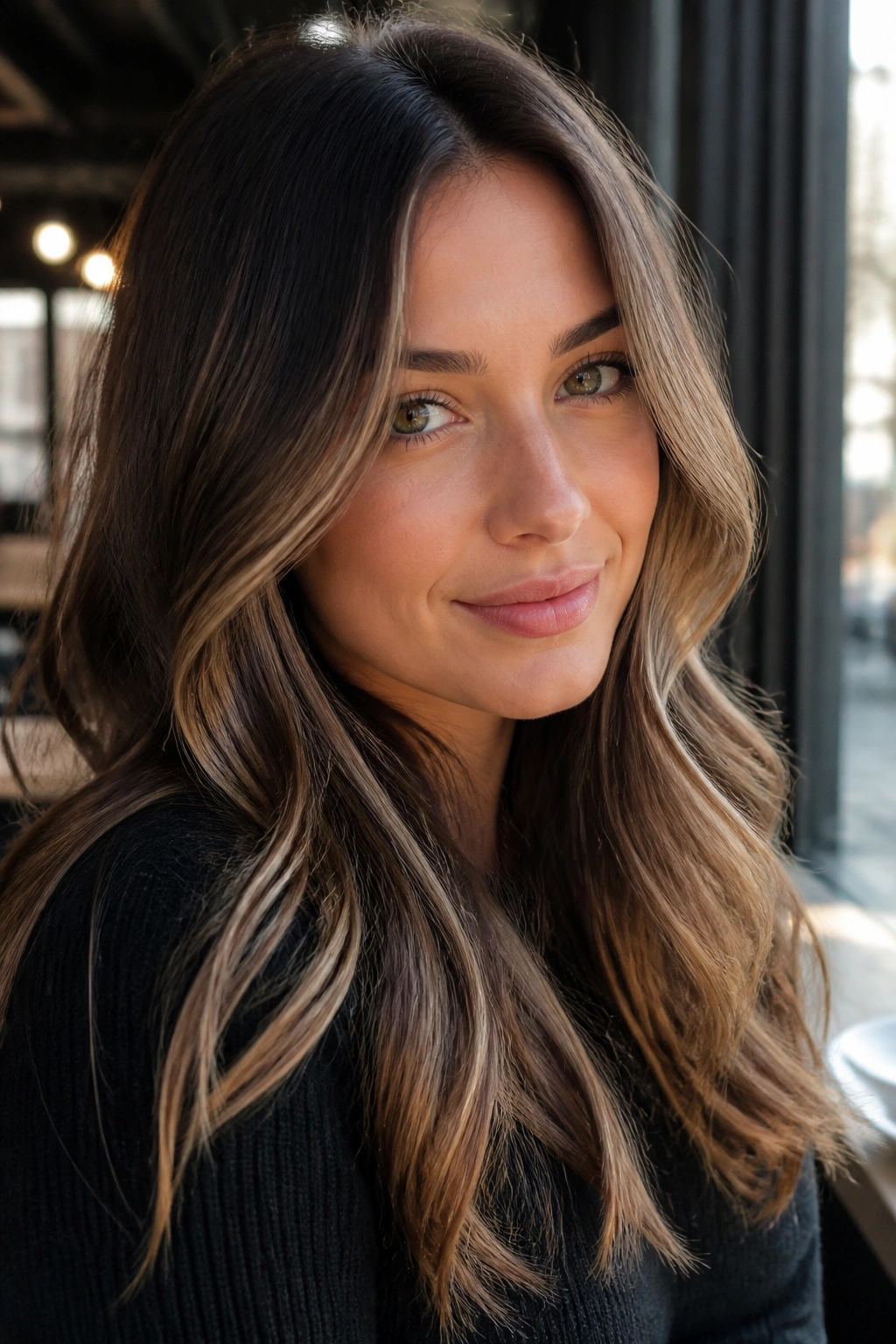
If your hair looks flat indoors but too warm in sunlight, cool beige chestnut balayage is a smart compromise. The balayage ribbons break up the base, while the beige-chestnut mix keeps the whole thing in the cool-brown lane.
The key is restraint. You do not want blonde streaks here. You want ribbons that sit maybe one to two levels lighter than the base, placed where the light naturally hits: top layers, face frame, and a few pieces around the crown. The result is softer than highlights, which is exactly why it suits cool skin so well.
A good colorist will paint the lighter pieces with a cool beige toner, not a golden one. That difference sounds tiny. It is not. Golden beige can pull the whole look warm in a hurry, and chestnut brown should stay brown-first.
5. Espresso Root Melt into Chestnut Ends
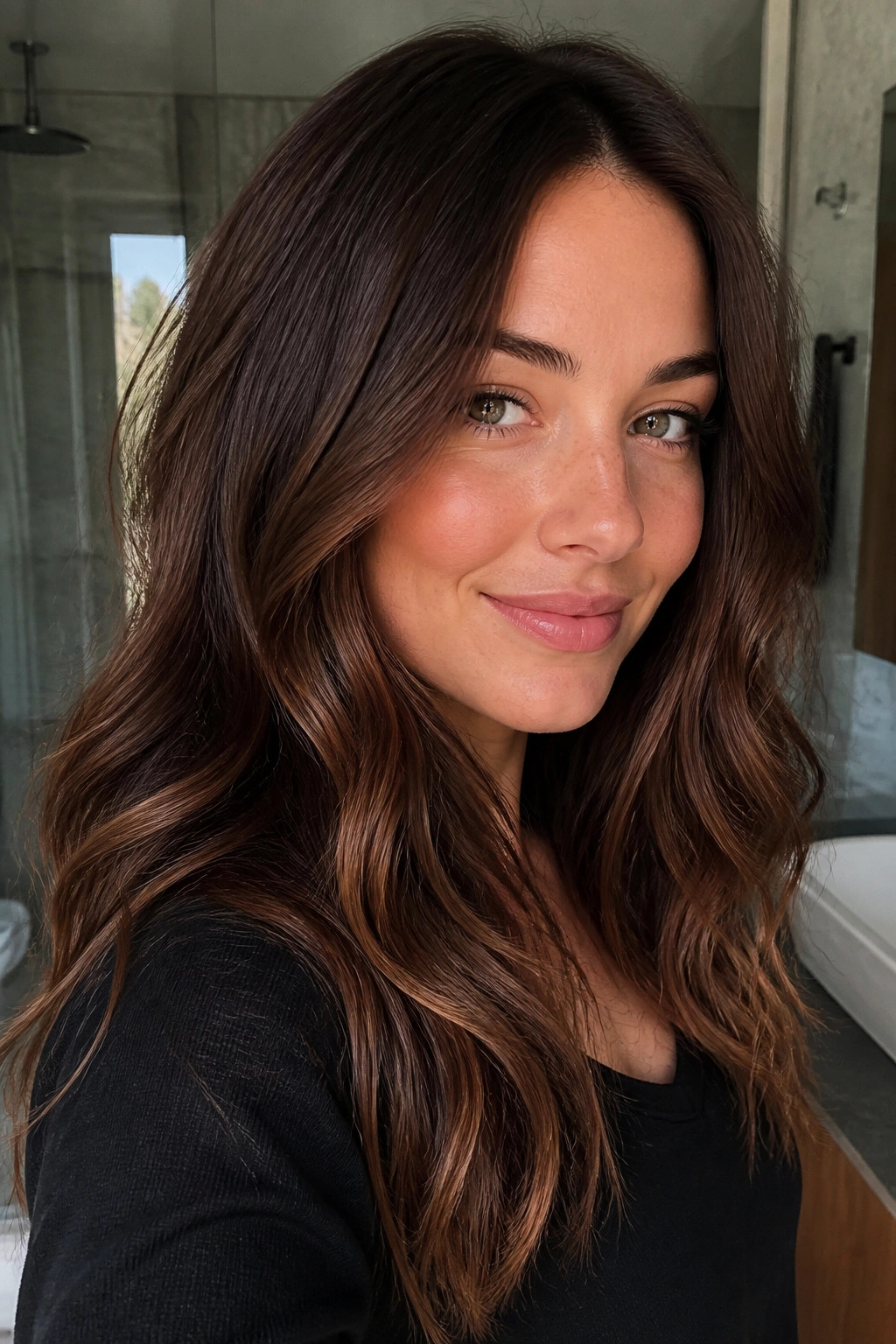
Espresso roots melting into chestnut ends make brown hair look deeper without making it feel heavy. The contrast is low, which is the point. Cool skin tones usually do well with this kind of controlled darkness because the color stays polished, not reddish.
Picture a root area that sits near espresso or deep coffee, then a slow shift into medium chestnut through the mids and ends. The transition should be soft enough that you cannot find a hard line with your eye. That blur is what makes the color expensive-looking.
This is one of the better choices if you have naturally dark hair and want to keep your maintenance easy. Root regrowth blends in for 8 weeks or more, sometimes longer if your natural color is close. The only downside is that very fine hair can look a little denser than you expect, so ask for some face-framing lightness if you want movement.
6. Cool Cinnamon Chestnut on Wavy Hair
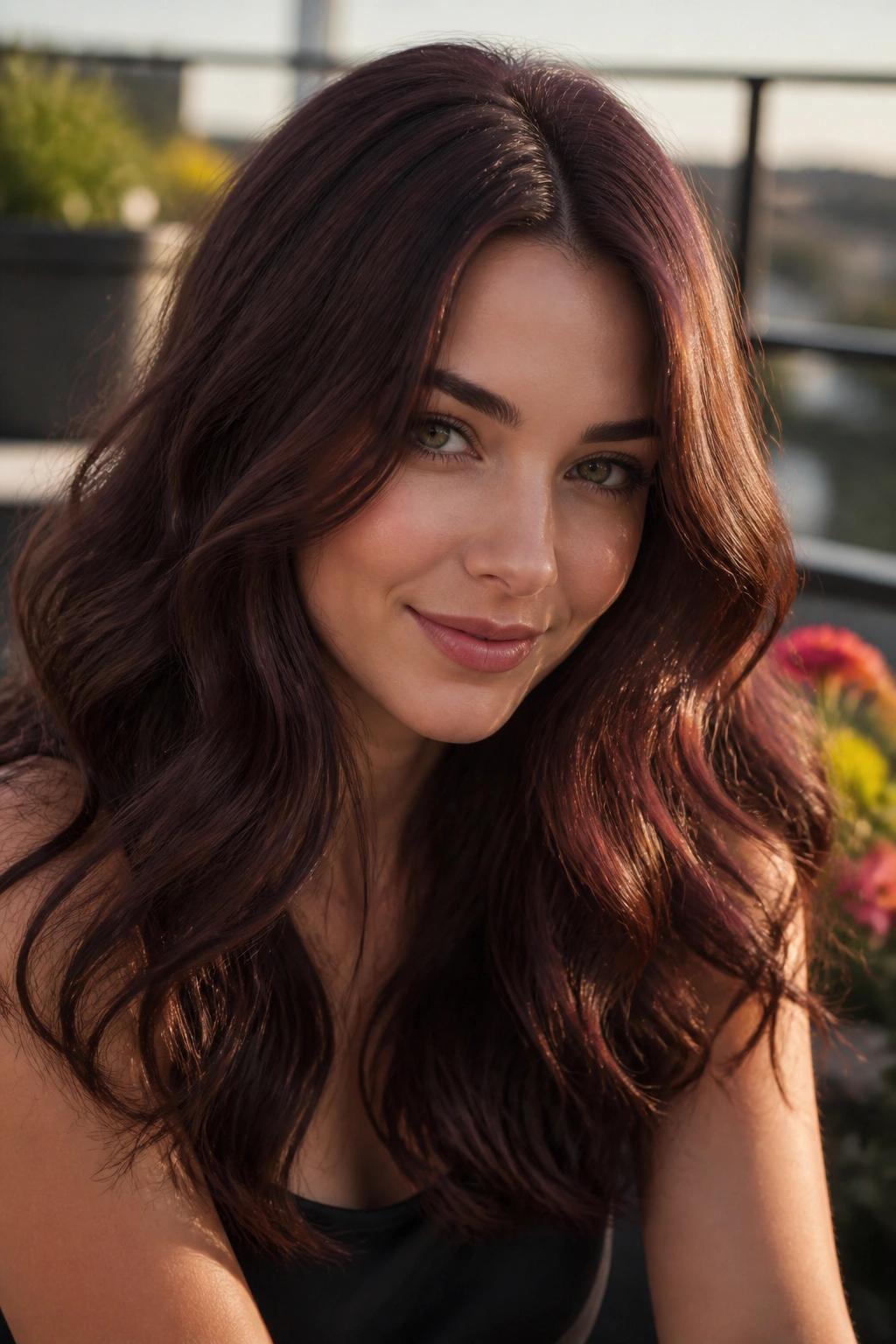
Cool cinnamon chestnut sounds warmer than it needs to be, so let me be plain: this is not copper. It is brown with a whisper of spice, muted enough that cool skin tones can wear it without looking sunburned.
Wavy hair suits this shade because the texture keeps the color from looking like one solid block. You see little changes in tone as the waves bend, which gives the chestnut more life. Ask your colorist for a brown base with just enough red-violet reflect to keep it from going flat.
A lot of people overdo cinnamon. Don’t. The best version sits closer to cocoa than pumpkin. If you style your hair with a diffuser, use low heat and a light cream, because too much heat can make the red reflect show up faster than you want.
7. Chestnut Brown with Money-Piece Face Framing
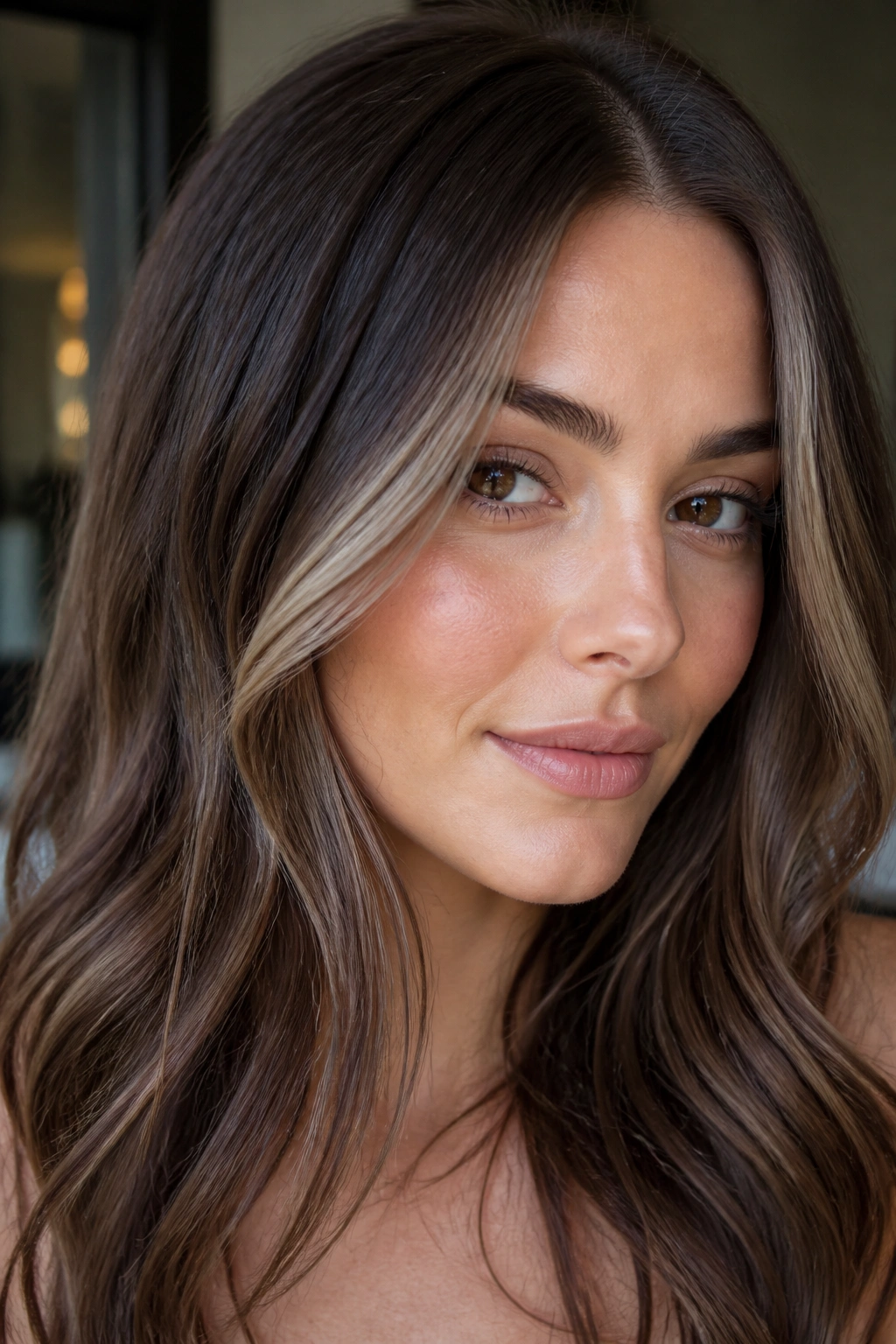
A money piece can look harsh if it’s too light, but chestnut brown with face-framing ribbons keeps the effect softer and cooler. The trick is to make the front pieces brighter by a shade or two, not by four.
What to Ask For
Tell your colorist you want the front pieces lifted just enough to outline the face, then toned to a cool beige or soft mocha. That gives you brightness near the cheeks without a chunky stripe that fights your undertone.
- Keep the brightest pieces no wider than 1 inch.
- Place them starting just above the cheekbone.
- Blend the lower half of the front sections back into the chestnut base.
Small detail, big payoff: curl the front pieces away from the face so the lighter bits frame, not sit like a stripe.
8. Micro-Babylight Chestnut Bob
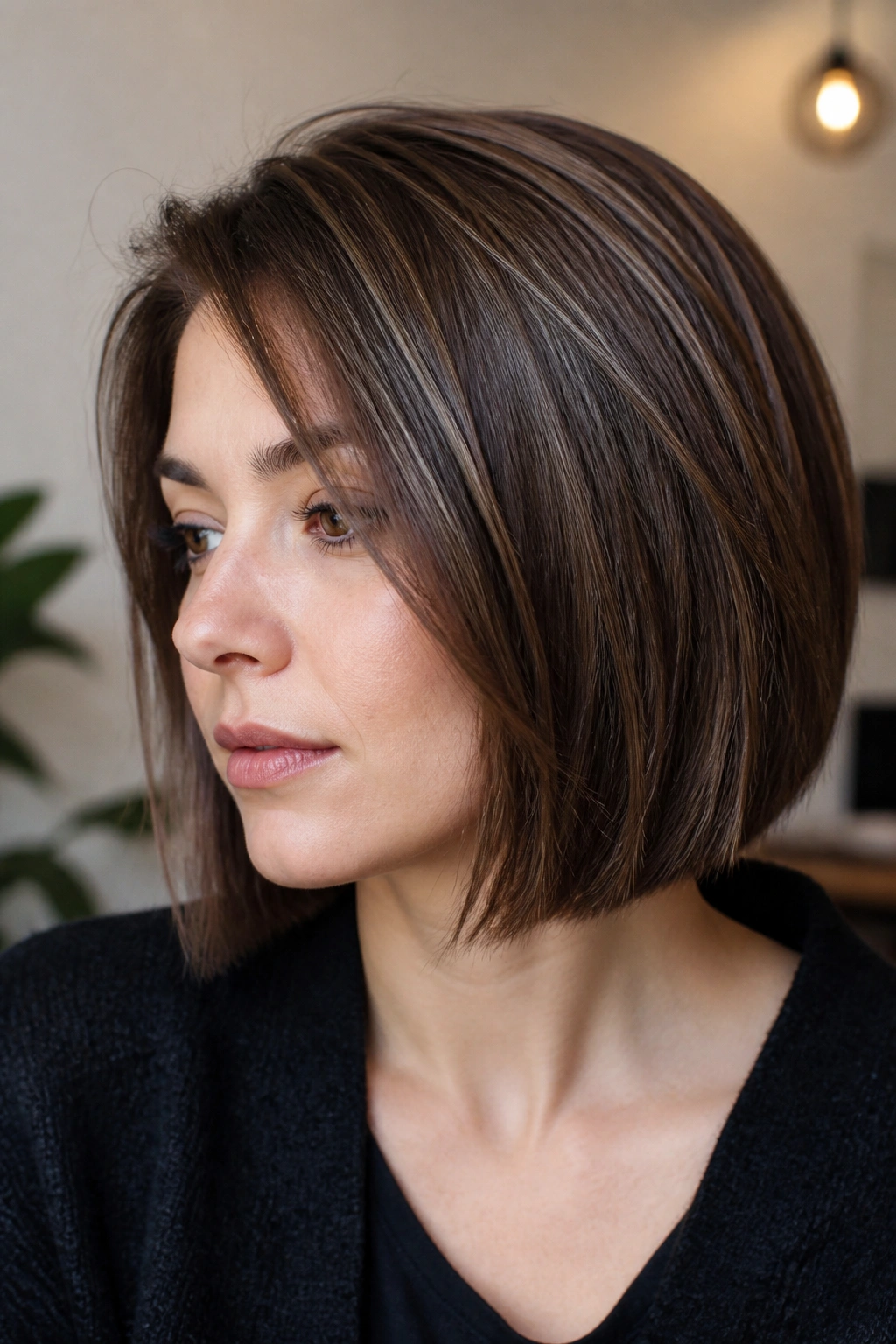
Micro-babylights make a chestnut bob look fuller without making it noisy. The lines are so fine that you notice shine and movement before you notice the color itself, which is a good thing on cool skin tones.
A bob can turn heavy if it is one flat brown shade from root to tip. Tiny babylights fix that. They give the hair a soft lift, especially around the crown and side panels, where straight cuts can otherwise look a little boxy. Keep the lighter threads close in tone to the base—think chestnut, cocoa, soft taupe—rather than bright beige.
This style works well if you like low drama and clean edges. It also plays nicely with air-dried texture. A quick bend with a flat iron on the ends is enough. Anything too curled starts hiding the fine detail that makes the color work.
9. Mocha Chestnut Melt for Dark Brunettes
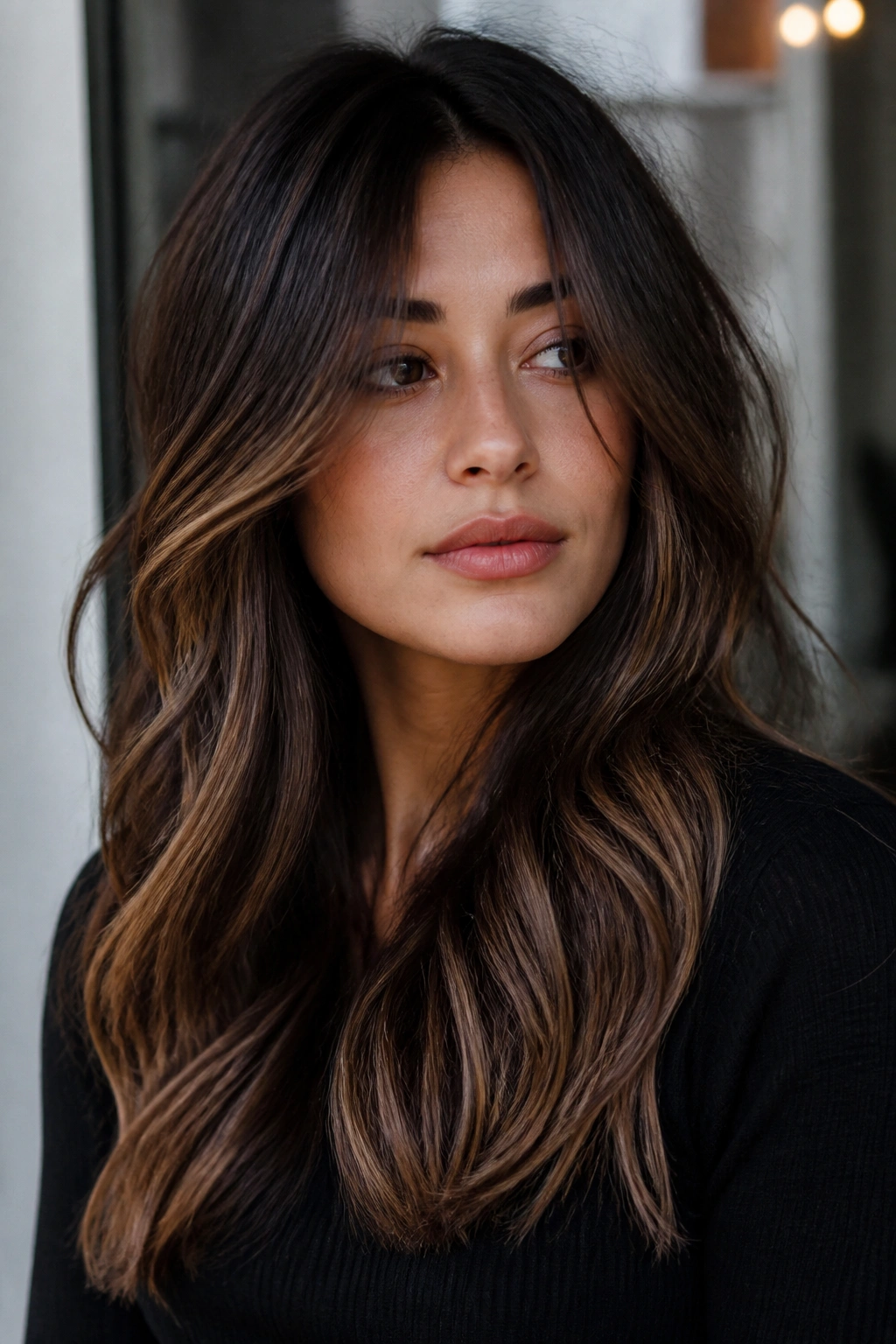
Can dark brunettes go chestnut without looking streaky? Yes. A mocha chestnut melt is the cleanest way to do it, because the shift is small and the depth stays believable.
The idea is to keep the roots rich and dark, then slowly reveal mocha and chestnut through the mid-lengths. It should look like the color belongs there, not like it was layered on top to hide something. On cool skin tones, this kind of melt avoids the orange band that can show up when dark brown gets lifted too aggressively.
Best Placement
Focus the lighter chestnut around the face and through the top layers. Keep the underneath sections darker so the whole color has contrast when hair moves. If you wear your hair straight, ask for a few more pieces around the front so the dimension does not disappear.
10. Blue-Violet Chestnut Brown Gloss
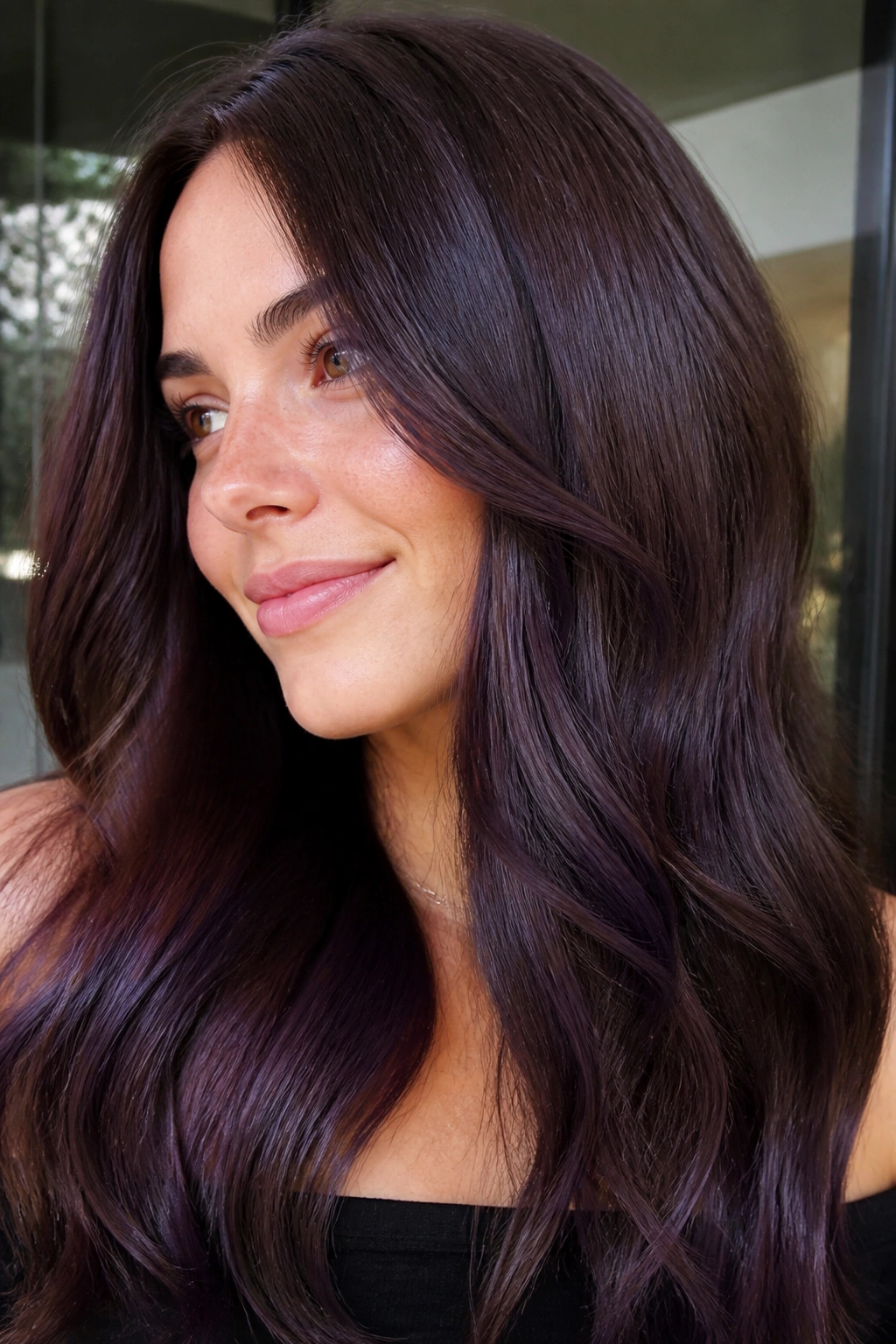
A blue-violet chestnut gloss is the quiet fix for brown hair that keeps turning brassy. It is not purple hair. It is a cool glaze that reins in red and orange, leaving the brunette shade deeper and cleaner.
This is one of those salon services that looks almost too subtle in the bowl and then suddenly makes sense in daylight. The hair looks smoother. The brown looks more like coffee than clay. Cool skin tones benefit because the finish echoes the cooler notes already in the complexion.
Use this when your current chestnut has drifted too warm, or when summer light has made it look lighter and redder than it should. A gloss usually lasts a few weeks, sometimes a bit longer on less porous hair. If your ends are dry, a clear gloss layered over the pigment can keep the finish shiny instead of patchy.
11. Chestnut Brown with Silver Thread Highlights
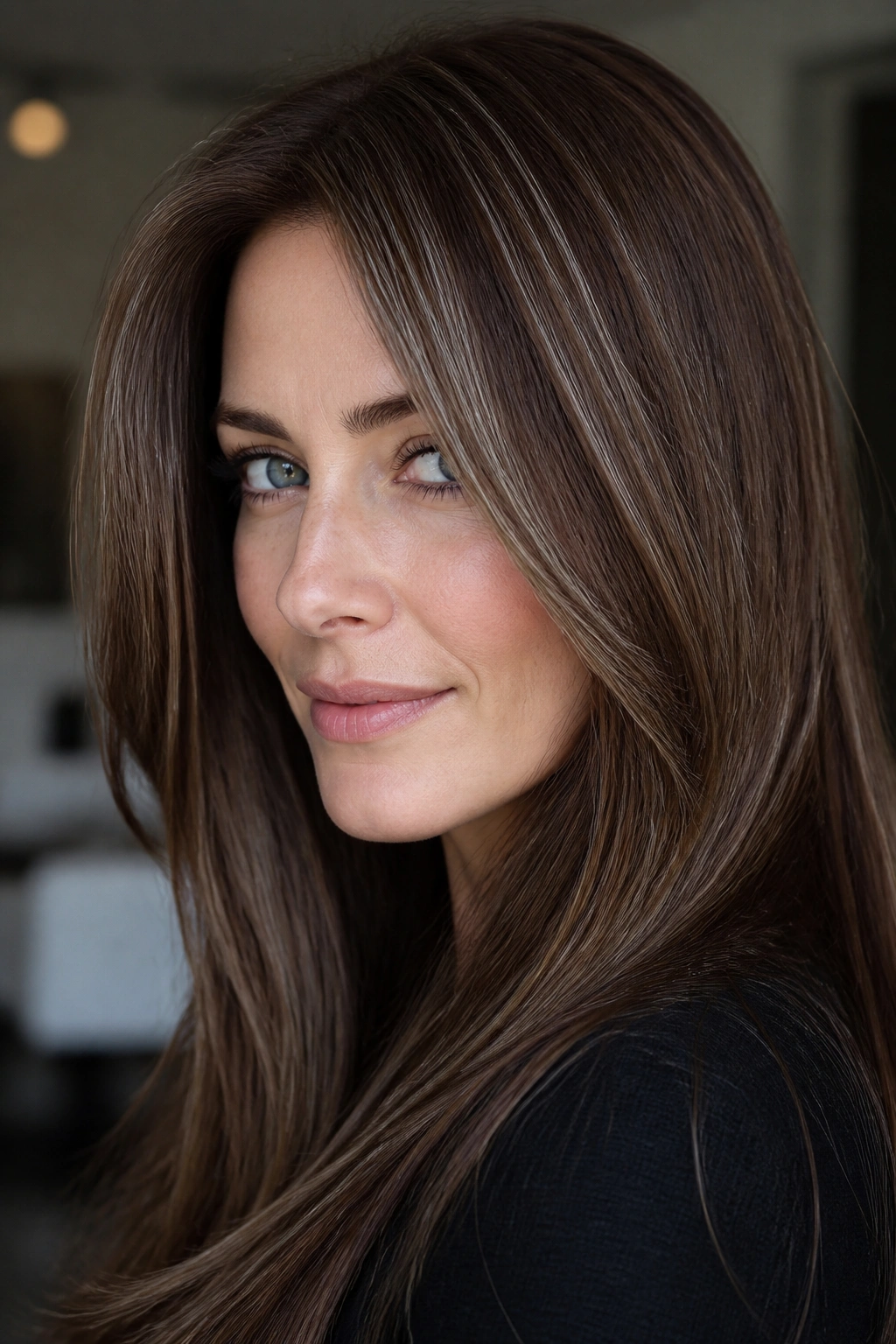
Silver thread highlights are for people who like a brunette shade with a little edge. The highlights are ultra-fine, almost like strands of soft metallic light running through a chestnut base.
Unlike chunky highlights, these threads do not shout. They flicker. That makes them especially good for cool skin tones, because the silver note plays into the same family as cool undertones rather than fighting them. A level 5 chestnut base with fine silver-beige threads can look elegant in a very plain, unfussy way.
This idea works best on straight or softly waved hair, where the fine contrast can actually be seen. On very curly hair, the threads can disappear. The tradeoff is that silver-toned lighteners need careful toning to avoid yellow. If your hair tends to yellow fast, a violet shampoo once a week can help keep the pieces clean.
12. Dimensional Chestnut Curly Shag
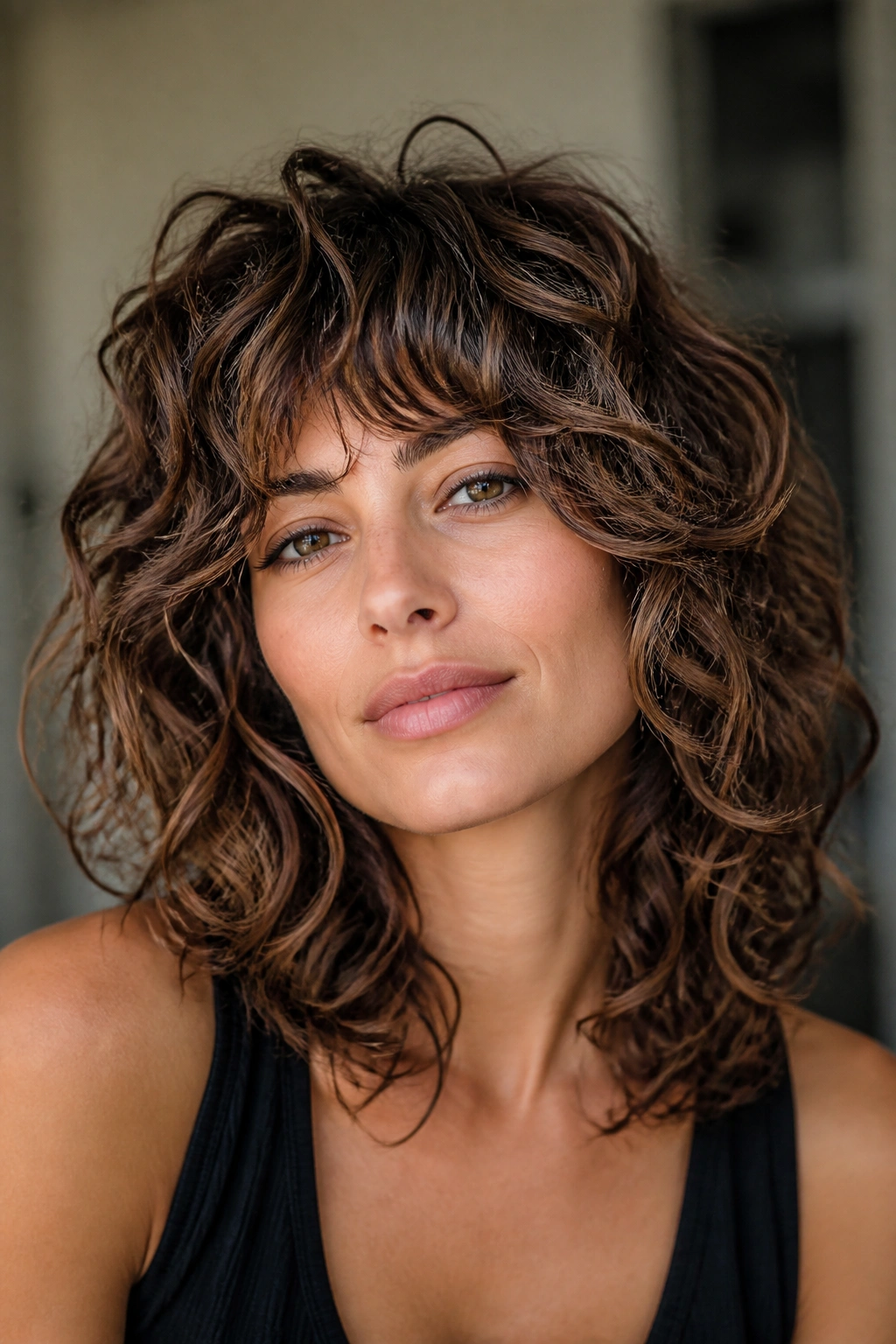
Curly hair needs placement, not just color, and a dimensional chestnut curly shag proves it. If the roots are a touch deeper and the outer curls carry cooler chestnut ribbons, the whole shape suddenly looks more alive.
The shag cut does half the work here. Layers let light hit different curls at different angles, so the chestnut does not read as one block. Keep the brightest pieces around the top and outer ringlets, not hidden underneath, or the effect disappears the minute the curls dry.
What Makes It Work
- Use cool chestnut and mocha tones, not gold.
- Keep the lighter pieces fine enough to follow the curl pattern.
- Refresh with a color-depositing conditioner every 2 to 3 weeks if your curls fade fast.
A curl cream with a light hold helps the color show its texture. Heavy gels can make the finish look too dark.
13. Dark Root Chestnut Ombre
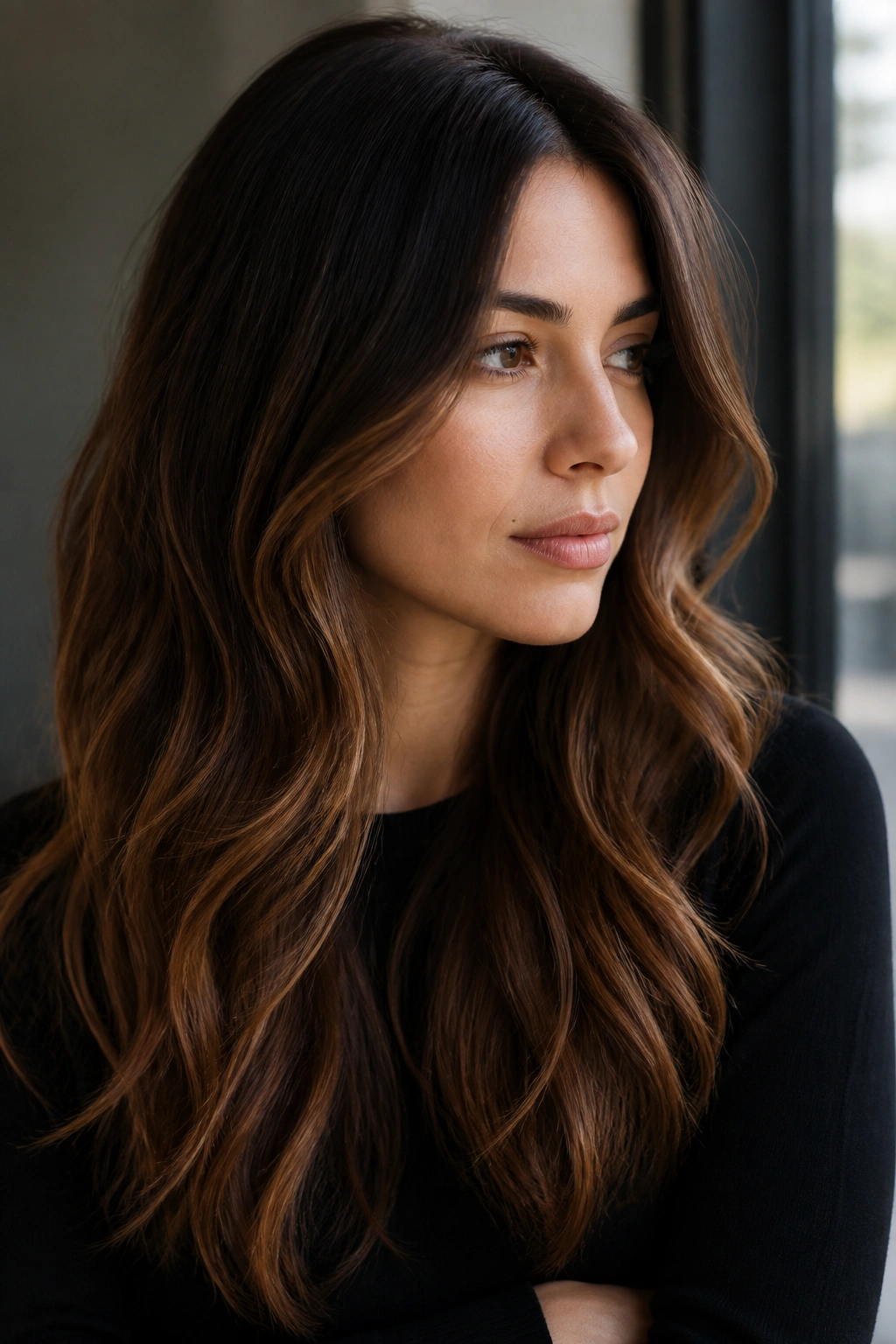
Dark-root chestnut ombre is still one of the easiest ways to wear brunette color without babysitting it. The root stays deep and natural, then the chestnut builds gradually toward the ends.
That long fade matters for cool skin tones because it keeps the warmth under control. Instead of a bright copper shift, you get a muted brown transition that feels softer and more wearable. The best ombre here is not high contrast. It should look like the hair simply lightened a little at the ends over time.
This is a good move if you wear hair down often and do not want root touch-ups every month. It is not the pick for someone who wants crisp, clean lines; ombre is about softness. If the ends are porous, ask for a slightly cooler toner on the bottom third so the chestnut stays brown, not rusty.
14. Plum-Tinted Chestnut Brown
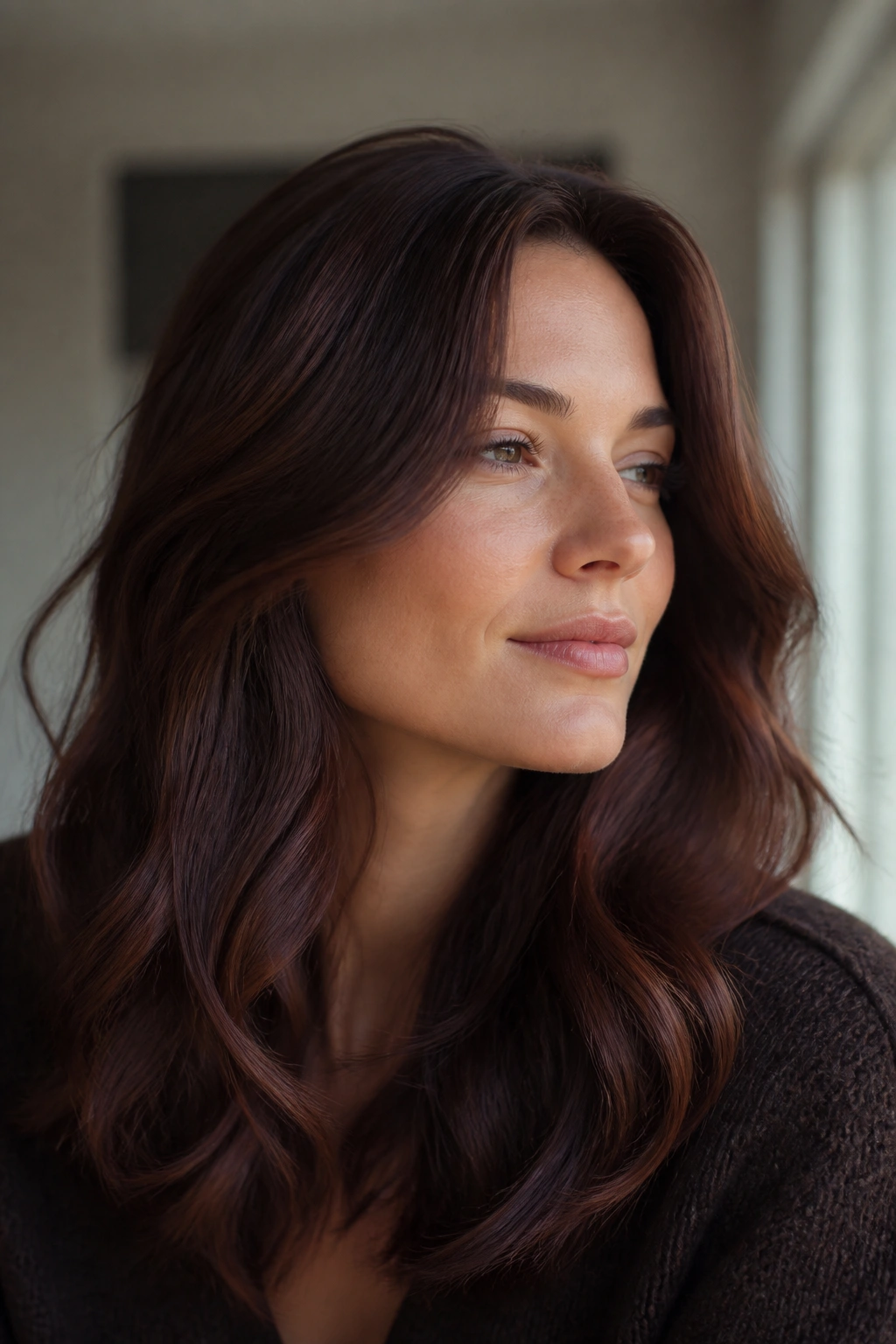
Can chestnut brown feel a little more interesting without turning fashion-color loud? Plum-tinted chestnut does that job neatly. The plum note is subtle, almost hidden until light hits it, and cool skin tones usually wear it better than a warm red-brown.
The shade works because plum sits on the cooler side of red. It brings depth, not copper. On medium to dark brown hair, that means you get a richer brunette that can look almost wine-dark indoors and more chestnut outdoors. It is a nice option if you want something a little moodier than straight mocha.
Who It Suits Best
- People with cool or neutral-cool undertones.
- Medium brown hair that fades red fast.
- Anyone who wants a brunette with a slight edge.
Keep the plum accent soft. If it starts reading burgundy, it can overpower the chestnut base quickly.
15. Satin Chestnut Pixie Cut
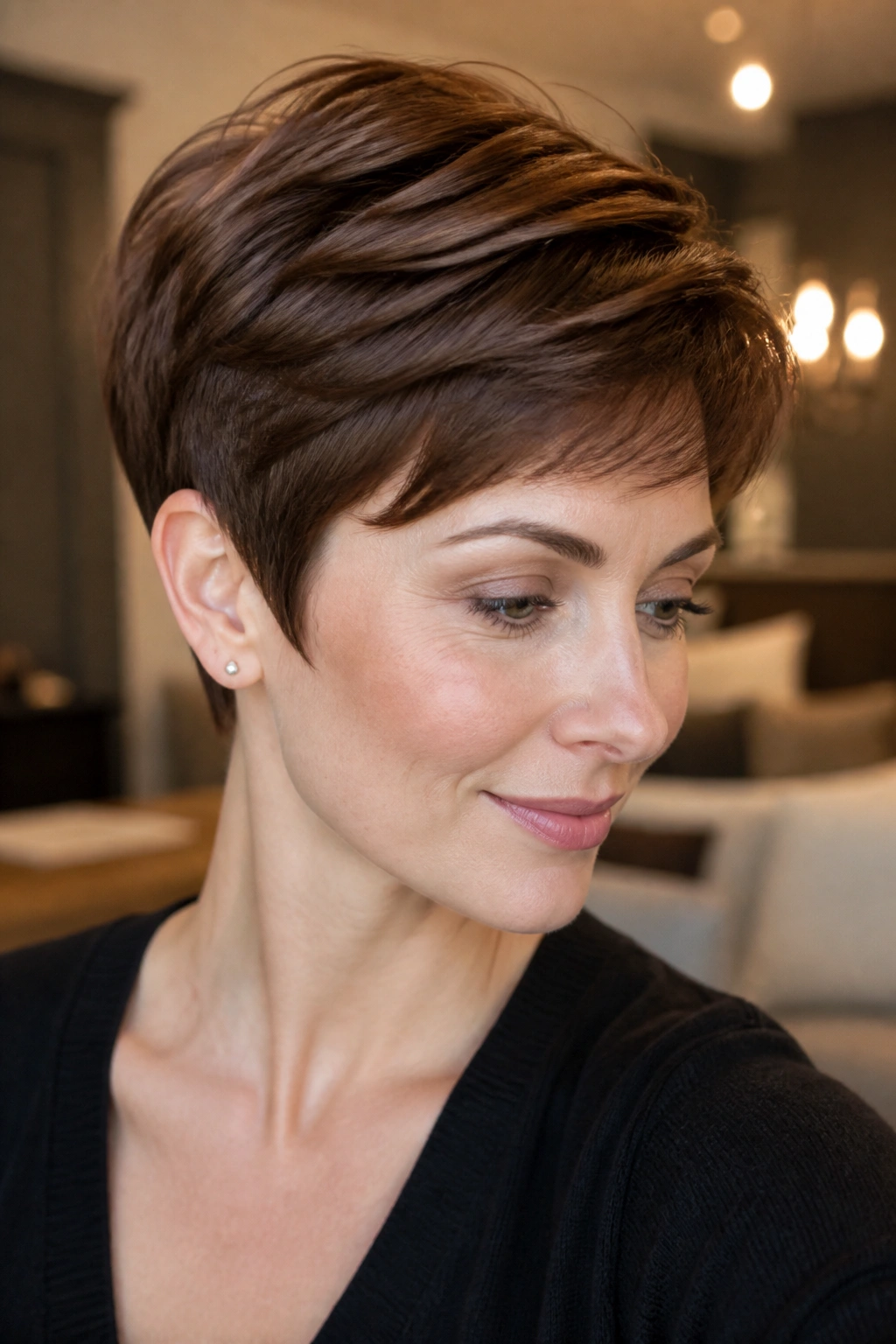
A pixie cut needs shine more than length, and satin chestnut gives it that clean finish. Short hair shows every tone shift, so a cool chestnut with a glossy surface can look crisp without being severe.
The cut matters here. Keep the top slightly longer so the color can catch light at the crown, then taper the sides for shape. Because the hair is short, even a small amount of reflect makes a difference. A satin finish also helps the style look intentional on cool skin tones, since too much red-brown can make the face seem sharper.
This is one of the easiest chestnut ideas to maintain. Short hair loses its color story more slowly because the ends are trimmed often. A light styling cream and a touch of shine product are usually enough. Skip anything sticky. It clumps the top pieces and ruins the soft, polished effect.
16. Ribbon-Highlight Chestnut Layers
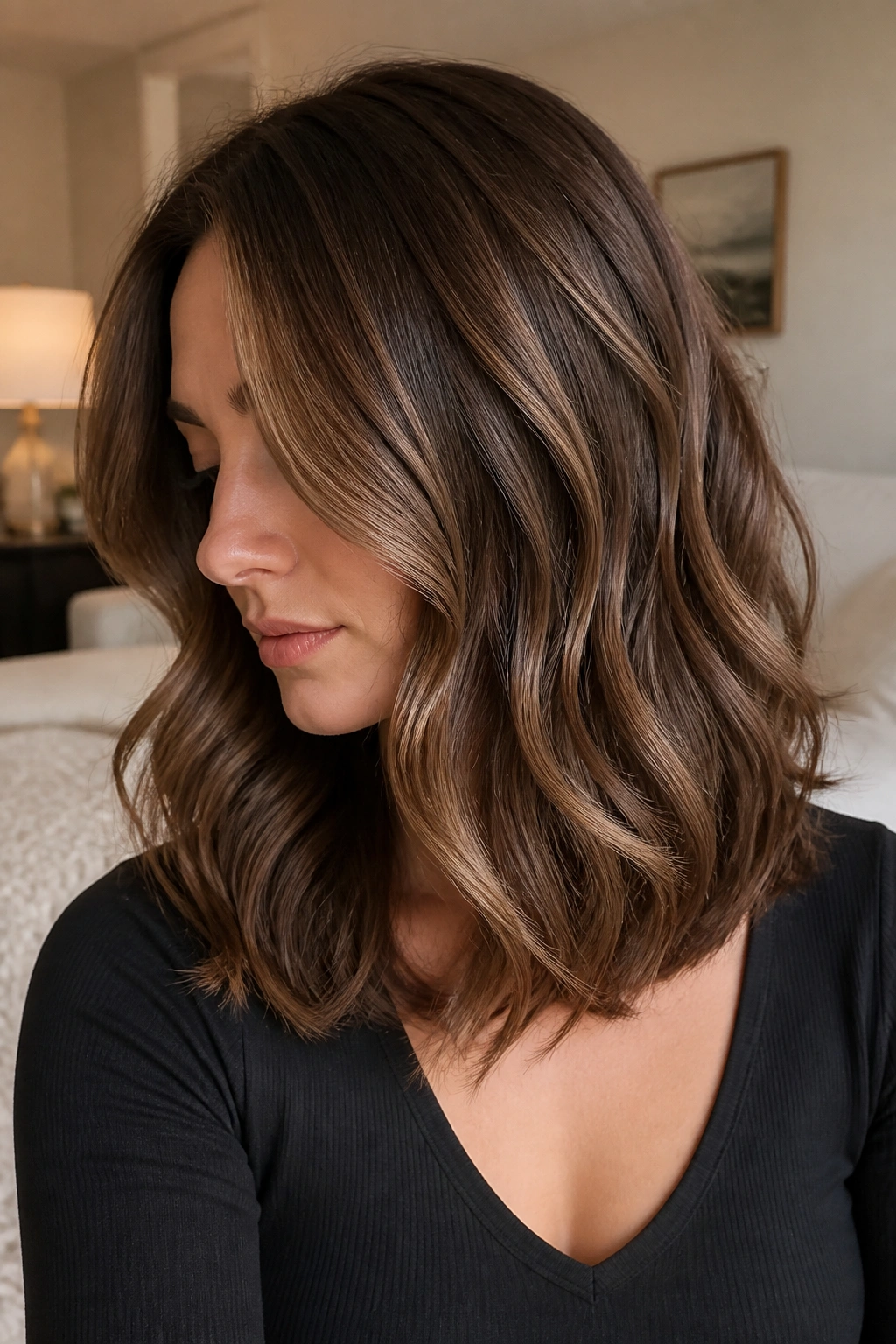
Ribbon highlights are wider than babylights and softer than chunky streaks, which is why they work so well with chestnut layers. You see the color moving through the haircut instead of sitting on top of it.
This idea is especially good on shoulder-length and longer cuts. The ribbons can follow the bends of the layers, making the chestnut look dimensional from every angle. Keep the ribbons cool—mocha, beige-brown, or soft ash-brunette—so the whole look stays friendly to cool skin tones. Warm caramel pieces would pull it in the wrong direction fast.
A layered blowout shows this color best. Use a round brush and direct the front sections away from the face. That movement lets the ribbons peek through instead of hiding in the hair. If you like air-drying, place the lighter pieces around the outer canopy where they’ll still catch light.
17. Ash Chestnut Brown with Soft Contouring
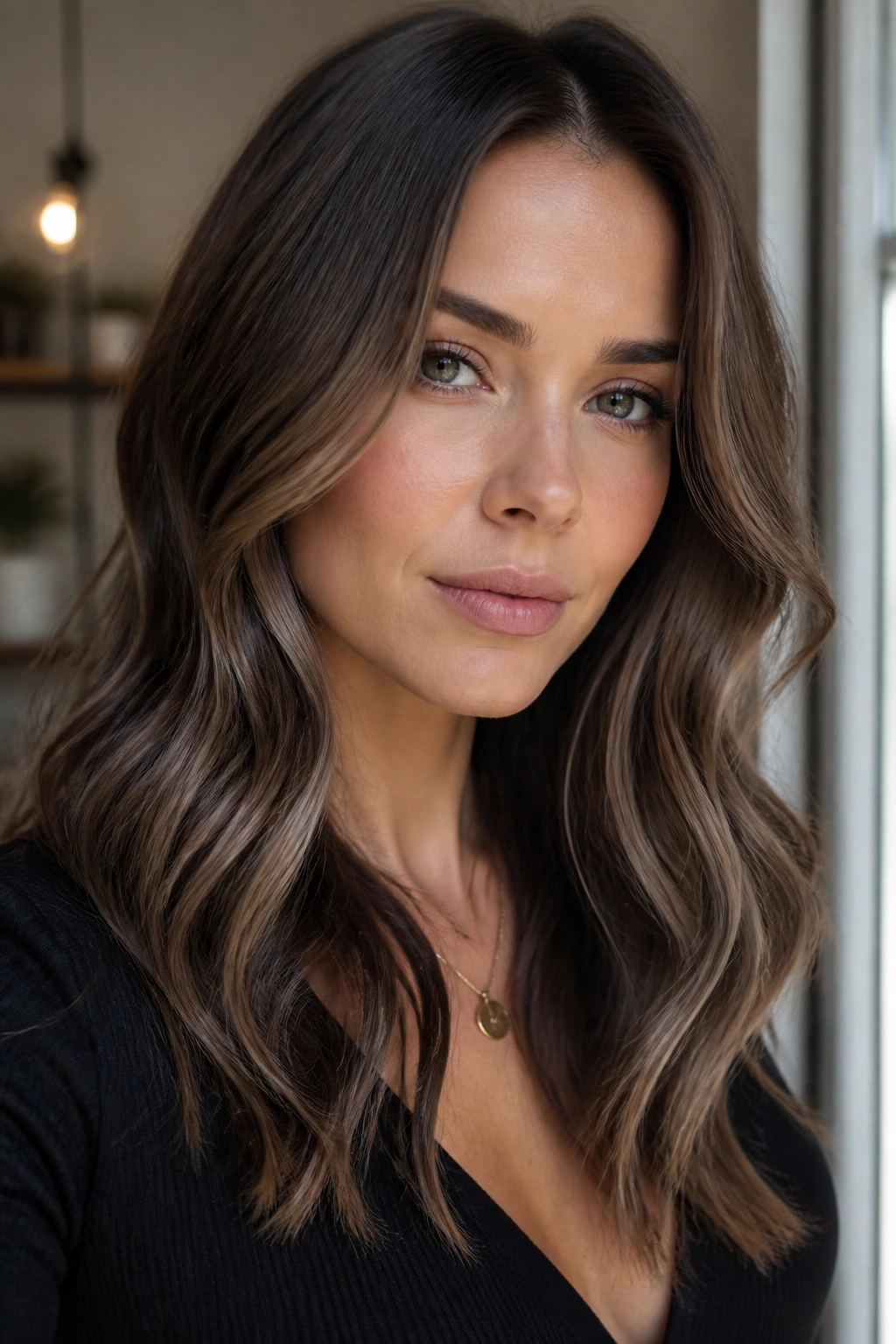
Ash chestnut brown is one of the safest choices for cool skin tones because it keeps the warmth in check without making the hair look gray. It is chestnut with the red turned way down.
Soft contouring makes it even better. Darker pieces near the temples and jawline can slim the shape of the face, while slightly lighter chestnut pieces sit around the cheekbones. The shift should be gentle. No hard bands. No tiger stripes. Just a smoother frame around the face.
This is the kind of brunette color that looks calm in photos and even better in real life. It suits medium-length cuts especially well because there’s enough length for the contouring to show. If your hair is very dark, ask for the lightened pieces to stay within two levels of the base. That keeps everything believable.
18. Mink Chestnut with Low-Contrast Lowlights
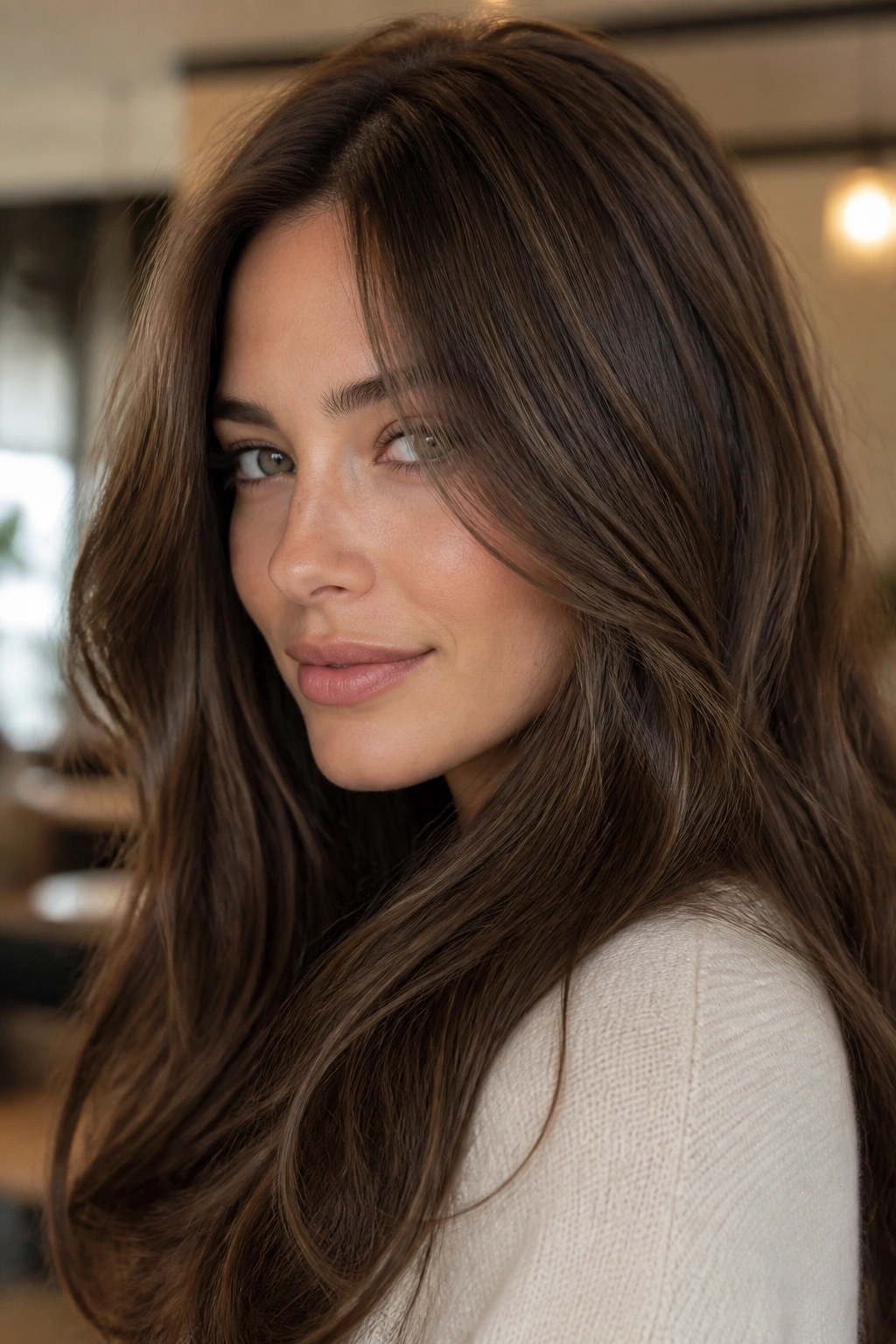
Mink chestnut is brown with a soft, plush finish. Think taupe-brown rather than red-brown. It has enough depth to look rich, but the undertone stays cool enough for skin that leans pink or blue.
Low-contrast lowlights are what make this shade feel full. Instead of lifting pieces higher, the colorist weaves in deeper brown strands that are just one shade darker than the base. That keeps the hair from going flat and helps fine hair look denser. It also means the root grow-out blends more easily.
This one is especially good if you do not want anyone to spot the color work from across the room. It is close-up color. The kind that makes people notice the shine first and ask questions later. Ask for a cool brown glaze at the end, because mink tones can fade warmer than you’d expect.
19. Glassy Chestnut Brown on Straight Hair
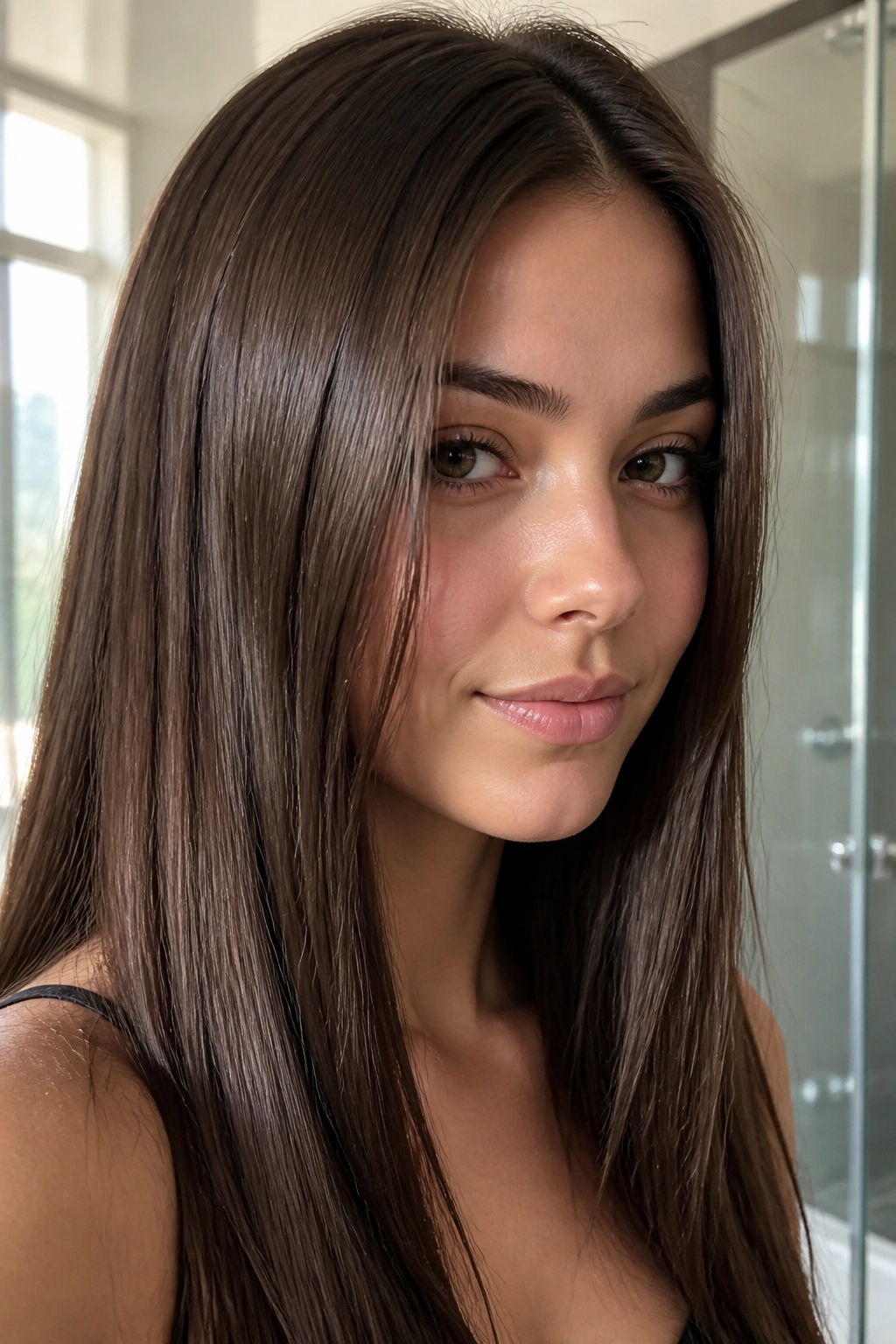
Why does glassy chestnut brown look so good on straight hair? Because straight strands show reflect in a cleaner line. There’s nowhere for the light to hide, which makes the brown look smooth and deliberate.
The color itself should stay simple. A level 5 or 6 chestnut with a neutral-ash gloss gives the cleanest result. Too much red can make straight hair look busy, while too little depth can wash out cool skin tones. The middle ground is what matters.
What to Ask For
Tell your colorist you want shine, not warmth. Ask for a clear gloss or a soft toner that keeps the finish cool. Then style with a flat brush blowout or a light pass of a flat iron at low heat. A heat protectant with a smooth finish is worth using here, because the whole look depends on the hair lying sleek.
20. Chestnut Brown Underlights for Hidden Dimension
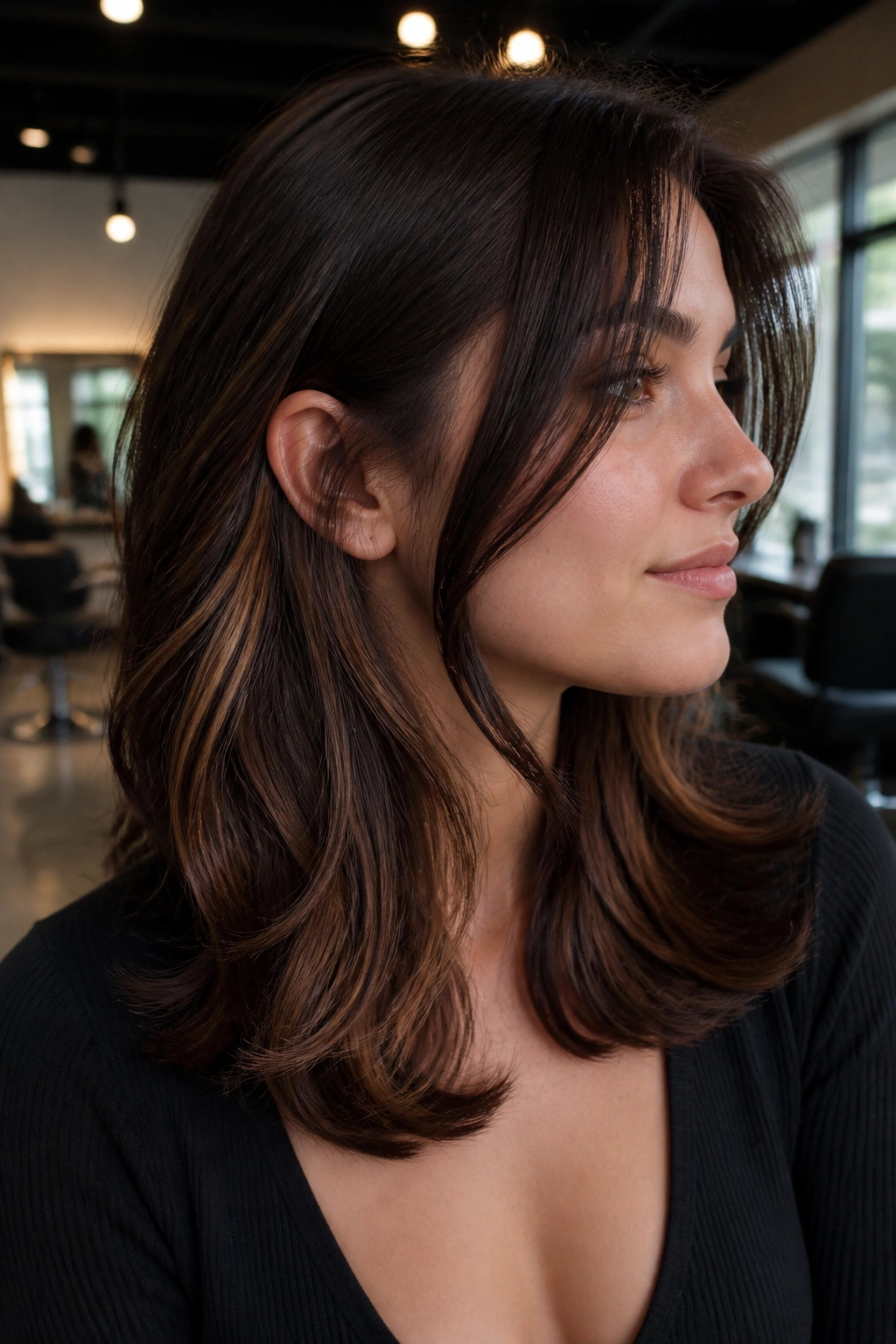
If you wear your hair up a lot, underlights are smarter than full-head highlights. They hide the movement underneath, and chestnut brown is one of the nicest shades to use there because it shows up without shouting.
The top layer can stay deeper and more natural, while the underlayers carry the chestnut tone. When the hair moves, the color peeks out at the neck, under the ears, and through braids or ponytails. Cool skin tones benefit from this because the visible color stays muted and brown-first, not golden.
This is a good pick for people who like small surprises in their hair. It also works nicely if your workplace prefers a more conservative look. Keep the underlights one to two shades lighter than the top, and stay on the cool side of chestnut so the contrast feels smooth rather than striped.
21. Chestnut Bob with Peekaboo Lowlights
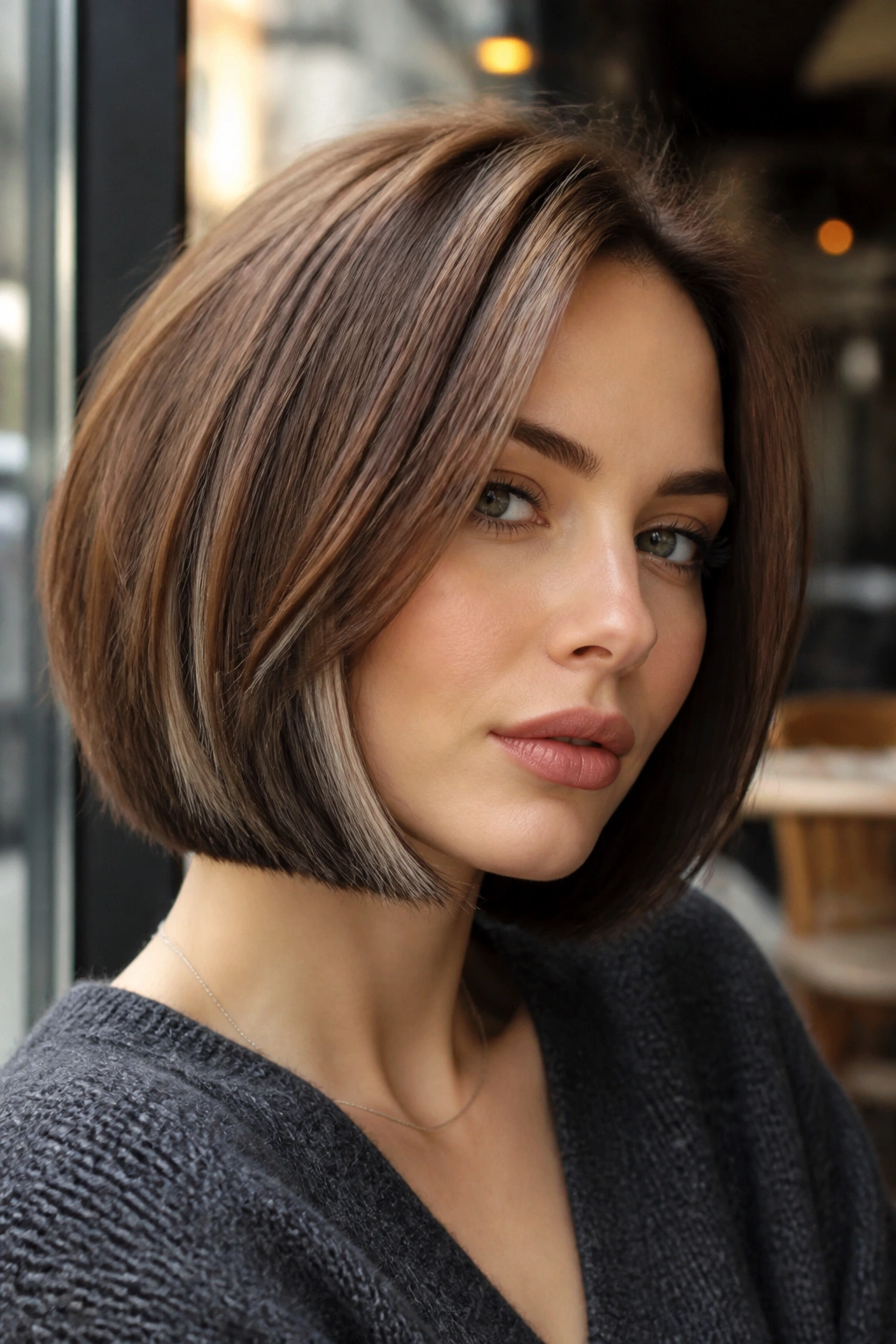
A bob can feel a little too neat if it’s one flat color. Peekaboo lowlights fix that by slipping in darker, cooler strands under the top layer where the cut moves and flips.
Unlike underlights, these lowlights are meant to show through the bob’s shape. You catch them at the jawline, behind the ears, and when the ends tuck in a little. That makes the chestnut look layered without making the hair brighter. On cool skin tones, the darker bits keep the shade grounded and elegant.
This style is especially good for a blunt bob or a softly stacked one. You want the lowlights to create a whisper of depth, not a checkerboard. A root smudge helps too, because it softens the top line and keeps the color looking deliberate as it grows.
22. Blackberry Chestnut Brown
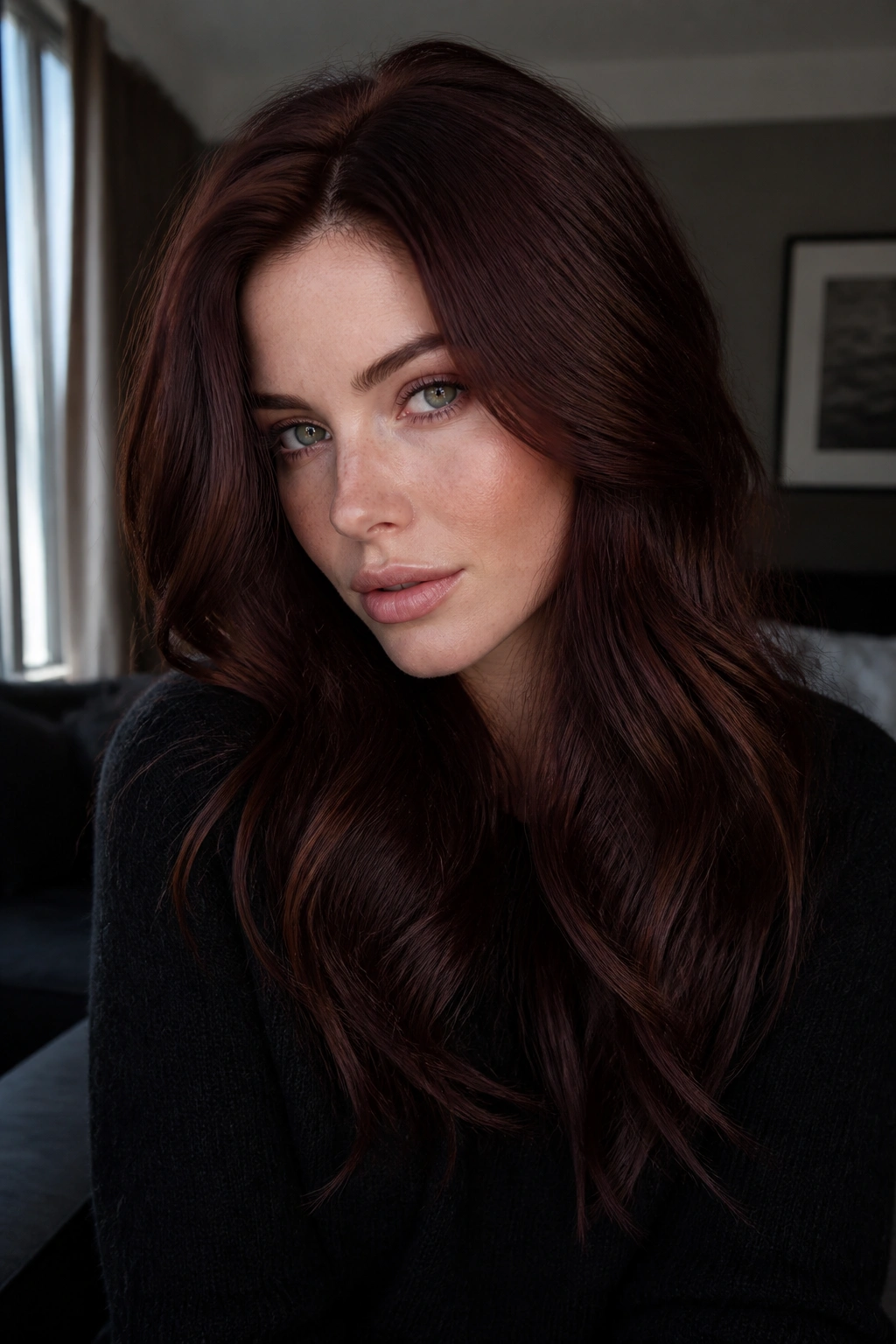
Blackberry chestnut sits in that lovely space between brunette and berry. It has enough cool red-violet reflect to feel rich, but not so much that it turns into a true burgundy.
This shade flatters cool skin tones because the berry note echoes the cooler side of the complexion. It is a little moodier than mushroom chestnut and a little deeper than plum. In low light, it can look almost espresso-dark; in daylight, the chestnut piece comes out and keeps it from feeling heavy.
The key is balance. You want a brown base with a restrained berry veil, not a full red overlay. If your hair tends to grab pigment, this may need a demi-permanent formula rather than something stronger. That gives you more control and makes it easier to refresh the tone before it gets too dark.
23. Chunky Chestnut Face Frame
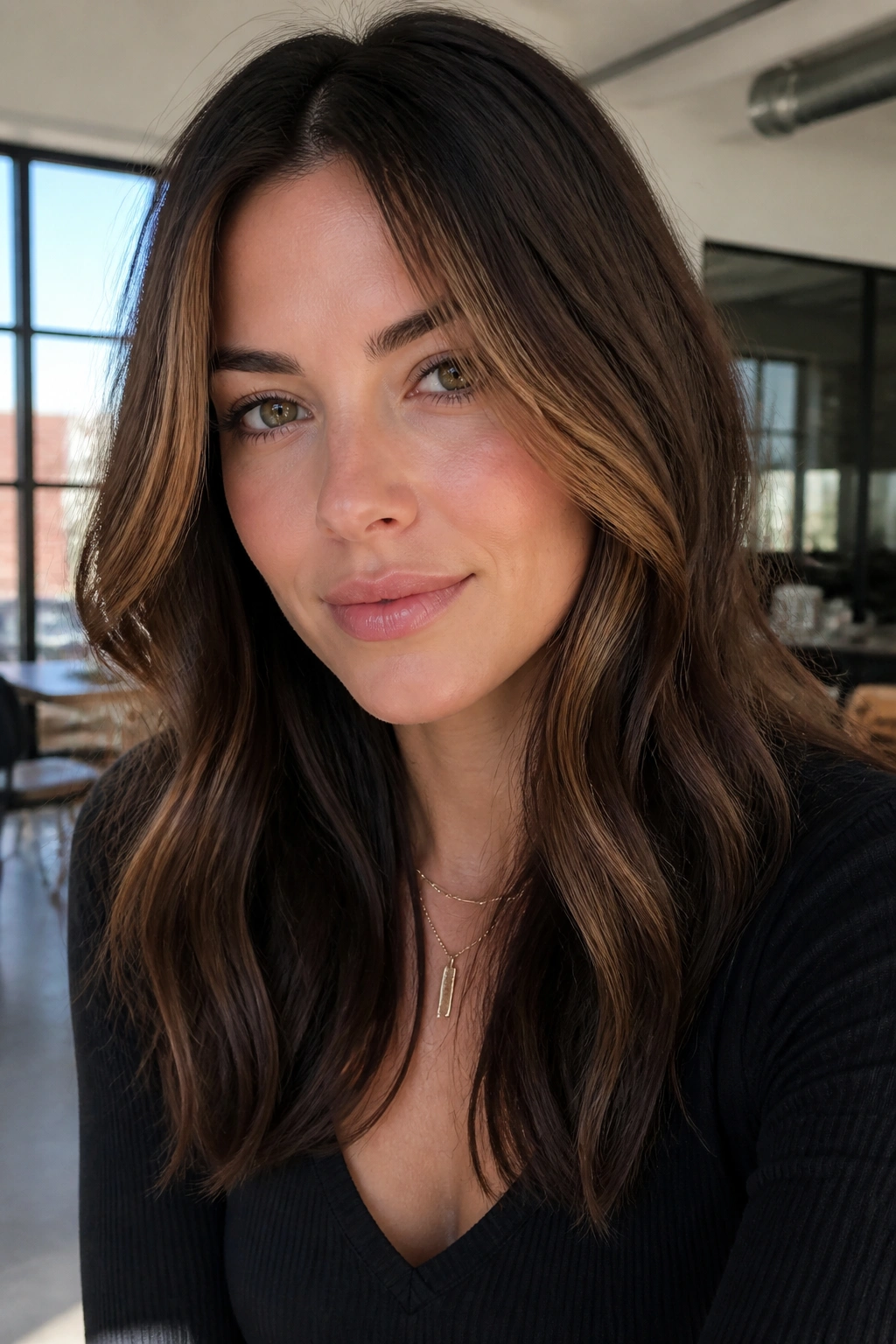
Can chunky color look chic on cool skin tones? Yes, if the chunks stay in the chestnut family and not in blonde territory. Chunky chestnut face-framing pieces give a little retro energy without the brass that usually comes with high-contrast highlights.
The front sections should be broad enough to be visible, maybe around 1 to 1.5 inches, but still toned to a cool brown. That keeps the face bright while preserving the brunette feel. The rest of the hair can stay deeper and more even, so the front pieces have room to stand out.
This works best if you like a bit of attitude in your color. It is not subtle. It does, however, photograph nicely and can make straight or wavy hair look fuller near the front. Keep the rest of the shade neutral-cool so the chunks do not read as random.
24. Reverse Balayage Chestnut
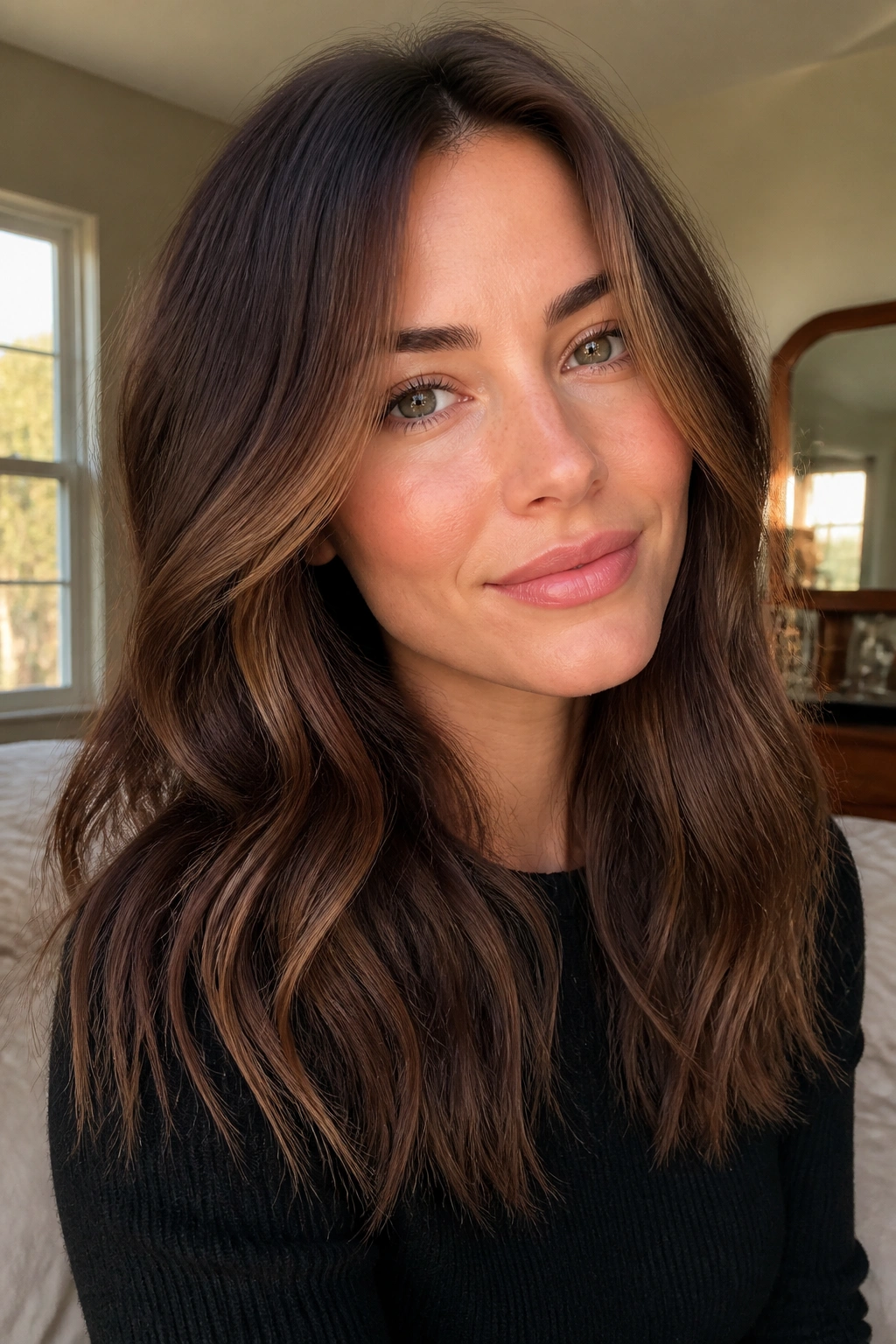
Reverse balayage is the move when hair has gone too light and you want depth back. Instead of lifting pieces, you paint in darker chestnut lowlights to rebuild a richer brunette shape.
That makes this idea especially useful for cool skin tones, because it removes warmth that may have crept into the lighter ends. The finished look is usually softer and more grounded than a standard balayage. You still keep dimension, just in a darker register.
How It Looks Best
Reverse balayage shines on hair that has been highlighted too many times and started to look sandy or gold. A cool chestnut lowlight through the mids and ends gives the hair structure again. Leave a few brighter pieces around the face if you still want movement. Without them, the color can get too dense, too fast.
25. Cocoa-Tipped Chestnut Waves
Cocoa-tipped chestnut waves are a quiet, wearable option for anyone who likes movement more than contrast. The ends turn a shade deeper and cooler, which gives the waves a soft finish without pushing into ombre territory.
The look works because the wave pattern reveals the change in tone gradually. On cool skin tones, cocoa ends keep the overall brunette story grounded. They also make the hair look thicker at the bottom, which is handy if your ends are fine or see-through.
This shade is best when the transition is gentle. The top should stay chestnut, the ends should deepen into cocoa, and the line between them should disappear in the bends of the wave. If you use a wand to style it, wrap sections in alternating directions so the color shifts look natural and not staged.
26. Soft Chestnut Shag with Ash Ends
A shag needs movement, and ash ends keep the cut from drifting into warm, puffy brown. The layers already create texture; the cooler ends make that texture look sharper.
This idea works because the shag has a lot of surface area. Every flipped piece shows off the color, so you can use the ends to create a slight fade from chestnut through ash-brown. Cool skin tones usually wear that well, especially if the shorter layers around the face stay a touch brighter than the nape.
Why the Cut Matters
The color and the haircut have to talk to each other. If the layers are too blunt, the ash ends can look disconnected. If they’re too wispy, the cooler tone can disappear. Ask for feathered movement around the face and a softer, piecey finish at the ends. That keeps the whole thing modern without trying too hard.
27. Cool Chestnut Brown with a Satin Glaze
If you already like your brunette base, a satin glaze may be all you need. It does not change the color dramatically. It just nudges the reflect cooler and smoother, which is often enough for cool skin tones.
This is the least dramatic choice on the list, and I mean that as a compliment. A good glaze can tame a brown that feels too orange after a few washes, seal down the cuticle a bit, and make the hair look softer in daylight. You can do it on natural brown or colored hair, as long as the base is healthy enough to take gloss.
The maintenance is easy, too. Refresh every 4 to 6 weeks if your hair is porous or faded. If the shade starts to look too flat, a clear gloss on top can bring back shine without adding warmth. Quiet work. Good payoff.
28. Muted Chestnut Brown for Gray Blending
Muted chestnut brown is one of the most useful options for blending early grays without making the hair look helmet-dark. The cool tone softens the contrast between silver strands and brunette hair, which helps the grow-out read smoother.
This works especially well if your grays show up around the temples or part line first. A muted chestnut with neutral-ash reflect can soften those bright strands without forcing full coverage everywhere. That makes the color feel more natural and less rigid. It also means you can stretch touch-ups a little longer, which people usually appreciate once they stop fighting their roots.
If you want the cleanest result, ask for a demi-permanent formula or a soft permanent base with a cooler gloss on top. Permanent color alone can come out too dense on grays, and density is not the same as coverage. You want a brown that blends, not one that stamps everything out.
Final Note
The best chestnut brown shades for cool skin tones usually have one thing in common: they keep the red and gold under control. Smoky, mushroom, ash, mocha, plum, and blue-violet all sit in that safer lane, and each one can be adjusted for your haircut, hair texture, and how much maintenance you can tolerate.
If you’re bringing a photo to a colorist, ask for the tone first and the technique second. Say you want a cool chestnut with low copper, low orange, and a soft finish. That language matters more than people think, because “chestnut” can mean a dozen different things depending on who’s mixing the bowl.
One last thing. Natural daylight tells the truth. Look at the shade outside, not under harsh bathroom bulbs, before you decide it’s right.
