



Finding the right red hair color when you have cool skin is a bit like playing a high-stakes game of chemistry. Most red dyes lean toward orange, copper, or gold. For those of us with cool undertones—think pink, blue, or olive hues in the skin—those warm reds can turn into a disaster, making us look washed out or highlighting redness in our complexion that we’d rather keep hidden.
The secret isn’t just picking “red.” It’s picking the right red. We need auburn shades built on blue, violet, or burgundy bases. These colors bridge the gap between brunette and red without clashing with your natural coloring. When you get this match right, it brings out the brightness in your eyes and balances your skin tone beautifully. When you get it wrong, you end up looking like you’ve caught a sunburn or, worse, just plain tired.
This guide explores 30 variations of auburn red that respect your cool skin rather than fighting it. We are skipping the bright, fire-engine oranges and focusing on the deep, cool, and sophisticated side of the red color spectrum.
1. Deep Burgundy-Auburn
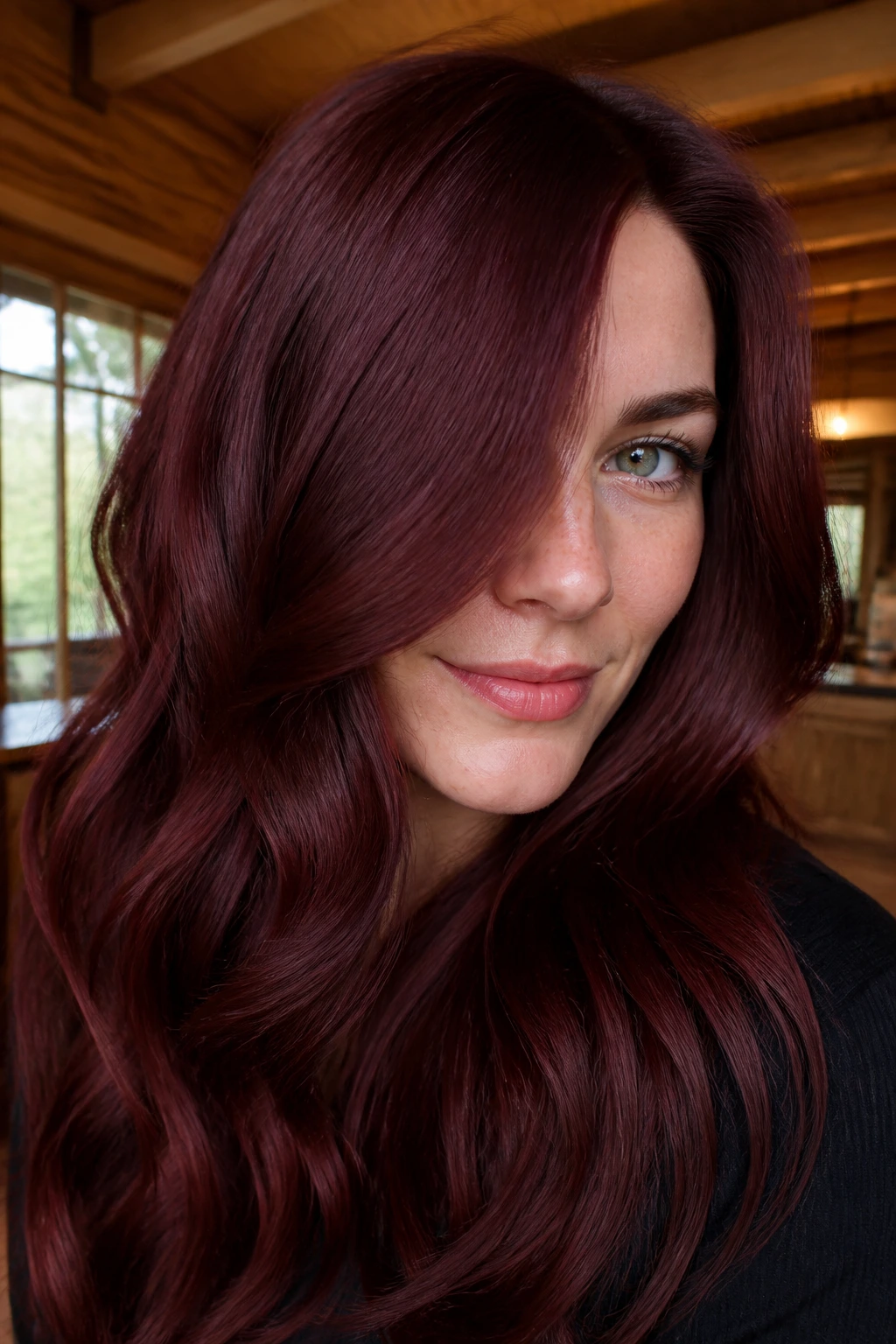
This is the gold standard for cool-toned skin. By combining a deep red pigment with a heavy violet base, you get a color that feels dark and mysterious but undeniably red. It doesn’t pull orange as it fades, which is the main battle with most red shades.
Why It Works for Cool Skin
The violet base acts as a counterbalance to the pink or blue undertones in your skin. Unlike copper, which adds warmth, burgundy pulls the color spectrum toward the cooler end of the wheel. It creates a rich, saturated look that feels intentional rather than accidental.
Maintenance Note
Because this color relies on heavy violet and blue pigments, it will fade to a soft pink or a duller brown if not cared for properly. Use a color-depositing conditioner with cool tones once a week to keep the depth intact.
2. Cool Cherry Cola
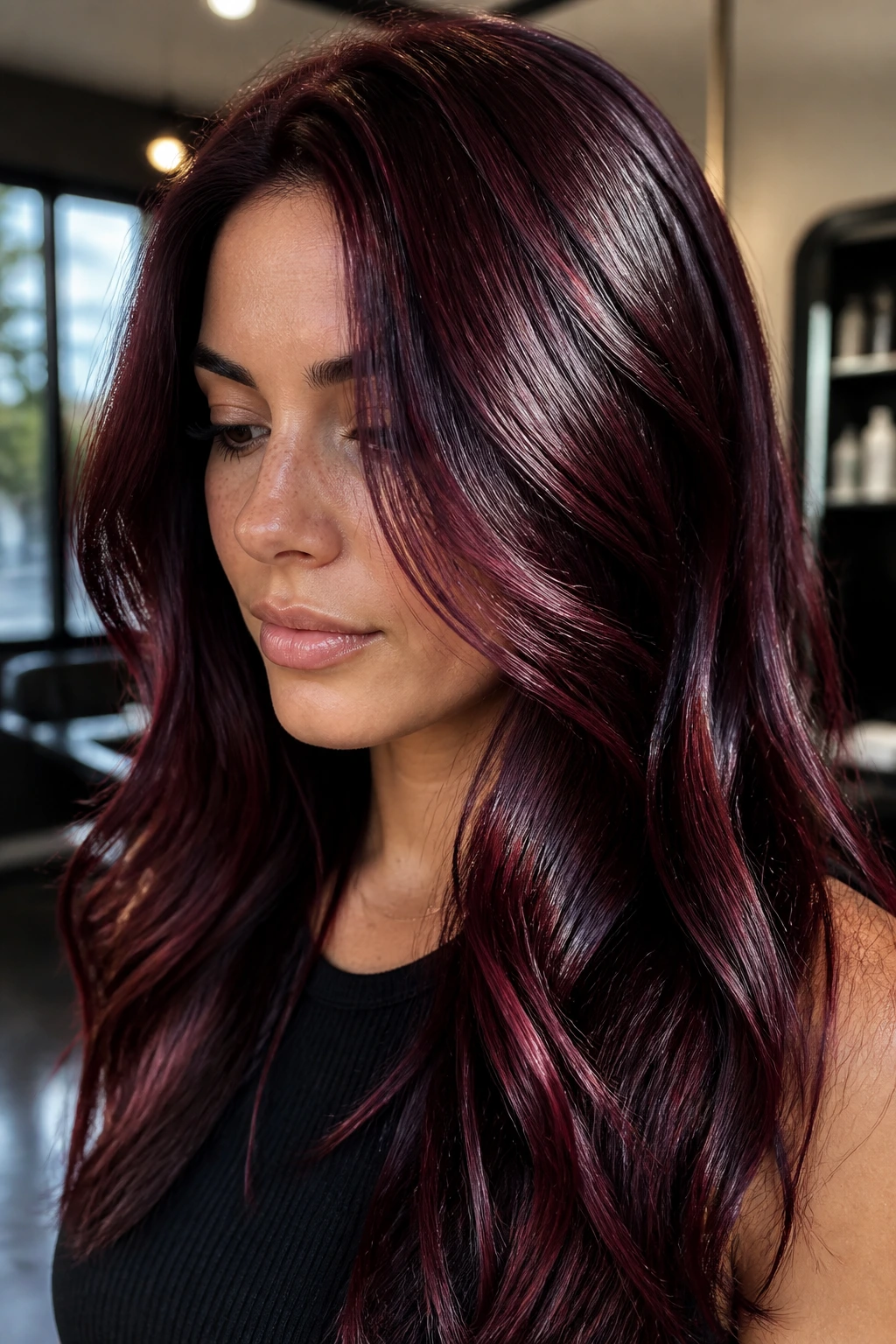
Think of this as the “everyday” version of a fashion red. It is dark, glossy, and has that signature blue-based red shine that makes cool skin look porcelain and bright. It looks incredible on people who have dark hair naturally, as it doesn’t require a harsh bleach process.
The Best Way to Wear It
This shade looks best with a high-gloss finish. If your hair is dry or damaged, this color can look flat. Ask your colorist for a glaze after your tint to ensure that light reflects off the red tones, giving it that characteristic “cola” shine.
Pro tip: If you are nervous about committing to a full head of red, ask for this shade as a balayage over a dark brown base. You get the cool-red pop without the full-head root maintenance.
3. Plum-Toned Auburn
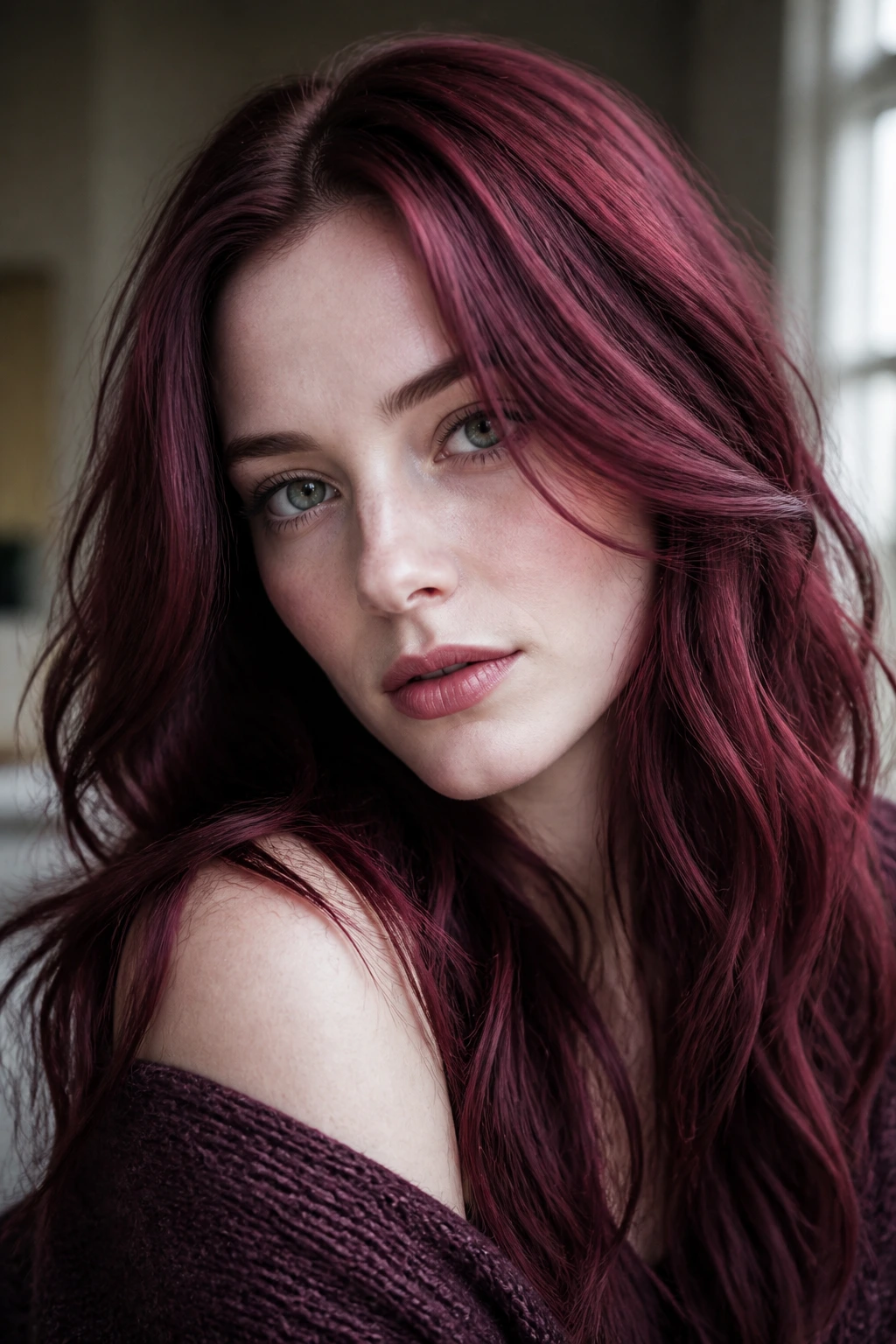
If you have very pale, cool skin, plum is your best friend. It leans further into the purple spectrum than a traditional auburn, making it a “hidden” red. It’s professional, moody, and undeniably flattering.
Why It Stands Out
This isn’t your standard “red hair.” It sits at the intersection of brown, red, and violet. Because it has such a strong violet component, it actively cancels out any yellow or orange tones that might try to creep in as your hair lightens.
Styling Tip
This color looks particularly sharp when styled with loose, polished waves. The movement of the hair allows the plum undertones to show up differently in various lighting—appearing more brunette in low light and showing its true violet-red soul in the sun.
4. Dark Chocolate-Auburn Blend
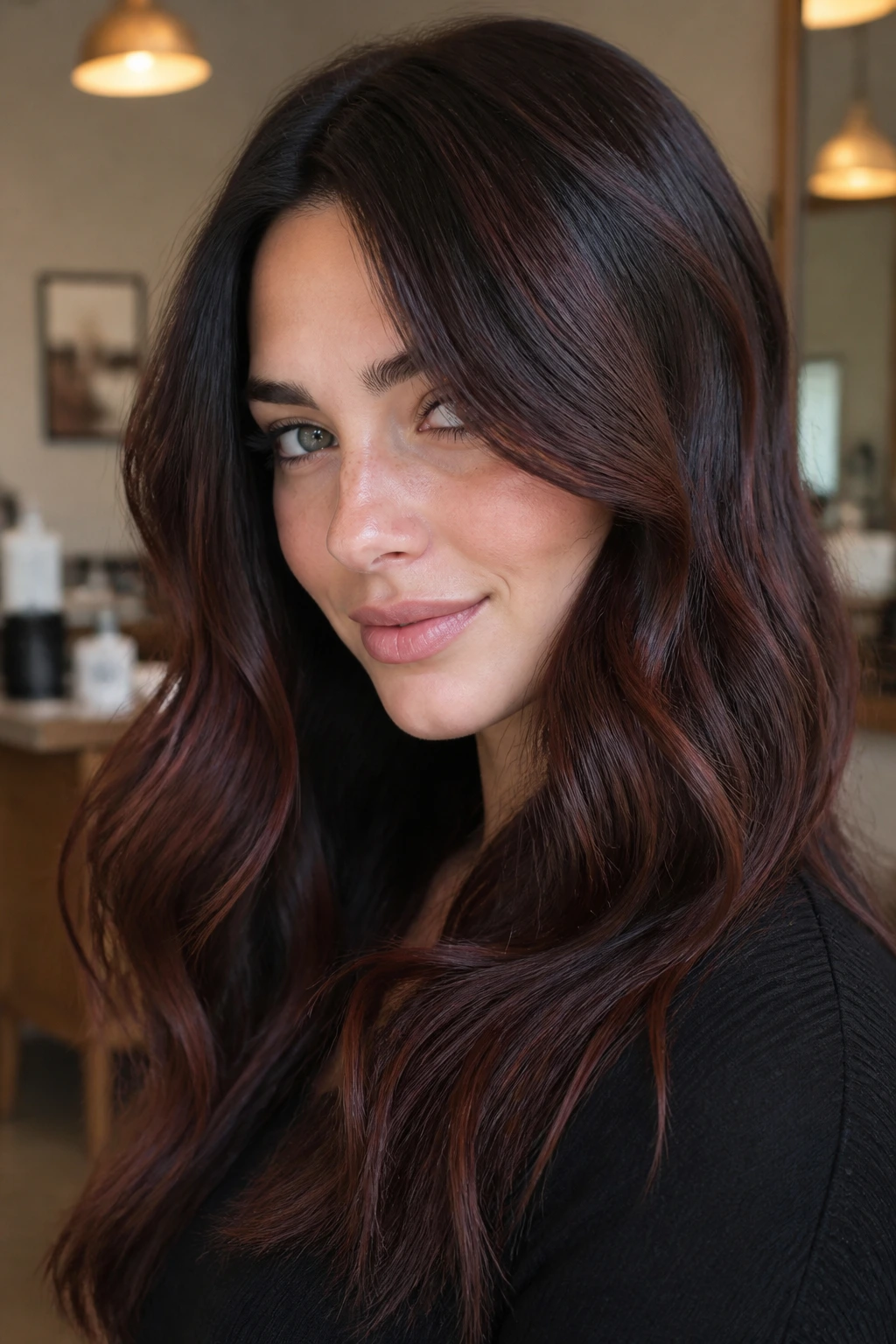
This is the safest bet for anyone making the jump to red for the first time. It is essentially a dark brown base with subtle ribbons of cool, dark auburn running through it. It provides the warmth of a red without the “look at me” brightness.
The Mechanics of the Blend
The key here is the ratio. You want a 70/30 split—70% dark, cool-toned brown and 30% deep, blue-based auburn. The brown grounds the color, making it compatible with cool skin, while the auburn gives it that distinct reddish glow.
What to watch for: Ensure your colorist isn’t using a “warm brown” as the base. If the base has golden or honey tones, the whole look will clash. Insist on an ash-brown or neutral-brown base.
5. Smoky Raspberry Auburn
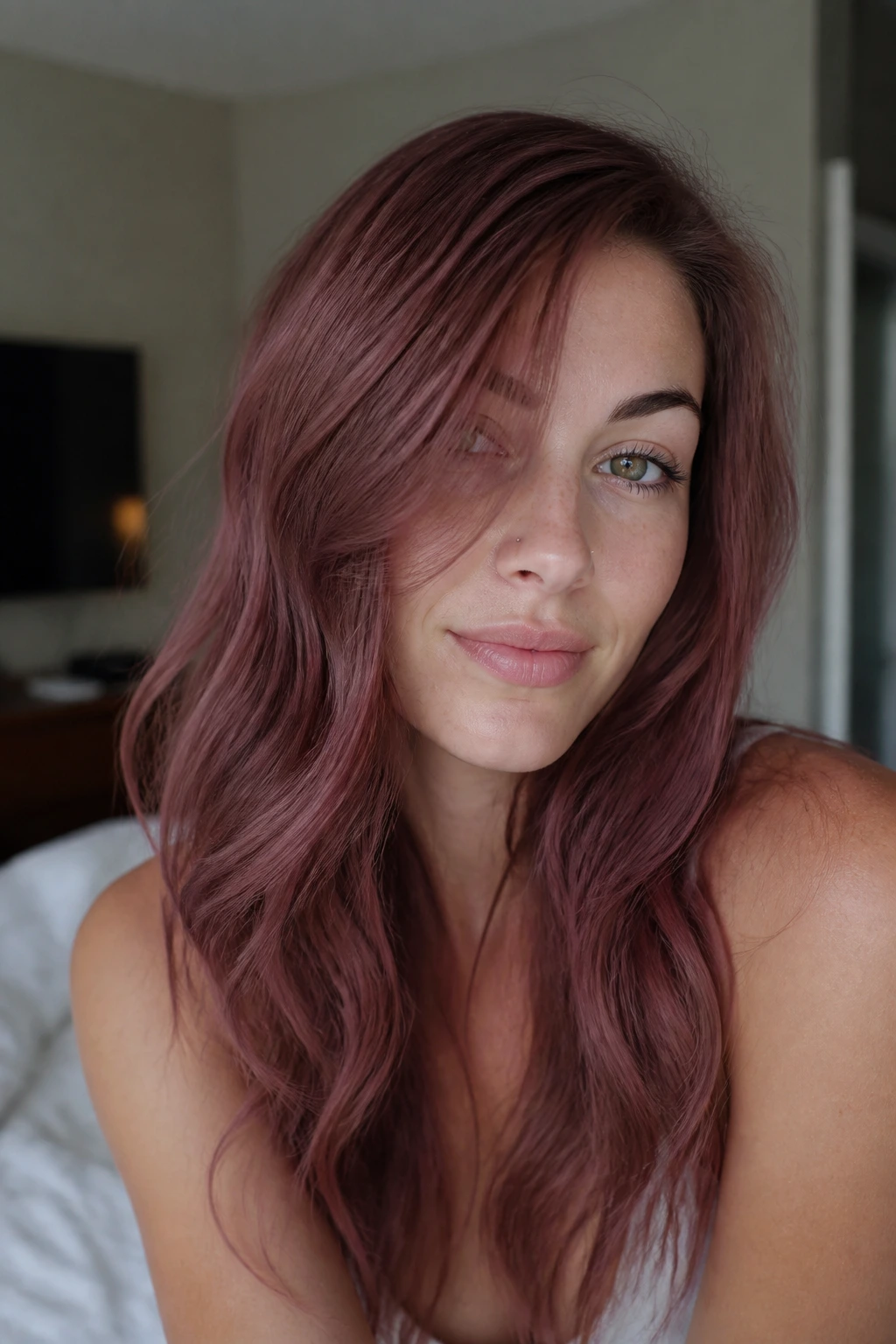
Smoky shades are trending for a reason: they are incredibly soft and modern. A smoky raspberry auburn has a slightly muted, dusty quality. It isn’t a neon, juicy red; it’s a sophisticated, matte-finish hue that feels very “lived-in.”
Why It Works
The “smoky” element is created by adding a touch of grey or ash pigment to the red formula. This neutralizes the vibrancy of the red just enough to make it wearable for those who feel overwhelmed by bold hair colors.
Who Should Choose This
This is perfect if you have cool, olive-toned skin. The muted red doesn’t bring out the green in your skin, which is the common pitfall with bright reds on olive complexions.
6. Wine-Infused Auburn
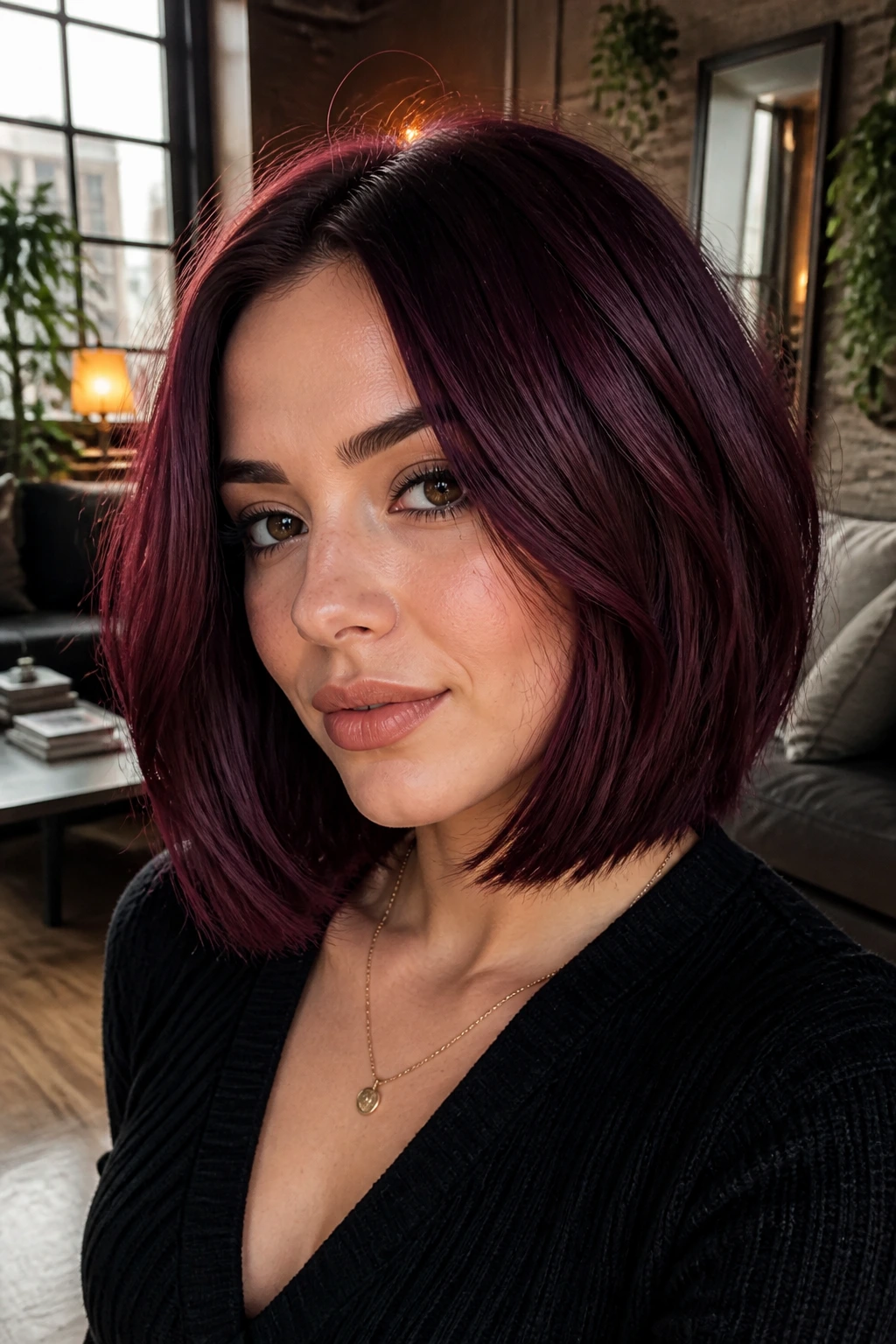
Imagine the color of a heavy Merlot. It’s deep, velvety, and has a slight blue-purple tint. This is the ultimate “cool-girl” auburn. It’s not quite a fashion color, but it’s definitely not a natural-looking red, either.
How to Style It
This color looks best with a blunt bob or a sharp, geometric haircut. The precision of the cut highlights the richness of the wine tones. Avoid overly textured, messy shags, as they can sometimes make this deep color look a bit chaotic.
Maintenance requirement: This color is high-commitment. Because the violet tones fade faster than the brown tones, you need to be diligent about cold-water rinsing. Heat strips this color faster than almost any other red.
7. Midnight Red-Auburn
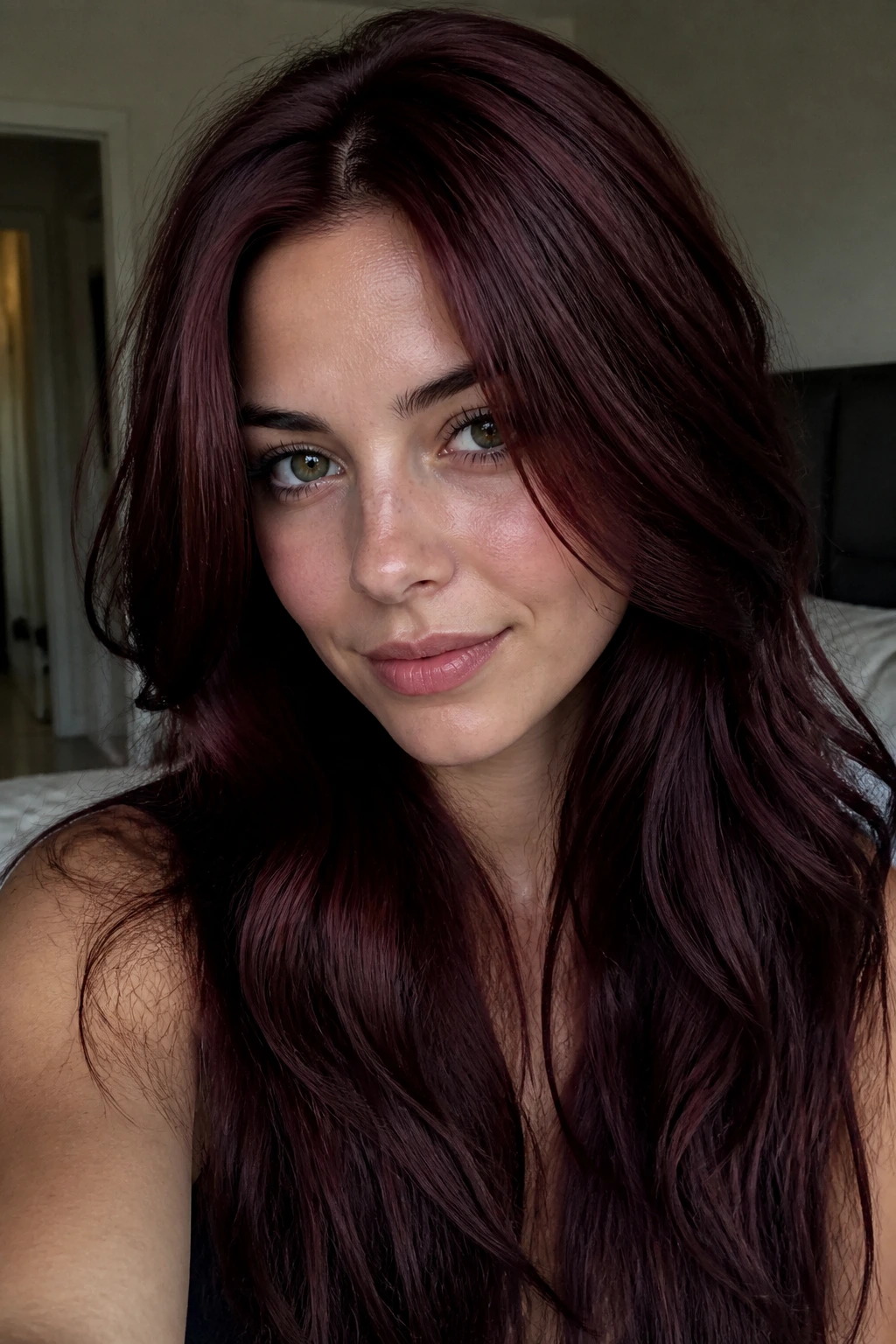
This is the darkest end of the auburn spectrum. It’s so deep it almost looks black indoors, but once you step into direct sunlight, it glows with a cool, ruby-red intensity. It’s subtle, elegant, and very low-maintenance.
The Benefits of Staying Dark
- You don’t have to bleach your hair to light levels, preserving the hair’s integrity.
- Root growth is less noticeable since the base is dark.
- It provides a high-contrast look that makes blue or green eyes pop dramatically.
8. Ashy Auburn Balayage
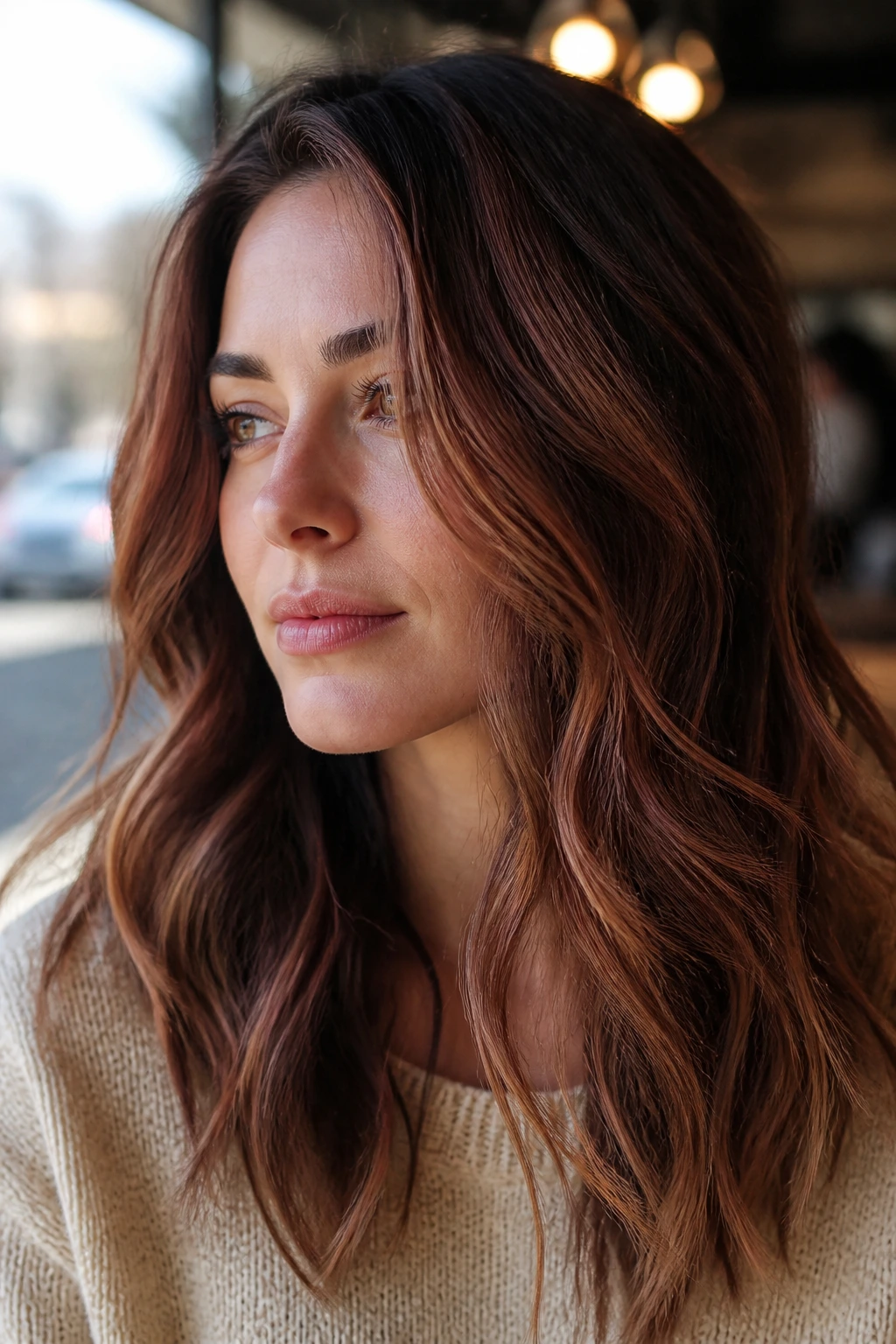
Balayage doesn’t have to be blonde. You can absolutely use red tones to create dimension. The goal here is to take a cool brunette base and paint on ashy, muted auburn highlights that catch the light.
The Technique
The key is to avoid using foil for the entire head. You want the auburn pieces to be hand-painted and soft, fading into the dark base. This creates a dimensional look that mimics natural, light-catching red tones without the harsh transition of an ombré.
Crucial detail: Ensure your stylist uses a “cool” gloss at the end to tone down the highlights. Even if the lightener pulls a bit warm, a blue-based gloss will bring it back to that ashy auburn finish you need.
9. Violet-Rooted Auburn
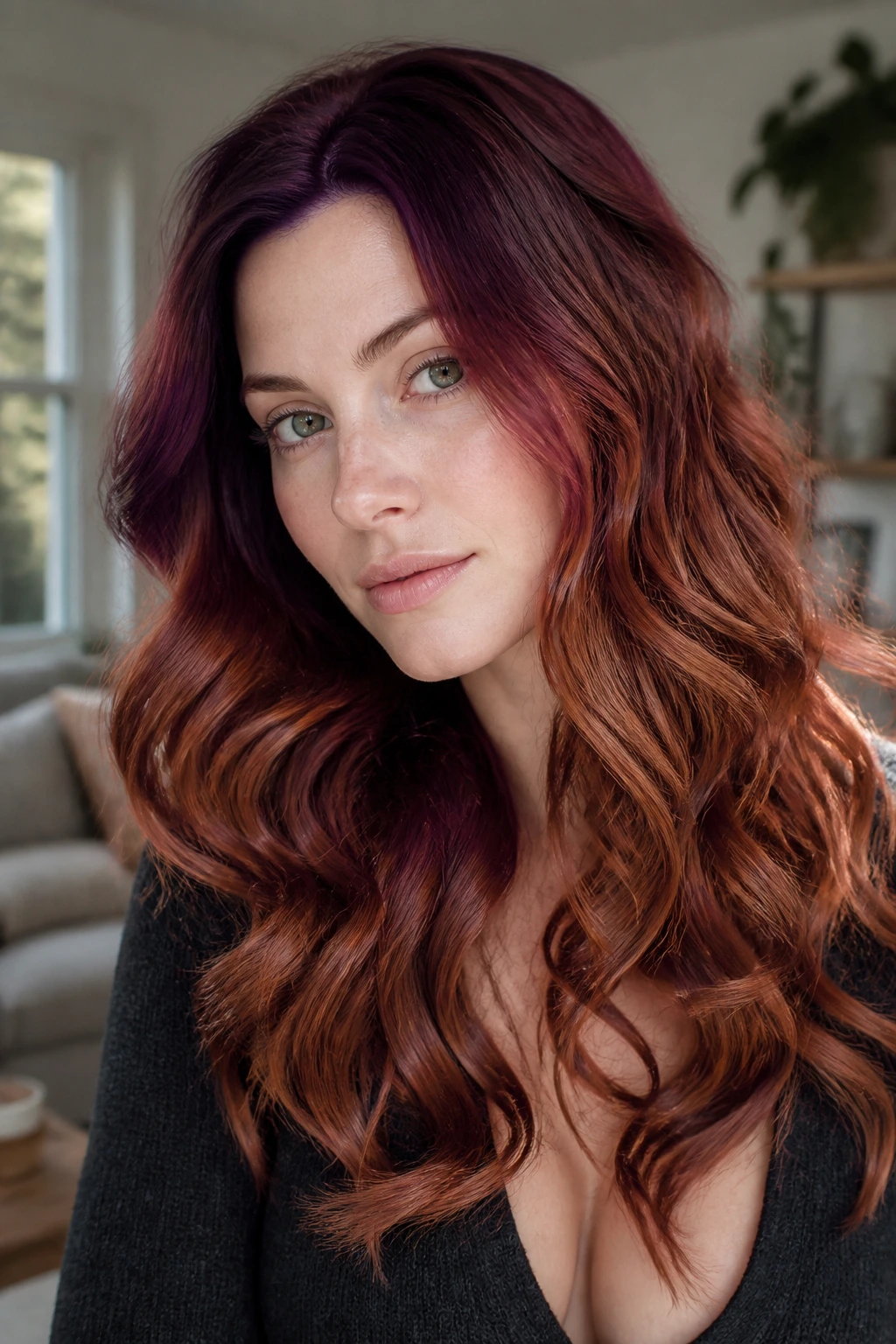
This style involves keeping your roots a darker, violet-brown and melting them into a lighter, medium-toned auburn. It is a fantastic way to extend the life of your color, as the root smudge masks any regrowth.
Why It Works
The violet root provides that necessary cool undertone to ground the style. As the color transitions from the dark violet to the lighter auburn, the cool tones remain dominant throughout the length, preventing any brassy buildup.
Styling Idea
This look pairs perfectly with soft, voluminous curls. The blend of colors creates a sense of depth that makes the hair look thicker and healthier.
10. Rich Espresso-Auburn Ombré
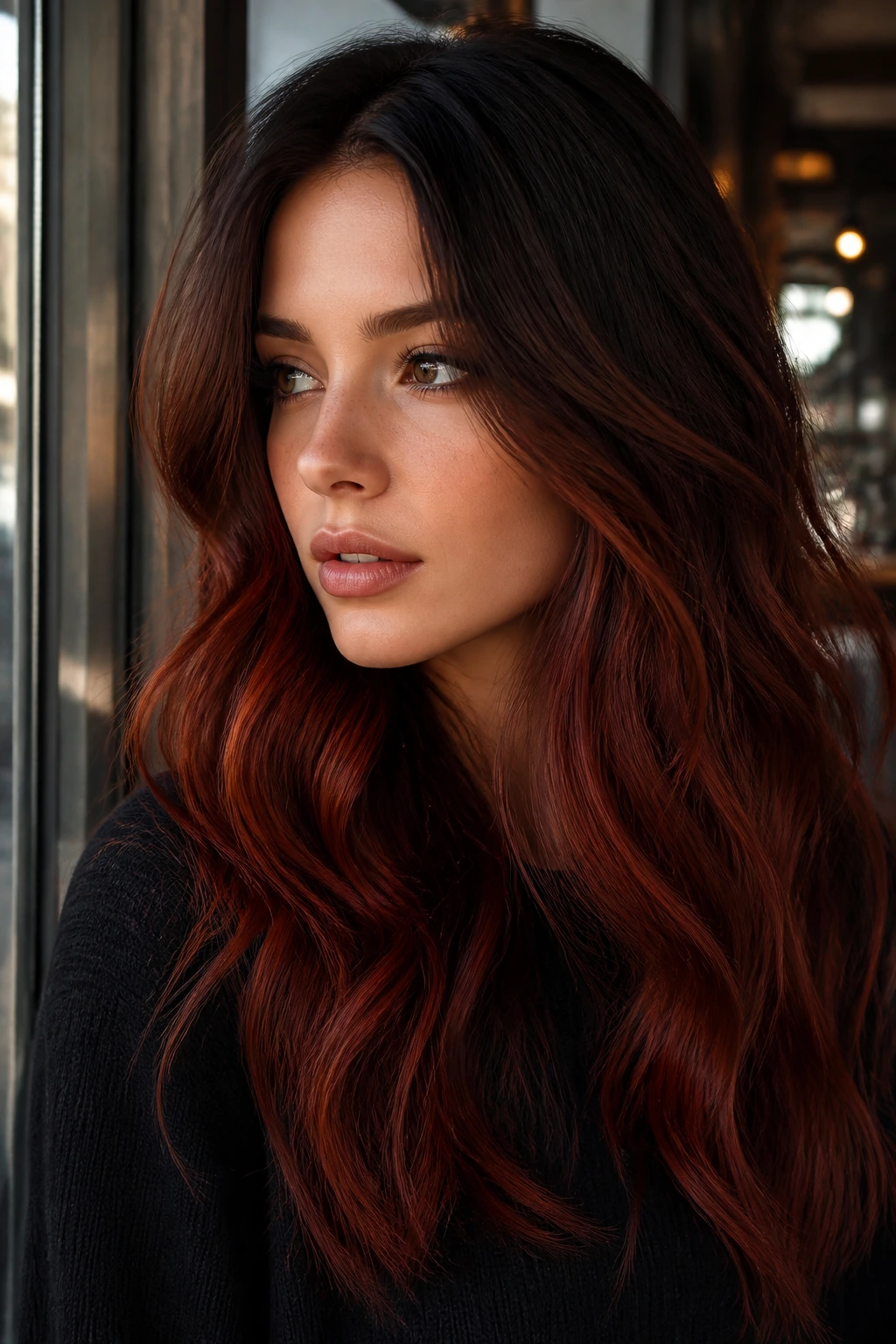
If you have naturally black or dark brown hair, this is a stunning way to incorporate auburn. The espresso roots transition sharply into a saturated, cool-toned auburn. It’s bold, it’s dramatic, and it has a high-fashion edge.
Managing the Ombré
- The Transition: The line where the espresso meets the auburn should be seamless. If it’s too choppy, it can look outdated.
- The Saturation: The auburn part of the ombré must be heavily saturated. If the red is too sheer, it will look like damaged, faded hair against your dark roots.
11. Muted Cranberry Auburn
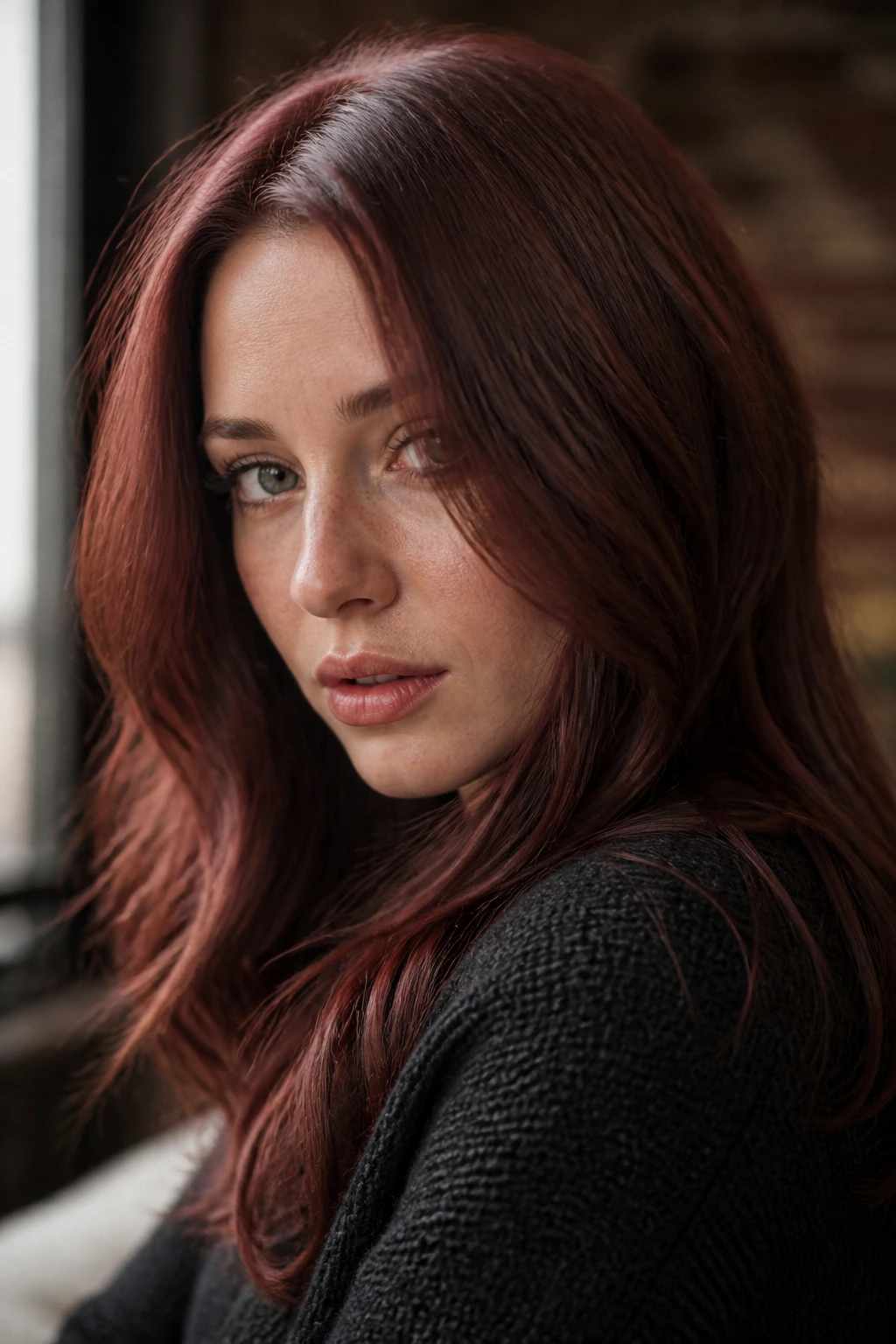
Cranberry is a red that naturally leans cooler than a standard tomato red. By muting it—lowering the saturation—you get a beautiful, soft, wearable color that sits comfortably between pink and red.
The Color Profile
- Base: Neutral brown.
- Mid-tones: Deep cranberry.
- Reflect: Cool/Violet.
This is an excellent choice if you want to experiment with a “fun” color without going full neon. It feels sophisticated enough for an office environment while still being distinctly red.
12. Cool Copper-Violet Fusion
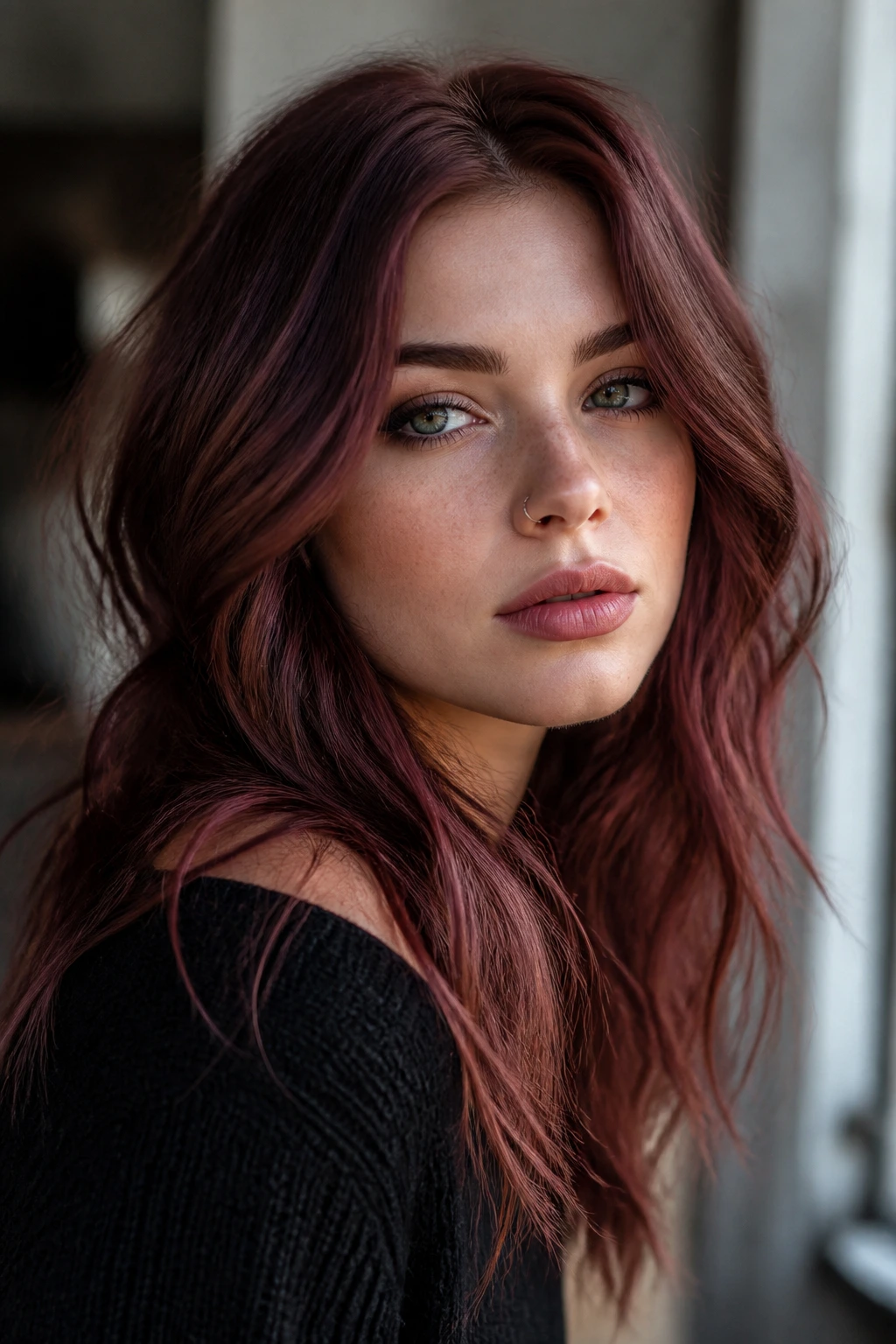
Wait, did we just say copper? Yes, but with a catch. Copper is usually forbidden for cool skin, but when you fuse it with violet, you create a “cool copper” that is technically a dark, muted auburn.
How to Get the Balance Right
The violet suppresses the orange-gold tones of the copper. It turns the copper into a metallic, burnt-auburn shade that doesn’t scream “orange.” This is a great choice if you love the idea of copper but know it will clash with your complexion.
Warning: This requires a skilled colorist. If they use too much copper, you’ll be back to the “orange disaster” zone. You must insist on the violet base.
13. Mahogany-Auburn Mix
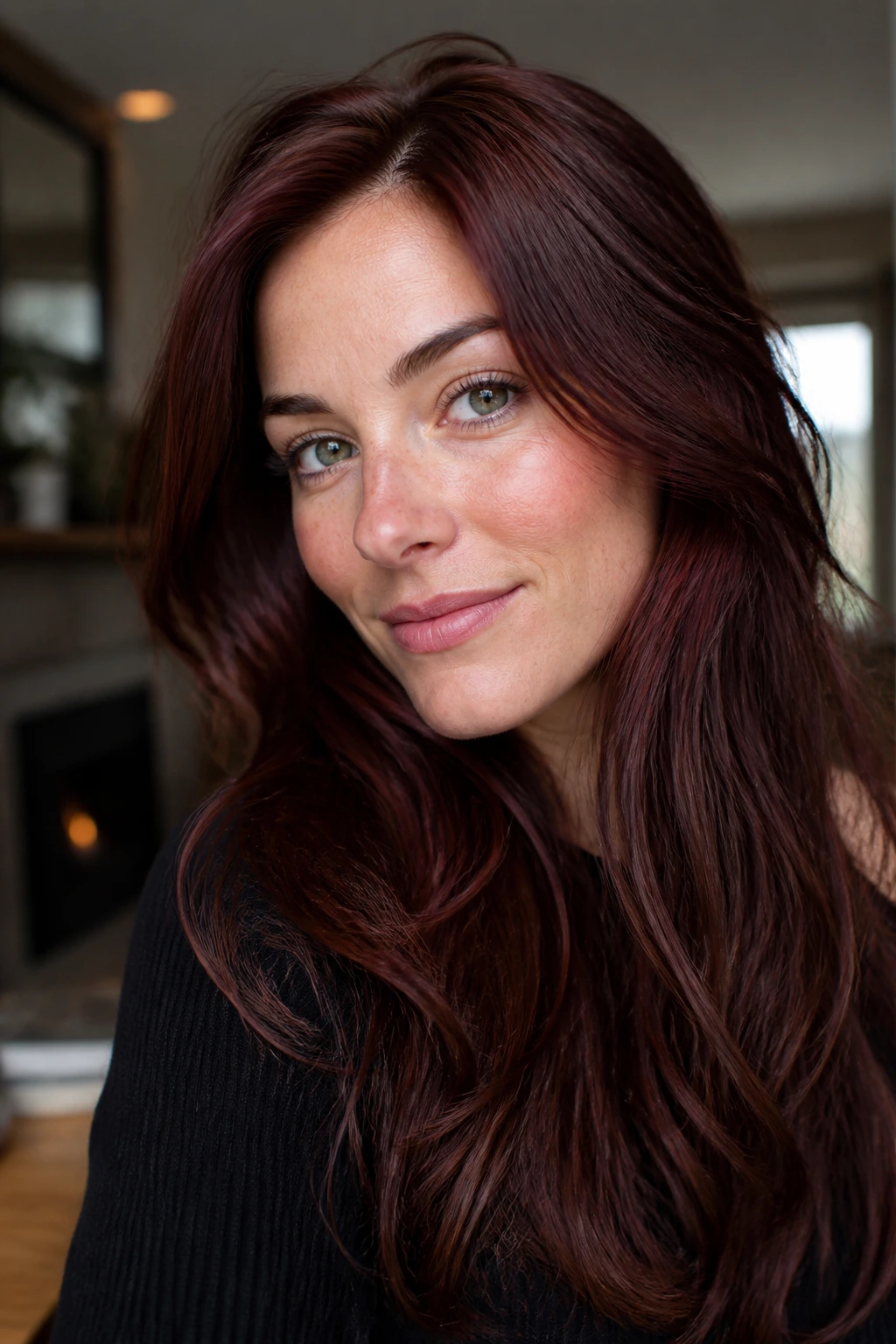
Mahogany is a classic hair color for a reason: it’s naturally balanced. It combines brown with a hint of red and a heavy dose of cool-toned depth. It is one of the most natural-looking options for people with cool skin who want to go red.
Why It’s a Reliable Choice
Mahogany doesn’t require a lot of “toning” to keep it cool; it is inherently a cooler shade of red-brown. It fades gracefully, rarely turning that dreaded, brassy orange. If you want a low-stress red, mahogany is the starting point.
14. Blackberry-Auburn Melt
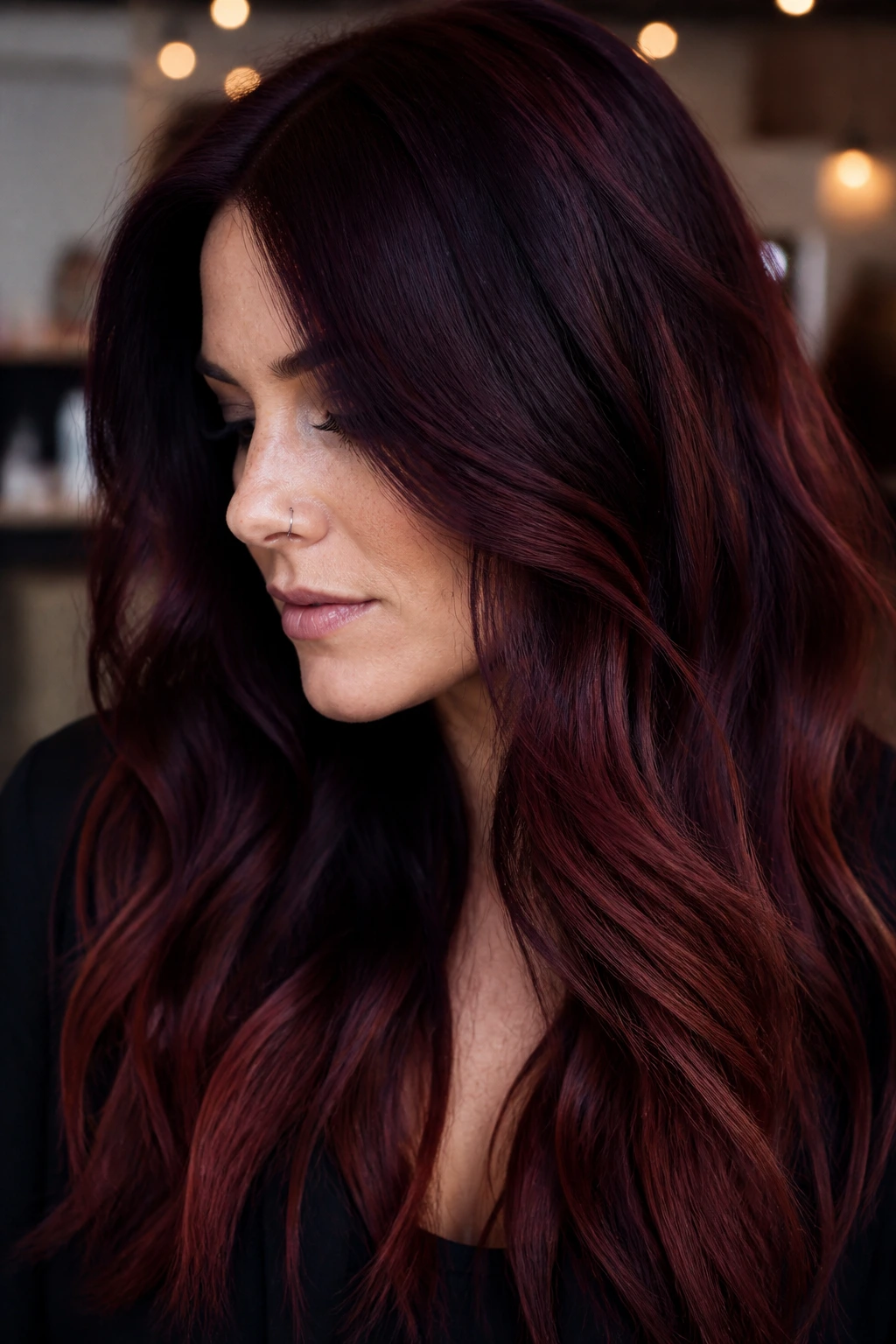
This is for the adventurous. It’s a very deep, almost black-purple base that melts into a deep auburn. It’s moody, edgy, and fits perfectly with a cool color palette.
Maintenance Reality Check
This is not a wash-and-go color. The purple and black tones will absorb pigment, but the auburn parts will need refreshing every 4-6 weeks to keep the color “vibrant” rather than “washed out.”
Styling tip: This color looks incredible with a high-shine serum. Because it is so deep, any dullness in the hair will kill the color effect. Keep it shiny.
15. Tinted Black-Cherry Auburn
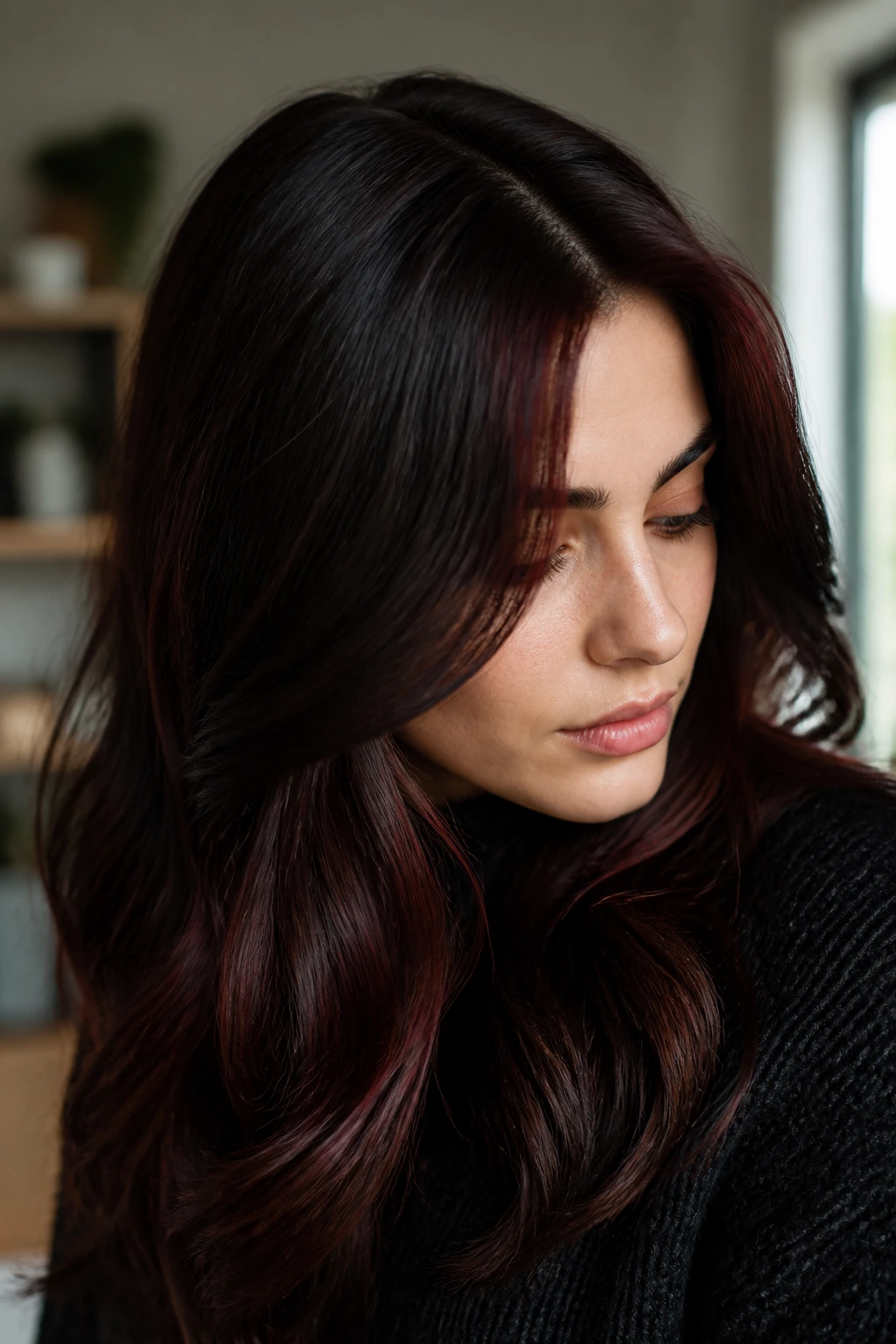
Think of a black cherry. It’s mostly dark, with a flush of deep red that you can only see when the light hits it. This color is incredibly subtle, making it great for those who want a change but aren’t ready to go bright.
Who Should Get This
This is ideal for people with naturally very dark hair who want to add some dimension without massive chemical alteration. It feels like a “tint” rather than a drastic dye job.
16. Icy Red-Brown
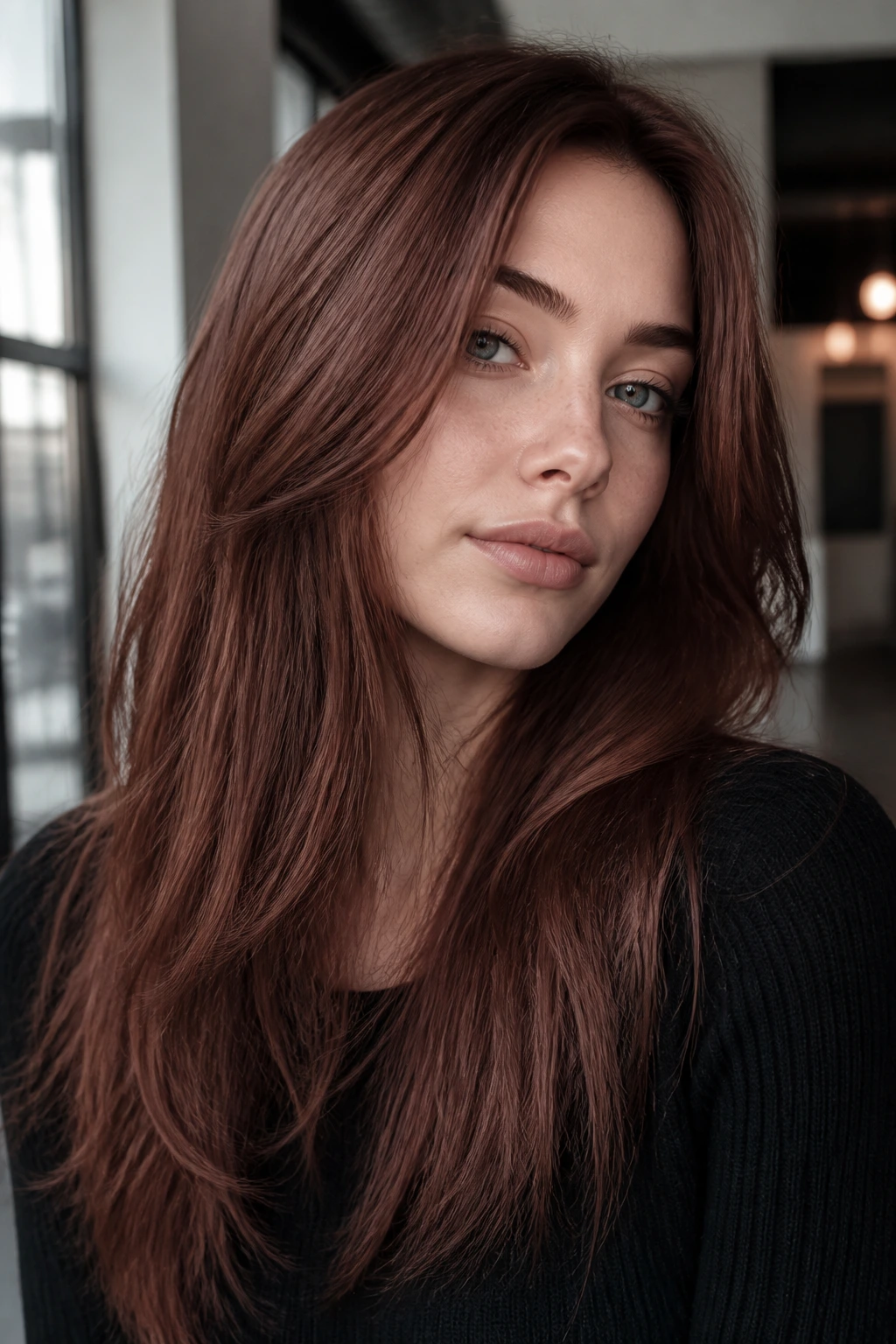
“Icy” usually refers to blonde, but you can definitely apply the concept to brunette. By pulling the red tone toward a cooler, ash-based auburn and stripping away the warmth, you get a matte, icy red-brown that looks very expensive.
The “Cooling” Process
Your colorist will likely add an ash or “drab” additive to the red formula. This is the secret sauce. It eats up the warmth and leaves behind a cool, matte color that feels very modern and sleek.
17. Deep Burgundy Roots with Auburn Ends
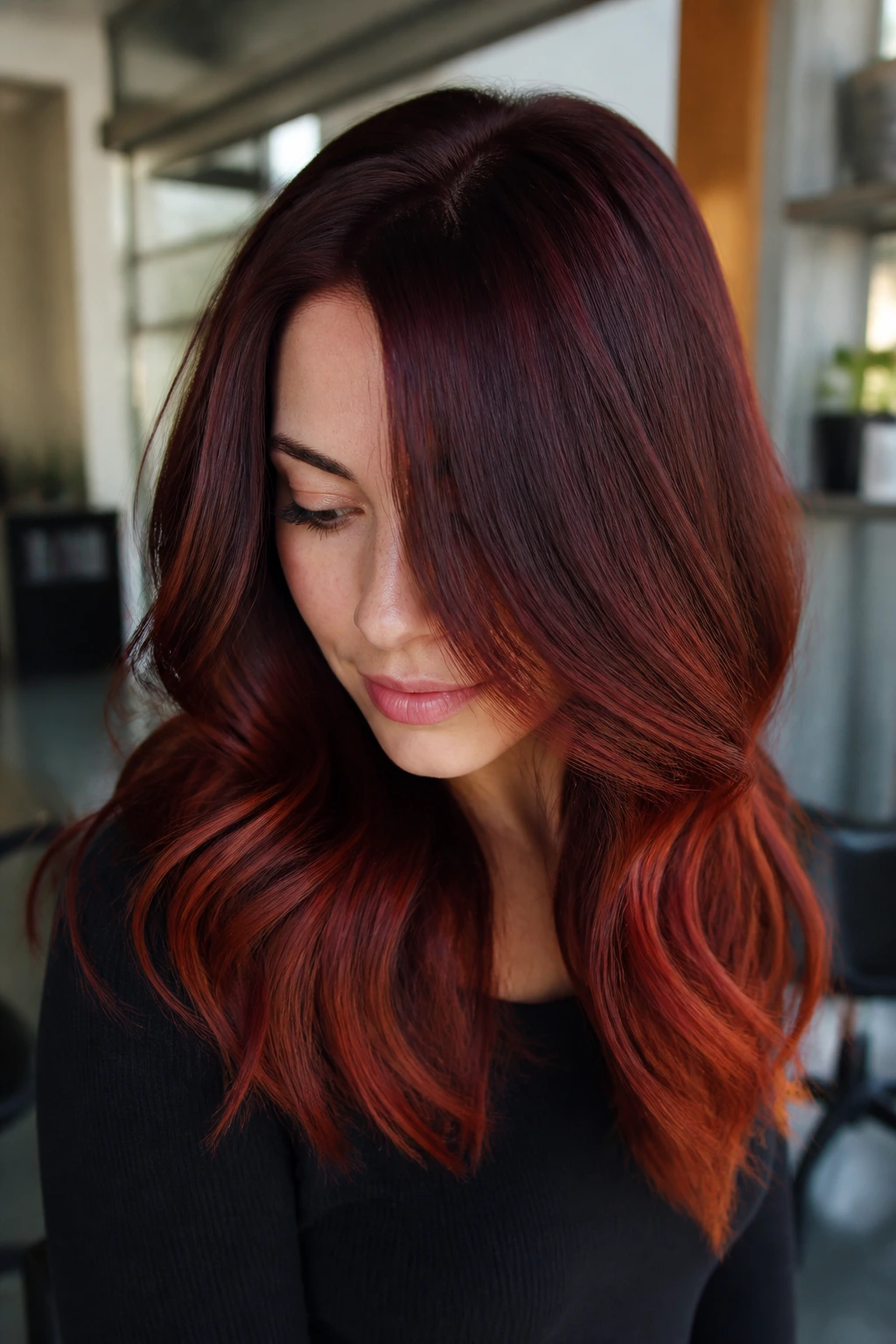
This is a playful, high-contrast look. By keeping the roots a very deep, almost-black burgundy, you ensure the color is flattering to your skin. The ends then fade into a brighter, though still cool, auburn.
Why This Works
The darker root provides a “security blanket” for your complexion. Even if the ends are a bit brighter or more intense, the face-framing color at your roots remains grounded and cool-toned, preventing the look from washing you out.
18. Plum-Chocolate Auburn
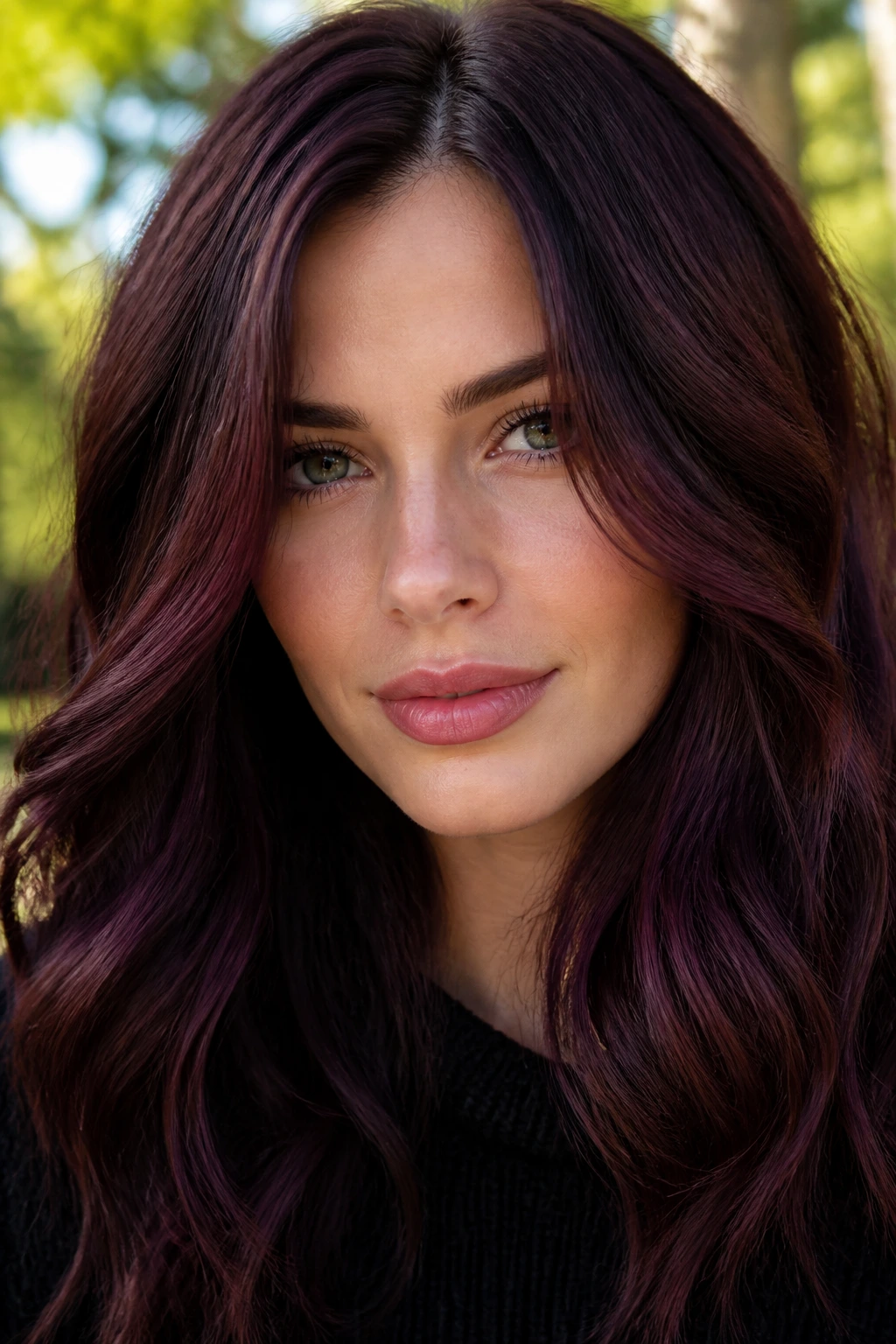
If you can’t decide between chocolate brown and plum, just do both. This is a mix of chocolate brown base with distinct plum-auburn highlights. It gives the hair a massive amount of dimension and is much easier to grow out than a solid color.
The Distribution
- Face-framing: Keep the plum-auburn highlights brighter near the face to brighten up the complexion.
- Back of head: Keep the majority of the hair a darker chocolate brown to maintain depth.
19. Subtle Bordeaux Streaks
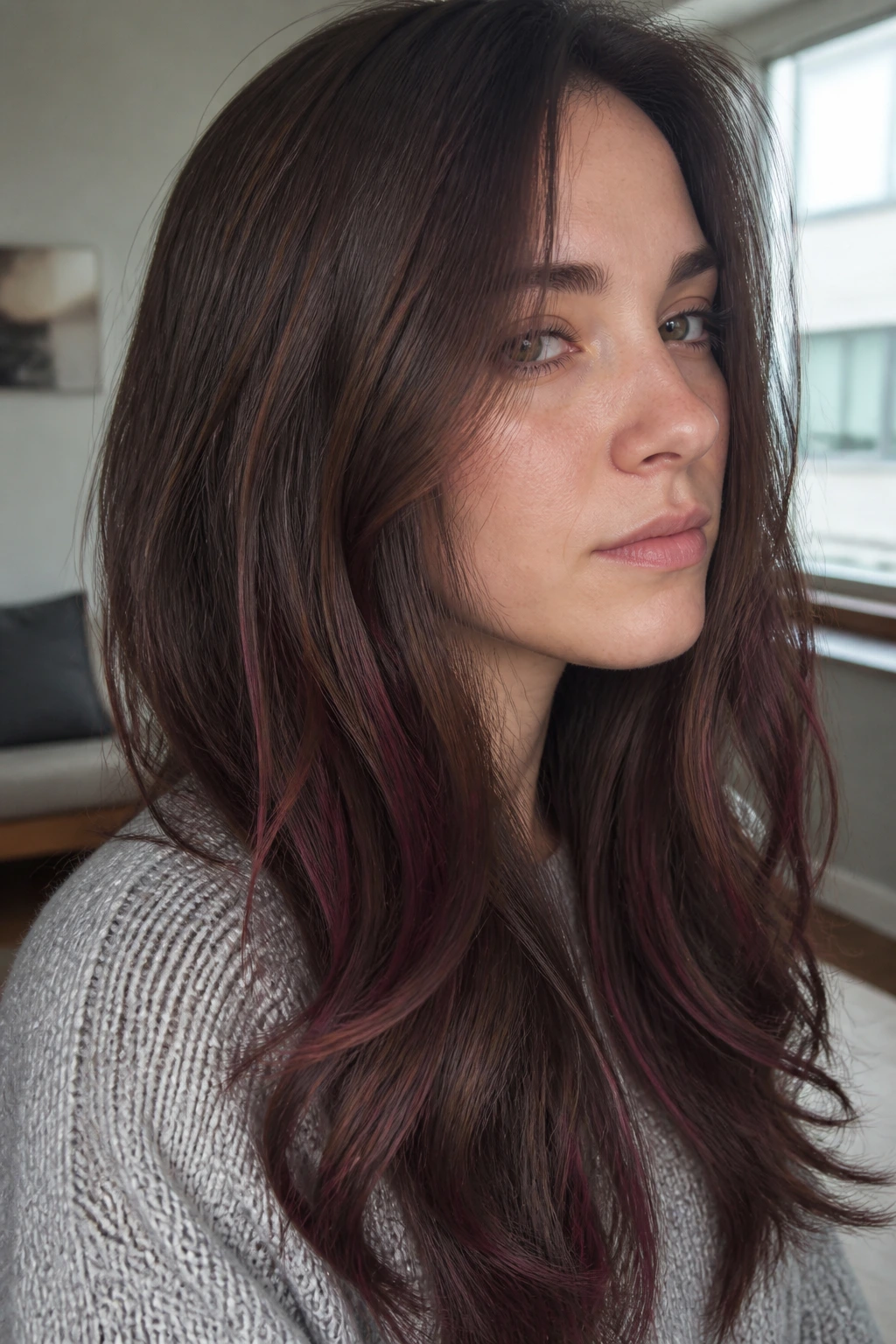
Bordeaux is a deep, slightly purple-red. Rather than coloring all your hair this shade, consider adding subtle, fine streaks throughout a cool-toned brown base. It’s like adding jewelry to your hair.
Execution Details
- Keep the streaks fine (weaves, not slices).
- Ensure the base color is a neutral or ash brown.
- Focus the streaks in the mid-lengths and ends rather than at the roots.
20. Cool-Toned Copper Auburn
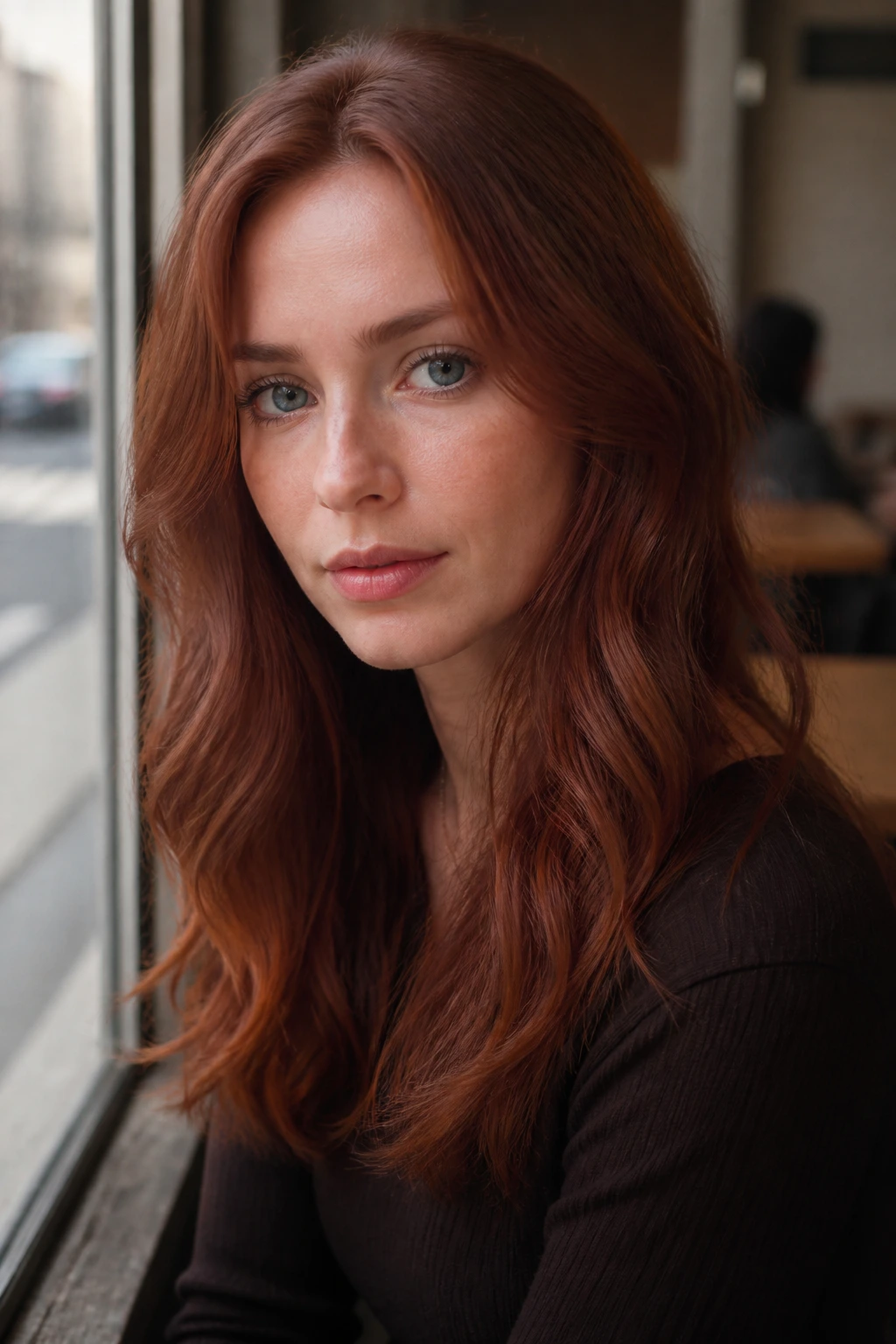
We are revisiting the copper idea, but strictly through the lens of a cool-toned formulation. This isn’t a bright copper; it’s a “muted,” “dusty” copper-auburn. It looks almost like a dry, terracotta red—very earthy and elegant.
The Look
This is less about “glam” and more about “style.” It pairs beautifully with minimalist clothing and natural makeup. It feels very intentional, almost editorial.
Avoid: Do not get this if your skin has a lot of natural yellow. The “terracotta” vibe might conflict. It is best for those with pink or blue skin undertones.
21. Dusty Rose-Auburn

This leans into the “fashion color” category, but because it’s muted and dark, it remains wearable. It looks like a classic auburn that has been dusted with a layer of cool, pink-leaning ash.
How to Achieve It
This requires a specific toner. Your hair needs to be lifted to a light brown or dark blonde level first, then toned with a mix of red and ash-violet. It’s a very specific process, so make sure your stylist is comfortable with “fashion toners.”
22. Dark Plum-Red
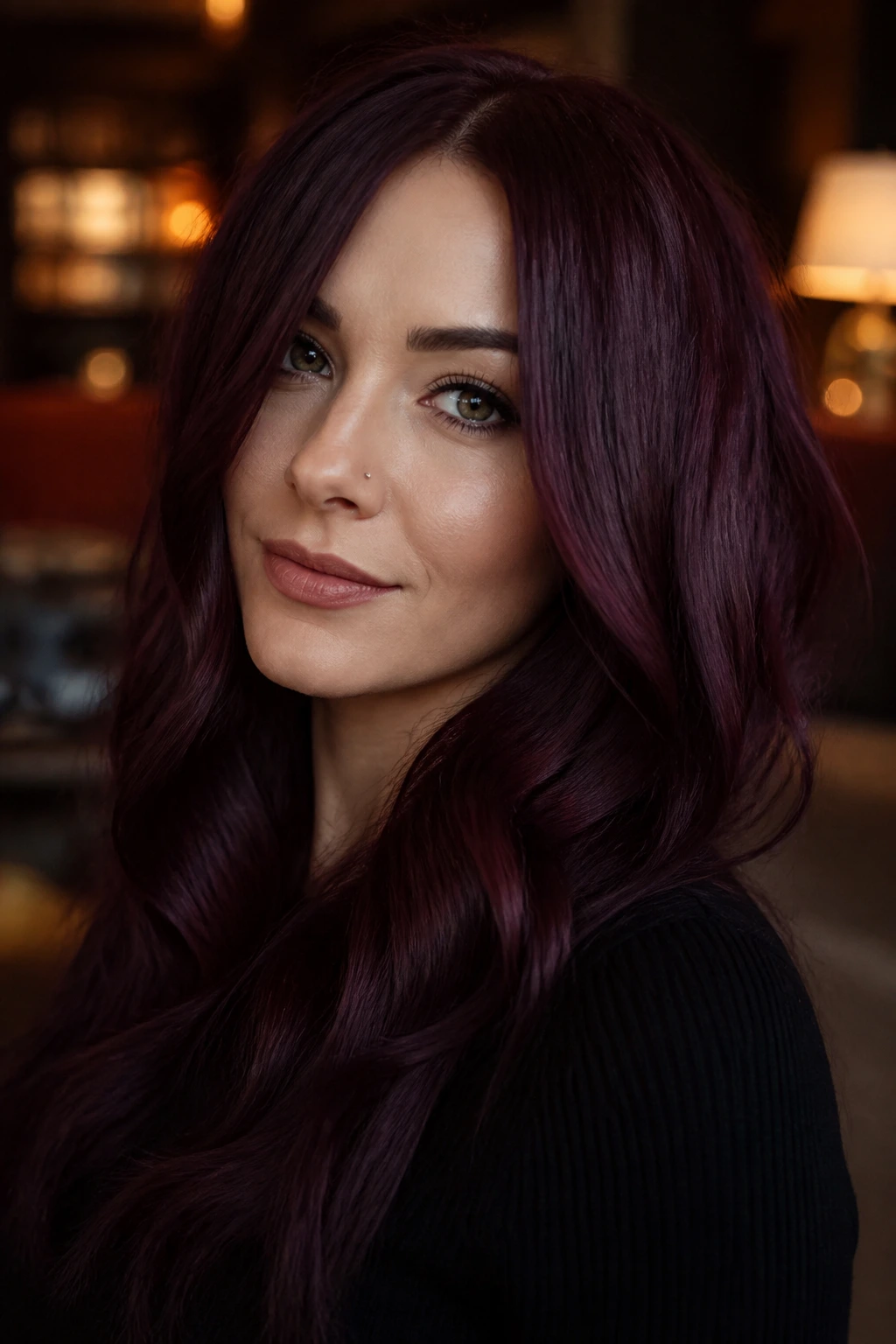
This is essentially a deeper, darker version of the plum-toned auburn (#3). It is almost entirely violet-red with very little brown, but it stays dark enough to be considered a brunette shade.
Why It’s a Winner
Plum-red is notoriously good at making teeth look whiter and eyes look brighter. It’s a very flattering shade for almost everyone with cool skin, regardless of whether you are very pale or have a deeper complexion.
23. Shadow Root Auburn
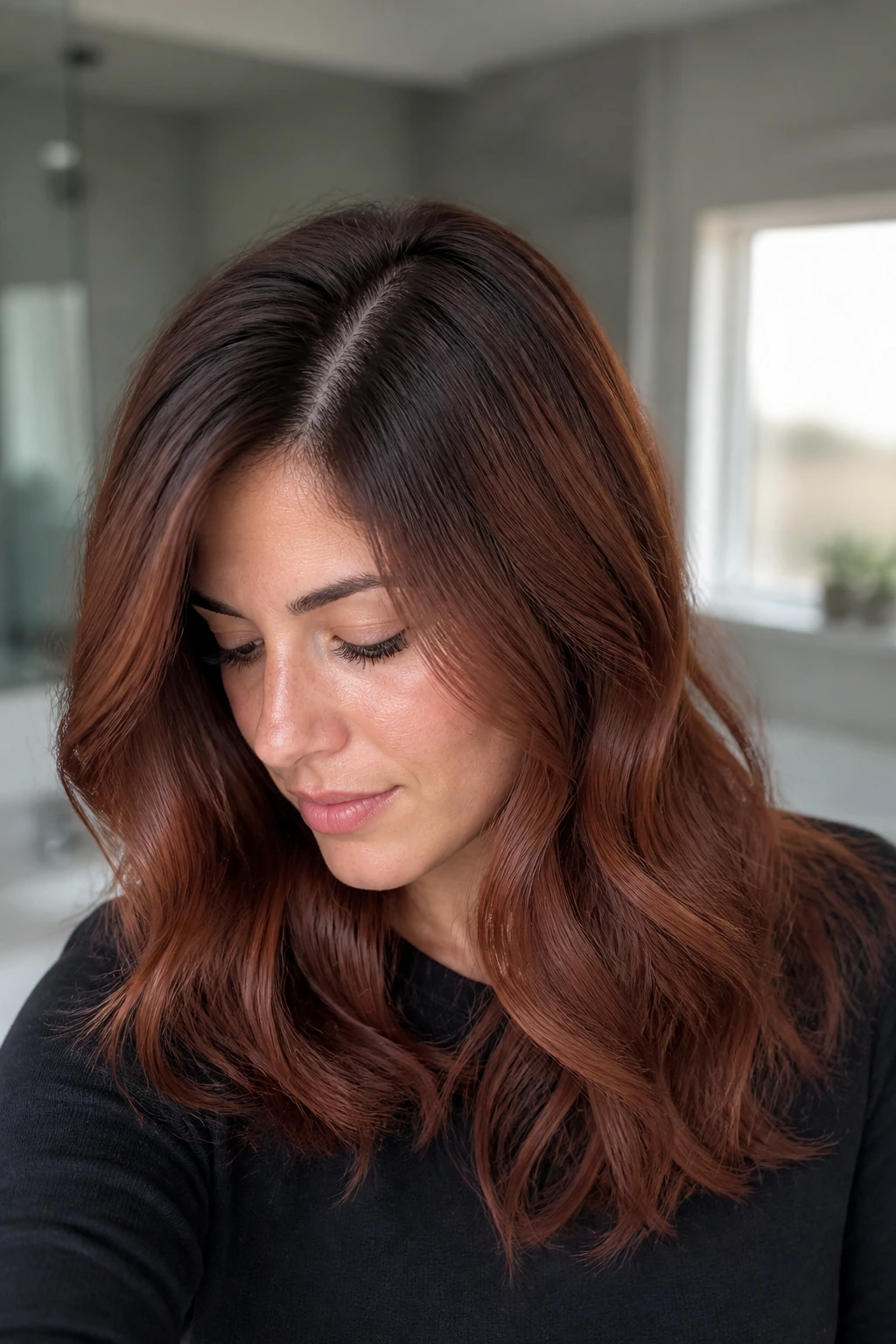
This is the ultimate low-maintenance auburn. You bleach the lengths and dye them a cool auburn, but you leave your natural, cool-brown roots completely alone. Or, if your roots are light, you tint them a dark, ash-brown.
The Result
A “shadow root” creates a lived-in, effortless aesthetic. It avoids the harsh line of demarcation that comes with full-head color, meaning you can go 8 to 12 weeks between salon visits.
24. Tinted Violet-Auburn
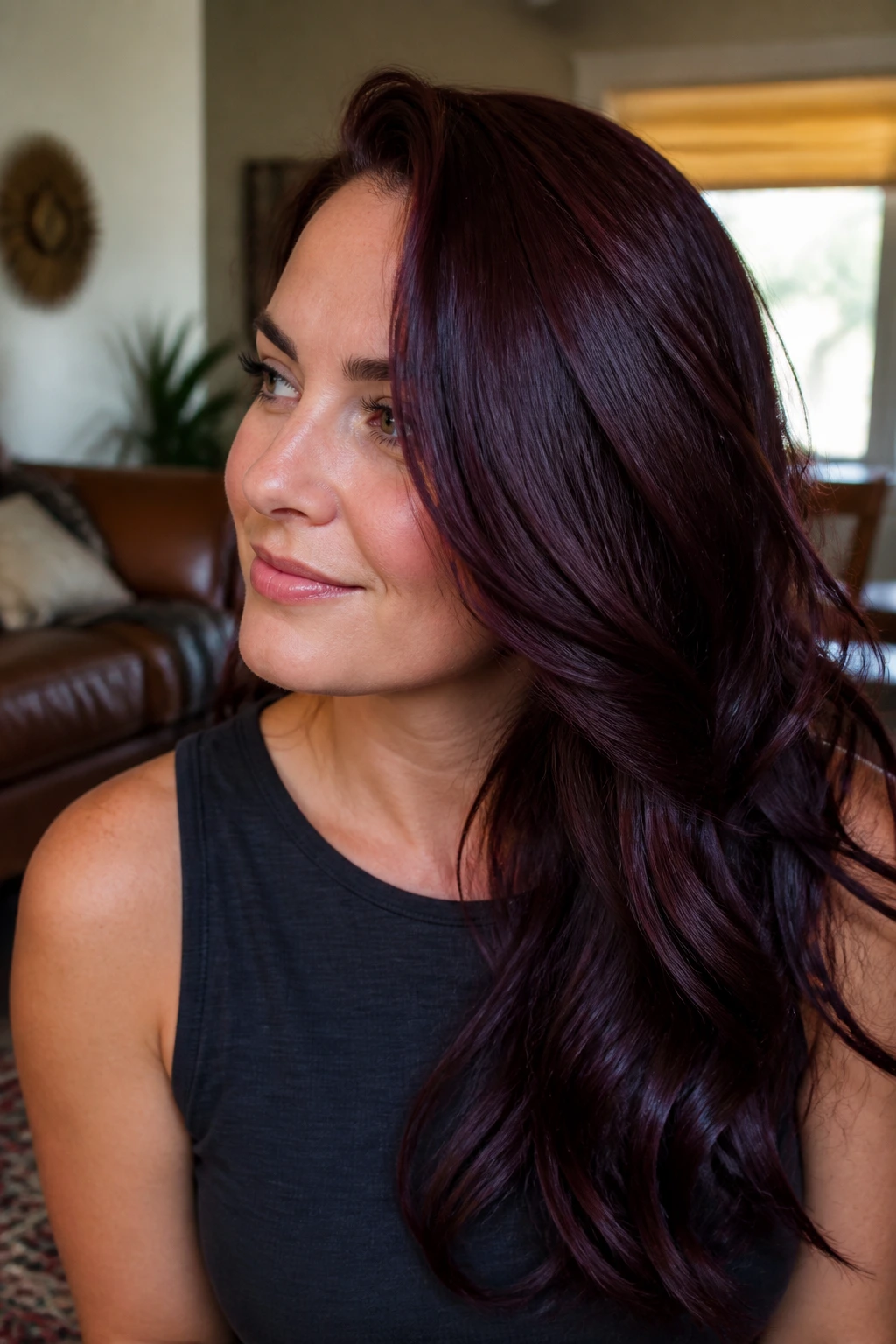
Imagine a glaze. This isn’t a permanent color change; it’s a semi-permanent tint. It adds a deep violet-auburn cast to your natural dark hair. It’s a “try before you buy” kind of color.
Pros and Cons
- Pros: No damage, fades away completely after 6–8 weeks, very cheap to maintain.
- Cons: It won’t cover gray hair effectively, and it won’t lighten your base. It only deposits color.
25. Matte Auburn (No Warmth)
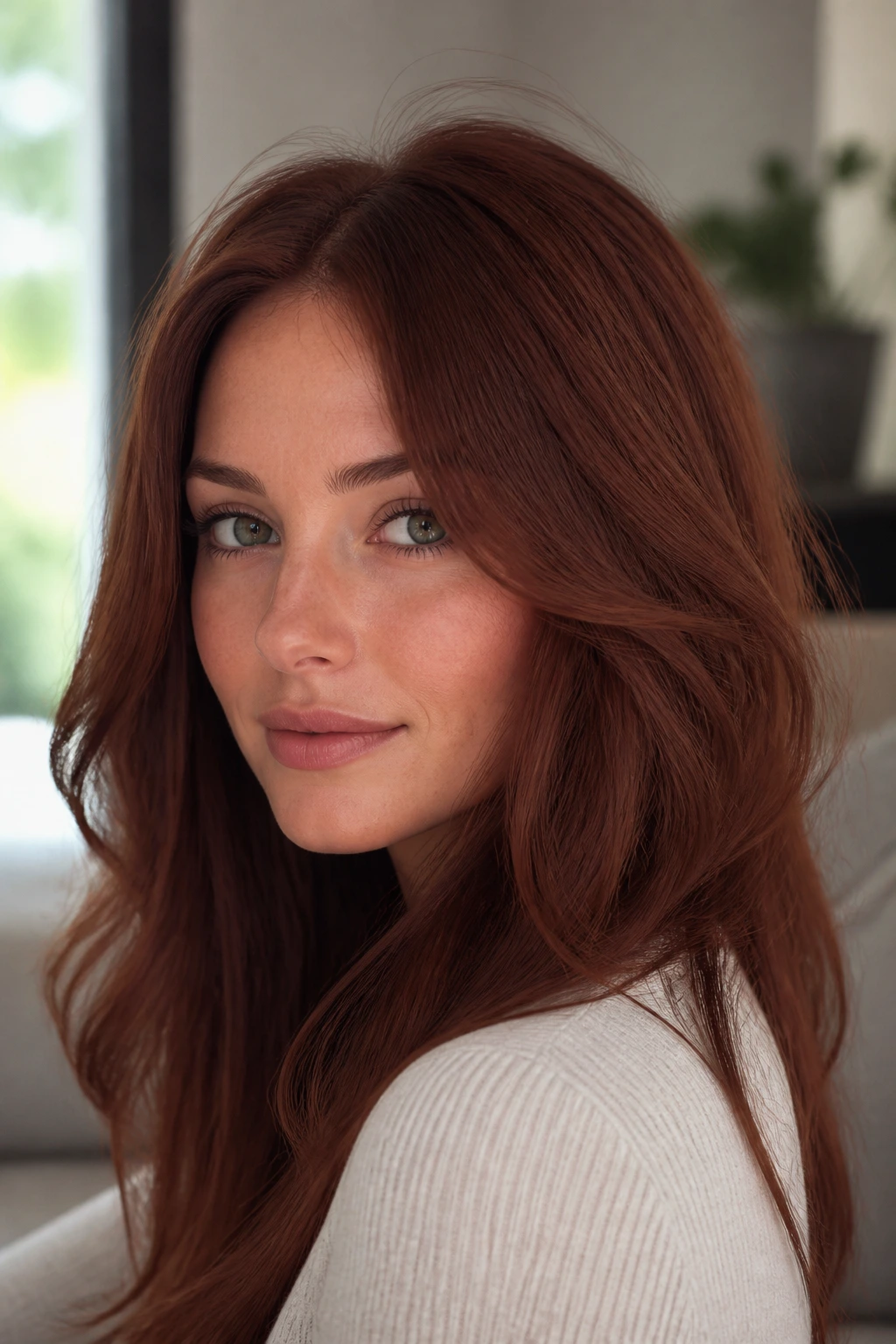
“Matte” means no shine-enhancing golden or red tones. It sounds counterintuitive for red hair, but a matte auburn is a very sophisticated look. It’s a flat, dense red that looks opaque and solid.
The Vibe
This color looks expensive and heavy. It’s the opposite of “dimensional” or “highlighted.” It’s a bold, singular statement. If you have fine hair, this can make it look thicker because it isn’t broken up by lighter pieces.
26. Espresso with Auburn Lowlights
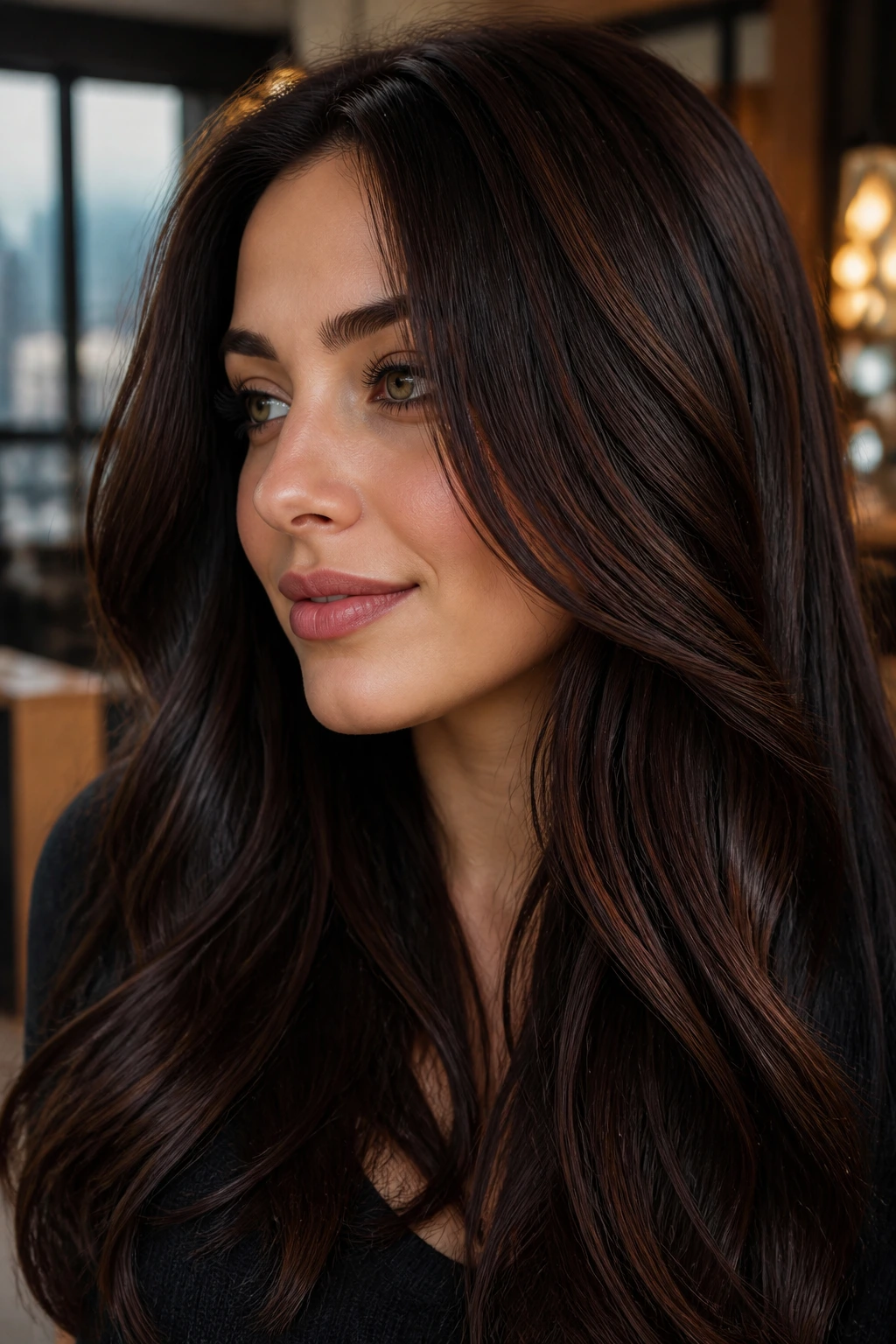
Usually, people add highlights. But if you have cool, dark hair, adding lowlights of a cool auburn creates depth without altering your base color significantly.
The Technique
The lowlights should be woven in using a dark, blue-red auburn. They disappear into the dark hair until you move, at which point they reveal a hidden depth. It’s subtle, mysterious, and incredibly chic.
27. Deep Mulberry Auburn
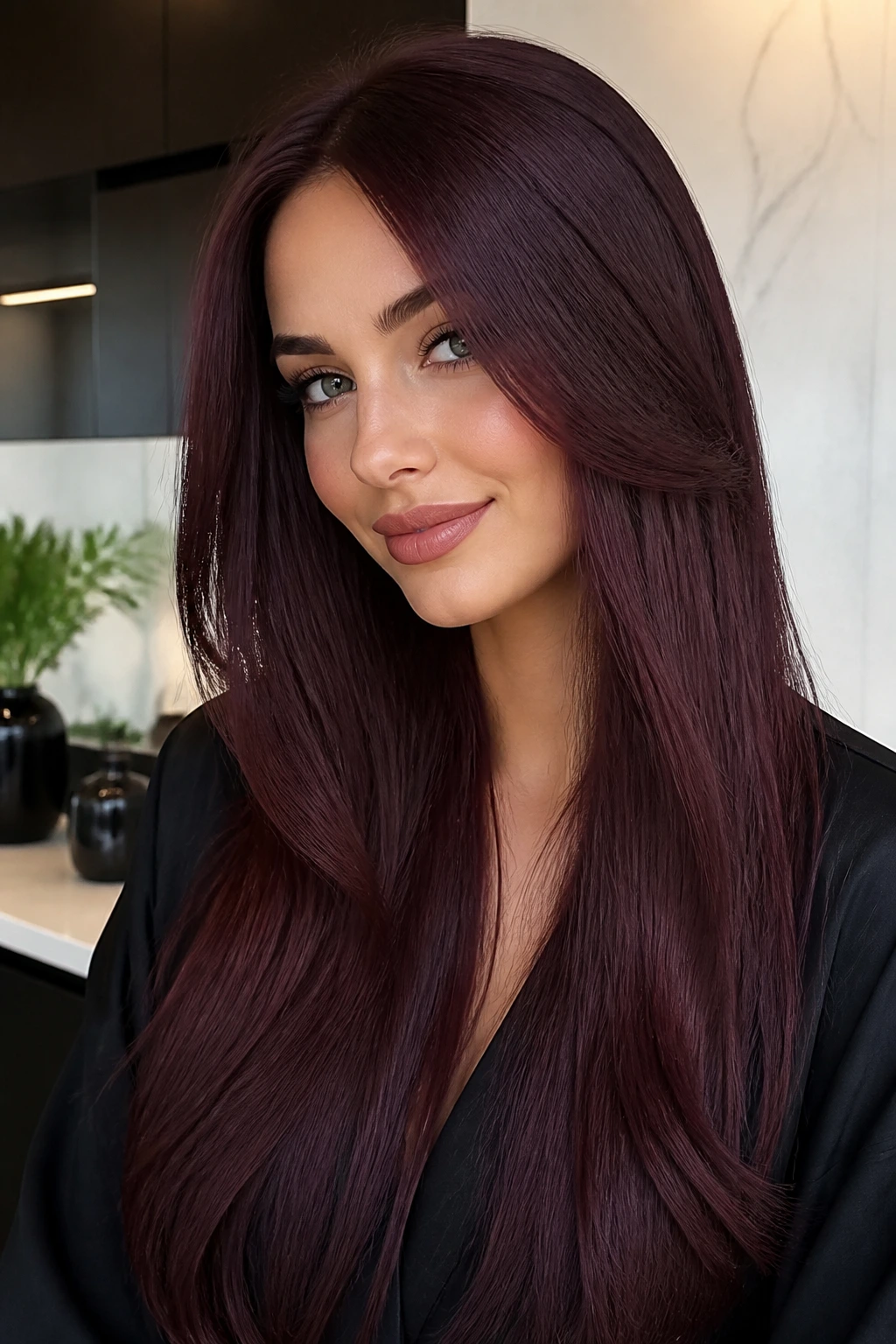
Mulberry is a fruit-toned color—dark, saturated, and inherently cool. When mixed as an auburn, it results in a rich, berries-and-cream vibe. It is softer than burgundy but punchier than mahogany.
Styling Tip
This color looks best with long, sleek hair. The high shine of the mulberry pigment needs length to really showcase its depth. If you have shorter hair, ensure the cut is precise to make the color pop.
28. Cool Garnet
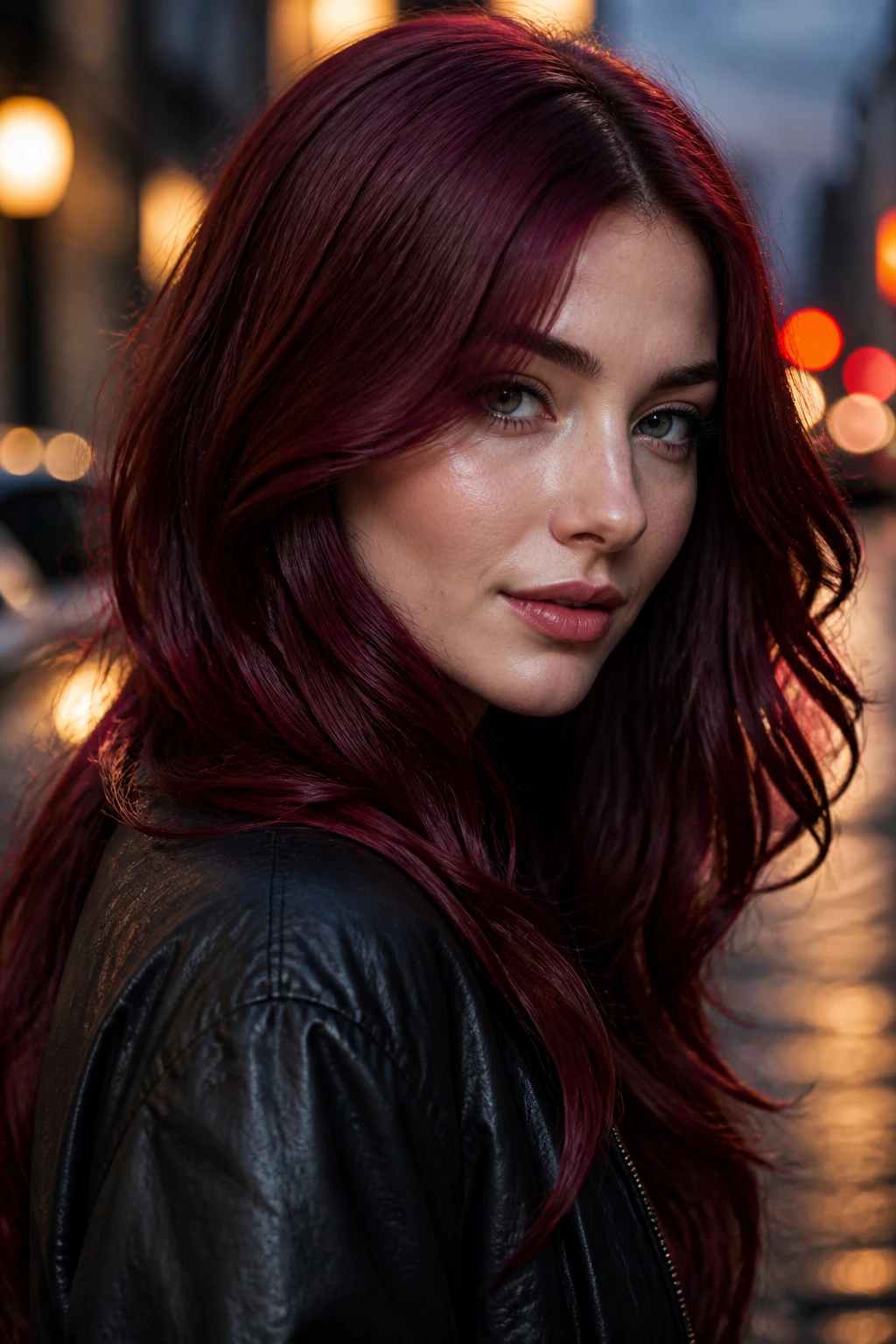
Garnet is a deep red gemstone. A cool garnet hair color mimics this stone’s depth—dark, slightly purplish, and very shiny. It is a classic “red” but avoids all the warmth that makes it a no-go for cool skin.
Why It Works
It’s a balanced color. It isn’t too purple, isn’t too brown, and isn’t too copper. It sits right in the middle, making it a “Goldilocks” shade for those who want a true red but need to keep it cool-toned.
29. Soft Burgundy-Auburn Balayage
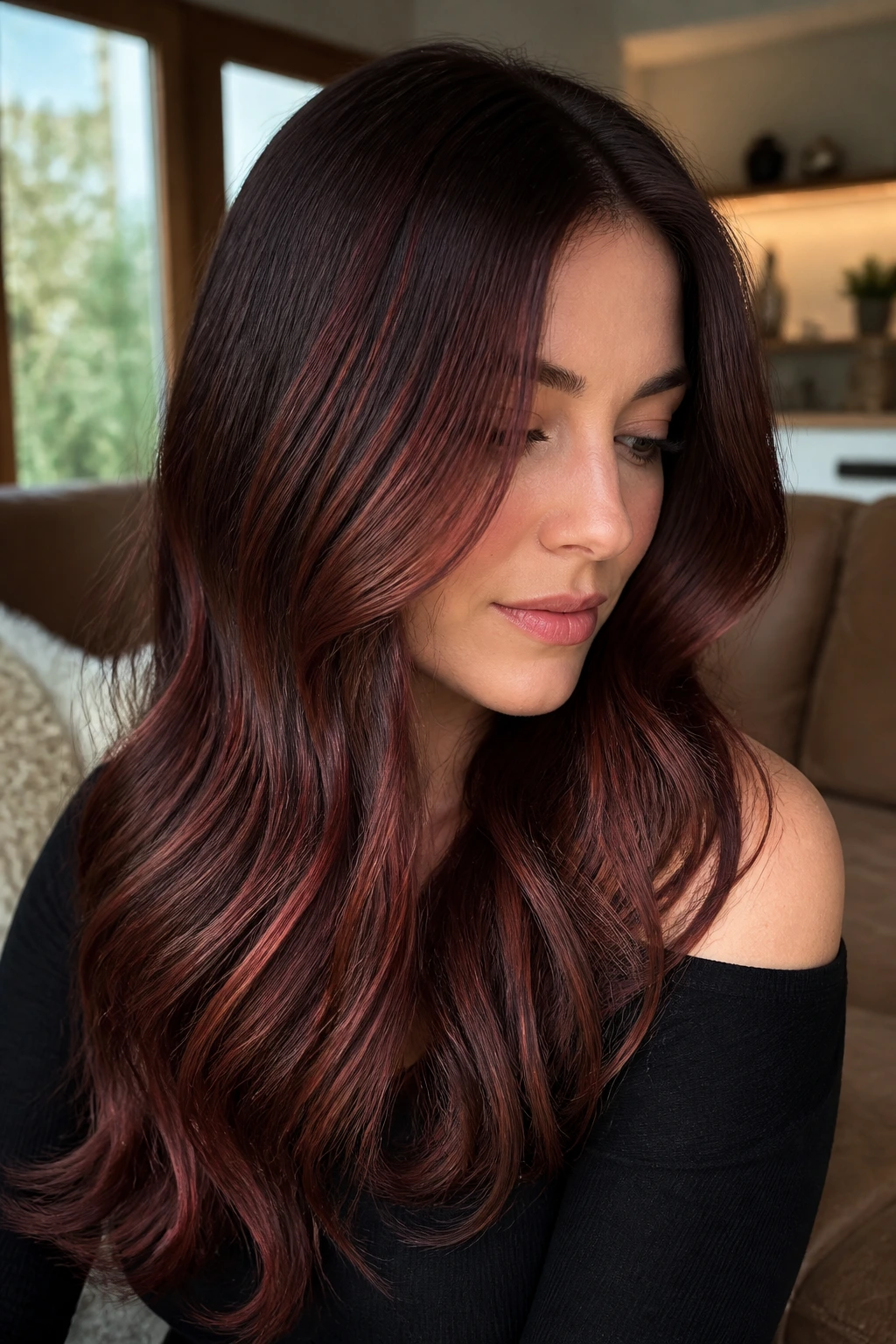
Similar to the ashy balayage, this focuses on the burgundy-auburn spectrum. By painting soft, burgundy-toned ribbons into a cool dark brown base, you get a dimensional, expensive-looking red.
The Key to Success
Blending is everything here. You don’t want chunky highlights. You want “babylights”—micro-fine weaved sections that are painted with the burgundy-auburn formula and then blended through the lengths.
30. Smoked Cinnamon Auburn
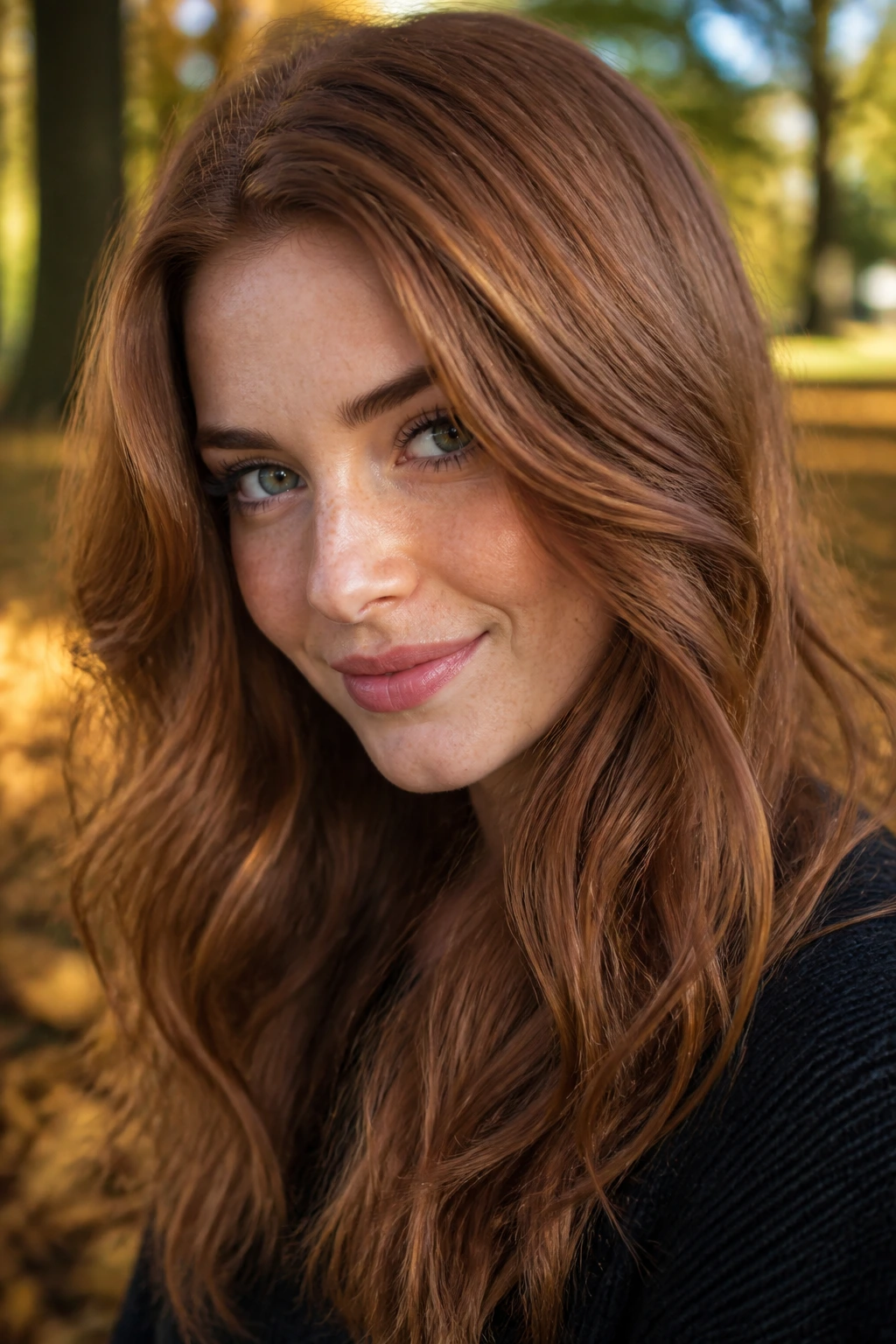
We end with a twist. Cinnamon is usually warm, but “smoked” cinnamon takes the spice notes and cools them down with an ash base. It’s a dark, spicy, but cool-toned red that feels very seasonal and cozy.
The Final Verdict
This color is earthy and grounded. It’s not flashy, but it’s interesting. It looks great on people who prefer natural-looking hair colors but want to experiment with a subtle shift away from flat brown.
Final Thoughts
Choosing the right auburn shade when you have cool skin is entirely about the base pigment. You must, above all else, avoid formulas that lean into gold, orange, or true copper. Stick to those that have violet, blue, or ash-brown as their foundation.
Remember that red is the fastest color to fade. Regardless of which shade you choose, your maintenance routine is just as important as the initial dye job. Invest in a color-safe, sulfate-free shampoo, and if possible, get a custom-mixed color conditioner from your stylist. It’s the easiest way to keep your cool-toned auburn looking fresh and vibrant without having to step foot in a salon every four weeks.
