



Finding the perfect shade of brown is an exercise in color theory, and if your skin has cool undertones—think pink, red, or blue hints in your complexion—the usual warm chocolate browns can turn into a disaster. They often pull out unwanted red and orange pigments that clash with your skin, leaving you looking washed out or overly sallow. The secret to success isn’t just picking a “cool” box dye; it’s understanding how to neutralize those underlying warm pigments while keeping the richness of a true chocolate. You want depth without the brassiness. You want a brunette that feels intentional, sophisticated, and, most importantly, flattering to your specific skin palette.
The beauty of chocolate brunette hair is that it occupies that sweet spot between black and light brown, offering enough darkness to be dramatic but enough nuance to look soft. When you lean into cool tones, you’re essentially adding a base of blue, violet, or green to your hair color formulation. These colors act as a counterbalance to the natural red and orange tones that appear when hair is lightened or oxidized. It creates a smoky, velvety, or “mushroom” effect that is incredibly trendy precisely because it looks so natural on cool-toned individuals.
1. Deep Espresso Cool
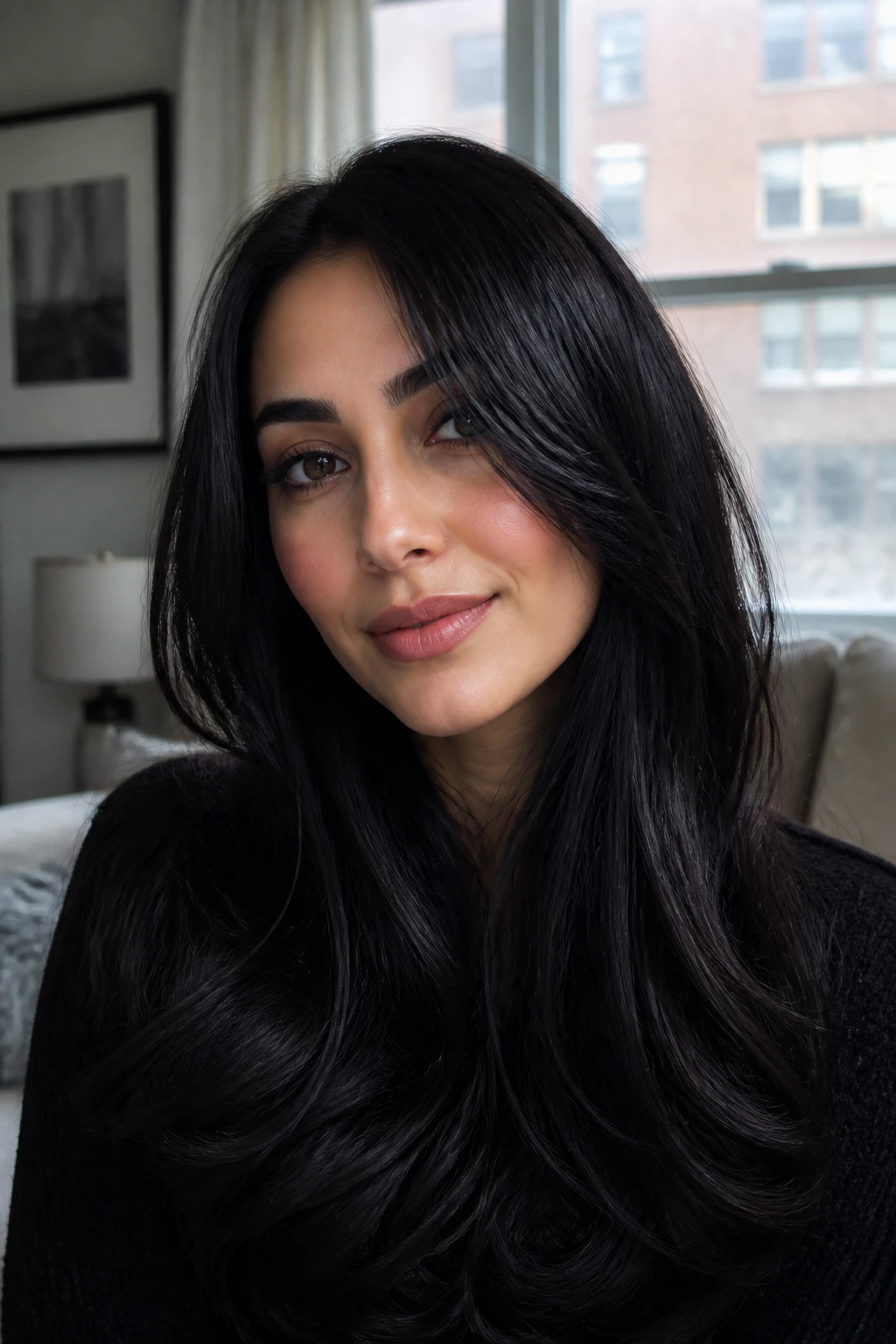
This is the darkest end of the chocolate spectrum, and it works beautifully for those who want richness without a hint of red. It’s a nearly black-brown that features heavy blue-violet undertones, creating a sleek, almost ink-like finish that makes cool skin tones pop.
Why It Works for Cool Skin
Because the formulation relies on blue-based dyes, it actively cancels out any orange brassiness that might try to creep in over time. It provides a sharp contrast against porcelain or rosy skin, which can make your features appear more defined and your eyes brighter.
Pro tip: This shade needs high-shine products. Because it is so dark and matte, it can look “flat” if it isn’t healthy. Use a clear gloss treatment every four to six weeks to keep the light reflecting off the surface rather than getting absorbed by the depth.
2. Slate-Infused Mocha
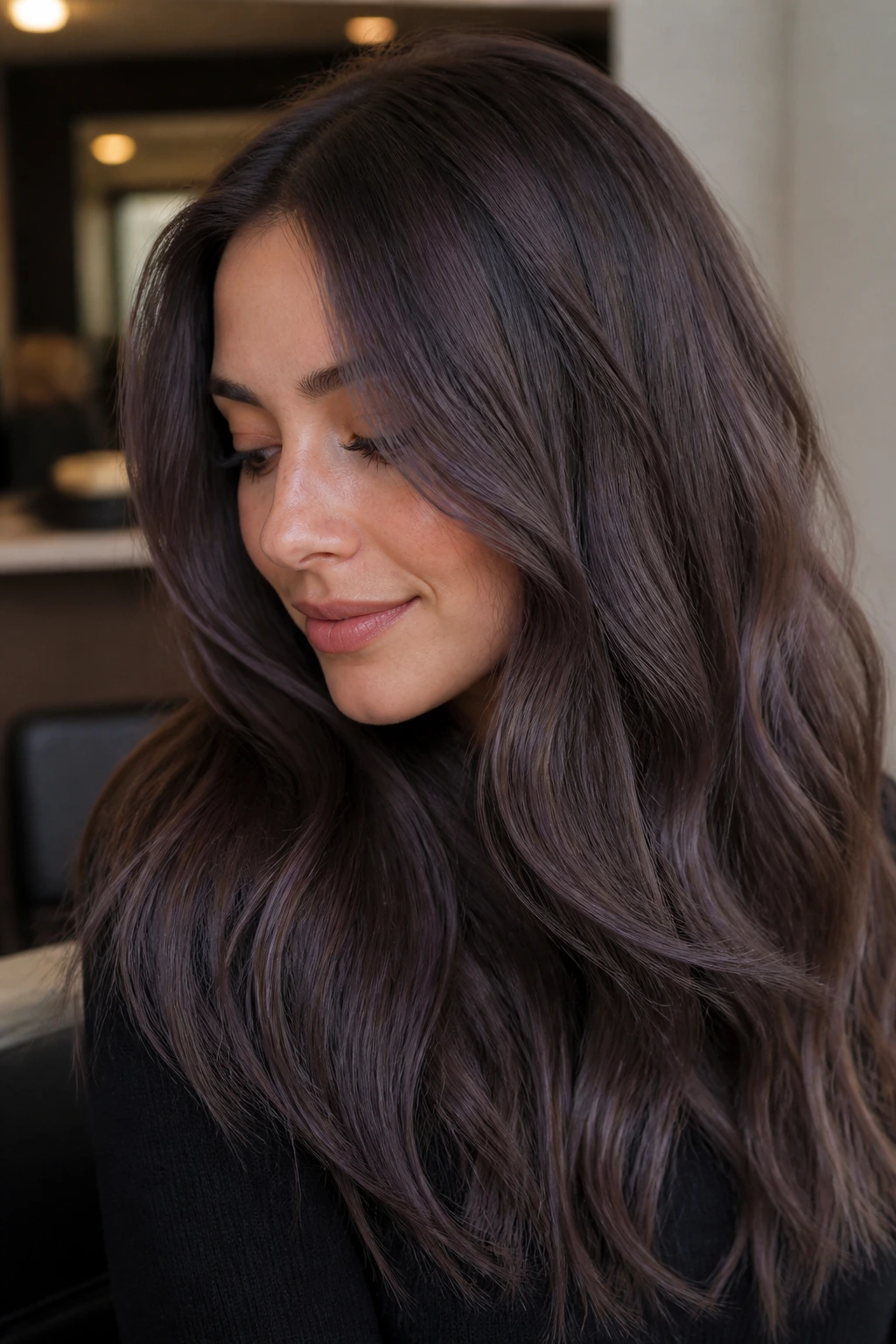
Think of this as the “muted” sibling of standard mocha. It takes a medium-dark brown base and introduces a subtle, dusty, greyish-violet hue. It’s perfect for someone who isn’t ready for full-on silver or grey but wants that sophisticated, matte look.
Achieving the Muted Effect
To get this look, your stylist will likely use a “cool-brown” color line that specifically includes ash or drab modifiers. Unlike standard brown dyes, which use gold or warm-brown pigments, these formulas are heavily filtered to remove anything that looks like honey or caramel.
Real-world maintenance: This color fades quickly because the blue-grey pigments are the first to wash out. You will need a blue-depositing conditioner to keep that slate look alive between salon visits.
3. Cool Cocoa with Violet Undertones
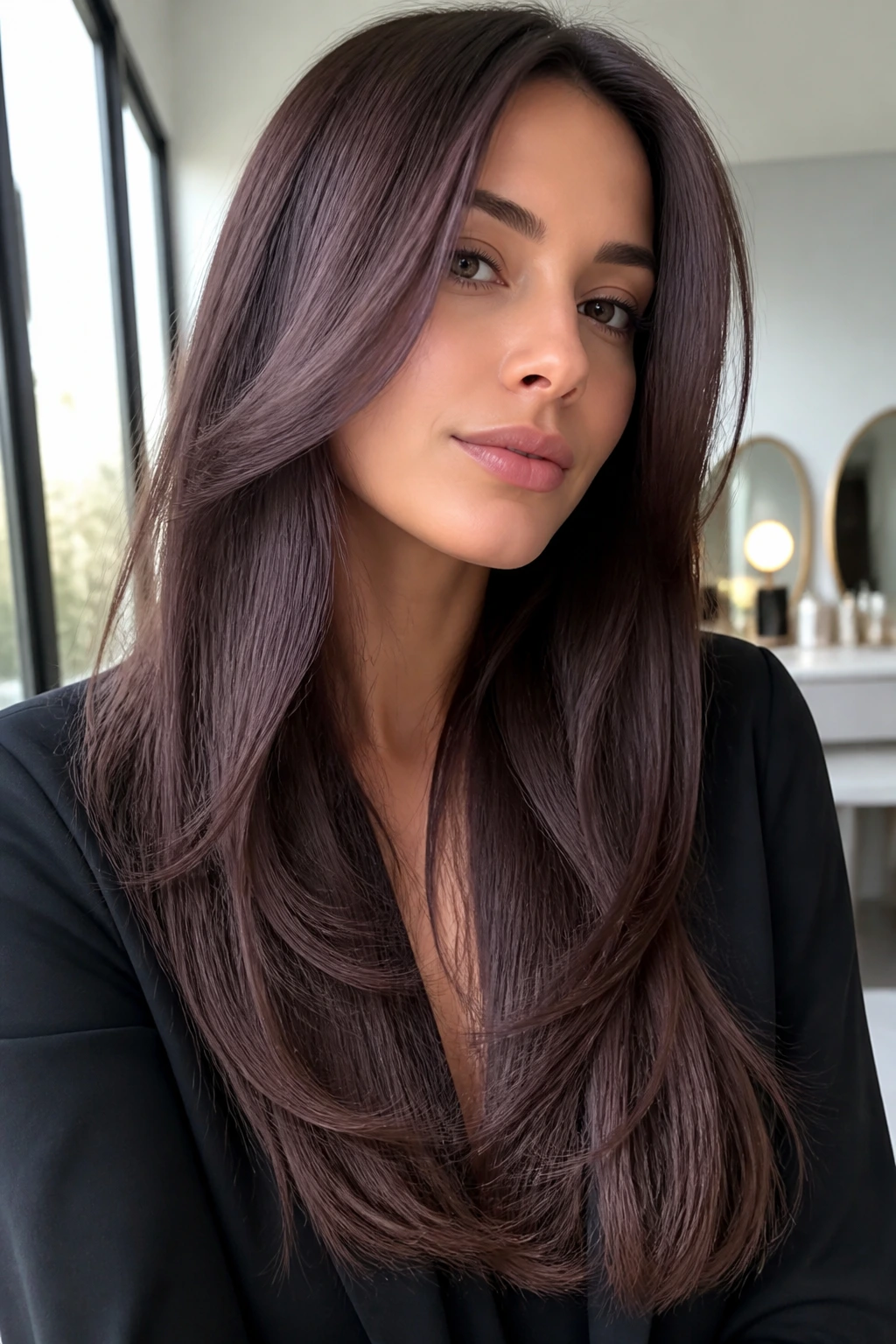
This is a softer option than espresso but just as effective at neutralizing warmth. By adding a tiny bit of violet to the chocolate base, the color takes on a sophisticated depth that looks purple only under bright, direct sunlight.
How to Style It
Because this color is inherently dimensional, it looks best with a sleek, polished blowout. The violet undertones catch the light in a way that suggests high-end care, so keep your ends trimmed to avoid the “dry” look that can sometimes plague darker, colored hair.
Why it’s a favorite: It’s one of the few ways to get a “vibrant” brunette that still falls firmly into the neutral-to-cool category without venturing into red-violet territory, which would be a nightmare for cool skin.
4. Midnight Chocolate
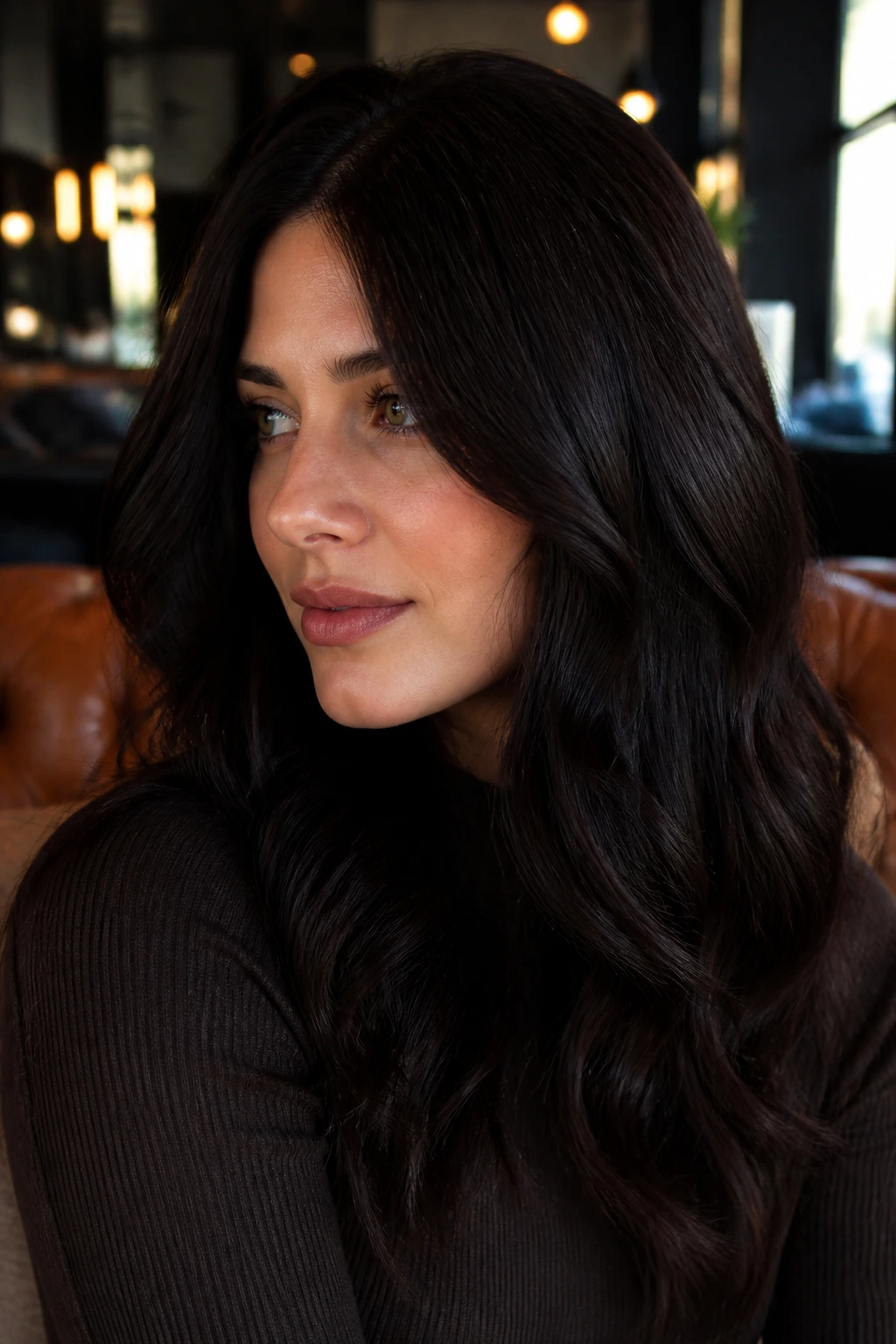
This color is for the bold. It sits right on the edge of black, but it has a distinctly chocolate warmth that isn’t orange-based. Instead, the “warmth” here is a rich, dark truffle color that avoids any brassiness entirely.
What to Ask For
When you sit in the chair, specifically request a “Level 2 or 3 neutral-cool brown.” If you just ask for “dark brown,” most stylists will default to a warmer, reddish-brown. The “neutral-cool” distinction is the key to preventing that dreaded rust-colored fading.
The downside: If you decide you want to go lighter in the future, this color is a bear to remove. It is a long-term commitment because of how much pigment is packed into the hair shaft.
5. Icy Brown Gloss
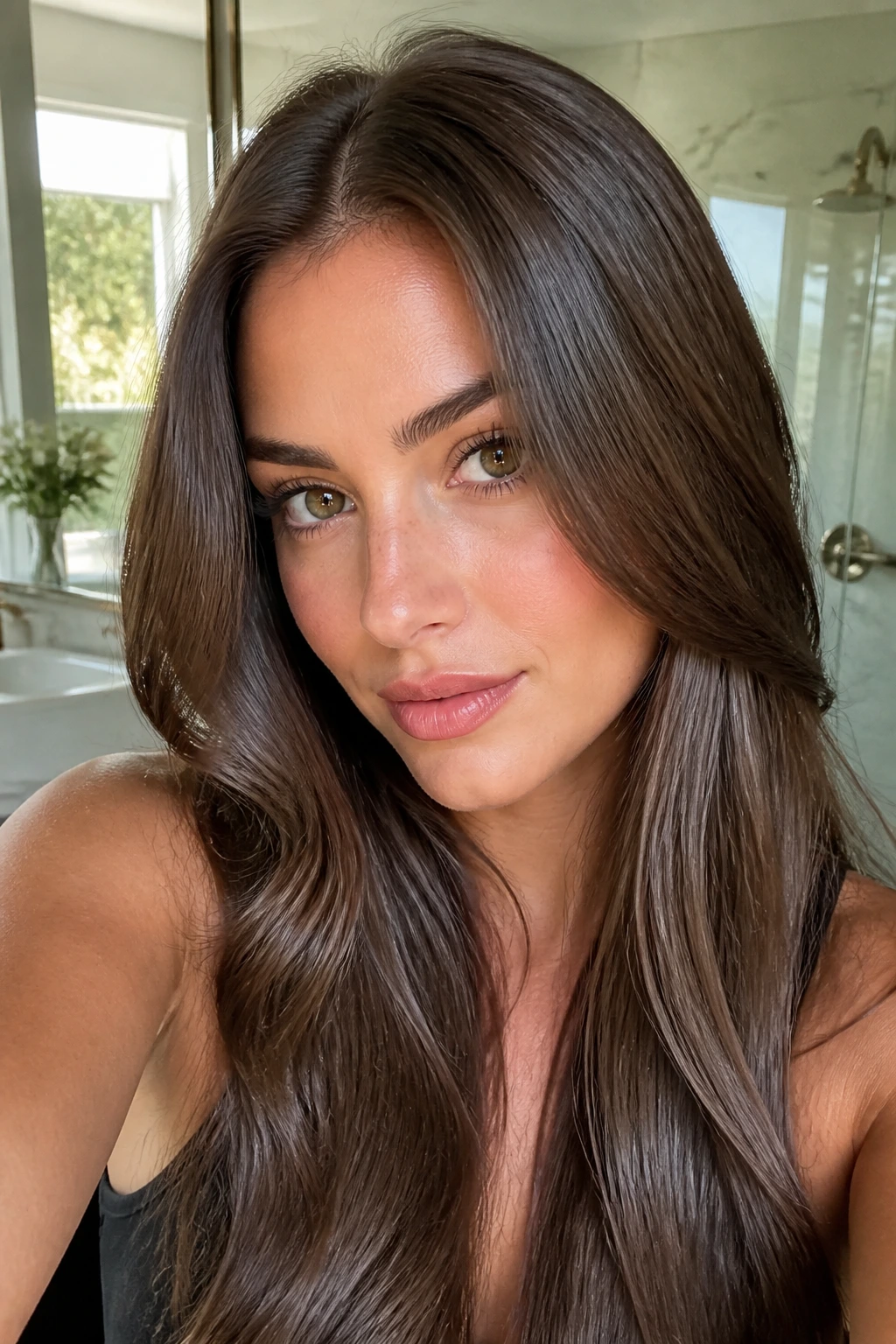
This isn’t a permanent color so much as a finish. You take a medium-brown base and apply a clear, cool-toned gloss over the top. It’s ideal for people who already have brown hair but find that it looks “tired” or “dull” because of oxidation.
The Science of the Gloss
Cool glosses deposit a translucent layer of blue or violet pigment over the hair. It doesn’t change your base color dramatically, but it changes the vibration of the hair. It’s like putting a cold filter on a photo.
Crucial step: Do not skip the clarifying shampoo before this treatment. You need the hair cuticle to be completely free of product buildup for the gloss to grab onto the hair shaft effectively.
6. Truffle Brown
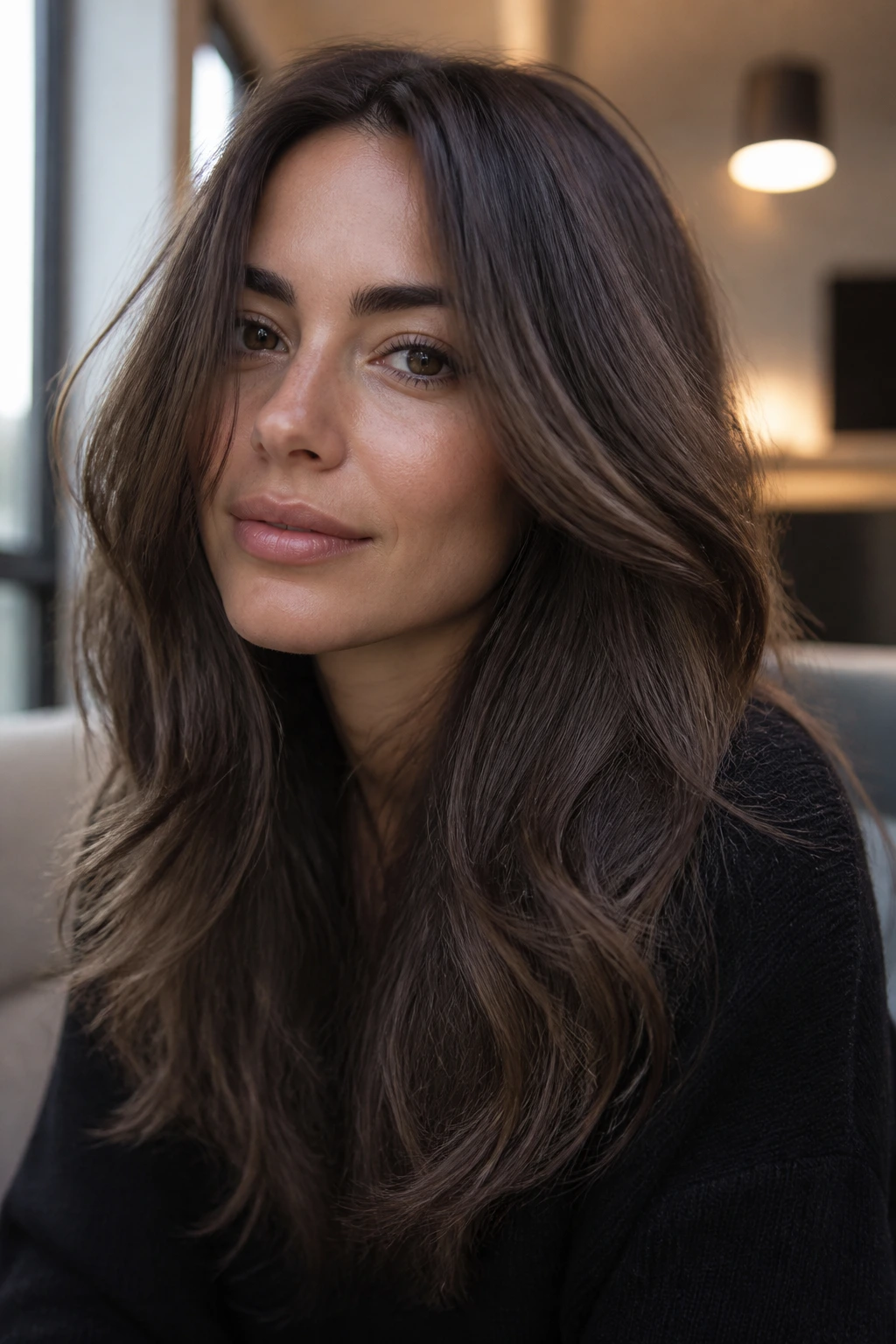
Truffle brown is a dusty, medium-to-dark brunette that leans heavily into the beige-cool spectrum. It looks like the inside of a chocolate truffle—velvety, soft, and slightly earthy. It lacks the sharp, harsh edges of espresso.
Who Should Wear This
This is the ultimate “grown-up” color. It’s professional, low-maintenance, and incredibly flattering for those with olive-cool skin, as the beige undertones help balance out the green in your complexion while the cool base handles the pink/red.
Maintenance factor: This color tends to be very forgiving as it grows out. Because it isn’t drastically different from many people’s natural hair color, the root line is softer and less jarring.
7. Cool Mushroom Brown
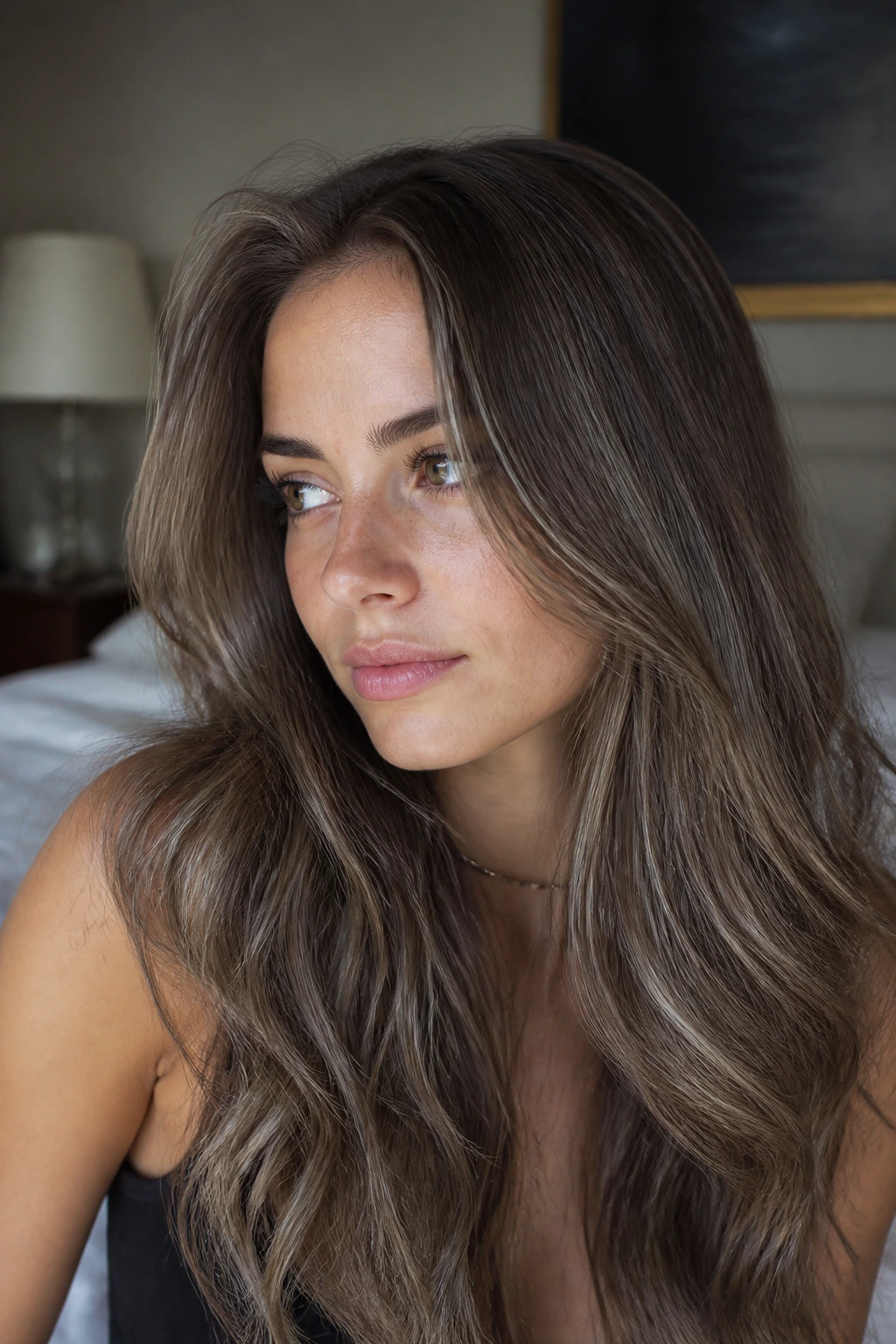
This has become a massive trend because it mimics the natural, multi-tonal, slightly greyish-brown color of a portobello mushroom. It relies on a blend of ash-brown and cool-beige highlights.
The Technique
This is rarely achieved with a single process. It is almost always a balayage or foil technique where “lowlights” and “highlights” are interwoven to create a tapestry of cool tones.
What to watch for: Ensure your stylist doesn’t pull your natural hair too light. If the base gets too orange while lightening, you’ll end up with a stripey mess. The base must be kept in the cool-brown family throughout the process.
8. Slate Brunette
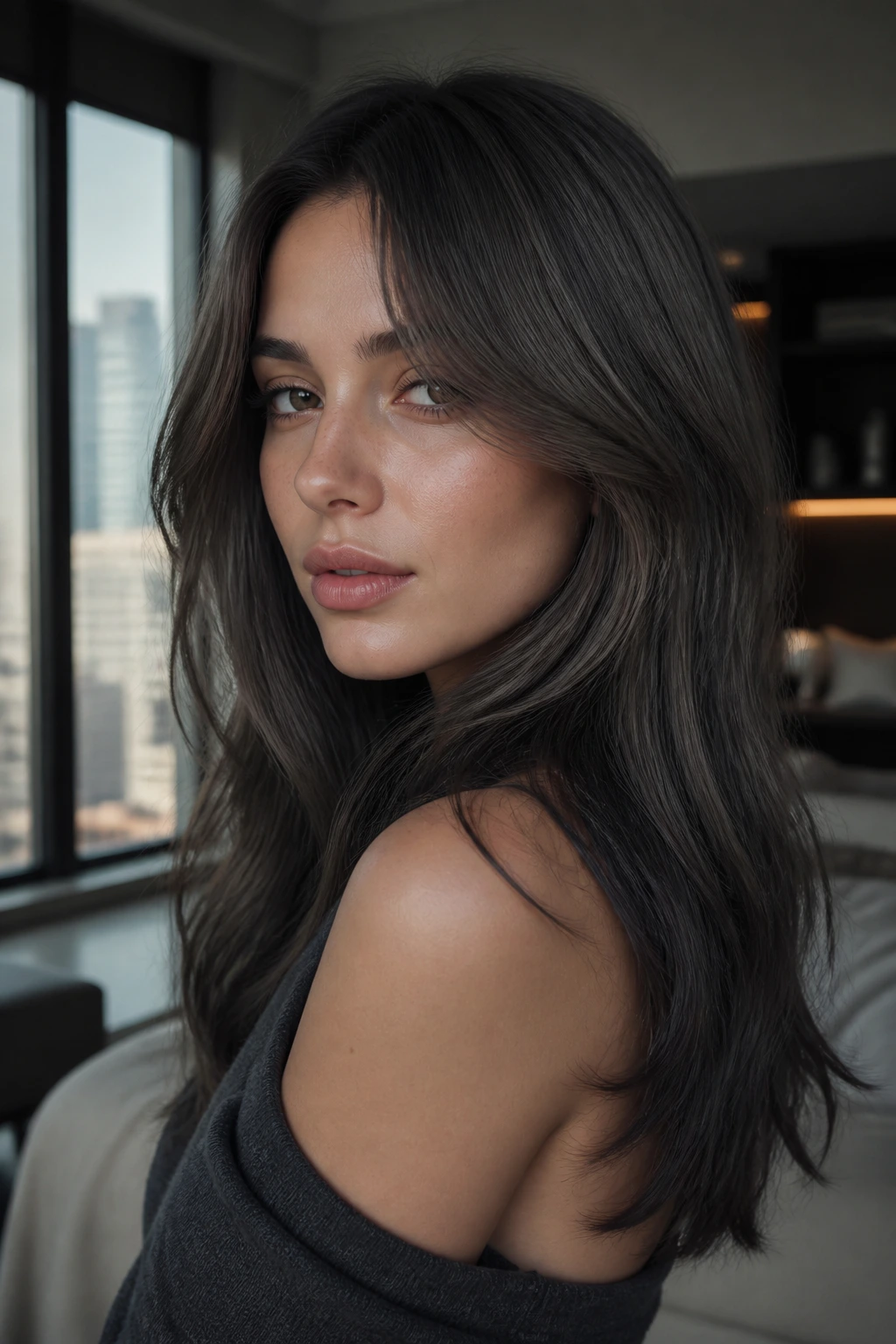
Slate is the absolute extreme of cool-toned brunettes. It’s almost a charcoal-brown. It’s striking, edgy, and pairs exceptionally well with very cool, pale skin.
Achieving the Slate Finish
This usually requires a double process: lift to a light brown and then tone with a heavy grey-blue toner. It is high maintenance. If you want this look, prepare for monthly toner appointments.
Daily care: You must use purple or blue-toning shampoo at least once a week to prevent the “slate” from oxidizing into a muddy, warm brown.
9. Smoked Chocolate
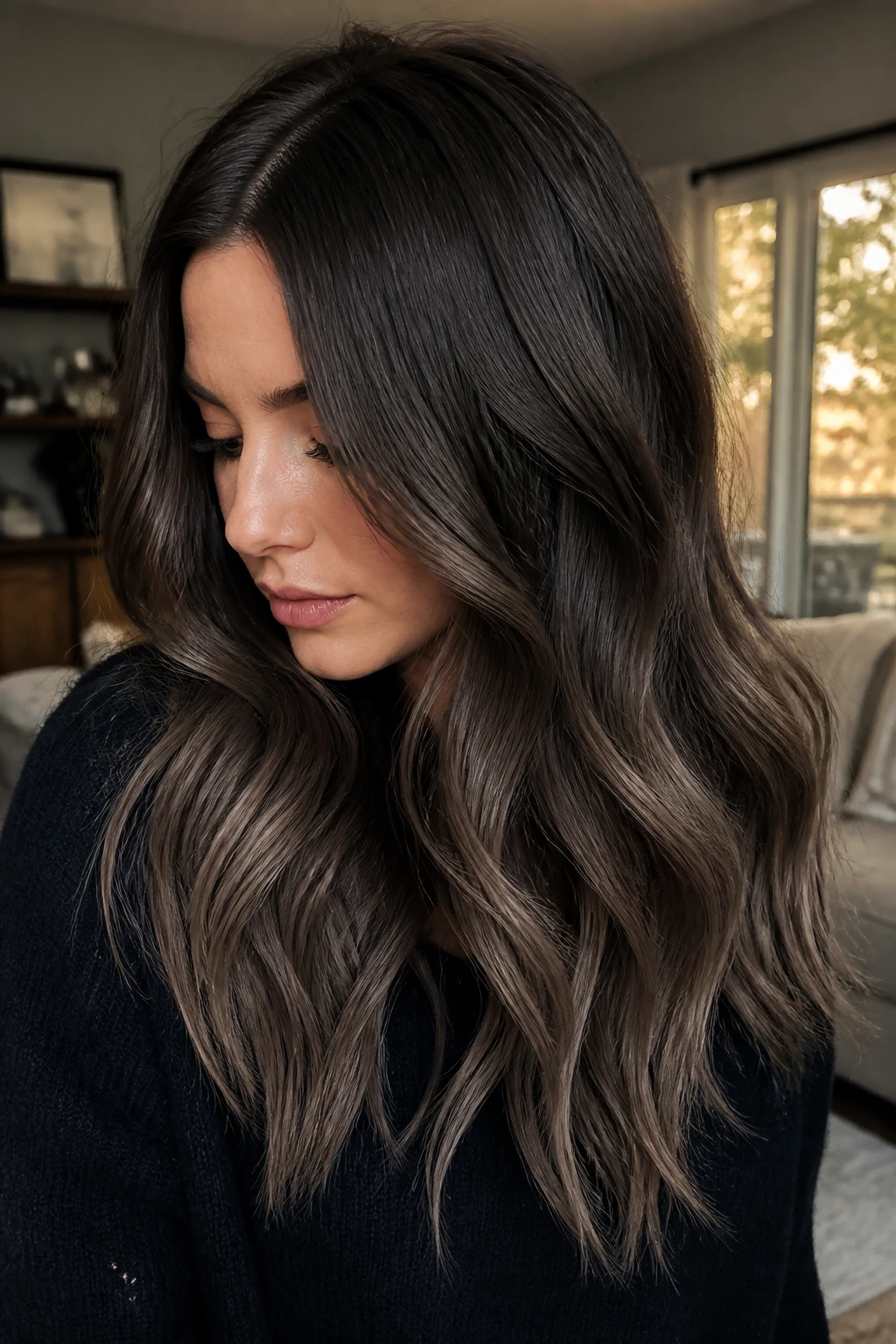
Smoked chocolate describes a technique where the hair is “smoked out” at the roots and through the mid-lengths. It looks like a gradient of dark espresso fading into a lighter, cool-toned ash brown.
Why it Works
By using a darker root, you add depth, which makes cool skin look less pale and more vibrant. The transition to a lighter cool brown creates a soft, hazy finish that is very forgiving on the hair’s health.
Expert note: Ask for a “root smudge” to blur the lines between colors. A harsh line of demarcation is the enemy of a natural, smoked look.
10. Dusty Cocoa
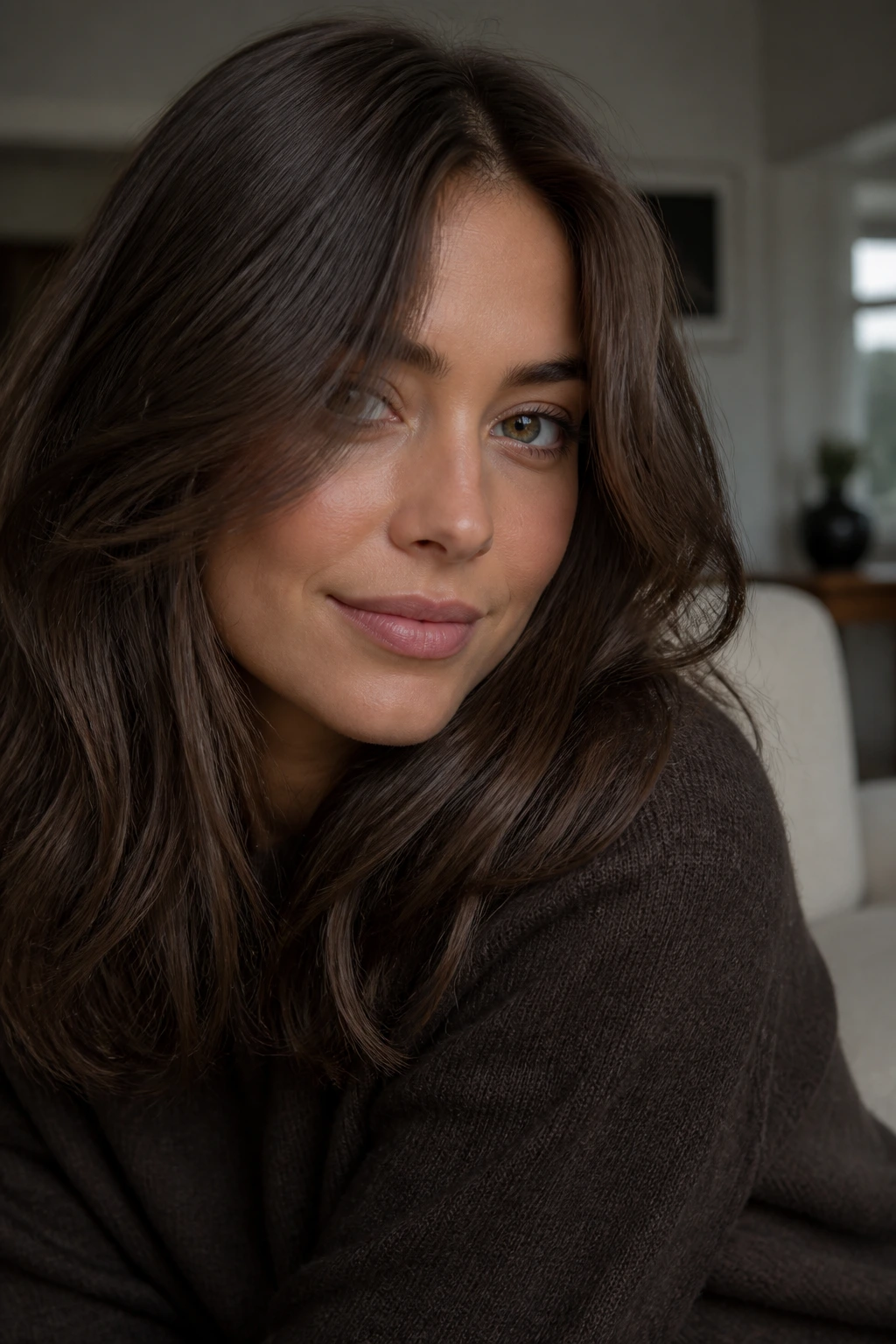
Dusty cocoa is a softer, more matte version of traditional brown. It’s the color of milk chocolate that’s been left out in the cold. It’s very understated and perfect for an everyday, low-key look.
Key Characteristics
- Matte finish (low shine, high sophistication)
- Ashy undertones
- Uniform color (no heavy contrast)
Why people love it: It’s incredibly easy to style. Because it’s a solid color, you don’t have to worry about highlights fading into an orange brassy mess. It is the most reliable color for cool-toned hair.
11. Cool-Toned Ribbon Balayage
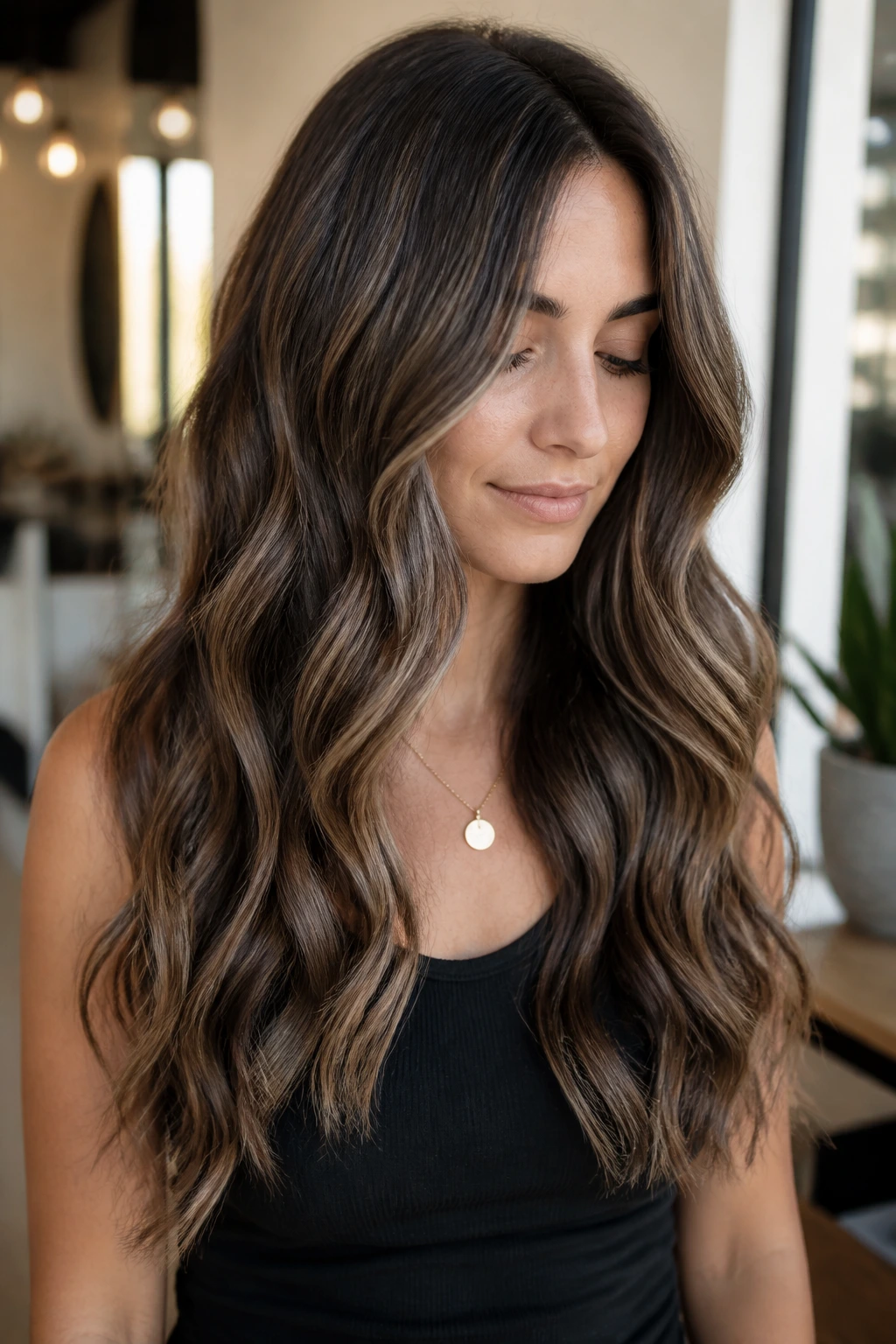
Balayage often defaults to honey or caramel, which is a nightmare for cool skin. This technique uses “ribbons” of cool-ash brown lightened against a darker cool-chocolate base.
The Technique
The “ribbons” are painted on in thick, deliberate sections rather than fine, wispy highlights. This creates a solid block of color that feels more modern and less “sun-kissed.”
Styling advice: These ribbons look best with soft waves. When the hair is straight, the ribbons might look like stripes. Curls allow the colors to blend and create a multidimensional effect.
12. Silver-Kissed Chocolate
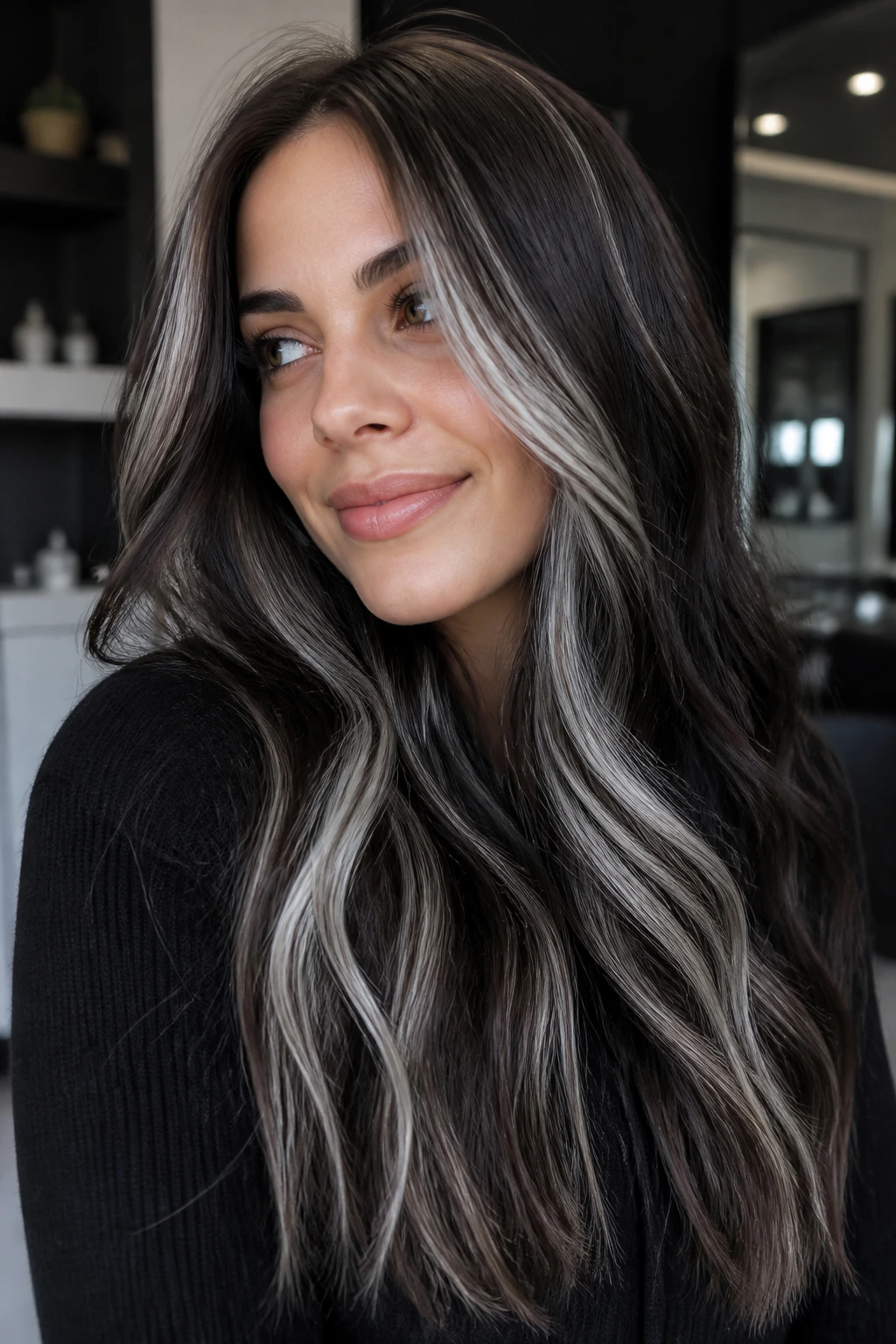
For the brave, this look introduces actual silver or platinum cool-toned pieces into a deep chocolate base. It’s high contrast, dramatic, and intensely cool.
The Maintenance Reality
Bleaching sections of hair to platinum and then toning them silver is damaging. You need to be prepared for the hair health aspect. Deep conditioning masks are non-negotiable.
Visual impact: This creates a “crushed velvet” effect. The dark brown acts as the shadow, and the silver pieces act as the highlight. It is a stunning, high-fashion look.
13. Platinum-Streak Mocha
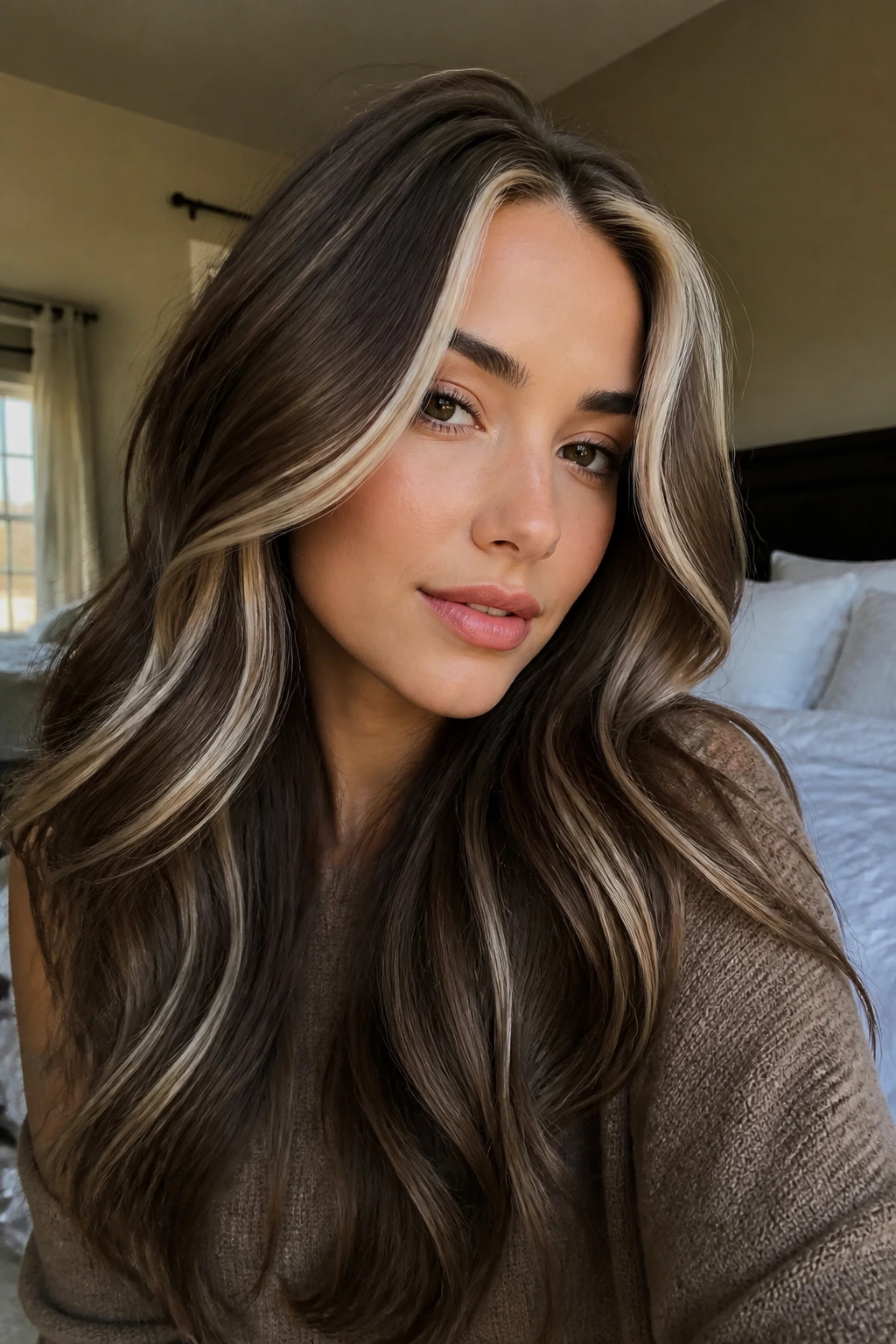
This is a more aggressive version of the silver-kissed look. Instead of subtle ribbons, you have distinct, face-framing streaks of very cool, platinum-toned mocha.
Customization
This is highly customizable. If you have a round face, you can place the streaks to create vertical lines that slim the face. If you have an angular face, you can place them to soften your jawline.
Communication is key: Bring photos. “Platinum streaks” can mean “chunky 90s highlights” or “modern, face-framing brightness.” You want the modern version.
14. Dimensional Ash Lights
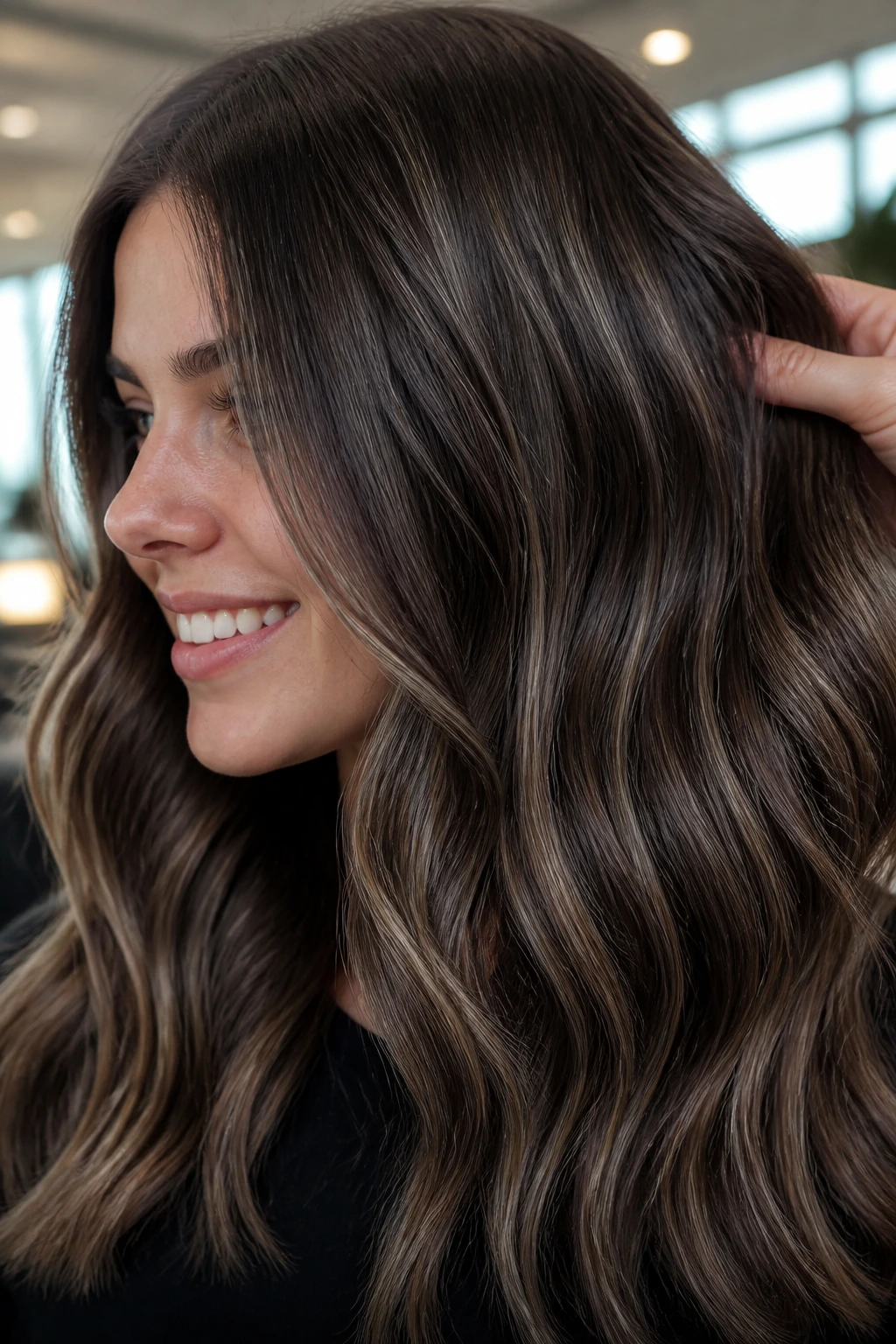
Sometimes you don’t want a color change; you just want dimension. Ash lights are fine, babylights-style highlights that are toned to an ash or silver finish.
Why They Work
They break up the “wig” look that can happen with solid, dark brown hair. By adding these tiny slivers of cool-toned light, you add texture and movement without changing your overall hair color level.
Frequency: You can go much longer between these appointments than a full color service. They grow out seamlessly because they are so fine.
15. Cool Caramel Ribbons
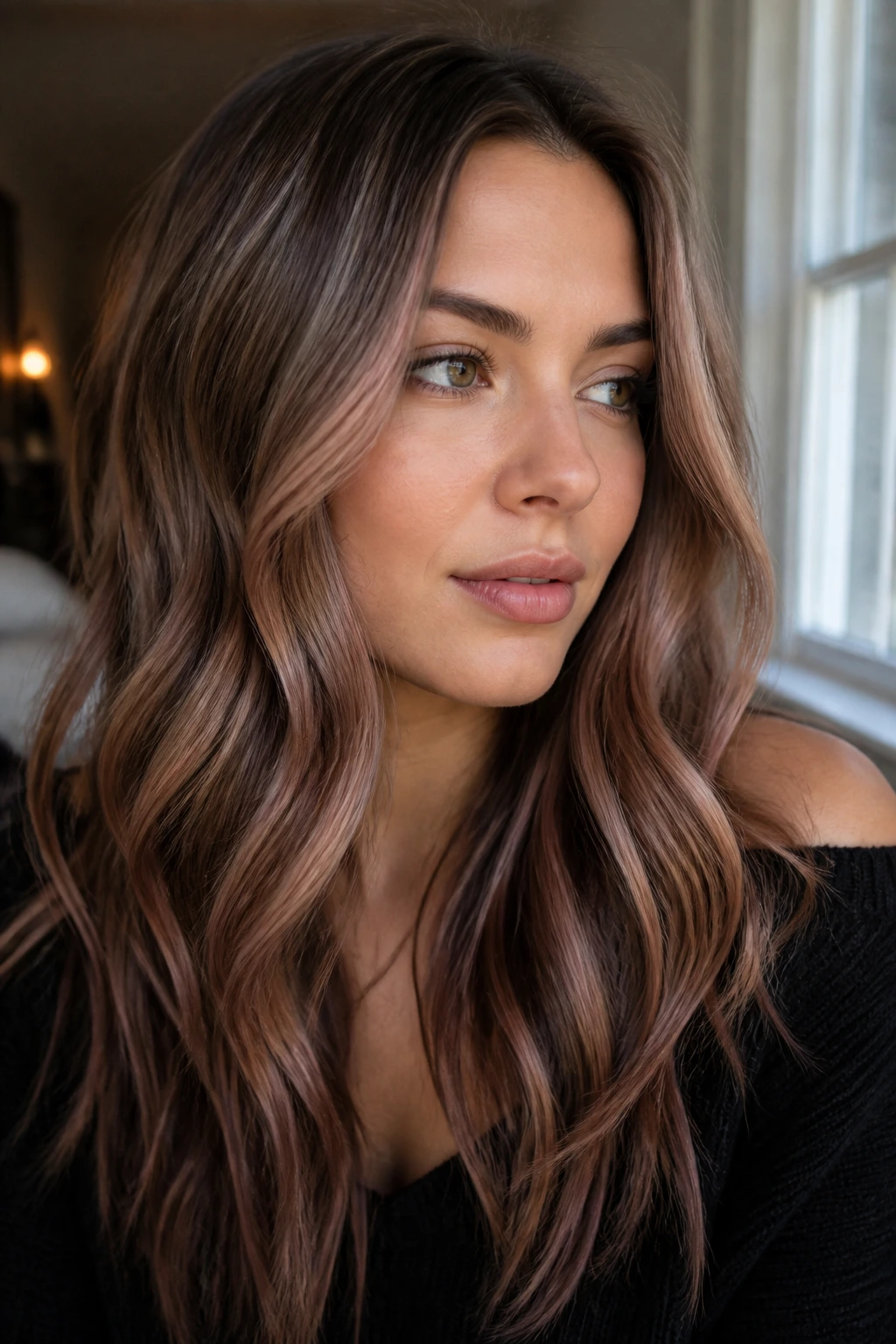
Yes, you can do caramel on cool skin—but it has to be a “cool” caramel. Avoid the golden, syrupy tones. Look for a caramel that leans into a mauve or dusty-rose undertone.
Achieving the “Cool” Caramel
Your stylist needs to formulate a color that has violet or blue bases, not yellow or red. It will look like a soft, muted bronde (brown-blonde) rather than a bright, warm gold.
Test it first: Have the stylist do a strand test. If the color pulls orange when the developer is applied, the formula is wrong. It should stay neutral/ashy even while processing.
16. Espresso Balayage
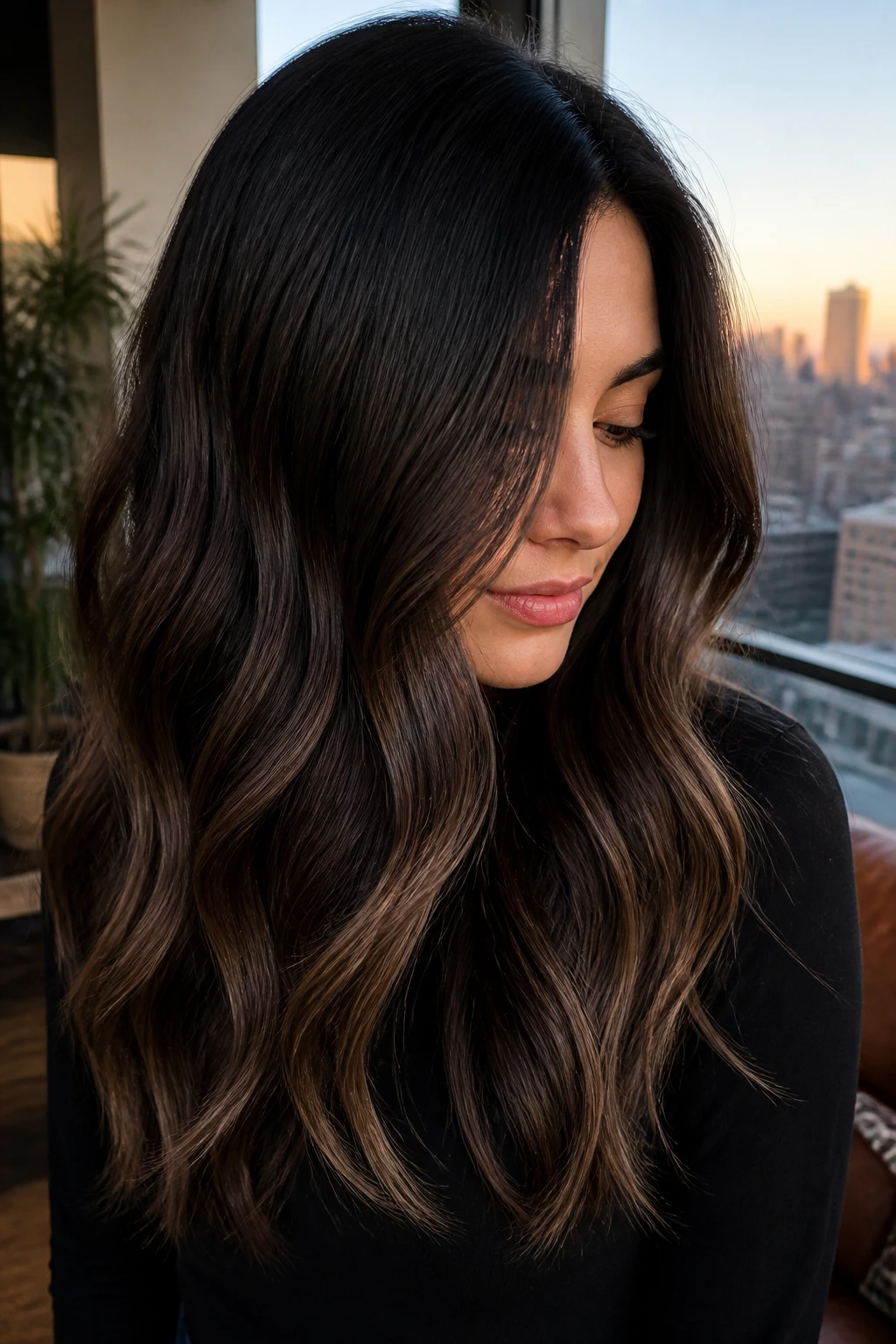
This is a technique where the base is kept at a very dark espresso level, and the ends are lightened only one or two levels to a cooler, softer mocha.
The Result
It creates a “lived-in” color. You get the richness of the dark base but the softness of a lighter end. It’s perfect for people who are afraid of the commitment of full color but want to freshen up their look.
Maintenance: This requires minimal upkeep. Because the roots aren’t touched, you won’t have a harsh grow-out line.
17. Smudged Root Mocha
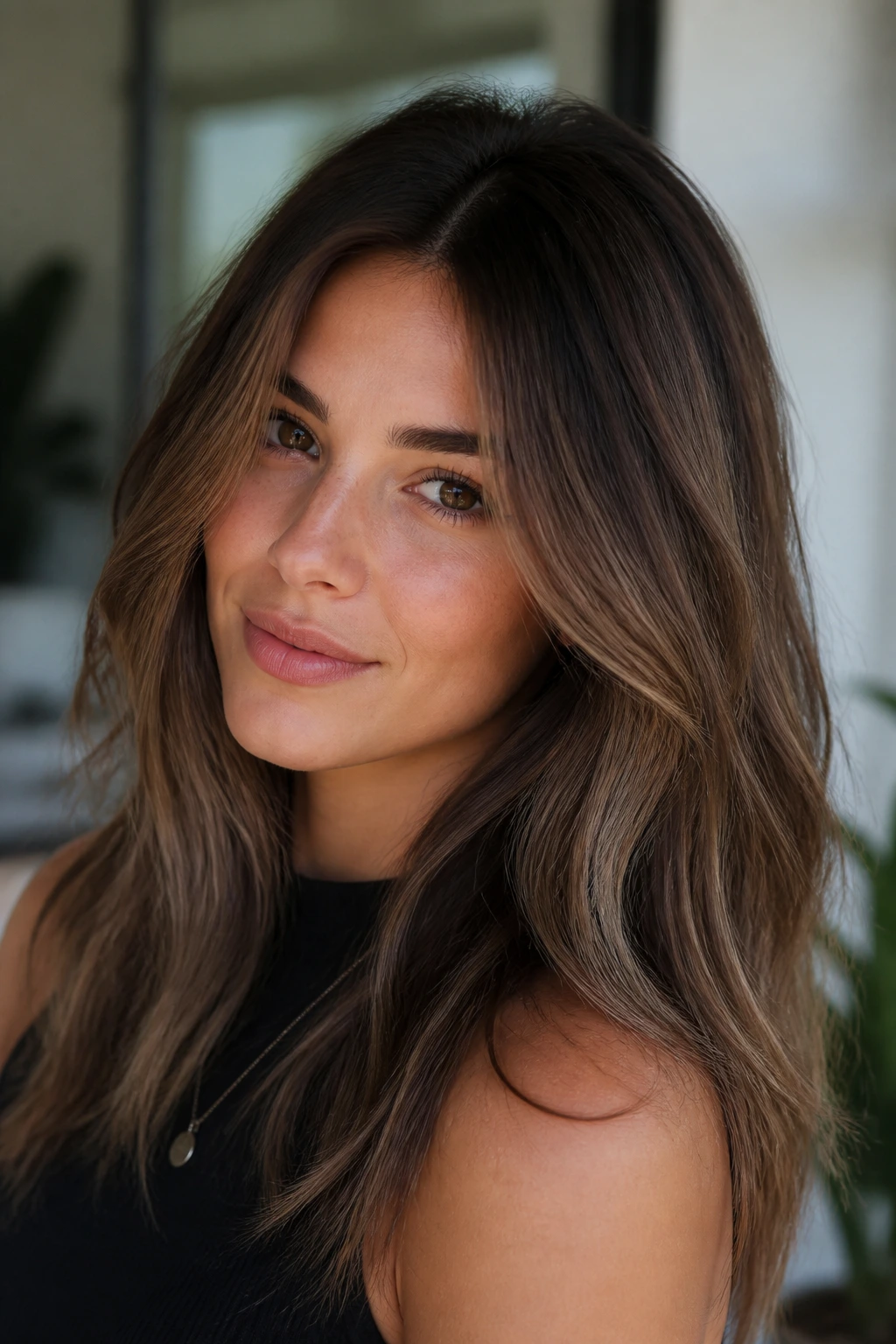
This is the ultimate low-maintenance look. Your base color is brought down past the roots (the “smudge”), and the mid-lengths are a lighter, cool-toned brown.
Why the Root Smudge Matters
It mimics the way hair naturally grows. By using a darker color on the root that matches your natural shade, you buy yourself months between salon visits.
Expert Tip: The root smudge needs to be blended meticulously. If there is a sudden stop where the root color ends and the lighter color begins, it will look like a mistake. Ask for “color melting.”
18. Shadow Root Cool Brown
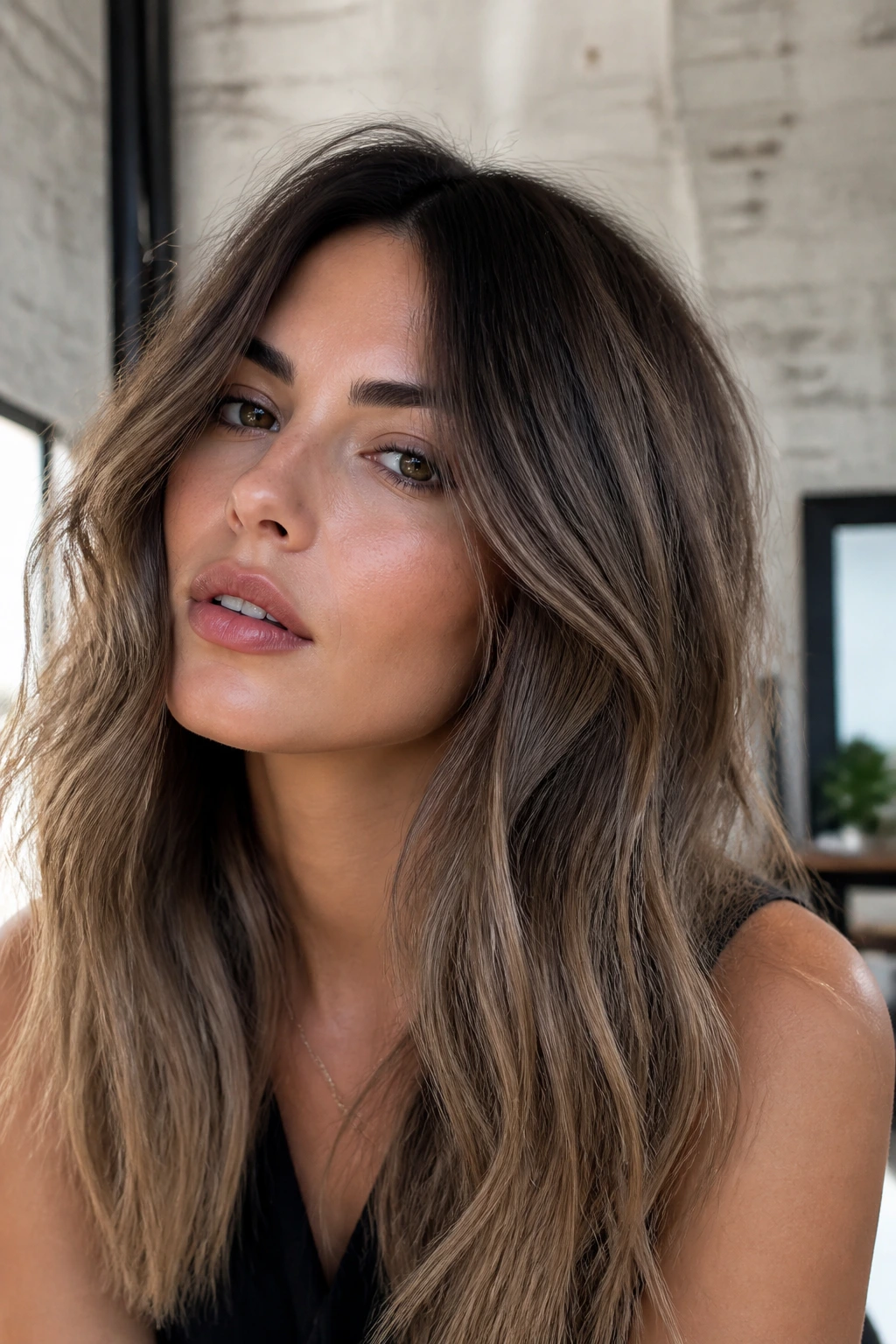
This is similar to the smudged root, but the contrast is much higher. You might have a very dark, cool root and a significantly lighter, ash-blonde or light-brown length.
The Contrast Effect
This is a very “on-trend” look that feels youthful and trendy. It works best on those with high-contrast features (like very dark eyes and pale skin).
Styling: This looks best with a messy, textured style. The “shadow root” creates a depth that makes the hair look thicker and fuller.
19. Cool Lowlight Contrast
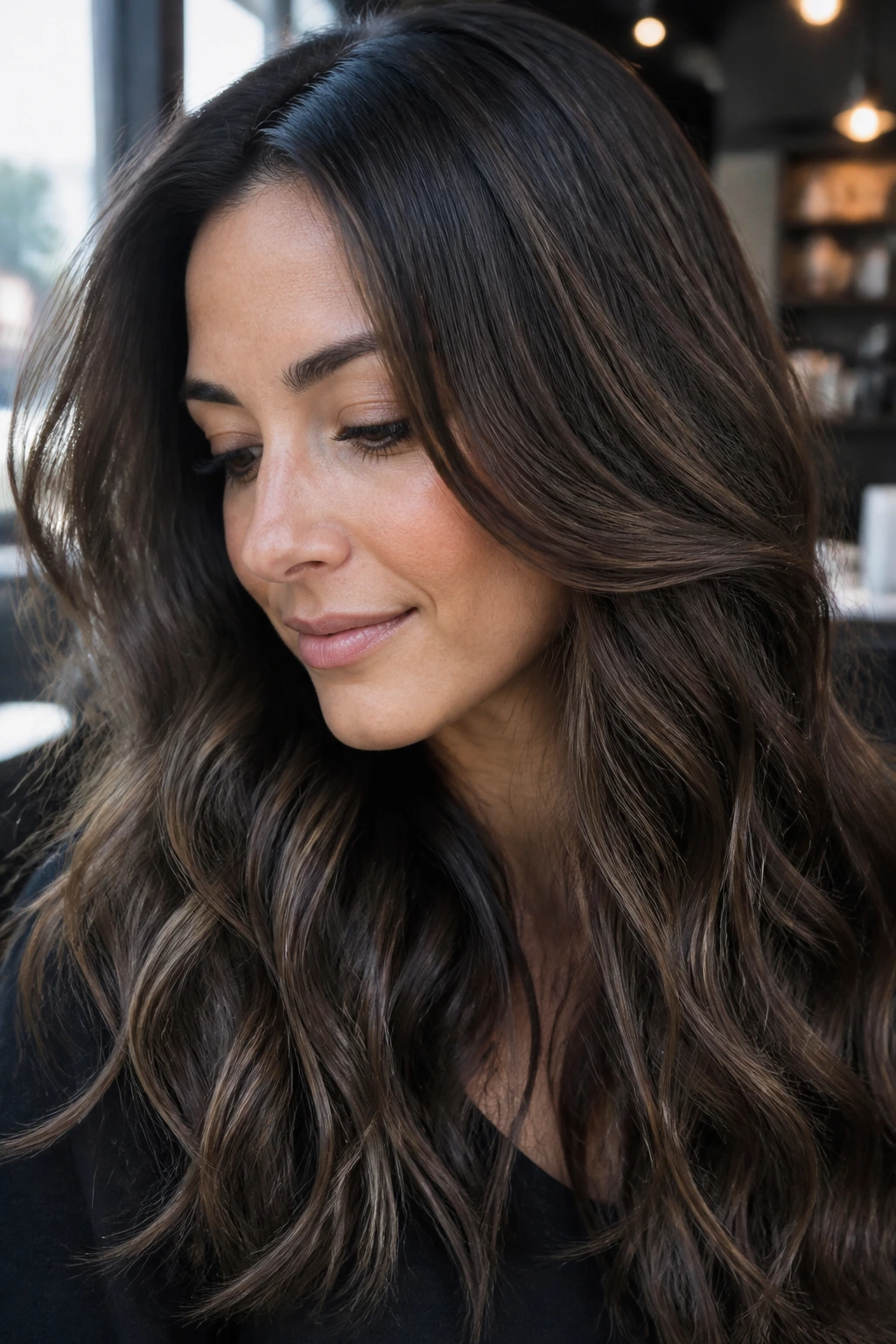
If you already have brown hair but it feels one-dimensional, don’t lighten it—darken it. Add cool-toned lowlights to create depth.
The Theory of Depth
Lowlights add shadows. By adding darker, cooler strands of hair to your existing shade, you make the lighter strands “pop” by comparison. This is often more effective and less damaging than bleaching.
Who is this for: Anyone with faded, over-processed, or “mousy” brown hair. It brings the color back to life without the chemical load of a full-head lift.
20. Soft Cool Ombre
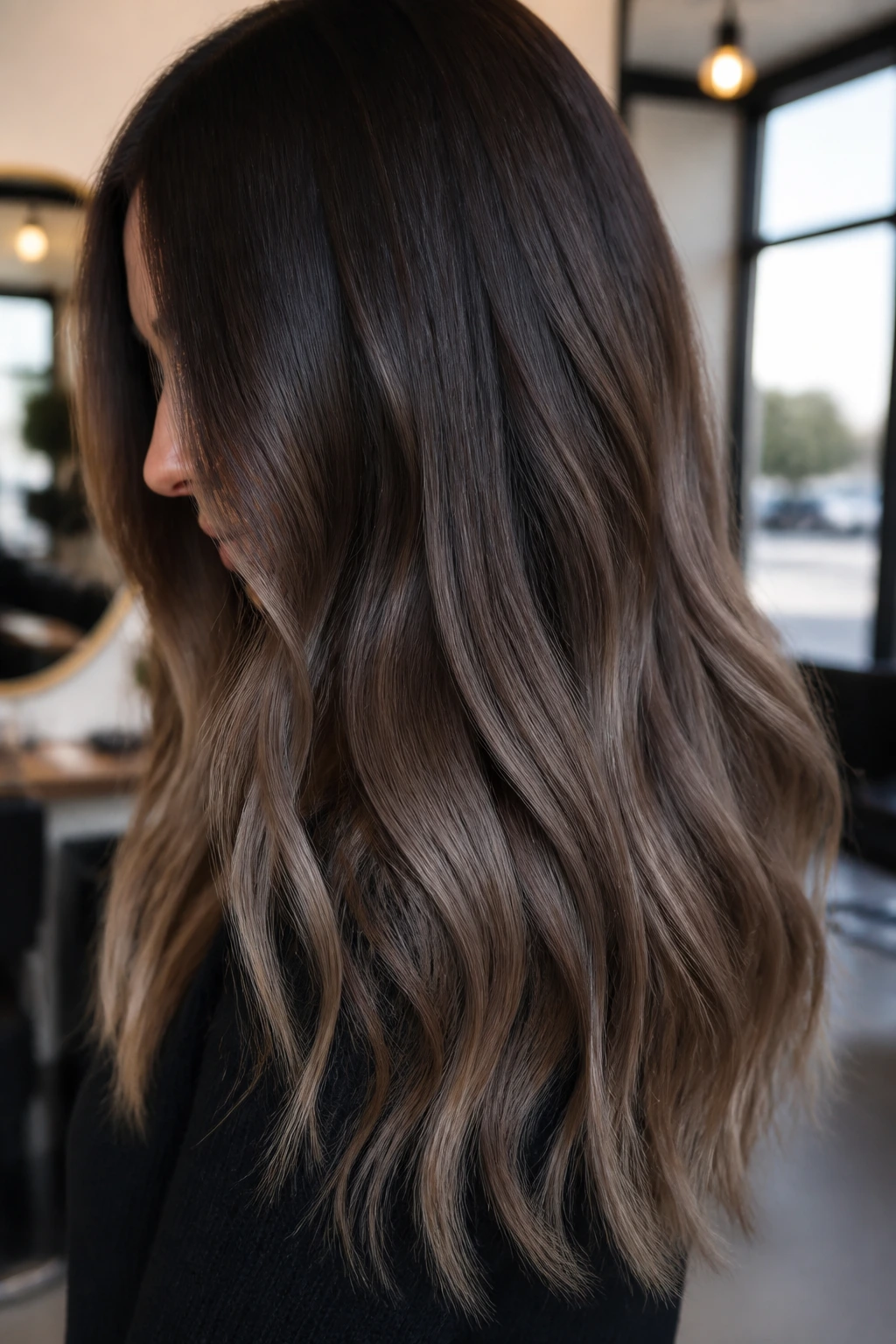
Ombre has evolved. It’s no longer the harsh “dipped in bleach” look of the past. It’s a soft, melted transition from a deep, chocolatey root to a cooler, mocha end.
The Transition
The secret is the “melt.” There shouldn’t be a line. The colors should be blended so that you can’t tell where one ends and the other begins.
Color pairing: Match the cool tone of the roots with a corresponding cool tone on the ends. If you have a blue-based root, the ends should be an ash-mocha, not a golden brown.
21. Chocolate Mauve
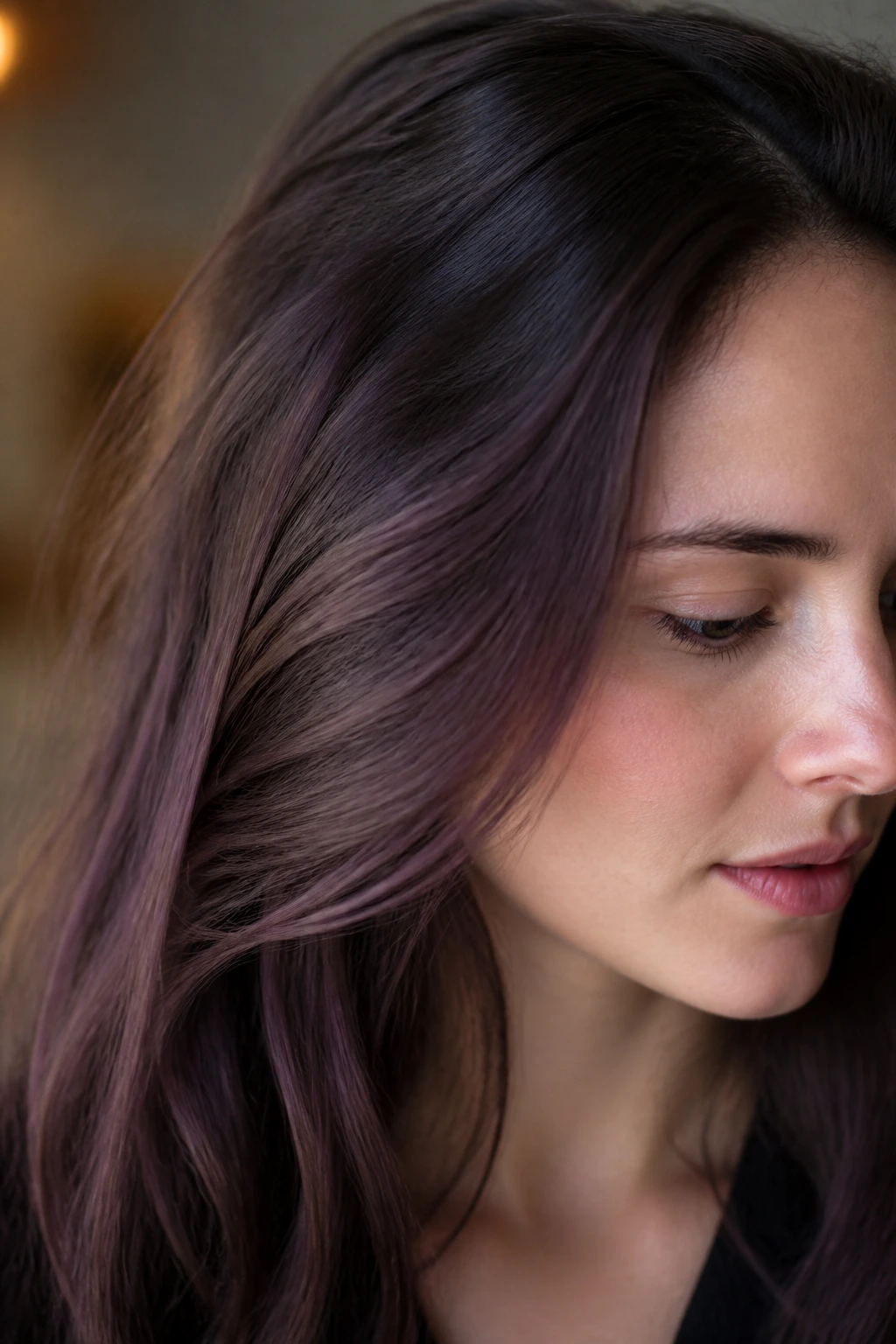
This is for the person who wants to be adventurous but needs to stay within the “brown” category. Chocolate mauve is a deep brown with distinct, cool-toned purple-pink undertones.
The Effect
It’s surprisingly wearable. Because the base is brown, it’s not an “in your face” fashion color. It’s subtle, moody, and looks incredible on cool skin.
Care advice: Mauve fades very quickly. You will need a color-depositing shampoo that contains purple/pink tones to keep the effect alive.
22. Plum-Infused Chocolate
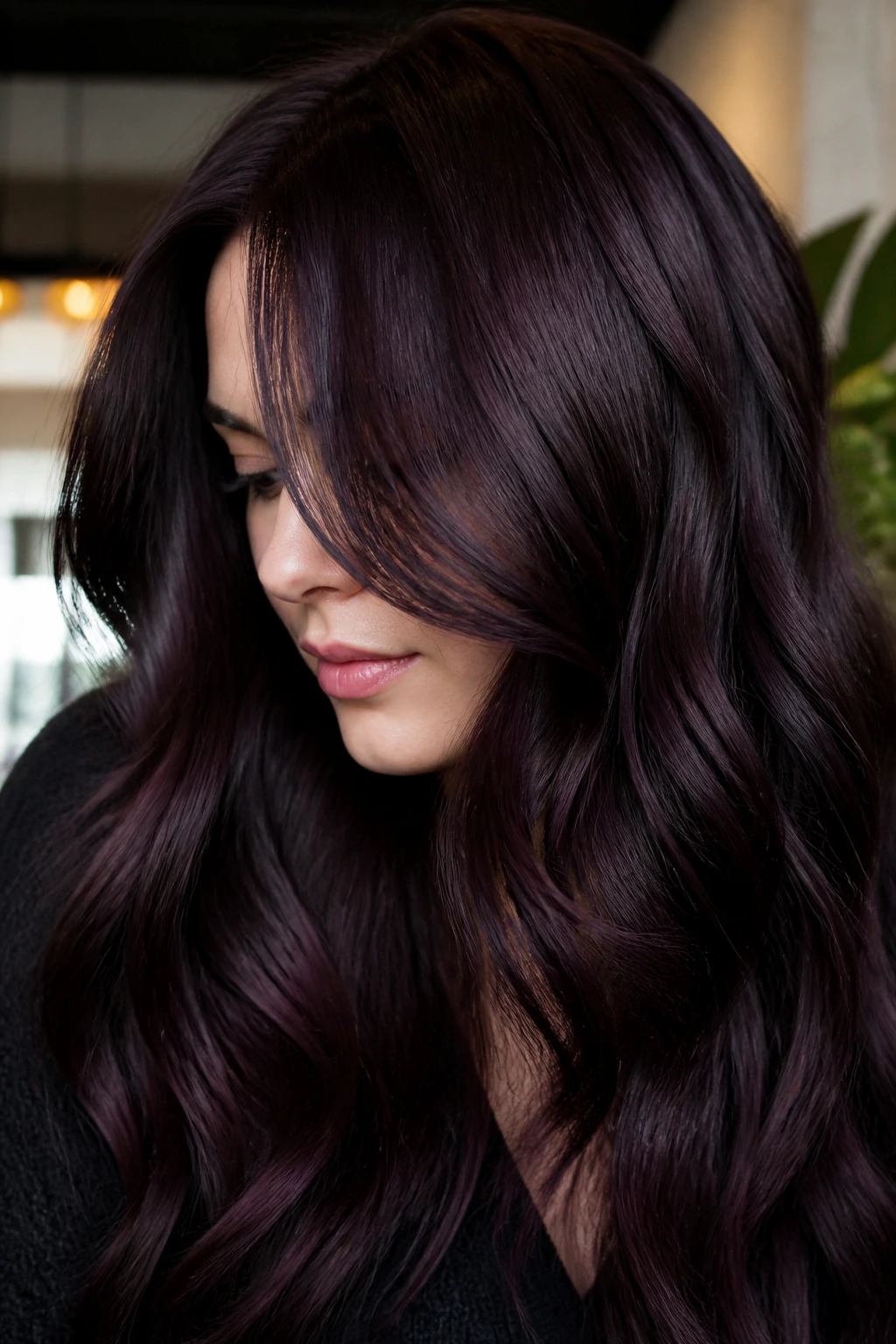
Plum is a classic cool-toned brunette trick. It’s a deep, dark purple that creates a rich, chocolatey effect. It’s more intense than mauve and less “fashion-y.”
The Elegance Factor
This is a very sophisticated look. It’s the kind of color that looks expensive and professional while still having a “secret” identity.
Natural lighting vs. Artificial: Under indoor lights, it looks like a deep, dark brown. In the sun, the plum reflects beautifully, showing off the cool violet tones.
23. Violet-Base Brunette
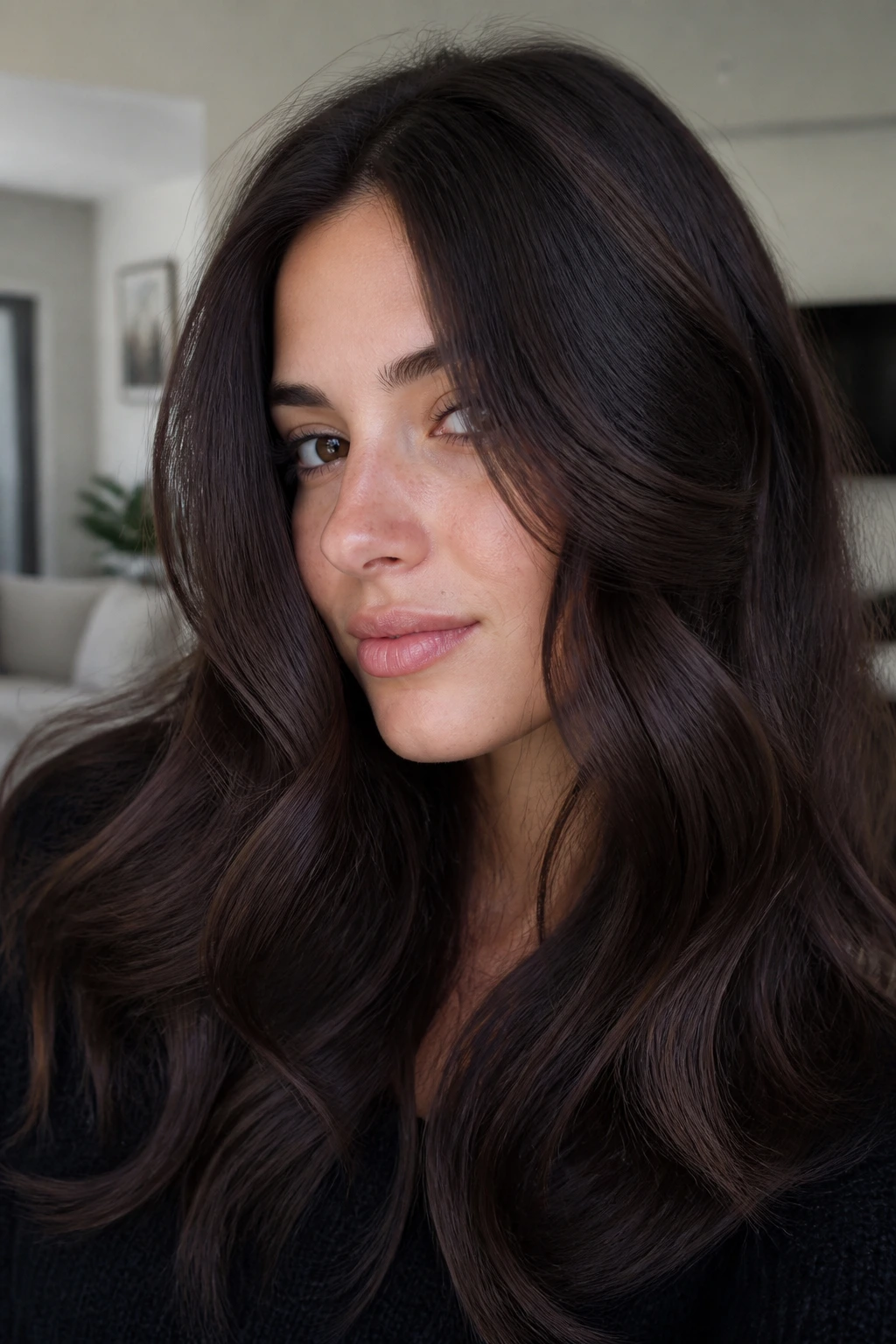
If you are struggling with your brown hair turning orange, ask for a violet-based dye. Violet is the direct opposite of yellow on the color wheel. If your brown tends to fade to a yellow-brown, this is your solution.
How it Translates
This isn’t about making your hair purple. It’s about using the theory of purple to achieve a neutral-cool brown. You won’t look like you have purple hair; you will look like you have a very rich, clear, non-brassy brown.
Professional standard: Most quality salon lines have a “Cool-Violet” brown series specifically for this purpose.
24. Icy Glazed Brunette
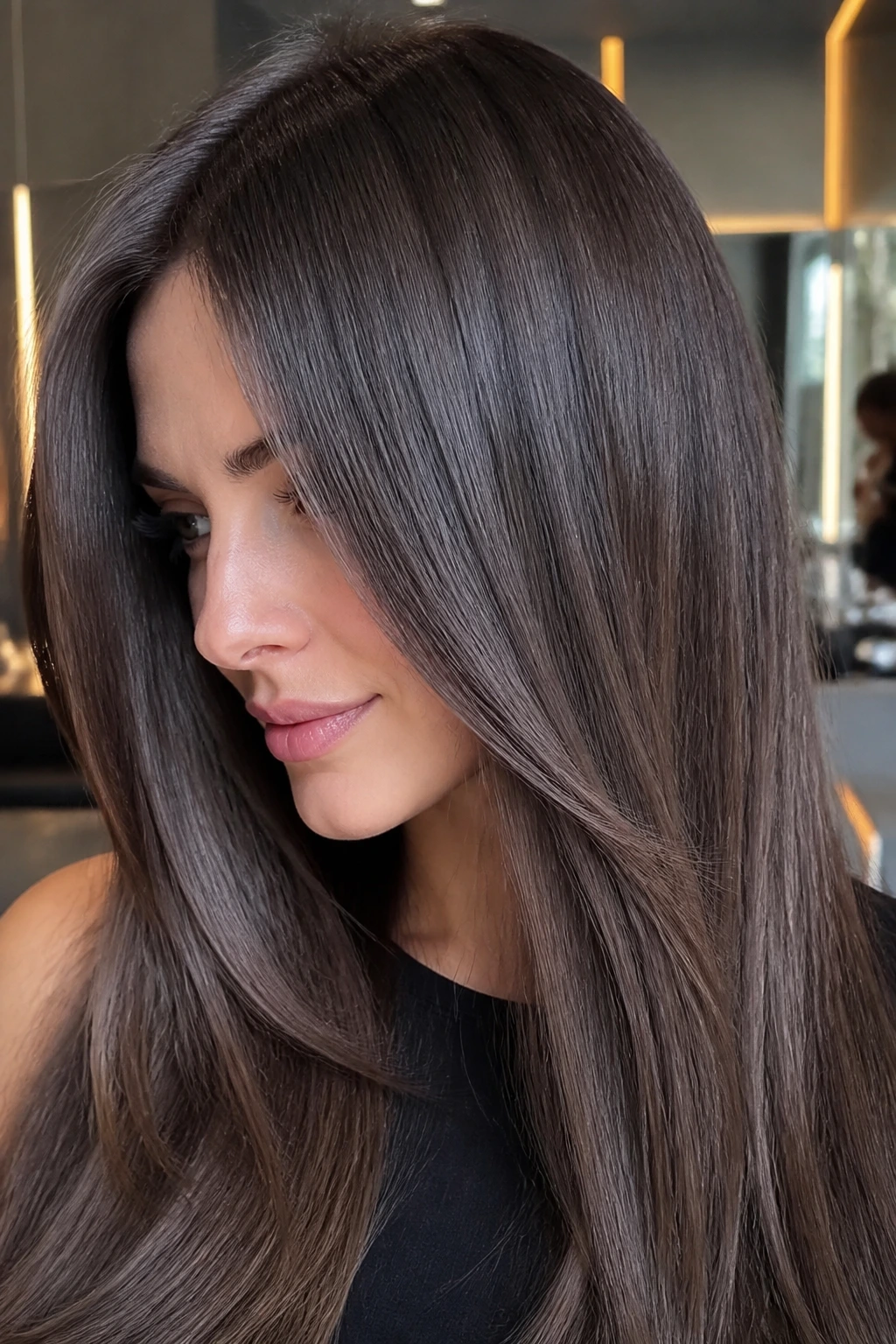
This is a post-color service. After you get your hair colored, your stylist applies an “ice” glaze. It’s a very sheer, ash-based toner that neutralizes the last bit of warmth.
Frequency
You should get this every time you get a root touch-up. It keeps the hair color “clean.”
The result: Your hair looks like it’s made of glass. It’s shiny, cool, and perfectly polished. It is the hallmark of a high-end salon finish.
25. Blue-Black Chocolate
This is the closest you can get to black without actually being black. It has a blue base that provides that midnight-cool reflection.
Why it works for cool skin
The blue undertones perfectly match the natural coolness in your skin. It eliminates any chance of “orange face,” which happens when the hair color is warmer than the skin.
Commitment: This is the darkest, most permanent color on this list. Do not attempt this unless you are 100% sure you want to be a dark brunette for a long time.
26. Matte Brown Finish
Matte hair is the opposite of shiny, glossy hair. It is a trend that feels very modern. You use a specific toner that removes all shine-reflection from the hair.
The “Cool” Factor
Shiny hair can sometimes amplify the warmth in a color. Matte hair absorbs light, which makes cool colors look more “solid” and “true.” It’s a very editorial, high-fashion look.
Maintenance: Use matte-finish styling sprays rather than oils or serums to keep the look consistent.
27. Cool Glaze Treatment
A glaze is a semi-permanent treatment that coats the hair rather than penetrating the shaft. It’s the ultimate “low stakes” cool-toned experiment.
Why it’s a great starting point
If you aren’t sure if you want cool-toned hair, a glaze will show you. It lasts 4-6 weeks and washes out completely.
The benefit: It adds incredible shine. Glazes are essentially conditioning treatments with a tiny bit of pigment. Your hair will feel healthier after the treatment than before.
28. Glossy Cool Toner
Finally, if you find that your chocolate brown hair has already gone brassy, don’t re-dye it. Just get a gloss toner. It resets the color without adding more damage.
The Reset Button
We often over-process our hair by re-dying the lengths every time we touch up the roots. This is the path to breakage. Using a gloss toner on the lengths instead saves the hair structure.
The Golden Rule: Treat the roots and the lengths differently. The roots need permanent color; the lengths usually just need a gentle, acid-based gloss to refresh the tone.
The Final Verdict on Cool-Toned Brunettes
Choosing the right shade of chocolate brunette for a cool skin tone ultimately comes down to one thing: removing the “warmth” that you don’t want and embracing the “cool” that you do. Whether you choose a deep, midnight espresso or a soft, dusty cocoa, the goal remains the same—finding that blue, violet, or green base that harmonizes with your skin rather than competing with it.
Remember, cool tones are notoriously fragile. They require care, specifically in the form of blue-or-purple depositing products and regular toning appointments. It is a commitment, but the payoff is a rich, expensive-looking hair color that feels uniquely suited to your complexion. Don’t be afraid to ask for these specific cool-toned modifications in the salon; a good colorist will be relieved to have such clear, knowledgeable direction. Stick to the cool side of the color wheel, keep your hair hydrated, and you will find that a chocolate brunette isn’t just a color—it’s a signature look.
