



A brown burgundy shade can make cool skin look cleaner and sharper in a way plain brunette often can’t. The trick is not “more red.” It’s the right red: blue-red, plum, wine, berry, blackberry, mulled-wine red. Those tones sit next to cool undertones without turning muddy or too coppery, and that tiny difference changes everything.
When burgundy is done well on brown hair, it reads as depth first and color second. Indoors, it can look like a deep brunette with shine. In daylight, the red-violet note wakes up and gives the hair a little edge. If the red drifts warm, though, the whole thing can go peachy or orange, which is why cool skin tones usually look strongest with shades that lean berry or plum rather than cinnamon.
Hair texture matters too. Straight hair shows the contrast fast. Waves blur it. Curls make the burgundy look softer and more expensive, for lack of a better word, because the shade moves through the bend instead of sitting on top like paint. That’s why some of these ideas are full color, some are glosses, and some are just strategic ribbons around the face.
1. Blue-Red Burgundy Brunette
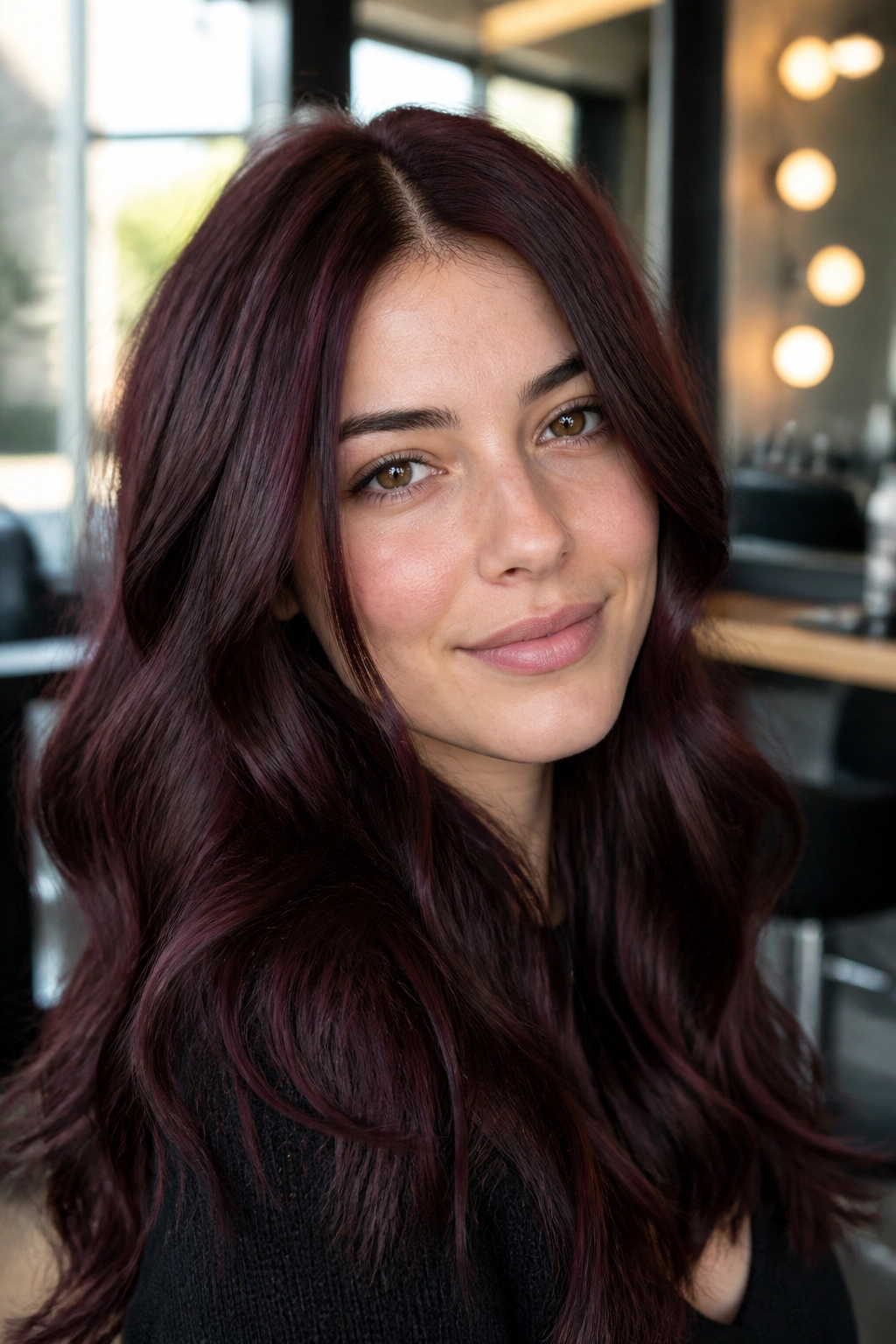
This is the shade I’d reach for first on cool skin. Blue-red burgundy sits closer to blackberry and red wine than to cherry candy, so it keeps a brunette base from going brassy or too loud.
On a level 4 to 6 brown, it reads as a cool stain rather than a flat red overlay. That’s the sweet spot. You still look brunette, but the hair picks up a violet shine when the light catches it.
If you want a shade that works with silver jewelry, rosy lips, and cool-toned makeup, start here. It’s polished without feeling stiff. And it grows out with a lot less drama than brighter burgundy tones.
2. Plum Brown Balayage
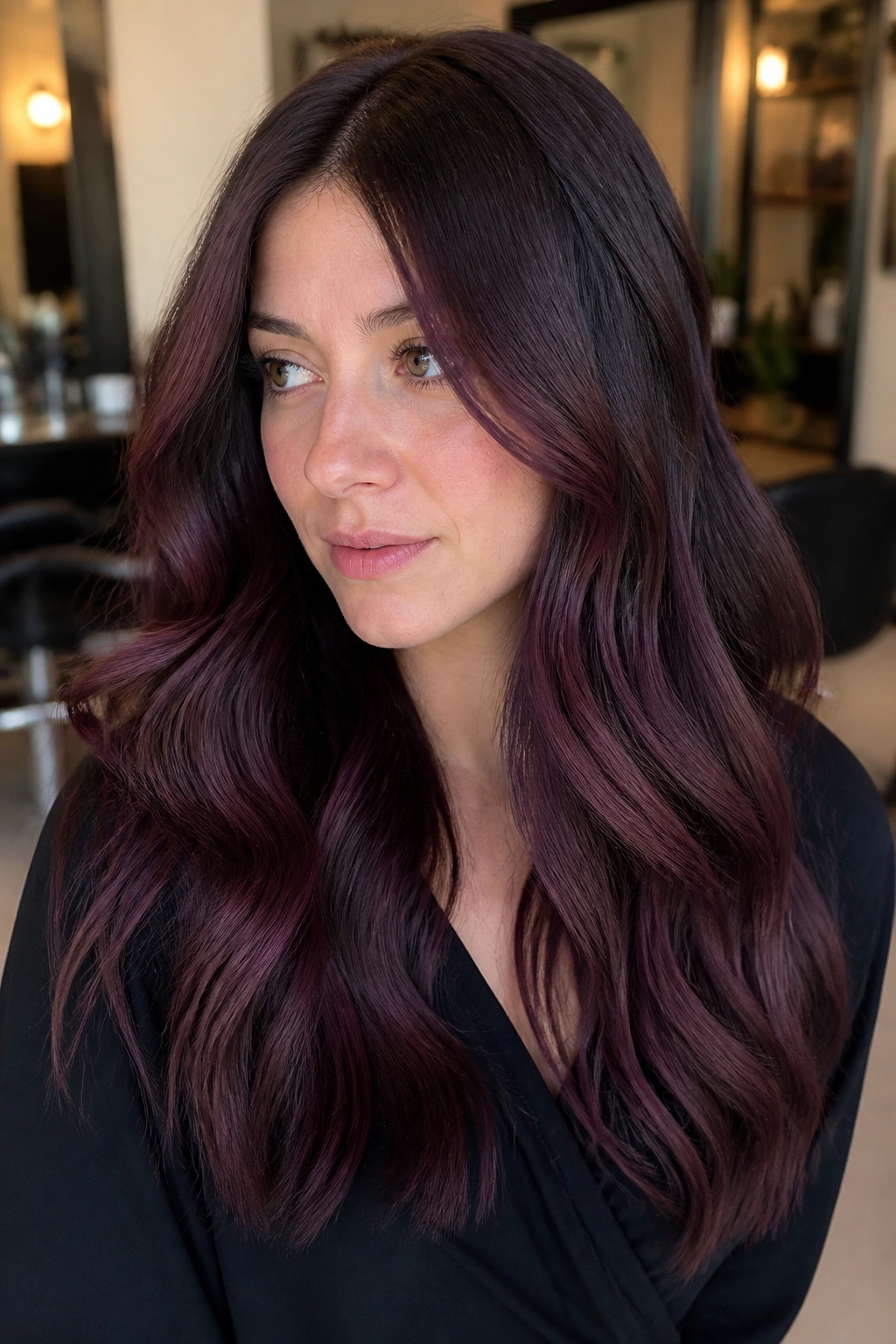
Why does plum brown balayage work so well on cool skin? Because the violet cast softens pink undertones instead of fighting them.
Why It Flatters Cool Skin
Plum doesn’t shout red. It sits in that in-between space where brown, berry, and wine all blur together. On mid-brown hair, the hand-painted pieces look soft near the face and deeper through the back, which keeps the whole style from looking stripey.
- Ask for 1/4- to 1/2-inch painted ribbons.
- Keep the root one shade deeper for contrast.
- Finish with a cool-toned gloss every 6 to 8 weeks.
Best on: layered cuts, loose waves, and hair that needs movement more than brightness.
3. Black Cherry Gloss on Espresso Brown
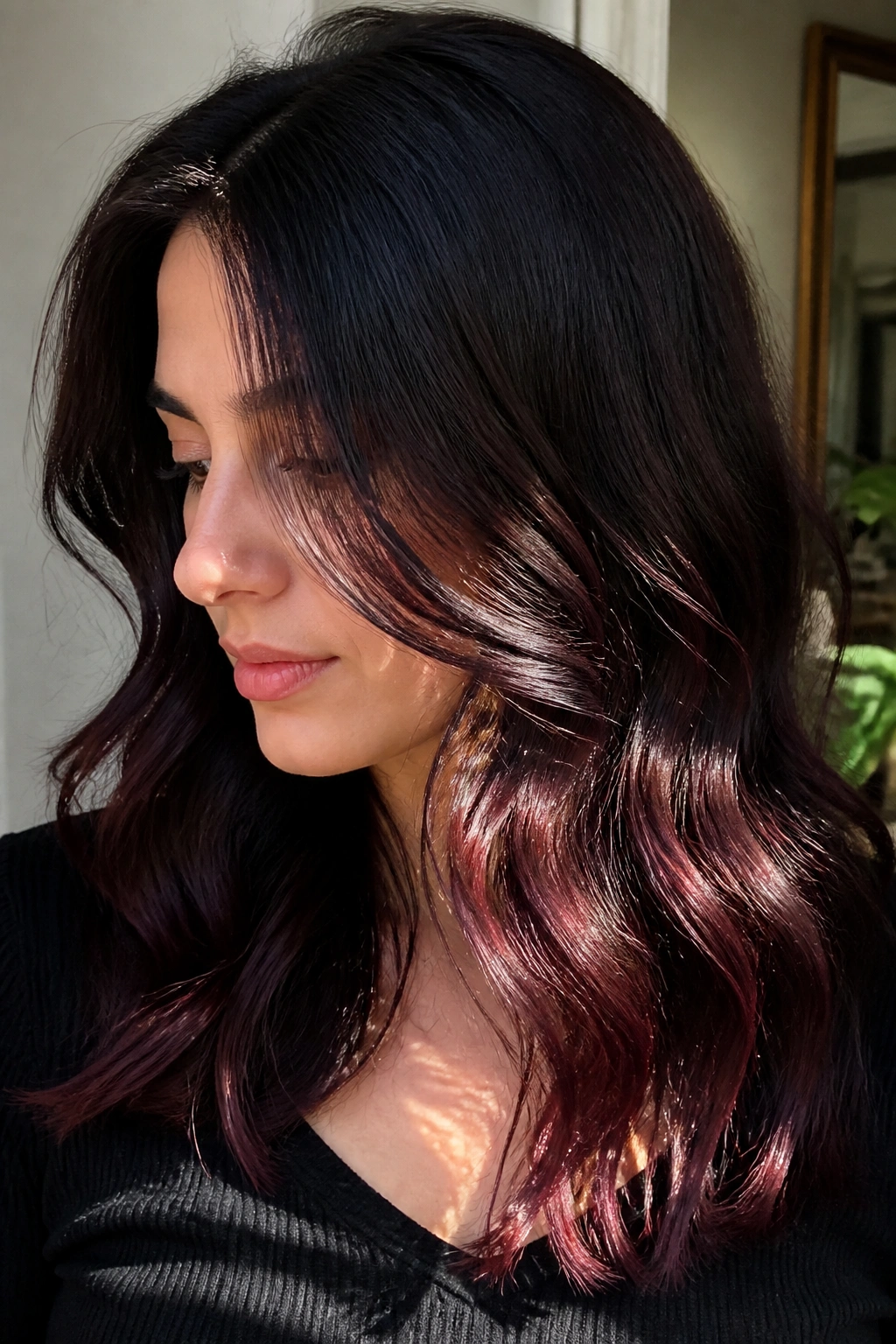
If your hair is already dark, black cherry gloss is an easy place to start. It does not scream for attention. It whispers first, then shows up in sunlight with that blue-red sheen that cool skin tends to like.
This is the shade for someone who wants change without a hard line at the roots. Indoors, it can look almost black. Outdoors, the cherry note wakes up around the ends and crown.
- Works best on level 3 to 5 brunettes.
- Ask for a gloss or glaze, not a heavy lift.
- Expect the brightest red to show near the ends first.
A little shine serum helps, but don’t drench it. You want reflection, not slip.
4. Smoky Mahogany Lob
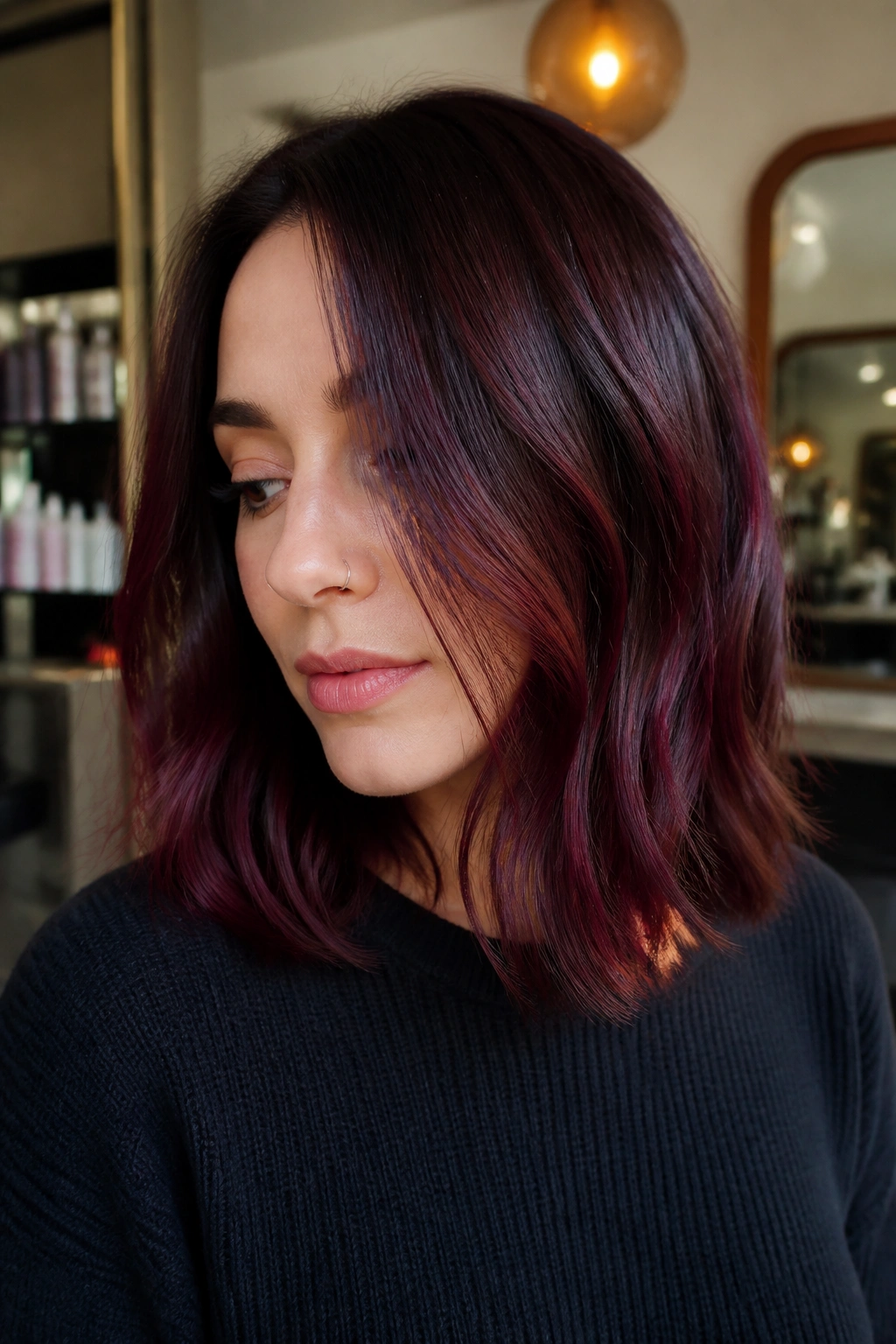
Warm mahogany can drift orange on cool skin. Smoky mahogany fixes that by pulling the red down with brown and a faint plum cast.
On a lob, the shade looks crisp because the cut stops at a length that shows movement. That matters. Very long hair can swallow this color, but a collarbone cut gives it shape.
Keep the tone muted. If your colorist starts talking about copper, that’s the wrong lane. You want a mahogany that feels like dried rose petals and dark wood, not cinnamon toast.
5. Cherry Cola Melt
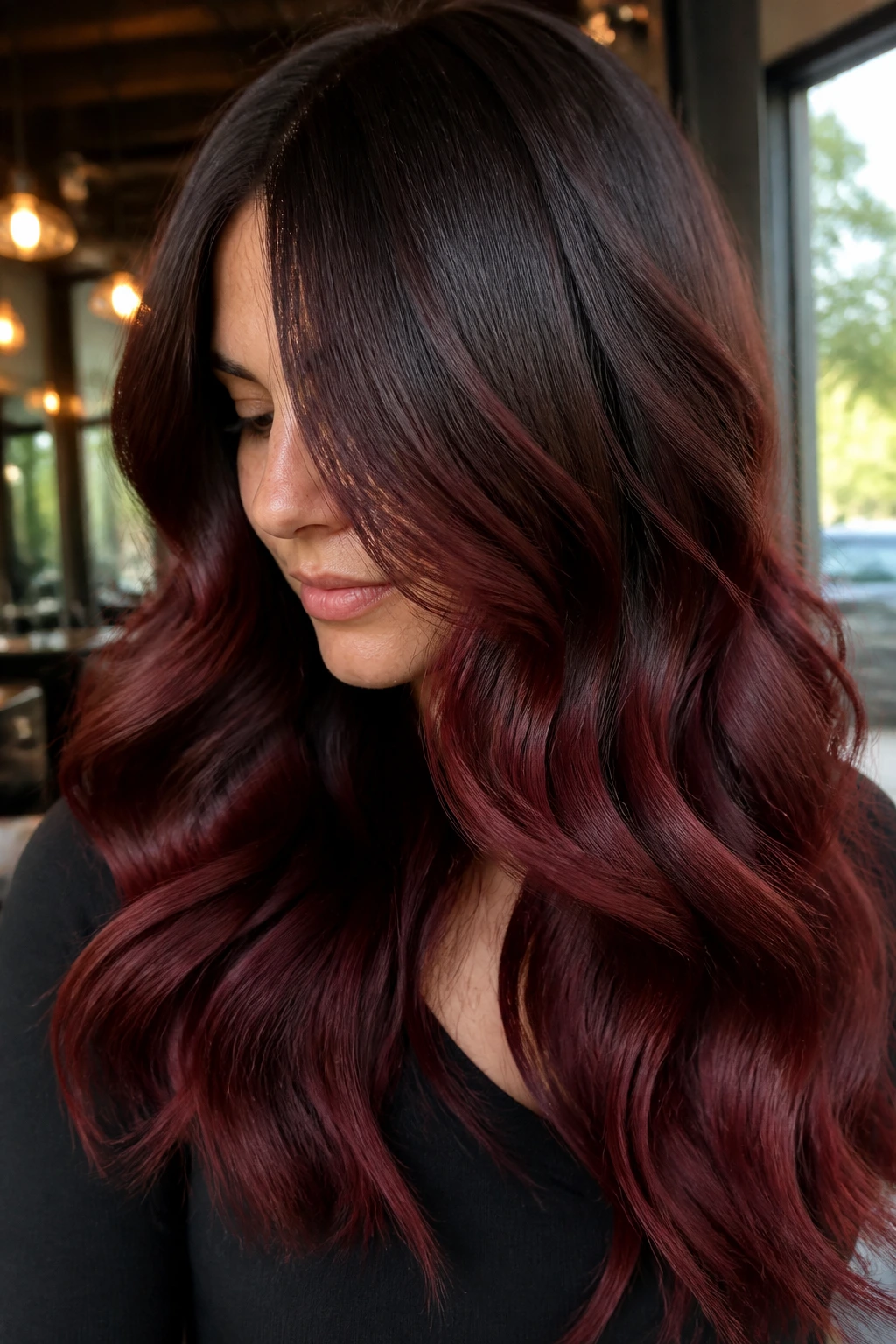
Cherry cola hair is one of those shades that sounds playful and ends up looking expensive in the right hands. The root stays brunette, then the mids and ends melt into a burgundy-red mix that feels soft instead of blocky.
The best version has a slow fade. No harsh line. No chunky red panels. Just a color shift that moves like cola turning darker in a glass.
- Ask for a shadow root at the top.
- Keep the burgundy heavier through the middle lengths.
- Use a demi-permanent glaze if you want less upkeep.
A wavy blowout helps the transition read clearly. Straight hair can make the melt look more obvious, so styling does some of the work here.
6. Merlot Money Piece
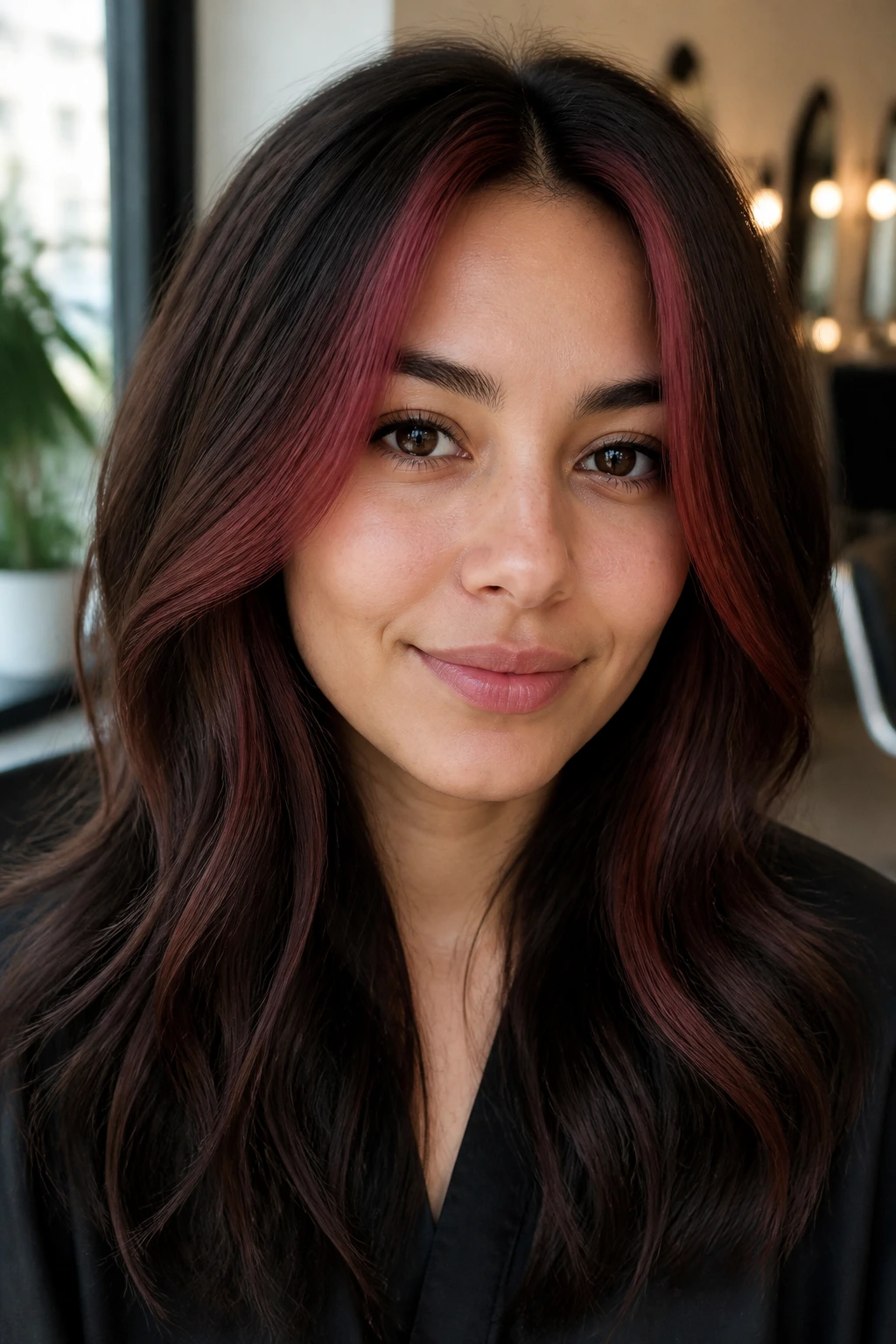
A merlot money piece gives cool skin a burst of color without committing the whole head to burgundy. It’s the kind of look that frames the face fast.
The front sections sit a half-shade brighter than the rest, which means the eye goes straight there. That can be a good thing if your hair is long and you want to break up a heavy brown base.
Ask for two thin face-framing pieces and keep the rest of the hair a darker chocolate or mocha. The contrast should be enough to notice, not enough to look stripy. This one also plays nicely with center parts, which is handy if you live in a middle-part era and don’t feel like fighting it.
7. Cool Chestnut with Burgundy Ribbons
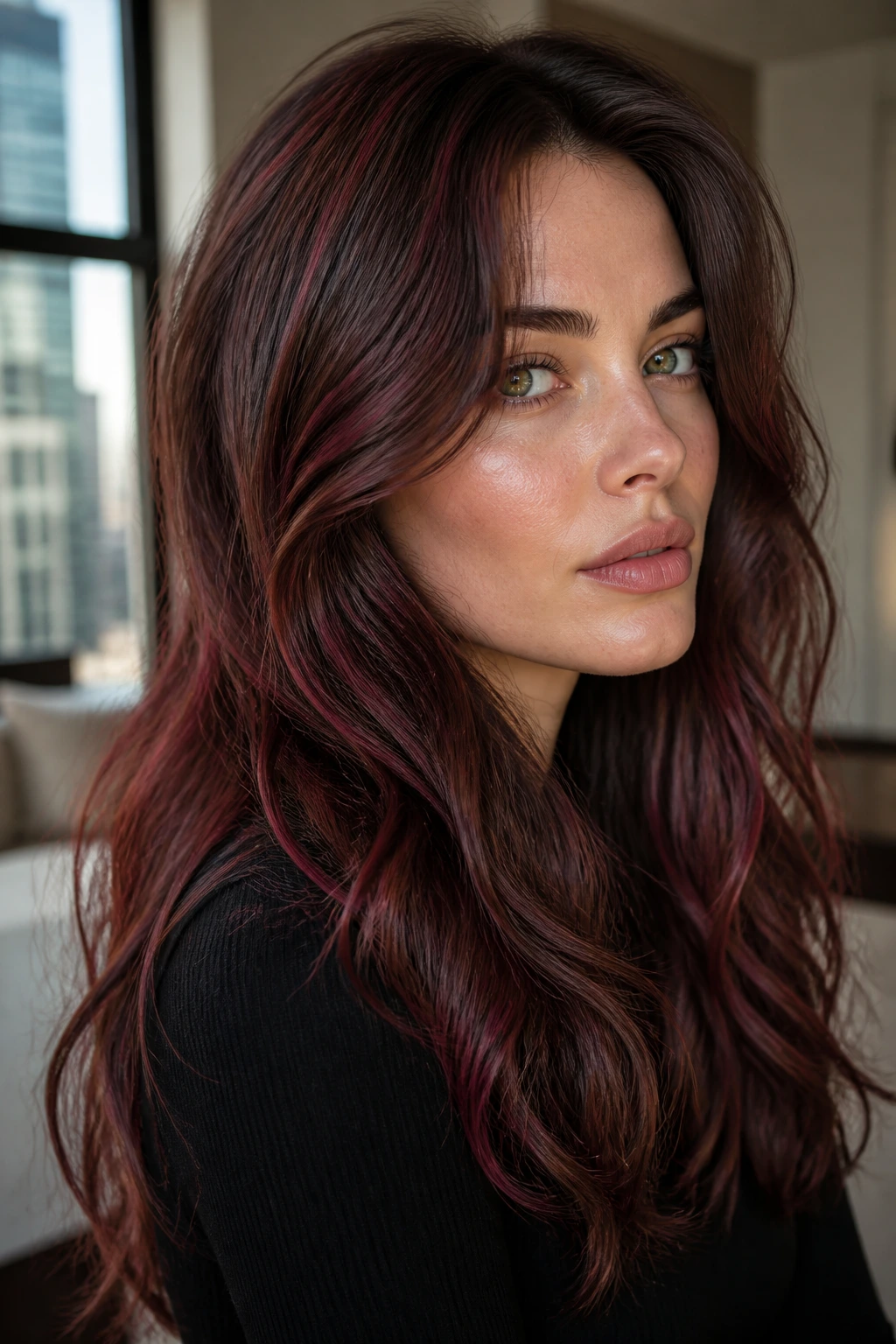
Can a subtle burgundy look interesting? Absolutely. Chestnut with burgundy ribbons is proof.
The Softest Way to Wear the Trend
This version keeps most of the brown intact and adds fine burgundy threads through the mids and ends. The ribbons show up when the hair moves, which makes the whole style feel more expensive than a single flat color.
If your skin is cool and your wardrobe leans black, gray, navy, or white, this is an easy match. It won’t compete with your clothes.
How to Ask for It
- Keep the base around a cool chestnut brown.
- Add narrow burgundy ribbons, not wide blocks.
- Focus the extra color on the surface layers.
It’s quiet. That’s the point.
8. Blackberry Brunette Bob
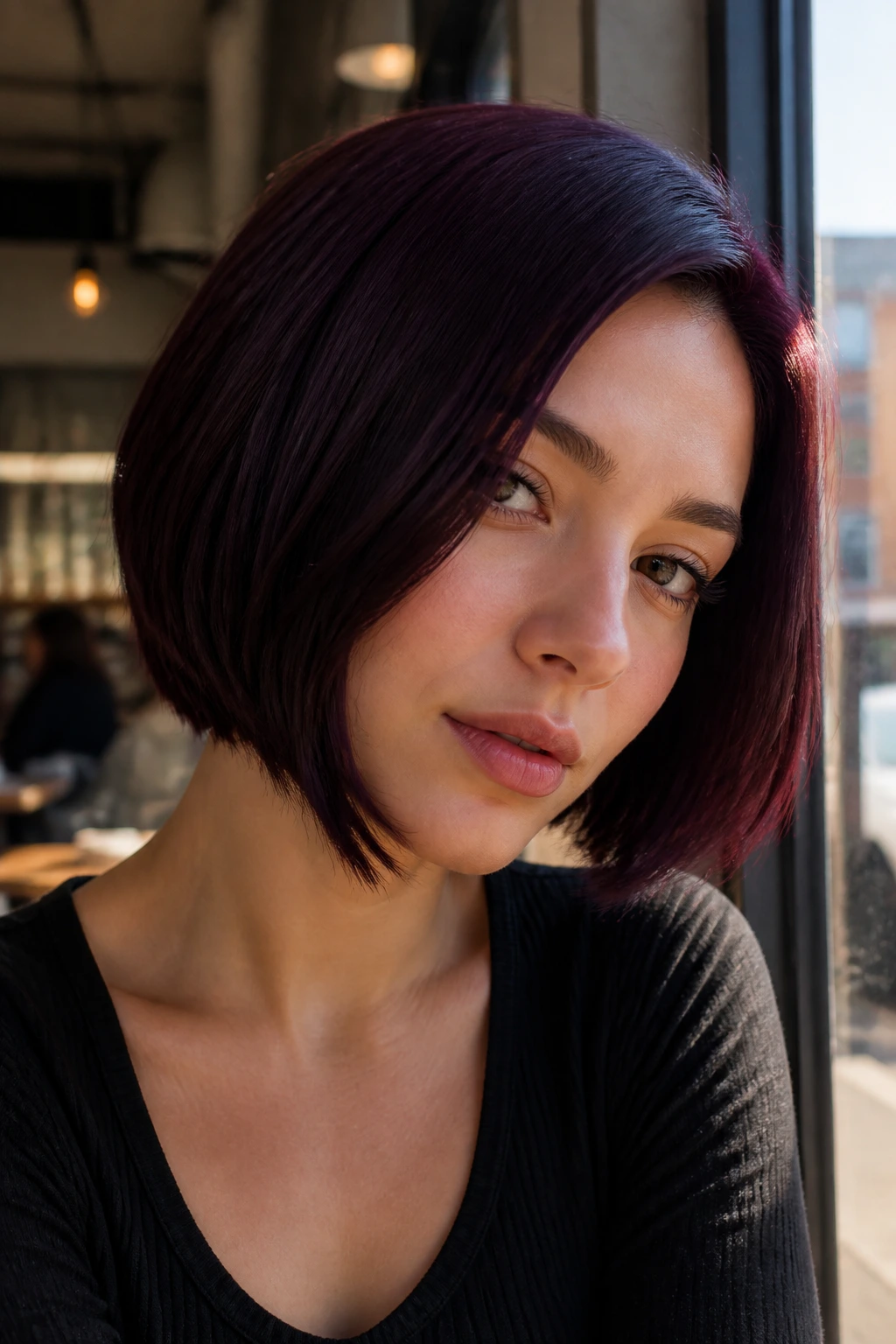
A bob can take darker burgundy better than people expect. Short hair makes the color feel sharper, and blackberry brunette is one of the cleanest ways to do it.
The shade sits between deep violet and brown-black, so it reads polished instead of flashy. On a blunt bob, the ends look almost inky. On a softer bob, the burgundy note shows up more clearly around the curve of the jaw.
Short hair loves saturation. Don’t shy away from it. If anything, the compact shape keeps the shade from spreading too far and getting mushy.
9. Wine Shadow Root on Medium Brown
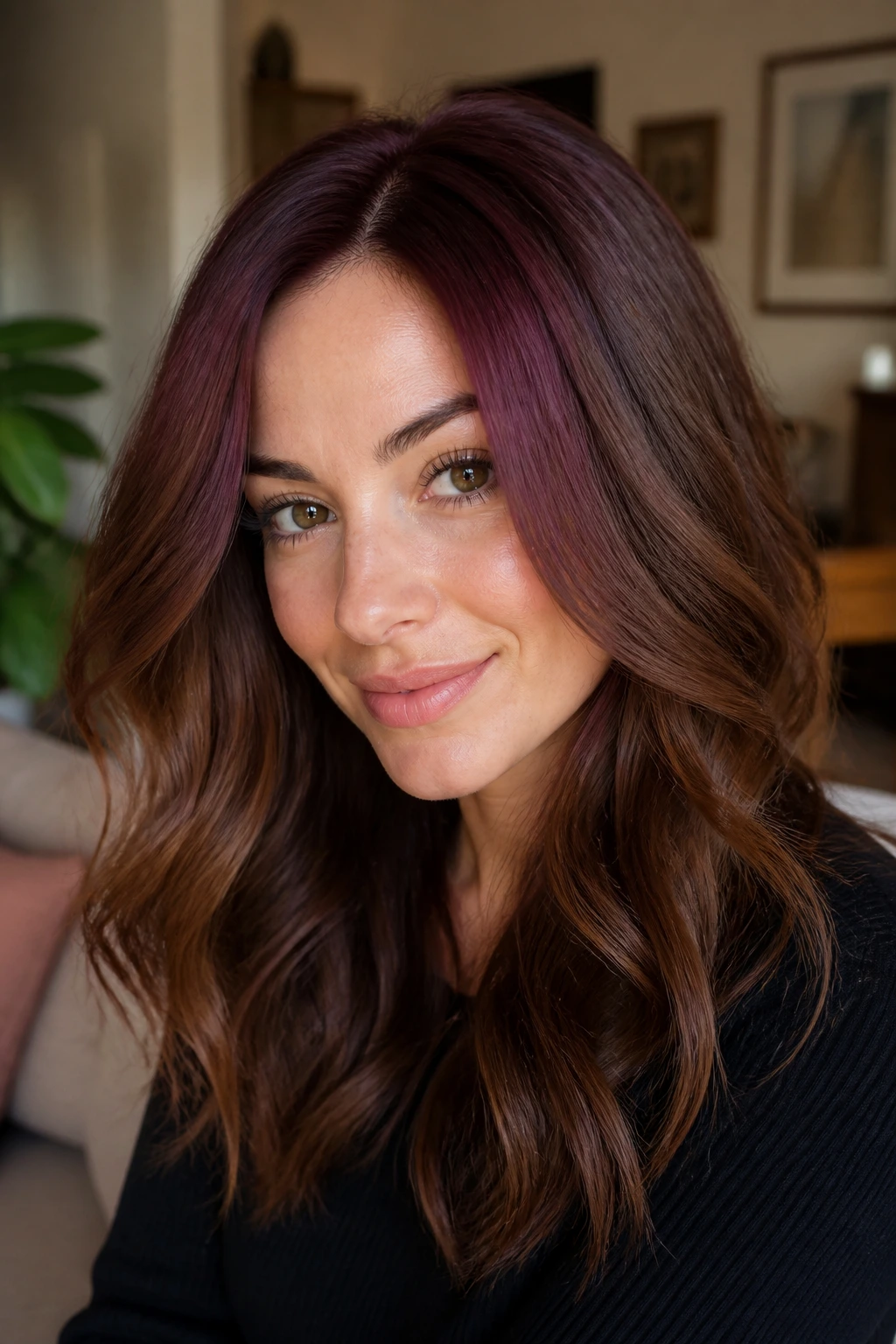
If you want burgundy hair that grows out without a hard line, a wine shadow root is smart. The roots stay deeper, then the wine tone opens up through the mids.
That little bit of depth near the scalp matters more than people think. It keeps the color grounded and gives the lighter burgundy sections somewhere to start. On cool skin, the effect feels clean rather than warm.
This is a good pick if you don’t want to be in the salon every few weeks. The darker root buys you time. And because the color is richer near the top, regrowth blends in instead of shouting.
10. Cranberry Peekaboo Panels
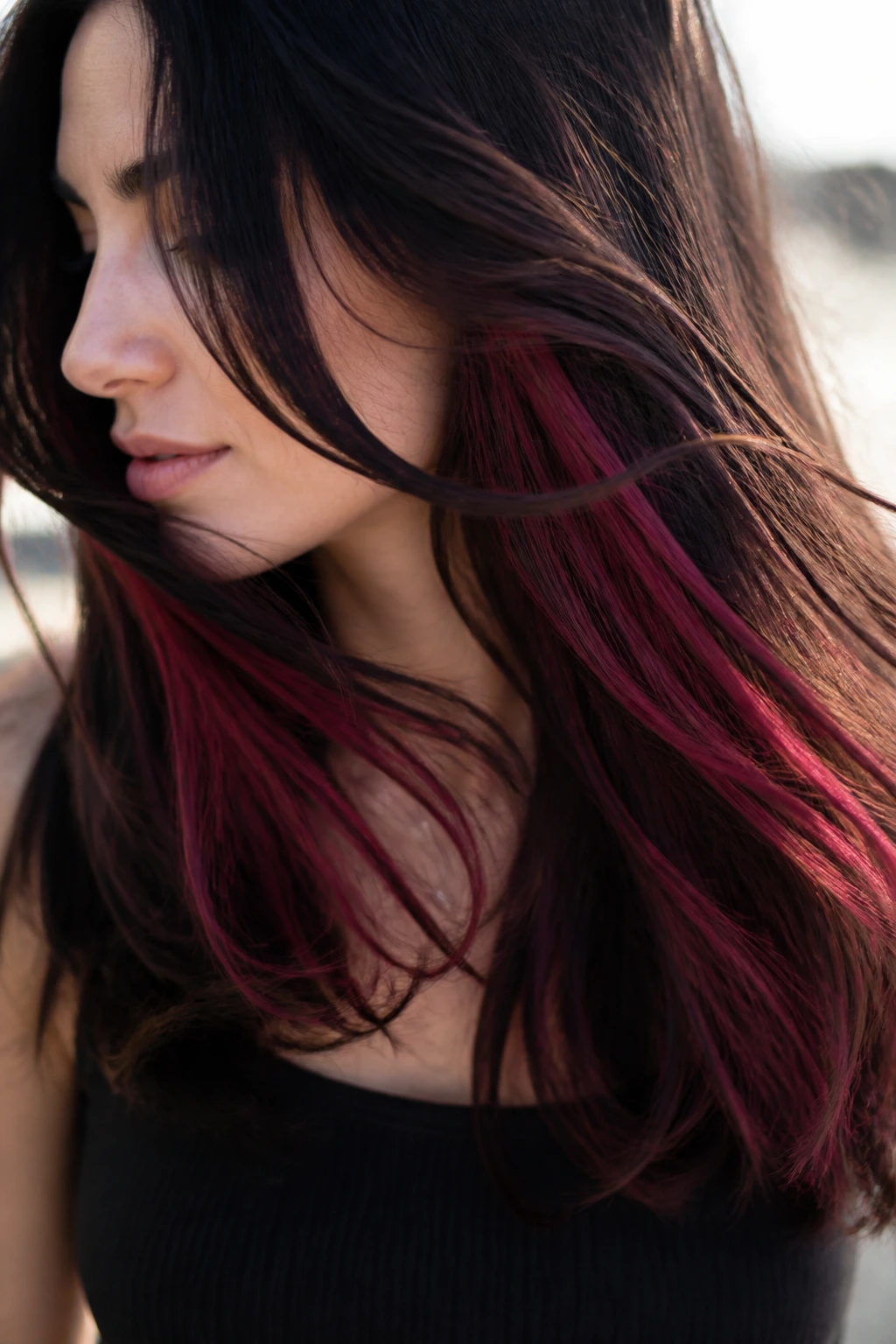
Peekaboo color is for anyone who wants a hidden surprise. Cranberry panels live under the top layer, so they only flash when the hair swings or gets tucked behind the ear.
That makes the color feel playful without taking over the whole head. On cool skin, cranberry works better than orangey red because it keeps the face from getting too warm.
- Put the panels under the top two inches of hair.
- Keep them narrow if your cut is short.
- Let the top layer stay dark brown or espresso.
This look is fun with braids, curls, and half-up styles. It’s also one of the easiest ways to test burgundy before committing fully.
11. Mulled Wine Balayage
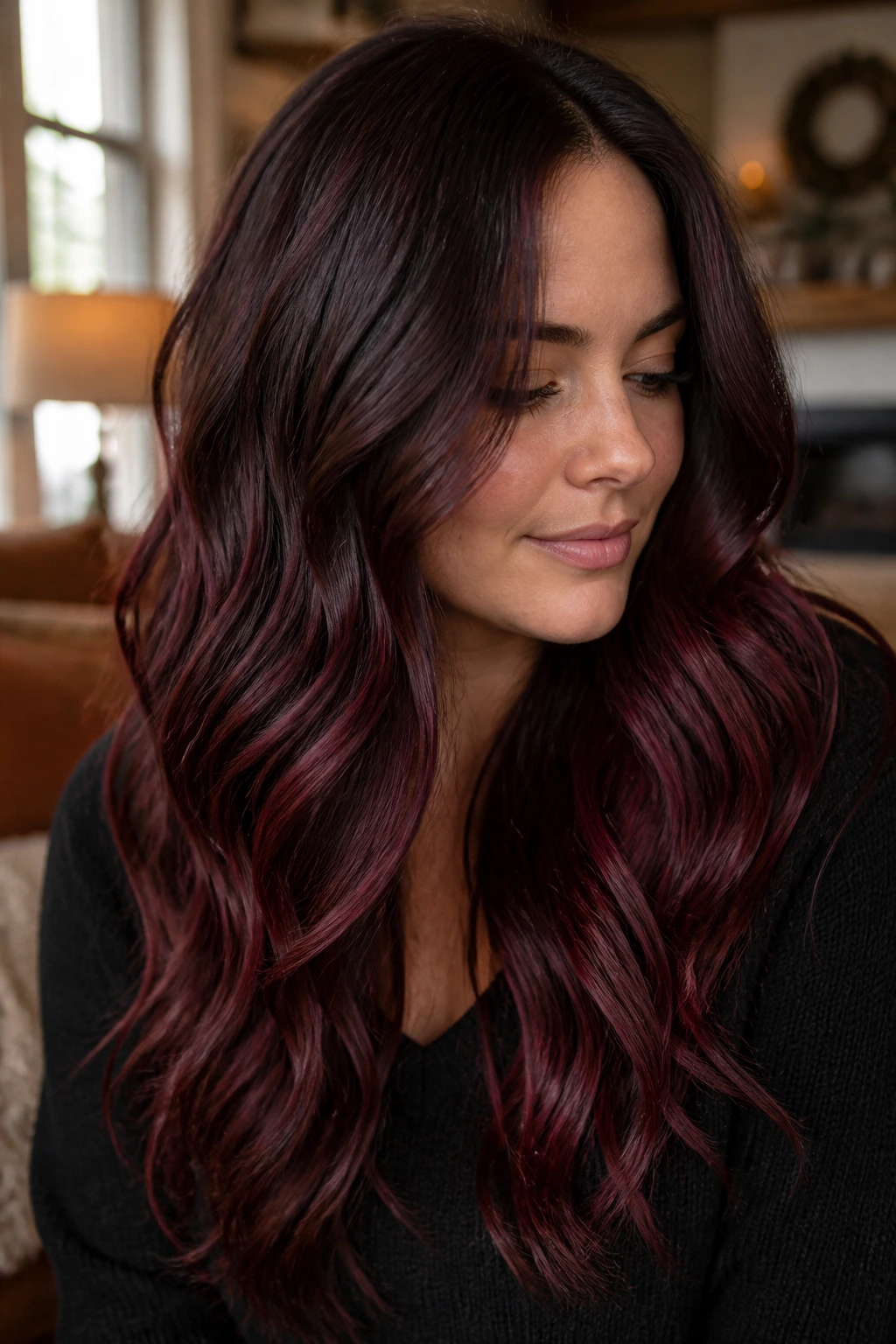
Mulled wine balayage has a softer feel than plum or berry hair. It’s deeper, darker, and a little moodier, which can be a nice shift if you want burgundy without a bright red punch.
The color works especially well on long waves because the hand-painted pieces blend instead of sitting in separate bands. You get a brown base, then wine-colored movement through the lengths. That’s the whole appeal.
On very straight hair, this shade can look more controlled. On wavy or curly hair, it feels fuller and more dimensional. Either way, the best version keeps the red-violet note cool enough that it never tips orange.
12. Plum-Toned Curtain Bangs
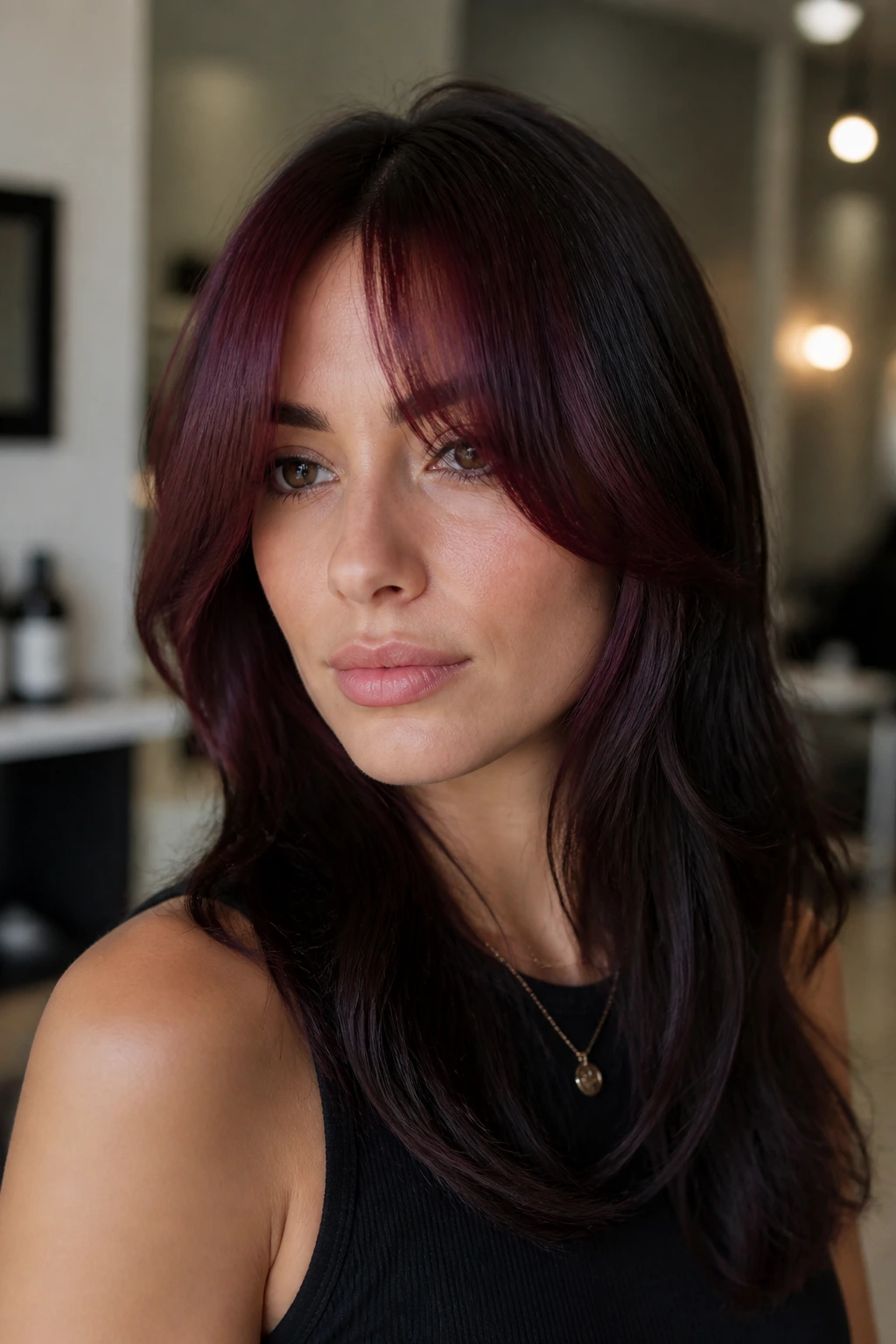
Curtain bangs can carry a surprising amount of color. A plum tone at the fringe gives cool skin a little frame without changing the whole head.
Why the Fringe Matters
The front section hits the face first. That’s why even a small color shift can change the whole mood of a cut. Plum around the bangs softens the brow area and makes the eyes look a touch clearer, especially if the rest of the hair is a darker brown.
- Keep the bangs slightly lighter than the base.
- Blend the color into the cheek-length pieces.
- Style with a round brush so the tone shows at the bend.
This works best when the rest of the hair stays quiet. Let the fringe do the talking.
13. Cabernet Brown Waves
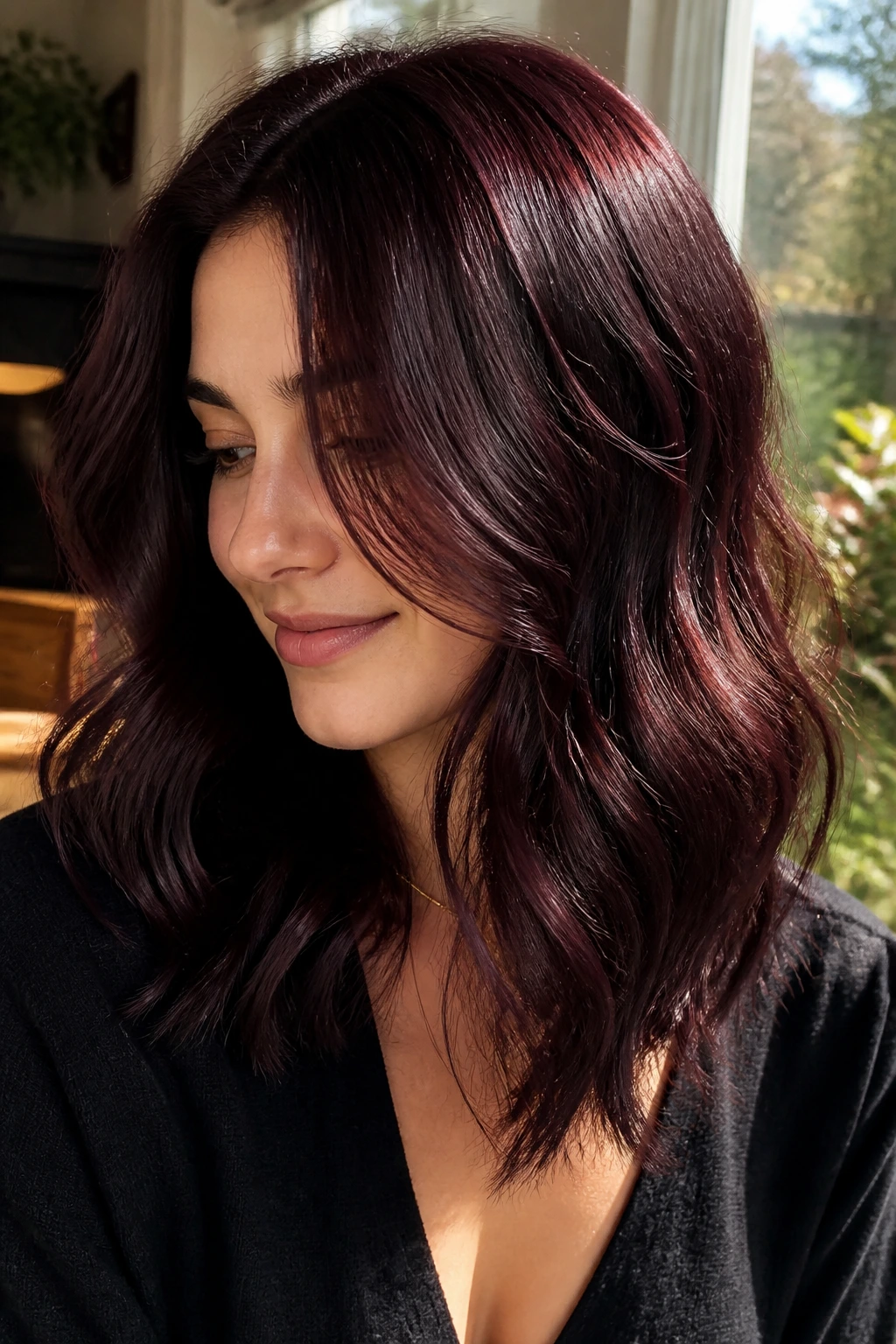
Cabernet brown is one of those shades that looks expensive in waves because the color keeps changing as the hair moves. One second it reads deep chocolate. The next, you catch the red-violet note and realize there’s a lot more going on.
That shifting effect is exactly why it suits cool skin. The red never sits flat on top. It stays tucked into the brown base, where it looks richer and less brash.
This shade likes medium to long cuts, especially loose layers. The movement breaks up the color and keeps it from feeling heavy. If you wear your hair curled often, cabernet is one of the easier burgundy browns to live with.
14. Rosewood Burgundy Melt
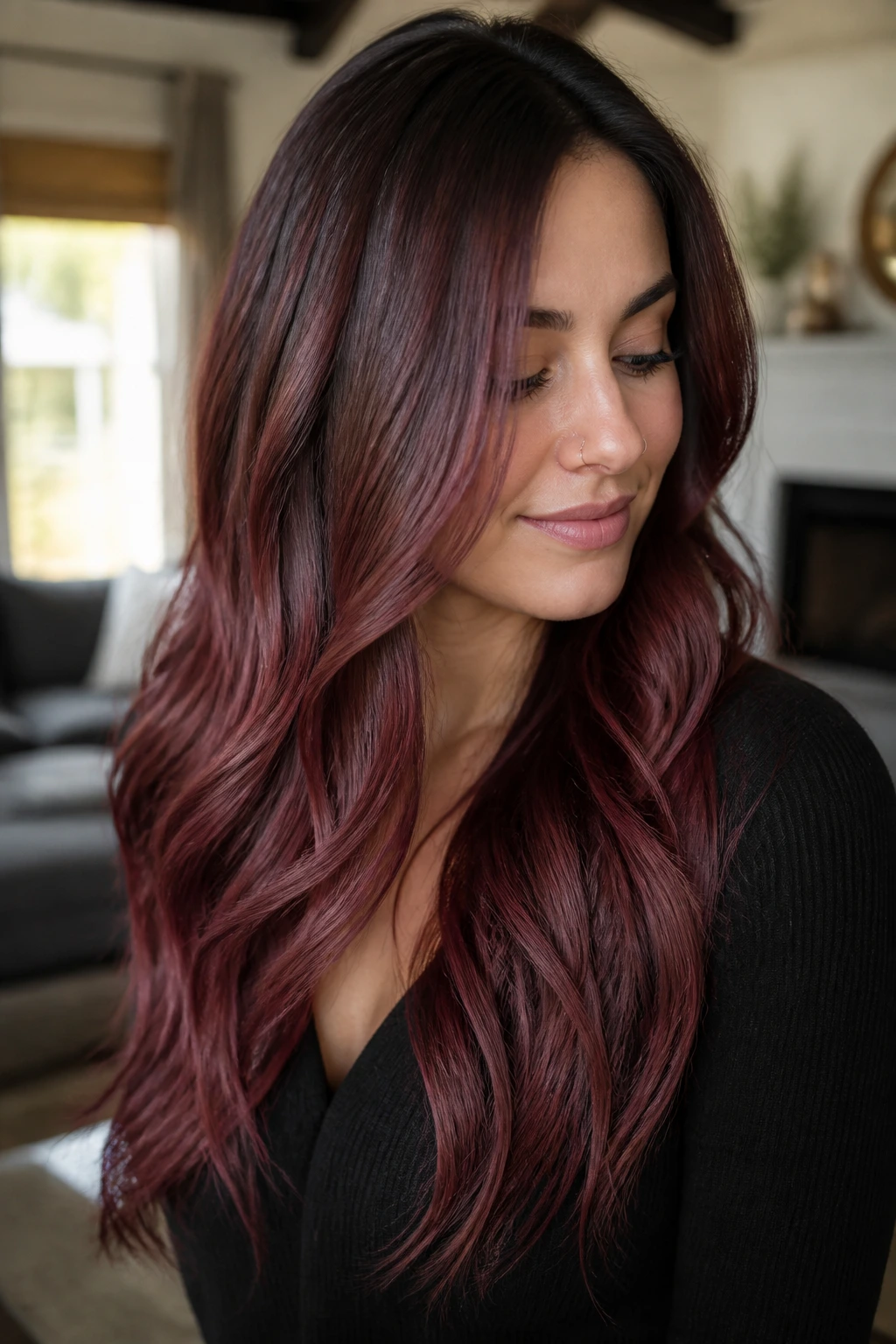
Rosewood sits between pink-brown and wine. That makes it one of the gentler burgundy options for cool skin, especially if you want something softer than black cherry.
A melt through the mids and ends keeps the color from feeling like a costume. The brown root gives you structure, and the rosewood lengths give you warmth without actual warmth, if that makes sense. It’s more blush-wine than copper-red.
- Keep the root at least one level deeper than the ends.
- Ask for a translucent finish, not an opaque one.
- Use curl cream or mousse if you want the melt to show in movement.
This is a pretty shade, but not fussy. That matters.
15. Midnight Burgundy Pixie
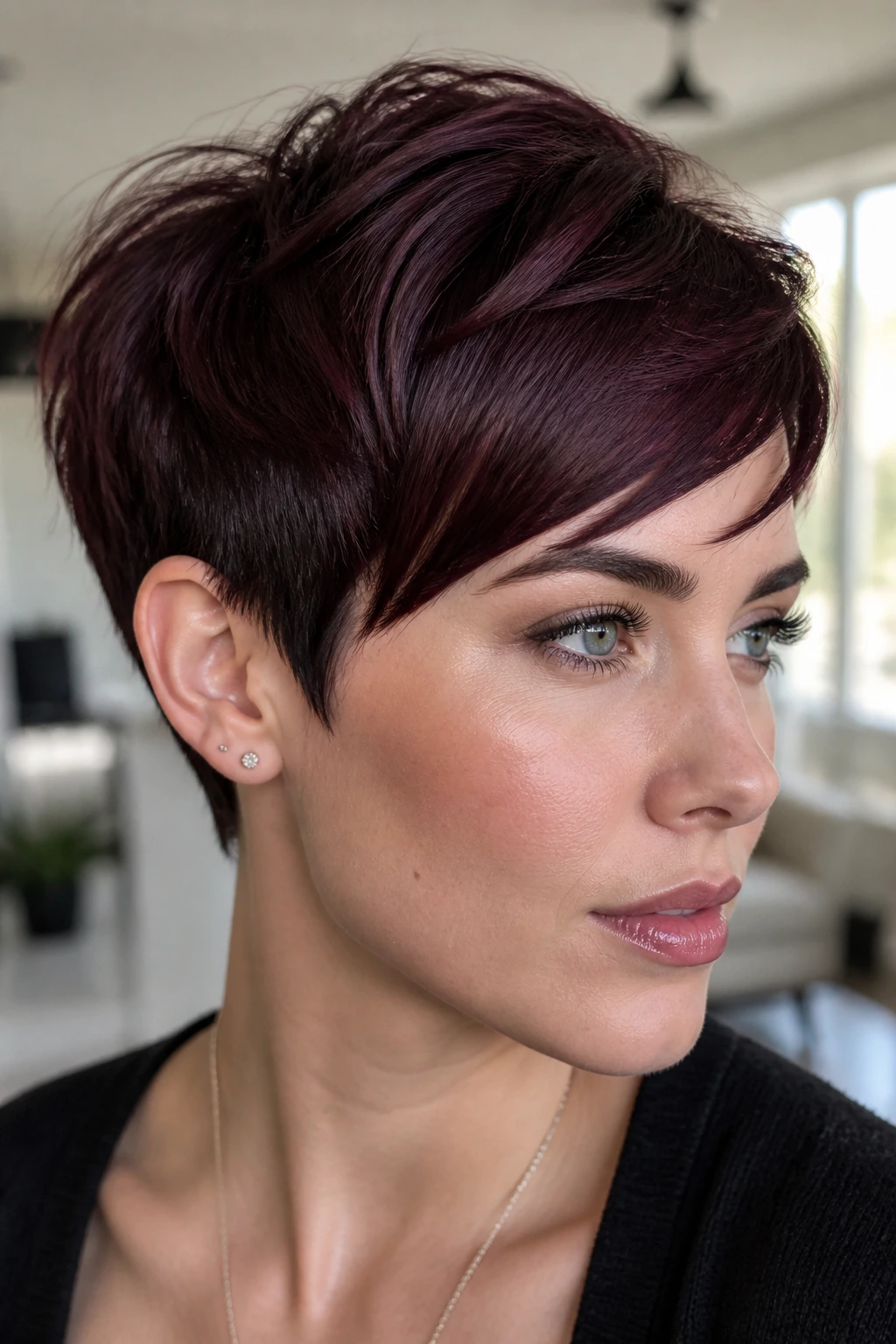
Short cuts can carry deep burgundy beautifully because there’s nowhere for the color to hide. A pixie with midnight burgundy tones looks sharp, almost tailored.
The depth is what makes it work. If the shade were lighter, it could look patchy on such a small canvas. Midnight burgundy gives the crop enough density to feel intentional from every angle.
One-sentence truth: a pixie can wear more color than a long cut.
If your hair is naturally dark, this is also a practical choice. The color can be done as a gloss or a subtle tint, which means less damage and less upkeep. Clean lines, cool tone, done.
16. Berry Brown Shag
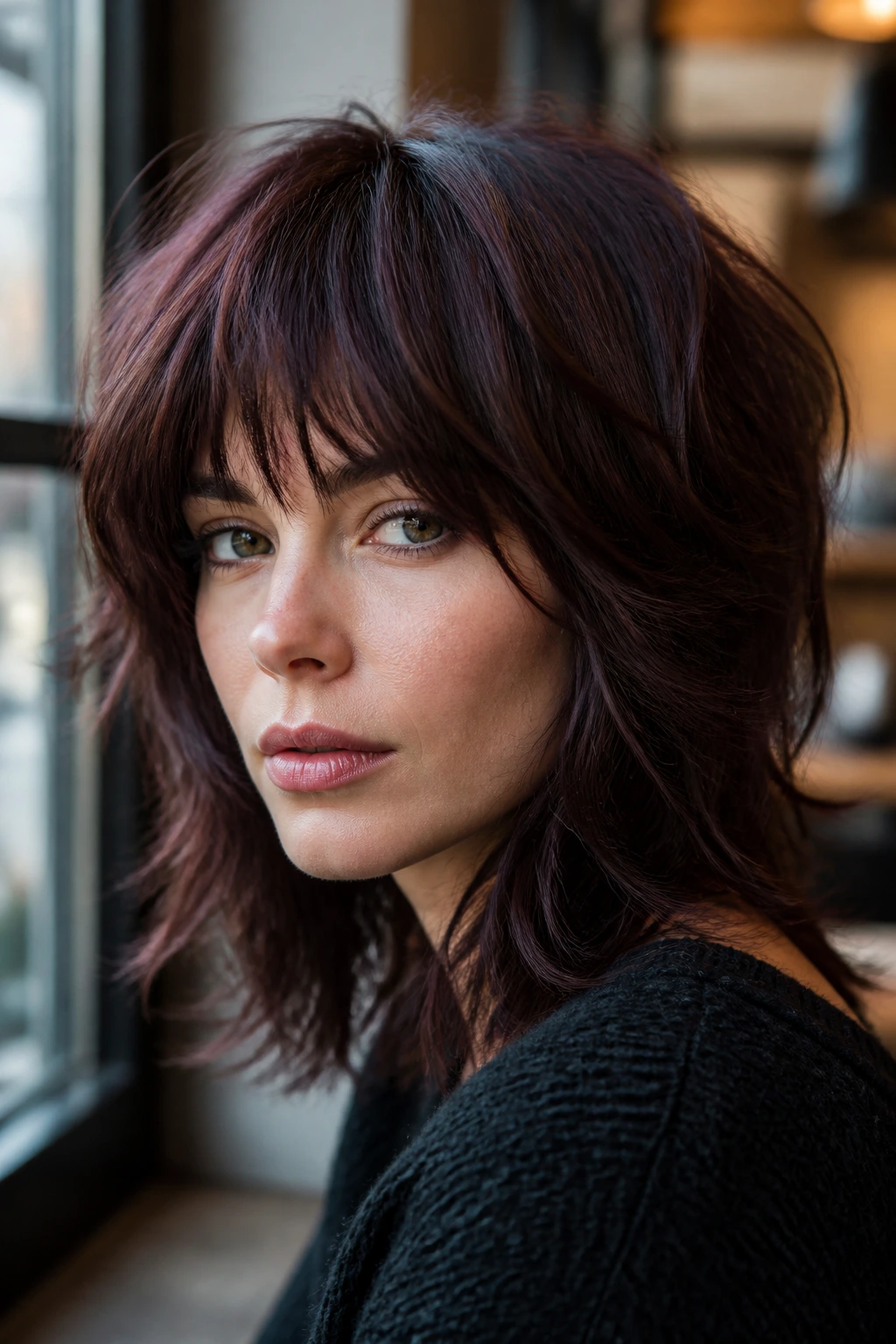
A shag loves texture, and berry brown takes advantage of that. The layers catch the lighter burgundy notes, while the deeper brown pieces keep the cut from looking fluffy.
How to Style It
The shag needs movement or it loses half its charm. A little texture spray at the roots and a fast scrunch through the ends is usually enough.
- Blow-dry the bangs forward first.
- Leave the mids a little rough.
- Let the ends stay piecey instead of polished.
Berry brown is especially good if your cool skin tends to go pink in strong red light. The berry note softens the effect. It feels casual, which is nice, because not every burgundy has to behave like eveningwear.
17. Cool Mahogany Curls
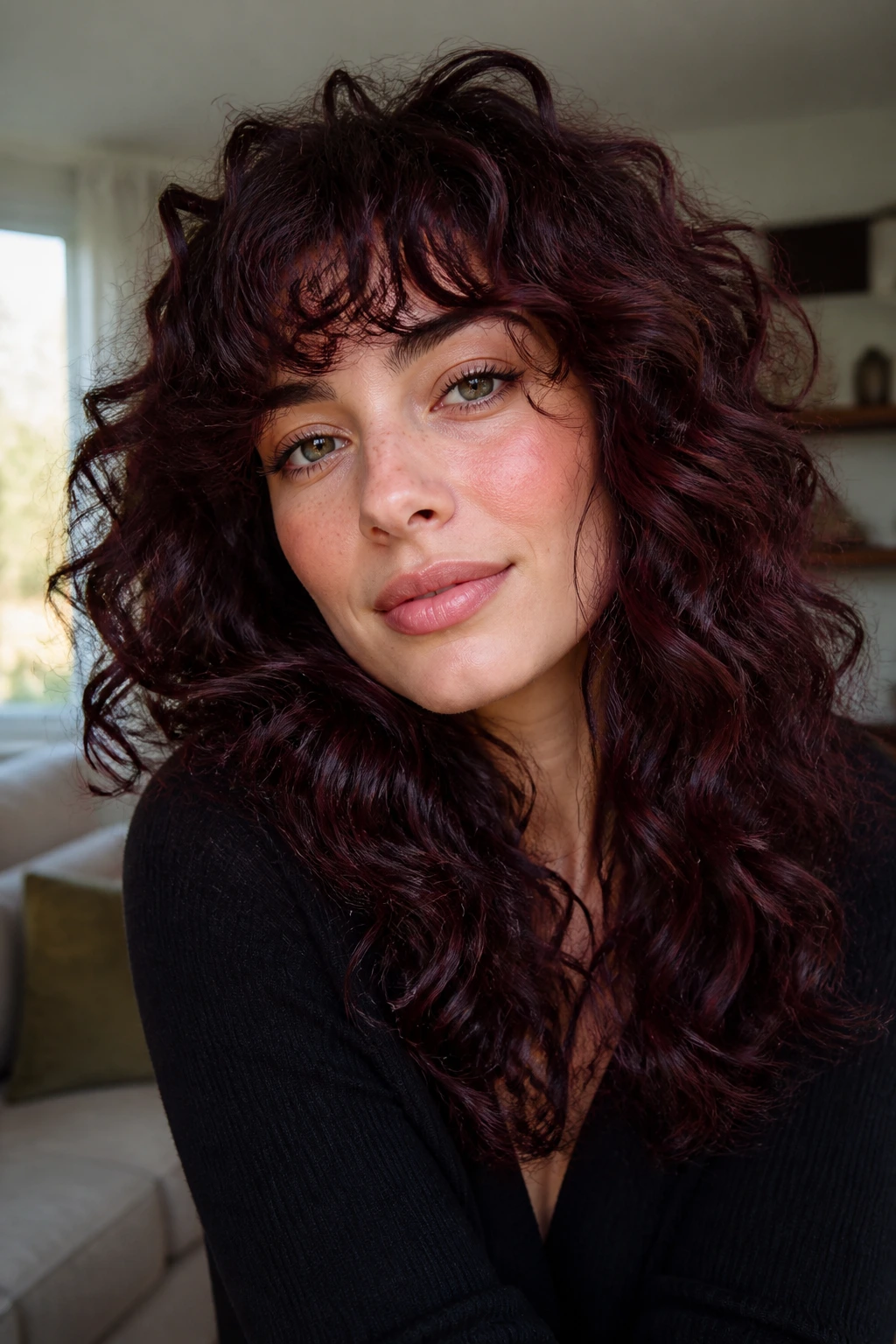
Curly hair can make mahogany feel softer and more dimensional, especially when the tone stays cool. On curls, the red-violet reflection appears at different angles, which keeps the color from going flat.
The trick is to stay away from warm mahogany. You want a cooler brown base with a red cast that leans wine, not rust. The curls will do the rest of the work.
This shade is good on coil patterns too, but the maintenance changes a bit. Curly hair likes moisture, and burgundy can fade faster if the routine is too harsh. Gentle shampoo, cooler rinses, and a satin bonnet at night help more than people admit.
18. Blackberry Balayage on Espresso Brown
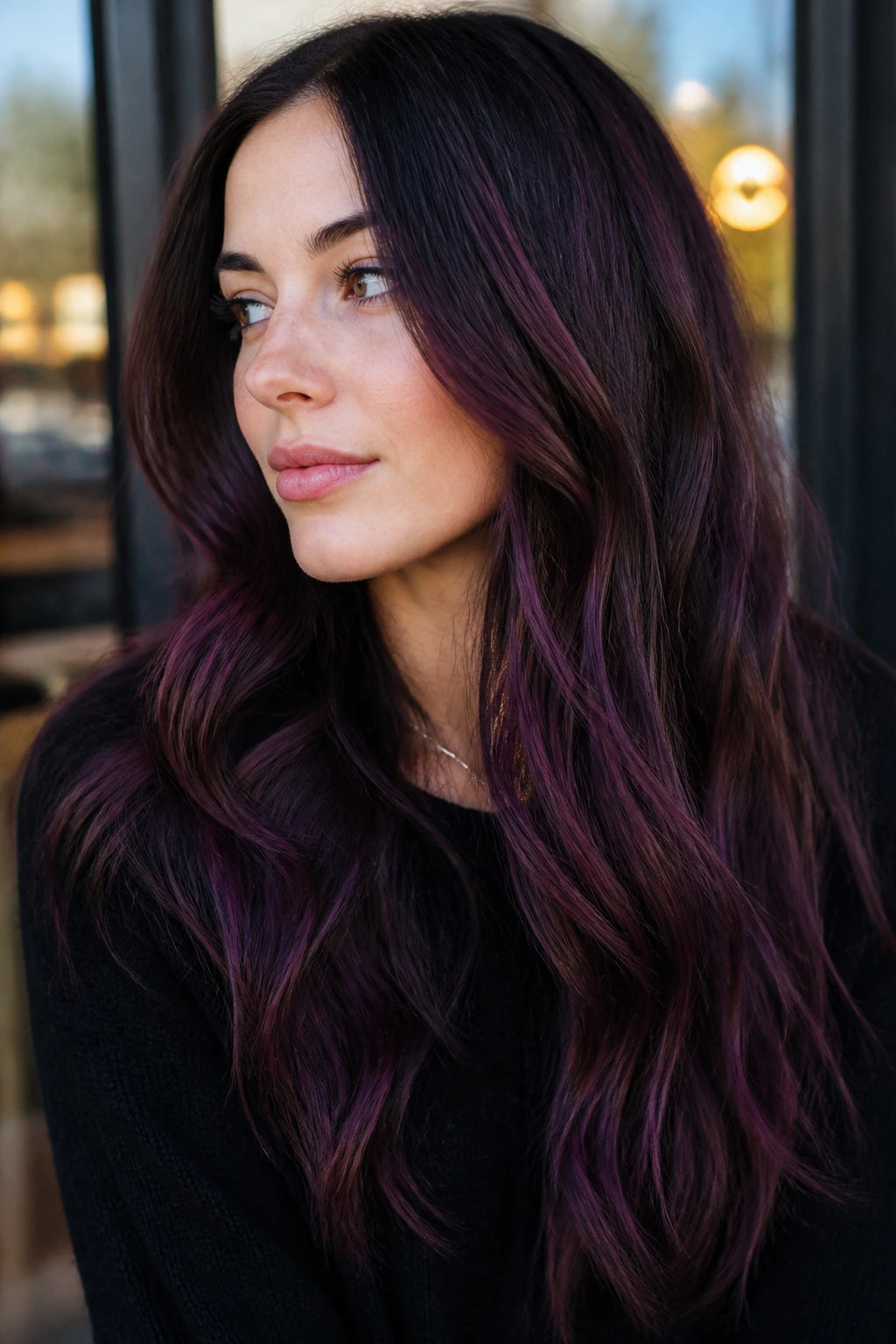
Why choose blackberry balayage instead of full color? Because the contrast can look cleaner on cool skin, especially if you want the dark brown to stay visible.
The blackberry pieces are painted mostly through the mids and ends, so the shade shows up where hair moves. That keeps the crown dark and gives the whole style a grounded feel.
- Ask for soft, feathery hand-painting.
- Keep a deeper espresso root.
- Style with a wide iron or loose bends.
This kind of balayage is nice if you wear your hair down a lot. It doesn’t disappear, but it also doesn’t demand a lot of your attention.
19. Deep Currant Root Shadow
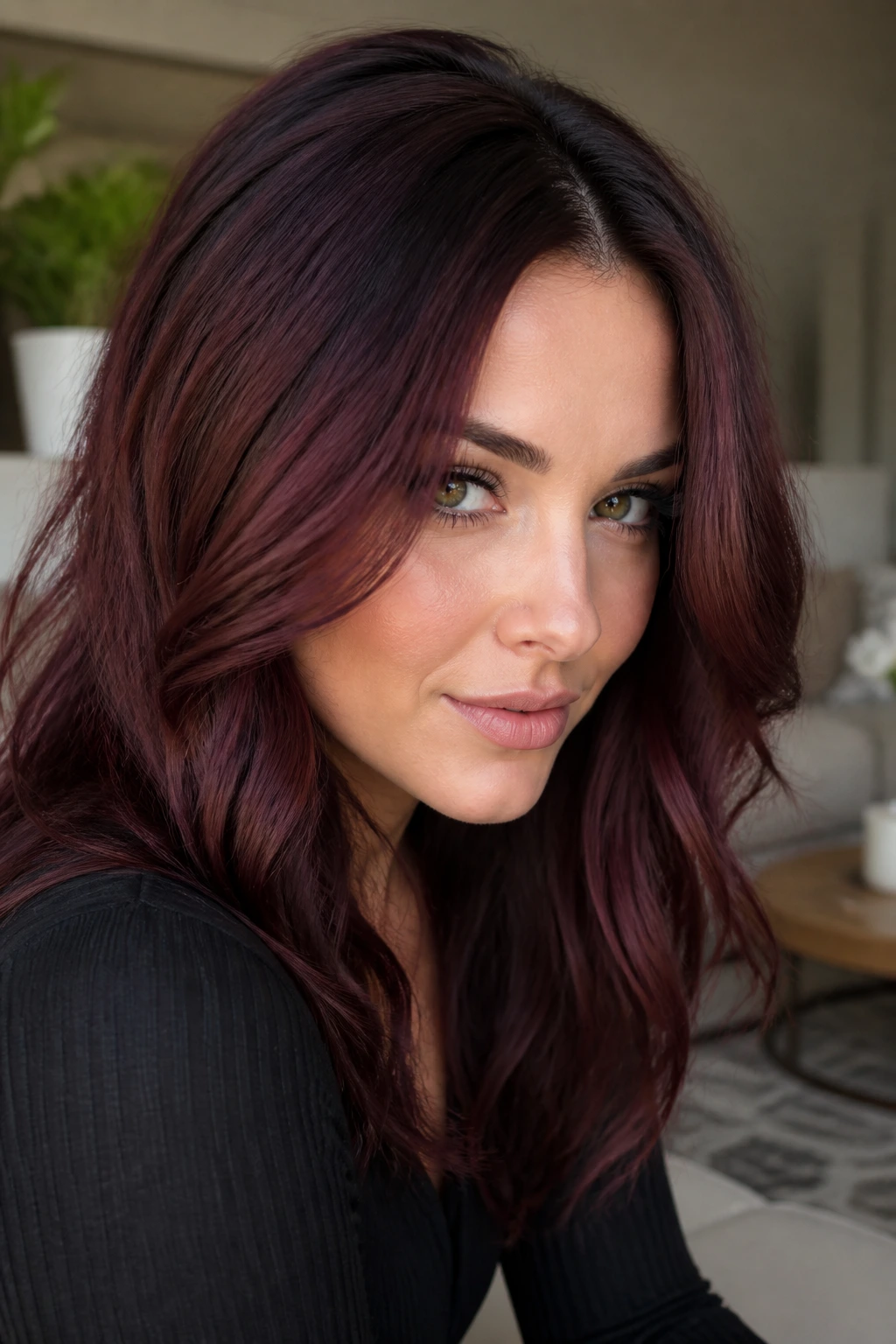
A deep currant root shadow is for someone who likes contrast but hates obvious regrowth. The root stays dark, almost coffee-brown, while the mids pick up a currant tone that sits in the burgundy family.
The color change is subtle at first. Then it opens up. That’s what makes it interesting on cool skin. You get depth near the scalp and color where the light lands.
This is one of the more wearable ideas if you work in a setting where bright hair would feel out of place. It still has personality. It just keeps it under control.
20. Soft Burgundy Face Frame
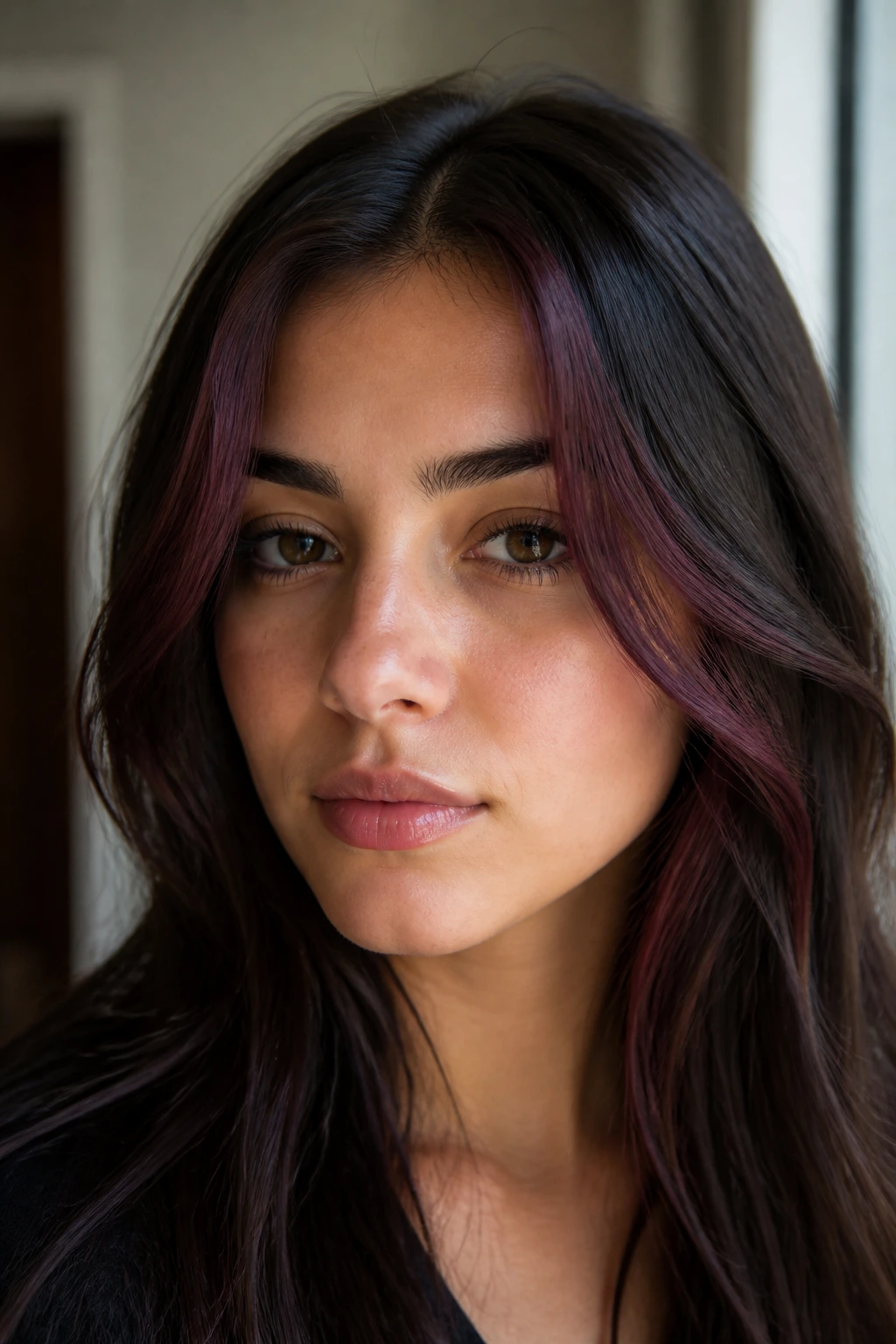
A soft burgundy face frame is the easiest way to dip into the look without changing everything. Two front sections, a cool brown base, and you’re done.
Where It Works Best
It works especially well if your skin tone is cool and a little pink, because the burgundy acts like a filter around the face. The rest of the hair can stay dark brown or chocolate, which keeps the contrast gentle.
What to Ask For
- Two money pieces, not wide highlights.
- A burgundy glaze with a violet base.
- Soft blending at the temples so the line doesn’t look harsh.
I like this option for people who get bored fast. It’s enough change to feel fresh, but not so much that you’ll panic the first time you see your reflection in bad lighting.
21. Smoked Mulberry Layers
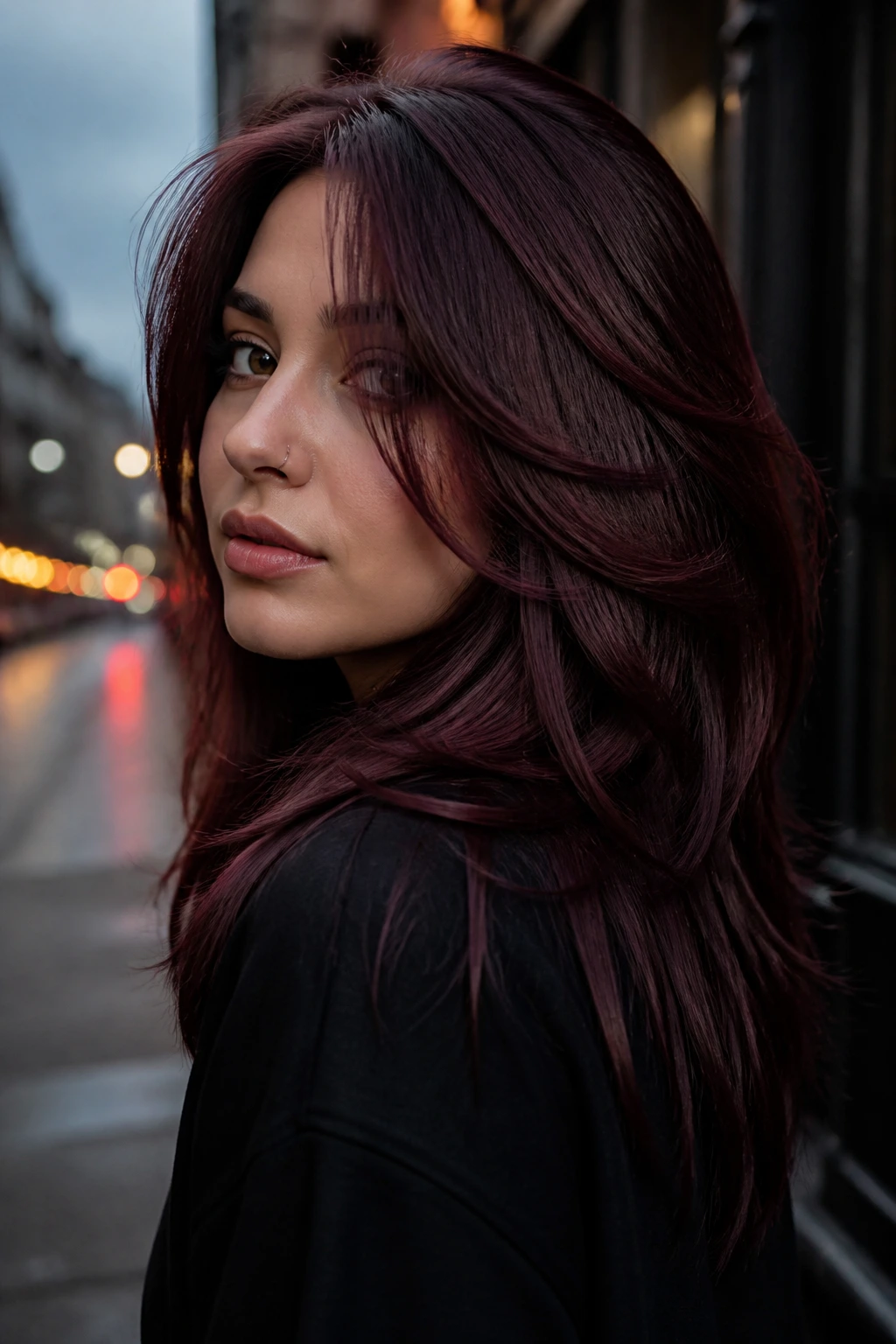
Smoked mulberry is one of the nicer choices if you want burgundy that feels deeper than berry and less red than wine. The “smoked” part matters. It keeps the shade from drifting bright.
On layered hair, the color lands in pockets. That makes it look fuller, especially if your natural hair is fine or medium density. The layers catch light differently, so the burgundy never sits in one flat sheet.
This is the shade I’d pick for someone who wants something dark, moody, and easy to wear with black clothes. It doesn’t shout. It just looks considered.
22. Cherry Mocha with Micro Highlights
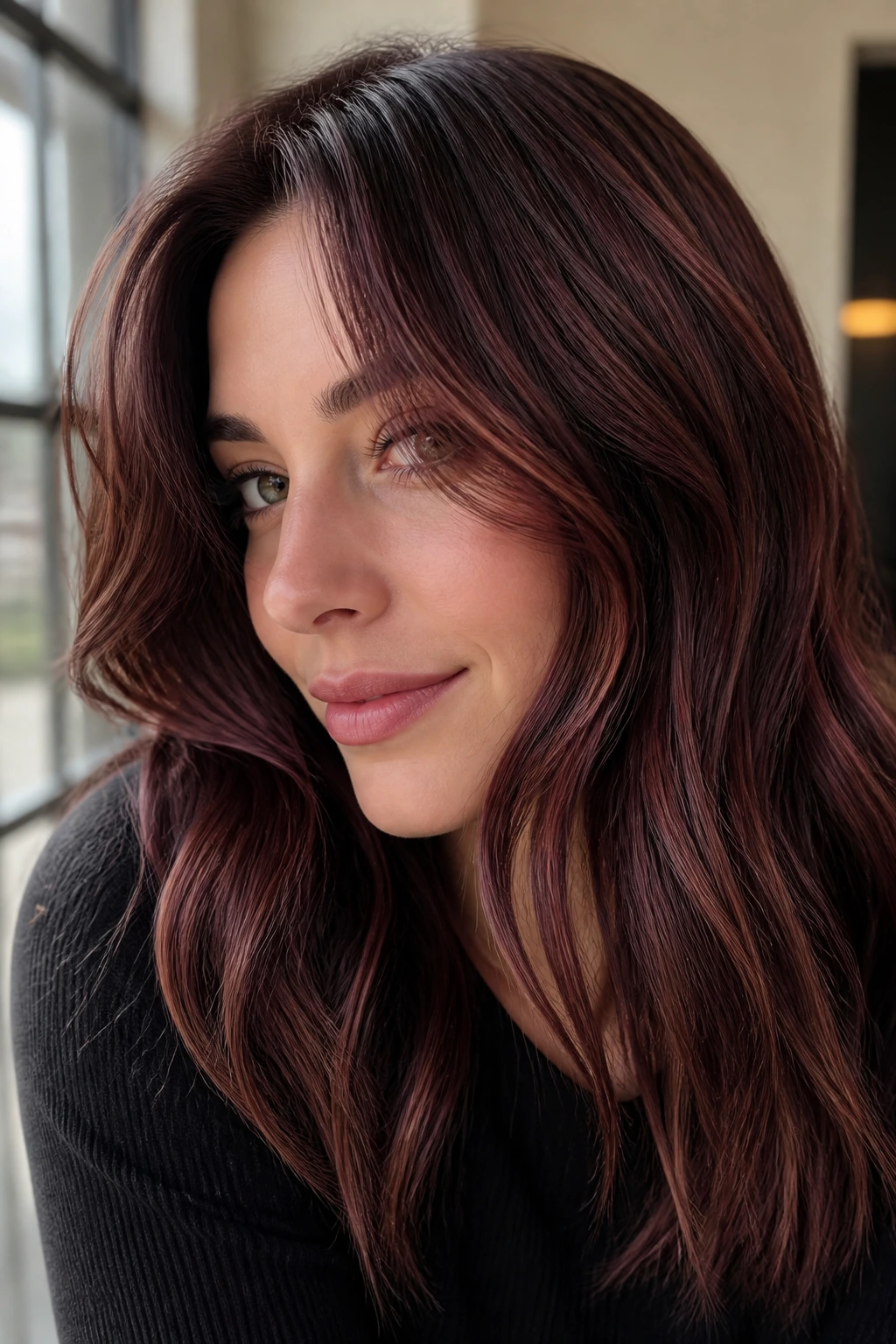
Micro highlights are tiny, fine pieces that break up a dark base without making it look streaky. In cherry mocha hair, they give the burgundy a little lift.
That’s the big difference between this and a single-process color. A flat burgundy-brown can look heavy on cool skin if the hair is very dense. Micro highlights make the shade breathe.
- Keep the highlights super fine.
- Use a cool red-brown toner, not a copper one.
- Concentrate the light pieces around the crown and face line.
It’s a good choice if you want detail but not drama. A lot of colorists like this trick because it grows out softly and still looks finished.
23. Plum Espresso Lob
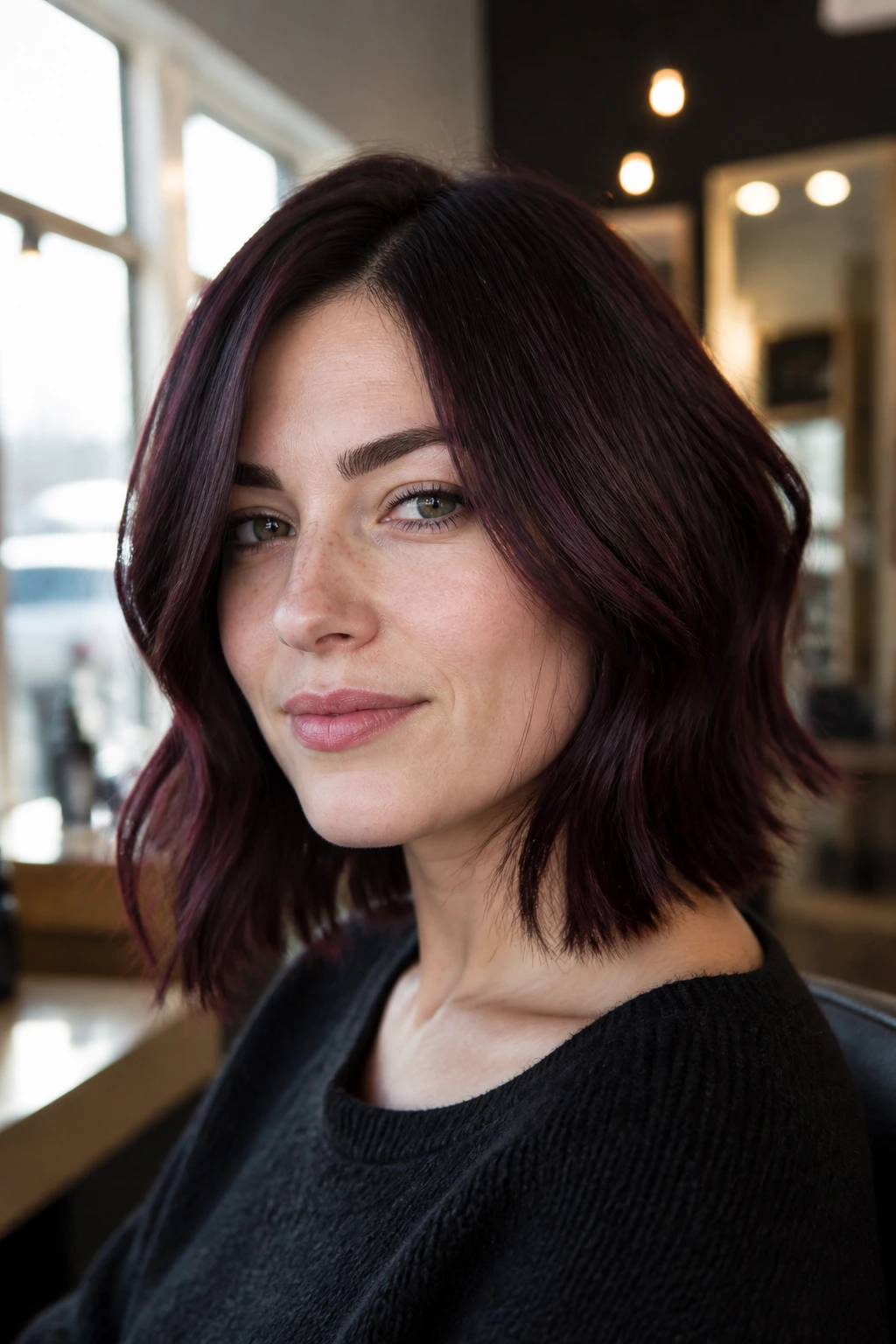
Could a near-black plum-brown lob be too dark for cool skin? Usually not, if the plum note is there.
Why It Works
A lob gives the color a clean edge. The plum keeps it from feeling flat. Together, they create a dark, polished look that feels sharper than plain espresso and softer than jet black.
The shape helps too. A lob lands right in that sweet spot where the ends can move, which lets the burgundy show up at the perimeter instead of disappearing into the center mass of hair.
If you wear blazers, boots, or simple makeup, this shade has a nice low-key strength. It’s not trying hard. That’s why it works.
24. Burgundy Dip-Dyed Ends
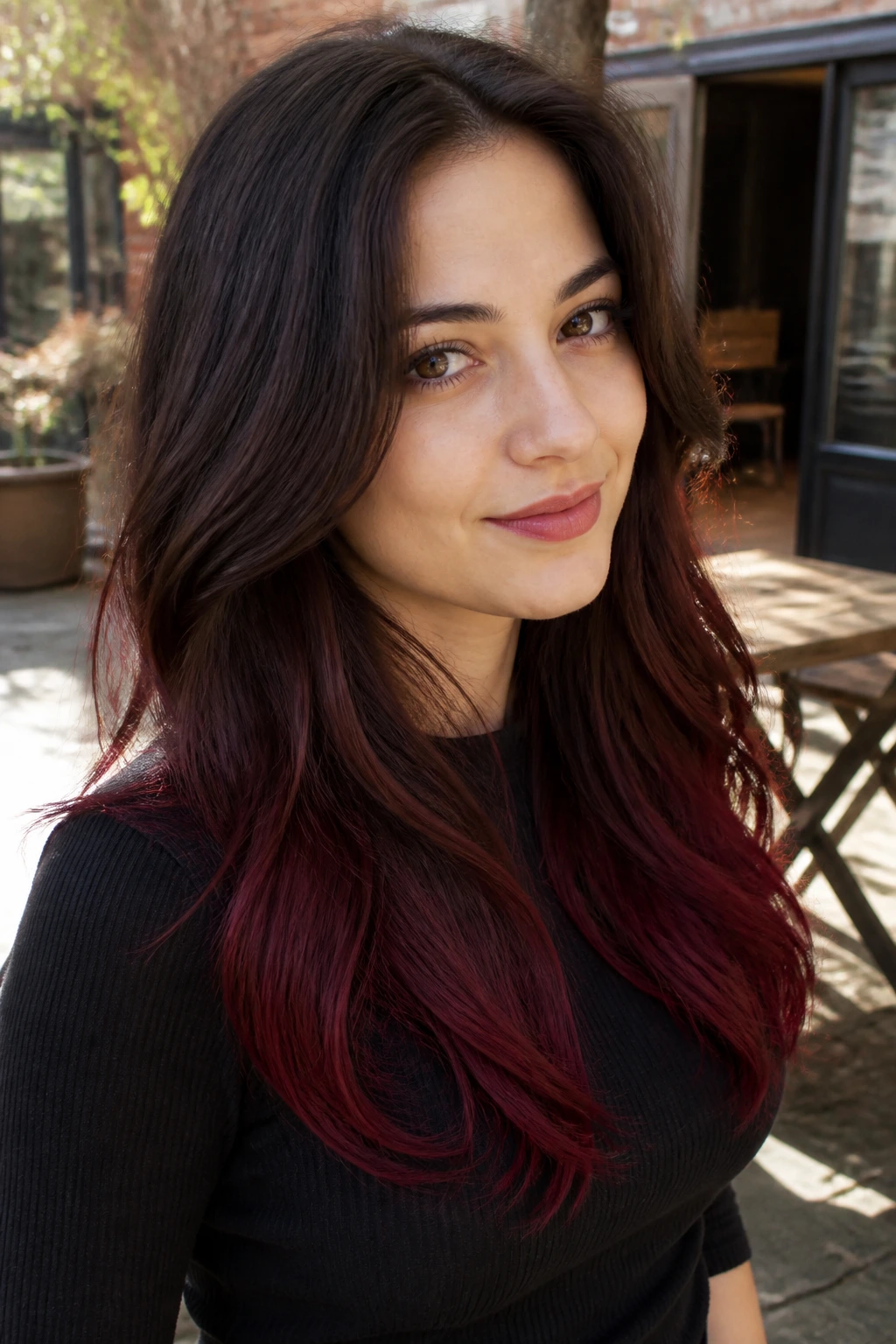
Dip-dyed ends are the low-commitment version of burgundy hair, and honestly, that’s useful. The roots stay brown, and only the bottom few inches turn wine-red.
The look is strongest when the color stops in a clean but soft line. Too sharp, and it can look costume-y. Too blurred, and you lose the point.
This style makes sense if your hair is long enough to wear in braids, buns, or half-ups. The colored ends pop in movement and disappear when you want them to. That flexibility is underrated.
25. Blackcurrant Brunette
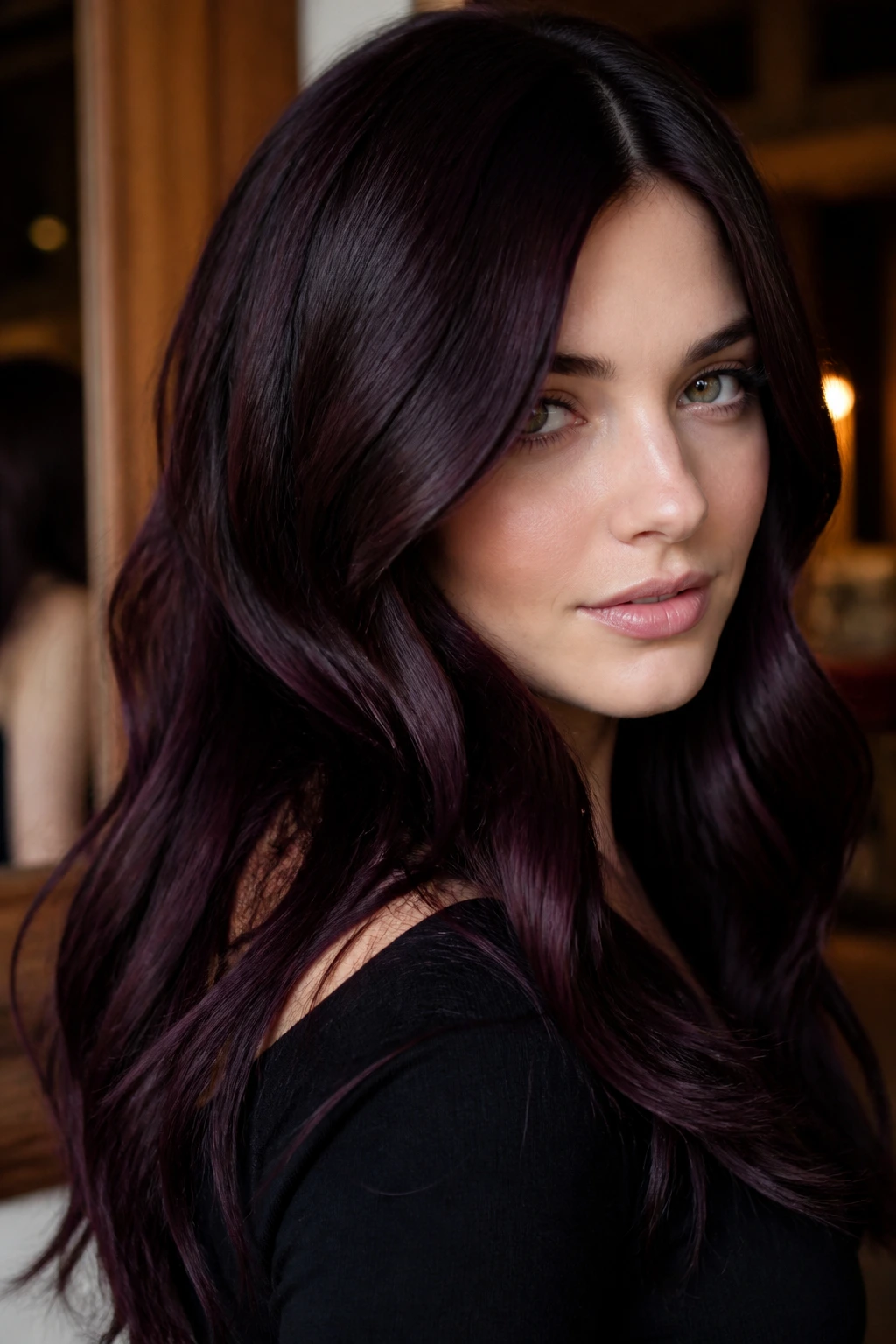
Blackcurrant brunette is deep, dark, and a little glossy in a way cool skin usually likes. The shade sits close to black, but the berry note keeps it from feeling dead.
It’s one of the easiest burgundy browns to wear if you don’t want obvious red. The color stays elegant in dim light and picks up a cool purple sheen in sun.
This is a solid option for someone who wears a lot of gray, navy, charcoal, or black. It doesn’t fight those clothes. It sharpens them. And if you’re the type who hates high-maintenance color, this one is kinder than you’d think.
26. Bordeaux Brown Curls
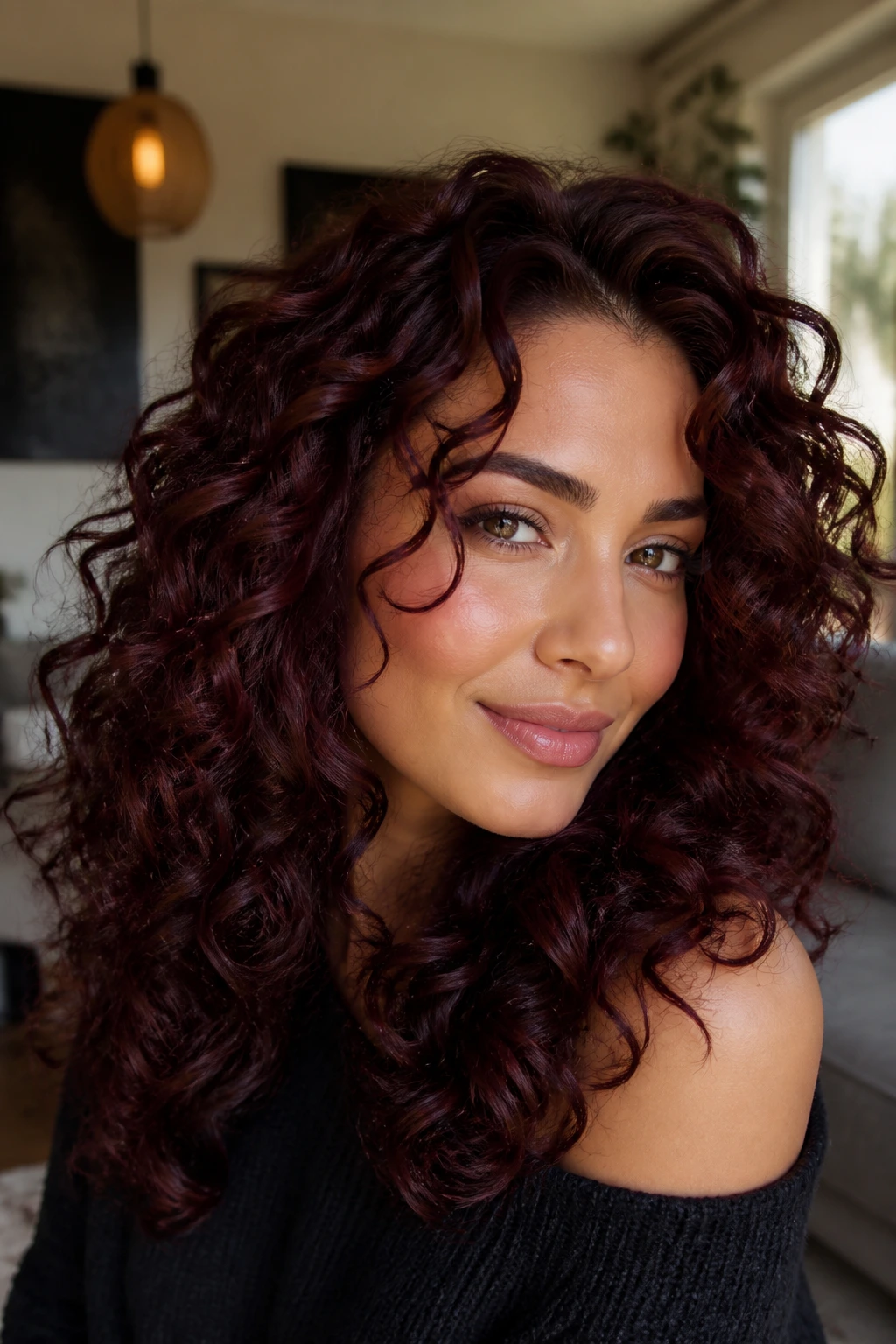
Bordeaux is a little deeper and more formal than cherry or cranberry. On curls, that depth gives the hair a velvet look, which is why this shade often feels dressy even when the styling is casual.
The cool part is what keeps it wearable. Bordeaux brown should lean wine, not rust. When the curl pattern opens it up, the darker brown base still shows through, so the color never goes flat.
This is a good pick for thicker hair because the deeper tone helps the shape feel controlled. If your curls are dry, though, keep an eye on shine. Matte burgundy can look dull fast.
27. Cool Berry Brunette with Rooty Depth
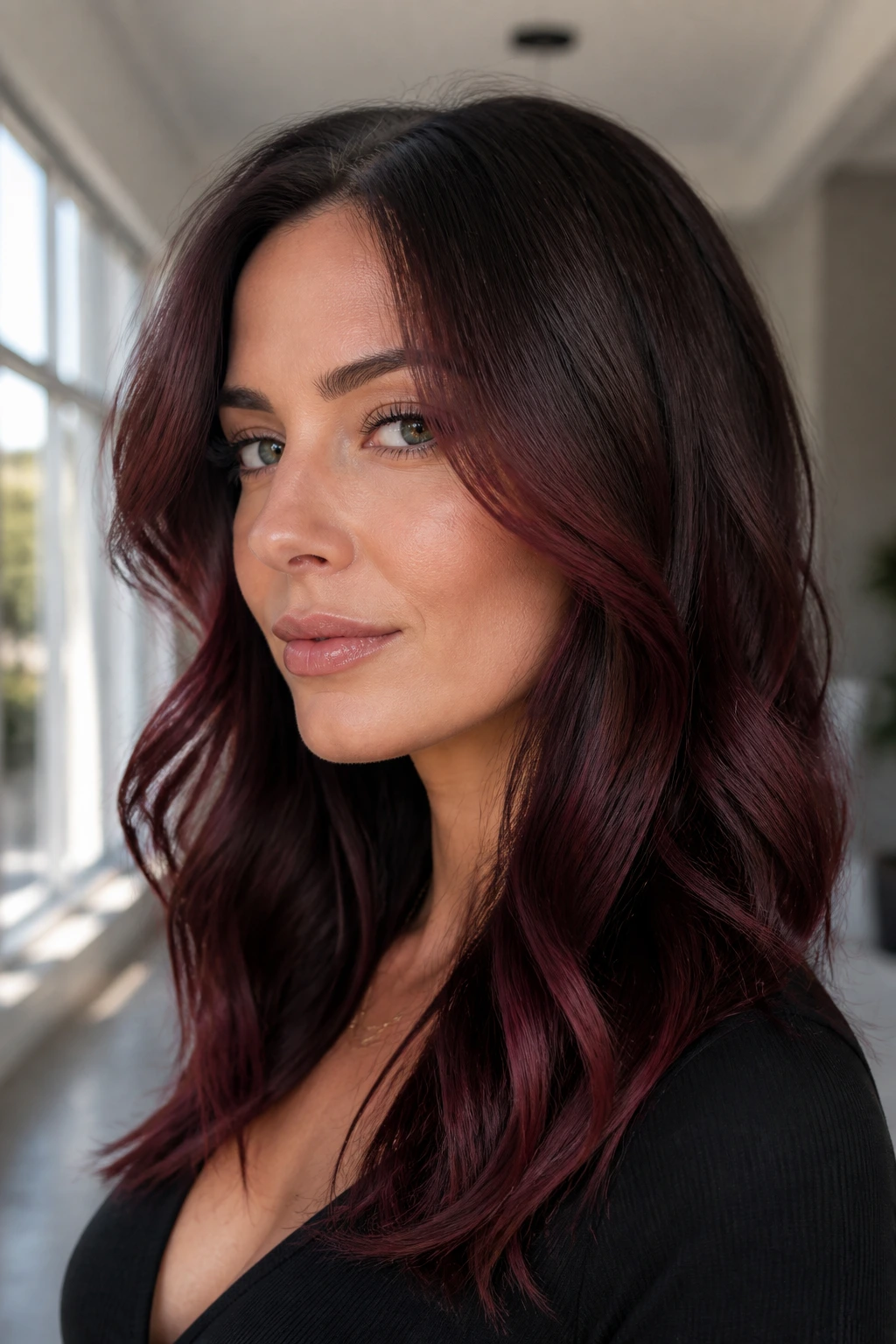
This is the grown-out version done on purpose. The roots stay darker, almost as if they’ve been softly blurred into the rest of the color, while the mids and ends carry a cool berry tone.
That rooty depth matters on cool skin because it keeps the overall look grounded. No harsh contrast. No awkward line. Just a brunette base with a berry shift that shows up in movement.
Best For
- People who want lower upkeep.
- Hair that’s medium to long.
- Anyone who likes a shadow root but still wants visible color.
It’s one of my favorite ideas for real life, not just salon photos. It holds up when the shine fades a little.
28. Soft Black Cherry Melt
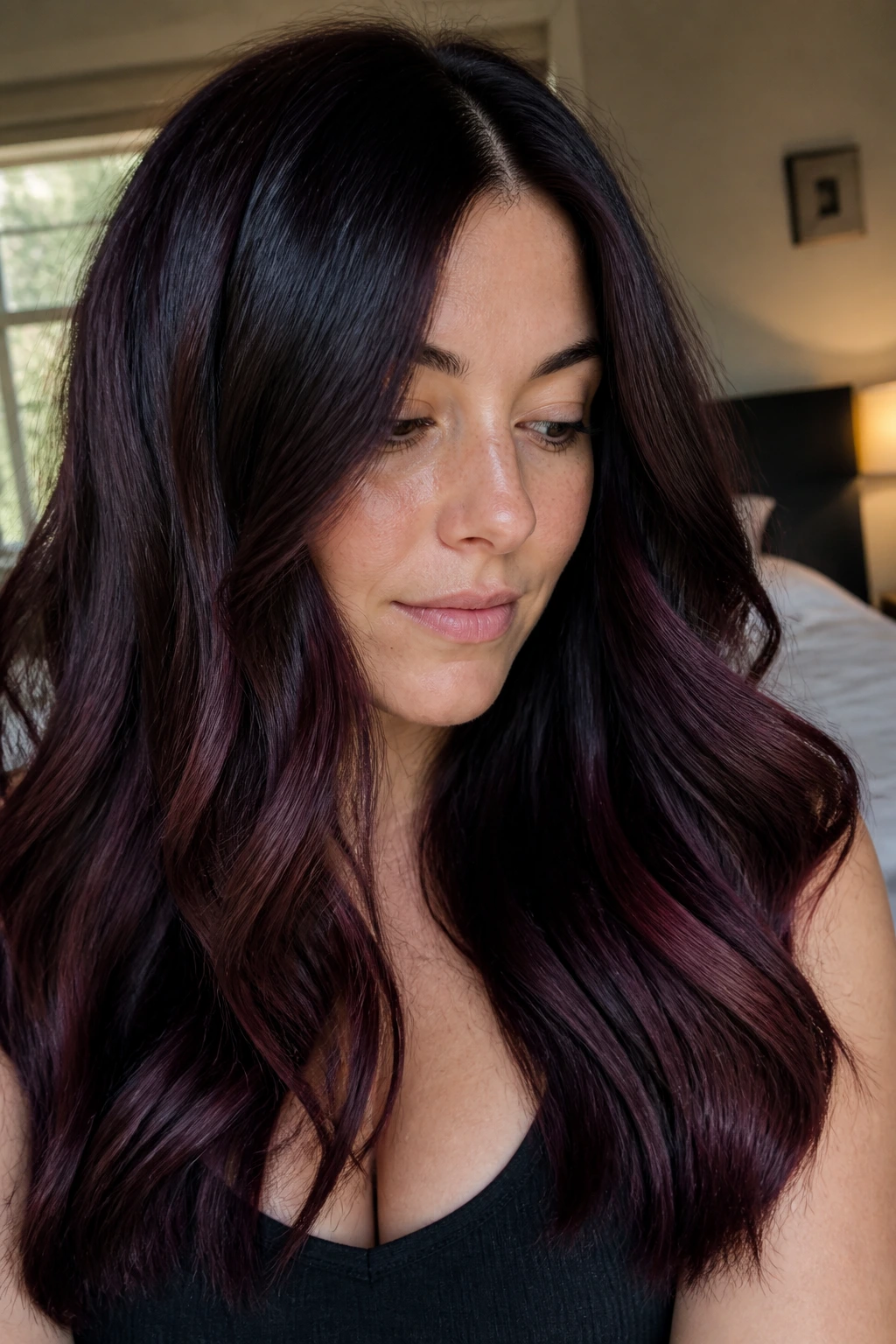
Soft black cherry is the shade I’d end on because it does a lot without looking loud. It keeps the brunette base dark, then folds a cool red-violet sheen through the lengths so the whole head looks richer.
The “soft” part keeps it from turning theatrical. That matters. On cool skin, a little restraint usually looks better than a bright red statement. This version gives you depth, shine, and a hint of color that shows up when hair moves.
If you want burgundy brunette that still feels easy to wear with minimal makeup and simple clothes, this is the one to keep in mind. It’s dark, cool, and more interesting than plain brown, which is really the whole point.
