



Chocolate cherry hair color can look lush on cool skin tones, but only when the red leans blue. If the cherry turns coppery, the whole shade can fight pink or rosy undertones and make the face look tired instead of fresh.
That part gets missed all the time. People see “cherry” and think any red-brown will do. It won’t. On cool skin, the sweet spot is usually an espresso, cocoa, mocha, or truffle base with burgundy, plum, black-cherry, or violet-red reflect. Those cooler pigments sit better next to silver jewelry, black clothes, and skin that tends to look better with pink than peach.
Placement matters just as much as the formula. A sheer gloss can give you a wine-dark sheen. Thin ribbons can add movement without screaming for attention. Face-framing pieces brighten the front. Lowlights make a darker brunette look dimensional instead of flat. The wrong choice isn’t always the wrong color — sometimes it’s the wrong amount of color.
A good chocolate cherry brunette should look brown first and berry second. That’s the part that makes it wearable. Some versions stay quiet until the light catches them; others show their cherry right away. Both can work. The trick is picking the version that suits your skin, your cut, and how much upkeep you’re willing to put up with.
1. Espresso Chocolate Cherry with a Sheer Gloss
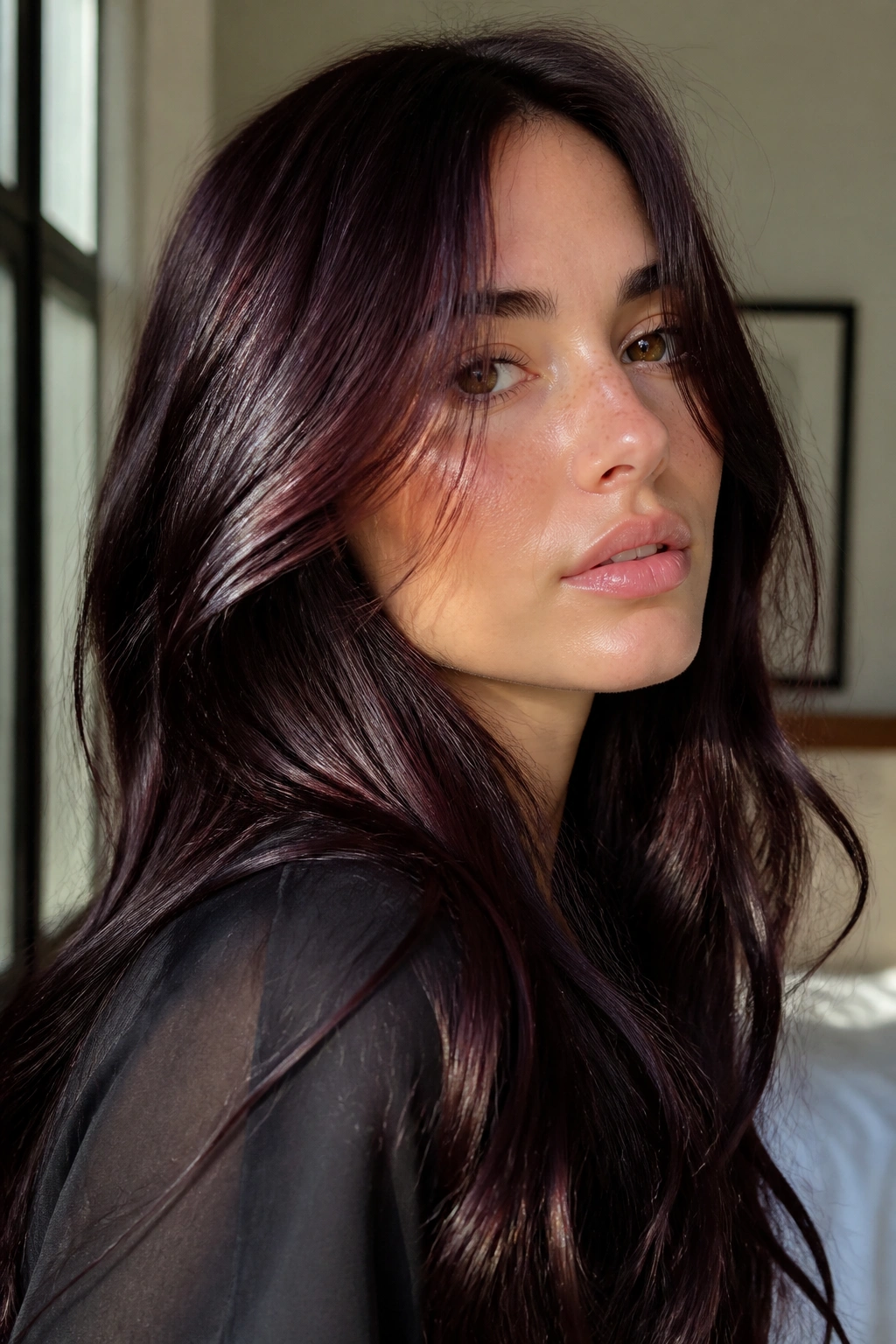
The darkest version of chocolate cherry is the easiest one to wear on cool skin tones. It reads as deep brown first, then gives off a wine-colored shift when the light hits the hair at an angle.
Why It Flatters Cool Skin
That blue-red reflect keeps the shade from going brassy. On pink or porcelain skin, it adds depth without making the face look redder than it is. The result is clean, not muddy.
- Ask for a level 3 espresso brown base with a demi-permanent cherry gloss through the mids and ends.
- Keep the red tone blue-red or violet-red, not copper.
- Leave the roots a half shade deeper if you want soft grow-out.
- Finish with a clear shine treatment so the color looks wet and rich instead of flat.
My favorite part: this version still works when the styling is lazy. A rough blow-dry, a middle part, even a low bun — the gloss does enough work that the color doesn’t need much else.
If you want a low-risk first step into chocolate cherry hair color, this is the place to start. It is quiet, but not boring. That’s a rare balance.
2. Dark Chocolate Brown with Thin Cherry Ribbons
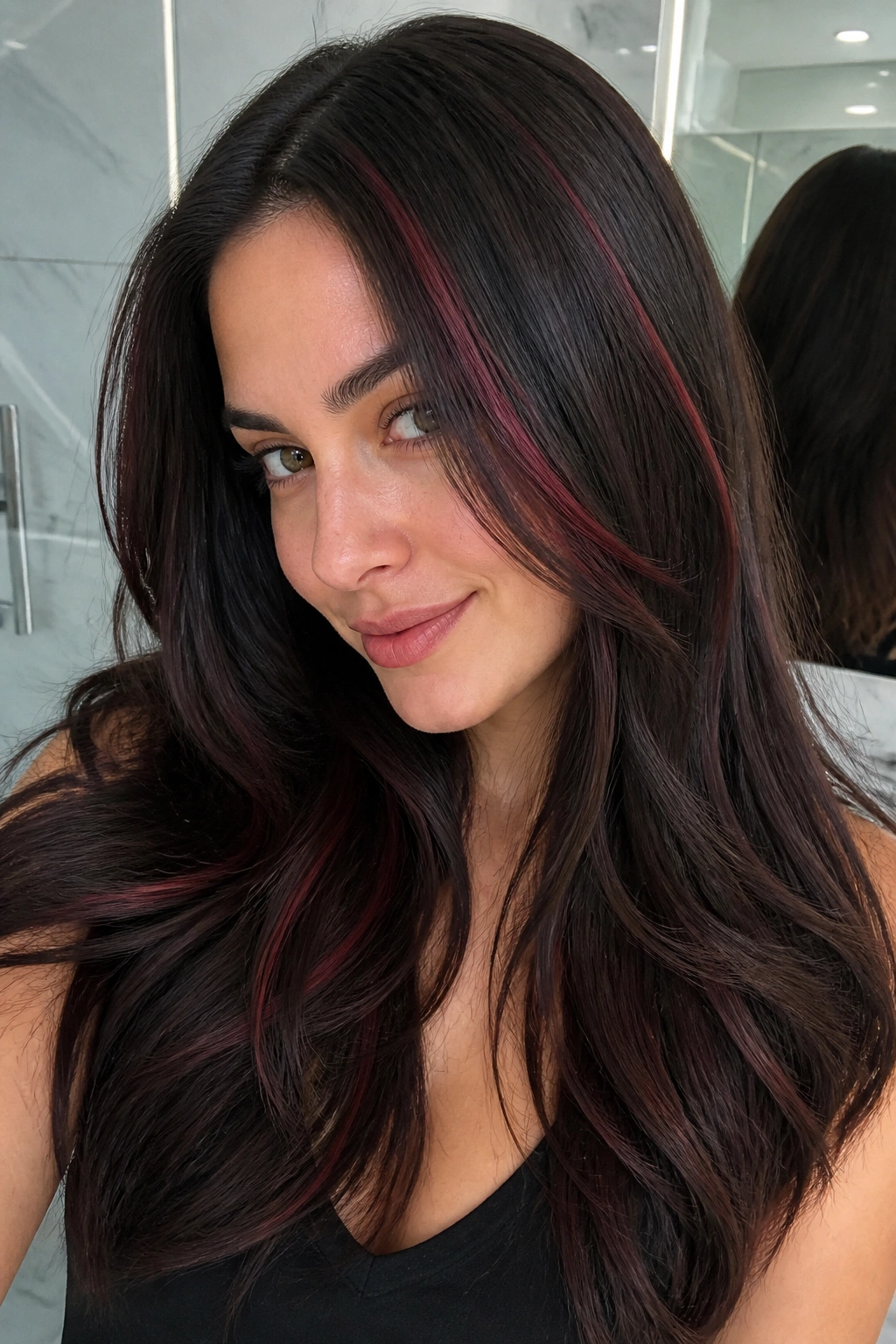
Under bright bathroom light, this version barely looks red. Outside, the cherry ribbons move through the dark brown like thin threads of burgundy silk, which is exactly why it looks so good on cool skin.
The trick is restraint. The ribbons should be narrow, painted in soft slices rather than chunky stripes, so the brown stays in charge. On straight hair, the effect feels sleek. On waves, you get flashes of cherry every time the hair bends.
A colorist would usually place these ribbons around the top layer and the sides of the face, then tuck a few into the underlayers for depth. One-eighth to one-quarter-inch sections are enough. Anything wider starts to look streaky fast.
This is the version for someone who wants people to notice the hair, not the dye job. It reads polished at the office and a little moodier at night. That’s a nice trick when you do not want one color to do all the talking.
3. Milk Chocolate Cherry Melt for Soft Contrast
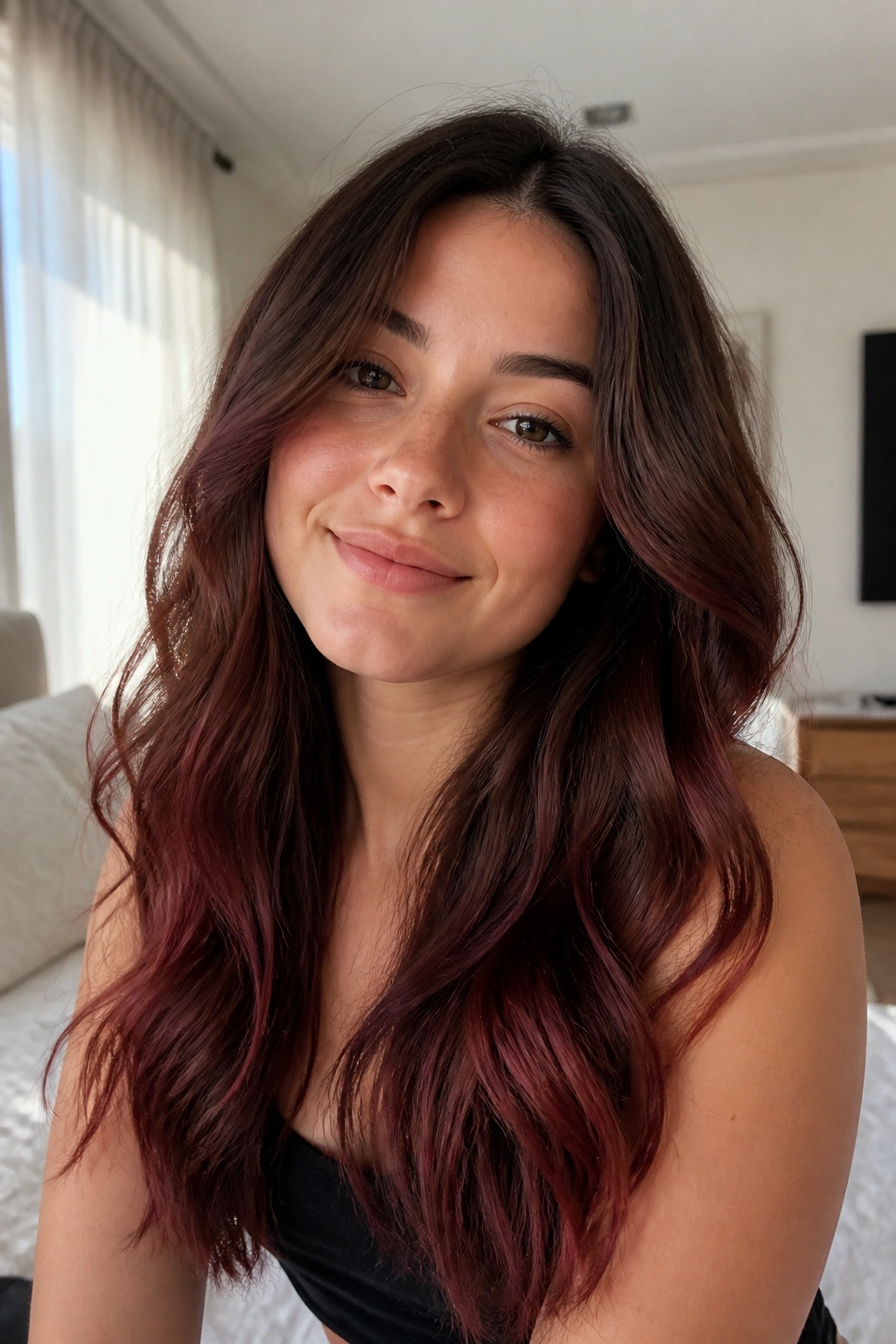
What if you do not want the brown to go dark? Then a milk chocolate cherry melt makes more sense than the deeper, moodier versions.
The base sits around a level 5 milk chocolate brown, so the overall look stays lighter and airier. Cherry gets folded into the mids and ends with a soft melt instead of sharp lines. On cool skin tones, that keeps the face from getting swallowed by too much depth. It also works well if your eyes are light gray, blue, or green, because the contrast feels gentle rather than harsh.
The Sweet Spot
Ask for a root smudge in a neutral brown and a cherry glaze two shades deeper than the base. That gives you visible dimension without a hard line. If the red shows too orange in the bowl, it will look warm on the hair too.
This shade is a smart pick if your hair is fine. Heavy dark brown can sometimes make fine strands look thinner than they are. A milk chocolate cherry melt keeps the shape soft and the movement visible.
4. Mocha Brown with Burgundy Balayage
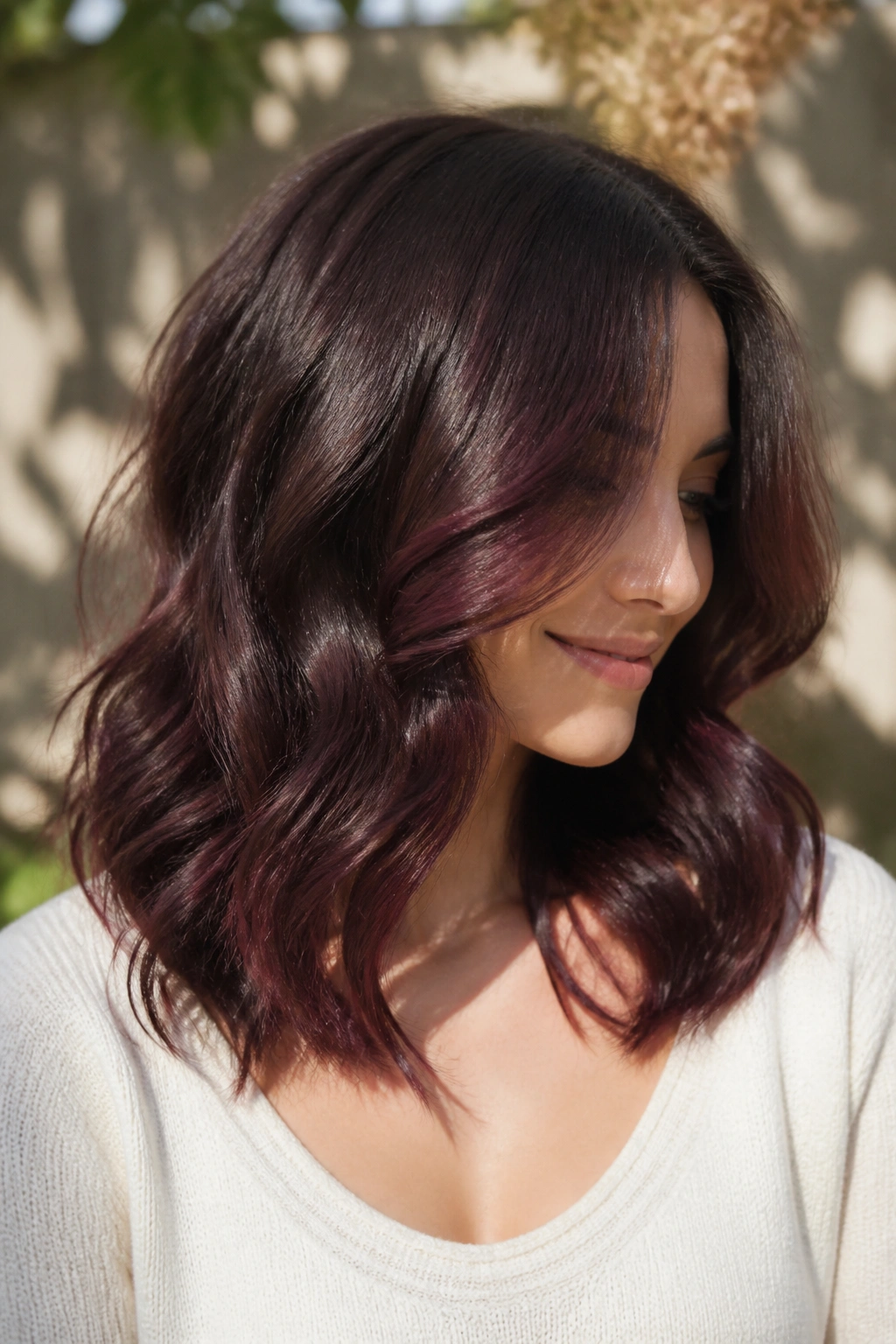
Picture shoulder-length waves with burgundy washed through the mid-lengths, not sitting on top of them. That is mocha brown with burgundy balayage, and it has enough depth to flatter cool skin without going near flat black.
The base should stay a soft mocha — earthy, but not warm. Then the balayage pieces can slide into burgundy, which is red enough to feel cherry-adjacent but cool enough to stay friendly to pink undertones. On layered cuts, the dimension shows up every time the hair moves.
- Best on wavy or curled hair because the color sits in the bends.
- Ask for broad hand-painted panels, not foil stripes.
- Keep the lightest pieces around the cheekbone and collarbone.
- Use a gloss every few weeks to keep the burgundy from turning dull.
This shade has a little more attitude than a quiet cherry brown, but it still feels grown-up. If you wear charcoal, navy, or black a lot, the color looks like it belongs there.
5. Cocoa Brunette with Cherry Cola Undertones
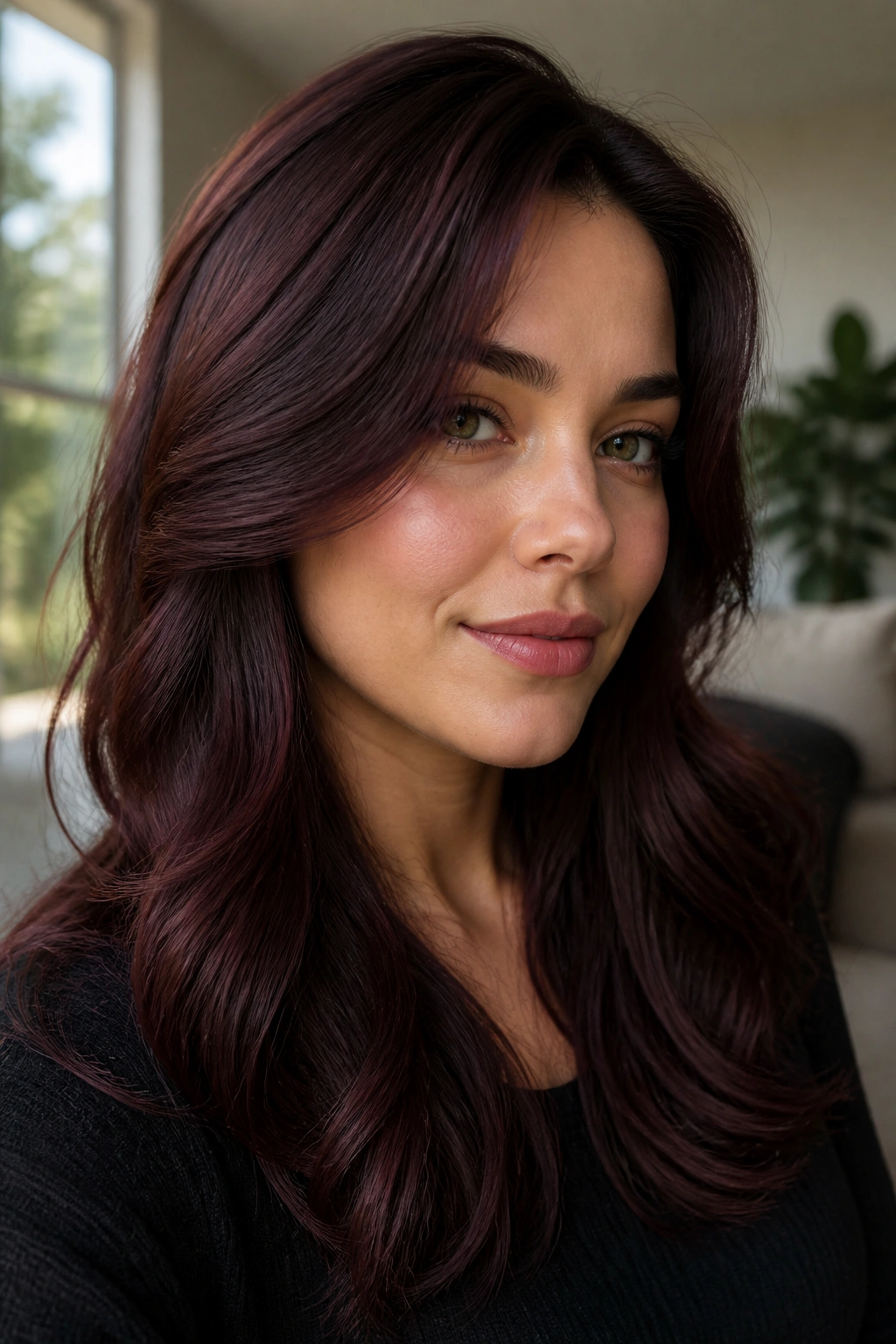
Cocoa brunette with cherry cola undertones is the shade people usually describe as “just brown” until they stand near a window. Then the berry shift shows up, and the whole thing looks more expensive.
That undercover quality is what makes it good on cool skin. The base stays cocoa and grounded, while the cherry lives under the surface in a cola-like depth that avoids orange at all costs. It is not flashy. It is the kind of color you notice twice.
This is also one of the easiest shades to wear if your wardrobe leans minimal. Black sweaters, gray coats, white tees, silver hoops — the hair gives those basics a little more edge. You do not need bright makeup for it to work. A bit of mascara and a clear brow gel is enough.
That is the point. The color should do the heavy lifting, not your makeup bag.
6. Chocolate Cherry Money Piece Around the Face
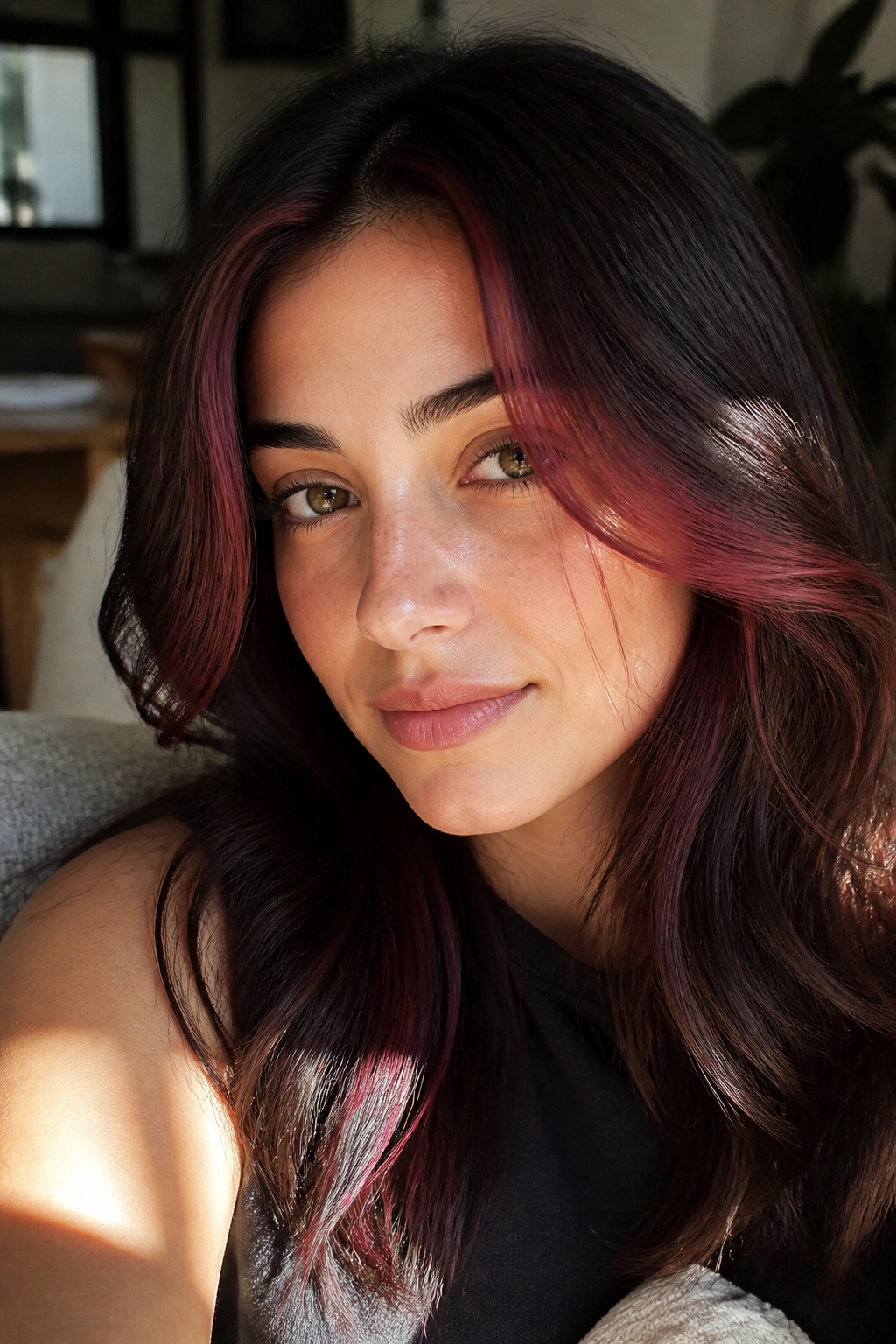
A money piece is the fastest way to test chocolate cherry hair color without committing to the whole head. It gives you that berry-brunette hit right where it matters most: around the eyes, cheeks, and jaw.
What to Ask For
- Keep the base a neutral dark brown or chocolate brown.
- Lighten the front pieces only one to two levels.
- Tone the face-framing pieces with a cool cherry gloss.
- Ask for soft blending at the root so the streaks do not look planted.
That front brightness can do a lot on cool skin. It lifts the face without requiring a blonding session, and the cherry tone keeps the contrast from looking harsh. If your hair is tied back a lot, this is also practical. The color still shows in a ponytail or claw clip.
For people who want a noticeable change but do not want all-over red-brown, this is one of the smartest options. It is also easy to tweak later. If you want more depth, leave the rest brunette. If you want more cherry, widen the face-framing pieces by a few millimeters.
7. Black Cherry Brown for the Coolest Complexion
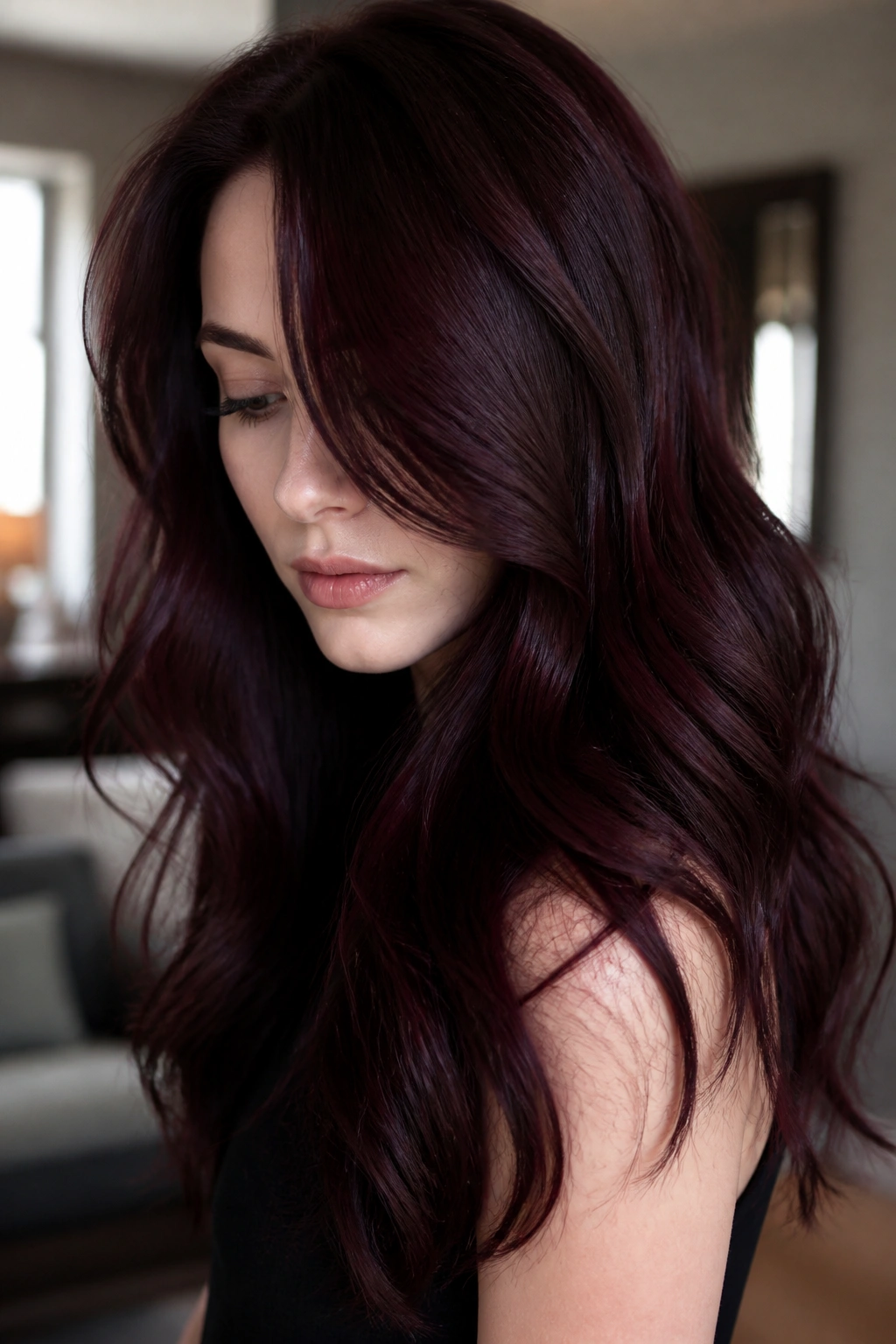
Black cherry is the one I’d pick for very fair cool skin. It has enough depth to look rich, but the red-violet reflect stops it from turning flat or inky.
This shade sits close to black indoors and reveals the cherry only when light catches the hair. That makes it useful for anyone who wants drama without obvious red. On cool skin, the contrast can be stunning in a restrained way. The face looks brighter because the hair is so deep.
The catch is gloss. Black cherry brown can go dull fast if the finish is matte, and matte is not your friend here. Ask for a reflective topcoat or a clear glaze between color services. If the hair is fine, keep the ends a touch lighter so the shape does not disappear into one heavy block.
One quick warning: if your complexion is already very red, this shade can feel intense. It still works, but the makeup has to be thoughtful.
8. Chestnut Chocolate Cherry Balayage
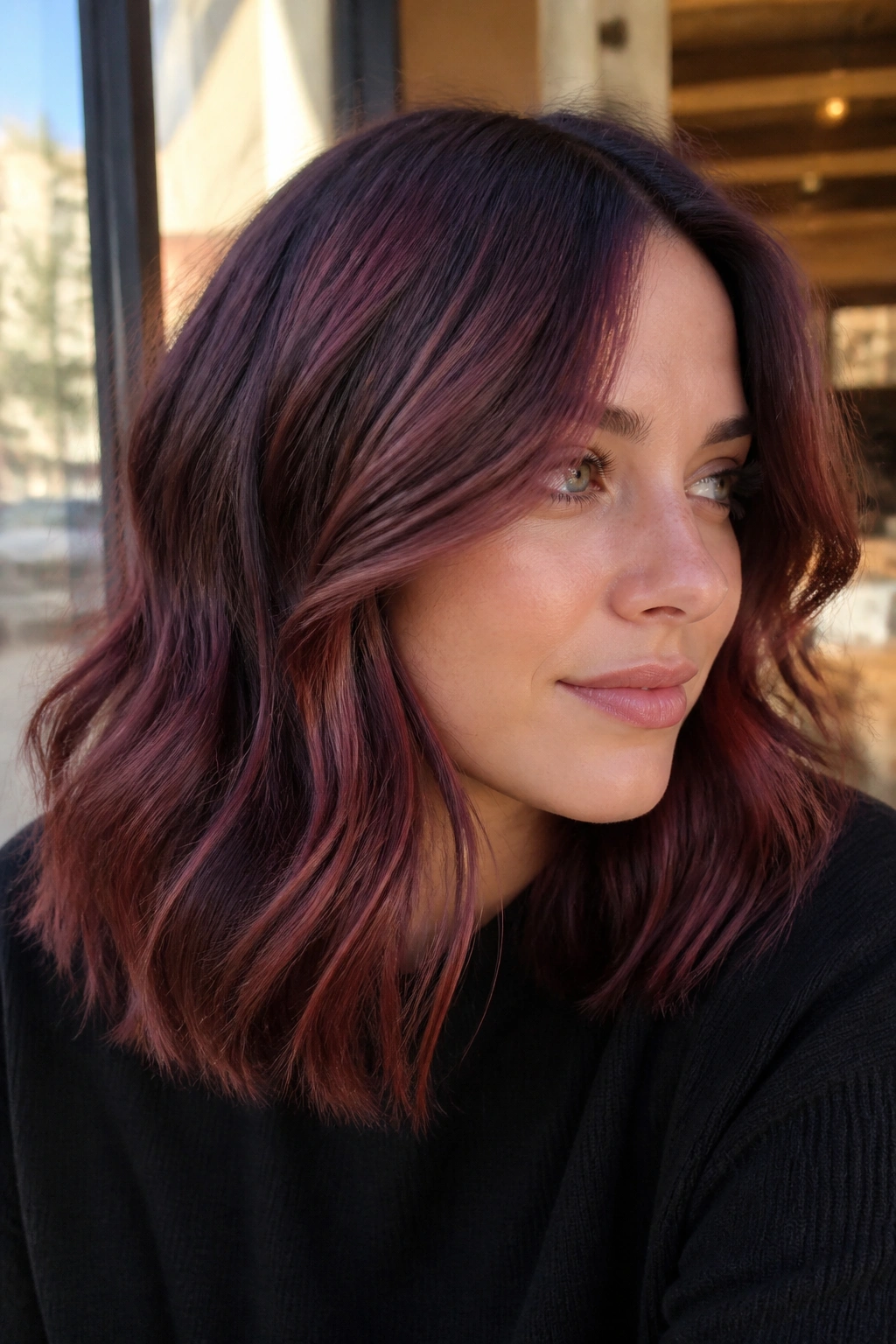
I keep coming back to chestnut chocolate cherry on shoulder-length waves because it moves so well. The chestnut keeps the brown side soft, while cherry balayage pieces add a flash of berry color that cool skin can handle easily.
This is not the streaky look people sometimes fear. Good balayage should feel painted, not striped. The lighter cherry pieces sit where the light would naturally land — the outer curve of a wave, the front pieces, the ends that flip under. That makes the color feel lived-in instead of overworked.
Best Bits to Notice
- Works well on medium-density hair because the color has room to spread.
- A root shadow keeps the look from getting chunky.
- Cherry tones should stay burgundy or cranberry, not orange-red.
- The finish looks best with loose bends, not tight curls.
The texture matters here. If your hair is poker-straight, the balayage can look softer and more gradual. If your hair has a bend, the cherry lights up in little pockets. Either way, it gives a brunette more movement without losing that cool, chocolate base.
9. Cherry Walnut Brunette with Ash Depth
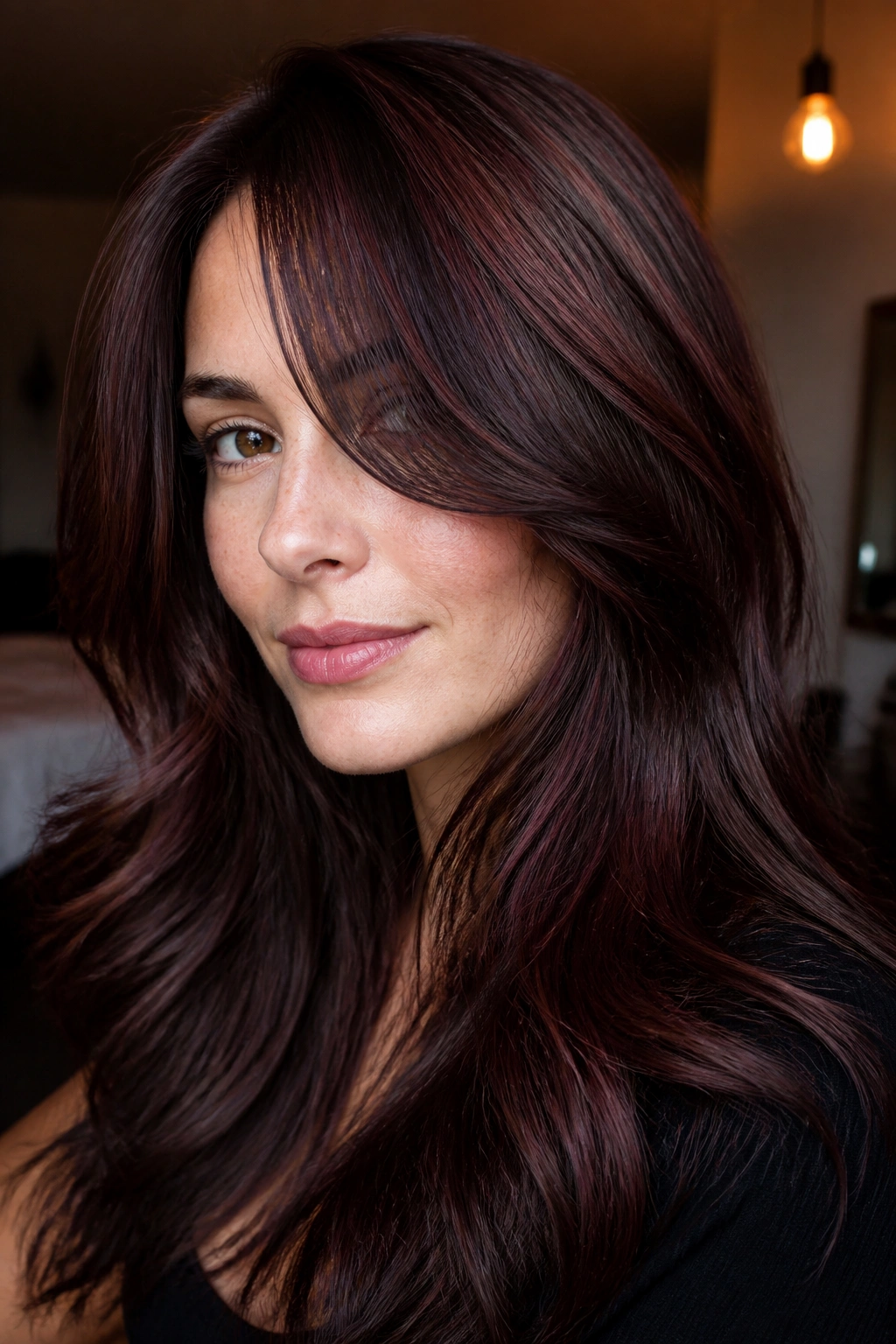
Cherry walnut brunette is not the same thing as chestnut cherry, and that difference matters. Walnut carries a cooler, grayer edge, so the cherry reads cleaner against cool skin instead of drifting warm.
That ash depth is the real trick. Without it, the cherry can start to look too red against pink undertones. With it, the brown has a smoky feel that makes the berry reflect look deliberate. It is a good choice if you have naturally dark hair and want the color to feel believable.
This shade also behaves well in dim light. Under soft indoor bulbs, it looks like a deep brown. Near daylight, the cherry shows up around the mids and ends. That makes it useful for people who want a color that changes a little during the day without becoming a full red.
I like this one on layered lobs and collarbone cuts. The shape shows off the color shifts without needing a lot of styling.
10. Velvet Brunette with Plum-Cherry Lowlights
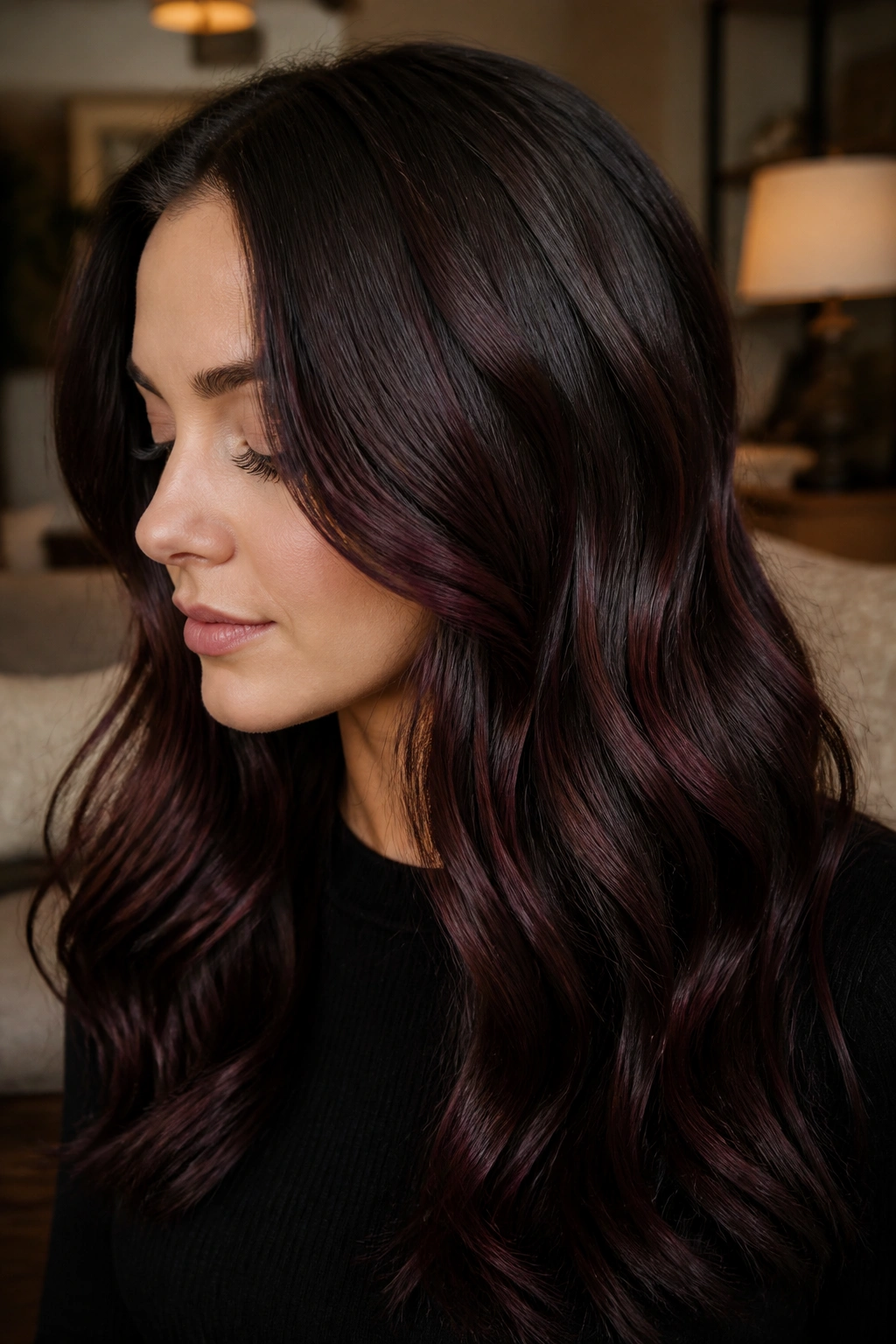
Why lowlights instead of highlights? Because on dark brunette hair, lowlights can make the chocolate cherry effect look fuller, not lighter.
Plum-cherry lowlights are especially good if your base is already deep brown. Instead of lifting the whole head, the colorist weaves darker berry panels through the hair, usually one to two levels deeper than the base. That adds shadow and keeps the shine where it belongs. On cool skin, the plum note keeps the red in check.
Why It Works on Dark Hair
The deeper pieces do not compete with the base. They sit inside it. That means the hair still looks brunette first, which matters if you wear a lot of black, navy, or charcoal and do not want the color to overpower your face.
This is also one of the better options for curly hair. Lowlights follow the curl pattern in a way highlights sometimes do not, and the result feels plush instead of busy. If you want a richer silhouette rather than a brighter one, this is the move.
11. Sable Chocolate with a Cranberry Sheen
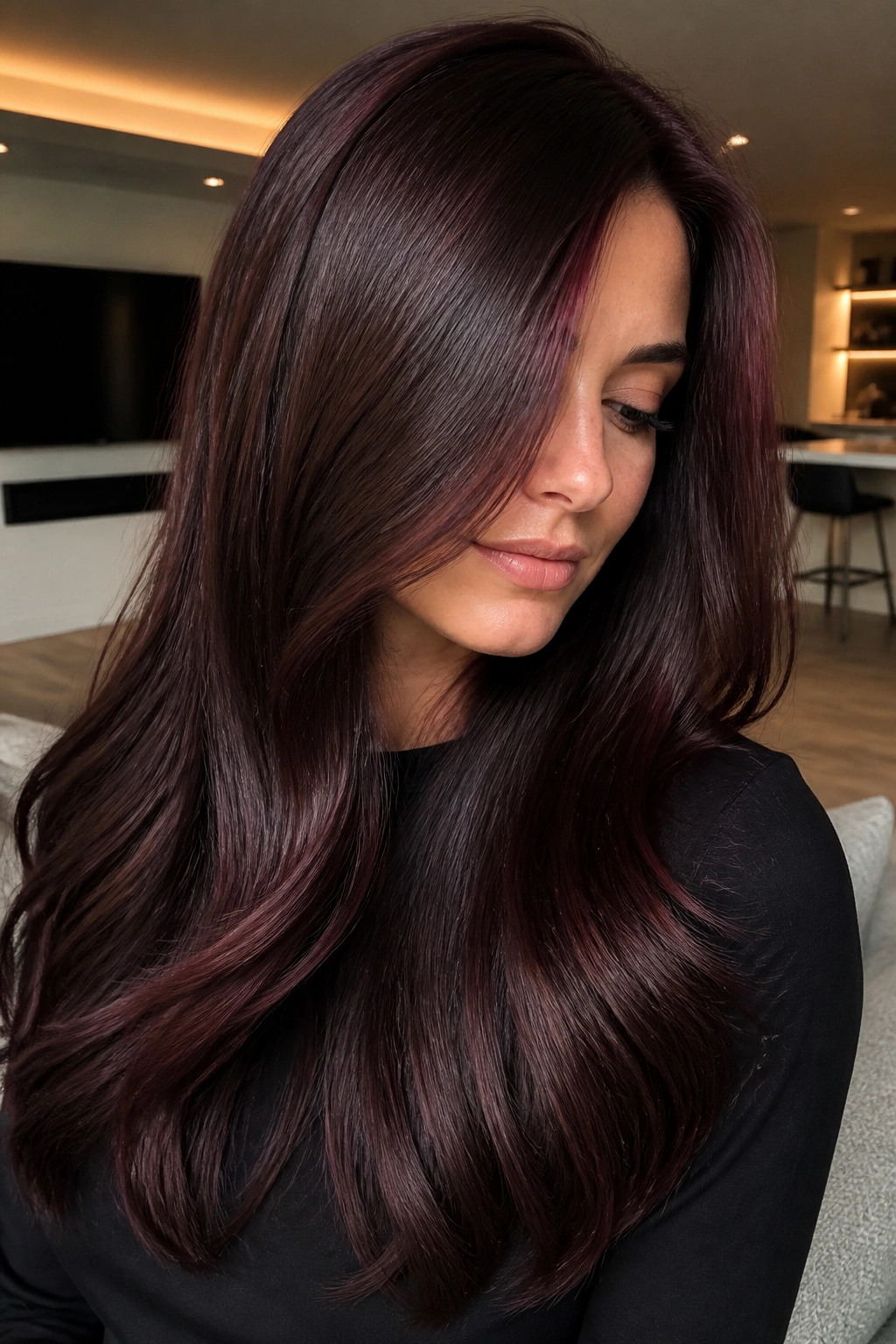
Sable chocolate with a cranberry sheen is the shade that looks almost black at first glance. Then the light shifts, and the cranberry reflect comes forward just enough to change the whole mood.
That sheen matters on cool skin because it adds brightness without obvious contrast. The hair still reads dark and grounded, but the reflective berry note keeps the face from looking washed out. On straight hair, the effect is sleek. On a blunt bob, it can look almost glassy.
This is a smart option if you like minimal styling. A round brush blowout, a flat iron bend, or even a messy clip set can show off the sheen. You do not need curls to make it work, which is useful if your routine is short on time.
A color-depositing mask with cool berry pigment can help maintain the cranberry shift between salon visits. Use it sparingly. Too much and the color starts to look stained rather than glossy.
12. Chocolate Cherry Ombré from Mid-Lengths Down
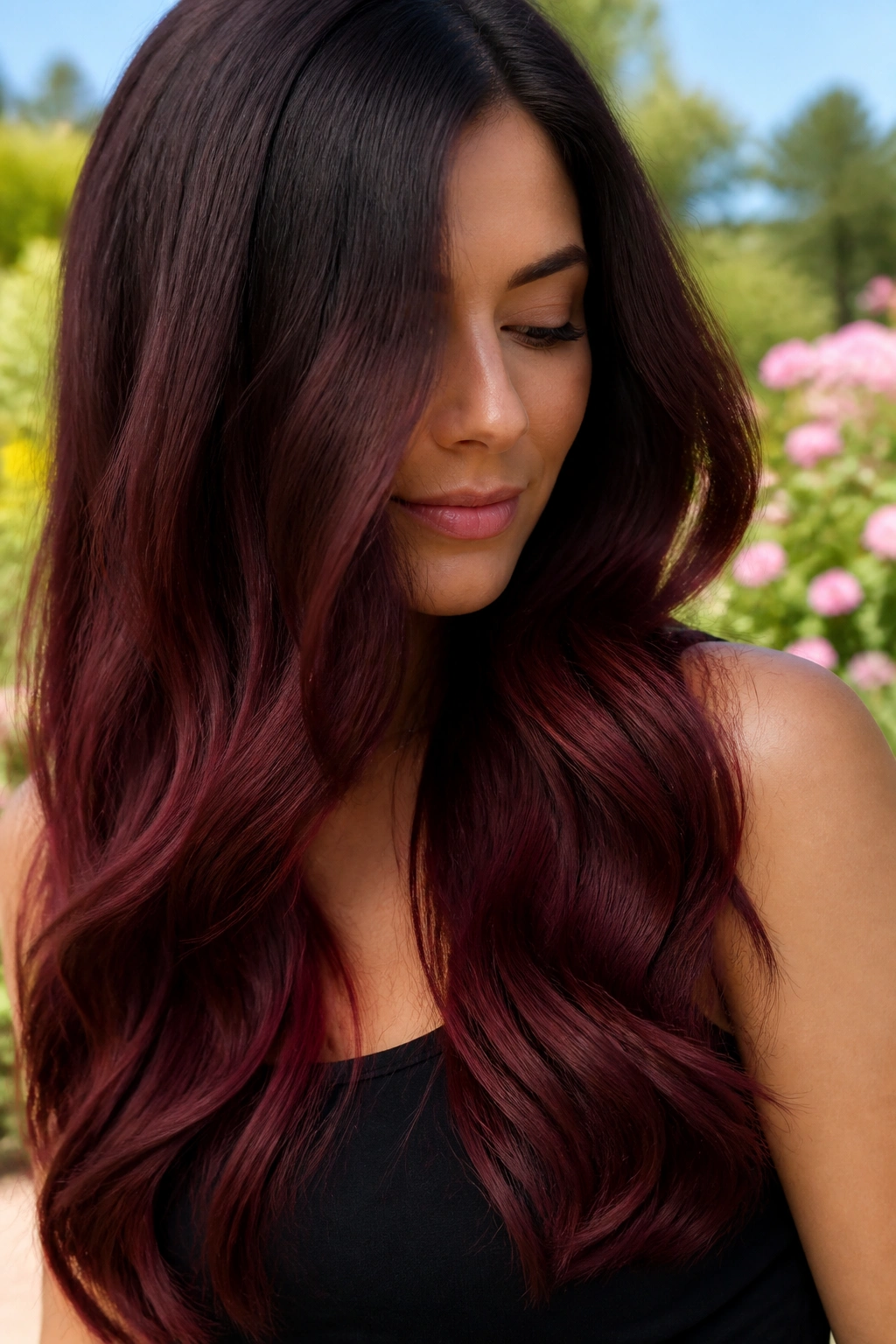
Chocolate cherry ombré is the low-drama way to wear red-brown if you hate root maintenance. The top stays dark chocolate, then the color opens into cherry-brown through the mid-lengths and ends.
That gradual shift looks especially nice on longer hair, where there is enough length for the fade to make sense. Short hair can handle ombré too, but the line has to be softer. On cool skin, keeping the root area deep prevents the cherry from feeling too warm around the face.
The best version is subtle. You want the change to feel like the hair got richer near the bottom, not like two different colors were stacked together. Ask for the transition to begin around the cheekbone or just below the collarbone, depending on your length.
It also grows out well. That matters more than people admit. A good ombré can buy you weeks before the color starts looking tired.
13. Cold Brew Brown with Cherry Ends
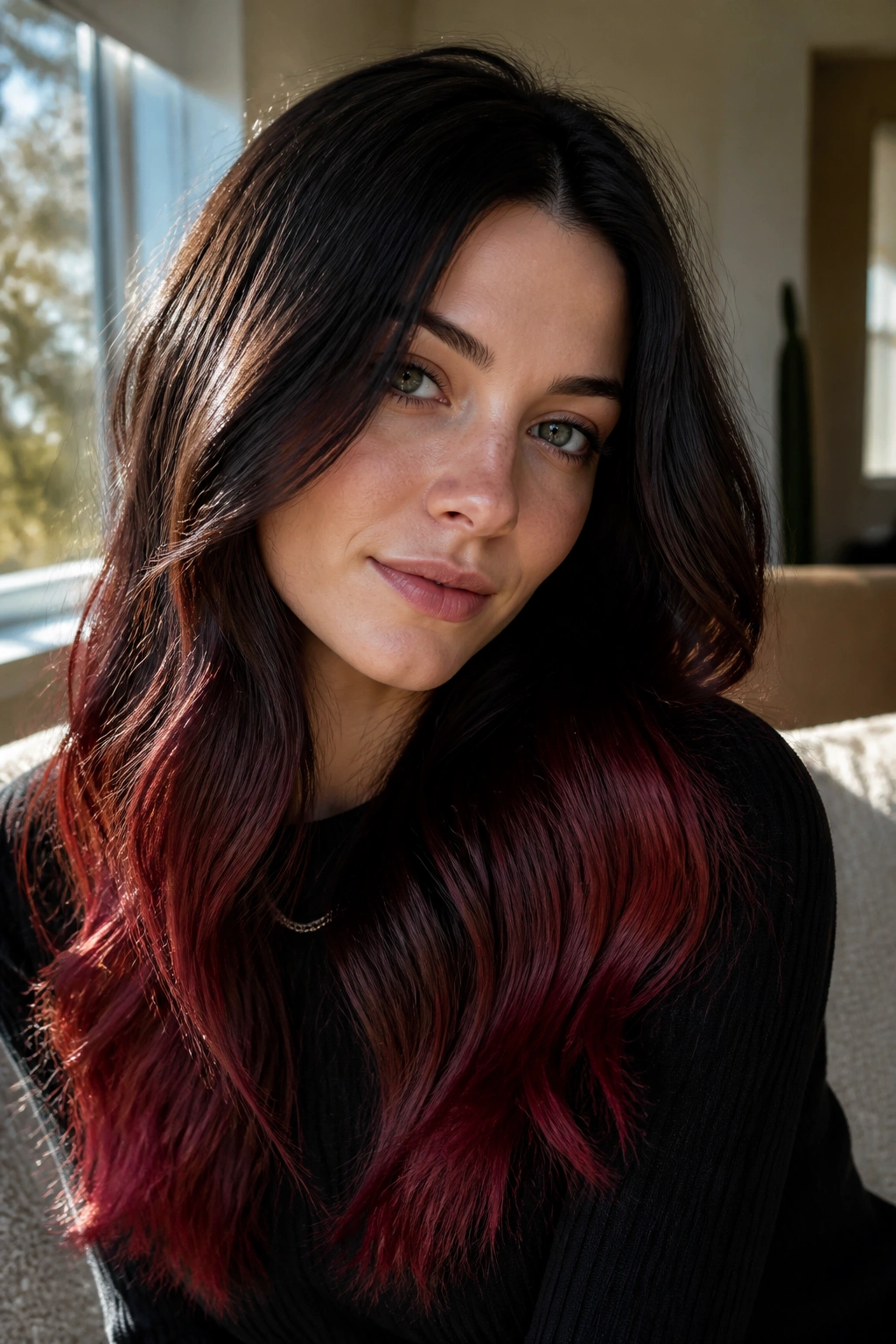
Cold brew brown with cherry ends is the easiest way to get drama without touching the scalp. The roots stay deep and quiet, while the ends carry the whole look.
How to Keep the Ends from Drying Out
- Use a heat protectant every time you blow-dry or curl.
- Swap in a moisturizing mask once a week.
- Trim the ends before they start looking fuzzy.
- Ask for the cherry tone to be glossed, not over-lightened.
Because the color lives on the ends, the finish there has to be smooth. Dry ends make cherry look patchy. Healthy ends make it look deliberate. If your hair is already long and a little dry at the bottom, this version can still work, but the cut needs to be clean.
This is also good for curls and coils. The ends catch the red-brown light in a way straight hair does not always do, and the dark root keeps the look grounded. If you want something noticeable but not full-head bright, this is a very good lane.
14. Mushroom Brown with a Cherry Tint
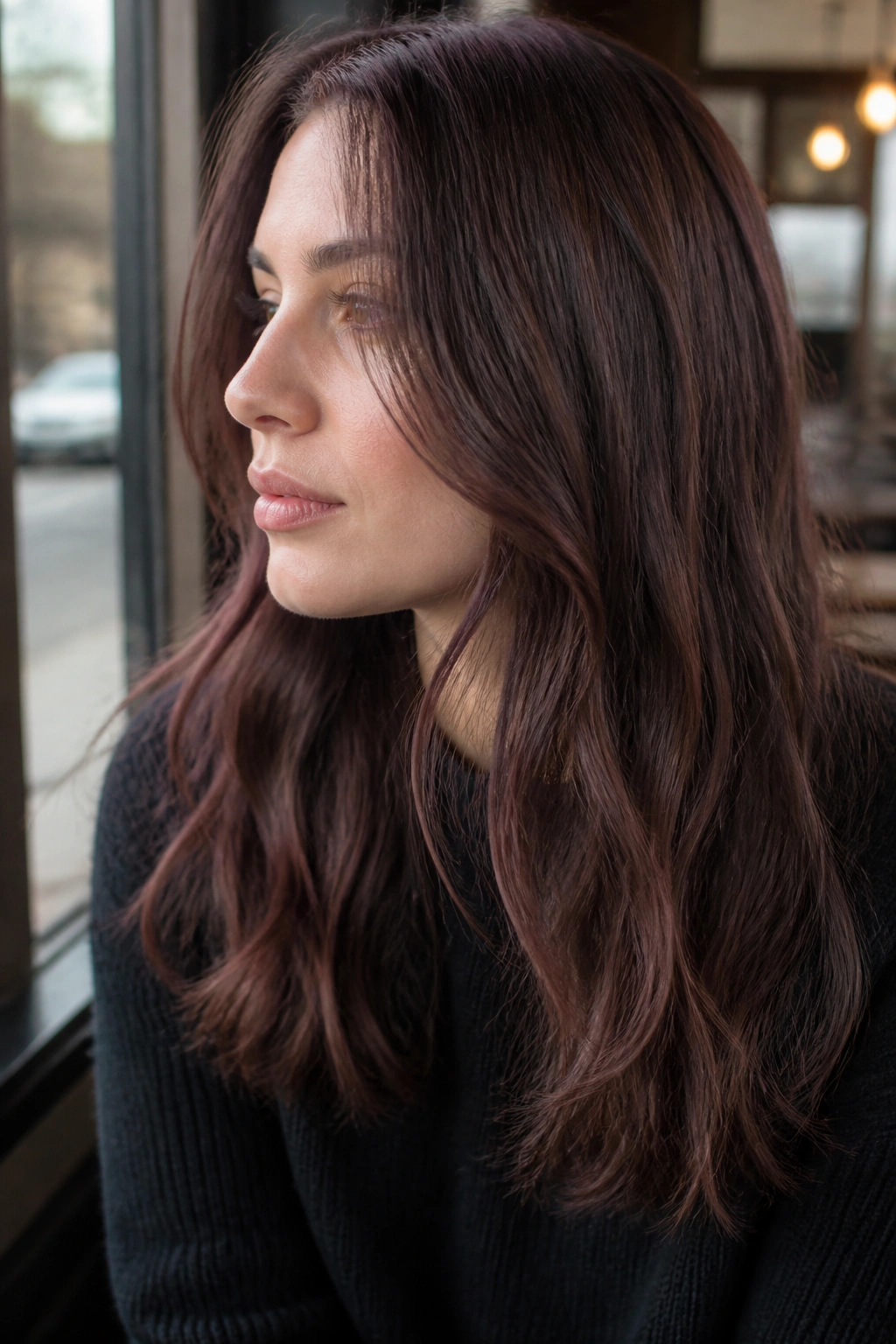
Mushroom brown is a better base for cherry than people think. The ashier base keeps the red from reading warm, which is exactly what cool skin usually needs.
This version is for someone who likes a muted finish. The cherry tint should feel soft, almost like a stain, not a highlight. It works by adding just enough berry reflect to the brown so the hair looks deeper in daylight and cooler in indoor light. On cool undertones, that gray-brown foundation helps everything stay calm.
The shade looks especially nice on medium-length hair with loose movement. Too much layering can break the effect. Too little layering can make it feel heavy. The sweet spot is a shape with a little swing at the ends.
If you have ever looked at warm chestnut and thought it was a bit too coppery, mushroom brown with cherry tint is the cleaner answer. It still has warmth in the word “chocolate,” but the finish stays controlled.
15. Cherry Mocha Face-Framing Layers
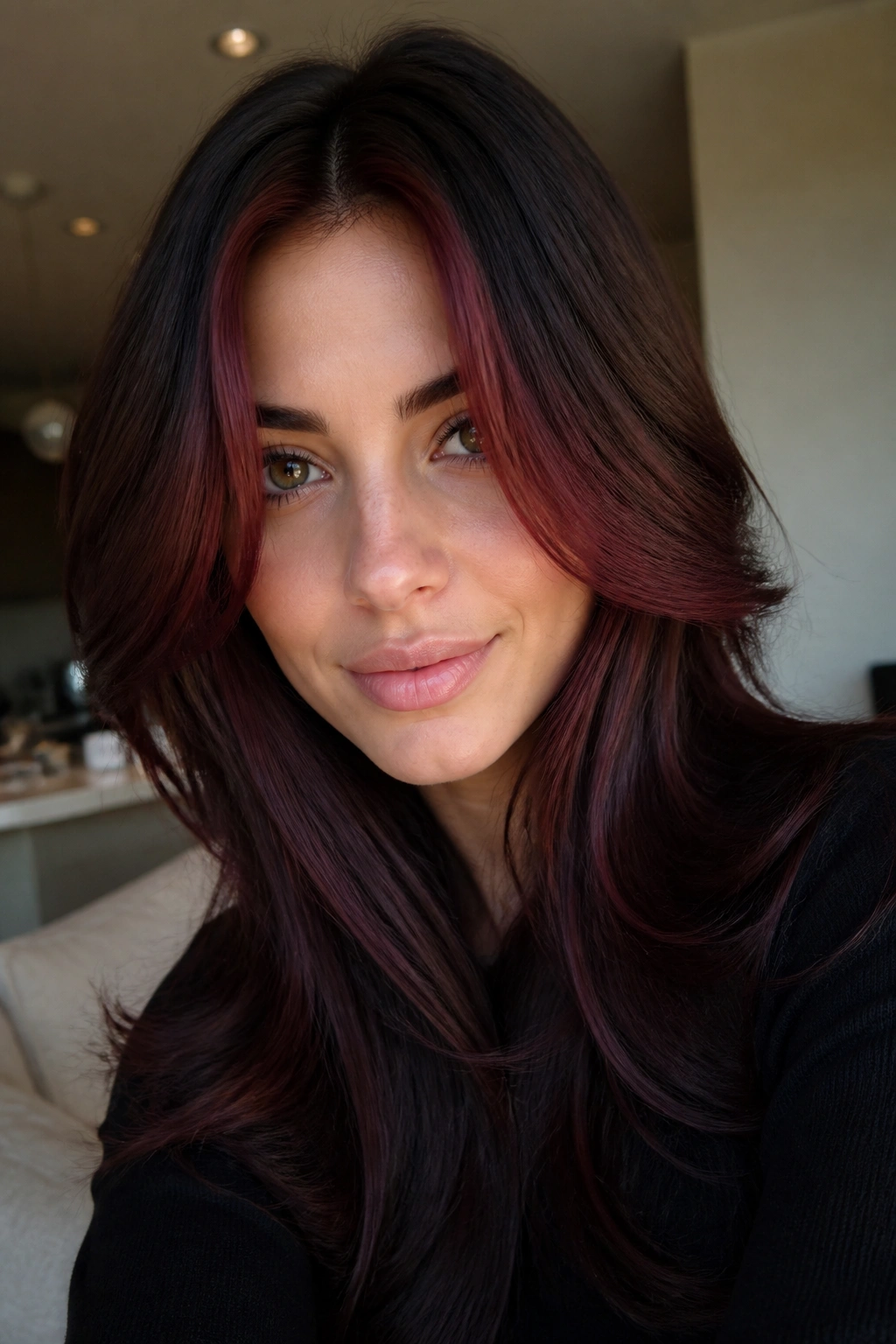
Do you want the color to show only when your hair moves? Then cherry mocha face-framing layers make a lot of sense.
The idea is simple: keep the main body of the hair mocha-chocolate, then thread cherry through the front layers where they hit the cheekbones, jaw, and collarbone. On cool skin, that gives you brightness exactly where you want it, and nowhere else. It is flattering without needing to be loud.
What to Ask Your Colorist
- Keep the base a cool mocha brown.
- Add cherry through 6 to 8 face-framing pieces.
- Blend the color from root to tip so the front does not look stripy.
- Leave the deepest color near the back and underlayers.
This approach works especially well if you like to tuck your hair behind one ear, wear half-up styles, or twist the front pieces away from your face. The cherry appears in little flashes, and those flashes are enough. You do not need a full color overhaul for the effect to feel noticeable.
16. Dark Chocolate with Cabernet Glaze
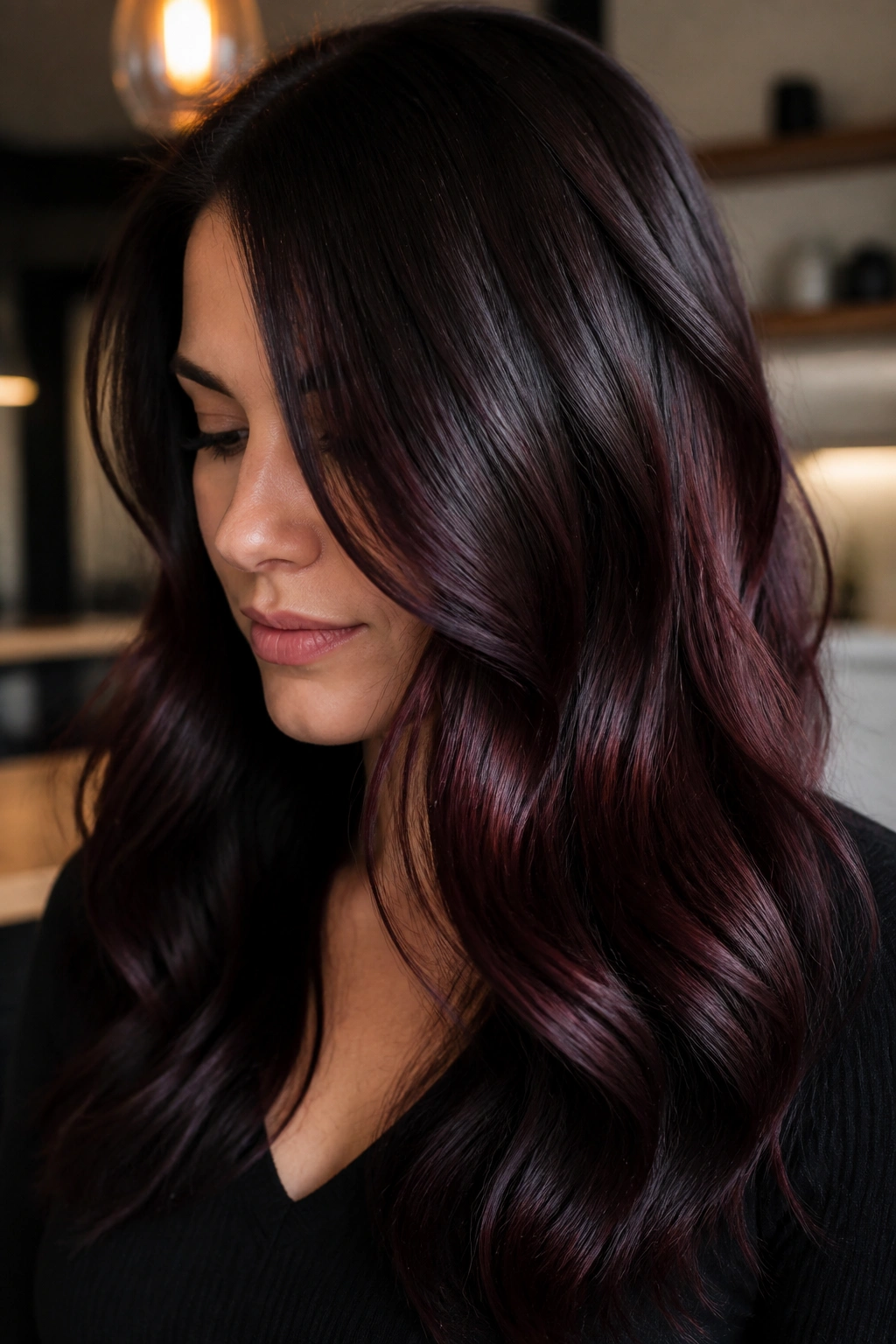
Dark chocolate with cabernet glaze has a wine-dark shine that looks expensive in the simplest possible way. There is no need to overstate it. The gloss does the work.
On cool skin, cabernet tones can be a gift because they pull the hair toward plum and away from copper. That makes the shade feel cleaner near the face. It also suits thick hair, which can sometimes swallow softer berry tones. The deeper cabernet finish stays visible even when the hair is dense.
This is one of the better options if your natural hair is already dark brown or near-black. You do not need heavy lifting to get the effect. A demi-permanent cabernet glaze over a chocolate base can shift the whole tone with less stress on the hair.
I like it best on smooth blowouts and long layers. The shine catches along the bends, and that is where the color comes alive. If the hair is dry, though, skip it until the ends are trimmed. Dryness makes the red disappear.
17. Brunette with Violet Cherry Accents
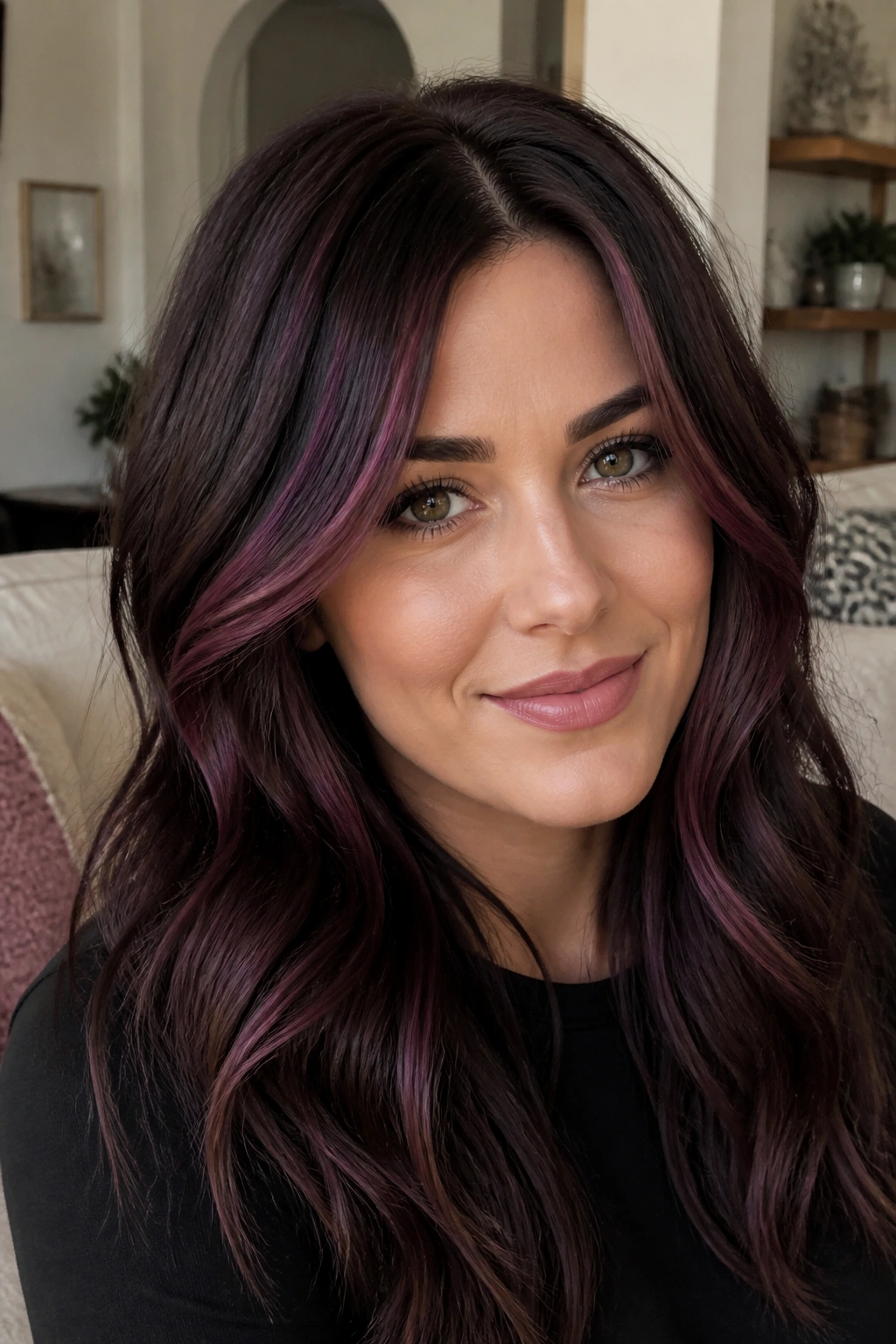
Can violet still count as chocolate cherry? Yes, if the brown stays in charge and the violet only sharpens the red.
That cool violet note is useful when your skin leans pink or neutral-cool and regular cherry starts looking too warm. The violet pulls the shade back into cooler territory, which can make the whole finish read more deliberate. It is not purple hair. It is brunette hair with a berry edge.
Best Way to Wear It
- Keep the base around level 4 or 5 brown.
- Place violet-cherry accents in thin panels or soft ribbons.
- Avoid red-orange tones in the same formula.
- Ask for a cool gloss so the violet does not fade muddy.
This version has a little attitude. Not a lot. Just enough. It works well if you wear stronger makeup — liner, a berry lip, a clean brow. If you like understated clothes and want the hair to carry a bit more personality, violet cherry does that without turning into a costume color.
18. Glossy Truffle Brown with Cherry Smoke
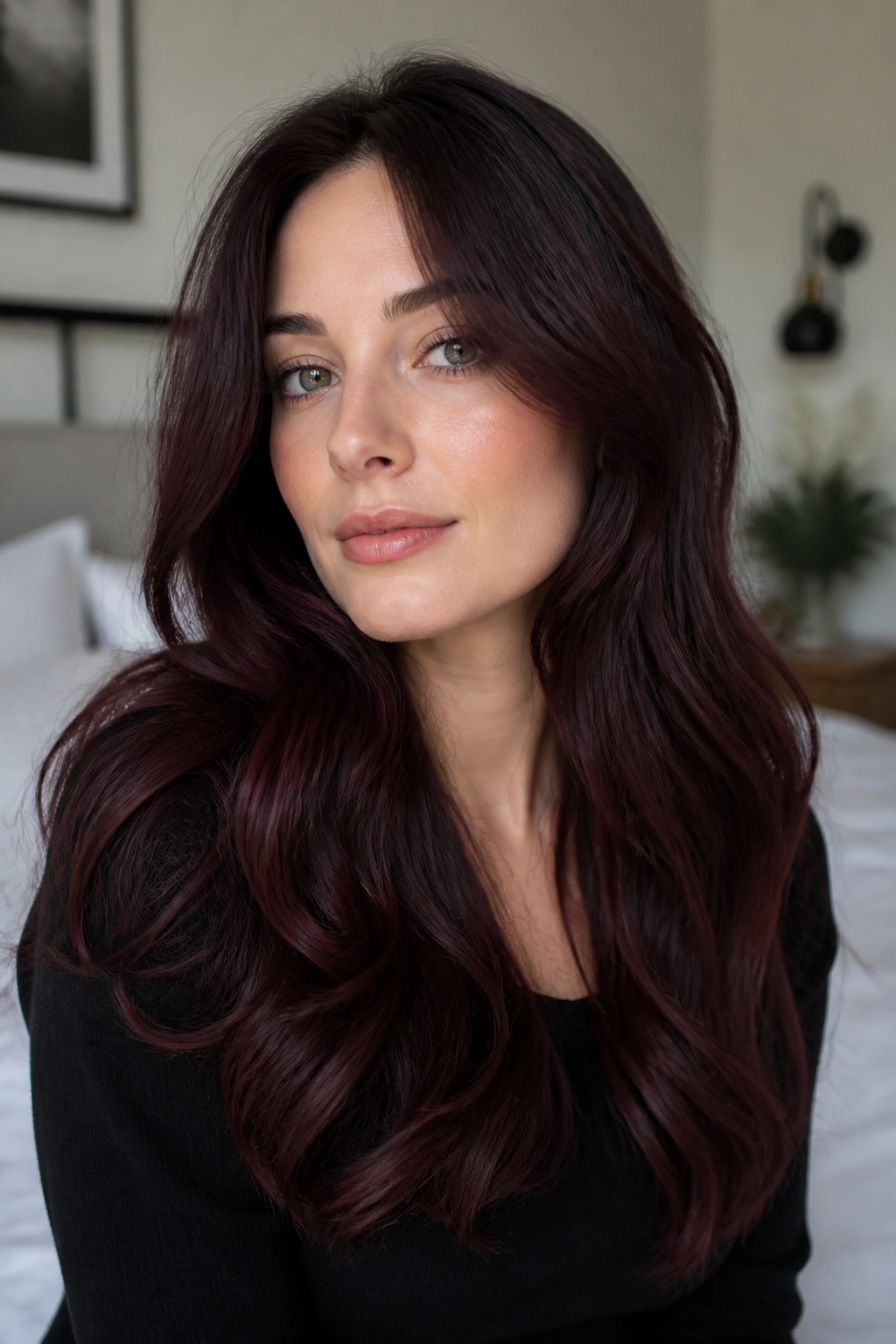
Glossy truffle brown with cherry smoke is the shade for people who love a muted finish. The cherry is there, but it sits under the surface like a haze rather than a stripe.
That smoke effect comes from cool red-violet pigment mixed into a deep truffle base. On cool skin, it keeps the look polished and soft. On straight hair, the finish can look almost satin-like. On waves, the cherry smoke comes in and out of view, which makes the color feel more expensive than it sounds.
This is a good pick if you do not want a bright red-brown but also do not want plain brunette. It lives in the middle. That middle space is where a lot of the nicest colors sit, honestly, even if they are less dramatic in photos.
If your hair tends to frizz, a gloss like this helps because the shine becomes part of the look. A dry, rough finish can hide the smoke. A smooth one shows it off.
19. Deep Cocoa Bob with Subtle Cherry Peekaboo
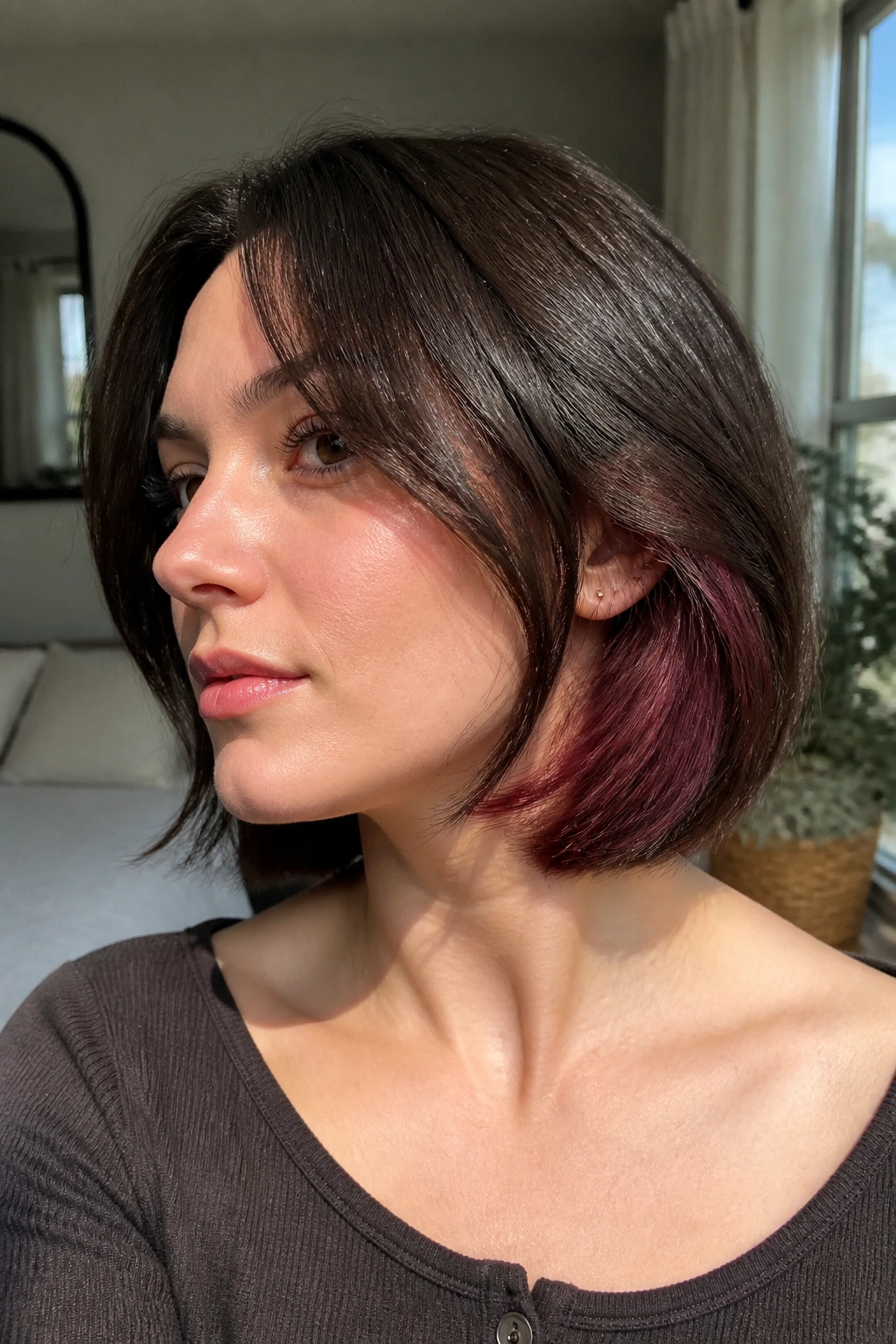
Peekaboo cherry is the least obvious option here, and that is exactly why it works. The color sits under the top layer, so the hair looks deep cocoa from the outside and cherry only when it moves.
This is a strong choice for bobs, lobs, and blunt cuts. The shape gives the hidden color a place to peek through when the ends flip or when you tuck one side behind your ear. On cool skin, the trick is keeping the cherry blue-based so it does not fight the face.
A peekaboo placement also makes grow-out easier. Since the brighter shade is tucked underneath, you can stretch time between salon visits without the color looking ragged. It is practical, which I appreciate. Pretty and practical is a rare combination.
If you wear your hair up often, this shade still earns its keep. The red-brown flashes show in ponytails, buns, and claw clips, which makes the color feel more present than a flat brown ever could.
20. Soft Truffle Brown with a Cool Cherry Finish
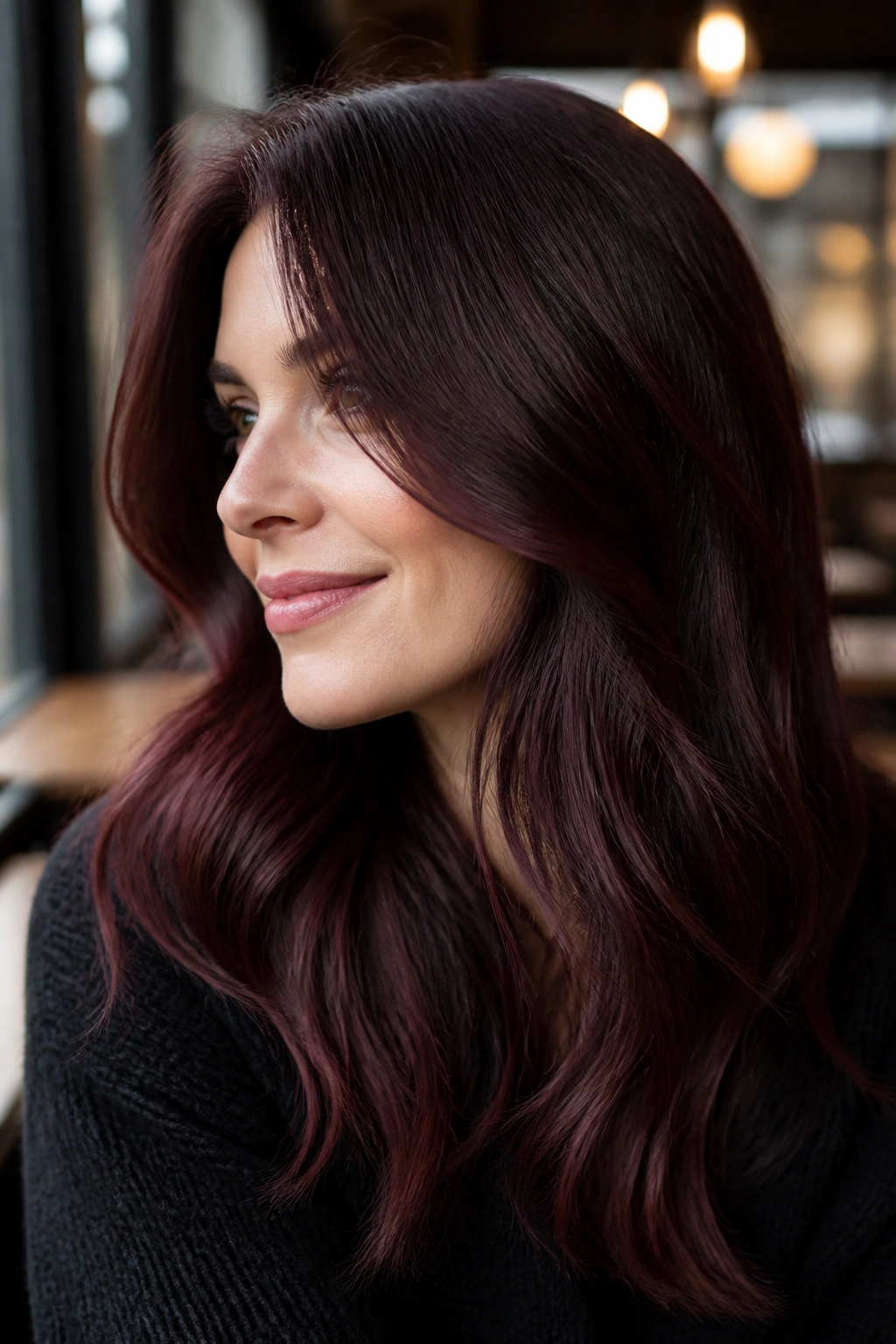
Soft truffle brown with a cool cherry finish is the one I’d hand to someone who wants the safest entry point into chocolate cherry hair color. The brown stays soft, the cherry stays cool, and the whole thing reads like a richer version of brunette rather than a big color leap.
This is the shade that tends to make cool skin look calm. Not pale. Calm. That matters. A lot of red-brown formulas look exciting in the bowl and strange on the head because they lean too warm. A soft truffle base with a cool cherry finish avoids that problem and still gives the hair depth.
If you want one phrase to take to the salon, make it this: cool brown root shadow, cherry-violet gloss, no copper warmth. That tells a colorist exactly what lane you want, and it gives them room to adjust the depth to your hair.
Quiet wins here. If the chocolate stays smoky and the cherry stays blue-based, the shade will work with cool undertones instead of arguing with them. That’s the whole game.
