



Cool skin and beige blonde are a better match than most people think—if the beige leans smoky, pearl, or neutral instead of buttery. That’s the part a lot of people miss. Beige blonde is not one single shade; it sits in that narrow space between ash and gold, and the exact placement of the tone decides whether your skin looks clear and fresh or a little flushed and tired.
If your face reads pink, blue, rosy, or cool-olive in daylight, the wrong blonde can pull hard against it. A warm honey blonde can look loud in the worst way. A crisp beige, though, can soften the whole face, brighten the eyes, and make the hair look expensive without screaming for attention. That’s especially true when the color is toned with a neutral or violet-based gloss instead of something yellow.
The other thing worth knowing is that beige blonde plays differently depending on depth. On very light hair, it can look airy and clean. On brunette bases, it can look richer and more dimensional, almost like a soft smoked highlight. The best versions are never flat. They have a little movement in the tone itself.
1. Icy Beige Blonde for Very Cool Skin
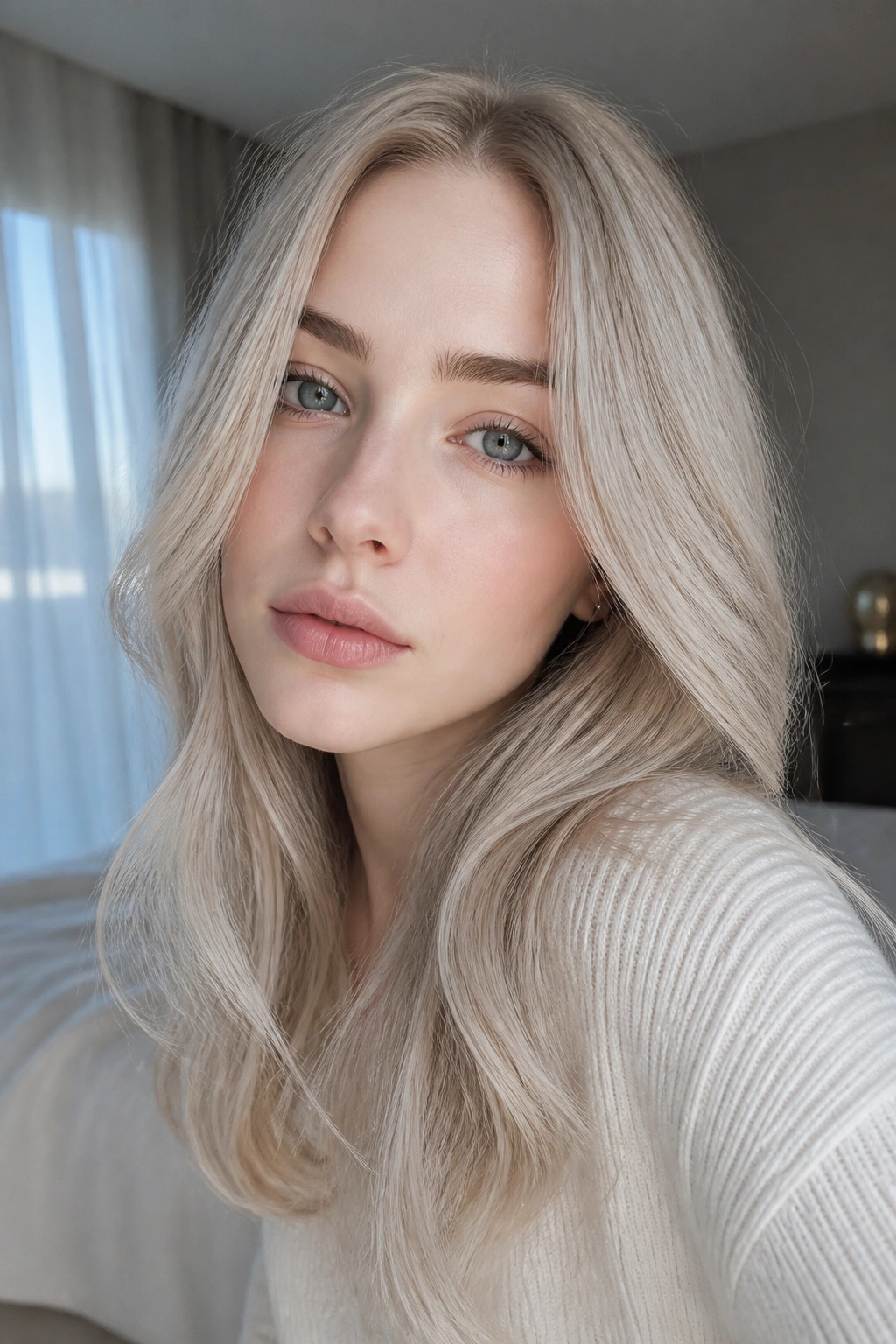
Icy beige blonde is the cleanest way to brighten cool skin without drifting into harsh platinum. It gives you that pale, frosty look, but it keeps a whisper of beige in the background so the color does not look chalky. That tiny bit of softness matters a lot on pink or porcelain skin, because full-on white blonde can make the face look sharp in a way that feels unforgiving.
I like this shade when the goal is clarity. Not drama. Clarity. The hair looks light, the face looks open, and the whole effect stays polished if the toner is kept cool rather than sunny. Ask for a lift to around level 9 or 10, then finish with a violet-beige gloss so the blonde holds onto its softness.
What to ask for at the salon
- A pale blonde lift with a neutral-violet toner
- Soft beige in the mid-lengths, not a flat silver finish
- A root shadow only if your natural base is darker than level 7
- Fine face-framing pieces that stay cooler than the ends
This color is especially kind to cool skin with strong contrast—dark brows, pale skin, light eyes. It does not need much warmth to stay alive, which is the whole point. If the blonde starts looking yellow, it stops reading icy and starts looking brassy fast. Keep a purple shampoo nearby, but use it lightly. Overuse can make the hair look dull instead of crisp.
2. Pearl Beige Blonde with a Sheer Glow
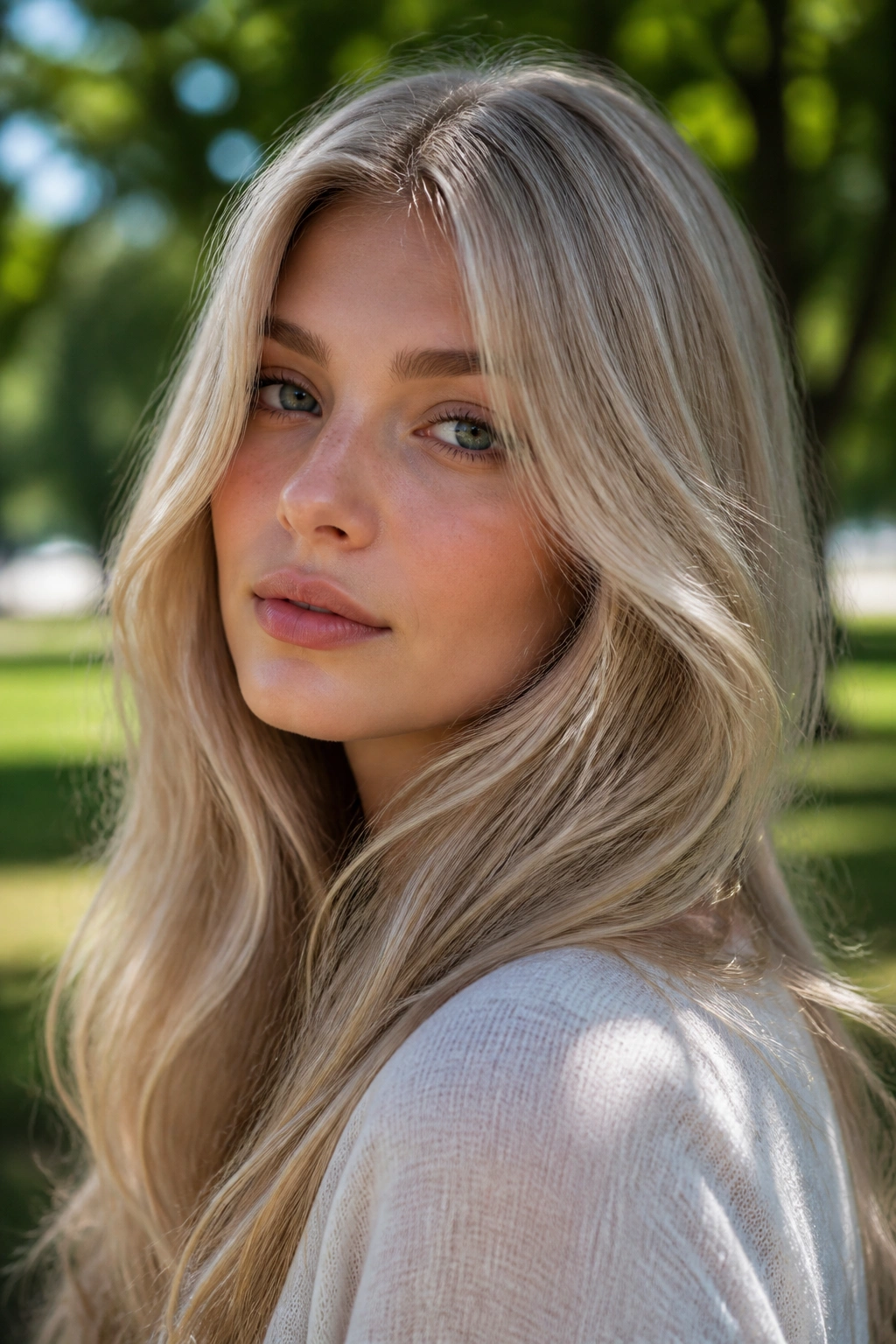
Why does pearl beige blonde work so well on cool undertones? Because it reflects light in a softer, flatter way than gold, but it still has enough sheen to keep the hair from looking dusty. Pearl is the shade I reach for when someone wants blonde that looks polished in daylight and not overly shiny under indoor lights.
The best pearl beige blondes feel a little translucent, almost like the color came from the inside of the hair rather than sitting on top of it. That is what makes it flattering on cool skin. It doesn’t shout warmth. It just smooths the whole look out. If your skin leans rosy or blue-pink, this is one of the easiest beige blonde directions to wear.
What to ask your colorist for
- A level 9 blonde base with a pearl or opal gloss
- Minimal yellow in the toner
- Soft brightness around the part and temples
- A finish that stays creamy, not smoky-dark
I also like pearl beige on hair that’s a little fine or silky, because the reflective tone gives it more presence. The shade feels gentle, but it isn’t weak. It’s quiet, not boring. That’s a useful difference.
If you wear silver jewelry, smoky eyeliner, or berry lipstick, pearl beige tends to sit beautifully with those choices. It gives the face a clean frame without making the hair the loudest thing in the room.
3. Mushroom Beige Blonde on a Cool Brown Base
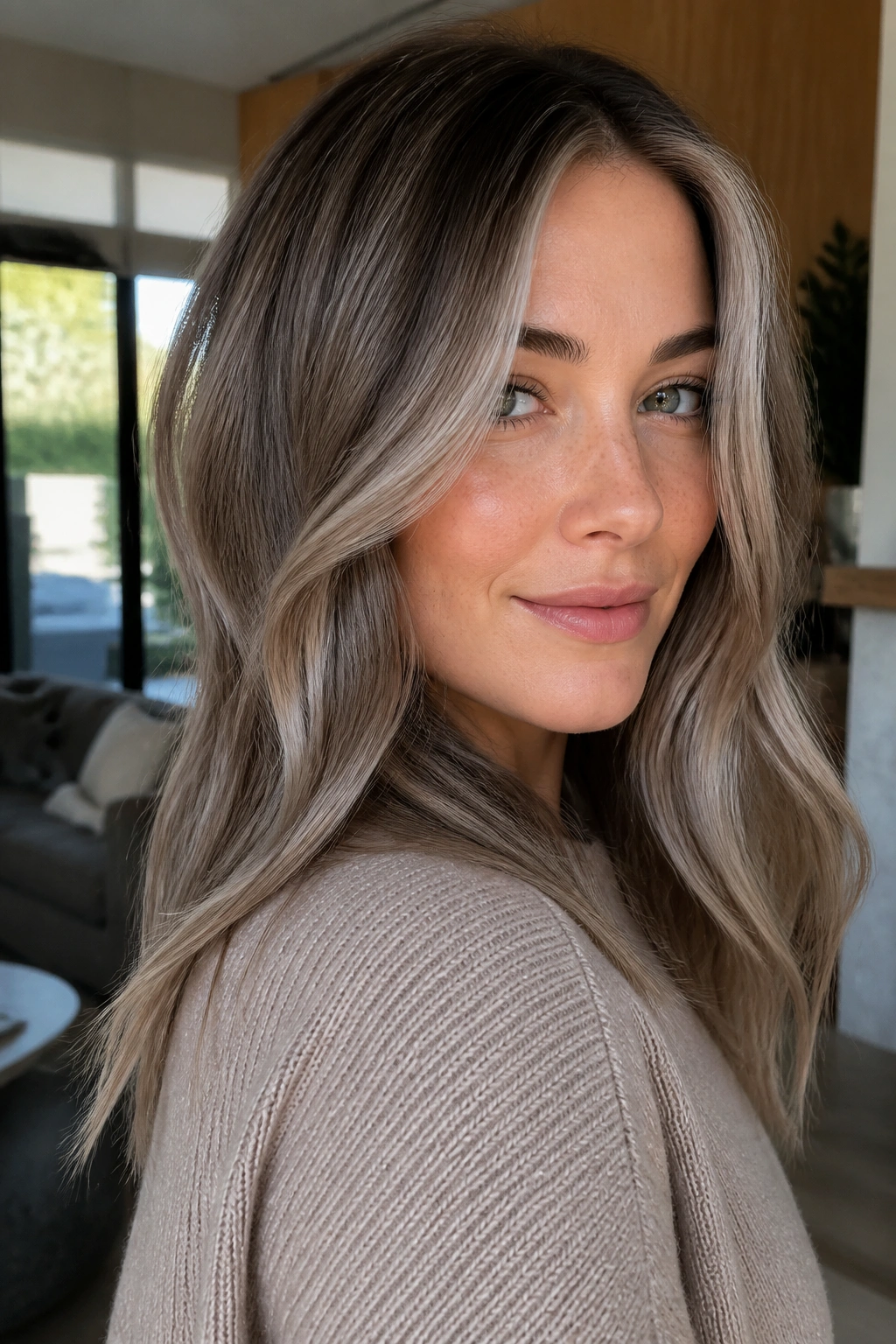
Picture a soft brown base with pale beige woven through it, but no caramel in sight. That’s mushroom beige blonde. It has a taupe feel, which sounds odd until you see it on cool skin. Then it makes sense fast. The shade looks grounded, modern, and a little more expensive than a standard warm brunette-to-blonde blend.
This is a smart choice if you do not want to go bright all over. Mushroom beige lets the darker root stay visible, which keeps the skin from getting washed out. The cool undertone in the brown protects the face from looking muddy, while the beige ribbons lift the overall look just enough.
Why it flatters cool undertones
- The base stays ash-brown or neutral brown
- The lighter pieces are soft beige, not gold
- The grow-out line stays low-contrast
- It works on straight, wavy, and loose-curly textures
I’m a fan of this shade on people who hate high-maintenance blonde but still want something that reads lighter around the face. It grows out in a way that feels intentional, not neglected. That matters more than people think.
If your skin gets red easily, mushroom beige can be especially kind. The muted tone keeps the whole look from fighting with flushed cheeks or a pink nose. It gives you softness without turning warm.
4. Beige Balayage on Cool Brown Hair
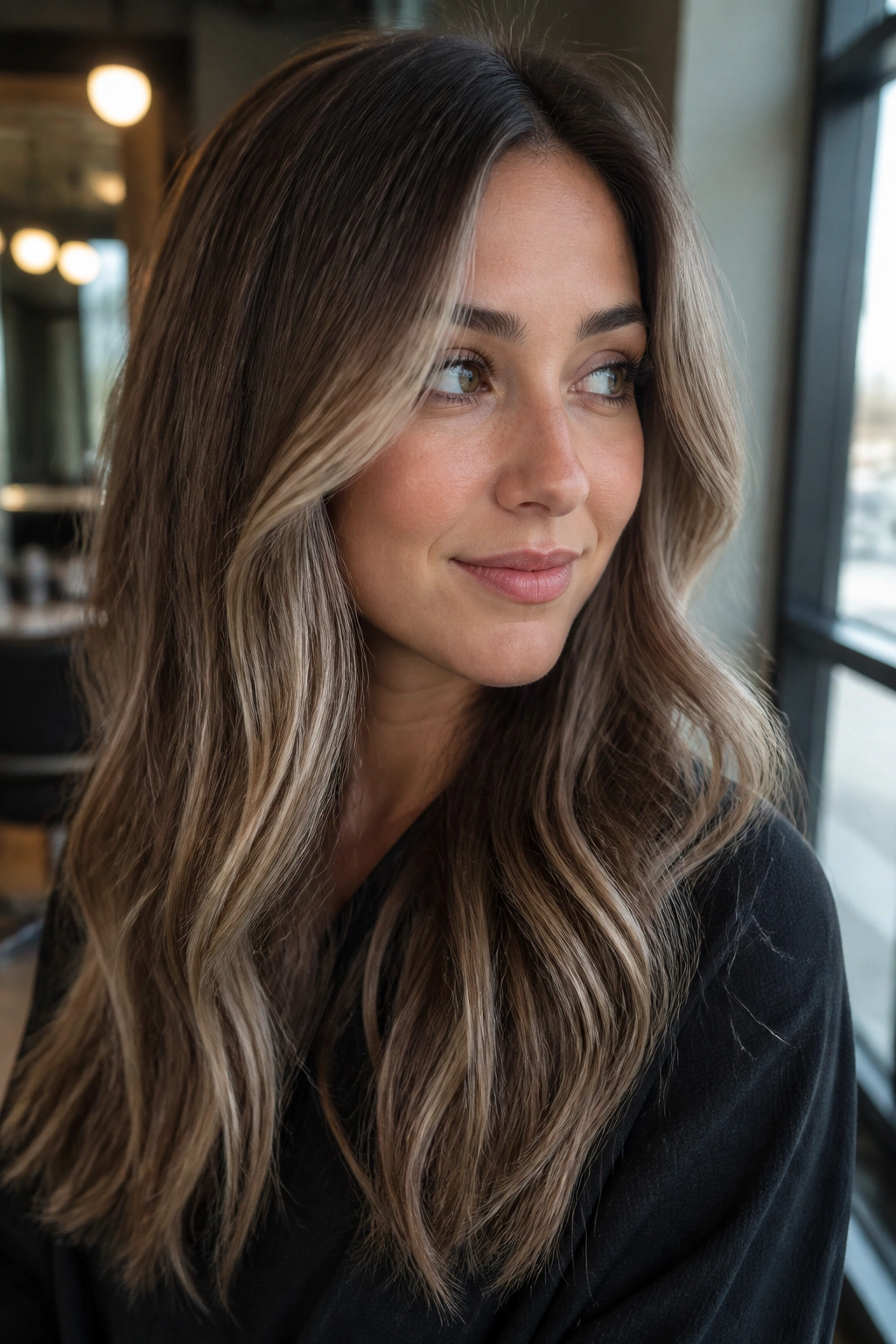
Beige balayage is the move when you want blonde in the hair, not on the whole head. Hand-painted beige pieces over a cool brown base give you brightness where it counts—around the face, the top layers, the ends—without bleaching away the depth that makes cool skin look calm.
This approach is one of my favorites because it respects the brunette underneath. A lot of blonding goes wrong when there is too much lift and not enough shade left behind. Here, the brown base stays visible, and the beige pieces sit on top like soft light rather than solid color blocks. It feels natural, but not boring.
Ask for ribbons that are only 2 to 3 levels lighter than your base if you want a softer finish. If you want more pop, push the contrast a little farther at the front sections and leave the back calmer. The face frame can carry the brightness. The rest does not have to fight for attention.
Beige balayage also works well if your hair has some texture. Waves make the contrast easier to see, and curls keep the lighter pieces from looking stripey. Straight hair can wear it too, though. Just keep the toner cool.
5. Smoky Beige Blonde for Soft Contrast
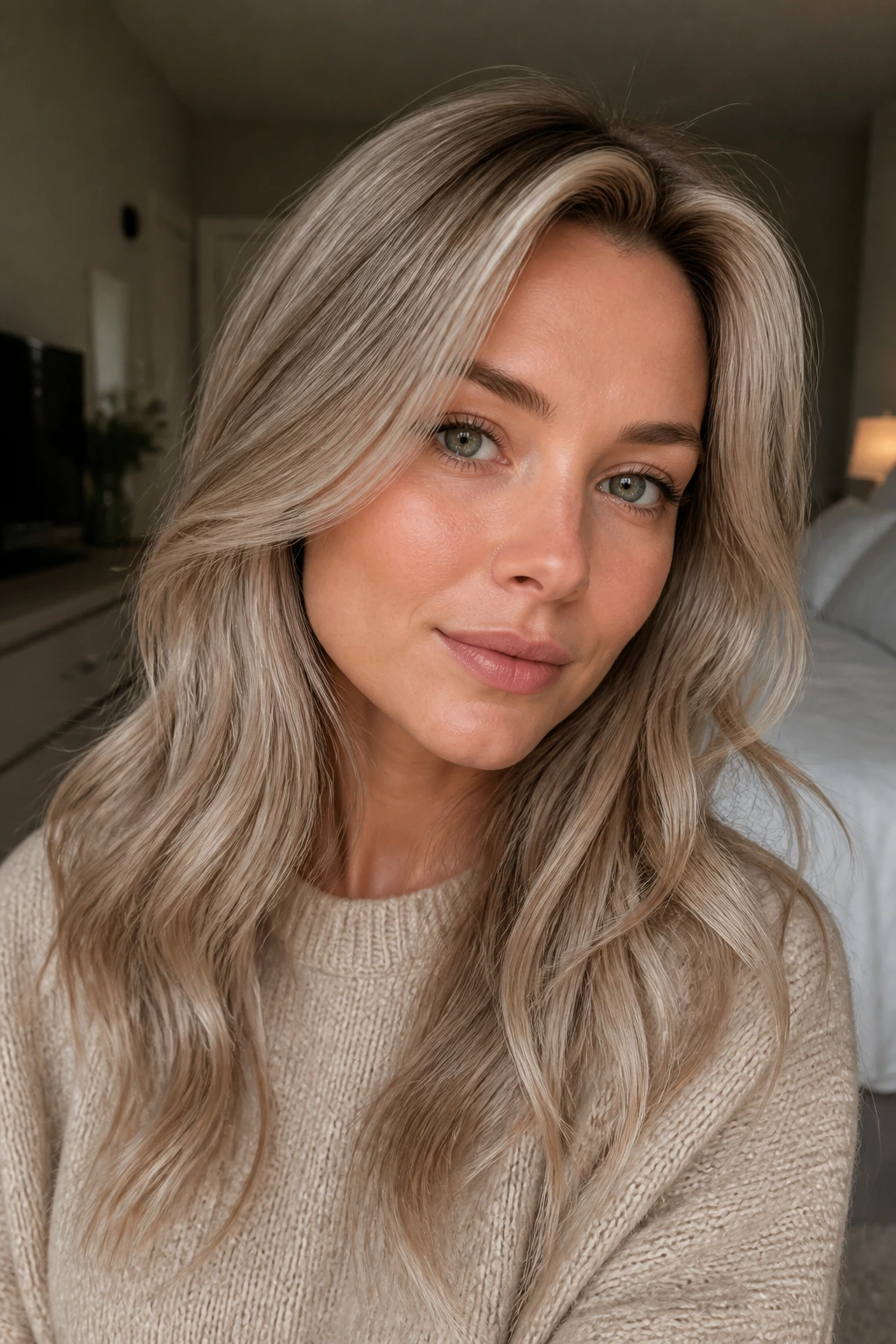
Smoky beige blonde is the shade I’d hand to someone who likes muted makeup, black clothes, and hair that looks expensive without trying too hard. Unlike a golden blonde, this one keeps the warmth locked down. It has a cool haze over it, almost like the color was run through a soft filter.
That cooler cast is exactly why it works on cool skin. It doesn’t echo redness. It doesn’t fight blue undertones. It just sits there looking calm and controlled. If you want something lighter than brunette but not icy enough to feel severe, smoky beige lands in the middle.
Who it suits best
- People with cool or neutral-cool skin
- Hair that tends to pull orange during lightening
- Fine to medium hair that needs tonal depth
- Anyone who prefers a muted, low-gloss finish
The one catch is dullness. Smoky beige can look flat if it gets over-toned or if the hair is porous and grabs too much ash. So keep the toner time short and ask for a gloss that leaves a little shine behind. Smoky should mean soft, not lifeless.
I like this shade on shoulder-length cuts, because the movement in the hair keeps the smoky tone from looking too heavy. Short hair can wear it too, especially if the cut has texture.
6. Beige Blonde Babylights Around the Face
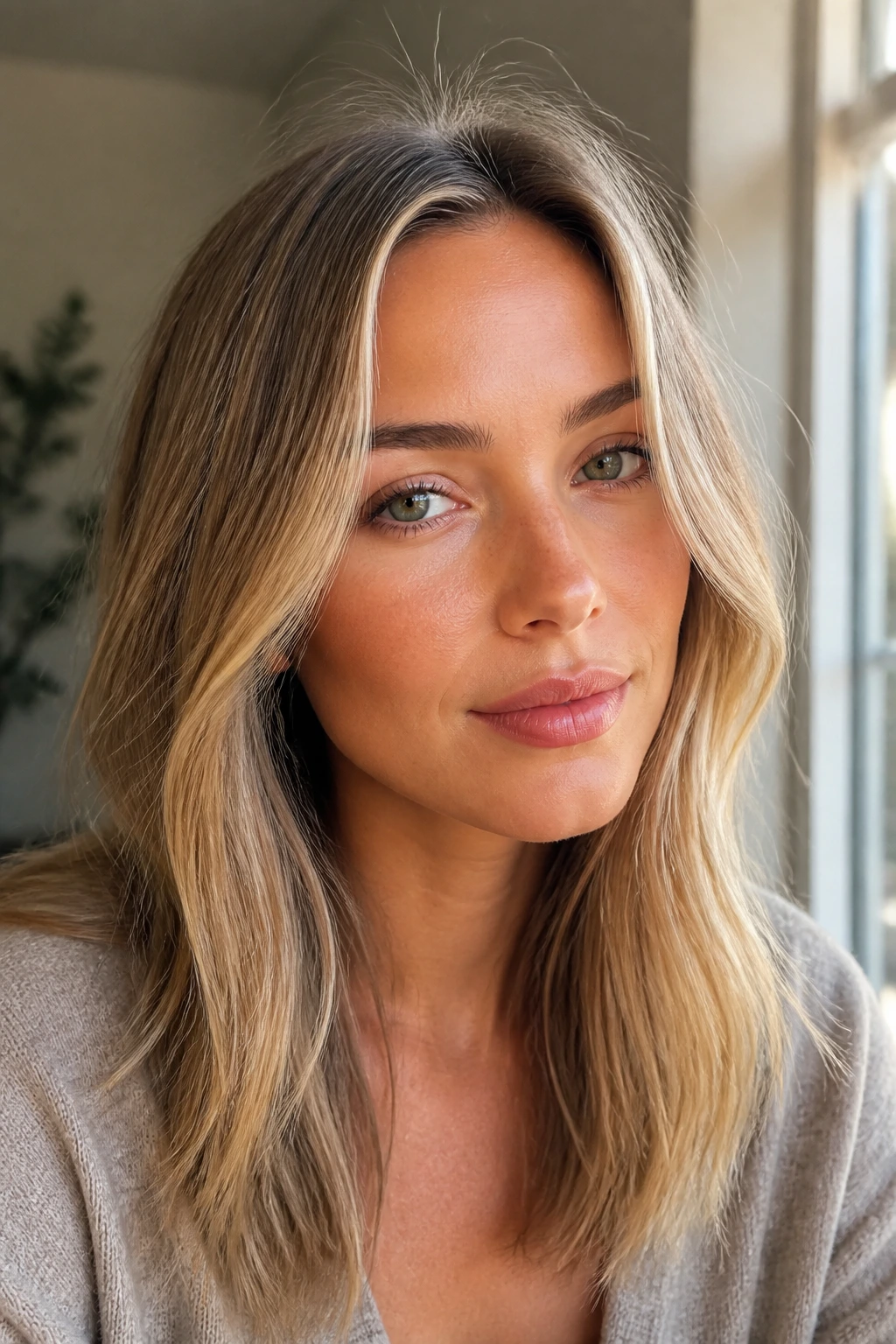
Babylights are tiny. That is the whole advantage. Instead of chunky blonde pieces, you get fine, narrow highlights that mimic how the sun would lighten hair over time. On cool skin, beige babylights are a nice way to brighten the face without tipping into yellow territory.
This is one of those colors that reads subtle until you compare it to untreated hair. Then the difference pops. The trick is placement. Put the brightest bits around the part, temples, and the first few inches around the face. Keep the rest softer so the effect stays delicate.
How to wear it
- Use foil sections about 1/8 to 1/4 inch wide
- Lift only 2 levels lighter than the base for a gentle finish
- Tone with beige plus a hint of violet
- Keep the ends slightly darker than the roots if your hair is fragile
Babylights are especially good if your cool skin gets overwhelmed by broad streaks. They break up the light so the face looks fresh, not striped. That tiny detail makes a big visual difference.
I’d also point out that babylights age gracefully. Even when they grow out, they tend to blur instead of shout. If you like low-drama hair color with a clean finish, this is a strong pick.
7. Champagne Beige Blonde with a Cool Spark
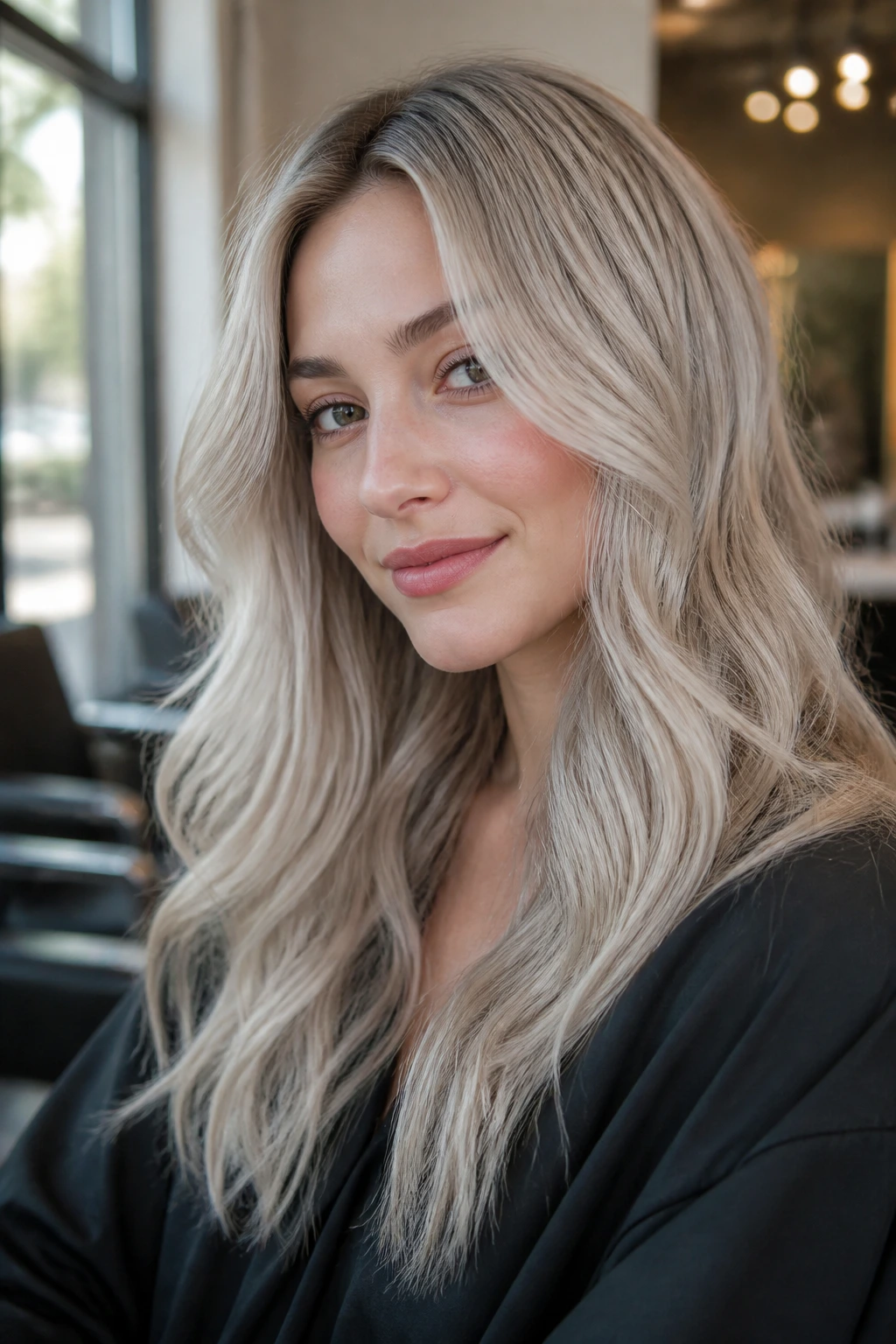
Champagne beige blonde has a little sparkle in it, but the cool version stays away from gold. Think pale beige with a faint silvery glow, not buttery brightness. On cool skin, that matters. A warm champagne can lean peachy fast. A cooler champagne looks refined and airy.
I like this shade when the hair needs a touch more life than plain ash. It has movement. It has shine. It still keeps the undertone clean. On a cool face, that balance can make the eyes look brighter and the cheekbones a little sharper without any obvious contouring trick.
If you’re asking for it in a salon chair, be specific about the base. You want a beige blonde with a pearl or silver cast, not a warm gold glaze. That one sentence can save the whole result.
It also plays well with soft waves, because the bends in the hair catch the cooler shimmer at different points. Very straight hair can wear it too, but then the gloss needs to be clean and even. Otherwise the blonde can flatten out.
Champagne beige is a nice choice if you wear a lot of gray, navy, black, or soft white. The shade blends into that palette without making the face look washed out.
8. Beige Blonde Money Piece for Cool Undertones
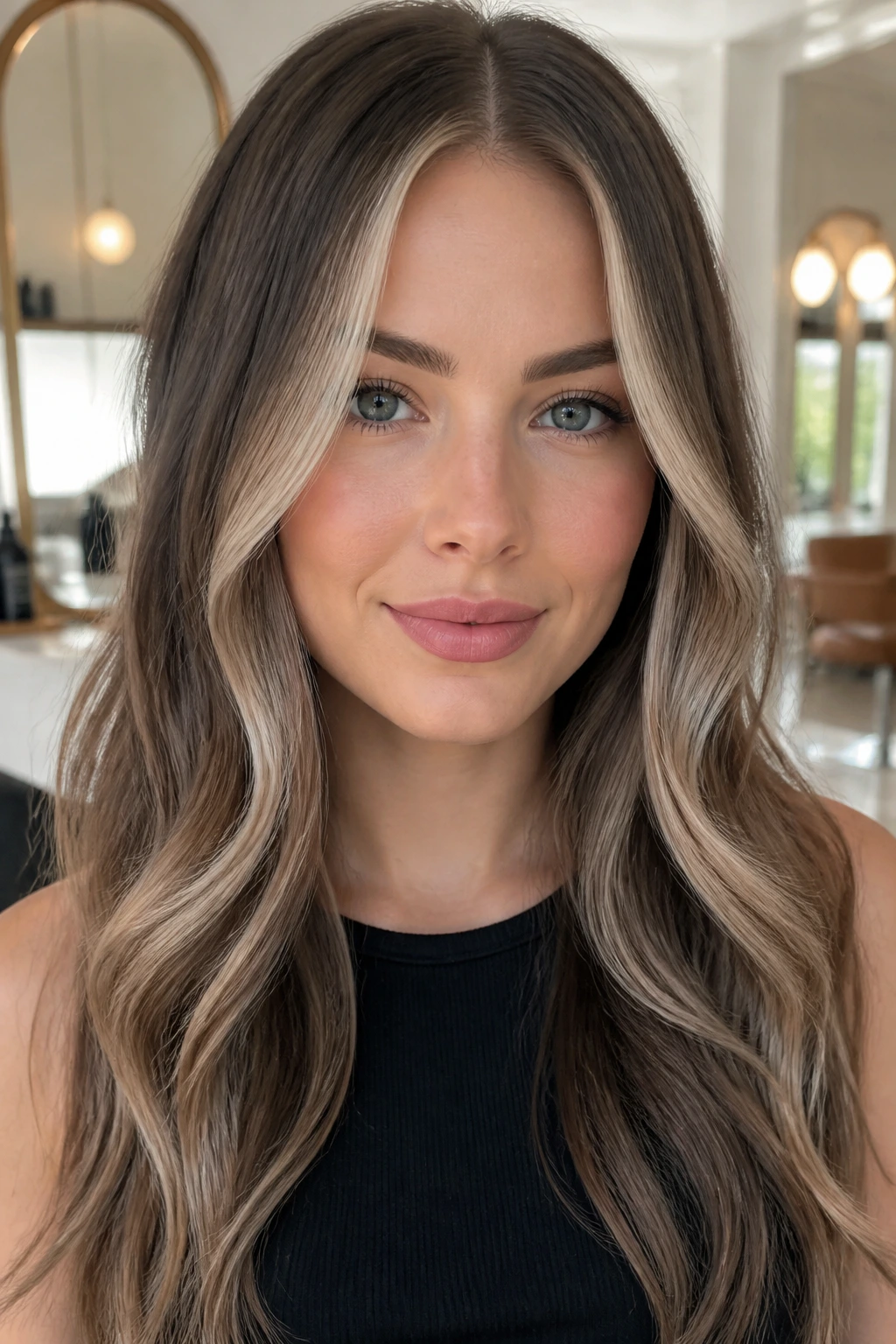
Can a face-framing money piece help cool skin look brighter? Yes, if the blonde is beige instead of gold. A money piece is the fastest way to put light near the eyes and cheekbones, and that light can do a lot when the rest of the hair stays deeper.
I like this look because it gives you impact without a full-head commitment. Keep the base in a cooler brunette or dark blonde family, then lift only the front sections to a soft beige. The contrast frames the face in a way that feels clean, not chunky.
Why it flatters
- It brings brightness close to the skin
- It keeps the roots darker for balance
- It draws attention to the eyes first
- It works best when the beige is neutral, not yellow
A money piece can go wrong if it’s too wide or too warm. Then it starts looking stripey. Narrower placement is better, especially on cool skin. You want the face to glow a little, not look surrounded by a hard blonde block.
This is also the kind of color that looks good with pulled-back hair. A ponytail or clip leaves the front pieces visible, so you still get the effect on a casual day. Small placement, big payoff.
9. Frosted Beige Blonde on a Sharp Lob
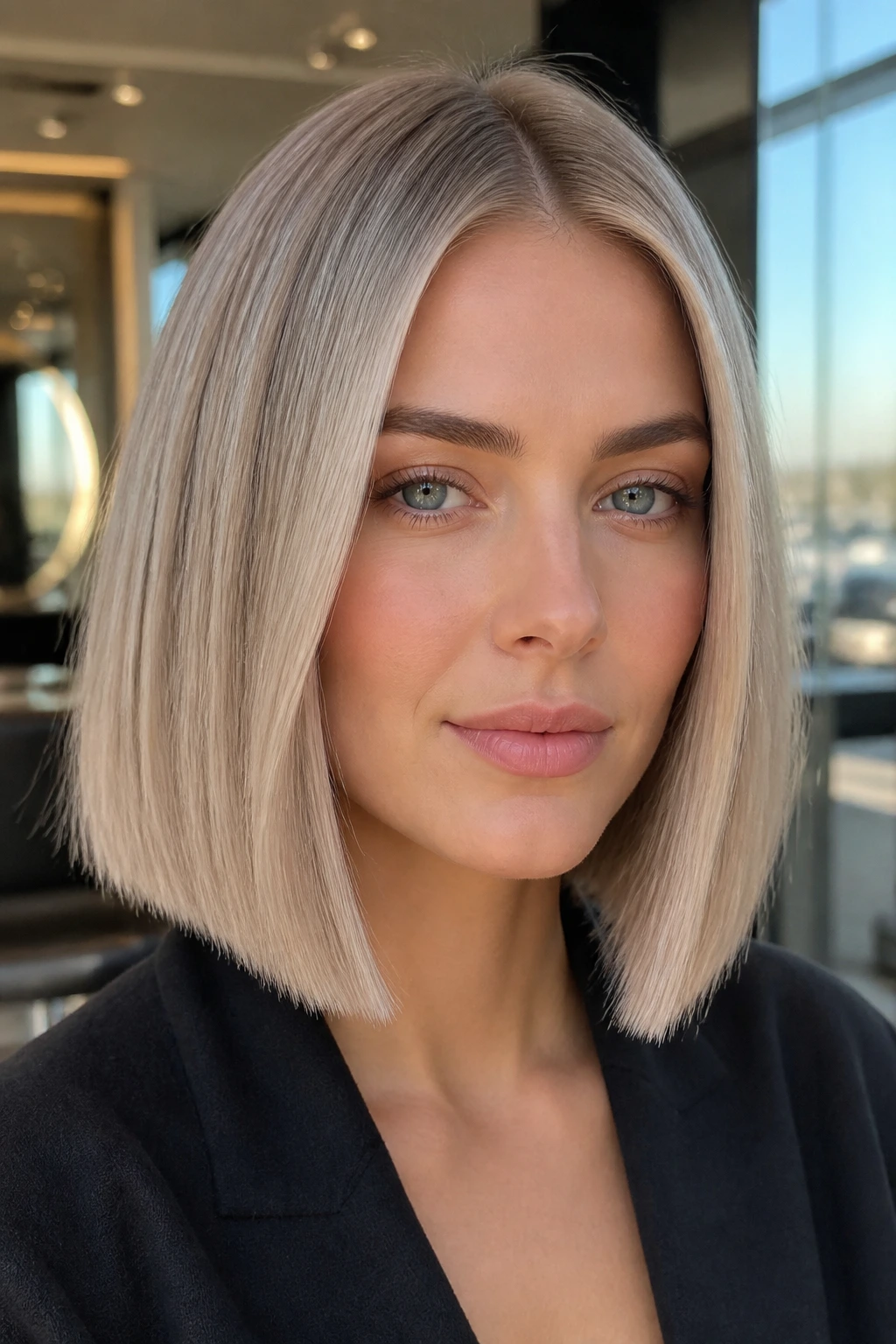
A lob gives beige blonde more edge. That’s the honest truth. On long layered hair, a soft blonde can sometimes disappear into the movement. On a blunt or slightly textured lob, the tone reads crisp. Frosted beige works especially well here because the haircut itself is clean and the color can mirror that shape.
For cool skin, the frosted note keeps the blonde from leaning sunny. It feels wintery, but not harsh. If your hair is naturally straight or only mildly wavy, this shade can look very polished, especially when the ends are kept blunt and the gloss is smooth.
The best version is not over-highlighted. Use a pale beige glaze over a light base, then add small brighter pieces through the top layer if you want extra dimension. Too much contrast turns a frosted blonde into a striped one fast.
I also like this combination for people who wear lip color. Berry, plum, mauve, and blue-red shades all sit well beside frosted beige. The hair stays neutral enough to let the makeup do its job.
A lob does need regular shaping, so this one asks for a little discipline. But the result is clean and modern without feeling trendy-for-the-sake-of-it.
10. Soft Beige Bronde for a Cooler Brunette Look
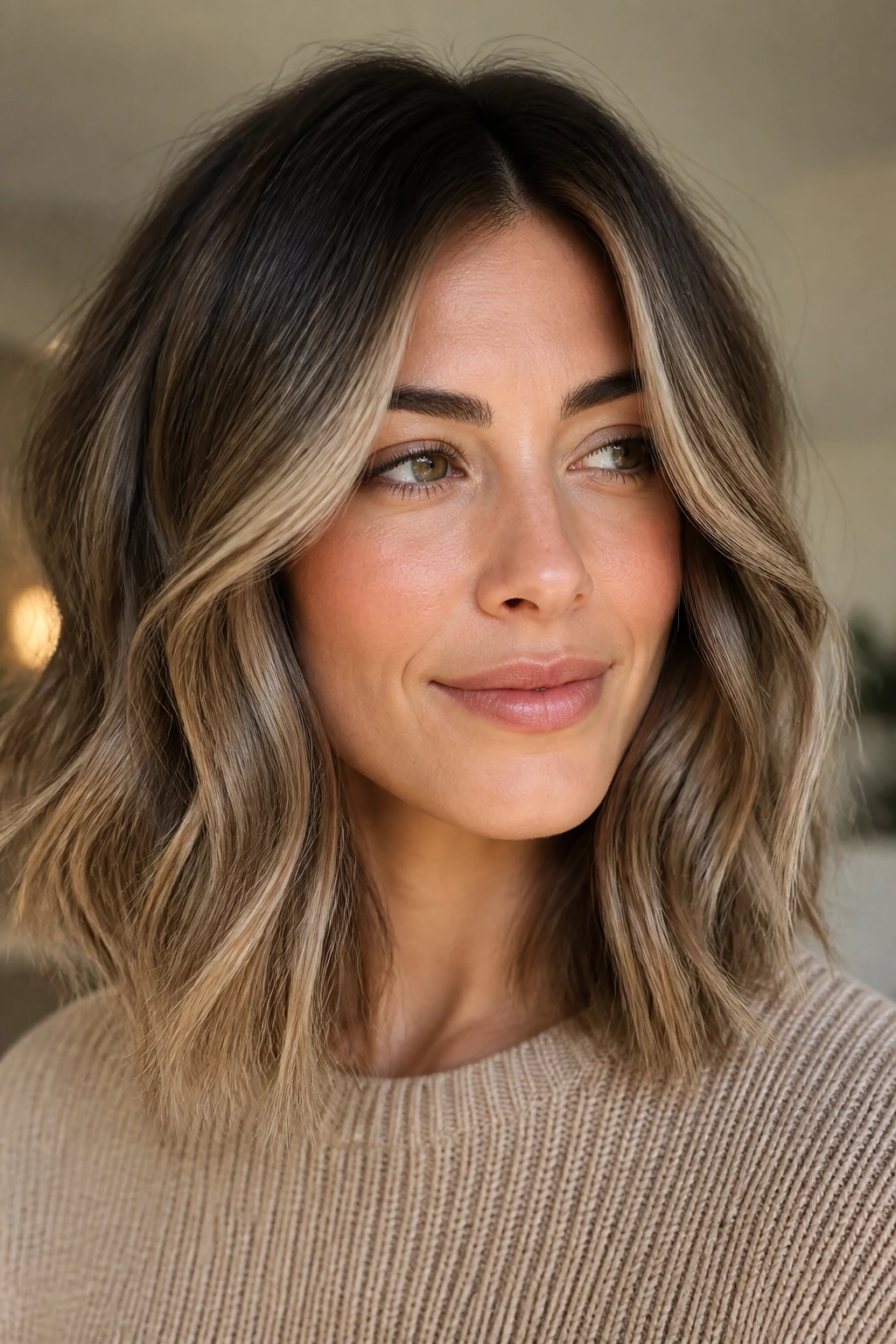
Soft beige bronde is the bridge shade for anyone who likes being brunette but wants a little lightness around the face. It’s a cooler version of brown-blonde mix, and on cool skin it can look far more natural than a full blonde shift. The base stays brown enough to keep depth. The ends and top layers pick up beige light enough to register as brighter.
This is one of the most useful colors on the list because it works when you want a change without a full identity switch. You still look like yourself. Just softer, lighter, and a touch more lifted. That’s a good thing if your skin leans cool and you don’t want hair color competing with your face.
A few details that matter
- Ask for ash-brown lowlights, not caramel
- Keep the lightest pieces around the front and crown
- Use a beige gloss every few weeks to keep the tone clean
- Let the root stay deeper if you want easier grow-out
Bronde can go muddy if the highlights are too warm or too many. So the cool-side version is the safer bet for pink or neutral skin. It reads fresh, not yellow.
I’d especially recommend it for shoulder-length or longer hair. The extra length gives the beige room to move, and the brown underneath keeps the whole look grounded.
11. Neutral Beige Blonde with a Root Melt
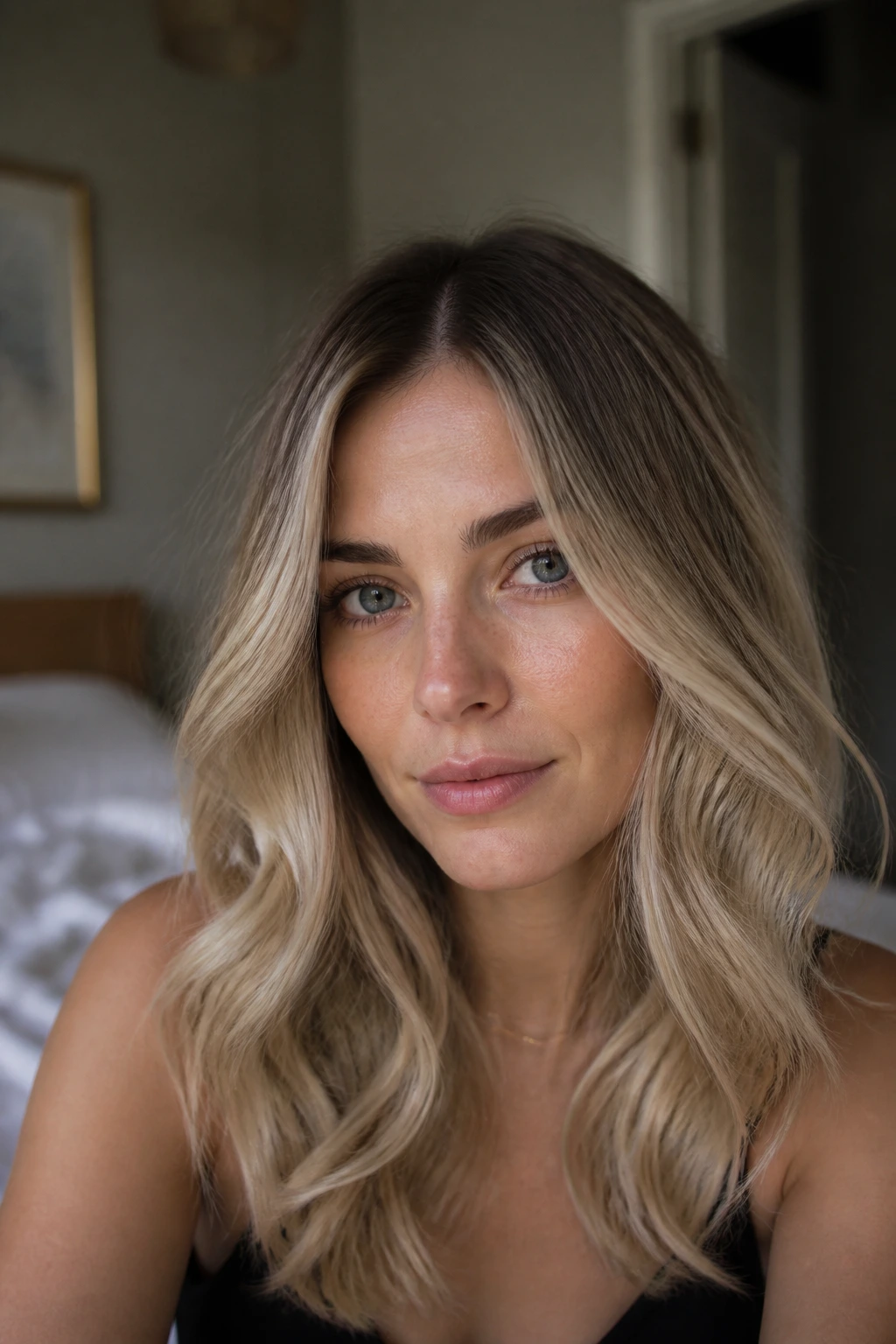
Unlike a hard root shadow, a root melt fades the color gradually from your natural base into beige lengths. That softness makes a real difference on cool skin because it avoids a sharp line near the face. Sharp lines can look intentional on some people. On others, they just look harsh.
A neutral beige blonde with a root melt is one of those shades that grows out gracefully. The root stays a little deeper, then the color slides into a cooler beige through the mid-lengths and ends. It gives the hair depth, but not heaviness. And because the beige stays neutral, it works on skin that leans pink or blue without adding warmth where you don’t want it.
This is also the kind of color that makes sense if you hate constant touch-ups. The melted root buys you time. More than that, it keeps the style looking soft as it grows.
If you want to ask for it clearly, say this: keep the root soft and shadowed, then blend into a level 8 or 9 beige with no gold at the ends. That phrasing leaves less room for a warm surprise.
The look is especially good on medium-to-thick hair, where the depth at the root helps prevent the style from looking puffy or overly light.
12. Beige Blonde with Pale Lowlights
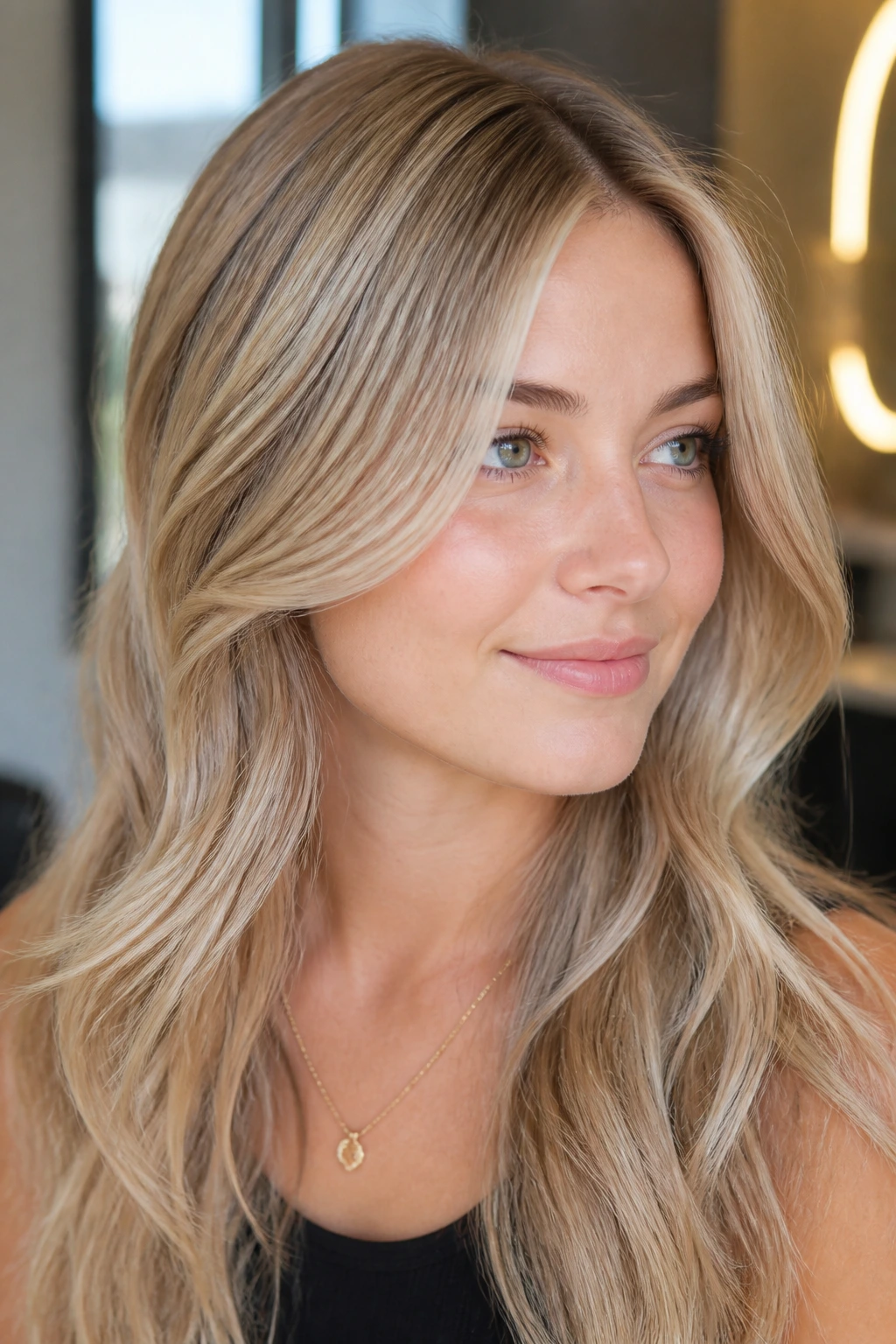
What happens when blonde starts to look too flat on cool skin? You add pale lowlights. Not dark streaks. Not chunky brown bands. Just a slightly deeper beige placed under the top layers so the blonde has something to rest against.
This is a smart move if your skin is very fair or if your features get lost in all-over light hair. Too much pale blonde can wash everything out. Pale lowlights solve that without making the color go dark. They give the eye a place to land.
Where to place them
- Under the crown, so the top layer stays bright
- Behind the ears, where movement reveals depth
- At the nape, for hidden contrast
- Between face-framing highlights, so the blonde doesn’t blur into one sheet
The key is restraint. The lowlights should be just one or two levels deeper than the beige blonde, not a full brunette contrast. You want dimension, not stripes.
This shade works beautifully if your hair is fine or straight and tends to collapse into one tone. The extra depth makes the color read richer and keeps cool skin from looking drained. It’s a sneaky-good choice. Not flashy. Very useful.
13. Silver-Beige Blonde for a Sharper Finish
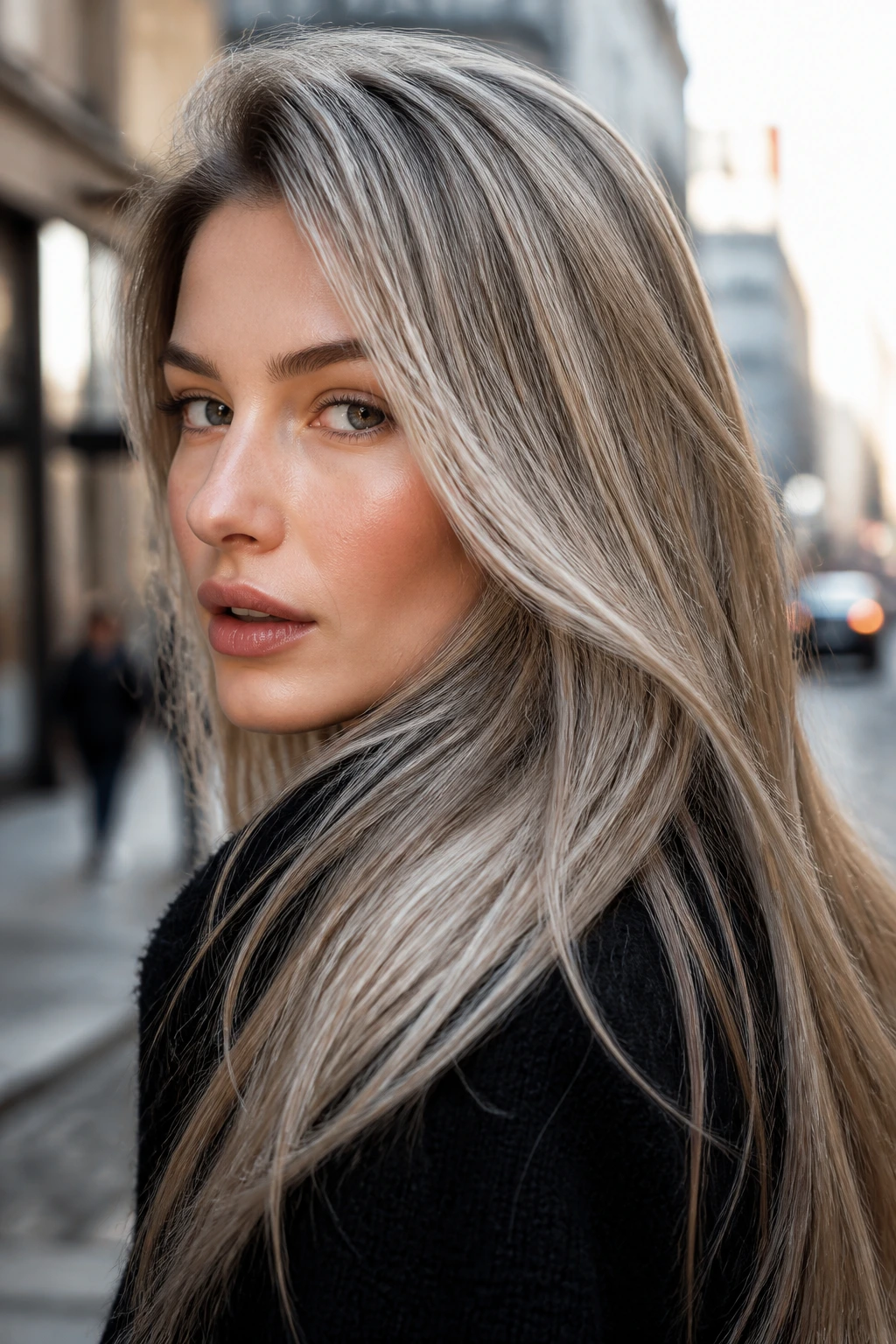
Silver-beige blonde sits on the cool edge of the family. It’s the one with the least warmth and the most shine, though shine here means shimmer, not gloss. If pearl beige is soft and icy beige is bright, silver-beige is the sharper cousin.
This shade can look stunning on cool skin because it echoes the undertones instead of fighting them. It’s especially strong on people with gray or white brows, pale eyes, or a natural preference for black, charcoal, and slate in clothing. The hair and skin feel like they belong in the same temperature zone.
The downside? It can drift dull if the hair is porous or over-toned. So the maintenance needs a lighter touch. Purple shampoo helps, but too much of it can flatten the shine and make silver-beige look dusty. A clear gloss is often the better reset between salon visits.
I’d ask for a silver-beige toner over a clean blonde base, not a full silver wash. That preserves the beige softness underneath. Without that beige, the color can look metallic in a way that is less flattering than people expect.
This one is best for someone who wants a cool, deliberate look. No softness-for-softness’ sake here.
14. Beige Blonde Shag with Face-Framing Pieces
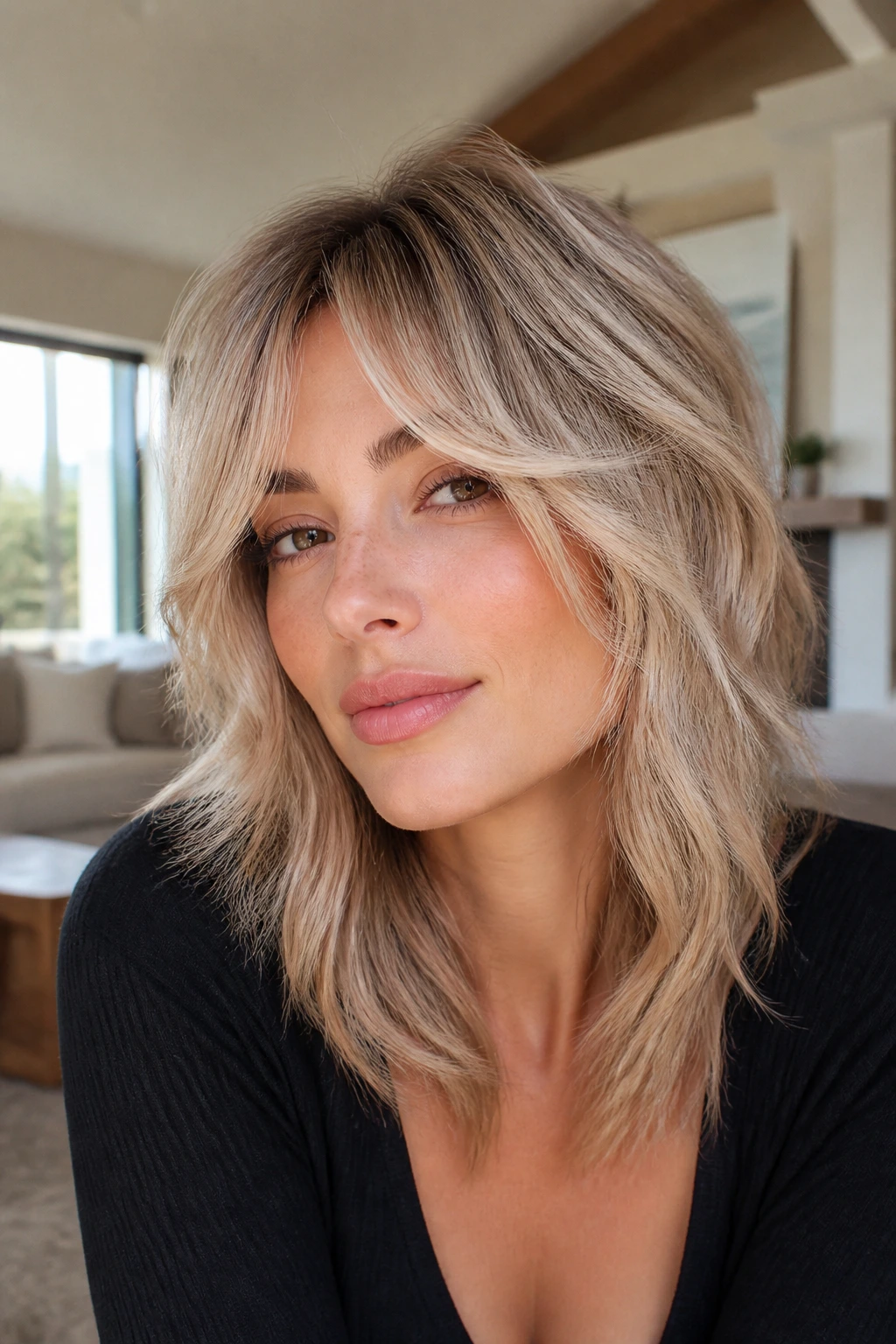
A shag changes how beige blonde reads. The layers break up the tone, so the color feels airier and more lived-in. On cool skin, that can be a gift. Heavy blonde can make the face feel too bright. A shag softens the edges and lets the beige move.
Face-framing pieces matter here. Keep them a touch brighter than the rest of the hair so the eyes and cheekbones come forward. Then leave the underneath layers a little deeper beige or ash-brown. The contrast creates shape without needing obvious streaks.
Why this cut and color work together
- The layers show tonal variation
- The fringe can carry the lightest beige pieces
- The ends look softer when they’re not all one color
- Cool skin gets brightness without a blocky blonde helmet effect
I’m especially fond of this on medium hair density. Thick hair can handle the layers. Fine hair can still wear it, but the color placement has to stay light-handed.
The shag also gives you a little freedom on styling days. Messier waves make the color look more relaxed. Straighter styling makes the beige read cleaner. Either way, the shade stays flattering as long as the warm tones stay out of the formula.
15. Dimensional Beige Blonde on a Dark Blonde Base
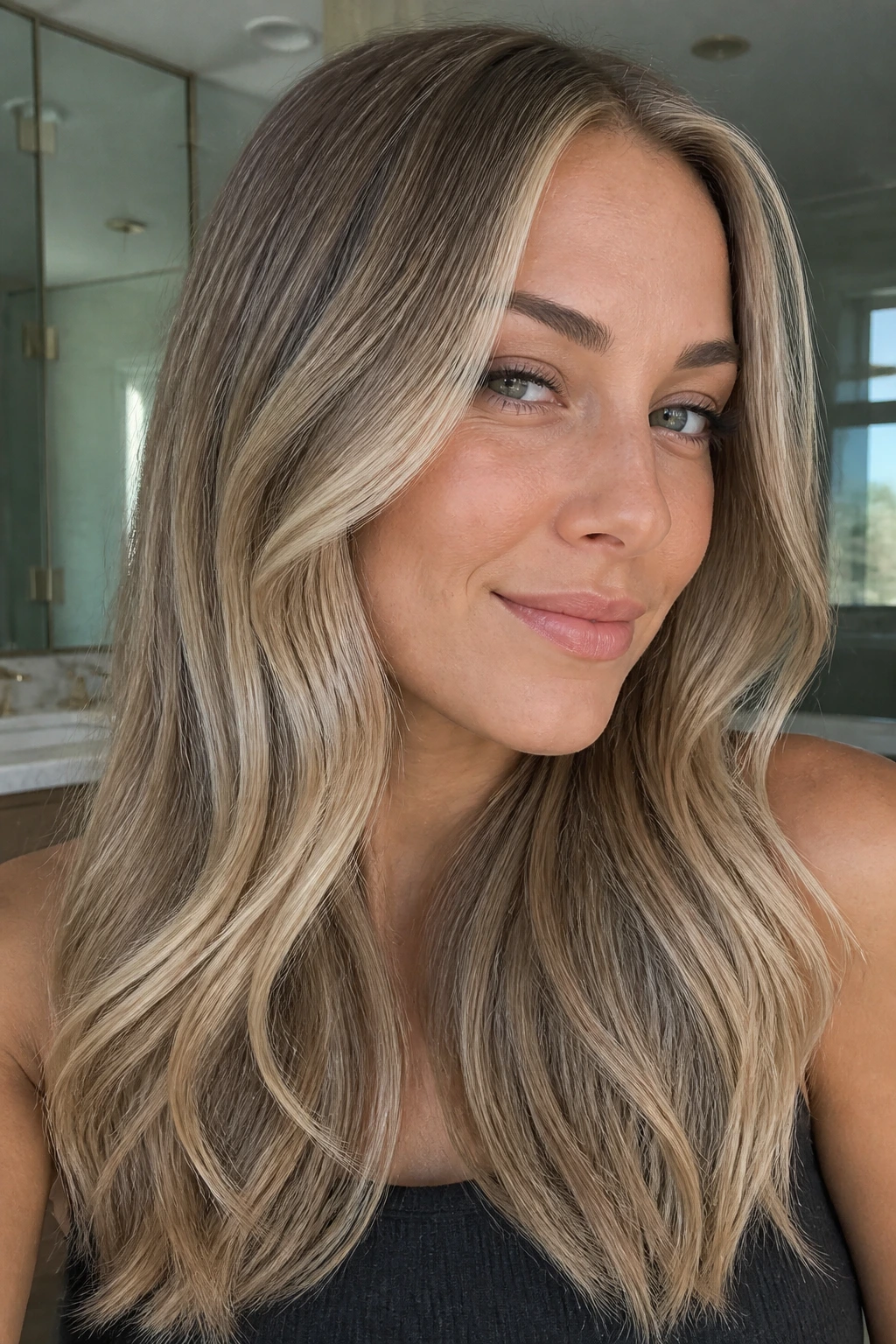
If flat blonde makes you bored, dimension is the answer. Dimensional beige blonde uses two or three cool-leaning tones instead of one solid color, and that gives the hair movement even when it’s not styled much. On a dark blonde base, the effect is even better because the deeper root adds contrast without making the look heavy.
Cool skin tends to do well with this kind of layered blonding. The face doesn’t get swallowed by one bright note. Instead, it gets a mix of soft beige, ash-beige, and slightly deeper blonde tones that shift as the light changes. That movement helps the skin look alive.
Quick details that make it work
- Keep one shade one level deeper for depth
- Use a beige highlight as the lightest piece
- Blend the part line carefully so the grow-out stays soft
- Avoid gold or honey tones in the mix
This is a solid choice if your natural hair is already in the dark blonde or light brown zone. You do not need to force a huge lift to get a nice result. Sometimes that’s the mistake people make. They go too light and lose the richness that makes the color flattering in the first place.
A dimensional beige blonde can look casual or polished depending on styling, which is why I like it so much. It has range. That’s the part that keeps it from feeling one-note.
16. Beige Blonde Pixie with Soft Texture
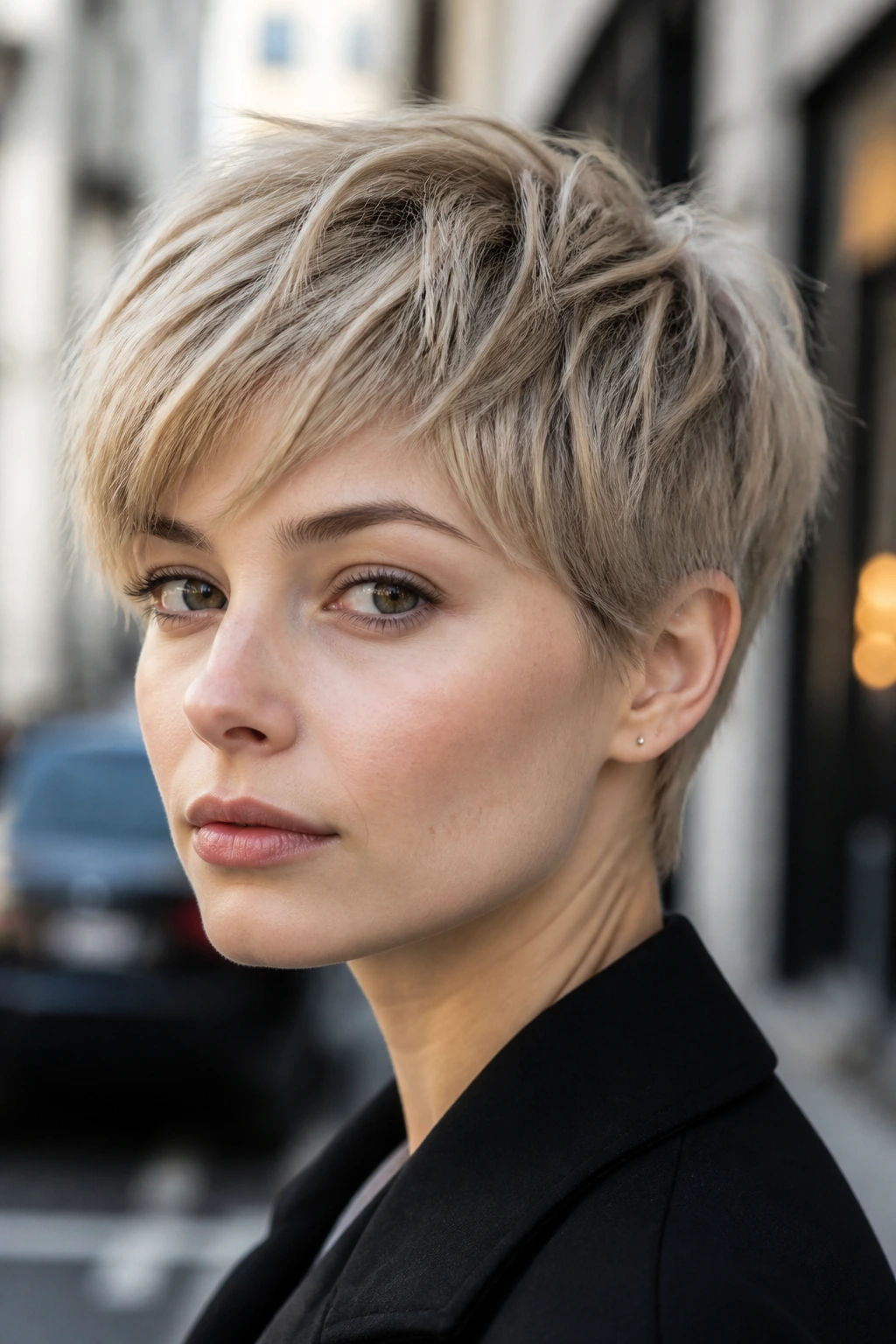
A pixie makes every tone louder. That’s not a bad thing, just a fact. So if you want beige blonde on short hair, keep the shade soft and cool. A pale beige with a gentle ash cast looks cleaner on a pixie than anything too golden or too white.
Short hair can turn severe fast, especially on cool skin. Beige helps stop that. It gives the cut some softness at the edges, which matters when the ears, brows, and jaw are all visible at once. A faint beige fringe or a lighter crown section can make the whole style feel lighter without stealing the spotlight.
I’d keep the contrast low here. A pixie with too much highlight separation can look busy. You want the texture to do the work, not the color blocks. One or two shades of cool beige is enough.
Frequent trims matter, too. Short hair loses shape fast, and once the shape goes, the color tends to read messier than intended. Every four to six weeks is a good trim rhythm for most pixies.
This is a good shade if you like sharp clothes, clean lines, and makeup that does not need to compete with your hair. It’s neat. It’s calm. It doesn’t ask for attention by force.
17. Rose-Beige Blonde with a Dusty Finish
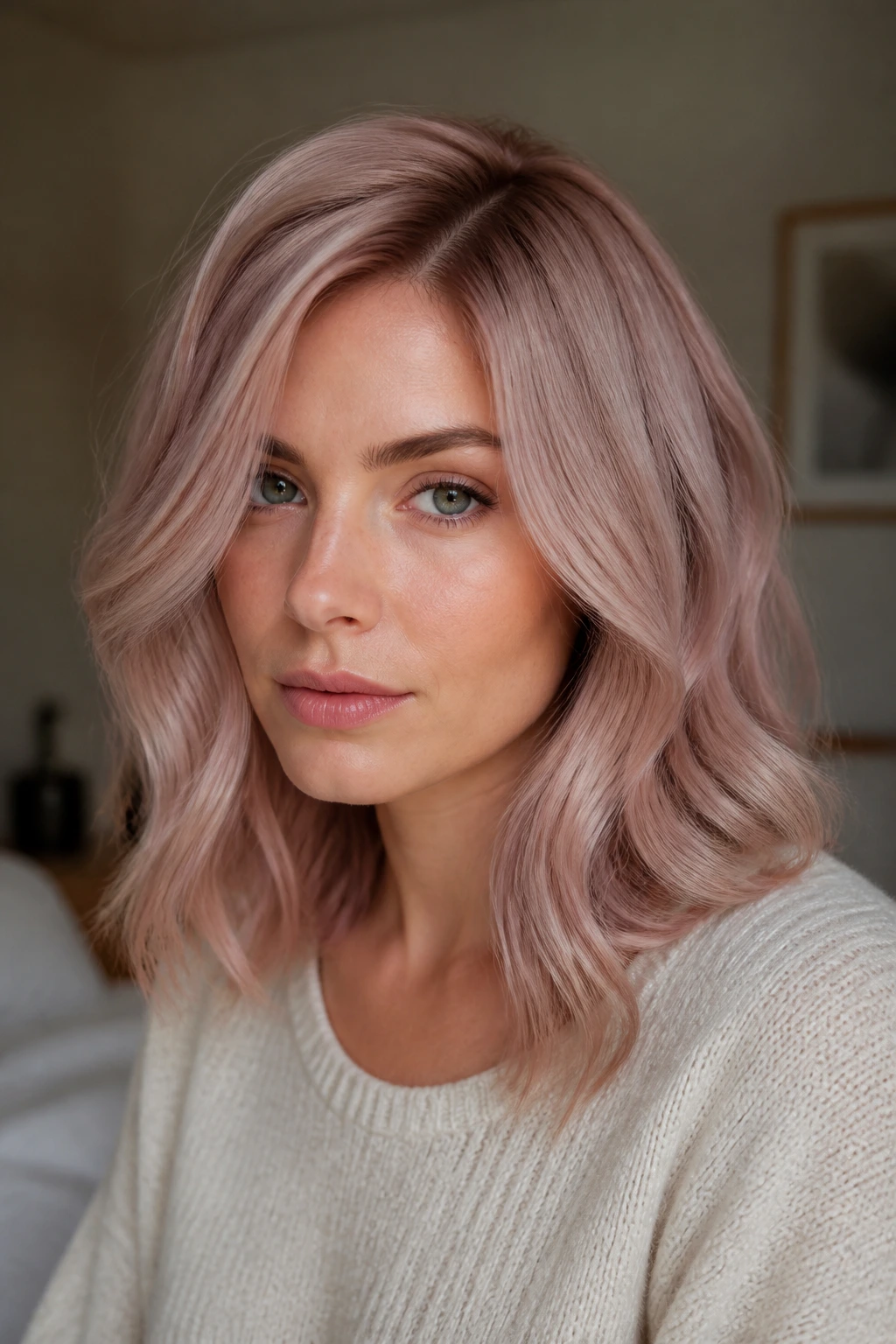
Rose-beige blonde sounds warmer than it is. The key is the dusty part. If the pink note stays muted and the beige stays cool, the result can be lovely on cool skin. It softens the face a little, which is useful if icy blonde feels too stark for you.
The trick is to keep the rose note under control. You do not want peach. You do not want copper. You want a washed, cool-leaning blush tone blended into beige. That makes the color feel gentle and modern instead of sweet or warm.
This shade tends to suit people who wear mauve, plum, soft gray, or blue-red lipstick. The hair picks up that same quiet softness. It also works well if your skin is very fair and you want a little warmth without going all the way to gold.
The moment the rose shifts toward coral, the balance is gone. That is the line to watch.
I like rose-beige best on medium-length waves because the bend in the hair keeps the dusty pink-beige blend visible. On very straight hair, it can flatten a little unless the gloss is refreshed often. Still, when it’s right, it has a nice, skin-friendly softness.
18. Creamy Beige Blonde with a Shadow Root
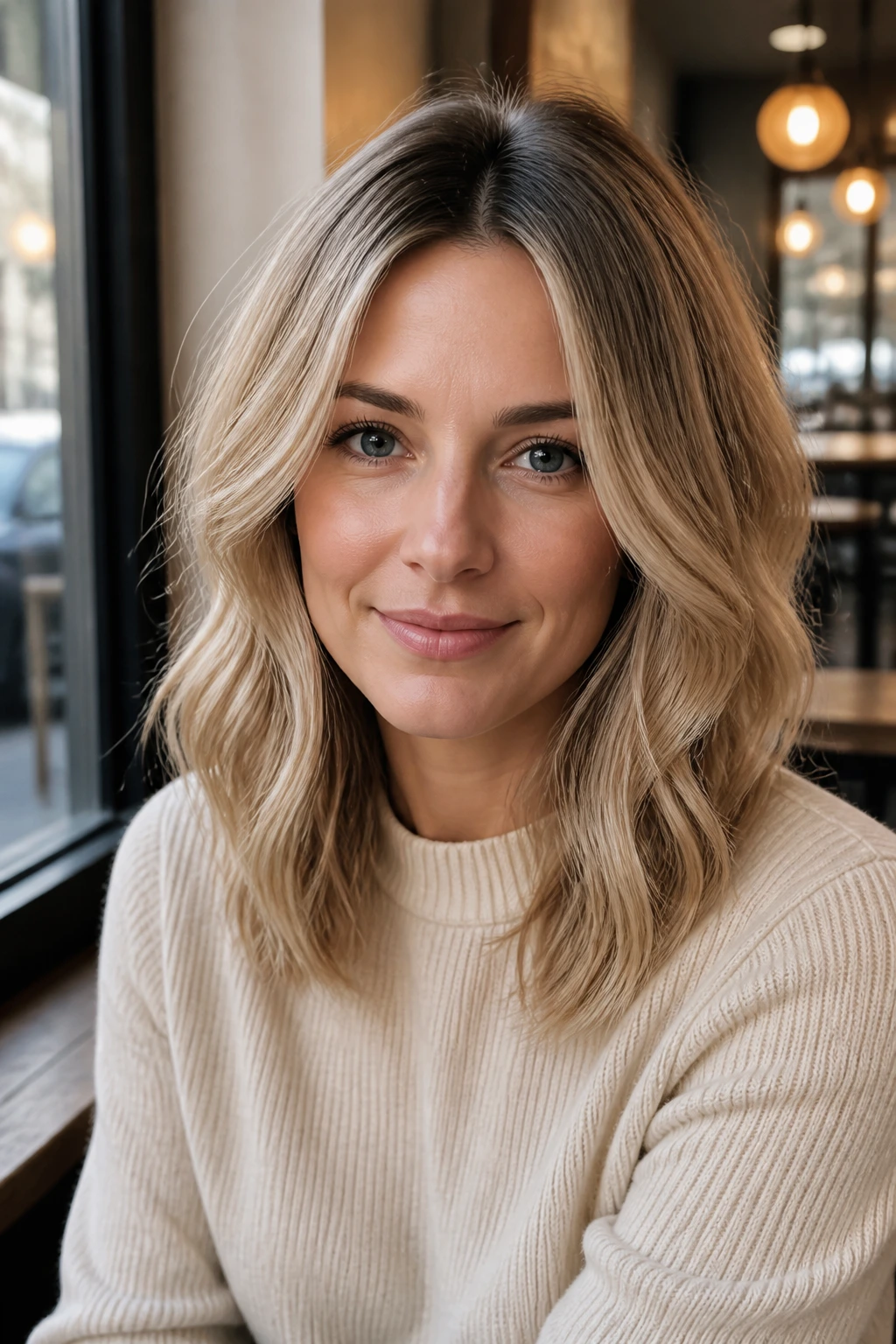
If I had to pick one beige blonde idea that plays nicest with cool skin and does not ask for constant babysitting, this would be it. Creamy beige blonde with a soft shadow root sits between pearl and sand, so it has enough softness to flatter the face and enough depth at the root to grow out without drama.
The root shadow keeps the color grounded. The creamy beige through the mids and ends keeps the hair light enough to feel blond, not brown. That middle ground is useful if you want something wearable day to day, not a high-impact blonde that needs perfect styling every morning.
Why it works so well
- The shadow root protects the cool tone from looking washed out
- The creamy beige keeps the blonde from going icy-hard
- The grow-out is gentle, not blunt
- It suits both straight hair and loose waves
This is the shade I’d send someone toward if they say, “I want blonde, but I don’t want my face to disappear.” Fair enough. A lot of blonde can do that to cool skin. Creamy beige with a shadow root avoids the problem by keeping some depth near the scalp and letting the lighter tone do its work farther down.
It’s also one of the easiest shades to live with. Not the flashiest. Probably not the most dramatic either. But it holds up. And that counts more than people admit.
A good beige blonde for cool skin does not need to look icy to be flattering. It just needs the right temperature, the right amount of softness, and a tone that knows when to stop.
