



Auburn can be gorgeous on cool skin tones. The trick is keeping the red on the blue side of the wheel, not the orange side, because orange-heavy auburn can pull a pink or rosy complexion straight into tired, flushed territory. When the shade has enough brown, berry, or violet in it, the face looks cleaner and the eyes get more definition.
That’s why so many auburn hair color ideas miss the mark in real life. On a screen, a bright copper swatch looks fun; on a cool-toned face, it can read loud and flat at the same time. The shades that earn their keep tend to live in level 4 through level 6, where red-brown depth keeps the color grounded and the finish can still sparkle in daylight.
Silver jewelry usually wins. So does a white tee, a black sweater, or any lipstick with a blue base. Those little clues matter more than people think, because cool skin tones don’t need a warm red that fights the face; they need a red that feels like it belongs there.
That’s the filter for what follows: auburn shades that lean smoky, berry-rich, wine-dark, or softly coppered without drifting into carrot territory. Some are bold. Some barely whisper red until the light hits. All of them can work when the undertone does the heavy lifting.
1. Smoky Copper Auburn
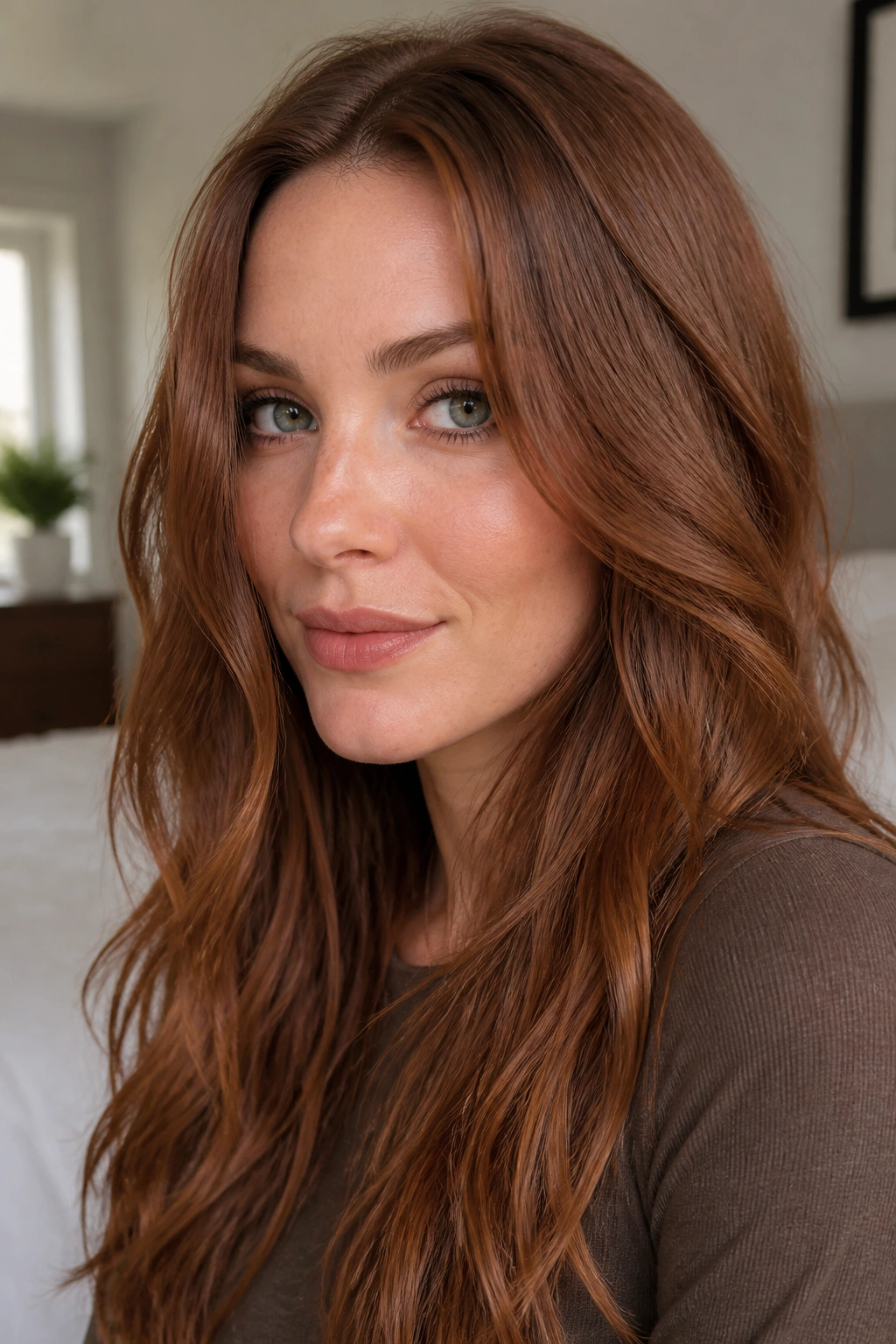
Smoky copper auburn is where I’d steer someone who wants warmth without the full flashlight effect. The copper is softened with a beige-brown base, so cool skin still gets a little glow without looking sunburned.
Why It Sits Well on Cool Skin
Ask for a level 5 or 6 brunette base with a muted copper glaze. The ash or beige base is the part that saves it; if the copper sits on top of a yellow blonde lift, the shade turns brassy fast.
- Best on fair to medium cool skin.
- Works well with green, blue, or gray eyes.
- Easier to soften at the root than a bright copper.
Tip: If your skin already runs pink, keep the copper closer to apricot-brown than orange. That small shift matters a lot.
This is the auburn I recommend when someone says, “I want red, but I don’t want to look like I borrowed a wig from a costume drawer.” It has enough life to feel fresh, and enough brown to stay wearable on a cool face.
2. Blue-Red Auburn

Blue-red auburn is the shade that saves a lot of cool-toned faces from orange overload. It reads richer than classic copper and usually looks a bit darker in the bowl than it does in daylight, which is part of the charm.
What makes it work is the undertone. A red with blue in it looks sharper against cool skin, and the face tends to look less flushed than it does beside a warm copper. The shade can lean ruby indoors, then show a wine-like edge outside. Nice trick.
I like this on level 4 or 5 brunettes who want something vivid but not neon. It also holds up well if your brows are naturally dark, because the contrast feels deliberate instead of harsh. Keep the finish glossy. Matte blue-red hair can look flat fast, and flat red is the saddest version of red hair.
If you want a cleaner result, ask your colorist for a permanent brunette base with a red-violet gloss on top. That gives the color depth without losing the cool edge that makes it flattering.
3. Cherry Cola Auburn
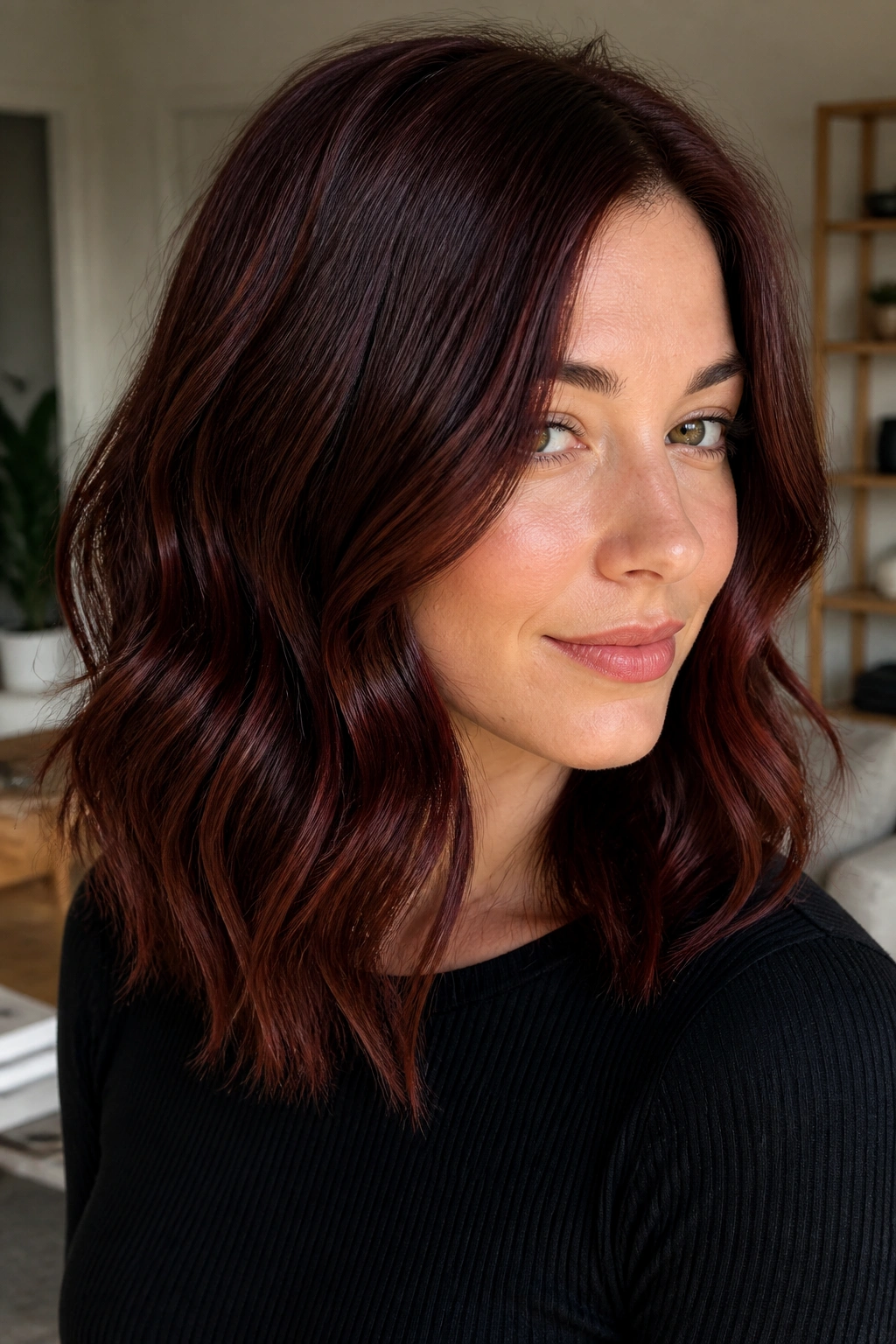
Why does cherry cola auburn look so good on cool skin? Because the brown base keeps the red from screaming, and the cherry tone adds enough brightness to stop the whole thing from sinking into plain brunette territory.
The shade reminds me of dark soda in a glass with a slice of cherry syrup stirred through it. You see brown first. Then the red shows up when the light moves across the hair. That push and pull is what makes it useful for cool undertones; it gives dimension without bringing orange into the room.
How to Wear It
A shoulder-length cut with soft waves shows this color better than a blunt, poker-straight finish. The movement lets the red peek out at the bends, which is where the shade looks richest.
A cherry cola auburn is also one of the easier ways to go red if you’re nervous. It grows out gracefully, especially on darker natural hair. If you keep the roots deep and the mids glossy, you can stretch appointments a little longer without the color looking neglected.
4. Mahogany Auburn
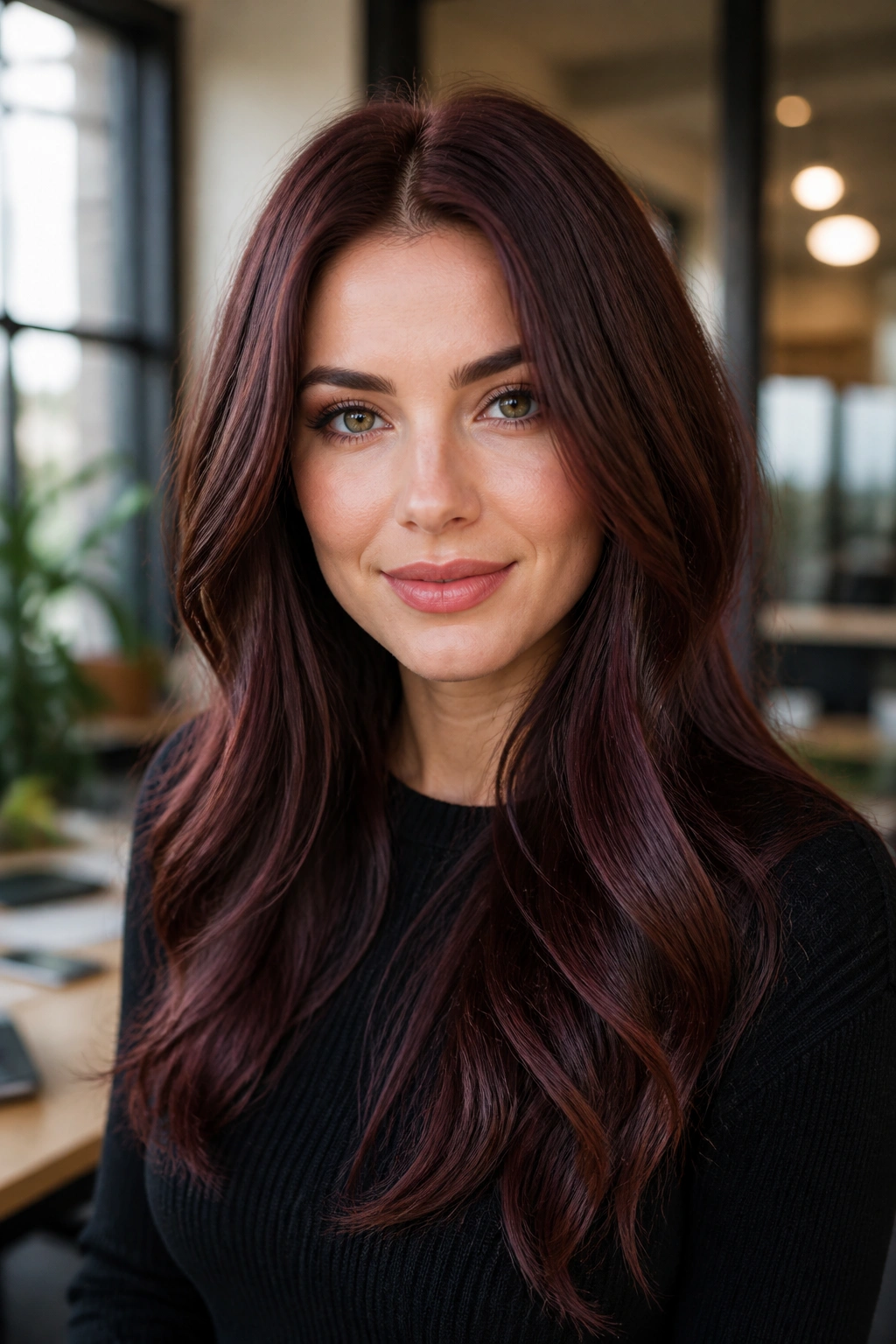
Mahogany auburn is the quiet overachiever of the group. It stays close to brunette, which is exactly why it flatters cool skin so well. The red is there, but it sits under the brown instead of sitting on top of it.
Picture a woman who wants a change that still works with a black blazer, a pale sweater, and very little makeup. Mahogany is that shade. It looks polished without trying to be loud, and it behaves well in low light, where brighter reds can turn patchy or too orange.
The best version has a red-violet cast, not a rusty one. If the colorist reaches for too much gold, the whole thing gets warmer than it should. Keep the gloss neutral or slightly cool, and the hair reads deep, shiny, and expensive without needing to shout.
A sharp bob, a long layered cut, or even a grown-out pixie can carry this shade. It’s a good one if you want red-brown hair that still feels serious.
5. Rosewood Auburn for Cool Skin Tones

Rosewood auburn sits in that nice middle ground between pink-brown and red-brown. It’s softer than burgundy, less earthy than cinnamon, and a lot kinder to cool skin than bright copper.
The reason it works is simple: rosewood mirrors the natural flush you already have in a cool complexion, but it does it in a controlled way. That means the skin can look even instead of red-in-the-wrong-places. On medium cool skin, the result often feels calm and clean. On fair skin, it can look airy and a little romantic without going pastel.
This is the shade I’d pick for someone who likes soft makeup, nude lips, and clothes in gray, navy, or black. It doesn’t fight those colors. It sits next to them neatly.
If you want to ask for it at the salon, ask for a brown base with a muted rose-red glaze and very little gold in the formula. That single detail matters more than the name on the color chart.
6. Cinnamon Auburn

Cinnamon auburn sounds warmer than it has to be. That’s the mistake people make with it. The good version is spiced, not pumpkin. It stays in the brown family and borrows just enough red to feel alive.
I like this shade on cool skin when the goal is movement, not drama. It can make a layered cut look thicker because the different tones catch the light at different points. A shag, lob, or airy fringe all make sense here. The color has enough texture to hold its own.
What to Watch For
- Keep the lift modest. A level 5 or 6 is usually enough.
- Ask for a brown-red mix, not a bright copper overlay.
- If the color starts reading orange, a cool gloss can pull it back.
Cinnamon auburn is also a smart bridge color if you’re coming from brunette and don’t want a hard jump into red. It gives you the feeling of a change without the maintenance shock that comes with brighter shades.
7. Cranberry Auburn
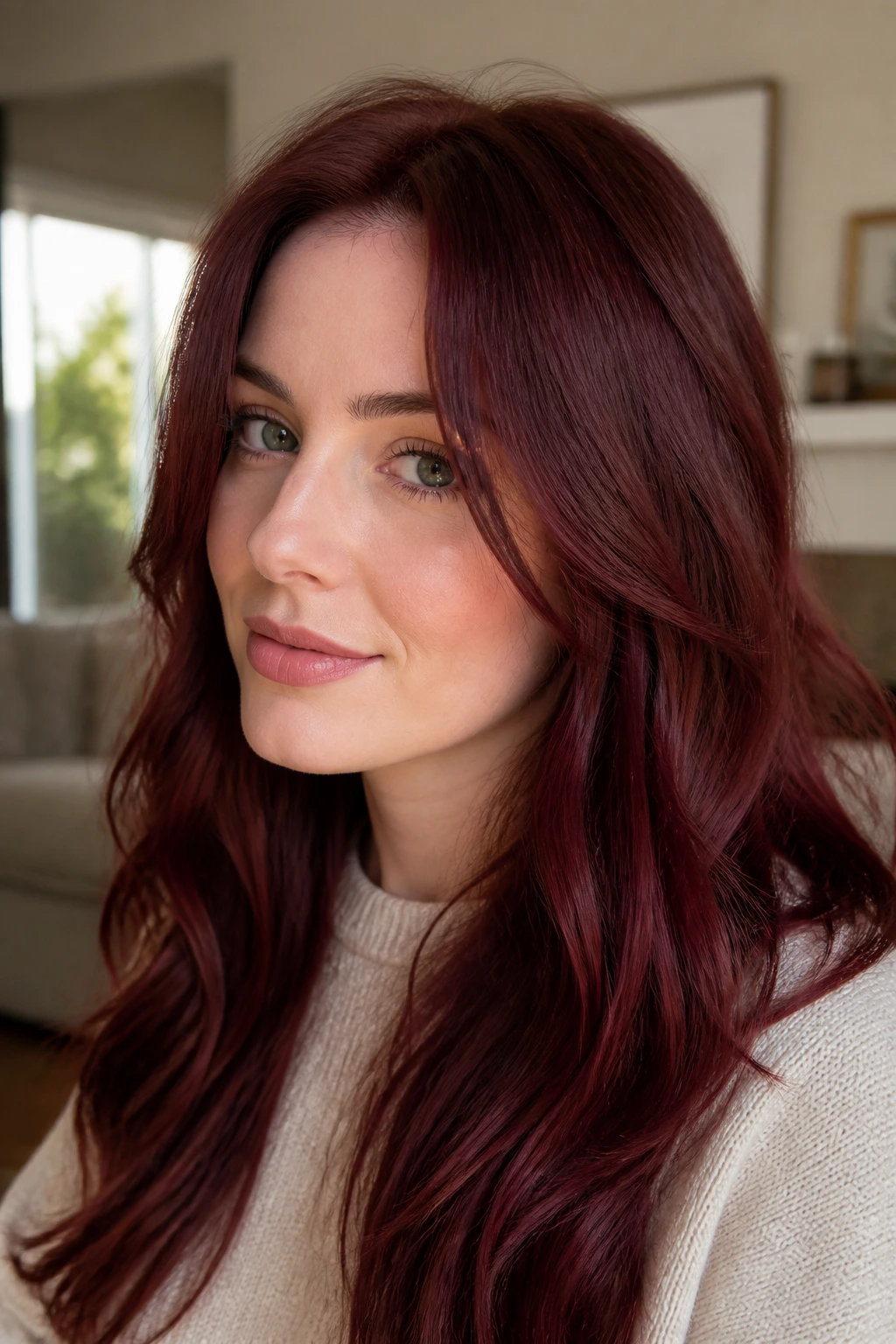
Cranberry auburn is what happens when red hair stops trying to be sweet and starts looking crisp. The berry note makes it feel cool, and the brown base keeps it from going candy-red.
Why does that matter for cool skin? Because cranberry shades usually echo the blue-red undertones in the face instead of competing with them. The result can look cleaner around the jaw and cheeks, especially if your skin leans pink or fair. It’s also a good choice if your eyes have some green or gray in them; the contrast can be striking without getting cartoonish.
This shade needs a little more care than the deeper browns. Red pigments fade fast, and cranberry shows that fade sooner than mahogany does. Use cool water when you can, wash less often, and keep a color-depositing conditioner in the shower for between salon visits.
Cranberry auburn can be full coverage, or it can live in ribbons around the face. Either way, it has a bright edge that still feels grown-up.
8. Burgundy Auburn
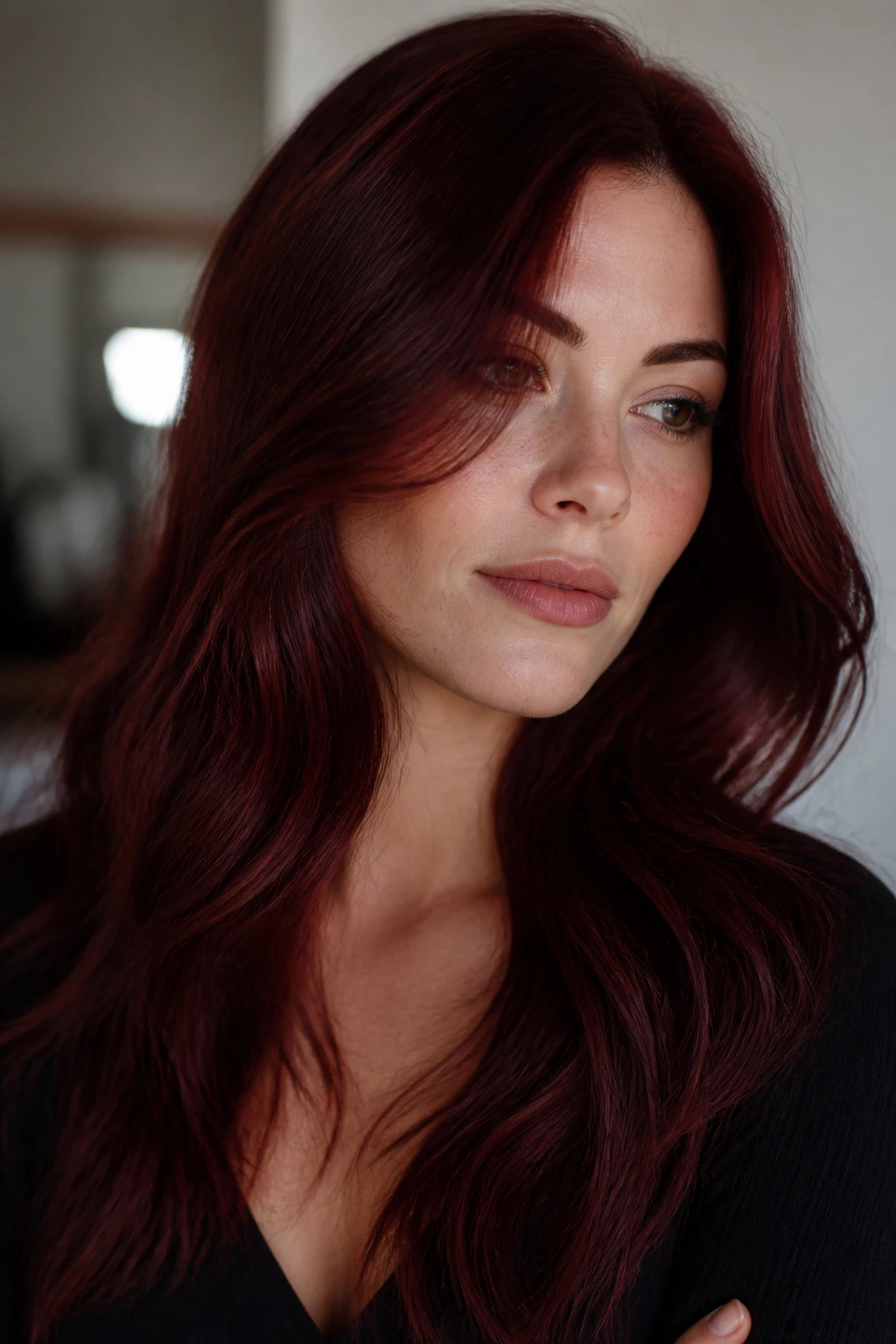
Burgundy auburn is darker, deeper, and a little more serious than the berry shades above it. There’s a wine note in there, which gives the hair that rich, almost velvet look people notice from across a room.
The cool-skin advantage is the purple-red undertone. Purple tones sit closer to cool skin than orange tones do, so the whole shade tends to look harmonious instead of busy. If your complexion is deep and cool, burgundy auburn can be especially good because it keeps enough depth to match your natural contrast.
I’d wear this on waves, curls, or a blunt cut with a little shine serum. Burgundy needs a bit of gloss to avoid looking flat. Without shine, it can drift toward dull brown. With shine, it looks layered and expensive in the plainest sense of the word: the color has depth.
A lot of people overthink burgundy and ask for too much purple. That’s where things get weird. Keep the red dominant, let the violet support it, and the shade stays wearable.
9. Black Cherry Auburn
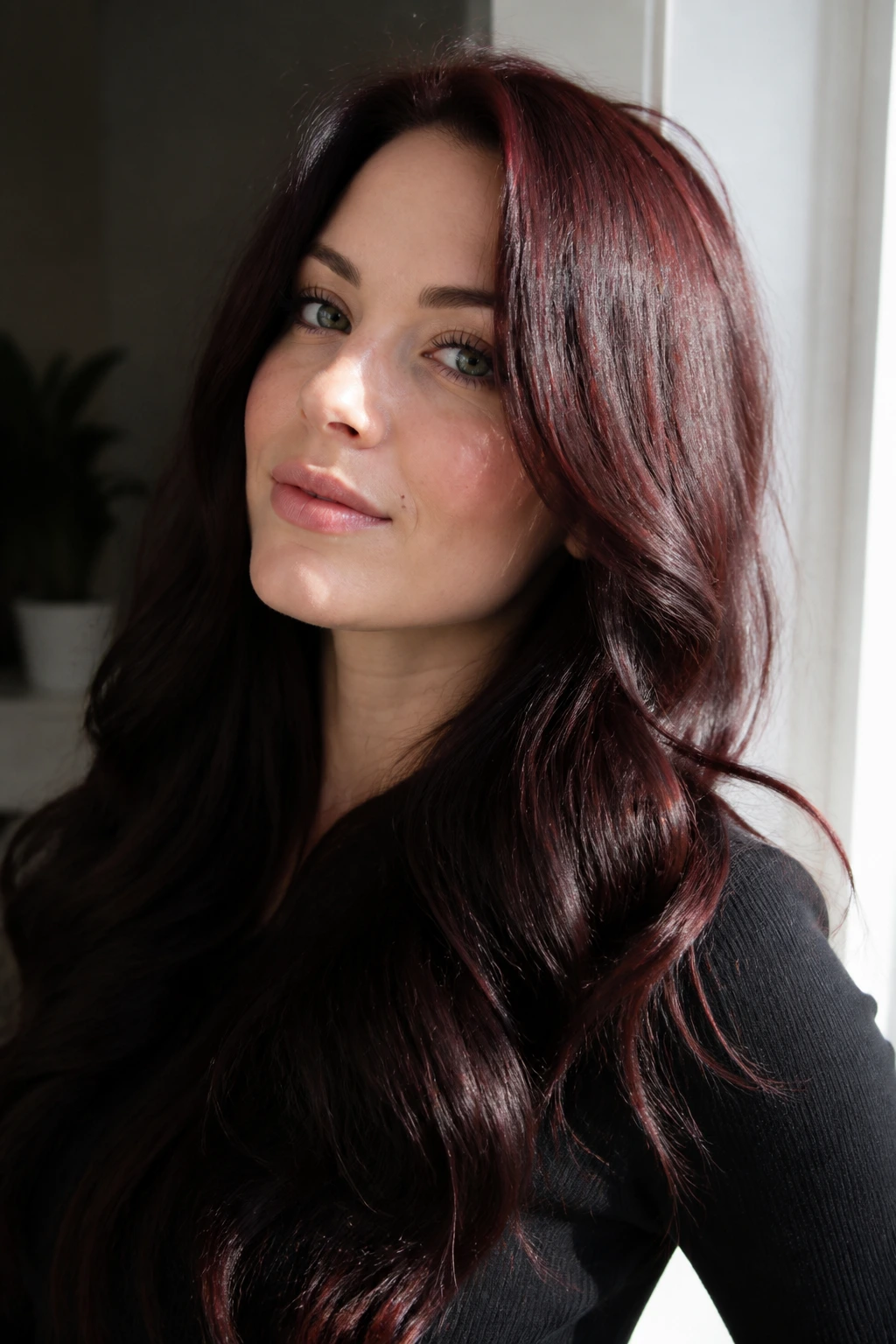
Black cherry auburn is the dark, moody member of the family. At first glance, it reads almost brunette. Then you catch the red in sunlight, and the whole shade wakes up.
That hidden quality is exactly why it suits cool skin tones. You get the depth that cool undertones usually like, plus a red finish that doesn’t scream orange. It’s also one of the easier auburn ideas to wear in conservative settings, because under indoor light it can stay close to black-brown.
No one needs to know how much work your hair is doing. That’s the fun part.
If your natural hair is already dark, black cherry auburn can often be done as a gloss or soft deposit rather than a full lift. That helps preserve shine and keeps the strand looking healthy. On very dark brunette hair, the red tends to sit on top like a tint rather than a full color shift, which is fine. Sometimes subtle is the point.
This shade looks especially good with straight styles and tucked-behind-the-ear hair, where the red flashes at the edges.
10. Cool Chestnut Auburn for Cool Skin Tones

Cool chestnut auburn is the answer for people who want red-brown hair but don’t want to look like they’re chasing a copper trend. It stays grounded in cocoa brown and gets its warmth from a muted red-violet note, not from gold.
That’s why it behaves so well on cool skin. The base is deep enough to feel natural, and the red is restrained enough to avoid the orange problem. If your wardrobe leans black, charcoal, navy, or crisp white, this shade slides right in. Nothing about it feels fussy.
Why It’s Easy to Wear
- Works well on level 4 to 5 brunettes.
- Looks clean on straight, wavy, or curly hair.
- Grows out softly if you keep the root slightly deeper.
I like this shade on people who want to look done without looking decorated. It is calm, and that matters. If you ask for a blue-violet toner over a chestnut base, the color stays cool enough to flatter the skin rather than pulling heat into the face.
11. Mulled Wine Auburn
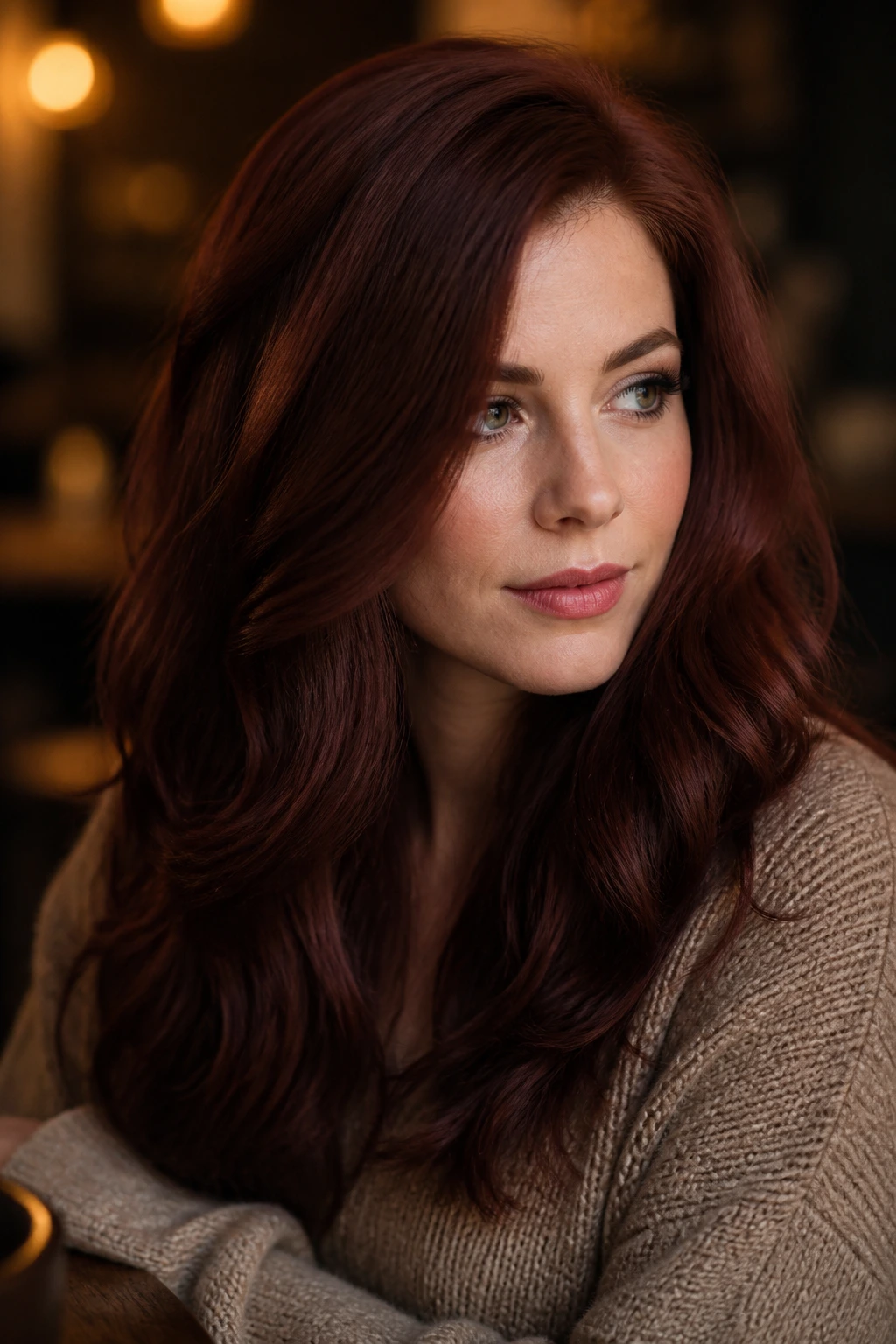
Mulled wine auburn feels a little darker than burgundy and a little softer than black cherry. The name fits because the shade has that spiced, red-brown depth that shows up best in dim light and then opens up outdoors.
On cool skin, the wine note matters. It keeps the color from looking too earthy, and it gives the face a cleaner edge. If your skin tends to flush easily, a mulled-wine shade can still work because the red is wrapped in brown and violet. The hair looks rich, not hot.
I’d suggest this shade if you like dramatic color but don’t want anything that needs constant touch-ups at the roots. It’s forgiving. A little regrowth doesn’t ruin it, and a gloss can refresh the whole look without another full color session.
Try it on medium-length hair with loose bends. The bends catch the dark red portions and keep the color from sinking into one flat tone. That texture is half the point.
12. Plum Auburn for Cool Skin Tones

Plum auburn is the one I reach for when someone wants red hair with an edge. The violet base pushes the whole shade cool, which makes it friendlier to pink, fair, or neutral-cool skin than a straight copper would be.
Why does it feel so different from other auburns? Because plum changes the mood of the red. Instead of heat, you get depth. Instead of orange reflections, you get berry shadows. The hair can look almost brown in one light and show a purple-red sheen in another, which keeps it interesting without making it high-maintenance in the loud, obvious sense.
How to Ask for It
Ask for a deep red-violet auburn with brown at the root and very little gold in the formula. That keeps the result from drifting into burgundy territory that feels too dark or too purple.
Plum auburn suits cooler makeup shades, too. Mauve blush, berry lipstick, and even a soft gray liner all sit well next to it. If you like that slightly moody look without going full fashion color, this is the sweet spot.
13. Smoked Espresso Auburn
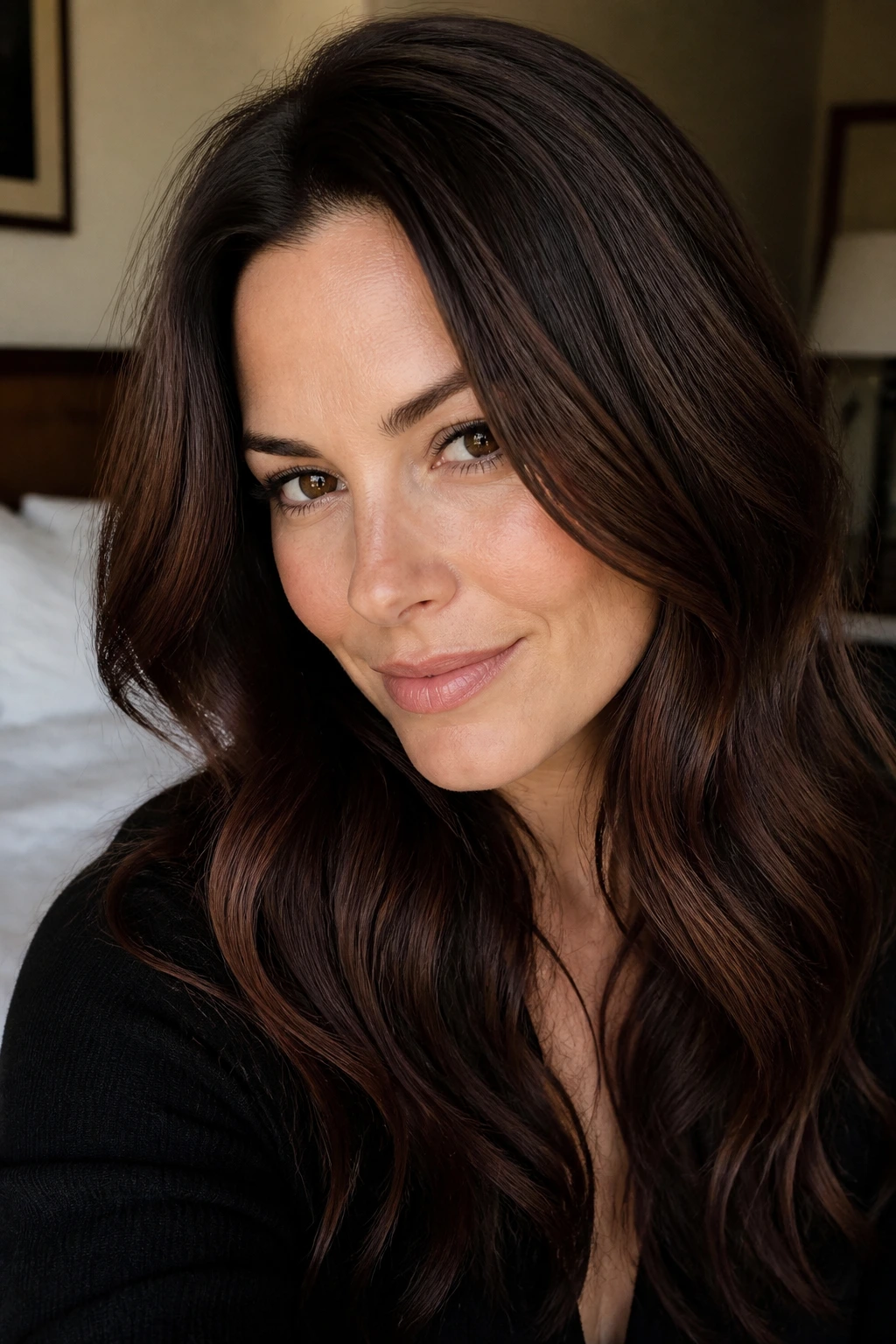
Smoked espresso auburn is the most subtle idea on the list, and that’s a good thing. It lets you keep a dark brunette base while slipping in just enough red-brown reflection to make the hair feel new.
This is a smart choice if you’re not ready to commit to obvious red. On cool skin, it works because the color doesn’t sit outside your natural contrast range. It simply warms the hair a touch, then keeps the warmth under control with a smoky finish.
A gloss or demi-permanent formula is usually enough here. You do not need to bleach anything. In fact, skipping bleach is part of why this shade looks expensive in person: the cuticle stays smoother, and the shine tends to hold better than on heavily lifted red hair.
I’d wear this with a side part, glossy waves, or a clean blowout. The red reads as a soft shimmer rather than a statement, and sometimes that’s the better move.
14. Auburn Balayage on Dark Brown Hair
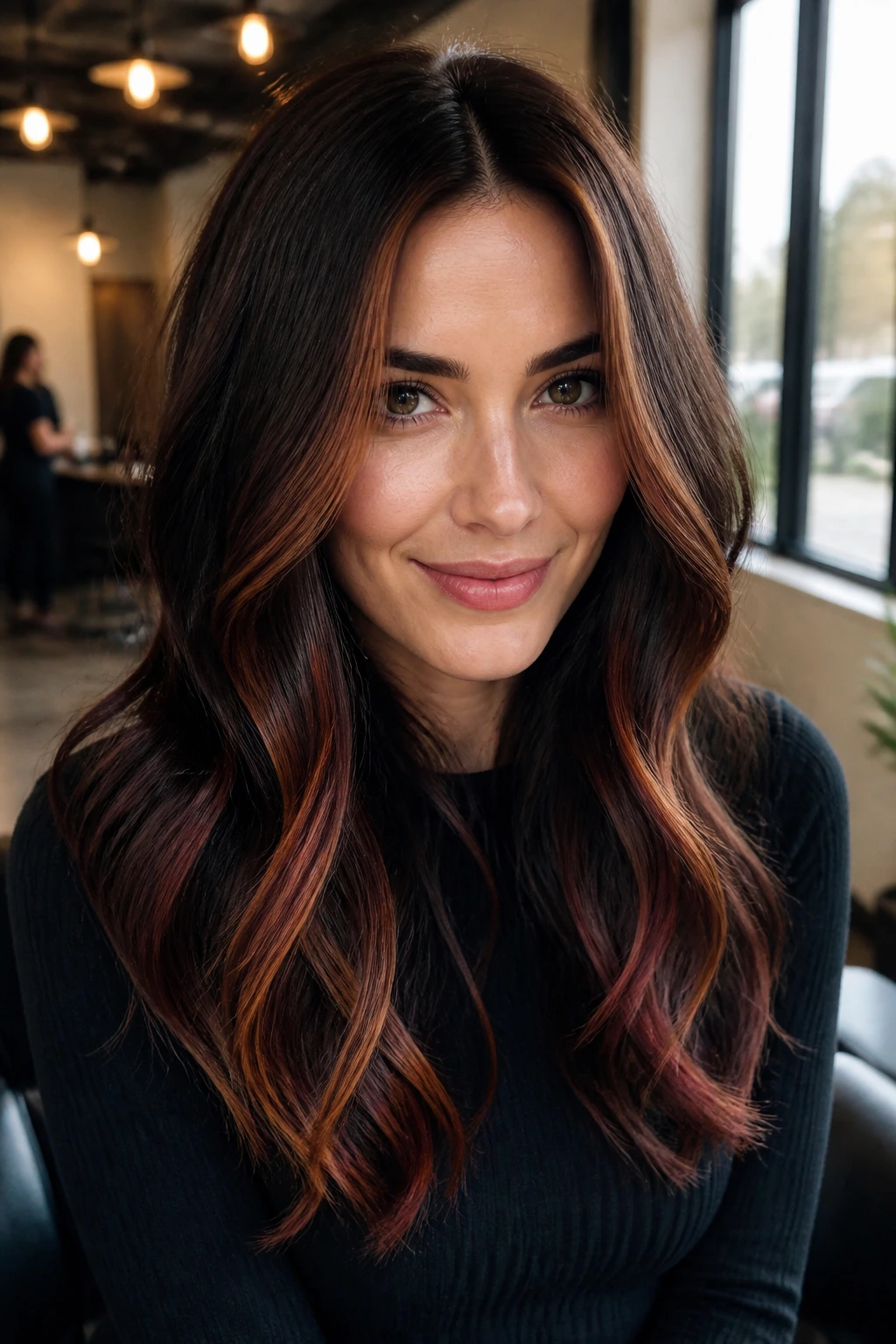
Auburn balayage is the answer when you want red without giving up the brunette base that makes cool skin look grounded. Instead of painting the whole head one shade, you weave auburn through the midlengths and ends so the hair keeps its depth.
That depth matters. Dark brown hair between the ribbons stops the red from taking over, which is a common problem with all-over copper on cool skin. The face stays balanced. The color feels dimensional instead of loud.
I like balayage especially for long layers, because the lighter pieces move. When the hair swings, the auburn flashes. When it settles, the brunette base takes over. It’s a nice rhythm, and it buys you easier grow-out too.
Ask your colorist for fine pieces near the face and a slightly wider hand through the bottom half. That gives you brightness where you need it and keeps the hairline from looking stripey. Subtle placement is doing most of the work here.
15. Rooted Auburn Melt
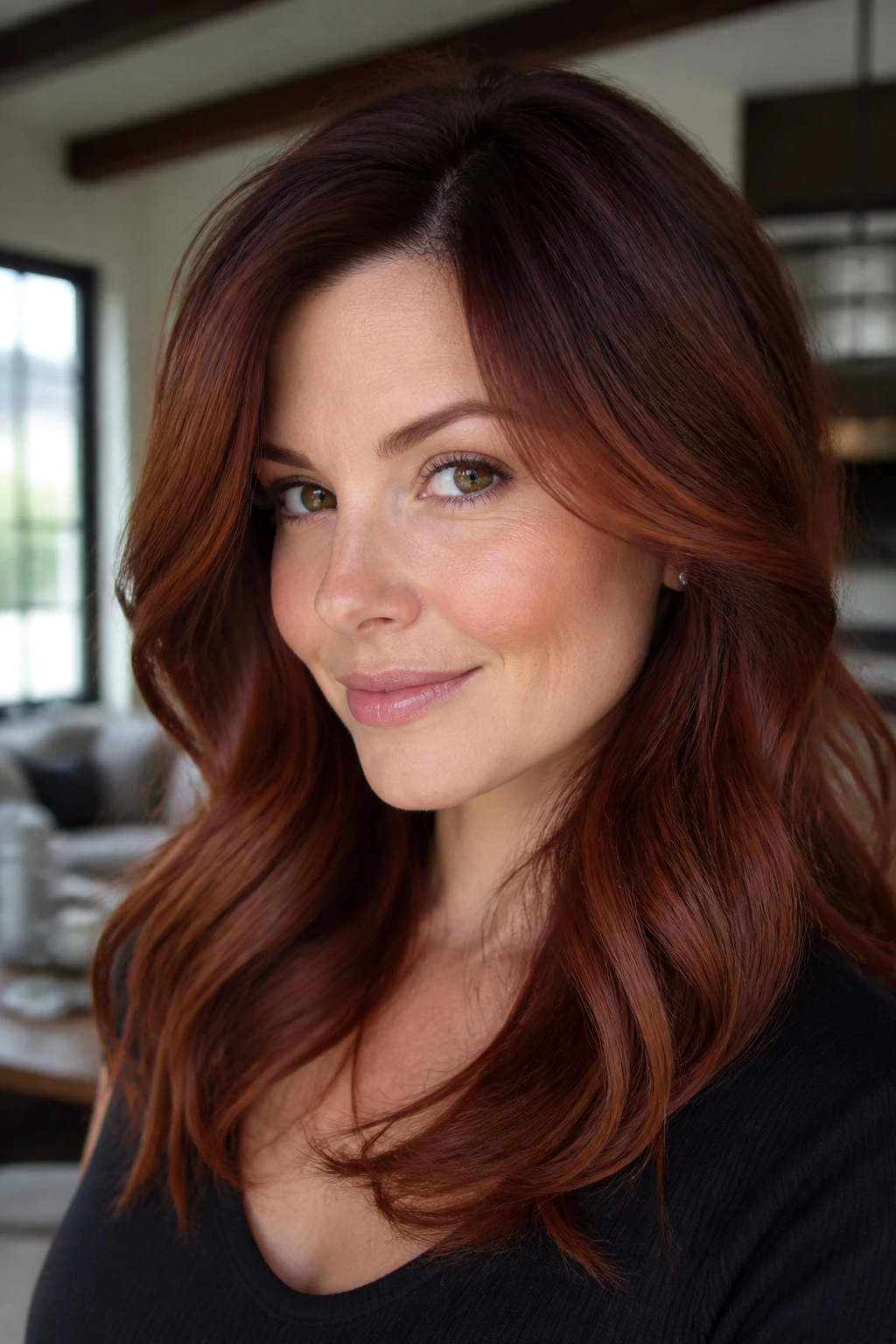
A rooted auburn melt has a darker root that fades into richer red-brown mids and ends. That gradient is what makes it so practical. The root shadow keeps the color cool, and the warmer auburn through the lengths gives the hair movement.
Why does this flatter cool skin so well? Because the deepest part of the color sits closest to your scalp, where a little neutrality helps everything else look cleaner. Then the auburn opens up lower down, away from the face. That means the red is still there, but it’s not fighting your undertone at the hairline.
How It Usually Looks Best
- Dark espresso or soft brown at the root.
- Auburn through the midlengths.
- A slightly brighter finish at the ends.
This style is also useful if you like wearing your hair in ponytails or buns. The melt still shows, and you don’t get a hard regrowth line. It’s a very workable choice if you want dimension without a high-maintenance schedule.
16. Shadow-Root Soft Copper Auburn
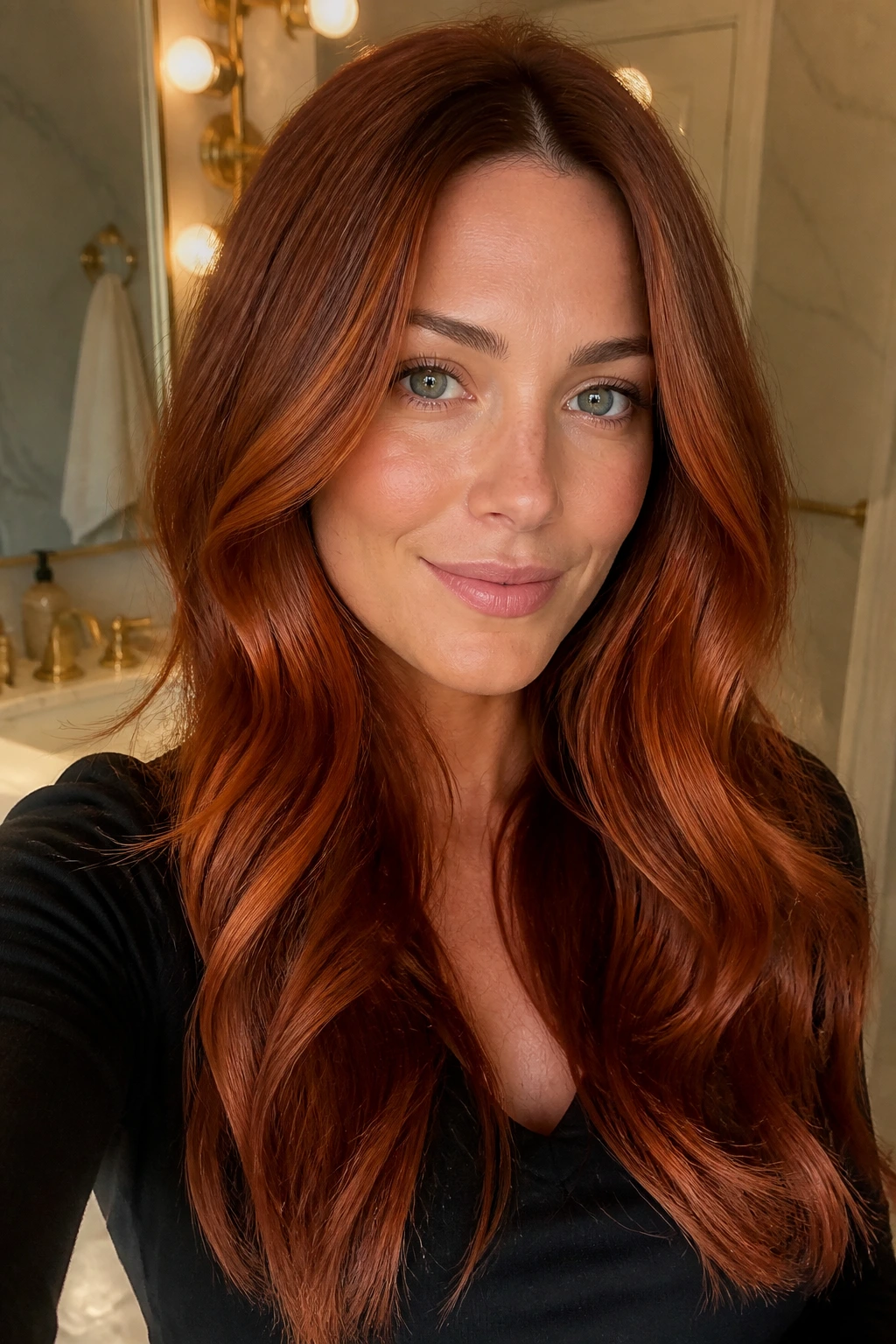
Shadow-root soft copper auburn is the safer cousin of brighter copper. The root shadow pulls the shade back into cooler territory, which keeps cool skin from looking washed out or too warm.
I like this one for medium cool skin, especially if the natural hair color is already brown. You get the sparkle of copper in the mids and ends, but the darker root acts like an anchor. Without that anchor, copper can float too far into orange. With it, the whole look feels deliberate.
A blowout helps this shade more than a tight curl pattern does. Straightened hair can make the copper look sharper, while loose waves soften the transition between root and length. Either way, the shadow root keeps the shade from becoming too loud at the scalp.
If you’re asking for this in a salon, use the words soft copper and root shadow. Those two details matter. Leave out the “bright” part unless you truly want heat.
17. Deep Garnet Auburn
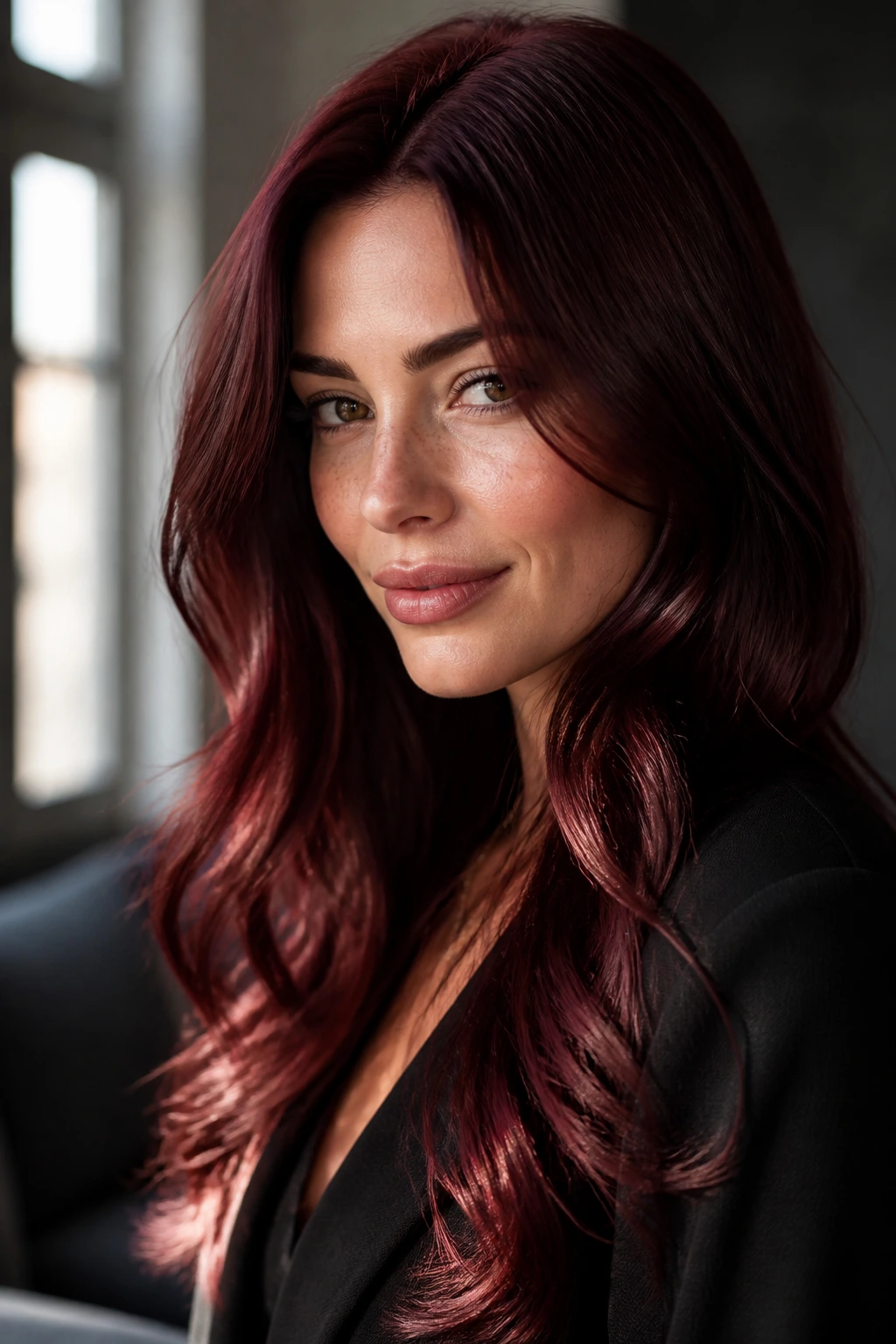
Deep garnet auburn leans jewel-toned rather than spicy. The red is darker, richer, and a little more serious, which makes it a strong match for cool skin that needs contrast.
This shade looks especially good when the hair is healthy and reflective. Garnet without shine can look dense in a dull way. Garnet with shine looks like a dark gemstone. That difference is huge in real life, even if it sounds small on paper.
I’d choose this if you like a strong lip, a dark blazer, or clothes in black and charcoal. The hair can carry that kind of styling without disappearing. It also works well on long hair because the length lets the depth shift under different light.
Maintenance is straightforward: keep the color rich with a gloss, and avoid harsh clarifying shampoos unless you absolutely need them. They can strip the red out faster than you’d expect. A gentle wash routine keeps garnet auburn looking dense rather than faded.
18. Smoky Rose Auburn

Smoky rose auburn is one of the softer, prettier options for cool undertones. It has a pink-red cast, but the smoky brown base keeps it from looking sugary or pastel.
That balance is what makes it useful. Cool skin often looks good with rosey shades, but only if the shade has enough depth to keep the face from going blotchy. Smoky rose auburn does that. It gives you a lifted, fresher look without putting the whole emphasis on warmth.
What It Pairs Best With
- Curtain bangs or soft face-framing layers.
- Light makeup with rose or mauve tones.
- Loose waves that show the pink-red variation.
If you’ve got freckles or a natural flush, this shade can be especially flattering because it echoes what your face already does. The important part is keeping the pink controlled. Too much pink and the hair starts reading like a fashion tint. Just enough, and it looks soft and expensive in the plainest way.
19. Dimensional Auburn Highlights
Dimensional auburn highlights are the move when you want the color to look lived-in instead of single-note. Instead of one flat auburn, you layer red-brown pieces over a brunette base so the hair keeps shadow, shine, and movement.
That setup is kind to cool skin because the darker base prevents the red from overpowering the face. The highlights show up as ribbons, not blocks. On wavy hair, that difference is obvious. You can see the auburn shift as the hair bends, which gives the color more life than a solid formula can.
A good placement pattern matters here. Keep the brightest auburn around the lower half of the hair and a few fine pieces near the face. If you pile all the brightness on the top layer, it can look stripey. Nobody wants that.
This is also one of the easier choices to grow out. When the roots come in, they blend into the brunette base instead of making a hard line. That makes dimensional auburn a practical pick, not just a pretty one.
20. Velvet Auburn Gloss for Cool Skin Tones
Velvet auburn gloss is the easiest way to get red-brown shine without a hard commitment. It lays a deep auburn veil over brunette hair or refreshes an existing auburn tone, and the finish is soft rather than loud.
That softness is the whole reason it flatters cool skin. The gloss catches light, but it doesn’t throw heat into the face. If your skin looks better next to silver than gold, this is a smart place to start because the color stays controlled and reflective at the same time. It reads polished without needing heavy lift or constant upkeep.
A gloss like this works especially well if your hair already has a good base and you just want richer tone. Ask for a red-brown demi or gloss with a cool edge, then keep the color fresh with gentle shampoo and cooler water on wash days. That alone can stretch the shine longer than people expect.
If you want one auburn look that feels safe, glossy, and easy to wear with cool-toned makeup, this is the one I’d hand over first.
