



Cool skin and red-brown hair are a better match than most people think, but the shade has to lean the right way. The sweet spot is usually a brown base with blue-red, violet-red, or berry reflect — not a bright orange copper that can make pink undertones look sharper than you want.
The best red brown hair color ideas for cool skin tones tend to feel deep, smoky, and a little moody. That’s the trick. A cool complexion usually looks strongest next to reds that have wine, cherry, plum, or mahogany notes, because those tones echo the coolness in the skin instead of fighting it.
There’s another practical piece people forget. Red-brown shades fade faster than plain brunette, and the warmer they are, the faster they can turn brassy. So the nicest-looking versions are often the ones with a dark root, a gloss finish, or a brunette base that lets the red show up in sunlight instead of screaming for attention under fluorescent light.
These twenty shades move from soft and wearable to rich and dramatic. Some are close to natural brunette with a red shift. Others lean more wine-dark or berry-heavy. If you’ve ever stared at auburn swatches and thought, too orange, you’re in the right place.
1. Smoky Cherry Brown
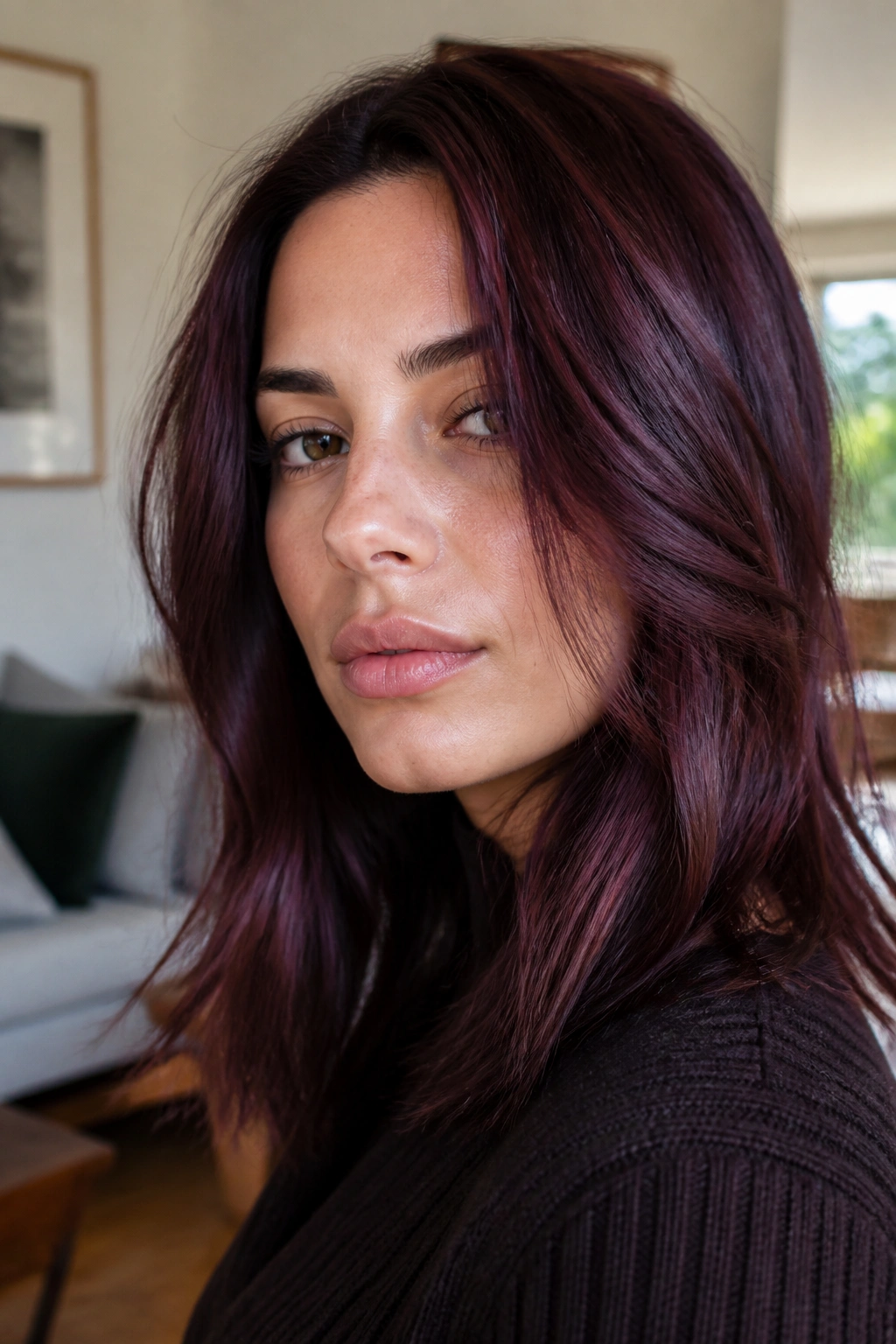
Smoky cherry brown sits in that sweet spot where the hair still reads brunette first, but the red shows up the moment light hits it. On cool skin, that matters. The cherry note keeps the shade lively, while the smoky brown base stops it from veering into neon territory.
Why It Flatters Cool Skin
Ask for a level 4 or 5 brown base with a cherry-violet gloss layered on top. That blue-red cast is what keeps the color crisp against rosy, pink, or fair cool undertones. It also looks cleaner with silver jewelry and soft black makeup than a warm copper ever will.
- Best on medium to deep brunettes
- Looks rich in indoor light, brighter in daylight
- Works well as an all-over color or a gloss refresh
- Fades into a soft berry brown instead of a harsh orange
Best tip: keep the roots slightly deeper than the mids and ends. The shadow makes the cherry tones look polished instead of flat.
2. Burgundy Brown Melt
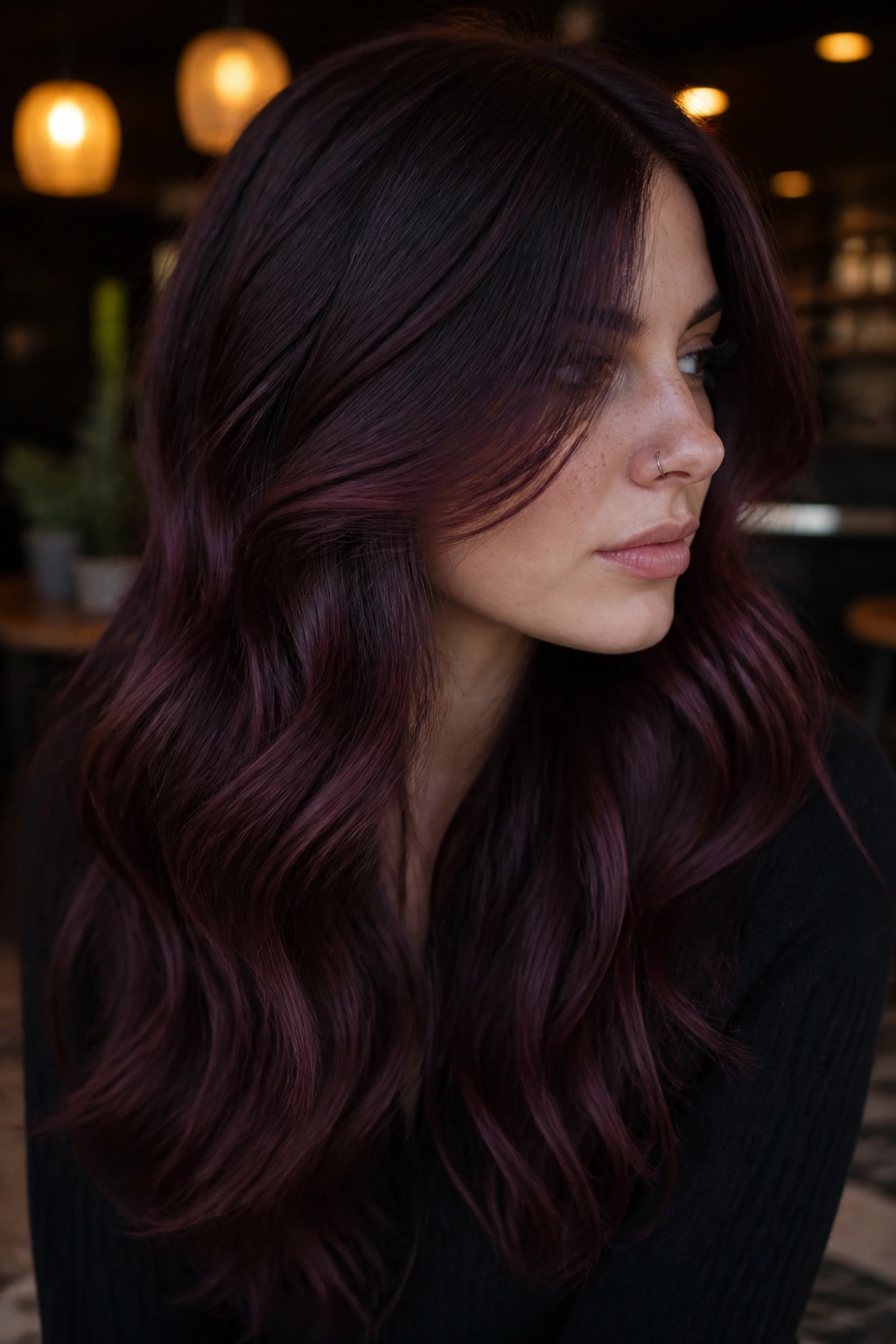
Burgundy brown melt is darker and moodier, with a wine stain effect that starts near the crown and softens through the ends. It’s one of those shades that looks expensive without trying hard. That sounds vague, but what I mean is simple: the color has depth, not noise.
The reason it works so well on cool skin is that burgundy is red with built-in blue undertones. That blue base keeps the face from looking flushed. It also gives brown hair a richer finish than standard auburn, especially if your natural color is already dark.
You can wear this as a smooth root melt, or ask for a soft balayage with burgundy ribbons placed around the face. Either way, the color should never look pumpkin-like. If it does, it’s the wrong burgundy.
3. Espresso Auburn
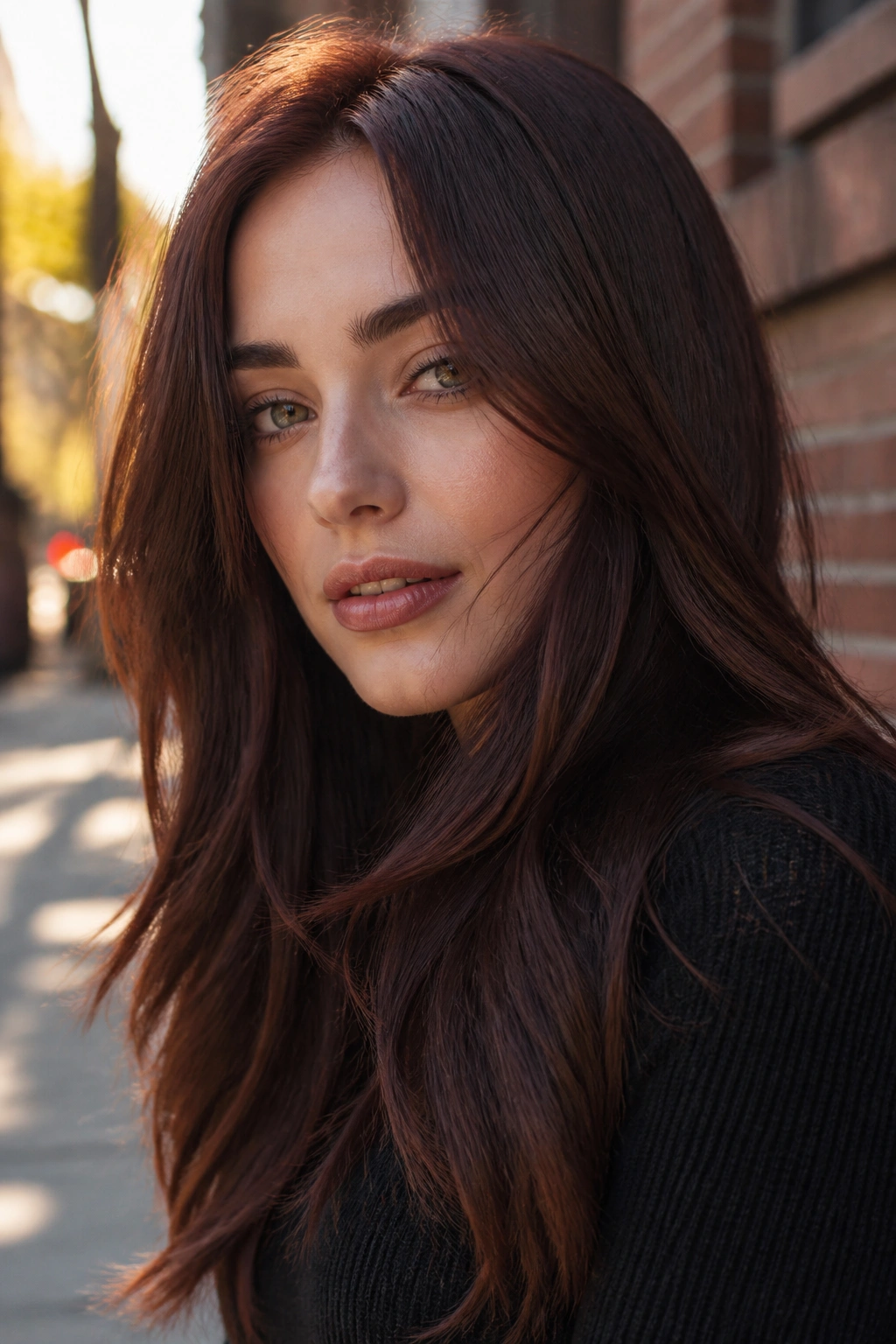
Can auburn stay subtle? Absolutely — if you tuck it into an espresso base. Espresso auburn is for anyone who wants a red-brown shift without giving up that dark, inky brunette look. The red doesn’t shout. It smolders.
What Makes It Work
Cool skin usually handles this shade well because the espresso keeps the warmth under control. Instead of a bright copper glow, you get a brown-black foundation with a quiet auburn sheen. It’s especially good for people with strong brows, dark lashes, or a lot of contrast in their features.
How to Wear It
- Keep the base close to dark chocolate or espresso
- Ask for auburn lightness only on the mids and ends
- Style with loose bends so the red catches movement
- Use a shine spray, not a heavy oil, or the color can look muddy
This is one of the easiest red-brown directions to live with. It grows out gracefully, and it does not demand a full makeup routine to look intentional.
4. Cranberry Chestnut
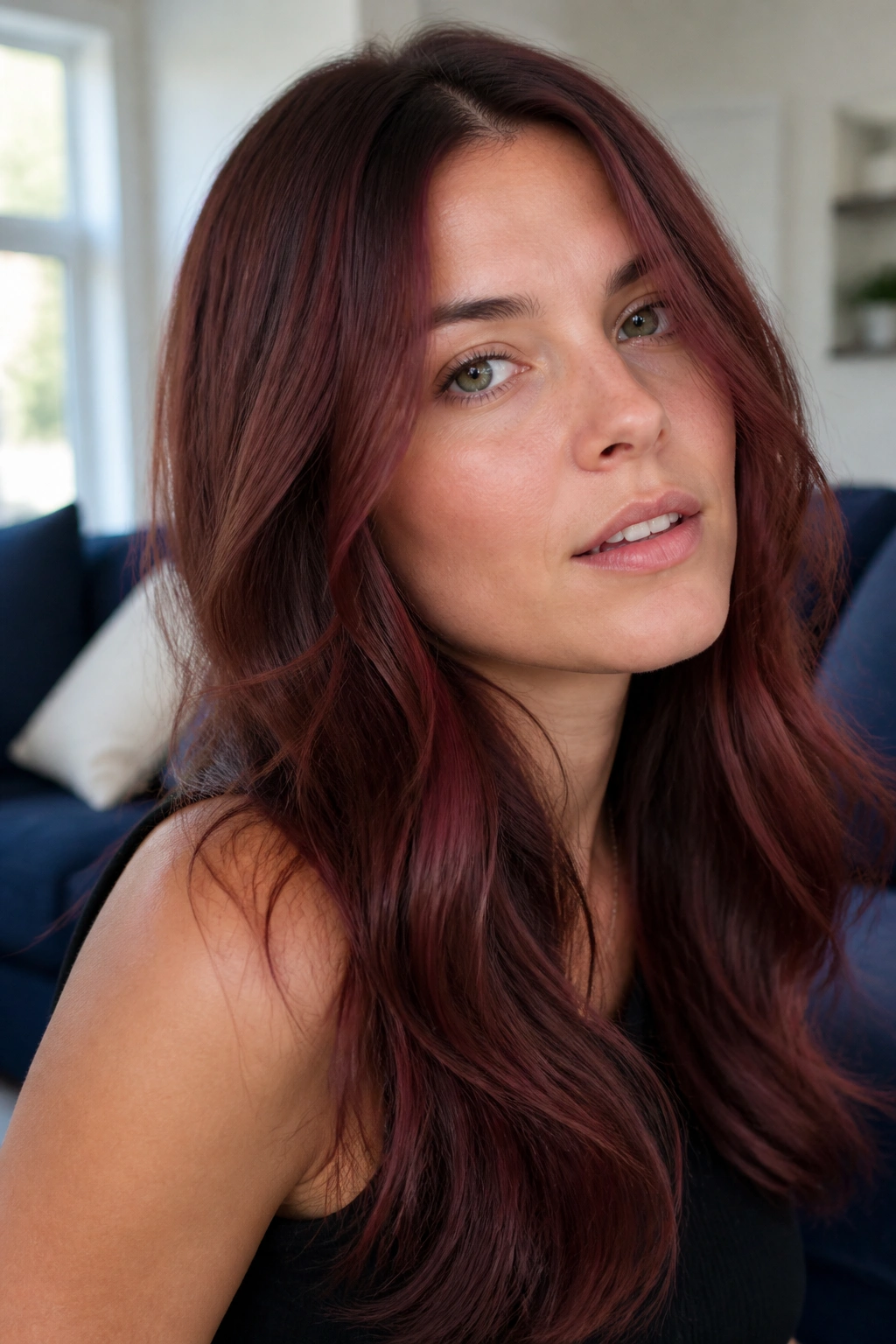
Cranberry chestnut is softer than burgundy and brighter than a standard chestnut brown. Think of a warm berry gloss poured over a medium brunette base. The result is cheerful, but not childish. That balance is why it works for cool skin that needs color, not heat.
I like this shade on people who want their hair to read dimensional even when it’s tied back. The cranberry tone shows up in the surface layers, while the chestnut underneath keeps the whole thing grounded. If you wear a lot of gray, navy, black, or crisp white, this shade feels especially natural.
A face-framing money piece in cranberry chestnut can be enough if you do not want all-over color. It gives you the red-brown effect without the upkeep of a full head of dye, and the regrowth is easier to live with.
5. Plum Brown Balayage
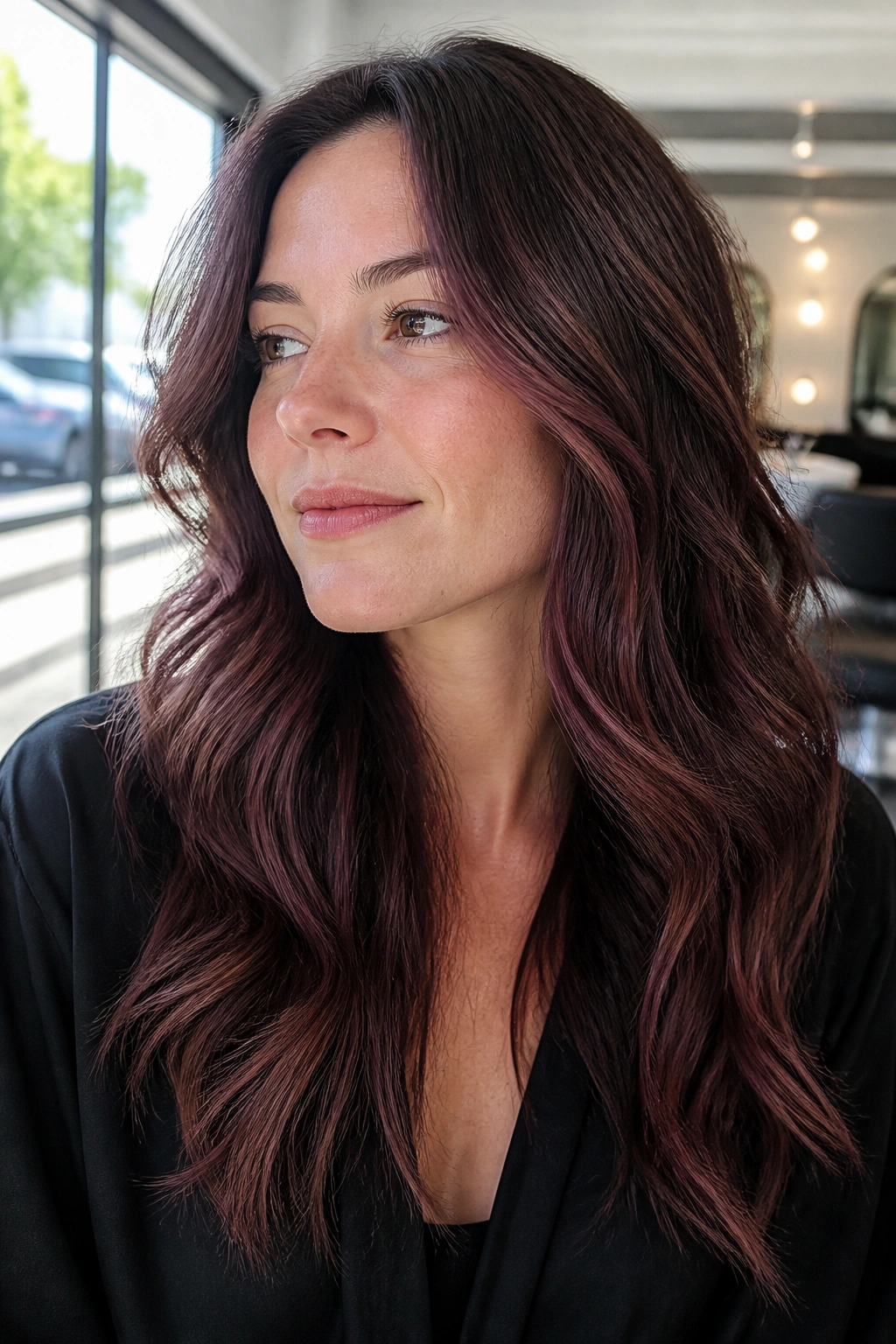
Plum brown balayage is one of the smartest choices for cool skin because plum does two jobs at once. It adds red depth, and it quietly pushes the color toward violet, which keeps the whole thing cool. No brass. No orange glow. Good.
Why It Reads So Well on Cool Complexions
The balayage technique matters here. Hand-painted placement lets the plum sit where the light naturally hits, so the shade looks dimensional instead of striped. Around the face, it can make pale or pink-toned skin look brighter rather than redder.
You can ask for a dark brunette base with plum ribbons through the mids and a few softer pieces around the hairline. If you want less drama, keep the plum concentrated underneath and at the ends. That way the color shows when you move, not all at once.
This is a good choice if you like hair color with a little edge. Not loud. Just noticeable.
6. Mahogany Silk
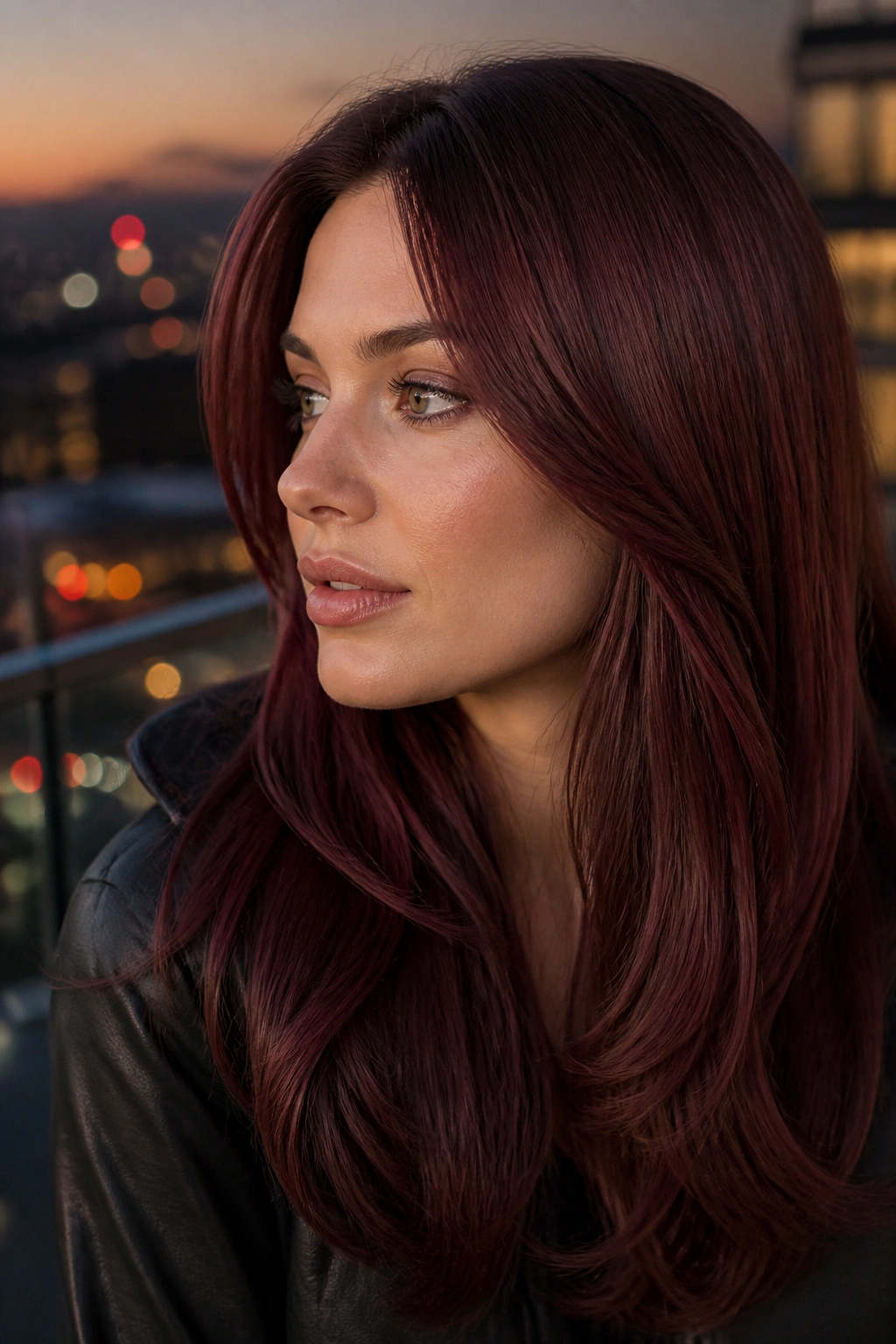
Mahogany silk is smooth, polished, and a little old-school in the best way. It has the richness of red velvet, but the brown keeps it wearable. On cool skin, mahogany works because it leans red-violet rather than coppery gold.
Unlike brighter red browns, mahogany doesn’t need streaks or face framing to feel complete. A single-process mahogany brown can look elegant on shoulder-length cuts, blunt bobs, and long waves alike. It also flatters cooler makeup palettes — plum blush, mauve lipstick, soft brown liner.
The texture of the hair matters here. Glossy finishes show the color best. Dry, fuzzy ends can make mahogany look flat, so a trim and a smoothing cream go a long way. If you want one shade that feels grown-up without looking severe, this is a strong pick.
7. Rosewood Brunette
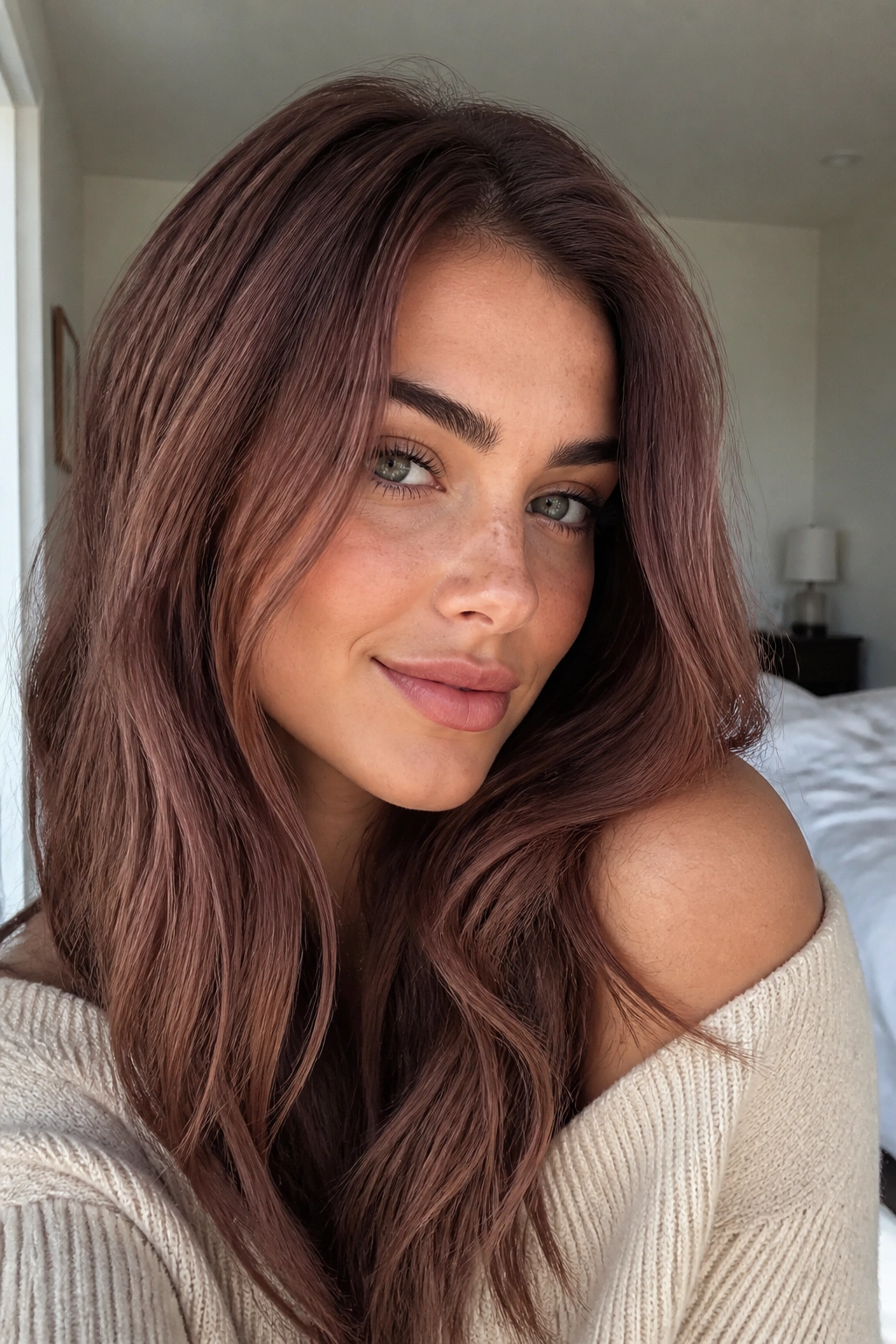
Rosewood brunette has a dusty pink-brown cast that feels softer than burgundy and less dark than mahogany. It’s a pretty shade, but not in a flimsy way. There’s structure to it. The brown keeps it grounded, and the rose note gives it a cool, flattering softness.
How to Get the Most From It
This color looks best when the red is muted, not bright. Ask for a brunette base with a rosewood gloss or demi-permanent glaze. If your skin has a lot of pink or blue in it, the shade can make your complexion look fresher, especially around the cheeks and jawline.
A few things to know:
- Works well on medium-length waves and layered cuts
- Pairs nicely with soft, brushed-out styling
- Needs gloss maintenance to keep the rose tone from fading flat
- Looks especially good if your eyebrows are dark or ash-brown
Small warning: if the rose gets too warm, it can turn peachy. That’s the line to watch.
8. Cool Copper Brown
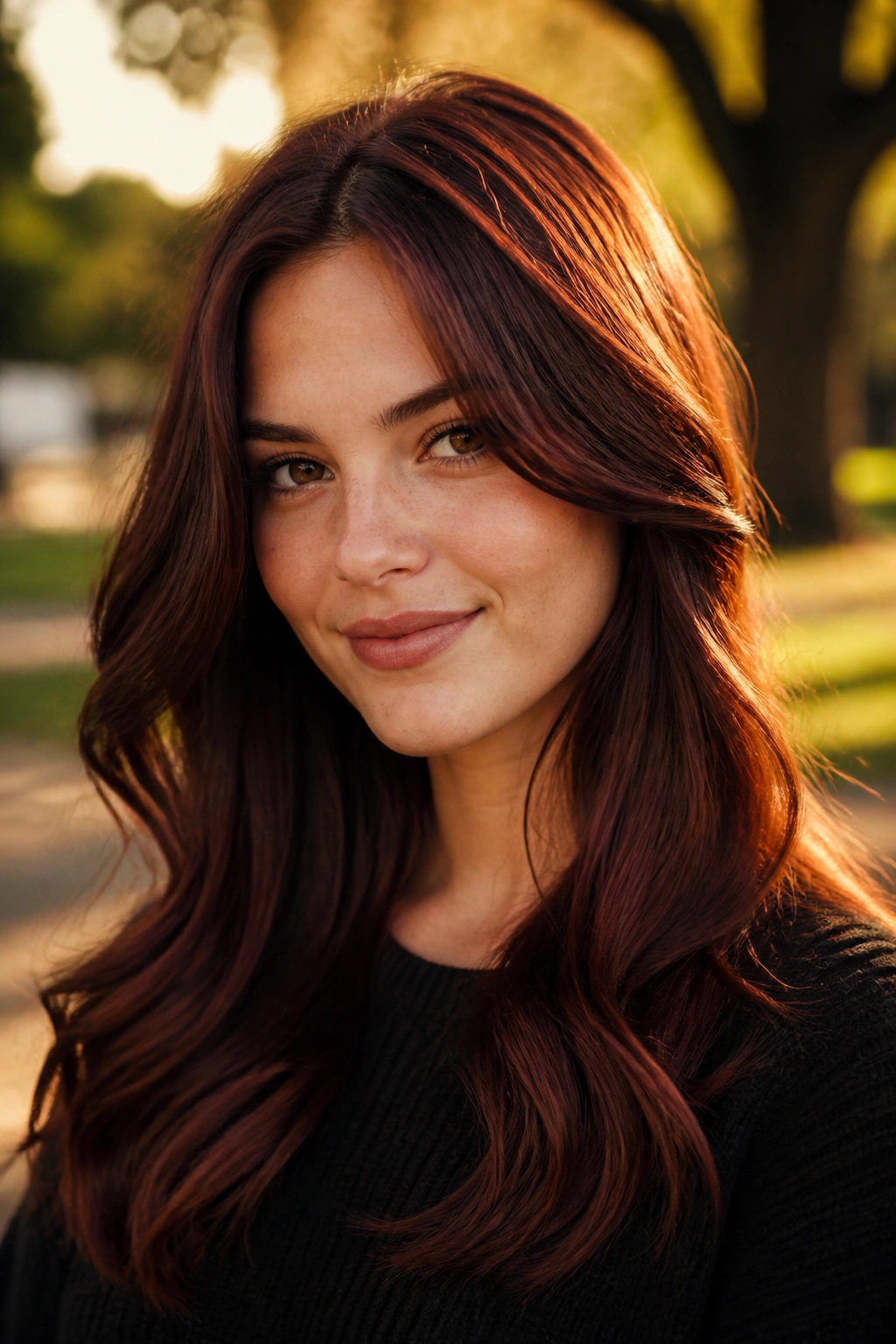
Copper usually sounds risky for cool skin, and honestly, a lot of copper is risky. But cool copper brown is different. It’s toned down, deeper, and a little more restrained, with enough brown underneath to keep the red from going orange.
The trick is to ask for a blue-corrected copper, not a bright penny shade. That blue correction matters more than most people realize. It keeps the hair from fighting a cool undertone and gives the color a sleeker finish. On pale skin, this version can add warmth without making the face look pinker.
I’d wear this shade with a darker root shadow if you want it to feel modern. If you skip the root, the color can spread too much and lose that brown anchor. It’s a risk, yes. But when it’s mixed well, it’s one of the most striking choices on this list.
9. Black Cherry Brown
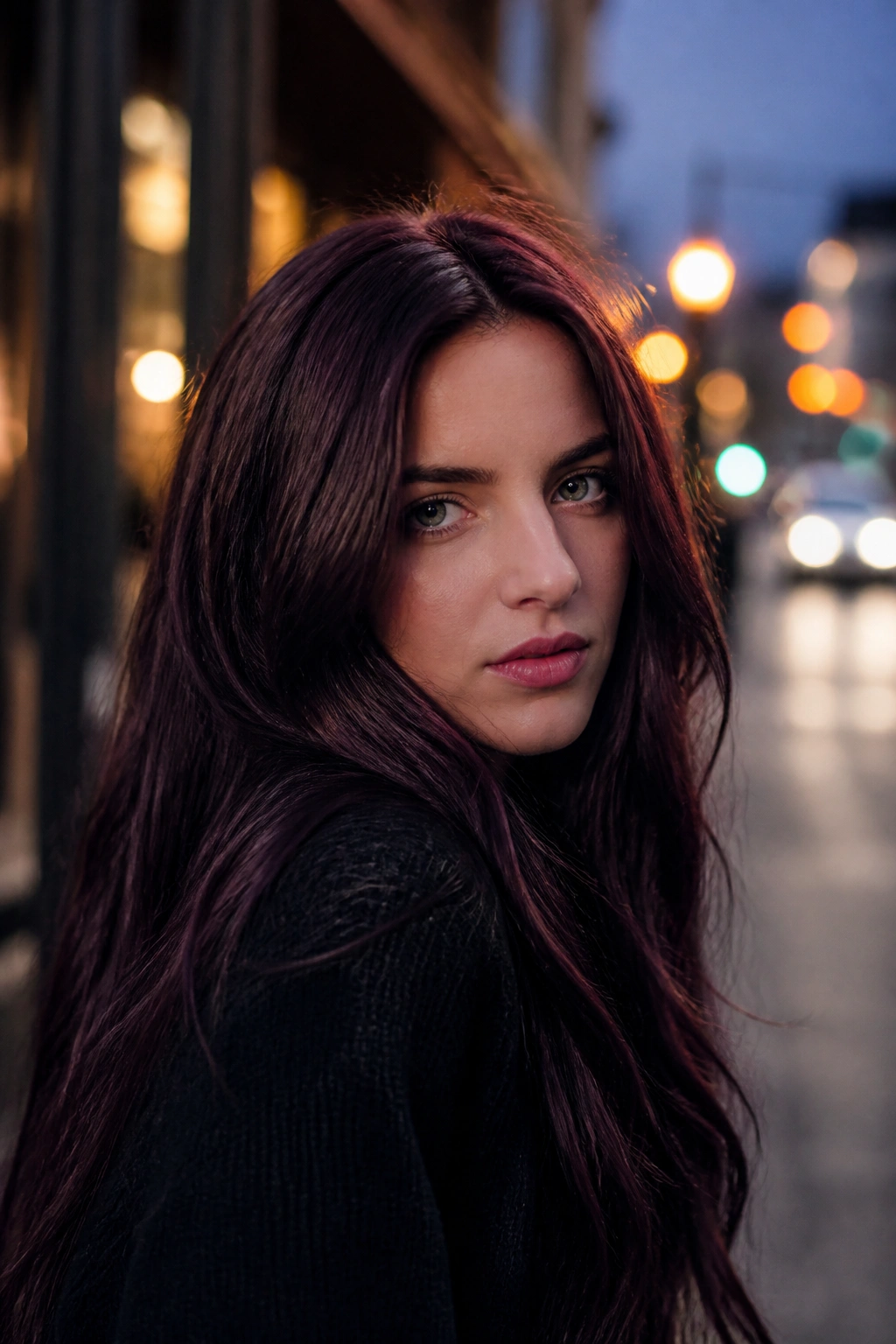
Black cherry brown is for people who want drama but don’t want to go fully red. The base sits near black, then the cherry note appears in bright light like a secret. It’s one of my favorite shades for cool skin because it gives intensity without shouting from across the room.
What makes it flattering is the depth. Cool skin often looks best next to dark, rich shades that have a blue-red cast rather than a copper cast. Black cherry brown does exactly that. It’s especially strong on long hair, where the color can move and catch light in sections instead of all at once.
How to Style It
Loose curls or a deep side part show the cherry undertone best. Straight hair reads more black, which can be a good thing if you want subtlety. If you want the red to show more often, ask for a cherry glaze on the mid-lengths and ends, not just an all-over dark dye.
10. Merlot Brown
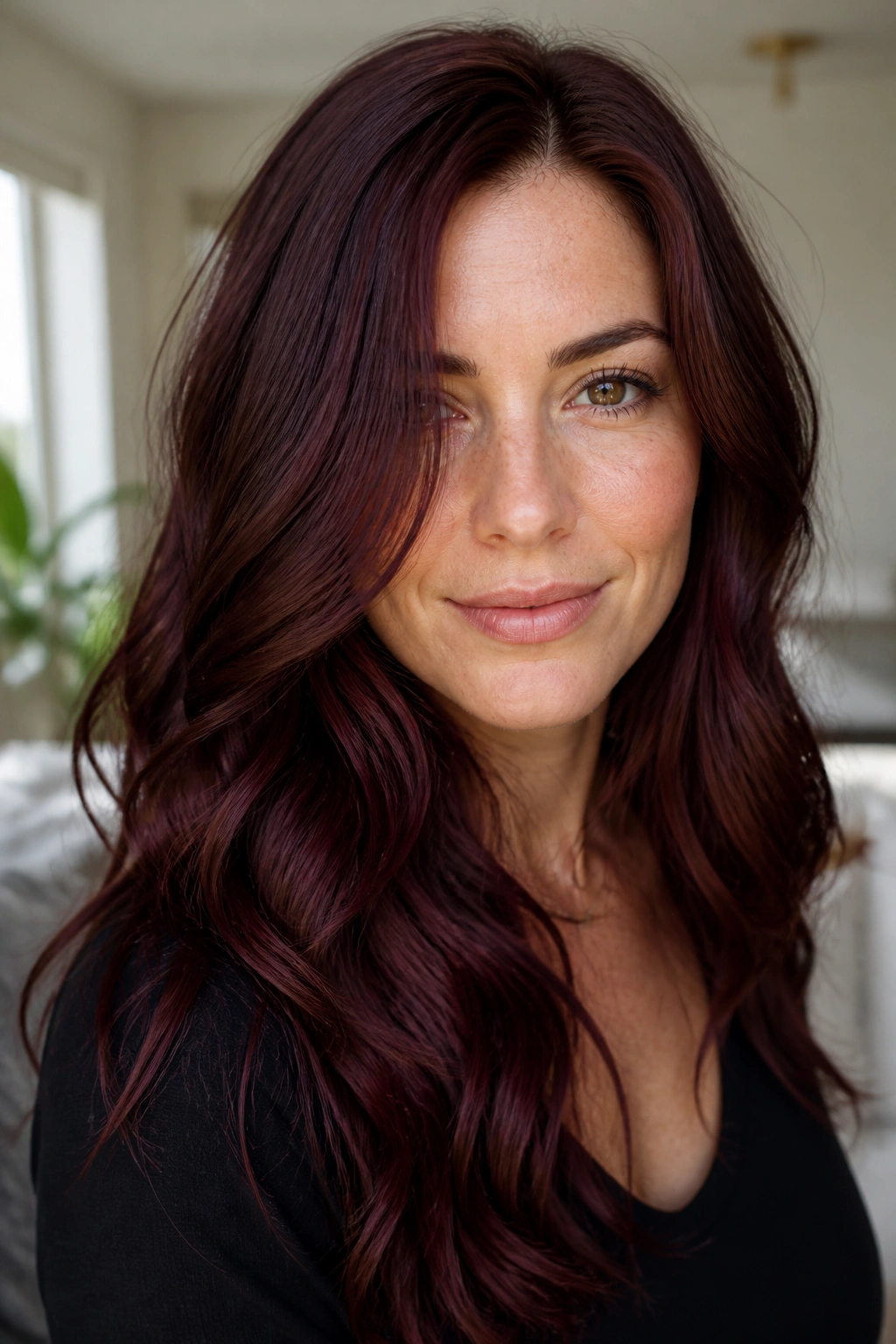
Merlot brown looks like a glass of deep red wine poured into brunette hair. It’s a little darker than burgundy and a little softer than black cherry, which makes it easy to wear in real life. On cool skin, it gives a flushed, healthy look without tipping into orange.
I like this shade most on hair with a lot of movement. Layers help the merlot tones show up in waves and bends, especially near the face. A blunt cut can work too, but then the color needs a glossy finish to keep the ends from looking heavy.
This is one of those colors that feels different depending on the light. Under daylight, it can look like a red-brown plum. Indoors, it goes deeper and moodier. That shifting quality is part of the appeal. It keeps the shade from getting boring.
11. Wine-Tinted Cacao
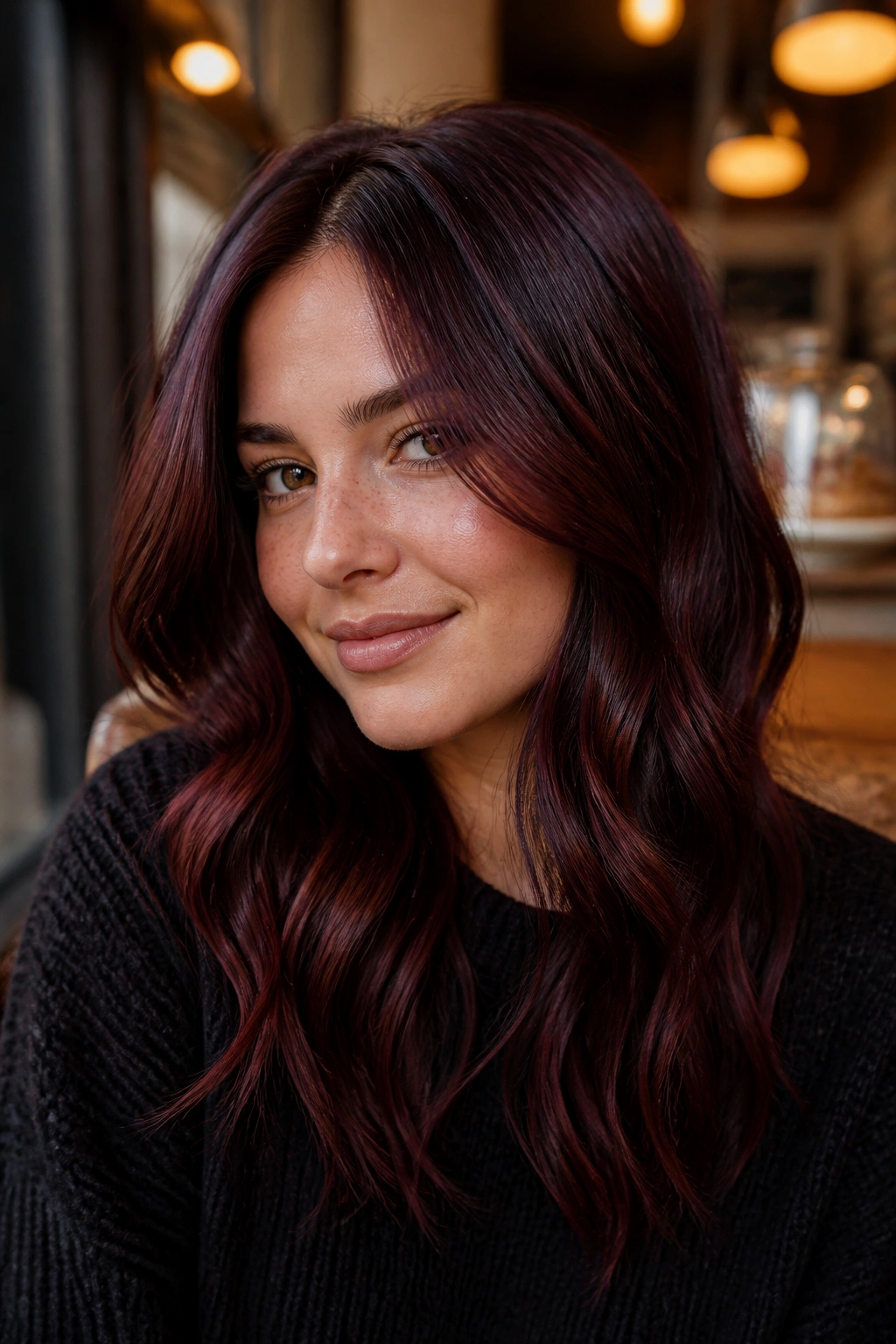
Wine-tinted cacao is exactly what it sounds like: deep brown chocolate with a wine glaze running through it. It’s subtle at a glance, then richer the longer you look. That makes it a strong option for people who want red-brown hair color ideas for cool skin tones without making a huge visual leap.
The cool factor comes from the wine overlay. If the base is too warm, the whole thing can slide into chestnut territory. If the wine tone is too strong, it starts looking plum-heavy. The sweet spot is a dark cocoa base with just enough red-violet reflect to show under sunlight.
Best Way to Wear It
- Choose a level 3 to 4 brunette base
- Ask for a wine-brown gloss, not bright red dye
- Keep makeup soft and cool-toned so the hair stays the focus
- Refresh with a color-depositing conditioner every few washes
The color looks especially good on thick hair because the depth gives it weight. Thin hair can wear it too, but a soft wave helps the dimension show.
12. Raspberry Brown Ribbons
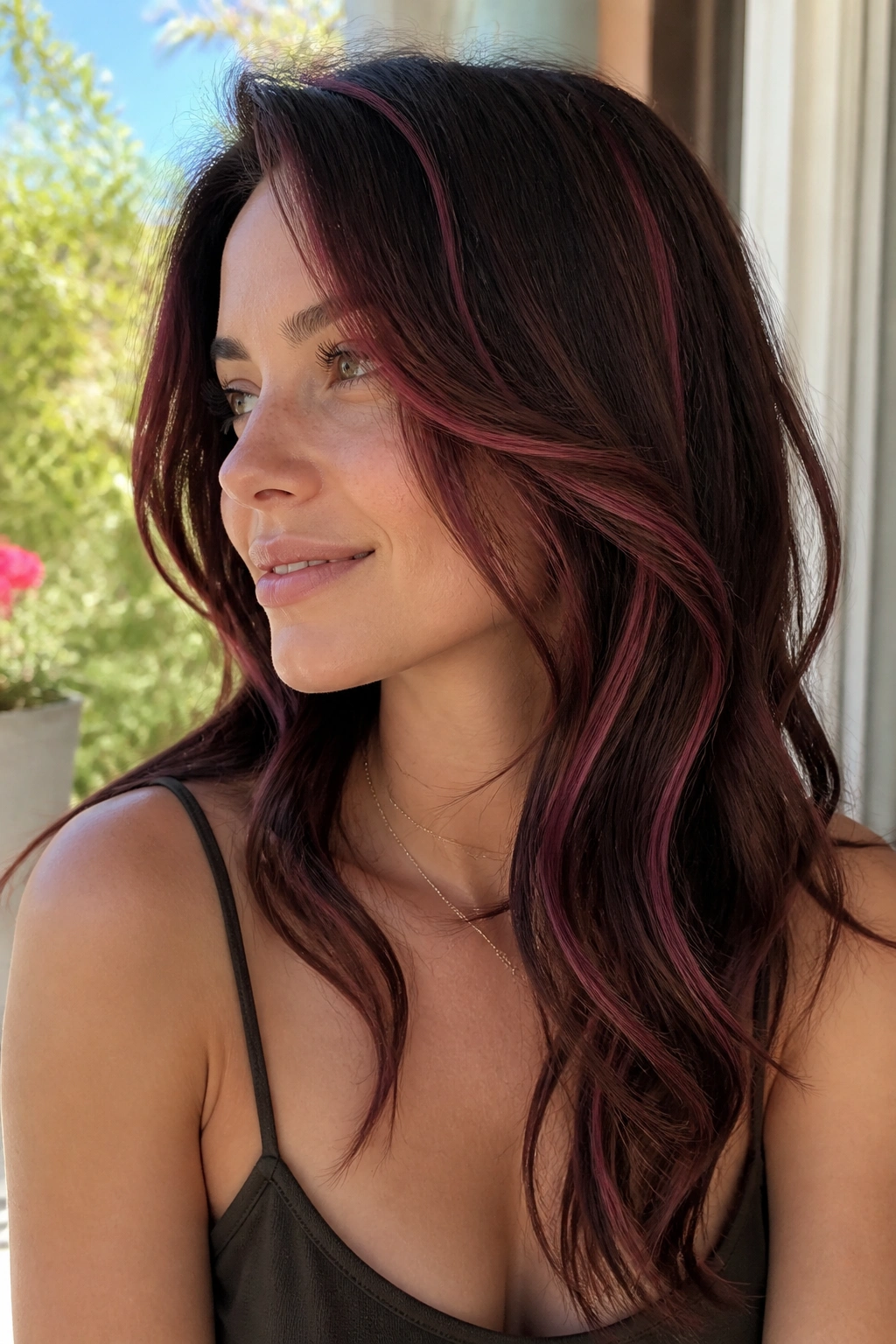
Raspberry brown ribbons are a good compromise if you want color without changing your whole head. Instead of an all-over shade, you get brunette hair threaded with raspberry-toned pieces. The result is lighter and more playful than merlot, but still cool enough for pink or blue undertones.
Unlike chunky highlights, these ribbons should stay narrow and soft. Think painted strands, not stripes. That keeps the hair looking expensive, which is a silly phrase, but there is no better shorthand for hair that has dimension without looking striped or patchy.
This idea works especially well on layered cuts, lob lengths, and loose waves. The movement lets the raspberry pieces peek through naturally. If your hair is very dark, the ribbons may need a pre-lighten first, and that’s where upkeep gets real. Dark roots, lighter ribbons, and regular toning are a commitment. Still, the payoff is strong if you want something lively.
13. Iced Cinnamon Brown
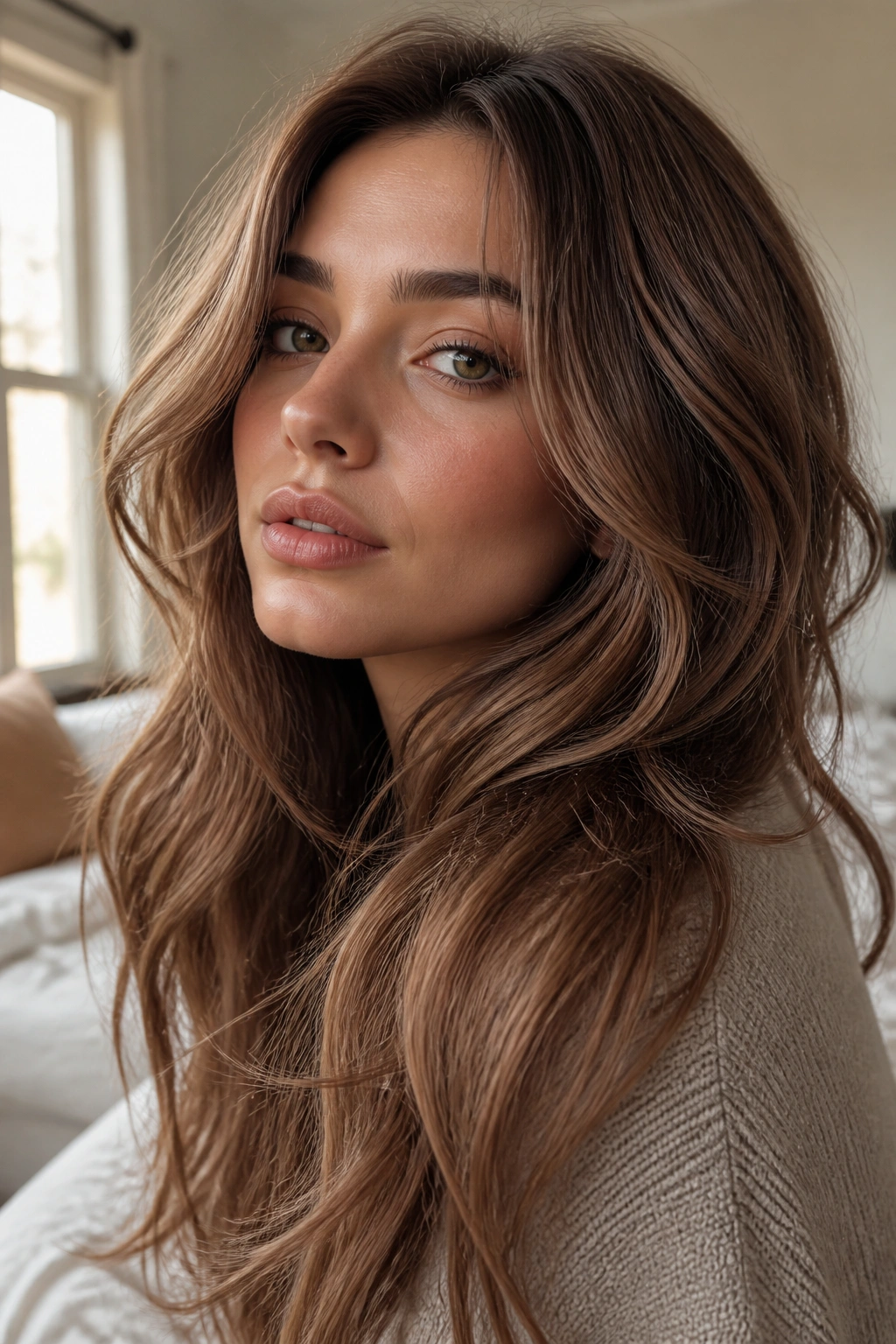
Iced cinnamon brown is what happens when cinnamon gets cooled down instead of pushed warm. It has red-brown flavor, but the ash keeps it from turning spicy in the wrong way. On cool skin, that restraint makes all the difference.
Why It Works
A lot of cinnamon shades run orange. This one should not. Ask for an ash-brown base with cinnamon reflect, not a warm copper formula. If you’re sitting in a salon chair and the swatch looks like pumpkin tea, walk away.
How to Ask for It
- Mention that you want cinnamon with an ash finish
- Ask for softness around the face, not bright copper streaks
- Keep the ends slightly lighter for movement
- Style with a satin blowout or soft bends
It’s a nice shade if your wardrobe leans black, gray, burgundy, or denim. The color has enough warmth to feel alive, but the cool finish keeps it from fighting your skin.
14. Twilight Auburn
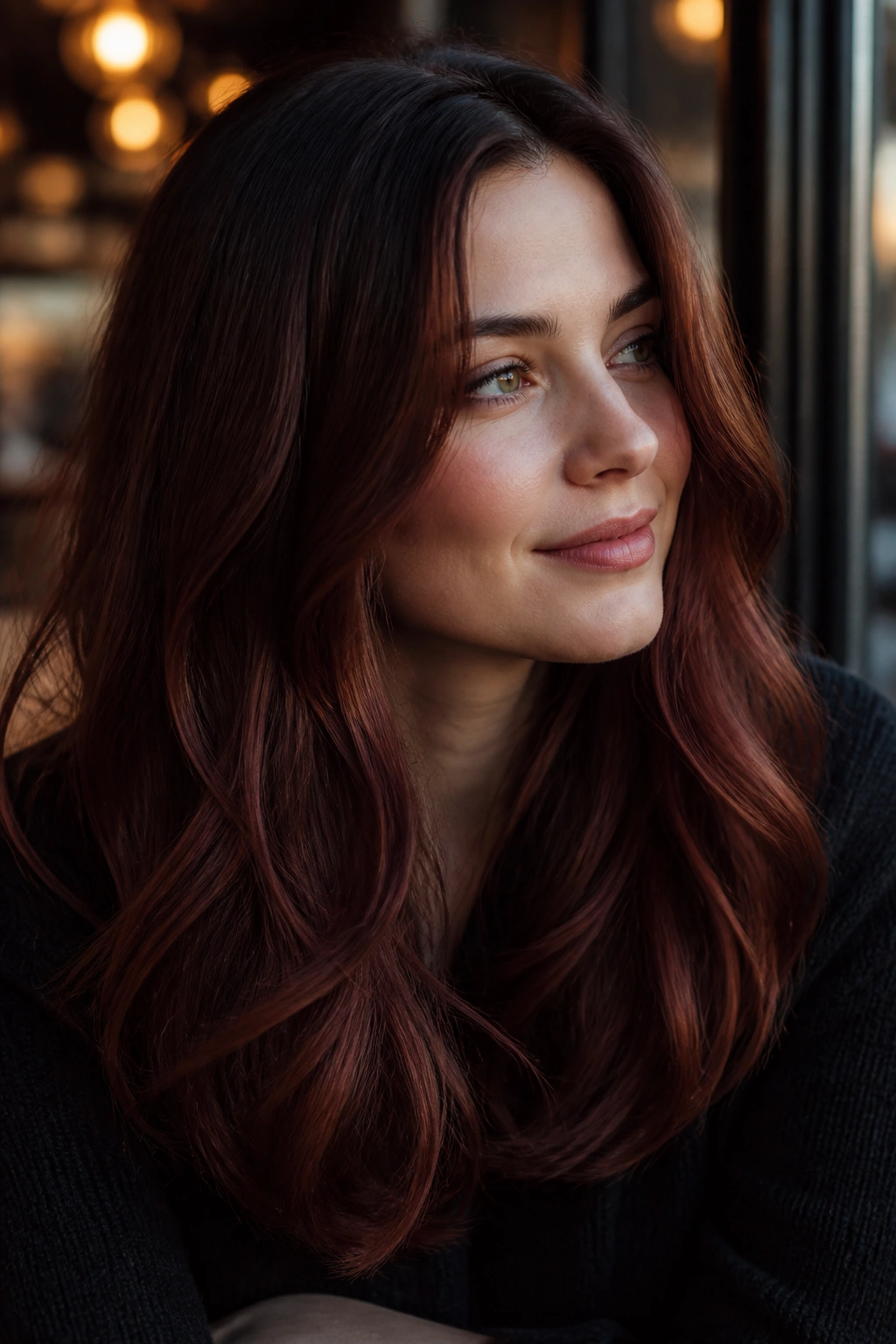
Twilight auburn is for anyone who wants red without the obvious red. It sits in that dusky middle space where brown and auburn blur together, and the result feels calm rather than fiery. On cool skin, that lower-volume red is often more flattering than a loud copper.
The shade works best when the roots stay deeper and the auburn lives in the mid-lengths. That gives you movement without losing the brunette backbone. It also grows out better, which matters if you hate obvious regrowth lines. Most people do, even if they pretend not to.
I’d pair this with medium layers or long curtain bangs. The color shows around the face and along the shape of the hair, which makes the cut look more tailored. If you want a red-brown that feels wearable on a Monday and still interesting on a Saturday night, this is it.
15. Berry Cola Brunette
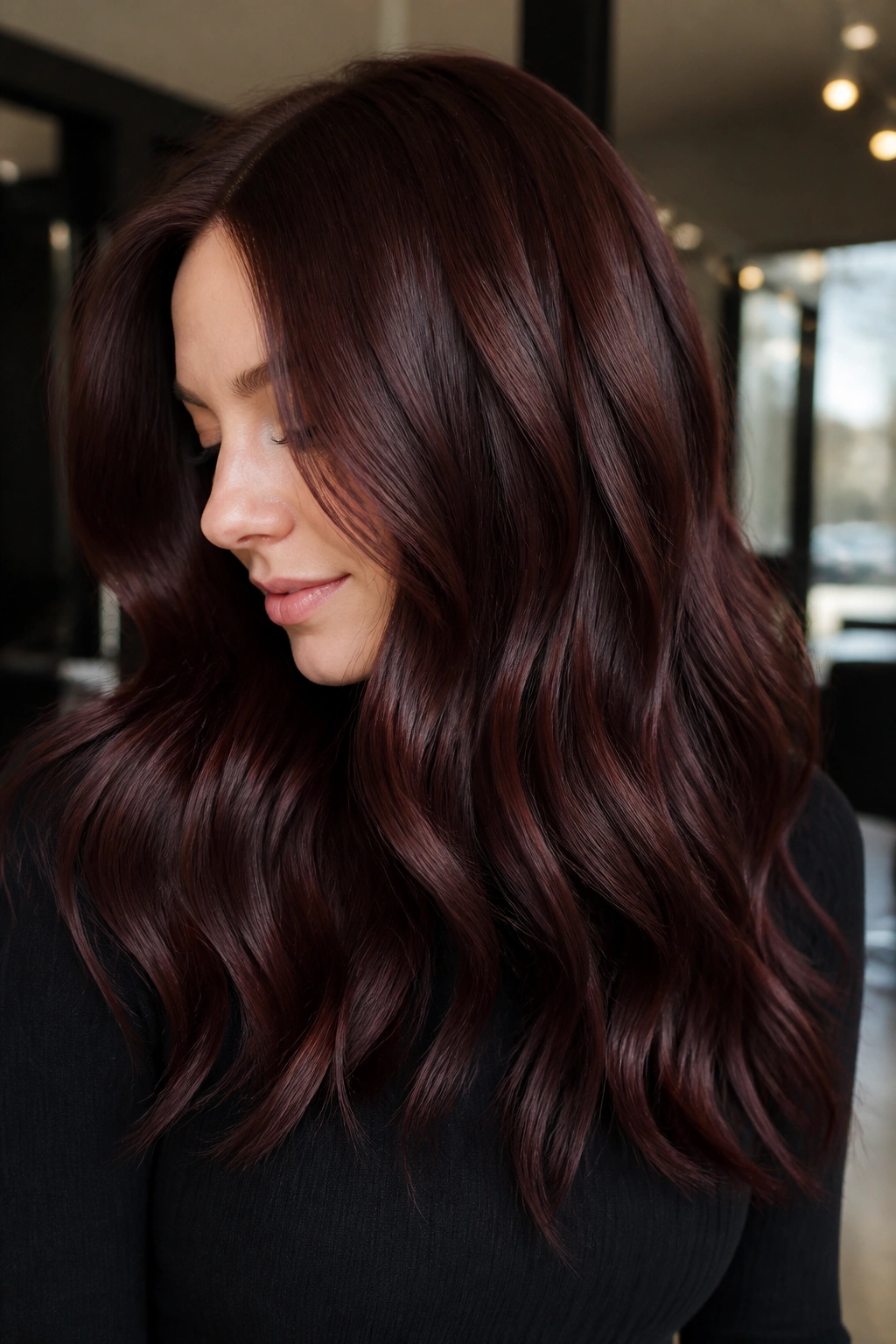
Berry cola brunette sounds playful, but the actual effect is surprisingly chic. It’s a dark brown base with a berry-red sheen, like cola under red light. That shimmer is why cool skin handles it well. The red stays contained. It never takes over.
What Makes It Different
The cola part gives you depth, and the berry part gives you tone. Together, they create a brunette shade that looks almost black in shadow, then reveals color when you move. This is a smart pick if you like your hair rich and dimensional but not obviously dyed.
Try it with glossy, straight styling or big soft waves. Both show the berry reflect nicely. It also pairs well with cool lipstick shades — cranberry, mauve, deep rose. If your hair is naturally dark, this is one of the easier shades to maintain because the base does most of the work.
A demi-permanent gloss can keep the berry note fresh without forcing you into constant color correction. That alone makes it worth a look.
16. Garnet Brown Gloss
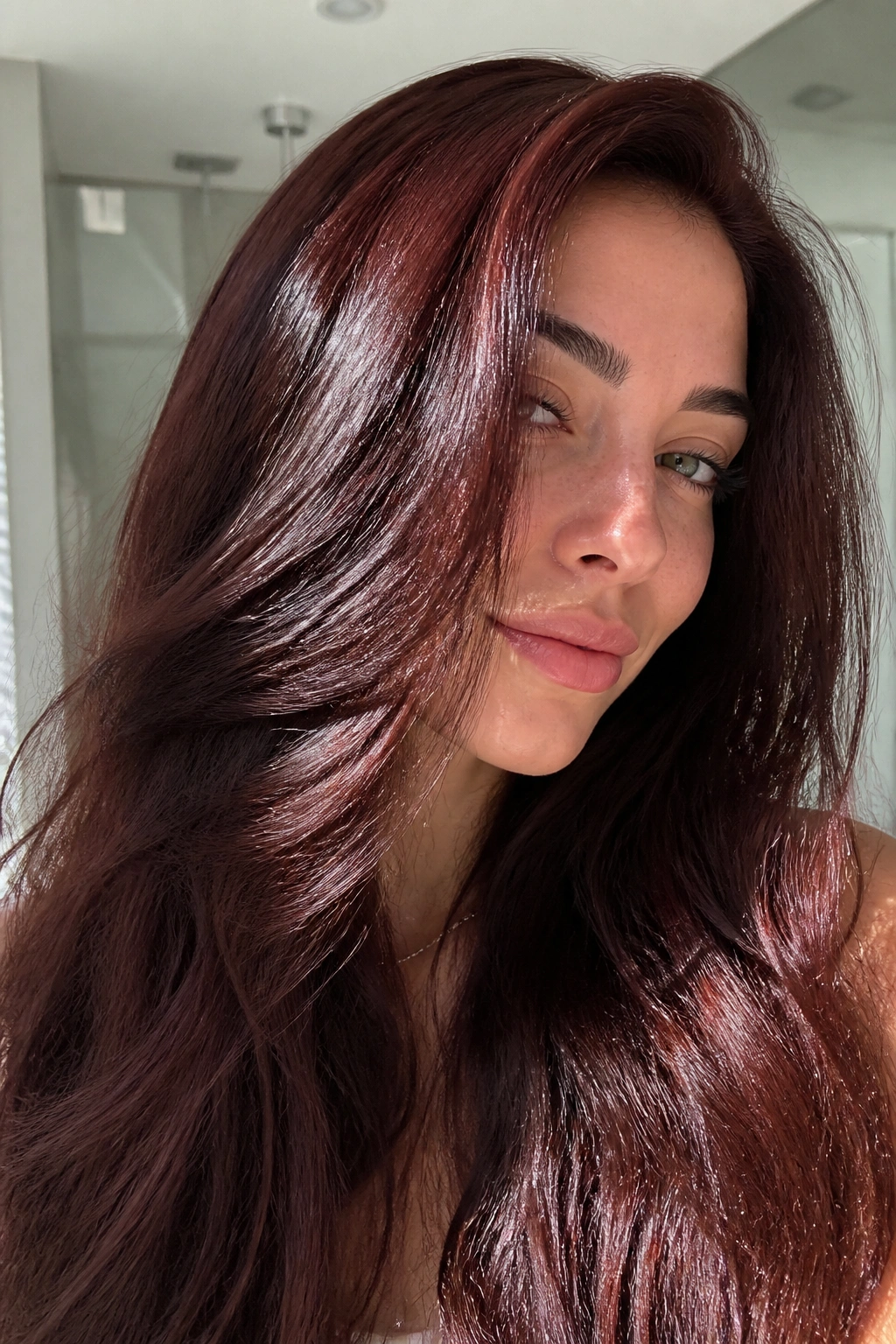
Garnet brown gloss is a refresh shade, and I mean that in the nicest way. It can wake up tired brunette hair without requiring a full color overhaul. The garnet note adds a deep red sparkle over brown, which is exactly the kind of thing cool skin can wear without looking washed out.
Picture a brunette base that has been polished with a red gemstone sheen. Not glittery. Just rich. That’s the feel. This one is especially useful if your natural brown hair has gone a little flat from sun, heat styling, or too many washes.
- Good for people who want low-commitment color
- Easy to apply as a salon gloss between full dye jobs
- Looks stronger on healthy, smooth hair
- Fades into a softer red-brown rather than a harsh orange
The gloss finish is the point. Without it, the shade can look dull. With it, the hair looks deeper and more alive.
17. Mulled Wine Brown
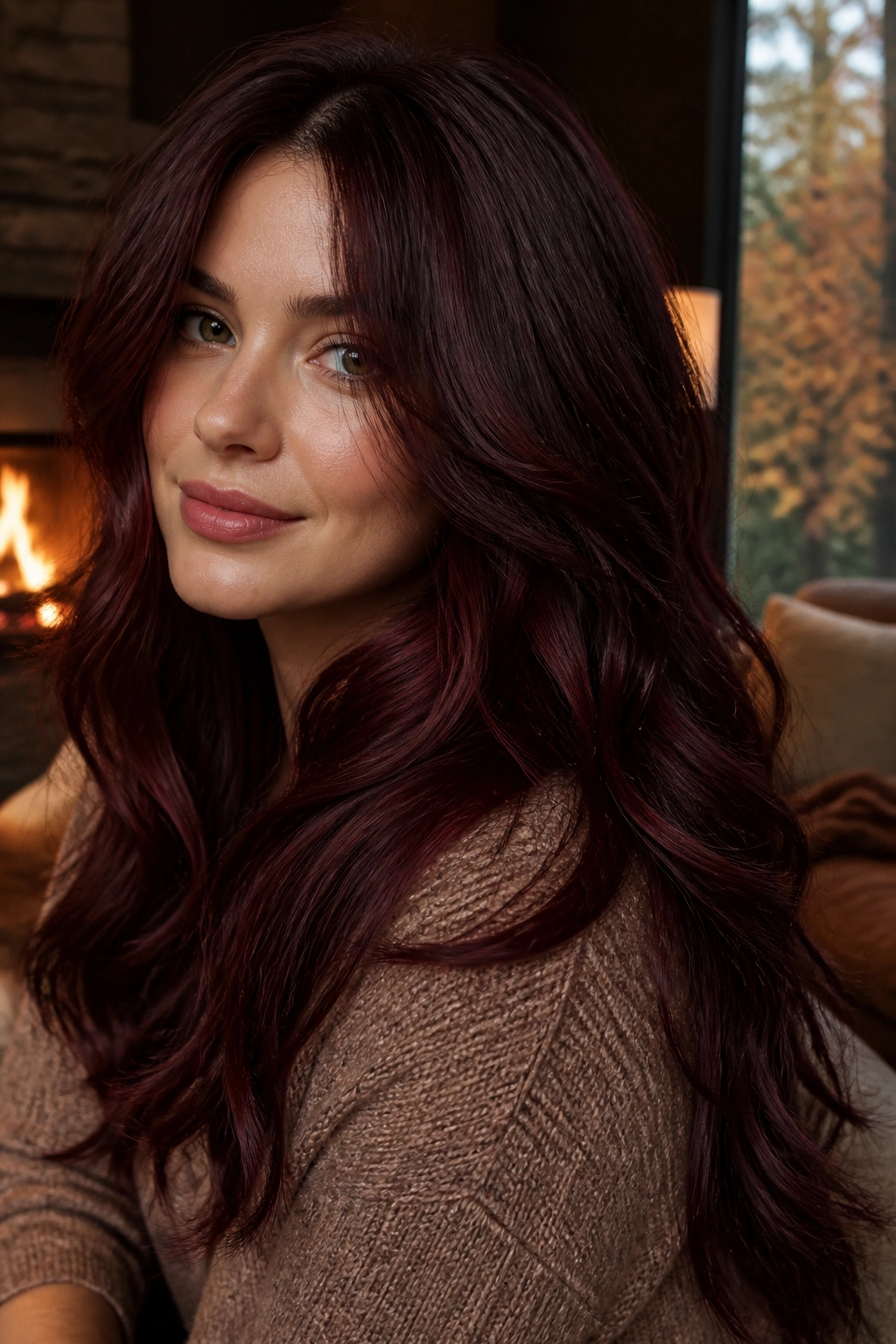
Mulled wine brown leans spiced and shadowy, with a deeper red character than cranberry and a less violet cast than plum. It’s a cozy shade, but not in a soft-focus way. There’s edge in it. Cool skin usually likes that.
What I like about this tone is its flexibility. On medium brunette hair, it can read as rich red-brown. On darker hair, it becomes almost moody burgundy. The exact effect depends on the light, which is part of the appeal. It doesn’t flatten out into one single note.
This shade is especially good if you wear earthy makeup that still stays cool — taupe, rose-brown, wine liner, soft plum shadow. The hair doesn’t need a lot of help. A blunt cut or a simple center part is enough. It’s one of those colors that makes clean styling look intentional instead of plain.
18. Cool Brick Brown
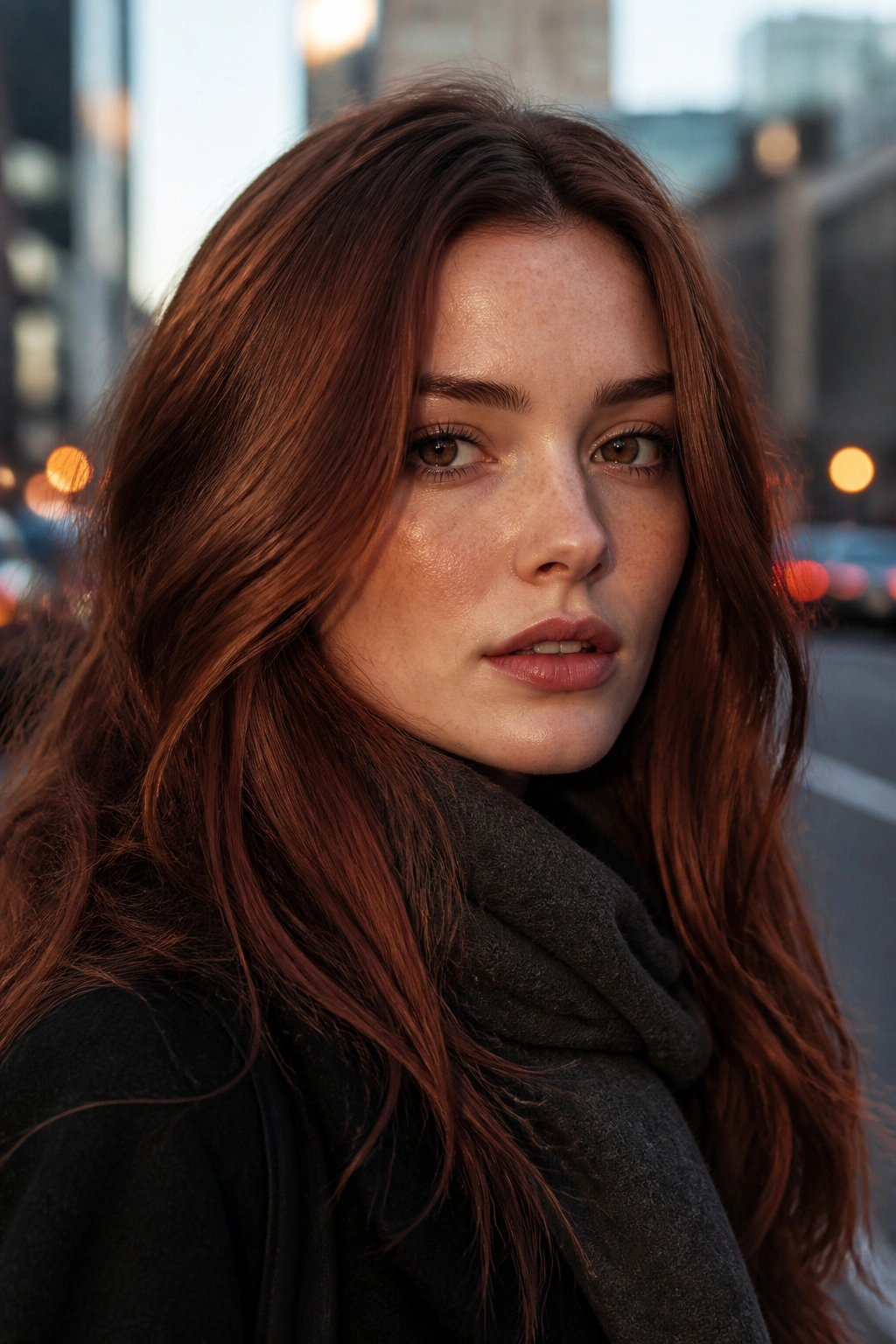
Cool brick brown sounds warmer than it is. That’s the odd little trick. Instead of a dusty orange brick tone, the color should feel muted, brown-heavy, and slightly red like old clay under shadow. On cool skin, that muted quality keeps it from looking harsh.
Unlike Copper, This Has Weight
Copper can be bright and reflective. Brick brown should feel denser and more grounded. It’s a better choice if your skin is cool but not icy, especially if you like deep lip colors and heavier brows. The shade has enough warmth to avoid looking washed out, but the brown base keeps the whole thing under control.
Ask for low-contrast placement if you want the color to blend with natural brunette roots. A root shadow helps a lot here. Without it, brick tones can look too flat.
This is one of the easier shades to pair with fall-ish clothes without looking seasonal in a dated way. Black, cream, denim, and charcoal all work.
19. Sable Cherry Peekaboo
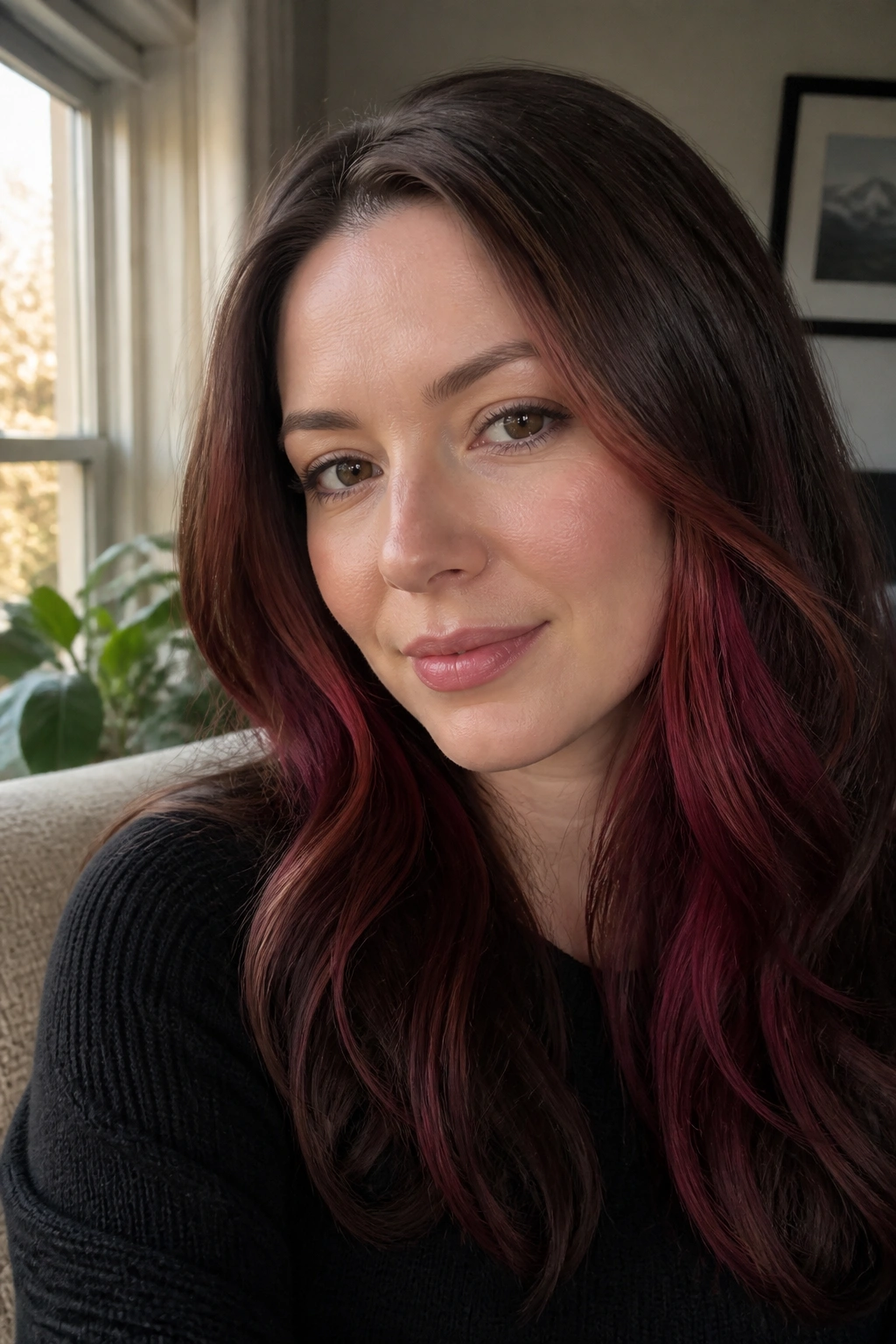
Sable cherry peekaboo is for the person who wants color but doesn’t want the whole room to know it. The top layer stays deep sable brown, while hidden panels underneath carry a cherry-red tone. It’s discreet, then suddenly not. That shift is the point.
The cool-skin advantage is simple: you get red-brown brightness near movement and face-framing areas without putting the red everywhere. If your skin is sensitive to warmth, that can be a safer entry point. It also makes grow-out much easier, since the darker top layer hides the regrowth.
I’ve always liked this approach for people with office-friendly hair rules or minimal makeup habits. You can wear your hair half-up and show the cherry, or leave it down and keep things quieter. It’s a good reminder that hair color does not have to announce itself to be interesting.
20. Smoky Aubergine Brown
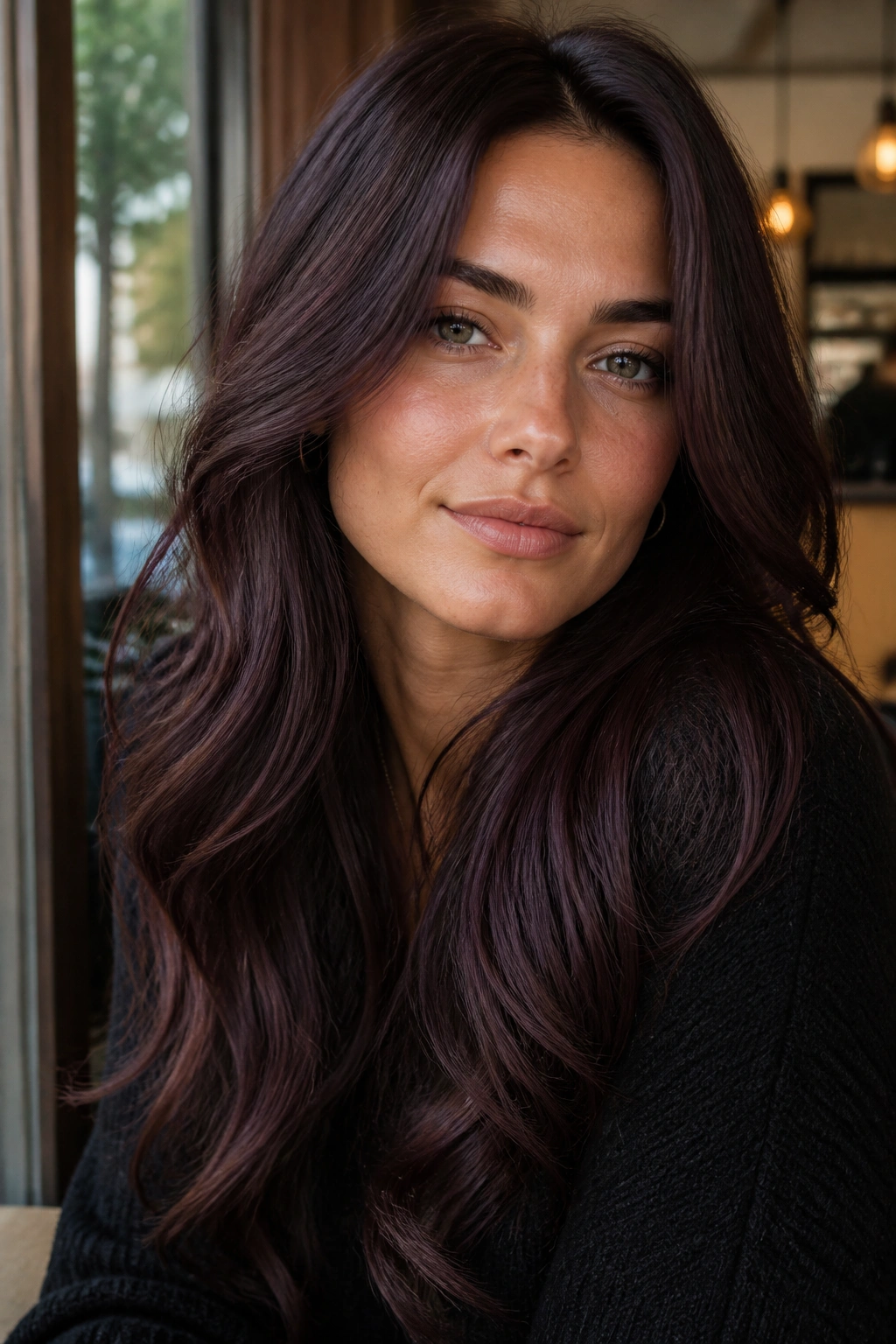
Smoky aubergine brown is the most atmospheric shade in the group. It sits at the edge of brown and deep purple, with just enough red to keep it from reading flat. On cool skin, that aubergine note can be excellent because it deepens the face instead of warming it too much.
This is the shade I’d pick for someone who likes dark lipstick, silver hoops, and a little bit of attitude in their haircut. It looks sharp on straight styles and even better in soft waves, where the purple-brown shift shows up in pieces. If you’ve been bored by ordinary auburn, this is the bolder turn.
A couple of practical notes help here. The color should be smoky, not neon plum. The brown base needs to stay visible, or the whole effect turns costume-like. Keep the finish glossy, keep the tone cool, and the result lands exactly where it should: dark, rich, and just a little unexpected.
