



Brown-blue hair looks best when it stays cool. That sounds obvious, but plenty of brown-and-blue shades miss the mark because they lean too warm, too muddy, or too bright for skin that carries pink, rose, or blue undertones.
If silver jewelry usually looks easier on you than yellow gold, you’re probably in the right territory. Cool skin tones tend to play nicely with ash brown, smoky mocha, navy lowlights, steel-blue glosses, and blue-black depth, while orange-heavy chestnut and coppery caramel can make the face look a little tired.
The nice part is that brown-blue hair does not have to mean full fantasy color. It can be a soft glaze. It can hide under layers. It can sit in the ends, the fringe, the root shadow, or a few fine ribbons that only show when the hair moves.
The trick is choosing how much blue you want and where you want it to live. Too much, and the look turns harsh. Too little, and the brown just reads flat. The shades below split that difference in useful ways.
1. Mushroom Brown With Steel-Blue Gloss
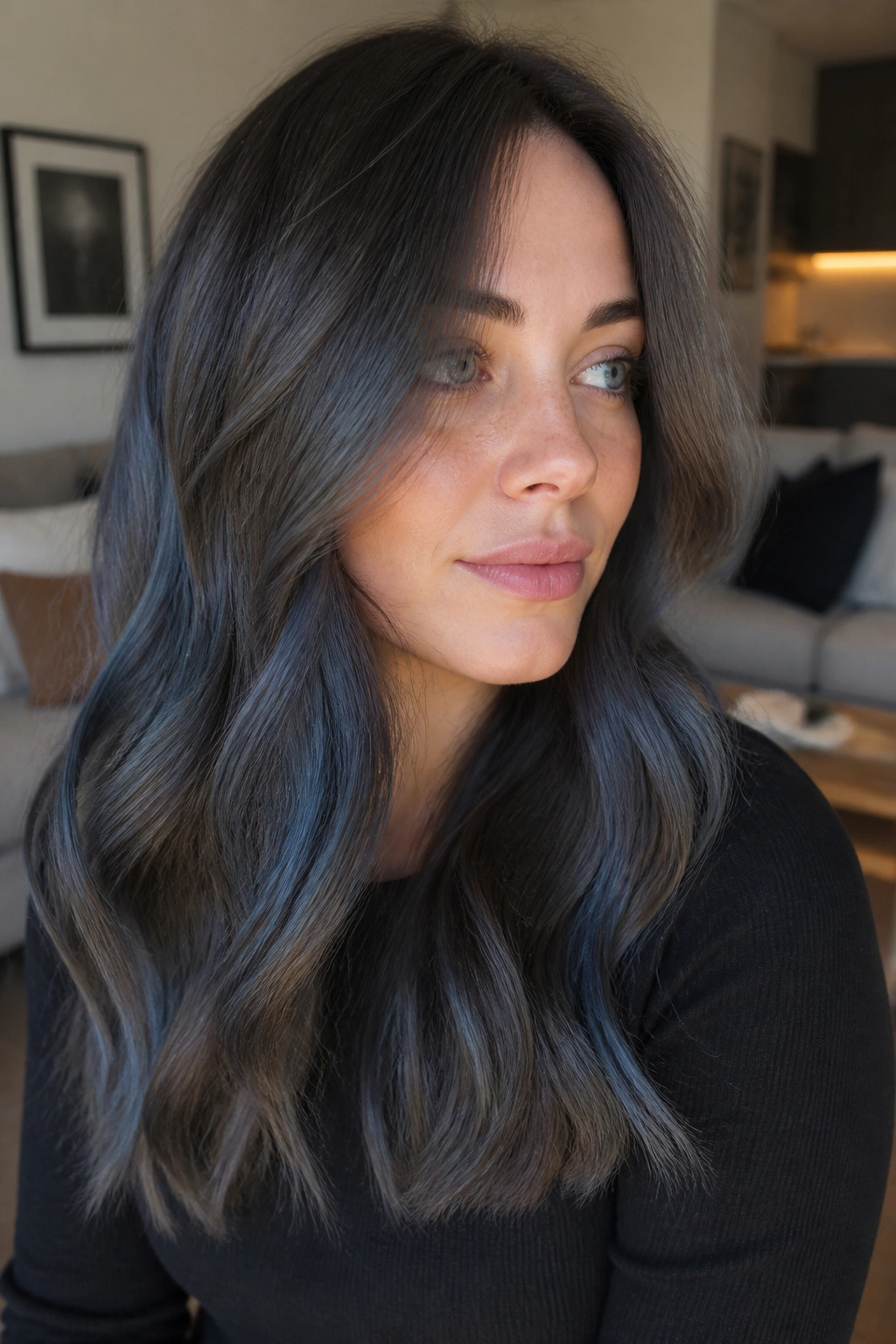
Mushroom brown is one of the easiest places to start because it already has that earthy, gray-beige base that cool skin tones usually love. Add a steel-blue gloss, and the whole color gets sharper without screaming for attention.
Why It Flatters Cool Skin
The cool part matters more than the blue part. A level 5 or 6 mushroom brown keeps the hair looking soft, while the steel-blue glaze trims away orange warmth that can make fair or rosy skin look blotchy. It’s one of those shades that looks calm even when the styling is messy.
What to Ask Your Colorist For
- A neutral-to-cool brown base, not golden or copper.
- A blue-based glaze or demi-permanent gloss over the mids and ends.
- Soft, blended root depth if your natural color is darker.
- A finish that looks satin, not shiny-plastic.
Best for: cool skin tones that want something believable in daylight and polished at dinner.
2. Espresso Brown With Navy Underlights
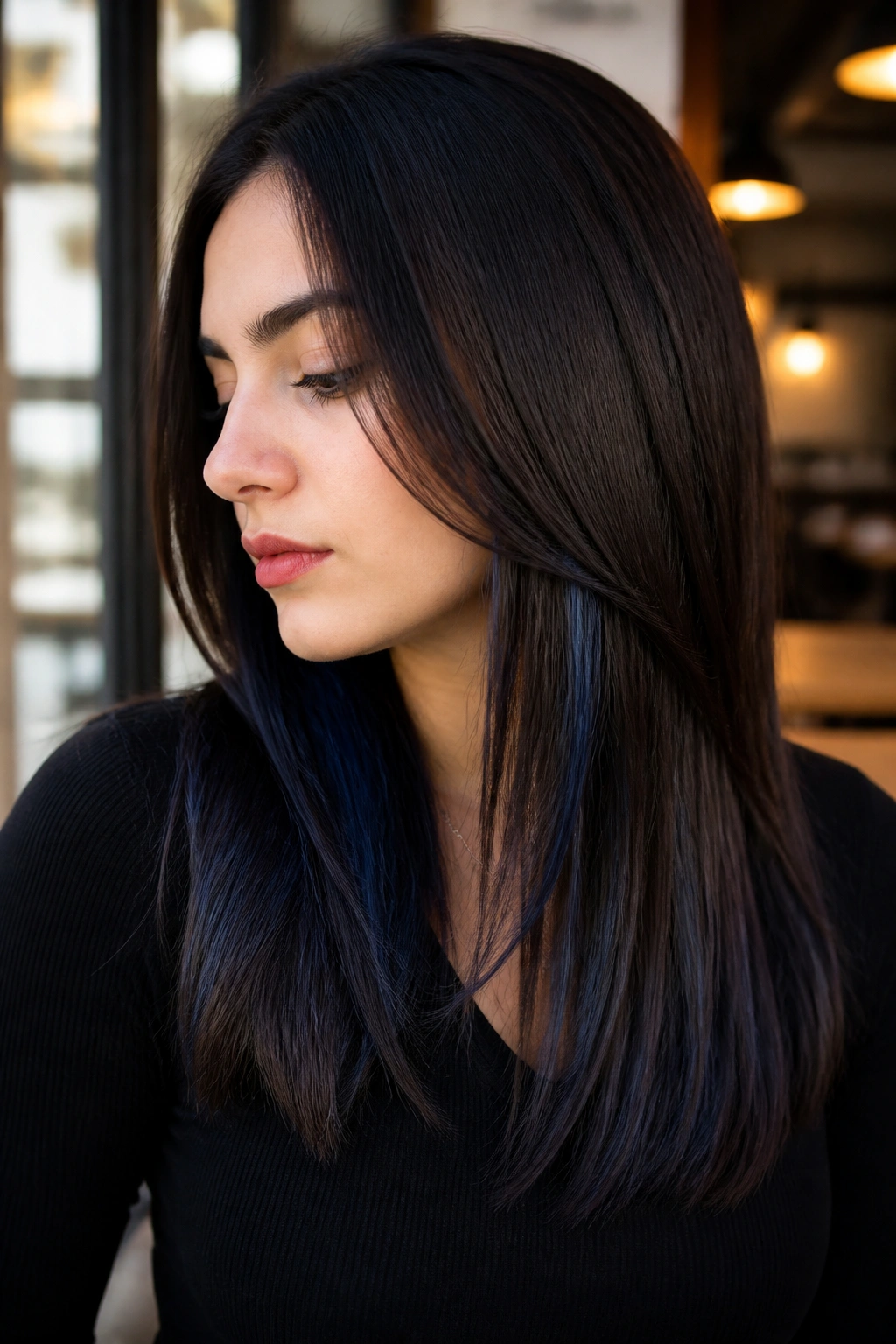
This is the shade for someone who wants brown first and blue second. From the top, it reads like deep espresso. When the hair swings, the navy underlights show up underneath and give the whole style a little edge.
The appeal is restraint. You keep the outer layer dark and wearable, then tuck the color play underneath so it flashes only when you want it to. On straight hair, the navy can peek through in clean bands. On waves, it looks softer and more expensive-looking.
It works especially well if your cool skin tone likes contrast. Dark brows, pale skin, gray eyes, or a cool olive cast can all handle this depth. The only real caution: keep the navy muted. Bright royal blue under dark brown can look costume-y fast. Navy stays chic.
3. Ash Mocha Balayage With Cobalt Ribbons
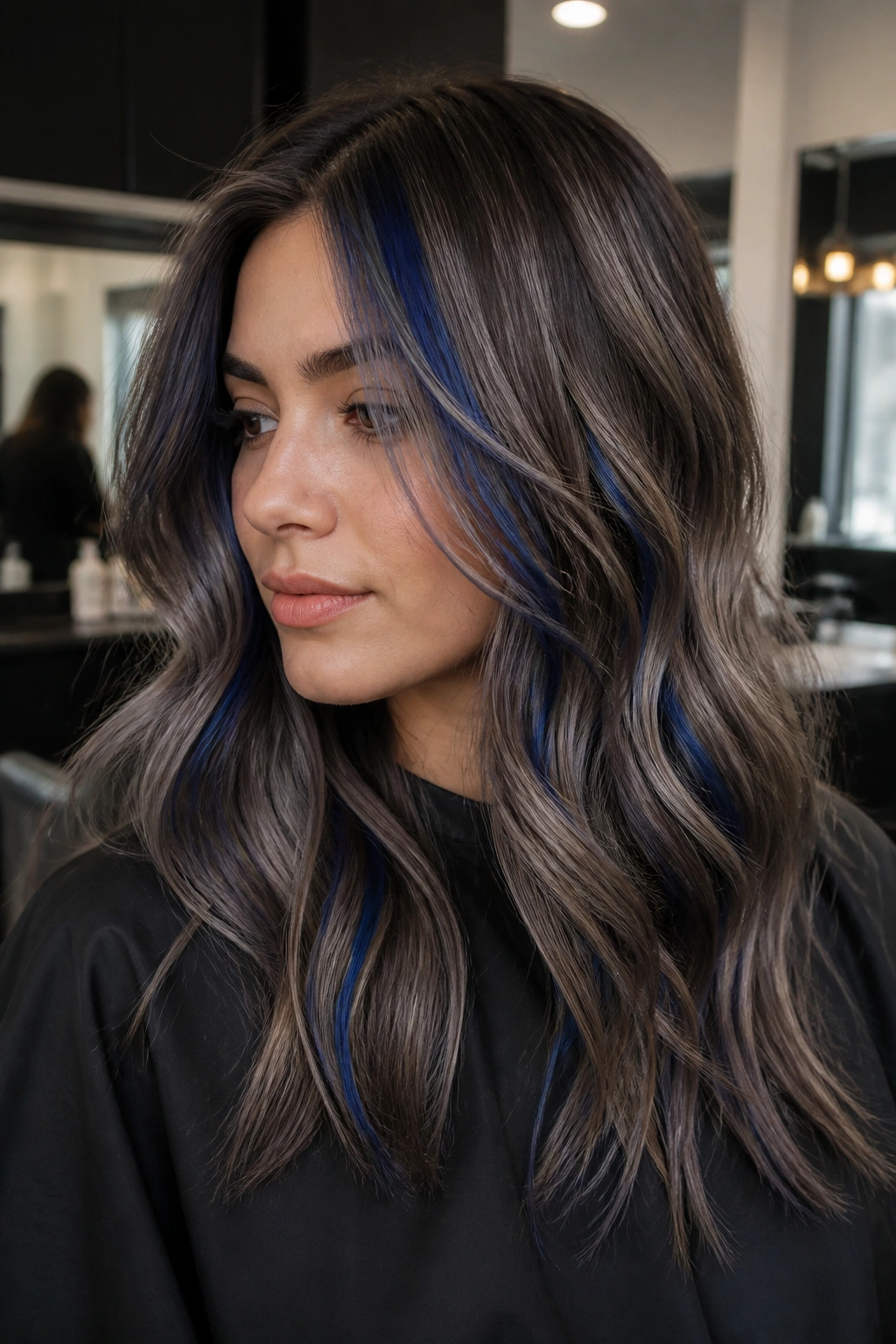
Why does this work so well on cool skin tones? Because ash mocha keeps the brown side clean, and the cobalt ribbons bring in color without turning the whole head electric.
The balayage pieces should be fine, not chunky. Think ribbon, not stripe. A good colorist will paint them where light naturally hits: around the face, through the top layers, and near the ends of a lob or long cut. That placement matters more than people think. It keeps the blue visible without turning it into a block.
How to Ask for It
- Start with an ash mocha base one or two levels lighter than espresso.
- Add cobalt ribbons about 1/4 to 1/2 inch wide.
- Keep the root area soft and shadowed.
- Style with loose bends so the ribbons separate a little.
That little bit of movement makes the color breathe.
4. Cool Chestnut With Blue-Black Money Piece
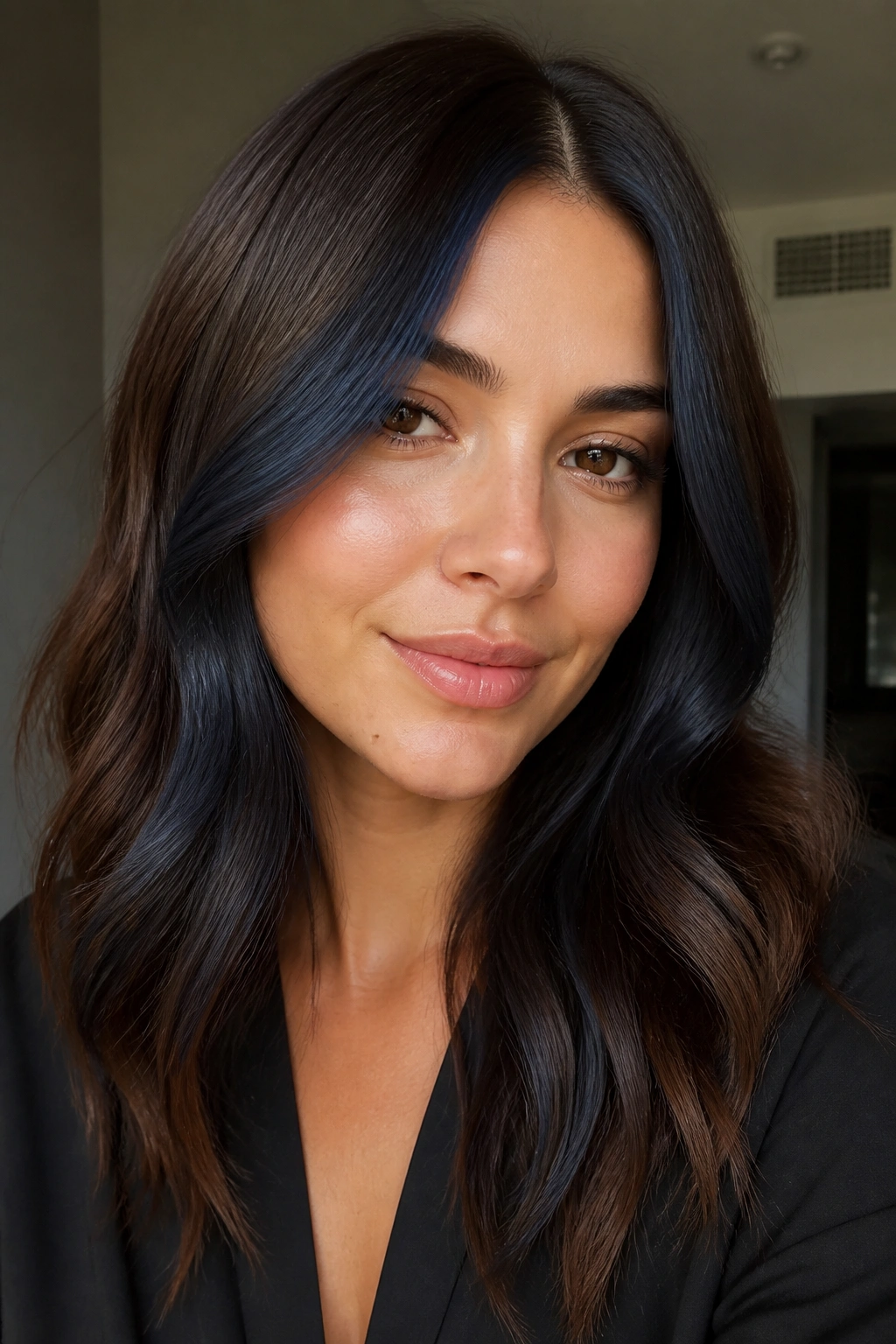
A cool chestnut base can feel a little safe on its own. Add a blue-black money piece around the face, and it suddenly looks deliberate.
Picture this: the front sections are just a touch darker and bluer than the rest of the hair, almost like ink brushed near the hairline. It frames the face in a way that makes cool skin look clearer, especially if the rest of your hair lives in soft chestnut or muted brunette territory.
- The money piece should sit around the cheekbone or temple area.
- Keep the blue-black deep, not bright.
- This looks strongest on layered cuts and curtain bangs.
- A center part gives it a cleaner, more modern feel.
It’s a small move. That’s the beauty of it.
5. Cocoa Brown With Smoky Blue Ombré
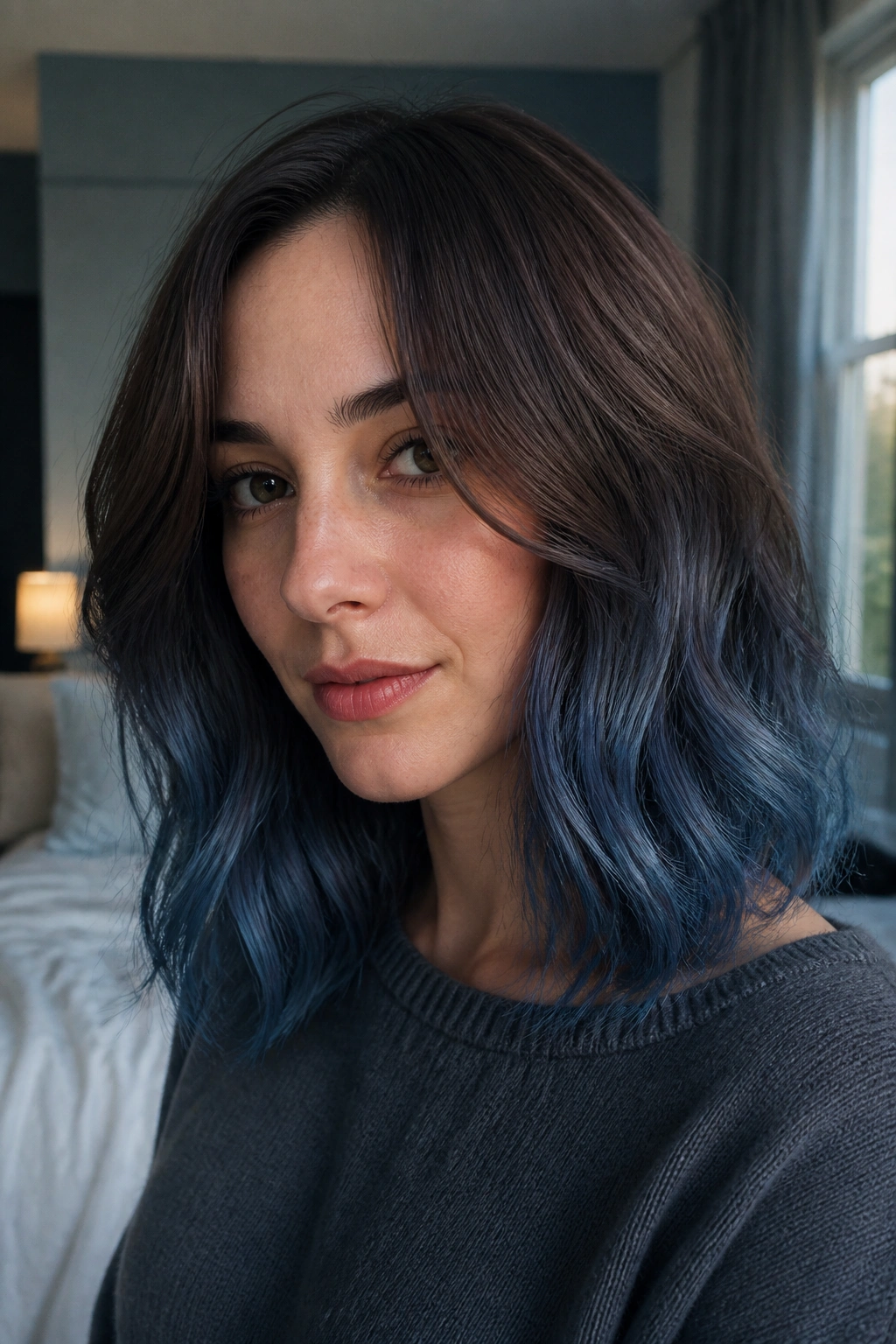
Cocoa brown into smoky blue is one of the prettiest brown-blue hair color ideas because the shift feels gradual, almost like evening turning into night. The brown stays rich through the roots and mids, then the blue gets more visible toward the ends.
That soft fade is what saves it. If the blue starts too high, the look can feel heavy. If it stays too low and too bright, it can look pasted on. A smoky blue ombré works when the transition is blurred enough that you can still see brown at the edges of the blue.
It suits longer cuts best. Shoulder-length hair can do it, but long waves give the color room to move. Cool skin tones get a lot out of this because the smoky blue keeps the face from reading yellow or dull next to the brown. The whole thing feels moody in a good way.
6. Dark Chocolate With Midnight Blue Ends
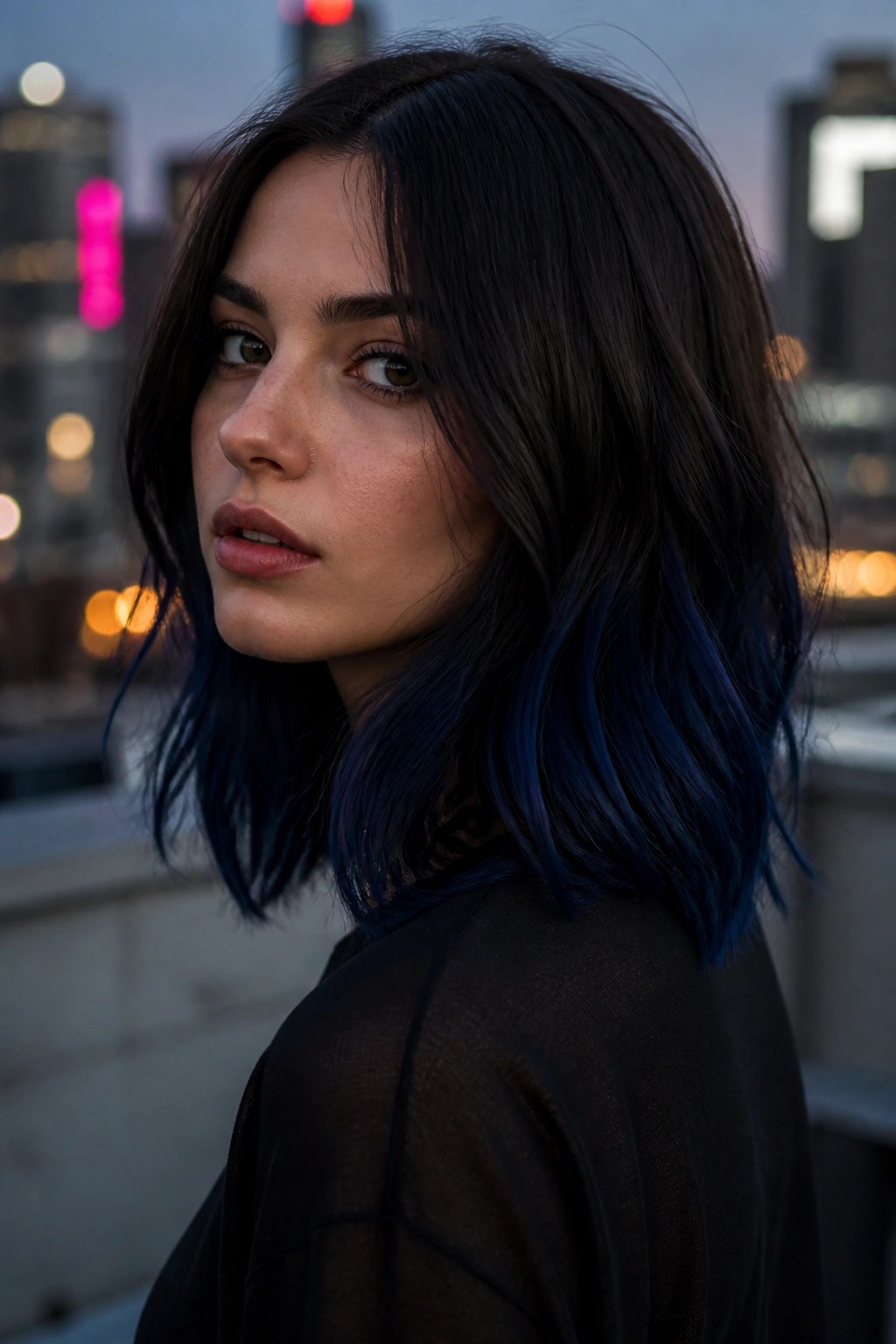
Unlike a full blue ombré, this version keeps the drama at the bottom. The roots and mids stay dark chocolate brown, and the ends shift into midnight blue that looks nearly black in low light.
That makes it one of the safest picks for people who need a shade that can hide at work and show off after dark. The blue lives in the ends, so you get movement without constant maintenance near the scalp. Growing it out is easier, too. The root line doesn’t fight the color story.
It’s especially nice on blunt cuts and softly layered hair. Curly textures can wear it well, but the blue needs enough length to read as a finish rather than a tiny accent. Keep the blue deep and ink-like. If it gets too bright, it loses the whole point.
7. Taupe Brunette With Sapphire Peekaboo Panels
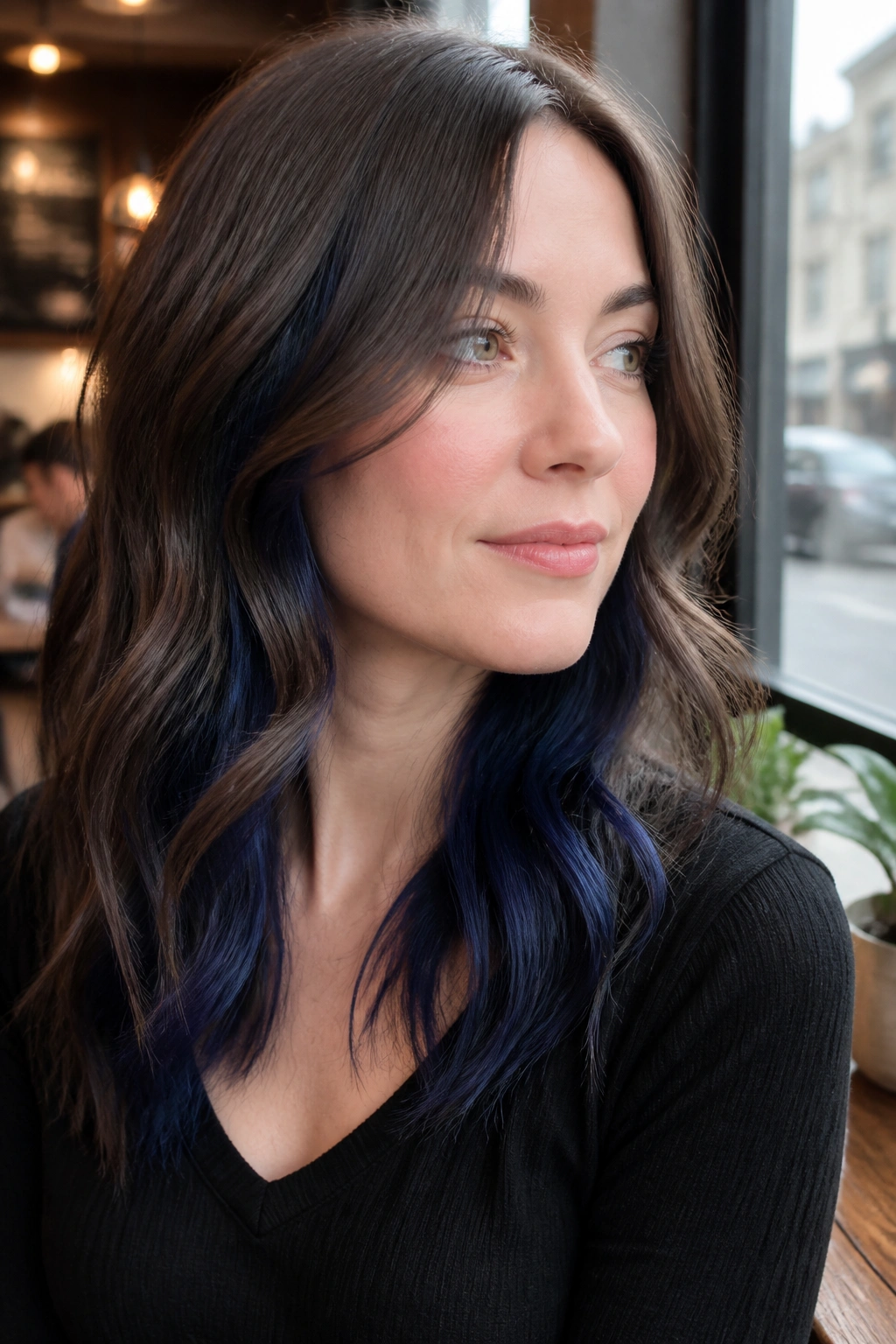
Taupe brunette already lives in cool territory, which is why it plays so well with sapphire peekaboo panels. You’re not changing the whole head. You’re hiding blue under the top layer so it appears only when the hair moves.
What Makes It Different
The hidden placement keeps the look grown-up. You can wear it straight and neat, and nobody sees much more than a cool brown base. Flip the hair, tuck it behind the ear, or twist it into a clip, and the sapphire shows up like a little secret.
This is a smart choice for cool skin tones that want color but not a loud block of blue. It also works for fine hair, because hidden panels can add the sense of depth without making the whole head look thinner. The trick is to keep the sapphire rich and jewel-toned, not neon.
Best Placement
- Under the crown
- Behind the ears
- Through the lower nape
- Near the inner layers of a bob
That’s where it gets the best payoff.
8. Walnut Brown With Denim Balayage
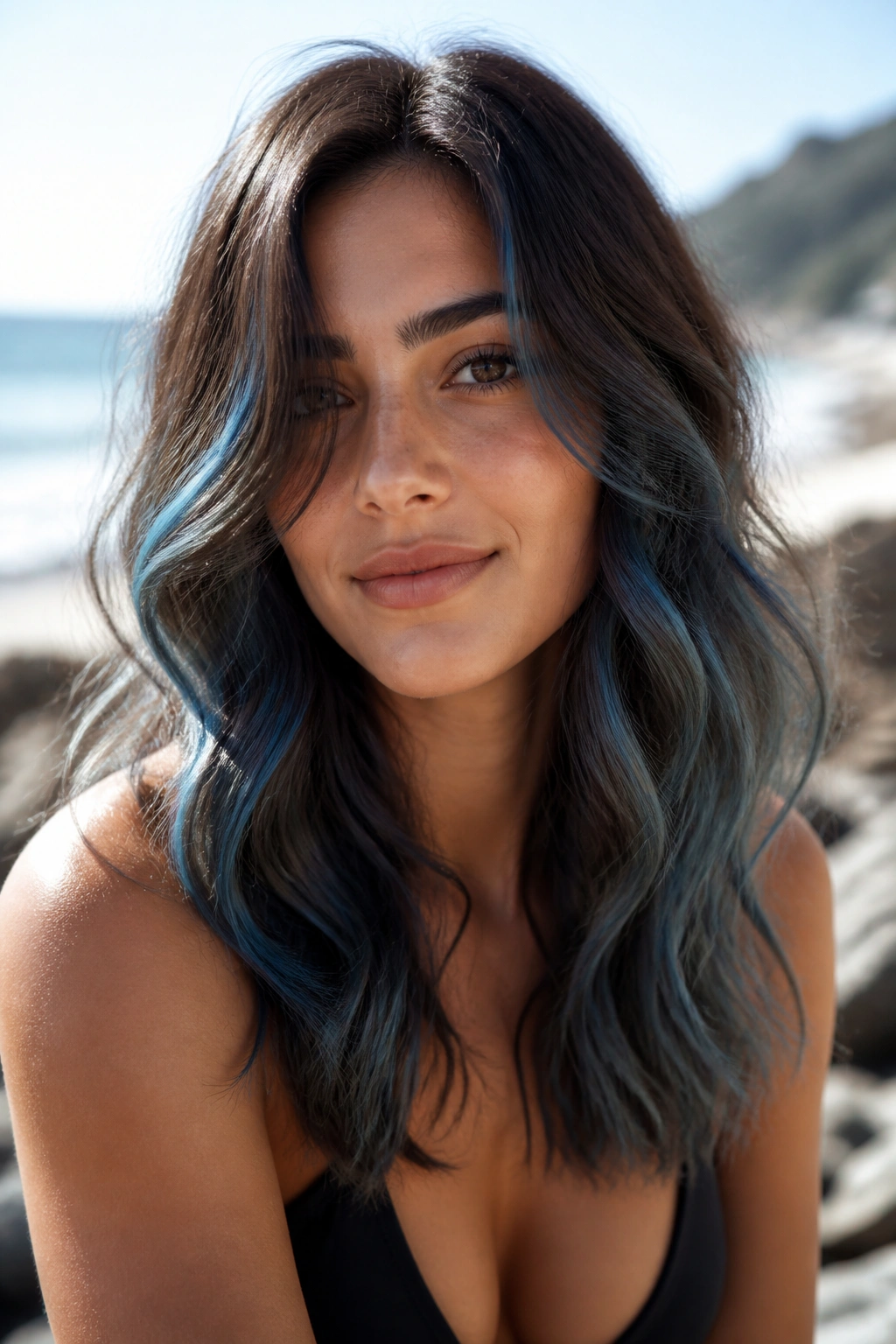
Denim blue is one of my favorite blue shades in hair because it behaves like fabric, not paint. On a walnut brown base, it looks muted, lived-in, and much less flashy than cobalt or cobalt-adjacent shades.
The contrast is low enough to feel natural, but not so low that it disappears. That’s why it works on cool skin tones that want dimension without a lot of drama around the face. Walnut brown keeps the base grounded. Denim balayage gives the color that faded-jeans softness people keep asking for, even if they don’t use those words.
It’s a strong choice for waves and loose curls. The bend in the hair catches the lighter denim notes, and the darker brown underneath keeps the shade from drifting into flat gray. If you want something that looks expensive without trying too hard, this one earns its place.
9. Mushroom Brunette With Ocean-Tinted Shadow Root
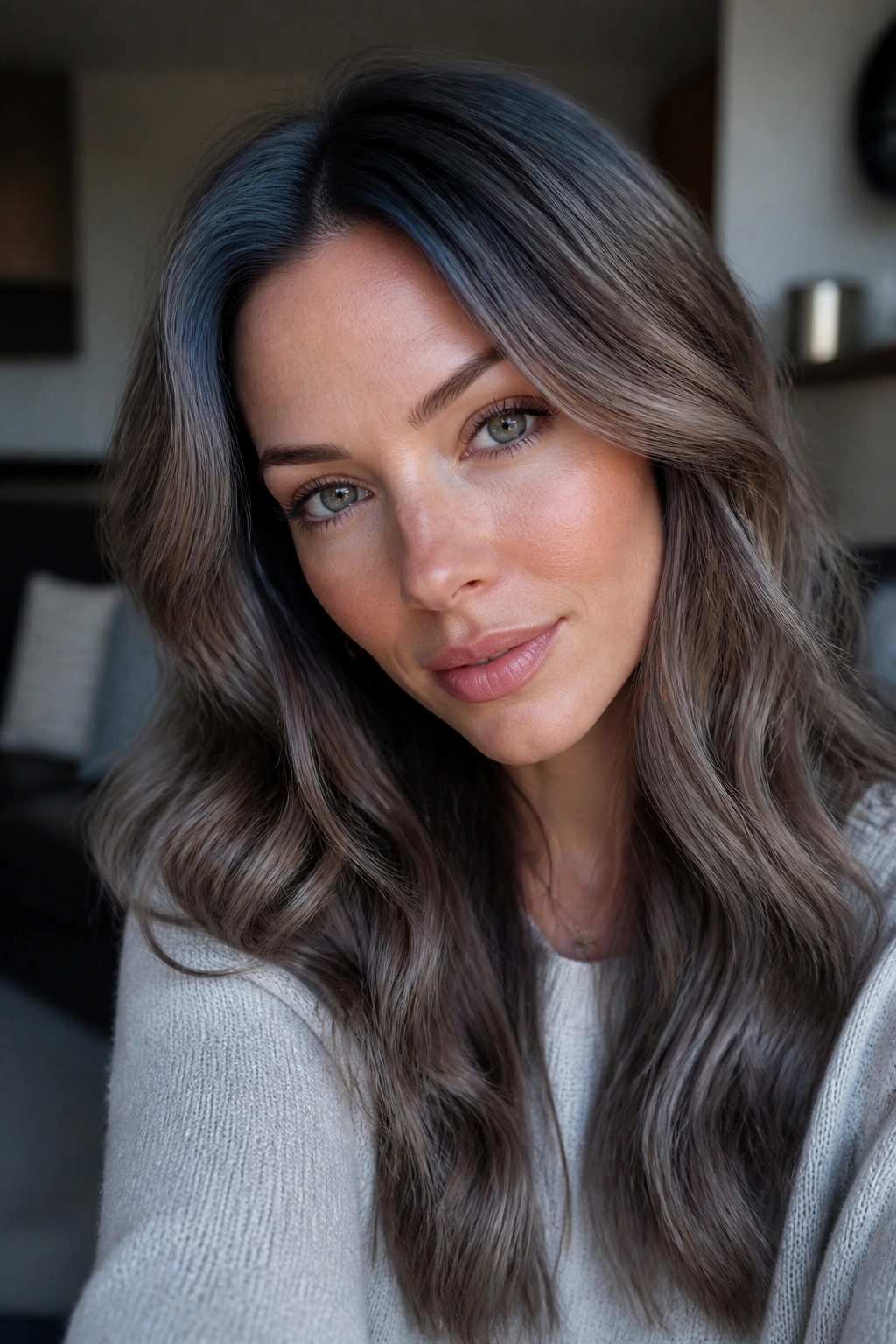
Do you want blue hair that grows out without making a scene? This is the one.
A shadow root with ocean tint keeps the top darker and cooler, then lets the rest of the brown sit in that mushroom-brunette lane. The blue doesn’t need to be obvious. In fact, it works better when it reads as a blue-gray cast rather than a separate color band.
Why It Buys You Time
The shadow root softens regrowth, which is a gift if you hate obvious lines. It also helps cool skin tones because the top of the head stays clean and ash-forward instead of warming up into brass. The ocean tint can live mostly in the mids and ends, where it gives a faint sea-glass feeling.
This is a quiet shade. Quiet does not mean boring. It means you can wear it with a black sweater, a silver hoop earring, and no makeup at all, and the hair still holds the look together.
10. Beige Brown With Periwinkle Glaze
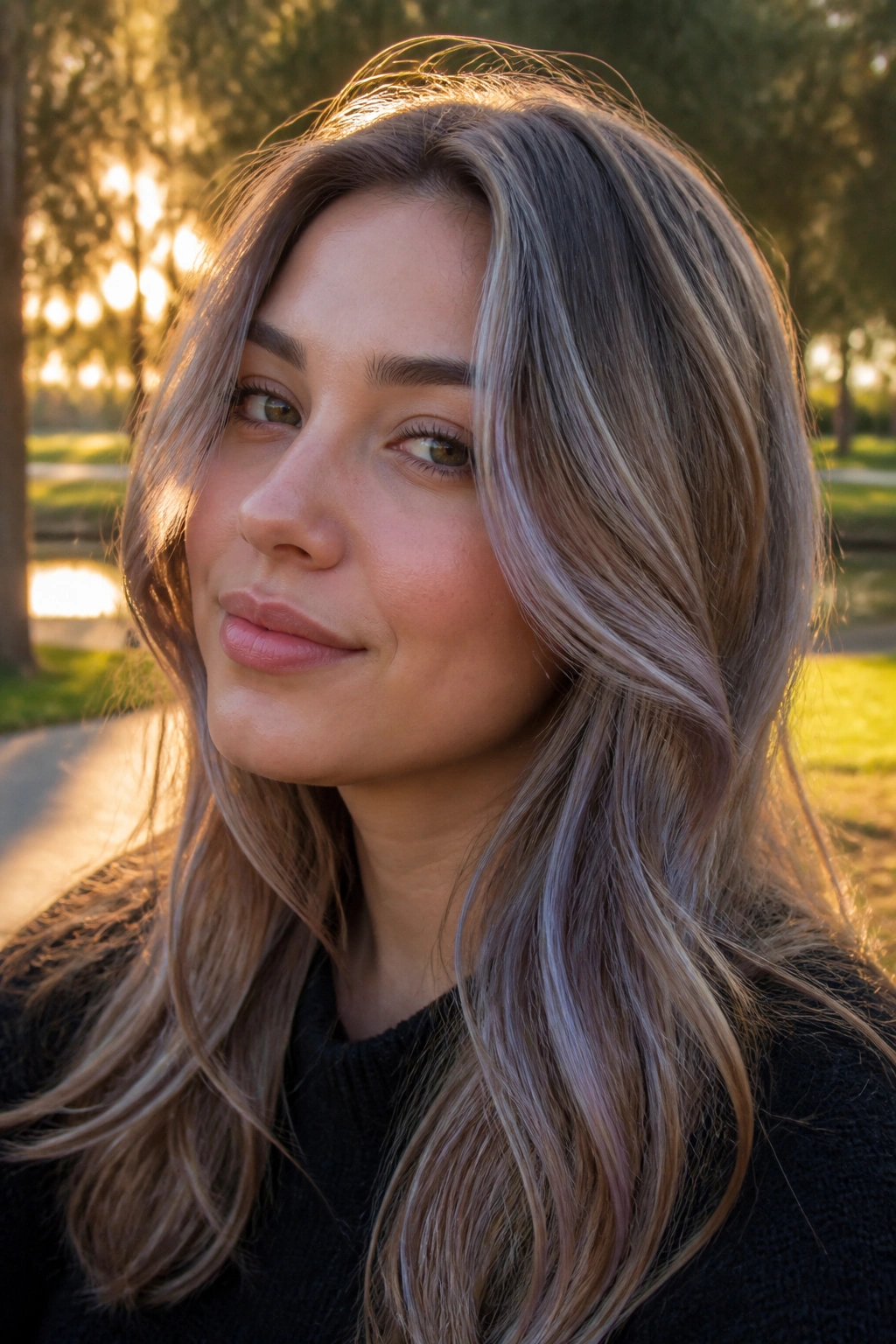
Beige brown can get washed out if it’s too plain, and it can go yellow if the toner fades badly. A periwinkle glaze solves both problems in one shot by cooling the brown and putting a pale blue-lavender sheen over the top.
This shade is especially pretty on fair cool skin. Periwinkle lives right in that sweet spot between blue and violet, so it brings a soft brightness that doesn’t fight rosy cheeks or light eyes. It’s gentler than navy. Less serious, too.
What to Watch For
- The hair usually needs to be lifted to a lighter brown first.
- The periwinkle glaze fades faster than a deep navy shade.
- Purple shampoo can help, but too much will make it dull.
- This reads best on smooth styles or soft bends.
It’s a delicate color, but not fragile if you treat it with a little care.
11. Soft Mocha With Blue-Violet Toner
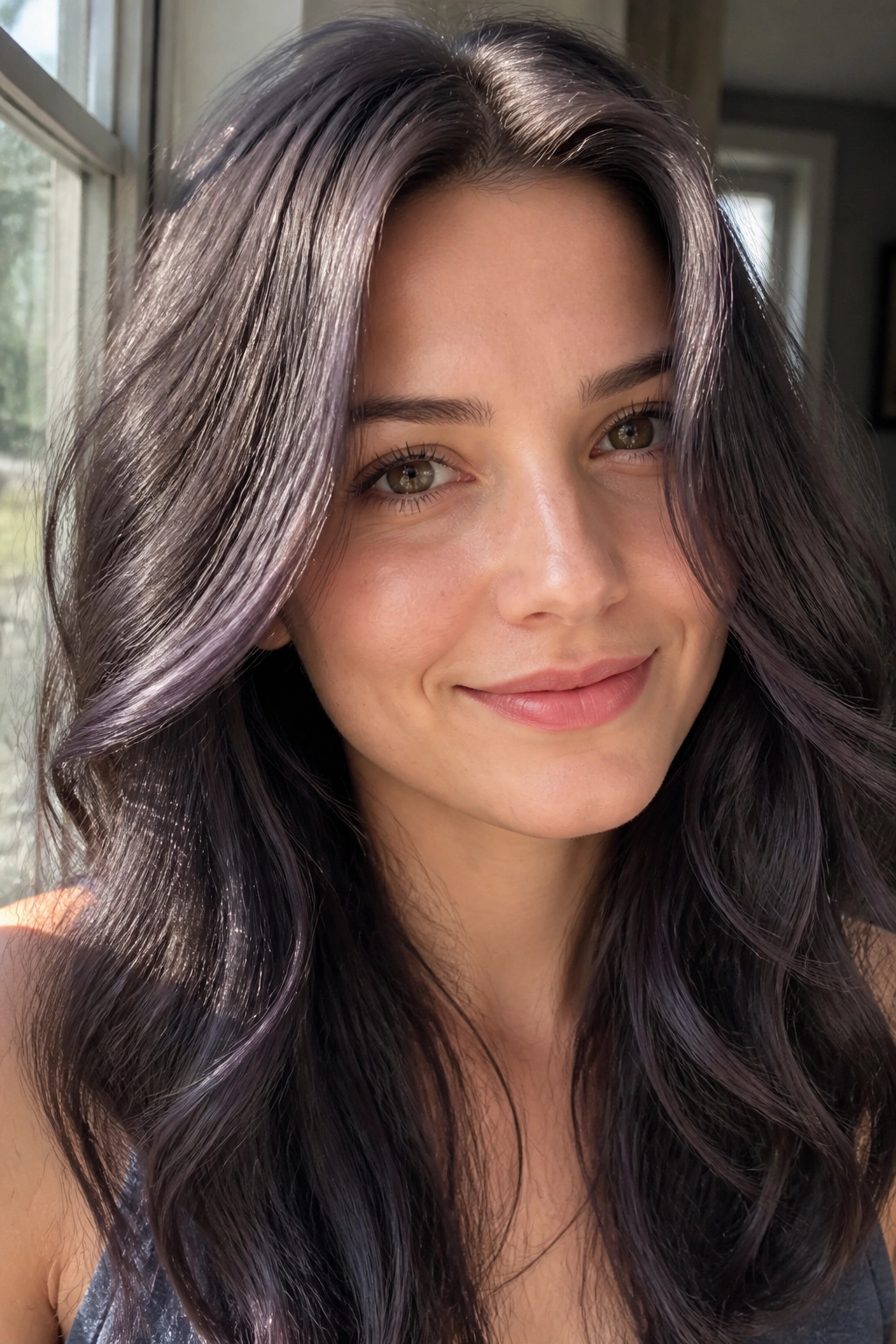
A blue-violet toner is the unsung hero of brown-blue hair. It doesn’t shout. It nudges. That little nudge can turn a warm mocha into a cooler, cleaner shade that works far better with cool skin tones.
What I like about this look is that it behaves like a correction and a color choice at the same time. You’re not adding obvious blue streaks. You’re changing the temperature of the brown so it feels more like smoke than chocolate milk. That may sound small. It isn’t.
The best version has soft shine and minimal contrast. A colorist will usually apply the toner after lightening or over a brown base that needs brass control. In daylight, the hair can look slightly slatey; indoors, it stays mocha. It’s the kind of shade that keeps showing its hand slowly.
12. Cool Mahogany Brown With Navy Lowlights
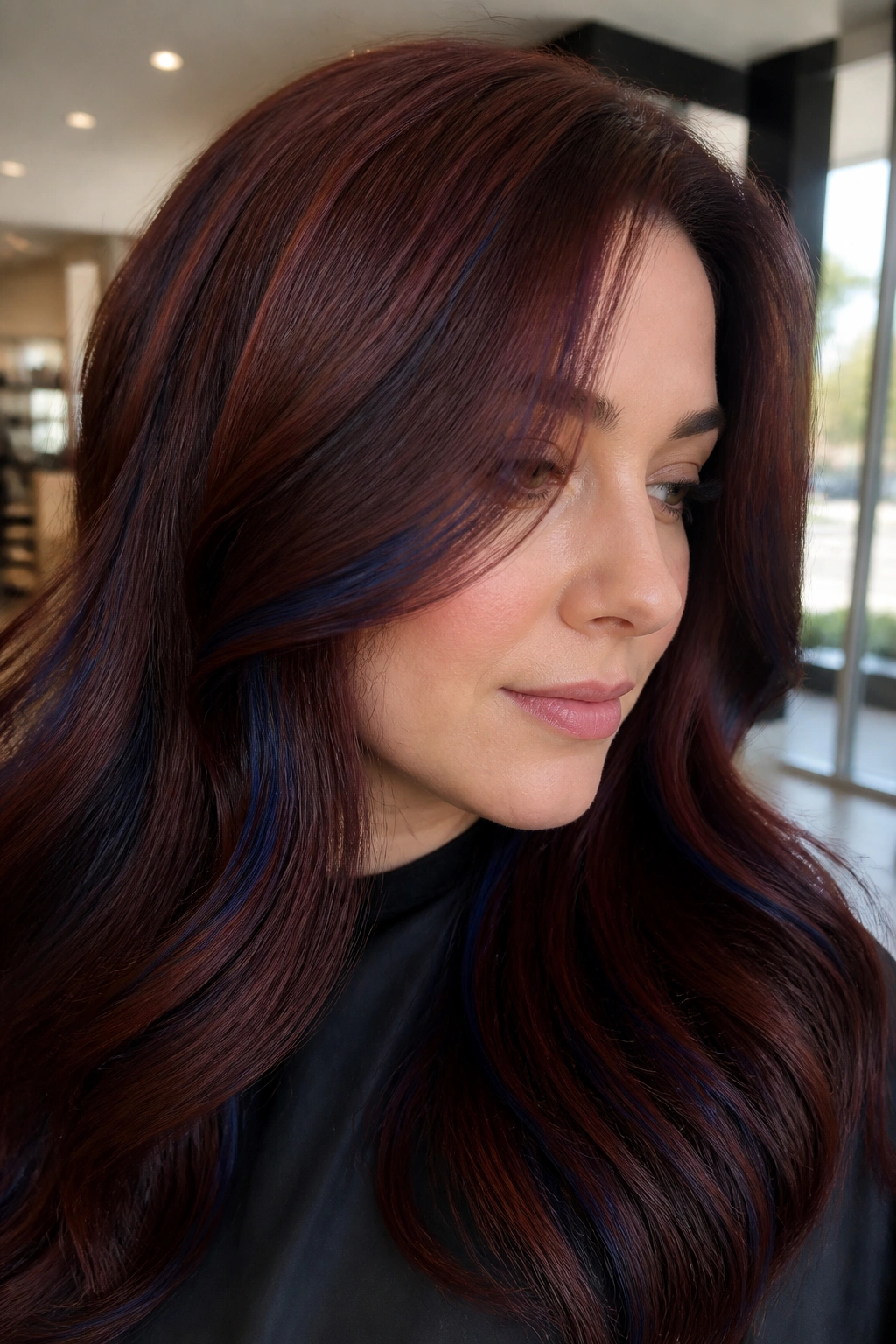
Mahogany usually carries red, and red can be tricky on cool skin. Pull it back with navy lowlights, though, and the whole color becomes richer, deeper, and less spicy.
That’s the point here. You keep some warmth in the brown so the shade doesn’t go flat, but the navy threads cut through the red and keep the finish cool enough for pale or pink undertones. This is a smart move if your hair naturally likes to go auburn and you’re tired of fighting it.
It’s also one of the better options for deeper cool skin tones. The contrast between dark mahogany and navy can look lush on richer complexions, especially if the eyes are dark. Keep the lowlights fine and blended. Thick navy pieces can get harsh fast.
13. Ash Brown With Electric Blue Tips
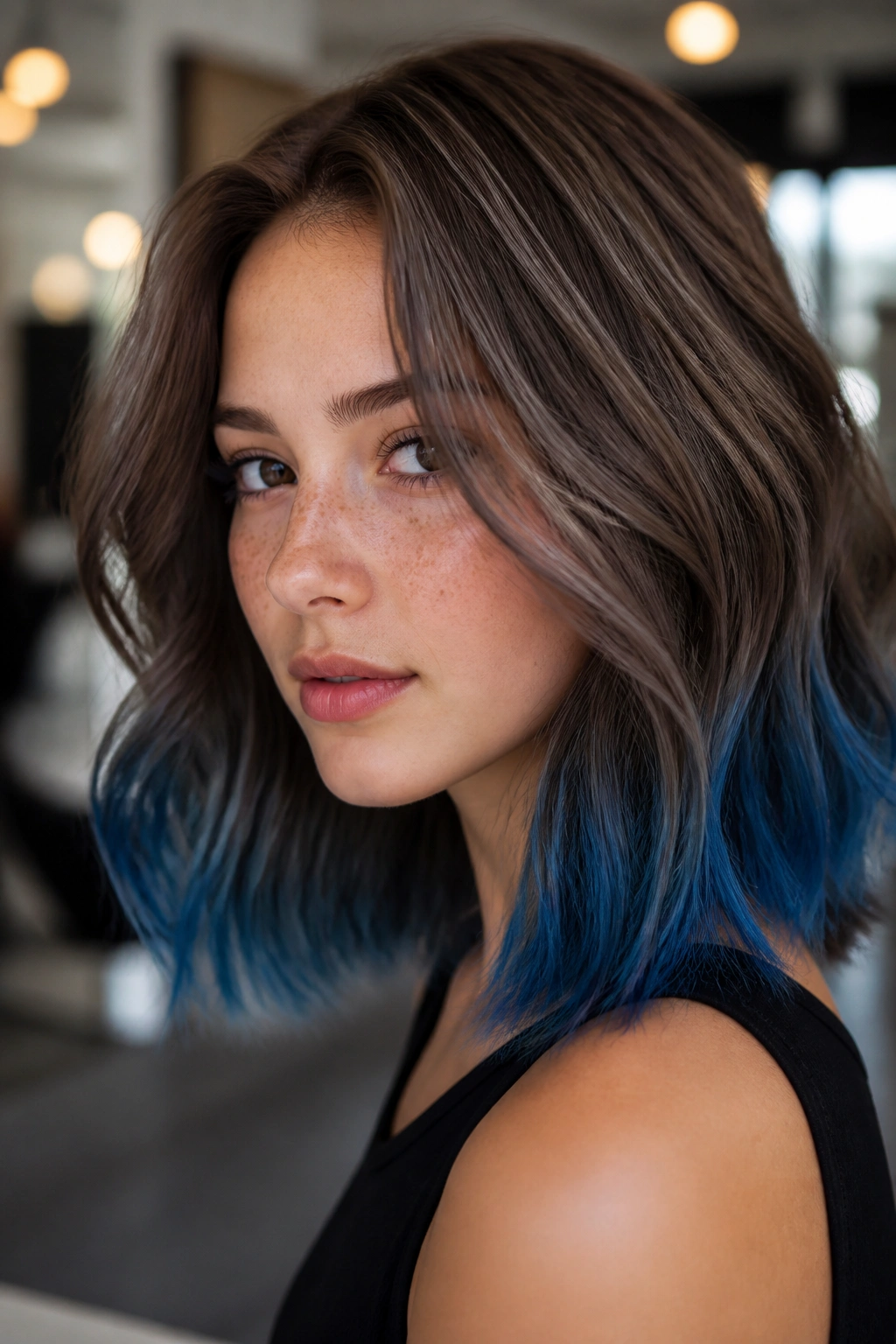
A lot of people want blue hair but do not want to give up their brown base. Electric blue tips are the compromise that actually works.
Why the Ends Do the Heavy Lifting
The ash brown base does most of the work for cool skin, then the electric blue tips bring personality to the bottom inch or two. That means you get a clear blue accent without touching the whole head. If you cut the hair later, the color is gone. Easy.
This look is best on shags, lobs, bobs, and layered cuts that show off movement. The blue tips can look sharp on straight hair and playful on curls. Either way, they should be concentrated enough to read as an ending, not a random stain.
Quick Tip
- Keep the blue tips on the outermost layers.
- Ask for a soft fade into the brown, not a hard line.
- Use a heat protectant before styling.
- Trim slowly if you want to preserve the color longer.
Short commitment, big payoff.
14. Dark Brunette With Slate Blue Face-Framing Pieces
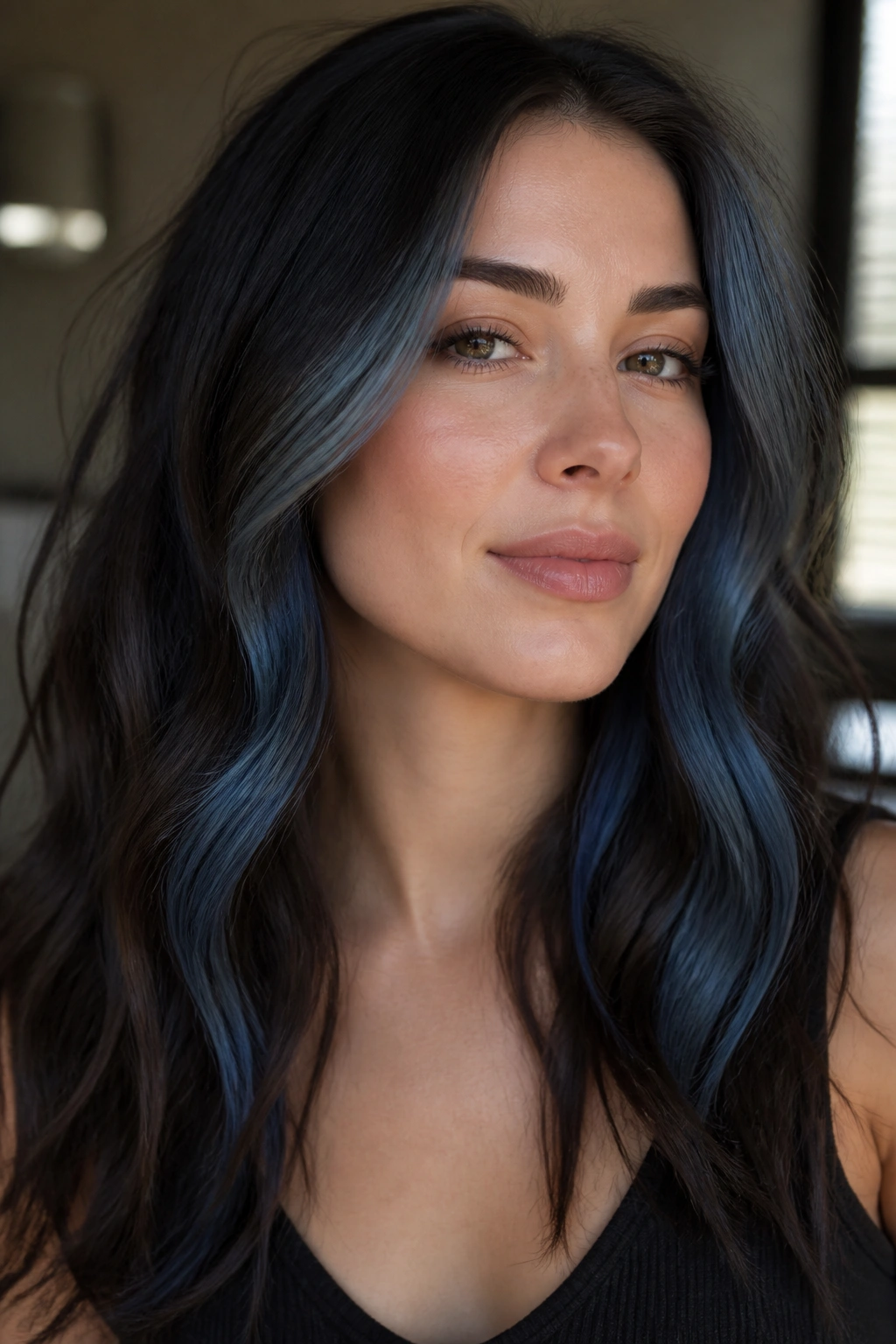
Face-framing color is one of the fastest ways to change how a dark brunette looks, and slate blue is the version that flatters cool skin without going loud.
The pieces around the face should be placed where they actually show: from the cheekbone down to the jawline, or from the temple to the collarbone if the cut is longer. Slate blue works because it sits between gray and blue, so it brightens the skin without turning into a cartoon shade.
This is a great option if you wear your hair up a lot. The rest of the color can stay dark and easy, while the front pieces give you a little movement near the face. It also plays nicely with bangs. Curtain bangs and slate blue are an excellent pair.
15. Caramel Brown Reined In With Blue Ash
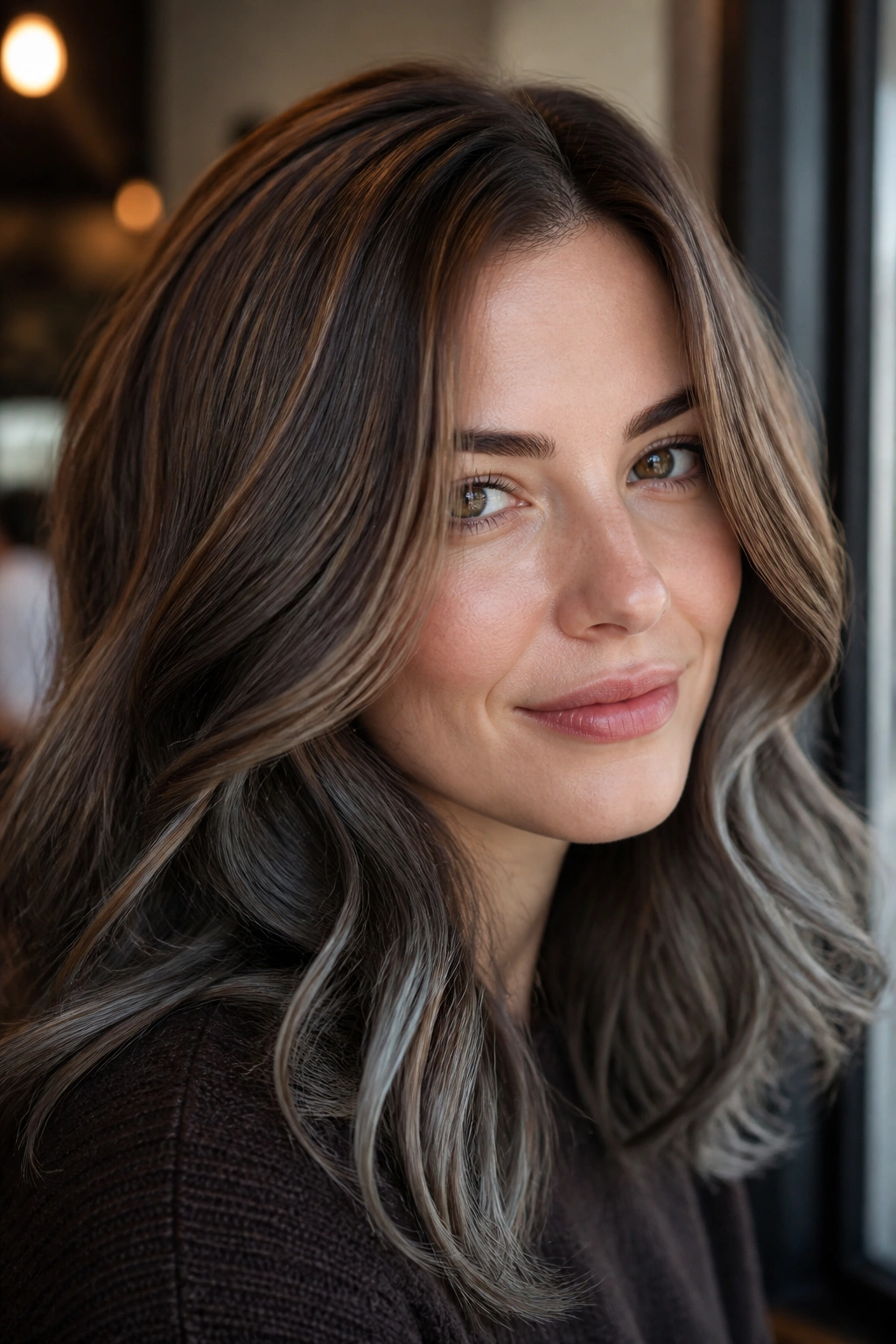
Can caramel brown work for cool skin tones? Yes, if you put a brake on the warmth.
Blue ash is that brake. It cools down the orange and gold notes so the caramel stops fighting the face. The result still reads brown and soft, but with enough ash in the mix that it doesn’t lean sunny or brassy. This is useful for people whose natural hair is warm but whose skin is not.
It’s more of a color correction than a full fashion statement, and that’s fine. Not every good hair idea has to announce itself from across the room. If you want the brown to stay friendly but less yellow, this one does the job without making you look washed out.
16. Mocha Melt With Teal-Blue Seam
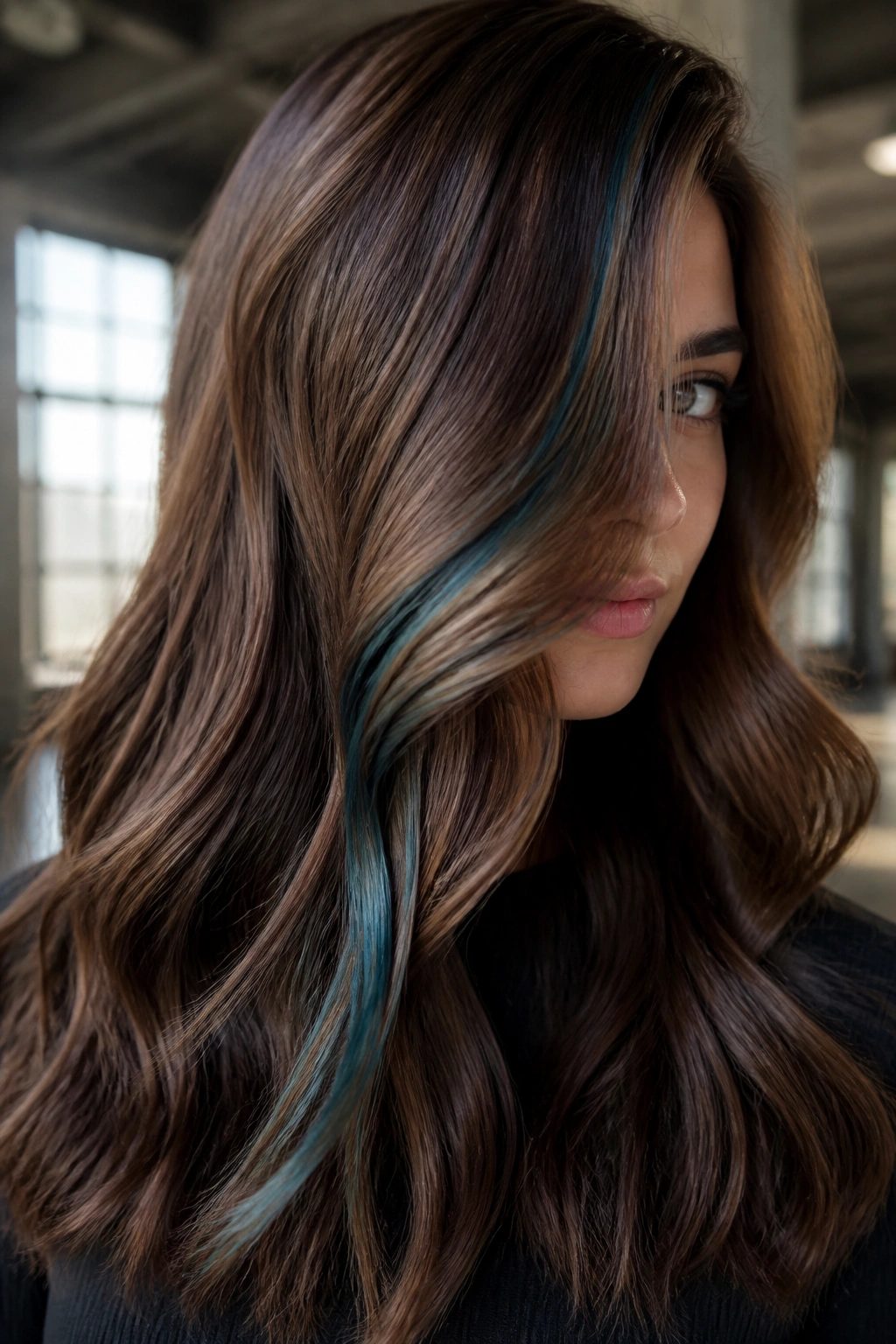
A teal-blue seam through mocha brown sounds bolder than it is. When it’s placed well, the teal can read like a shadowy ribbon rather than a bright stripe.
The seam usually works best on longer hair where there’s room for a clean vertical line or a gentle curve through the layers. Teal carries both blue and green, so for cool skin tones it should stay muted and smoky. Bright teal can be fun, sure. It can also fight your undertones in a hurry.
Best Way to Wear It
- Tuck the seam under top layers for a hidden effect.
- Keep the mocha base matte or softly shiny.
- Wear the hair in waves to break up the line.
- Ask for the teal to be softened at the edges.
This one feels artistic without turning the whole head into a statement piece.
17. Smoked Chestnut With Indigo Slices
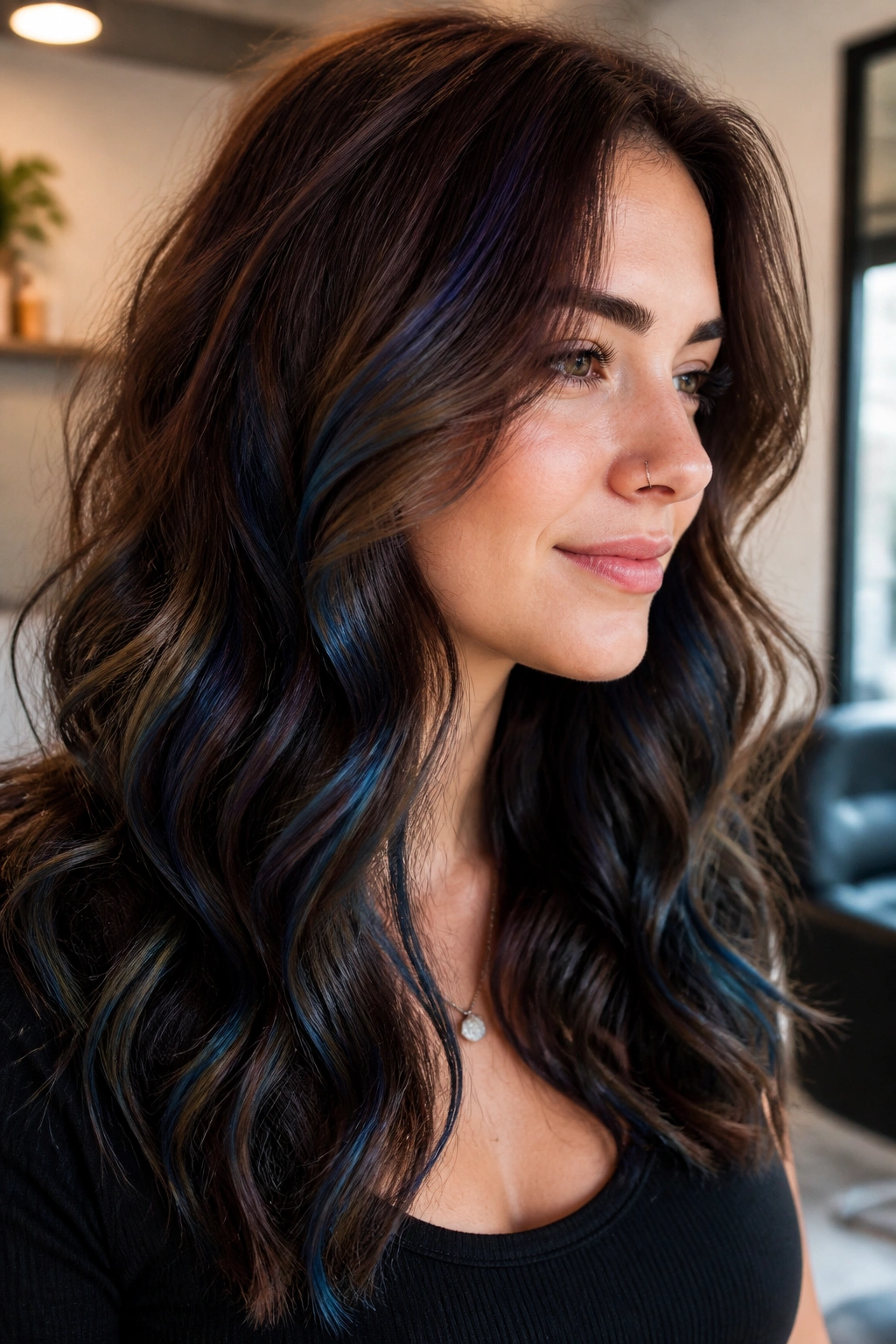
Smoked chestnut has enough depth to hold indigo without getting messy, and the slices are what make it interesting. You’re not painting a block of blue. You’re threading thin indigo panels through the brown so the color flashes when the hair shifts.
That makes this shade especially good on curls and textured waves. The slices peek out in pieces, which keeps the whole thing from looking too lined up or too stiff. It also gives cool skin tones the kind of contrast that looks clean, not busy.
I like this shade on medium-length cuts because the indigo can travel from crown to ends without disappearing. It does ask for a steady hand from the colorist. Sloppy placement turns slices into stripes, and stripes are never as flattering as people hope.
18. Cocoa Brown With Glacier Blue Curtain Bangs
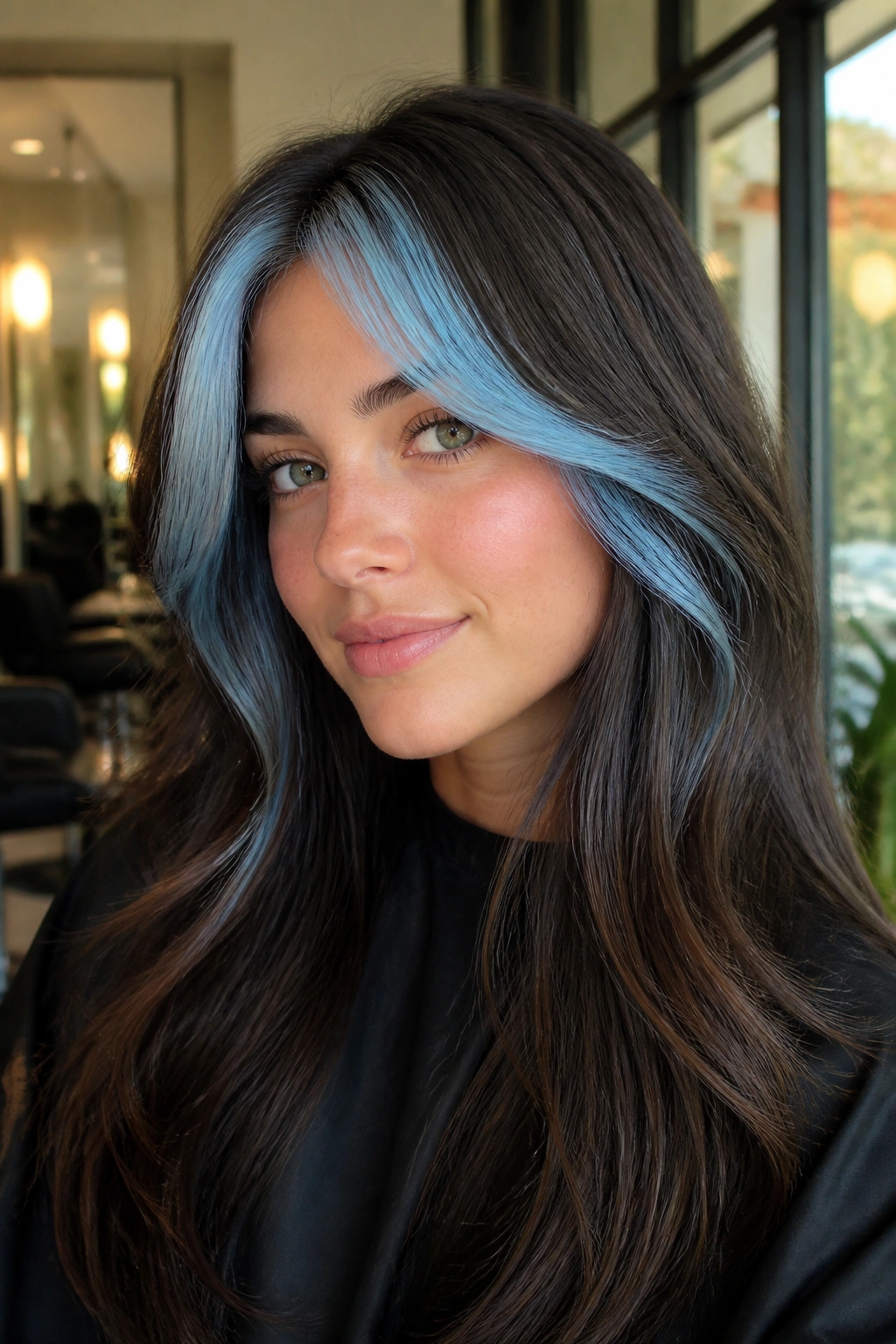
Curtain bangs can carry more color than people expect. Put glacier blue through them, and the front of the hair becomes the whole story.
Unlike a full blue fringe, this version keeps the brown in the rest of the hair and lets the bangs do the talking. Glacier blue is pale, icy, and clean, which is why it works so well on cool skin. It gives brightness near the eyes without bringing in harsh warmth or heavy darkness.
What Makes It Different
The color is easier to hide on low-effort days and easier to show when you style the bangs forward. That flexibility matters. You can round-brush the bangs for a softer look, or wear them piecey and let the blue feel sharper. Both work.
This is a good choice if you like statement color but hate constant upkeep on the whole head. The bangs do need heat protection and careful washing, though. Front pieces fade faster than the rest. They always do.
19. Sable Brown With Blue-Black Mirror Gloss
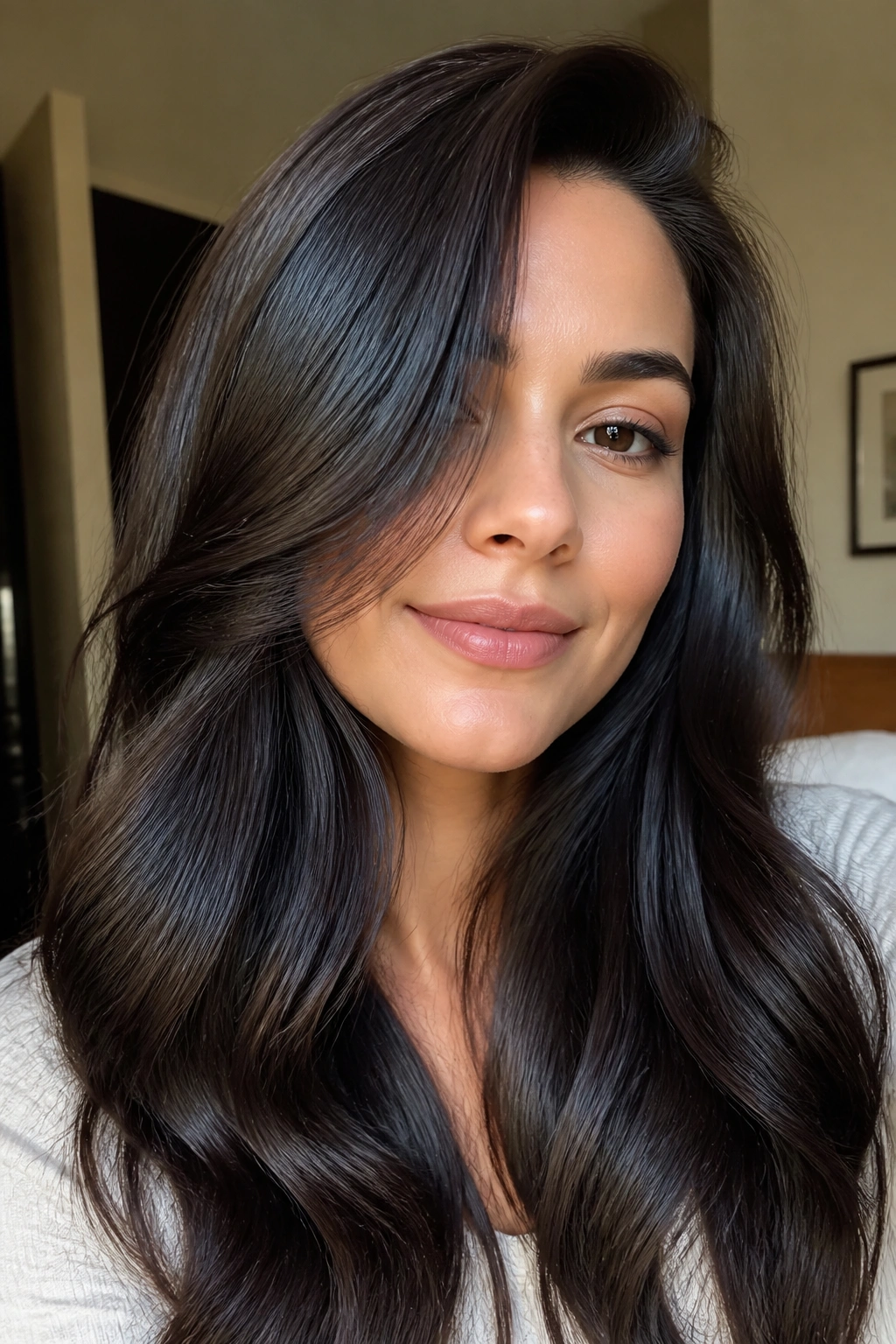
Blue-black gloss is one of the sneakiest ways to wear blue hair. In some light, it looks like a shiny dark brown. In other light, the blue reflection slides over the surface like ink.
That is exactly why it flatters cool skin tones so well. Sable brown keeps the base rich, and the blue-black mirror gloss gives it depth without changing the silhouette of the color. If you like your hair dark, glossy, and low-fuss, this is a strong answer.
How to Keep It Glossy
- Wash with a color-safe shampoo.
- Keep water lukewarm, not hot.
- Use a light conditioning mask once a week.
- Refresh the gloss every few weeks if the shine drops.
A good blue-black gloss should look polished in sunlight and nearly raven-dark indoors.
20. Cool Bronde With Marine Blue Underlayer
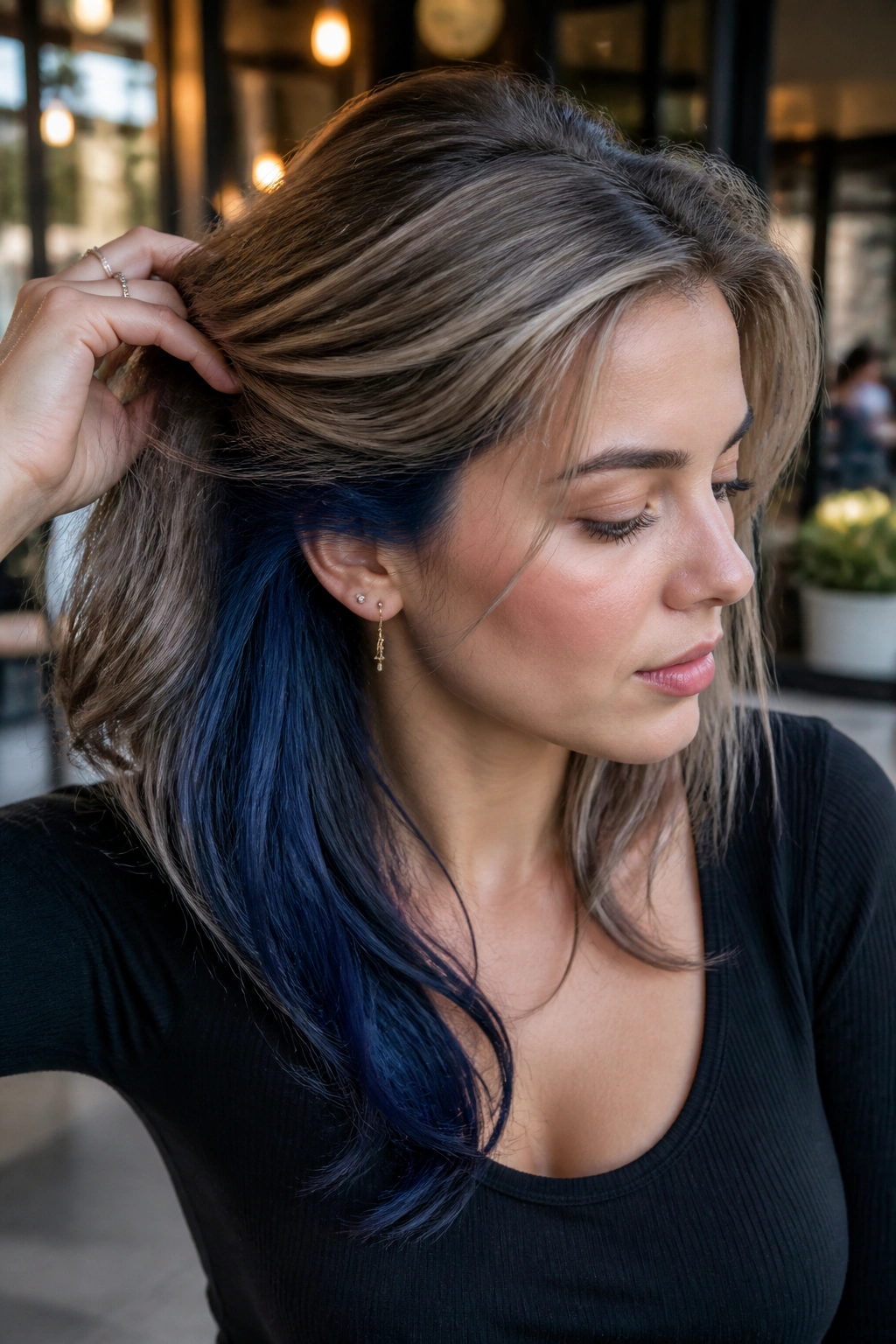
Bronde can go warm fast. Make it cool, and it becomes a much better match for blue-based skin. Add a marine blue underlayer, and the whole look suddenly feels more tailored.
The beauty of this idea is contrast. The top stays lighter and airy, while the underlayer hides a deeper blue that shows when the hair lifts or is tied back. Marine blue feels more sea-glass than neon, which keeps the color from fighting cool skin tones.
It’s especially useful if you wear ponytails, clips, or half-up styles. The blue becomes part of the styling, not just the dye. That makes it feel practical, which is rare and worth noting.
21. Deep Brown Pixie With Cobalt Streaks
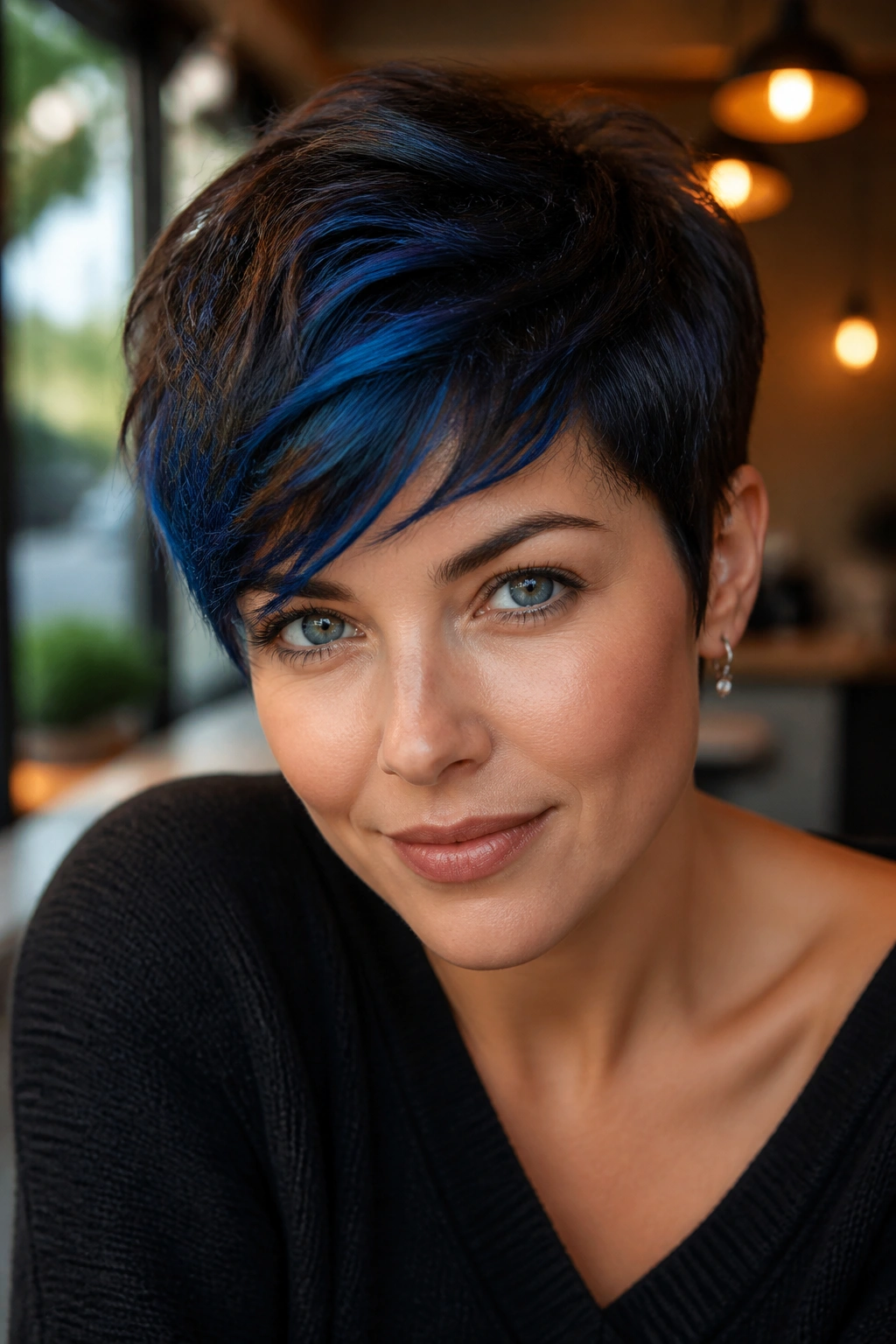
Can short hair carry a strong blue shade? Absolutely. A pixie actually makes the color look sharper because there’s less hair to compete with it.
How to Keep It From Looking Stripy
The cobalt streaks need to follow the cut, not fight it. Put them near the fringe, through the crown, or just above the ears so they bend with the shape of the style. If the streaks sit too straight or too wide, the look gets clunky fast.
A deep brown base keeps the pixie wearable on cool skin tones, while the cobalt brings a little spark at the edges. It’s a good choice if you want movement, texture, and color that doesn’t rely on length. Use a light wax or paste to separate the pieces, and the blue will do more work with less effort.
22. Neutral Brown With Ink-Blue Root Tap
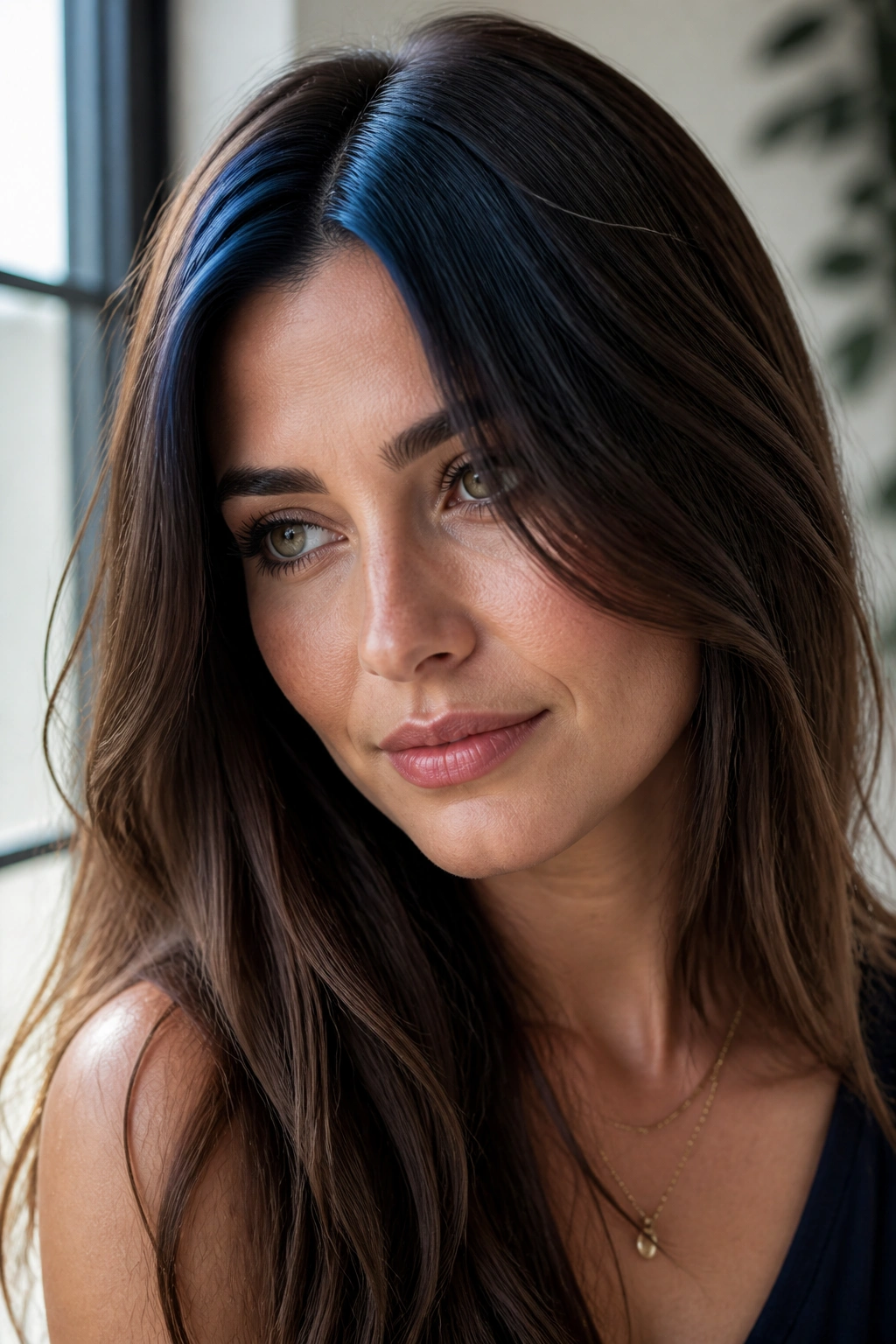
A root tap is one of those color moves that sounds small until you see it in the mirror. With a neutral brown base and ink-blue root tap, the scalp area gets a cooler, deeper start, which helps the whole color settle into cool skin territory.
This is a smart fix for grown-out hair that keeps turning warm at the roots. It also works on lobs and mid-length cuts where the top needs a little more depth than the ends. The ink-blue note should stay subtle. Think dark reflected blue, not a loud visible band.
If you want a brown-blue hair color that feels quiet, sharp, and easy to live with, this is the last stop I’d point to. It’s understated in the best way. And if your hair tends to go brassy no matter what you do, it quietly solves that problem without making a scene.
