



Warm brown hair can look off on cool skin. The red and copper hidden in a lot of brunette shades can make pink undertones look redder, which is why a blue-brown finish feels so satisfying when it’s done well. It reads richer, cleaner, and a little sharper around the eyes.
Blue-brown hair is not flat black with a filter. The good versions keep a brown base — espresso, mocha, slate, mushroom — then fold in blue reflect through a gloss, toner, or softly painted panels. In daylight, the color can look smoky. Under indoor light, it looks almost inky.
That balance matters. Too much blue and the hair goes costume-y. Too little, and you’re back in warm-brown territory that can fight with cool skin instead of flattering it. The sweet spot is depth first, blue second.
The shades below range from nearly black to soft chestnut, so you can choose how obvious you want the blue to be. Some are a one-step gloss. Some need ribbons, panels, or a root melt. All of them make more sense on cool undertones than a golden brown ever will.
1. Midnight Navy Brown
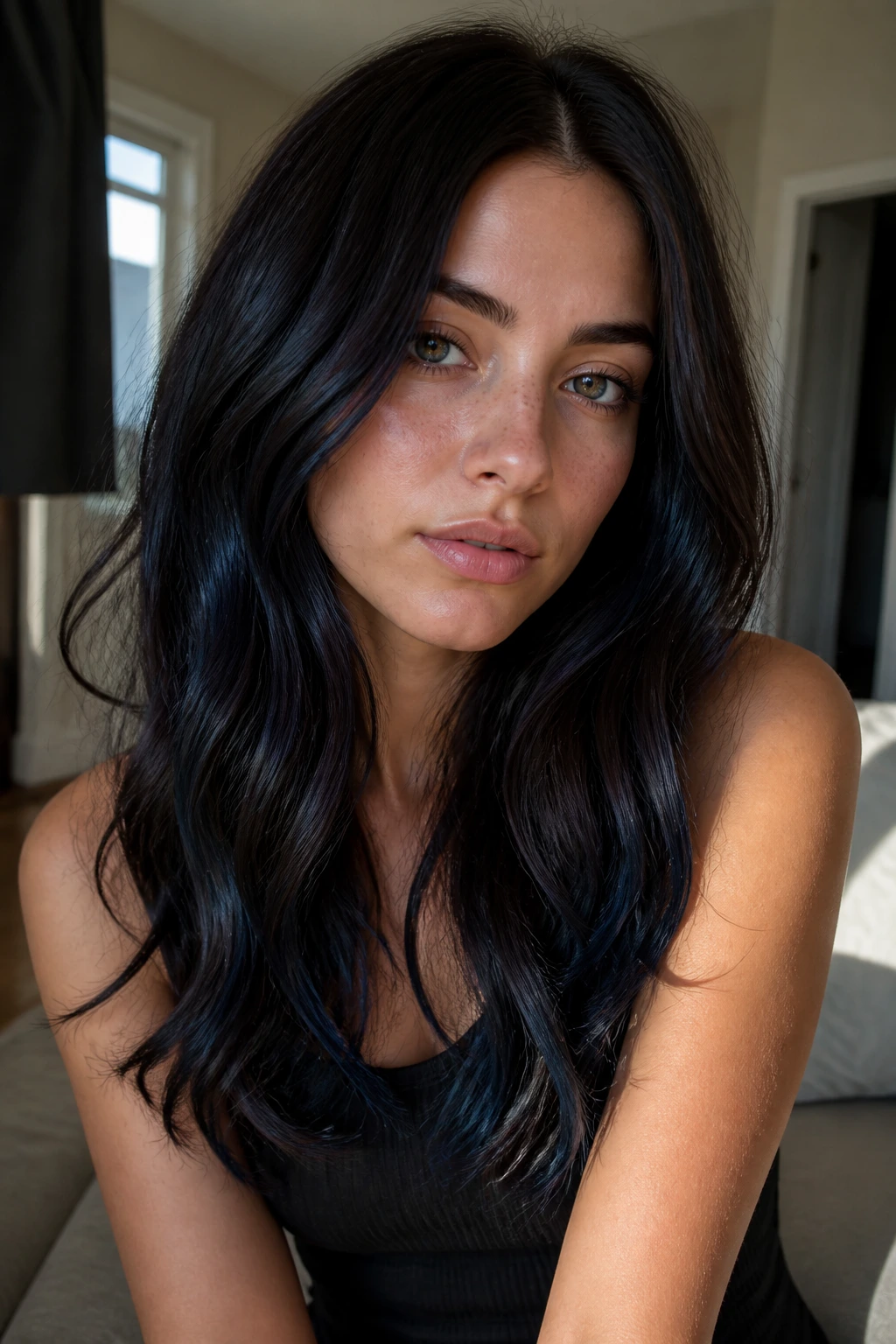
Midnight navy brown is the most dramatic version here, and I like it for cool skin that can handle contrast. The base stays deep — think level 3 espresso — while the blue shows up as a navy sheen instead of a bright splash. It’s dark, but not flat. That matters.
Why It Flatters Cool Skin
The blue keeps the brown from reading too red or too warm. On fair cool skin, that can make the face look less pink. On deeper cool skin, it gives the hair a polished, almost liquid finish that sits well next to silver jewelry and cool makeup tones.
What to Ask For
- A level 3 or 4 brown base with no copper warmth.
- A navy-blue gloss through mids and ends, not the roots.
- A soft finish, not a hard black line.
- A shine-focused blowout or flat wrap to show the blue reflect.
Best tip: if your ends are porous, ask the colorist to pre-fill them with a neutral brown first. Otherwise, they can grab too much blue and go patchy.
2. Smoky Denim Brunette
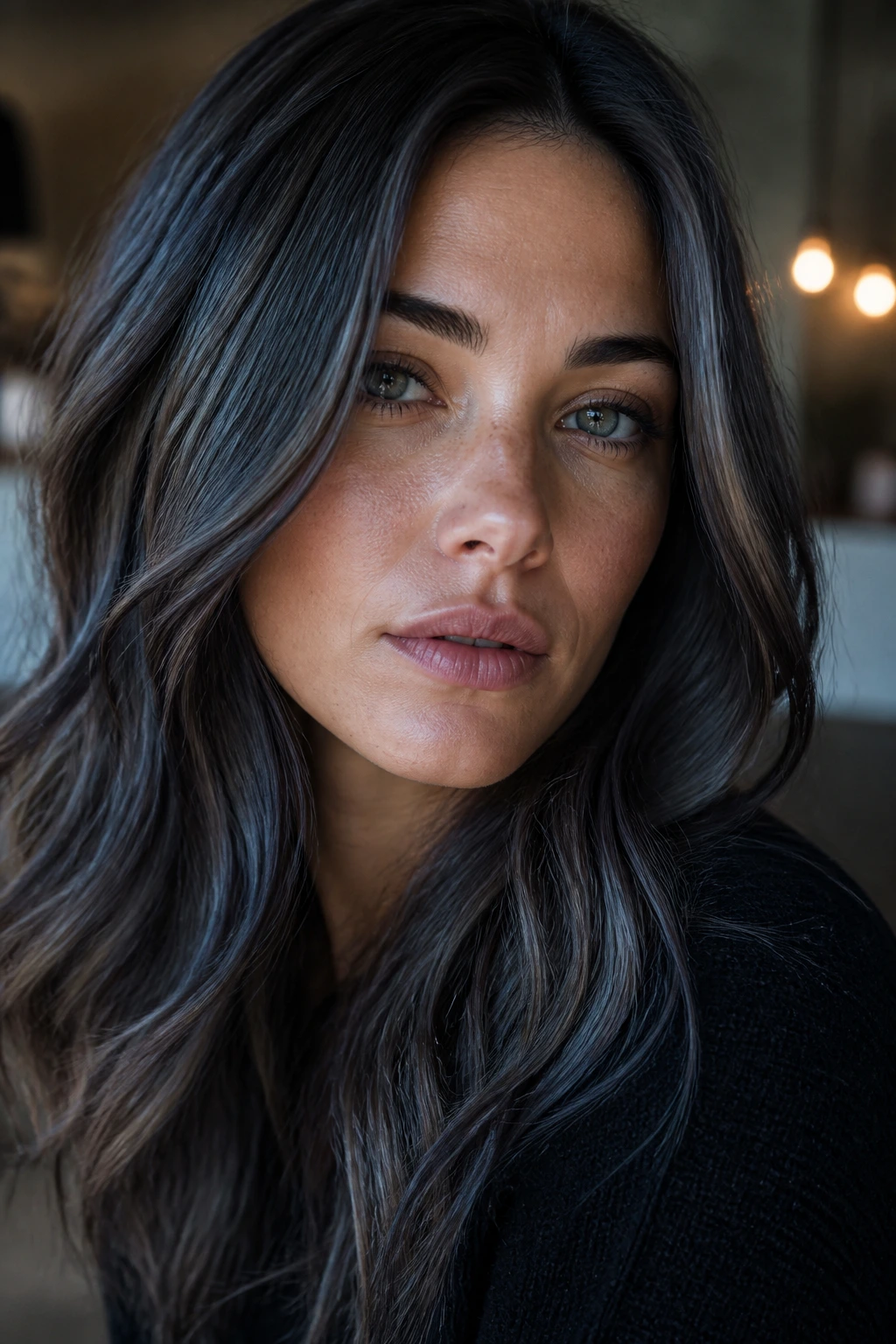
Smoky denim brunette is the one I’d point to for someone who wants blue brown hair color ideas for cool skin tones without looking like they committed to a bold fashion shade. The color sits in that soft middle ground where brown still leads, but the blue-gray tone changes the mood completely.
It works because it doesn’t chase saturation. The blue is muted, almost like worn denim after a few washes. That muted finish looks especially good on cool skin that already has a soft or rosy cast, because it doesn’t fight the face for attention.
Tell your colorist to keep the base around level 5 and glaze the mids with a cool blue-brown toner. I’d avoid pushing the blue too high near the roots unless you want the look to feel more graphic. A wavy bob or loose layers make this shade behave beautifully. Straight hair shows the smoke. Waves show the denim.
3. Espresso with Sapphire Shine
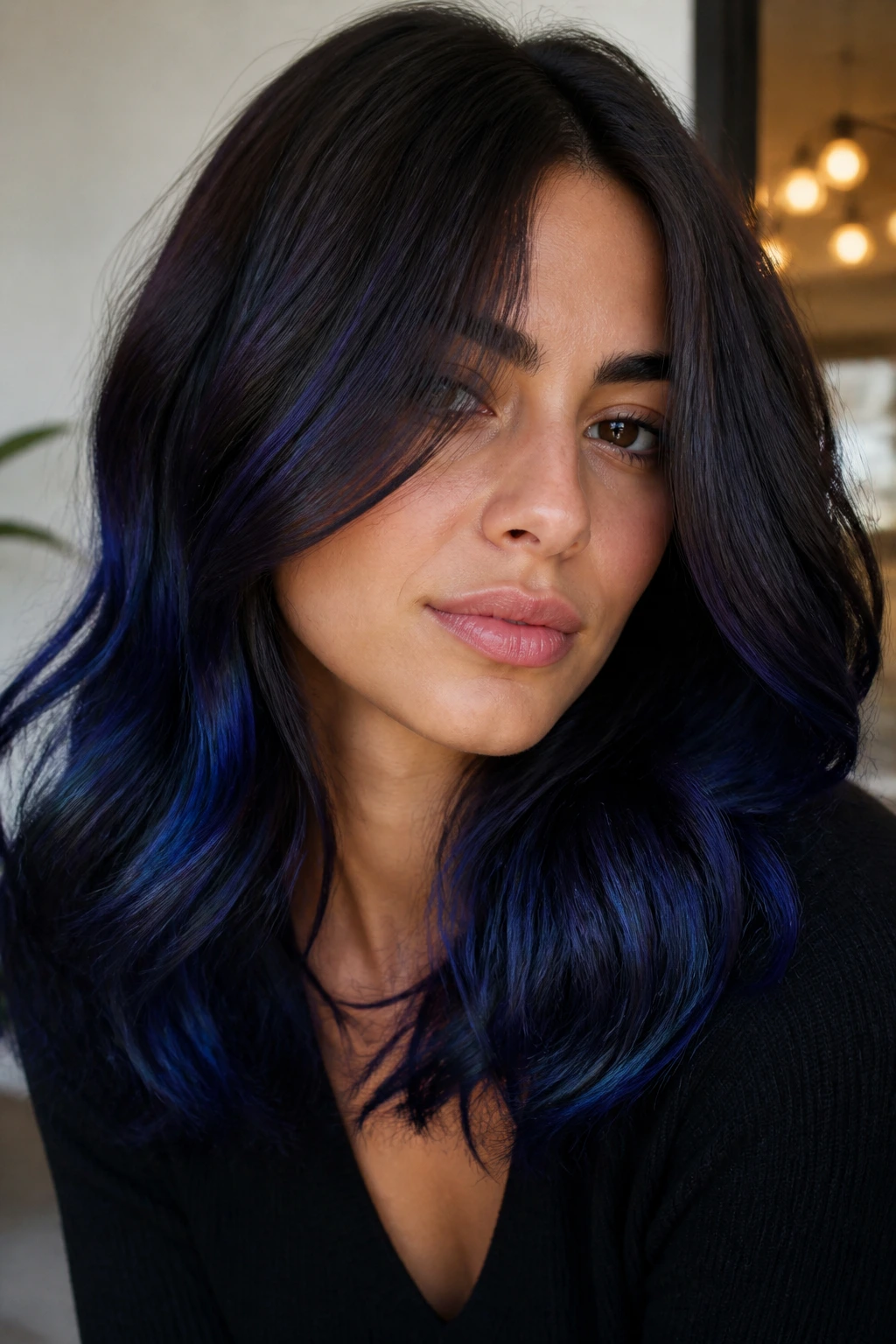
Want brown hair that looks deep indoors and icy in bright light? This is the shade. Espresso with sapphire shine starts as a rich, dark brunette and gets a cool blue gloss that only really wakes up when the light hits it at an angle. It’s quiet. Then it isn’t.
How to Ask for It
Ask for a level 4 espresso base with a sapphire or blue-violet gloss on the mid-lengths and ends. Keep the root zone natural if you like easy grow-out. That way, the blue reads like sheen instead of dye sitting on top of the hair.
The best versions have a glossy finish, not a matte one. A little serum on damp hair helps, but heavy oils can make the blue disappear. That part surprises people. Too much product can flatten the reflect and make the hair look darker than it really is.
When It Works Best
- On medium to deep cool skin.
- On dark eyes, especially gray, blue, or cool brown.
- On smooth blowouts and polished waves.
It’s a strong choice if you like brunette hair that feels expensive but not flashy.
4. Mushroom Brown with Blue Glaze
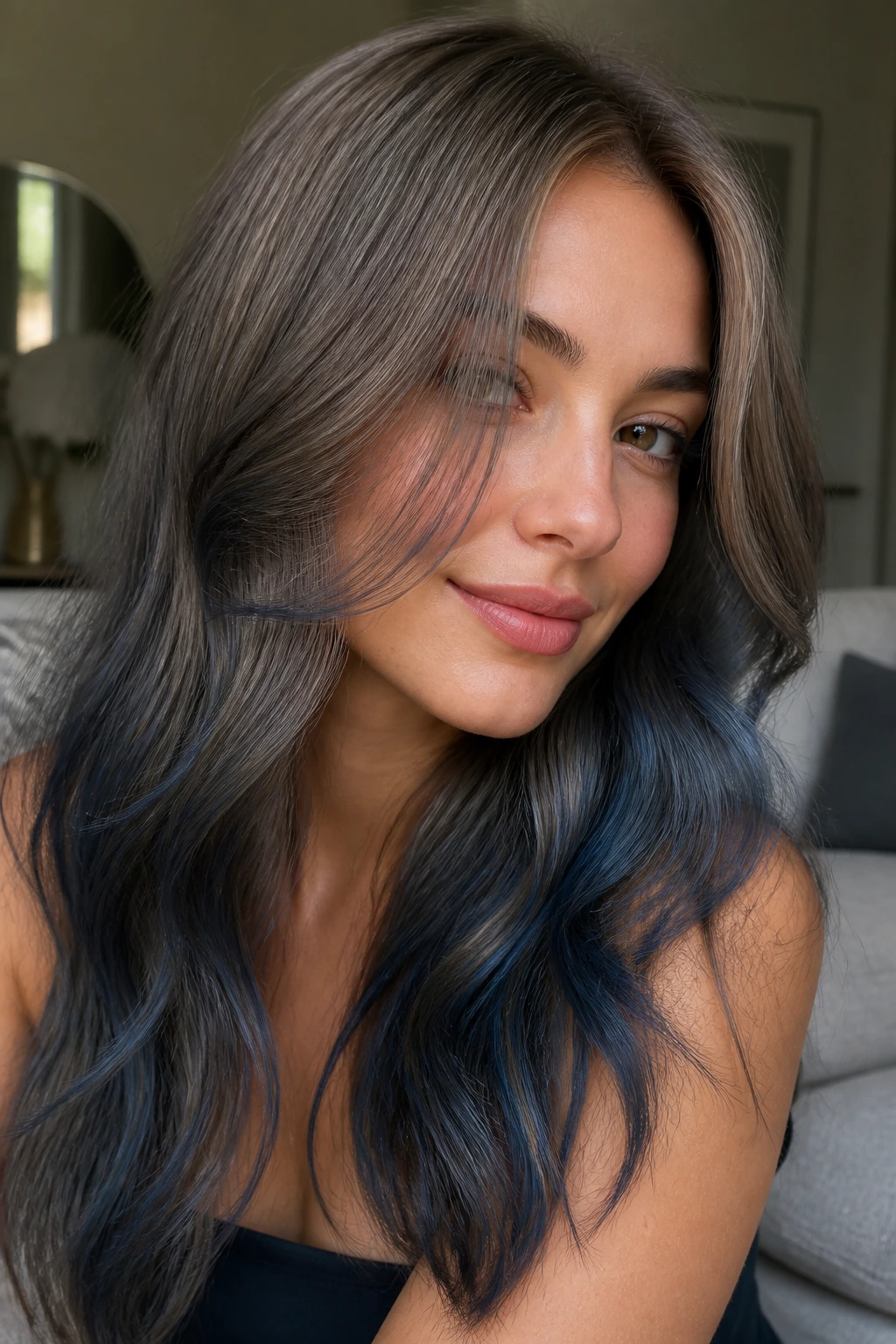
Mushroom brown can look a touch sleepy on its own. Add a blue glaze and the whole thing comes alive.
This is the shade for someone who wants softness first. Mushroom brown already lives in that ash-beige zone, and the blue glaze cools it further so it sits neatly against cool skin. It doesn’t scream “blue hair.” It whispers it.
What Makes It Worth Wearing
The trick is to keep the blue translucent. A sheer glaze over level 5 or 6 brown keeps the look wearable. If the stylist goes too dark, the mushroom tone disappears. If the blue is too strong, the hair can look flat in low light. Neither helps.
- Ask for a cool brown base with beige-ash undertones.
- Keep the blue glaze light and translucent.
- Focus the gloss on mids and ends.
- Refresh every 4 to 6 weeks if you want the smoke to stay visible.
This shade suits people who dislike obvious highlights but still want the color to do something interesting when they move.
5. Blue-Black Brunette
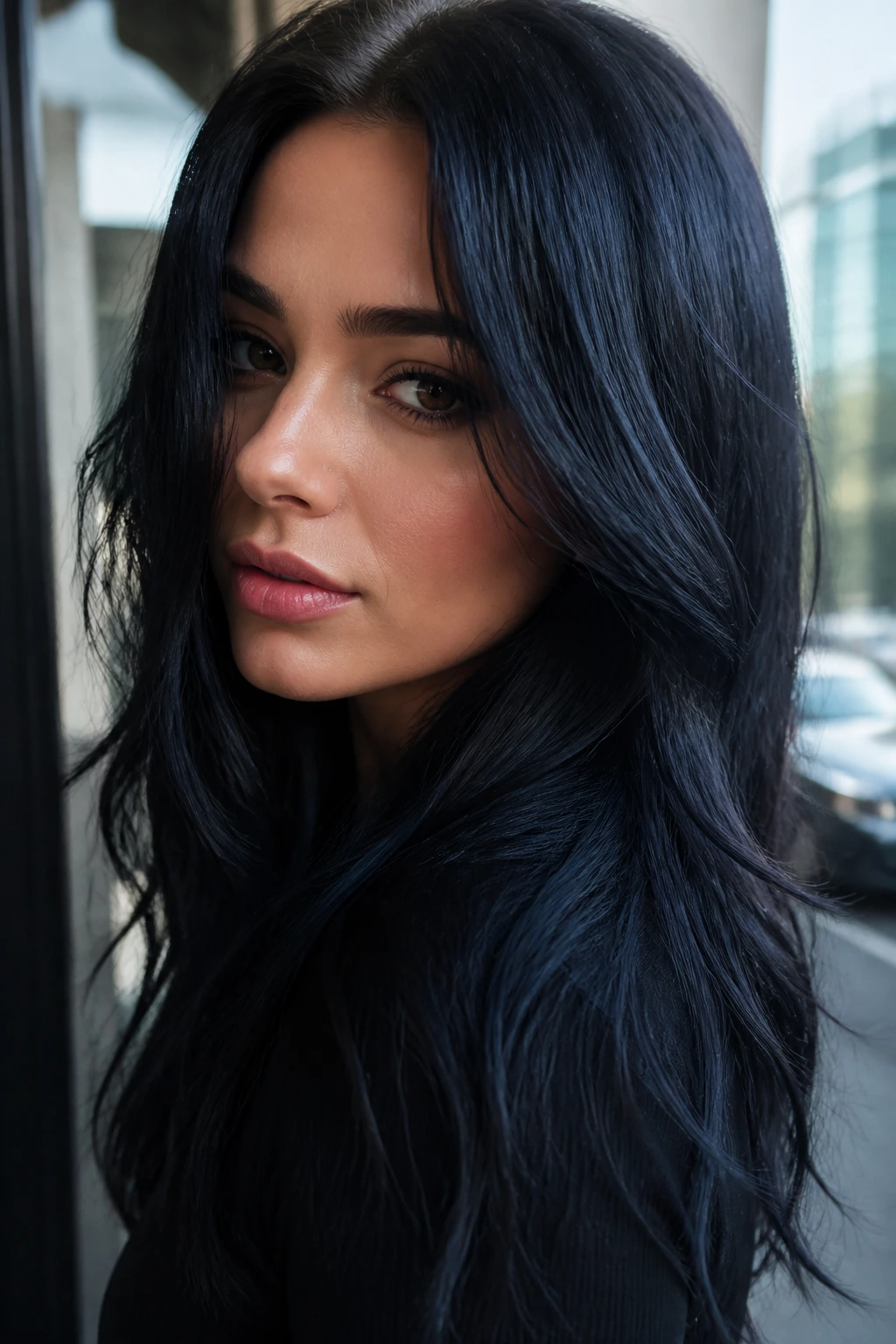
Blue-black brunette is the boldest dark option, and it earns its keep by looking better than plain black on cool skin. Plain black can be harsh. Blue-black has a little more dimension, so the eye sees depth instead of a hard block of color.
The shade works especially well if your hair is naturally dark or already colored dark. The blue cast is subtle until sunlight hits it, then it turns rich and glossy. That little shift keeps the face from looking washed out. It also makes cool-toned makeup — berry lips, mauve blush, charcoal liner — look more intentional.
I’d avoid heavy warm highlights with this color. They fight the whole point. The best blue-black brunette has one clean story: dark, reflective, and cool. If your hair is porous, the blue can grab unevenly at the ends, so a strand test is worth the time. No shortcut there.
6. Steel-Toned Balayage
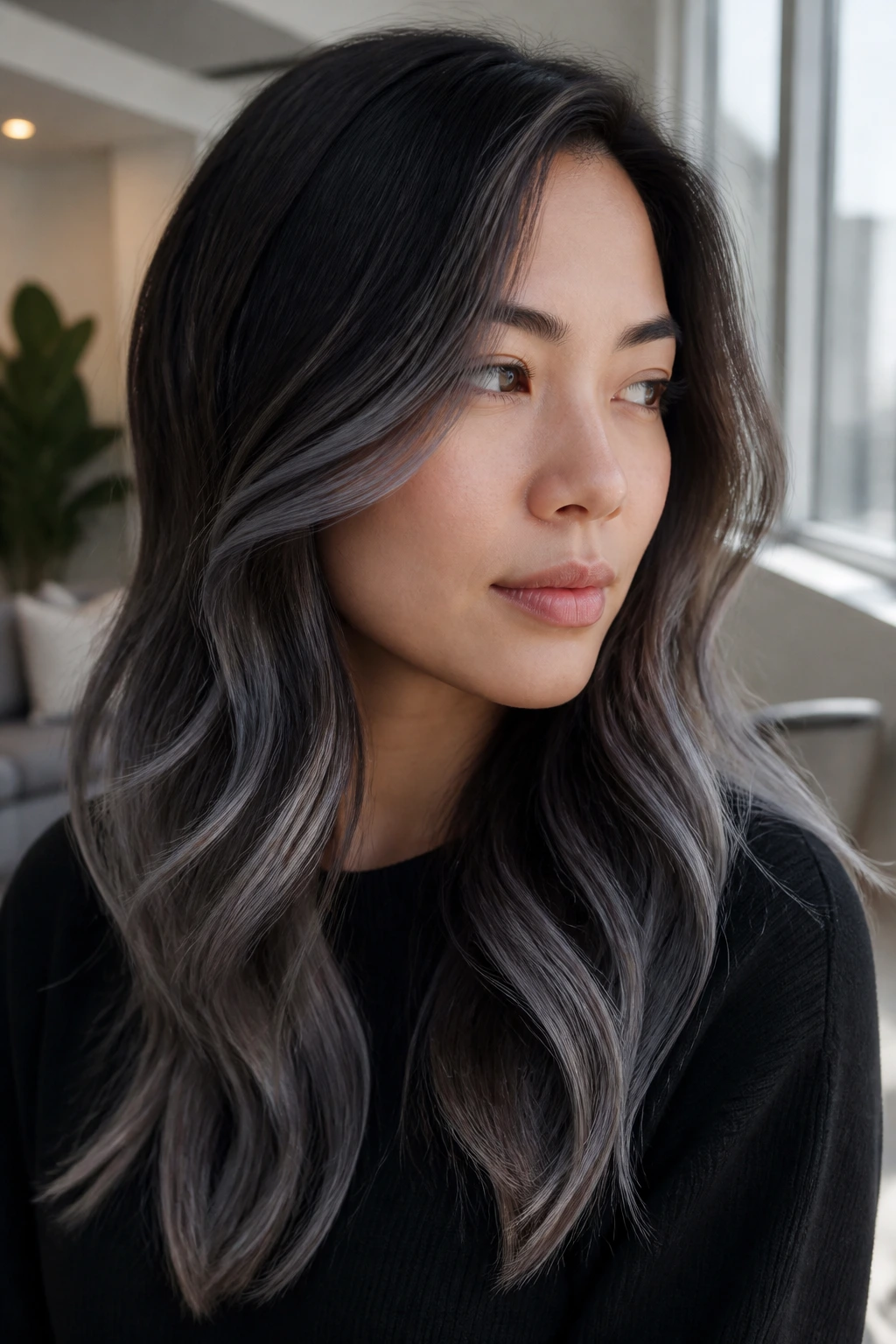
Unlike caramel balayage, steel-toned balayage is about shadow, not warmth. That’s why it looks so good on cool skin. The lifted pieces still move away from the base color, but they do it with slate, steel, and blue-gray reflection instead of gold.
It’s a quieter kind of dimension. You still get brightness around the face and through the ends, but the eye reads cool movement instead of blonde streaks. On medium cool skin, that can make the complexion look cleaner without making the hair look icy or pale.
Ask for painted ribbons that start around the cheekbone and continue softly to the ends. I like this on long layers because the pattern shows as the hair swings. Keep the lightest pieces only one or two shades above the base. If they go too light, the cool effect gets lost and the whole thing drifts beige.
Best for people who want a dimensional brunette without the upkeep of high-contrast highlights.
7. Indigo Ribbon Highlights
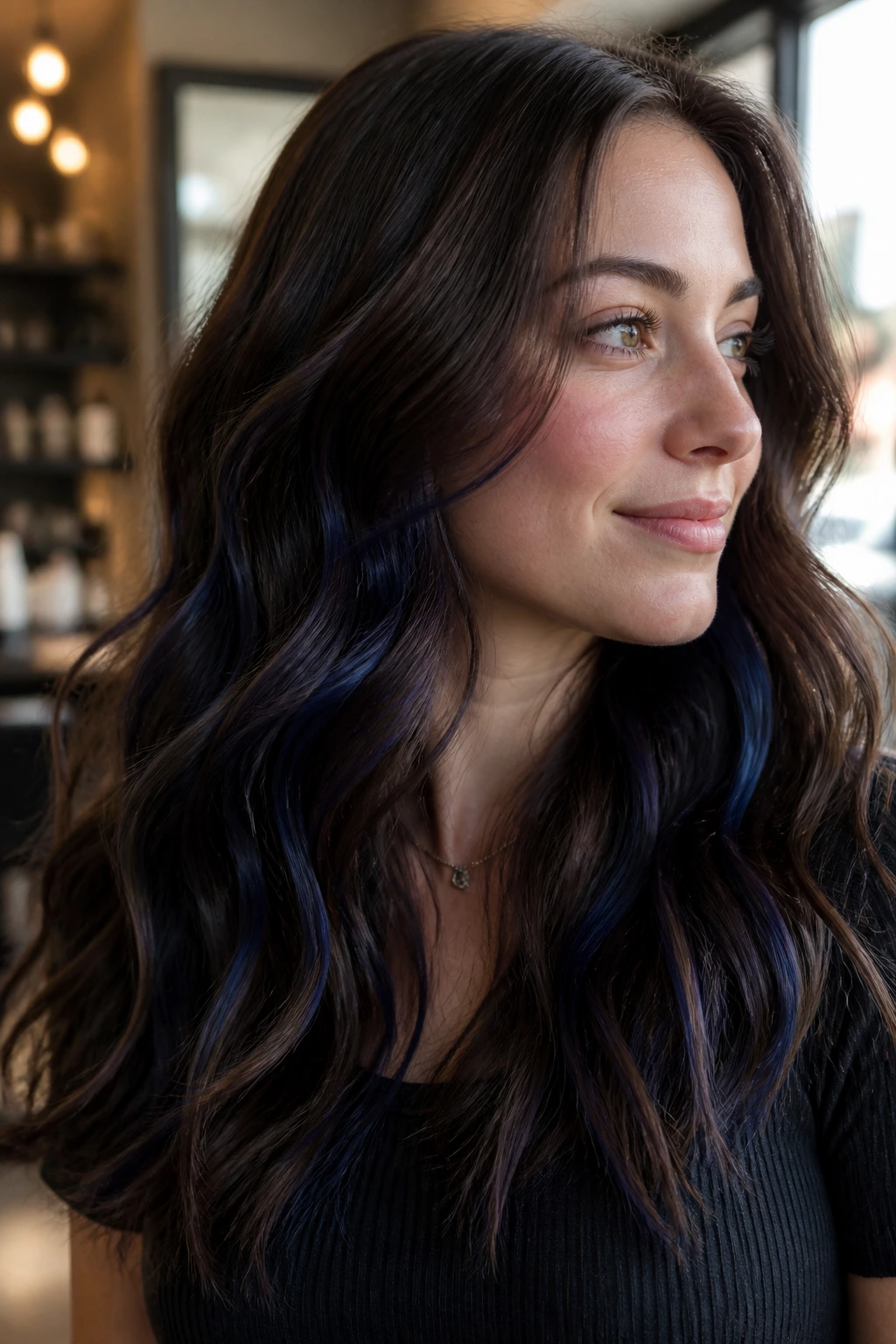
Indigo ribbon highlights are for people who like a little drama but don’t want a full blue head of hair. The color runs in thin, visible ribbons through brown hair, so the blue shows in movement instead of sitting there all the time.
Why It Works on Waves and Curls
Blue pigment loves texture. Loose waves and curls break up the indigo so it looks like a deep blue sheen rather than a stripe. That’s why this shade often looks richer on textured hair than on pin-straight hair.
Placement Notes
- Keep the ribbons 1/8 to 1/4 inch wide.
- Place most of them under the top layer.
- Leave the face-framing pieces softer.
- Use the brightest indigo only on a few strands.
Small warning: too many ribbons can turn the look busy fast. One or two visible bands per side is usually enough. More than that, and you lose the dark-brown base that makes the blue look luxe instead of loud.
8. Slate Brown Lob
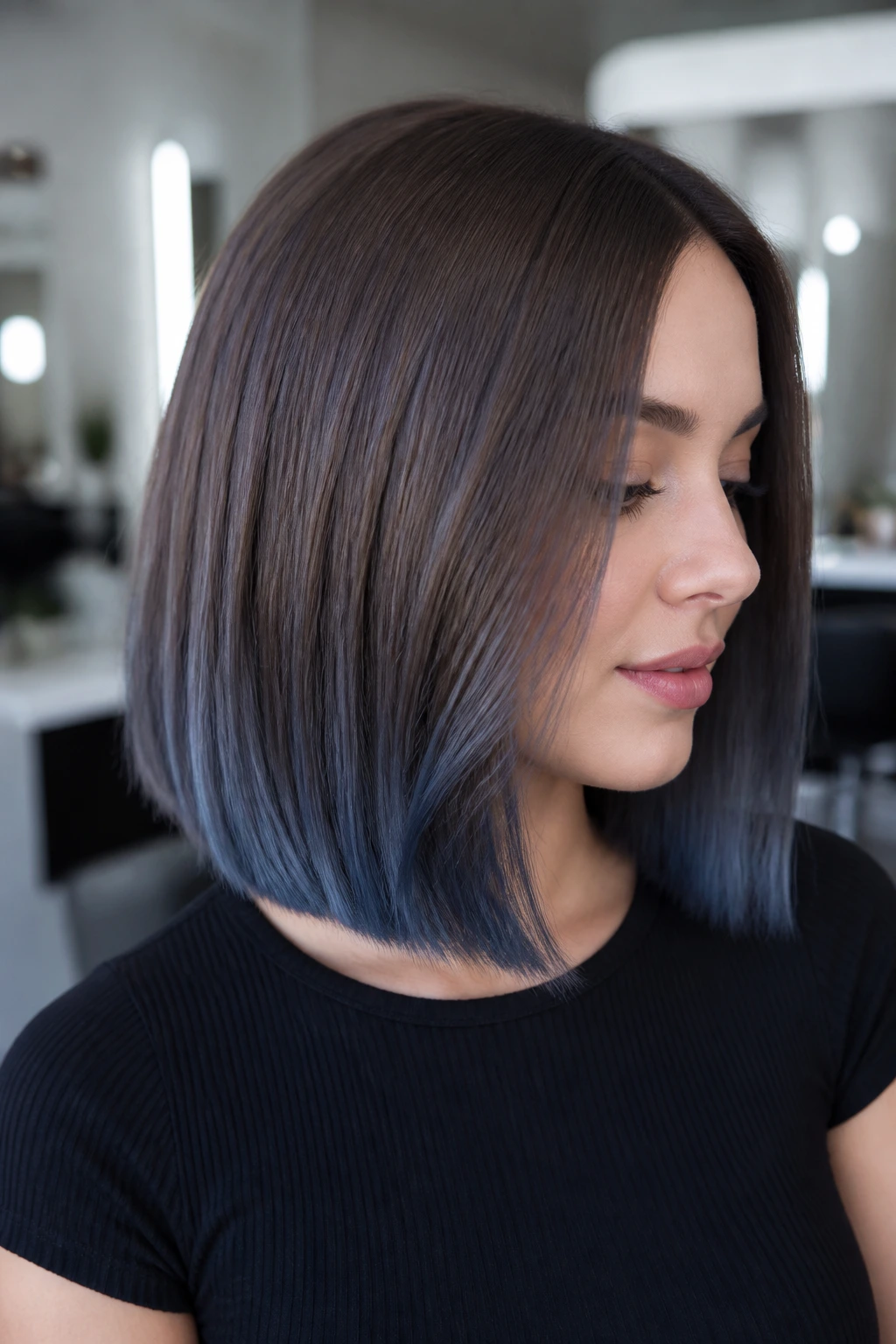
A blunt lob makes blue-brown color look sharper than long layers do. That’s the big reason I like slate brown on a shoulder-length cut. The clean edge gives the cool tone a place to sit, and the color feels deliberate instead of floating around in the hair.
Slate brown lives in that dusty gray-brown family, which is a sweet spot for cool skin. It doesn’t pull golden. It doesn’t pull red. Add a blue glaze to the ends and the cut gets this sleek, almost tailored feel. Good hair, but with an edge.
Ask your stylist for a level 5 slate base and a cool gloss that’s slightly bluer at the tips. Keep the root area soft so grow-out doesn’t look harsh. This cut also works well with a slight bevel at the ends — maybe a quarter inch — because it helps the color catch light when the hair swings.
Short version: if you want blue-brown hair that feels modern without trying too hard, this is a solid pick.
9. Cobalt Peekaboo Panels
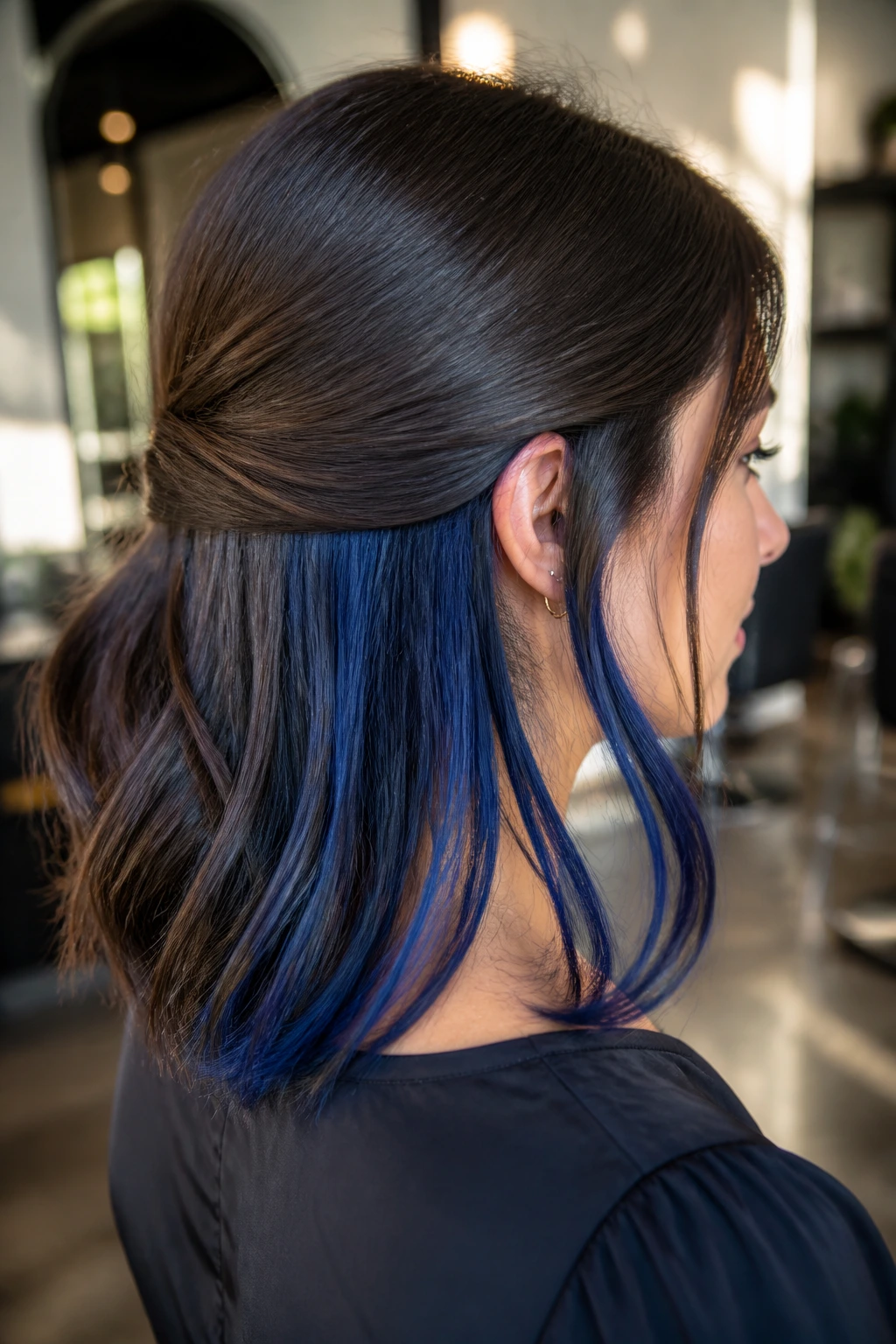
Want the blue to show only when your hair moves? Peekaboo panels are the answer.
This is the right choice if you like brunette hair most of the time but still want one surprise element. The blue sits under the top layer, so it flashes at the nape, around the ear, or through a half-up style. Cool skin gets the benefit of the blue tone without the whole head turning into a statement piece.
Where to Place the Panels
Start the panels underneath the crown, not on the surface. Two to four panels at the nape are enough for medium-length hair. On longer hair, you can add a few more low sections, but keep them hidden by the top layer.
- Use cobalt on pre-lightened sections only.
- Keep the top layer a cool brown or ash brunette.
- Ask for panels about 1 inch wide.
- Place them where hair naturally separates.
That placement keeps the look wearable for people who still need to dress conservatively some days. It’s playful, but not messy. There’s a difference.
10. Cool Mocha with Blue Toner
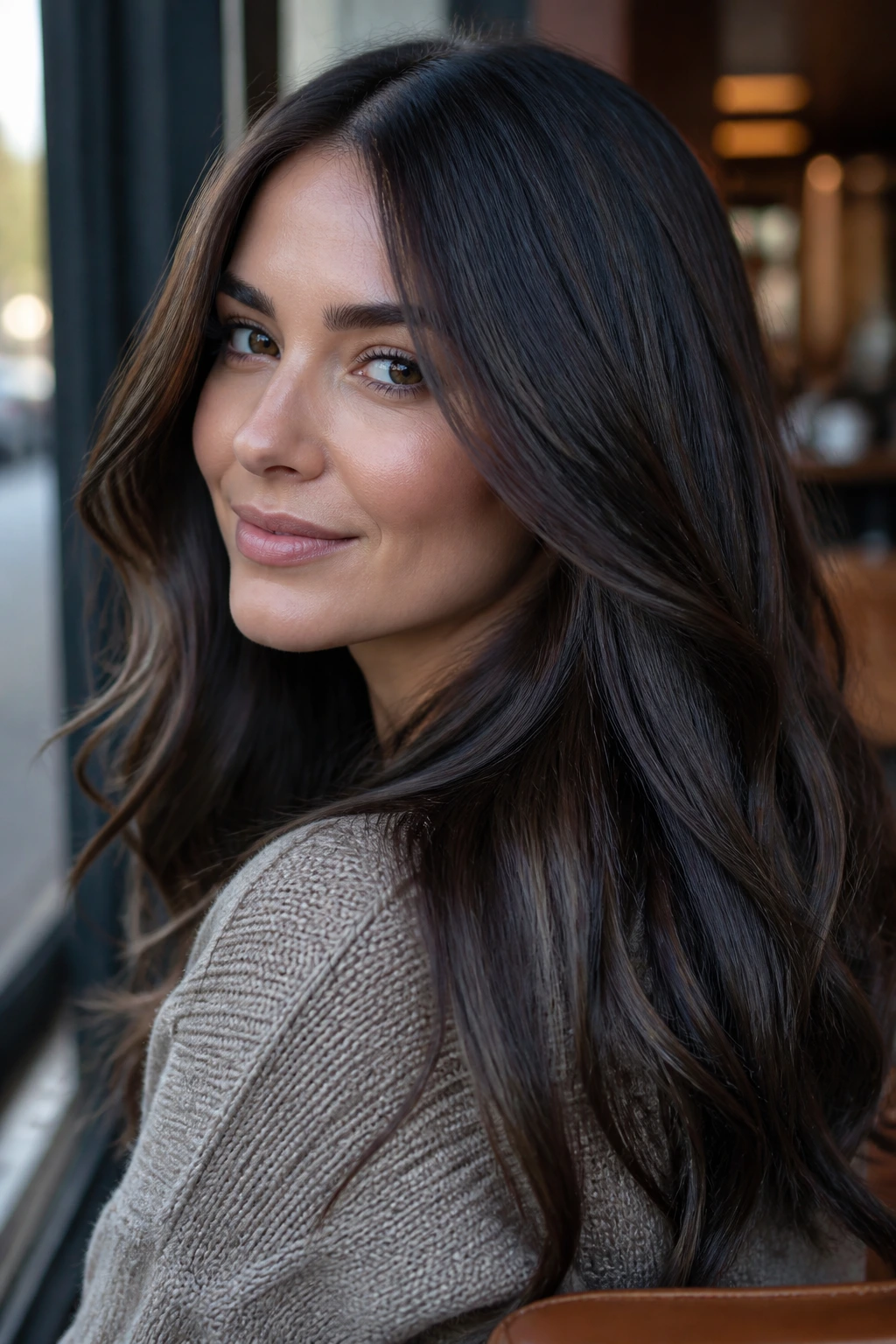
Cool mocha with blue toner is the shade for someone who wants a brunette that looks soft at brunch and sharper at night. The brown base stays wearable, but the toner removes the warm edge that can make cool skin look a little flushed.
A mocha base is already gentler than espresso. Add a blue toner, and the finish moves closer to smoke than milk chocolate. That’s a nice place to be if you like brown hair but not orange undertones. It also gives a lot of shine back, especially on smooth, healthy hair.
The Useful Details
- Base level: 5 or 6.
- Toner: blue-based or blue-violet, depending on warmth.
- Maintenance: refresh the gloss every 4 to 6 weeks.
- Best styling match: loose bends, soft blowouts, or tucked-behind-the-ear waves.
If your hair tends to go brassy fast, this is one of the smarter choices. The blue toner acts like a filter over warmth, and that’s where the value is.
11. Charcoal Brown Ombré
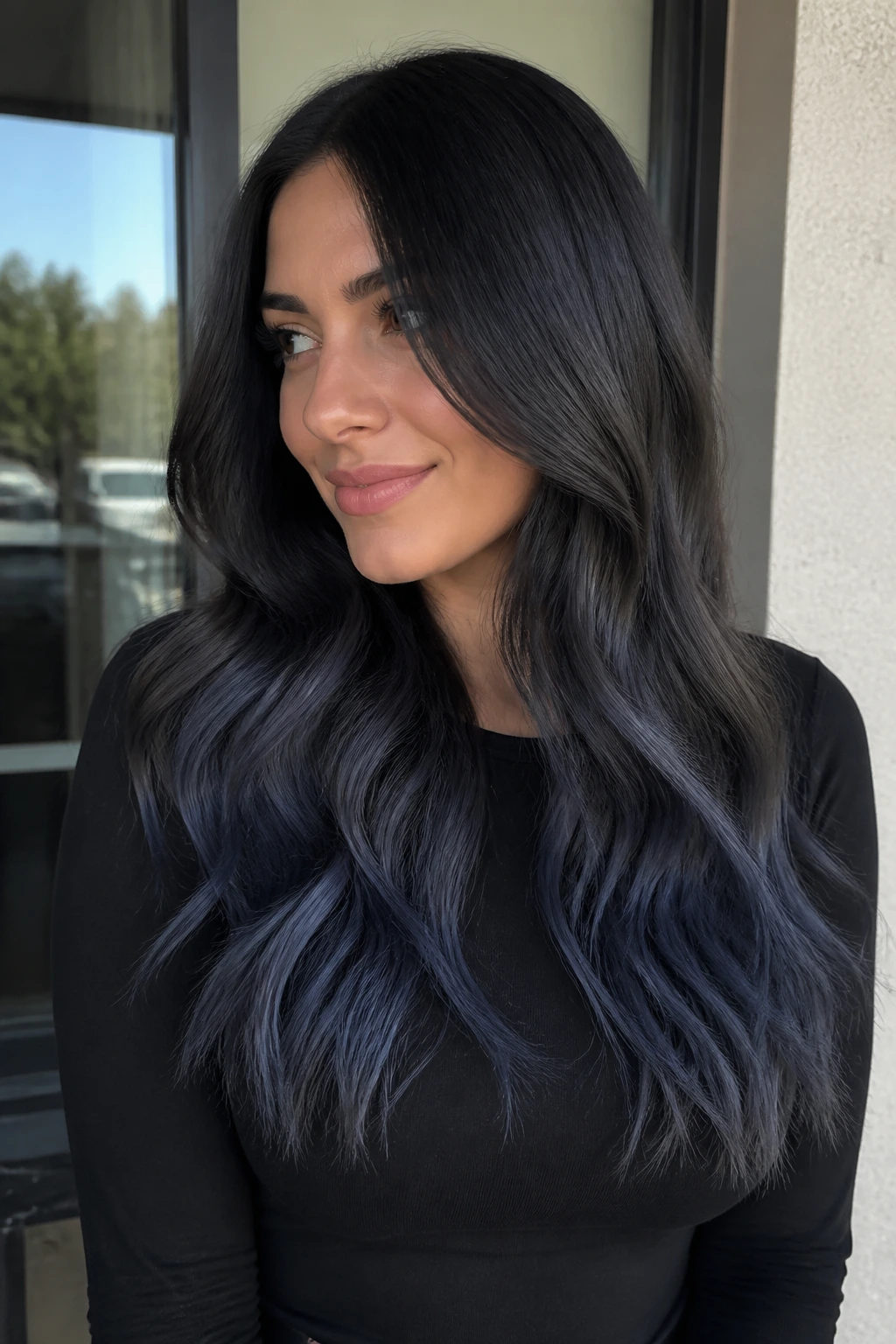
Charcoal brown ombré is for the person who wants a dark root and a cooler, smoky end without a harsh line. The fade matters here. If the transition is rushed, the hair looks striped. If it’s stretched over a few inches, it looks expensive and calm.
The root can stay deep brown or near-black, then the length drifts into charcoal and muted blue-brown. That transition is especially good on long hair because the gradient has room to breathe. On cool skin, it creates contrast without introducing warmth that fights the face.
I like this shade on people who wear their hair down a lot. Curly hair shows the fade in a softer way, while straight hair makes it look more graphic. Neither is wrong. The important part is the handoff between root and end. Keep it blurred over 3 to 4 inches and it stays elegant. A hard ombré line makes the blue look accidental.
12. Ocean-Glass Brunette
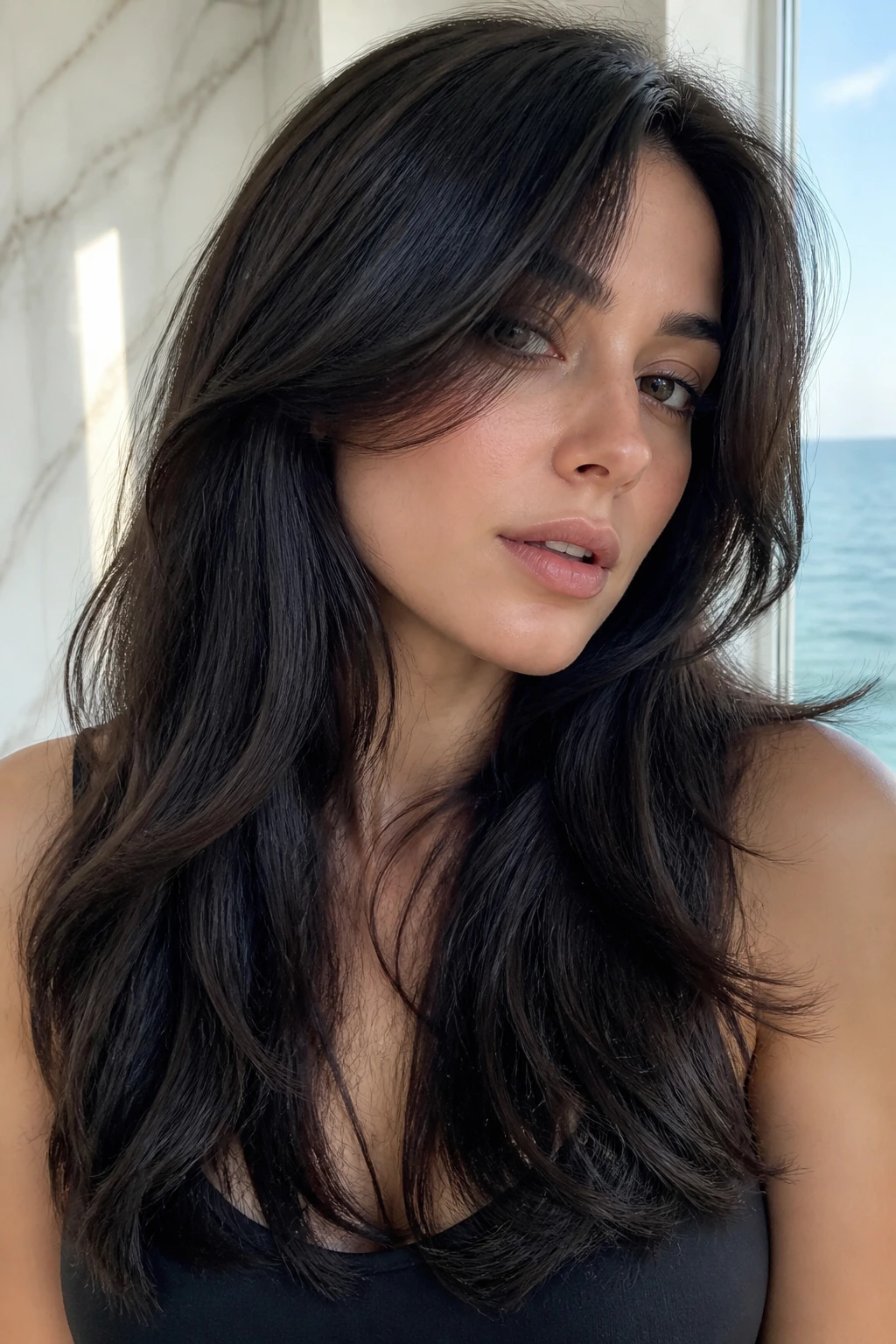
Ocean-glass brunette is not about bold blue. It’s about translucence. The color looks like a brown glaze with blue light sitting just under the surface, which is why it works so well on cool skin that likes shine more than contrast.
Unlike a saturated navy brunette, this version depends on smooth hair and a clean finish. If the cuticle is rough, the color looks muddy. If the hair is glossy, it looks almost wet in the best way. That sheen is what people are responding to, even if they can’t name it.
This is a smart pick for someone who already wears neutral makeup and wants hair that fits that same low-key mood. Ask for a clear or sheer gloss with blue-brown pigment over a medium brunette base. Keep it soft around the root and denser through the mids. The result should feel like dark water, not paint.
13. Ash Brown with Blue Lowlights
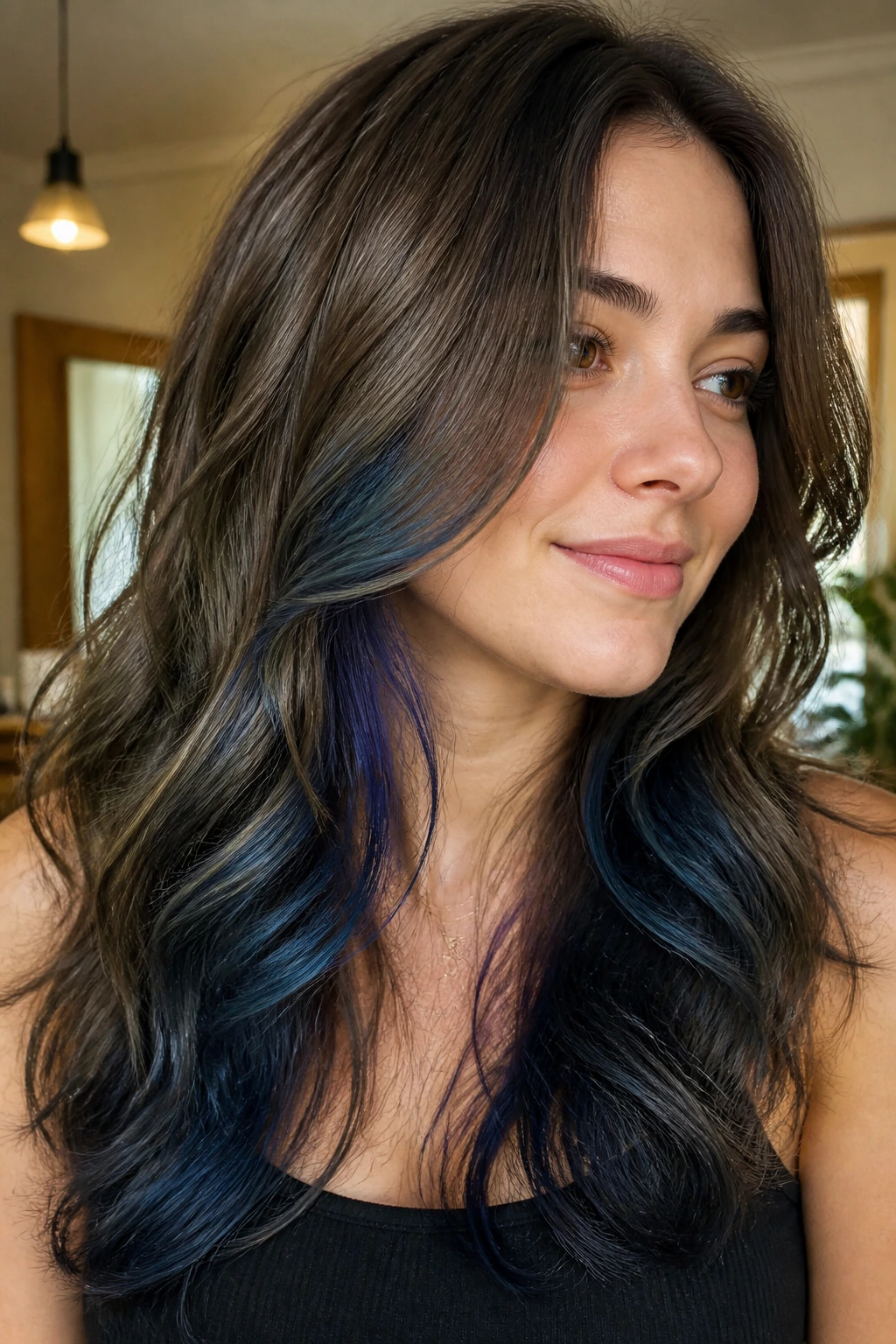
Ash brown with blue lowlights is one of the easiest ways to cool down brunette hair without making the whole head look dark. The lowlights tuck under the outer layer, so they add depth instead of brightness. That matters on cool skin, because too much lightness can look harsh.
Why It Flatters Cool Skin
Ash brown already sits on the cooler side of brunette, and the blue lowlights push it a little farther into slate territory. The face can look less red, and the hair looks thicker because the darker pieces create shadow between the strands.
Placement That Makes Sense
- Keep the lowlights 1 shade deeper than the base.
- Place them under the part and behind the ears.
- Use thin sections, not chunky slices.
- Work them mostly through the mid-lengths.
Best tip: don’t overdo the darkest pieces near the hairline. A few there can help, but too many make the face look framed by shadow instead of color.
14. Graphite Brunette Melt
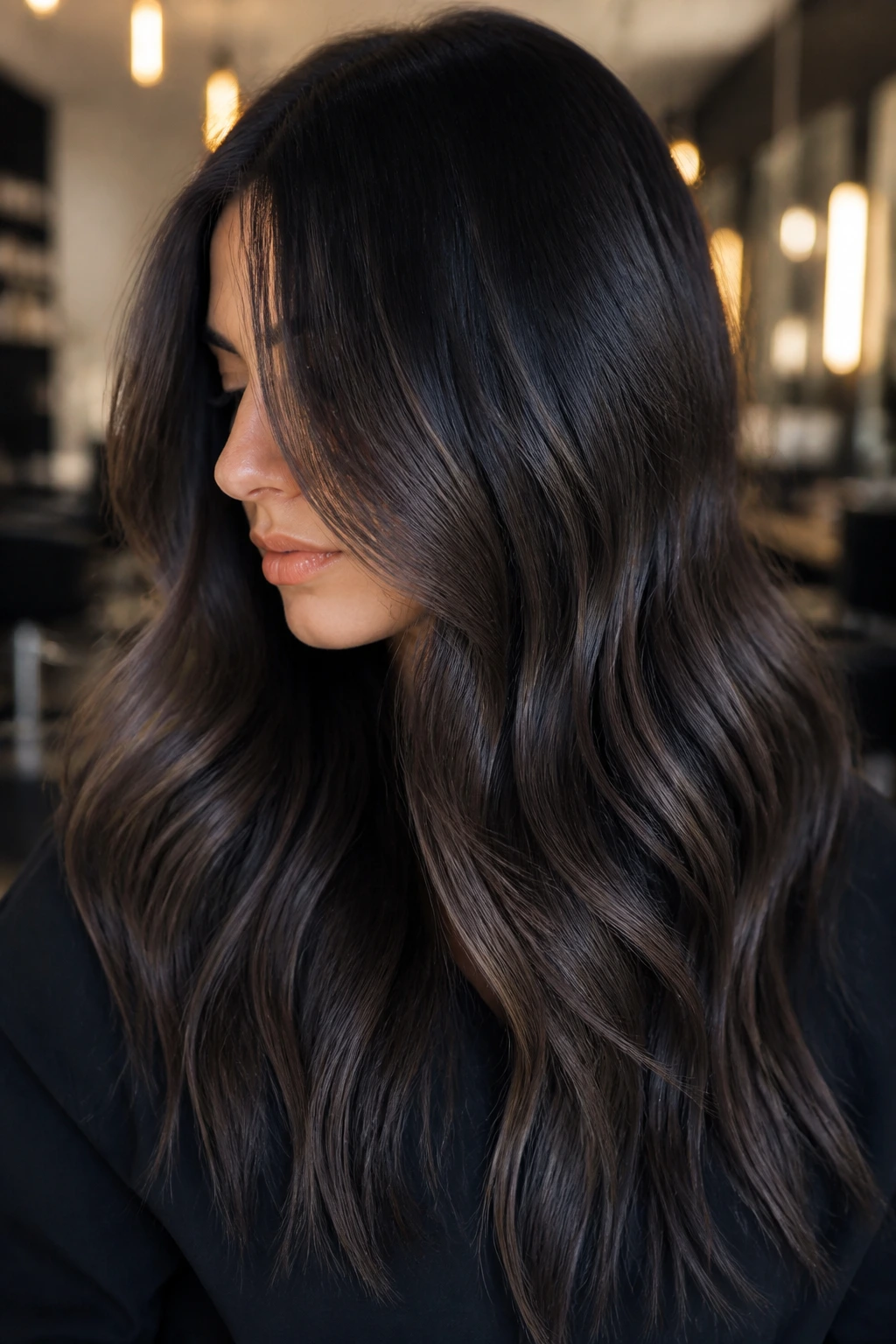
Graphite brunette melt looks especially good on thick hair, because the color transition shows off density. The roots stay deep, almost graphite, while the mids and ends melt into a cooler brown with blue undertones. It’s not flashy. It’s strong.
The melt effect matters. A hard line would make the color look painted on. A soft blend makes it read like the hair naturally holds two shades of brown at once. That gives cool skin a nice frame without stealing light from the face.
I’d ask for a root shadow that starts at the scalp and softens around the first inch. Then let the blue-brown reflection show more through the mid-lengths. This shade looks especially good on thicker blowouts and big waves, where the shadow changes as the hair moves. If you like hair that has weight, this one does the job.
15. Denim Brown Face-Framing Pieces
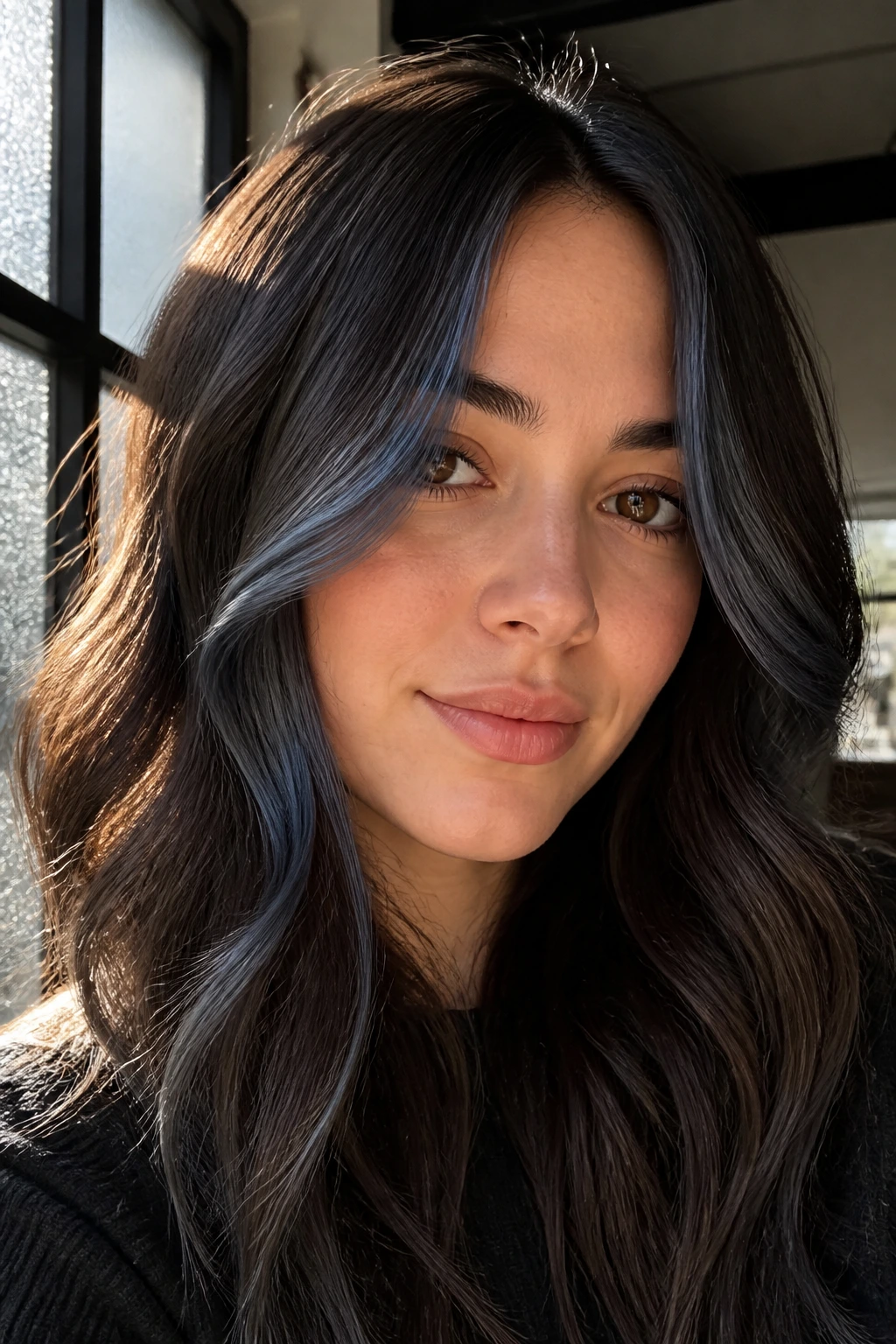
Do you want a cool-toned change without coloring the whole head? Face-framing pieces are the cleanest answer.
This version uses denim-brown ribbons near the temples and front hairline, usually around 1/2 to 1 inch wide each, to brighten the face and give cool skin a little movement. It’s less commitment than a full gloss and easier to grow out than heavier highlights.
How to Ask for It
Tell your stylist you want the front pieces lifted just enough to show blue-brown reflect, then toned back to a muted denim shade. Keep the rest of the hair in a neutral brunette so the front remains the focus. If you part your hair in the middle, make sure the pieces are balanced on both sides. If you wear a side part, the heavier side can carry a little more color.
This is a sharp choice for ponytails, buns, and clipped-back looks. The blue shows up right where people look first, which is half the fun.
16. Cool Cocoa with Blue-Black Ends
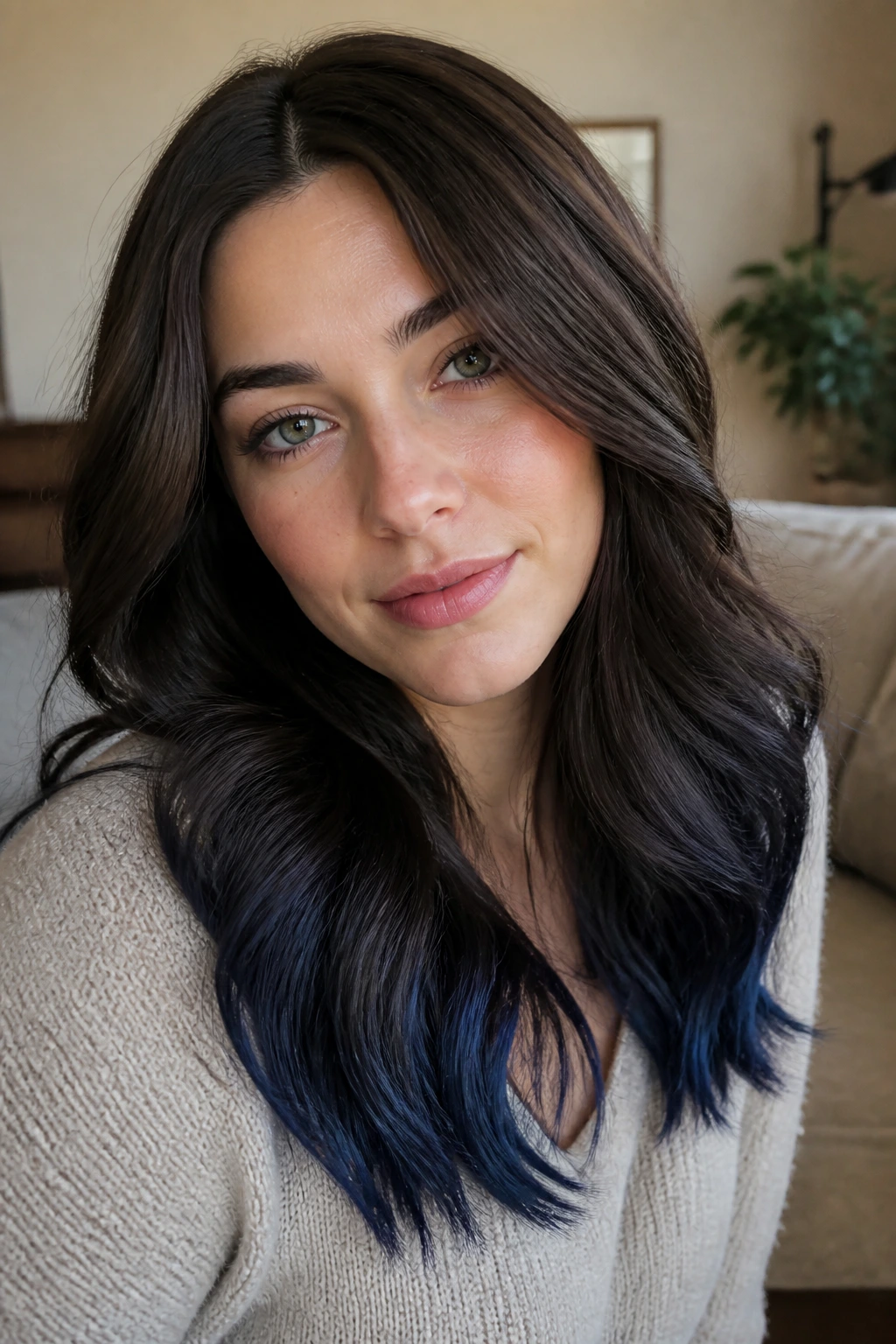
Cool cocoa with blue-black ends feels understated at the root and a little heavier at the bottom. That weight is useful. It gives long hair some anchor, which keeps it from looking wispy or over-light at the ends.
The cocoa base softens the look so it doesn’t jump straight to black. Then the blue-black ends bring the cooler note in without making the whole head dark. On cool skin, that lower contrast can be easier to wear than an all-over inky brown.
What Makes It Work
- Start with a neutral cocoa base through the crown.
- Deepen only the last 3 to 5 inches.
- Keep the blue-black tone glossy, not matte.
- Best on layered cuts that move.
If your hair is growing out highlights, this is a smart reset. The darker ends cover old lightness and make the overall color look intentional again. No need to chase perfect uniformity here.
17. Stormy Brunette Babylights
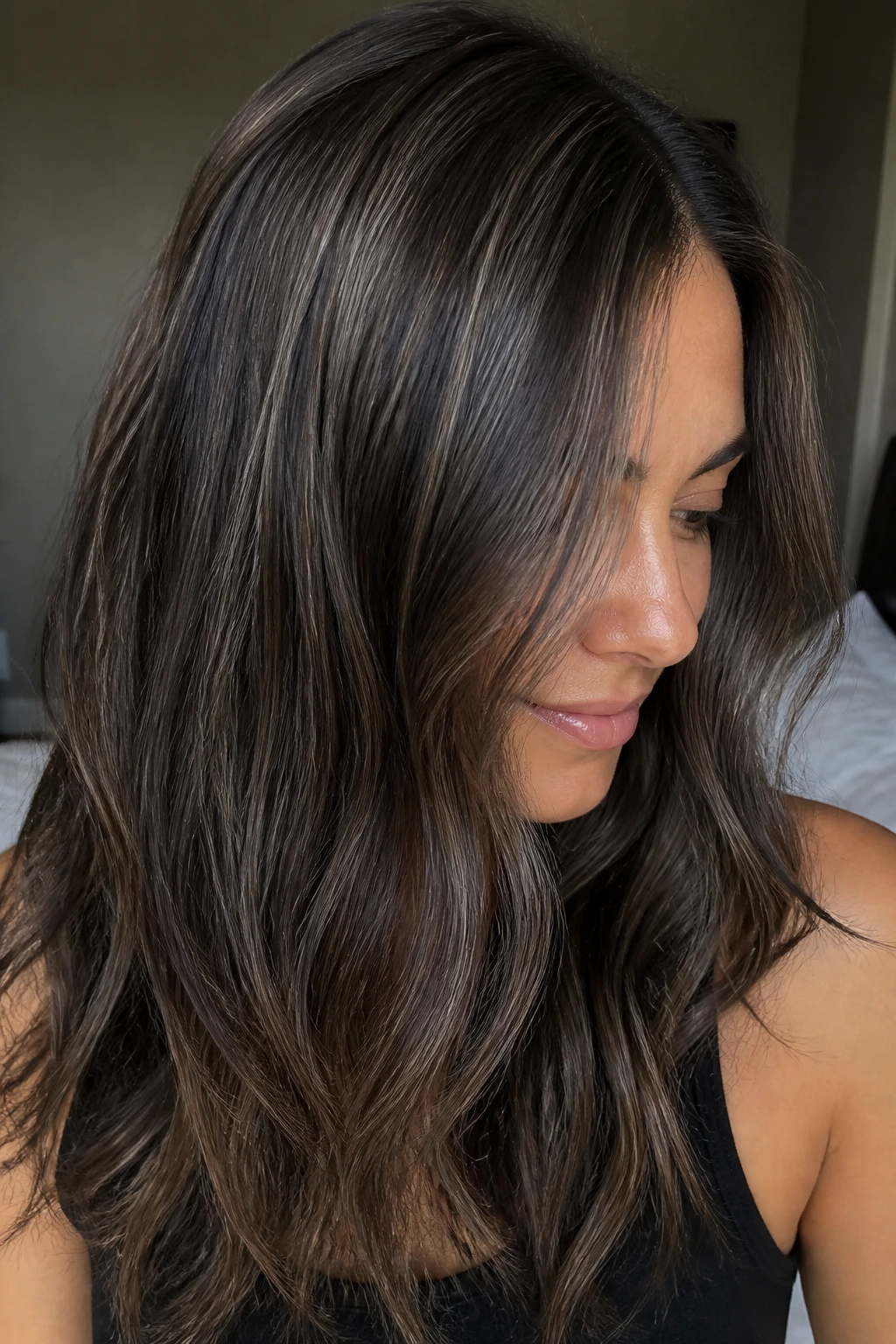
Stormy brunette babylights are tiny, thin highlights that barely announce themselves. That’s the whole point. Instead of obvious streaks, you get soft cool dimension that looks like weather shifting through brown hair.
I like this idea for fine hair. Thick ribbons can overwhelm it fast, but babylights add movement without breaking the base color apart. The blue-brown tone shows most at the top layer and around the part, which keeps the look light and modern.
The key is size. Think 1/8-inch weaves, sometimes even finer, with a cool toner afterward. The result should not look striped in any kind of mirror. If you can spot the highlights from across a room, they’re probably too chunky.
Stormy babylights suit cool skin because they keep the overall palette muted. You still get brightness, but it stays in the gray-brown family instead of drifting warm. That’s a better deal for people who want softness more than drama.
18. Sapphire Dip-Dye Tips
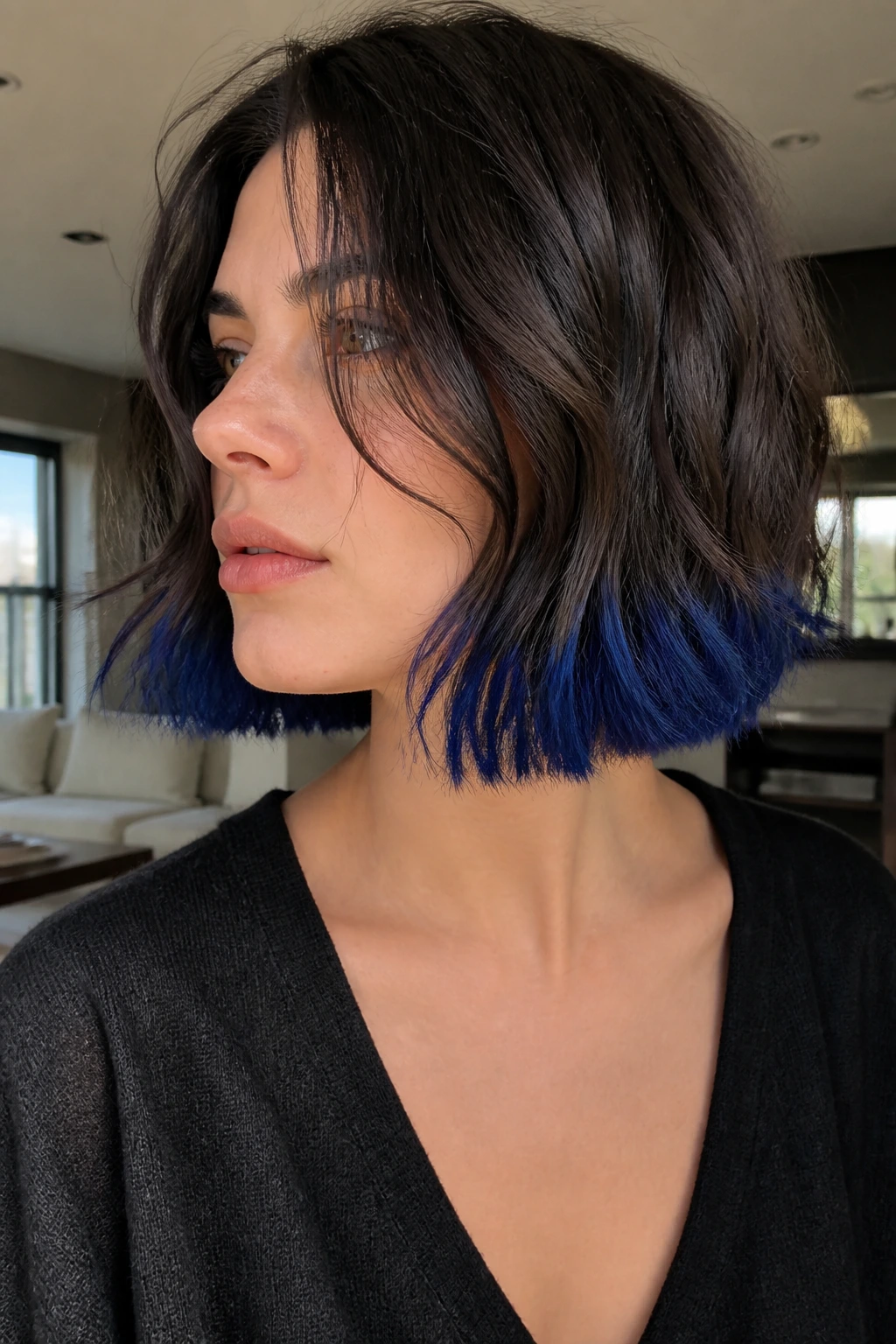
Sapphire dip-dye tips are for people who want the blue to announce itself at the ends and nowhere else. Unlike ombré, where the color fades gradually, dip-dye keeps the boundary sharper and the blue more visible. It has an edge to it.
That edge looks best on blunt cuts, textured shags, and curls that bounce. The last 2 to 4 inches of the hair carry the color, so movement matters. Straight hair makes the line feel graphic. Curly hair makes it look playful and less severe.
If you go this route, ask for a cool brunette base and pre-lightened ends only where needed. Then layer a sapphire-brown gloss over the light pieces. I’d avoid pushing the blue too bright unless that is the whole point. The smarter version keeps the sapphire deep enough to still feel like brunette hair that forgot to behave.
It’s a good choice when you want something obvious but not full-head bold.
19. Pebble Brown with Blue Smoke
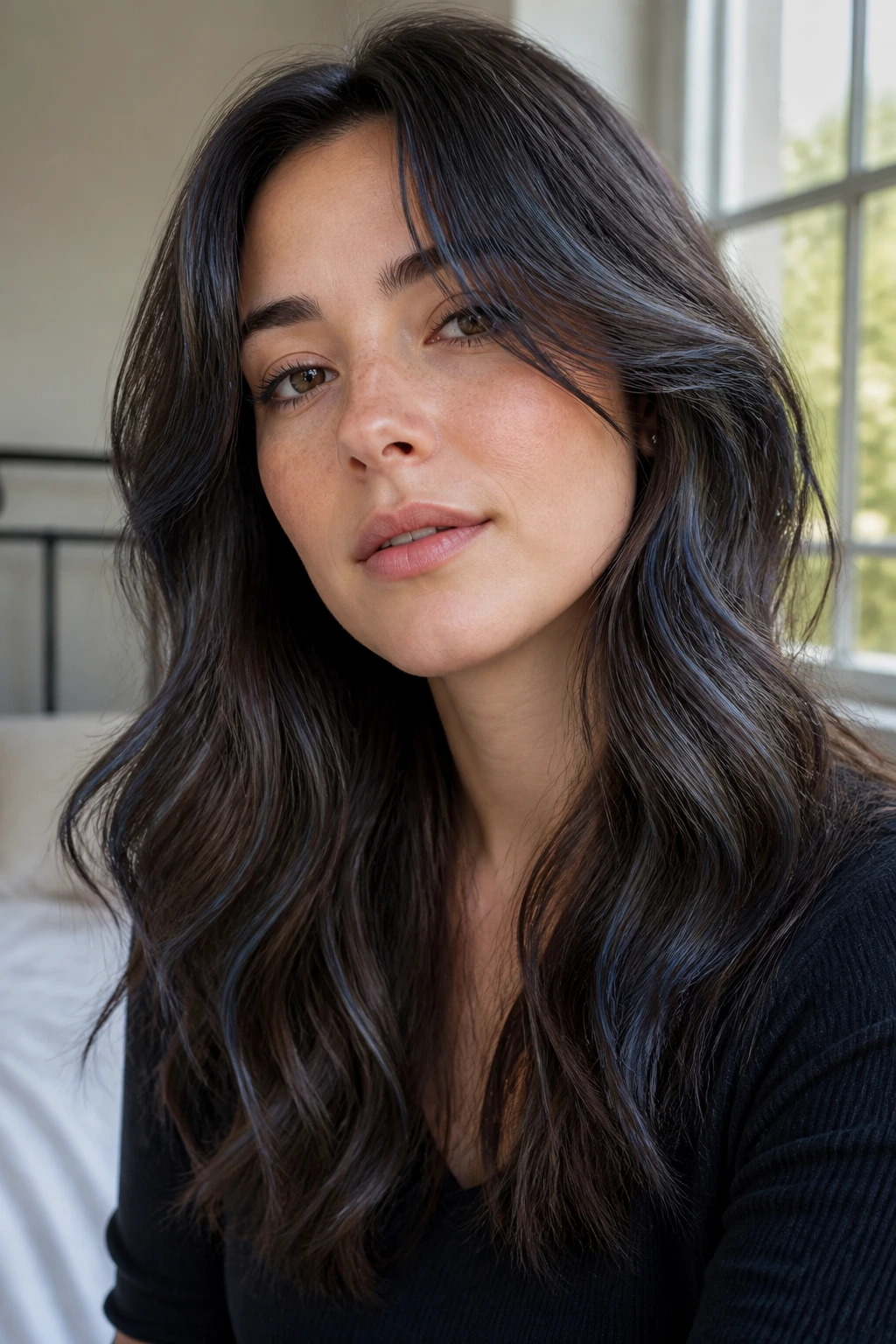
Pebble brown with blue smoke is one of the softest blue-brown hair color ideas for cool skin tones. It sits in a muted, stony brown range, then gets a blue veil that gives it a shadowy finish. Very little about it shouts. That’s why it works.
Why It Flatters Cool Skin
Muted cool skin often looks best beside colors that have some gray in them. Pebble brown does that naturally. Add a blue-smoke glaze, and the face can look calmer because the hair isn’t pulling warm reflections into the skin.
Quick Notes
- Base level: 6 or 7 for a softer result.
- Reflect: smoke-blue, not navy.
- Best on medium-length cuts with movement.
- Refresh with a gloss when the brown starts to warm up.
My take: this is one of the easiest shades to live with if you want brunette hair that still has personality. It’s not boring. It’s restrained, and that’s a different thing.
20. Midnight Brown Curly Halo
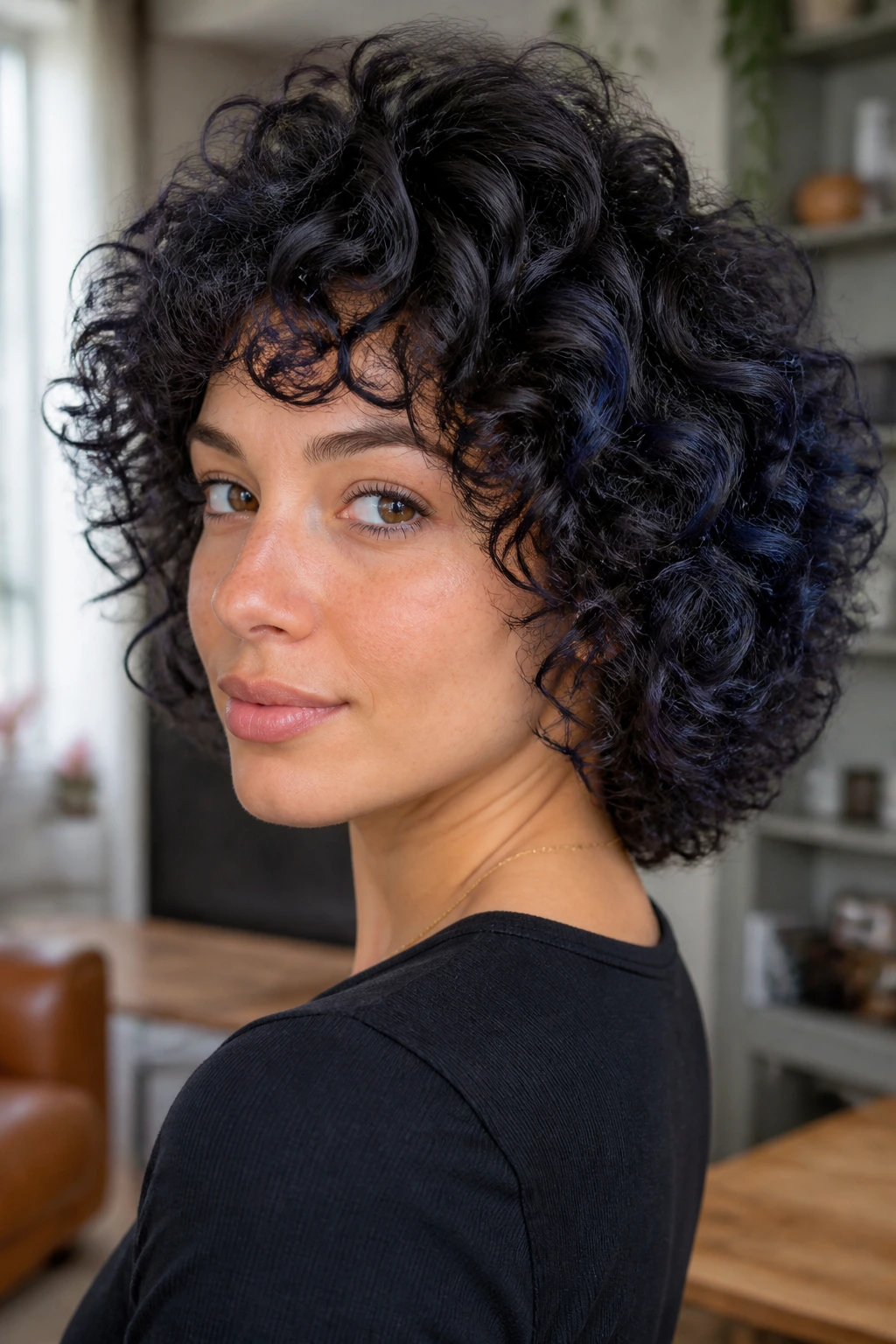
Midnight brown curly halo is a strong choice for curls because it puts the blue-brown reflect where curls actually show it best: around the outer ring and the top layer. You get movement, shine, and depth all at once. On cool skin, the contrast can look clean instead of heavy.
Curls can swallow color if the shade is too flat. This one avoids that by keeping the base deep and letting the blue shimmer across the curve of each curl. The result changes every time the light moves. That’s the good part. The annoying part is that dull curls will hide the effect, so styling matters more here than on straight hair.
Ask for a midnight brown base with a blue-brown glaze concentrated through the visible outer curls. A diffuser helps, but so does a leave-in that keeps the curl pattern separated. If you love hair that feels dimensional from every angle, this shade earns its place.
21. Blue Brown Money Piece
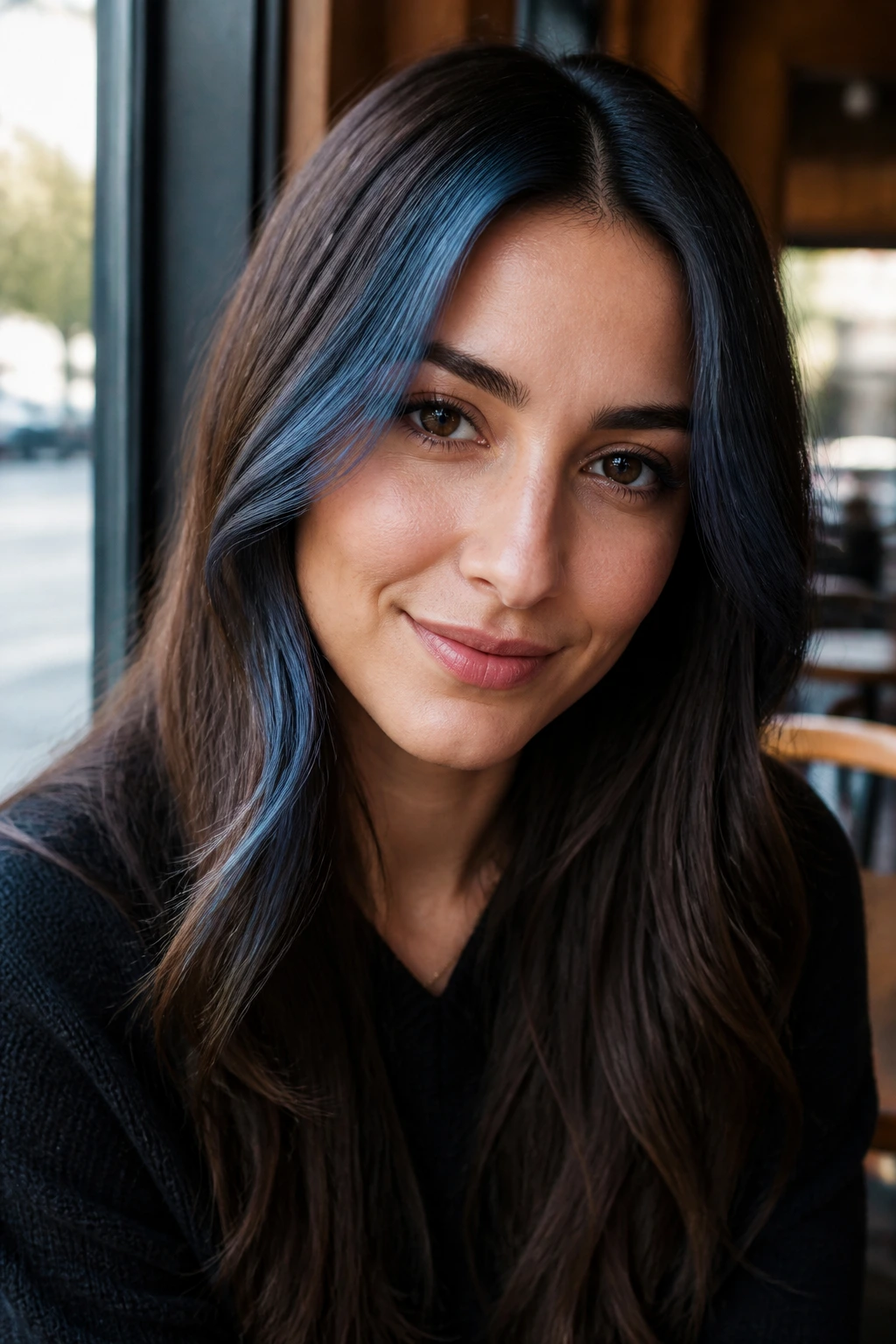
A blue brown money piece is a tiny service with a big payoff. That front panel near the part is where the eye lands first, so even a small shift in tone changes the whole face. On cool skin, it can brighten the complexion without needing a full head of color.
How to Wear It
Keep the panel around 1 inch wide on each side of the part, or just one stronger side if your cut leans asymmetrical. The rest of the hair can stay a neutral brunette. That contrast is what makes the money piece work. If everything gets the same blue tone, the effect disappears into the rest of the hair.
Best Uses
- Great for ponytails and clips.
- Good for people testing blue-brown before a bigger change.
- Works well with curtain bangs.
- Easy to trim out later if you change your mind.
This is one of the smartest low-commitment options in the bunch. It gives you the cool tone where it counts, right next to the face.
22. Soft Smoked Chestnut with Blue Reflect
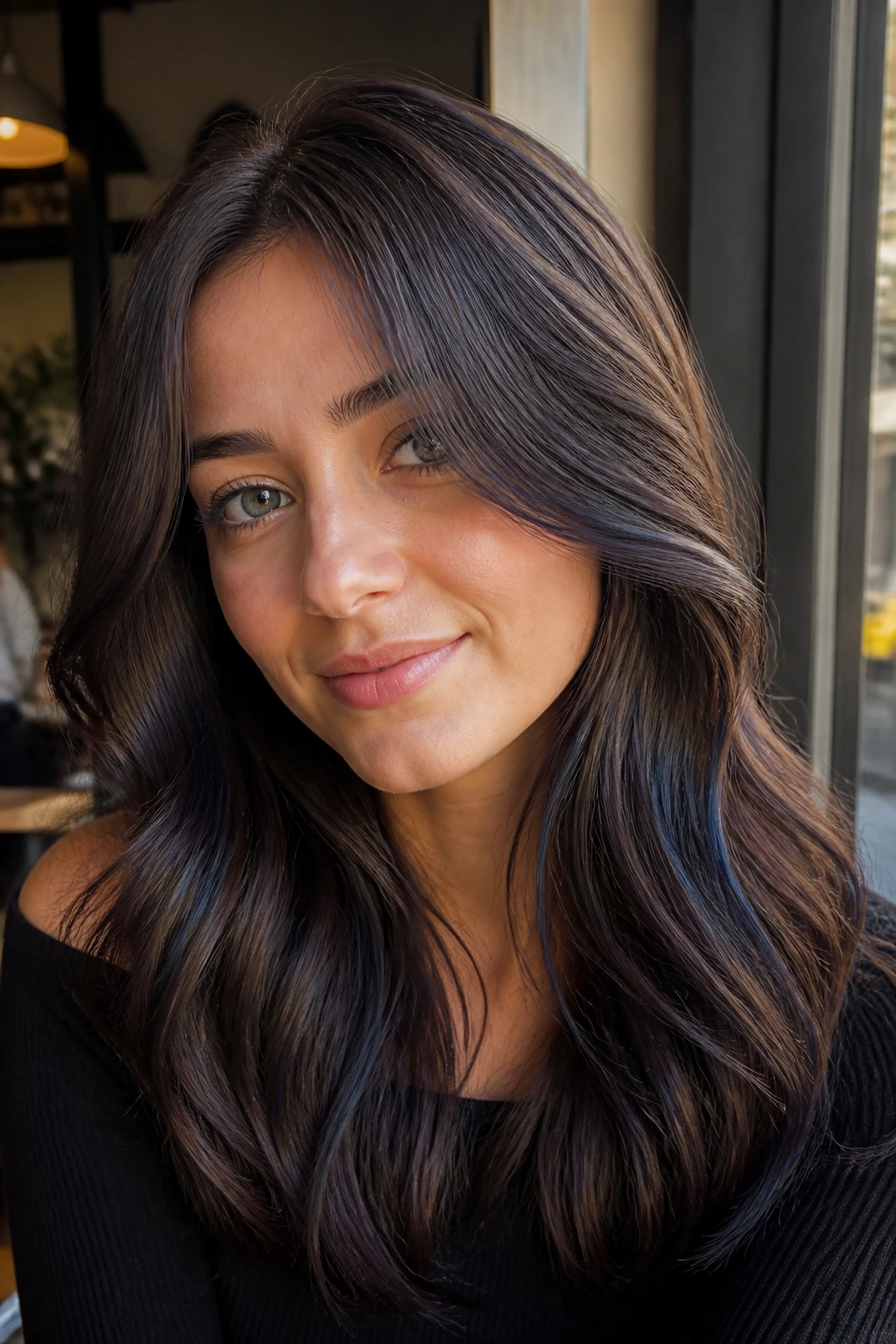
Soft smoked chestnut with blue reflect is the gentlest version here, and it may be the easiest one to wear every day. The chestnut base keeps the hair from looking too dark, while the blue reflect cools it down enough to flatter cooler skin without stealing the show.
This works well if you want brunette hair that still feels warm in mood but not in undertone. That distinction matters. The color can have softness and still stay cool. On shoulder-length cuts, it reads like a smoky chestnut in one light and a blue-brown veil in another. Nice if you like subtle changes more than obvious ones.
I’d choose this for medium cool skin, soft rosiness, or anyone who wants a brunette shade that survives office light, sunlight, and bad bathroom mirrors without looking strange. A demi-permanent gloss is often enough to get there. No need to go all the way to a dramatic blue-black if that’s not your style.
Final Notes
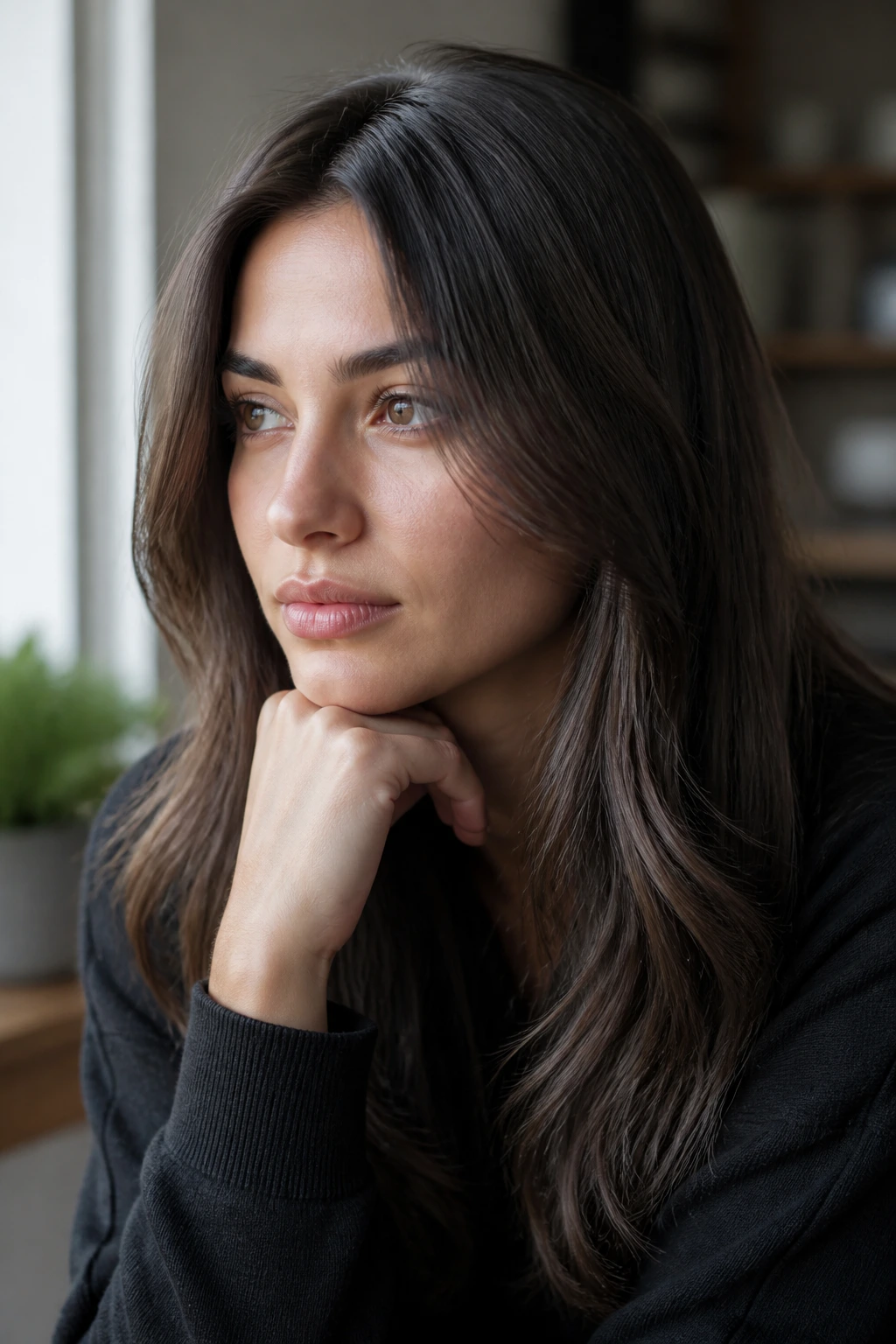
The best blue brown hair color ideas for cool skin tones don’t all look the same. Some are deep and glossy. Some are muted and smoky. A few are so subtle that people notice the shine before they notice the blue. That range is the whole point.
If you’re deciding between shades, bring daylight photos to your colorist and ask what the tone looks like after one shampoo, not just on day one. Blue reflect can be gorgeous fresh from the chair and a little softer after the first wash. That softer version is often the one you’ll live with, so it’s worth planning for.
If you want the safest starting point, a demi-permanent gloss over an ash brunette base is hard to beat. It gives you the cool tone without locking you into a huge change. And if you want the more dramatic end of the spectrum, the darker shades — midnight navy, blue-black, graphite — stay flattering when the brown base carries enough depth.
A cool brown should make the face look calmer, not colder. When the shade is right, the hair settles into the skin instead of fighting it.
