



Blond beige hair color ideas for cool skin tones sit in a sweet spot that a lot of people miss. Too icy, and the hair can look flat next to rosy cheeks. Too golden, and the warmth starts fighting the skin instead of flattering it. Beige is the middle path, and when it’s mixed with ash, pearl, smoke, or a whisper of silver, it can make cool-toned skin look cleaner and brighter without turning the whole head into a block of pale yellow.
That middle ground matters more than people think. A beige blonde that’s toned the right way doesn’t scream for attention; it softens the face, keeps the color believable, and still gives you that blonde lift around the eyes and cheekbones. If silver jewelry tends to look better on you than yellow gold, or if your skin leans pink, blue, or porcelain, these shades usually sit in a flattering zone.
The tricky part is that “beige” is not one look. It can be airy and pearl-like, smoky and brown-leaning, or almost frosted at the edges. The right version depends on how light your starting color is, how much maintenance you can tolerate, and whether you want a clean salon-fresh finish or something that grows out in a soft, lived-in way. Some of these shades need a level 9 or 10 blonde base. Others work better with a shadow root and cooler glossing.
1. Pearl Beige Blonde
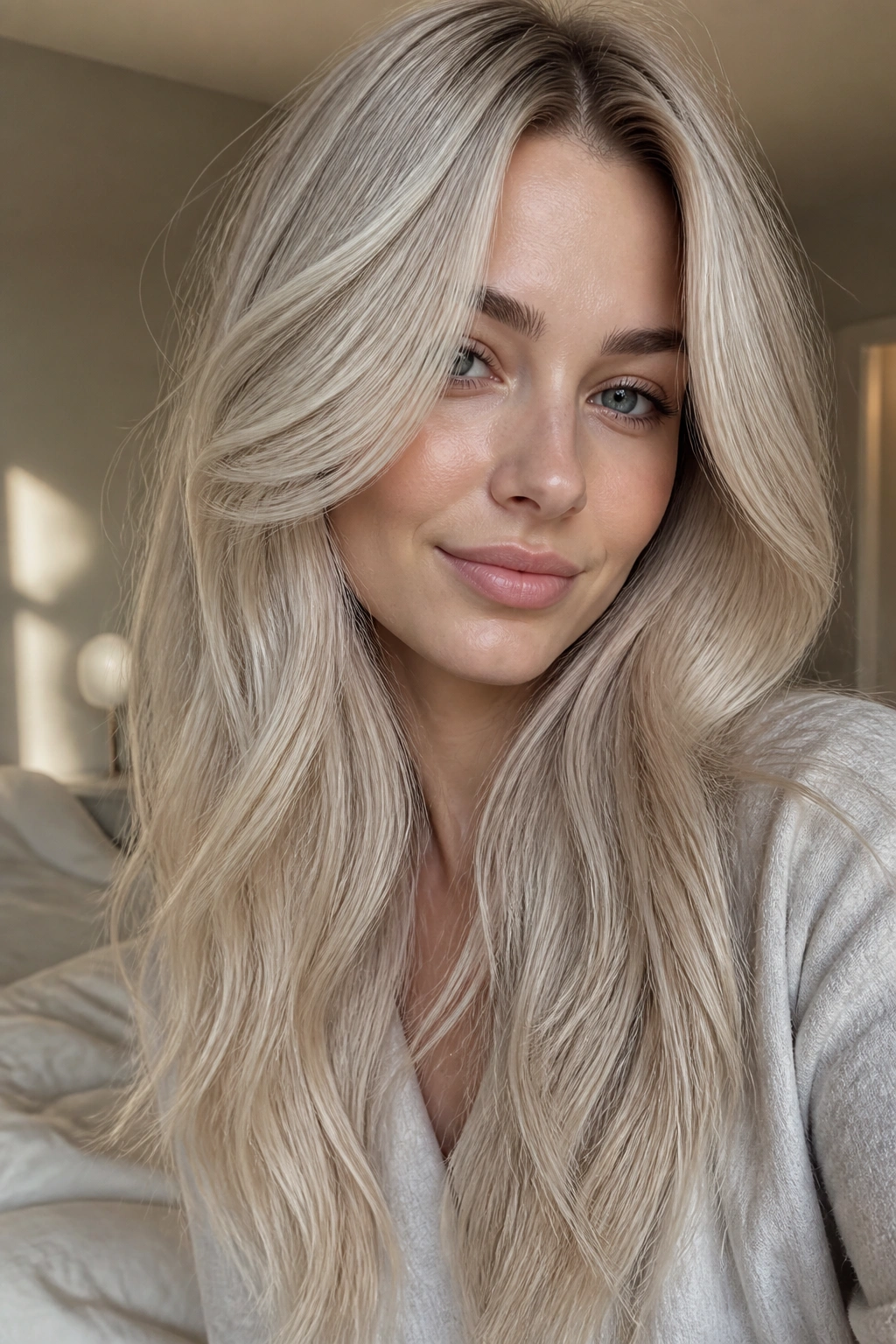
Pearl beige blonde is the shade I reach for when someone wants softness without drifting yellow. It has that quiet, creamy look that sits somewhere between pale beige and a shell-like shimmer, which is exactly why it flatters cool skin so well.
Why It Works on Cool Undertones
Pearl tones bring a tiny bit of iridescence to the hair, and that keeps the blonde from reading flat. On cool skin, especially fair skin with pink or rosy undertones, that matters. A flat beige can look dull. Pearl beige looks polished.
- Best on a level 9 to 10 base
- Ask for a violet-pearl toner rather than a yellow-beige one
- Looks strongest on soft waves, glossy blowouts, or long layers
- Needs toning every 6 to 8 weeks to stay crisp
Pro tip: If your hair pulls gold fast, ask for a slightly cooler toner on the ends and a softer pearl gloss near the face. That tiny shift keeps the whole look balanced.
2. Ash-Beige Blonde with a Shadow Root
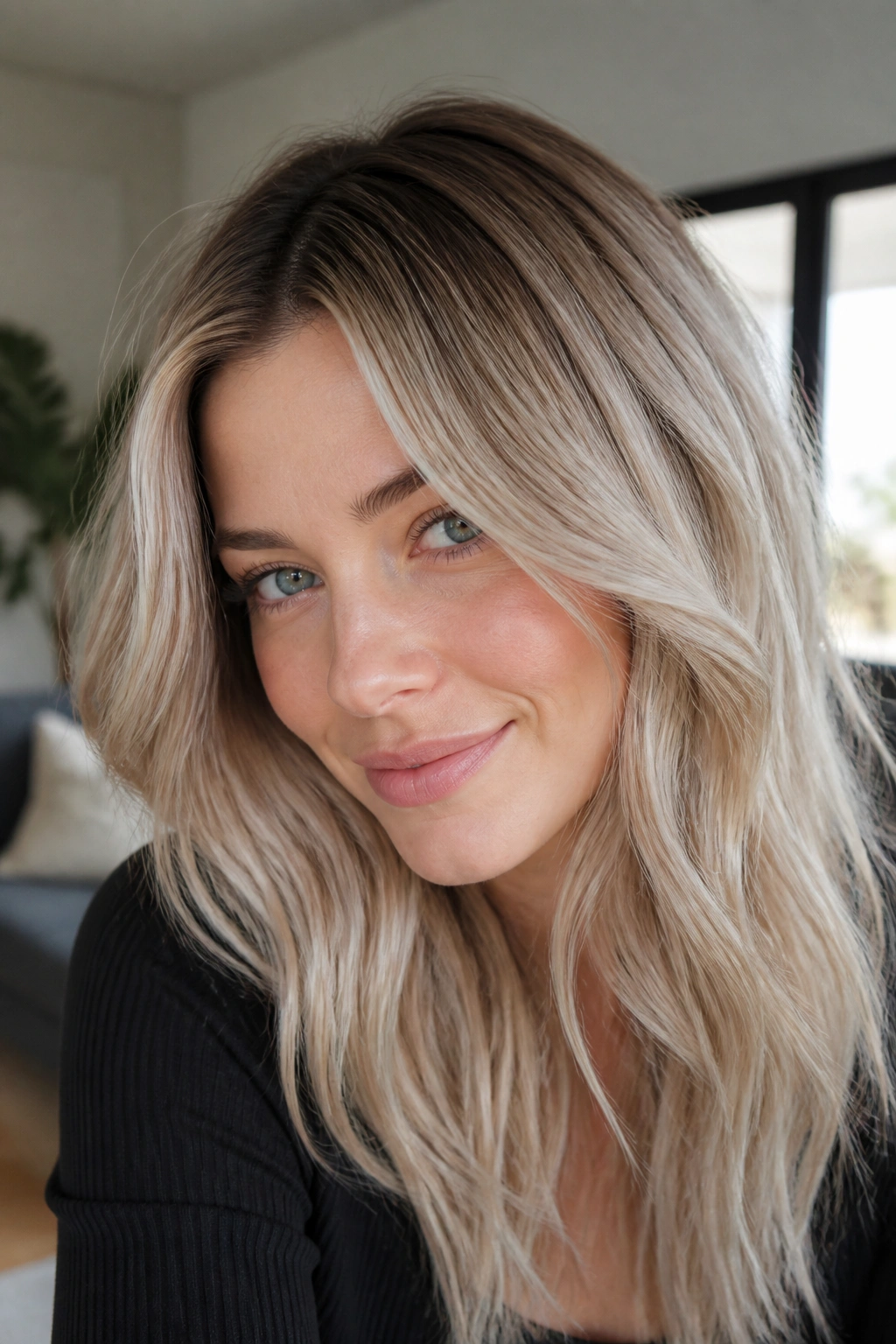
This is the one that saves you from constant salon appointments. Ash-beige blonde with a shadow root gives you brightness through the mids and ends, but keeps the roots a shade or two deeper so the grow-out line stays soft.
Why does that work so well on cool skin? Because the ash root cools the whole look down before the blonde even starts. You get contrast, but not the harsh kind. It’s a good choice if your natural base is dark blonde or light brown and you do not want to live inside a toner schedule.
Wear it with a shoulder-length cut, curtain bangs, or loose bends in the hair. The deeper root gives the eye something to rest on, which stops the blonde from feeling too bleached-out. I like this shade for people who want a little edge but still want the color to feel believable.
If your natural hair is dark brunette, ask for a root melt that stays about 1 to 1½ inches at the top. That makes the transition look intentional instead of striped.
3. Smoky Mushroom Beige Blonde
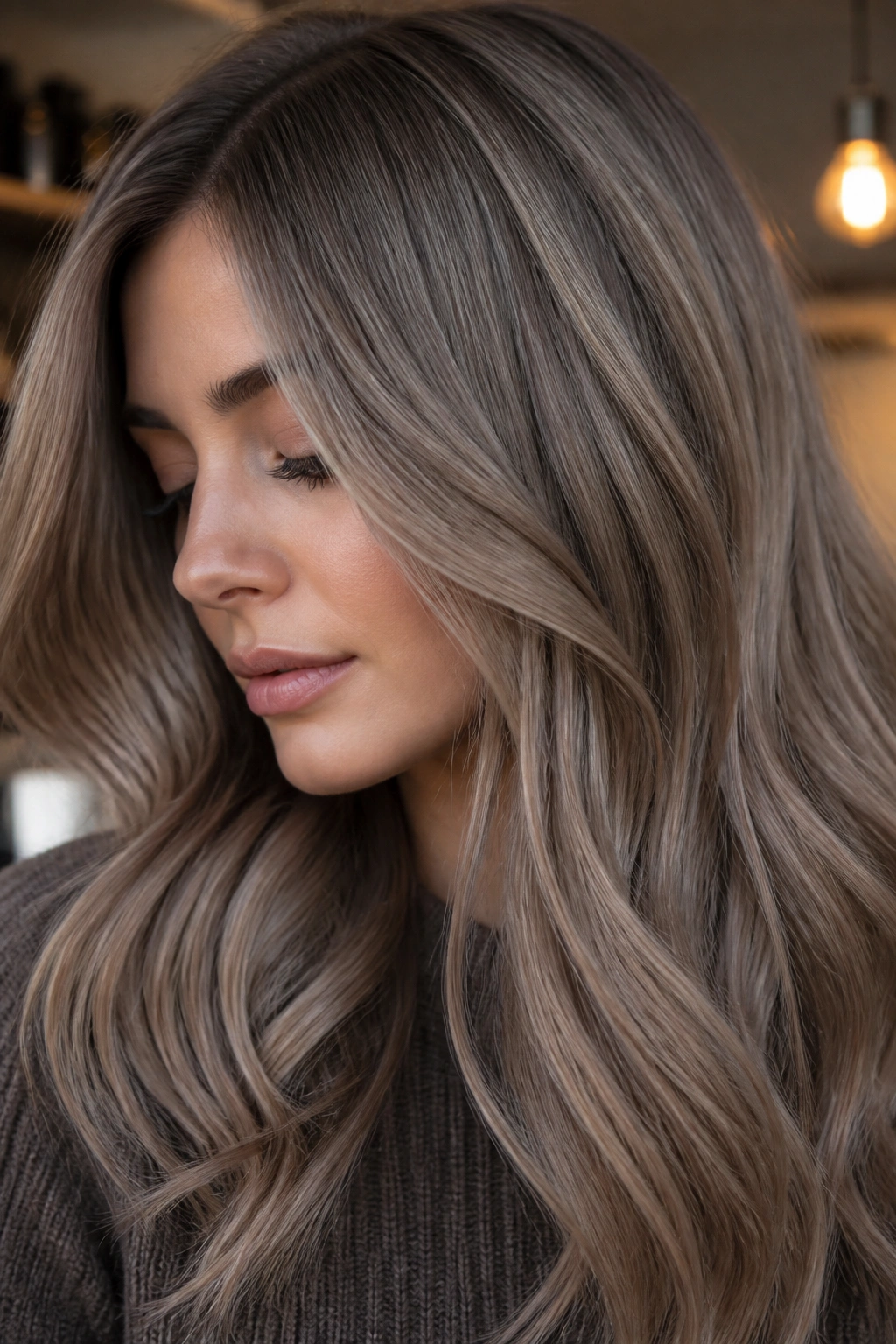
Have you ever seen a blonde that looks a little taupe, a little smoky, and oddly expensive without trying too hard? That’s mushroom beige blonde. It has cool brown-beige depth built in, so it works beautifully for people who want blonde, but not the bright, sunny kind.
The charm here is restraint. Mushroom beige keeps the warmth down and leans into gray-brown undertones, which means it flatters cool skin without making the face look washed out. It’s especially good if your natural color sits between medium brown and dark blonde. You don’t need a dramatic lift to make it read as light.
How to Wear It
- Best with blunt lobs, collarbone cuts, and textured bobs
- Ask for a smoky beige toner with soft brown lowlights
- Use a cool-toned purple shampoo sparingly, about once a week
- Works well when you want a color that looks more expensive than bright
I’d skip this if you want super-glossy brightness. Mushroom beige is more moody than shiny, and that is the point.
4. Champagne Beige Blonde with Babylights
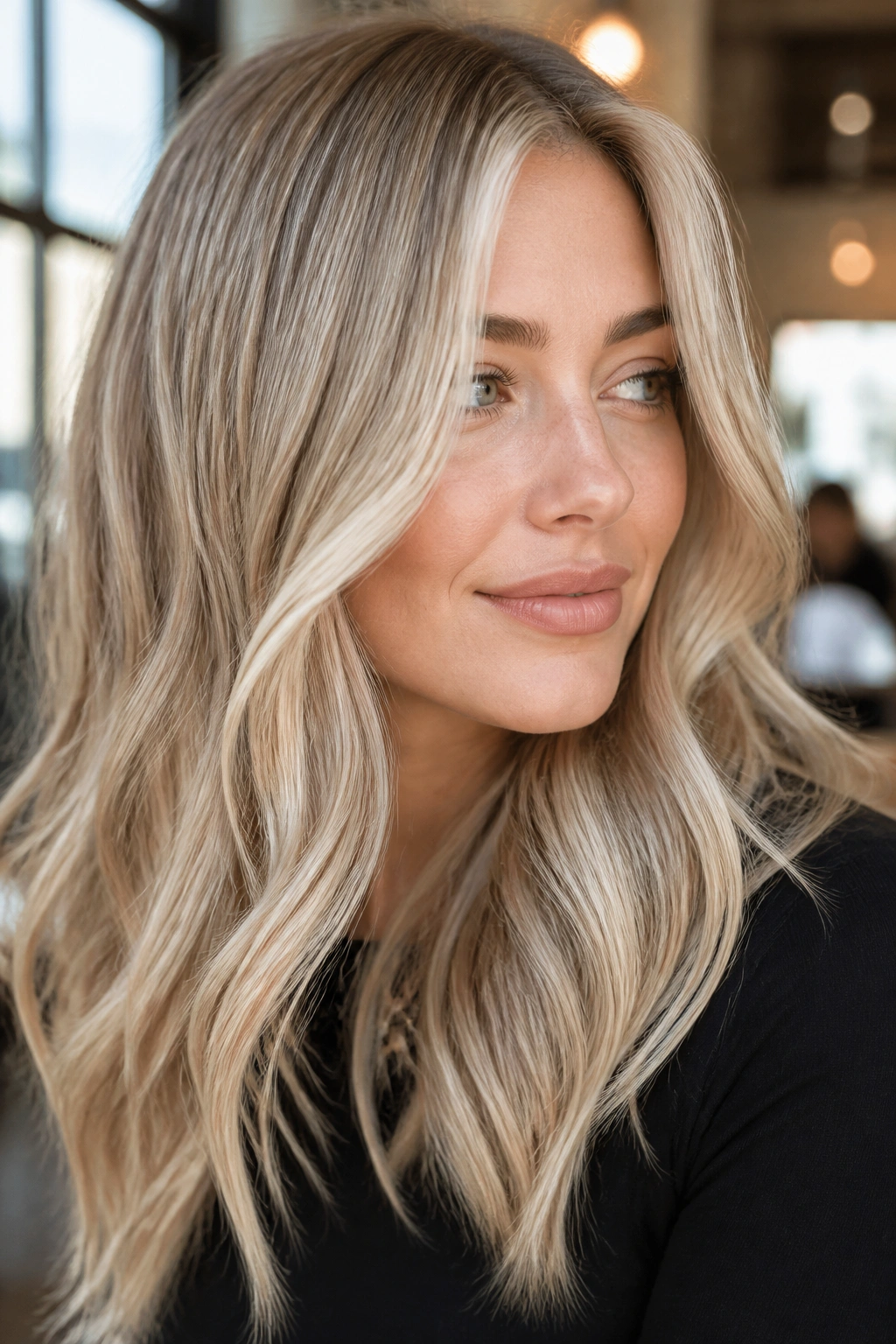
Champagne beige blonde can sound warm on paper, but the cool version is graceful and light, not gold. The trick is in the balance: fine babylights lift the hair, while the beige toner keeps the finish soft instead of brassy.
Picture the kind of blonde that moves when you walk. It does not flash white. It catches a subtle, pale shimmer through the mids and ends, which is why it looks so good on cool skin that needs a little brightness without hard contrast.
This one is lovely on fine hair because babylights make the strands look fuller without obvious stripes. It’s also a solid choice if you wear your hair straight a lot. The tiny weave of light and shadow shows up even when the hair is sleek.
Ask your colorist for thin, woven highlights with a champagne-beige gloss at the rinse stage. If the champagne turns too gold, the whole effect can swing warm in a hurry.
5. Vanilla Beige Blonde Bob
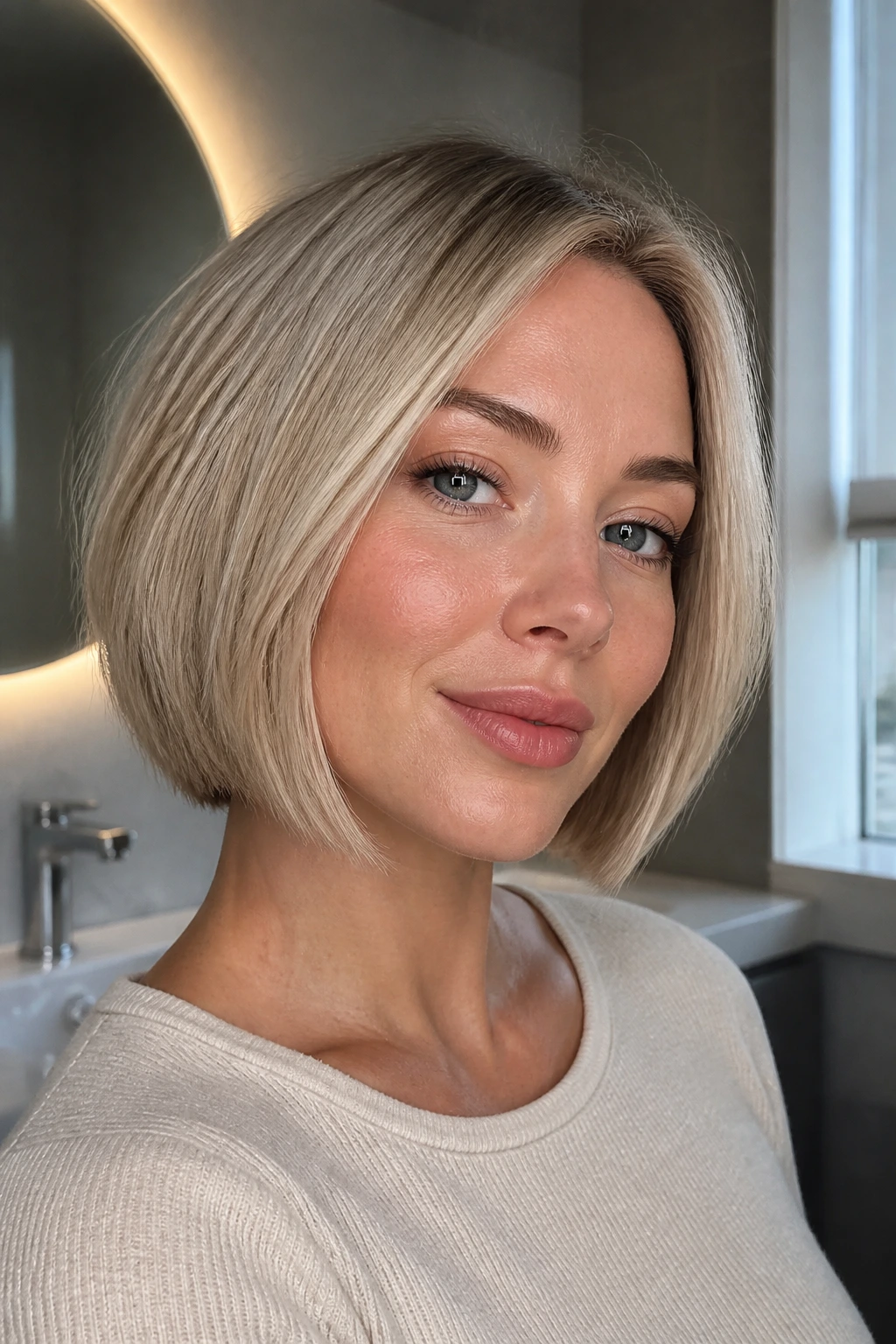
Vanilla beige blonde has a creamy, clean finish that works especially well on sharp cuts. On a bob, the color looks deliberate and tidy, almost like it was made for straight lines and tucked-under ends.
The reason it flatters cool skin is simple: the vanilla note is soft, but not buttery. It gives the blonde enough body to stay flattering on pale or pink-toned skin, while the beige keeps it from becoming stark. That combination is easier to wear than a pure platinum bob, which can feel unforgiving if the complexion is rosy.
I like this shade on jaw-length and chin-length cuts because it shows off the shape of the haircut. A bob with this color looks clean from every angle, and the lighter pieces around the face can make the eyes stand out without much styling.
Use a smoothing cream and a round brush if you want the color to look expensive. A bob this polished can go flat fast when the ends get fuzzy.
6. Icy Beige Blonde Balayage
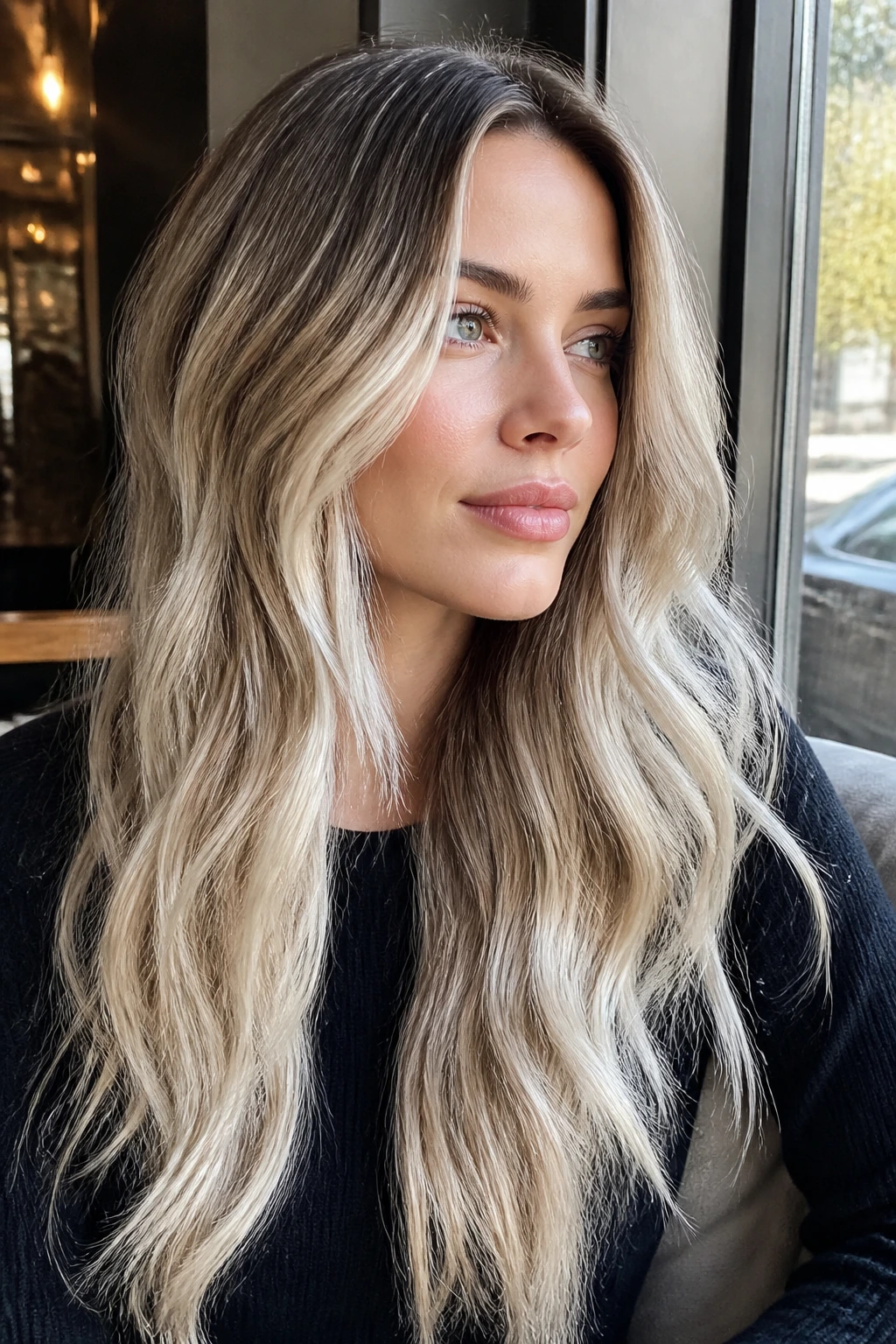
Icy beige blonde balayage is for someone who wants brightness first, softness second. The hand-painted ribbons are lighter than a classic beige blonde, but the toner keeps them from tipping into harsh white.
That cool contrast is the point. On cool skin, a little icy dimension near the face can make the complexion look clearer. The beige base underneath keeps the whole thing wearable, so you do not end up with a hair color that feels too dramatic or too stark.
This is one of my favorite choices for longer hair with waves. Balayage needs movement to show its best side, and waves help the lighter pieces separate instead of blending into one pale sheet. If you like a curled finish, this color gives you payoff every time you lift the iron.
Ask for soft placement around the face and ends, not chunky sections through the crown. Wide streaks can look dated fast. Thin ribbons. Better balance.
7. Rooted Beige Blonde with Face-Framing Pieces
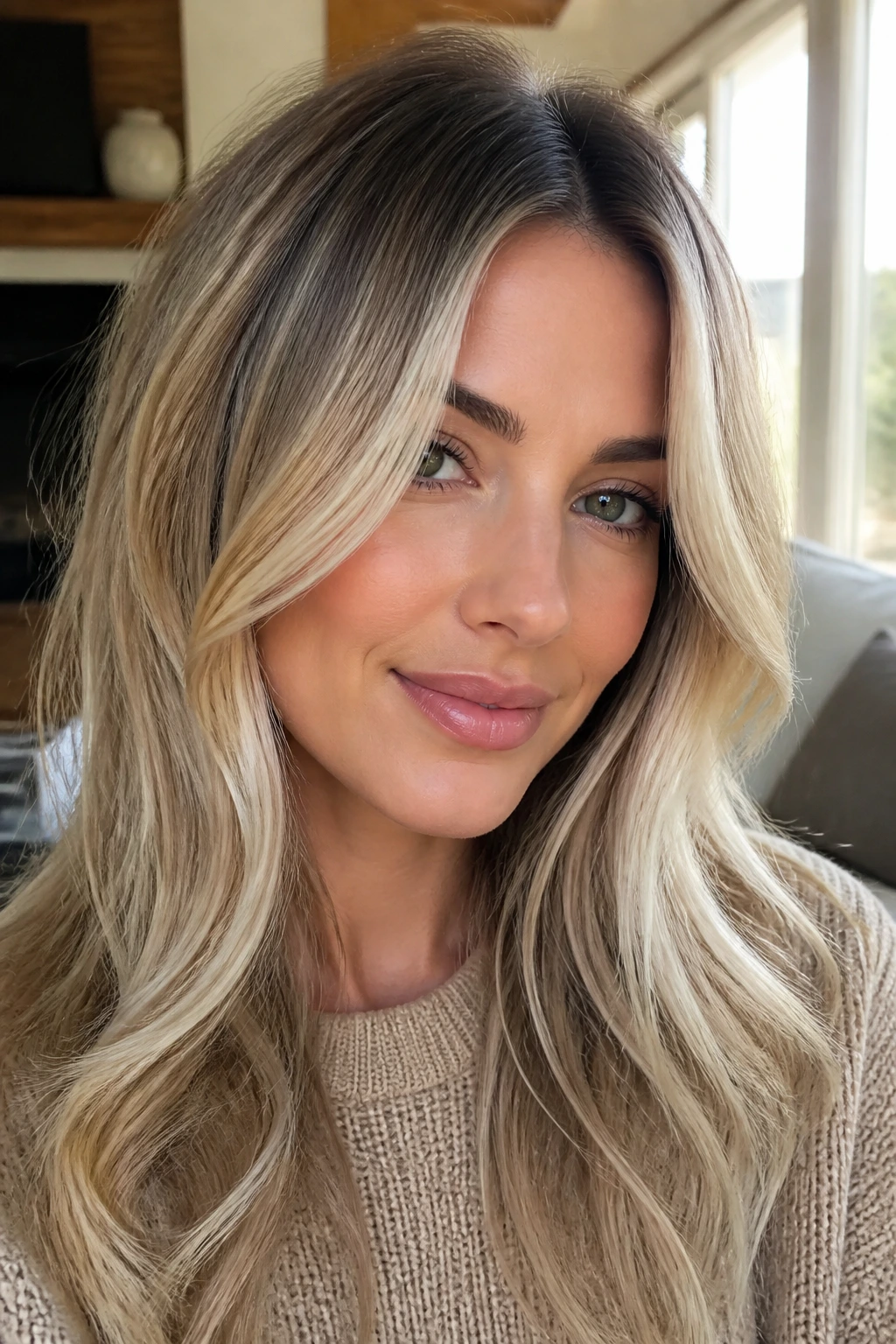
Rooted beige blonde with face-framing pieces is the color I recommend when someone wants brightness but hates maintenance. The roots stay a little deeper, while the front sections get lighter and cleaner, which draws the eye straight to the face.
What Makes It Different
This shade gives you the benefit of blonde framing without committing the entire head to full lightness. That matters if your natural color is a brunette or dark blonde base and you want the grow-out to stay civilized. A one-tone blonde can show regrowth in a week; this style buys you breathing room.
The face-framing pieces should be cooler and a touch brighter than the rest, especially near the cheekbones. That creates lift. Not color noise. Lift.
Best for:
- Medium to long cuts
- Curtain bangs
- People who want a softer grow-out
- Cool skin that needs light near the face, not all over
If you style your hair in loose bends, this shade looks even better. The contrast between root and front pieces creates a natural, expensive-looking edge.
8. Silver-Beige Blonde for Short Layers
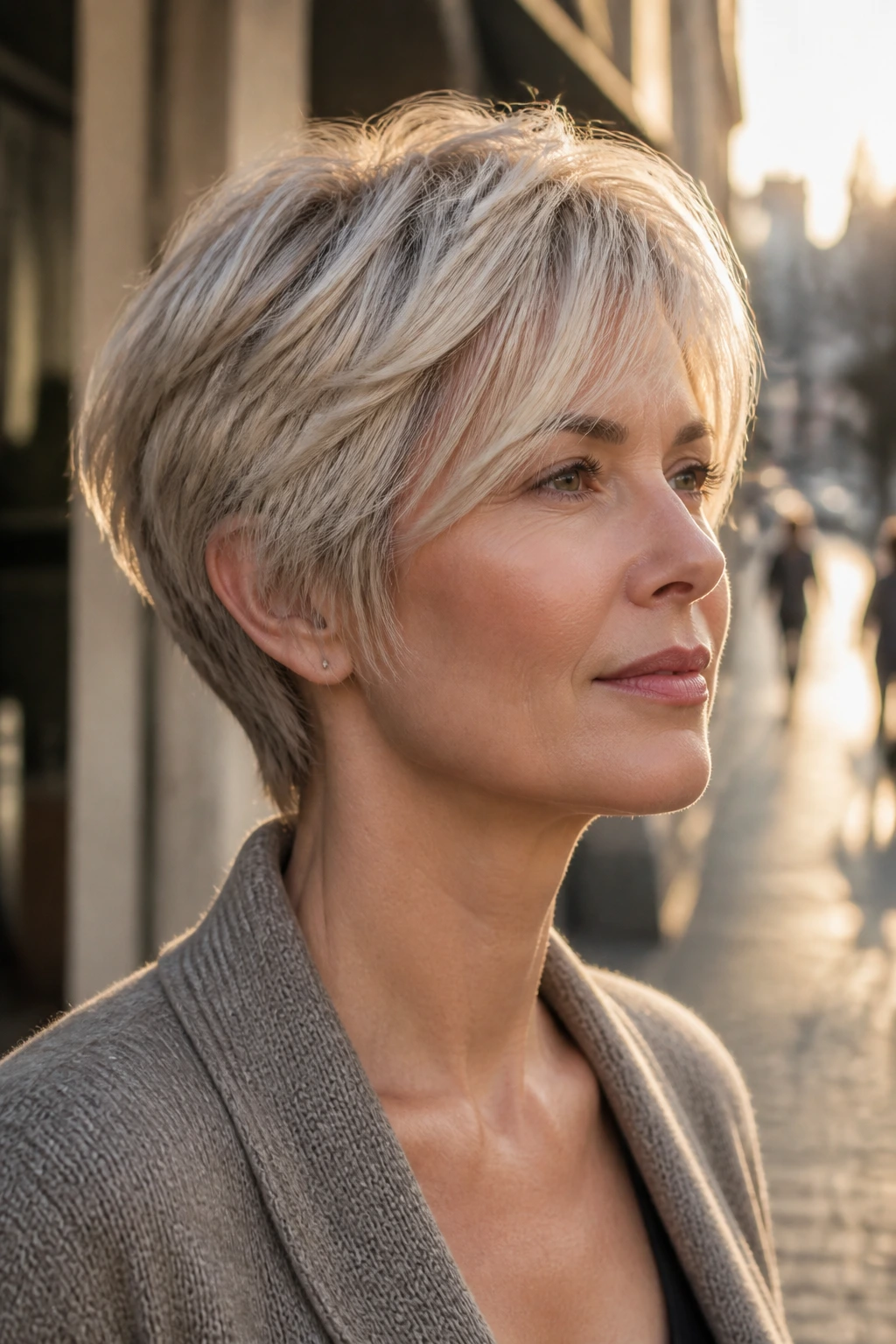
Silver-beige blonde on short layers has attitude, but it still feels wearable. The silver note cools the blonde down sharply, then the beige softens it so it does not look metallic in a harsh way.
Short cuts need color with shape. A pixie or layered crop without dimension can look a little flat, and this shade fixes that problem fast. The silver pieces catch light at the crown and around the temples, which gives the cut movement even when the hair is close to the head.
It’s a smart choice for cool skin because silver tones echo the same coolness already in the complexion. That can be gorgeous on fair skin, blue eyes, or skin that burns easily and doesn’t carry much golden pigment. The finish is crisp, not yellowed, and that matters here.
Use a light pomade or paste to piece out the layers. On short hair, the color shows every move.
9. Creamy Beige Blonde Waves
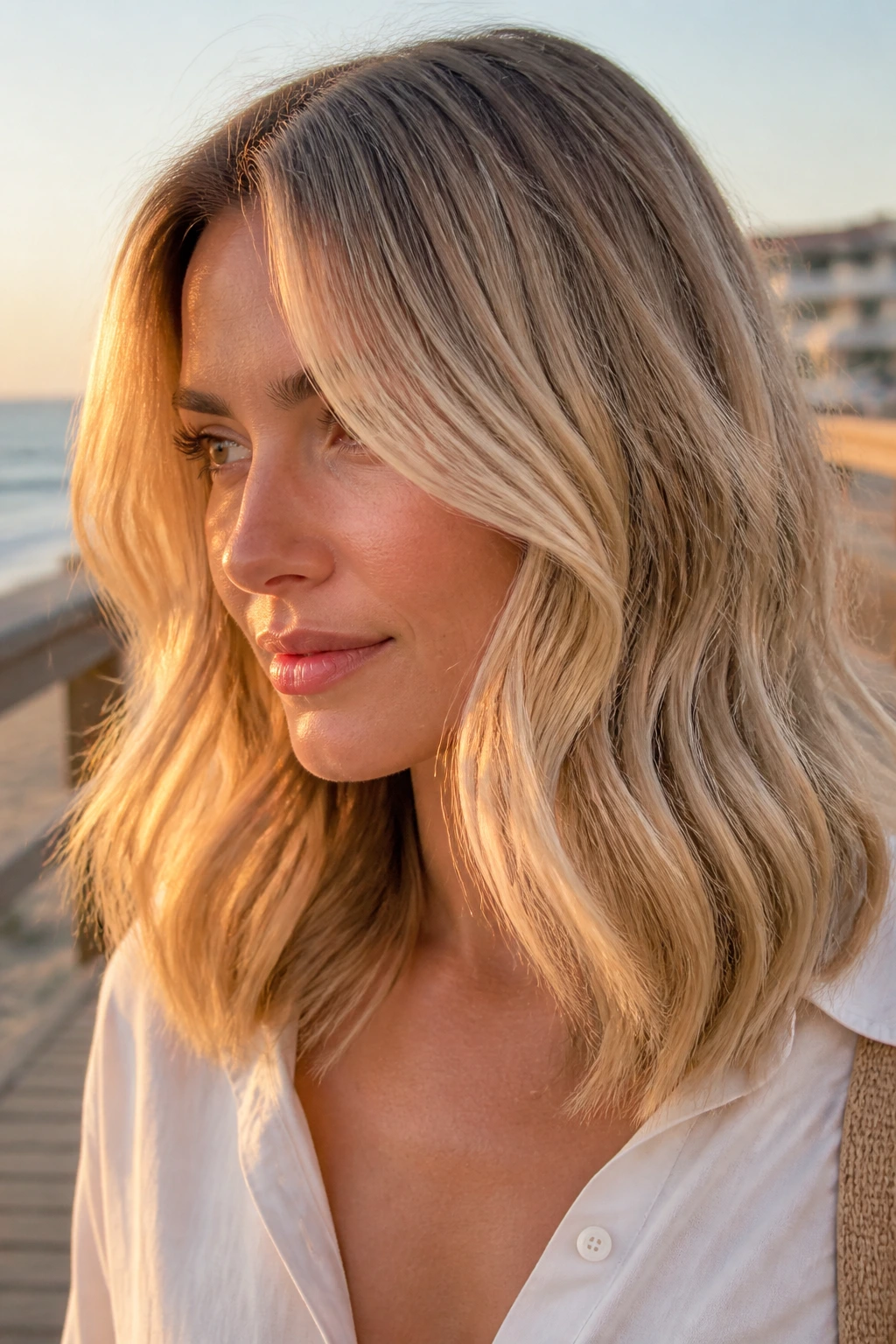
Creamy beige blonde is the shade that sits on the more wearable side of blonde. It is not icy, not gold, not smoky. It’s the color I’d call quietly flattering, especially if your cool skin looks better with softness than with hard contrast.
The best version usually lives on medium-length waves. The texture breaks up the creaminess so the color feels dimensional instead of flat. A long, straight sheet of creamy beige can look a little plain. Add bends, though, and the light bounces in a much better way.
How to Get the Most From It
- Ask for a neutral-beige toner with a touch of ash
- Keep the ends a little brighter than the root area
- Style with a 1-inch curling iron and brush the waves out
- Refresh with glossing between full color visits
This shade is a safe bet if you want blonde that feels gentle on the face. It won’t fight cool undertones, and it doesn’t scream for attention every time the sun hits it.
10. Beige Blonde with Champagne Lowlights
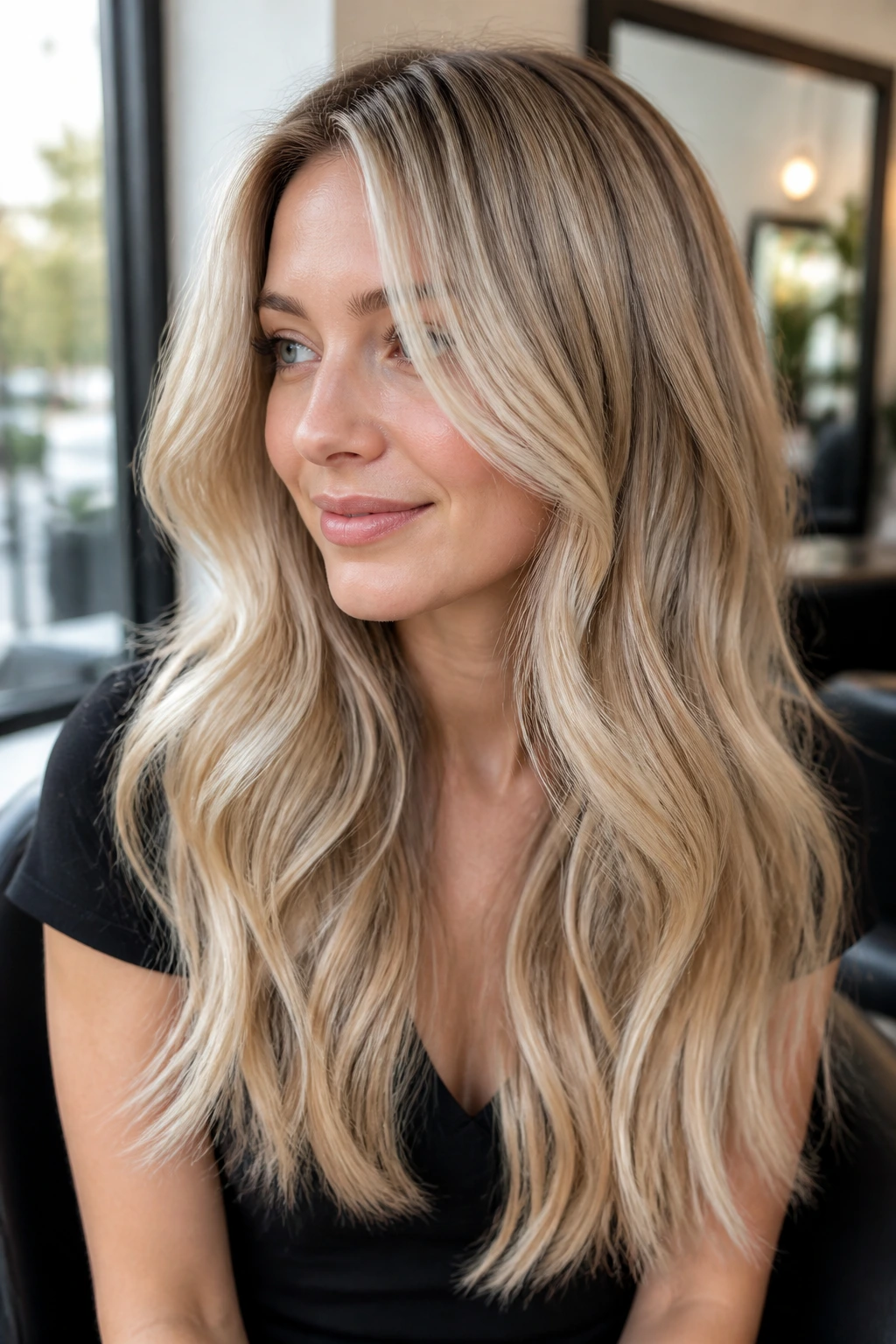
A lot of people think blonde means only adding light pieces. That’s a mistake. Champagne lowlights can give beige blonde the depth it needs, especially if your hair is fine and tends to look sparse when it gets too light.
The lowlights add a few cooler beige-brown threads through the brighter base. That makes the blonde look thicker and more textured, which is a gift if you have cool skin and want the color to feel dimensional instead of washed out. A single-process blonde can sometimes flatten the face. This avoids that.
The champagne note softens the lowlights so they don’t turn muddy. You want just enough contrast to see the shape, not so much that the hair starts looking striped. It’s a cleaner, more grown-up finish than an all-over pale tone.
I like this color on layered cuts because the lowlights show up when the hair moves. If your hair is one length, ask for finer placement so the effect stays subtle.
11. Platinum Beige Blonde with a Soft Finish
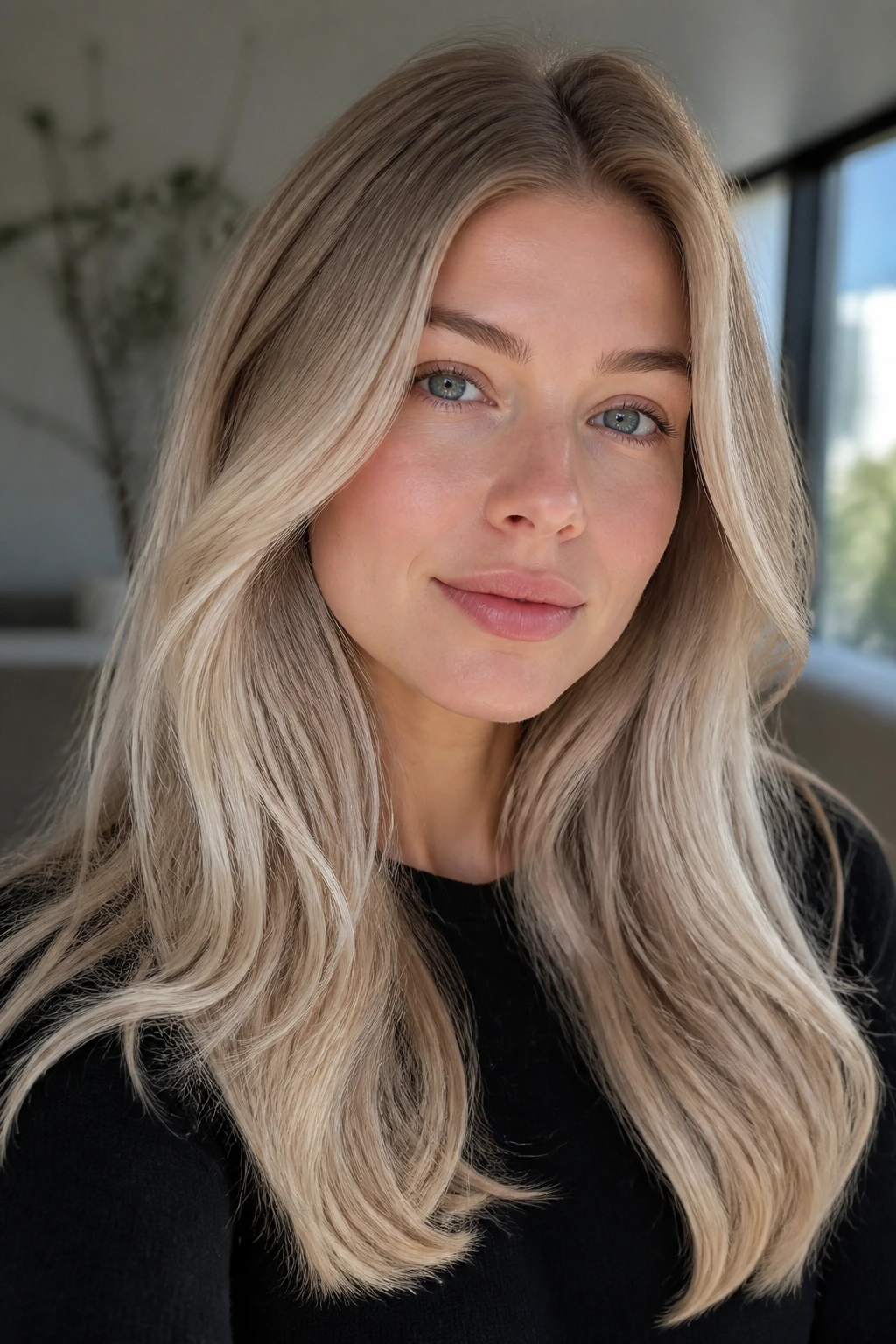
Platinum beige blonde sounds bold, and it is, but the soft finish keeps it from turning severe. Pure platinum can be too white against cool skin that already has a lot of pink or blue in it. Beige pulls the edge off.
The best version of this shade is bright at the ends and just a touch muted near the roots and mid-lengths. That gives you the clean lift of platinum without the chalky look that sometimes happens when hair gets taken all the way to white. It’s especially good if your wardrobe leans black, gray, navy, or crisp white.
One reason I like it is the contrast. On cool skin, platinum beige can sharpen the face in a flattering way, especially around strong brows or a defined jaw. It feels intentional, not accidental.
This is not a low-maintenance shade. You’ll want toner refreshes and a good repair mask. Bleach is bleach. Still, if you want the brightest version of beige blonde, this is the one that gives it a little polish.
12. Sandy Beige Blonde Lob
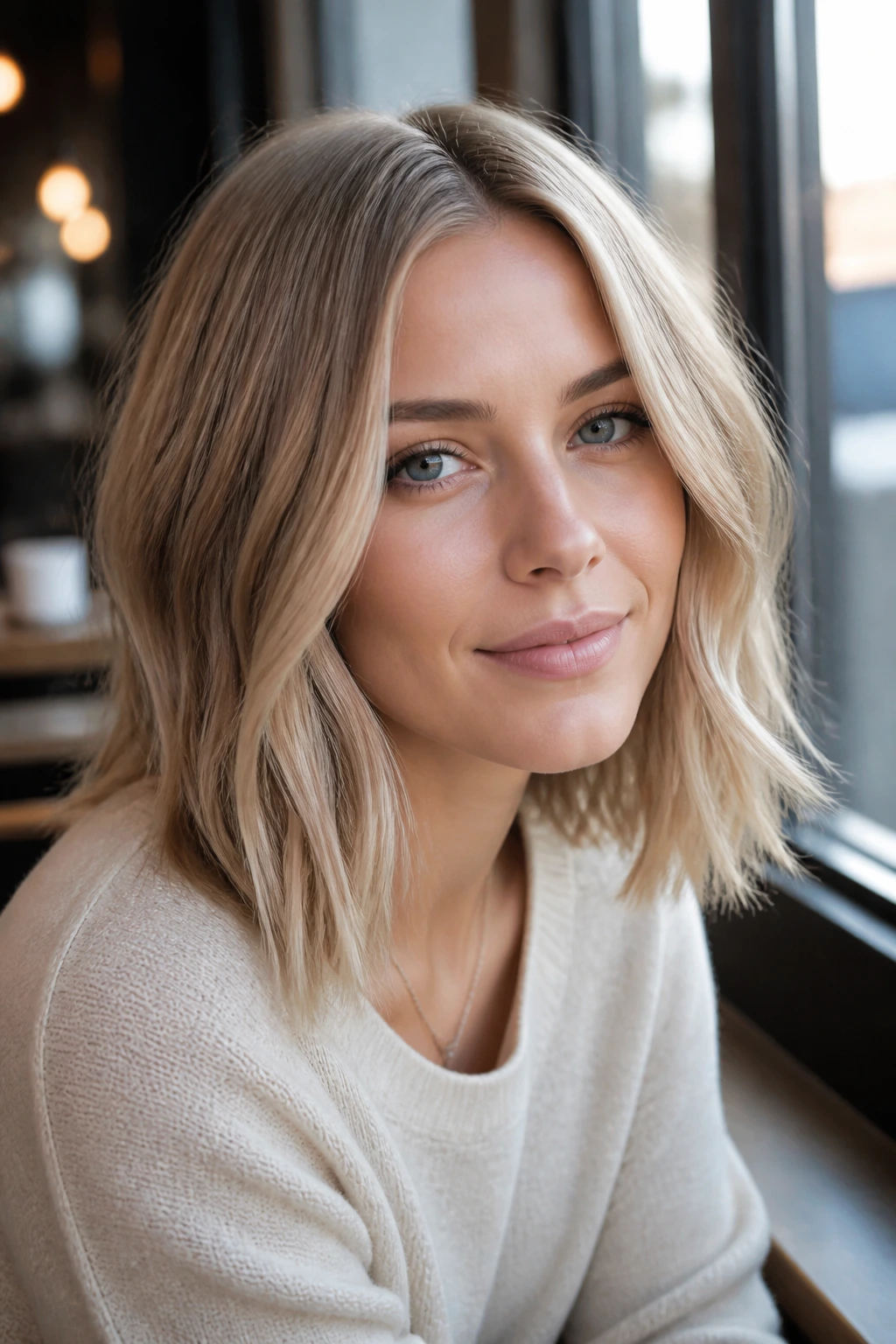
Sandy beige blonde on a lob is one of those quietly useful colors that never tries too hard. It has a cooler, dustier feel than golden sand, which makes it easier to wear on cool undertones without shifting yellow.
A lob gives this color a place to breathe. The ends sit right around the shoulders, where the lightness can show off movement without making the hair seem overprocessed. If you wear your hair to work, out to dinner, and pulled back on lazy days, this is the kind of color that stays believable in all three settings.
Quick Placement Notes
- Keep the root area slightly deeper for a soft grow-out
- Use subtle beige ribbons, not chunky highlights
- Ask for a smoky beige glaze if the blonde starts turning warm
- Works well on straight or softly waved lobs
There’s nothing flashy about sandy beige blonde. That is exactly why it works. It feels calm, wearable, and easy to live with.
13. Beige Bronde with Cool Ends
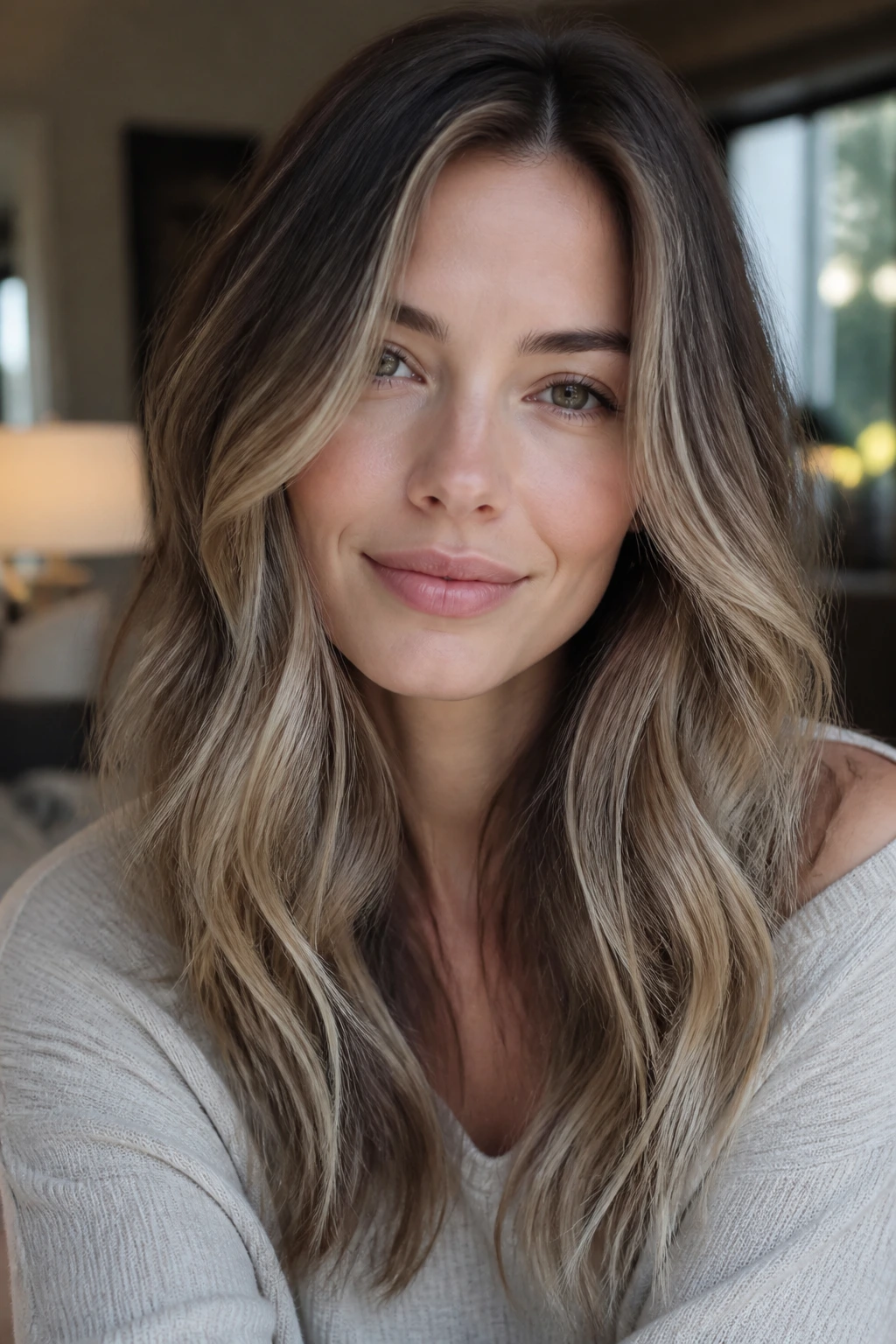
Beige bronde is the bridge for people who don’t want to go fully blonde. The base stays brunette, the ends lighten into beige, and the whole thing has a cooler, softer finish than a classic caramel bronde.
This is a good move if your skin is cool and your natural hair is dark brown. Why? Because the brunette base keeps the color grounded near the scalp, while the beige ends give you the blonde feel without all-over lightening. It also saves time in the chair. A lot of time, actually.
The ends should not be honey. That’s where many bronde looks go wrong. Ask for cool beige, mushroom-beige, or ash-beige through the bottom half, especially if you usually wear your hair down. When the color catches light, the ends should look soft and dimensional, not orange.
I’d pair this with long layers or a lived-in wave. Straight hair can make bronde look a little flat if the dimension is too subtle.
14. Frosted Beige Blonde Pixie
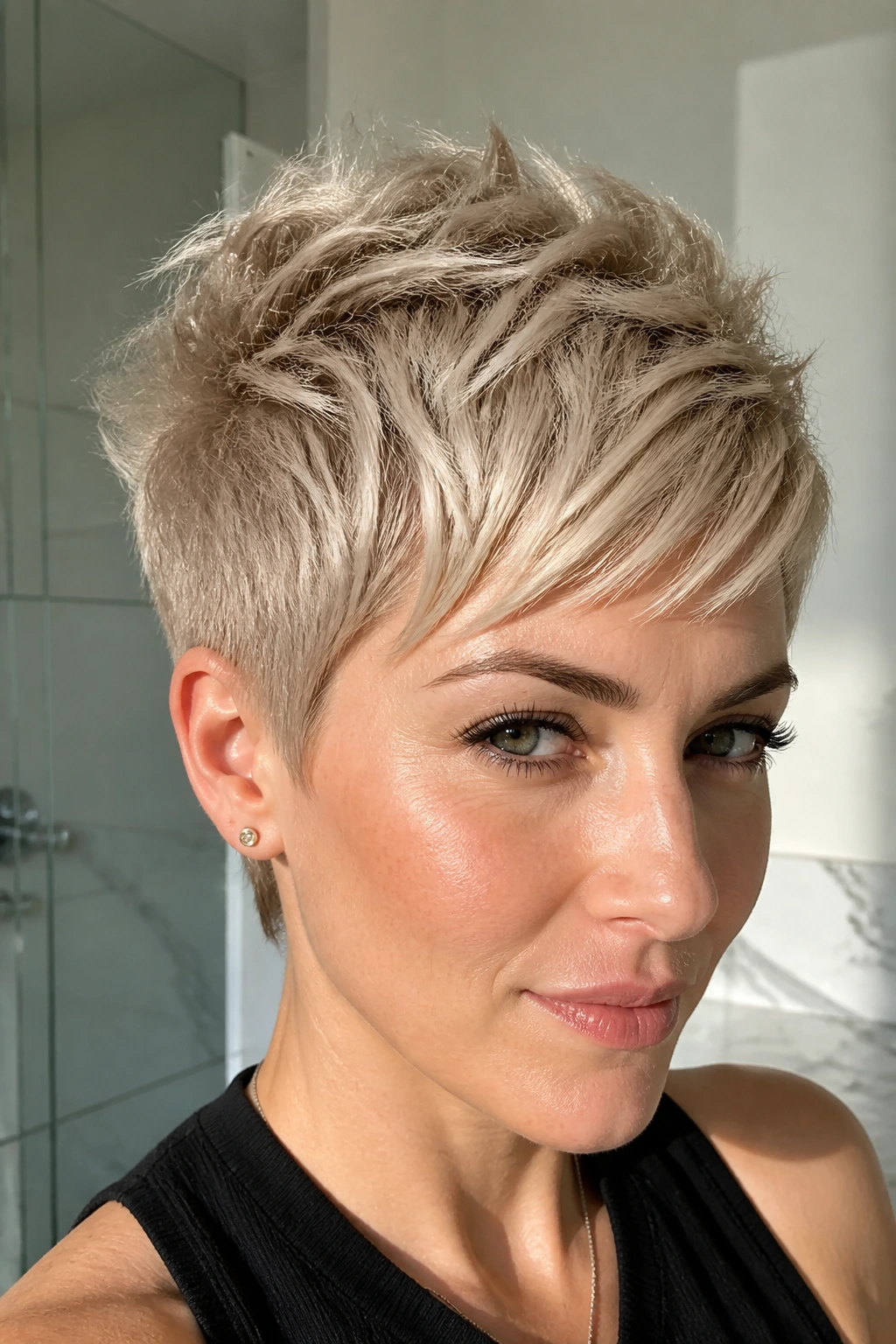
A frosted beige blonde pixie has a sharper, cleaner feel than most beige shades, and that’s the appeal. The frosted tone cools the blonde right down, while the beige keeps it from becoming stark white.
Short hair needs precision, and this color gives it. The top layers can be lighter, almost frosty, while the sides stay a little softer. That contrast creates movement on a cut that doesn’t have much length to work with. It also flatters cool skin by keeping the palette in the same temperature family.
What I love here is the edge. A pixie in beige blonde can look sweet. Frosted beige looks deliberate. You can lean sleek, piecey, or slightly messy, and the color still reads as sharp.
If you’re asking for this at the salon, mention that you want brightness without a yellow cast. That phrase saves a lot of back-and-forth. The wrong toner can turn a pixie brassy fast, and there’s nowhere for that to hide.
15. Pearl Beige Money Piece
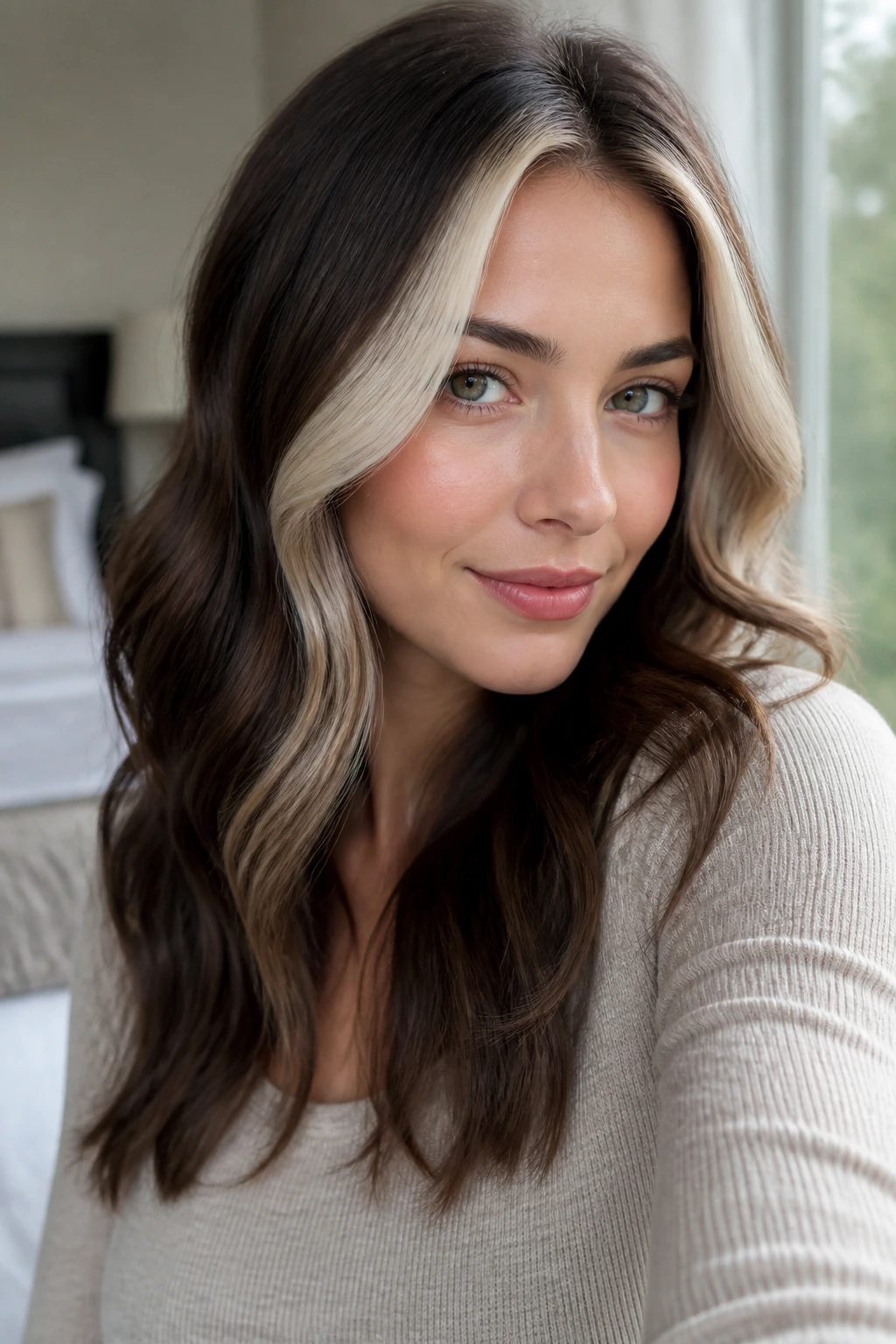
A pearl beige money piece is a small change that makes a big difference. Instead of lightening the whole head, you brighten the front sections with a pearl-beige tone that frames the face and softens cool skin in a flattering way.
This works especially well if you already have a brunette base or a beige blonde that just needs a little lift near the hairline. The money piece sits in the brightest spot, so the tone needs to stay clean. Pearl is useful here because it adds lightness without yellowing the face.
How to Use It
- Best with center parts and curtain bangs
- Ask for fine placement around the temples and cheekbones
- Keep the rest of the hair rooty or softly muted
- Easy way to refresh color without a full head highlight
The biggest mistake is making the money piece too thick. You want it to frame, not stripe. Thin placement looks richer and grows out better. That’s the version I’d pick every time.
16. Beige Blonde Ombré
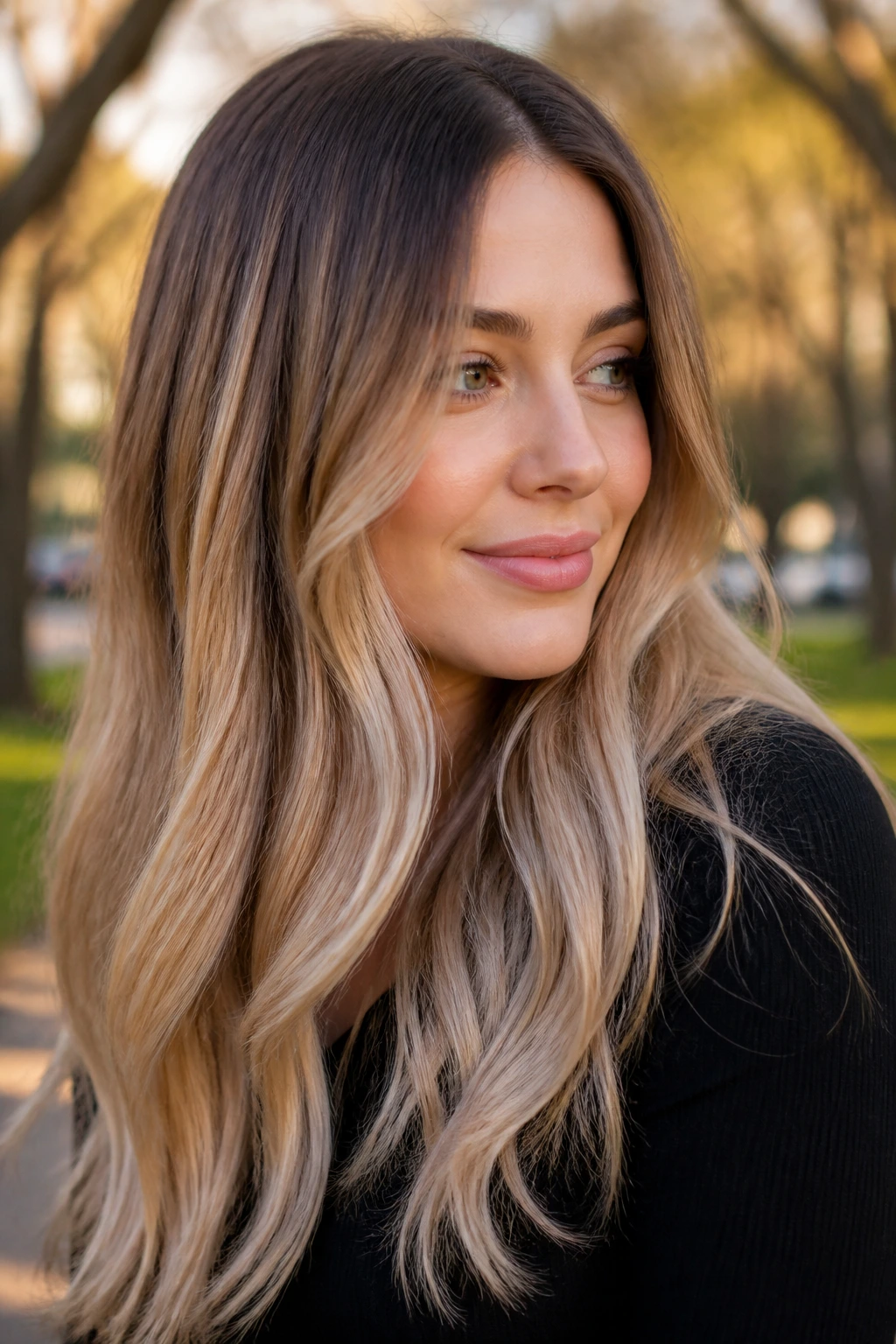
Beige blonde ombré gives you a gradual shift from deeper roots to lighter ends, and that slow fade is a gift for cool skin. The root depth keeps the look grounded; the beige ends add brightness without turning the whole style into a high-maintenance project.
This shade is best when the transition is soft, not obvious. A hard ombré line can look choppy. A blurred one, though, feels calm and natural. That matters if your hair is long, because long lengths show every color decision. The good ones. The bad ones too.
I like this option for people who wear their hair in braids, waves, ponytails, or big loose curls. The ombré shape shows up differently in each style, which keeps the color interesting. On cool skin, the lighter ends should lean pearl-beige or ash-beige rather than gold.
If you want it to last, ask for a transition that starts lower than you think. Too high, and the maintenance gets annoying. Too low, and the ombré barely reads.
17. Cool Beige Blonde with Micro Highlights
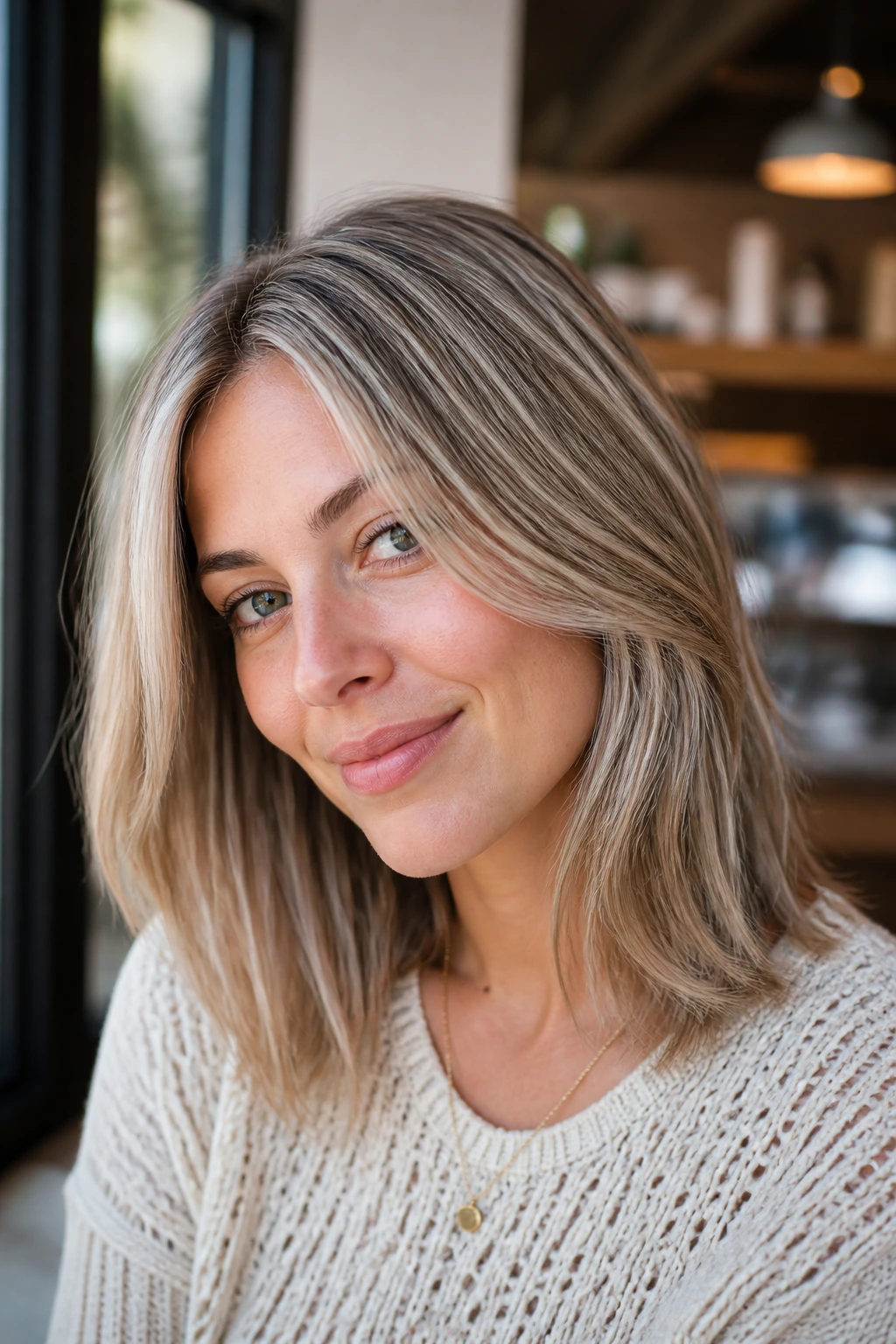
Micro highlights are tiny. That’s the point. Cool beige blonde with micro highlights gives the hair a fine, woven look instead of visible stripes, which is ideal if you want a blonde that feels natural from a few feet away.
The reason this works so well on cool skin is that the color moves in layers. You get lightness, but not a big obvious blonde panel. The smallest sections can brighten the face, soften the hairline, and make the overall color look more expensive because it has so much detail.
What Makes It Different
Unlike chunky highlights, micro highlights don’t shout. They whisper. That makes them a strong choice for people who want beige blonde but don’t want the maintenance or the contrast of a heavy highlight pattern.
A few good uses:
- Fine hair that needs more visual thickness
- Medium brown bases that need gentle lift
- Cool skin that looks better in soft, broken-up light
- Shoulder-length or longer cuts where detail shows well
If your colorist has a steady hand, this technique can be one of the prettiest ways to wear beige blonde. It’s subtle, but not boring.
18. Beige Blonde Lob with Smoky Depth
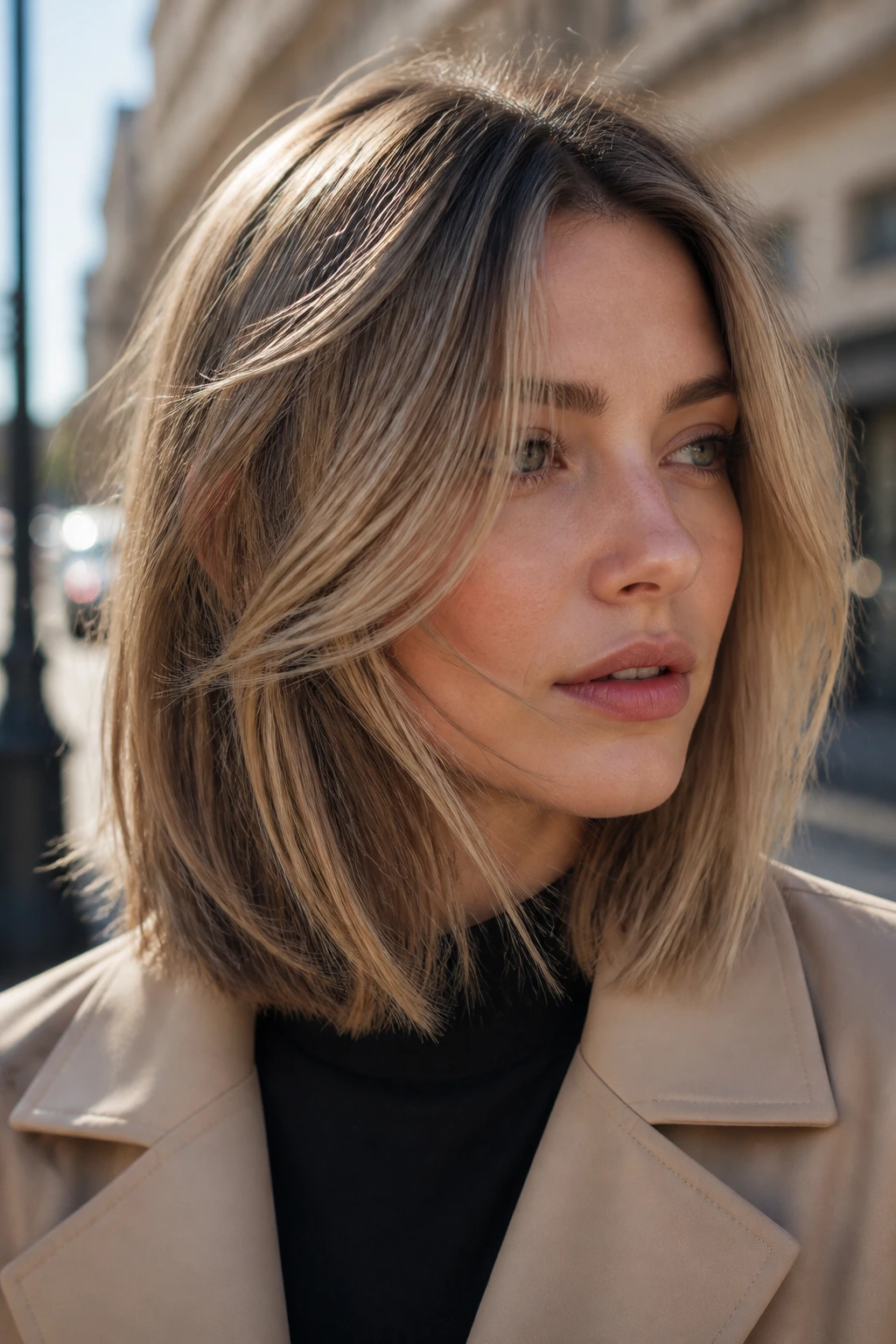
A beige blonde lob with smoky depth is one of those shades that looks calm from the front and richer when the hair moves. The smoky pieces underneath keep the beige from feeling flat, while the lighter top layer gives the haircut shape.
This is a smarter choice than an all-over light blonde if your skin is cool and your hair tends to look thin when it gets overprocessed. The smoky depth adds shadow near the underside and around the crown, which gives the lob a thicker look. The result feels lived-in, but not messy.
I especially like it with a blunt or slightly textured lob. The cut itself gives the color a frame, and the smoky tones help the ends look denser. Straight styling shows the contrast cleanly, while soft bends make the color feel more blended.
If you want the shade to stay cool, ask for smoky lowlights that are one to two levels deeper than the beige pieces. That’s enough contrast to matter without turning the hair dark.
19. Cashmere Beige Blonde Melt
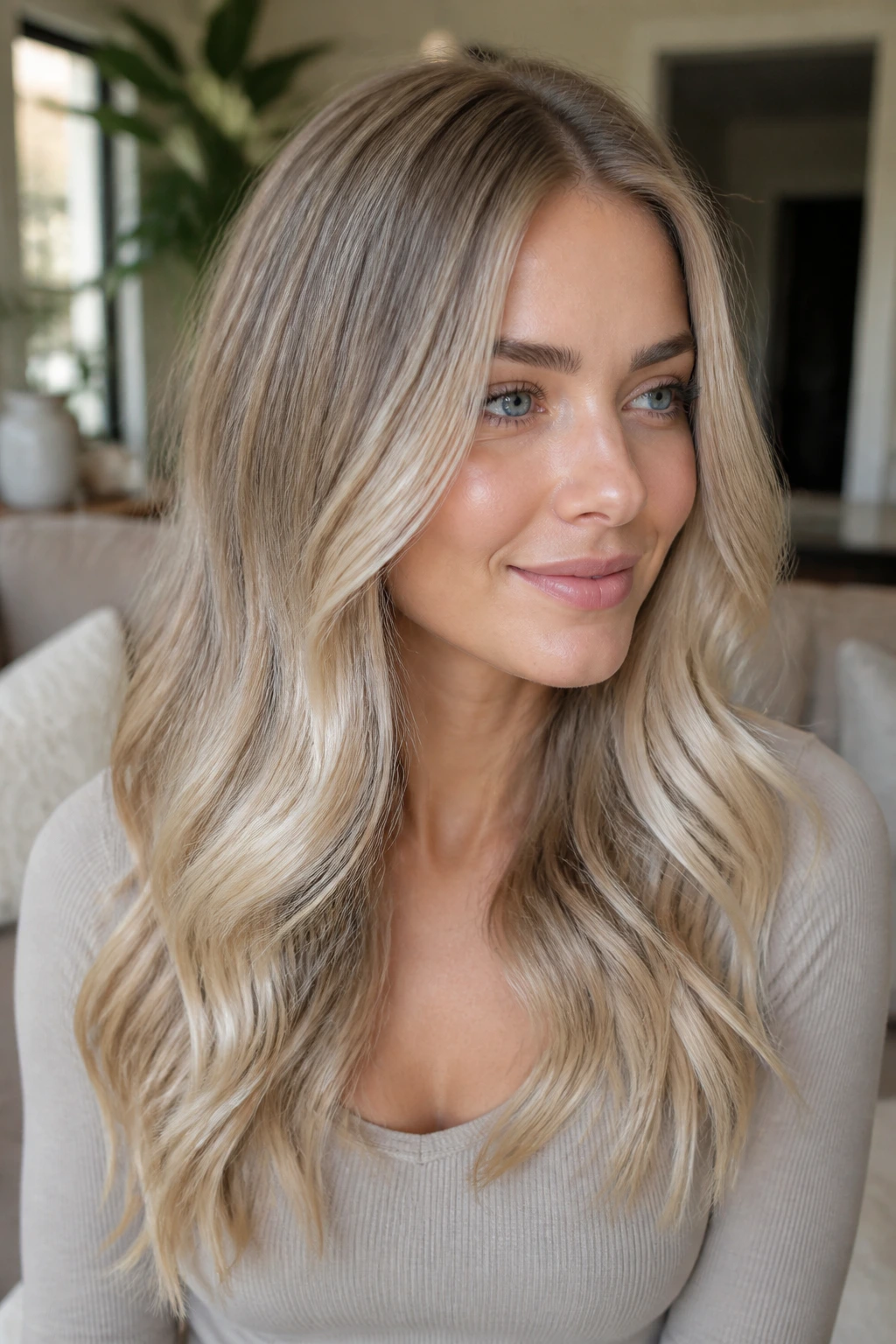
Cashmere beige blonde sounds almost too soft, but that’s what makes it lovely. It has a smooth, fabric-like finish: muted, creamy, and gentle on cool skin without going flat or gray.
A melt is the right technique for this shade because the transition between root, mid-length, and end should feel seamless. Not blurry to the point of disappearing. Seamless enough that you can see movement, but not a hard line anywhere. That’s the difference between a good cashmere blonde and a muddy one.
This shade is a nice choice if you want a blonde that looks expensive in natural light and under indoor lighting. It doesn’t depend on sparkle. It depends on softness. That makes it especially good for people who prefer understated makeup, minimal jewelry, or clean clothing lines.
A gloss finish matters here. Without it, cashmere beige can lose its sheen and start looking dusty. A clear or beige toner every so often keeps the surface smooth.
20. Soft Beige Blonde Gloss
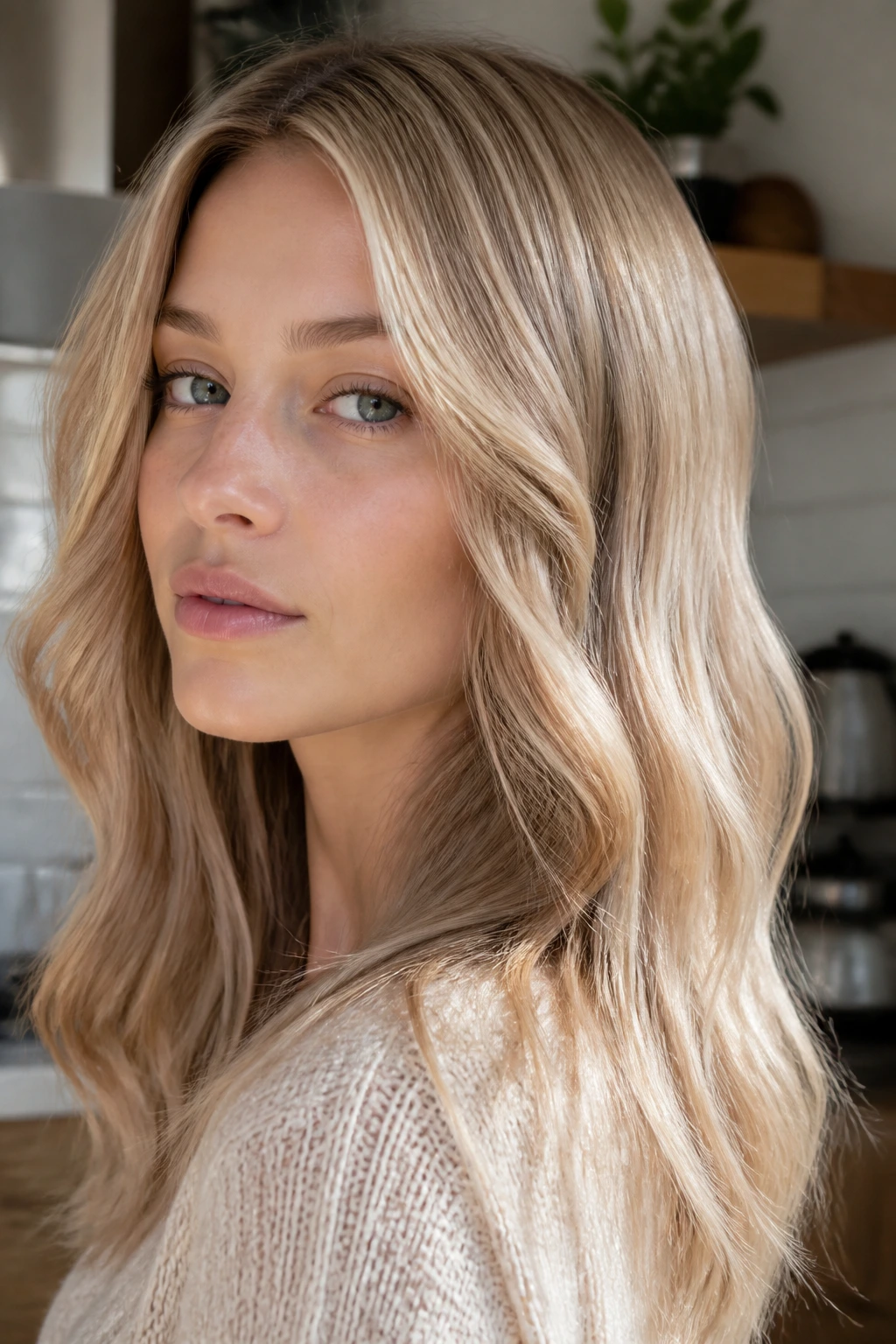
Soft beige blonde gloss is the easiest way to keep light hair flattering on cool skin without constantly chasing a whole new color service. If your blonde is already in the right neighborhood, a beige gloss can nudge it warmer or cooler by a hair’s breadth and make the tone feel fresh again.
That tiny adjustment matters. Hair that has been lightened often loses some of its clean beige balance over time. It can go too ashy, too yellow, or too dull. A gloss brings it back to life. Soft beige is especially good if your hair is fine, because it adds reflective shine without heavy pigment sitting on top of the strand.
How to Get the Most From It
- Book it between full highlight or balayage appointments
- Ask for a neutral-beige gloss, not a gold glaze
- Best for people who already have level 8 to 10 blonde
- Works on straight hair, waves, or curls
This is the low-drama option, and I mean that in the best way. If your blonde is already good, don’t overcomplicate it. A clean beige gloss can be enough.
Final Thoughts
The best beige blonde for cool skin is rarely the brightest one. It’s the one that keeps the warmth in check, leaves room for shine, and still makes the skin look calm instead of pink or drained.
If you’re sitting between two shades, I’d usually pick the softer one and ask for a slightly cooler gloss at the finish. That small move tends to age better, grow out better, and look less forced in everyday light. Blonde should flatter the face first. The drama can come later.
