



Cool skin tones can make the wrong brown hair shade look a little off in seconds. A chocolate brown that leans too golden can pull orange around the face, while a cooler version—one with ash, mocha, or blue-violet depth—usually sits closer to the skin and makes the whole look feel calmer.
That is the trick with chocolate brown hair color ideas for cool skin tones: the brown has to hold its shape without heating up. Think espresso, cocoa, slate brown, smoked chestnut, and taupe-brown glosses that stay rich even in bright light. Silver jewelry tends to tell the story fast. If it looks cleaner on you than gold, you usually want the cooler end of the brunette family.
The good shades are rarely the loud ones. They are the browns that look soft in daylight, deep indoors, and glossy at the ends without turning red at the root. Start with the darkest, cleanest versions first, then move toward dimension and softness if you want more movement.
1. Deep Espresso Chocolate
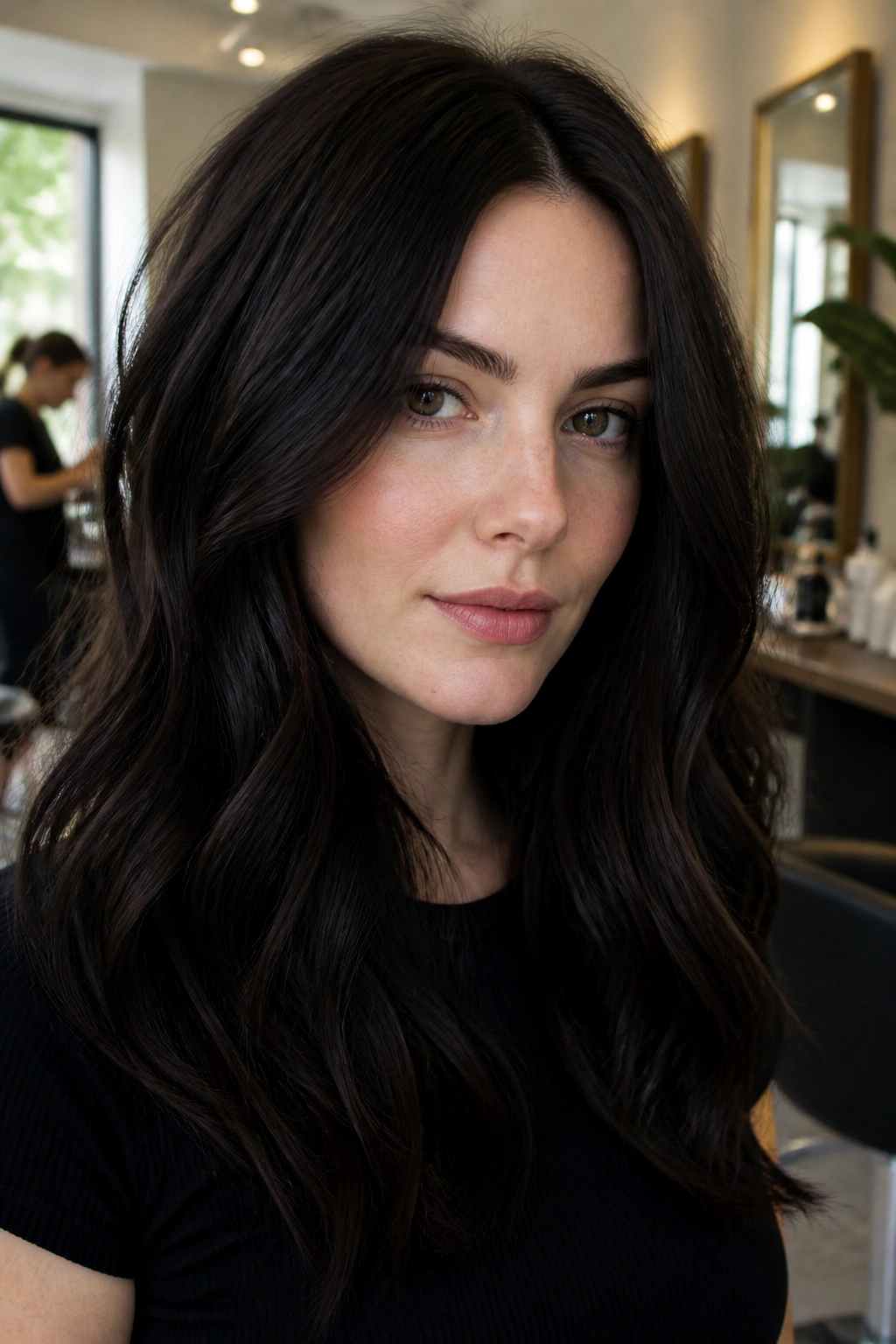
Deep espresso chocolate is the blunt, elegant answer when you want brown hair that stays cool and close to black without going flat. It sits in that level 3 to 4 range, so the hair still reads brown, but the finish is dark enough to give the face a crisp frame.
The key is the reflect. Ask for neutral-cool brunette depth, not red chestnut or warm mahogany. If your hair usually picks up orange fast, this shade is easier to keep in line with a blue-violet gloss every few weeks.
- Best for: pale cool skin, high-contrast features, and anyone who likes a darker look.
- Ask for: a level 3 or 4 brunette with minimal red reflect.
- Watch out for: too much black pigment near the roots, which can look harsh in daylight.
Pro tip: Wear a soft berry lip with this shade. It keeps the whole look from feeling too heavy.
2. Ash Mocha Melt
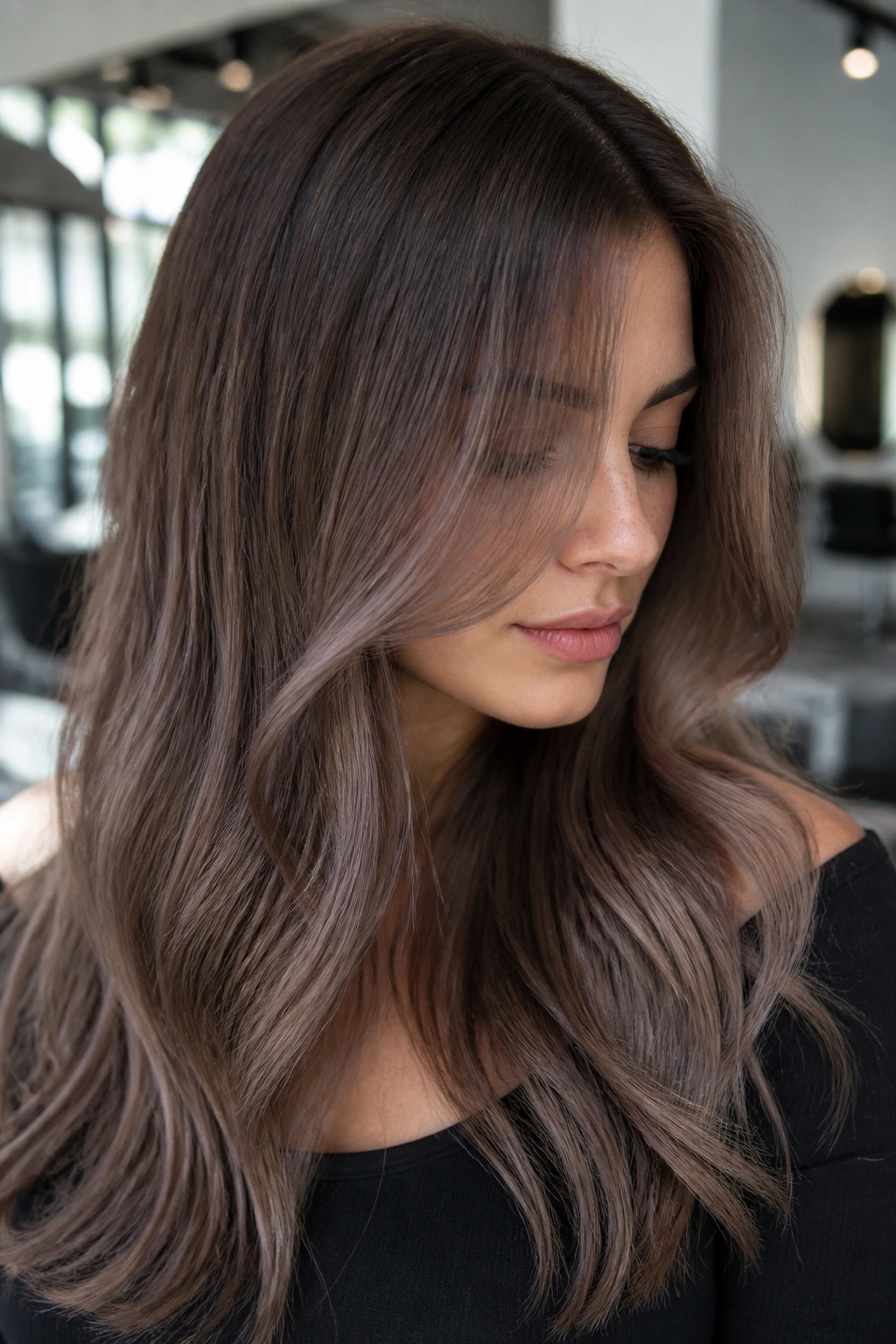
Ash mocha melt is the brown that makes people say your hair looks expensive, even when the color work is subtle. The root stays a touch deeper, then the shade softens into mocha lengths with an ash finish that cool skin tones usually love.
What makes it work is the lack of brass. You get depth, but not warmth shouting from every strand. That matters a lot on skin with pink or blue undertones, because warm brown can make the face look more flushed than it really is.
This is also one of the easier browns to live with. The grow-out is gentle, and the cooler tone can be refreshed with a demi-permanent gloss instead of a full color session every time.
3. Cool Cocoa with Face-Framing Pieces
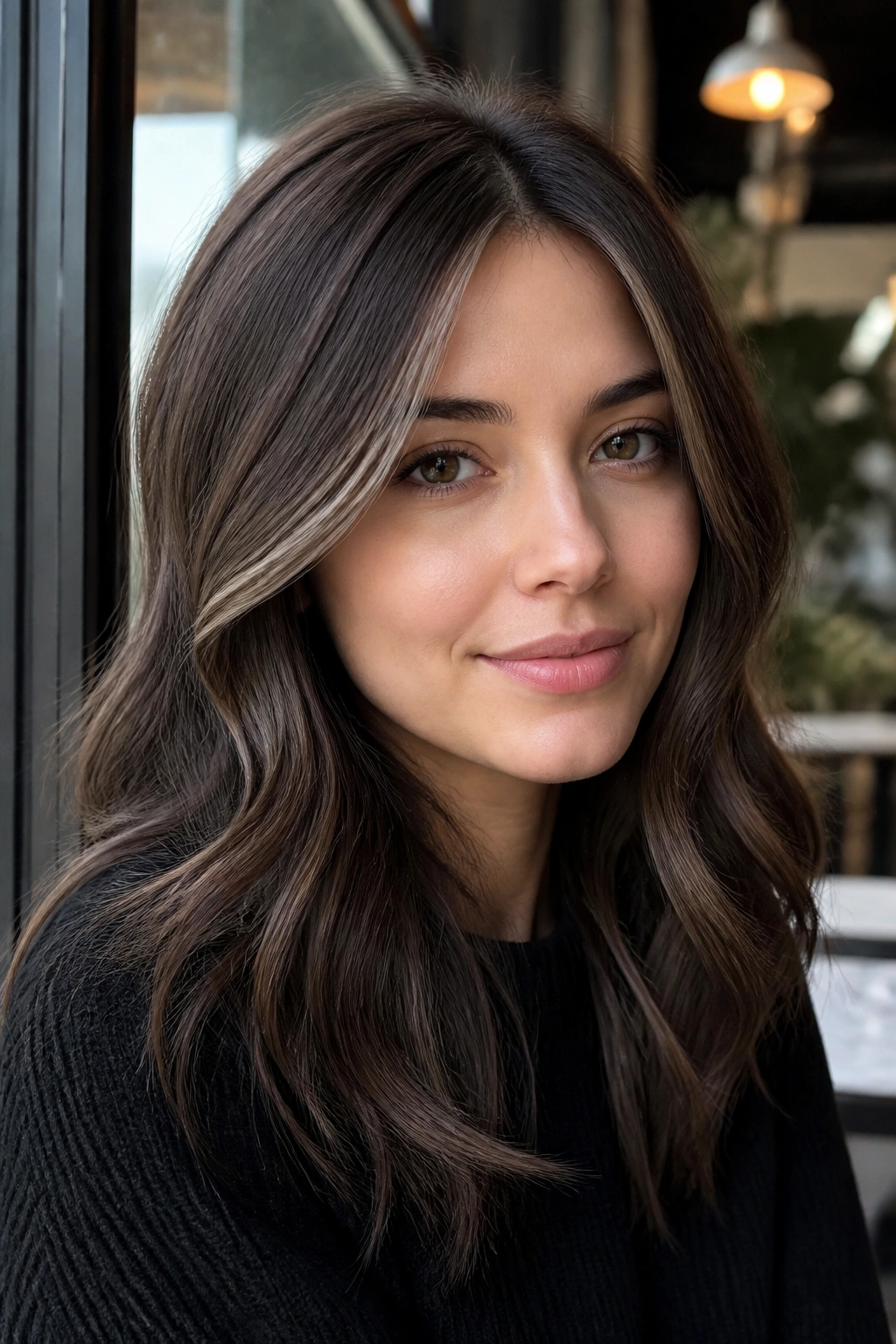
Why does this shade flatter so quickly? Because cool cocoa keeps the body of the hair rich and the front pieces a touch brighter, so the face gets lift without a harsh blonde streak anywhere near it.
The face-framing pieces should stay cocoa-beige, not gold. Think one shade lighter than the base, maybe two if your natural hair is very dark, and keep the placement narrow around the cheekbones and jaw. That small change can open up the face without breaking the chocolate tone.
How to ask for it
- Request a dark cocoa base with fine, cool-toned front pieces.
- Keep the brightness close to the face, not through the whole head.
- Tell the colorist you do not want copper or caramel warmth.
One rule: the front pieces should look soft when hair is tucked behind the ears.
4. Smoky Chestnut Brown
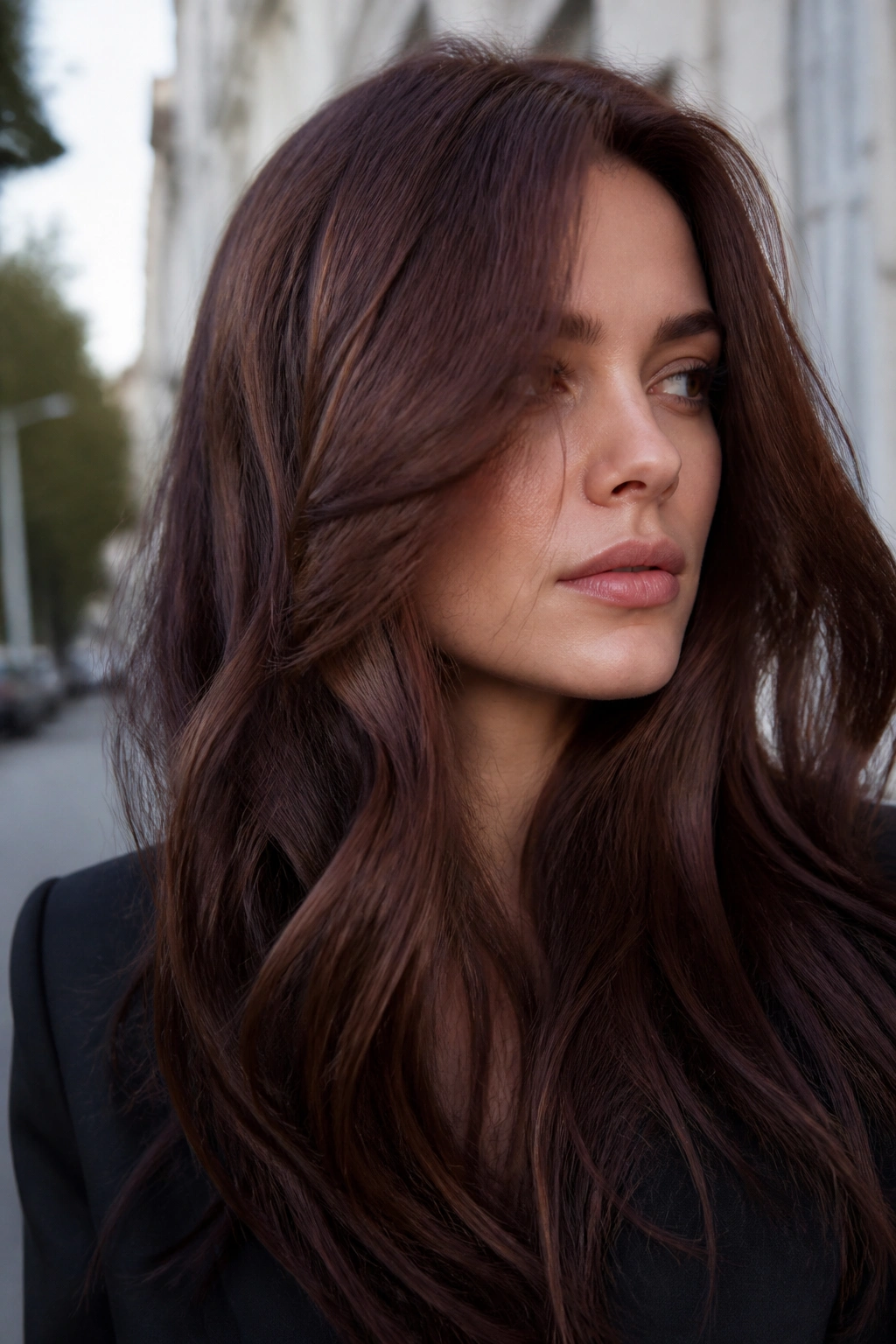
I keep seeing smoky chestnut brown on people who thought chestnut would be too warm for them, and that’s exactly why this version works. It still has a little red-brown depth, but the smoke in the formula pulls it back into cooler territory.
The result is softer than espresso and less flat than a plain chocolate single-process. On cool skin, that slight red-brown note can bring life to the face without tipping into orange. It also plays nicely with blue eyes and dark lashes, though the skin tone matters more than eye color.
- Good match for: medium cool skin, rosy cheeks, and natural brunettes.
- Ask for: chestnut with an ash glaze or a cool brown overlay.
- Skip if: your hair already holds a lot of red pigment and refuses to let go.
No gold. That’s the whole point.
5. Mushroom Brown Brunette
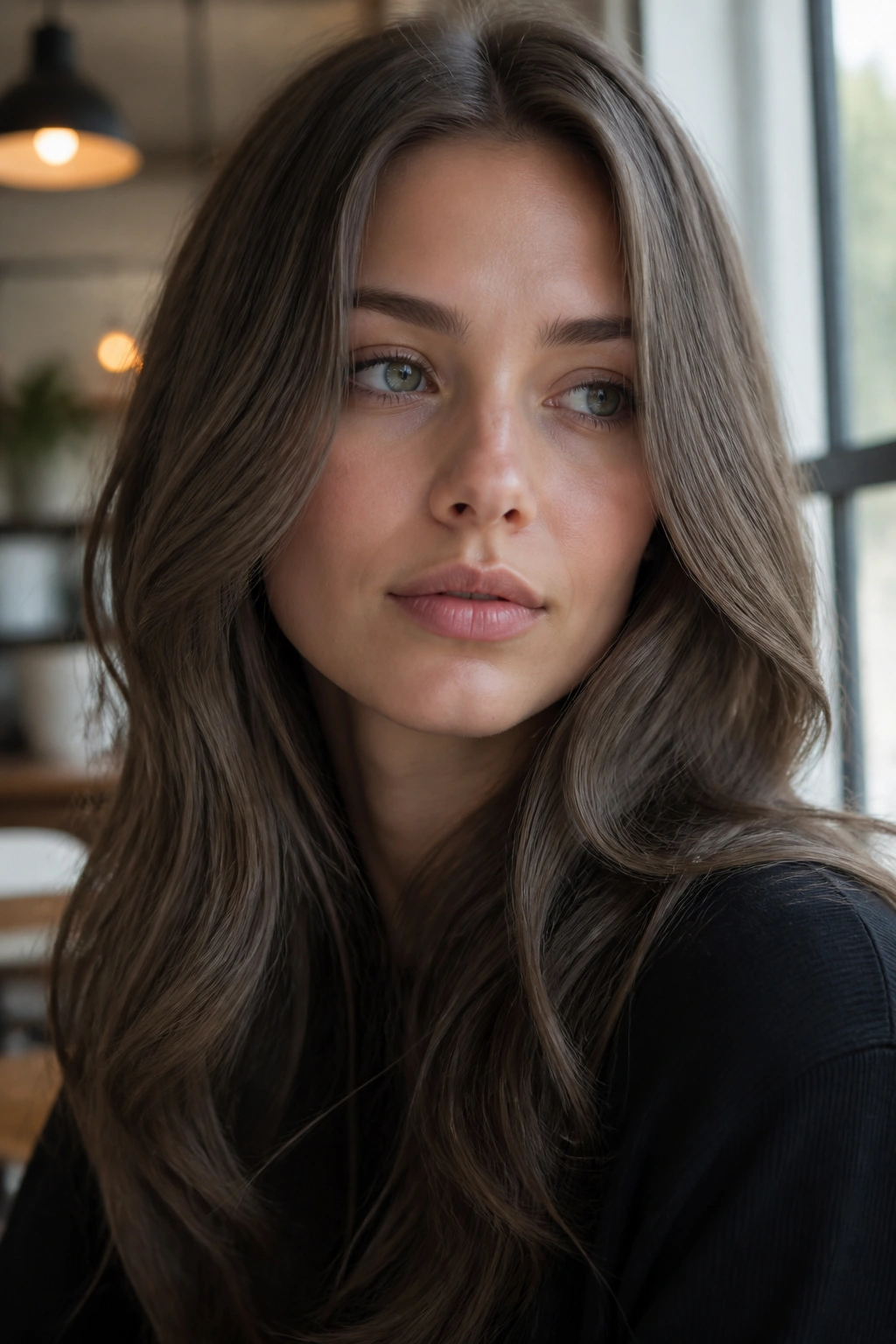
Mushroom brown is one of those shades that sounds strange until you see it in daylight, then it suddenly makes sense. It sits in the taupe-gray part of the brunette family, which means it does not chase red, gold, or copper the way warmer browns do.
On cool skin, that muted finish can look calm and modern without trying hard. It is especially good if your complexion gets pink around the nose or cheeks, because the color keeps the hair from fighting with that natural flush. The shade is also forgiving when your hair has a few different tones in it already.
The only trap is going too matte. Mushroom brown needs a little sheen, or it can look dusty. A clear gloss on top usually solves that fast.
6. Icy Mocha Balayage
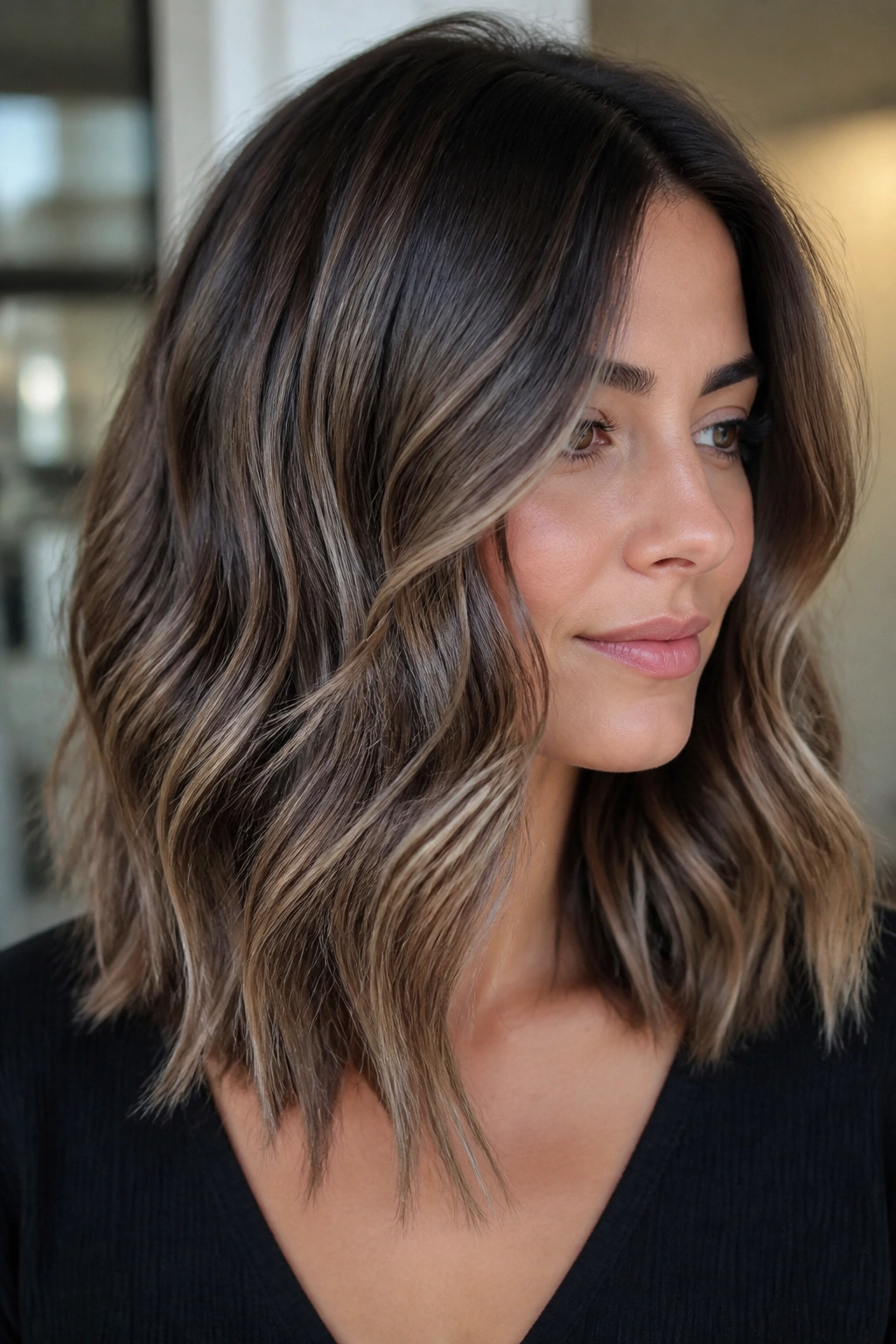
Unlike caramel balayage, icy mocha balayage keeps the brightness in the cool lane. The ribbons still move through the hair, but they lean beige, taupe, and smoky mocha instead of warm honey.
That makes a big difference on cool skin tones. Warm balayage can drag attention straight to redness in the cheeks or around the nose, while icy mocha softens the whole frame. It also works well if you want dimension but do not want the hair to look striped.
Where it shines
- Medium-length hair with loose waves.
- Layers that need movement.
- Brown hair that feels too heavy in one flat shade.
My advice: keep the light pieces thin and airy. Chunky highlights ruin the whole thing.
7. Dark Chocolate with Silver-Toned Highlights
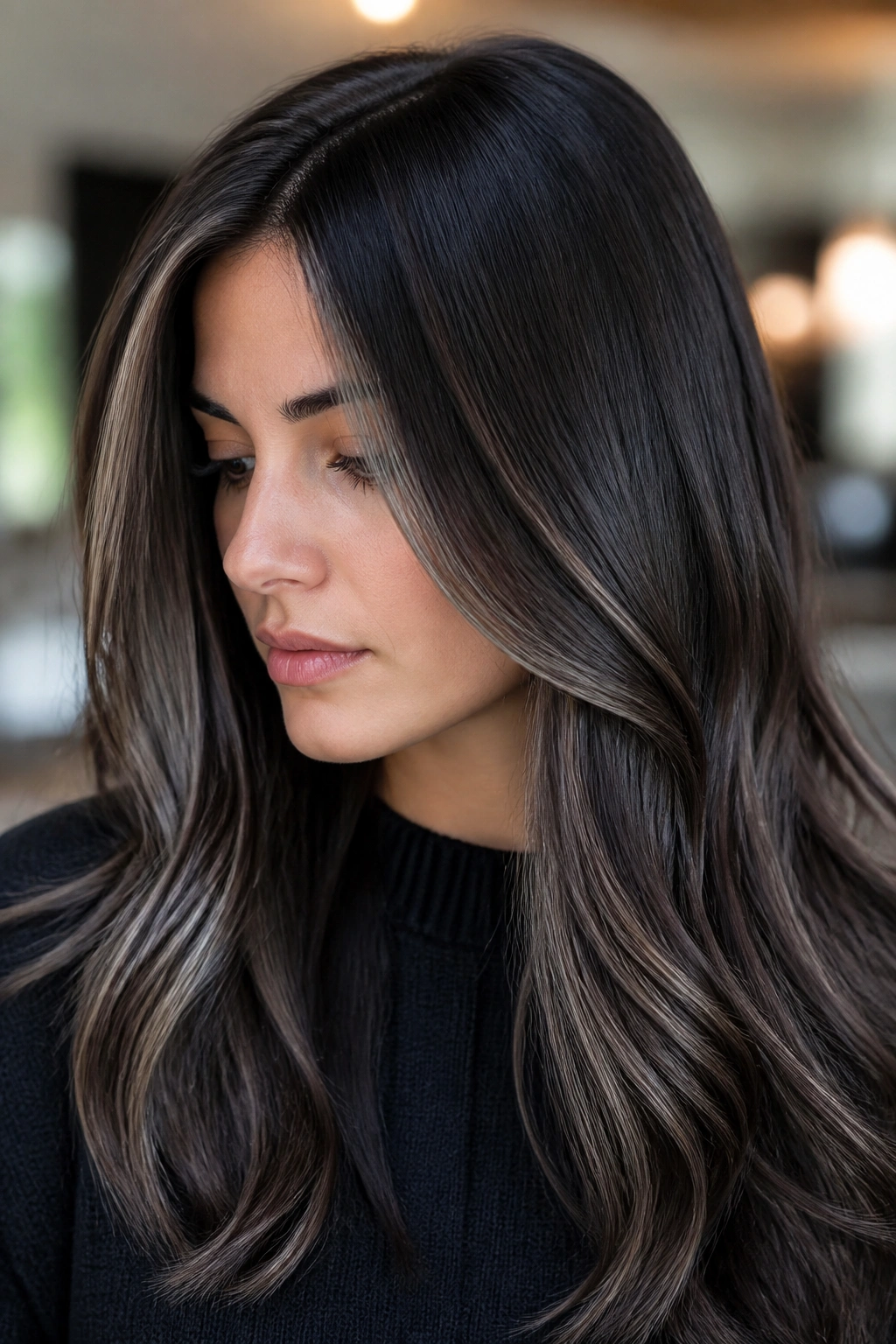
Dark chocolate with silver-toned highlights is for people who want contrast, not softness. The base stays dense and rich, then the highlights come in as muted silver-beige ribbons that sit far cooler than caramel ever could.
The placement matters more than the exact tone. Keep the highlights through the outer layers and around the part line, where they catch light first. Too many thick pieces and the look can tip into streaky territory, which is not the point here at all.
Used well, this shade looks sharp and clean on cool complexions. It is especially good with straight hair or soft bends, where the contrast shows without becoming busy.
8. Mocha Root Shadow
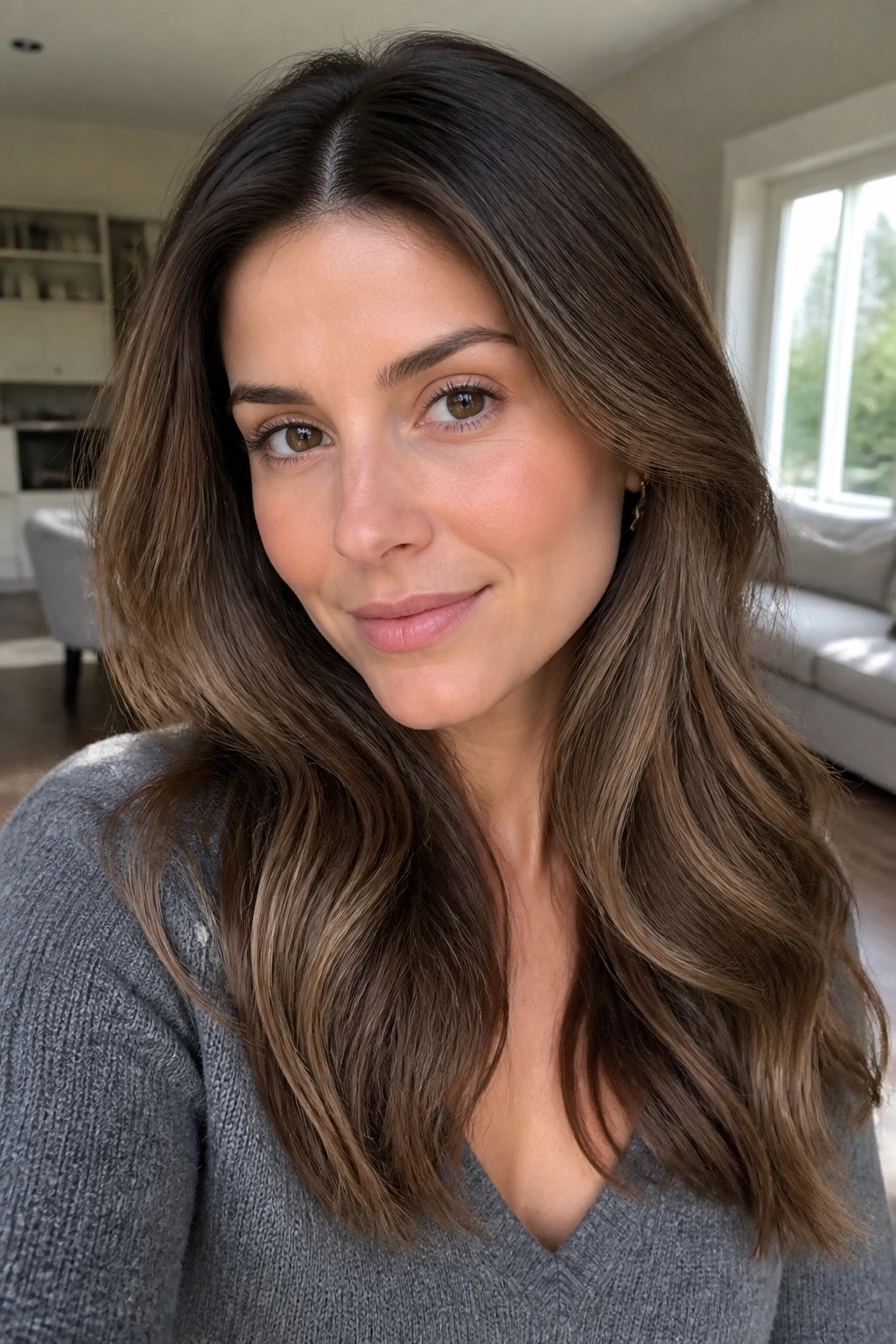
What if you want grow-out to look deliberate instead of annoying? Mocha root shadow is the answer. It keeps the root a touch deeper, then softens into a lighter mocha through the mids and ends.
That extra darkness at the scalp is useful on fine hair, because it creates the look of density right where you want it. It also saves time between salon visits. The line of demarcation stays soft, which means you are not stuck with a harsh regrowth line after three weeks.
What to ask for
- A root that is half a shade deeper than the mids.
- A cool mocha through the lengths.
- A blend that fades, not a stripe.
If your hair is already brown, this is one of the least fussy ways to make it look finished.
9. Slate Brown Gloss
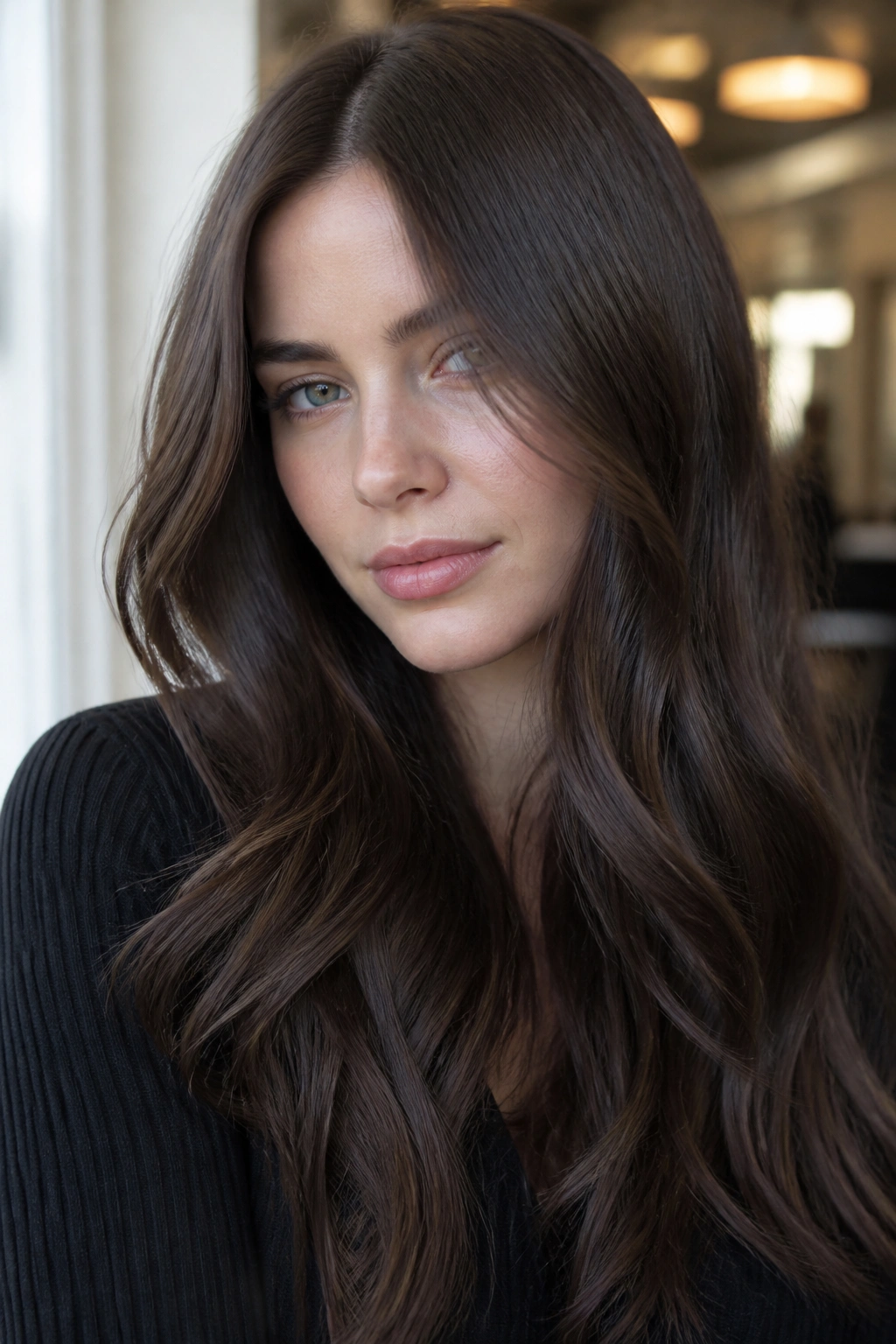
Slate brown gloss is not a loud color. That is the charm. It is the brunette version of a cool gray sweater: quiet, clean, and a little sharper than people expect.
This is a tonal service more than a dramatic color change. If your hair is already brown, a slate gloss can knock out warmth and leave behind a smoky brown surface that flatters cool skin very well. The effect is best on hair that already has some depth, because the gloss can sit on top without needing major lifting.
Be careful with porous ends. They grab tone fast. A shorter processing time and a gentle rinse can keep the color from going too dark or dull.
10. Brunette Balayage with Beige-Ash Ribbons
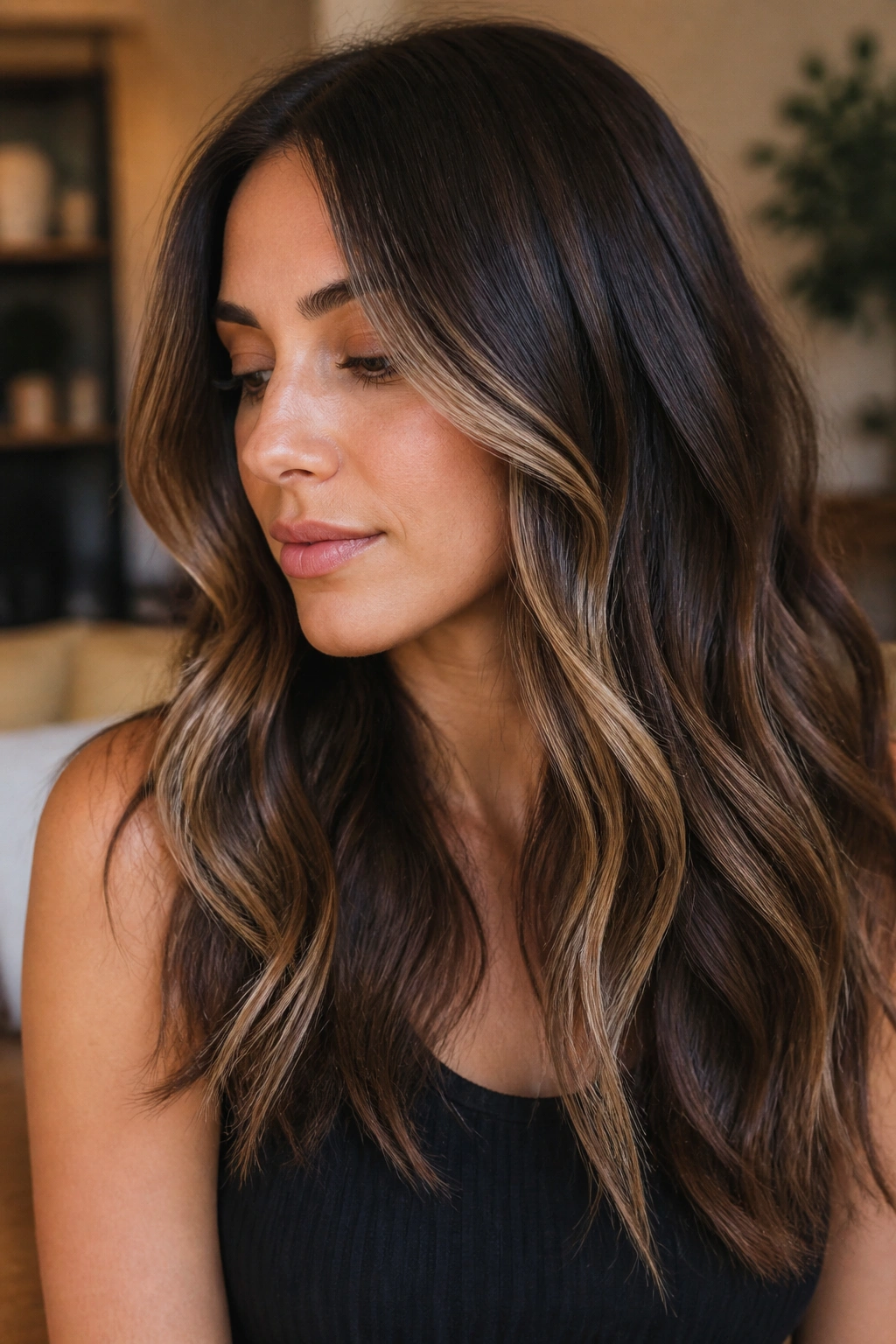
Picture a soft brunette base with thin beige-ash ribbons moving through the lengths. That is the version of balayage I would choose for someone who wants dimension but hates anything that looks yellow.
The ribbons should start lower than you might think, usually around the cheekbone or jaw on long hair, and a little lower on shorter cuts. That keeps the lift out of the root area, where warm pieces can make cool skin look more flushed than it needs to be.
- Best with: loose waves, layered cuts, and shoulder-length hair.
- Avoid: thick, blocky ribbons.
- Ask for: beige pieces with an ash finish, not gold.
Simple placement, cleaner tone. That’s the win here.
11. Velvety Truffle Brown
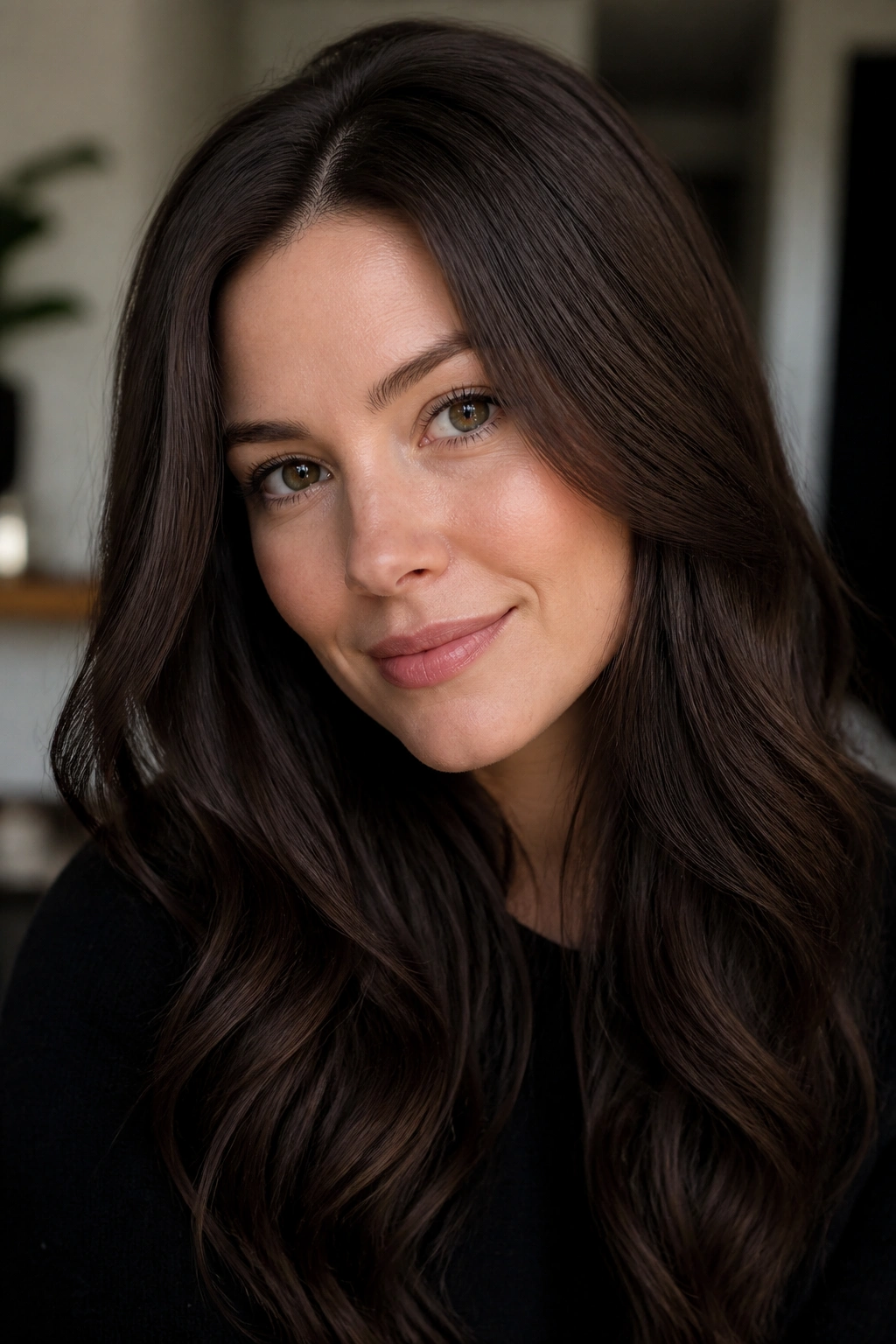
Velvety truffle brown is one of the nicest middle-ground browns for cool skin. It is darker than mocha, softer than espresso, and rounded out with just enough neutral depth to avoid that harsh, inky look some dark browns get.
I like it on pale skin with a little pink because it gives the face structure without stealing the show. On medium cool skin, it can look nearly effortless. Not bland. Just calm.
There is one catch: if your hair is very fine, the shade can read flat unless the cut has movement. A blunt bob, soft layers, or a few face-framing pieces keep it alive.
12. Coffee Bean Brunette
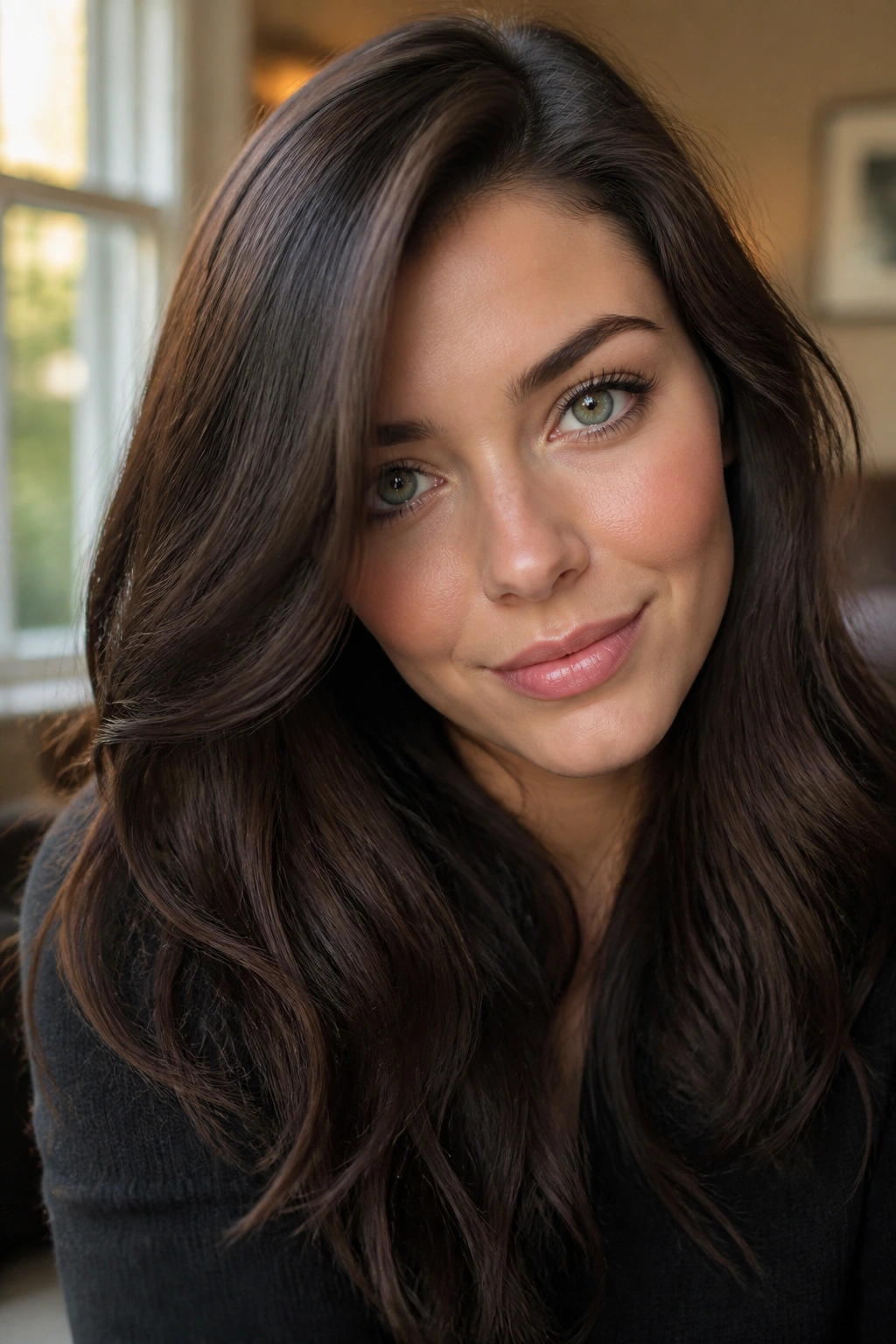
Coffee bean brunette is the safer cousin of espresso. It still feels dark, but there is a little more softness in the brown so it does not swallow the features.
That makes it a strong choice if you want depth without looking nearly black. Cool skin tones often do well with this shade because the neutral base keeps the hair from fighting the face. It also works if your eyebrows are dark and you want the hair to sit in the same family without going too severe.
Unlike a softer mocha, coffee bean brunette gives you more edge. Pick this one if you like a stronger outline around the face, especially with a side part or a blunt fringe.
13. Cool Chestnut with Face-Framing Pieces
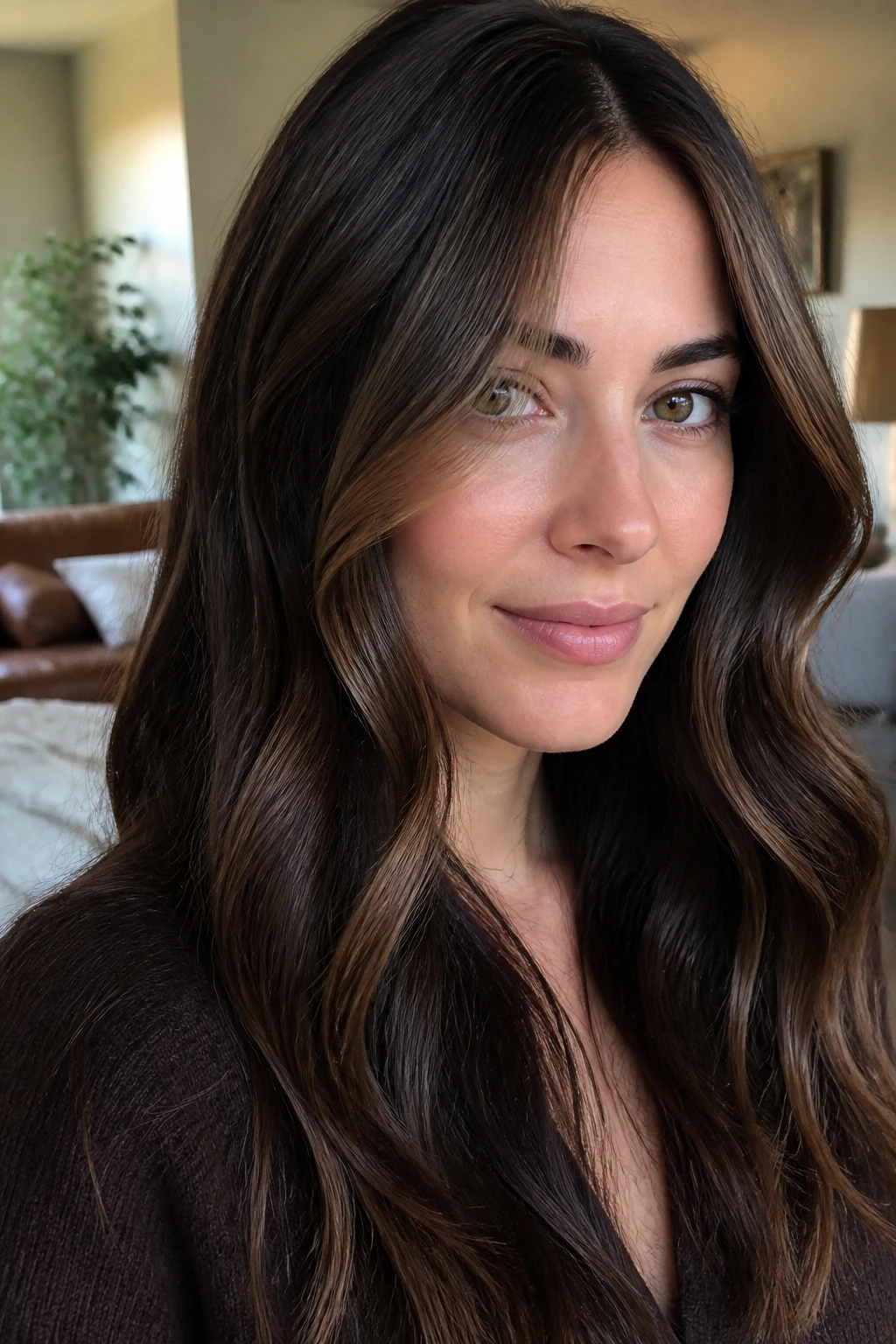
Cool chestnut works when the copper is barely there. That is the part people miss. Once chestnut gets too red, cool skin can look pinker, and the whole effect starts drifting warm in the wrong direction.
Keep the base chestnut subdued, then lift just the face-framing pieces a touch so the shade does not feel heavy. Those front pieces should stay brown, not blonde. A muted beige-brown is enough.
A few useful details
- Ask for chestnut with ash lowlights.
- Keep the front pieces one shade lighter.
- Use a blue-violet shampoo only when the red starts to creep in.
This is a good one for brunettes who want movement but do not want to leave the brown family.
14. Midnight Brown with Blue Undertones
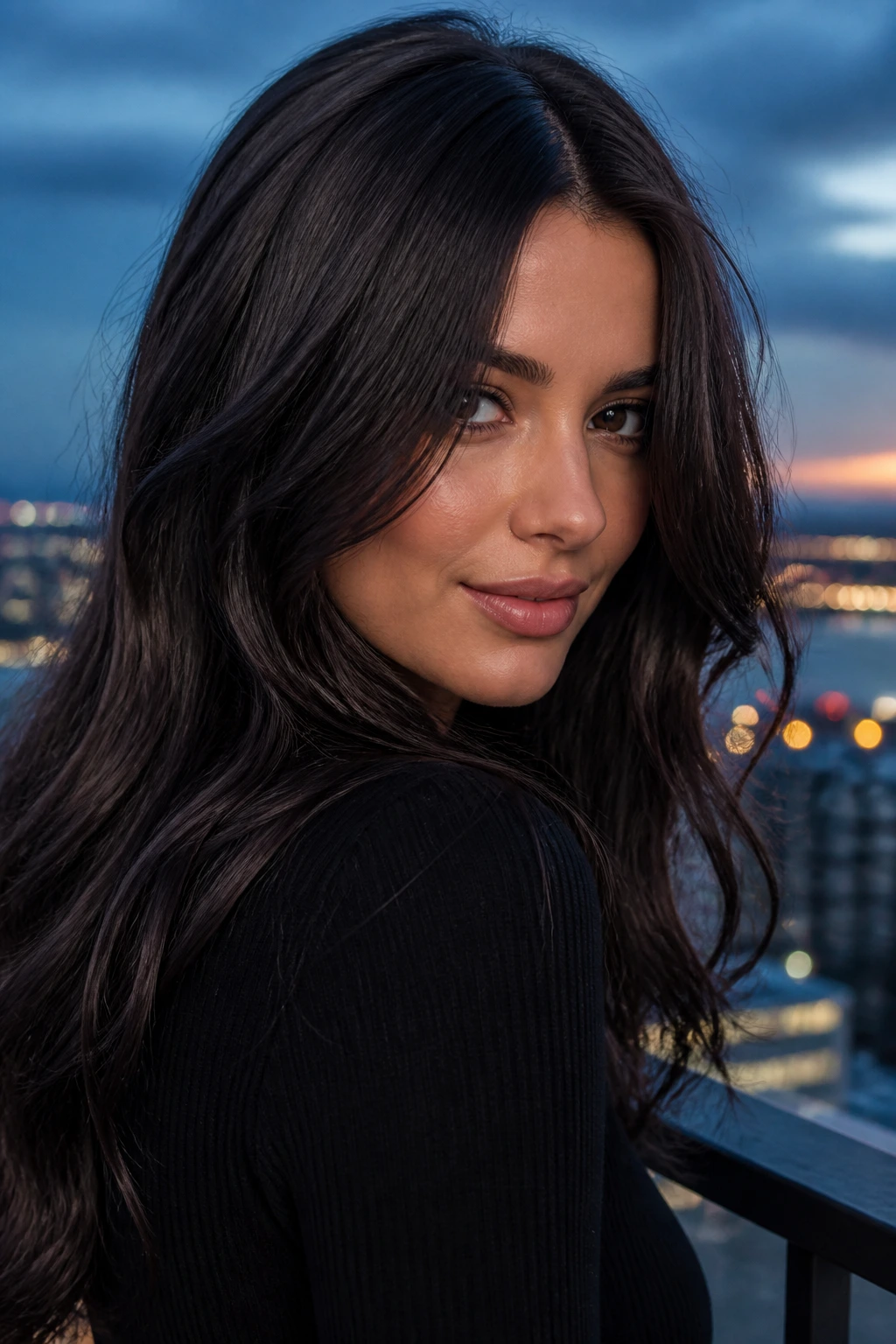
Can brown look almost black and still flatter cool skin? Absolutely, if the undertone stays blue-based instead of red. Midnight brown does that job well.
The shade has the drama of very dark hair, but it still reads brown in daylight. That matters. Full black can flatten the face fast, especially on lighter cool skin, while midnight brown gives you depth with a little more softness around the edges.
How to keep it from reading flat
- Keep the finish glossy.
- Ask for a blue-violet toner rather than a warm neutralizer.
- Add barely-there dimension through the ends if the hair is long.
If you like dark lipstick, this shade pairs neatly with it. If you do not, it still works—just a little less dramatically.
15. Soft Smoke Brunette
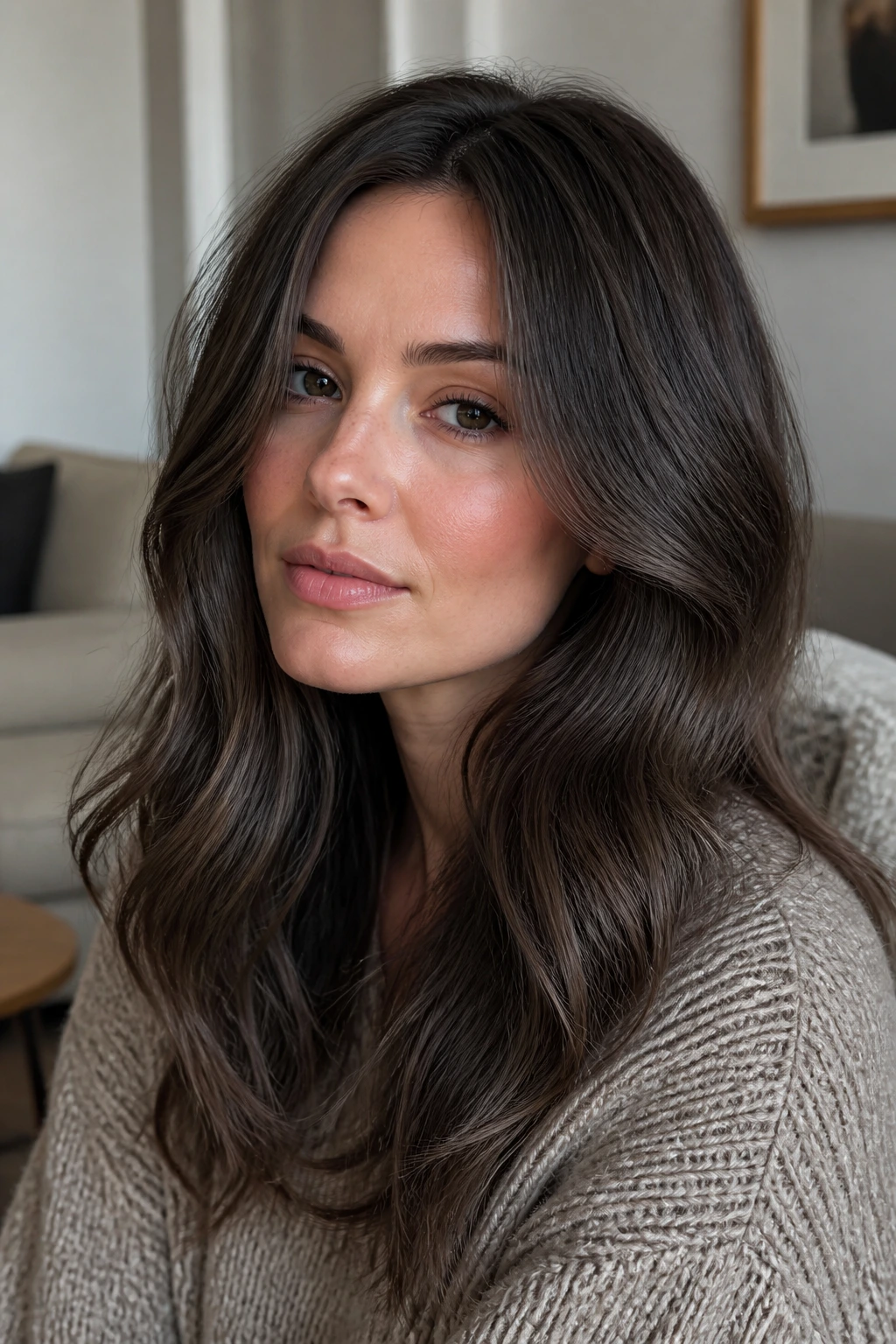
Soft smoke brunette is what I reach for when I want brown to feel gentler than espresso but not warm enough to flirt with brass. It has a dusted, ash-heavy finish that sits neatly on cool skin and keeps the whole look restrained.
The best thing about it is the softness around the face. Even a solid single-process color can look more layered when the smoke tone is done well. It’s not shiny in a plastic way. It looks lived-in, which is a nice change from browns that try too hard.
This shade also behaves well with waves. The bend in the hair catches the smoke tone and keeps the color from appearing too dense.
16. Cold Brew Brunette
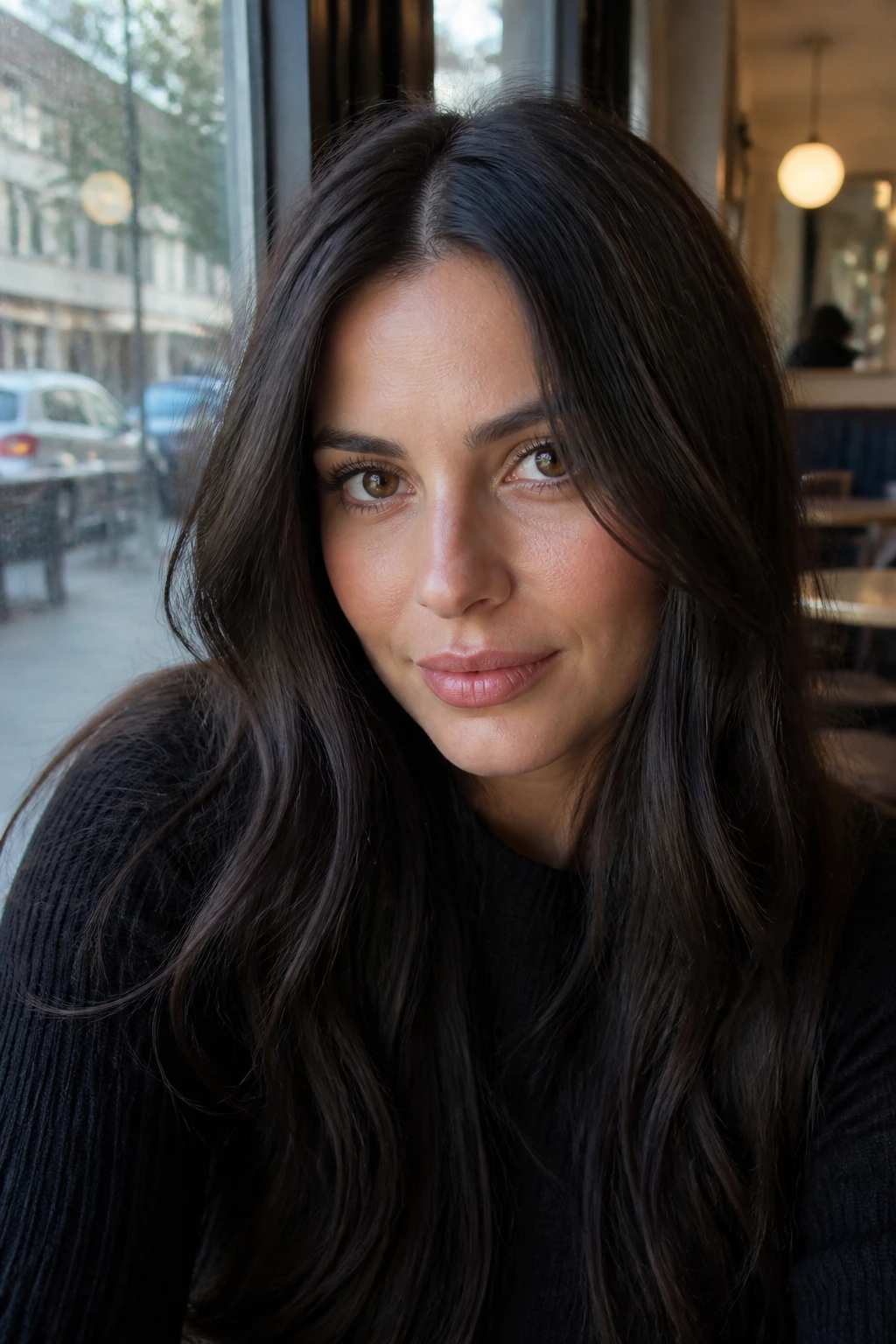
Cold brew brunette looks like a dark coffee shade that has been cooled down and steeped a little longer. It is deeper than mocha, but not as hard as black, and the finish usually reads neutral-cool rather than warm.
That makes it a strong option for medium to deep cool skin. The shade gives enough contrast to sharpen the face, yet it does not throw orange around the hairline the way warmer brunettes sometimes do. It also hides root regrowth well, which is nice if you dislike frequent touch-ups.
- Good for: long hair, thick hair, and darker brows.
- Less ideal for: very pale skin if you want a softer, lighter frame.
- Ask for: a cool brunette base with no golden reflect.
A clean center part works especially well with this color.
17. Plum-Gloss Chocolate Brown
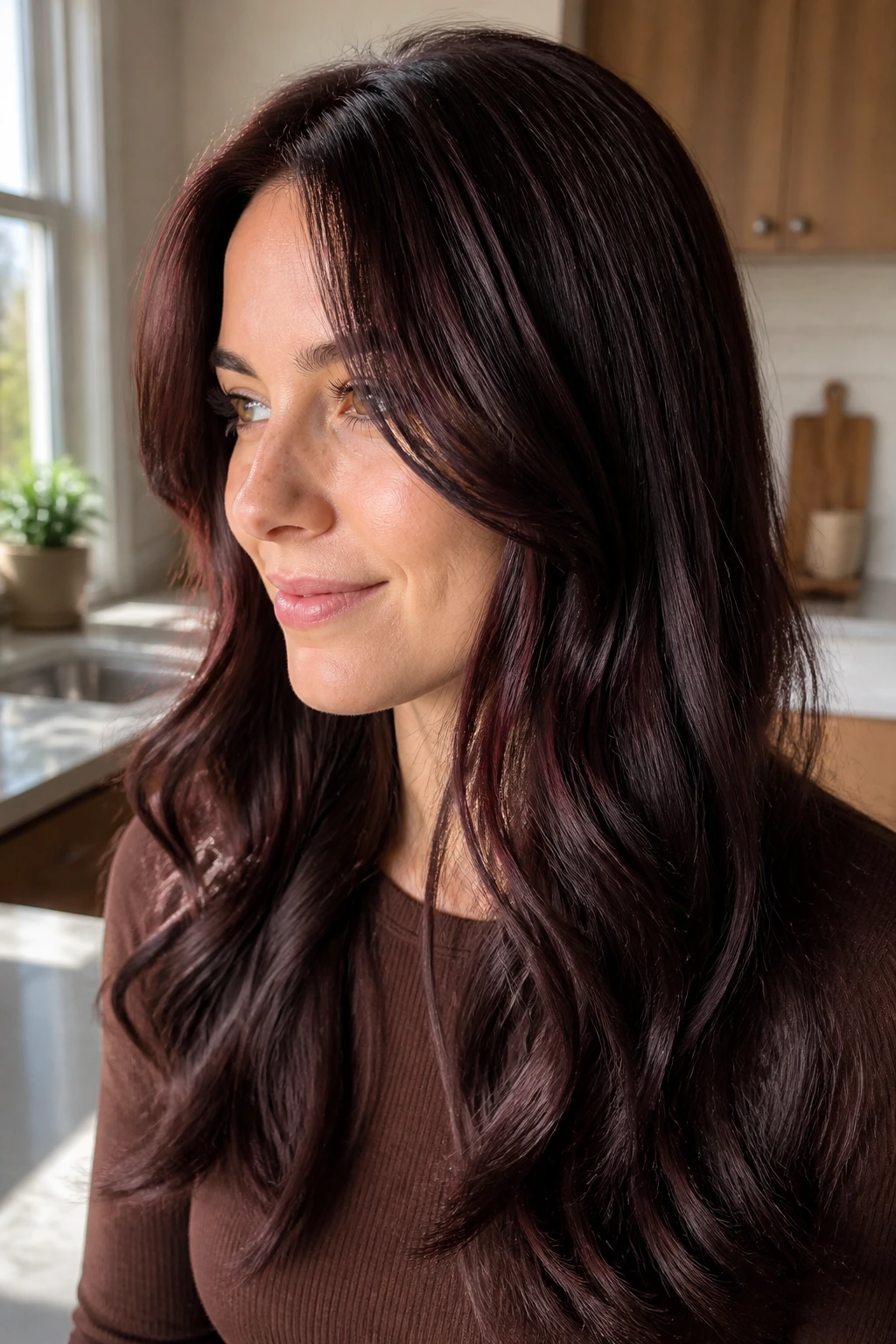
Plum-gloss chocolate brown is the quickest fix for a brunette that keeps turning warm. The plum tone is subtle, but it cools the surface of the color and adds depth that looks richer than plain brown.
This is a smart option if your hair has stubborn orange undertones after lightening or if previous color left the ends a little brassy. The plum cast does not have to look purple. It can stay nearly invisible and still do its job.
The warning is simple: do not over-tone it unless you want a burgundy cast. Some people do. Fine. But if your goal is cool chocolate brown, keep the gloss soft and rinse it before the color gets too dark.
18. Cool Brunette Ombré
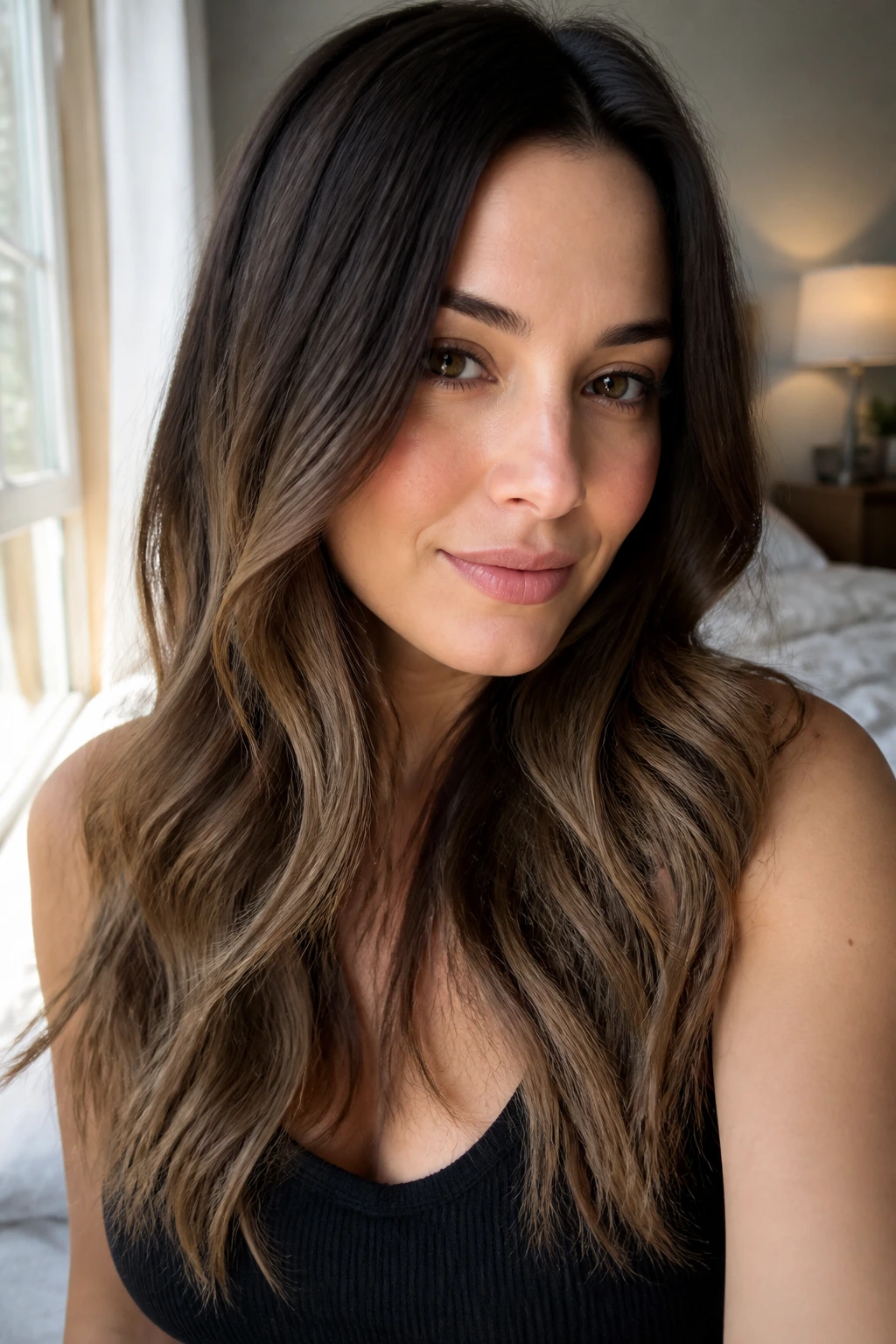
Cool brunette ombré works because the transition stays soft instead of shouting for attention. The root remains a deeper brown, then the color drifts into a cooler brunette end that is lighter, but still firmly in brown territory.
That gentler fade flatters cool skin better than a warm ombré ever could. Warm versions can make the lower half of the hair look gold or copper in sunlight, which tends to pull the face off balance. Cool ombré keeps the whole thing steady.
Best way to wear it
- On long hair with waves or curls.
- With a root that stays at least one level darker.
- When you want change without frequent touch-ups.
This is one of the easier brunette ideas to grow out.
19. Charcoal Brown Waves
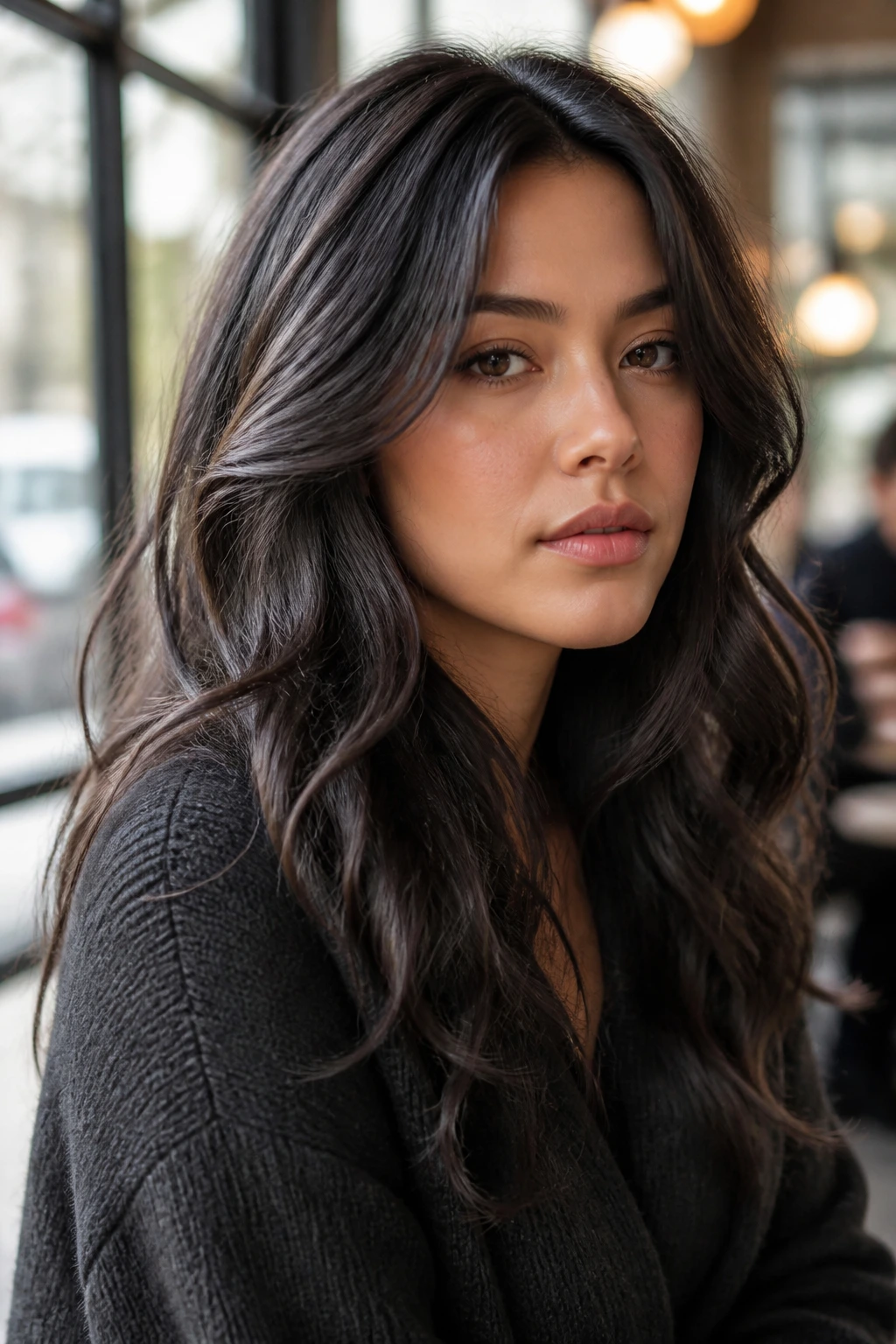
Charcoal brown waves read darker than mocha but softer than black, which is a useful place to be if you want impact without the harshness of true black hair. The charcoal cast keeps the tone cool and slightly smoky.
Waves help this shade a lot. The bends in the hair catch the cool reflect and keep the finish from going flat. On pin-straight hair, it can look more severe, so texture matters here more than people expect.
- Works well on: medium and long cuts.
- Needs: shine, or the charcoal tone can look dull.
- Ask for: a brown base with a muted charcoal glaze.
If your skin leans pink, this is one of the darker browns that usually behaves.
20. Soft Taupe Brown
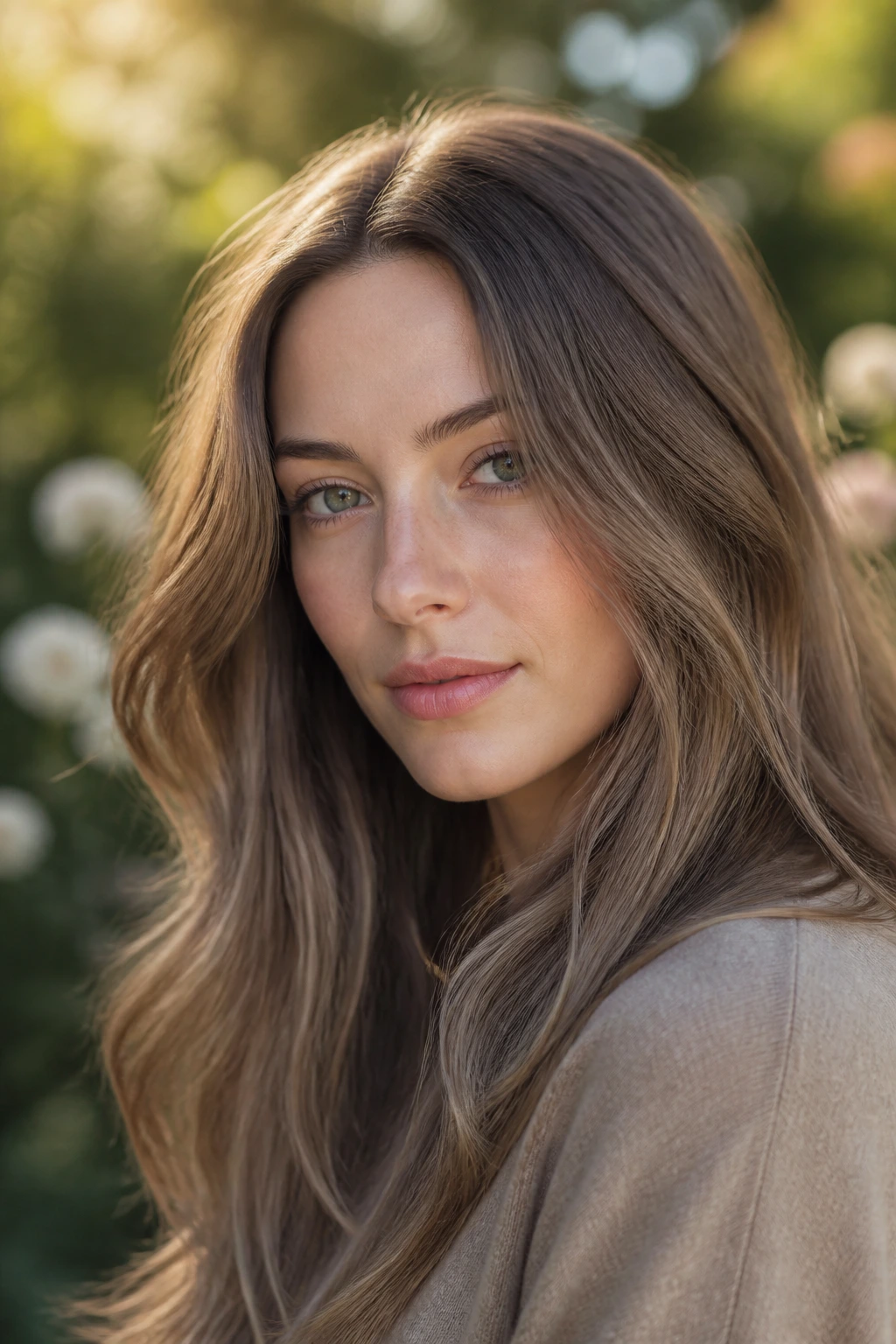
Why does soft taupe brown flatter so many cool faces? Because it sits between ash and beige, which gives you a brown that feels airy instead of heavy. That middle ground is gold for pale skin and very helpful on medium cool skin too.
Taupe can look understated in the bowl, then come alive once it’s blown out or curled. The trick is not to over-darken the root. A level 5 or 6 base with taupe ends usually gives enough softness without turning muddy.
If you like wearing silver hoops, dark liner, or berry lipstick, this shade tends to sit nicely with all of it. It’s a quieter brunette, but not a boring one.
21. Cocoa Ribbon Highlights
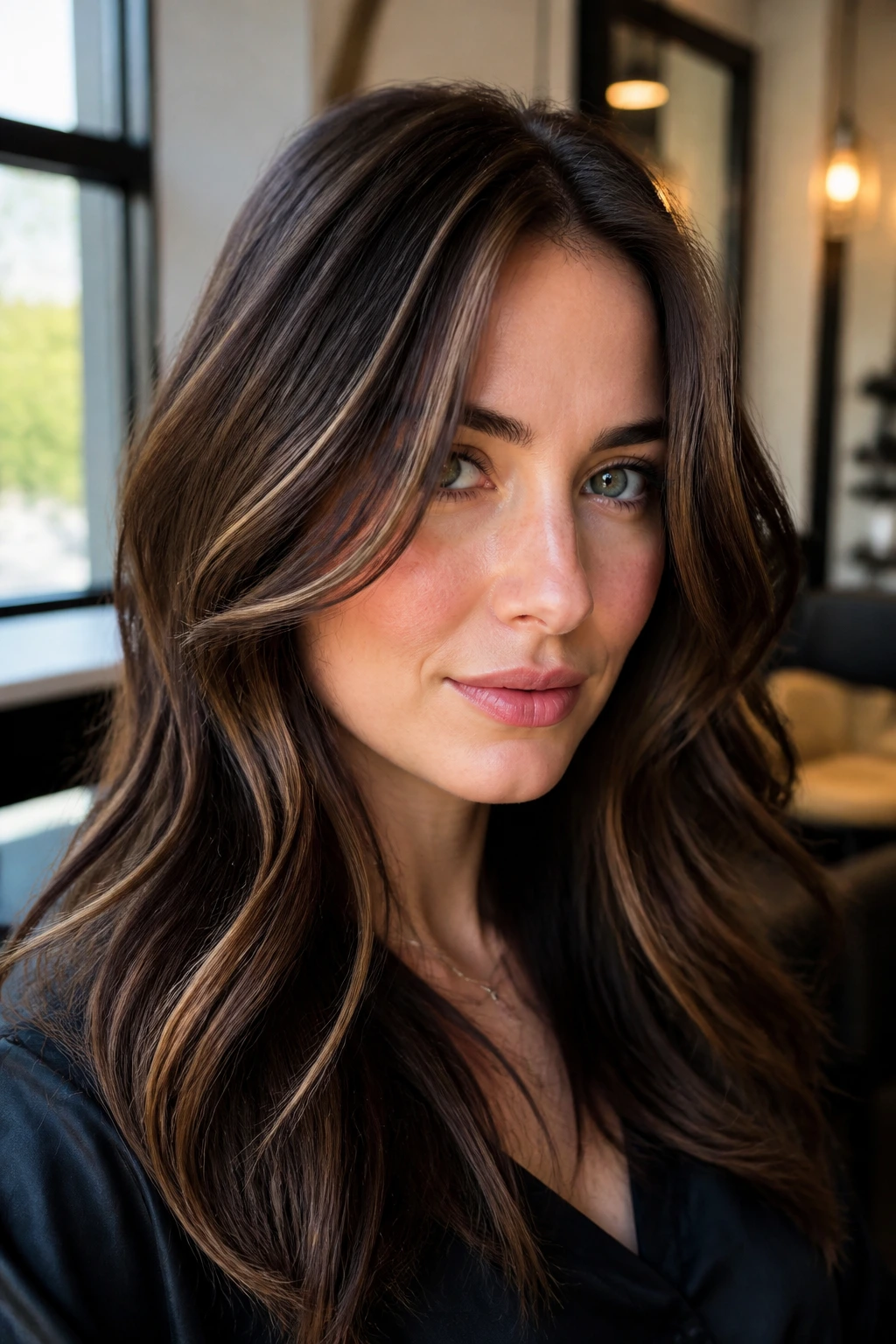
Thin cocoa ribbon highlights are more useful than chunky blonde stripes when your goal is a cool brunette with movement. The color stays in the brown family, which means the hair does not suddenly jump into warm territory.
The placement should be delicate. Think fine slices around the part, a few threads under the top layer, and a little extra brightness at the ends if the hair is long. That keeps the overall look brown while still giving shape.
What to tell your colorist
- Keep the ribbons 1 to 2 shades lighter than the base.
- Stay away from gold or honey.
- Use thin foils or hand-painted pieces, not wide panels.
This is the sort of detail that makes brown hair look expensive without looking overworked.
22. Dark Mocha Shag Color
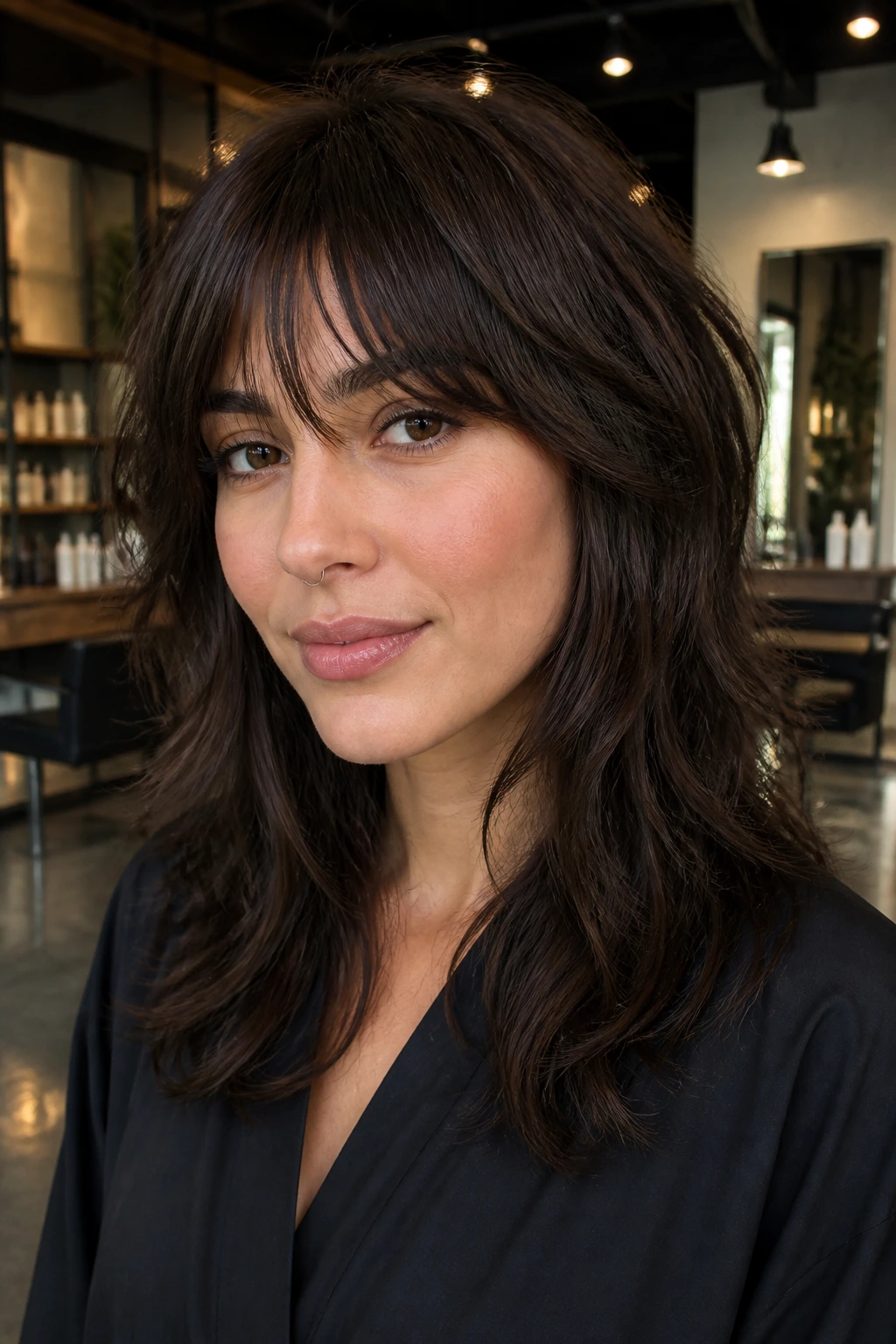
Dark mocha and a shag cut get along because the haircut already brings movement. The color does not need to do all the work. It just needs to stay cool, rich, and a little soft at the edges.
On a shag, too much shine can make the layers look harsh, so I like a mocha shade with a muted finish. The texture does the rest. Every flip and bend in the cut creates a small change in tone, which keeps the color from looking like one solid block.
Where to place the tone
- Keep the root a touch deeper.
- Let the layers hold the lighter mocha.
- Tuck the coolest pieces around the face.
If you live in blowout-straight hair, this still works, but it looks better when the hair has a bit of roughness to it.
23. Ash Brunette Money Pieces
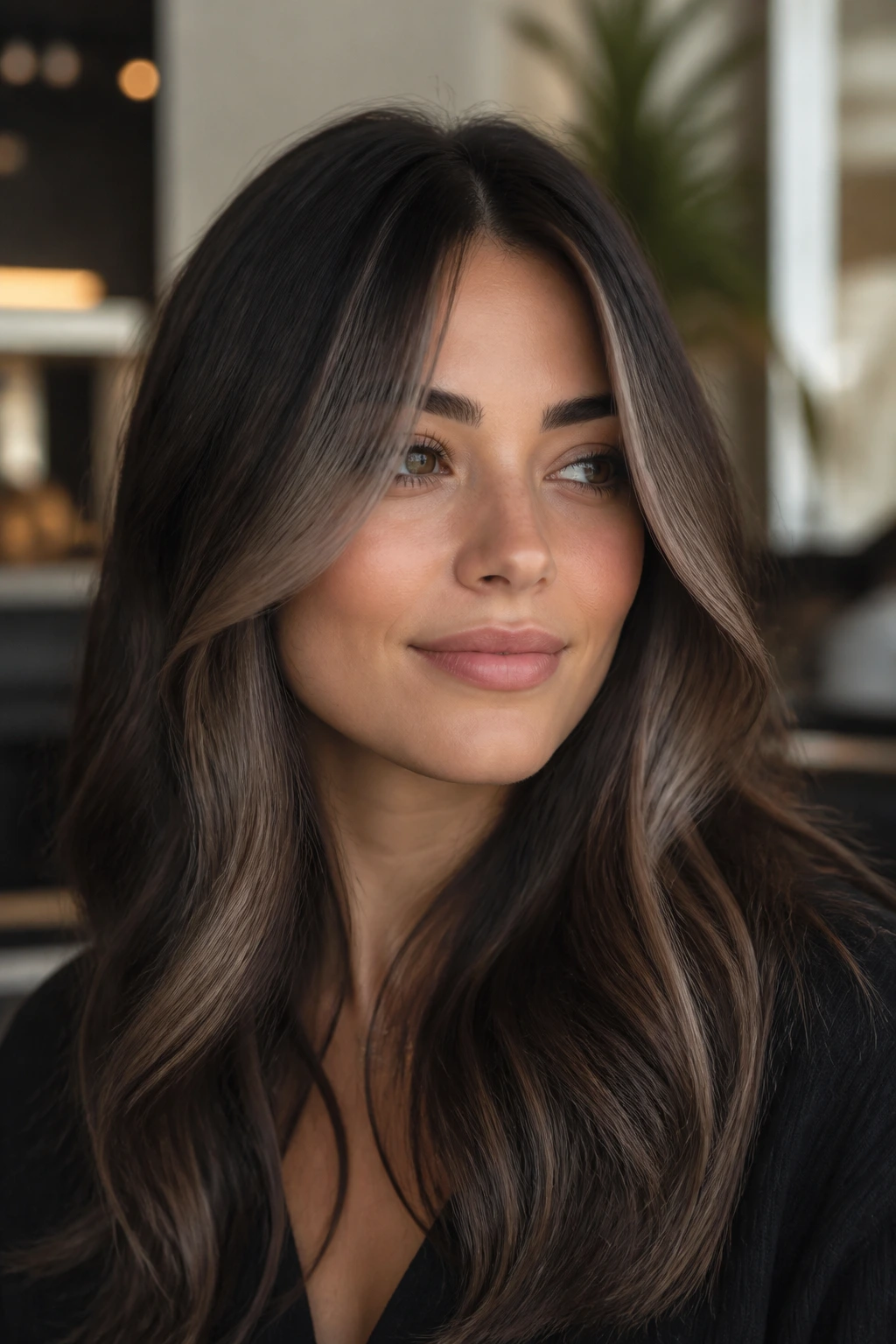
Ash brunette money pieces are the easy answer when you want the face to brighten without changing the whole head. The rest of the hair stays a solid cool brunette, while the front pieces get a lighter ash-brown lift.
That is a nice move if you like dark hair but want something that shows around the face. The contrast is noticeable, but not loud. It also grows out with less fuss than full highlights, which saves you from feeling trapped by your color appointment.
A lot of people ask for blonde money pieces and then regret the warmth. Ash brunette money pieces avoid that problem. Keep them narrow, keep them cool, and the look stays clean.
24. Cocoa Melt with Shadow Root
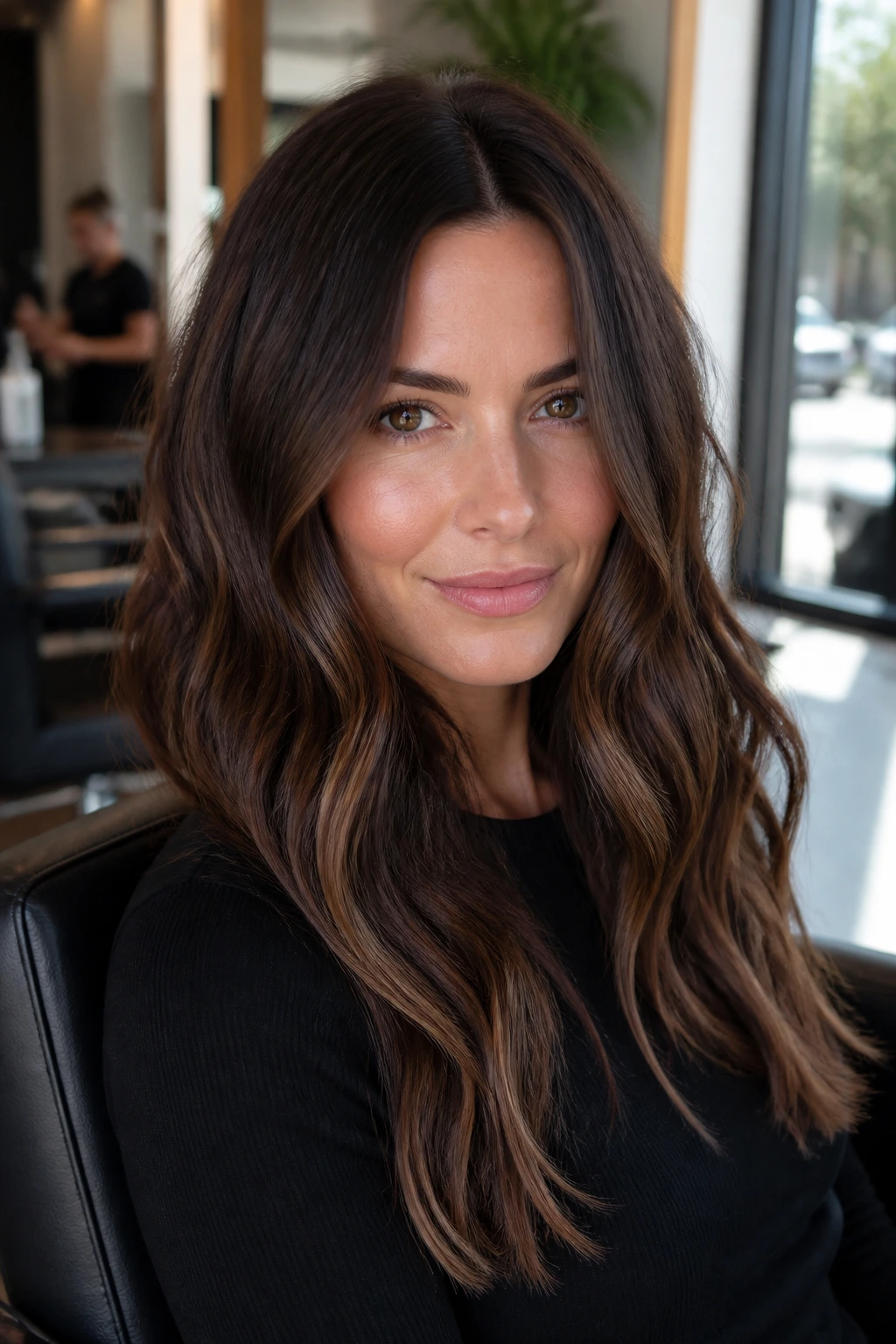
Cocoa melt with shadow root is for the person who hates obvious maintenance and does not want to think about roots every few weeks. The shadow root keeps the scalp area a little deeper, then the cocoa tone melts through the mids and ends.
This one works well if your natural hair is already in the brunette range. You are not fighting your base; you are refining it. That is why the grow-out looks so smooth. The color softens rather than breaks.
If your existing balayage has gone too warm, a cool cocoa melt can pull it back toward neutral. A blue-violet gloss helps, but so does patience and a good colorist who knows when to stop lifting.
25. Satin Brown Single-Process
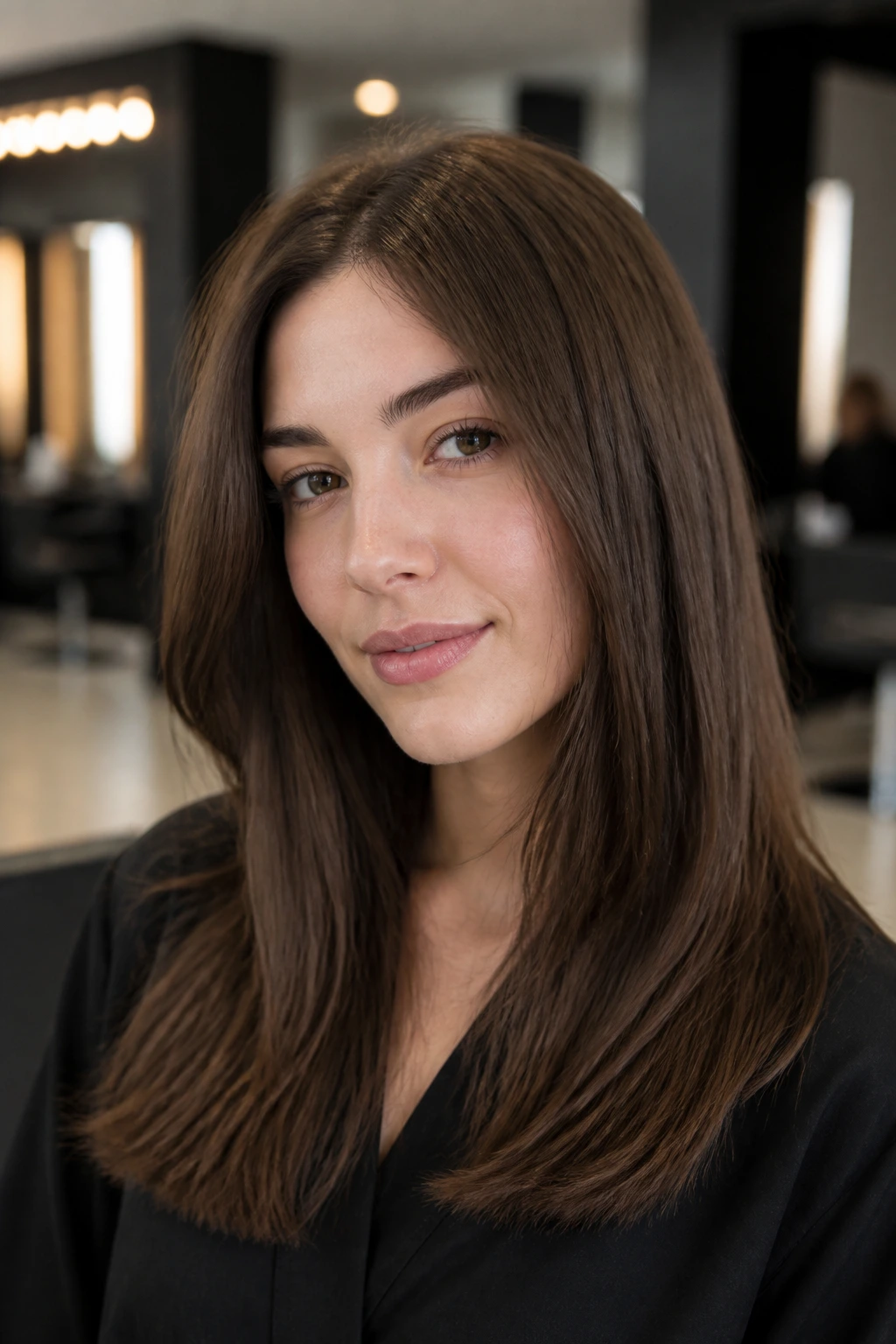
Satin brown single-process proves that dimension is optional. Not every brunette needs highlights, ribbons, or a melt. Sometimes a clean, one-tone brown with the right cool reflect does more for the face than a busy color job ever could.
This shade works especially well on sleek cuts, blunt bobs, and hair that naturally reflects light. The satin finish matters. If the hair is dry, the color can look dull, so a glossing treatment or a smoothing serum helps a lot.
The smartest version stays neutral-cool and avoids red pigment. That keeps the shade from drifting warm after a few washes.
26. Cool Bronde with Brown Base
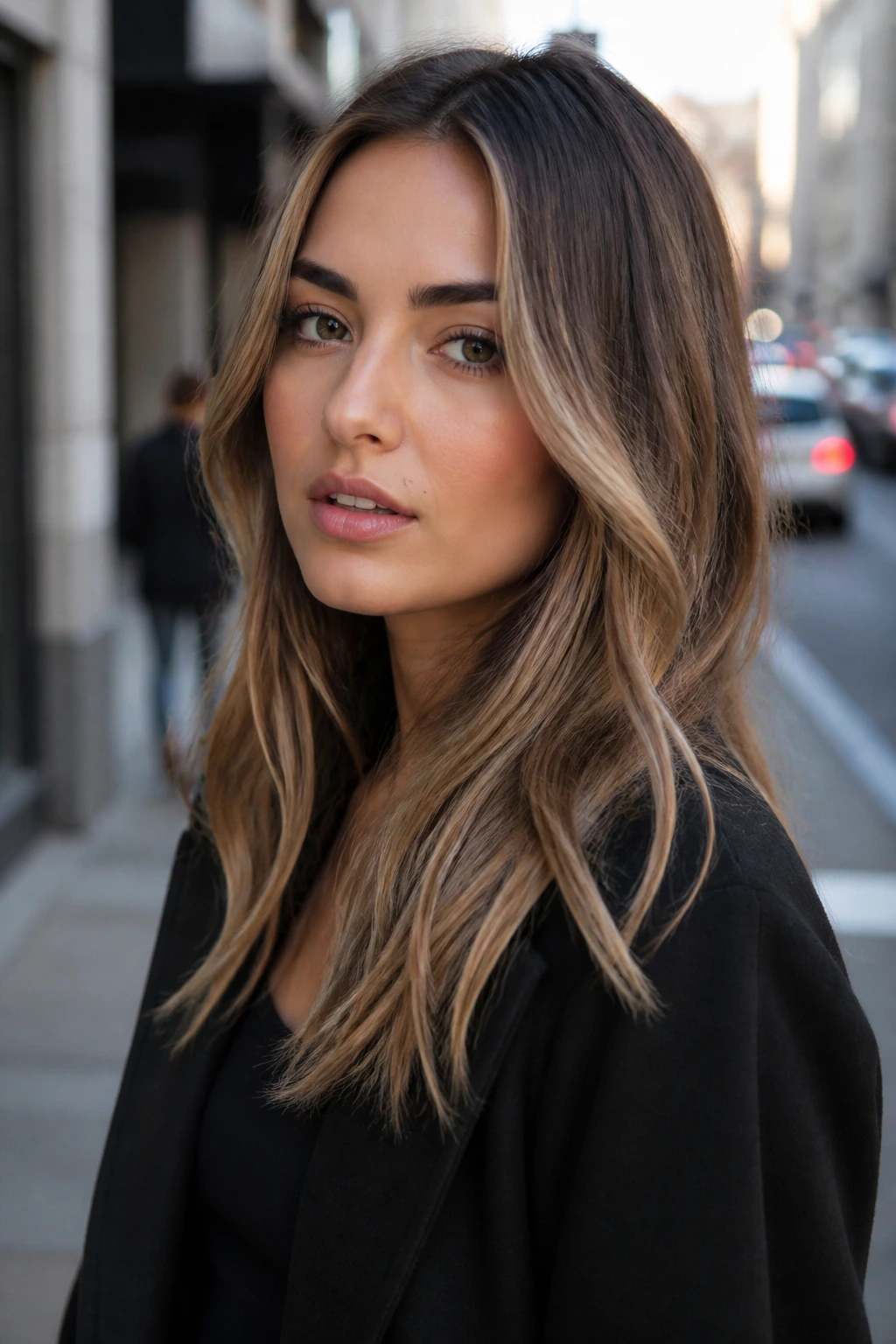
Cool bronde with a brown base sits right between brunette and blonde, but the cooler version keeps the blonde side muted. Think ash-beige rather than gold, with the brown base doing most of the heavy lifting.
That balance is useful if you want brightness around the face and through the ends without losing your brunette identity. It also works on people whose natural color is dark blonde or light brown and who do not want a dramatic jump in either direction.
A good way to request it
- Keep the base around level 5.
- Use cool beige or ash-beige pieces only.
- Avoid anything that reads buttery, coppery, or honeyed.
This is a nice pick if you want to move lighter without giving up the cooler brunette feel.
27. Velvet Espresso Bob
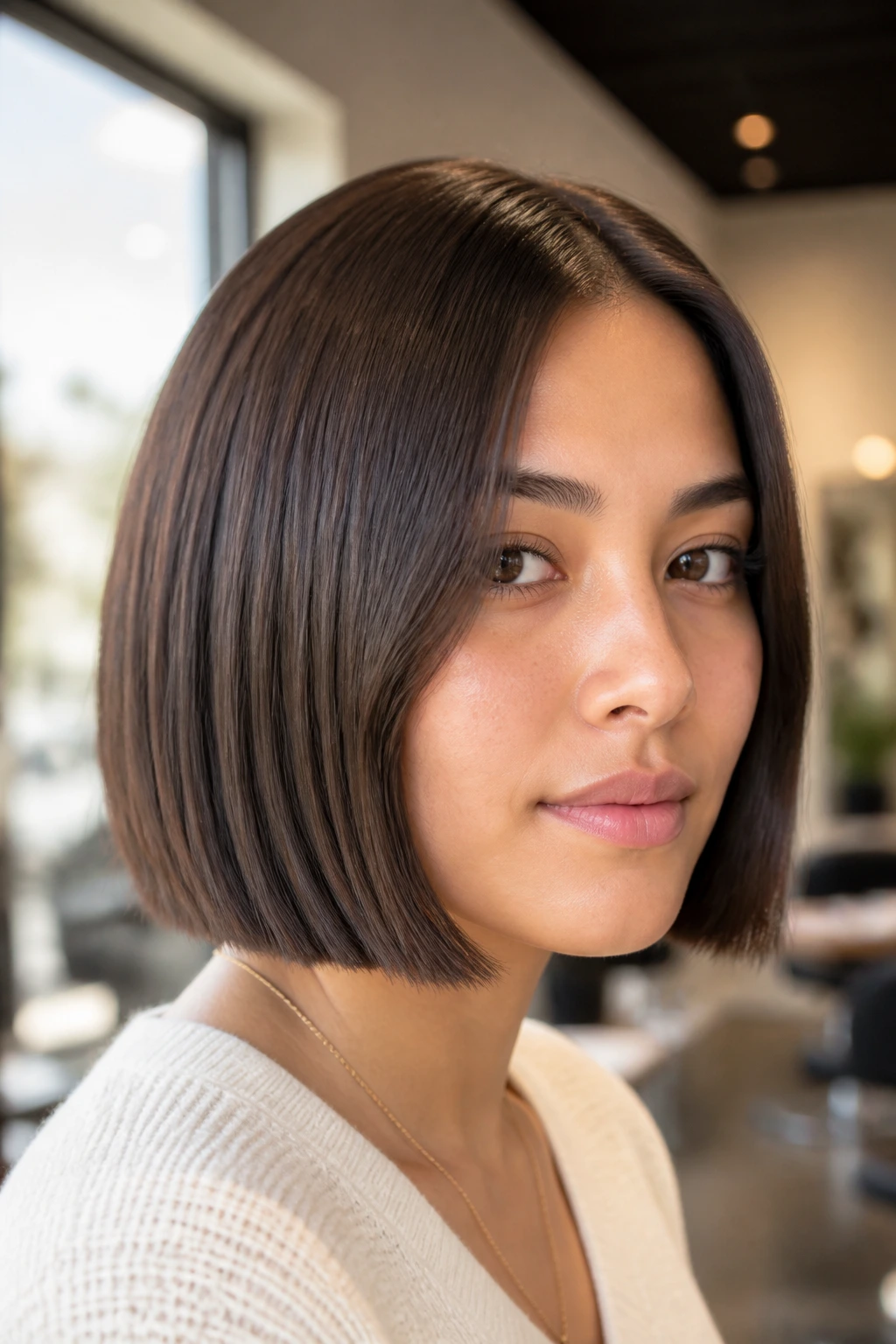
A bob and velvet espresso are a very good pair. The short cut shows off the shine, and the deep cool brown makes the edges look cleaner than a warmer brown would.
Why bobs like this shade
- The blunt ends look thicker.
- The color creates a crisp line around the jaw.
- Fine hair looks denser at the root.
I’d choose this for someone who wants the hair to feel controlled and polished without going black. The color should stay dense, but not flat. A clear gloss and a clean blow-dry keep the whole thing from sinking into darkness.
28. Rich Dark Chocolate with a Clear Gloss
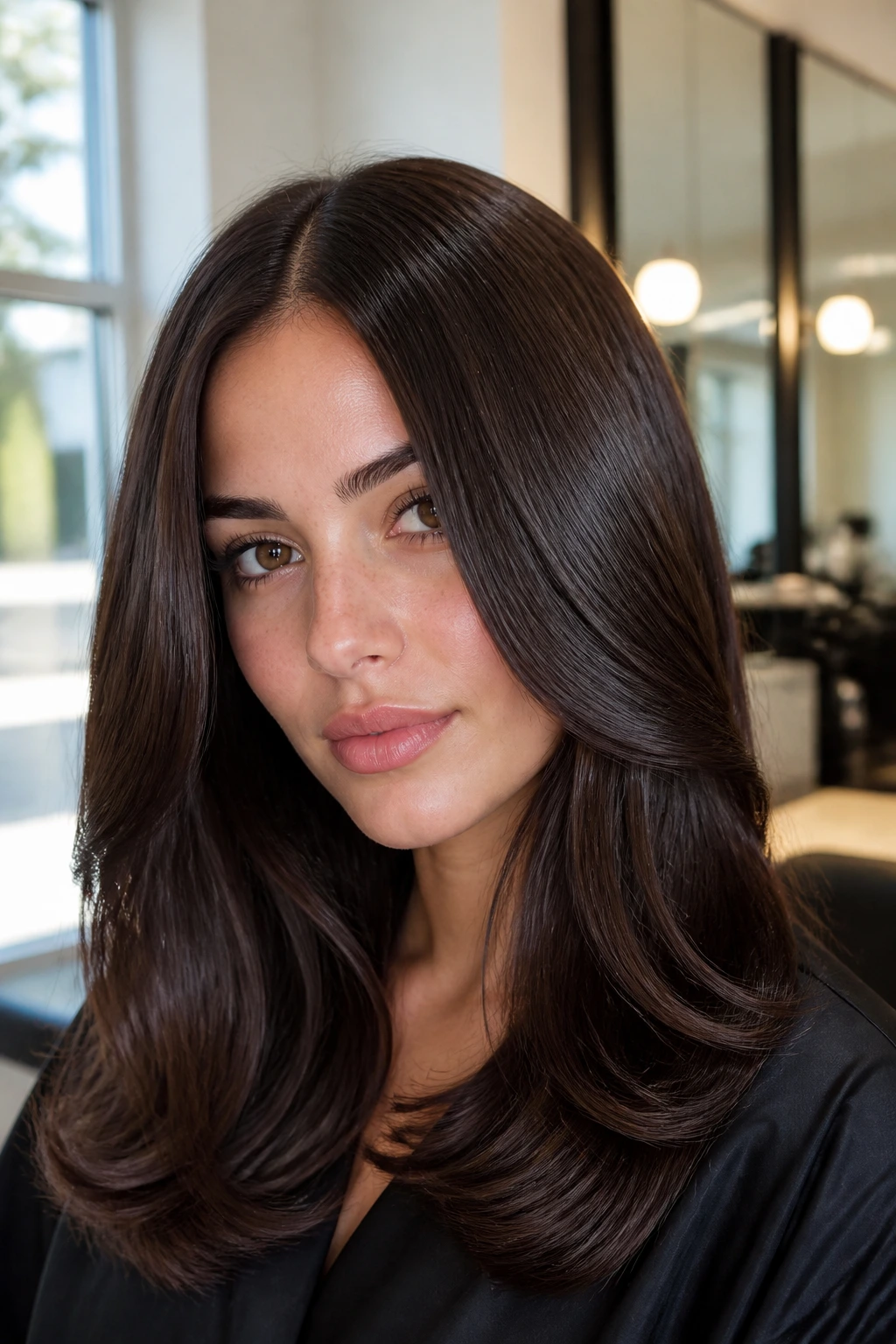
Rich dark chocolate with a clear gloss is the shade I keep coming back to when someone wants the simplest, safest move for cool skin tones. The base stays a true dark brown, then the gloss adds shine without pushing the color warmer or redder.
That final clear gloss matters more than people think. It keeps the ends from looking dry, and it gives the brown a smooth surface that catches light in a clean way. If your hair tends to frizz or puff up, this shade looks better when it’s glossy than when it’s matte.
Take a daylight photo before you leave the chair. If the brown reads auburn near the face, ask for one more pass of blue-violet toner. That tiny adjustment can be the difference between a brown that feels off and one that sits exactly where it should.
