



Chocolate auburn can look sharp on cool skin tones when the red side stays deep, smoky, and berry-leaning instead of bright orange.
That sounds like a tiny distinction. It isn’t. Cool skin usually carries pink, blue, or neutral-rose undertones, and a loud copper can make the face look flushed in the wrong way. A deeper chocolate base with restrained auburn gives you warmth without that candy-corn effect people sometimes regret two weeks later.
The trick is knowing which version of auburn you’re asking for. Say “chocolate auburn” to one colorist and you might get mahogany. Say it to another and you could end up with a coppery red-brown that looks great on a warm complexion and a little harsh on yours. I always want a client with cool undertones to think in terms of tone family first: mahogany, cherry, plum, merlot, berry, wine.
Swatches matter more than salon lighting ever admits. Bring photos, yes, but also be specific about whether you want a shade that reads brown in low light and red only when it moves, or something with a stronger auburn hit from the front. That difference changes everything.
1. Espresso Chocolate Auburn
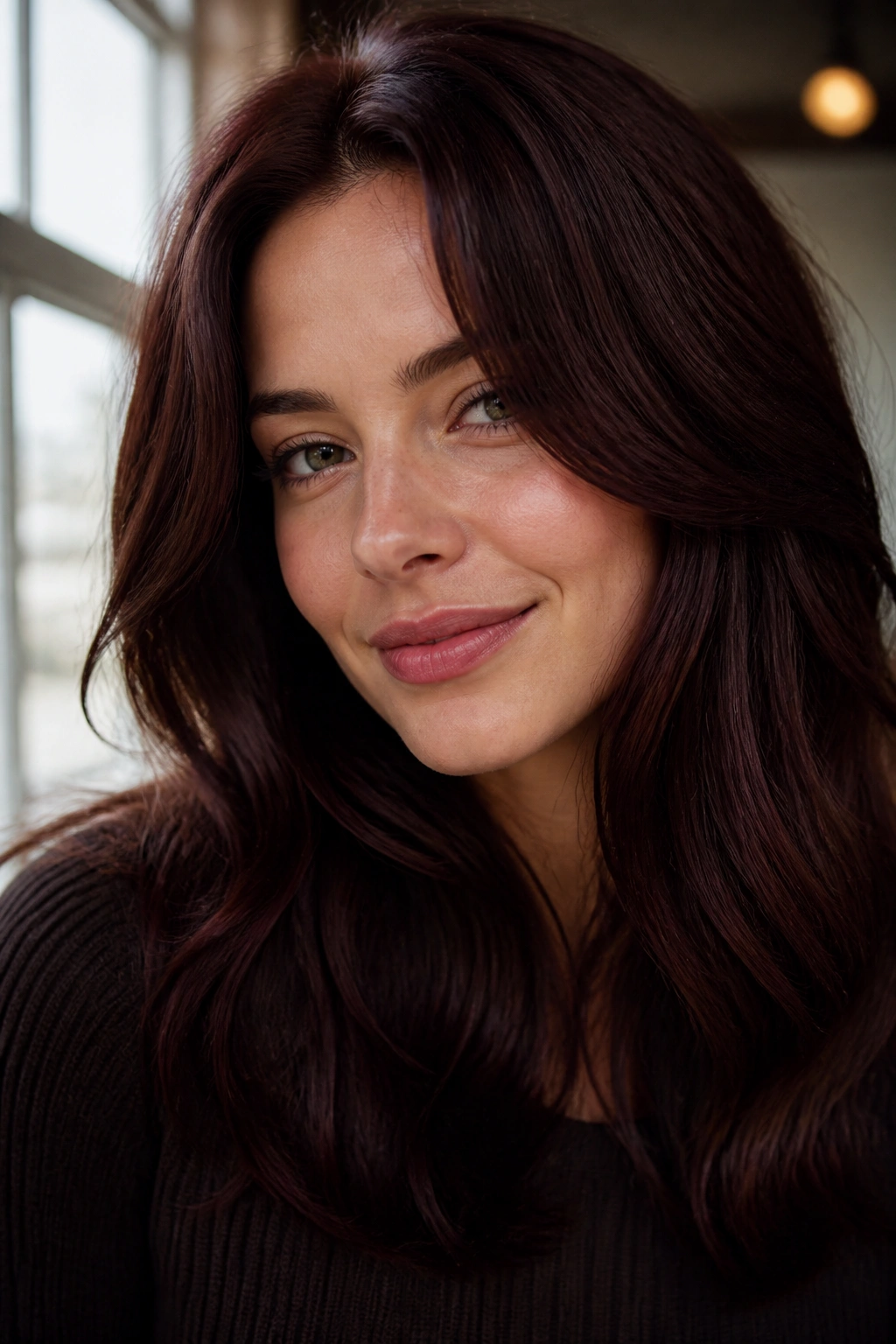
This is the shade for anyone who wants dark, glossy brunette hair with a red-wine whisper instead of a full red statement. Espresso chocolate auburn starts with a level 3 or 4 brown base, then tucks in just enough auburn that the hair looks richer every time it shifts in light. On cool skin, that subtle red sheen keeps the color from looking flat or muddy.
I like this one on straight hair, sleek waves, and blunt cuts because the shine does a lot of the work. If the finish is smooth, you get that expensive-looking depth without needing a dramatic change. Ask for a brown base with a mahogany-auburn gloss rather than a bright copper overlay.
A tiny warning: if your hair is porous, the red tones can grab too fast on the ends. A good colorist will keep the formula softer there so the whole head stays even instead of turning cherry at the bottom. That little restraint is what makes this shade look polished.
2. Mahogany Mocha Auburn for Cool Skin Tones
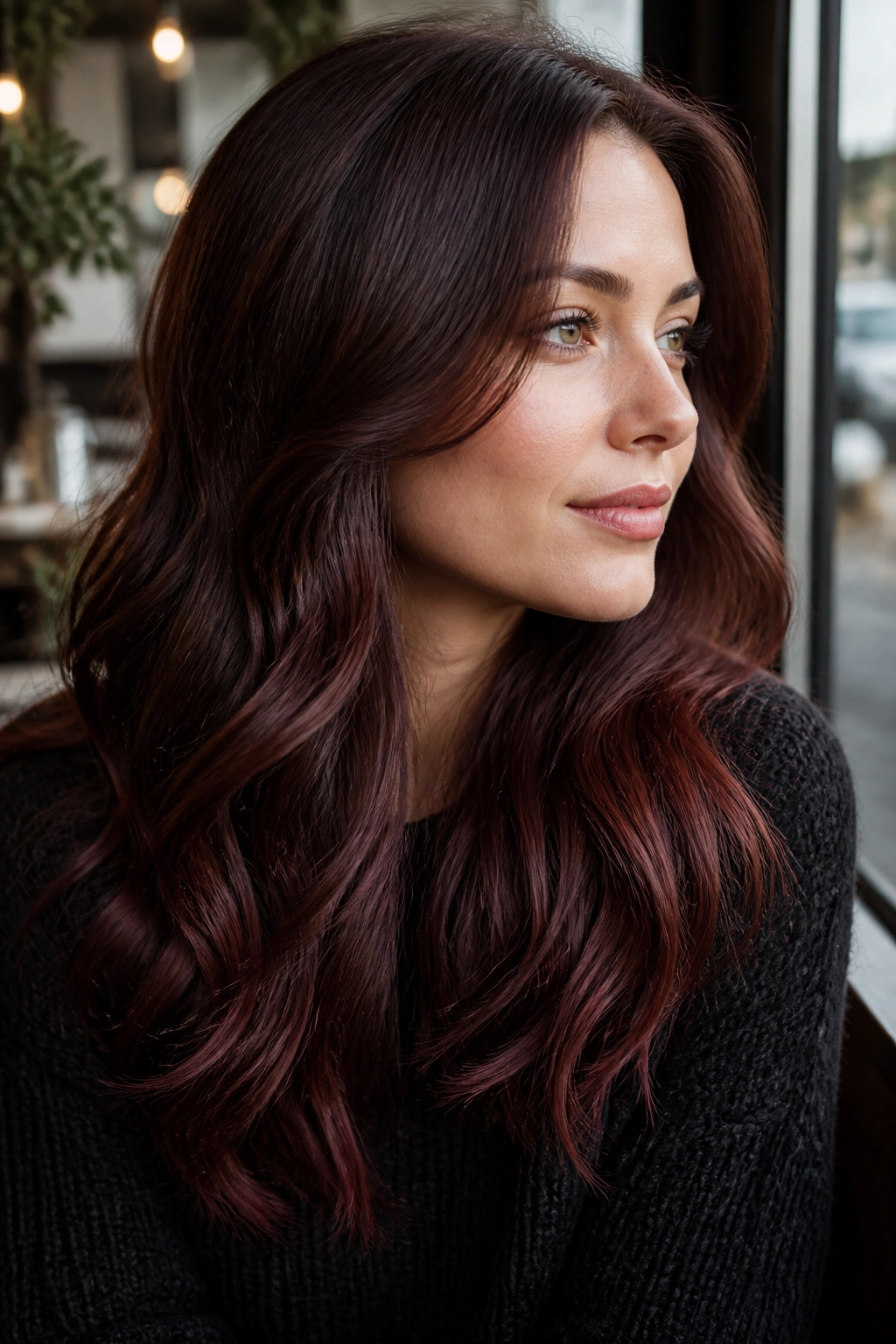
Mahogany mocha is one of the safest bets in the whole group for cool skin tones that still want warmth. The mocha base keeps everything grounded, while the mahogany tone pulls the red toward berry and wine instead of orange. That’s the difference between “pretty brown hair” and “my skin suddenly looks calmer.”
Why It Works
Mahogany has a cooler red cast than copper, so it usually plays nicer with pink or blue undertones. Mocha keeps the hair looking brunette first, which matters if you don’t want the color to shout the second you walk into daylight. The result is rich, soft, and easy to wear.
What to Ask For
- A level 4 mocha brown base
- Mahogany lowlights placed through the mid-lengths
- A soft auburn glaze on the ends
- No bright copper around the face
Best for: medium to deep cool skin, especially if you like red but don’t want a high-contrast look.
3. Black Cherry Brunette
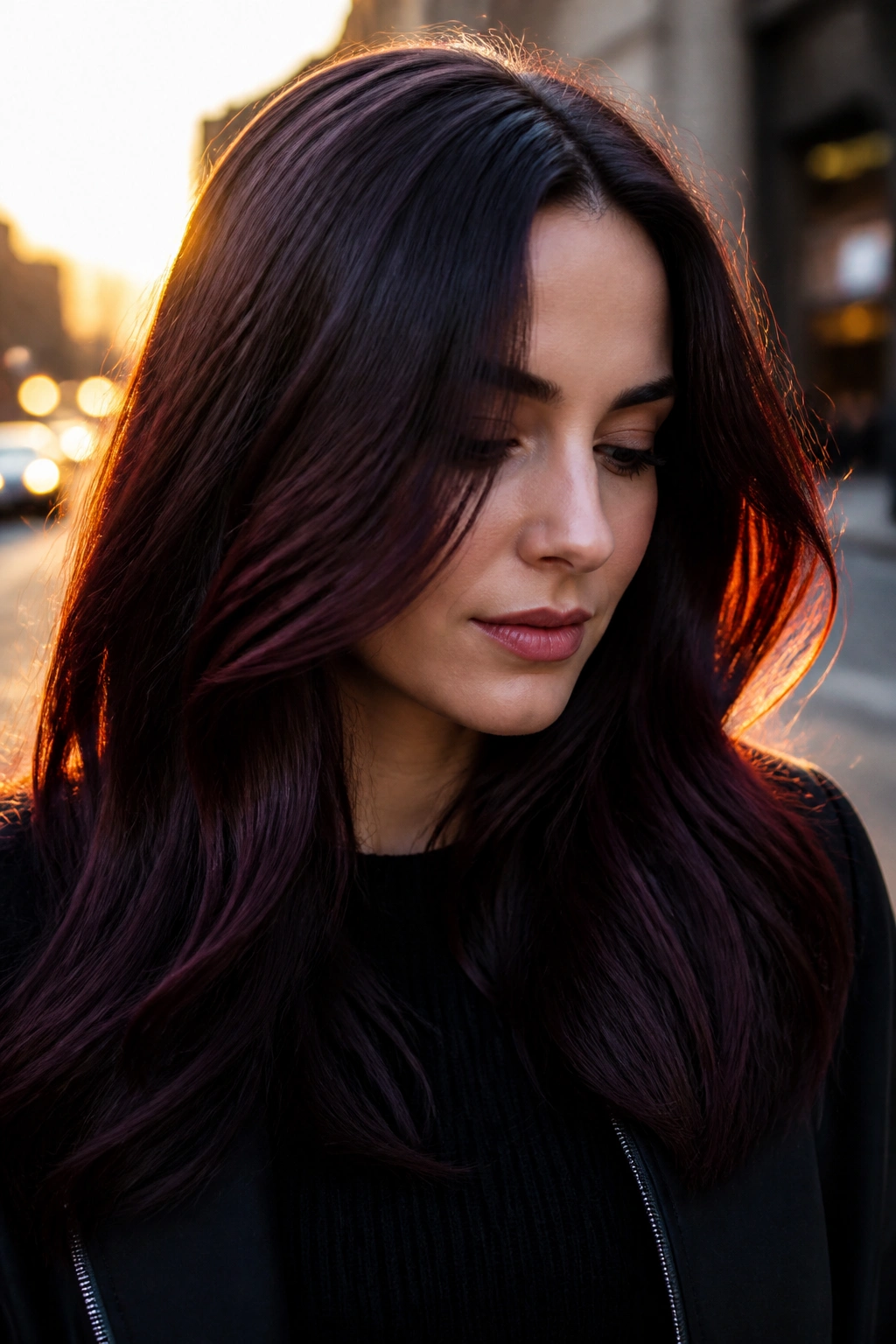
Black cherry brunette is the one that looks almost black indoors, then wakes up into a red-berry gloss outside. It’s moody in a good way. On cool skin, that blackberry-red tone feels like a natural match instead of a fight.
This shade works especially well if you’re nervous about going red because the brunette base stays in charge. You get movement without obvious streaks, and the color feels expensive when it catches light on the top layer. I’d ask for a deep brown base with black cherry demi-permanent color over the mid-lengths and ends.
The maintenance is easier than it looks, but the shine matters. A dull black cherry shade can read flat fast, so a color-depositing gloss every few weeks helps keep that berry edge alive.
4. Smoky Cinnamon Brown
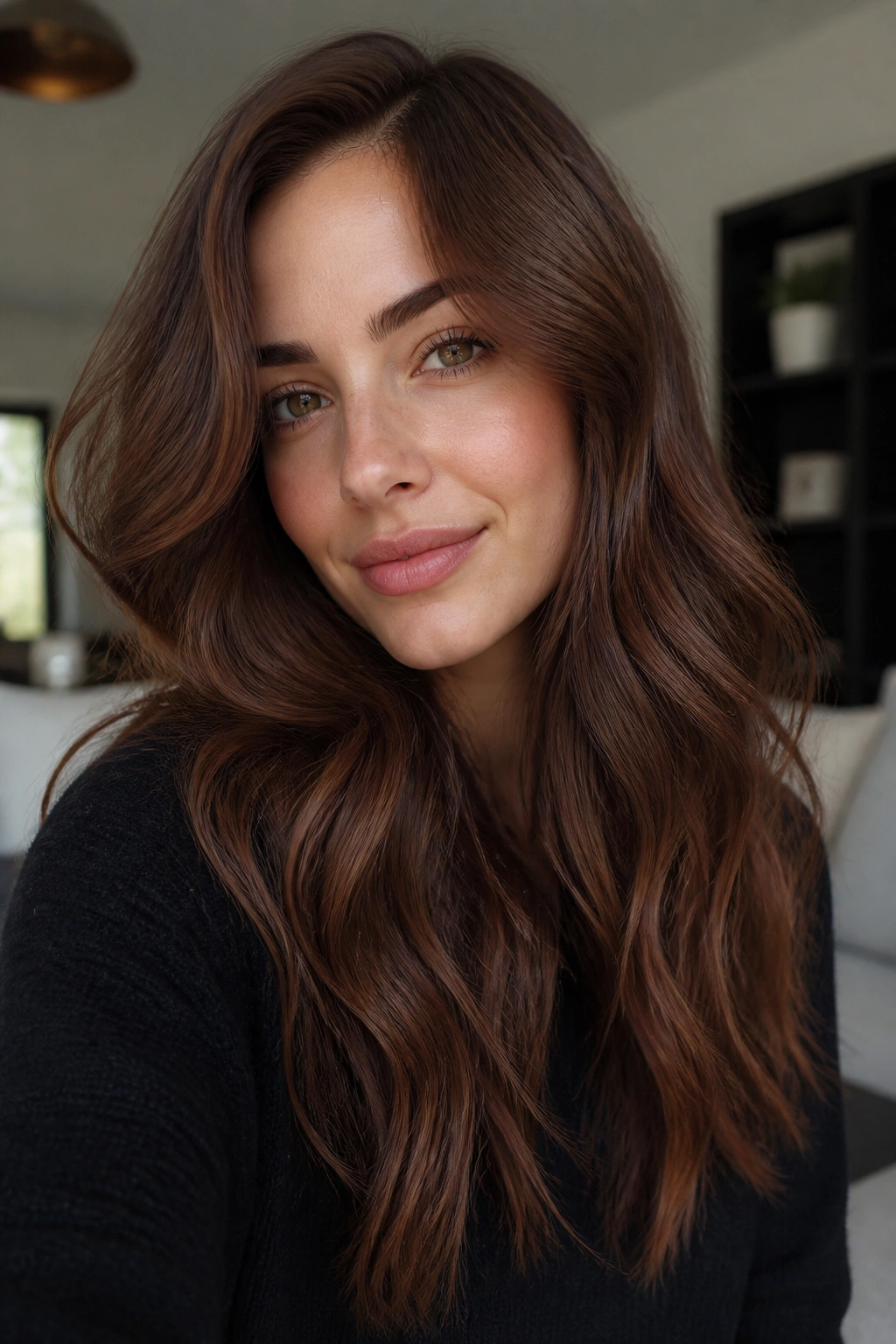
Smoky cinnamon is what I recommend when someone says, “I want auburn, but I do not want pumpkin.” That matters more than people think. Cool skin can handle cinnamon if the spice is muted with brown and a little ash, which keeps the warmth soft instead of loud.
Think of this as a brown-red with the red side turned down one notch. It looks especially good on layered cuts because the color shifts at the bends in the hair. If the layers are long enough, the movement shows off the cinnamon without turning the whole head orange.
The smart version of this shade uses a chocolate base, cinnamon mid-tones, and a smoky finish near the face. If your colorist reaches for bright copper foil, stop them. That is not the same thing.
5. Cocoa Ribbon Balayage
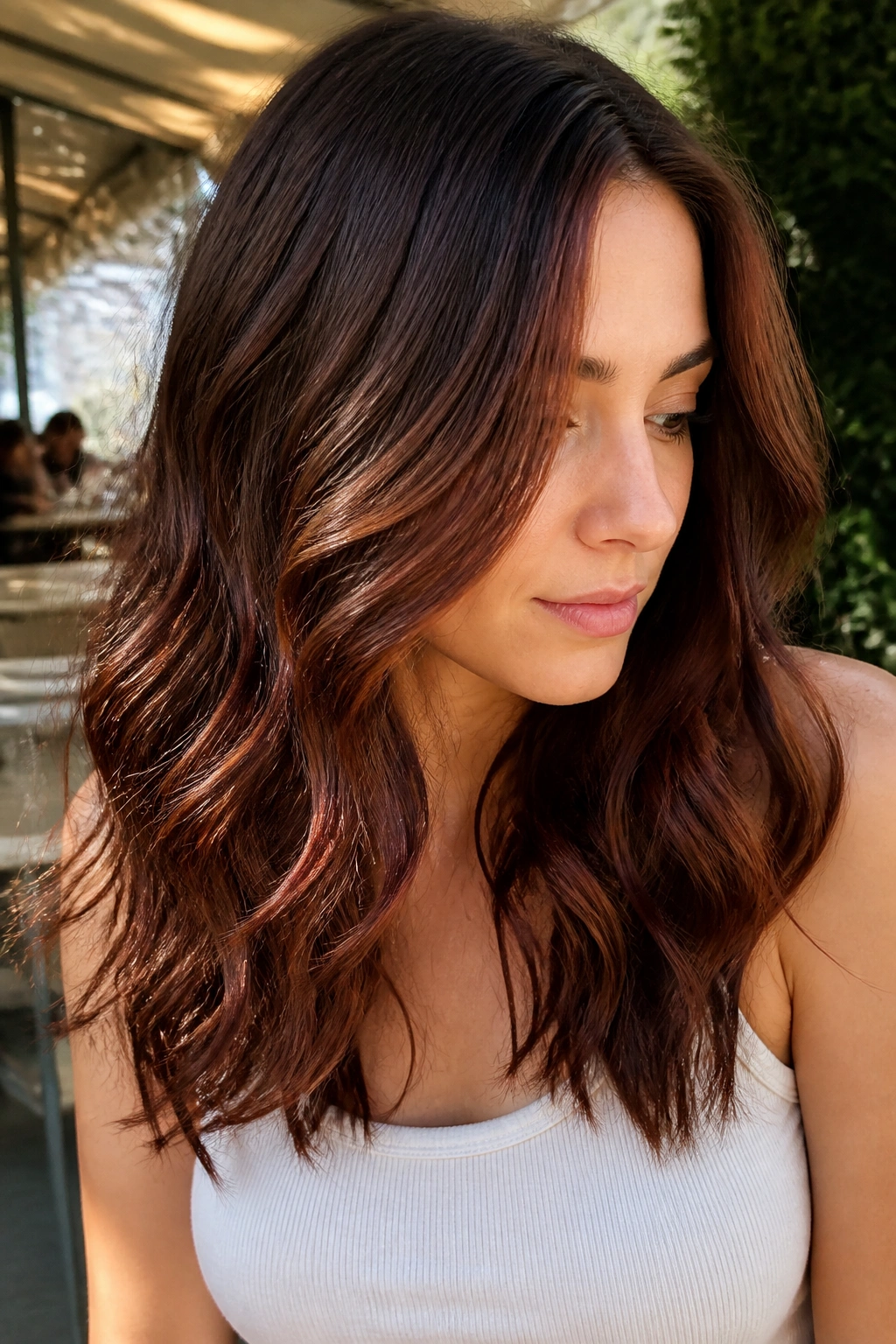
Cocoa ribbon balayage gives you the easiest entry into chocolate auburn hair color ideas for cool skin tones if you want dimension without a full color change. The brown base stays dominant, while thin auburn ribbons are hand-painted through the surface so the red only shows where the light hits.
Where It Should Sit
- Around the face, but not as thick money-piece stripes
- Through the outer layers
- On the ends of long hair, especially if the cut is layered
- A little heavier at the back if your front pieces are very light-sensitive
This technique is good because it grows out softly. The regrowth line is gentler than an all-over red-brown, which means you can stretch appointments a bit. It also keeps cool skin from getting overwhelmed by too much warmth near the cheeks.
6. Merlot Money Piece
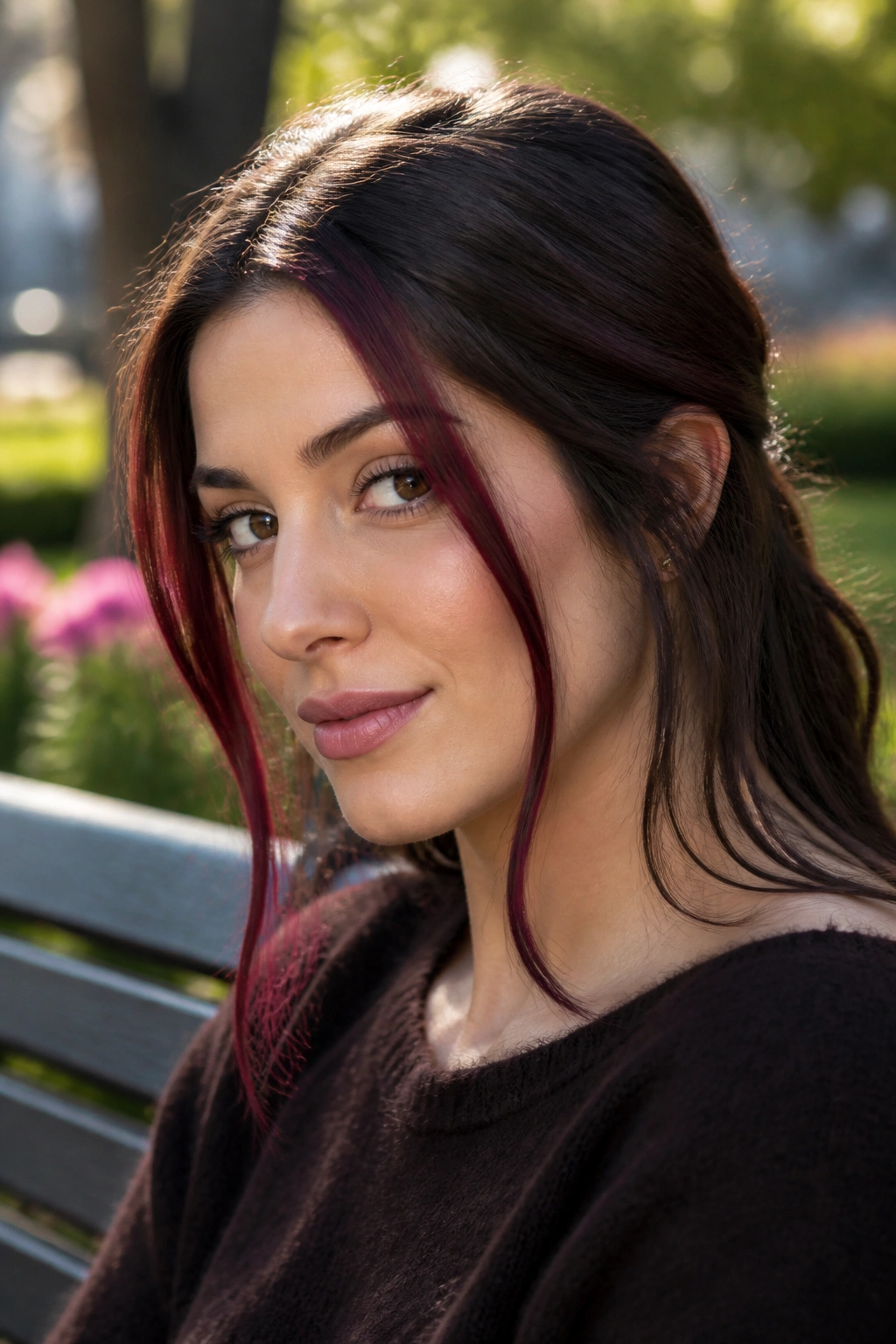
A merlot money piece can wake up a face fast. The key is restraint. You want two front pieces that look like deep wine, not a traffic-light red stripe, and the rest of the hair should stay rooted in chocolate brown.
This works especially well if you wear your hair tucked behind one ear, clipped back, or in loose waves. The front pieces move first, so the merlot shows up right where it should. On cool skin, that wine tone can brighten the face without making the cheeks look flushed.
If I were sending someone to the chair for this, I’d tell them to keep the money piece narrow, blended at the root, and darker than they think. Chunky red around the face can get loud fast. Narrow is smarter.
7. Plum-Gloss Brunette for Cool Undertones
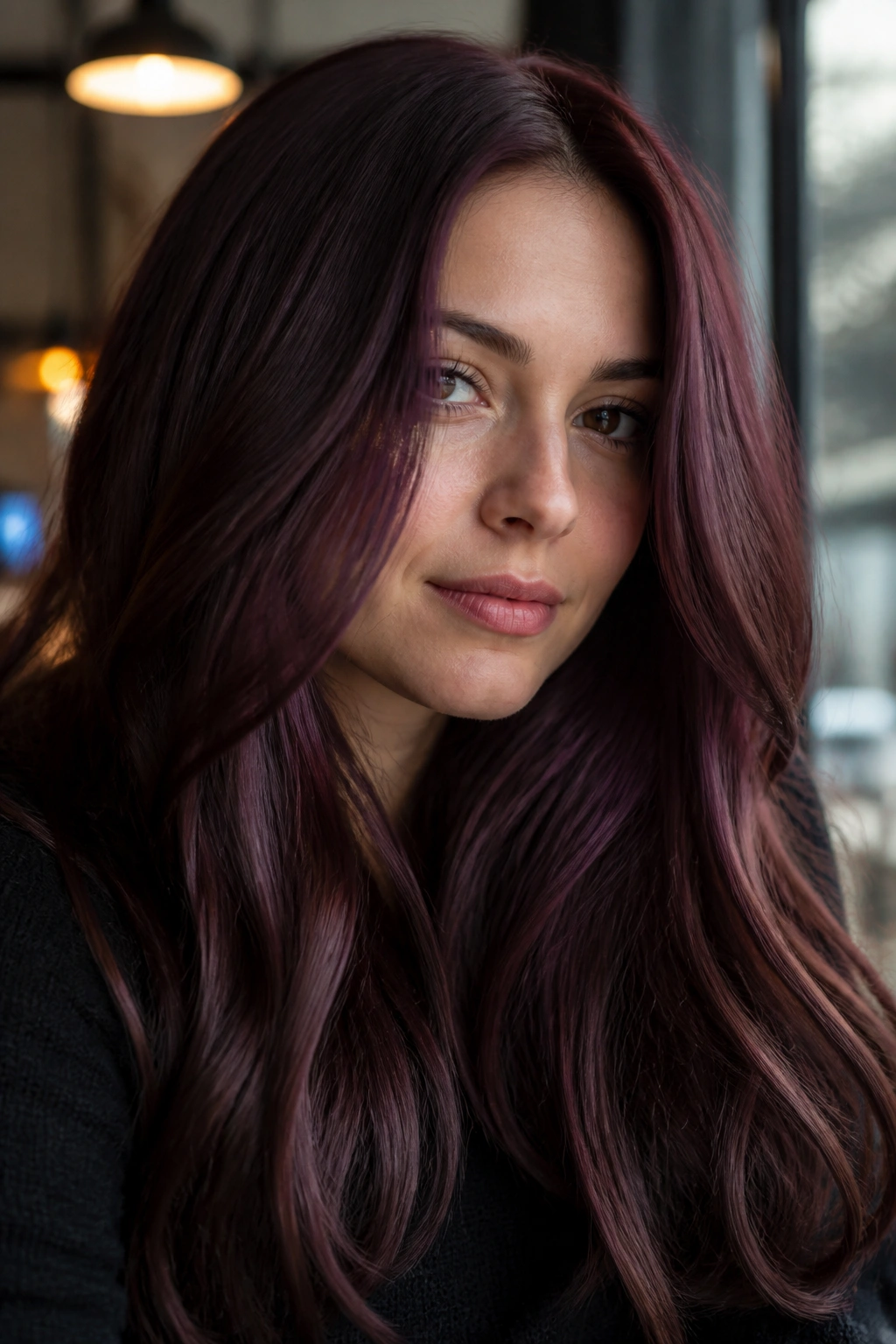
Plum-gloss brunette is one of my favorites because it looks understated until the light hits it, then the violet-red tone appears. That little shift is gold for cool undertones. The plum softens the auburn, which keeps the color from drifting into orange territory.
The Best Part
This shade behaves like a brunette from a distance. Up close, you see the red-violet shine. That makes it easy to wear in conservative settings, and it also flatters cool skin because plum sits closer to berry than to copper.
Keep It Looking Fresh
A gloss, not a heavy permanent red, is the move here. Ask for a semi-permanent plum glaze over a chocolate base, then refresh the tone every 4 to 6 weeks. The ends will fade first, so keeping them hydrated helps the color hold its sheen.
8. Chestnut Wine Melt
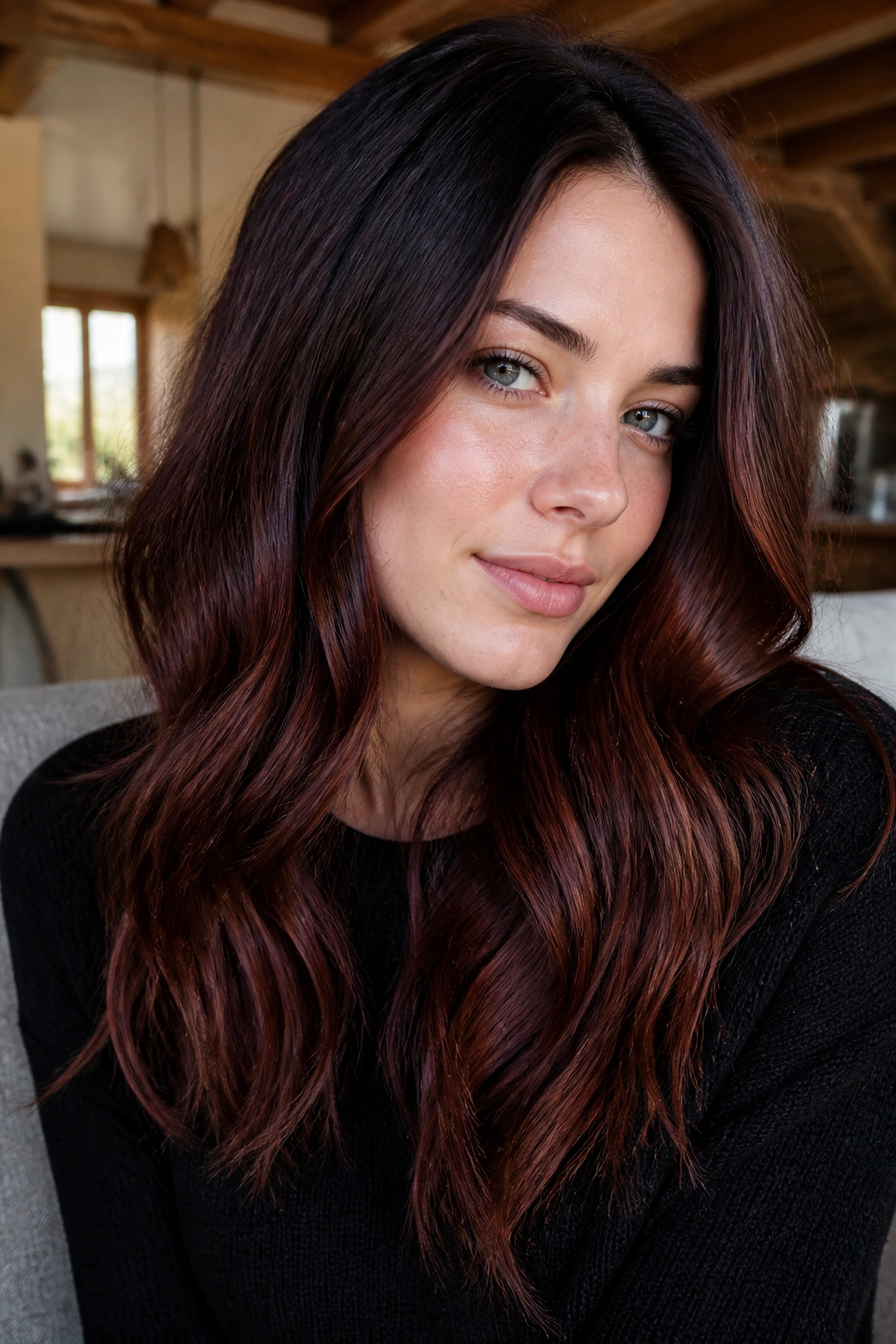
Chestnut wine melt gives you a darker root that slowly opens into red-brown length, which is a nice choice if you want color that looks intentional from every angle. It works on cool skin because the chestnut tone stays muted while the wine note brings the auburn depth.
A melt like this should not have a hard line. You want the root shadow to blur into the red-brown mids, then a slightly brighter finish toward the ends. The whole thing should feel blended enough that nobody can point to one exact starting line.
This is one of the better choices for layered cuts and long waves. The motion in the hair shows the tone shift, and the wine notes keep the brown from looking dusty. If your hair is very dark, you may need a gentle lift first so the chestnut reads instead of disappearing.
9. Sable Auburn Underlights
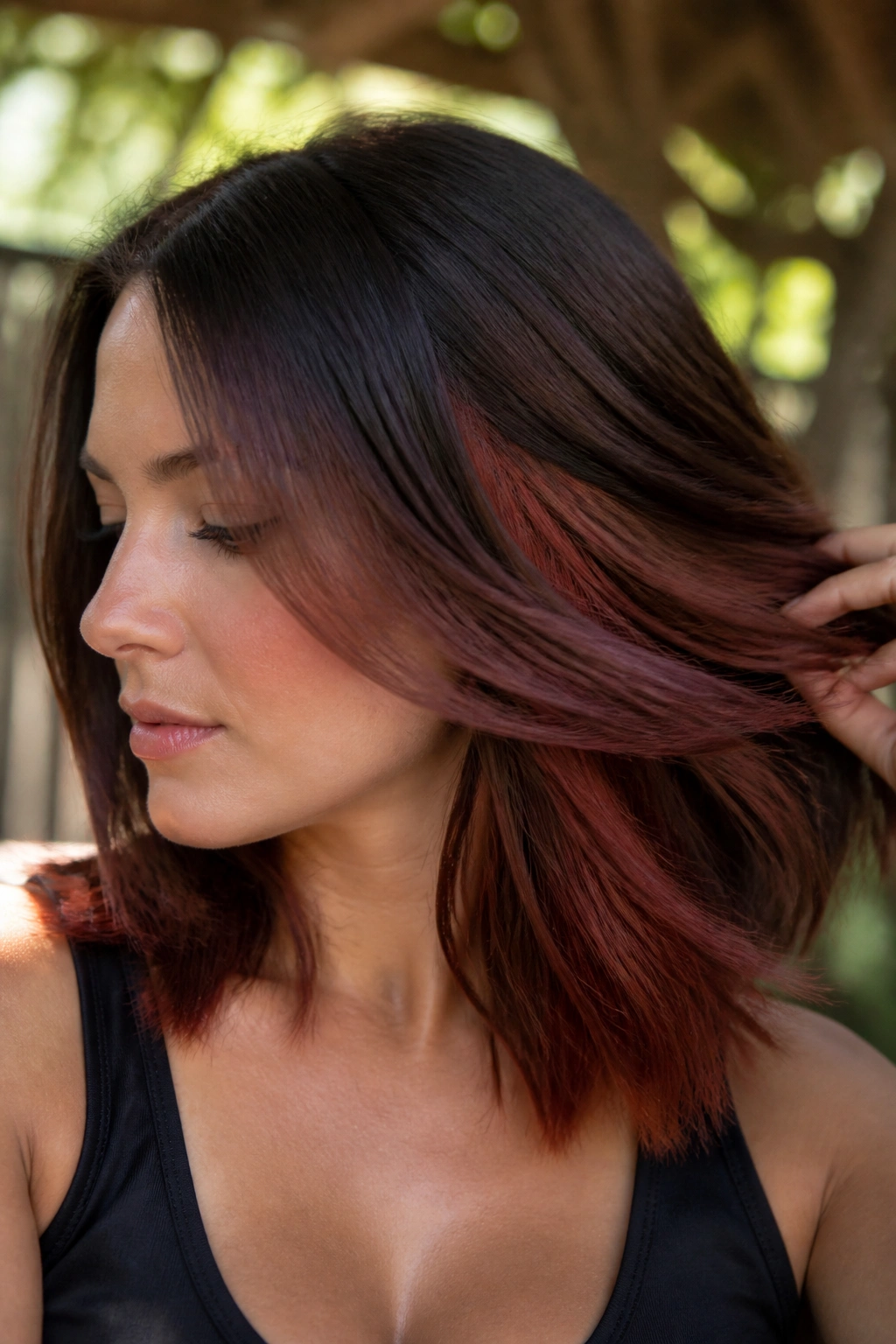
Sable auburn underlights are for anyone who wants color with a little secret. The top layer stays dark, almost sable-brown, while the panels underneath carry a deep auburn-red tone. It’s a smart way to wear red if you want control over how much shows.
This look is especially good on shoulder-length cuts, lobs, and long layers. When hair moves, the auburn flashes underneath. When it’s pinned up, you see even more of it. Cool skin tends to like this kind of hidden warmth because the red never sits too boldly against the face.
A good underlight placement should be strategic, not random. Put the brighter red panels under the crown and through the lower midsection so the movement looks natural. If the red is only at the very bottom, the effect can feel heavy. Better to layer it.
10. Dark Cherry Ombré
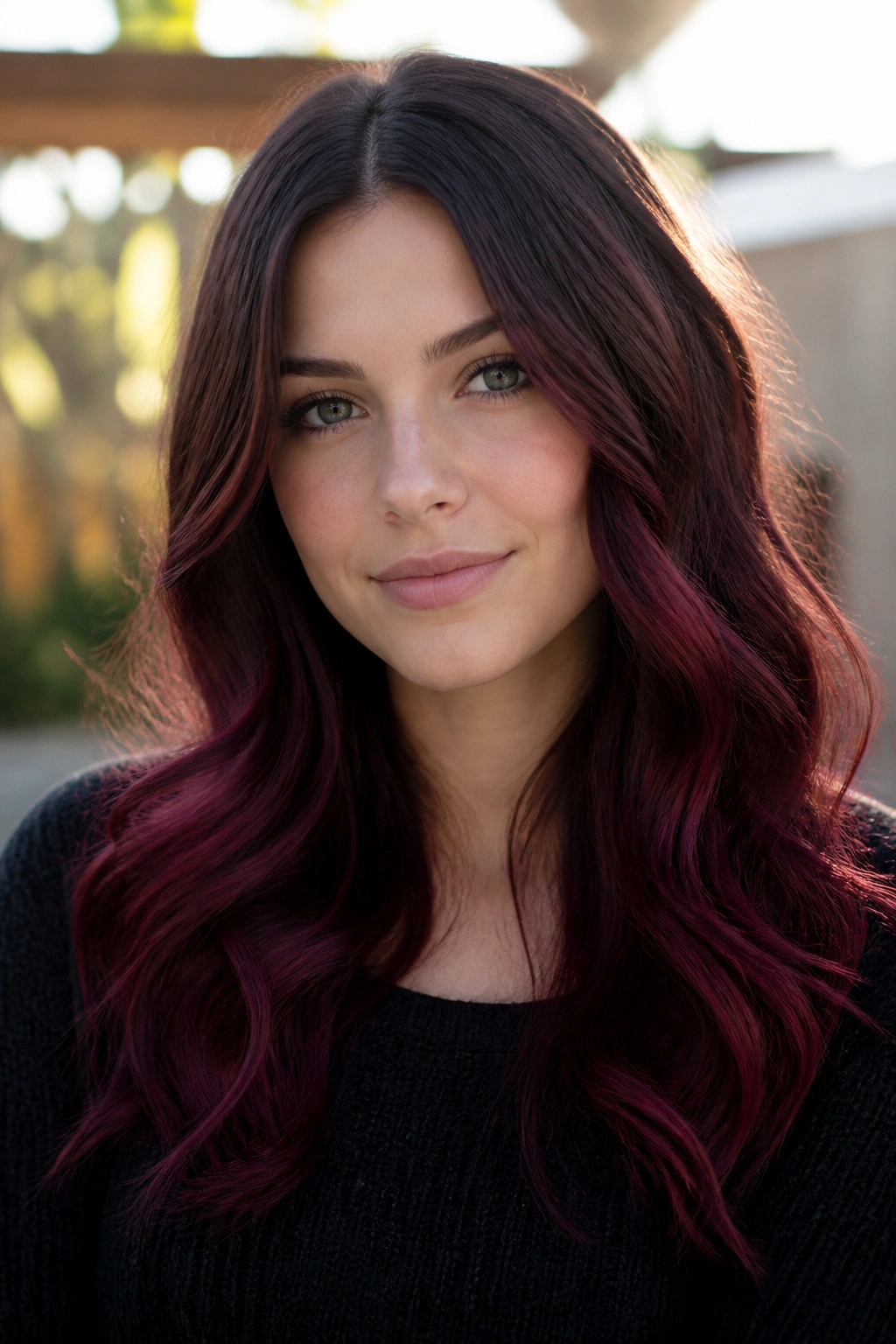
Dark cherry ombré is the bolder cousin in this list. It starts with a chocolate root and moves into cherry-red ends, usually with a soft shift in the middle so the color doesn’t look split in two. The cherry tone is rich enough for cool skin without turning candy-bright.
The shape of the cut matters here. Waves and curls make the ombré look smoother, because the bend in the hair breaks up the color shift. Straight hair can wear it too, but the fade line needs to be extra soft or it starts to look harsh.
I like this when someone wants drama but still wants the brunette base to stay in charge. It has presence. It also lets you keep your natural depth near the roots, which is useful if you hate obvious regrowth.
11. Rosewood Brunette
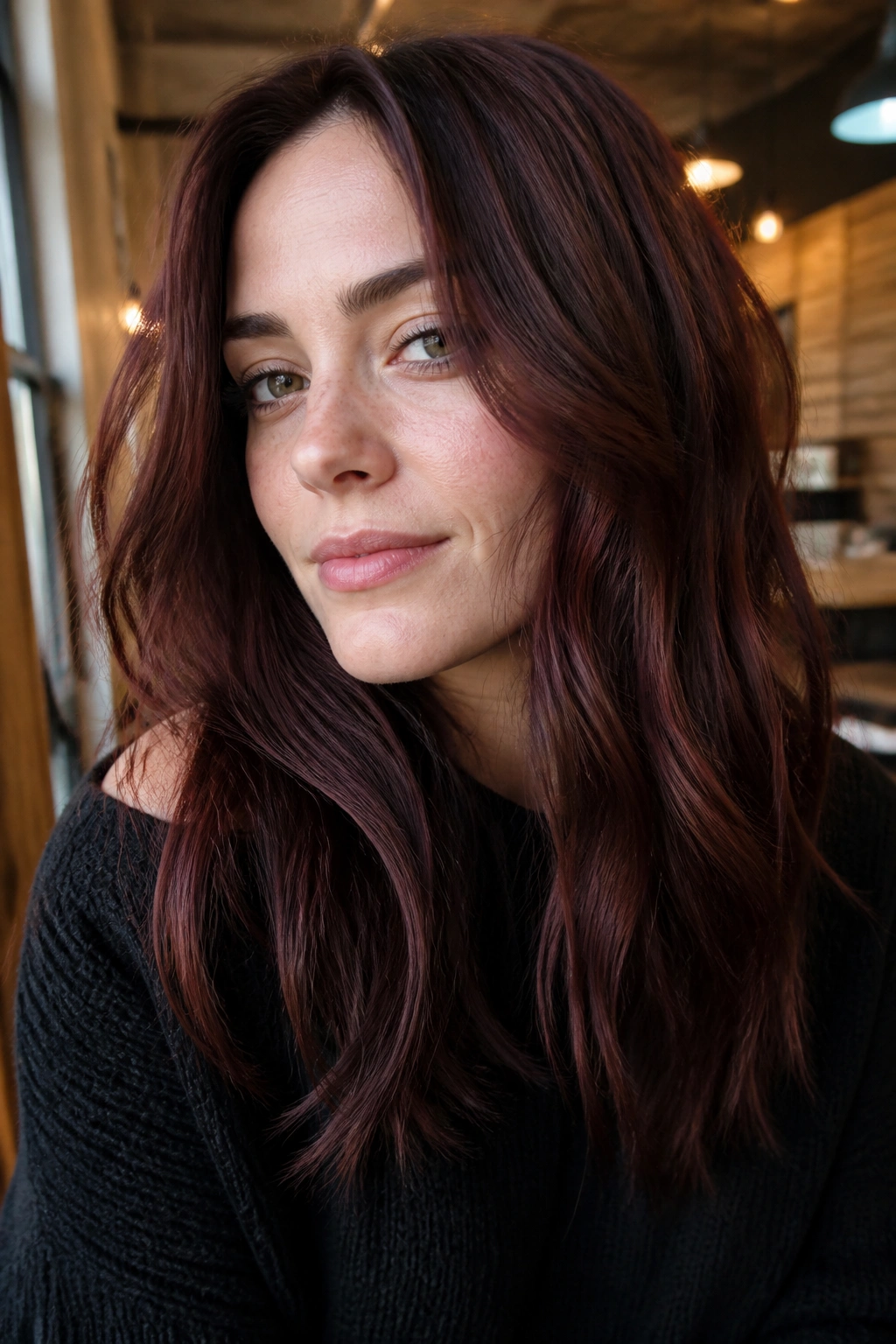
Rosewood brunette is softer than a lot of auburn shades, and that’s why it works so well on cool skin. The rosewood tone sits between dusty red, brown, and a faint berry cast. It does not scream red. It murmurs it.
What Makes It Different
Rosewood is less spicy than cinnamon and less wine-dark than merlot. That middle ground makes it a lovely pick if your skin leans pink and you want the hair to echo that softness instead of fighting it. It’s the kind of color that looks calm, not loud.
The best way to wear it is over a neutral chocolate base with a rosewood gloss. If the red starts to look too bright, ask for a glaze with a little more brown in it. That tiny adjustment can save the whole shade.
12. Mulled Wine Lob
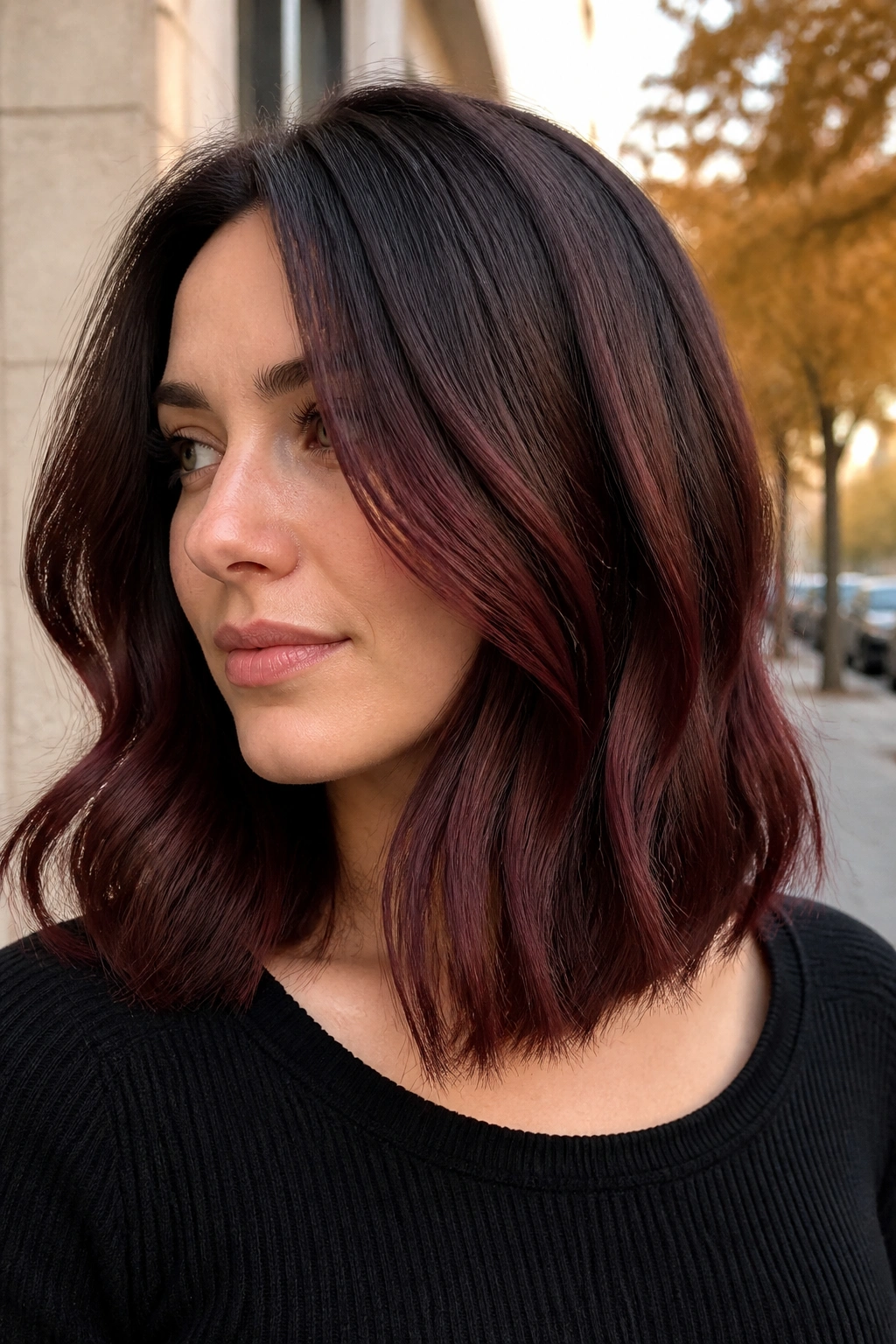
A mulled wine lob is a great answer if you want the color to feel modern and the cut to do some of the styling work. A lob shows off auburn beautifully because the ends sit close to the face, which means the wine tones become visible without needing inches of length.
- Best on: blunt lobs, soft waves, or collarbone cuts
- Color profile: deep chocolate base with wine-red reflection
- Maintenance: gloss every 6 weeks, especially on the front pieces
- Why it helps cool skin: the wine note is red, but not orange
The cut gives you a clean line, and the color keeps it from feeling plain. If your hair is fine, this combo can look fuller because the darker base creates depth while the auburn adds movement.
13. Smoked Copper Brown
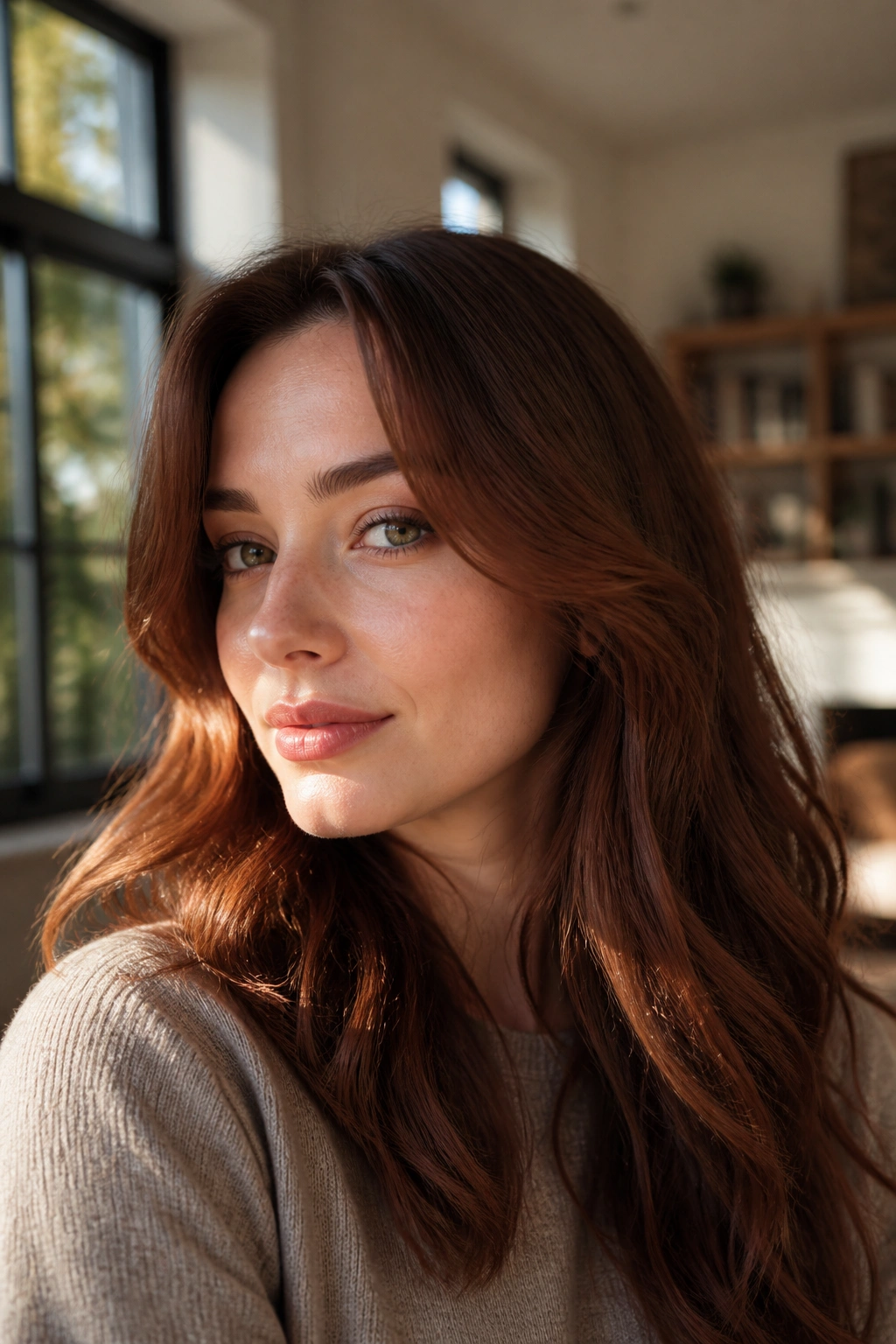
Smoked copper brown is the warmest shade here, and I still think it can work on cool skin if the copper stays muted under brown. The “smoked” part is the whole trick. Without it, you’re just walking into classic orange territory.
This shade is best for people who want a bit more light around the face but still like a brunette root. The copper should appear as a glow, not a block of color. Think brown hair with fire at the edges, not a full copper conversion.
I would keep this one on the darker side if your skin is very pink. If your complexion is neutral-cool, though, the brown-copper mix can look lively without feeling harsh. It’s the strongest warm choice in the lineup, and that’s exactly why it needs a careful hand.
14. Burgundy Babylights
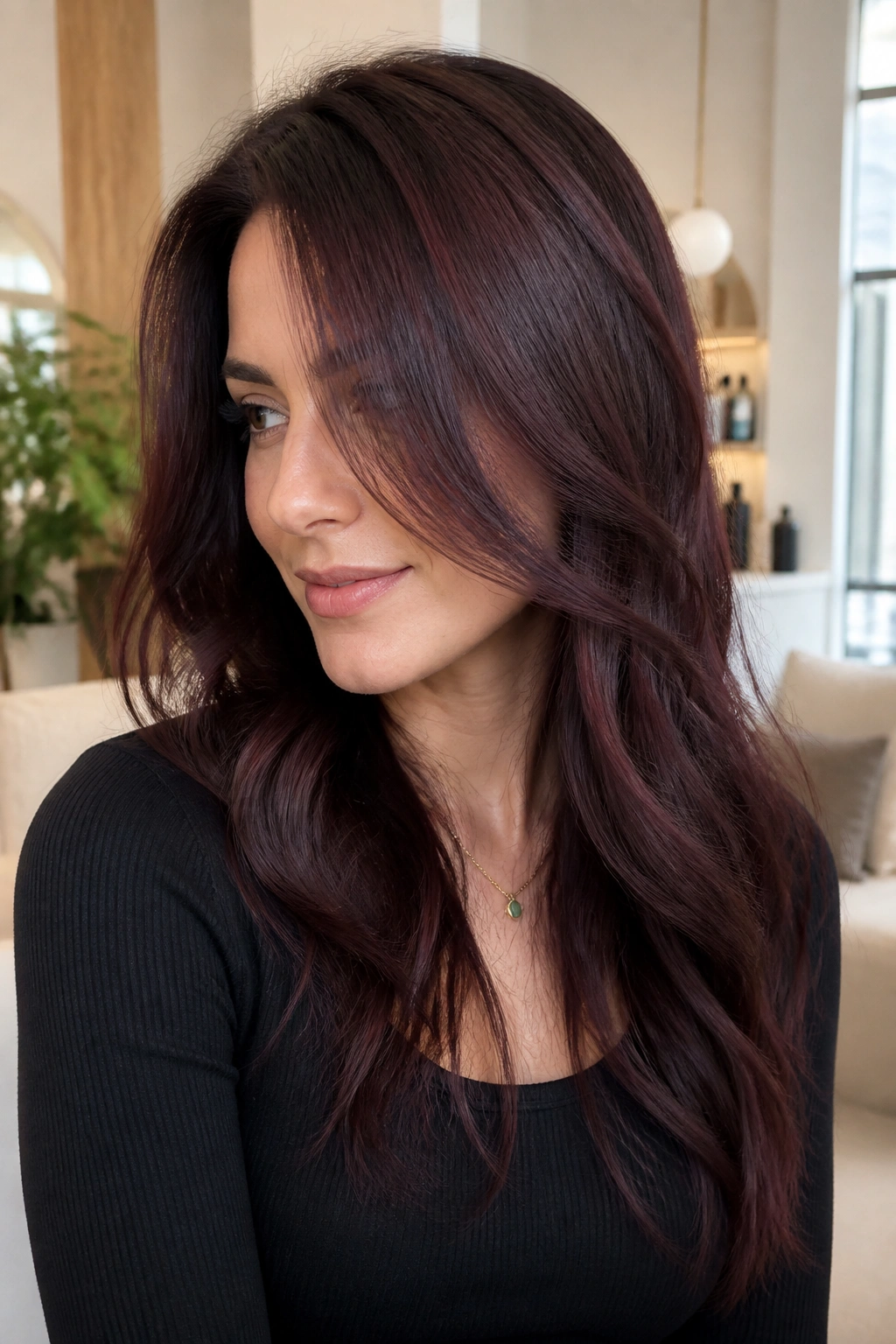
Burgundy babylights are tiny, thin strands of color woven through a chocolate base. They’re subtle at first glance, then very visible once the hair moves. That narrow placement matters because cool skin tends to do better with fine red-brown detail than with chunky streaks.
What to Ask For
- Babylights no wider than about 1/8 inch
- Burgundy tones through the top layer
- A soft brown shadow at the roots
- No bright copper pieces around the hairline
Babylights work because they scatter the red instead of dumping it all in one place. The overall effect is richer, and the grow-out is easier than with larger highlights. If your hair is long, the movement in the mid-lengths shows the burgundy in a cleaner way.
15. Truffle Auburn Layers
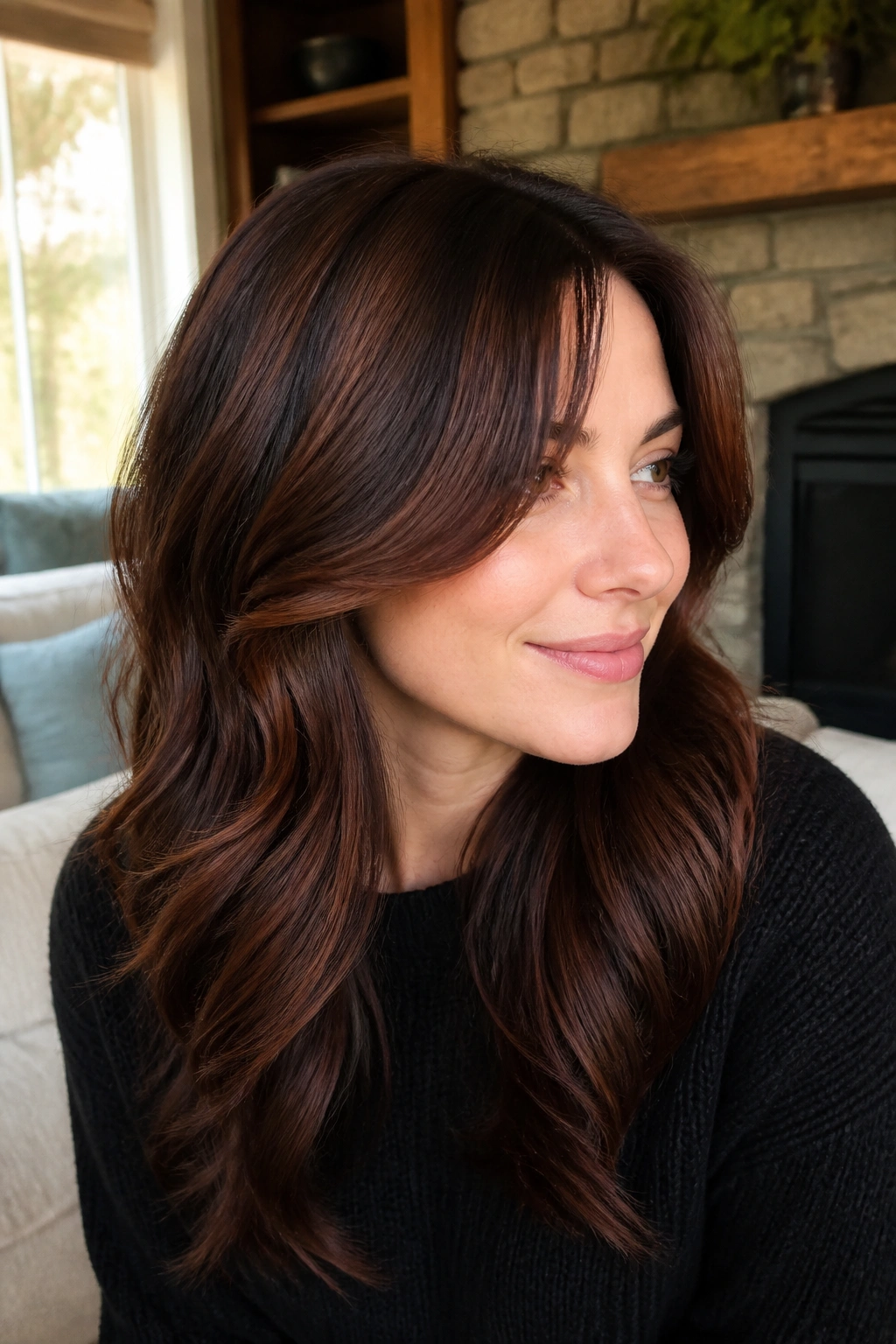
Truffle auburn layers are for people who want their hair to look like a deep dessert in the best sense. The truffle base keeps it dark and glossy, while the auburn only appears where the layers bend and separate. That makes the color feel soft, not striped.
This one suits layered cuts more than one-length hair. On layers, the auburn catches on the texture and gives the style life. On a blunt cut, it can look heavier. That’s why I’d match it to shags, long layers, and face-framing shapes.
A cool skin tone usually looks good with this because the red is not dominant. The brown is. The auburn is there to warm the surface, not take over the whole head.
16. Blackberry Brunette
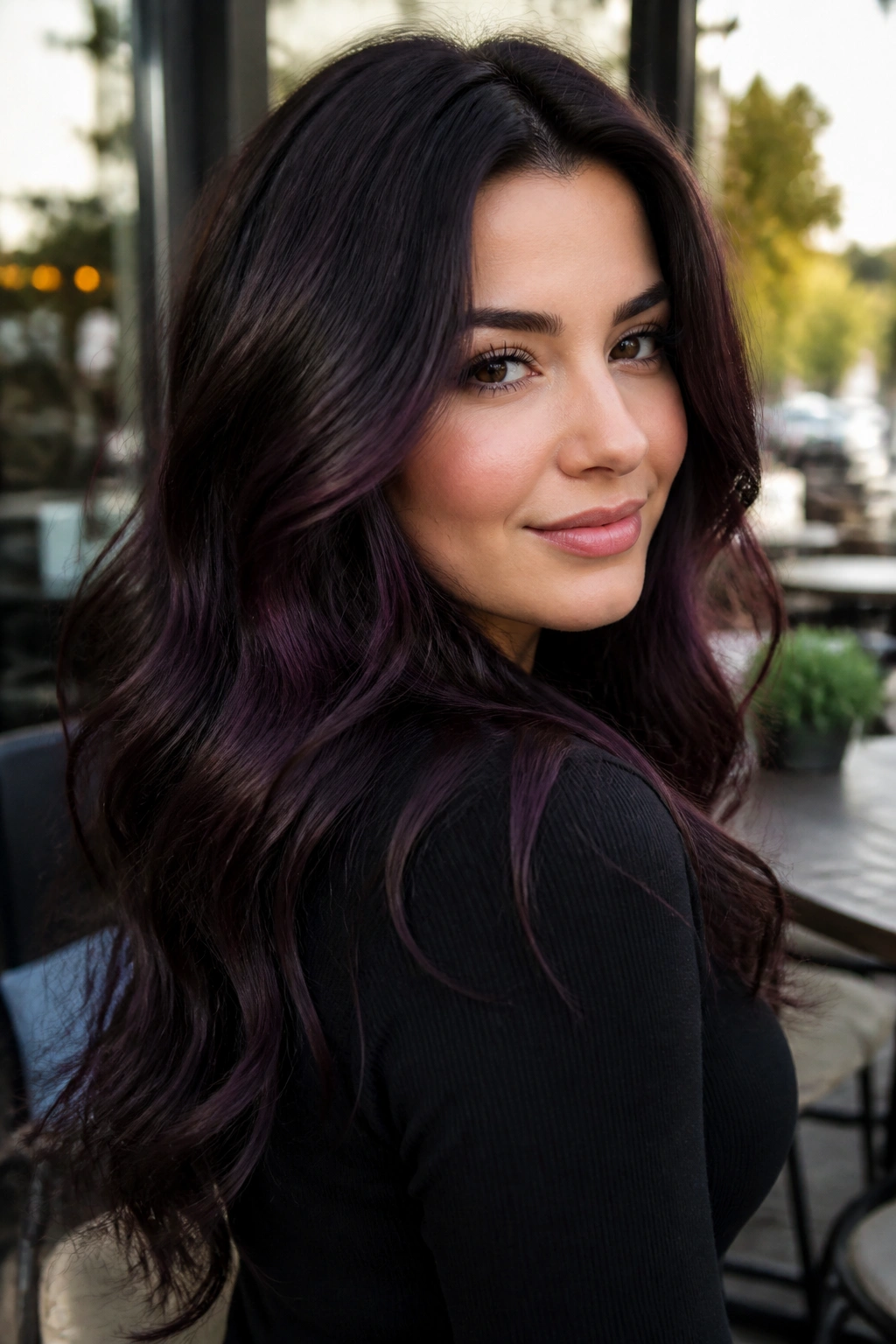
Blackberry brunette is one of the coolest-leaning options in the whole group, and I mean that in the nicest way. It sits close to dark brown, but the berry-violet tone gives it depth that flat black hair sometimes misses. On cool skin, it can look almost seamless.
This shade is a good fit if you like drama without orange or copper. It also works well on wavy hair because the berry tones show at the ridges of the wave. Straight hair reads darker, which is fine if that’s your thing.
If the goal is a subtle red, this may be too dark. If the goal is a deep brunette that has life in it, it’s excellent. A violet-based gloss helps keep it on the cool side as it fades.
17. Cocoa Root Smudge
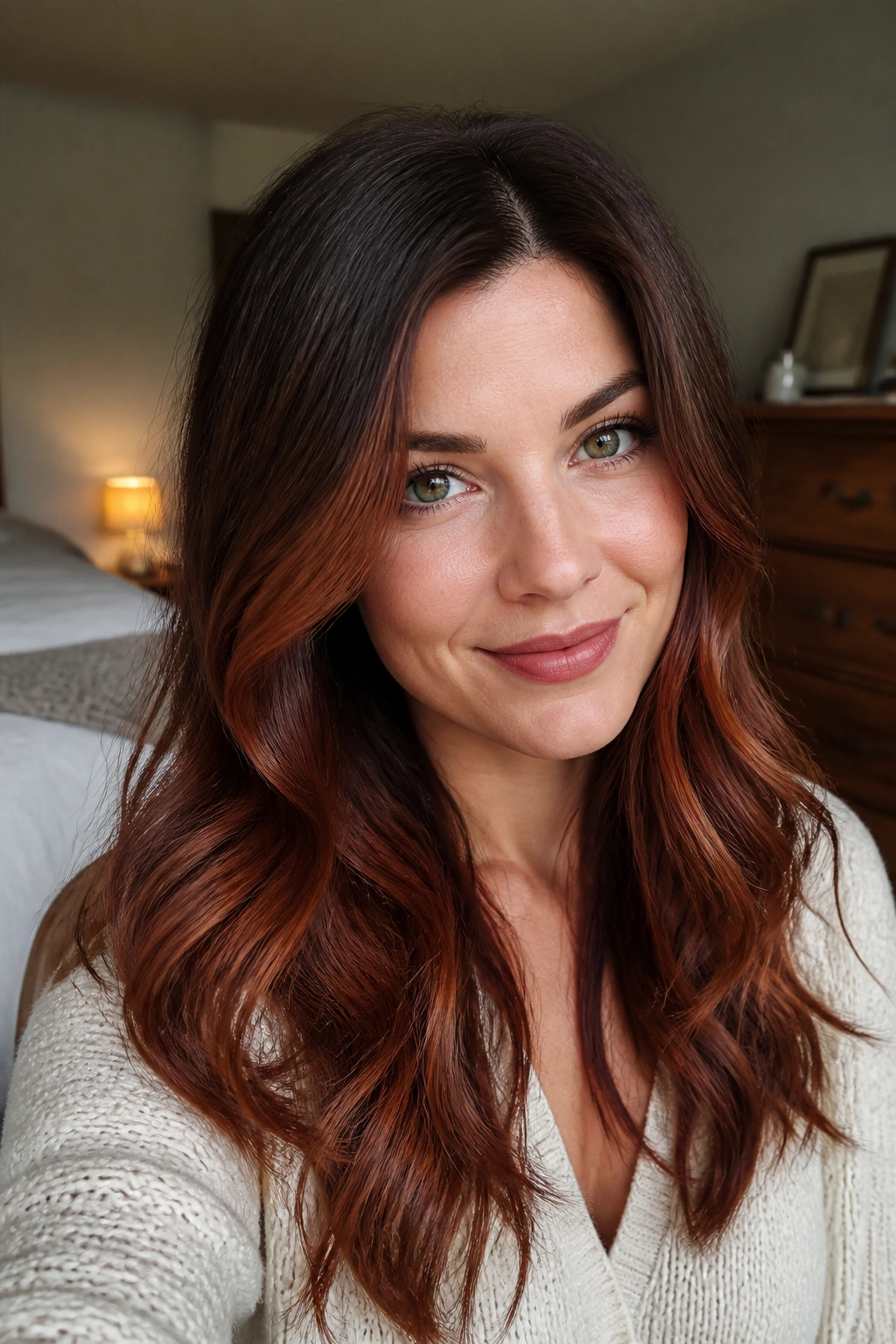
Cocoa root smudge is the practical girl in the group, and I mean that as a compliment. The roots stay deep chocolate, then the auburn softens through the mids and ends, so the regrowth line never looks abrupt. It’s a good choice if you do not want your color to announce itself every month.
Why It’s So Wearable
The root smudge hides grow-out. That alone makes life easier. It also lets the auburn sit lower in the hair, where it can warm the ends without crowding the face.
How to Keep It Fresh
- Refresh the gloss every 6 to 8 weeks
- Use a color-safe shampoo 2 to 3 times a week
- Add a mask if the ends feel rough
- Avoid clarifying shampoo unless the hair feels coated
For cool skin, this is one of the easiest shades to wear because the face stays framed by brown rather than red. The auburn is there, but it never feels overworked.
18. Smoky Auburn Bob
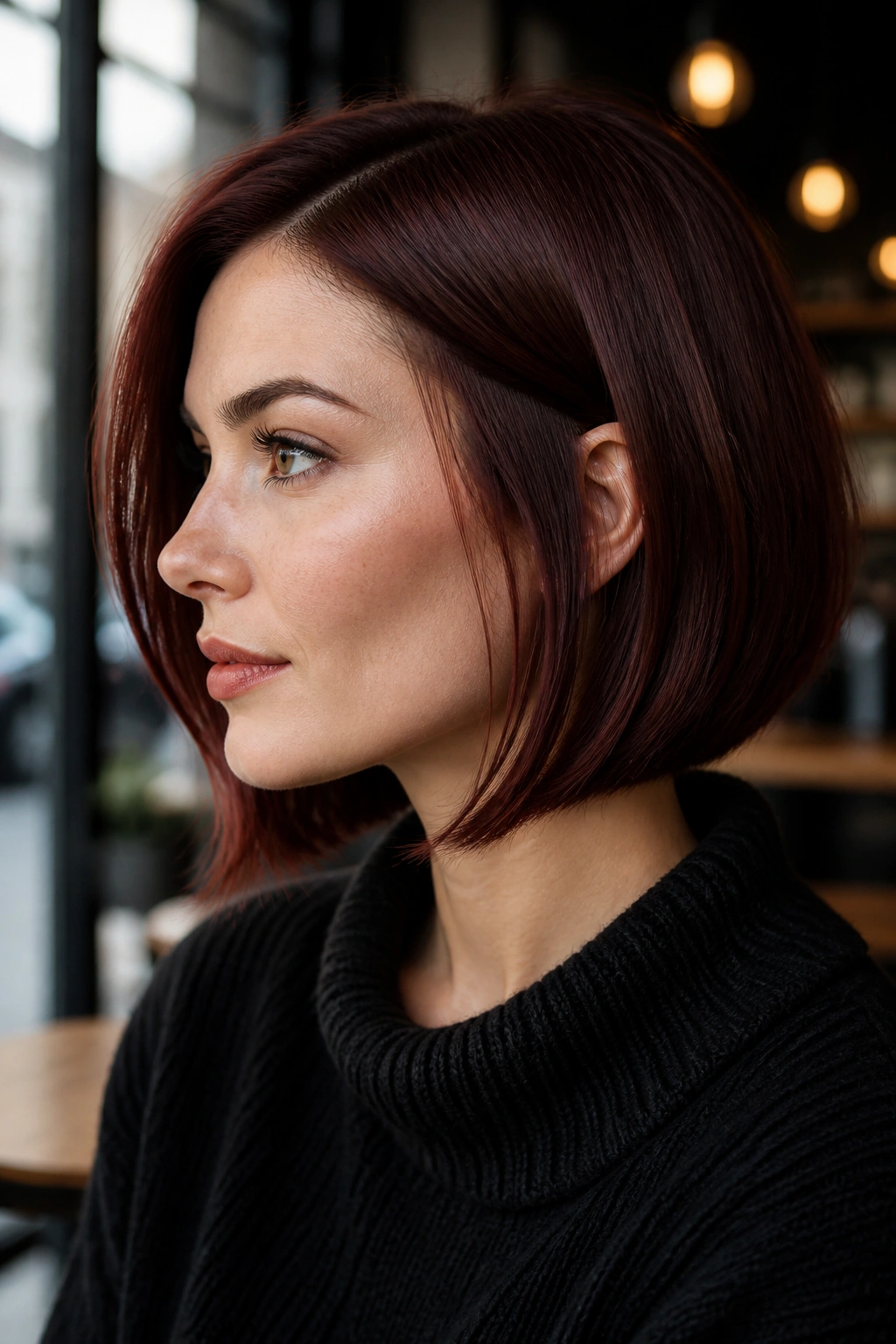
A smoky auburn bob looks chic because the cut gives the color edges to play with. A bob doesn’t need a lot of help; the shape already does enough. The smoky auburn tone just adds a darker red-brown finish that feels neat instead of bright.
This is a strong choice if you want color that shows up in a sharp line rather than a lot of movement. It works especially well with tucked-behind-the-ear styling, because the front pieces reveal the auburn near the jawline. Cool skin likes that darker red because it keeps the face from looking overly warm.
I’d avoid anything too copper here. A bob is unforgiving when the tone is wrong. Keep it smoky, keep it deep, and the cut will do the rest.
19. Coffee Bean Garnet
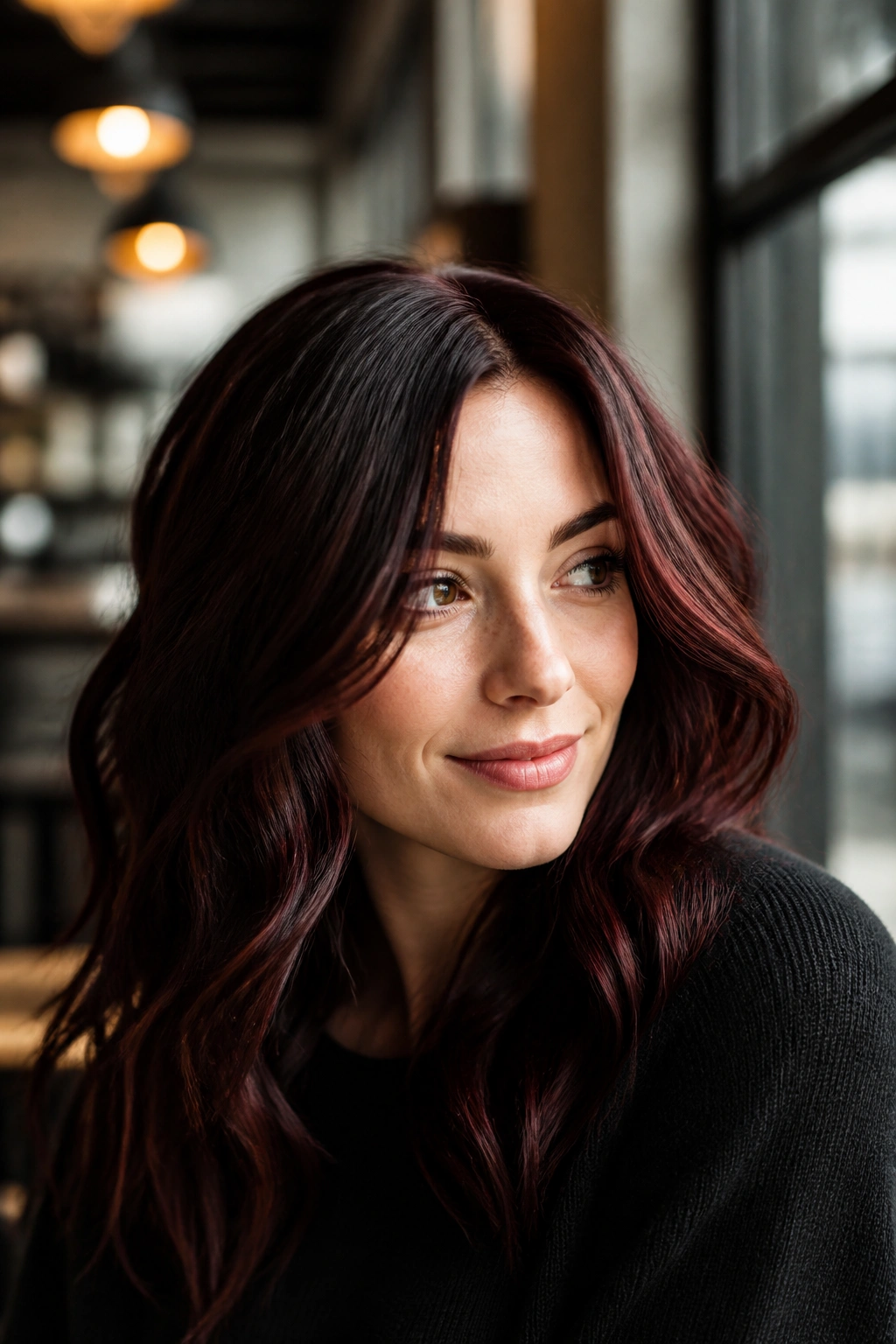
Coffee bean garnet is dark, rich, and a little moody. It starts with a coffee-brown base, then layers in garnet-red ribbons that give the hair a jewel-tone finish. That garnet note is where the cool-skin friendliness comes from.
The shade works well if you want something deeper than cherry but richer than plain brown. In low light, it reads brunette. In daylight, the garnet shows up and gives the color a polished edge. It is especially nice on medium-density hair because there’s enough surface area to catch the red reflection.
A lot of people ask for “auburn” when what they actually want is this. They want depth first, warmth second. Coffee bean garnet gets that balance right.
20. Velvet Chestnut Curls
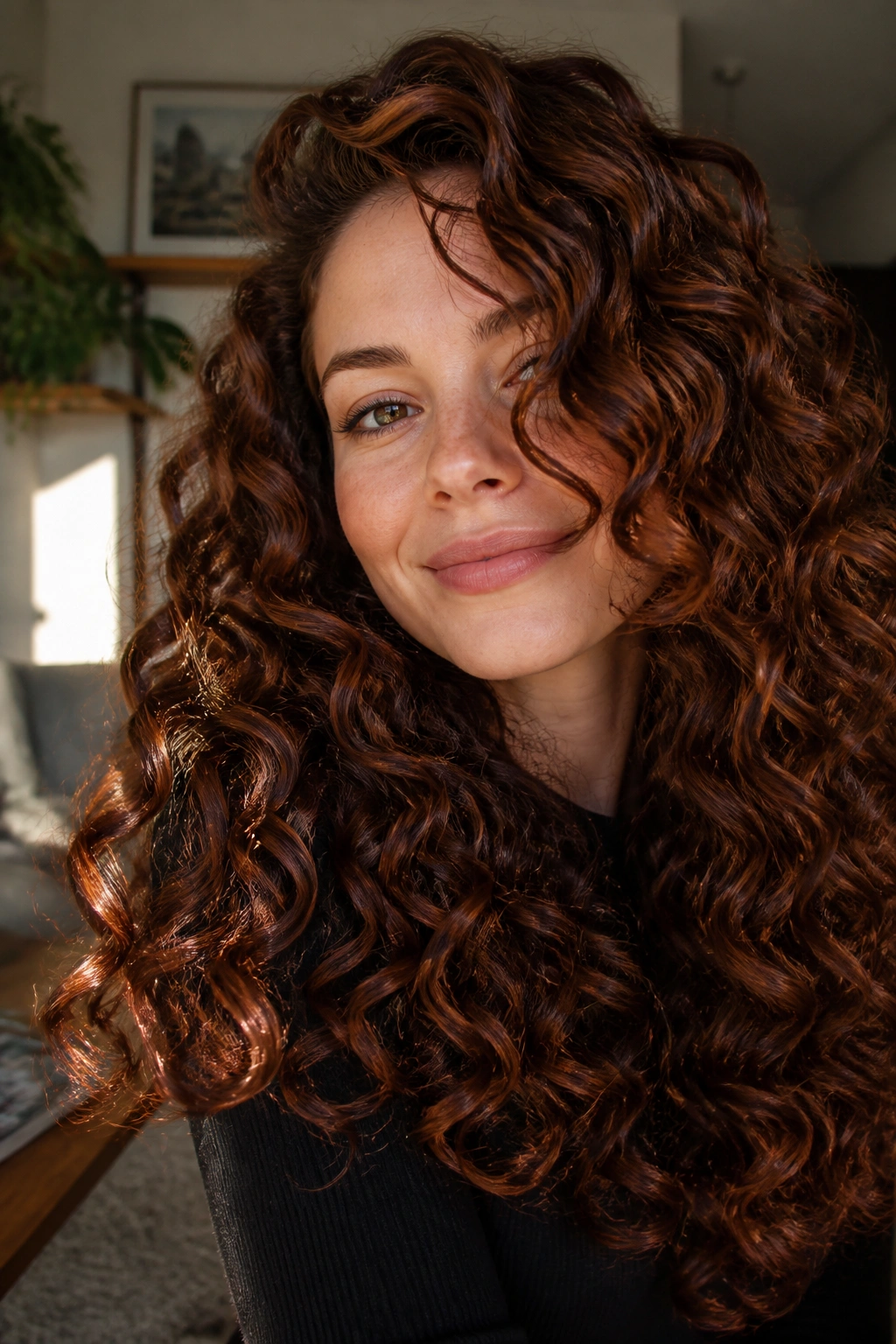
Curls and auburn are a better match than people expect, as long as the tone is not too bright. Velvet chestnut curls keep the color soft and deep, so the curl pattern can show the dimension instead of the shade reading as one solid block. That’s the whole point.
Why Curls Love It
- The bend in the hair shows more than one tone at once
- Chestnut keeps the color from looking flat
- The auburn reflection adds shine on the outer ring of the curl
- Cool skin gets warmth without harsh contrast
I’d tell a curly-haired client to ask for a chestnut base with a sheer auburn gloss on top, not a heavily painted red. Curly hair can look dry if the shade is too aggressive, and velvet tones help keep it soft. The result is rich, touchable, and much easier to wear than a bright red-brown.
21. Mocha Plum Melt
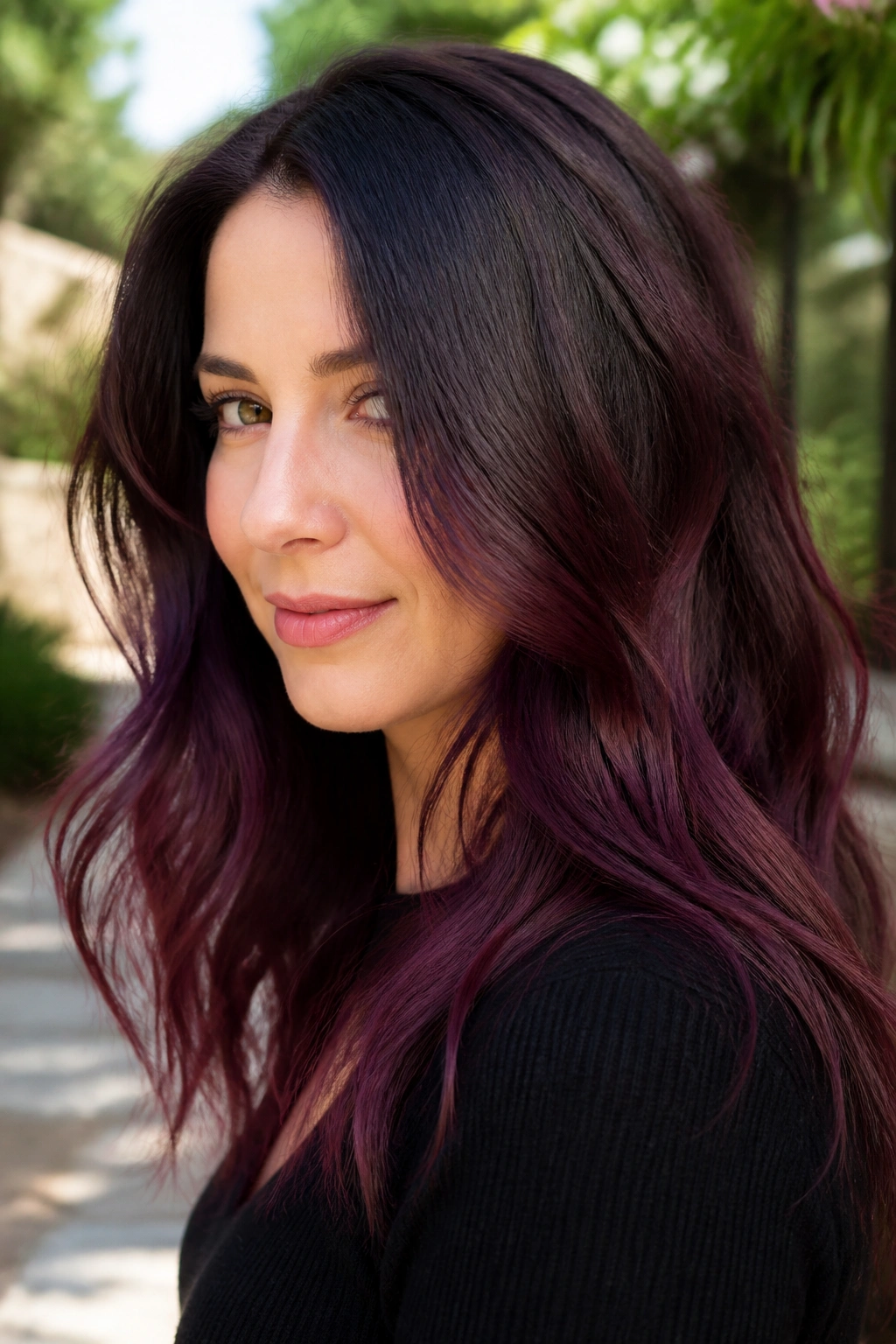
Mocha plum melt sits in that sweet spot where brunette and berry meet. The mocha root keeps the base grounded, and the plum through the mids and ends adds the cooler red note that cool skin usually likes. It’s deeper than rosewood and less dark than blackberry.
This shade is useful if you want color that shows movement but does not look “red” from across the room. On waves, the plum flashes in the bends. On straight hair, the effect is more subtle and polished. Both work.
If your skin leans cool olive, this is one of the better picks. Olive undertones can get swallowed by orange, but plum and mocha tend to sit better. The color feels calm, not noisy.
22. Shaded Mahogany Waves
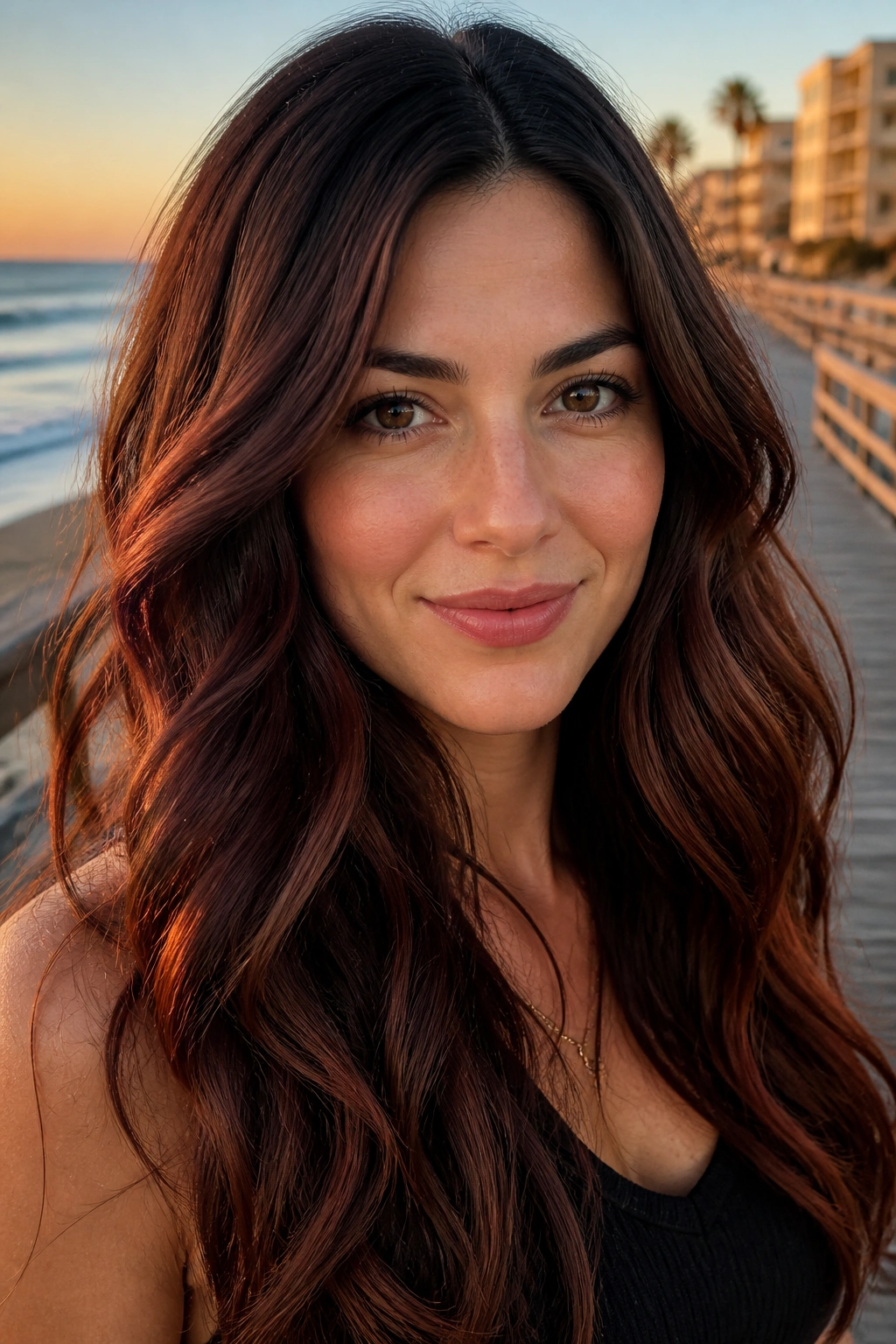
Shaded mahogany waves are all about softness at the root and depth in the movement. The shade starts dark and smoky, then the mahogany warms up only where the waves separate. That makes the color look full without going bright.
A lot of auburn looks better on waves than on perfectly straight hair, and this is a good example. The bends expose the red-brown layers little by little, so the shade changes as you move. Cool skin usually appreciates that because the mahogany note keeps the warmth classy, not loud.
If you wear your hair curled with a one-inch iron, this shade shines. If you brush it out, it looks more muted and brunette-heavy. That flexibility is part of the appeal.
23. Cherry Cola Dimension for Cool Skin
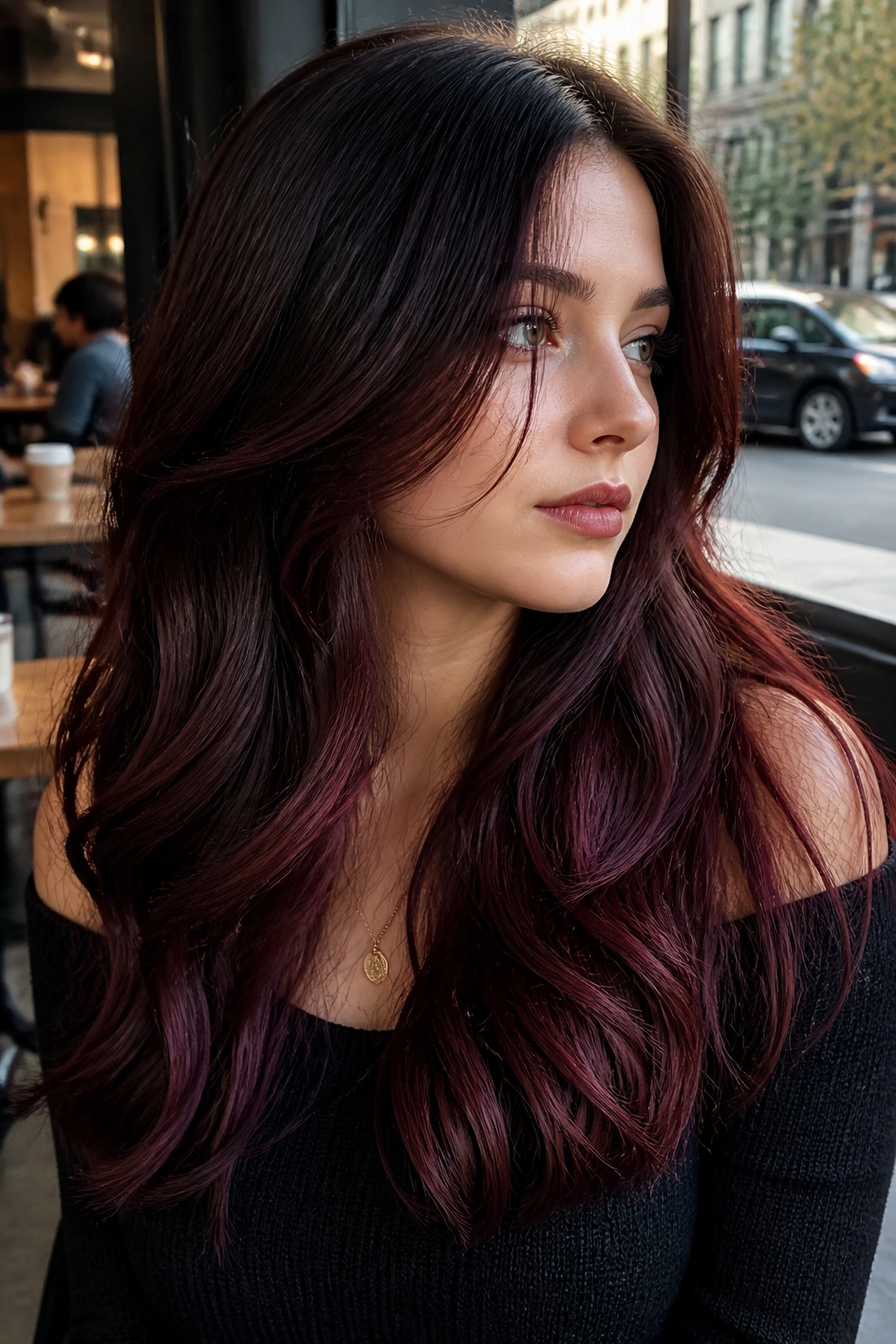
Cherry cola dimension is dark, glossy, and easy to wear. It’s one of the strongest picks if you want a richer red-brown that still feels grounded in brunette. The cola part keeps it dark; the cherry part gives it life. That balance is why cool skin can handle it so well.
The best version uses tiny variations through the hair instead of one flat red-brown block. A few deeper ribbons at the crown, slightly brighter ends, and a neutral chocolate root can make the whole style feel more expensive. Flat color is where cherry shades go to die.
I’d especially recommend this for anyone who likes a bit of edge but hates neon warmth. It looks polished with blunt cuts, soft waves, and shoulder-length styles that move a little.
24. Soft Wine Brunette Balayage
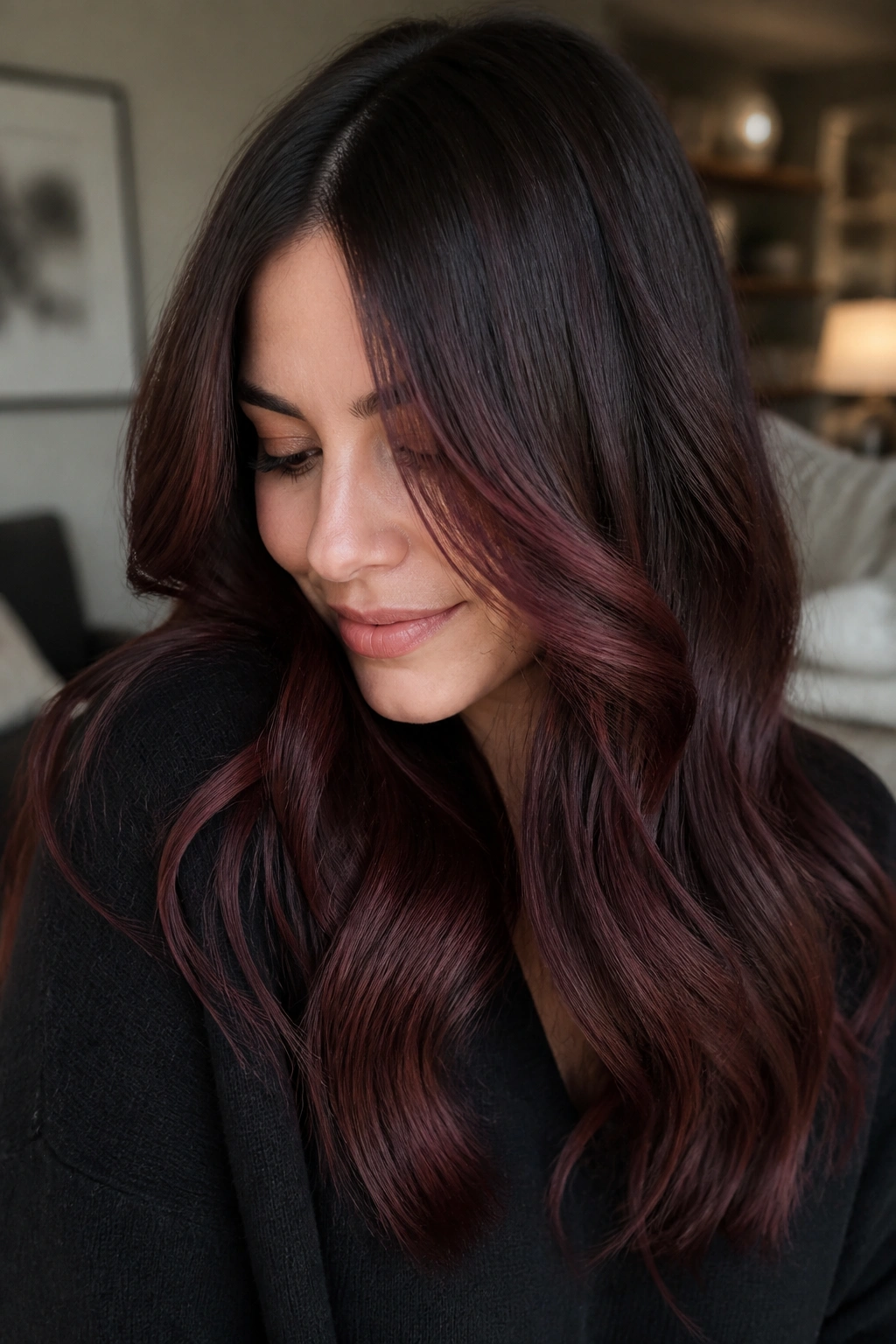
Soft wine brunette balayage is the wearable version of a red-brown color story. The brown base stays deep, while the wine pieces are painted in a soft sweep so the whole look never turns striped. Cool skin tends to like this because the wine tone reads red, but it stays in a darker lane.
The nicest part is how easily it grows out. The balayage placement blurs the transition, so regrowth is less obvious than with a solid red-brown formula. That matters if you want auburn color without signing up for constant upkeep.
This is a good choice for medium to long hair, especially if you wear loose curls. The movement shows the wine notes in small flashes, which is enough. You do not need the whole head shouting.
25. Deep Cocoa Auburn Gloss
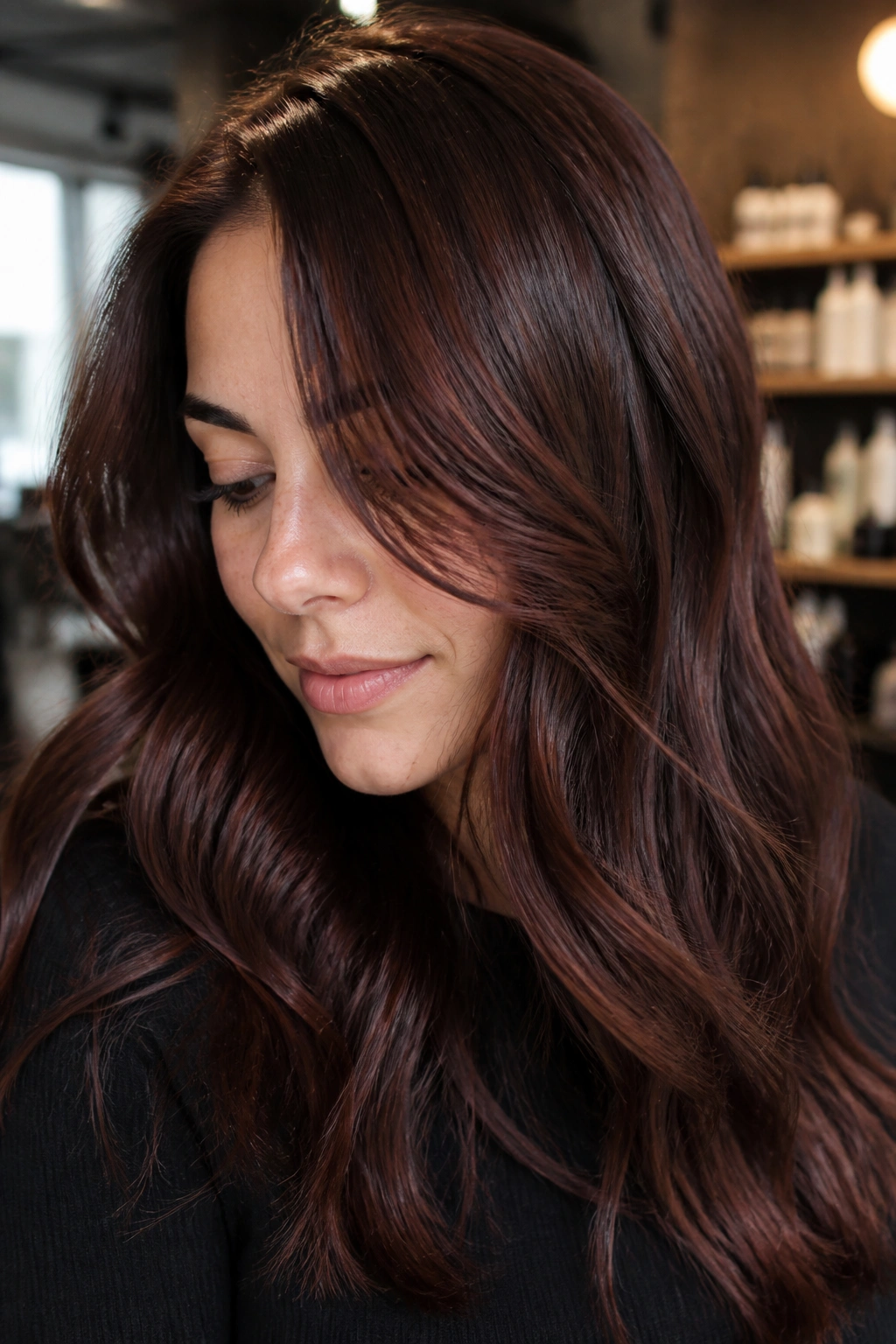
Deep cocoa auburn gloss is the quietest option here, and I mean that as a selling point. It is for someone who wants brown hair with a warm red sheen, not a full visible auburn makeover. On cool skin, the gloss keeps the face from looking too warm while still giving the hair some life.
What Makes It Easy
A gloss sits on the surface, so the shift is soft and reversible. That makes it a smart test run if you’re unsure how much red you want. It also fades more gracefully than a harsh permanent copper formula.
The Best Way to Wear It
- Over a deep cocoa base
- On hair that already has shine or a smooth cuticle
- Refreshed every 4 to 6 weeks
- Kept away from bright copper ends
If you want the simplest route into chocolate auburn hair color ideas for cool skin tones, this is the one I’d point to first. It is subtle, forgiving, and easy to tweak.
Final Thoughts
The smartest chocolate auburn shades for cool skin usually keep the brown base in charge. The red is there, but it behaves. That’s why mahogany, plum, cherry, merlot, and berry tones keep showing up in the strongest options above.
If you’re sitting in a color chair, bring two references: one that shows the shade in daylight and one that shows it indoors. Those two images tell a colorist more than ten loosely related selfies ever will. And if the shade starts drifting orange on the swatch board, trust your eye and steer it back toward berry or mahogany.
The best version of auburn on cool skin does not need to look bright to look rich. It just needs depth, shine, and a little restraint.
