



Fine hair and brunette color can be a tricky pairing. Go too dark and the hair can look flat at the ends; go too light and the strands start to look wispy, almost see-through, around the part line. The sweet spot is usually a brunette that creates depth, softness, and a little movement without flooding the hair with harsh contrast.
That’s why the best brunette hair color ideas for fine hair usually lean on smart placement rather than loud color. A soft root shadow, tiny babylights, a glossy glaze, or a warm tone that reflects indoor light can make the same haircut look fuller and more expensive. The trick is not to fight the fine texture. It’s to give it the kind of dimension that reads as density from a few feet away.
And no, that does not mean every brunette has to be warm. Some of the best shades here are cool, smoky, or neutral. What matters is whether the color gives your hair some shape when it moves.
1. Mushroom Brunette
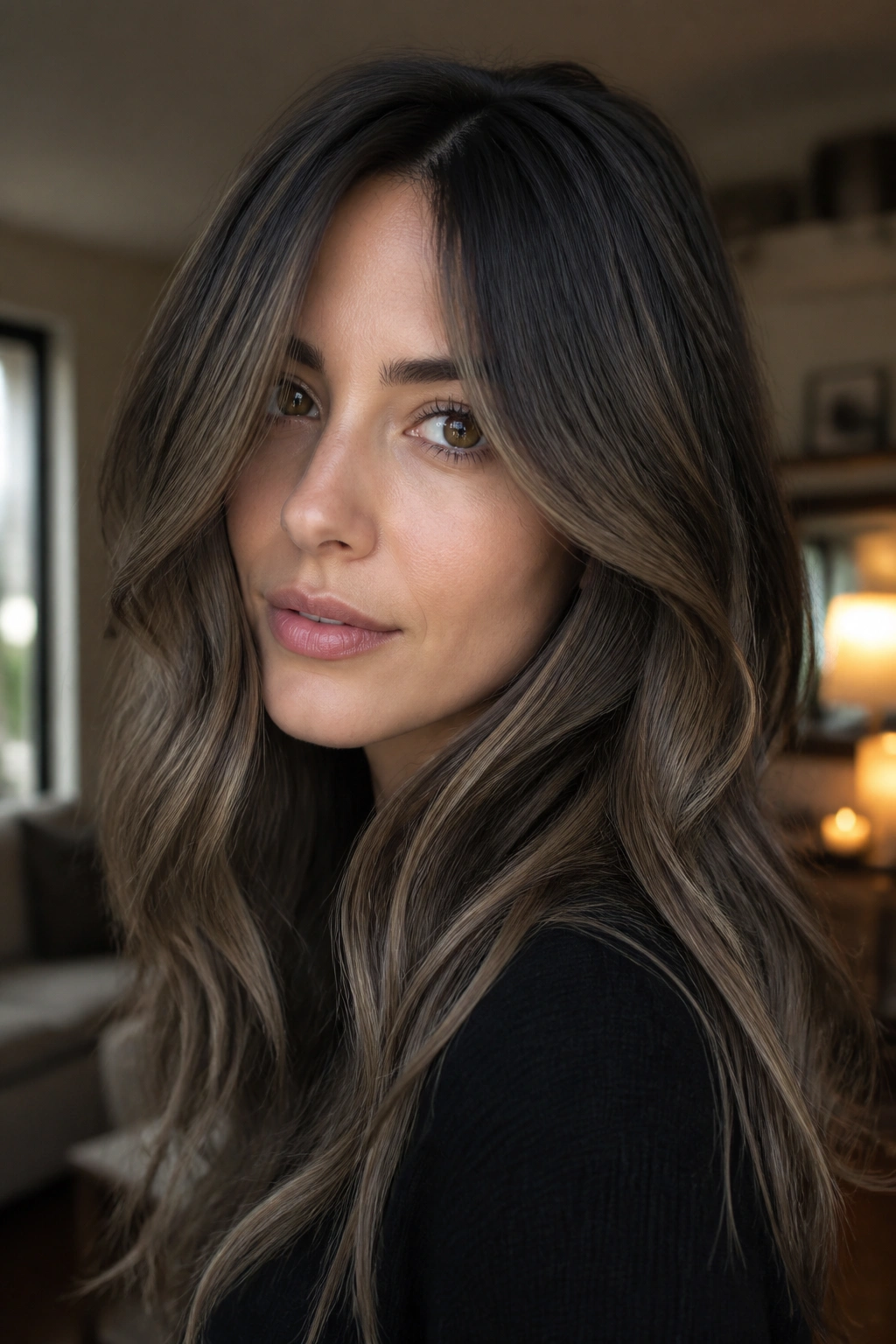
Mushroom brunette is the shade I reach for when fine hair needs depth without looking heavy. It sits in that cool-beige-brown zone that feels soft, muted, and a little expensive in the best way. The color has enough shadow to make the hair look fuller, but it does not have that flat, helmet-like effect some dark brunettes get.
Why It Helps Fine Hair
The magic is in the undertone. Mushroom brunette mixes taupe, beige, and ash so the color shifts slightly as the light moves across it. That movement matters on fine hair, because a single flat brown can make every strand look parked in place.
Ask for a level 5 or 6 base with neutral-to-cool glossing, then keep the light pieces very fine. Think micro-babylights, not chunky streaks. If you want dimension around the face, keep it soft and narrow so the overall look still reads dense.
- Best for cool or neutral skin tones
- Works well on straight bobs, lobs, and soft waves
- Usually needs a gloss refresh every 6 to 8 weeks
- Looks best when the root is slightly deeper than the mids
Tip: If your hair pulls red or orange fast, mushroom brunette is one of the nicest ways to calm it down without making the whole head look dark.
2. Soft Chestnut Brown
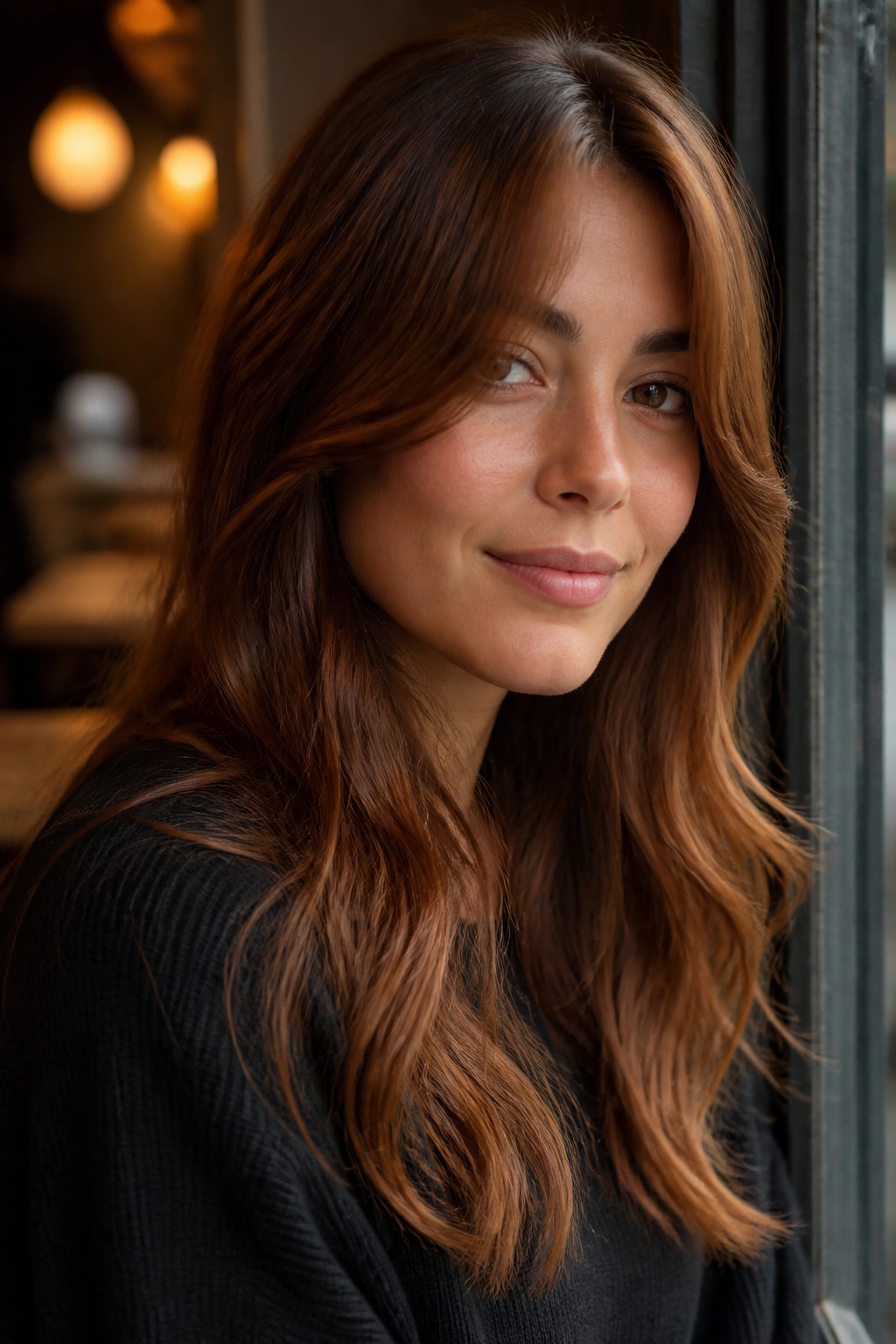
Soft chestnut brown is the easiest brunette shade to wear if you want your hair to look warmer and a little fuller. It has a natural red-gold undertone that makes fine hair catch light instead of swallowing it. That alone can change the whole mood of a cut.
This color works especially well on hair that feels a bit limp because the warmth creates a plush look. Not fake. Plush. There’s a difference. Chestnut adds a soft glow around the face and along the top layer, which helps the eye read more volume than is actually there.
How to Ask for It
Tell your colorist you want a chestnut glaze or demi-permanent chestnut brown that stays brown first and warm second. You do not want copper unless you truly like copper. On fine hair, too much red can look shiny in a harsh way, especially under indoor lighting.
If your hair is naturally medium brown, this is one of the least fussy options. It grows out cleanly, and a trim every 6 to 8 weeks keeps the ends from looking see-through. It also works nicely with curtain bangs, which can make the warmth feel intentional instead of all over the place.
3. Espresso Brown with Fine Caramel Ribbons
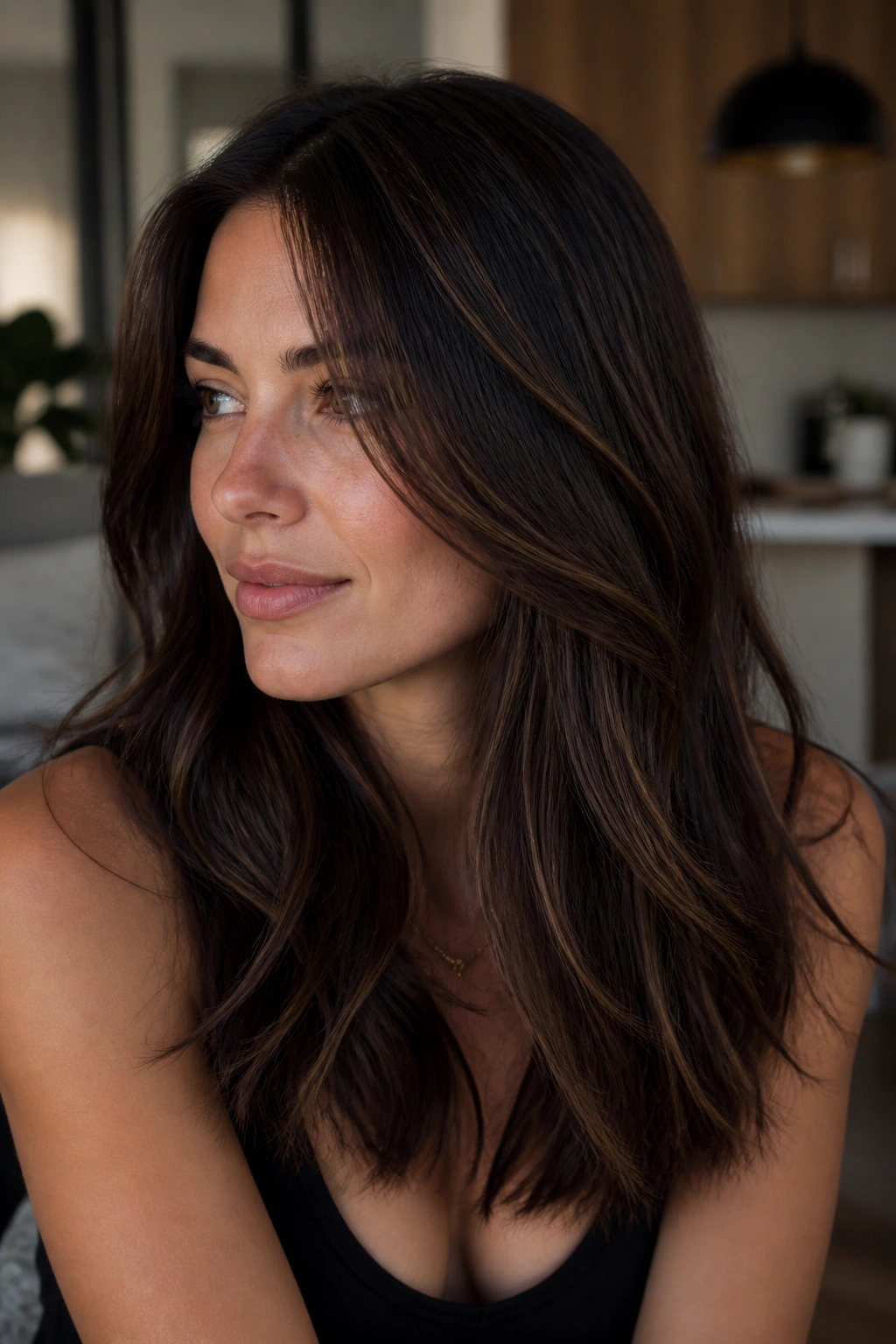
Why does espresso brown with fine caramel ribbons work so well on thinner strands? Because it gives you contrast without turning the hair into a striped mess. The espresso base adds depth, and the caramel pieces break up the surface just enough for the eye to see movement.
The important part is how fine the ribbons are. Fine hair can get overwhelmed by thick highlights fast. Keep the lighter strands narrow and close to the surface, especially around the part line and the face-framing layers. That keeps the overall effect soft instead of loud.
How to Keep It from Looking Too Dark
A deep base is useful here, but it should not be inky. Ask for espresso brown that still shows some brown tone in daylight, then layer in caramel only where the hair naturally bends. Midlengths and ends are usually enough. The root area can stay richer so the hair looks denser at the scalp.
This is a good choice if you wear your hair in loose waves or a blowout. The ribbons catch the curve of the style, and the color starts to look active instead of painted on. That’s the whole point.
4. Toffee Brunette Balayage
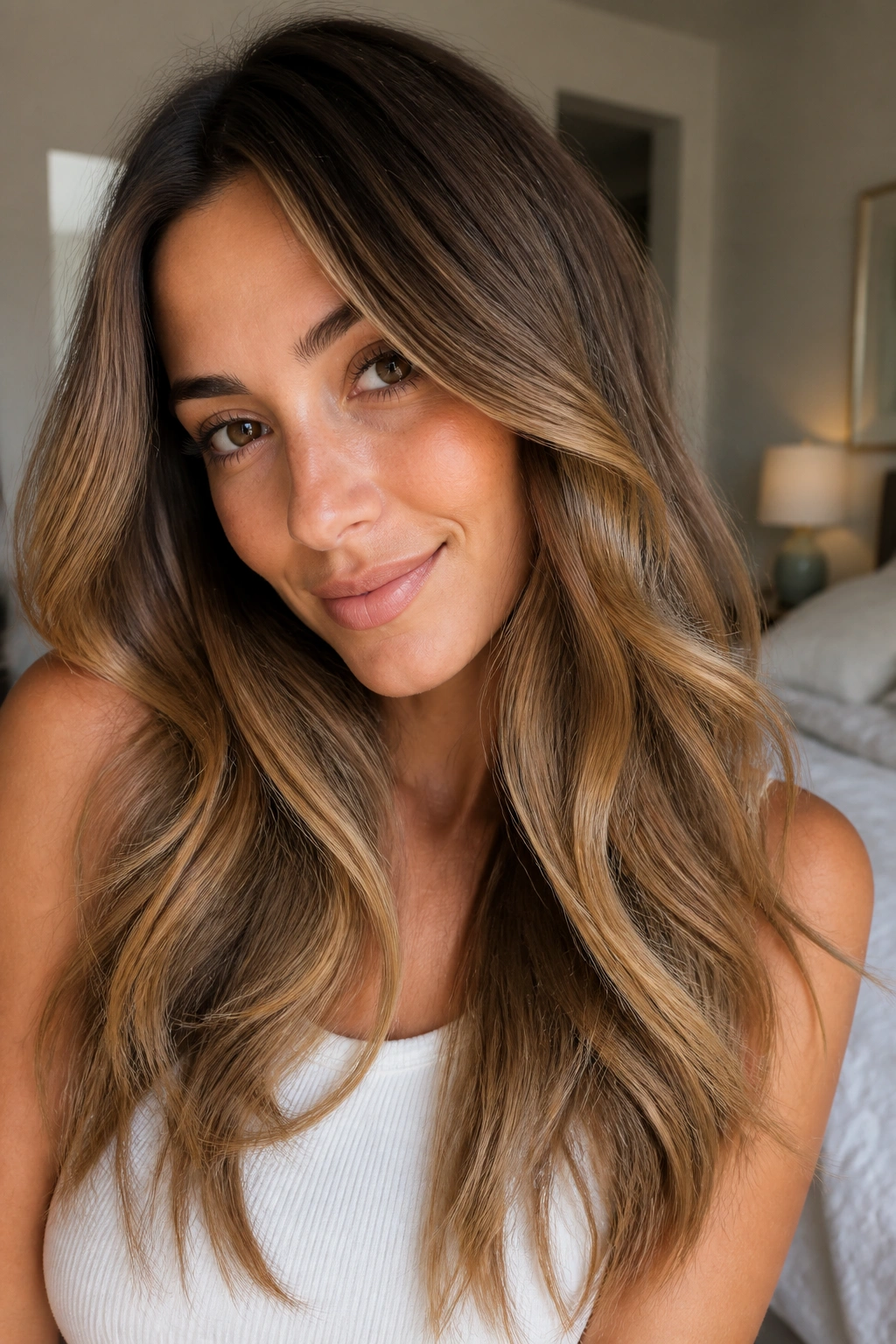
Picture a brunette that keeps its strength at the root and softens into toffee through the mids and ends. That’s toffee balayage, and on fine hair it can be a lifesaver. The color looks easy, but the real win is that it makes the hair feel less flat without looking streaky.
Balayage works best when the lightness is painted in broad, gentle swipes rather than packed into a heavy weave. For fine hair, that means you want the color concentrated where the hair moves: around the crown, along the top layer, and just under the face-framing pieces. The lower interior can stay deeper.
Placement Details That Matter
- Keep the root area 1 to 2 levels deeper than the mids
- Ask for toffee tones, not pale blonde
- Leave some depth at the nape so the style still looks full
- Use a gloss over the whole head to soften the contrast
This is one of those shades that grows out with a little grace, which fine-haired people tend to appreciate. Harsh regrowth can make thin hair look patchy. Toffee balayage avoids that problem and keeps the color from feeling busy.
5. Rich Chocolate Brown
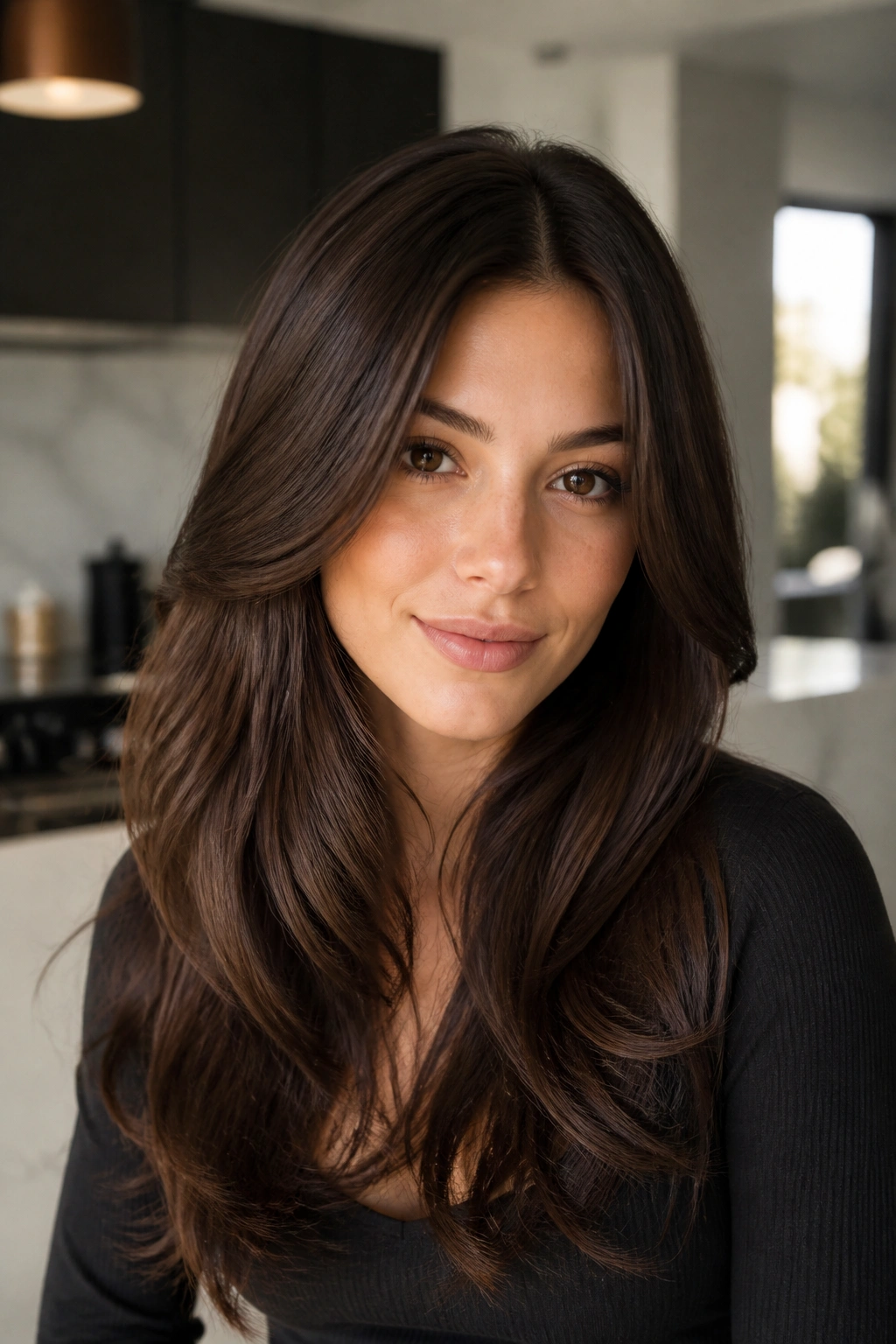
Rich chocolate brown has a solid, polished feel that can be very flattering on fine hair when the cut has some movement. The shade is deep enough to add visual density, but it still stays brown and soft rather than sliding into black territory. That matters more than people think.
A uniform chocolate brown can look beautiful on a layered cut, a textured bob, or even long hair with soft ends. What it does not like is a blunt, one-length cut with no shine. If the hair is very fine and very straight, the ends can disappear if the color is too dark and too matte.
So keep the finish glossy. A clear glaze or brown gloss can make chocolate brown look richer without darkening it further. If your hair tends to look flat in winter light or under office lighting, this shade solves that better than most.
One blunt truth: chocolate brown is not the right call if you want visible streaks or high contrast. It is for people who want the hair to read thicker, cleaner, and a little more expensive-looking. Simple as that.
6. Bronde Brunette with Lived-In Highlights
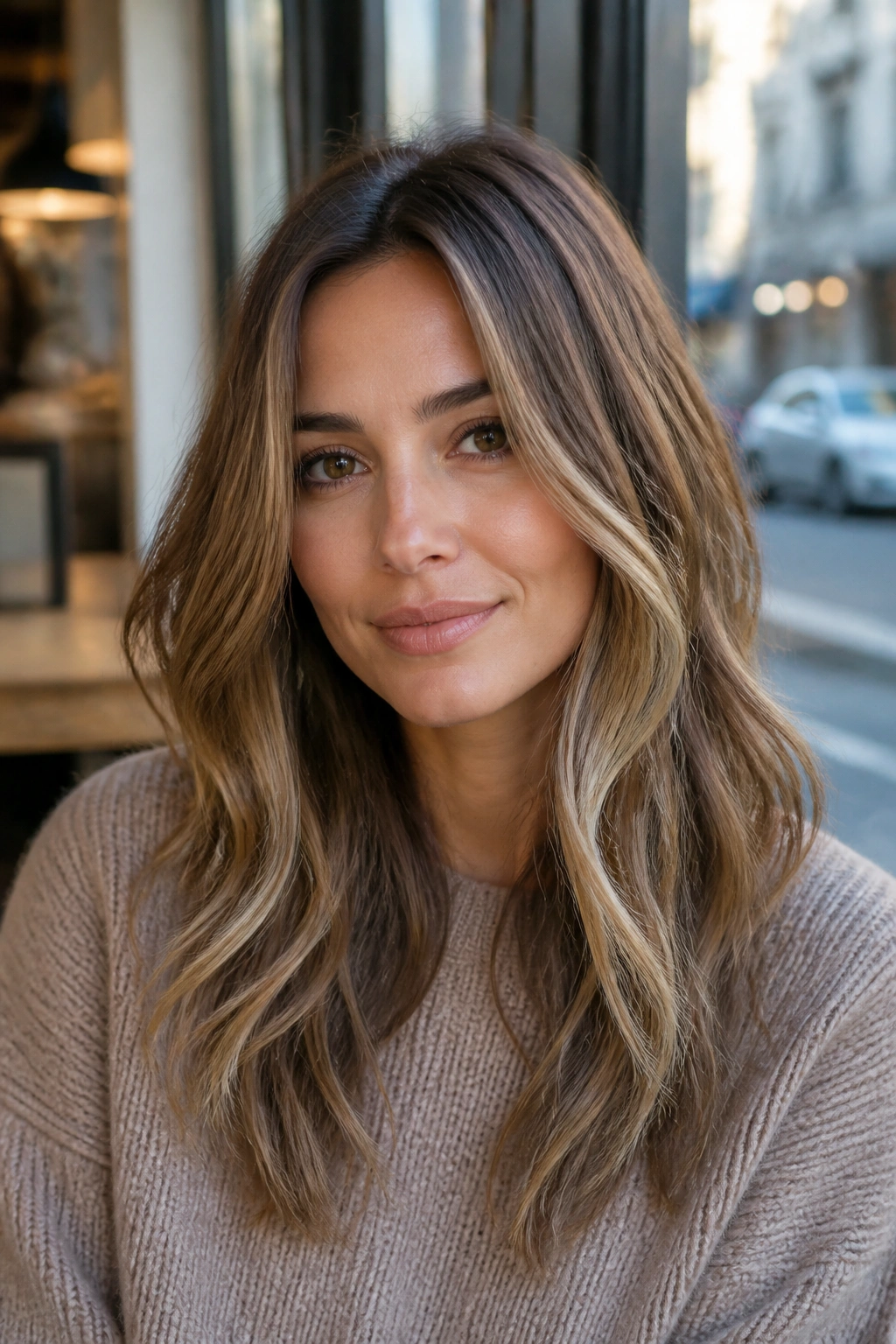
Bronde brunette with lived-in highlights sits right in the middle of brown and blonde, which is why it works so well on fine hair. Unlike a high-contrast balayage, this version keeps the root darker and spreads the lighter pieces through the surface in a softer way. The result feels airy, not striped.
That balance matters. Fine hair can lose its shape fast if the highlights are too bright or too chunky, but bronde gives you dimension without making every strand look separate. A good bronde blend usually includes beige, honey-beige, and light brown pieces rather than pale yellow blonde.
Who It Suits Best
- People growing out old highlights
- Fine hair with a soft wave
- Cuts with layers around the face
- Anyone who wants brightness without a full blonde commitment
A lived-in bronde finish also gives you a little room between salon visits. The darker root keeps the scalp area from looking sparse, and the light pieces soften the ends. That combination is one of the few color tricks that can help a finer texture look fuller from root to tip.
7. Cinnamon Brunette
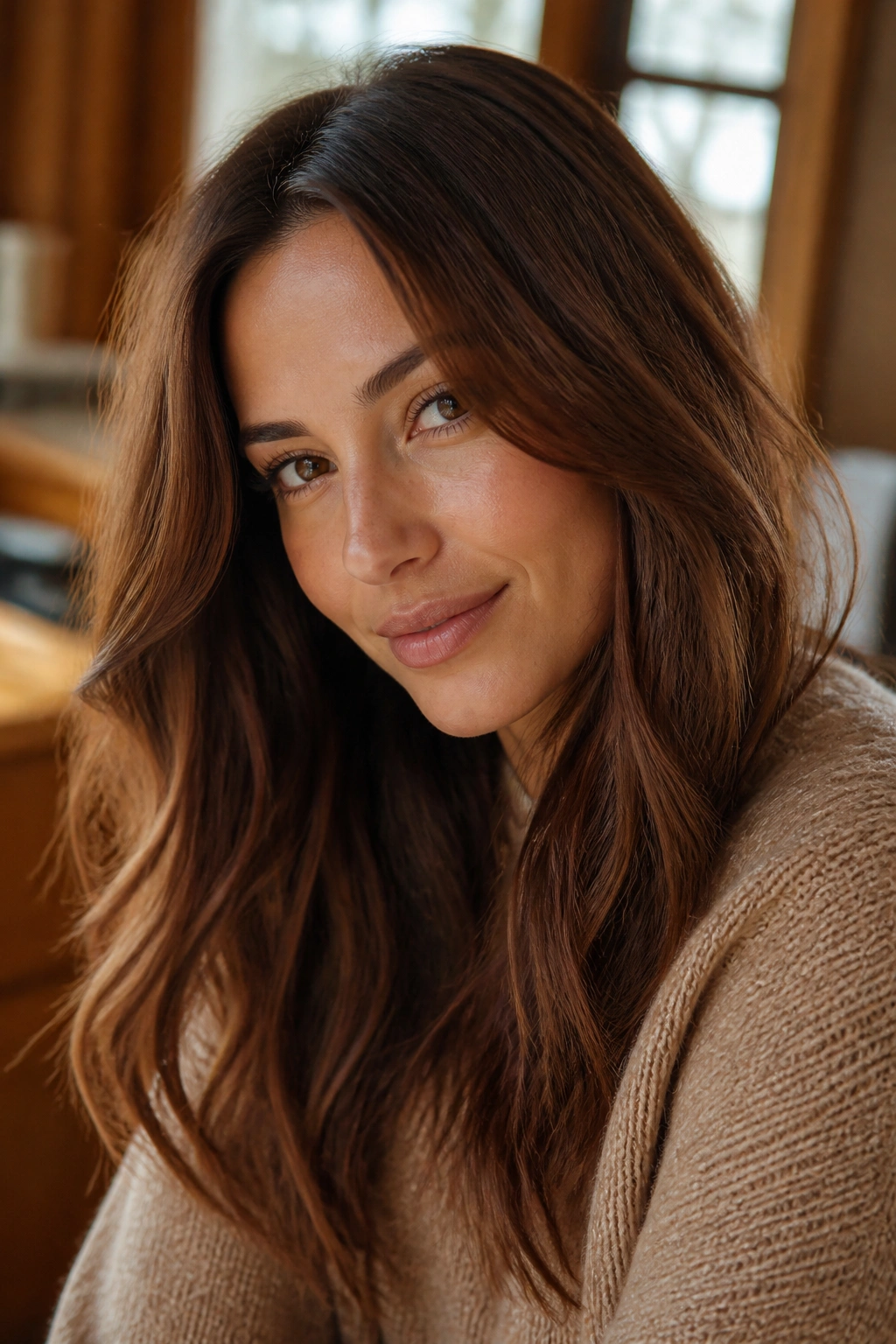
A little warmth changes the whole mood. Cinnamon brunette brings in a soft red-brown note that makes fine hair reflect light in a more lively way than a plain neutral brown ever could. It is cozy without being muddy, which is a hard line to walk.
The shade works especially well if your hair tends to look dull by the third day after washing. Warmth can wake it up. Fine hair often lacks the surface texture that makes deep brunette shades feel rich, and cinnamon helps by adding that visual sparkle. Not glitter. Just a little life.
How to Keep It Soft
Cinnamon can go too orange if the base is lifted too much, so ask for a brown-first result with a gentle spice tone. A demi-permanent color or a gloss layered over medium brown usually gives the best finish. If your hair is porous, keep the warmth subtle, because porous ends grab red pigment fast.
This shade pairs well with layered cuts, shaggy bobs, and curtain bangs. Those shapes give the color somewhere to move. On a straight, one-length cut, cinnamon can still work, but the finish needs to be glossy or it can read flat.
8. Mocha Brown with a Root Shadow
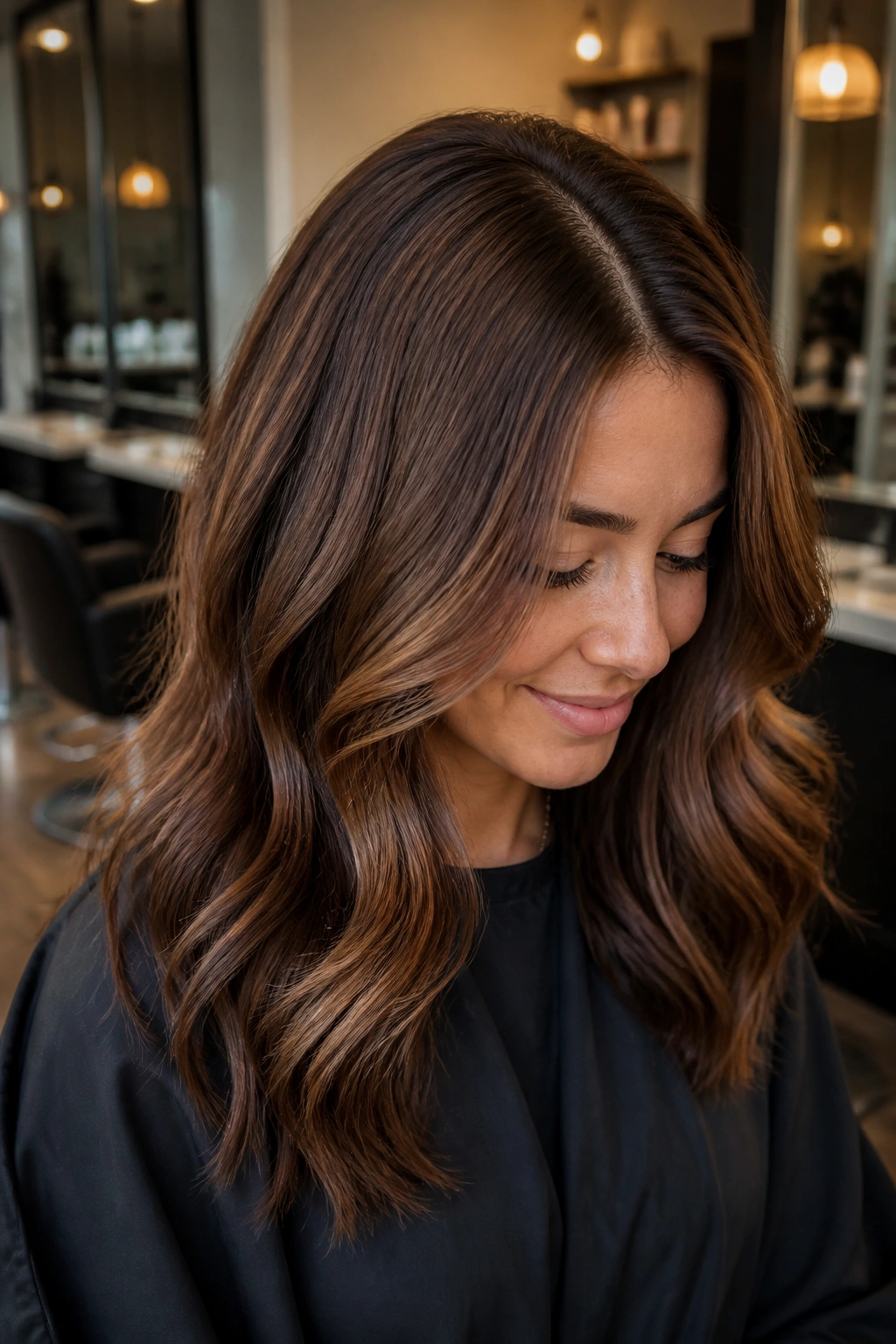
Mocha brown with a root shadow is the color version of good tailoring. It fits close at the top, eases into softer tones through the lengths, and never looks overworked. Fine hair likes that kind of structure because a stronger root gives the illusion of density where the scalp shows most.
The shadow at the root should be intentional, not harsh. Usually that means blending a shade or two darker at the base and melting it into a mocha brown through the mids. The goal is a soft fade, not a line. Once the eye sees that blur, the hair starts to look fuller right away.
Why It Works Better Than One-Note Brown
A flat all-over mocha can be pretty, but a root shadow gives the style shape. It also keeps the grow-out cleaner, which is useful if you don’t want to be in the chair all the time. Fine hair often looks best when the root has a little more darkness than the rest of the head.
If you wear your hair parted on one side, this shade looks especially good because the shadow makes the lift at the part feel more natural. Add a blowout or soft bend, and the color starts doing half the styling work for you.
9. Glossy Dark Brown with Face-Framing Pieces
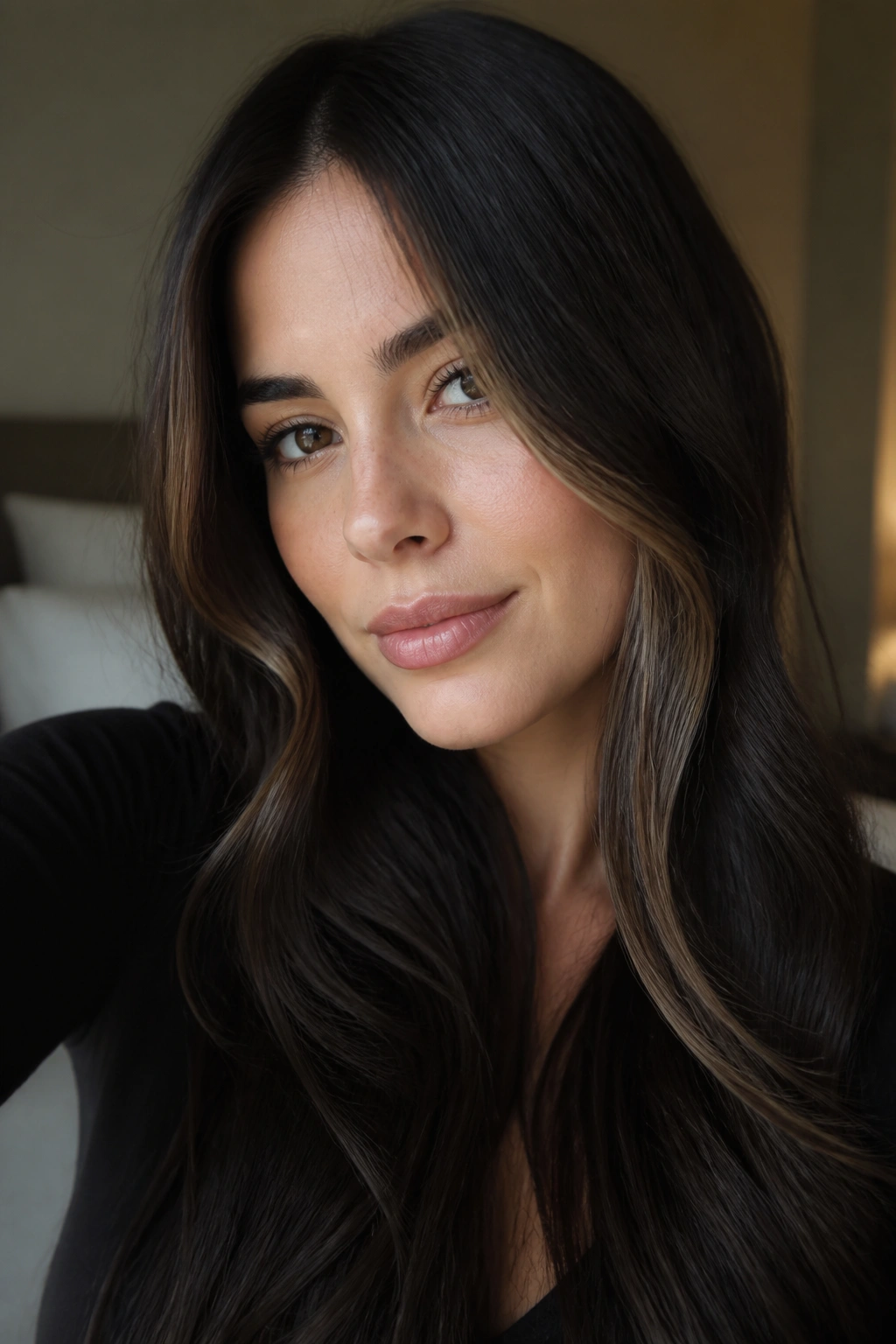
Face-framing pieces are doing the heavy lifting here. A glossy dark brown base gives fine hair a rich, full look, while the lighter pieces near the front stop the color from feeling severe. That mix can be surprisingly flattering, especially if your hair is naturally thin around the temples.
The trick is restraint. You do not need a big money piece that flashes from across the room. A few narrow ribbons placed from the cheekbone down are enough. Keep them close to the face and a shade or two lighter than the base. On fine hair, that small bit of brightness is often all you need.
Placement Rules I’d Stick To
- Keep the front pieces slim
- Stay close to the hairline and top layer
- Blend the transition softly
- Avoid light ends if the hair is already fragile
This look is a smart choice if you want dark brunette hair color ideas for fine hair that feel sharper without losing softness. The glossy finish matters just as much as the placement. If the hair is dull, the whole effect falls apart fast.
10. Ash Brunette for Cooler Shine
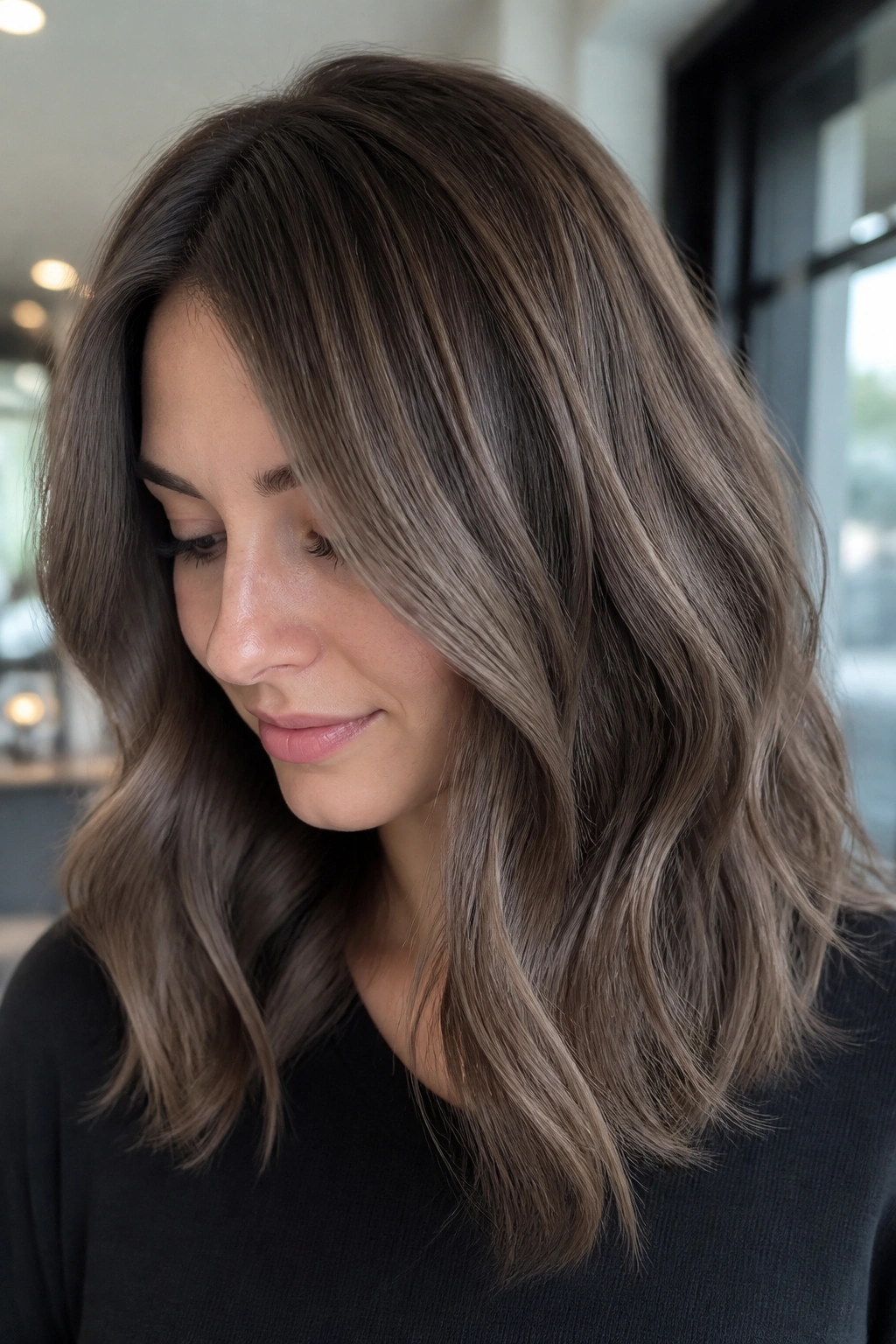
Ash brunette gets dismissed way too quickly. Done well, it is not dull at all. It is the shade that makes fine hair look cleaner, cooler, and more controlled because it strips out the brass that can make brown hair look thin and tired.
What I like about ash brunette is the way it softens the surface. The tone sits in that smoky lane between brown and taupe, which means the hair reflects light without screaming for attention. On fine textures, that subdued reflectiveness can look more polished than a warm shade that has gone a little brassy.
What to Watch For
If your hair is naturally warm, ash tones can fade faster or turn muddy if they are pushed too far. Tell your colorist you want smoky brown, not flat gray. That distinction matters. You still want some brown left in the formula so the hair doesn’t lose warmth altogether.
This shade is especially strong on blunt bobs, sleek lobs, and straight styles. The cleaner the line of the cut, the better ash brunette looks. It gives a sharp finish without needing a lot of contrast.
11. Milk Chocolate Brown
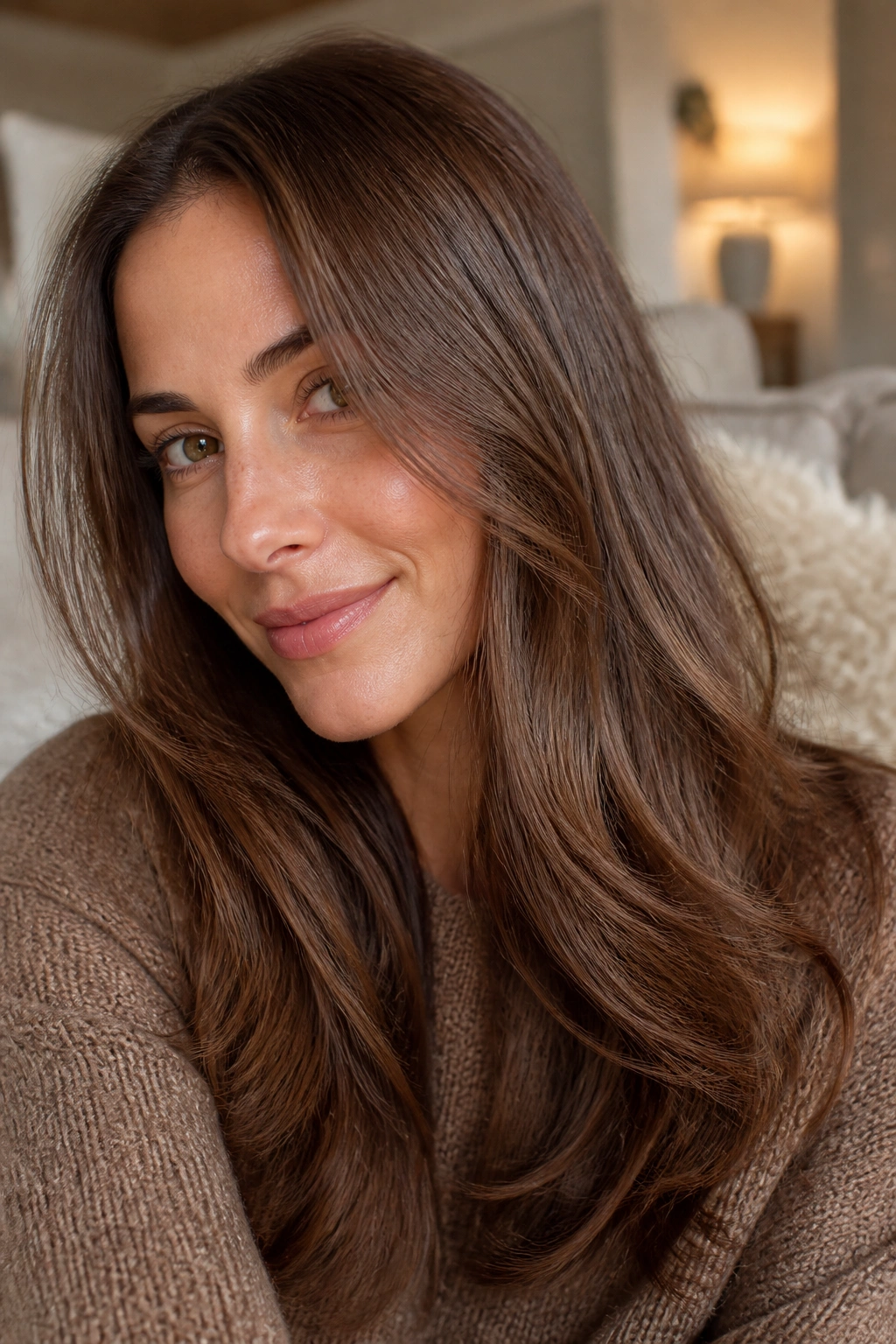
Can a lighter brunette make fine hair look fuller? Yes, and milk chocolate brown is a good reason why. The shade stays soft and creamy, usually around a level 6 or 7, so it reflects more light than a deep brunette and keeps the hair from disappearing into one dark mass.
Milk chocolate is a friendly color. It doesn’t feel heavy, and it doesn’t need to be heavily highlighted to look dimensional. On fine hair, that matters because too much highlight can start to reveal how little hair is actually there. A creamy brunette does the opposite. It creates the sense of thickness by keeping the color even and bright enough to show movement.
Best When You Want a Softer Finish
This shade works well if you’re growing out blonde or if your natural color sits between light brown and dark blonde. It also flatters layered hair because the lighter brunette tone helps every layer separate a little.
Keep the finish glossy and avoid going too golden. A hint of beige is better than a strong yellow warmth here. That small choice keeps the color feeling clean instead of brassy.
12. Hazelnut Brunette
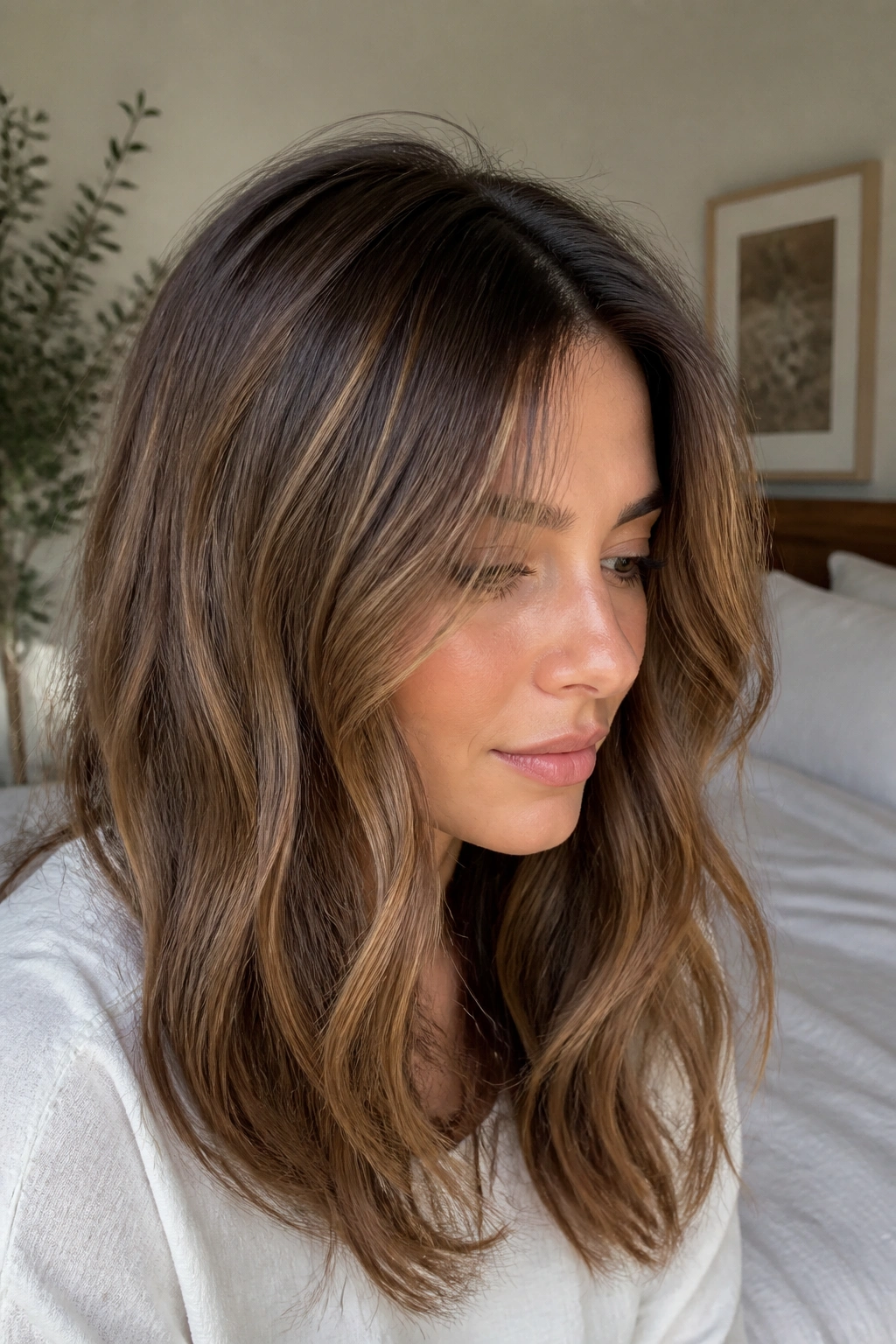
Hazelnut brunette is one of those shades that quietly does a lot. It sits between gold and brown, which gives fine hair a soft glow without making it look stripped or overprocessed. The tone is easy on the eyes, and the dimension builds naturally as the hair moves.
Unlike caramel-heavy color, hazelnut stays believable close up. That’s useful on fine hair, where chunky contrast can make the strands look separated. A hazelnut base with a few ultra-fine lighter pieces can make the hair feel thicker because the variation is subtle rather than loud.
A Smart Way to Wear It
This shade works especially well on wavy hair, chin-length bobs, and long layers. The waves show off the tonal shifts, and the layers keep the color from sitting in one flat sheet. If you want a more polished finish, ask for a neutral-beige gloss over the top so the warmth doesn’t drift too golden.
Hazelnut also tends to play nicely with warm makeup. Peach blush, soft bronze, and a neutral lip all sit well beside it. That sounds small, but on fine hair the overall frame matters. The hair, face, and shade need to talk to each other a little.
13. Black Cherry Brown
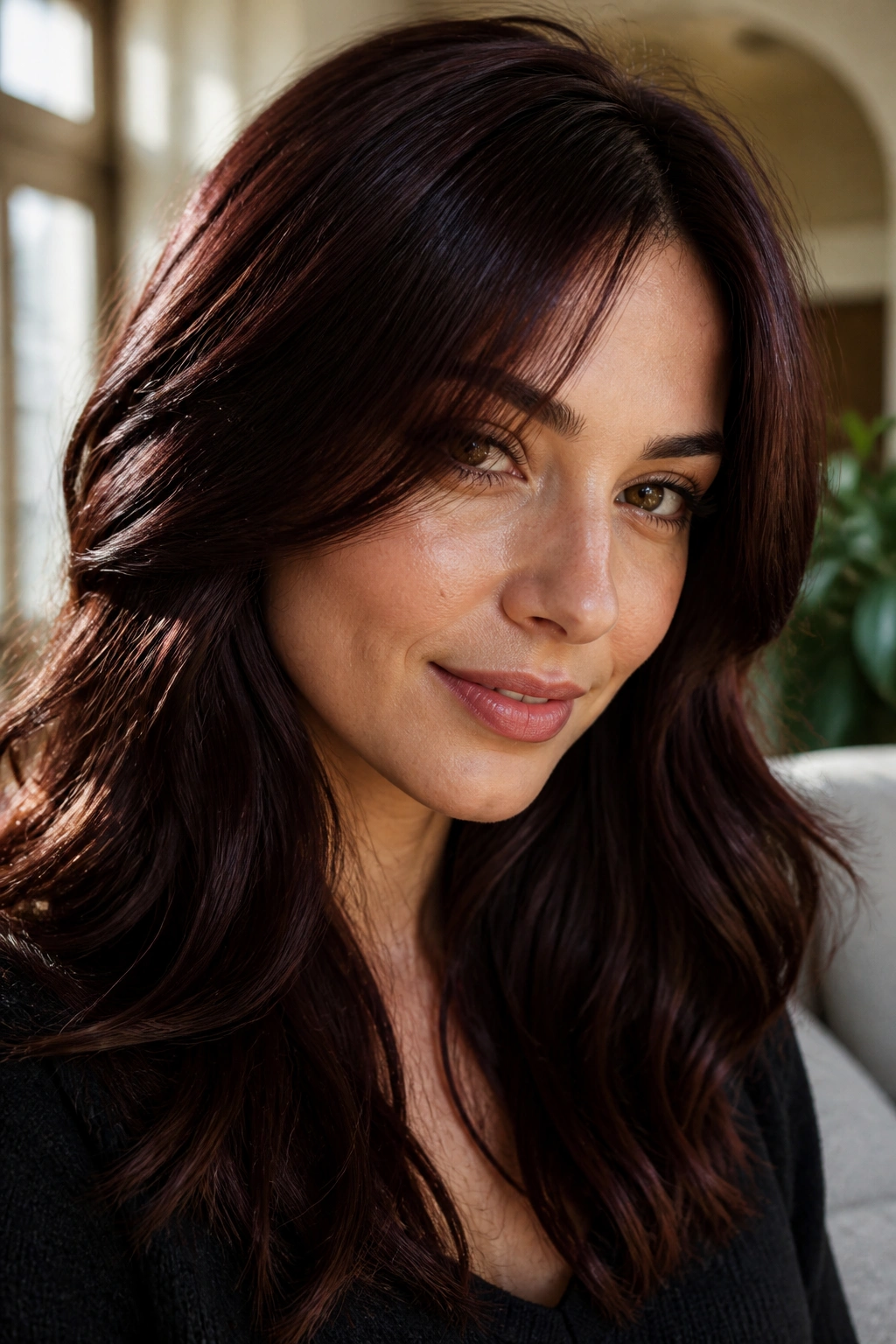
Black cherry brown is not shy, and that is part of the appeal. The red-violet depth can make fine hair look fuller because the color catches light in a way flat brown never does. Under indoor light, the shade reads rich and glossy. Outside, it can show a subtle berry edge.
This is a strong choice if you want brunette hair color ideas for fine hair that feel a little more dramatic but still wearable. It’s dark, yes, but the cherry note keeps it from looking lifeless. Fine strands often benefit from that reflective warmth, especially when the hair is naturally straight and tends to fall close to the head.
What to Watch For
Porous hair can grab cherry pigment fast. That means the ends may go deeper than the roots if the formula is too strong. A demi-permanent version usually looks softer than a permanent one, and it fades more evenly. If you heat-style a lot, use a protectant spray, because red-violet tones can lose their crispness faster than neutral browns.
This shade is a little bolder than the others here, but it earns its place. It gives fine hair presence.
14. Sandy Brown-Bronde Blend
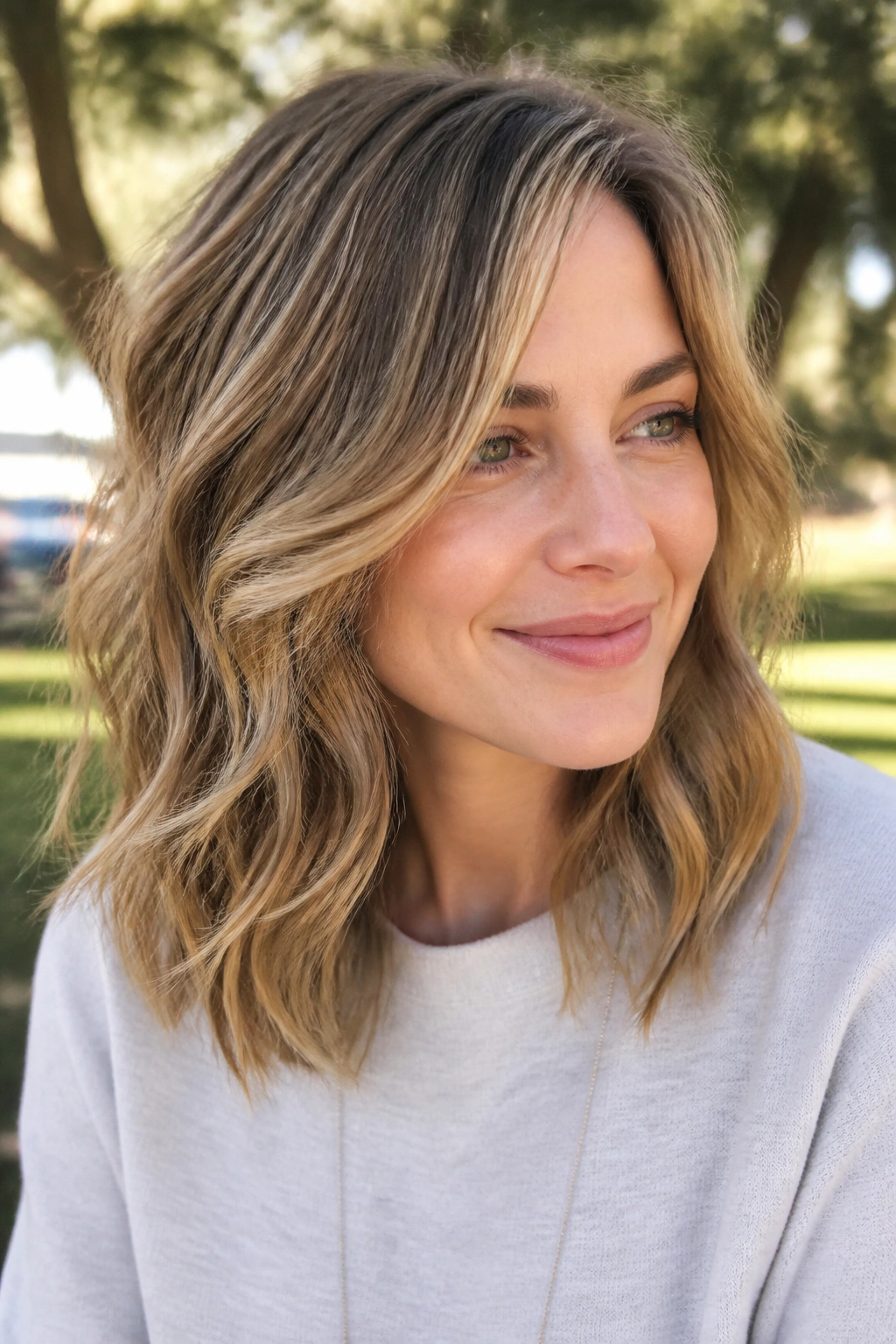
Sandy brown-bronde is the closest thing to airiness in brunette color. It keeps the base brown, then lifts the surface with beige and soft sandy pieces so the hair doesn’t collapse into a single color block. On fine hair, that kind of scattered brightness can make the whole style feel lighter and more lifted.
The color is especially good if your hair tends to flatten at the crown. A sandy bronde blend breaks up that flatness without needing a heavy blonde transformation. The pieces should be soft, narrow, and mixed through the top layers, not stacked in obvious stripes.
Where It Looks Best
This shade shines on shoulder-length cuts, long bobs, and soft layered styles. It also suits hair that dries with a little bend on its own. The waves separate the tones in a way that straight hair sometimes can’t.
If you like a low-maintenance color, this one is a strong candidate. The grow-out is forgiving, and the sandy tones do not demand constant toning the way brighter blonde pieces do. It is brunette, but it has a lighter footprint.
15. Golden Brown Balayage
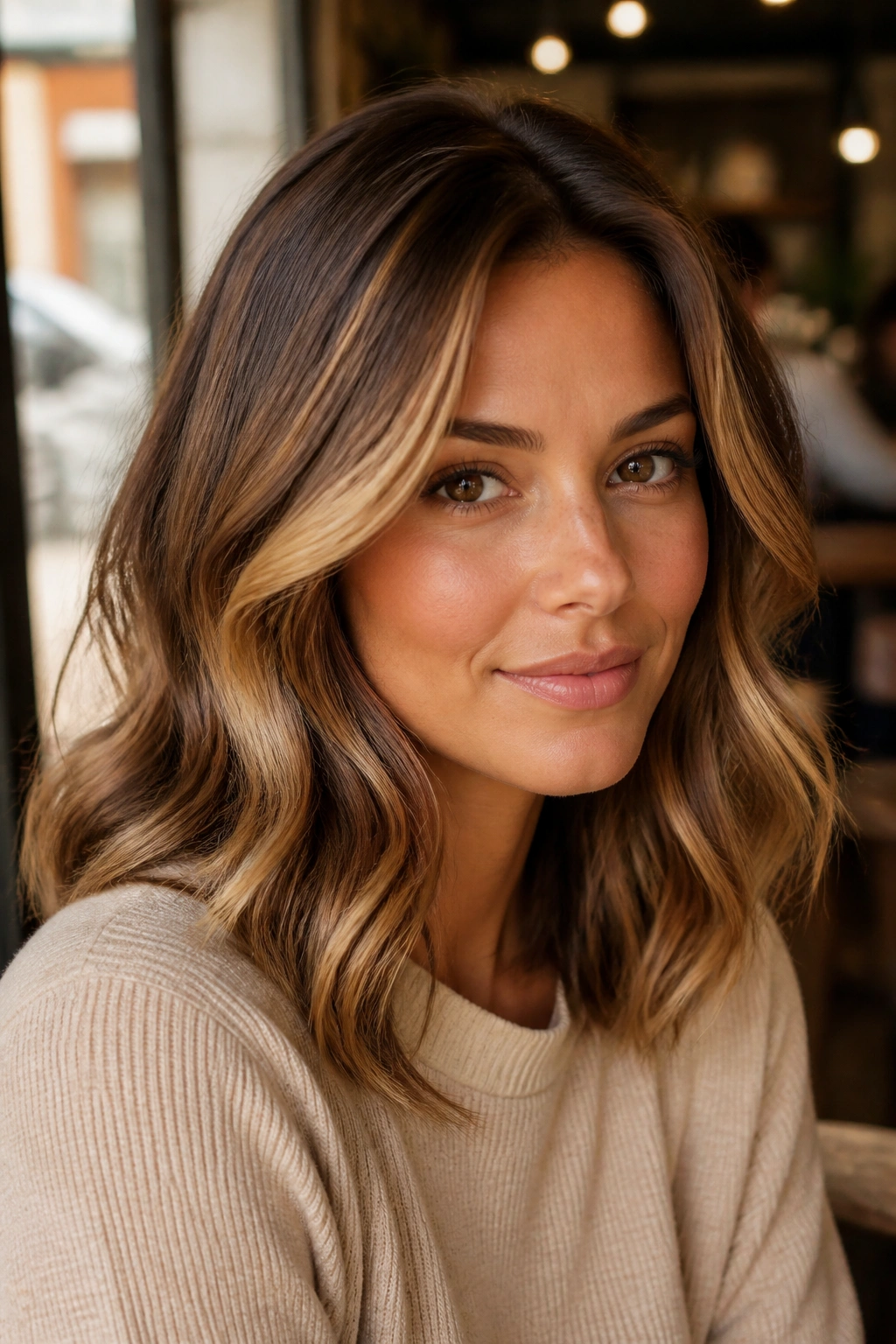
Golden brown balayage brings warmth without pushing all the way into caramel. That middle ground is exactly why it works on fine hair. The gold makes the strands look shinier, and the brown base keeps the overall color from turning thin or washed out.
The placement matters here. Too much gold near the roots can make the scalp area look lighter than the rest of the hair, which is not a great look on fine textures. Keep the brightest pieces in the mids and around the face, where they can lift the style without exposing too much of the base.
A Few Smart Guidelines
- Ask for soft golden ribbons, not chunky blonde strips
- Keep the root deeper for better depth
- Focus brightness on the outer layer
- Let the color melt into the ends
This is a lovely option if you want your brunette to feel brighter and a little sunnier without losing the brown identity. It works especially well with a blowout, where the light pieces catch the bend in the hair and look fuller because of it.
16. Smoky Cocoa Brown
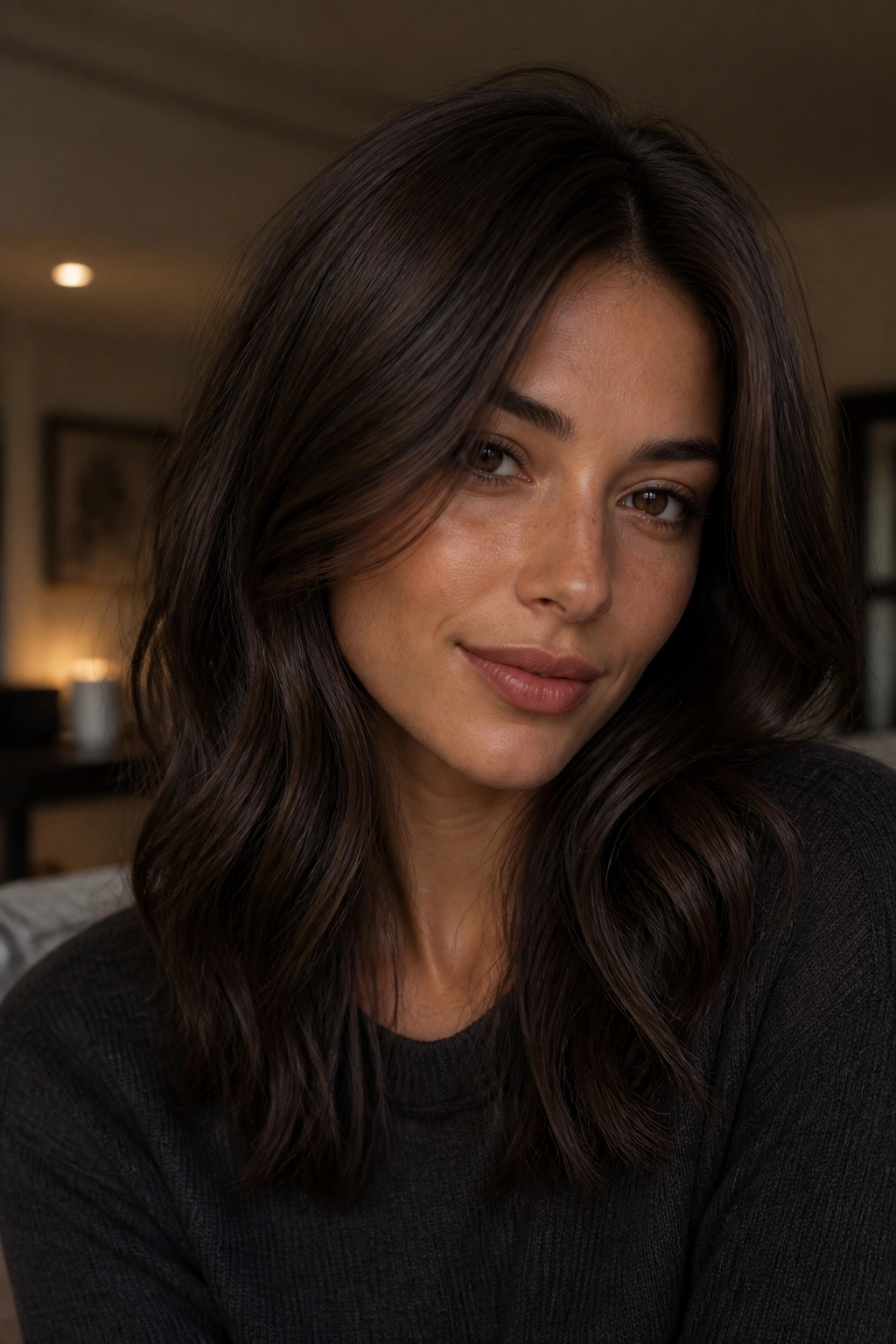
Smoky cocoa brown feels like dark brunette with the lights turned down. It has that muted, dusky quality that can make fine hair look denser because there’s enough depth to blur the scalp line, but not so much darkness that the ends vanish into nothing.
This color is a favorite for people who want a little edge without going near black. The smoky tone softens the shine in a controlled way, which is useful if your hair is very sleek or very straight. It keeps the finish from looking too glossy in a plastic way, which happens with some deep browns.
A good smoky cocoa formula usually stays neutral or slightly cool. Too much warmth can turn it flat. Too much ash can make it muddy. The sweet spot is a brown that looks soft in low light and rich in daylight. That’s harder to hit than it sounds, so I’d ask for a gloss after coloring rather than trying to force the tone all at once.
17. Walnut Brunette with Micro-Highlights
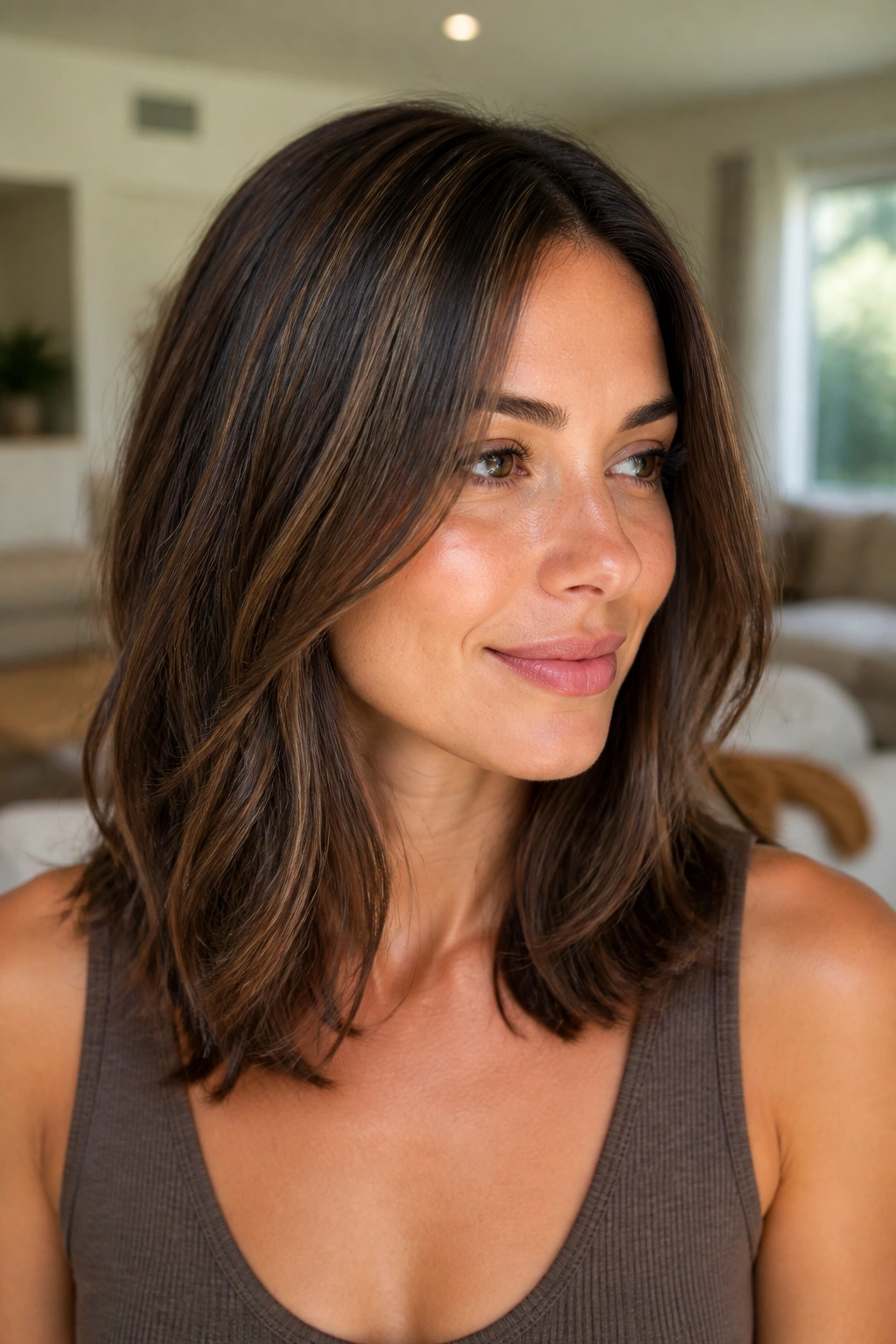
Walnut brunette with micro-highlights is one of the most convincing options for fine hair because it avoids the obvious streak effect that can make hair look thinner. The walnut base gives you a rich brown foundation, and the micro-highlights thread tiny bits of softness through the top layer.
Those highlights should be tiny. Really tiny. Think threadlike, not ribbonlike. On fine hair, that detail matters because too much lightness starts to break up the surface of the hair, and then the density illusion disappears. Micro-highlights keep the color alive without making the strands look separated.
Why I Like This Approach
It works on short cuts, long layers, and everything in between. It’s also a nice fit if you want brunette color ideas for fine hair that look natural even when the wind moves the hair around. Nothing feels painted on.
Ask for a walnut base with just enough lift to show a few lighter brown strands in motion. Beige-brown or soft caramel-brown usually works better than anything too blonde. The goal is texture through color, not contrast for its own sake.
18. Soft Auburn-Kissed Brunette
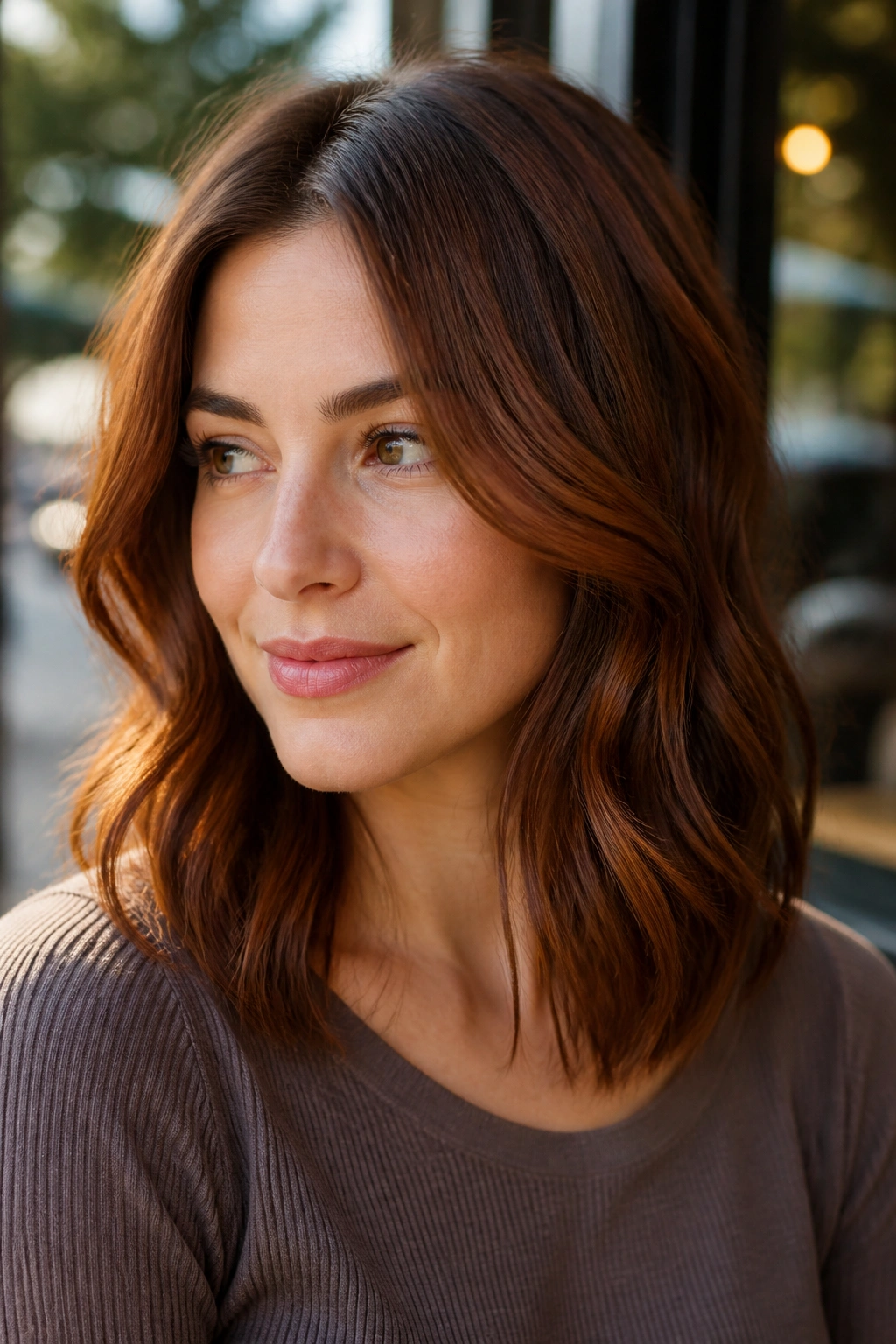
Soft auburn-kissed brunette is what I suggest when someone wants brunette, but refuses to look muddy. The auburn note adds warmth and shine, and on fine hair that little bit of red-brown energy can make the whole head feel fuller, especially in indoor light where neutral browns sometimes fall flat.
This is not full auburn. That would be a different conversation. Here, the red lives underneath the brown, so the color still reads brunette first. That makes it easier to wear if you like depth, but want a shade with a little pulse to it.
The best version usually starts with a medium brown base and a warm glaze that leans copper-brown rather than red-red. If your hair is very porous, ask for a softer finish, because porous ends can grab the auburn tone fast and go brighter than you meant.
I like this shade on layered cuts, tousled bobs, and long hair with movement. It gives fine hair a warmer, fuller look without asking it to be something it isn’t. And that’s usually the real answer with brunette hair color for fine hair: not darker, not lighter, just smarter.
