



Ash brown hair color ideas for cool skin tones work best when the shade looks smoked, not muddy. That tiny difference decides whether your hair makes your face look fresh and even, or whether it brings out every bit of redness you were hoping to calm down.
Cool skin tones usually have pink, blue, or neutral-cool undertones, and that changes everything about brown hair. A brown that leans golden, coppery, or caramel can fight with your complexion fast. A brown with ash, taupe, slate, mushroom, or smoky beige in it feels calmer against the skin and tends to look cleaner in daylight.
That doesn’t mean every cool-toned brunette has to go dark or flat. Some of the best ash brown shades have movement, shine, and contrast—just not the orange-gold stuff that turns a good color into a headache after two shampoos. One thing I’ve learned from watching brown hair go right and wrong: the finish matters as much as the level.
Start with the amount of contrast you like to wear, because that choice changes the whole vibe.
1. Mushroom Brown With a Soft Root Shadow
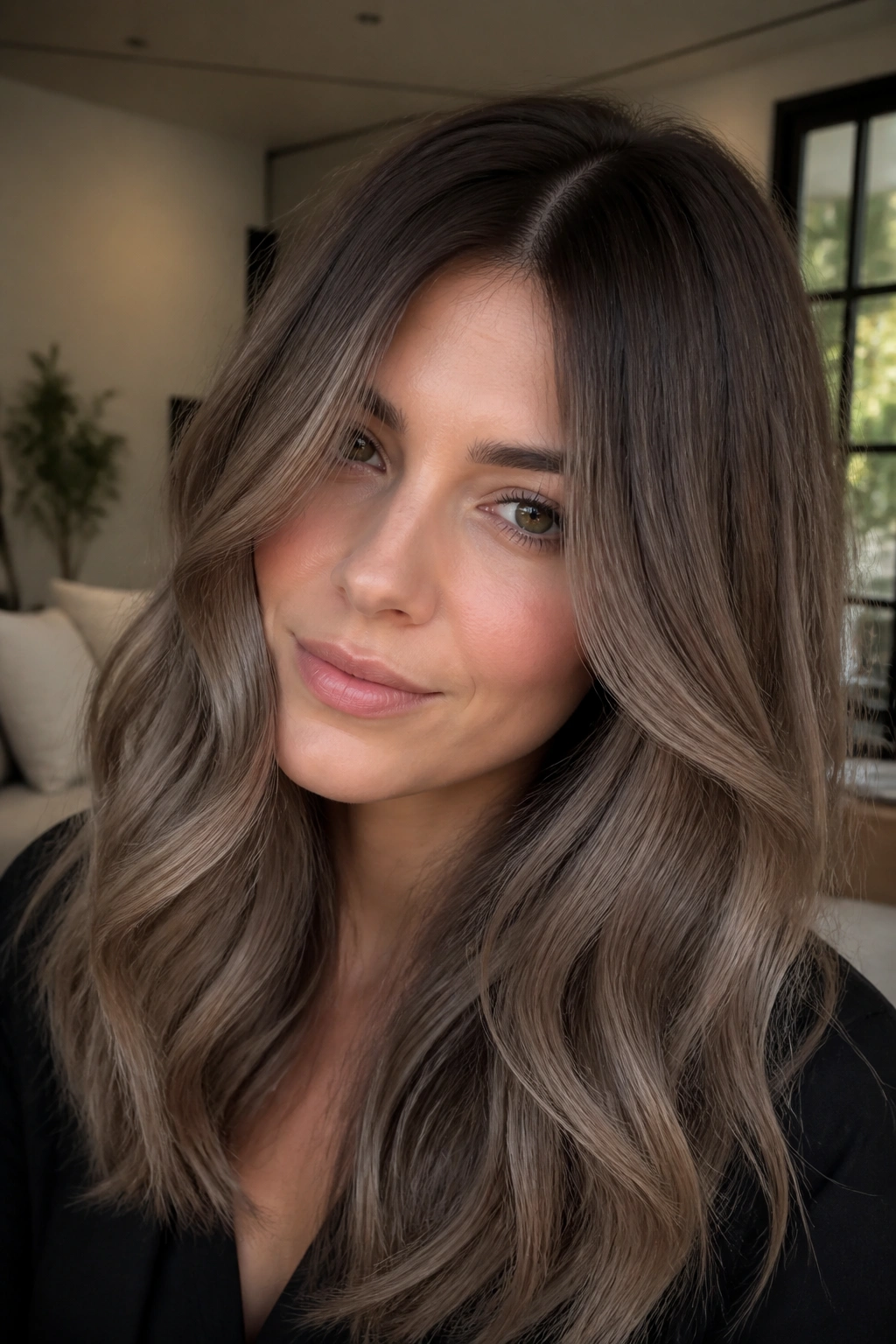
Mushroom brown is one of those shades that looks expensive even when it’s worn casually. The color sits between taupe, ash, and soft beige, with a damp-stone kind of finish that keeps it from drifting warm. On cool skin, that balance is gold. Well, not gold exactly. That’s the point.
A soft root shadow makes the whole color easier to wear, because it blurs the line between your natural regrowth and the dyed lengths. If your hair is naturally medium brown, this is one of the cleanest ways to go lighter without losing the cool edge. If your hair is already light brown, the shade can look almost airy in daylight and richer indoors.
Why It Flatters Cool Skin
The best mushroom brown has enough ash to cancel brass, but enough beige to keep the hair from looking dull. That’s the sweet spot. Too much gray and the color starts to look flat; too much warmth and the whole thing slides into caramel territory.
- Ask for a level 5 or level 6 base with a cool taupe glaze.
- Keep the root shadow only one shade deeper than the mids.
- Avoid copper, auburn, and honey in the toner.
- On very pale skin, the softer finish keeps the hair from looking too severe.
Pro tip: Bring a photo that shows the color in indoor light and natural light. Mushroom brown can look very different in each one.
2. Smoky Espresso Brown
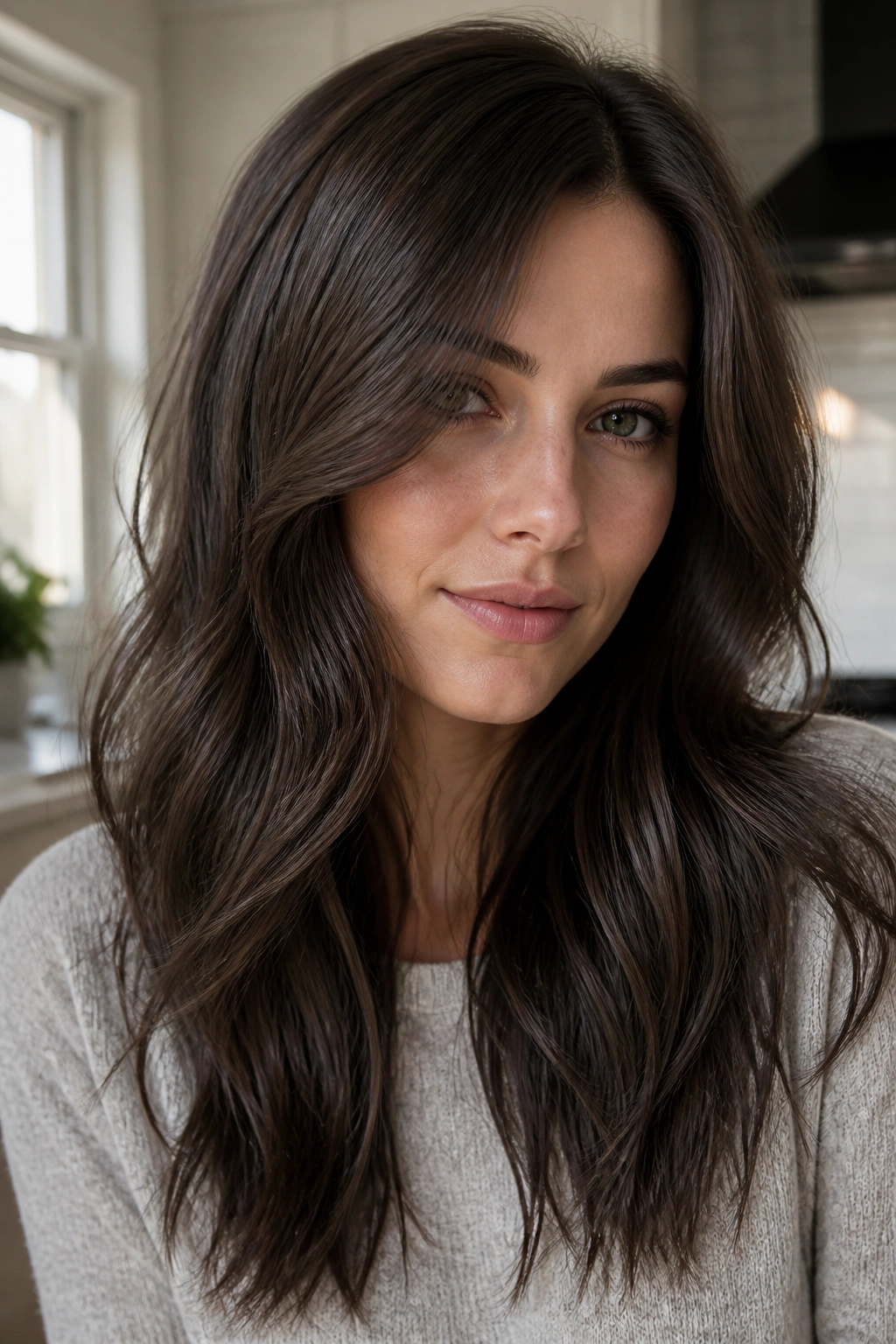
Can espresso brown look cool instead of heavy? Absolutely, if the colorist keeps the red out of it. This version is deep and polished, but the undertone is smoky rather than warm. Think dark roasted coffee with a little ash stirred in.
It works especially well if your skin is fair-cool and you like a stronger hair color that does not fade into the background. Smoky espresso gives the face definition, and it pairs well with brows that are already dark. If your eyes are gray, green, or deep brown, the contrast can be sharp in a good way.
How to Ask for It
Ask for a level 3 or level 4 brunette with a cool brown or blue-violet toner. That phrase matters. If you just ask for “deep brown,” some colorists will hear chocolate and reach for warmth.
- Keep the finish glossy, not matte.
- Skip mahogany and chestnut undertones.
- Ask for a soft brown-black impression, not jet black.
- If your hair is porous, have the ends pre-toned so they don’t drink up too much pigment.
It’s dramatic without the red note. That’s the whole appeal.
3. Cool Mocha Balayage
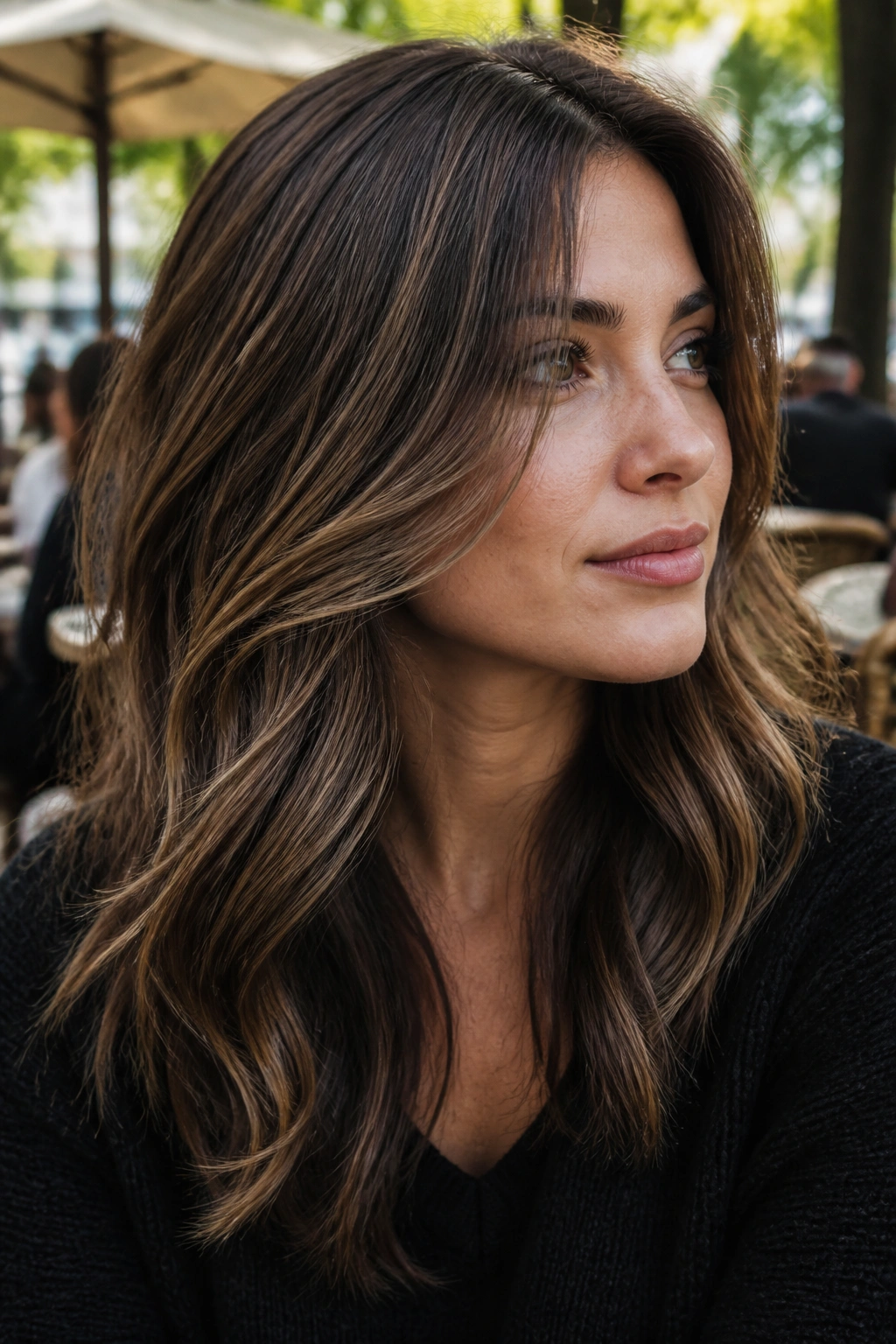
Picture a medium-brown base with ribbons of smoky mocha drifting through the lengths. That’s cool mocha balayage, and it’s a smart choice if you want dimension without jumping into blonde territory. The lighter pieces stay in the brown family, which keeps the look grounded.
The beauty of balayage is the hand-painted placement. You can keep the root area deeper and concentrate the lighter mocha around the mid-lengths and ends, where movement matters most. On cool skin, this matters because the light pieces should brighten your face, not create a gold halo around it.
Placement That Makes the Shade Work
- Keep the face-framing pieces one to two levels lighter than your base.
- Ask for a cool mocha or ash-beige tone on the lifted hair.
- Leave the first inch or so at the root deeper for a softer grow-out.
- Keep the ends soft, not stripey.
If your hair has a natural wave, this color has even more life in it. The bends in the hair catch the lighter pieces and make the whole thing look fuller.
4. Ash Chocolate Brown
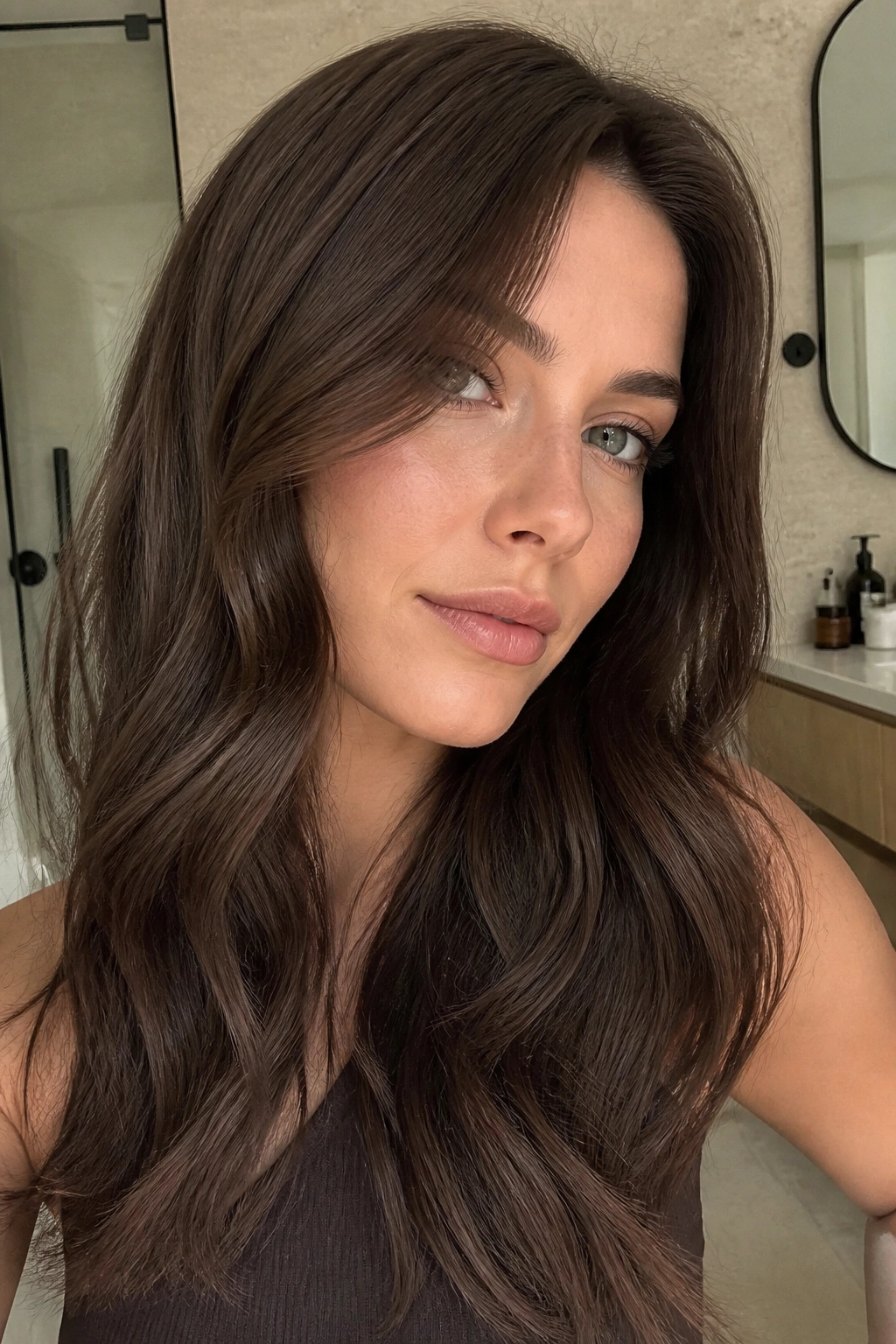
Warm chocolate brown has a cozy, glossy feel, but cool skin doesn’t always love it. Ash chocolate brown keeps the same rich depth and swaps the syrupy warmth for a dry cocoa finish. That small change makes the color sit much better against pink or blue undertones.
This is a good option if you want a brunette shade that feels classic but not sweet. I like it most on medium to deep cool skin, especially when the eyes and brows already have some definition. The color gives the hair weight and shine, but it doesn’t pull orange in the sunlight.
The trick is to keep the chocolate base deep and let the ash live in the glaze. If the ash goes too strong, the hair starts looking dusty. If the brown goes too warm, it becomes ordinary fast. Neither is the look you want.
A gloss every few weeks keeps the cool finish in place. Without it, the tone can drift softer and warmer than you planned.
5. Beige Brown With a Smoky Finish for Cool Skin Tones
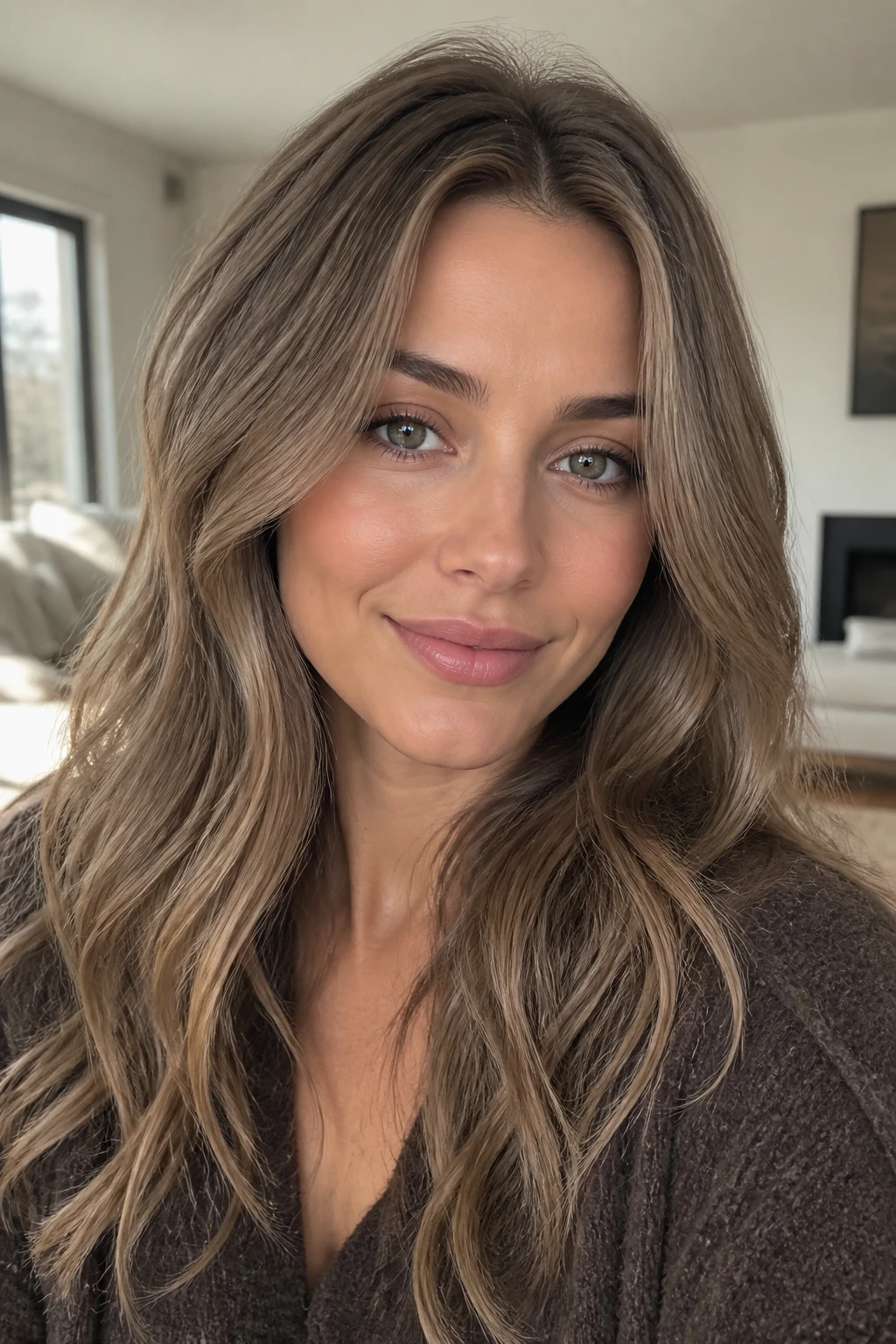
Beige brown is one of the easiest cool-brown shades to wear because it softens the face instead of hardening it. The smoky finish is what makes it work for cool skin. Without that little veil of ash, beige brown can slide too close to gold and lose the point.
This color is good if you want something lighter than espresso but less dark than chocolate. It has a gentle look in indoor light and a clean, creamy feel outside. On cool skin, that creaminess reads as polished, not yellow, as long as the toner stays neutral-cool.
The best versions have a muted, suede-like quality. They look a little softer than mushroom brown and a little less deep than ash chocolate. That middle ground is often the easiest place to live if you do not want your hair color to dominate your face.
I’d reach for this shade if your makeup routine is light and you like your hair color to do quiet work. It’s also a nice choice for someone growing out old warm highlights. Ask for beige brown with a smoky glaze, not a honey glaze, and you’ll stay on the right side of the line.
6. Slate Brown All-Over Color
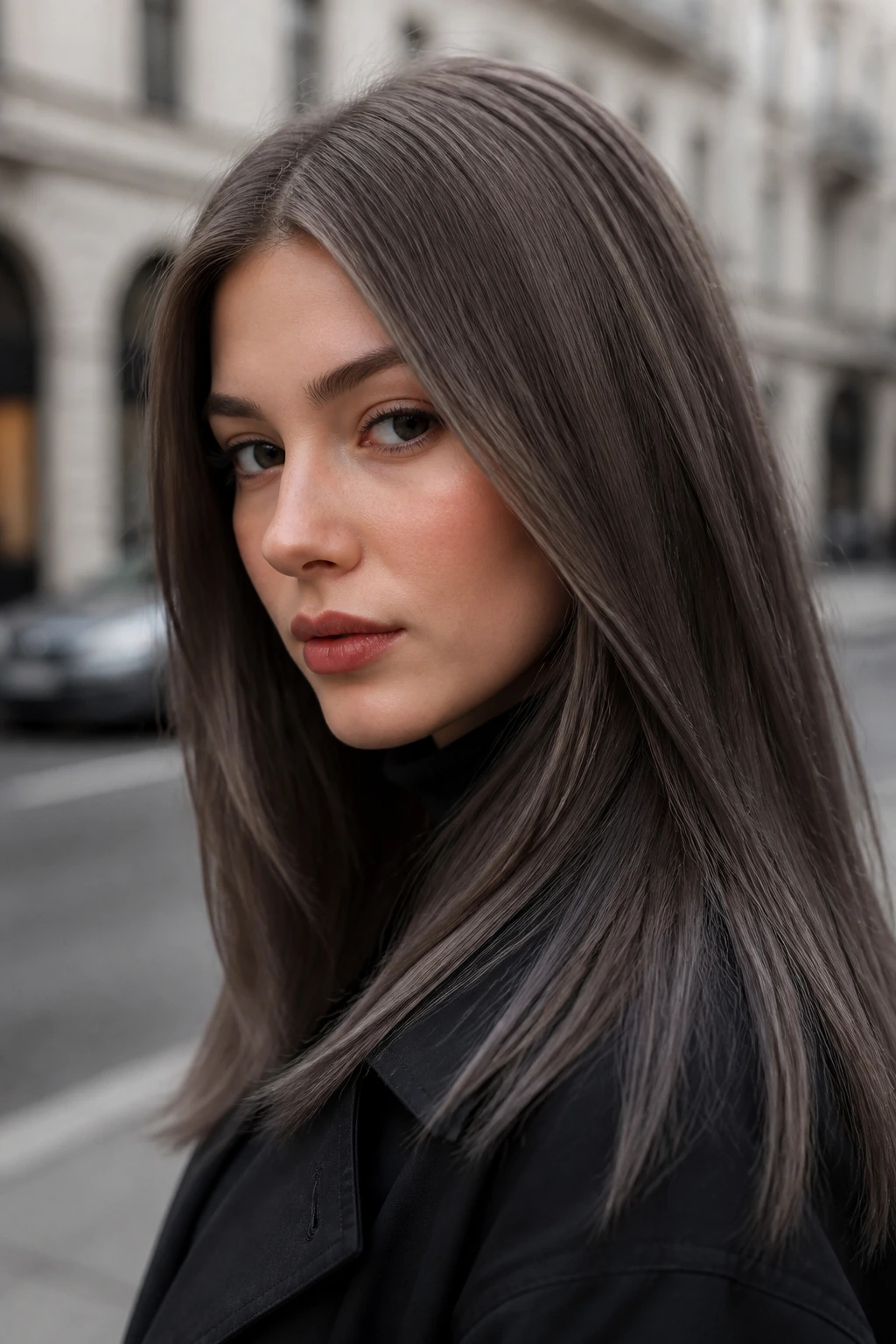
Slate brown is the shade people underestimate, and then they stare at it in daylight. It’s a cool, slightly gray-brown color with a clean finish, and it works beautifully on cool skin because it doesn’t compete with the face. The color feels calm. Almost cool to the touch, if hair color could do that.
This shade is especially good if you like blunt cuts, lobs, or straight styles, because the color reads with a crisp edge. A lot of warm browns get louder on a sleek cut. Slate brown does the opposite; it makes the shape feel sharper and more deliberate.
The catch is porosity. If your hair has been lightened a few times, slate can grab unevenly and go murky at the ends. A good pre-tone helps. So does a gloss that keeps the gray-brown finish even from root to tip.
Not everyone wants that much coolness, and that’s fair. But if you like a quiet, modern brunette look, this shade is one of the strongest picks on the list.
7. Cool Brunette With Face-Framing Babylights
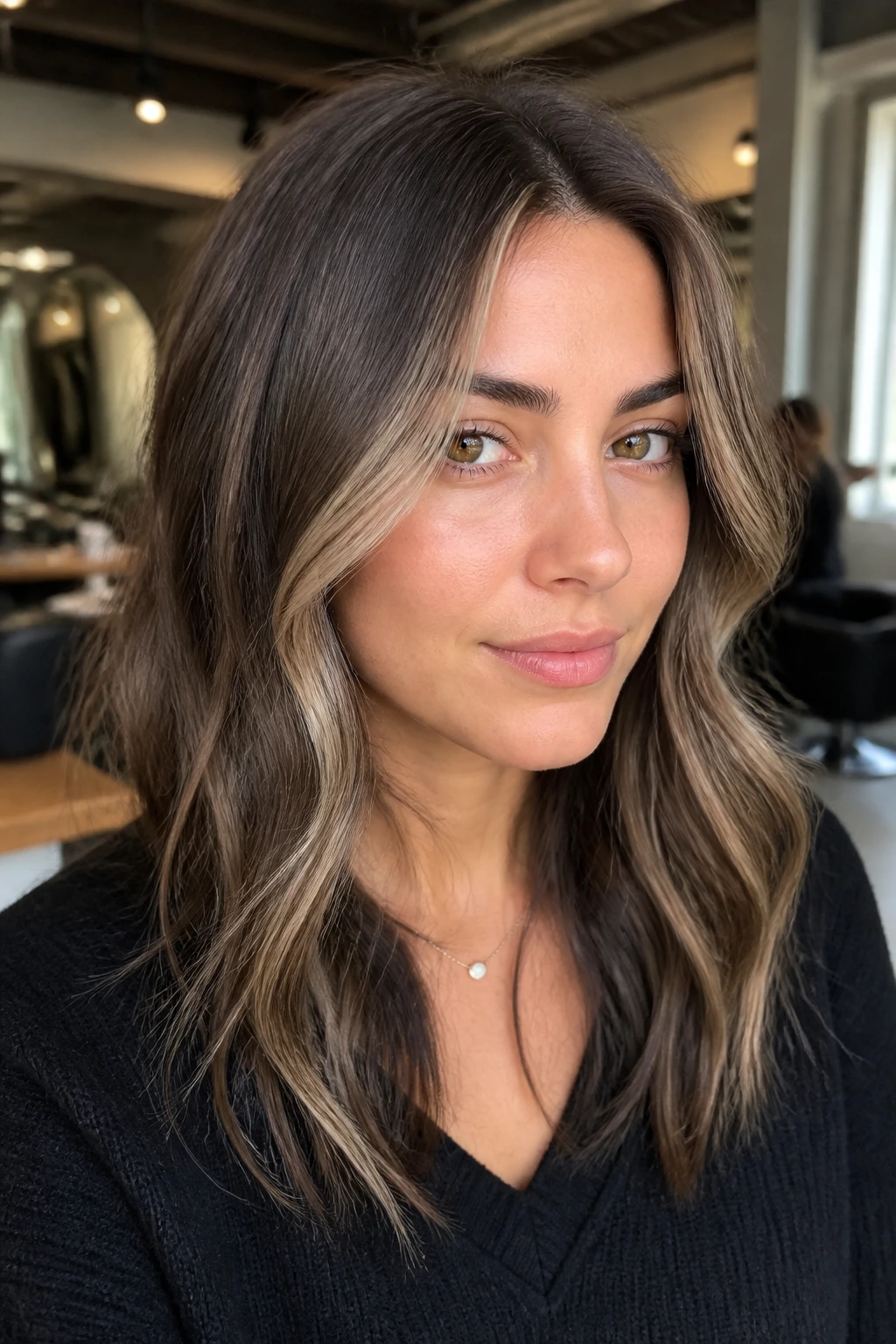
Why do babylights matter so much? Because tiny, fine highlights around the face can wake up a cool brunette without turning the whole head into a highlight project. That matters if you want dimension, not drama.
Babylights are thinner than regular highlights, and that smaller size makes the color look woven into the hair instead of painted on top. For cool skin, the best versions stay in the ash-beige family. No gold streaks. No chunky caramel. Just a soft lift where the face needs it most.
Best Placement Notes
- Keep the brightest pieces around the temples, cheekbones, and part line.
- Ask for a lift of only one to two levels.
- Blend the highlight into a cool brunette base with a soft toner.
- Leave the nape and underlayers deeper for contrast.
That last part matters more than people think. A little depth underneath keeps the hair from looking washed out, especially if your skin is very fair.
8. Iced Cocoa Brown
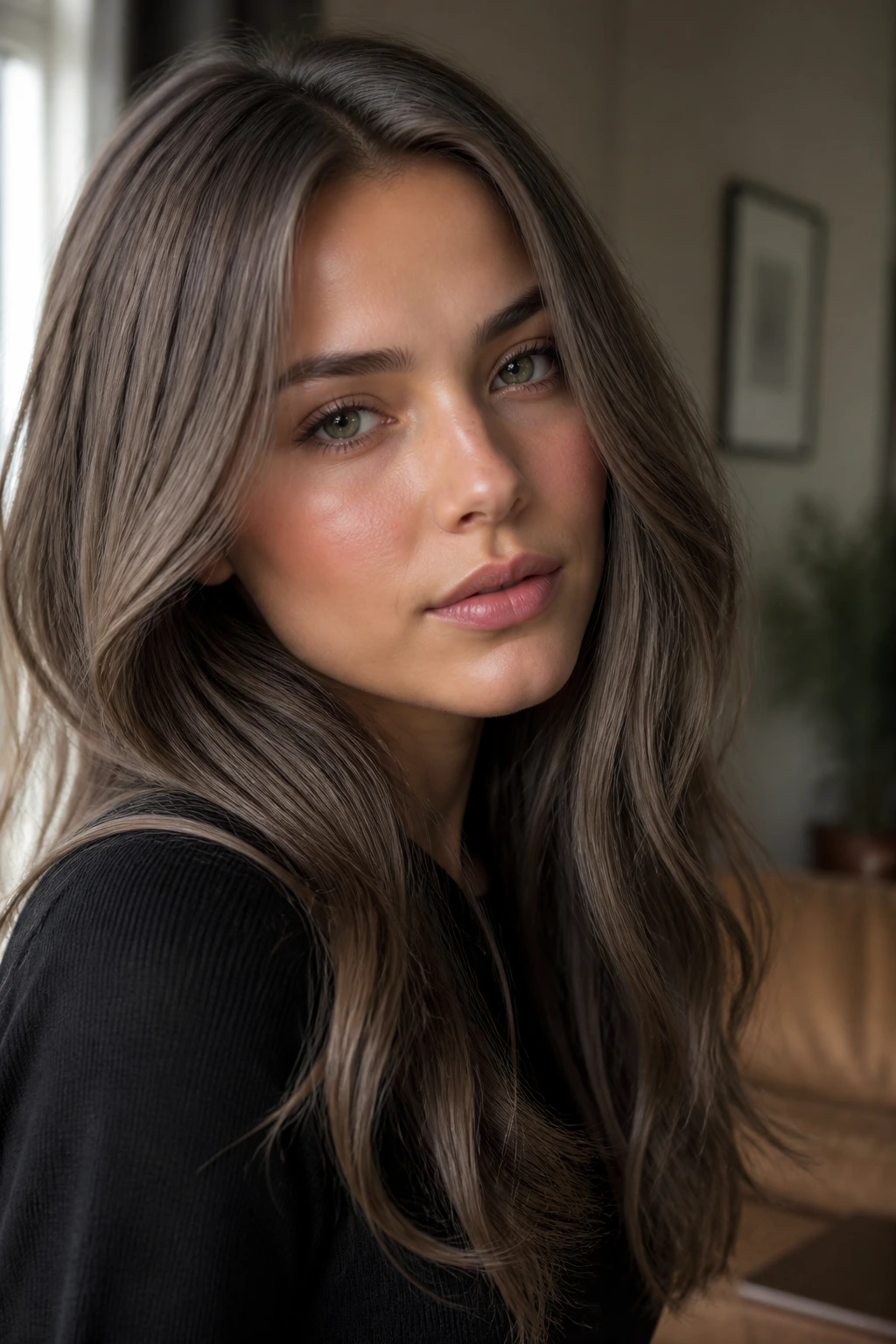
Iced cocoa brown has a colder finish than classic mocha, and that gives it a cleaner edge on cool skin. Imagine cocoa powder with a faint silver sheen over it. Not frosty. Not gray. Just cool enough to keep the warmth out.
This is a lovely color when you want softness and dimension at the same time. It has enough depth to look brunette, but enough lightness in the finish to keep the hair from feeling heavy. On wavy hair, it moves nicely. On straight hair, it looks polished and even.
A lot of colorists build this shade with a neutral brown base and a cool glaze on top. That glaze is doing real work. It turns a standard brown into something that feels more balanced against the skin.
- Best on medium brown or light brown bases.
- Great with a semi-permanent gloss.
- Reads slightly lighter in sun, deeper indoors.
- Needs occasional toning if your hair likes to pull red.
The clean finish is the whole charm here. If you like your brunette shades tidy and not too busy, this one hits the mark.
9. Ash Brown Money Piece Highlights for Cool Skin Tones
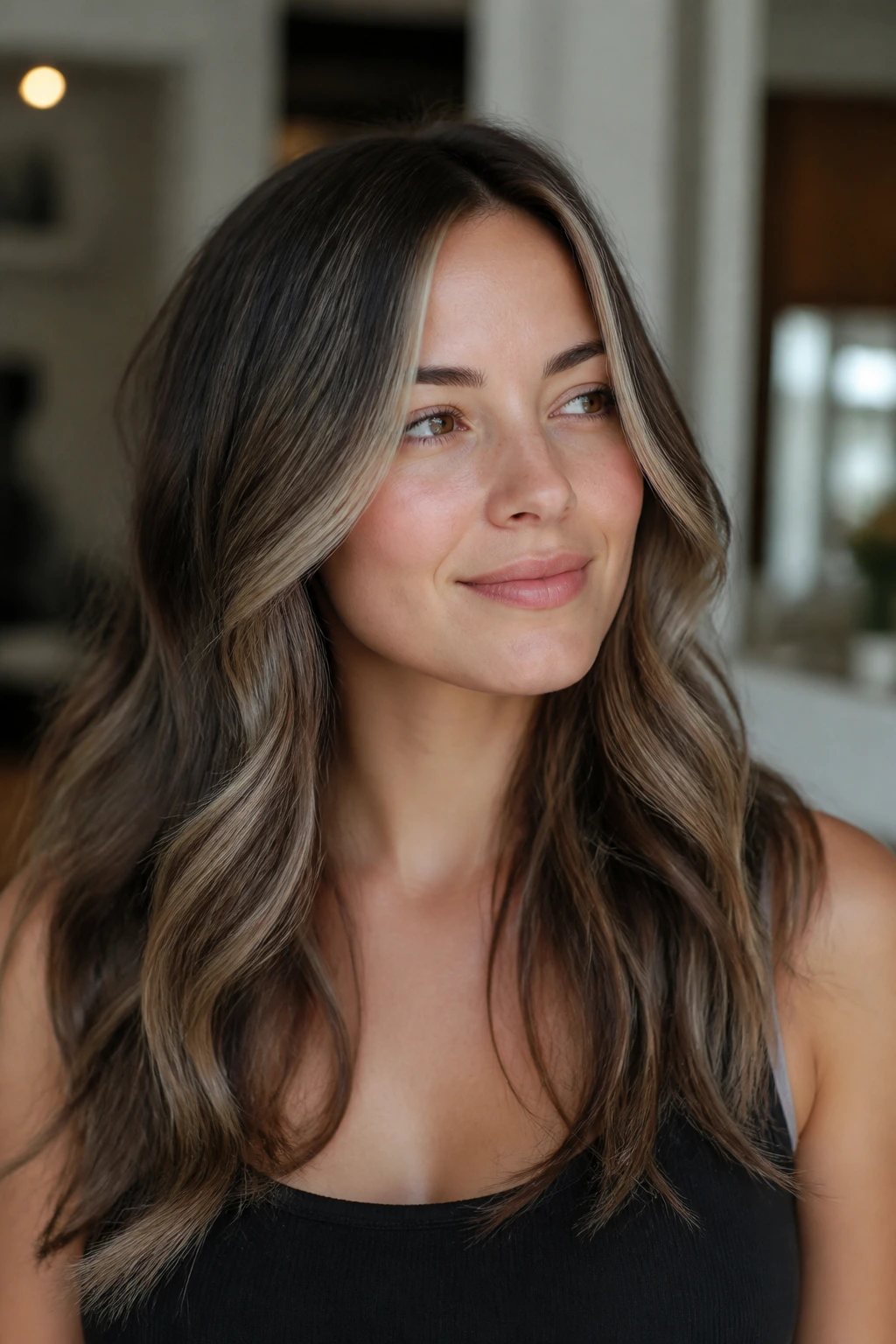
A money piece can do more for a face than a full head of highlights, and that’s why I like it for cool skin. The front pieces catch light right where the eye goes first, so you get brightness without changing the whole color story. Less commitment. Less fuss. More payoff.
For cool skin, the money piece should stay ash-brown or beige-cool, not caramel. That front section is where warmth shows fastest, and a golden strip near the face can undo the whole effect. Keep it soft, and it brightens the complexion in a much cleaner way.
What Makes It Different
Unlike full highlights, a money piece leaves the rest of the brunette richer and deeper. That contrast can make the face look more open without giving up the brown base. It’s especially good if you wear your hair in a middle part or tuck one side behind the ear a lot.
- Keep the brightest front pieces around one to two levels lighter than the base.
- Ask for a soft root melt so the front doesn’t look disconnected.
- If your skin is very pale, stay closer to beige than silver.
- If your hair is dark brown, the front pieces need enough lift to be visible, but not so much that they look blonde.
It’s a small change, but a smart one. That’s often the best kind.
10. Smoky Mushroom Balayage
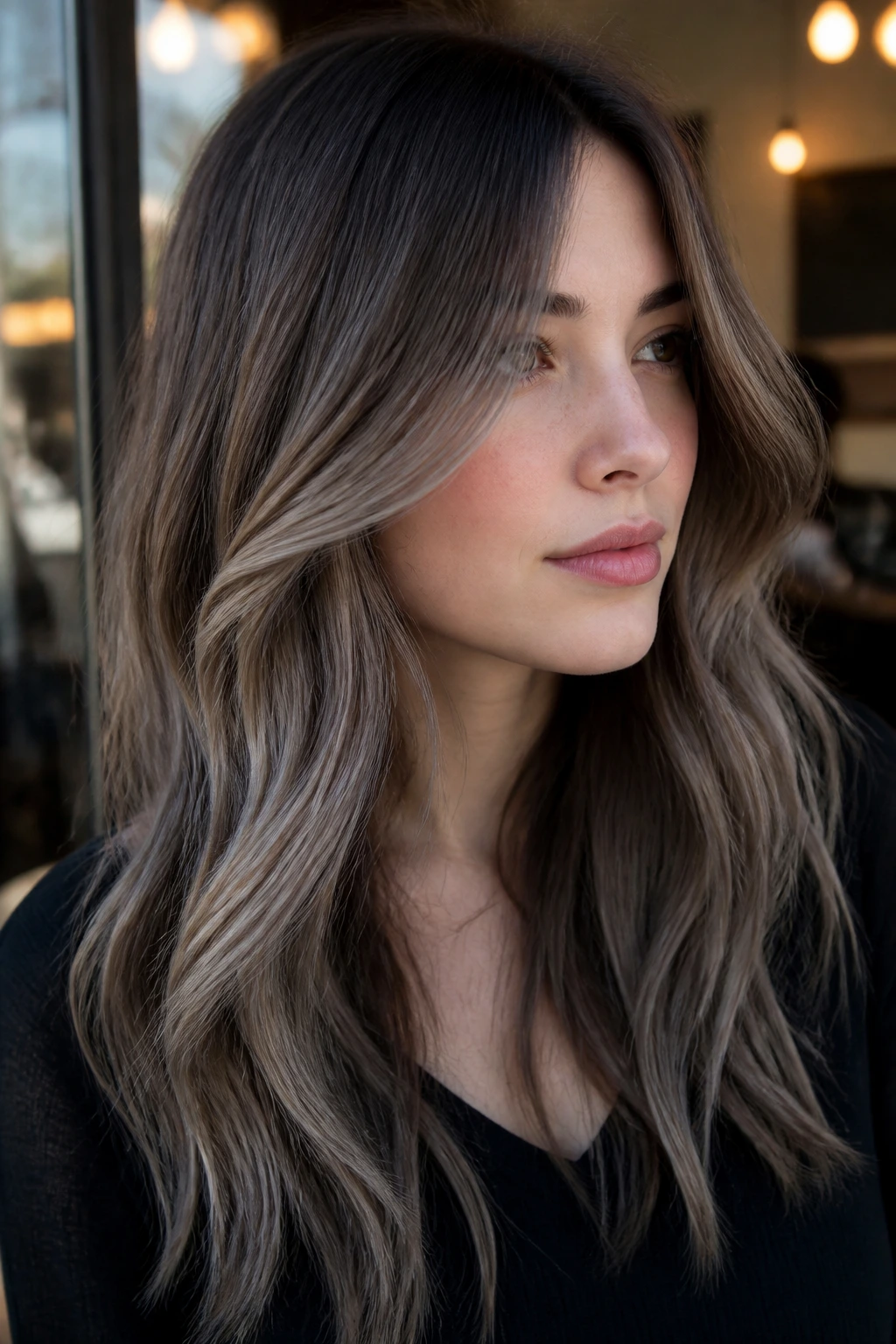
Smoky mushroom balayage takes the mushroom idea and stretches it through the hair in soft ribbons. The result feels layered, not painted. That’s important, because cool brunettes can look harsh when the contrast is too high.
This is a strong choice for people who want movement in their color but hate the stripey look. The balayage placement keeps the root zone dark and builds the cooler tones through the lengths. On cool skin, the smoke in the color keeps the face from looking flushed or over-bright.
I like this shade most on wavy or curly hair. The bends break up the ribbons and make the color feel richer. On straight hair, it still works, but the placement has to be clean or the whole thing can flatten.
The best version has mushroom brown midtones, ash beige ends, and a soft root shadow. That three-part mix keeps the color alive. It also makes grow-out less annoying, which is not a small thing.
11. Cool Chestnut Brown With Ashy Ends
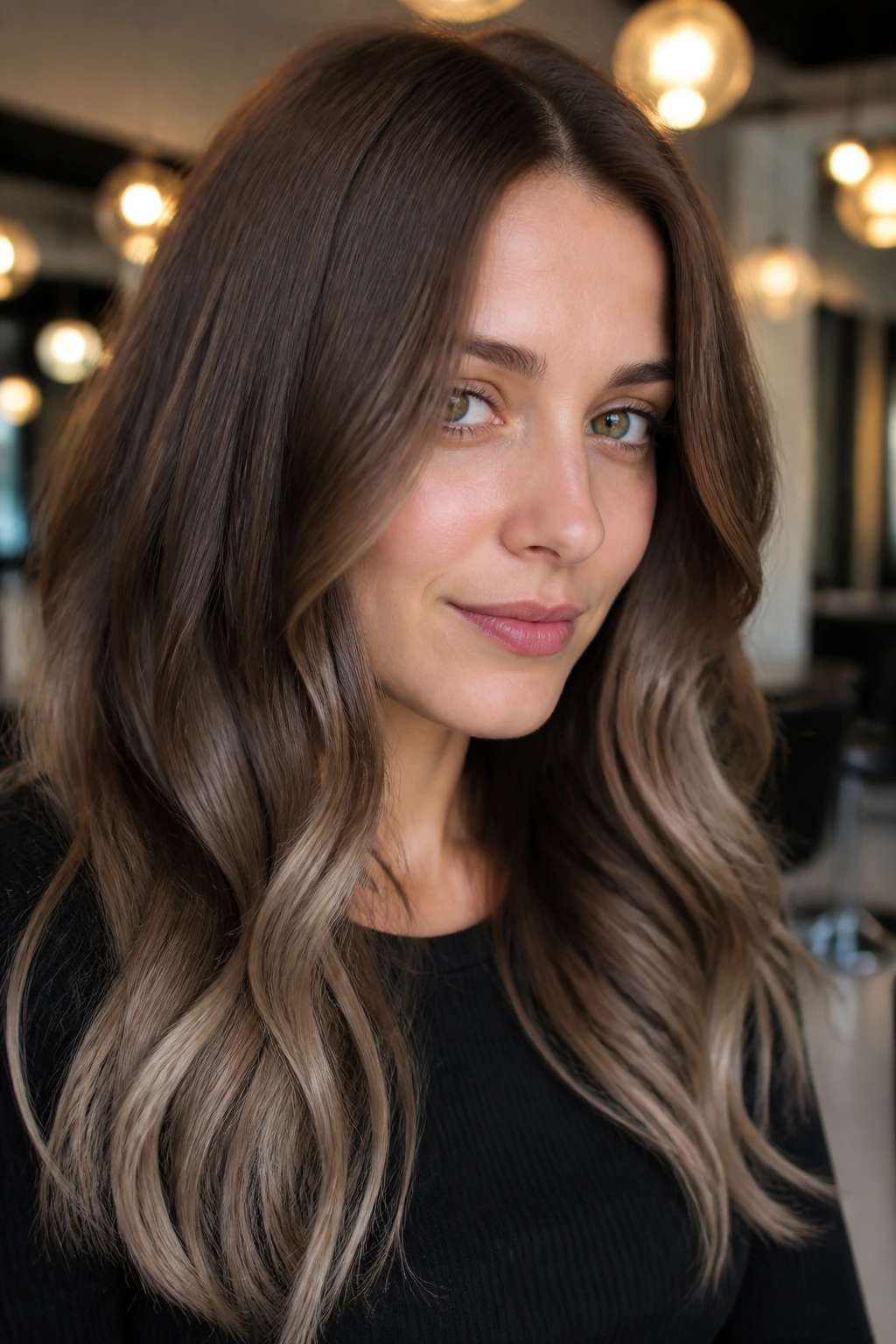
Chestnut usually leans warm, and that’s why people with cool skin often rule it out too fast. A cooler version can work if the warmth stays near the root and the ends are pushed ashier. The effect is subtle, but it changes the whole read of the color.
This is one of those shades that feels natural without feeling boring. The hair starts with a rich brown base, then the ends go slightly cooler and lighter, which gives the color movement. On long hair, that shift is especially pretty because the eye follows the length and notices the change.
Where the Cool Tone Should Live
The safest place for the ash is usually the lower half of the hair. That keeps the face from looking dull and stops the roots from going flat. If the ends are a touch lighter and cooler, the whole style feels less heavy.
- Keep the root area chestnut-brown, not red-brown.
- Blend the mid-lengths into a cooler cocoa.
- Let the ends go ash brown or beige-ash.
- Refresh the tone on the lower half first, since that’s where warmth shows up quickest.
It’s a quiet color shift, but it’s one of the smartest if you want something brown, soft, and not too obvious.
12. Taupe Brown Gloss
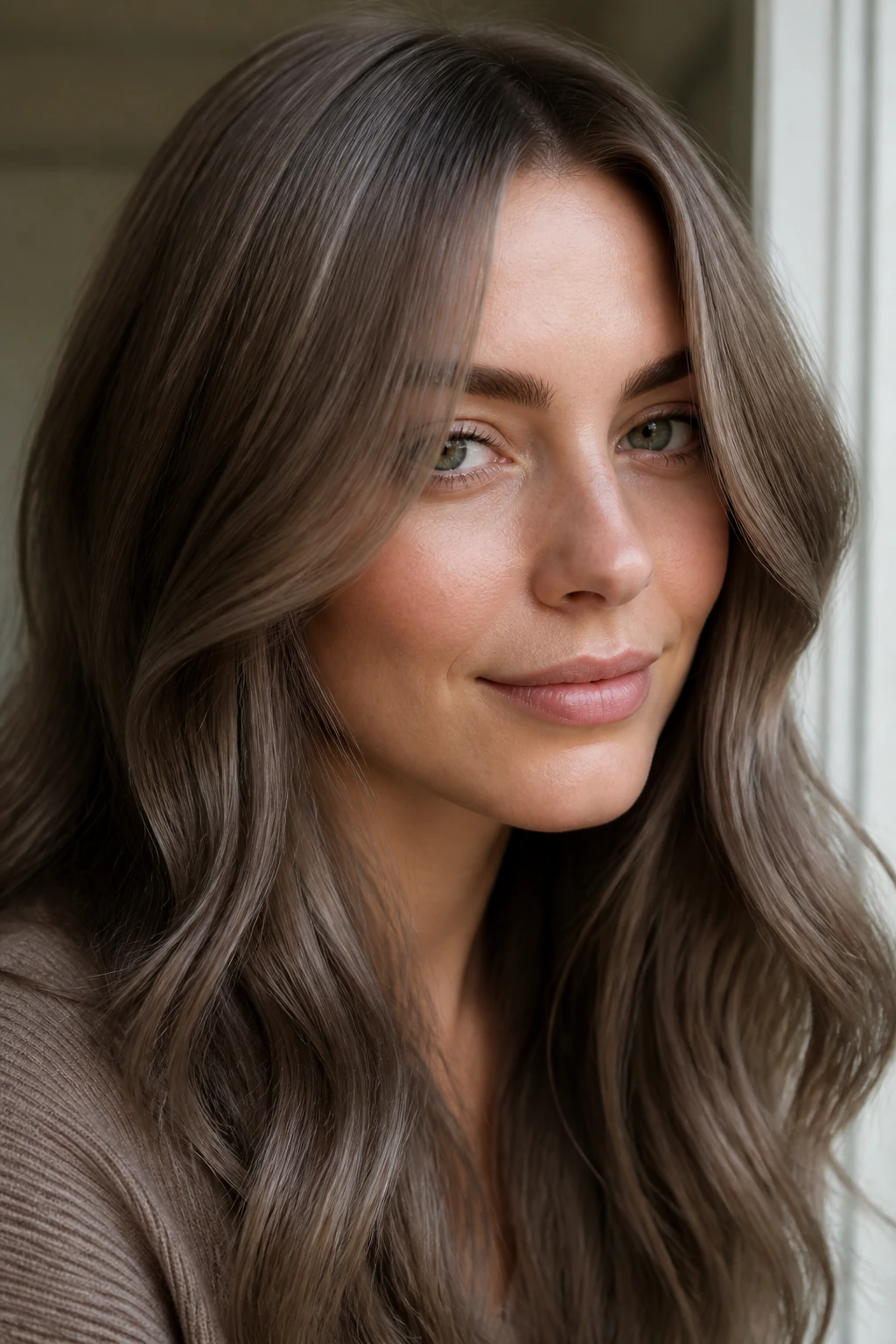
A taupe brown gloss can turn ordinary brunette hair into something that looks softer and smoother in one appointment. That’s because gloss doesn’t just color the hair; it changes the surface, and the surface is half the story with cool brown shades. Hair can be the right level and still look off if the finish is too bright or too warm.
Taupe brown sits in that cool-neutral lane that flatters pink or blue undertones easily. It looks a little muted in the bowl and much prettier on the head. The shine matters here, because gloss reflects light in a softer way than permanent color.
Why This Works So Well
A gloss is especially useful after highlights, balayage, or any lightening service that left the hair too yellow. It can smooth the tone back down in about 20 minutes, depending on the formula. That’s fast, but the result can look much more controlled than a big color change.
- Best for medium brown to light brown hair.
- Good for blending out old warmth.
- Can be used between bigger color appointments.
- Usually fades softer than permanent dye, which makes it easier to live with.
If you like your brunette color to feel clean and polished rather than bold, taupe brown gloss is one of the easiest ways to get there.
13. Espresso Brown With Blue-Black Depth
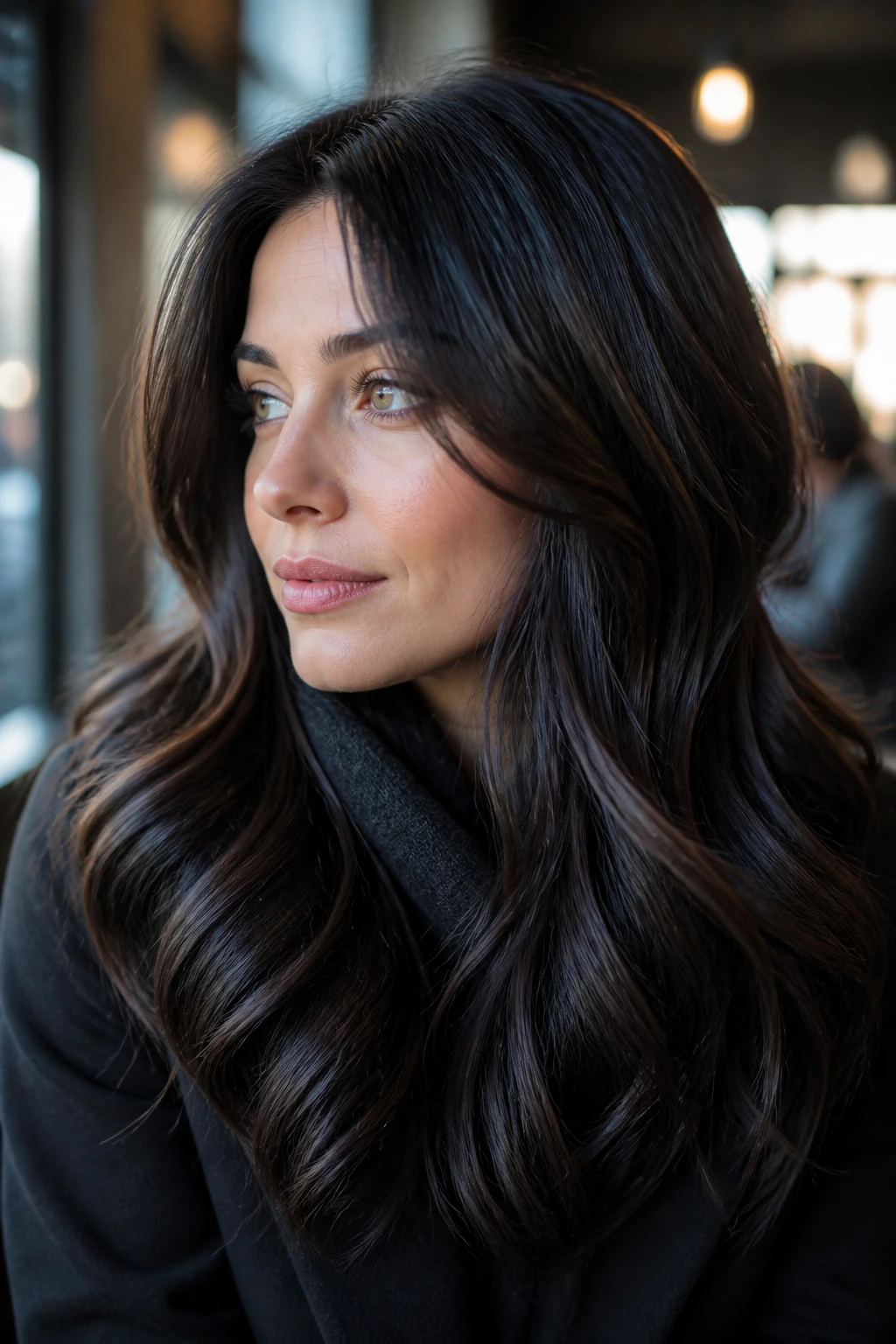
Blue-black depth is not the same thing as black hair. That’s worth saying plainly. Blue-black has a cool reflective edge that keeps the color from looking flat, and on cool skin, that shine can make the face look clearer and more defined.
This shade works best if you like contrast. Dark brows, dark lashes, or a sharp eyeliner look can all sit nicely with it. If your skin is very fair, the contrast can feel dramatic. If your skin is deeper and cool-toned, the color can look sleek and rich instead of severe.
The main difference between this and a standard espresso shade is the undertone. Espresso is brown with depth. Blue-black espresso has more edge, almost like ink in coffee. It can be gorgeous, but it’s not the shade I’d give someone who wants a soft, low-drama look.
Best recommendation: keep the roots slightly deeper, then glaze the mids with a cool blue-brown tone. That keeps the color from turning flat black while still giving you the moody finish people like.
14. Neutral Cool Brown Melt
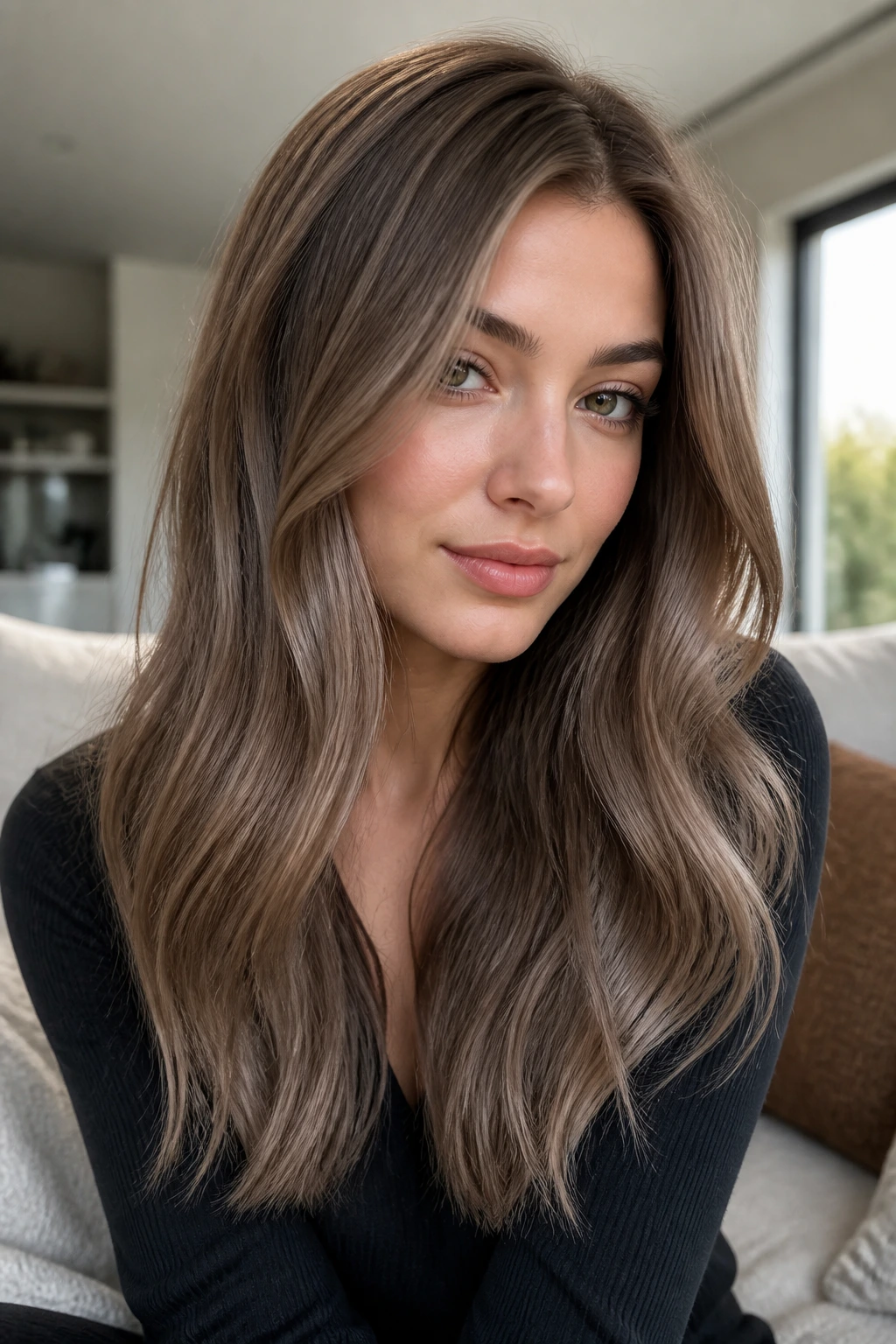
If you hate stripes, a color melt is usually a better move than chunky highlights. The whole point is to move from darker roots into slightly lighter mids and ends with no hard line in sight. On cool skin, a neutral-cool melt looks polished and very intentional.
The root area can sit around a level 4, the mids around a level 5, and the ends around a level 6. That sounds technical, but it’s a useful way to talk to a colorist. The key is not the number alone. It’s the undertone shift. You want ash-beige movement, not gold.
This works well if you want brunette color that grows out gently. It also keeps the hair from looking dense at the bottom, which can happen with a single, flat brown all over. A melt gives you shape and brightness, but the transition stays soft.
One nice thing about this shade: it doesn’t demand perfect styling. Messy waves, a blowout, a loose bun—they all work because the color already has the depth built in.
15. Dimensional Ash Brown Lowlights
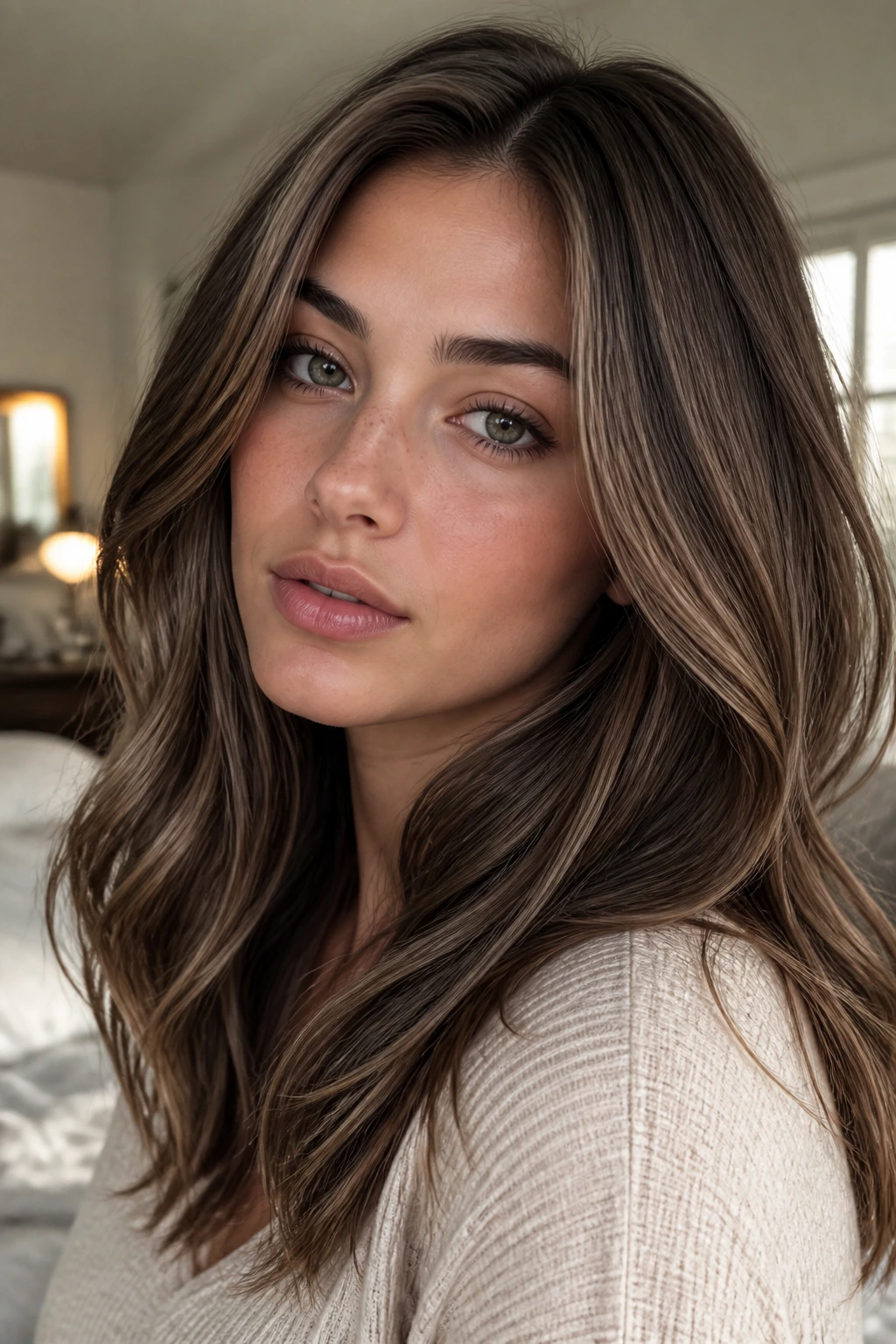
Lowlights are the quiet fix for hair that has gone too light, too warm, or too flat. Add darker strands into a lighter brunette base, and the whole color suddenly has shape again. For cool skin, ash brown lowlights can cool the overall effect down fast.
This is especially useful if your hair has been highlighted a few times and now feels a little too bright. Rather than stripping out color, lowlights put depth back where it belongs. That extra depth makes fine hair look thicker, too. It’s one of the few color tricks that actually earns its reputation.
What to Watch For
- Ask for lowlights that are one to two levels deeper than your base.
- Keep the lowlights cool brown, not red brown.
- Place them where the hair needs shadow: underneath, through the crown, and near the back.
- Use them to frame the lighter pieces, not bury them.
The result should look like your hair has more dimension, not like someone drew stripes into it. That line matters.
16. Silver-Glaze Ash Brown for Cool Skin Tones
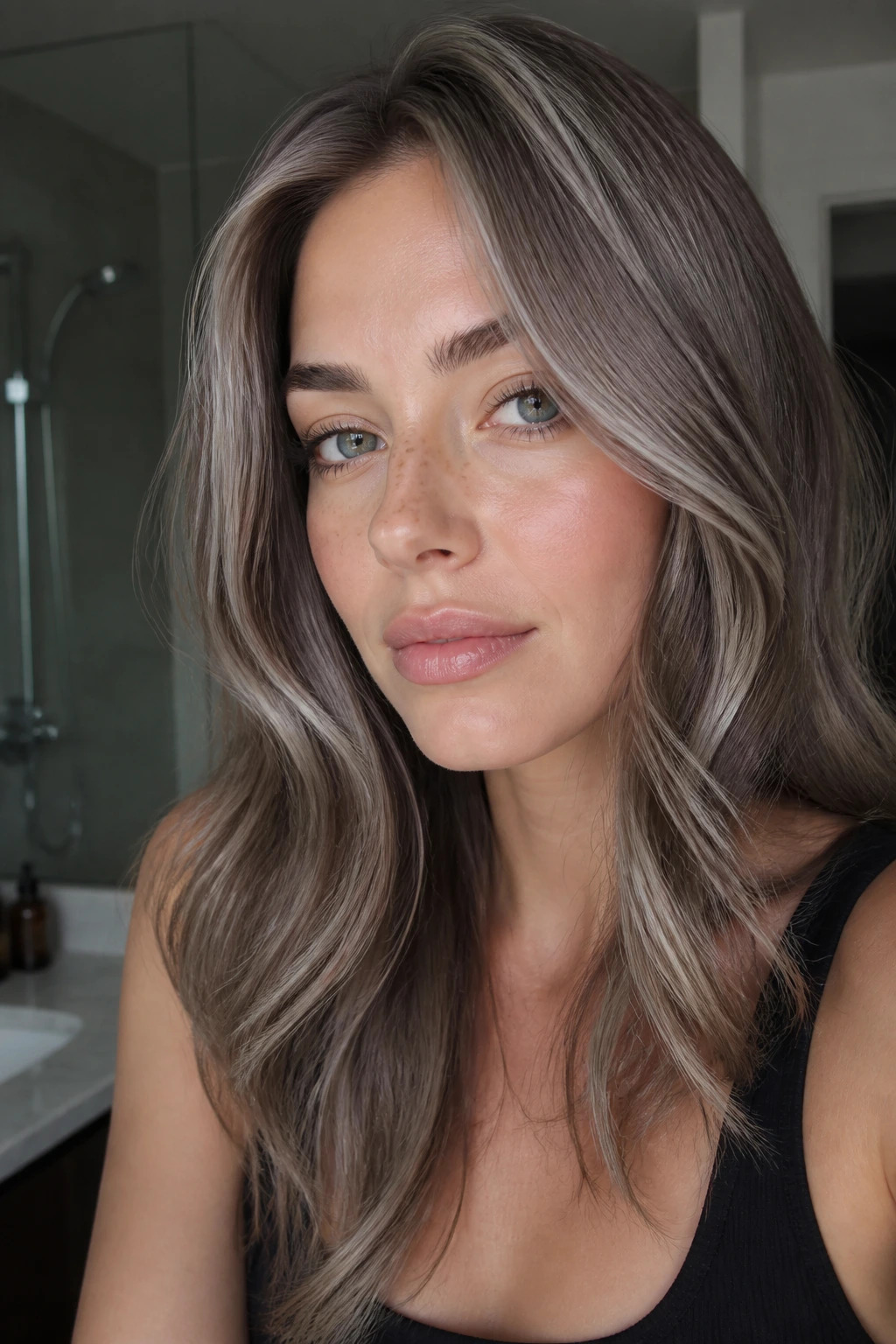
Is silver too gray? Not when it’s used as a glaze over brown hair. A silver glaze gives ash brown a softer, cooler shine and can make the whole color look cleaner against cool skin. It’s subtle. That’s why it works.
This is a nice option for people who like the idea of cool brunette hair but don’t want anything too dark or too warm. The silver note lives on the surface, so it changes the way light hits the hair more than it changes the base level. That makes it feel lighter and fresher without needing a full color overhaul.
When to Choose It
Silver-glaze ash brown tends to look best when the base already has some coolness in it. If your hair is heavily gold or copper, the glaze can fade fast or look muddy. If the base is already neutral, the result is cleaner.
- Good after toning out old highlights.
- Strong choice for straight or blunt cuts.
- Often needs a refresh every 4 to 6 weeks.
- Works well when the goal is a cool finish, not a big contrast shift.
If you like your brunette shades to look crisp and a little editorial, this is one of the best picks.
17. Pewter Walnut Brown
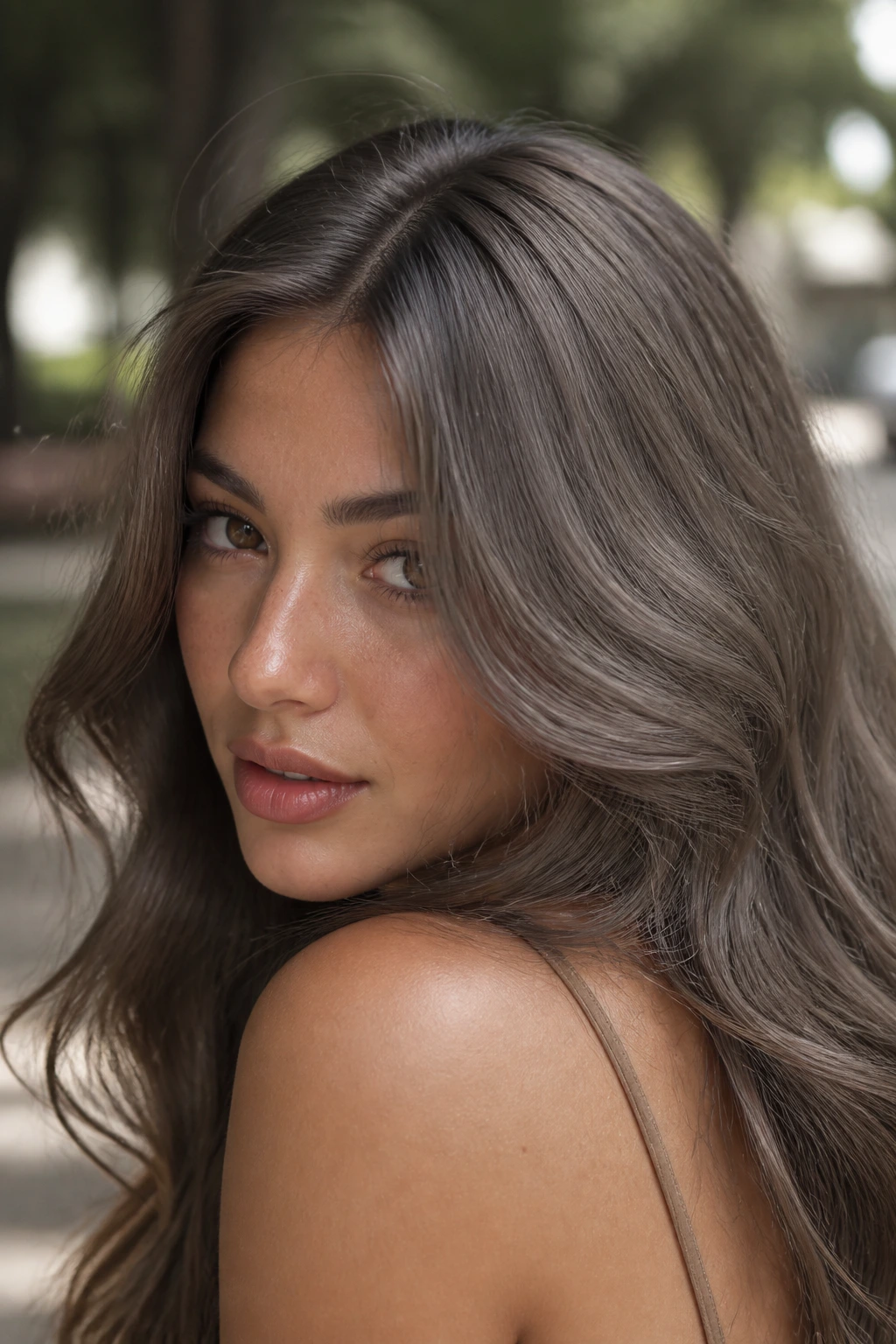
Pewter walnut brown sits in the cool-brown middle ground, but it has more personality than plain neutral brunette. Pewter gives the shade that soft metallic cast, while walnut keeps the color from going too gray. The result is a brown that feels grounded but still sharp.
This is a good color for medium-depth cool skin, especially if your features can handle a touch of darkness around the face. It doesn’t shout. It doesn’t glow gold. It just sits there looking expensive in a low-key way, which is often harder to get than it sounds.
I also like it on thicker hair, because the depth helps the hair look dense and healthy. On very fine hair, it can work too, but the cut has to carry some shape or the color may feel heavy. Shoulder-length layers are a nice match.
The tone is a little cooler than mushroom brown and a little less soft than taupe gloss. That makes it a useful in-between shade if you’re testing how cool you actually want to go.
18. Charcoal Brown With Soft Silver Ribbons
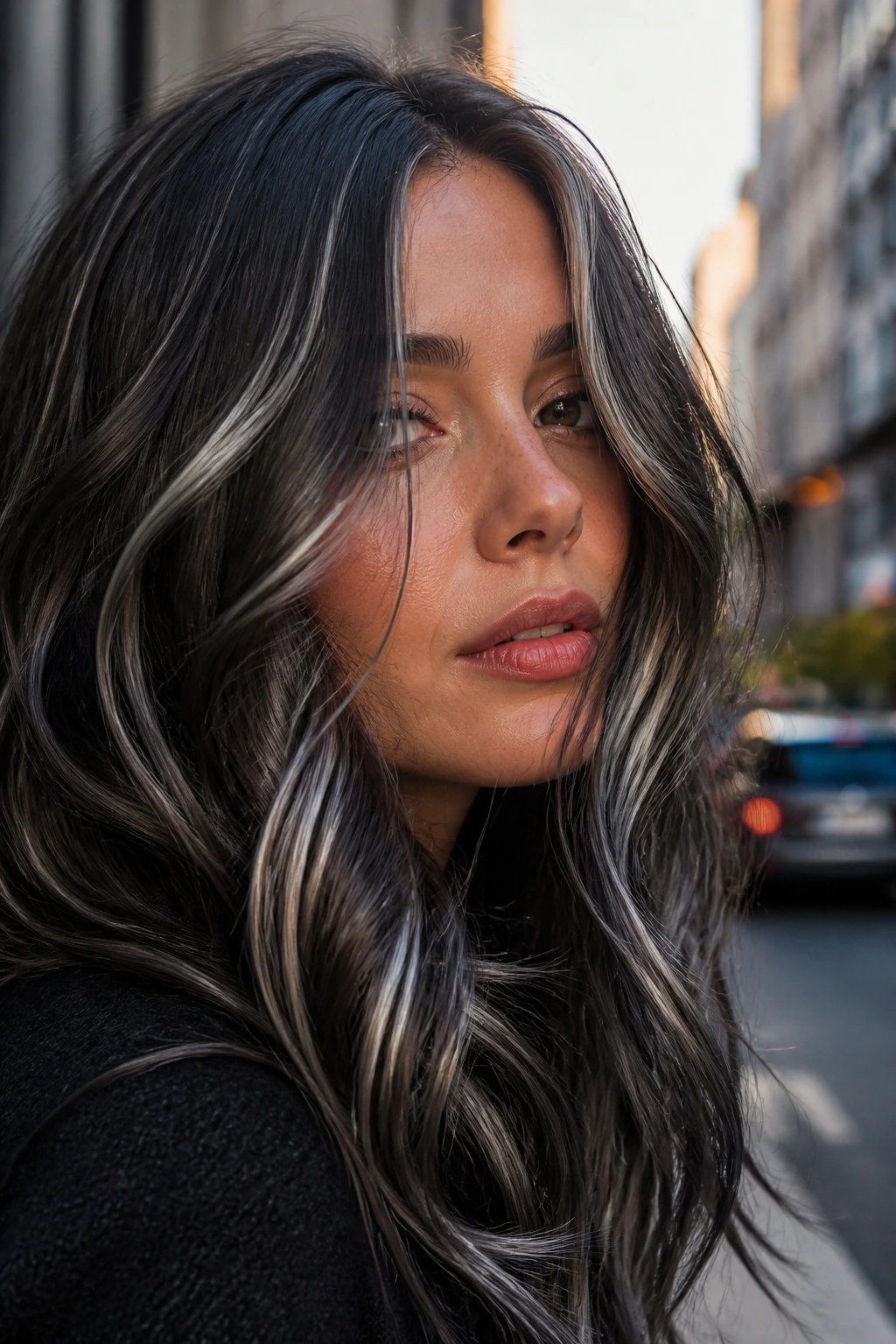
Charcoal brown with silver ribbons is the boldest cool-brown option here, and I mean that in the best way. The base is deep and smoky, while the silver ribbons add just enough brightness to keep the hair from turning into one dark block. On cool skin, that contrast can look striking.
This is a smart shade if you already know you like high contrast. Dark eyes, strong brows, and cool undertones can all handle it well. The silver pieces should stay fine and controlled, not broad or chunky. Too much silver and the look starts drifting into gray highlight territory, which is a different thing entirely.
How to Keep It Clean
- Keep the charcoal base rich and cool, not black.
- Place the silver ribbons mostly around the top layers.
- Ask for thin pieces so the color reads as movement, not stripes.
- Gloss the silver pieces often, since they fade faster than the base.
That’s the tradeoff with this one. It looks sharp, but it asks for a little upkeep. If you like that kind of finish, it’s a strong way to wear ash brown with real edge.
Final Thoughts
The best ash brown shades for cool skin tones are the ones that respect both the skin and the hair. Too much gold pulls the face off balance. Too much flat gray can do the same thing from the other side. The sweet spot sits somewhere in the middle, where smoke, taupe, mushroom, and cool cocoa all get to do their work.
If you’re sitting in a salon chair, the easiest move is to name the undertone you want, not just the color family. Say ash, smoky, taupe, slate, or cool beige. Those words steer the result in the right direction fast.
And if you’re still torn between two shades, choose the one that looks best in daylight, not just under salon lights. That little test saves a lot of regret later.
