



The wrong brunette can make cool skin look tired fast. Too much copper, too much gold, and suddenly the face reads pinker than it is, the jawline looks softer in the wrong way, and the whole color feels louder than the person wearing it. That is why brown hair color ideas for cool skin tones work best when they lean ash, mushroom, taupe, smoky beige, or deep espresso instead of orange-brown.
Cool skin tones usually play nicest with hair that has a blue, violet, or gray base. Not flat gray. Not muddy brown. Just enough cool pigment to keep the shade clean. A good brunette should look rich in daylight, not bronzy in one room and brassy in another. That little difference matters more than most salon gloss sheets admit.
I’ve always thought brunette is the hardest hair color to get right, mostly because people assume brown is brown. It isn’t. A level 4 ash chocolate looks miles away from a level 5 caramel chestnut, and the wrong undertone can make even expensive color look cheap. The good news is that cool skin gives you a lot of room to play if you keep the warmth under control.
First up is the shade that almost never disappoints.
1. Ash Chocolate Brown for Cool Skin Tones
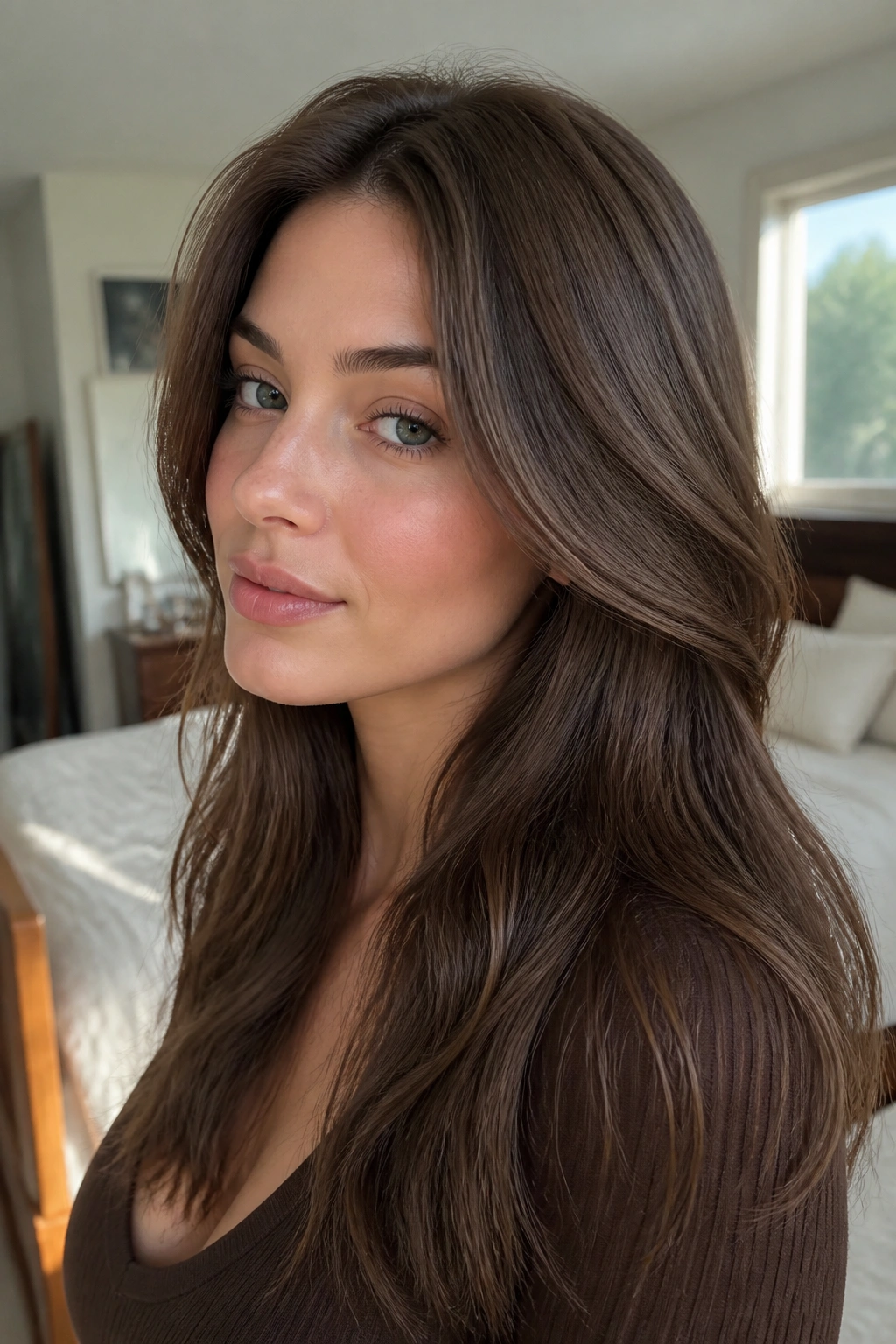
Ash chocolate brown is the safe bet, but “safe” here does not mean boring. It means the color sits cleanly against pink, rosy, or blue-leaning skin without shouting over it. Think level 4 or 5 brown with a cool chocolate base and just enough ash to pull the copper out of the picture.
This shade works especially well if your natural hair already sits in the medium-dark range. You’re not fighting the hair as much, which keeps the finish smoother and less patchy. The best version has depth at the roots and a soft cocoa look through the mids, not a flat block of brown.
What to ask for
- Level 4 to 5 chocolate brown with an ash or neutral-ash finish
- No copper, no golden gloss
- A demi-permanent glaze if you want shine without a hard commitment
- Subtle dimension around the face, not chunky streaks
Best for: people who want a polished brunette that looks tidy in daylight and doesn’t go orange after a few washes.
2. Mushroom Brown Has That Soft, Smudgy Finish
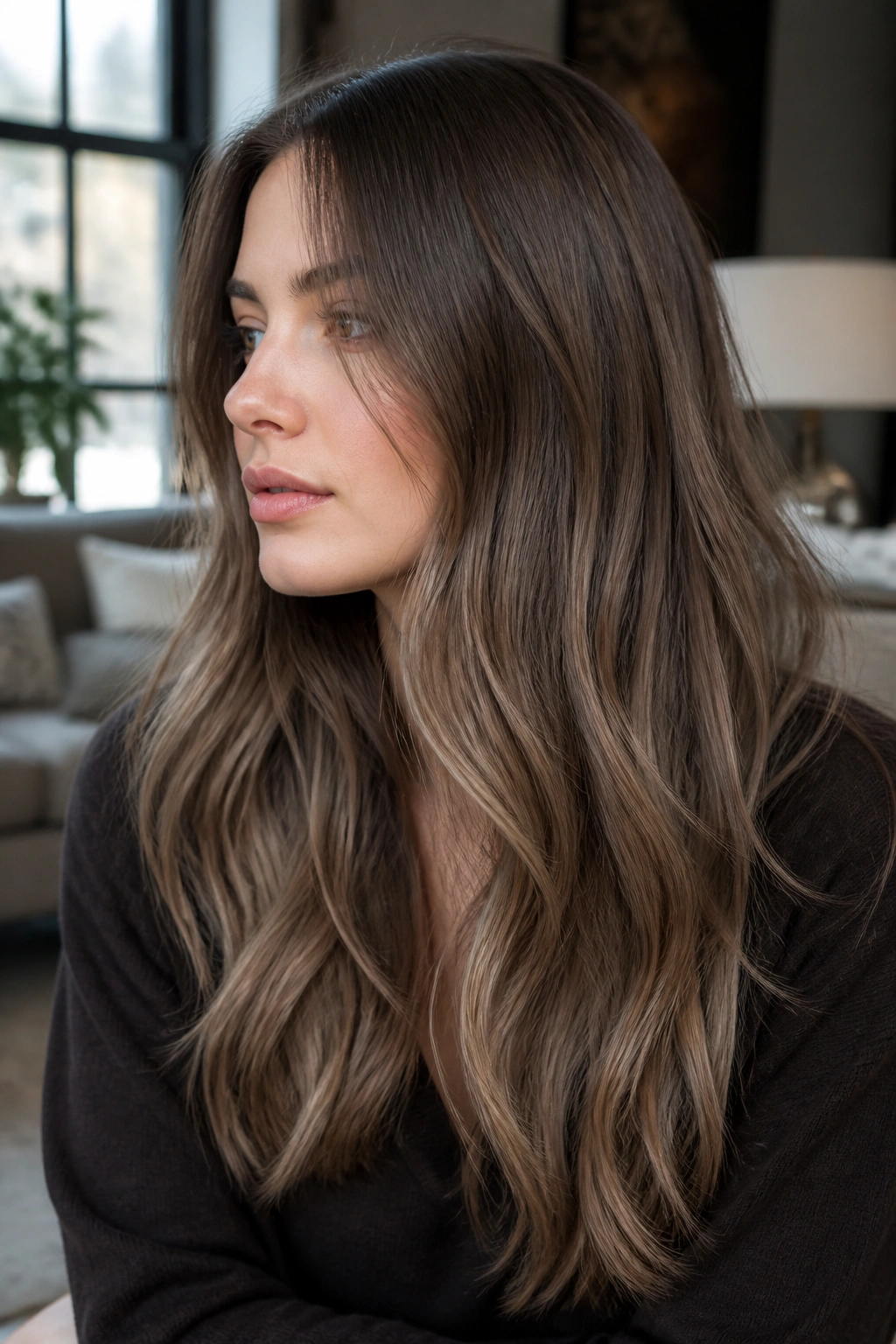
Why does mushroom brown flatter cool skin so well? Because it sits in that gray-beige-brown lane that keeps the color from getting syrupy. The whole point is softness. No copper glow. No warm honey haze. Just a muted brunette that looks expensive in a very low-key way.
On straight hair, mushroom brown can read sleek and modern. On wavy hair, it gets even better, because the slight bends show off the muted tonal shifts. If you like a cooler blonde’s quiet cousin, this is the one. Ask your colorist for beige ash lowlights and a root shade that stays one step deeper than the mids so the color doesn’t wash out.
Mushroom brown also grows out kindly. That matters more than people think. A hard-line brunette can look obvious after a few weeks, while mushroom tones fade into a softer shadow.
3. Cool Espresso Brown Gives Hair That Inky Depth
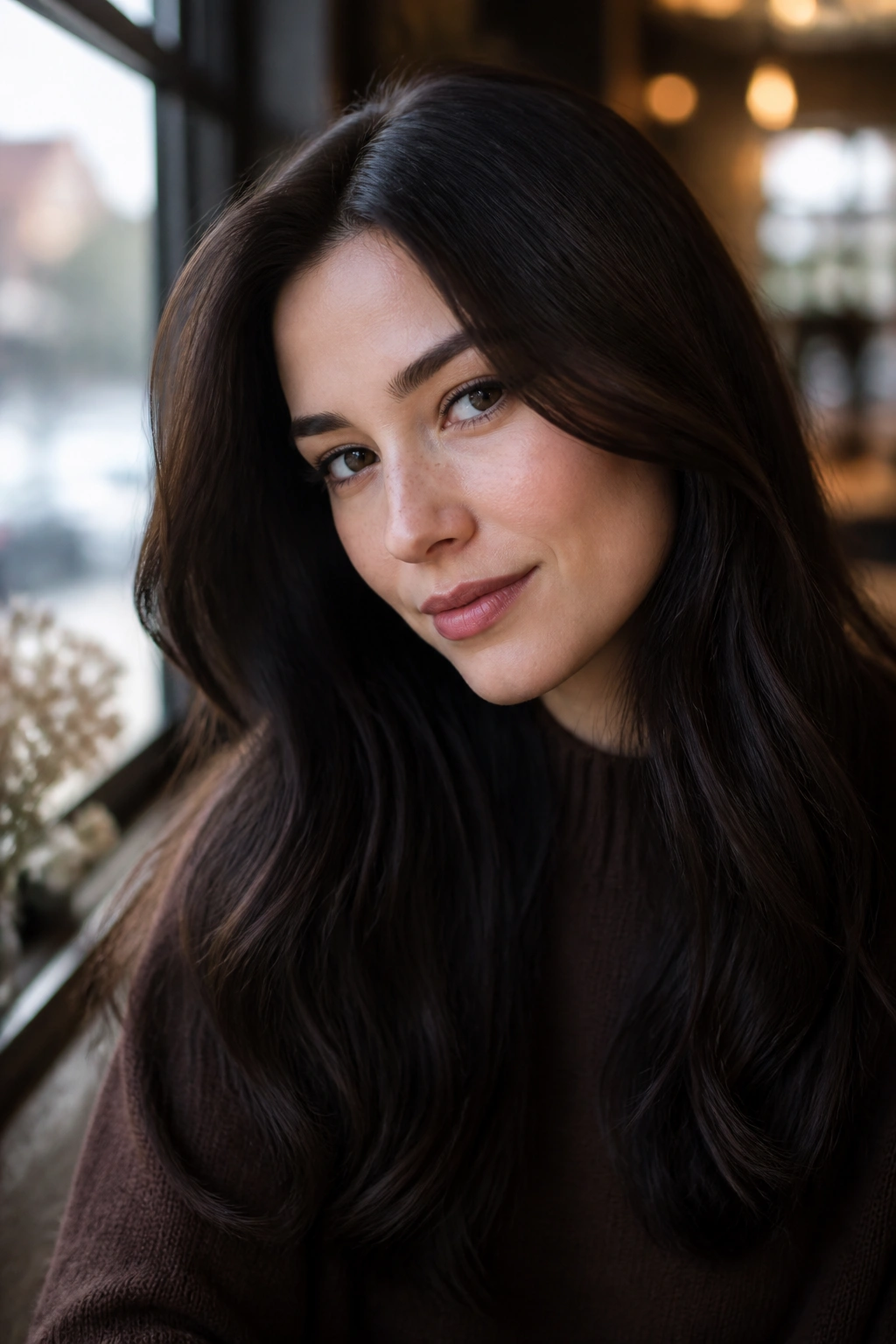
Cool espresso brown is what I suggest when someone wants dark hair without crossing into harsh black. It’s a level 3 or deep level 4 brunette with blue or ash undertones, and on cool skin it looks crisp. Clean. A little dramatic, if we’re being honest.
This shade is especially good if your brows are already dark or if you wear a lot of black, gray, silver, or navy. The hair and the clothes stop fighting each other. Everything feels pulled together. If your skin is very fair, keep a bit of softness around the hairline so the shade doesn’t swallow your features whole.
A gloss finish helps here. Espresso can turn flat if it’s too matte, and a slight shine keeps the color looking like polished wood instead of a box-dye helmet. That part matters.
4. Smoky Mocha Brown Softens Redness Around the Face
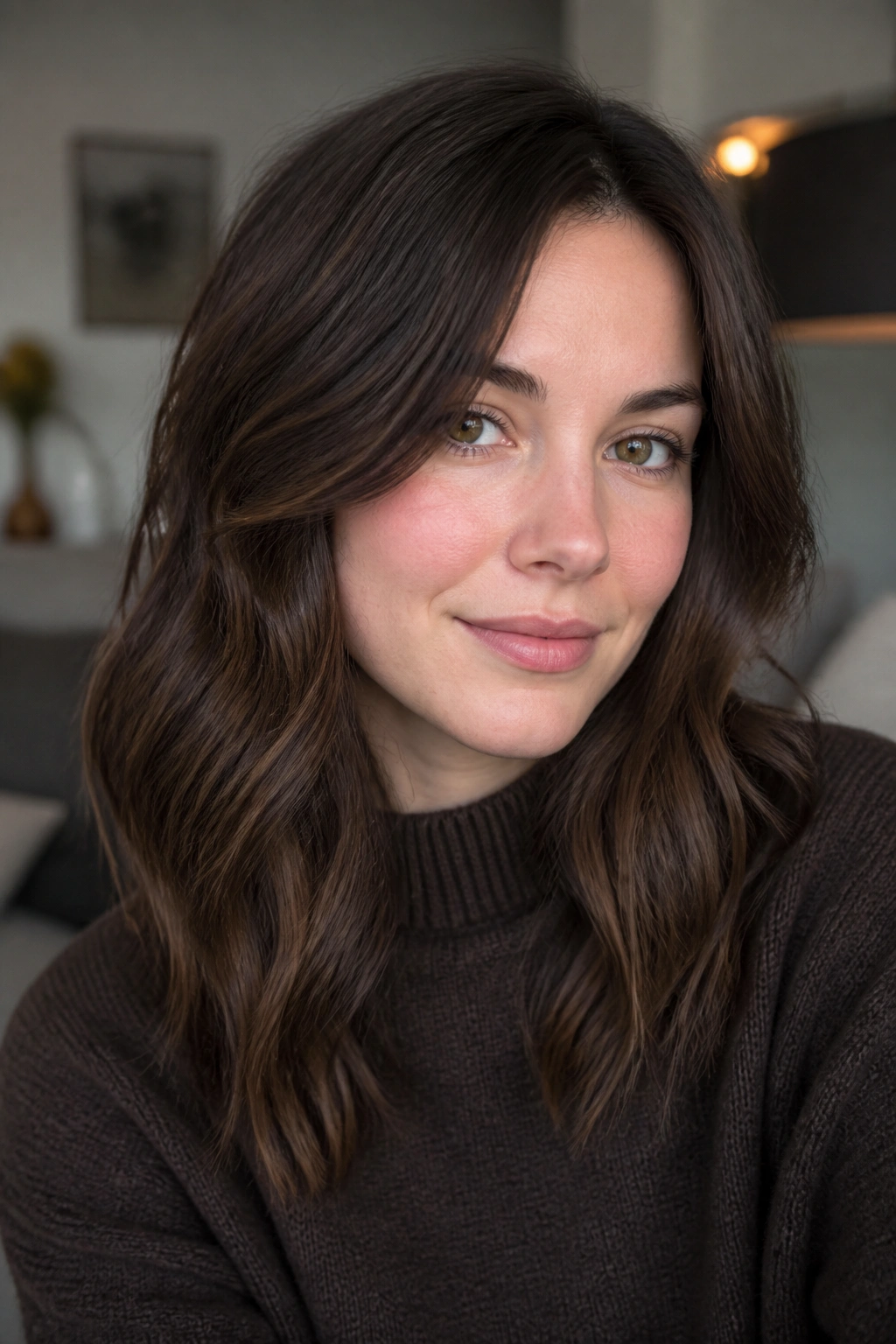
Smoky mocha brown is the brunette I reach for when someone says, “I want brown, but not warm brown.” It has depth like mocha, but the smoky overlay keeps the red and orange notes from taking over. Cool skin usually likes that restraint.
The trick is not to make it too ash-heavy. Too much ash can make the hair look dull, especially if the natural base is already dark. You want the color to feel cushioned, not dusty. A demi-permanent formula or a gloss over a brown base often gives the best result because it deposits tone without chewing up the shine.
This shade works on medium-length cuts, layered shags, and soft waves. The movement keeps the smoky brown from looking one-note. And yes, it looks especially good when the colorist keeps the ends a hair lighter than the roots.
5. Taupe Brown Brings Lightness Without Gold
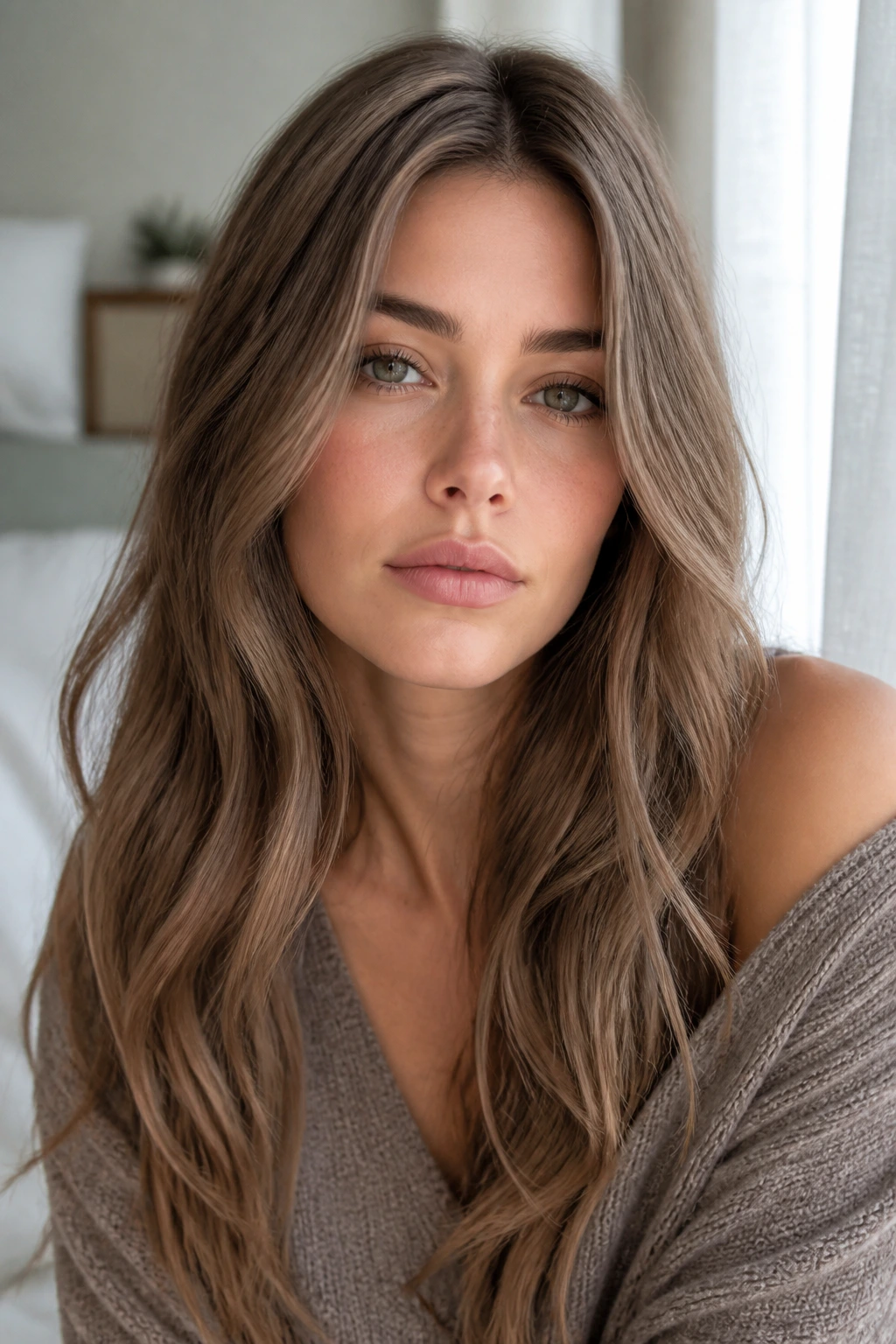
Taupe brown sits in a sweet spot for cool skin tones because it has enough beige to keep the color light, but enough gray in the mix to stop the warmth from drifting in. It’s one of those shades that looks simple until you put it next to a warm brown and see the difference.
Why it works
Taupe has a muted finish that keeps the face from looking flushed. That’s the whole magic trick. If your skin leans pink or has a rosy cast, gold-based browns can make everything look louder. Taupe brown does the opposite. It smooths things out.
What to ask for
- Level 5 to 6 taupe brunette
- Beige-brown with a cool or neutral base
- Fine highlights only if they’re toned ash-beige
- A root melt if you want the color to grow out softly
This shade is a nice choice for people who want a lighter brown that still feels cool and clean, not blondish.
6. Mink Brown Feels Sleek and Unfussy
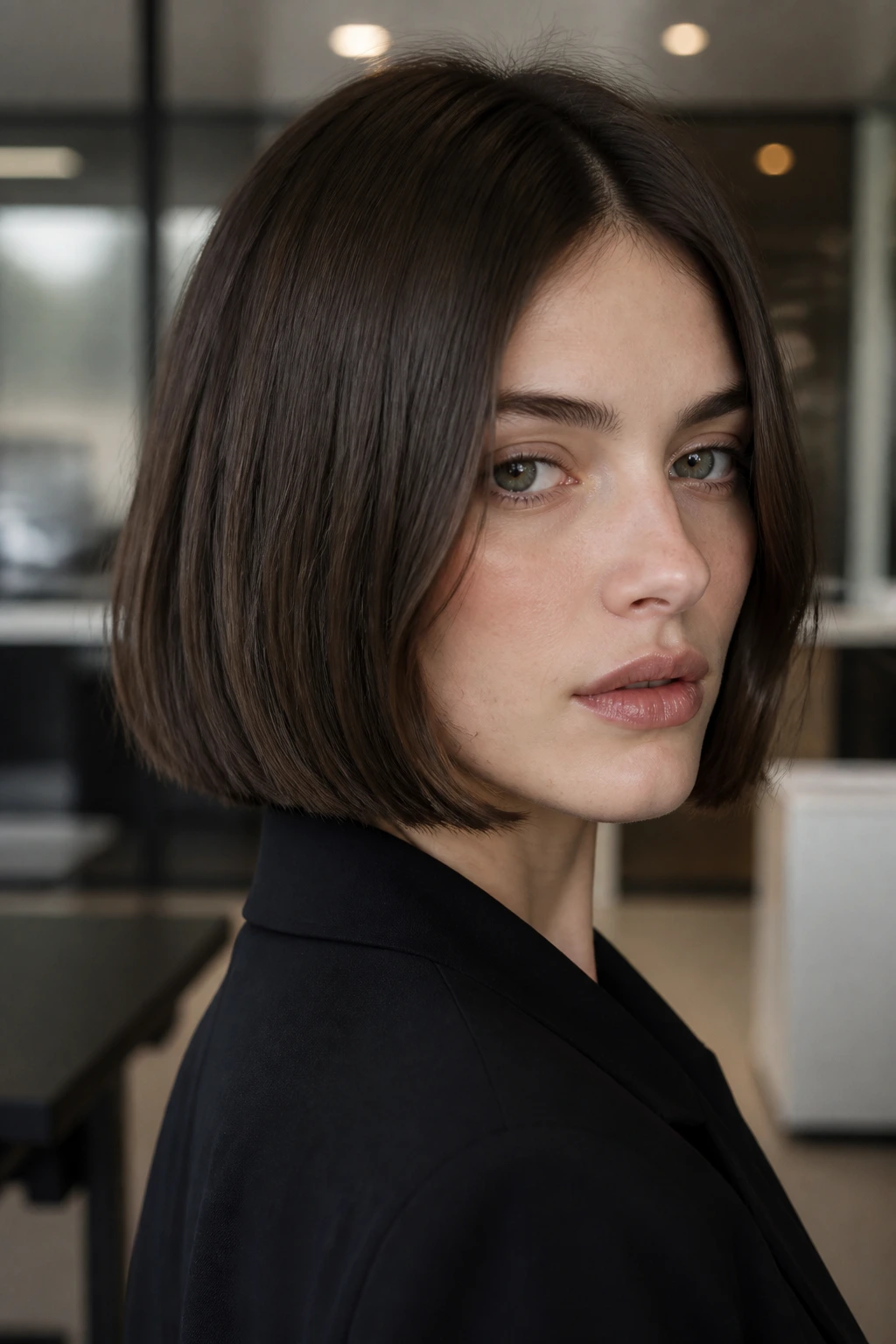
Mink brown is one of those shades that looks plain on a swatch and elegant on actual hair. It’s a muted brown with a gray-beige cast, and that cool softness works especially well on short cuts, blunt lobs, and straight styles that show every line.
Unlike warmer brunettes, mink brown doesn’t pull attention to redness in the skin. It sits beside cool undertones instead of competing with them. That’s why it often looks so good in office light, car mirrors, and all the weird indoor lighting that can ruin a hair color’s reputation.
If you want this shade to hold its shape, ask for a gloss refresh every few weeks. Mink brown loses its charm when it gets too faded and flat. A little shine keeps it from looking washed out.
7. Slate Brown Looks Sharp on Cool Skin
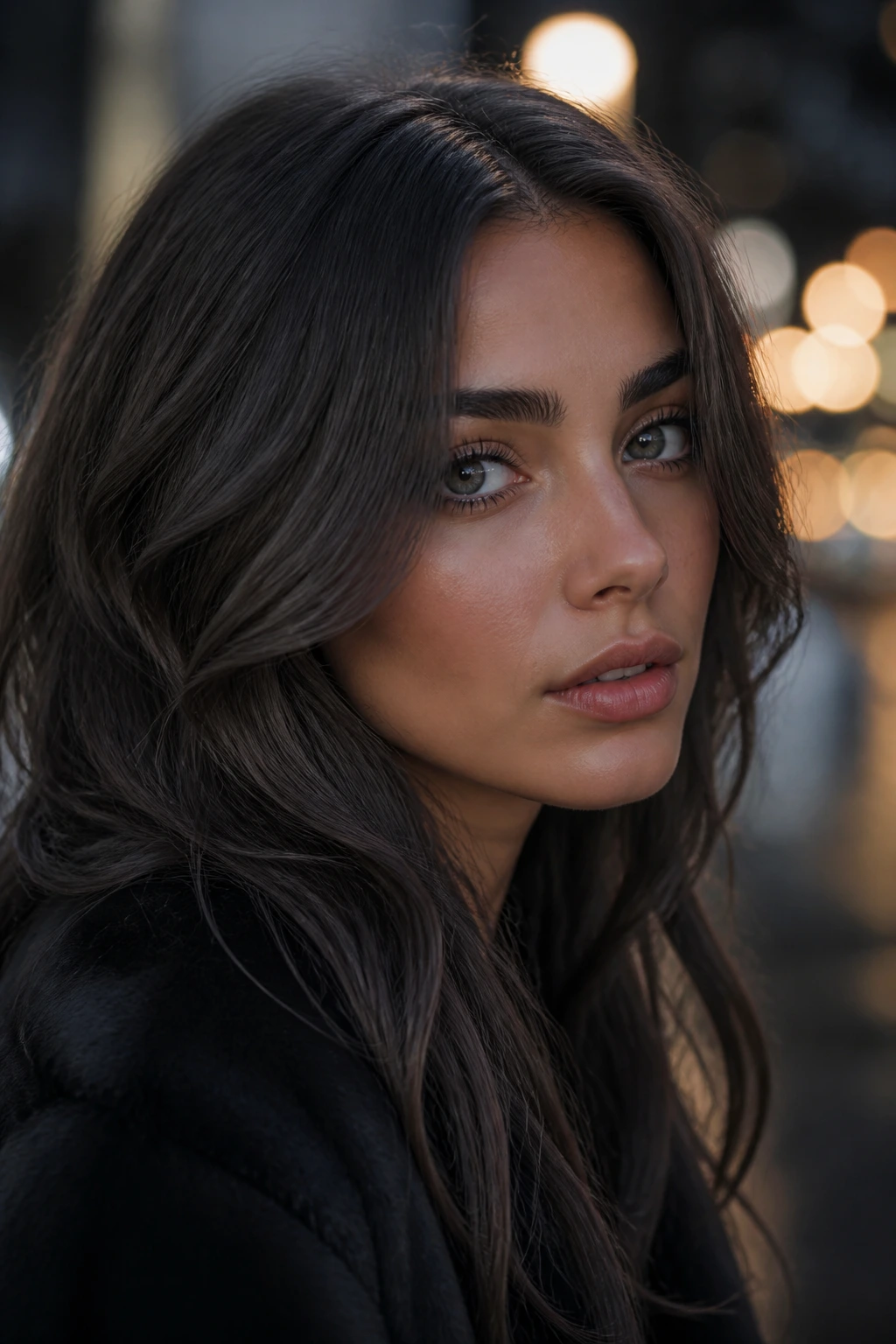
Slate brown is the brunette version of a cool stone tone. It has enough darkness to feel grounded, but the gray cast gives it a sharp edge that flatters cool skin without adding warmth. It’s a strong choice if you like hair color that feels modern and a little moody.
This shade can look especially good on dense hair because the depth and smoke read clearly. Fine hair can wear it too, but the finish needs shine. Without that, slate brown can slip into dull territory fast. A clear gloss or soft glaze helps the color catch light without turning brassy.
There’s a catch. If your skin is very fair and your features are delicate, too much slate can feel heavy. In that case, ask for softer face-framing pieces one half-step lighter than the base. That keeps the look grounded instead of severe.
8. Cool Chestnut Brown Is the Friendly Version of Red Brown
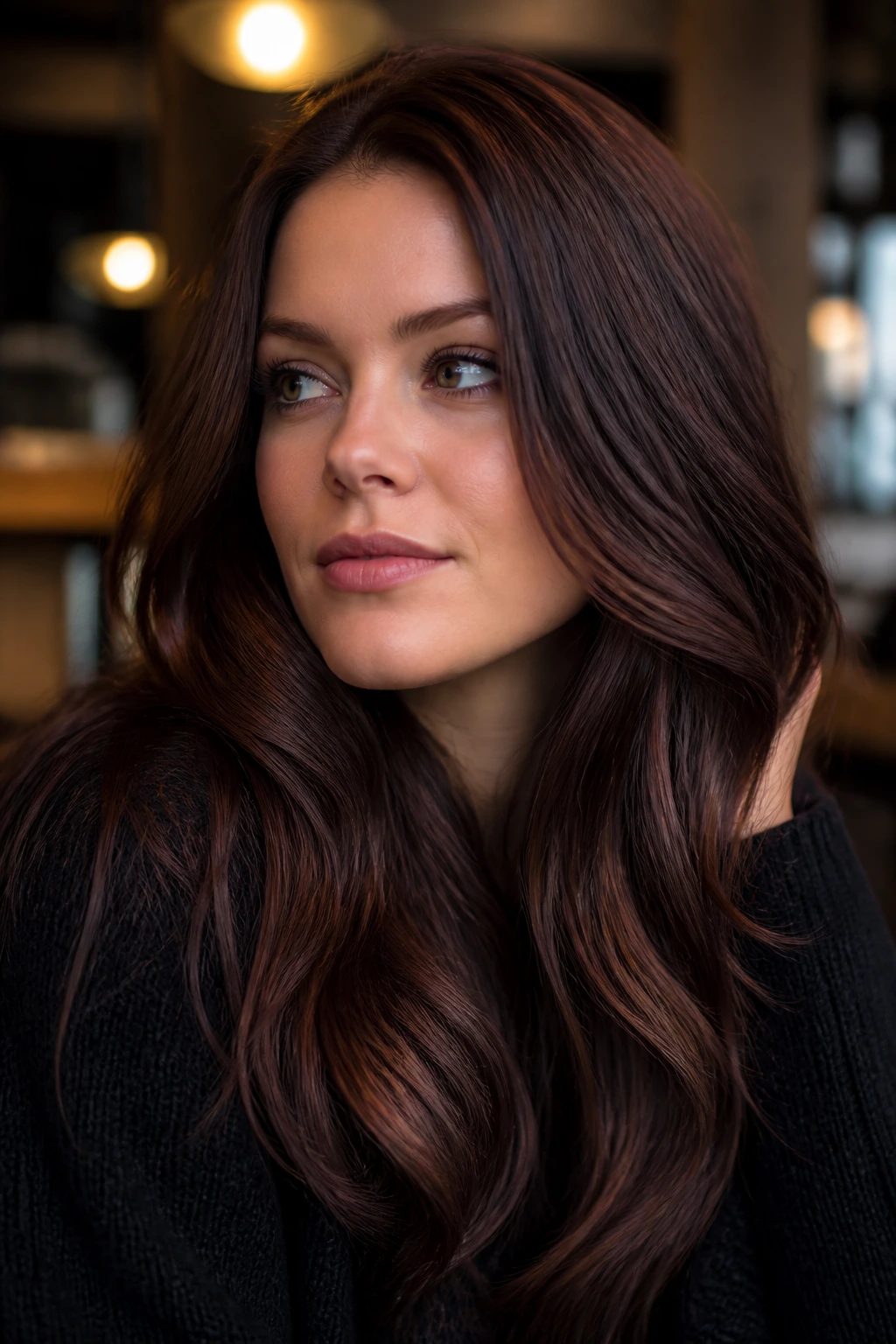
Can chestnut brown work on cool skin? Yes, but only when the red is tamed. The version I like has a cocoa base with a faint berry or plum cast rather than copper. That tiny shift matters. A warm chestnut can fight cool skin. A cool chestnut can make it look clearer.
This is a good option if you want some richness without going so dark that the hair feels heavy. Level 5 chestnut usually sits in a useful middle ground. It’s deep enough to be brown, but not so dark that the face disappears next to it.
The best cool chestnut has movement in it. Think subtle lowlights, not one flat tone from root to tip. On layered cuts, it reads especially well because the red-brown depth changes as the hair moves.
9. Ash Walnut Brown Keeps Dimension Without Brass
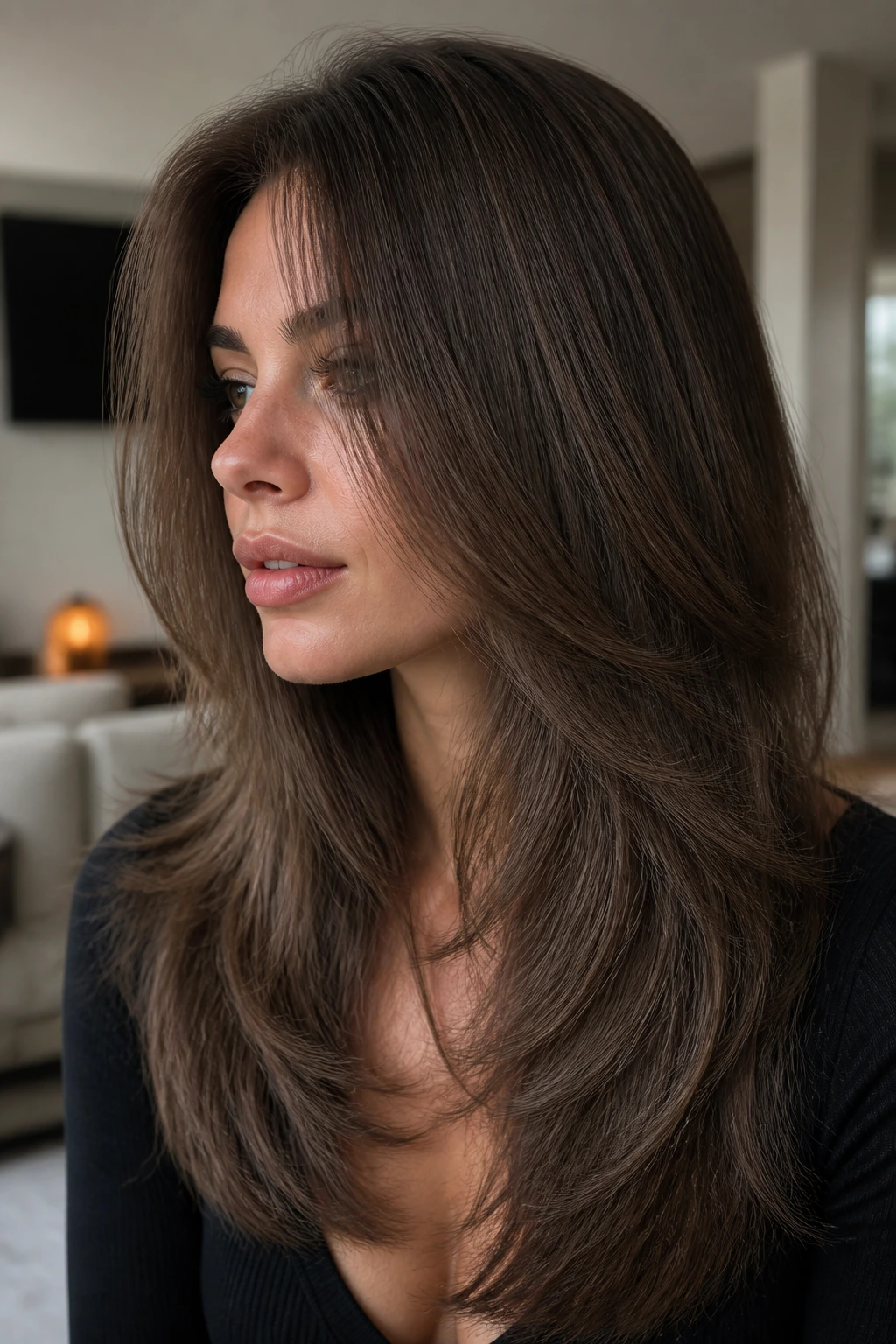
Ash walnut brown is for people who like brunette hair with texture, but not warmth. Walnut by itself can lean a little red. Add ash, and the color becomes cooler, quieter, and much friendlier to pink or blue-leaning skin.
I love this shade on medium-length hair because it gives enough contrast to show the cut. Long hair can wear it too, but the tonal difference works best when there are layers or soft bends. Straight, one-length hair sometimes needs a gloss on the mids so the shade doesn’t look too heavy at the ends.
The salon note here is simple: ask for walnut brown with an ash glaze, not a golden one. That one line prevents a lot of disappointment. If your hair lifts orange, a blue shampoo between salon visits can help keep the tone clean.
10. Cocoa Brown with Silver-Beige Babylights
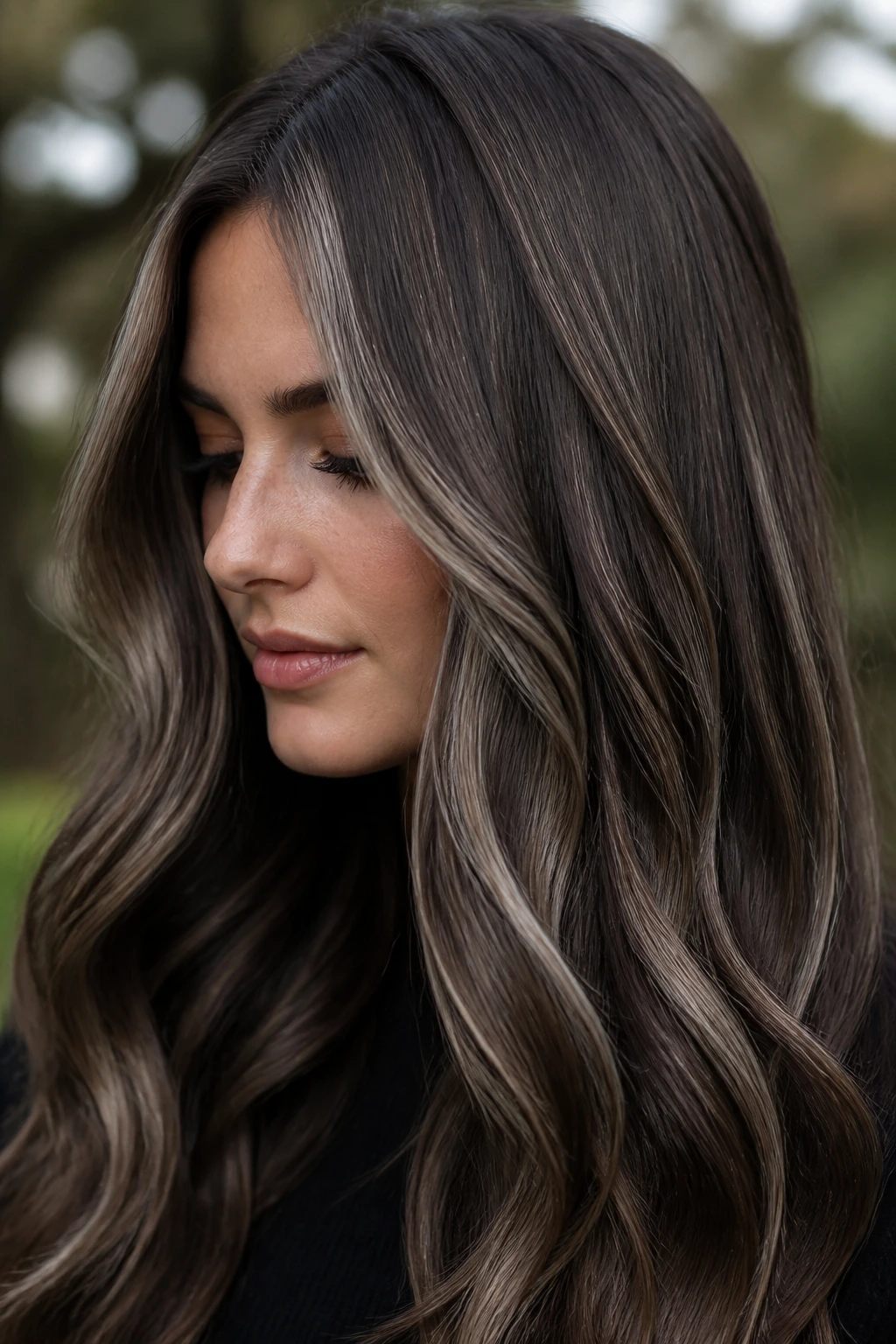
Cocoa brown becomes much more interesting when you thread in silver-beige babylights. That tiny bit of contrast lifts the whole shade without dragging it warm. On cool skin, the result looks soft, airy, and polished instead of streaky.
Where the light ribbons belong
- Around the part line for brightness where the hair naturally opens
- At the temples to soften the frame
- Through the top layers in very fine slices, usually 1/8 inch or thinner
- Not too low into the ends, or the color starts looking high-contrast in a blunt way
The real win here is movement. Cocoa brown can look solid on its own. Add those silver-beige ribbons, and the hair suddenly has shape. It’s a good choice if you want dimension but hate obvious highlights.
11. Espresso with Smoky Balayage Feels Rich Instead of Flat
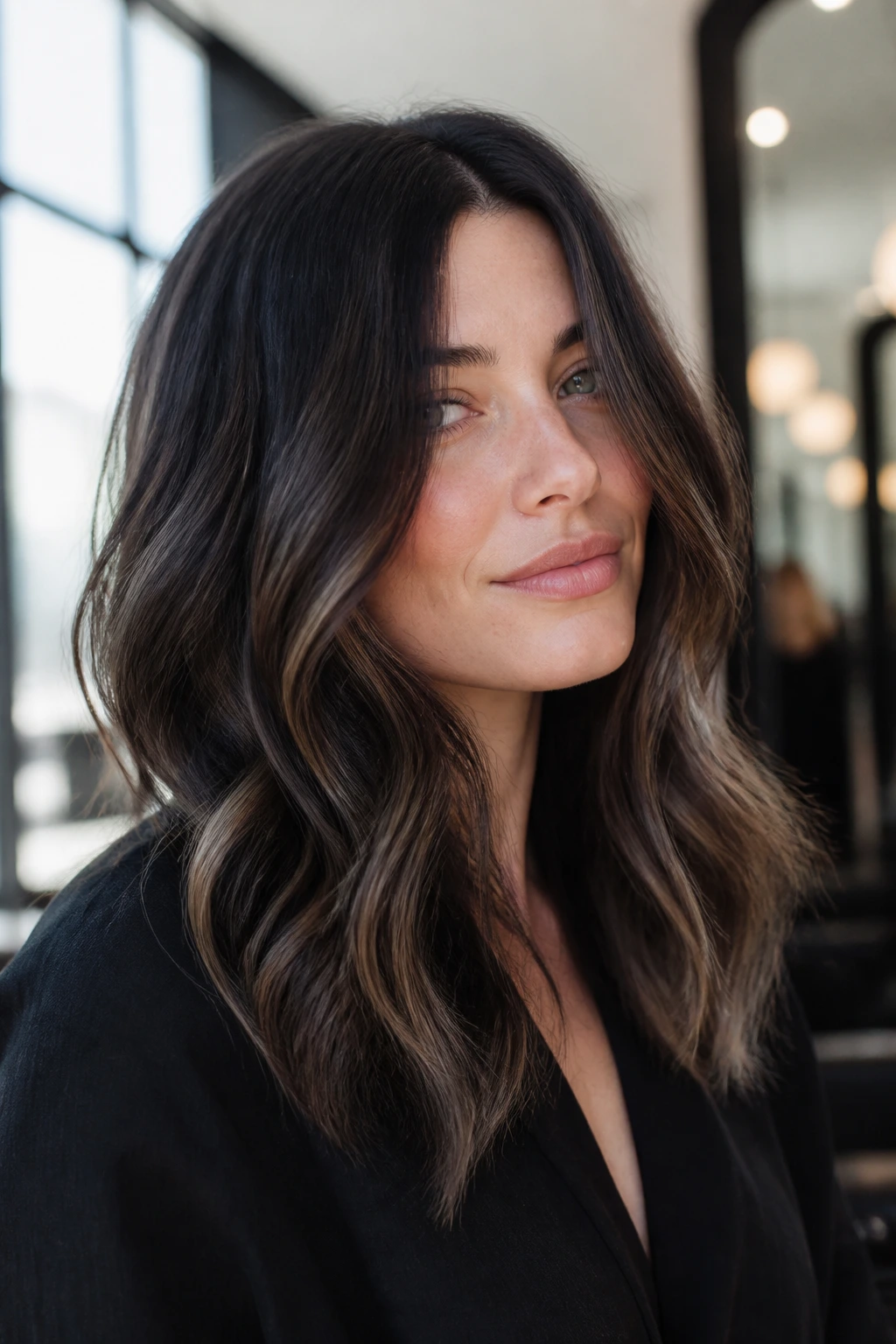
Solid espresso can look gorgeous, but it can also go a little dense. Smoky balayage fixes that. A hand-painted lighter brown, kept in the same cool family, breaks up the darkness and gives the shade a softer edge.
This is the brunette I’d point to if someone likes depth at the roots and a little lightness through the mids, but doesn’t want anything golden. The balayage pieces should sit two to three levels lighter than the base, then get toned with ash-beige so they stay smoky. If they turn warm, the whole effect gets louder than it should.
The best part is the grow-out. Balayage lets you keep the richness longer without obvious root lines. That makes this one easier to live with than a high-maintenance highlight pattern.
12. Cool Bronde with Beige Ends Keeps the Look Soft
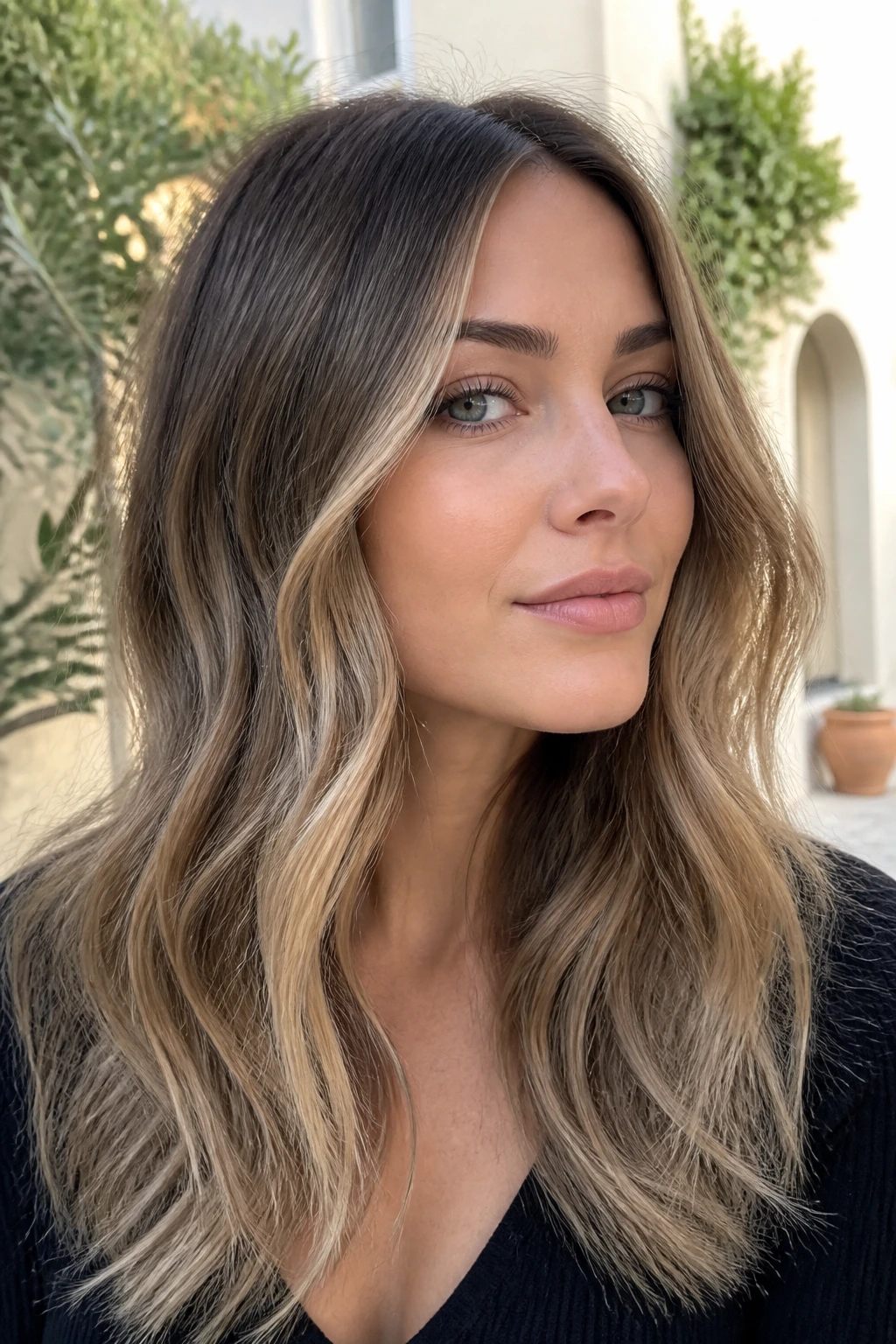
Bronde gets a bad rap when it’s too warm. On cool skin, the better version is a brown base with beige ends that lean cool, not caramel. That makes the color feel lighter while keeping the overall look grounded.
The root should stay brunette enough to frame the face. The ends can lift a little more, but not into yellow territory. Beige-ash ends are the sweet spot. They give you brightness without the sun-kissed effect that can pull orange in a hurry.
This is a smart pick if you want to ease out of full brunette but don’t want to go blonde. It’s also flattering on longer hair, where the soft shift from dark to light can show the length without screaming for attention.
13. Pearl Brown Gloss for Cool Skin Tones
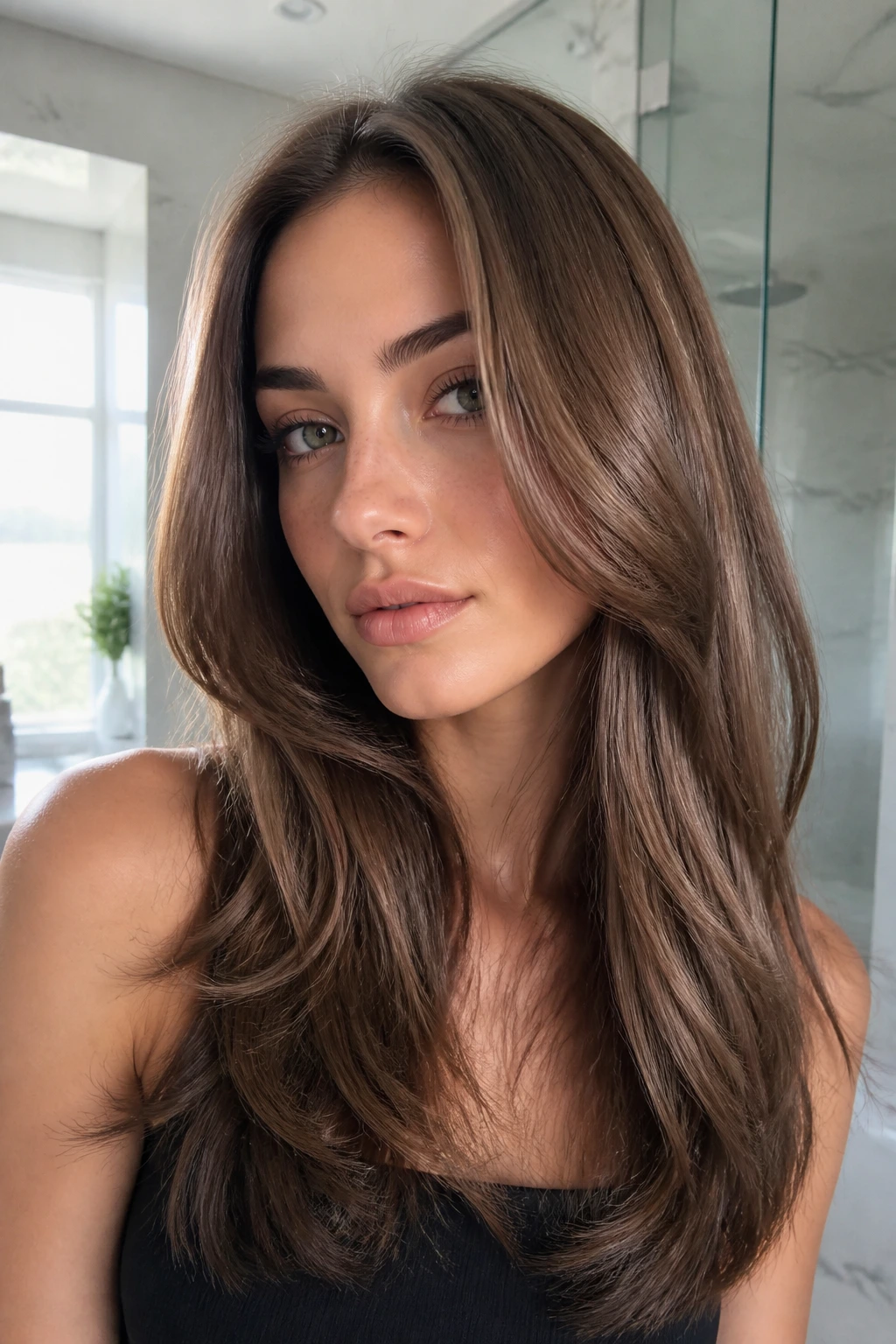
Pearl brown is one of the easiest ways to refresh faded brunette hair without changing the whole color story. The finish has a soft, shell-like sheen, and the tone stays cool enough for pink or blue-leaning skin. It’s one of the cleanest brown hair color ideas for cool skin tones because it adds light without adding gold.
What a gloss actually does
A gloss deposits tone and shine without a major lift. That means the hair looks smoother, and the color looks richer, but the structure of your existing brown stays intact. It’s a good move when your brunette has gone dull or picked up too much warmth from washing and heat styling.
How to keep it working
- Refresh every 4 to 6 weeks
- Use a sulfate-free shampoo if your hair is color-treated
- Ask for a pearl-beige or cool-neutral formula, not warm beige
- Keep the roots slightly deeper so the gloss reads dimensional
Pearl brown is subtle, and that’s the point. Subtle often wins here.
14. Cool Mahogany Brown Brings Depth Without Copper
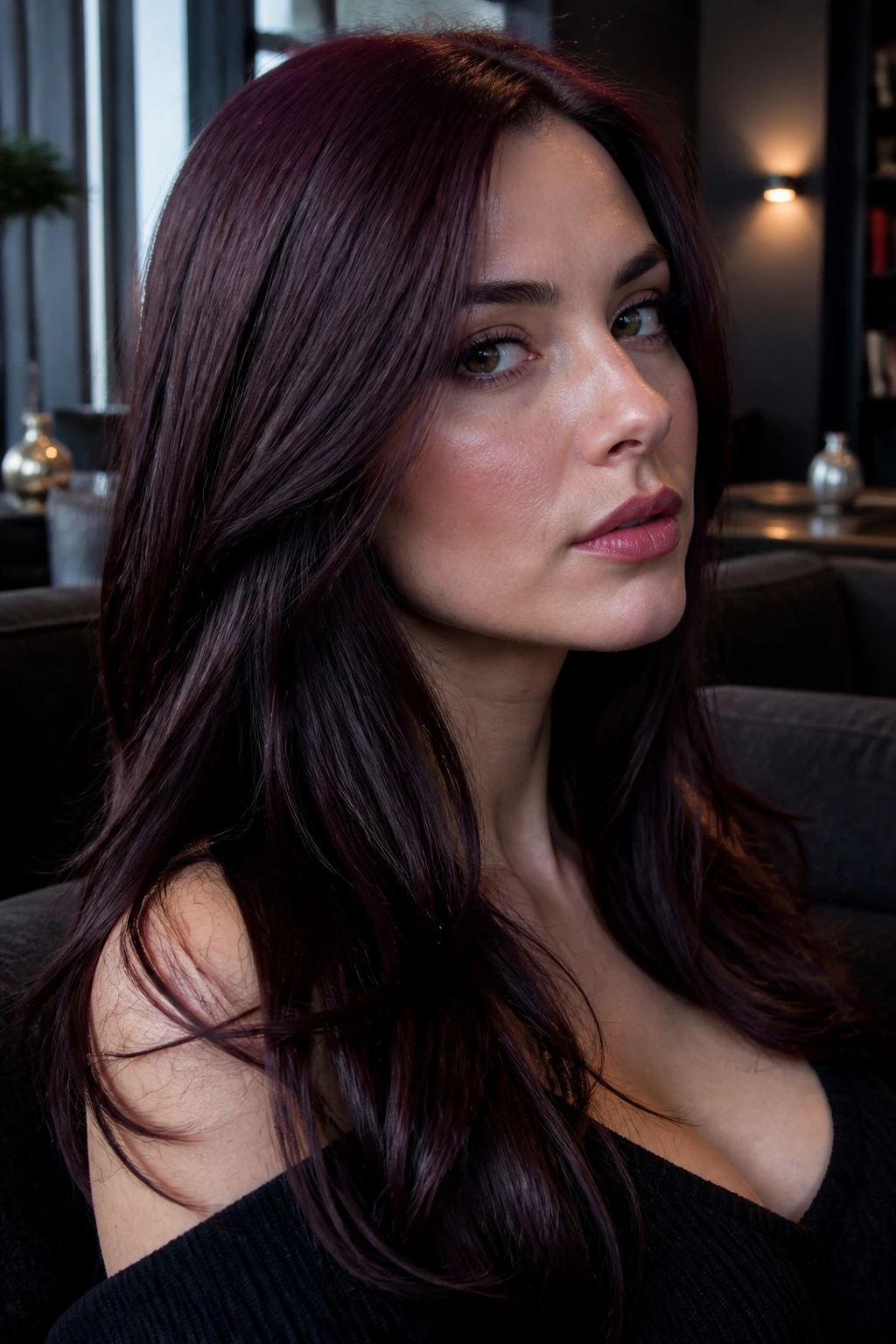
Mahogany usually makes people think of red. Fair enough. But a cool mahogany brown can be beautifully wearable on cool skin when the red stays muted and the violet side does the heavy lifting. The result is richer than ash brown and deeper than chestnut, with a quiet plum cast.
This shade works well if you want brunette color that looks a little more dramatic in dim light and still reads cool in daylight. It can be especially flattering on dark eyes because the color adds depth without turning orange around the temples.
The color does need discipline. Too much copper and it falls apart. Too much violet and it can tip burgundy. Ask for a brown base with a cool mahogany glaze, not a bright red formula. Small shift, big difference.
15. Velvet Brown Has a Soft, Plush Finish
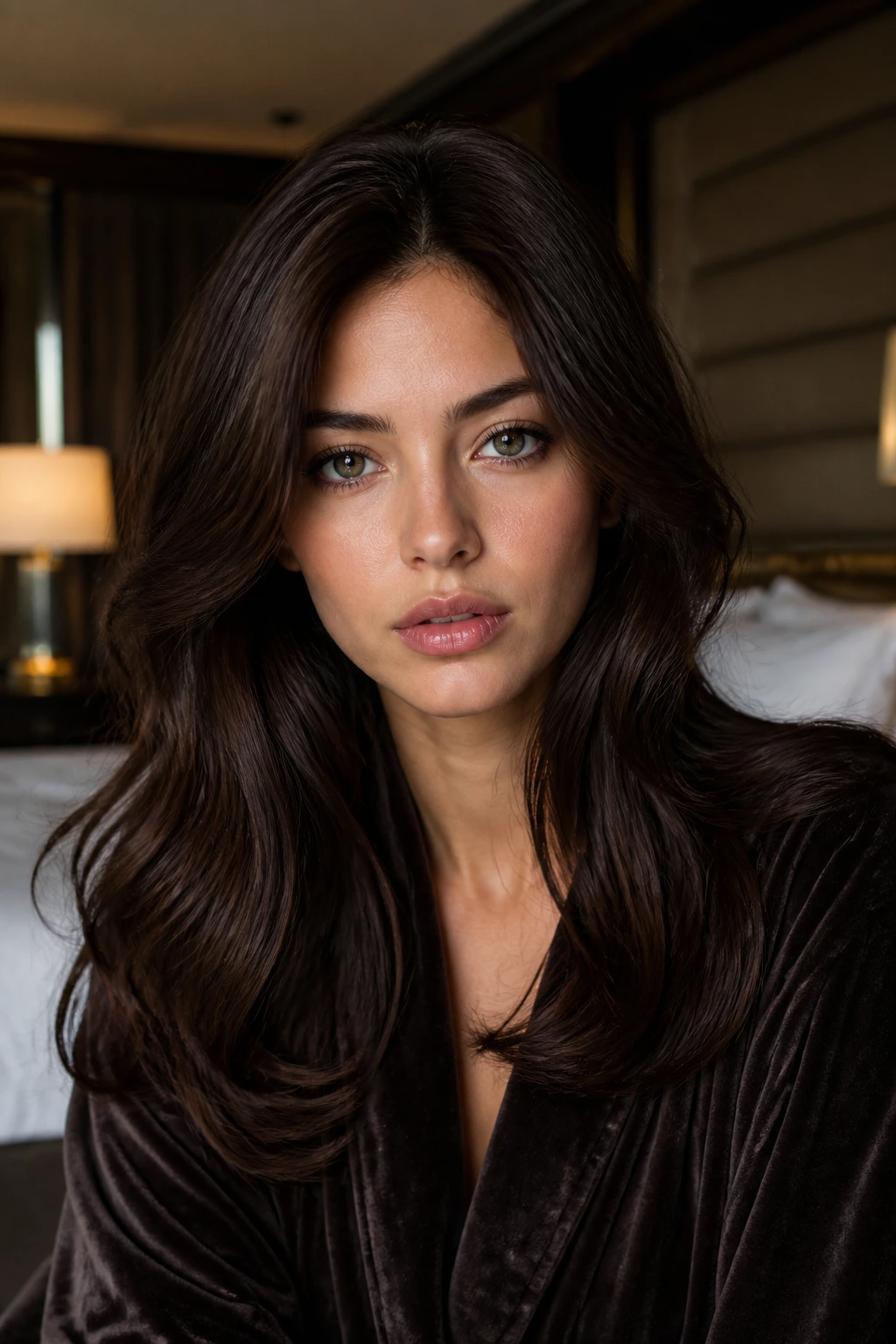
Velvet brown is my favorite option for someone who wants hair that looks expensive without trying to look trendy. It has a soft matte shine, not a dull finish, and the color sits in that deep cocoa lane that flatters cool skin by staying restrained.
How to keep it plush
- Keep the base around level 4 or 5
- Use a shine spray or gloss serum on the mids and ends
- Avoid chunky warm highlights; they break the velvet effect
- Style with loose bends or a smooth blowout so the tone can show
Velvet brown works especially well on thicker hair and shoulder-length cuts. The density of the hair makes the shade look lush. Fine hair can wear it too, but it needs shape and movement so the color doesn’t disappear into one dark sheet.
16. Blue-Black Brown Is the Darkest Way to Stay Cool
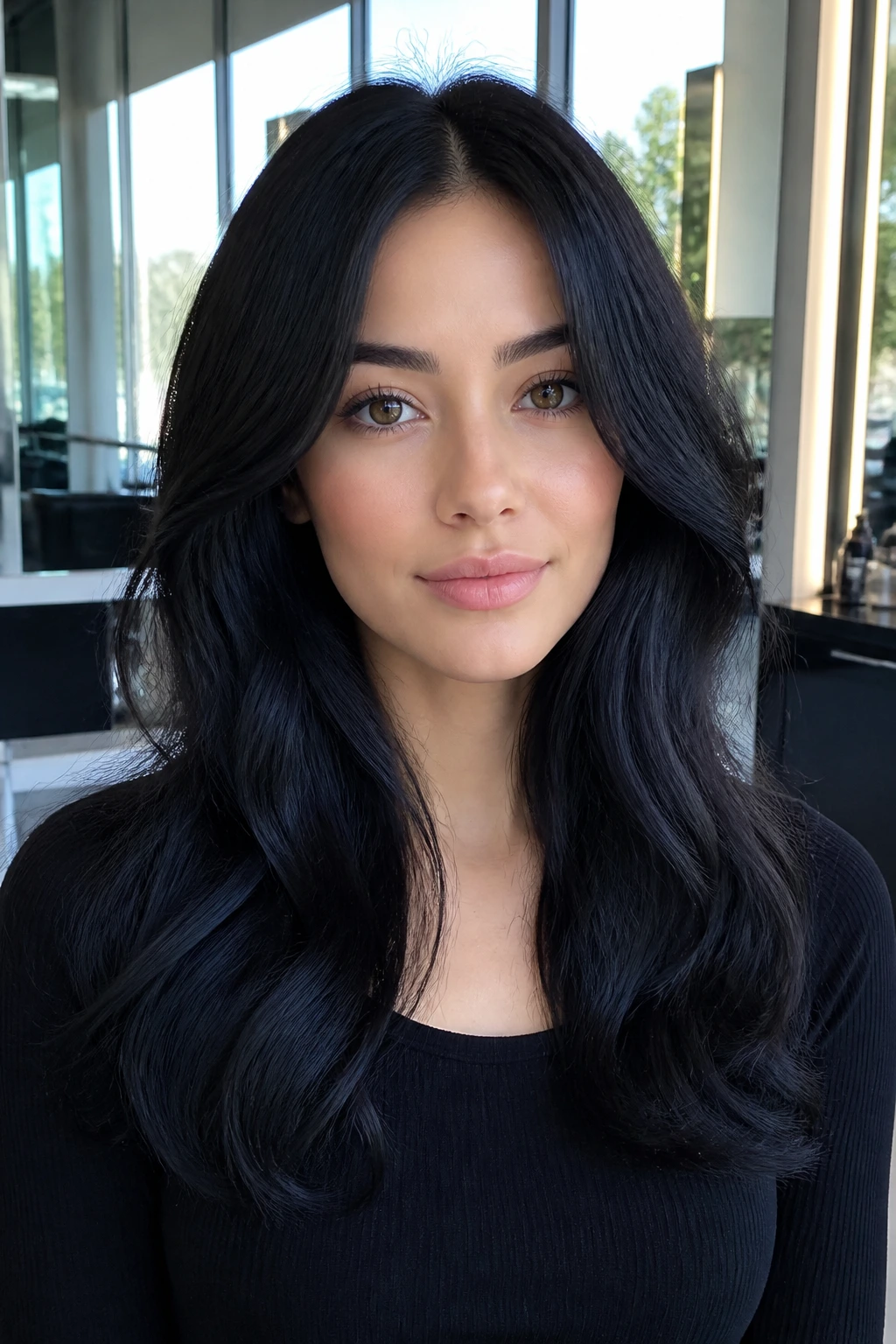
Blue-black brown is for people who want almost-black hair, but not the harshness that pure black can bring. The blue undertone is the piece that makes it work on cool skin. It keeps the shade from looking flat or harsh under indoor light.
The look is strongest when the hair is healthy and glossy. Damaged ends make blue-black look patchy fast. A trim, a smoothing serum, and a deep-conditioning routine matter here more than they do with lighter brunettes. The color shows everything.
If your skin is very pale, use some softness around the front hairline. Face-framing pieces one shade lighter can stop the color from overwhelming your features. It still looks dramatic. Just not severe.
17. Smoky Mushroom Balayage Feels Dimensional and Calm
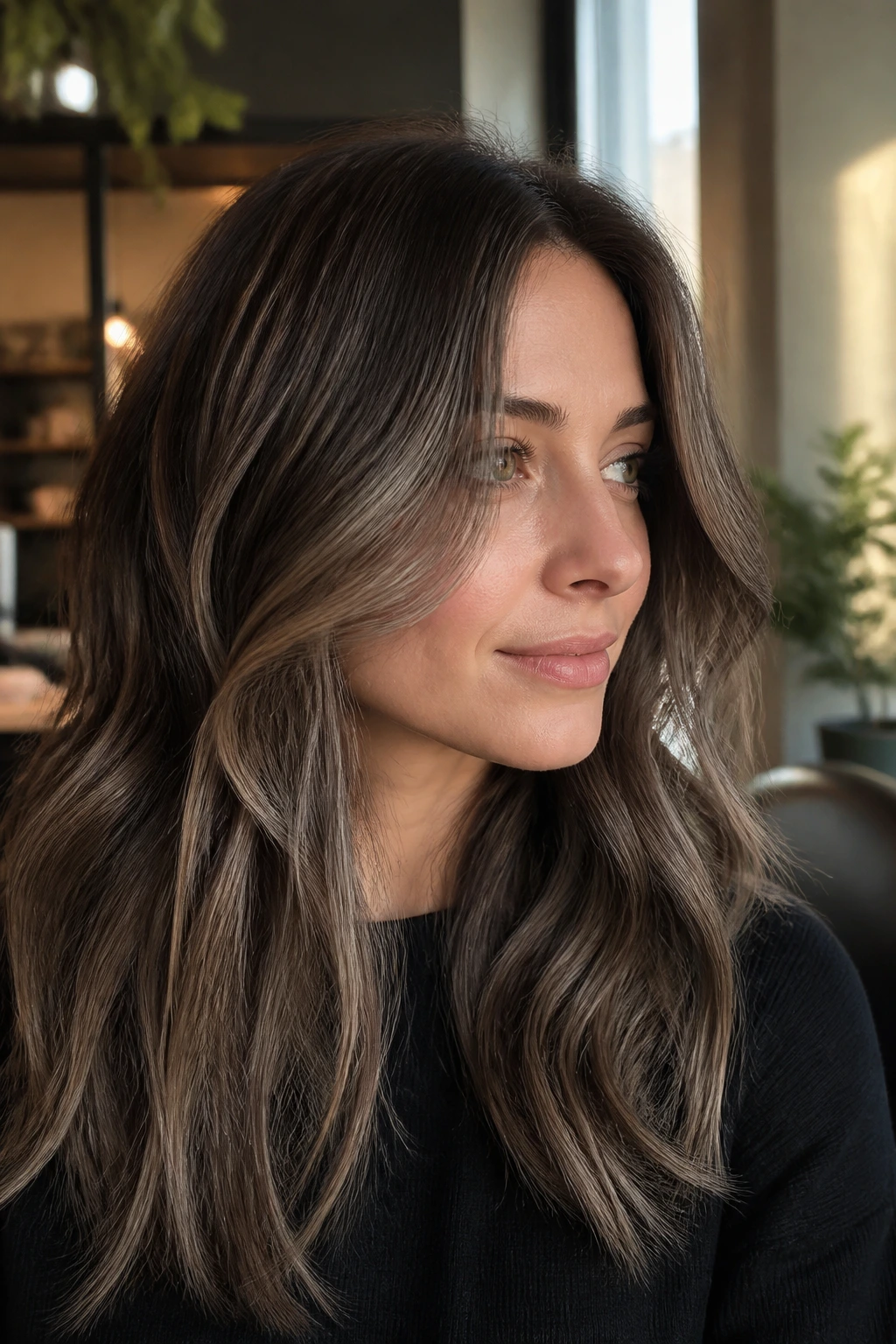
Smoky mushroom balayage gives you the best parts of muted brunette color and soft hand-painted movement. The base stays cool and earthy, while the lighter pieces hold onto that gray-beige tone that cool skin likes. It’s quiet, but not flat.
This is a smart choice for people who wear their hair in waves or loose curls. The balayage ribbons catch movement in a way a single-process color never quite can. Ask for the lightest pieces to stay close to the same tonal family as the base, just a shade or two lighter. That keeps the whole look cohesive.
It also grows out in a forgiving way. Balayage is easier on maintenance than full highlight work, and the smoky finish helps the grow-out blend instead of flashing warm.
18. Iced Caramel Brown Keeps the Brightness Under Control
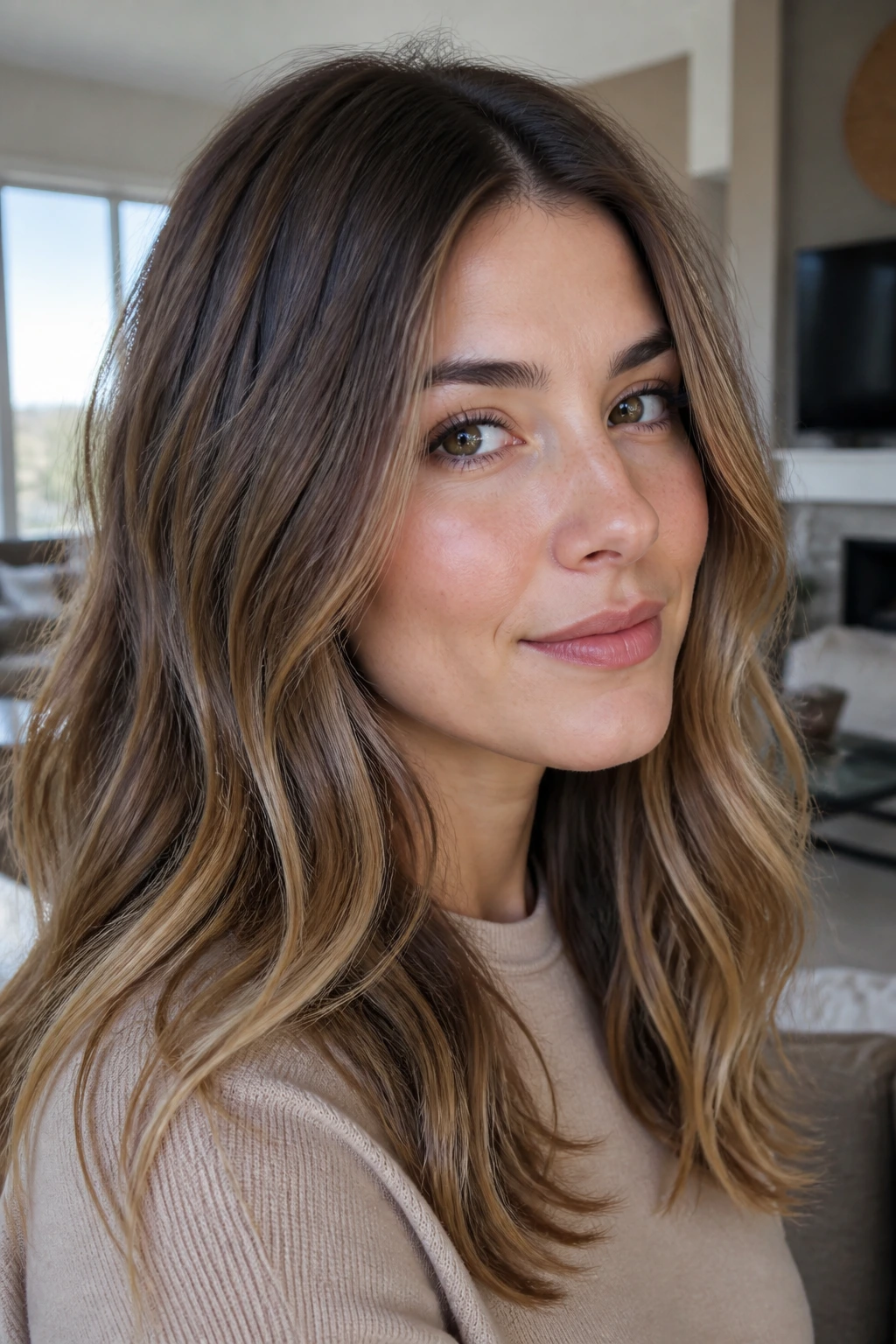
Caramel usually runs warm. That’s the whole issue. Iced caramel brown solves it by keeping the brightness but stripping away the orange. On cool skin, that gives you a lighter brunette with enough softness to avoid looking brassy.
The trick is in the toner
- Lift to about level 7 if your starting point allows it
- Tone with a beige-ash or pearl-beige glaze
- Keep the roots one level deeper for contrast
- Skip copper or honey notes entirely
This color is good for someone who wants lighter ends but still wants the overall feel of a brunette. It’s not the first shade I’d choose for very dark natural hair, because the upkeep can be annoying. But on a medium brown base, it looks polished and fresh.
19. Cool Pecan Brown Works Best as a Muted Mid-Brown
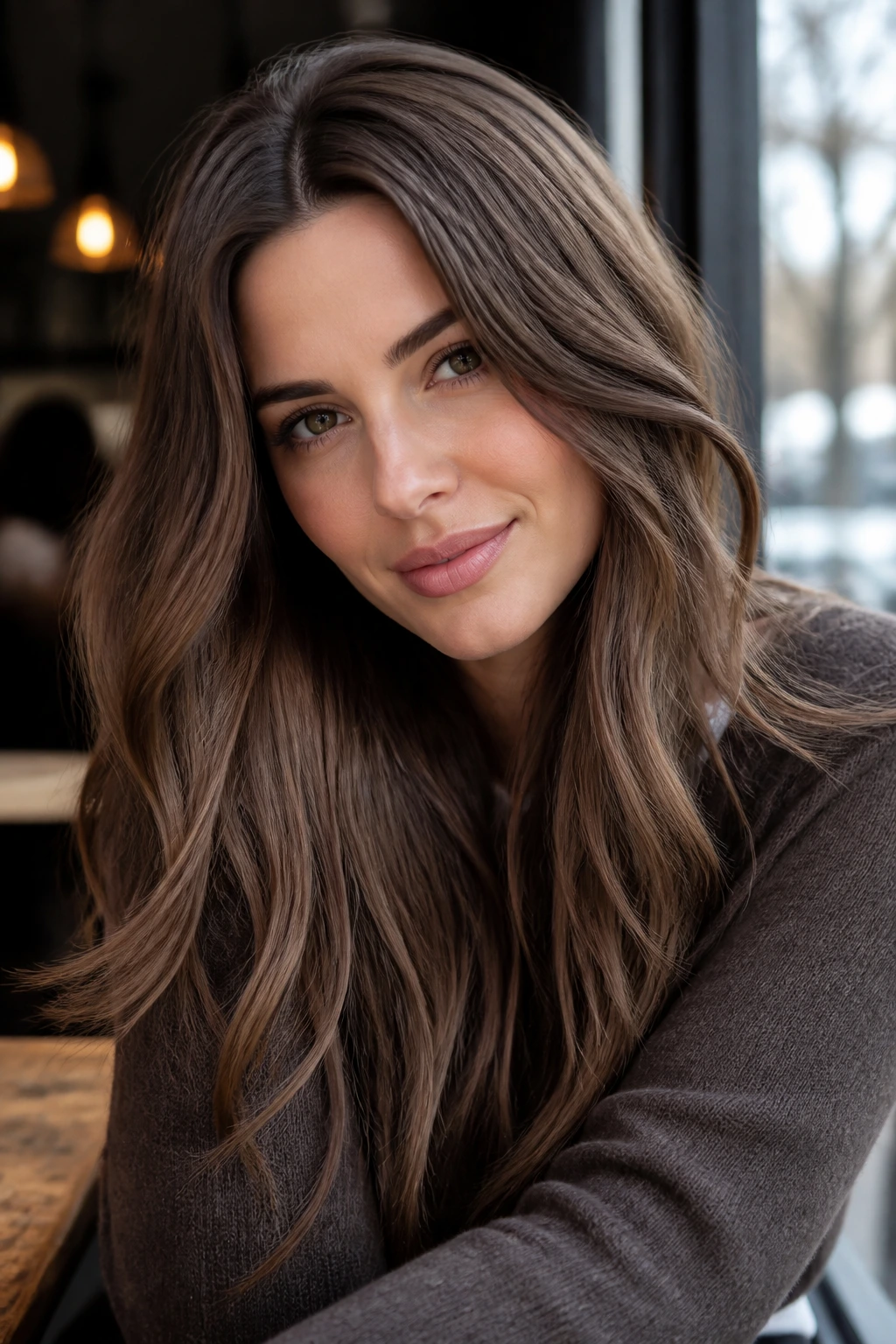
Pecan brown sounds warm, I know. That’s why the cool version matters. If the warmth is muted with ash and a neutral gloss, pecan brown becomes a soft mid-brunette that reads clean on cool skin instead of orange.
This shade is especially nice if you want something wearable and not too dark. It sits between chocolate and chestnut, which gives it range. You can wear it with soft waves, a layered cut, or even a simple straight style and it still shows a bit of dimension.
Who should try it
- People with naturally medium brown hair
- Anyone who wants a brown that looks soft in daylight
- Cool skin tones that feel drained by gold-brown shades
If your hair tends to pull red, tell the colorist that up front. That one detail changes the formula quite a bit.
20. Walnut Brown with Face-Framing Lights Brightens the Face
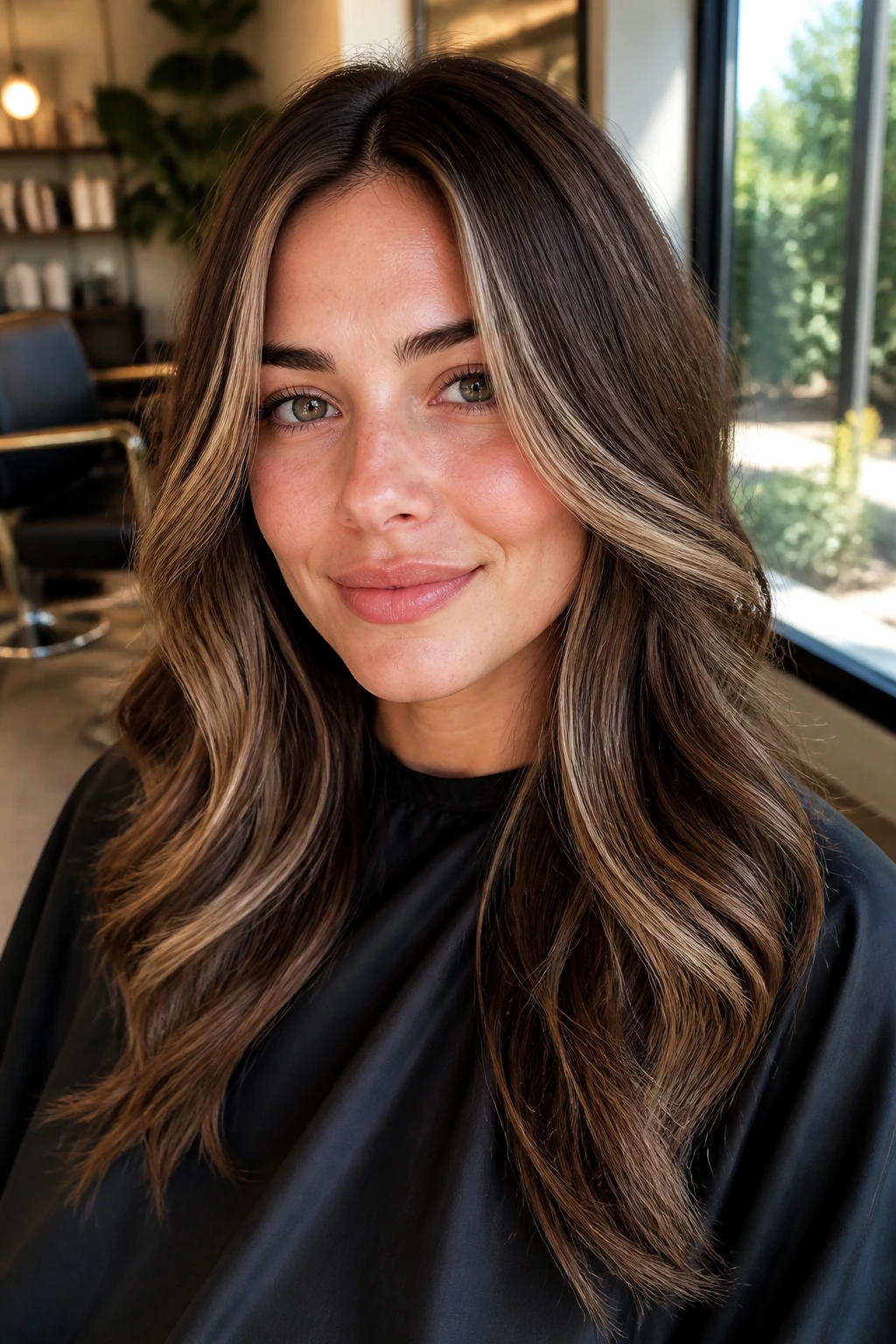
Walnut brown on its own can be a touch too understated. Add a few cool, face-framing lights, and the whole color opens up. The lights should stay beige-ash, not gold, so they brighten the face without warming it up.
Placement matters
- Keep the lightest pieces 1/2 inch or less from the hairline
- Use two or three ribbons per side, not a dense block
- Leave the underlayers deeper for contrast
- Tone the lights to a cool beige so they don’t scream blonde
This kind of placement is perfect if you want the face to look brighter but still want the richness of brunette. It also grows out more gently than full highlights. A nice middle path. Not flashy, not flat.
21. Soft Brunette Ombré Lets the Roots Stay Rich
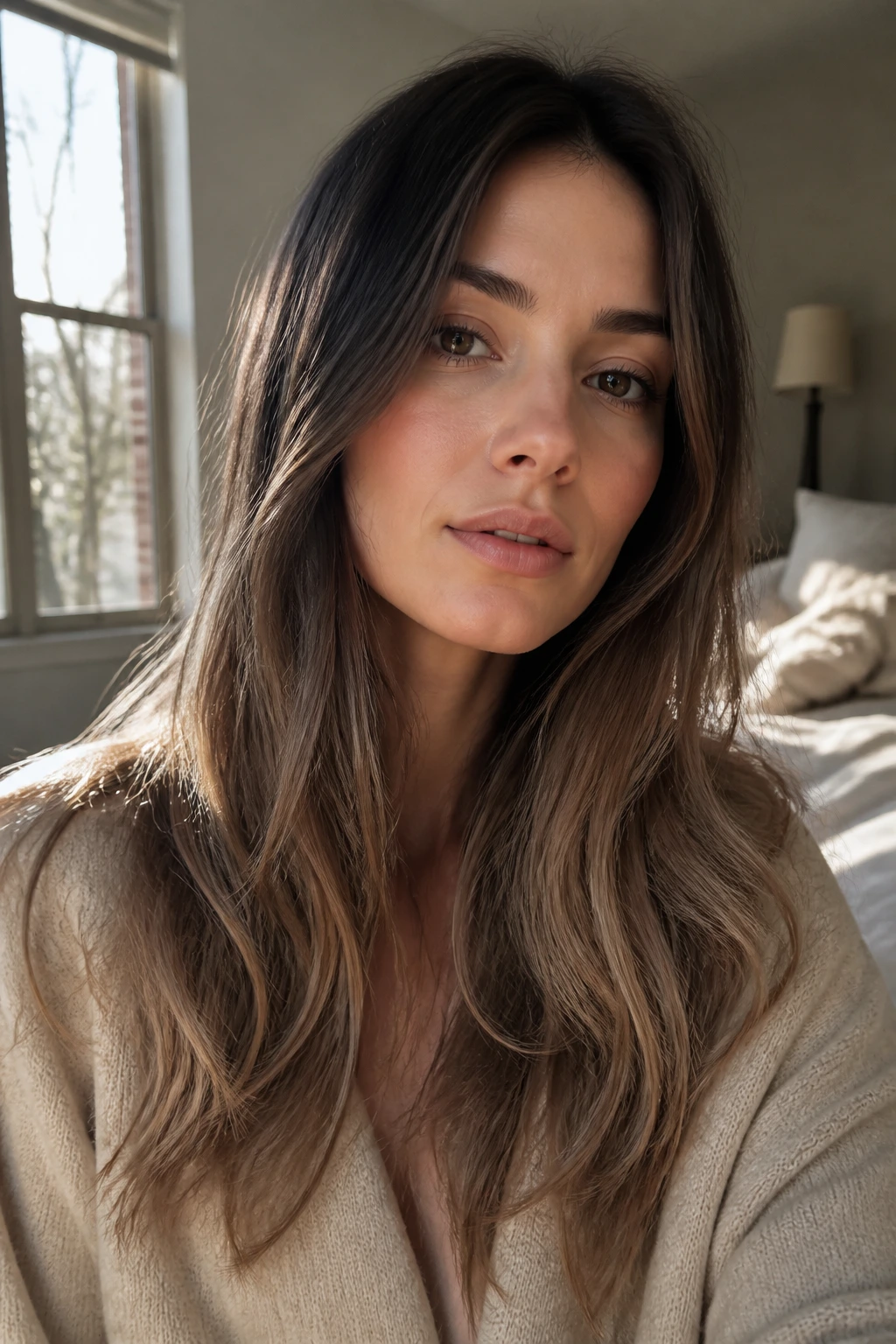
Soft brunette ombré works because the roots can stay deep and cool while the mids and ends drift a little lighter. The transition should be gradual. If the shift is too sharp, it starts looking old-fashioned in the wrong way.
For cool skin, keep the lighter ends in the beige, taupe, or smoky brown family. Avoid honey ends. They grab attention for the wrong reason and can pull the face warm. A softer ombré keeps the whole look calm and polished.
This is one of the easier choices if you like a lower-maintenance brunette. You can stretch appointments farther because the root line is part of the design, not a problem to erase. That alone makes it appealing.
22. Cocoa Melt with Violet Glaze Calms Orange Fast
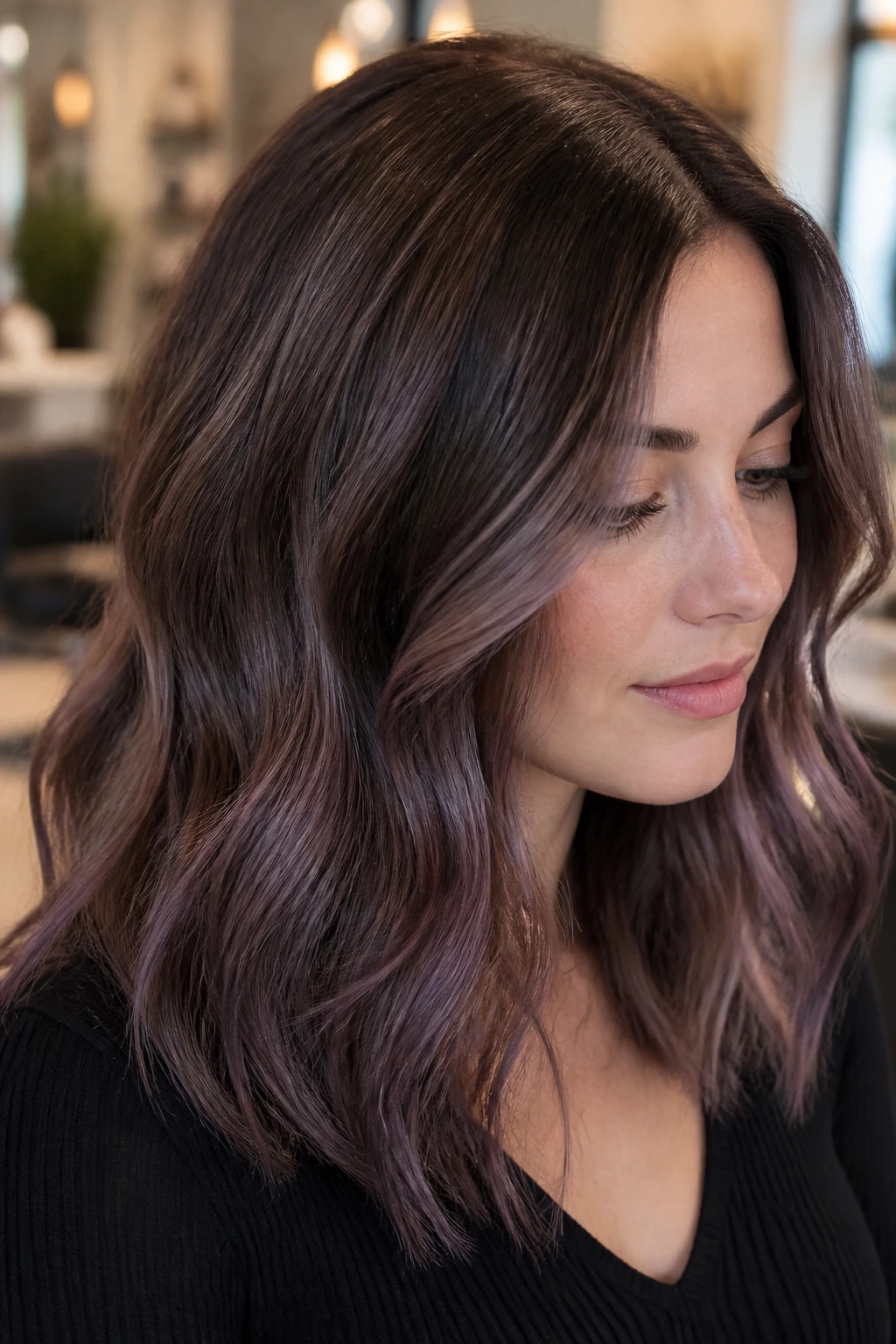
A cocoa melt sounds simple, but the violet glaze is what makes it work on cool skin. Violet-based toner helps counter the orange that often sneaks into brown hair as it fades. If your brunette has ever turned a little coppery after a few washes, you already know why this matters.
The melt should move from a deeper cocoa root into slightly lighter mids, then soften again at the ends. That keeps the color from looking striped. The violet glaze isn’t about making the hair purple. It’s about keeping the brown clean, glossy, and cool.
This shade is a good fit for porous hair that picks up warmth fast. A salon gloss every few weeks can keep the tone from drifting too far. Small upkeep. Big payoff.
23. Iron Brown Has a Steel-Soft Edge
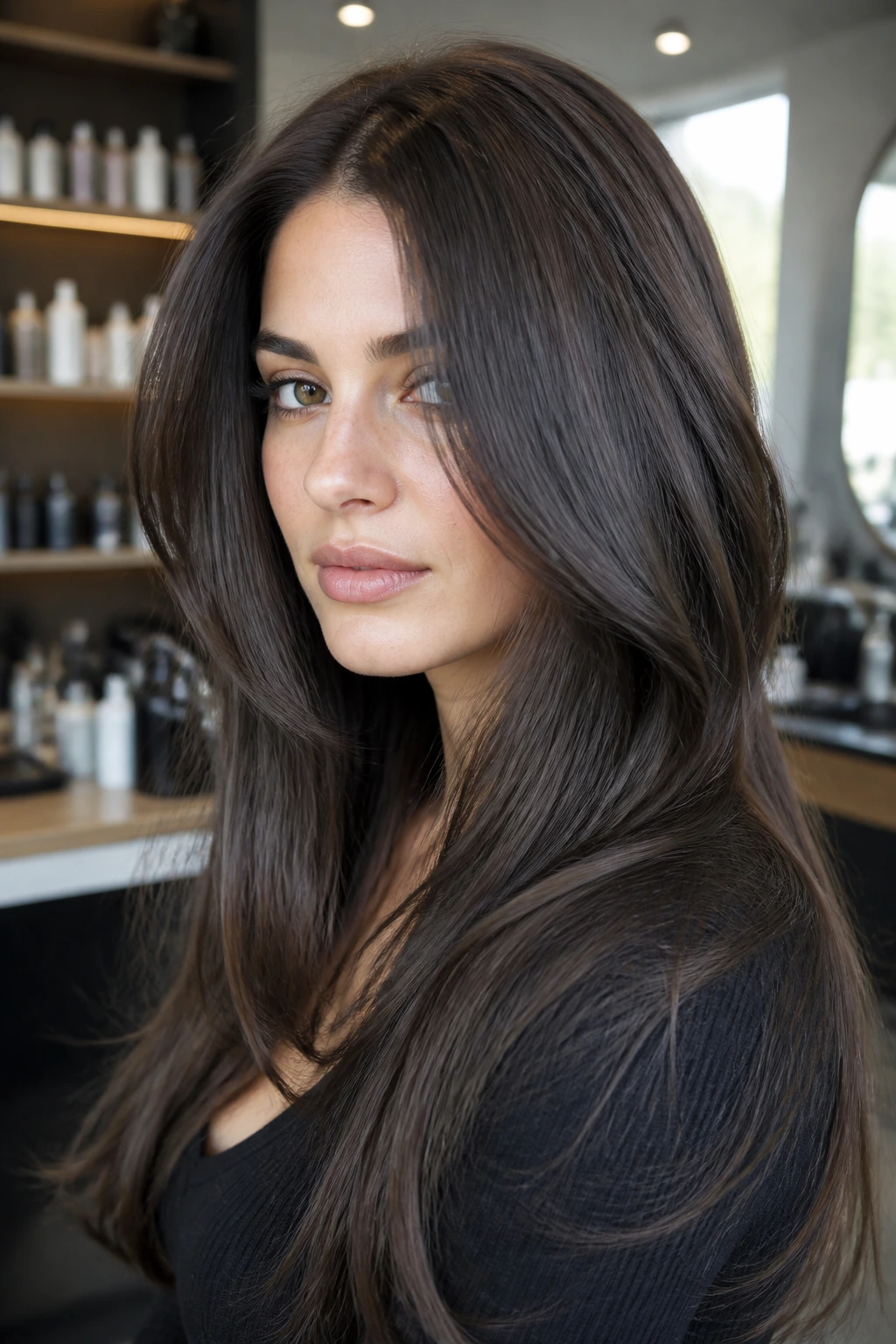
Iron brown is one of those shades that sounds severe and looks softer than expected. It has a metallic, smoky finish with a cool base that makes brown hair feel almost steel-like in certain light. On cool skin, that edge can look sharp in a good way.
The key is shine. Iron brown should not feel matte or dusty. A semi-sheer gloss keeps the color reflective so it doesn’t go dead. If the hair is coarse, a smoothing cream before styling can help the finish sit better and show off the tone.
This shade works best when you want something a little more fashion-forward without going black. It’s not for someone chasing softness. It’s for someone who likes definition.
24. Cool Coffee Brown Is the Everyday Brunette That Still Looks Polished
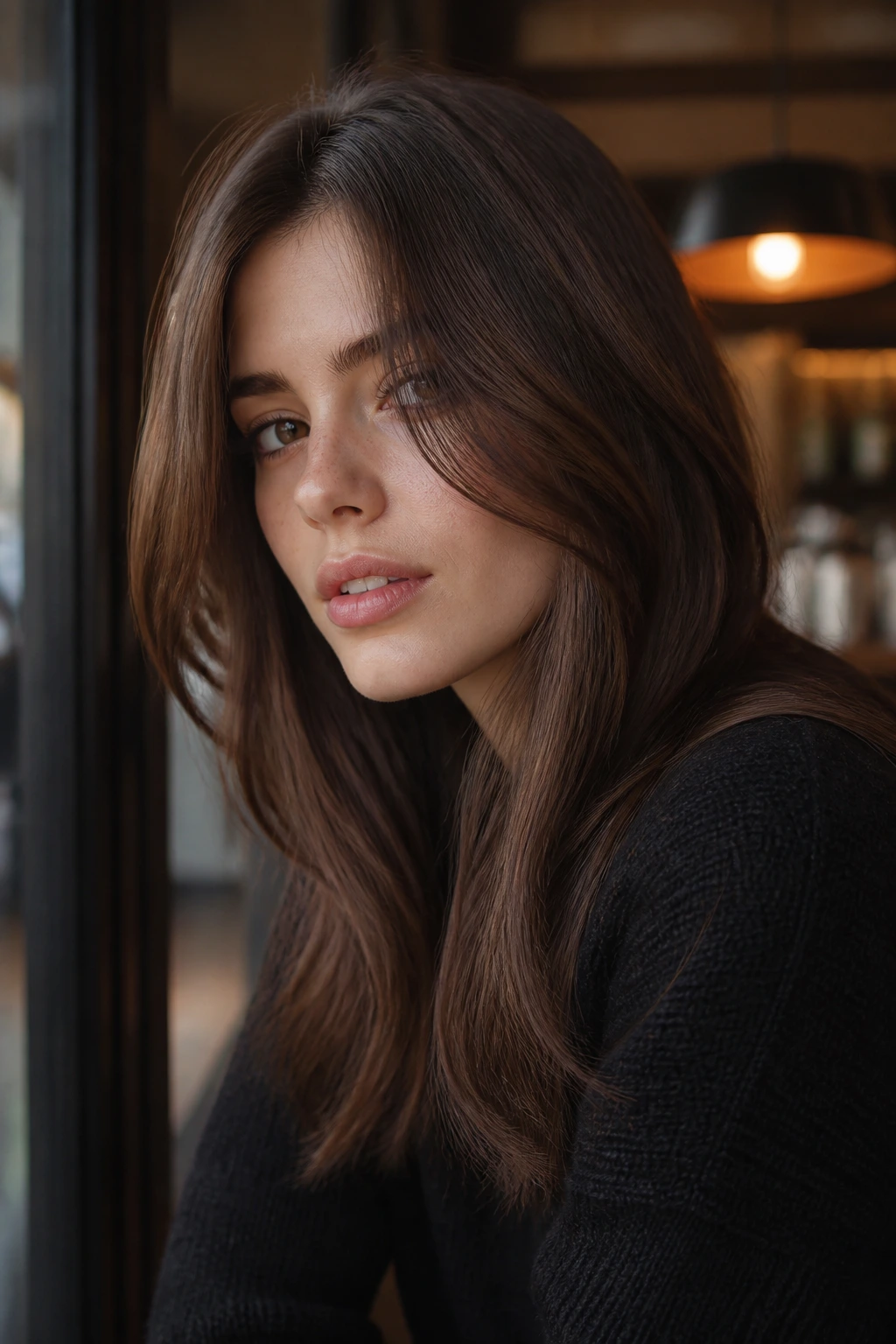
Cool coffee brown is a little softer than espresso and a little richer than ash chocolate. It’s the brunette I’d call the daily driver. It wears well, it looks good in low light and daylight, and it flatters cool skin because the undertone stays neutral-to-cool instead of golden.
Compared with espresso, coffee brown gives you a touch more softness around the face. That matters if you do not want your hair color to feel too severe. If your features are delicate, this shade gives better balance than a very dark brunette.
Ask for a neutral coffee base with a cool glaze, especially if your hair has a habit of turning orange at the ends. The difference is subtle in theory and obvious on the head.
25. Dark Mocha with Pearl Highlights Gives the Best of Both Worlds
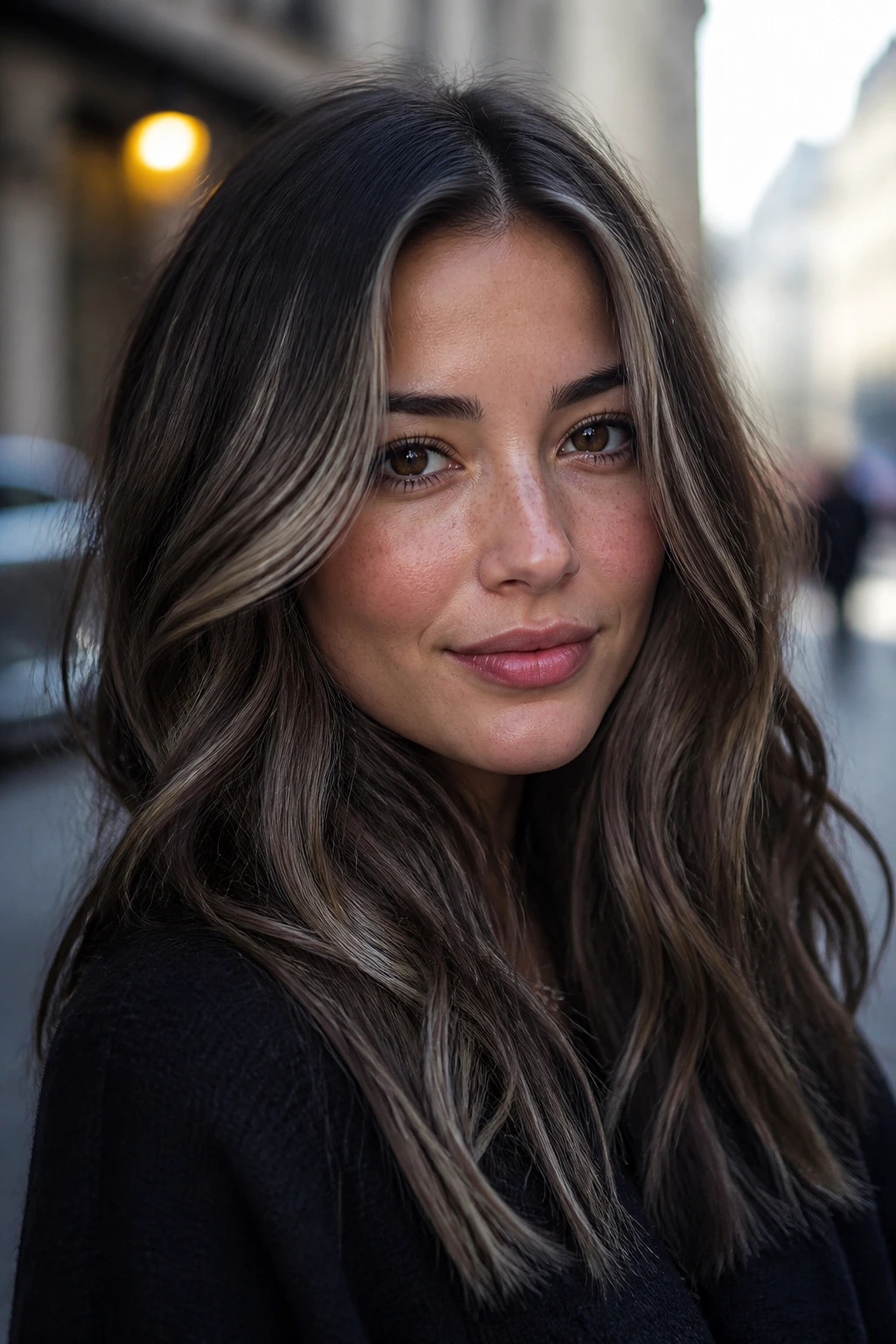
Dark mocha with pearl highlights is a nice ending point because it gives depth, light, and cool-toned shine all at once. The mocha base keeps the color rich, while the pearl highlights stop it from feeling too dense. On cool skin, that little bit of brightness around the face can make the whole color read cleaner.
Keep the highlights cool
- Ask for pearl-beige highlights, not gold
- Place them in thin slices around the face and top layers
- Keep the base deep enough to hold contrast
- Refresh the tone before the highlights turn warm
This is one of the prettiest ways to wear brunette if you like dimension but hate warmth. It feels smooth, expensive, and easy to live with. And if you want a practical salon script, say this: cool brunette base, no copper, no gold, and a pearl or ash finish on the lighter pieces. That sentence saves a lot of bad color decisions.
If you want the shade to look even better, take the photos in daylight and check the mids and ends first. That’s where the truth shows up.
