



A brown auburn hair color on cool skin tones can look rich, sharp, and expensive-looking — or it can make the face look a little tired if the red leans too orange. That’s the whole game. The best brown auburn hair color ideas for cool skin tones usually stay in the berry, mahogany, rosewood, or blue-red family, where the warmth feels deep instead of pumpkin-bright.
If your skin has pink, blue, or neutral-cool undertones, you probably already know the weird little betrayal of certain hair colors. A shade can look gorgeous on a swatch, then turn noisy next to your face. Silver jewelry, berry lipstick, and cool-toned blush often look more natural on you, and the same logic applies to hair: muted red-browns, smoky auburns, and winey brunette shades usually sit better than copper-heavy formulas.
The good news is that auburn does not have to mean “fire engine red.” It can be glossy brown with a red whisper. It can be brunette with a merlot veil. It can be a soft mahogany ribbon through dark hair, which is honestly one of my favorite ways to wear red-brown because it grows out without looking obvious. Some of the ideas below are subtle. Some are bolder. All of them are built to flatter cool undertones without fighting your face.
1. Espresso Brown Auburn Glaze for Cool Skin Tones
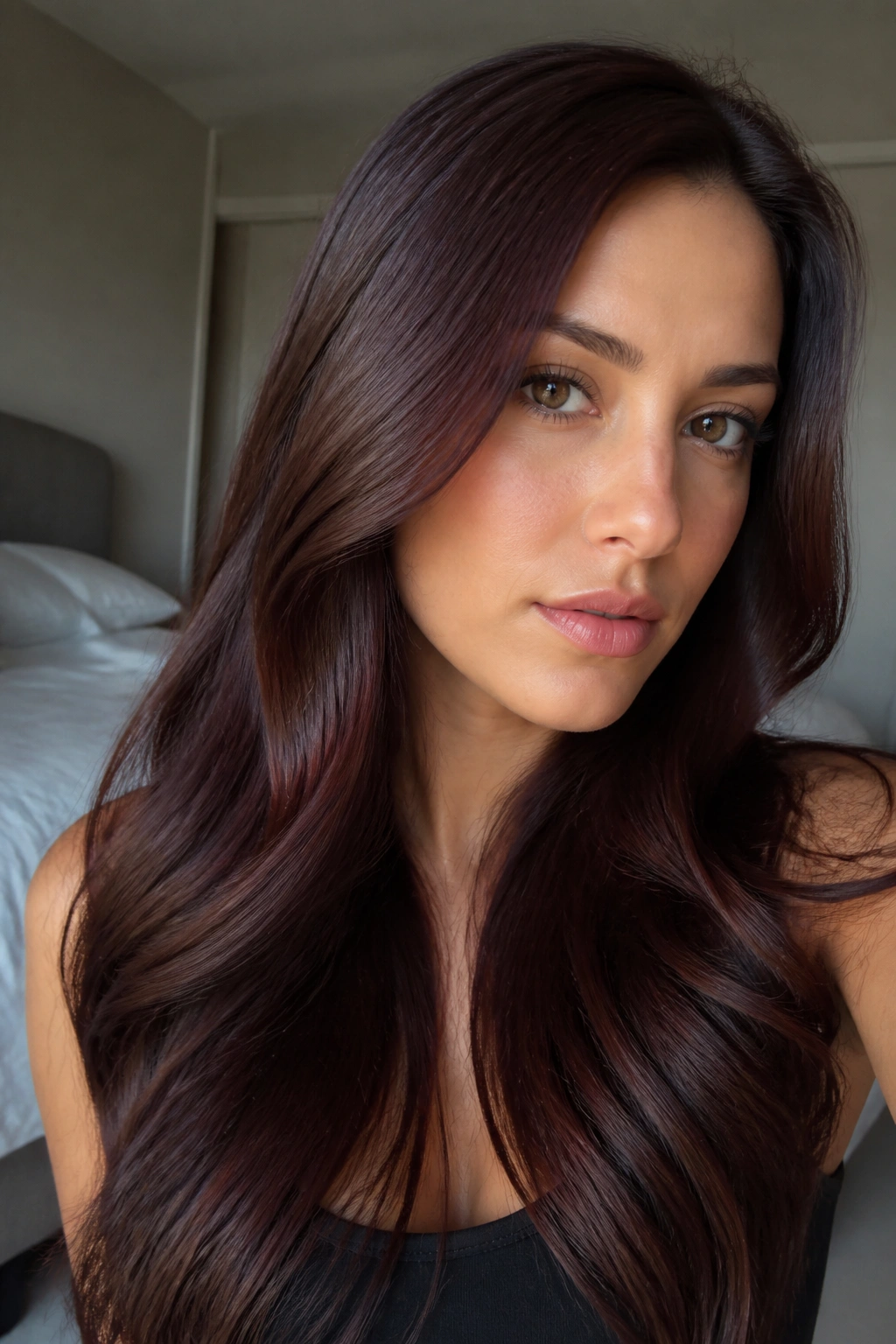
Espresso brown with an auburn glaze is the shade I’d point to first for someone who wants the safest, richest version of red-brown. It keeps the base dark and familiar, then adds a thin red-brown veil that only shows when light hits the hair.
Why It Works
The trick here is restraint. You want a brown base with red-violet reflect, not a bright copper overlay. That keeps the color from turning brassy against cool skin. On straight hair, the shine reads sleek. On waves, the auburn shows up in the bends and suddenly the whole thing feels deeper.
- Best on level 3 to 4 brunettes
- Ask for a demi-permanent gloss or glaze
- Skip bright copper foils
- Refresh every 6 to 8 weeks if you want the tone to stay crisp
My take: this is the shade for people who want people to notice their hair, not their dye job.
2. Cool Chestnut Auburn That Softens Pink Undertones
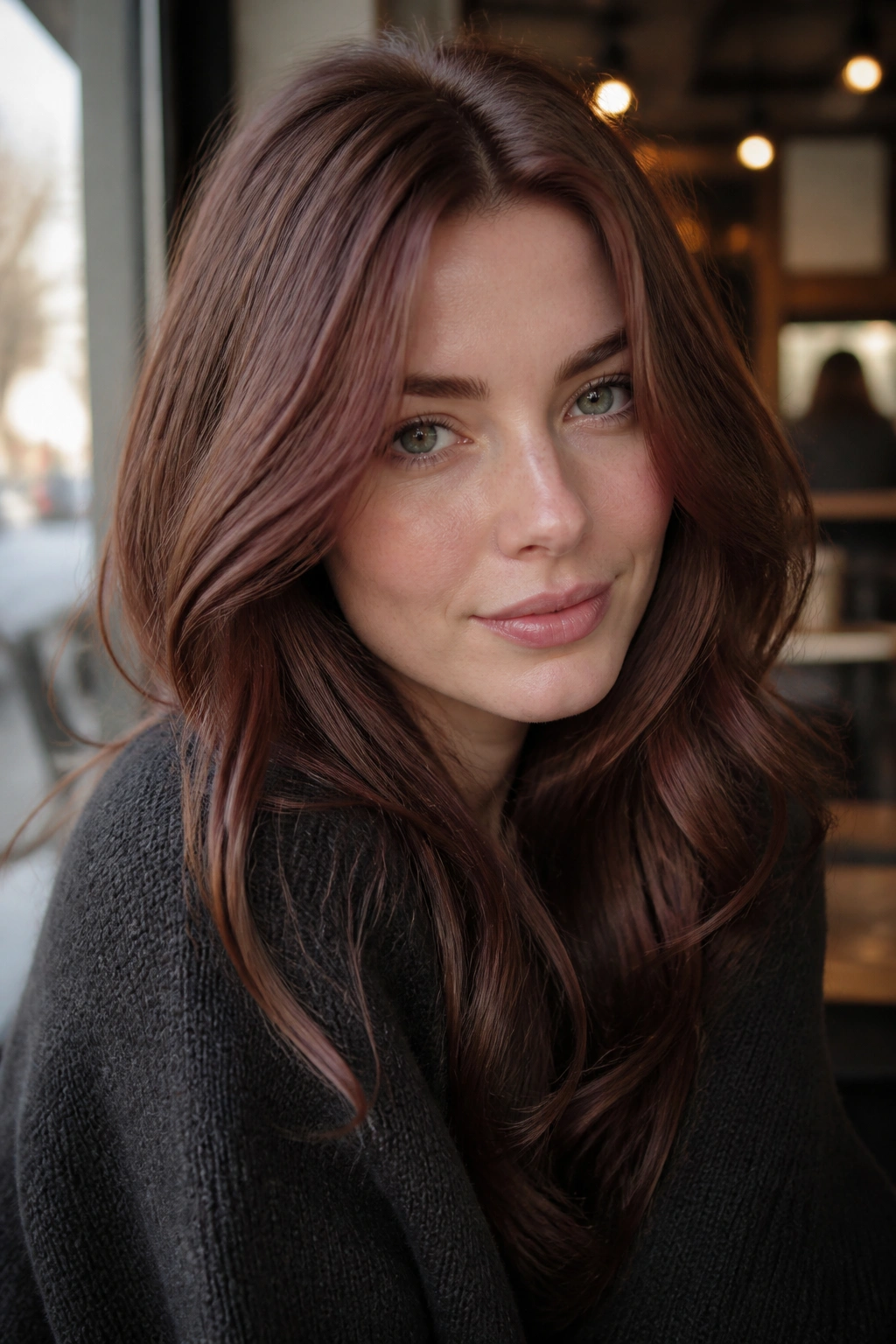
Chestnut is one of those shades that sounds plain until you see it in motion. Then it makes sense. A cool chestnut auburn has enough brown to stay grounded, but the red is soft and dusky, more dried rose than cinnamon stick.
That matters a lot on cool skin. A chestnut tone doesn’t yank attention toward the nose or cheeks the way warmer reds sometimes do. It sits next to pink undertones instead of arguing with them. The whole effect is calm, which sounds boring until you realize calm is often what makes hair look expensive.
This shade works especially well if your haircut has movement already. Long layers, curtain bangs, and shoulder-length shags all help the chestnut pieces show through. On one-length hair, it can look flatter than it should. Give it a little shape and the color wakes up.
No drama. Just depth.
3. Mahogany Balayage on Dark Brunette Lengths
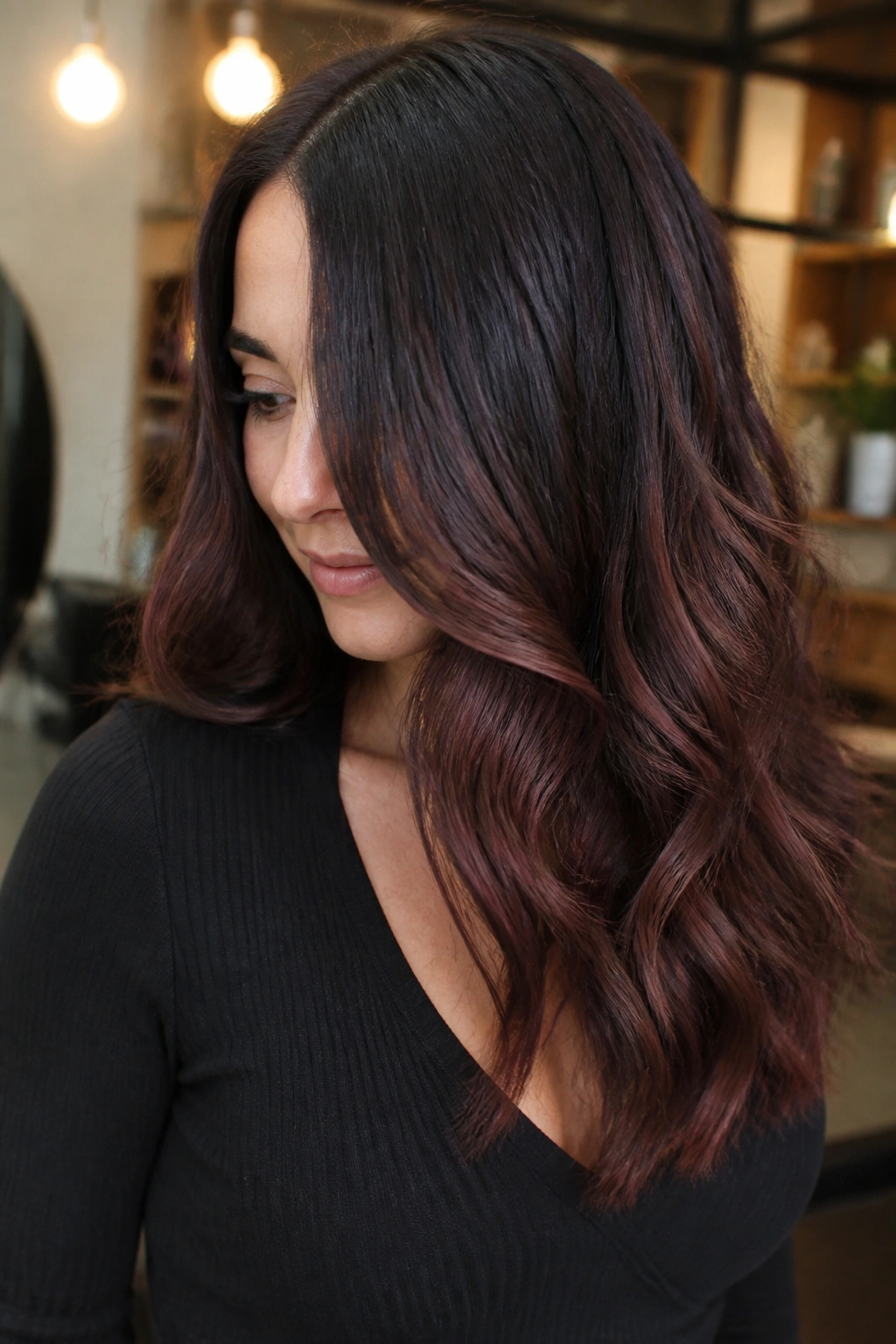
Mahogany balayage is what happens when a dark brunette wants dimension but does not want to look streaky. It’s hand-painted, which means the color sits in soft ribbons through the mid-lengths and ends instead of sitting in harsh stripes.
A friend with very dark hair once described this look as “brown that remembers being red.” That’s actually not bad. Mahogany has that old-wine richness, and it suits cool skin because the red stays deep and muted. The color looks especially good when the hair moves, since the painted pieces catch the eye without turning loud.
What to Ask For
- Keep the root area natural or only slightly softened
- Paint mahogany through the mid-lengths and ends
- Ask for thin, blended ribbons, not chunky highlights
- Pair it with loose waves if you want the dimension to show
The best part is grow-out. It’s forgiving. That’s rare, and worth appreciating.
4. Black Cherry Brown with a Violet Edge
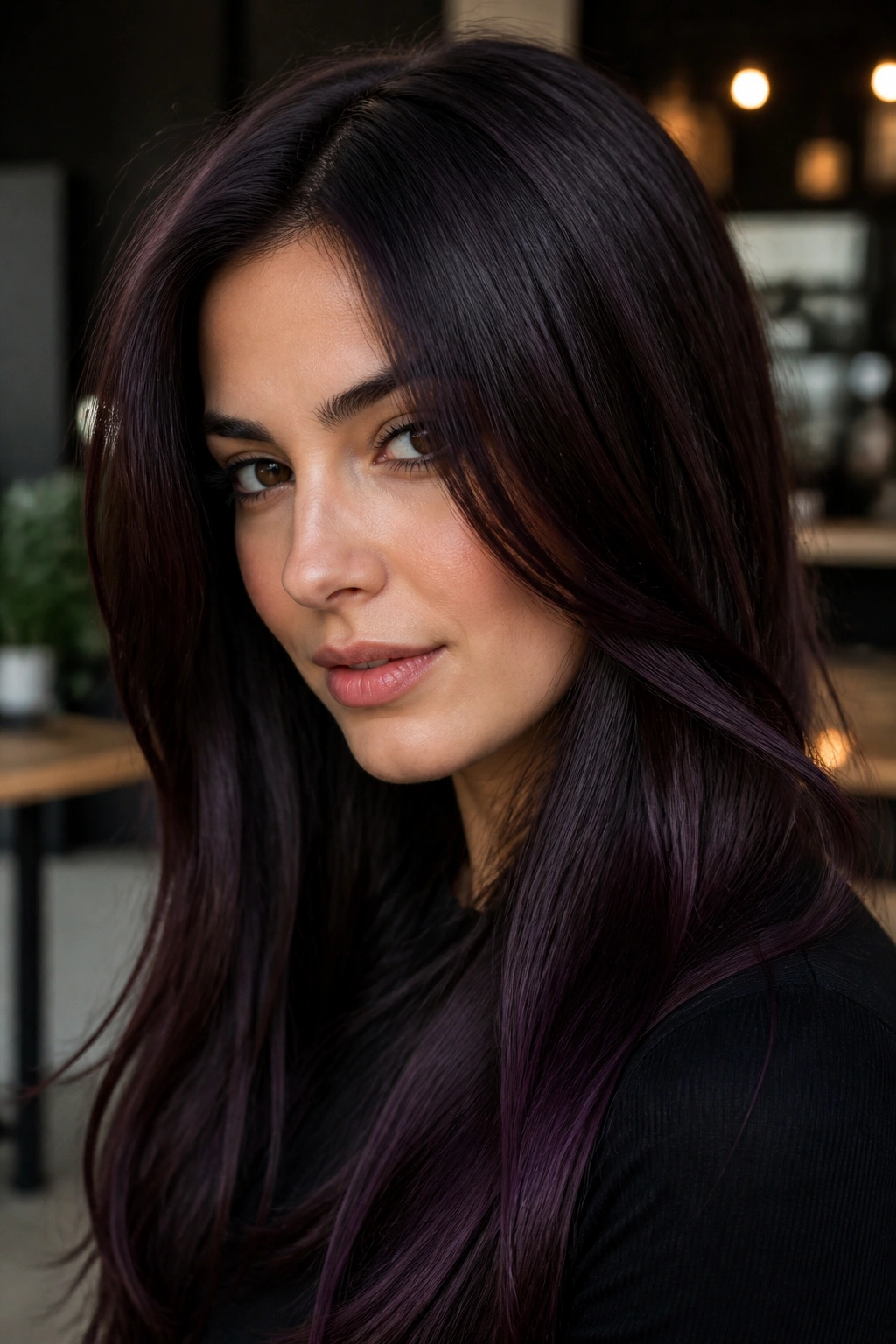
Why does black cherry work so well on cool skin? Because it behaves like a brunette first and a red second. The violet edge keeps it from sliding into orange, and that one detail changes everything.
Black cherry brown is darker than plum and more dramatic than chestnut. It has that inky depth you see in cherry cola, but without the sweetness. On cool complexions, the blue-red base makes the skin look less flushed, not more. That’s the part a lot of people miss. Warm reds can amplify redness. Black cherry tends to sit beside it more quietly.
How to Wear It
Wear it sleek if you want the violet tones to look polished. Wear it in curls if you want the red to bloom a little. A blunt cut makes it feel sharper, while layers make it softer.
It’s a bold color, sure. But not a wild one.
5. Smoky Cinnamon Brown with Muted Copper
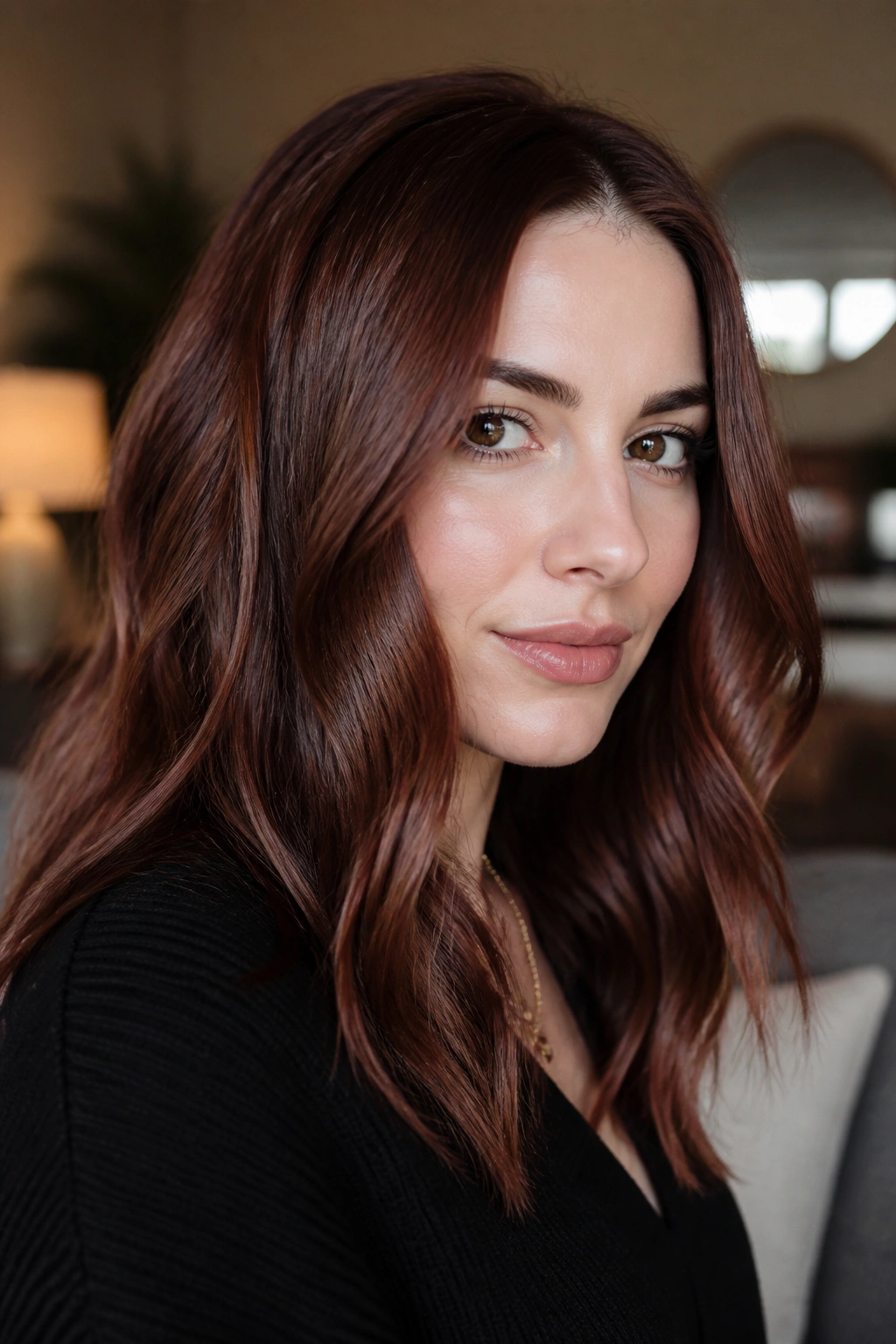
Smoky cinnamon brown is the answer to anyone who likes the idea of cinnamon but knows their face does not love bright copper. The “smoky” part matters. It means the red is filtered through ash or brown so the color stays quieter.
That smoky edge is what makes it friendly for cool skin tones. Instead of reflecting orange against pink undertones, it lands as a warm brown with just enough spice. The effect is especially good on medium-length hair where the ends move around a lot. Every bend of hair catches a different part of the shade.
This is also one of those colors that looks more expensive in person than in a photo. Photos flatten it. In real life, the smoky pieces make the hair look thicker and more lived-in. Not sloppy. Lived-in.
If you want warmth without the brass fight, this is a smart place to start.
6. Cocoa Brown with Auburn Money Pieces
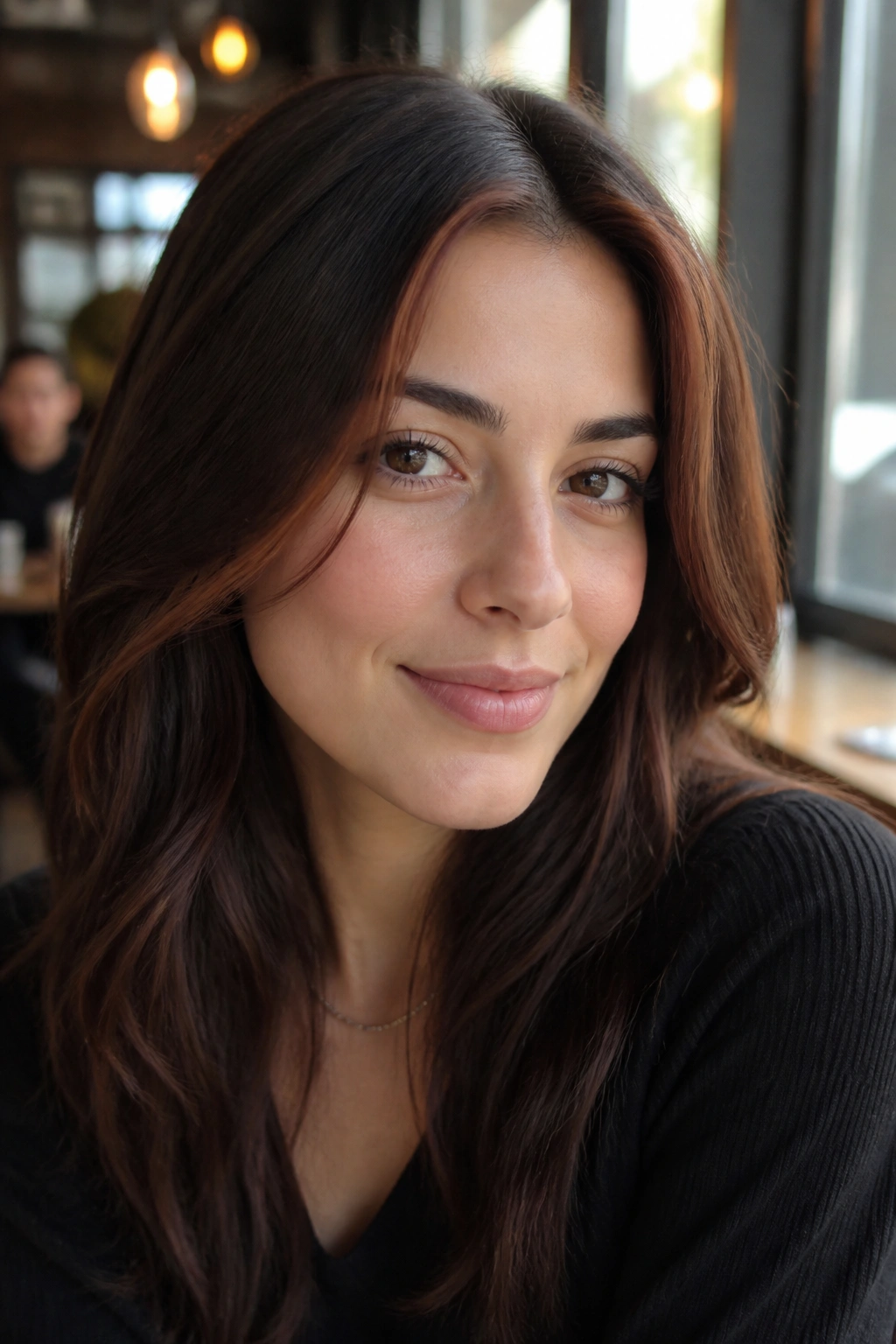
Two face-framing pieces can change everything. Seriously. If you don’t want to commit to a full auburn brunette transformation, cocoa brown with auburn money pieces gives you the color payoff right where it matters most: around the eyes, cheekbones, and jaw.
The base stays cocoa and cool, which keeps the overall look grounded. Then the front sections get painted a little lighter and redder, usually with a red-brown or berry tone. Keep those pieces thin — about half an inch wide is often enough — or they start to look costume-like.
Best Placement
- Start the lighter pieces just below the brow line
- Keep them soft around the temples
- Blend them into the front layers, not the whole front chunk
- Use a round brush when blow-drying to show the contrast
This is one of my favorite low-commitment ideas because it gives the face some lift without turning the whole head warm.
7. Plum Brown Melt for Cool Undertones
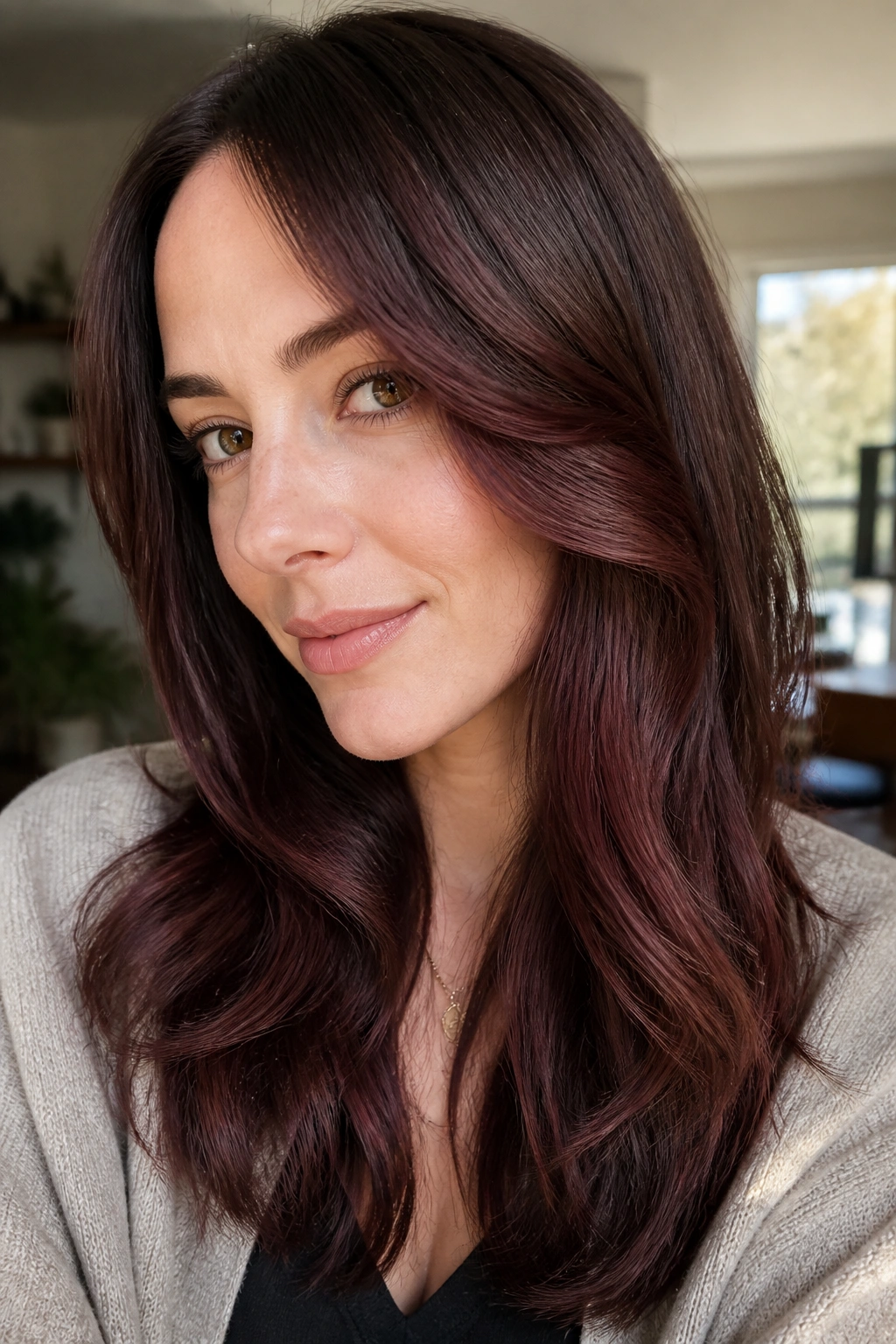
Plum brown is the introvert’s auburn. It’s there, but it doesn’t shout. The base reads brunette, then a plum-red sheen moves through the mids and ends when the light hits it.
That softness is exactly why it works on cool skin. Plum has a blue-red cast, so it tends to echo cool undertones instead of fighting them. If your hair is naturally dark and your skin leans rosy, this shade can make the complexion look steadier. Less flushed. More even.
I like it on curls and waves because the color breaks up naturally. Each bend shows a slightly different tone, which keeps the hair from looking like one solid block. On straight hair, it feels sleeker and more modern.
One-sentence version: if you want red-brown without the usual heat, plum brown is your friend.
8. Auburn-Tinted Mushroom Brown for Cool Skin Tones
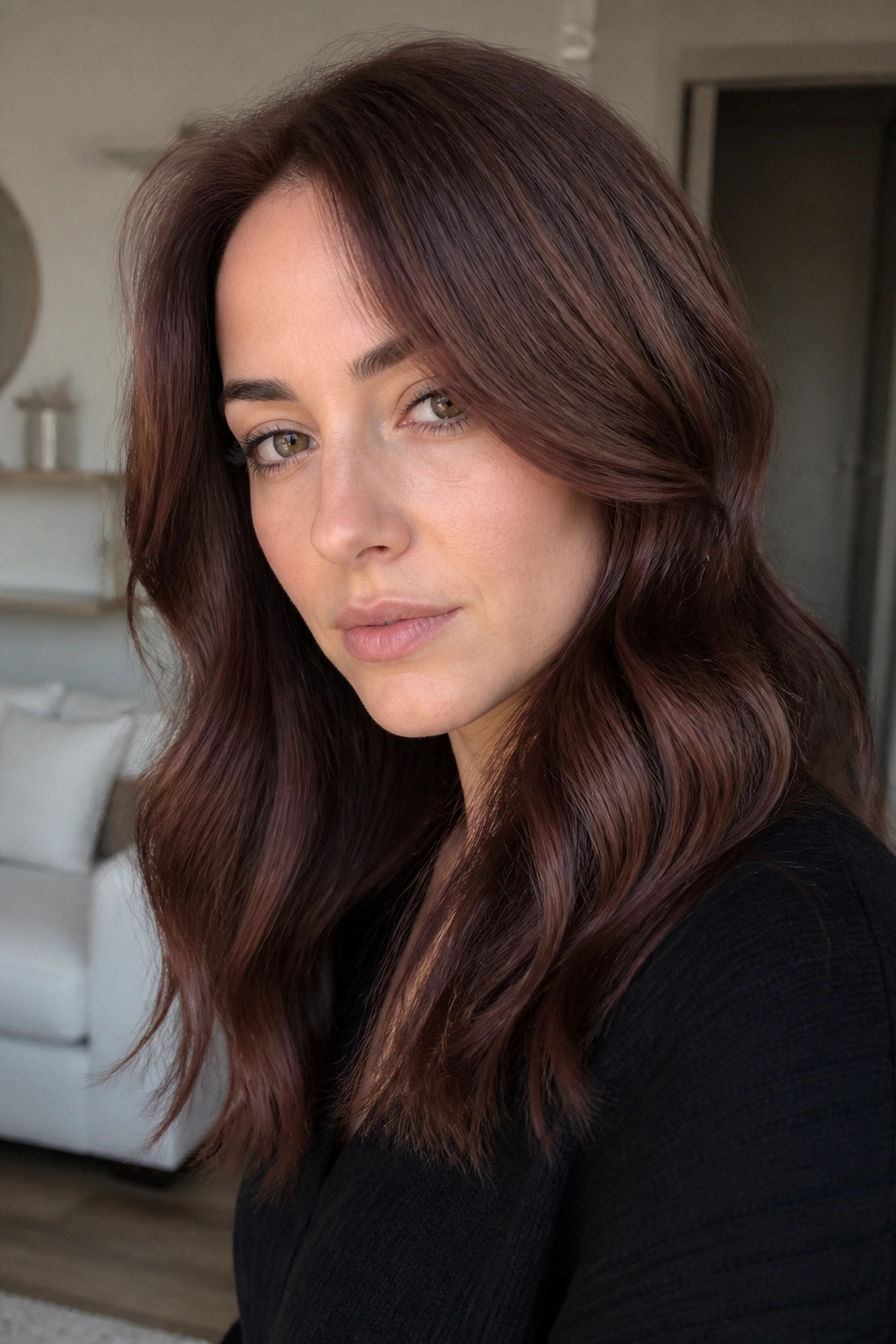
Mushroom brown can look a little flat if the ash gets too heavy. Add a whisper of auburn, though, and the whole thing changes. The brown still feels cool, but it stops looking dusty.
That little bit of warmth is useful on cool skin because it gives the face some life without introducing gold. Mushroom brown with auburn tint is especially nice for people who like muted makeup, silver earrings, and soft clothes. It sits in that quiet, expensive-looking lane where nothing is trying too hard.
Where It Works Best
- Shoulder-length cuts with texture
- Soft bobs
- Hair that tends to look dark indoors and flat outdoors
- People who want brunette depth with a tiny red lift
Auburn tint here should be subtle. Think glaze, not streaks. If the red becomes obvious, the balance is gone.
This is the color I’d call “controlled warmth.”
9. Merlot Brown Lob with a Blunt Edge
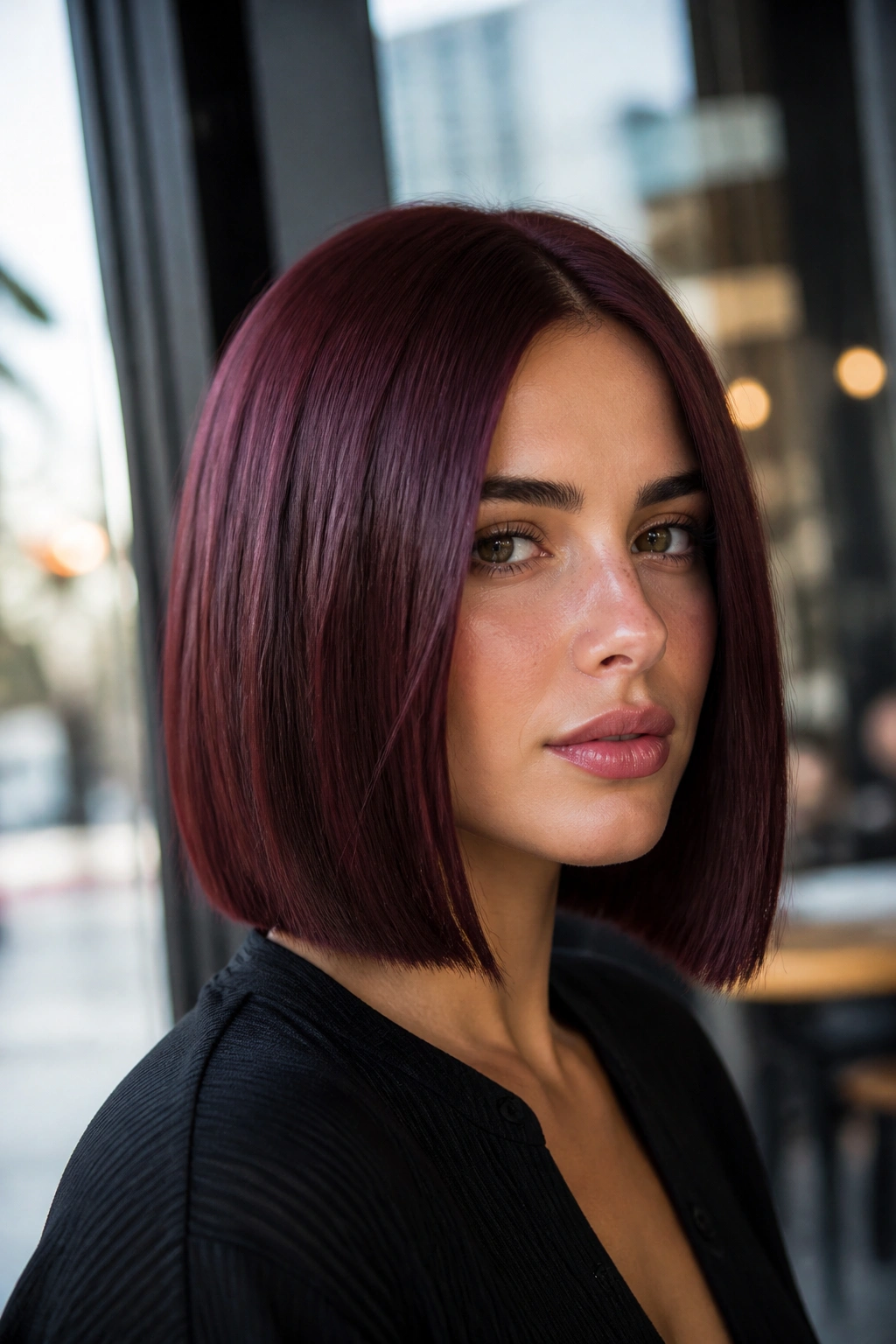
A blunt lob and merlot brown belong together. The clean cut gives the color a frame, and the color gives the cut some depth. Without that richness, a blunt lob can sometimes look a little severe. Merlot fixes that.
Merlot brown sits between burgundy and brunette. It’s dark enough to read polished, but the red-violet tone gives it a soft wine note that feels flattering on cool skin. It’s especially nice if your natural hair is medium brown and you want something richer without going full red.
A chin-to-collarbone length cut makes this shade look even better because the ends land right where people notice shine first. Add a little bend with a flat iron, and the color shifts from brown to berry to brown again.
No need to overcomplicate it. The shape does half the work.
10. Dark Chocolate with Blue-Red Lowlights
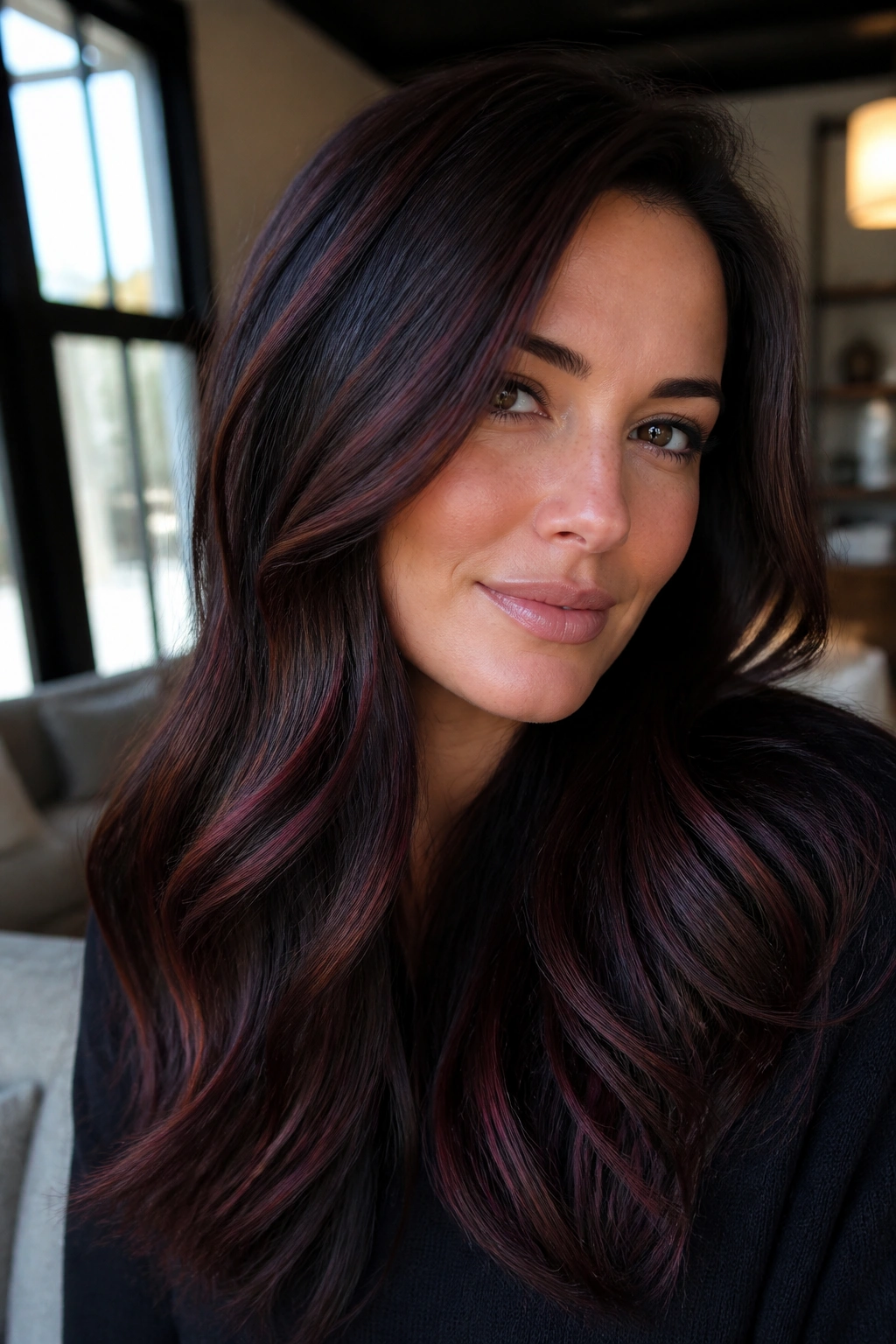
Lowlights get ignored all the time, which is a shame. If your hair is fine or a little flat, dark chocolate with blue-red lowlights can add depth without making the hair look stringy.
That’s the main appeal. Highlights remove pigment. Lowlights add it back. On cool skin tones, this matters because the deeper red-brown pieces create shadow and movement instead of bright strips. The blue-red base keeps the warmth under control.
Good Placement Rules
- Put lowlights under the top layer, not all over
- Keep them one or two levels deeper than the brown base
- Use them around the nape and interior sections
- Let a few pieces peek through near the face
This shade is quietly brilliant on thick hair, too. The interior depth keeps the style from looking heavy.
If you’re bored of highlight-heavy brunette color, try the opposite.
11. Rosewood Brown Waves That Mirror Pink Undertones
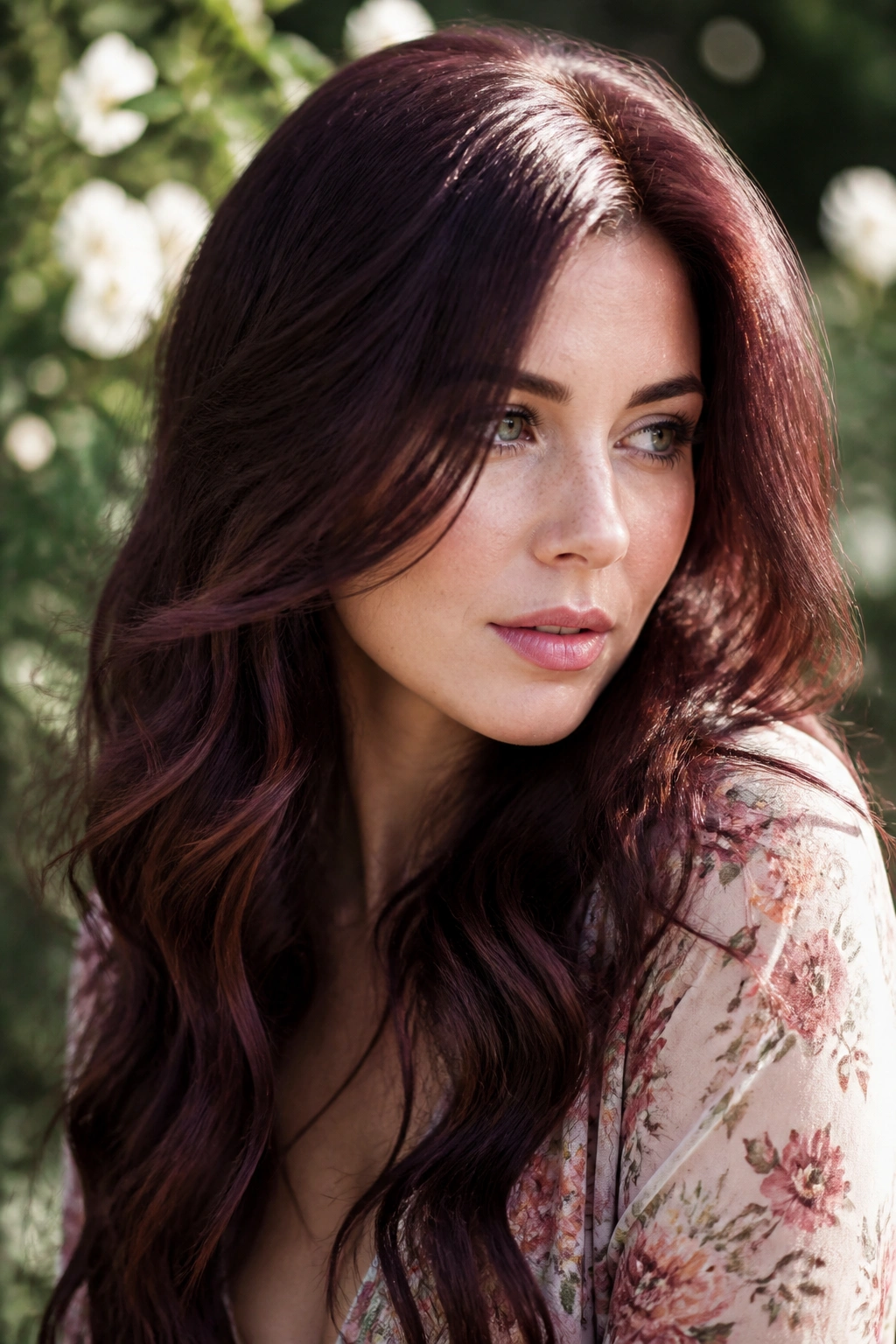
Rosewood brown has a soft, slightly rosy tone that feels almost tailored for cool skin. It looks brown first, then the pink-red edge shows up in movement. Not in a loud way. More like a blush under the surface.
That’s why waves are such a good partner for it. Loose bends break the color into little shifts, and those shifts make the shade feel richer than a flat brunette ever could. On a blunt cut, it can still work, but waves help the rose tone breathe.
The other nice thing is how easy it is to dress up. Rosewood pairs well with minimal makeup, berry lipstick, or a simple black sweater. It doesn’t need much. The color already has enough personality.
If you like your hair color to feel soft but not plain, this is a strong contender.
12. Brushed Mahogany Bob with Clean Shape
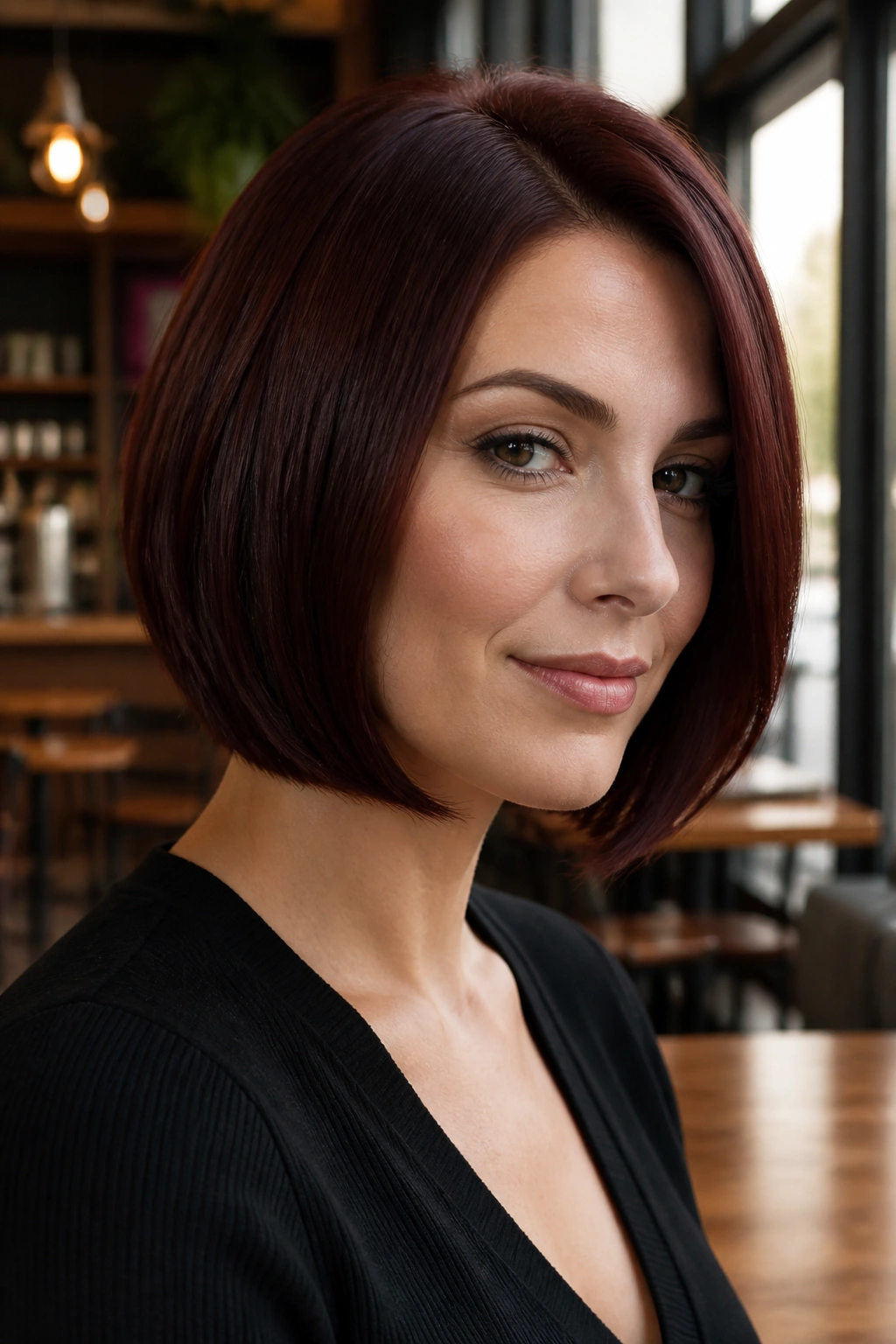
Short hair can carry more color than people expect. A bob, especially one that’s brushed smooth, gives mahogany a very clean surface to sit on.
Mahogany has that deep red-brown richness that cool skin can wear without looking flushed, as long as the formula stays rooted in brown. On a bob, the color reads crisp. There’s less length to hide behind, so the tone has to do the work. Luckily, mahogany has enough depth for that.
This is a good choice if you like structure. A jaw-length cut with a slightly beveled end makes the color feel intentional, not flat. It also looks sharp with tucked-behind-the-ear styling, which exposes the richer red-brown side right around the face.
A short cut and a deep shade. Strong combo.
13. Cranberry Brown Face Frame for Instant Lift
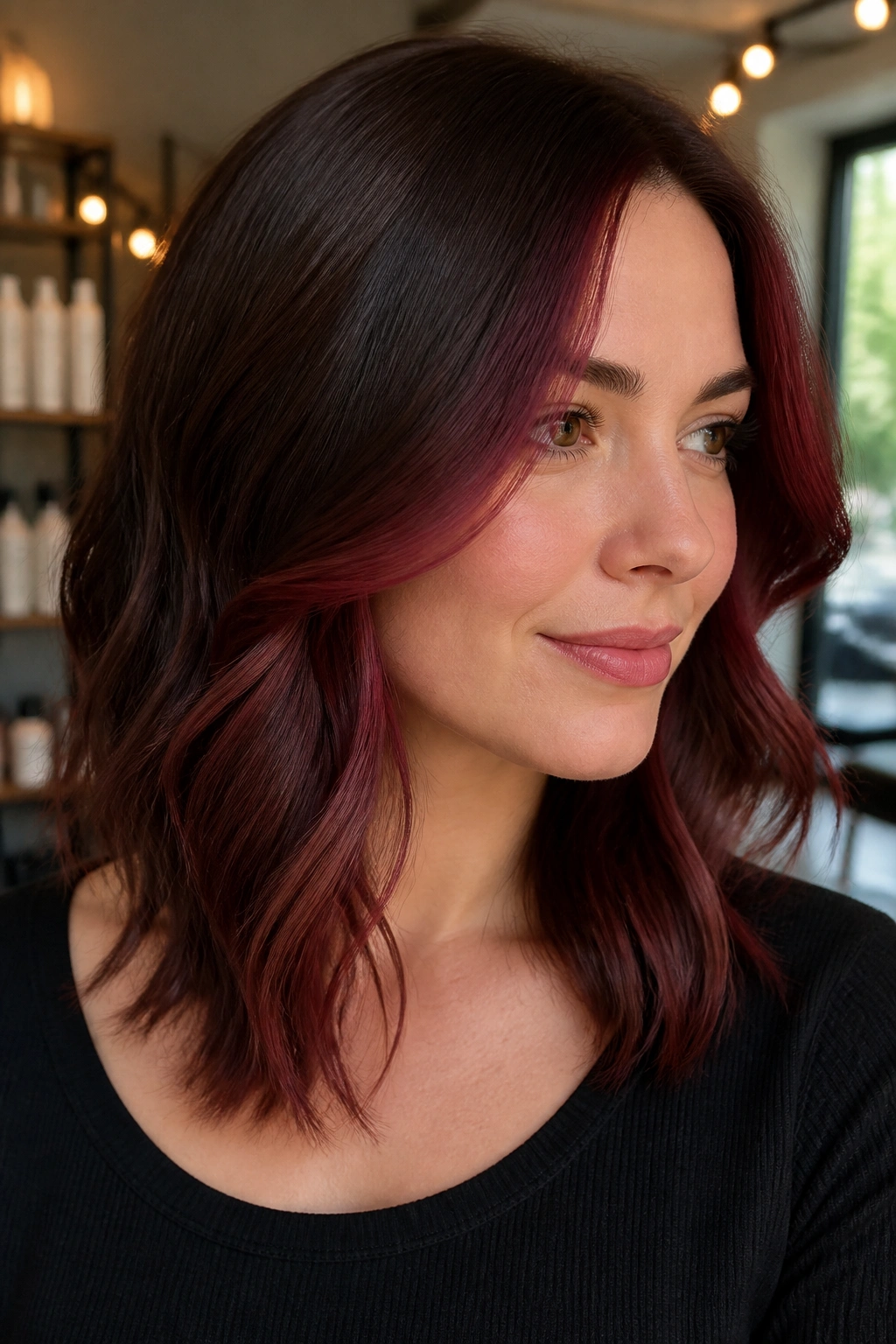
If you wear your hair up a lot, put the color where the eye lands first. Cranberry brown face-framing pieces do exactly that. They sit around the temples, cheekbones, and fringe area, and they can change the whole feel of a dark brunette without touching the rest of the head much.
The key is keeping the pieces narrow and deliberate. Too much cranberry and the color becomes the main event. Just enough, and the face gets a lift. This is especially nice for cool skin because cranberry carries that blue-red bite that reads clean instead of orange.
Best Uses
- Ponytails that need some life around the front
- Half-up styles
- Curtain bangs
- Curly hair that needs definition near the face
I’d keep the rest of the hair a dark cocoa or espresso. That contrast makes the cranberry pop in the right way.
It’s a small change with a big visual payoff.
14. Cool Mocha with Auburn Ends
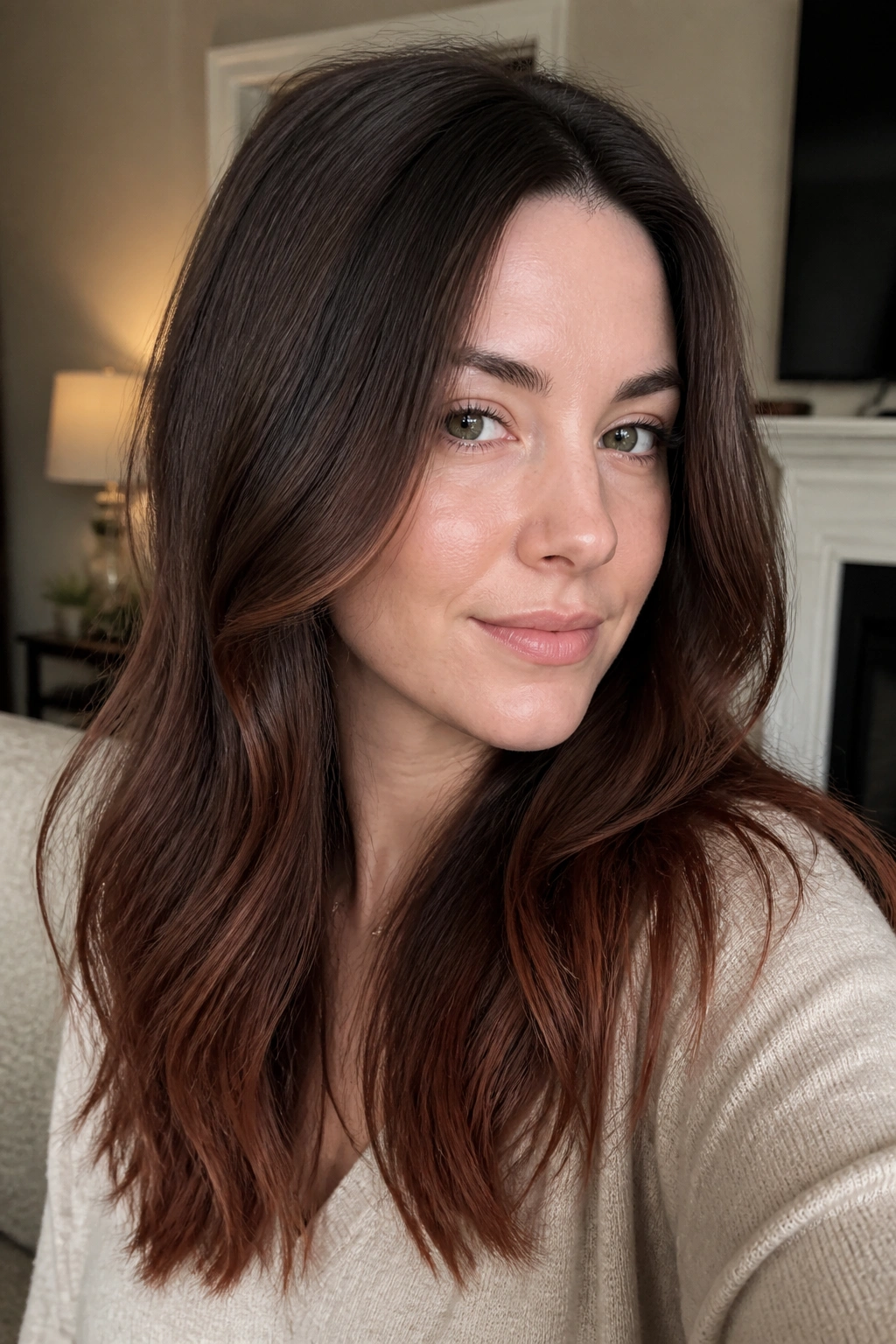
Cool mocha with auburn ends is for people who want the warmth where it matters and not much elsewhere. The root and mid-lengths stay mocha, soft and neutral, then the last few inches turn red-brown.
That approach works because the ends are where hair tends to look a little dull anyway. Giving them auburn tone makes the cut look fresh without requiring a full color shift. It’s also easier to grow out. The line between natural and colored stays low enough that it doesn’t scream for attention when the roots come in.
I like this on layered cuts because the warmer ends show at different lengths. On long hair, the effect is smoother and more romantic. On shorter hair, it can feel a little choppier, which may be exactly what you want.
Low maintenance, but not boring. That’s the sweet spot.
15. Tortoiseshell Brunette with Auburn Lift
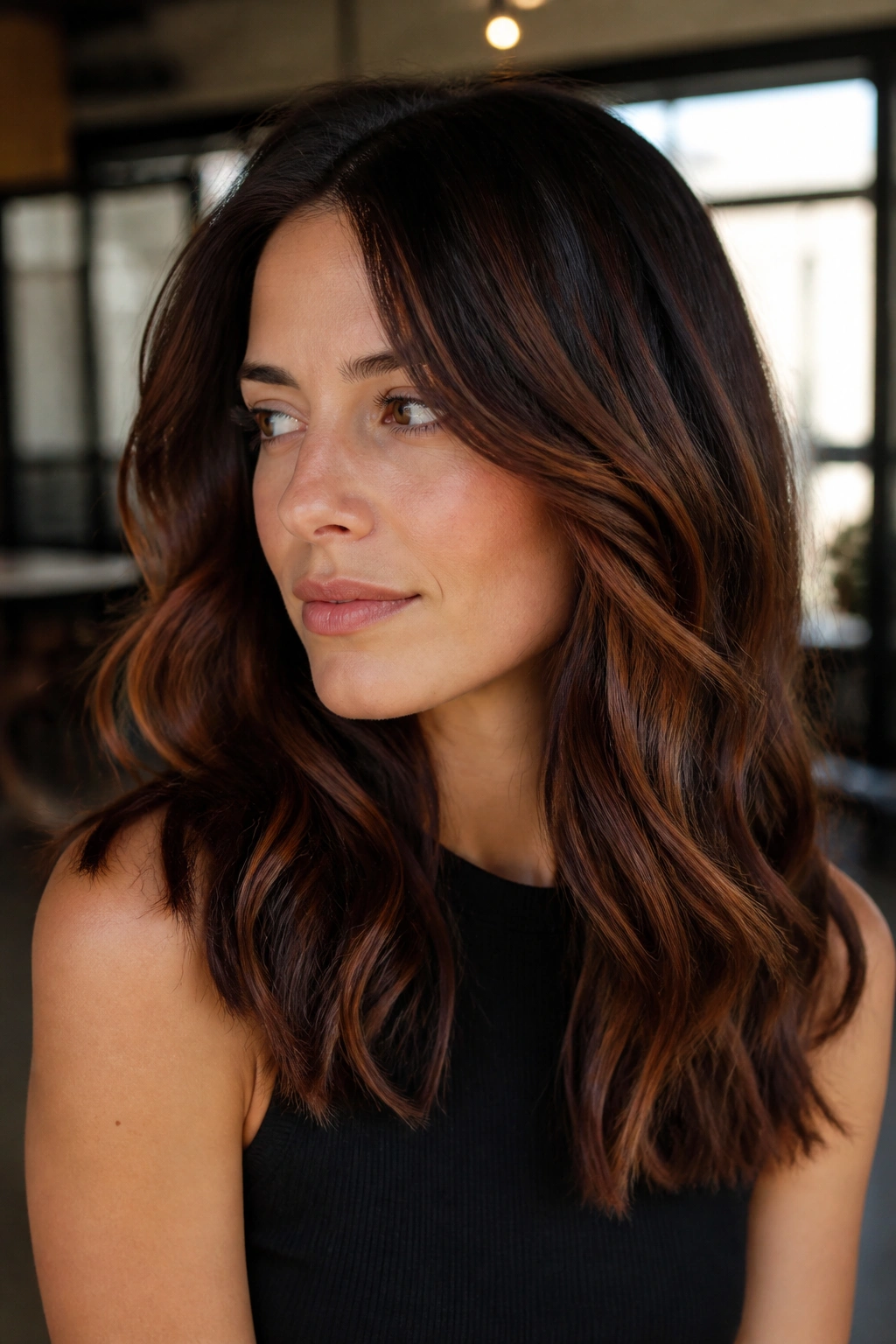
Tortoiseshell brunette is one of those color maps that looks complicated but wears easily. The base stays deep, then the colorist drops in warm brown, auburn, and a touch of neutral brightness in a way that mimics natural variation.
For cool skin tones, the trick is keeping the auburn lift measured. You want the red-brown pieces to look woven in, not pasted on. The overall effect should feel like a brunette whose hair has picked up multiple tones over time, not one who went looking for a single flat dye job.
Color Map
- Deep brunette base at the roots
- Auburn-brown ribbons through the mid-lengths
- Slightly lighter pieces around the top layer
- Soft finish at the ends so the color fades naturally
This works especially well on hair with a little texture. Waves and bends help the shades separate just enough to show dimension. Too much separation, though, and it stops looking tortoiseshell. Balance matters here.
16. Garnet Brown for Cool Skin Tones
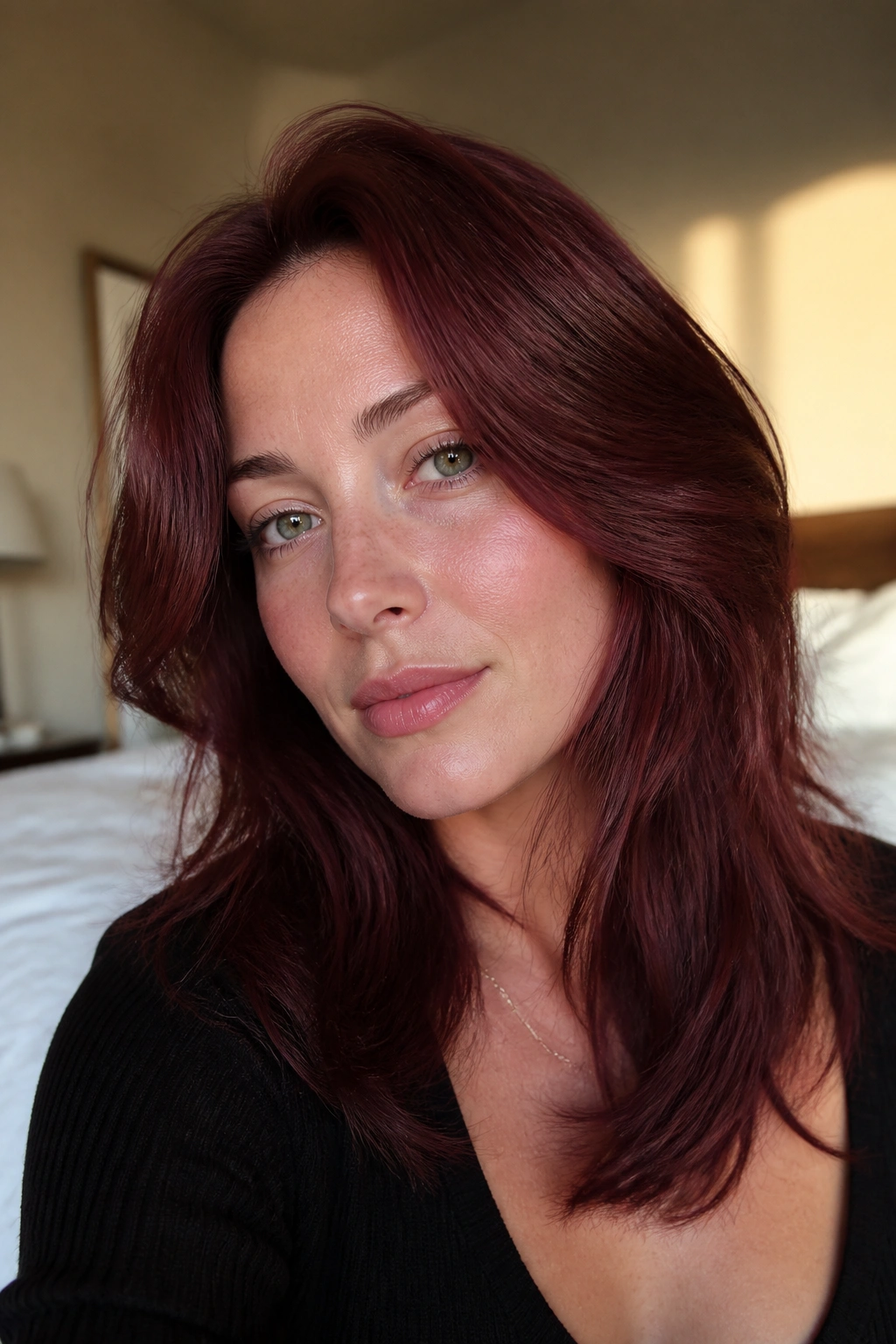
Garnet brown is richer and darker than cherry, with a deeper jewel feel than plum. On cool skin tones, that depth is a gift. It gives the face color back without making the skin look flushed or sallow.
I especially like garnet brown on medium-density hair because the color has enough body to live inside the cut. Fine hair can wear it too, but the finish has to be glossy or it may look flat. Thick hair gets that velvet effect almost for free.
One thing worth saying: garnet is not the same as bright red. It’s red-brown with a blue cast. That’s the difference. The base should remain brunette so the whole shade stays wearable.
If you want a color that feels a little richer at night and a little more plum in daylight, this is one of the nicest options on the list.
17. Ash Brown with Burgundy Ribboning
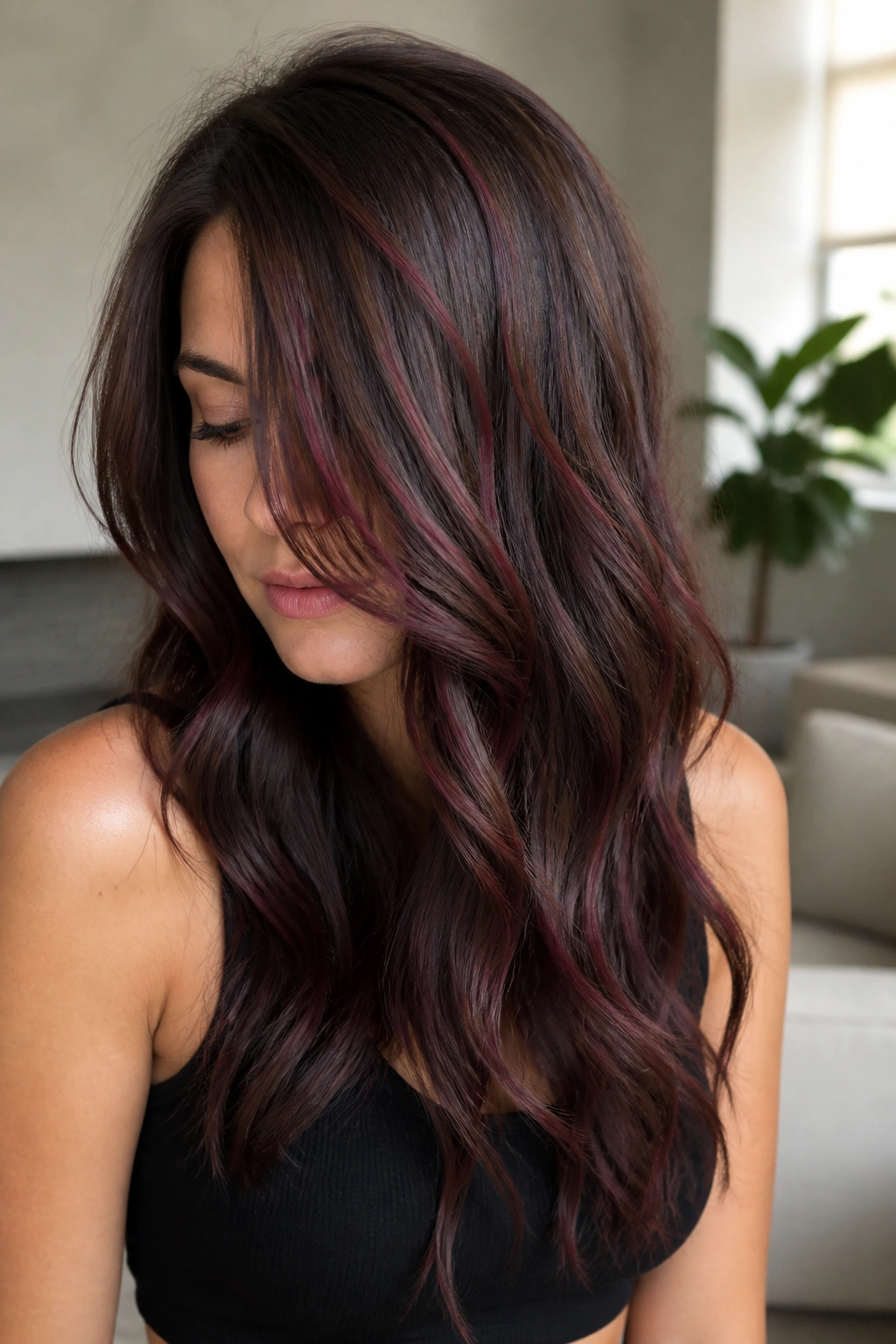
Ash brown and burgundy sound like opposites, and maybe that’s why they work. The ash base keeps the burgundy from turning orange, while the burgundy gives the cool brown some life.
This is a smart pick if you like cool-toned clothing, dark lipstick, and hair that doesn’t fight your palette. It’s also one of the better choices for people who have tried warm auburn before and felt a little off. The ash does the quiet work of balancing the red.
What to Ask Your Colorist
- Start with a cool brown base
- Add burgundy ribbons in thin sections
- Keep the red pieces around the mid-lengths and ends
- Finish with a gloss that keeps the tone reflective, not muddy
The result is more subtle than black cherry and less soft than chestnut. Middle ground, but the good kind.
It has edge without shouting. That’s hard to pull off.
18. Deep Cherry Cola Brunette on Thick Curls
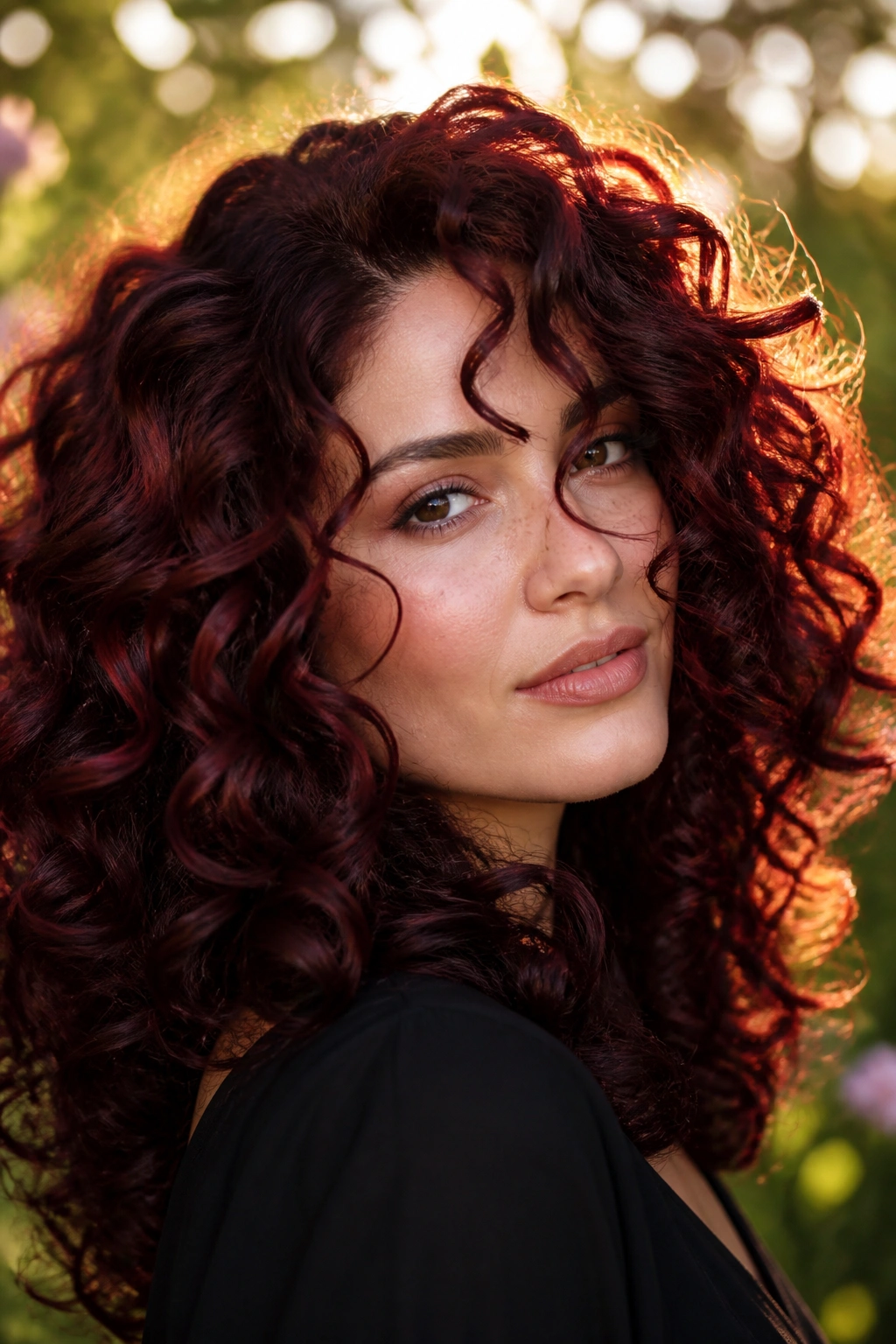
Cherry cola is one of those shades that looks almost black in shade, then gives off a red-brown glow when the light changes. On thick curls, that movement matters a lot. Each curl picks up the color differently, and the whole head looks layered without needing a complicated technique.
For cool skin tones, the appeal is in the red-violet base. Cherry cola avoids the orange territory that can clash with pink undertones. Instead, it leans rich and dark, which makes the skin look clearer by comparison.
This is a fun shade if you like depth. It’s not a whispery color. It has presence. But it still feels wearable because the brunette base keeps it grounded.
If you have dense curls, this may be one of the most flattering brunette-red blends you can try.
19. Sable Brown with a Wine Gloss
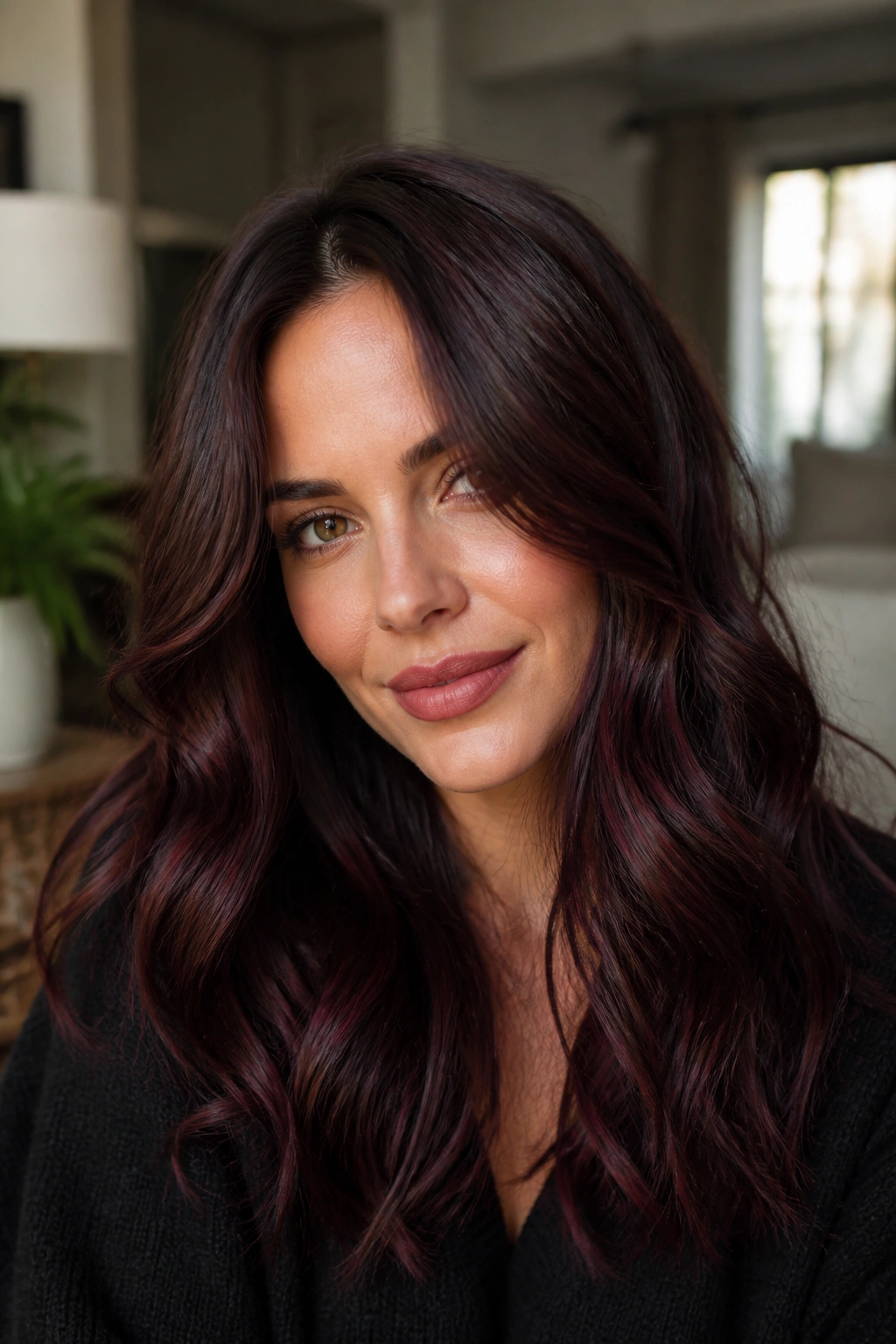
A gloss is the least committed way to wear auburn, and I mean that as a compliment. Sable brown with a wine gloss gives the hair a red-brown shift without permanently changing the base color too much.
That makes it ideal if you’re testing the waters. A gloss can soften the brown, add shine, and push the hair toward merlot or berry territory for a few weeks. On cool skin, the wine tone tends to feel elegant rather than warm. Less copper. More cabernet.
I like this option for first-timers because it teaches you something fast. If you love it, you can deepen the tone later. If not, it fades without drama.
A good gloss is like a lipstick for hair. Small change. Different mood.
20. Auburn Root Shadow on Brunette Lengths
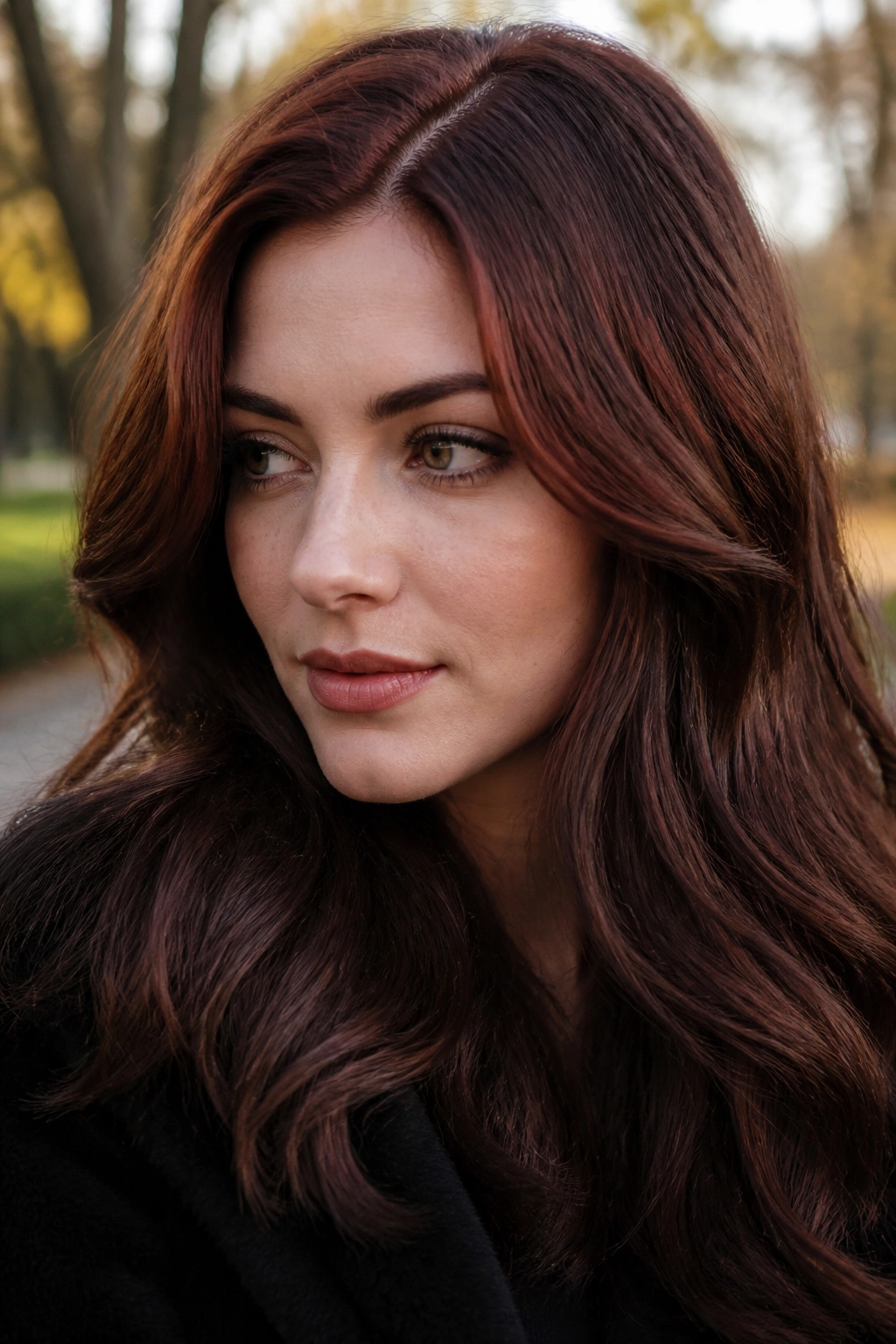
If you hate obvious grow-out, reverse the usual color story. Keep the root shadow deeper and let the auburn live through the lengths. That way the new growth blends instead of screaming for attention.
The shape of the color matters here. Root shadow should be about one to two shades deeper than the mid-lengths, not a hard band. Then the auburn can sit through the rest of the hair in soft ribbons or a full tint. Cool skin tones tend to like this because the face stays framed by the darker root area, which calms the warmth.
Why It’s Useful
- The grow-out is soft
- The crown stays rich and natural-looking
- The auburn shows most where hair moves
- It suits both straight and wavy styles
This is a practical color, which I respect. Pretty is nice. Easy is better.
21. Velvet Chestnut with a Violet Base
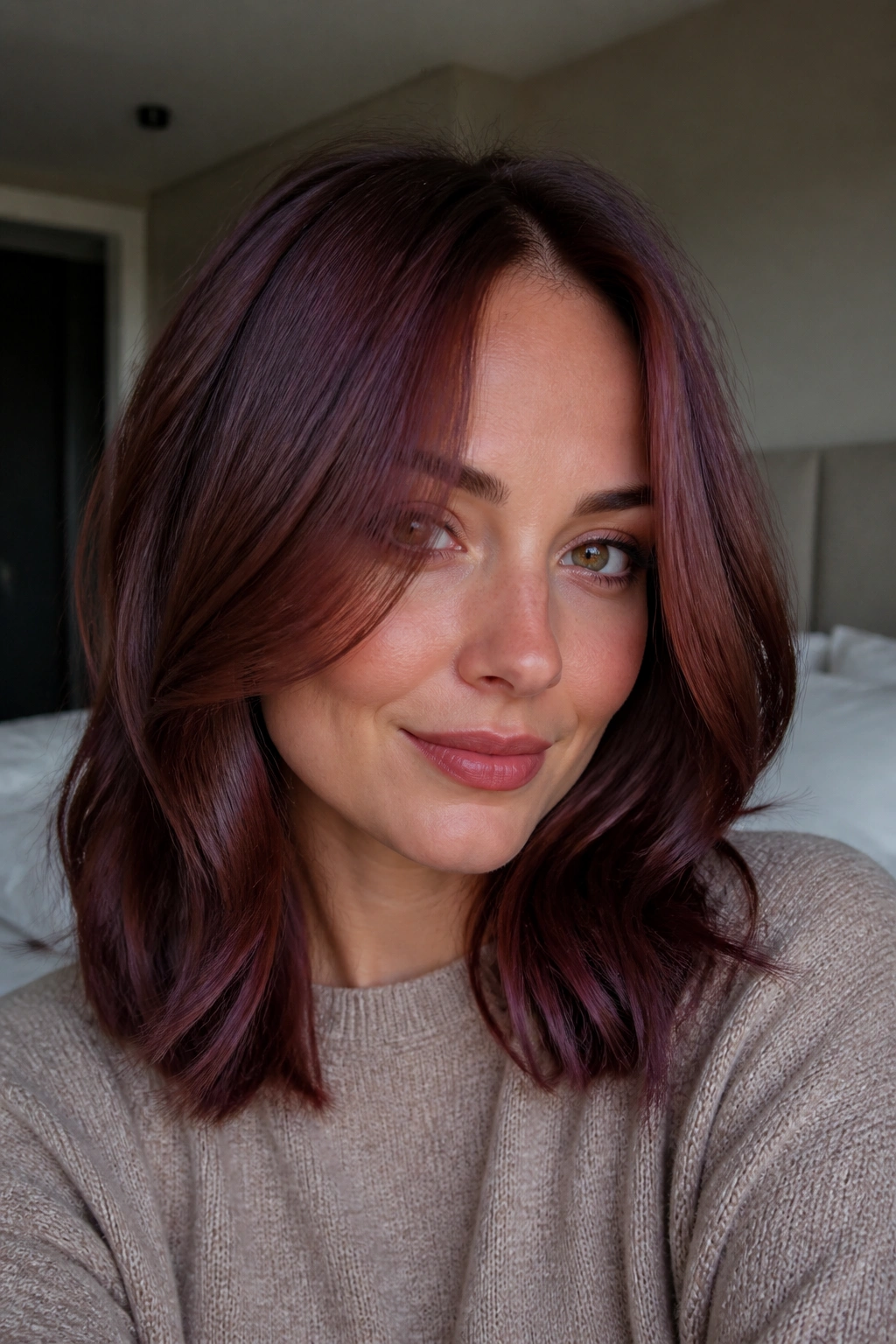
Velvet chestnut is the shade I’d choose for someone who wants warmth but still wants the hair to feel cool at the surface. The violet base softens the orange side of chestnut and gives the whole color a smoother finish.
That violet note is doing a lot of work. It keeps the shade from turning brassy, and it helps cool skin tones look fresh instead of overblushed. On porous hair, this is especially helpful because red can go loud fast when the cuticle grabs too much pigment. Violet keeps that under control.
This color is particularly nice on shoulder-length cuts, where the ends can puff a little and show off the depth. A blowout makes it look polished. Air-drying makes it softer. Either way, the color stays in the brunette lane.
Quietly flattering. That’s the best kind.
22. Smoky Brunette with a Red Velvet Tint
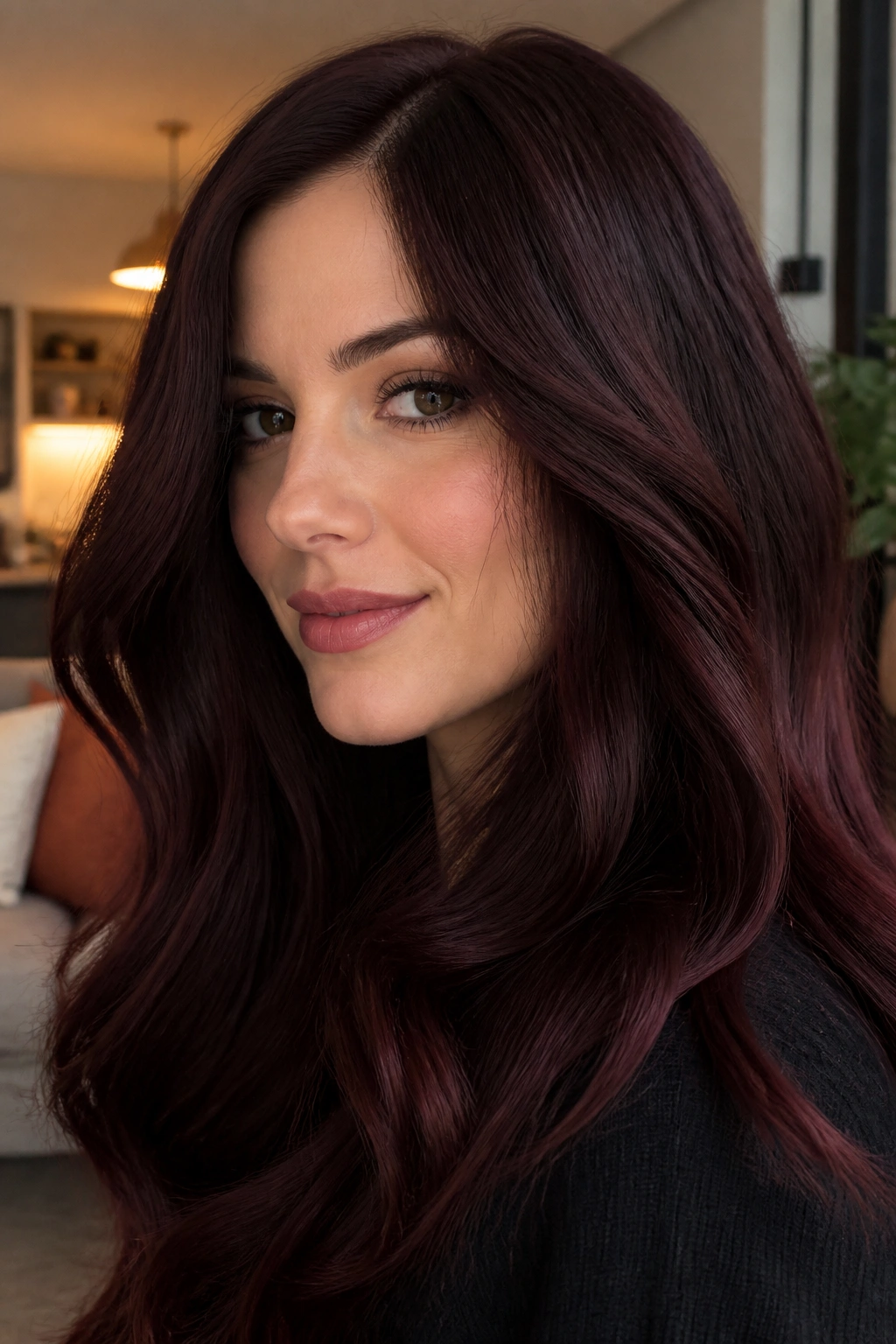
How do you make auburn feel rich instead of loud? You smoke it down and keep the red closer to velvet than copper. That’s the whole idea behind a smoky brunette with a red velvet tint.
The color should look brown first and red second. In direct light, you’ll see the velvet note. Indoors, it may read almost like a deep brunette with a tiny berry cast. On cool skin tones, that subtle shift can be better than a brighter auburn because it doesn’t pull warmth into the face.
This shade works well on straight hair, especially if you like a glossy finish. A smooth blowout shows the red-brown reflection cleanly. On curls, the color becomes softer and more dimensional.
If you want the color to whisper, not shout, this is the lane.
23. Dark Walnut with Cinnamon Veil
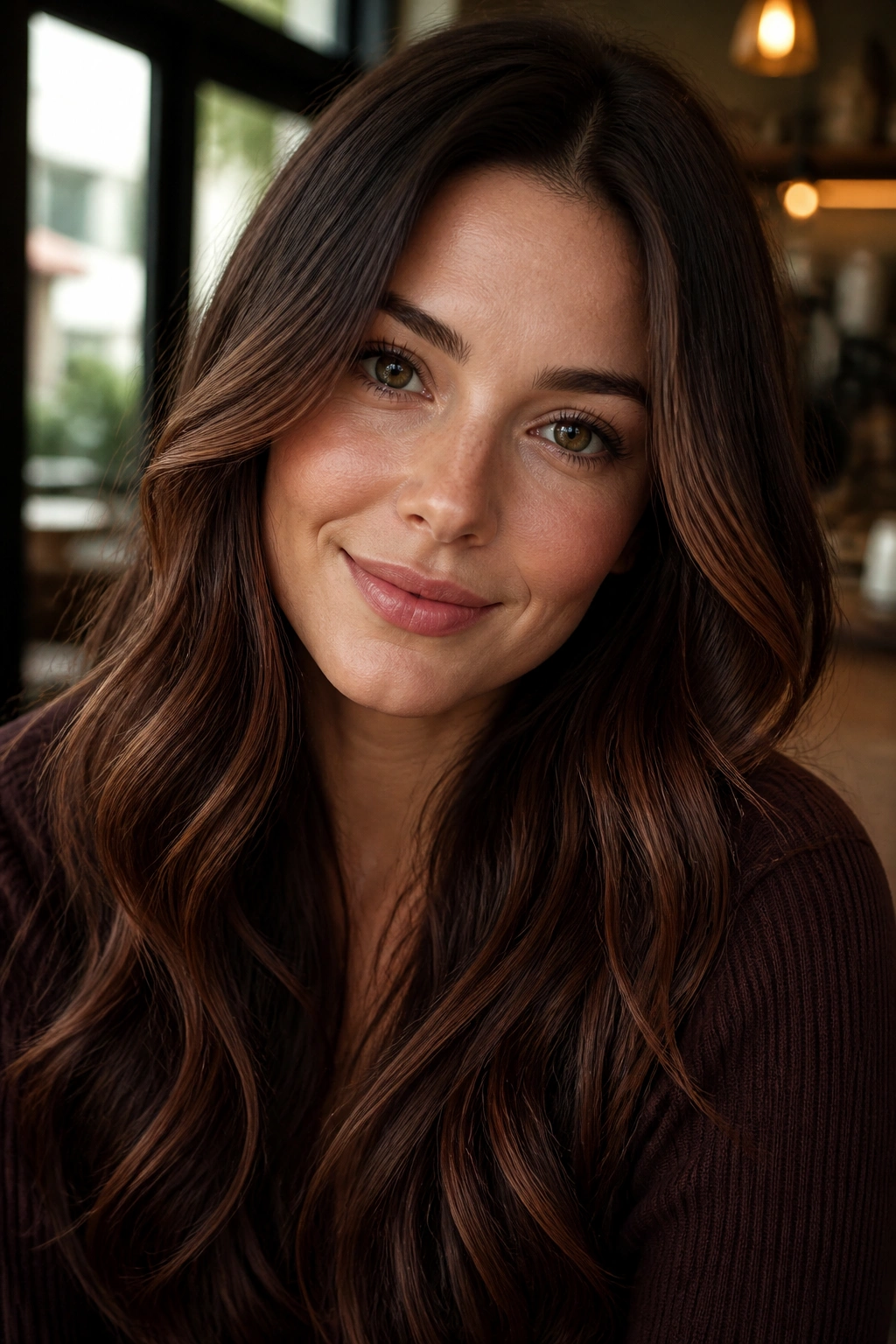
Dark walnut is for people who want their hair to look brown first, red second, and maybe only red when the light is kind. Add a cinnamon veil, and you get a muted auburn effect that feels cozy without going too warm.
The cinnamon should stay light and thin. Think of it like a glaze placed over a deep brown base, not a full all-over shift. On cool skin, that matters. Too much cinnamon and the face can start to look ruddy. A veil keeps the tone in check.
Best Hair Types
- Long layers that need movement
- Curls that can show color variation
- Medium-thick hair that can hold deep pigment
- People who like low-contrast color
This shade has a nice, lived-in quality when the hair is loose and a more formal feel when it’s styled. It does both without trying hard.
24. Mulled Wine Brown Balayage
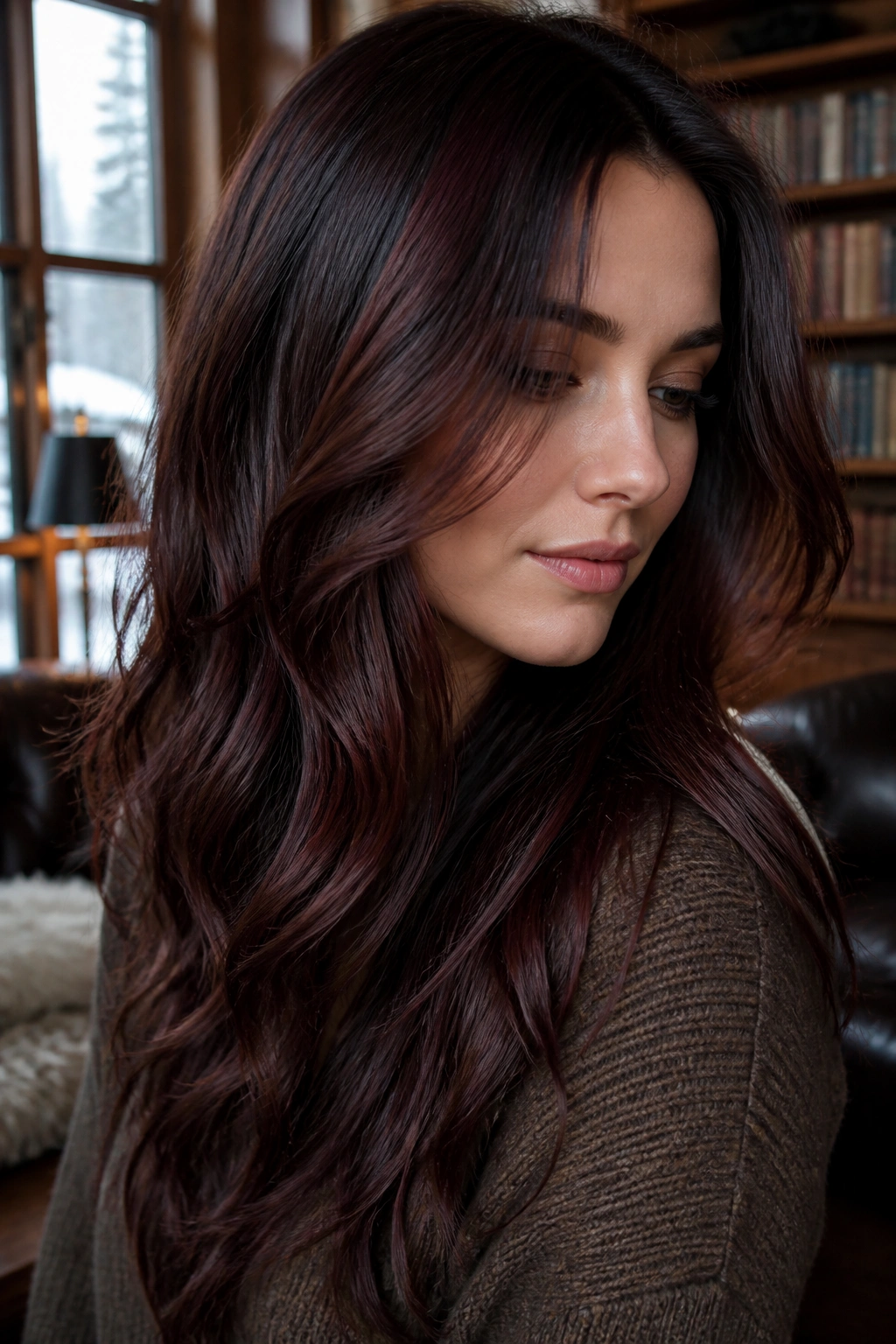
Mulled wine brown balayage is one of the more romantic options here, but it still works for cool skin because the wine note stays blue-red instead of orange. Picture brown lengths with clove and blackberry energy layered through them. That’s the vibe.
The balayage part keeps it soft. Instead of a block of red, you get scattered warmth from mid-lengths to ends. That helps the color feel airy, even when the base is deep. It’s especially nice on layered cuts because the movement breaks the shade into pieces.
I also like this color on winter-dark clothing, though I’m not going to pretend that’s the main reason to choose it. The real reason is that it gives brunette hair a little more mood. And some people want exactly that.
It feels a little glamorous. Not fussy. There’s a difference.
25. Soft Auburn Brunette Ribbons for Cool Skin Tones
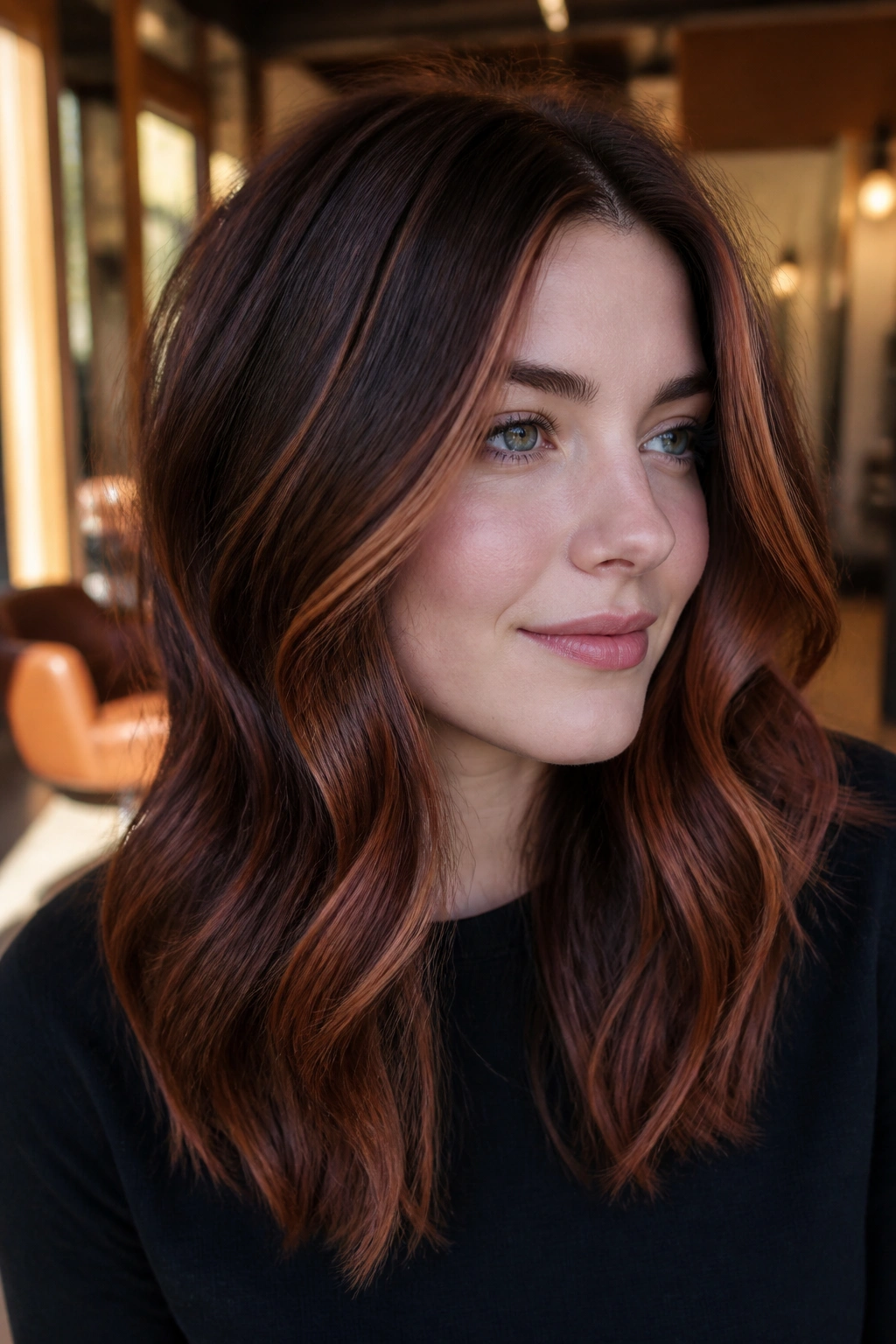
If you cannot choose one red-brown shade, don’t. Ask for soft auburn brunette ribbons built into your natural brown base. That gives you room to mix tones — a deeper brown underneath, a red-brown midtone through the lengths, and a few brighter pieces near the front if your face needs more light.
This is the safest way to wear auburn on cool skin when you’re nervous about warmth. The ribbons can stay narrow and blended, which keeps the color from reading striped. It also means the shade will grow out in a more forgiving way than a full red-brown all-over color.
A good formula here usually leans on three close tones instead of one loud one. That’s the part I’d remember. When the shades are close enough to feel natural, the hair looks thicker and the color looks more expensive. If the contrast gets too high, the magic disappears.
Bring photos. Bring two or three if you can. One for the base, one for the red-brown depth, and one for placement around the face. That’s usually enough to keep the conversation with your colorist honest, and honesty is what makes auburn work on cool skin in the first place.
