



Big box braid hairstyles for Black women have a rare kind of range. They can look neat and polished, but they can also feel playful, dramatic, soft, or sharp depending on how the parts are drawn and where the length falls. That’s part of the appeal. One set of braids can carry you through work, weekends, weddings, school runs, and those days when you want your hair to do the talking for you.
The trick is not just getting braids. It’s getting the right kind of braids for your head shape, your routine, and your patience level. A style that looks gorgeous on someone else can feel too heavy at the hairline, too long in the car seat, or too busy for your wardrobe. Size matters here. So does parting. So does whether you want braids that swing, sit flat, or pull back cleanly without a fight.
If you’ve ever sat in a chair for hours and left with braids that looked good but felt awkward by day three, you already know the difference between a pretty idea and a real hairstyle. The styles below cover the full spread: classic, low-maintenance, dressy, playful, and a few that bring in color or accessories without turning the look into a costume.
1. Waist-Length Classic Big Box Braids
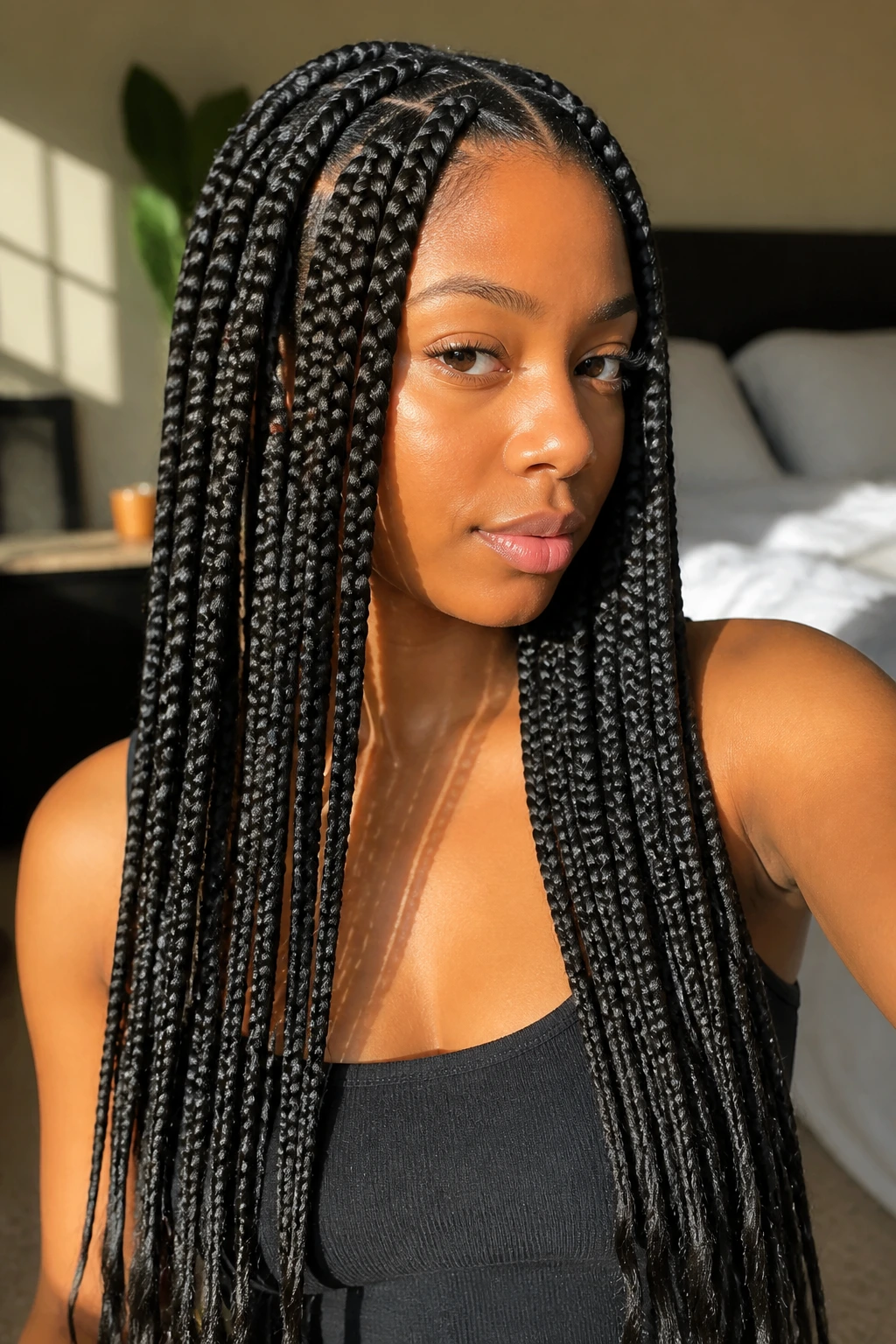
Waist-length braids are the starting point for a reason. They give you that full, flowing look people think of first when they picture big box braids, and they do it without needing a lot of extra styling. The length creates movement, the larger sections keep the style bold, and the shape works with most face shapes because the hair falls in a straight, clean line.
What makes this version work is the balance. The braids are big enough to show off the parting, but not so huge that they feel clunky. If you’re asking a braider for this look, say you want the sections consistent from front to back and the ends trimmed neatly so the line falls in a smooth curtain. It’s a straightforward style, but it still looks expensive when the parts are clean.
2. Shoulder-Grazing Big Box Braid Bob
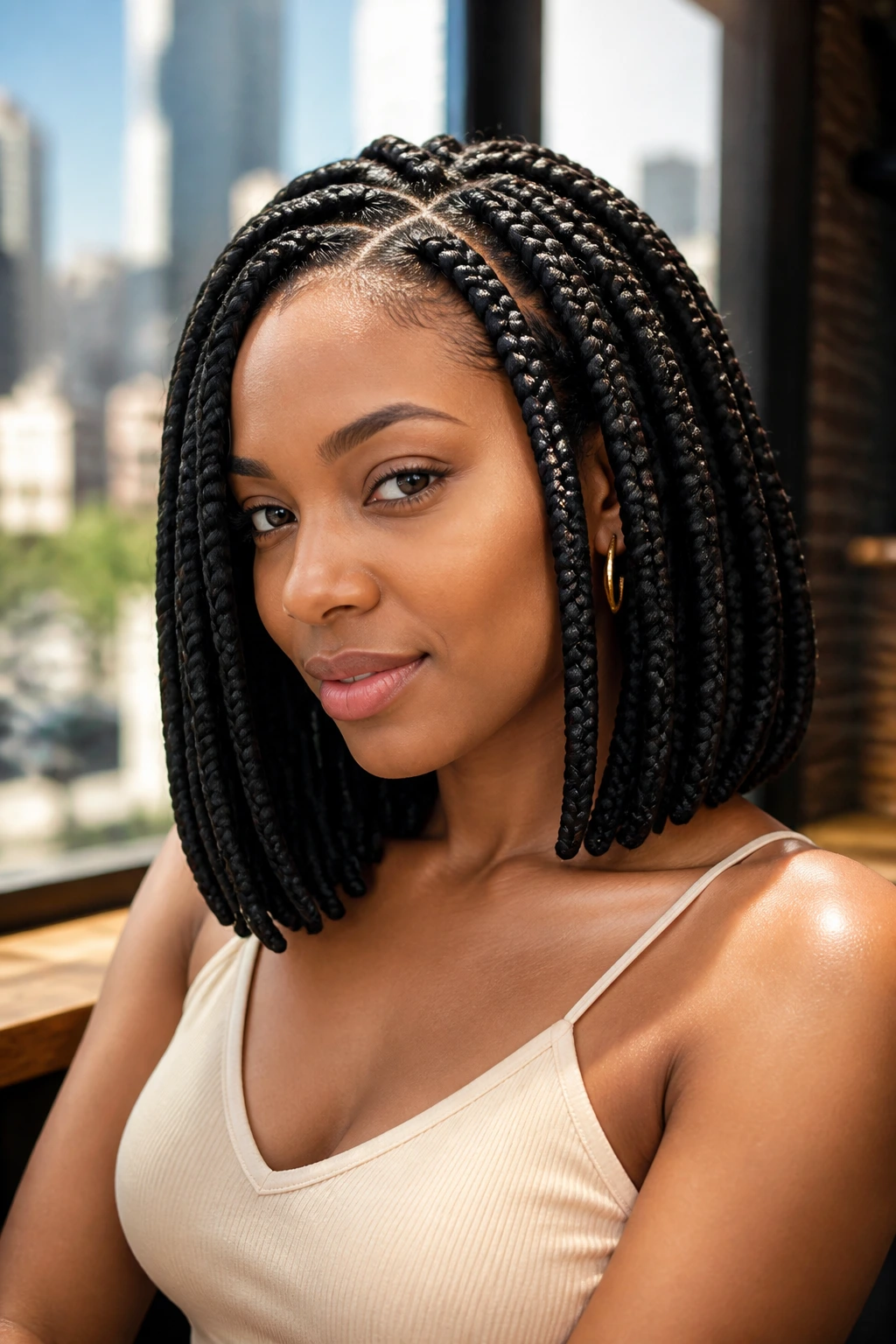
Why do people keep coming back to the bob? Because it takes the weight off your neck and still gives you that box braid look. A shoulder-grazing cut is especially nice if you wear braids often and want something that feels easier to sleep in, wash, and swing around without a ton of fuss.
Why the Bob Works
The shorter length changes the whole mood. It feels lighter, reads a little sharper, and doesn’t compete with earrings, makeup, or a strong lip. It also tends to sit better under coats, scarves, and seatbelts, which matters more than people admit.
Best For
- Hairlines that do better with less pull
- People who want faster install time
- Anyone who likes a clean neckline
- Braids that still look neat after a long day
My take: a box braid bob is one of the smartest choices if you want style without carrying extra length around all day.
3. Deep Side-Part Big Box Braids
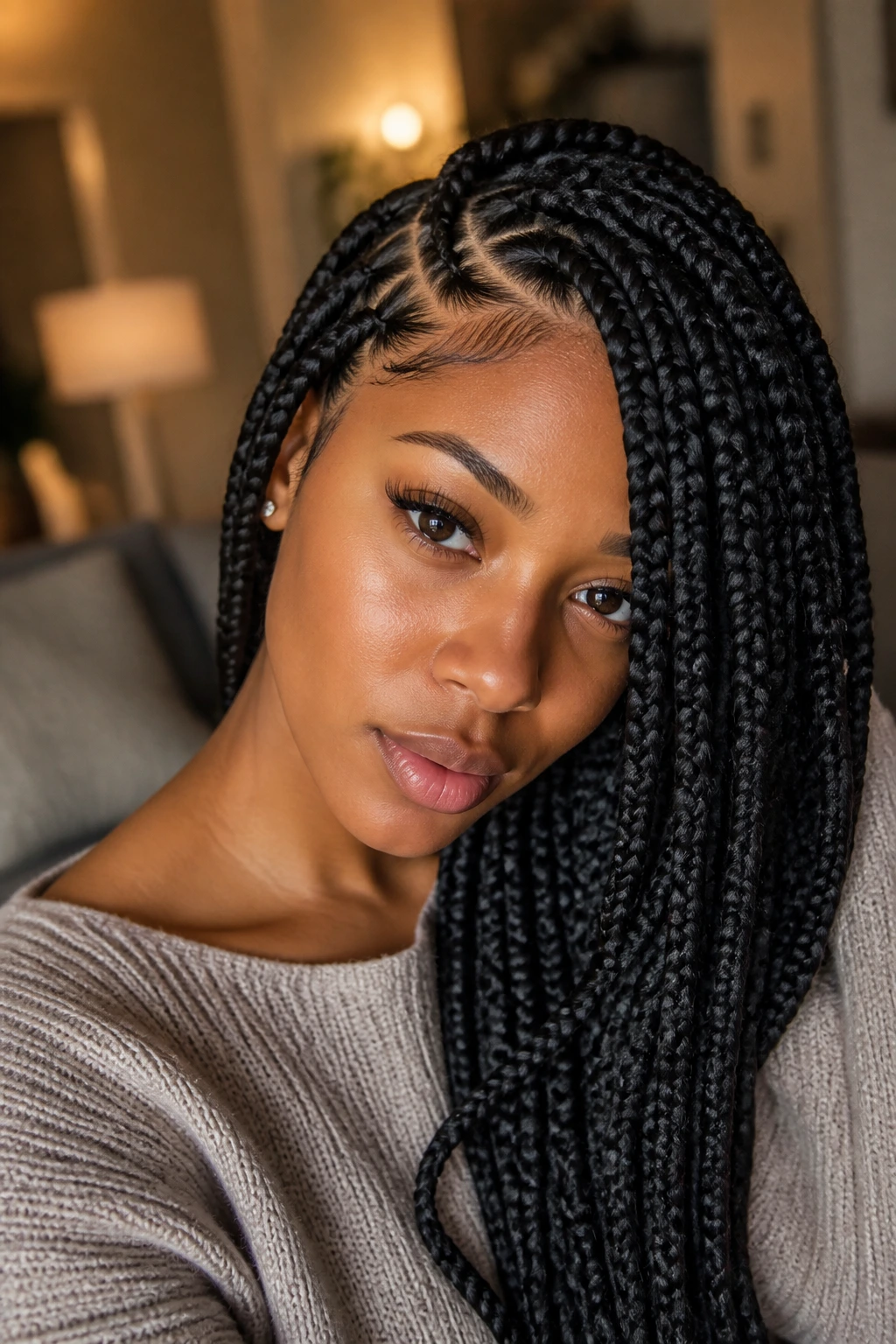
A deep side part changes the whole face. It softens a strong jawline, gives the braids a little drama, and makes the style look like it was thought through instead of tossed together. The part itself should be crisp and clean, because a deep side part only works when the line is confident.
This style looks especially good when the braids are all falling in one direction. You get that sweep of hair across the forehead and cheek, which feels polished without trying too hard. If you like wearing hoops or statement makeup, this is an easy match. The hairstyle does a lot of the framing for you.
4. Clean Middle-Part Big Box Braids
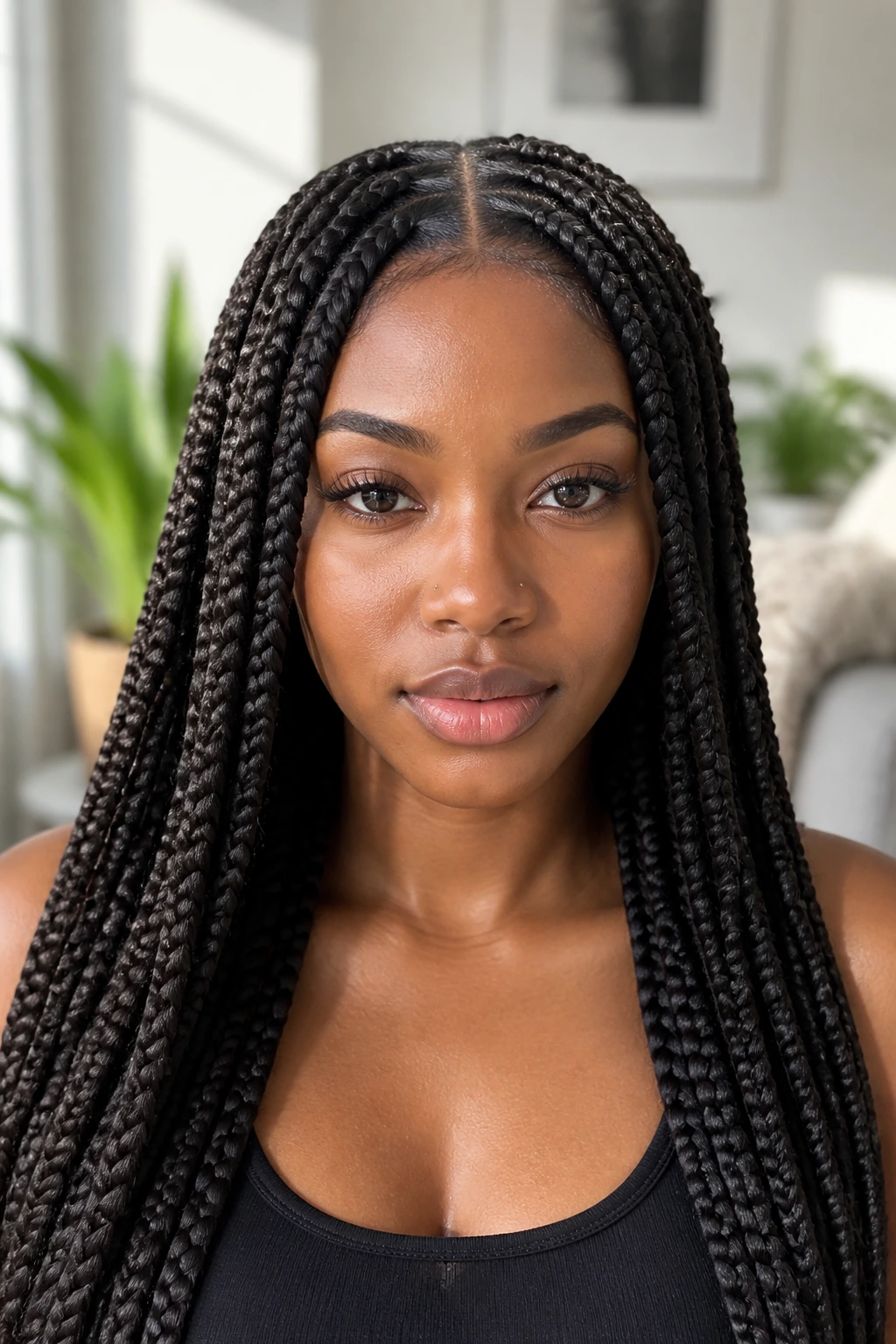
A middle part is the no-nonsense choice. It’s symmetrical, neat, and very good at showing off the face instead of hiding it. If your braider parts carefully and keeps the two sides balanced, the result looks calm and pulled together in a way that never really goes out of style.
The middle part also makes braids easier to split into half-up styles later. That sounds small, but it matters. If you know you’ll want ponytails, buns, or scarf looks during the week, this parting pattern gives you more options. The best versions have a straight line from the hairline back, no wobbles, no guesswork.
5. Triangle-Part Big Box Braids
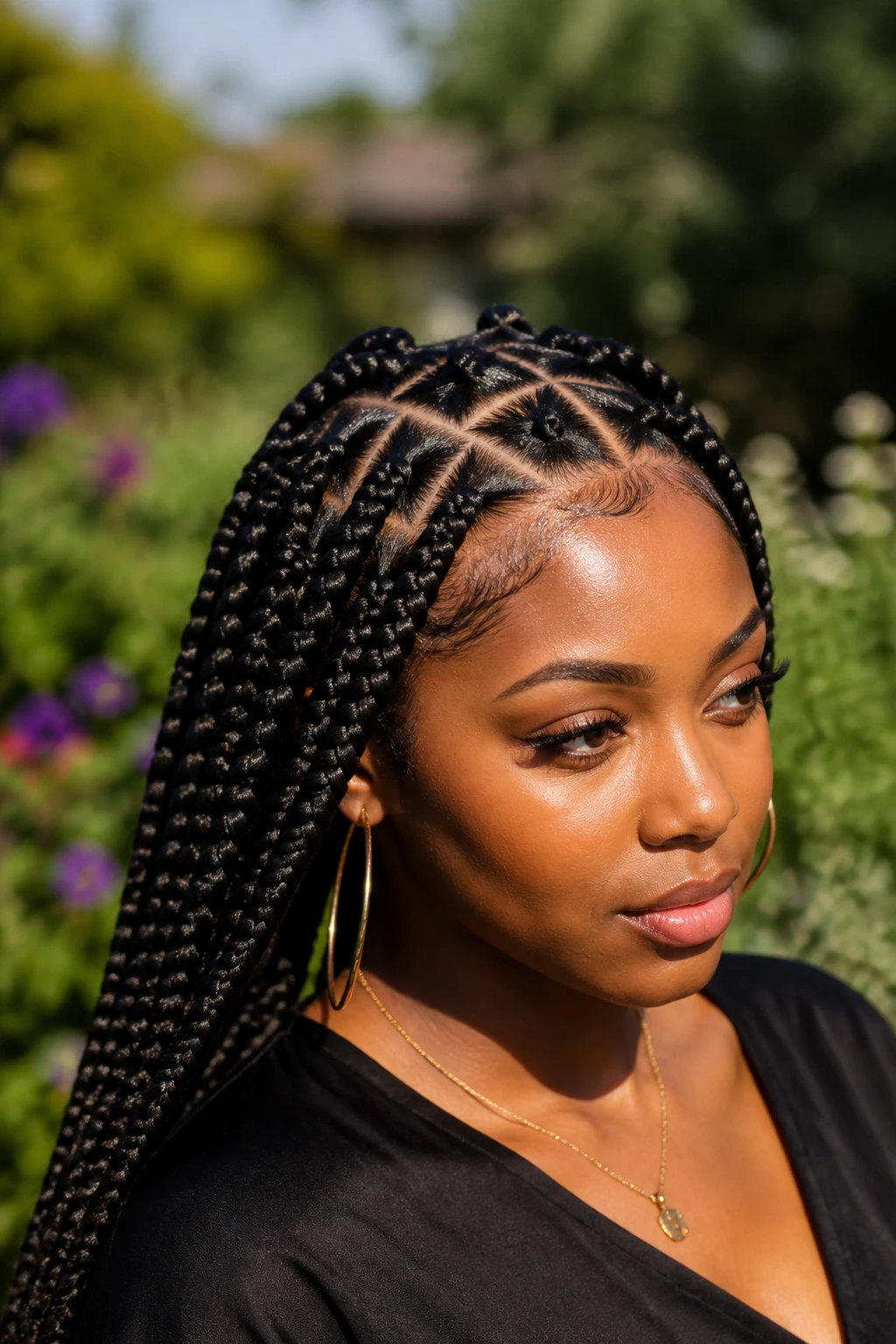
Triangle parts are for people who want the braids themselves to have texture before a single braid is even finished. The triangle shape adds visual interest right at the scalp, and it breaks up the usual square grid in a way that feels intentional. It’s a small detail, but it changes the whole read of the style.
What to Ask For
Tell your braider you want the triangles to stay even in size, especially around the crown. Uneven triangles can make the front look busy. Clean triangle sections make the style sharp, and they photograph well from every angle. That matters if you wear your braids loose a lot.
Quick note: triangle parts are one of the easiest ways to make big box braids look more detailed without changing the braid size at all.
6. Zigzag-Part Big Box Braids
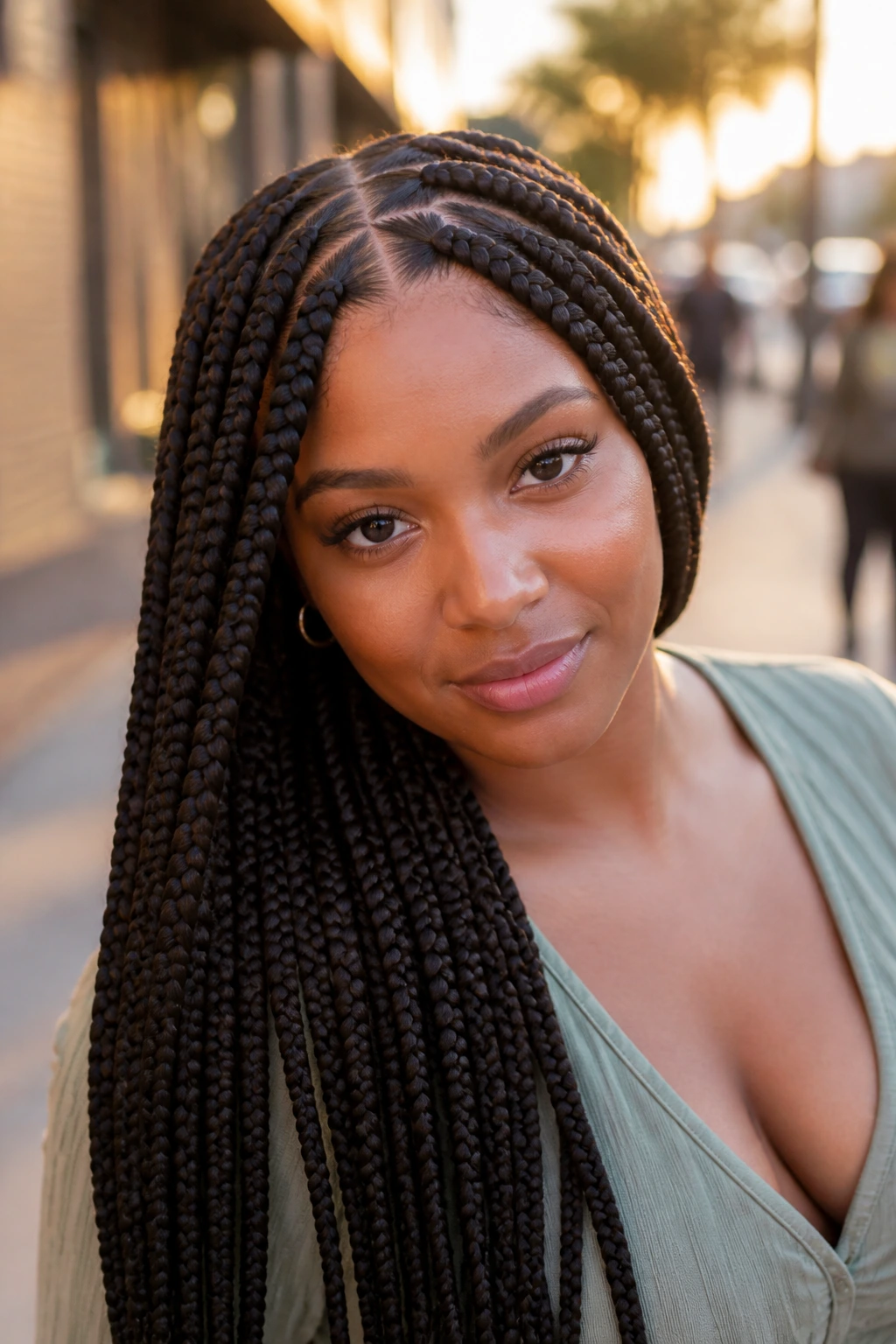
Zigzag parts have a little attitude. They take the familiar box braid shape and give it a twist at the scalp, which is enough to make the whole style feel more playful. You do not need bright color or beads to make them interesting. The parting does the work.
This look is especially nice when you want something that feels creative but still wearable every day. It works on long braids, bob-length braids, and everything in between. The one thing I’d watch is neatness around the zigzags themselves. If the lines are sloppy, the whole style loses its punch. Clean sectioning is the whole point here.
7. Half-Up, Half-Down Big Box Braids
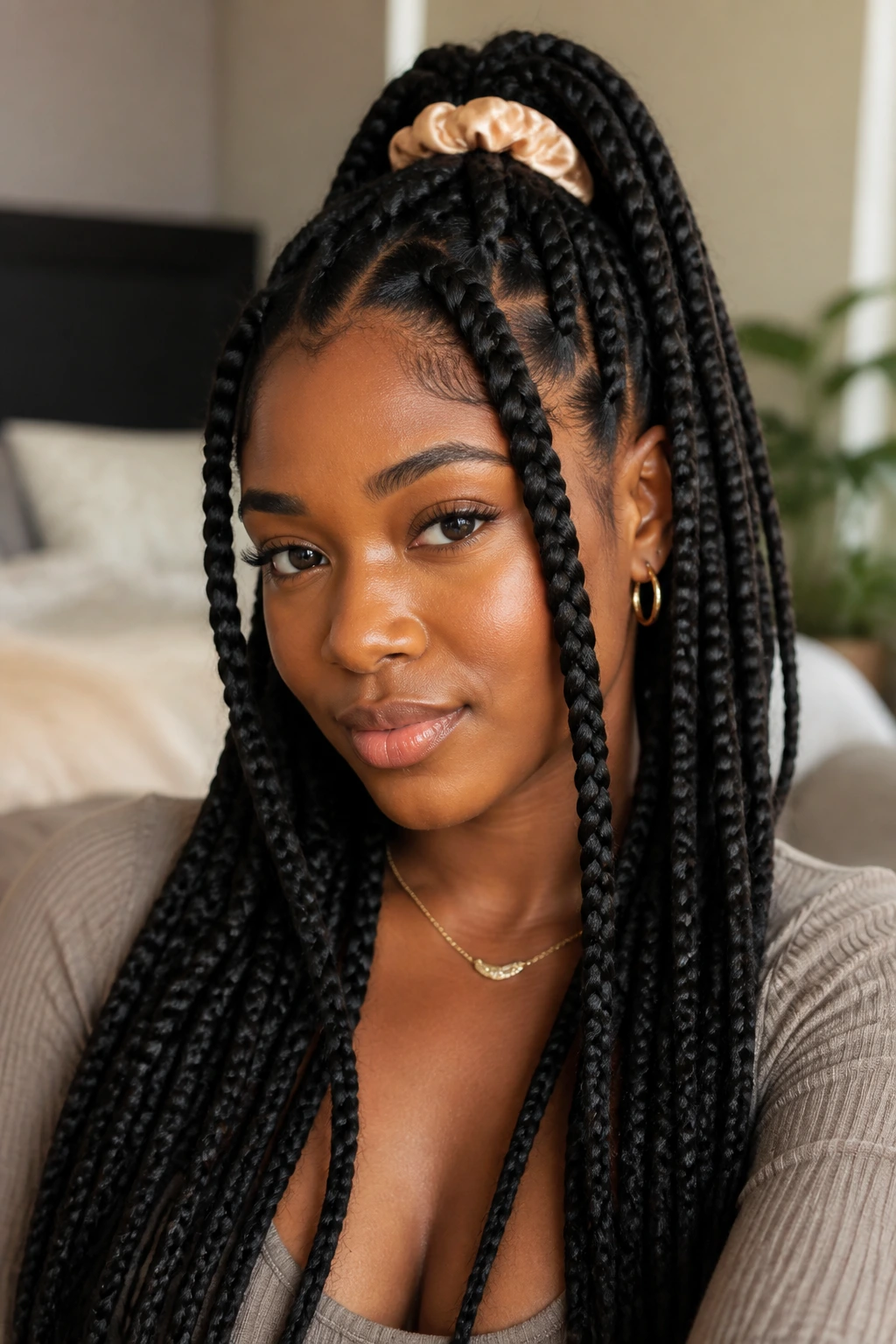
Half-up, half-down braids are the answer when you want your hair out of your face but still want the length showing. That’s the charm. The top section lifts the style enough to keep it lively, while the rest hangs loose and gives you movement.
A good half-up style works best when the top section is secured with something that won’t snag, like a strong silk scrunchie or a braided wrap. Pull the top too tight and you’ll feel it by the end of the day. Keep it firm, not harsh. You want height, not tension.
8. High Ponytail Big Box Braids
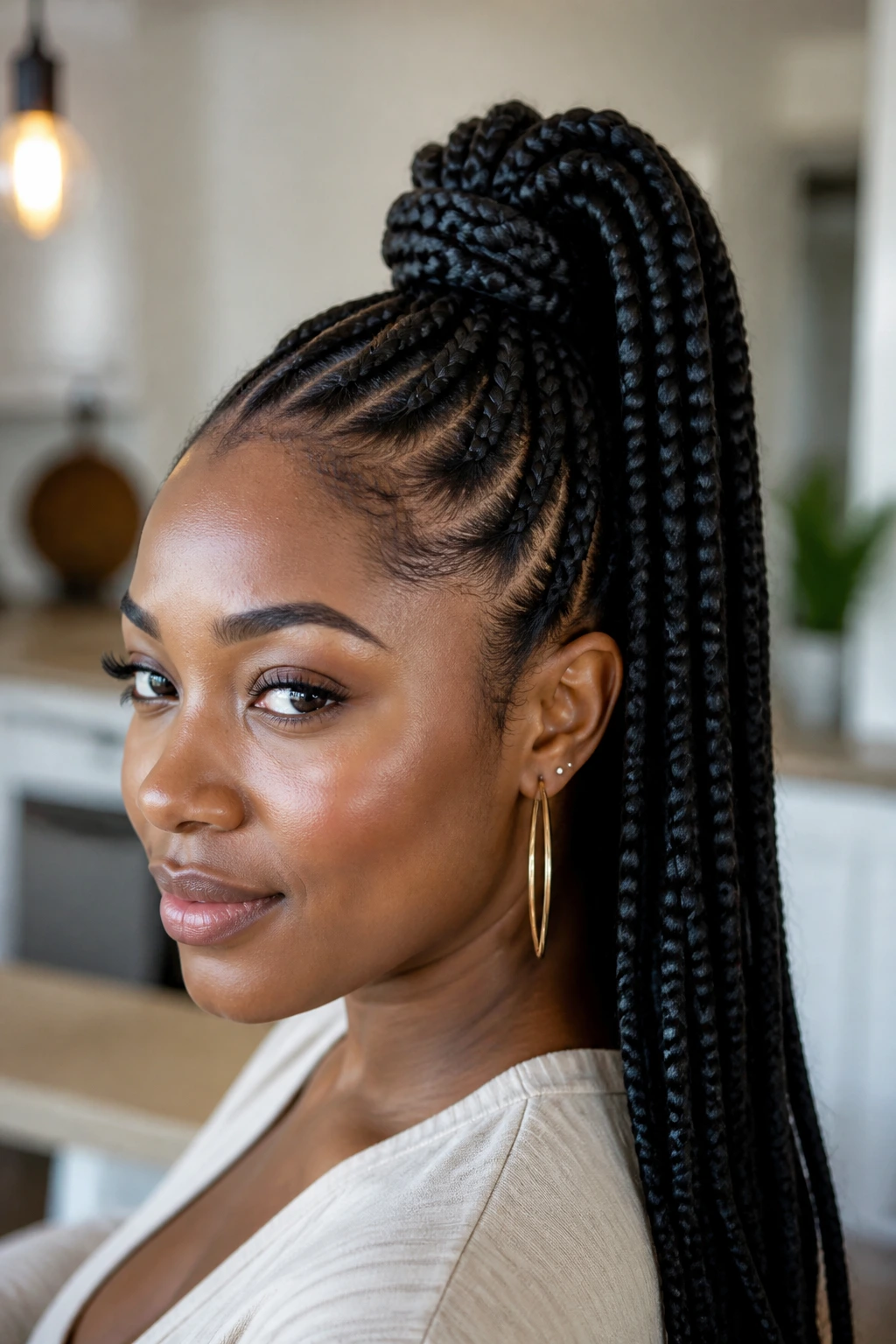
A high ponytail makes big braids look energetic fast. It lifts the face, opens the neckline, and gives the style a bit of bounce that you can feel when you walk. It’s also one of the easiest ways to turn everyday braids into something dressier without redoing the whole head.
The key is the base. A ponytail this size needs a strong tie and sometimes a wrap-around braid to hide the elastic. If the ponytail sits too low, the style loses its shape. Too tight, and the front starts complaining. Get the balance right and you’ve got one of the cleanest looks in the whole bunch.
9. Low Ponytail Big Box Braids
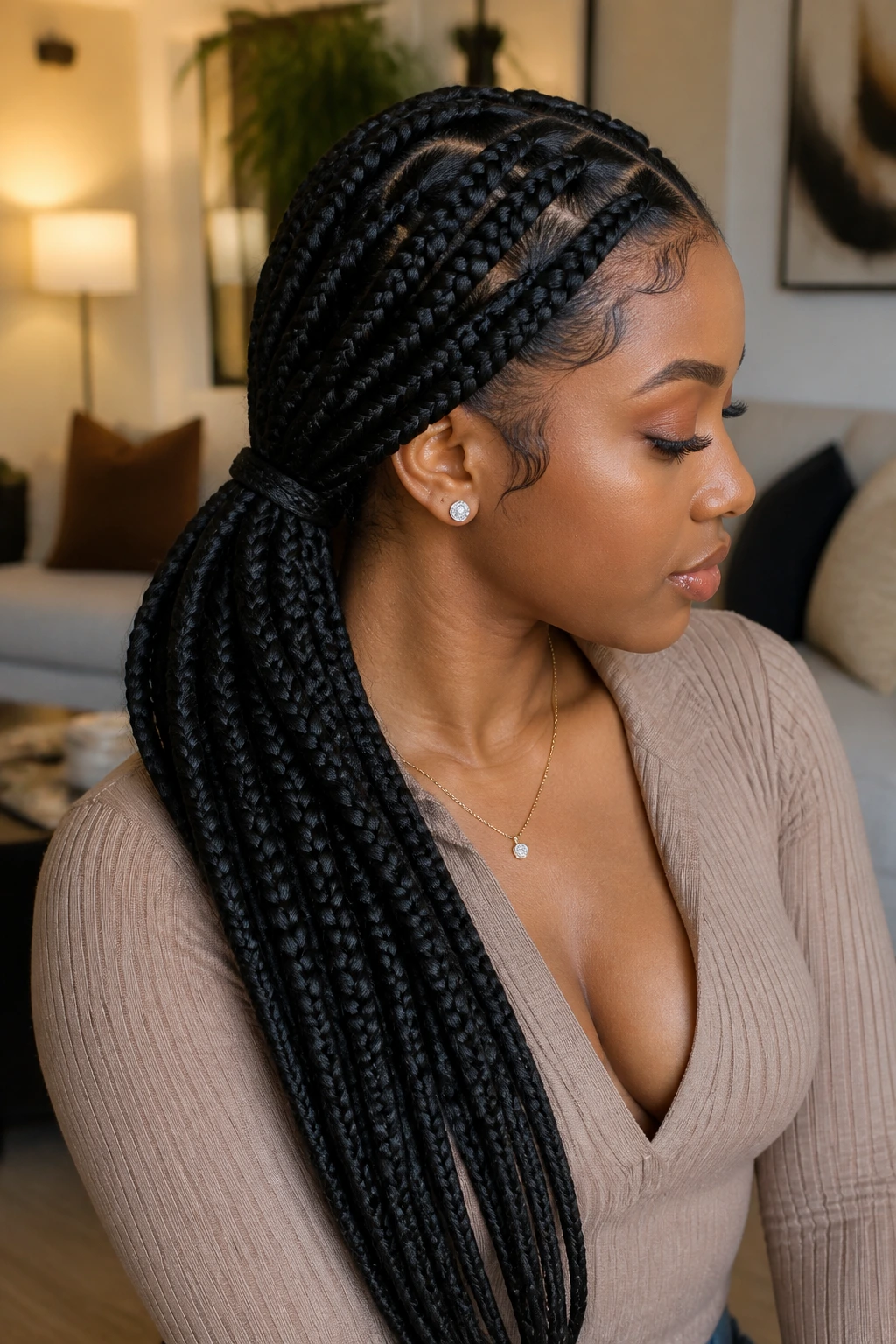
Low ponytails are quieter, and I mean that in the best way. They sit close to the neck, feel less dramatic than a high pony, and usually put less strain on the front of the head. If your scalp gets tired quickly, this is a safer style than hauling everything up high.
The shape can be sleek or loose. I like it when the braids are gathered just above the nape and left to fall over one shoulder or straight down the back. It reads neat either way. A low ponytail also works well on days when you want your braids controlled, but you still want them visible.
10. High Top-Knot Big Box Braids
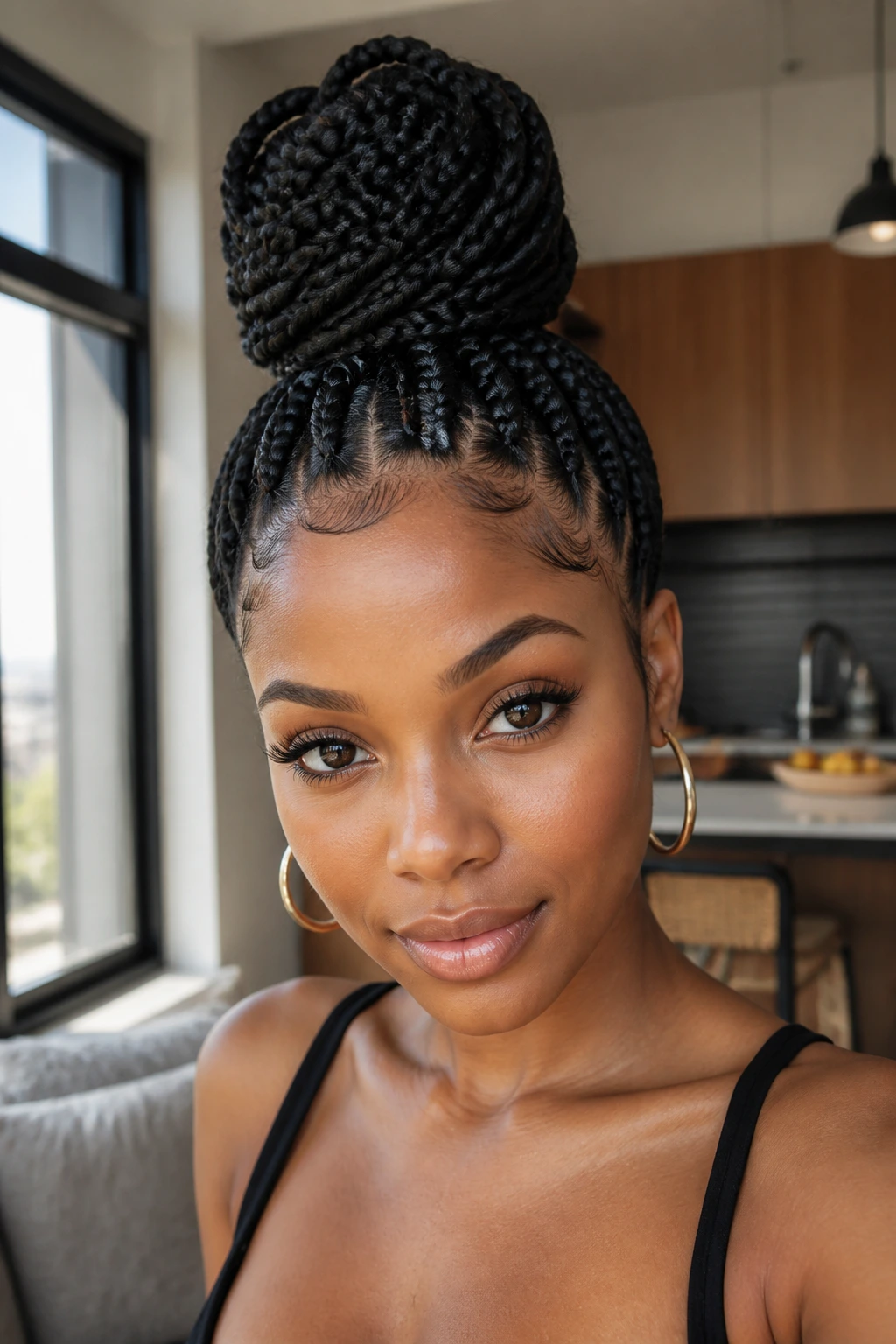
A top knot gives you instant height. It’s the kind of style that looks like you meant business even if you threw on a T-shirt and sneakers. Big braids piled on top of the head can look bold and elegant at the same time, which is not a combination every hairstyle pulls off.
How to Keep It from Sagging
Use a strong holder at the base, then pin the knot with enough support that it doesn’t tip backward. Heavy braids can drag a flimsy bun down in under an hour, and nobody needs that. If the braids are extra long, twist the tail around itself before pinning. It helps the bun stay in place.
11. Low Chignon Big Box Braids
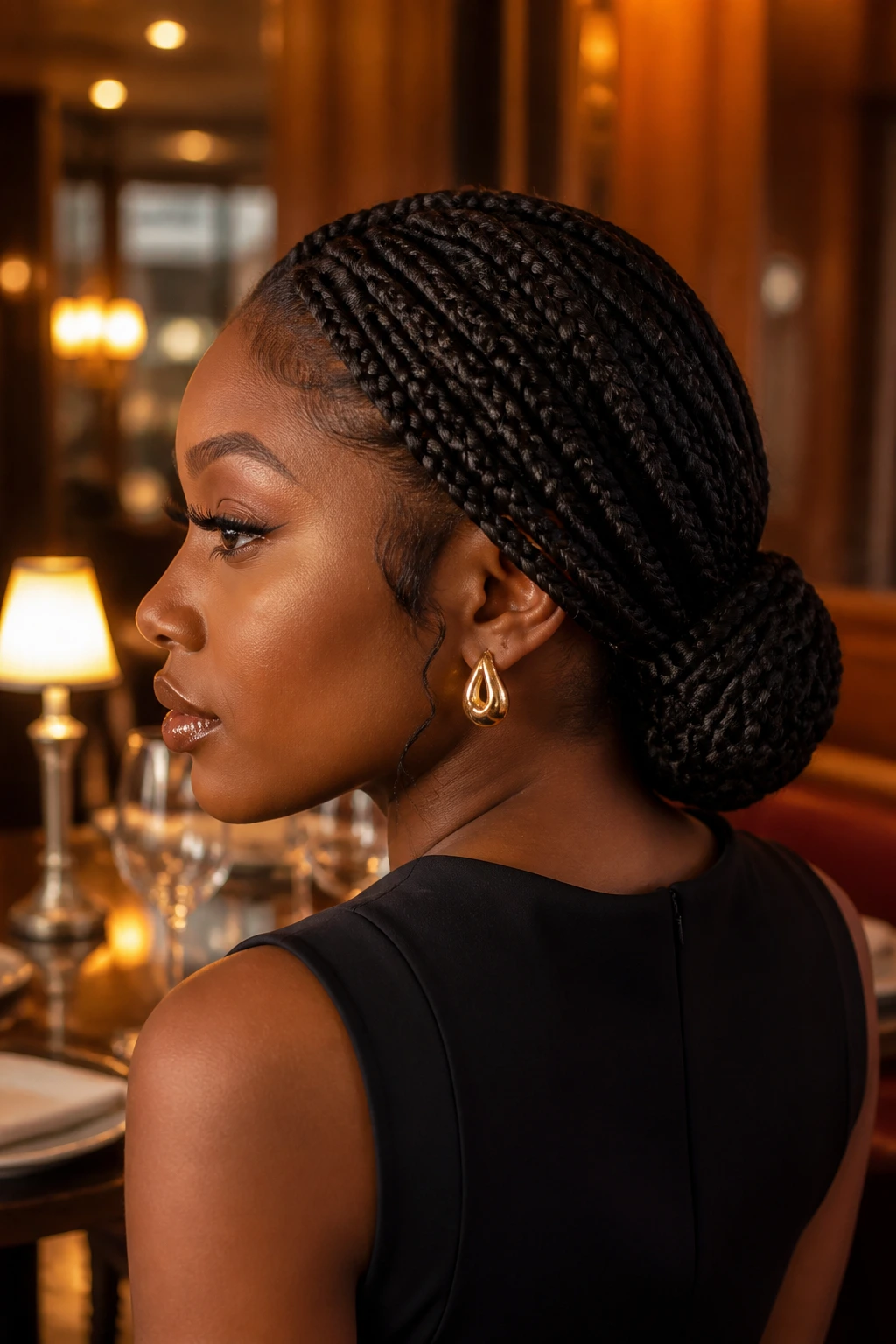
A low chignon is the grown-up answer to a bun. It sits near the nape, feels smooth, and works beautifully when you want the braids off your shoulders but still neatly arranged. There’s a softness to it that a high bun doesn’t have.
This style is especially good for dinners, events, or any day when you want your braids to look finished without looking stiff. Tuck the ends in carefully so they don’t poke out in random spots. A few hidden pins go a long way. The final shape should feel secure, not hard.
12. Space Bun Big Box Braids
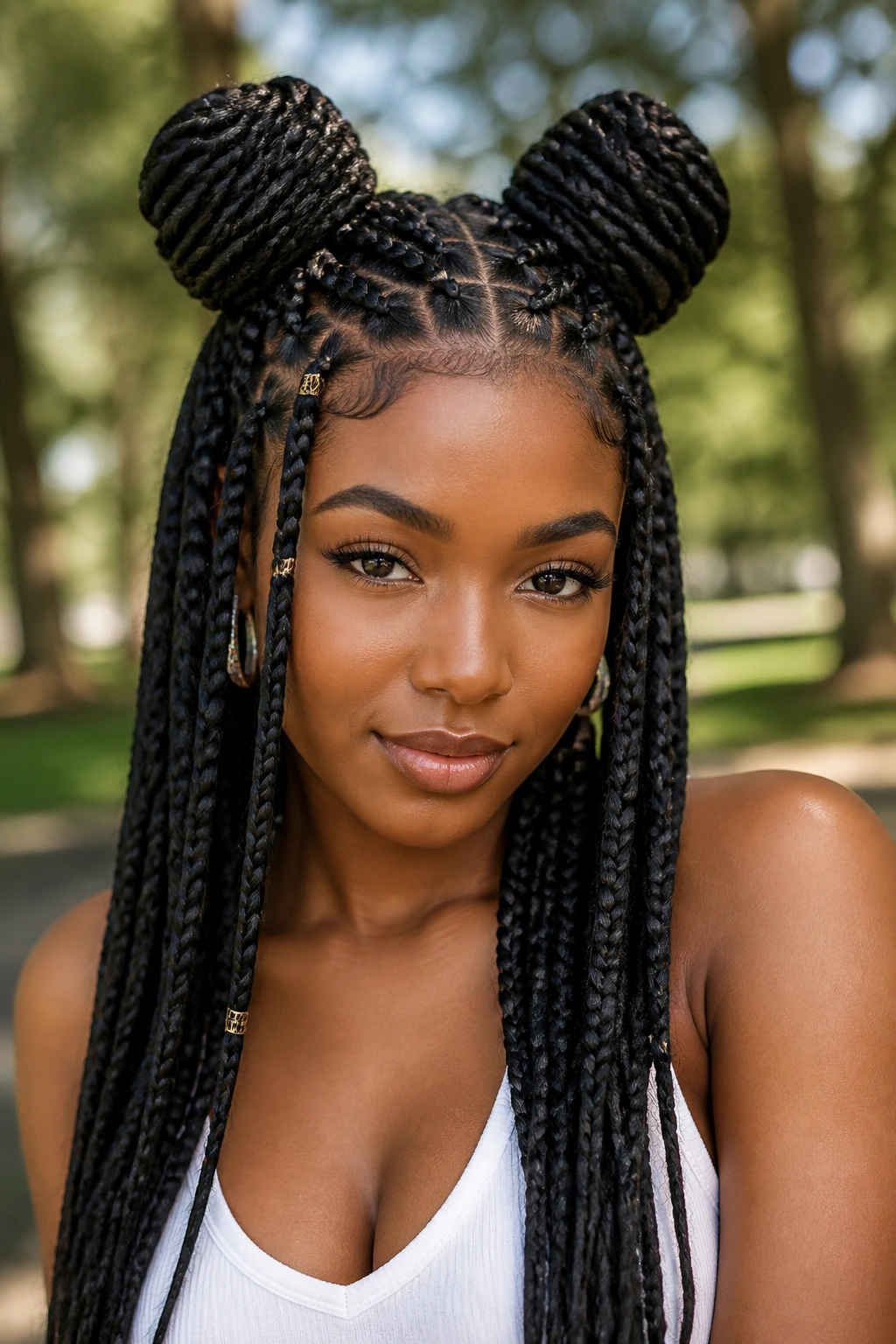
Space buns bring a little fun without wrecking the protective style. Split the braids into two sections, lift each side into a bun, and leave enough braid length hanging that the style keeps some movement. It’s playful, yes, but it can still look neat if the parts are clean.
This style works best when the buns are balanced. If one side sits higher than the other, the whole thing can start to look accidental. Keep the sections even and don’t over-tighten the roots. Space buns are cute because they look easy. If they start pulling, they lose that effect fast.
13. Braided Crown Updo
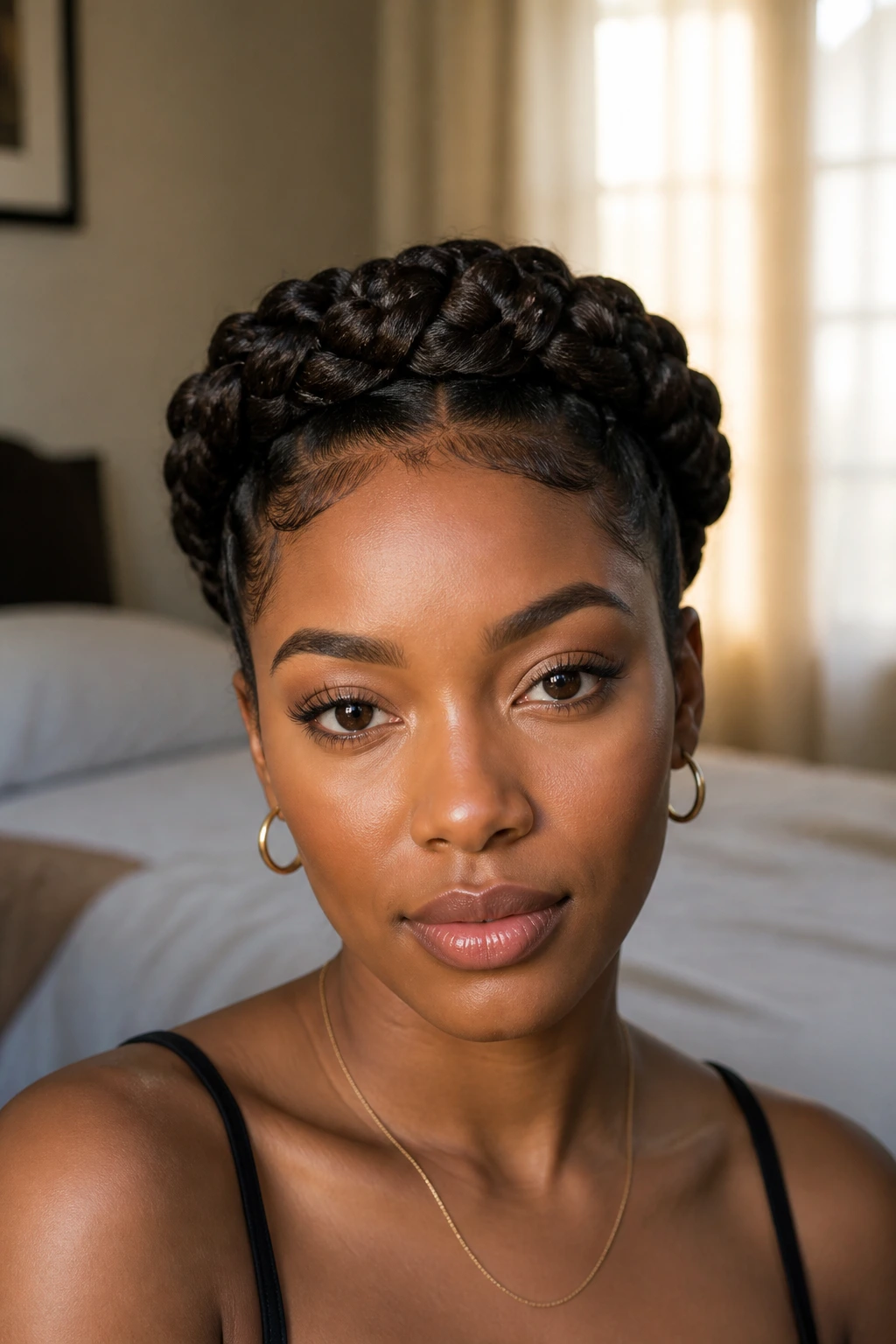
A braided crown has a soft, regal feel without being fussy. The braids get wrapped around the head like a halo, which keeps the face open and gives the whole style a graceful outline. It’s one of those looks that makes people assume you spent a lot longer getting ready than you probably did.
What I like here is the shape. It’s practical and pretty at once. It keeps braids tucked up and away, which is useful on hot days, during long events, or whenever you want the neck clear. A crown updo needs careful pinning, though. Loose pins show quickly, and they can make the back look messy.
14. Side-Swept Big Box Braids
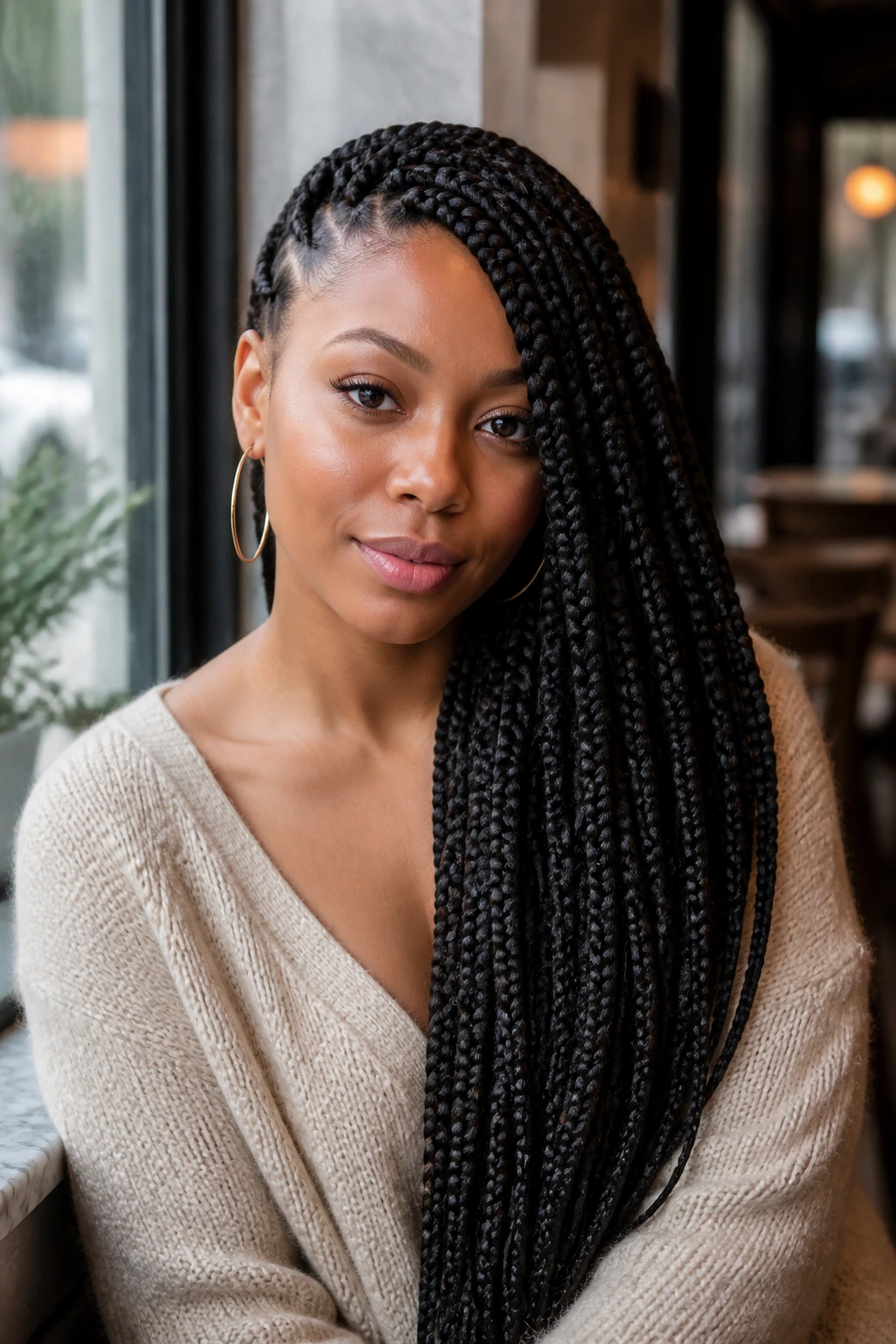
Side-swept braids feel relaxed but still put together. The whole look leans over one shoulder, which is a simple move, yet it changes the line of the body in a flattering way. It also gives you an easy spot to show off braid length, cuffs, or beads.
If you want the style to stay put, secure the back near the nape before bringing the braids forward. That small anchor point matters. Otherwise, the weight tends to drift. Side-swept braids are a nice answer when you want your hair visible, but you’re tired of it falling straight down your back all day.
15. Curly-End Big Box Braids
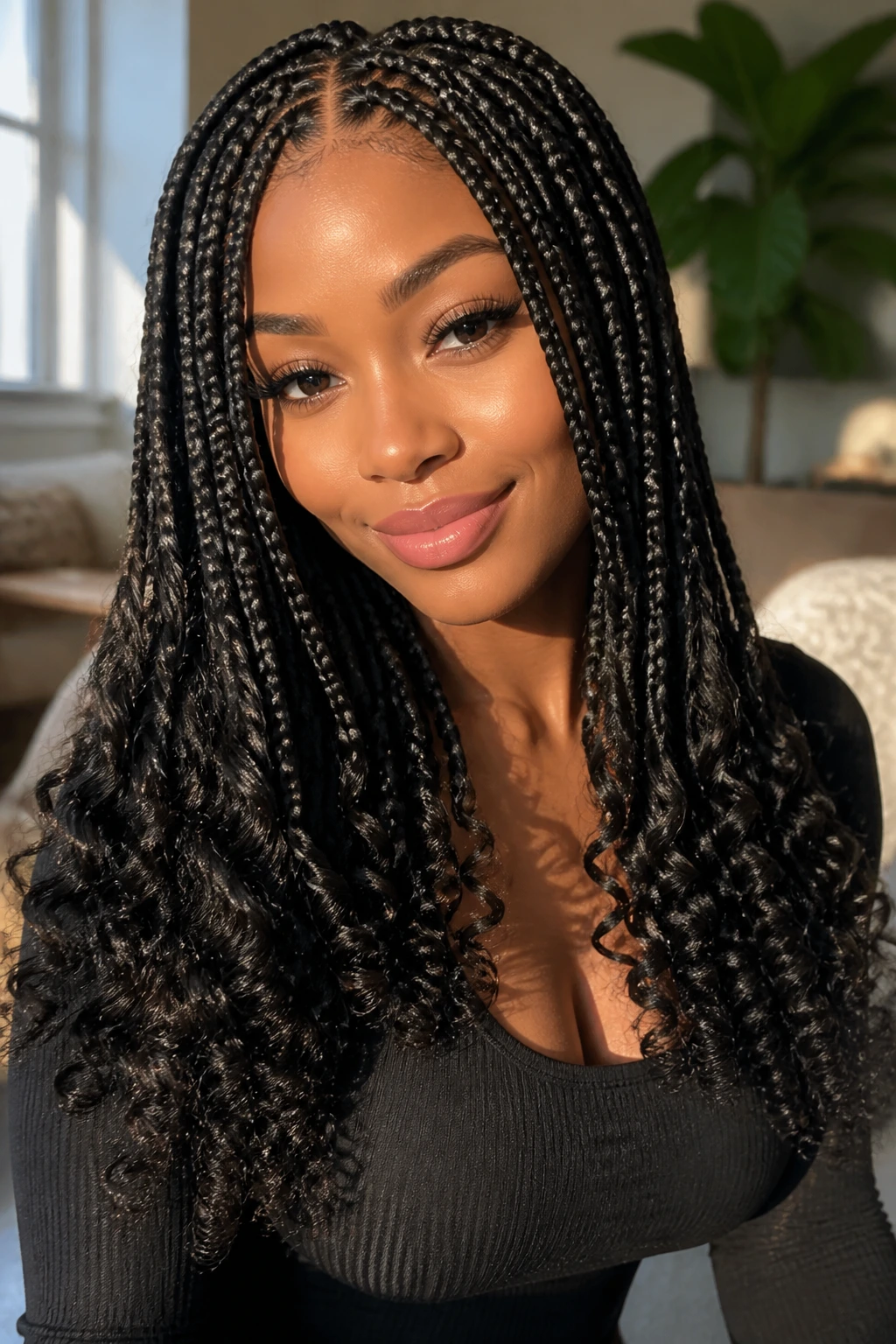
Curly ends soften the whole look. Instead of finishing in a blunt line, the braids end in loose curls or spirals, which adds movement and keeps the style from feeling too hard. The texture shift makes a big difference, especially on longer braids where the last few inches usually do the visual work.
This is one of my favorite ways to make big box braids feel lighter. The curly ends catch the eye first, then your attention travels up the braid. It’s a gentle effect. If the curls are too tight or too frizzy, the style can look busy, so it’s worth keeping the ends moisturized and wrapped at night.
16. Beaded Big Box Braids
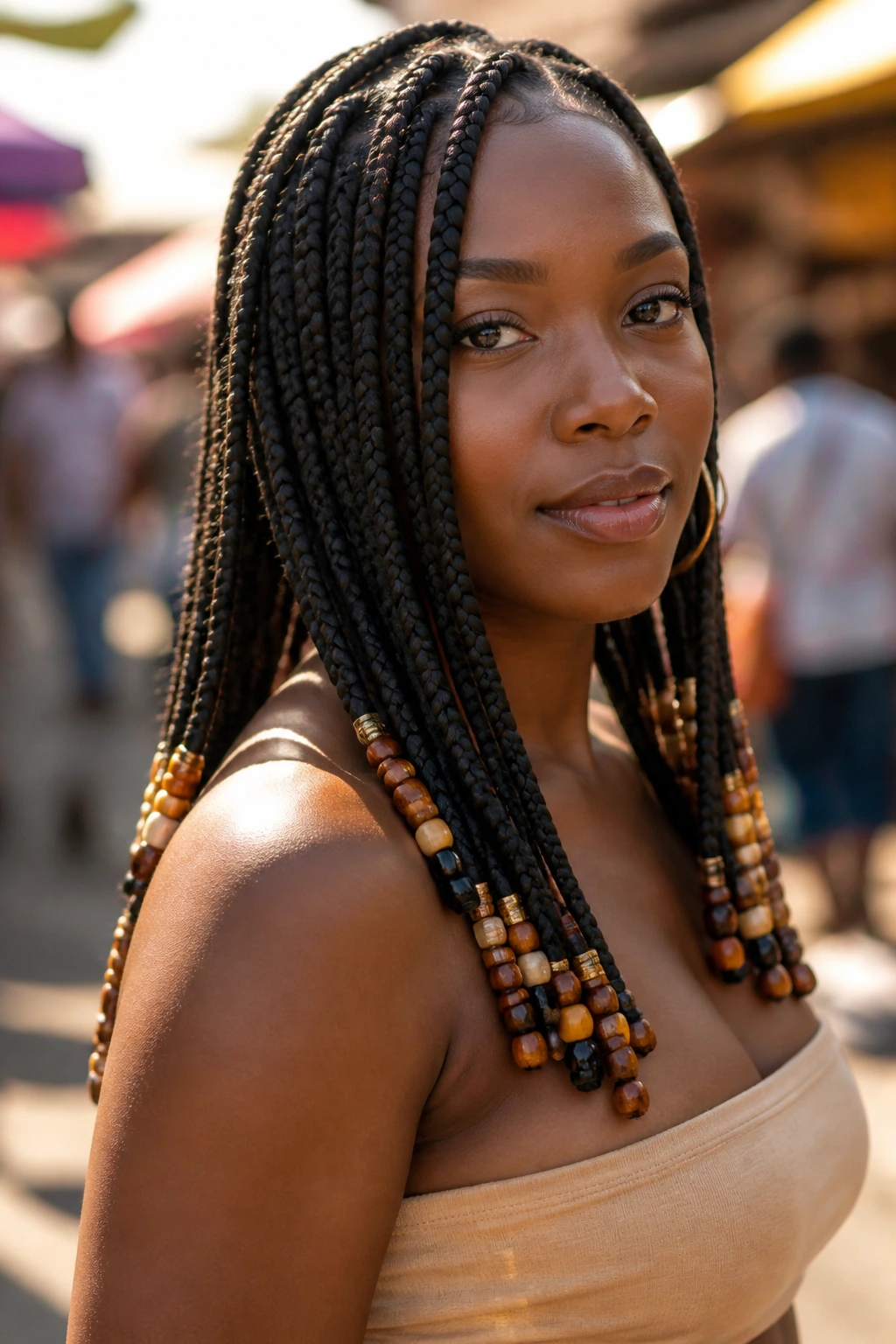
Beads give braids sound, weight, and personality. A few beads at the ends can make a style feel finished, while a fuller bead pattern adds more rhythm and movement. The trick is restraint. Too many beads in the wrong places can make the braids feel crowded.
What to Keep in Mind
- Place beads where the braid ends are strong enough to hold them.
- Mix clear, wooden, or colored beads if you want contrast.
- Keep heavier beads away from the front if your edges are delicate.
- Use a braid stopper or knot if the beads slide.
Good bead styling is about placement, not piling on every bead you own.
17. Cuffed Big Box Braids
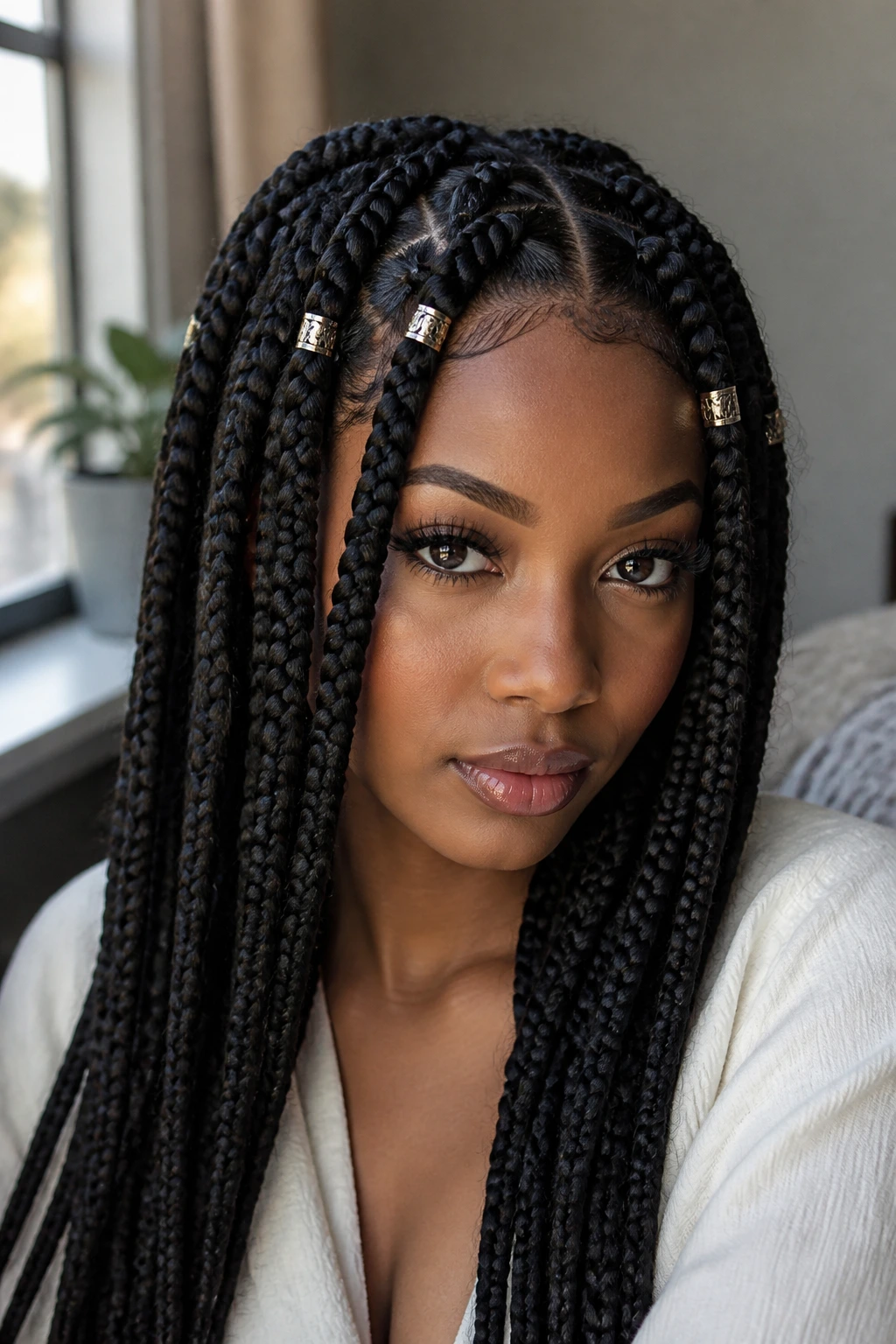
Cuffs are the quieter cousin of beads. They add shine without adding much weight, which makes them an easy choice for women who want detail but don’t want the ends to feel heavy. Gold cuffs look sharp against dark braiding hair, and silver can give the style a cooler edge.
The best part is how controlled the look feels. You can place a few cuffs near the front to frame the face, then leave the rest plain. Or put them near the ends for a clean finish. Either way, the braids keep their shape, and the accessories stay in their lane.
18. Ombre Big Box Braids
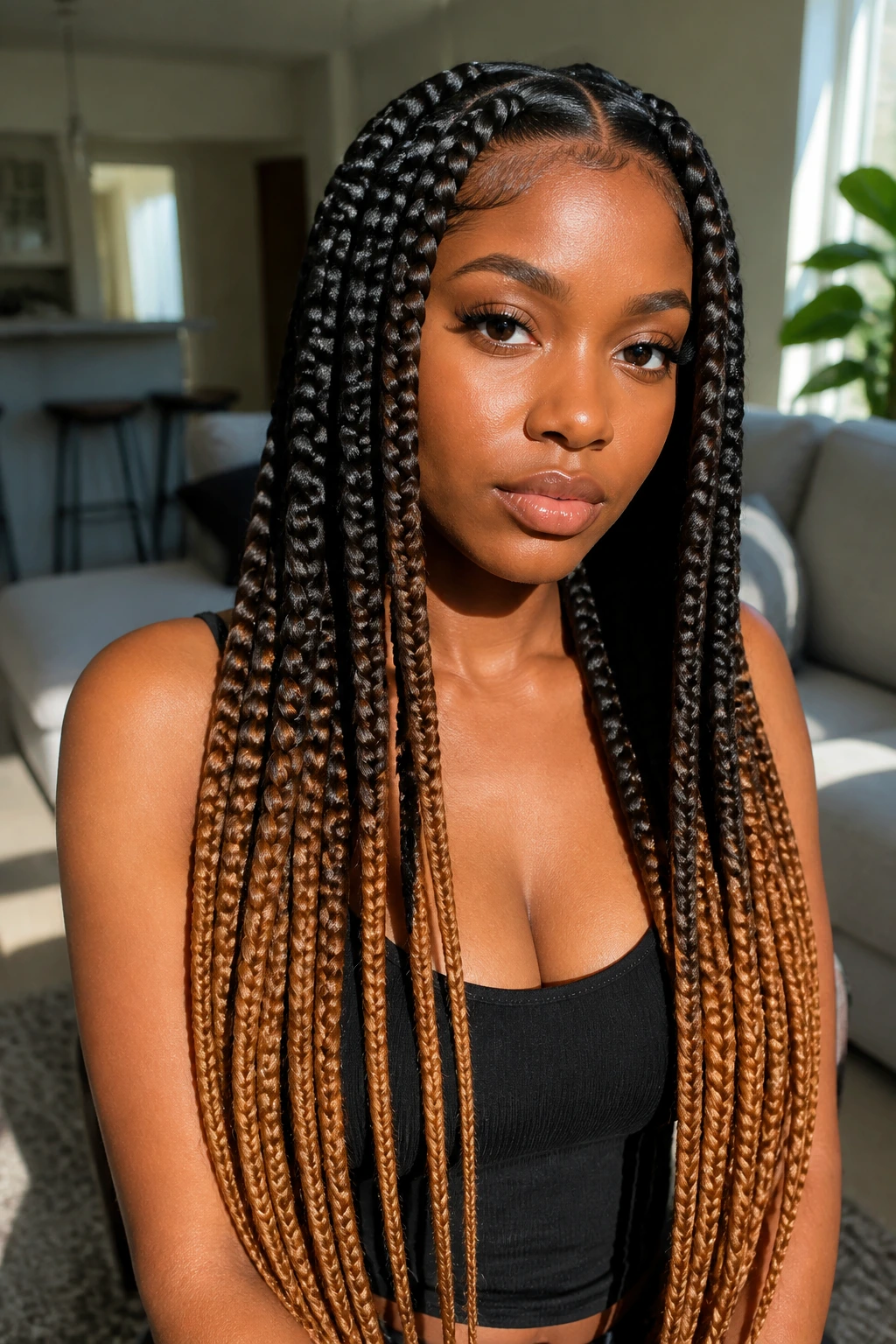
Ombre braids work because they move color gradually instead of shocking the eye all at once. A darker root fading into caramel, honey, burgundy, or honey brown gives the braids depth and makes the length easier to read. The color shift feels natural, even when it’s bold.
Why It Hits
A long braid with ombre color has more movement than a single-tone set. The eye follows the fade. That’s why this style looks especially good on waist-length or mid-back braids. If you want color but don’t want the whole head screaming for attention, ombre is the safer bet.
Pro tip: pick a fade that works with your undertone and wardrobe, not just what looks bright in the hair pack.
19. Burgundy Big Box Braids
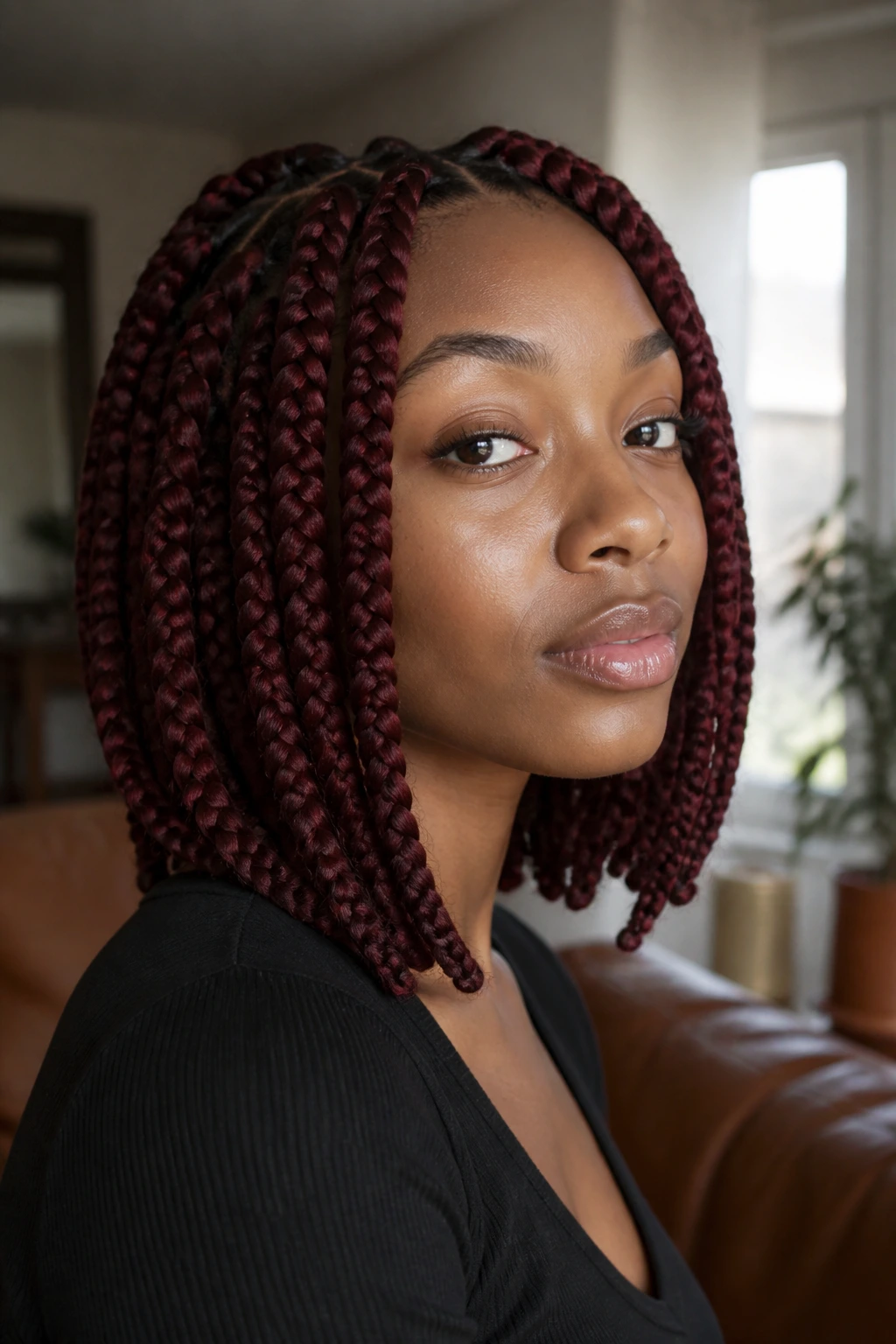
Burgundy has a deep wine tone that reads rich without being loud. Indoors it can look almost brown-red. In brighter light, the color opens up and shows more of that plum edge. On deep skin, the contrast can be lovely. On lighter skin, it can look sharp and unexpected.
This style works well when you want color with a little mood. Not neon. Not playful in a cartoon way. Just deep, warm, and a bit dramatic. Burgundy braids tend to look best when the parts are neat and the braid size stays consistent, because the color already carries enough visual weight.
20. Blonde-Tipped Big Box Braids
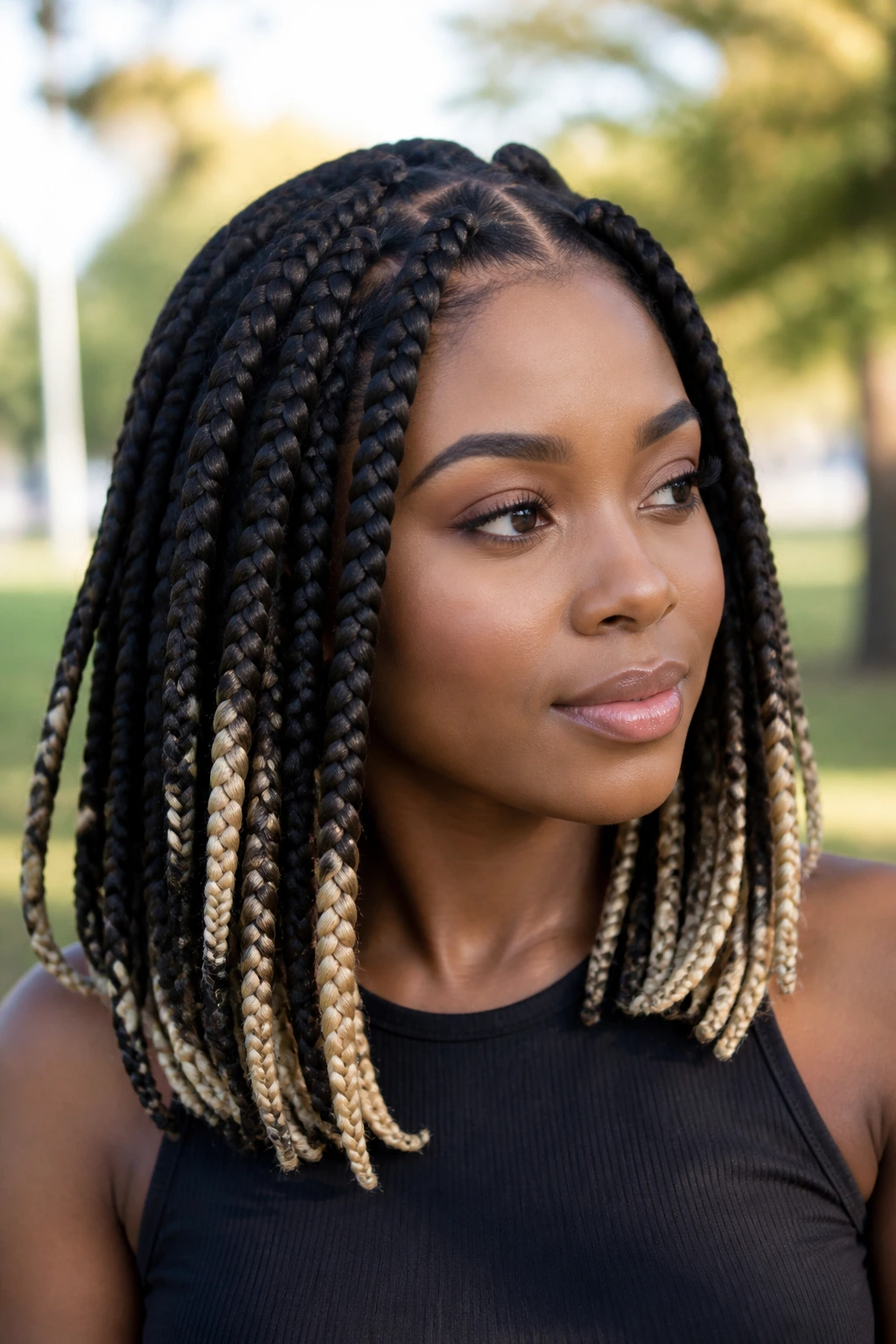
Blonde tips give you brightness without committing to a full head of light braids. The darker base keeps the style grounded, while the ends bring that sunlit look people notice right away. It’s a smart choice if you want a little edge but still want the roots to stay close to your natural hair tone.
The best blonde-tipped styles feel gradual. A harsh stop between dark and light can look busy. A soft blend works better, especially on big braids where each section is already bold. If you wear makeup often, blonde tips can make the face pop a little more around the eyes and cheeks.
21. Honey Blonde Big Box Braids
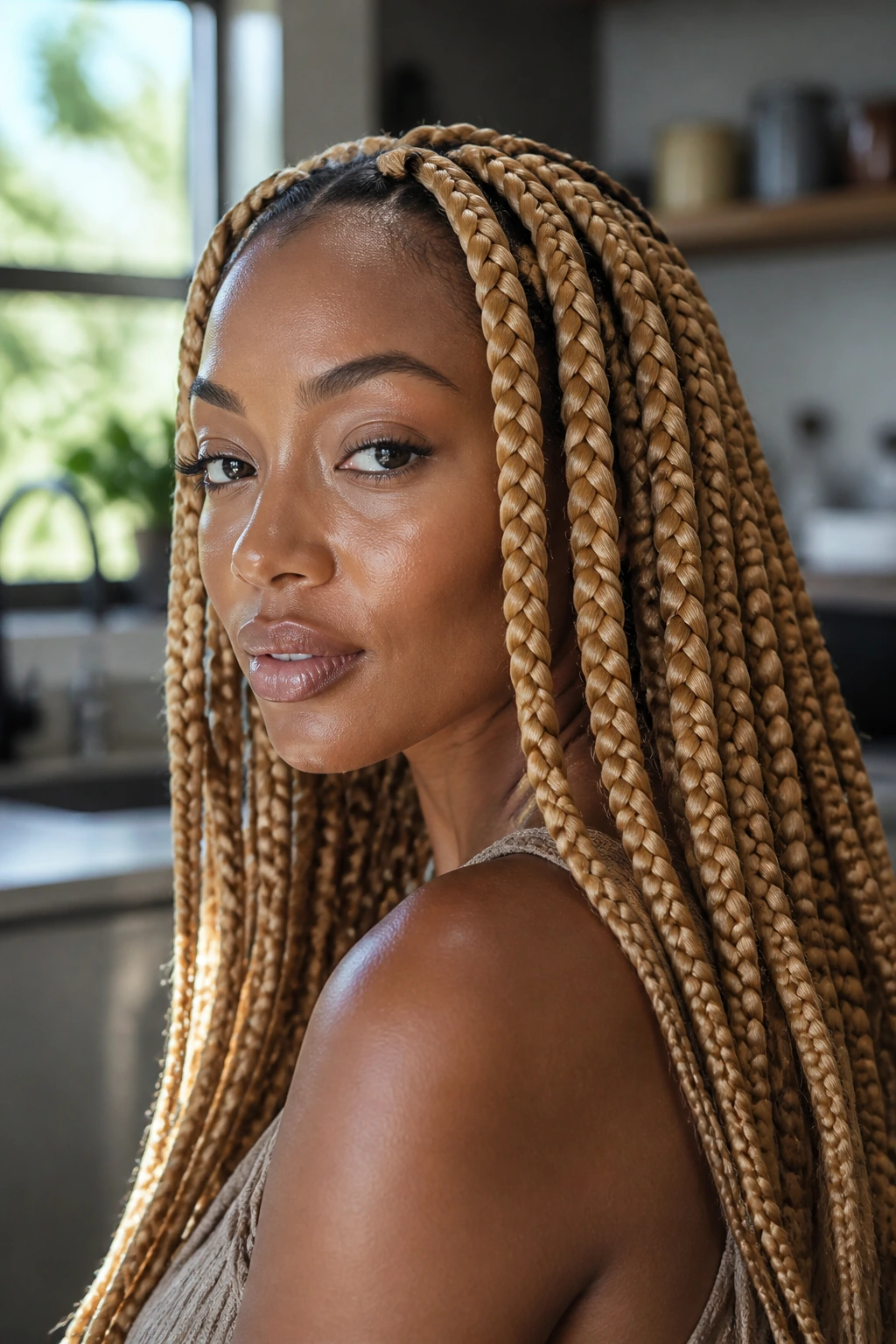
Honey blonde is warmer and softer than a stark blonde. It has that golden-brown feel that sits nicely against deep skin without turning the whole style icy or flat. The color can make braids look brighter even when the braid pattern itself stays simple.
This look is one of the easiest ways to add warmth to big box braids. It suits people who want a lighter color but still want something wearable day to day. If you’re choosing between light shades, honey blonde usually feels easier to live with than a very pale blonde, especially when you want the style to stay flattering in all kinds of lighting.
22. Layered Big Box Braids
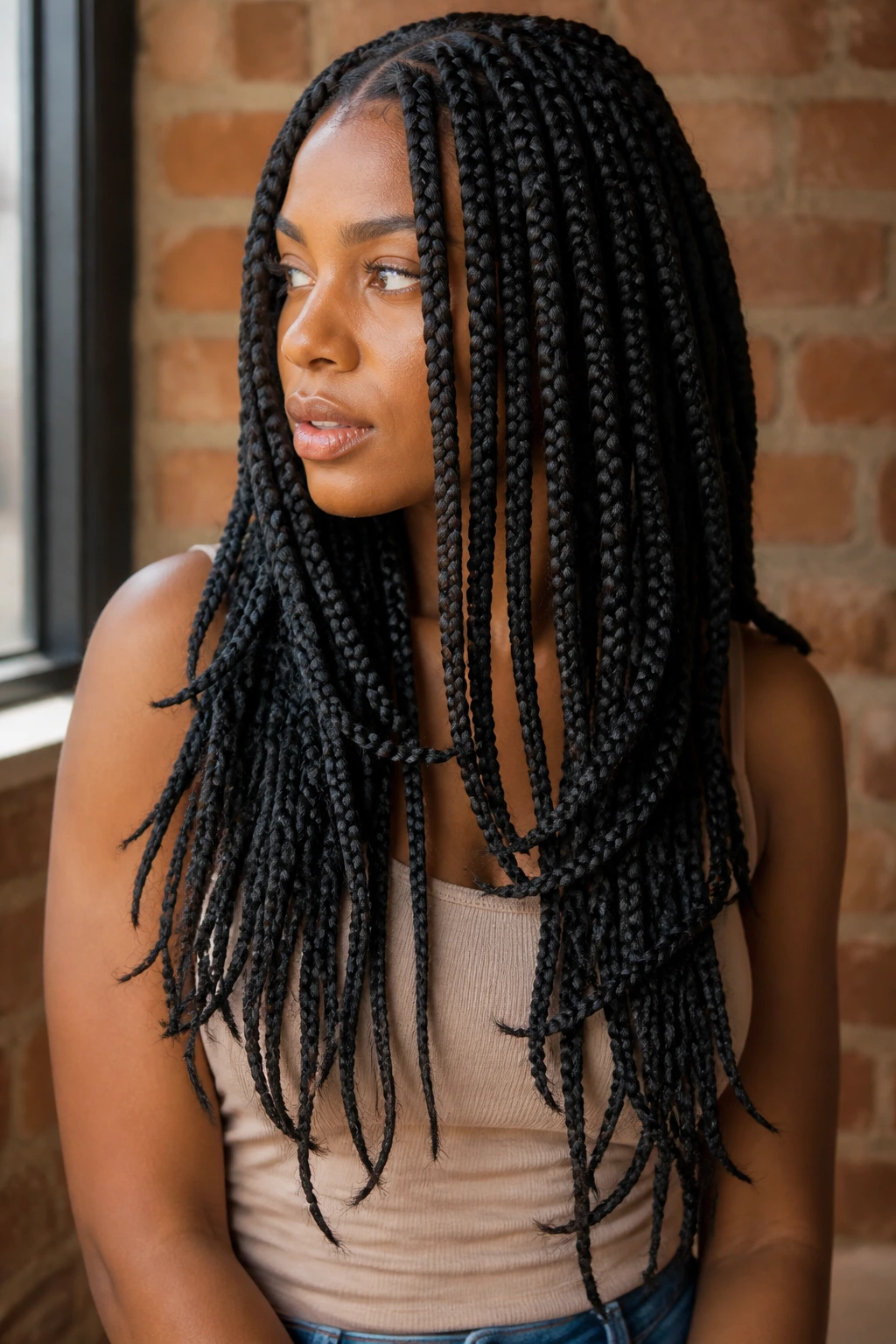
Layering changes the silhouette without changing the braid size. Some braids fall a little shorter, some a little longer, and the whole style gets movement instead of a flat curtain. That’s useful if you want long braids but don’t want every strand landing at exactly the same point.
The effect is subtle until the hair moves. Then it makes sense. Layered braids can be easier to wear because they don’t sit as heavily on the back, and they can frame the face in a nicer way than one blunt length. Ask for the layers to be intentional, not random. There’s a difference.
23. Asymmetrical Box Braid Bob
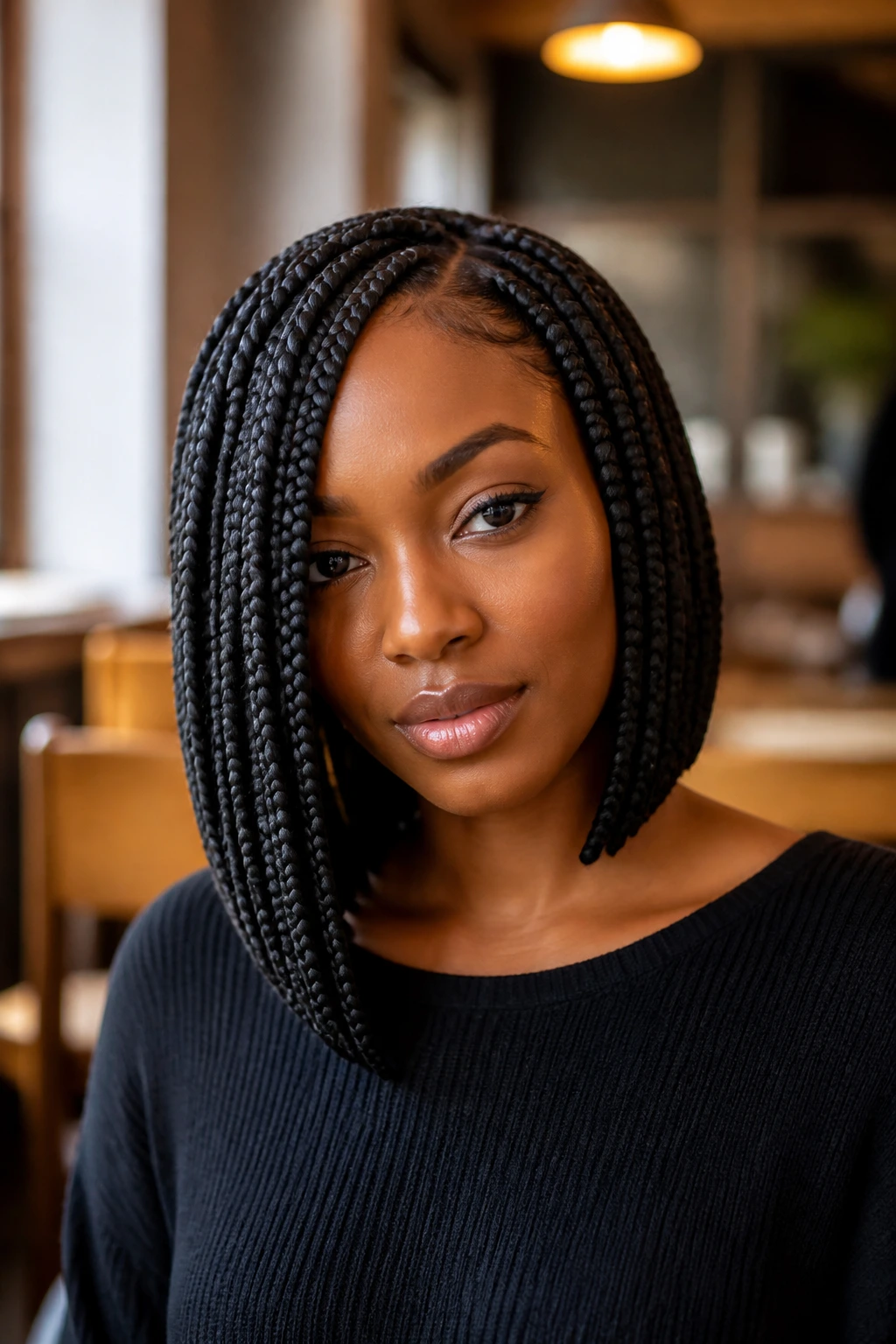
An asymmetrical bob gives the braid style a sharper line. One side sits a little longer than the other, which adds shape and makes the cut feel deliberate. It’s a neat option if you want a braid bob that doesn’t look too sweet or too predictable.
The asymmetry should be subtle enough that the style still feels balanced. If the difference is too extreme, it starts to fight the rest of the face. Done well, though, it gives you a strong profile and a clean jawline. This is a good one for women who like structure in their hair and don’t mind a style that gets noticed.
24. Chin-Length Box Braid Bob
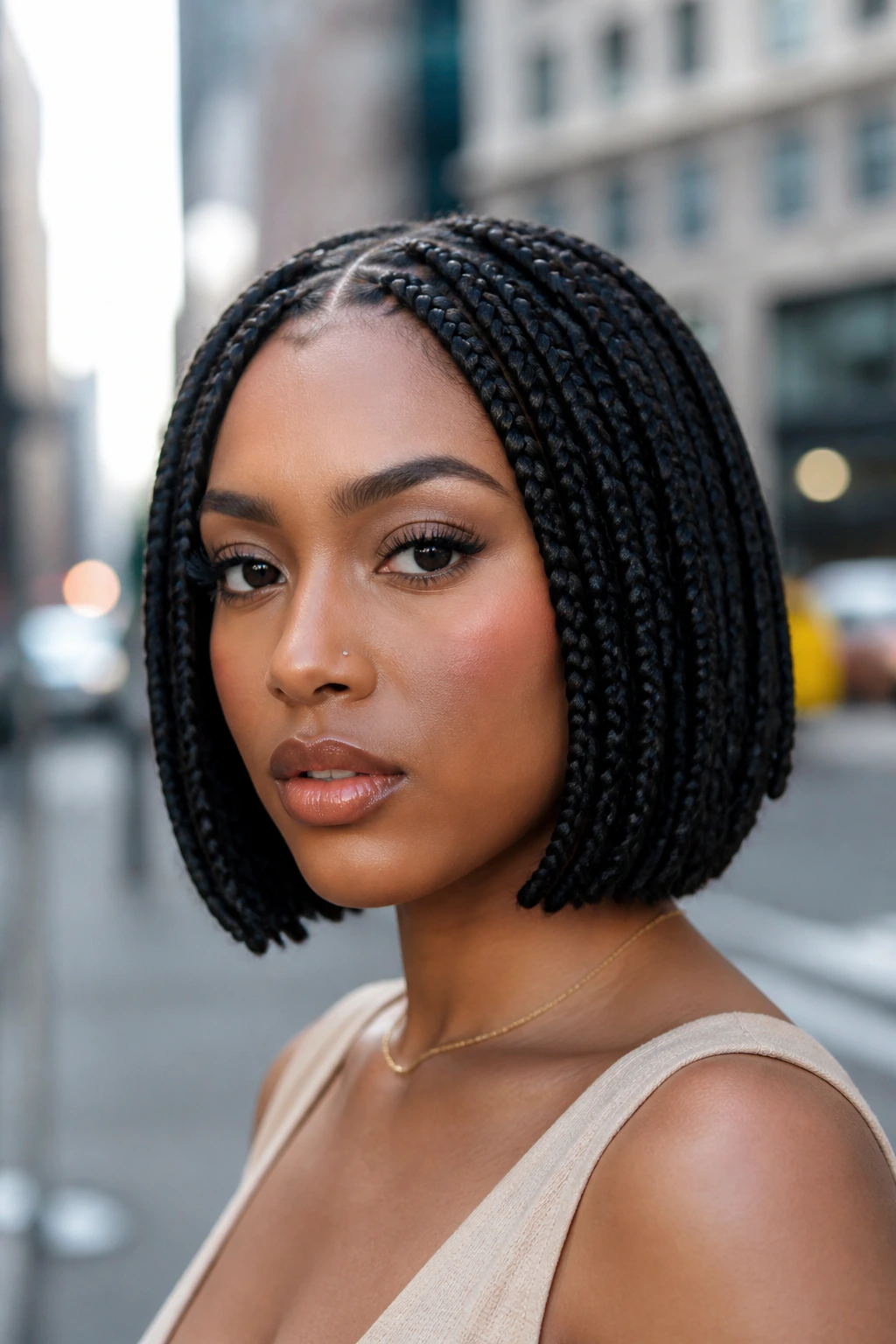
Chin-length braids are short enough to feel light but still long enough to frame the face. They sit right around the jaw, which gives the style shape and keeps the neckline open. If you want something easy to manage, this is one of the most practical choices in the whole set.
It also makes the braids feel fresh. There’s no extra weight hanging around, no long ends brushing your waist, no trouble tucking hair under coats. The cut should be clean, though. A sloppy bob at this length looks unfinished fast. Keep the ends even and the parts neat, and the style will do the rest.
25. Braided Bang Big Box Braids
Braided bangs can soften a big box braid look without turning it into a full fringe situation. The front pieces are left a bit shorter or arranged to fall forward, which adds shape around the eyes and forehead. It’s a smart move if you like your hair to frame the face more closely.
What matters here is proportion. The front should feel intentional, not like a few loose braids were forgotten. A good braided bang sits just above or around the brow line and blends into the rest of the style. It’s especially nice if you wear glasses, because it keeps the front area from looking too heavy.
26. Feed-In Front Big Box Braids
Feed-in braids at the front give the hairline a softer start. Instead of a hard, sudden beginning, the braids build in gradually, which can feel gentler on the scalp and look cleaner near the edges. That detail matters if your front hair is delicate or you simply like a smoother finish.
Why It Helps the Front
The smaller start creates a nice transition from your natural hair into the bigger braid. You get less bulk right at the hairline and a neater outline around the face. The look is especially good when the rest of the braids are large and full, because the contrast makes the front feel more refined.
Best use: pair it with shoulder-length or mid-back braids if you want the front to stay neat without making the whole style feel flat.
27. Goddess Box Braids with Loose Curls
Goddess braids mix in loose curls, and that softer texture changes everything. The curls peek out between the braids or fall from the ends, giving the style a touch of movement that plain braids don’t have. It’s less rigid, more airy, and a bit more romantic without going overboard.
This look works especially well when the curls are spaced well. Too many curl pieces can make the style fuzzy. Too few and you lose the point. Keep the curls moisturized and shaped, because dry curls can make the whole set look tired fast. A little mousse on the ends usually goes a long way.
28. Rubber-Band Parted Big Box Braids
Rubber-band parts give the scalp a crisp grid and make the sectioning stand out before the braiding even starts. The style has a tidy, almost graphic feel, and the rubber bands can help keep the sections organized during installation. It’s useful when you want exact parts and a clean finish.
What to Watch For
Rubber bands should not be tight enough to snag or stress the roots. That’s the part people skip, and it causes trouble. Use small, smooth bands, and make sure they’re removed cleanly if they’re not staying in the final look. Done well, the style looks neat and structured; done badly, it feels fussy.
29. Side Ponytail Big Box Braids
A side ponytail is one of the easiest ways to change the whole shape of your braids. Pull everything over one shoulder and the style instantly feels more relaxed. It’s also a nice way to show off length without having strands hanging straight down your back all day.
The ponytail should sit low enough to feel natural and high enough that it doesn’t collapse into a side pile. That middle zone is where it looks best. I also like this style when earrings are part of the plan, because the hair stays out of the way and the face gets to stay open.
30. Wrapped-Base Ponytail Big Box Braids
A wrapped-base ponytail cleans up the look fast. Instead of leaving the elastic visible, you take one braid or a slim section and wrap it around the base until the holder disappears. It sounds small. It isn’t. That one move makes the ponytail look finished.
This style is good when you want the braids up, tidy, and a little more dressed up than a basic ponytail. It also helps the style read smoother from the back. If the wrap starts slipping, pin it underneath with a small bobby pin that matches the hair color. Small details matter a lot here.
31. Cowrie Shell Big Box Braids
Cowrie shells add texture and history to a braid style in a way that feels grounded, not flashy. A few shells near the ends or scattered through the front can make the braids feel handmade and personal. The look has an earthy feel that works especially well with big, long braids.
Where the Shells Look Best
I like shells placed where they can move a little without tangling into each other. A cluster at the ends can be pretty, but a few near the face often look cleaner and draw attention without weighing the braids down. This is one of those accessory choices that says a lot without needing many pieces.
Tip: let the shells be the accent, not the whole story.
32. Red Copper Big Box Braids
Red copper sits between auburn and bright copper, which gives the braids a warm, rich look that doesn’t feel flat. It brings a lot of light to the face and can make the braid pattern easier to see from a distance because the color has so much movement in it.
This shade looks especially good when the braids are large enough to show the color shifts from strand to strand. That’s the fun part. The tone changes a bit depending on the light, so it never sits exactly still. If you want color that feels bold but not cartoon-bright, red copper is a strong pick.
33. Cornrow-Front Big Box Braids
A cornrow-front setup gives you structure right at the hairline and then opens into big box braids after that. The front rows lay flatter, which can help with face framing and keep the braid line neat where it matters most. It’s a useful style if you want the front to stay controlled.
How to Ask for It
Tell your braider you want a few tidy cornrows at the front leading into larger sections behind them. The transition should feel smooth, not abrupt. This style works well if you want a little edge detail without turning the whole head into cornrows. It keeps the look clearly in box braid territory, just with more shape around the face.
34. Curved-Part Big Box Braids
Curved parts are one of the easiest ways to make a box braid style feel custom. Instead of straight lines moving back from the hairline, the parting bends in a soft arc, which changes the whole rhythm of the scalp design. It looks clean, but not rigid.
The curve can be subtle or more obvious, depending on how much shape you want. Either way, the style benefits from precision. Sloppy curves look accidental. Good ones look deliberate and polished. If you like parting details and don’t want to rely on color or beads, this is a strong choice.
35. Tucked-Nape Big Box Braids
A tucked-nape style pulls the braids down and gathers them neatly at the back so the ends stay close to the neck instead of swinging everywhere. It’s a calm, practical finish that works when you want the braids controlled but still visible. The shape feels tidy from every angle.
This is the style I’d choose on a long day when I still want my braids to look intentional. It sits nicely under jackets, feels less bulky on the shoulders, and keeps the front of the hairline from doing too much work. Clean, low, and easy to live in. That’s a good combination.
