



Long hair and braids have a funny deal. The length gives you room to build shape, but it also punishes sloppy sectioning fast. A braid that looks tidy for the first six inches can go fuzzy at the ends if you rush the tension, and that is why the best braids for long hair are the ones that stay readable from crown to elastic.
Some people think long hair needs a fancier braid to look special. I usually think the opposite. A clean three-strand braid, a sharp Dutch, or a pulled-apart fishtail can look richer on long hair than a pile of pinned curls ever will, because the length itself becomes part of the design.
A few tools help more than people expect. A tail comb, two or three clear elastics, a brush with a little grip, and either dry shampoo or texturizing spray can change the whole outcome. So can a tiny bit of patience. Braids reward steady hands, not speed, and long hair is especially unforgiving when you cross sections too loose or start with tangles.
1. Classic Three-Strand Braid
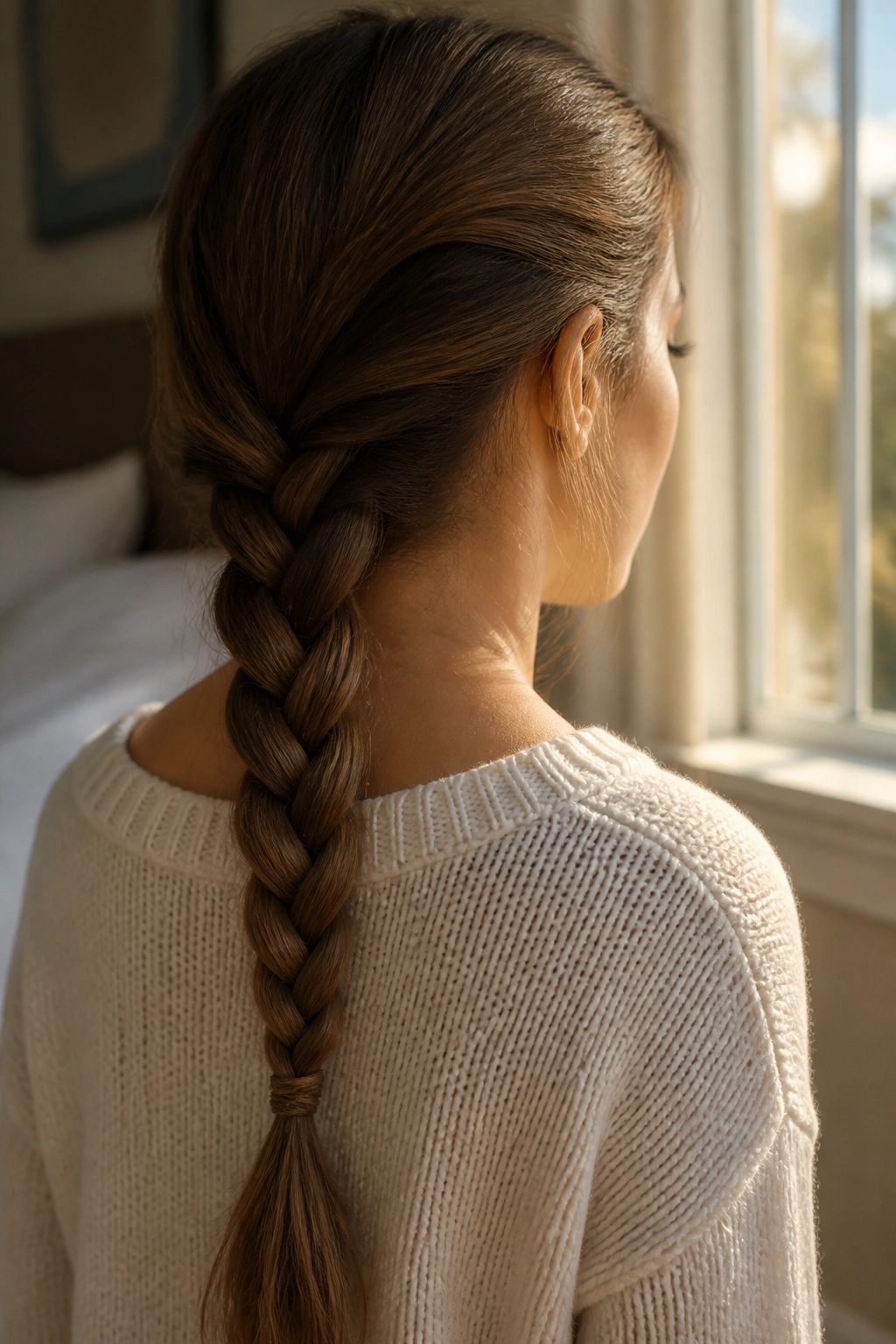
The plain old three-strand braid still earns its place. On long hair, it can look sleek, thick, and almost rope-like without any extra tricks. The beauty is in the finish: if your sections are even and your tension stays consistent, the braid reads as clean instead of casual.
Long hair gives this braid more body than shorter lengths can manage. You can wear it tight for a polished look, or loosen the sides a little for a softer shape. Either way, the ends have enough length to make the braid feel substantial instead of stubby.
What Makes It Work
- Start with detangled hair and a light mist of water or leave-in spray.
- Divide the hair into three equal sections right at the nape or the crown.
- Cross each outer section over the middle one, keeping your hands close to the braid.
- Tie the ends with a small elastic and tug the loops gently if you want more width.
My favorite use for this braid: second-day hair that needs order without looking overstyled.
2. French Braid
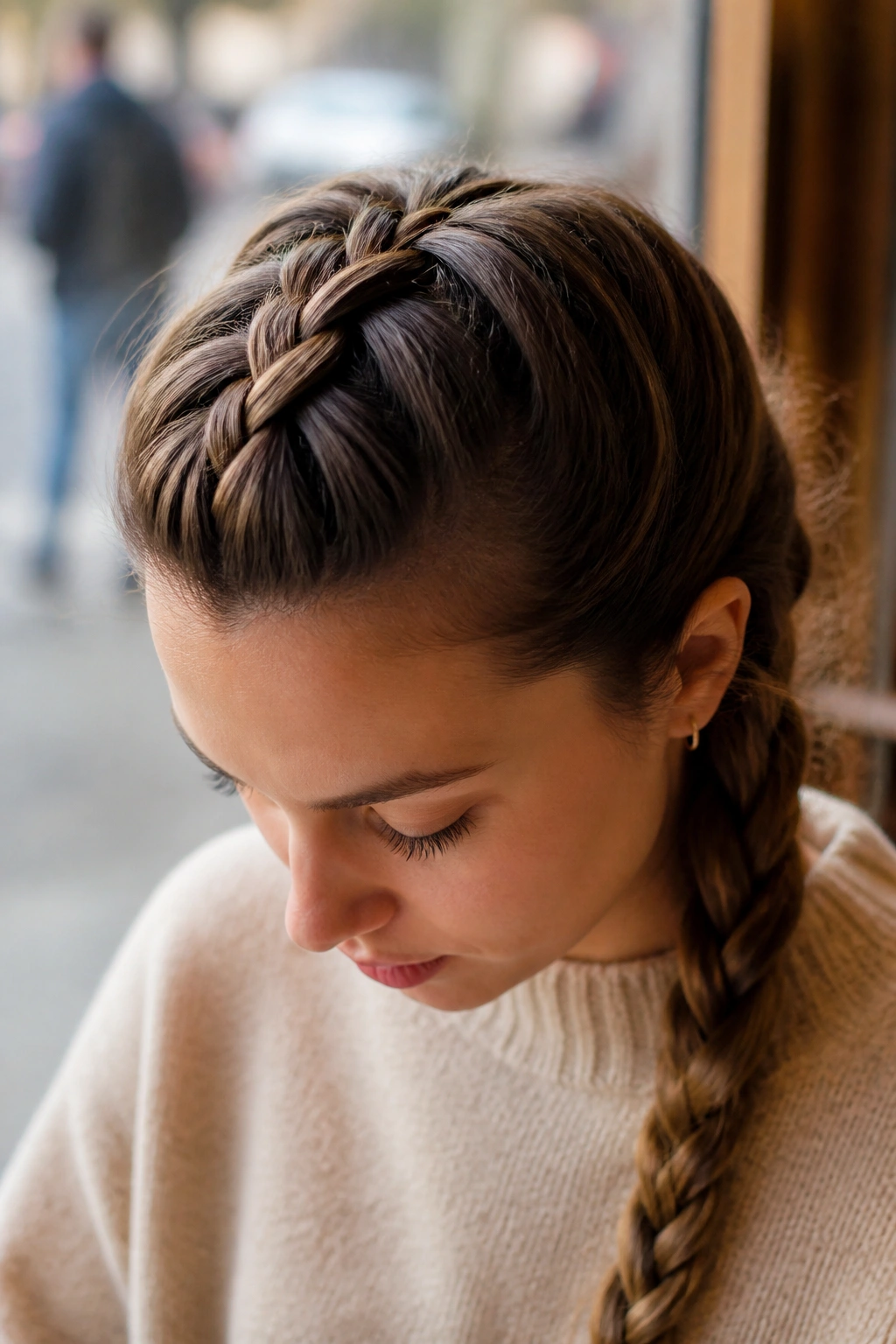
Why does a French braid look so neat on long hair? Because the braid gathers the hair as it goes, so the style stays anchored to the head instead of hanging loose and fighting gravity.
That anchored shape matters more the longer your hair gets. A French braid keeps weight distributed along the scalp, which helps it stay put during a workday, a commute, or a busy afternoon when you do not want pieces falling into your face. The trick is simple: take small, equal additions from each side and keep the braid centered as you move down.
How to Keep It Clean
A tail comb helps a lot here. Part the top section neatly, then add hair in the same amount from both sides each time you cross over. If one side gets larger, the braid starts drifting off-center, and long hair makes that drift obvious.
When I’d Pick It
- Long days
- Humid weather
- Hair that slips out of loose styles
- Times when you want the length controlled but still visible
The ends can be worn loose, tucked into a bun, or left braided all the way down. All three work.
3. Dutch Braid
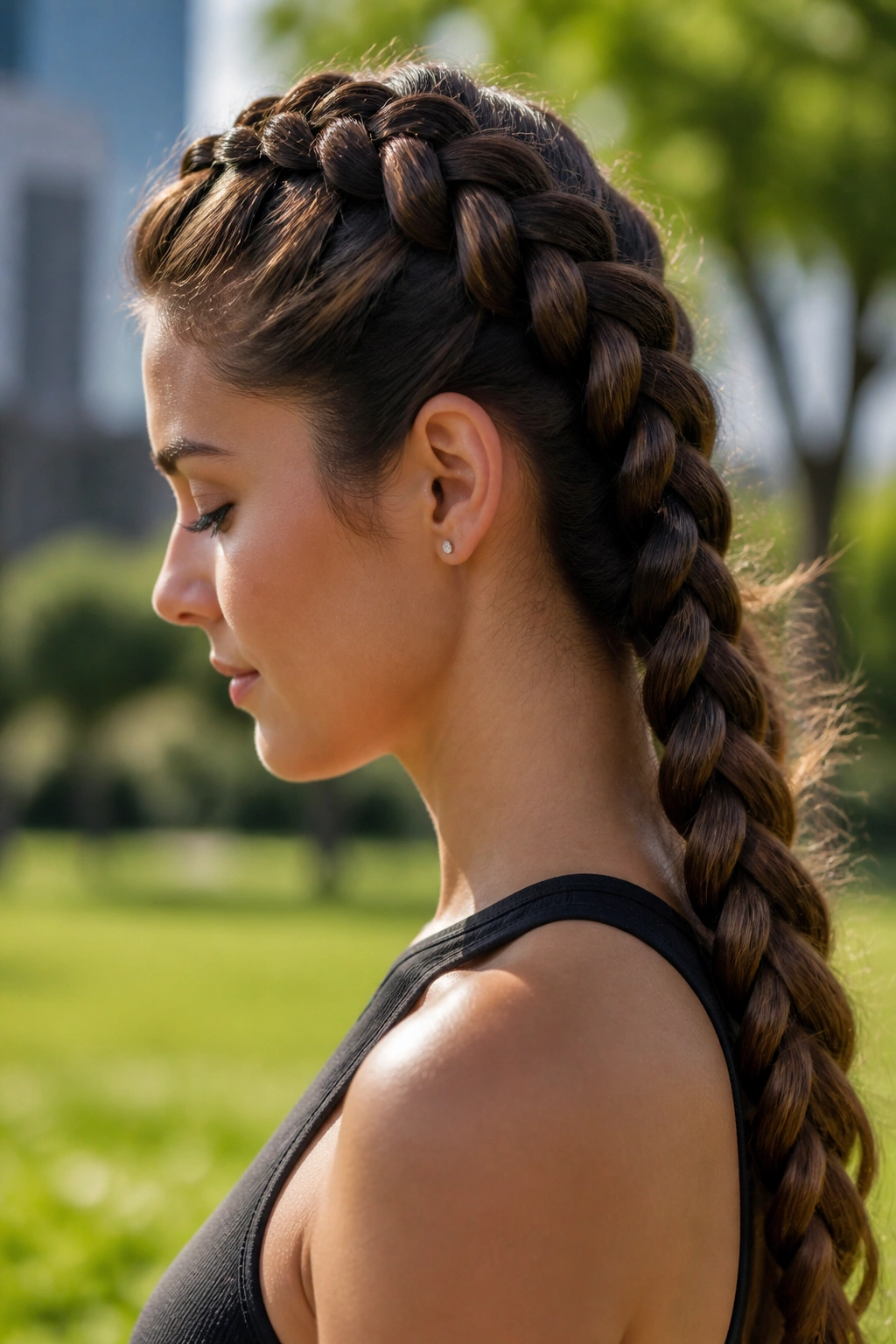
A Dutch braid is the French braid’s louder cousin. Instead of crossing the outer sections over the middle, you cross them under, which makes the braid sit on top of the hair instead of sinking into it.
That raised shape looks especially good on long hair because there is more length for the braid to show off. You get that ridged, almost sculpted look along the scalp, then a thick tail below it. On dense hair, it can look bold. On finer hair, it gives the illusion of more body.
Why It’s Worth Learning
The Dutch braid holds well for active days, and it works nicely when you want a braid that looks intentional from the front. It can feel a little awkward the first few tries because your hands have to reverse what they know from a French braid. Once your fingers learn it, the style gets easier.
A small warning: keep the tension firm, not painful. A Dutch braid should stay snug, but a scalp that feels pulled tight by noon is not the goal.
4. Fishtail Braid
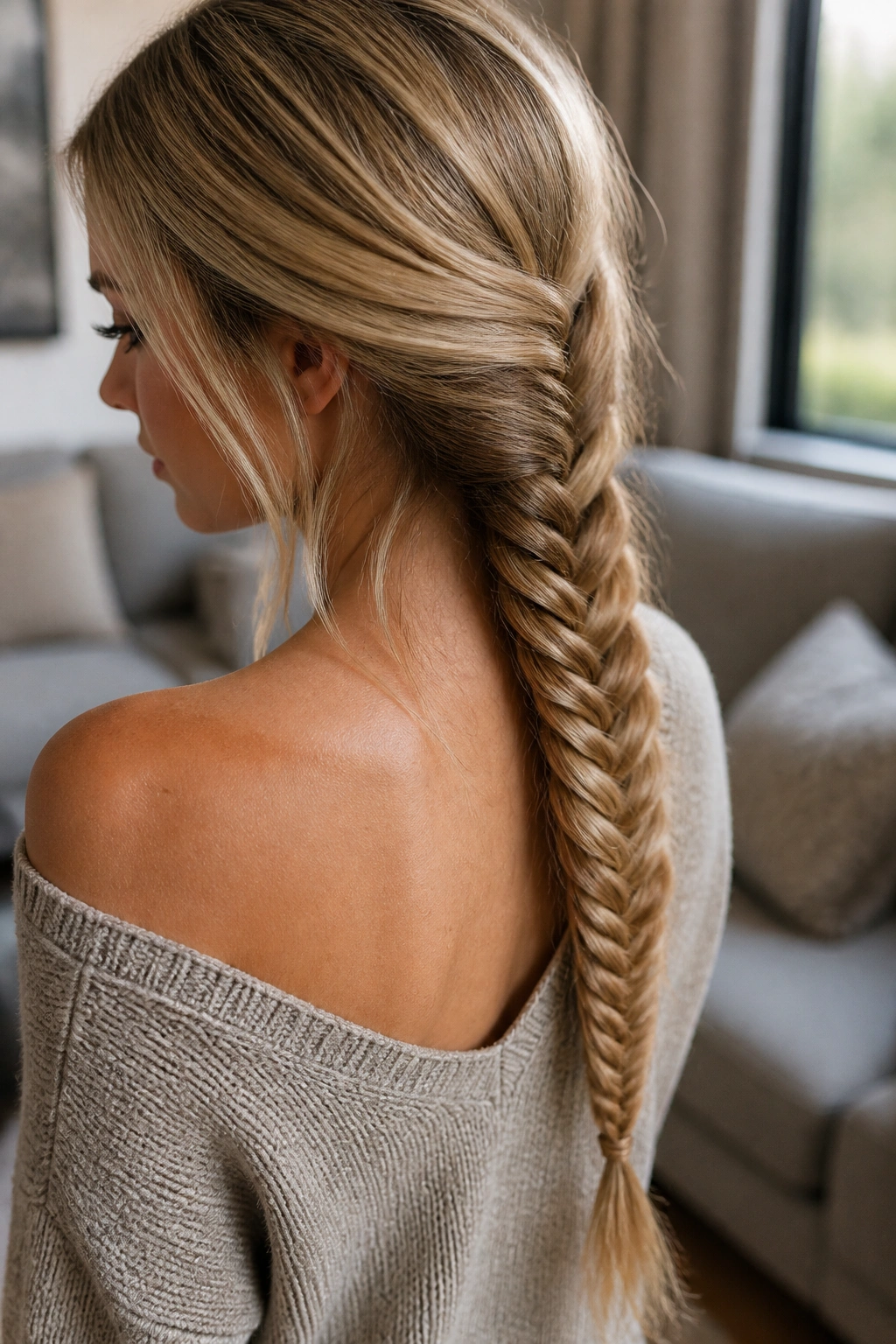
A fishtail braid is one of those styles that makes people assume you spent a long time on your hair. The truth is less dramatic. It uses only two sections, but you keep taking tiny pieces from the outer edges and crossing them over to the opposite side.
Long hair is where this braid really gets to show off. The longer the length, the more detail you can see in the weave, and the more satisfying it looks when you pull it apart a little. A fishtail on shoulder-length hair can feel small; on long hair, it becomes a proper statement.
The Small-Slice Rule
Take thin pieces. That’s the whole game. Big pieces make the braid look chunky and uneven, while tiny pieces create the tight, herringbone texture people notice from across the room.
What I Like About It
- Works well with straight, wavy, or lightly curled hair
- Looks polished even when a few strands escape
- Can be worn centered, to one side, or in a half-up version
- Gets better when you pancake it gently after tying off
If your fingers are a little clumsy at first, that’s normal. The braid gets easier after the third or fourth try.
5. Rope Braid
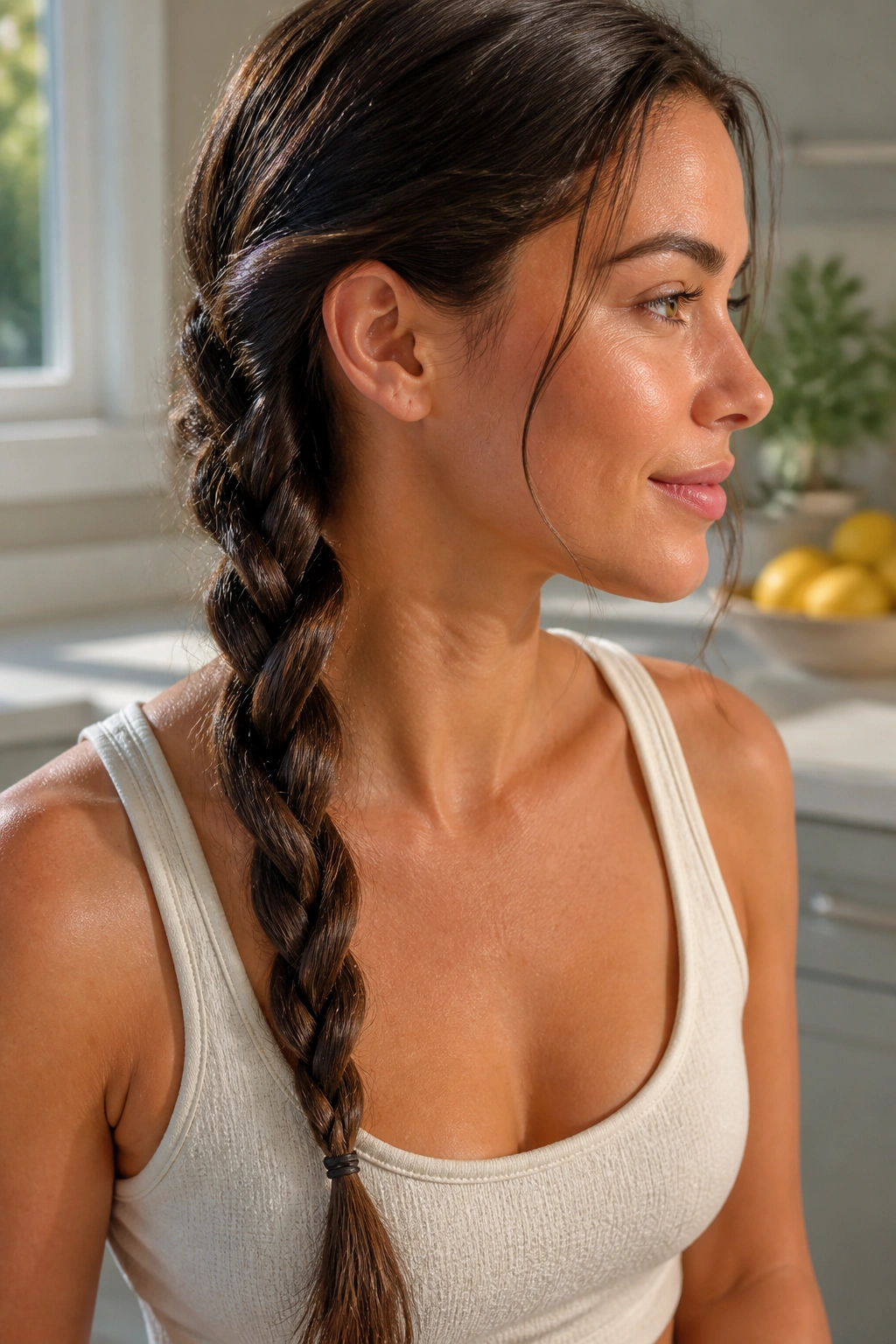
A rope braid is fast, glossy, and a little underrated. You split the hair into two sections, twist each section in the same direction, then wrap them around each other in the opposite direction. That twist-vs-wrap contrast is what keeps the braid from unraveling.
On long hair, rope braids look clean and elegant without needing much skill. They’re a smart choice on mornings when your hair wants to frizz, but you still want something neater than a ponytail. They also play nicely with layers, because the twist helps hold shorter pieces in place.
Twist Direction Matters
If both strands twist the same way and you wrap them the wrong way, the braid loosens. That is the part people forget. Keep the twist direction consistent from top to bottom, and secure the end with a firm elastic.
A rope braid can be worn high, low, or over one shoulder. It’s a simple style, but not a boring one.
6. Boxer Braids
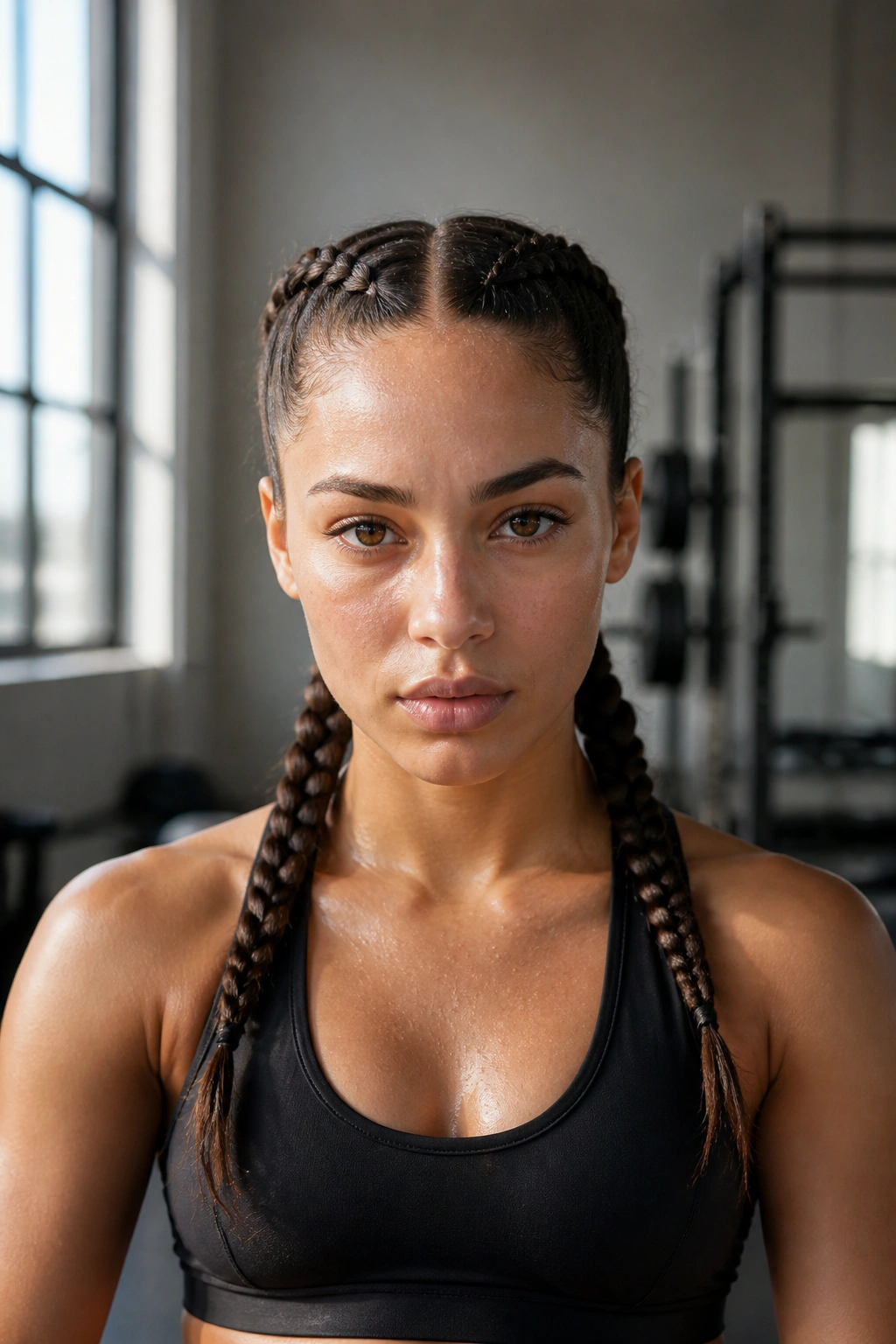
Two tight Dutch braids down the scalp can solve a lot of problems at once. They keep long hair off the neck, hold up under movement, and stop the whole curtain-of-hair situation from taking over your face.
Boxer braids work especially well when your hair is thick or hard to tame. The center part gives the style structure, and the two braids distribute the weight so it does not all pull on one side. I also like them for travel, because they stay tidy longer than most loose styles.
What to Watch For
Do not yank each section too hard near the hairline. A tight braid is fine; a sore scalp is not. The goal is neatness, not punishment.
Best Uses
- Gym days
- Busy errands
- Hot weather
- Hair that needs to last from morning to night
If you want a softer look, loosen each braid by pinching the outer loops outward a little after you finish. Small move. Big difference.
7. Waterfall Braid
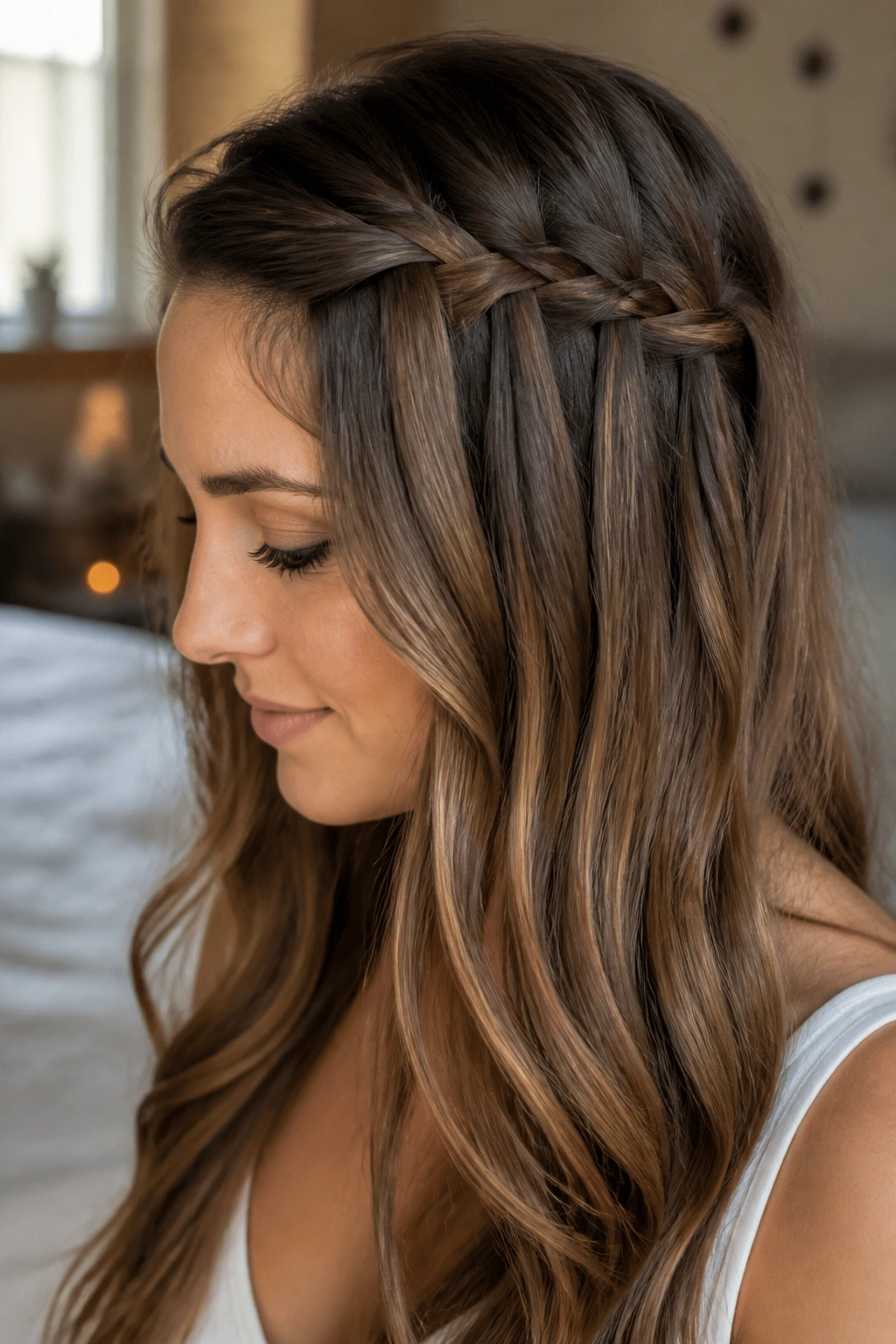
A waterfall braid has one of the prettiest effects in the whole braid family. Strands fall through the braid like little moving lines, which makes it feel airy instead of heavy.
Long hair helps because the dropped pieces have more length to swing and blend into the rest of the hair. The style works best when the base hair is loose and slightly smooth, not too fluffy or too freshly washed. You are making a frame, not a cage.
The Dropped Strand Is the Point
Each time you add a new section, you drop the previous front piece and let it hang. That repeated drop creates the cascading look. If you try to tuck every strand in, you lose the whole effect.
When It Looks Best
- Half-up styles
- Soft waves
- Straightened hair with a little bend at the ends
- Photos, weddings, dinners, and any day you want detail near the face
It does take a steadier hand than a basic braid. Worth it, though.
8. Crown Braid
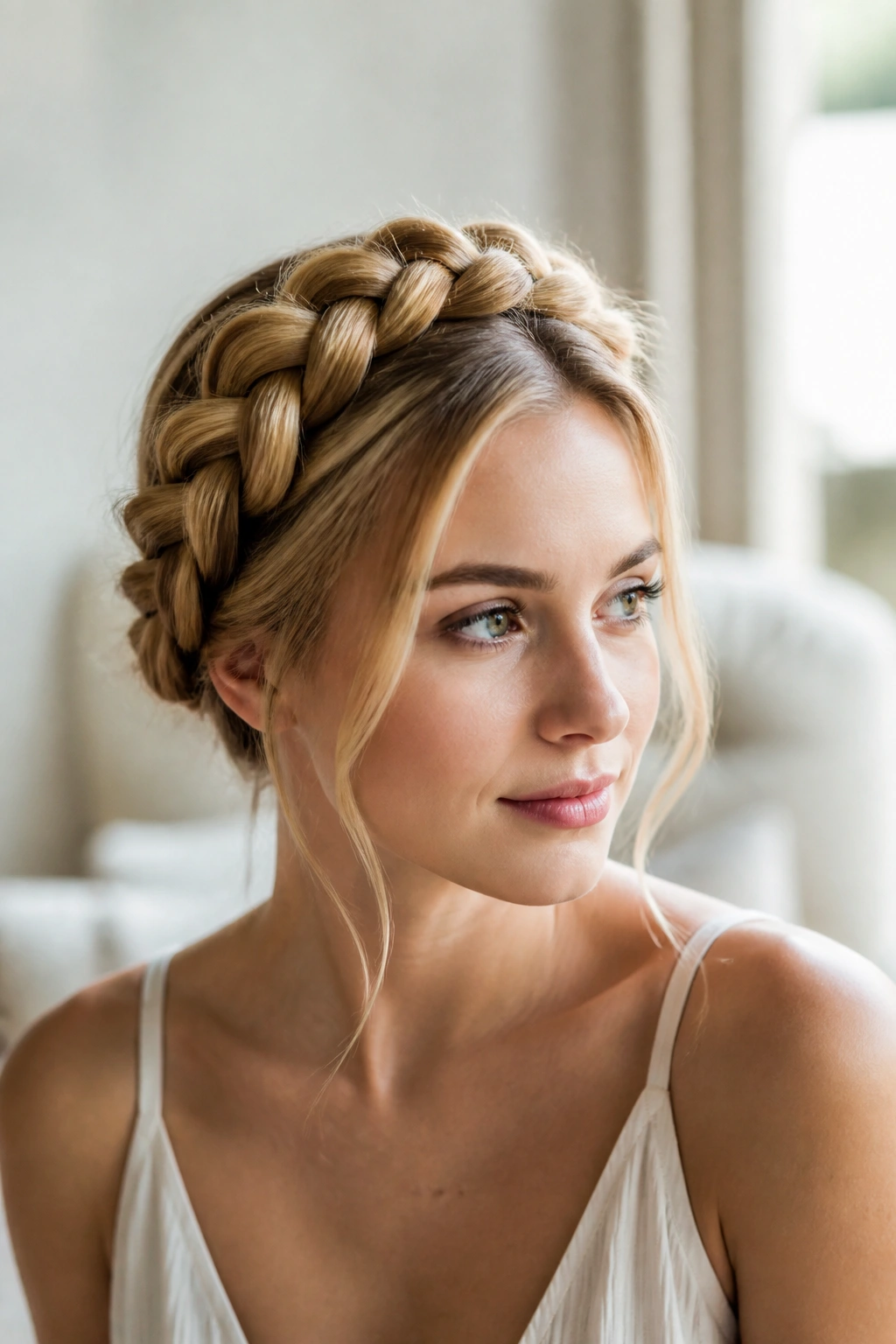
A crown braid gives long hair a very specific kind of drama. It turns the braid into a frame around the head, which means the style feels finished even before you touch the rest of the hair.
The length matters here because you need enough braid to travel around the head and still tuck in securely. Shorter hair often looks like it’s fighting the shape. Long hair, on the other hand, can wrap comfortably and give you enough tail to pin underneath.
How to Keep It From Sliding
Bobby pins are not optional. Hide them under the braid and cross them in an X if the hair is heavy. A little texture spray at the roots helps the braid grip the head instead of slipping off.
Good For
- Formal events
- Warm days
- Hair that needs to stay up without a full bun
- Anyone who likes a neat outline around the face
A crown braid looks best when the braid itself is full, not tiny. Thin crown braids can disappear into long hair.
9. Side Braid
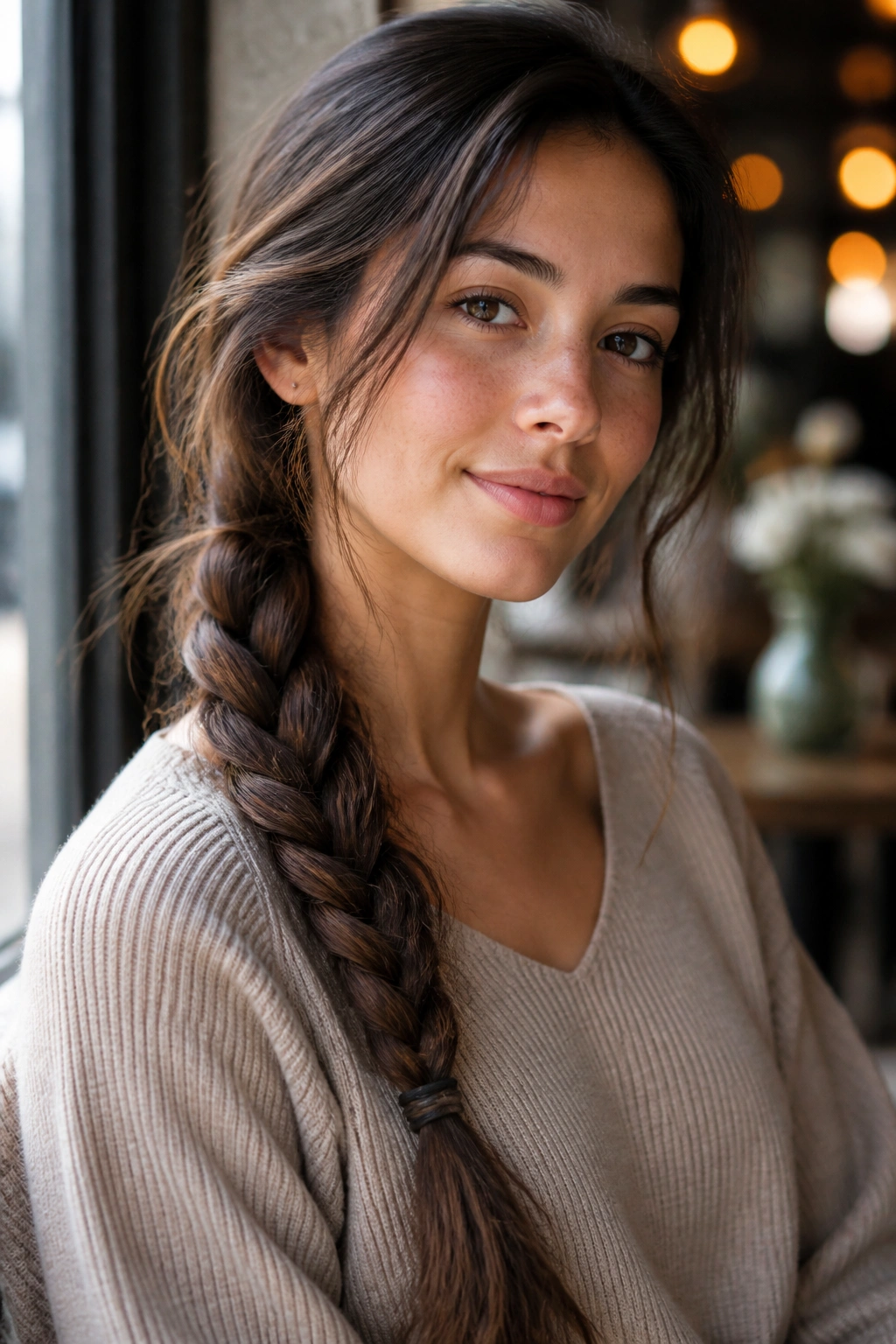
A side braid feels easier than it has any right to be. Pull all the hair over one shoulder, start a braid just below the ear or at the nape, and let the length do the rest.
Long hair is the reason this style still matters. The braid hangs with weight, so it looks deliberate rather than accidental. It also gives you a chance to show off texture, especially if the ends curl slightly or if you pancake the braid for width.
Sometimes the simplest answer is the right one.
Why It Holds Up
A side braid puts the tension off-center, which can be more comfortable than a braid tugging straight back. It also leaves the top of the head less flat, so the style works if you want a softer silhouette.
Wear it tight for a cleaner shape. Wear it loose if you want movement. Both work. The difference is mood.
10. Pull-Through Braid
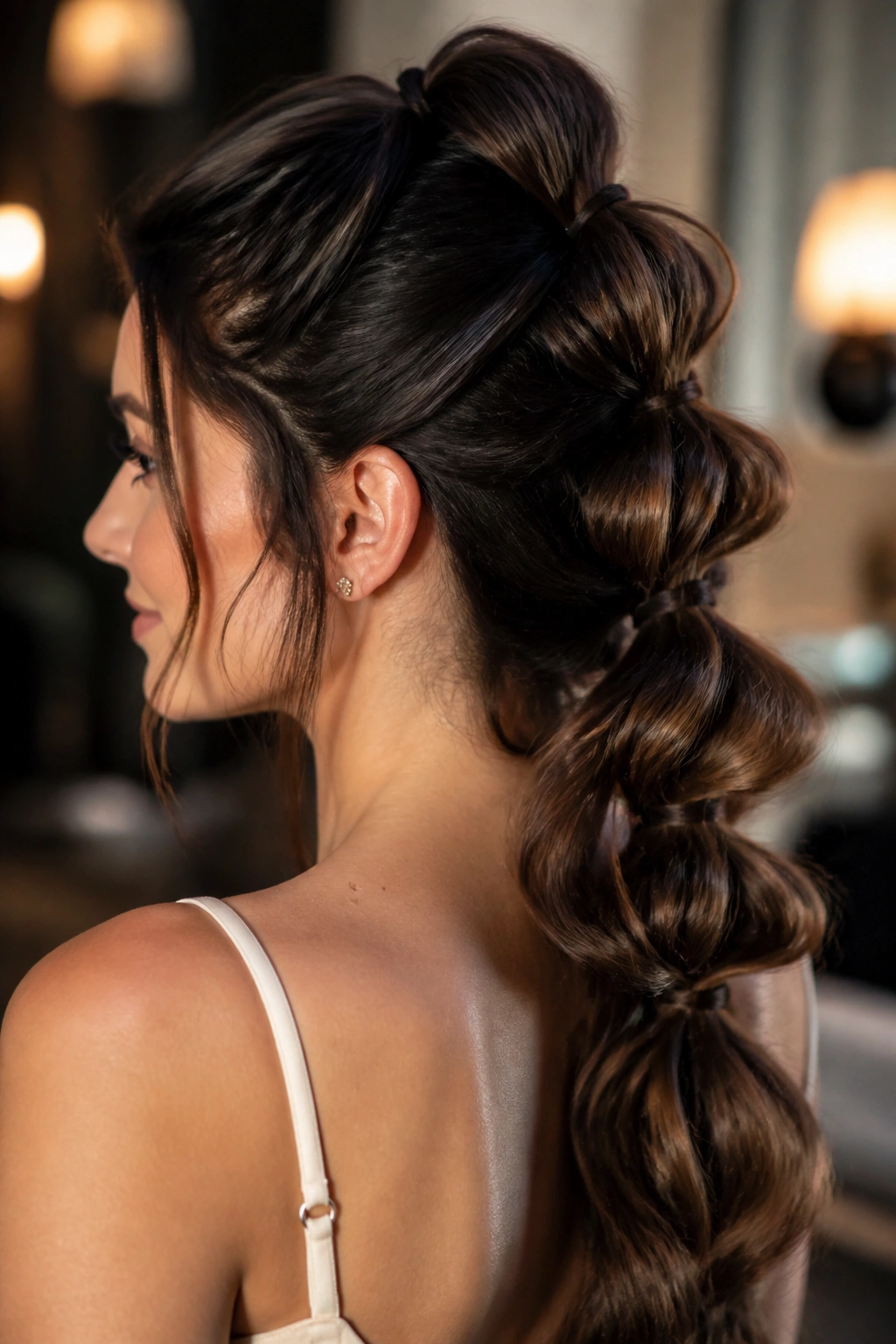
A pull-through braid looks like a braid, but it is built with small ponytails and elastics. That makes it a gift for long hair, because you can create a thick, full style even if your natural braid skills are still a work in progress.
The structure matters more than the wrist action. You stack one small ponytail over another, split and pull sections through, then tug the outer pieces to widen the braid. The result is thick and dramatic, and it works especially well on layered hair that tends to slip out of standard braids.
Why It Beats a Standard Braid Sometimes
It holds shape longer on slippery hair. It also gives you control over the volume, since you can widen each loop one by one. That can be handy if your hair is fine and you want the braid to look bigger than it actually is.
Keep In Mind
- Use clear elastics or small matching bands
- Clip each finished segment out of the way
- Tug evenly on both sides after each pull-through
- Finish with hairspray if you need it to last
It takes more elastics than a basic braid, but the payoff is real.
11. Ladder Braid
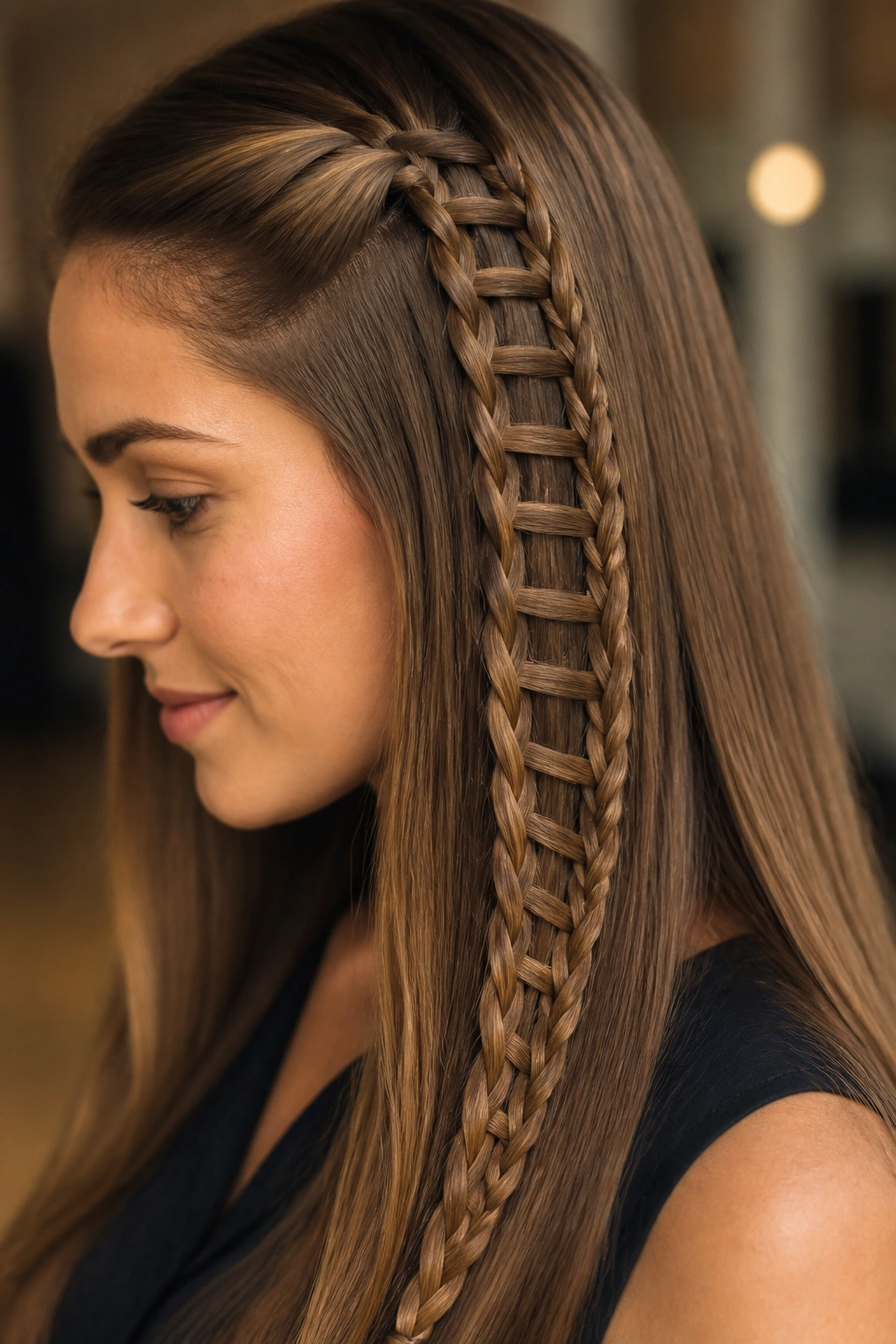
A ladder braid has a little show-off energy, and I mean that in a good way. It uses braid sections and horizontal strands that look like rungs, which gives the whole style an almost woven feel.
Long hair is a plus because the “ladder” has room to read clearly. On shorter lengths, the pattern can blur. On longer hair, those little crosswise pieces actually show up, and that is the whole point.
What Keeps the Shape Tidy
Smooth hair helps a lot. So does a tail comb for the parting and a couple of clips to hold the spare sections while you work. If the hair is too slippery, the rungs sag. If it is too rough, the braid can look messy instead of graphic.
A ladder braid works well as a half-up detail or as a side accent. It is not a casual five-minute braid, but it earns its keep when you want something that looks engineered by hand.
Best Use
- Special occasions
- Long, straight hair
- Styles where the braid is the focal point
12. Mermaid Braid
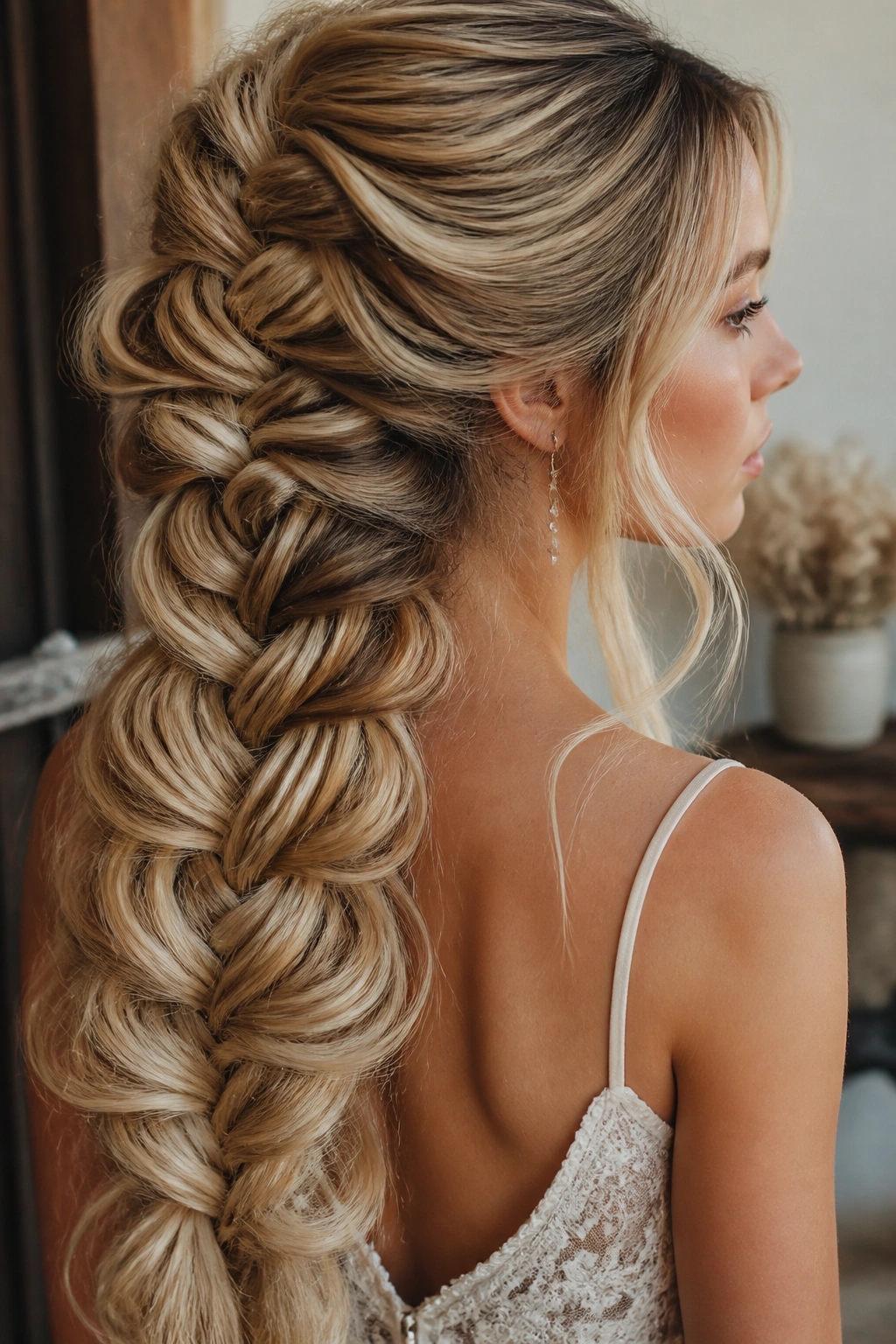
A mermaid braid is really about fullness. It usually starts with a loose braid, then gets pulled apart until it feels wide, soft, and a little theatrical.
Long hair gives you more material to work with, so the braid can spread without falling apart. That is the big advantage. Shorter hair often loses the shape when you loosen it. Long hair keeps the body, which is why this style looks especially rich on thick lengths.
How to Avoid the Flat Look
Start with a bit of texture. Dry shampoo or texturizing spray helps the strands grip one another. Braid a little looser than you think you should, then pinch each loop outward after you tie it off. Do that gradually. If you yank too hard, the braid collapses.
Mermaid braids are lovely with loose waves and even better when one or two pieces around the face stay soft. They do not need perfection. Slight looseness is the point.
13. Four-Strand Braid
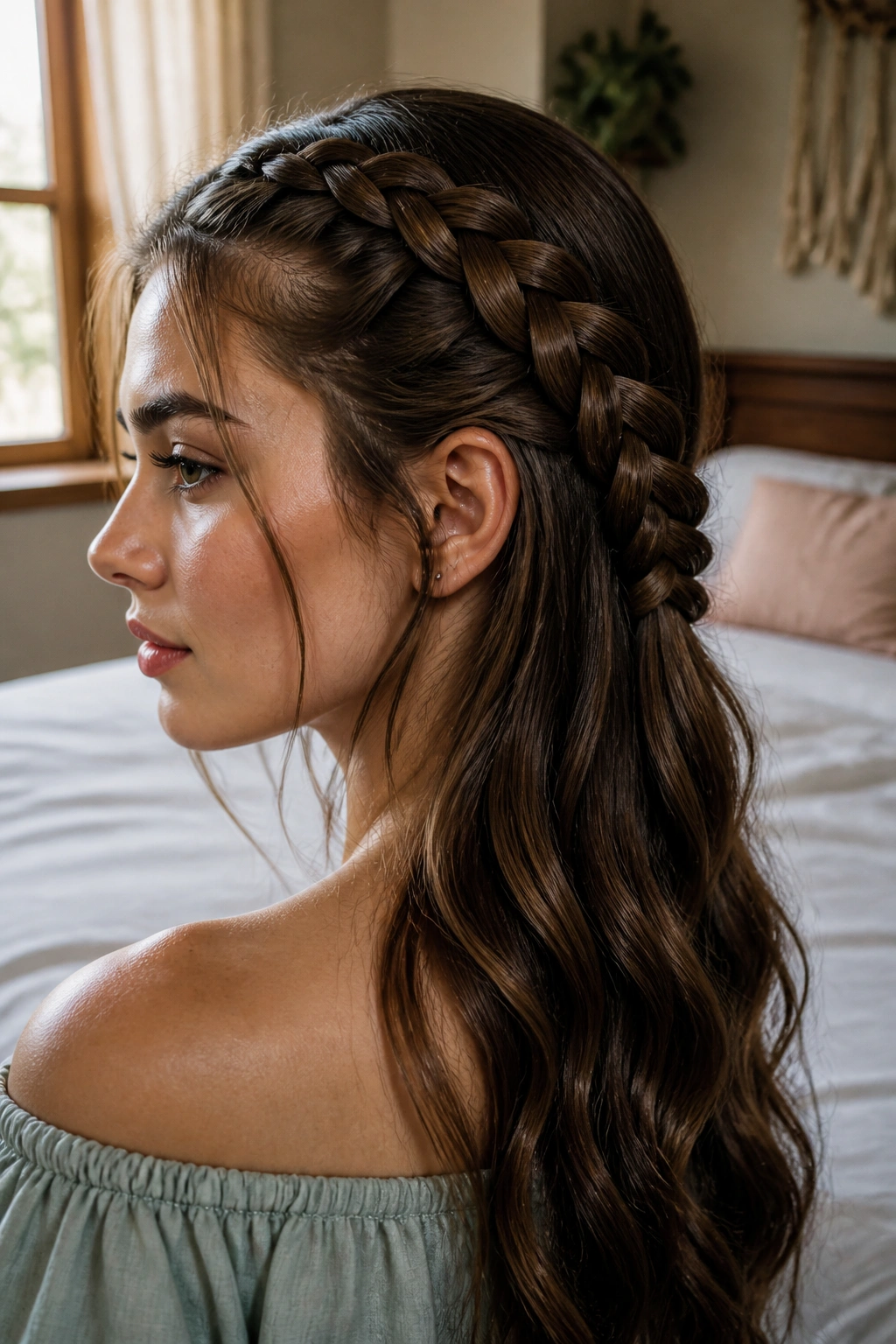
A four-strand braid has a cleaner, ribbon-like look than a standard braid, and long hair gives it room to show off the pattern. It can feel a bit more technical because you have to keep track of four sections instead of three, but the payoff is a braid that looks denser and more intricate.
The biggest mistake is losing the order. Keep the sections clipped or held between your fingers in the same rhythm every time. Once you settle into the pattern, it becomes a measured, almost calming braid to make.
Why It Stands Out
The extra strand creates a wider weave and a flatter profile, which looks elegant on long hair. If your ends are heavy, this braid can handle them better than a three-strand because the structure spreads the bulk out more evenly.
A four-strand braid is a good pick when you want something a little more interesting than the usual plait but not as fussy as a ladder or five-strand braid.
14. Five-Strand Braid
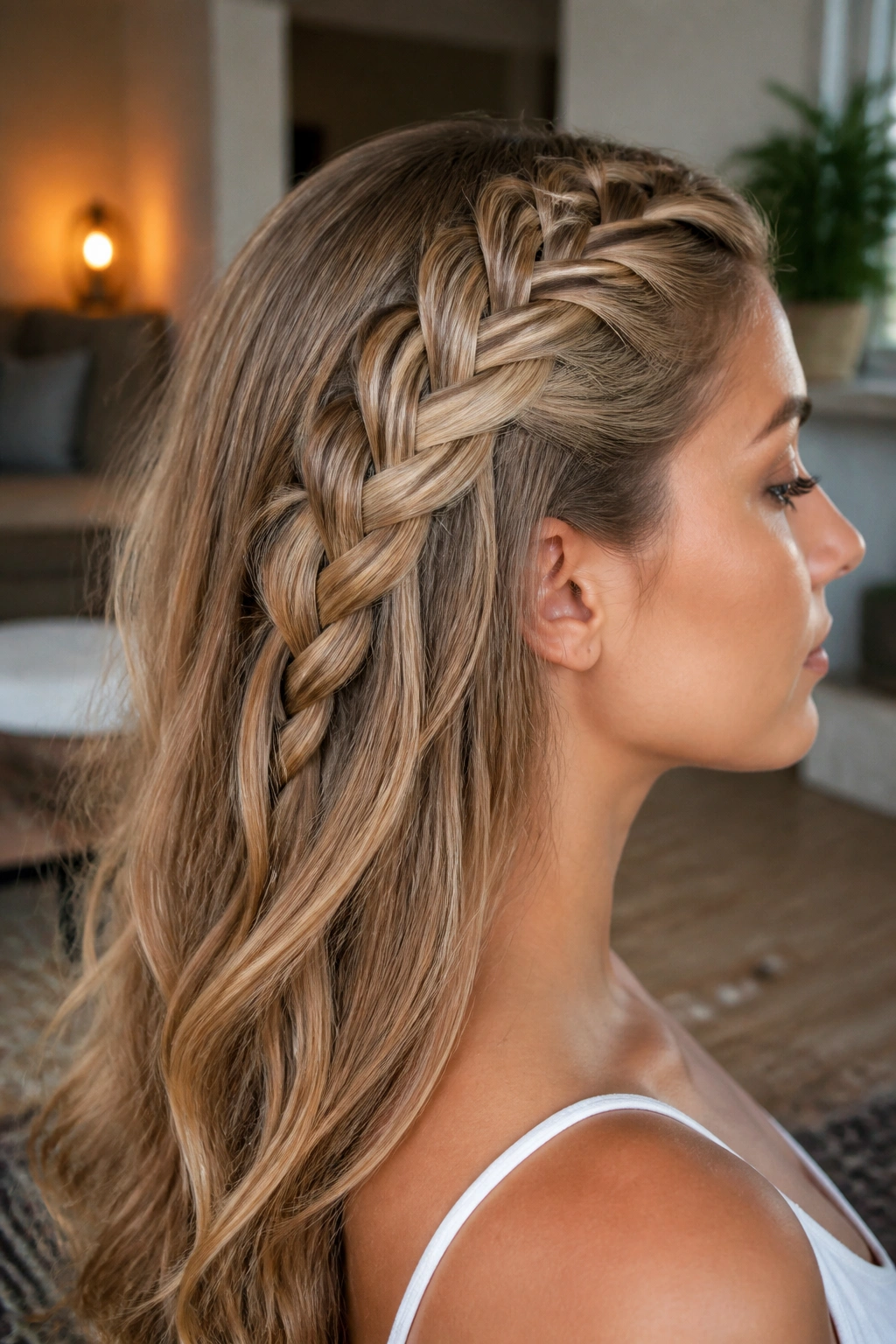
A five-strand braid is the one I’d call a true project. It looks beautiful on long hair because there is enough length to show the pattern, but your hands need to stay organized or the braid turns into a knot of good intentions.
The rhythm is the challenge. Once you start crossing outer sections toward the middle, you have to keep a steady order without skipping a strand or tightening one side too much. Long hair helps because the braid has enough weight to hang straight while you work.
A Practical Way to Tame It
Clip the outer sections if that helps. Seriously. A few tiny clips can save a lot of frustration. Work slowly and check the tension every few passes so the braid stays flat and even.
Best For
- Patient hands
- Straight or lightly waved hair
- Styles where the braid itself is the feature
It is not the braid I’d choose when I’m in a rush. It is the braid I’d choose when I want the hair to look considered.
15. Lace Braid
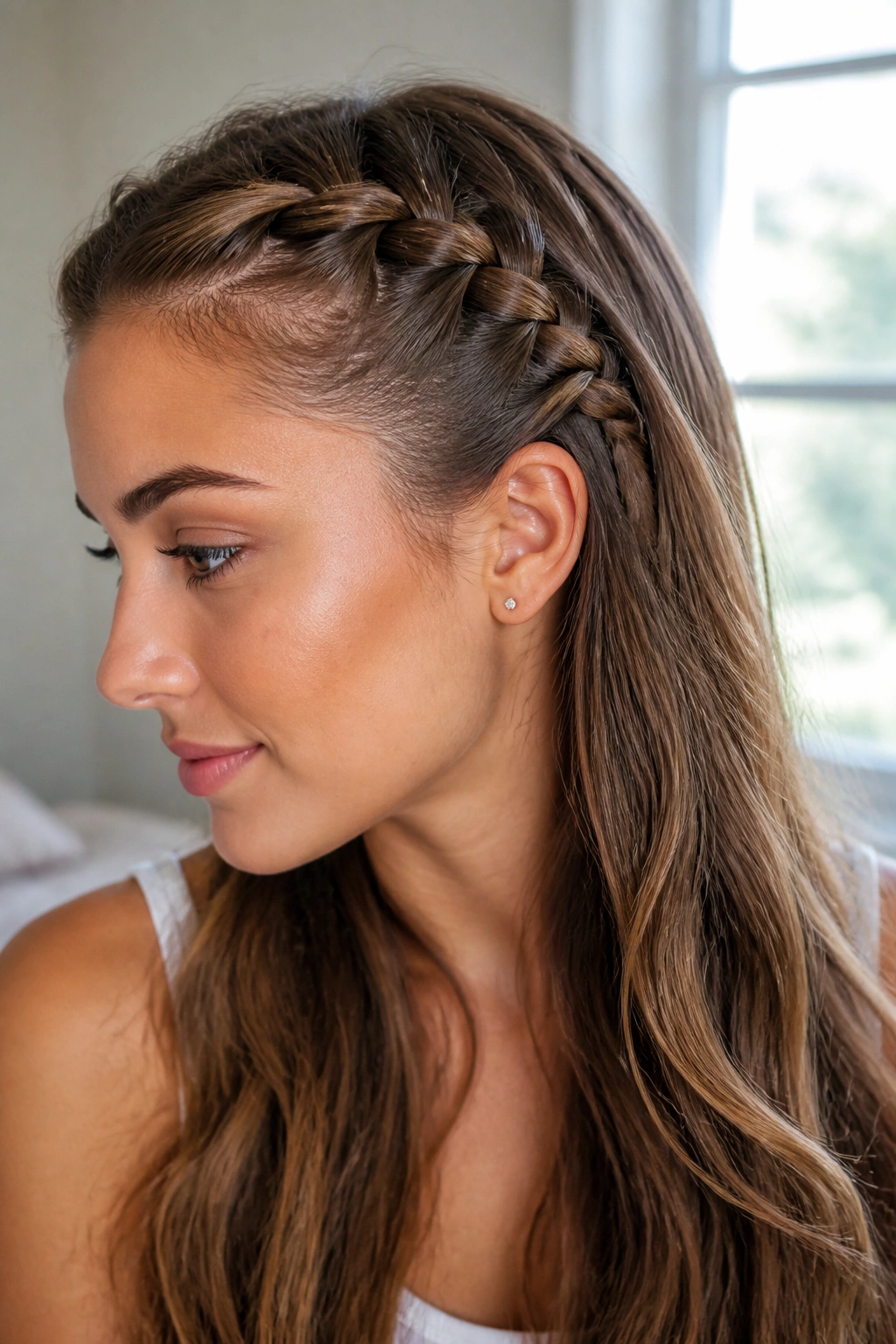
A lace braid is a French braid with one important difference: you only add hair from one side. That makes it feel like a braid sliding along the head instead of sitting in the middle of it.
On long hair, that one-sided path looks clean and useful. It can sweep the front back from one temple, create a neat accent line, or feed into a ponytail or bun. It is especially handy when you want to keep hair off one side of the face without committing to a full braid.
Where It Works Best
Lace braids shine on long, layered hair if the front pieces are a little too short to stay put on their own. They also work when you want a softer braid that follows the contour of the head rather than dominating it.
A thin lace braid can disappear if the hair is very thick, so do not be afraid to widen it a little. Let it have shape. It needs space to read.
16. Infinity Braid
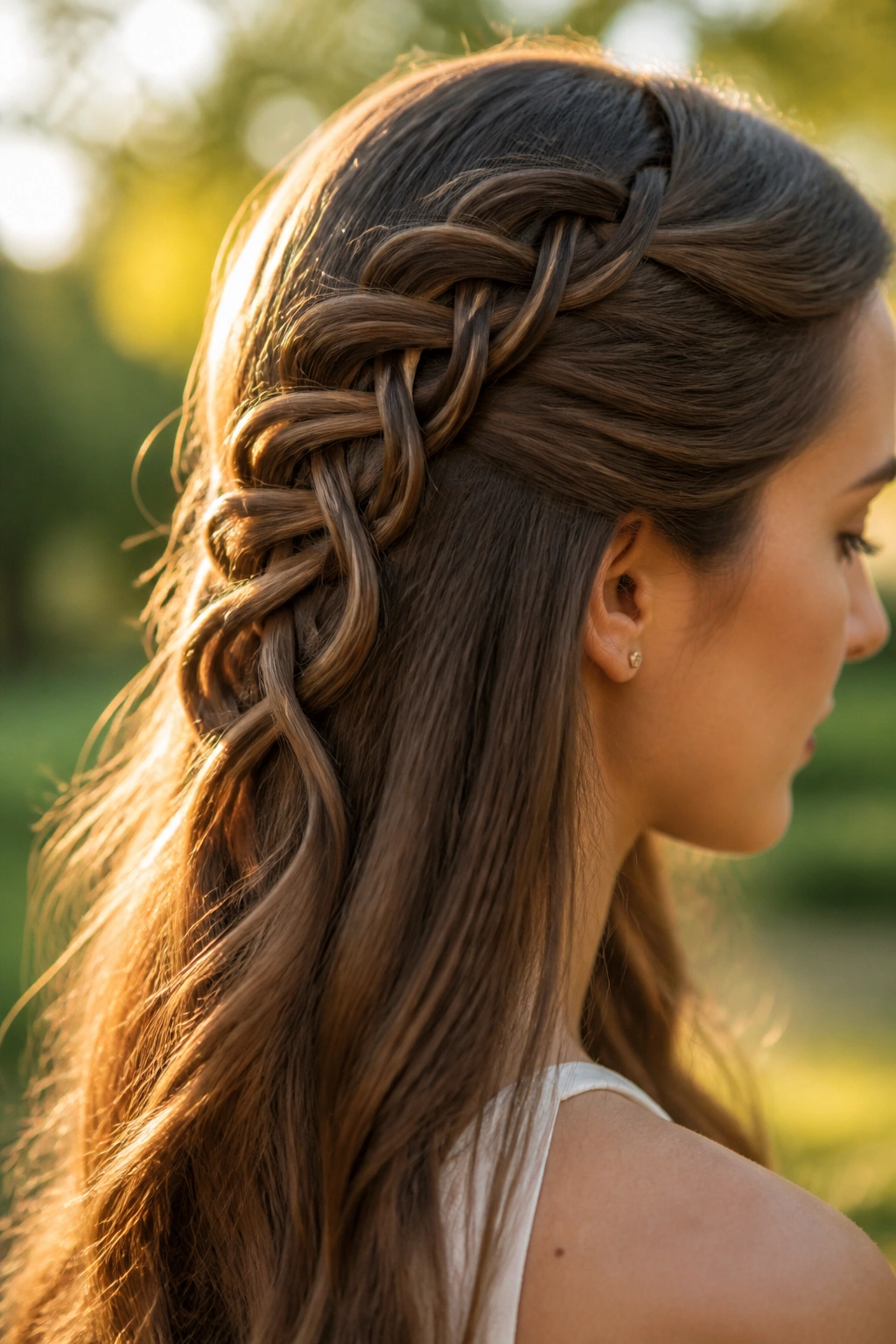
An infinity braid looks like it should require wizard hands, but it mostly asks for patience and clean sectioning. The weave creates a looping pattern that gives the braid a little more texture than a standard plait.
Long hair gives the pattern enough length to show clearly. On shorter hair, the loops can get lost. On long hair, the braid can run down the back or sit to one side and still keep its shape.
What Makes It Different
The braid has a repeated figure-eight motion, so the finished look feels more detailed than a regular three-strand braid. It is a nice choice when you want something that looks special without piling on accessories.
Good Fit
- Smooth hair
- Medium to long event styles
- Half-up accents
- Anyone who likes braid details that read up close
If you want the braid to pop, keep the sections neat and avoid overworking the loops after you finish. Too much tugging can blur the pattern.
17. Braided Ponytail
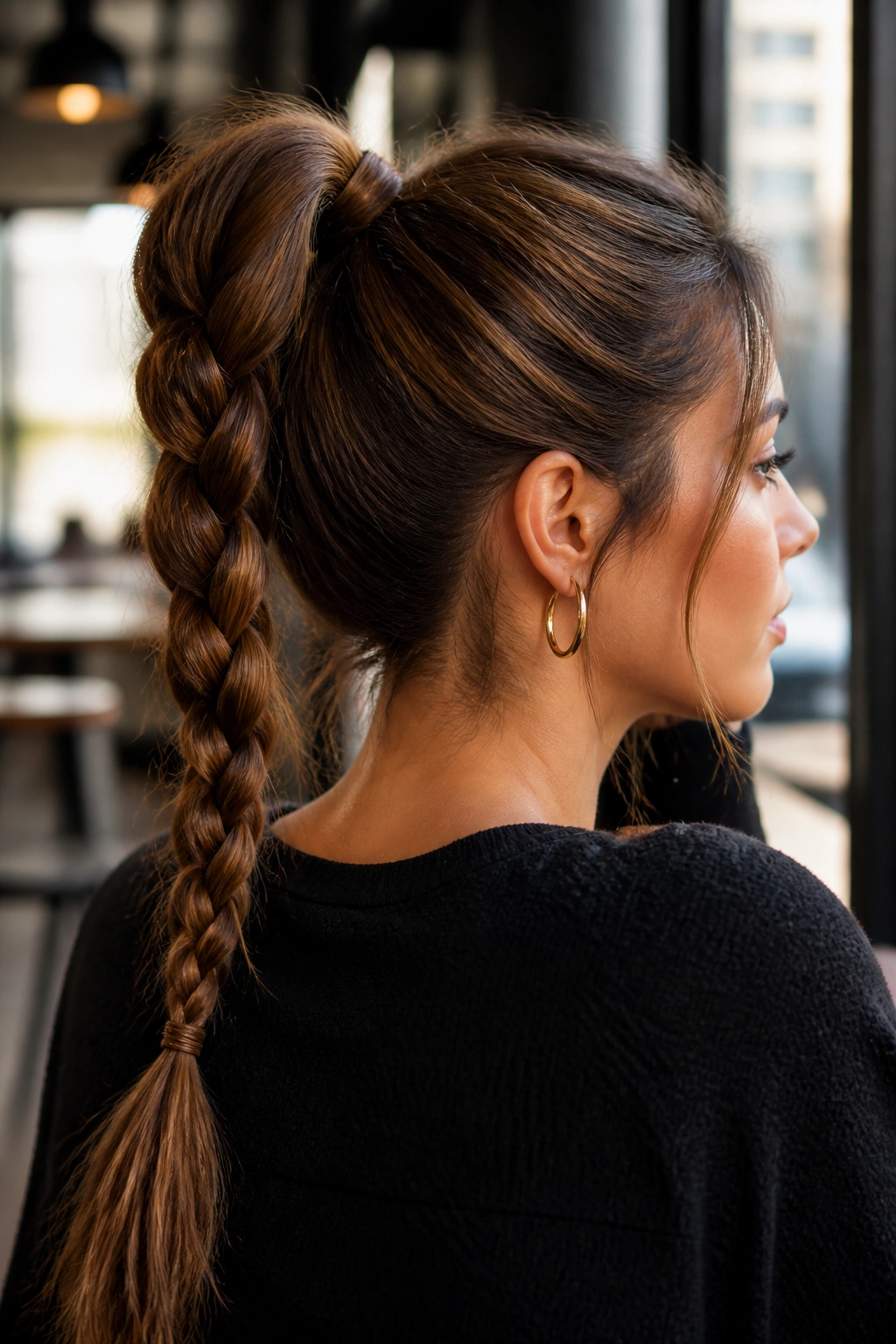
A braided ponytail is one of the easiest ways to make long hair look more finished. You can braid the ponytail itself, braid the base before the ponytail starts, or do both if you want the style to feel more dressed up.
The long length matters because the ponytail becomes part of the design instead of just a place to put the hair. A thick braid swinging from a high ponytail looks sporty. A low braided ponytail feels cleaner and more polished. The same basic idea, two different moods.
Small Details That Help
Wrap a strand of hair around the elastic at the base if you want the finish to look neater. Pin the wrapped strand under the ponytail with a bobby pin. That tiny move hides the elastic and gives the style a smoother line.
Braided ponytails are one of the most practical choices on long hair because they stay out of the way and still feel styled.
18. Bubble Braid
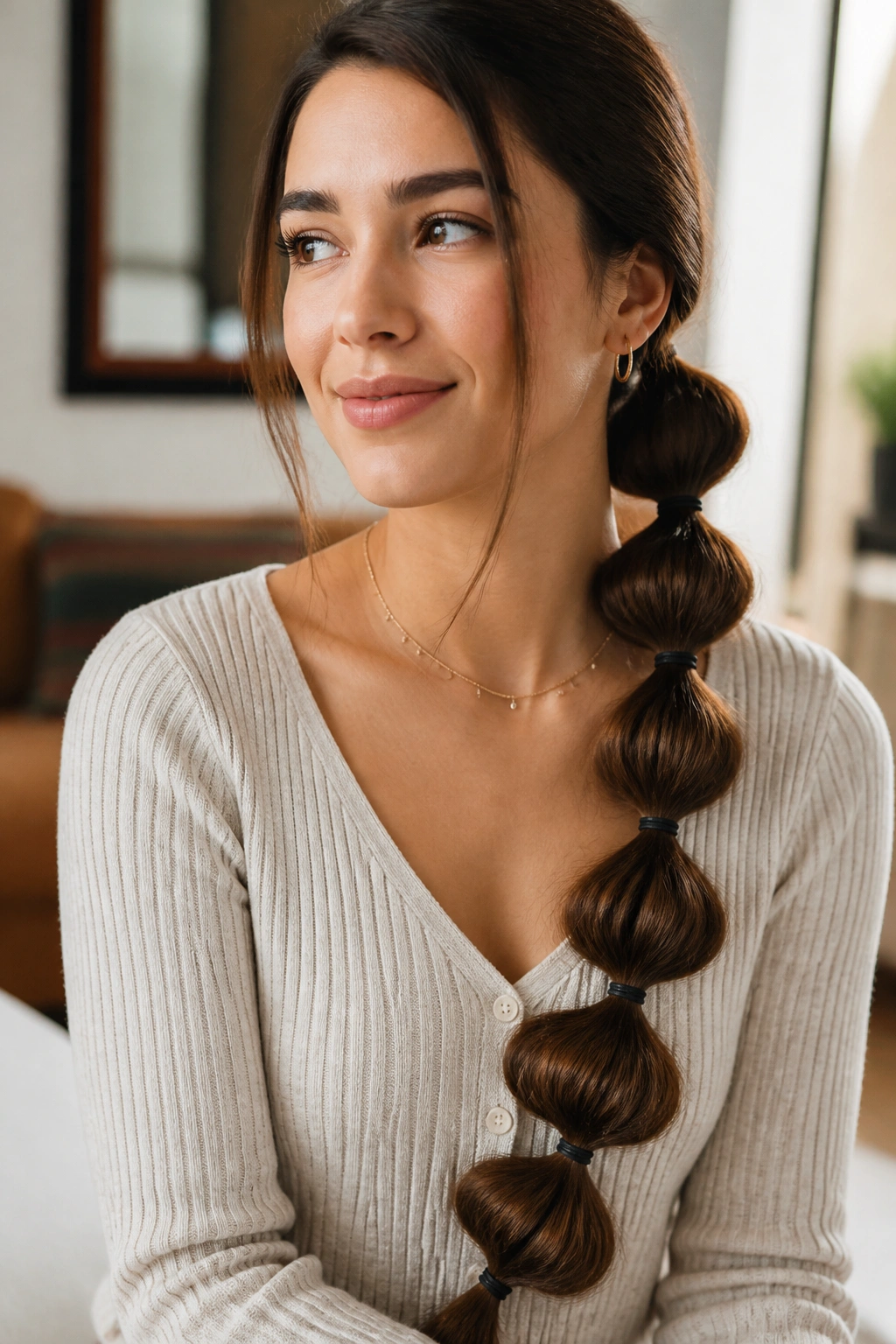
Not every long-hair style needs to be a classic braid. A bubble braid gives you shape fast, and that’s the appeal. You tie a ponytail, add more elastics every few inches, then gently puff each section outward so it becomes a chain of rounded bubbles.
Long hair makes the bubbles more dramatic because there’s enough length between each elastic to create space. Fine hair can look fuller with this style. Thick hair can make the bubbles feel bold and sculptural. Either way, it’s an easy one to like.
How to Keep the Bubbles Even
Use the same spacing between elastics, usually around 2 to 3 inches. Then tug each section outward only after the band is secure. If you pull before the elastic is tight, the shape slips.
My Take
This style is a lifesaver when you want something decorative without doing a full braid. It reads as playful, neat, and a little modern, even though the technique is plain.
19. Milkmaid Braid
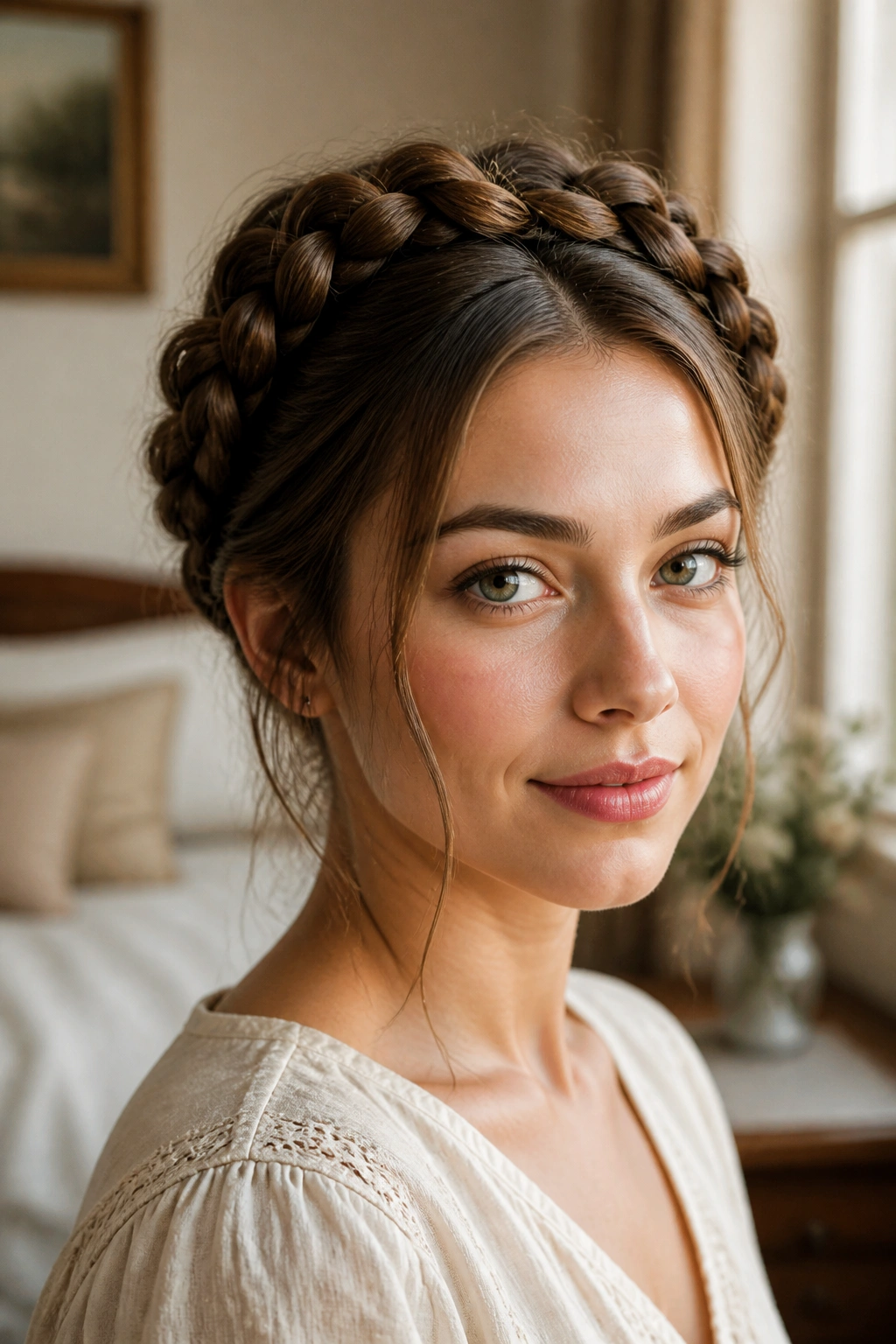
Milkmaid braids have staying power for a reason. Two braids wrapped over the crown create a shape that feels both neat and a little romantic, and long hair gives you enough length to wrap the braids without running short.
The style works best when the braids are a little thicker. Thin braids can look fragile once pinned around the head. With long hair, you usually have enough bulk to make the shape look full and balanced.
Pinning Matters
Cross the pins under the braid instead of sticking them straight in. That helps the braid grab. Tuck the ends under the opposite braid so the finish looks intentional rather than improvised.
Milkmaid braids are good on days when you want the face and neck clear but still want the style to feel soft. A few face-framing pieces keep it from looking severe.
20. Cornrow Braids Into a Bun
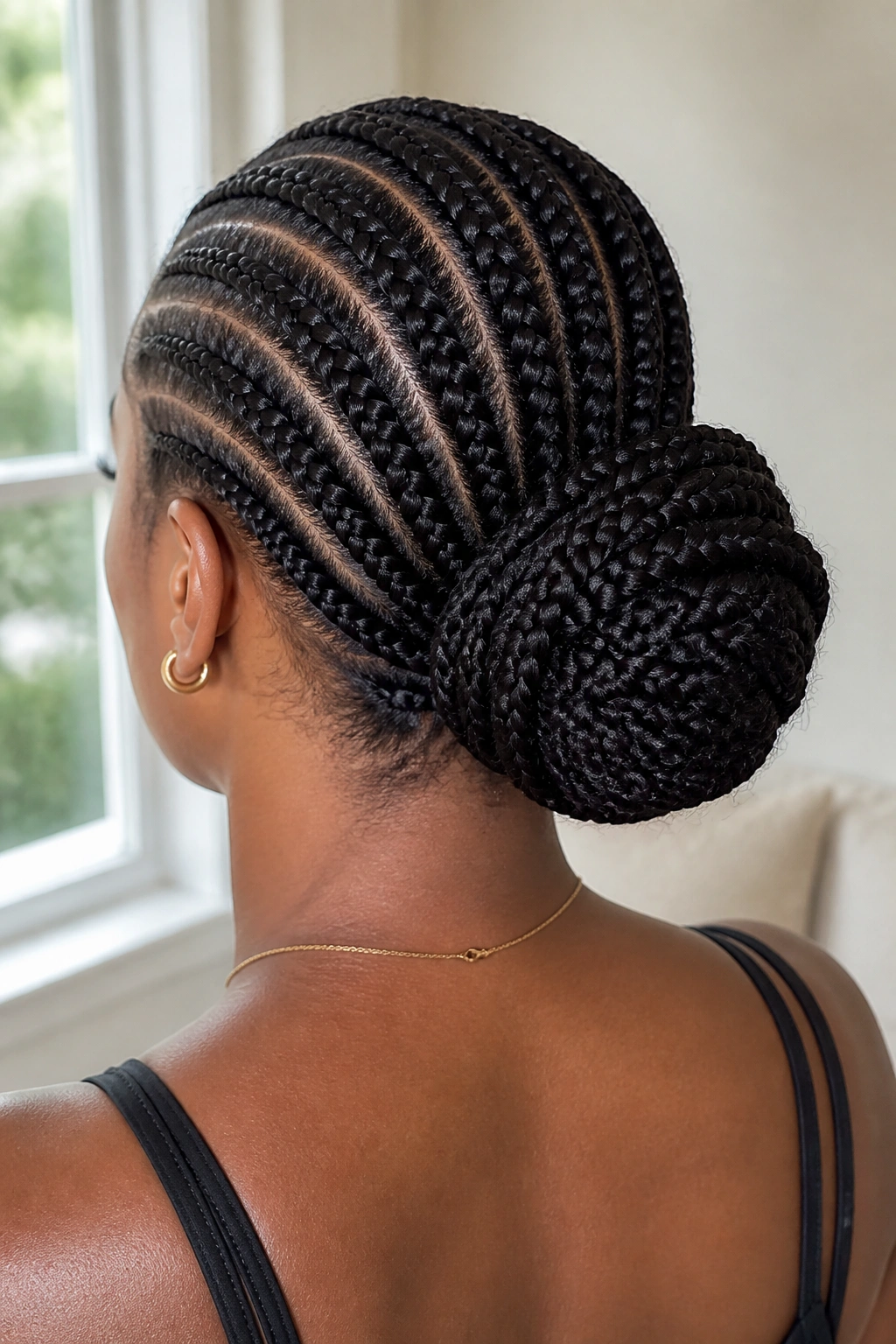
Cornrows leading into a bun make a strong case for structure. The rows keep the scalp neat and close, while the bun at the back holds the long lengths in one place. It is a very practical style, and long hair gives the bun enough material to look substantial instead of tiny.
This style is especially good when you want a secure, long-wearing braid look. The rows can be straight back, curved, or patterned, and the bun can sit low or a little higher depending on how much lift you want. Long hair gives you more room to shape the bun without it collapsing.
A Few Things That Matter
Tension should be firm but never painful. A tight scalp might look tidy at first and feel miserable later. Keep the rows even, and do not ignore the hairline edges just because the bun is the star.
Best For
- Protective styling
- Low-manipulation days
- Hair that needs to stay contained
- Styles that can last through active movement
21. Half-Up Braided Halo
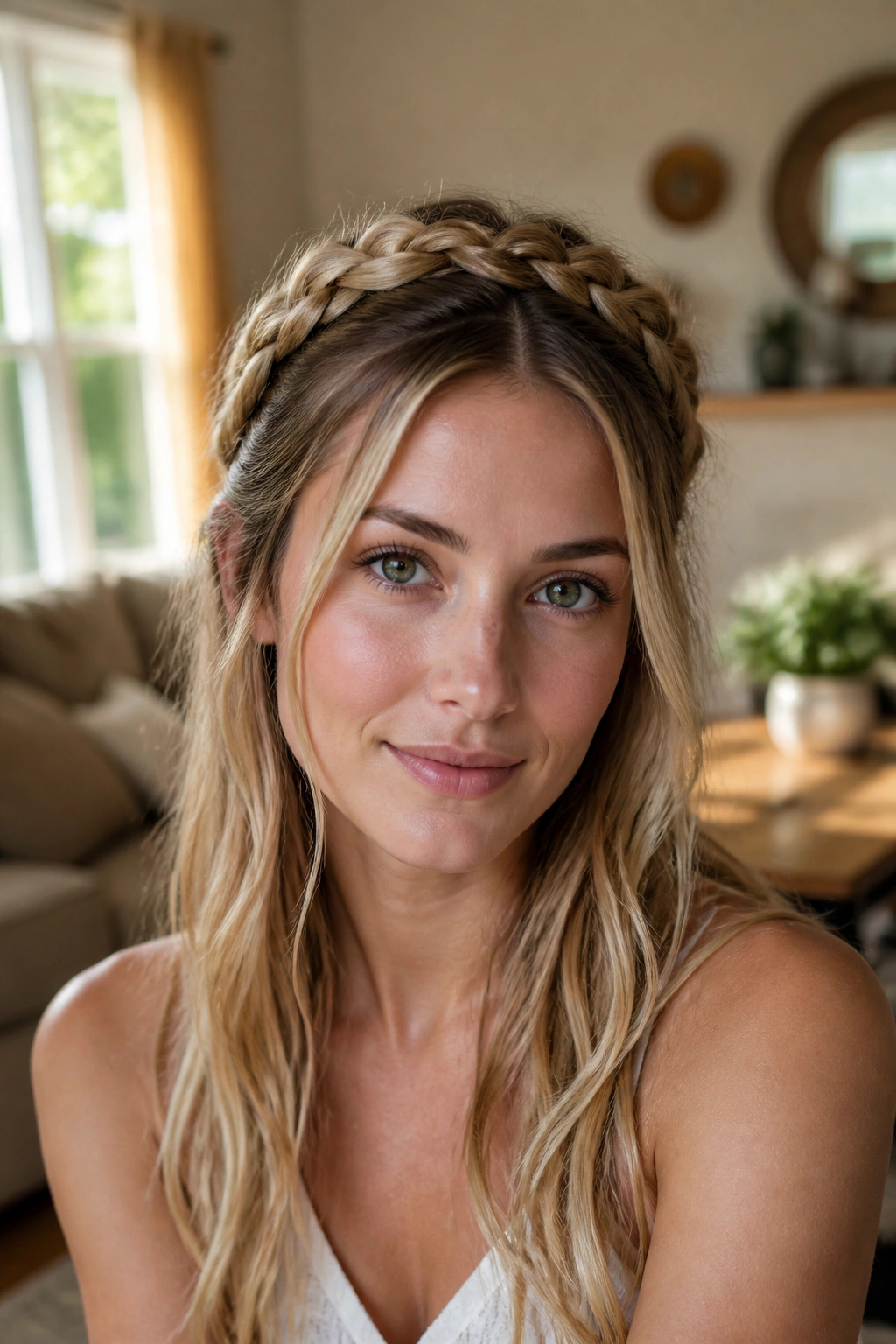
A half-up braided halo keeps the length visible while pulling the top half into a soft frame. That makes it a smart choice for long hair, because you still get the drama of the length without letting it fall into your face.
The braid usually starts from one side of the head, moves across the back, and gets pinned on the other side. Sometimes two braids meet in the middle. Either way, the shape looks balanced because the rest of the hair stays loose underneath.
Why It’s So Useful
It gives the crown a little polish and keeps the front clean. The loose hair below keeps the style from feeling heavy. That mix is what makes it work.
If your hair is layered, leave a few tiny pieces out near the temples. They soften the line and keep the braid from looking too severe.
22. Zigzag Part Braid
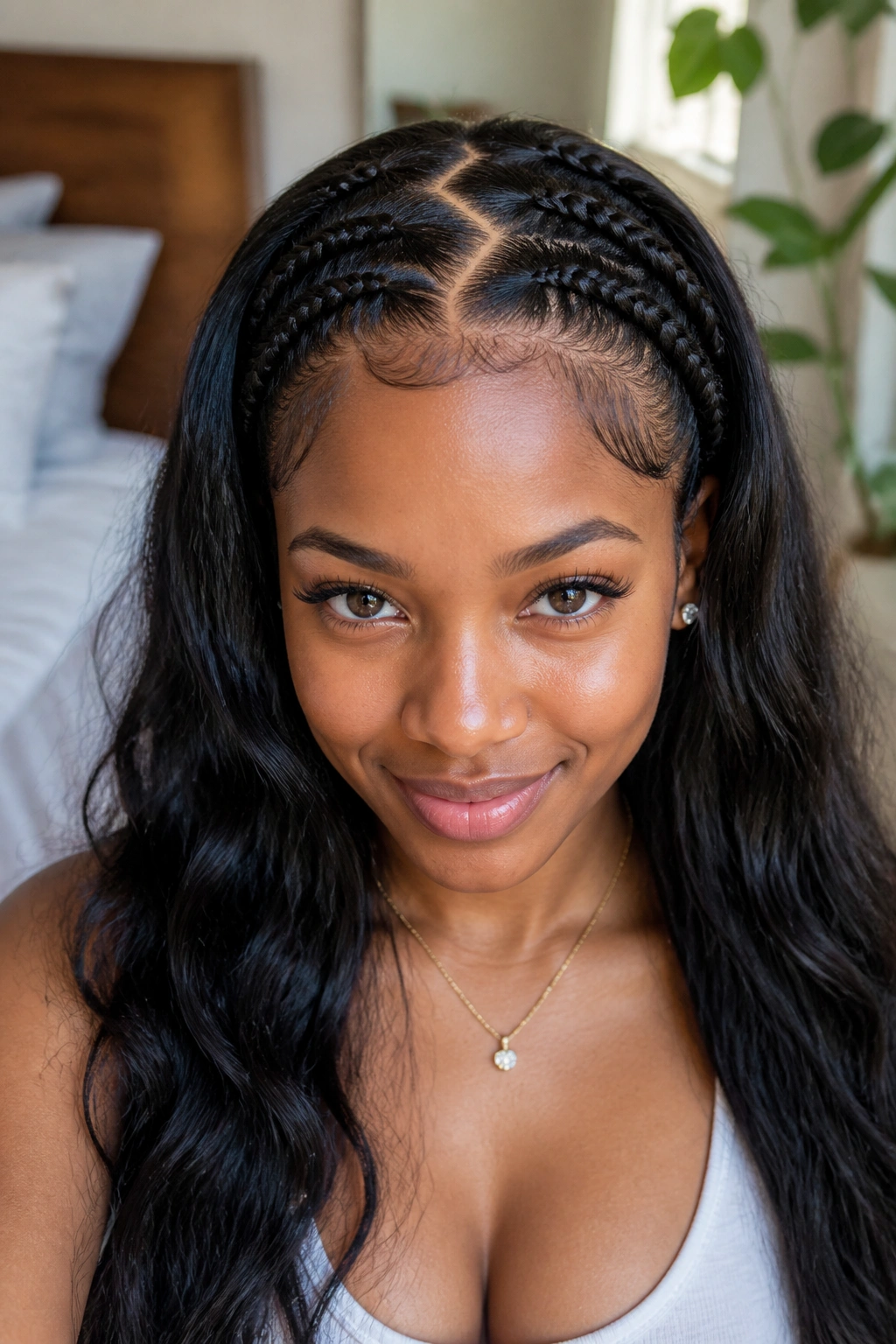
A zigzag part changes everything before the braid even starts. The part line gives the style a sharp, graphic edge, and then the braid follows that shape or sits beside it.
Long hair helps because the parting gets a longer runway before the braid begins. You can pair the zigzag part with two braids, one braid, or a half-up style. The part itself is the main event, so the braid does not need to be complicated.
What You Need
- A tail comb
- A steady hand
- Clips to hold each side while you work
- A little patience for the parting
This is one of those styles that looks best when the part is crisp. If the line gets wobbly, the whole design loses some bite. Keep the comb close to the scalp and move slowly.
23. Ribbon-Woven Braid
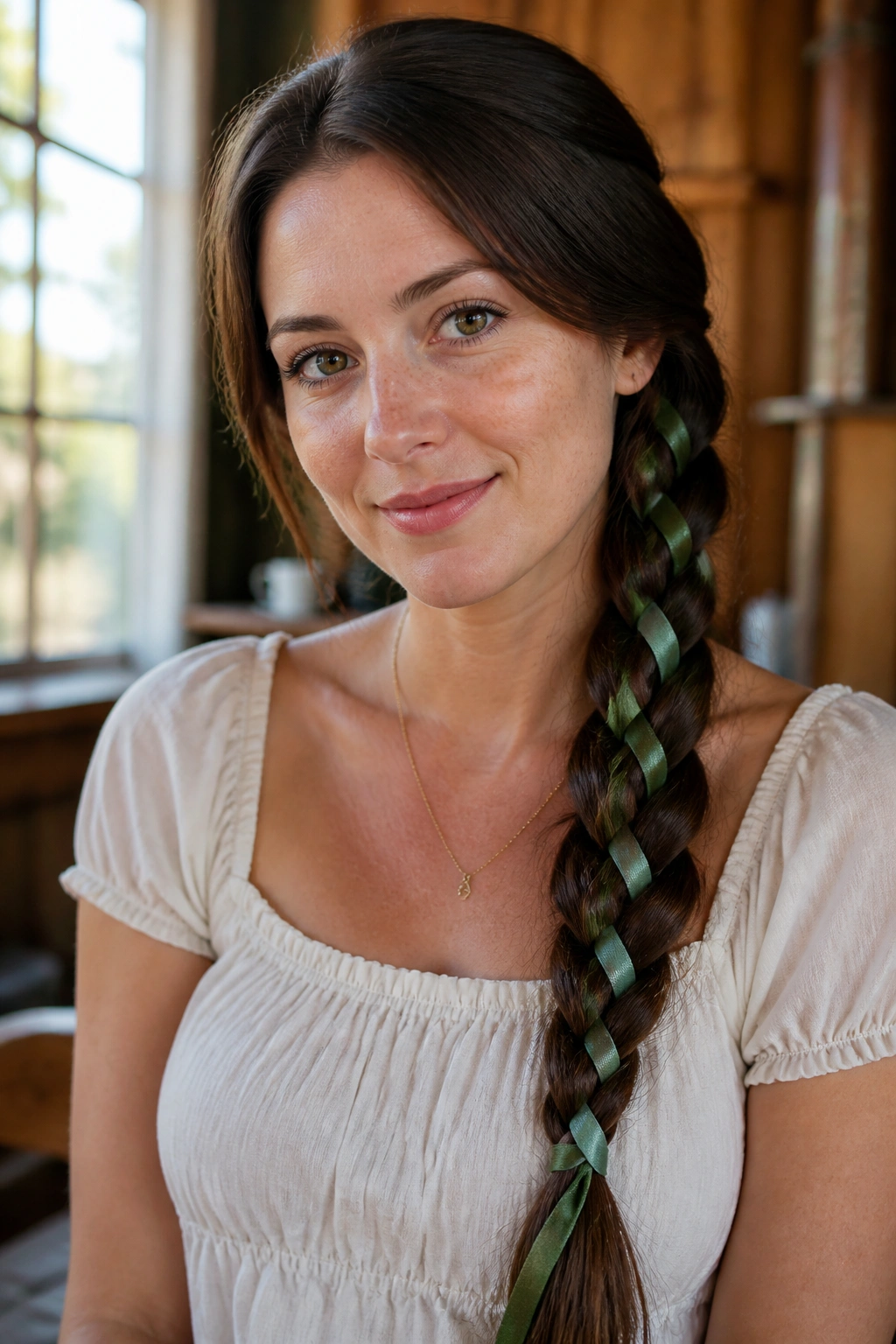
A ribbon-woven braid changes the mood immediately. Take a simple braid and thread a ribbon through it, or weave the ribbon as you braid if you want the color to run through the whole style.
Long hair is a gift here because the ribbon has enough length to show. A narrow satin ribbon can feel dressy, while a matte grosgrain ribbon looks more casual and stable. I prefer ribbons that are about half an inch to three-quarters of an inch wide. Wider than that can overpower the braid unless the hair is very thick.
How to Keep It Neat
Tie the ribbon securely at the top, then keep it flat as you work. If it twists too much, the braid starts looking messy in a bad way. Match the ribbon length to the hair length so the ends do not dangle awkwardly.
This one is good when you want a braid that feels special without learning a new technique.
24. Face-Framing Accent Braids
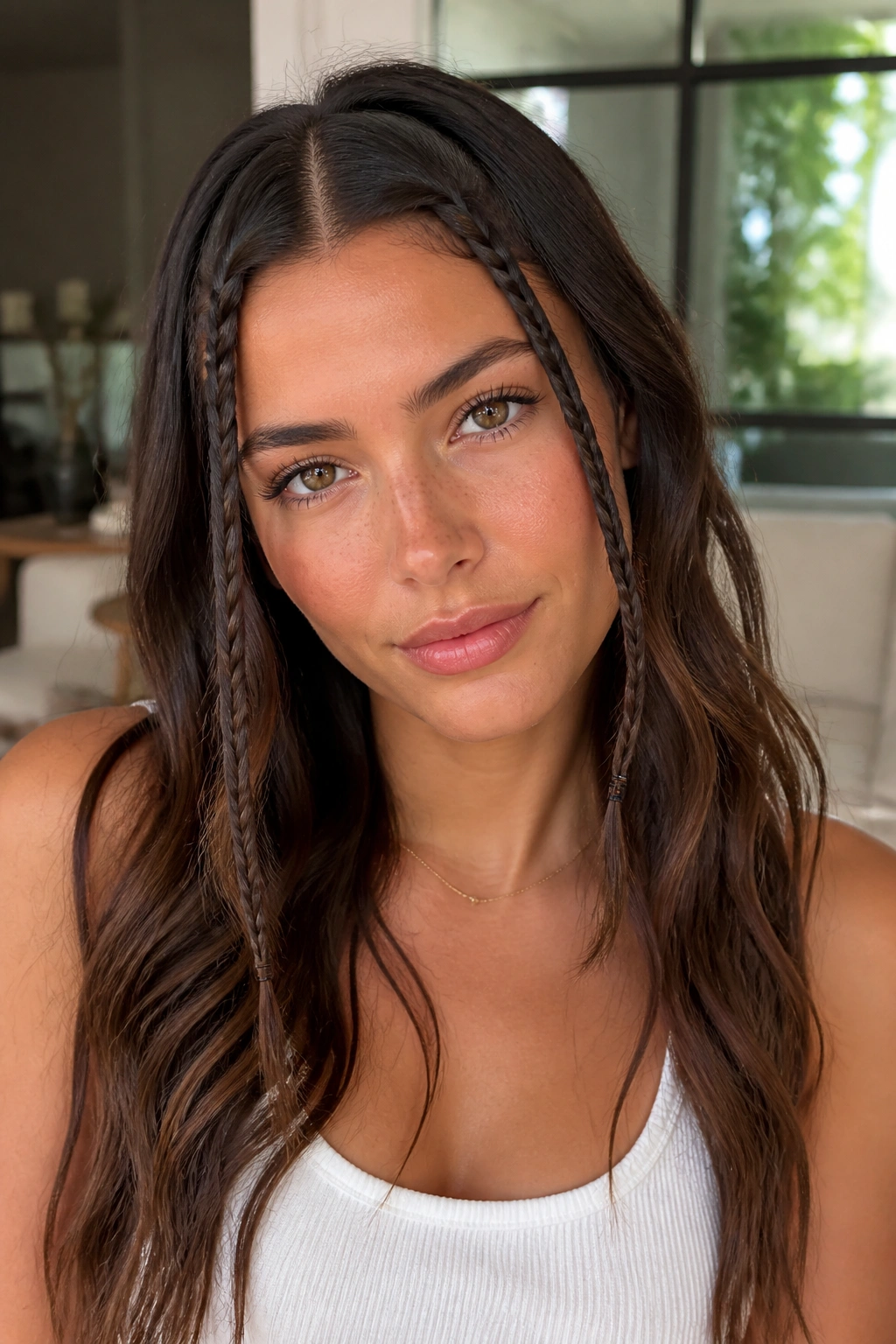
Tiny face-framing braids can do more work than people expect. They hold back the front pieces, add a little detail near the cheeks, and make long hair look styled even when the rest of it stays loose.
These braids are especially good when you want the hair down but not completely free. A pair of slim braids near the temples can sit under waves, tuck into a half-up look, or run back toward the ear and disappear under the rest of the hair.
Where They Shine
- Busy mornings
- Concerts and casual events
- Braided details without a full updo
- Hair that falls into your face all day
Use small elastics if your hair slips, and keep the braids narrow. If they get too chunky, they stop looking delicate and start fighting the rest of the style.
25. Braided Bun
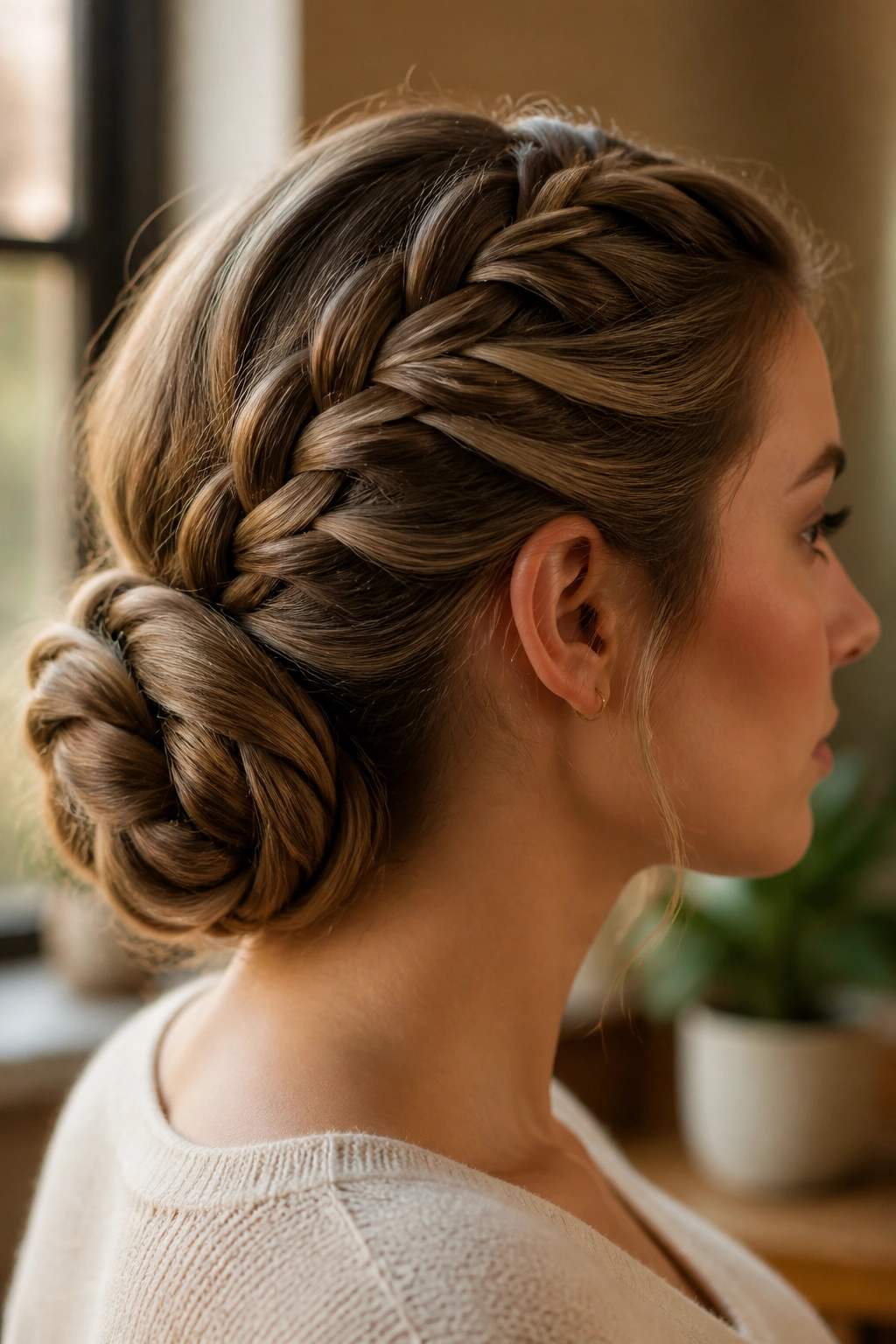
A braided bun is one of the easiest ways to make long hair look polished without losing texture. You braid the full length first, then wrap or coil it into a bun. That braid gives the bun grip, so it tends to stay put better than a plain twist.
Long hair is the reason this style looks full. The braid has enough mass to create a bun that feels substantial, whether you keep it low and neat or loosen it a little for a softer finish. It is one of those styles that can lean formal or casual depending on how tight you make the braid.
A Cleaner Finish
If you want a neat bun, wrap the braid flat against itself and pin in several directions. If you want a softer one, tug the braid a little before coiling so the bun has more shape and texture.
Braided buns are strong choices for dinners, office days, and any time you want your hair to stay off your neck without looking plain.
Final Thoughts
Long hair gives braids room to breathe, but it also exposes every weak spot in your sectioning. That is the part worth remembering. A simple braid done cleanly usually beats a complicated one done in a rush.
If you are choosing between styles, pick the one that matches your hair’s texture and your patience level that day. A tight Dutch braid, a loose fishtail, or a braided bun all solve different problems, and the best one is the braid you’ll actually finish before you get annoyed.
And if your first try looks a little uneven, fine. Braid it again tomorrow. Long hair gives you plenty of chances.
