



Cornrow braid styles for Black women can do a lot more than sit neatly on the scalp. They can sharpen a face, soften a jawline, protect natural hair for weeks, and give a plain outfit a little attitude.
That part matters. A set of braids that pulls too hard at the temples feels wrong fast, and a style that ignores your parting pattern can look messy even when the braid work is clean. The good ones hold shape without fighting the hairline.
Some styles are built for speed. Others are built for drama. A few do both, which is why the same basic braid technique can end up looking like office hair, vacation hair, gym hair, or wedding hair depending on section size, direction, and how the ends are finished.
These 30 styles move through that whole range—from straight-back classics to sculpted curves, beads, color, and buns—so you can compare the feel of each one instead of guessing from a single photo.
1. Straight-Back Cornrows
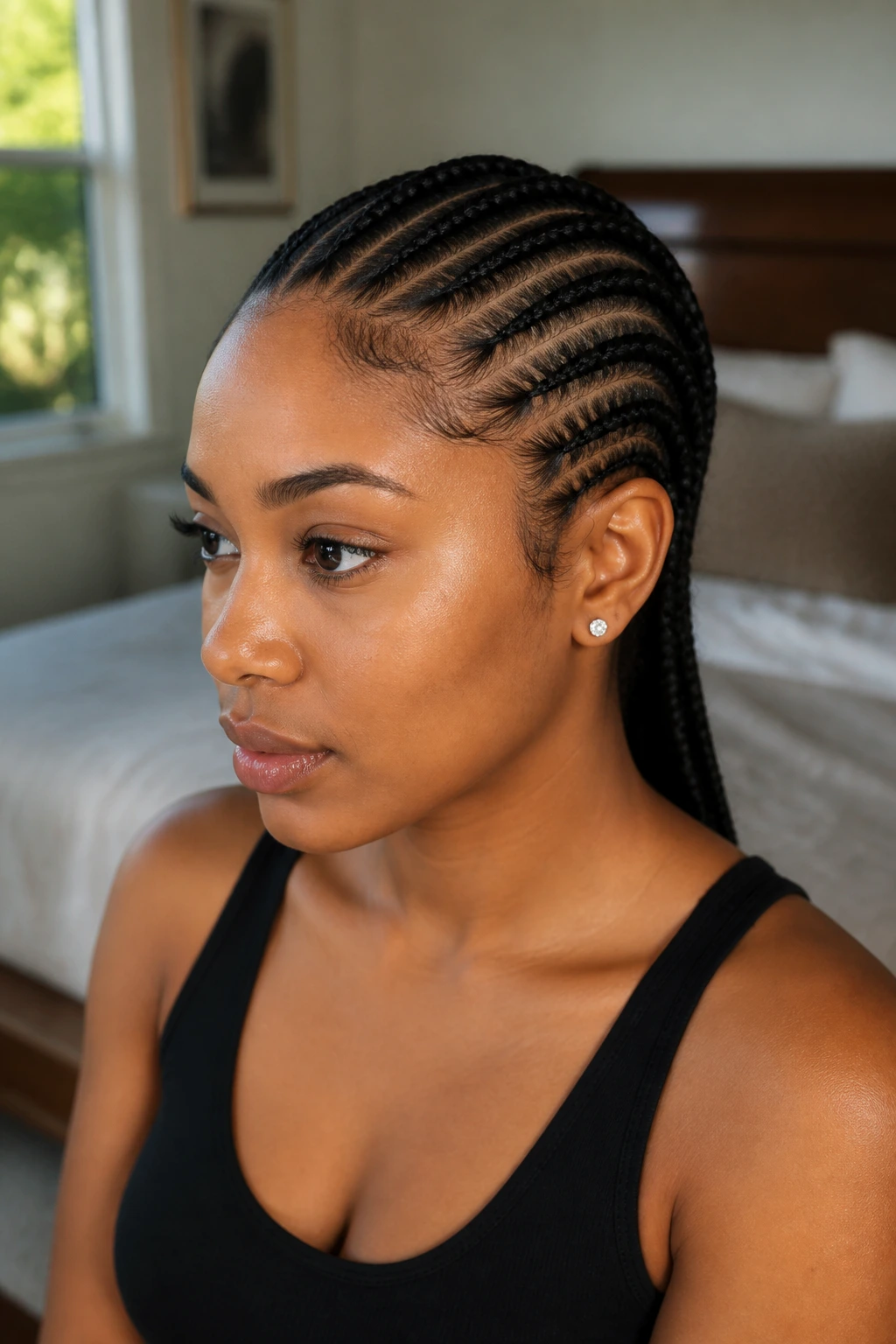
Straight-back cornrows are the style most people picture first, and for good reason. They’re clean, easy to read, and they make the whole head look orderly without trying too hard. If you like a look that says “I have my life together” with almost no drama, this is it.
The beauty of straight-back braids is how little they ask from the eye. The lines run from the hairline to the nape, so the shape feels calm and direct. That also makes them easy to keep neat between salon visits, especially when the parts are even and the braids aren’t packed too tightly at the front.
They work best when the section sizes stay consistent—usually somewhere around ½ inch to 1 inch, depending on density and the look you want. Smaller sections give more braids and a finer finish. Wider sections make the style faster and a little bolder.
One sentence says it all: simple does not mean boring. Straight-back cornrows are one of those styles that look better the cleaner the parting is.
2. Feed-In Cornrow Braids in a High Ponytail
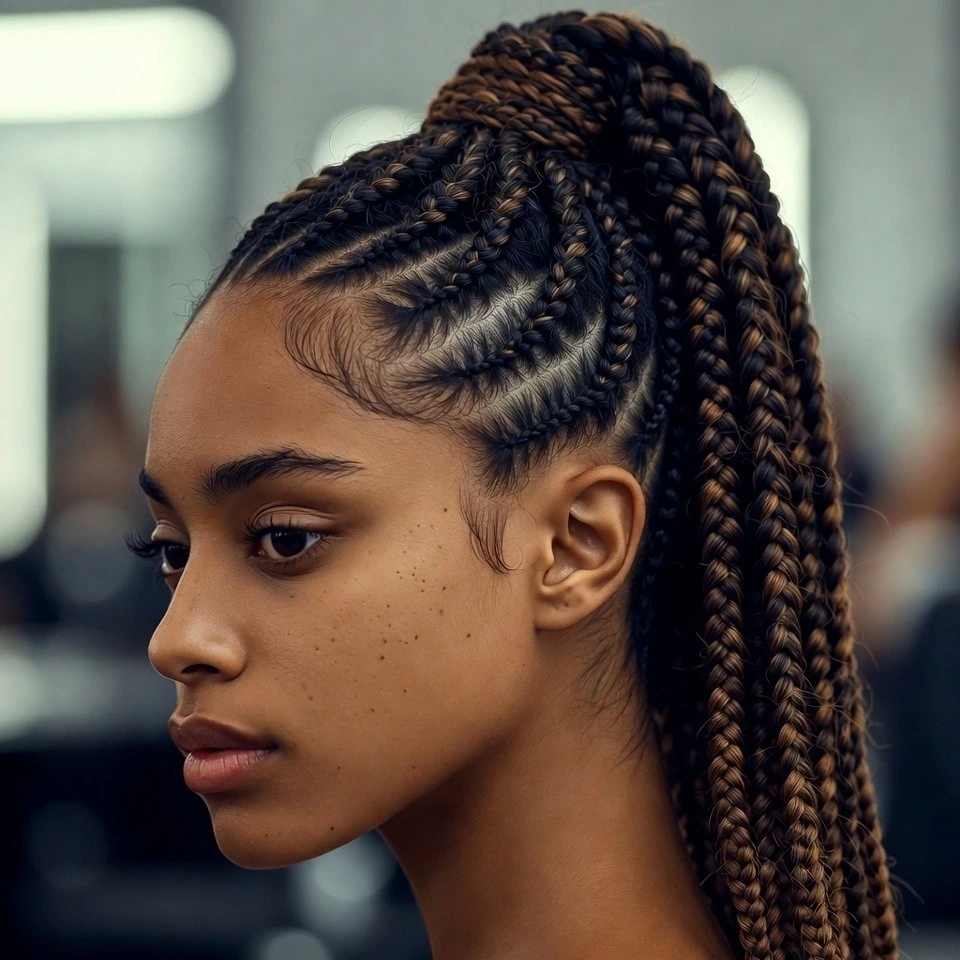
A high ponytail changes the whole mood. The braids lift the face, the crown gets height, and the end result feels sharper than a flat style without becoming fussy. Feed-in cornrows make that ponytail look smooth at the hairline, which is the part that usually gives the style its polish.
Why the Feed-In Method Matters
Feed-in braids start small at the scalp and gradually get thicker as extension hair is added. That taper makes the base look softer, and it helps the braid sit flatter near the roots. A high ponytail built this way tends to look less bulky around the edges, which matters if you want the style to move without feeling heavy.
- The first few inches stay sleek, so the front line looks tidy.
- The ponytail can be worn high, mid-height, or slightly off-center.
- The style works well with long extensions when you want swing and length.
Ask for a gentle feed-in at the hairline. Too much added hair too early makes the braid look thick at the root, and that is where tension starts to show.
3. Side-Swept Cornrows
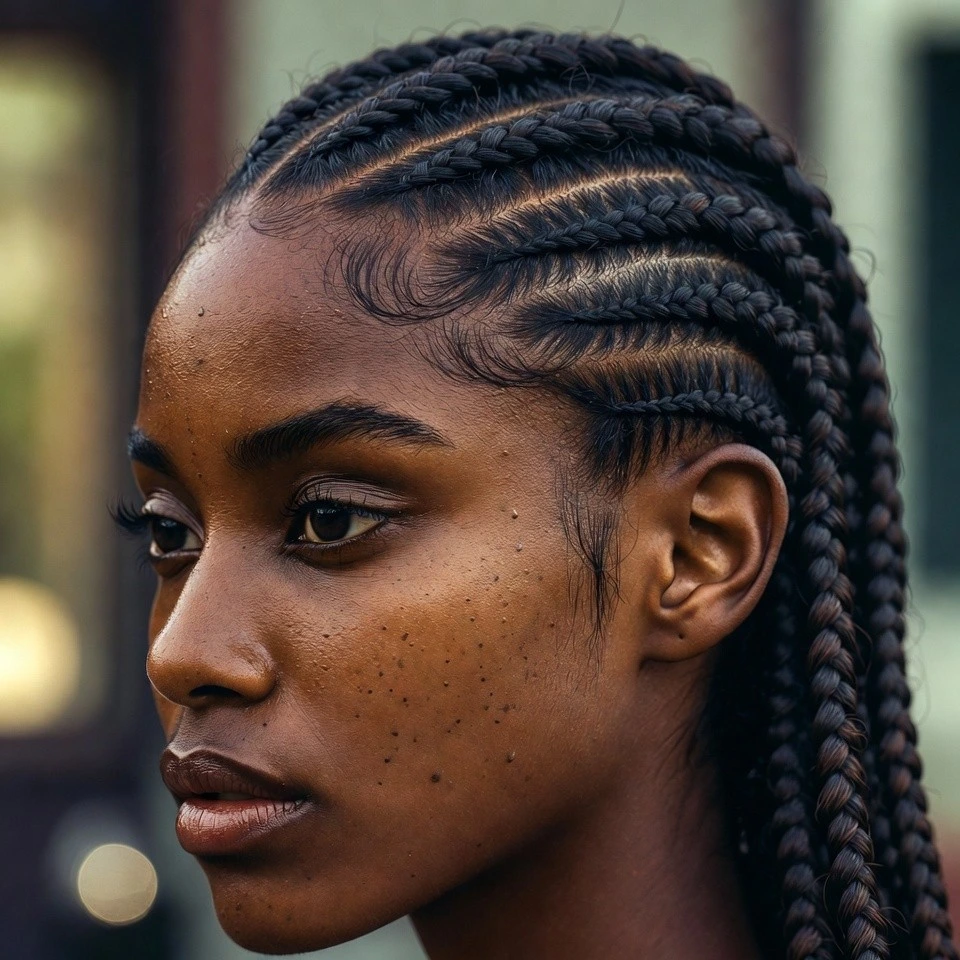
Side-swept cornrows are the style you pick when you want something softer than straight-backs but still neat. The braids move diagonally across the head, which gives the face a little lift and breaks up the rigid feel of rows going straight back.
I’ve always thought this style does one quiet trick very well: it makes the whole head look more sculpted. The diagonal lines guide the eye, so cheekbones and brows get more attention without any extra styling. That makes it a strong choice for a day when you want your hair to do some of the work.
- Best on medium to long hair, with or without extensions.
- A deep side part gives the strongest shape.
- Works nicely with earrings because the hair leaves one side open.
- Looks good tucked into a low bun if you want to switch it later.
The whole point is movement. Side-swept braids don’t sit there; they travel.
4. Zig-Zag Part Cornrows
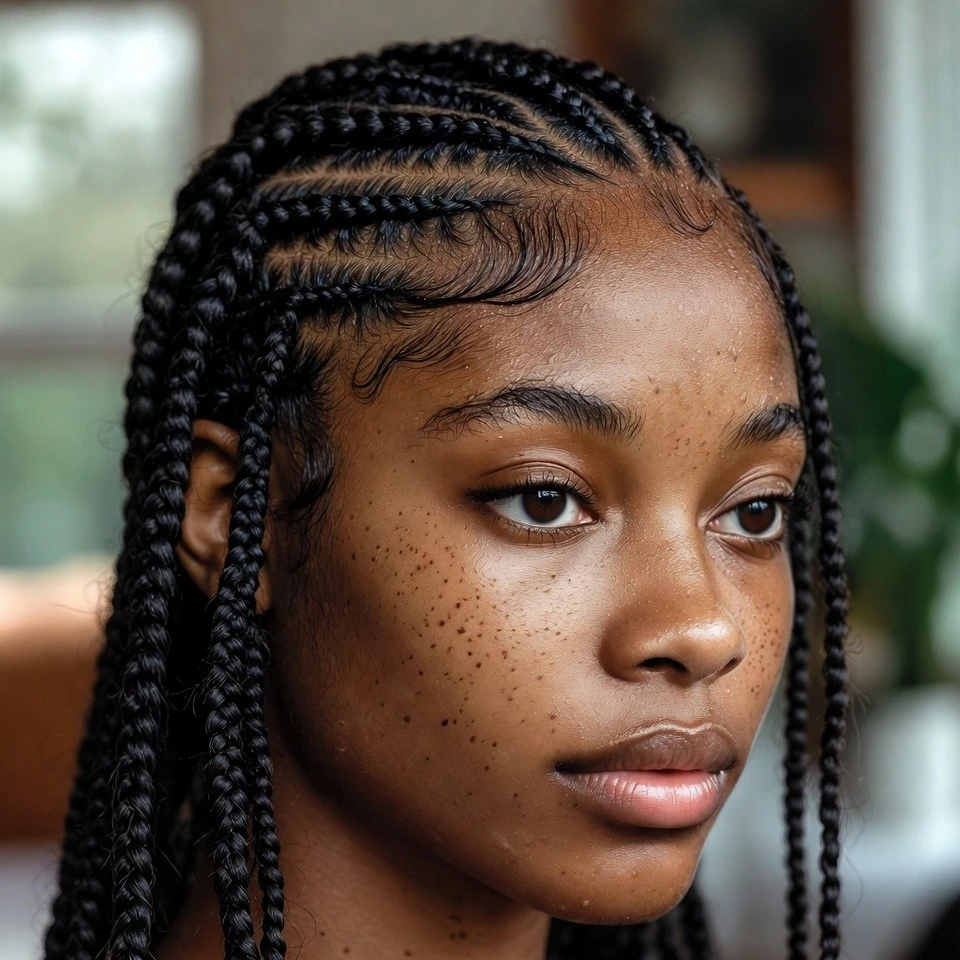
Zig-zag parts make even a basic braid pattern feel a little mischievous. The braids themselves can be straight-back or curved, but the parting line keeps changing direction, which gives the style a sharp, graphic look. It is one of those details people notice even if they cannot name why.
The trick is in the comb work. A clean rat-tail comb and a steady hand matter more here than almost anywhere else, because ragged corners make the pattern look accidental instead of intentional. When the zig-zag is crisp, the scalp art becomes the point of the style.
This kind of parting also works well when you want to break up very long rows. The eye keeps landing on each turn, so the style has more energy than a plain grid. It’s a good pick if you enjoy a little edge but do not want the actual braids to get too complicated.
Tiny lines. Big effect.
5. Ghana Braids
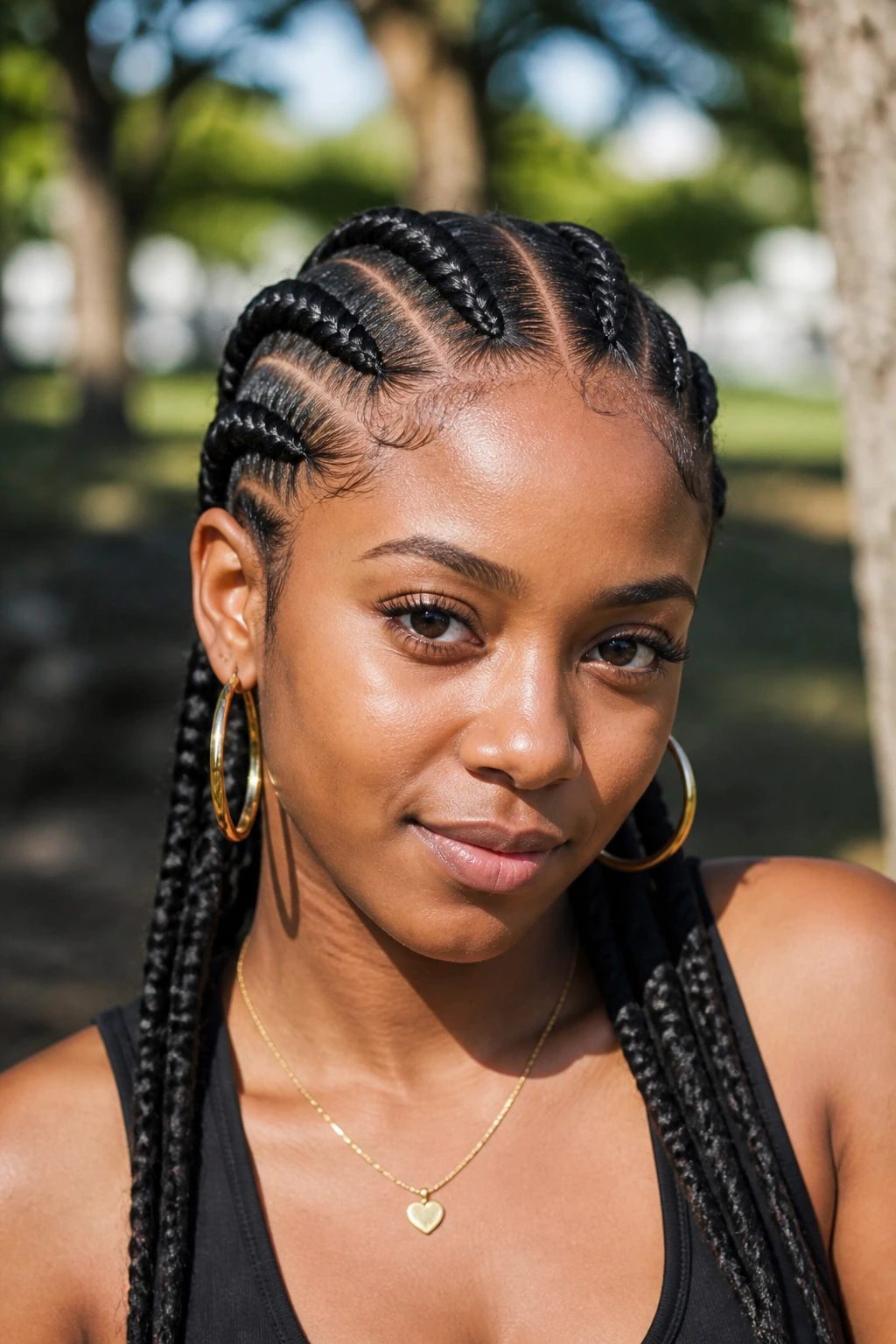
Want a thicker braid that still sits close to the scalp? Ghana braids do that job beautifully. They start narrow at the hairline and build into fuller rows, which gives the style a bold shape without losing the neatness people love in cornrow work.
How to Wear It
Ghana braids look especially good when the braids are spaced with intention. Too many thick rows can crowd the head, so the style usually reads best when the parting is clean and the rows have room to breathe. A few broad braids across the scalp can look richer than a crowded set of tiny ones.
If you wear glasses, this style can be a smart choice because the front line stays tidy and the braids don’t usually press into the temples the way smaller, tighter rows sometimes do.
The finish can go into a ponytail, a bun, or long hanging lengths. This is a strong “shape first, detail second” style. It has presence before you even add anything else.
6. Lemonade Cornrow Braids
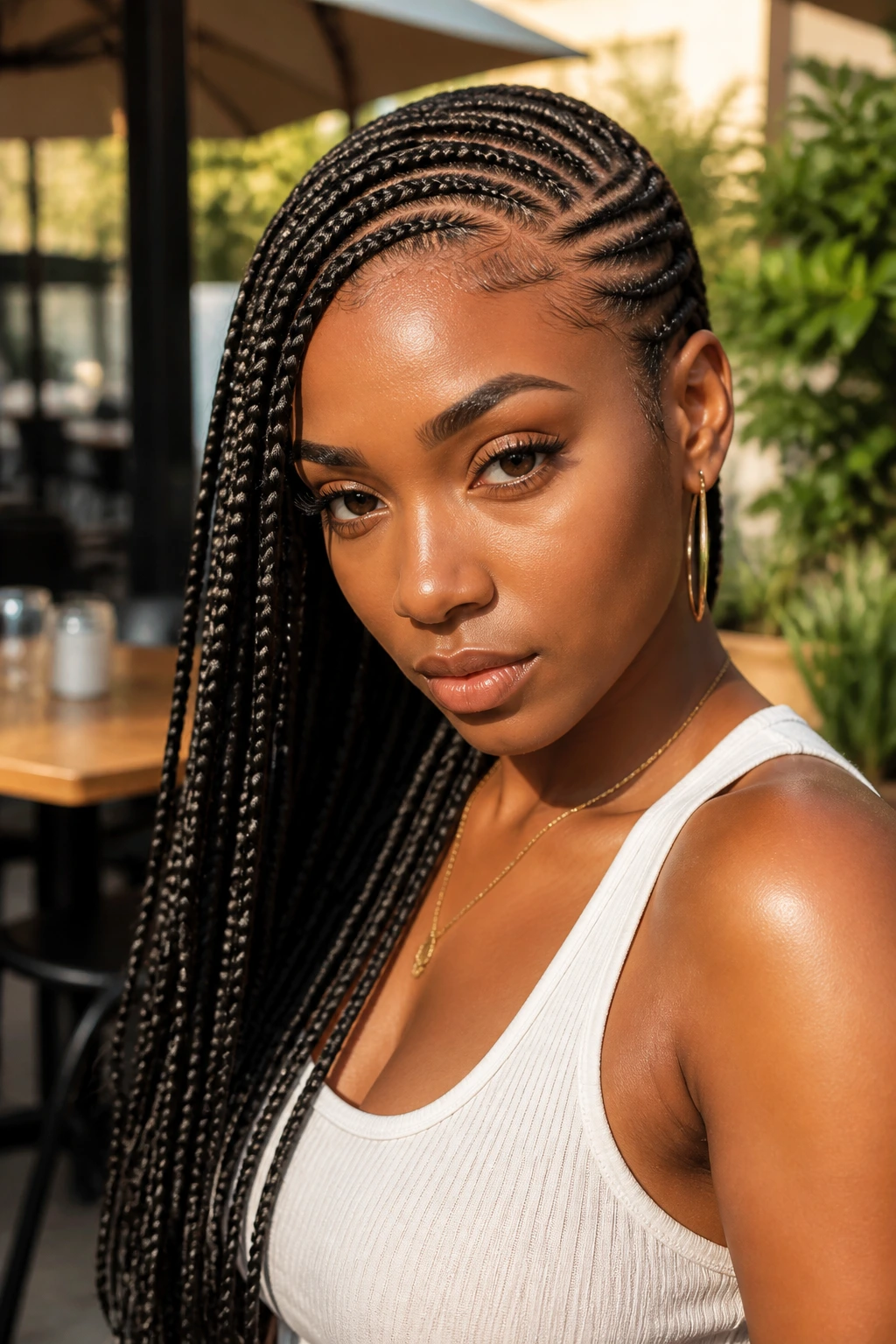
Lemonade braids lean hard into a side part and sweeping motion. The whole style feels a little cooler than straight-back rows because the braids cascade toward one side, which opens up the face and gives the profile more shape.
Compared with a centered braid pattern, lemonade braids feel more styled right away. You do not need much else. A lip color, hoop earrings, maybe a clean middle or side part in the makeup—done. The braid direction does most of the talking.
They’re especially flattering when you want to show off one side of the face or keep one ear open for earrings. The style also handles long extension hair well because the side flow gives the length somewhere to go instead of letting it hang in a plain line.
If you like a look that has motion built into it, this is a strong one. It never feels static.
7. Stitch Cornrows
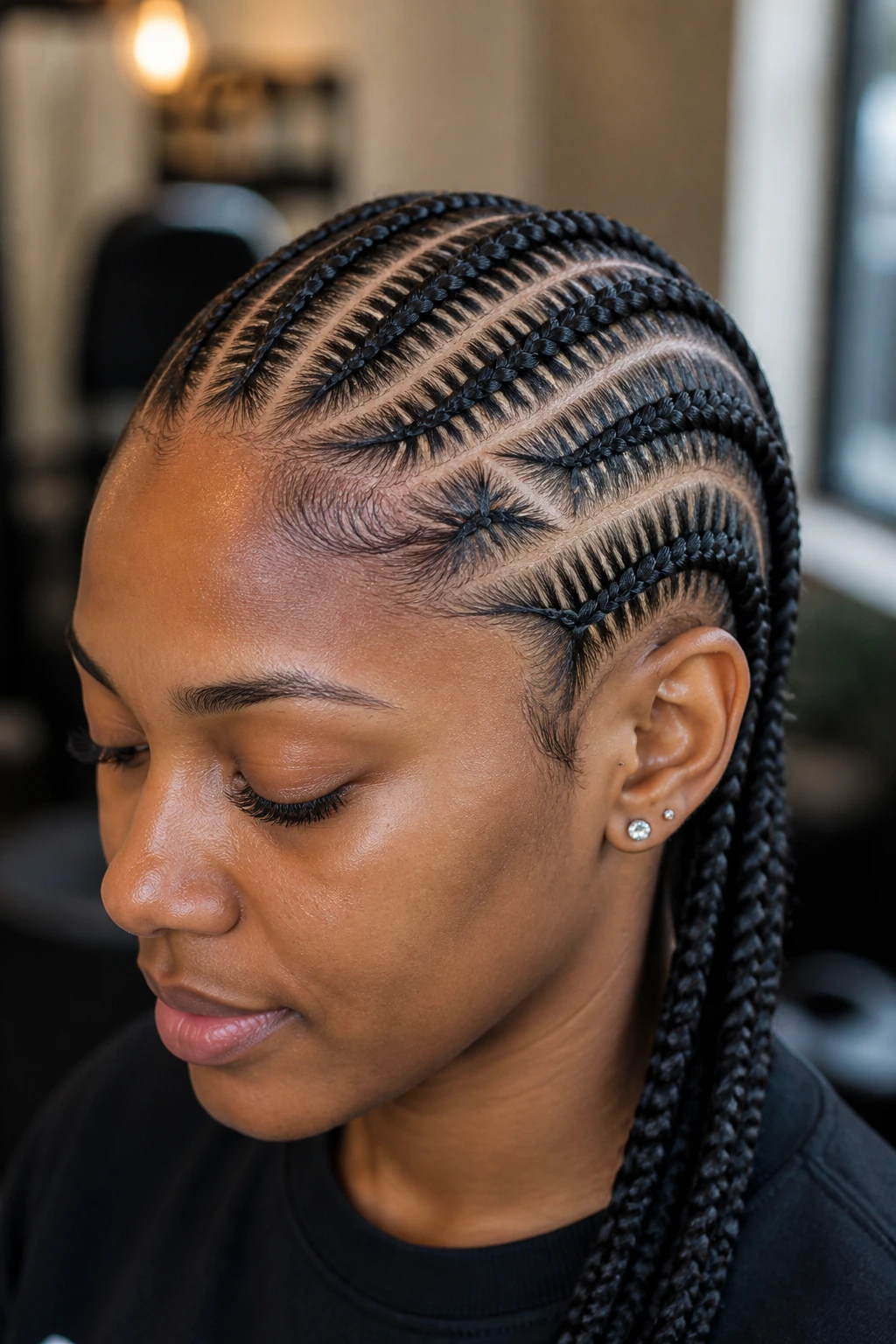
Stitch cornrows are all about precision. The parting looks segmented, almost like tiny dashes or stitched lines running across the scalp, and that visual rhythm gives the braids a very sharp finish. If you like crisp edges and clean geometry, this style delivers.
The name makes sense once you see it: each braid section looks marked off on the scalp before the braid is formed. That extra definition turns the parting into part of the design, not just the setup. It’s a style that rewards a steady stylist and a patient client.
What I like about stitch braids is how they can stay minimal while still feeling detailed. You do not need beads or bright extensions to make them interesting. The parting alone carries the style.
Best of all, stitch lines work with straight-backs, ponytails, side patterns, and buns. It’s the braid version of a tailored jacket.
8. Curved Cornrows
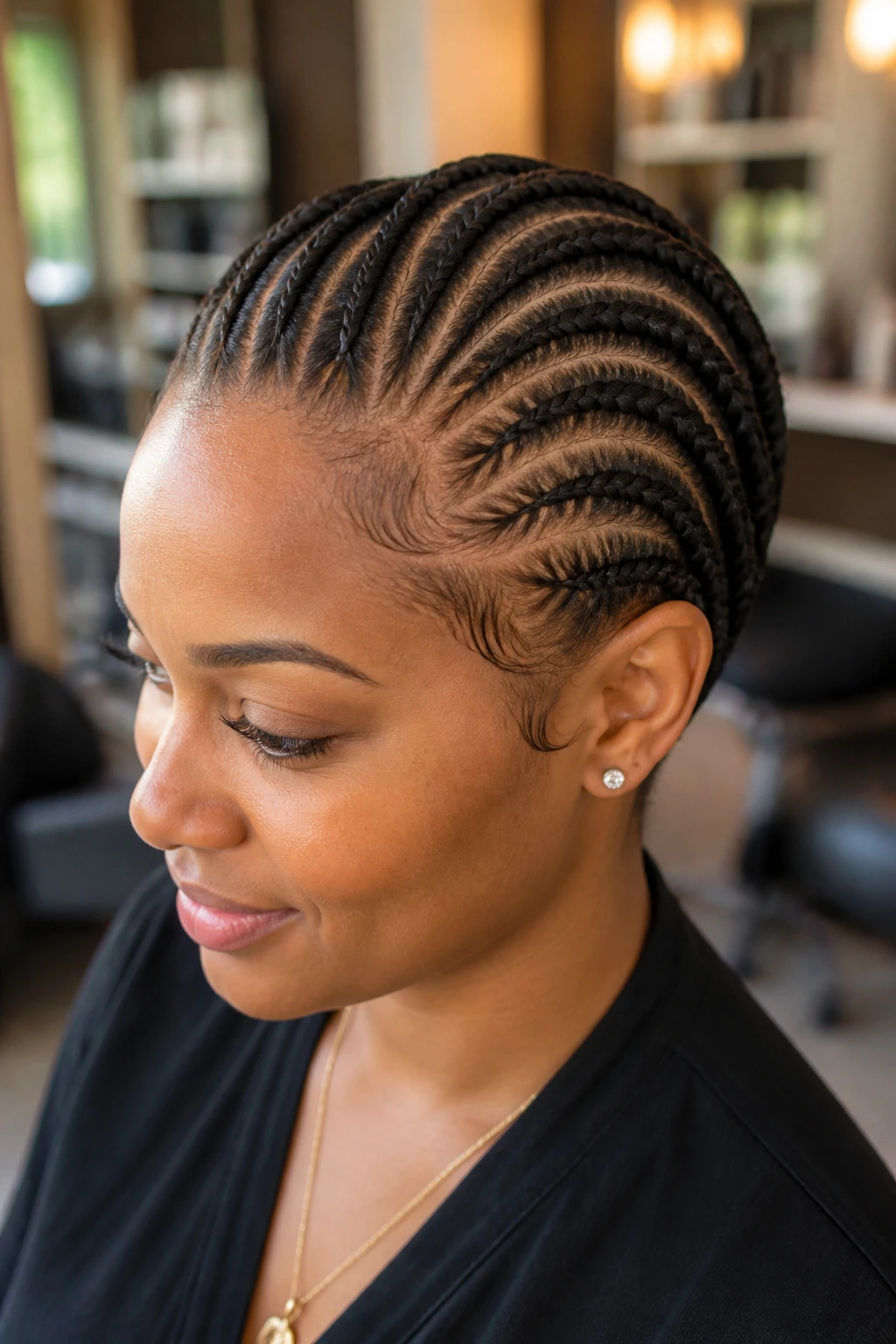
Curved cornrows follow the head instead of fighting it, and that makes the style feel softer right away. The rows can arc around the crown, sweep toward the ear, or loop gently into a low finish. The effect is elegant without looking stiff.
A lot of people underestimate how much a curve changes the whole face. Straight rows feel firm and grounded. Curved rows feel fluid. That shift matters when you want a braid style that feels more feminine, more sculpted, or just less linear than the usual grid.
Curves also help when the scalp has areas you want to disguise a little, such as uneven growth or a spot that you do not want highlighted with a straight part. The bend in the row directs attention elsewhere.
This style rewards a little planning before braiding begins. Once the curve is mapped, the rest tends to fall into place. It’s one of the prettiest ways to make cornrows feel softer.
9. Crown Halo Cornrows
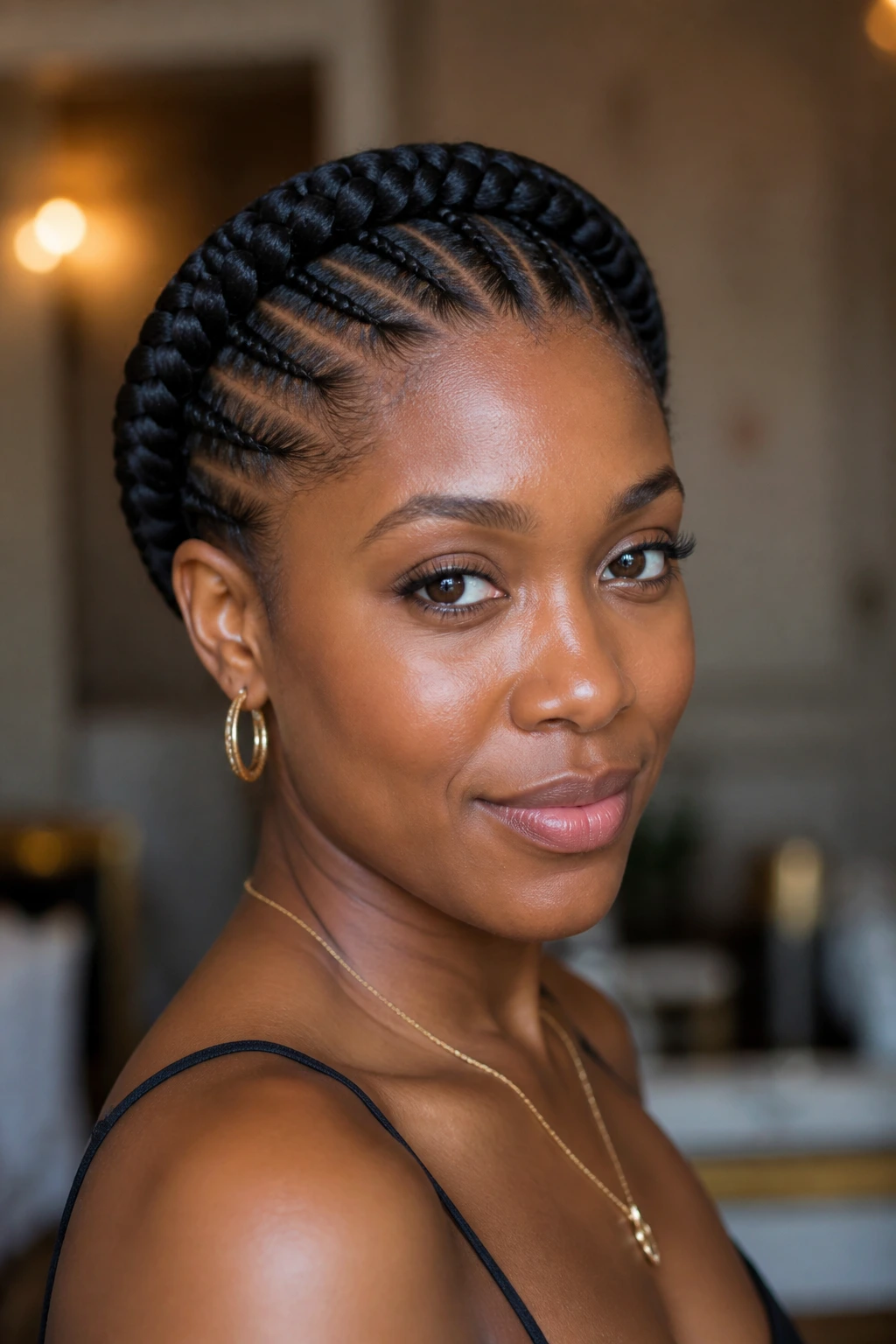
A crown halo braid wraps around the head like a frame, and the shape alone gives it a dressed-up feel. You can wear the braid close to the hairline for a neat band, or build it a little wider so it sits with more presence above the brows.
The best thing about this style is that it keeps the perimeter controlled while leaving the center open for a bun, loose braids, or even a puff. That makes it more flexible than it first looks. It can be sweet, formal, or almost regal depending on what sits in the middle.
It also photographs well because the shape is easy to read from the front and the side. The line around the head is clear, which gives the face a framed look without needing extra accessories.
Some styles are about detail. This one is about silhouette. When the halo is clean, the whole head reads as one shape.
10. Jumbo Cornrow Braids
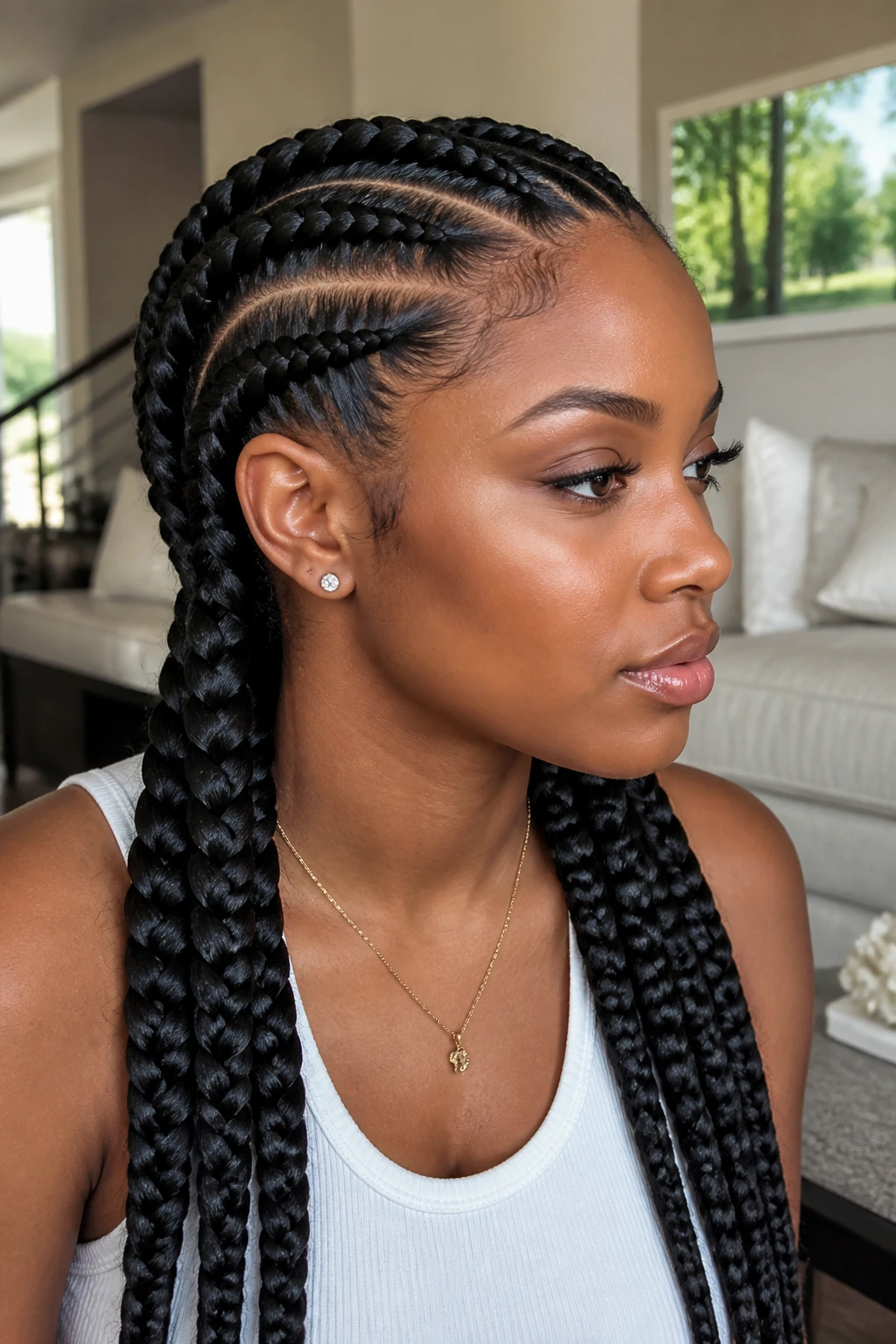
Jumbo cornrows are for days when you want the style to land fast and still feel bold. The sections are wider, the braids are chunkier, and the finished look has a lot of visual weight without needing a dozen small rows.
They’re a smart option if your scalp gets tired under tiny braids or if you just do not want to sit for hours. Fewer parts mean less time in the chair, and the final look can still feel polished when the rows are even and the base is neat.
Jumbo braids also give you room to play with length. Shorter versions look sturdy and practical. Longer versions swing more and make the style read almost like a statement accessory.
The one catch is balance. If the rows are too wide for the head shape, the style can look lopsided. Jumbo braids work best when the size feels intentional, not oversized by accident.
11. Micro Cornrows
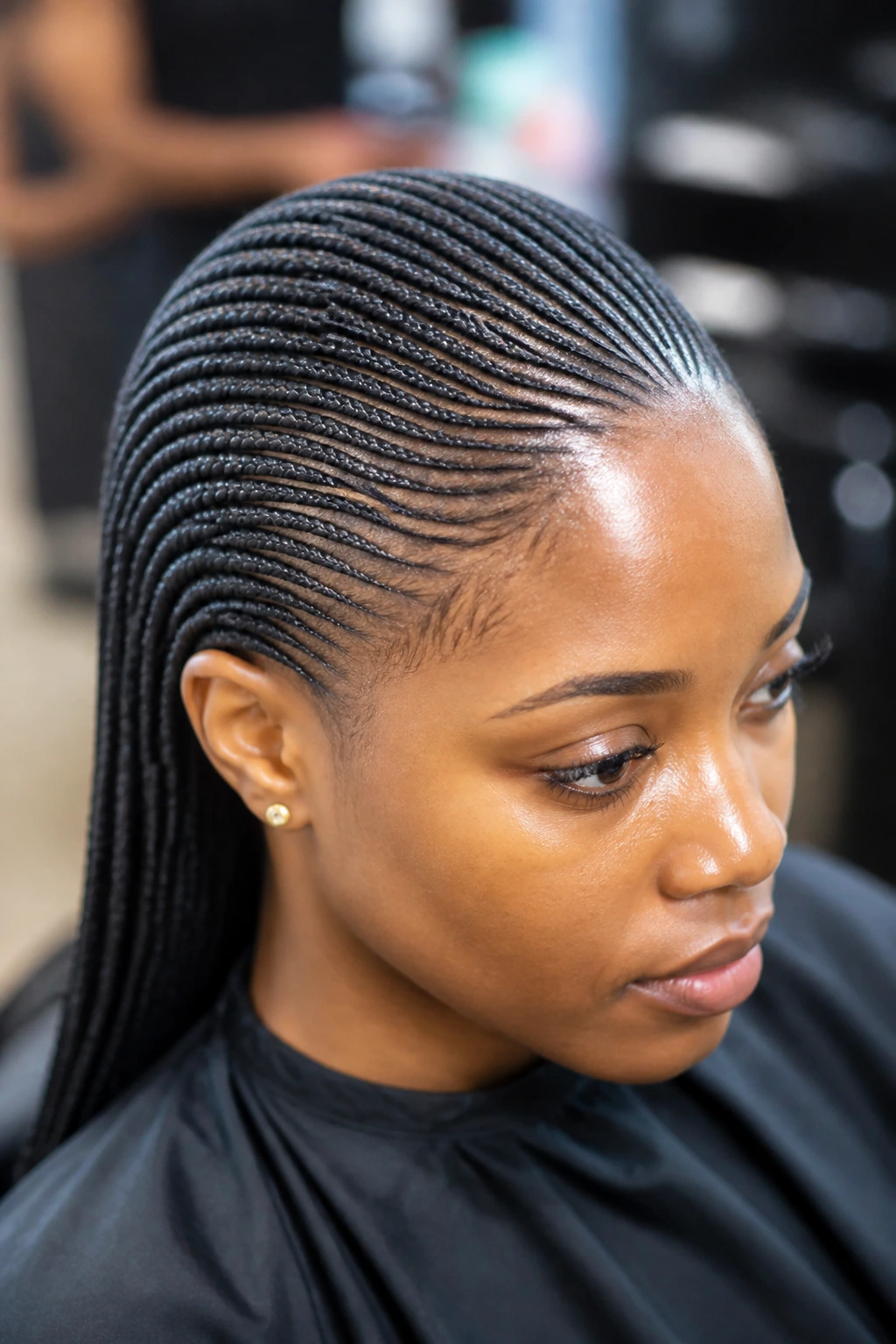
Micro cornrows are the opposite of jumbo rows, and that tiny scale gives them a delicate, almost lace-like feel. The parts are narrow, the braids are fine, and the finished style has a lot of detail packed into a small space.
They are not the fastest style in the chair. Far from it. Micro rows take patience, and they also ask for careful tension because the smaller the braid, the easier it is to pull too hard at the hairline if the hand is rough. That’s the trade-off.
Still, when they’re done well, micro cornrows can look incredibly crisp. They work well if you like texture and pattern rather than one bold stripe across the scalp. They also let the natural shape of the head show through a bit more than bulkier braids do.
Small braids need small patience. If the installation is rushed, the detail disappears fast.
12. Cornrow Mohawk
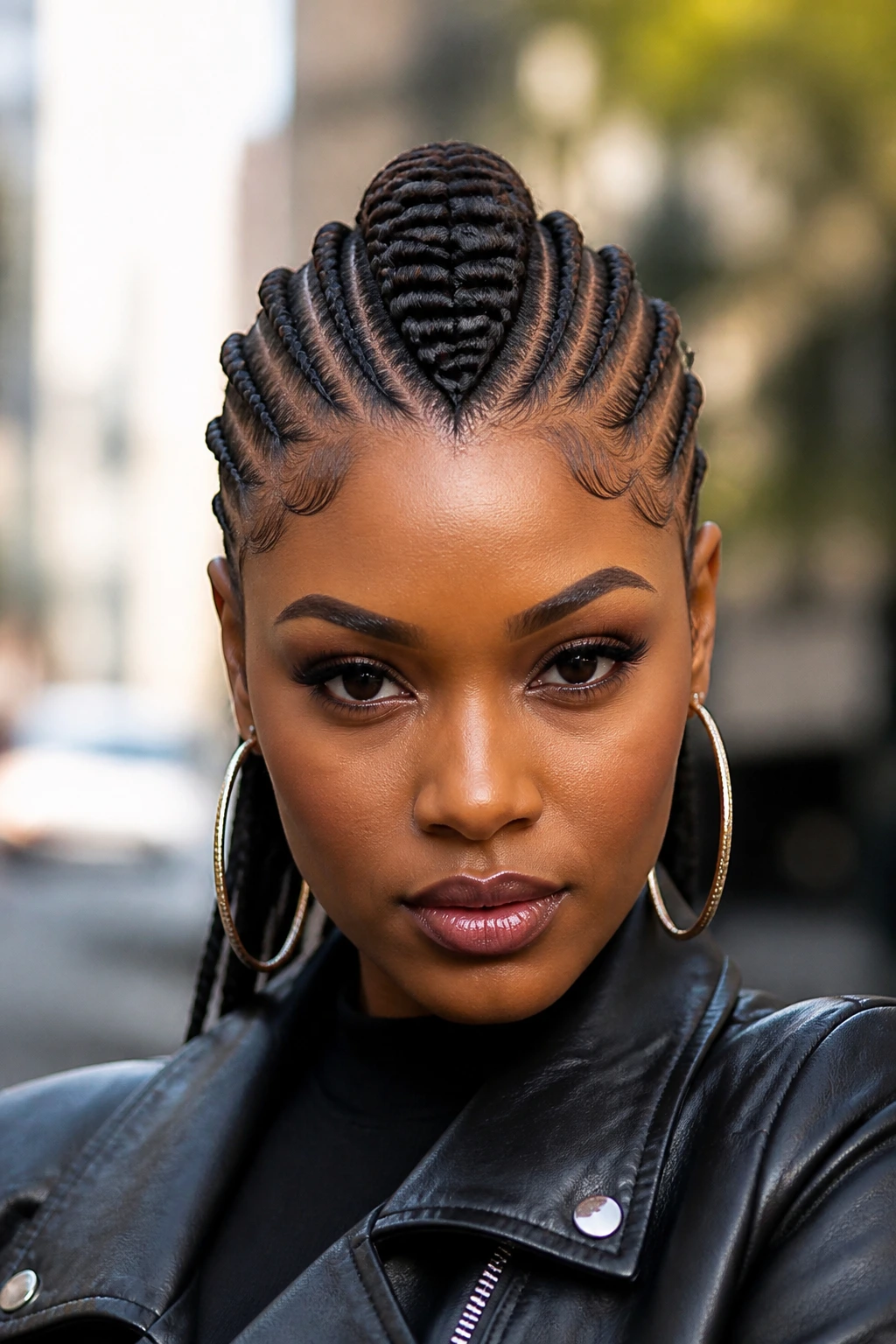
A cornrow mohawk is what happens when you want the sides sleek and the center to have all the attitude. The rows sit down the middle of the head, often raised slightly by the sectioning, while the sides are braided back, smoothed, or kept tight and clean.
This style has a built-in edge. You can make it softer with rounded rows and a low finish, or push it harder with sharp parting and a tall center strip. Either way, it gives the face a strong frame and keeps the visual focus right down the middle.
It’s a good choice for people who like their hair to feel a little dramatic without becoming heavy. A mohawk braid can be finished into a ponytail, left hanging, or gathered into a top knot depending on how much length you want on display.
One sentence, because it deserves one: this is a confidence style.
13. Braided Bun Cornrows
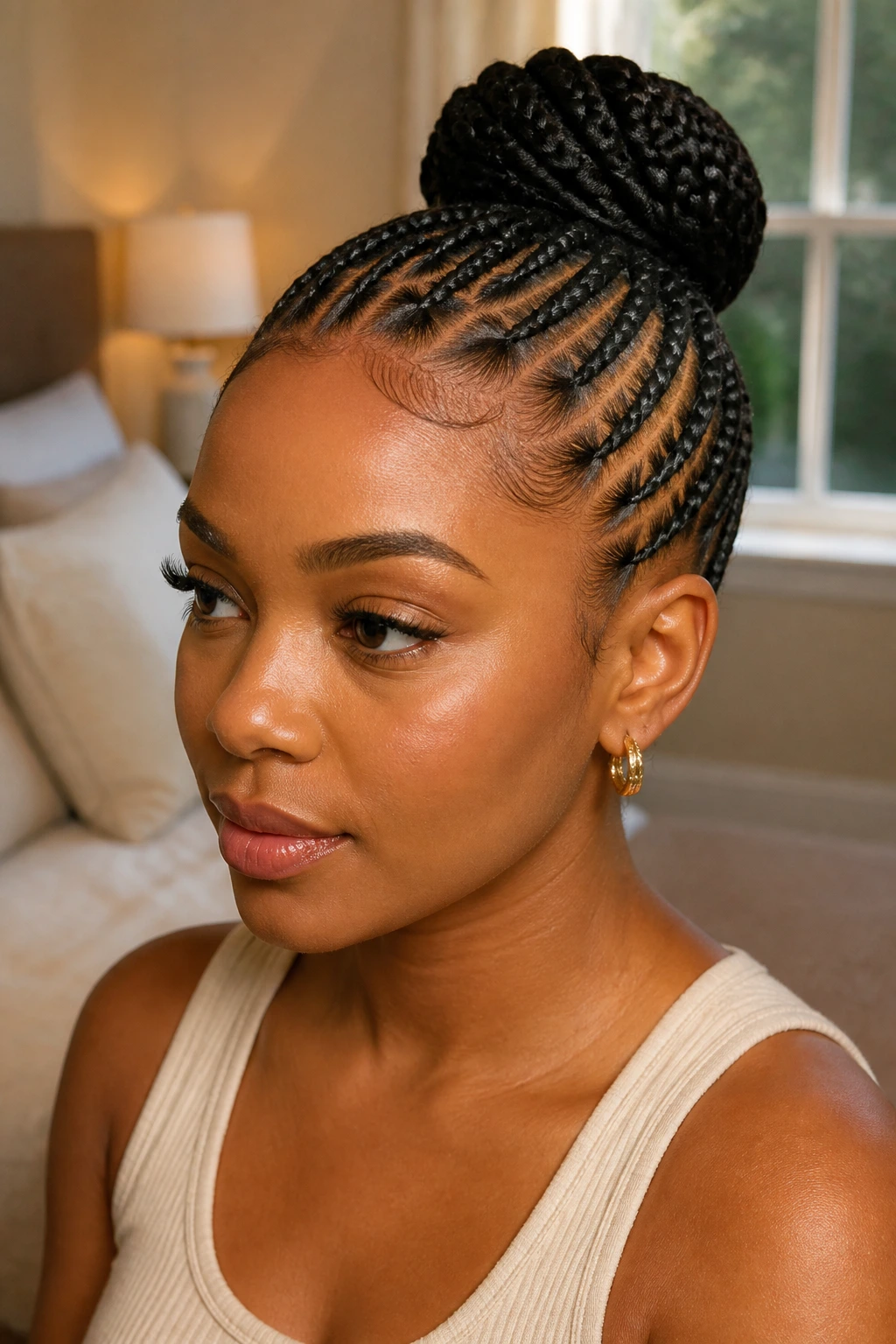
Braided bun cornrows are practical in the best way. The rows feed into a bun at the top, back, or low at the nape, which keeps the ends tucked away and gives the whole style a neat finish. It’s one of those looks that can go from work to dinner without changing a thing.
A bun also changes how the braids feel on the head. Instead of length hanging around the shoulders, all that visual energy gets pulled into one compact shape. That can feel lighter, cleaner, and easier to manage on windy days or during busy weeks.
The bun can be tight and polished or soft and slightly loose, depending on what you want the style to say. A neat, round bun feels more formal. A looser wrapped bun feels more relaxed and lived-in.
The nicest part? You can keep the braids simple and let the bun carry the interest. Not every braid style needs extra decoration.
14. Half-Up, Half-Down Cornrows
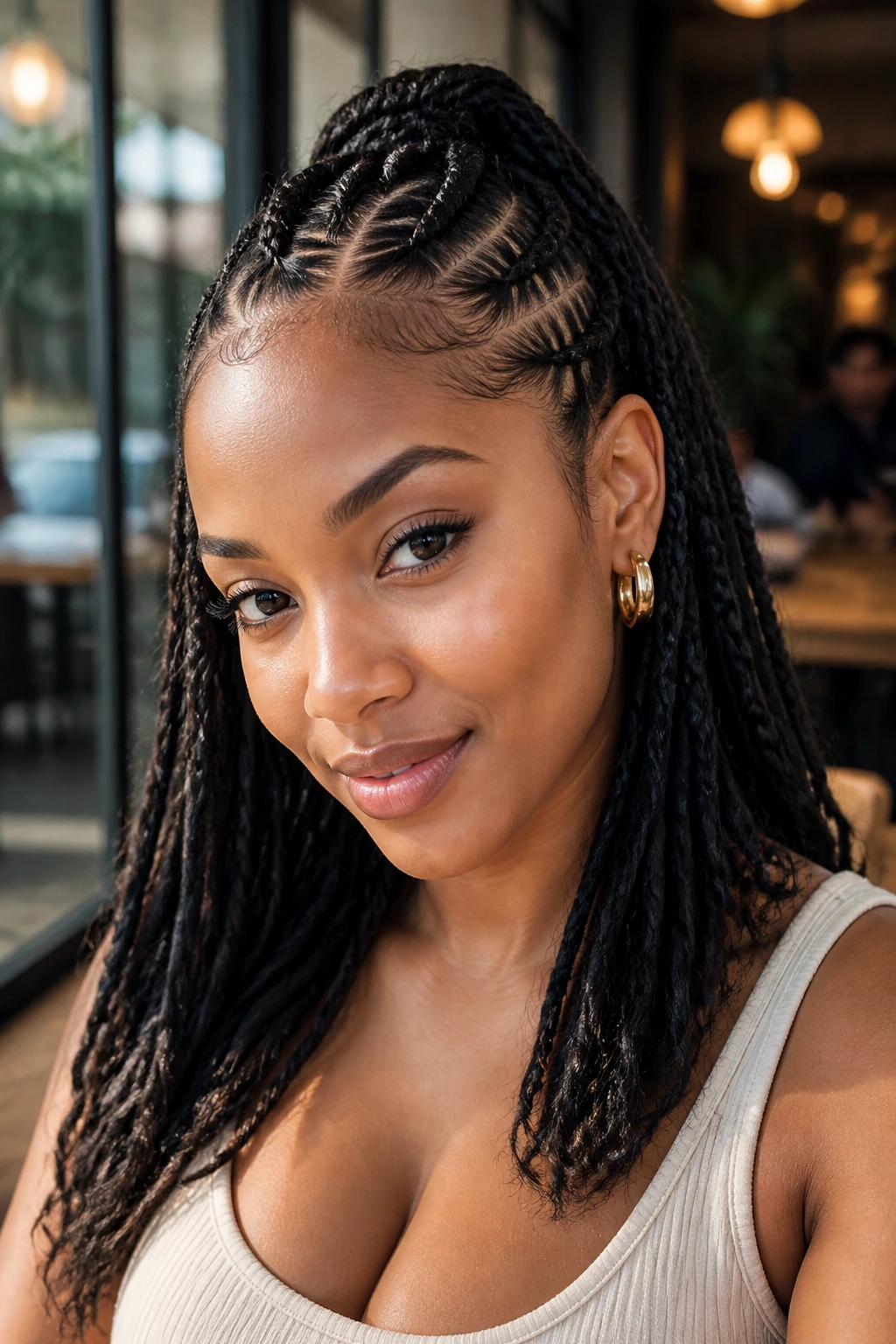
Half-up, half-down cornrows give you the best of both moods. The front stays controlled, the top is pulled back, and the length gets to hang or flow below. If you like your hair off your face but still want movement, this style makes sense fast.
Compared with a full updo, it feels less severe. Compared with letting everything hang loose, it feels more put together. That middle ground is the reason so many people keep coming back to it. The shape is easy to wear and easy to dress up.
This style also works with a lot of braid sizes. The top can be straight-back cornrows, side-swept rows, or curved lines that meet at the crown. The bottom can be free-hanging braids or braided lengths tied off with cuffs, thread, or just clean ends.
It’s the braid version of leaving one button open. Relaxed, but still neat.
15. Triangle Part Cornrows
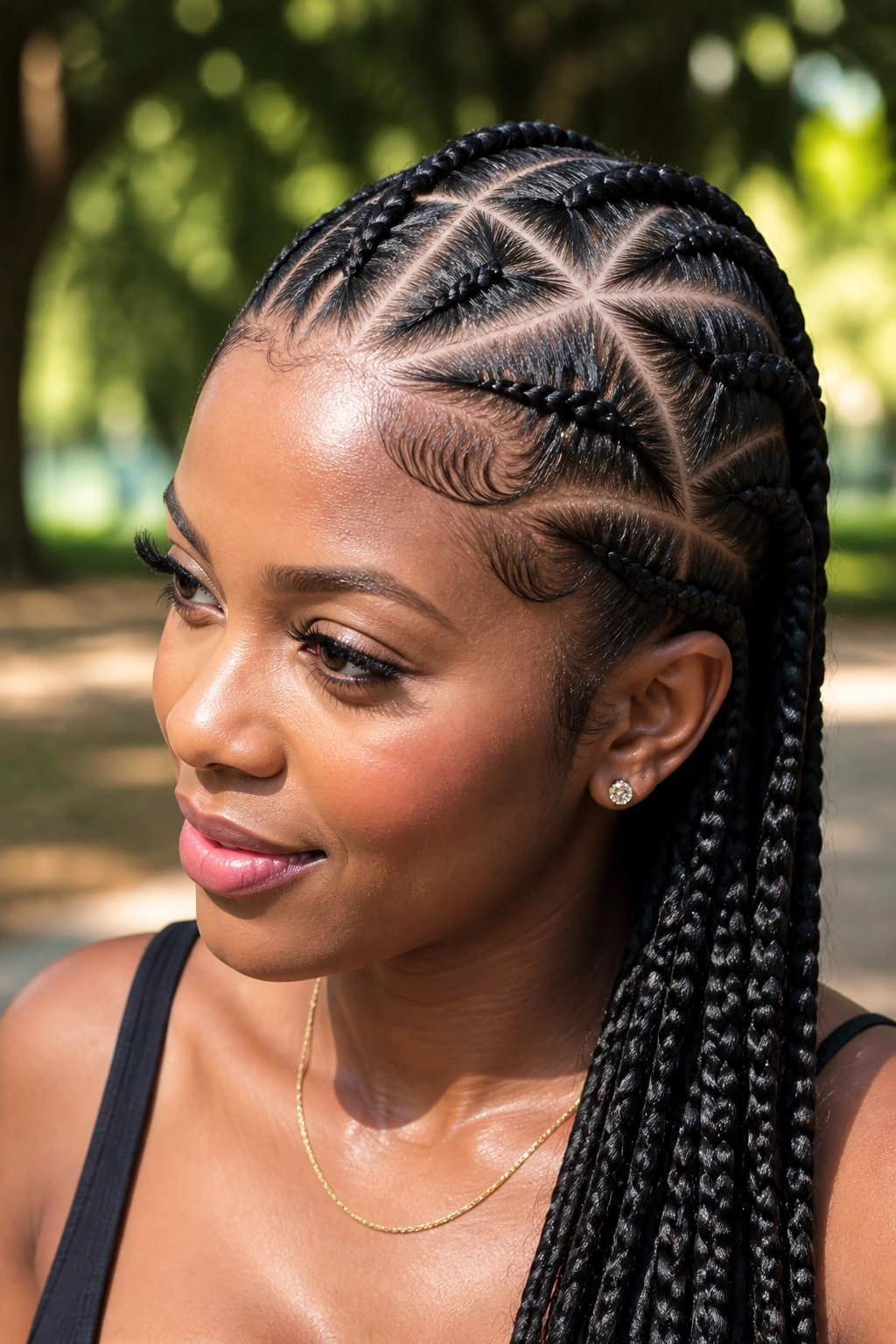
Triangle parts change the whole personality of a braid style. Instead of a regular box grid, the sections open into pointed shapes that make the scalp pattern feel fresher and less expected. Even when the actual braid direction stays simple, the parting does the work.
Triangle sections are nice when you want something that reads as thoughtful without shouting. The shape gives the style a bit of geometry, but it does not usually look as flashy as zig-zags or freestyle art. That middle ground is useful.
They also work well when you want the braids to lie in different directions. Because the base of each triangle can shift a little, the rows can fan out in a way that feels more organic than a strict square part. That can be flattering on heads that do not love a rigid grid.
Good parting is the whole secret here. The braid itself is only half the story.
16. Heart Part Cornrows
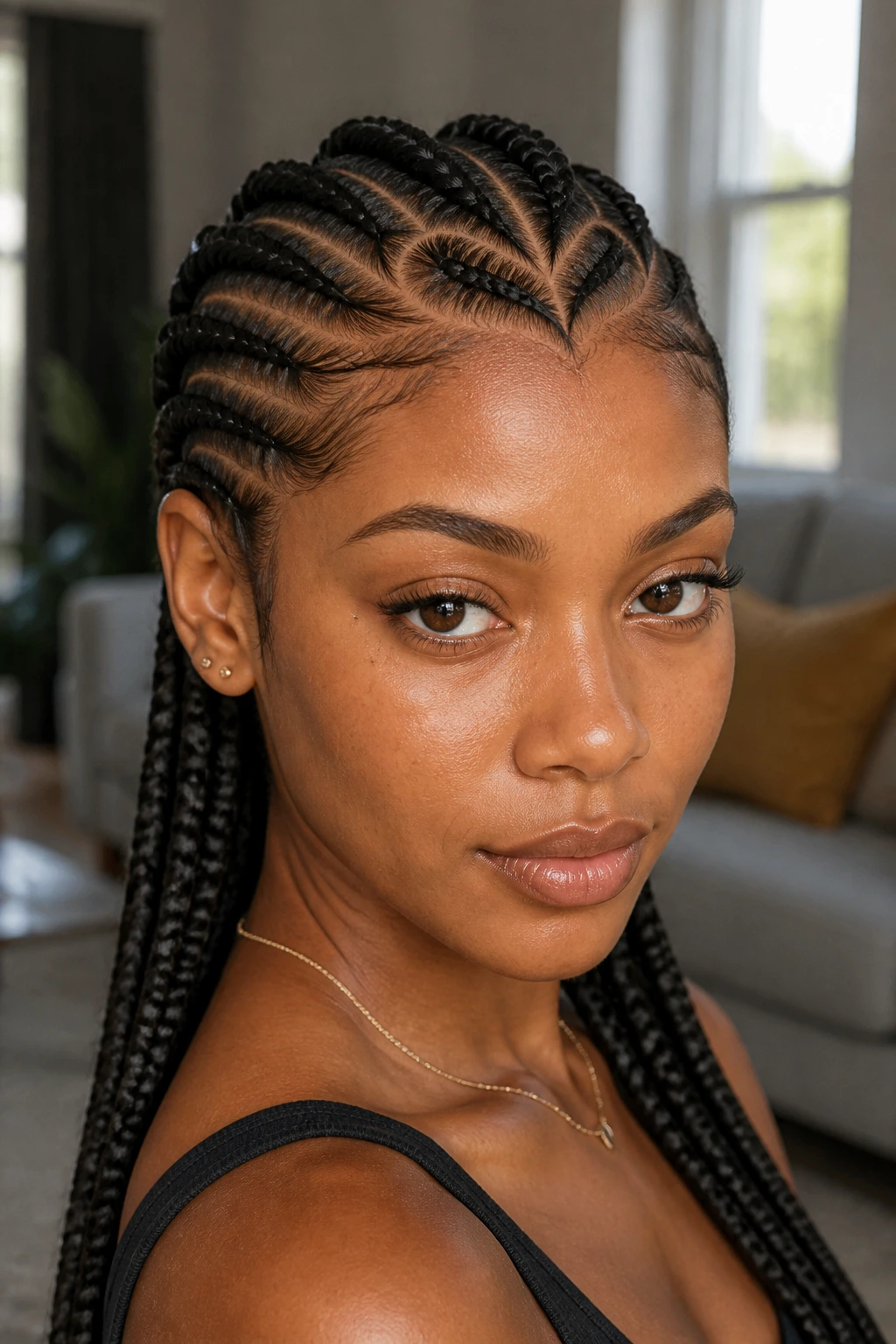
Heart part cornrows have a playful edge, but they do not have to look childish. A heart near the hairline or crown can feel sweet, flirty, or even a little romantic when the rest of the braid work stays clean and grown-up.
The main thing is scale. A tiny, well-shaped heart reads as detail. A huge heart can take over the whole head and start to feel more costume than style. If you want the design to land well, keep the lines smooth and the point of the heart sharp enough to read from a few feet away.
This style is especially good for special events, date nights, or any time you want a subtle conversation starter. People notice it because it breaks the pattern they expect.
Not every braid style needs to be serious. A little shape can be the whole point.
17. Short Natural Hair Cornrows
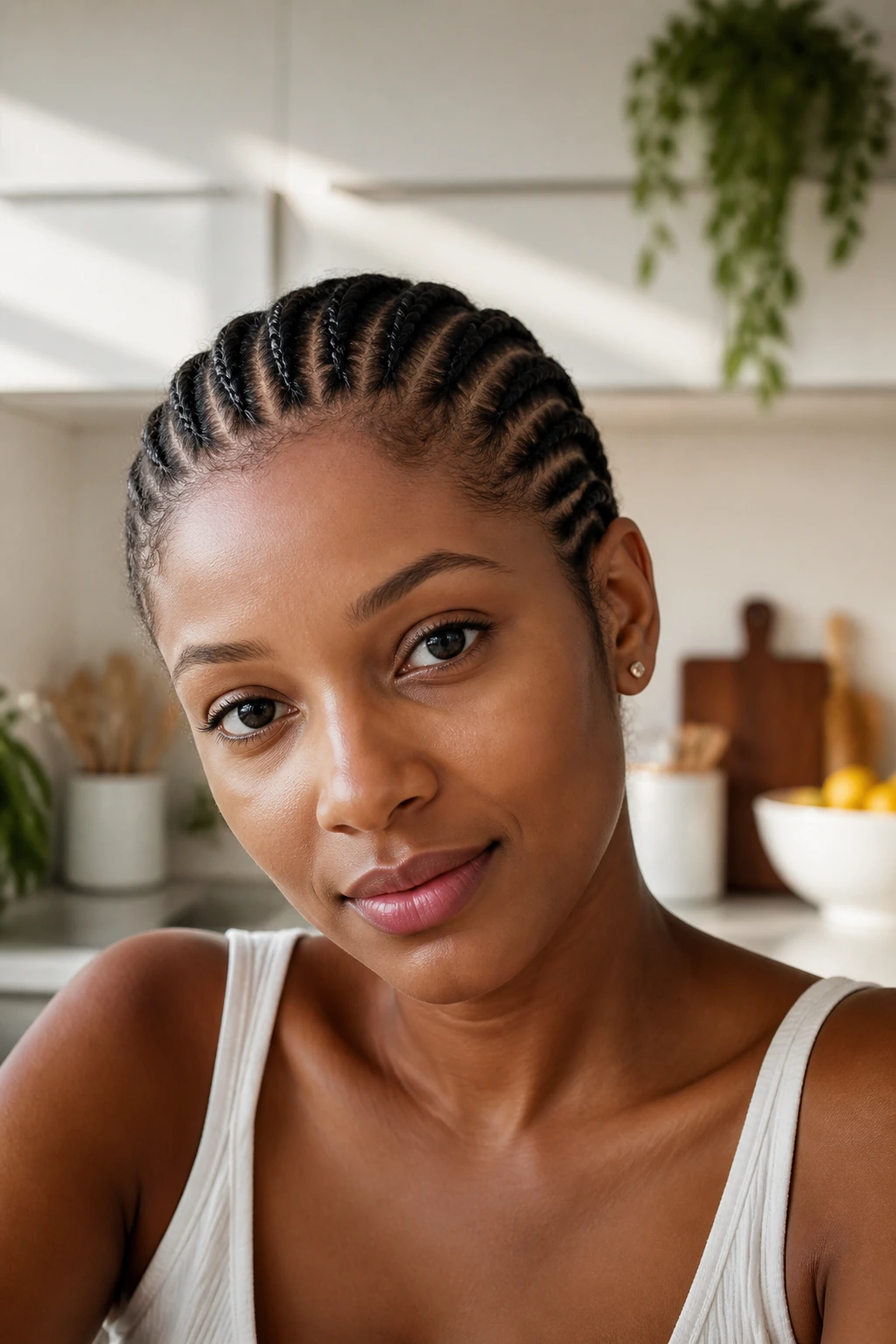
Short natural hair can take cornrows beautifully, but the installation needs a bit more care. The braids sit close to the scalp and the hair length is shorter, so clean sectioning and a good stretch on the hair beforehand can make a big difference in how neat the style looks.
This is one of those cases where less hair does not mean less style. In fact, short cornrows can look sharper because there is no extra length to hide the parting or the line of the braid. Everything is out in the open, which can be a good thing when the work is clean.
If your hair is very short, styles with smaller rows or simple straight-backs often hold better than heavy designs that need a lot of added extension hair. A light touch matters more than size.
Short hair does not limit cornrows. It changes the kind of precision they need.
18. Waist-Length Feed-In Cornrows
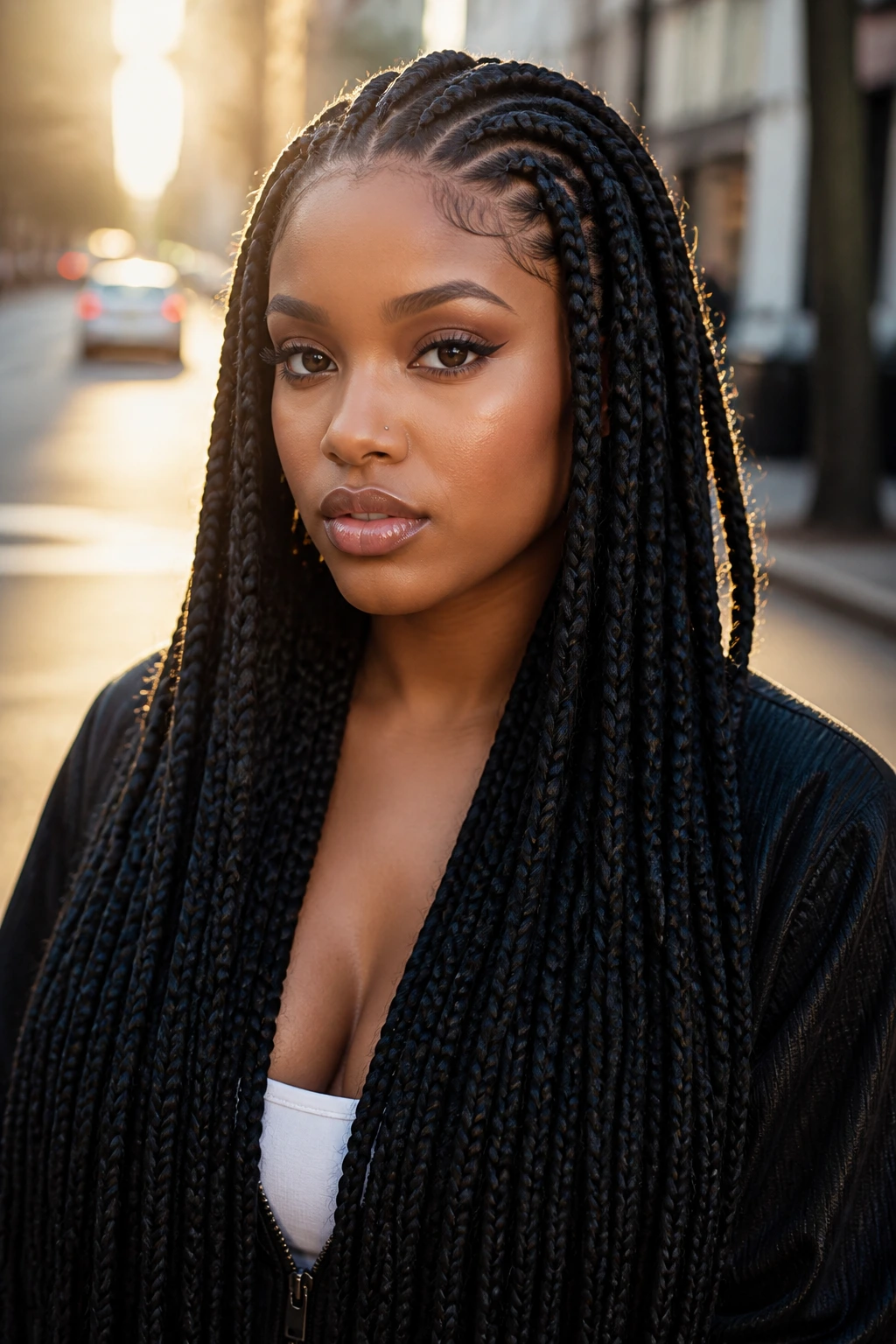
Waist-length feed-in cornrows are about drama, but not the sloppy kind. The long length works because the base stays neat and the rows keep the look anchored to the scalp before the braids fall away. Without that controlled start, all that length can look unruly fast.
The style makes sense when you want movement. Long braids swing, catch on coats, brush against the back, and change the whole feel of an outfit. That’s part of the appeal, but it also means you want the parting clean and the roots neat so the length feels earned.
They can be worn in a ponytail, over one shoulder, or split down the back. If you keep the number of rows moderate, the weight tends to stay more comfortable. Too many tiny long braids can pull harder than people expect.
Long braids are a statement. The root work has to support the length.
19. Beaded Cornrows
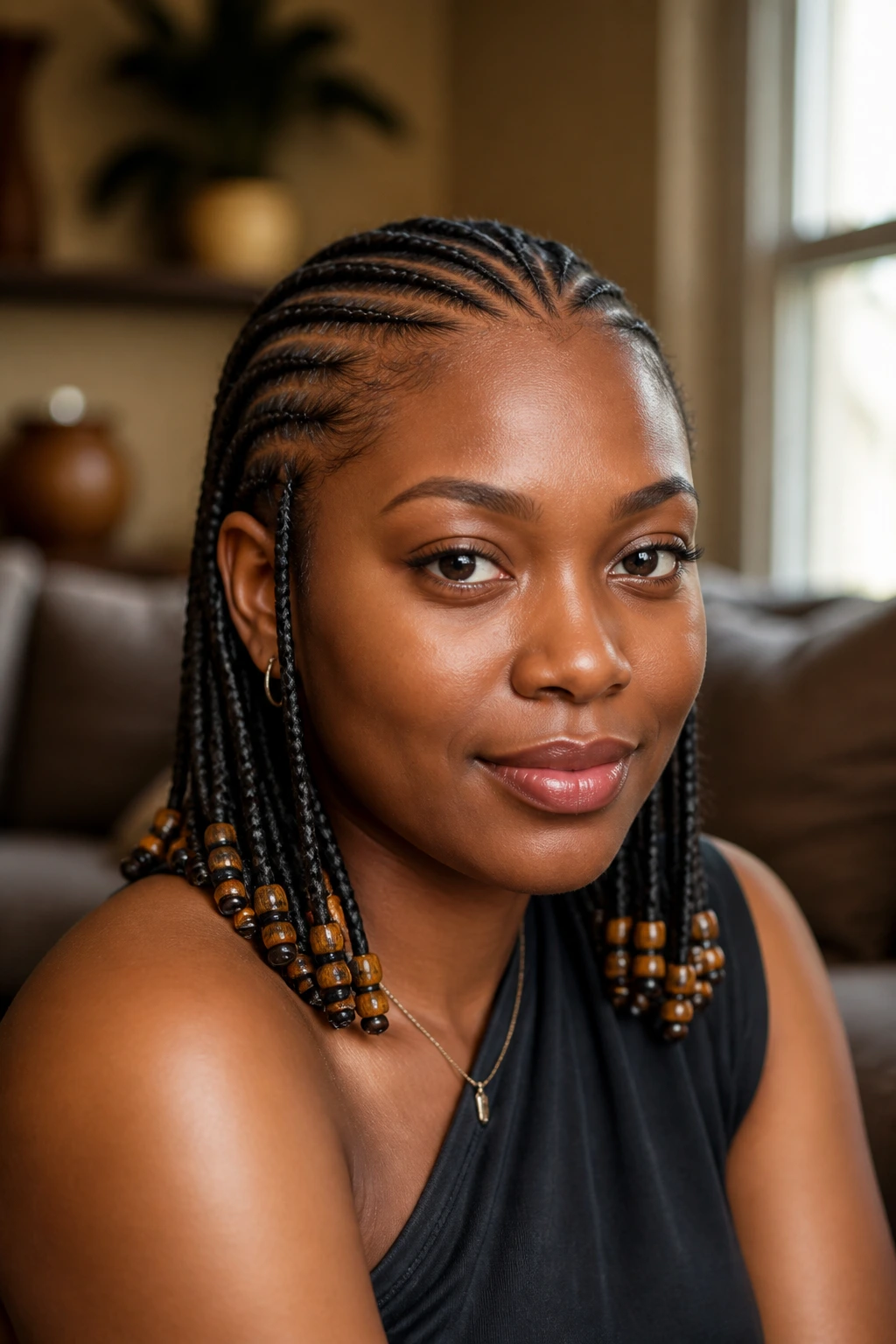
Beads change the sound and the movement of cornrows in a way that makes the style feel alive. A few beads at the ends can add weight, a soft click, and a little shine whenever you move your head. It’s a tiny detail, but it changes the whole finish.
What to Watch For
Beads work best when they’re used with restraint. A few rows near the front or along the sides can be enough. If every braid is loaded up, the style starts to feel heavy and noisy in a way that is fun for some people and annoying for others.
- Lighter beads are kinder on the neck and the ends.
- Clear, wooden, or matte beads usually look calmer than oversized plastic ones.
- Secure the ends well so the beads don’t slide.
- Keep the braid length balanced so the beads don’t drag the hair down too much.
Beaded cornrows can feel playful, polished, or heritage-rich depending on the bead choice. The details matter more than the count.
20. Color-Accented Cornrows
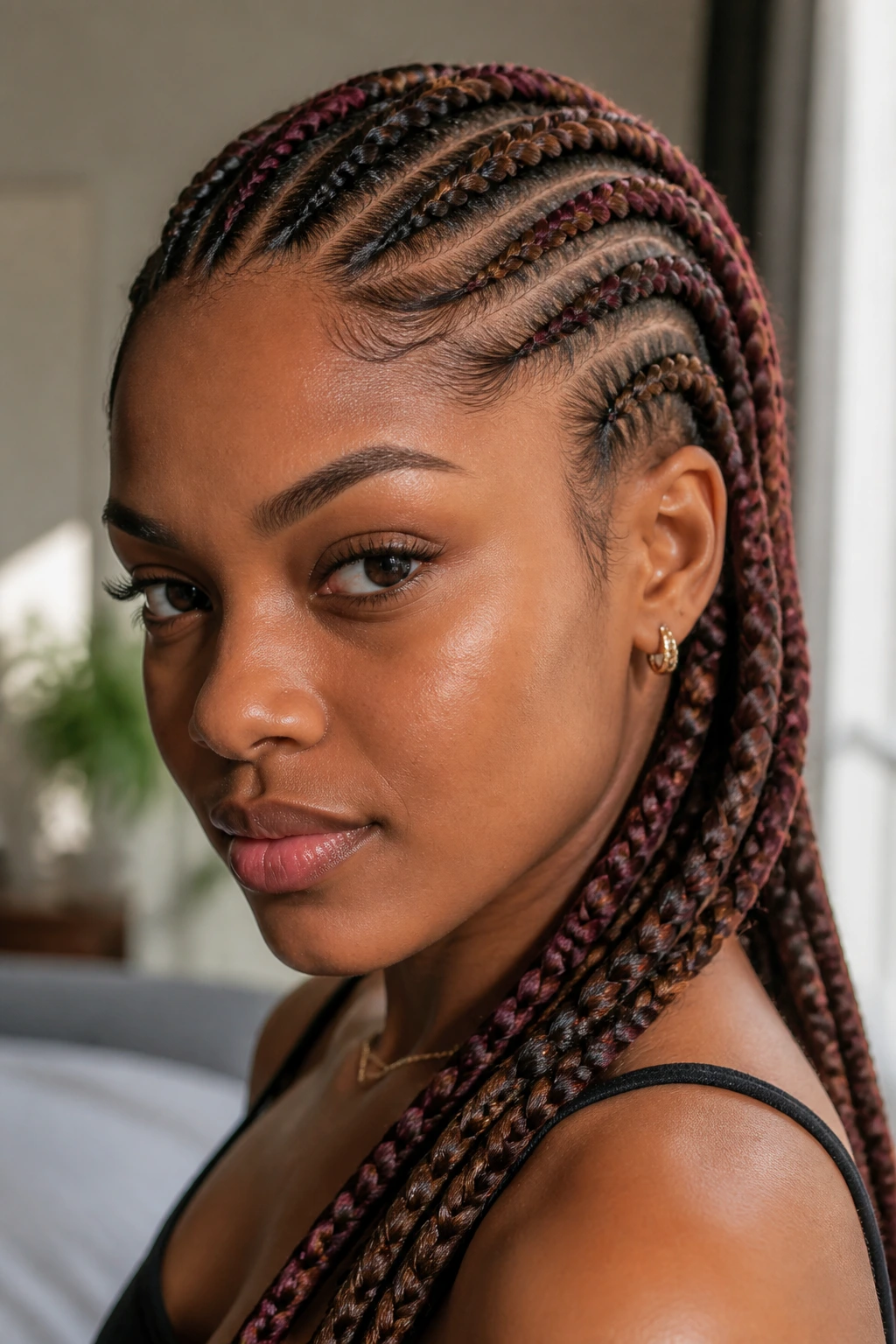
A little color can wake up cornrows fast. That might mean warm brown extensions, a few burgundy braids mixed into a neutral set, or a full head with a brighter tone woven through the pattern. The braid shape stays the same, but the visual weight shifts right away.
The smartest color choices usually work with the braid layout instead of fighting it. One accent row near the face can frame the skin better than a full head of bright pieces. A colored ponytail tail can draw attention to the length. A few hidden pieces in the back can keep the style from feeling flat when you turn around.
Color is also one of the easiest ways to make a familiar braid pattern feel fresh without changing the whole style. You do not need a new design. Sometimes you just need a different shade.
If you want the color to feel soft, keep the contrast gentle. If you want it loud, commit. Half-measures tend to look accidental.
21. Cornrow Ponytail With Wrapped Base
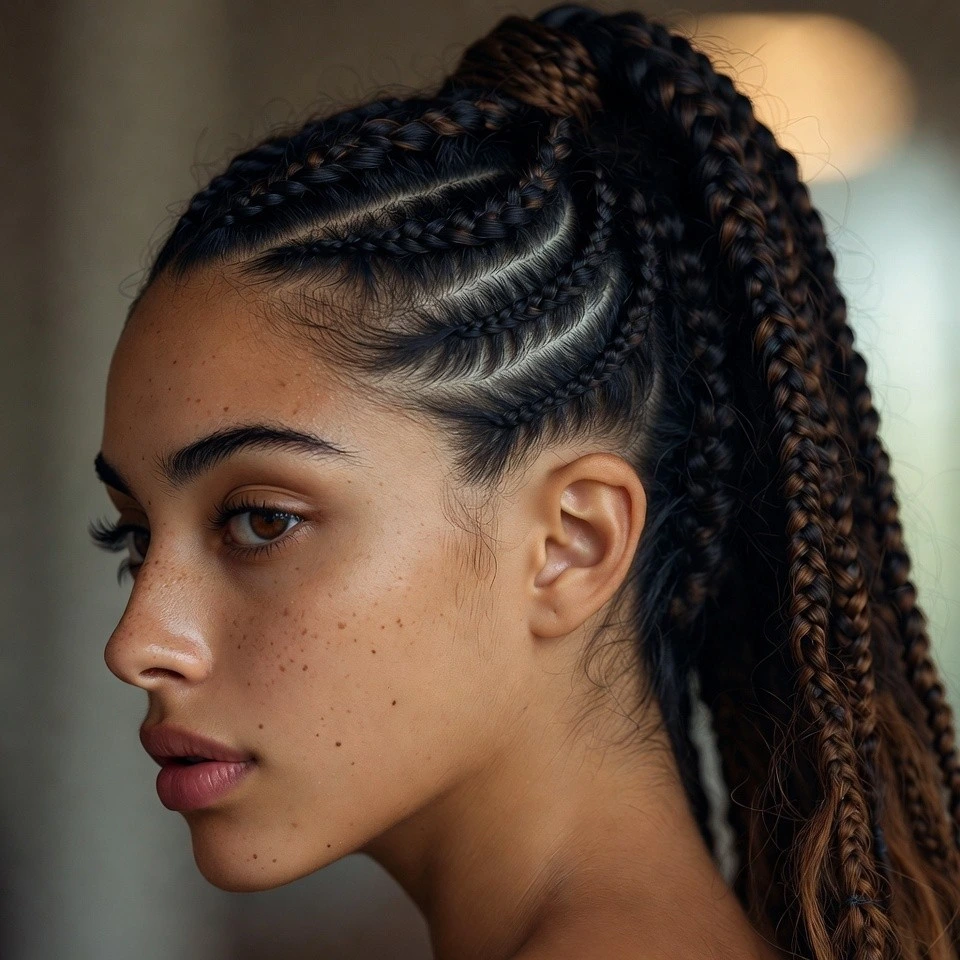
Why does a wrapped base matter so much? Because it hides the elastic, cleans up the transition from scalp to ponytail, and makes the whole style look finished instead of merely tied back. That small wrap turns a regular ponytail into something that feels deliberate.
Cornrows leading into a ponytail are already practical. The wrap takes the style one step further. It smooths the join point, which is where a lot of ponytail styles lose polish. When the base is neat, the eye goes straight to the shape of the tail.
Best Place to Wear It
This style works for workdays, travel, or dressier moments when you want your hair off your shoulders but still want a little height. It’s also a solid choice if you spend time in humid air and want the back of your neck clear.
The ponytail can be high and perky or low and calm. The wrap is the detail that makes it look finished.
22. Cornrow Bob
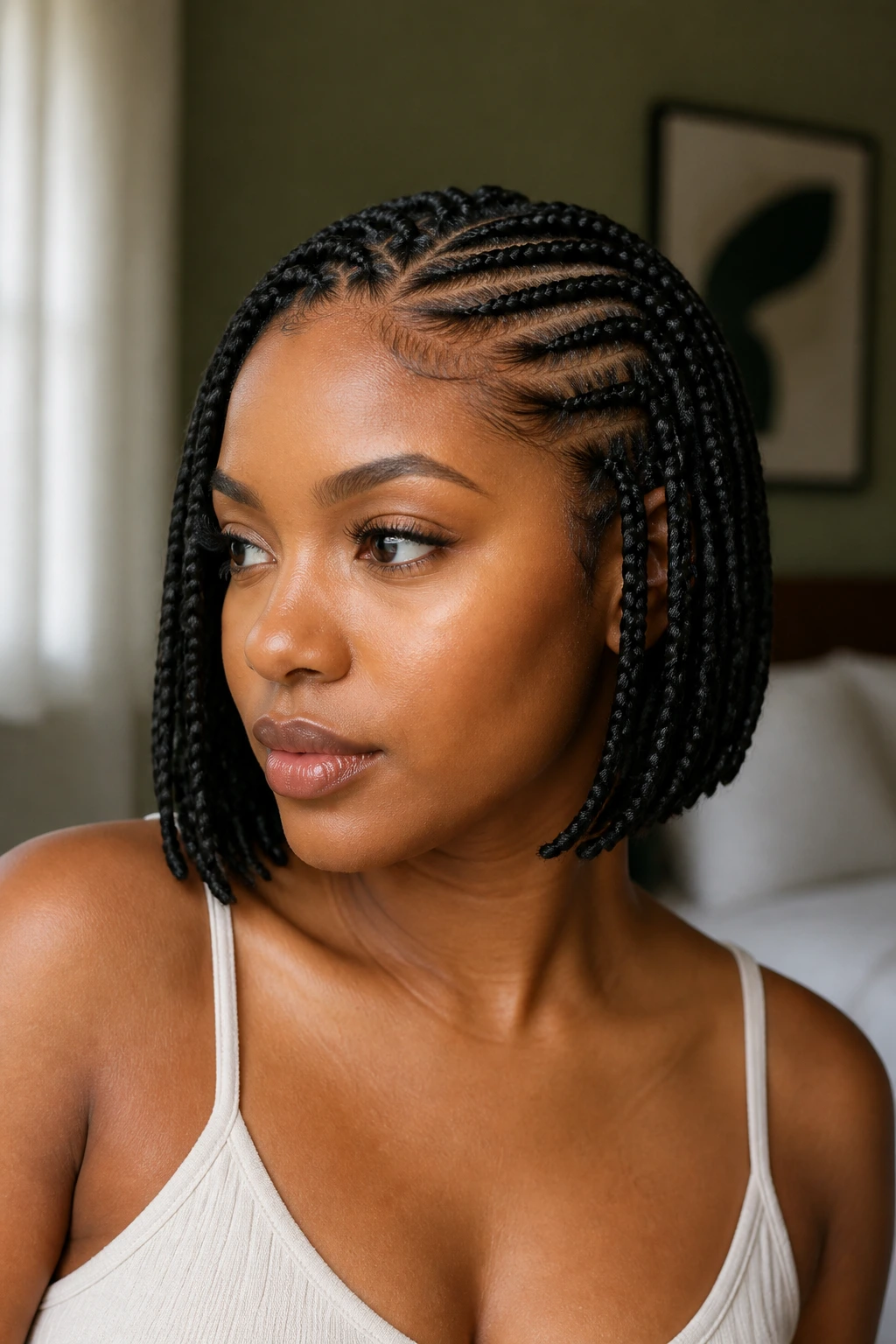
A cornrow bob is a smart answer when you like the shape of braided hair but do not want extra length hanging around. The ends usually stop around the jaw, chin, or shoulders, which makes the whole style feel lighter and easier to live with.
Compared with long braids, a bob is less likely to get caught in coat collars, seatbelts, or laptop bags. It also tends to dry faster after washing, which is a small thing until you’ve had a heavy style for too long and your neck starts to complain.
The shape can be blunt, slightly angled, or soft around the edges. A blunt bob gives a sharper finish. A softer cut feels easier and more relaxed. Both can be clean when the braid ends are trimmed or finished neatly.
If long braids feel like too much, this is the quieter answer. Shorter does not mean less polished.
23. Two-Layer Cornrows
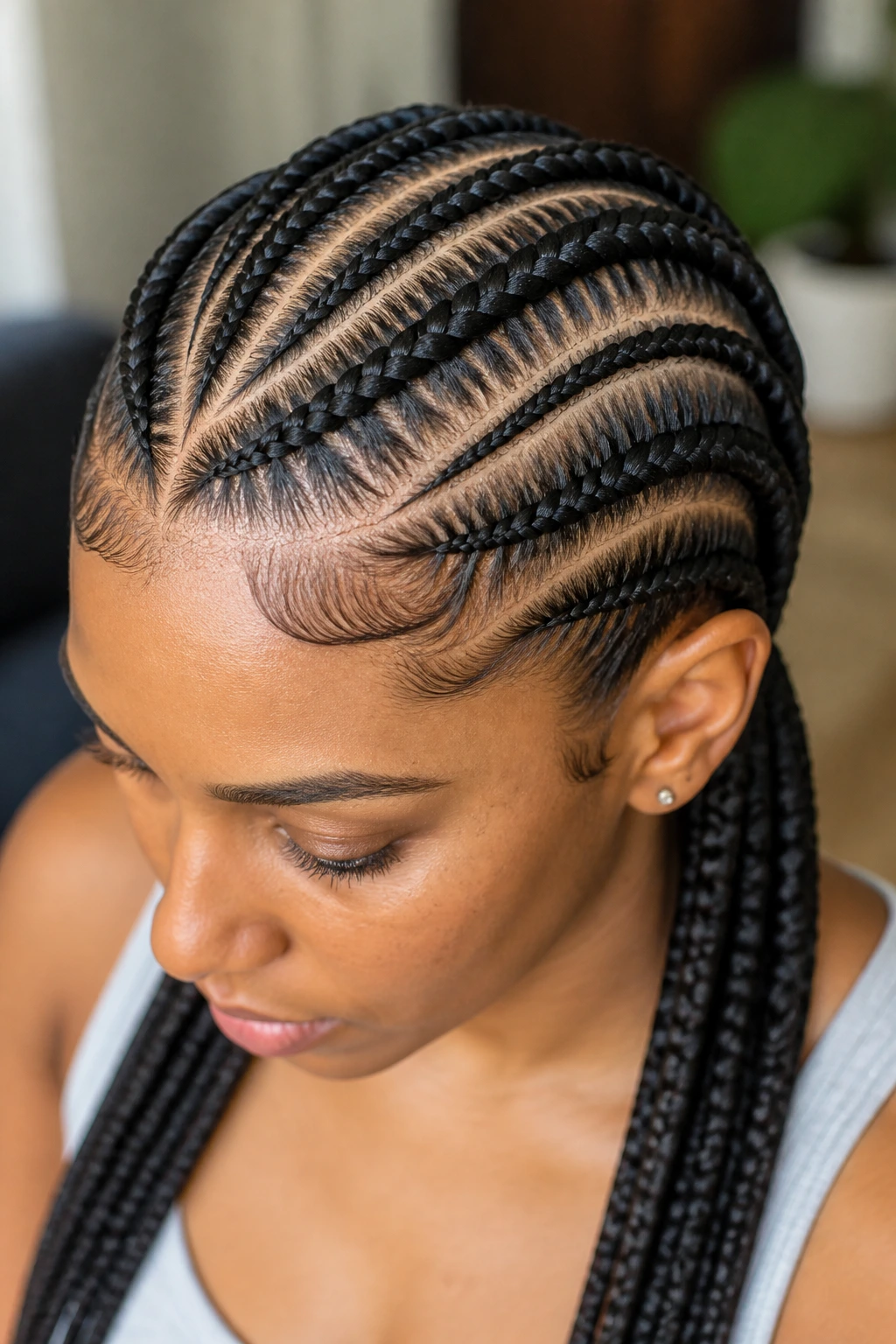
Two-layer cornrows create depth without making the style loud. The top rows sit over a lower set, so the hair has a stacked look that feels fuller from the side and back. It’s a good choice when one layer alone would feel too flat.
The reason this style works is simple: your eye reads the overlap as dimension. The top layer catches the light first, and the lower layer adds shadow and structure underneath. That makes the style feel more built-out than a single row pattern.
Two-layer braids are useful when you want some of the hair pulled away from the face but still want visible braid detail at the sides or nape. They can also help if your hair density varies in different areas, since the layers can balance the shape.
It’s subtle. It’s not showy. And that’s exactly why it works.
24. Freestyle Art Cornrows
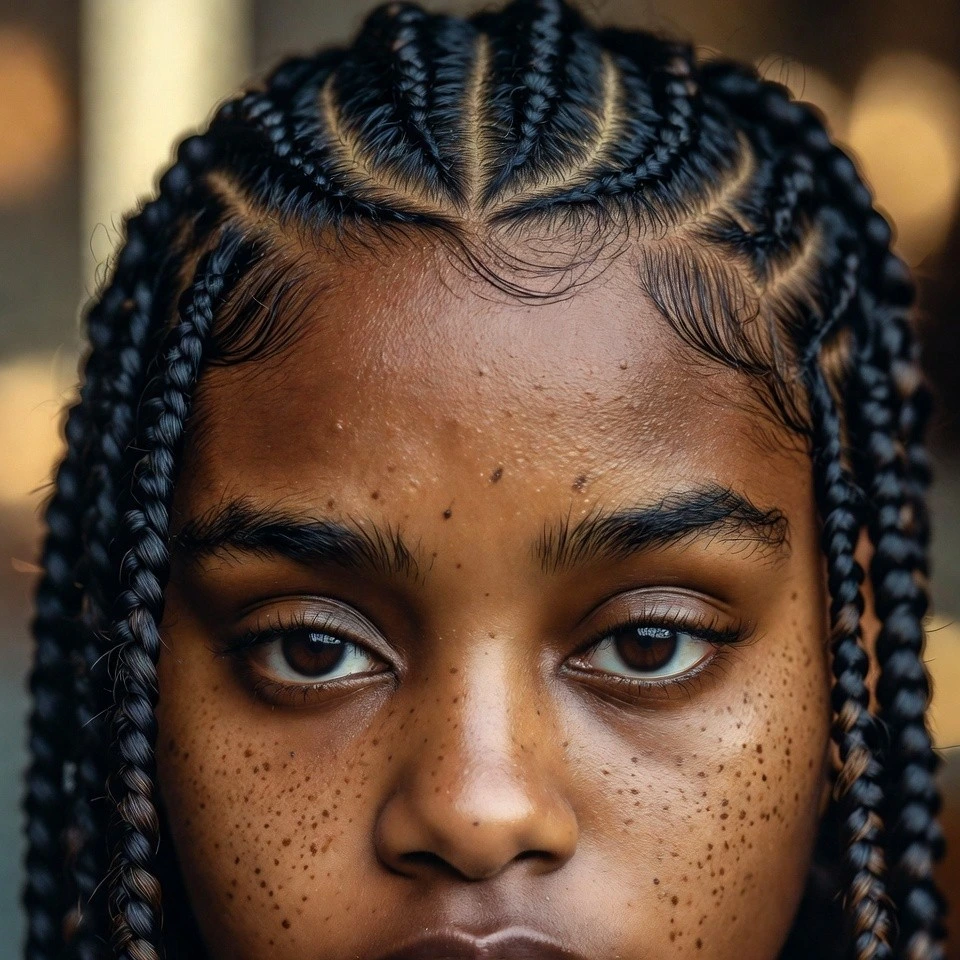
Freestyle art cornrows are where a stylist gets to stop following a grid and start drawing on the scalp. Swirls, forks, loops, branching lines, and unexpected turns all live here. The style can look wild, but the best versions still have one thing holding them together: control.
That’s the line between art and mess. A freestyle pattern needs one anchor point, even if the rest of it feels loose and creative. Otherwise the design starts to drift. A strong stylist will usually keep one section simple and let the decorative part do the heavy lifting.
This style is best when you want something nobody else in the room has. It suits people who like a little surprise in their hair and do not mind that the maintenance can be trickier than a standard braid set.
- Swirls work well around the crown.
- Forked lines can frame the face.
- A single curved design near one temple can be enough.
- Overcrowding the scalp makes the art harder to read.
More lines are not always better.
25. Center-Part Straight Backs
A center part changes the face before the braids even begin. It creates balance, opens the front evenly, and gives straight-back cornrows a calmer, more symmetrical feel. If a side part feels too playful and a deep sweep feels too dramatic, the center part lands in the middle.
This style is especially clean when the rows run evenly on both sides. The eye follows the split right down the face, then settles on the braids moving back from that line. It’s one of the easiest cornrow braid styles to wear with glasses, bold earrings, or a strong brow because the hair stays out of the way.
How to Keep the Line Crisp
A tight center part starts with a careful initial division. Once the line drifts, the whole style can look slightly off. A fine-tooth comb helps, but so does patience. Rushing the first part is how a symmetrical style loses its shape.
If you like tidy and direct, this is a strong pick. Straight and centered has its own kind of edge.
26. Asymmetrical Cornrows
Asymmetrical cornrows break the habit of making both sides match, and that gives the style a little swagger. One side might hold more rows, a deeper part, or a tighter curve, while the other side stays simpler and more open.
That unevenness can be flattering in a way that perfectly balanced styles sometimes are not. It can draw attention to one cheekbone, shift focus away from a stronger jawline, or simply make the whole look feel less predictable. It also gives the braid pattern some motion, even when the hair itself sits still.
I like this style for people who get bored fast. It has enough structure to stay neat, but it carries a small dose of surprise. That makes it easier to wear than full freestyle art and more interesting than a standard mirrored set.
Not everything has to match. Sometimes the off-center version has more personality.
27. Cornrows With Curly Ends
Cornrows with curly ends give you the control of braids and the softness of loose texture in one style. The rows stay close to the scalp, then the ends open into curls that move around a little instead of hanging straight and heavy.
The contrast is what makes it work. The top is neat and ordered. The bottom feels looser and more playful. That shift keeps the style from reading too rigid, which can happen when long braids are left plain all the way down.
The curled ends can be created with rods, perm rods, flexi rods, or other setting methods depending on the hair used. The size of the curl changes the mood fast. Small curls feel tighter and more polished. Bigger curls feel softer and fuller.
This style is good when you want braid structure without giving up texture. Straight roots, soft ends. Clean answer.
28. Low Chignon Cornrow Updo
A low chignon cornrow updo sits near the nape and keeps the profile smooth. The rows guide the hair down and back, then gather into a tucked knot that feels elegant without shouting about it. It’s a quiet style, but not a plain one.
Because the bun sits low, the shape tends to work well under coats, scarves, and collars. It also keeps the face open and the neck clear, which is handy for events where you’ll be wearing makeup, jewelry, or a dress with a strong neckline.
The chignon can be tight and sleek or slightly padded for softness. Either way, the key is balance: enough hold to keep the knot in place, but not so much pull that the front starts to feel strained.
This is one of the cleanest evening braid styles on the list. It doesn’t need extras.
29. Sculpted S-Pattern Cornrows
S-pattern cornrows look like someone drew the braids with a ribbon instead of a ruler. The rows bend into smooth curves that echo the shape of the head and then swing back again, which gives the style a sculpted, almost carved feel.
These patterns take planning. A stylist has to map the turns before the braid begins, because one bad angle can throw off the whole flow. That’s part of the appeal, honestly. You can see the thinking in the finished style. It doesn’t look accidental.
This kind of braid art works best when the curves are allowed to breathe. If the lines get crowded, the S-shape loses its read and turns into a tangle. Clean spacing keeps the pattern visible from the front and side.
It’s a strong choice for anyone who likes hair that looks designed. The shape does the talking here.
30. Tucked-Under Nape Cornrows
Tucked-under nape cornrows are for the person who loves a low-profile finish. Instead of leaving the ends hanging, the braids fold under at the back and disappear into the nape area, which keeps the silhouette neat and compact.
Compared with styles that leave long tails visible, this one feels calmer. Nothing swings, nothing catches on your collar, and the back of the head looks finished from every angle. It’s especially nice when you want the hair to stay close for work, errands, or long days in and out of a car.
The style can be done with straight-back rows, curved rows, or a side pattern. What matters is the ending. Tucking the ends under gives the whole look a grounded finish that can read polished or understated depending on the braid size.
A style does not have to be loud to feel complete. Sometimes the best finish is the one that stays out of the way.
