



Braids with shaved sides don’t whisper. They cut the room in half, and that is exactly the point. The braid pattern gives you shape and movement; the shaved section gives you attitude, contrast, and a little edge that plain long hair never quite manages on its own.
What makes this look work is not just the haircut. It’s the tension between soft and sharp, between neat plaits and bare skin. A tight braid sitting beside a clean fade changes the whole silhouette of the face and neck. Even a simple style can feel deliberate when the sides are clipped down and the parting is crisp.
There’s one detail people miss all the time: the size of the braid matters more when the sides are shaved. Big braids can overpower a narrow face. Tiny braids can disappear if the fade is too high. Placement, weight, and parting all matter, and they matter in a way that regular braided styles can get away with ignoring.
So if you like styles that look a little dangerous but still polished, this is a good place to start. Some of the looks below lean loud and graphic. Others are softer, with curls or beads or a low bun to keep things wearable. The trick is choosing the shape that works with your head, your hair density, and how often you’re willing to keep the shaved area tidy.
1. Feed-In Cornrows Swept Into a Low Side Ponytail
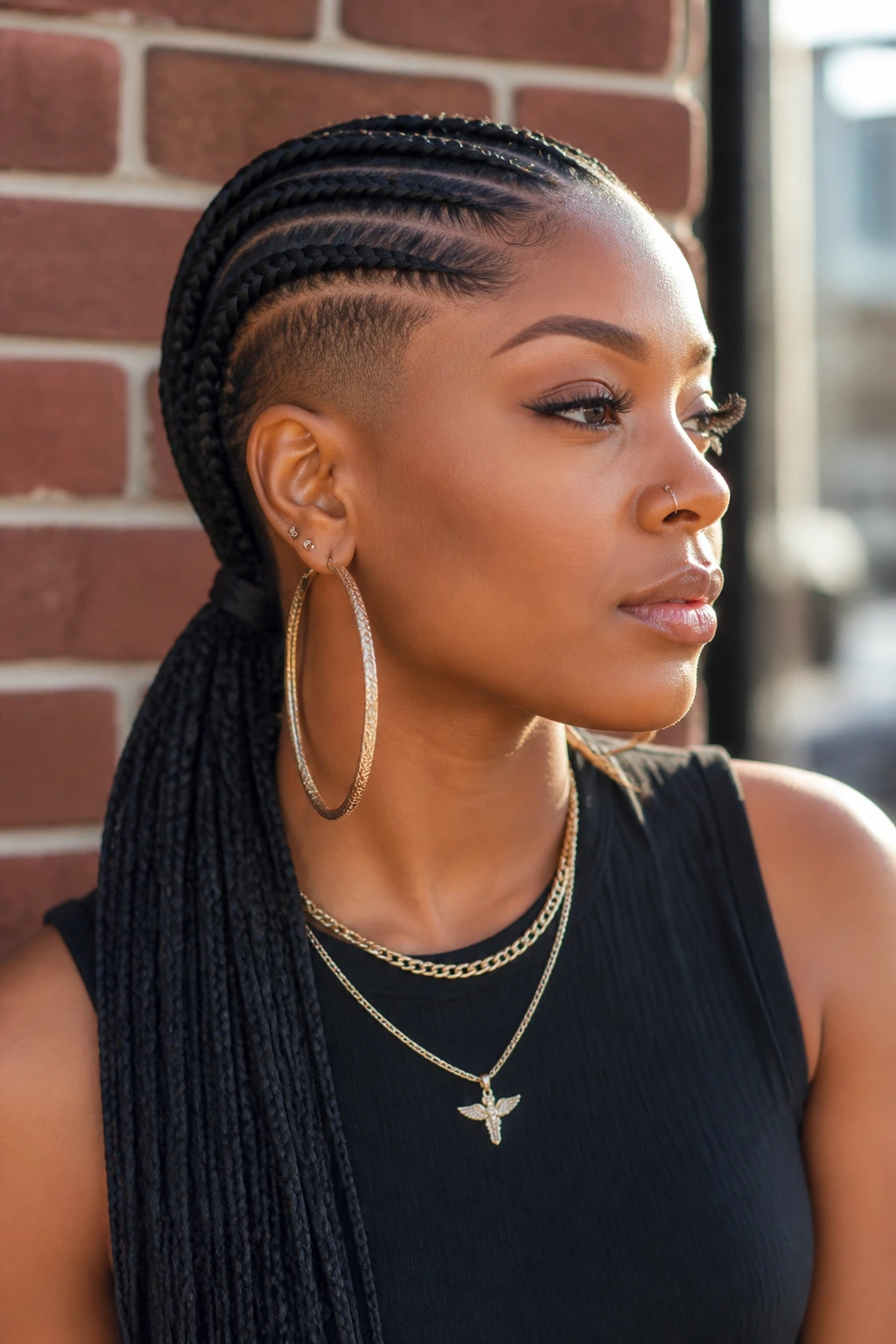
Feed-in cornrows are one of the cleanest ways to show off braids with shaved sides without making the whole look feel busy. The gradual feed-in method keeps the braid close to the scalp at the front, then adds hair in small sections so the rows look smooth instead of chunky. When the ponytail sits low and slightly to one side, the shaved panel becomes part of the design instead of an afterthought.
Why It Works
The shape is doing a lot of the heavy lifting here. Five or six slim cornrows can frame the head beautifully, and the exposed side gives the eye somewhere to rest. That balance matters. If everything is tightly braided with no break in the pattern, the style can feel crowded fast.
What I like about this version is the control. You can keep the braids very neat, tuck the ponytail low at the nape, and let the shaved side stay visible the entire time. A small braid wrapped around the base of the ponytail makes the finish look cleaner than a plain elastic ever will.
- Ask for braids that start with a tight, narrow feed-in base near the hairline.
- Keep the shaved side at about 1 to 3 mm if you want a crisp contrast.
- Use a low ponytail if you want the style to sit flat at the back.
- A light mousse after braiding helps the rows stay smooth without feeling crunchy.
Best tip: keep the shaved side a touch longer if your scalp gets irritated easily. That tiny bit of length softens the grow-out line and makes maintenance less annoying.
2. Two Feed-In Braids With a Sharp Skin Fade
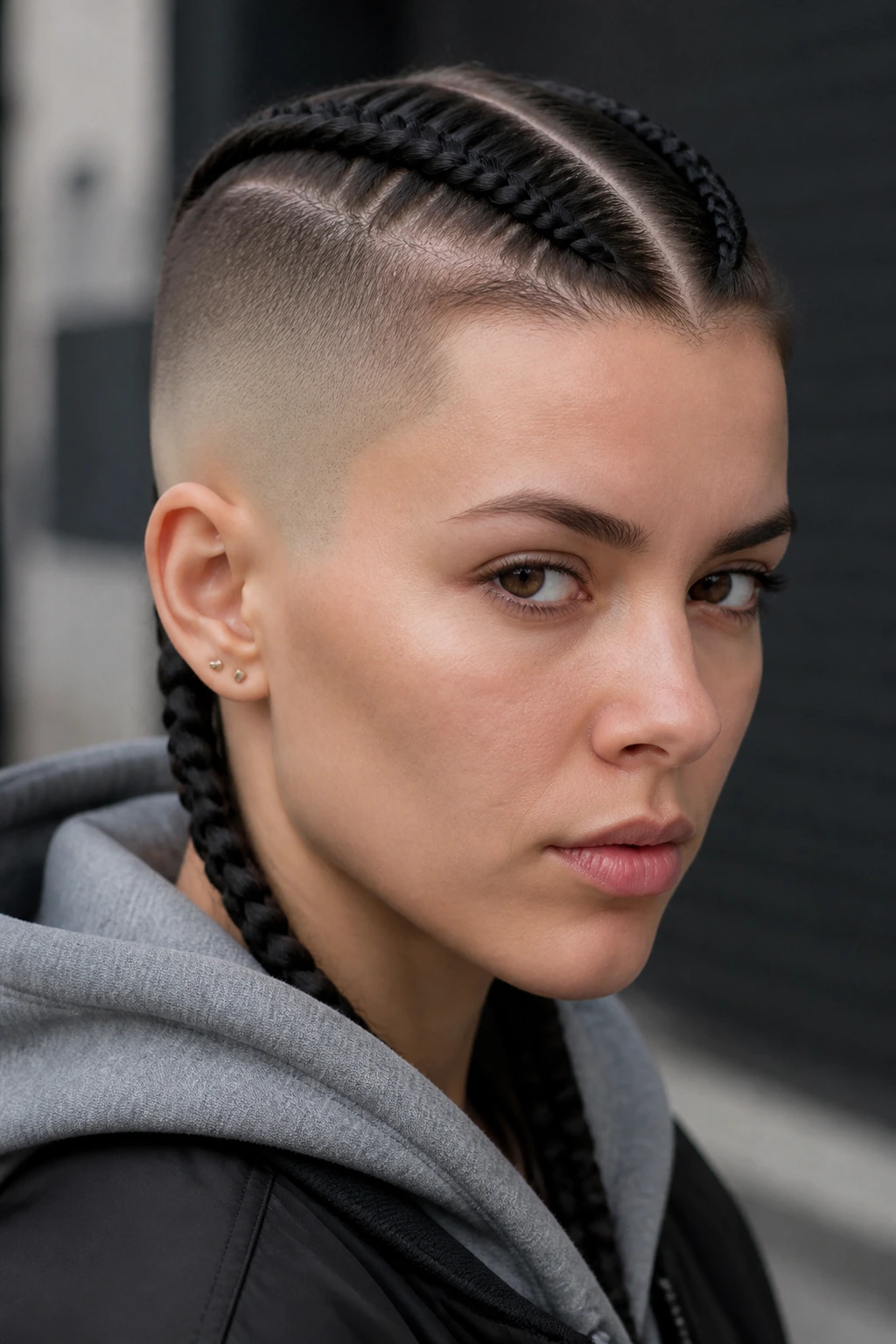
Two feed-in braids over a skin fade look simple at first glance, but they have a harder edge than most braided styles. The whole point is restraint. You’re not covering the head with pattern; you’re letting two strong lines travel back from the forehead and leaving the shaved sides to do the visual work.
That’s why this style looks especially good on women who wear big hoops, strong brows, or a clean makeup look. The face stays open. The neck stays visible. Nothing feels crowded, and the haircut gets to breathe.
It’s also a good choice if you don’t want to spend forever in the chair. Two braids are faster than eight, and the maintenance is lighter because fewer rows mean less tension across the scalp. Keep the parting precise, though. A sloppy middle part ruins the whole thing.
This style suits a strong jawline, but it doesn’t need one. The visual line created by the braids pulls attention upward, which can sharpen rounder faces too. If you want something that reads neat from across the room and still feels a little tough, this is the one I’d point to first.
3. Fulani Braids With Beads and a Shaved Side
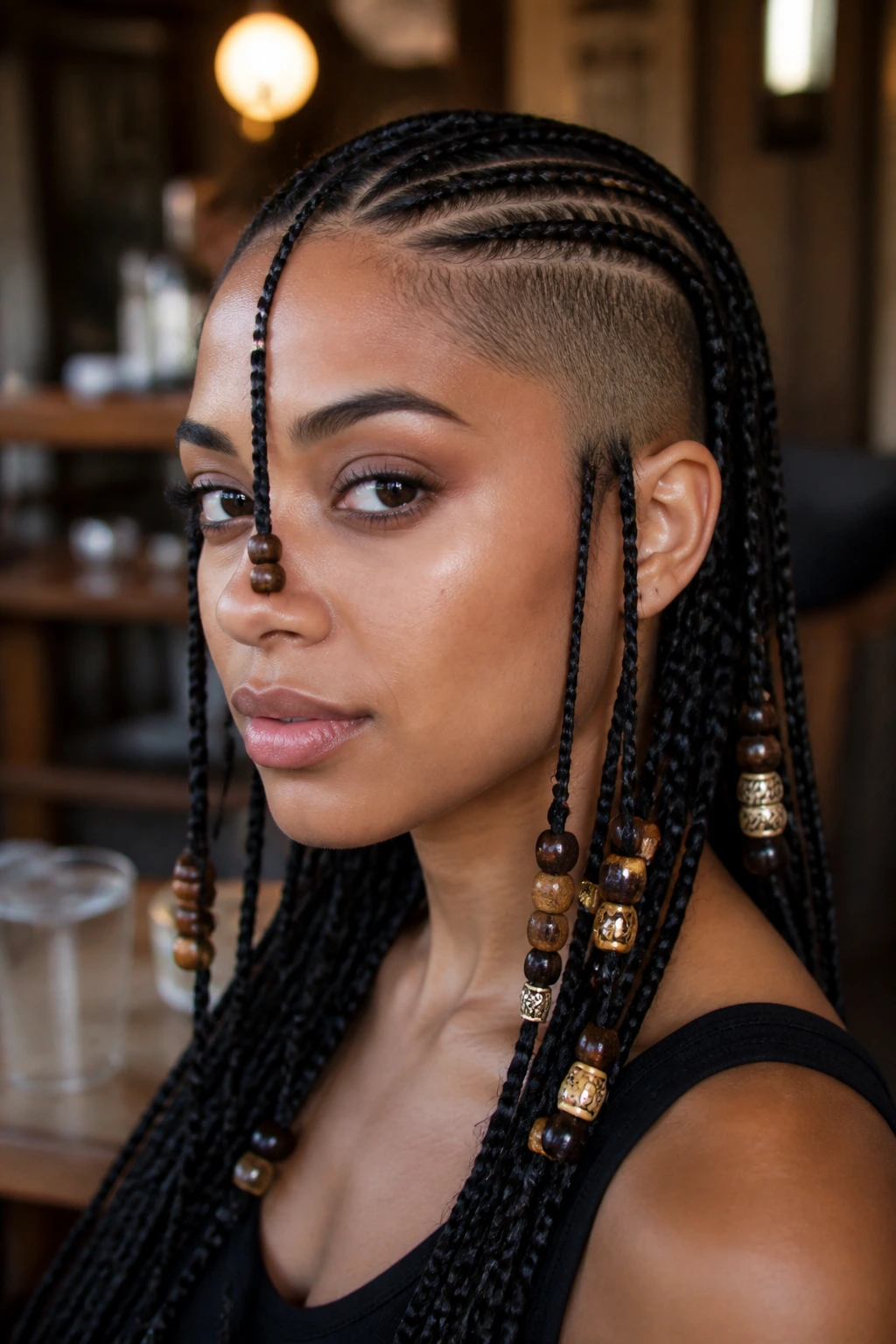
Why do Fulani braids look so good next to a shaved side? Because the style already has movement, and the undercut gives that movement room to show. The center braid, the slim side plaits, and the beadwork all create motion around the face, while the shaved section stops the look from feeling too precious.
You do need a little restraint here. Too many beads on every braid can turn the style into noise, especially when one side of the head is clipped short. Three to five beads per braid is enough for most people. A few cowrie shells or wood beads can work if you want warmth and texture, but don’t overload the ends.
How to Wear It
Place the longest braids where they frame the face and keep the shaved side a little cleaner. That asymmetry is the point. If the braids are too heavy on the shaved side, the contrast flattens out.
Think about jewelry too. Small gold hoops, a nose ring, or a simple ear cuff tends to work better than anything fussy. The whole style already has detail built in. It does not need much help.
4. High Braided Mohawk With Sides Buzzed Close
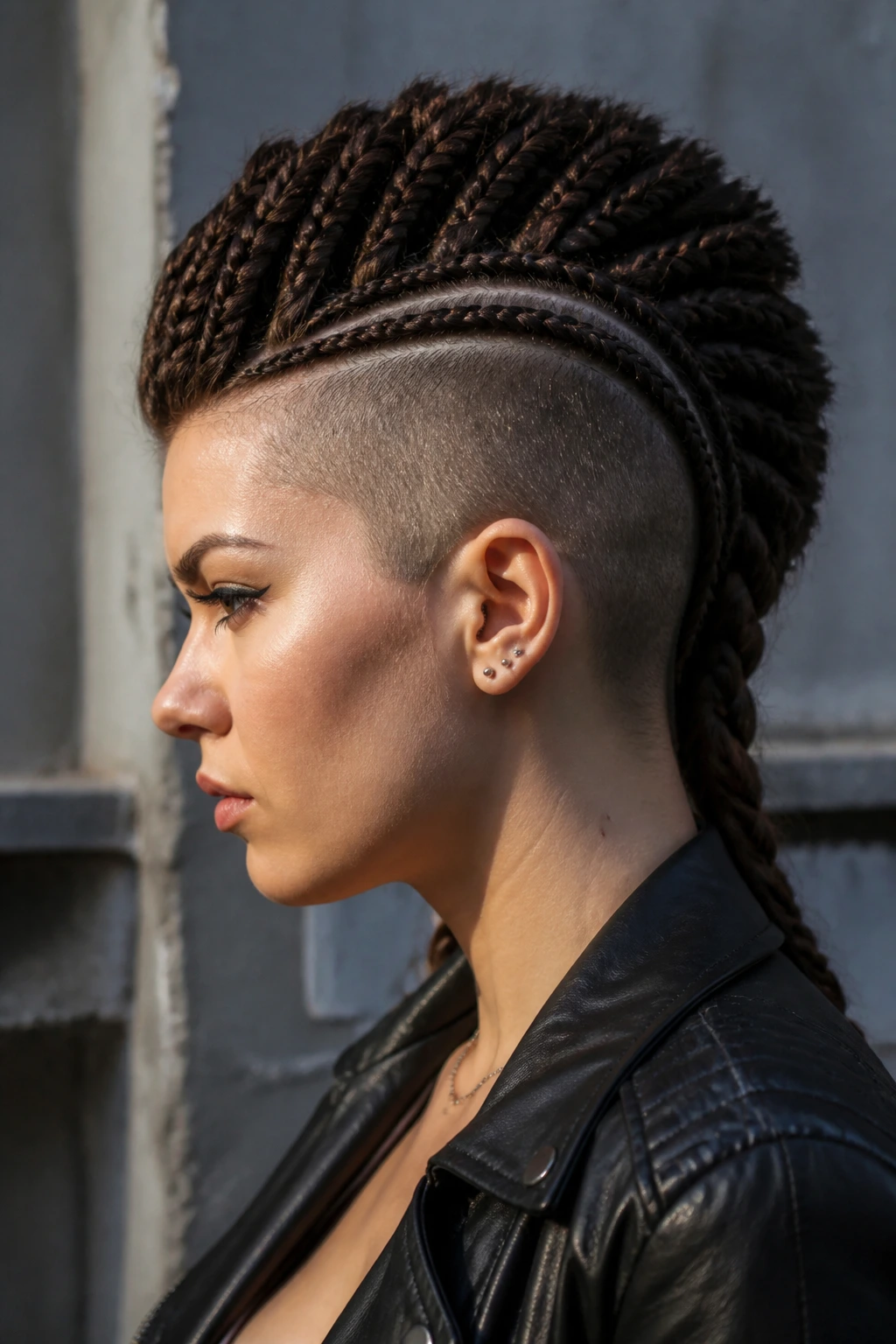
A braided mohawk with buzzed sides has that immediate, walk-into-the-room energy. The height changes everything. Instead of spreading the style across the head, you stack the braid pattern along the center strip, and the sides stay clipped close so the mohawk shape looks sharp from the front and dramatic from the profile.
The best versions use three or four stacked cornrows, or one thick central braid that gets lifted a little at the crown. If you want even more height, add extension hair in modest sections rather than one giant bundle. That keeps the base stable. A braid that’s too heavy will sag by the end of the day, and nobody wants a collapsing mohawk.
- Keep the side fade low and clean, not patchy.
- Build height at the crown, not just the front.
- Use pins under the braid base if you want extra lift.
- Finish with a matte spray if you want the style to look sharp rather than glossy.
The nice thing here is how little else you need. The cut and braid pattern do the talking. Keep the edges neat and the mohawk centered, and the whole look lands hard without trying too hard.
5. Goddess Braids With Curly Ends and Tapered Sides
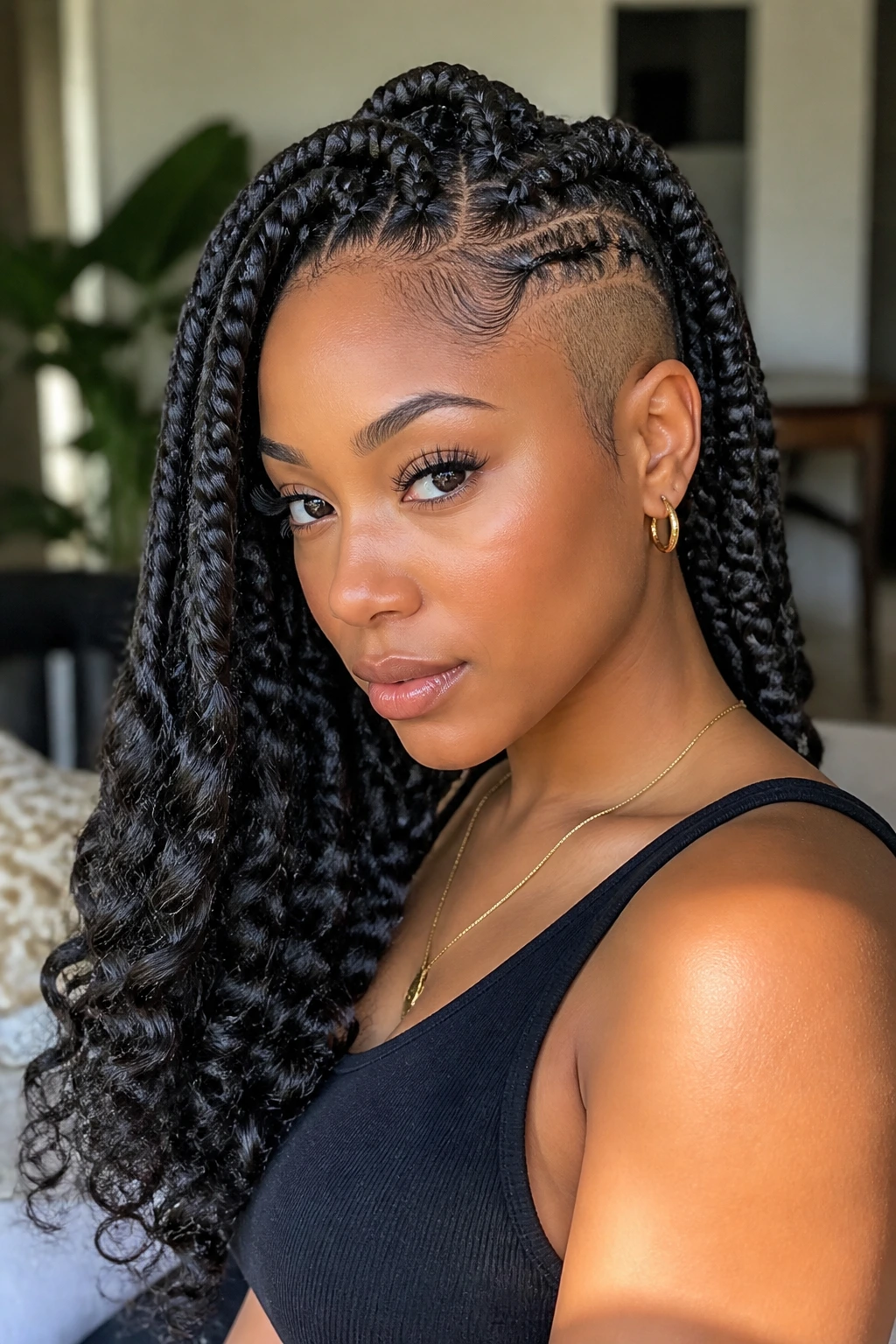
Goddess braids give you softness first, then edge. That’s why they work so well with shaved sides. The braids themselves are thicker and smoother than tight cornrows, and the curly ends keep the style from looking too severe. Add a tapered side, and the whole thing feels like a polished answer to anyone who thinks edgy hair has to be harsh.
What really changes the mood is the texture at the end. A few loose curls or wand-curled strands make the braid line feel less rigid. They also soften the jaw and cheeks, which is useful if the shaved side already gives you a lot of contrast. This style tends to look best when the braids are medium-thick rather than jumbo. Too thick, and the curls get swallowed.
One thing to watch: goddess braids need moisture. The hair along the scalp can look dry fast if you skip mousse or a light braid sheen. A little product goes a long way. Heavy grease just makes the parting look flat.
I reach for this style when I want something that can go from a leather jacket to a silk shirt without feeling out of place. It has range. That’s rare.
6. Stitch Braids With a Hard Part Pattern
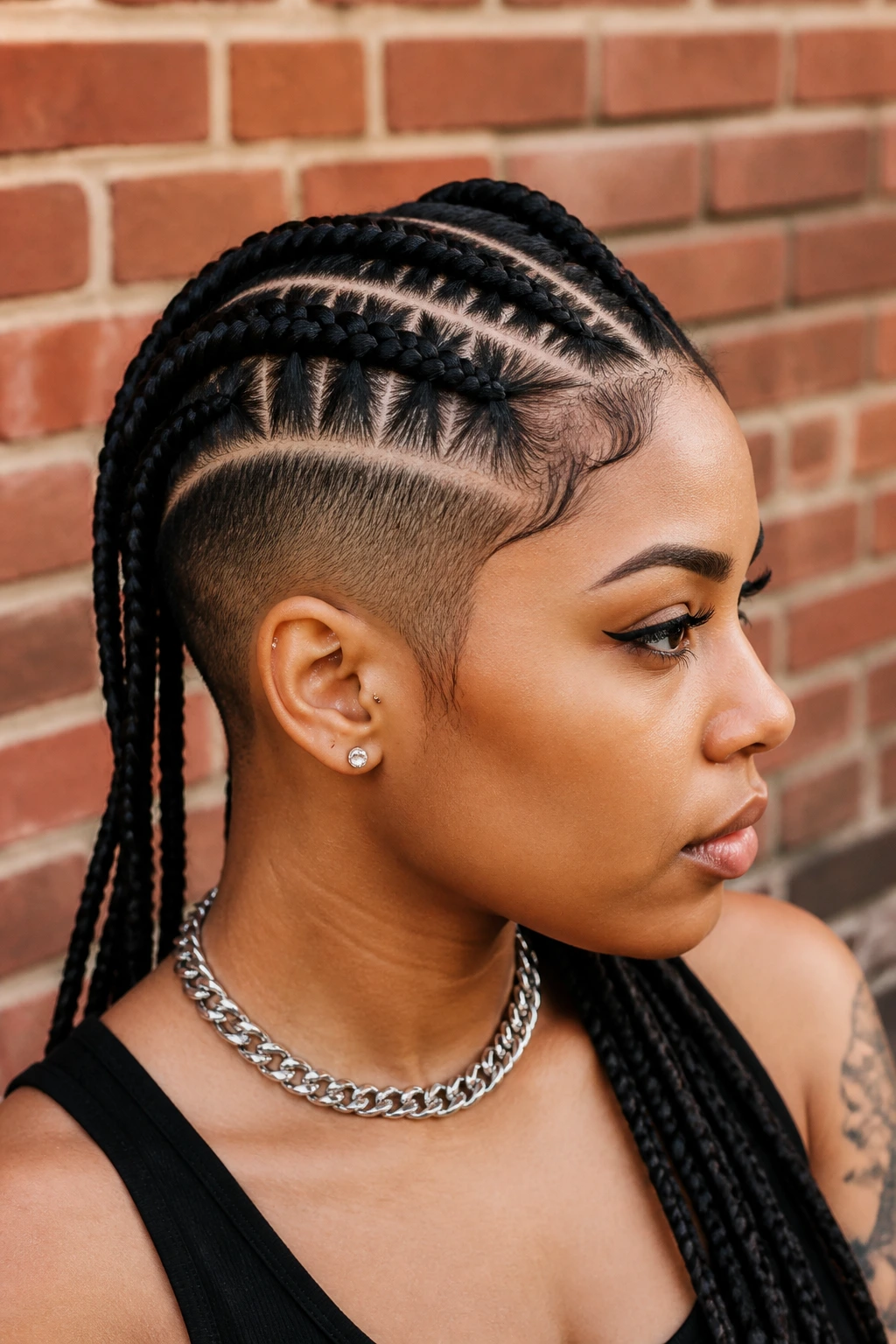
Unlike loose cornrows, stitch braids look engineered. The sections are sliced into small, visible “stitches” across the scalp, and that geometric look becomes even stronger when a shaved side sits right beside it. If you like hair that feels graphic and intentional, this is the one.
The hard part is the real star here. A clean part line, sometimes curved and sometimes dead straight, gives the braids a sharp edge that a soft part can’t match. I’d ask for stitch rows no wider than about 1/4 inch if you want the pattern to read clearly. Bigger sections blur the stitch effect.
This style works especially well if you like symmetry on top and contrast on the side. The shaved area keeps the head from looking too dense, which matters when the stitching is tight and visually busy. It also gives you room for a crisp fade without crowding the braid lines.
Specific recommendation: keep the rest of the styling bare. No heavy clips, no oversized beads, no extra drama. The braid pattern is already saying enough.
7. Box Braids Pulled Into a Braided Ponytail Over Shaved Temples
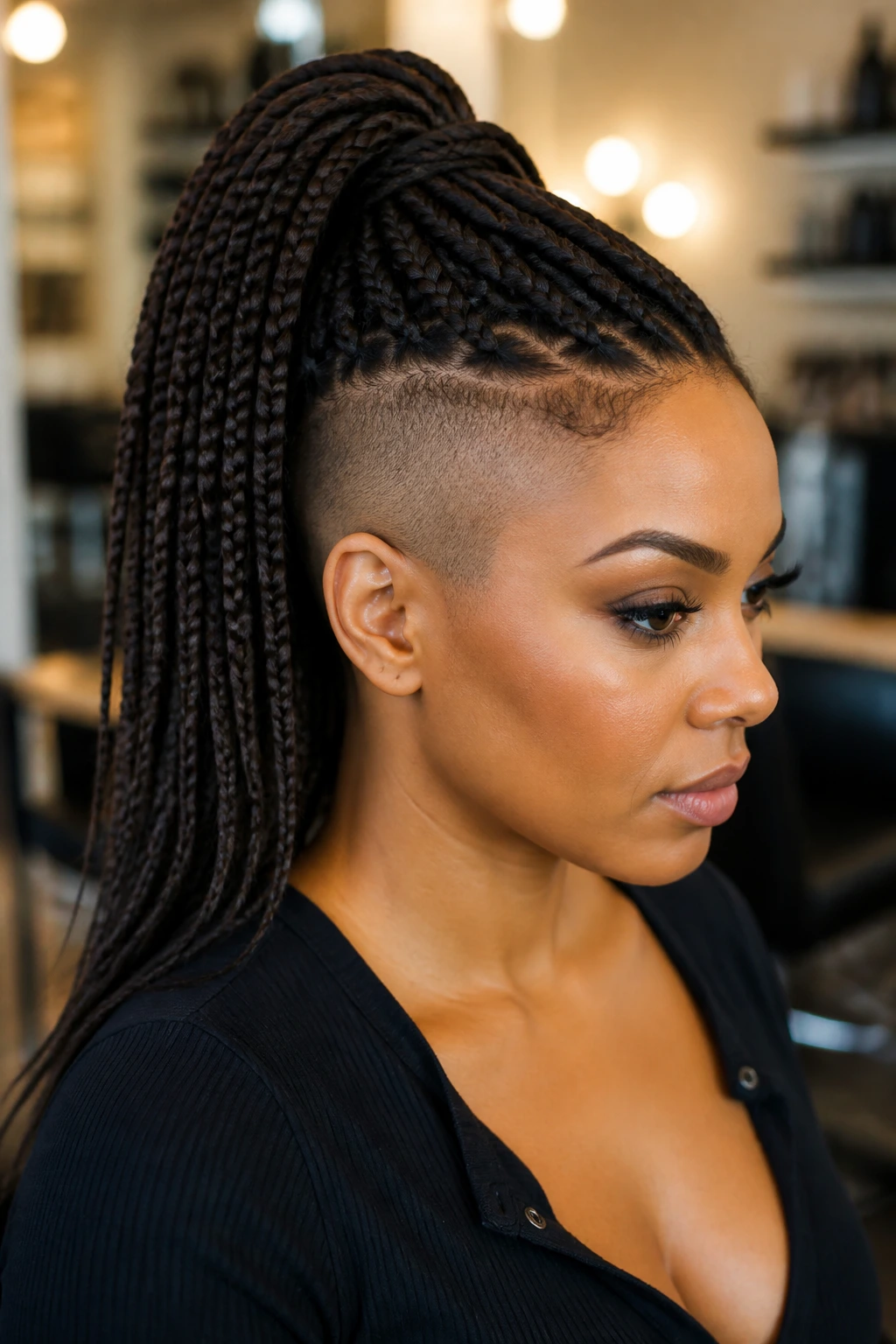
Box braids over shaved temples are for women who want volume without the visual bulk sitting everywhere. The box braid section gives you texture and movement, then the temples go clean and close so the face stays open. Pulled back into a braided ponytail, the whole look feels lifted and a little fierce.
What to Ask For
- Medium box braids, about pencil-width if you want manageable weight.
- Shaved or faded temples that stay neat under the hairline.
- A ponytail placement at the crown or slightly lower.
- One wrapped braid around the base so the elastic disappears.
The placement matters more than most people think. If the ponytail sits too low, the shaved temples get hidden. If it sits too high, the weight starts to pull on the edges. A middle height usually looks the cleanest.
This is a good style when you want the drama of long braids without hair hanging in your eyes all day. It’s also one of the easier ways to make an undercut feel intentional rather than extreme. The ponytail pulls the look together. Without it, the pieces can feel separate.
8. Dutch Braids Into a Low Wrapped Bun
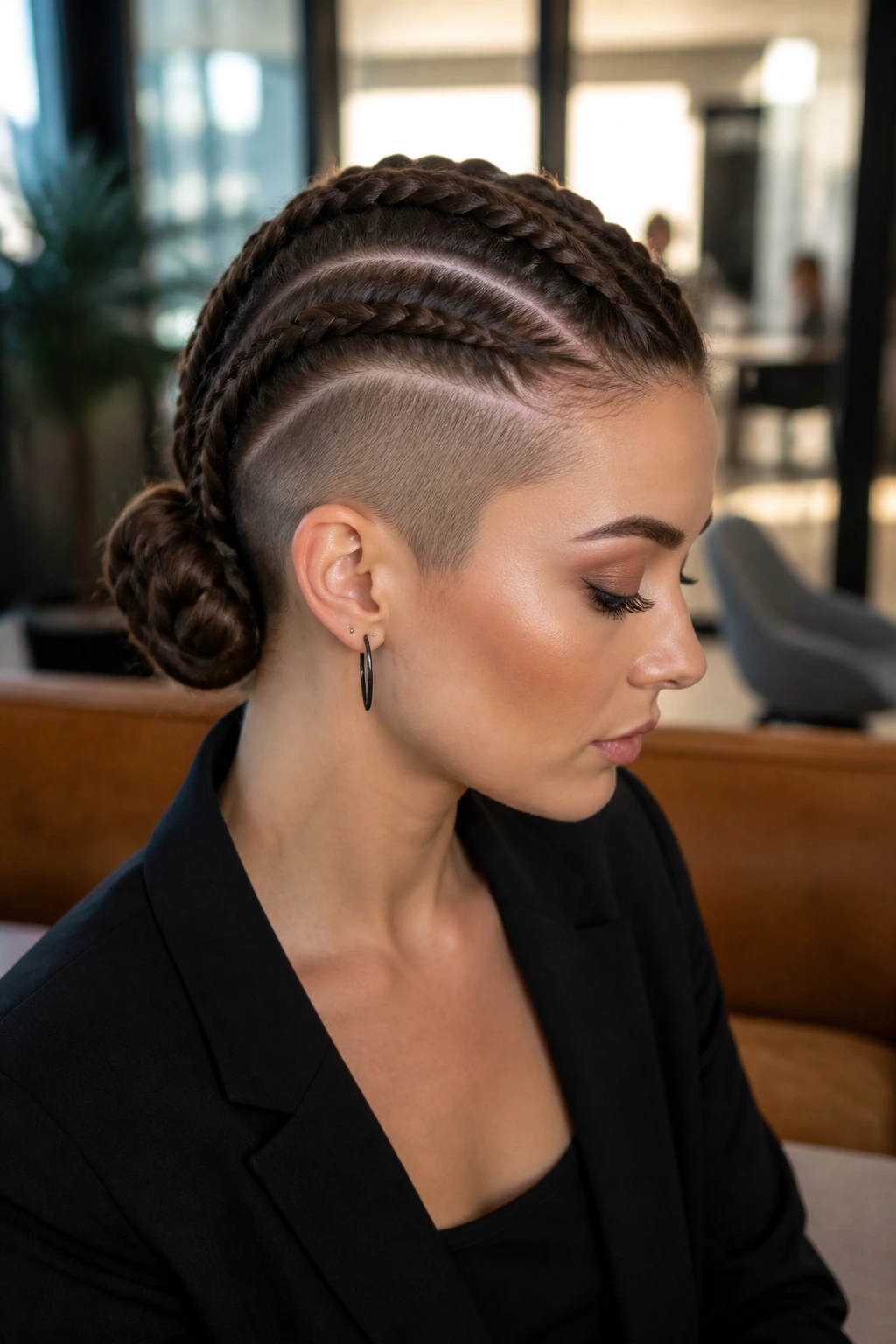
Dutch braids are the tougher cousin of French braids. The braid sits up off the scalp a little more, which means the texture reads fast and clearly, especially when the sides are shaved. Put those braids into a low wrapped bun, and you get a shape that feels controlled but not fussy.
The contrast is what sells it. The top of the head has lift and pattern. The sides and nape stay clean. Then the bun closes the whole thing at the back without creating extra width. It’s one of those styles that can look sharp in a blazer and still hold up with a tank top and boots.
This also works if your hair is medium length and you want a way to make it look denser. Dutch braids build visible structure. That little bit of raised texture helps, especially if the shaved sides make the rest of the head look smaller.
I’d keep the bun neat and low. A sloppy bun fights the braid lines, and that is where the style starts to lose its shape. A few pins and a soft hold spray are enough.
9. Cornrow Crown With One Exposed Side
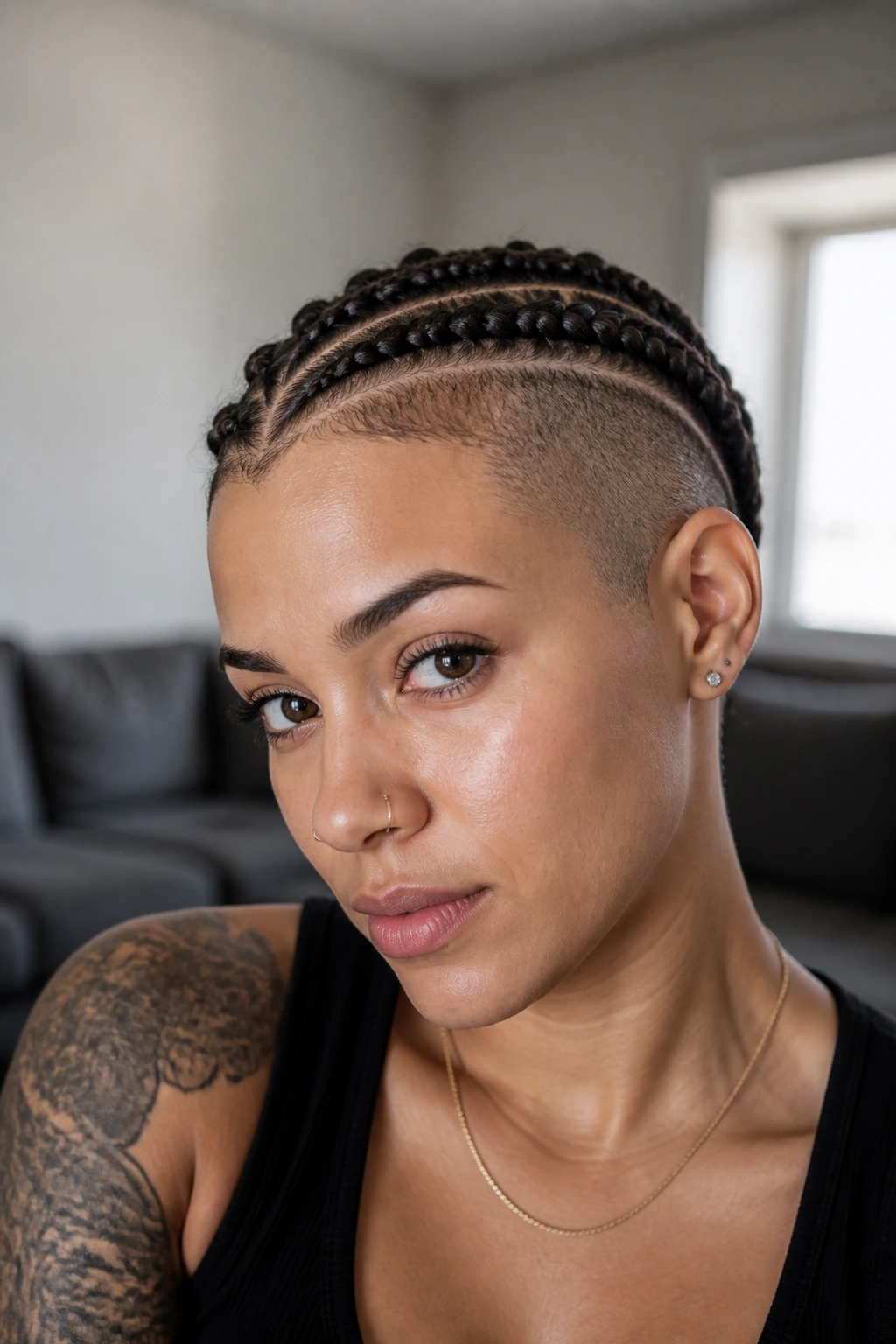
Can a crown braid still feel edgy? Absolutely, if one side of the head is shaved and the braid is kept snug around the hairline. The crown shape gives you softness and movement, but the exposed side stops it from drifting into bridal territory.
This works because the eye follows the braid around the face, then hits the open side and gets a jolt of contrast. That little interruption makes the whole thing feel deliberate. If you wear earrings, this style helps them too. The open side creates a frame instead of competing with the jewelry.
How to Wear It
Ask for a braid that hugs the hairline closely and ends near the nape rather than piling high at the back. The lower finish keeps the crown shape grounded. If the braid sits too far up, it starts to look floaty.
A side shave with a crown braid also gives you some room for hair accessories. One small pin at the end, or a simple cuff near the ear, is enough. Anything more starts to crowd the line of the braid.
This is one of the quieter styles on the list, but quiet does not mean soft. The shaved side keeps it from being sweet.
10. Rope Twists Mixed With Braids and a Side Fade
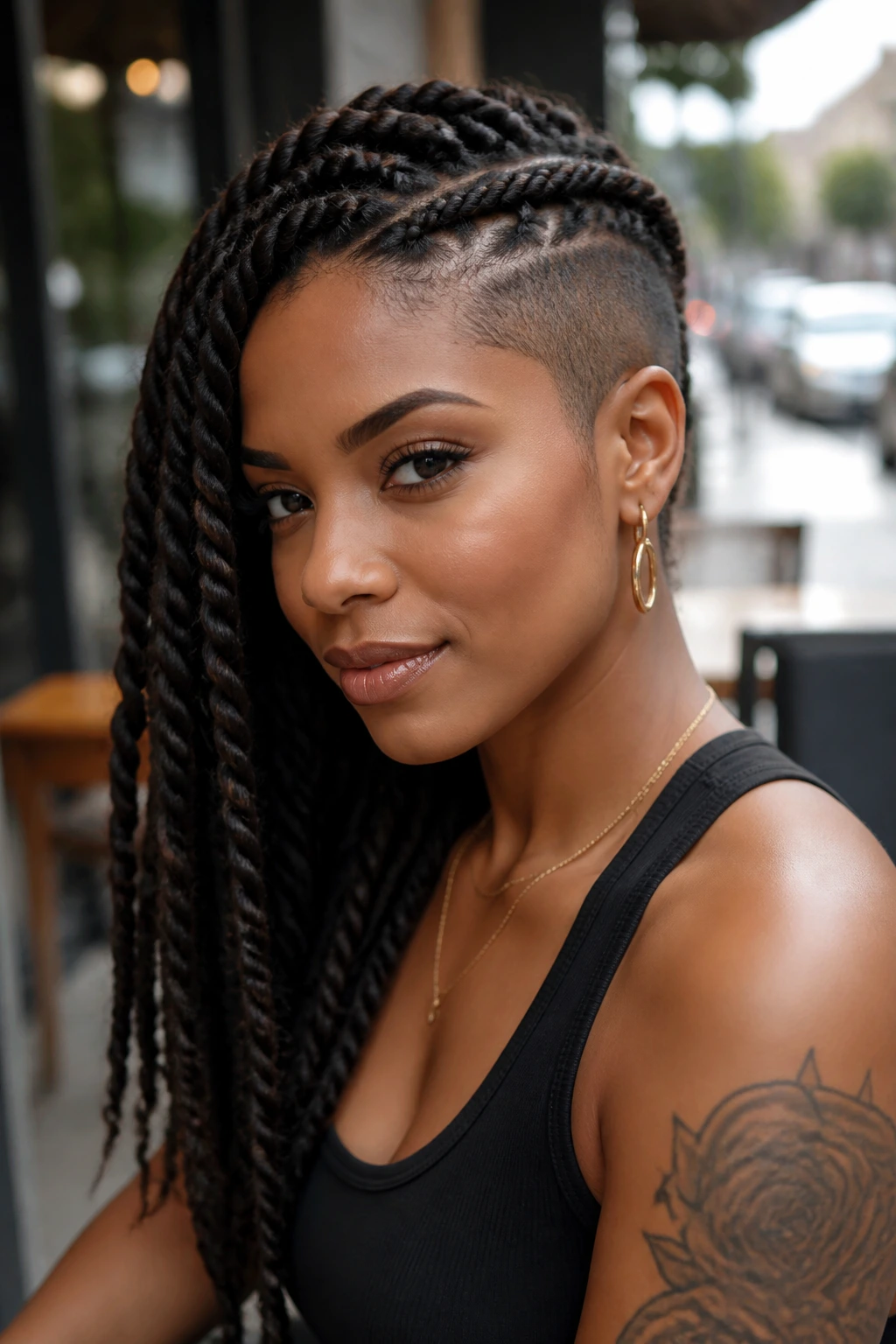
Rope twists and braids together give you texture without making the style feel heavy. The twist pattern catches the light differently from a flat braid, and a side fade keeps the whole look from tipping into bulk. If your hair has a lot of density, this mix can be a relief.
I like this combination because it breaks up the rhythm in a good way. A few front braids can guide the face, then the twists soften the back. The shaved side acts like a clean border. You get contrast at three different points, which keeps the style from reading one-note.
- Use braids at the front where you want more structure.
- Put twists toward the back if you want movement.
- Keep the fade low so the transition looks smooth.
- Secure twist ends with small elastics if the hair is slippery.
The result is less severe than a full cornrow look and less soft than all twists. That middle ground is useful if you want a style that can handle work, errands, and a night out without needing a rethink.
11. Micro Braids Flipping Over a Shaved Nape
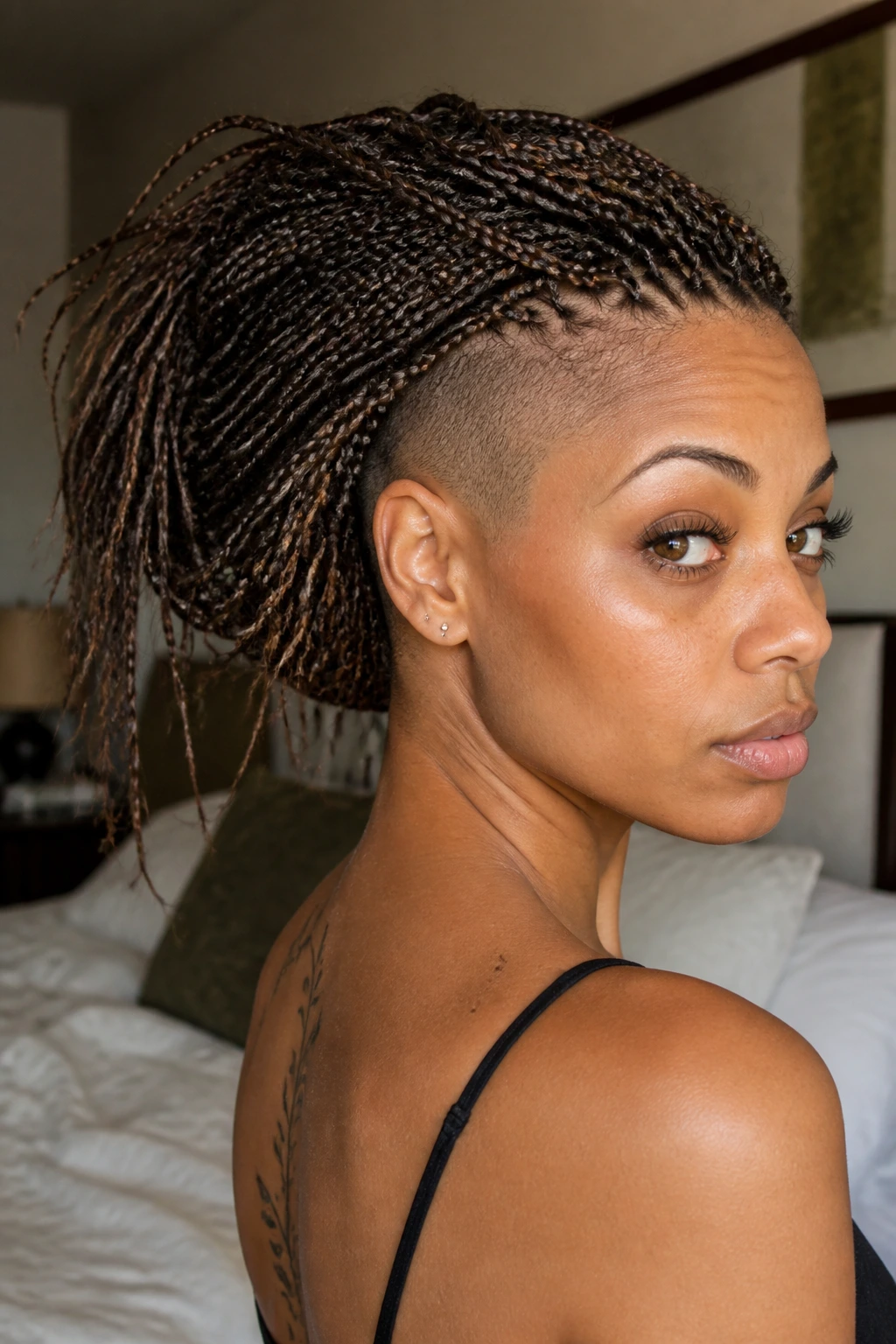
Micro braids over a shaved nape have a long, swinging feel that I’ve always found a little addictive. The tiny braids move differently from larger plaits; they shift, separate, and fall in a way that makes the shaved section beneath them stand out every time you turn your head.
This is not a quick chair session. Micro braids take time, and the smaller the braid, the more patience you need. But the payoff is movement. A shaved nape keeps the bottom from looking bulky, which matters because micro braids can build a lot of visual weight on their own.
There’s also a practical side to this. A clean nape makes the style easier to sleep in and easier to refresh. The braids can be gathered up or left down, and either way the undercut keeps the finish from feeling too hot or too thick.
If you like looks that move as you move, this one is hard to beat. It’s sleek without being flat. And when the braids brush across the shaved line, the contrast is part of the appeal.
12. Halo Braid With a Clean Buzzed Underlayer
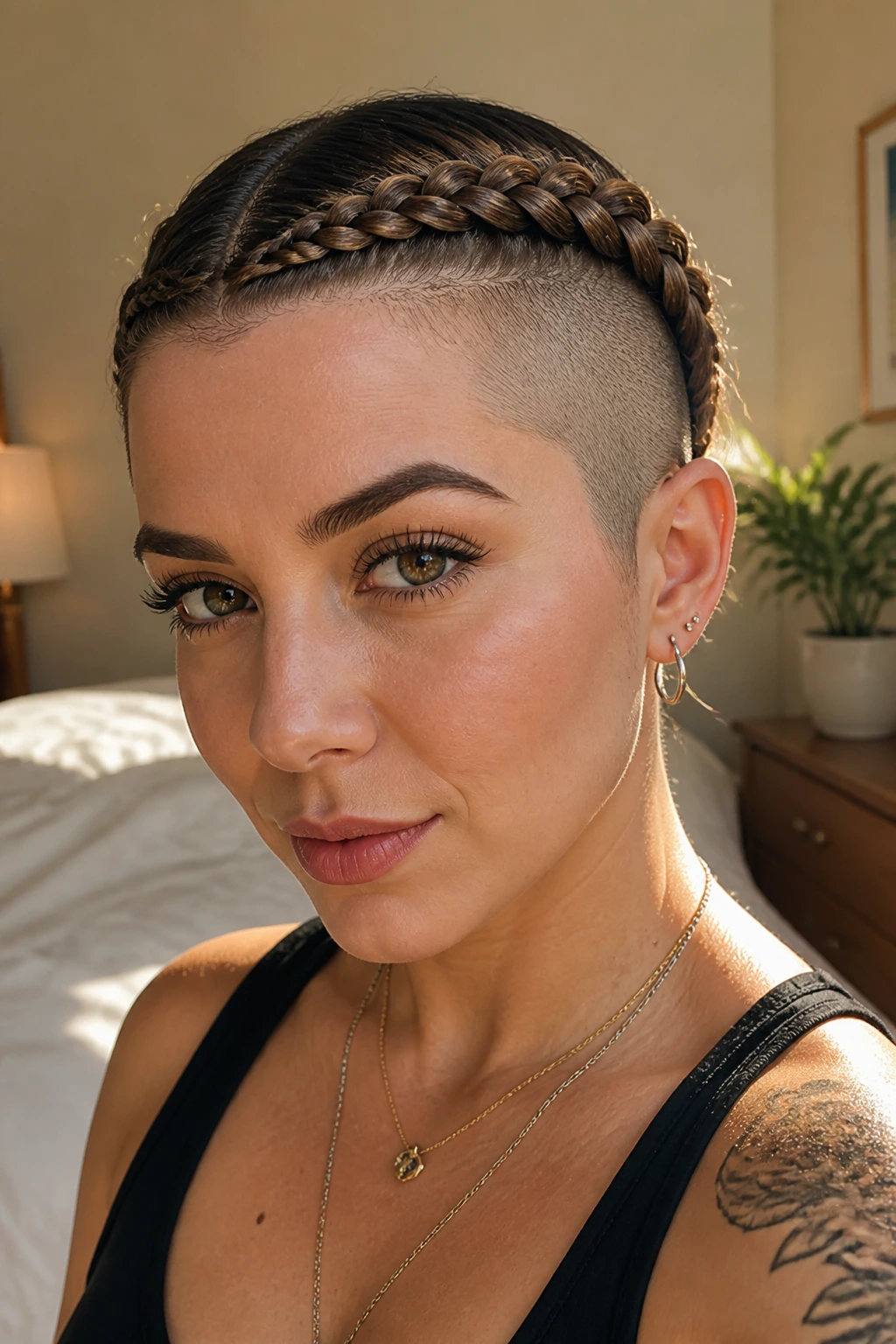
A halo braid over a buzzed underlayer is proof that a style can be quiet and still feel sharp. Unlike a full crown braid that covers everything, this version leaves the lower section clean, so the braid reads as a frame rather than a helmet. That tiny shift changes the whole mood.
The braid itself should stay close to the head and trace the curve of the hairline. If it floats too far off the scalp, the shape gets soft fast. Keep the underlayer short and tidy. A faded buzz looks cleaner than a patchy grow-out, and that matters because the braid doesn’t hide much.
This is a good choice when you want your face to stay front and center. The braid acts like a border. The shaved section creates negative space, and the two together look more intentional than either one alone.
I’d wear this with very little extra styling. Maybe a little shine mist, maybe a pinned end. That’s enough. The elegance, if I can call it that, comes from the restraint.
13. Zigzag Part Cornrows With a Temple Fade
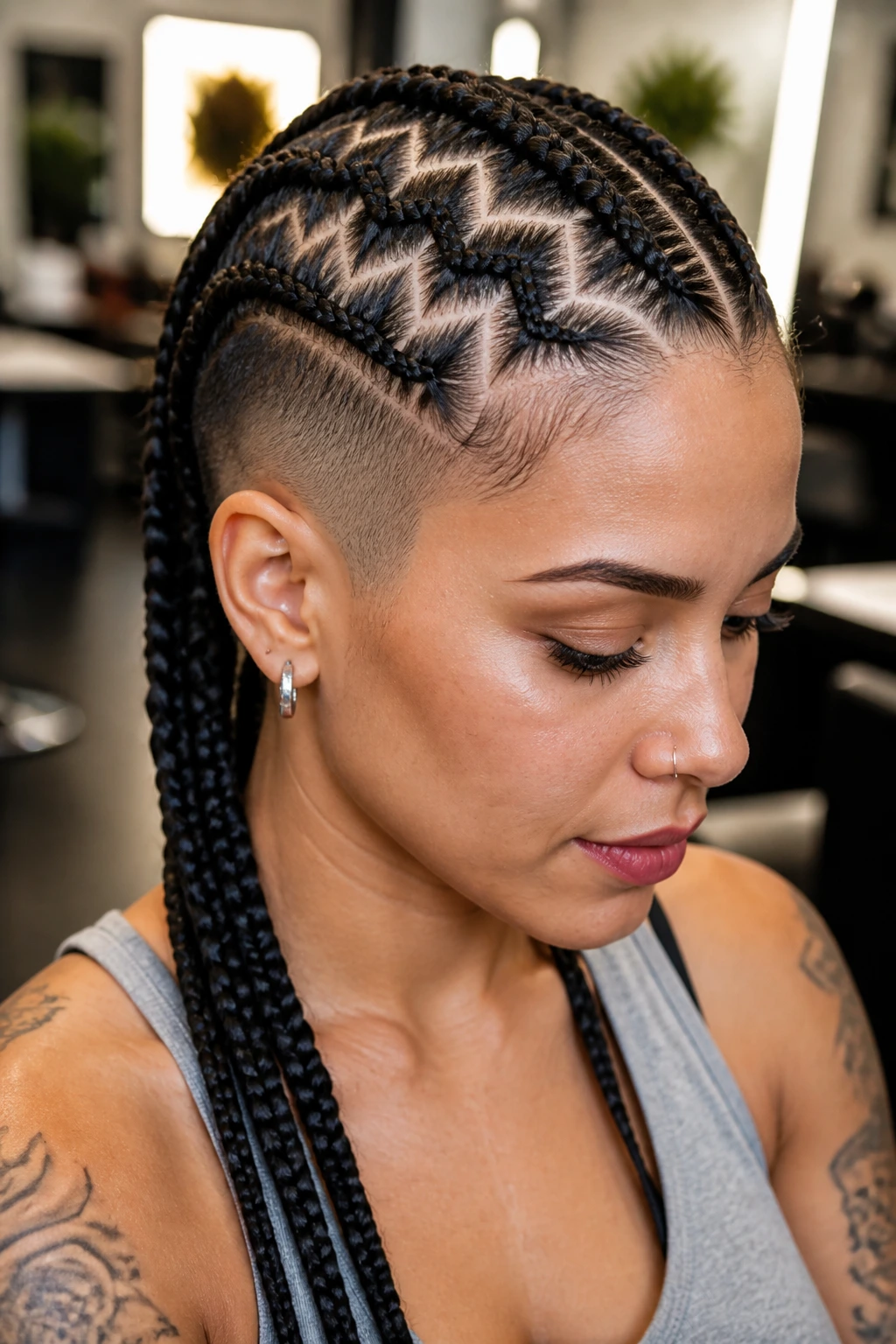
A zigzag part turns simple cornrows into something with attitude. The pattern looks playful at first, then the temple fade sharpens it up and keeps the style from tipping too cute. That contrast is what makes the look work for women who want something bold but not overworked.
Why the Parting Matters
The braid itself can be basic. The parting is the design. If the zigzag lines are too wide, they lose their snap. If they’re too tight, they blur once the hair is braided down. A spacing of around 1/4 inch usually gives the cleanest shape.
The temple fade matters just as much. It should look deliberate, not like an accident between braid rows. That means a clean clip around the sideburn area and a tidy finish near the ear. A soft, fuzzy fade tends to muddy the whole pattern.
- Keep the zigzags consistent from front to back.
- Don’t overload the scalp with extra product.
- Use a light edge gel only where the hairline needs control.
- Ask for the fade to stay low enough that the braid pattern still dominates.
Best move: let the parting stay the star. Once you start adding too many accessories, the zigzag loses its punch.
14. Jumbo Goddess Braids and a Side Undercut
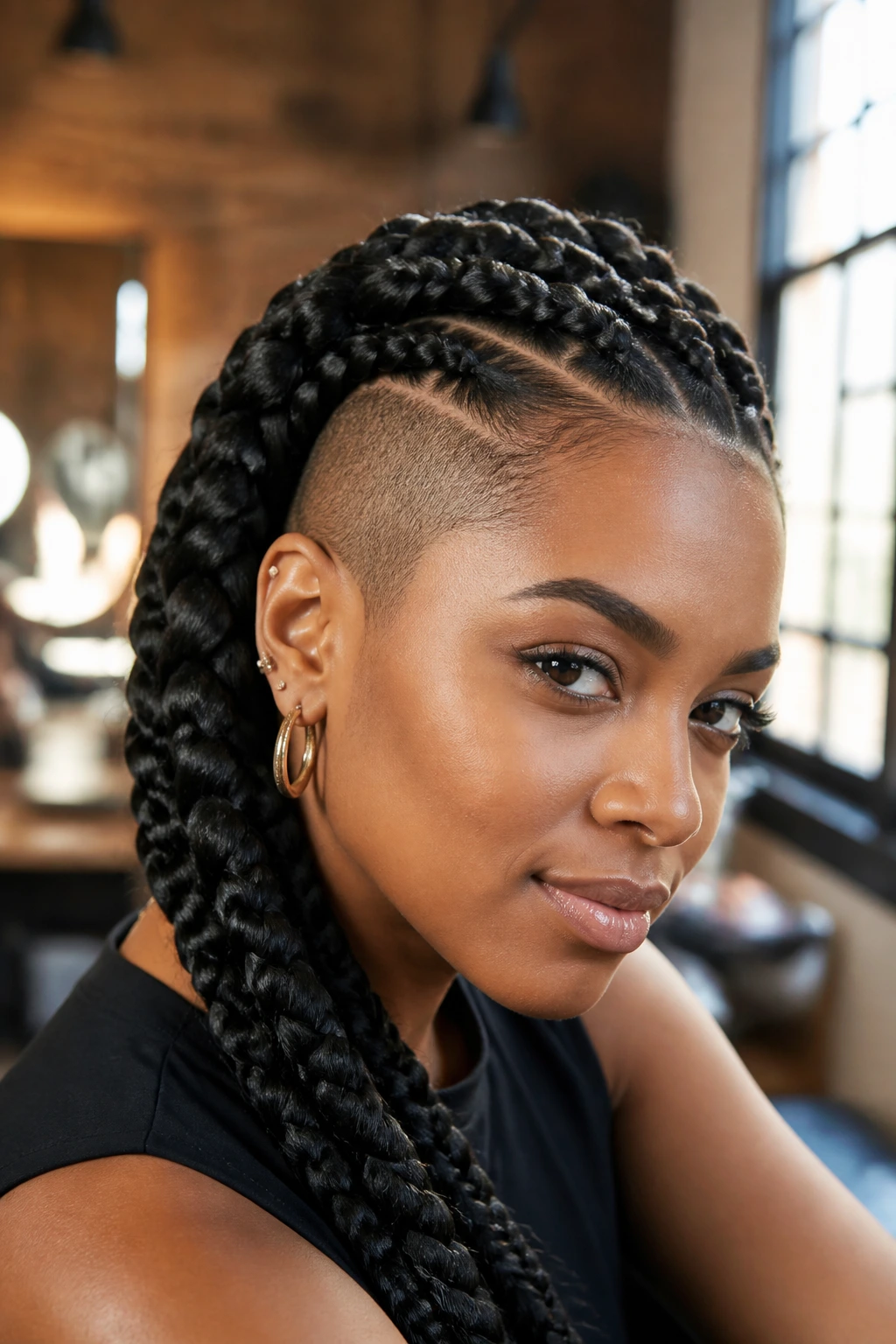
Jumbo goddess braids are all about weight and shape. Put them next to a side undercut, and they suddenly feel less sweet and more grounded. The large braid size creates instant volume, while the shaved side keeps the look from swallowing your face.
This is a good style if your hair is thick or if you like extension-heavy looks that make a statement fast. Three jumbo braids can be enough. Four starts to look crowded on many heads, especially when one side is shaved. Keep the spacing generous so the scalp still shows between rows.
The undercut also gives the braids a place to fall. Without that open side, jumbo braids can make the head look boxy. The shave breaks the shape and gives the style a little air. That matters a lot more than people realize.
If you’re deciding between small braids and jumbo ones, think about scale. Small braids feel detailed. Jumbo braids feel bold. With a shaved side, bold usually wins.
15. Braided Bob With One Shaved Temple
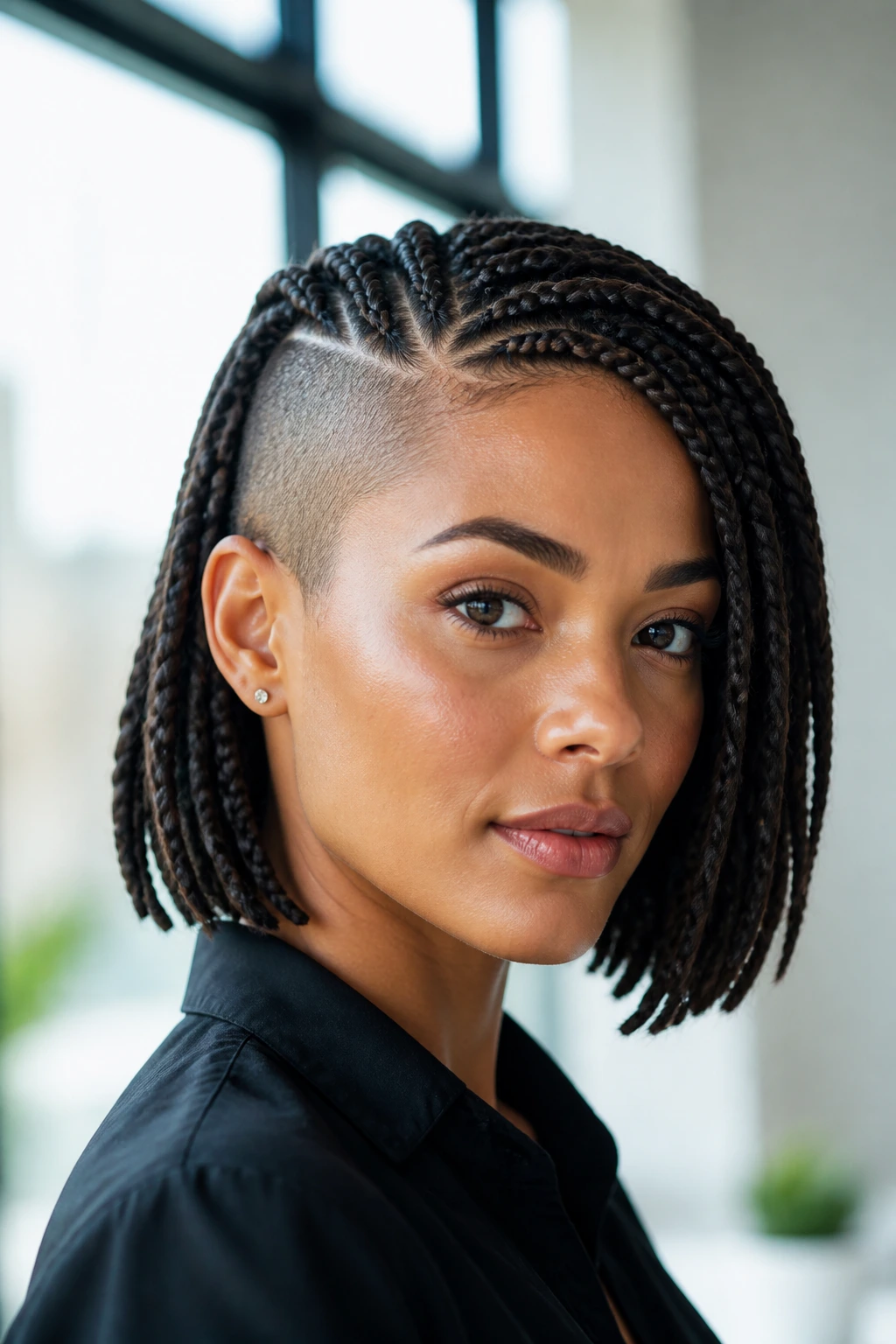
Can a bob feel fierce with one temple shaved? Yes. In fact, the short length can make the shave look even sharper because there’s less hair competing with it. A braided bob has a neat, compact shape, and the shaved temple gives it the edge that keeps it from reading sweet.
The key is where the bob lands. Chin length or just under the jaw usually works best. Any shorter and the braid pattern can start to crowd the face. Any longer and the bob loses that clean, blunt finish that makes it so appealing.
How to Wear It
Keep the braids close to the head and avoid too much puff at the roots. The whole point of a bob is the tidy outline. A side temple shave should show through the part and near the ear, not get buried under a thick braid stack.
This is one of the more wearable looks on the list if you want something office-friendly with a little bite. The bob keeps it neat. The temple shave keeps it interesting. That’s a strong combination.
16. Feed-In Ponytail With Curved Parts and a Nape Fade
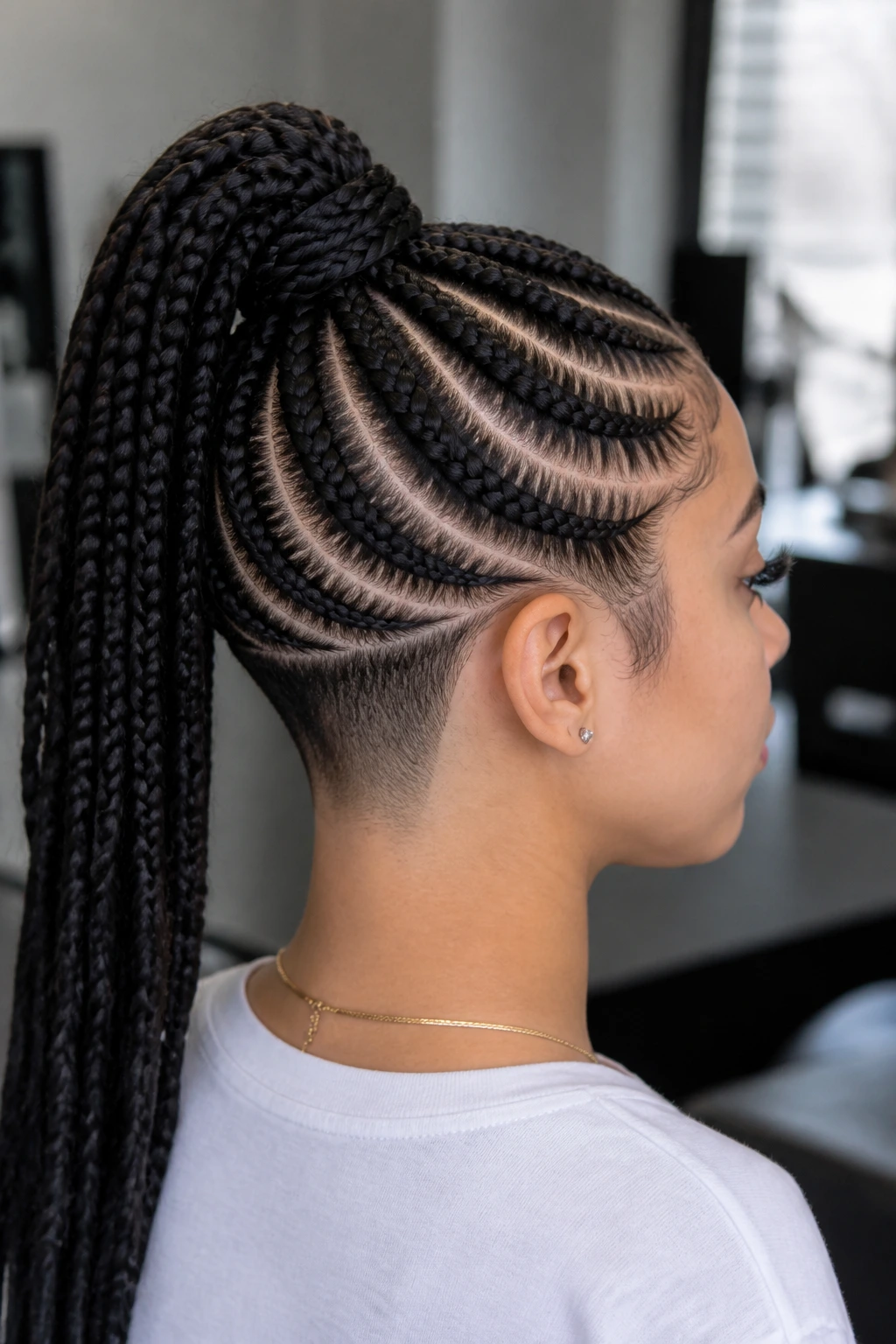
A curved-part feed-in ponytail looks softer than straight rows, and that softness plays well with a nape fade. The braid lines move around the head in a sweep, then everything gathers at the back in one strong tail. It feels architectural without getting stiff.
This style is smart if you want the shaved section to sit low and clean rather than dominate the whole haircut. The nape fade disappears beneath the ponytail until you turn your head, and then it shows up as a clean finish under the braid weight. That little reveal is part of the charm.
- Use 4 to 8 curved feed-in rows if you want a fuller top.
- Place the ponytail at the crown or just below it.
- Smooth the edges with a light gel, not a thick wax.
- Keep the nape fade neat so the back doesn’t turn boxy.
The curved parting gives the style motion even when you’re standing still. Straight lines can look severe. Curves feel a touch more relaxed. That’s useful if you want edge without the whole look hardening around your face.
17. Short Natural Hair Braided Into a Sculpted Mohawk
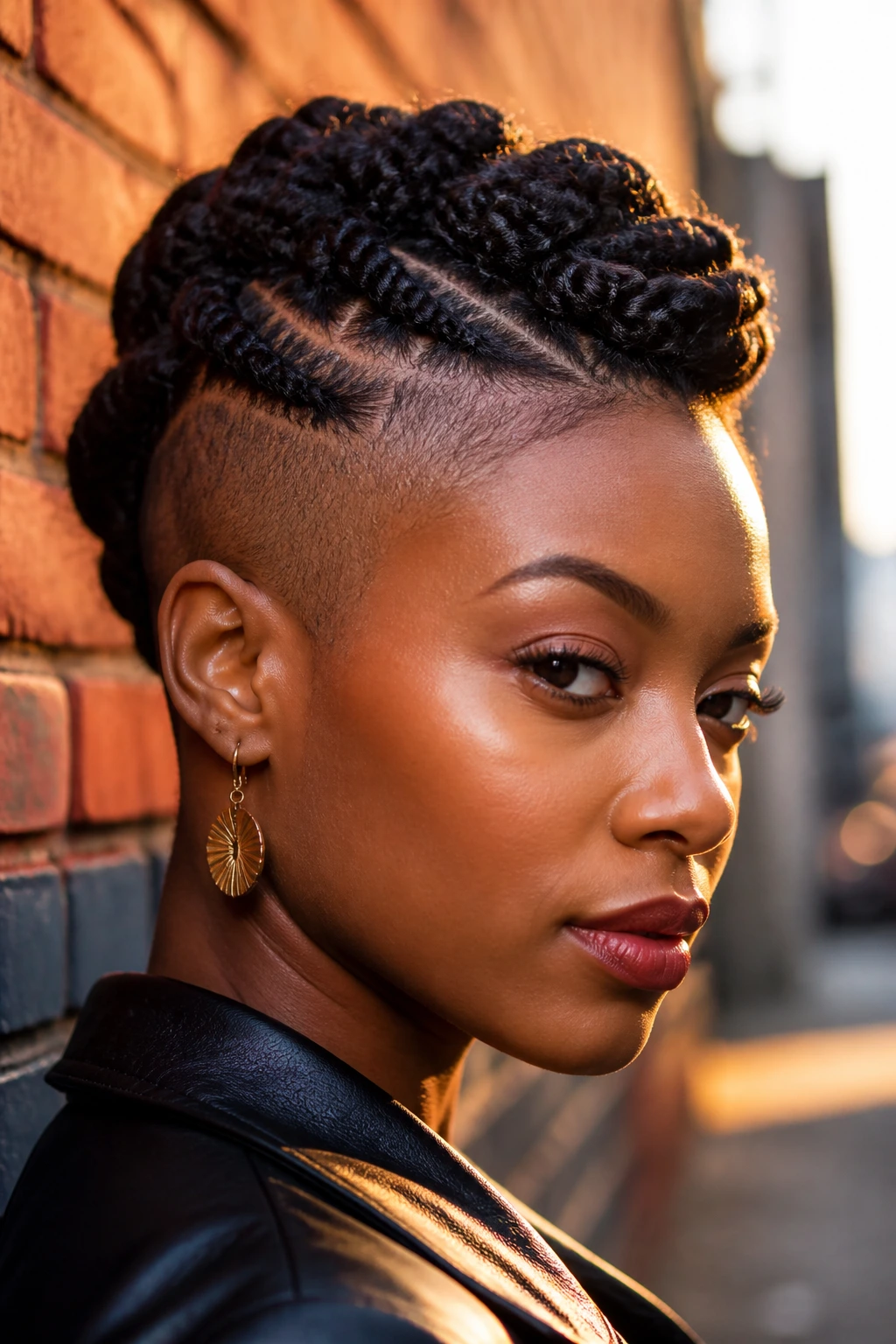
Short natural hair does not have to be a limitation here. In fact, a sculpted mohawk can look even sharper when the sides are shaved because the short length on top creates a clean ridge through the center of the head. You can work with tiny braids, flat twist rows, or a mix of both, depending on how much length you have.
The trick is to think about shape first. You want the top to rise just enough to create a mohawk line, not so much that it starts puffing out in odd places. If the hair is only a few inches long, smaller braids usually hold better than chunky ones. A light hold mousse and a careful set with pins can help the shape stay put.
This is a style for women who like structure but don’t want to hide their natural texture. The shaved sides keep the edges sharp. The braids on top keep the cut from feeling unfinished. It’s a good answer when you want something that looks deliberate on short hair, which is harder to pull off than people think.
And honestly, this is where the whole look gets interesting. The sharpest styles here are not always the biggest ones. Sometimes the cleanest mohawk ridge, a tidy fade, and three carefully placed braids are enough.
Final Thoughts
Braids with shaved sides work because the haircut and the braid pattern share the job. One gives shape. The other gives movement. If one part is too loud, the whole thing gets clumsy. If both parts are handled well, the result feels confident without looking overworked.
The best style for you is the one that fits your hair density, your face shape, and how much trimming you’ll actually keep up with. A sharp fade means more maintenance. Bigger braids mean more weight. Smaller braids mean more time in the chair. None of that is a dealbreaker, but it does change the experience.
If you want the cleanest payoff, book the braid and the shave as one look, not two separate decisions. That’s where the style starts to feel finished instead of assembled.
