



Long hair can be a gift and a nuisance. Bohemian braids for long hair work because they let the length do the styling instead of fighting it, and that matters more than people admit. A braid with soft pieces around the face looks relaxed and expensive in the best sense; a braid pulled too tight can look stiff, heavy, and a little tired.
The sweet spot is texture. Loose fishtails, tiny accent braids folded into waves, curly ends, rope twists, and face-framing pieces all give long hair a little air. I reach for texture spray at the roots and a light cream on the ends when hair gets slippery, because long lengths can slide out of a braid faster than short hair ever will. Too much oil? Bad idea. It turns the whole thing into a slow-motion undoing.
Long hair also changes the shape of the braid itself. Once the length starts pulling on the style, the crown can flatten and the braid can start to sag unless the base is secure. So the braids that really hold up here are the ones that keep the top anchored, leave the middle soft, and finish with enough movement to feel intentional.
That balance is the whole point. Some of these styles are quick, some take a steady hand, and a few are the kind of thing I’d wear for a dinner, a wedding, or a day when I want my hair to look done without looking overly done. Start with the fishtail.
1. Loose Boho Fishtail Braid
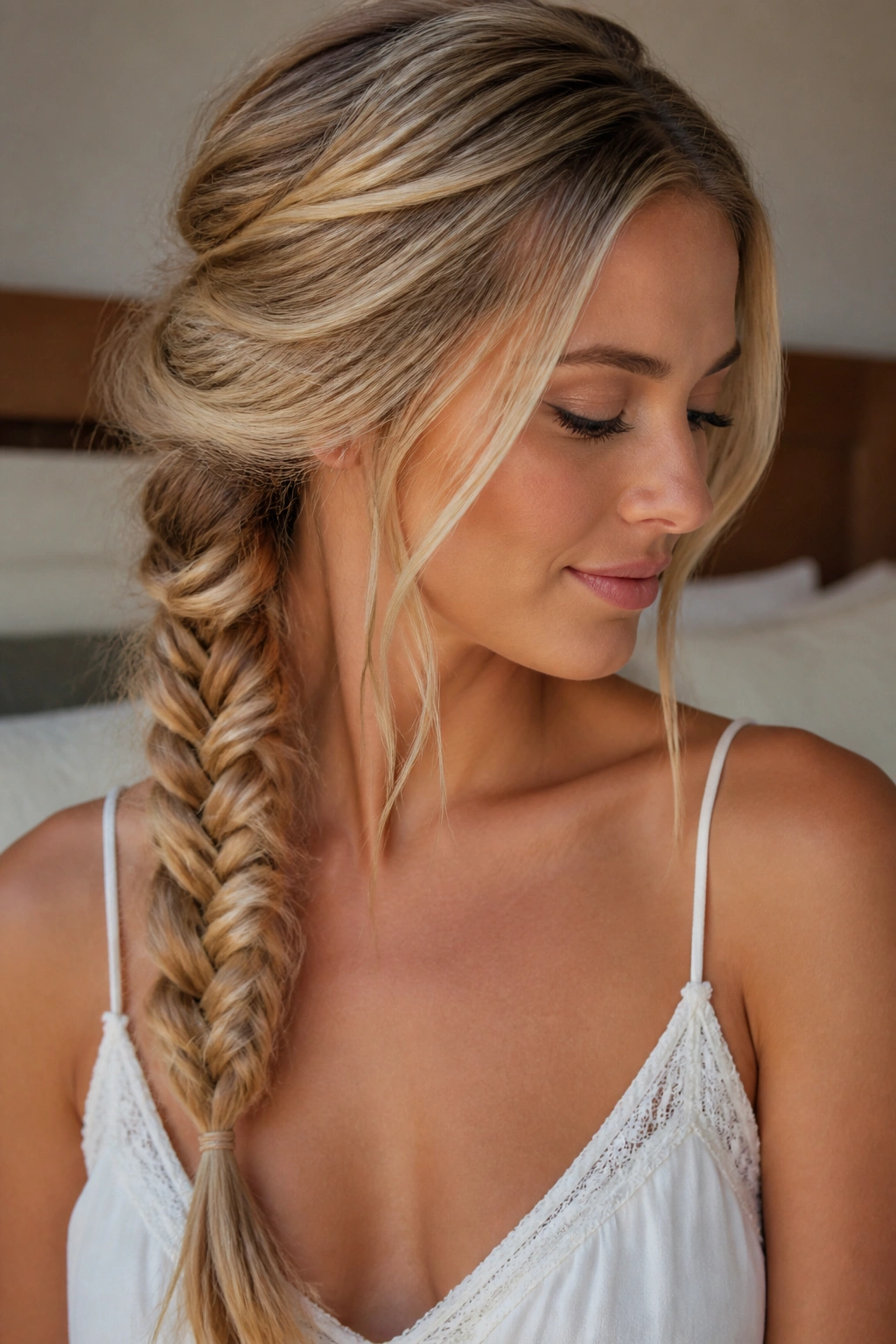
A loose fishtail braid is one of those styles that looks fussy from far away and almost easy up close. That’s the magic. On long hair, the fine crisscross pattern gives you enough length to play with, and the bohemian finish comes from keeping the sections soft instead of polished to death.
Why It Works on Long Hair
Long hair gives a fishtail something to show off. Shorter lengths can make the pattern disappear, but long strands let the braid taper beautifully and still feel full at the ends.
- Start with hair that has a little grip from day-old texture spray or dry shampoo.
- Leave 2 thin face-framing pieces loose if you want a softer line.
- Pancake the braid gently by pulling the outer edges outward, not the center.
- Finish with a clear elastic and a mist of flexible hairspray.
Best tip: if your hair is very silky, braid it when it is not freshly washed. A tiny bit of grip saves you a lot of slipping.
2. Knotless Boho Box Braids
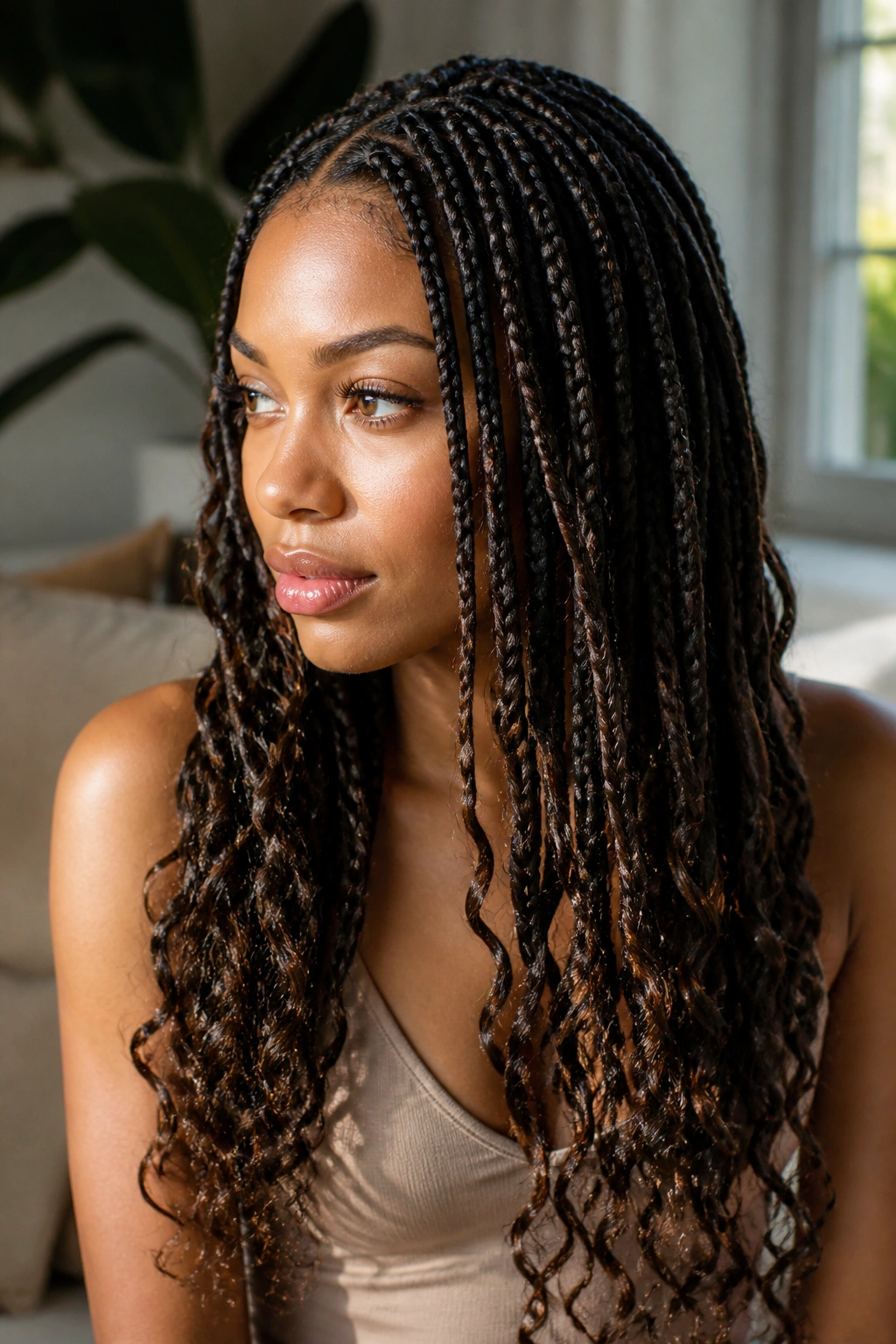
The cleanest-looking boho box braids usually start with the softest partings. That sounds backward, but it isn’t. Knotless braids sit flatter at the scalp than traditional box braids, which makes them easier on long hair and easier on the eyes, too.
The bohemian part comes from the ends: curly pieces, loose coils, or wavy extensions tucked through the braid so the whole style moves instead of hanging like a curtain. Long hair helps here because the added length gives the curls room to drape. If the braid is too short, the contrast feels abrupt. If it’s long, the texture has space to breathe.
I’m a fan of this style when you want something that lasts more than a night out. It can be worn down, half-up, or swept into a low ponytail without losing the soft finish. Just make sure the base is not too tight. Tight knotless braids are still tight braids, and your scalp knows the difference.
3. Waterfall Braid With Soft Waves
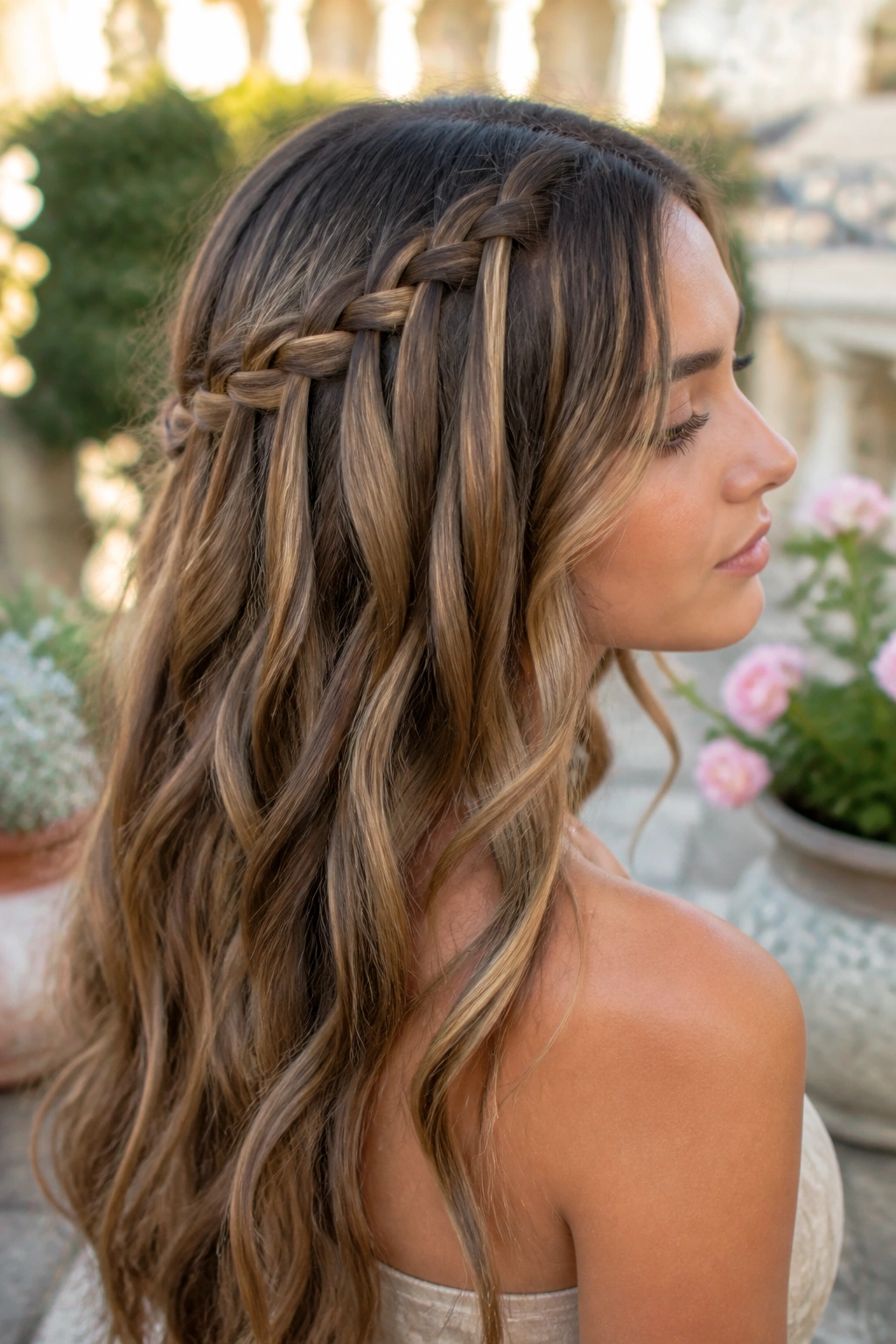
Why does a waterfall braid look so ornate on long hair? Because the dropped strands have somewhere to go. On shorter lengths, the effect can feel cramped. On long hair, the loose pieces cascade and the braid starts to read as airy instead of delicate.
The trick is not to over-polish it. Let the braid curve across the head, then leave the rest of the hair in soft waves or bends. A 1-inch curling iron, wrapped in alternating directions, gives the ends a more lived-in finish than perfect spirals. I also like a center part with this one, though a side part works if you want it to feel more romantic.
How to Wear It
- Start the braid high at the temple for a dressier shape.
- Keep the dropped strands roughly the same thickness so the pattern stays even.
- Curl the rest of the hair in 2-inch sections for softer movement.
- Pin the braid under a layer of hair if you want it to look seamless.
Tiny warning: if the waves are too tight, the braid can disappear into them. You want contrast, not competition.
4. Side-Swept Dutch Braid
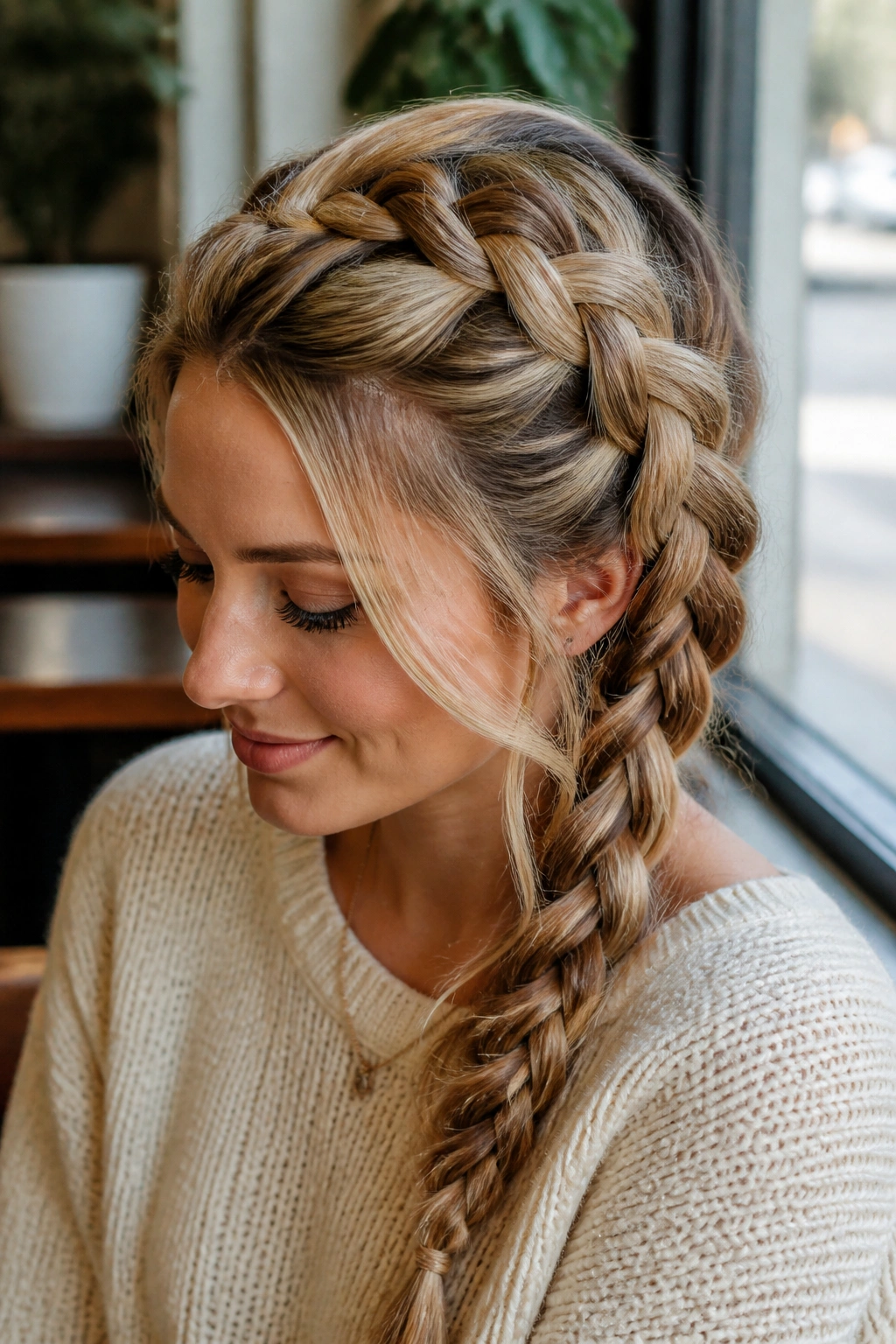
If your hair slips out of everything, a side-swept Dutch braid is your friend. Dutch braiding creates a raised braid that sits on top of the hair instead of sinking into it, so it grips better and holds shape longer on long lengths.
I like this style for hair that is thick through the mid-lengths but a little finer at the scalp. The side angle keeps it from feeling sporty, which is where a lot of side braids go wrong. Pull it across one shoulder, loosen the edges with your fingers, and let a few short pieces break away near the cheekbone. That little messiness is what pulls it into boho territory.
- Start above the heavier side of your part.
- Braid with steady, even tension so the braid doesn’t bulge in the middle.
- Pancake only the top outer edges if you want volume without fuzz.
- Tie the end low and wrap a small piece of hair around the elastic.
The whole look gets better when it isn’t perfect. That’s the point.
5. Crown Braid With Face-Framing Pieces
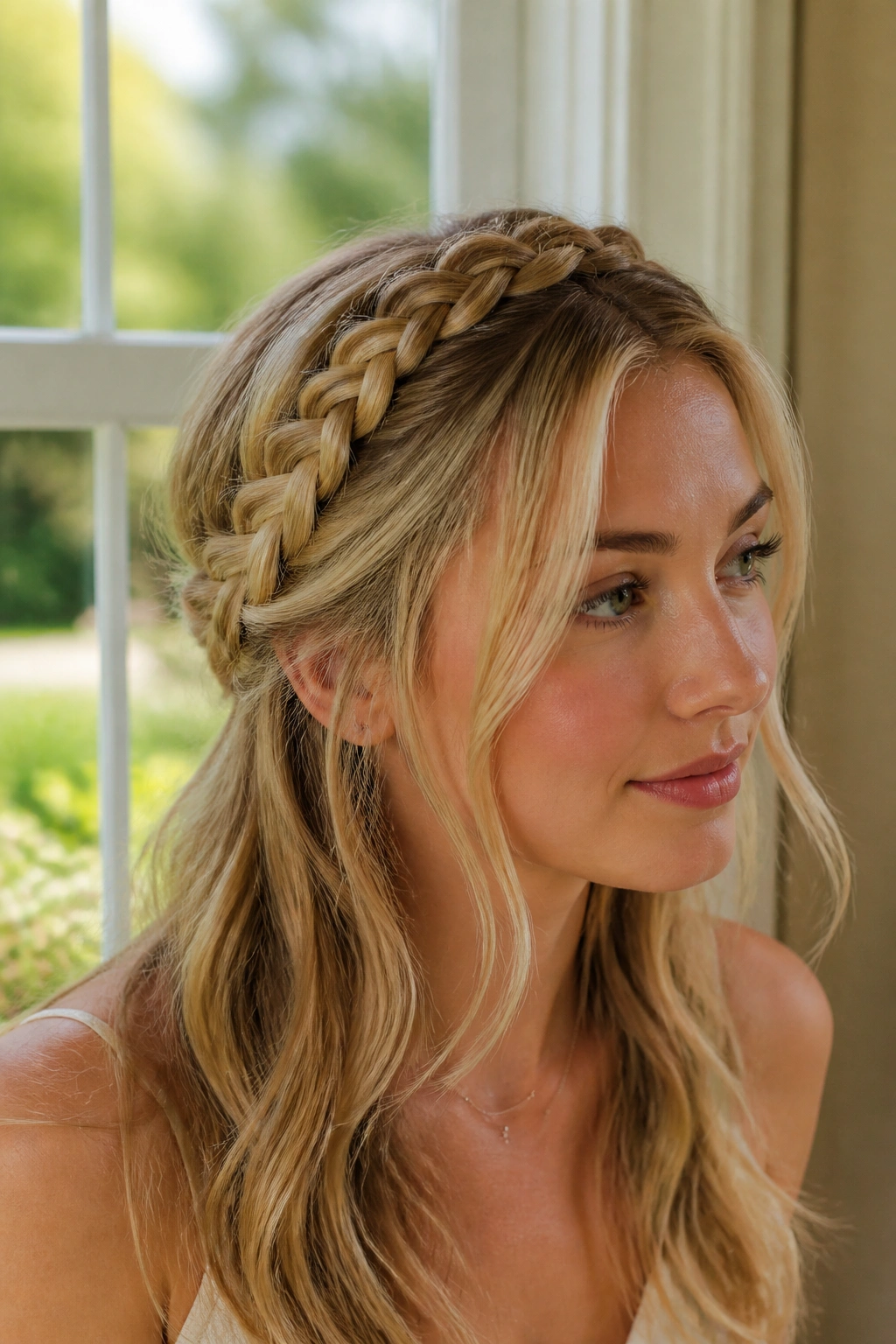
A crown braid can look severe if every strand is pinned down, and long hair makes that risk worse because there is so much of it. Leave a little softness near the temples, and the whole style changes. It stops feeling like a costume and starts feeling like a person actually wore it.
What I like most about this version is the contrast. The braid circles the head, but the loose pieces around the face keep it from looking locked in place. On long hair, the trailing lengths can be tucked, braided, or left to fall down the back, which gives you some room to make the style your own.
The one thing I would not do is over-tighten the front. A crown braid that tugs can flatten the hairline and make the face look pulled back in an unkind way. Softer is better here. Softer usually is.
If you want a cleaner finish, smooth the crown with a touch of styling cream before you braid. If you want more boho energy, leave a few bends in the front pieces and call it done.
6. Pull-Through Braid With Texture
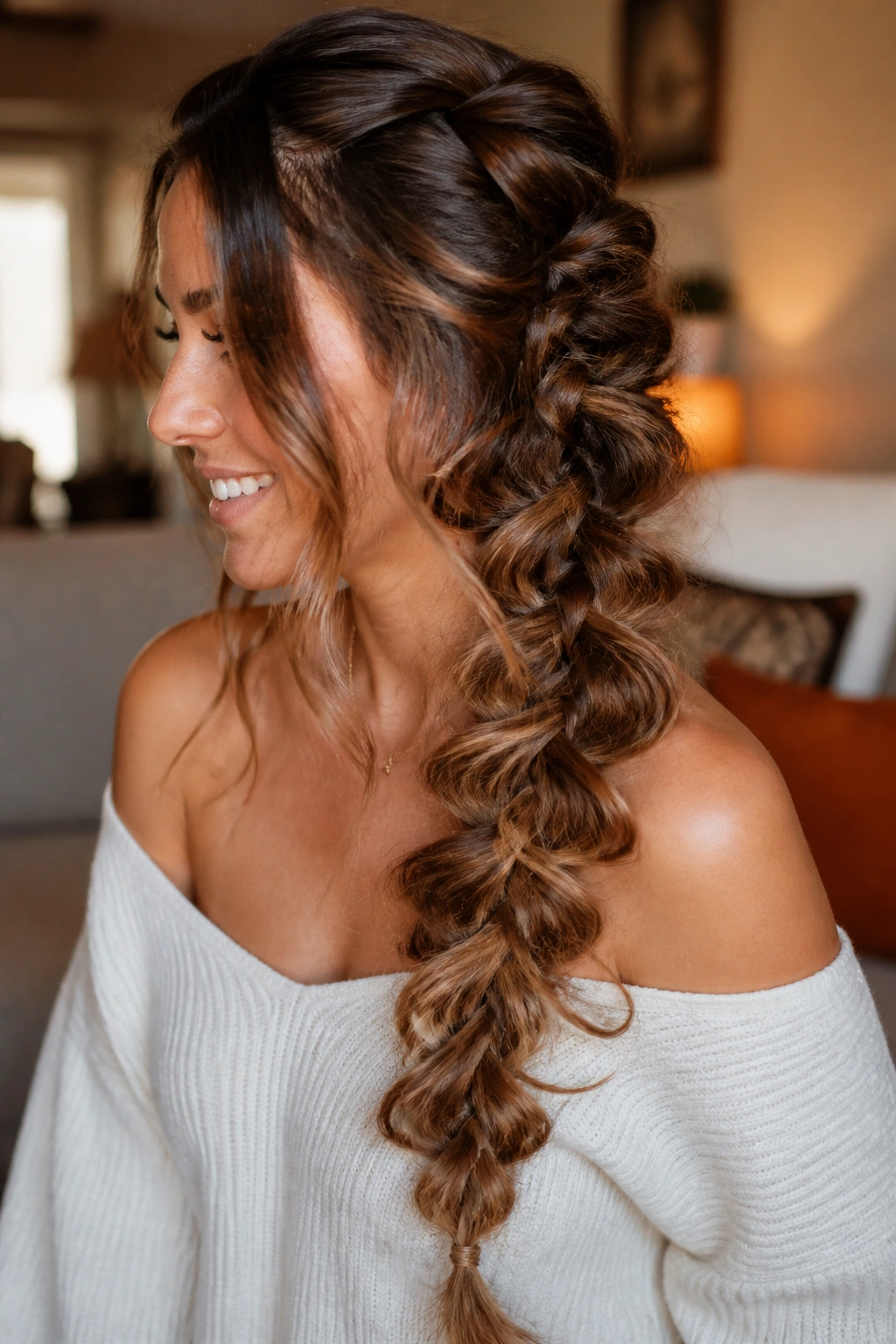
Unlike a standard three-strand braid, a pull-through braid creates the look of a thick, stacked braid even when your hair is long and a little fine at the crown. That makes it a smart pick if you want volume without teasing the roots into a helmet.
The structure is simple: ponytail, split, loop, repeat. What gives it the boho feel is the texture. A slight wave in the hair makes the sections puff more naturally, and long hair helps the tail drop in a dramatic way that shorter hair cannot fake. I’m especially fond of this style for days when you want braid drama but not actual braid complexity.
It works best when the elastics are spaced evenly, usually about 2 to 3 inches apart. Once the braid is built, tug the outer loops gently so each section looks rounded. Do not yank the whole thing apart. That turns into chaos fast.
If you want a style that reads big from across the room, this one earns its keep.
7. Half-Up Boho Braid
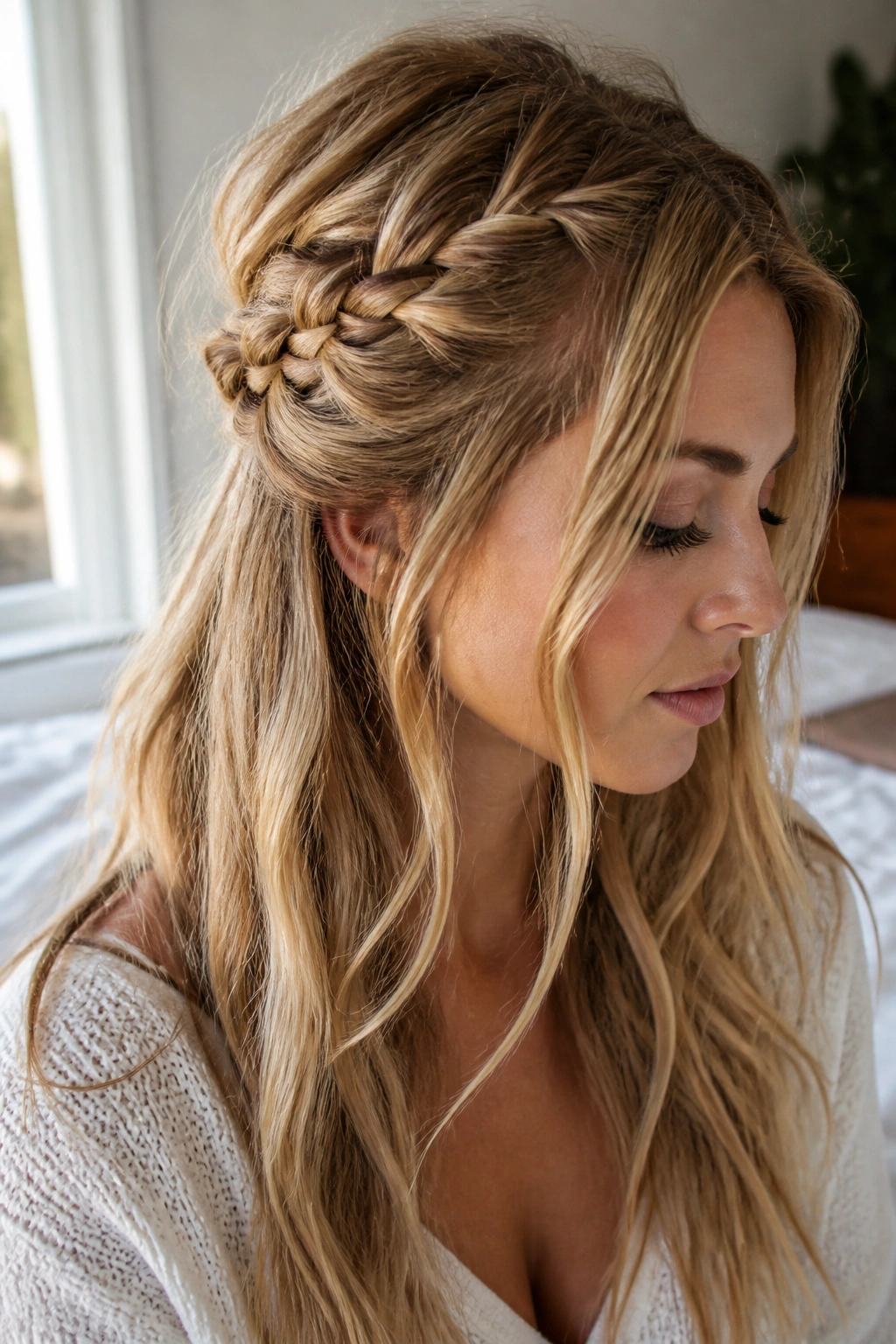
A half-up boho braid is the move when you want to keep the front off your face but still show off the length. It sits somewhere between casual and dressed-up, which is why it ends up being the braid people keep coming back to.
I like this best on layered long hair because the shorter front pieces can fall out in a way that looks intentional instead of messy. The top section gets braided, twisted, or fishtailed, and the rest stays loose with a bend through the ends. If the hair is very straight, add a few waves first. The braid will hold better and the shape will feel fuller.
Little Details That Matter
- Section the top half from temple to temple.
- Keep the braid loose enough to pinch open at the end.
- Leave the bottom layers smooth or softly waved, depending on how much texture you want.
- Add a tiny barrette or knot the braid into the back for a cleaner finish.
My opinion: this is the easiest boho braid to wear on repeat without getting bored of it.
8. Micro Braids With Curly Ends
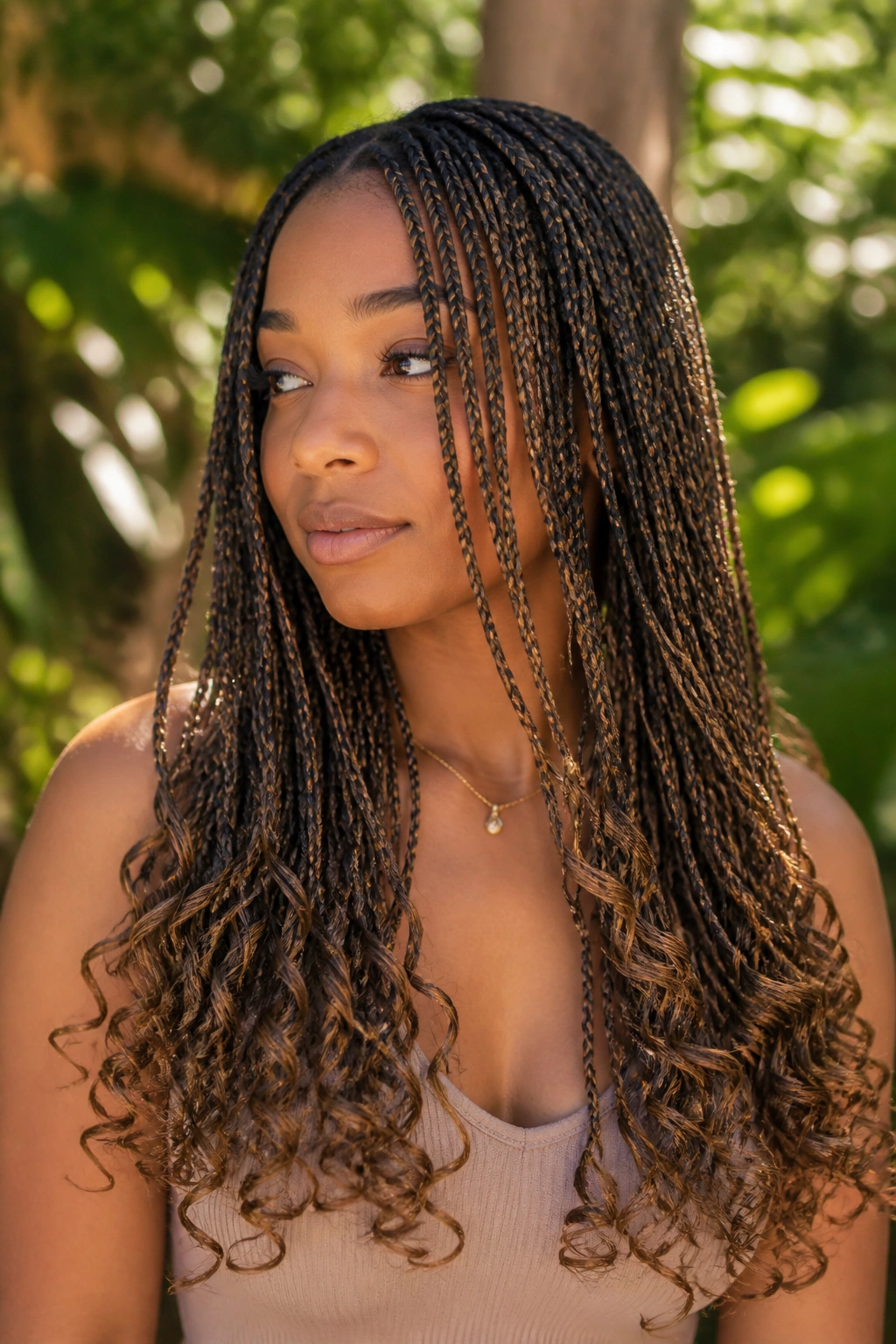
Micro braids with curly ends look delicate, but they are not delicate work. The installation takes patience, and long hair gives the style a lot of movement once it is done. That movement is the whole reason to wear them bohemian-style instead of sleek and severe.
The curly ends matter more than most people think. A blunt finish can make micro braids feel formal or rigid. Add a soft curl, though, and the whole thing loosens up. The best versions do not look overbuilt; they look light, layered, and a little imperfect in the best way.
This style is smart if you want long-lasting braids that still have personality. The downside is upkeep. Scalp care matters, and you need to separate the braids gently so they do not mat together at the roots. A little light oil on the scalp goes a long way. More is not better.
If you want movement without losing the braid pattern, this is one of the strongest options on the list.
9. Rope Braid Ponytail
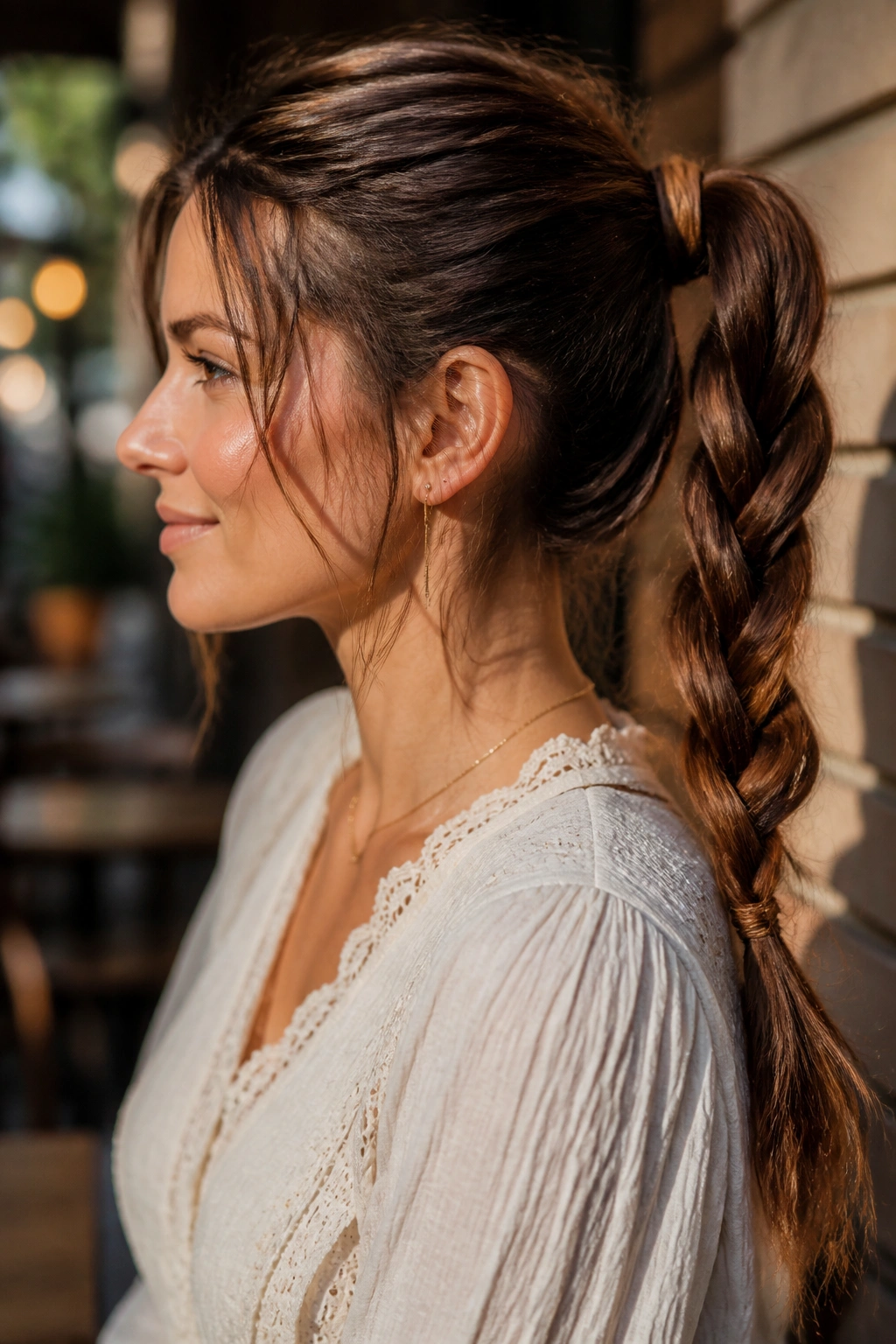
Why do rope braids work so well on long hair? Because the twist shows up from root to end. The longer the ponytail, the more the rope effect reads clearly, and the boho finish comes from letting a few wisps escape instead of pressing every hair into place.
A rope braid is also easier than people expect. Divide the ponytail into two sections, twist each one in the same direction, then wrap them around each other in the opposite direction. Secure the end, then tug lightly at the twist so it looks fuller. That’s it. Clean enough to feel deliberate, loose enough to feel relaxed.
How to Keep It Soft
- Start with a low or mid ponytail for the most wearable shape.
- Mist the hair with light hold spray before twisting.
- Leave thin pieces loose around the ears or at the nape.
- Wrap a strand around the base so the elastic disappears.
On long hair, this braid can swing. That’s part of the appeal. It moves when you walk.
10. Mermaid Braid
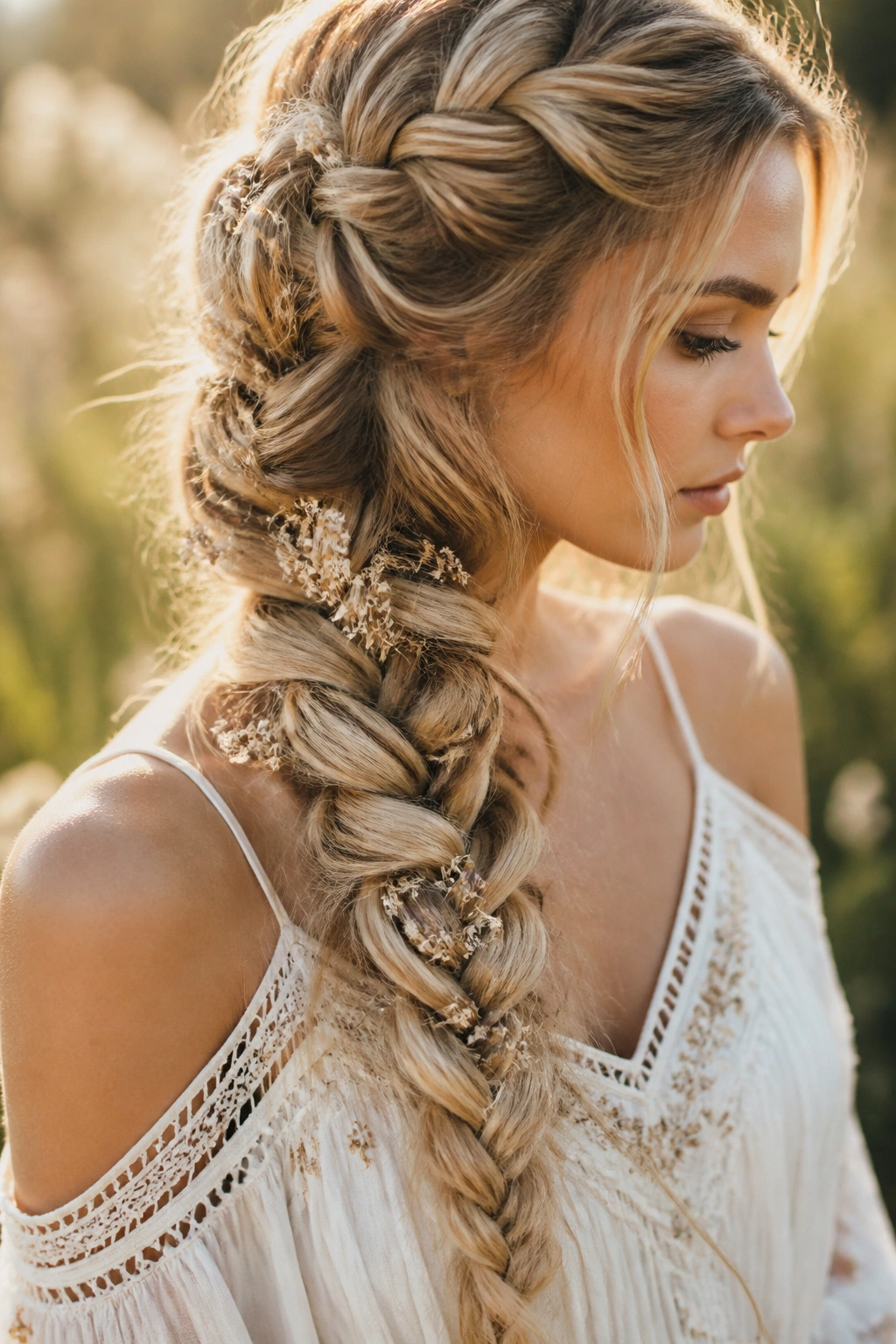
A mermaid braid is basically a fat, dreamy braid with pieces pulled out until it looks a little like woven fabric. It is one of the few styles that genuinely benefits from extra length, because the braid needs room to puff, spread, and still keep its shape.
The first time I styled one, the surprise was how much it relied on tension at the start and softness at the finish. If the base is too loose, the whole thing falls flat. If the body is too tight, it loses that airy, overgrown feel. Long hair helps because you can build a strong center and still leave enough ends to trail down the back.
This is the braid I’d reach for when the outfit is simple and the hair needs to carry the look. A plain dress, a silk top, a clean neckline — the braid does the rest.
Pancake it gradually from the top down, not all at once. That keeps the width even and avoids the lumpy spots that make mermaid braids look amateur.
11. Milkmaid Braids With Volume
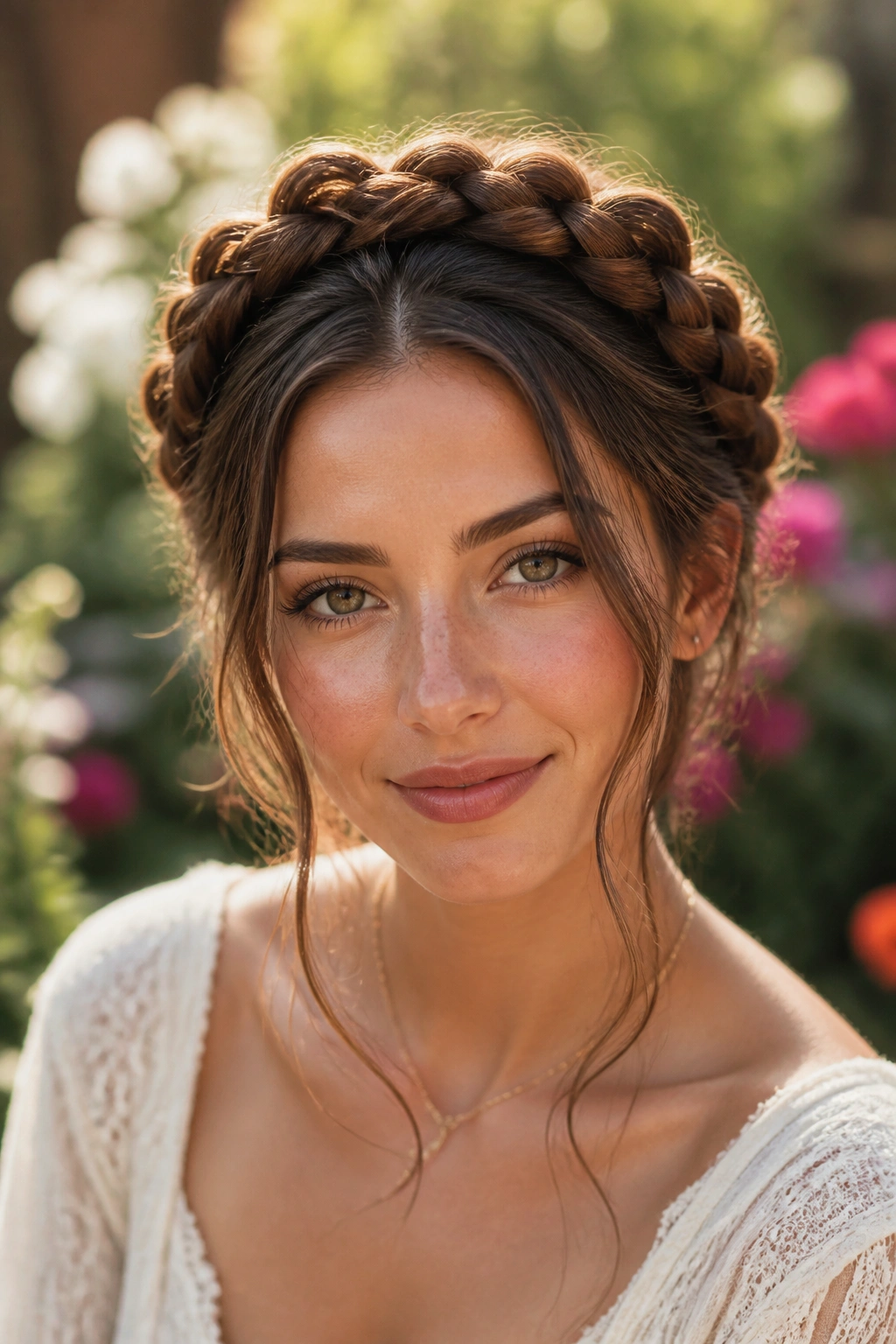
Milkmaid braids can look crisp or soft depending on how much you loosen them, and on long hair I almost always vote for softness. The braids wrap across the top of the head, then tuck around like a halo, but the volume keeps them from looking old-fashioned.
The nice part is that long hair gives you enough material to make the wrap feel substantial. Thin braids can disappear; thicker ones stay visible and hold a cleaner line across the crown. Leave a few pieces around the face, and the whole style stops feeling formal in a stuffy way.
I like this one for warm-weather events, garden dinners, and any day when you want your neck clear but still want the hair to look styled. A center part keeps it balanced. A side part makes it feel a little softer. Either works.
A small note: if the braid feels too neat, tug at the outer edges and rub a little texture paste between your palms before touching the front pieces. That tiny bit of friction makes a big difference.
12. Bubble Braid Hybrid
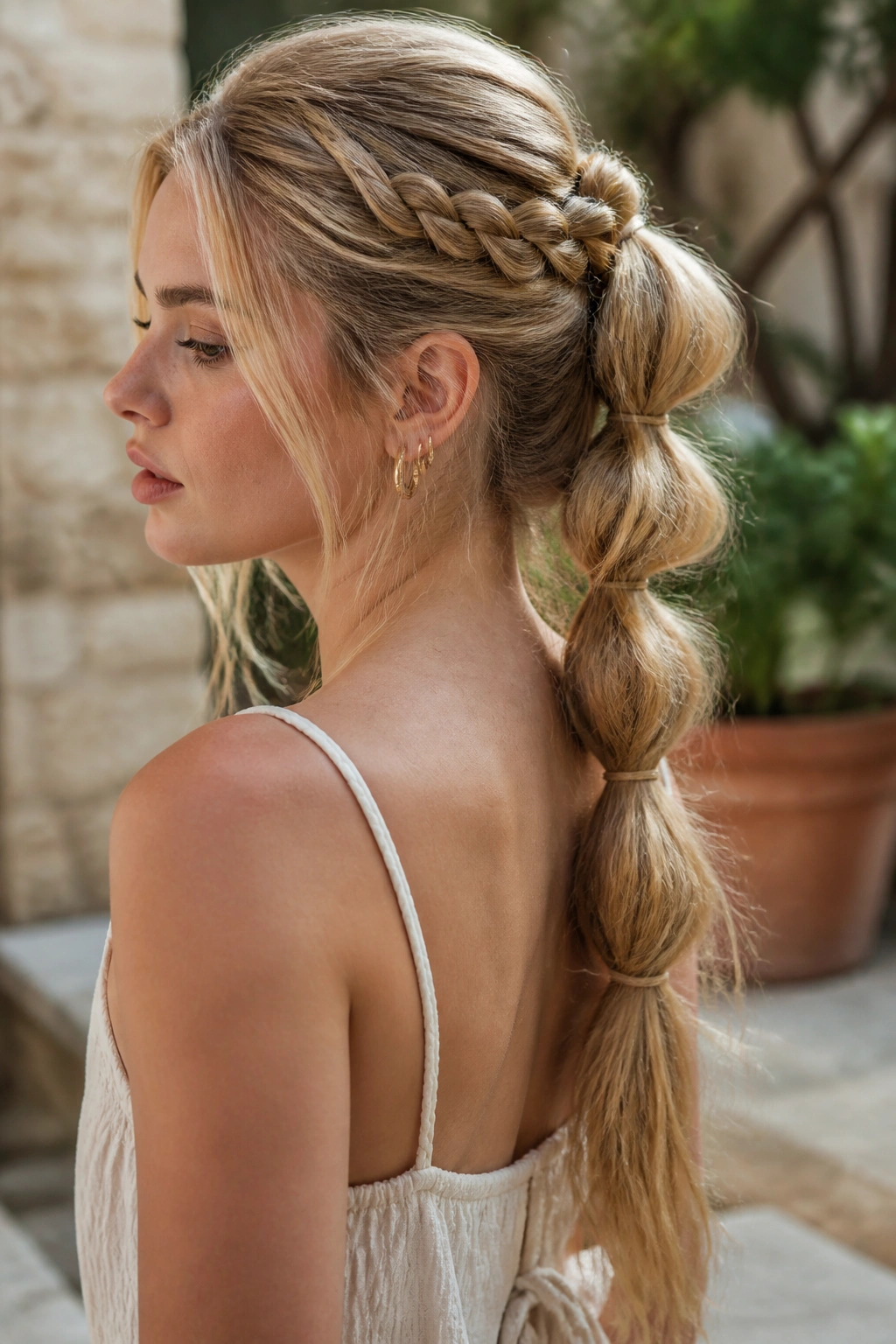
A bubble braid hybrid is what happens when a ponytail decides to stop pretending it is a braid. It is less fussy than a traditional plait, but on long hair the stacked bubbles still give you that same long, dramatic line down the back.
What makes this version bohemian is the messiness. The bubbles should not all be identical, and the hair between the elastics should puff a little unevenly. If every section is the same width, it starts looking rigid. A few pulled-out face pieces fix that fast.
Unlike a standard bubble ponytail, this hybrid feels softer because you can mix in a tiny braid at the crown or wrap a section around each elastic. That detail matters. It takes the style from playful to finished.
Use elastics every 2 to 4 inches, depending on how long your hair is. Tug each bubble after securing it so the shape rounds out. The end result should look full, not stuffed.
13. French Braid Into a Low Bun
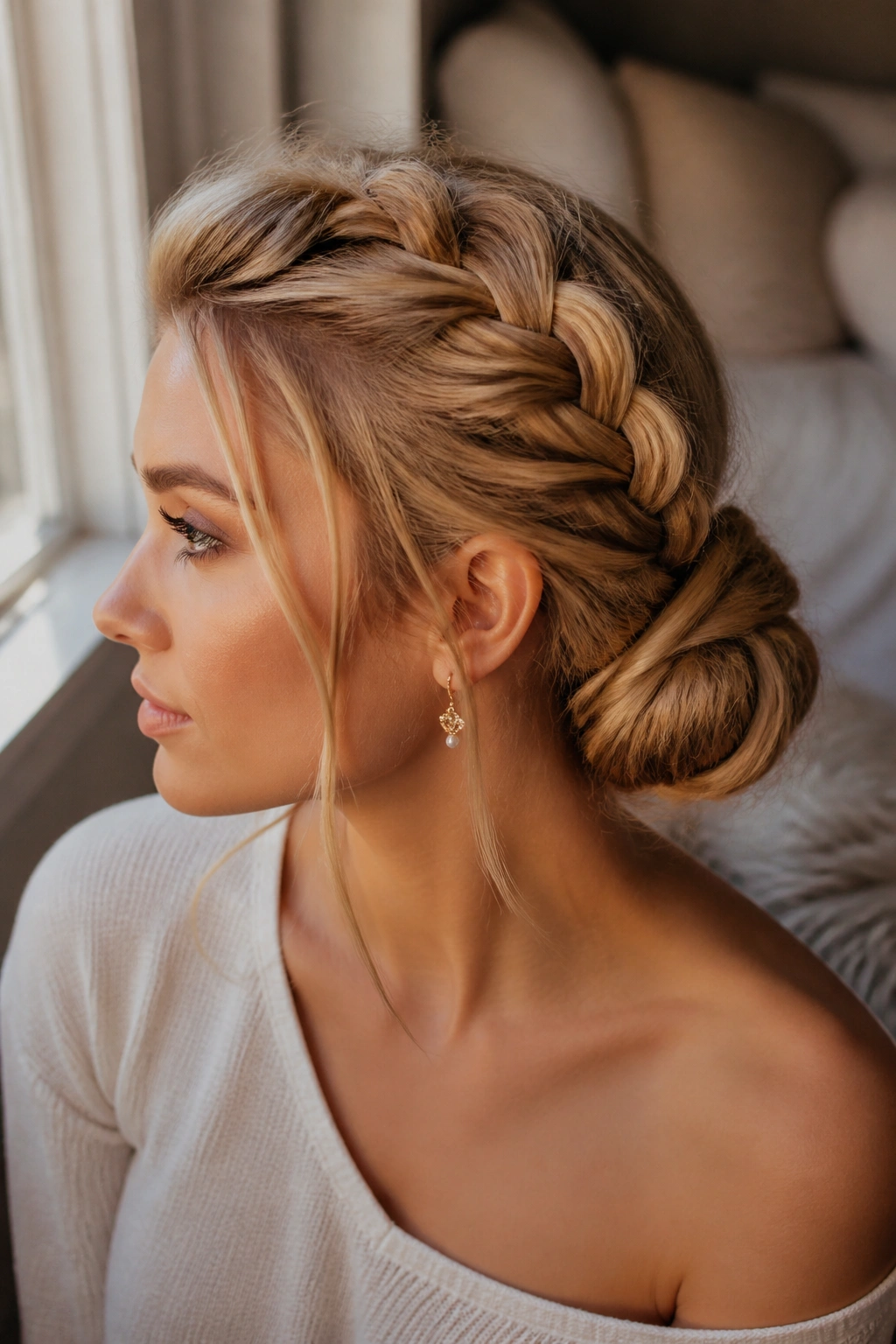
A French braid into a low bun is a quieter style, but it is not boring. On long hair, the braid gives the bun structure and the bun keeps the whole thing from sliding down by midafternoon. That combination is practical, and I always trust practical hair.
The boho version is softer than the sleek version. Instead of pressing every strand flat, leave the braid a little loose through the crown and pin the bun into a rolled shape rather than a tight knot. A few ends can stick out. That is fine. Actually, it helps.
Styling Notes
- Start the French braid at the hairline or just behind it.
- Braid down to the nape, then twist the remaining length into a low bun.
- Pin with 4 to 6 hairpins depending on thickness.
- Pull two thin strands free near the jaw for a softer frame.
This is one of those styles that looks calm even when the day is not.
14. Fulani-Inspired Braids With Beads
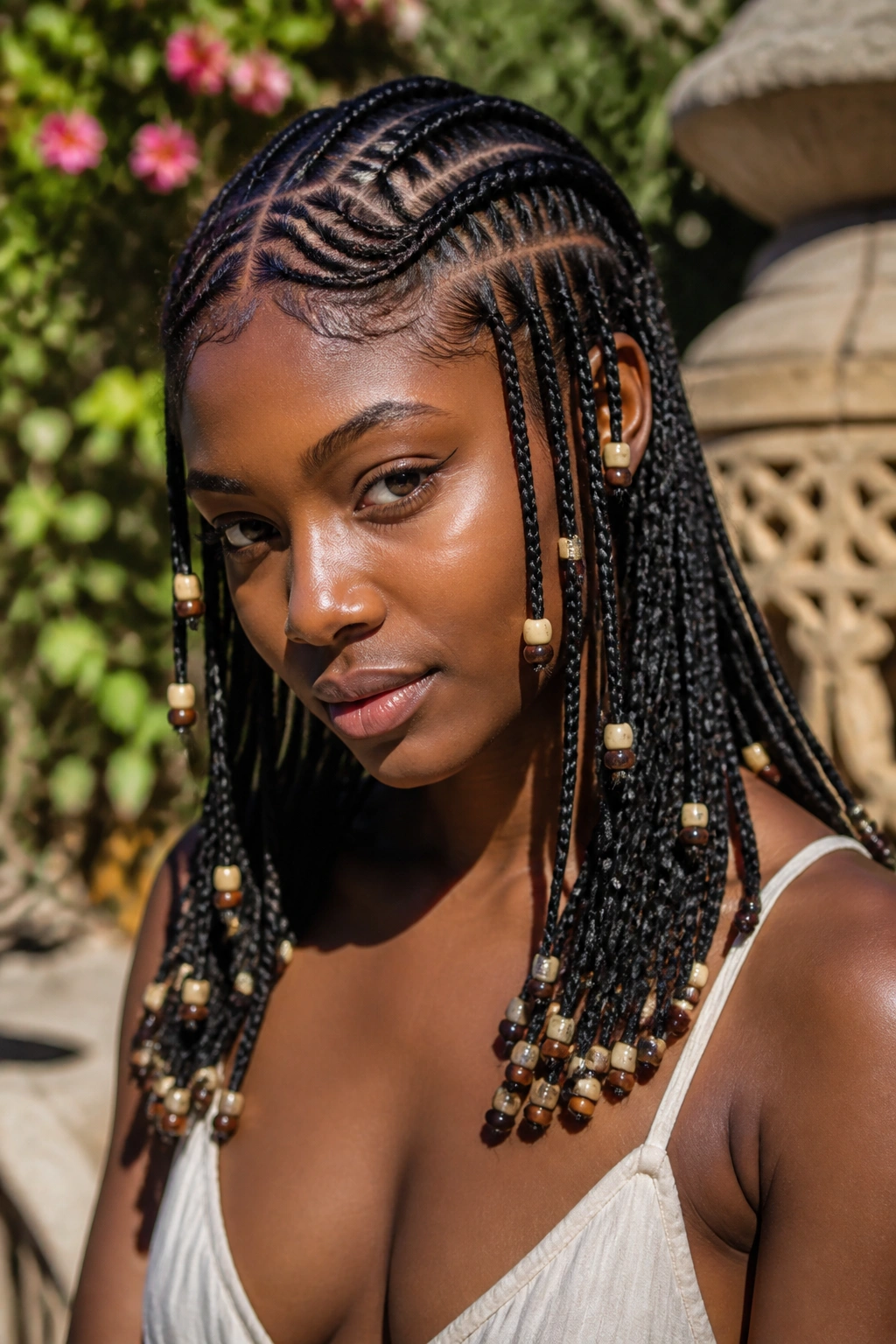
Fulani-inspired braids with beads have a rhythm that long hair shows off well. The braid pattern sits close to the scalp, then the lengths drop with added weight and movement from beads, cuffs, or wrapped ends. The result feels playful, but it also has real structure.
If you wear this look, do it with care. Learn the pattern properly or work with a stylist who knows it, because the design deserves respect and precision. On long hair, the central braid or cornrow line can lead into lengths that swing beautifully over the shoulders. That swinging motion is part of the appeal, and the beads accentuate it with every step.
I like the style best when the accessories are kept selective. A few beads at the ends go farther than too many scattered everywhere. You want sound and movement, not clutter.
Long hair gives you a chance to vary the bead sizes, too. Small beads near the scalp, larger ones at the ends. That little shift keeps the braid from feeling flat.
15. Accent Braids Into a Wavy Ponytail
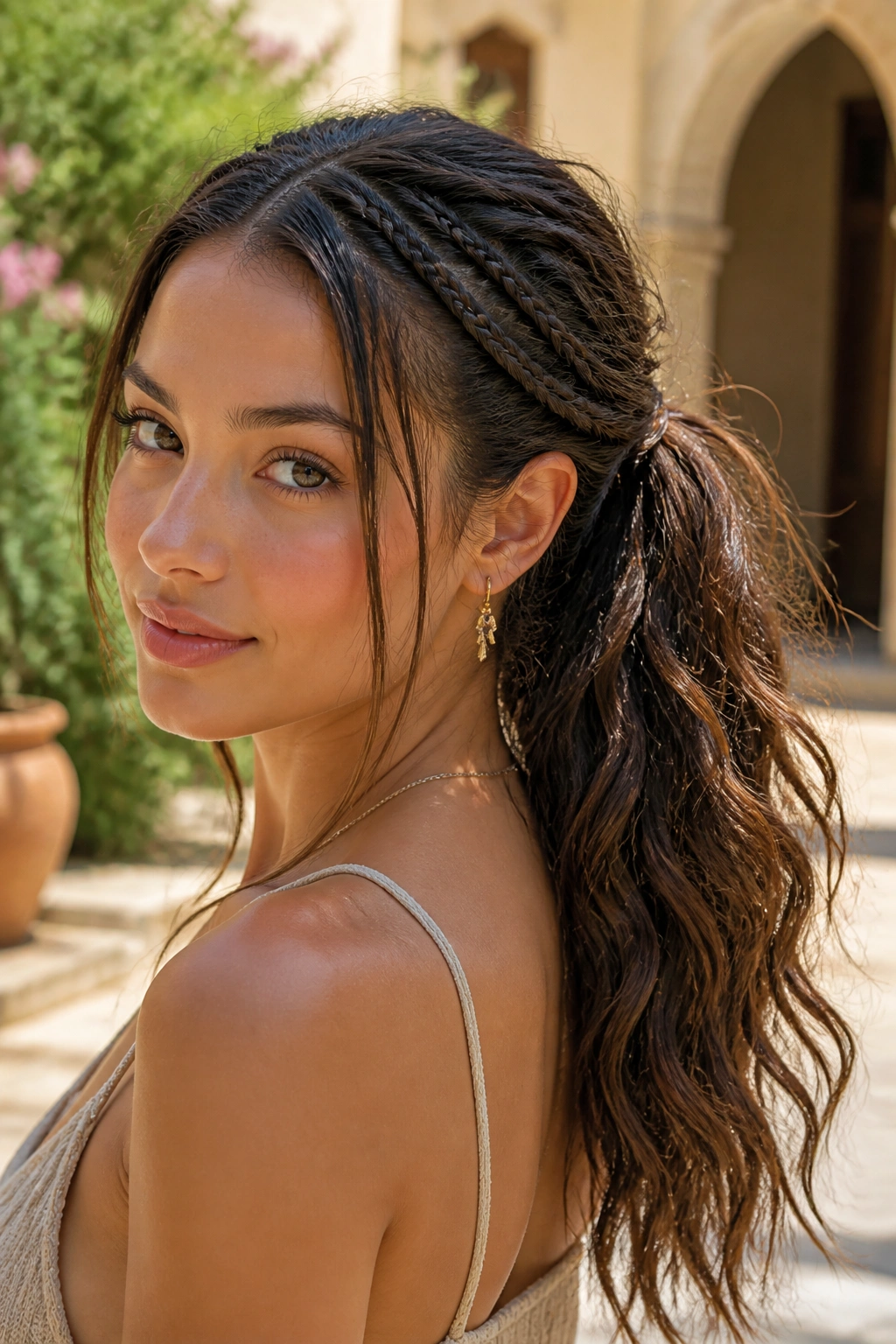
A wavy ponytail with accent braids is one of the easiest ways to make long hair look styled without turning it into a project. The accent braids can sit at the temples, along the part, or just behind the ears, then blend into the ponytail where the waves take over.
Why does this work so well? Because the braid does the framing and the ponytail does the movement. Long hair gives you enough length for both parts to feel full, which is the whole trick. If the ponytail is too short, the braid dominates. If it is long, the two pieces balance each other.
How to Wear It
- Add 3 to 5 tiny braids before gathering the ponytail.
- Curl the rest of the hair in loose bends, not tight ringlets.
- Keep the ponytail slightly off-center if you want a softer profile.
- Wrap one braid around the base for a cleaner finish.
This one is easy to dress up with a ribbon, but it looks good plain too.
16. Messy Halo Braid
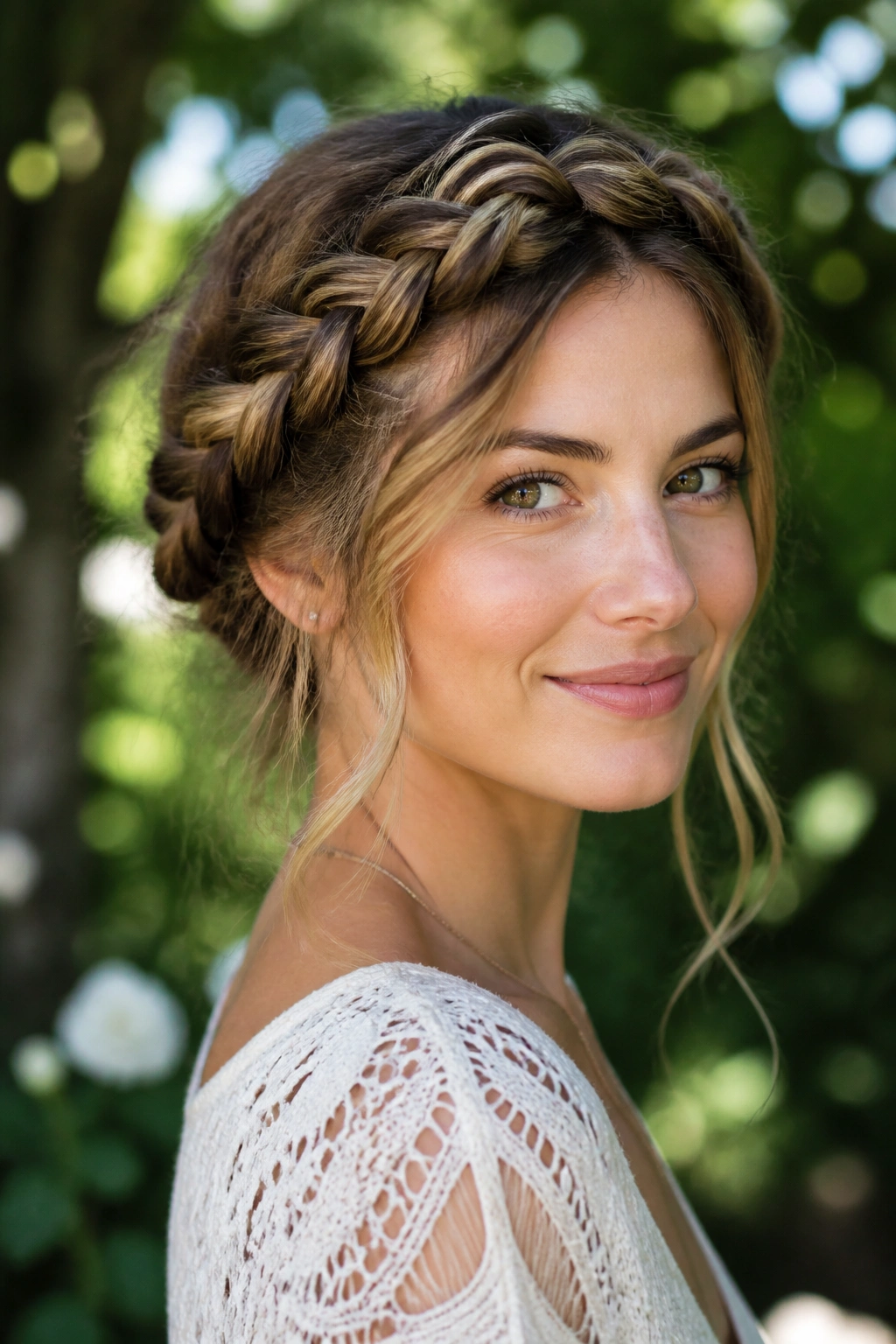
A messy halo braid is what I reach for when I want the braid to feel like a frame, not the whole story. It circles the head, but the looseness around the crown keeps it from looking too precious. Long hair helps because there is enough length to create volume in the wrap and still leave soft ends tucked or pinned at the back.
The best halo braids do not sit like a hard ring. They have gaps, little breaks, and a bit of lift at the roots. That is the part most people skip, and it is exactly the part that makes the style feel lived in. Pull gently at the braid once it is pinned. A tiny widening goes a long way.
If you have layered hair, this style gets even better. The shorter pieces around the face can escape on purpose and soften the outline. A firm pin at the nape keeps everything in place.
Not neat. Not messy either. Somewhere in the middle.
17. Ladder Braid
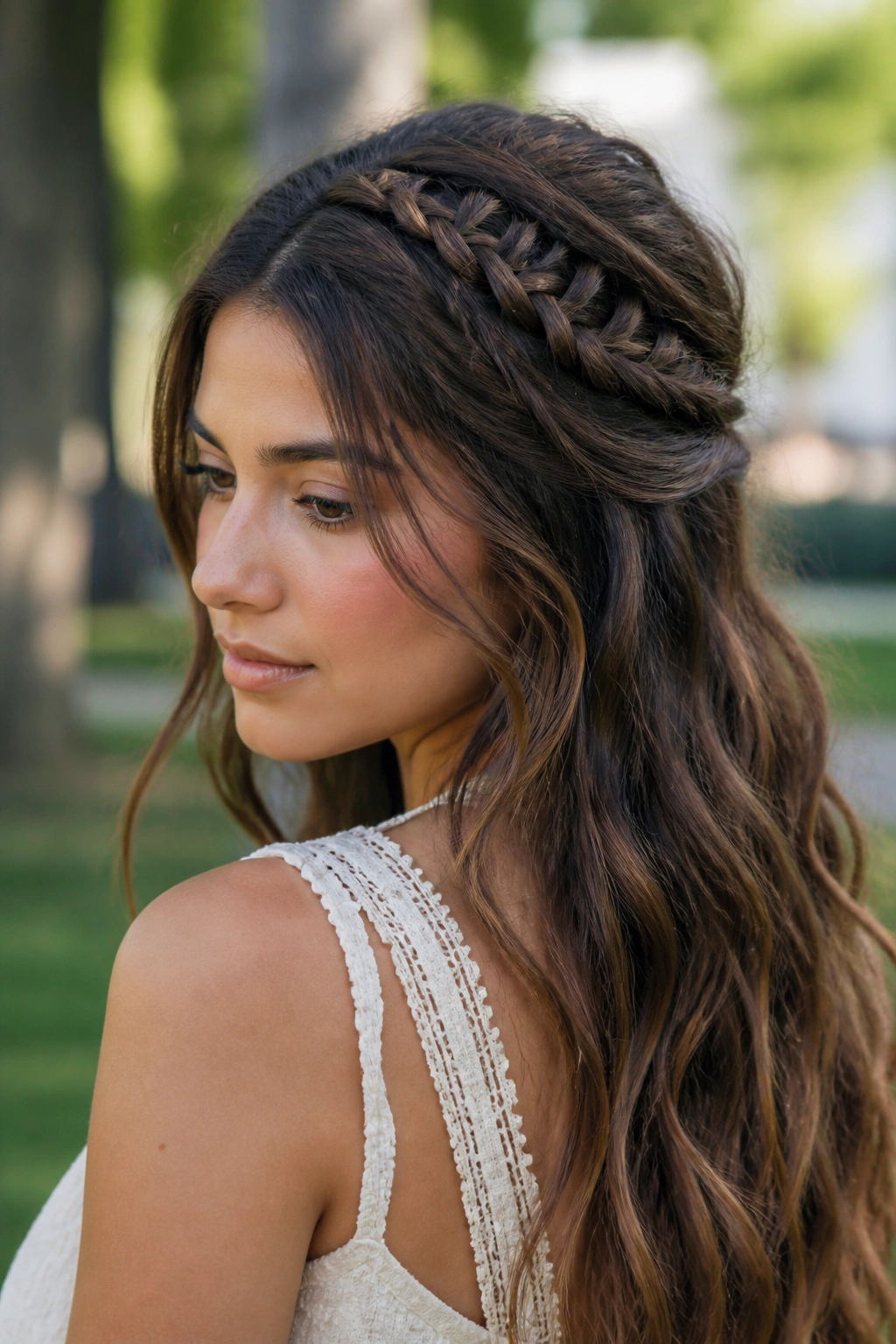
A ladder braid takes patience, but long hair gives it a long runway to show off. The pattern uses sections that cross and drop, creating that suspended, woven look that feels more detailed than a regular braid. When it works, it looks almost architectural.
The bohemian part comes from the finish. You do not want the ladder to feel too sharp. Leave the surrounding hair loose, let the braid sit on top of waves, and soften the edges with your fingertips once it is done. The braid itself stays interesting because the pattern is already doing the heavy lifting.
This is one of the few styles where I’d say the braid should be the star and everything else should stay quiet. A smooth base with soft lengths underneath keeps the pattern readable. If the hair is too frizzy or too layered, the ladder effect can get muddy fast.
For long hair, the payoff is worth it. The braid travels across the head like a little piece of craftwork, then the remaining length falls out behind it.
18. Twisted Half-Crown
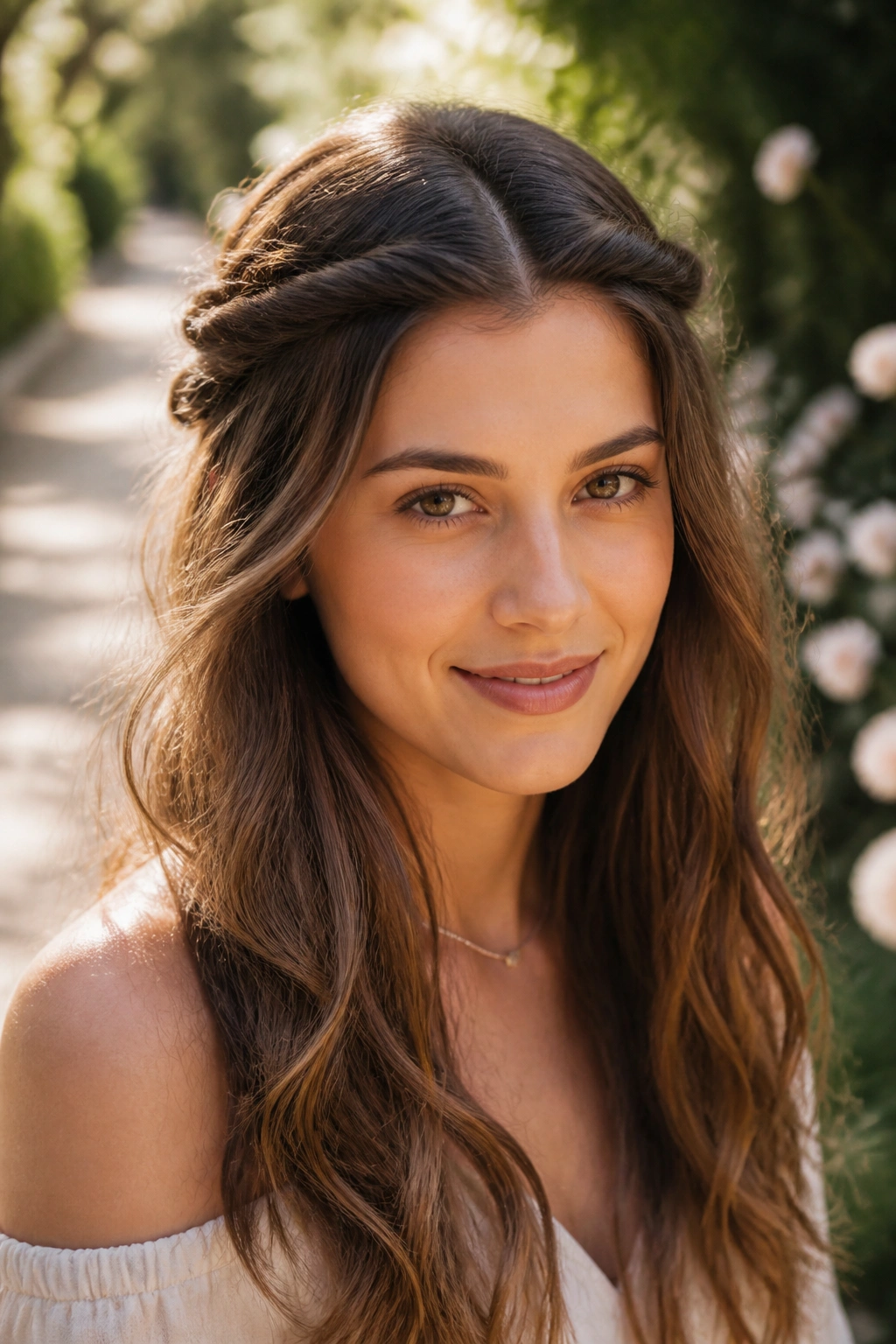
A twisted half-crown is the softer cousin of a full crown braid. Instead of wrapping the whole head, it takes two sections from the front or temples, twists them back, and pins them in place. On long hair, that leaves the rest free to fall, which is why the style feels lighter and easier to wear.
I prefer this version when the full crown starts to feel like too much. It still gives you that boho frame around the face, but it doesn’t crowd the head or hide the length. If your hair is heavy, this matters. A full braid can drag. A half-crown keeps the lift without the weight.
What Makes It Different
- It uses twists instead of a full braid, so the style reads softer.
- It works well with natural waves or loose curls underneath.
- It keeps the crown area clean while leaving the ends visible.
- It can be pinned with just 2 or 3 discreet bobby pins if the hair has grip.
This is one of those styles that quietly looks more expensive than it is.
19. Curly-End Pull-Back Braids
Curly-end pull-back braids are a small idea with a big payoff. Take two or more braids from the front or sides, pull them back, then leave the rest of the hair loose with curled ends. The braid gives you shape; the curls give you softness; the long hair gives the whole thing a place to go.
The nice part is that this style works even when the hair is not perfect. A little frizz around the braid edge is fine. In fact, it helps. The pulled-back section keeps hair off the face, but the loose lengths make sure the style still feels relaxed.
I especially like this on layered cuts, because the shorter front pieces can mix into the braids and the longer lengths stay free. If your hair is stick-straight, a loose bend through the ends helps the whole style feel more boho and less school-picture-day.
Keep the braids small and the back section soft. That contrast is what makes it work.
20. Double Dutch Braids With Loose Texture
Double Dutch braids are not new, and that is part of why they’re so dependable. On long hair, they give you clean lines, strong hold, and enough structure to survive a long day without collapsing. The bohemian version comes from loosening the edges and softening the finish.
A sleek double Dutch braid can feel athletic. A textured one feels more relaxed. That shift is tiny but important. Pull a few strands from around the hairline, loosen the braid just enough to widen it, and stop before it turns fuzzy. There is a thin line between soft and sloppy. You want the first one.
This style is a smart choice when you want the hair controlled but not severe. It keeps the scalp neat, the lengths tidy, and the ends free enough to tuck into a bun, a ponytail, or a low knot if the mood changes halfway through the day.
Long hair makes the braids long enough to look striking down the back. That visual line is the payoff. It never really gets old.
21. Side Fishtail With Ribbon
Why add a ribbon to a side fishtail? Because long hair can carry it without the style looking overloaded. The braid has enough length to show the pattern, and the ribbon gives it a little color, a little softness, and a tiny bit of movement when the hair shifts.
I like narrow ribbon better than wide ribbon here. A ¼-inch to ½-inch ribbon weaves in cleanly and doesn’t fight the braid. Silk feels prettiest, but cotton or satin works too if that is what you have. Match the ribbon to your outfit only if you want to. I usually prefer a color that slightly clashes. It looks less staged.
How to Get the Most From It
- Start the braid low over one shoulder.
- Feed the ribbon into one outer section and keep it visible through the weave.
- Secure the end with a small elastic, then let the ribbon tails drop.
- Leave one front piece loose so the braid doesn’t feel too formal.
This is a simple style, but it has personality in a way plain braids sometimes miss.
22. Braided Space Buns
Braided space buns can go very cute very fast, which is why they need a little restraint. On long hair, the braids add weight and the buns add structure, so the style ends up feeling playful without turning into a costume. That balance is harder than it looks.
The boho version keeps some length out. You don’t need to trap every strand into the buns. Let small tails spill, leave a few wisps around the ears, and rough up the braids before you coil them. The hair should look like it was styled by someone with taste, not a ruler.
If your hair is very long, braid the pigtails first, then wrap them into buns. If it is thick, pin each bun from two directions so they don’t sag. The shape matters more than the perfection. A pair of buns that sit slightly uneven can look better than a pair that feel glued to the scalp.
This one is fun, but not childish when it is done with a light hand.
23. Infinity Braid Accent
An infinity braid accent is one of those details people notice because they cannot quite place it at first. The pattern loops over itself in a way that feels a little more intricate than a regular braid, which makes it a nice accent on long hair when you want one special section instead of a full head of braids.
I like it tucked into a half-up style or used along one side of the head. The long length gives the braid a runway, and the surrounding hair can stay wavy or slightly tousled so the accent stands out. If everything is too smooth, the pattern can get lost. If the rest of the hair has texture, the braid reads cleanly.
This is a good style when you want something different without spending an hour on the whole head. It is also a nice way to dress up second-day hair. The accent braid hides the fact that the rest of the hair is doing what it wants.
The best part? It feels a little surprising without being loud.
24. Loose French Braid With Curled Ends
A tight French braid can look formal fast. A loose French braid with curled ends solves that problem by keeping the structure at the top and letting the finish soften out. On long hair, the braid can travel far enough down the back to feel substantial, then open into curls that make the whole style feel gentler.
The shape starts with tension at the roots. Not too much. Just enough to keep the braid from slipping. Once you get past the crown, relax your hands a little and let the braid widen naturally. When you reach the end, curl the remaining hair in 1-inch sections so the tail has movement instead of a blunt finish.
What Makes It Different
- It holds better than a loose side braid on silky hair.
- It looks more finished than a plain ponytail.
- It gives long hair a visible braid line and a soft tail at the same time.
- It works especially well with layered ends.
If you want one braid that can go from daytime errands to an evening dinner without changing the shape, this is a strong bet.
25. Braided Mohawk With Soft Sides
A braided mohawk sounds bold, and it is, but the boho version is softer than the name suggests. The sides stay smooth or lightly textured, the center braid runs from front to back, and the long hair at the crown gives the whole style height without stiffness.
This is the style I’d pick when I want a little edge without losing the softness that makes bohemian braids so wearable. The center braid can be a Dutch braid, a fishtail, or several small braids woven together. The sides should not be tight enough to feel severe. A few loose pieces around the temples keep the shape human.
Long hair helps because it lets the mohawk ridge sit higher and the ends trail farther down the back. That stretch of length is what makes the style feel dramatic instead of chopped up. If you want to make it more relaxed, widen the braid at the crown and leave the ends wavy.
It is the kind of braid that can hold a whole look on its own. And when the day calls for hair that feels a little stronger, a little looser, and not boring for a second, this one does the job.
