



Long braids already have presence. Add color, and they stop being background hair and start doing the styling work for you. That is the part people sometimes miss. On long hair, braid color doesn’t just sit there and look pretty in a static photo; it moves, bends, and flashes different tones when you turn your head, toss the ends over one shoulder, or pull everything into a ponytail.
The trick is choosing a colored braid hairstyle that matches how you actually wear your hair. Some colors read soft and expensive. Some look bold from across a room. Some only reveal themselves when the braid swings or when sunlight hits the finish just right. That’s why long hair is such a good canvas for this stuff: you get enough length for ombré blends, stacked shades, woven accents, and dramatic ends that would look chopped off on a shorter style.
A good colored braid on long hair also has to hold up in real life. The color placement should work with the braid pattern, not fight it. Thin braids can make a shade look more detailed; thicker braids can make it look richer and louder. And if you’ve ever seen a braid style that looked flat on a hanger but gorgeous once worn, that’s usually because the color was chosen with movement in mind.
Here are fifteen colored braid hairstyles for long hair that actually earn their keep.
1. Cherry-Red Box Braids
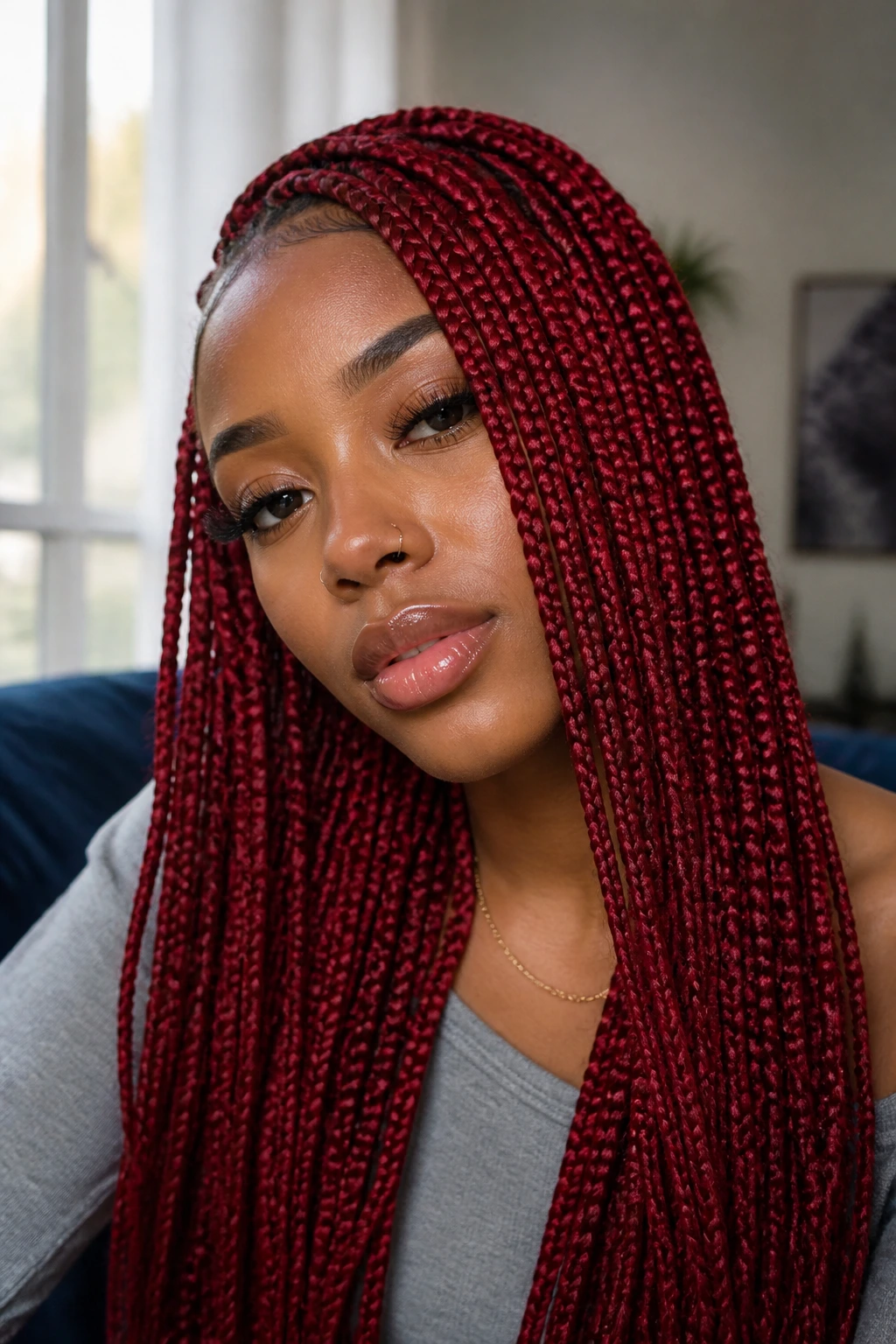
Cherry-red box braids have a way of making long hair look sharp the second the braids start moving. The color is saturated enough to stand on its own, but it also shows off the clean lines of the braid pattern. On waist-length or hip-length braids, that red does not disappear into the style — it becomes the style.
Why This Shade Works So Well
Red is one of those colors that reads bold even when the braid itself is simple. That’s useful. If you want a long protective style that does not need a lot of extra shaping, cherry red gives you instant impact. It also works well when the roots are dark and the length shifts into red, because the contrast makes every braid look more dimensional.
The other reason it works is movement. Long box braids swing. They swing a lot. Cherry red catches the eye as the ends move, which keeps the style from feeling heavy or flat. If you like a braid look that feels confident and a little dramatic, this one lands in the sweet spot.
Small Details That Matter
- Best braid size: medium to jumbo, depending on how much fullness you want.
- Best finish: a slight curl at the ends or sealed tips for a cleaner look.
- Best outfit pairing: black, white, denim, camel, and gold jewelry.
- Best maintenance habit: keep the scalp fresh and avoid rough towel drying, which can fray the color-coated fibers.
My favorite part: cherry red looks polished even when the braids loosen a little over time. That helps.
2. Honey-Blonde Knotless Braids
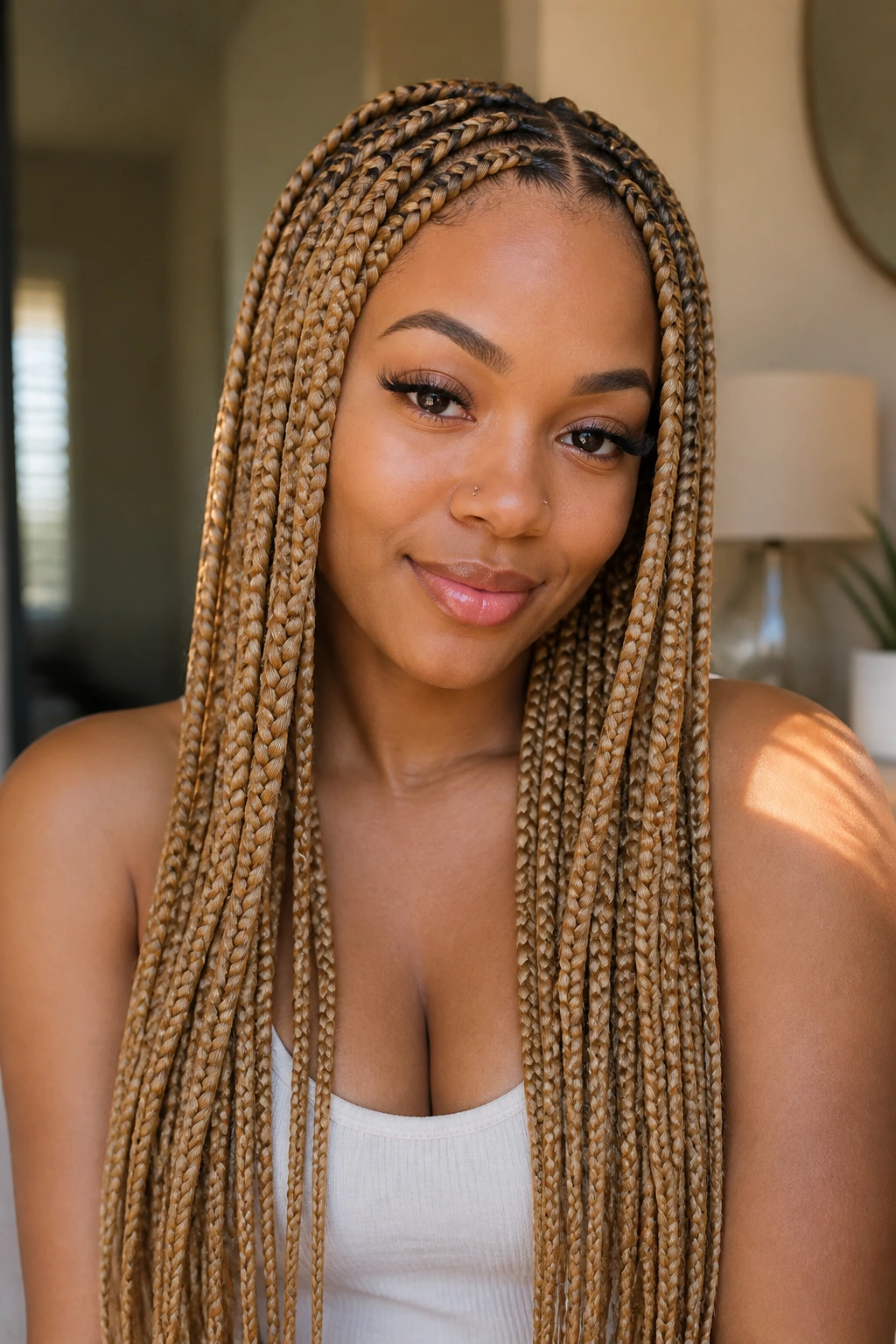
Why do honey-blonde knotless braids look so soft on long hair? Because the color is warm, the braid starts more gently at the scalp, and the length gives the shade room to glow instead of shouting. The result is lighter on the eye than platinum, but richer than plain blonde.
Knotless braids already have a smoother start than traditional box braids, which matters when the style is long. You get less of that heavy “bump” at the root, so the braids fall with a softer line. Add honey blonde, and the whole look feels sunlit rather than stark. That’s a useful difference if you want something polished for everyday wear.
How to Wear It
A middle part makes the honey tone feel neat and symmetrical. A deep side part gives it more sweep and movement. Either way, the braid color looks best when the lengths are kept clean and the ends are slightly curled or blunt-sealed, not ragged.
This is also one of the easier colored braid styles to wear with makeup. Warm blush, terracotta lipstick, and bronzy lids all sit nicely beside it. If you like a style that reads soft from far away but still has enough color to be noticed up close, honey-blonde knotless braids are one of the safest bets.
3. Midnight Blue Fulani Braids
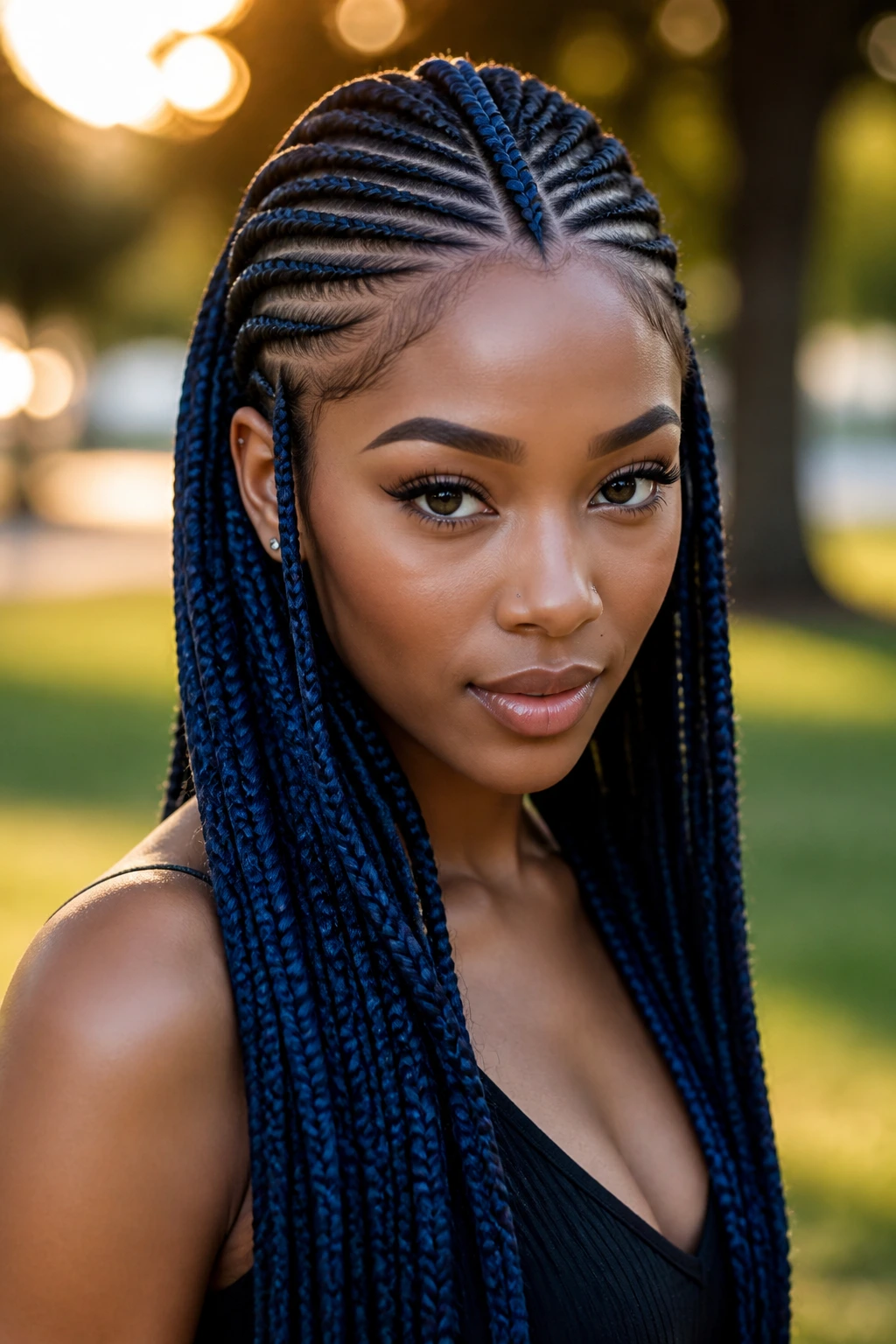
Picture a center braid running back from the hairline, side cornrows tracing the scalp, and deep midnight blue lengths falling past the shoulders. It sounds dramatic, and it is. But the blue keeps it from looking harsh. Dark blue on long hair has a velvet kind of depth that black alone can’t always give you.
Fulani braids already have structure. The front pattern frames the face, and the long hanging sections give the style its length and rhythm. When you bring in midnight blue, the braid pattern becomes easier to read because the shade creates subtle contrast against dark roots or edges. That’s why this style looks so good in motion; every turn of the head shows a new angle.
A lot of people overdo accessories with this look. They do not need to. One or two cuffs, a few clear beads, maybe a single wrapped thread detail — that’s enough. Let the color do some work. The blue is the story here, and long braids give it room to breathe.
If you want a braid style that feels polished but still a little mysterious, this is one to save.
4. Copper Goddess Braids
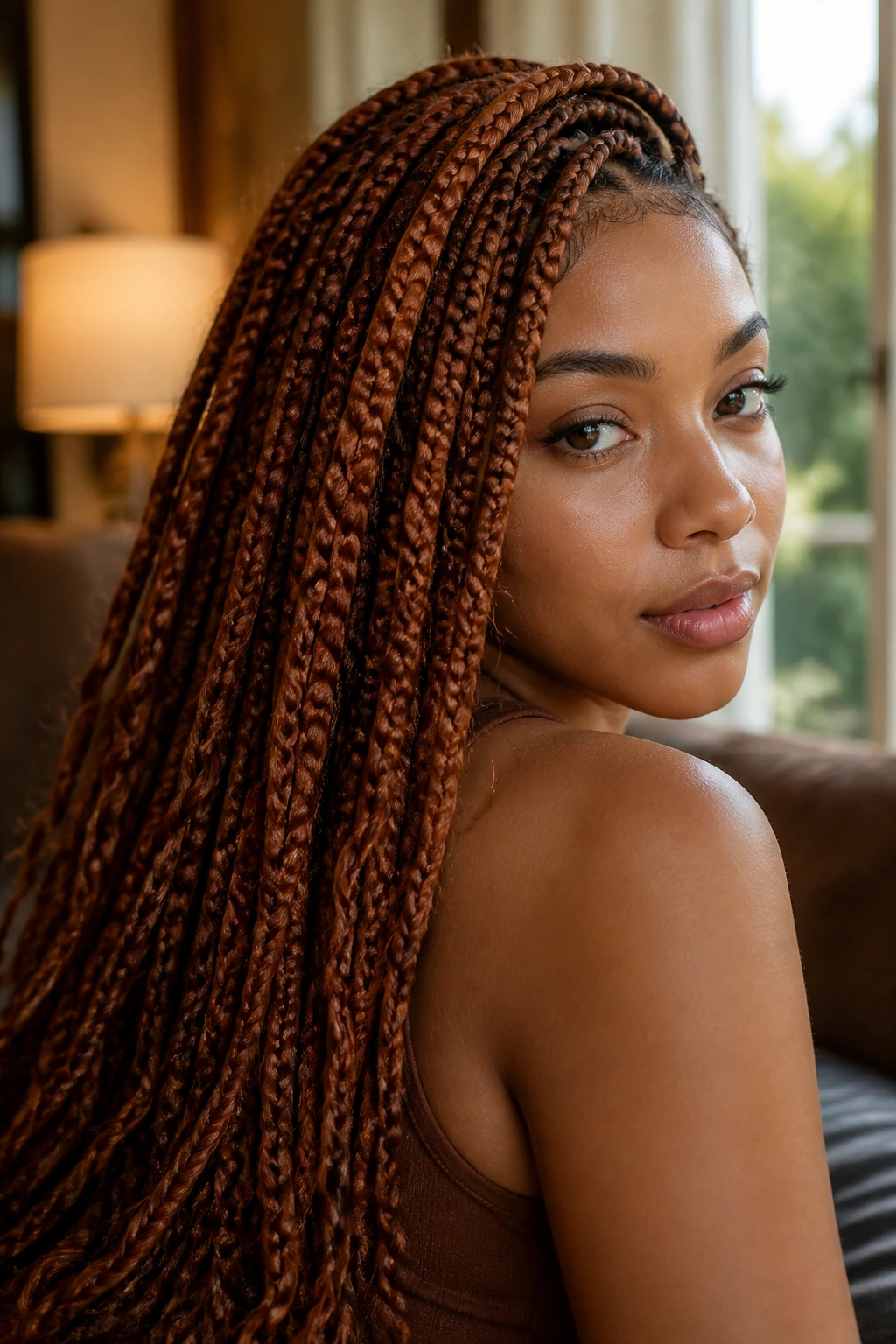
Copper is one of those shades that does half the styling work for you. On long goddess braids, it adds warmth, shine, and a soft glow that catches the eye without needing a complicated braid pattern. That’s the real appeal. You get texture from the braid itself, and color from the copper tone, so the style feels full even before you add loose curls or face-framing pieces.
Copper also flatters long hair because it reads rich at the roots and luminous at the ends. If you blend it into darker hair, the contrast is even better. The braid pattern stays visible, but the color softens the edges enough that the whole look feels less severe than jet black or true auburn alone.
Why It Flatters Long Lengths
Long goddess braids can sometimes look heavy if the color is too flat. Copper fixes that by reflecting light in a warm, almost burnished way. It looks especially good in large braids with loose wave pieces tucked through the lengths, because the curly bits and the smooth braid sections play off each other.
It’s also a smart choice if you want a color that feels grown-up. Not dull. Just less playful than neon, and less icy than silver or platinum. Copper has real staying power in braid styles because it doesn’t fight with the texture. It works with it.
5. Lavender French Braid Crown
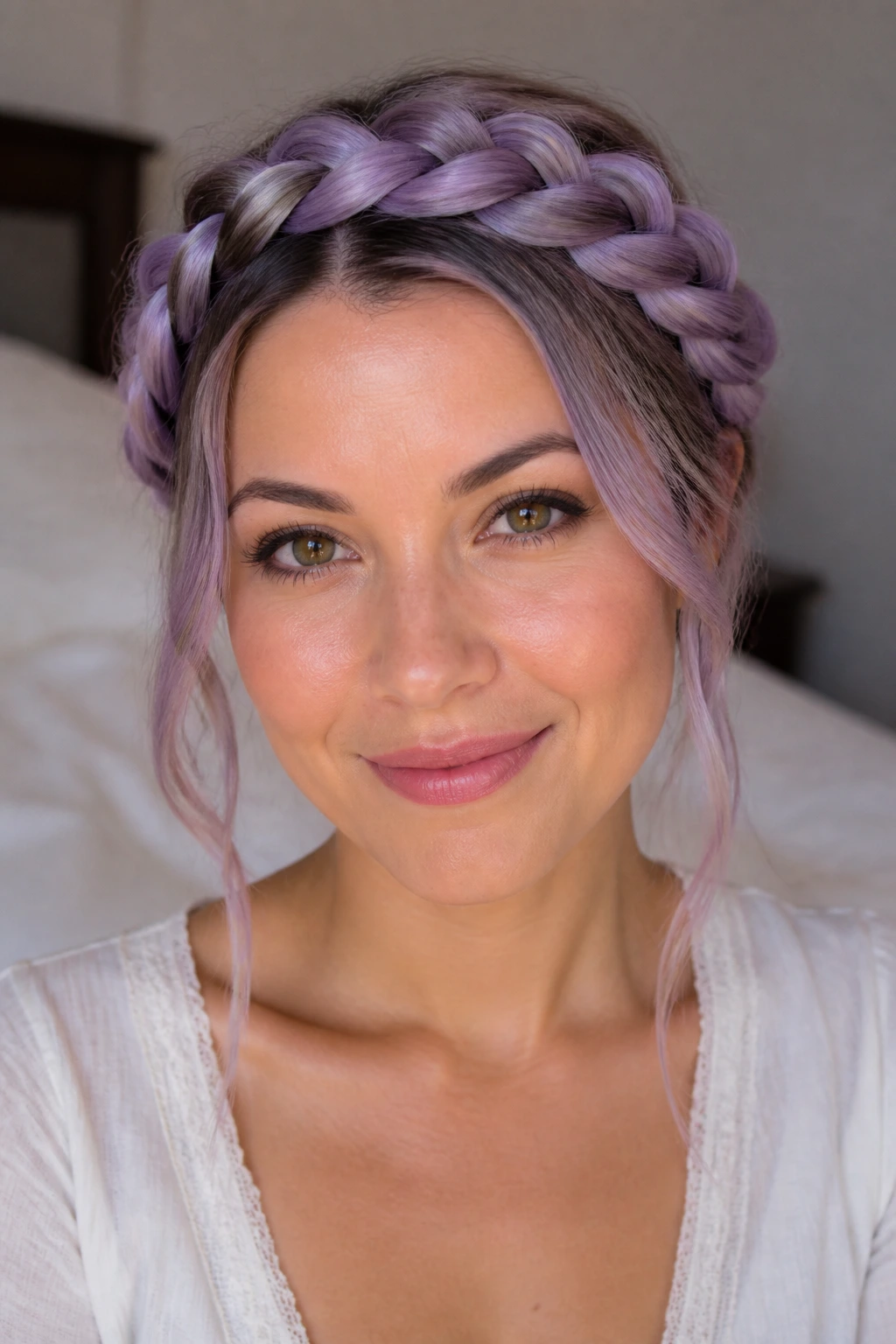
Lavender French braid crowns have a softer mood than most colored braid styles, and that softness is exactly why they work so well on long hair. The braid wraps around the head like a band, and the color sits on top of that structure like frosting. You get shape first, then color. The order matters.
A crown braid can look busy if the color is too dark or too many accessories are added. Lavender keeps it light. It makes the braid pattern feel airy, especially when the length is left to flow down the back in a single loose tail or tucked into a low finish. On long hair, the color does not have to compete with itself. There is enough braid to show the pattern and enough length to show the shade.
This style has a dressy feel, but not in a stiff way. It works for photos, formal events, and any day you want your hair to do something a little prettier than usual. If you’ve got long hair and like a braid that frames the face instead of hanging all the attention at the ends, lavender is a surprisingly smart pick.
The best versions keep the braid edges neat and the color even. Uneven lavender can look muddy fast. Clean sections help.
6. Teal Feed-In Cornrows
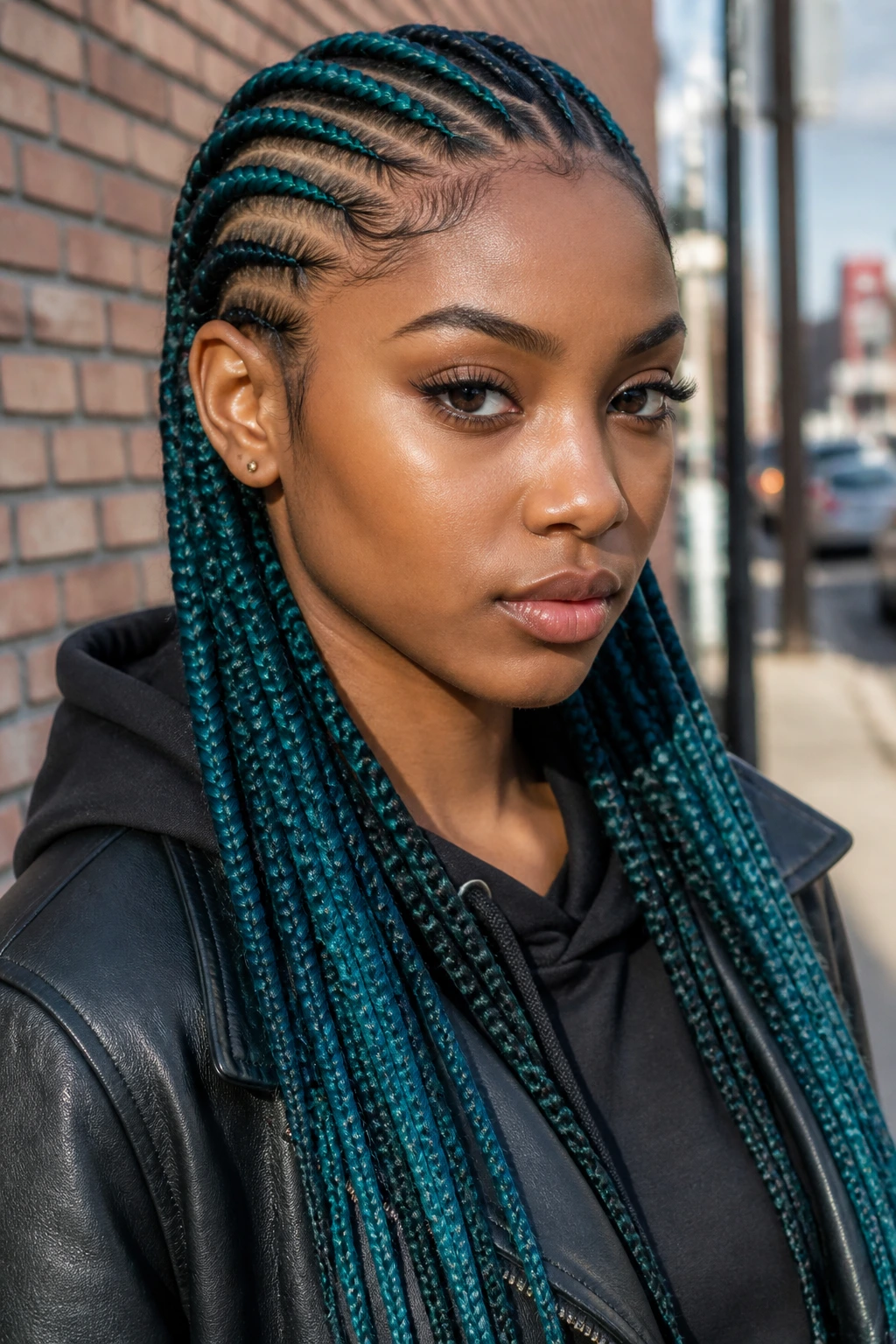
Unlike loose braids, teal feed-in cornrows keep the color close to the scalp, which gives the style a cleaner, sharper look. That matters when the hair is long. You want the braid pattern to stay readable from the front, and feed-in cornrows do that better than bulky styles that depend on the ends for all their impact.
Teal is a good color for this because it has enough depth to feel rich, but enough brightness to stand out against dark roots. The result is a braided style that looks neat at the base and bold through the length. If you wear long hair and hate when color only shows at the very bottom, this solves that problem.
Best Ways to Wear It
- Sleek ponytail finish: keeps the top section tight and modern.
- Single hanging braid tail: lets the teal show off more fully.
- Side-swept pattern: gives the color a stronger directional look.
- Added cuffs or wraps: useful if you want a little sparkle, but keep them sparse.
The style is also practical for people who like low-maintenance mornings. Once the cornrows are set, the shape stays neat, and the color does most of the visual heavy lifting. Teal feed-in braids feel clean, cool, and a little edgy — which is a nice change from the usual blonde-and-brown braid palette.
7. Burgundy Rope Twists
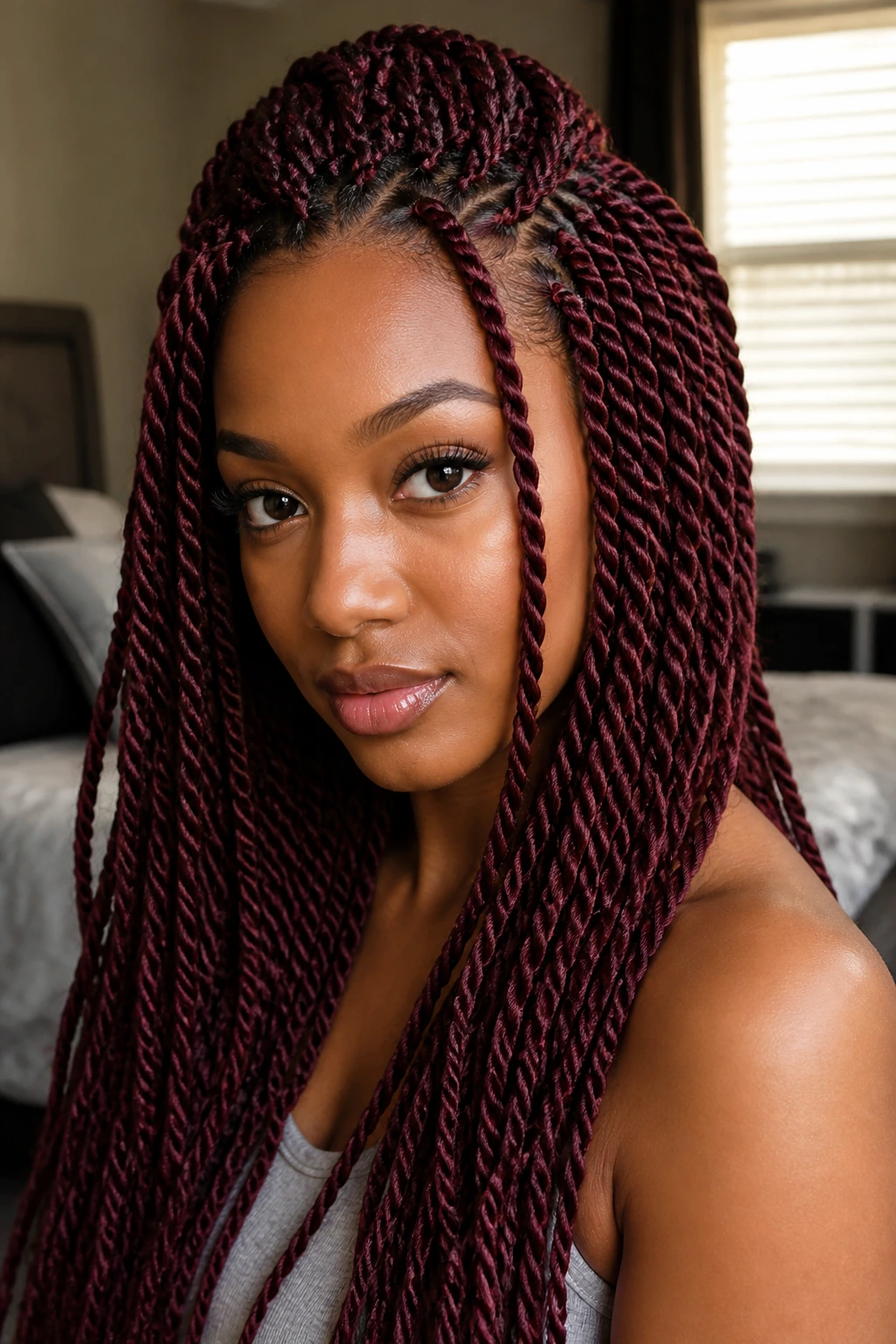
Why do burgundy rope twists work so well on long hair? Because rope twists already have that spiral, almost cable-like texture, and burgundy deepens the twist pattern instead of hiding it. The color sits in the grooves. You notice it more when the hair turns, which is exactly the point.
Burgundy is one of the easiest bold colors to wear because it behaves like a dark neutral in lower light and then opens up into wine-red in brighter light. Long rope twists take advantage of that shift. They move as a mass, but each twist still reads individually when the color is rich enough. That gives the style a full, substantial look without making it feel stiff.
This is a good option if you like something that looks dressed up but not loud. It can lean soft with a center part and no accessories, or become more statement-heavy with gold cuffs and a high ponytail. The color is doing enough on its own.
How to Keep It Looking Clean
- Use a light mousse on the twists to keep flyaways in check.
- Separate the rope twists gently with your fingers if they start sticking together.
- Skip heavy oils near the scalp; they can make the burgundy look dull.
- Wear the ends wrapped or sealed neatly so the twist doesn’t fray too fast.
Burgundy rope twists are one of those styles that quietly look expensive. Not flashy. Just rich.
8. Sunset Ombré Feed-In Ponytail Braids
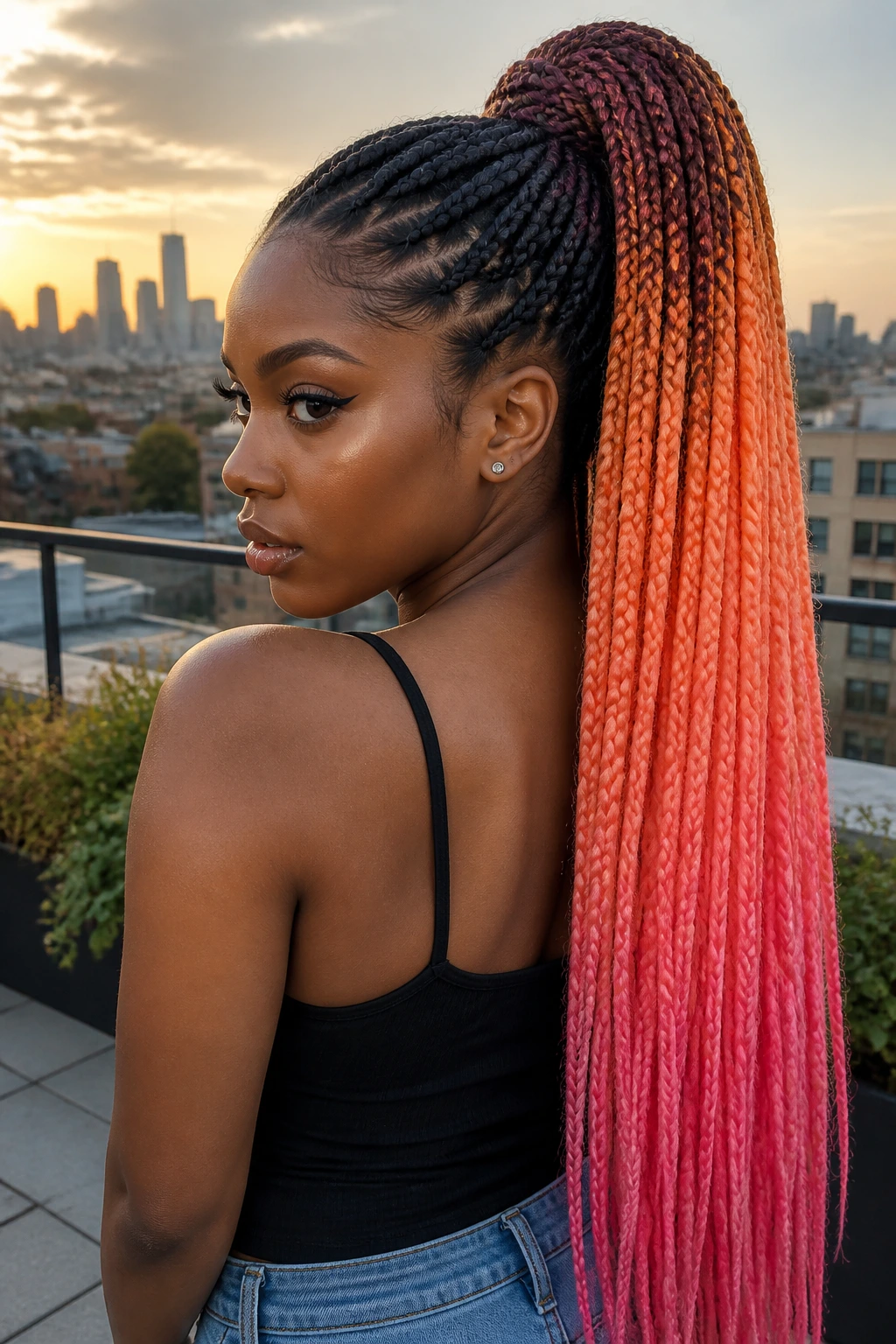
You know the look: dark roots, warm orange, then a soft pink or red at the ends. On a long braid ponytail, that sunset ombré effect makes the whole style feel alive. The braid itself gives the shape, but the color gives the motion. Long hair is what makes the fade worth doing because you need enough length for the transition to actually show.
This style works especially well when the braid is pulled high or set at mid-crown. That gives the ombré space to fall in a visible line, instead of bunching up near the nape where the colors can disappear into each other. A sleek base keeps it modern. A fuller ponytail makes the gradient feel more playful.
It’s also one of the easier colored braid hairstyles to style for different settings. Keep the braid simple, and it looks clean enough for daily wear. Add wrapped hair around the base, gold rings, or curled ends, and it gets more dramatic fast.
The color blend matters most here. If the shift from dark to warm to bright is abrupt, the ponytail can look chopped. A good ombré fades like it was always meant to be there.
9. Silver Boho Braids
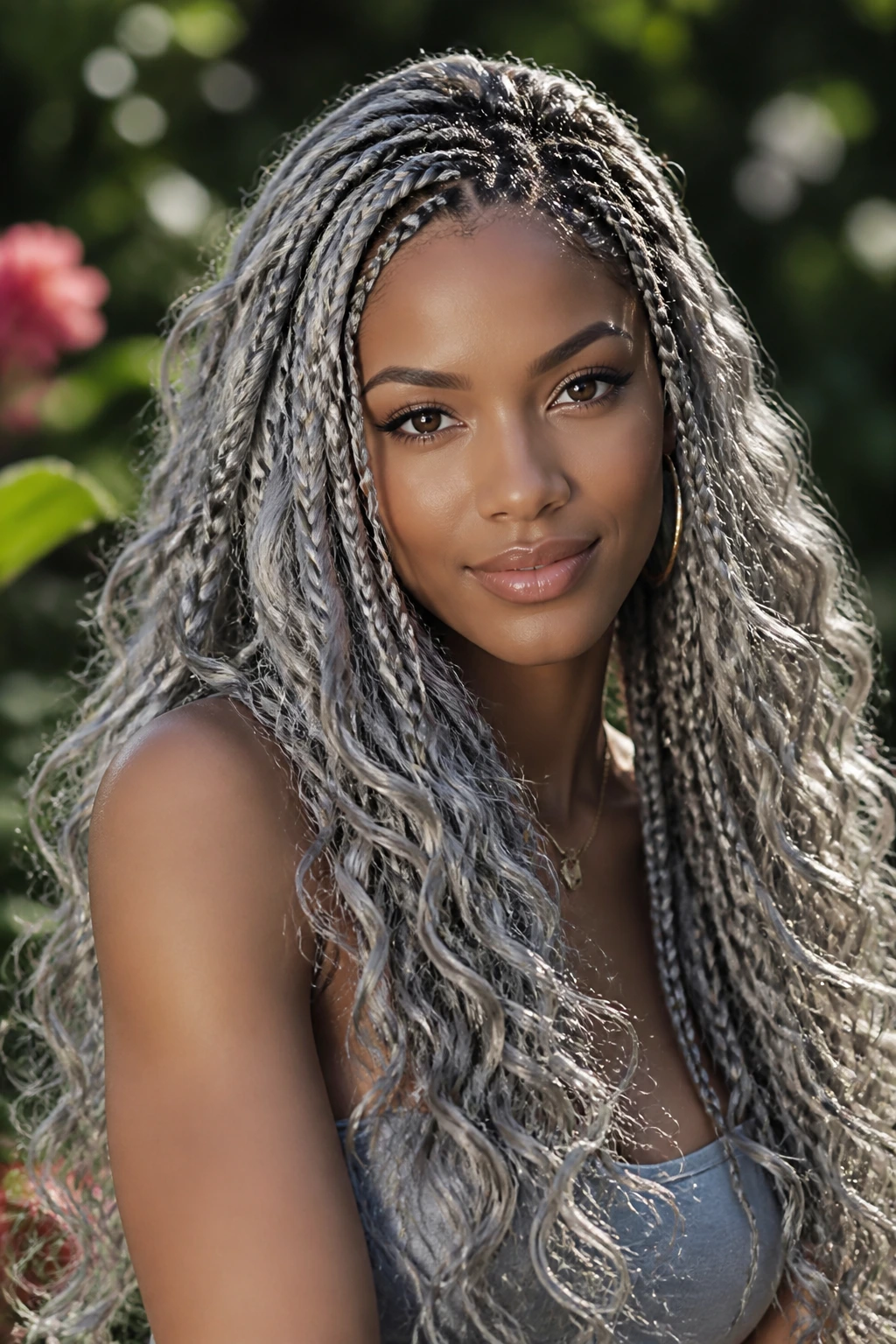
Silver boho braids have a crisp, cool edge that changes the whole mood of long hair. The silver brightens the braid pattern, while the loose boho curls keep it from feeling severe. That mix is the reason this style works. If it were all sleek braid, it might lean stark. If it were all curl, it would lose the structure. Together, they balance each other.
On long hair, silver can look especially striking because the length gives the shade space to shimmer in separate sections. The braid strands reflect light differently from the loose pieces, so the whole style has movement even when you’re standing still. That’s one of the rare cases where a dramatic color also feels soft.
What Makes It Different
The boho texture keeps the silver from looking too polished. That sounds odd, but it matters. A perfect silver braid can sometimes feel almost metallic in a way that reads costume-like. The loose curls break that up and make the style wearable. It feels styled, not stiff.
Silver also pairs well with black clothing, smoky makeup, and simple jewelry. You do not need to add much. The braid length, the curl texture, and the color are already doing a lot.
10. Neon-Accent Dutch Braids
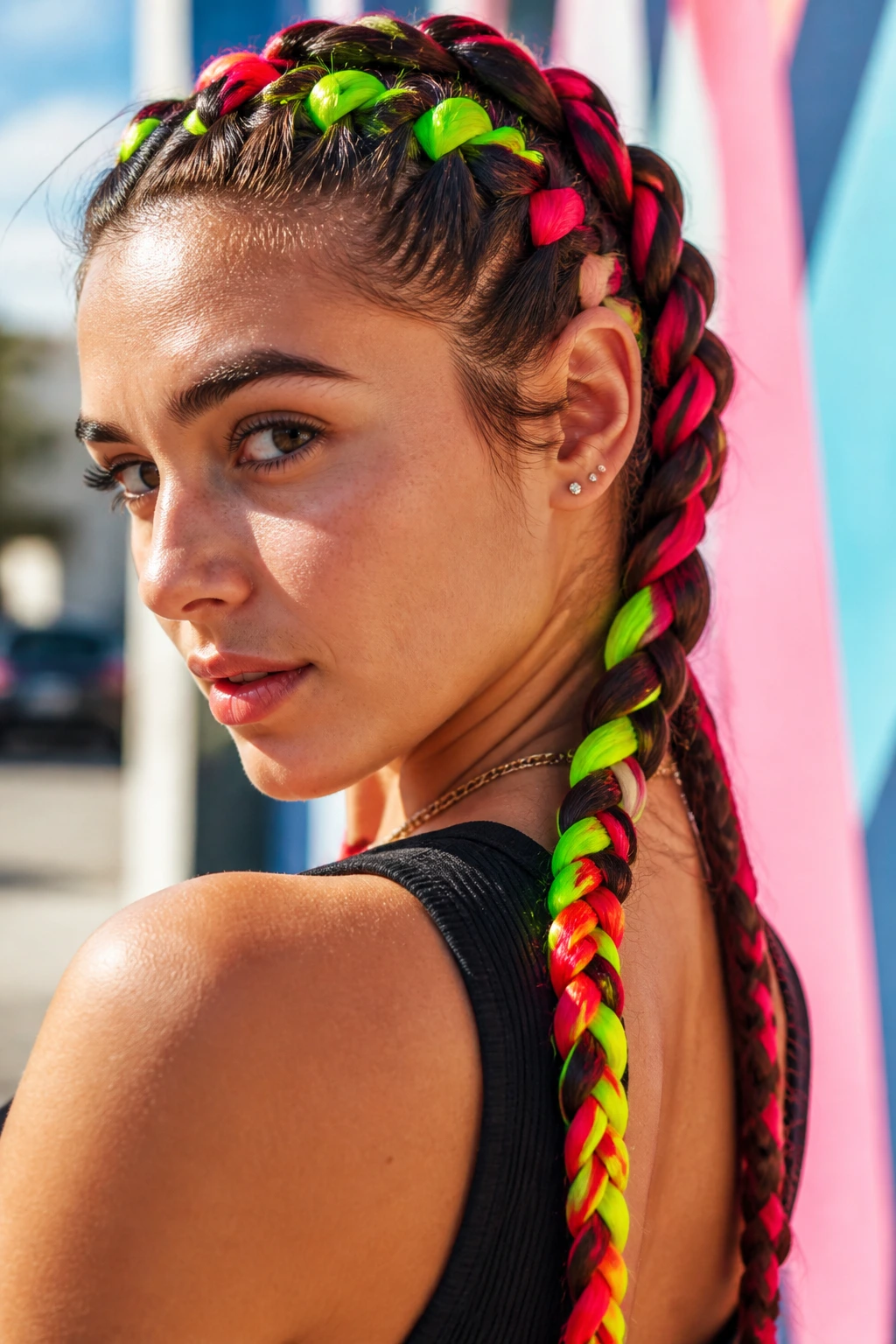
A full head of neon can be a lot. A few neon accent pieces inside Dutch braids? Much smarter. That small shift changes everything. Instead of turning your whole style into a highlighter, you get flashes of electric color tucked into the braid path, which makes long hair look detailed from every angle.
Dutch braids are a strong choice because they sit on top of the hair rather than sinking into it. That makes accent color easier to see. A streak of lime, hot pink, or bright orange woven through each braid creates a pattern that feels sporty and playful at the same time. Long hair helps because there’s more braid surface to show off the accent without making it too dense.
This style is especially good if you like color but do not want the entire braid to be one bright shade. The neon stays more interesting when it’s used as a line, not a block. That’s the part that makes it look intentional.
If you want a braid style that has energy, this one has plenty. Just keep the rest of the hair clean and the parting neat, or the neon can start to feel messy instead of sharp.
11. Rose-Gold Fishtail Braid
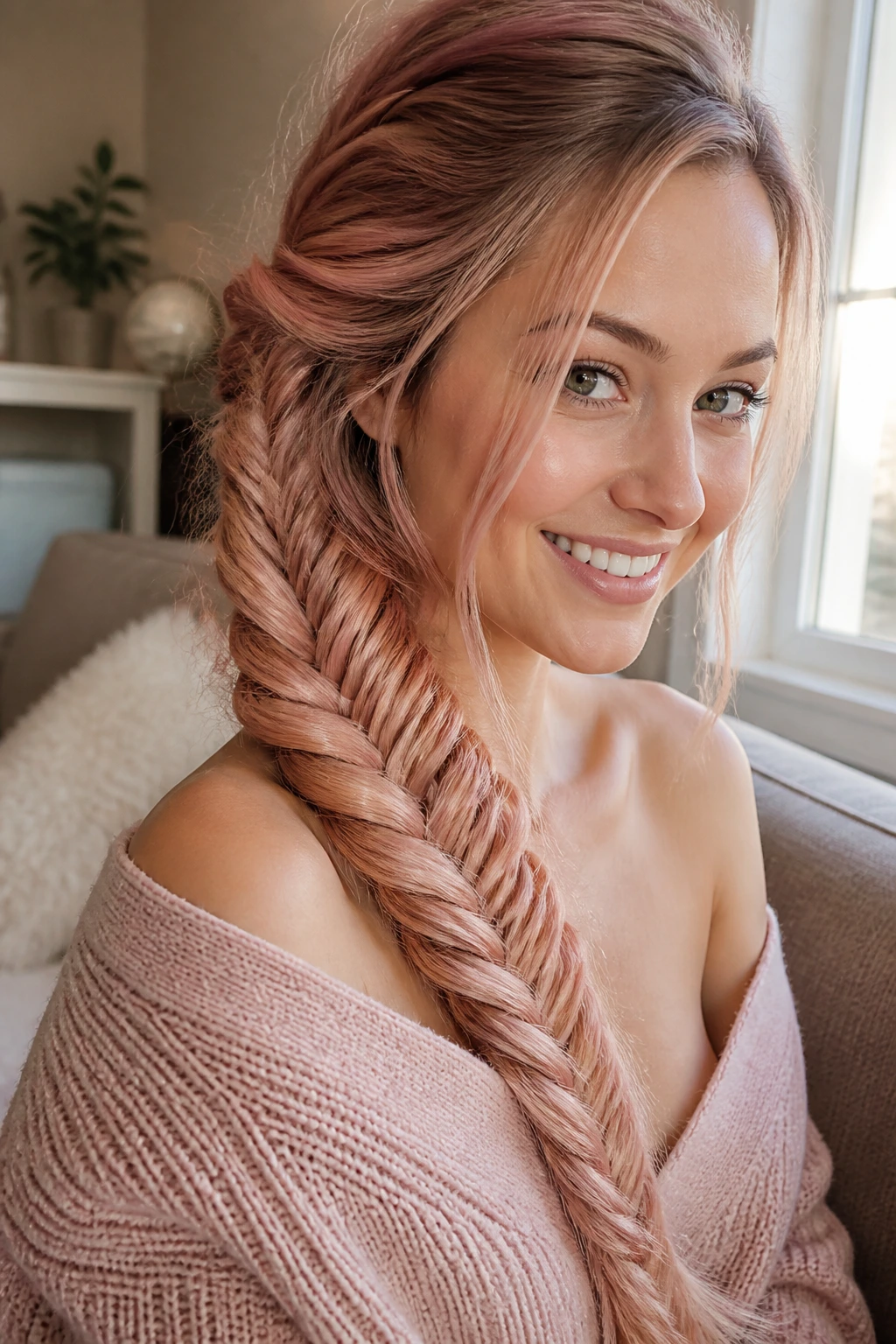
Rose-gold is a sneaky good braid color. It sits between pink, beige, and soft copper, so it doesn’t hit the eye all at once. On a fishtail braid, that subtle shift matters because fishtails depend on tiny woven sections. The finer the braid, the more the color looks like it’s woven into fabric.
Long hair gives rose-gold fishtails room to show all that texture. The braid can travel down the back or over one shoulder, and the color catches in small pieces rather than one heavy slab. That keeps it from looking too flat. If you like hair that feels romantic without turning sugary, this shade does that well.
The best rose-gold versions tend to work with soft waves at the ends or a gently pulled-apart fishtail for extra thickness. A tight fishtail can be stunning, but it can also hide the color shifts if the hair is too dense. Loosening the braid a little lets the shade breathe.
It’s a lovely choice for formal events, date nights, or any day you want your hair to look a little softer than usual. Rose-gold has that effect. It doesn’t shout. It glows.
12. Green-and-Black Halo Braid
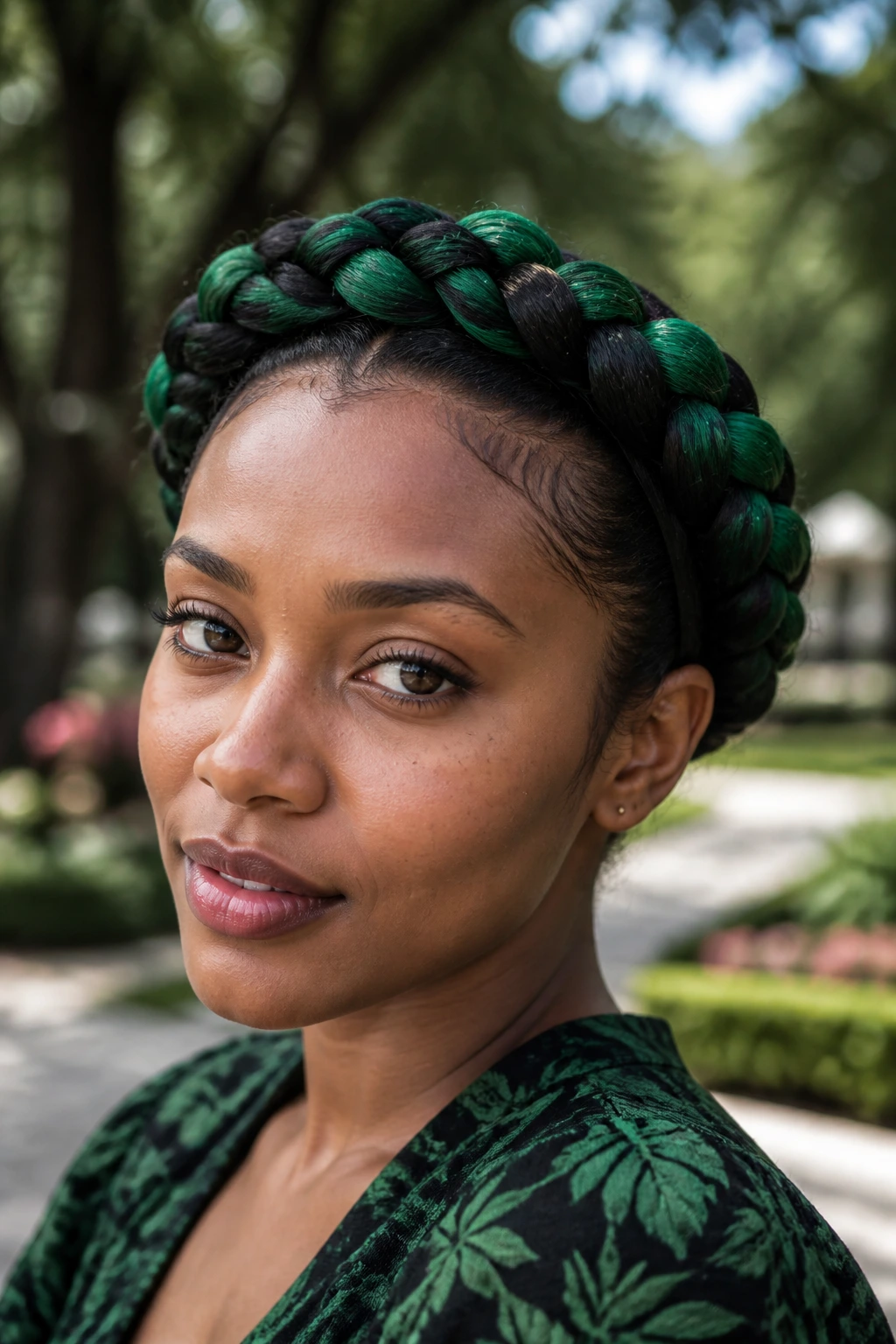
Can a halo braid feel dramatic without looking overdone? Yes — if the color placement is doing some of the work. Green-and-black is a strong combination because black gives the braid structure and green supplies the surprise. On long hair, the halo shape wraps that color combination around the head like a frame, which makes the whole style feel deliberate.
The appeal is partly visual and partly practical. A halo braid already draws the eye up and around the face, so adding green sections creates a little movement along the crown. If the green is forest, emerald, or deep jade, the effect is rich. If it’s brighter, the braid turns more playful. Either way, the style benefits from the long length because the braid has more room to show the weave.
What to Ask For
- A clean crown braid with a smooth parting line.
- Green sections placed evenly so the color doesn’t clump.
- A finish that keeps the braid flat against the head.
- Minimal accessories; the color already carries the look.
This is a braid for someone who likes shape first and color second. Or maybe both at once. Either way, it has presence.
13. Plum Bubble Braid Combo
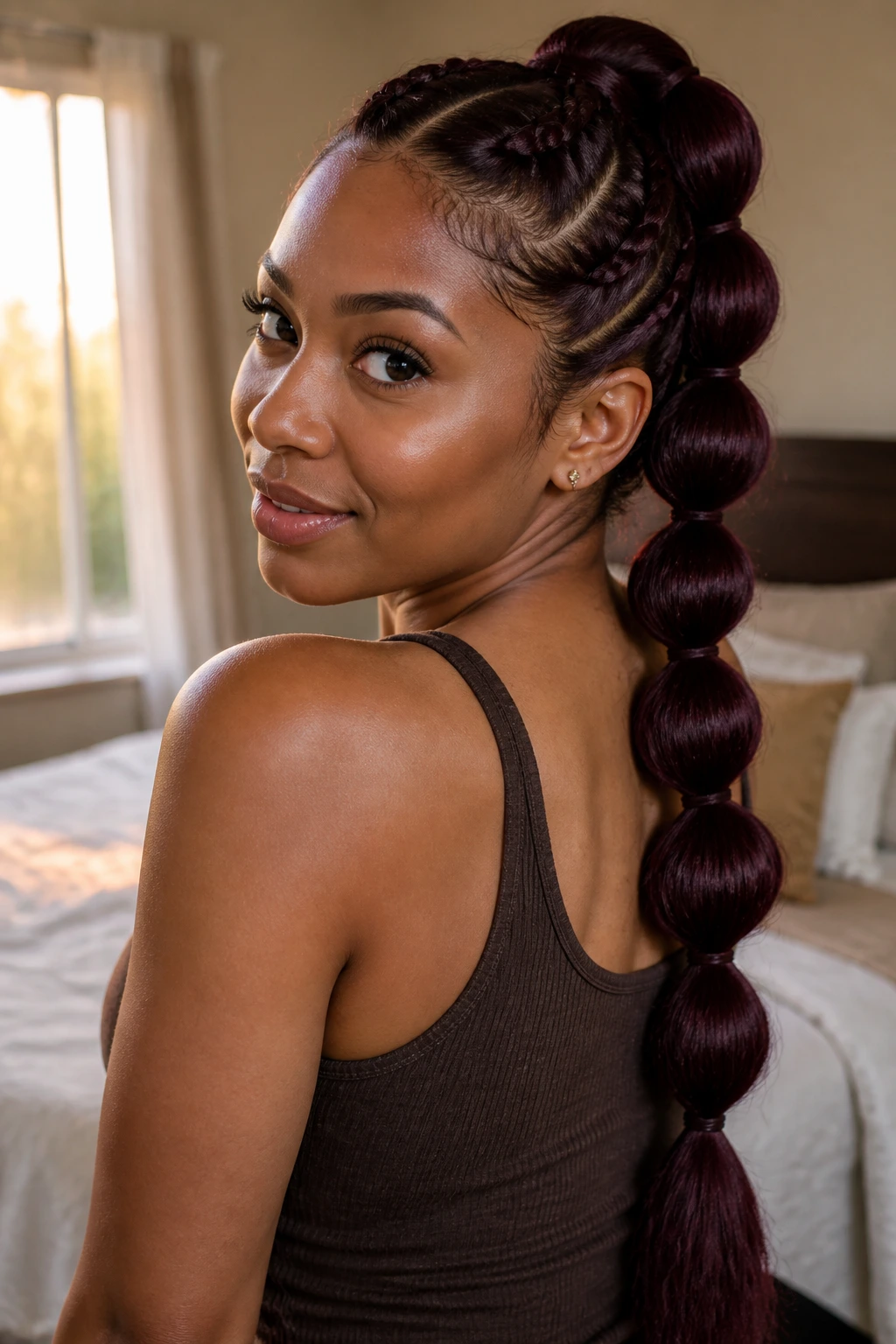
A plum bubble braid on long hair feels a little unexpected, and that is why it works. Bubble braids already have a sculptural shape; the color gives them depth. Plum is especially good because it reads dark and rich at the same time, so the bubbled sections look fuller than they would in a flat brown or black.
The style usually starts with a long ponytail or a half-up section, then gets cinched at intervals to create the bubble effect. That spacing matters. If the elastics are too close, the braid turns cramped. If they’re too far apart, the bubbles lose shape. Long hair gives you enough length to set those sections properly and still leave a nice tail at the end.
This is one of those styles that looks more complicated than it is. The shape does the work. The plum color just makes the shape feel richer and less sporty than a standard bubble braid. If you want something playful but not childish, that’s the line it walks.
The best versions keep the bubbles even and the tail smooth. A few wrapped strands around each elastic help hide the ties and make the finish look cleaner.
14. Two-Tone Lemonade Braids
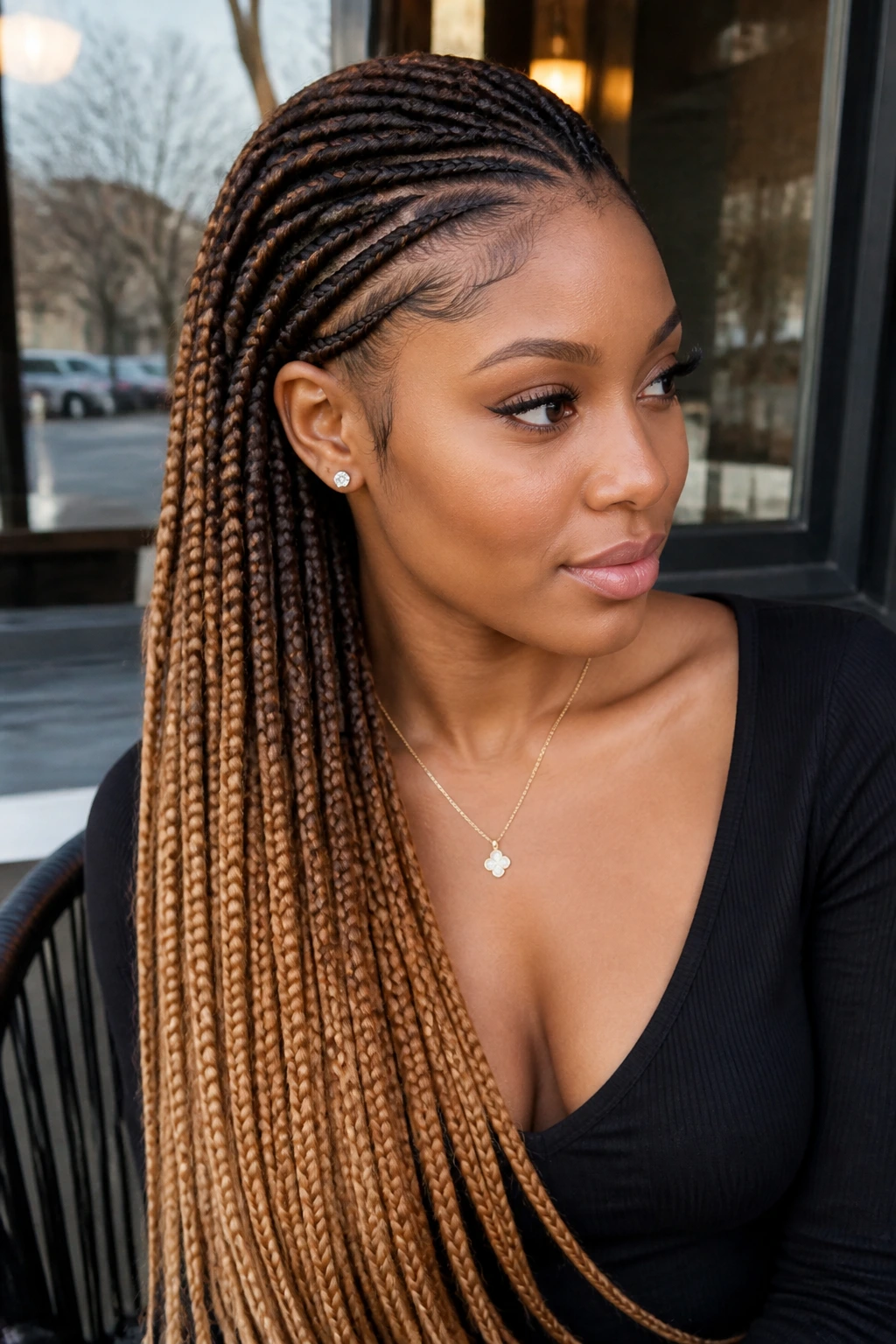
Two-tone lemonade braids are the easiest way to get color movement without making the style feel busy. One shade near the scalp, another through the length, and suddenly the braid has a direction. On long hair, that directional look matters because lemonade braids already sweep to one side. Color just strengthens the line.
This style works especially well with combinations that have a little contrast but not a hard clash. Think dark roots with caramel ends, black with burgundy, or brown with copper. The side-swept braid pattern makes the color shift feel intentional because your eye follows the braid down and across. That kind of flow is what gives the style its polish.
It also photographs in a flattering way because the side part opens up the face. The color can sit low and sleek near the scalp, then brighten where the braid falls over the shoulder. Long hair gives you more length for that color change to register, which is half the reason the style looks so good.
If you want color but don’t want a full bright head, this is the one I’d point to first. It’s bold enough to matter, restrained enough to wear often.
15. Rainbow Peekaboo Braids
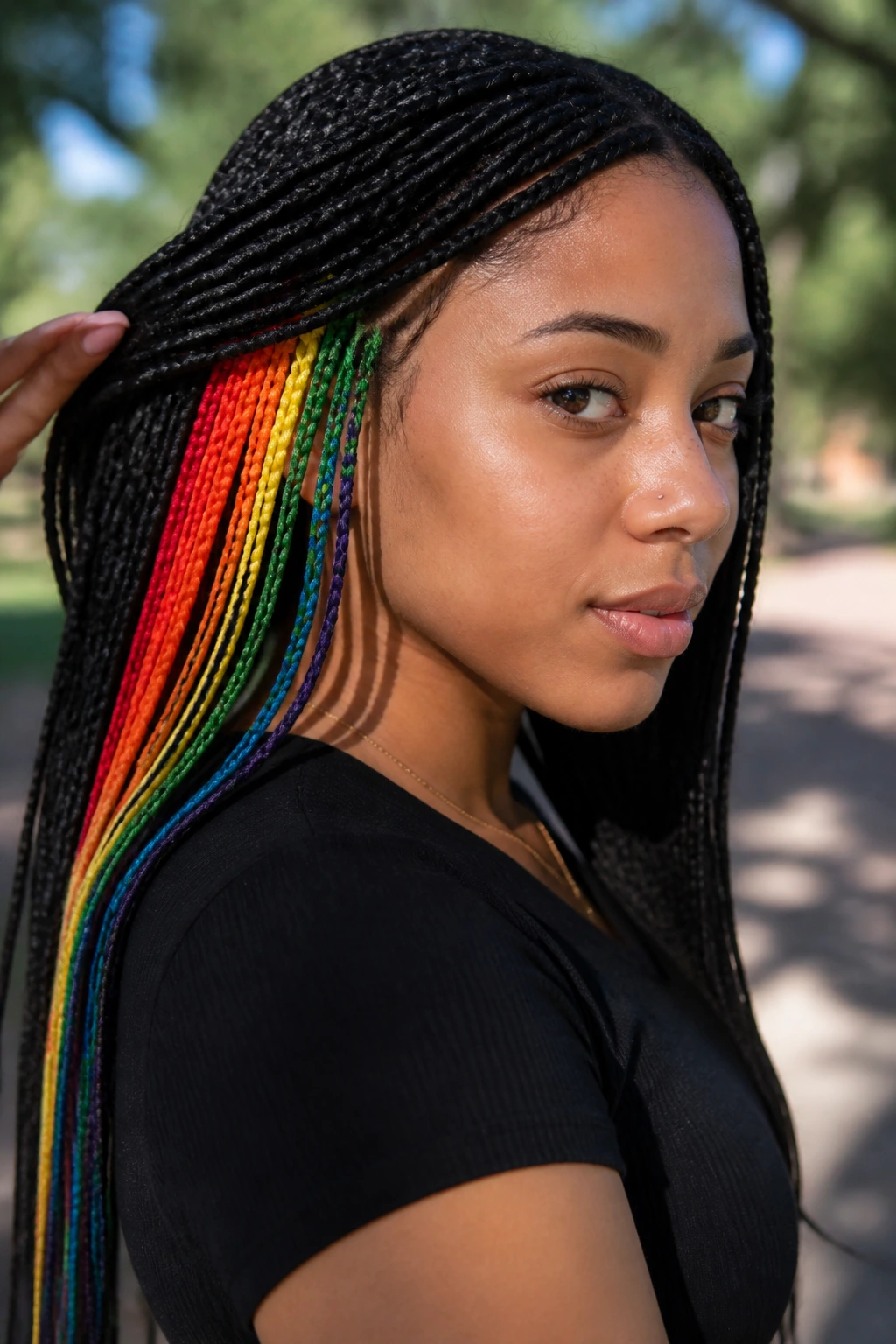
Do rainbow peekaboo braids have to be loud? Not really. That depends on where the color is placed. On long hair, peekaboo color can hide under the top layers and reveal itself only when you pull the braid over one shoulder, split it into two sections, or sweep the hair back. That makes the look more fun than flashy.
The reason this style works so well on long braids is depth. You have enough length to tuck hidden shades under darker outer braids, which gives the whole style a little secret. Red, orange, yellow, green, blue, and violet can all show up in thin panels or small extension strips. You don’t need every color in equal amounts. In fact, that usually looks clumsy. A few well-placed stripes go further.
How to Wear It
- Keep the outer braid shade darker so the peekaboo colors have contrast.
- Place bright tones only in the middle or lower layers.
- Let the ends show the most color; that’s where movement reveals the blend.
- Keep the braid pattern simple so the color placement stays readable.
Rainbow peekaboo braids are for people who like a little surprise. That’s the whole charm. The style can look fairly understated from the front, then turn playful the second it moves.
Final Thoughts
Long hair gives colored braids room to behave like actual design, not just decoration. The length lets ombré blends stretch out, lets accent colors hide and reappear, and lets braid textures show their shape instead of getting swallowed by bulk.
If you want the safest first step, choose color placement before choosing the exact shade. A bright tone at the ends feels softer. A bright tone near the scalp makes the style louder. Hidden panels are the most playful of all, which is probably why peekaboo color keeps hanging around.
And if you’re torn between two options, pick the one that still looks good when the braids loosen a little. That part matters more than people admit. Color should look good on day one, sure — but it should also still make sense when you’ve worn it a while and the style starts to feel like yours.
