



Braids can do a lot more than look neat for a few weeks. For many Black women, the right braid style is part protection, part time saver, part mood shift. The wrong one can leave your scalp sore, your edges cranky, and your patience gone by the second week.
That is why black braids for women need more than a pretty photo reference. Part size, extension weight, braid direction, and how the style starts at the root all matter more than people like to admit. A style can look gorgeous and still be a bad fit for your hair density, your schedule, or your tolerance for sitting in a chair.
I always think braid choice should start with comfort, then move to shape, then move to flair. Some styles are built for low tension. Some are made for clean parting. Some are pure drama and deserve to be treated that way. The good ones look good and wear well, which is the whole point.
So let’s get specific. The styles below cover the classics, the sleek options, the bold ones, and the styles that make people stop and ask who did your hair.
1. Classic Box Braids
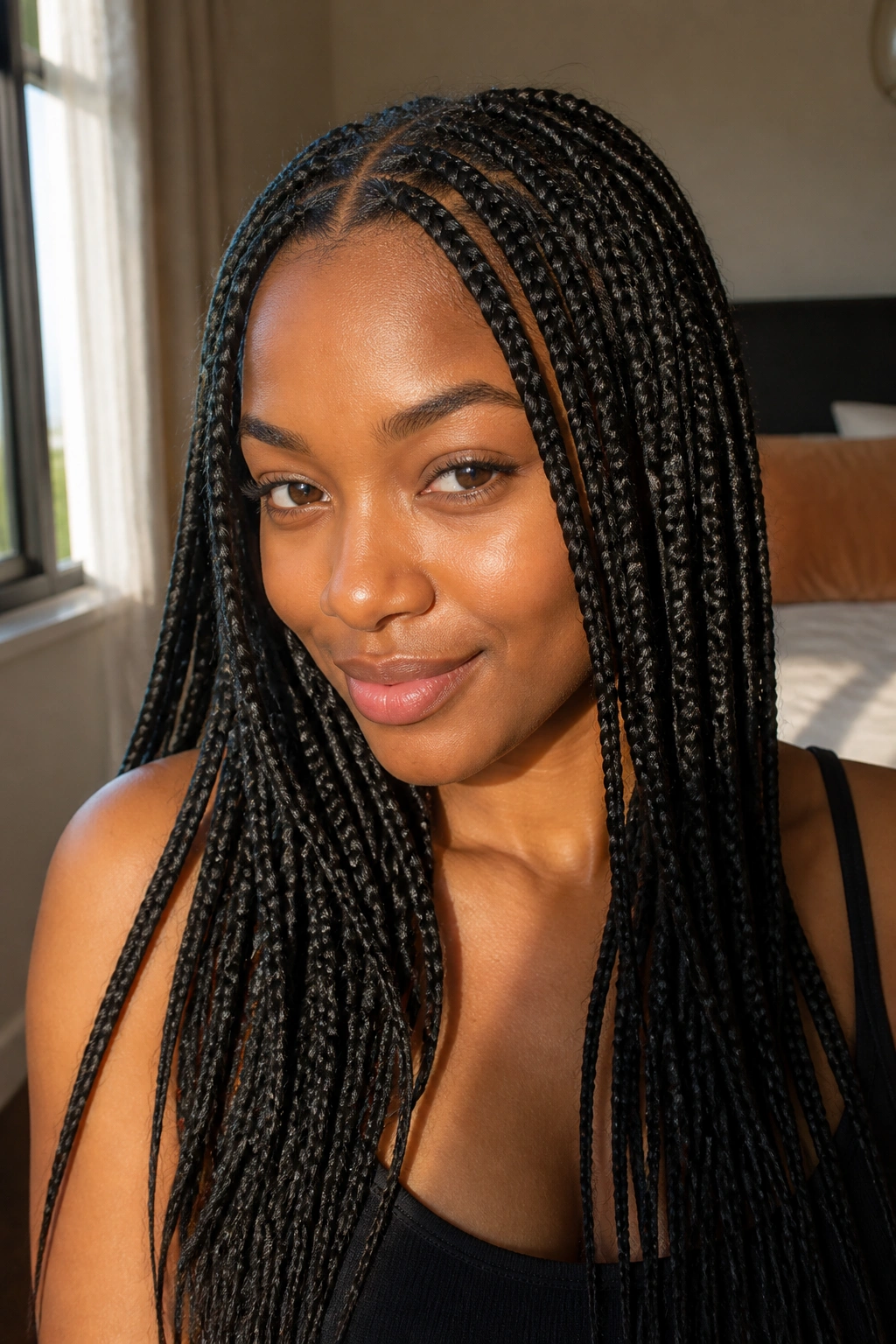
Classic box braids are still the backbone of black braids for women because they do the job without acting precious about it. The square parts are familiar, the shape is clean, and the style gives you room to wear the braids down, tied up, or swung to one side when you want a change.
Why they still matter
The beauty of box braids is that they can be scaled up or down. Medium braids give you movement and a faster install. Smaller braids hang longer and feel lighter in motion, but they take more time and more patience from both you and the braider.
- Best for natural hair that has been stretched before installation
- Works with shoulder-length, mid-back, or waist-length extensions
- Usually looks best when the parts are clean and the roots are not packed too tight
- Easy to style into buns, ponytails, half-up looks, and side sweeps
A good set of box braids should feel secure, not painful. If your temples throb or the front hairline feels like it is being pulled forward, that is your cue to speak up. The style is supposed to last, not fight you from day one.
My honest tip: ask for braids that are a touch looser around the edges and a little firmer through the middle of the head. That balance saves your hairline and still keeps the style neat.
2. Knotless Box Braids
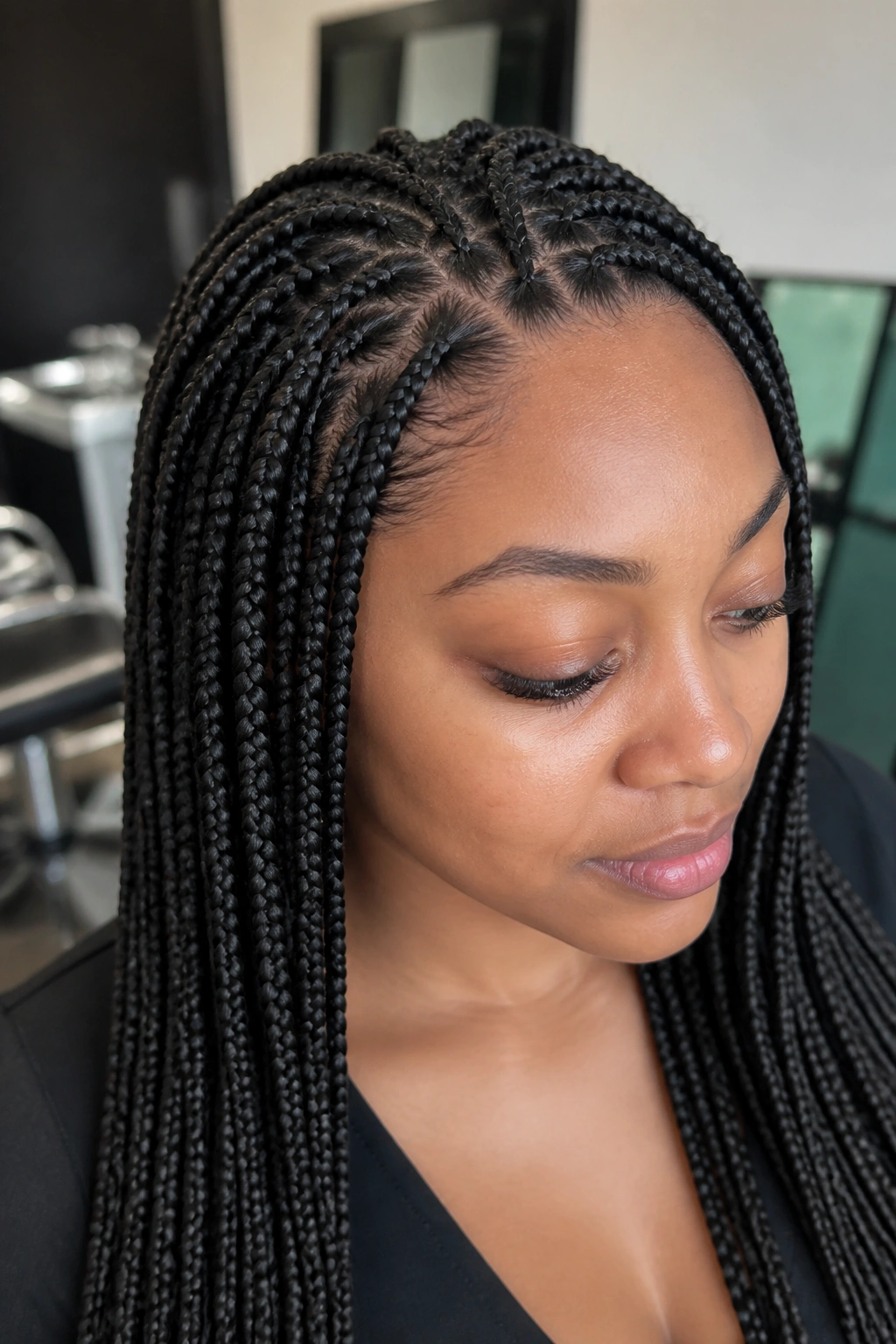
Knotless box braids win on comfort before they win on anything else. The braid starts with your own hair and then feeds in extension hair gradually, so the root feels flatter and lighter than a traditional knot braid.
That difference matters more than most people expect. A style can look nearly identical from a distance, but the feel on day three tells the real story. Knotless braids tend to move better, sit flatter against the scalp, and put less pressure on the front sections where breakage usually starts.
They are a smart pick if your scalp is tender, if you wear braids for long stretches, or if you hate the stiff, bulky look that some traditional braids can have at the root. The tradeoff is time. Knotless braids often take longer to install, and the braider has to stay patient with the feed-in method.
Still, they are worth it. Especially if you like braids that look soft from the start instead of needing a few days to settle.
3. Fulani Braids
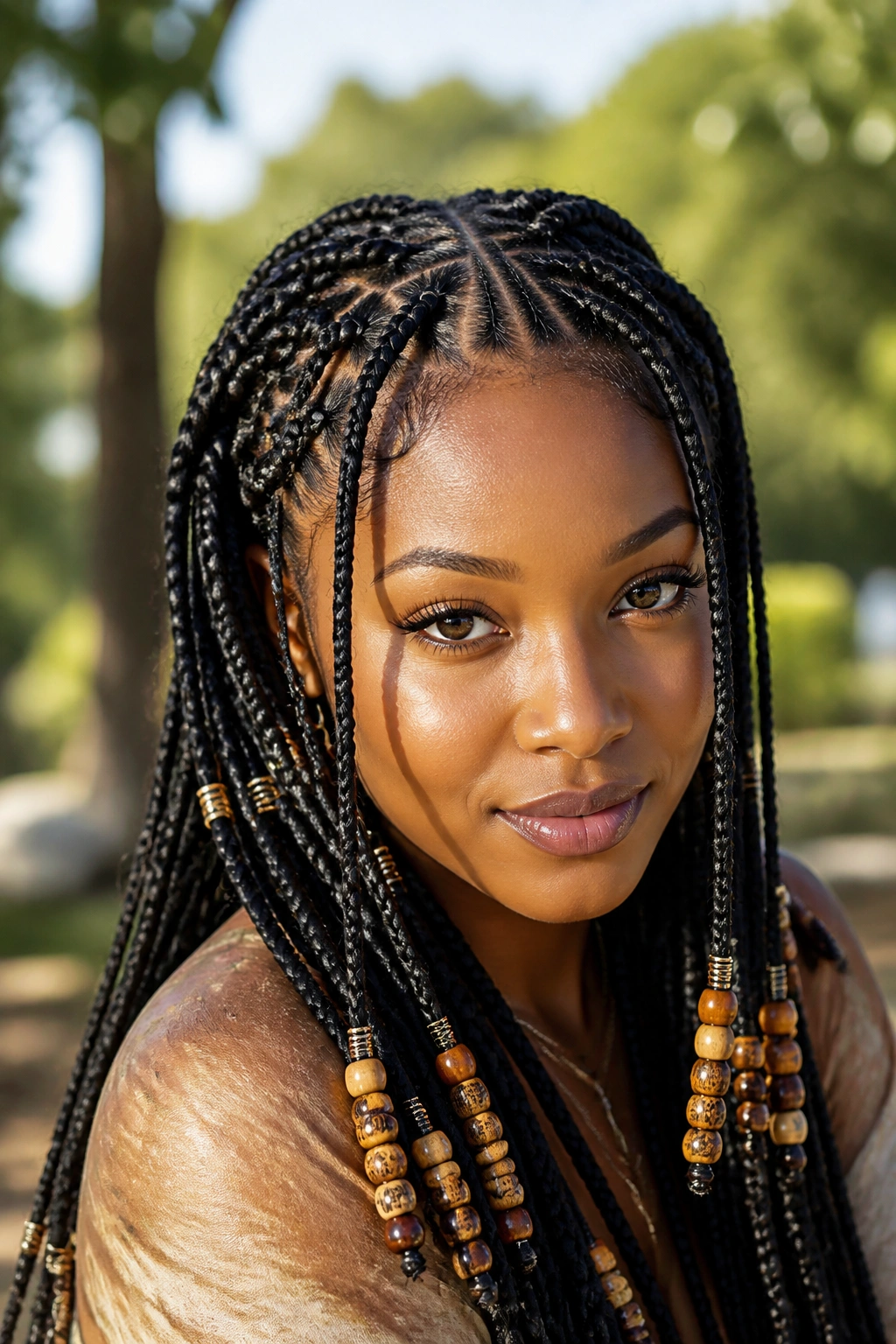
Why do Fulani braids look dressed up even when the pattern stays simple? Because the style uses rhythm. You get a center braid or center part, side braids that frame the face, and often one or two details like beads, cuffs, or a thin braid laid across the crown.
The whole style has movement. It does not sit like a wall of hair. It opens the face, which is why it works so well when you want a braid style that feels polished without looking rigid.
How to wear them
Fulani braids look best when the parting is deliberate and the braids on each side are balanced. You do not need a crowded scalp to get the effect. In fact, too many accessories can make the style lose its clean line.
A few things make this style sing:
- A straight, centered part or a neat middle braid
- One to three braids framing each side of the face
- Small beads at the ends, if you want the traditional touch
- Medium tension at the root so the braids sit flat without tugging
The style is a nice bridge between decorative and practical. You can wear it to work, to dinner, or to an event where you want the hair to look intentional without needing a full updo.
4. Lemonade Braids
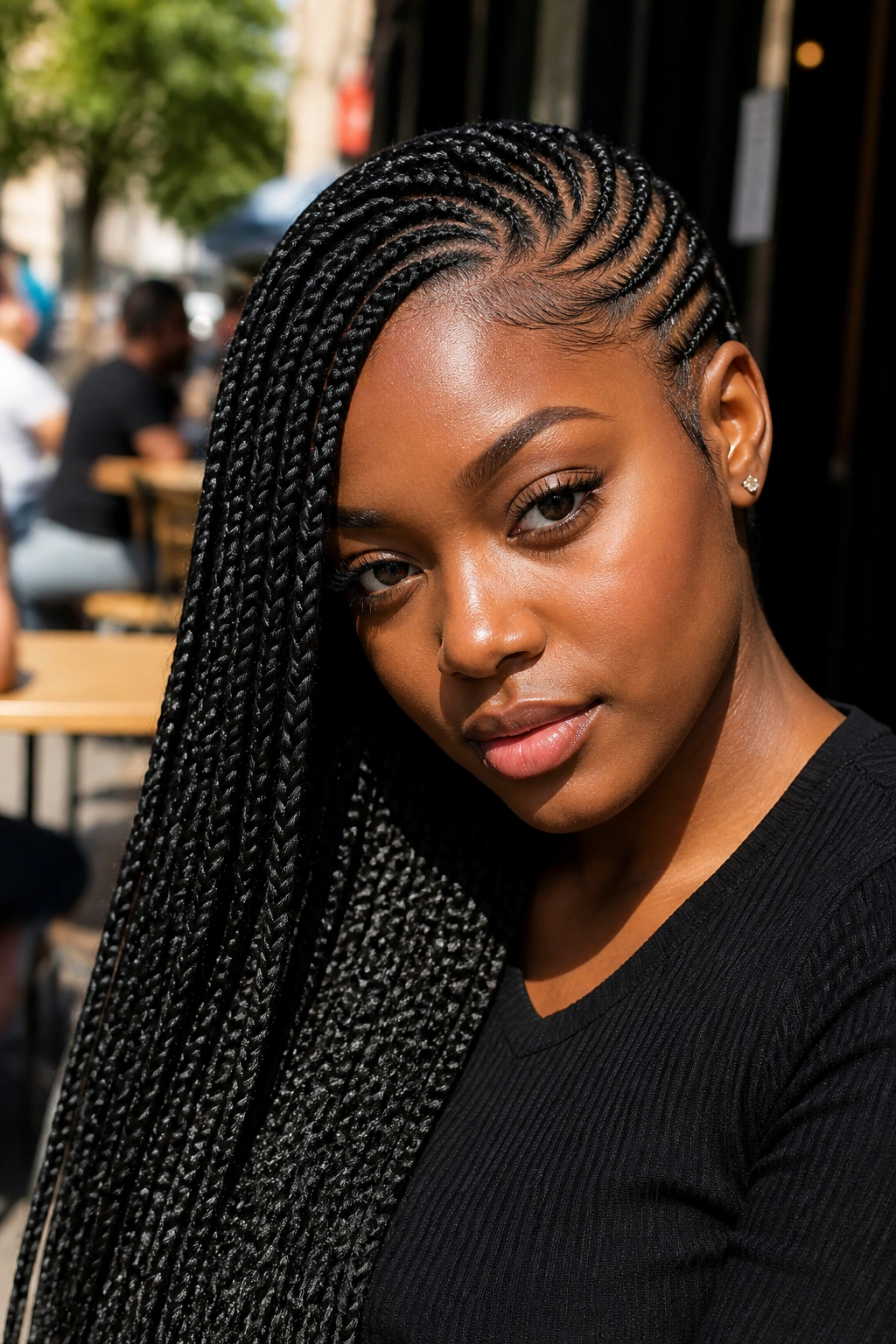
Picture a deep side part, smooth cornrows angled across the scalp, and all that braid length falling in one direction. That is the appeal of lemonade braids. The style gives you a sleek line first and a dramatic sweep second, and it is hard to beat when you want the face opened on one side.
They work especially well when you want a braid style that feels lean instead of full. The pattern hugs the scalp, so the head shape stays visible. That matters more than people say. Some styles cover everything. Lemonade braids let the structure of the face and jawline stay part of the look.
- Usually installed in 6 to 12 braids, depending on how full you want the finish
- Side part can sit high for drama or lower for a softer effect
- Long earrings look excellent with this style
- A neat edge line makes the whole thing feel sharper
The biggest mistake is making the braids too thick at the front. That flattens the sweep and makes the part look heavy. Keep the front clean, keep the angle smooth, and let the length do the talking.
5. Ghana Braids
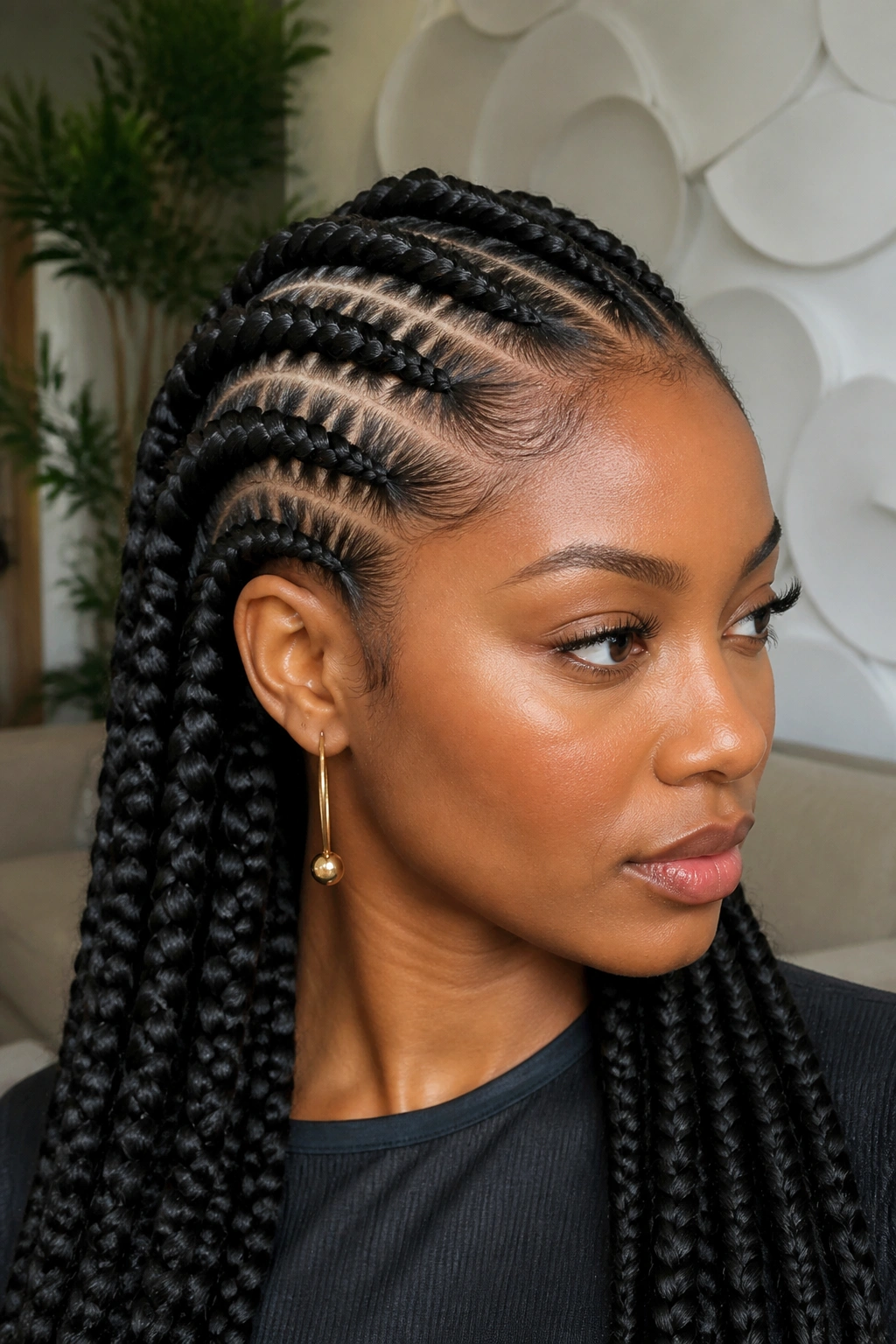
Ghana braids have a sculpted look that feels strong the moment you finish the first row. The braid starts narrow and feeds in hair as it moves back, so the width builds along the scalp instead of sitting there all at once. That raised shape gives the style a polished, almost architectural feel.
What I like most is how controlled it looks without turning stiff. Ghana braids can be large and bold, or they can stay medium and refined. Either way, the scalp pattern stays readable, which gives the style more presence than a plain straight-back cornrow.
They are a good fit when you want the head to look clean but not flat. They also work well for women who like to tuck the ends into a bun or ponytail later, because the base already feels sturdy. The tradeoff is tension. A Ghana braid that starts too tight can make the hairline complain fast, and there is no reason to push it that far.
This style looks best when the feed-in is smooth and gradual. You should be able to see the braid grow, not jump.
6. Stitch Braids
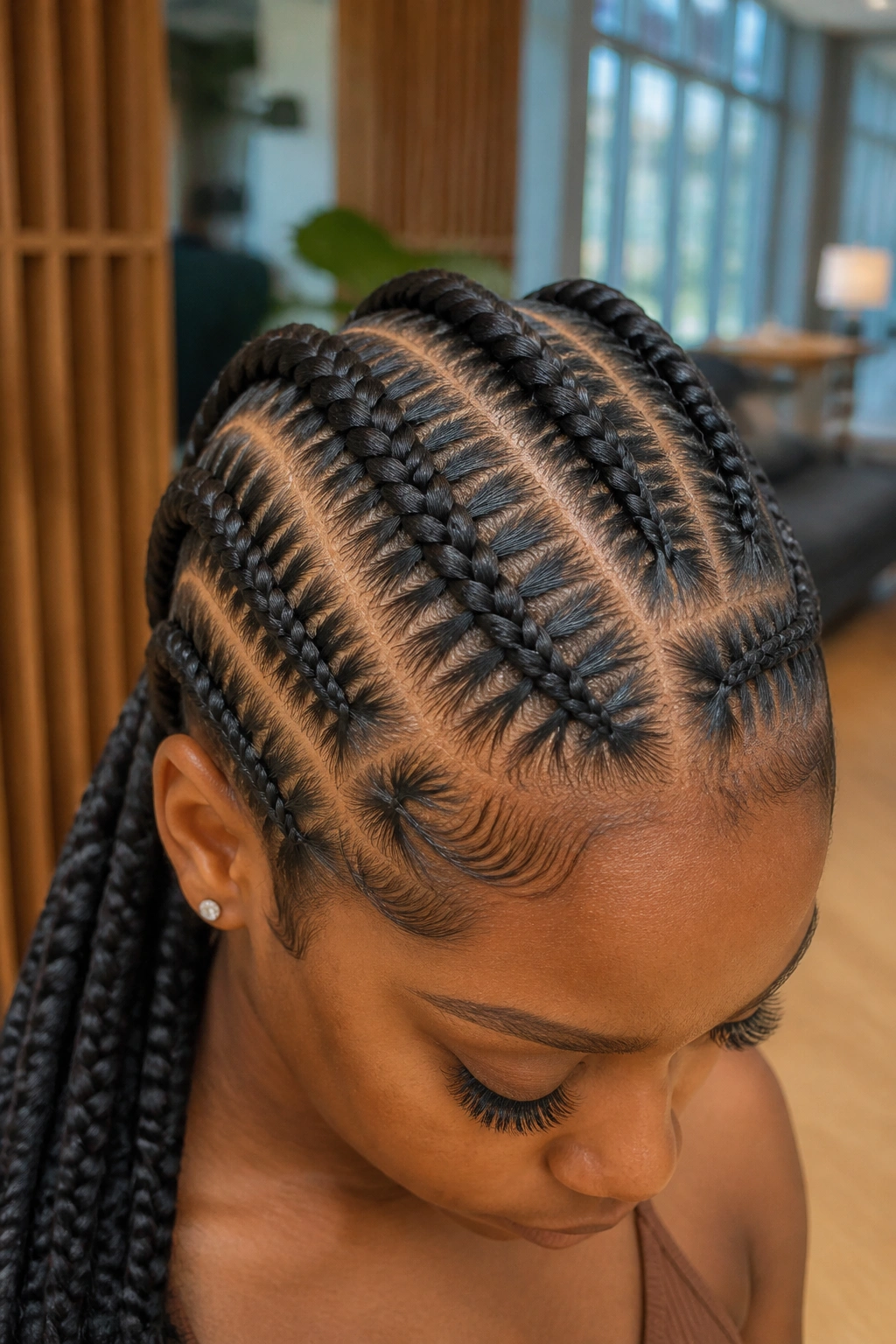
Stitch braids are for the woman who notices parting. Not vaguely. Really notices it. The name comes from the crisp, segmented look of the braid, where the stylist creates visible lines that resemble little stitched sections across the scalp.
Compared with standard cornrows, stitch braids look sharper and more deliberate. The braid pattern reads from across the room. That is the point. The style has a neatness that pairs well with sleek edges, bold jewelry, and hairstyles that need a clean frame.
The best versions rely on precise parting and enough gel to hold the sections without turning the hair crunchy. You want control, not helmet hair. A rat-tail comb, clips, and patience make a real difference here. Sloppy parting ruins the whole effect because the braid design itself is the feature.
Who should choose stitch braids? Anyone who likes structure. Anyone who wants a braid style that looks fresh in photos and crisp in person. And anyone who enjoys the feeling of hair that is arranged with purpose instead of tossed together.
7. Goddess Braids
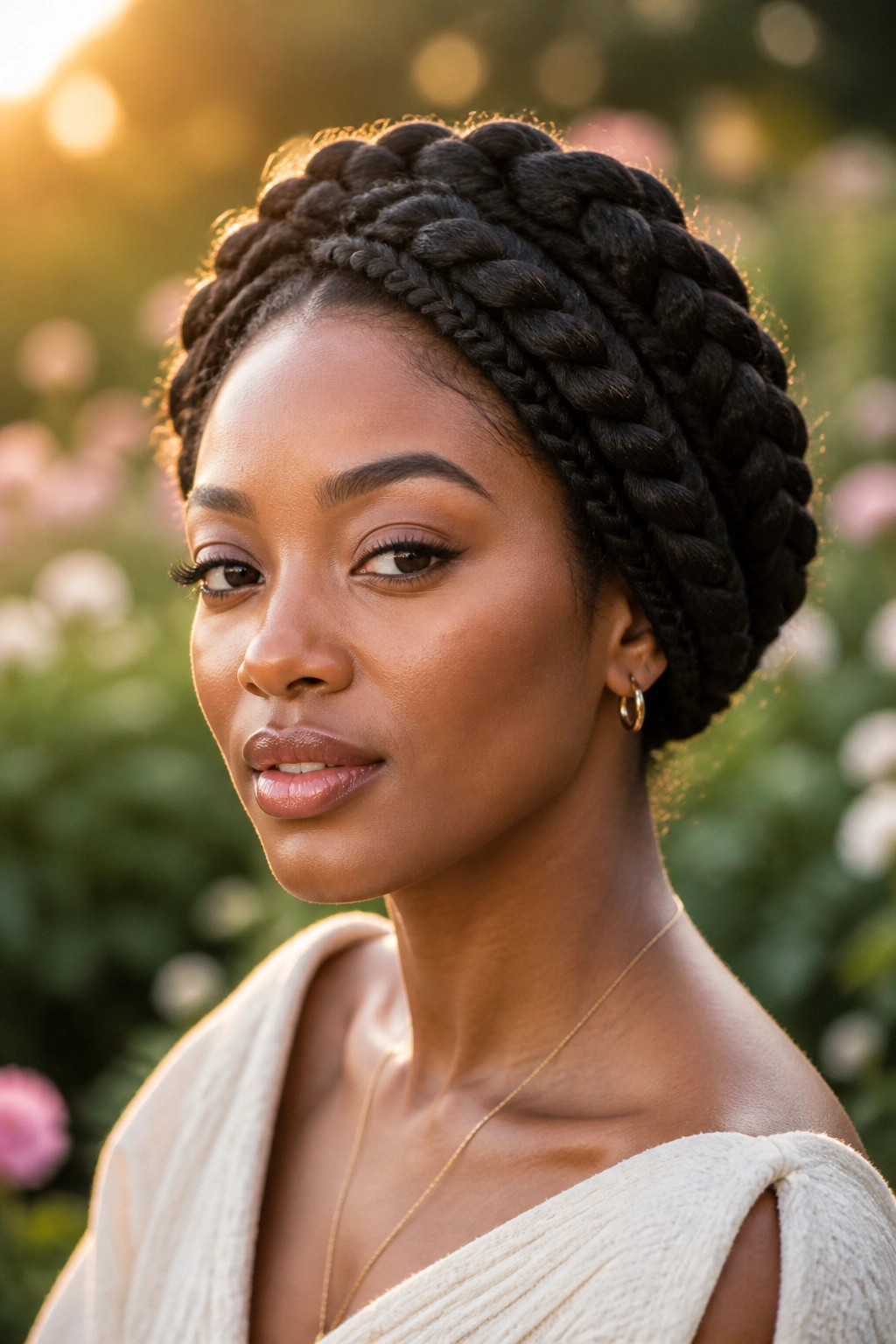
Goddess braids are the softer, fuller cousin in the braid family. If Ghana braids feel precise and raised, goddess braids feel a little rounder and a little more relaxed around the edges. They still sit close to the scalp, but the overall vibe is gentler.
What makes them stand out
The braid itself is usually thicker, and that gives the style a more romantic shape. Some versions include curly pieces left out or blended in near the ends, which changes the texture completely. Suddenly the style moves. It catches the eye without becoming too busy.
- Works well for medium to long hair extensions
- Can be worn in rows, curved patterns, or swooping shapes
- Looks beautiful in a bun, crown, or low back style
- Gives the scalp enough breathing room when the sections are not packed too tight
Goddess braids are a nice pick for weddings, church, or any day when you want the hair to feel dressed up without looking severe. They are also forgiving in a way that very tight geometric styles are not. The softness is part of the charm.
8. Jumbo Braids
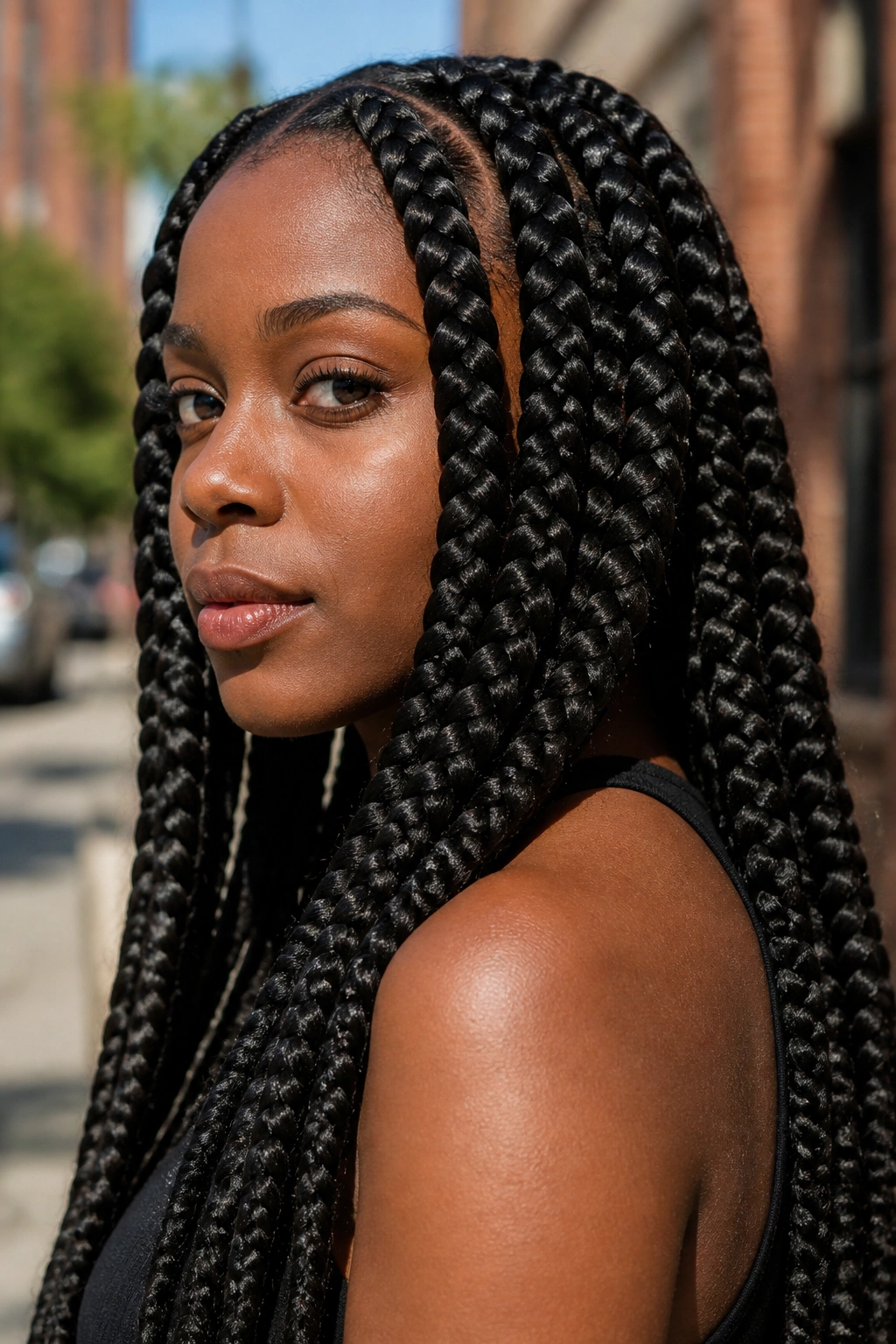
Jumbo braids are not shy, and thank goodness for that. They give you a strong look fast, which matters when you want something bold without spending half a day in the chair. The bigger sections also mean less hair manipulation, which is one reason people keep coming back to them.
The style works best when the braids are thick enough to feel intentional but not so huge that they drag on the scalp. That line is thin. Too small and you lose the whole point. Too heavy and the front starts to feel tired before the week is over.
Jumbo braids are especially useful if you want quick styling options. One braid wrapped into a bun. Two braids over the shoulders. A high ponytail with a lot of presence. They are straightforward, and I like that. Not every style needs to be delicate.
The catch is maintenance. Big braids can fray faster at the ends, and the roots can puff sooner if your hair is very soft or very fine. A light mousse refresh and a satin wrap at night help more than people expect.
9. Micro Braids
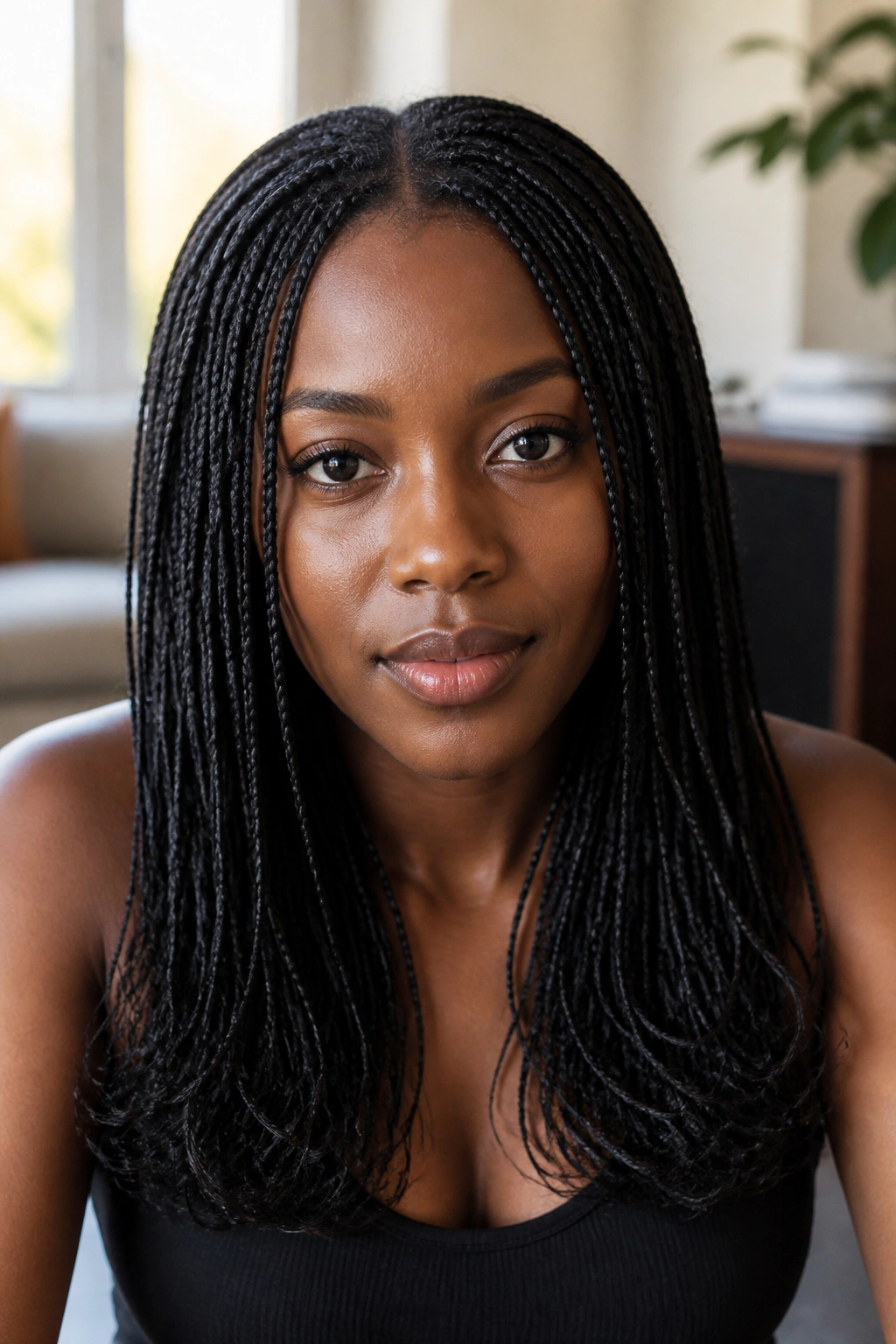
Micro braids ask for patience up front and pay it back later with styling freedom. The sections are tiny, the look is detailed, and the finished style can be worn in ways that bigger braids can’t quite match. You can part them into ponytails, half-up looks, loose falls, or a low tucked style with very little fuss.
Why do people still choose them? Because the braid count gives the hair a fine, flowing finish that moves like fabric. That visual texture is hard to copy with larger braids. It looks delicate, but the style can hold a lot of shape.
How to wear them without regret
Micro braids work best when the braid size matches your hair’s density and your tolerance for weight. Tiny braids on very fine hair can feel like too much after a while. Tiny braids on strong, well-prepped hair usually sit better, especially when the extensions are not overloaded.
- Keep the root tension low from the start
- Avoid heavy beads or thick cuffs unless the braids are very sturdy
- Detangle the ends gently if they start to snag
- Sleep with the braids secured in a low braid or satin bonnet
The install takes time. There is no pretending otherwise. But if you like a style that looks intricate and gives you options, micro braids can be worth the long appointment.
10. Triangle-Part Braids
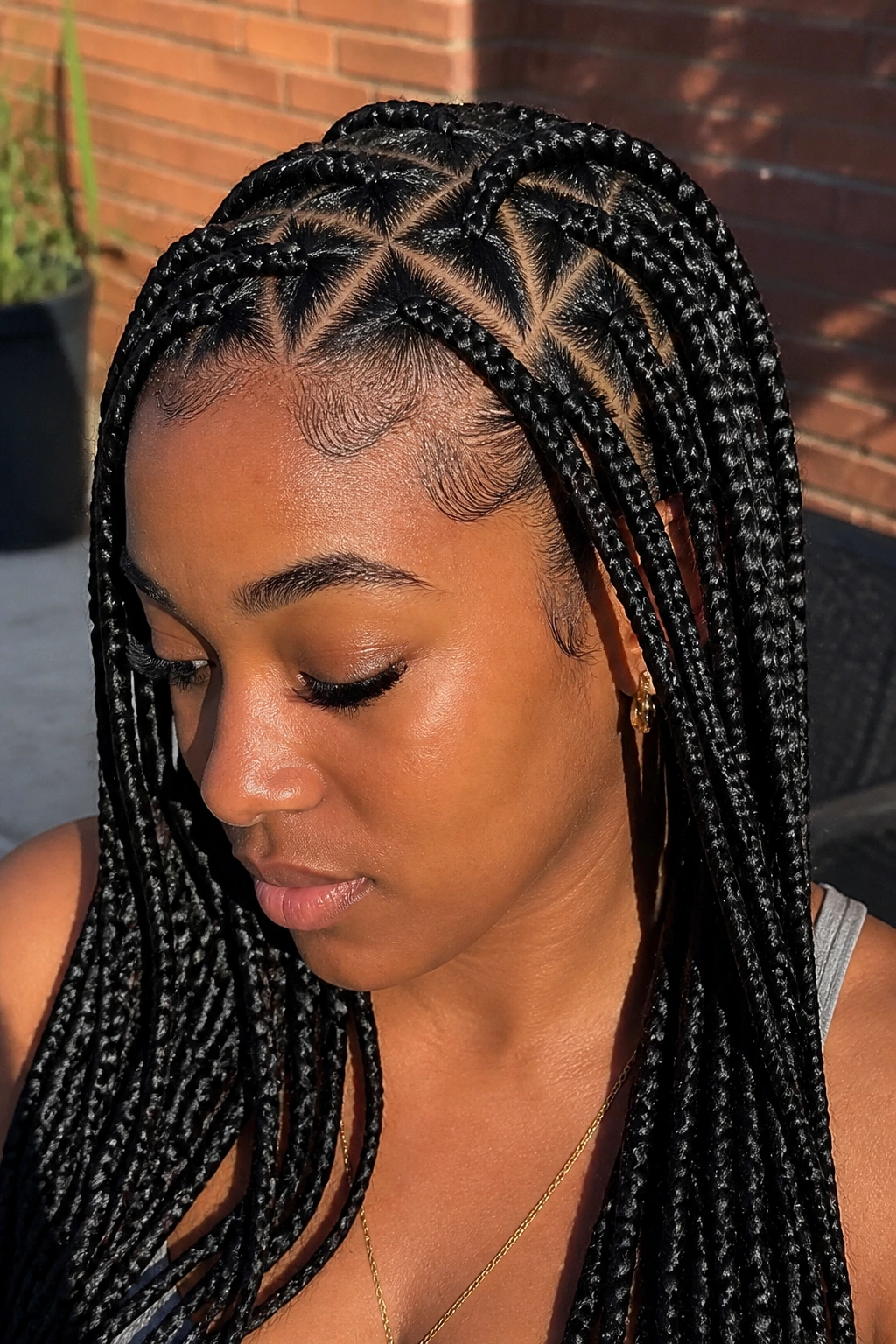
Triangle parts change the mood of a braid style instantly. Same braids. Different energy. The angle at the scalp gives the whole look a little edge, and that is enough to make familiar box braids or knotless braids feel fresh again.
A lot of women choose triangle-part braids when they want something that stands out without changing the braid type itself. That is smart. You keep the styling benefits you already know, but the parting pattern does half the design work. It is a small choice with a surprisingly big visual payoff.
The best triangle parts are clean and evenly spaced, but they do not need to be perfect little machines. Slight variation makes the style feel less stiff. The triangles near the hairline matter most because that is where the eye lands first.
- Works well with medium or small braids
- Looks sharp with center parts or off-center fronts
- Makes simple braids look custom
- Helps break up a boxy silhouette at the scalp
If you are bored with square sections, this is an easy way to wake the whole style up.
11. Braided Bob
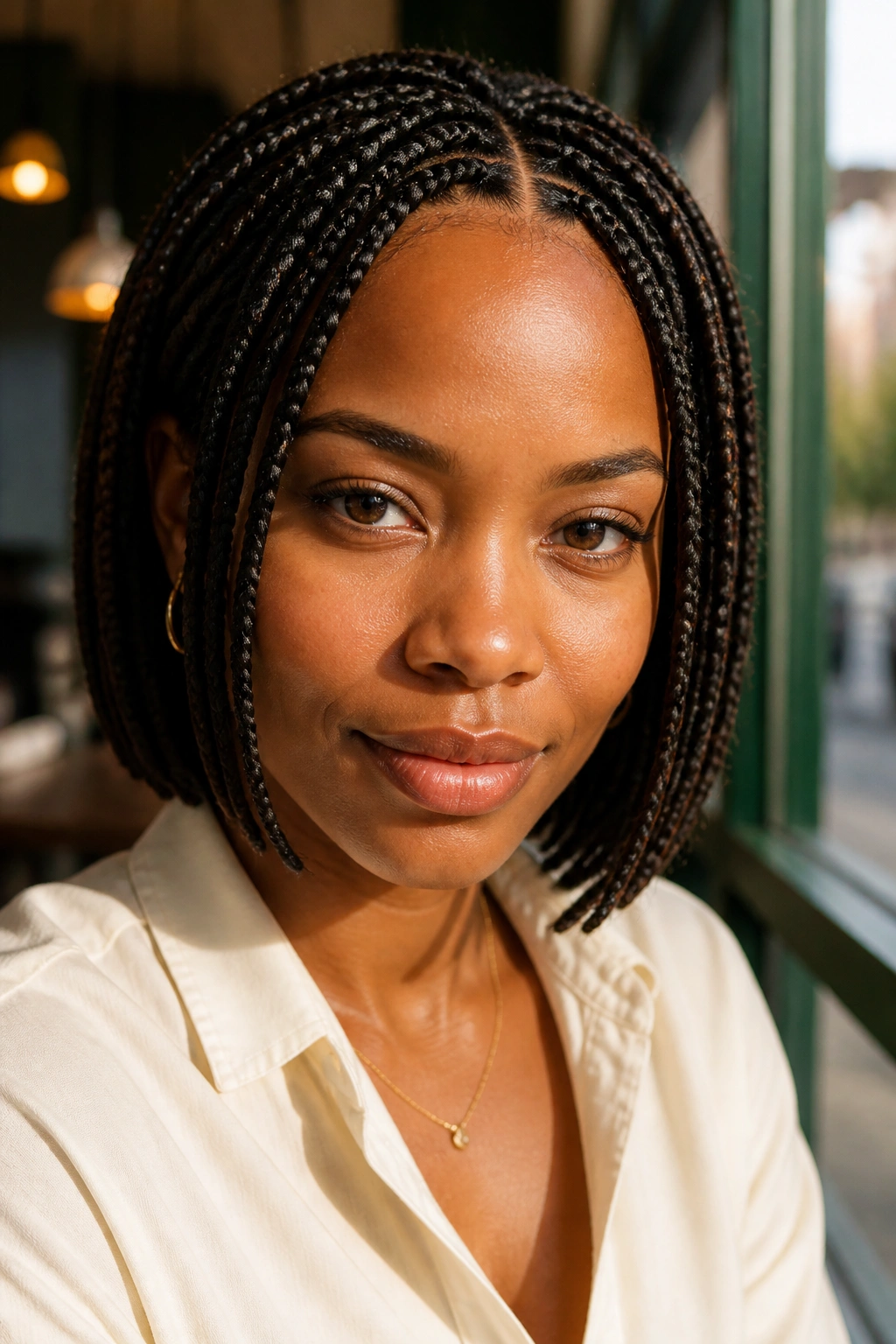
A braided bob is one of those styles that quietly solves a lot of problems. It keeps the length manageable, keeps the neck cooler, and makes daily styling faster because there is less hair to gather, swing, or tuck away. The result is neat without feeling heavy.
The best braided bob usually lands somewhere around the chin, jawline, or collarbone. That length gives the braids enough movement to feel intentional, but not so much that they start getting caught in coat collars, purse straps, or seat belts. That sounds small. It is not. Little annoyances add up fast.
I also like how a bob changes the whole mood of black braids for women. Long braids can feel dramatic. A bob feels sharp, modern, and a little easier to dress up with earrings or a bold lip. You can wear it with a middle part for structure or with side-swept fringe pieces for softness.
The one thing to watch is end thickness. If the braids are cut blunt and never sealed properly, they can look rough by week two. A clean finish matters here more than people think.
12. Feed-In Ponytail Braids
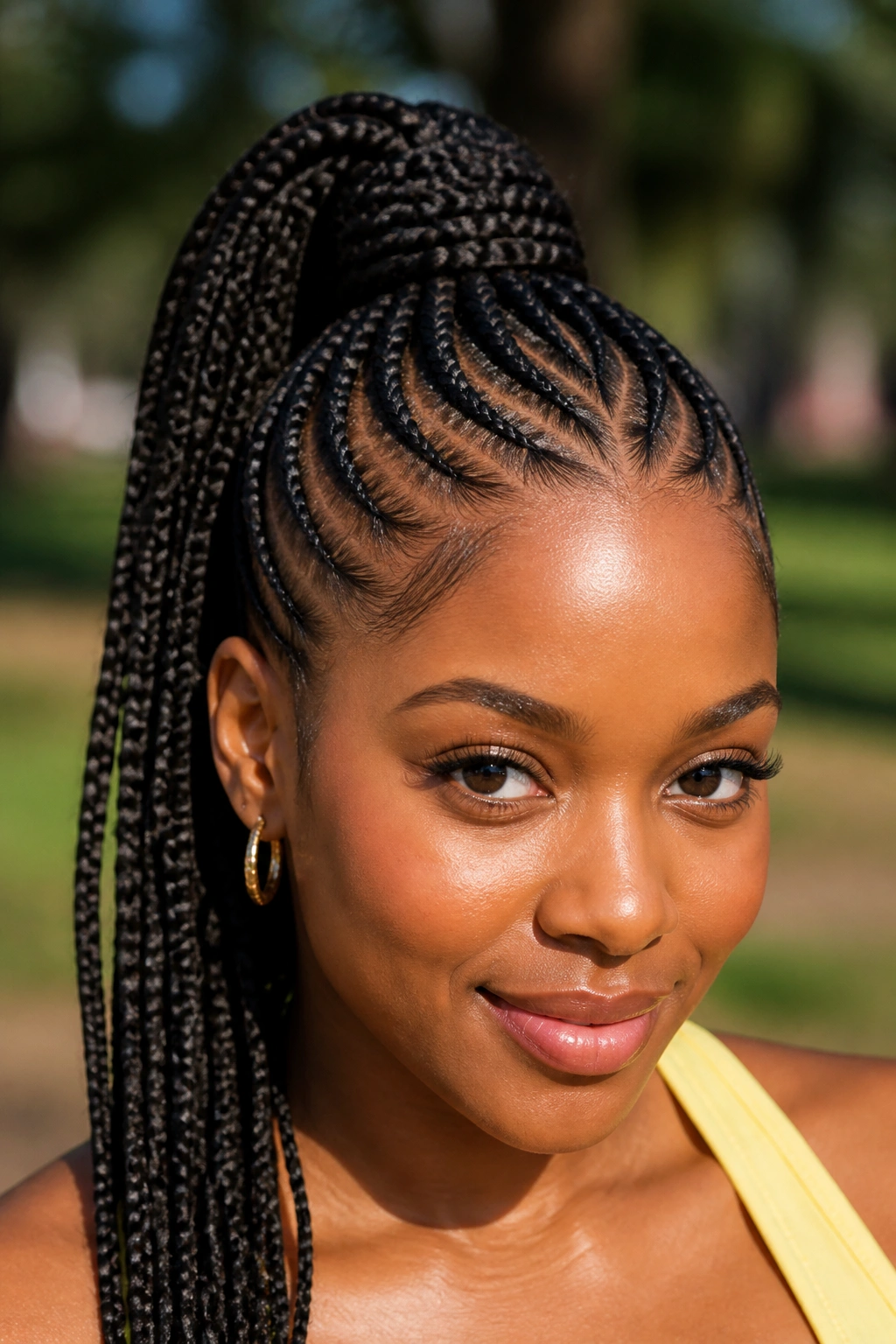
Feed-in ponytail braids are what happens when you want the drama of a high ponytail and the neatness of cornrows at the same time. The hair starts close to the scalp, builds gradually, and funnels into a ponytail that sits high and strong at the back or crown.
Compared with a traditional braided ponytail, the feed-in method gives you a smoother base. There is less bulk at the start, which means the ponytail can look sleek instead of lumpy. That detail matters. A high ponytail should look lifted, not crowded.
This style works best when the front is polished and the ponytail is secured firmly enough to move, but not so tightly that the scalp feels braced. Six to ten braids is common, though the exact number depends on how full you want the ponytail to look. The style can feel sporty, formal, or sharp depending on the accessories.
It is a strong choice when you want your face open and your hair off your neck. Hot weather, long days, events with a dressier code — this style can handle all of it without losing shape.
13. Braided Crown
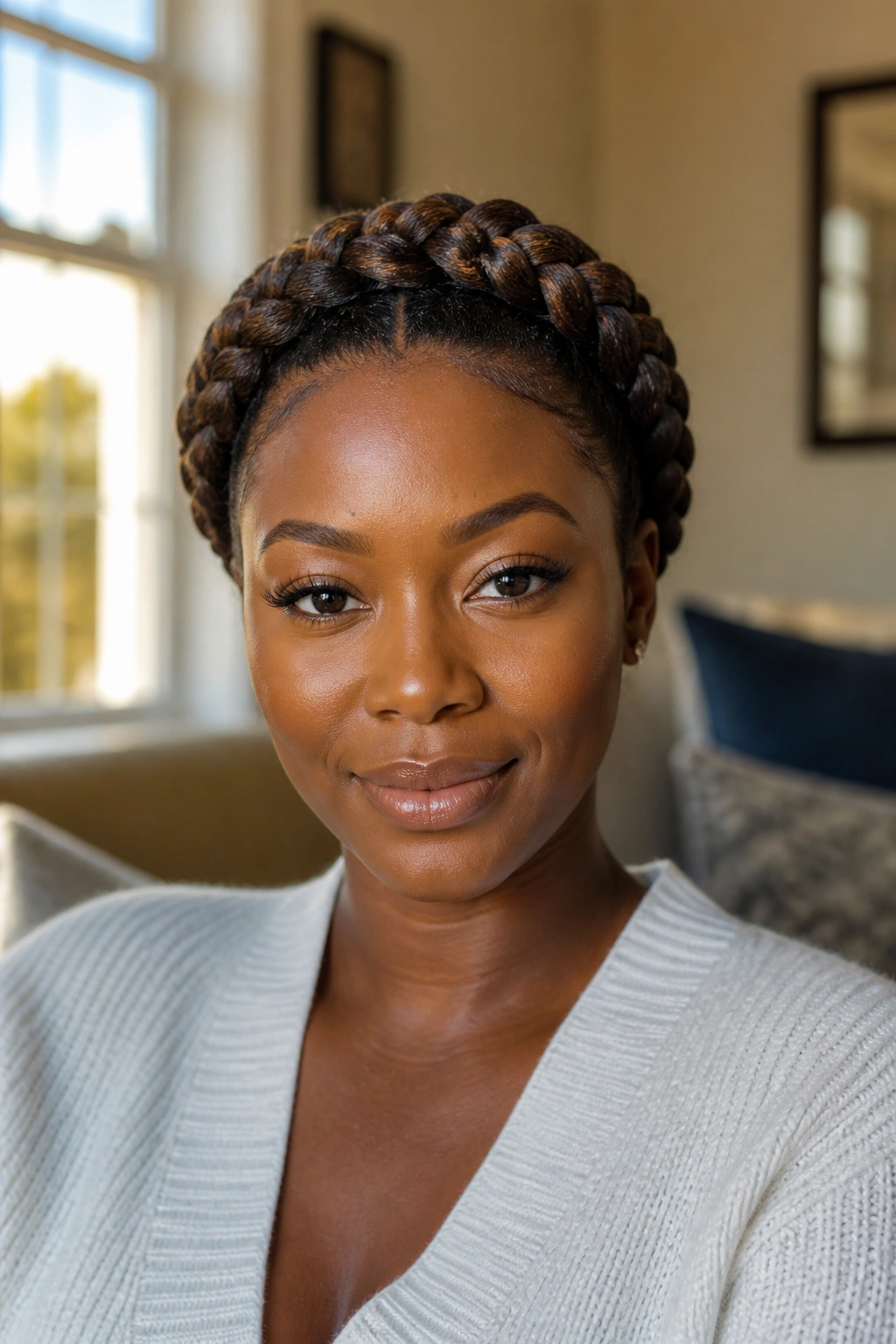
Braided crown styles wrap the braid around the head like a halo, and the effect is elegant without being fussy. You get the security of the braid sitting close to the scalp, plus the satisfaction of seeing the style frame the face from every angle.
Where it shines
A crown braid does its best work when the braid path is clean and the ends are tucked away neatly. That keeps the shape smooth. Pins help, but they should disappear into the hair rather than look like they are holding a collapse together.
The style is especially useful for events where you want your face fully visible and your neck clear. It also works well on days when loose braids would feel like too much hair moving around. Think long meetings, dinner, pictures, or anything that asks for a tidy finish.
- Great with medium or long braids
- Can be done as a full crown or a partial wrap
- Works with accessories like cuffs or a few small flowers
- Keeps the silhouette soft and centered
A crown braid can read sweet if it is loose, or formal if it is tight and sleek. The difference is in the tension and the neatness of the tuck.
14. Cornrow Bun
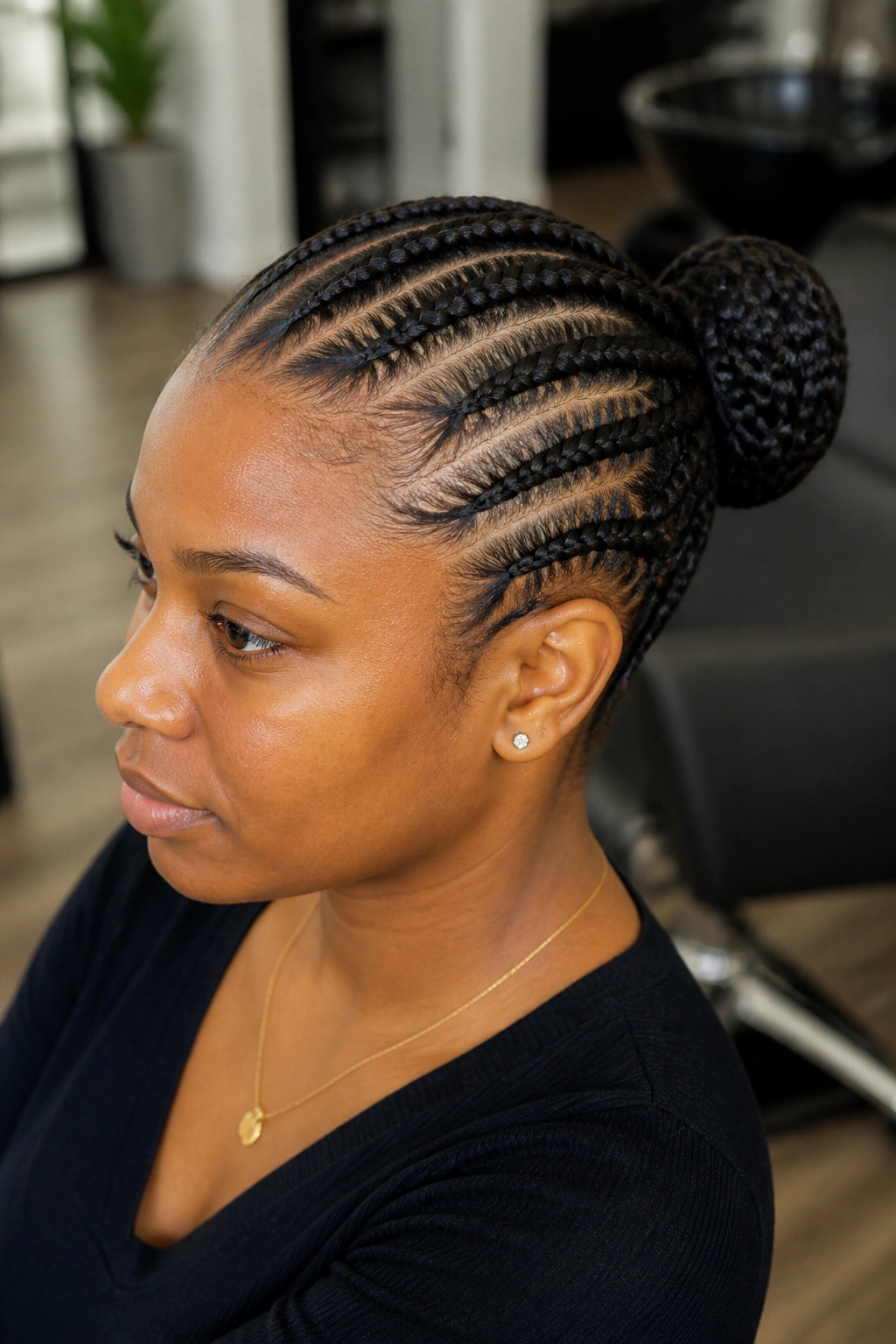
Cornrow buns are one of those braid styles that earns respect because it solves a practical problem beautifully: get the hair up, keep it neat, and make it look like you meant to do it. No drama. No fuss. Just clean lines feeding into a bun that stays put.
I like this style for work, travel, and weeks when you do not want ends brushing your shoulders all day. The hair sits close to the scalp, which keeps the weight centered and the maintenance low. A bun at the back or top of the head also makes it easier to wear scarves, headphones, or earrings without too much friction.
If you want the style to look polished, the cornrows leading into the bun need to be even. Not identical — even. The bun itself can be compact or fuller depending on how much hair you want to wrap. A little mousse on the surface keeps the frizz from getting ahead of you.
This one is a workhorse. That is not a bad thing. Sometimes the braid style you wear most is the one that lets you stop thinking about your hair for a while.
15. Side-Swept Braids
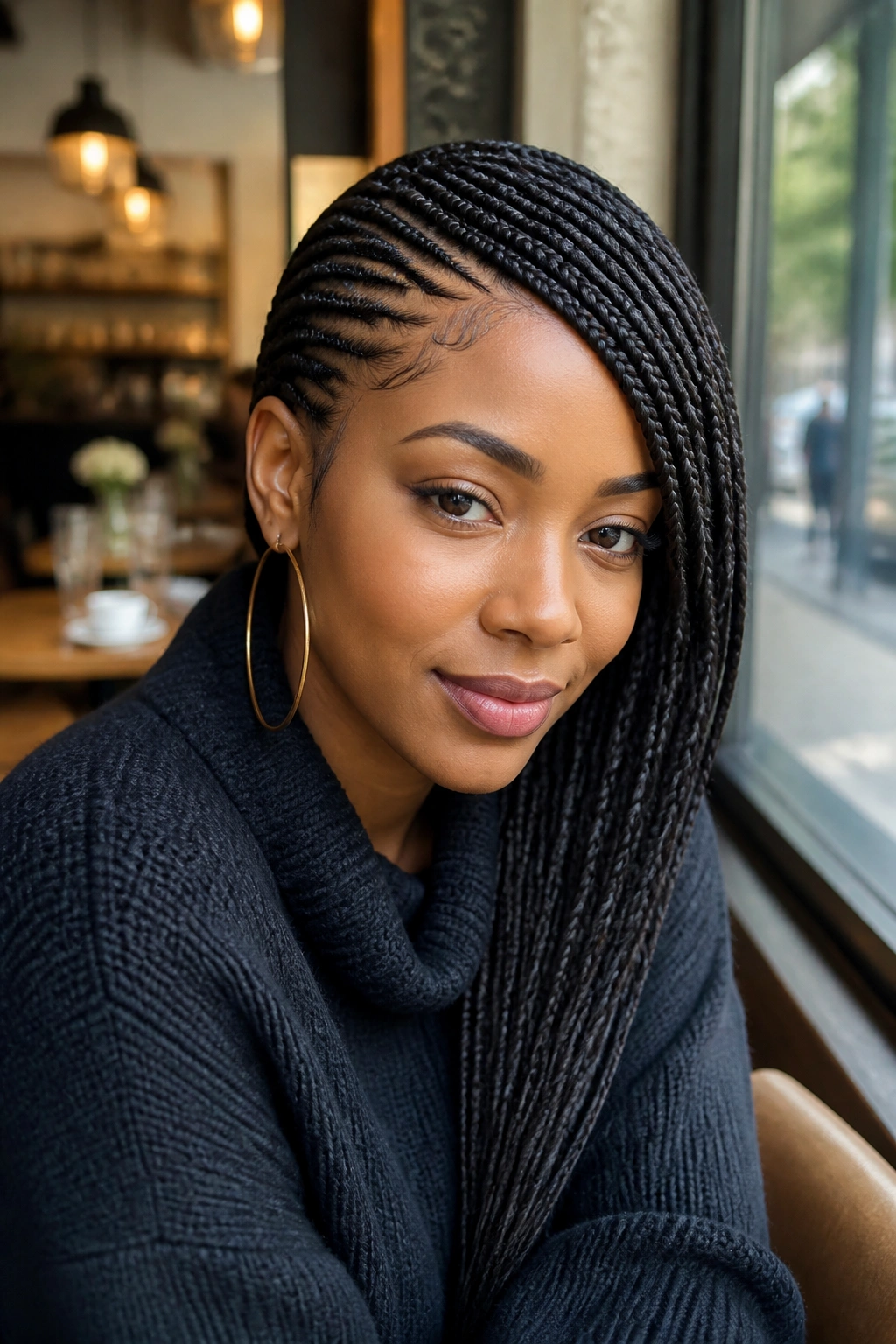
Why do side-swept braids feel softer than straight-back styles? Because they break the symmetry. One side of the face opens up, the braid line draws the eye across instead of straight back, and the whole look feels a little more relaxed.
That makes the style useful when you want a braid that flatters cheekbones and jawlines without demanding much else. It also works if you like to wear one statement earring or keep one side of the neck bare. Small detail. Big payoff.
How to use it
Side-swept braids can be done with box braids, knotless braids, or cornrows. The real trick is the parting direction. Start the part deep enough that the sweep feels obvious, then keep the front tidy so the braid line does not break apart near the temple.
You can wear the ends over one shoulder, tuck them behind the back, or pin them low for a cleaner look. The style is flexible in a way that feels easy, not lazy.
- Works well with medium to long lengths
- Looks good with soft makeup or bold lips
- Easier on one side of the hairline because the weight is distributed differently
- Can be dressed up with cuffs or kept plain
It is a good style when you want movement without a full ponytail.
16. Half-Up Half-Down Braids
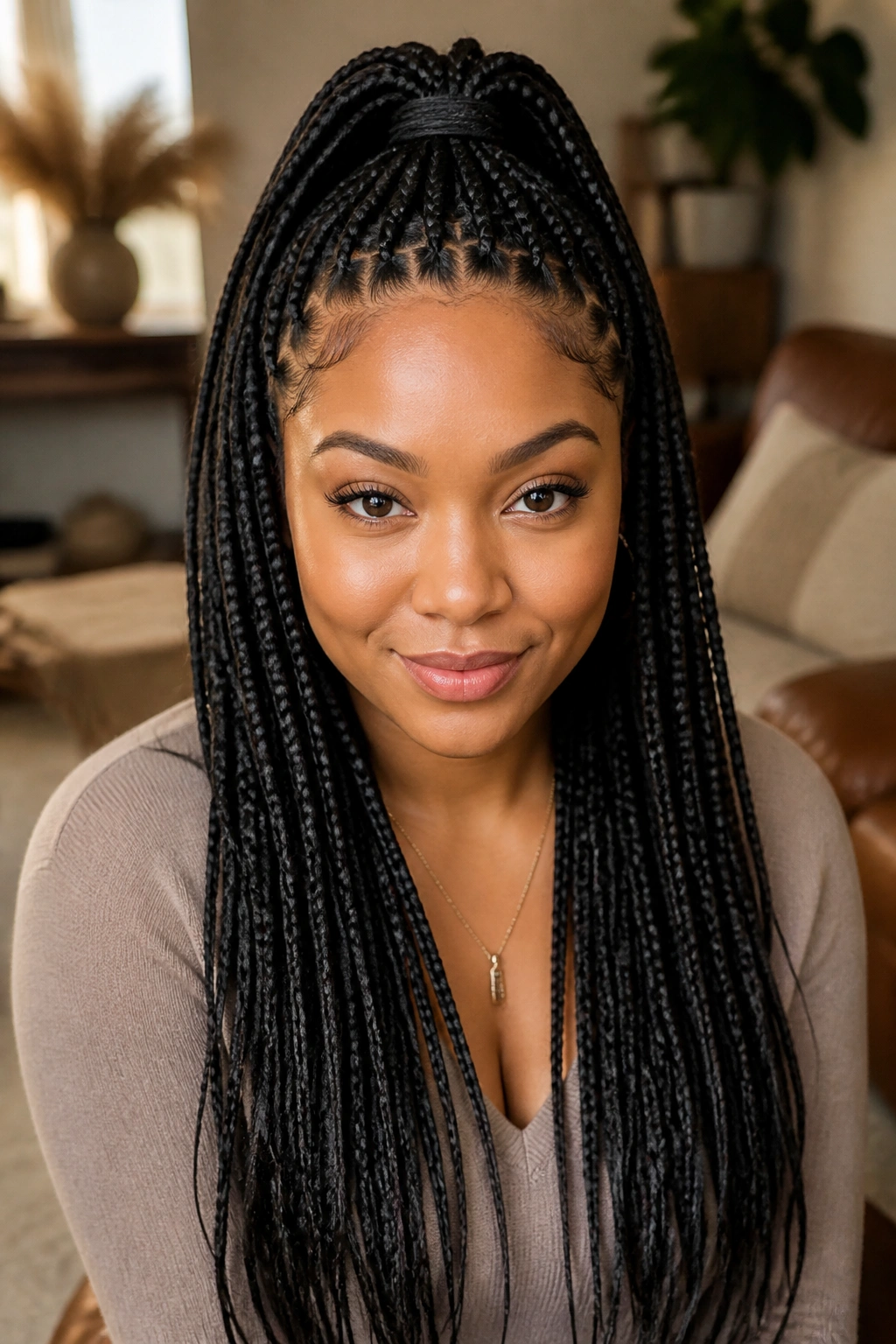
Half-up half-down braids solve the old problem of wanting control and movement at the same time. The top section is pulled back, which clears the face and eases the weight on the front, while the lower braids still hang and move.
That balance is the reason the style stays popular. You get the feel of wearing your hair down, but the front no longer needs to do all the work. On busy days, that matters more than people admit. Hair off the face means fewer touch-ups, fewer frizzy front pieces, and less fighting with a scarf or coat.
This style works with nearly any braid type, which makes it a useful choice when you already have the braids and want a new look without starting over. The top section can be twisted into a small bun, gathered into a ponytail, or wrapped into a neat knot. The lower section can stay long and loose or be lightly curled at the ends.
If you want the style to last, keep the top section secure but not yanked tight. A good half-up style should feel held, not pinned in place like it is trying to escape.
17. Zig-Zag Cornrows
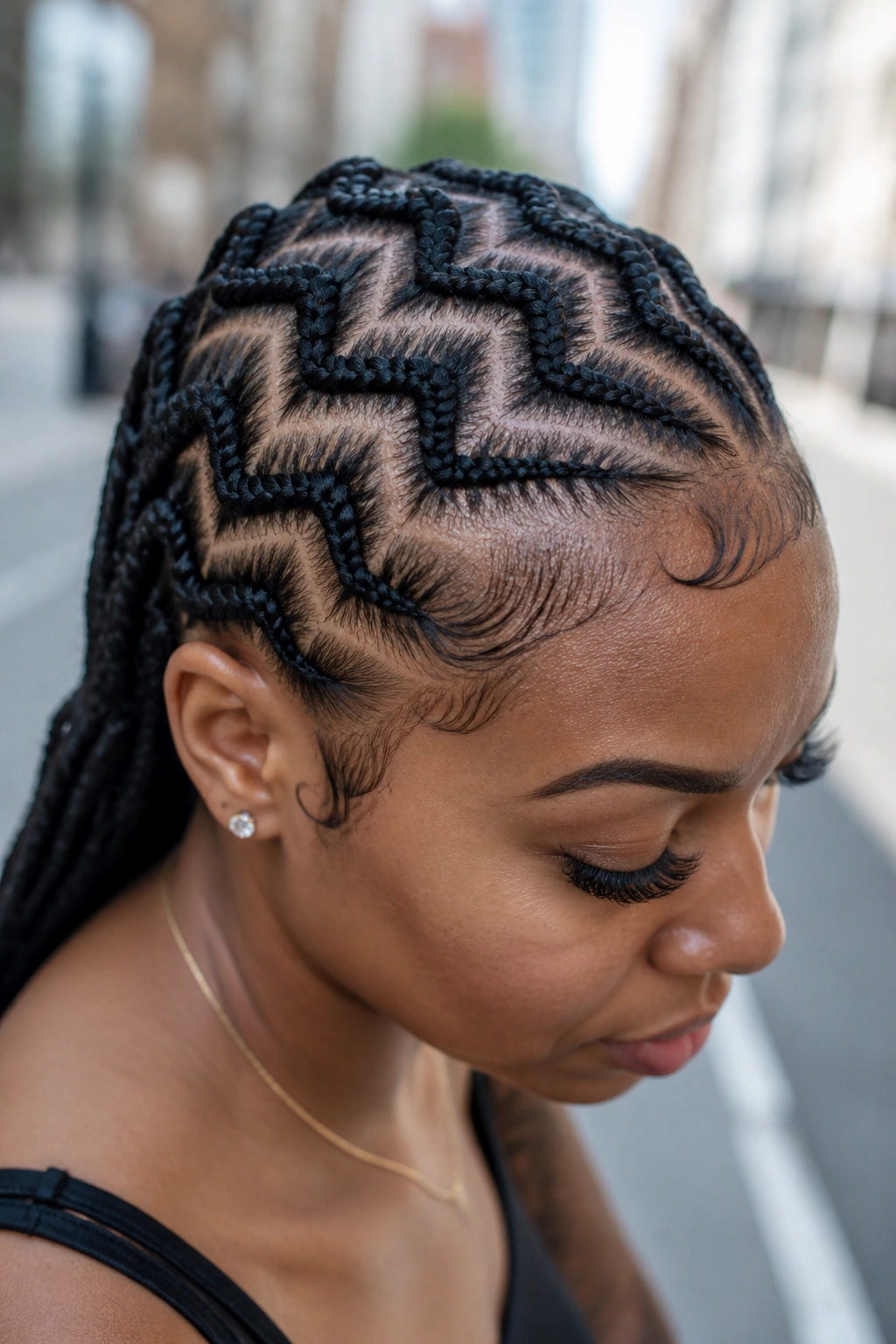
Zig-zag cornrows are proof that parting matters as much as braiding. The braid itself may be simple, but the path on the scalp turns the whole look into something more playful and graphic. It is the kind of style that gets noticed before the length does.
The zig-zag pattern works especially well when you want something different without adding extra hair or extra bulk. The scalp art becomes the feature. That is a nice shift when you are tired of styles that rely only on length for drama.
Why the parting matters
A zig-zag part looks best when the angles stay clean and the spacing remains even. The design does not need to be jagged or messy to read. It should feel deliberate, almost drawn. That means a steady hand and a good tail comb, not rushed lines and hope.
This style can be worn with straight-back braids, a bun, or long ends. It also pairs well with a simple outfit because the hair already brings enough visual movement. I would not overload it with too many add-ons. Let the parting do its work.
It is a strong pick when you want your braid style to feel a little more artistic than routine.
18. Boho Braids
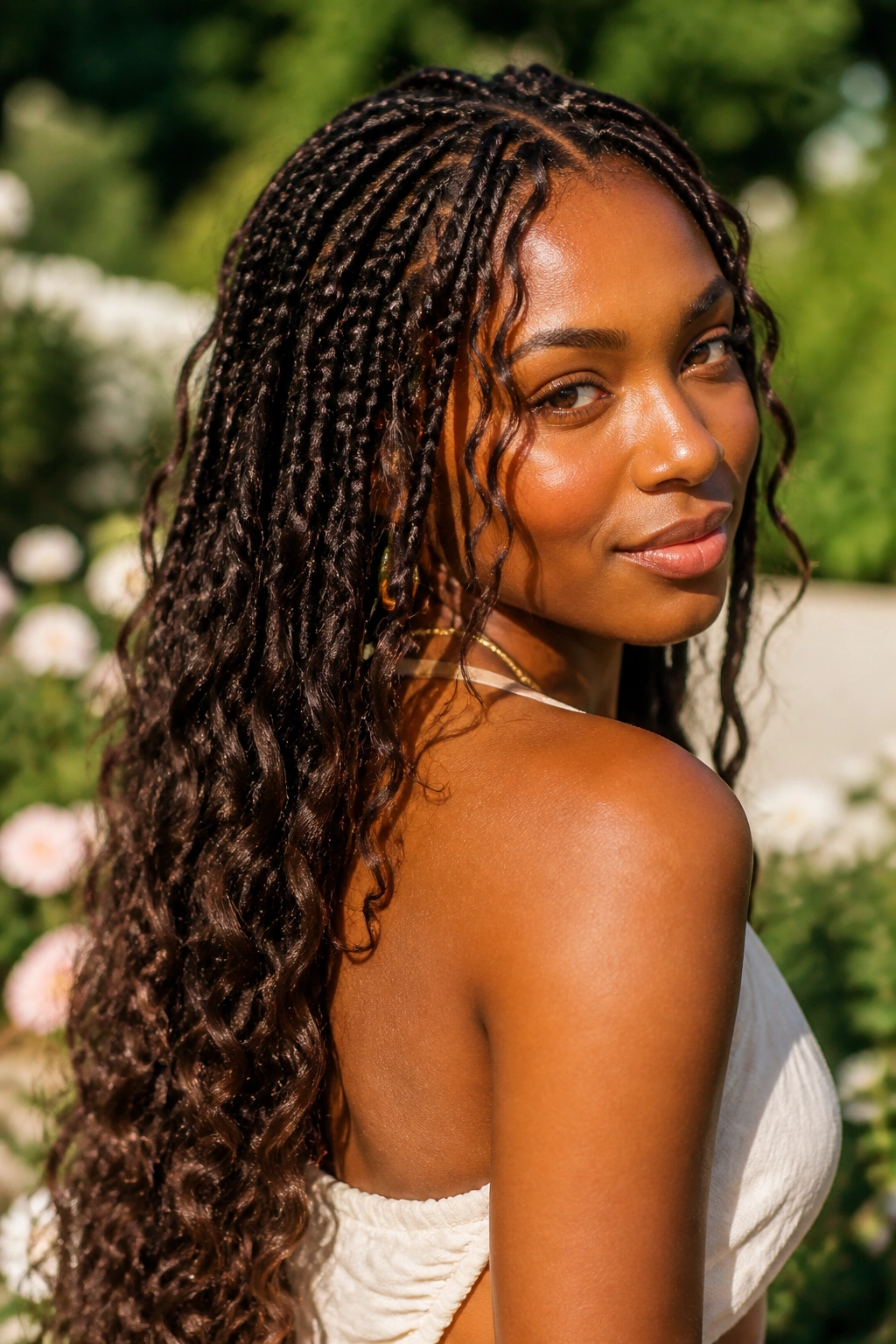
Boho braids are for the woman who likes braids with movement and a little looseness around the edges. The style usually uses knotless or box braid foundations, then adds curly pieces or loose texture through the length. The result is softer, less rigid, and easier to wear when you want the look to feel lived-in from the start.
Unlike a clean, uniform braid set, boho braids have a bit of uneven texture by design. That is the point. The curls break up the long lines and give the style a lighter mood. They also change the way the braids move, which is why the style looks different in motion than it does in a still photo.
This is a good option if you like black braids for women that feel romantic but not overly polished. It works best when you are willing to refresh the curls with mousse or a light mist and keep a satin bonnet on at night. The loose pieces need a little care, or they start looking tired faster than the braid base does.
If you want one style that feels soft, modern, and a bit less serious than the rest, boho braids are a solid place to land. And if you are torn between neat and relaxed, that tension is exactly what makes them interesting.
