



Long hair has a funny problem: it looks gorgeous, then spends half the day in your hands, over your shoulder, or trapped under a bag strap. A good braid fixes that fast. Better than fast, really. It gives long hair shape, keeps the weight under control, and stops the whole style from feeling like a mop by noon.
The best part about 15 cool braids for long hair is that they don’t all do the same job. Some keep everything tight and tidy. Some look soft and loose. Some read sporty, some romantic, some a little edgy. The trick is picking the one that suits your texture, your length, and how much patience you have before coffee.
Long hair changes the game here. A braid that looks plain on shoulder-length hair can turn into something striking once it has enough length to show off the pattern. But that extra length also adds weight, which means tension matters. Too loose, and the braid sags. Too tight, and your scalp will let you know about it.
So the smart move is to match the braid to the moment. Need something quick? Go simple. Want something that looks more detailed? Pick a style with crossing, twisting, or built-up volume. A tail comb, a few clear elastics, and a little texture spray go a long way, and yes, a good brush matters more than most people admit.
1. Classic Three-Strand Braid
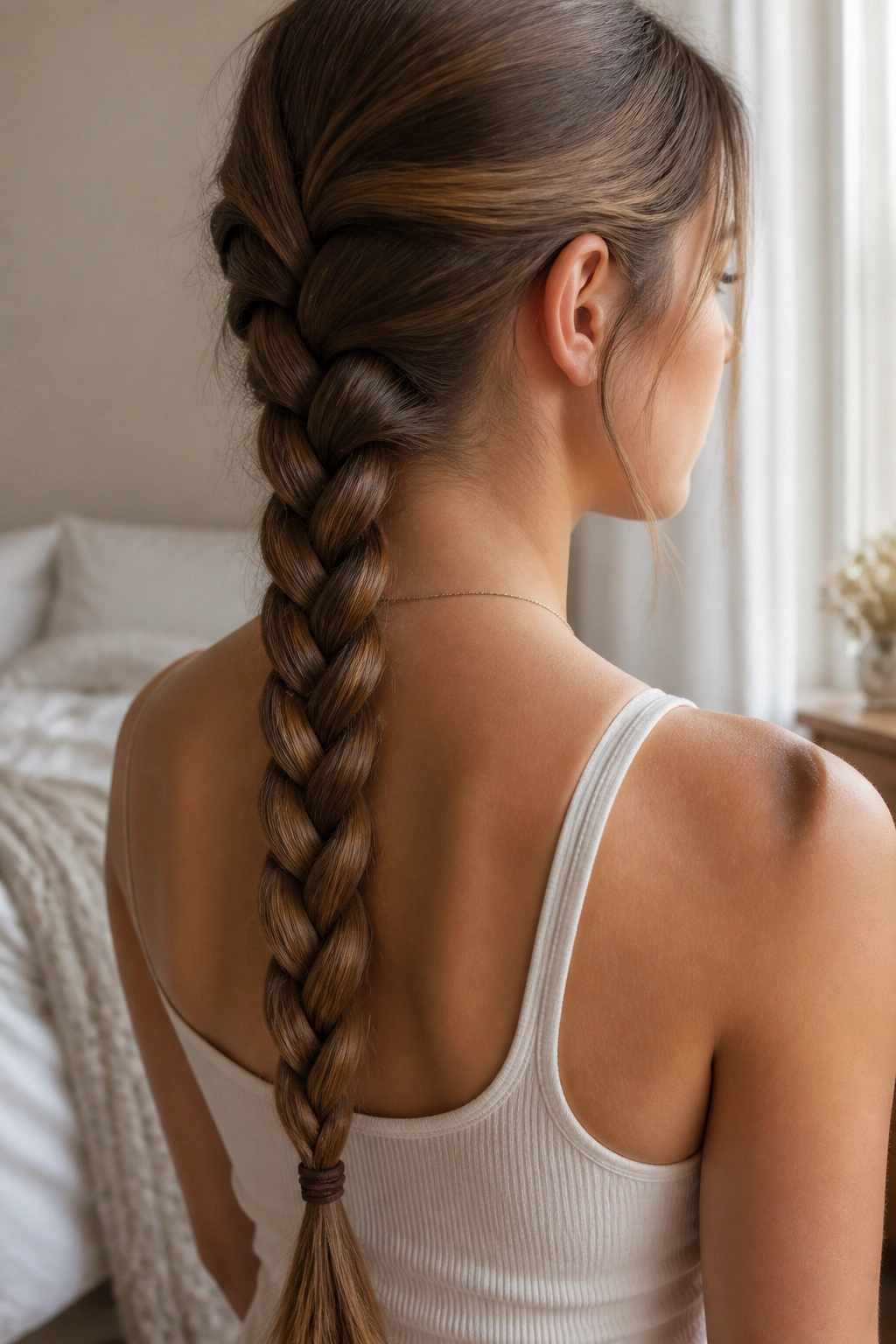
The classic three-strand braid is the one people dismiss until they need a style that holds together through a long day. On long hair, it looks clean, smooth, and surprisingly polished when the sections are even and the tension is steady.
It works best when the hair is brushed properly first. A paddle brush or wide boar-bristle brush helps pull out snags before you start, and a tiny bit of leave-in cream on the mids and ends keeps flyaways from sticking out like little flags. If your hair is silky, start at the nape instead of high on the crown. That keeps the braid from slipping.
It’s also one of those styles that changes completely with one small tweak. Pull it low for a quiet look. Sweep it to one side for something softer. Tug the outer loops just a little if you want it fuller.
Simple. Reliable. Not boring.
2. French Braid for Long Hair
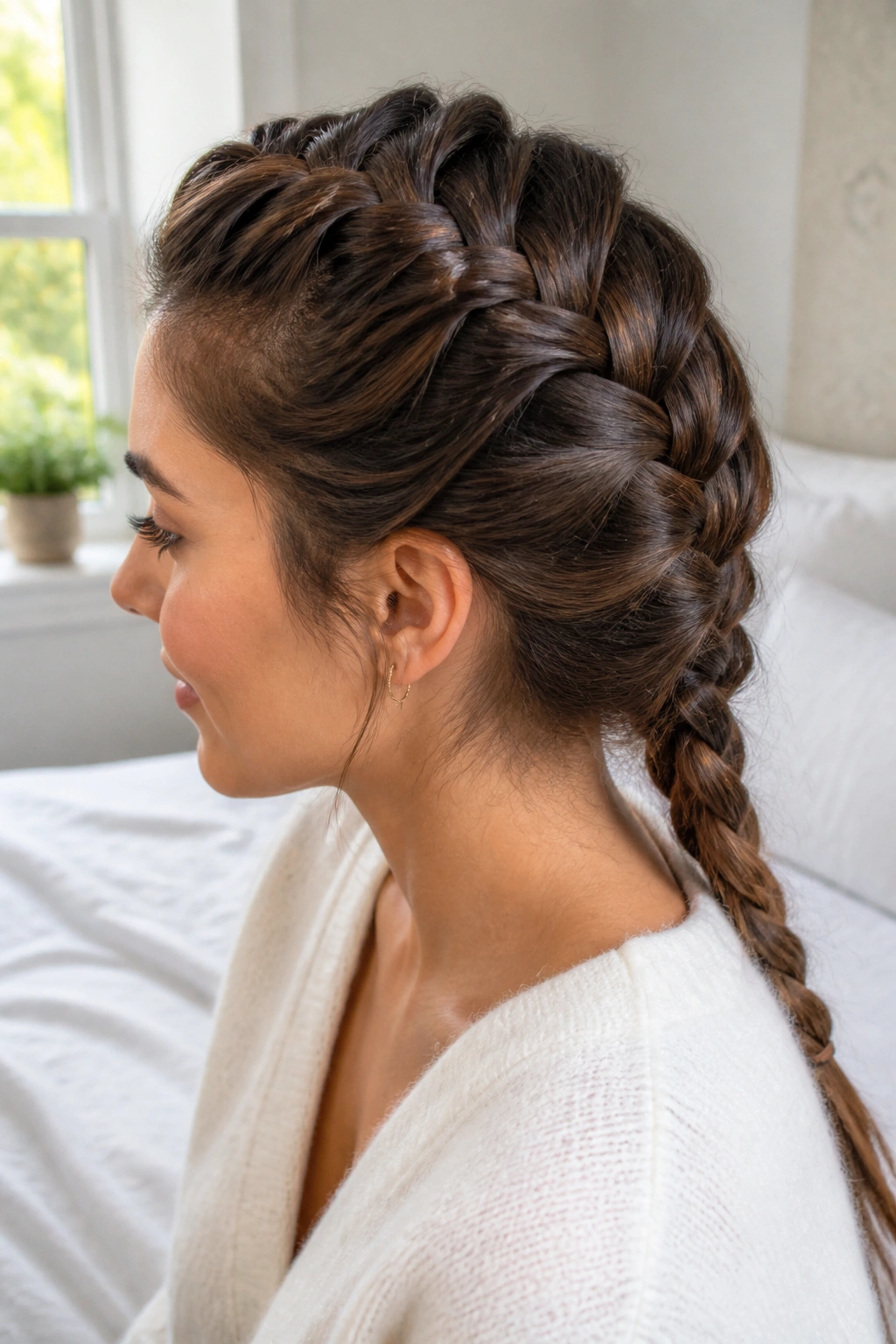
Why does a French braid look neat even when the hair around it is having a rough day? Because it gathers hair as it moves down the head, which keeps the style anchored from the start instead of relying on one tight tie at the end.
Why It Stays Put
A French braid is one of the smartest choices for long hair if you want control without losing all the length. You begin at the crown, add small sections from both sides as you go, and keep the parting lines clean. The result sits close to the head, so it handles heavy hair better than a loose braid that starts too low.
How to Make It Work
- Start with slightly textured hair, not freshly washed hair that feels slippery.
- Keep the added sections the same width so one side does not balloon out.
- Use your thumbs to guide the braid, not your whole hand. It makes the movement cleaner.
- Stop at the nape and finish with a regular braid if you want the ends to stay neat.
A French braid looks especially good when you leave the tail a little loose and soften the edges with your fingers. Tight at the scalp, softer at the end. That balance matters.
3. Dutch Braid with Built-In Lift
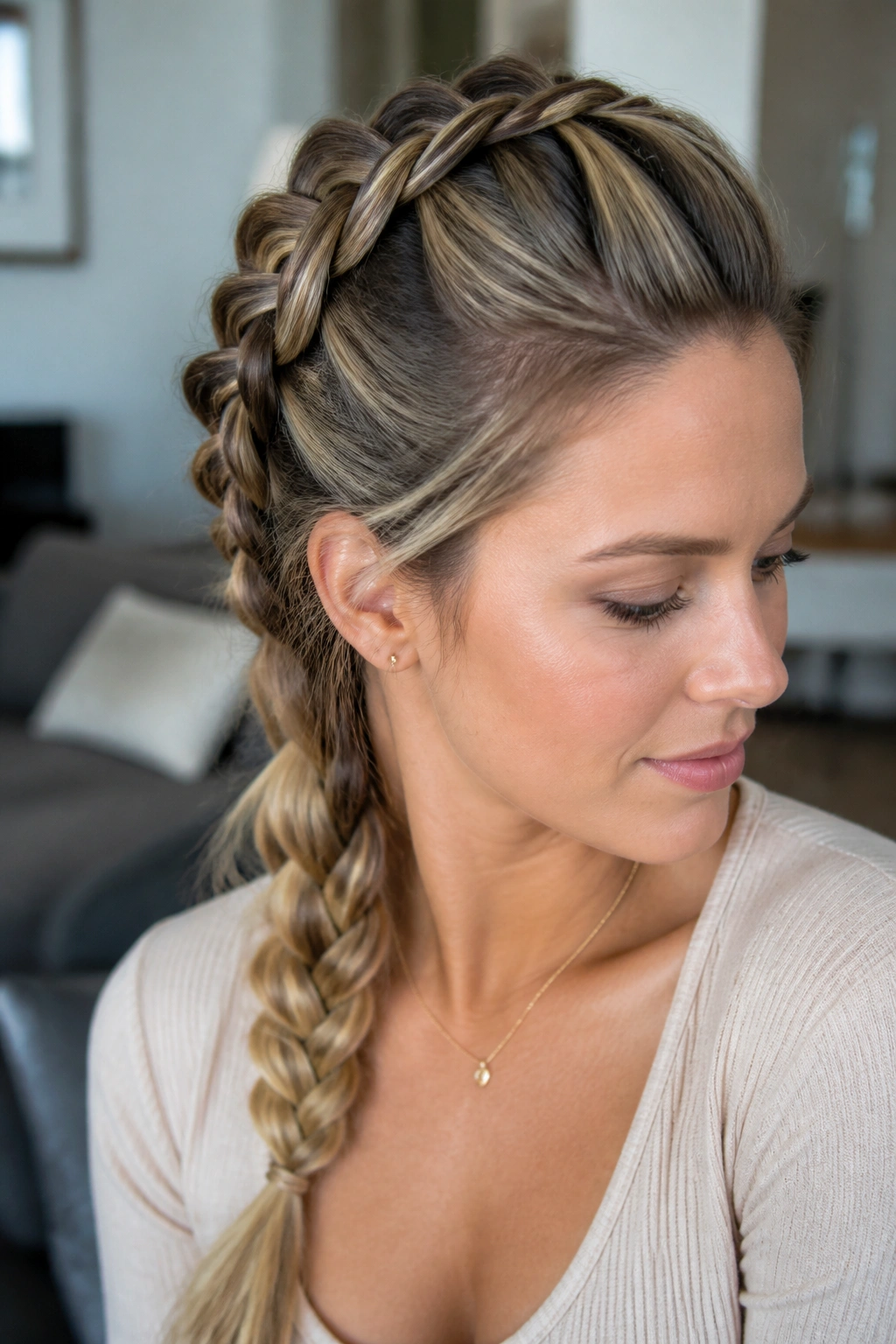
A Dutch braid is the braid people notice first. The strands cross under instead of over, so the braid sits on top of the hair instead of disappearing into it. On long hair, that lift gives the style a thick, almost rope-like shape.
It’s a strong choice when you want visible texture. Thick hair really shows off the pattern here, and even finer hair can look fuller because the braid stands away from the head. I like this one for days when the hair needs to look intentional, not just controlled.
It does ask for a little discipline. Keep your sections neat at the top, or the braid starts drifting to one side. And if you pancake it, do it after the elastic is in place. Tugging too early can wreck the shape.
It pops. That’s the whole point.
4. Fishtail Braid for Long Hair
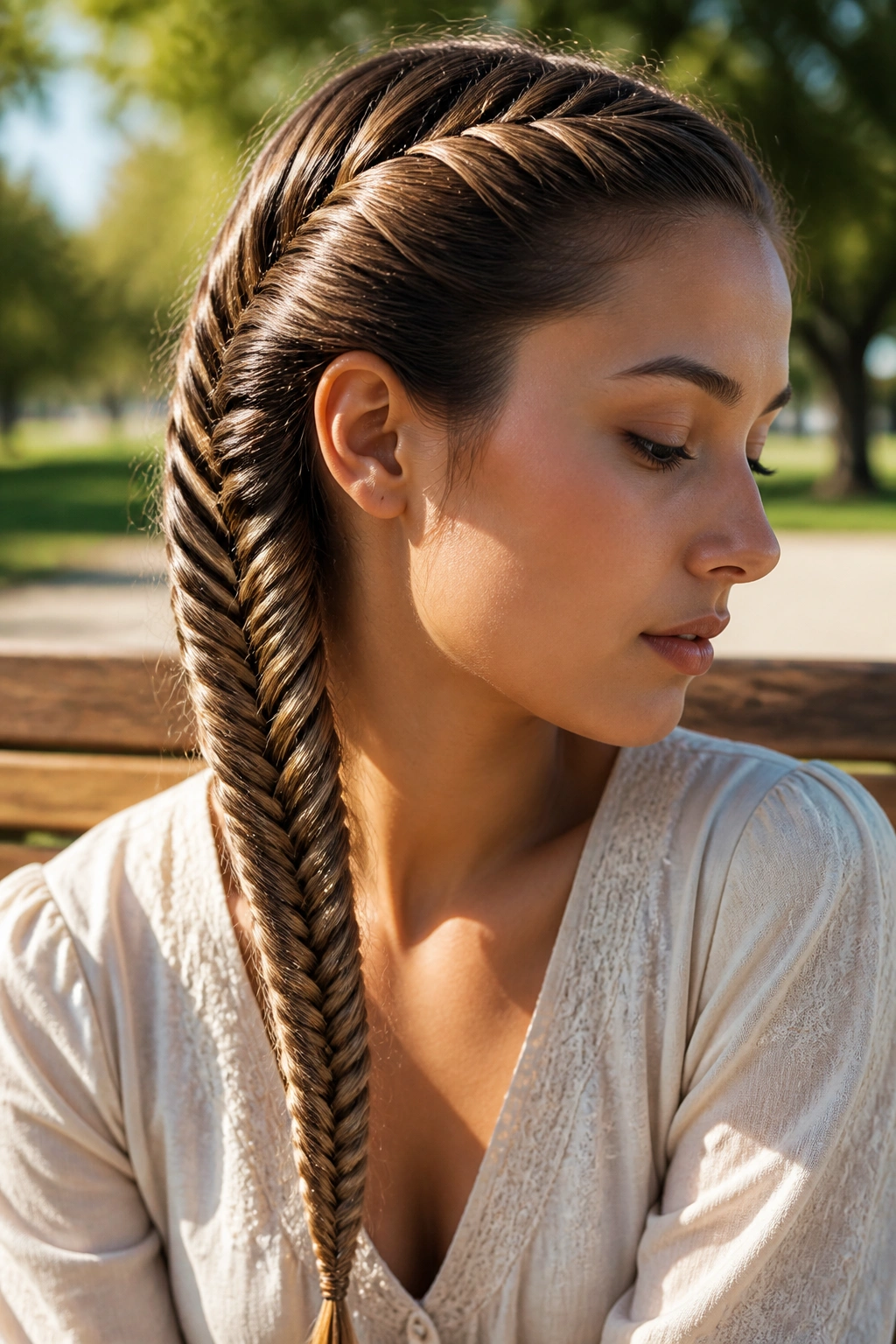
The fishtail braid is the style you pick when you want detail without bulk. It looks intricate, but the actual move is simple: split the hair into two sections and keep feeding tiny pieces from the outside into the opposite side. On long hair, that fine pattern has room to show off.
What Makes It Worth the Time
This braid shines on second-day hair, especially if the roots need a little dry shampoo. Clean, silky strands can slide apart while you work, so a bit of grip helps. Keep the pieces small. I mean small enough that you’re not grabbing big chunks by accident, because the whole braid turns messy if the sections get too fat.
- Use 1/4-inch pieces for a tight fishtail.
- Work with your hands close to the braid.
- Secure the end with a small elastic.
- Gently pull the outer edges if you want more width.
It takes a few tries to stop thinking about the hand movement. After that, it’s one of the prettiest ways to show long hair length without letting the style get heavy.
5. Rope Braid
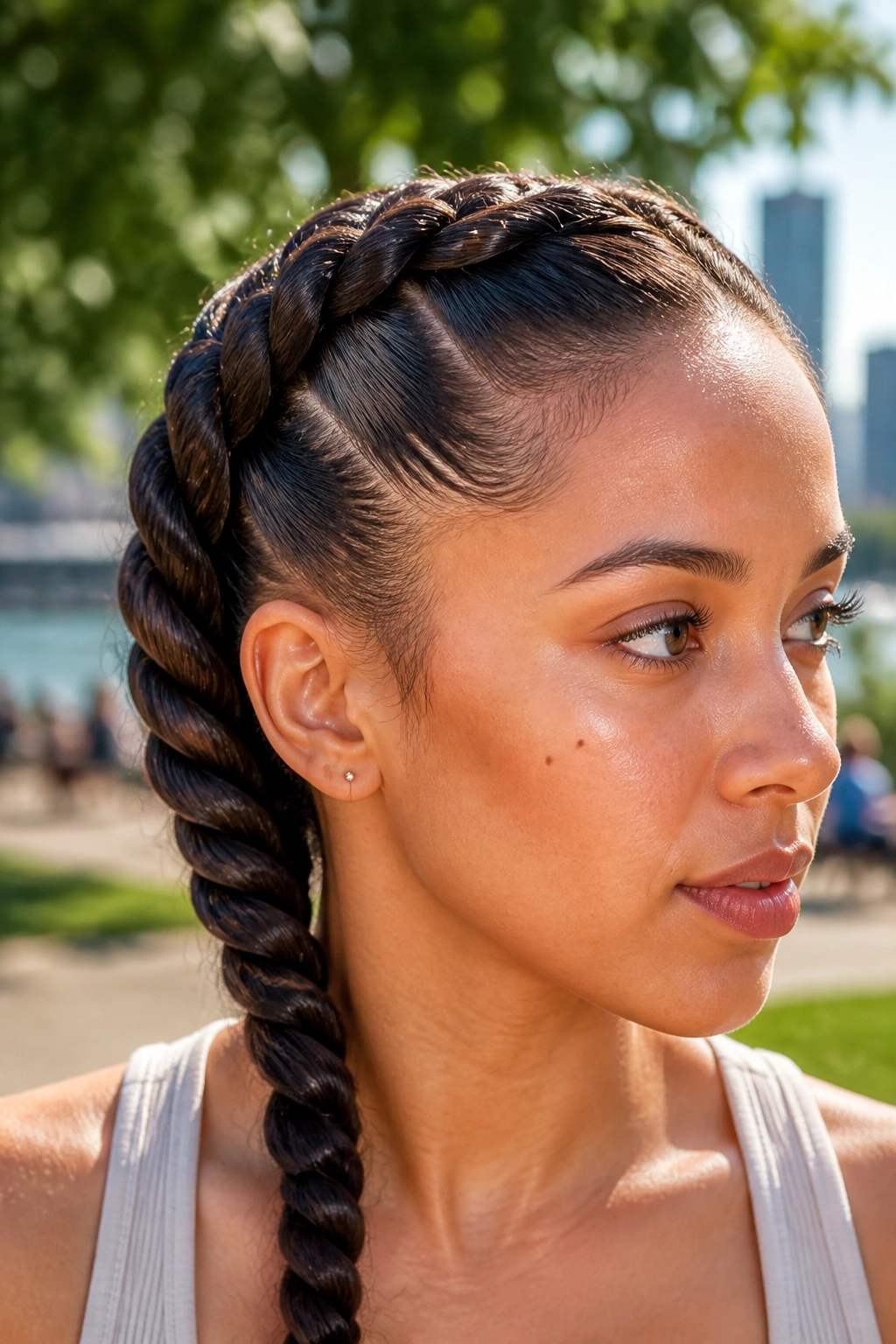
Unlike a three-strand braid, a rope braid uses two sections twisted in the same direction and wrapped in the opposite direction. That tiny difference changes everything. The finish looks sleek, shiny, and a little unexpected, especially on long hair where the twist has room to travel.
This is a favorite when you want something fast that still looks deliberate. It works well for low ponytails, half-up styles, and even a clean workout braid if your hair holds twist well. Fine hair usually needs a little texturizing spray first. Thick hair can handle it with almost no prep.
The key is not confusing the twist direction. Twist each section one way, then cross them the other way. If you do both moves in the same direction, the braid loosens fast and starts to unravel at the bottom.
Short, neat, and a little sharper than people expect.
6. Pull-Through Braid
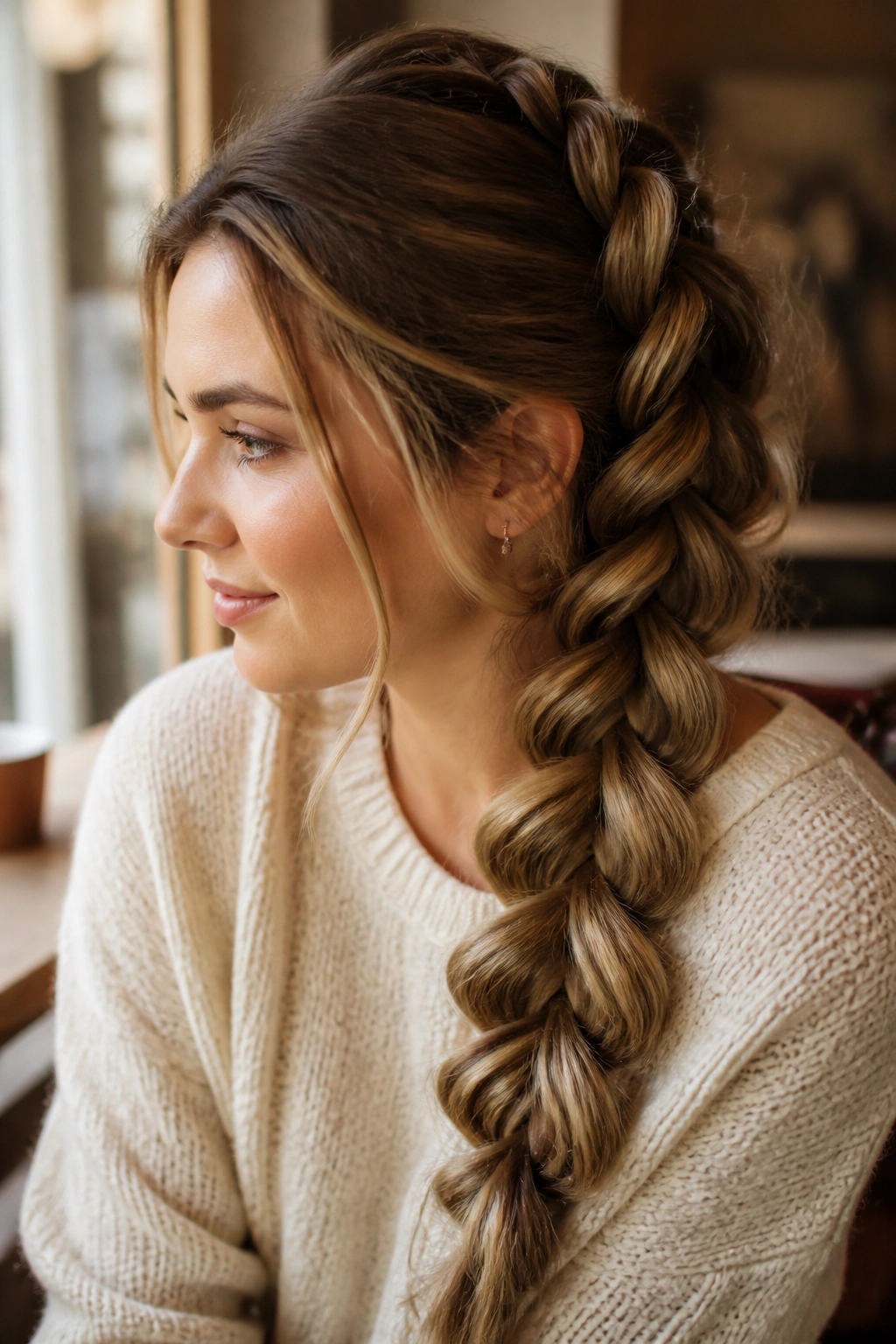
Is it a braid? Strictly speaking, not in the old-school sense. But on long hair, the pull-through braid gives you the size and drama of a chunky braid without the hand gymnastics that can make a fishtail or four-strand feel fussy.
How It Differs From a Real Braid
The style is built from a chain of small ponytails. You split, loop, and pull sections through each other, then gently widen the pieces so the braid looks full. That makes it a smart pick for long hair that feels heavy or layered, because you can fake thickness without tightening the scalp too much.
When I’d Choose It
- You want big volume.
- You’re working with layered hair that escapes normal braids.
- You need a braid that looks detailed from the back.
- You’re fine using several small clear elastics.
It can look almost too neat if you over-tighten it. Leave a little softness in the loops. That’s where the style gets its charm. And if you want a more casual finish, tug the sections wider near the crown and keep the ends tucked low.
7. Waterfall Braid
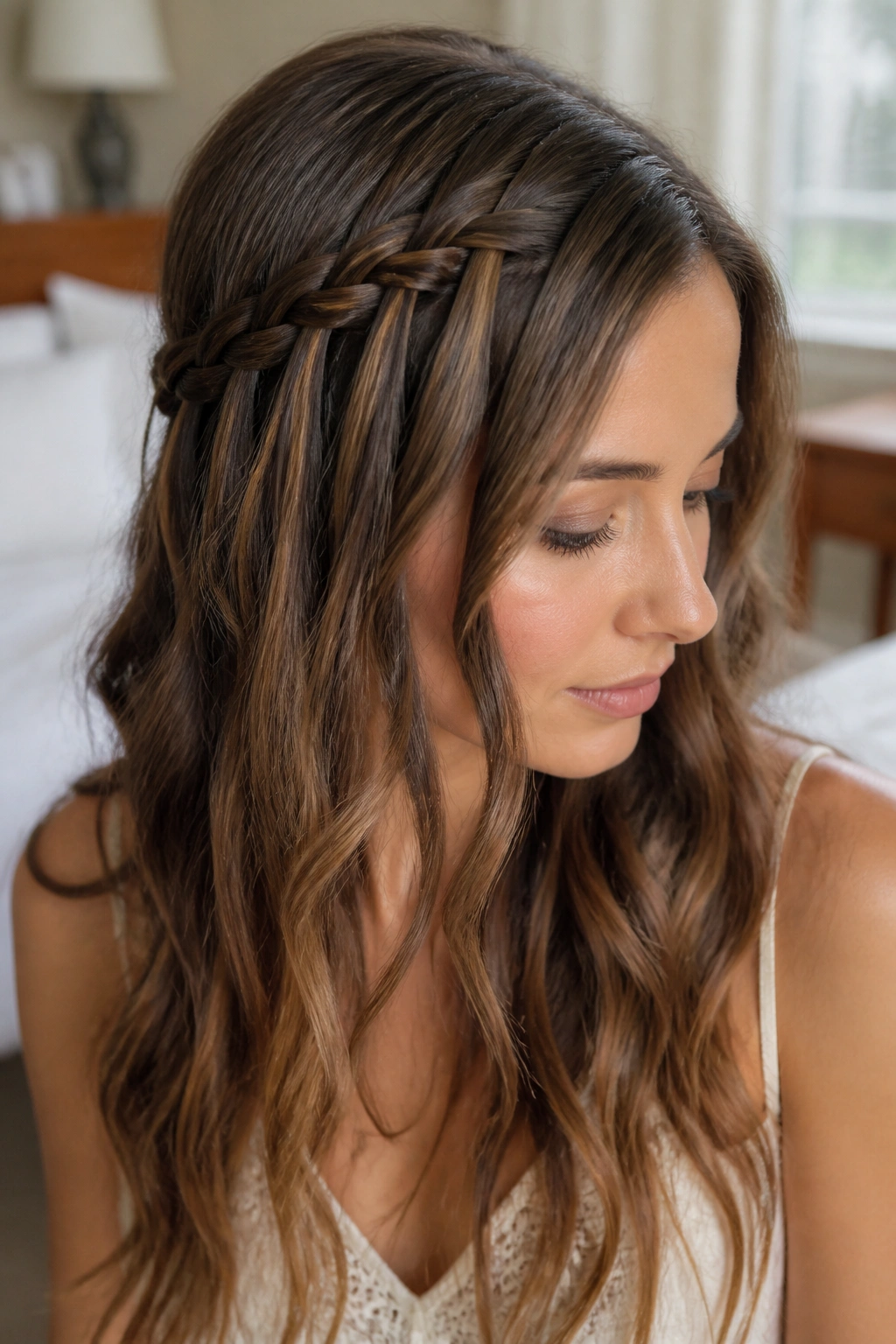
A waterfall braid is one of the prettiest half-up styles for long hair because it keeps some pieces moving through the braid instead of locking everything in place. The dropped strands fall through like little ribbons, which is exactly why the style looks soft rather than stiff.
It works best when the hair has a little bend to it. Straight hair can still do it, but a loose wave gives the braid more texture and makes the hanging pieces blend better. A tail comb helps here because clean partings matter more than people think. If the sections are messy at the top, the whole braid looks fuzzy instead of romantic.
There is one catch. Very layered hair can make the waterfall pieces disappear into the rest of the cut. That isn’t a failure, though. It just means the braid will read softer and less defined.
That’s the charm.
8. Halo Braid for Long Hair
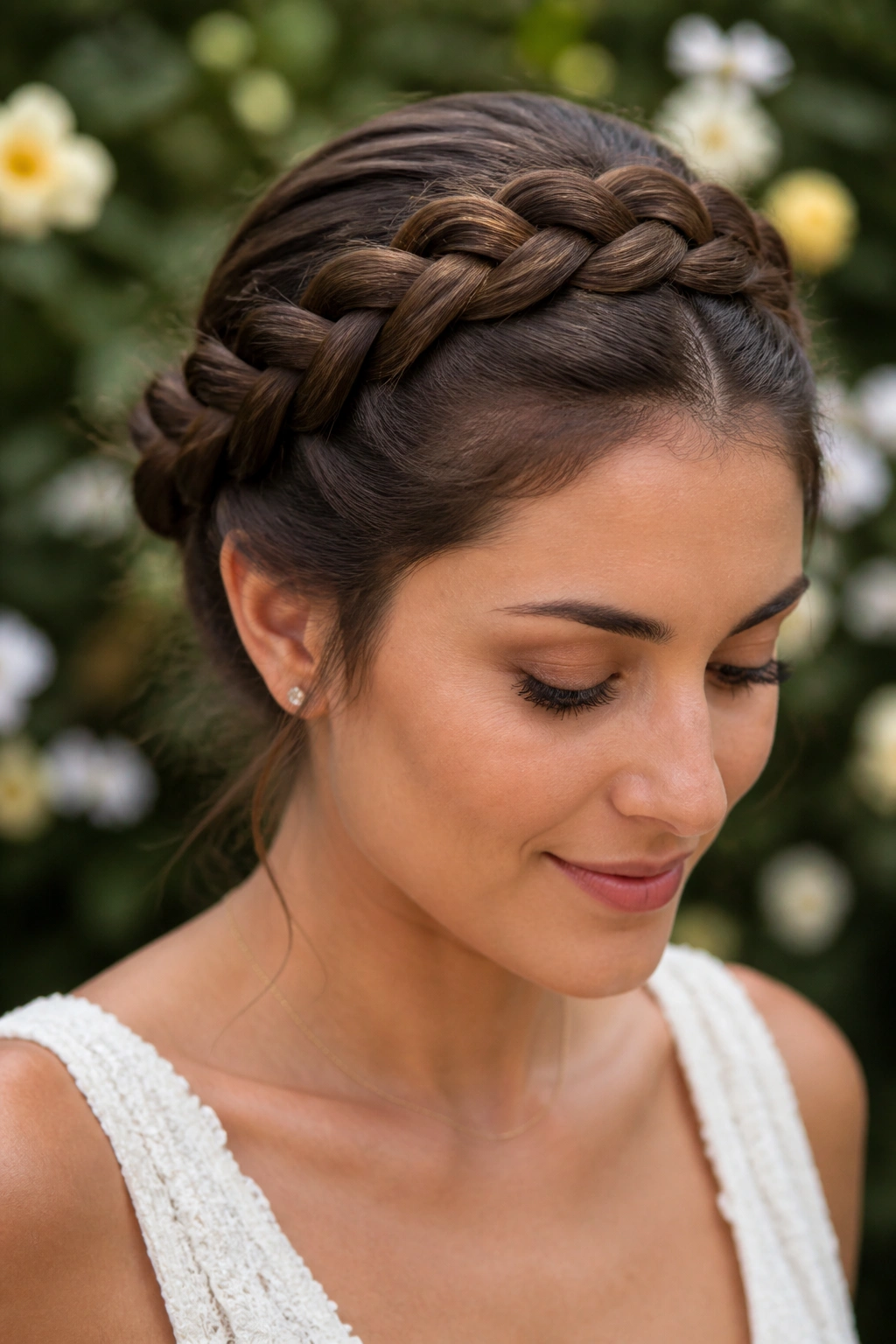
Few styles look this put together with so little obvious effort. A halo braid wraps around the head like a band, so long hair gets turned into shape instead of length for a minute, then length comes back in the tucked ends.
The braid needs a little planning because the line around the head has to stay close to the hairline. If it drifts too far back, the halo turns into a regular braid with ambitions. Start behind one ear, keep your sections small, and pin underneath the braid so the pins disappear.
What Helps Most
- A few flat bobby pins instead of bulky clips.
- A light mist of flexible-hold hairspray.
- Slightly textured hair, not freshly washed silk.
- A mirror on both sides, because the back matters here.
It’s one of the best braided looks for events, but it also works on ordinary days when you want your hair out of the way and still want it to look finished.
9. Boxer Braids
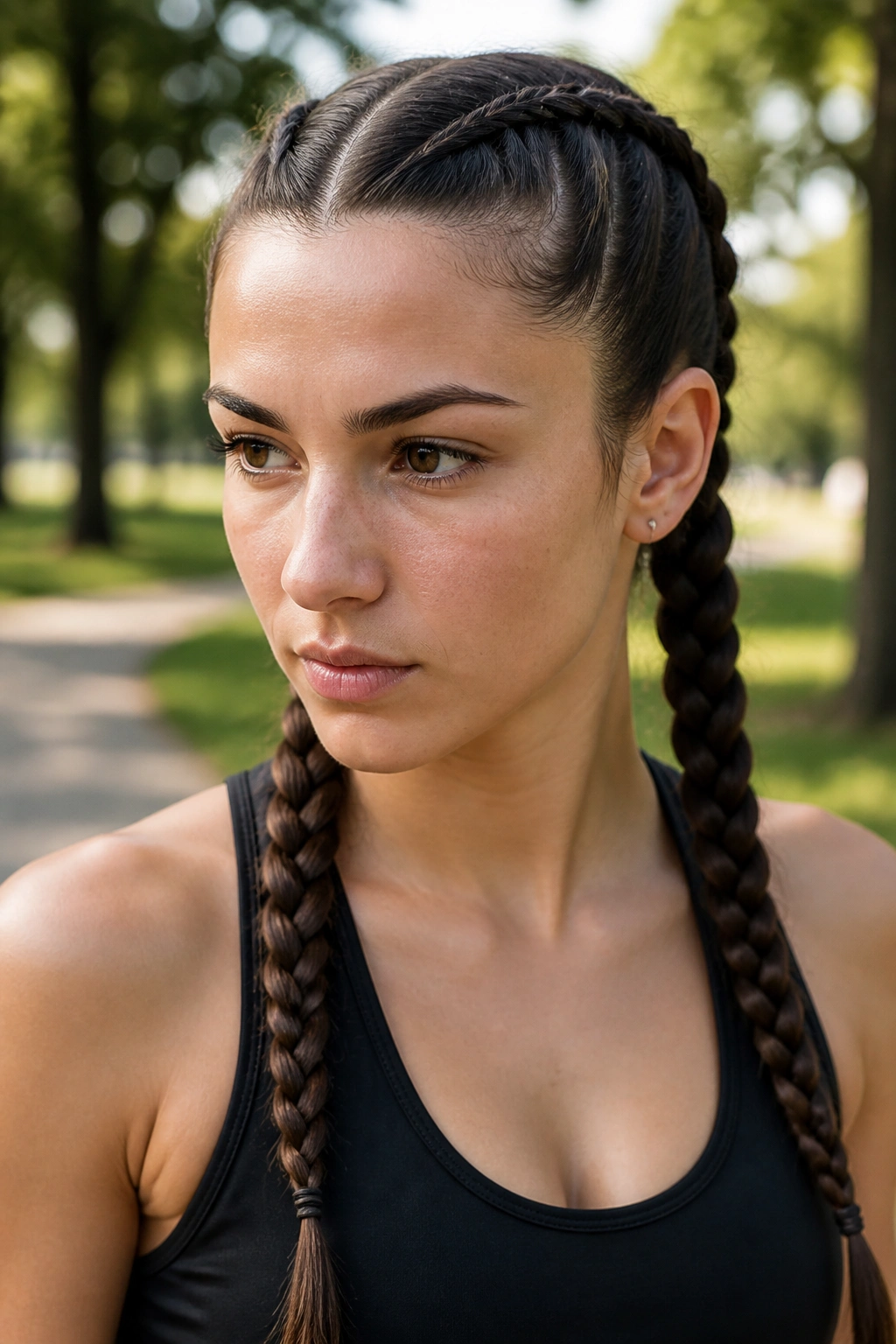
Boxer braids bring a harder edge to long hair. Two tight Dutch braids run from the front hairline to the ends, usually with a clean center part, and the look is strong enough that you do not need much else going on.
They’re practical in a way I genuinely like. Long hair can get heavy during a workout, on a commute, or when you’re wearing a high collar or hood. Boxer braids solve that by keeping the hair close to the scalp and splitting the weight evenly on both sides. If the hair is slippery, start with dry shampoo or a little mousse at the roots so the sections grab.
The parting has to be clean. Wavy, crooked parts make the style look accidental. And the braids should reach all the way to the ends, not stop halfway, or the lower half of the hair starts puffing out.
Slick, neat, no nonsense.
10. Milkmaid Braids
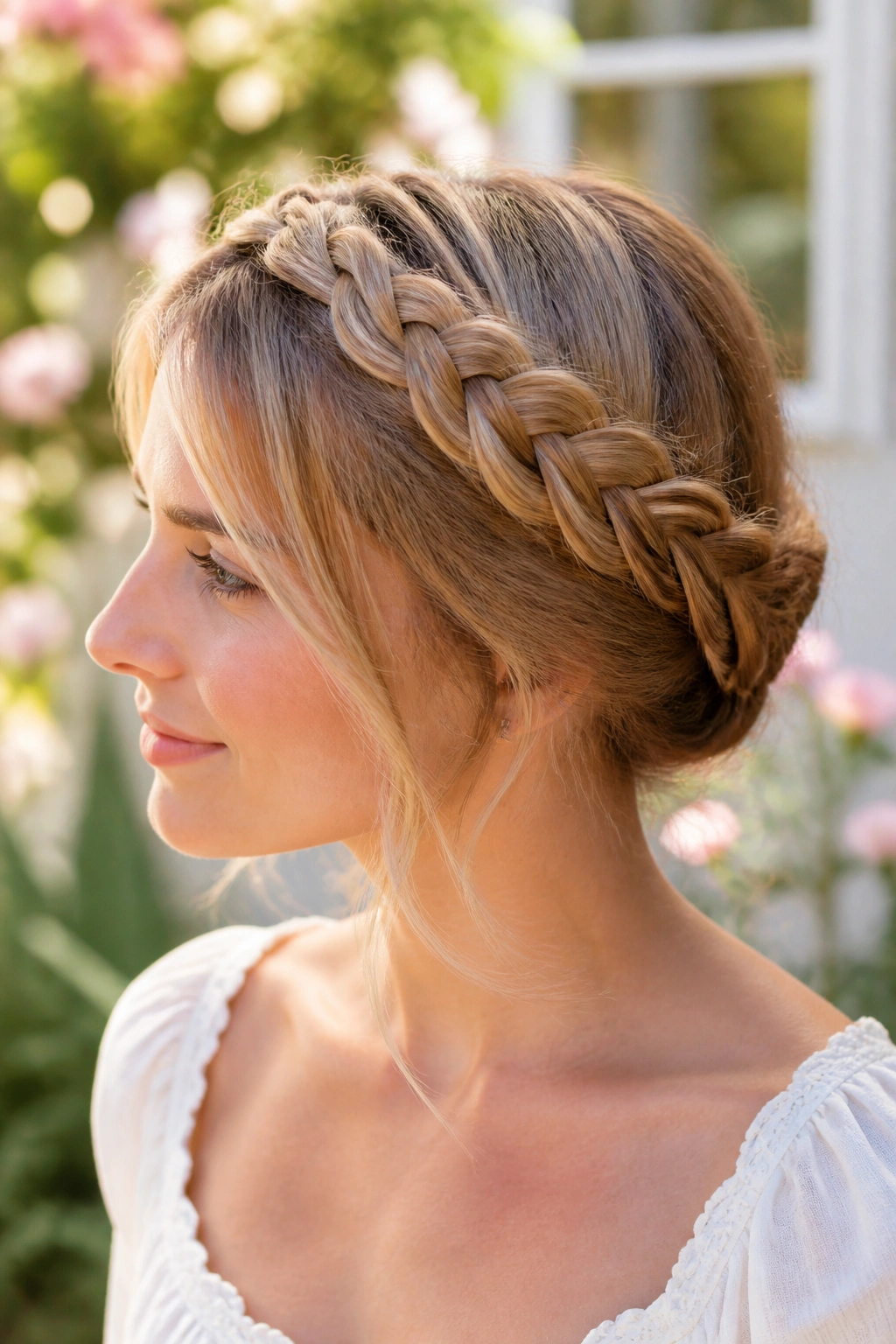
Milkmaid braids sit lower and softer than a halo braid, which is why I reach for them when I want something romantic without making the hair look overworked. Usually, you create two braids, then bring them up and across the top of the head so they meet and pin in place.
Unlike a halo braid, the milkmaid version leaves more scalp visible and often feels a little lighter around the crown. That makes it a better fit if your hair is thick or if you want the style to sit more casually, not like it’s preparing for a costume party. Long hair helps here because the braids have enough length to cross cleanly without breaking apart.
A few pins tucked under the braid can save you from constant fixing. And if the ends poke out, hide them under the overlap instead of chasing them with more spray. Too much spray turns the whole thing stiff.
Soft, secure, and a bit old-fashioned in the best way.
11. Four-Strand Braid
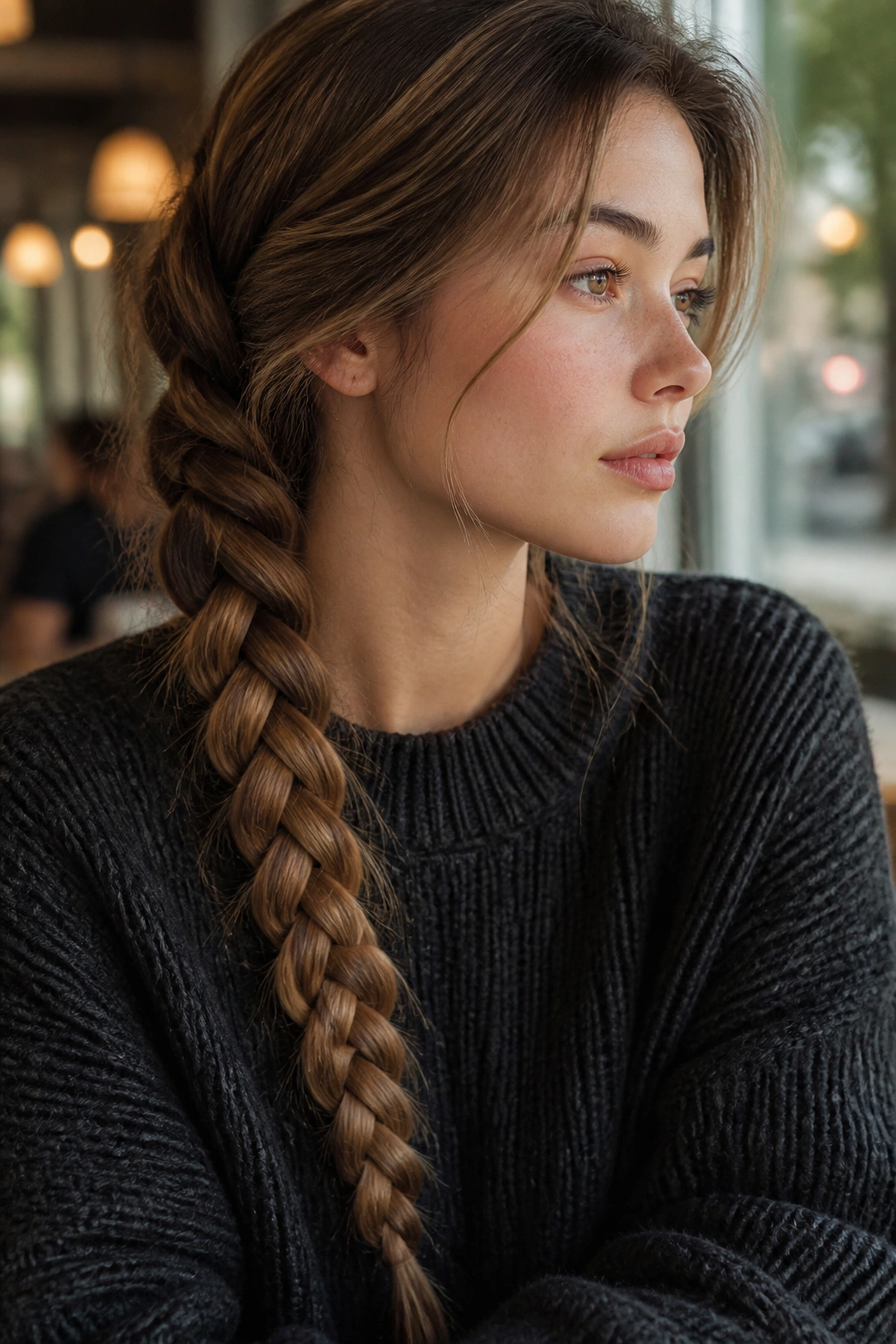
A four-strand braid looks more complicated than it feels once your fingers learn the rhythm. That’s part of the appeal. On long hair, the extra strand creates a flat, ribbon-like weave that catches the eye even when the rest of the style stays simple.
The Part People Mess Up
The biggest mistake is letting one strand get too thick while the others stay thin. Then the braid starts twisting sideways and the pattern gets muddy. Keep the four sections even from the start, and if one side starts to swell, stop and reset before you keep going.
A Good Way to Practice
- Clip the hair into four clear sections before you start.
- Work in front of a mirror the first few times.
- Keep the braid low, near the shoulder, while learning.
- Use a smooth elastic at the end so the weave stays visible.
This braid works especially well on long, straight hair, though wavy hair can pull it off too if you smooth the top first. It’s the kind of style that makes people stare twice.
12. Lace Braid
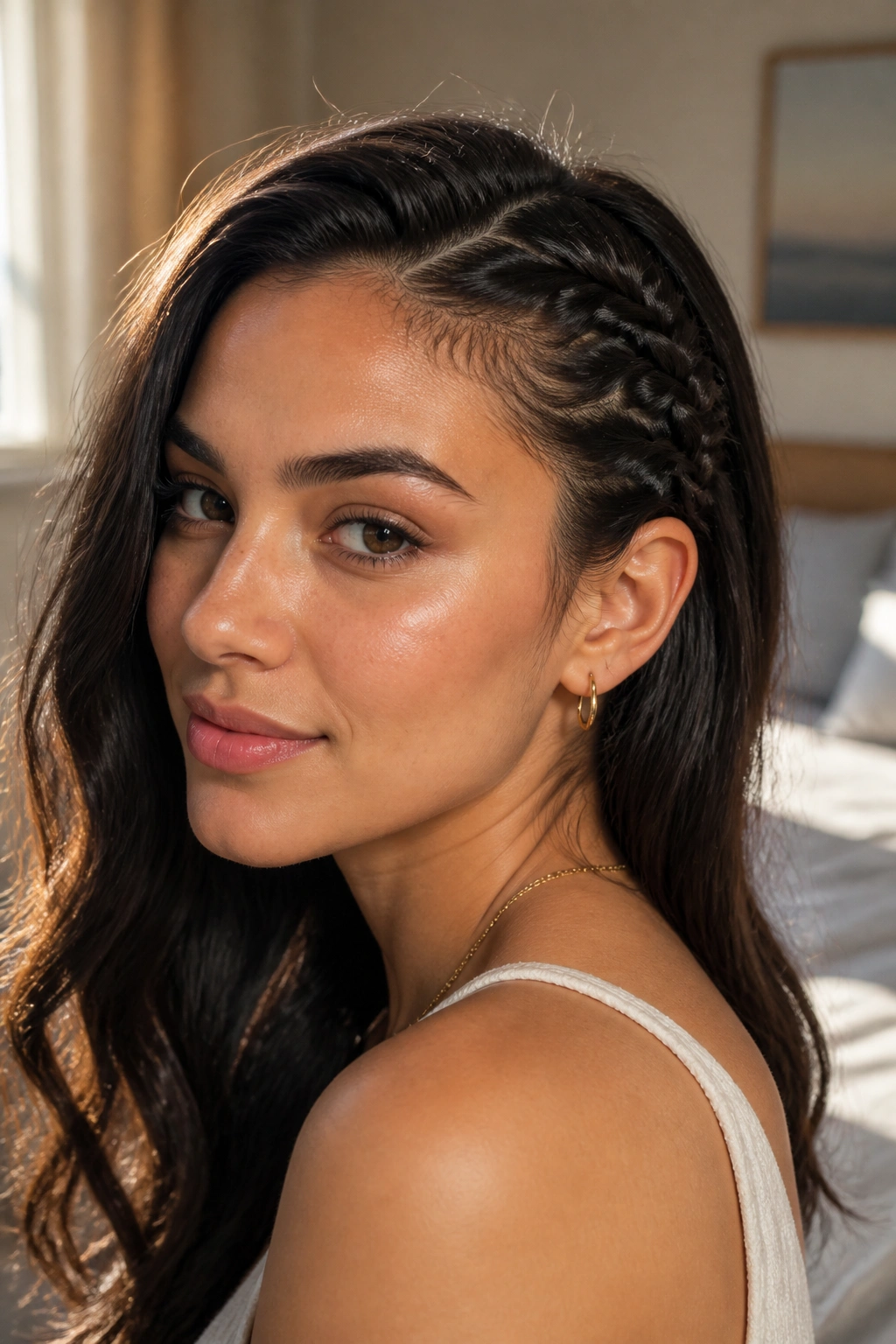
Want one side of your hair pulled back without committing to a full braid? A lace braid handles that nicely. It’s basically a French braid that adds hair from only one side, so the other side can stay loose and soft.
That makes it useful for long hair with bangs, layers, or a deep side part. You can start at the temple and braid toward the ear, then stop and pin the rest back. Or you can carry the braid further along the head and keep the rest of the hair free. Either way, it gives shape without flattening everything.
What to Watch For
- Keep the added sections small, or the braid gets bulky fast.
- Smooth the loose side before you start so the contrast looks clean.
- Use a tiny pin under the braid if you want the finish to disappear.
- Works well with waves, because the loose hair balances the braid.
It’s a quiet style, but not a dull one. There’s a difference.
13. Mermaid Braid
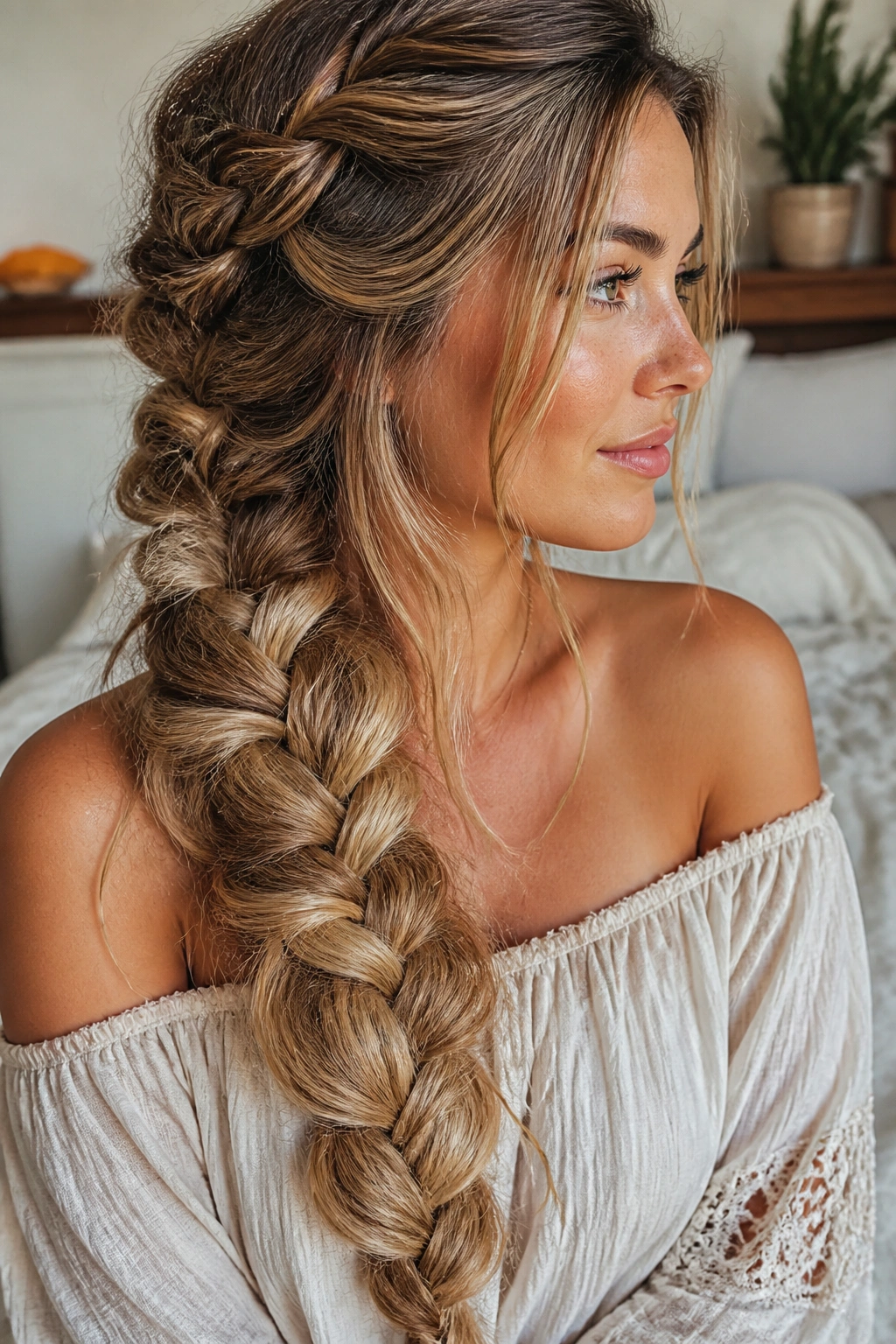
The mermaid braid is all about texture. It usually reads as a looser, chunkier braid with lots of width, and that makes it a good match for long hair because the length gives the style enough material to feel full instead of thin.
I like this one when the goal is softness, not precision. It can be built from a regular braid that’s pulled apart, or from several small sections woven into a larger pattern. Either way, the shape should feel lush and a little undone. If you start with loose waves or bend the ends first, the braid tends to blend into the rest of the hair better.
Compared with a fishtail, the mermaid braid is less neat and a bit more forgiving. That’s useful if your hands are not in the mood for tiny sections. It also flatters layered cuts, because the imperfect pieces add to the look instead of fighting it.
Not tidy. Better for it.
14. Infinity Braid
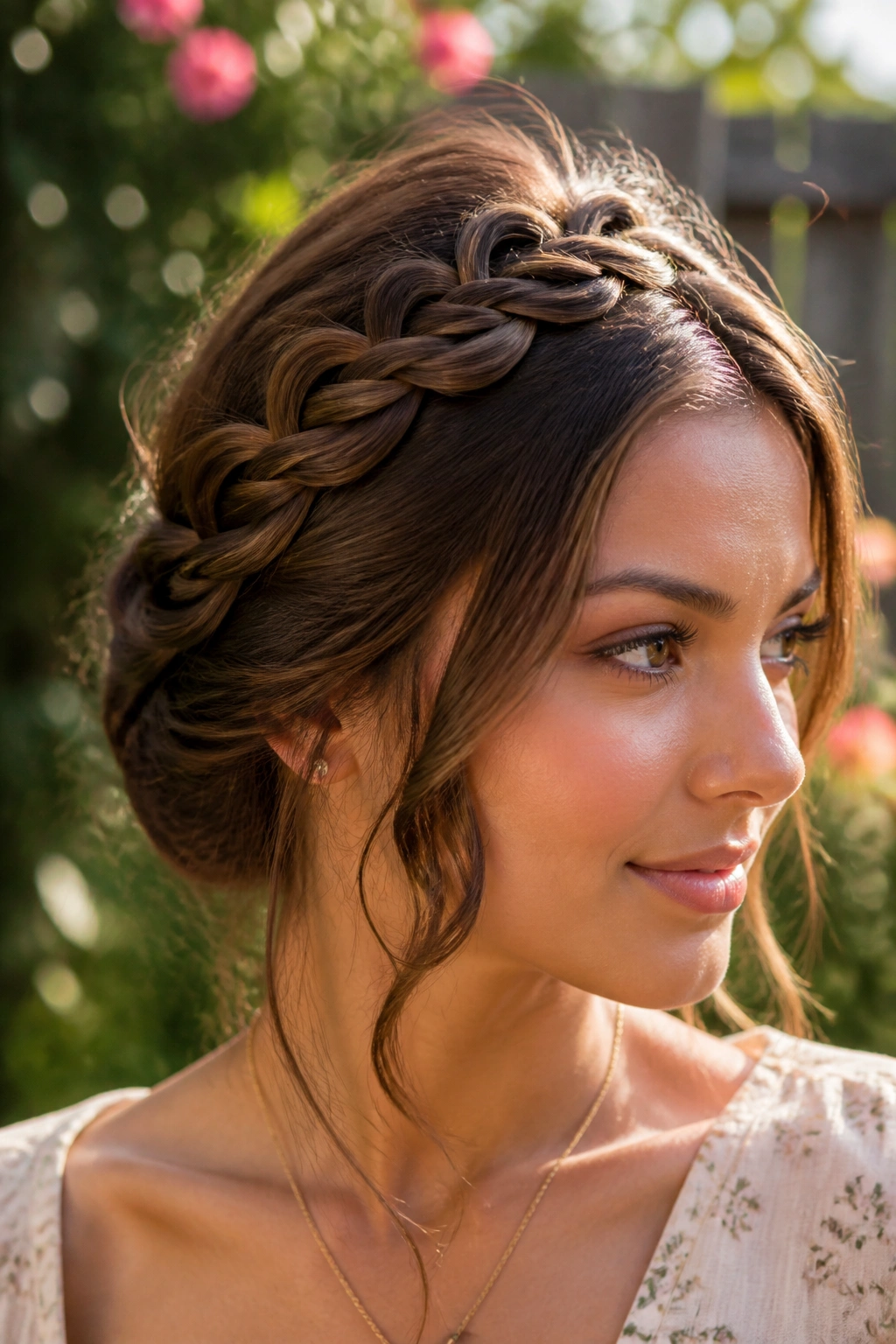
The infinity braid gets attention because the weave looks intricate from a distance, even though the motion is more about looping than classic braiding. That makes it one of those styles that seems hard until you slow down and watch the pattern.
What Makes It Different
Instead of crossing three strands in a standard pattern, you guide one section around the middle in a figure-eight style. Long hair helps because the looping needs length to stay visible. Shorter hair can make the design disappear before it really begins.
How to Make It Easier
- Start on smooth hair with a little cream or serum.
- Practice the pattern on a low side ponytail first.
- Use clips to hold the loose sections while you learn the sequence.
- Keep the loops even so the braid does not collapse into a knot.
This style works beautifully when you want something unusual but still wearable. It’s not the fastest braid in the room. It does, however, reward patience with a finish that looks far more detailed than the steps feel while you’re doing them.
15. Braided Ponytail for Long Hair
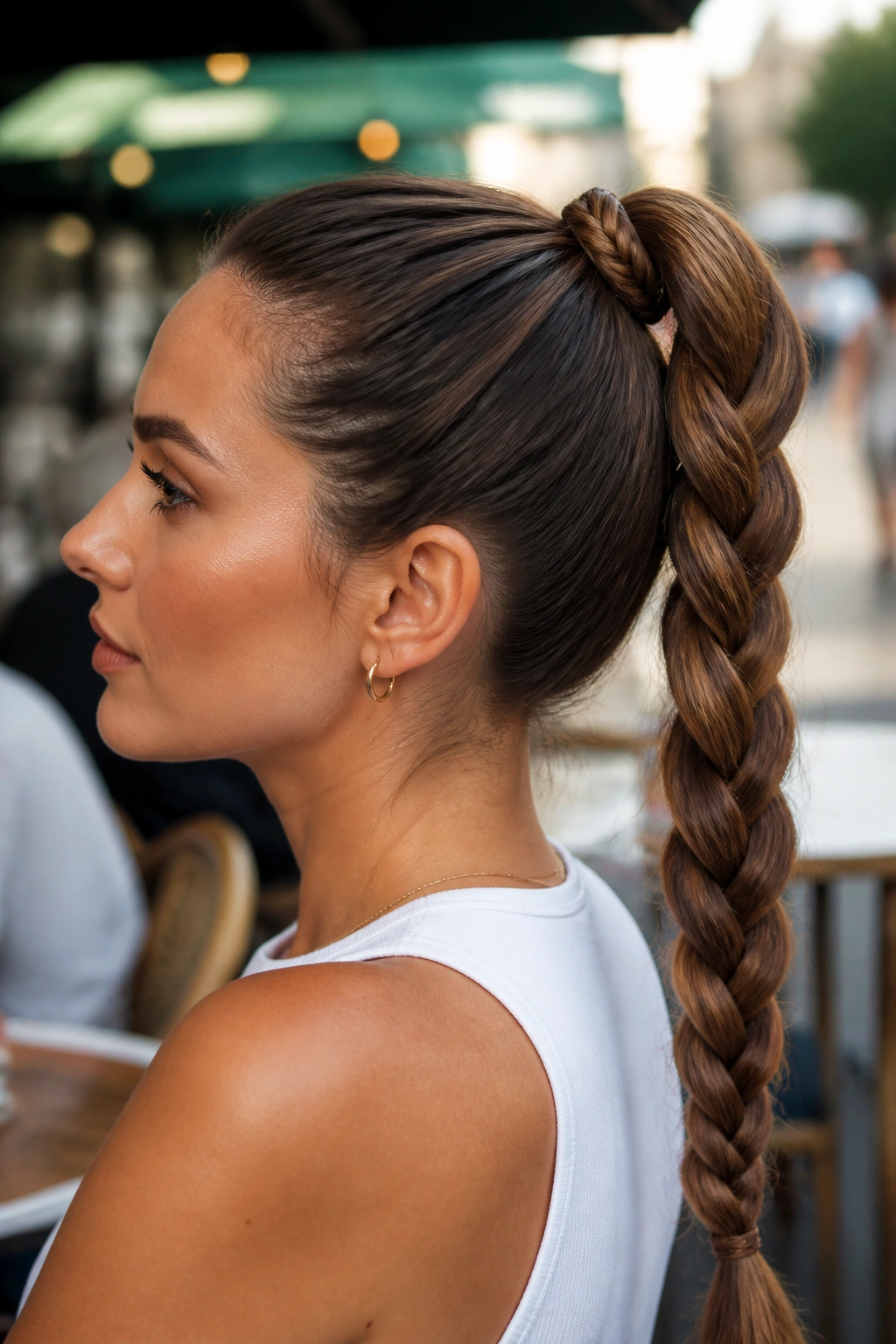
A braided ponytail is the style I trust when I want long hair out of the way but still want the length to matter. You can braid the ponytail itself, braid the base before gathering the hair, or wrap a small braid around the elastic to make the whole thing feel cleaner.
It’s a flexible look. High ponytail, low ponytail, sleek middle part, side part, tight braid, loose braid — the shape changes fast depending on how you pull it together. That makes it useful for workdays, travel, gym sessions, and the sort of plans where you need your hair to behave but don’t want to spend twenty minutes on it.
For long hair, the ponytail length becomes part of the style. A plain braid ends quietly. A braided ponytail swings.
If you only try one or two of these styles first, start with the ones that fit your hair texture instead of the ones that look hardest. Thick hair usually loves Dutch, boxer, and pull-through braids. Fine hair often behaves better with rope, French, or lace braids. And if you want a style that feels dressed up without turning into a project, the braided ponytail is hard to beat.
