



Round faces and wolf cuts get along better than most people expect. The trick is picking a version that adds lift at the crown, keeps the sides from ballooning, and leaves enough length below the cheekbones to stretch the face visually.
A wolf cut is basically the shag’s unrulier cousin: choppy layers up top, softer length underneath, and a fringe that can swing from wispy to bold. On a round face, that shape can do real work. It pulls the eye upward and downward instead of letting it sit across the widest part of the face.
That’s the whole game. Height. Space. Movement.
Some versions go too blunt or too puffy around the cheeks, and that’s where people get annoyed with the cut. The good ones feel airy, slightly wild, and easy to style even when you’re not trying very hard. The 22 looks below give you room to choose based on length, texture, and how much edge you want in the finish.
1. Soft Curtain-Bang Wolf Cut for Round Faces
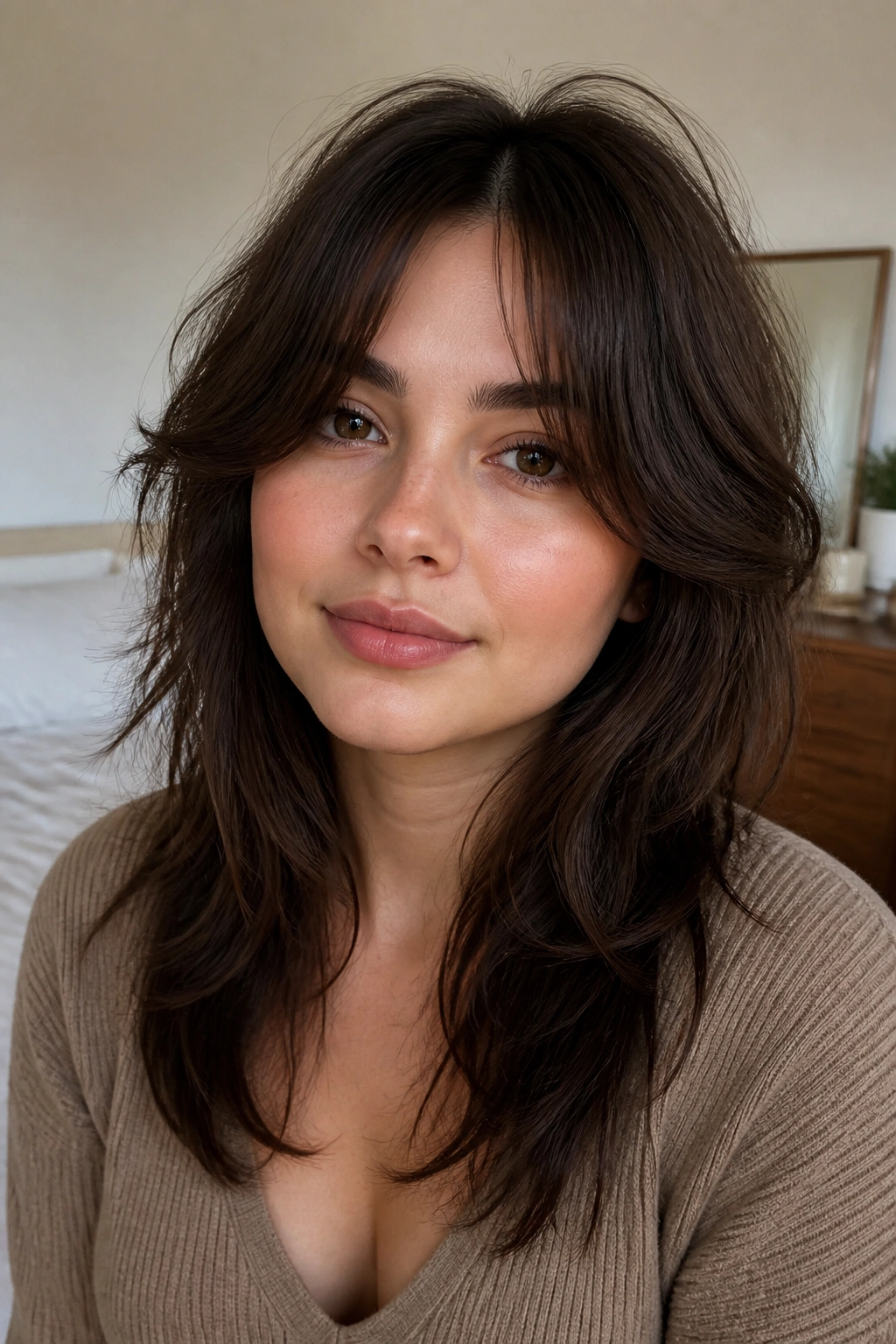
This is the safest starting point if you want wolf cuts for round faces without making the face look wider. The curtain bang opens in the middle, drapes along the cheekbones, and keeps the front from turning into one heavy block.
Why It Flatters the Shape
The middle part creates a clean vertical line, and that matters more than people think. When the fringe splits softly, the eye moves down the center of the face instead of hanging out at the cheeks.
Ask for bangs that start around the bridge of the nose and fall longer at the corners. That little slope keeps the front from feeling boxy. I also like a bit of lift at the root, because flat bangs can drag the whole cut down.
- Best for medium hair density.
- Works with blow-drying or air-drying.
- Looks even better when the ends are a little piecey, not polished to death.
- Needs a trim every 6 to 8 weeks if you want the curtain shape to stay open.
Tip: If your bangs feel too short, let the sides grow before you decide the cut failed. Curtain fringe often looks better after it settles for a few days.
2. Collarbone Wolf Cut with Long Side Panels

Want the texture but not the drama? Start here. A collarbone-length wolf cut keeps weight below the jaw, which helps round faces look longer without losing softness.
The long side panels are the whole point. They fall past the widest part of the face, then taper as they move toward the ends. That gives you movement without letting the cut puff out near the cheeks.
You also get more styling freedom than with a shorter version. Wear it air-dried for a loose shape, or wrap the ends under with a round brush if you want a cleaner finish. I’d pick this cut for anyone who wants shape but hates short layers around the ears.
It’s a smart choice for thick hair, too. The internal layers remove bulk while the length keeps the silhouette grounded.
3. Short Wolf Cut with Crown Lift
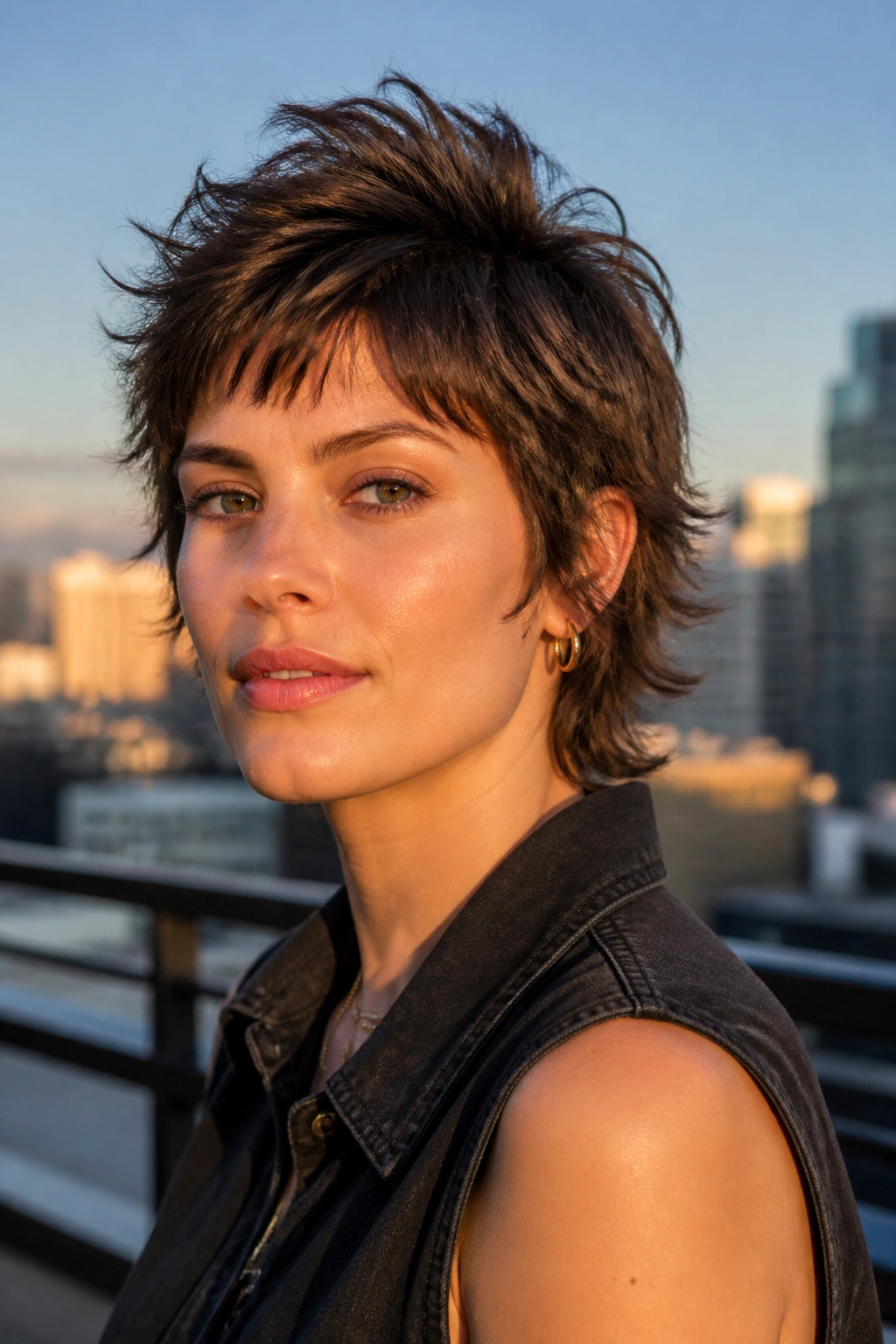
If your hair is fine and your face is round, this one can be a little miracle. A shorter wolf cut with a lifted crown builds height where you need it most, and height changes the whole read of the face.
The mistake people make is keeping the sides too wide. Don’t do that. The top should feel airy and the nape should sit tighter so the haircut doesn’t spread out horizontally.
What to Ask Your Stylist
- Keep the crown layers short enough to stand up with a blow-dry.
- Leave the front pieces below cheek level.
- Taper the nape so the back doesn’t look bulky.
- Avoid a blunt perimeter that stops at the jaw.
A dab of mousse at the roots changes everything here. Blow-dry upside down for 30 to 45 seconds, then finish with your fingers lifting at the crown. Small effort. Big difference.
4. Curly Wolf Cut with Deeply Shaped Layers
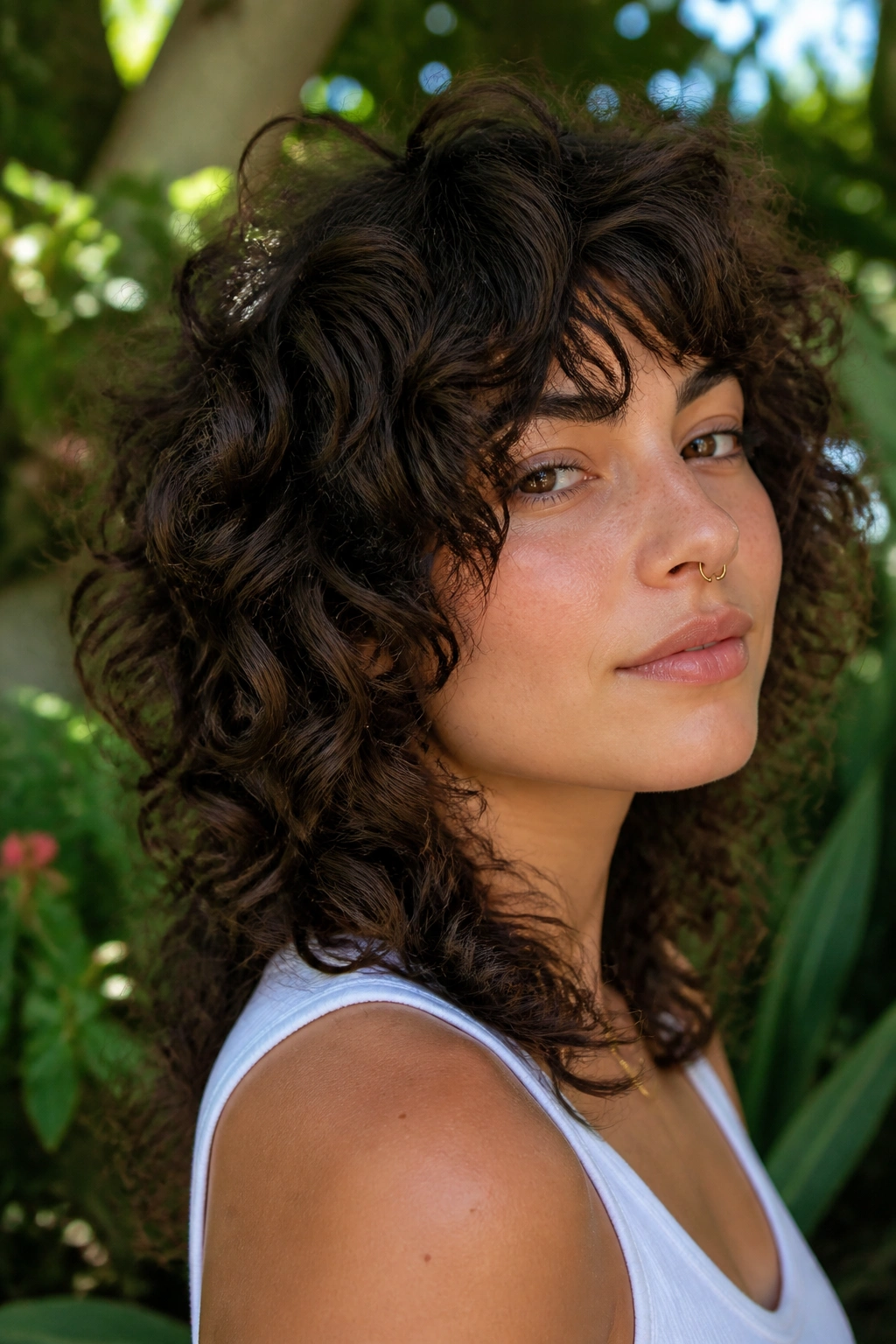
Curly hair doesn’t need to be forced into a neat shape. It needs room to fall in the right places, and a wolf cut can do that beautifully when the layers are cut with curl pattern in mind.
Here’s the part people miss: round faces do not need curls removed everywhere. They need the fullness moved. A curly wolf cut keeps the volume on top and through the back, while the front curls are guided below the cheekbones instead of sitting right beside them.
The Bang Shape
A curly fringe works best when it’s long enough to curl back into itself. Too short, and it jumps up. Too heavy, and it sits like a curtain across the forehead.
I like this version for loose curls, ringlets, and mixed textures that need shape without looking chopped to bits. If your stylist dry-cuts curls, even better. That keeps the layers from shrinking into something shorter than you planned.
A lightweight cream is usually enough. Skip the crunchy stuff unless you enjoy helmet hair.
5. Razor-Cut Wolf Cut with Wispy Ends

This one has movement you can almost feel. Razor-cut ends look soft, frayed, and a little undone in the best way, which keeps the haircut from turning dense around a round face.
The razor breaks up the line of the hair shaft, so thick straight hair stops looking like one solid sheet. That matters. A round face already has soft curves, and a heavy, solid shape around it can make the whole look feel wider than it is.
I like this cut on people who hate a polished blowout. It looks better with a bit of grit. Sea-salt spray, rough-dry, fingers through the ends. Done.
One warning: razor cutting on very fine hair can make the ends feel thin if the stylist gets too eager. You want airy, not stringy.
6. Mid-Length Wolf Cut with Flipped Ends

This is the version that makes the wolf cut feel a little more polished. The length sits somewhere between the jaw and the shoulders, and the flipped ends keep the shape from dropping flat.
Unlike a blunt lob, this cut has internal layers that show up when you move. The ends can flip out with a round brush, or you can leave them loose for a softer finish. Either way, the cut gives a round face a longer line without taking away the fun part.
The shape works especially well if your hair naturally bends at the ends. You’re not fighting the texture. You’re nudging it.
A quick pass with a 1.25-inch curling iron on just the front pieces can sharpen the whole look. Don’t curl everything. That gets fussy fast.
7. Pixie-Length Wolf Cut with Micro Fringe
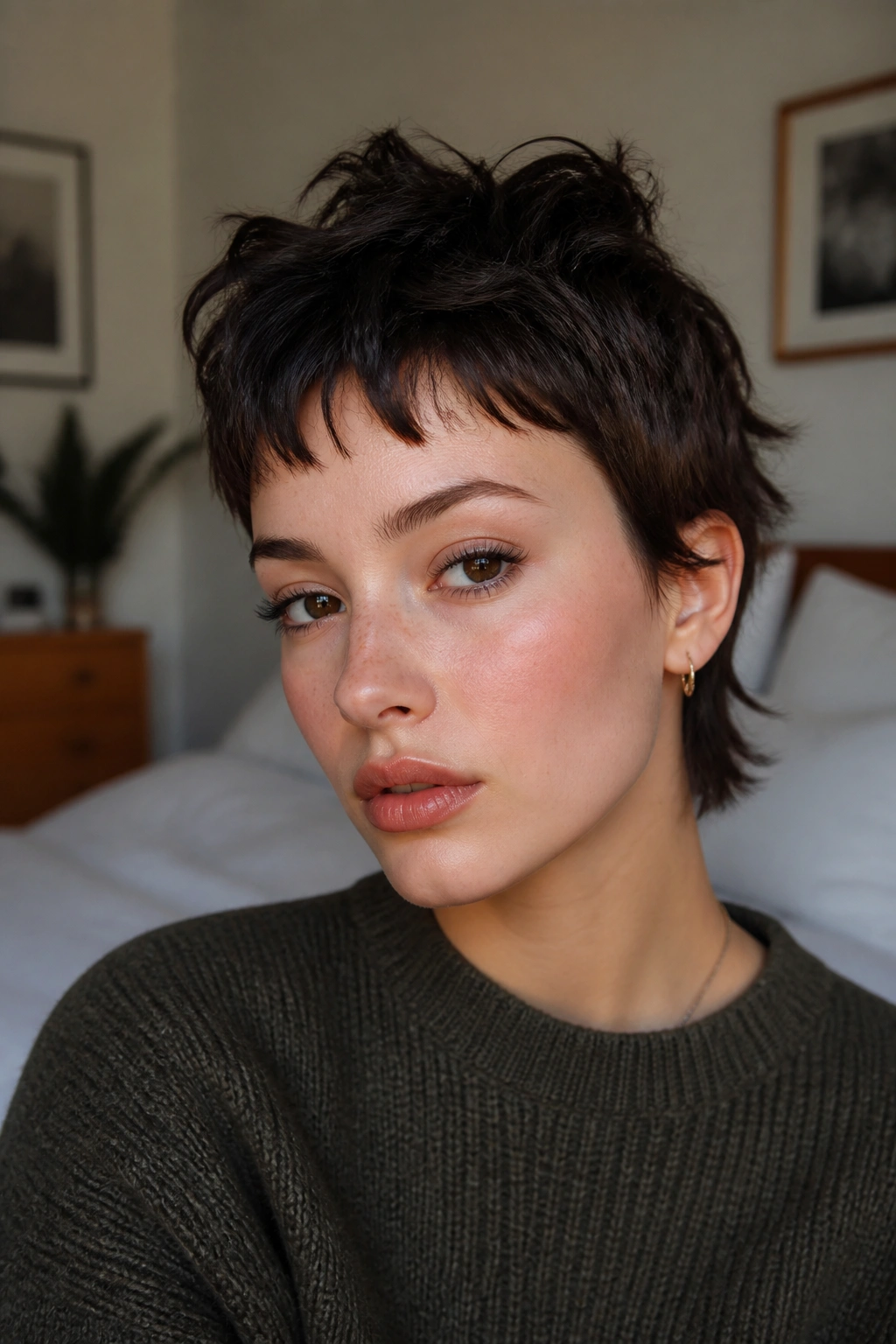
This is the daring option, and it works when the proportions are right. The crown stays lifted, the sides stay tight, and the micro fringe keeps the forehead open enough that the face doesn’t get boxed in.
Why It Can Work
A round face needs the eye to travel, and this cut forces that movement. Short sides pull attention upward, while the choppy top gives the hair some shape instead of letting it collapse.
The fringe should be tiny but soft. If it’s cut too blunt, the whole style can get severe in a hurry. I’d keep the texture broken up with point cutting or a light razor finish.
Best for straight or slightly wavy hair. Curly hair can do it too, but the fringe needs more room, and that changes the mood of the cut fast.
This is one of those styles that looks expensive when it’s done well and a little chaotic when it isn’t. Bring photos. Please.
8. Side-Parted Wolf Cut with Heavy Texture
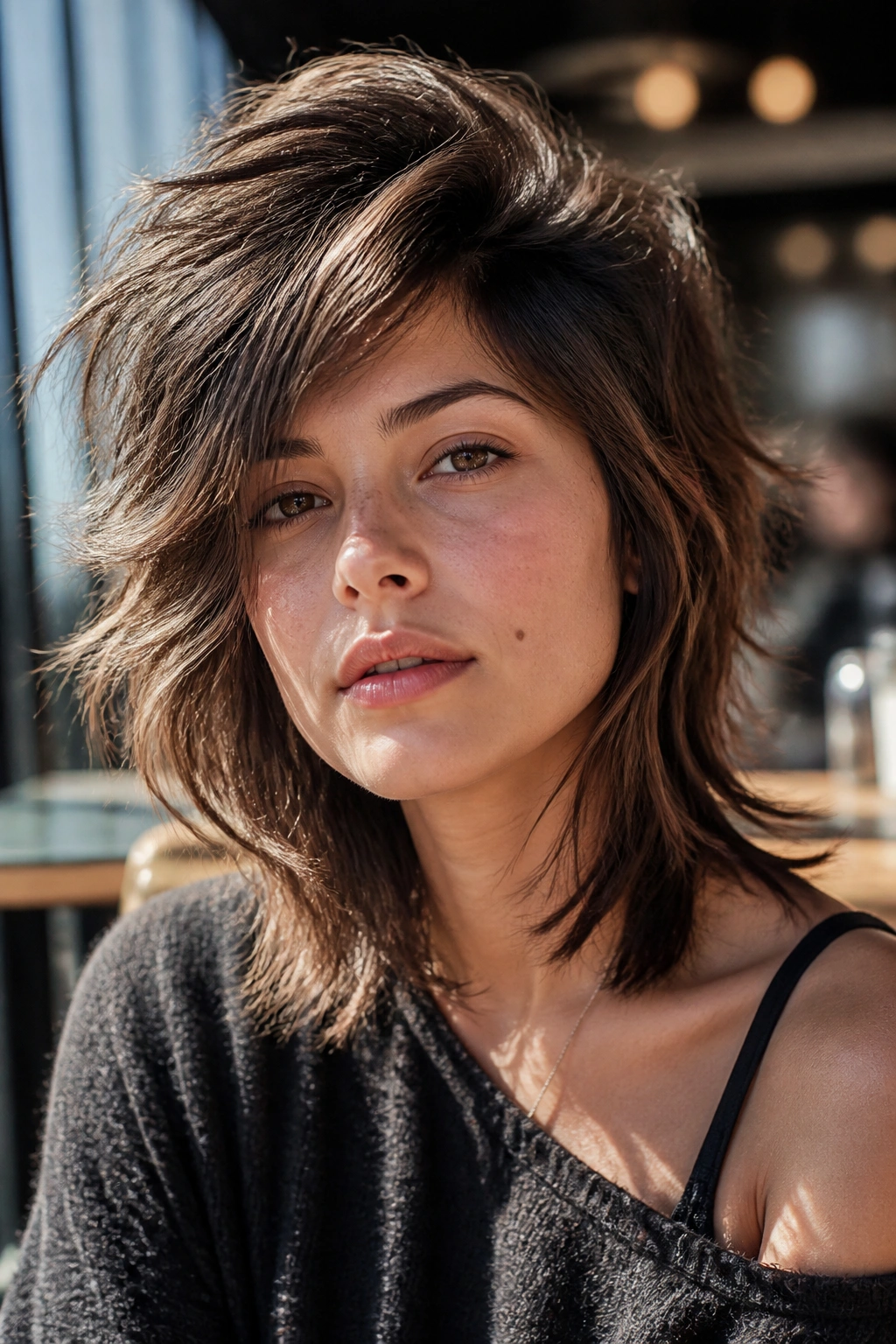
A deep side part can change a round face in a way a middle part never will. It breaks symmetry, adds diagonal lines, and gives the haircut a little tension.
Side parts are useful because they stop the face from reading as one neat circle. That’s the whole trick. The heavier section of hair can sweep across the forehead and skim one cheek, while the other side stays tighter and lighter.
That asymmetry makes the cut feel sharper. Not harsher. Sharper.
I like this version on medium to thick hair that needs control. It gives you the wolf cut texture without the “all over the place” feeling that some people hate. A little root lift on the heavier side keeps it from falling flat by noon.
9. Bottleneck Bang Wolf Cut
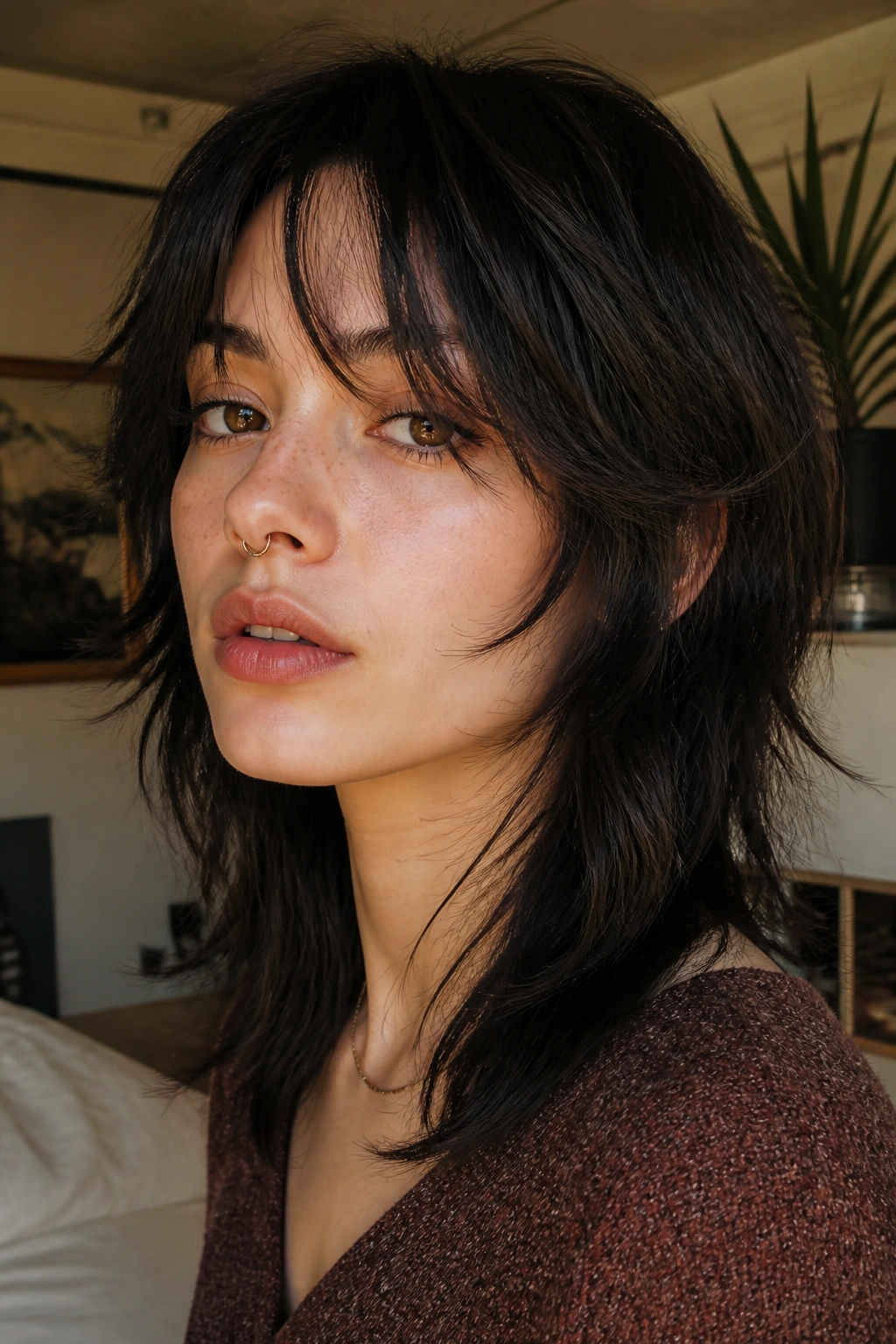
Do you want fringe without the thick wall effect? The bottleneck bang is the answer. It starts narrow at the center, opens a little at the brows, then drifts wider toward the sides, which gives a round face a longer shape.
That narrow center line is the secret. It draws the eye down and away from width. The soft flare at the edges blends the bangs into the rest of the cut so they don’t sit there like a separate piece.
This is one of my favorite options for people who want bangs but panic at the thought of losing forehead space. You get coverage without the heaviness.
It looks best when the bang length hits around the eyelashes in the middle and the cheekbone area on the sides. Shorter than that, and it can get jumpy. Longer is usually safer.
10. Long Wolf Cut with Seamless Layers
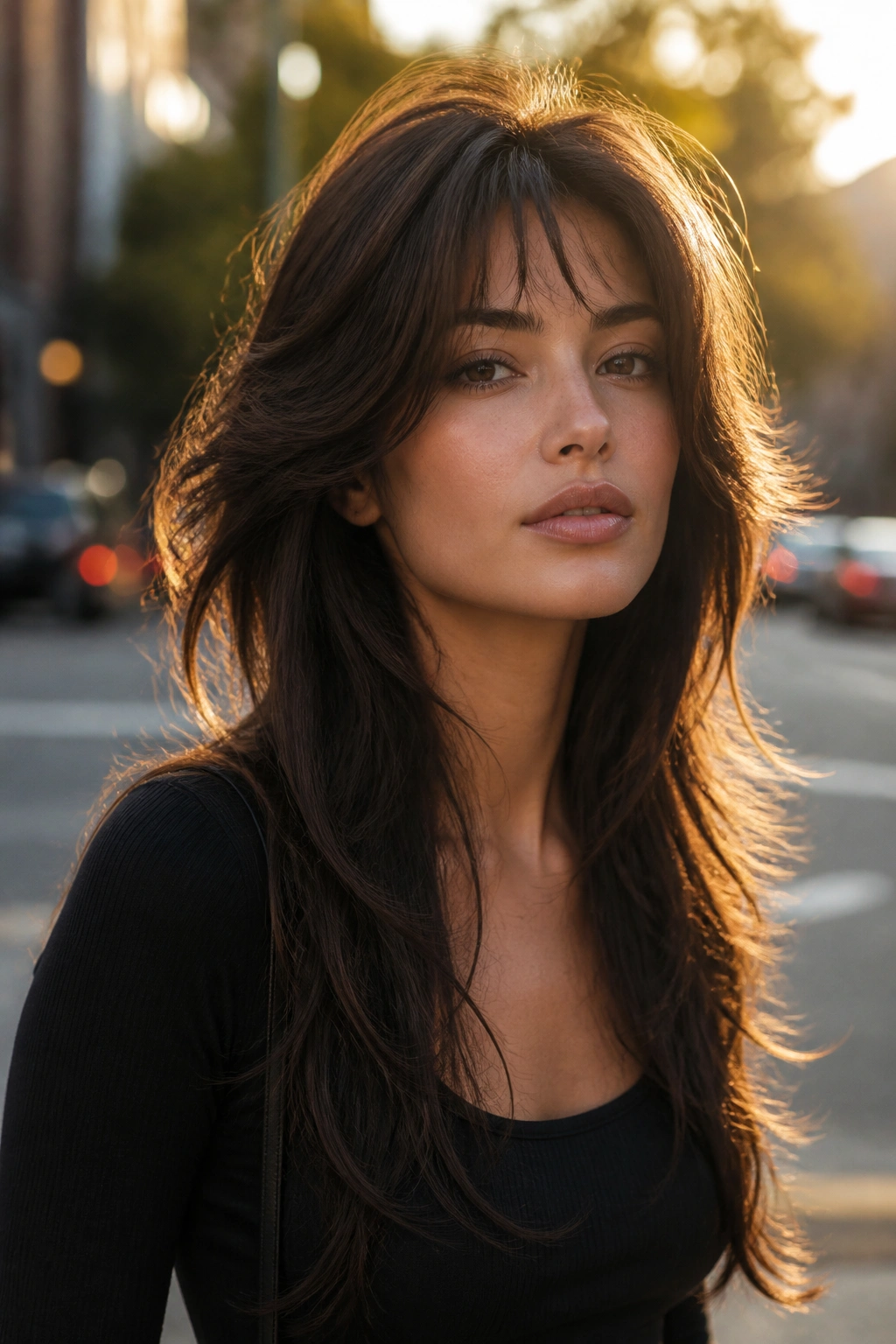
Long hair can still be a wolf cut. It does not have to be chopped into a dramatic short shag to work. In fact, a long wolf cut is one of the easiest ways to flatter a round face without giving up length.
The layers start higher around the crown and fall softer through the mid-lengths. That keeps the top from going flat, while the bottom stays long enough to create a straightening effect on the face.
What Keeps It Looking Fresh
- Keep the shortest face-framing layer below the cheekbone.
- Leave the perimeter below the shoulders.
- Add texture mostly through the top half, not the ends.
- Finish with a soft bend, not tight curls.
This cut is great if you wear your hair up a lot. A loose ponytail or clipped-back front pieces still leave you with shape around the face, which is the nice part.
11. Air-Dried Wolf Cut with Natural Waves

If your hair already has wave, stop fighting it. A wolf cut can make air-dried texture look deliberate instead of accidental, and round faces benefit from the way waves break up the outline.
The cut should be layered so the waves fall in vertical ribbons rather than puffing out into one big halo. That means enough removal through the bulk, but not so much that the shape goes limp.
Styling Notes
- Work a small amount of mousse through damp roots.
- Scrunch a wave cream into the mids and ends.
- Let it dry mostly untouched.
- Break up the cast with dry fingers once it’s fully dry.
No brush before it’s dry. That’s where the frizz starts.
This look is relaxed, but not lazy. There’s a difference, and the haircut should do the heavy lifting for you.
12. Sleek Wolf Cut with Hidden Layers

People assume wolf cuts have to look messy. They don’t. A sleek version can be one of the smartest choices for round faces because the straight finish creates a clean line while the hidden layers keep the hair from feeling thick and blunt.
This is the one I’d pick for someone who wears a blazer to work and still wants the haircut to have some bite. The movement shows up when you turn your head, not in the mirror straight on. That makes it subtle in a good way.
A flat iron set to a moderate heat, used in one pass only, gives the ends a slight bend without frying them. Keep the face-framing pieces tucked just a little toward the neck. That tiny direction helps the cut slim the face instead of widening it.
It’s a low-drama haircut. I like that.
13. Piecey Wolf Cut with Wispy Bangs

Piecey texture is a round face’s friend when the pieces are kept long enough to move. The bangs here should look broken up, not thick, and the layers should fall in separated sections rather than one blended cloud.
How It Works
The face gets framed by little shifts in length, and those shifts stop the haircut from reading as one round shape. The wispy bangs open the forehead while the longer bits near the temples guide the eye downward.
I’d ask for point cutting through the ends. That leaves softer edges and gives you that strand-by-strand effect people usually spend too long trying to fake with product.
A matte paste or light wax is enough. Use a pea-sized amount, warm it between your hands, and pinch the ends into place. More than that starts to look greasy fast.
This one has attitude, but it still behaves.
14. Wolf Cut with Long Face-Framing Tendrils
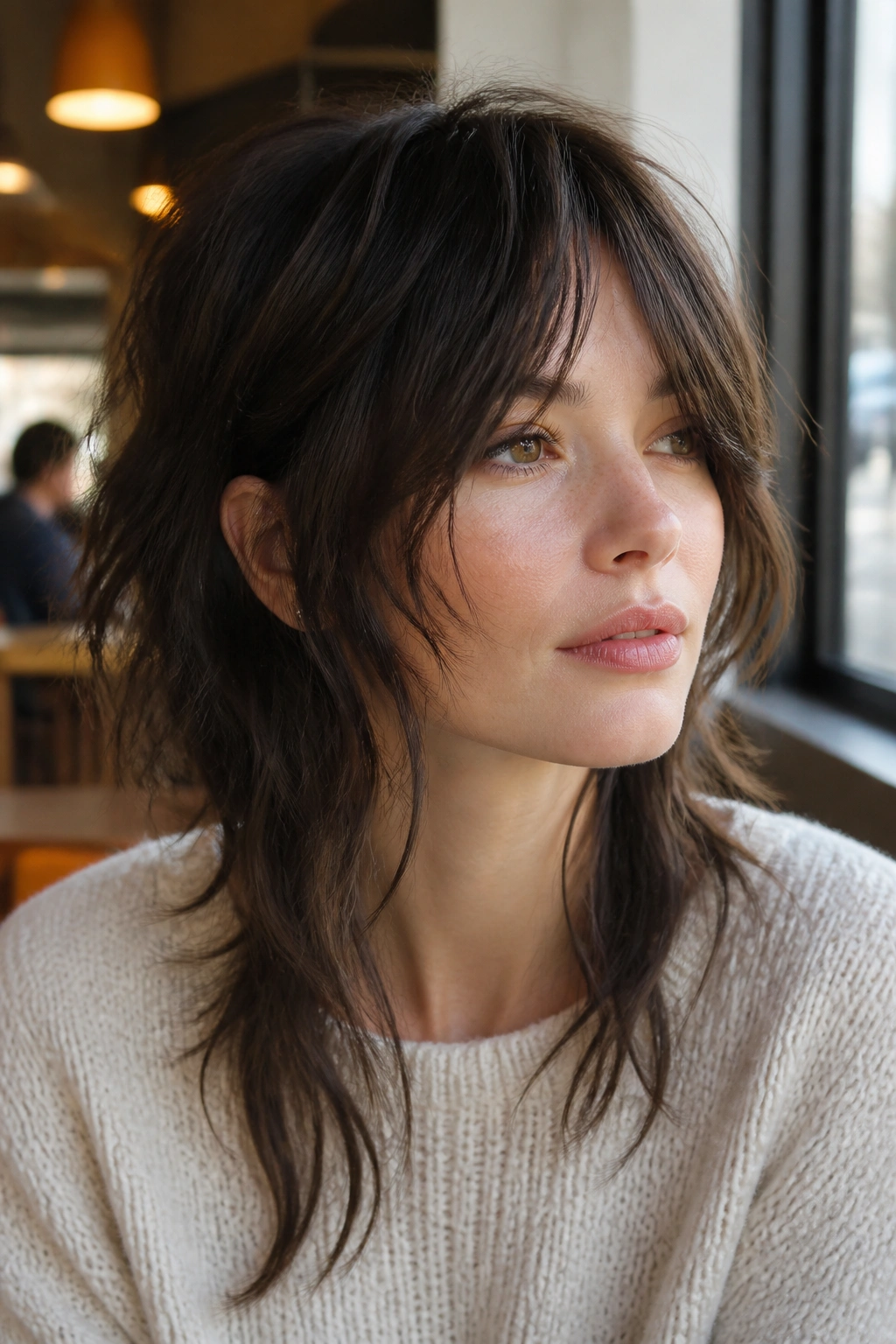
Need a softer look around the cheeks? This is the one. Long tendrils at the front create two clean vertical lines, which is one of the easiest ways to flatter a round face without making the haircut severe.
The rest of the cut can stay shaggy and loose. That contrast is what makes it work. You get softness at the face and texture through the body of the hair, which keeps the silhouette interesting.
A lot of people ask for face-framing layers and end up with pieces that stop at the exact widest part of the face. Bad move. The front pieces should fall below the cheekbone, and ideally graze the jaw or even the top of the collarbone.
I’d style this with a blowout brush and a slight bend away from the cheeks. That tiny movement matters more than another layer ever will.
15. Shoulder-Length Wolf Cut for Round Faces
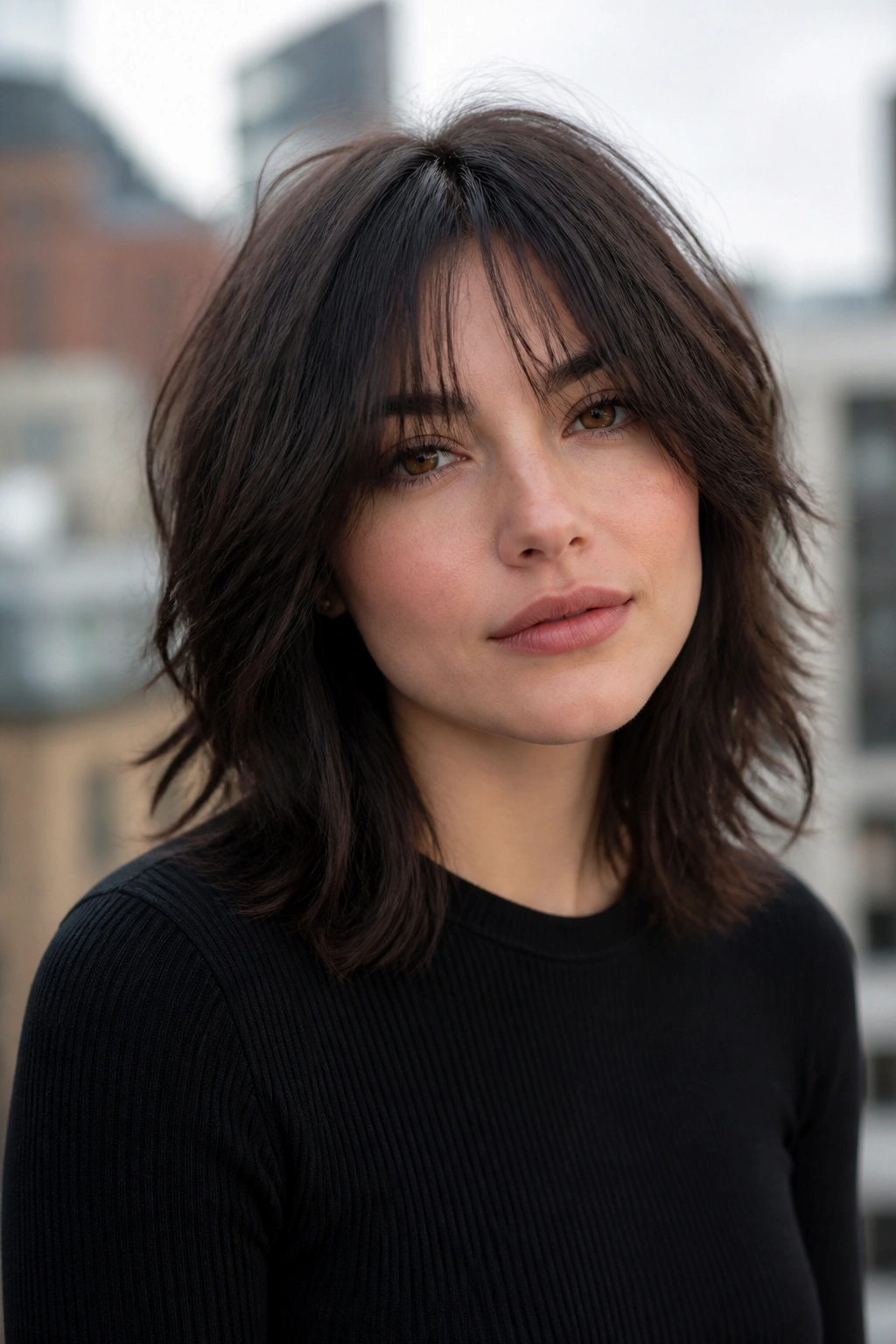
Shoulder length is a sweet spot for wolf cuts for round faces because it lands below the jaw and gives the face room to breathe. Short enough to feel fresh. Long enough to stretch the shape.
The cut works best when the shortest layers live around the crown and the front pieces drop past the cheeks. That keeps the volume from sitting right beside the face. If the sides puff out too early, the haircut loses the lengthening effect.
How to Ask for It
- Keep the perimeter at or just below the shoulders.
- Use layered pieces that begin around the cheekbone.
- Leave some weight in the lower third so the cut doesn’t frizz outward.
- Add soft texture, not jagged holes.
This length is easy to tuck behind the ears, clip half up, or wear loose. That flexibility is why so many people keep coming back to it.
16. Shaggy Wolf Cut with a Tapered Nape
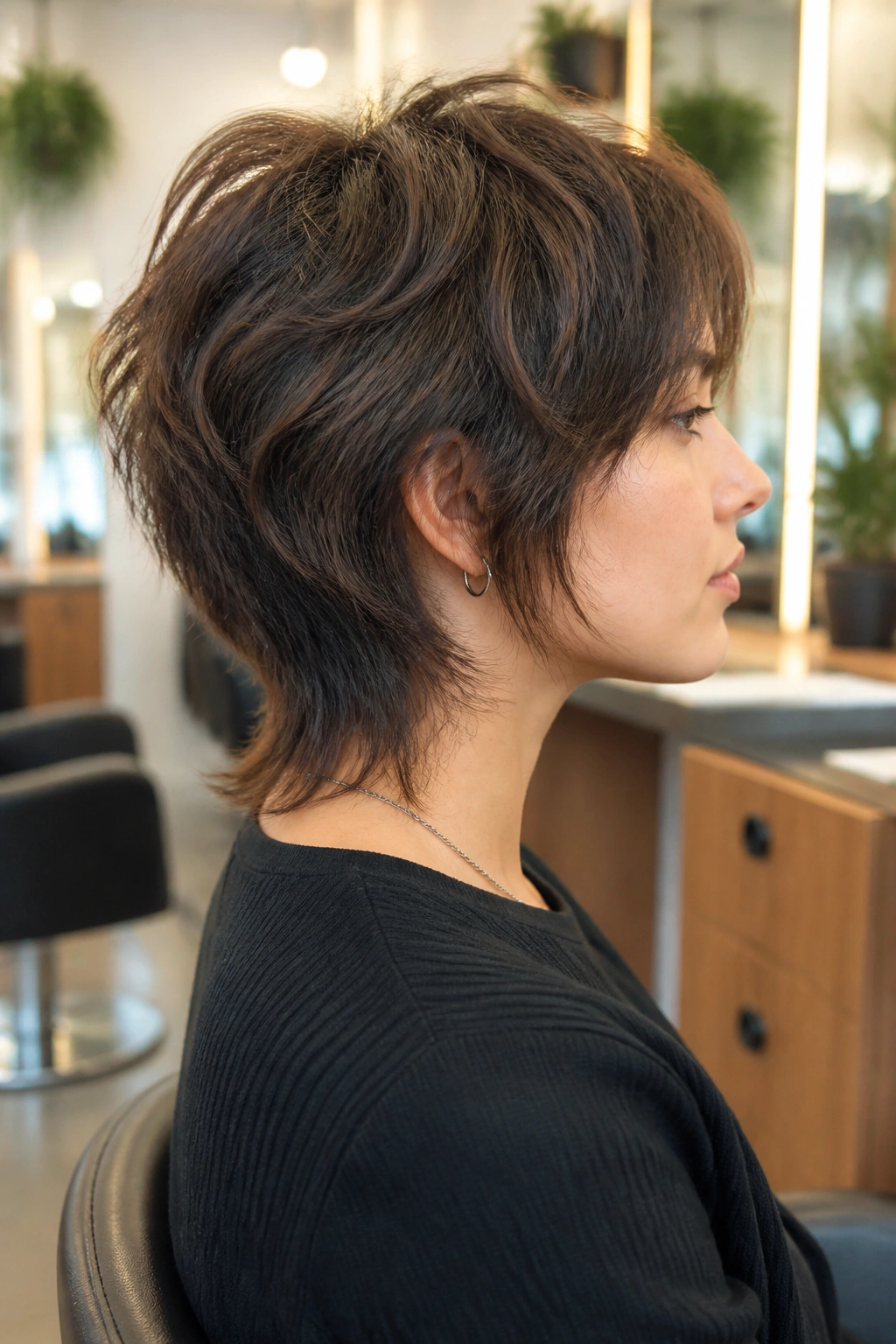
Here’s a good option if you like a little edge but don’t want the back to feel bulky. The tapered nape cleans up the silhouette, which helps a round face because it stops the haircut from expanding sideways at the neck.
A shaggy finish through the top gives you the wolf cut attitude. The back stays softer and tighter, so the cut doesn’t turn into a triangle. That’s the line you want to avoid.
This version is especially nice on thick hair. The nape taper removes weight where it tends to sit and makes the whole head feel lighter. That matters on humid days, and yes, your hair will remind you when you skipped that detail.
A little texture spray at the crown and around the back gives it some lift. Don’t overdo it. You’re going for movement, not a stiff helmet.
17. Wolf Cut with Wispy Bangs

Wispy bangs are a gentler way to bring fringe into the picture. They soften the forehead, but they don’t carve out a hard line, which keeps a round face from feeling boxed in.
The best version has tiny gaps between the strands. That sounds fussy, but it’s worth it. The breaks in the fringe let light through and make the cut feel lighter around the face.
This is one of those styles that can look almost too easy when it’s done right. A bit of blow-drying at the root, a quick shake with your fingers, and the bangs settle into place. If they get oily fast, dry shampoo at the roots will help, but only if you use a light hand.
I’d avoid cutting them too short. Wispy bangs look better when they hover around the brows instead of sitting way above them.
18. Long Wolf Cut for Round Faces
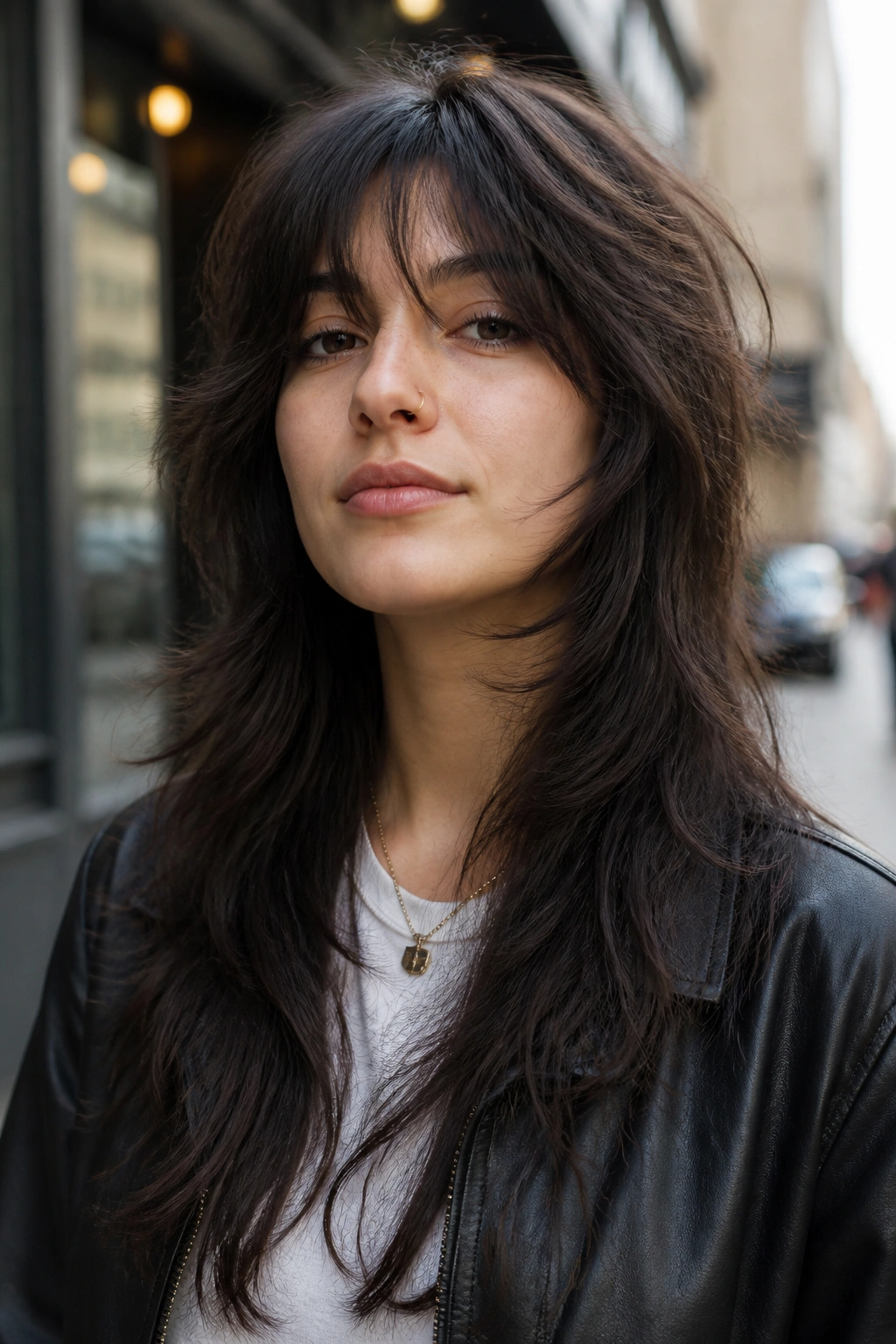
Long layers can be the best friend of a round face when they’re cut with enough structure. A long wolf cut keeps the overall length, then adds enough choppiness at the top and around the front to make the face look narrower.
The front should not stop at the cheek. That’s the biggest mistake I see. When the shortest layers hit too high, they widen the face right where you wanted help. Instead, let the pieces begin around the mouth or jaw and taper down.
What Makes It Work
The top stays light, the front stays long, and the ends keep some movement so the whole thing doesn’t look heavy. If your hair is thick, ask for internal layering rather than a lot of visible choppiness. You’ll get the shape without the frizz.
This style also grows out well. That matters more than people admit. A cut that looks cute for ten days and weird for six weeks is not a good deal.
19. Choppy Wolf Cut with Angled Ends
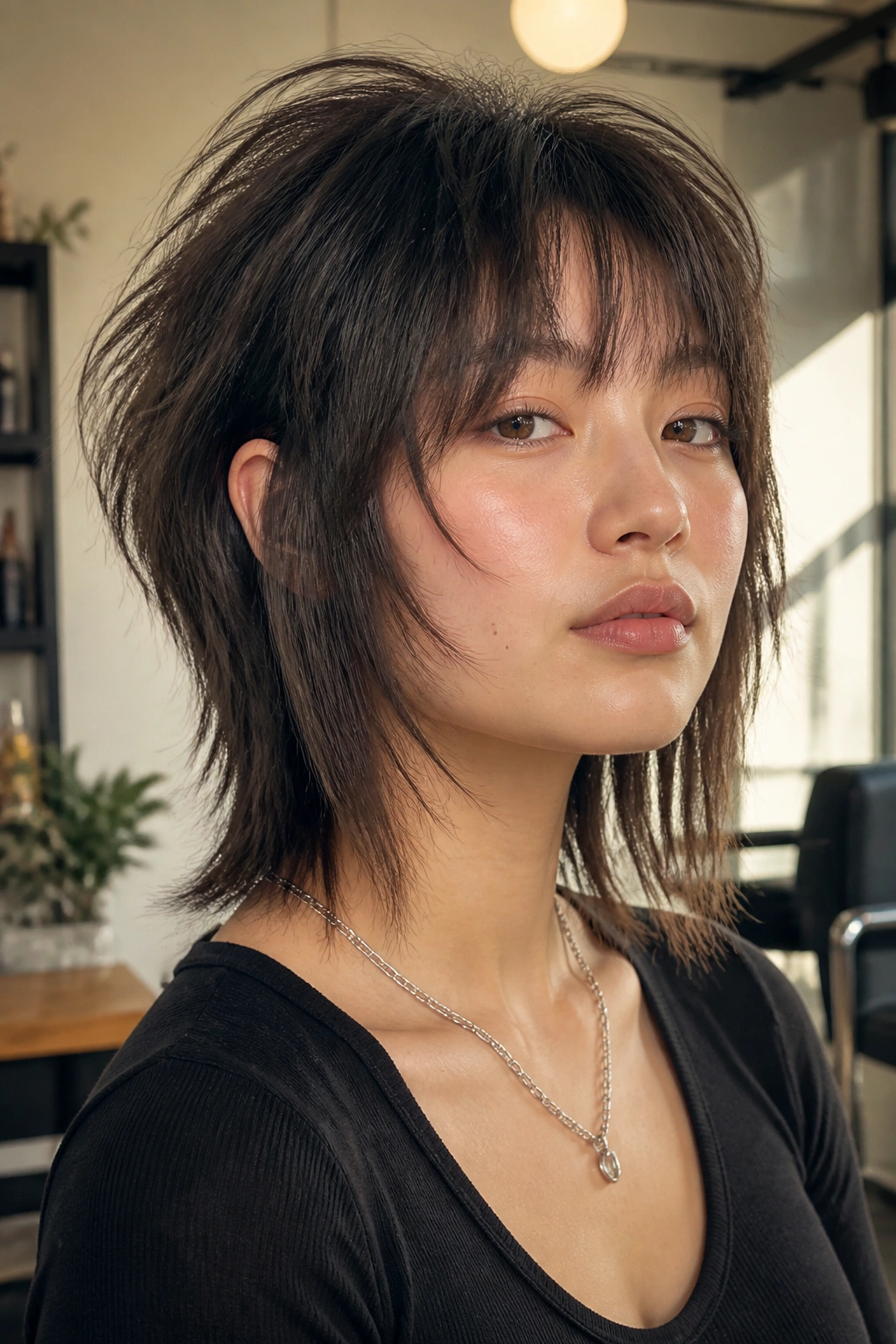
Want a little more edge? Choppy angled ends give the haircut some direction. Instead of rounding the hair out around the face, the ends point slightly downward and forward, which draws the eye into a longer line.
That angle matters. Round faces already have soft curves, so a straight-across or overly rounded finish can feel too circular. A sharper end shape keeps the silhouette honest.
This cut works especially well on straight to slightly wavy hair. If your hair is very curly, the angle can disappear unless the stylist leaves enough length to show it.
I’d wear this one with texture spray and a bit of finger-twisting at the front. The goal is separation, not perfection. A messy piece near the cheek is fine. A puffed-out side triangle is not.
20. Wolf Cut with Soft Crown Volume
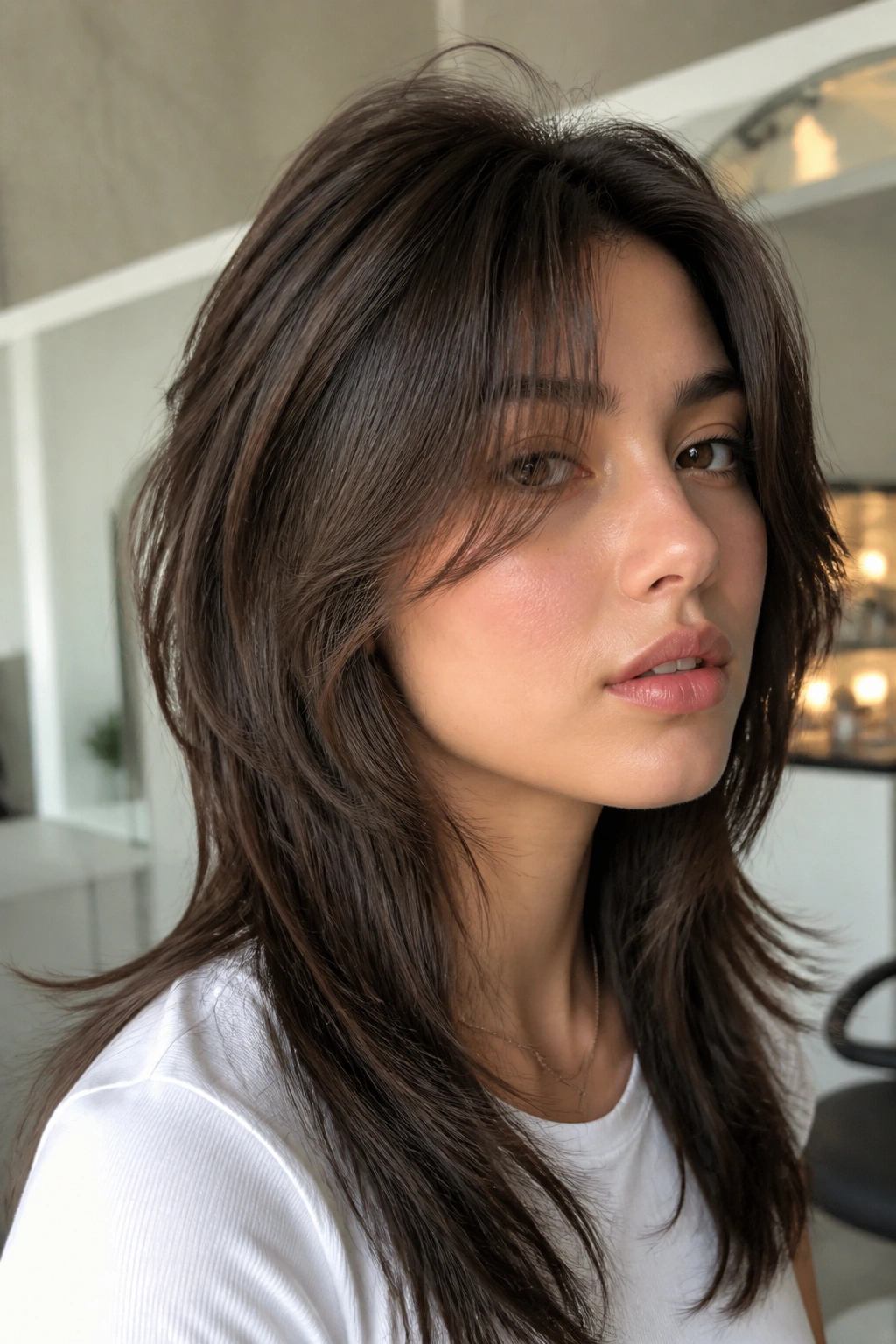
Volume at the crown is gold for round faces. It creates a taller outline, and a taller outline changes everything. This version builds lift without making the haircut feel spiky or overstyled.
The crown should be layered just enough to rise when you blow-dry the roots. The sides stay softer, and the front pieces fall long enough to keep the face open. That balance keeps the look from getting top-heavy.
A Simple Styling Pattern
- Spray a root-lift product at the crown on damp hair.
- Blow-dry the top section upward with a round brush or vent brush.
- Clip the front pieces away from the face while they cool.
- Finish with a light mist of flexible hold spray.
The cooling step helps more than people think. Hair sets as it cools, and that little pause keeps the root lift from collapsing the minute you walk outside.
21. Low-Maintenance Wolf Cut with Grow-Out-Friendly Layers
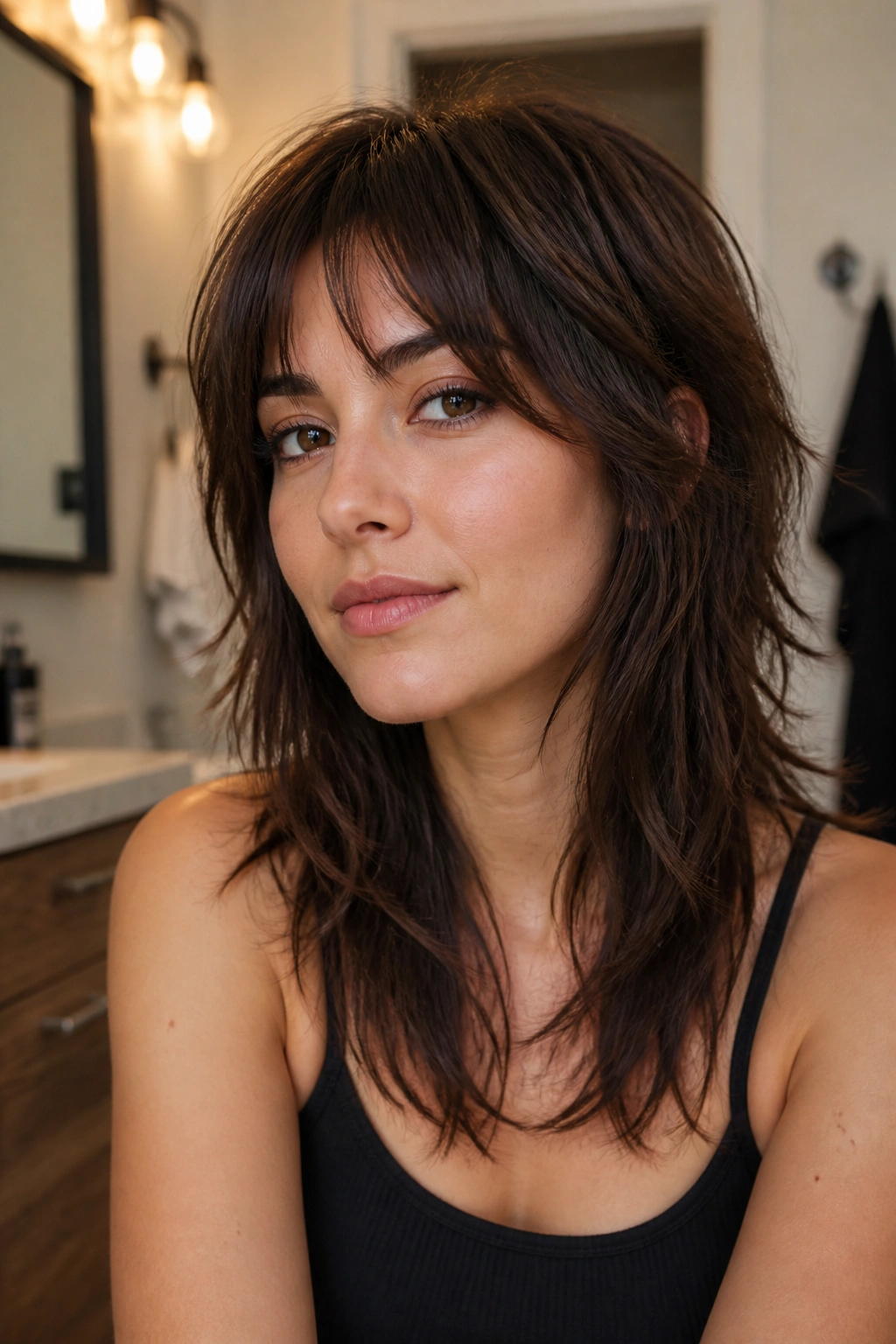
Not everyone wants a cut that needs constant fixing. This version is for the person who wants shape, movement, and a decent grow-out without living at the salon.
The layers are softer and more blended than a high-contrast shag, which keeps the haircut from developing harsh shelves as it grows. Around a round face, that’s a good thing. You still get the elongating shape, but the line stays forgiving.
This is the style I’d recommend if you work out, air-dry often, or only style your hair on days when you have the patience. It won’t punish you for skipping a round-brush blowout.
A trim every 8 to 10 weeks keeps it in check, but even if you stretch that a little, the cut should hold together. That’s a real advantage, not a small one.
22. Balanced Wolf Cut with a Long Fringe

If you want the most forgiving version of the bunch, this is probably it. A balanced wolf cut keeps enough softness around the face to flatter a round shape, while the long fringe gives you options on days when you want more coverage or less.
The fringe should live below the brows and move toward the cheekbones at the sides. That creates a gentle frame instead of a solid wall. The length also gives you room to tuck, part, or sweep it aside without losing the shape of the haircut.
I like this version for people who are nervous about going too short or too edgy. It still has the wolf-cut texture, but the long fringe keeps the whole thing wearable. If you bring a photo, bring two: one showing the fringe length you like, and one showing the amount of texture you want through the crown. That simple move saves a lot of awkward salon interpretation.
And if your stylist asks where you want the shortest layer to land, say this: below the cheekbone, not at it. That one detail does a lot of work.
