



A short wolf cut can do something a blunt bob usually won’t: it can make a round face look longer without making it look narrower or severe. That’s the sweet spot. You get the messy crown, the choppy ends, the little bit of attitude around the cheekbones, and none of the stiff helmet effect that so many one-length cuts fall into.
Round faces tend to have soft width through the cheeks and a gentler jawline. That means the best short wolf cuts work by pulling the eye upward and down, not side to side. Crown height helps. So do broken-up layers, narrow fringe shapes, and pieces that fall below the cheekbone instead of landing right on it like a shelf.
The bad versions are easy to spot. They puff out at the sides, end exactly where the face is widest, and get too round too fast. The good ones feel a little wild in the best way — airy at the top, light around the face, and a bit uneven through the ends. That imbalance is the point.
Here are 12 short wolf cuts that play nicely with a round face shape, from soft and wearable to a little sharper and more punk. Some lean shaggy, some lean pixie, and a few sit right in the middle. That middle ground is often where the magic happens.
1. Short Wolf Cut With Curtain Bangs
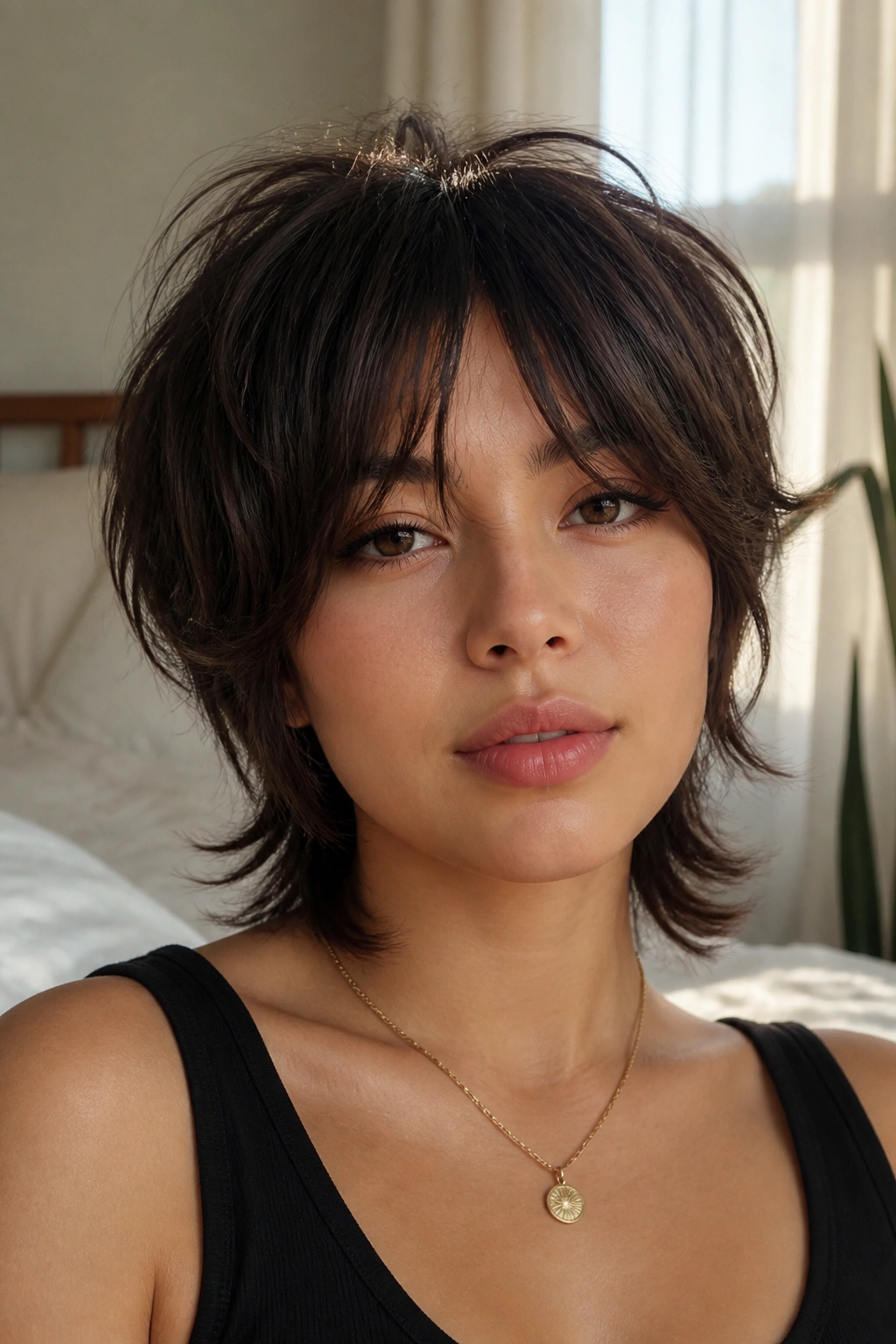
Curtain bangs are the most forgiving fringe for a round face, and I’ll die on that hill. They break up the width across the cheeks, open a clean line down the middle, and give the cut a softer frame without swallowing your face.
Why this version works
The shape starts with short, choppy layers at the crown and then tapers into longer face-framing pieces that sweep away from the center. That diagonal line matters. It keeps the eye moving instead of stopping it at the widest part of the face.
Ask for bangs that hit around the bridge of the nose or just below the brows, then open into cheekbone-skimming layers. If the fringe is cut too short and too blunt, it can make the face look wider. A soft split is better. A little bend helps, too.
- Best for wavy hair, straight hair with bend, and medium density
- Works well with a round brush, Velcro rollers, or a 1-inch curling iron
- Needs a trim about every 6 to 8 weeks if you want the fringe to stay light
Pro tip: blow-dry the bangs forward first, then sweep them to each side while they’re still warm. That little move keeps them from sitting flat and heavy.
2. Jaw-Skimming Wolf Bob
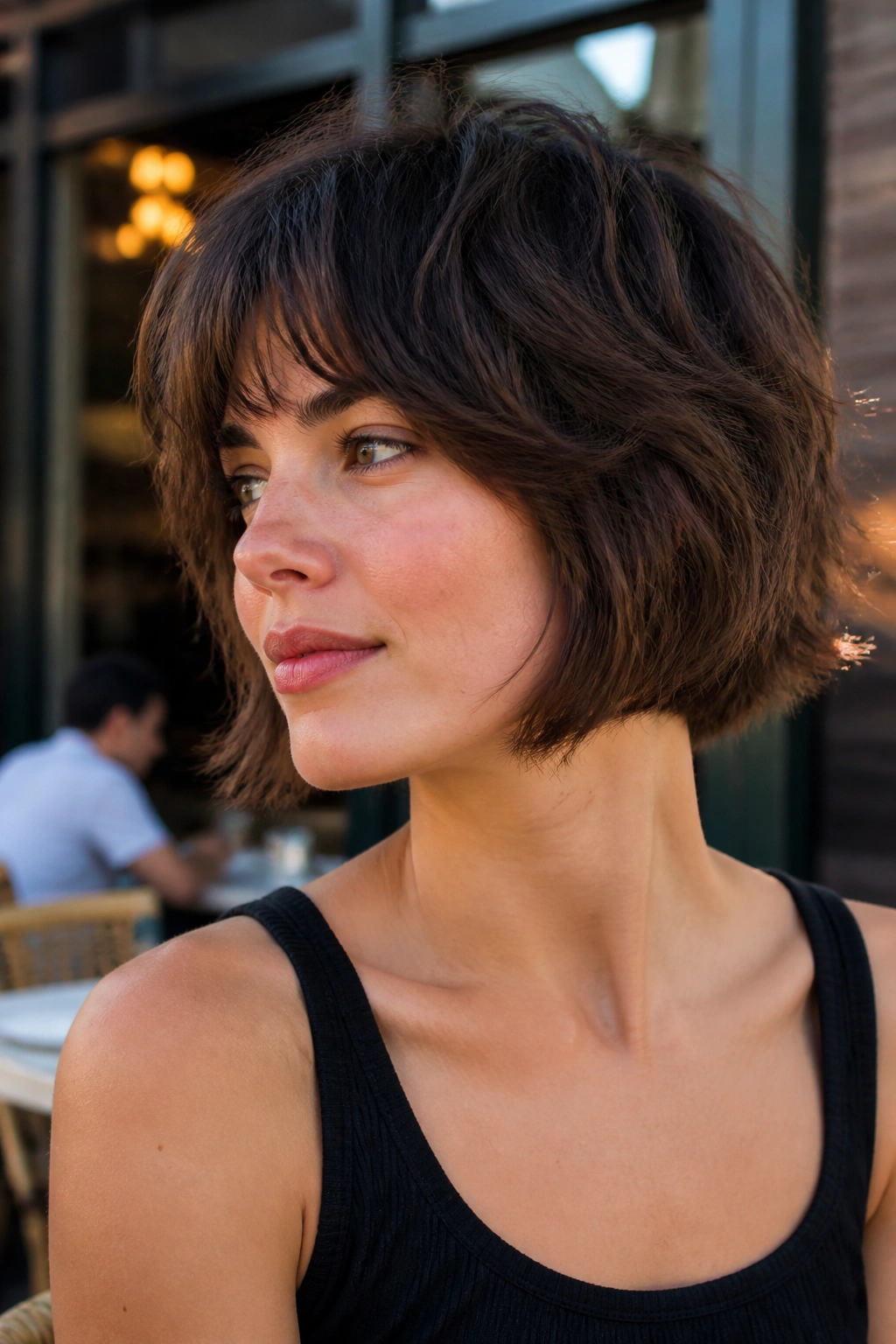
This is the cut for anyone who wants edge without going full shaggy chaos. The length sits around the jaw or just below it, but the texture keeps it from looking boxy. On a round face, that’s a useful trick.
The key is to keep the perimeter soft. Not blunt. A blunt jaw-length bob can add width right where you do not want it. A wolf bob, by contrast, uses shorter internal layers to cut down bulk while leaving enough shape to look intentional. It gives the impression of length, even though the cut stays short.
There’s also a nice side effect here: the neckline looks cleaner, and the whole cut has a little lift at the back. That lift is what stops the style from collapsing into a triangle. If you have thick hair, this version can feel like a relief.
A center part works. A slight off-center part often works even better. That tiny shift keeps the face from reading too perfectly symmetrical, which is a quiet win on round features.
3. Micro-Fringe Wolf Cut

Can a short fringe work on a round face? Yes — if the rest of the cut is doing real work. A micro-fringe on its own can be unforgiving. Paired with a wolf shape, though, it can look sharp, playful, and a little sly.
What makes it different
The trick is contrast. A tiny fringe up front draws attention to the eyes, while the longer, messier layers at the sides and back keep the cut from turning childish. You want the top to feel lifted, not dense. You want the sides to fall away from the face, not sit in a neat circle.
This version looks best when the bangs are cut with texture rather than a hard line. A razor or point-cut finish helps. So does a little separation. If every hair in the fringe sits in a solid block, the cut loses its shape fast.
How to wear it
- Air-dry with a light mousse for a rough finish
- Use a dab of styling paste on the fringe only
- Keep the crown fluffy, not slick
Micro-fringe is not the safest choice, and that’s part of why people like it. It has personality. But if your face already feels round and you want to visually lengthen it, ask for more height through the top and keep the fringe sparse rather than heavy.
4. Razored Pixie Wolf
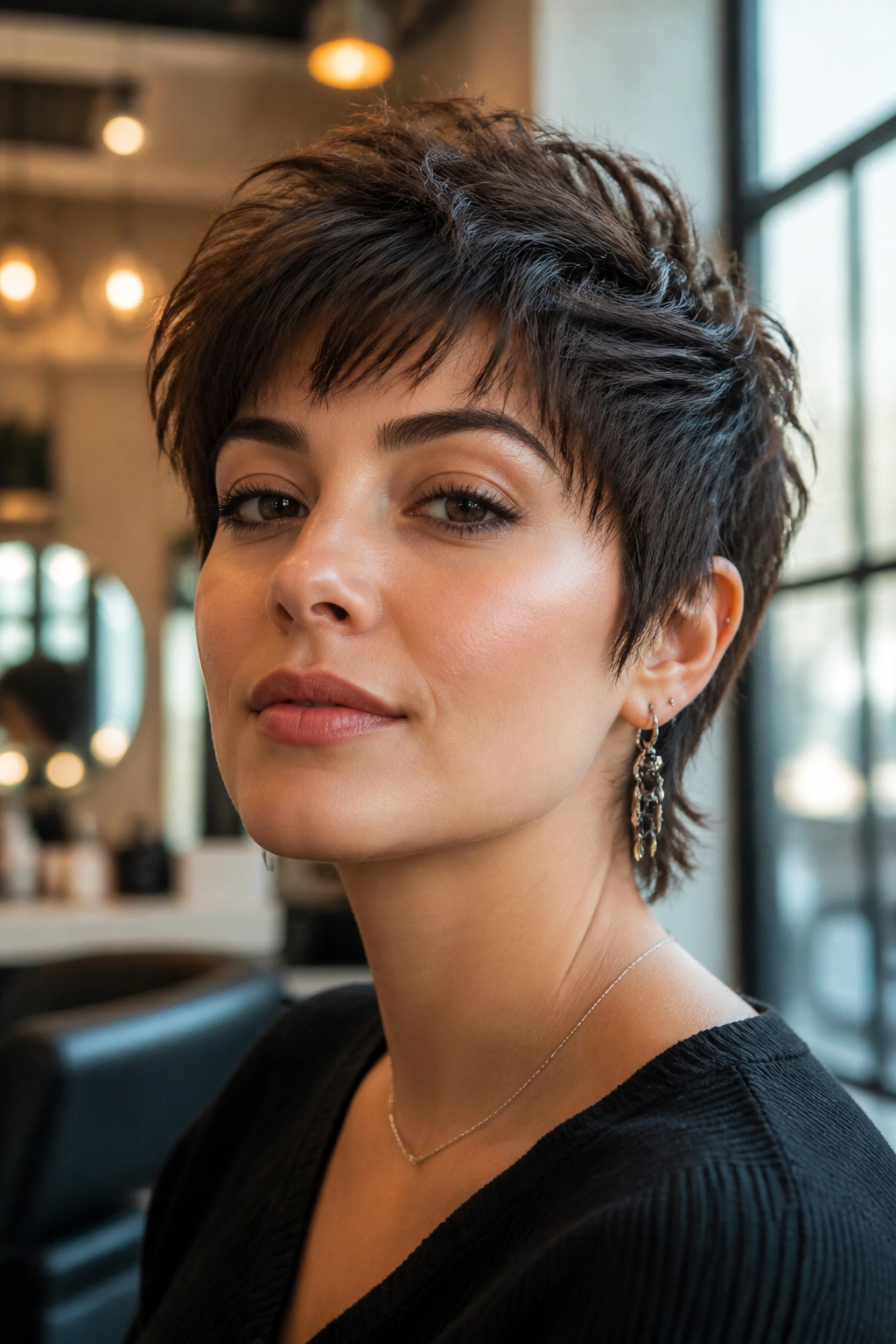
There’s a reason the razored pixie wolf shows up so often in good salons: it gives short hair movement without making it look puffy. On a round face, that lift matters more than length ever will.
I like this cut because it has bite. The layers are cut close enough to create shape, but not so close that the hair flattens against the head. The top stays a little longer, often around 3 to 5 inches, while the sides are feathered and the back is trimmed tight enough to keep the silhouette clean.
If you’ve ever tried a soft pixie and felt like your face got swallowed by volume, this is the fix. The razored finish breaks up thickness, which is especially useful if your hair grows out heavy. It also keeps the style from looking too polished. A wolf cut should have some edge, and this one delivers.
Hair types that suit it
- Thick hair: excellent, because the razor removes bulk
- Fine hair: workable if the crown is not over-thinned
- Curly hair: possible, but the curl pattern has to be respected
A tiny bit of paste or matte cream is enough. Too much product kills the lift. And yes, the cut grows out fast. That is the trade-off. The upside is that it still looks decent on the way to the next trim.
5. Feathered Crown Wolf Cut

This is the cut for people who want softness, not spikes. The feathered crown wolf cut keeps the top airy and the ends light, which helps a round face feel a little longer without looking harsh or over-designed.
What sells this shape is the way the layers are blended. The crown has short, lifted pieces that sit on top like loose feathers, then the hair falls into longer, shattered layers around the temples and jaw. The result is movement in vertical lines, which is exactly what a round face needs.
The best part? It doesn’t demand perfect styling. A quick blow-dry with a diffuser or a vent brush can get you most of the way there. If your hair has a natural wave, even better. Let the texture show. Trying to smooth everything down is a waste of time with this cut.
One note, because this matters: do not over-thin the sides. Feathered does not mean see-through. You still want enough weight that the cut holds a shape after the first wash. Ask your stylist to keep the perimeter soft and the crown choppy.
6. Soft Mullet Wolf Cut

People get nervous about the word mullet, which is fair. Bad mullets look accidental. A soft mullet wolf cut, though, is different. It keeps the rebellious shape but smooths the edges so the whole thing reads modern rather than costume-y.
Compared with a classic shag
A classic shag spreads the layers more evenly. This version puts more emphasis on height at the crown and taper at the nape. That creates a longer line through the face, which helps on round cheeks. The back is a little longer than the sides, but not in a dramatic, dated way.
The useful part is the balance. Shorter sides can make the face feel too wide if they puff out. By keeping the back soft and the top lifted, the cut stretches the eye up and down. That’s the effect you want.
Best styling move
Use a blow-dry brush or a diffuser, then push the top up with your fingers. Don’t overwork the ends. They should stay a bit broken, a bit piecey. That roughness keeps the style from going flat.
This cut is especially good if you like clothes with a little edge. Leather jacket, oversized tee, sharp collar — the haircut plays well with all of that. It has a little attitude. Not a lot. Enough.
7. Side-Swept Wolf Cut
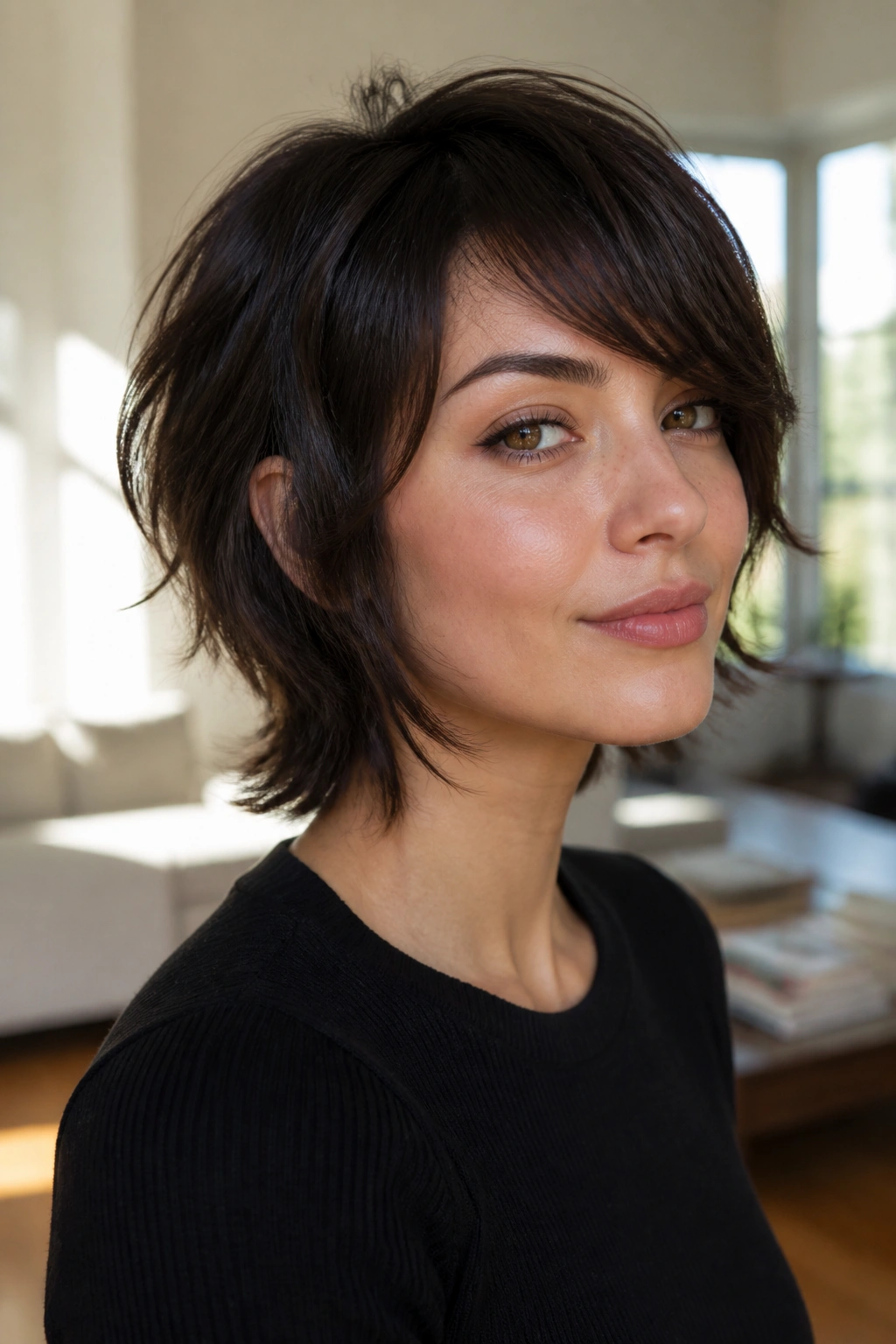
A side-swept fringe can save a cut that would otherwise sit too square on a round face. It shifts the weight off the center line and creates a diagonal that quietly lengthens the face. Small detail. Big effect.
Why it flatters round faces
The diagonal front section makes the cheek area feel less dominant. Instead of a straight-across fringe that chops the face in half, a side sweep gives you a clean opening over one eyebrow and a longer fall on the other side. That unevenness is flattering because it breaks the circle.
This version works well when the cut underneath is not too bulky. You want light layers around the cheekbones and a little lift at the roots, especially near the part. If the hair is too flat at the top, the side fringe loses its job and starts looking like a limp comb-over. Nobody wants that.
What to ask for
- A deep side part or a soft off-center part
- Fringe that starts around eye level
- Feathered pieces through the temple, not a heavy block
This is one of the easiest wolf cuts to live with if you hate fuss. You can tuck the fringe behind the ear on busy days, wear it swept across on better days, and let it do its thing when the weather gets humid. Simple. Useful. Better than most people expect.
8. Curly Short Wolf Cut

Curly hair and round faces can be a tricky pair, but a short wolf cut can fix a lot of the usual problems. The curls build their own height, and the layered shape keeps the sides from turning into a puffball.
The mistake people make is cutting curly hair too evenly. That creates a round silhouette, which is exactly what you’re trying to avoid. A good curly wolf cut removes bulk in the right places and leaves more lift at the crown. The top should feel lively. The sides should fall with purpose.
Because curls shrink, your stylist needs to cut this with the final shape in mind. Dry cutting is often better here, or at least cutting with the curl pattern fully mapped out. If the hair is cut wet and then springs up too high, the shape can get smaller than you meant.
Keep styling light. A curl cream with a small amount of gel is enough for most people. Scrunch, diffuse, stop touching it. That last part matters more than any product. Too much handling turns the cut fuzzy, and fuzz adds width.
9. Bixie Wolf Cut
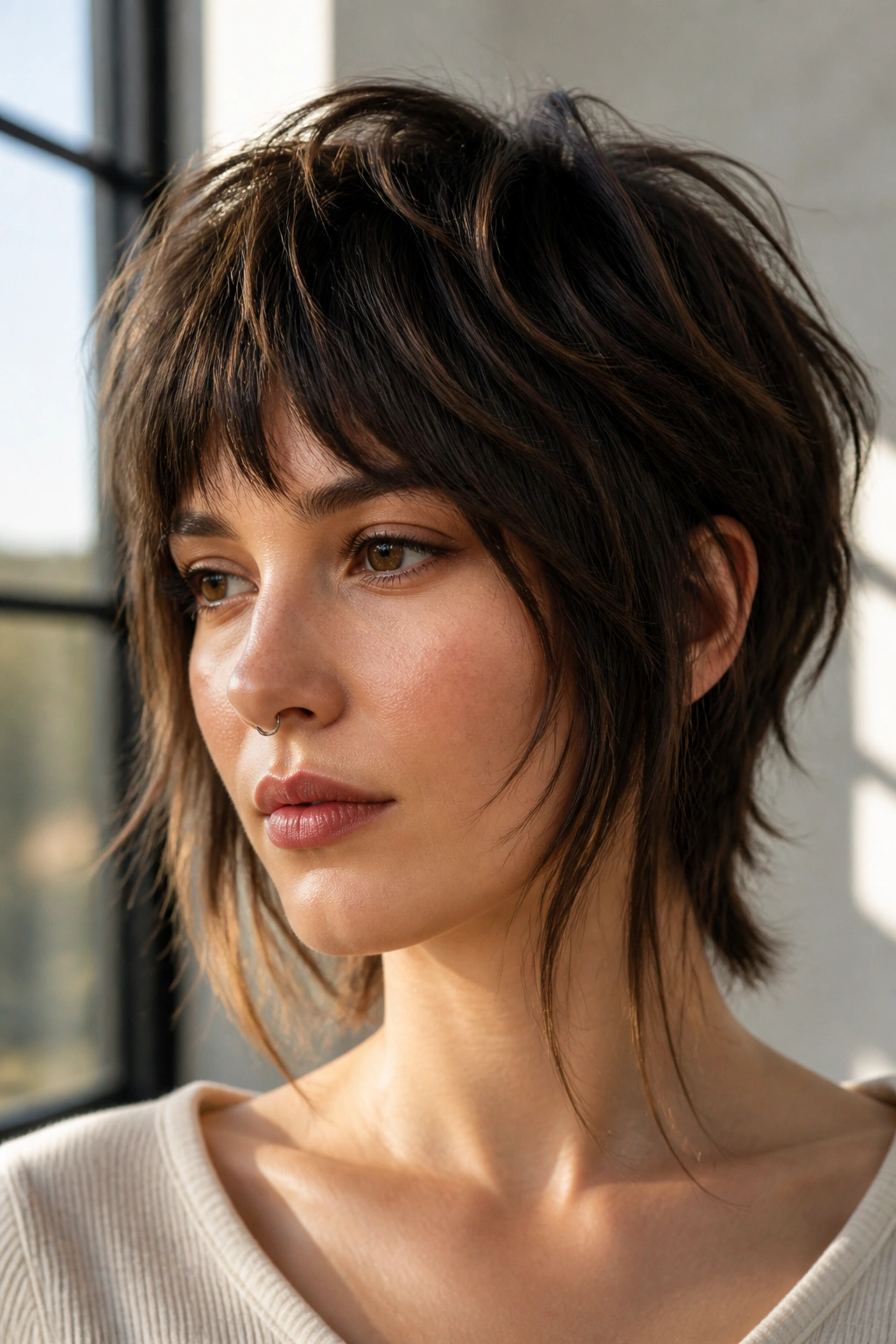
The bixie sits between a pixie and a bob, and that middle space is where the wolf-cut treatment gets interesting. On a round face, the bixie wolf cut can be one of the smartest choices because it gives shape without crowding the jaw.
What I like most is the tension between the short back and the longer face-framing front. It has enough length to create vertical lines, but not so much that the style feels heavy. The top can be slightly tousled, the sides can stay narrow, and the ends can be broken up with a razor or point cut.
How to keep it from going too sweet
Ask your stylist for:
- Tapered sides
- Slightly longer pieces near the cheekbones
- Soft texture at the crown
- A neck length that stays snug
This cut works beautifully on fine to medium hair because it creates lift where the hair usually collapses. It also grows out in a nice way, which is more than you can say for some short cuts. The grow-out can shift toward a shaggy bob without looking awkward for weeks on end.
If you want short hair but don’t want your face to look fuller, this is a smart place to land.
10. Undercut Wolf Cut
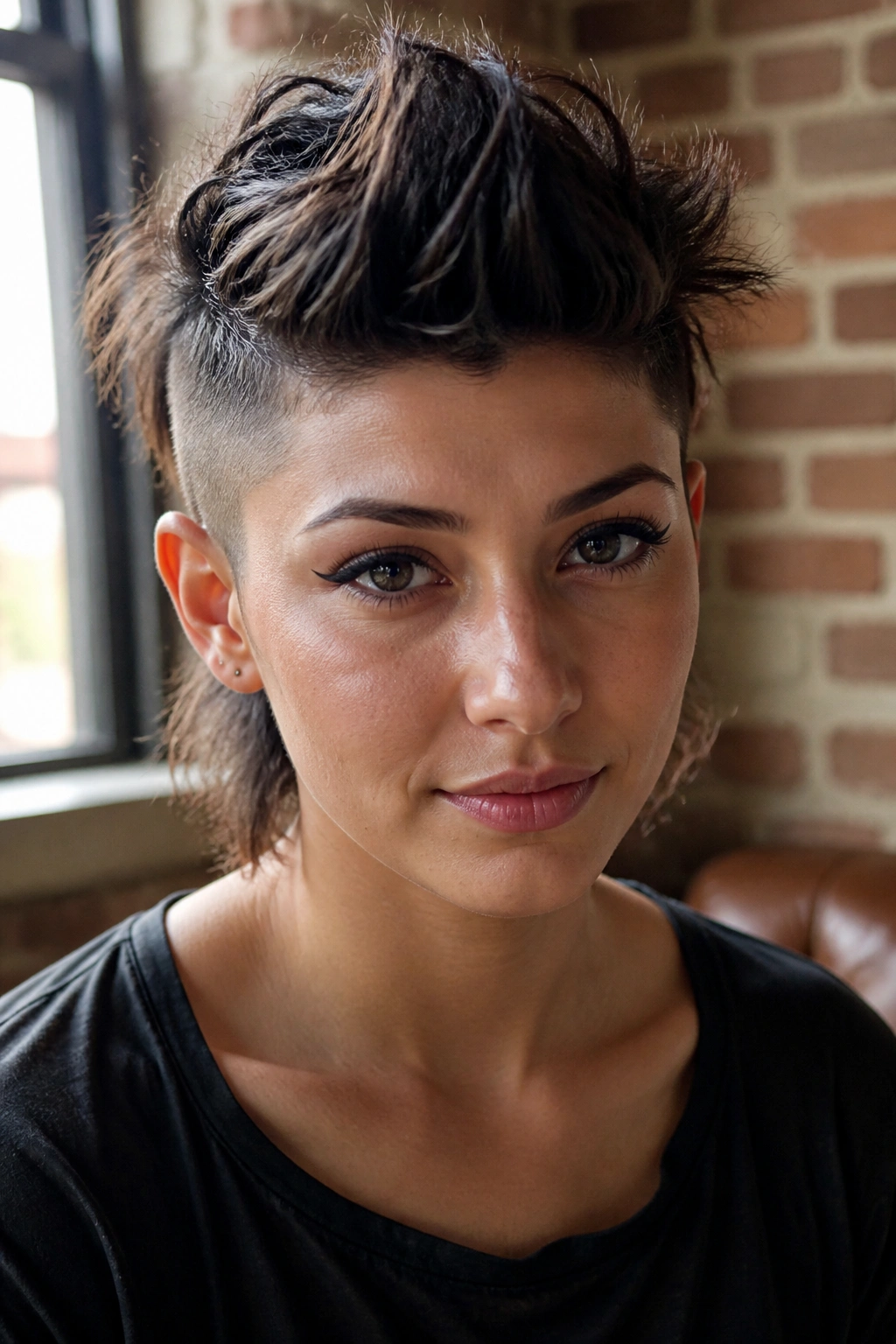
An undercut wolf cut is for someone who wants drama, not polish. The tight sides pull width out of the silhouette, while the longer top keeps the cut feeling like a wolf cut instead of a plain cropped style.
Imagine this on a round face: shaved or clipped sides, a lifted crown, and loose layers falling forward or slightly over the ears. That shape gives the eye a strong vertical path. It also puts the emphasis where you want it — up top.
What to watch for
If the undercut is too aggressive and the top is too flat, the head can start to look top-heavy. That is a real risk. The fix is volume. You need a bit of height at the crown and some broken texture through the top layers.
This cut makes a strong statement, so it pairs well with strong styling. A matte paste, a texturizing spray, or a root-lifting mousse will help. Heavy shine products tend to drag it down.
A quick note for anyone with thick hair: this style can be a gift. It removes bulk where hair usually balloons out, especially near the temples and behind the ears. If your round face has been fighting with too much side volume, this one can feel like a reset.
11. Short Shag Wolf Cut
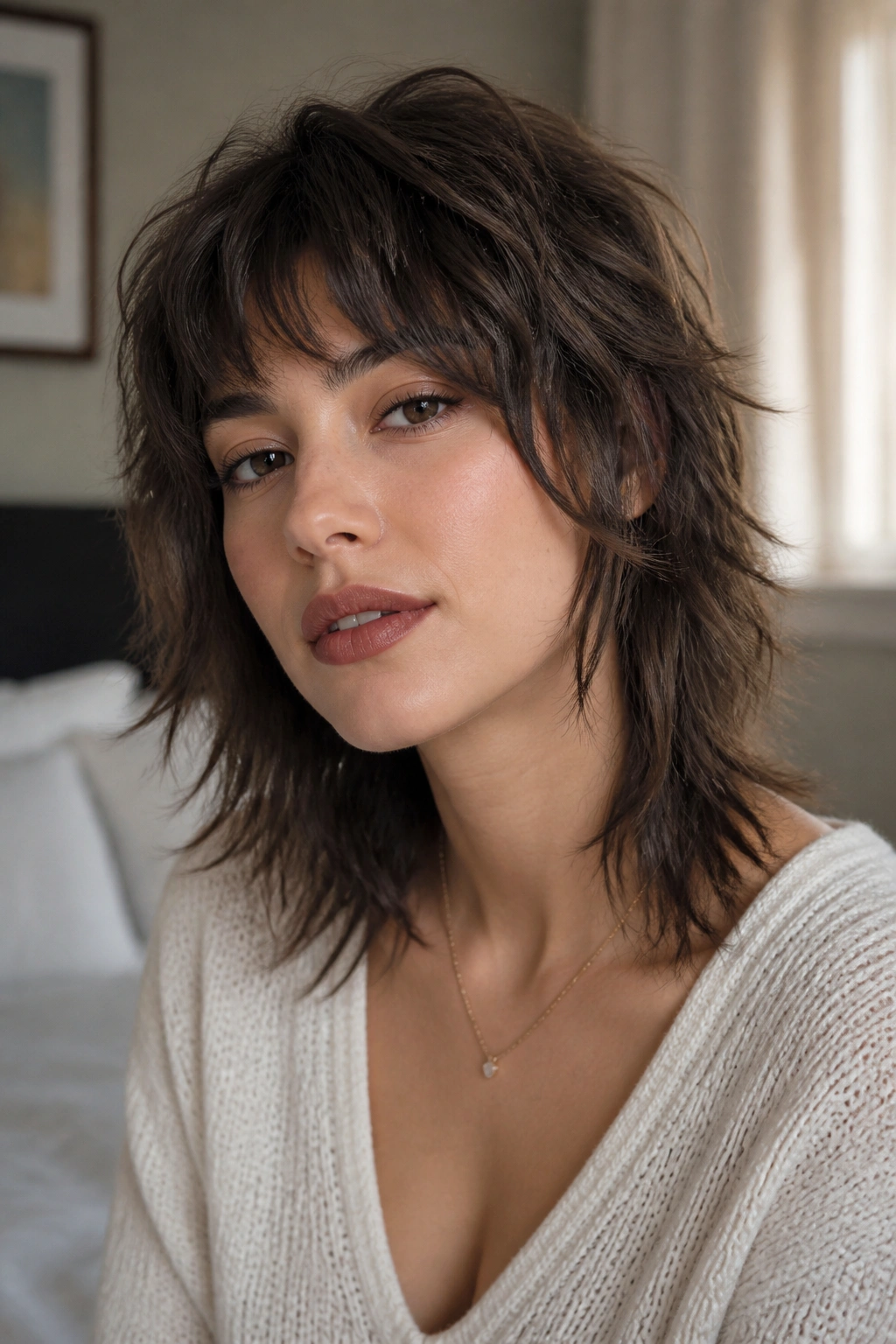
A short shag wolf cut is the easiest version to wear if you want softness first and edge second. It keeps the crown layered, the fringe light, and the ends a little broken, which gives round faces the kind of movement that flatters without trying too hard.
There’s a reason this cut keeps hanging around. It works on a lot of textures, and it doesn’t need a perfect blowout. The best version has a bit of air between the layers. Not too much. Just enough so the hair doesn’t sit in one solid shape around the face.
This is the cut I’d point to for someone who says, “I want short hair, but I still want to look like myself.” The shag keeps the personality; the wolf shape keeps the attitude. Together, they create a silhouette that’s looser at the top and slimmer through the sides.
It looks especially good with a little bend near the ends. You can make that with a small round brush, a curling iron, or even by twisting damp sections and letting them dry. The goal is not curl. It’s movement. Big difference.
12. Grow-Out-Friendly Wolf Cut

Some short cuts look great for one week and awkward for six. This is not one of them if it’s cut well. A grow-out-friendly wolf cut is the version I’d recommend to anyone who wants room to live with the hair, not just admire it in the mirror.
The shape starts short around the crown and nape, then leaves enough length in the front to keep framing the face as it grows. That matters on a round face because the cut can shift over time without turning boxy. The layers just get softer. The silhouette stays interesting.
Best way to ask for it
Tell your stylist you want:
- Lift at the crown
- Soft face-framing pieces below the cheekbone
- A textured perimeter, not a blunt edge
- Enough length at the front to tuck behind the ears
This version is also nice if you’re uncertain about how short to go. It gives you movement without locking you into a style that needs constant fixing. That’s practical, and honestly, practical hair often looks better because you actually wear it well.
If you only remember one thing from all 12 cuts, make it this: round faces usually look best in short wolf cuts that go up and down, not side to side. Keep the crown alive. Keep the cheeks lightly framed. Skip the bulky, flat shape that widens the middle of the face. That’s where the real difference lives.
