



There is a persistent myth that the Mohawk belongs solely to the world of extreme punk subcultures or historical rebellion. You look at it and see nothing but harsh lines and aggressive styling. That view misses the architecture of the cut entirely. A medium-length Mohawk is actually one of the most versatile structural foundations a stylist can work with. It relies on the deliberate manipulation of volume, silhouette, and weight distribution. When you find the right balance, you aren’t just wearing a haircut; you are managing a frame for your face that changes the way you hold your head.
The medium length is the sweet spot. It offers enough hair to experiment with texture—waves, curls, or pin-straight sleekness—while keeping the maintenance manageable compared to the extreme, floor-length styles seen in niche fashion circles. You can pull the sides tight for a sharp, high-contrast look, or leave a little length in the fade for something softer and more integrated. The key isn’t the shock value of the shave; it is the deliberate flow of the hair from the hairline back toward the crown.
Before you commit to the clippers or the shears, you have to understand that this style is about commitment to the silhouette. It requires you to consider your hair’s natural growth pattern and how it responds to humidity, wind, and movement. A well-executed Mohawk works because the stylist understands how to direct the hair away from the sides. It is about creating a deliberate, vertical focus that elongates the neck and draws the eye upward.
1. Classic Punk Spikes
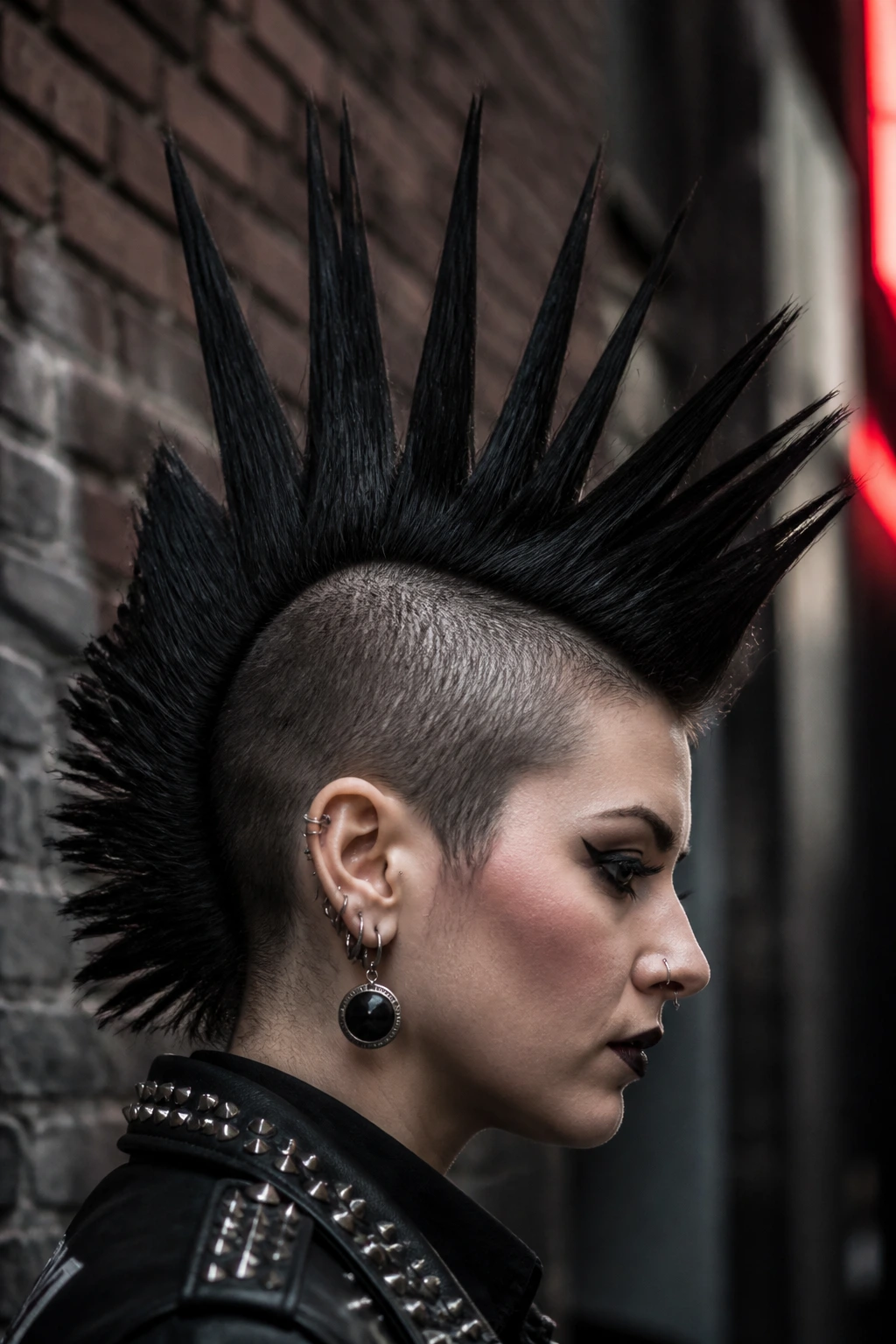
This is the silhouette that comes to mind when most people think of the style. It relies on structural integrity, requiring a firm-hold hairspray or a high-tack pomade. The secret here is not the hair itself, but the preparation of the base.
Why This Style Endures
The classic spike is all about verticality. By using a comb to tease the roots and applying product in sections, you create a rigid frame that defies gravity. It is not designed to be touched or messed with; it is an architectural piece.
Essential Styling Techniques
- Start with damp hair to ensure the product distributes evenly.
- Use a blow-dryer on a medium heat setting to set the shape.
- Finish with a matte-finish hairspray to prevent the “wet look” that can make spikes appear thin or greasy. Pro Tip: If your hair feels too heavy for spikes, try using a texturizing powder at the roots before you begin; it creates the necessary grip so your hair stays upright without needing an entire can of spray.
2. The Soft Fauxhawk

If you are hesitant to commit to a full shave, the fauxhawk is your entry point. This style keeps the sides intact but uses cutting techniques—like heavy tapering or razor cutting—to create the illusion of a narrower profile.
The magic happens in the styling. Instead of shaving the hair, you use a firm-hold gel to slick the sides back tight, creating a visual narrowing of the skull. The center section is left longer and styled with volume, giving you that aggressive Mohawk shape without any actual scalp exposure. It is a fantastic option for professional environments where you might want to switch your look back to something more traditional at the end of the day.
3. Curly Texture Fade
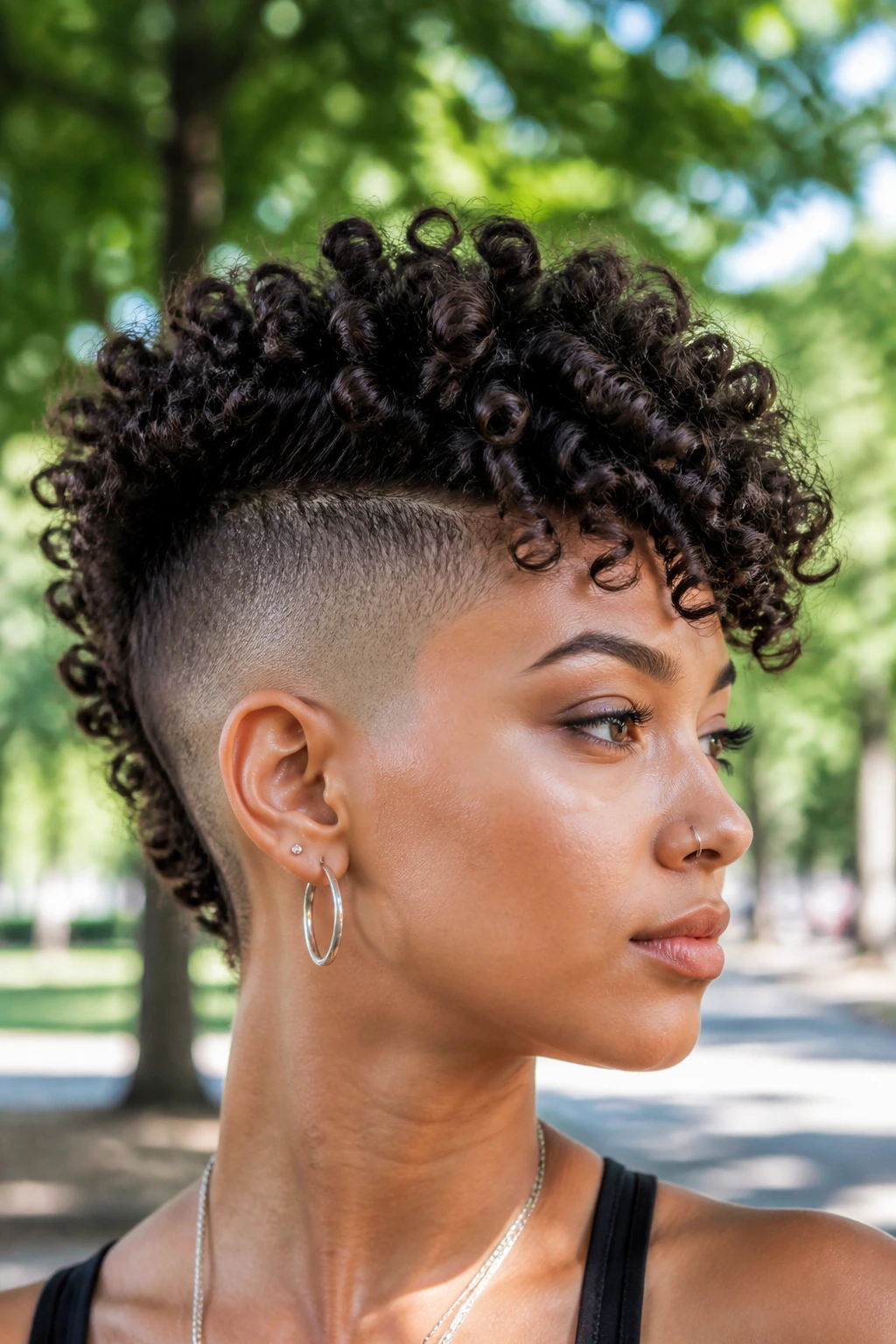
Working with natural curls in a Mohawk configuration is a masterclass in shape management. A tight fade on the sides prevents the “mushroom” effect that often happens when curls grow out, ensuring the density stays focused exactly where you want it.
The Mechanics of the Fade
You need a barber or stylist who understands how to cut into the curl pattern. If the cut is too blunt, the hair will expand outward rather than upward. A fade—specifically a high skin fade—is the most reliable way to create a clean perimeter.
Managing the Center Volume
- Use a leave-in conditioner to define the curl.
- Apply a curl-enhancing cream while the hair is soaking wet.
- Allow the hair to air dry rather than using a diffuser if you want maximum definition and tighter spirals.
4. Braided Side-Undercut
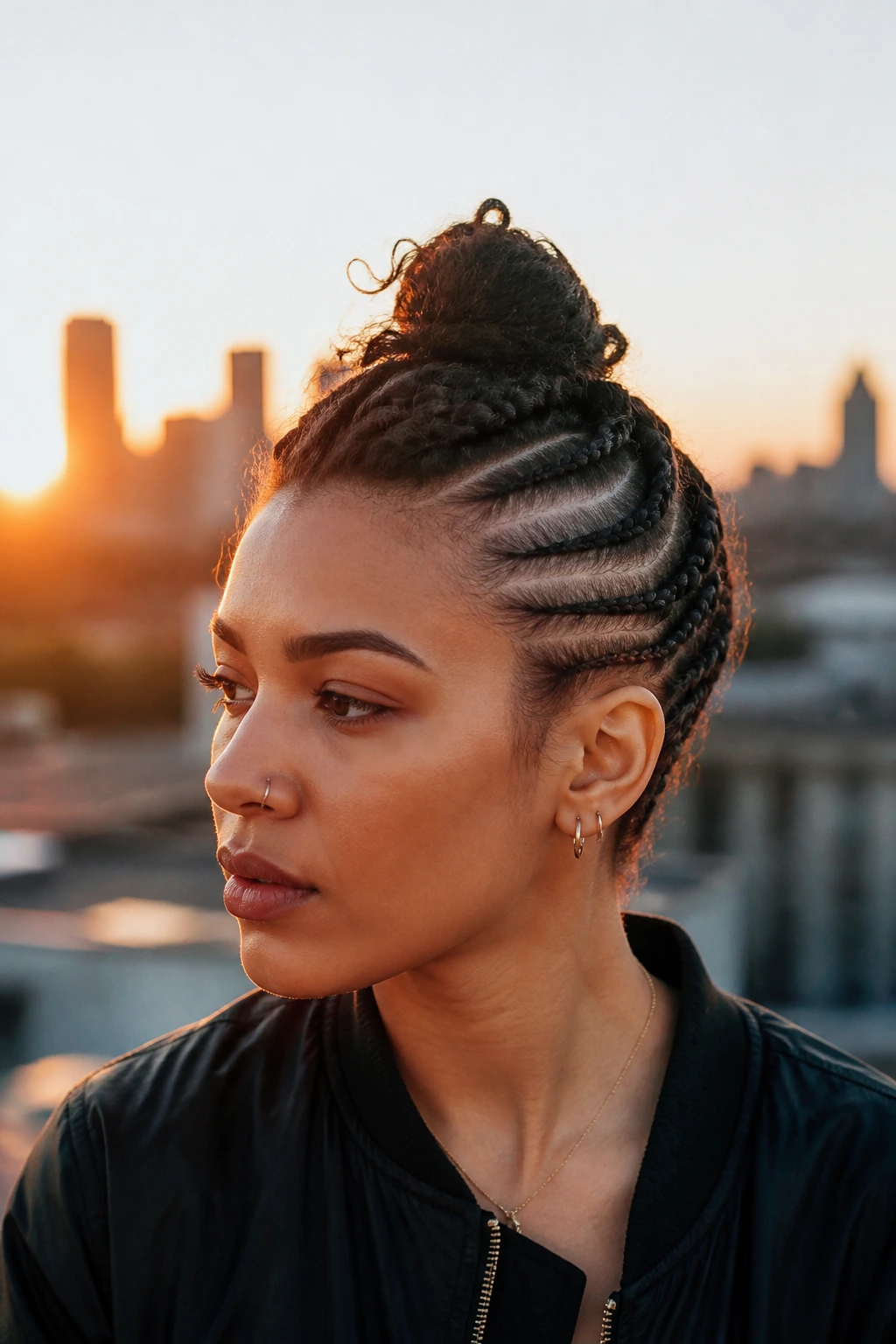
This style blends the structure of a Mohawk with the intricacy of scalp braids. It is a protective, incredibly secure way to wear the look, especially if you have thick or coily hair that tends to have a mind of its own.
The process involves cornrowing the sides tightly against the scalp toward the center. The remaining hair in the middle is left free, which can be styled into a topknot, a loose spike, or left as a voluminous crown. This is the rare Mohawk style that actually improves as the days go by, provided you tie your hair down at night with a silk scarf to prevent frizz around the braids.
5. Pastel Shag Mohawk
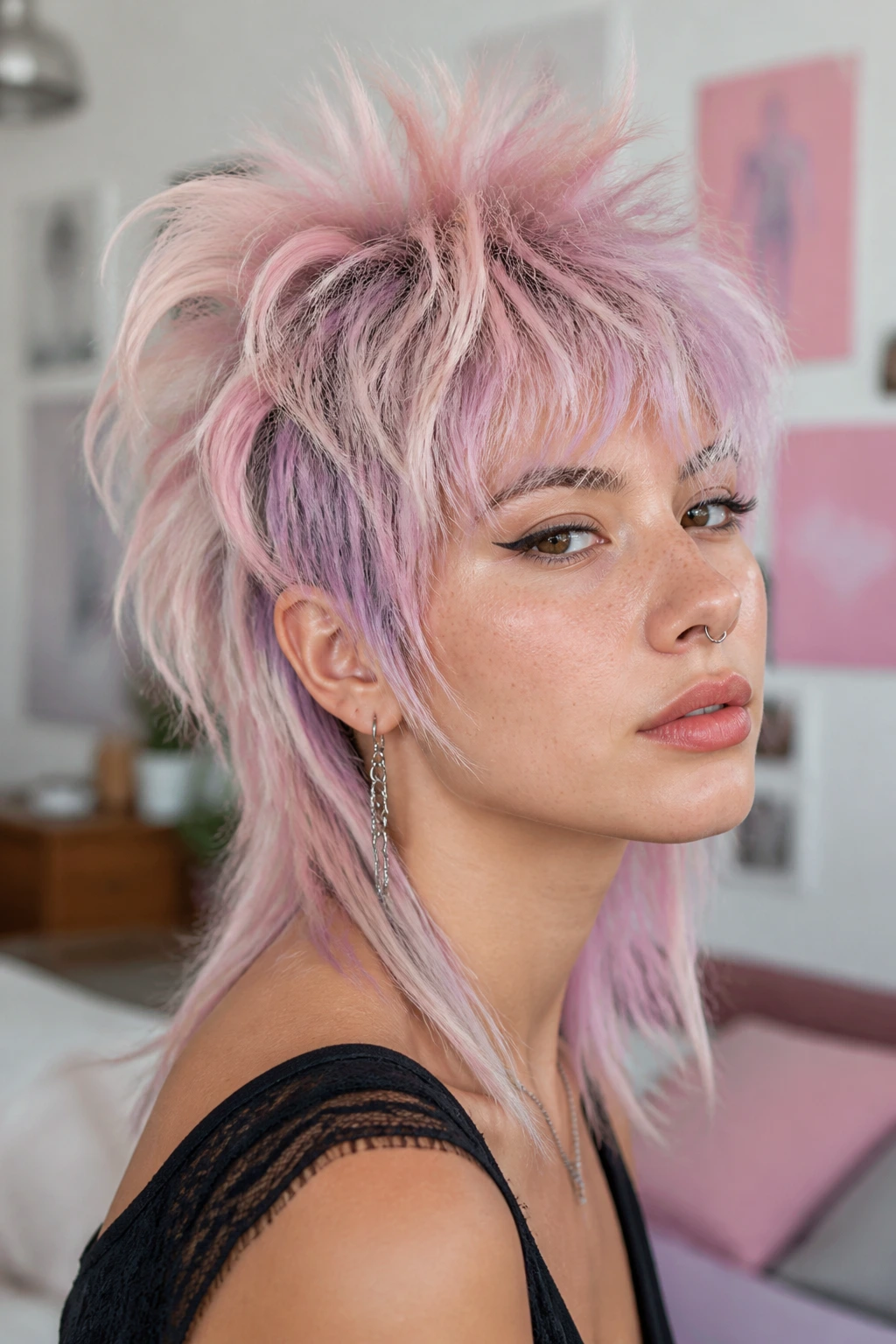
We often see Mohawks paired with harsh, dark colors, but a pastel shag version breaks that rule. It is soft, whimsical, and relies on choppy, razor-cut layers that create a messy, lived-in aesthetic.
The structure is intentionally imprecise. Your stylist should focus on point-cutting the ends to prevent blunt, heavy lines. The result is a silhouette that looks like you just rolled out of bed, but with deliberate placement. Think of it as a “high-fashion grunge” look. It requires frequent toning to keep the pastel shades vibrant, so it is a high-maintenance choice, but the visual payoff is undeniable.
6. Geometric Fade
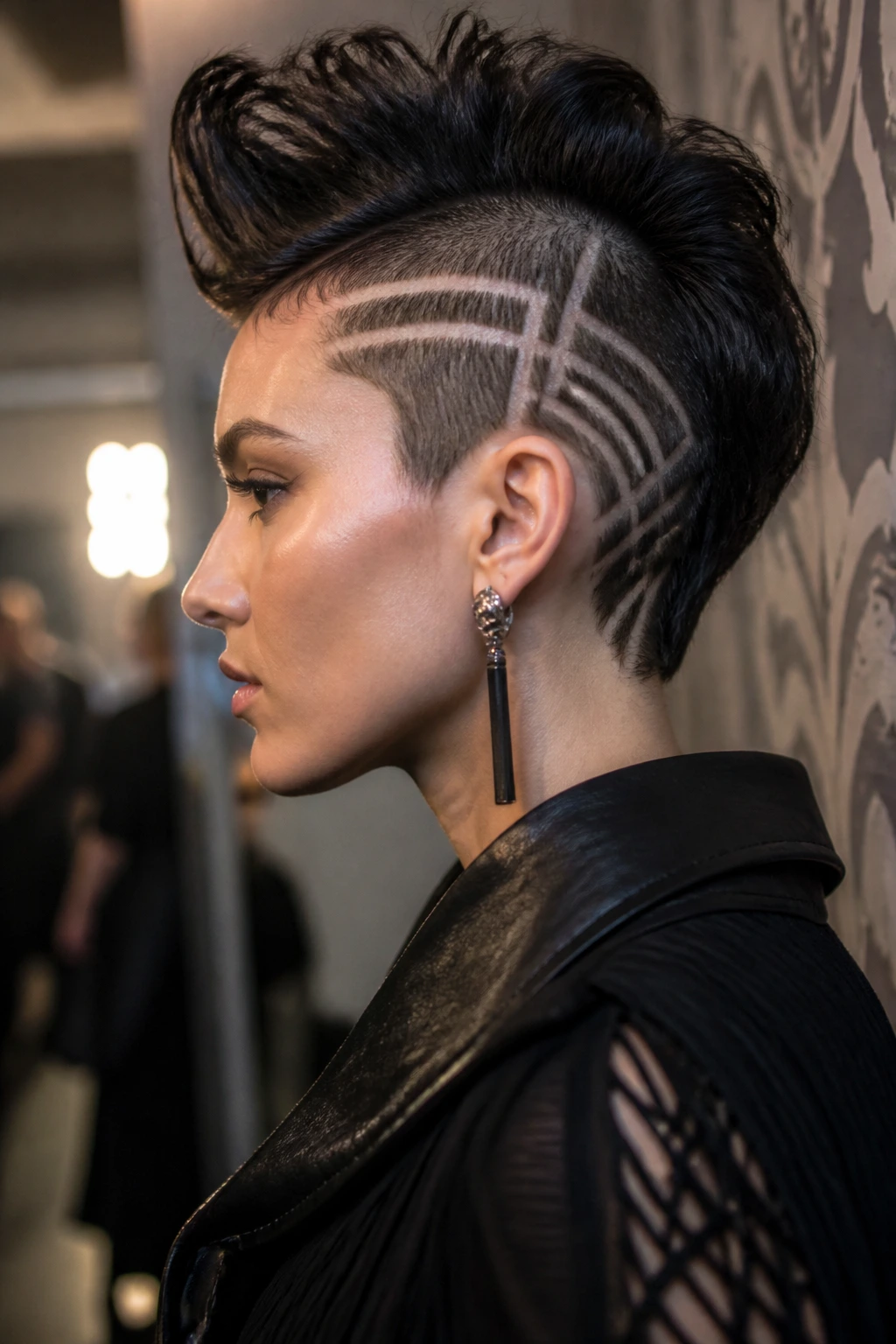
If you want to treat your hair like a canvas, the geometric fade is the way to go. This involves more than just a standard skin fade; it incorporates razor-etched lines, stars, or abstract patterns into the sides of the head.
The Mohawk itself stays the focal point, but the sides act as an accessory. You will need to return to the shop every two to three weeks to keep the lines sharp and crisp; as the hair grows, the geometry loses its definition quickly. It is an investment of time, but it transforms your head into a piece of custom design.
7. Long-Top Pompadour
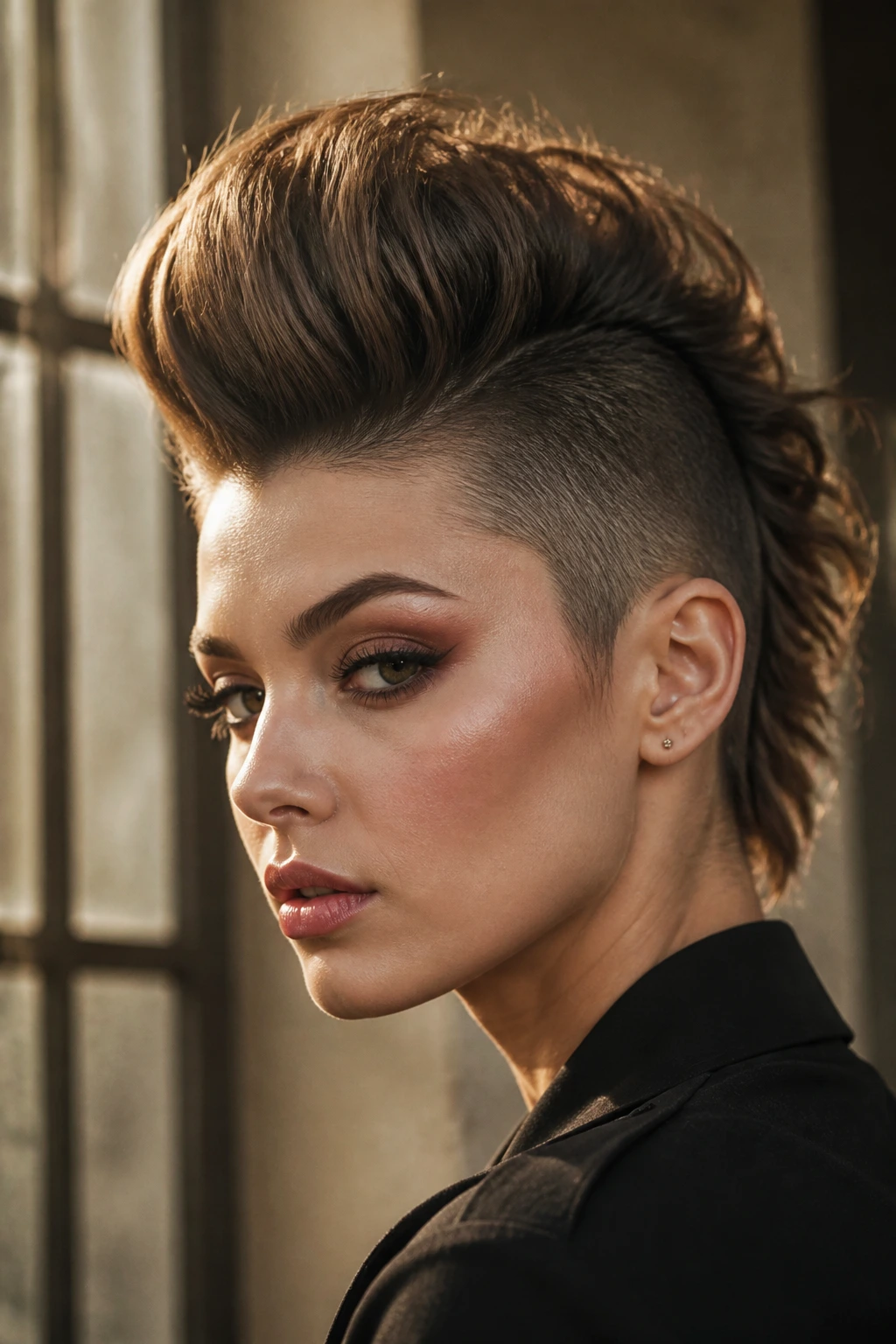
Take the structure of a pompadour—high volume at the front hairline—and combine it with the tapered sides of a Mohawk. This is a sophisticated, retro-inspired look that feels more “editorial” than “punk.”
It works best with medium-length hair that has enough weight to hold a curl. You use a round brush to create a massive amount of lift at the root, then sweep the hair back and toward the center. It requires a significant amount of hairspray, but the resulting shape is elegant and structured, reminiscent of rockabilly icons while remaining entirely modern.
8. Textured Messy Layers
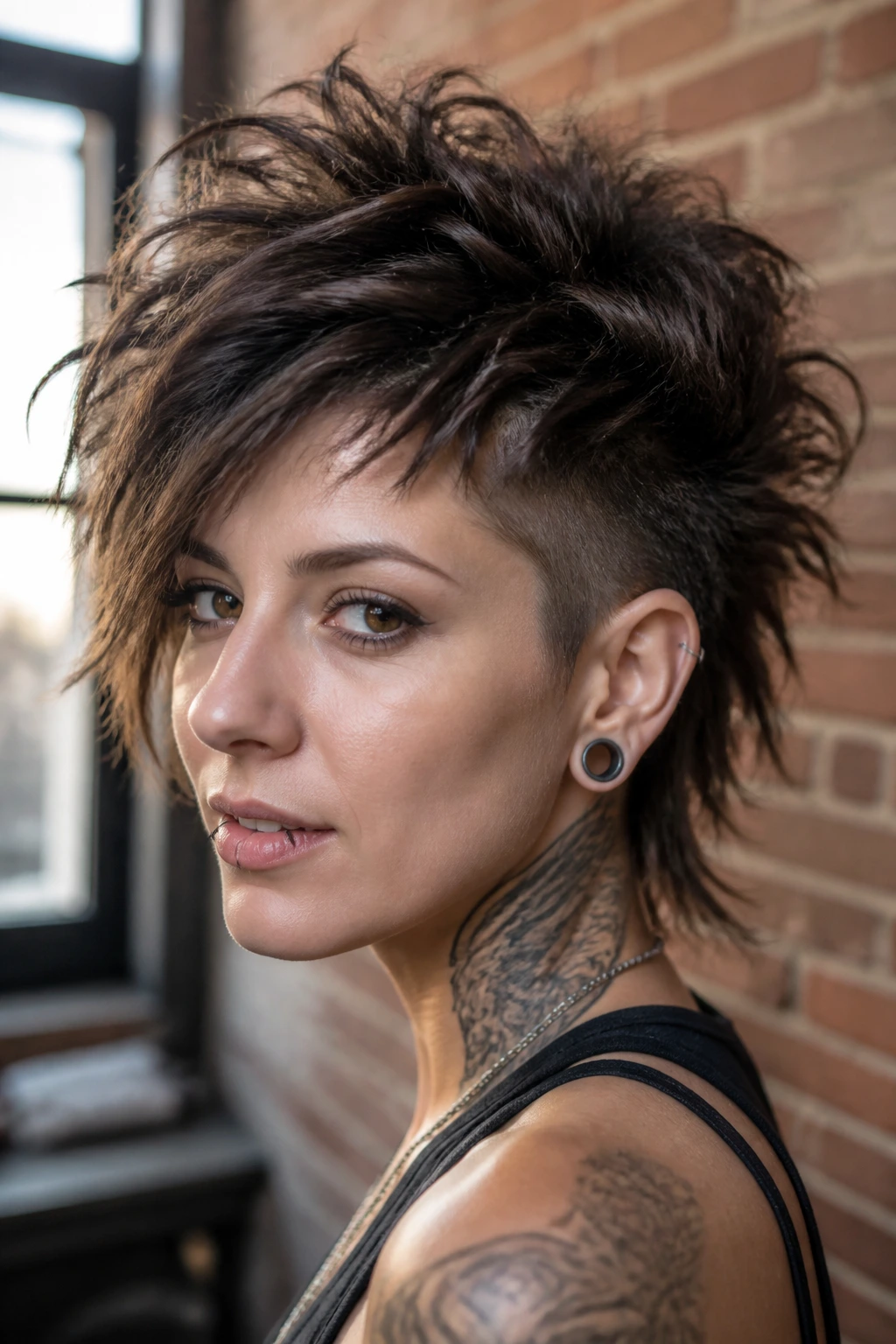
Sometimes, the best Mohawk is the one that looks the least “done.” This style is all about choppy layers of varying lengths that create a chaotic, wild, and incredibly textured look.
It ignores the need for perfect symmetry. By using a texturizing shear, the stylist removes weight from the interior of the hair, allowing the layers to stack on top of each other. This is perfect for fine hair that usually struggles to hold volume; the layers essentially build their own scaffold. You don’t need heavy styling products here—a light sea salt spray is usually plenty.
9. Wolf-Cut Hybrid
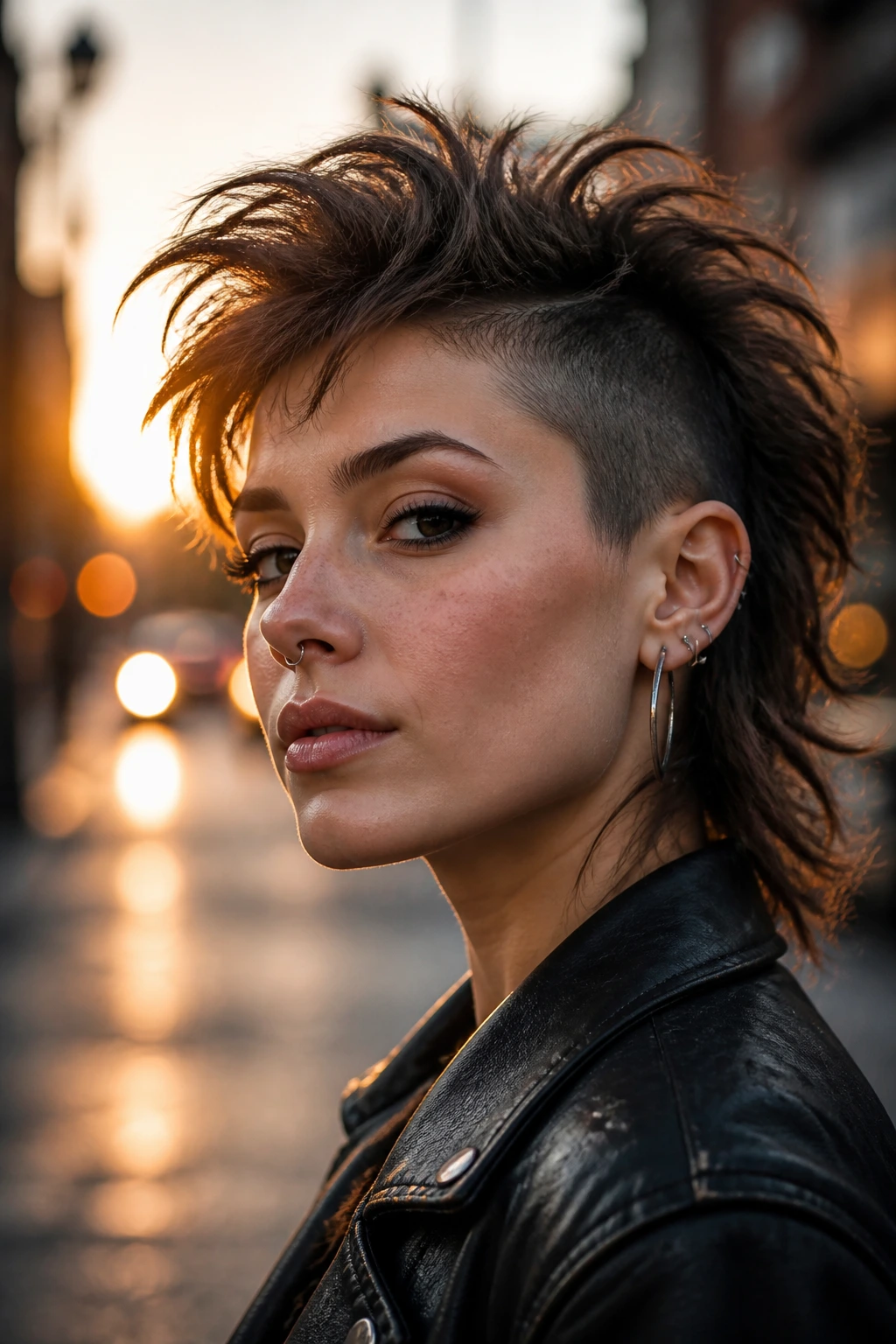
The “wolf cut” is characterized by choppy, shaggy layers and a voluminous crown. By tightening the sides into a fade or a very close crop, you get the trendy wolf-cut volume on top with the sleek, edgy profile of a Mohawk.
This is the ultimate low-effort high-impact style. Because the cut itself does the work of creating volume and texture, you spend almost zero time styling in the morning. Just tousle it with a bit of dry shampoo or texturizing cream, and you are ready. It is a fantastic option for those who want the Mohawk aesthetic but have a more laid-back, “effortless” personal style.
10. Pin-Straight Sleek
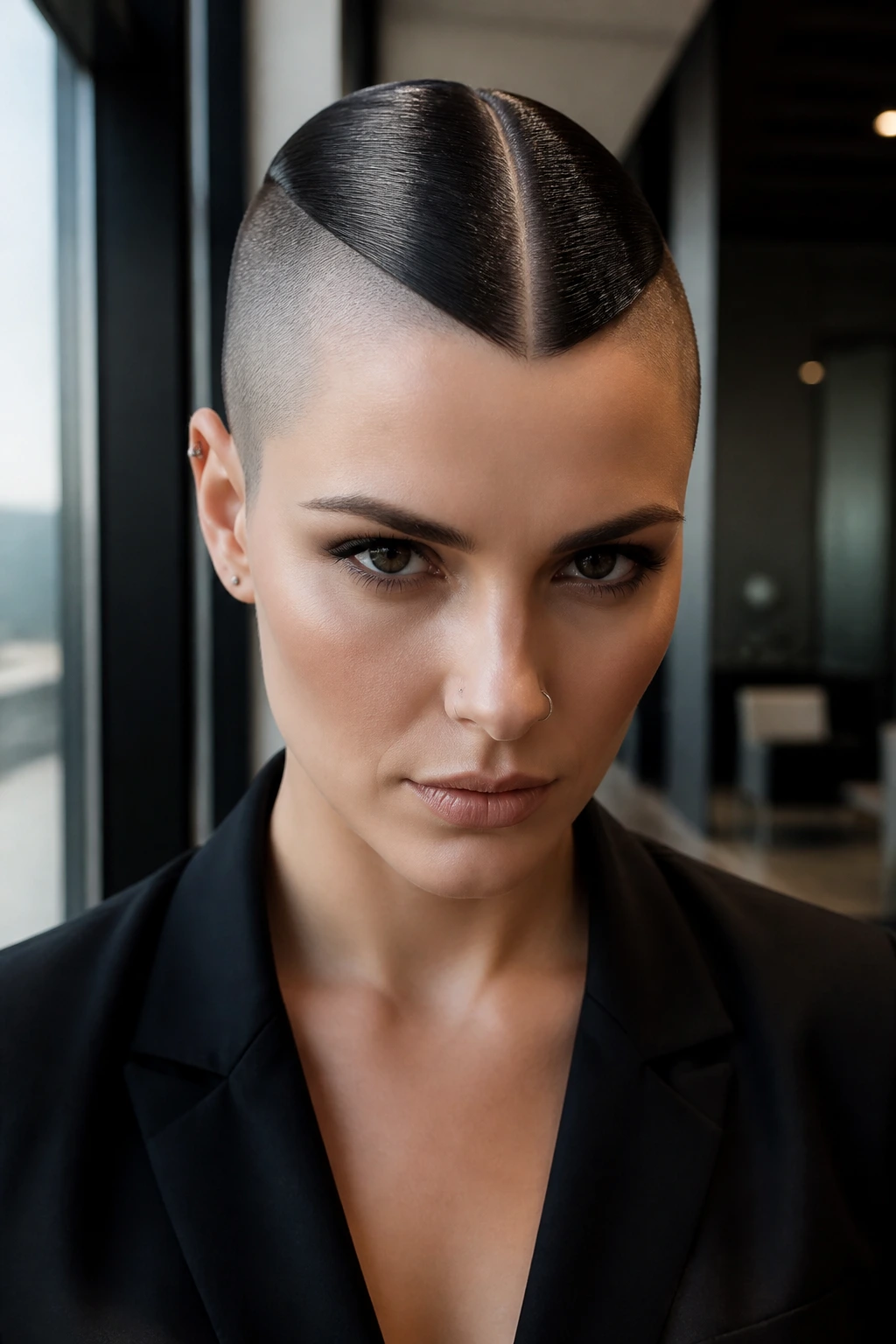
Minimalism at its finest. This look is about high contrast between the shaved sides and the long, poker-straight center strip. It looks best on dark hair, as the contrast against the scalp is more dramatic.
Why It Works
By stripping away the texture, you force the eye to focus entirely on the shape of the cut. There is nowhere for the hair to hide.
Maintenance Reality
- You must keep the sides impeccably clean. Any stubble growth will ruin the sleek line.
- Use a flat iron to get the center strip perfectly straight, but always apply a heat protectant first.
- A drop of shine serum applied to the center strip finishes the look and makes the hair appear healthier.
11. Side-Swept Volume

Not all Mohawks have to stand perfectly upright. You can sweep the center section to one side, creating a swooping silhouette that provides the drama of a Mohawk with the practicality of a side-parted style.
This is excellent for people with rounder face shapes who want to add some angularity. The sweep creates a diagonal line across the forehead, which breaks up the roundness and adds definition to the cheekbones. It is a versatile choice that bridges the gap between edgy and wearable for everyday settings.
12. Mullet-Style Shag

The mullet and the Mohawk are actually close relatives in the world of experimental cuts. This style leaves the back longer while keeping the sides shaved, creating a silhouette that is all business in the front and chaos in the back.
It is definitely a statement piece. The key is to blend the shorter top layers into the longer back section so it doesn’t look like two separate wigs stuck together. This requires skillful layering; if the transition is too abrupt, it loses its flow. It is bold, it is nostalgic, and it is unapologetically cool.
13. Hidden Undercut
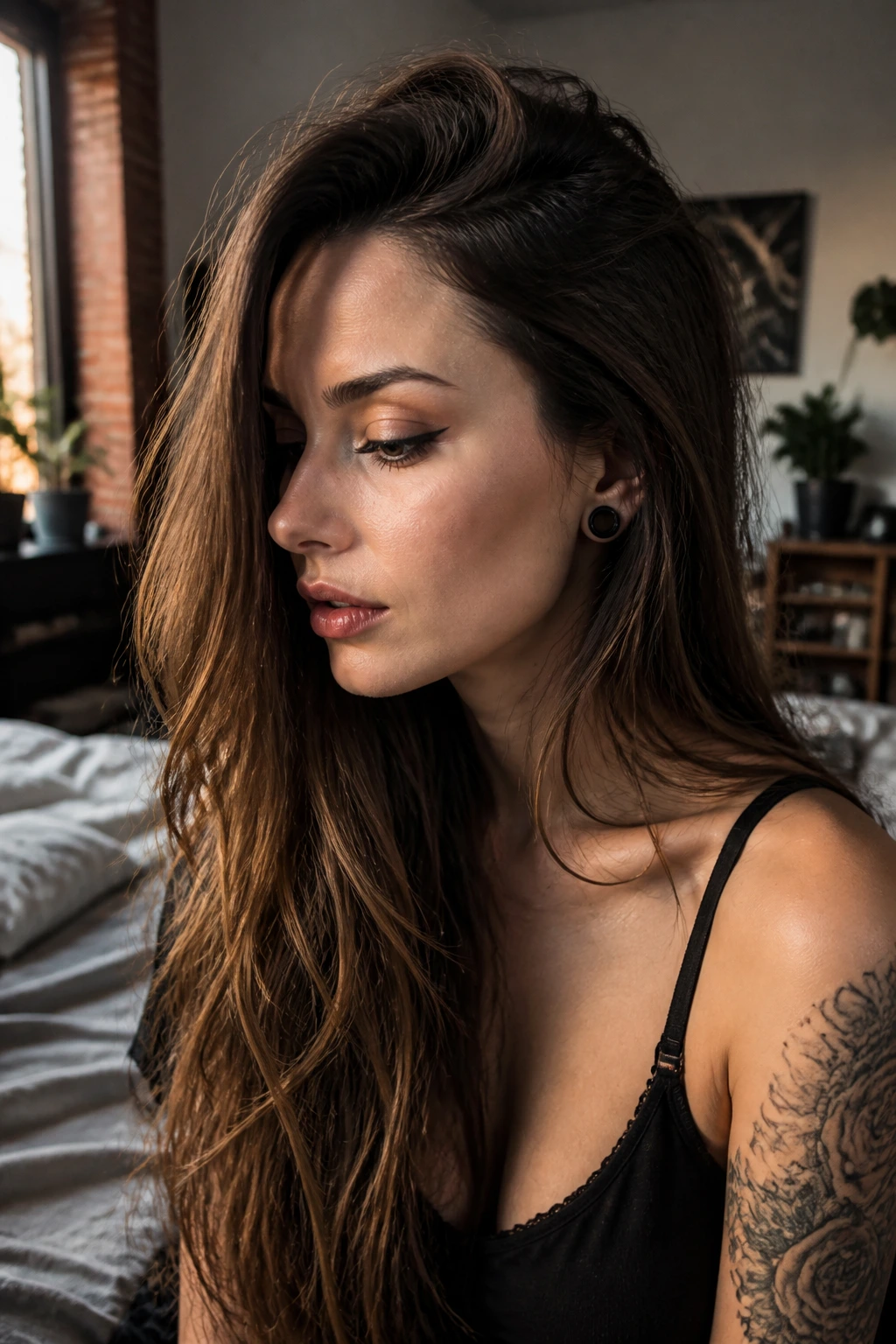
This is for the person who wants a Mohawk only when they want one. You keep the sides of your hair long enough to cover the shaved sections when you wear your hair down, but when you put it up into a high ponytail or a bun, the shaved sides are revealed.
It is the best of both worlds. You get the professional versatility of a full head of hair, but you retain the edge of an undercut. The Mohawk shape is only visible when the hair is pulled back, meaning you get to control when you reveal your “punk” side.
14. Dreadlock Mohawk
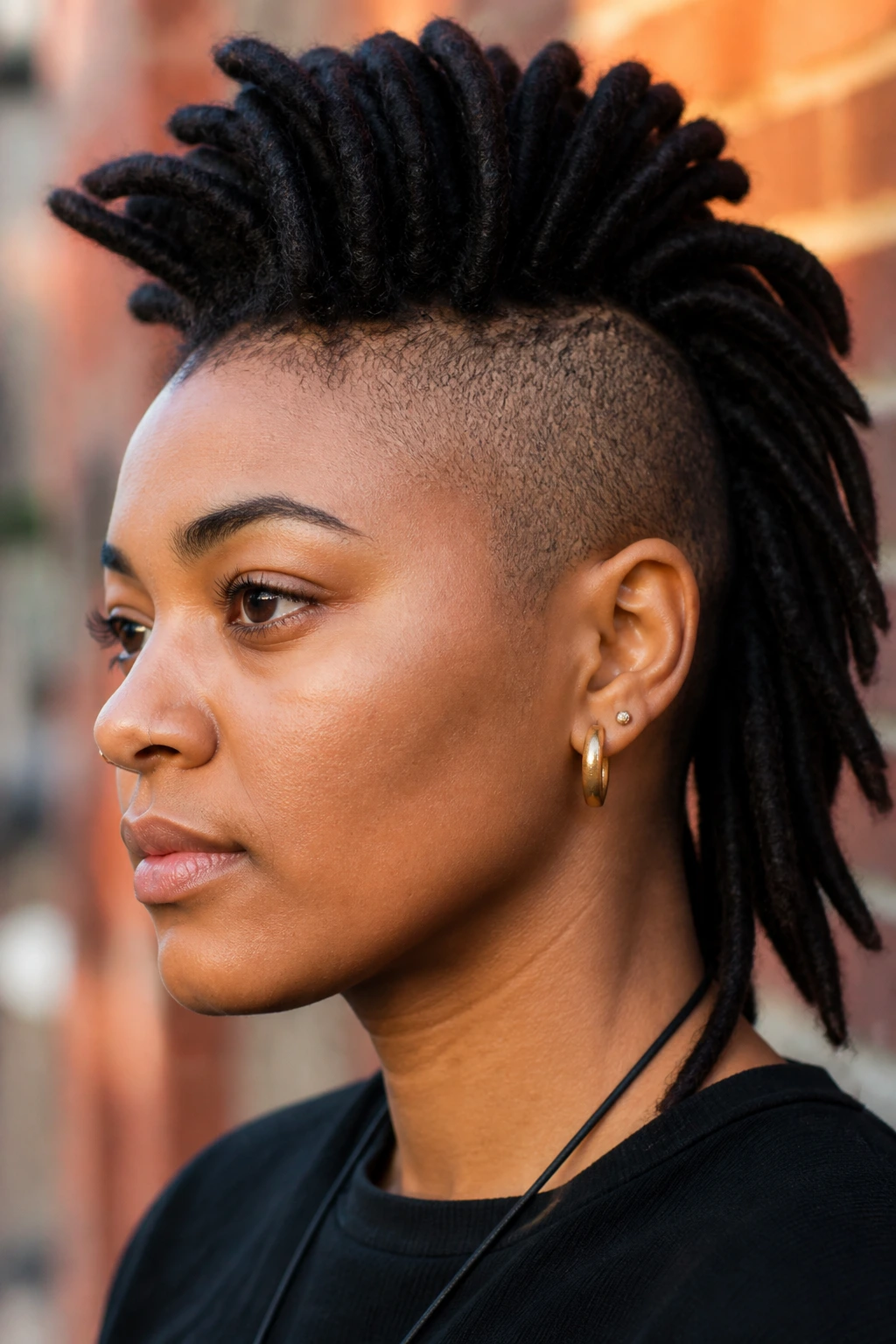
Combining locs with a Mohawk configuration is a powerful aesthetic choice. The locs provide natural weight and volume, meaning they sit naturally in that iconic ridge down the center of the head.
You don’t need as much product because the locs are already structured. The main challenge here is the scalp care. Because you are maintaining an undercut fade, you have to be very careful when retwisting your roots not to pull too hard or irritate the shaved skin. It is a heavy, beautiful, and deeply personal style that commands attention.
15. Contrast Color-Block
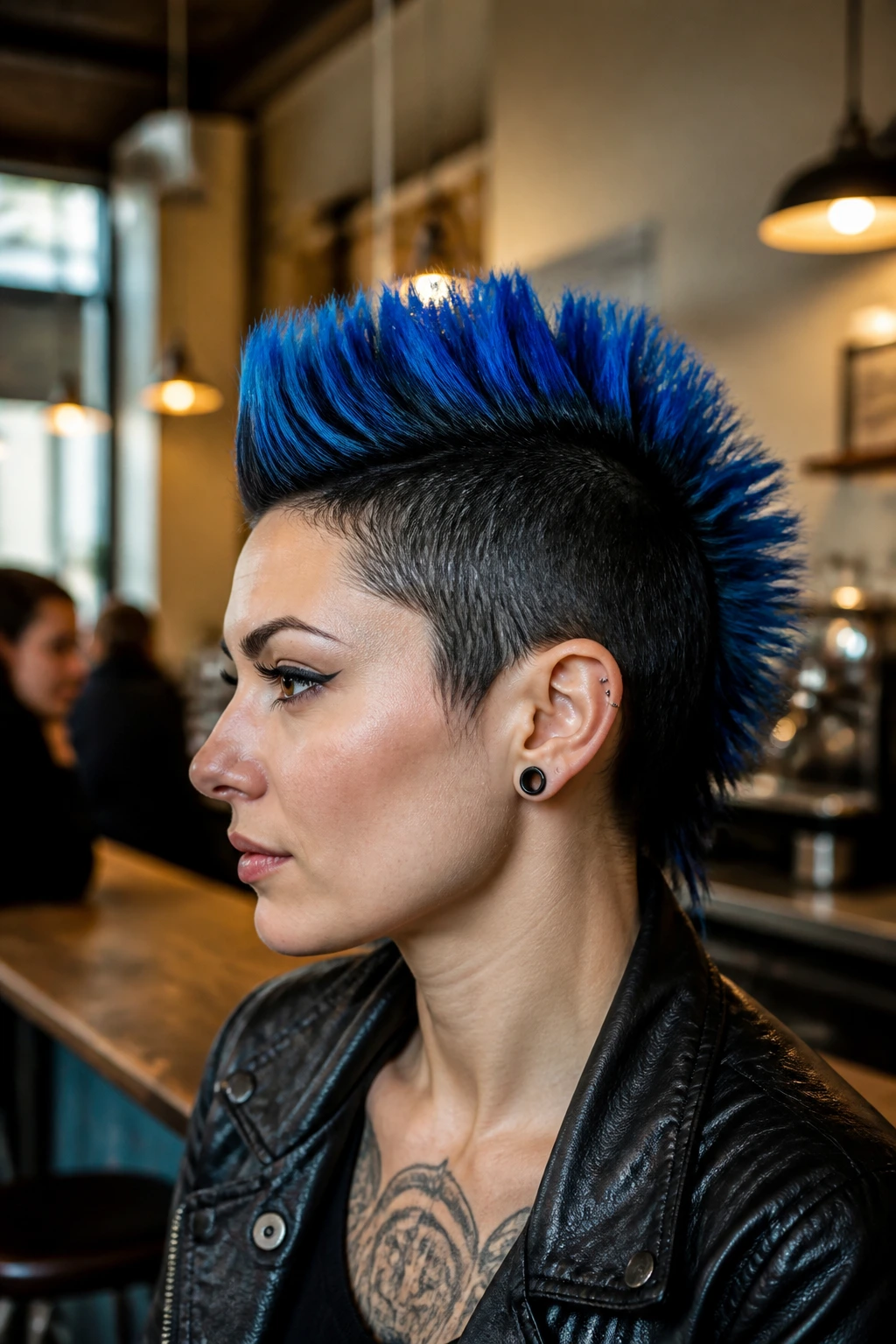
The shape of a Mohawk is only half the battle; the color is the other. Color-blocking involves dyeing the center Mohawk section a drastically different color than the sides—or leaving the sides natural while the center is vibrant.
The contrast draws the eye immediately to the center strip. Whether you choose platinum blonde against black, or electric blue against brown, the color helps define the edges of the cut. It highlights the precision of the shave. Just be prepared for the maintenance; a sharp color-block looks messy the moment your roots start to show.
16. The Ponytail Mohawk
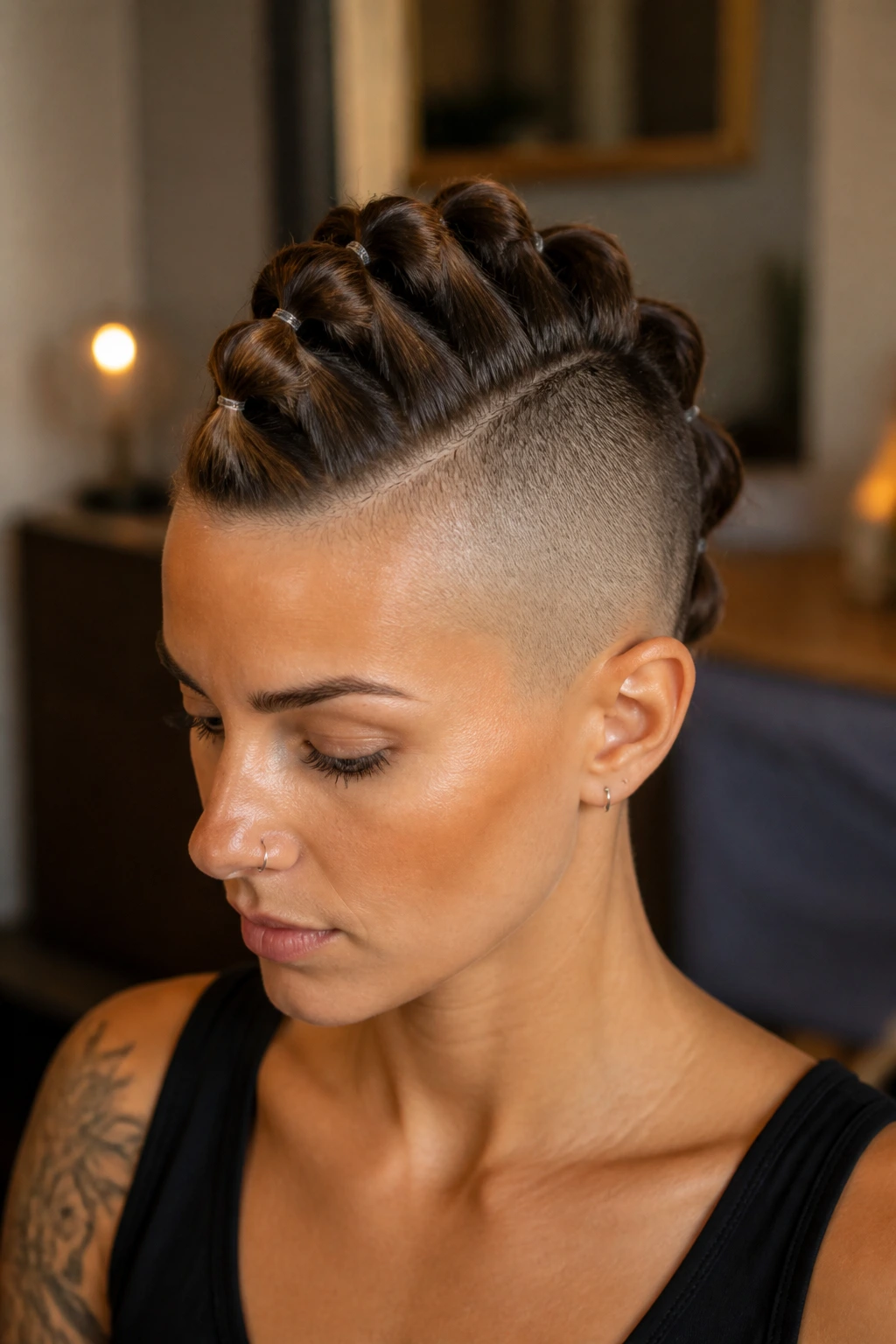
This is a styling technique rather than a haircut. If you have a fade on the sides but keep the top long, you can use a series of small, clear elastics to create a “bubble” Mohawk down the center of your head.
It is a great protective style for medium-length hair. It keeps the hair pulled back and away from your face, and the bubbles add a bit of architectural interest. It looks surprisingly polished and clean, almost like a piece of modern sculpture.
17. Intricate Shaved Patterns
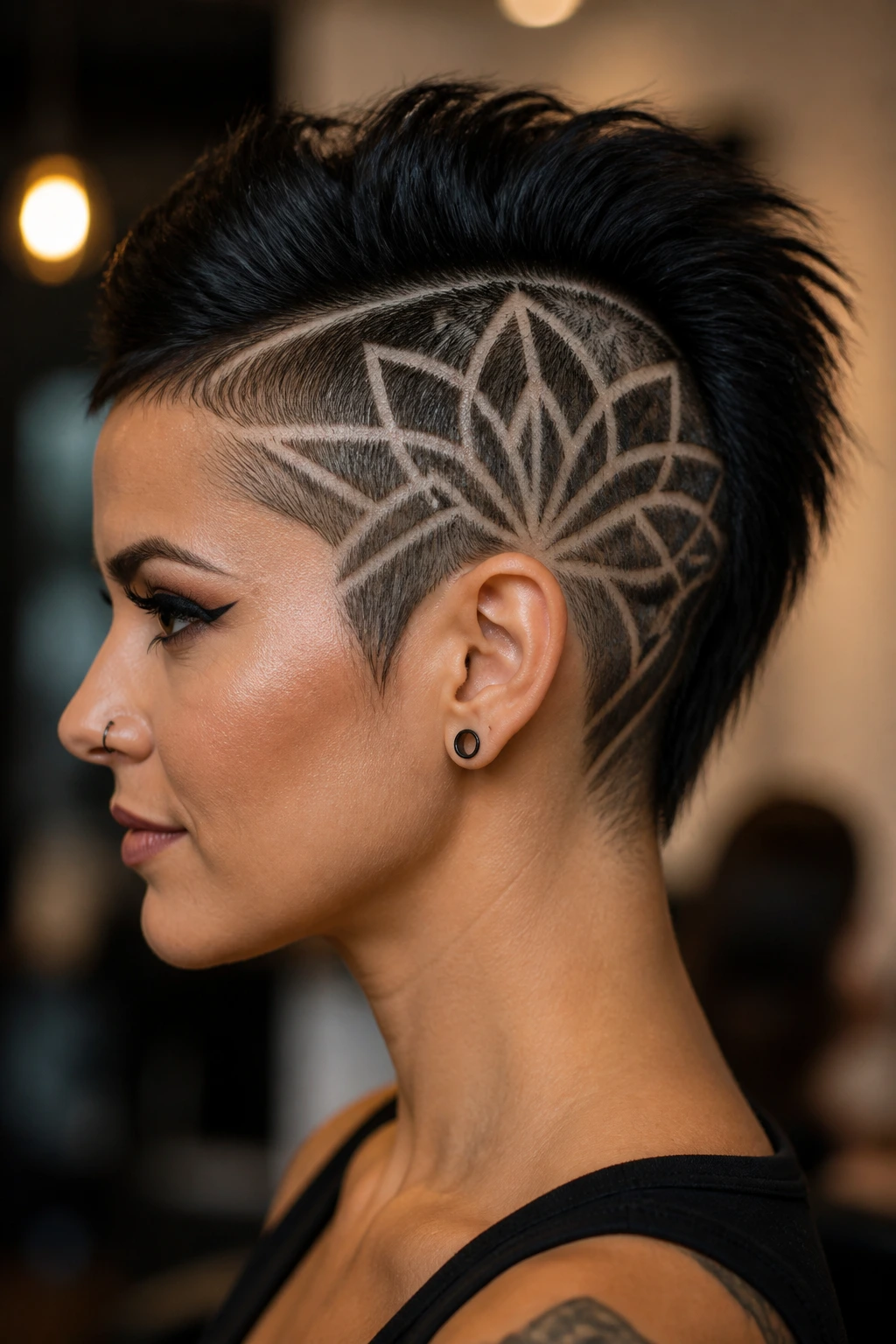
Why settle for a simple fade when you can have art? This involves using trimmers to shave patterns directly into the sides—geometric shapes, floral motifs, or even letters.
How to Keep It Fresh
- You need a professional stylist for this; do not try to freestyle it with store-bought trimmers.
- Patterns grow out and lose their crispness very fast—usually within 7-10 days.
- Use a small detail brush to clean the shaved areas of hair clippings to make the pattern pop.
18. Beach Wave Texture
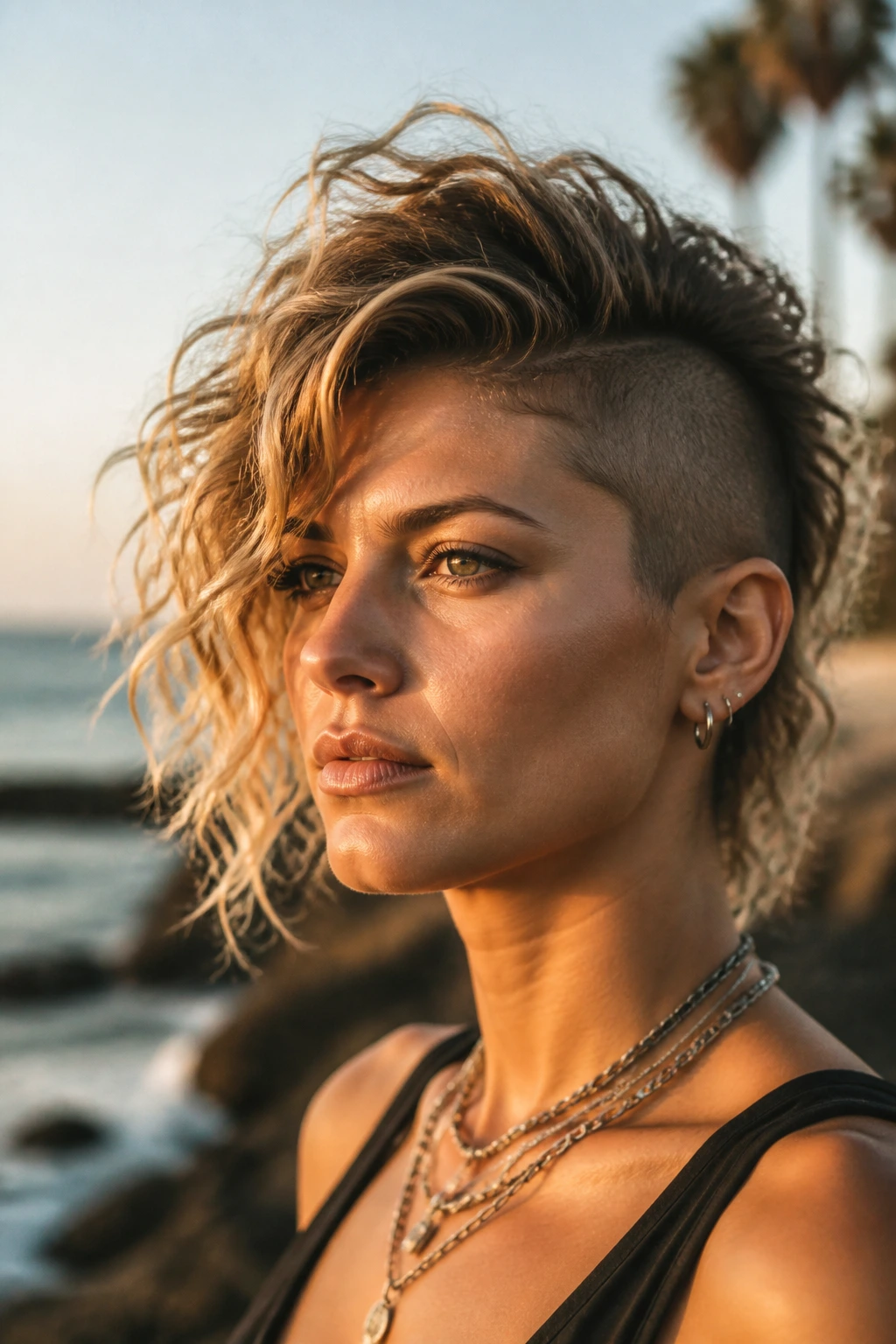
If you want a Mohawk that feels soft and approachable, ditch the pomade and grab the sea salt spray. Beach waves add a layer of texture that breaks up the severity of the cut.
It’s about movement. When the hair is straight, a Mohawk looks stiff. When it’s wavy, it looks alive. Use a curling wand to add a few loose bends to the center section, then tousle it with your fingers to break up the curls. It creates a romantic, slightly rebellious aesthetic that is perfect for casual settings.
19. Pin-Curl Mohawk
This is a retro-glam twist on the classic Mohawk. Instead of spikes, you use pin curls or victory rolls to create a structured, vintage shape down the center of the head.
It’s sophisticated and requires more time in front of the mirror, but it’s unbeatable for formal events. The curls add height and volume, and the shaved sides provide the necessary contrast to keep it from looking like a traditional costume party look. It’s a bridge between old-school Hollywood and modern edge.
20. Rocker Pompadour
Similar to the standard pompadour, but with more aggression. You push the hair forward at the root to create a dramatic, gravity-defying wave that hangs over the forehead.
It is heavily influenced by 1950s rock-and-roll. You will need a strong-hold wax to make this work. The key is in the “push”—you have to train the hair to stand up and forward, not just back. It creates a silhouette that is sharp, pointed, and incredibly stylish.
21. Deep Side-Part
If a centered Mohawk feels too intense, try shifting the weight to one side with a deep part. The shaved section remains on one side, while the hair on the other side is long, layered, and swept across.
It is an asymmetrical Mohawk. It’s perfect for people who feel that a standard center-parted Mohawk makes their face look too long. The deep side-part creates width, balancing the features while still allowing you to rock that edgy, shaved-side aesthetic.
22. Choppy Silver Layers
Silver hair is having a moment, but it looks particularly stunning in a Mohawk. Silver is a “cool” color, and the sharpness of a Mohawk complements that coolness perfectly.
The layers need to be choppy—think razor-cut ends. Silver hair can sometimes look flat or dull if it’s too uniform, but the texture of a choppy Mohawk creates shadows and highlights. It gives the hair dimension. Just ensure you are using a purple shampoo to keep the silver from turning brassy, as yellow tones will ruin the icy effect.
23. Sophisticated Updo
Yes, you can have a Mohawk and still do an updo. This style involves gathering the long center section and pinning it into a messy bun or a series of French twists along the crown.
It turns the Mohawk into a refined hairstyle. The shaved sides are visible, providing that subtle hint of edge, but the overall presentation is clean and elegant. It is a fantastic choice for weddings or professional events where you want to show your personality without sacrificing formality.
24. Micro-Bang Integration
Combine your Mohawk with micro-bangs—super short, blunt-cut fringe across the forehead. The bangs connect the Mohawk to the rest of the face.
It creates a very intentional, high-fashion silhouette. The micro-bangs draw attention to your eyes and eyebrows, while the Mohawk provides the volume. It is a look that requires confidence; there is nowhere to hide with this cut. It is precise, sharp, and very modern.
25. Rainbow Hues
If you are already committing to a Mohawk, why not go all the way with the color? A rainbow Mohawk—where each section of the spikes or layers is a different color—is a celebration of the cut’s rebellious roots.
The placement is everything. You need to coordinate the colors so they don’t bleed into a muddy mess. Putting the lighter, pastel colors at the tips and the deeper, saturated colors at the roots creates a stained-glass effect that is stunning when the light hits it.
26. Soft Spiked Pixie
This is the “baby” Mohawk. It keeps the hair much shorter overall, barely reaching past a pixie length, but uses the same styling principles—sides tapered short, top styled up and textured.
It is the most practical of all the Mohawk styles. It takes five minutes to style and grows out gracefully. If you are new to the world of short hair and shaved sides, this is your perfect starting point. It offers the aesthetic without the overwhelming length.
27. Viking-Inspired Braids
This look takes the Mohawk and incorporates two or three tight, intricate braids running from the hairline back toward the crown, often combined with leather cord wrapping.
It is rugged and distinct. You can wear the hair between the braids loose or pin it up into a mohawk-shaped ridge. It has a historical, almost warrior-like feel to it. The braids add texture that you just can’t get with loose hair, and they help keep the style secure for days at a time.
28. The Wet-Look Slick
This style is high-fashion and incredibly sleek. You use a heavy pomade or styling gel to slick the hair back from the sides, but leave the top wet and slightly tousled.
It is a common sight on runways because it looks deliberate and “expensive.” The key is using the right amount of product—too much and it looks greasy, too little and it loses the shape. You are aiming for a high-gloss, glass-like finish that makes the Mohawk look like a singular, unified shape.
29. Growing-Out Fade
So, you had a Mohawk, and now you want to grow it out? The growing-out phase doesn’t have to be a disaster. You can transition into a “mullet” or a “shag” style by letting the sides grow into a taper rather than a shave.
This is a deliberate phase. You stop the skin fade and let the sides reach a “number 2” or “number 3” guard length. It creates a softer, more blended transition that looks like a intentional style change rather than just “growing out an old haircut.”
30. Asymmetrical Balance
One side is shaved, and the other side is left long and flowing. This isn’t just a side-shave; it’s a deliberate imbalance. You have a huge amount of volume on one side, which tapers down to a clean shave on the other.
It is all about the silhouette from the front. When people look at you, they see one side of your face framed by hair, and the other side completely exposed. It is the ultimate expression of the Mohawk ethos—defying convention and creating your own sense of balance.
Final Thoughts
Choosing a Mohawk isn’t just about picking a picture from a screen and hoping your stylist can replicate it. It is about understanding the geometry of your own head. You are manipulating the visual weight of your hair, deciding where the eye should land, and choosing how much of your scalp you want to reveal to the world.
Do not be afraid of the maintenance. While a “wash and wear” style is tempting, the beauty of a medium-length Mohawk is in the daily ritual of styling. It asks you to pay attention to your hair, to use product with intent, and to appreciate the structural changes that a simple comb or a bit of wax can create. Whether you go for the soft fauxhawk or the hard-edged geometric fade, the Mohawk is a style that demands you own the space you occupy. Keep the lines crisp, choose a texture that fits your life, and wear the silhouette with the confidence it requires.
