



A mohawk can look ruthless, clean, soft, braided, or sharp enough to stop a conversation. That range is exactly why mohawk hairstyles for bold women never feel stale. The shape has attitude, sure, but it also has a lot more range than people give it credit for.
What matters is the silhouette. Some versions lean on shaved sides and a narrow strip through the middle. Others keep all the hair and fake the effect with pins, braids, curls, or a smart bit of teasing at the crown. The shape does the talking, and the details decide whether it feels punk, polished, playful, or straight-up dramatic.
There’s also a practical side that gets missed all the time. A mohawk can work with thick curls, fine straight hair, locs, long hair, short cuts, or a grown-out undercut. The trick is choosing the version that fits your texture, your routine, and how much maintenance you’re willing to tolerate. Some styles need a trim every couple of weeks. Others only need a firm hand, a comb, and a can of hairspray.
And yes, the wolf-cut crowd will find something to love here too. A mohawk and a wolf cut share the same appetite for shape, layers, and controlled messiness. Different beasts. Same energy.
1. Classic Mohawk with Shaved Sides
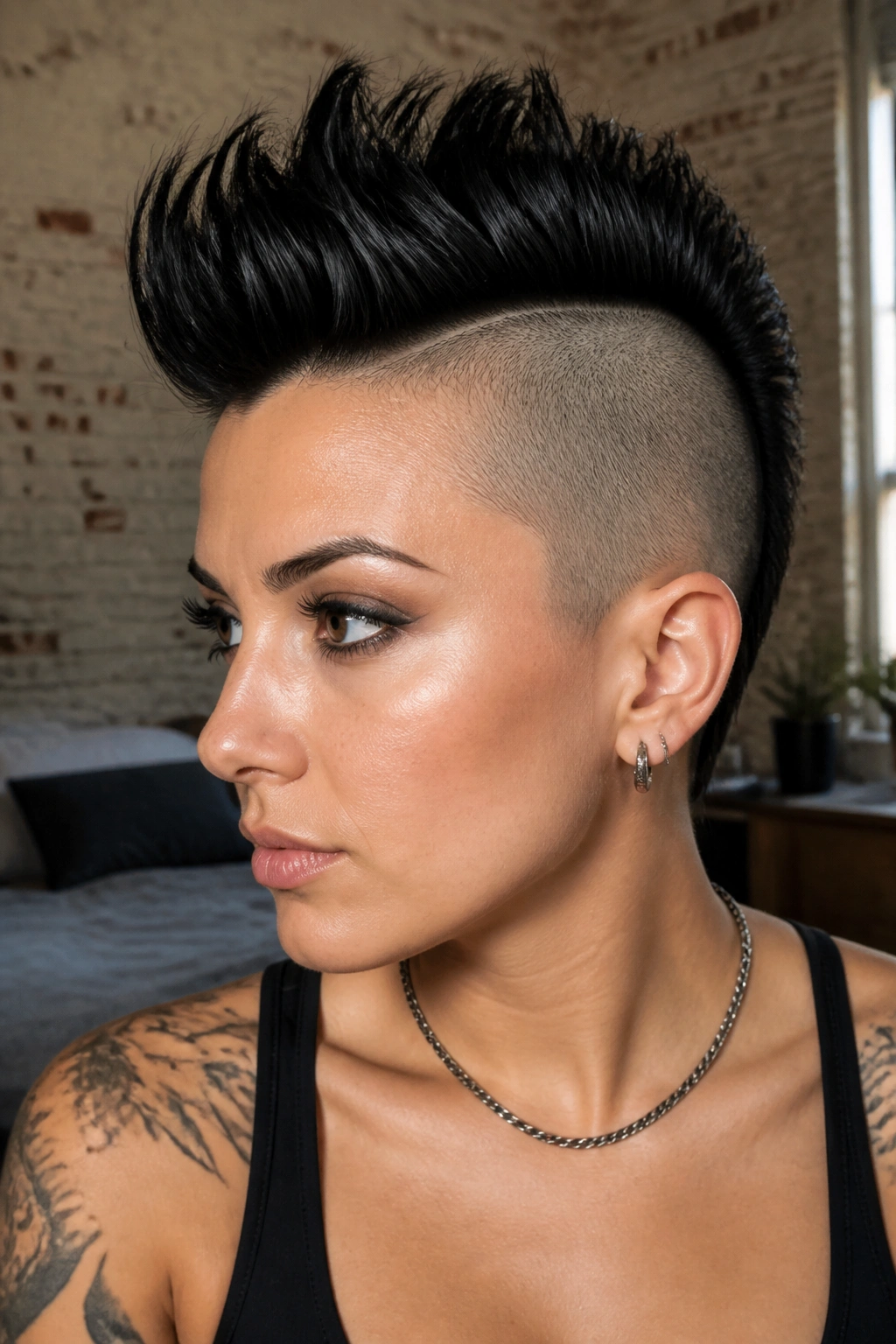
The classic version is still the one that turns heads first. It has the cleanest read: tight sides, a lifted center strip, and a profile that looks strong from every angle. If you want a cut that feels unapologetic without a lot of styling tricks, this is the benchmark.
Why it still hits hard
A true mohawk works because the eye follows the height down the center of the head. Shaved or buzzed sides make that ridge look even taller, which is why this cut can make a short style feel bold fast. The best version keeps the strip wide enough to hold shape — usually about 2 to 4 inches across, depending on head size and hair density — so it does not collapse into a skinny spike.
The styling is simpler than people expect. A little mousse at the roots, a round brush or fingers for lift, and a strong-hold gel or pomade through the center are usually enough. If the hair is thick, a blow-dryer with a concentrator nozzle helps set the shape before the product dries hard.
- Keep the sides at a #0.5 to #2 guard if you want the cleanest contrast.
- Use a root-lifting mousse before drying so the crown doesn’t fall flat by lunch.
- Finish with a firm-hold hairspray, not a soft one.
- Trim the edges every 2 to 3 weeks if you want the shape to stay crisp.
Best tip: ask for slightly more width in the center than you think you need. A strip that’s too narrow can look fussy instead of strong.
2. Braided Mohawk Crown
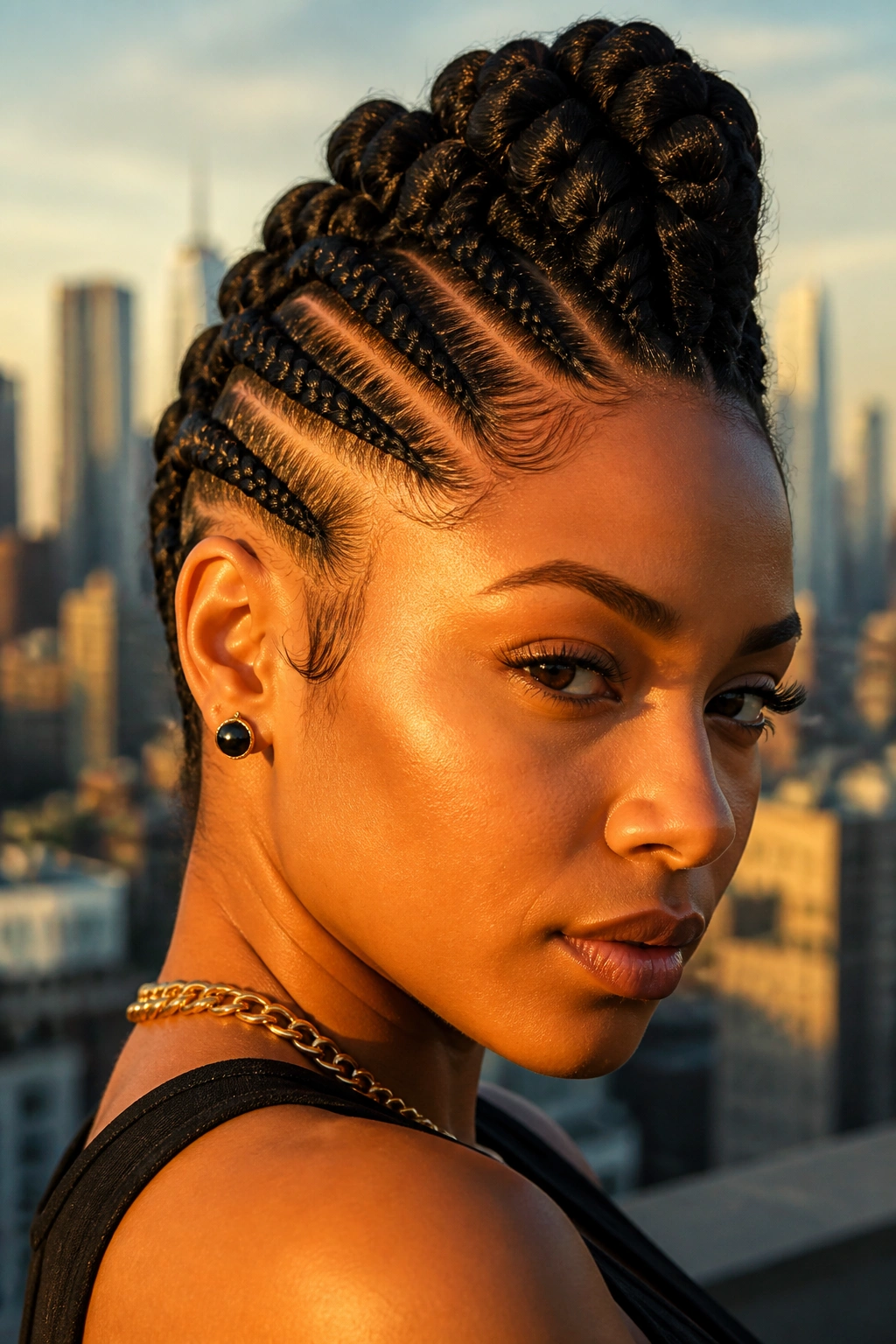
Braids change the whole mood of a mohawk. They soften the edge without stealing the shape, and that’s the magic here. A braided mohawk hairstyle can look detailed and tough at the same time, which is not an easy balance to pull off.
The braid pattern matters more than the braid size
You can do this with cornrows along the sides, flat twists feeding into a central braid, or a stack of Dutch braids that rise toward the crown. The sides stay sleek, while the center braid becomes the focal point. If your hair is thick, three braids often hold better than one giant one, because each section stays neater and is easier to pin.
This style is especially good when you want structure without a full shave. It also lasts longer than a loose faux hawk. A tight braid pattern can stay presentable for a week or more with a silk scarf at night and a quick touch-up around the hairline in the morning.
How to keep it neat
A small amount of styling gel at the part line helps the braids look clean, but do not pile it on. Too much product makes the roots gummy and dull. If your scalp gets dry, a light oil on the part lines is enough.
Use this when you want the mohawk shape to feel more tailored than wild. It works especially well on medium to long hair, because the braid gives the center ridge enough weight to sit in place.
3. Curly Natural Mohawk
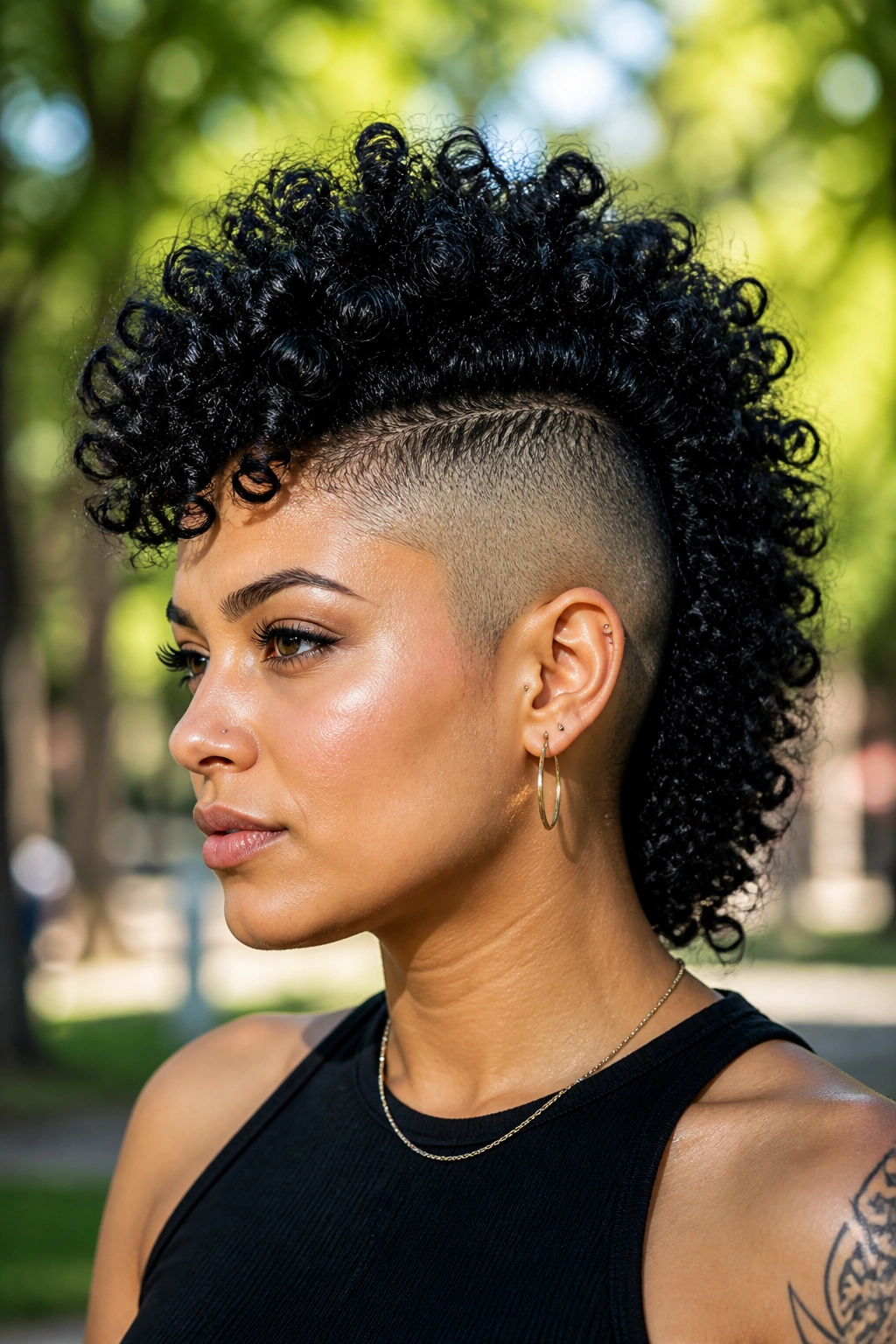
Curly hair and a mohawk are a strong pairing. The texture does half the work for you, and that’s a nice thing when you don’t feel like fighting your hair all morning. A curly mohawk can look soft and fierce in the same breath.
The best version keeps the curls springy at the top and tight on the sides, either with a fade, tapered cut, or flat-pinned sections. The center strip should stay roomy enough for the curl pattern to move. If you squeeze curls too tightly into a narrow line, they lose the shape that makes this style interesting.
Hands off the curls. That is the whole game.
Use a curl cream or leave-in conditioner on damp hair, then scrunch in a gel that gives hold without turning the curls crunchy. A diffuser on low heat helps the roots lift while the shape sets. Once the hair is dry, pick at the roots with your fingers, not a brush. A brush will flatten the texture and leave you with a puff that looks tired by noon.
For night care, a loose pineapple or a satin bonnet keeps the curl pattern from getting crushed. If you have a lot of shrinkage, stretch the roots a bit with clips while the hair dries. That small step changes the whole silhouette.
4. Faux Hawk for Day-to-Night Wear
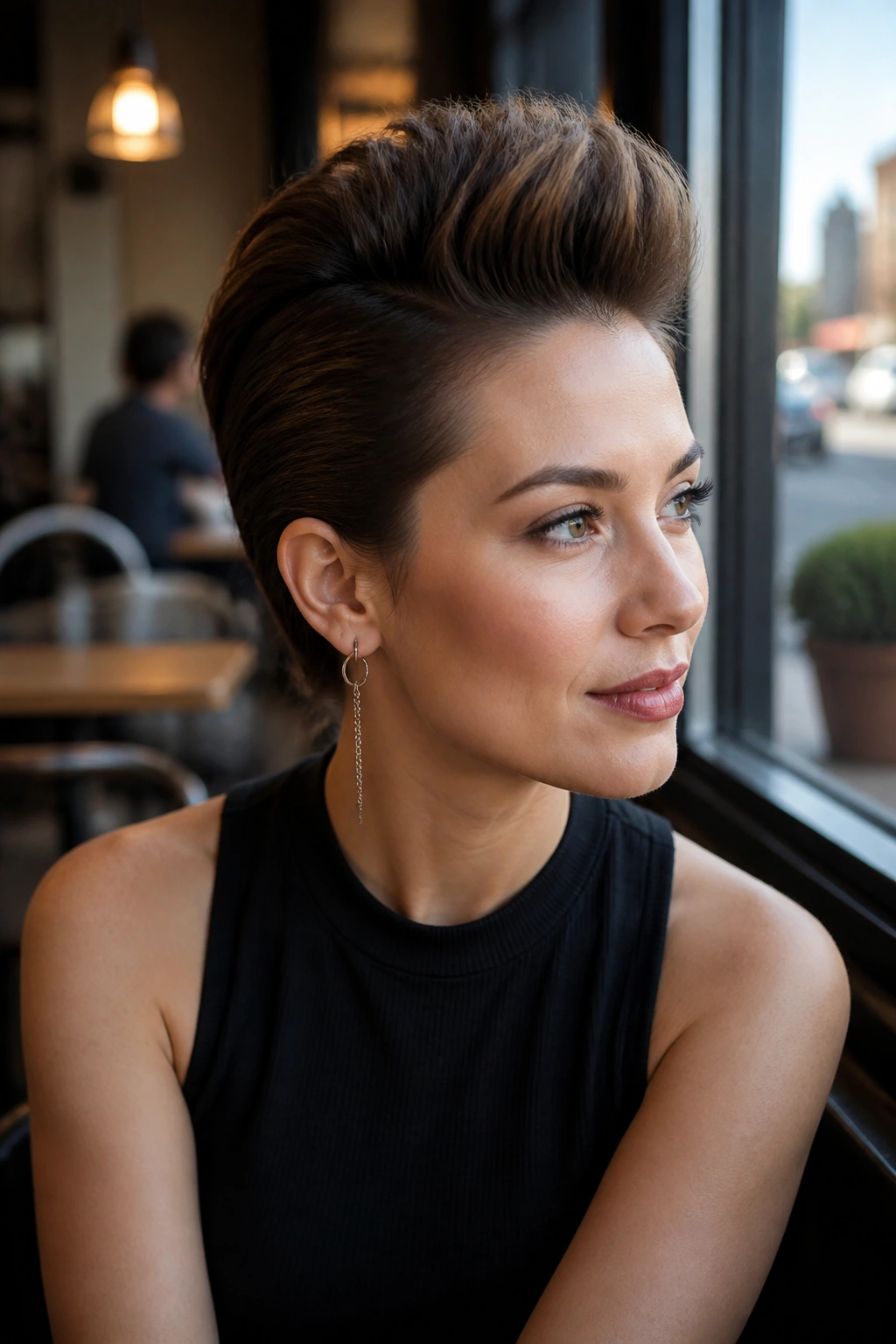
A faux hawk is the version you choose when you want the shape without the commitment of shaved sides. It can look sharp in daylight and still feel polished enough for dinner later, which is why it stays popular with women who like options.
The trick is in the sides. They need to be smooth, flat, and controlled, not slicked down so hard that the hair looks glued to the scalp. A side section pinned back with hidden bobby pins or tucked under with a bit of styling cream gives you the mohawk line without exposing skin. The center can be teased for lift or curled into a soft ridge.
Unlike a true shave, this style can shift with the occasion. Wear it higher and messier for a bolder look. Keep it lower and smoother for work, interviews, or any setting where you want the style to read as confident rather than loud. That flexibility is the whole appeal.
A 1-inch curling iron helps if the hair needs bend and body. Wrap the top sections away from the face, then finger-comb the curls into a center wave. A little texture spray at the roots keeps the ridge from going limp.
5. Undercut Mohawk with a Razor Line
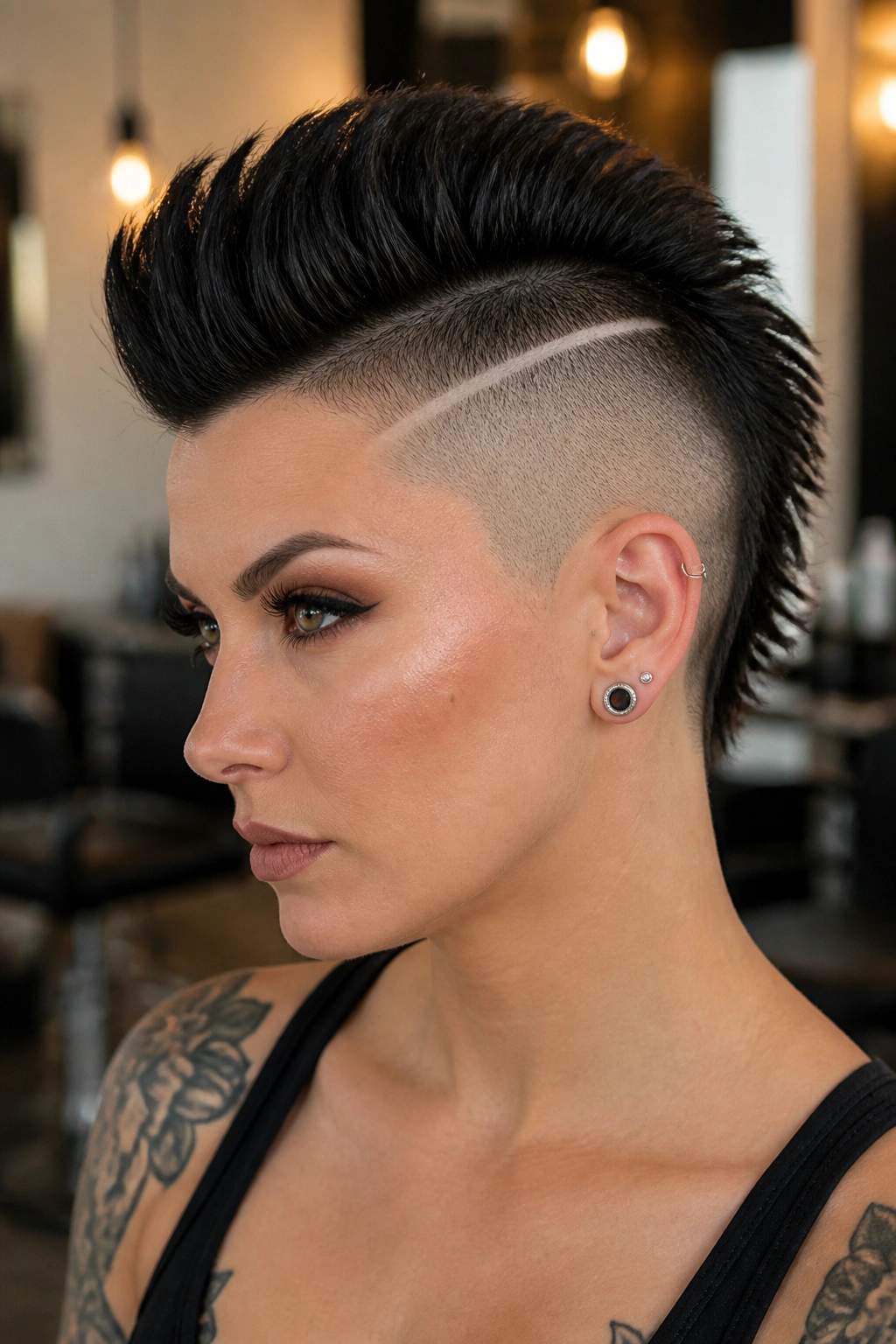
A razor line changes everything. Not because it screams louder, but because it gives the style a clean boundary. The contrast between the shaved undercut and the center strip is so sharp that even a simple shape starts to look deliberate.
What the line does for the haircut
A single line, two parallel lines, or a geometric notch can carve the side of the cut into something more graphic. It works best when the rest of the haircut is kept clean, with a guard that leaves the sides close and even. If the undercut grows out too much, the line loses its edge fast and the whole style starts to look fuzzy.
The center can stay straight, curly, twisted, or brushed upward. That’s the nice part. The line does not dictate the texture; it just frames it. And for women who like haircuts that look a little architectural, this version has real presence.
- Choose a single razor line if you want something sharp but easy to maintain.
- Use two lines or a curved design if you want the undercut to read more like art.
- Ask for a clean neckline and temple area so the shape does not blur.
- Plan on a touch-up every 2 to 4 weeks if the design matters to you.
My take: this is one of the best mohawk hairstyles if you like precision. Messy hair can be fun. Sharp lines are better when you want the cut to look expensive.
6. Long-Hair Mohawk with Pinned Volume
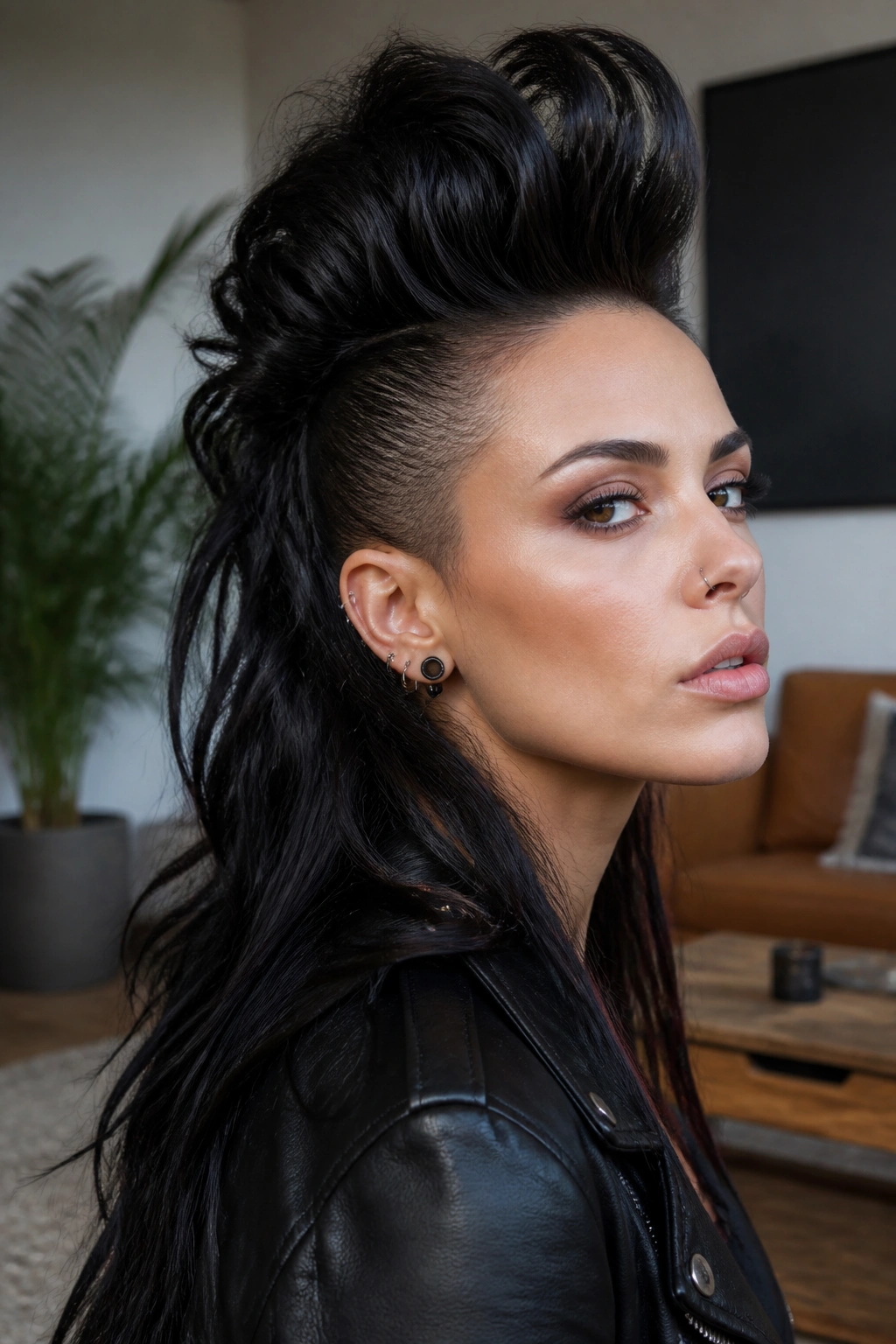
Long hair does not have to sit out the mohawk conversation. In fact, long lengths can make the style more theatrical because the center ridge has more movement and swing. You just need to pin with a bit of patience.
The base idea is simple: smooth or braid the side sections back, then build height through the middle with teasing, folding, or large pins hidden under the hair. A long-haired mohawk can be sleek at the scalp and loose through the ends, which gives it a dramatic line without cutting the length off. That matters to a lot of women who like the idea of a mohawk but are not ready to lose 8 inches of hair.
A rat-tail comb is useful here. So are long bobby pins and a few duckbill clips while you’re setting the shape. Start by sectioning the hair from temple to temple, then work the top into a lifted ridge before anchoring the sides. If the ends are curly, leave them loose. If they’re straight, a few bends from a curling iron keep the finish from looking stiff.
The style holds best on second-day hair. Freshly washed hair can be too slippery.
7. Loc Mohawk with a High Center Ridge
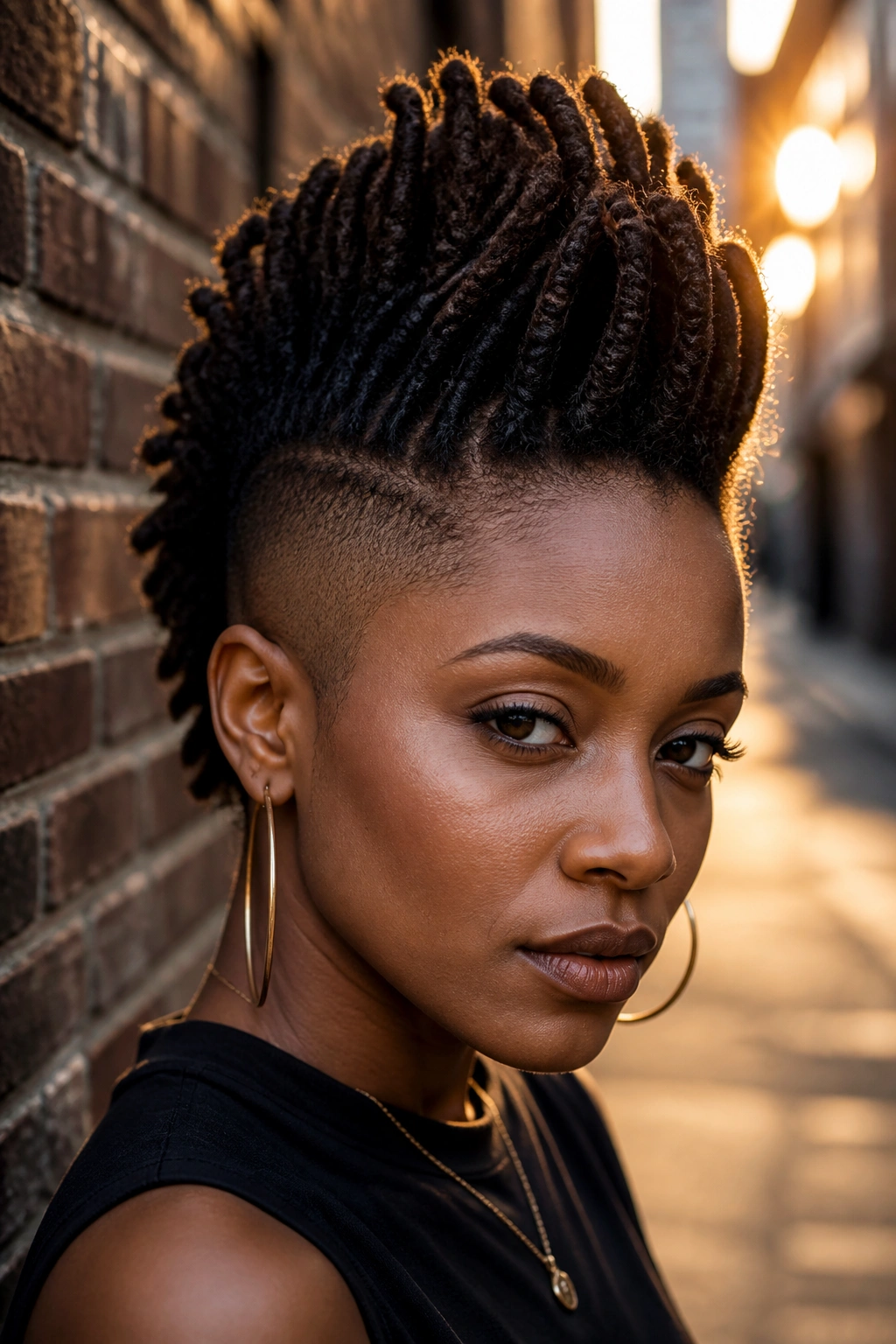
Locs make a mohawk feel grounded and strong, not forced. The texture already has weight, so the shape reads clearly even when the sides are tight and the top is full. It’s one of the easiest ways to get a mohawk that looks built, not borrowed.
How the locs change the silhouette
With locs, the center ridge can be worn high and proud, pulled into a top knot, or left to spill back in a thick line. The sides may be faded, undercut, or braided flat, depending on how permanent you want the look to be. A fresh taper near the temples gives the face more open space, while a full fade makes the top look taller.
This style also holds accessories well. Metal cuffs, a few wrapped threads, or one bold hairpin can give the center ridge extra detail without making it busy. If the locs are long, a partial wrap or stacked pony at the crown keeps the profile from sagging.
Keep the roots clean. That sounds obvious, but with loc mohawks it matters more than people think. If the base gets puffy and the line disappears, the whole haircut loses shape. A regular retwist schedule and a satin wrap at night make a visible difference.
If you like styles that can go from casual to formal without changing the cut, this one earns its keep.
8. Twisted Mohawk for Coily Hair
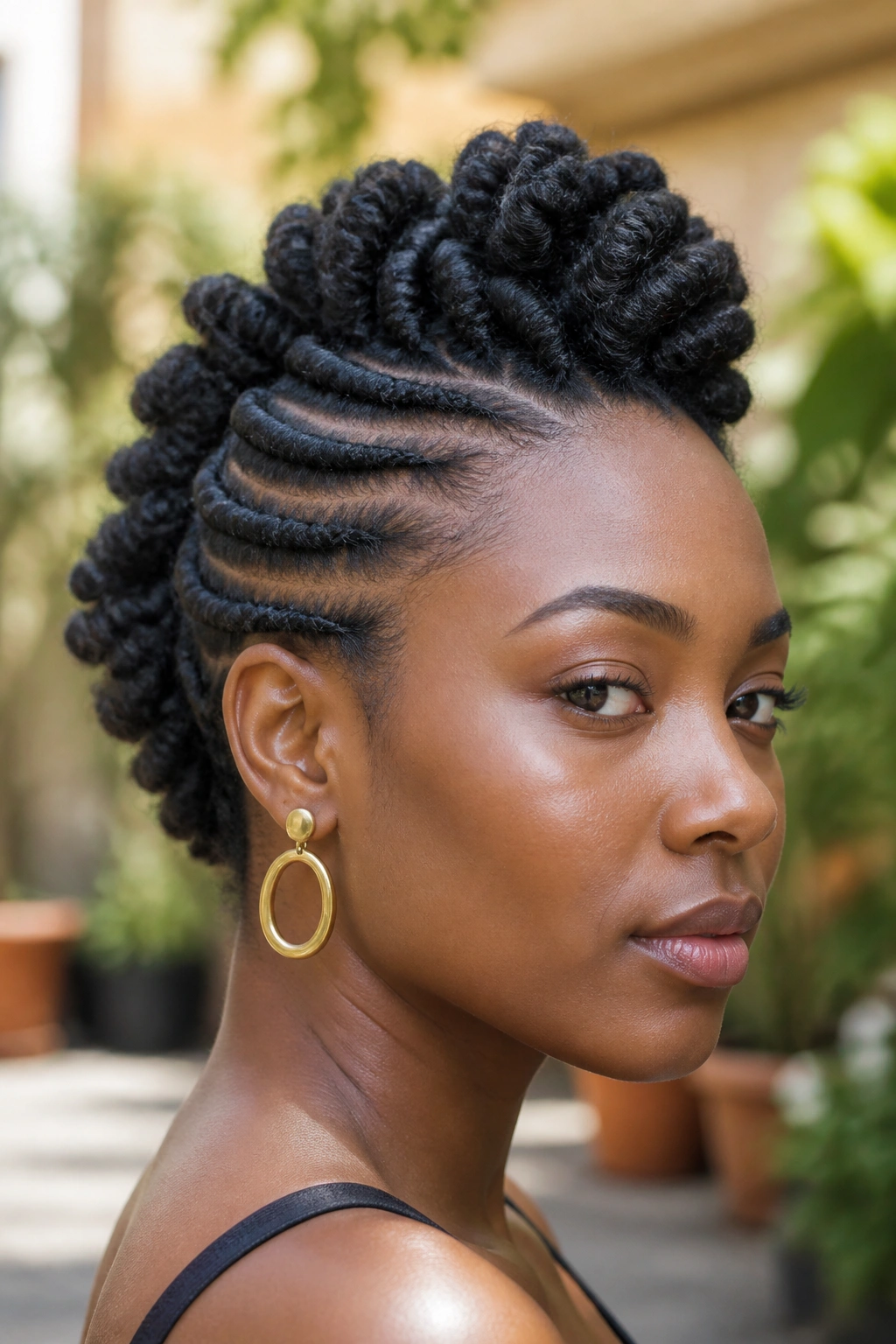
Twists are a smart move when you want a mohawk that respects coil pattern instead of fighting it. The style has structure, but it still feels soft and touchable. That mix is what makes it work so well on 4a, 4b, and 4c textures.
A twisted mohawk usually uses flat twists or two-strand twists along the sides, pulled toward a lifted center strip. The ends can be tucked, pinned, or left to coil naturally. If your hair is dense, dividing the center into two smaller ridges can actually make the shape last longer than forcing everything into one heavy line.
How to get the most from it
Start on damp hair with leave-in conditioner and a twisting cream that gives hold without flakes. Part clean sections with a rat-tail comb, then twist firmly from root to tip. The roots need enough tension to stay close, but not so much that the scalp aches after an hour. That part matters. A style that hurts is not worth keeping.
A hood dryer or diffuser speeds the set and helps the twists hold their shape. Once dry, separate the ends only a little if you want more volume. If you separate too much, the shape gets fuzzy and loses the mohawk line.
Best for: protective styling that still looks sharp enough to wear out at night.
9. Wolf-Cut Mohawk Hybrid
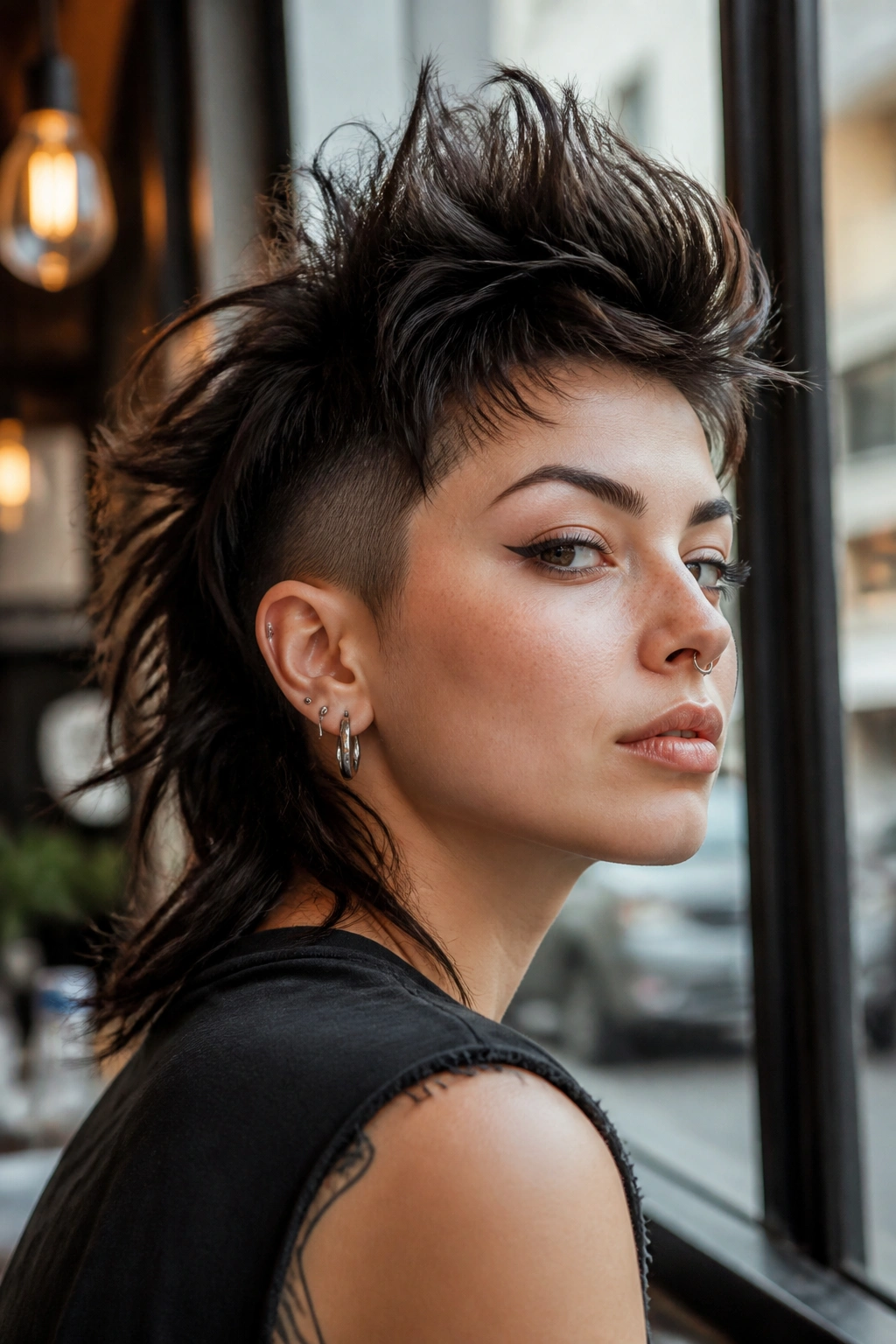
This is the mohawk for people who like texture more than precision. A wolf-cut mohawk hybrid keeps the lifted center shape, but the layers around it are shaggy, broken up, and a little wild around the edges. The result feels less formal than a shaved mohawk and less cute than a soft shag.
The wolf cut brings in shorter crown layers and longer, feathered pieces through the ends. That means the center has movement instead of a hard ridge. If your hair is medium to thick, this shape can be a gift, because the layers stop the top from getting too bulky. On finer hair, a bit of root spray and rough-drying can build the texture you need.
I like this version because it doesn’t pretend to be neat. It looks better when it moves. The whole point is that the cut has a little swing when you turn your head, especially around the cheekbones and collar line.
A matte paste or texturizing cream works better than glossy gel here. You want separation, not shellacking. If you already live in layered cuts and want something bolder without going full shave, this is probably the one to try first.
10. Color-Blocked Mohawk with Bright Panels
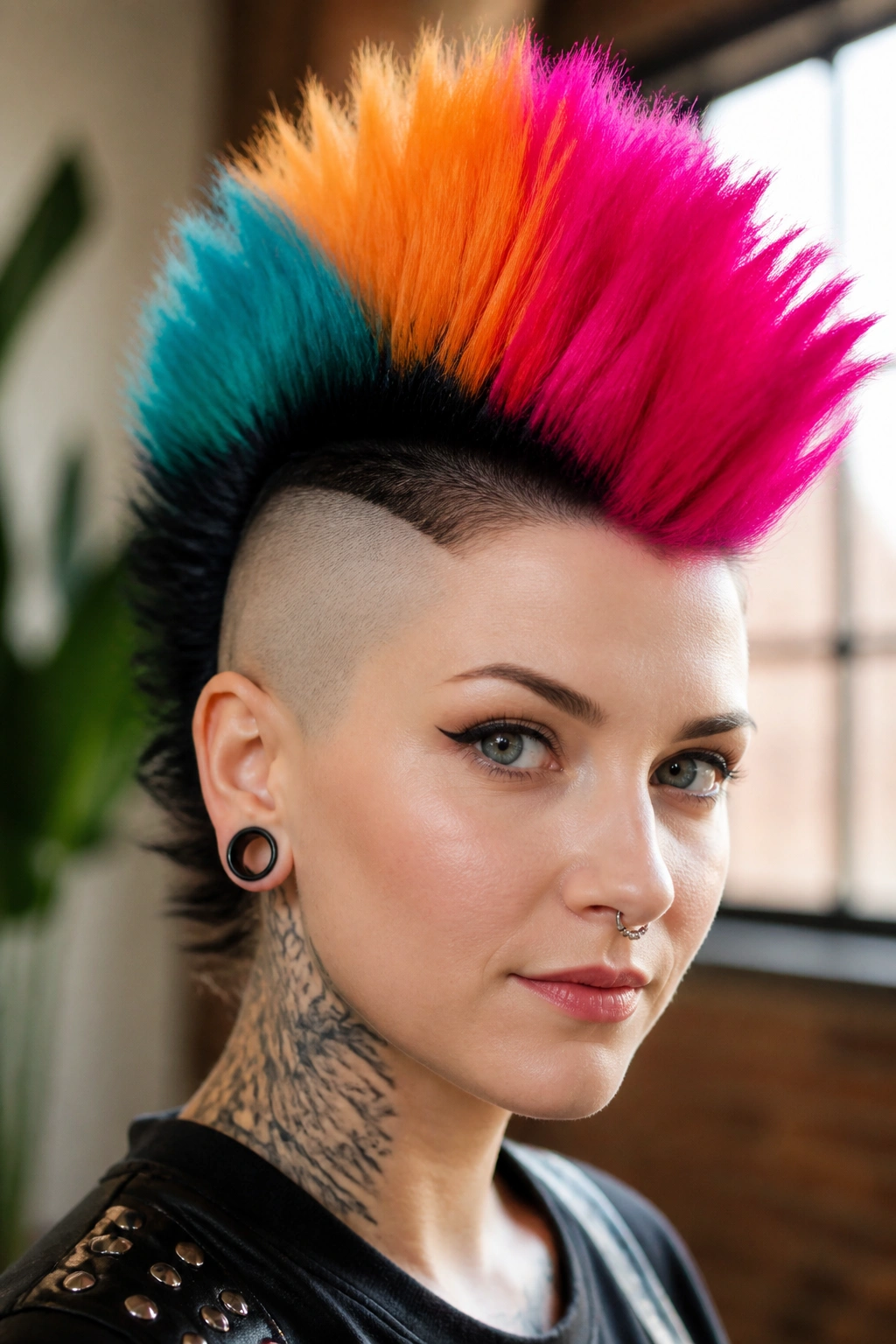
Color gives a mohawk a second job. Shape gets the first job; color does the rest. A color-blocked mohawk can look sharp even if the styling is simple, because the eye follows the contrast before it even notices the cut.
Where to place the color
The center strip is the obvious place to go bold, but the side panels can matter just as much. Some women keep the sides dark and put a bright band through the crest. Others do the opposite: vivid sides, darker top, and a clean part that slices through the middle. Either way, the key is contrast. A mohawk without contrast can flatten fast.
Semi-permanent color works well if you like to switch shades often. Permanent dye is better if you want deeper saturation and less fade, but it also means more upkeep on the roots. Bleached hair shows color more clearly, though it needs careful conditioning or the strands get dry and rough.
- Keep colored hair on a color-safe shampoo schedule.
- Use cool water when rinsing so the pigment stays put longer.
- Apply protein treatment every 2 to 4 weeks if the hair has been lightened.
- Protect the style with a silk scarf or bonnet at night.
Small warning: bright color can make damaged ends obvious. If the hair is already fragile, trim first and color second.
11. Pompadour Mohawk with Lift at the Front
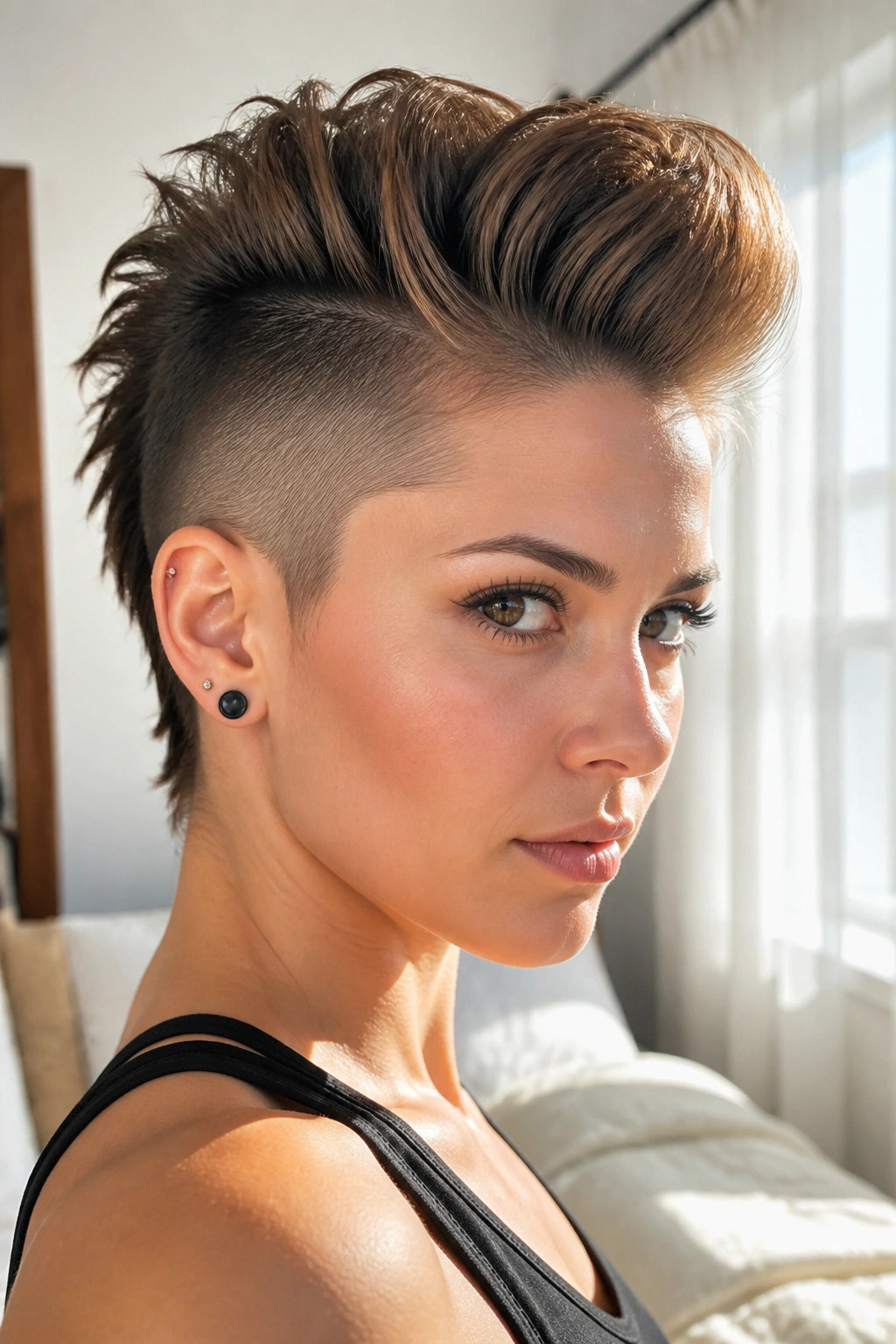
A pompadour mohawk is the one that gives you height without needing a hard, punk finish. The front rises into a soft roll or lift, then blends into a center strip that can taper toward the nape. It feels polished, but it still has attitude.
This is a strong choice for fine hair, because the front lift creates the illusion of fullness right where many styles go flat. The trick is to build the volume in layers. Use a heat protectant, blow-dry the front section upward with a round brush, then pin the base until it cools. Cooling matters more than most people realize; a warm section falls much faster than a set one.
Backcombing helps too, but do it lightly. Too much teasing turns the hair into a matte nest that refuses to smooth down later. A few passes near the roots are enough. After that, brush the top layer clean so the style still looks polished.
If you want the front to stay high all day, spray the underside of the lift, not just the top. That little trick gives support where the eye cannot see it.
This style is one of my favorites for women who want a bold profile without a shaved scalp. It feels assertive without feeling harsh.
12. Mohawk Updo for Formal Events
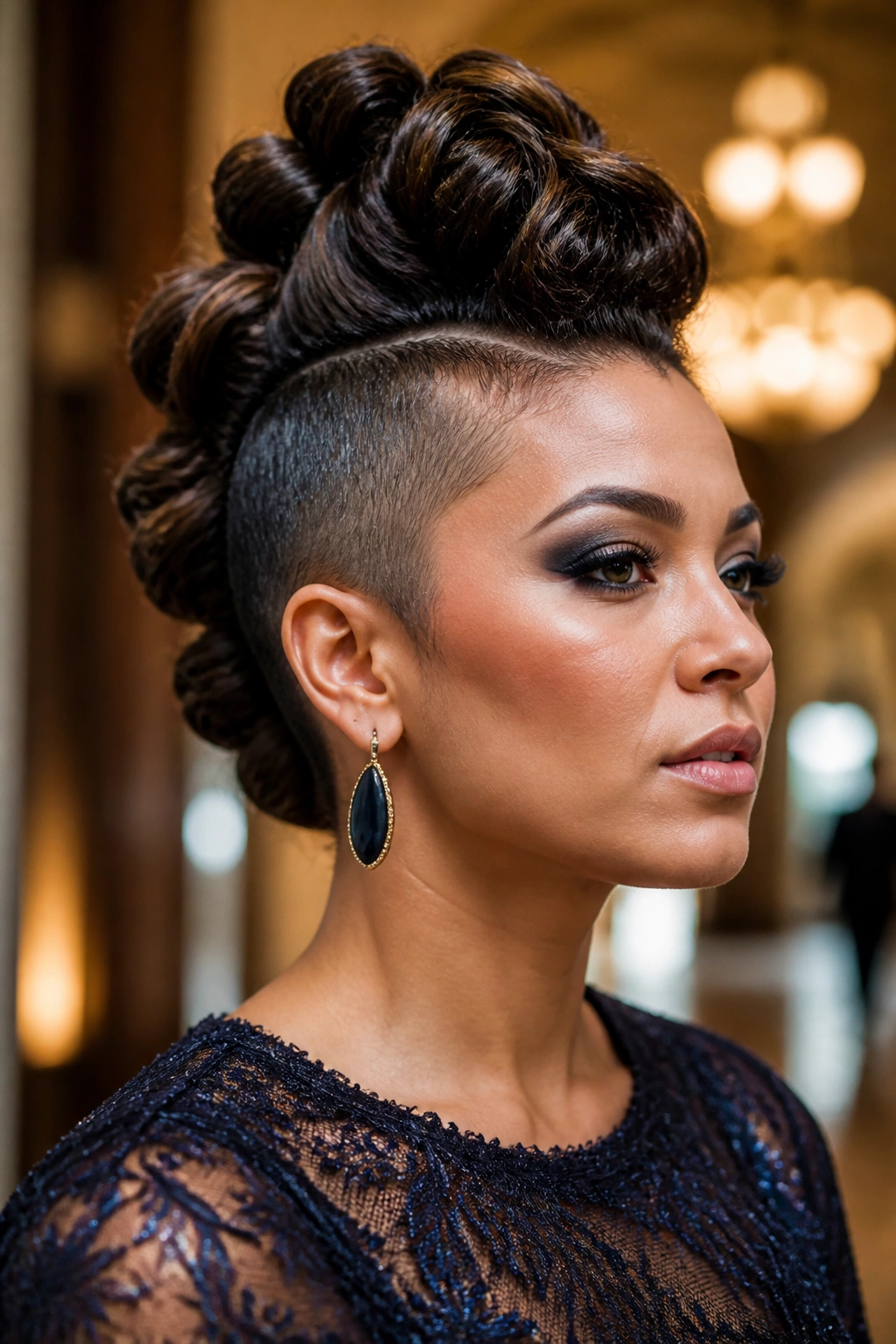
Can a mohawk work with a dress, heels, and a formal setting? Absolutely. A mohawk updo is what happens when a strong haircut gets cleaned up for a dinner, wedding, or event where you still want your hair to look like you.
The shape usually starts with smooth sides and a lifted center that folds, rolls, or pins into a compact crest. The top can be tucked into a twist, stacked into loops, or gathered into a sculpted knot at the crown. If the hair is long enough, a tucked-under roll gives a very clean line. Shorter hair can fake the same feeling with a mix of pins and a little mousse.
Pins, combs, and finish
You do not need a lot of accessories. You need the right ones. Strong U-pins, a fine-tooth comb, and a flexible but firm hairspray are usually enough. If the event is formal, pearl pins or a single metal clip can dress the style up without crowding it.
This is also the place to smooth flyaways carefully. I mean carefully. A tiny drop of serum on the fingertips is enough for the hairline and crown. Too much serum will break the lift and make the style collapse at the sides.
A mohawk updo works best when the shape feels intentional from every angle, not just the front. Check the back in a mirror before you leave the house. The back is where weak pinning shows first.
13. Side-Swept Mohawk with One Shaved Side
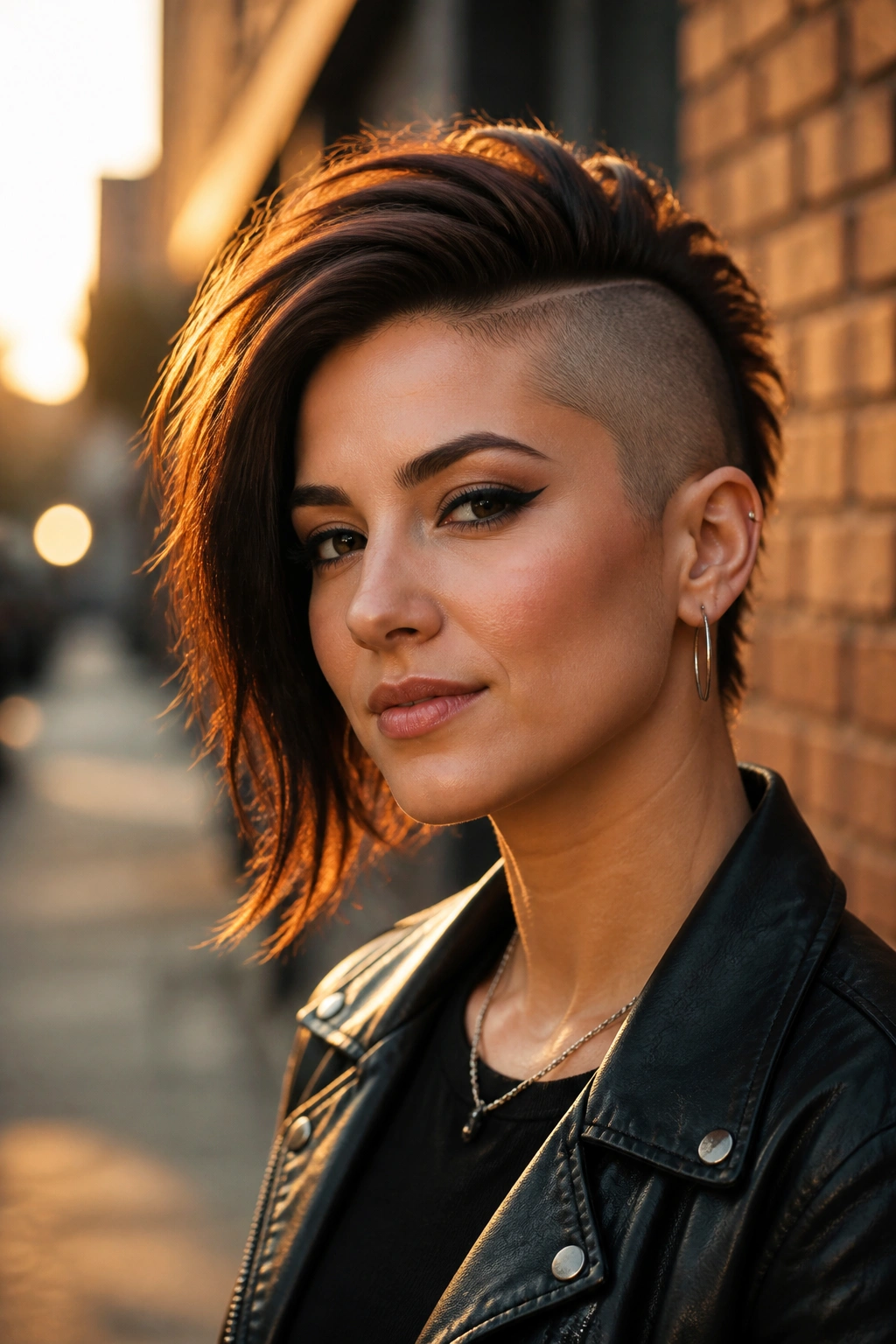
Asymmetry gives this style its punch. One side is shaved or clipped very short, while the other sweeps over in a long, curved section that lands somewhere between mohawk and side part. It has edge, but it also has a touch of softness because the long side can frame the face.
The balance is what makes it interesting. A full mohawk can feel severe; a side-swept version keeps one side open and one side dramatic. That makes it a nice pick if you like contrast but want something a little easier to wear day to day. It can work with straight hair, waves, or even loose curls, as long as the long side has enough body to hold its shape.
Who this suits best
- People who want a bold cut without shaving both sides.
- Anyone with a strong jawline who wants to soften one side of the face.
- Women who like styling only one section in the morning and leaving the rest simple.
- Short-haired people who want a style that can grow out gracefully.
The styling is part product, part direction. Blow the long side away from the shaved area, then set it with a round brush or hot brush for a clean sweep. A side-swept mohawk gets messy fast if the roots are weak, so root spray or mousse is worth the trouble.
14. Micro-Braided Mohawk Ponytail
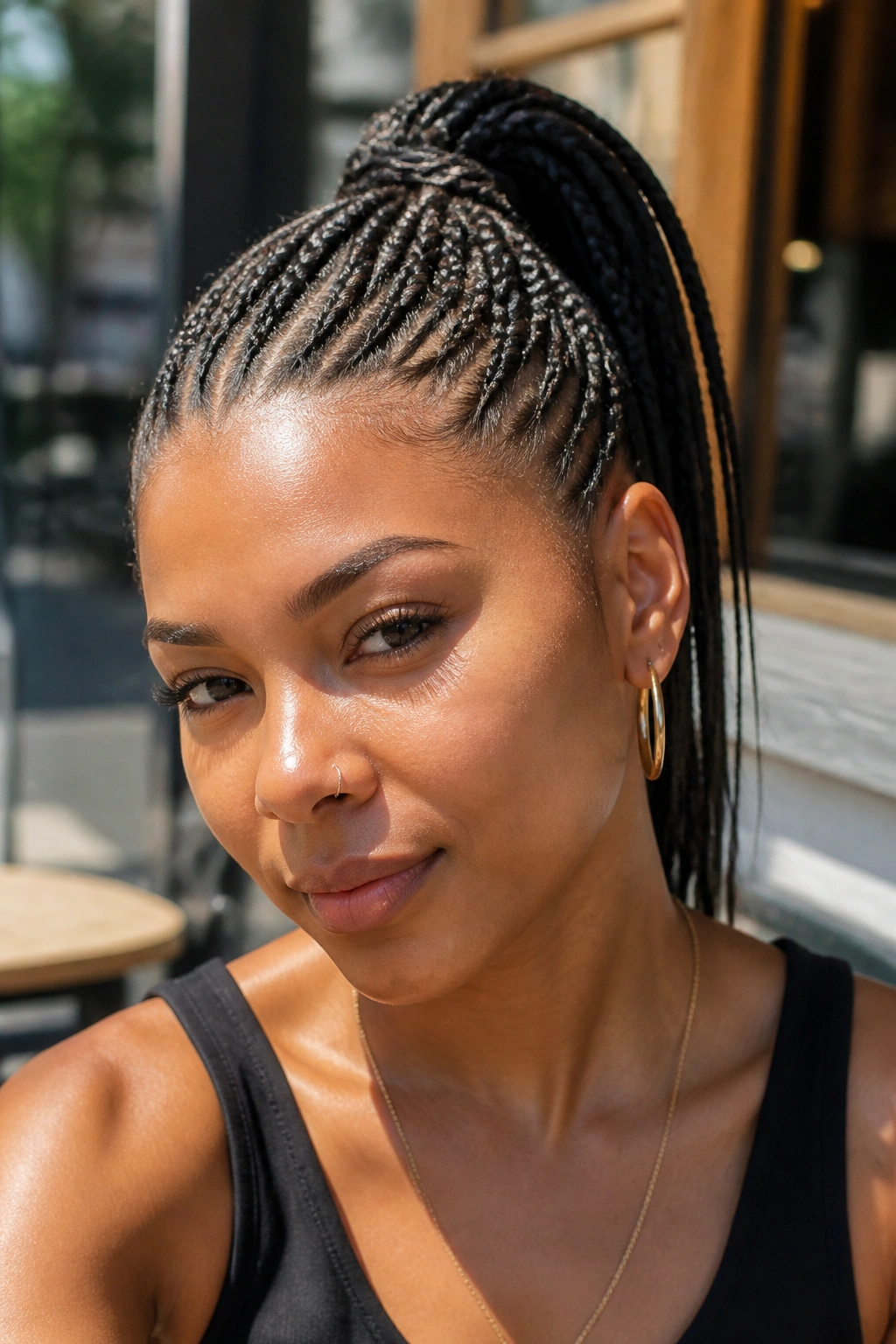
Tiny braids give a mohawk a different kind of power. Instead of one big center strip, you get a row of small, tight braids pulled upward into a ponytail or central crest. It’s detailed, it lasts, and it has that neat, almost engineered look that some people love on sight.
The size of the parts matters. Clean 1/4-inch sections keep the braid pattern even, while a crooked part line makes the whole style look rushed. If you want the mohawk to sit high, braid the sides flat and gather the center braids at the crown with a strong elastic. A light gel on the roots helps the parts stay crisp, but heavy product will make the scalp feel sticky and weighed down.
This style is also kind to busy weeks. Once it’s in, it can stay tidy for several days with a satin bonnet and a quick edge refresh. If the braids are small enough, the ponytail can be worn high, folded in half, or wrapped into a short top knot. That gives you more than one finish from the same base.
The best version is not overloaded with accessories. One cuff, a few wrapped threads, maybe a clean part line. That is enough. Let the braid work do the talking.
A mohawk like this proves the cut does not need to be loud to feel bold. Sometimes the smartest version is the one with the cleanest hands and the sharpest parts.
